
Jaguar describes the F-Pace as a performance crossover for people who love driving. It is aimed to steal sales away from BMW X5, Audi Q5 and Porsche Macan.
The F-Pace is slated to arrive in Australia in July with expectation set north of 1000 F-Paces per year going to local customers. Jaguar Australia sold 1292 cars in 2015 across its entire model range.
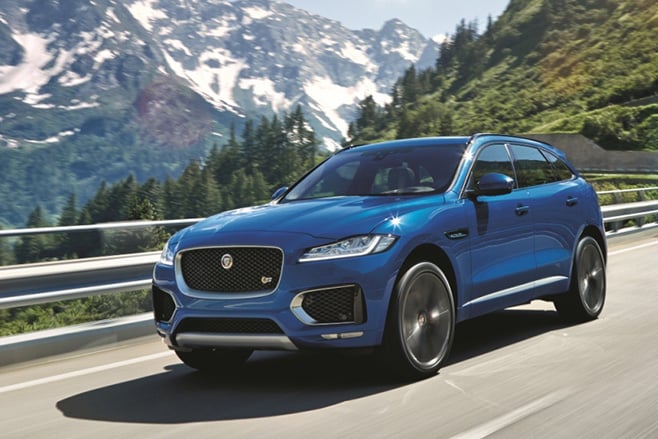
Jaguar’s plan for F-Pace is to incorporate Jaguar’s renowned driving dynamics with everyday SUV usability. Key features include a spacious cabin and 650-litre cargo capacity, an advanced infotainment system called InControl Touch Pro, a range of petrol and diesel engines and all-wheel drive grip, plus a full suite of driver assistance technology and safety systems.
Variants start with Prestige, a package that includes 19-inch alloy wheels, auto emergency braking, lane departure warning, tyre pressure monitoring, motorised tailgate, LED headlights, leather upholstery, Meridian sound system, Jaguar’s Smart Key system, parking aids and reversing camera.
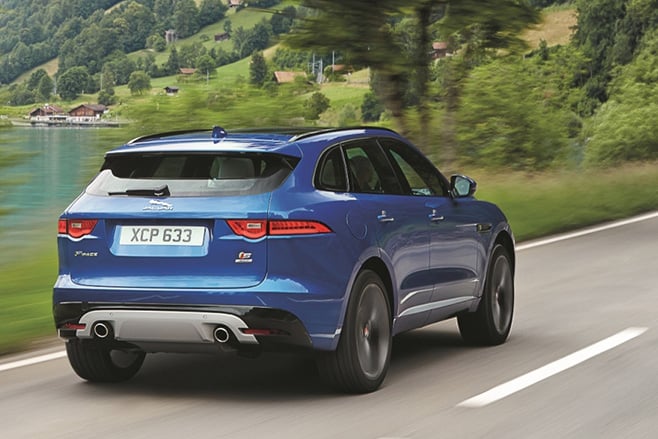
R-Sport adds to the Prestige package with a unique 19-inch wheel design and R-Sport bumpers and styling details.
Portfolio offers premium Windsor leather trim, wood veneer trim and upgraded interior lighting.
S and First Edition models are the only variants available with the most powerful supercharged V6 engine. The S model gains 20-inch wheels, adaptive dynamics, unique S bumpers and red brake calipers plus S-specific interior trim. First edition comes with 22-inch wheels, a sliding panoramic roof, roof rails, a virtual instrument display, reclining rear seats and superior interior materials.
Getting into an F-Pace will cost you $74,340 for the entry-level 20d Prestige, powered by a 132kW/430Nm turbocharged 2.0-litre diesel four-cylinder engine. Two diesel engines are on offer, the other a 221kW/700Nm 3.0-litre turbocharged V6.
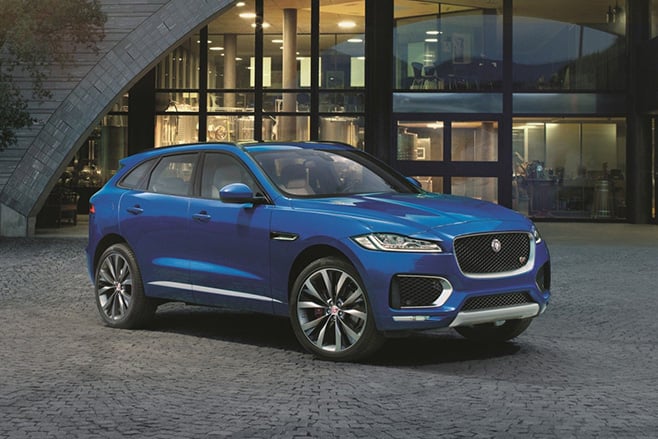
Petrol engine options include a 250kW/450Nm supercharged 3.0-litre V6 and a 280kW/460Nm supercharged 3.0-litre V6.
Pricing for other diesel variants is as follows: 20d R-Sport ($80,090), 30d Prestige ($84,590), 30d R-Sport ($80,090), 30d Portfolio ($91,350), S ($99,940) and First Edition ($117,210).
Petrol model pricing: 35t Prestige ($84,030), 35t R-Sport ($89,790), 35t Portfolio ($90,800), S ($103,420) and First Edition ($120,700)
Meet Lara
Lara is a 28-year-old teacher. She recently moved from her small hometown to a one-bedroom unit in the big smoke for a great career opportunity and to prove to her family she knows how to adult.
Sick of breaking down on the West Gate Bridge, Lara is ready for a brand-spanking-new set of wheels. Lara might look like your typical ‘girl next door’ but deep down she knows what she wants: a fast, red car that’ll turn heads. But she also knows this is quite different to what she’ll end up buying: a stylish but practical car.
Now she’s on the hunt for a new car, but doesn’t even know where to start. That is until she hears about WhichCar.com.au.
The only problem is Lara’s internet keeps dropping out. So now she has to visit her curious neighbour, Janice, and her brood of cats. Claw-some.

Meet Janice
Janice drives a hot pink car with leopard-print seat covers, fluffy dice in the mirror and a personalised number plate that reads ‘FEL1N3’. Janice is also Lara’s involved neighbour. Once, Janice gave Lara an invitation to her cat’s birthday party – it was Garfield themed.
Janice loves her children – we mean cats – so much she’s named all of them after male celebrities including Clooney and DiCaprio (one is also named Winslet – presumably she had an experimental phase at uni). She never gets tired of making the joke that she’s got a hot date with Clooney.
But above all, Janice is a helper – she’s full of useful useless advice and even gave Lara a set of matching fluffy dice because they give new cars “cat-titude”.

Once the whole fast-fourby thing would warp your mind.
That a car could claw up a fire trail, tow a caravan, swallow the booty from an ambitious IKEA trip, yet also do a track day and blow away an HSV GTS at the lights was extraordinary. But these days it’s not as special and, in fact, if you want one, you’ve never been more spoilt.
In the budget bullet category there’s the Jeep Grand Cherokee SRT. Then you have the Range Rover Sport with the F-Type’s blown V8 and an exhaust note like the devil playing didgeridoo. Porsche has a couple of killer Cayennes topped by the Turbo S. AMG’s new GLE63, nee ML63, is on the way, and Audi is reportedly beavering away on an RSQ7.
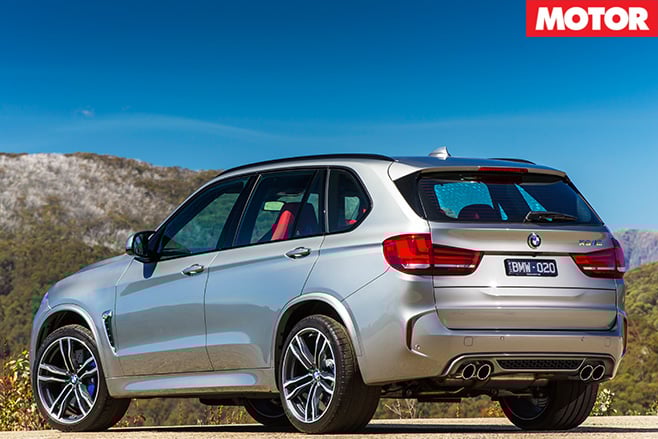
When the GLE63 replaces the $183K ML63, at we presume a similar price, a dogfight for sharply-priced super SUVs will ensue. But for now, the X5M is it.
This refreshed version, like the new X6M, gets a new twin-turbo 4.4-litre V8. With 423kW at 6000rpm and 750Nm from 2200-5000rpm, it’s the most powerful engine M Division has ever developed.
That’s 17kW and 70Nm more than the old car. And, we gleaned from the launch, M Division had a few sleepless nights meeting the new engine’s vast cooling demands. As such the front of the car is crammed with heat exchangers – radiator, intercoolers, oil coolers, the lot.
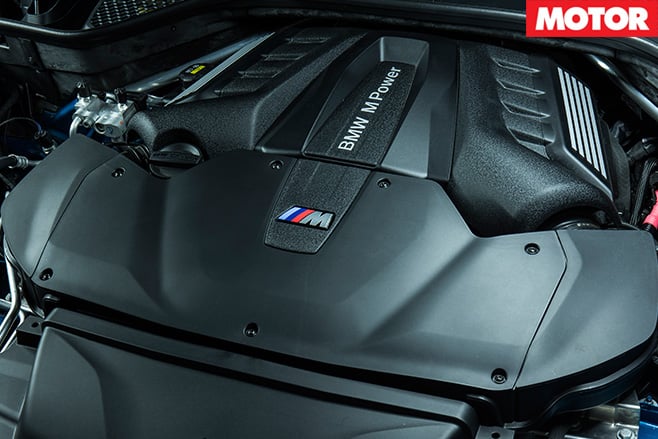
Having installed that monster engine BMW has also ensured there’s appropriate rubber and brakes. Front tyres are rather large 285/35s; out back, there’s 325/30s. Meanwhile under those 21-inch rims live six-pot front calipers and single-pistons at the rear.
BMW boasts the car is optimised for the Nordschleife but doesn’t provide a lap time. This is particularly conspicuous given the ’Ring wars between Porsche and Range Rover for “fastest SUV”. It leaves speculation open the X5M simply isn’t fast enough.
Not that you’d think it considering it does 0-100km/h in 4.2 seconds. Think about that for a moment. It’s an SUV. For corners the X5M’s suspension is suitably stiffened to cope with 2275kg of carpet and metal, including active sway bars and adaptive dampers.
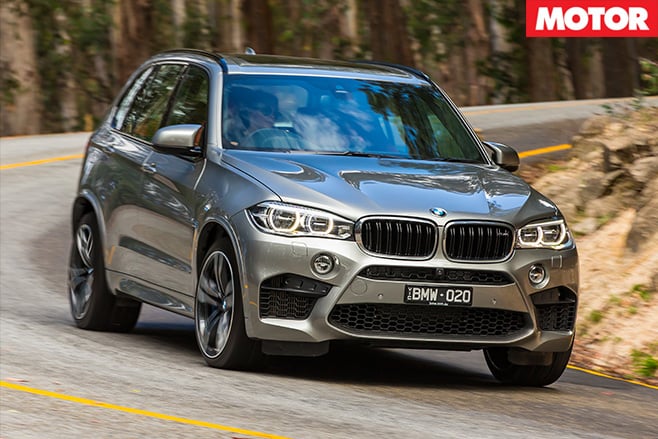
Driving, the first thing you notice about the X5M is that, sweet blasphemy, it’s fast. You’ll be stunned by the sheer ferocity of its acceleration in the first three or four gears. My god, it’s swift.
You’d actually swear it was a DCT, too, the torque converter grabbing higher gears swiftly with an aggressive blat on the upshift. BMW’s also engineered a little billygoat kick on upchanges which, admittedly, won’t be to everyone’s tastes.
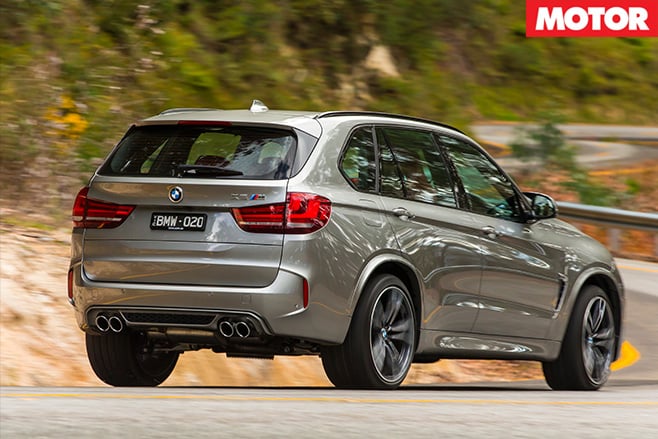
The acceleration – the sheer, 2.2-tonne-defying power and torque – is the most addictive quality of the X5M, and its basically mechanically-identical X6M sibling. The way it hammers through third, fourth and fifth gear makes 110km/h feel like the new 50km/h. All X5M owners will end up in prison.
The X5M also defies its weight in the way it attacks corners. In fact, it simply shouldn’t be this fast up a bendy road, feeling not like an overpowered SUV, but more like a jacked-up, overweight hot hatch, taking turns like an NRL winger.
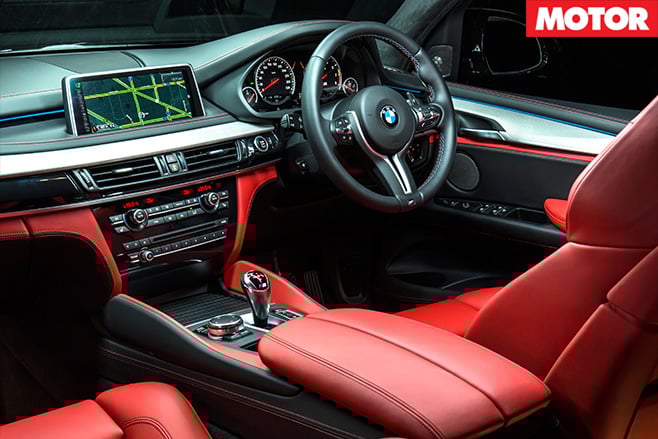
BMW says the torque split is 30/70 front-to-rear, but can direct up to 100 per cent torque to either the front or rear axle. And it says the X5M will power oversteer, even in the half-off ESP setting ‘MDM’, although our efforts to test this suggest you need to be in the rain, or dirt, or ice, or simply a madman, such is the monster levels of grip to overcome.
The grip is huge – it takes actual focus to make a tyre squeal, there’s so much rubber to lean into. Unfortunately it’s a little frightening leaning into the tyres because there is zero steering feel.
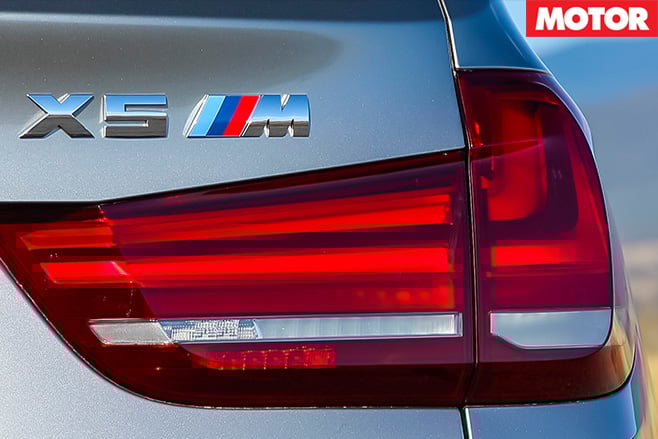
The steering woes don’t end there, either. At 100km/h it’s horribly groggy and heavy off-centre, like there’s no assistance at all. BMW says the steering saves 0.3L/100km at highway speeds, suggesting they in fact switch off steering assistance at the dead-ahead to save fuel. You wouldn’t call it a pleasant sensation.
Other gripes? The engine noise isn’t bad, but it’s almost Tron-like and overly computer-y. It’s not deep, menacing, or sinfully flatulent like a Range Rover Sport. It sounds suspiciously artificial; BMW Oz’s tech folks couldn’t clarify.
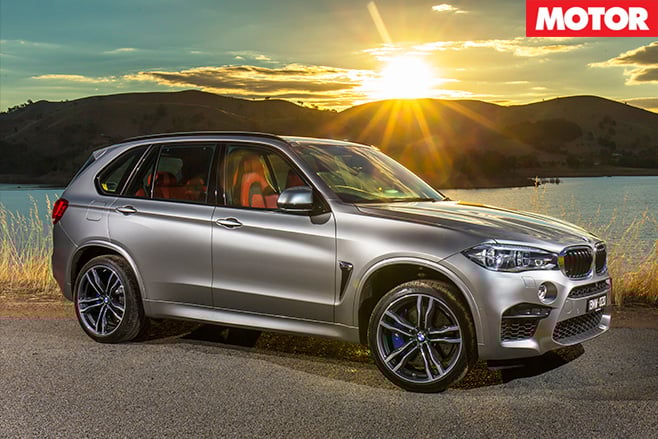
All that aside, the X5M is a pretty mega thing. Philosophically you will laugh out loud at how silly it is (an X5 with 423kW?). And you’ll be flabbergasted by just how fast you can blast up a twisty road. The fast-fourby thing isn’t new, but it still warps our mind. How the X5M shapes up to its many super SUV rivals, we’ll find out soon.
4 out of 5 stars
Specs
Engine: 4395cc V8, DOHC, 32v, twin-turbo Power: 423kW @ 6000rpm Torque: 750Nm @ 2200-5000rpm Weight: 2275kg 0-100km/h: 4.2sec (claimed) Price: $185,900
Toyota Australia has announced a recall of 98,000 RAV4s due to potentially life-threatening issues with seatbelts.
While there have been no injuries in Australia as a result of this issue, Toyota said it’s a possibility the webbing of the seatbelts in the RAV4’s second row could break during some high speed collisions, due to contact with a metal part of the seat.
Toyota Australia said: “The potential for this condition can only occur during high speed frontal collisions. Toyota always recommends drivers operate their vehicles carefully and safely to minimise the potential for vehicle accidents.”
Affected vehicles – RAV4s built between August 2005 and November 2012 – will need to be taken back to a Toyota dealer where they will add a resin protection cover to the metal frames. The free repairs will take approximately one hour, but due to the number of vehicles impacted, recall repairs won’t be available until June 2016.
Toyota Australia said a letter will be sent to all owners to notify them of the issue, and another when the parts become available.
As the fault occurs in the second row, those travelling with passengers, particularly children, should take extra care until the recall is complete.
After 15 years without a Golf GTI rival, long-time hot-hatch specialist Peugeot has hit back and hard with the 308 GTi. Should VW be worried?
WHAT IS IT? Peugeot has strutted straight into Golf GTI territory with the 308 GTi, which brings two performance tunes, impressive efficiency, seriously uprated suspension, stronger brakes, and subtle yet menacing visual upgrades designed to shake up an extremely competitive class. The French brand once dominated the hot-hatch genre, so drivers ought to take notice.
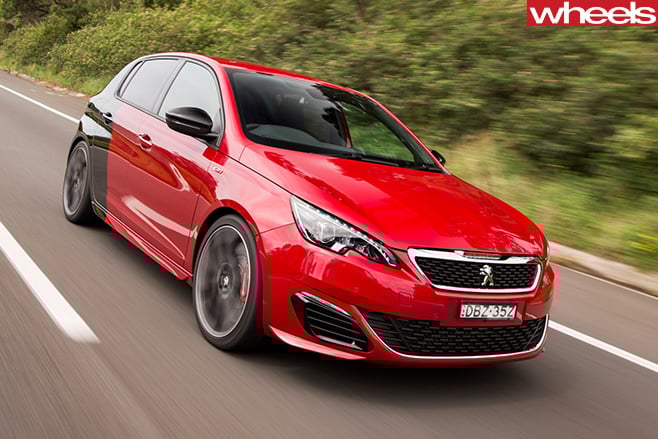
MAIN RIVALS Ford Focus ST, Holden Astra VXR, Renault Megane RS 265, Subaru WRX, Volkswagen Golf GTI
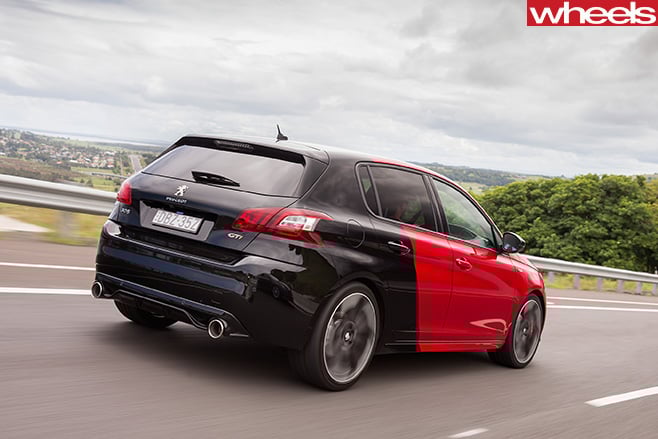
PLUS:Steering, handling, poise, performance, ride, design, cabin, refinement, practicality, model choice MINUS: Disappointing gear shift, silly anti-clockwise tacho, no manual handbrake, not much else
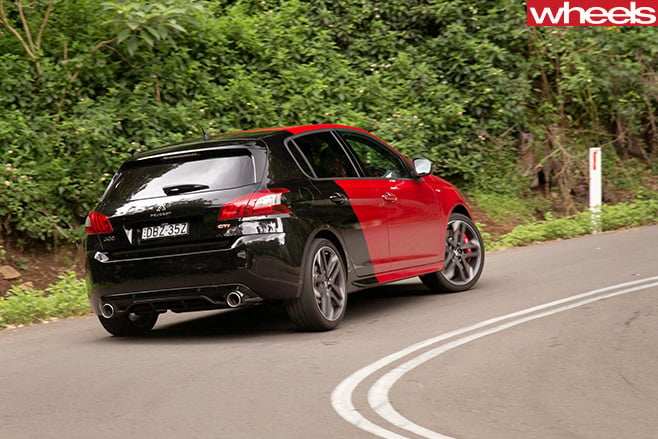
So any scepticism towards the 308 GTi is understandable, especially as it is down on capacity (1.6 versus 2.0 litres), up on price (10 percent over the Volkswagen equivalent), and lacking an auto option.
But upsetting the establishment defines the best hot-hatches, and herein lies the (other) Lion brand’s greatest opportunity to roar once more.
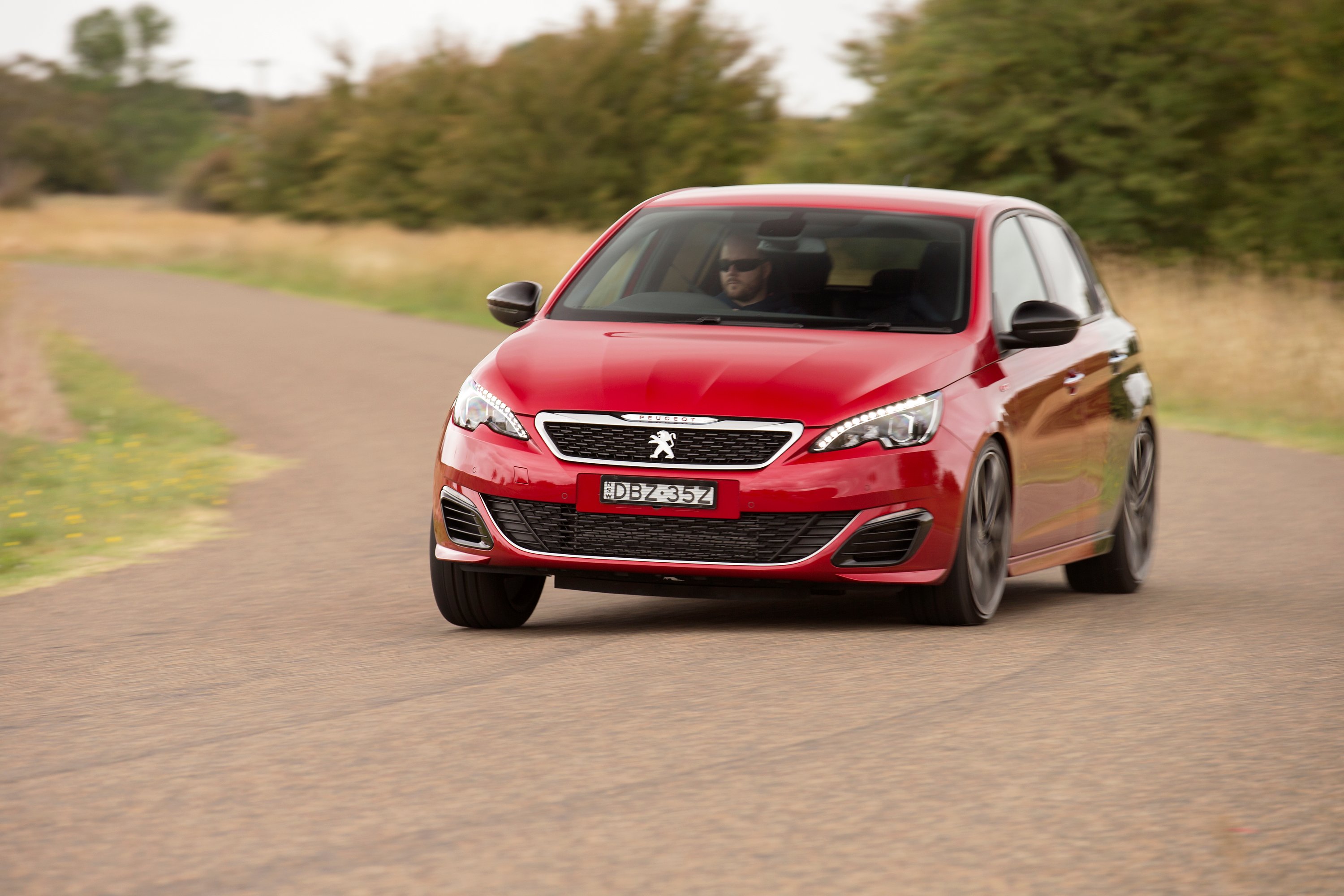
The upshot in the $44,990 250 is rapid off-the-line acceleration, which builds hastily as the revs soars towards the 7000rpm cut-out. Furthermore, selecting Sport mode is like choosing the red pill, with the Peugeot’s performance – complete with amplified exhaust – stepping up a notch.
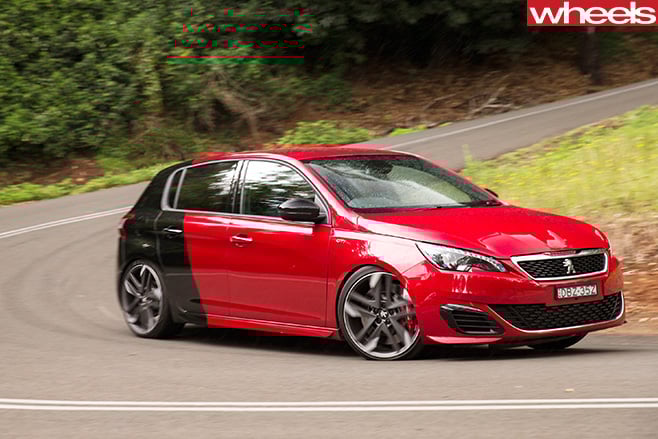
Yet it’s the dynamic delicacy – courtesy of the latest 308’s brilliantly efficient EMP2 architecture – that is outstanding, from precise, measured, and intoxicatingly tactile steering, to the chassis’ control, which feels simultaneously planted and light-footed. Aided by the 270’s limited slip diff and terrific brakes, it devours corners. Yet the suspension – lower, firmer, and stronger, but essentially the same MacPherson struts/torsion beam set-up as in lesser 308s – can still ably soak up the rough stuff. No adaptive dampers required, even on 235/35ZR19s. Result? The GTi’s athleticism isn’t at the cost of comfort.
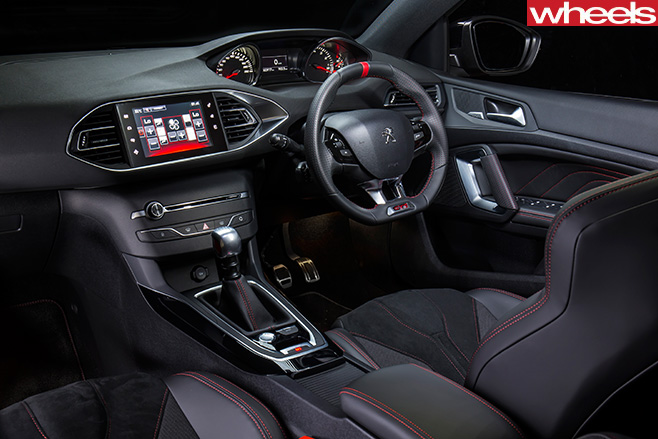
Minor aberrations aside, the 308 GTi has the alacrity and grace to darken the Golf GTI’s days. It’s as if Peugeot needed all 15 years to recapture the 306 GTI-6 spirit. The ultimate hot-hatch shootout looms…
SPECS Model: Peugeot 308 GTi 270 Engine: 1598cc 4cyl, dohc, 16v, turbo Max power: 200kW @ 6000rpm Max torque: 330Nm @ 1900-5500rpm Transmission: 6-speed manual Weight: 1205kg 0-100km/h: 6.0s Fuel economy: 6.0L/100km Price: $49,990 On sale: Now
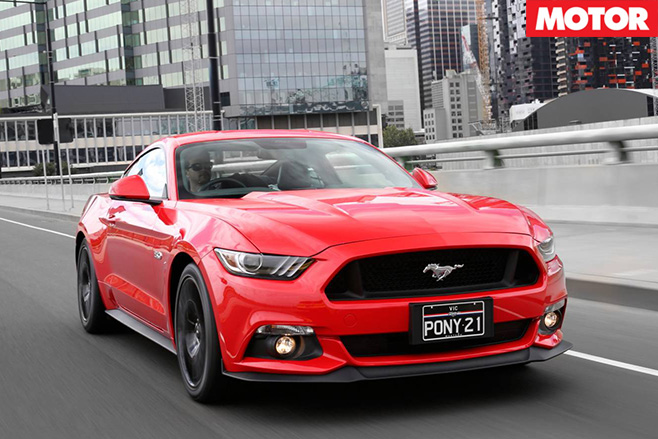
Prepare to see a Ford Mustang highway patrol vehicle in your rear-view mirror as the NSW Police is set to unleash the Pony car for duty this year.
Following a leaked photo of a Mustang coupe wearing highway patrol livery leaked on Facebook (above), a NSW Police spokesperson has now confirmed that the vehicle is being prepared for usage.
“It’s not operational as yet [and] it won’t be a police car for some time yet,” a police spokesperson told MOTOR.
“Not unlike any other car we’re going through an evaluation phase with all of them really, so that’s primarily what it is, there’s still a bit of work to go,” he added.
The Mustang was captured at the NSW Police Traffic and Highway Patrol Command centre in Huntingwood, 40km west of the Sydney CBD.
The Falcon will cease production on October 7 this year, with local manufacturing of Commodore to finish around one year following.
The Mustang coupe was initially thought to have been ruled out because it lacks four-doors, but we understand this is not a make-or-break issue for a highway patrol vehicle and it appears this Pony may soon gallop along motorways after all.
Benny Caiola was Horacio Pagani’s first customer, putting down a deposit for a Zonda a year before it was actually ready.
After buying more Paganis over the years Benny kept bugging Horacio to build a more track focused version of the Huayra. What you see before you is his wish granted.
The Huayra BC, named after the great Sicilian-born, NY-based property developer, is a complete rethink of the car it’s based on – lighter, more powerful, more focused and with more downforce keeping it glued to the road.
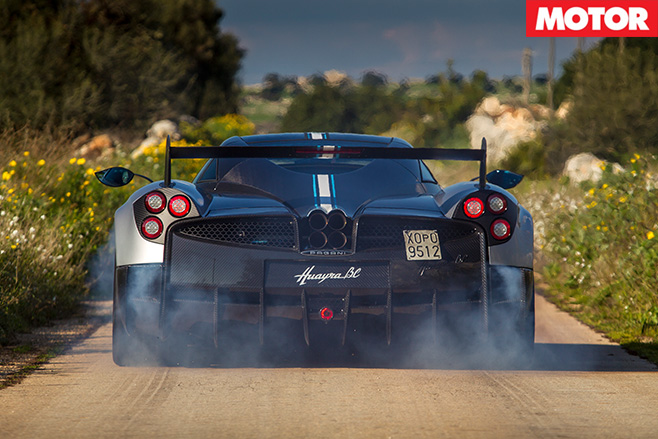
The BC, which will be unveiled at the Geneva motor show on March 1, has dropped enough mass to weigh 1218kg with a AMG-built 6.0-litre twin-turbo V12 poised to unleash a mighty 597kW punch that will give it race car abilities on track.
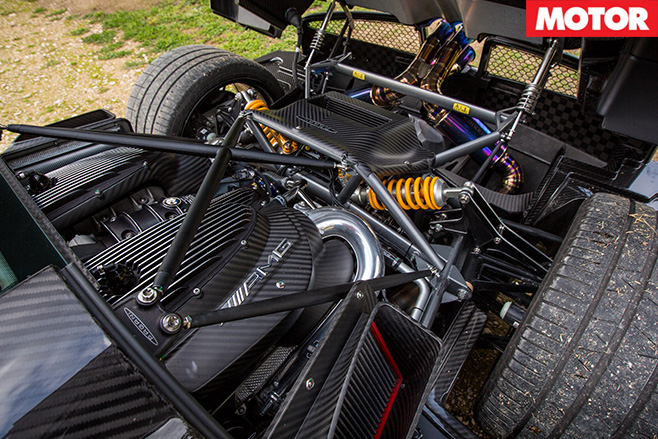
To fine-tune the BC Pagani has completely redesigned the suspension arms – now 25 per cent lighter – and geometry, mating them to all new Öhlins dampers, new lightweight Brembo monoblock brake calipers and even an advanced set of hubs.
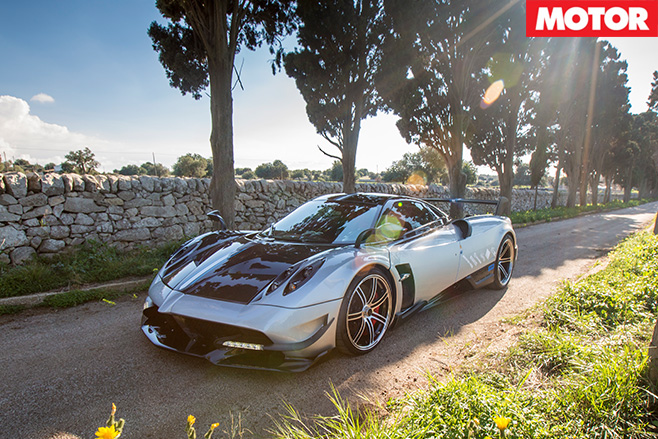
All of this is finished off with Bosch’s latest engine management and stability control system to create what Pagani aims to be one of the fastest hypercars in the world, but at the same time one of the safest and easiest to drive and live with.
Infiniti’s big premium car is better value than ever. But the brand steers its own course on limousine handling and ride.
WHAT IS IT? The 2016 Infiniti Q70 is a freshly facelifted version of the brand’s Japanese designed and built player in the Euro-dominated large luxury car segment.
WHY WE’RE TESTING IT The updated Infiniti Q70 is the first arrival for 2016 from the Nissan luxury car arm, and will be joined by a series of new models this year, including the Q30 compact premium hatchback and QX30 SUV. The brand hopes its broadened line-up and new capital city dealerships will lift its profile.
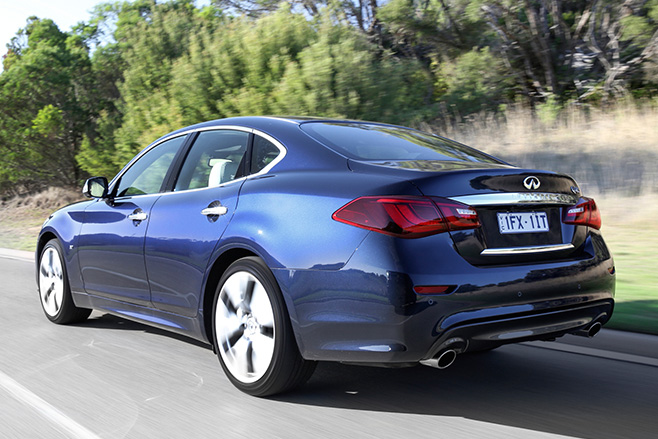
THE WHEELS VERDICT A sportier exterior look (while the interior is largely unchanged) and new technology centred on safety make the 2016 Infiniti Q70 better value than the model it replaces. In facelifted form, it continues to offer lots of space and equipment and a decent level of interior quality and refinement.
PLUS: More (mainly safety) gear for the same money; Sports Premium’s responsive steering; GT Premium Hybrid’s pace and thrift MINUS: Short on steering feel and involvement; dynamics and ride lack polish; thirst of 3.7-litre V6; diesel dropped
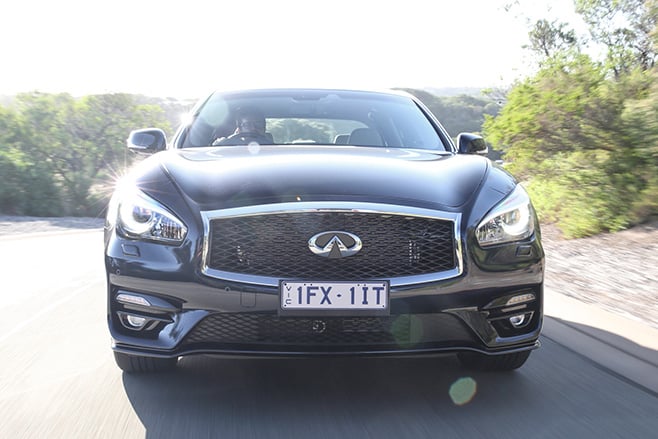
But the 2012 relocation of Infiniti’s headquarters from Yokohama, Japan, to status obsessed Hong Kong served to underscore that the brand is not so sure about that with its Q70.
The Infiniti Q70 has solid fundamentals. Its big rear-drive platform possesses DNA from parent Nissan’s 370Z and GT-R, and is underpinned by double A-arm front and multi-link rear suspensions.
The Sports Premium version duly ticks high-performance boxes. A smooth, 3.7-litre V6 produces 235kW and 360Nm, sounds subtly snarly, and backs the once-was-quick 6.2sec 0-100km/h claim.
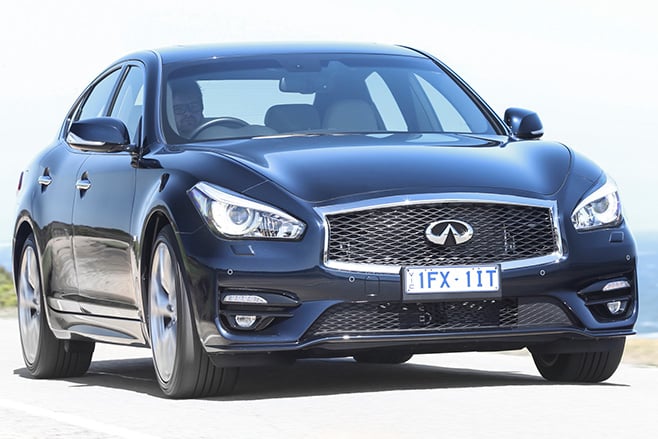
The Japanese sedan turns in with speed and immediacy that’s almost disconcerting, assisted by the Sport Premium’s active four-wheel steering. And it powers with authority via a seven-speed automatic.
But in a straight line, it’s the GT Premium Hybrid that’s the sports star (as well as the miser at 6.9L/100km officially, compared with 10.2 to 10.8 for the Sport Premium). With a 290Nm electric motor allied to a smaller 3.5-litre V6, its combined 268kW and 546Nm outputs make it an effortless and quick limo that feels equal to the 5.3sec 0-100km/h claim.
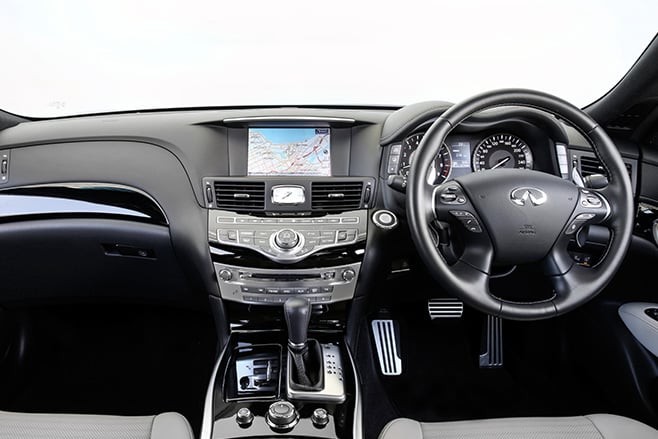
The entry-level GT, like the Hybrid, drops the sports pretensions (and features) and emerges with a distinctly different personality. Without the petrol-electric Q70’s speed, it’s a cruiser that offers more relaxed steering and a more supple ride.
The variants align, however, by being entertaining as long as you don’t ask for too much in the way of poise, involvement or polish. Particularly on tight and/or bumpy roads, because the Q70 cabin is quieter than it is cushy, especially on the sports suspension and 20s.
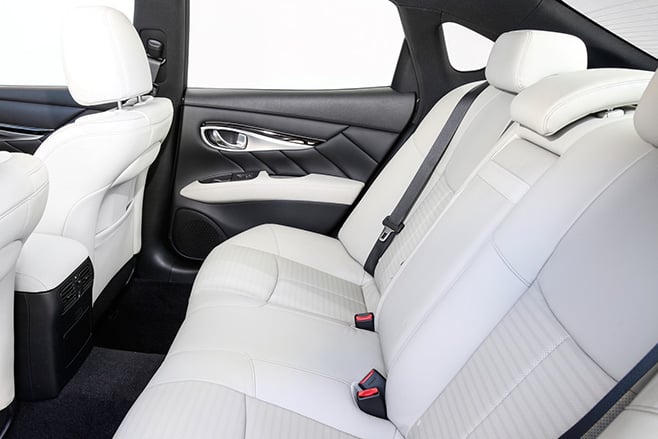
Beyond the restyled exterior and extra LED bling, the new model adds (from the GT upwards) ‘prevention’ to the lane departure warning system and ‘intervention’ to the blind-spot warning system, as well as forward emergency braking, forward collision warning and back-up collision intervention systems.
Ultimately, though, the Q70’s sports/luxe indecision means it falls short of Europe’s best against either measure.
SPECS Model: Infiniti Q70 Sports Premium Engine: 3696cc V6, dohc, 24v Max power: 235kW @ 7000rpm Max torque: 360Nm @ 5200rpm Transmission: 7-speed automatic Weight: 1719kg 0-100km/h: 6.2sec Fuel economy: 10.8L/100km Price: $78,900
BMW is set to expand its two best-selling model ranges, 3 Series and X5, with eDrive plug-in hybrid models launching in May.
Adding to the BMW 3 Series line-up is the new BMW 330e sedan which uses BMW’s eDrive technology, transferred from BMW’s ‘i’ sub-brand, to deliver a fully electric emission-free range of 37km. It is otherwise powered by a turbocharged four-cylinder petrol engine which develops 135kW and 290Nm. Added to that is the plug-in hybrid system producing 65kW and 250Nm. Paired together the 330e makes 185kW and 420Nm when drawing from both sources. The dash to 100km/h from a standstill takes 6.1 seconds (claimed) with combined fuel consumption of 2.1L/100km (claimed).
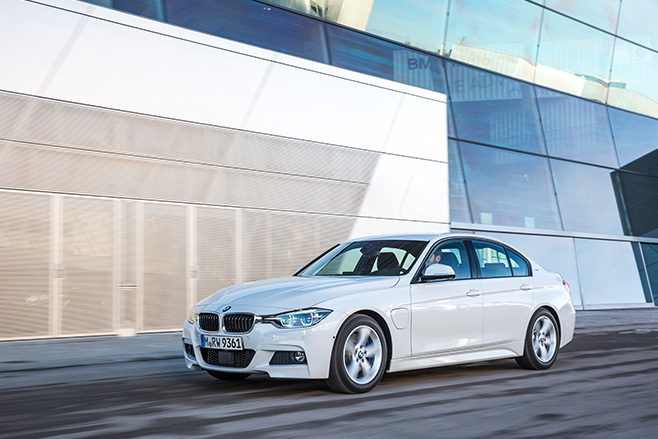
Pricing for the 330e will start from $71,900. For the money, buyers will also get 19-inch lightweight alloy wheels, LED headlights, head-up display, DAB+ digital radio, Driving Assistant, Parking Assistant and Surround View for 360 degree visibility.
BMW’s X5 selection grows to include the X5 xDrive40e plug-in hybrid SUV, priced from $118,900. It is powered by a turbocharged 2.0-litre four-cylinder petrol engine producing 180kW and 350Nm. The combustion engine is assisted by an electric motor and 9kWh lithium ion battery housed underneath the boot floor.
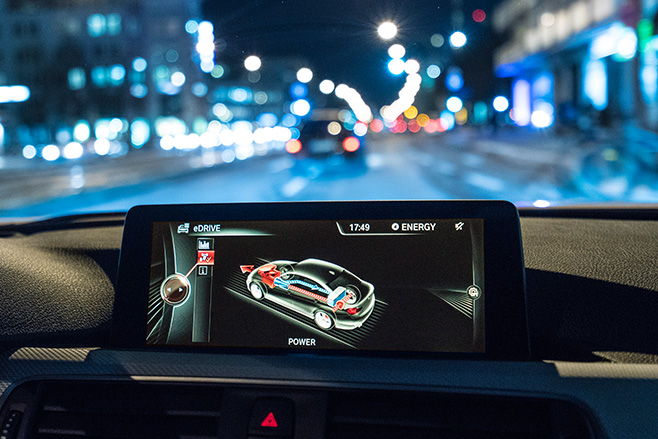
The electric motor in the X5 eDrive40e outputs 83kW and an instantly available 250Nm of torque for a combined total of 230kW and 450Nm. BMW claims a 0-100km/h sprint of 6.8 seconds and a combined fuel consumption figure of 3.3l/100km. The eDrive40e has a claimed range of 31km on electricity alone.
Purchasers of the X5 xDrive40e will also get 19-inch lightweight alloy wheels, adaptive headlights, adaptive suspension, Driving Assistant, Parking Assistant, Surround View, Comfort Access, leather upholstered dashboard, DAB+ digital radio, auto tailgate and an upgraded Harman/Kardon surround sound system.
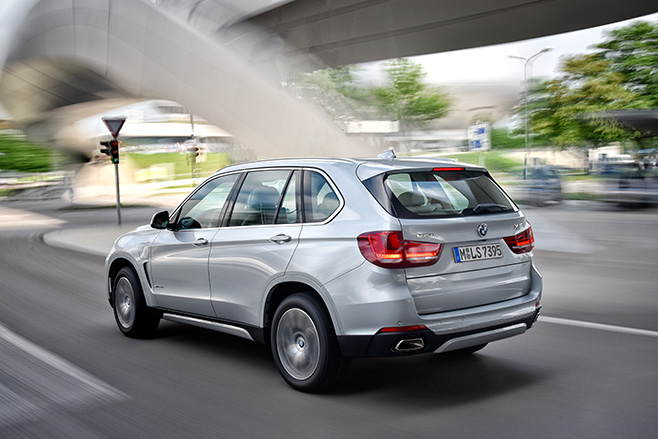
Both cars offer eDrive specific features such as Acoustic Protection for pedestrians and ConnectedDrive eDrive services, the latter of which allows owners to check their car’s state of charge from a smart phone as well as remote locking/unlocking and efficiency monitoring. Users can also use the service to search for charging station locations.
BMW’s eDrive electric motors can be topped up with mains electricity from any standard power socket and at public charging stations. Regenerative braking technology charges the on-board batteries when on the move. The combined use of a traditional combustion engine and the electric engine results in sharper acceleration and reduced emissions overall.
Shawn Ticehurst, Head of Product and Market Planning at BMW Group Australia, says, “Many drivers will be able to complete their daily commute exclusively on electric power, recharging their car by plugging into a normal power point at home or work.”
Given Phar lap’s success, you could say generational breeding is a potent way of building an athlete. For cars, too, we’ve seen such genetic refinement benefit thoroughbreds like Porsche’s 911.
But what about where mister middle class lives? In a world where baby seats are a reality and the ever humble hot-hatch is the best solution, has today’s top dog evolved over generations like Volkwagen’s Golf R, or is the formula simple enough to be nailed first go by Audi’s S1 Sportback?
And while, yes, they live segments apart within a rich hot-hatch ecosystem, only these two offer a ticket to luxury, all-weather performance, and four-dour hatch practicality while still being within spitting distance of $50K.
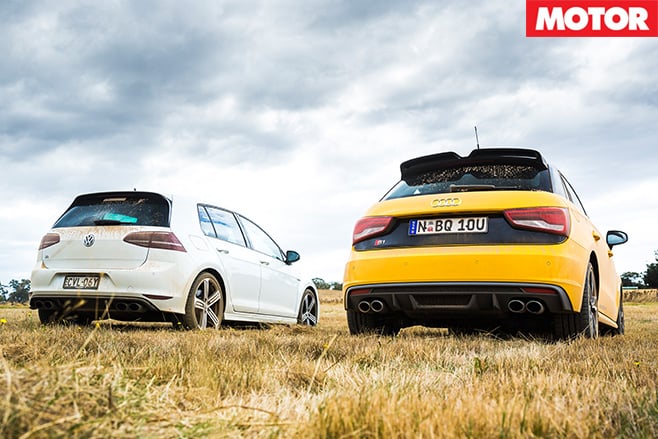
Then again, Audi can claim a similar depth of knowledge when it comes to boosted all-paw performance. And while Audi’s new S1 Sportback can’t boast direct relation to anything before it besides the A1 Clubsport Quattro concept, its badge is shared with one of the most iconic rally cars of WRC’s Group B era, the flame-throwing Quattro S1, which is promising.
Rather than a by-product of motorsport regulation, today’s Golf R is the spiciest iteration of VW’s evergreen hatch, now in its seventh-generation. Wolfsburg’s managed to carve 45kg from the Mk VII’s platform, an act which is complemented by a leaner looking exterior, as the R’s gaping bumper design, peaked crease lines, and aggressive headlight shape evaporate any fat from the previous model’s look.
R-specific silver mirrors, standard 19s and rear LED lights further sophisticate the package, such that if you were to relate it to jungle wildlife the Golf R would be a panther: relatively stealth, but an impressive athlete up close.
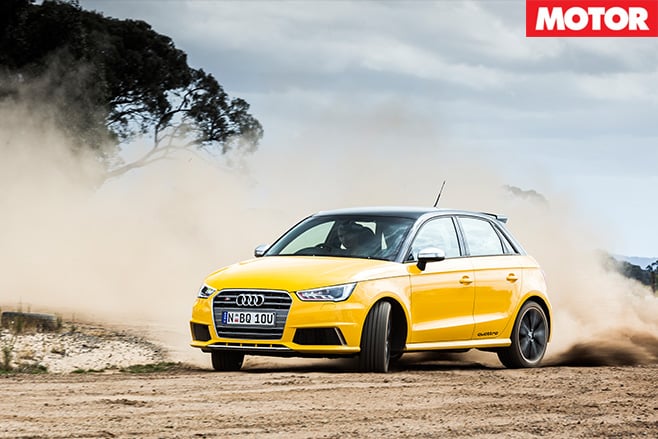
What it lacks in size, however, it makes up for in flair, especially when every option ticked on our test car helps ramp up its attitude. There’s the black roof dome and boot lid insert, both individual options, that when contrasted against our S1’s retina-searing ‘vegas’ yellow paintjob it’s obvious which of these two suits the extrovert.
This outgoing personality is further cemented by the ‘quattro exterior package’ that throws in quattro door stickers, 18s, a roof spoiler, red calipers, aluminium finish on the front lip and sexy red eyeliner for the Xenon headlights. Such flamboyance continues inside.
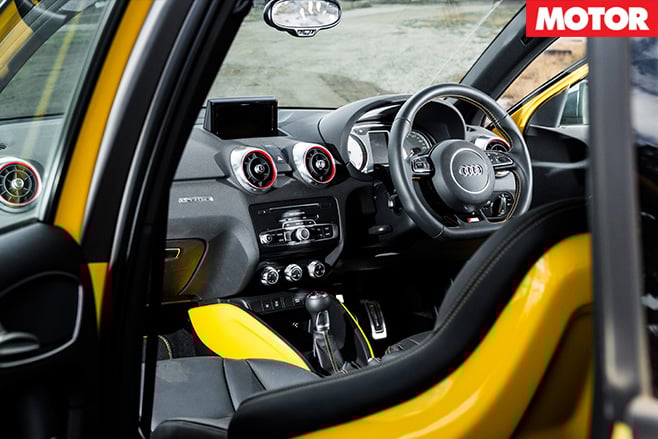
The ‘quattro interior package’ summons a yellow centre console, matched to seat shells in the same hue, while red rings appear within the (again) optional aluminium vents and yellow stitching on the leather.
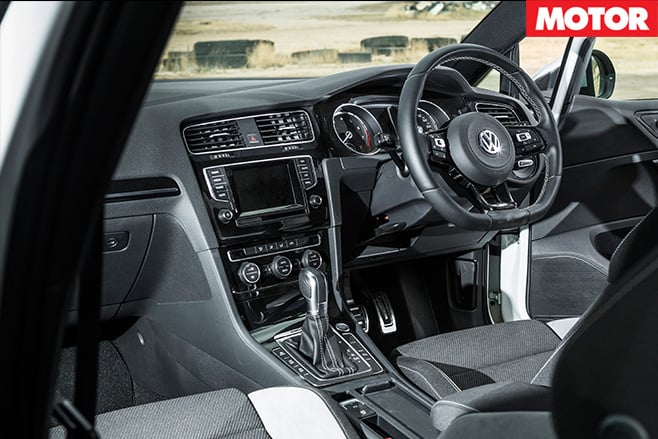
Meanwhile, the VW fails to feel as sophisticated as the Audi, despite leather and aluminium on its touchpoints, and the dull grey cloth/alcantara seats highlight that. The demure personality also extends to its options list, with leather and a sunroof being the only way to add more class to the cabin.
But that’s not to say VW doesn’t deliver a fantastic helm. It shines more in areas like ergonomics and expected equipment. Unlike the Audi, the Golf brings to the table auto-wipers, -lights and a reversing camera, while the seats feature a superbly placed hip point that’s low and close to the wheel.
VW’s EA888, which also serves duty in the GTI, has undergone changes to elevate its potency in ‘R’ form, as exclusive pistons, exhaust valve components and injection valves mean it’s good for 221kW, just not while slurping Oz fuel.
Audi also uses the EA888 in its S3, however the engine was detuned before being shoehorned into the S1, where use of a smaller turbocharger (but more boost) yields 170kW and 370Nm. The outputs are down on the Golf’s, but torque materialises sooner and propels 95kg less.
While lighter, the S1’s no bantamweight. Both cars employ a Haldex-enabled all-wheel drive system to distribute power between the front and rear axle, except in order to make the system fit in its S1 Audi had to employ the S3’s multi-link rear suspension, swap the space saver for a repair kit, and re-design the fuel tank to accommodate a differential and propshaft down the car’s centre. In effect, Audi ditched the idea of a dual-clutch automatic to avoid further weight penalty.
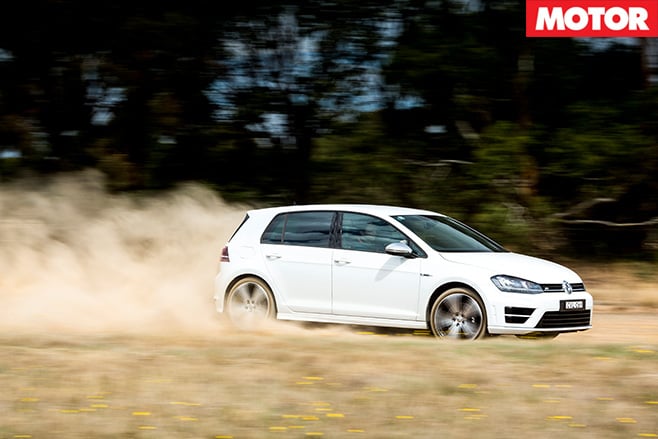
This hurts the brightly coloured mite nowhere more than Heathcote Raceway’s start line, where it’s up to you rather than electronics to perfect its launch. However, reaping the best from its 4000rpm limit in neutral will disappoint mechanical sympathisers: slip the clutch too slowly and it’ll crawl off line, whereas being more forceful sees it bog.
Experimentation quicklys narrows down the best launch technique to loading the car up against its handbrake before slipping the clutch in with a swift but controlled lift of your left leg. Nail it and the S1 glides forward, its superior grip helping quell any tramp from either axle, before racing through to its 6500rpm red zone.
Paired to a suite of fast gearchanges the S1 will smash its claimed times and register a 5.68sec charge to 100km/h and 13.89sec at 162.38 clicks over the quarter mile. Figures that other cars the S1’s size could only fantasise about, but more than in reach for the VW.
On the other hand the Golf R’s launch control is so easy the process could join primary school curriculum. Find the Adaptive Chassis Control system’s Race mode and switch off traction control, bring the Golf to a stop, load the anchors with your left foot and throttle with your right, then step off the brake pedal.
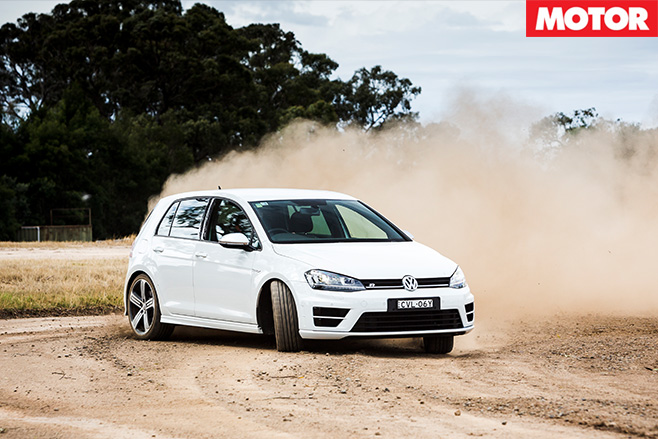
In that first split second to 10 clicks the Audi’s lithe weight gifts it an initial advantage, but from there the Golf’s wider footprint, more rear biased four-paw system and bullet fast dual-clutch help it bury the S1 before the first gearshift. And you could swig a Pepsi while doing it. Such grace isn’t only limited to the dragstrip. Breaking free for open Victorian roads shows that the Golf R is just as stoic flowing across country.
It’s at this point you suspect Volkswagen pays its suspension engineers in gold bricks, because the way the Golf’s damping absorbs the pimpled geometry of Australian tarmac is nothing short of superb for such money.
Rude compressions feel thwarted by clouds rather than bump stops, meanwhile there seems to be so much suspension travel you’d swear the dampers are housed in bell towers. The fact the Golf wears 35-profile 19s only adds further to the bewilderment.
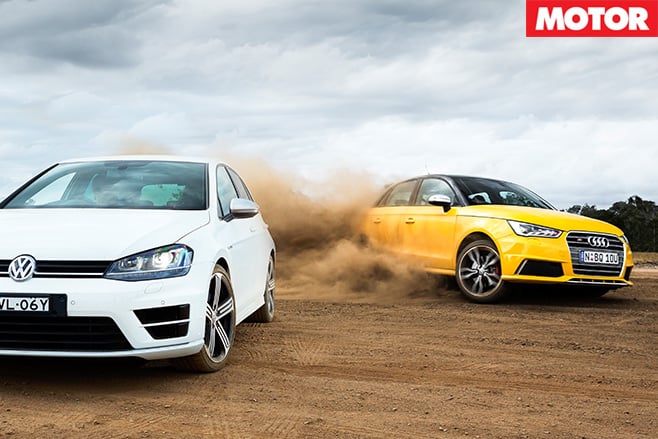
But that isn’t the only credit to the Audi. Its more favourable torque-to-weight ratio means it can sit in taller gears, its healthy mid-range feeling accessible from as low as 2700rpm. Thrust doesn’t arrive as early in the Golf R, but when it does arrive there’s more of it, and a stronger rush to redline. You’ll also hang outside a B-double for less time in the Golf, its 80-120km/h time proving almost five tenths quicker at 3.1sec.
At full noise, you’d pick the Golf’s theatrics as a more dramatic experience. There’s a trace of turbocharger whistle in the cabin that chimes in above a gruff rumble that’s plumbed in to the cabin.
It’s likeable, and certainly cool, but to us the Audi sounds more authentic, even if it may not be. Digging deep in the S1’s throttle opens exhaust flaps to play a waspy blat from its quad tips, while the cabin fills with a rorty amplified note from an intake tract.
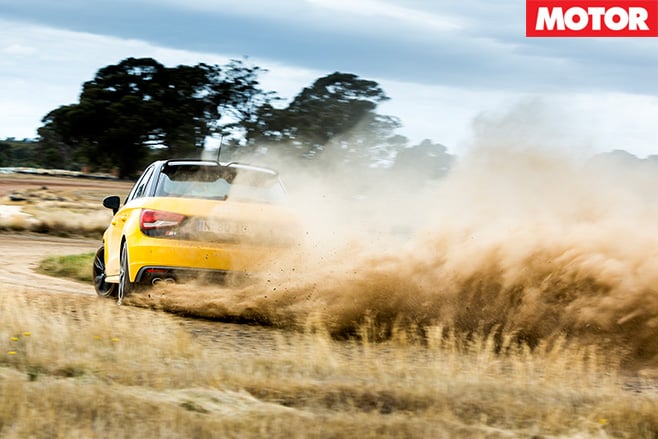
The Golf is more clinical, but what it lacks in involvement is made up for in speed. Despite having almost exactly the same weight distribution as the Audi it’s more balanced and neutral thanks to its longer wheelbase and wider tracks. As pace increases it’s this more effective spread of grip that makes it better at channelling energy into forward pace. The Audi simply can’t keep up.
Nor can its steering match the Golf’s for directness, weight and accuracy. Its brakes, too, are a little softer. Their disparate personalities are further defined on the highway. Both work equally as hard at 110km/h, the Audi turning its engine at 2625rpm in sixth gear, the Volkswagen at 100rpm less, but it’s the Golf that covers the distance in the most relaxed state.
Against a crosswind the Veedub floats over pockmarked distances with wonderful directional stability. Meanwhile you’re inside, enjoying the decent-sized cabin as the damping and bigger seats ease you in to a rhythm for slicing through slower traffic.
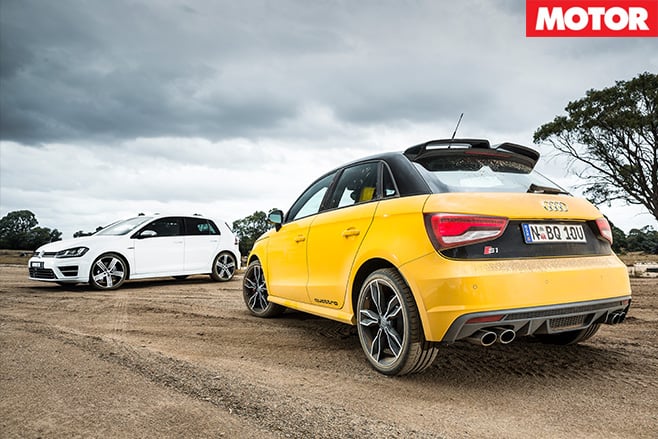
All of which contributes to why the Audi’s our number two. Both are fantastic cars. And from its extroverted appearance to extensive engineering, the S1 is interesting, fast, and blazes a new path in its own supermini segment. It’s a hoot, but MOTOR wonders what sort of animal a full-stick 206kW EA888 would have created of the S1?
Nonetheless, its good-time personality pales in comparison to the abilities of the VW, whether at the strip, mountain pass, highway or in gridlock. The fact they share mechanical organs only highlights the Golf R’s more developed package. And in the end, it’s the Audi S1’s untapped potential that proves hot-hatch greatness here is developed over time, or in VW’s case, over generations.
