
Most of the hoopla around the new Ford Falcon Sprints has concentrated on what’s under the bonnet.
Fair enough, too, considering that with 325kW/576Nm and 345kW/575Nm, the XR6 and XR8 Sprint respectively have enough grunt to be considered two of the very fastest automobiles Australia has ever produced. And that’s without taking into account the overboost function.
However, recent hi-po Falcons have already felt to have more power than they can effectively use, so thankfully Ford’s local engineering team have given the underside a thorough overhaul to make the most of the added performance.
Ford’s press release claims the engineers have “worked magic” and shows a typically long list of improvements in every area, but to understand just how and why these changes have been made we called Justin Capicchiano, Sprint Program Manager.
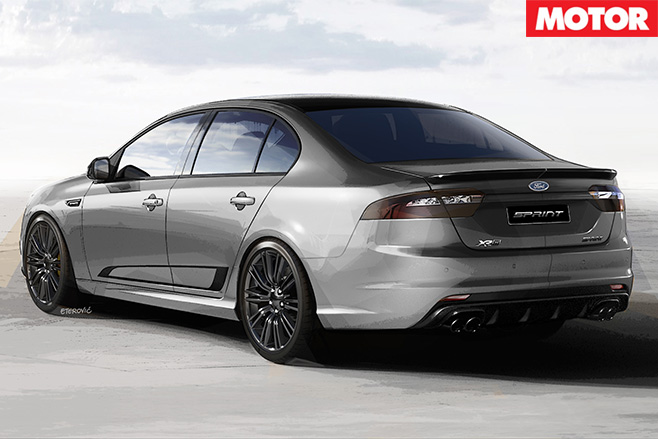
Key to the suspension revisions has been the adoption of Pirelli P Zero tyres, rather than the Dunlop SP Sport Maxxes traditionally worn by hi-po Falcons.
Both cars wear 245/35 ZR19 rubber at the front and 265/35 ZR19 rears; while that is technically 10mm narrower than the current XR8 rears Capicchiano says the actual contact patch is within half a millimetre. “We’ve done everything around the tyres,” he says. “It’s a much newer tyre [and] overall grip level is higher.”
For the XR8 spring rates have been reduced while new dampers from Sachs – with three valves rather than 12 to restrict oil flow – are significantly firmer in rebound damping to the benefit, according to Capicchiano, at least, of ride, body control and handling.
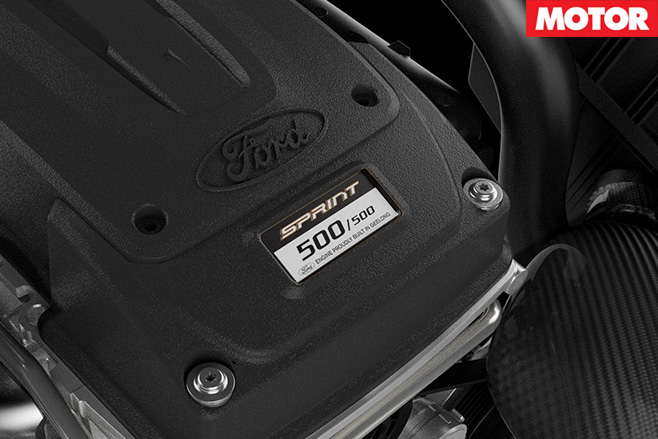
Capicchiano and his team went even further with the XR6 Sprint, though that’s partly due to working from a less-developed base in the form of the XR6 Turbo rather than the newer XR8.
The XR8 Sprint setup was finished first and initially applied to its six-cylinder sibling, however it quickly became clear that the differences in weight distribution and power delivery required a bespoke solution.
The XR6 Sprint gains new springs and dampers, with the rear in particular being stiffened substantially. A number of XR8 parts make the transition to the XR6 for the first time, including a stiffer transmission mount, damper top mounts and a 19mm rear anti-roll bar (up from 18mm in the stock XR6 Turbo).
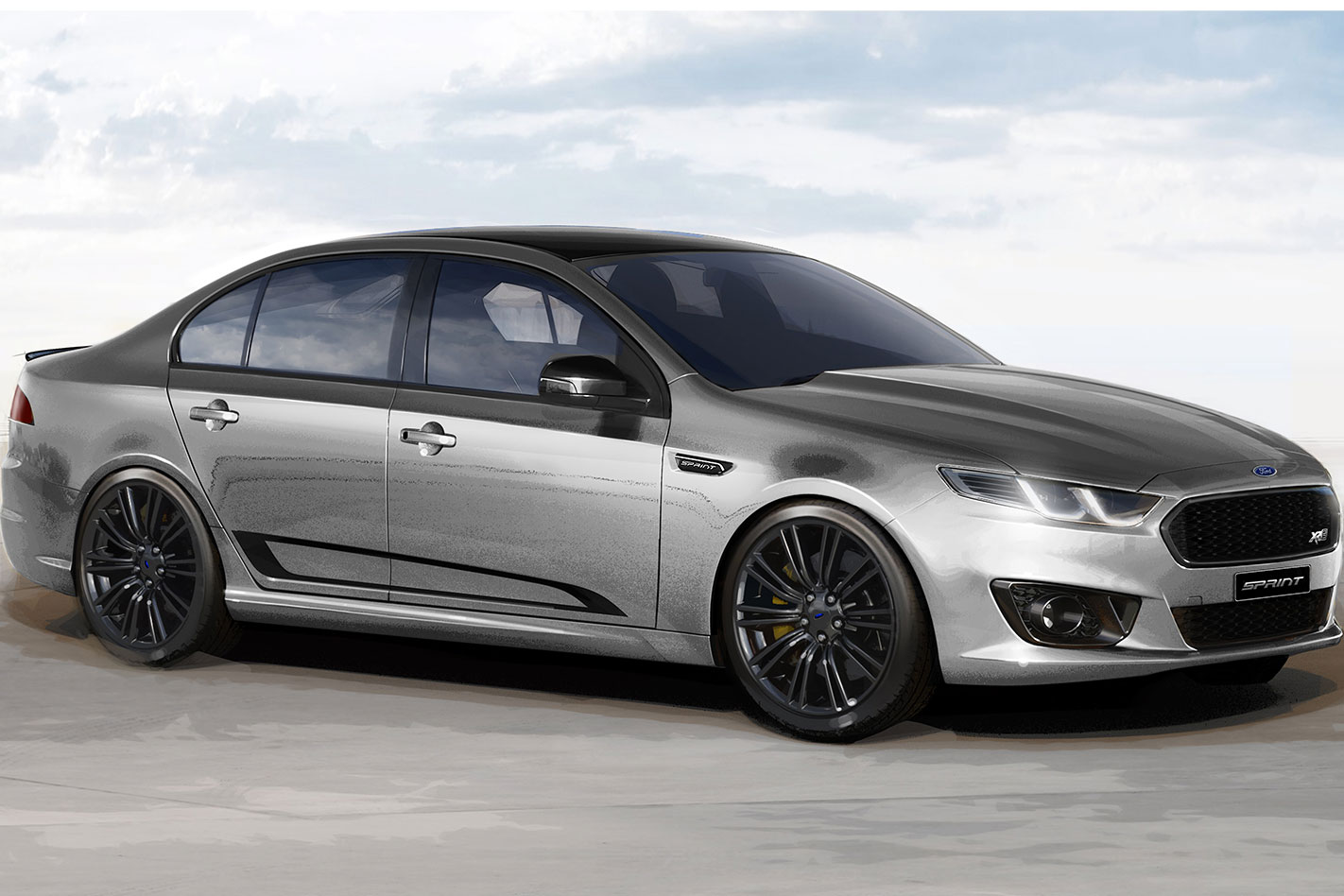
The scale of the changes is impressive, and probably unexpected by many who, as mentioned earlier, assumed Ford would roll out the R-Spec suspension package once again.
Capicchiano says that his team “wanted to go a slightly different way” to the racier setup of the final FPVs. How successful they’ve been we’ll find out in a few weeks when we drive the Sprints, but it’s clear at least that the last Falcon has a very good chance of also being the best.
Unless one is determined to turn a car over within one or two years, you can guarantee your multifunction entertainment system will be antiquated by the time you move it on.
Smartphones, on the other hand, get turned over very quickly – typically less than two years – and that’s if you don’t bend them, bust them, or accidentally bathe them.
So equipping a car with a cutting-edge, portable and easily upgradeable entertainment system may make more sense than paying the premium for an infotainment system that won’t last the test of time.

We currently have phone apps and voice-command systems that do a passable job of posturing as a GPS/SMS reader. One such Android app is Drivemode, which allows access to the phone’s features using a simplified interface, requiring only “broad swipes, taps, or your voice to control navigation, change songs, contact friends and respond to messages without looking at the screen”.
Drivemode has partnered with Honda to create a concept called Drivemode Car, which does away with the entire entertainment stack of a CR-V SUV, replacing it with a simple dock to hold a smartphone.
We’ve seen this before with iPads, where users can access navigation (Google Maps), music, messages, settings, and even the car’s reversing camera.
While data plans may get a bit of a workout using this type of tech, it also opens up in-car navigation to accurate live traffic and alternate routes, or provides access to music services like Spotify, as well as music in the phone’s memory.
The docking of the phone keeps it charged, and because it’s fully wired into the car, the driver can control the phone not only with a fingertip or voice command, but also with wheel-mounted control buttons a-la traditional car entertainment systems.
The latter keeps hands on the wheel and not over by the phone, which is what we see today with more traditional phone docks in cars. Perhaps the next step is to dock the phone directly into the instrument cluster to keep eyes on the road ahead.
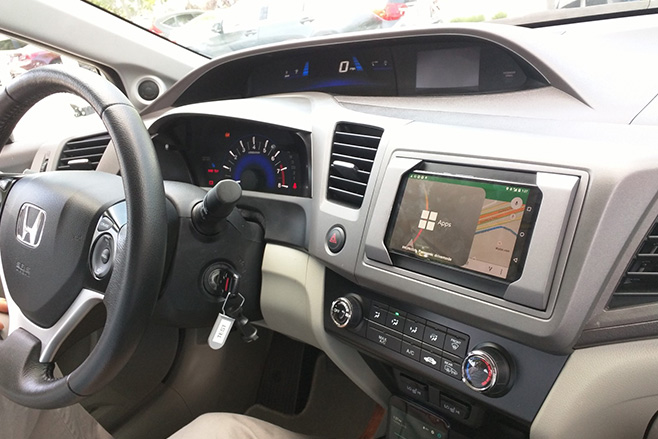
There are several downsides to this concept technology. Removing the traditional entertainment stack from even the most base-level car leaves a big, ugly blank hole when the phone isn’t mounted.
Some navigation screens, particularly those featuring surround cameras for parking, are quite a bit larger than mobile phone screens. Those among us with non-tablet-sized mobiles and 10/20 vision would have to peer at a smaller screen while parking or receiving directions.
There’s also other technology already on the market: Android Auto and Apple CarPlay pull the screen from your Smartphone onto the car’s LCD and allow full access of phone features through the existing system. Ironically, one of the manufacturers working this tech into their current crop of cars is Honda.
Then there’s the user’s smartphone itself, getting washed, bashed and binned constantly. A production dock should accept a variety of devices as the user upgrades and changes phones – it would be a hassle to upgrade and change the dock with each phone. It could also pose a problem if the car has multiple drivers with different brands of smartphones.
Would Honda and Drivemode, and other similar tech, be able to offer multiple docking solutions, and keep up with the constant new, upgraded and changing Smartphone tech? Herein lies the real challenge for this technology.
The Holden Spark will roll out with heaps of buyer-friendly tech, but no standard reversing camera on the entry model.
HOLDEN will reignite its fightback in the city-friendly hatchback class, revealing sharp pricing and user-friendly technology for the Holden Spark due on sale in April.
However, while Holden will promote the Barina Spark replacement as a smartphone-friendly car that will become “an integrated part of their [buyers’] lifestyle”, it won’t follow the growing industry trend of making reversing cameras standard across the model range.
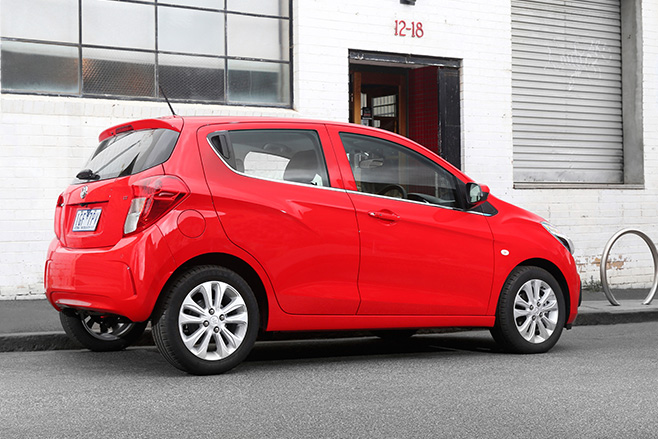
“Holden does not compromise on the safety of its vehicles,” a Holden spokesman said. ”Spark has been designed to meet a wide range of safety requirements and we are confident it will achieve the highest safety rating when tested.”
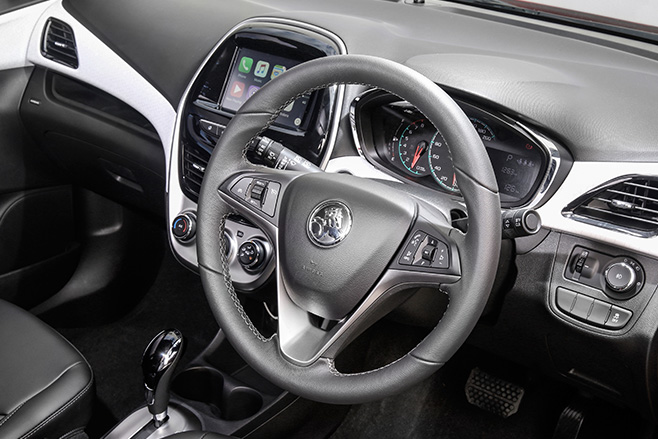
The Spark will start from $13,990 for the LS, powered by a 1.4-litre petrol engine mated to a five-speed manual gearbox. For their money, buyers will get a standard seven-inch touchscreen, steering wheel-mounted audio controls, and compatibility with both Android and Apple smartphones – with the standard inclusion of Android Auto and Apple Carplay.
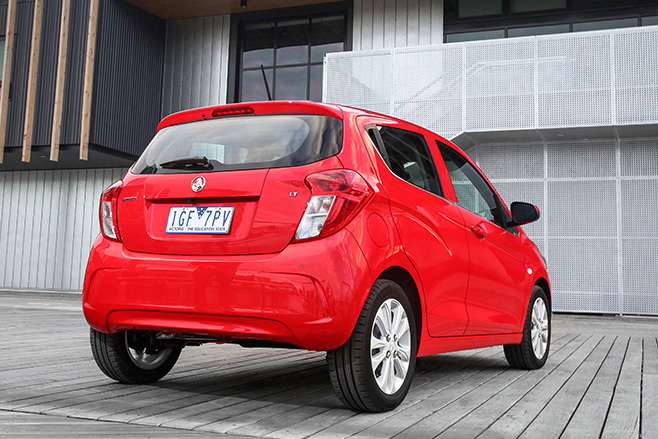
The package is standard on the $5000 more expensive Spark LT, which also adds items such as alloy wheels, keyless entry, push-button start and a leather-wrapped steering wheel.
The switch to cutting-edge tech means buyers will also potentially need to update their smartphones to gain the full benefit of mobile connectivity in the Spark, with Holden saying the software is only compatible with the iPhone 5 up, and Android devices that run the Lollipop version of software rolled out in late 2014.
The Spark is yet to be crash-tested to assess its safety rating, but the city car is believed to have been engineered to offer significantly higher occupant protection than the four star-rated Barina Spark it replaces.
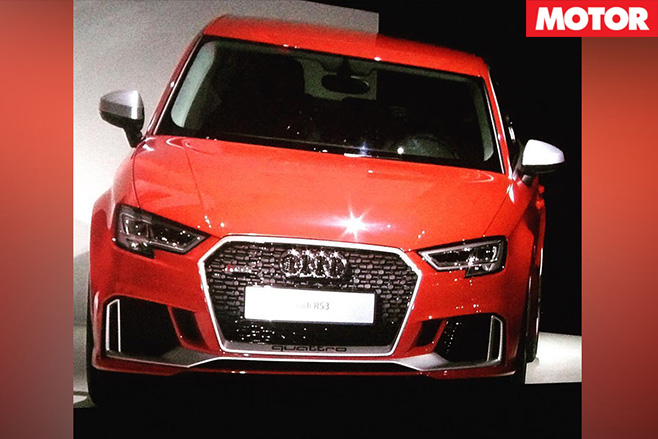
Fans of the S3 sedan can rejoice – a pumped Audi RS3 sedan looks set to join it and we have the US to thank.
Undisguised photos of an RS3 sedan show not only a four-door version of the RS3 hatchback, but also a front-end facelift for the most affordable RennSport model. The headlights in particular gain a ‘C’ shape that wraps into a revised bumper profile with new air intakes.
The vehicle was apparently shown at a dealer event called Audi Summit for Audi of America and these photos were first leaked on an Instagram account of a person at the event, then picked up by website WorldCarFans.
It is unclear whether the vehicle will be shown at the Geneva motor show in early March, where Audi is expected to reveal its Q2 small SUV. More likely the RS3 sedan will debut somewhere in the country it was born for – the US of A.
The RS3 sedan is expected to use the 2.5-litre five-cylinder turbocharged engine from the RS3 Sportback, but there are two reasons it could get more than the current 270kW and 465NM: it appears to be holding the torch for a range facelift; and the Mercedes-AMG CLA45 makes 280kW/475Nm.
The RS3 Sportback claims 0-100km/h in 4.3 seconds, but we at MOTOR have already recorded 3.95sec. How low can a booted RS3 go when handed extra berries then given the boot? We await further details…
The Optima Sportswagon is Kia’s first venture into the mid-size tourer space. It’s a handsome-looking wagon, with obvious styling carry-overs from the highly praised Sportspace Concept.
Luggage space with the wagon body is up 48 litres over the Optima sedan, for a 553-litre total cargo capacity. Exterior size is almost identical to the sedan, the only difference being a 5mm increase in height.
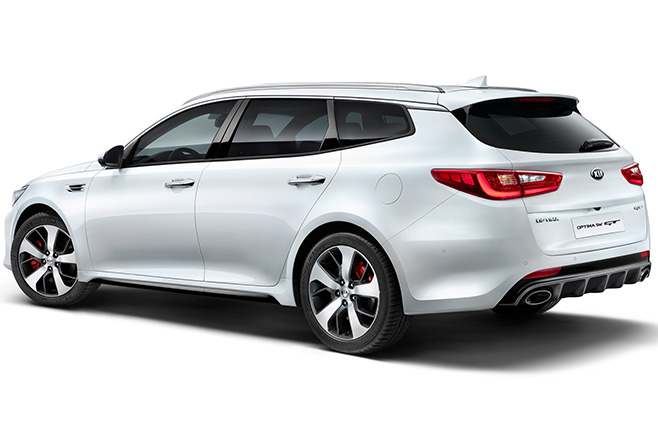
It’s a stylish proposition for wagon buyers with its laid forward D pillars creating an elegant silhouette. LED tail-lights and a sporty rear bumper design add to the athletic look.
The Sportswagon interior looks largely unchanged when compared to the sedan. A new split-fold rear seatback is one addition, allowing owners to drop each rear seat independently.
The electric tailgate lifts to reveal a series of ergonomic features integrated into the cargo area, including a safety barrier built in to the back of the seats, and pop-up sliding luggage rails for securing individual items likely to slide or roll around the boot.
Loading heavy items is made easier with a low, flat boot-lip, and handy tech from Kia called Smart Power Tailgate. Stand near the boot with the Optima’s smart key in your pocket and the boot will open automatically.
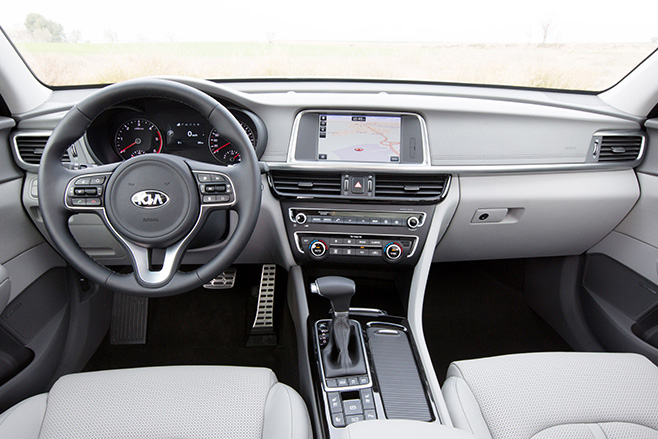
A new infotainment system featuring Apple CarPlay and Android Auto compatibility will be introduced with the Sportswagon release.
Adding a wagon body to the Optima platform has increased overall weight and shifted the bulk of it slightly rearward. Kia claims ride quality will be uncompromised thanks to a retuned suspension set-up. Optional electronically adjustable dampers will be offered.
The Optima Sportswagon will go on sale in Europe towards the end of 2016. Kia Australia is currently considering plans to bring the car Down Under, with no firm details on when that may happen.
The Volvo XC90 looks the part.
From the Thor-like hammer shaped headlights to the bold lines of the big seven-seater SUV, Volvo have stepped up their game in the design stakes to create the Volvo XC90.
WHAT’S IT MADE FOR
It’s a given that the Volvo is made for families. With the addition of two extra seats and plenty of space, there’s no questioning the true meaning of life for the XC90.
STAND OUT FEATURES
True to Volvo’s reputation, the XC90 is packed to the brim with safety features.
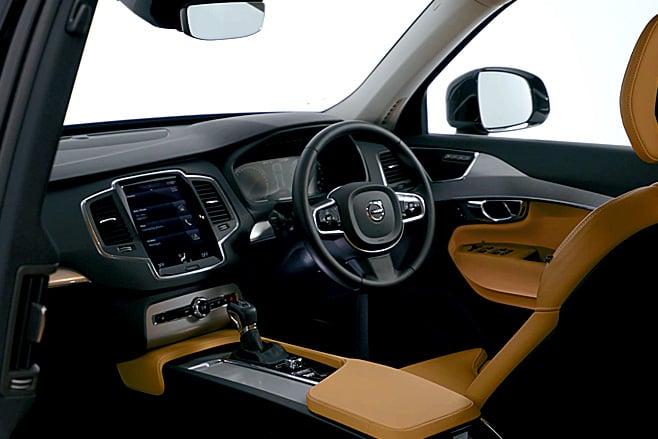
As standard it’s got technology-leading gear, like its self-parking system, stylish interiors and of course, a few safety features. But, for a brand synonymous with safety, a number of the shielding features come at an extra cost.
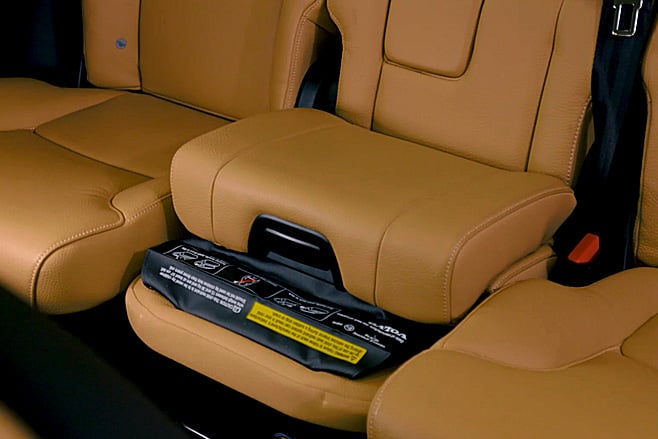
It’s also versatile. The middle-row is adjustable, it’s got build in booster seats and then there are the additional two seats in the back.
But its most exciting features come in the form of the optional extras. There’s plenty to choose from to bubble wrap what is already a safe car. Stand out options include air suspension, temperature control seats in the front and back, panoramic sunroof, and a 360 degree camera view – trust me, when you’re driving a car this big, it really comes in handy.
Then there’s the driver support package – a luxury choice but full of useful features. Adaptive cruise control is always a plus on a long trip, and the pilot assist and auto parking are a nice novelty.
WE LOVE
Features aside, the XC90 has more power than we expected it to, granted its performance isn’t class leading. But It’s an effortless ride for something so big; even in a typically noisy diesel engine, the XC90 is smooth and quiet.
This comes as an added bonus when we talk fuel economy. For a car that weighs in at almost 2 tonne, one tank of fuel will get you pretty far. The diesel Inscription variant managed to drive from Melbourne to Adelaide, to the Barossa and back to Adelaide on less than one tank of fuel. Anything that takes a bit of the stress out of such a mammoth drive is alright in my books.
Then there is the space. As soon as you see the beast that is the XC90, you know it’s not going to falter in the space department. The seats fold down flat so there’s enough room in the boot to move a small apartment.
Obviously, being a seven-seater, this space is compromised when the extra seats are clicked into space, but even then it manages to fit enough gear for a family outing to the beach. Not to mention the back seats fit my mum who made a conscious effort to tell me how comfortable she was – granted she’s only 5ft2.
THINGS WE’D LIKE TO CHANGE
For a brand synonymous with safety, we wonder why the all-singing, fully-specced XC90 doesn’t come with the safety features as standard.
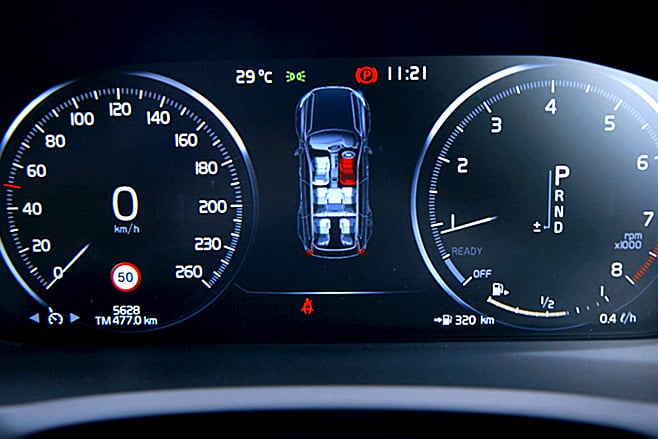
There are a few things missing though, like the limited storage in the front, and no rear USB ports, which I think is a strange omission.
The noisy air conditioning was annoying and the centre touch-screen, which looks like a tablet, isn’t as responsive as one would hope – plus, fingerprints drive me insane!
As for the turning circle, let’s just say we hope you’re comfortable with 3 point turns.
WHO’S IT MADE FOR
I’d love to challenge a stereotype here and tell you the Volvo XC90 can be enjoyed by everyone. And in some regards, it can – it’s nice to sit in, safe and I grew attached. But it reaches its full potential when filled with a family.
Thankfully by mid-afternoon the last rain clouds had gone, allowing the Bentley boys to roll EXP10 – the main attraction of the VW Group’s annual press conference held back in July – onto the Tempelhof tarmac.
Officially, the car is no more than a styling exercise, but behind closed doors Bentley is working on the next step in the evolutionary process. Its desire to make EXP10 a reality is obvious in the fact that this one-off concept starts and drives, which is why we find ourselves standing in the rain at a former Berlin airport.
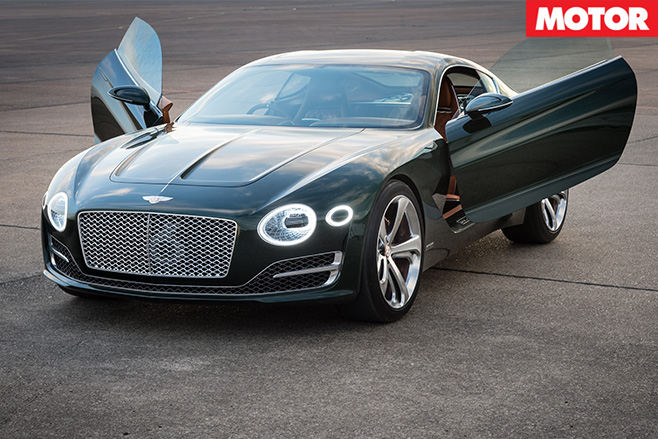
EXP10 was designed by Sangyup Lee under the direction of Bentley’s Director of Design Luc Donckerwolke. Even if it wasn’t painted British Racing Green, it wouldn’t take an expert to identify the coupe’s provenance.

Bentley’s latest concept was completed just in time for the 2014 Paris Motor Show, but bosses pulled the pin at the eleventh hour, claiming the car needed styling tweaks and closer attention to detail. We’re not familiar with the changes made, but it’s a successful piece of design, conveying plenty of emotion and a strong sense of occasion.
Further changes will be required in the move to production, including extending the wheelbase for more cabin room and bringing the lights in line with global requirements. The final product, however, should not differ greatly from what you see here.
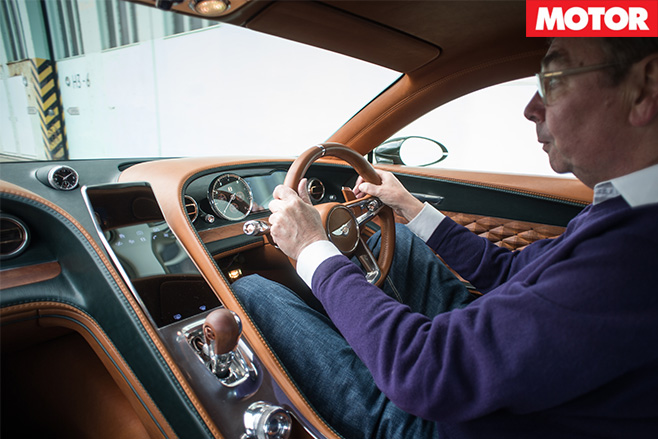
There is not a single piece of plastic in sight. The dominating material is leather, dyed saddle brown and contrasting dark green, but chrome is also in abundance, with copper accents here and there.
There is plenty of wood, too, with the door panels milled so the pattern mimics the diamond stitching on the seats. It’s a very special environment which leaves a lasting impression; it looks, smells and feels good, yet is totally functional.
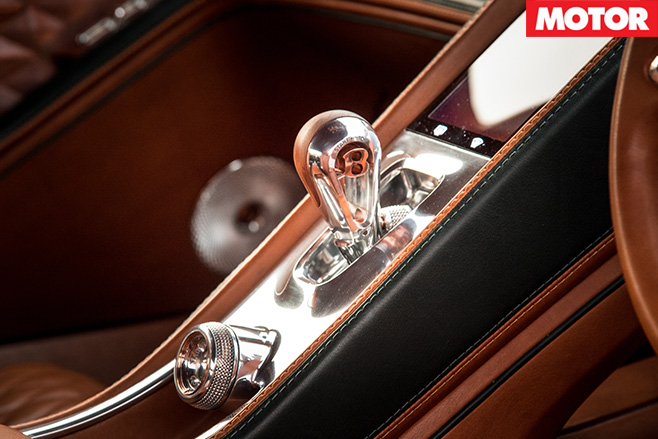
Like all show cars, the EXP10 is a bit of a diva, and it takes three steps to coax it into action mode, all of which are governed by a small box under the dashboard. First, flip the ignition toggle switch then stab the small black button to fire up the engine.
Finally, wait a couple of seconds before selecting drive by pushing the appropriately lit symbol. With a subtle jolt, the seven-speed dual-clutch ’box engages first gear.
The steering and carbon-ceramic brakes are from the Audi R8. Bentley’s R&D chief, Rolf Frech, refused to disclose the identity of the final intended drivetrain, but his smile was so broad that anything other than a V8 will be a big surprise.
Bentley could theoretically adopt the 3.0-litre twin-turbo V6 engine from Porsche’s parts-bin and mate it to hybrid drive, but it’s worth knowing that Weissach is currently laying the finishing touches on a new generation of more efficient engines.
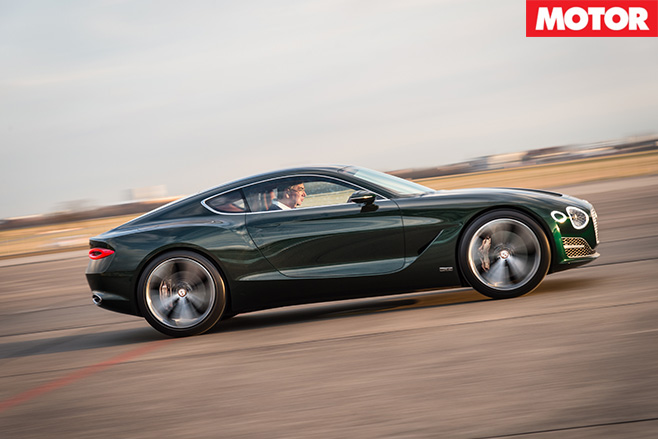
Not that we are attempting any such heroics today. While we are behind the wheel and moving, we’re not exactly ‘driving’ the EXP10. The maximum allowable steering lock is half a turn, which gives the car the turning circle of a freight train. And, the minimal clearance between the custom wheelarches and handmade 21-inch Pirelli slicks – 305/40 up front, 335/40 at the back – results in an awful grinding noise over the slightest of bumps.
R&D chief Frech is bullish about Bentley’s vision for this new sports coupe, though. “EXP10 is our vision of a powerful yet luxurious two-seater sports car,” he states. “It would have to be the very best in terms of performance, handling and roadholding.”
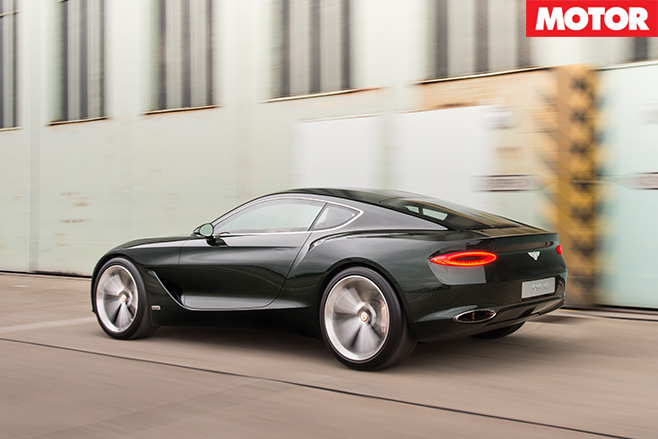
MSB will be used for all future Crewe products bar the Bentayga SUV, and its front-mid-engined layout should offer better weight distribution than the competing modular structure being developed by Audi for the next A8.
With the new MSB-based Continental GT set to duck under the two-tonne mark, the EXP10 will need to be in the region of 1750-1800kg to provide enough dynamic differentiation between the two.
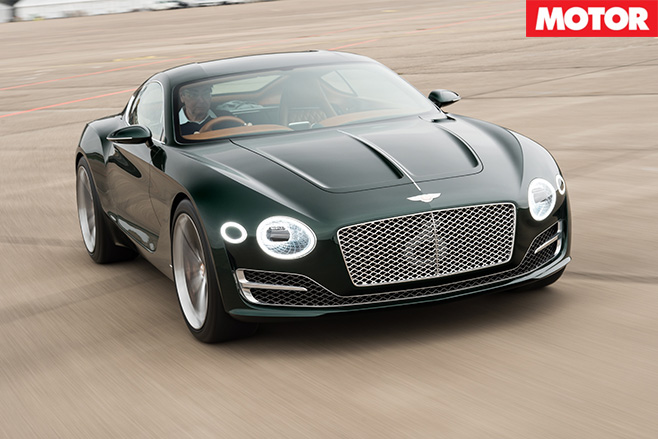
Off the record, however, VW bosses are happy to share their thoughts on the potential model range that would result from the creation of the EXP10, including a roadster, lightweight special and possibly a Porsche 929 twin, in coupe and convertible form. It would also give Bentley a more appropriate vehicle on which to base its burgeoning GT racing program, than the Continental.
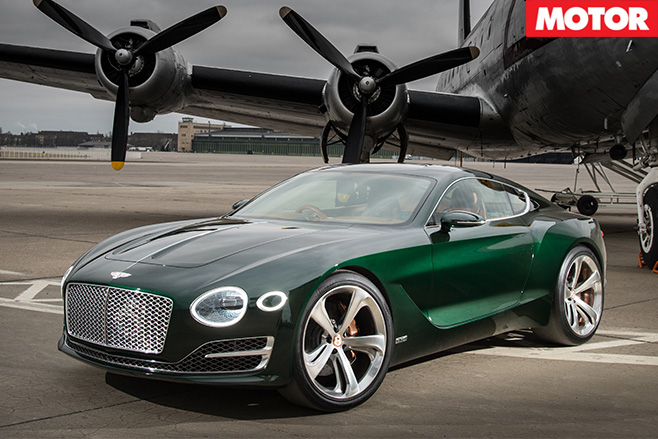
Despite this, the combination of a new level of dynamic ability and Bentley’s traditional craftsmanship makes the EXP10 project an absolute no-brainer.
Yes, this is MOTOR, not MILITARY, but this video is very cool, and not just because it has lots of snow in it.
As you might expect, tank drivers need plenty of training. The M1A1 Abrams might only be able to travel 70km/h on tarmac and 50km/h off road, but it weighs over 60 tonnes, so if you make a mistake it’s going to be quite a clean-up job.
This video shows U.S. Marines undergoing training in Norway to improve their capabilities of operating in cold-weather environments, which appears to involve driving very sideways as often as possible.
It appears that although tracks work brilliantly in mud or gravel or sand, they struggle to put 1120kW of turbine power to the ground on sheet ice. Practice makes perfect.
Mazda has fired up the production line at its Hiroshima plant to build a brand-new CX-9 SUV, the largest in Mazda’s SUV range.
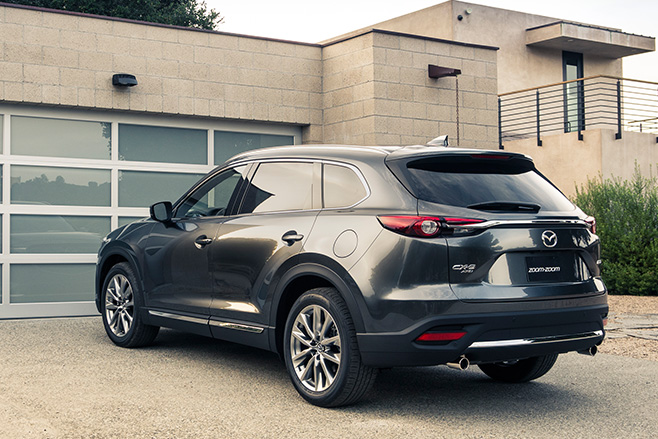
The new generation CX-9 is due to arrive in Australian dealerships in mid-2016 and promises to increase refinement over the current model. A quieter cabin and improved fuel economy have been in Mazda’s sights during development. A press release issued by Mazda says the seven-seater CX-9 will offer buyers ‘an indulgent experience of quality and comfort that goes beyond specs and functionality.’
Coinciding with the CX-9’s arrival is the introduction of a new engine, a turbocharged 2.5-litre petrol four-cylinder with direct injection called Skyactiv-G 2.5T. This new motor replaces the 3.7-litre V6 currently found in CX-9 models is likely show up in the highly anticipated Mazda 3 MPS hot hatch.
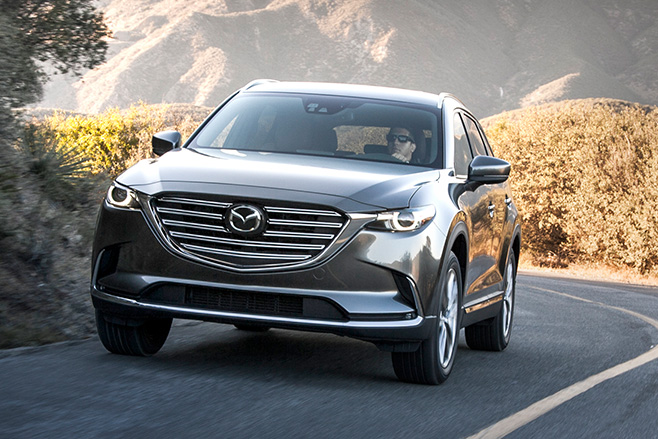
Exterior styling of the new CX-9 ties in with Mazda’s strong ‘Kodo’ design language. The evolution of ‘Kodo’ is identifiable across Mazda’s current range with CX-9 bearing the most resemblance to the recently updated Mazda 6.
The high-end CX-9 has not had a major update since late-2012. Mazda’s smaller SUVs, the CX-3 and CX-5, are selling exceptionally well and challenging rival carmakers to keep up. Mazda expects to sell 50,000 CX-9s globally with most of those going to North America.
CX-9 goes head to head with rivals including Toyota Kluger, Nissan Pathfinder, Ford Territory, Kia Sorrento, Hyundai Santa-Fe and Holden Captiva 7.
This week, Bentley has launched the first ultra-luxurious SUV – the Bentley Bentayga. But with a price tag to match its luxurious title, we took a look at several things we could buy for the same amount of money.
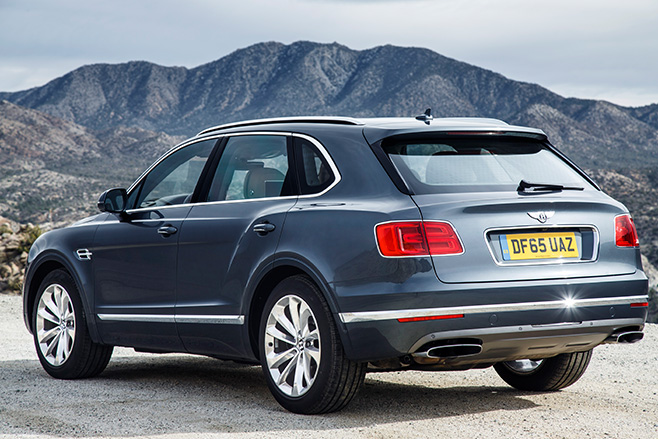
- A small, one bedroom apartment in Sydney. That kind of money won’t get you too far in Australia’s most expensive city, but it’ll get you a room and maybe even a toilet, if you’re lucky. I would rather live in the Bentayga.
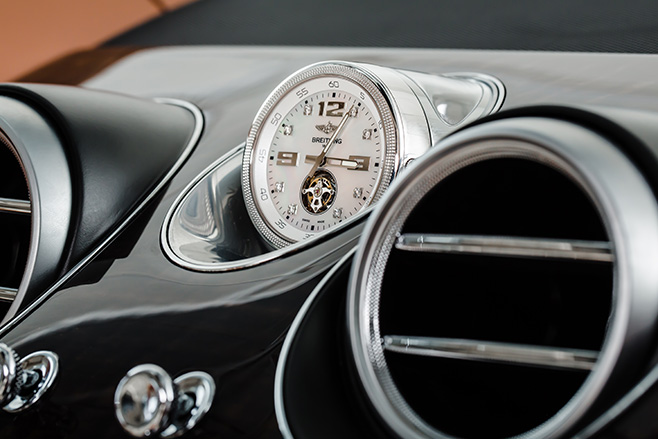
- A Patek Philippe Sky Chart Grand Complication watch. But then again, the Bentayga also comes with a Breitling clock as an option, all be it for an extra $300,000.
- Ten Tiffany & Co rings made from 18k gold and Marquise diamonds set in platinum. A car might be more practical, but then again, a diamond is a girl’s best friend, right?
- A month’s accommodation in the best room at Park Hyatt Sydney.
- Did you know that for around $150,000, you could own an acre of a private island in the Caribbean. Ok, so you won’t get the whole island for the price of the Bentayga, but you’ll get a few acres of it.

- Take your pick of any of the lux-brand handbags. Prada, Chloé, Louis Vuitton, eat your heart out. In fact, you could probably buy close to five of these bags.
- A room full of red roses. We’re past Valentine’s Day but it’s never too late to tell someone how much you love them, even if it does cost close to $400,000.
- Or you could just take all the money and disappear on a round-the-world trip…

Chances are if you’re looking to buy the most expensive SUV in the world, you probably already have most of these things. Either that or you’ve won the lotto and splurging up big, and we certainly approve.
Curious about what else Bentley has in store for the Bentayga? Read about their driverless car concept here.
