
No doubt there’s no shortage in advice when you’re looking for your new car. From your crazy neighbour to your know-it-all dad, we’re sure that the moment you say “I’m buying a car”, the helpful, and sometimes not so helpful, advice starts flowing.
Alpine is edging closer to marking its 2017 return to the sports car market with another Vision Concept that is 80 per cent production ready.
The revived sporting division of Renault will next year take on the Lotus Exige, Alfa Romeo 4C and Porsche Cayman with a sleek-looking two-seat mid-engined coupe that is claimed to run 0-100km/h in less than 4.5 seconds.
Alpine has confirmed a turbocharged four-cylinder engine will power the vehicle, but further specifications are missing.
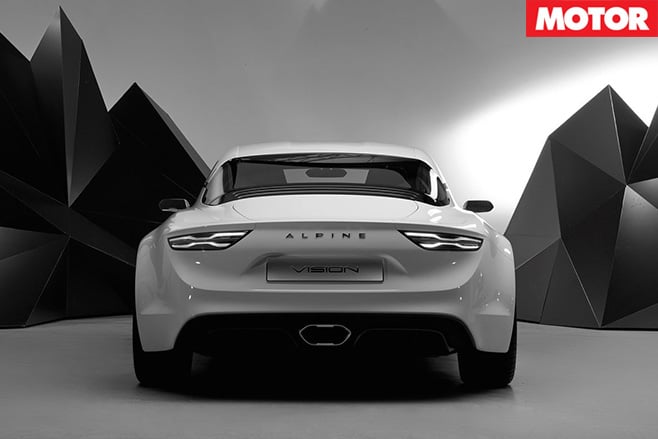
Alpine states that “weight-saving and agility are valued over pure power” and that the production car development would not have been possible without “the knowledge of Renault Sport’s ‘technical wizards’”.
The show car features two pedals and paddleshifters, further hinting at the utilisation of a dual-clutch automatic transmission, while the cabin’s centre tunnel uses a ‘floating’ style that would not permit a manual lever sprouting from it. Alpine’s CEO Bernard Ollivier is on-record saying he forecasts the manual transmission would be dead in five or 10 years.
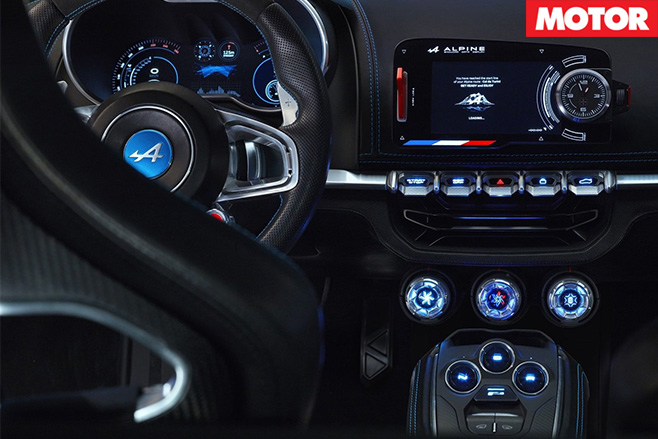
“4C is very, very frugal, very simple … and it’s not very practical for the daily use. “Alpine will be premium, with a French touch, very free and very simple, for France, not for Germany.”
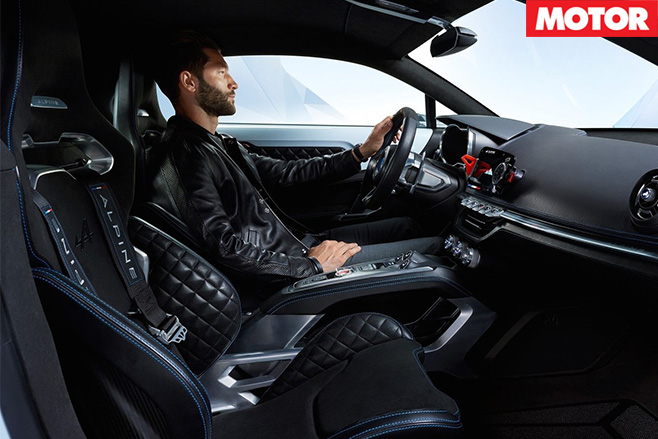
Alpine will unveil its full production version, “before the end of 2016, prior to taking on the challenging premium sports car market in 2017.” It’s a market that Alpine forecasts will grow 50 per cent globally by 2020.
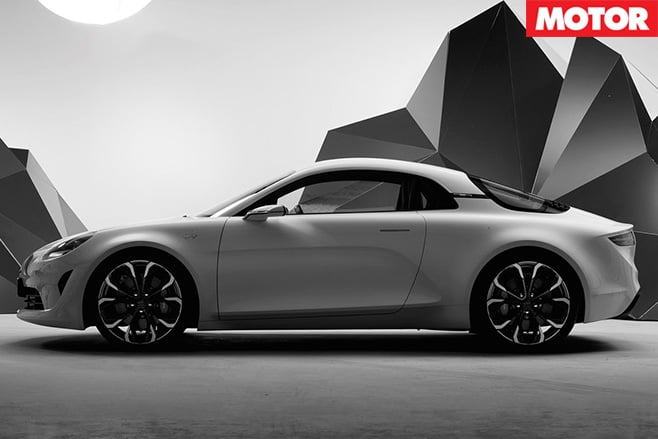
“In terms of Australia we’ve expressed a strong interest for Alpine, we’ve had a very positive response to that business case but it’s not 100 per cent signed off and without the vehicle signed off it’s hard to commit to exact timing,” Renault Australia corporate communications manager Emily Fadeyev told MOTOR.
Bentley, the ultra-high-end luxury carmaker, now offers an SUV in its range. It’s called Bentayga and it’s the most expensive SUV in the world. Understandably, this has caught people’s attention. So exactly why is a Bentley SUV so damn expensive? Well, here are nine things you probably didn’t know about the Bentayga. Maybe they will help you wrap your head around it.
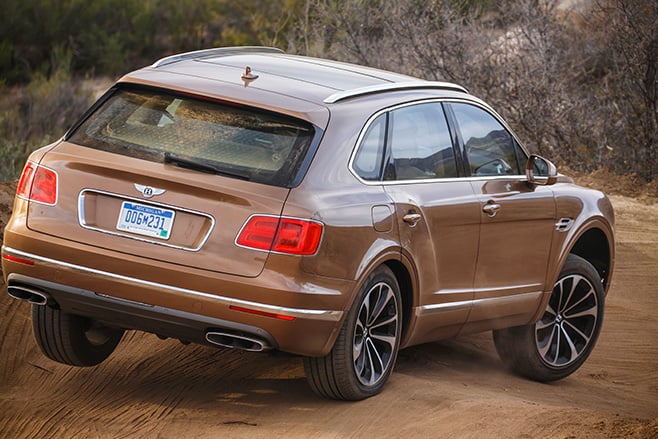
It will cost almost $450,000.
Yes, you read that correctly.
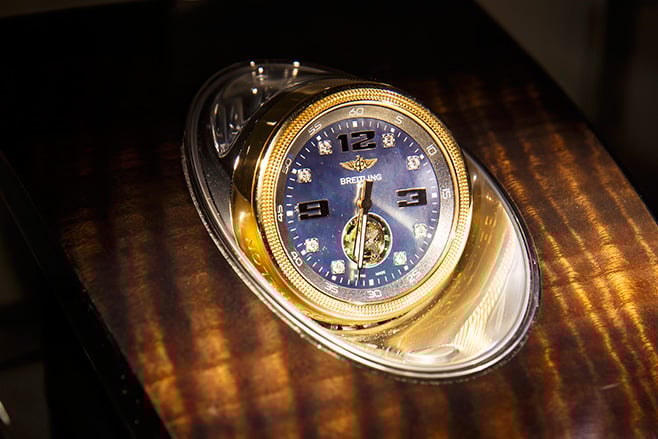
Want optional extras? How about a clock for $300,000?
On top of the $450k price tag you can tick the box for a Breitling clock in the dashboard. Only four of these extravagant time pieces are made each year and two have already been sold. The kicker? All Bentaygas have another digital clock in the instrument display.
It has a top speed of 301km/h
I hope you’re planning a driving holiday to the Northern Territory or a racetrack somewhere because the Bentayga is frighteningly quick. Unfortunately the car doesn’t have a device built in to avoid speed cameras.
It’s the “Big Brother” of cars
Actually you, as the driver, get to play Big Brother with four on board cameras displaying the surroundings of the car on a screen inside.
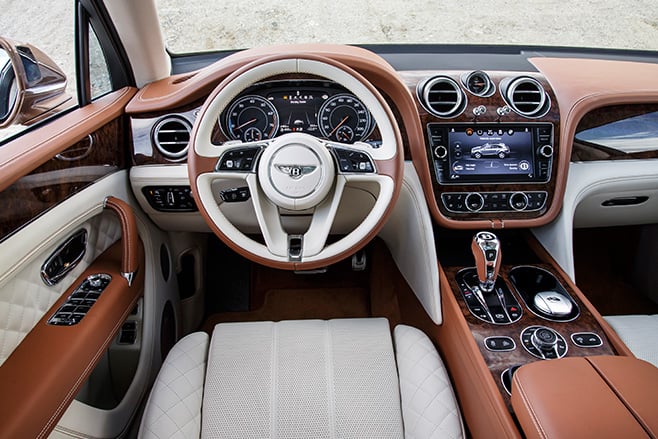
Head-up display
A projected head-up display on the Bentayga’s windscreen allows you to check out your speed and other information without dropping your head from the road and distracting you from driving. It also has night vision. The future is here!
It has a prang warning system
An advanced safety system featured in the Bentayga will let you know, among other things, if there is crossing traffic behind you when you’re pulling out of a car park. Genius
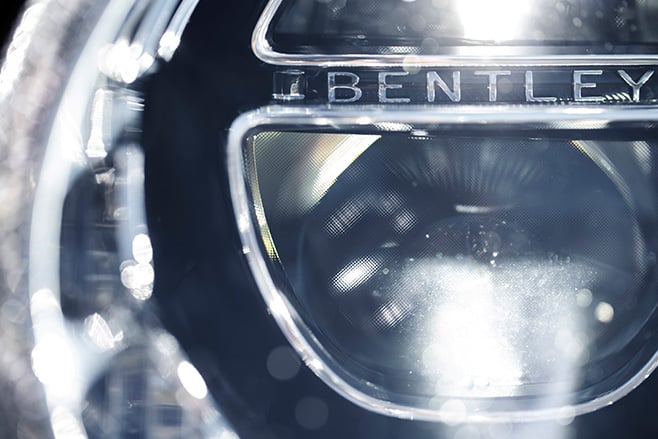
Oh and of course it parks itself.
It can detect parking spaces. So you basically don’t have to do any driving at all.
Passenger cinema
This seems perfect for your average, run of the mill family. The kids can watch Dora the Explorer on the eight-inch screens in the back of the front seats while you’re running them to school, or going diamond shopping. Owners are also given their own tablet.
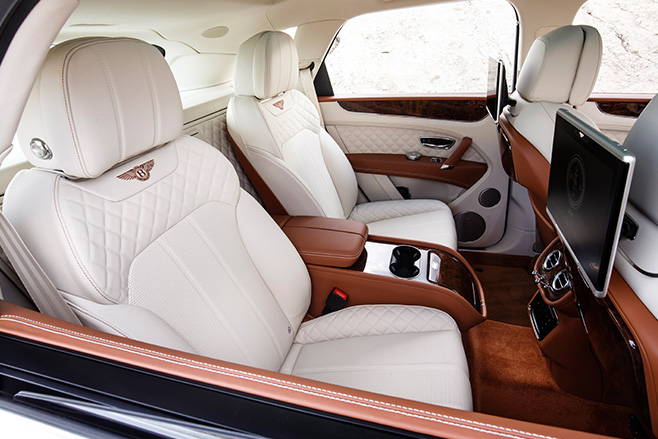
That china set you always wanted comes as an optional extra as well.
If you select the “Mulliner Hamper Set” on your Bentayga order form you will get a refrigerator, fine china set, and food storage area that is easily accessible in the trunk.
The Bentley Bentayga is available in Australia now.
It hasn’t been a great year so far for Elon Musk, the brain behind Tesla Motors. In 2016, his net worth has nearly halved due to a fall in shares of SolarCity and Tesla, and it’s only February.
Musk’s announcement to unveil the new Tesla Model 3 at the end of March may well be just in the nick of time. But the first Model 3, which will be going up against the BMW 3 Series, Mercedes C-Class, Audi A4 and Jaguar XE, won’t start production until 2017.
While very few details have been released about the Model 3 at this time, with the financial issues afoot for the premium electric automotive group, it may work in favour of buyers. Tesla could very well try and increase its sales share in the market and target this electric car at a more affordable price point.
Buying the Model 3 is off the table until March, and we won’t see its first deliveries until mid-2017 or later in Australia. So, in the meantime, here are eight other electric, and hybrid, cars you might consider buying.
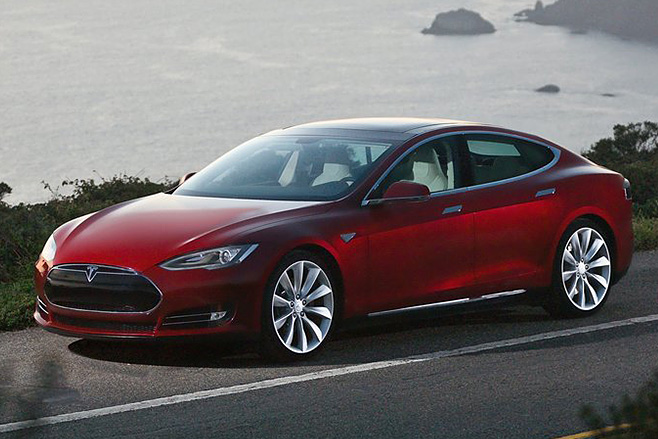
TESLA MODEL S
This all-electric five door luxury car is an eco-friendly, super-fast, luxury sedan.
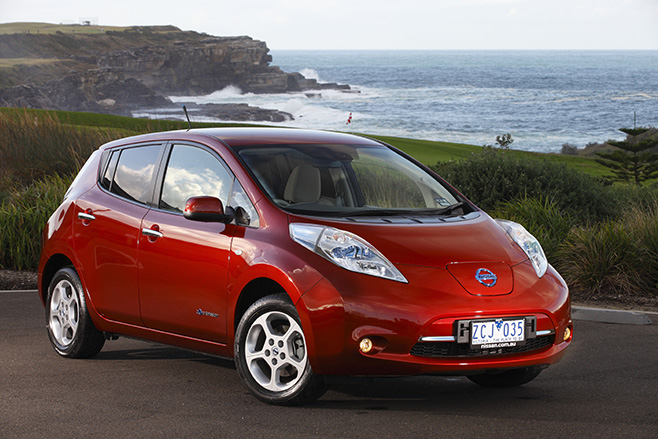
NISSAN LEAF
The Nissan Leaf is a 100 per cent electric, family car.
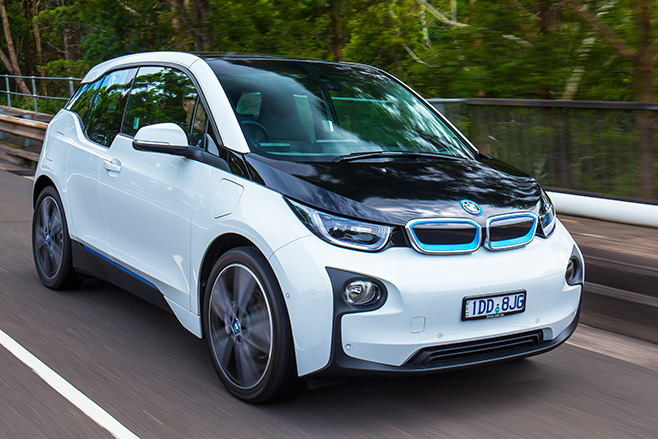
BMW i3
Controversially named Wheels Car Of The Year in 2015, the i3 is BMW’s first electric car and is a designers dream.
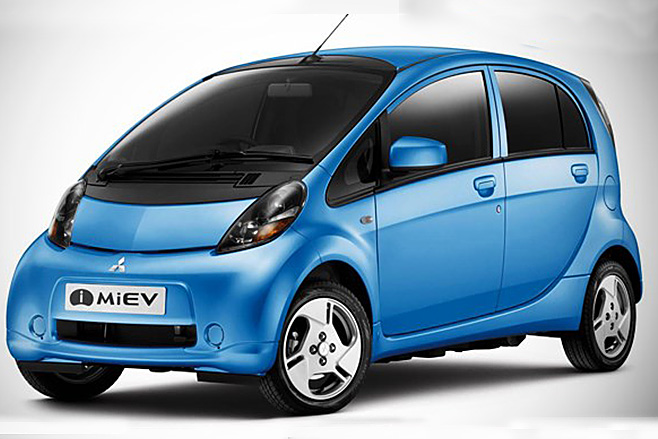
MITSUBISHI i-MiEV
The i-MiEV was one of the first electric cars to hit Australian shores, and while it’s environmentally friendly it’s not so kind on the wallet.
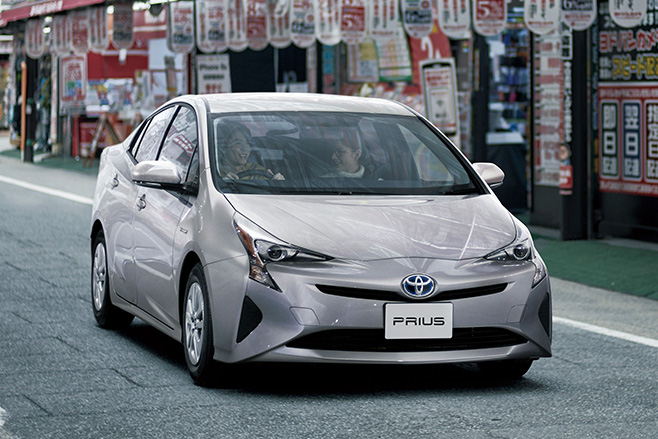
TOYOTA PRIUS
The Toyota Prius is a spacious hybrid, easy on fuel and dollars, but also comfortable for the whole family.
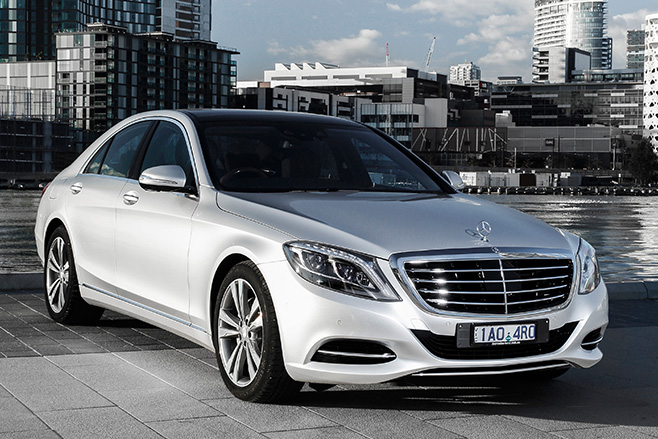
MERCEDES S-CLASS HYBRID
The plug-in hybrid doesn’t come cheap but it’s a luxury hybrid at its finest.
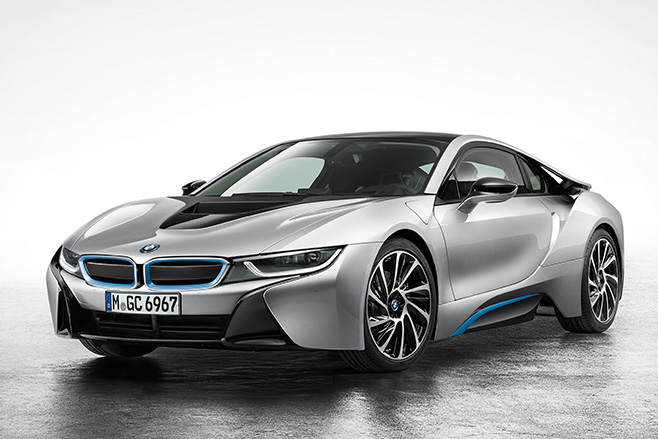
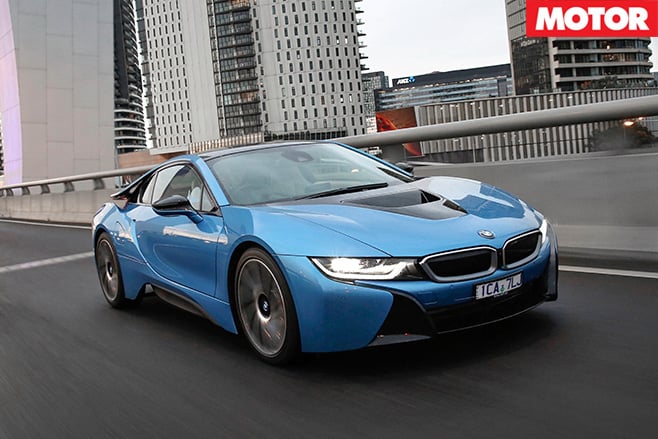
BMW i8
This sporty hybrid coupe may not be the most accessible on the market with its scary price tag, but it certainly looks the part.
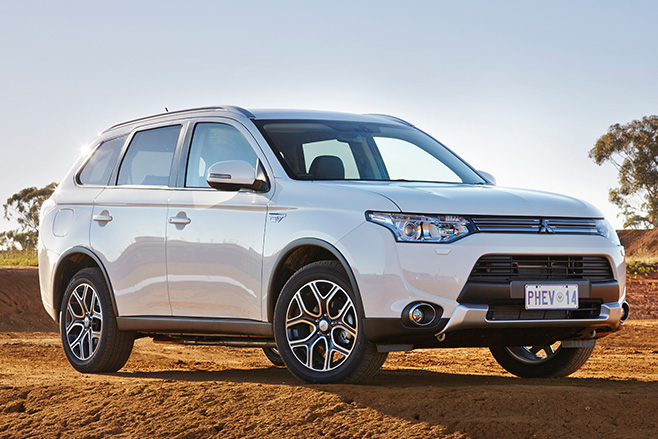
OUTLANDER PHEV
The plug-in hybrid SUV isn’t going to get you as far as other SUVs, but it’s probably the most environmentally friendly.
Our favourite cars are dying and it’s all for nothing – okay, so the cars themselves will continue, but the engines that power them will result in a very different fast car future.
You’ll be well aware that the turbo invasion has arrived; you can’t read about a new model without there being mention of Alfred Büchi’s nifty little compressor.
What began as a trickle has now turned into a tsunami. Soon, real estate in the naturally-aspirated graveyard will be more exclusive than Sydney’s Point Piper. BMW’s M5 was an early casualty, as were a variety of AMG Benzes, but now the writing is well and truly on the wall. Ferrari’s 458 replacement is boosted, and by the end of 2016 only Porsche’s GT motorsport models will be free of forced induction.
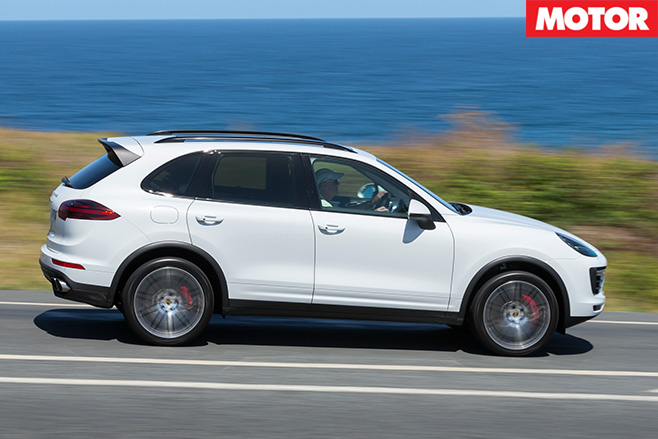
It’s not just the super sports sector that’s being affected, either. More prosaic metal like BMW’s sweet inline-six, the Porsche Cayenne’s golden-tonsilled V8 and the buzzy lump of hyperactivity that powered the last Renault Sport Clio have all bitten the dust. And for what? Fuel economy and emissions, that’s what. Well, I’m here to tell you that’s all rubbish.
There’s good reason car makers are falling over themselves to meet these guidelines, though: the EU has stipulated that from 2019, for every g/km over the average, the car maker will be fined €95 (AU$139) per car registered! The VW Group sold almost 2.5 million cars in Europe last year – that’s one hell of a bill.
The problem is, it’s completely ridiculous, because the figures are a result of a test so unrepresentative of the real world, it might as well be conducted by hobbits in Middle Earth.
We’ll cover the exact process in a future issue, but suffice to say that if everyone drove in the manner described by the EU – or, locally, the Australian Design Rules – it would appear as if the world was in slow motion. Not even the most feather-footed grandma could hope to achieve the number so proudly displayed on the windscreen of every new car.
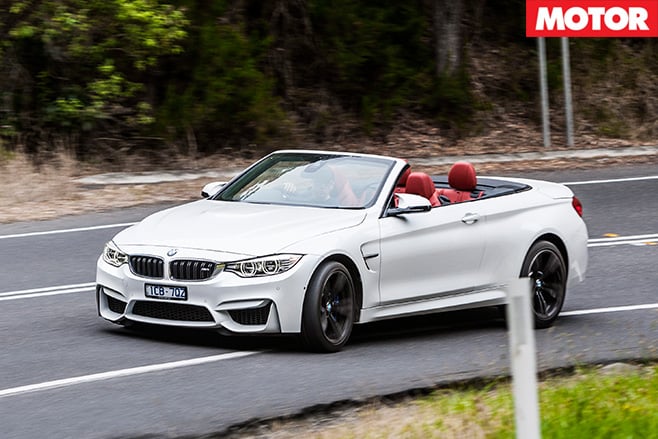
In the real world, however, over almost 1000km of varied driving, the BMW consumed 12.1L/100km to the Porsche’s 10.2L/100km. And before you state the obvious, if anything the Porsche was driven harder than the BMW, with everyone who drove it keen to experience its gorgeous top-end howl.
The only thing this push to turbocharging is doing is widening the gulf between the official claims and what owners will actually achieve. Ironically, it’s the cars that benefit most that could spell the end of the current test by highlighting its farcical nature.
Because they’re allowed to start with fully charged batteries, plug-in hybrids are able to complete most of the test on battery power alone. In the case of the BMW i8, for example, this results in a claimed fuel figure of 2.1L/100km.
Now, don’t get me wrong, in the right place – preferably under the bonnet of a Nissan GT-R or Subaru WRX STI – turbos are great. But, by and large, when it comes to driving thrills, naturally-aspirated engines are better.
Performance cars will continue to get faster and be great to drive, but the more we sample this new forced-induction future, the more we feel that for most manufacturers, the true heroes, the ones that will be remembered in decades to come, have already been built. And all because of a group of paper-pushing bureaucrats whose idea of driving pleasure is finding a park outside the local coffee joint.
RENAULT has revealed the latest form of its Alpine Vision, bringing the once-dormant brand yet another step closer to becoming a showroom reality.
Jump on board with Wheels (above) as we join rally ace Jean Ragnotti piloting an A110 at the Alpine brand’s revival in France.
Set for a 2016 Geneva Motor Show debut next month, the mid-engined two-seat coupe concept is said to be “80 percent” true to a production version of the A120, slated for a reveal at October’s Paris Motor Show after a series of outlandish styling exercises and teasers.
According to Renault spokeswoman Emily Fadeyev, Australia has expressed “strong interest” in the brand, with the outlook being “extremely promising” for a probable release sometime not long after European-market sales start in 2017.
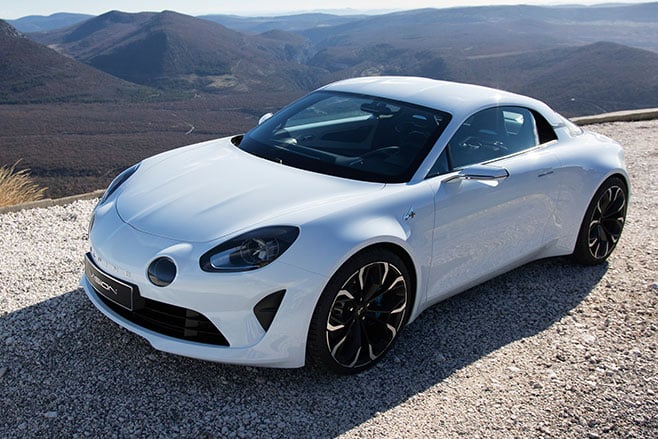
Highlighting its aspirations as a Lotus Exige and Porsche Cayman alternative, the Alpine Vision is powered by a four-cylinder turbo petrol engine of about 1.8 litres in capacity, delivering a rumoured 220kW to the rear axle via a dual-clutch transmission for “explosive performance potential” and “phenomenal acceleration”.
This enables 100km/h from standstill in less than 4.5 seconds, aided by a promise of lightness and dynamic agility to match, further underlining the French firm’s driver focus. Speculation also suggests that the coupe’s kerb weight could be as low as 1100kg.
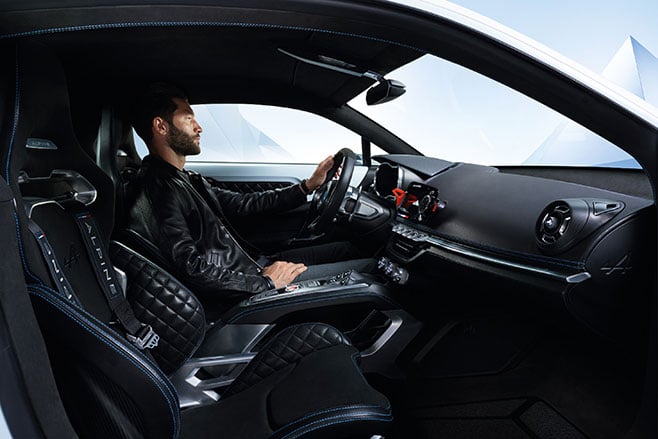
Renault announced it would relaunch the dormant Alpine brand nearly four years ago, saying it had at last formulated a business model that should see its products sell in solid numbers worldwide. The premium sports car market currently supports about 200,000 units, but projections suggest it could top 300,000 by 2020. Clearly, the French want a slice of that action.
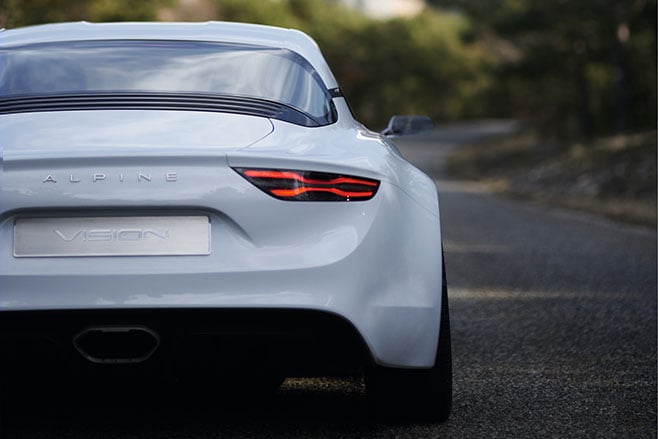
Using albeit highly modified versions of conventional running gear found in contemporary Renaults of the time, but sporting a sleek coupe style, Alpine production started with the 1955 A106, of which 251 were sold.
The real volume models were the A110 (7579 made between 1961-77), A310 (11,616 for 13 years from 1971), and GTA (6054 delivered from 1984-90).
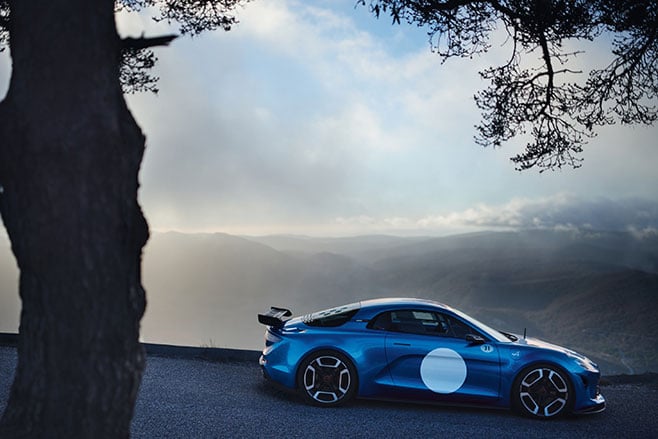
All up, just 26,666 Alpine-badged vehicles were built.
Championship status or we won’t be at Albert Park after next year, warns series boss.
V8 SUPERCARS boss James Warburton has emphatically declared that “we won’t be at the Australian Grand Prix at Albert Park in 2018” unless the organisers agree to the popular V8 races having championship status.
Asked when V8 Supercars, a long-time support category at the Australian Formula One round, would gain championship status there, Warburton said pointedly: “You’ll have to ask the AGP Corporation.”
V8 Supercars is contracted to be part of the support card at the Albert Park, Melbourne, event until next year, after which its appearances are up for re-negotiation.
The category (and its touring car predecessors) has been part of the AGP bill since 1985.
V8 Supercars has regularly clamoured for the races it runs at the AGP to count towards the V8 Supercars Championship, occasionally threatening to stay away unless its demands were met.
In 2007, V8 Supercars and the AGP Corporation failed to agree and V8 Supercars Australia went through with its threat.
Known in recent times as the V8 Supercars Challenge, the non-championship racing at the AGP has been memorable for several reasons, if ultimately meaningless in title terms.
In 2011, much-loved Kiwi Jason Richards, who was forced to leave full-time driving due to a cancer diagnosis the previous season, made an emotional one-off return in the Albert Park races, taking second in the second sprint of the weekend. The brave Richards died later that year.
Young gun Scott McLaughlin won his first V8 Supercars race in 2013 at Albert Park, returning the next year to take the event outright and providing Volvo with its first race win on the brand’s return to Australian motorsport.
Historically, there has been regular blame-shifting about why the AGP wouldn’t have a championship V8 Supercars race on the bill.
Certainly there are plenty of grands prix elsewhere that have domestic championship races on the support card. But some in the AGP office believed that the V8s enjoyed the exposure alongside F1 but never liked playing second fiddle.
One impediment to championship status was cleared in 2011 when a dedicated full-size pit facility was built next to the F1 pits. Another major obstacle was overcome when broadcast rights for both F1 and V8s landed with Foxtel/Ten.
Eighteen months ago, Australian Grand Prix Corporation chief executive Andrew Westacott said all impediments to the status change had gone, and that a V8 Supercars championship round could be at Albert Park as soon as 2015.
Obviously that didn’t happen, leaving Warburton frustrated after V8SA provided ideas for race formats and scheduling, tailored to dovetail with F1’s strict requirements.
Westacott told Wheels that “contractual complexities” meant no chance of championship status for the V8s this year, but that all parties were continuing to work on a solution for next year.
Dismissing suggestions the process was an “ongoing saga”, Westacott insisted it was more of an “ongoing pursuit” of an outcome satisfying all parties.
The Albert Park program in its entirety has to be signed off by Formula One Management, which means Bernie Ecclestone.
This year both the GT and Porsche Cup racing at Albert Park on March 17-20 are part of their respective championships.
New fan-friendly arrangements include 14-and-unders admitted free, meaning a cheaper weekend for some families.
Production of the turbocharged six-cylinder S60 Polestar ceases this month, however an AMG-baiting turbocharged and supercharged four-cylinder replacement is confirmed to arrive later this year.
Volvo Australia expects the lightly facelifted S60 Polestar will be faster and more powerful than the outgoing model that produces 257kW/500Nm and claims a 4.9-second 0-100km/h.
“The aim is actually to exceed that [3.0-litre] level of performance,” Volvo Car Australia director of corporate and PR communications Greg Bosnich confirmed to MOTOR.
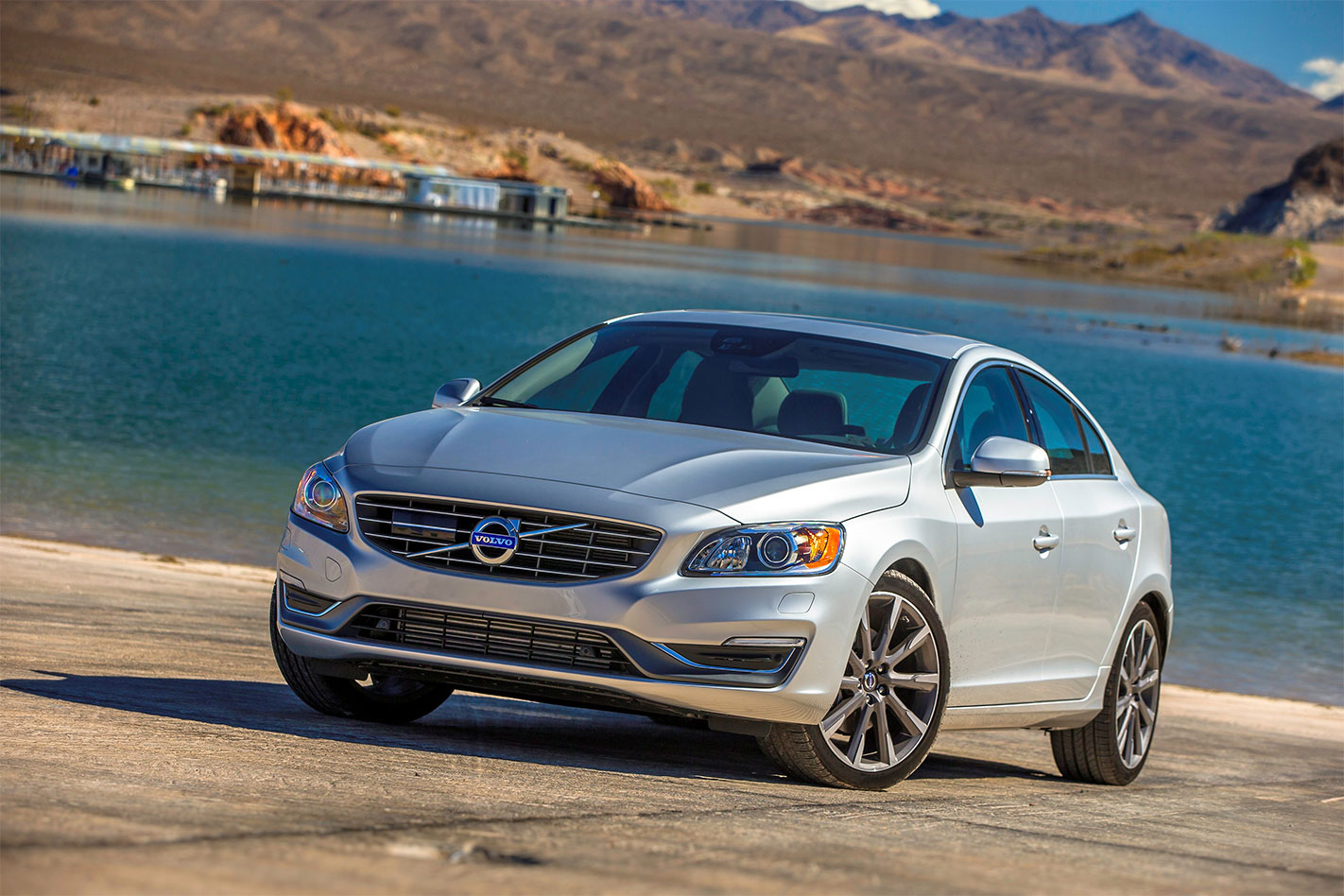
Bosnich says the engine will be a highly tuned version of the 2.0-litre petrol from the Drive-E family.
In the XC90 large SUV, the turbocharged and supercharged unit produces 235kW and 400Nm. Volvo could potentially eclipse the 280kW and 475Nm produced by the Mercedes-AMG A45 that is currently the most powerful 2.0-litre production vehicle.
Bosnich says, “at this stage we’re planning towards the end of the year” for an Australian introduction following the “likely possibility” the sports sedan will debut at the Paris motor show in September.
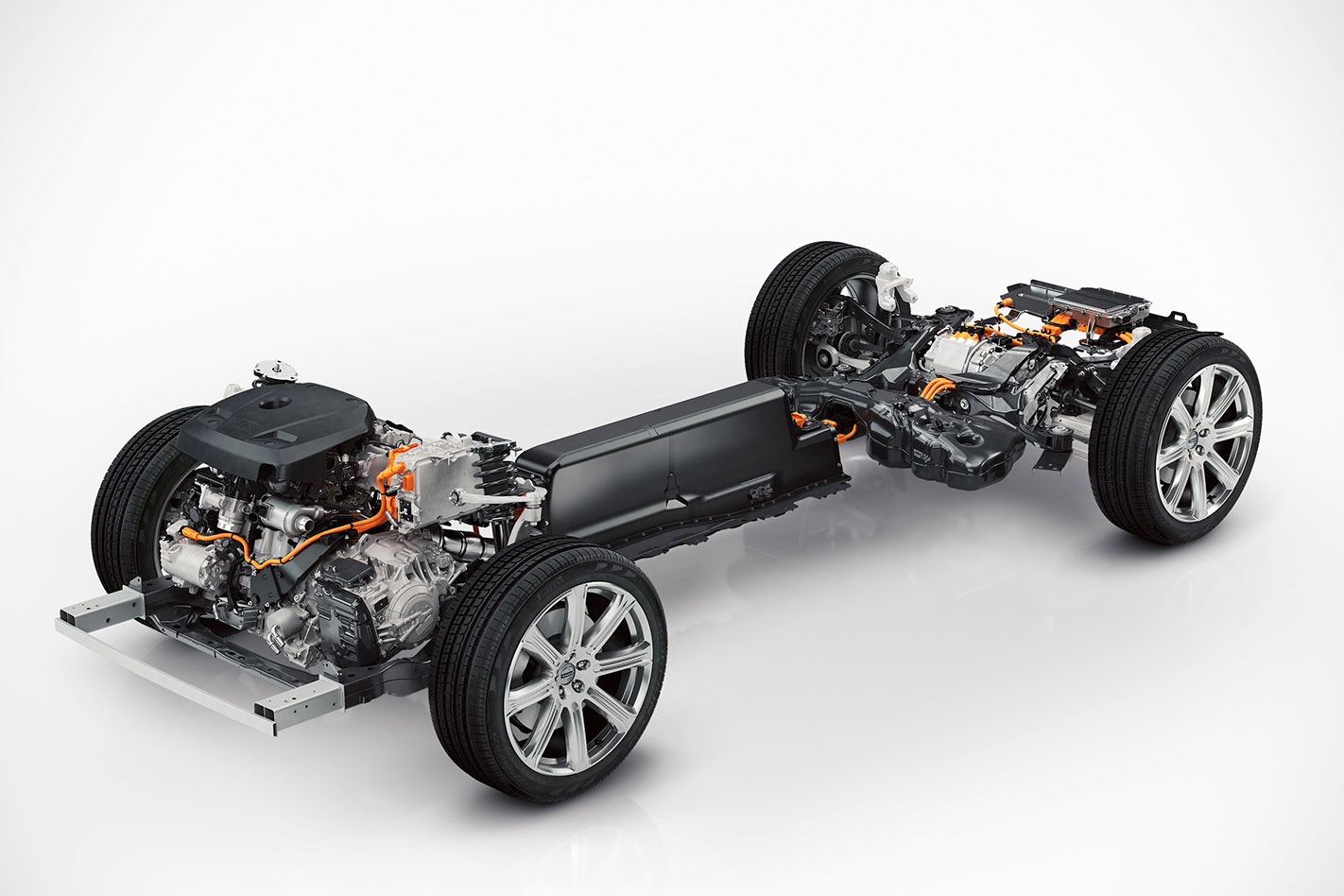
“We have leadership in electrification, and that will happen, but for the initial launch of the [2017] Polestar will be similar to the engine strategy we have in the XC90 currently, so it’s the four-cylinder 2.0-litre engine,” adds Bosnich.
He says Volvo has been happy with the sub-$100K price position of the S60 Polestar, and this is unlikely to change significantly going forward. Particularly with a new Audi S4 and Mercedes-AMG C450 on the way, however, that may change by the time the S60 Polestar arrives in the fourth quarter.
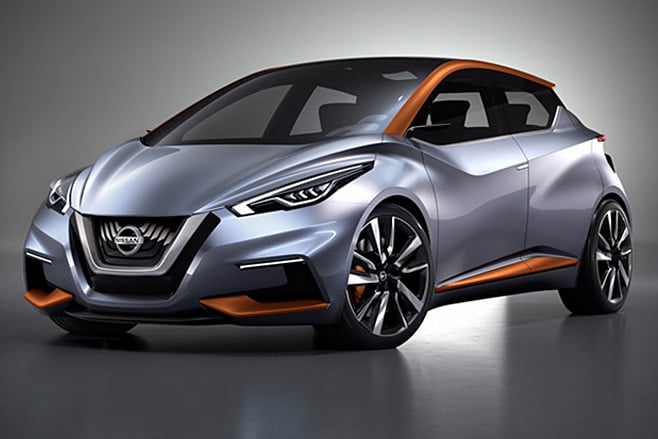
Nissan’s exciting Sway concept, a replacement for the aging Micra, showed some promise with rear suicide doors and exposed aluminium in the front seat frames. We’re hoping to see more of this at Geneva 2016, but with Nissan’s recent history of stripping down models for the Australian market – notably the omission of automatic emergency braking in Qashqai and X-Trail models – we may not see it down under.
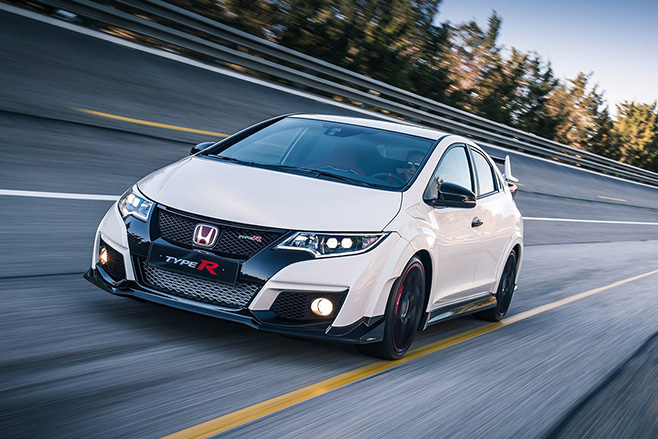
Renault won’t be pleased about losing its lap record at the Nurburgring to the Honda Civic Type R, and Honda won’t be keen to give up the crown. With a new, longer, wider and faster Civic slated for release, we expect this to be Honda’s sportiest hot hatch effort yet. We may catch a glimpse at Geneva 2016. Will it be enough to pip Ford’s excellent, thrill-seeking new RS?
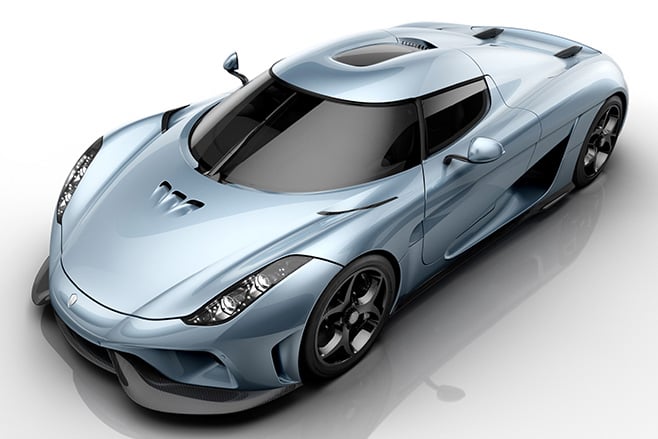
Those wild engineers at Koenigsegg well and truly outdid themselves last year with an absolutely bonkers creation: a 1120kW hypercar with a claimed 0-400km/h blast of under 20 seconds. Oh, and it’s a hybrid. Take that, Toyota! There’s speculation the Swedish carmaker may have something in store for us this year as well…
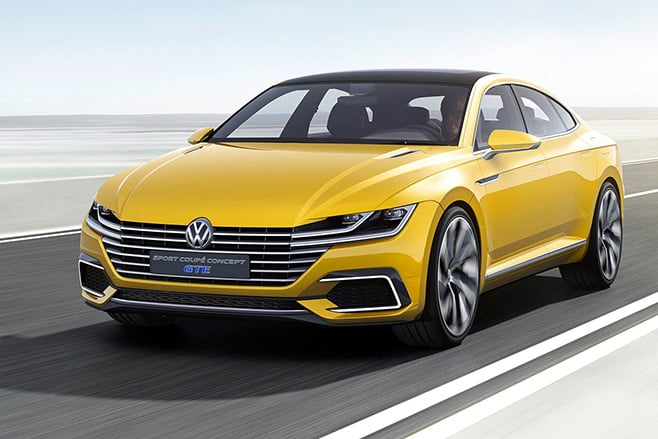
Volkswagen had an exciting vision for the future of the sedan, but in the wake of last year’s Dieselgate scandal we didn’t hear or see much else of Concept GTE. Does VW still see the swoopy fastback-style saloon as a viable innovation for future models?
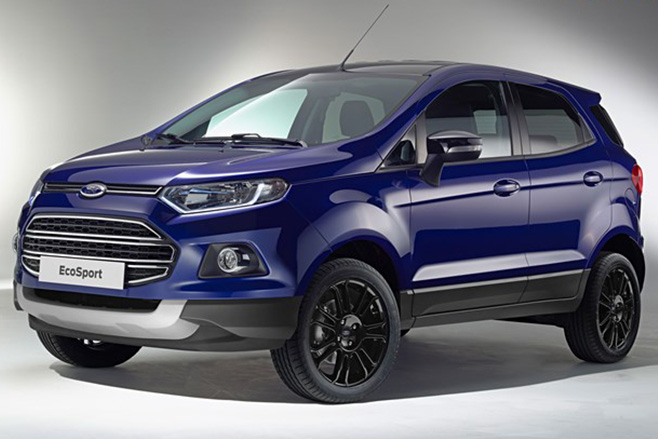
Ford refreshed the EcoSport last year, but with the announcement of Kia’s sleek Niro baby SUV, a new Subaru XV concept and the CX-3 and HRV dominating the market – where does this leave Ford? Could we see a spruced EcoSport with self-parking and other premium tech trickling down into the crossover segment?<
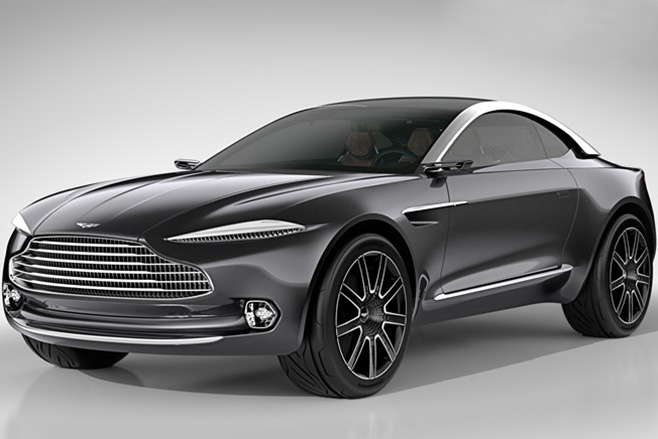
In the luxury sector we saw Bentley’s foray into the high-riding SUV space with the Bentayga. Could Aston Martin have a prototype ready for this year’s event?
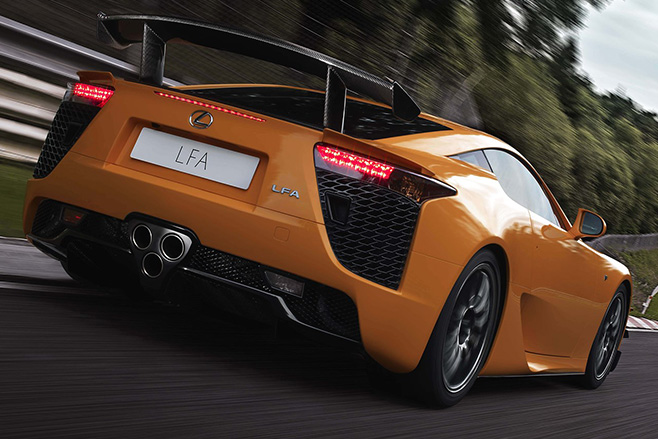
Lexus have relied on strong value and high equipment levels to beat their German counterparts, but last year’s promise of more halo cars really got our attention. Since then, the Japanese carmaker has added turbocharging to the IS. We’re hanging out to see what they have for us this year.
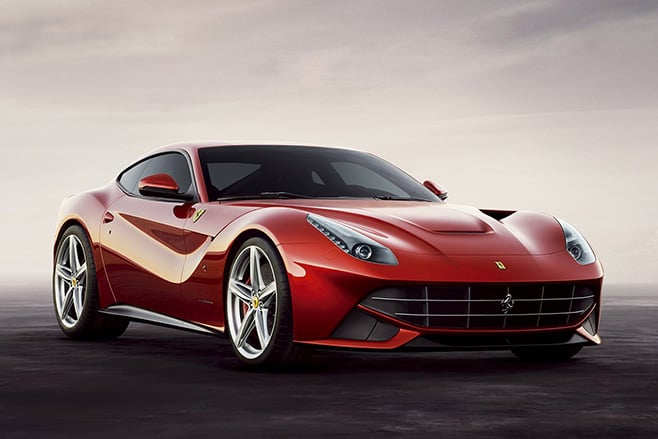
With tighter emission regulations globally and a shift toward fuel-efficiency, where does this leave Ferrari’s iconic V12, the one used in the F12 Berlinetta? Last year, CEO Amedeo Felisa promised he would keep it going until further expected regulation tightening happens in 2020. That sounds promising for the four-wheel-steering GTC4 Lusso in the short term.
Ford has confirmed the existence of the most powerful Ford Falcons ever, due to arrive in Ford showrooms later this year.
There are two Ford Falcon Sprint models. The first is the XR6 Turbo Sprint, upgraded from the regular XR6 Turbo with 55 extra kilowatts and a bump in torque, now 325kW and 576Nm. The XR8 Sprint features the same 5-litre supercharged V8 as the current Ford Falcon FG X XR8, but with outputs jumping to 345kW and 575Nm.
All Sprint models feature an ‘overboost’ function that allows the cars to hit even higher peak outputs for short periods of time. Ford has never put official numbers on its overboost performance until now. Under the right circumstances the XR6 Turbo tops out at 370kW/650Nm and the XR8 Sprint will hit 400kW/650Nm.
Ford plans to build 1400 Sprint models; 550 XR6 Turbo Sprints and 850 XR8 Sprints. An additional 150 Sprints are headed to New Zealand. Numbered build plates for all Sprints will be included on the engine.
The XR6 Turbo Sprint receives a carbon fibre intake box never before seen in any Australian Ford model. The intake has been developed locally and is being manufactured in New South Wales.
Sprint models will be identifiable from the outside by a Sprint only front bumper, stripe decals on the sides, Sprint badging at the back and 19-inch alloy wheels in black. The XR8 Sprint will also get a black painted roof and black wing mirrors.
Other upgrades include a premium braking package with Brembo six-piston front and four-piston rear calipers painted gold.
Interior differences for Sprint special editions include unique embroidery on the leather seats, a new shifter assembly and surround and a Sprint branded instrument cluster.
All XR6 Turbo Sprint models will be automatic and priced from $54,990. XR8 Sprint prices will start at $59,990 for manual transmission and $62,190 for automatic.
