
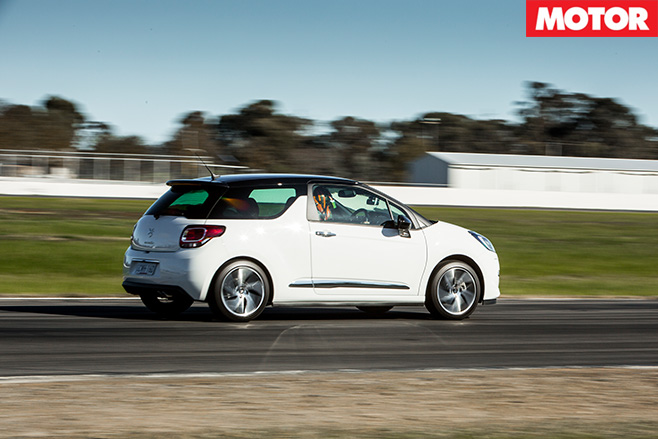
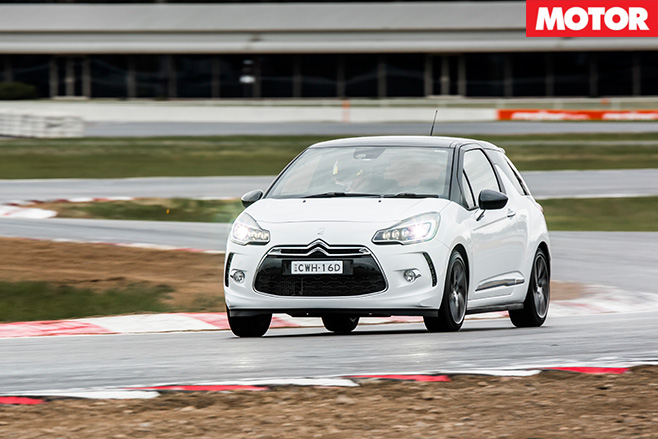
The DS3’s shark fin-shaped B-pillar is one of its most striking design elements, though there was nothing predatory about the baby Citroen’s performance on the track.
Slowest to lap Winton of all in the $0-50K group, it was also chewed up and spat out by two judges who ranked it last, and just scraped into top 10s with others.
If that’s not living up to the credibility gained by the DS3 badge through its rallying heroics with pilote genie Sebastian Loeb, it’s also not because the handling is more WC than WRC.
The DS3 DSport continues to transcend the humble-handling C3 donor car to offer a decently agile chassis underneath. A 25kg weight reduction as part of a 2015 update – 7kg of which is attributed to a redesign of the torsion-beam rear suspension – helps this 1140kg three-door feel even lighter on its feet.
The DS3 initially understeers when nudging the boundaries of adhesion, but it’s adjustable to both steering and throttle. That steering is also enjoyably precise and direct.
The new 1.6-litre four-cylinder – still part of the successful small-capacity turbo family shared with sister brand Peugeot and BMW – gains a revised turbocharger and a direct injection system that squirts fuel into the combustion chamber with increased pressure.
Power lifts 6kW to 121kW and maximum torque, while unchanged at 240Nm, kicks in 200rpm earlier at 1400rpm and plateaus to the same 4000rpm. Neither dramatically changes the DS3’s fortunes here, though.
The engine is still most effective at higher revs, though it seems to take an age to get there. And the lack of serious pace isn’t just a sensation but also a reality – as the leisurely standing-start and rolling acceleration figures attest: 0-100km/h in 7.51sec and 80-120km/h in 5.19.
It’s also incestuously shafted by sister brand Peugeot’s 208 GTI 30th, which costs just $2K more.
The DS3’s raison d’être is clearly to help establish Citroen’s posher sub-brand, though here in the $0-50K segment a case of not enough bang and too much buck means it takes the spoon made of wood rather than silver.
0-100km/h – 7.51sec (12th) 0-400m – 15.58sec @ 146.51km/h (13th) Lap time – 1:48.0 (13th)
Overall Scores
Bang Index – 43.6 Price – $33,990 Bucks Index – 103.4 BFYB Index – 107.3
Judges’ Rankings
Campbell 13th – “Pretty one-dimensional on track. Enthusiastic if not especially talented.”
Morley 10th – “What place does a perfume dispenser have in a hot-hatch?”
Newman 13th – “Style over substance. Not awful but track not its natural habitat.”
Spinks 9th – “One for the Le Road rather than Le Track.”
Luffy 10th – “It’s quite soft in everything it does, and it’s not massively responsive. You can’t throw it around and have a lot of fun. Like the Falcons, you feel like you’re sitting on the car and not in it and there’s not much lateral support in the seat. You have to brace yourself on the steering wheel and the pedals to hold yourself upright. It’s not the most inspiring of the bunch.”
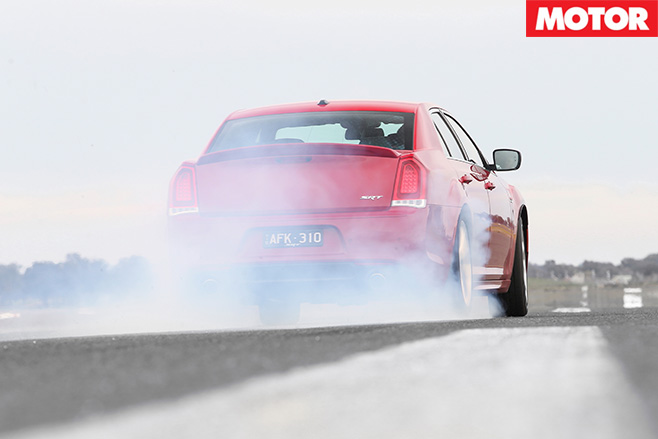
Jeep and Chrysler’s SRT models have been slapped with a significant price hike in light of the weakening Aussie dollar.
Prices for the Chrysler 300 have climbed by $6000 across the range, which sees the 300 SRT Core now pegged at $64,000 and the standard variant at $74,000.
The 300 SRT’s off-roader relation in the Grand Cherokee has also been hit with the increase, seeing the hemi-equipped SRT SUV priced now at $90,000.
MOTOR understands the Australian dollar is completely to blame, which was at its strongest when the second-generation 300 SRT and Grand Cherokee SRT launched in 2012 and 2013, allowing both cars to be priced at $66,000 and $77,000 respectively.
However, since that period, when the Australia dollar was trading at above 1 US dollar, it has fallen to a trading price of around 70 cents, driving up the price of stock for Fiat Chrysler Automobiles.
Today the second-gen 300 SRT is $9000 more expensive than in 2012 while the second-gen Grand Cherokee SRT’s price has grown by $13,000 since 2013.
While both have copped an eight-speed transmission and been refreshed in that time, we haven’t their prices at such heights since the Aussie dollar last fell against the US greenback in 2008-2009.
It will no doubt be a setback for the 300 SRT, which only sells in Australia and the Middle East, and is trying to make a foothold in a segment which will see rivals like the Commodore and Falcon gone by 2017.
Meanwhile, despite the soaring hike, the Grand Cherokee SRT remains one of the cheapest performance full-size SUVs on the market.
It’s out with Barina, in with Spark. Holden’s most affordable car has undergone a complete redesign and now features class-leading technology and safety, and a new name. Now known simply as the Holden Spark.
New key features include a sleeker appearance, more spacious interior and new-gen mobile connectivity from Apple CarPlay and Android Auto. Tech that was previously unavailable in this segment.
Holden Managing Director and Chairman, Mark Bernhard, said Holden believe the new Spark is going to shake things up.
“Spark takes the micro-car segment to a new level with technological sophistication and composed driving manners. Compatible with both Apple CarPlay and Android Auto, Spark offers connectivity and infotainment features … that the target customers of this car will love,” he said.
“Spark has been designed to be an extension of drivers’ lives and personalities. Aside from class-leading connectivity, Spark offers a wide range of genuine accessories to make this car the most individually-customisable Holden ever.”
Several changes have been made to the design of the all-new Spark, and with a range of paint colour available, the Spark will offer a better, more exciting package for its drivers.
But it’s not all about vanity. Holden have also made considerable changes to the Spark’s performance abilities.
Ian Butler, Director of Vehicle Performance at Holden, said the engineering team worked closely with GM Korea to “ensure the car is agile and nimble in urban environments whilst remaining composed and comfortable on the open road.
“We’re confident the all-new Spark will set a new benchmark for the micro-car segment.”
Holden have also included a number of safety features in the new Spark, including electronic stability control, hill start assist, electronic brake distribution, ABS, traction control and a rear view camera.
The Spark is due to arrive in Australian Holden dealerships from April this year, so only time will tell just how class-leading the baby Holden can be.
I do plenty of stuff around cars, whether it’s driving interesting ones, meeting people who work with them or watching people race them. I wouldn’t have it any other way.
But too often, it’s all about work. For some reason – mainly financial – I’ve always believed I can’t just take off interstate or overseas with a bunch of mates to just hang out, perve on cars and talk shit.
I’ve got some buddies who are just as much into cars as I am. These guys have really successful businesses that take up almost all of their time. Because their working lives aren’t around cars, they’re okay about indulging that passion whenever they can. Some won’t miss a grand prix in Singapore, others go regularly to Goodwood and Monterey. Some of them, while they’re away – or even when they’re home, on the dunny with the iPad – buy more cars.
That stuff’s beyond my pocket, not to mention my wife’s understanding. But a few of these guys go every year to Motorclassica, the car show and accompanying auction held in Melbourne’s Royal Exhibition Building.
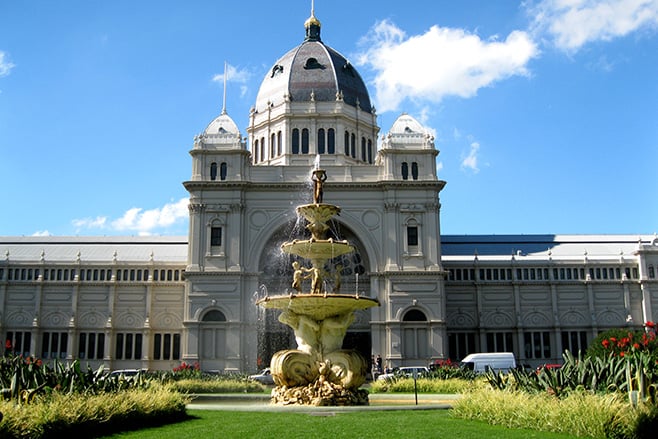
Guys in this realm all seem to know each other. Rather, they know each other’s cars. Friendships are often made during exchanges of ownership. I’ve also found that among these guys, just as with you and me, the pure passion for cool cars erases any socio-economic snobbery.
We travelled down from Sydney a day early, to pub-crawl Melbourne’s exotic-car showrooms. The multi-storey Dutton emporium in Richmond blew me away; there may not be many other places in the world with a La Ferrari and Porsche 918 under the one roof.
We also spent a couple of hours around a bowl of beer nuts at an inner-city man-cave, surrounded by a selection of the affable owner’s supercars and classics.
That passion was wide open at Motorclassica, which in 2015 marked anniversaries of the Ferrari Dino, Ford Mustang and MV Agusta motorcycles. There was a long line of Lancias, rows of Rolls-Royces, a mess of Maseratis, a posse of Porsches.
All had their owners and enthusiasts flitting around, eager to talk your ears off. I was distracted by everything from the Dr Seuss maze of mechanical linkages in a 1920s Rolls-Royce engine bay to two of my God racing cars: a McLaren M8F and Mark Donohue’s IROC Porsche 911 RSR.
At the opening cocktail party, Mercedes-Benz whipped the covers off the Mercedes-Maybach S-Class flagship. It said a lot about Motorclassica that alongside was a gorgeous W100 Grosser. And if you spent more time drooling over the old one or the new one, no one was judgmental.
For once, it wasn’t about work. Although I noticed I wasn’t the only one keeping receipts.
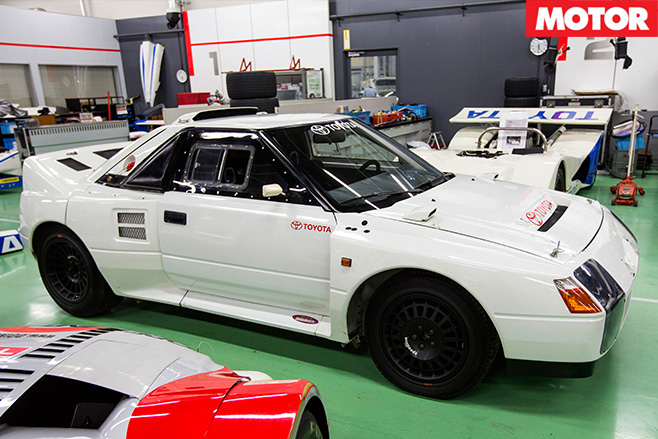
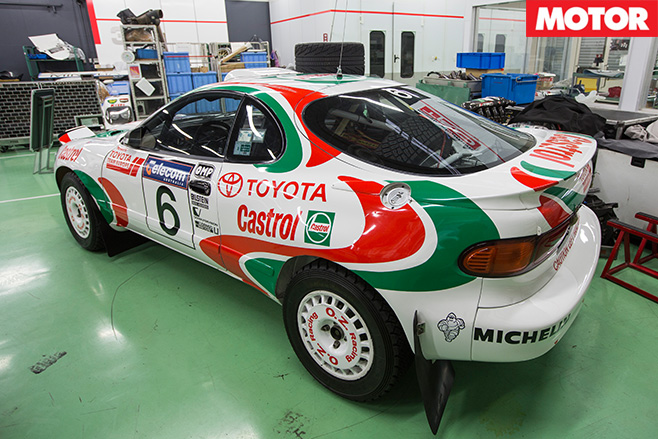
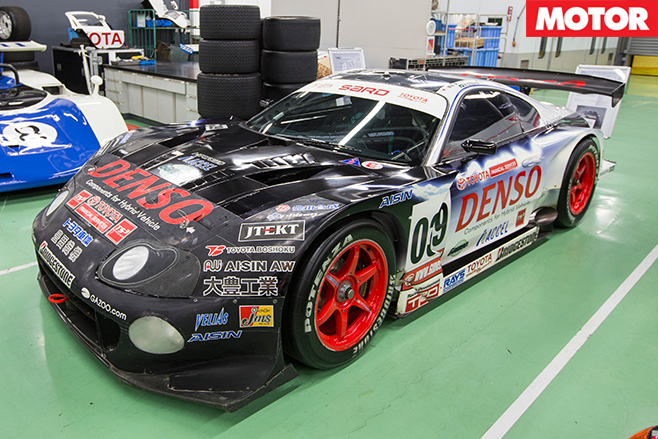
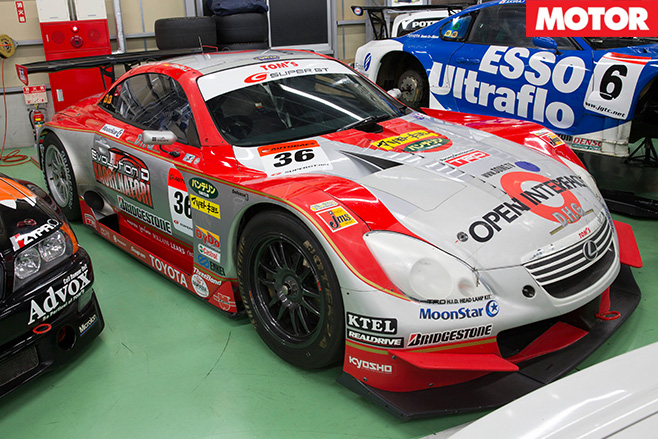
Humans have a long record of preserving history. The Inca, for instance, paraded their mummified dead to maintain a relationship with the supernatural. This, they believed, was crucial for survival of the soul.
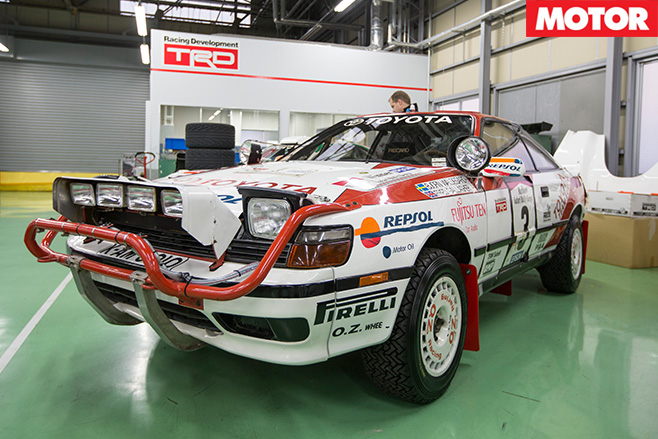
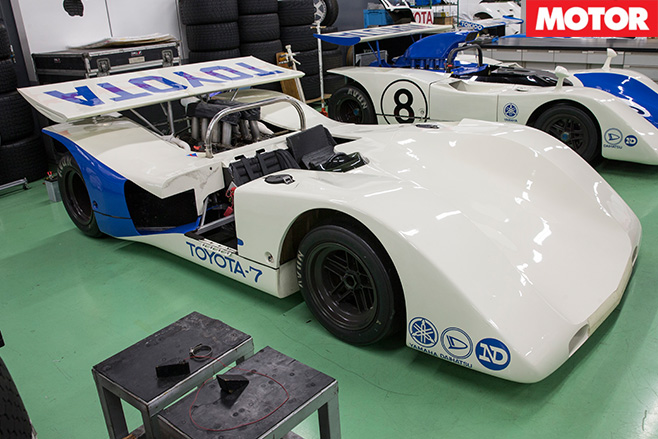
Today that notion lives on, at least when it comes to cars. Some of the world’s most impressive places of worship for the “moved-on” belong to marques, including this particular treasure trove belonging to Toyota Racing Developments, the Japanese car maker’s racing division that’s almost as old as the company itself.
Despite housing an invaluable inventory of Toyota’s motorsport past, this stable is not annexed to the car maker’s public automobile museum. TRD Station, as it’s known, sits downtown in Yokohama, 40 minutes south of Tokyo city centre. And after a quick left turn into a TRD prefecture, it’s barely visible from the street.
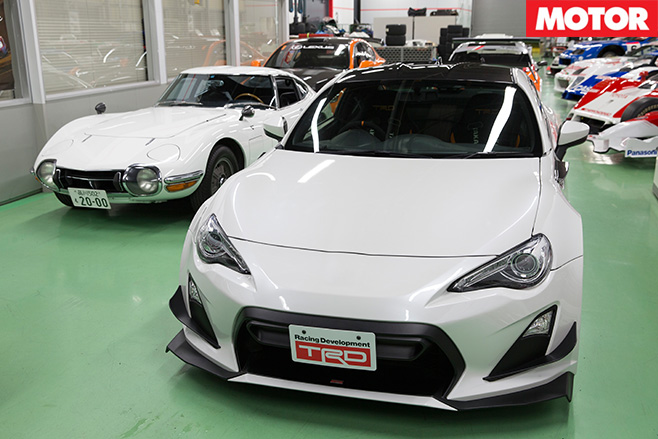
Between a crew of four they share at least 160 years of company service – even more in industry experience. For them, maintaining a collection of Toyotas that saw the company on motorsport’s most famous stages is their reward. Locals and other Toyota staff refer to the men as ‘takumi’, translated as ‘artisans’.
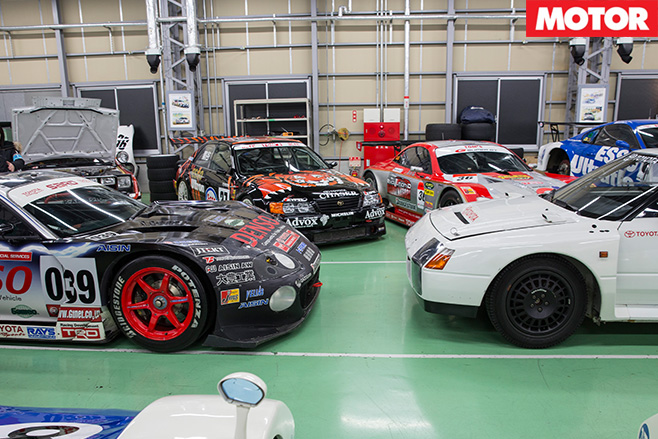
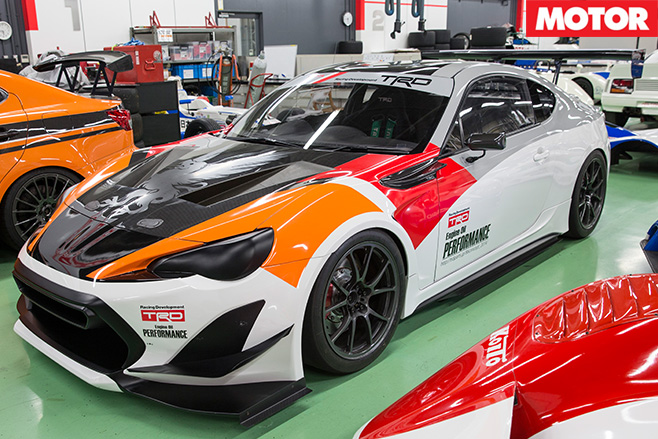
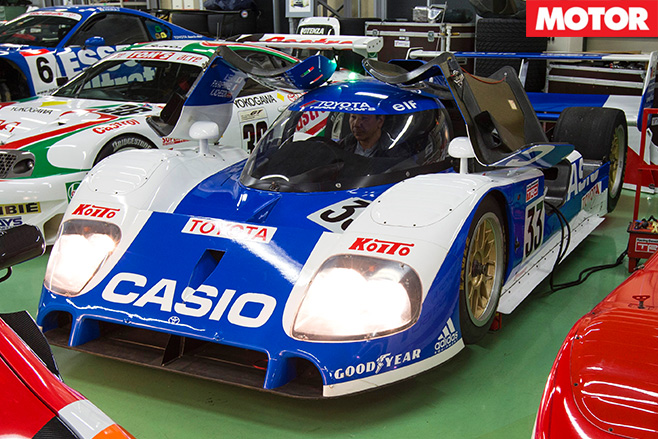
Younger blood work next door on TRD’s factory line, currently assembling a limited-edition Toyota 86 called the 14R60, but it’s here, amongst Le Mans specials, rally champions and even classic supercars, where Toyota’s pedigree and soul endures. And over these next pages MOTOR grants you full access inside TRD Station.
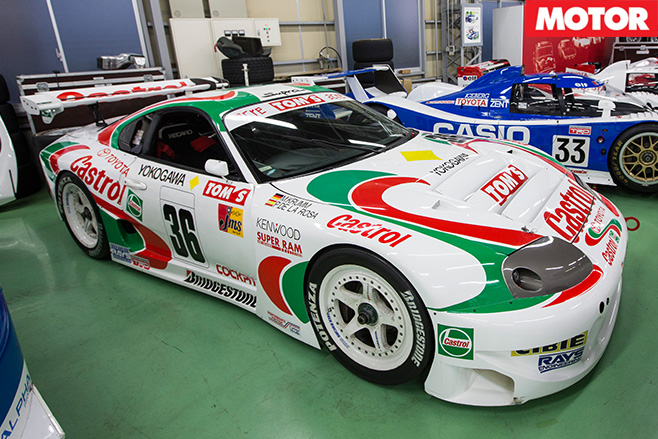
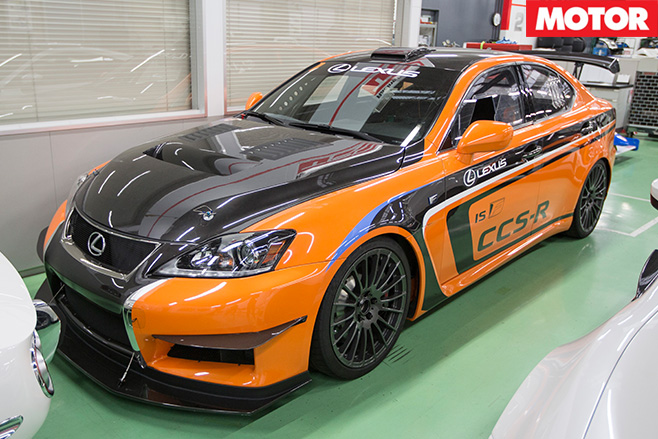
While lighter than the 2JZ, the already race-proven 3S also made more economic sense in early days, when TRD received little funding from Toyota for the GT program. Still, tuned to 358kW, it claimed considerable success in Japan’s Super GT GT500 class.
It’s still months away from an Australian launch, but following our recent Bathurst first drive we now have the pricing details on Audi’s new R8 V10.
An all-new design (well, kind of) the R8 is now built in a brand-new facility not far from Audi’s home base in Germany, right alongside the customer racer, GT3 LMS version.
Like the first-gen car we saw in 2007, the R8 uses Quattro all-wheel-drive, but this time around there’s a multi-plate clutch instead of a conventional centre diff which can split the torque 100 per cent to the front or rear. And that clutch-pack is now, along with the front diff, liquid-cooled, tapping into the car’s engine-cooling system.
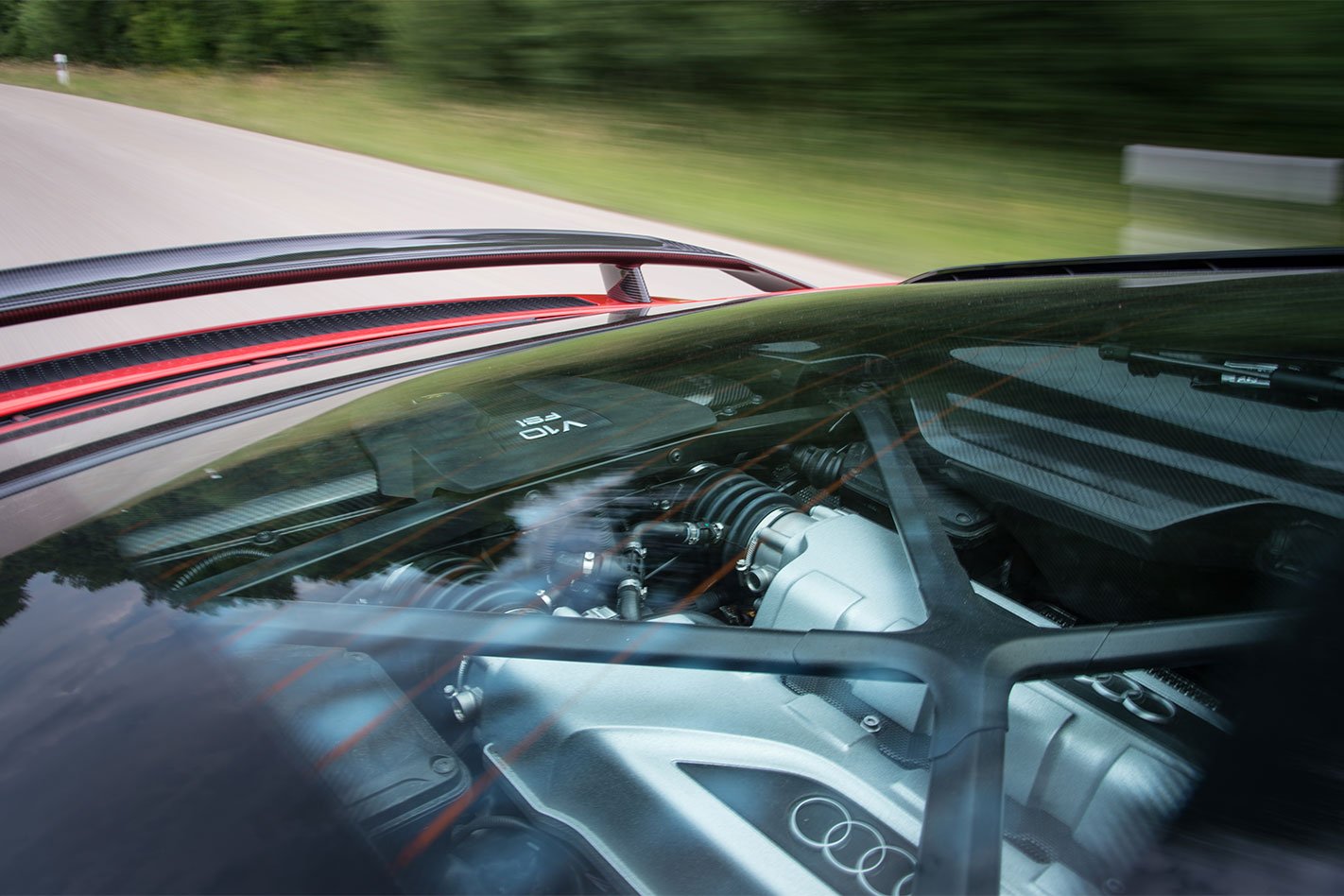
Power for the V10 is 397kW at 8250rpm with torque peaking at 540Nm at 6500rpm. And the V10 Plus gets the full-fat, 449kW output of the Lamborghini Huracan with which it shares its driveline, maxxing at the same 8250rpm with torque of 560Nm at 6500rpm.
There’s now also cylinder-on-demand to save fuel. Ironically, that output is more than the customer racer version is allowed under GT3 regulations.
Overall, the car looks familiar and dimensionally, it’s the same story apart from the new guy being about 16mm shorter overall. The big visual change has been a toning down of the side blade which is now a two-piece design and much less polarising. Twenty-inch alloys are now standard on the Plus.
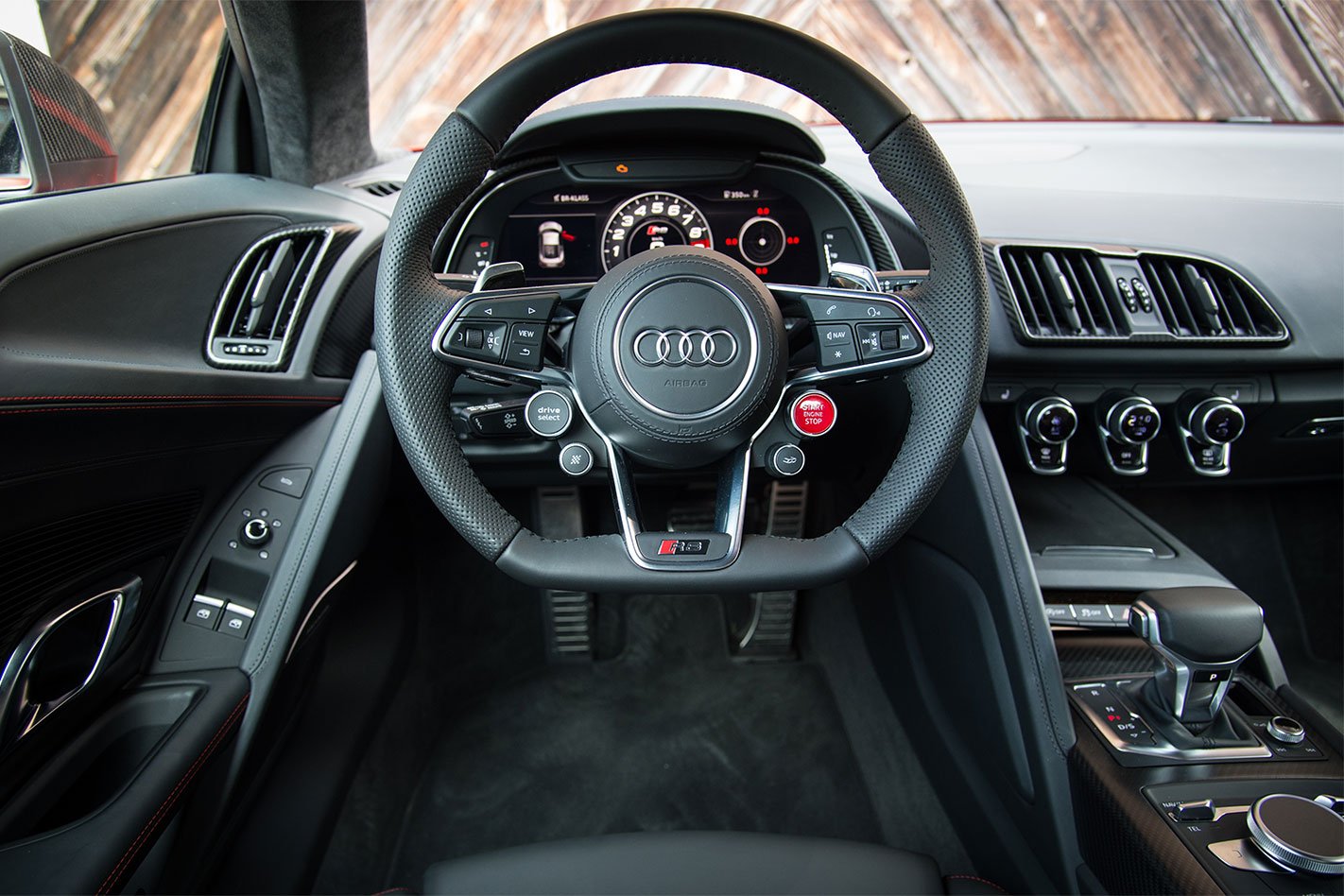
The V10 will set you back $354,900, while the V10 Plus is a cool $389,900. The big difference is the fitment of carbon-ceramic brakes on the Plus with 380mm front rotors copping the squeeze from six-piston calipers.
They’re optional on the V10 at $20,300. The Laser headlights first seen on the R8 LMX are optional on both versions at $7700. And the best news? Australia is the only market in the world where the new R8 comes standard with the active exhaust.
WRC: Ogier on top in controversial Rally Sweden
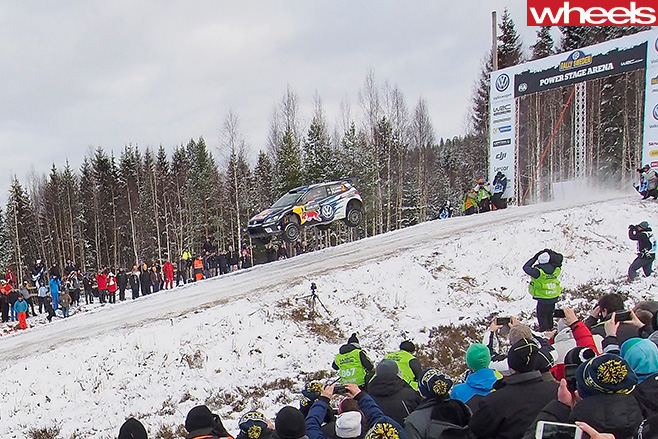
THE only truly winter rally on the calendar started badly with a threat by leading drivers to boycott the opening stage of Rally Sweden, the second round of the 2016 FIA World Rally Championship.
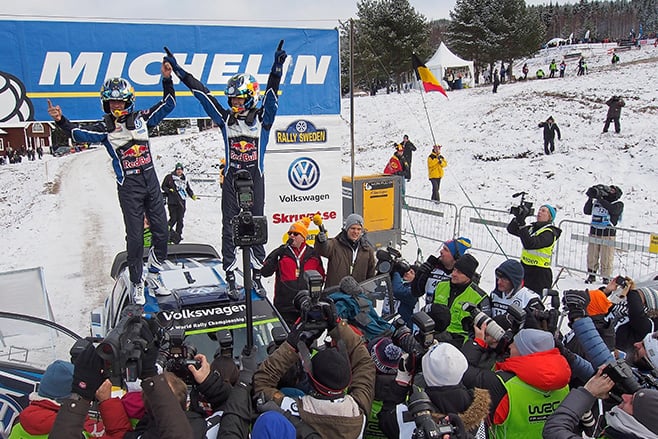
Ultimately, the Sebastien Ogier-led boycott threat collapsed on Friday morning because of the absence of unanimity among the WRC drivers. Hyundai’s Hayden Paddon broke with his fellow drivers, on directions from his team.
“Of course, I agree with the principle of what we’re debating and I think the drivers should be involved in that process, but if you’re going to make a protest, then you have to actually threaten on what you’re going to do and then you do it.
“You can’t really do it by just boycotting a stage.
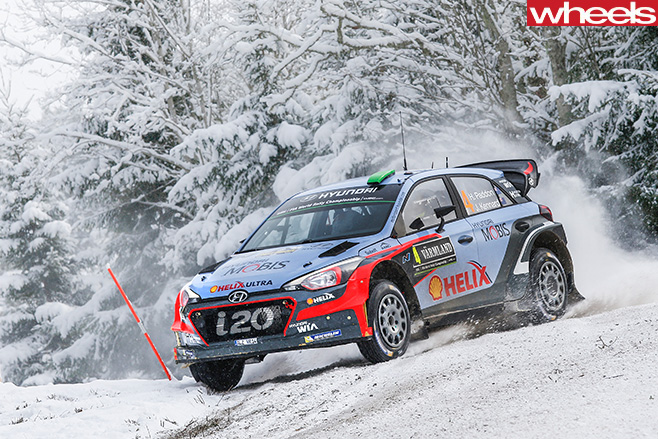
Paddon’s decision looked increasingly like a smart one when the rally area immediately copped a decent dump of snow. The Kiwi went on to turn in a white-hot performance over the three days, clinching second place in Rally Sweden.
It was the second consecutive podium for the latest generation i20 WRC, which made its rally debut at Rally Monte-Carlo only last month.
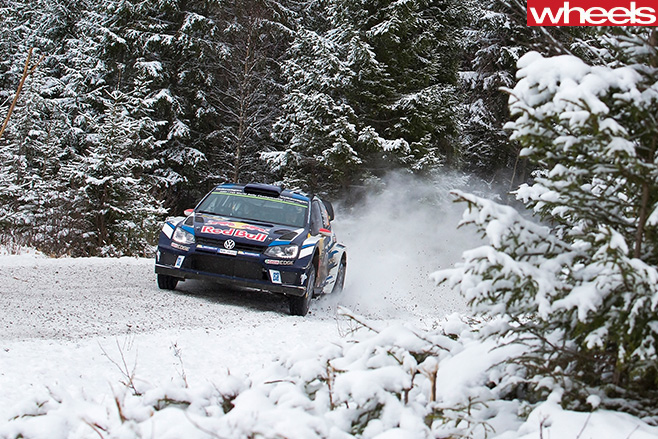
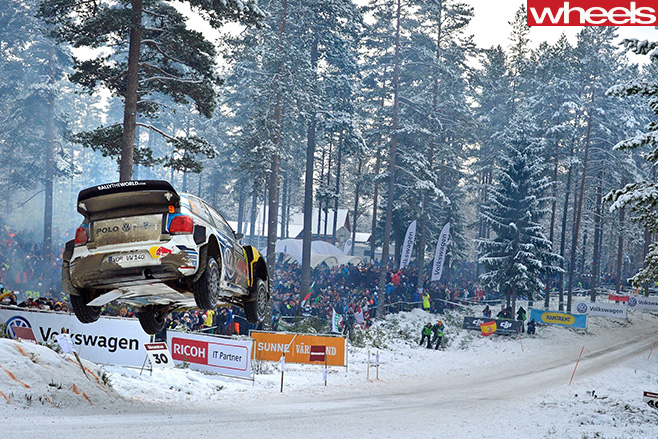
But the driver Paddon is aiming at, the imperious three-times champ Ogier, remains the standard by which others are measured. In Sweden, Ogier and co-driver Julien Ingrassia took their third success in four years at this classic rally, and their 34th in total.
The road to victory this time demanded a herculean effort from the French superstar combo. The duo overcame the challenge of being first on the stages covered with a layer of fresh snow, which left their Volkswagen Polo sweeping the road clear for the following cars.
Paddon and co-driver John Kennard had to deal with a late drama. Their i20 suffered a radiator leak after hitting a wooden post during the final stage, the pair carrying out repairs before nursing the car back to service.
The Ford Fiesta of Norway’s Mads Østberg/Ola Fløene was third.
F1: Louder cars in 2016
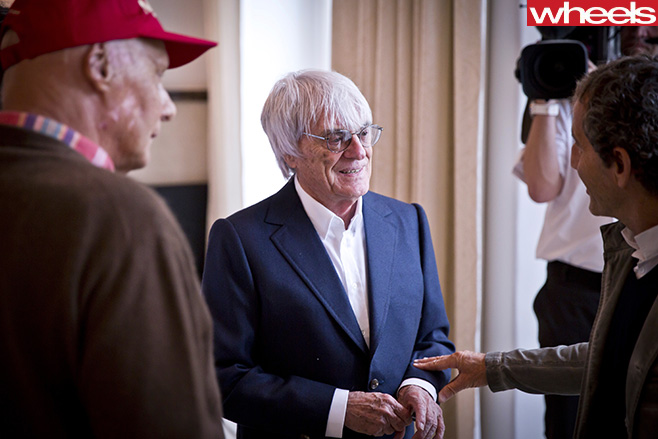
This is a reaction to widespread complaints – including harsh criticism from F1 commercial boss Bernie Ecclestone – about the muted sounds of engines used in 2014 and 2015.
“It’s going to be quite a significant increase… up to 25 per cent louder,” according to the technical boss of Williams F1, Pat Symonds. “And it will get louder during the season.”
The call from Ecclestone and fans from around the world to bring back the evocative tailpipe sounds of the past has been answered, says Symonds, by a decision to revise the exhaust systems.
The cars’ waste-gates have been revised by creating a separate tailpipe from the main exhaust. The exhaust sound will be up by about one and a half decibels.
Symonds says our ears will notice the greater noise. It will be up around 14 percent when the waste-gate is closed, but when it is open it will be 20 to 25 percent louder.
He said the cars would also become louder as the season unfolded and the engines were developed.
“This is a natural progression,” he said. “A lot of the sound is a function of the cylinder pressure. So the higher the cylinder pressure, the more sound that’s coming out.
“And as the engines are developed, the way you get the power is to get the cylinder pressures up — and we’ve seen some quite significant increases since the beginning of 2014 in the cylinder pressures we’re running.”
POLL POSITION: Whincup rated best in the world
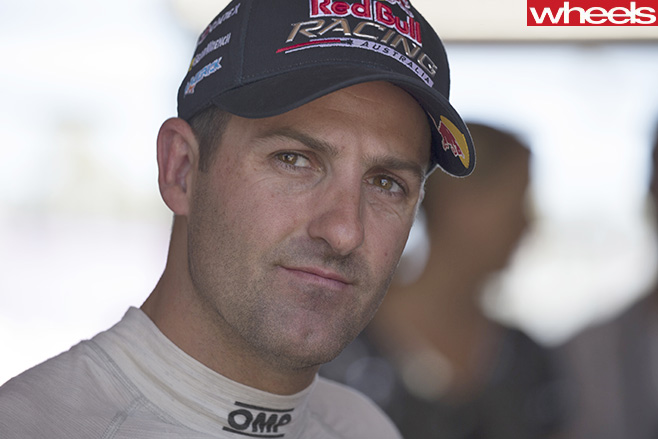
An elite panel of eight worthy souls from website Motorsport.com’s editorial team has come up with a list of the top 10 touring car drivers in the world right now.
The panel consisted of a broad cross section of (mainly) journalists of different nationalities – Charles Bradley, Editor-in-Chief; Andrew van Leeuwen, Australian Editor; David Malsher, US Editor; Jamie Klein, UK Editor; Stefan Ziegler, German Editor; Nick de Groot, News Editor, US; Valentin Khorounzhiy, Editorial Assistant; and David Addison, Special Contributor.
The criteria used was to base the drivers on recent form, considering the relative competitiveness of their respective series.
Some Brits will question Jason Plato’s inclusion ahead of the highly rated Gordon Shedden.
Two German DTM stars made the 10 – Jamie Green at five and Mattias Ekstrom (whom we’ve seen and appreciated at Bathurst) coming in equal second. No argument from me.
The relatively soft competitiveness of the World Touring Car Championship, a series barely on our radar Down Under, raises questions over the presence of three WTCC regulars in the top 10. All three are terrific drivers –but… aw, I’d be more comfortable if Jose Maria Lopez had kicked serious butt in another hot championship.
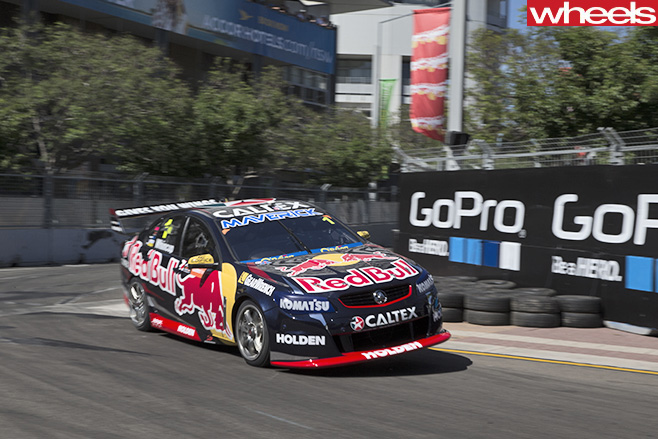
Craig Lowndes hasn’t won a championship since 1999 but was runner-up last year, and is still very quick and a regular winner of races, including the Bathurst 1000 in 2015.
As reigning Supercars champion, and the holder of a consistent body of work for many years, Mark Winterbottom deserves his place in the 10.
Kiwis are howling that Shane van Gisbergen deserves a higher slot than 10th. But his record doesn’t put him higher than Frosty, does it? The poll criteria didn’t include a flamboyance factor.
TOP 10
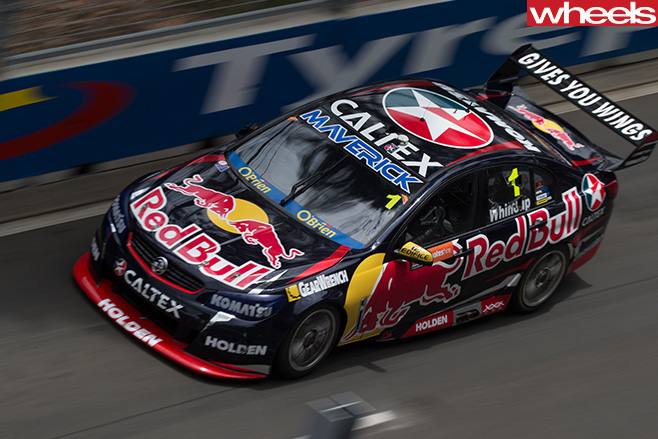
1. Jamie Whincup, V8 Supercars, Red Bull Racing Australia
2. Jose Maria Lopez, World Touring Car Championship, Citroen Racing
2. Mattias Ekstrom, DTM, Audi Sport Team Abt
4. Yvan Muller, World Touring Car Championship, Citroen Racing
5. Jamie Green DTM, Audi Sport Team Abt
6. Jason Plato, British Touring Car Championship, Team BMR
7. Craig Lowndes, V8 Supercars, Triple Eight Race Engineering
8. Rob Huff, World Touring Car Championship, Honda Racing
9. Mark Winterbottom, V8 Supercars, Prodrive Racing Australia
10. Shane van Gisbergen, V8 Supercars, Red Bull Racing Australia
F1: Bring back the brutes!
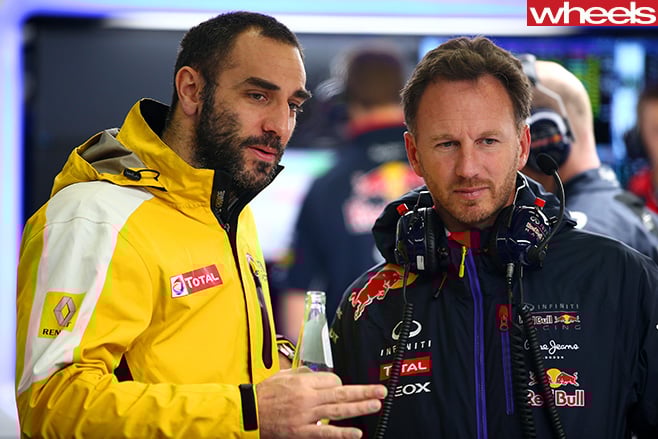
Hooray! How good it would be if the teams and the FIA could agree on proposals to make the cars less like moving gamer consoles and more like the hard-to-tame F1 brutes of the golden era.
Abiteboul believes F1 should have strong differentiation from other categories of motor sport, and should distance itself from fuel saving and tyre saving – which he says are the preserve of endurance racing.
He added that endurance sports car racing should be all about fuel efficiency and technology, while F1 must be about drivers attacking constantly and driving flat out: the fastest drivers in the fastest cars.
Plans to make the F1 cars significantly faster by 2017 have been tossed around for months. Initially there were quite delectable plans to make the cars about five-seconds a lap quicker than today’s machines, thanks to a raft of regulation changes based around aerodynamics and way more downforce, and wider tyres. Specifically the FIA agreed a couple of months ago upon a track widened from 1800mm to 2000mm, wider Pirellis, revised shape and size of the front and rear wings, greater aerodynamic downforce from the wider bodywork, and a redesigned underfloor.
Pirelli advised that the current tyres – manufactured quite deliberately under instruction so as not to last the course of a grand prix – would not stand up to the proposed increase in cornering forces unless they were made way more durable, and slower as a consequence. Five seconds a lap has been revised to three seconds…
The F1 Strategy Group – Ferrari, Red Bull, Mercedes, Williams, McLaren and Force India – is under pressure to produce a final set of proposals. Abiteboul has challenged the six teams to orchestrate a major shake-up of the regulations.
The Renault man’s chances of satisfaction are not high. Self-interest among the key teams is likely to take precedence over the future health of the sport.
F1: Record 21 races will stretch teams
BERNIE Ecclestone will be pleased by the prospect of raking in the commercial dollars in an unprecedented grand prix world championship season of 21 races. They have been jammed into a season starting in Australia on March 18-20, and wrapping in Abu Dhabi on November 25-27. More races bring more income, greater media coverage, bigger television audiences…
The 2016 campaign will be the busiest than any other in F1 history, surpassing the previous benchmark of 20 races during 2012.
The expanded calendar features one new race – in Baku, Azerbaijan on June 17-19 – and the return of a grand prix in Germany, with Hockenheim hosting the race.
The 2016 calendar also includes back-to-back weekends on six occasions: Canada and Baku, Austria and Great Britain, Hungary and Germany, Belgium and Italy, Malaysia and Japan, and the USA and Mexico will all be held on respective consecutive weekends. The USA’s slot remains provisional.
And with an enervating 21-race season in prospect, some teams are contemplating using a rotation system for engineers and mechanics so they get sufficient rest.
World champions Mercedes are giving this serious thought.
Mercedes team chief Toto Wolff has spoken of the need to take care of his valuable human resources, acknowledging that with 19 races, he’s seen the team personnel stretched to mental and physical limits.
There have been suggestions of a rotating squad but this brings the problem of not always having the very best people at grands prix.
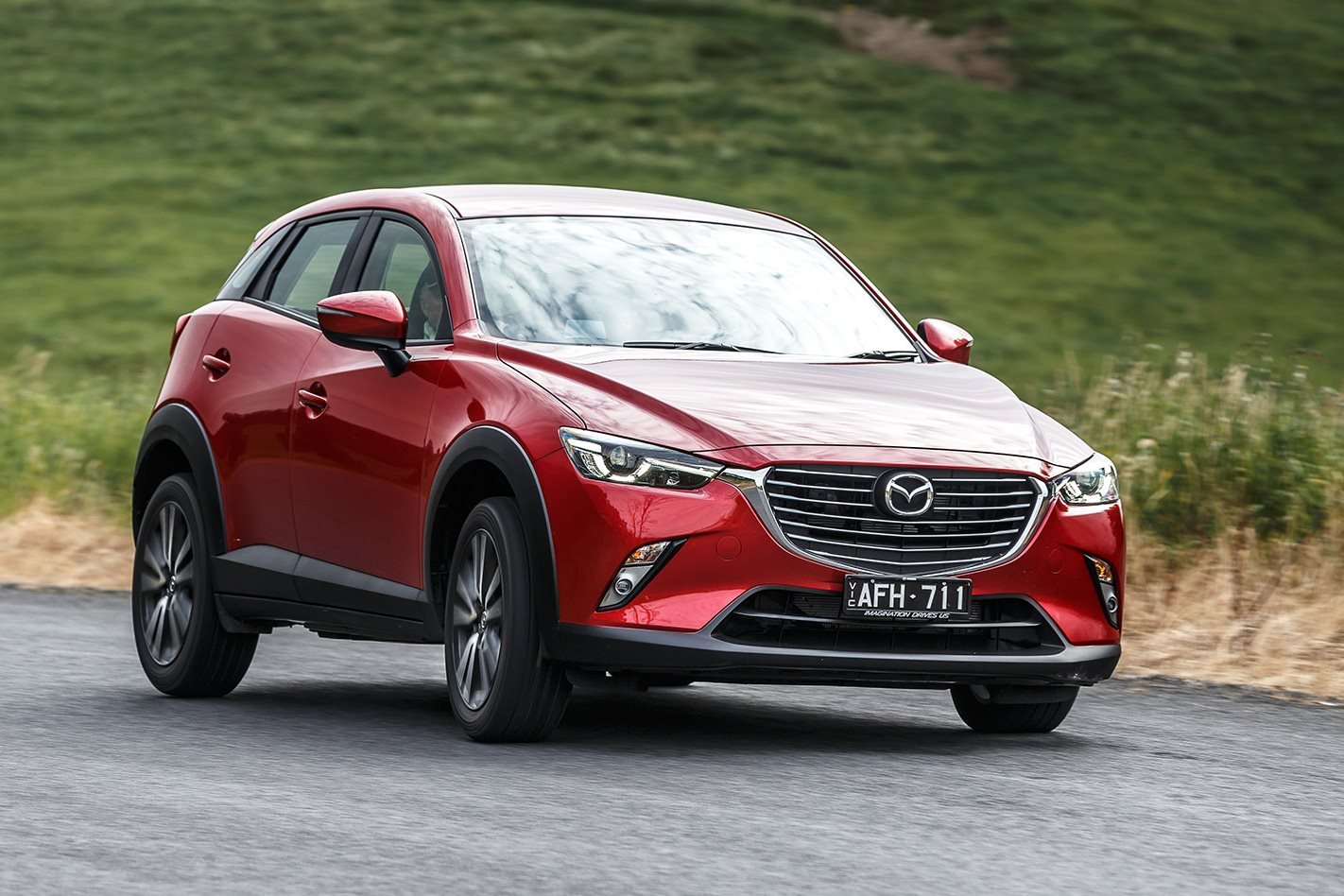
Properly compact SUVs: Are they the faddish selfie-sticks and man-buns of the car world, or the future of the small car?Leader of the pack for design and dynamics is the in-demand Mazda CX-3, launched to widespread acclaim (and a Wheels comparo victory) earlier this year, so we’re fortunate to snaffle one for a few months to find out what it’s like to live with.
Choice is another area where the Japanese-built, Mazda 2-based, crossover shines, pummelling the competition by offering the option of petrol or diesel, front- or all-wheel drive, and manual or auto. We absolutely applaud Mazda for that.
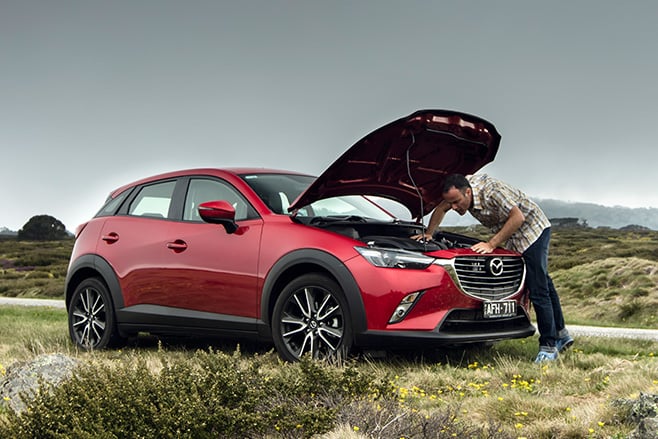
Given that going AWD brings the preferred De Dion rear axle set-up (rather than the torsion beam arrangement of front-drivers) and that the $30,990 sTouring version (as supplied) is aimed at buyers seeking a bit of sporty spice for their snowfields sojourns, is it unreasonable to see the all-wheel-drive CX-3 as a pint-sized all-rounder for the masses?
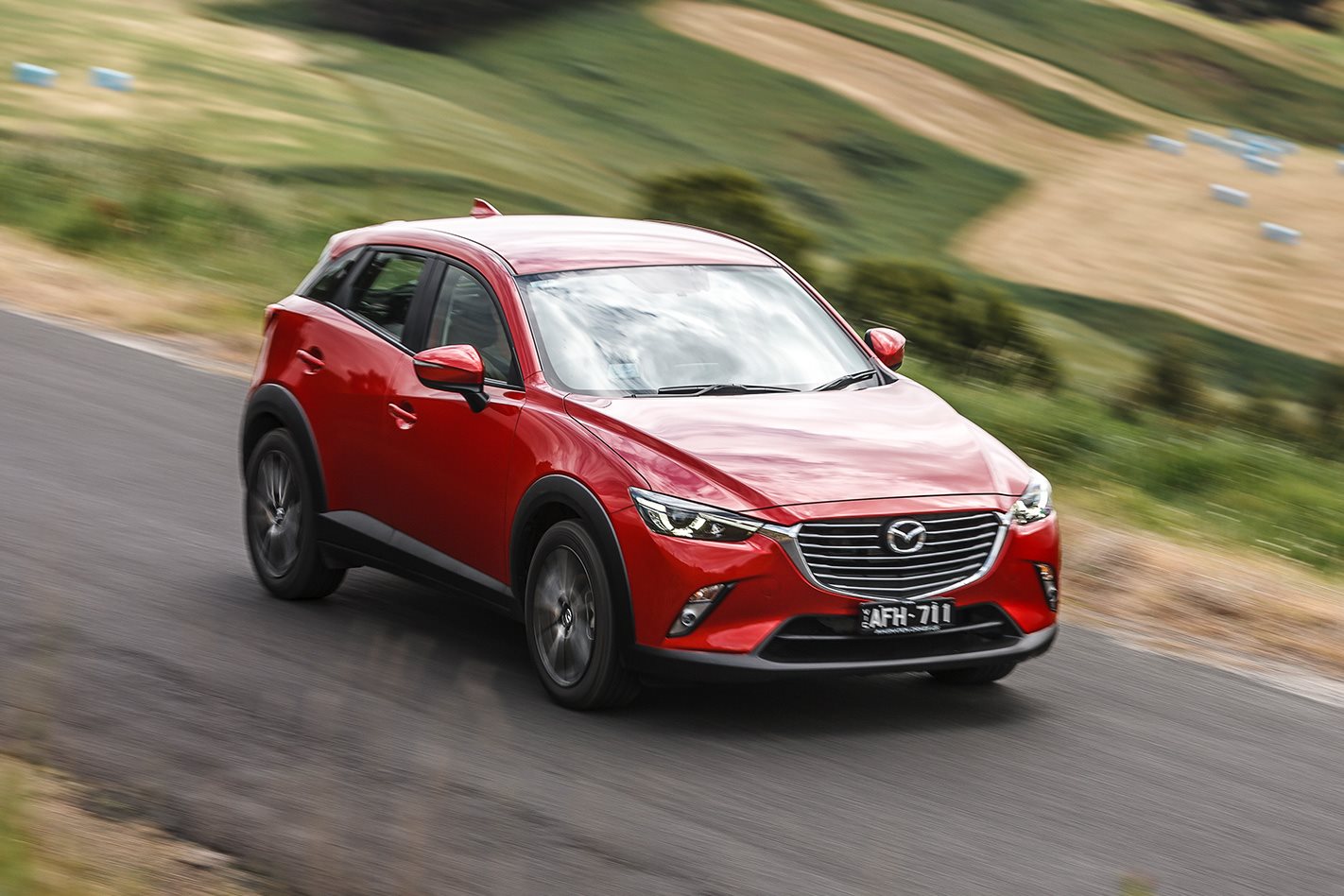
To find out, AFH-711 was thrown in the deep end, first as one of a slew of cars in COTY contention, and then as the chase vehicle for an upcoming sports car comparo. Before handing the car over to its ultimate keeper, David Hassall, the task of driving on the shoot fell to me. All 2000-plus kilometres of it – from Melbourne to Omeo, then Corryong via Falls Creek, up to Australia’s highest town (Cabramurra in the Snowy Mountains) and back to Melbourne via Canberra. This certainly put the sTouring’s ‘Sport Touring’ claims to the test.
Initially, things looked stellar for the Mazda. The aggressive proportions, arguably the company’s best-resolved dashboard (virtually a straight lift from the 2, but with added glam), sumptuously supportive seats (despite the lack of lumbar adjustment), the perfect driving position, and lush leather facings for key touch points (namely the lovely steering wheel and gear knob). And everything is just so beautifully made.
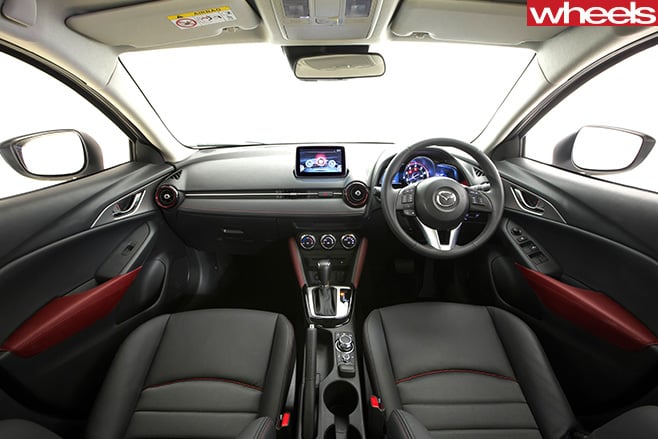
The moment you push the start button, you’re accosted by noise. Whether warming up or under any moderate level of acceleration, the 109kW/192Nm 2.0-litre four-cylinder petrol unit is vociferous – too much so by mainstream standards, let alone premium ones. Part of the problem is that the SkyActiv-G’s power delivery feels flat until the tacho is swinging well past 4000rpm; it’s only then that the CX-3’s performance really comes on strong.
That said, the engine itself is pretty smooth while the six-speed auto’s shifts are ultra-slick, and the pleasingly sorted manual-mode shifter does make the most of the 2.0’s peaky character.
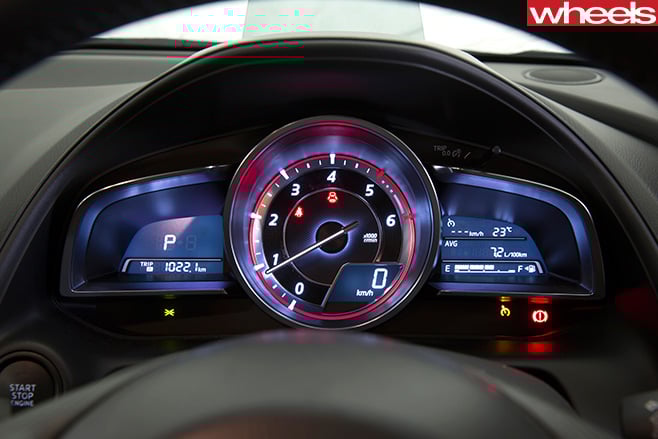
Keeping up with sports cars over deserted mountain roads is a recipe for ruining fuel economy, but the CX-3 shone; it refused to drink more than 10L/100km, and I had it as low as 7.2L/100km. Brilliant. And nor did the chase faze the steering (wonderfully involving), handling (remarkably poised and planted for a compact SUV) or brakes (surefooted four-wheel discs). It is in the chassis that the CX-3 feels most premium.
The busy ride quality is reminiscent of most big-wheeled German luxury SUVs with stiff suspension, and it’s accompanied by coarse-chip droning. I’d trade some of that high-speed cornering grip for the cheaper Maxx AWD equivalent’s comfier 215/60R16 tyres.
We hope a mostly urbane existence as a day-to-day commuter might alleviate some of that loudness and hardness. Over to you, Hass.
sTouring sTats
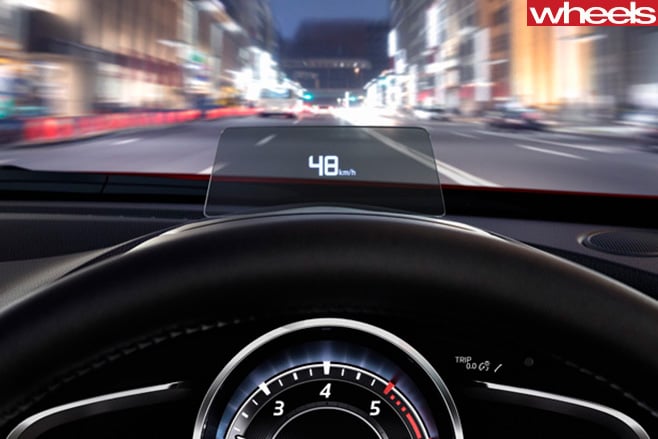
OUR CX-3 is the mid-range sTouring AWD petrol auto, which retails for $30,990 (plus $200 for our ‘Soul Red’ paint and $134 for floor mats). Included in the standard spec is a (class-first) head-up display, Mazda’s far more desirable sports instrumentation (prioritising the tacho as the sole analogue dial), automatic LED headlights, leather-like vinyl (dubbed Maztex), keyless entry and start, rain-sensing wipers and 18-inch alloy wheels wearing Toyo Proxes 215/50R18 rubber. Also present are satellite navigation (which proved utterly undependable), a rear camera with parking sensors and a BMW iDrive-style central controller for the sizeable stand-alone central screen.
Update 1
Hass steps up to the plate and finds a willing partner.
First dates are exciting. Venturing into the unknown with an air of expectation tempered by the fear of being disappointed, though still coloured by an over-riding feeling of anticipation.
But even more exciting is the first sleepover. You’ve done all the ritual dances, felt each other out, worked out you want more, and suddenly it’s time to take the next big step. It’s delicious.
It’s the same with long-term test cars. You’ve given each other the once-over, checked out all the controls, worked out which buttons to push and when, realised that you must get to know this car better, and that means something more intimate than your regular commute.
That’s how it was after taking over the deep red Mazda CX-3 from Byron last month. We did the daily grind and I’d gone as far as I could to understand this dusky newcomer. It was time for the automotive equivalent of a night together.
One evening while it was still light we headed for the hills and beyond, out towards the Bunyip State Park, where I knew the roads would be quiet. Up hills and down again, sweeping through endless turns, dealing with the occasional switchback and racing back up to speed again.
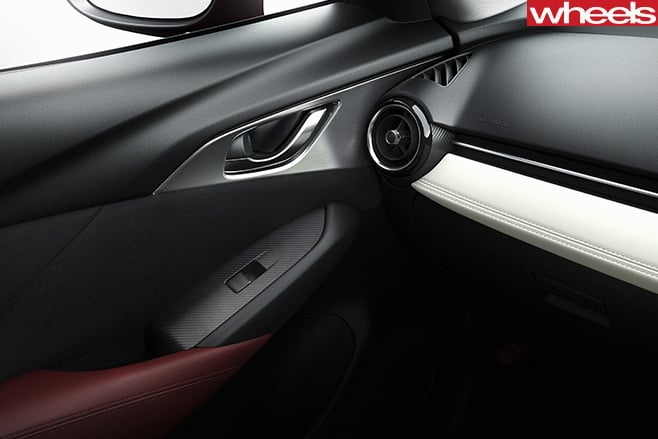
To be honest, our first ‘date’ a few weeks earlier had not been too encouraging. I’d immediately been struck by road noise and engine harshness under load, common characteristics in cars from weight-obsessed Mazda. Subsequent drives – as so often is the case – lessened these issues because noise intrusion simply isn’t as noticeable when you fill the cabin with music.
Despite the extra weight of AWD, the 2.0-litre CX-3’s performance is sparkling, especially compared with the conceptually similar Renault Captur that preceded it in my garage. I never felt wanting for more.
I was also delighted with the auto’s gear-selection regime – it really was close to perfect, without the need to use Sport mode – the ESC barely intervened and there was no problem with left-foot braking (a major issue with most other makes these days). You want to trail-brake while gunning the throttle on exit? No problem. Clearly, Mazda’s software engineers know a thing or two about driving.
With the car’s sure-footed grip, breaking into mild understeer when you’ve overdone it slightly, those sweeping turns melded into one another like jelly, making brisk progress a breeze.
With very comfy seats, a compliant suspension with good bump control, effective ventilation system and sensible controls, it was like spending a night in a five-star hotel. Even though this is destined to be a relatively short relationship, this was a first sleepover to remember.
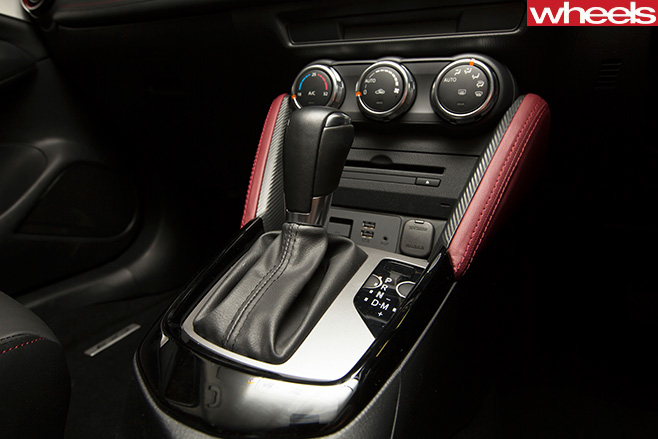
After enduring a series of cars bereft of CD players – a trend I’m yet to embrace – I was thrilled to find one in the CX-3 because I have dozens of unplayed discs and the car is my place for quality listening time. I was therefore distraught when, after getting to play just one disc, the unit simply refused to read another. In classic computer style, though, a simple ‘reboot’ did the trick and we were grooving again on the return trip. Phew!
Update 2
Declaration of support for the auto-loving public.
One topic that seems to separate me from my colleagues is the subject of manual gearboxes. While my fellow scribes wax lyrical about self-shifters and bemoan any new model that arrives without one, I’m a huge fan of modern automatics and actually prefer them by and large.
Don’t get me wrong; give me a race circuit or the opportunity for a quick fang on a challenging road and I’m all for a manual, but for regular driving on our increasingly clogged and overly regulated roads, I just don’t see the point of working a clutch and gearbox when an electronically controlled auto does it so well. They’re simply more efficient.
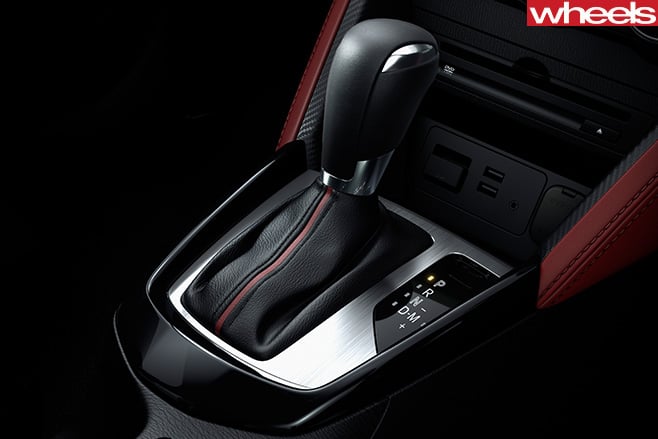
Nevertheless, I’m happy enough to be back in my CX-3 for the daily grind, appreciative of the clever electronics that seem to know exactly what gear it needs for any given situation. There’s rarely a moment I question its choices, and on those occasions a quick prod of the throttle is generally enough to rouse the little SUV from its slumber and quickly snap down a cog or two.
I remain constantly in awe of the computer logic that takes so much information – your driving style, throttle inputs, braking, lateral body movement, inclines and declines – and selects the gear you would have if it was a manual. How can you argue with that?
About the only thing I don’t appreciate with the Mazda’s six-speed auto is the Sport function, which I find too aggressive. It holds the gears too long, so the willing engine revs its head off while you wait for it to just calm down. It’s probably ideal for a fang in the mountains, but who wants to do that in a little SUV?
Four by four for four
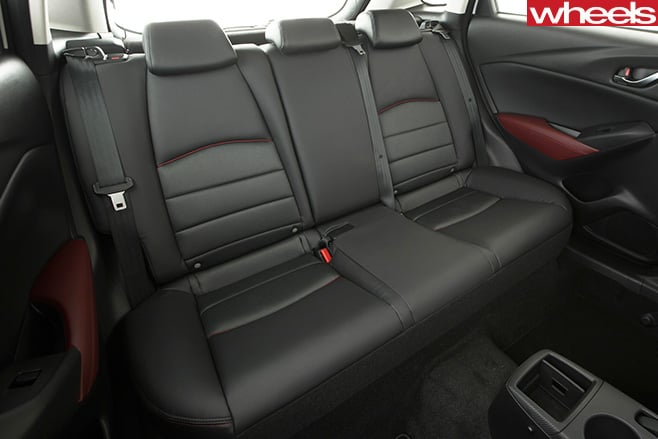
Went out to dinner with friends and of course I drove. They were disappointed I didn’t still have the Hyundai Genesis I’d been driving the previous week, but that was nothing compared with the disappointment they felt squeezed into the back seat of the CX-3. For the return trip my tall mate moved into the front, but the girls said they still had to angle sideways to fit their legs in. Not what you’d expect of a high-riding SUV, even one as small as this. Perhaps they should just take it like a man and spread ‘em!
Update 3
We farewell our long-term Mazda CX-3 with a long burn to Phillip Island
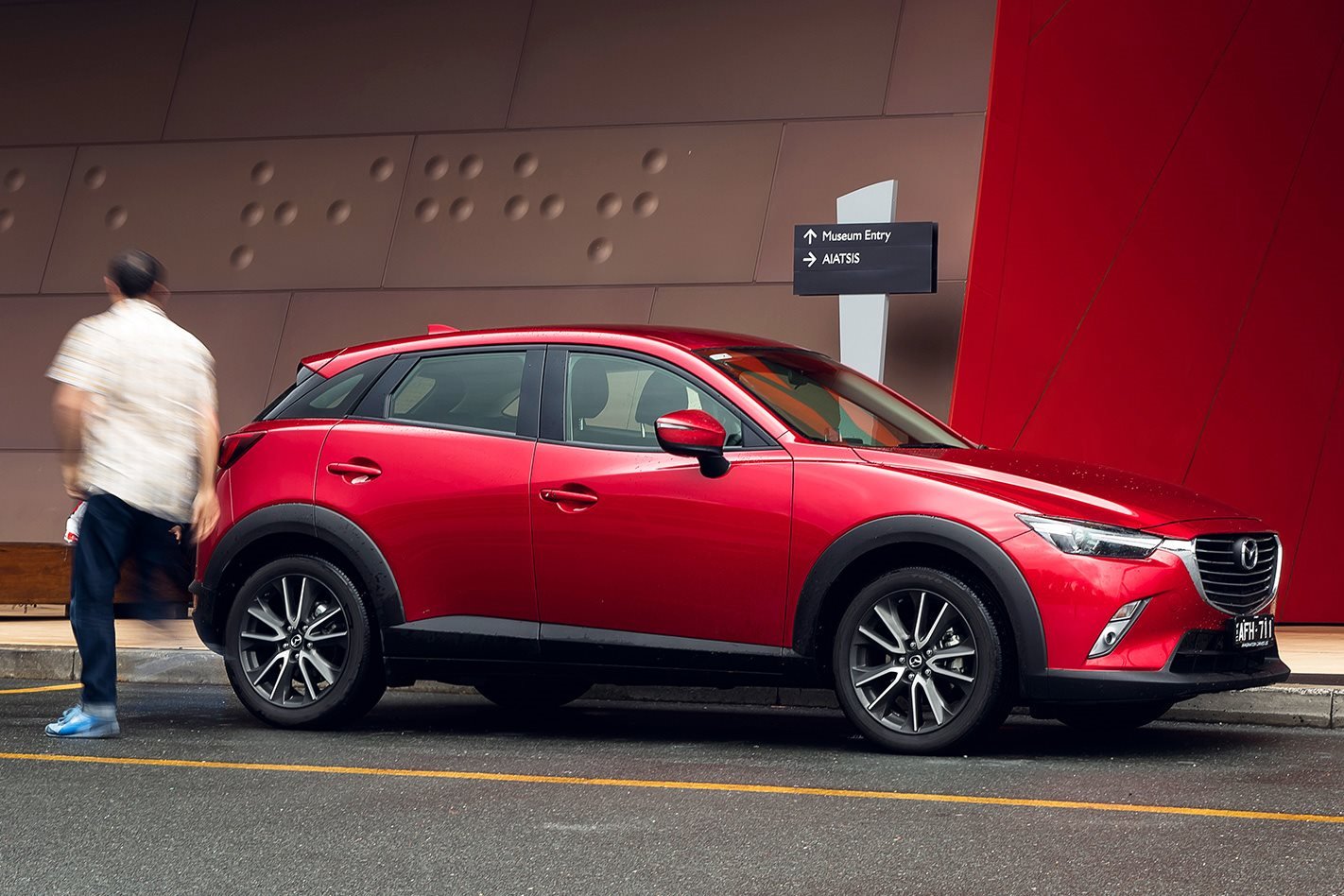
The time arrived for our CX-3 long-termer to leave the Wheels Garage and I realised I hadn’t given her a decent trip away from town, which is no way to treat a guest. So I arranged a long-weekend escape to finally give the poor girl a decent canter.
Phillip Island in autumn can be a lottery, so we covered all the bases – thongs, shorts, hats, overcoats and umbrellas. But the weather was perfectly benign, with just the lightest of showers – enough to make me appreciate the automatic wipers but well short of what would be required for this car’s on-demand all-wheel drive to really prove its worth.
Now I’m not saying we’re the lightest of packers, but all the crap for a long weekend away didn’t take long to fill the CX-3’s boot and a fair portion of the back seat. Having also lived with a Renault Captur for six months last year, I already had serious questions the whole baby SUV genre.
Surely the biggest benefit of an SUV is extra space, but I doubt you would get any more stuff into a CX-3 than you would a Mazda 3, which is not much bigger. And for the price of this car, you could get a sporty SP25 that would deliver better performance, greater comfort and comparable economy. SUVs offer a higher seating position for better vision, but in these baby SUVs you still struggle to see past the bigger SUVs and dual-cabs you inevitably find yourself behind, so what’s the point? And if you want to carry stuff, what’s wrong with a conventional wagon?
Still, people are voting with their feet and there’s no turning back on the SUV trend. Which Mazda has clearly accepted. It has produced arguably the best vehicle in its segment and is reaping the rewards with ever-increasing sales. Barely a year after being launched here, there seem to be CX-3s everywhere – usually in the same handsome Soul Red metallic paint you see here.
Make no mistake, this is a beautifully built car. It feels solid and there hasn’t been a single problem or even a squeak in almost six months and 5000km (on top of our gruelling COTY test week). The leather appointments in this sTouring spec are beautifully stitched and every internal surface has a quality feel.
On our long, final journey together, the seats proved to be perfectly supportive and comfortable for both driver and passenger, the auto climate control did its thing and the six-speaker sound system provided sweet sounds from the iPod. If only the sound system was a bit easier to operate in general; it took months to get used to the i-controller system and I’d still much prefer a series of dash buttons so that changing radio stations or frequency took just a single press.
The long trip also provided the benefit of a supple ride, though it’s a bit bouncy, especially at the front. On the other hand, the highway runs emphasised the fact that the electric steering is overly dead and heavy at cruising speeds (a criticism I would apply to most modern cars).
I remain impressed by the six-speed automatic, but not the harsh 2.0-litre petrol engine, and I’d have liked a wide-angle driver-side mirror to see better when merging and changing lanes.
I won’t miss the CX-3, but I also wouldn’t hesitate to recommend one to anyone who has decided they really need this type of vehicle. Personally, I would prefer a Mazda 3 (as my parents and daughter have done) or, if I had to have an SUV, the bigger CX-5 (as my son has done). Yes, we’re a bit of a Mazda family, and the CX-3’s overall feel reminded me why. There’s a good reason why the brand is so strong in Australia.
One of my pet hates these days is idle-stop, not because I don’t appreciate improved economy but because I feel it’s an annoyance designed for a decimal-point benefit on a rolling road rather than in real-world driving. In the CX-3 you have to turn the darn thing off every time you drive it, which I do because I hate it. Still, I left it on for a couple of tanks of regular commuting to see what the benefit was – not exactly scientific, I know – and the result was actually a decimal point increase in consumption. I rest my case.
Pushing the envelope
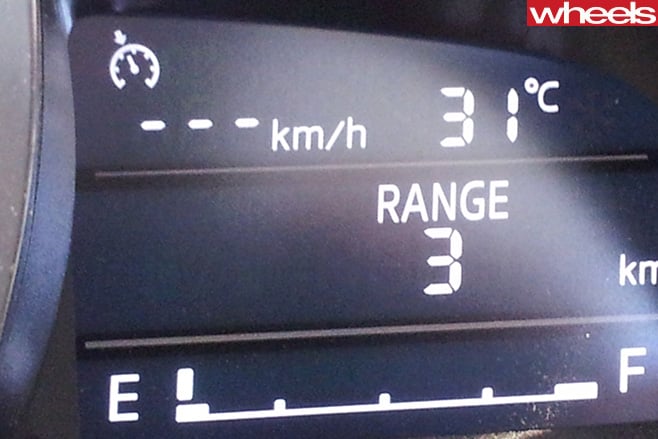
Another pet hate shared by many motorists is how carmakers don’t allow the distance-to-empty readout to run down beyond about 50km. That’s annoying; some 30 years ago I had a Nissan Skyline (great car) with a locally made trip computer that took you to 0km to go, at which point the car stuttered. To Mazda’s credit, the CX-3 also hangs right in there, though my confidence evaporated as the range got down to only 3km – even though I knew it was still four litres short of the tank capacity. I guess they’re still playing safe.
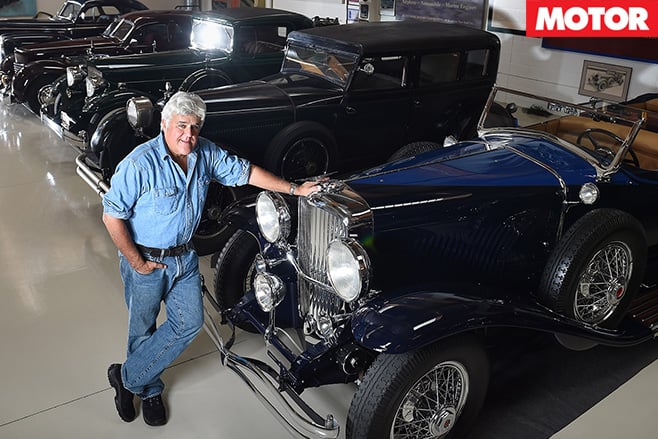
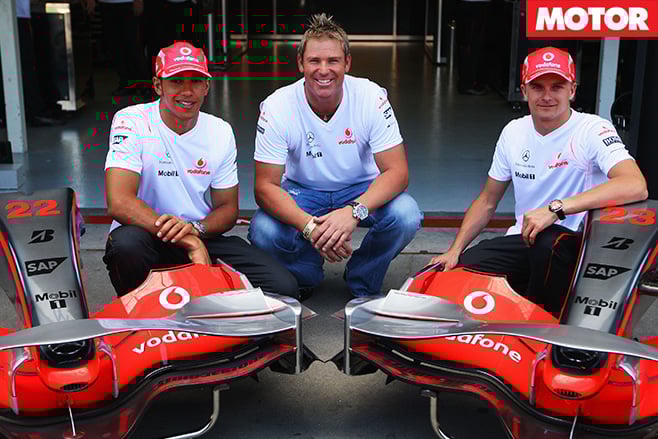
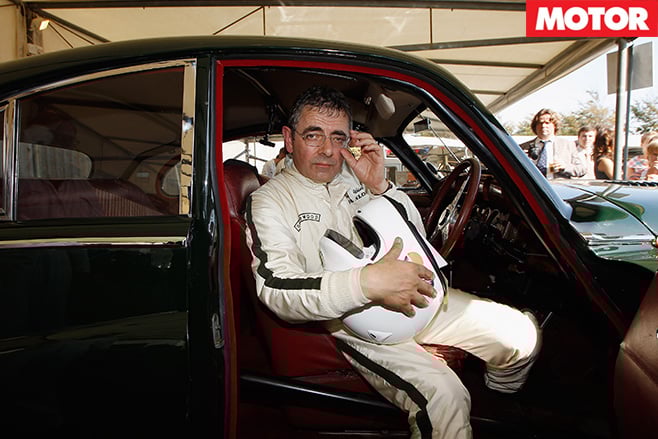
Just because you’re famous doesn’t mean you can’t be car obsessed – it just means you’ve got a bit more to spend than the average punter! Just ask these blokes.


Arousing envy with your new sports coupe used to be done by taking your mates for a wide-eyed thrash round the block.
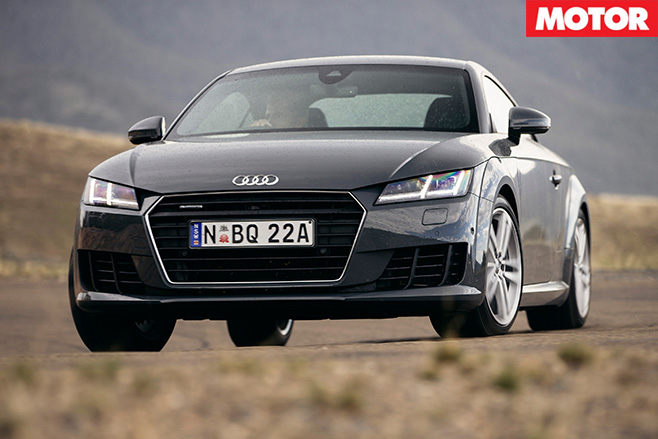
It’s simpler in Audi’s new TT, which does it with its futuristic instrument panel, technology, and an aggressive new riff on its iconic form. Despite the new TT’s ability to impress while standing still, we remain more interested in that first quick thrash.
Initial impressions are of a newly enthusiastic front-end. The chassis is more reactive to steering inputs, though the electro-steering itself isn’t immediately responsive, and the on-centre feel is low-res. This, in part, is the work of a new variable steering system, which quickens the rack ratio as lock increases – it’s great on tight roads when you’re working the wheel, but it can seem a bit lethargic in the initial degrees of lock.
With the variable steer, the TT’s other dynamic party trick is its ability to send more torque to the rear tyres. It hasn’t grown into a tail-out machine, but you can get onto the power earlier in the corner for a more forceful exit.
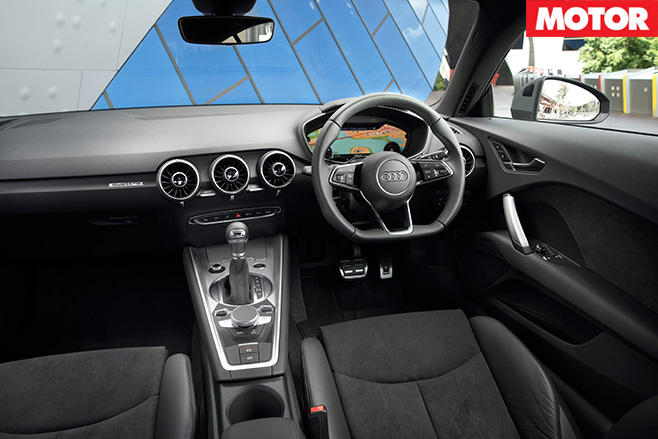
Dual-clutch-only Quattro variants (from $78K) are around 100kg heavier, yet are 0.7sec quicker from 0-100km/h, at 5.3sec, thanks to the hard-launching ability of all-wheel drive. The subtlety of the base car on 17-inch tyres – and the more supple ride – gives way to a heftier dynamic flavour wearing quattro-spec 19s.
Drive Select brings beefier steering, a quick-witted throttle and transmission calibration and frees exhaust noise in its dynamic mode. The engine’s extra aural muscle is well-judged. The volume level and throttle angle are linearly linked – it’s rorty, not raucous.
The redesigned infotainment interface is still based around a centre console dial and push-and-toggle buttons. It’s difficult to assess if it’s better to use – we’re still used to the old system – but the menus seem simply and logically laid out.
The fact that the sat-nav map and other functions can be displayed across the whole screen (while the virtual speedo and tacho are downsized) is a plus. It’s not new tech, but it’s a pretty impressive execution, a bit like the new TT itself.
4 out of 5 stars
Specs
Engine: 1984cc inline-4, DOHC, 16v, turbo Power: 169kW @ 4500-6200rpm Torque: 370Nm @ 1600-4300rpm Weight: 1355kg 0-100km/h: 5.3sec (claimed) Price: $77,950
