
The Ford Everest Trend is a four-wheel drive wagon that combines go-anywhere capability with class-leading sophistication and style. It’s a seven seater based on the top-selling Ford Ranger ute platform and was 4X4 Australia magazine’s 4X4 of the Year for 2016.
PLUS
- 4X4 capability. The Everest was extensively developed in Australian locations such as the Simpson Desert. The result is an off-roader that’ll take on just about anything – plus, its dual-range 4×4 system is full-time, so you can drive straight off a highway and up a rutted hill, without touching a dial or button. If you want to touch something, there’s the Multi Terrain selector as well as options for low range and a locked diff.
- Grunt. Like the Ford Ranger, the Everest has a 3.2-litre engine, bucking the trend toward smaller-capacity engines. It’s relaxed and quiet when touring, but switch to bush mode and it’ll unleash torque (470Nm) and power (143kW) that’ll leave most competitors in the dust.
- Comfort. The Everest is about as capable as they come off road, but it’s also among the most comfortable on the bitumen, with a big-car feel, independent/coil suspension and electronically assisted steering – the latter making car park navigation a breeze.
- Style. It’s hard to pull off a look that’s both rugged and sophisticated. Ford Australia has managed to do it, with a car that’s tough and truck-like yet modern and chic. It’d look just as at home at a VIP event as it would with mud under its tyres or a pack of kids in the back. And it has the capability and features to back it all up.
- 4X4 of the Year. It’s the first Ford to win 4X4 Australia magazine’s 4X4 of the Year Award and it beat the likes of the new Toyota Hilux and the well-proven Toyota Prado to do it. So you know it’s no smashed crab.
- Safety. It has leading crash-avoidance technology and a five-star ANCAP rating.
- Fuel consumption. It’s a bit thirsty. It’s ADR combined figure is 8.5L/100km, but our real-word tests showed it gulped more like 13L of diesel for every 100km – which would make it one of the least fuel efficient new wagons out there. It’s a trade-off of having a bigger-capacity engine – and it’s something that’s surely not helped by the fact that it’s so tempting to put the pedal to the floor!
- Electronics. This is a high-tech machine, which is great, as long as everything works. Things such as the electronically shutting boot and electronically assisted steering make life easier, but traditionalists might prefer a simpler car with a more familiar feel.
- Price. While the Everest Trend is reasonably priced, at $60,990, especially considering its features, the top-spec model, the Titanium, is a bit pricey, at $76,990.
New generation big cat sharpens its claws and fights for luxo sedan supremacy.
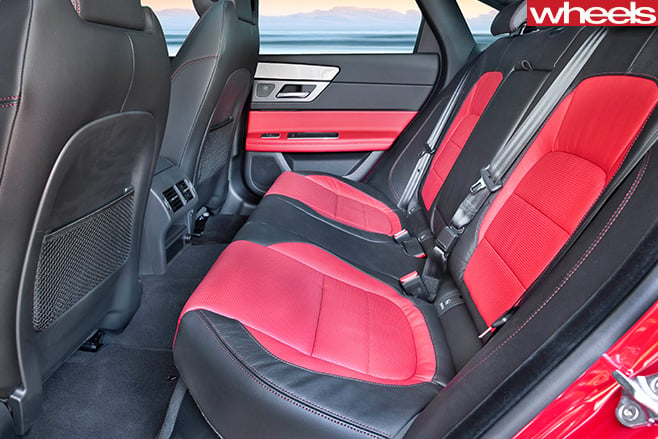
WHAT IS IT? Jaguar’s second-generation XF medium sedan. It has a new lightweight chassis, new engines, and the potential to out-handle and out-ride the proven German luxury mid-sizers.
WHY WE’RE TESTING IT To see if the Jaguar XF can live up to its on-paper promise. It’s lighter, by a whopping 190kg, smaller on the outside yet bigger on the inside, and uses the same aluminium-intensive architecture as the brilliant XE. But is it really a match for the Mercedes, BMW and Audi?
MAIN RIVALS Mercedes-Benz E-Class, BMW 5 Series, Audi A6, Lexus GS
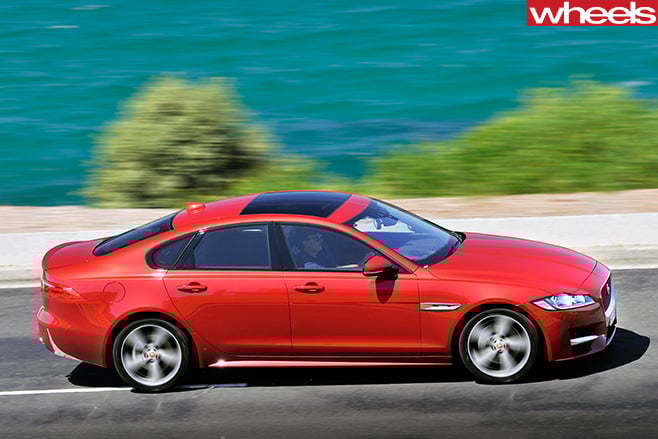
PLUS: Balanced, engaging handling; ride quality; oodles of rear space; sweet 2.0-litre diesel MINUS: lacks class-leading tech; interior good rather than great; expensive options
THE WHEELS REVIEW JAGUAR isn’t holding back in its battle with the Germans for luxury sedan supremacy. The brilliant Jaguar XE has only just arrived, and now the British brand has launched a new version of its bigger brother, the XF, on Aussie soil.
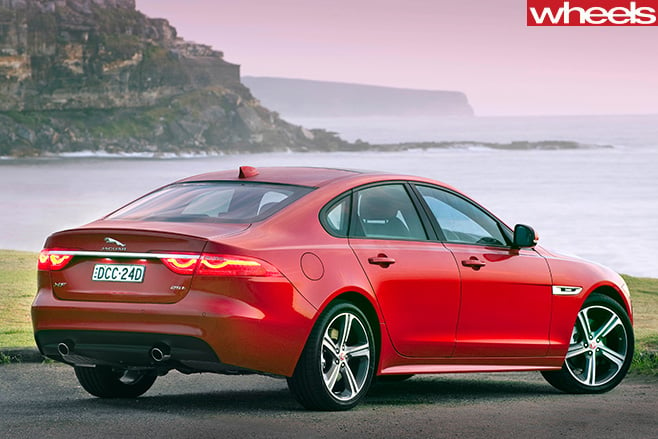
There’s new suspension too, nicked straight from the XE, which comprises double-wishbones up front and a sophisticated multilink link set-up (Jaguar calls it ‘Integral link’) at the rear.
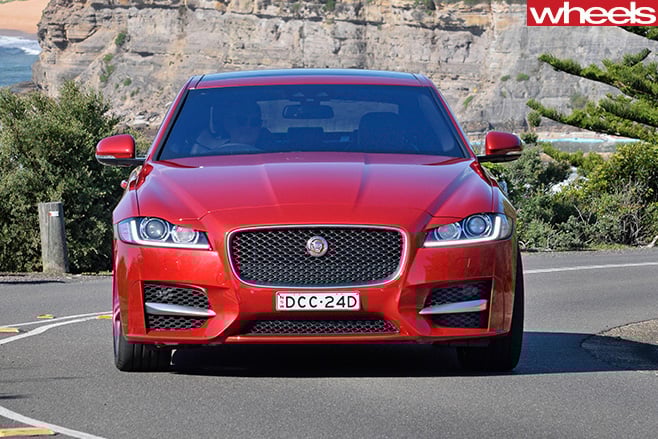
And the results, when you throw the XF’s handsomely chiselled nose at a corner, are impressive. Far from being a wallowing luxo barge, the XF corners with an eagerness and composure that belies its size and (despite the weight loss) still hefty circa 1700kg kerb weight.
Every XF can be optioned with adaptive dampers for $2400, though the passive set-up is convincing enough to save the cash.
Yet as good as the XF’s ride/handling compromise is, the dynamic highlight is the steering. It’s the same electric set-up as (you guessed it) the XE, only with added meatiness courtesy of a tweaked calibration. The result is one of the most communicative tillers currently on sale. The XE’s steering is sharp, smooth and provides a silky sense of connection. It’s good. Great even.
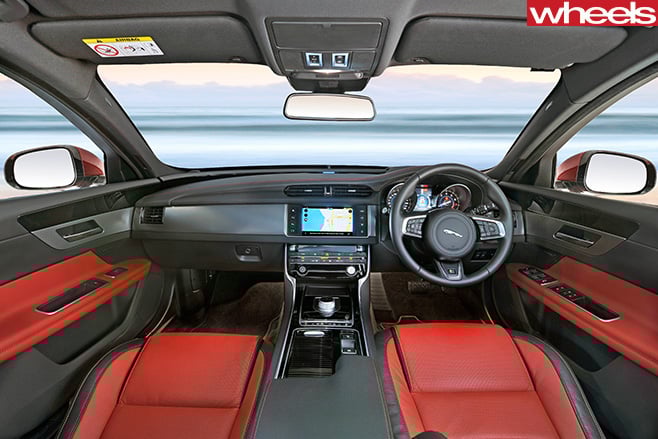
It’s a convincing suite of engines with no obvious weak spot, though the highlight is the sweet and refined 2.0-litre Ingenium diesel. Every XF is rear-wheel drive and paired with an intuitive eight-speed ZF gearbox.
As for pricing, the XF range starts at $82,800 for the entry-level 20d and taps out at $128,200 for the V6 petrol powered XF S. More powerful, and more expensive, RS and SVO variants will follow.
What’s lacking is the same level of tech wizardry and autonomous systems featured on the new Mercedes E-Class (due here in July), which can drive itself on roads without clear lane markings and can change lanes autonomously. Jaguar admits it’s a step behind its rivals here.
So just like its XE sibling, the XF’s strength lies in its engineering prowess, which begs the question: is its handling class-leading? Today, on these roads, it feels it, but that verdict will have to wait for a Wheels comparison test and thorough back-to-back testing. And as good as its new XF is, Jaguar knows the Germans aren’t mucking about either. Bring it on.
SPECS Model: Jaguar XF 25t R-Sport Engine: 1999cc 4cyl, dohc, 16v, turbo Max power: 177kW @ 5500rpm Max torque: 340Nm @ 1750-4000rpm Transmission: 8-speed automatic Weight: 1590kg 0-100km/h: 7.0sec Fuel economy: 7.5L/100km (EU combined cycle) Price: $89,800 On sale: Now
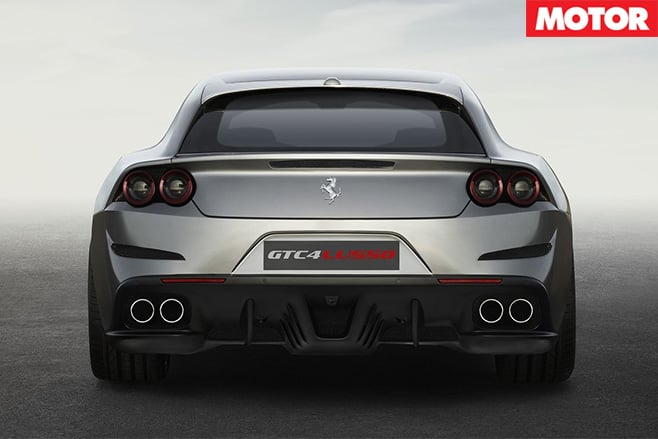
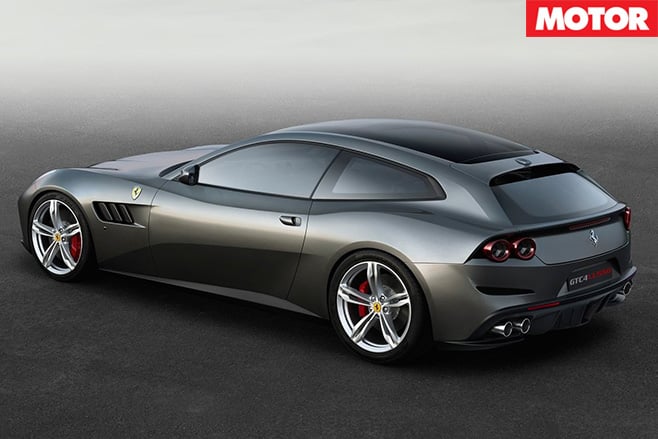
What was the Ferrari FF now becomes the Ferrari GTC4 Lusso and a more powerful, more aerodynamic sports-luxury four-seater.
Maranello has given its ‘For Four’ a facelift for the first time since its debut four years ago, and the name-change is meant to evoke a shared nod split between the 330 GTC and its 2+2 sister, the 330 GT, and also the 250 GT Berlinetta Lusso. The number 4 still tallies the seats available.
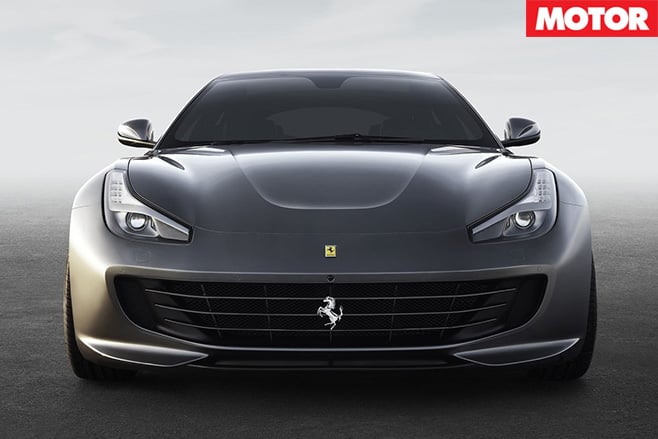
The platform is unchanged, but for the GTC4 Lusso the front-end styling of the FF has been smoothed over: gone are the rounded lower air intakes, replaced by a wider front grille meant to improve air flow, while the headlights lose the indents joining the bonnet.
Inside, a bright new 10.25-inch touchscreen with app connectivity is the main change along with a smaller steering wheel and revised instruments.
The carry-over 6.3-litre V12 engine scores higher outputs thanks to a higher compression ratio – now 13.5:1 compared with previous 12.3:1 – that ups the FF’s 486kW/683Nm to 507kW at 8000rpm and 697Nm at 5750rpm.
Ferrari also claims 80 per cent of that peaky torque figure is available from 1750rpm, although unlike with the switch from 458 Italia to 488 GTB, the turbocharger has not arrived in the GTC4 Lusso.
The GTC4 Lusso does, however, pinch the rear-wheel steering mechanism from the hardcore F12 tdf unveiled late last year, which teams with revised traction software called Slip Slide Control 4.0 for the 4RM Evo four-wheel drive system. A seven-speed dual-clutch transmission remains the only option.
The GTC4 Lusso will likely be offered with a similar pricetag, although more details will be available at its official public debut at the Geneva motor show in early March.
The boffins in Stuttgart definitely underestimated the worth of a decent SUV spin-off first time out. Four years behind BMW’s inaugural X3 and hobbled with left-hand-drive only, the 2008-15 Mercedes-Benz GLK is now widely recognised as “a mistake” by the company’s top brass. But that’s all finally about to change.
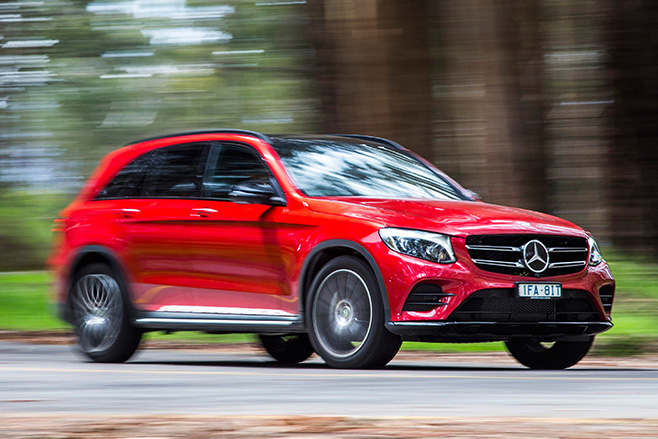
Sharing its platform and drivetrains with the lauded W205 C-Class, the GLK’s all-new GLC replacement is Mercedes’ apology to the world. And, in particular, right-hook markets like Australia. Yet the GLC is hardly begging forgiveness. It’s too good for that.
Beneath its tastefully sculpted sheetmetal – some of which is aluminium – the GLC offers several advances over the C-Class from which it’s derived. Its slightly longer wheelbase liberates 30mm of rear legroom, while its increase in height achieves additional headroom (another 30mm). In conjunction with a rear-seat cushion mounted 30mm higher from the floor, the GLC is actually 60mm better off for back-seat passengers, as well as 20mm wider for crucial extra kiddy-seat room. Yet while the GLC’s 550-1600 litre boot sits at the top of its class, in reality a C-Class Estate is more cargo friendly.
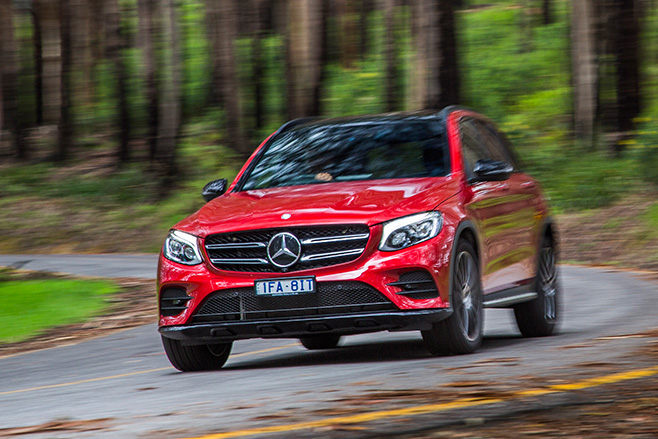
The GLC’s passenger-car stablemates are also sweeter to drive, though this SUV is respectably accomplished. While the GLCs we drove at the international launch were all fitted with optional ‘Air Body Control’ suspension, the local launch cars were steel-sprung with fixed-rate dampers. The adaptive dampers we were told would be part of the steel-sprung set-up was misinformation.
On the multi-faceted roads of Victoria’s Yarra Ranges, the GLC impressed with its quietness and generally plush and absorbent ride, even on the 255/45R20s worn by both 250 variants. But big hits see the standard suspension kiss its bump stops – as do speed humps, even when taken slowly – pointing to the lack of damping resistance as the pace gets serious. Selecting Sport mode removes any inconsistency to the steering’s weighting, making the stock GLC point with greater cohesion, but anyone who truly values dynamics should head straight for Air Body Control ($2490 extra). Or at least the AMG Line package ($2990) that brings sports suspension (but not ABC), as well as multi-spoke 20s, a subtle bodykit, privacy glass, sports pedals and a flat-bottomed steering wheel. Thankfully, the body’s irritating sidesteps are a delete option.
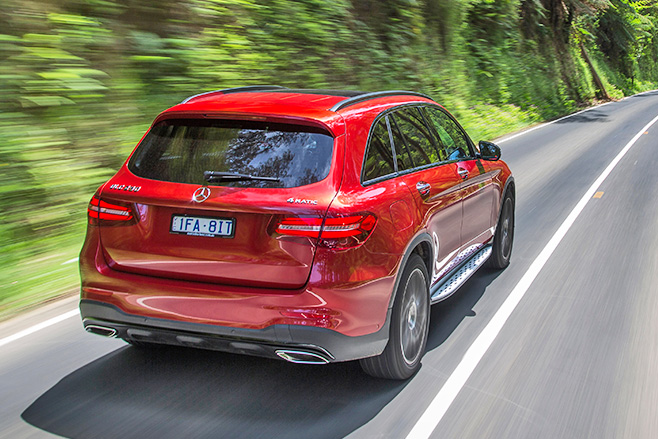
While performance enthusiasts should wait for the 270kW 3.0-litre twin-turbo V6 to arrive in mid-2016, the 220d, 250 and 250d variants perform well. The base 125kW/400Nm diesel is a fairly sweet thing, if lacking the sportier zest of the 155kW/350Nm 2.0-litre turbo-petrol, while the 150kW/500Nm 250d felt smoother and more polished than the example we drove in Europe. Benz’s 9G-tronic nine-speed auto also performed flawlessly.
But it’s the GLC’s premium interior, and its superb forward view, that is guaranteed to make this SUV the one to have. About the only thing the base $64,500 220d is lacking is genuine leather, though its seats are among the best in GLC’s competitor set. And if you have a play with the tempting options packages (such as the Comand pack with premium multimedia and centre screen, plus internet and a fabulous 13-speaker Burmester stereo for $2990), then the GLC stretches into super-luxe territory.
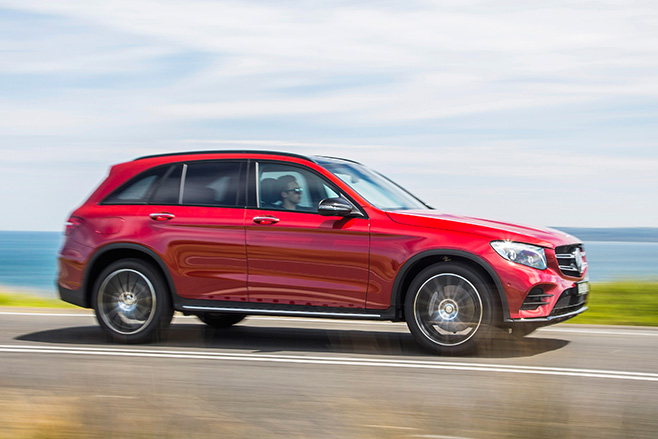
NOTABLE FEATURES
Air suspension
The latest generation of Benz’s revered ‘Airmatic’ suspension system is called Air Body Control. A $2490 option, it uses multi-chamber air springs, interconnected by valves, to enable multiple springing rates, controlled by a continuously adjustable damping system.
Equipment
Even the base Aussie GLC220d sports all-wheel-drive, 19s, nine airbags, electric front seats, a 360-degree parking camera and cross-wind assist. The GLC250s get 20s, keyless entry, leather, privacy glass, and Driver Assistance Package Plus (active cruise, full AEB, lane assist etc.)
Interior
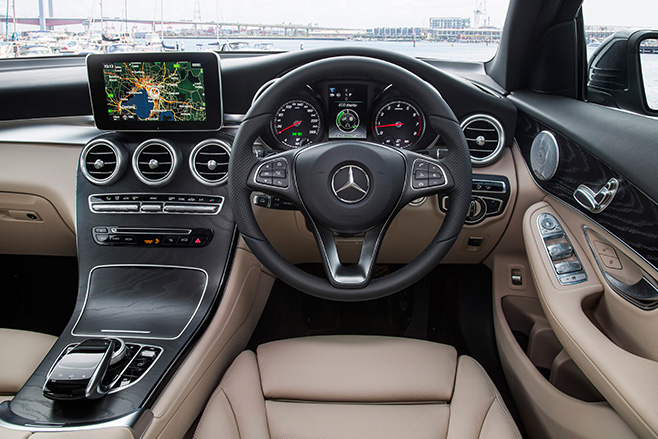
You may be surprised to learn that the GLC shares its dashboard architecture with the C-Class, if only because it seems to ‘breathe’ better in the SUV. The over-sized air vents and ‘aeronautical’ design cues are more suited to the GLC’s airier cabin. And, my, what a splendid view!
KEY COMPETITORS
BMW X3 xDrive 30d Price: $79,100
A serious performer for a fairly serious price, the 190kW/560Nm six-cylinder turbo-diesel X3 is currently the performance pick for posh mid-sized SUVs, but it can’t hold a candle to the GLC’s class, comfort and quality of finish.
Audi Q5 3.0TDI quattro Price: $77,200
One of the oldest SUVs in its class (an all-new one should surface late this year), the Q5 continues to surprise with its driveability and quality. Its TDI V6 is stronger than the GLC’s four, but the Benz buries the Audi for driveway razzle-dazzle.
This article was originally published in Wheels February 2016.
Click here to find out more about the Mercedes-Benz GLC 250d 4matic.
After months of rumour and scuttlebutt, we can finally confirm the Ford Falcon XR Sprint is real and we have all the details.
Ford revealed in December that two Sprint models would be offered, based on both the XR6 Turbo and XR8, however the exact mechanical specification has been a secret. Until now.
The XR6 Sprint turns the wick up on the XR6 Turbo’s 4.0-litre inline six to produce 325kW/576Nm, making it the torquiest engine ever produced in Australia, a title it holds by the slimmest of margins over the 345kW/575Nm XR8 Sprint.
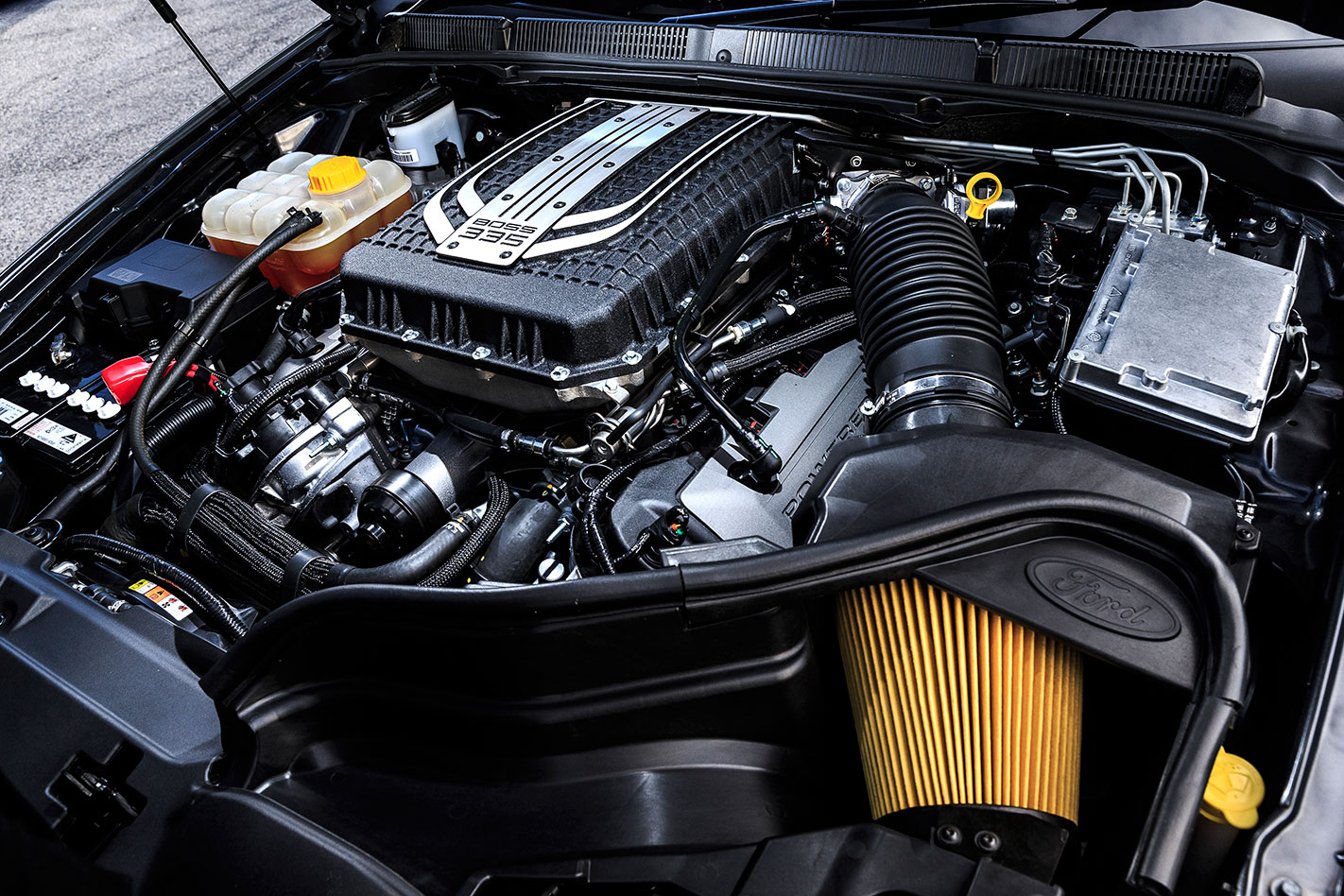
Ford claims that with the right intake air temperature, the XR6 Sprint can produce up to 370kW/650Nm, while the XR8’s 5.0-litre supercharged V8 lifts to 400kW/650Nm.
In the right conditions, we expect both Sprint models to manage the 0-100km/h sprint in around 4.6sec and complete the quarter mile in around 12.6sec.
Rounding out the mechanical package is the suspension tune and wheel and tyre combination from the current XR8, however both models benefit from what was previously the FPV Premium brake option, comprising six-piston front and four-piston rear brake calipers.
Available as a six-speed automatic only, the XR6 Sprint costs $54,990 while a manual XR8 Sprint will set you back $59,990 and the auto a further $2200.
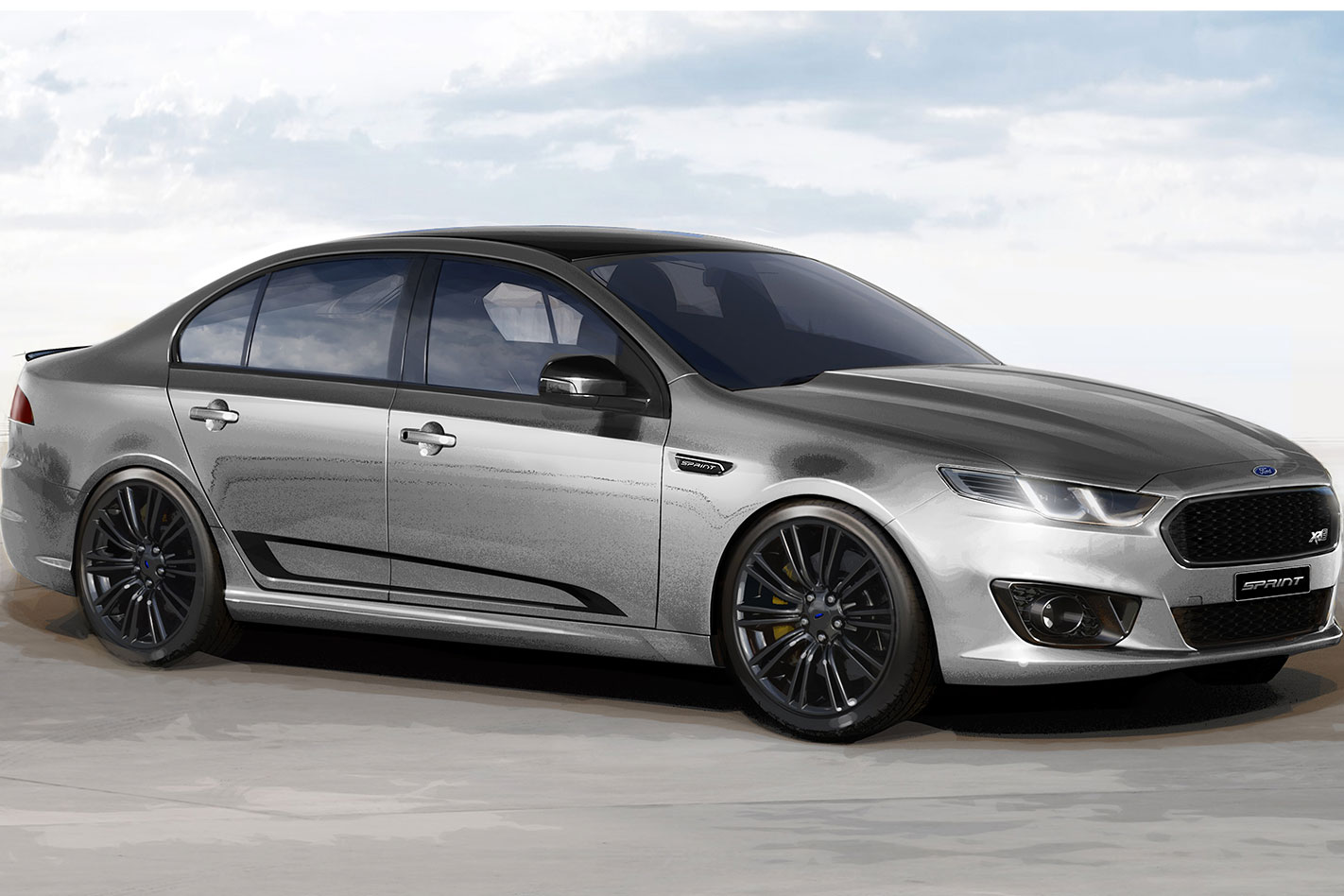
To differentiate them visually from the regular XR variants, the Sprint models receive 19-inch black wheels, gold brake calipers, black headlamp bezels, a new black rear spoiler and new front foglamp surrounds, while the XR8 Sprint adds a black roof and wing mirrors.
Six colours will be offered, Winter White, Smoke, Aero Blue, Silhouette, Kinetic and Victory Gold, though any colour other than white will cost an extra $500.
The XR Sprint launch takes place in mid March and we’ll have more details in the April issue of MOTOR.
THE most powerful Ford Falcons to ever roll off the carmaker’s Australian production line have been revealed, with the limited-edition Sprint series to feature a 325kW turbo six-cylinder and a 345kW supercharged V8.
However, while enthusiasts will cheer the limited-edition models that will help to carry the Falcon name to its October end, the sharper looking package of the two, the XR6 Sprint, will only sell with a six-speed automatic gearbox. An optional six-speed manual is reserved exclusively for XR8 Sprint versions.
A Ford spokesman said the decision to limit the XR6 Sprint to the automatic transmission was because most buyers of the Falcon’s turbo models opted for the self-shifter.
On sale in May, Ford says it will build only 500 of the $54,990 XR6 Sprints, and 750 of the $59,990 XR8-badged cars (the auto option adds $2200 to the price).
While the huffed 5.0-litre V8 produces peak power at 5750rpm, and maximum 575Nm from a low 2750rpm, on paper the XR6 Sprint’s 4.0-litre in-line six peaks an extra 250rpm higher at 6000rpm, but spreads its 576Nm – 1Nm higher than the bent eight – over a much more tractable rev range, 2220–6250rpm.
An overboost function will temporarily lift the XR6 Sprint’s to 370kW and 650 Nm, while the XR8 Sprint will serve up to 400kW and 650Nm.
“We’re excited to be able to offer our Falcon enthusiasts a car that truly represents the performance DNA of Ford,” Ford Australia chief executive Graeme Whickman said.“The Falcon chassis is recognised for its refined ride and fantastic balance but our dedicated product development engineers have taken the opportunity to further hone the Falcon’s dynamic package – ride, body control and performance of the six-cylinder turbo and V8.“We think customers will really appreciate the amount of dedication and work that’s gone into this limited-edition series.”Ford has managed to squeeze an extra 15kW and 16Nm out of the Geelong-built turbo six by sourcing the turbocharger and injectors from the the now-retired Ford Performance Vehicles version of the Falcon, as well as adding a larger intercooler.
As well, the XR6 Sprint’s transmission calibration is unique to the vehicle, which also features a new lower airbox, bespoke engine calibration and new larger air intake system.
The V8, meanwhile, draws on its retired go-fast arm for the V8, but steps up performance from the FPV-badged car’s 335kW and 570Nm. The V8s will use the FPV GT-F calibration for the auto transmission.
As well as underbonnet tweaks, the Sprint models also gain subtle styling changes to help them stand apart on the road. That includes a black roof on XR8 versions, a gold-coloured Brembo six-pot calipers down the front and four-pot versions down the rear, and a boot lid spoiler.
Each version of the Sprint will include a build number mounted on the engine.
Ford is expected to release more performance details ahead of the Sprint series’ official reveal next week.
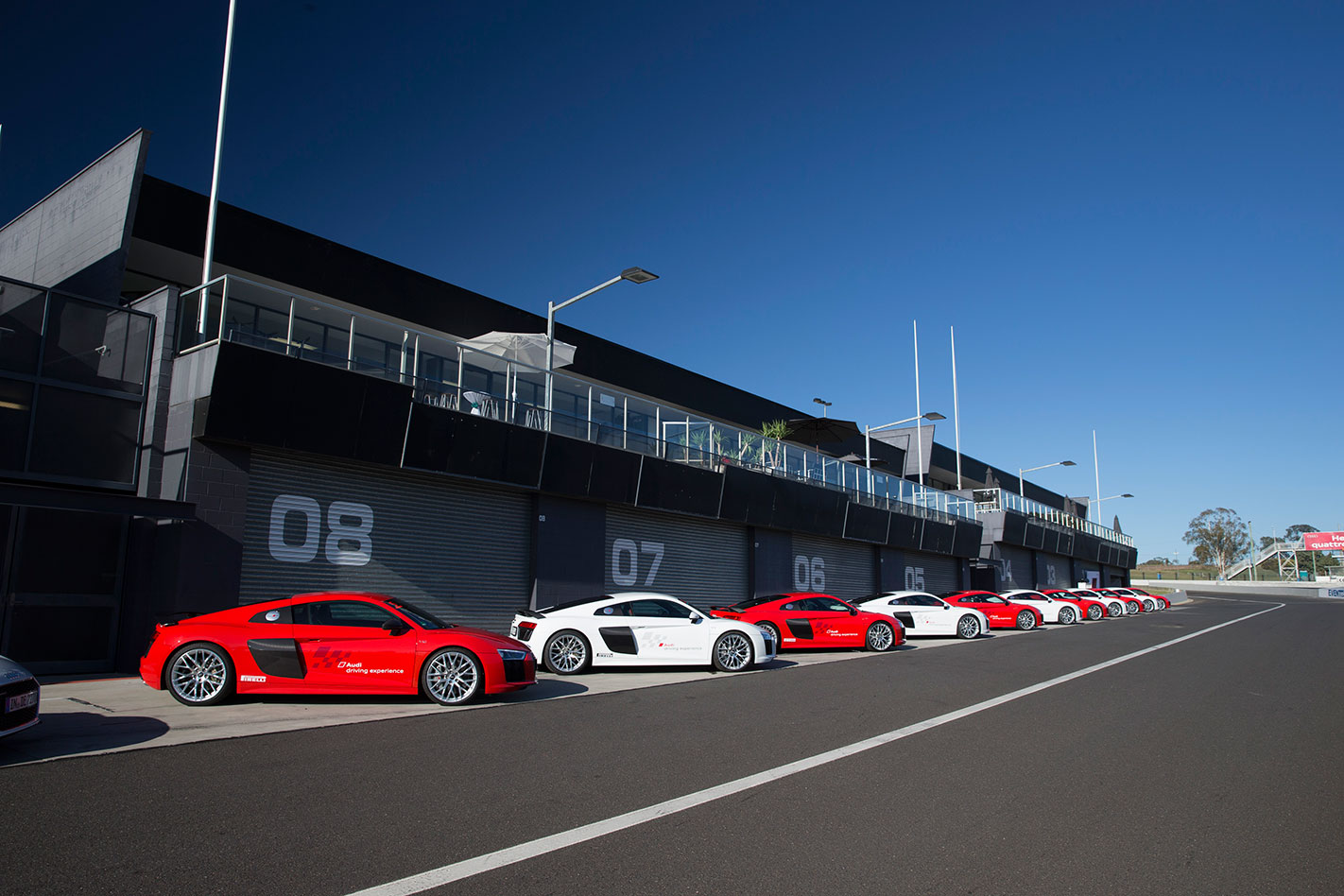
Motoring journalism is a strange business sometimes. When Audi offered us an early chance to drive the new R8 V10 Plus we obviously jumped at it, but we now find ourselves on the left-hand side of the car and with a closed Mount Panorama at our disposal.
So this is far from a thorough road test, but does offer a glimpse into the abilities of Audi’s latest supercar. At first glance there seems to be little in the way of comprehensive change; the styling can be best described as evolutionary, the 5.2-litre V10 carries over with a seven-speed dual-clutch and all-wheel drive the only drivetrain option.
Under the skin, however, there’s a new aluminium/carbonfibre chassis that also underpins the Lamborghini Huracan. There are two variants, the 397kW/540Nm V10 and 449kW/560Nm V10 Plus we are driving today. Pricing for each will be released early next week, but you’re looking at around $400,000.
The advantage of retaining the atmo V10, of course, is not just instant throttle response but also the outrageous noise it makes. V8 Supercar driver Karl Reindler is providing instruction via car-to-car radio but I can’t hear a damn thing he’s saying over the racket behind me as the engine screams around to its 8700rpm limiter. The dual-clutch ’box is also worthy of mention, with shifts that are more or less instant.
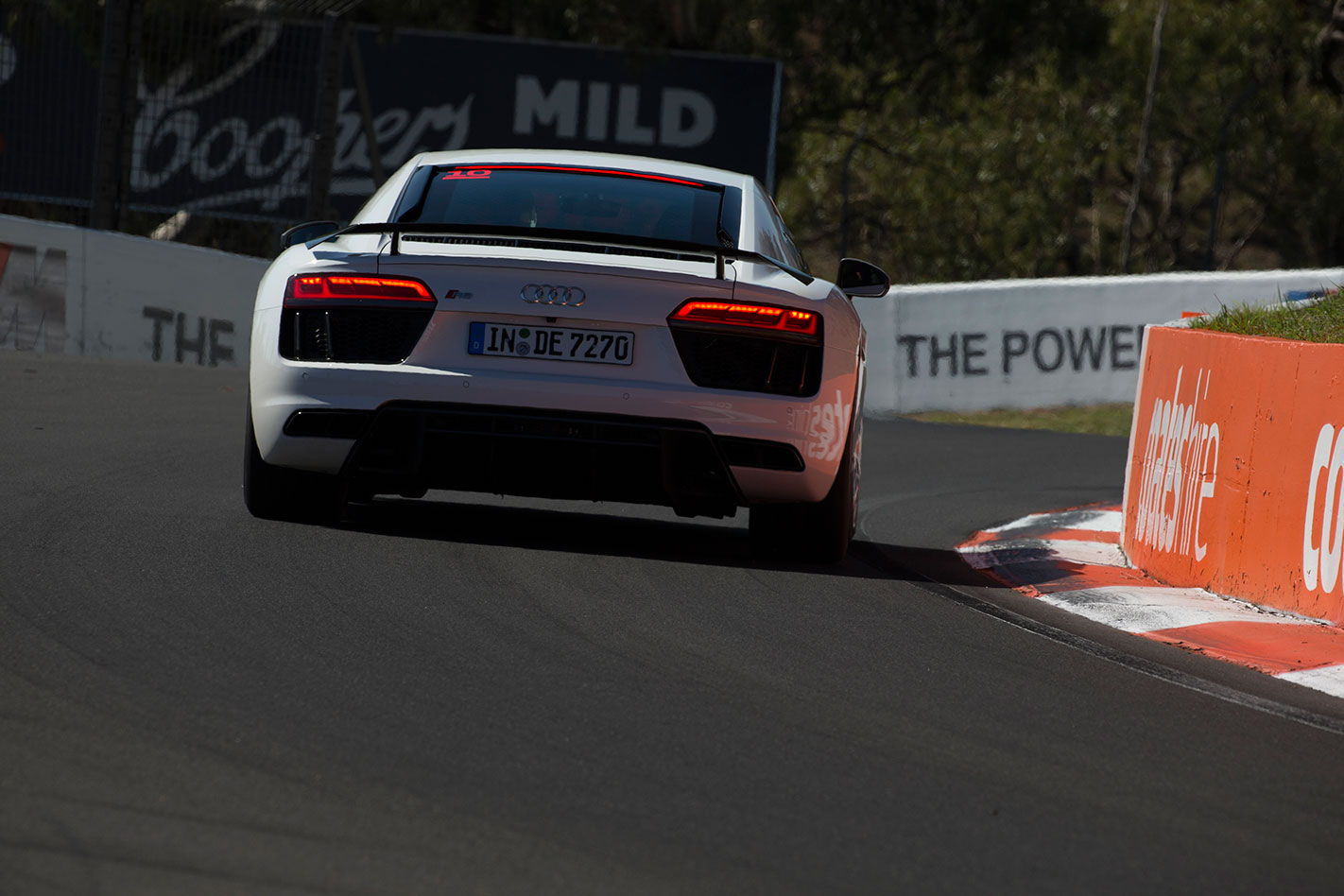
This sort of speed certainly gets your attention, especially as Conrod isn’t the smoothest surface, the ESP subtly intervening as the car jinks about on the bumps and then goes light over the crest.
The stop into The Chase is one of the the biggest in Australian motorsport and is a great showcase for the R8’s hugely powerful carbon ceramic brakes. The pedal feel is excellent and they have plenty of stamina.
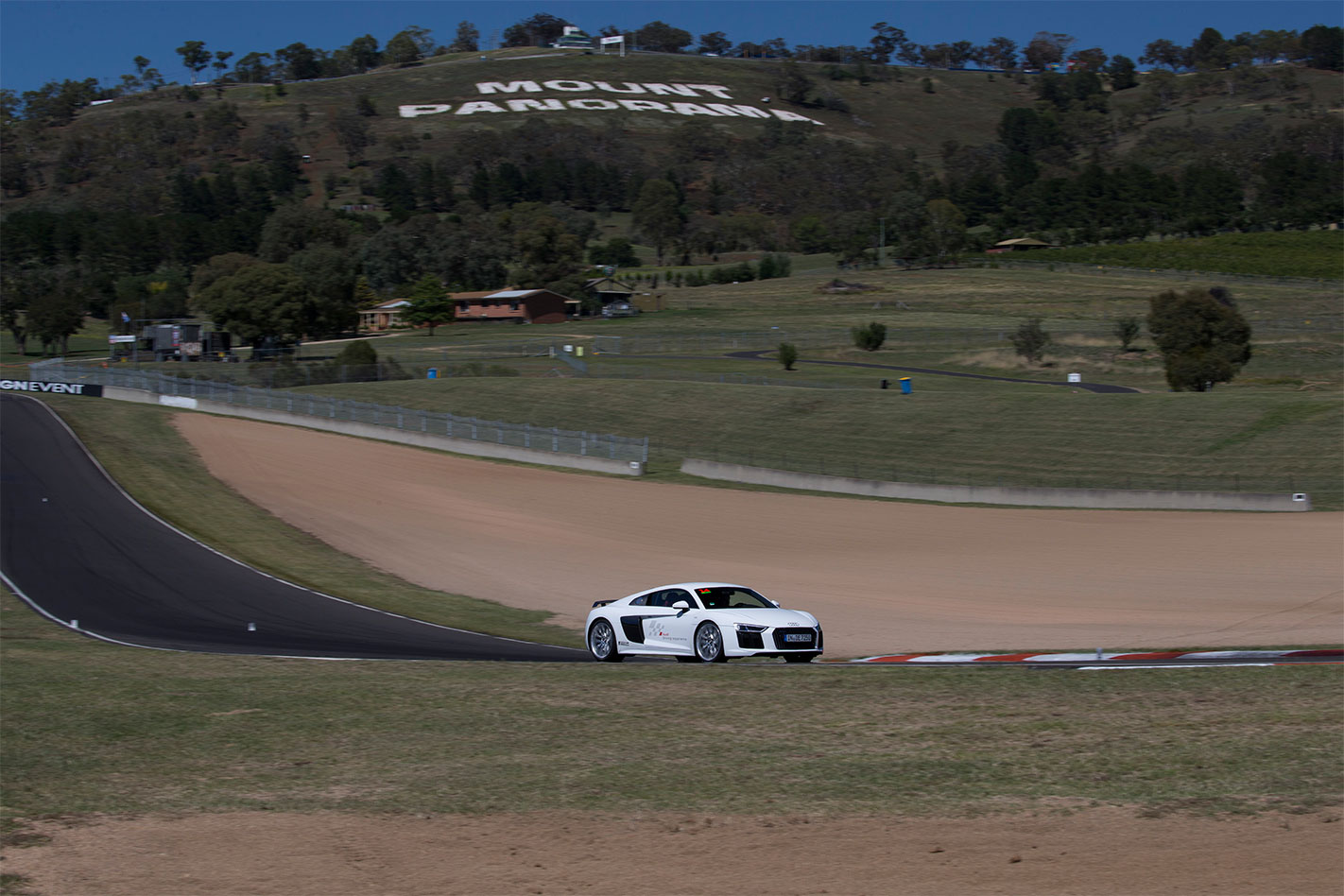
In tighter turns it’s easier to get the new R8 to the apex thanks to faster steering, fixing one of the few criticisms of the old car. On exit the new car will adopt a nice four-wheel slide, even within the constraints of ESP, though we’re promised that with the switchable all-wheel drive system in ‘Wet’ mode more drive is sent to the rear for sideways antics. There are also settings for Snow and Dry conditions which are optimised for more traction.
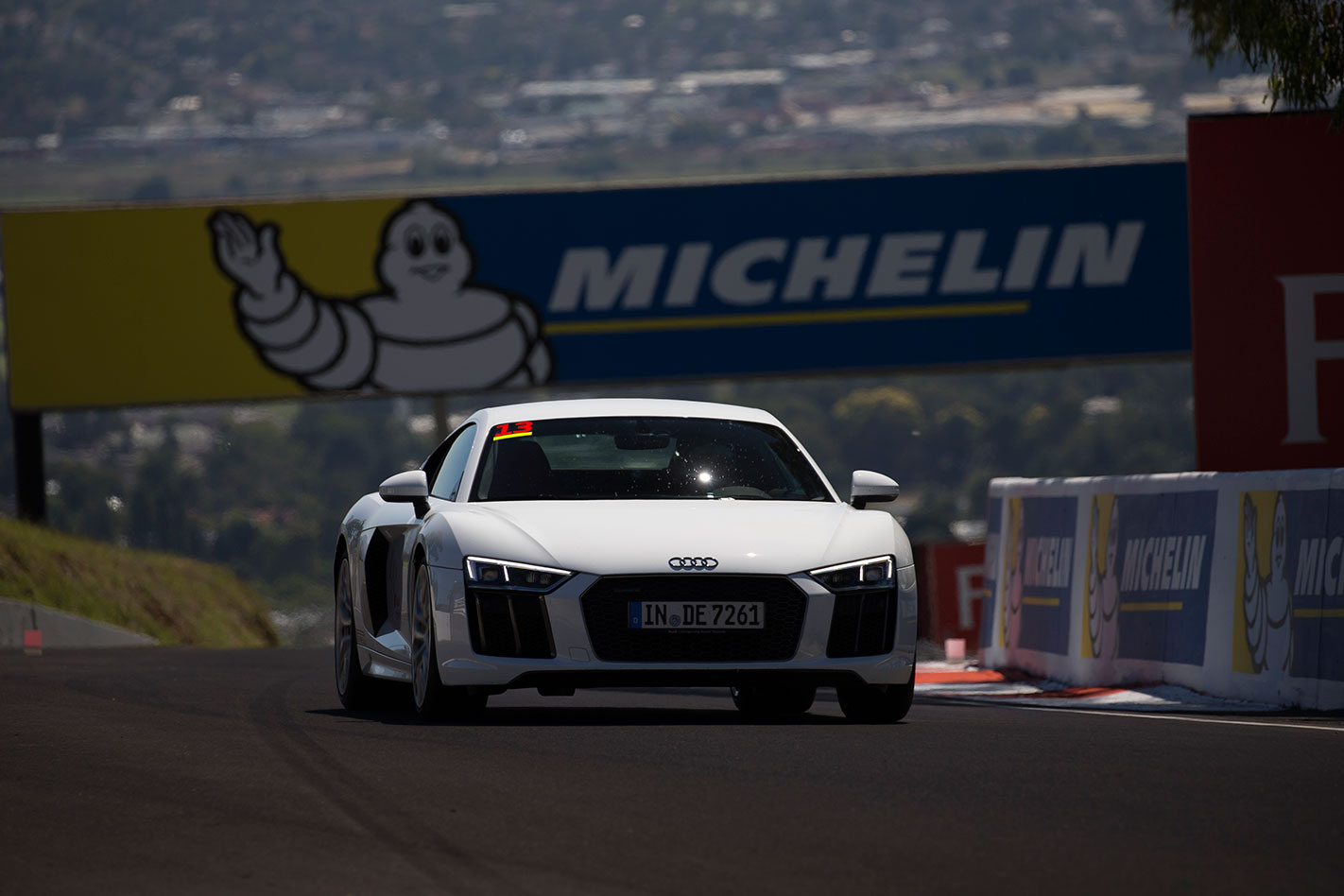
Likewise, any road impressions will have to wait but it seems the R8 certainly won’t be overwhelmed in a fiercely competitive supercar segment that this year will welcome the Ferrari 488 GTB, McLaren 570S, updated Porsche 911 Turbo S and Lamborghini Huracan LP 580-2.
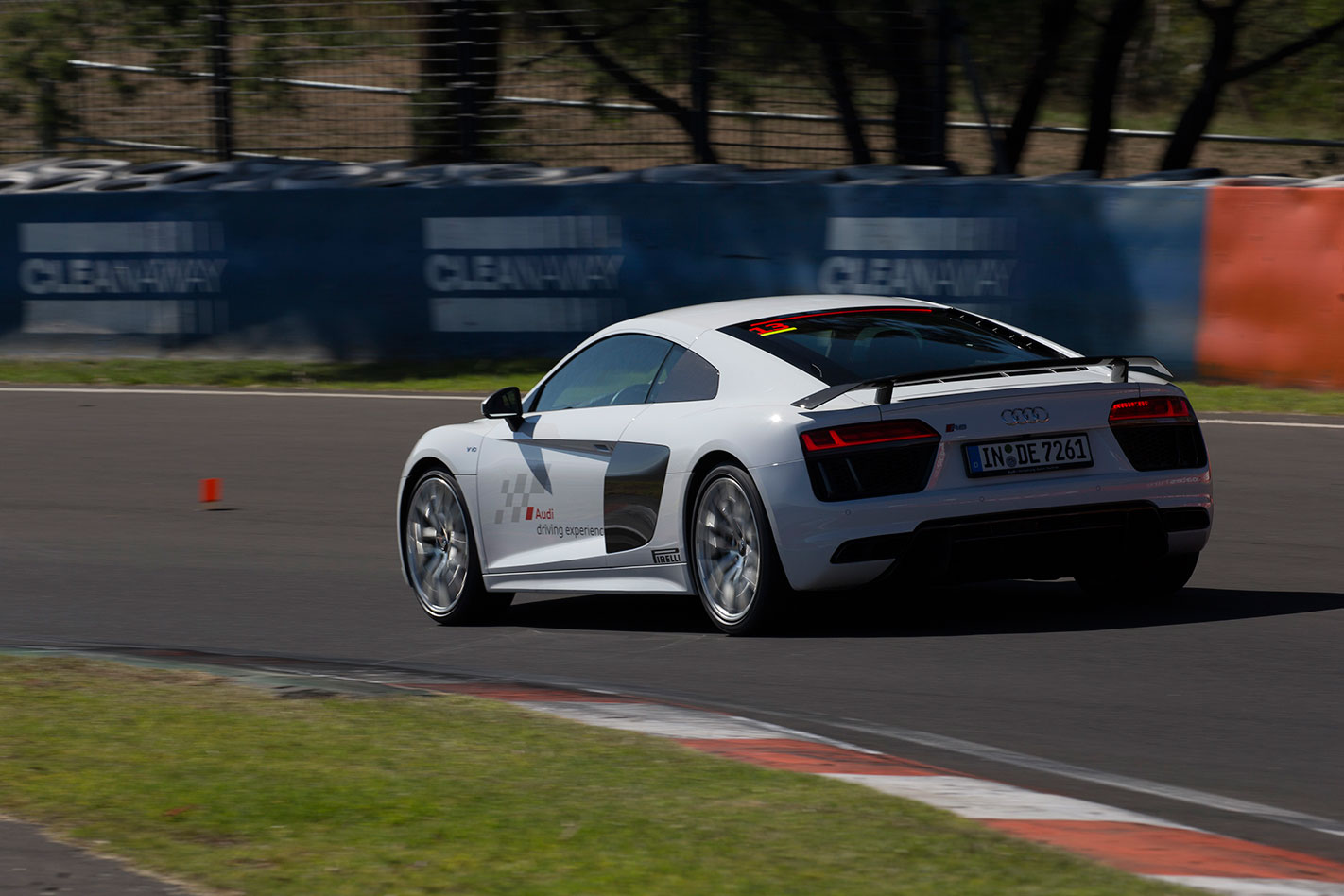
Choosing between the two will probably come down more to the character of the individual buyer rather than any differences in the cars themselves. Regardless, it should be fun finding out when the two cars arrive later in 2016.
For more details and full pricing on the new Audi R8 range check www.motormag.com.au next Monday.
Whether you’re a regular to the car sick routine, or you manage to suppress the urge to spew by avoiding winding roads, the condition of wanting to heave up your breakfast and faint while four wheels are in motion is never a nice one. Car sickness is the pits.
Chances are if you suffer from car sickness you already know the bad news – it’s not just limited to a car. Bobbing over ocean waves, soaring through unpredictable winds or even just rolling through the motions of carnival rides are all likely to cause sudden onsets of this disorder. You’re probably also already aware that being a driver is less nauseating than being a passenger.
So what causes motion sickness? Unfortunately, there’s no hard and fast answer. In simplest terms, the cause is believed to be when the eyes see one thing but the part of the inner ear that controls balance (vestibular system) sends a different message to the brain. And that’s the reason drivers are often affected less, because they’re in control. At least, that’s the theory.

But there is some good news; there are ways to lessen the effects, and even avoid it all together. Here are some tips for next time you’re forced to sit in the passenger seat;
- Sit in the front seat. You can see the road ahead of you, you’re more aware of what’s coming so there’s less chance of surprising your brain.
- Stop as often as you can. Fresh air is the solution to so many problems, and motion sickness is no different. Not only does it give yourself a break from the winding roads, but it’ll also let your mind stabilise.
- Wrist bands. There’s an acupuncture point in your wrist that’s meant to alleviate nausea. While they aren’t scientifically backed, they’re a cheap, drug-free option and come highly recommended by our very own, motion-sickness suffering Lifestyle Ed, Anna.
- Food and drink intake is important. Anything too heavy or spicy is out. And that dream of sitting in Qantas Club or Business Class with champagne in hand? Forget it – alcohol is out of the question.
- Open a window or the sun roof, but don’t look up or out. Again, the fresh air will help, but the blurry trees and clouds flashing past you won’t. Sit in a way you can free the breeze without focusing on the broken scenery.
- Put down the books, phones and computer games. Your body is already sending conflicting signals, throw in a bit of Mario taking a right when your body is actually turning left, and you’ve given your body an eviction notice.
- Remember those dickie seats in the old Ford Falcon? They’re those extra seats in the boot that were rearward facing. Fun when you’re a kid, not so fun when you suffer from car sickness. Luckily, they’re not around anymore, but if you happen to get into an old Falcon, get in early with ‘shot gun’.
- Natural remedies. While there are some good medications you can take (see point 9), there are some natural remedies that are said to help. Peppermint and ginger are our top recommendations for all nauseous situations including car sickness.
- There are some really effective over-the-counter drugs you can take to help alleviate the effects of motion-sickness. Be wary that these can have side effects, like drowsiness, so don’t plan on driving unless you’re familiar with how your body reacts. Your doctor can also prescribe some medications.
- Most importantly – DON’T THINK ABOUT IT. You know those long drives when you’re busting for a wee and the last thing you want to hear or see is water? Same thing applies here. The more you hear about it, talk about it or think about it, the more likely you are to get sick. Focus on the fun, sing some songs (no head banging), breathe deep or go to sleep.
As the “father” of Lexus’s F brand, Yukihiko Yaguchi is one of the few leading Japan’s performance car resurgence and no doubt giving some Germans a headache.
Having worked for Toyota and Lexus since the 1980s, the brands are in his veins, and so is performance, given he worked on the last Toyota Supra and, more recently, as chief engineer for cars like the IS F and RC F.
Yaguchi, 59, contributed to LFA and RC F GT3, too, and is now working on GS F, a car to take on BMW’s M5 and the Mercedes-AMG E63.
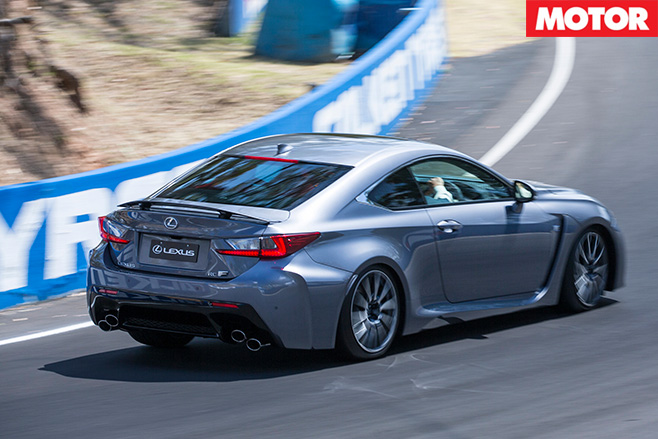
Despite broken English, in this interpreter-assisted interview Yaguchi alludes to the forthcoming RC F CCS-R, a lightweight, track-focused monster more than 400kg lighter than the admittedly porky 1860kg RC F. As MOTOR went to press, this stuff was still top secret.
Yaguchi says the RC F CCS-R would be like an M4 CSL or C63 Black rival, but not necessarily more powerful, just more fun to drive, and with less weight. If you make the car too fast, its limits start to go beyond the reach of mere mortals, says Yaguchi.
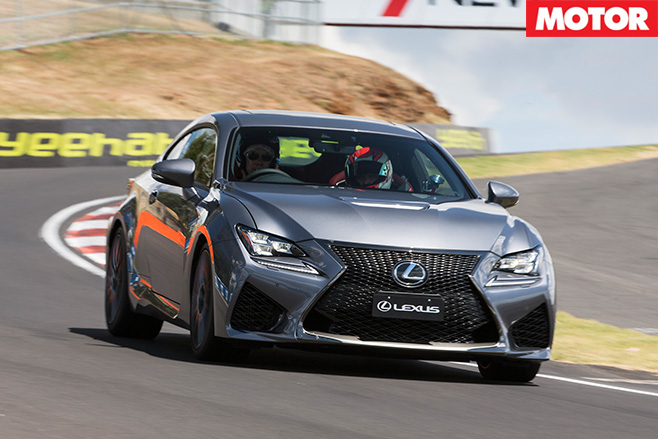
Fortunately for fans of Japanese performance cars, the sharply-dressed, friendly and jovial Yaguchi is an avid driver and a believer in naturally-aspirated engines to the point where, as we found out, turbos aren’t on his Christmas card list.
So for the Lexus brand you are Mr F, who started it all? “Yes!” [laughs]
When did you finish RC F and what are you working on now? “Last year. This time we are working on the development of the GS F and the RC F GT3.”
The V8 in the RC F, will you develop it more? “Just fine tuning.”
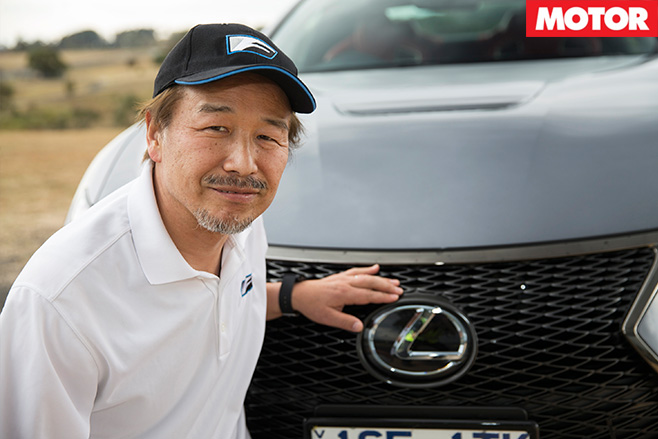
What’s your opinion on turbocharging? Do you like turbocharging? “No. Turbocharging torque curve is like this, flat. But NA engines are linear. NA engines, the torque shape is very fun. I dislike turbo engine curve. Turbo engine is faster and better, but not fun.”
Many manufacturers are turning to turbo. Do you think there is another way to save fuel? “I studied some removal of weight, and not the downsizing, upsizing! We have the racing version, not a GT3, RC F CCS-R, exclusive version, like an IS F CCS-R. That car is 400kg lighter! [laughs] IS F CCS-R is that kind of car, 300kg less than IS.”
Do you think maybe one day a turbo engine can sound as good as NA? “Yes, maybe, one day.”
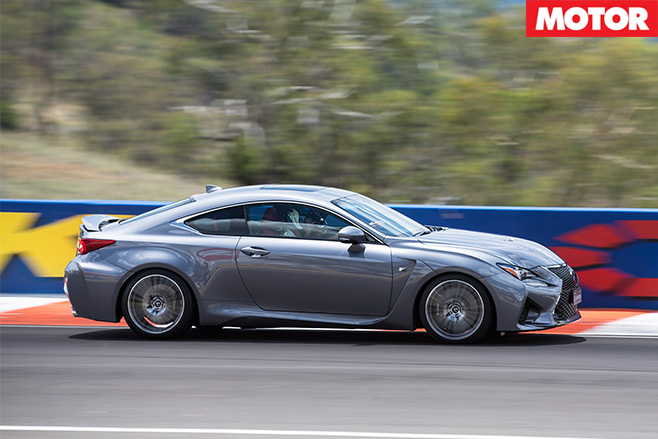
So you can have all the benefits of an NA engine with a turbo engine? “It depends on how the turbo performs. If one day the turbo engine can perform the same as an NA engine, then the turbo engine might be the candidate, the way to go for us.
“The principle is what kind of engine is perfect for the car we’re making, not just for fuel efficiency but also for power and torque, and acceleration. Taking those things into consideration, if the turbo is the best way to go, I will never hesitate to go in that direction.”
Will there be another LFA? “It’s possible. But you know, we took 40 years from 2000GT to LFA, so how many years will it take from LFA to another hypercar? Nobody knows. But maybe one day, of course.”
Ryan Reynolds, Serena Williams, Tony Hawk and the Best Super Bowl Car Ads. Whether or not you have any interest in American Football, it’s common knowledge that the Super Bowl is the time of year when advertisers really pull out all the stops and create some fun ads, with celebrity talent to boot. Even here in Australia we keep a keen eye on the best Super Bowl ads.
This year the car manufacturers really came to the party, serving up a host of engaging content, especially Hyundai – who created a number of ads for different models and won USA Today‘s Super Bowl Ad Meter competition with ‘First Date’ (see below).
Celebrity talent included tennis star Serena Williams, skateboarder Tony Hawk, Emily Ratajkowski, footballer Odell Beckham Jnr, comedian Kevin Hart and actors Christopher Walken and Ryan Reynolds.
MINI CELEBRATES DIVERSITY
Serena Williams, Tony Hawk and more show that the Mini can be anything you want it to be.
HYUNDAI FEATURES RYAN REYNOLDS THE SEXY NEIGHBOUR
Sexy neighbour Ryan Reynolds provides a formidable distraction for local women trying to drive around the neighbourhood.
SUBARU DOG TESTERS
Subaru showcases it’s phone navigation functionality.
BUICK CONVERTIBLE FEATURING EMILY RATAJKOWSKI
Wedding guest Emily employs some unique skills to catch the wedding bouquet. Yes, Emily being that girl from the Robin Thicke video clip for ‘Blurred Lines’.
TOYOTA PRIUS ‘HECK ON WHEELS’
Functional is sexy!
AUDI R8 COMMANDER ASTRONAUT COMMERCIAL
A retired astronaut relives his youth and recaptures a zest for life.
HYUNDAI ELANTRA TALK STARTING CAR
Bears are shocked at the features of the Hyundai Elantra. Also have we been supposed to say “Hyundai” like that this whole time?
HYUNDAI GENESIS FIRST DATE
The tracking features of the new Hyundai Genesis will make you regret borrowing Dad’s car. Starring comedian Kevin Hart.
KIA OPTIMA WITH CHRISTOPHER WALKEN
Kia enlists some big name talent in the form of Christopher Walken, who describes the Kia Optima as the “world’s most exciting pair of socks.”
