
WHY will we get only a six-speed manual Ford Focus RS?
Because developing a double-clutch auto for the stirring performance hatch would have been a waste of time, according to senior Ford engineer Tyrone Johnson.
“We didn’t need an automatic transmission to sell more than we’re going to sell anyway,” Johnson insisted. “It doesn’t matter.”
The vehicle engineering manager, who led the Ford Performance team through the almost three-year development program for the Focus RS, isn’t eager to talk about future product. And there’s an annoying PR minder close by to make sure he doesn’t give in to the temptation.
But it is clear the German-American, a 31-year Ford lifer, doesn’t see any pressing need for RS models with only two pedals.
In the case of the Focus RS specifically, buyers are offered no other choice than a six-speed manual because this transmission is lighter.
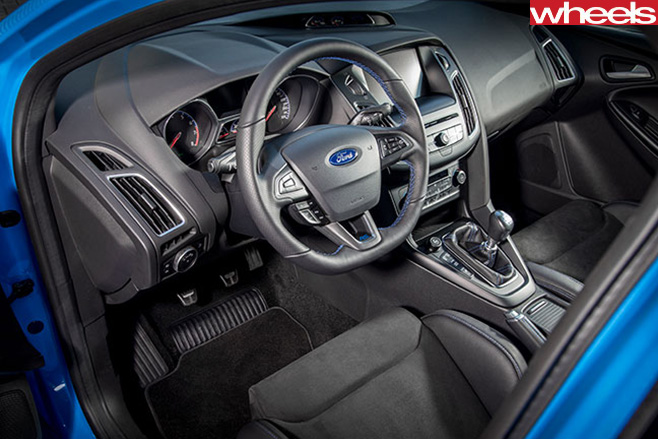
But it’s also clear this senior engineer doesn’t have a very high opinion of double-clutch transmissions. And not only because of their weight…
Discussing the Mercedes A45 AMG (Ford Performance bought one for evaluation during the Focus RS program), Johnson gets animated.
“The Mercedes that we just talked about has a 0-100km/h time of 4.5 seconds… in Launch Mode,” he says.
“What do you think the 0-100km/h time is when you’re not in Launch Mode, that is 99 percent of the time that you’re driving the car?” he demands, before providing the answer to his own question: 5.6 seconds.
“So it’s over a second slower 99 percent of the time,” Johnson continues. “What’s the point of that?”
The Focus RS, in contrast, can deliver its full acceleration potential full time, he says. While it’s easiest to get the best 0-100km/h number using the Ford’s Launch Control tech, the car isn’t effectively hobbled if the driver doesn’t call on it.
The message seems clear, despite the ban on discussing future product; don’t expect anything wearing an RS badge to come auto-equipped anytime soon.
A production-ready Aston Martin DB11 prototype has been caught in Melbourne as the brand finalises development of its 5.2-litre twin-turbo next-gen supercar.
Snapped by MOTOR reader Emerson Varley, this DB11, wearing Victorian registration and cloaked in typical white-and-black swirled camouflage, otherwise appears showroom ready. Near-complete development of the $350k-plus Aston Martin should be no surprise given its reveal is scheduled for the Geneva motor show on March 3.
Beyond the classic Aston grille, the headlights of the DB11 are more curvature in shape than the 13-year-old DB9 it replaces, stretching well into the front guards and packed with two ‘plus shaped’ bezels full of LED globes.
The bonnet features four vertical vents while – if we can take a hint – this next large Brit supercar is probably going to wear Bridgestone rubber. That may also give clue to potential bespoke tyre testing for the DB11.
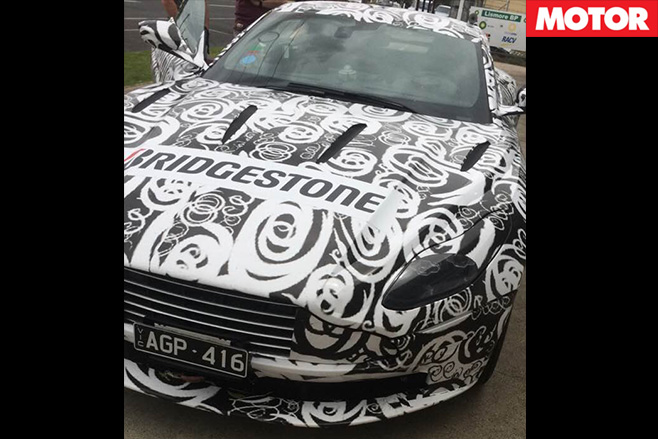
The rear looks similar to a Lamborghini Huracan or Honda NSX thanks to slimline tail-lights and a concave rear garnish with a pop-up spoiler atop. Even the aggressive rear bumper with dual exhausts look ready to roll off the production line.
Aston Martin has confirmed the DB9’s ageing 5.9-litre naturally aspirated V12 will be replaced by a brand new 5.2-litre twin-turbo V12, as previewed by a teaser clip on its YouTube account.
The DB11’s chassis is a complete overhaul the DB9, promising a big weight drop compared with the outgoing 1785kg coupe thanks to increased use of carbonfibre as previewed by the Vanquish and One-77 models. Consequently, expect a sizeable reduction on the DB9’s 4.5-second 0-100km/h personal best.
Expect to see a camouflage-less Aston Martin DB11 – and full details on the new supercar – around this time next month.
After continued setbacks in bringing the Nismo brand to Australia, Nissan Oz says it still ‘thinks’ it can secure the brand’s motorsport inspired road cars.
In response to MOTOR’s question as to where Nismo’s local plans currently stand Richard Emery, Nissan Australia CEO who spoke to media at Victoria’s Phillip Island circuit late last week, says it’s something he’s been working hard on for at least a year.
“Absolutely a focus for us is to have the Nismo brand move from the track on road. No road concrete plans yet, but it’s an ongoing process absolutely.”
Having no “concrete plans” comes somewhat as a blow to Nissan enthusiasts, who eagerly await cars like the 447kW Nismo GT-R and Nismo 370Z.
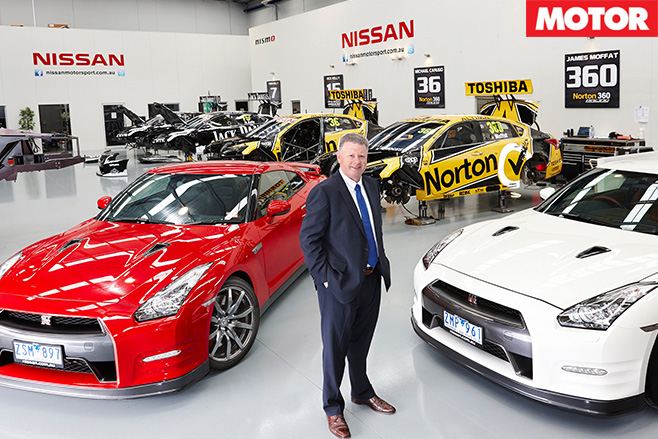
What’s holding Nissan back from securing the brand? “It’s availability of existing product, and the capacity. Although Nismo do sell Nismo products road cars globally, it’s only in small numbers. And for that reason, it’s a combination of engineering requirements [ADRs], timing, and also capacity,” he says.
Nismo currently builds its own performance versions of the Juke, Pulsar SSS, 370Z, and GT-R. The latter its most modified offering.
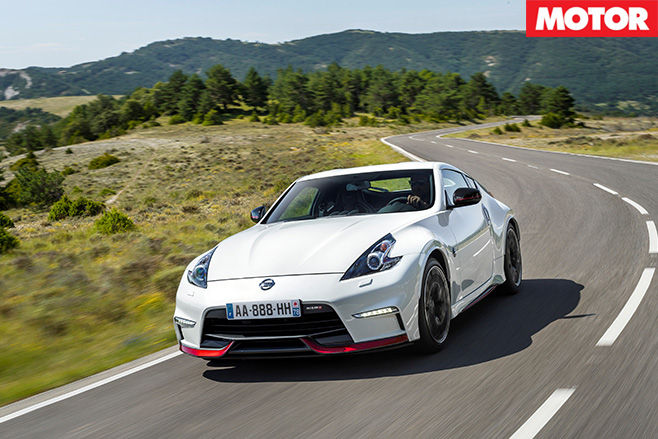
“Am I serious about Nismo? Yes I am, in the sense we want to make sure that when we do it, it’s not just alloy wheels and a spoiler and a sticker, because we could have done that three years ago.”
Such a sentiment bodes well for what we’ll eventually see of Nismo here. But as Porsche readies to release its updated 911 Turbo against the ageing GT-R, let’s hope Emery gets what he wants sooner rather than later.
Former Australian off-road racing champion Paul Zacka died on January 1 after a long battle with cancer.
“Zoomer”, as he was affectionately known, was a stalwart of the Australian off-road racing scene throughout the late 1970s, ’80s and ’90s, where he was known as a hard-driving competitor who tirelessly championed the virtues of Holden, and in particular the various Rodeo utes he campaigned.
Before taking to the dirt, Zacka was a successful circuit racer, memorably putting his HT 350 Monaro on pole ahead of the likes of Colin Bond and other factory drivers in the Rothmans 12-Hour, at Surfers Paradise in 1970.
Zacka was laid to rest in his hometown of Goondiwindi, where his family owned the McIntyre Motors Holden dealership for many years.
With newfound quality and refinement, Subaru’s flat-four champ defends its all-paw title against Audi’s revitalised S3.
First published in the September 2014 issue of Wheels magazine, Australia’s most experienced and most trusted car magazine since 1953.
EVER since Audi jumped into Subaru WRX territory with its own all-wheel-drive turbo, we’ve been pitching them into east-meets-west comparison battles to see if the Germans could successfully show the reigning champions from Japan how it should be done.
It all started back at the dawn of the millennium – January 2000 – when the S3 was the newcomer from an Audi that wasn’t nearly as über-cool as it is today. The $25K-pricier German seemed like a WRX wannabe, as though the brand that had established the turbo AWD genre with the ground-breaking, gravel-slinging Quattro couldn’t catch the Japanese maker that had taken the template and run the special stage.
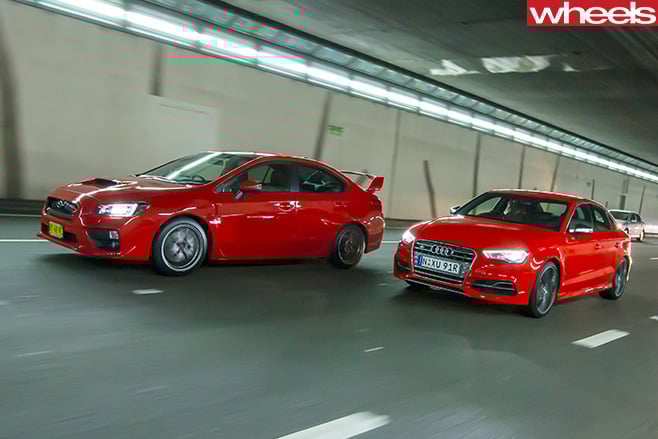
Our previous comparos – won by the WRX – came to mind while back-to-backing the 2014 iterations across some of NSW’s best backroads. Both cars have come a long way in a decade and a half, but which has come farther? Has Audi finally turned the tables on its rival?
Hello sedans, goodbye hatch
We might have history with the S3 versus STi fight, but this time it’s different – we’ve never thrown sedans into battle. The arrival of a booted S3 makes our comparo even more relevant than those early instalments.
But the AWD hot-hatch battle of previous generations is no longer possible, because Subaru has dropped the WRX/STi hatchback, citing lack of demand from the all-important American market.
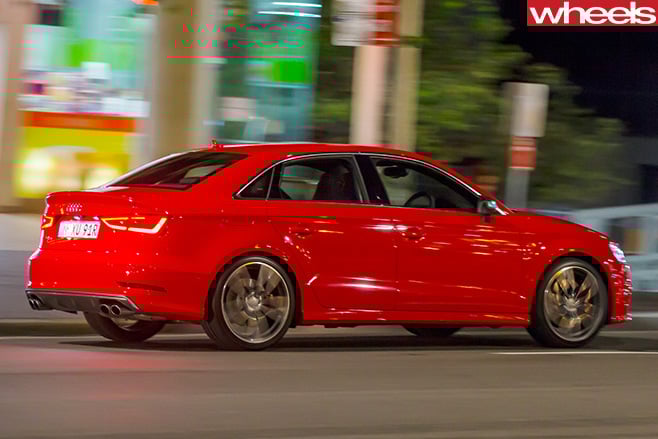
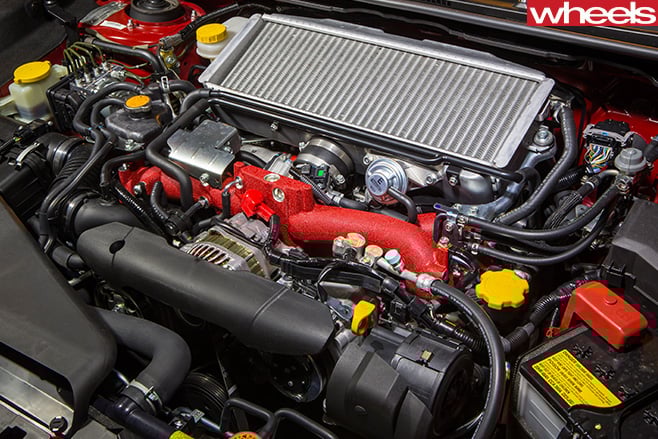
With the fourth-generation STi, it seems Subaru has taken lessons from a recent history plagued by indecisive product positioning and littered with hasty facelifts. In a move that will please diehards, the new model carries over the venerable EJ flat-four engine – a little-changed version of the outgoing STi’s EJ25 turbo – while its hydraulic steering should appeal to old-schoolers. Rather than reinventing the ultimate Rex, Subaru has focused on fine-tuning proven components. Meanwhile, pricing starts $10K below the old model, at $49,990, rising to $54,990 in Premium trim as tested.
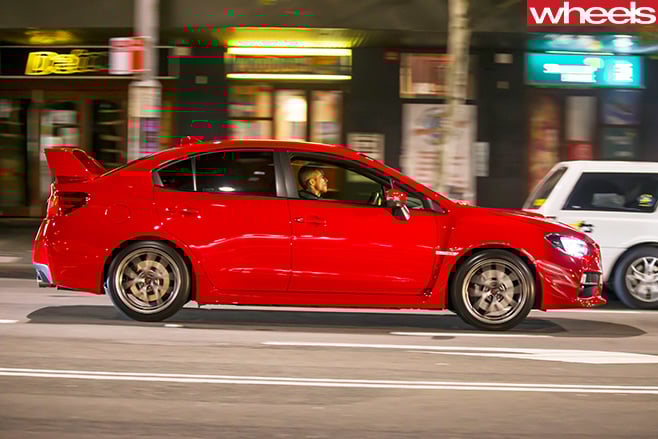
You have to get past first impressions with the STi. On the urban crawl, the steering, though quick-geared, lacks feedback around the straight ahead. But once lock is wound on, the STi feels more connected than the S3, with weighting that sits between the Audi’s over-light Comfort and heavier Dynamic modes.
Pressing on
Press on and the STi impresses. With its driver-controlled centre diff and new torque vectoring system, it is far more throttle-adjustable than both its predecessor and its rival.
Even more than in the STi, the Audi’s steering is aloof until cornered. It’s only once the front end is under serious lateral load that the wheel jiggles in your hands to telegraph nuances of grip. The S3 steers more precisely than the STi and is easier to place on the road, but ultimately doesn’t deliver the Subie’s clarity. The trade-off for the feel delivered by the STi’s increasingly rare hydraulically-assisted quick-rack steering is kickback at the limit not felt in the Audi.
The connectedness of the STi’s steering is a quality that pervades. The newly slick gearshift action and reassuring brake pedal feel are in the same league for quality of feedback, though the Brembos lose some of their assuredness once they become hot.
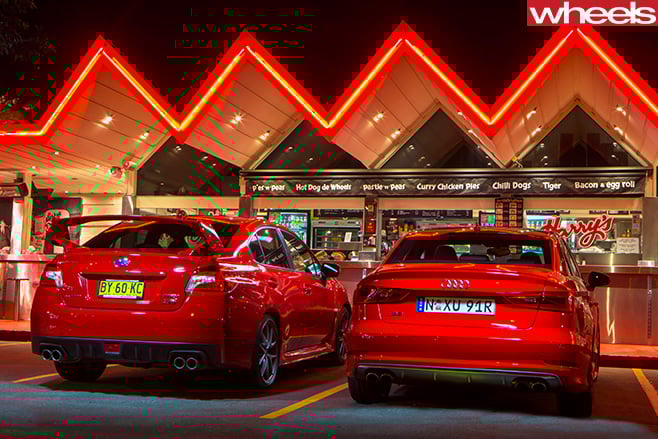
Low-speed ride in the Audi is jittery, but it smooths out at speed. The STi is even firmer, though it brings superior secondary ride quality, and settles down above 80km/h. At high speed, with its generous travel and well-damped wheel and body control, the Subaru is spectacularly good at soaking up punishment from gnarly roads.
There’s little in it for road noise. The S3 is slightly better insulated, though more sensitive to the smoothness of the surface on its inch-larger option-pack 19s.
Okay, so which is quicker?
In 2000, the Audi had a six-speed manual to the Subaru’s five-speed, though 2001’s second-gen STi had a six-speed (incredible, then, that the WRX was given a six-speed manual only this year!). But today’s S3 brings the rapid-fire benefits of the S-tronic transmission, giving it an edge over the manual-only STi, which can fall off song during gearchanges. Meanwhile, the S3’s 2.0-litre blurts into the next ratio and surges on with broad torque and a cultured, creamy four-pot howl. The dual-clutch gives the driver less to do and think about, which could be an advantage or a drawback, but certainly helps when you’re tackling a string of 35km/h-posted bends.
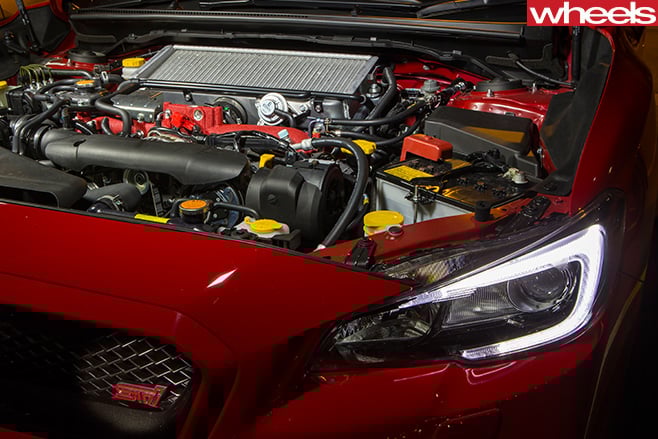
The SI-Drive’s Sport mode is the pick, because S# (Sport ‘sharp’) makes the STi feel potent at the expense of the throttle progressiveness the driver needs for a confident twisty-road attack. Yet even in Sport mode, it takes finesse to drive around the turbo engine’s top-end delivery.
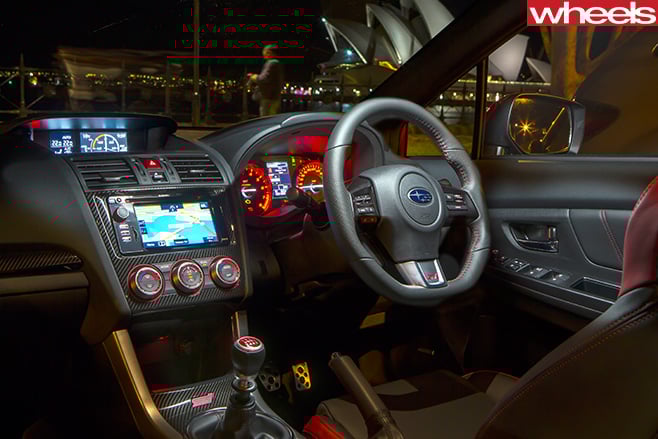
The Subie’s in-cabin character (pictured below) is thrashy and a bit sewing machine-like. Bystanders get a better deal – the note is satisfyingly bassy from the outside, with a modded-Rex throb, minus the aftermarket volume level and drone.
The straight-line performance figures are close, but no-one would launch their own STi like we must. Identical third-gear 80-120km/h times – 3.2 seconds – provide a better illustration of in-gear shove and the tight fight between an S3 with 142kW per tonne and an STi with 144kW per tonne.
At the other end of the spectrum, the S3 delivered efficiency to belie its straight-line advantage, drinking 11.2L/100km over our 400km test compared with the STi’s 12.3L/100km.
The wash-up: All grown up?
The STi’s chunky wheel, wrapped in dimply leather (below), serves as a parallel for the newfound driver appeal, and raw-edged character in what’s otherwise a more mature execution. The Audi’s smooth leather rim, then, tells of a polished package. The STi has grown more refined, but it remains rougher-edged than the S3. It’s not as notchy, as knuckly or as shunty as it was before, but nor are its occupants entirely isolated from the workings of its forceful drivetrain and focused suspension.
In terms of interior fit and finish, the S3 (and Audi itself) has gone from very good to benchmark-setting brilliance in the past decade or so.
Elsewhere, while Subaru has floundered attempting to broaden its horizons, Audi was busy playing catch up on the powertrain front. The S3 is now quicker than the STi, from a standing start at least, with refinement and theatrics the Subie can’t match.
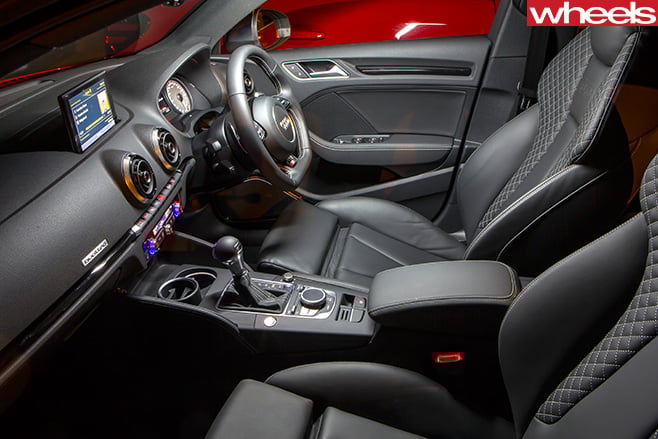
Never before has the S3 possessed the driver focus to take on the Japanese AWD turbo establishment fair and square, rather than falling back on Audi’s trademark style and perceived quality. If it wasn’t for the new-gen STi’s leaps in dynamic fluidity and polish, there’d be little to separate them.
While the STi is more involving, the S3 is the easier car to jump into and drive quickly. It’s more liveable than the Subaru – though the STi has certainly closed the gap – and has the edge as a tourer.
The sedan-shaped S3 gives the model a point of differentiation against potent in-haus rivals like the Golf R, which is mechanically similar to the S3 and $7700 less expensive. But if class and cachet weren’t reason enough to pay the extra for an S3, the new boot and air of understated exclusivity just might be.
Considering how far the S3 has come in terms of dynamics and overall appeal, it speaks volumes that 2014’s STi can still topple it. When the road soars, dives, sweeps and switches back, it’s the value-packing Subie that ultimately brings greater reward.
In fact, Subaru’s shift from point-and-shoot weapon towards a more fluent sports-car flavour has delivered an STi that, after all these years, is the brand’s most compelling effort yet.
Out to launch
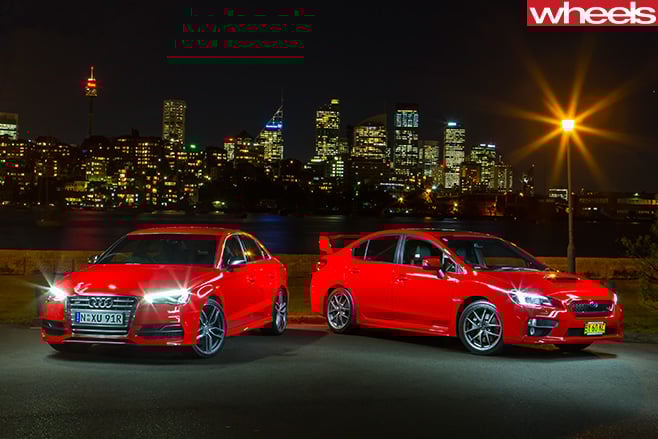
The manual STi has no form of launch control. The most effective way of launching what we’ve previously referred to as the ‘nasty bastard’ involves a close encounter between tacho needle and redline, and a sidestepped clutch. It’s as brutal on the drivetrain and cranium today as it was when it was pioneered in the early 90s. It took several attempts to extract 5.3sec to 100km/h from the STi, which might have been a tenth or two quicker on a surface that enabled a bit of tyre slip. The drivetrain survived, but it felt like a tomahawk had split open my forehead.
AUDI S3
The S3, with its launch control and self-shifting dual-clutch ’box, is far easier than the STi to get the best from in a straight line. Lifting my left foot off the brake pedal while keeping the accelerator flat on the shiny VHT at Sydney Dragway resulted in a single, unfussed 4.8sec 0-100km/h sprint, before heat soak set in, and it settled into a string of easy 4.9s.
Pushing buttons
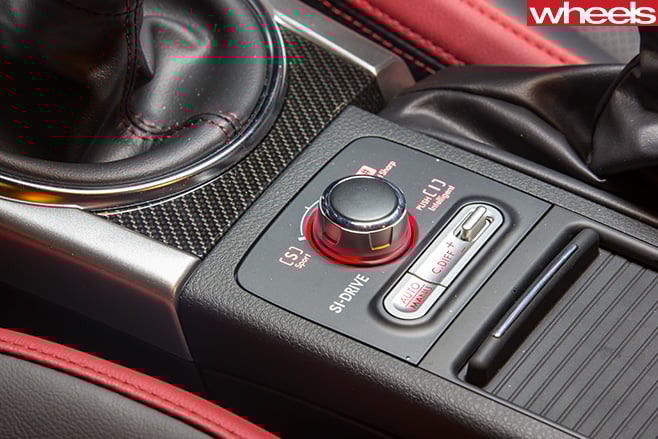
Verdict
SUBARU WRX STi PREMIUM
Price as tested: $54,990/As tested $54,990
NCAP rating: 5 stars (Aus)
Fuel economy: 12.3L/100km (test average)
Acceleration: 0-100km/h: 5.3sec
Plus: Newfound dynamic cohesion and involvement; improved refinement
Minus: Deletion of hatch won’t please everyone; steering kickback at limit
Verdict: 8.5/10
AUDI S3
Price as tested: $62,200/As tested $68,340 *Includes S Performance package – sports seats, adaptive dampers, LED headlights, Bang & Olufsen audio, black 3D inlays, red calipers and 19-inch alloys ($4990), metallic paint ($1150)
NCAP rating: 5 stars (Euro)
Fuel economy: 11.2L/100km (test average)
Acceleration: 0-100km/h: 4.8sec
Plus: Out-styles Sportback; lovely interior; quick, grippy and foolproof
Minus: Lacks the adjustability and involvement of some rivals
Verdict: 8.0/10
Nissan Qashqai Ti diesel long term review HERE
Part One: Nuts And Bolts
PROVIDED it involves cars being built, I’ve become a bit of a sucker for those Mega Factory shows on telly. When you think of all the complexities involved in shipping huge rolls of raw steel into one end of a monster building and having something as remarkable as a modern car rolling out the other end, it really is an act of organisational genius.
If the car-building action slows, I pass the time by carefully observing the line workers and playing the ‘bags not doing that job’ game. Like the poor bloke muscling the diff into position – bags not doing that. The woman bent at some horrible angle pinning the tangled-spaghetti wiring harness through the interior? Bags not doing that.
No, the gig I’d like if I were to work in a car factory is the quality controller. Not only do you get a cool micrometer paint-thickness measuring thingy hanging from a lanyard around your neck, but you get to stand around and critique everyone else’s work: “Gee, old Johnno in wiper assembly is having a shocker; three flung rubbers in a week! Tsk, tsk!”
I find myself slipping into the role of quality controller with the arrival of each new long-termer, but I tend to do it with fingers crossed because if you find a hair in the clear coat it’s a bit too late to circle it with chalk and yell at Tony in the paint shop.
Being your own head of quality can bring great satisfaction (the near-perfect build and finish of the Audi A6 Avant I once ran) to mild disappointment (patchy paint on my red BMW 320i Touring) or leave me screaming: “Noooo! How was this allowed to happen?” (the plastics in my recent Holden Trax).
It’s built at Sunderland in the UK, and whatever they have going on there in the paint shop, it’s working – the exterior finish is super glossy, with minimal orange peel, and unlike some other cars, the paint’s shiny clear coat extends into the doorjambs and around the shut areas. I found myself staring into it like a budgerigar that’s just had a mirror put in its cage.
Likewise, the panel shut lines are all perfect, the gaps around the light clusters beautifully uniform. Inside is less of a thumbs-up, but more on that later.
Our car is a diesel-engined TS, effectively the oil-burner entry point in a two-tier range. It’s hardly povvo; the equipment included is pretty much everything I need, but missing a few things I’d like, such as sat-nav, a digital radio tuner and perhaps two massive subwoofers capable of cracking the rear glass.
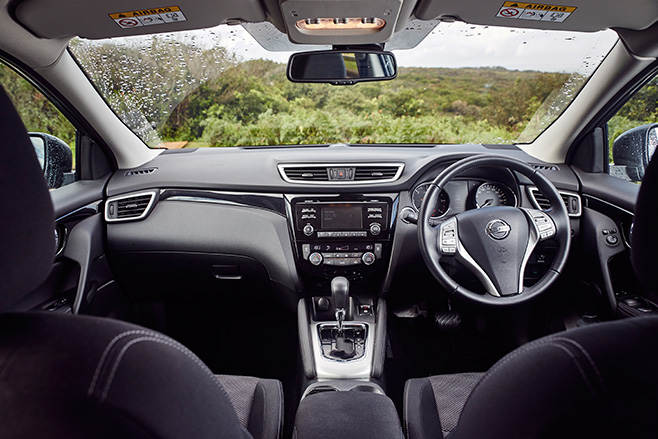
Likewise the standing-start response: it’s very doughy off the bottom, and doesn’t really start to convert throttle travel and engine noise into meaningful forward motion until the tacho is properly into its upswing.
The engine makes just 96kW from its 1.6 litres, so it’s no ball of fire when you pin it. More important is the 320Nm from 1750rpm; you can mostly drive around the lack of off-the-mark urge, and on the move it’s sufficiently responsive to not be an issue.
So early impressions are of solidity and practicality, all smothered with an aura of non-shouty competence. And all screwed together by a mega-factory of champion Sunderland folk worthy of a TV show.
Moving experience
QASHQAI sits on the new Renault-Nissan Common Modular Family (CMF) platform that also underpins the X-Trail and Renault’s upcoming Espace, Scenic and Laguna replacements. It’s longer (by 47mm), lower and fractionally wider than its Dualis predecessor. I’ve been making full use of its extra space in these first few weeks, as I’ve been going through the delights of moving house. Oh, if only I could do that every month.
Rubbery jubbly
WHEELS are 17s, running chubby 60-series rubber. They may not stir the loins like a blinging set of 20s, but they no doubt do go some way to contributing to the mostly absorbent and calm ride. And no, the rears do not get a share of the engine’s output – Qashqai is offered strictly as a faux-wheel drive.
Part Two: Drone Warfare
IF WE overlook Mazda’s 45-year detour with the rotary, it would seem the world’s automotive manufacturers are pretty much unanimous on the preferred fundamentals of combustion engine technology. Whether it’s petrol or diesel, Atkinson cycle or Otto cycle, the core design remains common across the board: reciprocating pistons and rods driving a crankshaft.
Interestingly, no such unanimity has been arrived at with automatic transmissions. Torque converters, dual-clutches, automated single-clutches and continuously variable ’boxes all currently litter the automotive transmission landscape.
Nissan has opted for a CVT in the Qashqai, pushing the line that it’s lighter than a torque converter and more efficient. Fair enough; the CVT has undergone a bit of a resurgence over the last decade or so, and Subaru, Mitsubishi and Audi, among others, would seem to agree there’s real merit to the design.
One of the main CVT drawbacks, though, has been a tendency to make the engine sound a bit droney, because they are designed to keep the engine in the optimum power and torque band, depending on throttle position and road speed. Nissan, like some of the other CVT adherents, attempts to reduce this droning by calibrating ‘steps’ into the Qashqai’s transmission map, and it mostly works pretty well.
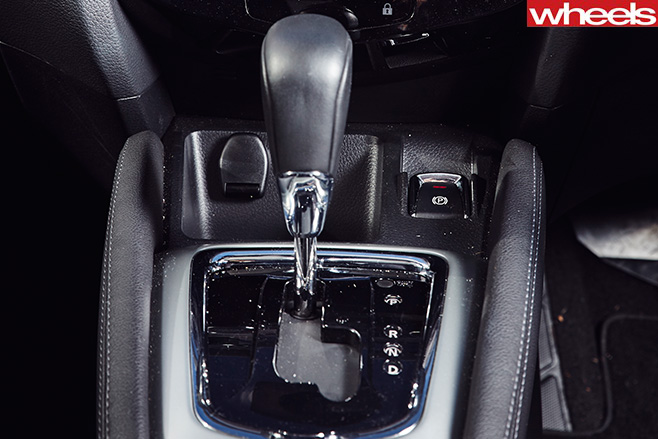
First up, there are no paddles, and moving the lever over for manual shifting sees its selection direction arse-about, with pulls backwards taking you down the seven ratio steps, not up.
Then there’s the off-throttle mapping when you’re coasting downhill. Often, instead of ‘upshifting’ (or is it ‘upbanding’?) and dropping revs, the Qashqai figures the throttle is shut, no fuel is being burnt, so it may as well just rev its little bum off to avoid the need for a downchange when you want to accelerate again. I guess the logic is reasonable; it just doesn’t make for very relaxed cruising on undulating backroads. Non-enthusiast passengers cast me nervous glances, as if I’m deliberately building a big stash of revs with which to unleash hell on the next ascent.
And finally, back in the urban grind, it occasionally stumbles as you come to a near-standstill and then need to accelerate again, as if it hasn’t found the lowest ratio that’s actually needed for smooth progress.
Perhaps the lack of consensus as to the best auto transmission design is because finding one that can do everything brilliantly remains an elusive box of tricks.
Home on the range-finder

Part Three: Stretching The Envelope
A LUNAR eclipse occurs maybe a couple of times a year, which, according to my exhaustive research, is about the same frequency that the average enthusiast driver of an SUV may actually probe the dynamic envelope and see what the thing is capable of when hustled through a few corners.
And it’s with a hung head and a rising sense of shame that I realise I’ve fallen into the same pattern. It’s not as if driving a mid-size SUV has robbed me of the will to live; it’s more that a bunch of disparate elements need to come into careful alignment before driving with any real enthusiasm can actually occur.
First, no kids on board. My daughter will soon be old enough to be riding around with 17-year-old blokes on P-plates, and my hyper-critical self doesn’t want her thinking it’s okay for any of them to drive like I (occasionally) do. Then there’s the ‘no unsecured cargo’ clause, and ideally no partner.
Weekend traffic and cyclists also tend to clutter up my preferred local roads, and public holidays are out because cops are likely to blast you with capsicum spray while they feed your licence through a shredder if they so much as get a sniff of any enjoyable driving going on.
Initial impressions suggest that the compliant ride and baggy 17-inch tyres may translate into a bit of a boaty-feeling chassis when heat is applied, but it’s not the case. Body control is actually very good, and while the crisp, medium-weighted steering may not deliver the last word in feel, it does provide a decent sense of connection.
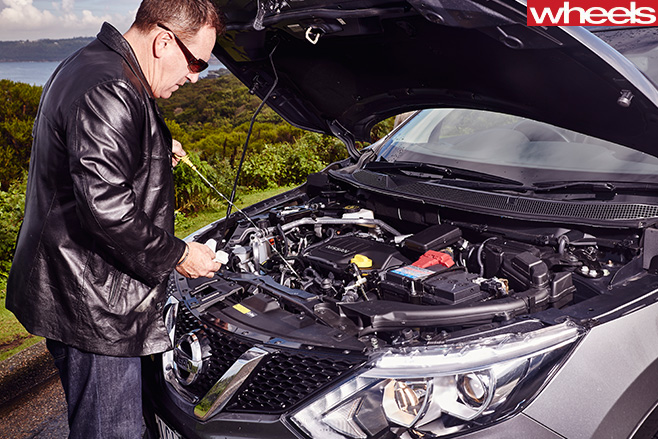
Even the diesel engine (pictured above), which is no NVH genius at idle, starts to come good in the upper-mid range, pulling with all the enthusiasm its modest 320Nm can muster. The only (slight) negatives are a bit of axle tramp and torque-steer out of tight or damp corners. Otherwise, this is an SUV that doesn’t mind you treating it like a warm hatch, even if it only occurs once in a blue moon.
Rock blocked
Nissan Qashqai TS Price as tested: $34,575 Part 3: 1422km @ 8.6L/100km Overall: 4112km @ 8.5L/100km Odometer: 10112km Date acquired: April 2015
It’s the easiest performance upgrade you can buy, yet also one of the least utilised.
No suspension upgrade, power increase or tyre choice will give as great a gain, for as little outlay, as improving the thing between the seat and the steering wheel.
My first track day was at Hobart’s Baskerville Raceway. Over-imbued with confidence like most 18-year-old males, my cockiness lasted two corners, at which point it became clear I was well out of my depth. My first proper lap was a 1:22, which fell to 1:17 by day’s end.
Over the coming months, with some practice and tuition, that fell to 1:13. Without a single car tweak, that’s a nine-second-a-lap gain. Still, that was many years ago now, so on the basis that you never stop learning, it’s time to go back to school.
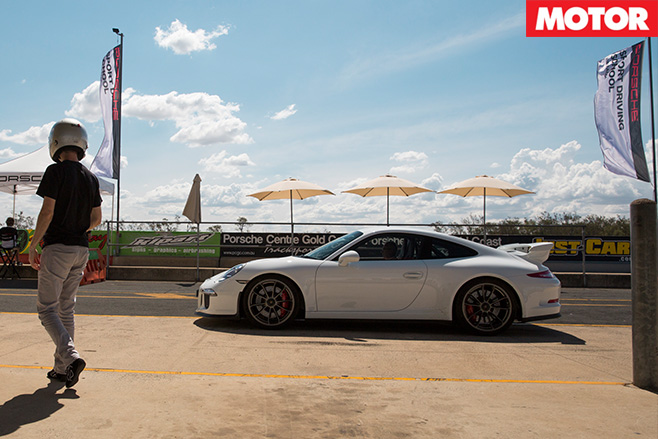
More than 70 courses will run in 2015, ranging from the $1397 Level 1 course, where attendees can sample the entire Porsche range, right up to the $6500 Level 5 course, which includes your own 991 Cup car and race engineer.
One step down is the ‘Master’ course; it’s exactly the same except the Cup car is replaced with the slightly more accessible 991 GT3 road car. This is the most popular course, booked out well over a year in advance. For your $3500 you receive a 991 GT3 to drive as hard as you like, a racetrack on which to drive it, and an instructor and race engineer to teach you how to drive it faster.
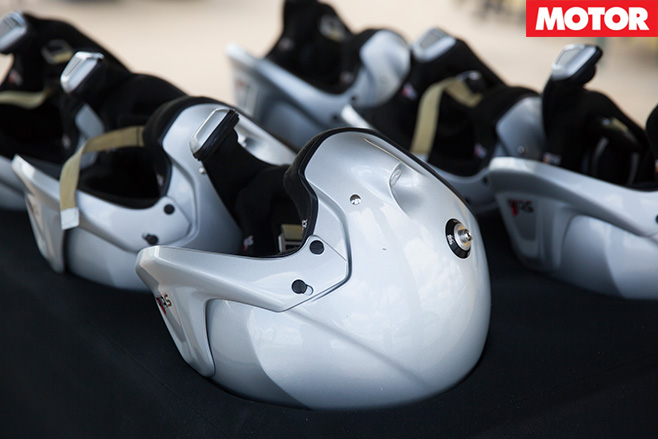
The classroom time is valuable, though, with a useful refresher on the basics delivered with directness and humour by Czech-born Aussie racer Tomas Mezera.
Best known for partnering Peter Brock at the Holden Racing Team in the mid-’90s, Mezera is an enormously accomplished driver, having won Bathurst, stood on the podium in the British Touring Car Championship and raced at Le Mans in a Porsche 962.
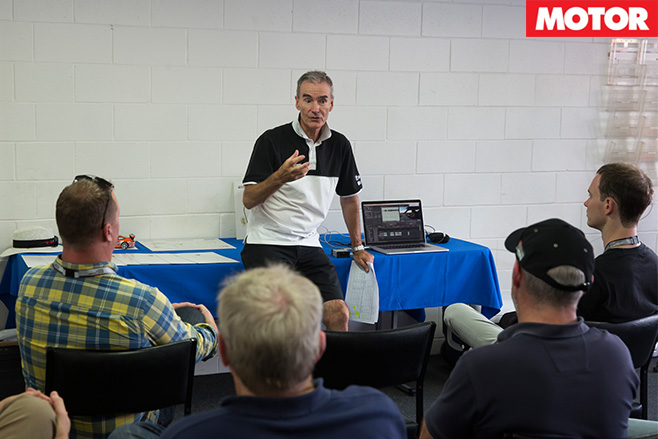
Our first session is not behind the wheel of the new GT3 but five-up in a Cayenne as Baird demonstrates the correct lines and braking points of Queensland Raceway’s club circuit. It’s a short track with a mere six corners, but it’s quickly apparent that there are plenty of places to lose time around its technical layout.
Once in the driver’s seat, both groups are encouraged to start slowly to familiarise themselves with car and circuit – there’ll be plenty of time for hot laps later, though some students take more notice than others.
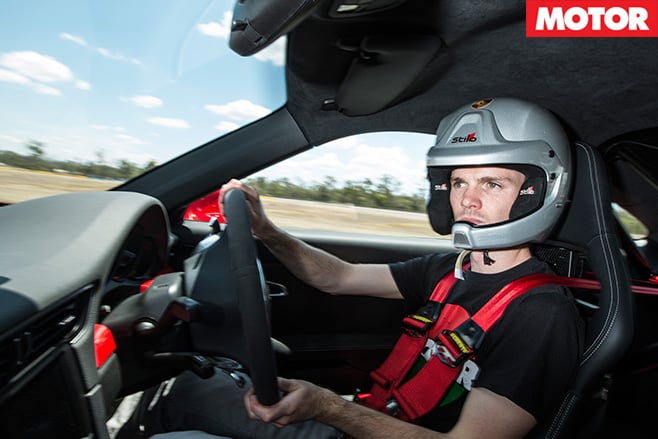
I’m assigned Andy McElrea, who runs four cars in the Australian Carrera Cup championship, including Luffy’s. My best lap is a 68.1, almost 10 seconds off Bairdo’s benchmark. The slow time is not a surprise given the leisurely beginning. What is concerning is that mistakes are creeping in even at this speed.
All the instructors are big on taking it slow and building speed gradually. As McElrea succinctly puts it, “we don’t want you being fast in the middle of the day and crap at the end.
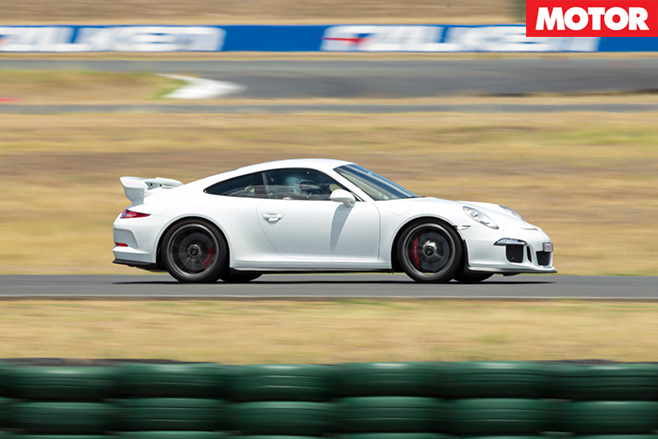
While today’s 911s are much friendlier to drive than those of old, their rear weight-bias requires a unique approach. Brake hard in a straight line, gently carry the brake into the corner to keep weight on the front tyres then slowly pick up the throttle just prior to the apex.
Too much brake on corner entry and the rear steps out sharply, too little and you’ll get understeer. Likewise, too much throttle too early and the nose will lift and you’ll understeer. It’s a delicate balancing act.
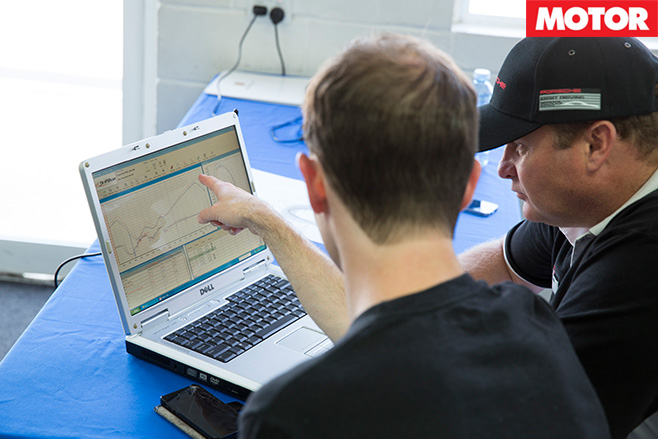
Left to my own devices the temptation would be to try and go faster everywhere but, thanks to the data, McElrea is able to point out where things are good and where there is more time to be made.
For example: “Turn one, we’re losing a little bit on the way into the corner [but] there’s really no more time to be gained from the apex of turn one to the apex of turn two – that’s textbook. Minimum corner speed in turn two is bloody similar to his (Baird); you’re getting fairly brave and then starting to run out of road.
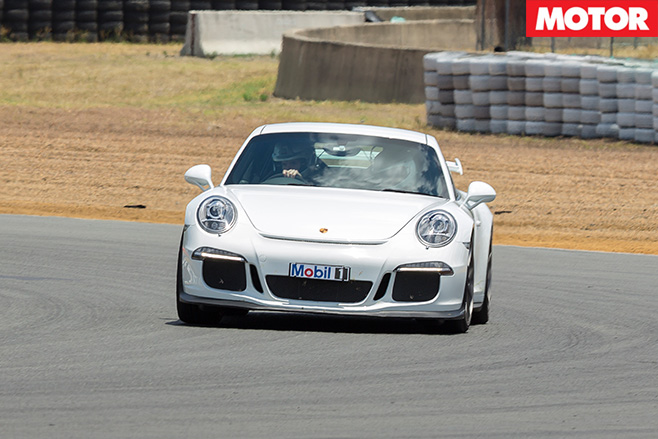
The news is less rosy later in the lap. Heading into turn five my data shows 0.2g of acceleration whereas Bairdo’s shows 0.2g of deceleration – ie, I’m doing exactly the opposite of what I should be. My approach to turn six is also completely wrong, with Bairdo braking 35m later on a completely different line.
Following lunch, it’s back in the passenger seat, this time in the GT3s. A third car is found and I’m installed next to Mezera. The headmaster might be more concerned with his golf handicap than his lap times these days (it’s a measly two, if you’re curious) but, man, can he still drive.
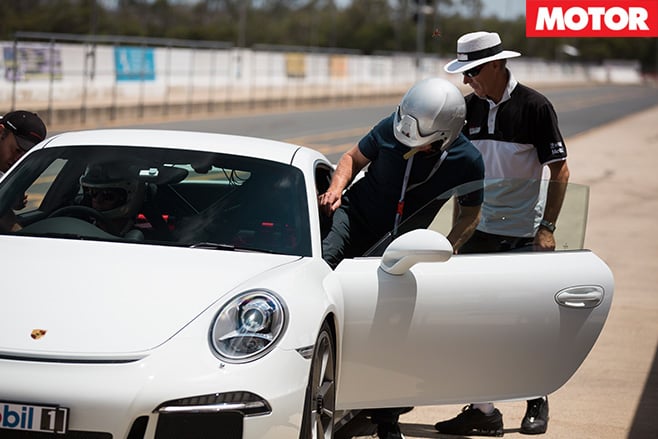
The third session doesn’t go so well. In trying to go even faster I’m bumping up against my talent wall, and occasionally putting one leg over it. Even in something as fast as a GT3, circuit driving in road cars quickly switches from ‘how fast can I go?’ to ‘how can I extract the most out of the tyres?’
More than once the electronics save me from embarrassment as the rear steps out sharply at 130-140km/h. Worse still, the VBOX chucks a wobbly, recording no data. So did the extra commitment pay dividends, or were the mistakes costing me time?
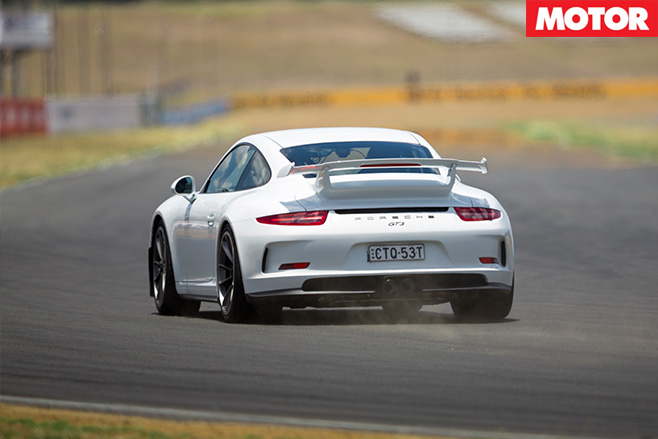
Look up, stay relaxed, brake late, carry more speed to the apex than seems wise, patience with the throttle, don’t fight the car. Even after almost 130 laps, the car just soaks up the punishment. The laps feel good, but were they faster?
Thankfully, McElrea doesn’t keep me in suspense – “59.7”. I’m over the moon. It might still be 1.5 seconds slower than Bairdo’s benchmark, but the combination of the right tuition and a pretty epic car has allowed me to drive faster than I ever thought possible. It’s just a shame this school doesn’t assign any homework.
5 Tips For Erasing Tenths
1. Look up – the further you look ahead, the better prepared you are 2. Be smooth – every input should be measured, don’t fight the car 3. Patience – don’t try too hard, tyres can only do so much 4. Start slow – build speed gradually to eliminate mistakes 5. Practice – it makes perfect, as long you know what to practice
What’s the damage?
Precision – $1397 (Full range) Precision Plus – $1397 (Full range) Performance – $1694 (Full range) Master – $3500 (911 GT3) GT3 Cup – $6500 (911 Cup)
Each course must be completed before qualifying for the next course.
Let us learn a lesson from the male Birds of Paradise.
Native to the rainforests of Papua New Guinea, Indonesia and northern Australia, these avian actors attempt to attract a mate using bright plumage, outrageous body adornments and intricate dance moves – anything to mark themselves as special and worthy of attention. It’s this same desire to be different that has spawned the M Performance range of accessories.
The standard 4-Series is a relatively sleek and handsome creature, but when over 2000 of the same species have been released into the wild as of December 2014, something extra is required to truly stand out. Hence why BMW offers a variety of factory-approved upgrades.
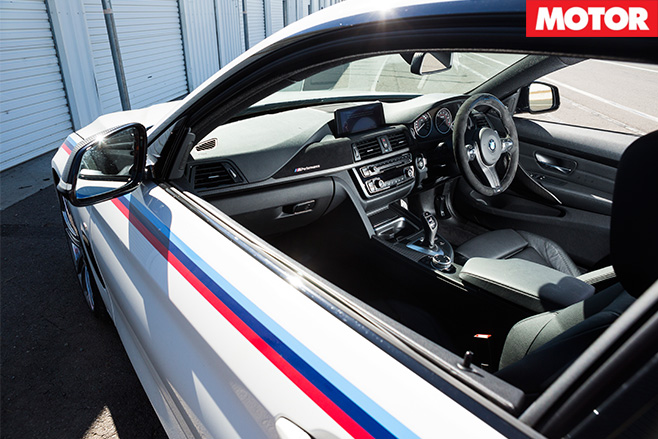
On the inside there’s M Performance carbon and Alcantara highlights ($1250), stainless steel pedals ($214), a carbon gear knob ($230), floor mats ($211) and a swanky Alcantara steering wheel with LED display in the upper part of the rim ($1852) like a proper race car.
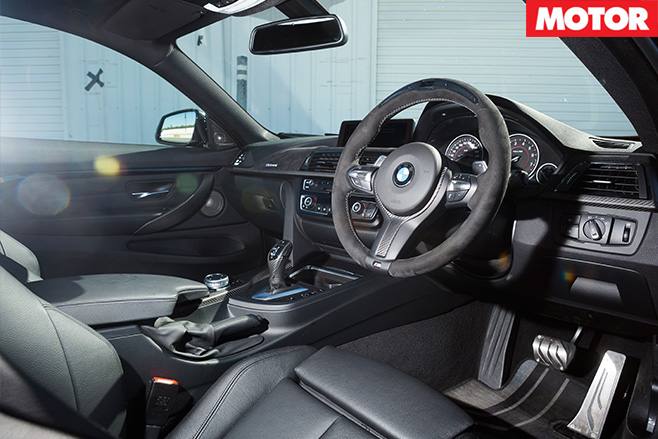
To be honest you’d have to drive a stock car back-to-back with it to notice the extra grunt, but with a chassis this good, more power is always welcome. It drives more or less like a standard 435i, which is no bad thing, though the rims do seem to make the ride a bit more jiggly.
Now, you’ll no doubt have noticed plenty of dollar signs dotted throughout this article, and the upshot of this added paraphernalia is $16,729 over and above the 435i’s $108,530 for a final ask of $125,259.
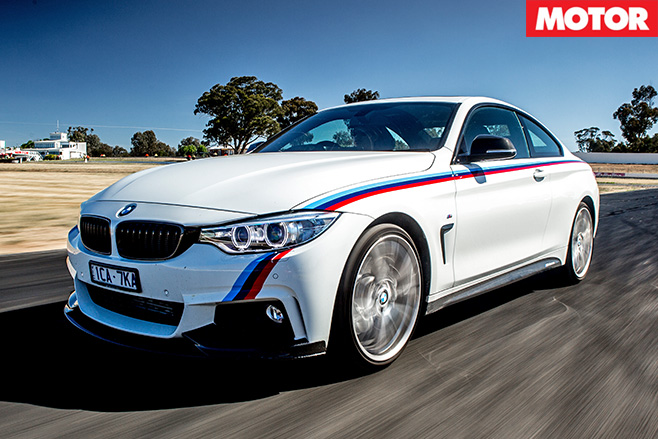
We’re not saying sexing up your 4-Series will improve your dating life, nor are we endorsing the occasionally polygamous antics of our feathered friends, but if you’re keen to make your BMW turn a few more heads, then perhaps some M Performance accessories will help you stand out from the rest of the flock.
3.5 out of 5
Specs
Engine: 2979cc inline-6, DOHC, 24v, twin-turbo Power: 250kW @ 5800-6400rpm Torque: 450Nm @ 1200-5000rpm Weight: 1525kg Price: $125,259 (as tested)
Nurburgring lap times are an ill of our era but this Porsche 911 Group B rally weapon couldn’t give a flying lap about when the stopwatch stops.
Our summer is Germany’s winter, so it isn’t exactly the time to be cutting quick laps on the famed circuit a couple of hours west of the Frankfurt city centre.
However on YouTube, the official Nurburgring account has posted video of a 1984 Rothmans-livery Porsche 911 SC RS drifting its way around the Grand Prix circuit covered in so much snow it’s barely recognisable.
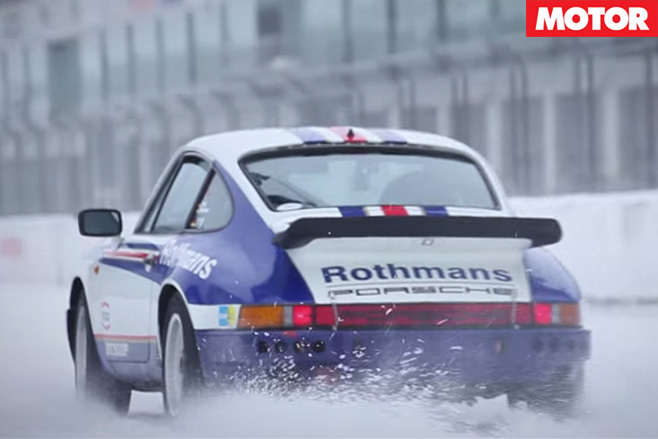
Wrestling the wheel and throwing the rear-wheel drive icon engineered for Group B rallying into regular Scando flicks, the wailing 3.0-litre flat six-cylinder – which back in the day produced around 184kW through a five-speed manual – is balanced on the throttle as the chubby 16-inch rears turn ice to slush.
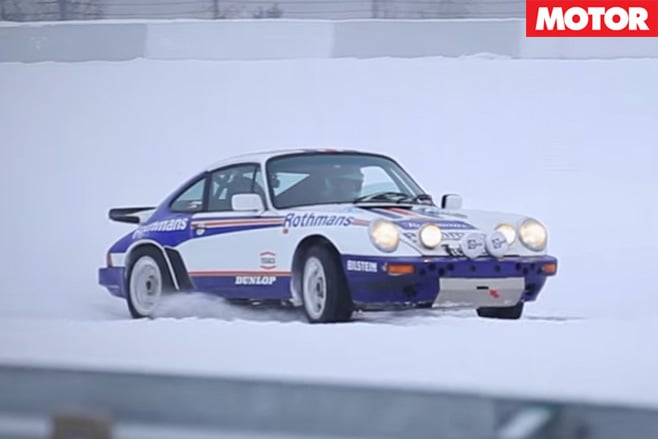
Porsche built 20 examples of the 911 SC RS in 1984 to satisfy FIA homologation rules for Group B rallying as it continued to work on the all-wheel drive 959 program that eventuated in 1986.
Screenshots courtesy of Nurburgring.
On Wednesday, January 20, more than 200 of the Australian car industry’s elite attended the Australian Motoring Awards (AMAs) at the Crown Palladium, Melbourne.
The event saw the unfolding of the inaugural WhichCar Style Awards, Motor Magazine’s Performance Car Of The Year, 4X4 Australia’s 4×4 Of The Year and the converted Wheels Car Of The Year.
TV personality and sports presenter Mark Beretta hosted the night, with special guest Mark Webber, World Endurance Champion, also making an appearance.
To see all the wonderful moments from the night, click play.
