
Toyota Motorsport GmbH’s enormous Cologne headquarters would not be a good place to get lost.
Most doors are guarded by electronic locks, so there’s only so far you could stray, but that could be a blessing as, from inside at least, the floorpan appears unfathomable. Today’s guide, TMG’s Marketing and Communications Manager, Alastair Moffitt, admits he was still discovering new rooms and corridors years after he started.
The way most corridors only illuminate once entered is commendably eco-friendly but also eerily reminiscent of horror video games where you’re never sure of what lurks in the darkness. Maybe I’m over-thinking it. It doesn’t help that the whole place appears to be deserted.
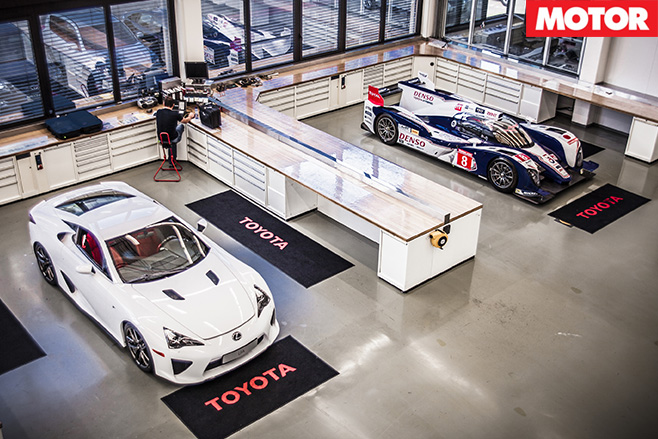
TMG began life as Toyota Team Europe (TTE), established in 1973 by Swedish rally legend Ove Andersson. Originally located in Sweden, the operation moved to Brussels shortly after, from where TTE ran Toyota’s European rallying operations.
Success quickly followed, Hannu Mikkola winning the 1975 Finnish Rally. In 1979 a separate operation was set up in Cologne, with TTE moving into its current building in 1987. By this time TTE was an established player on the world rally scene, with numerous wins at the African endurance events with the Group B Celica Twincam Turbo.
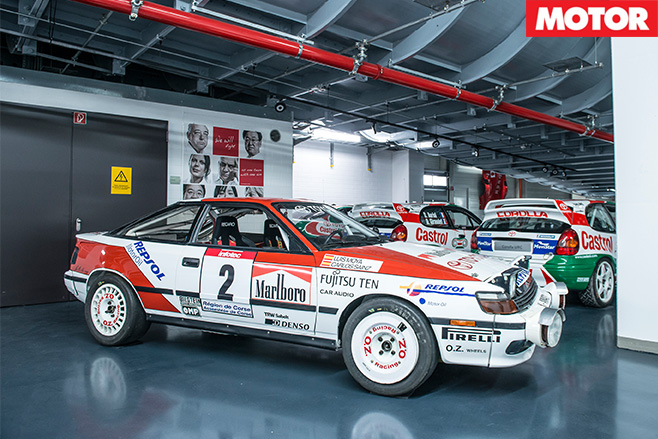
Cologne was also home to Toyota’s Le Mans program in the late ’90s, before both efforts ceased to concentrate on the move to Formula One. Toyota’s time in F1 wasn’t a very happy one, five second places and three pole positions the best it could achieve in eight seasons.
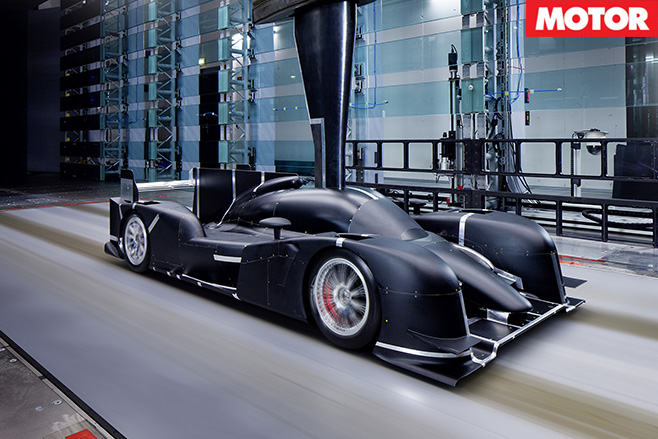
Most recently, TMG has been entrusted with Toyota’s latest Le Mans program and is currently testing a WRC prototype in anticipation of a return to the series. Evidence of this long and storied motorsport history is tucked away in an Aladdin’s cave underneath one of the facility’s two giant wind tunnels.
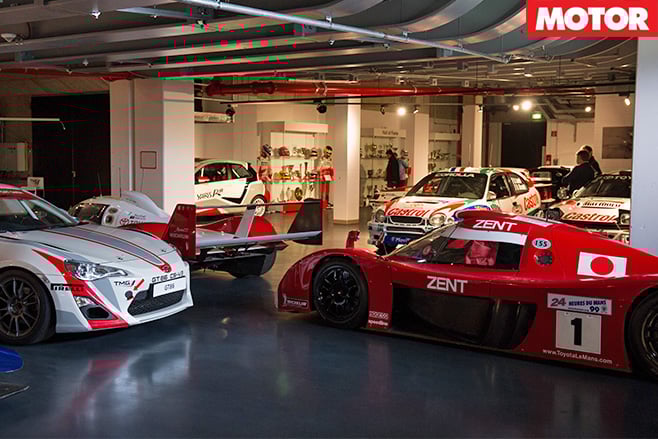
For a more in-depth look, check out the gallery at MOTORmag.com.au.
Next door is the simulator, a $10 million hydraulic-rammed contraption built during the final years of Toyota’s F1 program. These days it’s used for development of the TS040 Le Mans car, and for one glorious half-hour we’re let loose in it. It’s like the best racing game you could imagine, incredibly frustrating but also very rewarding.
While nothing like as busy as it was during the height of its Formula One involvement, the fact TMG still possesses all the equipment and infrastructure required to run an F1 car has led to an interesting client list.
A number of current F1 teams use the wind tunnels, most notably Ferrari, which was until recently a regular visitor due to problems with its own wind tunnel. Such high-profile clients somewhat explains the complex building layout, as each section is able to be cordoned off so that secret projects remain exactly that.
Today we have more or less unlimited access and while the array of complex machinery is mind-boggling, what’s lonely late ’90s Corolla WRC up on a hoist. The opportunity to poke around underneath a full-spec World Rally Car – albeit one that’s 15 years old – doesn’t come along very often.
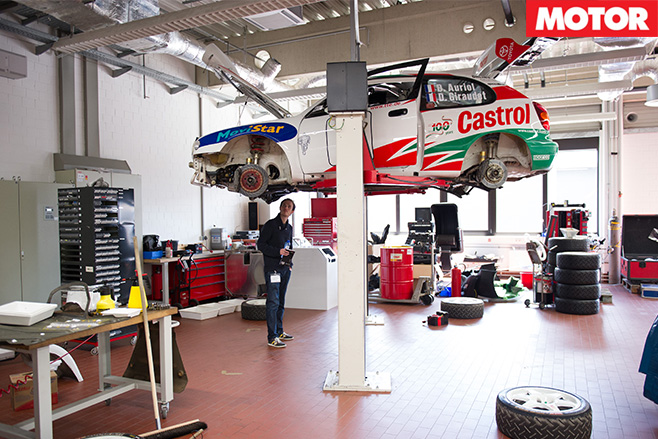
And then there are the two wind tunnels, which require their own power source to stop nearby Cologne being plunged into darkness when they are switched on. It’s an incredible insight into the resources and effort required to operate at motorsport’s highest level.
In essence, TMG is like every car nut’s ultimate workshop – maybe it’s not such a bad place to get lost after all.
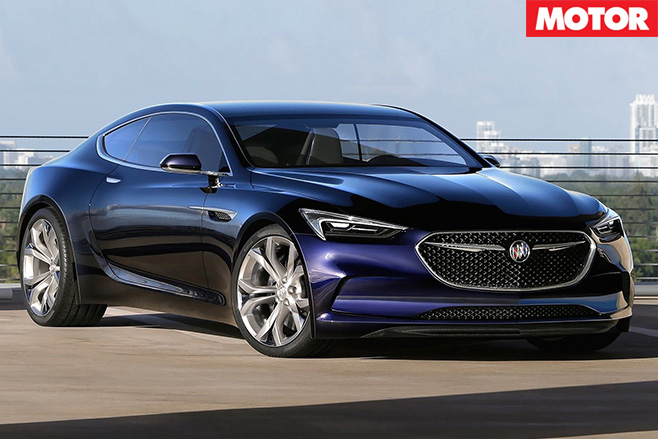
Meet the closest thing GM has to a Holden Monaro – a large, rear-drive, four-seat coupe called the Buick Avista Concept, just revealed in Detroit.
Unlike the Avenir sedan revealed in Motor City this time last year, which was penned and put together in Melbourne, the Avista coupe was not designed in Australia.
However the size and styling of the two are as similar as their naming, although the coupe gets a lower, edgier stance, with guard-filling 20-inch rims and a shapely B-pillar-less body.
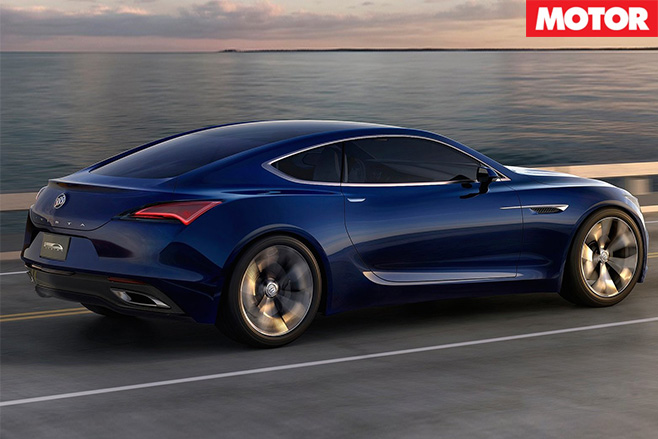
Last year’s fresh Camaro traded the previous generation’s VE Commodore platform for new underpinnings called Alpha and shared with Cadillac. Where the Camaro is lower to the ground and barely seats four in comfort, the Avista is being pitched as, “a contemporary grand tourer”. In short, it’s more like the properly four-seat Monaro.
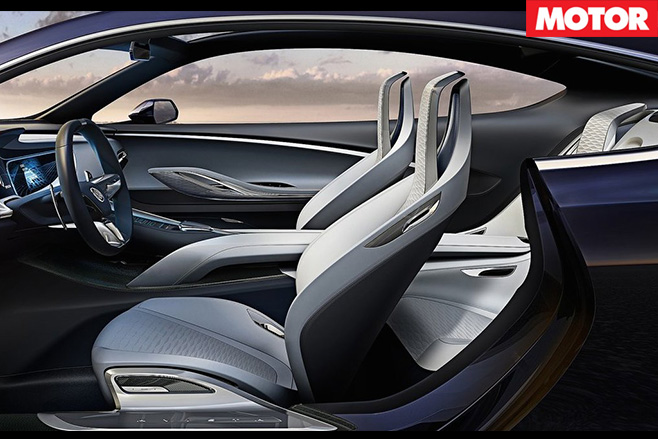
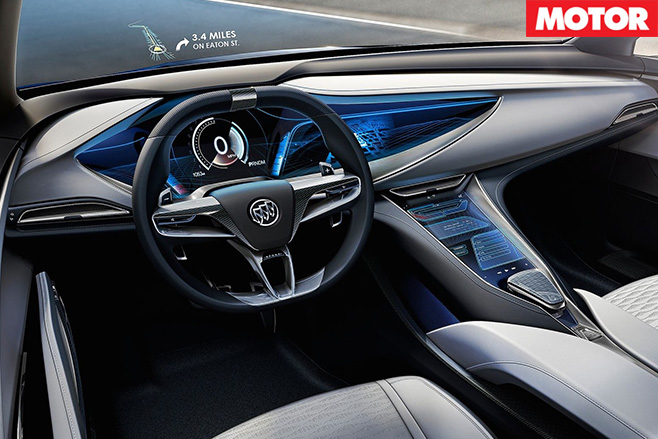
This could mean the Buick Avista becomes an Opel Monza for the European market, bolstering strong rumours that the famous coupe badge will be revived.
Holden, meanwhile, promises that the local brand will import more vehicles from Europe than ever before. It has also has confirmed delivery of a rear-drive performance coupe to take the reins from the Commodore when it switches from local rear-drive V8 sedan to front- and all-wheel-drive import by late 2017.
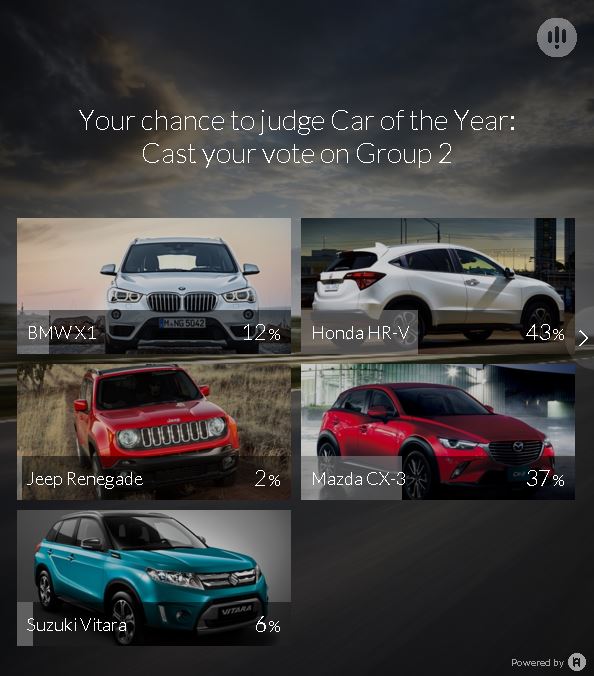
HERE is the second group of candidates for Car of the Year 2016, and your chance to vote for a Group 2 winner.
This time it’s compact SUVs, at a range of price points.
You can find a brief explanation of what each brings to the contest in our introduction to the Car of the Year 2016 contenders. It presents the full field of 25 cars in alphabetical order, by maker.
Unlike the Car of the Year judges, you may not have driven all of these cars – and perhaps you’ve not driven any of them. But there’s a good chance you’ve read about them, or have debated their merits. Perhaps you wish we’d had the sense to appoint you a judge.
Now’s your opportunity to make a difference. This week you choose five winners, from five groups of roughly similar candidates.
A further poll, covering the five group winners, will decide the People’s Choice for Wheels Car of the Year 2016.
Remember, this is not a beauty contest. Wheels judges the contestants under five strict criteria, refined over half a century:
Function – how well a car does what it is intended to do. Efficiency – in all aspects. Use of resources in producing the car and in running it. Value – both against its rivals and against the wider new car market. Technology – does it offer a tangible advantage over its rivals? Safety – We’re talking passive and active.
Scroll below the poll to find out more about these capable COTY contenders.
Thanks for voting, the poll has now closed.

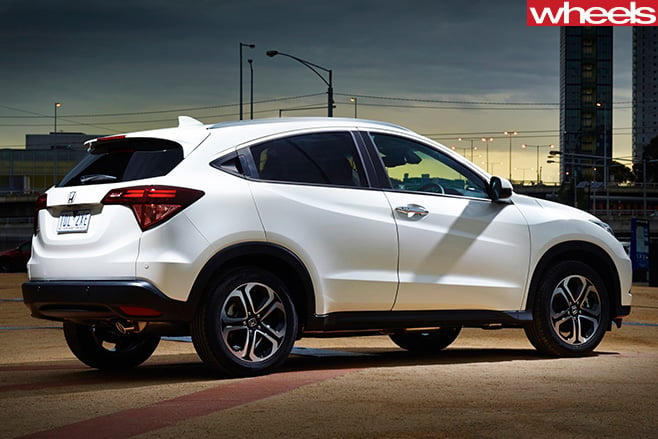
Honda HR-V
Jeep Renegade
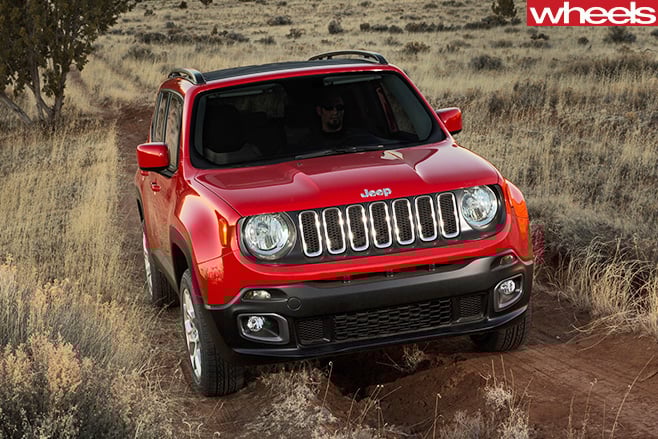
Fiat breeding and European size make it a neat and petite, if far from cheap, funk soul brother
Mazda CX-3
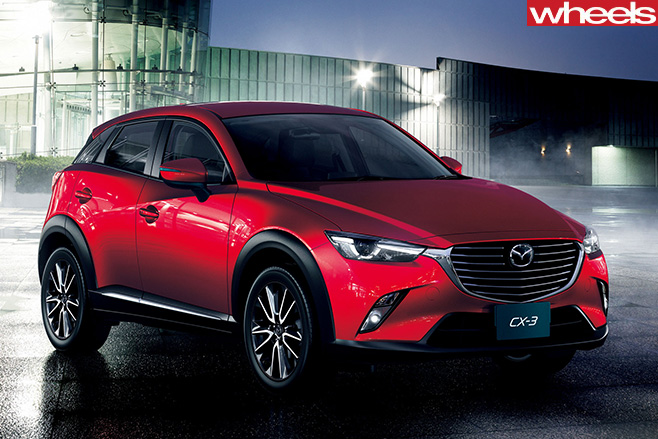
Interesting styling and a massive model range with several class exclusives
Suzuki Vitara

So, what is it?
Legendary Formula One constructor John Cooper reached the finish line in 2000, just before BMW’s new generation Mini Cooper landed the following year. But there’s little doubt the pioneering race engineer would approve of the current (F56) Mini Cooper S. Quick (0-100kmh in 6.7 secs), sharp and comfortable, it combines impressive refinement with genuine shove-in-the-back performance.
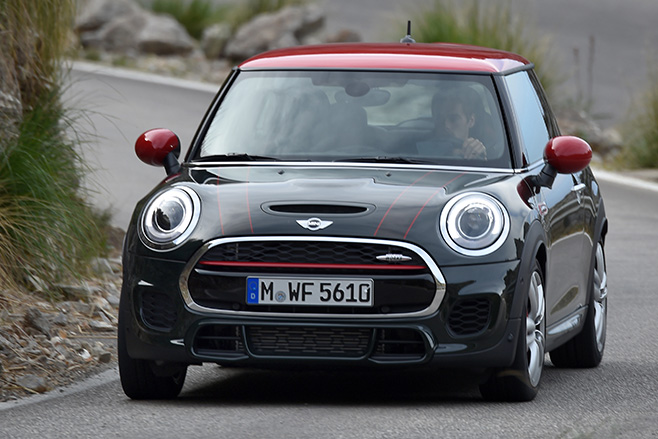
And now, for those wanting to take their hot hatch experience from Jalapeno to Habanero, the latest Mini John Cooper Works (JCW) performance flagship has arrived in Australia.
Why should I care?
Compared to the Cooper S, the new JCW adds 20 per cent more power (+29kW) and seven per cent more torque (+20kW) to reduce 0-100km/h acceleration by more than half a second. It’s also 0.2sec faster than the previous generation JCW.
What’s new about it?
Engine upgrades include turbo tweaks for increased boost pressure, new pistons delivering a higher compression ratio, and a sports exhaust. A specifically developed Brembo braking system ups the ante on stopping power, and the aero package has been optimised with a revised front apron (larger cooling vents), side sill panels, rear apron and the addition of a roof spoiler.
That’s all fine, what’s it like to drive fast?
The JCW is hugely entertaining, delivering seriously quick acceleration, superb dynamics, and top-shelf refinement.
The national launch was centred on no lesser venue than the Phillip Island race circuit; a track session followed by several hundred kilometres of twisting back roads on a circuitous route between the island and Melbourne.
First impressions are dominated by the 2.0-litre turbo’s strength and flexibility. It features BMW’s Valvetronic and VANOS variable (valve and cam) timing, and the turbo system is integrated in the manifold for shortest possible exhaust ducting. The result is a satisfyingly linear flow of grunt. Max torque is available from 1,250-4,800rpm, with peak power arriving at 5,200rpm, and the JCW pulls like a train right up to its 6,500rpm rev ceiling.

The bonus is a soundtrack reminiscent of an old-school Mustang 289ci V8; a hard-edged, hammering engine noise, accompanied by the exhaust’s snap, crackle and pop on the overrun.
The six-speed manual version ($47,400) was yet to arrive at the time of our review, so this spin was confined to the six-speed auto, and it’s good.
In manual mode, shifts through the wheel-mounted paddles are rapid, each gear holding to the limiter. On the way back down, a continued squeeze of the paddle sees the transmission flick through ratios to the lowest possible gear. A racy touch.
The standard Driving Modes function can be used to sharpen throttle and steering response, while the JCW’s Head Up Display (HUD) can be configured to include a rev counter as well as speed and gear, which works well in ‘enthusiastic’ sessions.
Standard sports front seats, with integrated head restraints look and feel great, with excellent lateral support. Braking, with meaty four-piston calipers up front is brilliant, even under the pressure of Phillip Island at full bore, and the sports steering wheel is nice and grippy.

The standard Dynamic Damper Control (DDC) system allows for a quick switch between comfort and sport settings, and the difference is pronounced. Sport is perfect when you’re really on it, but far too firm for slower touring. Flick to comfort and the road is magically ironed out.
In terms of outright grip and cornering balance, the JCW is all class. Road feel from the Servotronic electrically-assisted steering is good (but not great), and after a quick but progressive turn-in the front end sticks resolutely. A big contributor here is the Performance Control system, subtly braking both inside wheels to apply torque vectoring type assistance.
Standard rubber is run-flat 205/40 on unique 18 inch rims, with brands on the batch of launch cars varying between Dunlop Sport Maxx RT and Pirelli P7. Overall, the car feels balanced, steady and predictable.
And driving home from the city?
In comfort mode, the Mini is relaxed and refined. The engine’s torque makes it an easy drive through the urban grind, and the standard 410 Watt, 12-speaker Harman Kardon stereo cranks.
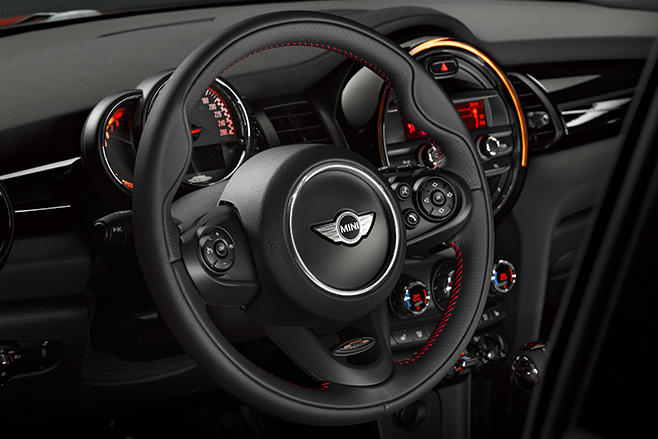
The JCW also picks up special trim in the form of unique door sills, gear shift lever, leather sports steering wheel with red contrast stitching, specific instruments and stainless steel sports pedals.
Anything bad about it?
Although the current Mini is a step ahead of its predecessors in terms of function getting a better hearing over form, the interior will still feel overly fussy for some. There’s also the not insignificant matter of a $50k price tag.
How much would I have to pay? And is it worth it?
The base manual weighs in at a not inconsiderable $47,400, which includes a long list of standard gear including the DDC set-up, special interior trim, combination cloth/microfibre upholstery, dual-zone climate-control air, interactive LED interior lighting, Professional nav system with 8.8-inch infotainment screen, Digital radio, Harman Kardon audio, reversing camera with guide lines, special HUD, unique aero package, LED headlights, plus front and rear parking distance sensors. Lots of fruit but still a big ticket price.
Would you take the Mini Cooper S JCW or VW Golf R
The Golf is a heavy hitter dynamically, with more grunt, and it’s a second quicker to 100km/h. But it’s $5k dearer. We’d go the Mini JCW.
Click here to find out more about the Mini Cooper JCW.
Subaru’s formerly all-conquering Forester has come off the boil, with the Mazda CX-5 doubling its sales. So a limited-edition tS flagship is coming, with an STi-tuned performance chassis.
WHAT IS IT? The Forester tS is basically the top-line XT turbo with an STi-tuned chassis and several other mods to improve handling and body control. It is thus a unique proposition in the medium SUV segment, or will be when sales start in May.
WHY WE’RE TESTING IT The Forester has long been regarded as a great all-rounder, avoiding many of the pitfalls of its top-heavy rivals thanks to the low centre of gravity afforded by its boxer drivetrain. But outputs from the big turbo units in Forester XTs (and their GT predecessors) have never quite gelled with the SUV chassis. Can the STi crew help?
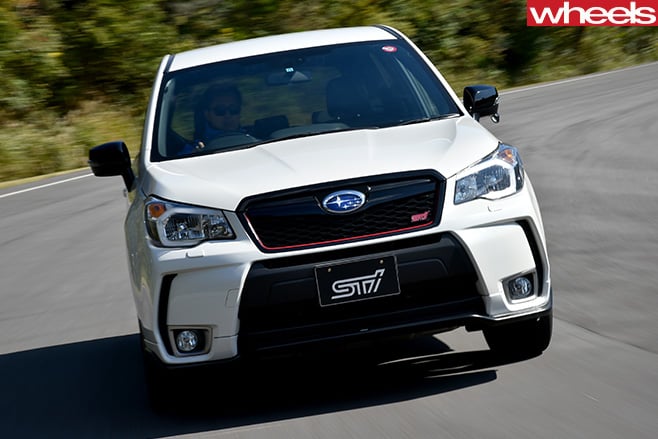
THE WHEELS VERDICT Will we finally see an affordable SUV that truly drives like a hot hatch? The upcoming Forester tS is certainly shaping up to be that car, and the differences between it and the mechanically similar Japan Domestic Market-spec Forester XT were pronounced around a tight bitumen track designed for racing bicycles. We had way less body roll and a whole lot more control than usual. How any of that translates on Australian roads from next May is uncertain, but the basic ingredients suggest a performance crossover worthy of the WRX – if not STi – badge.
PLUS: Less cumbersome than XT, Q-car performance, value for money MINUS: Awkward styling, unappealing interior plastics, predicted hard ride and road noise
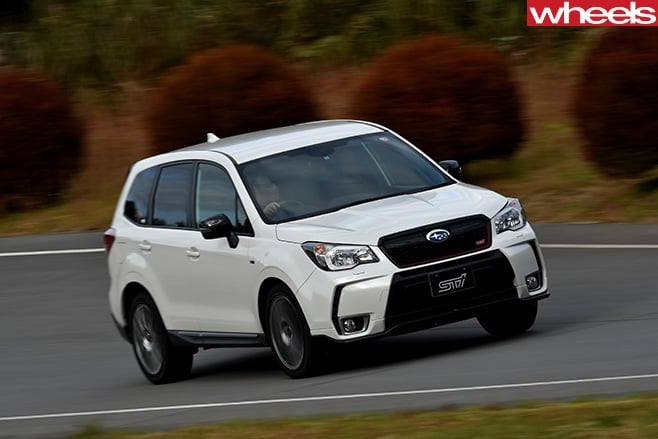
Whether Fuji Heavy Industries intended on demonstrating this with a Japan domestic -spec Forester XT, pitching it (literally) against the STi-tuned tS around the 5km long, 2020 Tokyo Olympics bicycle training track, is not known. However, the former felt like a loose handful against the latter’s controlled confidence, suggesting that SUV buyers seeking proper dynamics don’t have to fork out $100K on an Audi SQ5 or Porsche Macan.
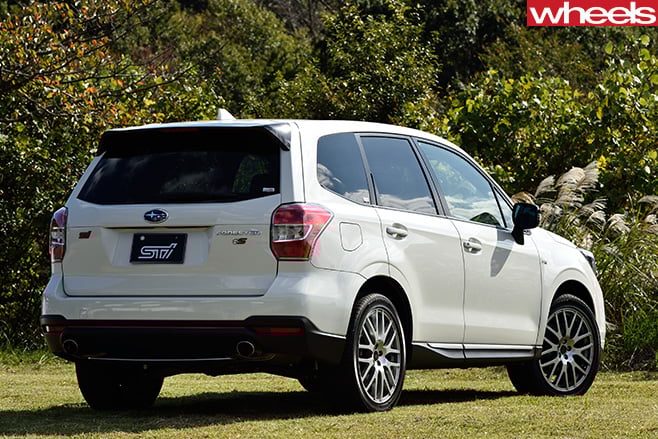
Unsurprisingly, this STi parts-bin raid results in a more hunkered down Forester that’s hungrier for corners, far flatter when driven fast through them, and a whole lot surer in its reactions and responses. Over exactly the same snaking route, the XT seemed floatier.
Questions do remain about how such a well-tied SUV will ride on our rubbish roads, however. At least extra soundproofing helps hush the thing. FHI says the aim is to promote “on-road tough, speed, and class, so drivers at every skill level can enjoy”.
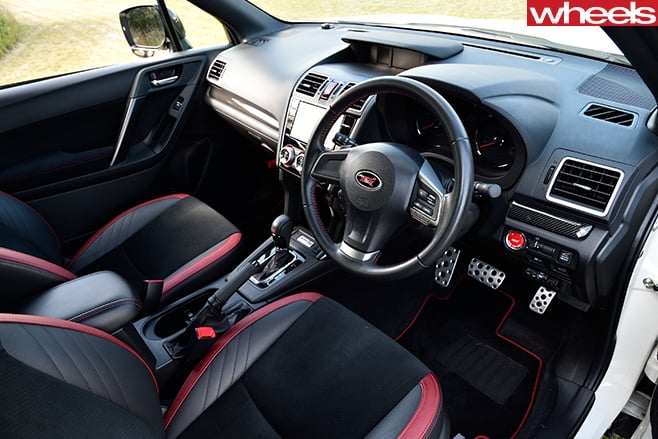
Speaking of which, while the tS may not arrive with more power than an XT, improvements to handling, roadholding and refinement point to Australia’s first properly WRX-esque medium SUV.
SPECS Model: Subaru Forester tS Engine: 1998cc 4cyl, dohc, 16v, turbo Max power: 206kW @ 5700rpm ** Max torque: 350Nm @ 2000-5600rpm ** Transmission: 1-speed CVT Weight: 1610kg ** 0-100km/h: 7.0sec (claimed) Fuel economy: 7.6L/100km ** Price: $55,000 (approximately) On sale: May 2016
** Figures are for Japanese market MY16 Forester XT
What stands out?
Toyota’s RAV4 is one of the more popular mid-sized SUVs, and with good reason. Its biggest strengths are its low cost of servicing for the first three years and a reputation for good resale values. Among its best features are great front seats, and on 2WD models an excellent automatic transmission. This review covers RAV4s on sale prior to the facelift of December 2015, which brought revised styling and more equipment.
What might bug me?
The bumpy ride at low speeds.Driving at less than 80km/h on the space-saver spare, until you can fix your full-sized flat tyre.
What body styles are there?
Five-door wagon only.The RAV4 is available in front-wheel drive and in four-wheel drive.It is classed as a medium SUV, lower priced – but it is the smallest and cheapest SUV from Toyota.
What features do all RAV4s have?
Reverse parking sensors, cruise control, and Bluetooth connectivity. Seatbelt warning lights for all five seats.A 6.1-inch touchscreen with main menu buttons down each side (the buttons make it easier to toggle between different screens, such as audio and phone).Daytime running lights – additional lights near the headlamps that make the car more visible.Roof rails. These act as mounting points for the optional roof racks. (If you want to carry something on the roof, you do need the racks.)A space-saver spare tyre. (A full-sized spare is available as an option).Seven airbags: two directly in front of the driver and front passenger; a side airbag to protect the upper body of each front occupant; a curtain airbag on each side, protecting the heads of front and rear occupants from side impacts; and an airbag in front of the driver’s knees.Electronic stability control, which can help control a skid. All new cars must have this feature.A capped price servicing scheme under which Toyota subsidises its dealers to service your car. It runs for the first three years or 60,000km, and means the RAV4 is cheap to service over that period.The RAV4 is covered by a three-year, 100,000km warranty.
Which engine uses least fuel, and why wouldn’t I choose it?
The 2.2-litre four-cylinder turbo diesel, which is officially rated at 5.6 litres/100km in manual form (city and country combined), or 6.5 litres/100km with auto transmission.However, the diesel is the most expensive of the three engines offered with the RAV4, and is available only in four-wheel-drive versions.It performs well, and is easy to drive as an auto. Around town, it can be hard work with a manual ‘box, because it requires you to change gear more often than a petrol engine would.Most buyers choose one of the petrol engines. The 2.0-litre petrol is fitted to all front-wheel drive versions and is available as a six-speed manual or excellent CVT auto. Fuel use is 7.4 litres/100km officially in auto form – slightly better than the manual version can do.The 2.5-litre petrol is fitted to all four-wheel drive RAV4s, and is available only as a conventional auto. It offers about 25 per cent more power than the 2.0 in most driving conditions, although the 4WD system increases fuel use.The CVT, or continuously variable transmission, offered in front-wheel drive models is not restricted to a fixed number of gear ratios, and therefore can match the gear to the driving conditions more effectively. The design fitted to the RAV4 works particularly well. However, the six-speed conventional automatic in four-wheel drive versions also shifts smoothly and intuitively.
What key features do I get if I spend more?
The least costly, GX model, RAV4s roll on 17-steel wheels. Step up to the GXL and you get lighter and better looking wheels made from an alloy of aluminium.The RAV4 GXL also has smart key entry (which allows you to unlock the car while the key stays secure in your pocket or handbag), and headlights that switch on automatically when it is dark. Dual-zone air-conditioning allows you to set a temperature for each side of the cabin. The steering wheel is trimmed in leather, and windows have been tinted to reduce sun penetration. There is a reversing camera, built-in apps for audio streaming, and you can buy a satellite navigation app from dealers.The most expensive RAV4, the Cruiser, adds partial leather seats (it’s a mix of real and fake leather), a sunroof, a power-adjusting driver’s seat, and a powered tailgate that can be opened remotely. Headlamps dip automatically for oncoming vehicles. There is satellite-navigation, and a better sound system. The wheel size grows to 18inches and the tyres are slightly wider and lower in profile, mainly for styling but also for better grip on hard surfaces.The RAV4 Cruiser is available only in four-wheel drive.
Does any upgrade have a down side?
The sunroof in the Cruiser reduces head room up front by 24mm.White is the only standard colour: all others cost extra.Optioning the full-size spare tyre raises the floor height of the luggage bay, reducing load capacity from 577 litres to 506. Additionally, the load space will no longer be flat.
How comfortable is the RAV4?
The RAV4’s front seats are among the best fitted to any medium SUV, with great support that translates to good comfort over longer trips.The seating position is also good. Large side-pillars impede vision slightly.Circular air vents on each side of the dash seem retro on what is otherwise a modern-looking and generally classy cockpit layout. A small storage area above the glovebox is handy for odds and ends.The touchscreen can be fiddly when toggling between radio stations.Suspension on the RAV4 feels firm at lower speeds but the ride is otherwise comfortable. The steering is light and the car has a tight turning circle, making it easy around town. It is also quiet.
What about safety in a RAV4?
A full complement of airbags gets the RAV4 off to a good start on the safety front. GX variants do not have a reversing camera, but all others do.The RAV4 Cruiser has a lane-departure warning system, which monitors lane markings and alerts the driver if the car wanders out of the lane.(To see a full list of the safety features on any model, select the car and look under the features tab. Safety-related features are listed in red.)The Australasian New Car Assessment Program (ANCAP) has given the RAV4 a five-star safety rating.
I like driving – will I enjoy this car?
There are sharper SUVs around when it comes to cornering accuracy (the Ford Kuga and Mazda CX-5, for example), but the RAV4 is not far behind. It is good to drive and stays relatively flat in corners.On wet road however, the standard Yokohama tyres don’t inspire much confidence.The 18-inch tyres on the Cruiser are a better bet, improving roadholding with little cost in ride quality.Those chasing maximum performance will like the 2.5 litre engine, which revs enthusiastically to reach its maximum output.For extensive country-road driving, the diesel justifies its price premium with lower fuel use and easy highway-speed cruising.The RAV4 is a light-duty off-roader.
How is life in the rear seats?
The RAV4 seats three at the rear, for five seats in total. Rear leg room is good and the floor is almost flat, giving the person in the middle more space. The seats are fairly flat but comfortable.The seatbelt for the middle rear passenger is mounted on the roof, and therefore needs two clips into buckles to latch it.There are no rear air-conditioning vents.
How is it for carrying stuff?
The load space is fairly broad and helped by a 60/40 split-fold seatback. There is a retractable luggage cover.There is some underfloor storage in which you can hide small but valuable items.The tailgate on the Cruiser can be opened from the remote keyfob.The RAV4 won’t tow as much as most other medium SUVs. The limit for 2.0-litre models is only 800kg. For the diesels it is 1000kg, and 2.5-litre models may haul up to 1500kg.
Where is the RAV4 made?
All RAV4s are produced in Japan.
What might I miss that similar cars have?
A third row of seats. The Nissan X-Trail and Mitsubishi Outlander each have a seven-seat option.Rear air-conditioning vents (standard on a Honda CR-V, Volkswagen Tiguan and Ford Kuga).A diesel engine with more power, an option on some rivals.The latest active crash avoidance systems. Auto emergency braking, for example, is not available.Other competitors include the Mazda CX-5, Subaru Forester, Hyundai Tucson and Kia Sportage.
I like this car, but I can’t choose which version. Can you help?
The front-wheel drive GXL with the CVT auto. Our reviewers like the CVT transmission, and this car uses less fuel than the 4WD models. The GXL costs thousands of dollars more than the GX but the extra equipment raises the interior ambience and boosts safety.
When did Toyota update this RAV4?
This generation of RAV4 went on sale in 2013, and equipment was added in 2014. The RAV4 has since been updated. This review covers RAV4s on sale prior to the facelift that arrived in December 2015.The December 2015 facelift brought a restyled nose, extended the reversing camera to all models, and adjusted suspension settings. Automatic braking and other active safety aids were added to the Cruiser, and were made available as an option for most GXLs.
OKAY, you haven’t driven all the Car of the Year candidates – and perhaps you’ve not driven any of them.
But you’ve read about them, you’ve debated their merits at great length in good company, or perhaps you just wish we’d had the sense to appoint you a judge.
Now’s your chance to make a difference. We have divided the Car of the Year field into five groups – using no criterion but rough similarity – and you get to pick a winner from each.
A further poll, covering the five group winners, will decide the People’s Choice for Wheels Car of the Year 2016.
Remember, this is not a beauty contest. Wheels judges the COTY 2016 contestants under five strict criteria, refined over half a century:
Function – how well a car does what it is intended to do. Efficiency – in all aspects. Use of resources in producing the car and in running it. Value – both against its rivals and against the wider new car market. Technology – does it offer a tangible advantage over its rivals? Safety – We’re talking passive and active.
Scroll below the poll to find out more about these capable COTY contenders.
Thanks for voting, the poll has now closed.
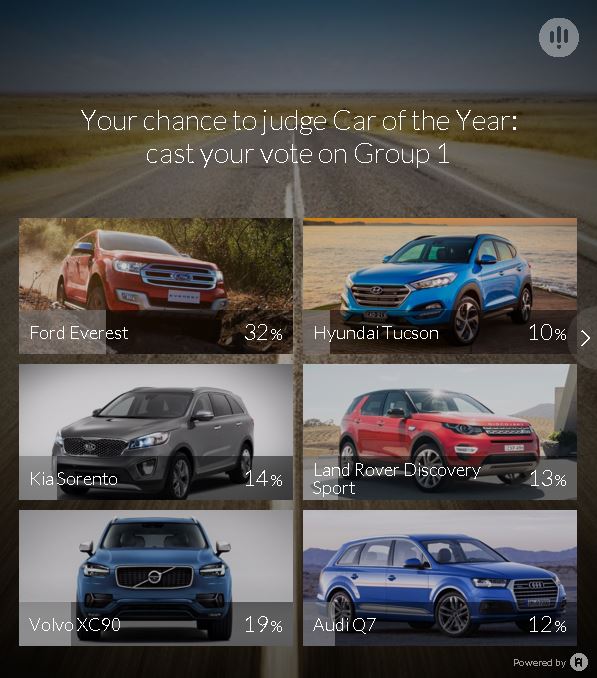
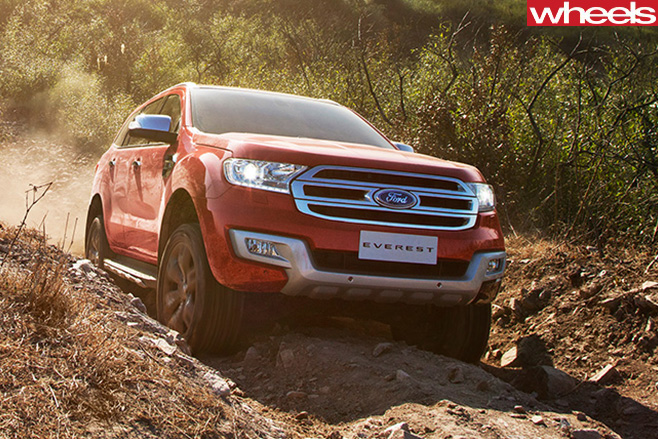
Ford Everest
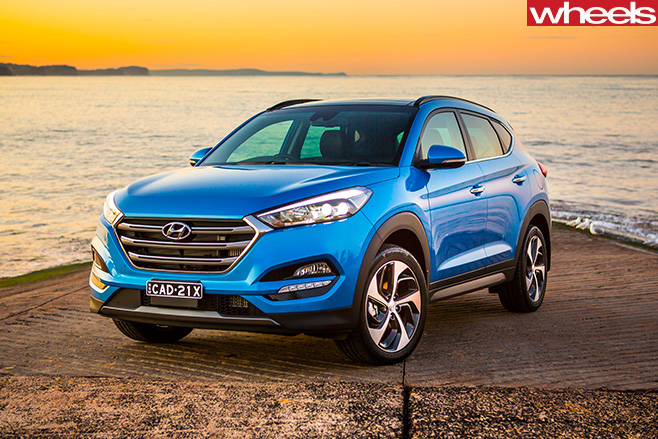
Hyundai Tucson
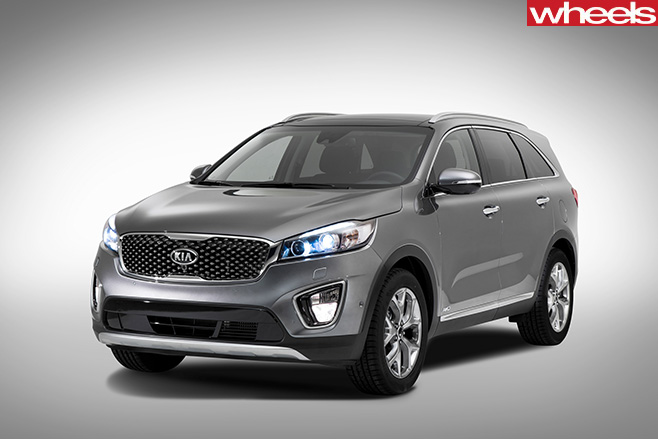
Kia Sorento
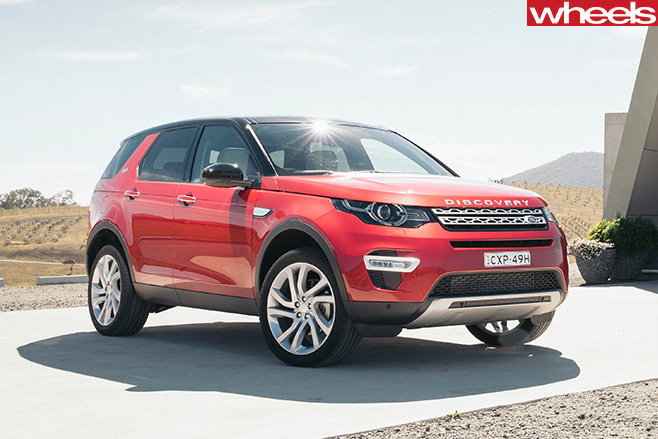
Land Rover Discovery Sport
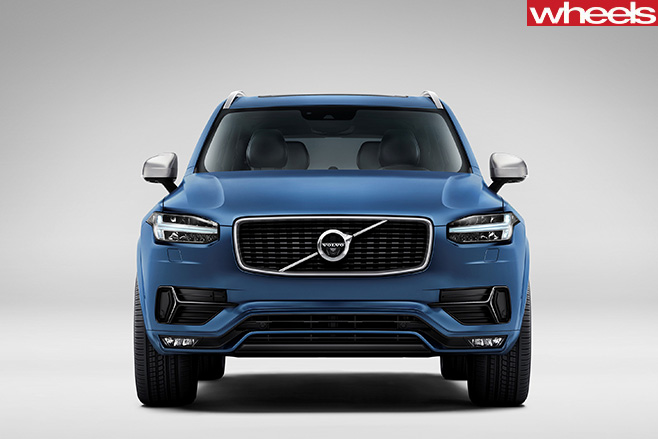
Volvo XC90
Road cars that work on a racetrack are rare. Here are five models that are brilliant on-road and with few minor tweaks can work in the pressure-cooker racetrack environment. All are priced less than $30K.
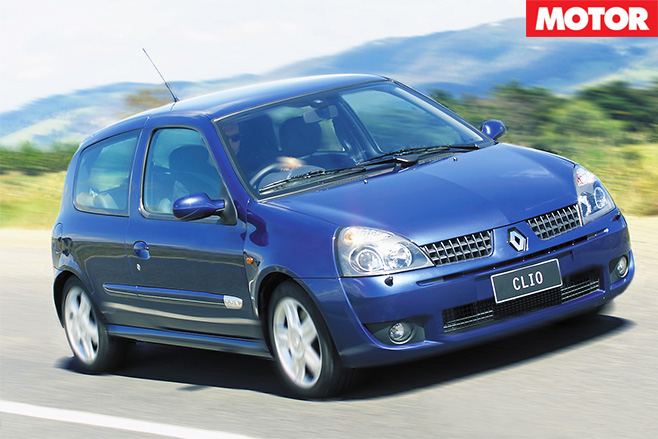
1. Renault Sport Clio 172 (Phase 1/2)
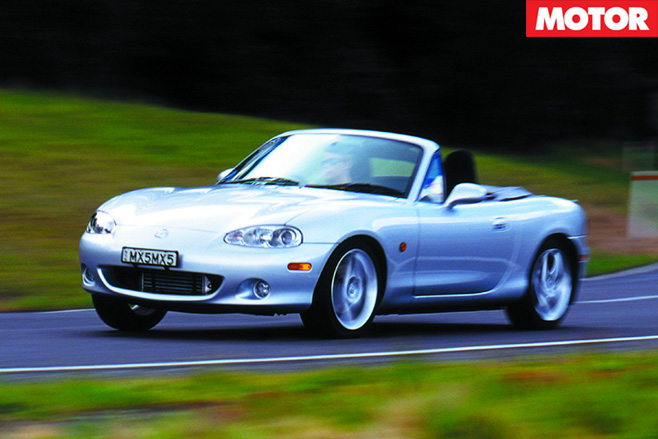
2. Mazda MX-5 (NA/NB)
3. Mitsubishi Lancer Evo (V – VIII)
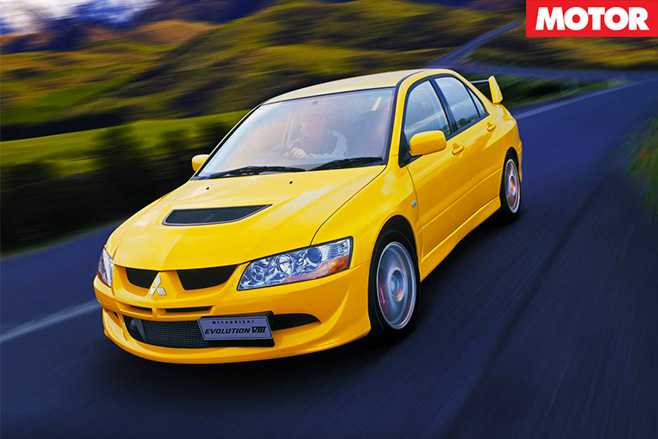
4. Renault Sport Megane 250 Cup
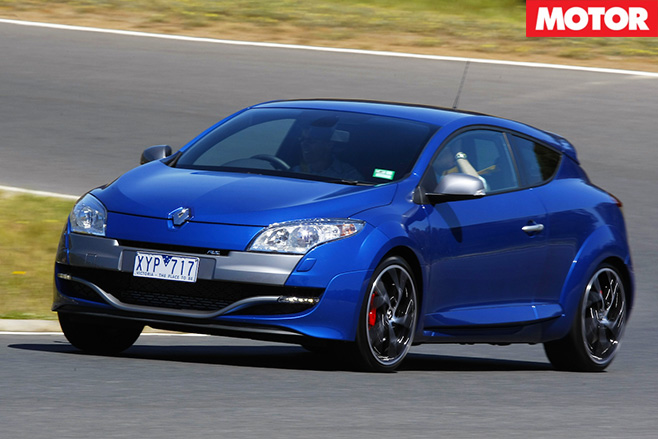
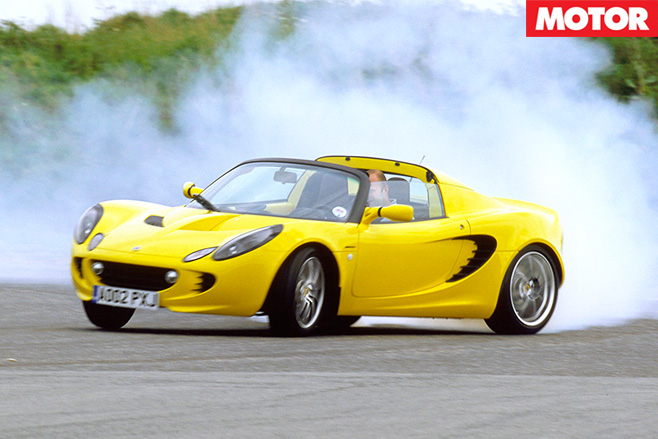
5. Lotus Elise
We’re a special bunch, us Aussies.
We have our own currency, our own curious brand of football, our own unique touring car series and a climate and terrain that’s very difficult to replicate anywhere else in the world. It’s this last point that means we often require a special sort of vehicle, too.
While buyers are increasingly turning to global models, our unique environment means they usually need modification before being deemed fit to cope. It’s partly why Ford and Holden’s proving ground operations will remain active after local manufacturing ceases, and it also explains why a number of car makers have Australian engineering divisions, to cater for our market’s somewhat fickle tastes.
Hyundai is one of that number, and Product Planning Manager, Andrew Tuitahi, explains why the Korean maker goes to the time and expense of optimising its vehicles for what is, in global terms, a small market: “Australia features a unique combination of road types, surfaces, customer expectations and vehicle preferences, so our local tuning program aims to cover the widest possible variety of road conditions and driving disciplines.
We believe that delivering ride and handling levels that can compete with the dynamic leaders will take us a step closer to realising our goal of becoming ‘the most loved car company’.”
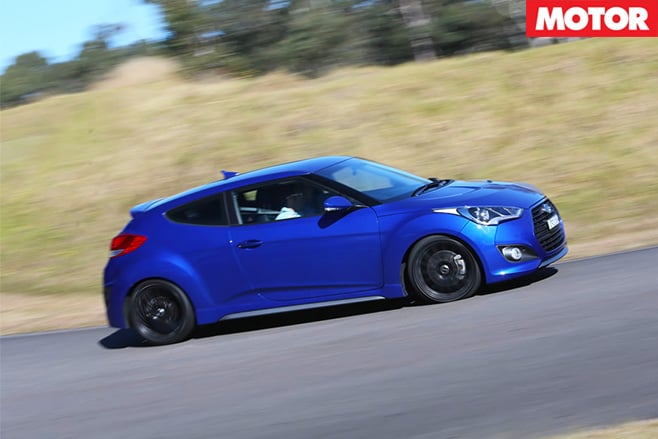
Hyundai has dipped its toes in the performance waters before, but now appears ready to plunge in headfirst. It’s spending big on its World Rally program, which has already paid dividends with a 1-2 result at Rally Germany, and has announced a standalone performance brand, the quirkily named ‘N’.
The first N product is expected to be based on the new-generation i20, due to be premiered at the Paris Motor Show just as this issue goes on sale, which means we’re unlikely to be driving a true performance Hyundai for a while yet.
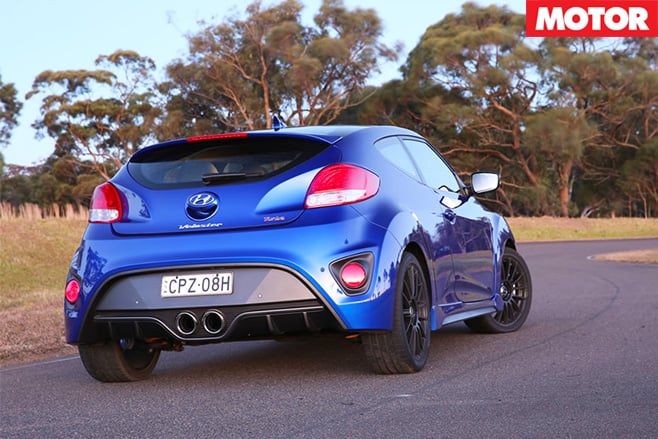
The project was the brainchild of Tuitahi and Senior Manager of Product Engineering, Hee Loong Wong, who were keen to discover how far the Veloster chassis could be tweaked, with suspension tuning led by French-based guru David Potter.
First port of call was replacing the car’s standard suspension with high performance dampers, developed specifically for the project by Korean firm Mando, and progressive-rate King Springs. Pirelli P Zero tyres, wrapped around 18-inch Rays alloy wheels, replace the standard Hankooks, and Winmax performance brake pads and braided brake lines aim to improve stopping power.
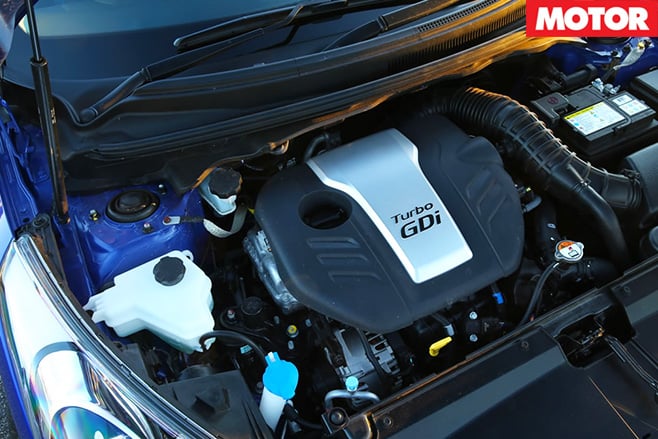
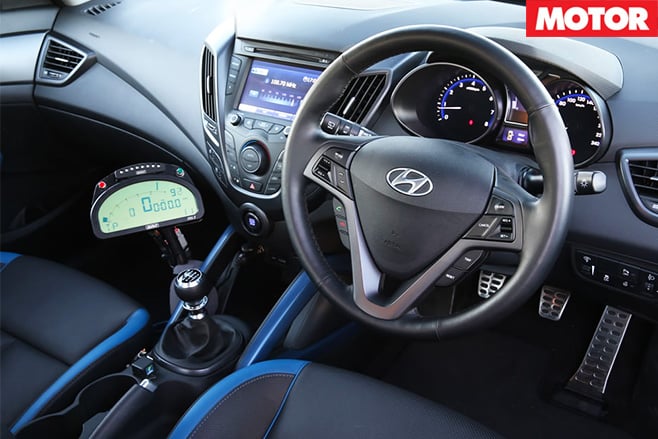
The drivetrain remains standard, but ECU tweaks and a cat-back exhaust lift power to an estimated 190kW and 320Nm, while a Quaife limited-slip diff helps put the power to the ground.
Reasonable grip levels and strong mid-range torque make it reasonably quick, but engineered-in understeer and sub-standard rubber mean its on-limit behaviour is defined by the degree of front-end push. Traction is also limited, the inside front wheel spinning up exiting second- and third-gear corners.
Behind the wheel of the ‘Raptor’, improvements are apparent the instant the steering deviates from centre. The steering itself carries slightly more weight, but there is greater connection through the wheel, and stronger grip from the upgraded tyres.
While it still rewards smoothness, the car’s line can be adjusted using throttle and brakes and the limited-slip diff increases traction markedly, though some of the credit must also go to the tyres.
It’s not razor-sharp in the manner of a Renault Sport Megane RS 265 or darty in its responses like a Ford Focus ST, though its softer set-up is partly down to the philosophy of David Potter, who says: “I have a simple philosophy that cars can be sporty without being harsh! Mando gave us [dampers] that were very responsive to tuning and I was happy to let the suspension be compliant to allow weight transfer.”
The key question, though, is how much the Raptor would cost if it were offered to the public?
All the ability in the world would be useless if it retailed for $60,000 and the list of modifications is fairly extensive. Hyundai’s PR team is extremely keen to stress that the car is “purely experimental” and that production would be a long way off, primarily because every upgrade would have to be subjected to Hyundai’s rigorous durability tests.
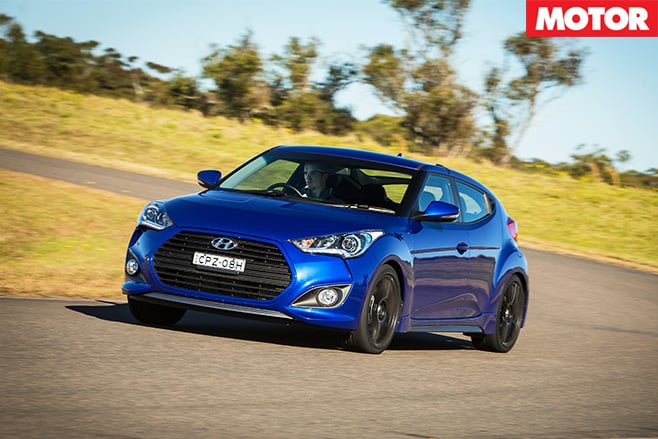
At that price it would undercut the Megane RS and Golf GTI by a few thousand dollars and based on first impressions, while it may not better them, the VelosterRaptor certainly has the ability to be viewed as an intriguing alternative.
We hope Hyundai Australia pushes ahead with the product, as it’s too good to remain a concept driven by a select few. It’s also evidence that we’ve not yet seen the best of the Korean product. On which point, I’ll leave the final word to David Potter: “There are no fundamental reasons why future Hyundai products can’t have similar characteristics.”
Velosterraptor Turbo
3.5 out of 5 stars
Engine: 1.6-litre inline-4, DOHC, 16v, turbo Power/Torque: 190kW/320Nm Transmission: six-speed manual Mods: Mando dampers, progressive rate King Springs, Pirelly P-Zero tyres, Quaife LSD, Winmax brake pads, braided brake lines, ECU tune, cat-exhaust system, SuperPro bushes Price: $40,000 (est.)
UNREAL RACER
Veloster Race Concept
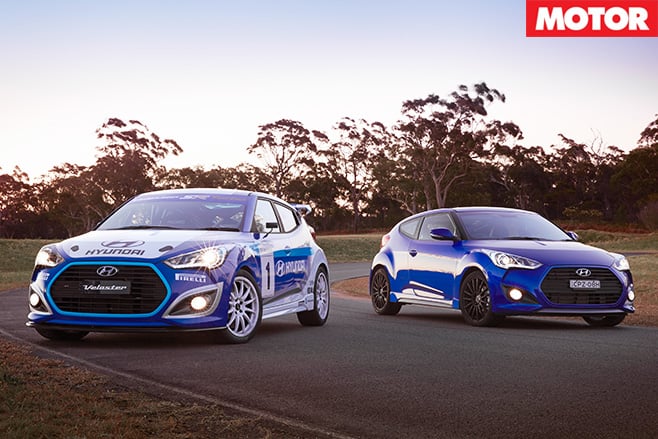
Around 18 months ago, MOTOR ran a story about an exciting project from Hyundai, a race-prepped Veloster Turbo ready to tear up tarmac all over Australia. There was plenty of enthusiasm from those involved, but sadly the project then seemed to sink without a trace. Happily, it’s now back and we’ve driven it.
Similar in spec to the modded road car, the race car unsurprisingly takes things a step further, with a more aggressive one-way clutch-type Cusco diff replacing the road car’s Quaife unit, DMS four-way adjustable suspension, massive Alcon brakes (355mm rotors/four-pot front calipers; 300mm/two-pot rears) and Pirelli P Zero Trofeo semi slicks.
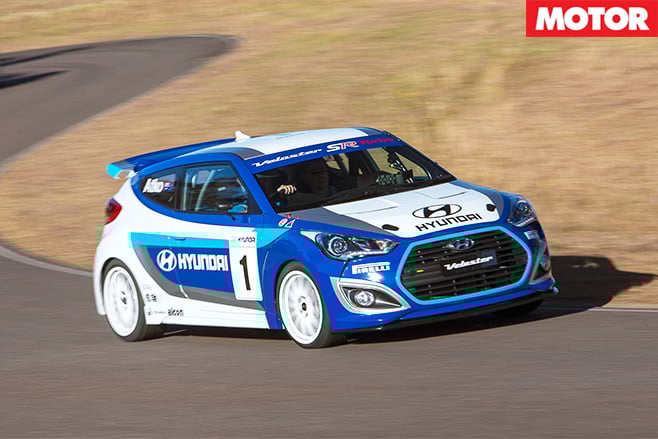
While still fairly standard, the car’s racer attributes take some getting used to. The sticky tyres need warming up – though provide superb grip once they are – the non-assisted brakes require a firm shove (but again, offer beautiful feel once you adjust) and the diff take-up is much more aggressive than the road car.
Over the course of the day we stiffen the rear anti-roll bar to help turn-in and increase front-end damping to improve steering response. While the car feels better and better to drive, Atkinson straps in and feels too much front grip is now being sacrificed.
Sadly, lower control arms fouling on the front rotors stop play early – such is testing. Fingers crossed the Veloster Race Concept manages to make its competition debut sometime in 2015.
How the COTY nominees are chosen.
OF THE hundreds of vehicles Wheels journalists test every year, only the best earn a COTY guernsey.
Choosing COTY nominees for testing from the wide range of eligible cars is a long and difficult process, with the final line-up determined by the magazine’s chief road-testers.
The choice for most nominees is obvious if they make significant generational improvements, or reset class benchmarks. The process gets tricky when it comes to eligible cars whose gains are less apparent, or if the breadth and ability of the entire range is unclear. Due to the sheer volume of new cars released each year, Wheels simply can’t test each variant of every new car before COTY.
In some cases the Australian release timing of new models falls so close to the December 1 cut-off that no Wheels road-tester has driven them. A wildcard nomination can be granted if it’s decided they are significant enough or have sufficient promise.
Once nominees are chosen, variants within the range are hand-picked to provide judges with the broadest spread of a range’s credentials and to balance different trim, drivetrain and bodystyle options. Wheels also endeavours to include the volume-selling variant.
