
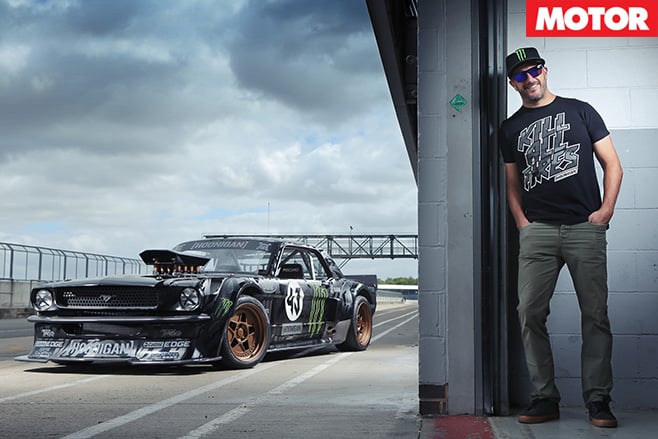
Ken Block must feel terrible. He flew into Heathrow from the US last night and then drove to the hotel inside Milton Keynes Stadium for a kip, only to discover a soccer match was on.
Early this morning, he’s already in the Silverstone paddock, hoodie up, cap and sunglasses on and can of energy drink in hand. “I think it’s about three in the morning,” he says.
This wouldn’t be a good time to talk to most racing drivers, but Ken Block isn’t most racing drivers. His hood and sunglasses frame a face that beams a broad smile. Even if you’re as tired as hell, if you’re Ken Block, showing us how best to muck about in a drift car producing well over 600kW is not going to make for a bad day.
How do you know Block? From his Gymkhana videos? There have been seven of them, each more ambitious than the one before and featuring Block performing extraordinary drifts and slides in increasingly ludicrous cars.
Gymkhana is like a regular motorsport event in its own right – although without the potential racing pitfalls of crashing, breaking down or not being shown on the telly much.
In the same way that Red Bull runs its own air race and soap-box events, Gymkhana is not just great to watch but also a great marketing exercise.
But to suggest that’s why Block drives cars would be to misunderstand him. Competition is what inspired him and today’s drifting scene “all stems from rallying”, he says, as he talks about the reasons why he started driving competitively – first in Rally America, later WRC and now in Global Rallycross. Colin McRae was a year younger than Block, but McRae’s driving is how Block ended up where he is.
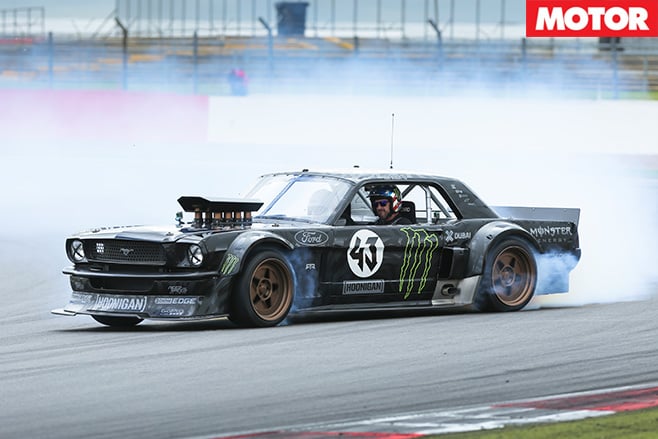
Where it differs is that it’s set up softly so that Block can transfer the weight around more easily on asphalt to alter the car’s handling balance. It’s also longer, which makes the all-wheel drive drifts or powerslides that Block specialises in more spectacular.
Block is keen to emphasise the ‘all-wheel drive’ part of this, because the drifting scene has kind of taken custody of the word ‘drift’ to mean something preserved for rear-wheel-drive cars!
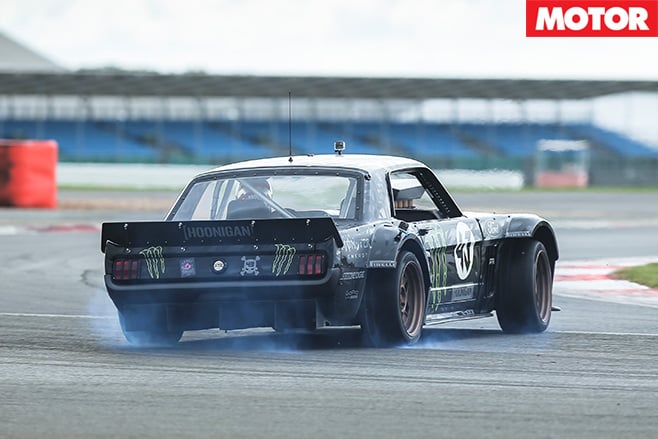
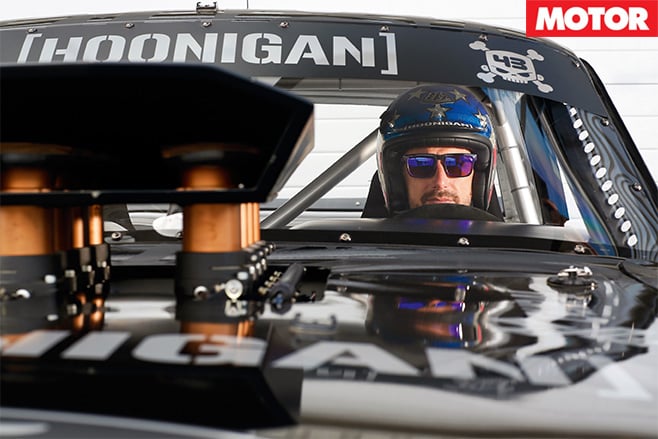
The best section for pulling massive slides will be the left at Brooklands and into the more than 180-degree Luffield right-hander. This means I’ll get to see Block initiate a slide through one corner, transition to a right-hander and then see how he gathers it up on the exit. So I strap in next to him.
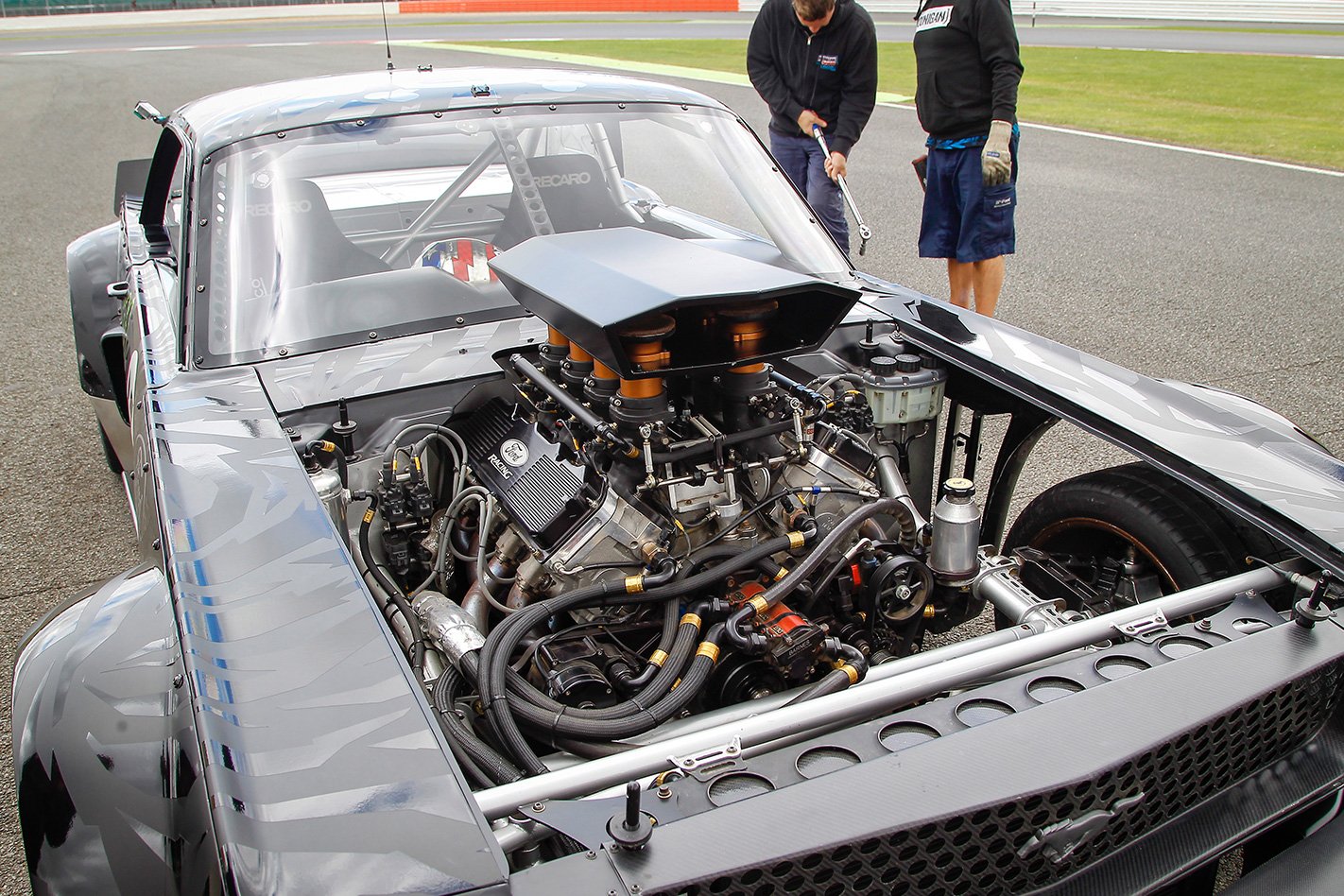
Because the Hoonicorn weighs about 1500kg, I’m expecting it to be fast. What I’m not expecting is the noise, which is stupid of me, because it’s a 6.7-litre V8 on throttle-bodies that makes 630kW and revs to 8300rpm. Of course it’s loud, to the extent that, even through a helmet, the air pressure hurts your ears.
Thanks to the car’s 120dB, Block can’t tell me what he’s doing, so I watch. He left-foot brakes towards the left-hander at Brooklands, taking what at first appears to be a conventional line, if a bit wide of the approaching apex. He trails the brakes in, shifting down to third, at which point things are still fairly smooth. There’s no speedo, but I’d guess we’re travelling at about 80km/h.
I’ve seen a few drifts and slides before, and I reckon Ken’s overcooked this and we’ll spin. But already he’s on full noise and full ‘oppo’ and the Mustang’s busy pulling itself straight.
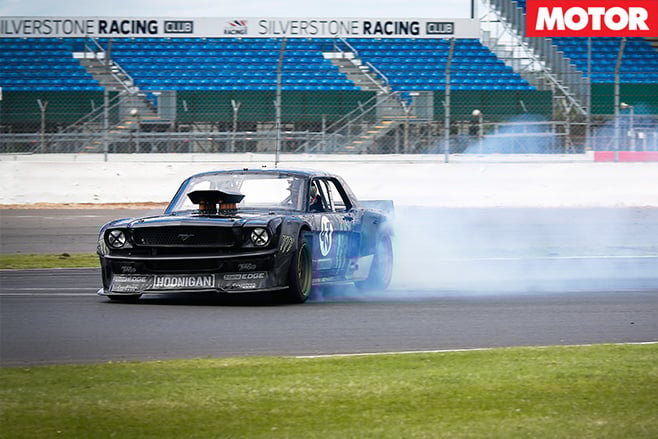
Block does get it right. He’s already back on the throttle again, feathering it more carefully now through the longer corner (full throttle would just make us pull straight; off the throttle, the car would spin).
Ten seconds after it all started, we’re out of the corner and accelerating until the car has pulled straight, and only then does Block ease off. Call it what you like, but by my reckoning that’s a drift, and I’ve never seen anybody do ’em better. Block? He’s still smiling.
Behind Block’s mad 630kW Mustang
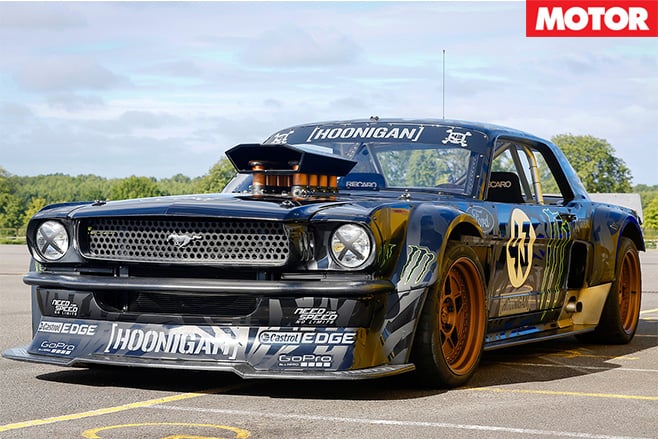
Block’s earliest Gymkhana vids were run in Subarus, but when he got sponsored by Ford and rallied those, he moved on to near-WRC-spec Fiestas. But 2015 is the 50th anniversary of the Mustang, and that called for something special. So, over a period of two years, his team created the Hoonicorn, using a 1965 Mustang as a base.
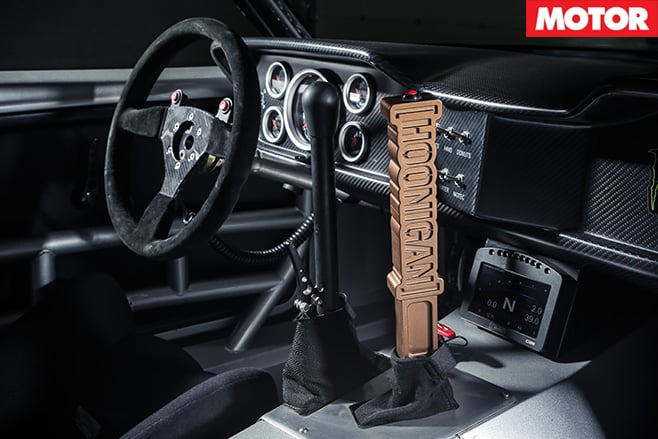
The rear suspension is similarly exquisite and sits near a fuel tank that needs replenishing every two laps of Silverstone. The propshaft and halfshafts are all bespoke, to mate the Sadev six-speed transmission – designed for a Dakar rally raid car – to the wheels.
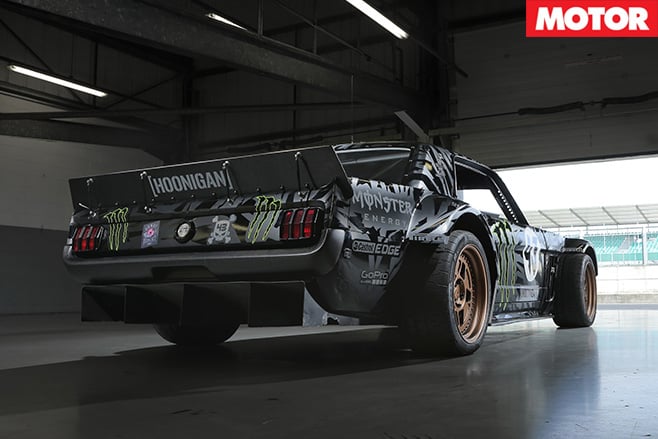
Pirelli doesn’t make a drift tyre but does supply Block with a harder-wearing compound than a standard tyre, which would otherwise melt into the road within a few short runs.
RESULTS
It’s all about SUVs for Nissan, with almost two-thirds of its sales coming from the high-riding wagons. Qashqai now outsells Pulsar (down 19pc for the year) and has brought additional volume over the Dualis it replaces, while the evergreen X-Trail is the brand’s top seller. However, the new-generation dual-cab Navara hasn’t taken off as well as might have been expected.
Rank: 7th 2015: 65K 2016: 71K Grade: B+
OPPORTUNITIES
The new Navara ute is yet to get into its stride, partially because variants other than the dual-cab didn’t arrive until late 2015. Expect to see a volume increase from those newer variants. An updated Altima may also make an appearance during the year, though its impact will be minimal. Nissan’s strength in SUVs – the local market’s big growth segments – puts it in good stead.
CHALLENGES
Nissan’s popular SUVs are under a sustained attack from rivals keen to sniff more of the soft-roader success. Qashqai and X-Trail will face increased competition, while the evergreen Y61 Patrol (first seen in 1998) is expected to succumb to stricter emissions regulations that come into force in November. Murano will finally be phased out during the year.
SUMMARY
Hard worker that enjoys pushing itself. There’s a quieter launch year ahead for Nissan in 2016, with little slated for passenger cars such as the disappointing Pulsar. Still, expect Navara to build sales while others drop off, leading to a net overall gain and a step up to sixth on the sales charts.
Okay, so Ray Charles saw this one coming. But that doesn’t make the final head-to-head for these big, bronzed Aussies any less compelling.
After all, not only does this back-to-back determine who’s got the bigger local-performance stick, these cars in these very specifications are how we are going to remember them when the sun finally goes down on local car-making. Them’s big shoes, I tells ya.
And I don’t want to hear any griping about how either Ford or Holden have already taken their bats and balls and gone home, leaving us with leftovers to carry us through to our date with destiny. That just ain’t true.
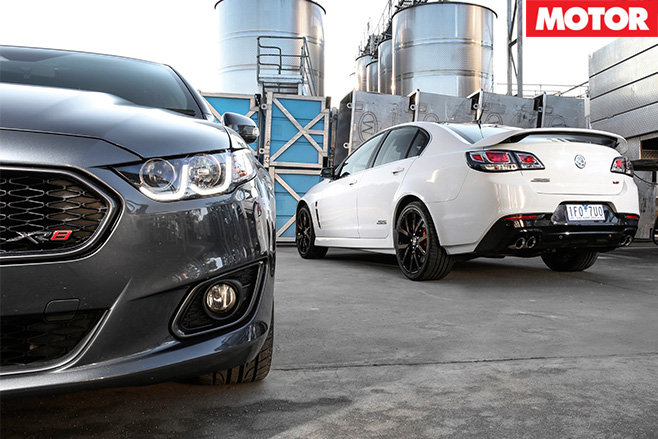
And Holden? Well, it isn’t planning on fizzing out like damp fireworks, either. In the red corner, the Commodore SS has picked up a few visual changes, some new gearing, suspension and brake tweaks and the piece de resistance: the 6.2-litre LS3 V8 nicked from the storage cage over at HSV.
They may both be the last of their respective lines, but it’s pretty easy to see that evolution ran out of steam much earlier in one than the other. The Ford seems to have called time on cell mutation earliest, while the Holden has continued to morph, develop and improve as the last handful of years have passed.
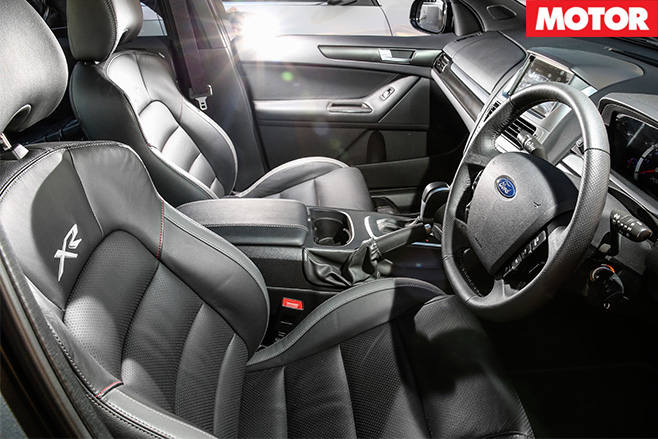
Jump inside and the XR8 is immediately the product of a decade earlier. The materials are fine, no problems there, but the layout is a bit clumsy and the feeling is of sparseness. Sparseness works for Scandinavian furniture, but not so much in performance sedan, it seems.
The SS, meanwhile, is a much plusher place to be with a more contemporary layout and soft, high-end finishes (although we’re not sure about the highly reflective brightwork touches).
The Holden’s instrumentation is also streets ahead and there’s more kit, including stuff like electric front chairs and paddles for the gearbox in the auto version (even though our test car was a manual). The clincher: a head-up display in the SS that works beautifully.
And then there’s the Ford’s seating position. You’ve doubtless heard us bang on about this before, but the XR8 is a lot more difficult to find a comfy position in. Traditionally, the seat has been too high and the steering column too low even at its highest position. To be fair, somebody at Ford has been listening and this model is definitely better with what feels like a slightly lower altitude for the driver’s seat.
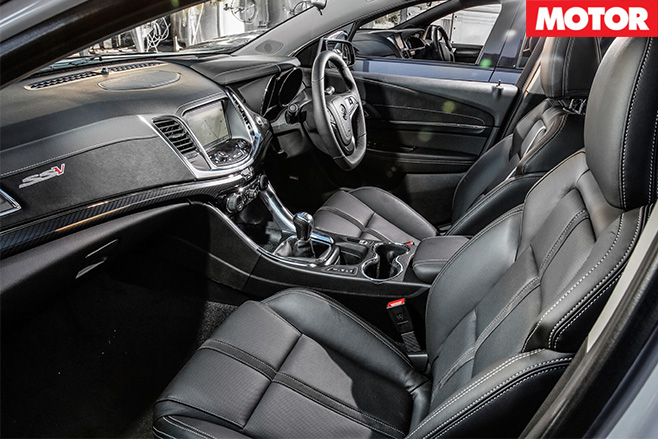
The Holden’s keyless start is a good set-up, though, and via a start button and a small lozenge on the door handle, you can unlock, enter the car and start the donk without taking the key from your pocket. They should all be this good. They’re not.
In the XR8’s case, you get an old-school central locking system and the key still needs to be inserted into the ignition barrel and given a twist. It is a one-hit wonder these days, though, and the engine will continue to crank until it fires, even after you’ve let go of the key itself. We’ll take the fully keyless option, thanks.
So, you’ve got them both fired up, how does it pan out from there?
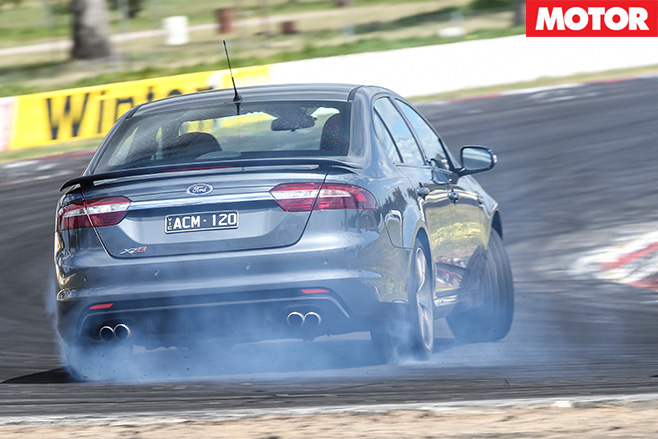
But back-to-back it with the Commodore and, again, you can see where the development has gone. Not only does the Commodore have more feedback and a better quality of it at that, it’s also a more natural steerer. As in, what you get back is precisely what you expected, given what you just put in. Okay, neither is the last word in feedback fidelity, but the Holden is miles ahead.
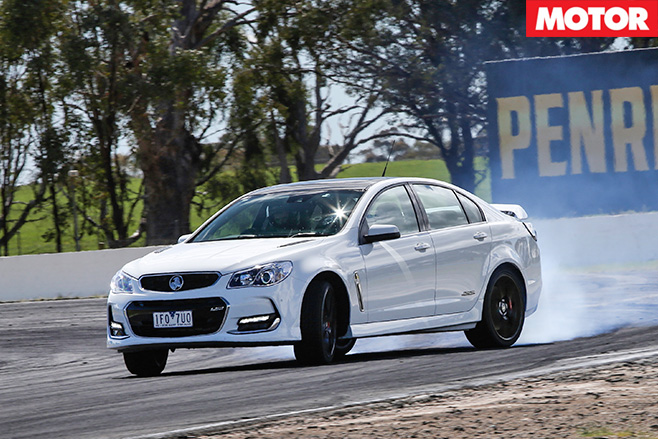
By then, you will also have noticed that the XR8, despite the much firmer ride, has absolutely no more resistance to body roll than the SS. It also doesn’t seem to have the damping sorted out with the same degree of accuracy that the SS displays. In fact, the Holden’s front end is quite amazing for its ability to stick, steer and remain supple all at the same time.
The situation continues at the rear, too, and where the Commo has bags of power-down, the Ford will be lighting up the ESP light one helluva lot quicker. We noticed the odd thump or clunk from the Falcon’s rear end, too. Consider that the Ford’s rear-end architecture dates back to the BA of 2002, a time when an XR8 had 260kW versus the 335 of this one, and you can see how the basic design is being stretched.
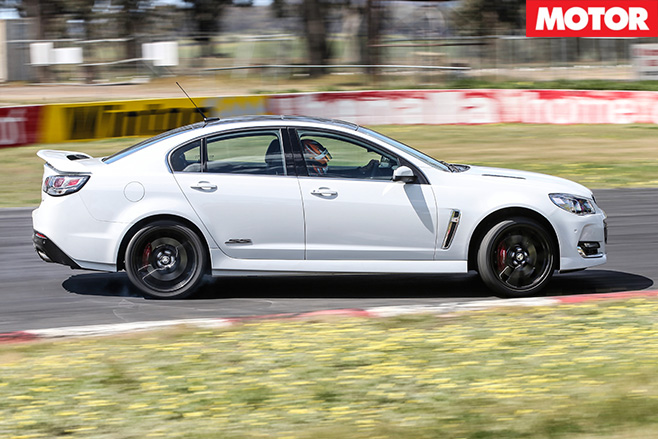
The Commodore still rewards a driver who is prepared to state firmly and early where they would like the apex to occur and then sticks to that strategy. It will tolerate a mid-corner change of mind in as much as it won’t hurl you off into the scrub.
The XR8, meantime, needs even more warning that you’re about to tip it in, but it won’t want to know about any supp regs beyond that point. Try to alter its trajectory from there on and you’re in more trouble.
It all comes down to the natural-feel steering we mentioned and, not too surprisingly, mechanical grip. Frankly, the Commodore has pretty good grip by any standards, the Falcon… not so much.
In fact, while the Ford doesn’t like any rough stuff from the helm, even a delicate touch requires you to wash off more speed than you might have been expecting to. You must then be equally patient on the other side before getting into the supercharger again. And once it’s all started to slide, there’s absolutely no option but to wait until it all slows down enough for the planet to catch up under it.
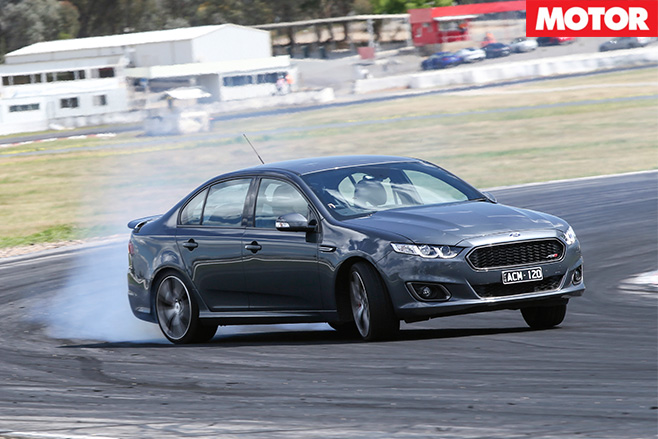
When it comes to stopping, the optional Brembos of the new SS come into their own, with the SS taking 37.07m metres to haul up from 100km/h. The Ford continues the Falcon tradition of feeling (or should I say, being) a bit under-anchored and needing more than 38 metres to do the same thing.
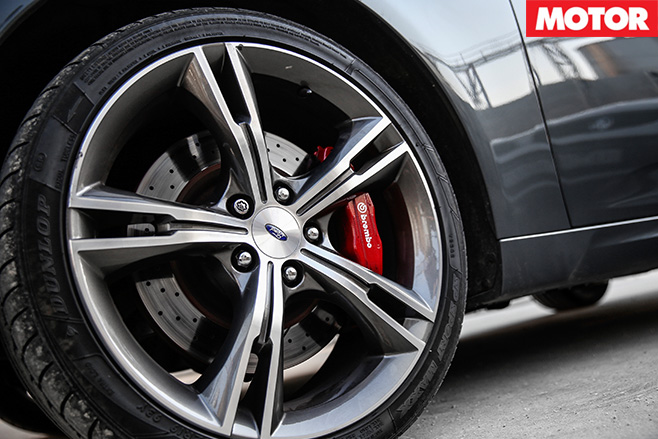
The stopwatch confirms as much, and while the Ford gets to 100km/h in 5.17sec and across the first 400m in 13.25sec with a trap speed of 178.41km/h, the Commodore isn’t too far behind with 0-100km/h in 5.27sec and a 13.44sec quarter at 174.4km/h.
Both cars battled a strong headwind on the day so the times are a few tenths off our best, but the times are still relative – the Falcon is still faster, but now only just.
To be honest, the big differences in the real world amount to both the way the power is developed and the soundtrack. The blown engine in the XR8 ensures that every kilowatt hits at once and then it’s all over as quickly as it started.
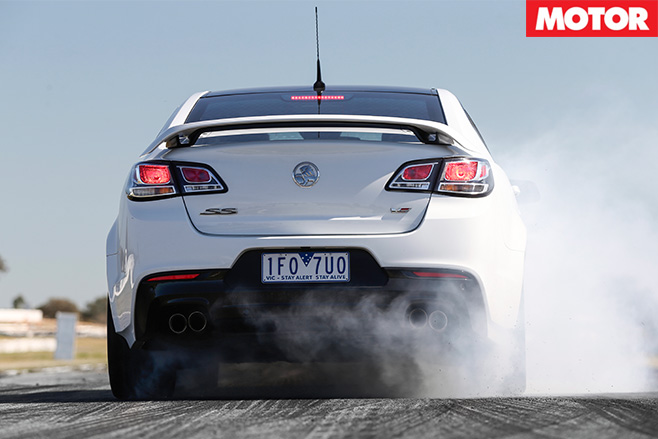
The soundscape, meanwhile, is all Holden. Yes, the Ford sounds like a V8 and there’s a tiny bit of blower whine when you’re fair up it, but it’s muted and never intrudes.
The SS meanwhile, has a clever system of high-tech exhaust tips, a bi-modal valve and a rustic, but very effective, tube that transfers V8 music from the engine bay into the cabin without resorting to the sort of cheating that sees some makers now synthesising the engine note via a computer and the car’s sound system.
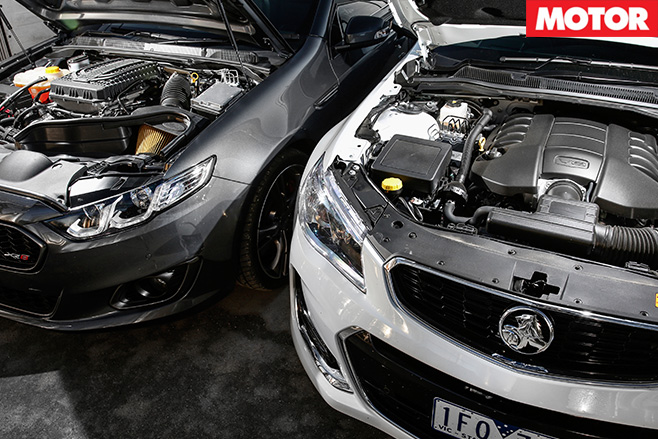
Pricing is more or less line-ball, with Ford asking $53,490 for the XR8 in manual form (or $55,690 for the auto as tested) and Holden asking $53,990 for the manual SS V Redline.
Based on the rest of the numbers – and our original statement that this is how we will remember these big Aussie blokes – there’s a clear winner here.
While the XR8 definitely makes a case for itself, in some ways it’s seriously off the pace and in others it’s old-fashioned in a not-so-good way. That said, it’s the best it’s ever been. But the Commodore is also the fittest, most appealing it’s ever been and, at the same time, it’s measurably better than the Ford. And that’s the nub of it, folks.
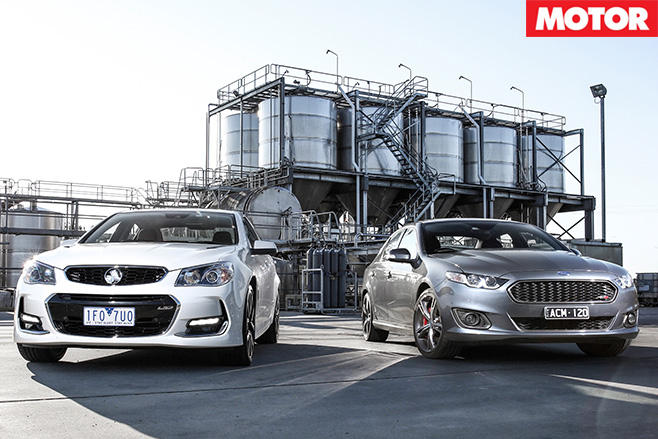
It’s all about how we will remember them and, in that sense, the Commodore SS cleans up. From the bottom of that swimming pool, of course, for such is the fate of the Aussie muscle car.
The Specs
| u00a0 | u00a0 | Holden VF Series II ss v redline | u00a0 | Ford FG X Falcon XR8 |
| Body | u00a0 | 4-door, 5-seat sedan | u00a0 | 4-door, 5-seat sedan |
| Drive | u00a0 | rear-wheel | u00a0 | rear-wheel |
| Engine | u00a0 | 6162cc V8, OHV, 16v | u00a0 | 4951cc V8, DOHC, 32v, supercharger |
| Bore/Stroke | u00a0 | 103.25 x 92mm | u00a0 | 92.2 x 92.7mm |
| Compression | u00a0 | 10.7:1 | u00a0 | 9.25:1 |
| Power | u00a0 | 304kW @ 6000rpm | u00a0 | 335kW @ 5750rpm |
| Torque | u00a0 | 570Nm @ 4400rpm | u00a0 | 570Nm @ 2200-5500rpm |
| Power/weight | u00a0 | 170kW/tonne | u00a0 | 181kW/tonne |
| Transmission | u00a0 | 6-speed manual | u00a0 | 6-speed auto |
| Weight | u00a0 | 1793kg | u00a0 | 1861kg |
| u00a0Suspension (F) | u00a0 | struts, coil springs, anti-roll bar | u00a0 | A-arms, coil springs, anti-roll bar |
| Suspension(R) | u00a0 | multi-links, coil springs, anti-roll bar | u00a0 | multi-links, coil springs, anti-roll bar |
| L/W/H | u00a0 | 4966/1898/1471mm | u00a0 | 4949/1868/1458mm |
| Wheelbase | u00a0 | 2915mm | u00a0 | 2838mm |
| Tracks | u00a0 | 1593/1590mm (f/r) | u00a0 | 1583/1598mm (f/r) |
| Steering | u00a0 | electrically-assisted rack-and-pinion | u00a0 | hydraulically-assisted rack-and-pinion |
| BrakeS (F) | u00a0 | 355mm ventilated discs, 4-piston calipers | u00a0 | 355mm ventilated discs, 4-piston calipers |
| Brakes (R) | u00a0 | 360mm ventilated discs, 4-piston calipers | u00a0 | 330mm ventilated discs, single-piston calipers |
| Wheels | u00a0 | 19.0 x 8.5-inch (f); 19.0 x 9.0-inch (r) | u00a0 | 19.0 x 8.0-inch (f); 19 x 9.0-inch (r) |
| Tyre Sizes | u00a0 | 245/35 R19 95Y (f); 275/35 R19 (r)u00a0 | u00a0 | 245/35 ZR19 (f); 275/30 ZR19 (r) |
| Tyre | u00a0 | Bridgestone Potenza RE050A | u00a0 | Dunlop Sport Maxx RT |
| Price as tested | u00a0 | $53,990 | u00a0 | $55,690 |
| Prosu00a0 | u00a0 | New-found grunt; involving handling; value | u00a0 | Awesome engine; fun in isolation |
| Cons | u00a0 | For what it is, virtually nothing | u00a0 | Outdated chassis; poor ride; lifeless steering |
| Star Rating | u00a0 | 4.5 out of 5 | u00a0 | 3.5 out of 5 |
RESULTS
It’s difficult to refer to Ford’s recent sales results as anything but dismal. Its apparent lack of interest in selling anything but a ute makes for poor reading; Falcon down 4pc, Fiesta down 32pc, Focus down 58pc, Kuga down 22pc. Oh, and the all-new Mondeo has been outsold by the dated model it replaces (a car, admittedly, Ford pushed onto the market with big discounts).
Rank: 6 2015: 68K 2016: 77K Grade: D-
OPPORTUNITIES
Anything not designed to go off-road. Ford has almost no pull with its light, small and medium cars, something that needs to change to revive former glories. The cars are good; the brand, sales pitch and customer service seem on the nose. At least the overpriced Everest provides a growth opportunity, while the freshened Focus could also lift. Mustang will add some incremental growth and focus a spotlight on the brand.
CHALLENGES
The end of the Falcon and Territory. Production winds up in October, not only taking two modest-selling models out of the mix (there will likely still be some in dealerships in early 2017), but also potentially robbing management of valuable brainpower as it manages the complex task of shutting down a major manufacturing facility. Ford also has to find a way to convince family buyers to walk into its dealerships.
SUMMARY
Rarely listens and doesn’t seem to learn much. A poor performer in recent years, with little to suggest that’s going to change in 2016. Ford needs to change – and quickly – if it’s to regain some of the ground lost in recent years. But some key rivals are also in for a tough year, so the brand is likely to attain fifth.
It all began with a mutual friend’s assumption that Alistair Lee and I would bond.
And why not? We both have endless appetites for automotive adventure and, in the all-important matter of motoring taste, share a love of Classic Britannia in cars, a willingness to forgive the mechanical informalities (let’s be kind) of the breed and, in choosing to use rather than roost the things, a readiness to rebuild them as often as is cruelly necessary.
Neither of us is much inhibited by the constraints of originality and accordingly modify our mounts to suit our needs… to the extent of complete donk-out stripdowns in pursuit of perfection. We differ in detail, though.
While I choose to engage the skills of others with the messy bits, Alistair prefers the hands-on approach, fearlessly undertaking full engine rebuilds and all the subsequent fine-tuning. This mechanical intimacy, however, is the lesser of our differences.
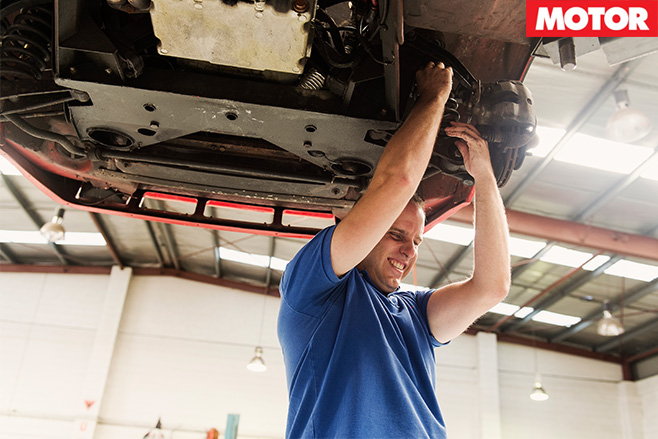
Thirty-four-year-old Alistair Lee has been blind since birth.Automotive achievements are by no means the limit of Alistair’s talents. Keyboard and stringed instrument skills reflect his academic degree in music and the man has represented Australia in both swimming and athletics. His work in the voice-over industry reflects genuine commercial skill but above all these things towers Alistair Lee’s principal accomplishment: the triumph of what he can do over any limitation of what he can’t. And nothing illustrates this uncommon life better than its interplay with cars.
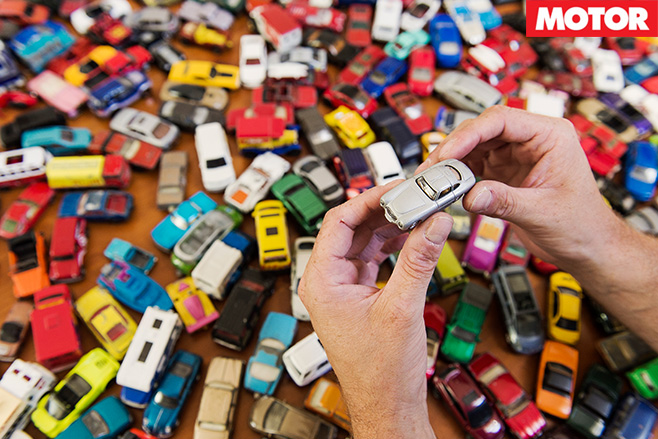
So, where others recognise cars visually, Alistair uses touch to identify and adjudge each and every of his 1000-plus collection of matchbox models. These are his pictures. And where the reading of instruments might inform others of mechanical achievement, our man’s extraordinary hearing is every bit as graphic. So much so that, with production houses and radio stations consulting with him for years to get the exact note of specific vehicles, he has now built up a comprehensive sound library of car engines.
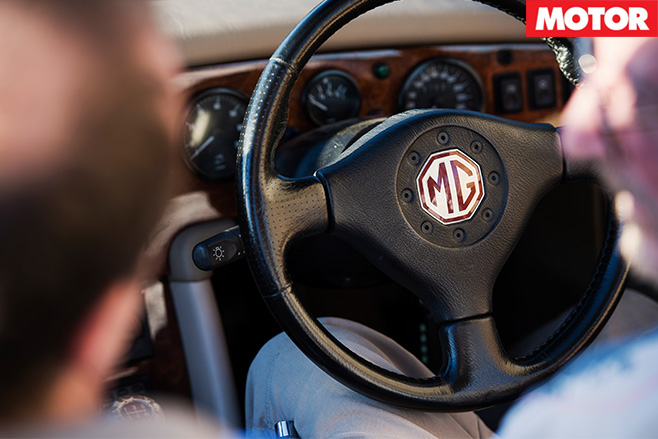
This facility now dominates his appreciation of – and expertise with – cars as surely as sight guides the rest of us. And a lack of the latter in no way limits his enthusiasm. Oh no. The man is, by any definition, a car nut. And if his choices are individual, they simply reflect his unique parameters in making them: he owns and loves an MG RV8, for instance, bought in 2007.
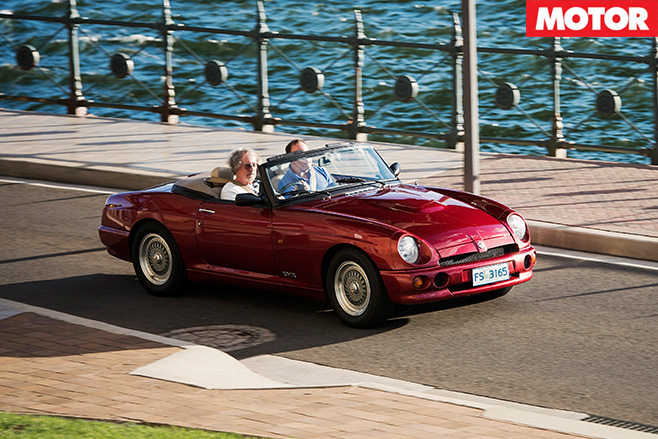
And found. And allowed me to savour when he brought the car out to the village to swap rides between his car and mine. And, damn it, that’s the first time ever that my side-piped E-Type has come second in a sound-off. Okay, the Jaguar’s still prettier but Alistair’s parameter is hard to argue. After all, you spend a lot more time hearing your car than looking at it.
Which doesn’t mean that his stable is completely devoid of aesthetic merit. In 2008, after comprehensive searching on the ’net, he bought a 1991 Walkinshaw XJS, one of only 240 built. Sadly, this fabulous V12-powered creation remains in the UK due to import restrictions but, as I am learning, little gets between our guy and a giggle and if he has to go over there to drive it…
Because drive ’em he does. Not on public roads (hem, hem) but on private property and, with someone else steering, on anything resembling a racetrack whenever the opportunity arrives.
And it is on those visits, graced beyond mere roadwork by good food, company and conversation, that Alistair’s alternate existence is revealed as indeed different. But not deficient.
Within moments of entering our home for the first time he complimented us on the generous height of its ceilings and, in moving beneath them, needed no warning of floor-changes from carpet to tile to timber because, I can only presume, a sonar sense of sorts predicted every wall-opening, and experience alerted him to the associated possibility of flooring change. This acute development of his other senses makes Alistair’s relationship to cars so unique.
Now able to diagnose mechanical condition purely by touch, sound and scent, his capability in the field began at an early age. As a child he was taught by a science teacher friend of the family how an engine functioned and, in the garage at merely five or six years of age, was instructed by this still fondly-remembered soul how to pull an engine apart and, even more critically, put it back together.
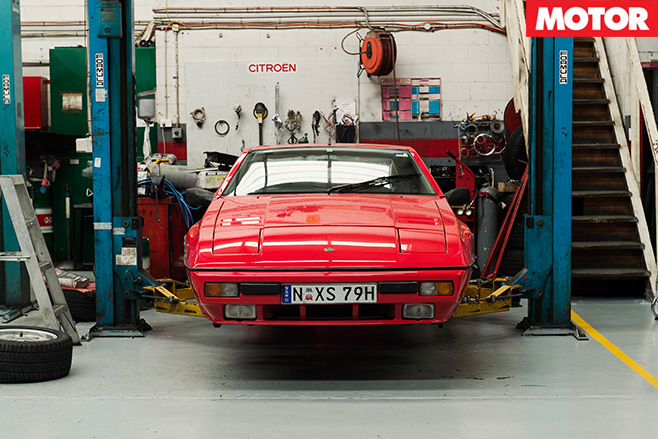
But this quest goes well beyond the abstract. A large and handy fellow, Alistair is a more comfortable than most – okay, me – with the oily end of proceedings and quite happy to exercise his learning. Which means that stripping and reassembling whole drivetrains holds no terror for the man – and just to give you some idea of the accomplishment involved, imagine attempting that on your own car in pitch darkness.
There are limitations, of course, and Alistair is not so stubborn as to ignore them. He has, for instance, always needed sighted assistance when working on electrics or any other components or processes that involve colour or coding.
But that collaboration is more than repaid by the singular skills that he offers in return. His extraordinary diagnostic talents can swiftly help others to identify problems and, accordingly, minimise the expense of exploration. Equally beneficial is the early detection of fault that these empowered senses can offer, affording reductions both to later expense and, potentially, danger.
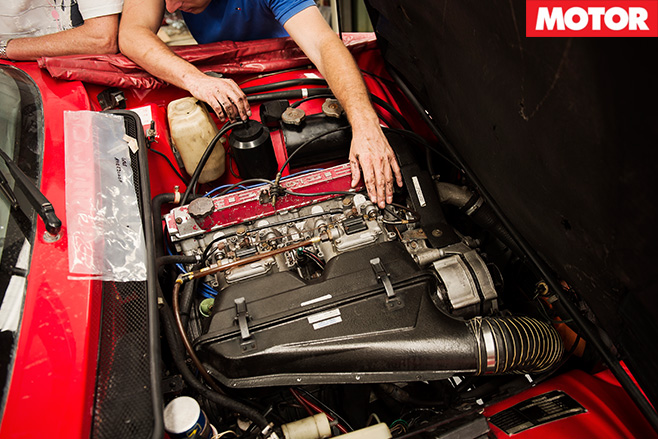
But who better than Alistair to educate youngsters in the principles of motoring and the functions of basic controls? Who better to teach and test the art of balance in hill-starts? It’s typical of the man that this interplay with others, though born of necessity, should be regarded by him as one of life’s greatest gifts. “Through my love of cars and boats I’ve met so many lovely people who’ve been enthusiastic to support a blind person’s experience of such things,” he recounts, and clearly feels the need to reward that kindness.
And he does so in ways that are more than merely symbolic. For instance, both his encyclopaedic knowledge and diagnostic skills have been valued by friends for years when searching for older and vintage cars. And the selection of any new vehicle can only be aided by augmenting the traditional areas of sight-dominated assessment with Alistair’s additional perceptions. God help the salesman that might choose to differ on detail…
Just how profound these perceptions may be was illustrated when, from the passenger seat, the man responded to my request for input on the car in which I was driving him.
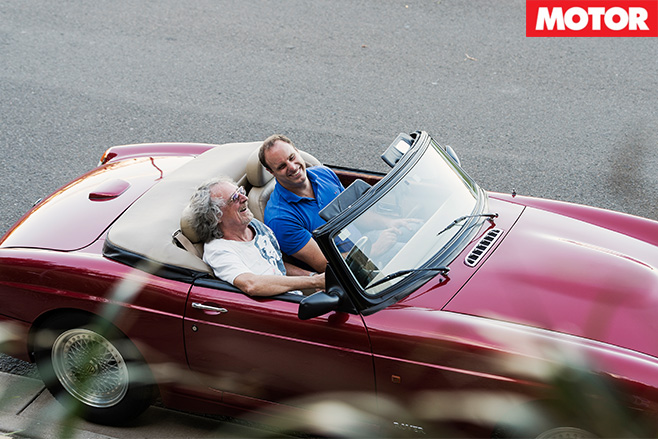
But what else could be expected from a man excluded from the two key factors of nearly all conventional automotive judgement: seeing cars and tabulating their performance?
Surprise would be expected, of course. But nothing prepared me for the realisation that his judgement, which I’d presumed would be based on parameters totally foreign to most, was instead of factors intimately familiar to all of us, drivers or passengers, every time we sit in a car: comfort, quality, feel, sound, ease of reach and adjustment – elements infinitely more relevant than the swoop of a bootlid or times to the tenth.
So the greatest surprise of all was this blind man’s gift of vision.
We talked for some time on that drive and have talked often since, a regular subject being the experience of new cars that this magazine allows. “It would be a great joy for me to go on a road test with some of the journalists from Motor,” he has frequently said. And, unblinkered, I can now see sense in that.
I came up with my own marketing slogan for Land Rover recently, ‘reliability is overrated, image is everything’.
We Defender owners are a masochistic lot; whether our vehicles are good runners or lemons, we still have to put up with a barrage of reliability jibes from Japanese vehicle owners.
It’s easier to say what a Defender isn’t, rather than what it is. It’s not quiet, it’s not pretty, it’s not fast, and in some incarnations it’s not reliable.
But when it works it’s unstoppable. And it’s cool.
When I first visited Africa, in 1995, the majority of open-top safari vehicles and overland tourers were Defenders.
Land Rover was peaking. The new Defender had been fitted with the reliable – yes, reliable – 200 Tdi engine which was followed by the even better 300 Tdi.
I was driving the Defender’s precursor, an old 1984 Series III at the time. I dreamed of owning a 300 Tdi Defender and eventually I bought a 1997 model.

And therein lies one of the problems which hastened the demise of the Defender – if they work, drivers don’t get rid of them.
With any other type of vehicle once it starts showing its age you eventually sell your old one and buy a newer, flasher, better version.
With a Defender, however, there’s no rust in that aluminium bodywork. There’s little desire to update to a more modern vehicle, because the new model looked the same as the previous.
The other disincentive to buying a new Defender was that it was likely the next model would be worse, not better, than the previous.
Changes in ownership of Land Rover brought different engines and the need to comply with European pollution and safety regulations in the UK meant Land Rover tried to turn the Defender into a PC SUV in the same old body.

Slowly, surely, sadly, Land Rover lost the safari market.
The latest Defender, the Puma, gave so much grief that safari lodges petitioned Land Rover to do something. Out went the ABS, automatic traction control and the problematic new 2.4 litre engine, and back went manual diff lock and a more reliable 2.2 litre engine.
It’s now, by all accounts, a good vehicle, but it was too little, too late to save the African market because the Defender is riding off into the African and Australian sunset.
Those of us who are slavishly devoted to the Defender will mourn its demise. Our old vehicles will keep chugging along, doing what they were made to, and that iconic image of the ultimate safari vehicle will never die.
Tony Park (pictured above) is an unashamed Land Rover addict and the author of 13 thriller novels set in Africa. His latest, An Empty Coast, is set in Namibia where, because of the salt-laden winds that assault that country from the Atlantic Ocean, aluminium-bodied Land Rover Defenders are still very much the vehicle of choice.
This is new for me, in more ways than one. Iu2019m not only the FNG at Wheels (which Iu2019m assured stands for Fantastic New Guy), but barely a week had elapsed at my new desk before I was on my way to collect my brand new long-termer from the new car delivery garage at Audi Centre Melbourne, which was only recently renewed.Like the barely dry ink on my business cards, everything on my box-fresh Audi TT Sport, from its unblemished leather-and-microfibre upholstery to its glossy solid white paint, is fresh, sparkling and pristine. How long will it take for the lustre to fade? I’ll have six months to find out.
On day one, though, it was time for induction. Salesman James put me through the standard customer-delivery process to give me a taste of what new Audi buyers experience before getting the keys. I’m glad that he did. Though I’m no stranger to the TT, getting an in-depth one-on-one tutorial on the car was invaluable.
With just one screen in the TT’s slick cabin, every infotainment function and settings menu must be accessed from what is otherwise the car’s instrument panel. It’s the ultimate digi-dash. Audi named it Virtual Cockpit, but I call the TT’s 12.3-inch TFT screen a potential minefield for tech novices. Even as a seasoned car tester, I learned about sub-menus I never knew existed and features that would have taken weeks to figure out on my own.
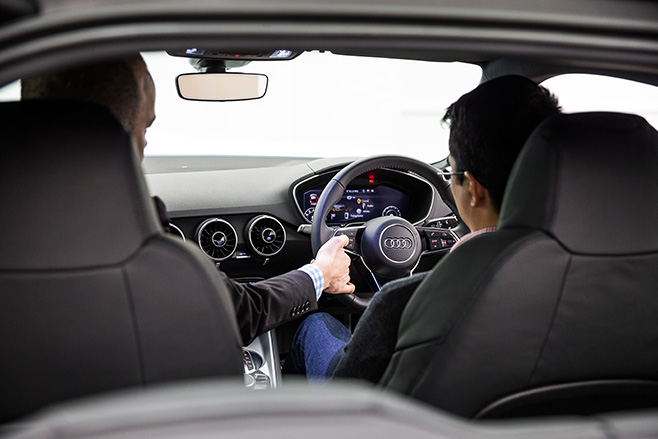
But does having just one screen in a car make sense when it needs to display critical information to the driver and be the primary interface for phone, audio and sat-nav? Sure, so long as you don’t want to reset your home address while driving and you’re comfortable with the idea that your passenger might, at any moment, start fooling around with what’s displayed on your screen. I admire Audi’s commitment to making the TT as driver-centric as possible, but lord help the poor passenger who dares touch that MMI dial while I’m driving.
It looks damn cool, though. The Virtual Cockpit display wouldn’t look out of place in a concept car, which is exactly where it came from (the Audi Allroad Shooting Brake Concept from the 2014 Detroit auto show).
Is it a menu-laden nightmare? Not really once you get used to the way the interface works. If you can get the hang of how an iPhone works, mastering the TT’s infotainment system should come naturally.
“Does anyone skip this?” I ask James. “Do any customers just forgo the tutorial and jump in the car and drive?”
“Absolutely not,” he says firmly.
I’m normally the kind of guy who avoids reading the owner’s manual when I buy a new TV, but I paid close attention as James showed me how to call my mum using the voice controls before educating me on how to adjust the dwell time on the exterior lights after the car is locked. As intuitive as the interface is, I’m happier learning its finer points in the comfort of a showroom garage instead of while I’m barrelling down a highway.
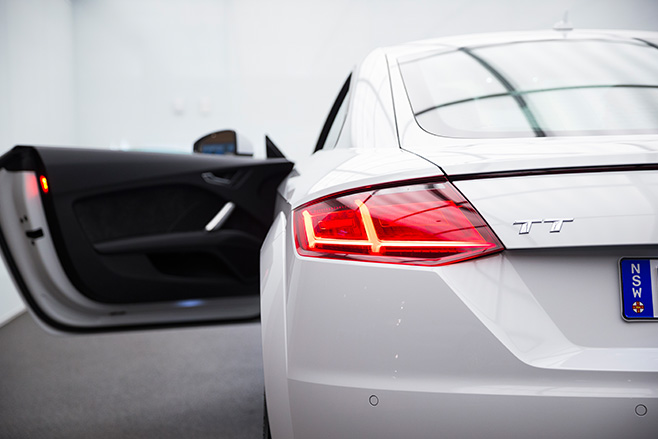
After four weeks behind the wheel there’s not a whole lot to complain about. The Sport’s 169kW/320Nm 2.0-litre turbo-petrol four may not have the extra muscle of the TT S variant, but it’s a willing performer at almost any point on the tacho – especially in its torque-laden mid-range.
I wish I had a manual transmission, but it’s simply not available in the TT Sport quattro. That’s a shame because I’m struggling to warm to the sometimes-excellent, sometimes-frustrating dual-clutch six-speed auto. A crack in the facade already? Let’s give it some time.
Update #2
I don’t mean to brag, but I’m rather musical. I can play the trumpet, you see. At one point I was even performing brassy tunes on my gleaming horn at least once a week.
Impressive, yes? Sure is, if you ignore the fact that I am and will continue to be quite shite at playing the trumpet. Like many kids, I learned to play as a teenager, discovered I was terrible and then ditched it the instant I could drop music as a school subject.
But even though I suck at it, I can still legitimately say I can play the trumpet. Just like Audi can claim the TT is a four-seater.
It has four seats, therefore it can fit four people. Right?
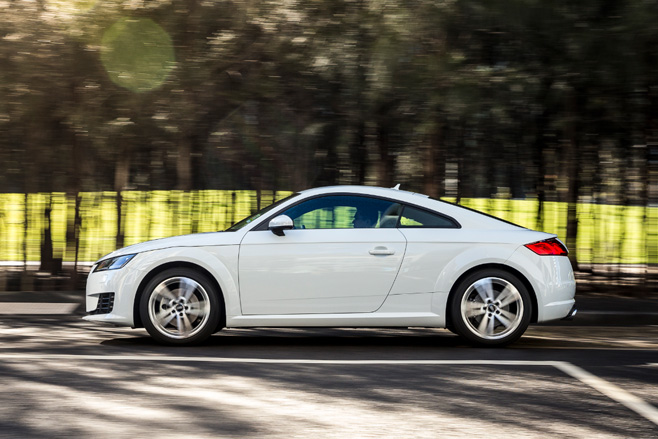
At 5’8” I’m not a tall guy, but even being of below-average height isn’t enough to allow any degree of comfort in the back of an Audi TT. The rear backrests are bolt-upright and legroom is almost non-existent unless the front seats are pushed all the way forward. Acceptable if you’re a double-amputee, not so great if you have a regular number of limbs.
Rear headroom? Plenty, if you remove the rear hatch glass first.
Sitting right under the glass also means your backseaters will get red necks on a sunny day – better slot some tubes of SPF30+ into the rear cabin storage cubbies.
I tried to sit back there, I really did. In the end, sitting side-saddle was the only way to keep deep-vein thrombosis at bay, so the other rear seat must be kept vacant. A few weeks ago I made a 6’1” colleague sit back there for a trip across town; he’s still not talking to me.
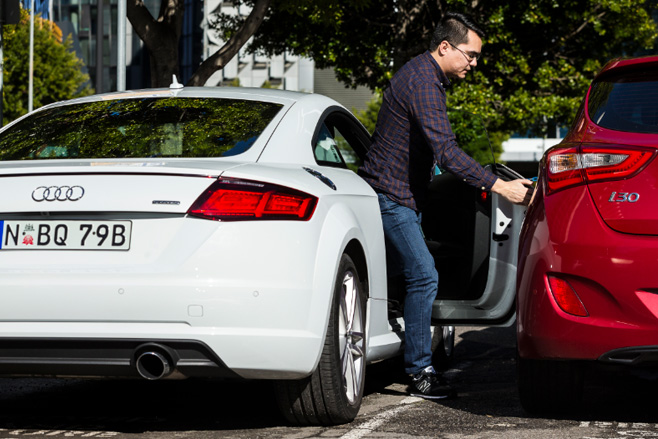
I pity those who decide to travel four-up in a TT unless they’re little kids.
And Audi knows the TT’s back seat has tremendous shortcomings. Why else would the company slap a sticker on the inside of the hatch, warning you not to slam it into the craniums of those unfortunate enough to be sitting in the back? That’s a tacit admission that the TT’s back seat could do with a smidge more room.
But sports cars are selfish by design. They’re built for the driver, nobody else. Audi didn’t put a regular infotainment screen in the TT for that very reason. All of those functions are controlled through the instrument panel. Can the passengers see what’s on the screen? Not really, but that doesn’t matter because this car is not built for them.
So here’s a better idea; turf those back seats, expand the TT’s (already useful) boot and forget about accommodating those +2 passengers in miserable discomfort.
Farewell
Are you one of the many misguided fools who dismiss the Audi TT as a mere hairdresser’s car? Repent, for the four-ringed fastback is, in actual fact, pretty handy at the kind of performancy things you wouldn’t associate with a salon sportscar.
Keep in mind that my TT Sport quattro long-termer is just one rung up from the very bottom of the TT hierarchy. It’s not the hotter 210kW/380Nm TTS quattro, and it’s a long way from the monstrous 294kW/480Nm Audi TT RS that tops the range. Nevertheless, the TT Sport’s on-road performance has hinted that it would shine fairly brightly in a more demanding environment.
On mountain roads there were suggestions of a playful chassis lurking behind the electro-nannies, and its 169kW 2.0-litre turbo and six-speed dual-clutch combo deliver terrific thrust. But the only safe way to truly explore its limits is at a circuit, and Wakefield Park would be the venue.
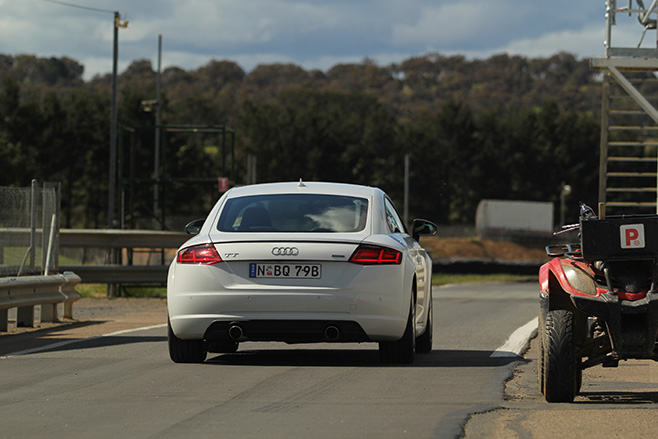
On the track, stability control gets in the way of fast laps. However, engaging the less-intrusive ESC Sport mode allows more slip at the rear, which assists turn-in by taking load off the front tyres. Switching the aids off entirely unlocks lift-off oversteer shenanigans, though to the detriment of lap times. As we know, sideways is slow.
In any mode, the TT feels incredibly light on its feet. Credit that to its fast-ratio steering rack and its aluminium-intensive construction; at 1335kg empty, the TT Sport quattro is svelte for an AWD luxury car. End result: an entirely respectable 1min 11.7sec lap time with ESC Sport.
Ultimately, though, as chuckable and rapid as the TT Sport is, it’s reluctant to engage in the kind of lairy behaviour that makes a sports car truly joyful. You need to work hard to get its tail out, and there’s no cheeky drift mode to help you keep it wagging. It’s fast, but maybe too unshakeable for its own good.
That said, if you think the base-model TT lacks performance cred, you’d be absolutely wrong. It’s a sweetly balanced machine, with just the right amount of power to match its grip. Put stickier tyres on and it would be faster, but less slidey and less fun as a result.
The only part of the TT Sport that didn’t enjoy the trip to Wakefield Park was the brakes, which couldn’t take the heat. The car’s stability control and brake-based torque-vectoring system appear to punish the rear stoppers most of all. New pads may be on the menu.
Upstarts, comebacks and fresh frontiers are the performance themes of 2016.
Unknown quantities such as Alfa Romeo Giulia, Ford GT and even Hyundai i30 N will challenge established players. Elderly icons will be replaced – Bugatti Chiron and Aston DB11 succeed Veyron and DB9 – while the downsizing trend will snare more models: Porsche wants us to love four-cylinder Boxster/Cayman, AMG a 4.0-litre E63 and Ford a four- rather than five-cylinder Focus RS. Quicker models are also arriving fast, with that hot-hatch delivering 4.7sec 0-100km/h for $51K, BMW M2 clocking 4.3sec for sub-$100K, while Audi TT RS could do 3.5sec for $150K.
01 | Audi S4
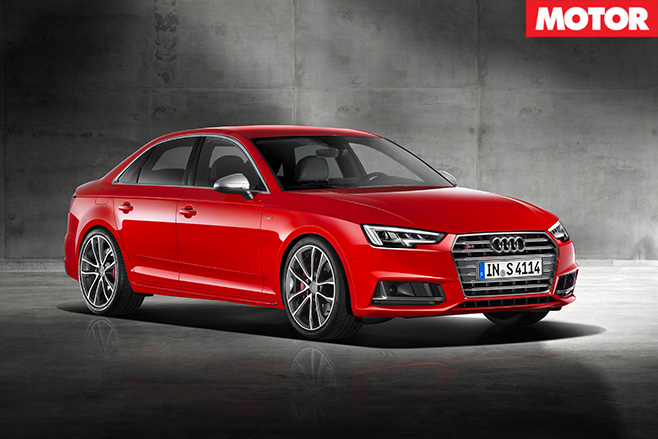
Up to 85 per cent of drive can go to the back wheels and an optional centre diff then portions between them. Late-2016 arrival and $100K pricing leaves room for RS4 the following year – it’ll trade atmo eight for boosted six, too, so farewell revs and hello M3-rivalling outputs.
02 | Audi TT RS
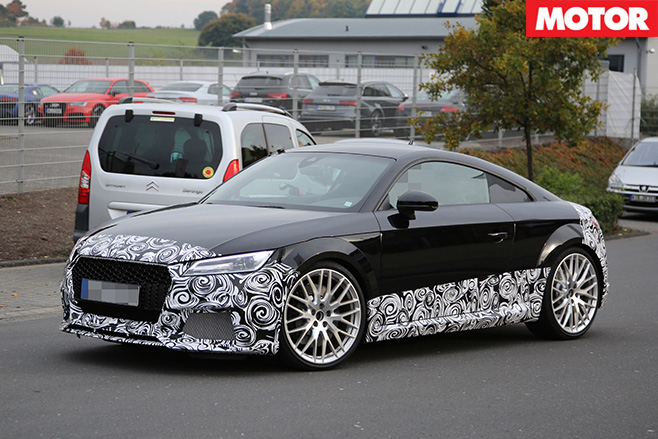
Mules filmed belting around the Nürburgring confirm it shares the hyper hatch’s 2.5-litre turbocharged five-cylinder – deep, burly note the giveaway – though boosted outputs of around 300kW/500Nm will differentiate $80K hatch and $150K coupe.
Combine the extra grunt with less weight than the old model (it weighed 1450kg, already 70kg less than current RS3) and a seven-speed dual-clutch transmission and you have R8-baiting acceleration for less than half the price. Set for March’s Geneva Motor Show.
03 | Porsche 911 R
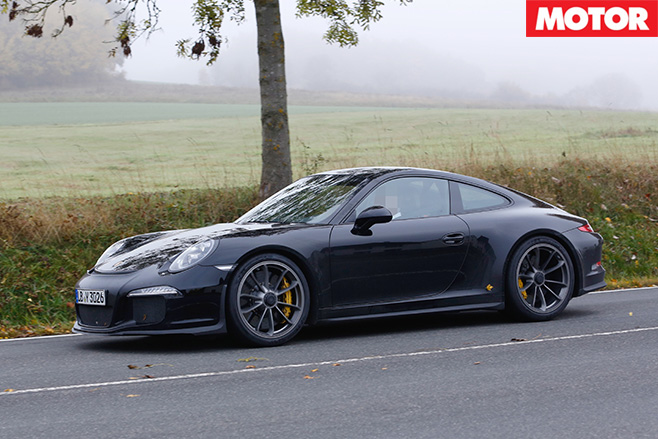
The wings disappear compared with its dual-clutch-only hardcore twin, although a duck-tail spoiler may be optional, while narrower rear tyres lower grip levels to make the handling more, let’s just say, accessible.
Although it reduces the level of standard kit, limited-edition status (600 units) gives Stuttgart a free ticket to charge more, so don’t expect change from $400K. Full details at March’s Geneva Motor Show.
04 | BMW M2
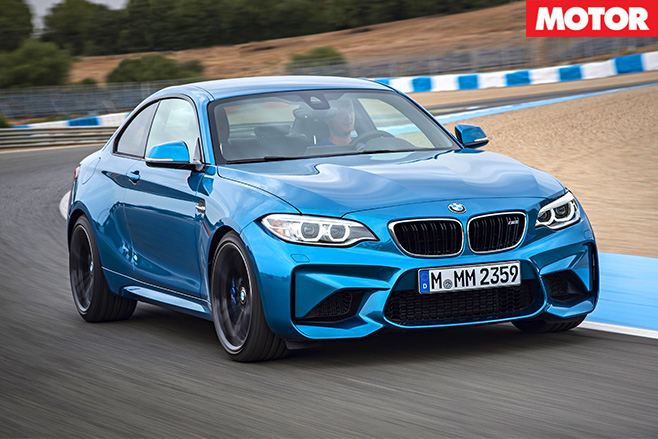
As with that $150K sibling, there’s a rear diff with 100 per cent lock-up for sliding fun and a looser stability control mode. Filling the swollen guards are 19-inch Michelin Pilot Super Sports mounted on wider tracks than M235i. Should be a hoot and almost a bargain at $89,900 (manual) or $99,900 (DCT with extras).
05 | Ford Focus RS
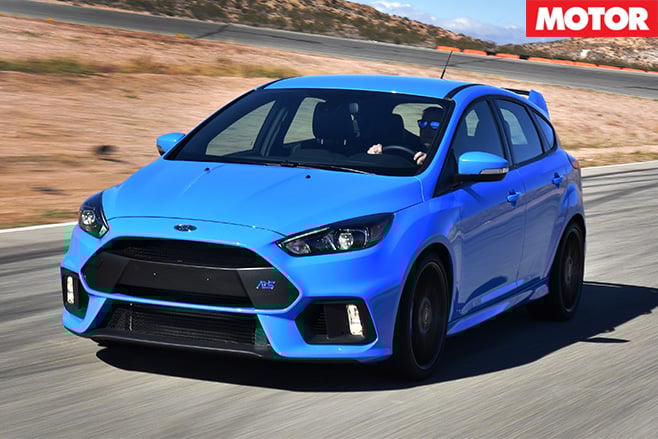
It belts from zero to 100km/h in 4.7 seconds, even using that old-fashioned thing called a manual transmission, while Ford promises the exhaust crackles more than pork emerging from an oven at Christmas.
If it’s all sounding like a dreamy gift from Santa so far, note the all-wheel-drive hyper-hatch also scores a mode that “allows controlled oversteer drifts” (see feature pXX). Torque vectoring can sling 70 per cent of drive rearward and then 90 per cent to a single wheel. It seems Ford has read every driving enthusiast’s wish list and we can’t wait to throw it up against rivals next year.
While the ingredients used to create this fast Ford mimic the AMG A45 and Audi RS3 premium crew, the $50,990 Focus undercuts both by almost $30K and is priced to compete with Renault Megane RS 275 and Volkswagen Golf R. Posh engineering with peasant interior may be the neat summary.
06 | Porsche 718 Boxster/Cayman
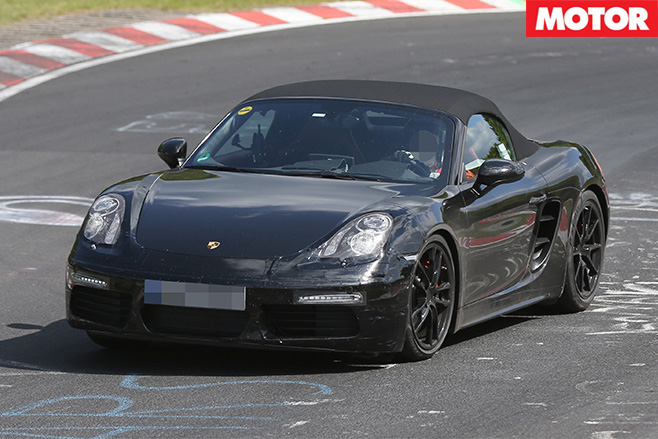
There’s no need to play the heritage card, because the 225kW/360Nm 2.0-litre and 254kW/400Nm 2.5-litre boosted fours are modern units up on the 2.7- and 3.4-litre atmo sixes they replace. Boxster will come first at Geneva in March, with Cayman to follow at Beijing in May.
07 | Ford Falcon XR6/XR8 Turbo Sprint
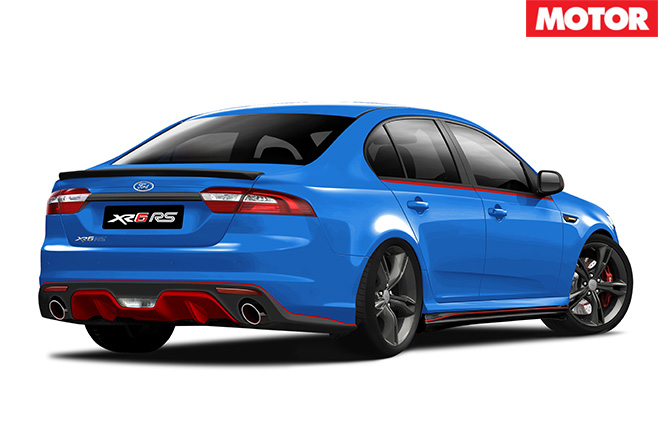
Ford is bothering the bin for the better when it means a rise on the 270kW/533Nm outputs of the $43,490 standard model. Limited edition Sprint badging is all but confirmed to revive a 1990s special, while the V8’s chassis spec (275mm rears, bigger brakes, Sachs dampers, 45 per cent-stiffer springs) will migrate to the turbo for the first time. Reheating never tasted so good.
08 | Jaguar F-Type SVR
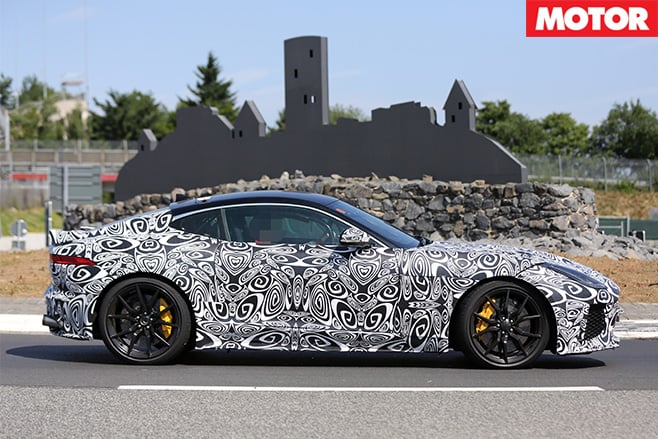
The zero to 100km/h sprint will tumble from 4.1 seconds well into the threes, especially after noting the expected weight-loss measures previewed by the Project 7 concept. Seats, sound deadening and brakes are all set for shredding. Spy photos fail to hide the aggressive aero, ceramic discs and ducktail spoiler that cap off this $300K-plus fastest Jaguar ever.
09 | Alfa Romeo Giulia QV
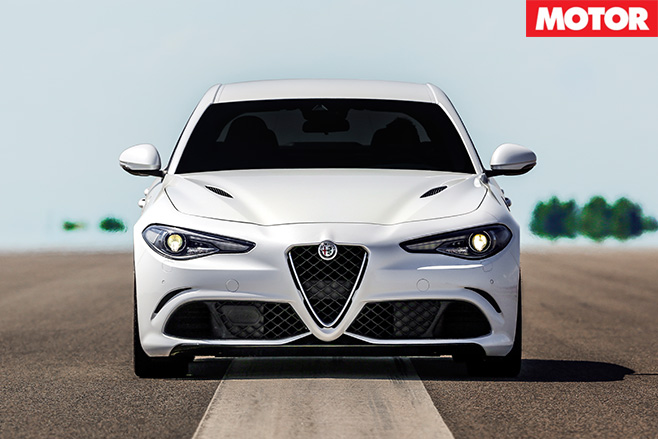
Apparently the set-up was too stiff … as in for a racetrack. With 50:50 weight distribution, active aerodynamics and monster brakes and tyres, it’s still not hard to be excited by this 3.9sec 0-100km/h beast, which is due for a mid-2016 overseas launch.
10 | Hyundai i30 N
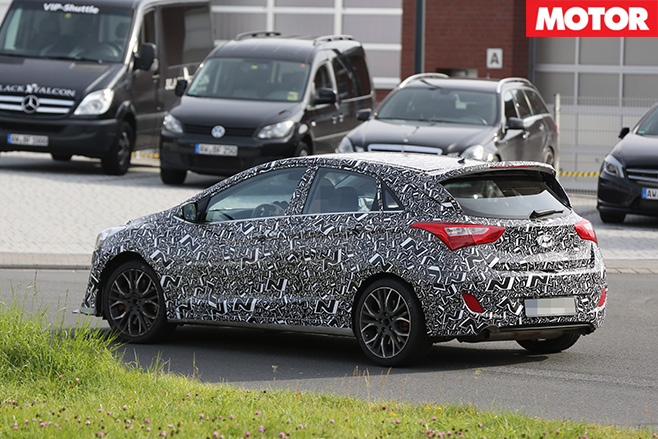
Hyundai knows it can’t stuff up its first N model, so it has casually strutted in and built its own complex at the Nurburgring. It also doesn’t want to merely challenge the Golf GTI but also the Golf R. These guys may seem serious, but we hope the new-gen i30 due late next year will be fun in flagship N spec.
11 | Mercedes-AMG E63
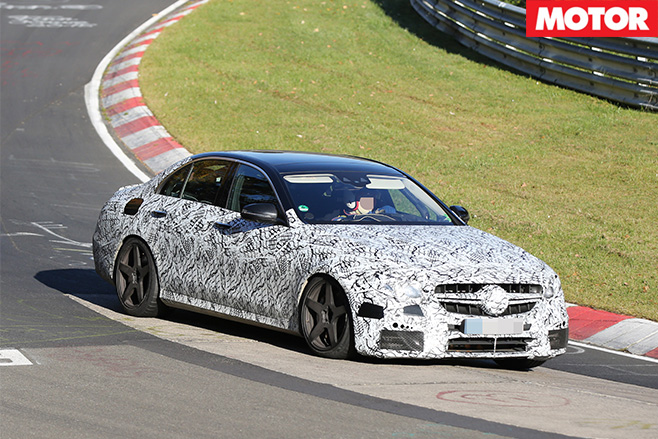
Based on the 375kW/700Nm C63 unit, the E63 will leap towards the 430kW/800Nm outputs of the existing 5.5-litre model. All-wheel drive with right-hand drive will likely rule out burning just the rears, but AMG promises its AWD system will slide. We can hope.
12 | Ford GT
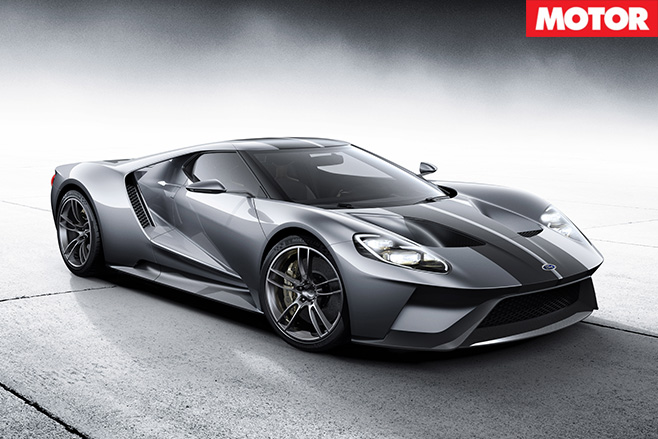
Yet the engineering seems intelligent, too, with aluminium subframes front and rear, and carbonfibre body panels and passenger cell reducing weight and producing one of the best power-to-weight ratios of any car.
Huge scoops and diffusers are the fixed aero to match active components including adjustable spoiler, while huge carbon ceramics sit behind the 20s.
13 | Bugatti Chiron
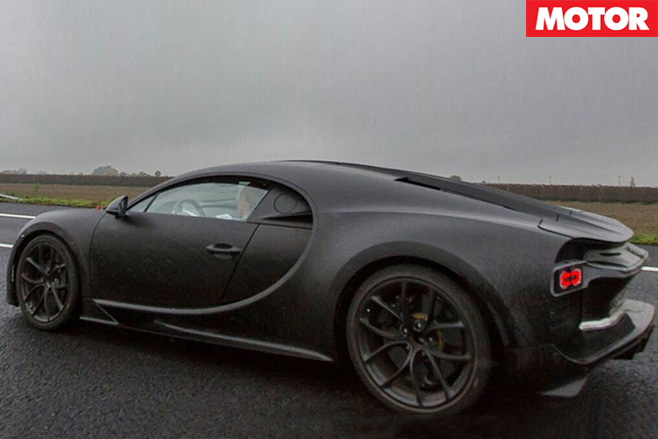
The Chiron brief was to, ‘make the best significantly better’ while hopefully making Bugatti a buck this time. The expected 1.3 million Euro pricetag is up by around 900,000 Euro.
14 | Aston Martin DB11
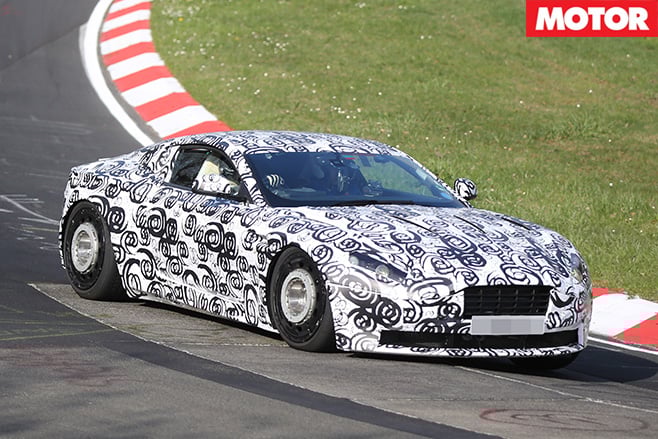
Tauter, lighter suspension will also aim to curb the 1785kg mass of the current coupe, while an AMG-sourced 4.0-litre twin-turbo V8 will help shed both kilos and price, which is expected to lower slightly from the $350K DB9.
Aston Martin will then either borrow Affalterbach’s twin-turbo 6.0-litre V12 or retain its own 5.9-litre V12 and add turbocharging. Either way, forced induction is a given to increase performance and lower emissions.
An eight-speed automatic will help, but even with that ratio count a 424kW/630Nm Vanquish chugs 12.8L/100km – the DB11 will need to ease up on the juice. Spied interior shows Mercedes-Benz will supply the infotainment system and safety technology for the DB11, areas where Aston falls flat on its handsome face.
Conversely, the brand’s styling strength may make this the sexiest coupe of next year. Our eyes will judge at the Geneva motor show in March, with drives of the lighter, all-turbo DB11 to follow.
So, what is it?
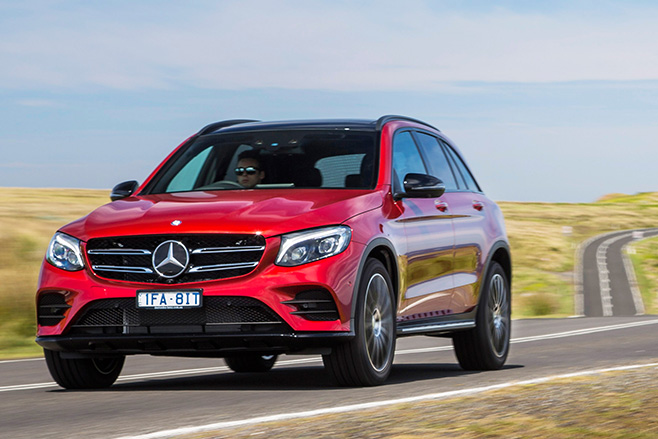
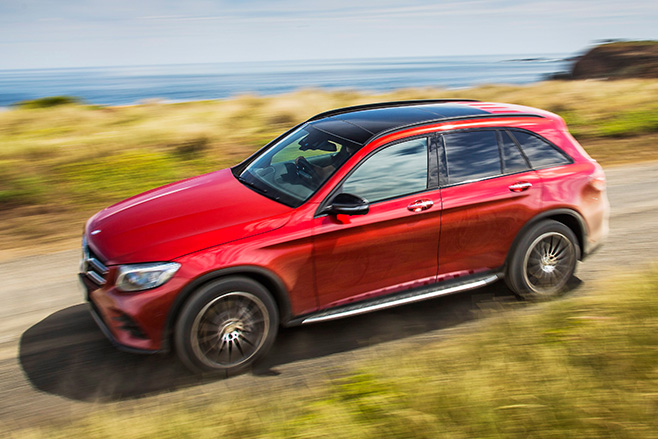
It’s the Mercedes-Benz GLC, a crossover SUV based on the rather excellent C-Class. It looks a lot like the estate version of the C-Class, but it’s actually its own beast. Australia hasn’t seen a Q5/X3-sized Merc SUV before – the last version, the GLK, wasn’t offered in right-hook.
Why should I care?
It’s hard to see how the GLC won’t be a success in Australia; SUV sales continue to skyrocket at the expense of almost everything else, while Mercedes-Benz has the added advantage of having the Midas touch at the moment. Take C-Class, for example. It’s selling about 900 a month, second only to the Toyota Camry in the medium sector, and far and away the premium sector leader. Its A-Class range, too, is killing it across three categories, while the rest of the range kicks long-range goals of its own.
What’s new about it?
Well… everything. For Australia, at least. Merc has actually had skin in the game with something called the GLK, but seeing as it was never made in left hand drive, it never made it to Australia, the UK, Japan or any other markets that drive on the correct side of the road.
Needless to say, it wasn’t about to make the same mistake twice with the second-generation version, now known under Merc’s new nomenclature as the GLC. It’s based on the excellent and popular C-Class platform, and looks a little bit like a wagon that’s hit the gym.
That’s all fine, what’s it like to drive fast?
‘Fast’ will need to wait for the 450 Sport and the GLC 63, both of which will lob in the next 18 months or so. At launch, the GLC comes with two flavours of diesel and a petrol; Both versions of the 2.1-litre turbo-diesel four are quiet and refined, though the 125kW/400Nm 220d version needs to work a little harder to move the 1845kg GLC than the 150kW/500Nm 205d. The 250 petrol is quieter again, and while not up to the diesels for torque at 350Nm, its 155kW has to push around 110kg less.
The petrol is brisk, and the bigger 250 diesel is torquey, but ‘fast’? Not quite yet.
And driving home from the city?
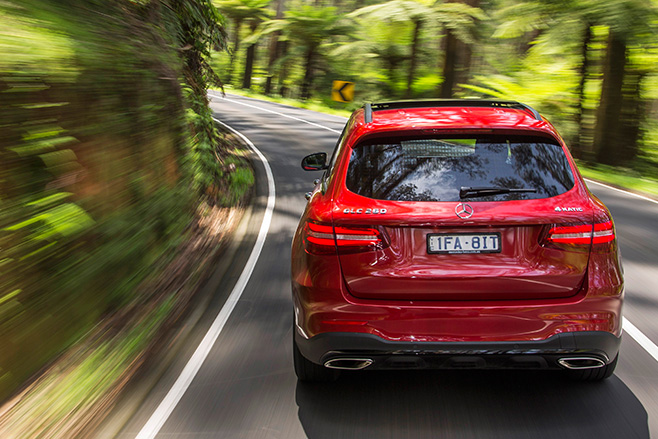
Excellent, as you’d expect. All three use Merc’s new nine-speed transmission, which won’t be as useful in speed-limited Australia. The GLC is also fitted with Merc’s 4Matic all-wheel-drive system that divides drive with a 45/55 per cent split between the front and rear wheels.
Our testing circuit was too short to get an idea of how close the fuel figures were (5.5 litres per 100 kilometres for the diesels and 7.1L/100km for the petrol) but all three variants showed numbers that were close to the claimed figures.
The five-mode drive select toggle is best left in comfort mode, though the first of the two sport modes is also acceptable. The dampers firm up a bit much in sport plus, while the self-shifter hangs onto its gears longer than is strictly necessary. The GLC’s electric steering also artificially firms up in sport mode, but not overly so.
Anything bad about it?
There’s a fair bit of wind noise from around the side mirrors as speeds exceed 110km/h on German autobahns, but cabin ambience is otherwise good. Visibility out the front is excellent, though the high bonnet and bluff nose makes judging front distances a little tough.
How much would I have to pay? And is it worth it?
The entry point to the line-up, the GLC220d, will cost $64,500 plus on-road costs, followed by the 250 petrol at $67,900 and rounded off by the 250d at $69,990. It sits in just above Audi’s entry-level Q5 diesel, which sells for $62,600, and just below BMW’s 2.0 XDrive20d at $64,700. The five-door Range Rover Evoque Pure AWD diesel, meanwhile, is $53,395.
The fight between these three will be epic, but the Merc – at first blush, at least – has the edge in styling.
Would you take the GLC or the BMW X3?
Personally, the GLC’s beefier presence floats my boat than the quite conservative X3, and the donor C-Class chassis is better than the 3-Series underpinning the X3. Dollar-wise, there’s very little in it.
Click here to find out more about the Mercedes-Benz GLC.
Cut-price Accent ushers in smaller, less powerful engine, but willing CVT makes up points for the car that replaces the i20 at the bottom of the Hyundai range.
WHAT IS IT? The Accent 1.4 is effectively the replacement for the i20, which has come to the end of its life and won’t be renewed in Australia. Hyundai has fitted the i20’s 1.4-litre engine to the entry-level Accent Active.
WHY WE’RE TESTING IT We wanted to see if the cheapest Hyundai on the market was all about the price tag or whether it brought something fresh to the hatchback table.
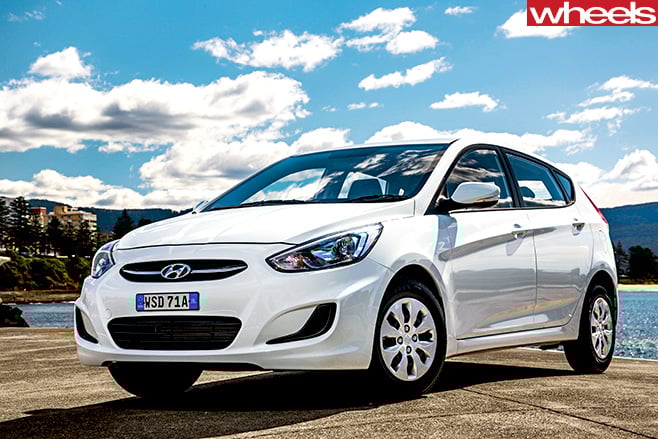
THE WHEELS VERDICT The Accent has always been about basic, low-cost motoring – and no more so than with the new 1.4-litre engine. It’s a suitably underwhelming device, but partially makes up for it with a CVT tranny that does its best to tap into what little grunt the engine offers.
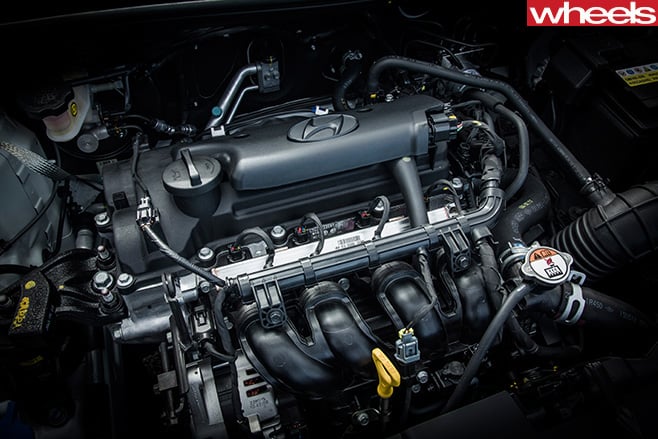
Pop the bonnet, though, and there’s more to get excited about. Or not, depending on your point of view. For the price-leading Active model, gone is the direct injection 1.6-litre and in its place a multi-point 1.4. It’s the same engine used until recently in the i20, which the Accent Active effectively replaces at the bottom of the Hyundai range.
Outputs drop from the 1.6’s hearty 103kW and 167Nm (that engine is still available in the Accent SR) to 74kW/133Nm. That’s slightly less than some of the class favourites (Mazda2, Honda Jazz and Holden Barina, for example), yet the Accent isn’t embarrassed.
So far, then, there’s not much to get excited about. Except that you will have an extra $2000 in your bank account thanks to the repositioning of the five-door hatch or four-door sedan. While the official ask is $14,990 for the manual and $16,990 for the auto (plus on-road costs), Hyundai is offering the auto at $15,990 driveaway.
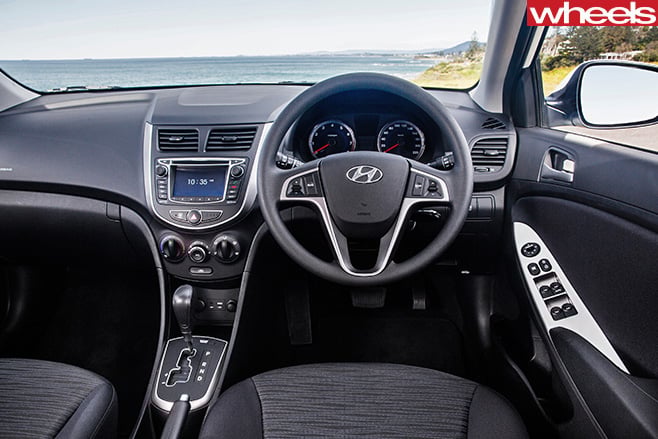
Equipment levels are basic and run to a CD player, Bluetooth phone and audio, and power windows.
If you want parking sensors or a reversing camera you’ll have to look aftermarket. And if you’re chasing alloy wheels, it’s a step up to the SR.
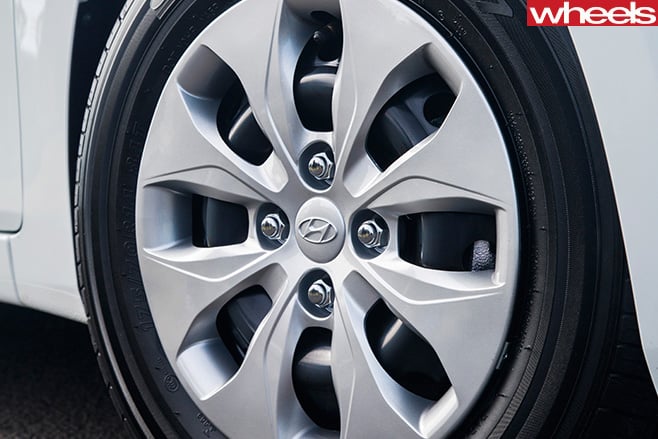
Despite the modest outputs, the CVT helps it fight harder than it otherwise would. Instead of the docile feel that can inflict small engines with autos, the Accent’s CVT feels far more willing, reacting faithfully to right-foot movements.
Flooring it usually has the engine revving in the 5000-5500rpm range and the best we saw was 5800rpm, which is still shy of when the power peak is developed. Hence you’re unlikely to ever tap into the full 74kW, a figure produced at 6000rpm.
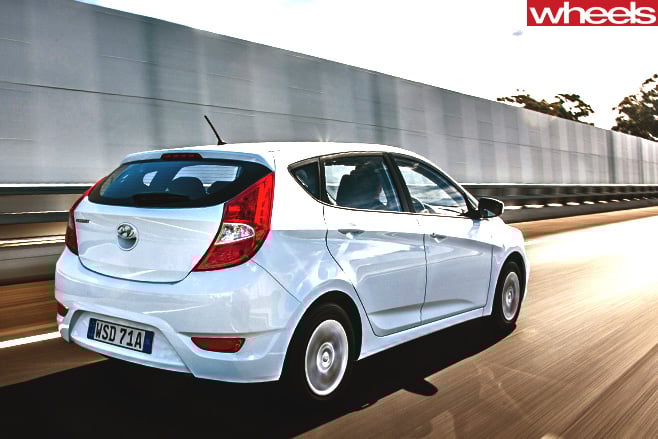
Still, there’s a refreshing – and unexpected – willingness to the way the 1.4 and CVT pair up.
Showroom shuffle creates new entry point
Life has been pretty busy at the bottom end of the Hyundai showroom. As well as the i20 hatch there was the Accent hatch, Accent sedan and i30 (as well as its Elantra sedan cousin). And while Hyundai was keen to flog a new i20 locally, a production shift from India to Turkey meant exchange rates didn’t compute. The smaller i10 from the same factory was also deemed too expensive in a market segment where $1000 can mean the difference between success and failure. So Hyundai chose a repositioned Accent to kick off its range.
SPECS Model: Accent Active 5-door CVT Engine: 1368cc 4cyl Max power: 74kW @ 6000rpm Max torque: 133Nm @ 3500rpm Transmission: CVT auto Kerb weight: 1080kg 0-100km/h: NA Price: $15,990 drive-away On sale: Now
Click here to read the full range review of the Hyundai Accent.
