PLUS
- All-wheel-drive. Subaru is famous for its symmetrical AWD system, and those who have taken a Suby off-road will generally attest to how well it works. They’re tough machines.
- Safety. There’s a lot of modern safety and driver assistance tech in the Forester including its EyeSight collision avoidance system.
- Tailgate. Electric hatches are par for the course these days, but few have a memory function. The Subaru does, and it’s remarkably useful if you park in a garage with a low roof or anywhere else where you need to stop the boot clunking into something every time it opens.
- Vision. Somewhat old school design ends up being quite practical. Tall glass gives superb visibility in all directions.
- Grunt. The Forester XT makes great power from its turbocharged boxer engine.
- Looks. The Forester isn’t the most beautiful SUV on the road. In fact its styling is looking quite old fashioned.
- Interior. There’s not a lot of design flair inside either. But if those things don’t bother you, the Forester won’t let you down.
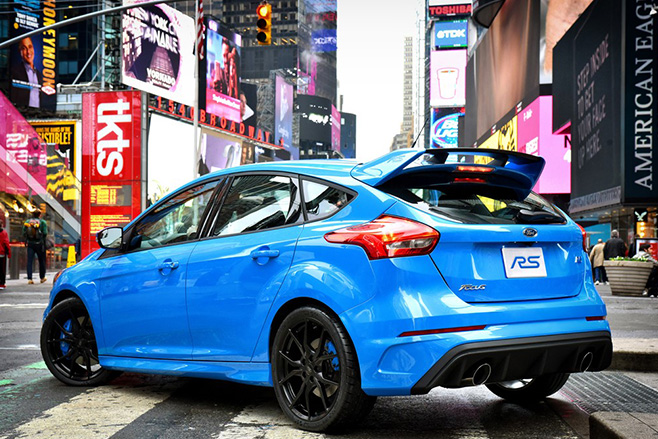
1. FORD FOCUS RS
Ford’s Focus RS should, as the wildest hot-hatch to join the ranks in 2016, be firmly on the radar for the budget-conscious man or woman in a hurry. The new RS will have all-wheel-drive, which will help it deploy the 2.3-litre four-cylinder turbo engine’s sports-car-like power when it hits local tarmac in February.
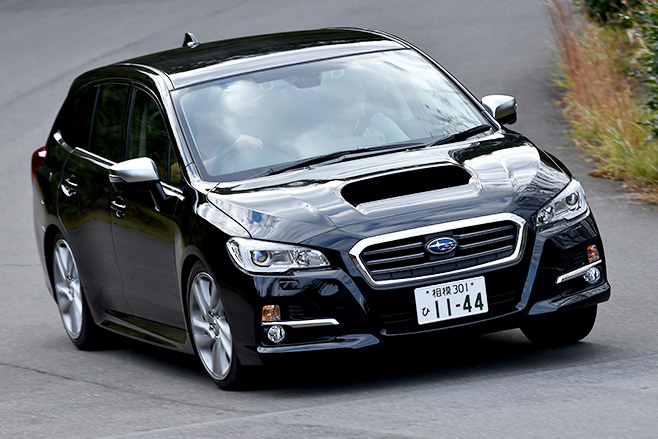
2. SUBARU LEVORG
The Subaru Levorg is bound for showrooms around the middle of 2016. Essentially an even more practical version of Subaru’s popular all-wheel-drive turbo compact sedan the WRX, , it should please anyone shopping for a swift small/medium wagon which, with discontinuation of the WRX hatchback and the Liberty wagon, should apply to plenty of buyers.
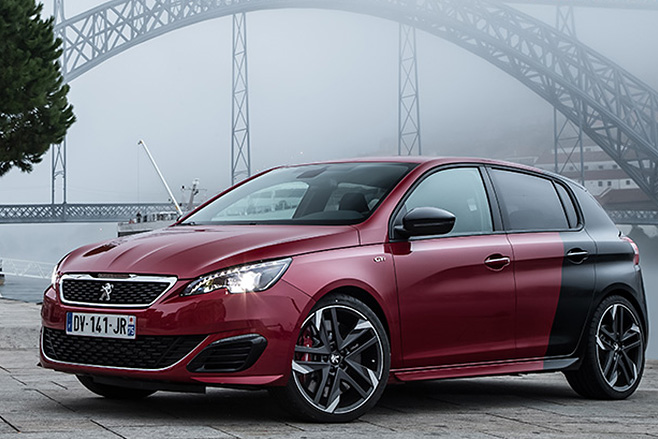
3. PEUGEOT 308 GTI
Peugeot’s 308 hatch is an excellent small car, so the arrival of the hot 308 GTi in the first quarter of 2016 is exciting. Two manual-gearbox-only versions will be available – a $45K GTi 250 version and a more powerful GTi 280 for $50K. Both are powered by turbo four-cylinders that produce more power than popular alternative the VW Golf GTI, despite the fact they’re smaller engines.
4. FIAT 124 SPIDER
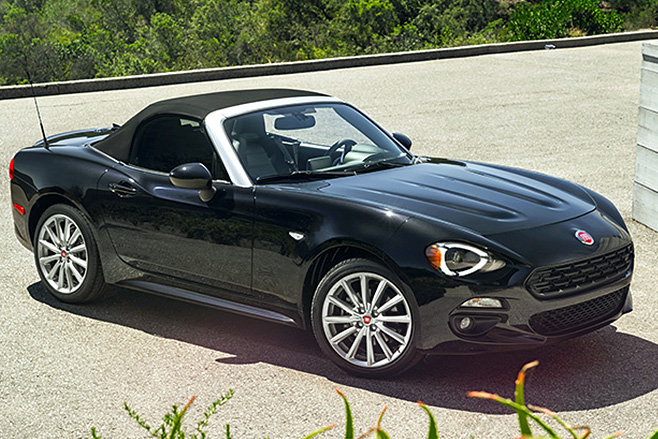
We already know how good Mazda’s ND MX-5 and in the New Year Fiat will deliver something Mazda won’t – a turbo version, in the form of its 124 Spider. This restyled MX-5-derivative could be even more fun with the extra effortless acceleration a turbo engine can offer.
5. PORSCHE BOXSTER AND CAYMAN
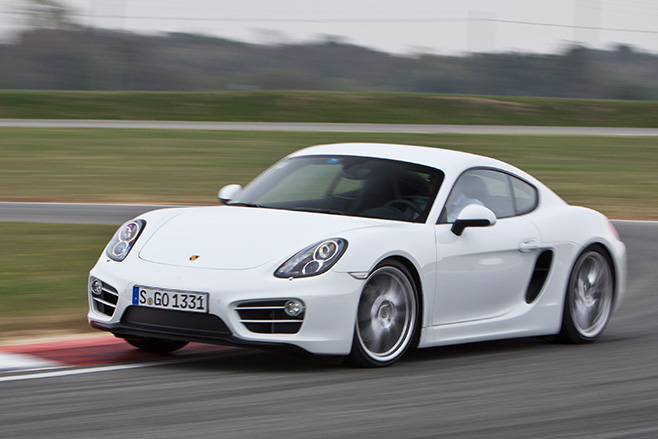
Porsche’s next-generation Boxster convertible and Cayman coupe will arrive in 2016 with smaller 2.0- and 2.5-litre flat four-cylinder engines instead of six-cylinders. Despite their smaller size, turbocharging will give these all new engines noticeably more power than those they replace, and make them more fuel efficient.
6. HONDA NSX
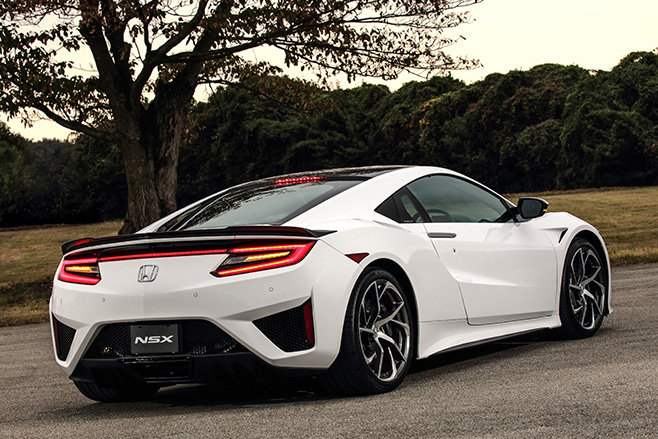
The return of Honda’s NSX is huge news for fans of ultra-high performance Japanese cars. The original version was born in 1990 as a less expensive, more user-friendly Ferrari-fighter, but since then Italian supercars have grown friendlier, which prompted Honda to reinvent the NSX as a more serious Hybrid-powered supercar, with a 373kW twin-turbo 3.5-litre V6, triple electric motors and a nine-speed dual clutch transmission.
OTHER ARRIVALS
We’ll see an even hotter version of the already wickedly fast Mercedes-AMG A45 in 2016, with the arrival of an updated A-Class range.
At the top end of the performance and price spectrum is Ferrari’s new 488 GTB supercar, which will replace the 458. Lamborghini’s ultimate Aventador LP750-4 Super Veloce is also expected.
A more powerful, less thirsty second-generation Audi R8 will drop the less powerful V8 version for a high-powered V10-only line up.
Still in German high-performance, we’ll receive the ultimate version of BMW’s M4, the GTS, and the M2, its most serious 2 Series version to date.
The twin-turbo V8 Mercedes-AMG C63 Coupe will give buyers an appealing alternative to BMW’s M4.
And turbo flat six-cylinder engines will replace larger non-turbo engines in Carrera versions of Porsche’s updated 911 sports car.
Creating virtual cars is not just about car makers playing games.
First published in the September 2014 issue of Wheels magazine, Australia’s most experienced and most trusted car magazine since 1953.
CAR makers say they can gain real benefits from launching vehicles inside digital playgrounds rather than in the real world.
Brands including Aston Martin, Mercedes-Benz, Nissan, Volkswagen and BMW have already used the entertainment giant Sony’s PlayStation3-based Gran Turismo 6 driving simulator to launch futuristic-looking concept cars that may one day become a reality.
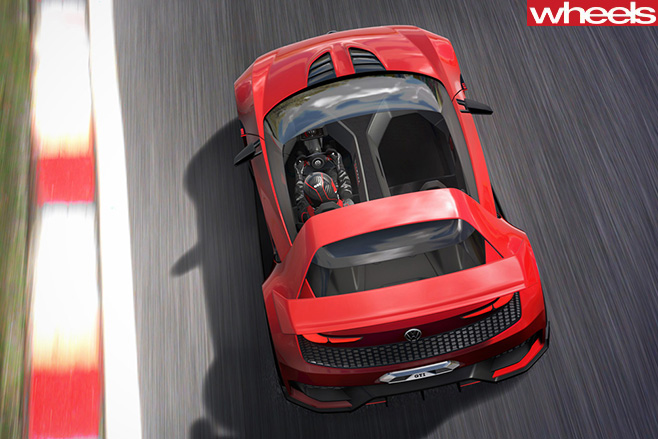
However, at least in the case of Mercedes-Benz, some of the digital world will one day spill over into the showroom.
The German luxury brand’s “Vision GT” (pictured top) was the first of a growing cavalcade of bits and bytes, rather than cold steel, rolling out of auto design studios. This sweeping, low-slung 430kW concept launched on the PS3 game platform late last year hints at the replacement for the discontinued, gullwing-doored SLS.
Mercedes-Benz Australia manager of public relations and product communications Jerry Stamoulis says some aspects of the Vision GT definitely hint at future products destined for showrooms.
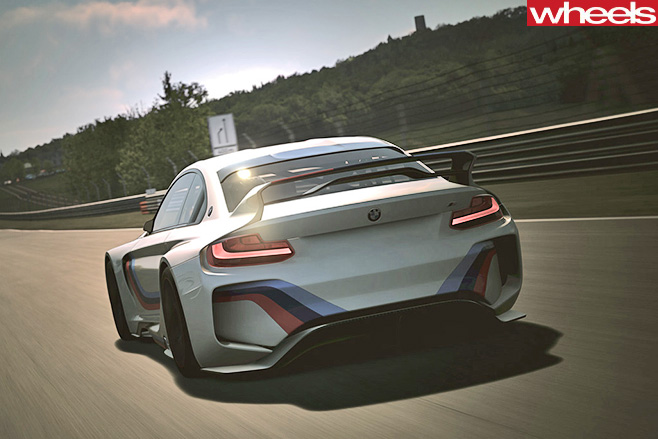
“The Vision GT is not all for show,” Mr Stamoulis says. “Historically, when Mercedes-Benz builds concept cars, they’re built to showcase a design or a technology.”
Mercedes-Benz is expected to roll out a GT-badged SLS replacement at the Paris motor show in October featuring some of the design cues drawn directly from the virtual car, effectively making the leap directly from the designer’s mind to the show floor.
Stamoulis says the make-believe world also allows the company’s car designers to have a creative outlet in which they can push boundaries without getting an immediate thumbs-down from the boardroom table.
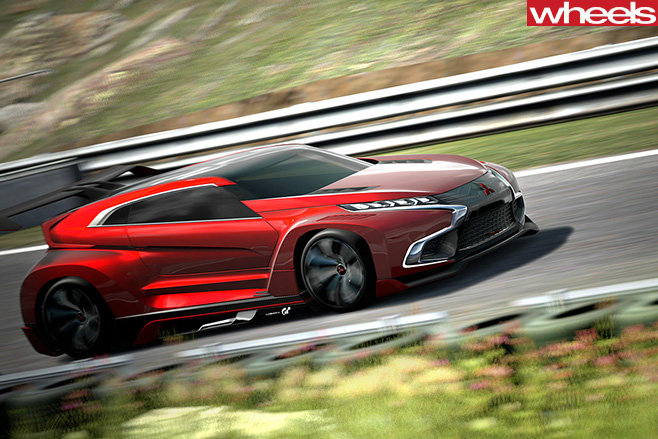
“[Mercedes-Benz head of design] Gordon Wagener has control over design, and you usually have a brief you have to follow, but when you design a virtual car you don’t have to follow any of that,” he says. “It’s also an opportunity for the designers to gauge the public’s response to a new car.”
In June, Nissan released its Concept 2020 Vision Gran Turismo in the same digital sphere as the Benz-badged coupe, but took it a step further by revealing a life-size mock-up of the vehicle at the Goodwood Festival of Speed.
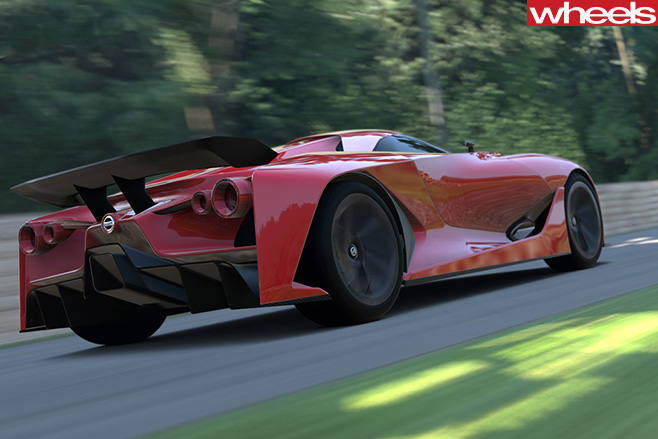
Nissan hasn’t come out and said as much, but the Batman-style two-door coupe (pictured above) is believed to hint at a forthcoming update to the GT-R supercar that is expected to gain a hybrid drivetrain, allowing it to behave like a front-engined, rear-drive sports car, but with an electric motor assisting the front wheels to provide all-paw grip.
Nissan Australia corporate communications manager Peter Fadeyev says the virtual motor show also brings lasting benefits to the Japanese car-maker.
“The digital world has tremendous reach, which makes communicating Nissan’s latest design and technology concepts very effective and fast,” Fadeyev says. “Also, the speed with which images and facts can be shared means public feedback is generated quickly, giving auto makers like Nissan the chance to measure reactions quickly.”
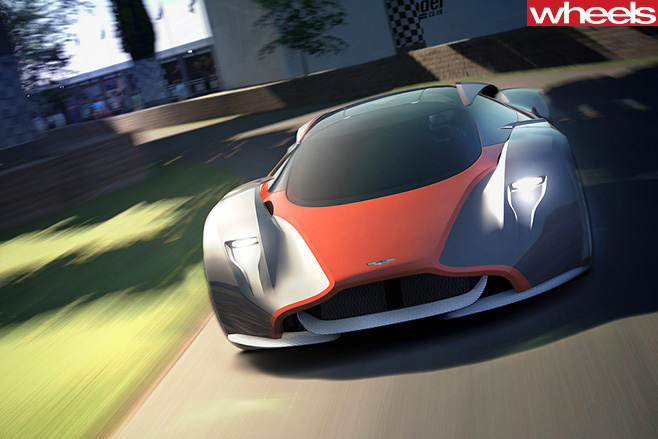
Other virtual concepts include the Aston Martin DP-100, also shown as a life-size model at Goodwood in June, and a wild-looking compact Mitsubishi sports car called the Concept XR.
Other car makers are lining up to launch similar virtual models. Worthy of note is: Lexus looks to have a production version of the LF-LC in the wings; Toyota seems to be pointing towards the modern-day Supra; Tesla is taking a turn from bread-and-butter electric cars to spin out what looks like a mid-engined supercar; and Alfa Romeo is previewing what could be a low-slung two-seat 4C-style speedster.
Seems the line between reality and unreality is getting blurry.
Holden will soon have access to a new European sports coupe set to be revealed as the Opel GT Concept early next year.
The compact two-door will complement the V8-engined coupe Holden promises will take the baton from Commodore when local production winds down in late 2017 – at this stage a toss-up between Corvette and Camaro.
The GT Concept will revive a nameplate of a petite late-1960s Opel coupe as the struggling German brand attempts, in its CEO’s own words, to reinvent itself. The concept will be a more production-ready version of the gullwing-doored Monza shown two years ago, which Opel then said previewed the styling direction of future sporty models.
It will be based on the new-generation Astra that will arrive in Holden dealerships next year, but it won’t look anything like the hatchback. It will, however, likely score a new-gen 2.0-litre turbocharged four-cylinder making beyond the 206kW and 400Nm of the outgoing Astra VXR.
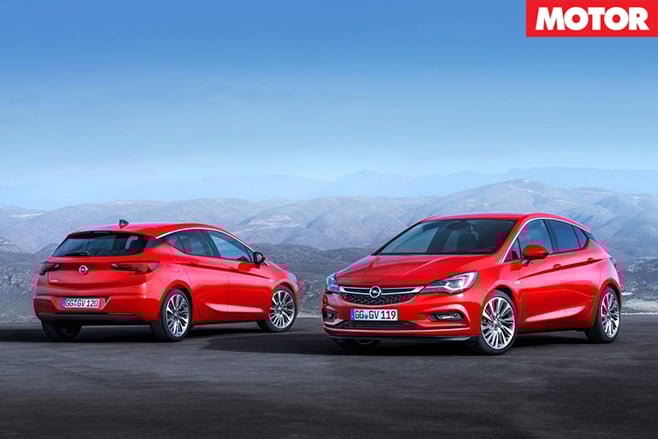
In a video-cast released before Christmas, Opel CEO Karl Neumann announced that in 2016 there will be, “a lot more exciting news on Opel.”
“Opel reinvents itself [and] I can confirm that we will present a real highlight at the Geneva motor show, a concept car that you probably would not have expected from us,” he added.
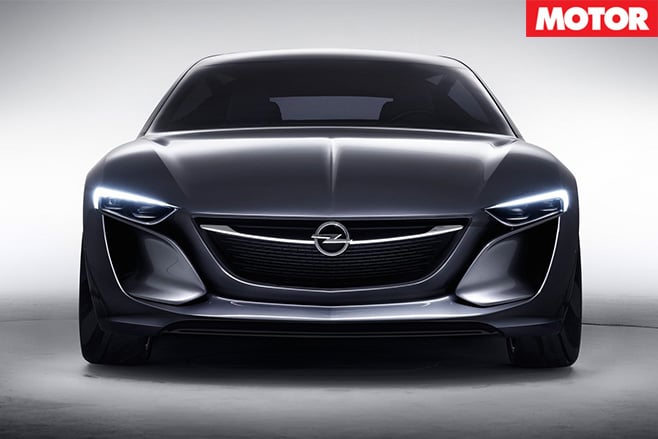
German media outlet Autobild reports that car will indeed be the Opel GT that has long been rumoured for revival.
Holden has confirmed that one-third of the 24 new models launching by 2020 will be poached from the Opel brand. It looks increasingly likely that a compact coupe will form part of that plan as Opel transitions to newer, lighter and more stylish models.
[SPONSORED] Tyres are traditionally a ‘bricks and mortar’ business; that is, if you need tyres you go to the nearest tyre shop, get sold whatever brand they have in stock, at whatever price they want to charge.
But what if there’s another tyre shop – let’s call it Harry’s Tyres – a bit further down the road that sells the brand that you prefer and at a better price? Up until now, you have had very little visibility of the inventory and prices of Harry’s Tyres.
Even Google can’t tell us what Harry has in stock, because Harry doesn’t have a website. The best technology we’ve had to date has been the Yellow Pages which means you’d have to trawled through listing after listing until you find Harry’s Tyres, call his number and hope he’s not too busy to pick up.
“There’s got to be a better way.” This is what Matt Banks thought when he founded TyreCompare.com.au
TyreCompare is a platform that allows independent tyre shops like Harry’s Tyres to easily upload their inventory so that their stock and great offers can be found online.
“The independents can often offer great deals due to their lower overheads,” Matt explains, “plus they don’t need to charge extra for shipping because they already have the tyres sitting in the shop. Fitting is also included in their pricing.”
By utilising the existing inventory of bricks and mortar tyre shops, TyreCompare can easily save you around $100 by eliminating the expense of shipping and fitting that some of the other online tyre sellers are charging.
If you are looking for your next set of tyres, give TyreCompare a spin.
Tyre shopping has always been a somewhat medieval experience that entailed an infinite loop of calling around on the phone and talking to answering machines.
This is advertiser content.
While just about everything else can easily be shopped for online these days, it seems that the local tyre shops have been slow to catch on. However, the dark days are over because there’s a new kid in town: TyreCompare.com.au.
Tyre Compare is the first and only comparison website in Australia that allows you to find inventory and prices stocked by your local tyre retailer. While there are other websites that sell tyres online, Tyre Compare is the only one that does away with the hassle and expense of having to get your tyres shipped from a warehouse. The inventory on Tyre Compare is uploaded by your local tyre shop, meaning it’s in stock and ready to be fitted.
“Think of TyreCompare like a crowdsourcing platform for tyres, a bit like the AirBnB of tyres,” Matt Banks, the founder of TyreCompare explains, “The inventory is uploaded by the dealers, you as the consumer can then select the right tyre at the right price stocked at a location near you. Reserve the tyres online and then the dealer will call you to arrange to have your new tyres fitted.”
Visit www.TyreCompare.com.au and let your mouse do the shopping!
You don’t even need a road to enjoy the latest updates to Lexus’s rolling palace.
WHAT IS IT? The most expensive Lexus in the line-up that’s also the most opulent, feature-loaded SUV from Japan.
WHY WE’RE DRIVING IT The Lexus LX570 has been given a raft of changes, with significant styling updates that include the Lexus spindle grille, as well as a new eight-speed auto that should improve economy, smoothness and drivability.
MAIN RIVALS Infiniti QX80, BMW X5 xDrive50i, Range Rover Sport HSE Dynamic, Mercedes-Benz GLE500.
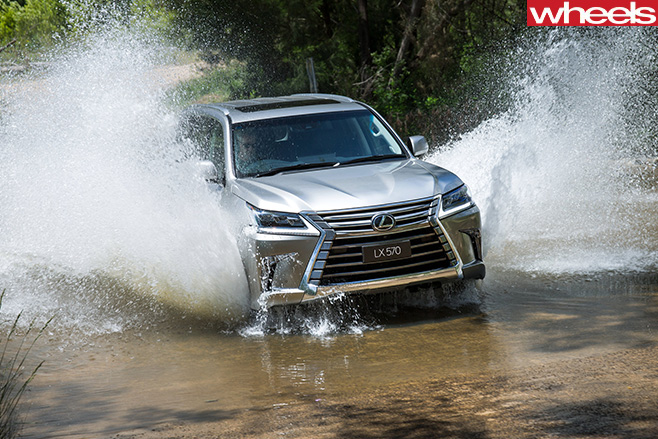
PLUS: Eight-seat space, build quality, off-road ability, smooth transmission MINUS: Expensive, still excessively heavy and thirsty, no hybrid or diesel option
THE WHEELS REVIEW SOME people have to have the best. The Top Dog. A larger house, longest yacht, and regardless of whether it’s actually better. Hence the existence of the V12-engined AMG models that are usually no better than their eight-cylinder stablemates but are there for the customers with the loot who want to out-do those around them. That’s part of the reason why the Lexus LX570 exists.
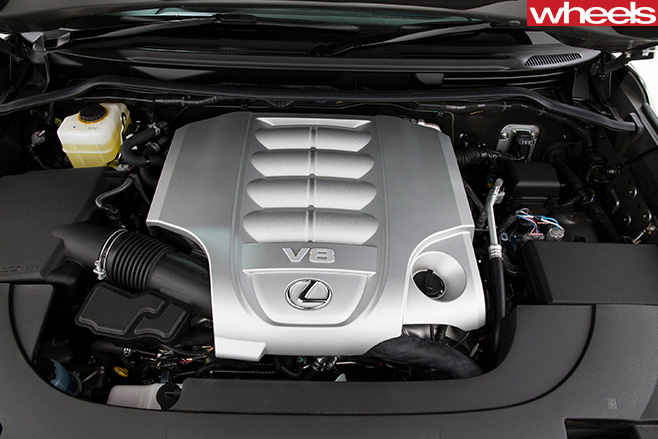
Unashamedly a V8 Toyota Landcruiser underneath, the LX570 gains a fresh look for 2016, with the Lexus spindle grille and jagged, tangram styling festooned with LED daytime running lights to look more like the next-of-kin against its younger showroom siblings. Only the doors and roof are unchanged.
The biggest improvements have been saved for when you’re seated in the captain’s chair of the Lexus liner. The revised interior remains as welcoming as before, with acres of space in any of the three leather-lined rows, and loads of room and seat support for the burliest and/or tallest of drivers. There’ll be no problem viewing the 12.3-inch centre display, and a new electronic park brake in place of the Landcrusier’s traditional bar cleans up the revised centre console. There’s a head-up display before you, while standard safety gear at your fingertips now includes pedestrian pre-crash safety, an alert to stop you from backing into an oncoming iceberg, and adaptive cruise control. The smart cruise also incorporates low-speed automated braking, and can bring the 2.5-tonne Lexus to a complete stop from any speed.
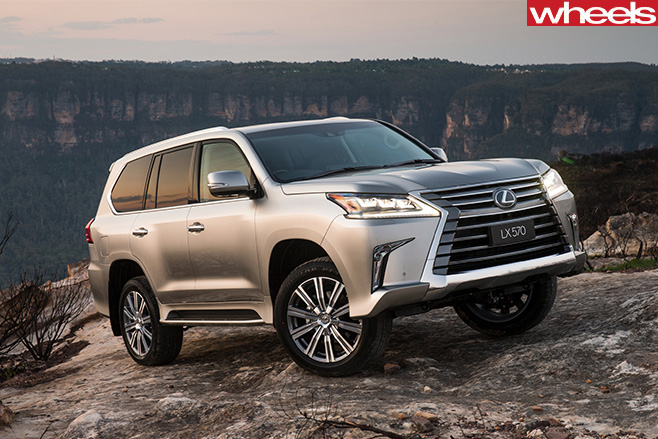
There are not only more gears, but a broader spread of ratios, with top much taller than before. You won’t even notice the silken shifts, on or off-road, in the refined and comfortable cabin, and the V8 is also even quieter thanks to operating at lower revs. There’s also a 0.1sec faster 0-100km/h claim, now a handy 7.7sec.
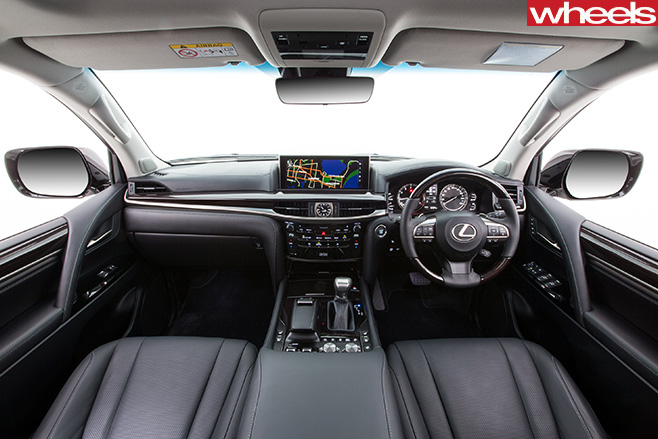
On road, the adaptive suspension’s comfort setting is perhaps too soft on the standard 20-inch alloys, with a fidgety ride and excessive body roll. The sport mode is much more liveable, as it irons out bumps quickly and confidently, and has the LX responding in a more predictable manner. It’s far less benign than comfort mode, but regardless there’s no forgetting the Lexus’s size and weight whether you’re around town or on the open road. It’s far from sloth-like, but the ladder-chassis underpinnings can’t match the dynamic finesse of similarly price Euro opposition.
For some buyers, the off-road skill of one of the world’s most accomplished machines will be a serious plus, and this update sees the slow-speed crawling drive mode that operates between 2.8 and 5.5km/h recalibrated, with less time between pulses. The result is better rock-hopping and crevice-climbing control.
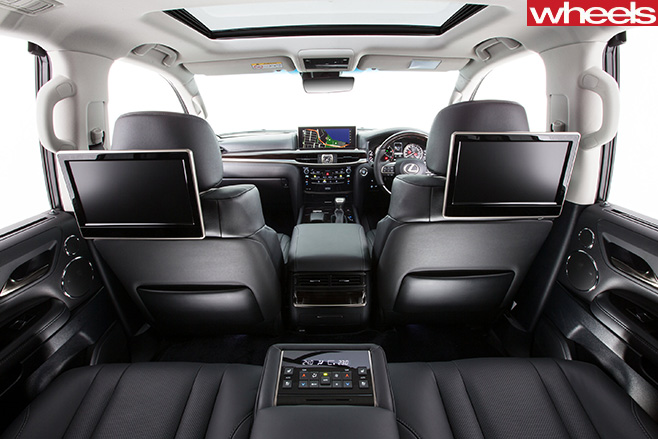
SPECS Model: 2016 Lexus LX570 Engine: 5663cc V8 (90°), dohc, 32v Max power: 270kW @ 5600rpm Max torque: 530Nm @ 3200rpm Transmission: 8-speed automatic, four-wheel drive Weight: 2510kg 0-100km/h: 7.7sec (claimed) Fuel economy: 14.4L/100km Price: $140,500 On sale: Now
So, what is it?
Since its global launch in 2013, Jaguar’s F-Type has had numerous laurels hung around its neck, but none bear the imprint of the famous British maker’s corporate butt, because it hasn’t been resting on them.
Not content with rave reviews and solid sales around the world, Jag has continued to add tech, spec and new variants to the F-Type range. And that approach continues full-throttle for the 2016 model year.
Why should I care?
Closer links between brands within the Jaguar Land Rover business has increased opportunities for sharing hardware and engineering expertise, resulting in some interesting performance options.

What’s new about it?
There are three major changes for the upgraded F-Type: Availability of active all-wheel drive (AWD) on V6 S and V8 R models, a six-speed manual option for V6 variants, and the arrival of the 405kW/680Nm V8 R specification in Convertible form. This broadens the F-Type line-up from six to 14 models; 12 of which are offered in Australia.
Subtle external changes are limited to a new bonnet profile for AWD models, with more pronounced ‘power bulge’ and air vents positioned further apart and further forward, either side of it. Steering assistance shifts from hydraulic to electric, and the torque vectoring (by braking) system that’s been standard on the R Coupe is now available on V6 models.
The instrument cluster includes new dials and gauges, and upgraded ‘InControl Touch’ infotainment features Apple/Android smartphone connectivity, plus improved sat-nav function. The switchable ‘Active Sports Exhaust’ system is now standard across the range, plus V6 S and V8 R models now feature a reverse parking camera and front parking aid as standard.
That’s all fine, what’s it like to drive fast?
Over a 350km launch drive program, we had the opportunity to sample the new F-Type in V8 R AWD Convertible, and V6 S RWD six-speed manual Coupe form, with a circuit session focusing on the V8 R AWD Coupe.

The original V8 S Convertible’s main party trick was its riotous noise. Switch the active exhaust to sport mode and the 364kW/625Nm blown V8’s glorious howl around the rev counter was more than matched by outrageous pops and bangs on the overrun.
It sounded like a fireworks display. But the addition of 41 extra kW and 55Nm turns this into an aural assault of shock and awe proportions. Unsuspecting fauna around the rural roads we were on must have thought hunting season had opened, with furious tailpipe explosions sounding like nitro filled hand grenades peppering the countryside.
But any claims the exhaust makes the V8 F-Type is more than able to back up. Jaguar claims 0-100km/h in 4.2 seconds, and this beautifully angry machine feels every bit that quick.
The switch to electrically-assisted power steering isn’t 100 percent convincing; delivering good, rather than great highway feel. Although the track session proved the AWD system and parallel changes to the car’s suspension set-up have made a big impact.
Past on-track experience with the F-Type Convertible highlighted a Jekyll and Hyde transformation once the level of attack moved beyond eight tenths. Above that point what had been predictable and balanced dynamic behaviour became almost the opposite, with the rear end seemingly making up its mind as to when it would and wouldn’t grip.

The in-house developed AWD system does away with Mr Hyde, its Intelligent Driveline Dynamics (IDD) connecting the powertrain, rear diff and electro-mechanical centre coupling with the Dynamic Stability Control (DSC) system to deliver optimum torque distribution.
Default setting is 100 per cent drive to the rear, with a proportion sent to the front wheels as needed, up to a real-world maximum of 50/50. Another benefit is the front-rear torque split controlling yaw angle to minimise oversteer. Add stiffer springs and dampers, combined with the torque vectoring system, as well as mega brakes (carbon optional) and the AWD F-Type becomes a formidable road and track weapon.
That said, the switch to a six-speed version of the V6 S Coupe was a revelation. Weighing in close to 140kg lighter than the V8 AWD, the RWD (only) manual immediately feels more nimble, the steering somehow delivering better road feel and response, even during relatively relaxed B-road cruising.
Zero to 100km/h in 4.9secs isn’t exactly hanging around, and the high-output supercharged engine delivers a (neck) hair-raising yowl strongly reminiscent of BMW’s best atmo in-line sixes. Plus it’s around $91k cheaper than its AWD V8 auto equivalent. Hmm… not bad.
And driving home from the city?
Like 007 doffing his wetsuit to reveal an immaculate dinner suit, this Jag switches seamlessly from back road blaster to urban cruiser. It’s relaxed, quiet and beautifully finished. Seats that provide excellent lateral support, double up to deliver superb overall comfort.

Despite running on 20-inch rims wrapped with hi-performance Pirelli P Zero rubber, Ride quality is impressive, the eight-speed auto cycles through its ratios with imperceptible ease, and the new infotainment set-up works well.
Anything bad about it?
Despite a short (45mm) throw between gears the six-speed manual’s shift feels doughy. No game-breaker, but not as precise and positive as its maker claims.
Another niggle is the new and improved nav system’s occasional confusion in built up areas. As first world problems go, it’s up there. But hey, this is the quintessential first world car.
How much would I have to pay? And is it worth it?
Entry point for the Aussie range is $119,470, which secures you a V6 manual Coupe, rising to $261,370 for the full-house V8 R AWD auto Convertible; a spread of more than $140k. Equipment levels across all models are suitably fruity.
Would you take the Jaguar F-Type V8 R Convertible or Porsche 911S Cabriolet?
The F-Type is (half a second) faster 0-100km/h, (much) louder and ($27k) cheaper, with style that’s closer to Austin Powers shagadelic than the Teutonically tasteful Porsche. We’ll take the Shaguar, baby.
Click here to find out more about the Jaguar F-Type.
1. 2016 Holden Astra
A new Astra hatch (pictured top, below) and wagon will be Holden’s small-car stars when they arrive in the second half of the year, sourced from Europe. Reports suggest the new-from-the-wheels-up sixth-generation model will have a high-quality interior headlined by a brilliant infotainment interface, will be very quiet inside, and will offer a responsive 1.6-litre turbo four-cylinder among the engines.
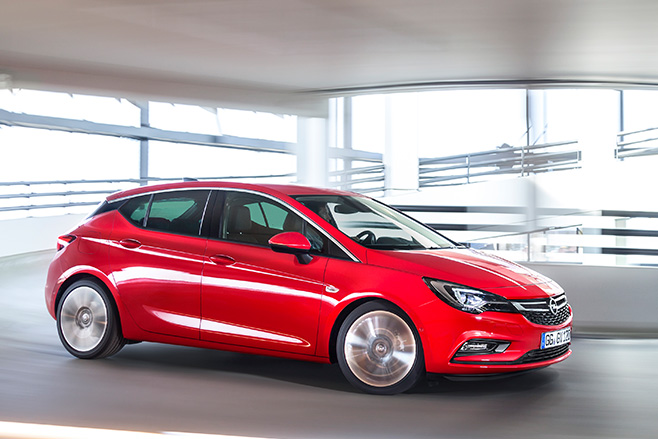
Holden will also introduce a new generation of its Cruze small car, likely late in 2016, which will sell alongside the Astra – and very likely for less. Unlike the current, Australian built, Cruze it will come from Korea.
2. Toyota’s baby SUV
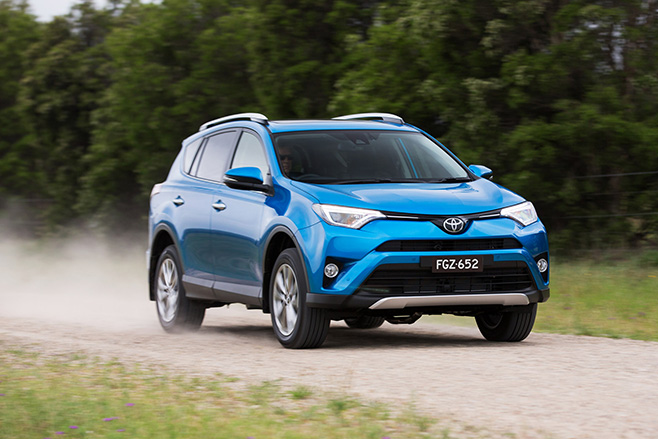
Toyota pioneered the Sports Utility Vehicle with its original RAV4, so a new, smaller SUV from the Japanese brand, designed to rival the Mazda CX-3 and Honda HR-V is big news. The as-yet-unnamed Toyota is likely to be powered by a small, non-turbo petrol four-cylinder with a CVT automatic gearbox and front-wheel drive, although an all-wheel-drive version is also a possibility.
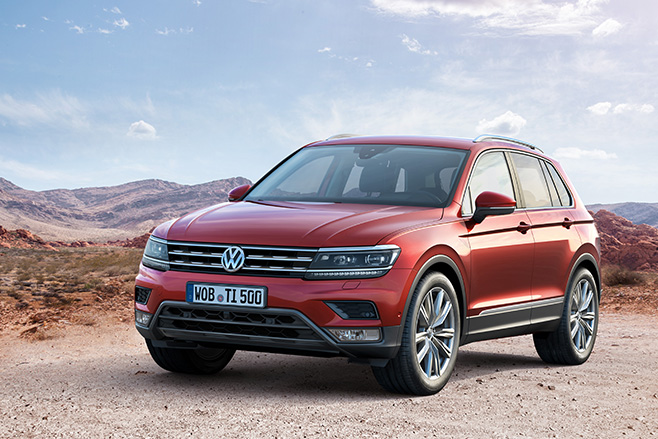
3. 2016 Volkswagen Tiguan
The current Volkswagen Tiguan is a polished and popular pick, but its relatively small cargo area makes it a squeeze for many families. By addressing the model’s biggest shortcoming with a much larger, 521-litre, boot, the more efficient, roomier and nicer looking second-generation Tiguan due in 2016 could go on to even greater popularity.
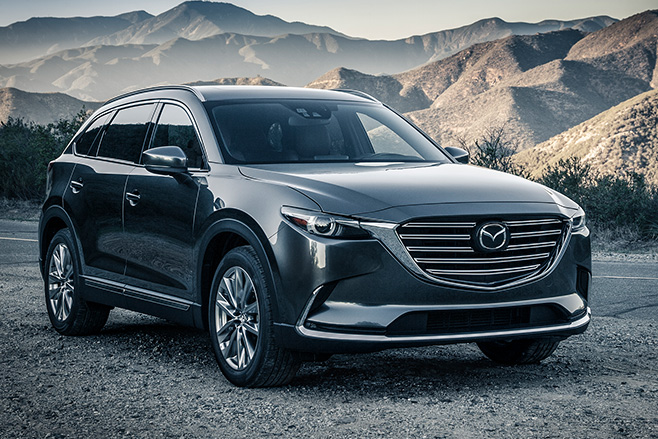
4. 2016 Mazda CX-9
Mazda’s next-generation CX-9 promises to be both responsive to drive and more fuel efficient, thanks to a change from a 3.5-litre V6 engine to a turbocharged 2.5-litre four-cylinder. That will make it a much more appealing choice for families who wish to save money on fuel while having effortless acceleration.
Other arrivals
We’ll see an updated and restyled Mitsubishi Lancer, Honda’s new tenth-generation Civic, and French brand Renault’s fourth-gen Megane in 2016. Updated versions of the Audi A3 and Mercedes A-Class are expected.

Mitsubishi’s ASX and Suzuki’s new iM-4 will join the increasingly popular small SUV class in 2016, and we’ll see Ford’s large SUV, the Explorer, which is set to replace the locally designed and built Territory ahead of the brand closing its Australian manufacturing in October.
A busy 2015 in the increasingly popular utility segment saw tray-back heroes such as the Mazda BT-50 and Ford Ranger updated, and a new Toyota HiLux (pictured above) and Nissan Navara arrive, in readiness for another stout sales year in 2016.
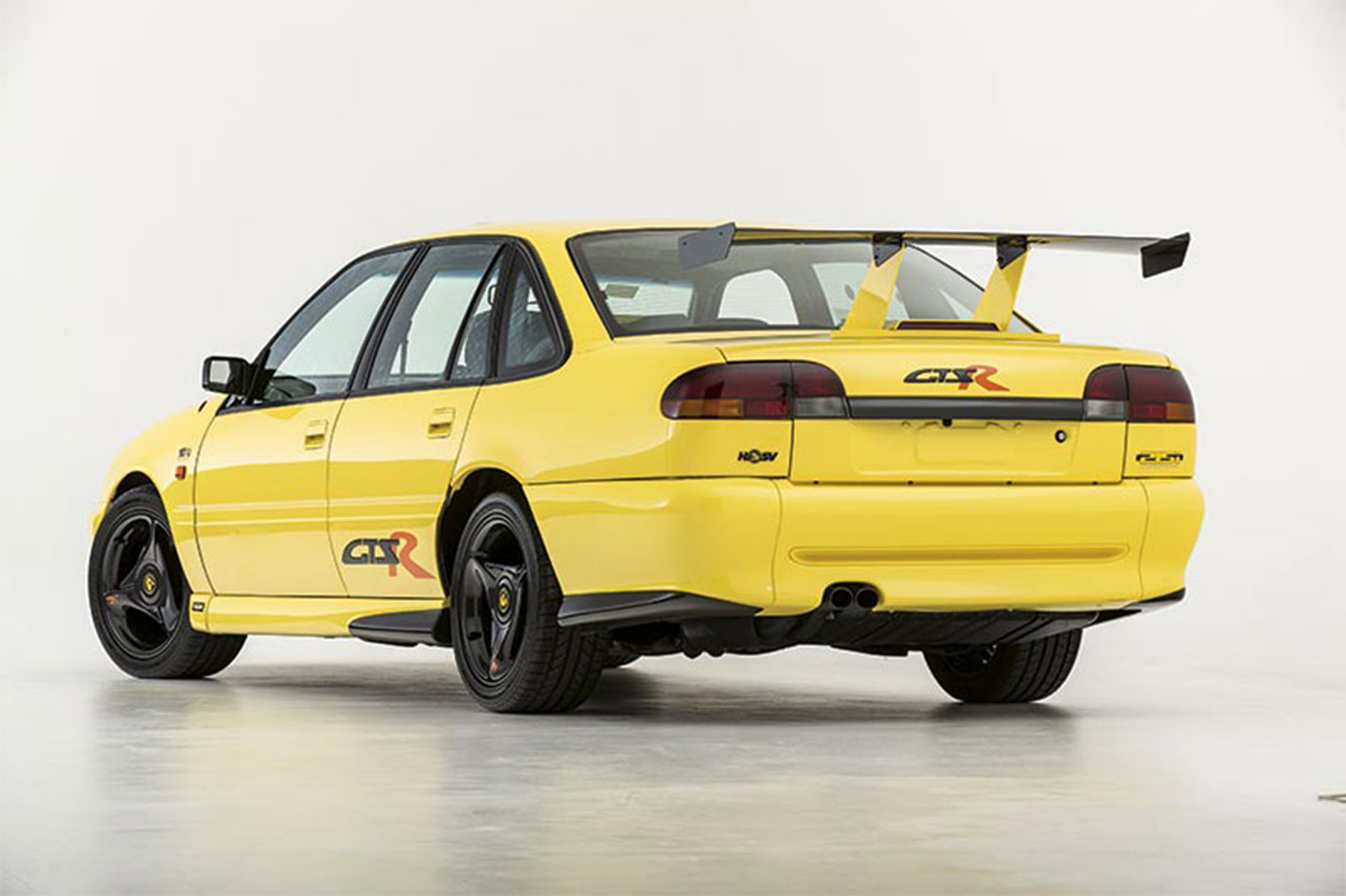
Christmas may have come early for HSV fans, with the GTS-R nameplate officially trademarked on December 2nd 2015.
A limited-edition flagship finale reviving the GTS-R nameplate of the great ‘yellah’ special of 1996 is now all but confirmed to arrive sometime next year. It will be priced beyond the $95,990 GTS and is highly likely to gain more grunt.
HSV recently pulled power and torque out of its LSA 6.2-litre supercharged V8 engine to create the 400kW/671Nm Clubsport R8 and Senator Signature. Curiously, the GTS was left unchanged at 430kW/740Nm – though if there’s one thing HSV knows how to do, it’s add grunt.
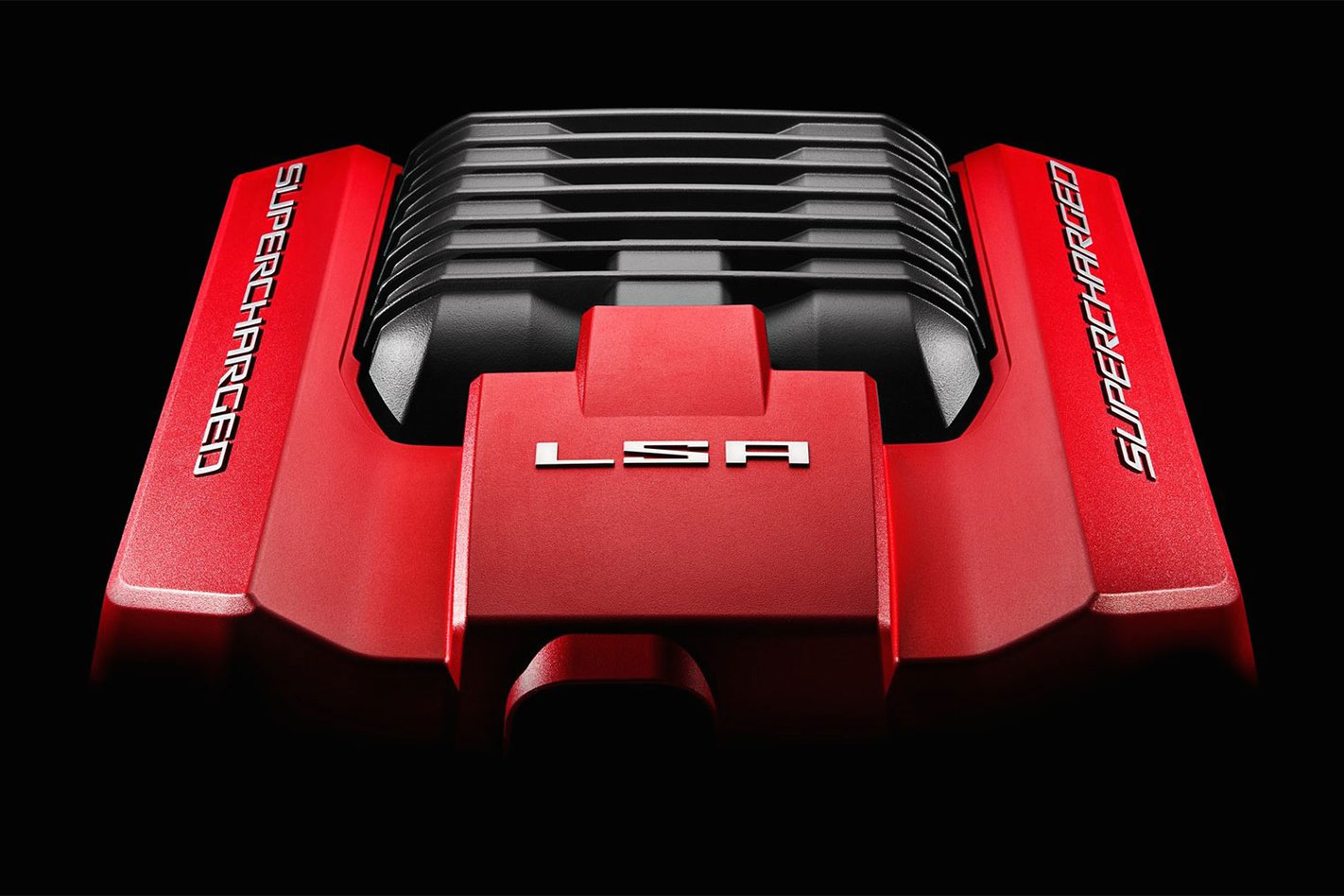
However it would also likely be too expensive to engineer the LS9 for such low volume, especially given how expensive the LSA was to engineer.
More likely, HSV will find slightly more headroom in the LSA. With the VF turning three next year, and with 18 months remaining until local manufacturing shuts down, the GTS-R will be timed right to move to higher 450kW/750Nm if not quire 475kW/800Nm outputs.
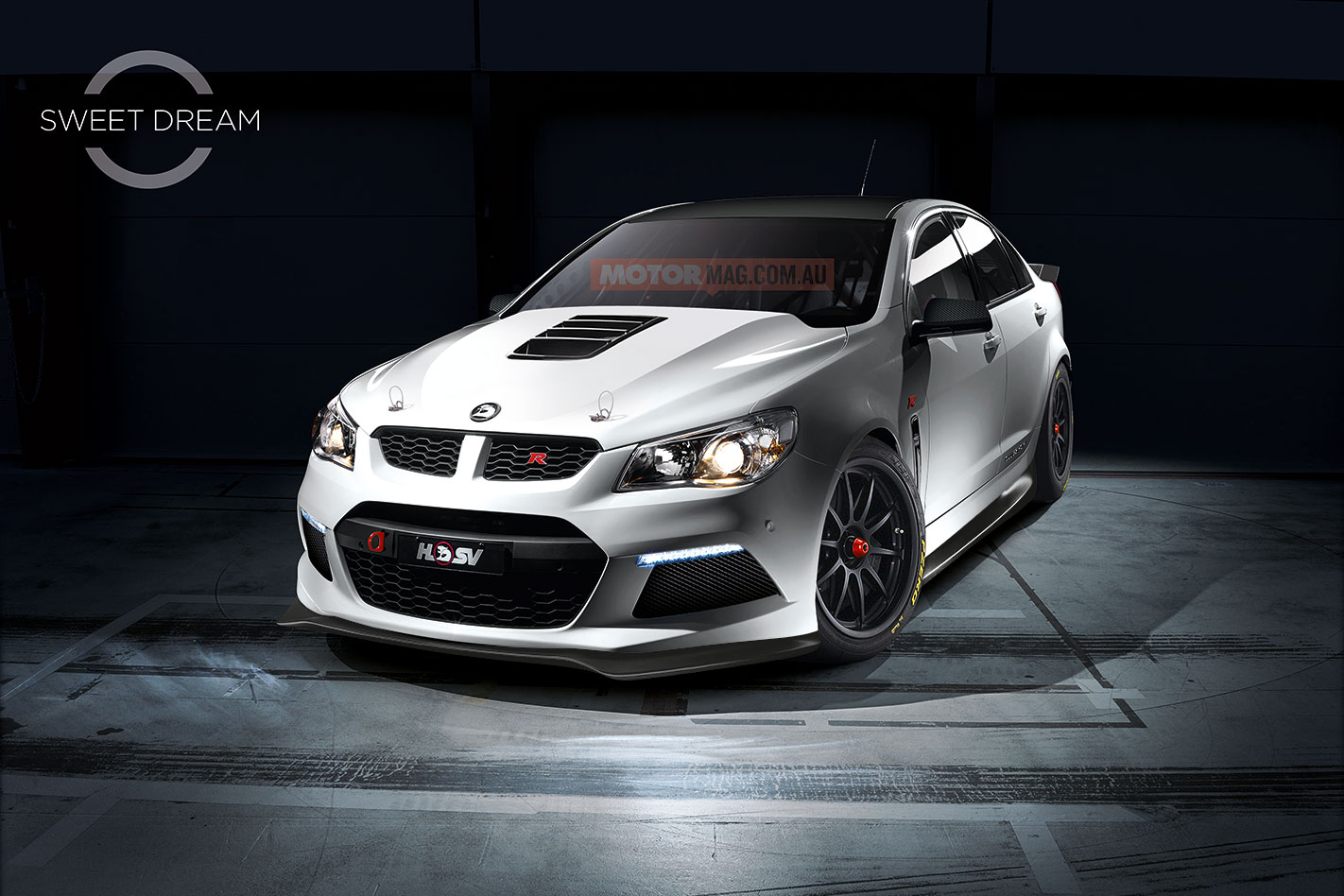
Nobody would be yearning more for a GTS-R revival than HSV executives who wear the brand on their sleeve. Expect a ‘yellah’ paint revival and wild high-deck spoiler, though the program may not extend to the addition of lightweight parts.
HSV may even duplicate the 85 units of the original GTS-R, which was available in 215kW or 226kW ‘blueprint’ 5.7-litre V8 versions and retailed from $75,000 and $86,000 respectively.