
What stands out?
The Audi A3 wraps a stunning interior in a classy, understated exterior and spoils buyers for choice with sedan and Sportback bodies, multiple engine options and an array of luxury and safety features. The A3 is smooth yet enjoyable to drive on a flowing country road, and the S3 is a rocket. This review covers A3s on sale prior to the upgrade of December 2016.
What might bug me?
How much you paid for your A3, after you learn how much it has in common with its less costly Volkswagen sibling the Golf.Driving under 80km/h on the space-saver spare until you can fix your full-sized flat tyre.Stop-start driving with the automatic transmission: the A3’s DSG auto gearbox is great once you’re moving, but many drivers do not find it as smooth and easy in town as a conventional or CVT auto.
What body styles are there?
Four-door sedan and a five-door hatchback that Audi calls a Sportback. (An A3 Cabriolet with a folding roof is also available, but is not covered in this review. The very high performance Audi RS3 is also not covered.)The Audi A3 drives either its front wheels or all four wheels, depending on the version. The Audi S3 drives all four wheels. Both are classed as small cars, higher priced.
What features do all versions have?
Cruise control, dual-zone air-conditioning (which lets you set different temperatures for each side of the cabin), and leather seat trim.A reversing camera, and front and rear parking sensors (from about November 2015).Windscreen wipers that operate automatically when it rains, and headlights that turn on automatically when it’s getting dark.A tyre pressure monitor, which warns you if a tyre has lost air (this can give you extra time to get a slow puncture seen to).A CD/radio infotainment system with a colour touchscreen interface (5.8 inches on all but the e-tron and S3) that rises electrically from the top of the dashboard. Bluetooth hands-free phone connectivity for audio streaming and phone calls.A leather-wrapped steering wheel that has buttons for controlling the audio system and Bluetooth. Paddle gear shifters on the steering column (in auto versions). Rear parking sensors.Aluminium alloy wheels, which are usually lighter and better looking than steel wheels, and a space-saver steel spare wheel.Seven airbags: two directly in front of the driver and front passenger; one alongside each front occupant to protect the upper body; a curtain airbag on each side to protect the heads of front and rear occupants; and a knee protection airbag for the driver.Electronic stability control, which can help the driver to control a skidding car. All new cars must have this feature.Available on any A3 or S3 is an Assistance pack that adds active safety features. It gives you adaptive cruise control, which maintains a safe distance from vehicles ahead, and automatic emergency braking which works at low and high speeds. (The auto brake system detects obstacles ahead, warns you if a collision seems likely, and applies the brakes if a collision is imminent.) A lane departure warning alerts you if you stray from your lane, and a high beam assistant automatically dips the headlights for oncoming cars. Finally, a blind spot monitor warns of a vehicle alongside when changing lanes. The pack costs about $1800.Every Audi A3 and S3 carries a three-year, unlimited kilometre warranty.
Which engine uses least fuel, and why wouldn’t I choose it?
The 1.4-litre petrol-electric hybrid is the most fuel efficient engine offered in an A3, consuming a mere 1.6 litres/100km on the official test (city and country combined). This is an excellent powerplant, providing very good acceleration, a long range between fill-ups, and near-silent battery power around town.One reason not to choose it is that it comes only in the most expensive A3, the Sportback e-tron, which is a plug-in hybrid (you can charge it from a household power socket). Another is that on long trips in the country, where it relies on its petrol engine much more than its battery, fuel use will approach the 5.0 litres/100km of other A3s with this engine.Of the non-hybrid engines, the 1.6-litre turbo-diesel offered in the A3 Sportback 1.6 TDI Attraction is the most economical, using only 3.9 litres/100km on the official test. Nearly as thrifty is the 2.0-litre turbo-diesel available in the more expensive A3 Ambition models.Diesel A3 engines are among the most refined small oil-burners available, and provide power from very low speeds in an effortless manner that the petrol engines can’t match.However, diesel owners need to spend 30 minutes at highway speeds every fortnight to clean out the cars’ particulate filters. So the diesels are not good bets if you will mainly be trundling around town. (The filters reduce the amount of exhaust soot that gets into the air.)Of the petrol engines, the least thirsty are the 1.4-litre turbocharged units powering the other A3 Attraction models. Both use less than 5.0 litres/100km in the official test. (The CoD version is slightly more fuel-efficient: it runs on just two of its four cylinders when it is not doing much work.)However, all engines in A3s and S3s are economical for the performance they offer – even the very powerful 2.0-litre turbo in the S3 uses only 7.0 litres/100km officially.All A3s have a dual-clutch automatic (DSG) gearbox with either six or seven ratios. The S3 offers the option of a DSG auto or a six-speed manual.
What key features do I get if I spend more?
The least costly Audi A3s, the Attraction models, have the equipment in all A3s and either a 1.4 TFSI petrol engine or the 1.6 TDI diesel. Spend more for an A3 Ambition and you can choose from more powerful 1.8 TFSI petrol and 2.0 TDI diesel engines.A3 Ambitions also have front foglights, and cosmetic upgrades such as aluminium trim on the windows and aluminium-look elements inside. There is a more sculpted sports steering wheel, and sports front seats that provide greater lateral support.Ambition models also have wheels an inch bigger in diameter at 17 inches. These are fitted with wider tyres with smaller sidewalls, which slightly increase grip and steering response. And Ambitions have Audi’s drive select system. This lets you adjust how the steering, engine and gearbox respond to you: very immediately, for sporty driving, or more lazily for touring or city use.Ambition quattro A3s are upgraded from front-wheel-drive to all-wheel-drive, which adds security in poor conditions and improves handling.Spend more again for an A3 Sportback e-tron and you get the petrol-electric plug-in hybrid engine, and subsidised installation of an Audi fast-charger in your garage. You also get a bigger, 7.0-inch touchscreen, satellite navigation, and a park assist system that can steer the car into a parking spot. Extremely long-lived LED headlamps show the way at night, and a convenience key allows you to unlock the car with the key still safe in a pocket or bag. The e-tron’s other features match the A3 Ambition’s.For about the same price as the Sportback e-tron you could have an Audi S3. This is the high-performance A3, available in sedan and Sportback form. It has a much more powerful 2.0-litre turbo engine, quattro all-wheel-drive, firmer suspension, and 18-inch wheels.For equipment, the S3 matches the e-tron, except that its headlamps are extremely bright Xenon types rather than LEDs. The S3 also has a flat-bottomed sports steering wheel, and power-adjusted, heated sports front seats.Attraction and Ambition versions of the A3 can be optioned-up to give them some of the equipment found in the e-tron and S3, including park-assist, power-adjustable front seats, and keyless entry. These items come bundled in option packs.S3 versions can be upgraded further with an S Performance package, which adds adaptive dampers, LED headlights, a Bang and Olufsen brand audio system, and S Sport front seats that provide more side-support.
Does any upgrade have a down side?
The 17- and 18-inch tyres available on more expensive models (and optional for all) reduce low-speed ride comfort compared with the 16-inch tyres fitted to Attraction versions.The firm Sports suspension of the S3 sacrifices some ride comfort.Choosing the optional S Sport front seats for the S3 means sacrificing power adjustment and seat heaters.Choosing a quattro all-wheel-drive A3 brings a fuel consumption increase of about 15 per cent.Boot space in the Sportback e-tron is about 100 litres smaller than in other Sportback A3s.Metallic paint comes at an extra cost of about $1050. Considering there are no non-metallic colours available, this is a sneaky way of reducing the list price.
How comfortable is it?
Audi is renowned for the classy design and beautiful build of its interiors, and this applies firmly to the A3 and S3 sedan and Sportback, which are about as luxurious as small cars get.A sense of quality pervades inside, courtesy of supportive front seats, terrific ergonomics, and the pleasant operation of the controls – from the steering wheel and gear-lever to the knobs and buttons for the audio system and air-conditioning.As well as being a lovely place in which to sit, the A3 and S3 cabins are hushed, isolating occupants from tyre roar, wind rustle and suspension noise.The ride over rough roads is comfortable. The suspension keeps the body from floating around yet also absorbs bumps well.
What about safety?
The addition of a reversing camera and parking sensors to all models about November 2015 improved a very safe basic package.Automatic braking is not provided as standard on an A3 or S3. However, a comprehensive suite of active safety features, including high and low speed auto braking, auto cruise control, and lane departure warning, are offered in an Assistance pack, an extra cost option.The Australasian New Car Assessment Program (ANCAP) awarded the Audi A3 and S3 its maximum five stars for safety.
I like driving – will I enjoy this car?
Yes, you will enjoy driving the Audi A3, and a driving enthusiast would love the S3.The A3 balances ride comfort, handling agility, refinement and involvement better than most small cars: few fill the all-rounder role quite so well. The only alternative that goes close is the Volkswagen Golf, which shares many A3 components.There is a big difference in power across A3 and S3 models. The 1.8 TFSI petrol A3 Ambitions have about 40 per cent more power than the 1.4 TFSI Sportback Attraction, while the 2.0-litre turbo S3 has about 60 per cent more power than the petrol Ambitions.The S3 is incredibly quick, with a grunty engine character to match. Meanwhile, the A3s are smooth, flexible, and increasingly swift.With the A3 Sportback e-tron, Audi has done a brilliant job of integrating electric and petrol power sources. It is hard to tell you are not driving a petrol car, except that the e-tron is uncannily quiet when running on the battery around town.On S3 versions, the sports suspension and 18-inch tyres sharpen the steering and handling and increase the overall roadholding limit. The cornering capability of an S3 is as eye-widening as the acceleration.If you prefer a diesel, the 1.6 TDI has pulling power about equal to the 1.8-litre petrol engine, and the 2.0 TDI has about 35 percent more power than the 1.8 at low engine speeds.The dual-clutch automatic gearbox works well, and both the sports mode (on drive-select versions) and paddle gear shifters (on all) bring an extra dimension to the enjoyment of the A3 and S3. The S3 six-speed manual is also a delight to operate.
How is life in the rear seats?
The rear seat area of the Audi A3 and S3 is roomy and as beautifully presented as the front of the cabin.The seat cushion comfort and support are excellent, and the backrest angle is well judged. There are air-conditioning vents in the back, a rarity in a small car.A centre rear armrest with load-through port into the boot comes as an option for about $400.Some of the Sportback’s headroom is lost in the sedan due to the downwards taper of its roofline.
How is it for carrying stuff?
The Audi A3 and S3 sedan have a 425 litre boot, which is 45 litres bigger than the Sportback’s – they’re both quite generous. However, the Sportback – a hatch in generic terms – brings the practicality of a tailgate and offers 1220 litres of luggage space with its rear seatbacks 60/40 split-folded flat, while the sedan offers a total of 880 litres.
Where is it made?
The Audi A3 is manufactured in Hungary, and the S3 is manufactured in Germany.
What might I miss that similar cars have?
Not much, if you include what’s available as an option at extra cost. Just be aware that not every feature provided as standard on less costly cars will be standard on an A3.The Renault Megane has a five-year warranty, and the Citroen C4 has a six-year warranty.Other cars worth considering are the BMW 1 Series, Mercedes-Benz A-Class and CLA-Class, Volkswagen Golf, and Peugeot 308. You might also look at the Ford Focus.
I like this car, but I can’t choose which version. Can you help?
Sure. Our pick of the A3 range is the 1.8 TFSI front-wheel drive. The quattro version is worth considering, but carries a cost and fuel consumption penalty.The 1.8-litre engine is at the power and performance sweet spot and its fuel efficiency is very good.Choosing between the A3 sedan and Sportback is difficult – the sedan costs a bit more and isn’t quite as spacious in the back (or the boot), but arguably it’s better looking.
When did Audi update this A3?
The current 8V series A3 arrived in 2013, and the Sportback e-tron was added about August 2015. A high-powered turbo five-cylinder RS3 variant (not covered in this review) joined the local line-up in October of 2015. A reversing camera was fitted standard to all cars for the 2016 model year, from about November of 2015.About December 2016 an upgraded A3 series and S3 went on sale in Australia. The new cars look much the same but offer city-speed auto braking as standard, and the option of extended auto braking that can also hold your place in stop-start traffic. Three petrol engines were offered, and the diesel engines were dropped. Xenon headlamps were made standard, smartphone connectivity improved, and a digital instrument panel was available as an option. The Sportback e-tron was not immediately upgraded.
BMW will soon hunt down the Audi S3 and Mercedes-AMG CLA45, with this Compact Sedan Concept providing a close look at a new 1 Series spin-off.
Officially this concept is to appease the sedan-loving Chinese market, reinforced by its debut at the Guangzhou motor show this week. Less officially but almost certainly, it will become a next-generation 1 Series spin-off – which means front- and all-wheel drive only.
“The BMW Compact Sedan Concept reveals the potential we see in a compact sedan,” firstly confirms BMW design senior vice president Adrian van Hooydonk.
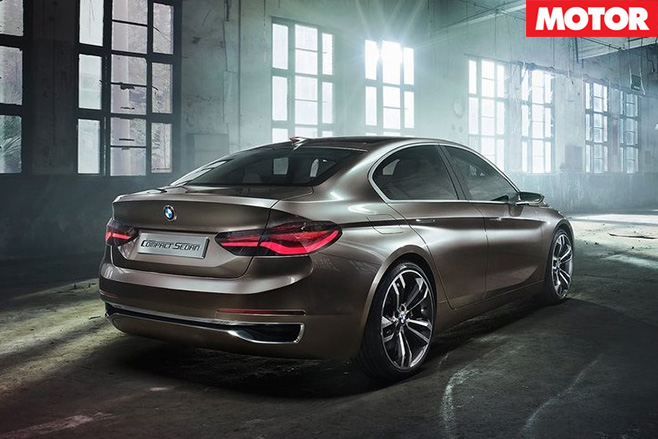
That ‘generous amounts of space’ bit gives clue to the FWD platform. Although this may mean enthusiasts won’t see a rear-driven compact BMW sedan, they will at least soon see the first performance compact BMW sedan since the E30 3 Series handed the baton to the larger E46 and larger-again E90.
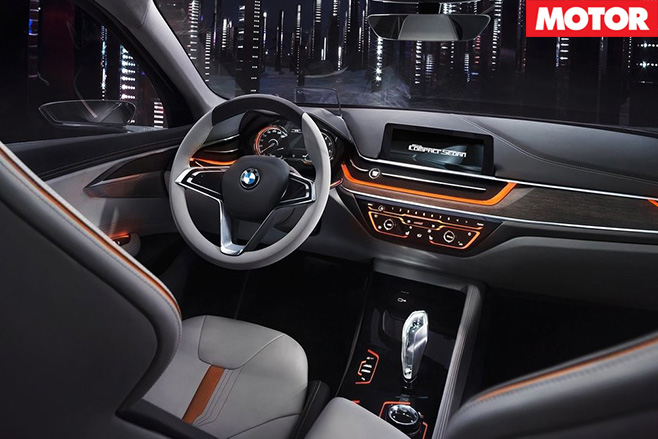
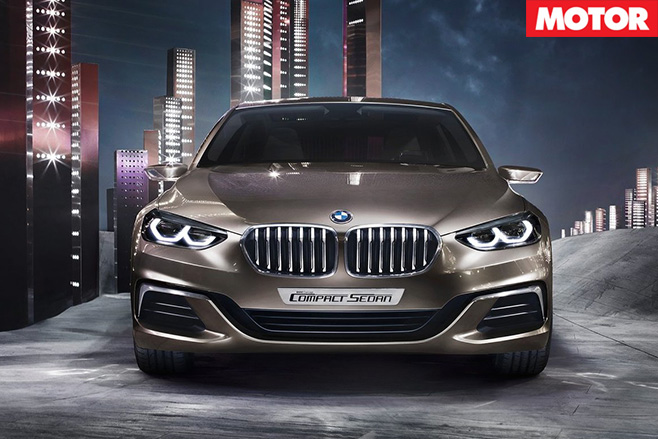
While the recently revealed M2 coupe will do honours battling with the Audi RS3 and Mercedes-AMG CLA45, the production version of this Compact Sedan Concept will likely tap the rear bar of the latter while passing an S3 sedan.
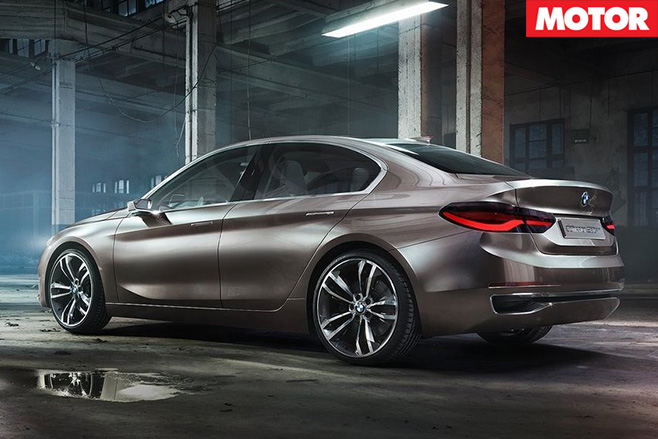
For those who can’t have an M235i or M2 for their lack of back doors, the sedan (to either be named 1 Series or 2 Series) will arrive to provide a BMW four-door option, likely within the next 18 months.
What is it?
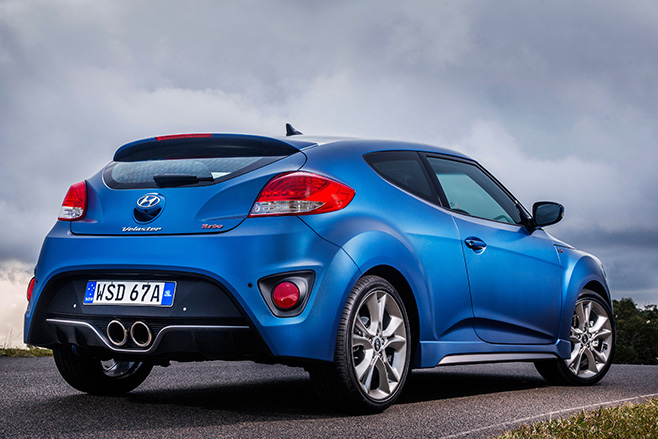
The updated version of Hyundai’s quirky asymmetrical hatch (it still has that one big door on the driver’s side, two smaller doors on the passenger side.)
What’s new about it?
There’s now four versions in the range, including a new entry-level SR Turbo model for $29,990 – the same cash as the entry-level Toyota 86.
So you can now have the Veloster for $24,990, or the Veloster+ (with more kit inside) for $29,490 – both with the carryover 1.6-litre 4-cylinder, turning out 103kW and 166Nm.
Then there’s the SR Turbo, and the SR Turbo+ ($33,990), both with the 1.6L turbo 4cyl, producing 150kW and 265Nm.
Gone is the old auto transmission for the SR Turbo models, replaced with a new seven-speed dual-clutch box. The six-speed manual remains the same, as does the six-speed dual-clutch option in the non-turbo models.
Phew. Got all that? Good. Because we’re basically not going to talk about the non-turbo models any more. Just the SR Turbo, and the SR Turbo plus.
You might well be asking why anyone would buy a Veloster Plus when the SR Turbo is just $500 more. The answer is that Hyundai have de-fruited the entry-level turbo – it lacks the sat-nav, panoramic sunroof and climate control of the Veloster Plus (the SR Turbo Plus regains them, plus a bit more.)
There’s also a new matte blue paint option, called Blue Sprinter, which is also what we call streakers at Essendon home games. It looks pretty great (the paint, not the streakers), although it sort of looks like a Veloster playing dress-ups as an Audi R8.
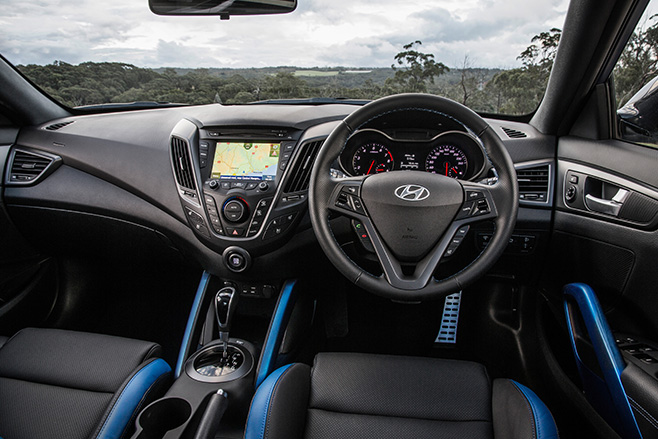
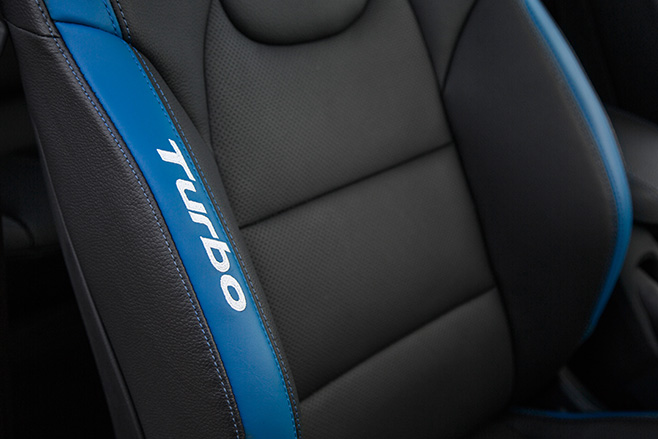
There’s some other very small exterior design tweaks; and the SR Turbo models get new seats, a new steering wheel, and some interior tweaks.
What’s it like to drive fast?
Both of the SR Turbos are quick enough to warrant the bolstered seats. But let’s get this out of the way early: the Veloster in any guise is not really the sportscar it thinks it is. It’s a good car; it’s even a fun car. Sporty? Sure. But a sportscar? No.
Make no mistake, 150kW, and 265Nm, are not to be sneezed at – the Veloster will never disgrace you in a traffic light sprint-off, and would probably surprise some opponents (it’s around seven seconds from nought to 100km/h, in a non-scientific test.)
But it’s not all just about speed and numbers. In everyday driving, the Veloster feels fine – the new seven-speed dual-clutch is smooth and easy, but it refuses to get angry when you want it to. It won’t hold gears even in manual mode, simply over-riding your paddles, nor will it shift down if it thinks you’re being silly, which is frustrating because you really need to have the engine zinging at about 5000rpm for it to come to life.
The manual box obviously won’t change up on you, but you still need to wring the poor thing’s neck to get real pace out of it – change too soon and you’ll be lost in an inexplicable hole of non-torque until the tacho gets up again. The clutch is light and has no particular feel to it – it’s fine for ordinary down-the-shops driving, which is no doubt how it (and most hot hatches, let’s be honest) will spend most of its life. But it lacks the feel of more engaging and sporty cars.
And the Veloster doesn’t sound very exciting, even when you’re really belting it; it would benefit from a louder exhaust, and maybe some 86-style engine noise piped into the cabin.
It’s not slow, and it’s not at all bad to drive, it’s just not as sporty – in feel or performance – as rivals like the 86, or the Polo GTI, or even the Kia Proceed GT.
What about the commute?
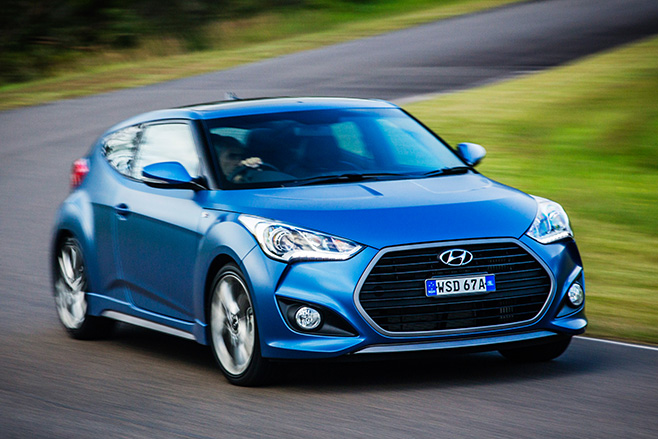
Ah, well, there’s the Veloster strengths – it’s comfortable, the new upgraded suspension is well-judged, and it’s a more practical option than a Toyota 86. Get up to freeway speeds and the cabin gets a tad noisy, but over urban and suburban roads it’s well-mannered and hassle-free.
Is there anything bad about it?
Vision out the rear remains terrible – looking in the rear vision mirror is like those macular degeneration ads, with a monstrous opaque bar through the middle. But there’s a rear-camera to help balance that when you’re actually reversing into spots.
Would you have this or a Toyota 86?
We’d take the 86. But then, we don’t ever use the 86’s rear seats, which are more accurately thought of as a parcel shelf; and we like rear-wheel-drive for hanging the tail out occasionally. If we had to fit more than one passenger, or were looking for a daily driver with some extra poke, rather than a genuine hot hatch, we might get the SR Turbo. Or we might get a Polo GTI.
Click here to read the full review on the Hyundai Veloster.
Ah, those Hoonigan boys. Where other people see bland social landscapes, like abandoned shopping malls, they see playgrounds.
Playgrounds for what, exactly? Well, in their latest instalment Hoonigan’s unleashed two rabid Nissans upon Los Angeles’ empty Hawthorne Mall, which was abandoned in 1999.
So instead of frothing bargain hunters swarming the mall’s stores, here its desolate dusty halls are filled with the spectacular sound, and smoke, of two 370Zs that brandish up to 745kW from nitrous fed V8s.
Drifting pros Ryan Tuerck and Chris Forsberg were given the job of dodging all those pylons, and prove Yanks can seriously wield a wheel.
The stunt ties in with America’s Black Friday, a nation-wide shopping event that begins with the day after Thanksgiving this week.
However this is the most action you’ll see in a mall all year, or at least until this year’s Boxing Day sales.
World Rally Champion Richard Burns died 10 years ago today after a lengthy battle with a brain tumour.
Britain’s only World Rally Champion won the 2001 title with Subaru after a fierce battle with Colin McRae and Tommi Makinen, having finished runner-up the two years previous.
Burns started his career in a Peugeot one-make championship before graduating to all-wheel drive and winning the British Rally Championship in 1992.
From there he joined Subaru and cut his teeth in the Asia-Pacific Championship as well as selected WRC rounds, the highlight a third place on the 1995 Rally GB behind Subaru teammates Carlos Sainz and new world champhion Colin McRae.
For 1996 Burns moved to Mitsubishi alongside Tommi Makinen and secured his breakthrough win on the 1998 Safari Rally and followed that up with another win at that year’s Rally GB.
The following year he returned to Subaru with immediate success, winning seven rallies over the next two years and finishing second in the championship both years.
He won only one rally in 2001, his championship year, but his incredible consistency ensured he was always at the pointy end.
Smooth and methodical, Burns was the perfect foil for the flamboyant McRae and together the two drove the WRC to unprecedented heights of popularity in the late-’90s.
Following his unfortunate early death, the Richard Burns Foundation was set up to support others suffering from illness.
A Bugatti Veyron has called Melbourne home for some time now.
First spotted under cover on the back of a flat-bed truck just before Christmas last year, it then appeared in the showroom of Sydney exotic car dealer Classic Throttle Shop before being sold for an undisclosed sum.
Since then the car has been spotted in the wild on numerous occasions, shared by eagle-eyed Melbourne car enthusiasts on the Facebook page Melbourne Exotic Car Spotting.
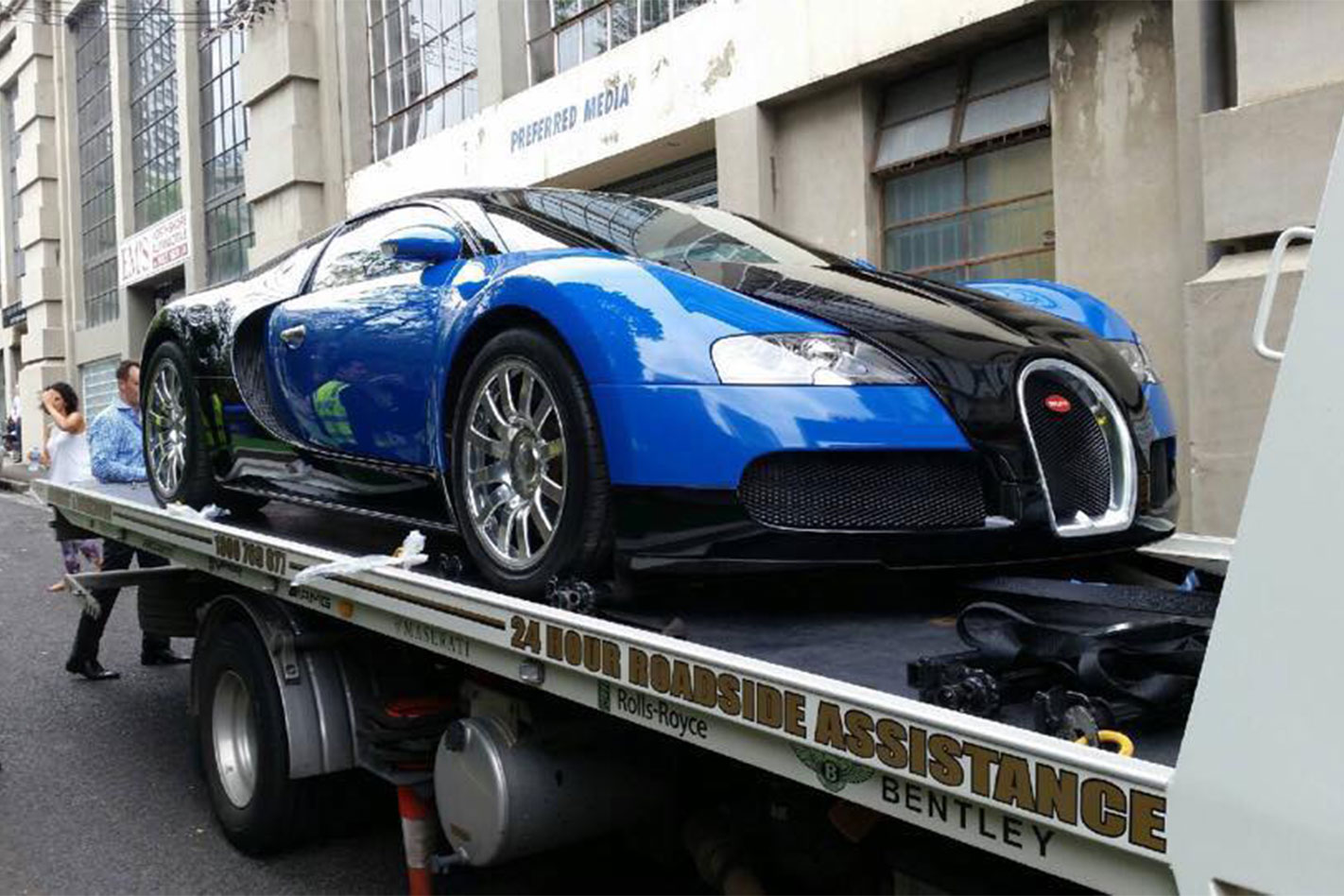
It appears the owner is happy to get around this by using trade plates, in which case the vehicle can be used for various purposes (checking repairs, preparation for registration etc.)
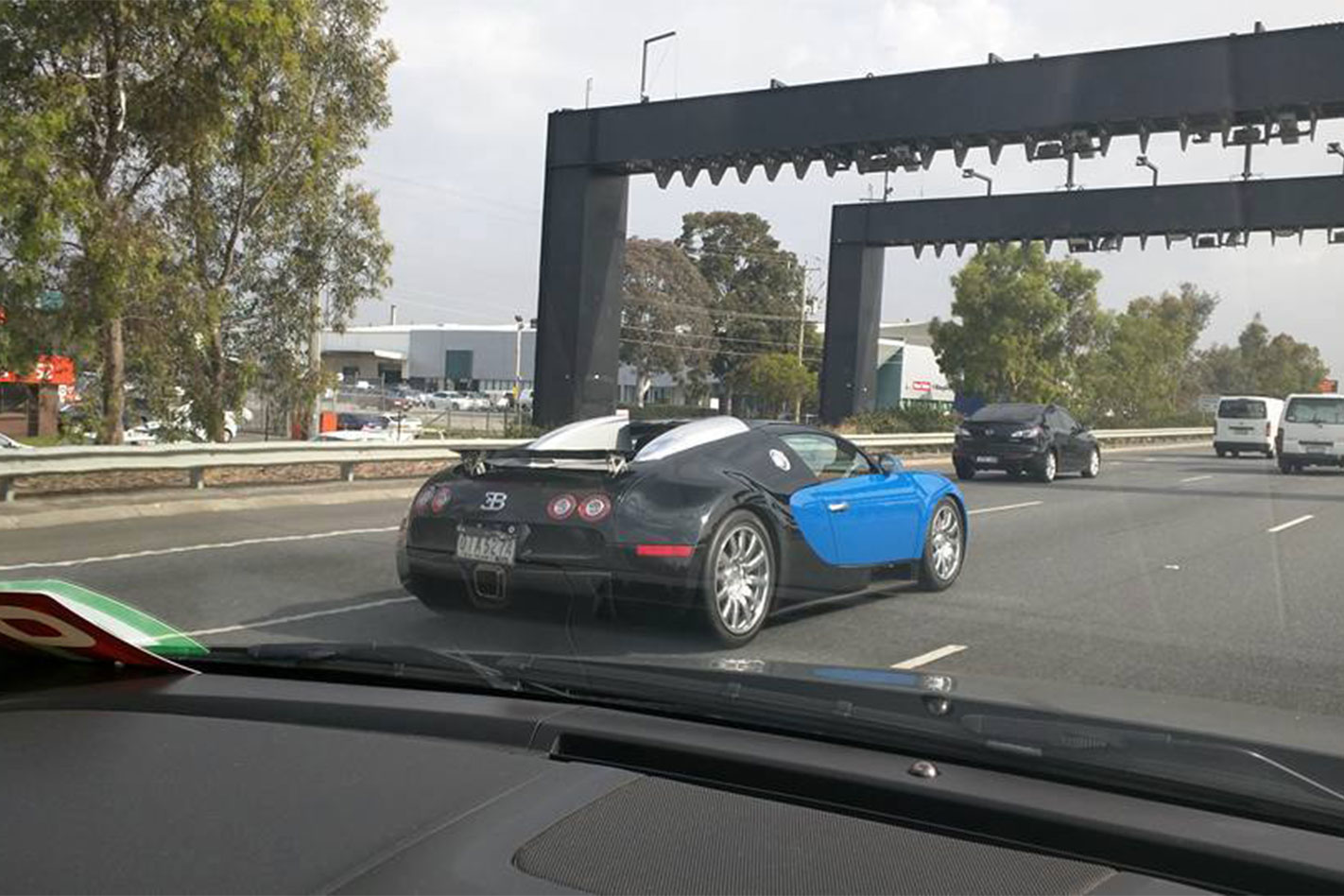
It’s brilliant seeing one of these rare beasts on Aussie soil and we hope that its performance gets used as its maker intended as well as being exercised on Melbourne’s freeways.
Torque. It’s keeping us optimistic as all our old naturally aspirated heroes – M3, C63, Honda Civic Type R – turn turbo.
Reduced fuel consumption and lowered emissions are exciting, too… if you watched The 40 Year Old Virgin and thought it was a documentary, about your life. Otherwise, mid-range muscle is what it’s all about.
Case study: the new Ferrari California T. The old California, with its 4.3-litre naturally-aspirated V8, made 505Nm at 5000rpm. The new California makes 755Nm at 2750rpm, despite downsizing to 3.85-litres. That’s a dizzying 250Nm more than the old car. To give perspective, a Toyota 86 alone has 205Nm. And it’s all because the California is now turbo.
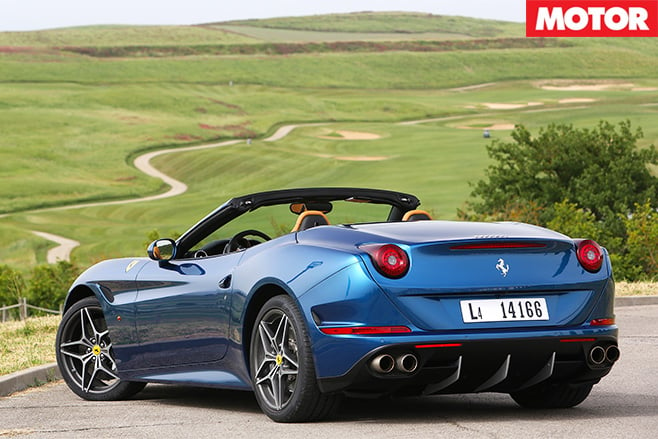
Some even might mumble, who cares about a turbocharged California? Aren’t most doomed to sit in garages of people like Paris Hilton and do more laps around Surfers Paradise than Phillip Island? Perhaps. But in reality, Ferrari’s first crack at turbocharging since the F40 is important given reports the 458’s replacement could go the same way.
Of course, the F40 proves Ferrari knows how to make turbos exciting. But the F40 was built when turbocharging was still a bit nuts and the purpose of such instalments was to wring 352kW and 577Nm out of a 2.9-litre V8 – not for silly things like reducing emissions and fuel consumption.
These days, of course, they are the exact reasons everyone’s going turbo – Ferrari included.

The new engine also sits 40mm lower than the old one, helping the all-important centre of gravity. The chassis is also as new as you can get without completely binning that of the old car. The wheelbase and folding roof mechanism are the only direct carry-overs, apparently. Weight is 1730kg – about five kilos less than the old model.
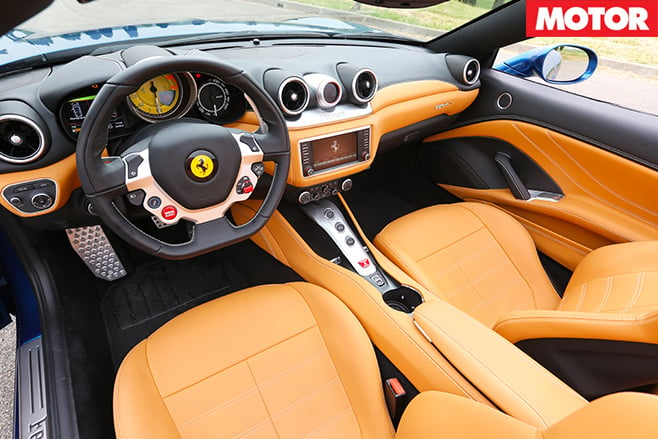
So at 4000rpm in second gear, an accelerator pedal flexed underfoot and a straight, empty road through the windscreen, we were nervous. We punched the accelerator as hard as we could. And felt relief as we realised turbos haven’t ruined this Ferrari.

Lag? Only a diehard enthusiast would notice the slightest of hesitations upon smashing the throttle wide open at low to mid-rpm. But indeed, this is the most responsive turbocharged car I’ve personally ever driven. Big call, I know.
But it’s the way it accelerates that’s interesting – and very new for a California. You can pluck gears at 6000rpm and feel totally satisfied with the acceleration, such is the T’s mid-range muscle. Overtaking is seamless – unless you’re being a dill, there’s no need to knock down a gear.

4 out of 5 stars
Specs
Engine: 3855cc V8, DOHC, 32v, twin-turbo Power: 412kW @ 7500rpm Torque: 755Nm @ 2750-5000rpm Weight: 1730kg 0-100km/h: 3.6sec (claimed) Top Speed: 315km/h (claimed) Price: $409,888
LAMBORGHINI AVENTADOR LP750-4 SUPERVELOCE
362kW/tonne. With 552kW from its 6.5-litre V12 the LP 750-4 earns its place at the top with muscle, upping the ante from 515kW in the regular (and heavier) Aventador.
McLAREN 650S COUPE
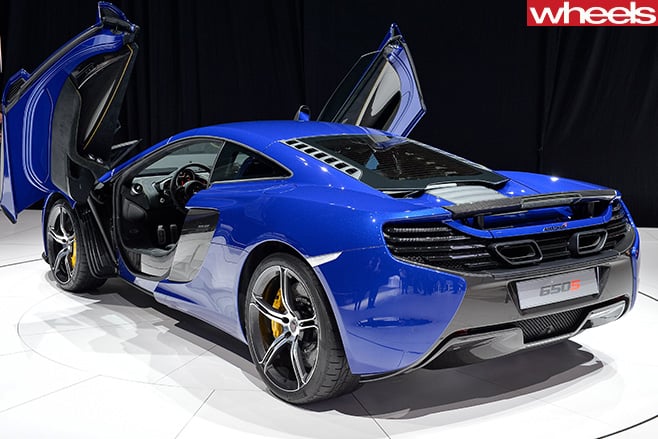
FERRARI 458 SPECIALE
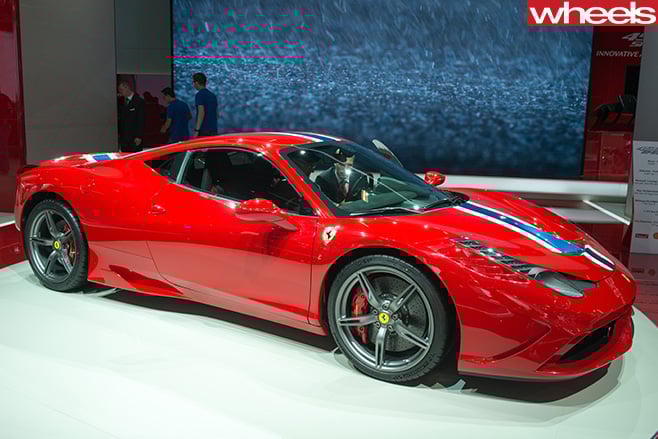
FERRARI F12
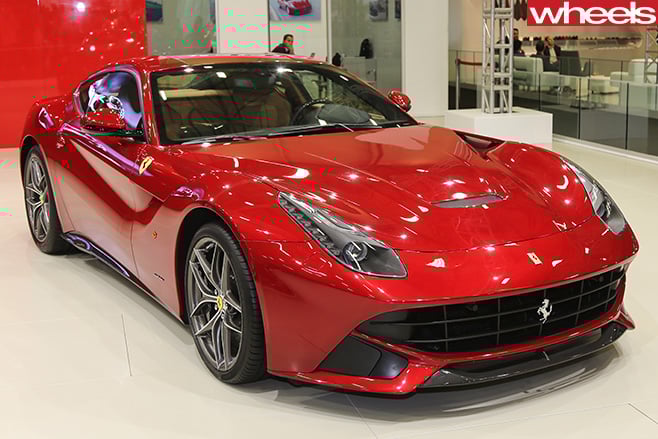
LAMBORGHINI HURACAN
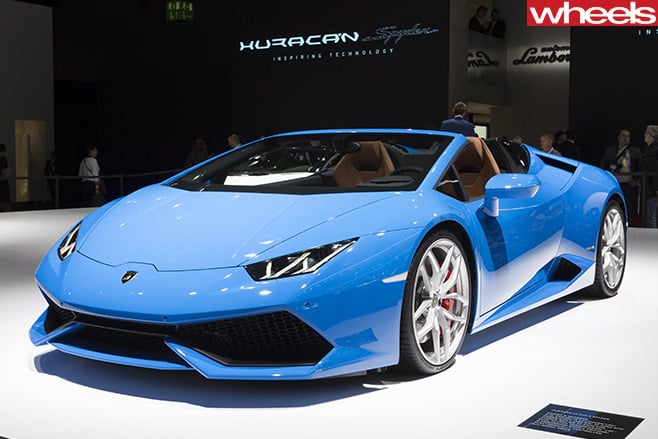
Today, we’re heading up to Mt Buller in the Mazda CX-5. We’re ready for a bit of snow play, but first, we’re taking these windy, icey roads nice and slow.
Driving in freezing conditions can be tricky, so it’s important you come prepared with ski chains and drive with caution.
Lucky for us, we’re travelling up in the CX-5 which comes with plenty of comforts that makes this perfect for a ski trip. We’ve got the navigation guiding us, our radar cruise control on and my favourite feature, the seat warmers to keep us nice and toasty. We’ve even got the sunroof open, although we’re not getting much sun today!
Located in the Shire of Mansfiled, just three hours east of Melbourne, Mt Buller is home to over 300 hectares of skiable terrain.
From beginners’ slopes to the black runs, there’s something for everyone.
Mt Buller offers more than just skiing and boarding, so once you’ve mastered the slopes, make sure you get out there to explore. Today, we’re sticking to tobogganing.
And for those with a little family, Australian Sled Dog Tours is one to add to the to do list… even us big kids have a great time. Unfortunately today it’s a little bit wet, but we got a cuddle with the puppies instead.
When it comes to accommodation in Mt Buller, there are plenty options. From low-cost, hostel stays, self-catering apartments and the more luxurious retreats and Chalets, including the Mt Buller Chalet Hotel situated in the heart of Mt Buller Village, there’s something for all budgets.
When you’re ready to hang up the snow boots and retire, there’s nothing quite like a glass of wine, or hot choccy by the fire. Bliss.
We’ve packed and readied the car, brushed off the snow and now we’re ready for the journey home. Thanks Mt Buller, we’ve had ‘snow’ much fun. Now I’m ready for those seat warmers!
Click here for tips on driving in the snow.
Click here to read the full review on the Mazda CX-5.
These three hatchbacks hit the sweet spot. But have Corolla and Focus improved enough to reel in the mighty Golf?
Can’t wait to see the final scores? Jump to the verdict now.
SCIENTISTS first coined the term ‘The Goldilocks Zone’ to describe the narrow distance band from a sun that can support life. Not too hot, not too cold, all that stuff. In our solar system, Earth is pretty much it. Let’s care more for her.
Similarly, the Golf class, as the C-segment is often described, has long been the car industry’s sustainable sweet spot, with the Volkswagen, Ford Focus and Toyota Corolla regularly duking it out for global best-selling honours.
Australia, of course, is no exception, though it’s the Corolla and Mazda 3 that battle for number-one status. Small cars rule, while their similarly sized SUV offshoots (the RAV4 and CX-5 respectively) back them up for outright popularity.
More power to Ford
Coincidentally, the Corolla, Golf and Focus have all undergone change during 2015, prompting this shootout. Does this market’s perennial underdog Ford have what it takes to challenge the class benchmark Volkswagen and the best seller Toyota?
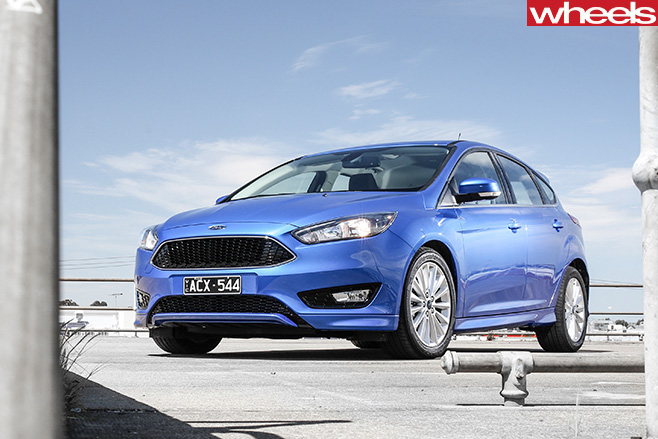
The results make it the most powerful mainstream small car in history. The sweet but toothless old 92kW/159Nm 1.6-litre base and mainstay 125kW/202Nm 2.0-litre GDi atmo units have given way to a 132kW/240Nm 1.5-litre ‘Ecoboost’ turbo tearaway, driving the front wheels via a six-speed manual or six-speed torque-converter auto. Both the problematic dual-clutch and the diesel have been binned.
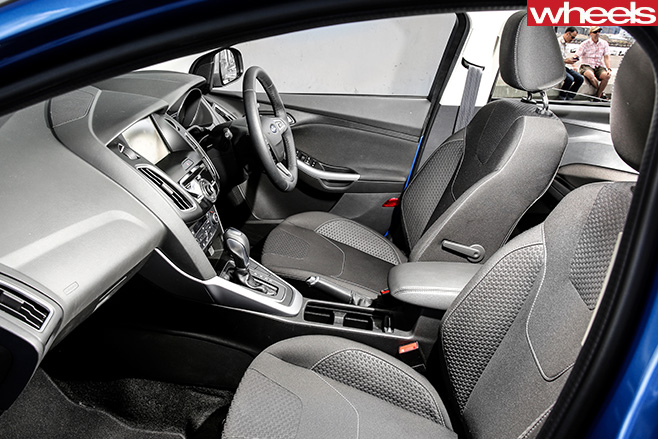
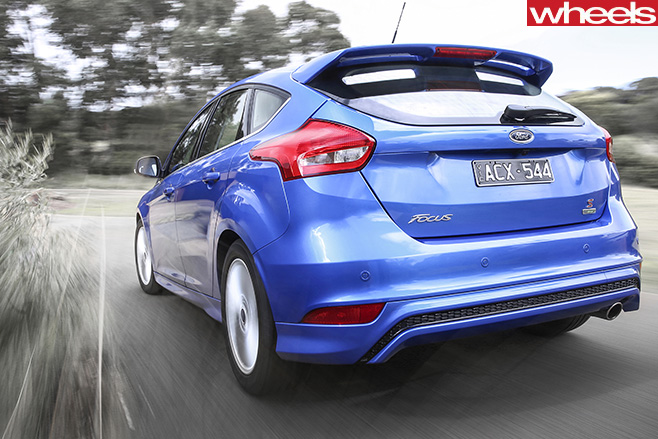
We’ve gone for the $27,490 Sport auto, which also brings to the table a bodykit, 17-inch alloys, “sports tuned” suspension, dual-zone climate control, keyless entry and start, folding mirrors, auto headlights and wipers, a ritzier lighting pack, a leather steering wheel, and this group’s only DAB+ digital radio. Three cheers for the grandson of Laser TX3.
Luck, for a change, is on Ford’s side. No stranger to controversy of late, Volkswagen is embroiled in a global diesel emissions cheating scandal that not only tarnishes the Golf but also threatens to derail the German giant. Mistrust hangs over our 2013 Car of the Year winner like the fumes from the brand’s so-called Clean Diesel TDIs. In which case, there’s never been a better time for rivals to capitalise on Wolfsburg’s monumental mistake.
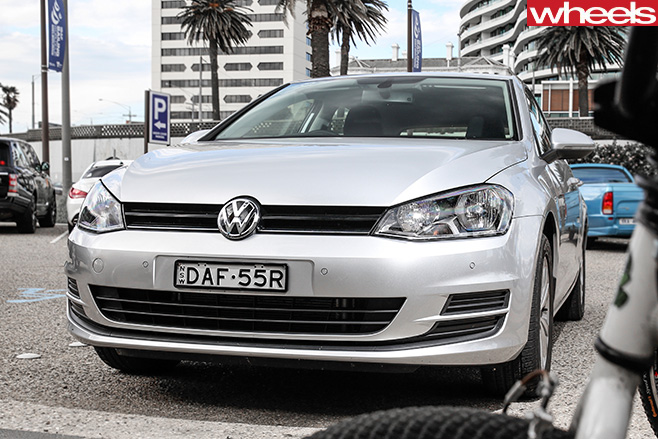
Of the trio, only the Golf also offers a range of driver-assist safety options such as Autonomous Emergency Braking (AEB) at our sub-$30K price point, further underlining Volkswagen’s tech savvy.
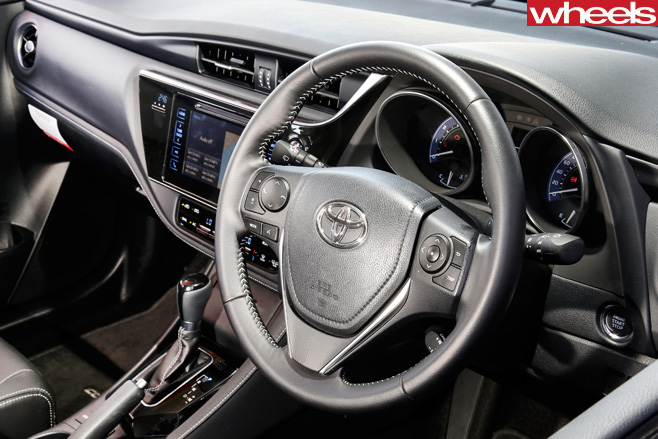
Toyota released the revised Corolla in June, springing a surprisingly effective nose and tail-light update on the three-year-old 11th-gen series, while also introducing a reshaped dash, prerequisite multimedia spruce with camera, smarter instrument dials, revisions to the steering and suspension, increased quietness, and an overhauled Continuously Variable Transmission promising handy fuel consumption cuts.
A tale of three autos
That’s right, folks – with CVT, dual-clutch and torque-converter trannies here, this is as much a test of small automatics as anything else.
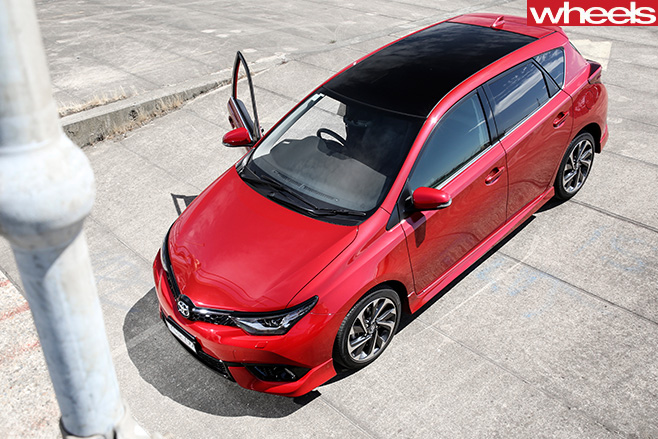
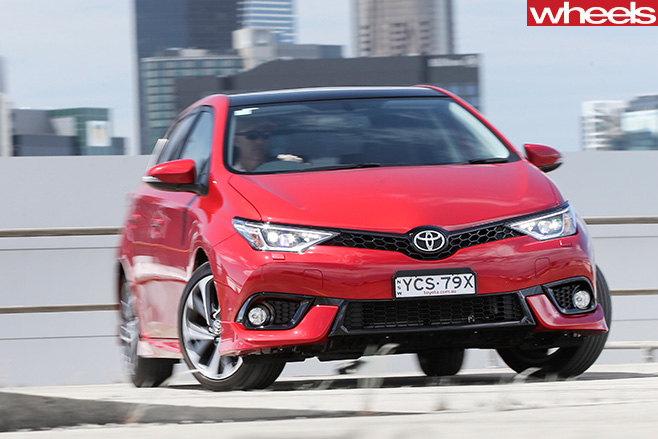
Predictably, in this downsized turbo company the Toyota feels dated. The 2ZR-FE twin-cammer is tuned to feel terrifically responsive off the mark, with a fast and flowing torque delivery across most urban speeds, accompanied by a typically ultra-smooth CVT action. At 100km/h the tacho is barely touching 2000rpm. If only taxi journeys were this effortless.
At freeway overtaking speeds, Corolla’s engine starts to run out of puff (and refinement) as the others are streaking away. The numbers say it all. Ten-dead was the best we could coax to 100km/h, while 17.3sec to 400 metres is a whole second behind the hard-charging Focus. As with the rest of the group, the trannie shifts up even in manual mode, making the paddles seem a waste when the CVT is always calling the shots.
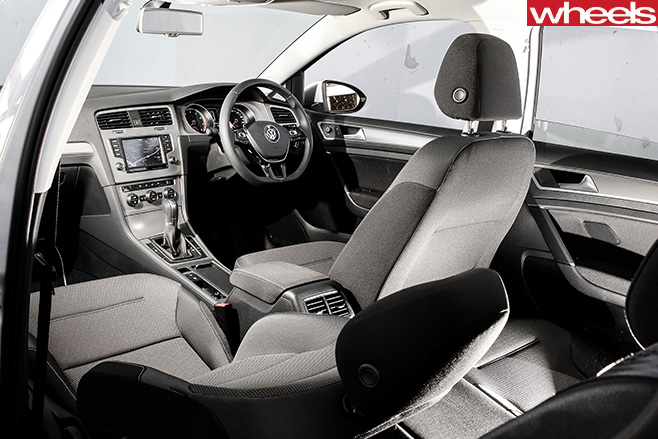
On paper, you’d expect the Focus’s 40kW and 40Nm advantage to obliterate the 92kW/200Nm Golf, but a 150kg weight penalty almost evens things up. We wonder how the Wolfsburg Kid would’ve fared with more than its barely run-in 1100km on the odo, against the Ford’s 5000km.
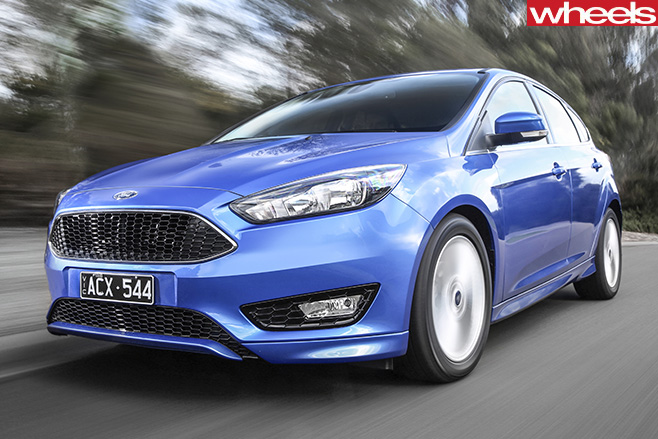
Rawer and rortier than either of its rivals at take-off, the latter’s lauded Ecoboost 1.5 charges energetically up through the gears. While the Focus seems faster and more frenetic than its disappointing 8.8sec 0-100km/h result suggests, a slight yet persistent gruffness does take the shine off its appeal somewhat. And that thumb-operated manual gearshift toggle feels as alien as ever to operate. Lose it, Ford.
Poise, discipline and composure
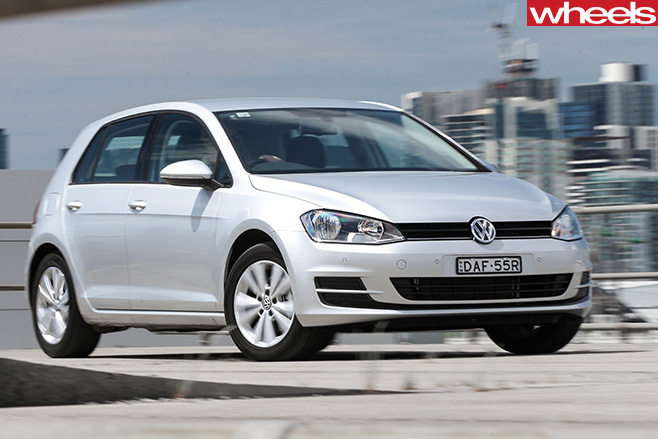
It also sets the handling and ride benchmarks, with consistent, precise and responsive steering that manages to skilfully filter out unwanted feedback without sacrificing feel. Backed up by an eager and agile chassis, the Golf corners with cracking poise and control, soaking up bumps with exceptional quietness (though the tyres are 16s compared to the 17s of the others). It’s an ultra-composed handler that never puts a single foot wrong dynamically.
And the Corolla? Aided by a set of quality Michelin 215/45R17 tyres, the ZR proves surprisingly fluid and flat in its handling composure, carving through corners in a safe and predictable manner. But there is a detached, steering-by-numbers sense to the Toyota’s dynamic dialogue, so you don’t ever feel as connected to the experience. And if the bitumen starts to deteriorate, so does Corolla’s comfort, with the ride becoming fidgety and unsettled, accompanied by plenty of road noise intrusion.
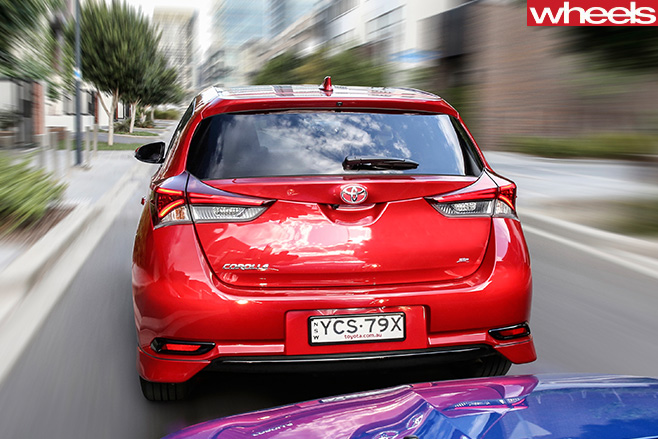
The rather funky Corolla, in contrast, is proudly Japanese-modern, simple to navigate and quite appealing from the front seat, but – like the spacious Ford – not in the Golf class as far as rear-seat accommodation is concerned. All have large and practical boots, with low loading lips, but only the Corolla includes a full-size 17-inch spare.
Is this as good as it gets?
Despite all the controversy surrounding Volkswagen, the Golf 92TSI Comfortline easily remains at the top of its game, perhaps the best all-round new-car buy in the world today. Three years on from its international launch, the Mk7 is still astoundingly complete, and remarkable value for money.
The facelifted Focus is a fine effort, with pricing and positioning reflecting Ford’s desperation to become relevant to Australian consumers again. What it lacks in polish is more than made up for in performance, dynamics, comfort, equipment levels, personality and charm. It has probably the best automatic gearbox from a long-term ownership proposition, but the LZ Focus is heavy, relatively thirsty and feels like it has merely caught up with the previous-gen Golf VI, rather than eclipsing the Golf VII.
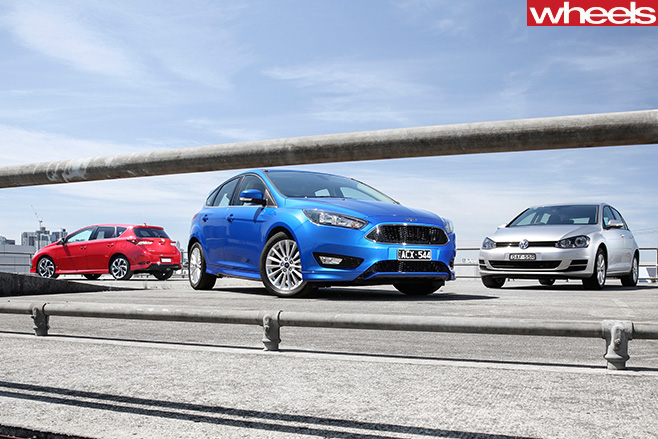
The latest Focus really is a cracker, though. Volkswagen, Toyota and others… you are on notice. Yet, despite the Ford’s driver appeal, Golf remains the small-car sweet spot.
Class of ’76
EVEN though several generations separate them, we reckon the Golf LS, Escort XL and Corolla SE of 1976 would have finished in about the same order as their descendents. The 55kW 1.6-litre VW cost $4358 ($25,600 today), the 48kW 1.3-litre Ford was $4015 and the 54kW 1.2-litre Toyota set you back $3779. All had four-speed manuals, but offered a three-speed auto for around $380 ($2230) more. Escort and Corolla were rear-drive, Golf FWD.
Verdict
 VOLKSWAGEN GOLF COMFORTLINE
Price as tested: $28,490 *Includes metallic paint ($500)
NCAP rating: 5 stars (Aus)
Fuel economy: 8.1L/100km (test average)
Acceleration: 0-100km/h: 9.1sec (tested)
Plus: Refinement; efficiency; performance; handling; ride; quality; packaging
Minus: Some DSG lag; no voice control; slightly underdamped fully loaded
Verdict: 9.0/10
 FORD FOCUS SPORT
Price as tested: $27,940 *Includes metallic paint ($450)
NCAP rating: 5 stars (Aus)
Fuel economy: 10.0L/100km (test average)
Acceleration: 0-100km/h: 8.8sec (tested)
Plus: Strong performance; sharp handling; comfy ride; warm-hatch feel
Minus: Thirsty; rear seat comfort issues; no driver-aid safety availability
Verdict: 8.0/10
 TOYOTA COROLLA ZR
Price as tested: $30,940 * Includes metallic paint ($450) and ‘Skyview’ glass roof ($1500)
NCAP rating: 5 stars (Aus)
Fuel economy: 8.5L/100km (test average)
Acceleration: 0-100km/h: 10.0sec (tested)
Plus: Ease and efficiency; improved interior quality; urban zip; reliability; resale
Minus: Firm ride; loud engine; flat front seats; short service intervals
Verdict: 6.5/10
