
What has a smaller engine and a pair of turbos done for the base Porsche 911? It’s made it faster, more useable and enacted a personality change of sorts.
You got to know the tacho quite well in the old 991 911 Carrera and Carrera S. In S trim, the previous 3.8-litre naturally-aspirated flat-six made 292kW at 7400rpm and 440Nm at 5600rpm.
It was certainly on the peaky side, an engine you had to rev out to get the best from. But that was never a chore, as the noise it made on the way to its 7800rpm redline was truly something.
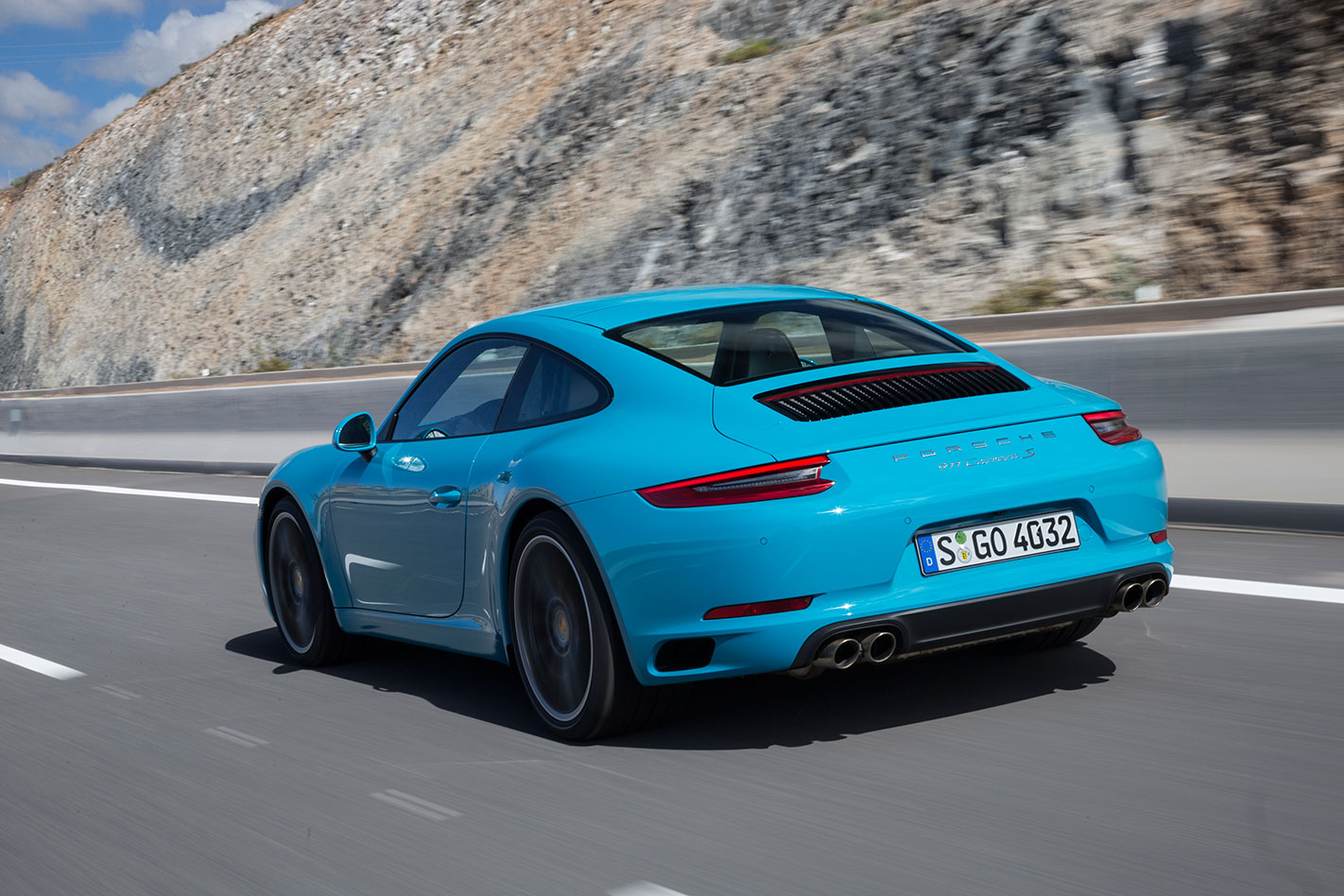
Compared to the old S, power is up 15kW, to 309kW at 6500rpm, but torque is the big one, a 60Nm increase to 500Nm available from just 1700rpm all the way to 5000rpm.
Consider that the previous car didn’t make its peak torque until 5600rpm. Redline is down from 7800rpm to 7400rpm. Boo, yes, but it’s not as significant a cut as could’ve been. Porsche has toiled hard to make this engine behave as naturally-aspirated as possible.
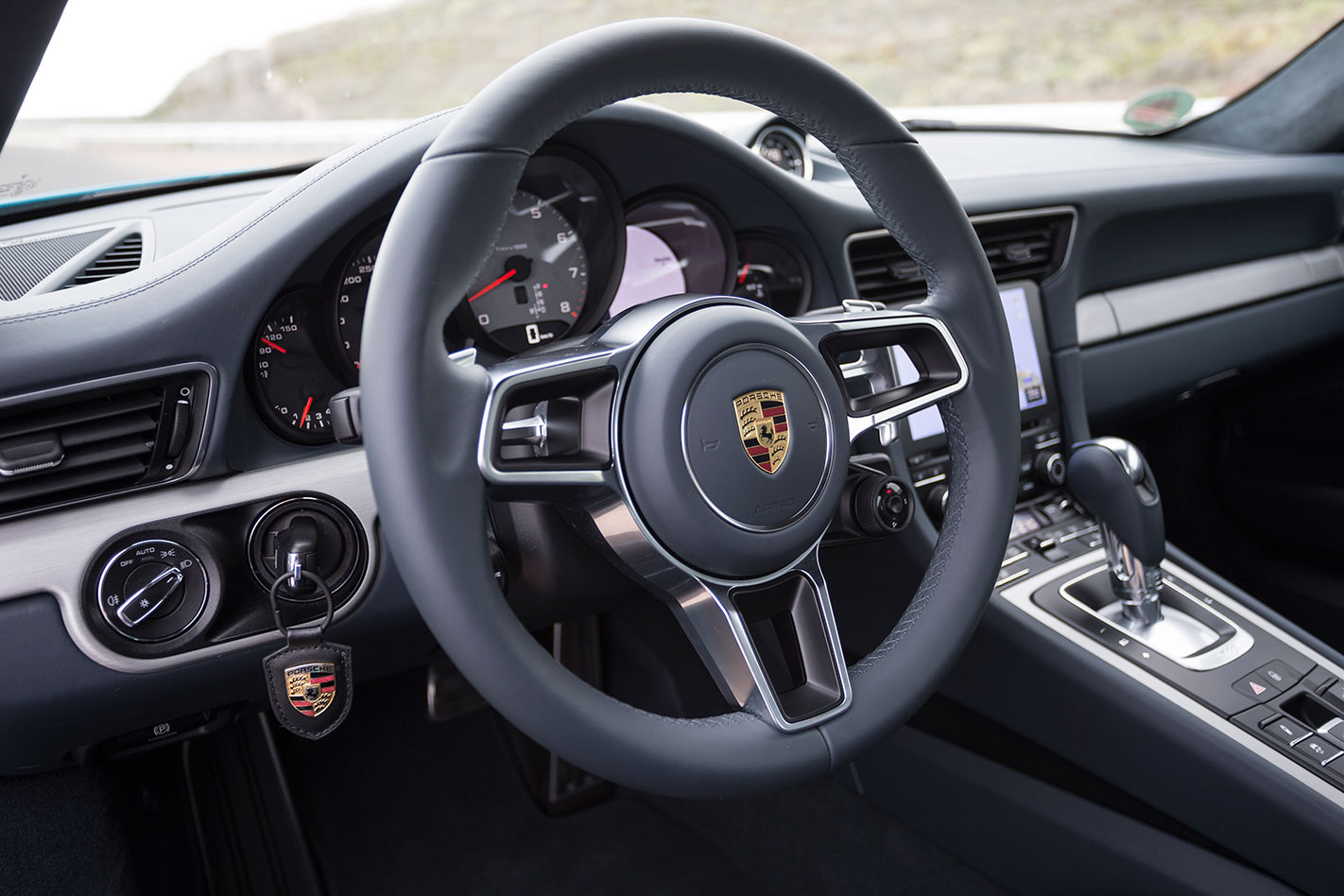
For a start the new car seems quieter but with the taps fully open it bellows a note about an octave lower and one a bit more technical than mechanical. It’s still recognisably Porsche flat-six just not quite as distinctive as previous.
And the new car certainly doesn’t sing its way to redline like the old one; in fact you don’t saviour the final 1000rpm like you did the old car because it’s just not the same event.
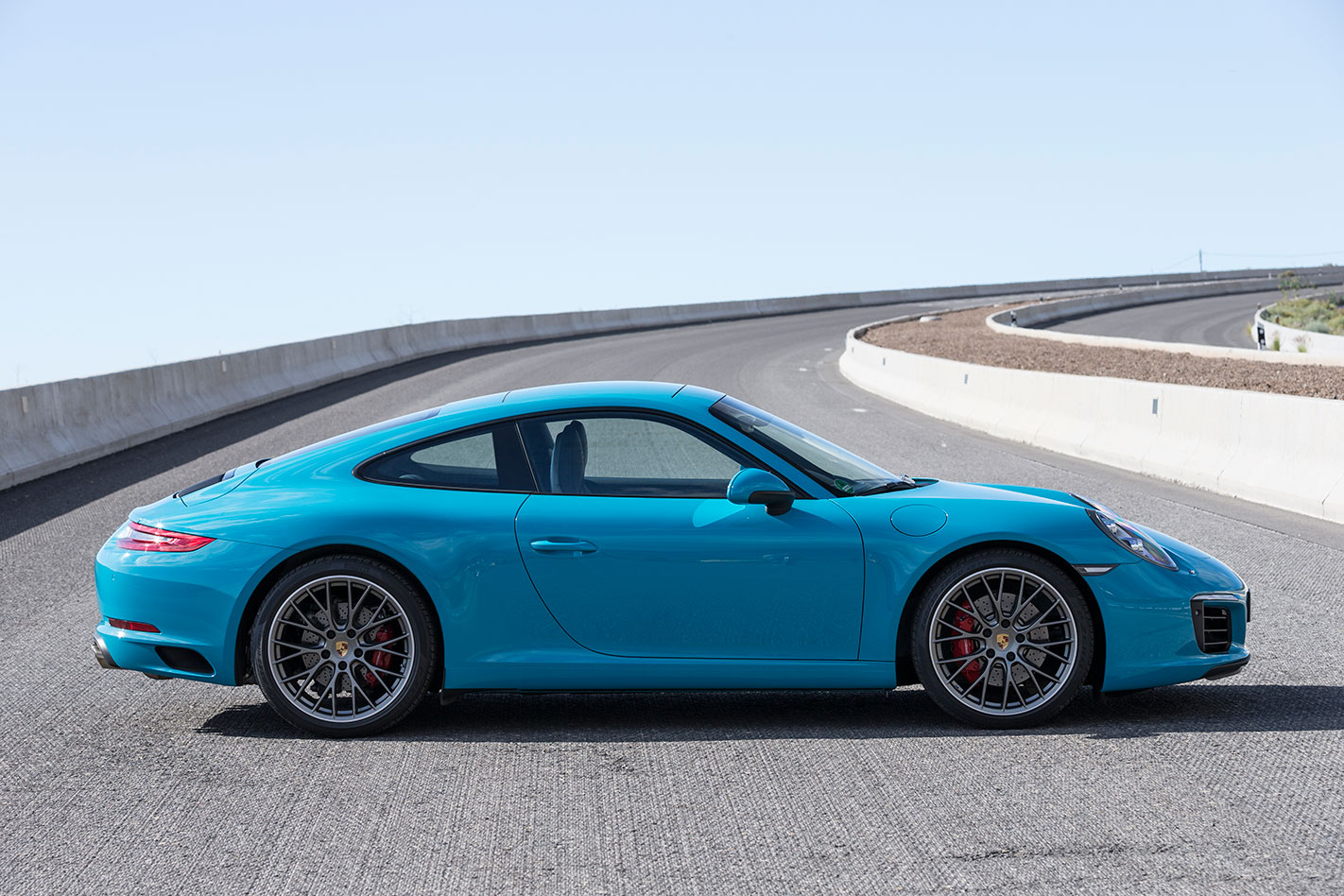
There’s now a flexibility about the engine the old NA car couldn’t hope to match. You’re in fourth gear at 3000rpm? Not a problem – boot it, give it a fraction for the turbos to spool, and you’re boogying. You had to bang the old car down a few gears to get the same effect.
And the new turbo Carrera S is fast. It’s not quite bordering-on-scary explosive like its 911 Turbo big brother, but it’ll still push you back in the seat and have you paying attention. The power is just right.
Launch control, and short-ish first and second gears, help it to 100km/h in 3.9sec, or 0.2sec faster than the old car.
Porsche says turning the Carrera S turbo has saved 1.0L/100km, combined consumption now 7.7L/100km. Our car said we were doing 26.9L/100km – mind you, the driving was, err, especially enthusiastic.Don’t blame us, the Carrera S is remarkably well sorted, much like the old car, and it’s serious fun up a twisty road. The 911 really is one of the best handlers around and the 991.2 is no different – it’s got its scheisse together.
The steering is accurate and honest, the damping spot-on and it even rides sweetly. As an all-round product, the Carrera S is super impressive.
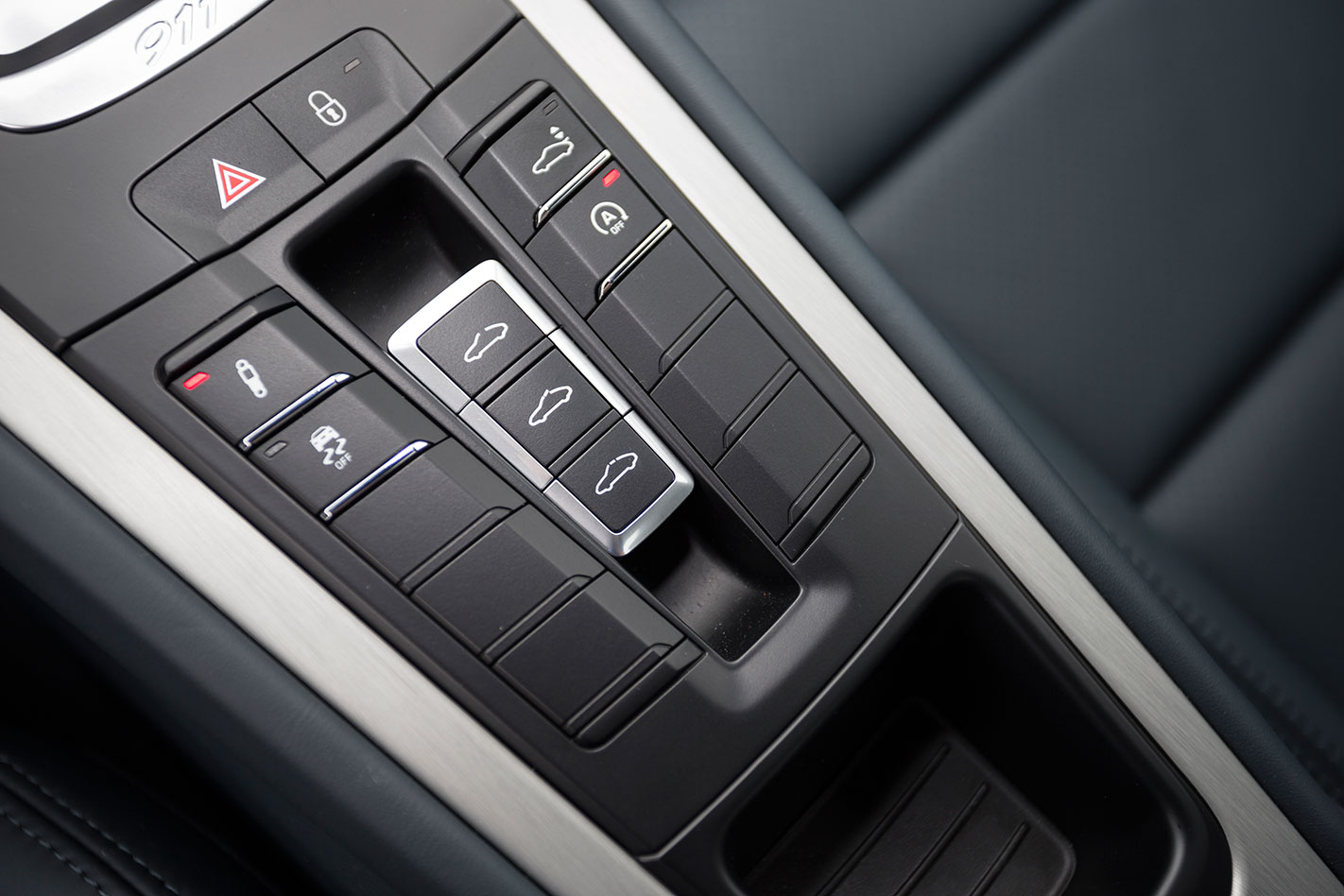
It’s interesting, though, how much a smaller engine and turbos can change a car. The 911 is still a cracking, impressive, satisfying and easy car to drive fast. Few other cars scratch the driving itch like a 911, and that’s still the case.
But turbos have changed its personality from a car than once sung its lungs out at high rpm like some opera singer – a car whose neck you had to half wring – to something just as fast, if not faster, but a little more mature in the delivery.
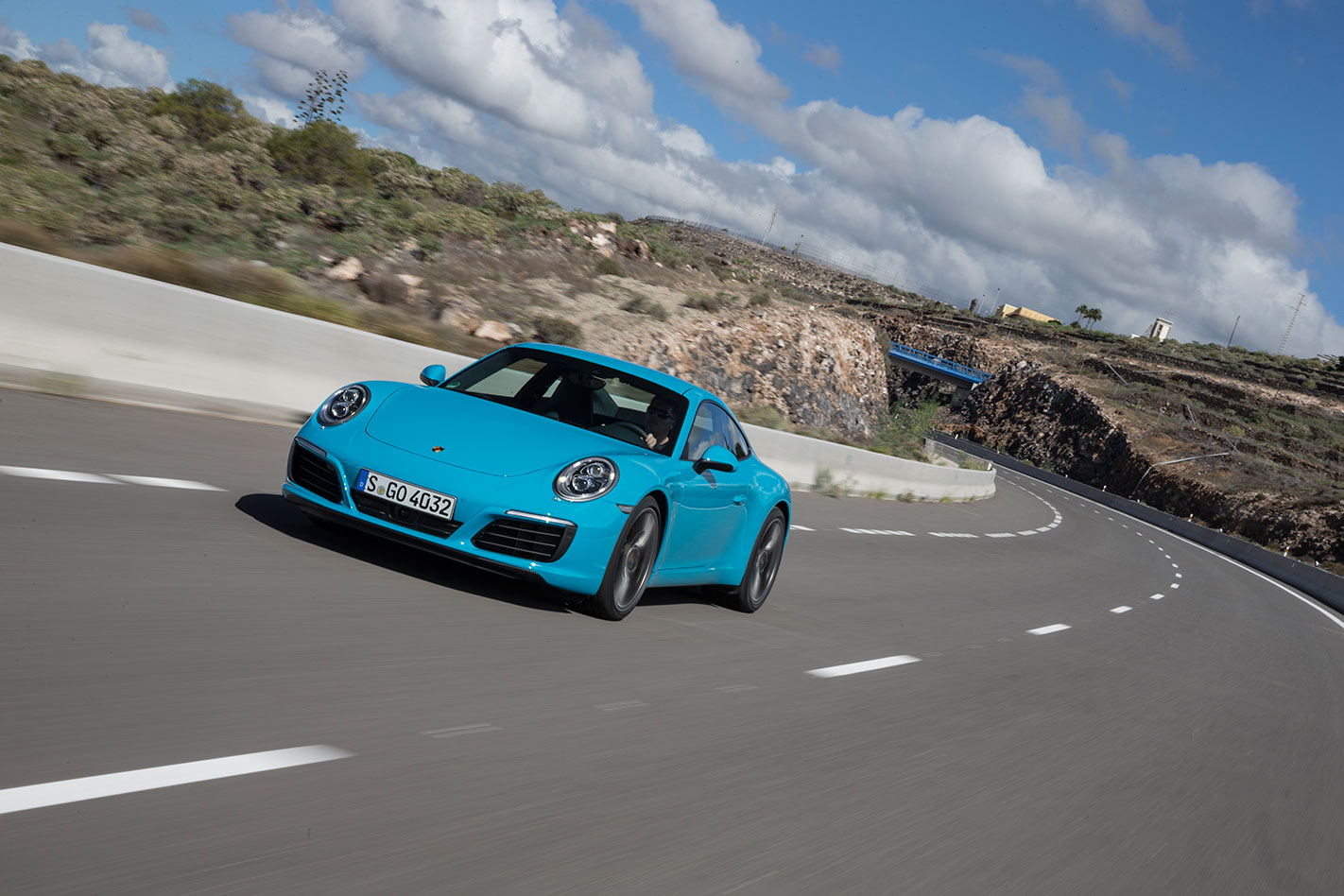
It’s an outstanding car. If the tacho suddenly turned into a clock it’d just take you a little while longer to notice.The new turbo Carrera and Carrera S are on-sale Australia in March.
4.5/5Porsche 991.2 911 Carrera S PDK Engine: 2981cc horizontally-opposed six-cylinder, DOHC, 24v, twin-turbo Power: 309kW @ 6500rpm Torque: 500Nm @ 5000rpm Weight: 1460kg 0-100km/h: 3.9sec Top speed: 306km/h Price: $258,750
For a show that isn’t open to the public, the annual SEMA (Specialty Equipment Manufacturer Association) show sure attracts a lot of public attention.
But with literally thousands of vehicles showcasing the fringe of the aftermarket industry, it’s one that keeps catching eyes, from all over the world, for its outlandish and impressive displays.
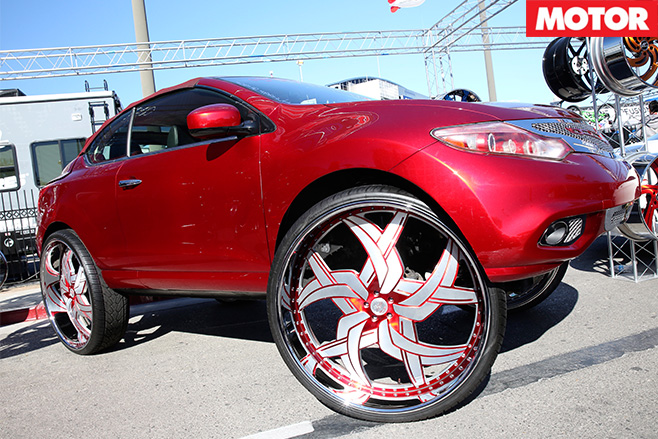
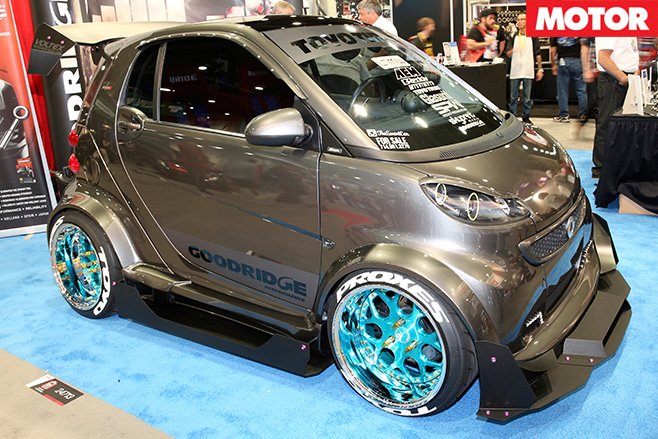
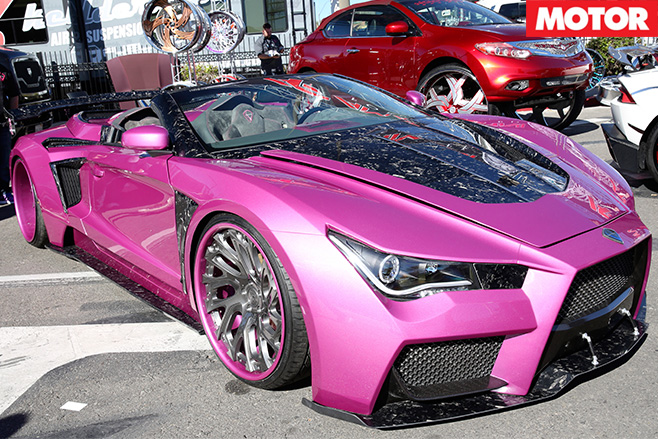
This year in Las Vegas was no different, and with one of our snappers pounding the pavement, we’re here to treat you to our top picks for the weirdest, wildest, and most wonderful cars we came across.
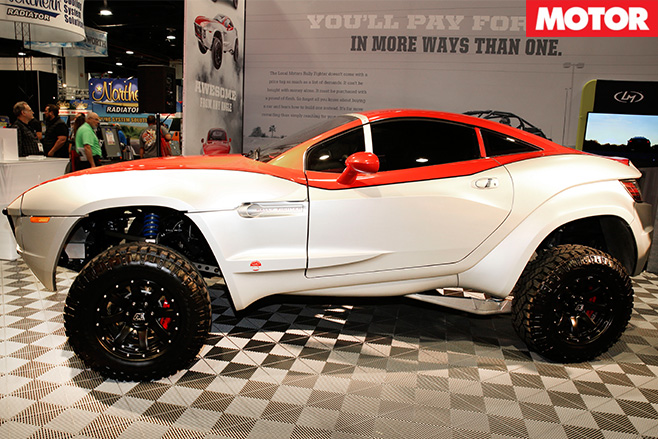
WEIRD:

WILD:
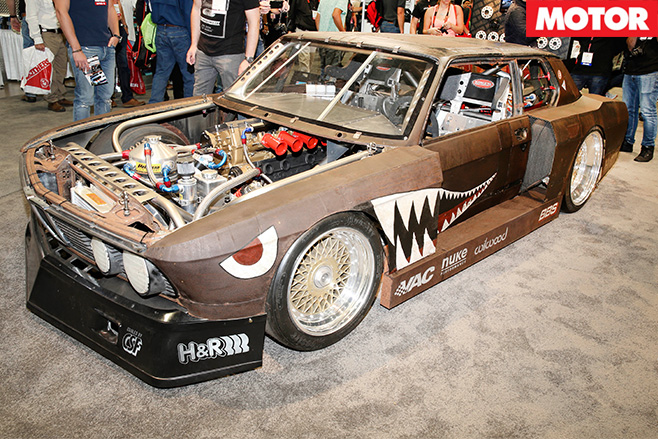
If this looks like the remains of a badly burnt 5-Series, that’s because it is. Owner Mike Burroughs rebuilt a rat-rod styled 5 Series after it caught fire, keeping the core bits and completely revamping everything else, including its now-353kW straight-six from an E34 M5.
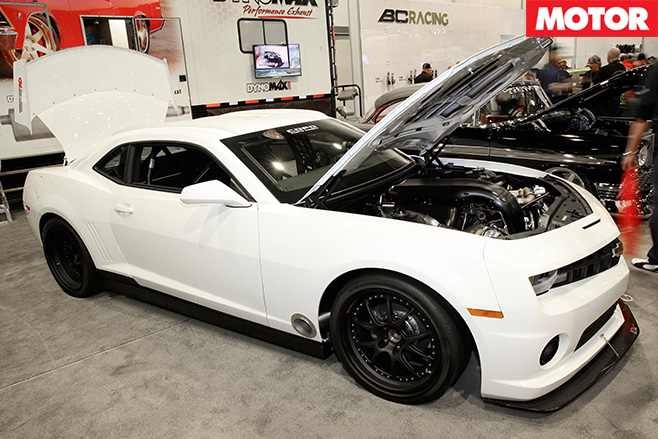
This Camaro started life as COPO factory drag special, which is ironic, as it’s clearly outgrown the drag strip. With two and a half times the power of a Bugatti Veyron, this 1864kW monster’s searching for airport runways. There it’ll crack some flying speeds too, as it’s said to hit 361km/h.
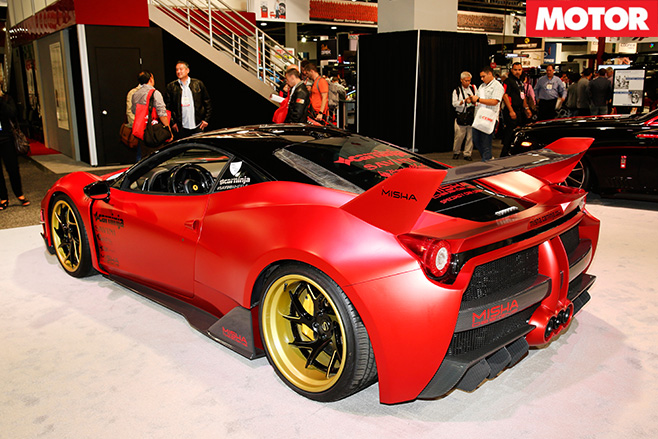
Wrap, re-style, and widen a Ferrari 458 Italia? Brave, even if a little bit controversial. Misha, the creators, have limited the aero package to 20 units, meaning you won’t be seeing this car on a road near you. A bad, or maybe good, thing.
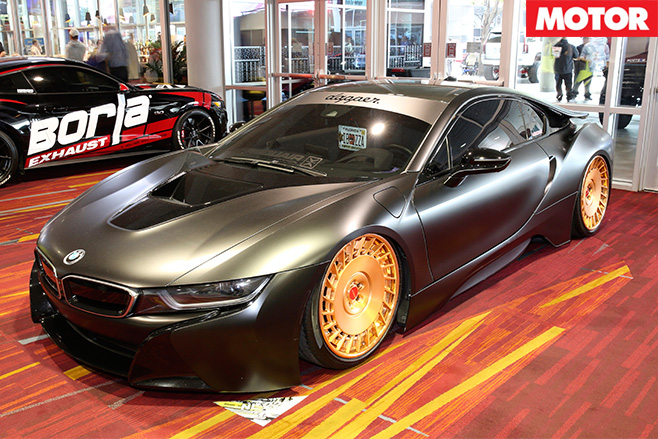
It will wreak havoc on the countless hours engineers spent on perfecting the aerodynamic, and suspension, package of the BMW i8, but Accuair’s idea to airbag the eco supercar does look delicious.
Diesel Power Ford ‘Super Six’
Few trucks speak about America like the F-series. It’s huge. But not big enough for the boys at Diesel Power, who stretched a F550 Super Duty with a triple-cab, six-wheel steering, and fully independent suspension. Oh, it also carries a trophy truck on its rear deck.
WONDERFUL:
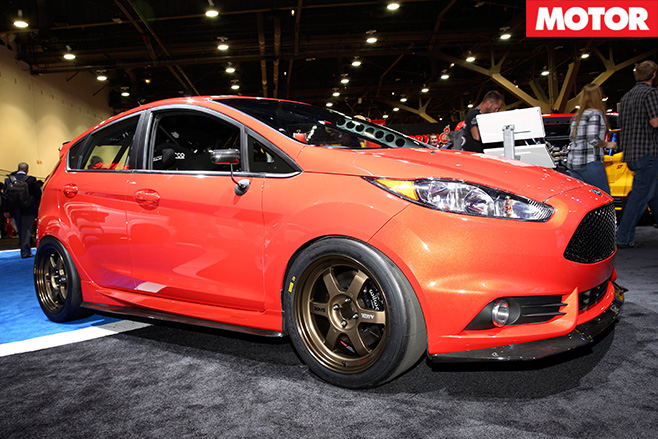
Yes, that’s a roll-cage in a Ford Fiesta ST. The driver will need it, since this Fiesta has been modified to produce over 300kW while being the size of a bumble bee. Owners DSport completely revamped its turbocharger arrangement, and gave it some serious rolling stock.

You’re a drag racer, but don’t have the time to build a car for yourself. Well the nice folks at Ford have you covered. Its Ford Mustang Cobra Jet is an eight-second weapon, with cage, seats, 5.0-litre supercharged V8 and all. Fifty will be made for US$99,990.

While tyre wall markings and gold rims miss the point of an S-Class coupe, we’re partial to one treated to the lowered VIP treatment – especially when it’s a S63 AMG.
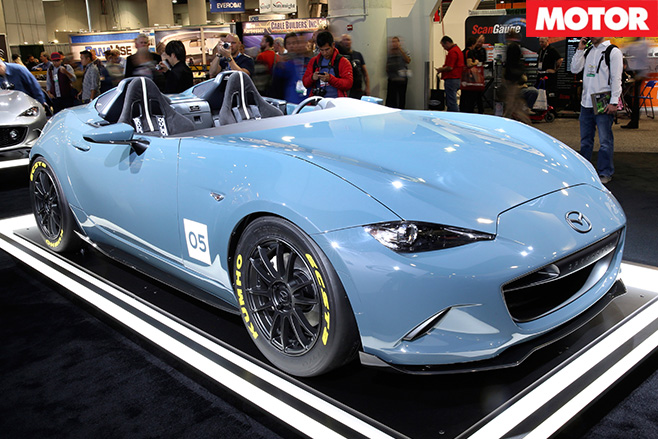
When manufacturers try and fit in to the wild and creative showroom that is SEMA, good things happen. Mazda’s Speedster concept was a case in point, reviving classic D-Type looks on the MX-5.

We’re all familiar with Camaros, and we’re all familiar with the work of Liberty Walk. What happens when the two combine? A delicious widebody Chevrolet that proves even muscle cars can visually benefit from the wide treatment.
It doesn’t get any more resolute than this – the Mitsubishi Lancer Evo X Final Edition will close off 10 generations and 23 years of rally-bred sports sedan.
It also doesn’t get any more powerful and torquey, because the Lancer Evo X Final Edition arrives with 226kW and 414Nm from its 2.0-litre turbocharged four-cylinder engine.
Increases of 9kW/48Nm are partially down to sodium-filled valves that increase cooling efficiency, permitting higher outputs. We’ve achieved a 5.59-second 0-100km/h in the Evo X manual that launched locally in 2008, so expect a low-five-sec time for the Evo X FE.
Mitsubishi has taken its time boosting the performance of the Evo X, saving the gruntiest-ever version right until the fat lady warbled out a tune. With an old-school five-speed manual transmission the only choice, the $53,700 Evo X FE costs $710 more than the regular version.
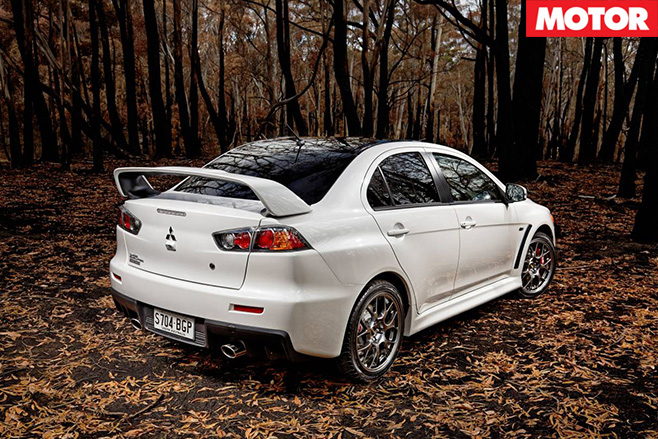
Equipment that seven years ago was reserved for the $72,000 Evo X MR variant is now standard on the Evo X FE, including 18-inch BBS wheels, Brembo brakes, Bilstein shocks with Eibach springs and leather-trimmed Recaro buckets.
Seven years is a long time for even a fine sporting player like the Lancer Evo X to compete, however, and the fresh Ford Focus RS and new-ish Subaru WRX STi means this Mitsubishi is leaving the game under duress.
For fans of the Lancer Evo X that won’t matter, and the powered-up Final Edition is likely to boost an already brilliant corner-carver. Mitsubishi says its all-wheel drive technology will live on in future sporty SUV models, but it’s unlikely to be the same for the die-hards.
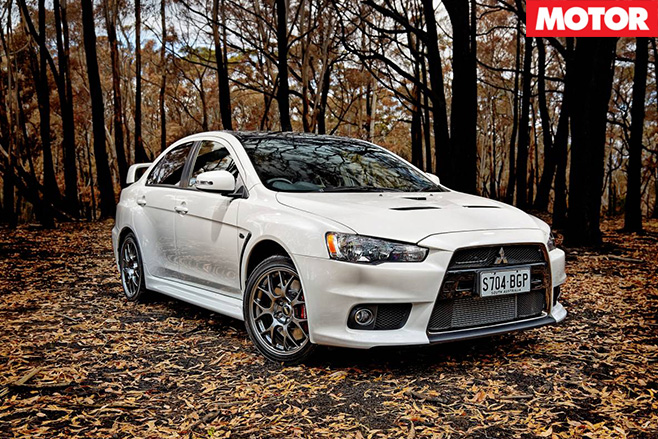
“The Lancer Evolution is integral to Mitsubishi’s notable motoring heritage and we are proud to round off this chapter with such a fitting tribute”.
VOLKSWAGEN has offered US owners of VW-badged vehicles affected by the growing emissions scandal a $US1000 “goodwill” package, but with strings attached.
Under the terms of the deal, detailed on a page under the heading “We’re Working to Make Things Right”, eligible owners of affected 2.0-litre diesel-engined models will receive a $US500 credit card, as well as a “Volkswagen Dealership Card” valued at $US500, making the deal equivalent to about $A1400.
Both the cash and the dealership credit must be spent within 12 months of receiving the card, and can only be used by the person who makes the claim. And the money can only be spent inside the US and the US territory of Puerto Rico.
Volkswagen USA is also giving affected owners who register for the goodwill program three years of free roadside assistance.
The offer is only open to owners of privately bought and financed vehicles, and not to bulk-order customers or anyone who has borrowed money from Volkswagen’s US finance arm, the fine print reads.
A global recall of 1.6- and 2.0-litre diesel engines tied to the emissions scandal, which broke after the US EPA found software had been coded to recognise if they were being emissions-tested and run in a special low-emission mode, has scooped up almost 100,000 Australian customers since news of the software cheat codes broke.
The EPA has since accused the Volkswagen Group, which includes brands such as Audi, Skoda and Porsche, of also fudging emissions figures for V6 diesel engines – an accusation the carmaker has strongly denied.
Meanwhile, US lawyers have advised VW customers to approach the carmaker’s goodwill gesture carefully after raising concerns that by signing up for the cash, they could also waive any right to compensation if they had joined a class action lawsuit against the company.
Volkswagen USA said the agreement that customers need to sign to get the cash and barter offer would not stop them seeking extra compensation at a later date, and instead was tied to the terms of the credit card’s use.
Yep, it’s the match-up you’ve all been waiting for.
Holden has now installed the 6.2-litre LS3 V8 in its final VF II Commodore series, producing 304kW/570Nm and gifting it a wicked engine note.
The Ford Falcon XR8, of course, continues with the – ahem – 335kW/570Nm 5.0-litre supercharged Miami V8 that we’re all now familiar with.
As explained in the video, we have a manual Holden and an automatic Ford, which will annoy plenty of people, however there are a couple of good reasons for that.
Firstly, a manual Redline is what we could source on the day and Holden also claims 4.9sec from 0-100km/h for the manual versus 5.0sec for the auto, so theoretically the manual is the faster car.
Finally, it’s important to mention that there was a strong headwind on the day, so both cars ran a couple of tenths off the best numbers we’ve managed, however it was obviously the same for both cars.
For the full comparison test with check out the new issue of MOTOR.
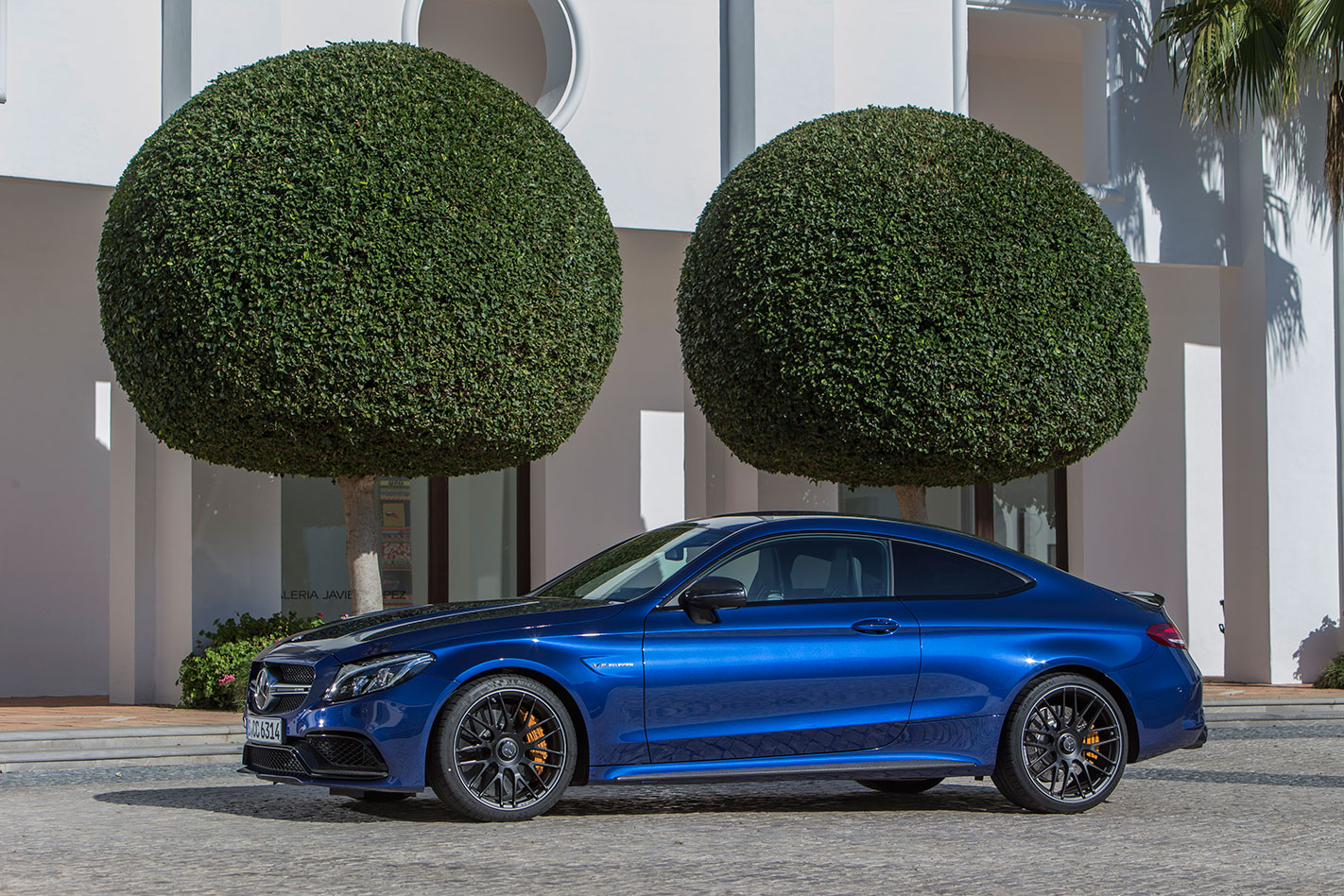
You might imagine this is a very easy review to write. After all, this is just a Mercedes-AMG C63 S sedan with a swoopy new body and two less doors, right?
Not quite. In an effort to greater differentiate the two models, AMG has re-engineered the Coupe to offer more grip and sharper dynamics.
That Kardashian rear end allows the fitment of a new rear axle, with 50mm of extra track, less compromised geometry, uniball joints replacing rubber bushings to improve response and wider rear rubber (now 285mm) to improve traction.
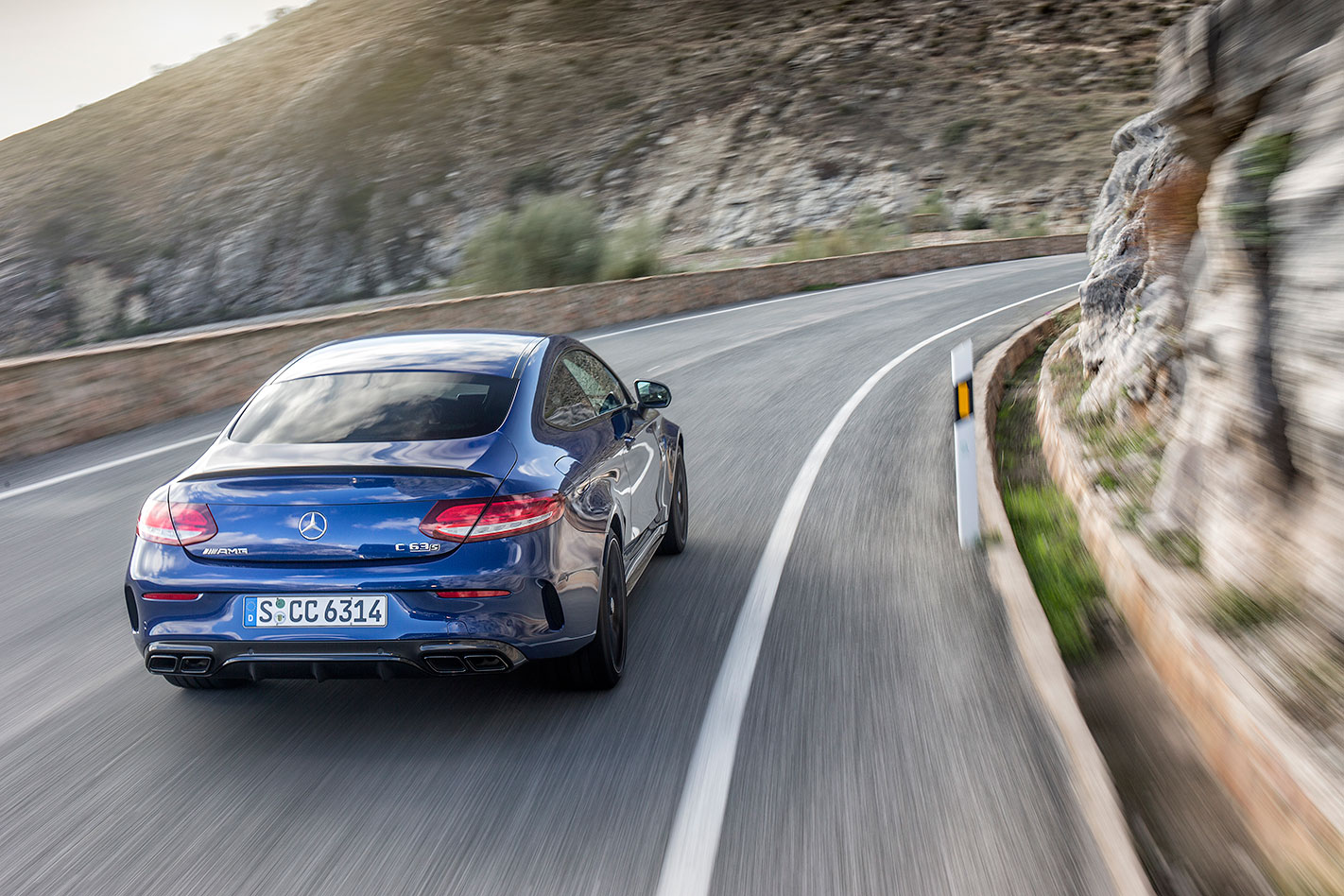
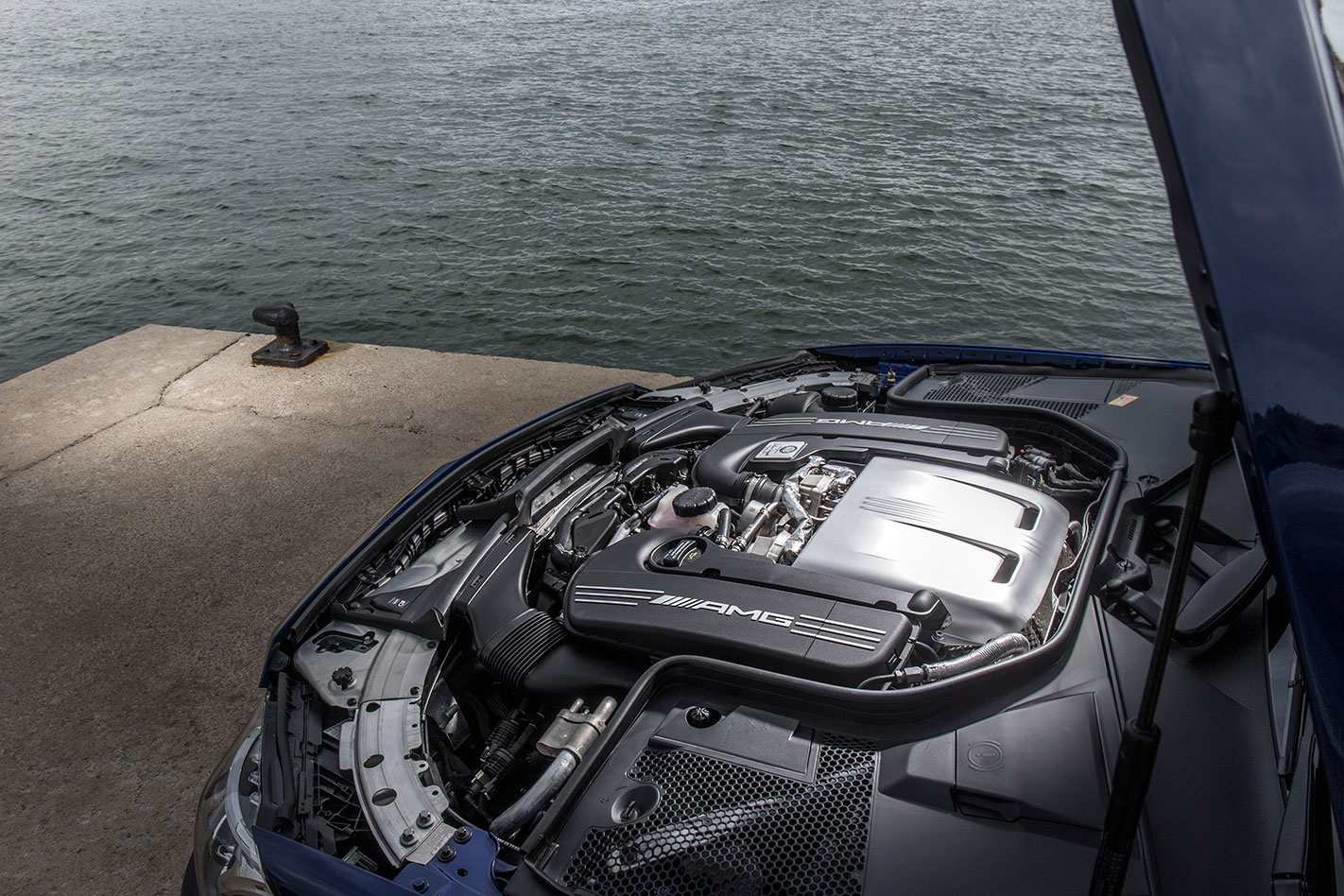
Under the bonnet is the same 375kW/700Nm 4.0-litre V8 as the sedan in all its twin-turbocharged glory, though a slightly shorter final drive ratio makes it a little more eager, AMG claiming 3.9sec from 0-100km/h, a tenth faster than the sedan.
It’s an astounding engine, with a soundtrack like you’re being chased by a thunderstorm, and it’s matched to a much improved version of AMG’s seven-speed wet-clutch automatic gearbox.
When the C63 sedan is already so capable, an extra five per cent traction or sharper response isn’t really going to be noticeable at road speeds unless you drive the cars back-to-back.
Which isn’t to say the Coupe isn’t brilliant. The steering is excellent, the balance superb and there’s enough traction to go extremely quickly but easily enough power to slide the rear at will, something the Sports ESP setting thankfully permits.
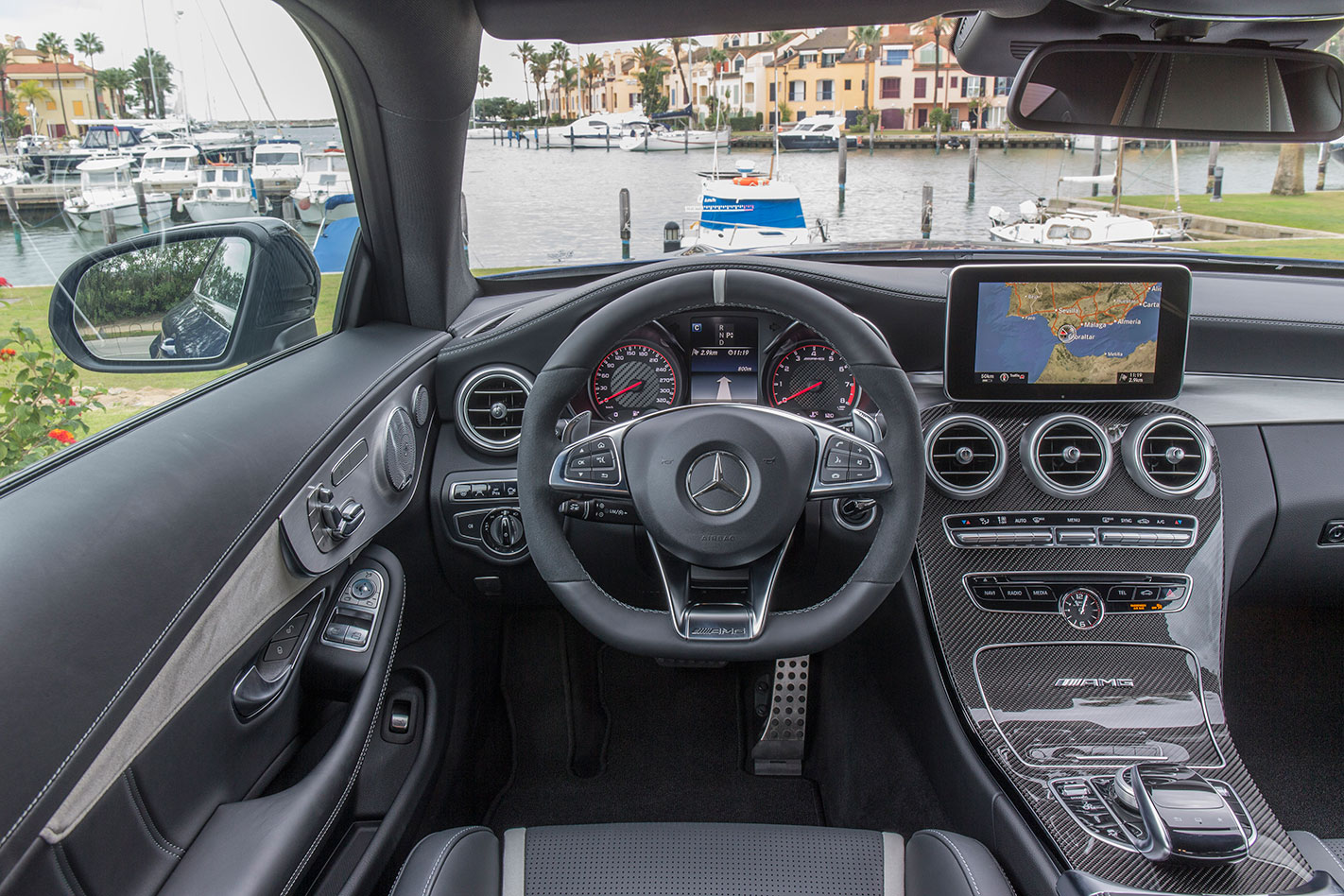
Pricing and equipment levels are yet to be confirmed for Australia, however we’d expect the C63 S Coupe to land at around $160,000 with plenty of equipment standard.
PLUS
- Space – Ford has very smartly packaged the Mondeo. It is smaller on the outside, but bigger inside with a huge, easy access boot.
- Safety – Mondeo is the first car to be sold in Australia with rear seat belt airbags as standard. Bravo.
- Entertainment – Digital radio is a standard feature in all Mondeo models.
- Assistance – As well as advanced safety systems, the Mondeo also has an emergency assistance function that can get help to you in the event of an accident.
- Keys – It’s not often we mention a car’s keys, but the Mondeo’s intelligent fobs can be set to limit car speed if being used by a young driver.
- Dynamics – The Mondeo is a great car to drive spiritedly. Excellent ride quality and poise.
- Interior – While it’s big inside, the interior could be better finished in top-spec models. It lacks the premium feel you find in some rivals.
- Weight – At over 1600kg, the Mondeo is a heavy beast. You don’t necessarily feel its heft through cornering, but it does have a negative impact on fuel economy.
BMW has an Aussie secret – Sydney-born automotive designer Calvin Luk.
First published in the September 2015 issue of Wheels magazine, Australia’s most experienced and most trusted car magazine since 1953.
BMW’s international design team has a secret weapon – an Australian.
Calvin Luk, one of 30 BMW exterior designers worldwide, joined BMW seven years ago. His portfolio includes the 2015 BMW 1 Series facelift.
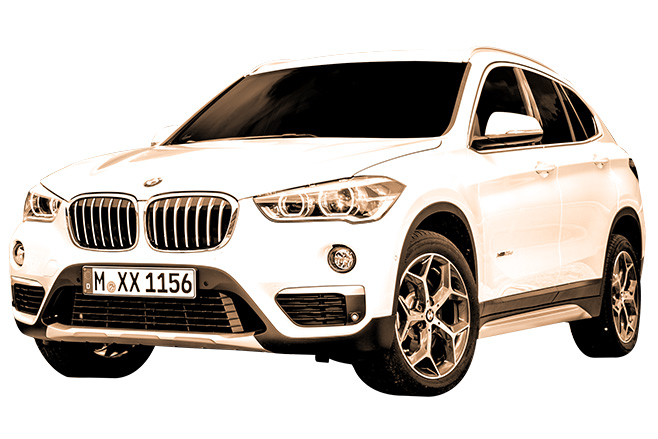
More significantly, he penned the completely new second-generation BMW X1 SUV. No small achievement at the age of 29.

“I was a huge BMW fan at the time because my parents had a BMW 3 Series,” Luk told Wheels at the X1’s international launch in Austria. “There was a new Mini at the Sydney show. When I realised the sales rep was from head office in Germany, I asked if he could pass on a letter for me.”
When the sales rep agreed, Luk sprinted home to type a letter addressed to BMW’s then head of design, the controversial Chris Bangle. “I got a reply. It wasn’t from Chris, but it was from a senior designer and he answered all my questions.”
On BMW’s advice, Luk abandoned his degree at the University of Technology in Sydney. He moved to California, to focus on car design at the renowned Art Center College of Design in Pasadena.
“In the middle of my studies I did an internship at BMW in Munich, where I got to meet the designers in person. A job at BMW came after that.”

“I was working with designers that I loved and respected. It was a dream come true.”
Now the young Aussie is heading up design teams on two new models, though of course he won’t reveal which ones.
“I love designing all types of cars,” says Luk, who takes inspiration from music, and even plays the drums in a jazz band.
“They’re all cool in their own way, but right now everyone is really fascinated with the i8. So designing the new i8 one day would be awesome.”
The X-Factor
AFTER winning the job of designing the new X1 four years ago, Calvin Luk dedicated himself to perfecting ‘his’ first all-new BMW. Gone is the long bonnet and ungainly stance, replaced instead with a longer roofline and more traditional SUV proportions. “I’m most proud of the front,” he says. “It’s really powerful and it makes a real statement.”
MANY Aussies are making a mark on global car design. From Monash Uni graduate Frank Rudolph and his acclaimed interior work on the Chevy
Bolt EV to Ford GT designer Todd Willing, you don’t have to dig far to turn up an Aussie.
Look at Hyundai. Korean-born Casey Hyun feels at home in the massive Namyang R&D centre, but get him talking and the accent is pure North Ryde, Sydney. He’ll happily talk V8 Supercars and makes sure to get his copy of Wheels every month.
Although study and work took him from Australia to Korea via Japan, Germany and the UK, Hyun’s proud of his Aussie passport and has been contributing to Hyundai’s rapidly evolving design maturity.
Hyun is best-known to Wheels readers for his work on the Hyundai Genesis (2014), the i20 (2014) and Sonata (2010). It’s a meteoric progression for a guy whose first job was designing the hubcap for the iLoad van.
Over in the US, Australian ex-Pininfarina clay modeller Ben Burnett now runs Tesla’s modelling studio.
And then there’s Andrew Smith, executive director for General Motors in charge of global Cadillac and Buick design. That’s a long way from the remote country town of Gilgandra, NSW.
Son of the local Holden dealer, Smith is now steering the design direction of two of America’s most respected marques.
Calvin Luk (right) says his success at BMW in Germany is proof young Australians can make it big on the world stage of car design.
“If you’re passionate about design, there’s nothing stopping you from doing it,” he advises aspiring designers. “Just try everything, try to communicate with those who are doing what you want to do and don’t give up.”
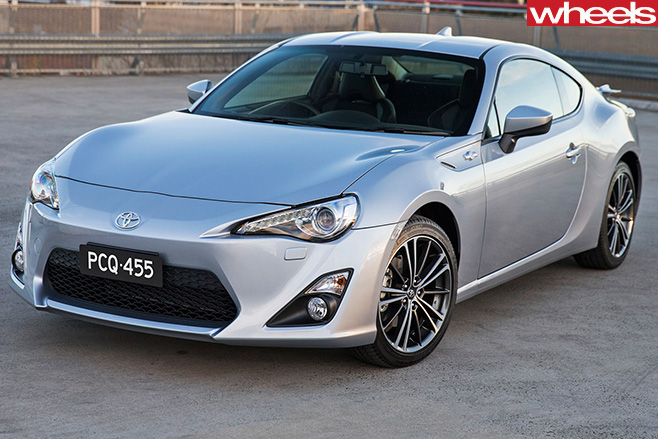
TOYOTA has a big problem with its fuel cell technology when it comes to building it into a sports car such as the strong-selling 86 coupe – it’s just too fat.
Well, not the technology. Instead, it’s the hydrogen fuel tank that will cause all sorts of problems when you try and cram a bulky fuel cell drivetrain into a svelte sports coupe, the technology’s chief engineer, Yoshikazu Tanaka, says.
“There’s one significant constraint to this technology — the tank,” Tanaka said at a preview night ahead of the Tokyo motor show opening last week.
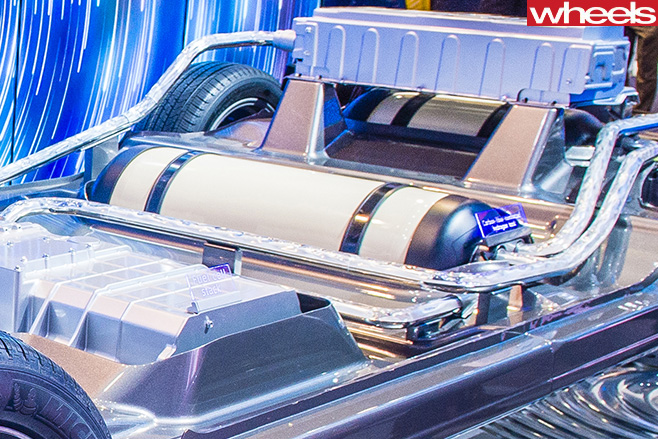
“If it is a conventional gasoline vehicle, you can design the fuel tanks to be in any shape. But for hydrogen, you need a very rigid tank and the shape has to be cylindrical.
“In the future, if we have the cost for one single hydrogen tank come down, then we can use many kinds of skinny hydrogen tanks. That would give us more flexibility in designing the vehicle,” he said.
However, Tanaka did not rule out using the technology in a larger rear-drive platform that gave the engineering team the room to package the hydrogen tank.
“No, we have options,” he said when asked if fuel cells were limited to front-drive layouts.
“We have horizontal, sideways, to place two hydrogen tanks like that towards the rear of the vehicle. But if you can come up with a different layout of the stack, motor and hydrogen tank you can have rear-wheel drive,” he said.
“I don’t think we are doing that right now, but we are open to that idea.”
Is that the…
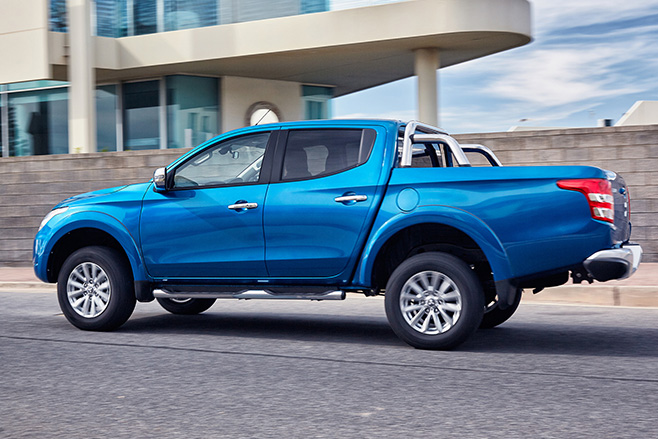
Yep, it’s the new Mitsubishi Triton ute. Sure, it looks a little like the old one. Okay, it looks a lot like the old one. But it’s not like the old one. Mostly.
While it’s not quite true to say that the Triton is a ground-up, 100 per cent new vehicle, it’s pretty close. More than 80 per cent of the body and 40 per cent of the chassis is completely new, while the leftover bits – including the suspension and steering – have been completely overhauled.
And did you know that more than 495,000 Tritons have been sold in Australia?
No, I didn’t know that. What else is new?
Mitsubishi is pretty proud of the 2.4-litre MIVEC-equipped four-pot turbo diesel. It is, it says, the best of the best from a company that knows its engines. It loses out on capacity to, say, a Toyota Hilux or a Ford Ranger, but 133kW and – more crucially – 430Nm of torque is handy.
It’s also scored a raft of safety updates to bring it up to an ANCAP five-star car – that was as much about selling into the mining sector as anything else, though.
There’s also a revised six-speed manual and a five-speed auto that’s been poached from the Pajero.
I see. So what’s it like?
While everyone has dreams of touring the top end in their holidays, the reality is that a dual-cab ute might haul a couple of toolboxes around during the week, and a few motorbikes or kid’s toys on the weekend – so it has to behave on road.
It has an easy-to-live-with personality, a settled, dynamic ride quality even when unladen, and truly low levels of noise intrusion from either the engine or the tyres.
The reborn Triton is one of the most pleasant dual-cab utes we’ve ever driven on sealed roads. Quiet, refined, good body control, great visibility… the Triton wins the battle of suburbia hands down against the current Toyota HiLux, Mazda BT-50, Ford Ranger (themselves very good in that department) and Nissan Navara.
Wow. So obviously I’m not going to go fast in it, but what about off road?
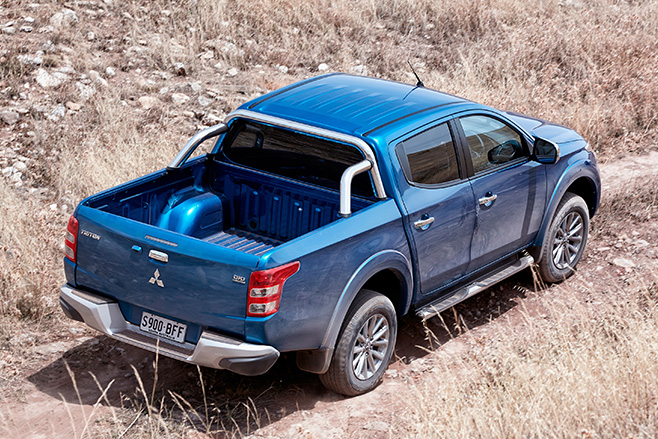
The Triton lacks a few of the bells and whistles of more modern 4x4s; there’s no hill descent control or rock crawling functionality, for example, just a cabin-switchable high- and low-range 4×4 set up.
We tested it over the deep-ish sands and rutted dirt tracks of Fraser Island, and the Triton handled it all with aplomb, with plenty of torque down low where you need it most, predictable behaviour under your fingertips and a comfortable cabin in which to spend time.
It can also tow 3100kg while carrying up to 640kg of payload (including passengers).
Anything wrong with it?
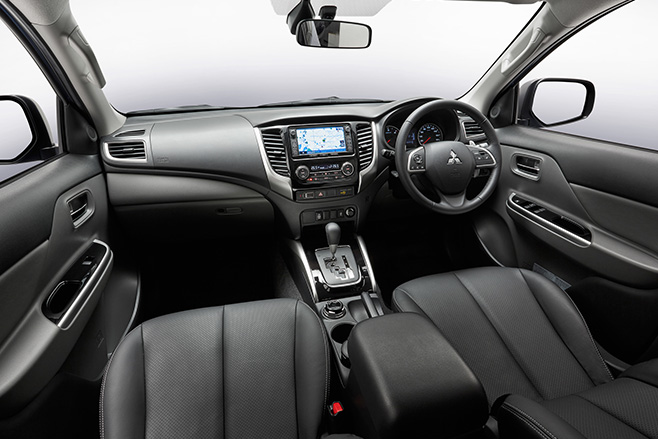
There’s no doubt that 4×4 ute customers are still on the receiving end of a commercial vehicle mindset, with very few extra mod cons included in a reasonably high ticket price. There’s but a single USB port, for example, no rear vents, satellite navigation and smart keys are reserved for the range-topping Exceed.
And those front-end looks are definitely a take it or leave it proposition.
What am I paying for it? Worth it?
The range-topping Exceed is $47,990, while the next one down, the GLS, is $43,490. The 4×4 dual cab game is set to change massively this year, with new entrants from Nissan and Toyota as well as facelifted models from Ford and Volkswagen. The market is running hot, so you may be able to negotiate a deal. Mitsubishi is also running the previous model out next to the new one – there’s definitely good buying in there.
So, this or a new Navara?
On balance, the Triton is the better rig for a lifestyle that leans towards suburbia. It’s lighter, more agile and more involving than the new Navara – or any other dual-cab ute out there, for that matter.
Click here to read the full review on the Mitsubishi Triton.
