
PLUS
- Brutal, brutal speed from its 4.4-litre twin-turbo V8. Something this big shouldn’t be so fast in a straight line, but it is.
- It bombs along mountain roads with surprising poise. Those big tyres grip up on mountain passes.
- The eight-speed transmission is polite, smooth, and a worthy companion for stop-start traffic and situations where you need to creep the car, like soft-roading over terrain
- Its front pews aren’t only gorgeous to look at, they’re also great to sit in. You can even adjust how tight you want them to grab you.
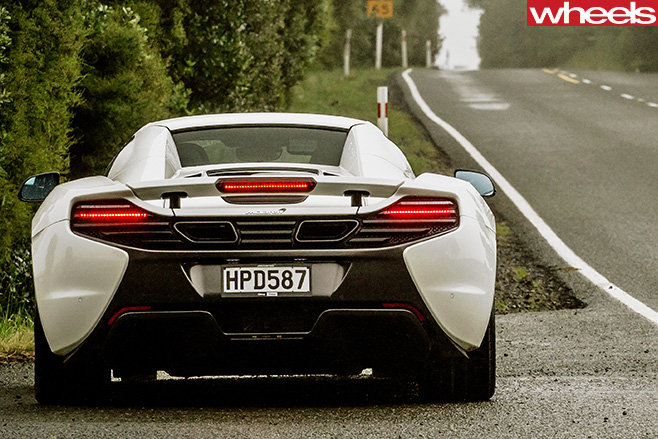
- From some angles the car manages to blend style and aggression quite nicely. We like it from a rear three quarter view.
- Don’t expect this thing to emerge unscathed from soft-road situations, if it’s easy to kiss a kerb in the city, so those huge rims will eventually nick something out in the wilderness.
- Expect to pay a lot to replace such huge tyres, especially for the stock standard Michelin performance rubber.
- The rear-end can feel a little unhinged when driven fast over rough surfaces.
- Conceptually the car is at a loss. A performance SUV coupe? An oxymoron at its finest.
- Coupe body shape steals a little rear headroom.
- As good as it is, when hustling, the eight-speed will stutter on the down change from third to second.
It’s incredible to think that only a handful of years ago HSV’s top-rung GTS boasted 325kW/550Nm, yet here we are in 2015 driving a 400kW/671Nm Clubsport.
Responsible for this incredible surge in power is the roll-out of the 6.2-litre supercharged LSA V8 across the MY16 HSV range. As the clock ticks down on HSV’s locally-made product it’s thrown the kitchen sink at the Maloo, Clubsport and Senator to give them a fitting farewell.
As well as the supercharged engine, all models receive the GTS drivetrain consisting of the beefy 9.9-inch diff, heavy-duty six-speed manual and auto transmissions, stronger drive and propshafts and extra cooling systems for the diff, gearbox and engine oil.
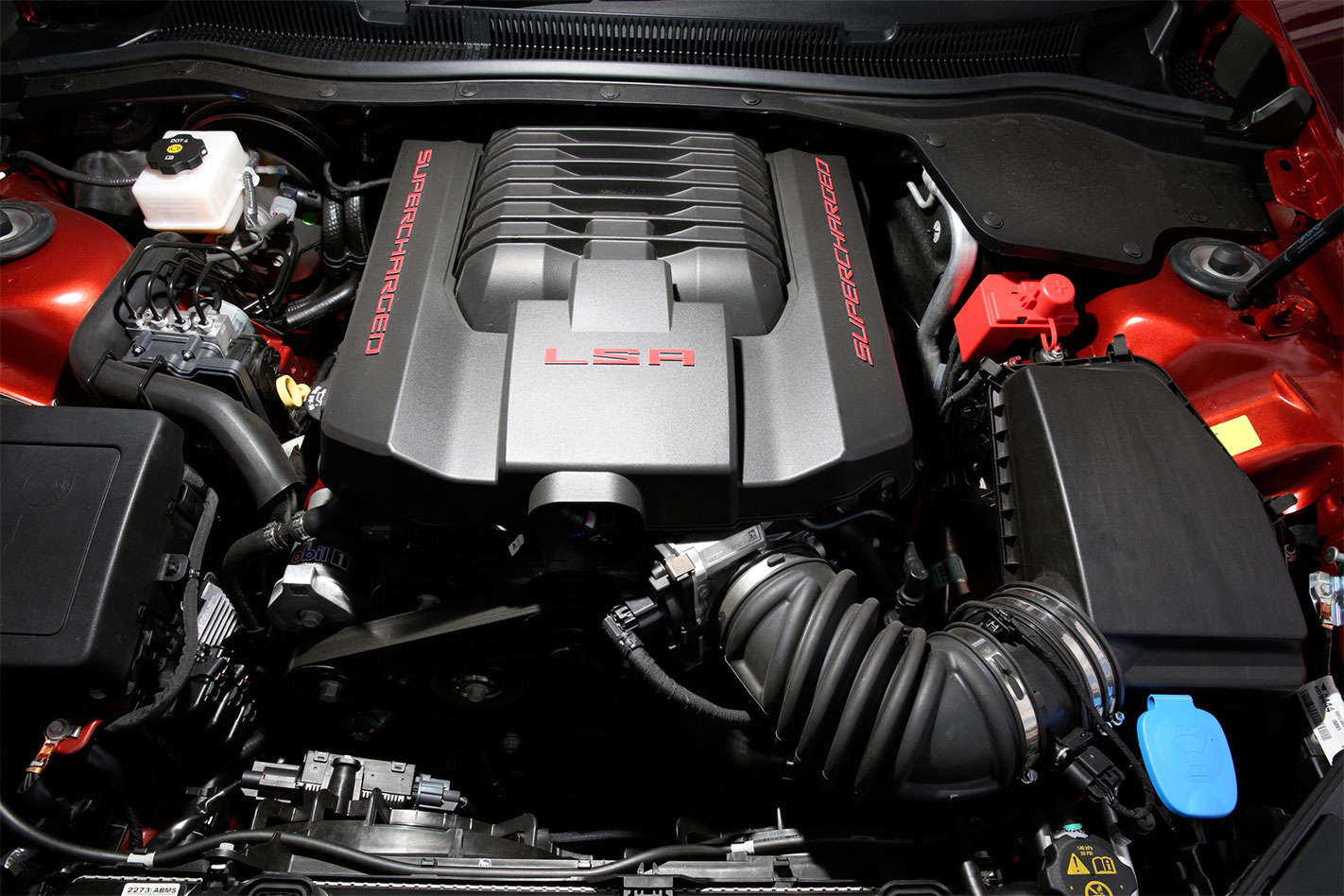
There’s the speed, obviously, but throttle response isn’t as crisp as the LS3-powered cars and you tend to drive the car on its prodigious torque rather than revving the beejesus out of it.
That said, it’s fairly feral at the top end of the rev range, with our auto-equipped test car emitting an addictive blurt on full-throttle upchanges.
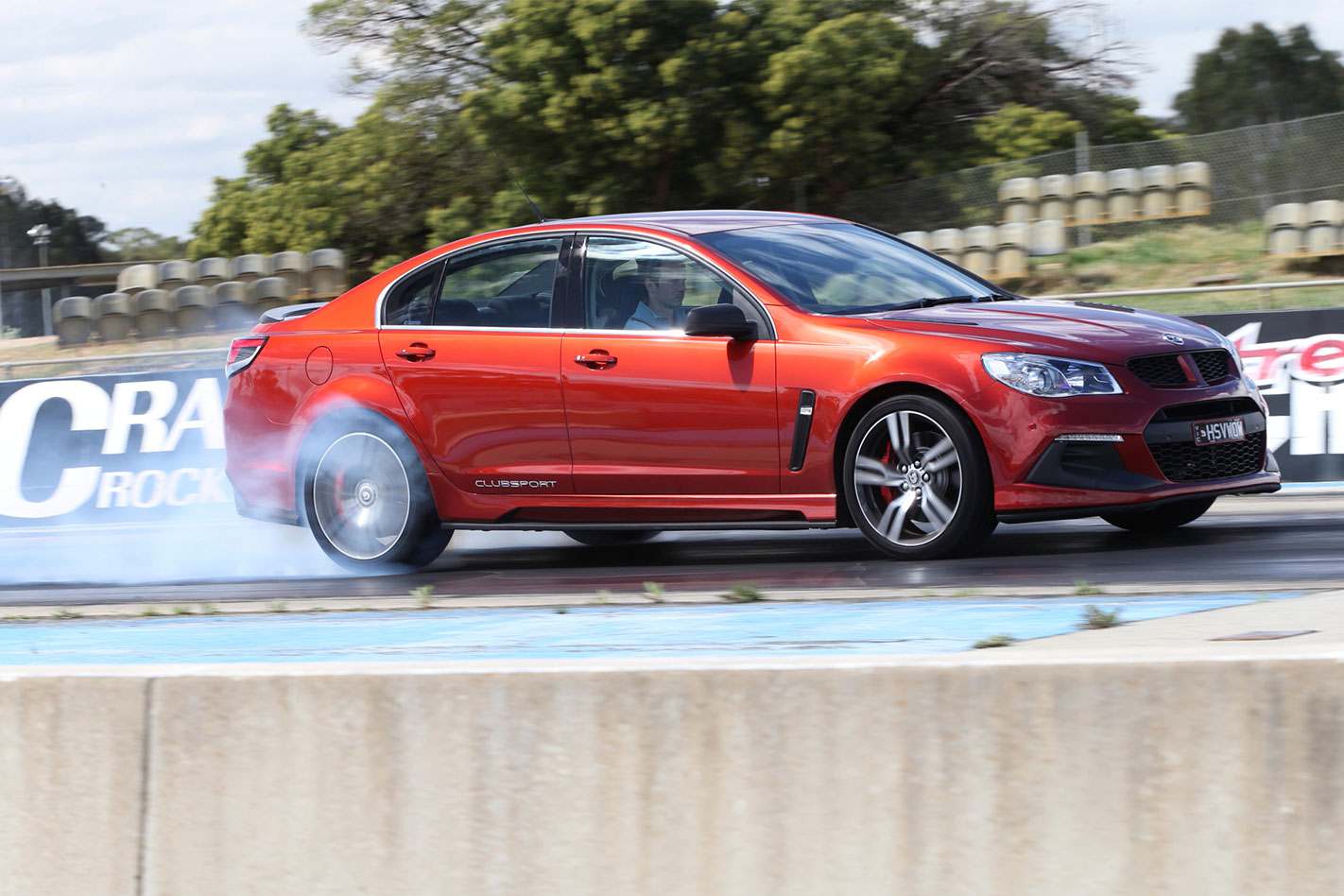
The suspension has been stiffened to keep the R8 LSA’s substantial weight in check – the extra hardware means it now weighs 1907kg – and while the ride has suffered somewhat, handling feels very similar to the previous R8.
The car sits flat with gentle understeer at the limit, though you can now easily counter that with a heavy helping of throttle. It does feel quite heavy, especially now you’re going so much faster than before, but it’s an easy and enjoyable car to drive.
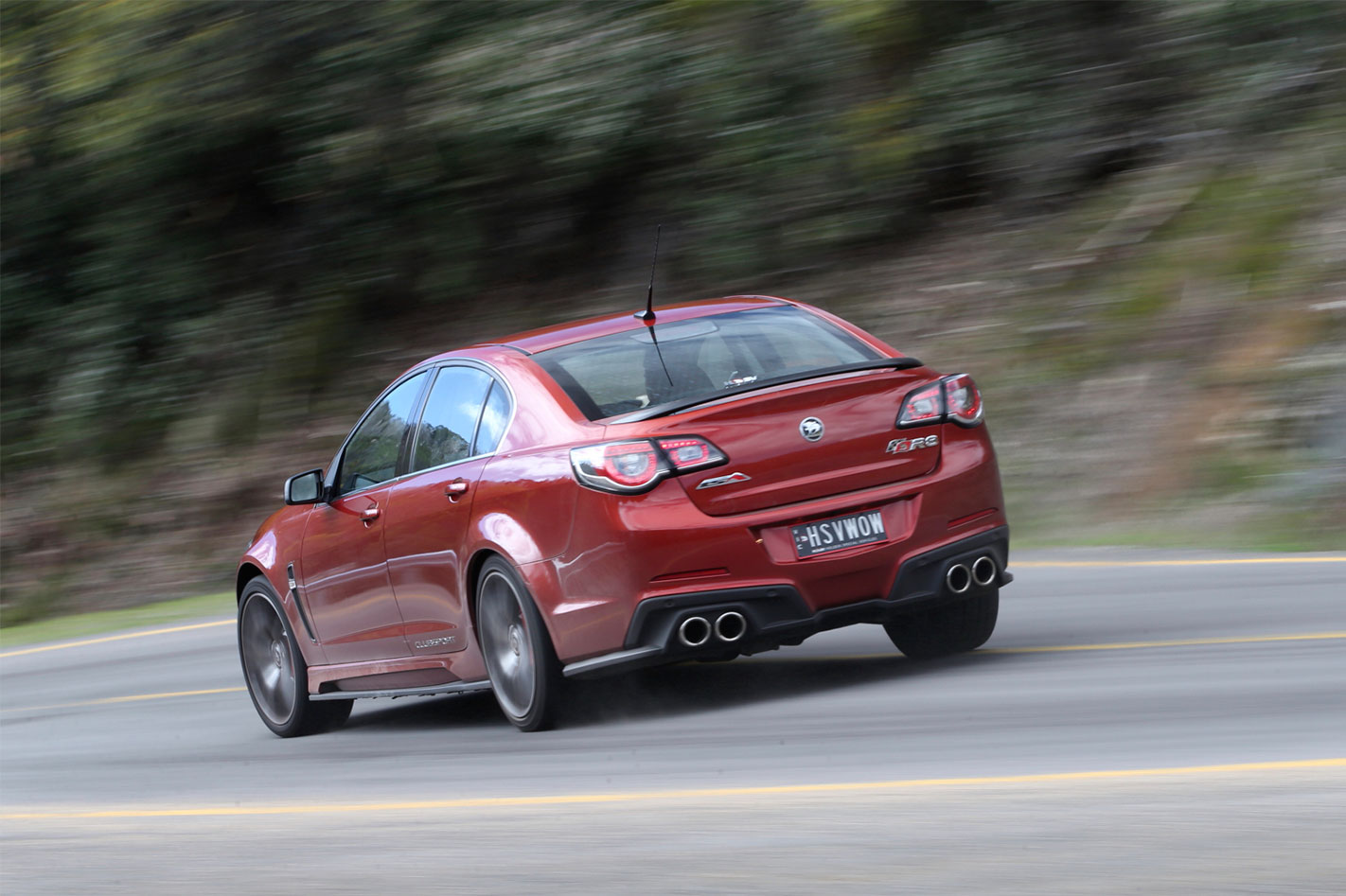
Lacking the GTS’s trick MRC suspension system means the ride is very firm, and while the Clubsport’s four-pot brakes are impressive, they don’t have the ultimate power and feel of the GTS’s six-piston units. What is does share with the GTS, however, is a fearsome thirst; get used to fuel consumption in the 20L/100km bracket if you lean on the performance too often.
We suspect few potential customers will care about fuel consumption, though. And nor should they, as the new Clubsport R8 LSA ticks all the muscle car boxes. With cars like this and the new Holden VF II Redline, Aussie performance car buyers have never had it so sweet.
Nissan massages its wondrous GT-R with newfound comfort and refinement that do nothing to diminish its amazing performance. But has age wearied the Japanese supercar warrior?
WHAT IS IT With a sub-3.0sec 0-100km/h sprint time, the eight-year-old V35 GT-R is a Porsche 911 Turbo-troubling upstart from Japan, offering a 3.8-litre twin-turbo V6, all-wheel drive, and genuine room, comfort and refinement.
WHY WE’RE TESTING IT Over the past eight years or so, many observers have reckoned that better ride comfort and refinement would boost the Nissan GT-R’s appeal, particularly as it already has the sort of performance to embarrass Lamborghini – never mind Porsche. Now their prayers seem to have been answered, thanks to a series of suspension and other mechanical upgrades that promise to put the grand touring back into the Nissan GT-R.
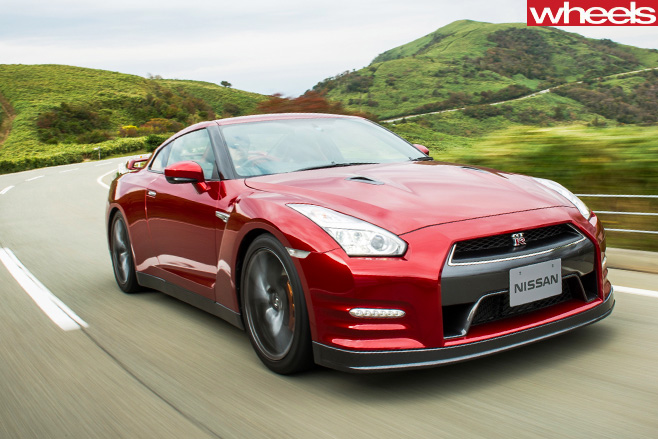
THE WHEELS VERDICT Nissan has successfully evolved the already incredible GT-R into a more rounded and appealing everyday proposition, thanks in no small part to a series of suspension and other mechanical upgrades that take the hard edge off the V35’s ride quality. Throw in explosive performance, a quieter and more refined cabin, and sublime handling, and Japan’s only supercar (for now) remains a unique and relatively bargain-priced alternative to machinery from BMW, Porsche and even Ferrari and Lamborghini.
PLUS:Startling speed and dynamics; improved ride and refinement; relative value MINUS:Low-speed AWD graunching; some cheap switchgear; road drone; rubbish Bluetooth
THE WHEELS REVIEW IN AN era of instant refresh, there is something reassuring about a car that’s allowed to breathe with age. Nissan’s V35 GT-R is now a sprightly eight years old and Japan’s sole supercar continues to defiantly march to the soaring sounds of its own twin-turbo V6 baritone.
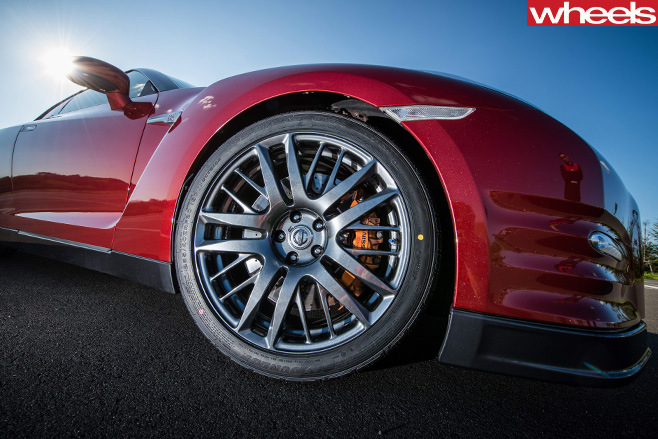
Additionally, the brakes are now more progressive, the tactile steering no longer vibrates at idle, more noise insulation abounds, and the infamous transaxle and driveshaft shunting is cut, though not eliminated.
All this fleshes out the Nissan’s GT-ness, supported by an exemplary driving position, sumptuous front seats, adult-size rear seats, practical boot (a disassembled bike fits) and solid build quality.
However, the console knobs are Navara-grade, the column-mounted (rather than wheel-mounted) paddle shifters are awkward to use when arms are twirling through tight turns, the speedo is out, the cruise control sucks and the tinny Bluetooth is infuriatingly low-fi.
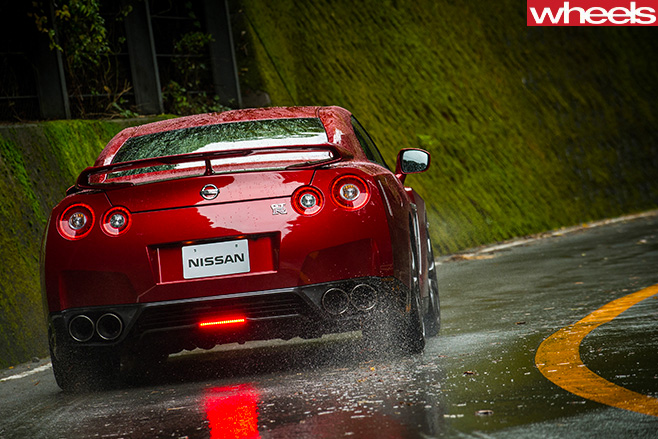
Even Lamborghini’s $800K Aventador can’t match Nissan’s 2.7sec 0-100km/h claim. Speed is obviously instantaneous – and ballistic in Race mode – with ferocious acceleration, split-second ratio shifts from the sometimes clunky six-speed dual-clutch, and axis-tilting Brembo braking.
The GT-R glides through corners with grin-inducing glee, accompanied by enormous grip, but be prepared for relentless coarse-chip bitumen drone.
Incredibly, our 13.1L/100km average over some 1000km at the wheel matched the trip computer’s result exactly.
The MY15 V35 is a more liveable supercar, its evolved civility evoking something akin to a Porsche 928/911 Turbo lovechild. With 46 years of Skyline GT-R heritage behind it, age is mellowing Godzilla gracefully.
SPECS Model: Nissan GT-R Premium Edition Luxury Engine: 3799cc 6cyl, dohc, 24v, twin-turbo Max power: 404kW @ 6400rpm Max torque: 628Nm @ 3200-5800rpm Transmission: 6-speed dual-clutch Weight: 1740kg 0-100km/h: 2.7sec Economy: 11.7L/100km Price: $177,000 On sale: Now
Former minister wants Australia’s automotive industry to have a future.
First published in the August 2015 issue of Wheels magazine, Australia’s most experienced and most trusted car magazine since 1953.
KIM Carr still believes in the car industry, but can do little about it from the discomfort of the Opposition benches. Now the former industry minister helps to shape policy so Australia can maintain crucial capability.
“Whatever happens, there will be an Australian automotive industry,” he says. “What we are debating now is the scale and its nature.”

Yet he insists there are multiple proposals to invest in the local car industry. He cites evidence to a parliamentary committee last year that “at least three bodies” wanted to explore options, and says he is aware of at least nine possible automotive projects.
Carr says the resurgent British car industry – last year more than 1.5 million vehicles were built there, the most since 2007 – is proof that a “phoenix strategy” can revive a moribund sector. “The British faced a similar situation after the devastation of Thatcher [and] came to realise they actually needed an automotive industry.”
He says Australia has global credentials in gaseous fuels, light-weighting and battery development, and has attracted investment from China and India, “but I wouldn’t exclude the possibility of [knock-down] kit production and contract manufacturing”.
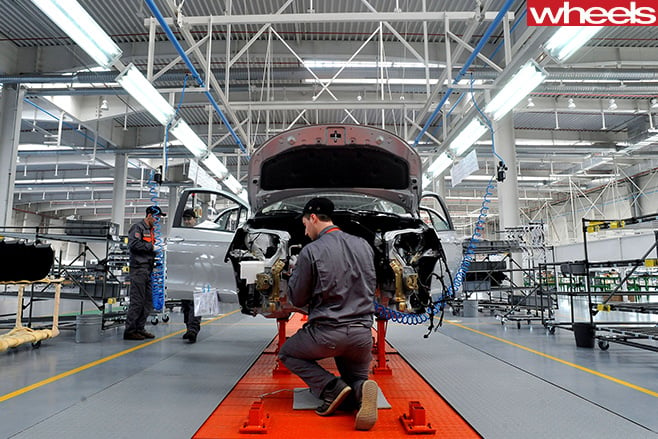
Carr argues that Australian wage structures are not that high by international standards. And that the Germans, Canadians, Americans, Japanese and Koreans all manage despite also having relatively high wages. “But stability is important,” he says. “You have to be able to think some years in advance, and you’ve got to be able to resist the fads.
“Look at the sale of full electric vehicles. Underwhelming. But we were told by every peacock in every pet shop in every bloody town in this country it was going to be the answer to a maiden’s prayer. Well that didn’t happen.
“But I am interested in the new technologies that will come on. I’m interested to see where hydrogen goes … We have very substantial reserves of hydrogen in this country.
“I believe it’s reasonable to put to foreign manufacturers that if you want access to hydrogen, we want to see a quid pro quo in terms of the development of manufacturing capability. I’m interested in the development of the technology in Australia.”
Carr stays in touch with the global carmakers and argues that Australia can leverage its network of Aussie-born auto industry executives in international roles.
Too much hype
IT’S tempting to say successive governments have refused to offer incentives for electric vehicle buyers, partly because scarce funding was tied up in local car production.
But Kim Carr insists Better Place, the high-profile Israeli EV network and battery swap business that collapsed in 2013 after establishing a branch in Australia, showed EVs were “overhyped”.
So is Carr bearish on the future of EVs? “They are going to have to get the production costs down quite dramatically … But until they develop the necessary infrastructure, I don’t see them moving quickly.”
Kiwi motorsport legend Bruce McLaren was killed 45 years ago, but, as Michael Stahl and a current 650S find, the memory of him in the Shaky Isles is still very much alive.
IT’S just on six years since McLaren announced its plan to launch a family of supercars designed, engineered and tested in close conjunction with the Formula One team. As promised, three distinct series have blossomed from essentially the same MonoCell carbonfibre chassis and twin-turbocharged 3.8-litre V8.
The MP4/12C laid the groundwork in 2011. In late-2013 McLaren launched the range-topping P1, a 673kW hyper-hybrid. In March last year came the mid-range Super Series 650S, a 12C turned up to 11. The new entry-level Sports Series, initially comprising 540C and 570S, was unveiled in March this year – at the same time as a Super Series 675LT, spiritual successor to the F1 GTR ‘longtail’ racer of 1997.
There’s little faulting the technology, performance, comfort or obsessive attention to detail in the products of McLaren Automotive – all, apparently, a reflection of the notoriously nit-picky Ron Dennis, who has steered the company since 1980.
Seventy-nine years ago, second-generation motorcycle racer Les ‘Pop’ McLaren bought the lease to this garage and moved his wife Ruth and daughter Pat into the flat above. A year later they welcomed a son, Bruce Leslie McLaren.
Return to the heartland
OUR trip begins in nearby Grey Lynn, where McLaren’s Auckland showroom opened in 2013. Appropriately, it’s owned by Sir Colin Giltrap, who knew Bruce McLaren in the early years and who has been a strong and consistent supporter of Kiwi motor racing talent.
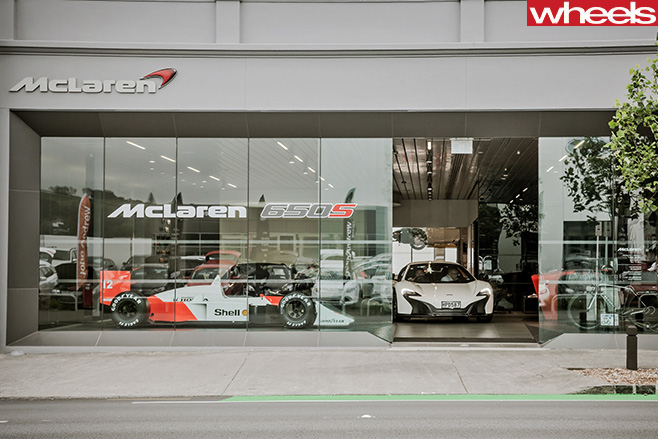
“I thought we might get the odd boffin with some money tucked away,” explains sales boss Luke Neuberger, who came to McLaren Auckland after 10 years selling Ferraris. “But I’ve sold at least four or five cars to guys who say, ‘I grew up watching Bruce McLaren race’. The loyalty is very, very strong.”
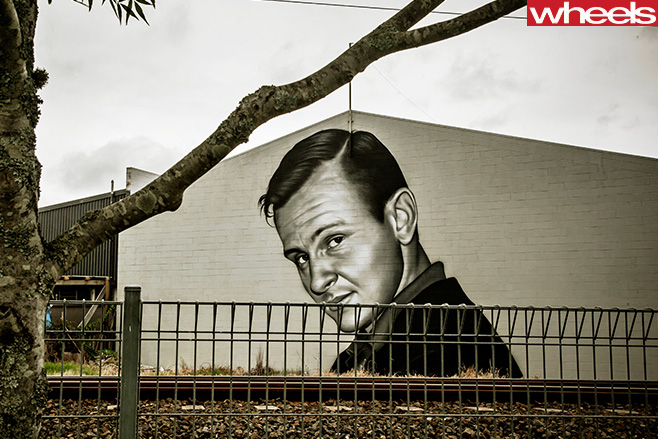
A much younger generation has little knowledge of McLaren and Denny Hulme, local boys who won grands prix, won Le Mans, raced at Indianapolis, dominated Can-Am racing and created, with just a few dozen disciplined men – many of them fellow Kiwis – a powerhouse racing car company on the opposite side of the world.
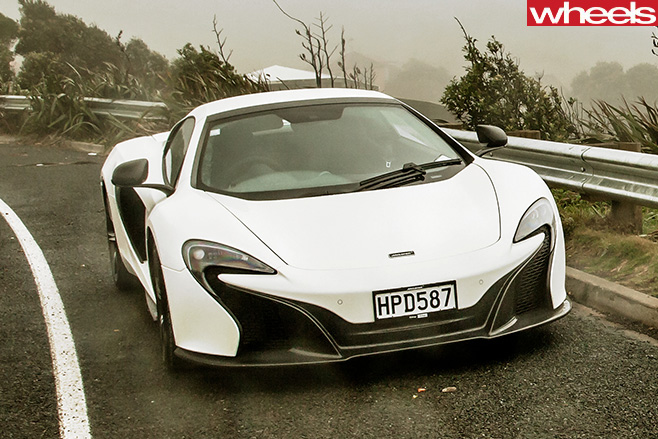
Our white McLaren 650S Spider, a $505,750 proposition in Australia, certainly has the goods on the earlier, somewhat anonymous 12C. The slashing headlamp treatment echoes McLaren’s current ‘speed marque’ (aka ‘sea slug’) logo, though I was happy to see the logo replaced on the 650S’s nose by the McLaren name.
Squint and you might see a lineage to the ground-breaking McLaren F1 of 1994. Squint harder, perhaps through the coastal mists that often veil this narrow neck of land, and you might even see the M6 GT, the Can-Am-based coupe of 1969 that was intended to take McLaren into Group 4 GT racing and then onto the road.
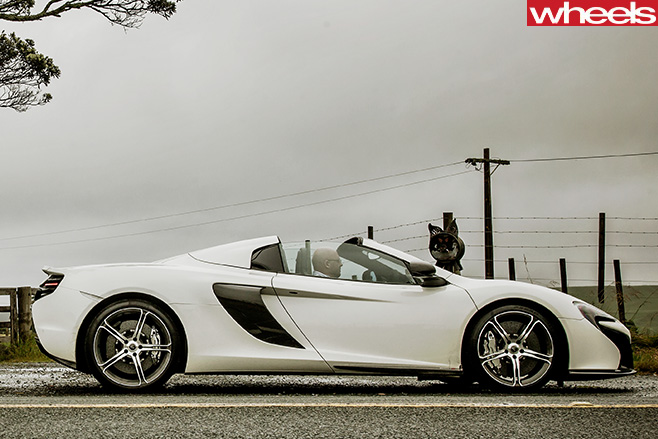
The scissor-lift doors make entry easy in parking spaces, the seats are truly comfortable, and the interior quality impeccable. On the centre console, a pair of rotary controls marked H (for handling) and P (powertrain) each offers Normal, Sport and Track settings. The cockpit’s rear window may be lowered, as part of the roof’s Z-fold operation – or just to better hear the engine.
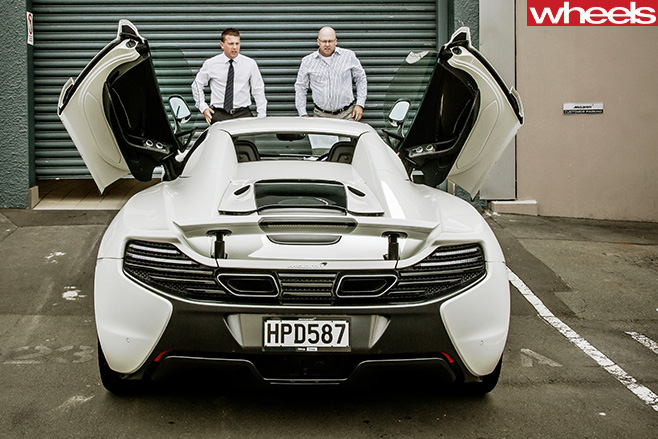
The 650S has stepped up considerably from the 12C in suspension stiffness, but McLaren’s linked active dampers, which dispense with the need for anti-roll bars, deliver intimate feel and likeable ride.
History in the making
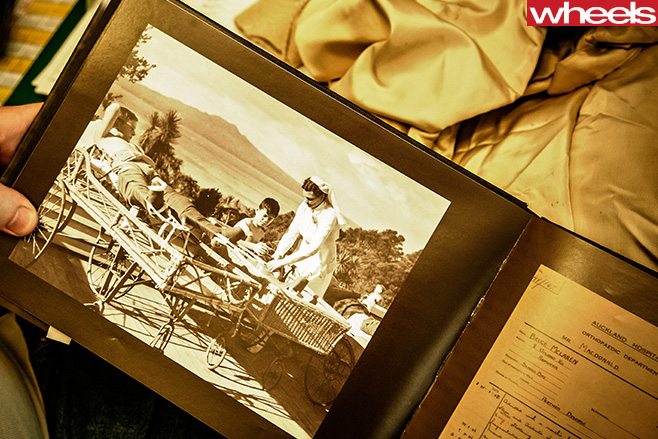
On Auckland’s north shore is the seaside suburb of Takapuna. Here, Bruce McLaren spent almost three years of his early life – from age 10 to 12 (1948-50) – at the Wilson Home, a forward-thinking treatment centre for children with serious disabilities.
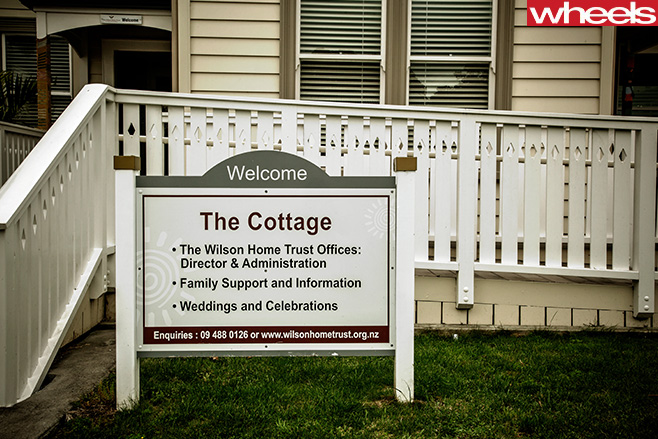
The sleek white 650S likewise causes a stir when it pulls into the Wilson Home, to this day a rehabilitation centre for children. Director Russell Ness knows all about the car and its namesake. Russell races an historic 1967 Mini Cooper S, a faithful replica of a car that Bruce had raced during his Tasman Series visits.
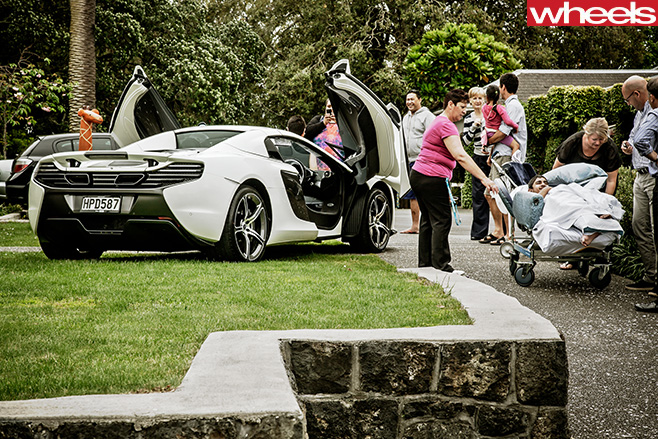
“When Bruce was here, matron would come out in the morning and wonder why all the wheels were buckled on the gurneys. It was because Bruce and his mates would go racing on the grounds after lights-out. They’d be lying down with their heads propped up. They could wheel those things along pretty fast…”
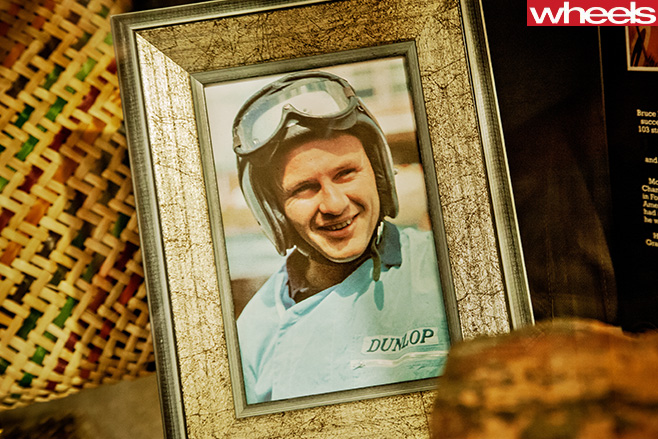
Ness can draw a straight line between the 650S and that brilliant boy, who left here with his left leg some 35mm shorter than his right and went to study engineering. The attention of Jack Brabham and NZ’s inaugural Driver to Europe prize in 1958 took him to England and a drive with Cooper in 1959. He went on to establish Bruce McLaren Motor Racing and McLaren Cars in 1963.
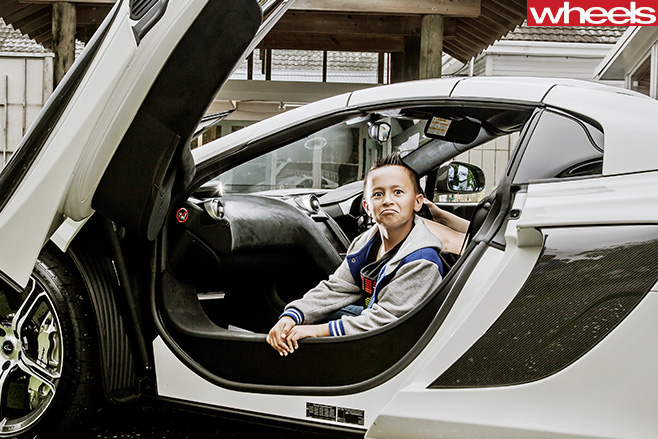
We gun the syrupy, turbine-swift 650S away from the Wilson Home’s beautiful coastal setting. I begin to suspect that this car – and McLarens in general – is this good not just because of its attention to detail, but equally to practical smarts.
Take the gearbox. The seven-speed dual-clutch unit, which can operate automatically, manually, or both, is impressively smooth when dawdling in auto. But there’s something magic in its hardcore Sport-mode shifts, too. What McLaren calls ‘inertia push’ delivers a squeeze of throttle during upshifts, which helps iron out the rev drop when the higher cog is engaged.
I ponder how Bruce-esque that seems.
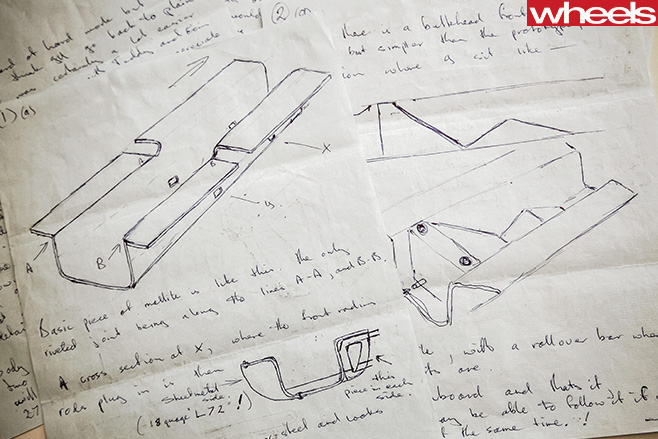
“Bruce was a very talented driver, but he was a good engineer as well,” Hulme told me. “Sitting on an aeroplane, he’d do a bit of a sketch and say to the boys when he got back to the workshop, ‘Make me that – I want to bolt that on tomorrow’. No matter how difficult it was, he’d just say, ‘Make it for me’.”
Devotion, exemplified
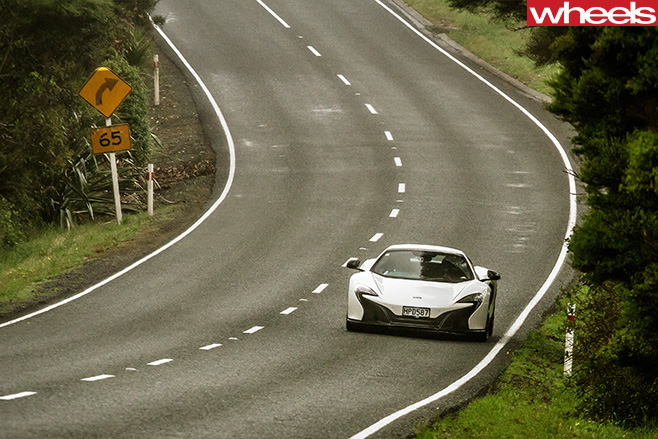
On the Tasman coast, about 40km west of Auckland, is Muriwai Beach. It’s almost obscured by fog and drizzle as we nose the 650S down the steep Waitea Rd. Far below us, beyond a spectacular drop, is a colony of gannets. Beyond the jutting headland, the pewter-coloured sands and wind-gnarled trees of Muriwai Beach stretch for miles. Pop McLaren often raced motorcycles there.
Kerr would also be there at the end, testing at Goodwood in 1970, when the rear bodywork of McLaren’s M8D Can-Am car detached at about 270km/h on the back straight. The car spun across the grass, slamming into a concrete marshalling post. Bruce was killed instantly.
So it was Kerr who phoned the boys at the factory to report what had happened. “Don’t bother coming in tomorrow,” he told them. But at 7:30am, every one of them was there. They just got on with it.
The fog lifts; I whirr back the electric roof and aim up the hill.
The 650S’s steering is quite possibly the most sublime I’ve ever experienced. It’s said to get even better at higher speeds, as the front aero tuning and the Brake Steer, which dabs the inside rear wheel, come into play. The two-pedal set-up is absolutely in key with the steering, the spacing perfect for left-foot braking.
In the whole, deceptively cruisy supercar package, the only real hint of racing-grade compromise is the metallic feel and squeal of the carbon-ceramic brakes.
McLaren’s 3.8-litre twin-turbo V8 has the sound of science. Some momentary ignition-cutting trickery in Sport mode produces an exhaust flare on upshifts, but in its sound and its utterly linear surge, it does lack the drama of Italian rivals.
After a reasonably brisk squirt from Muriwai, we arrive at yet another place of McLaren reverence.
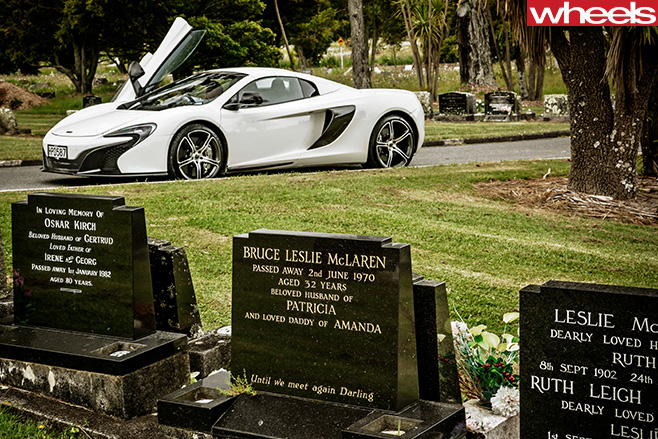
Bruce’s widow, Patty, remarried in 1981 and lives in the UK. Their only child, daughter Amanda (now 49), only last year left New Zealand to take a role as brand ambassador at McLaren in Woking.
But it doesn’t end there. It won’t end at all. Jan McLaren won’t allow it.
A mark of respect
Bruce McLaren had two sisters – Pat, 10 years older, who died in 2007, and Jan, 10 years younger, but today with an energy and enthusiasm that scoffs at her 70 years. Since 1997 she has presided over the Bruce McLaren Trust, perpetuating the memory and the achievements of her big brother, a man who took on the world and won.
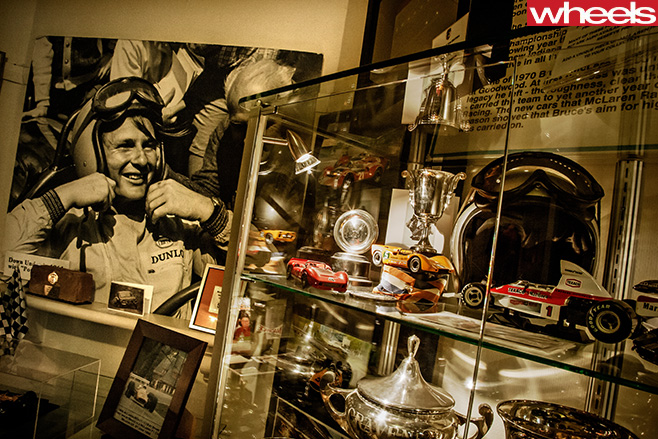
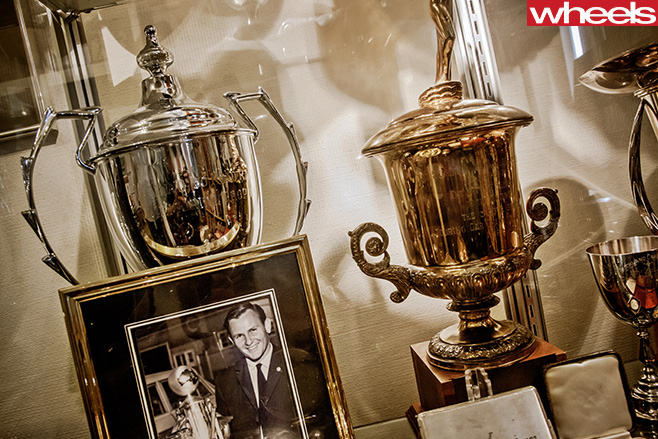
Each of the flat’s four or five rooms is piled high with display cabinets and shelves, packed with tinplate cars, astonishing trophies (like Monaco 1962, and the 1969 Can-Am ‘Floatile’ trophy), donated bits of McLaren racing cars, priceless driving suits.
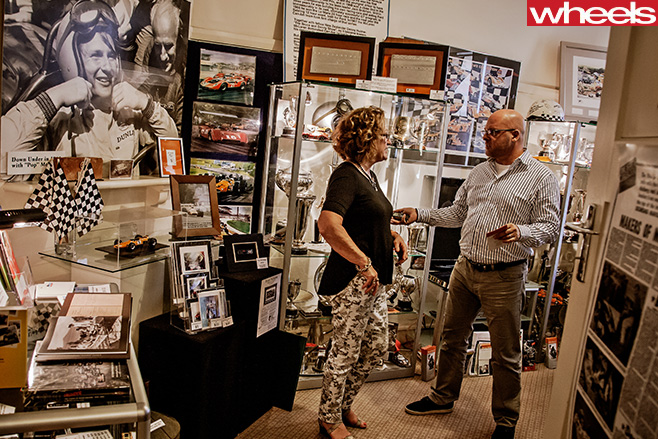
“It really is like extended family,” Jan says. “And that feeling’s never, ever gone. A lot of the McLaren old boys say that even though they left McLaren, McLaren never left them.”
Thankfully, not much seems to have escaped the Trust. That first hillclimb at Muriwai? Jan has home movie footage of it. Between Bruce’s trips home from Europe, he made reel-to-reel tapes for the family, documenting race weekends and adventures. She has them all.
Fibre Diet
IN BRUCE McLaren’s day, the new miracle material for constructing chassis was Mallite, a composite sandwich of balsa wood and sheet aluminium-alloy.
McLaren’s first GP winner was more conventional, but chassis materials would be the re-making of the team. Its foray into carbonfibre came via former Brabham mechanic Ron Dennis, by then heading the Project Four team that dominated F2 and F3. With ambitions of F1, Dennis hired designer John Barnard, who was convinced carbonfibre was the material of the future. Marlboro, sponsor of both McLaren and Project Four, engineered a merger. The Dennis/Barnard vision of carbonfibre arrived in the MP4/1 of 1981 and F1 was revolutionised.
Skinned Deep
AS WITH all McLaren’s supercar family, the 650S is built around the carbonfibre MonoCell chassis, which weighs just 75kg. Such is its rigidity that the Spider requires no additional strengthening versus the coupe. To the MonoCell are attached extruded alloy subframes to carry the engine, transmission and double-wishbone suspensions. McLaren’s ProActive Chassis Control features active dampers that are hydraulically linked, which allows firm roll control in cornering, with no adverse effect on suspension compliance (hence ride comfort) when travelling in a straight line.
The 3.8-litre twin-turbo V8, which weighs just 199kg, is hotted-up from the superseded 12C’s with new pistons, cylinder heads, exhaust valves and revised cooling. Power and torque are increased over 12C by 37kW and 78Nm.
WHERE DOES IT FEEL AT HOME?
It should be pretty obvious that the Mini is a city slicker. We said that this model is a little heavier than the Minis of old, but it’s still lightweight in today’s market, and it feels most at home hustling around town.
WHAT IT’S MADE FOR
The little Cooper goes against the rising tide of big SUVs and jacked up utes. It’s small dimensions are just made for sneaking into that tiny spot that isn’t really a car park and getting away with it. You can option all sorts of accessories to make your Mini unique to you, but above all, Minis are just fun to drive.
STAND OUT FEATURES
There’s a lot to like about the interior of the Mini. There’s more room in here than you might think, the dash lighting changes colour, there are switches on the roof like an aeroplane, and even a head-up display in some models. It’s the kind of car that makes people smile and walk up to you at the petrol station to tell you about the Mini they used to own. Few other cars are this lovable.
WE LOVE
The new Mini is both youthful and sophisticated. It’s quick on its feet with sharp steering and impressive engine options. Even the little three-cylinder motor in the base Cooper is a good unit for the money and thrifty on fuel. Speaking of money, all the new Minis are very keenly priced compared to the outgoing models.
THINGS WE’D LIKE TO CHANGE
If we’re to pick at anything about the Mini we’d have to say that the interior lacks the premium feel of some competitors like the Audi A1 or Volkswagen Polo. On the other hand those cars lack the charisma that the Mini’s interior has. You may also find that the Mini’s ride is too firm depending on the wheel and tyre combination you choose, but adaptive dampers fix this and are an inexpensive optional extra.
WHO WILL IT SUIT?
If you don’t want your car to be a boring appliance like some cars are, the Mini is for you. All the clichés of good things in small packages apply to the Cooper range. They use a little to go a long way and make you feel good at the same time.
Click here to find out more about the Mini JCW.
It was on the wild roads of the Swabian Alb in southern Germany that the 294kW/550Nm Porsche Macan Turbo proved it was a slicker ride than the cumbersome Cayenne.
Weighing 1925kg, the Macan will reach 100km/h in 4.8 seconds (specify the Sport Chrono pack and you can deduct a further 0.2 seconds) and has a maximum speed of 266km/h. Redlined at 6700rpm, the turbo engine feels commendably urgent, responsive and smooth.
Fitted with a seven-speed dual-clutch transmission, the Turbo employs the same four-wheel drive system as the current Cayenne, which distributes torque via an electronically controlled multi-disc clutch. It’s a long-legged gearbox with fifth, sixth and seventh calibrated to cut revs, noise and consumption. When you flip the lever over to manual, tight corners, short straights and steep climbs rarely require anything but the bottom four gears.
The Macan is blindingly quick, especially by crossover standards. The straight-line acceleration is simply awesome, and even through sharp corners the 294kW crackerjack remains firmly planted, stable and safe. Press on, though, and the electronic aids will begin to interfere. When paired with the optional lane guard system, for instance, the electro-mechanical steering will intervene with insistence to keep the carriage on course.
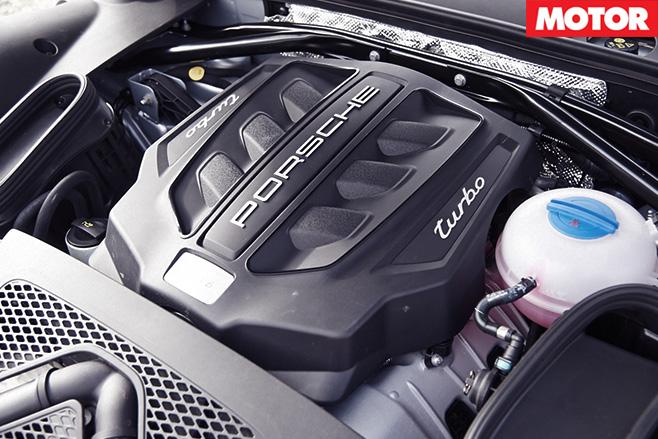
Strictly reserved for the devil inside is the PSM Off button. Although all other functions remain intact, the absence of traction and stability control makes a profound difference to the Macan’s handling.
Through second- and third-gear corners, oversteer is prevalent. In the wet, it’s dished up immediately after turning in. In the dry, the slide-show commences past the apex – exactly where you don’t want to run out of road. In either case, extra care is advisable – after all, this Porsche weighs more and has a higher centre of gravity than those chuckable sports cars.
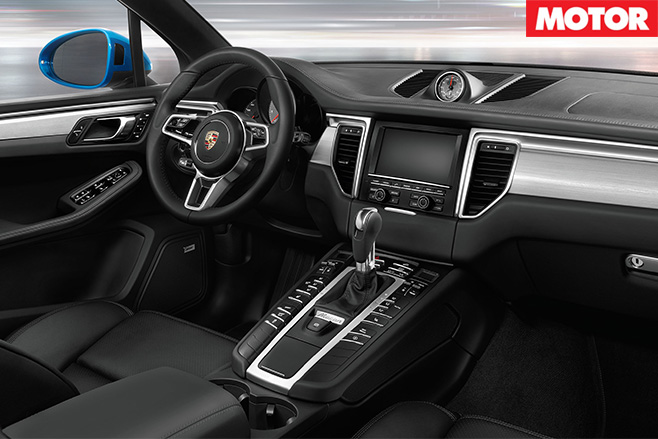
The Macan Turbo scores for its mixed bag of talents. It darts through wild twisties, holds the road, steers with precision, and brakes with tremendous vigour. Yet, after a day’s work on southern Germany’s challenging natural playground, I am still not sure if this Porsche is quite as rewarding as the identically-priced Cayenne V8 diesel.
4 out of 5
Engine: 3604cc V6, DOHC, 24v, twin-turbo Power: 294kW @ 6000rpm Torque: 550Nm @ 1350-4500rpm Weight: 1925kg 0-100km/h: 4.8sec (claimed) Price: $122,900
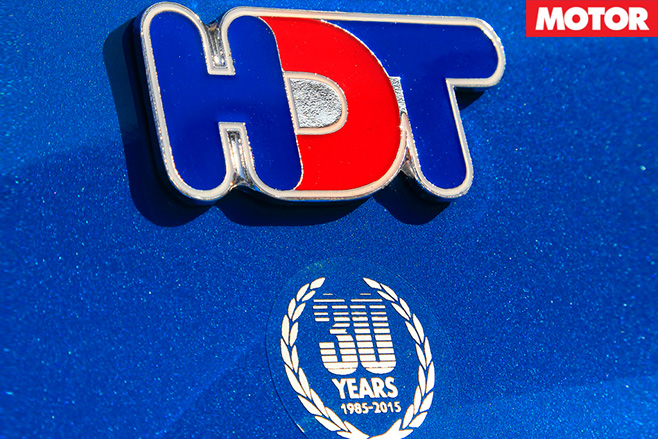
Thirty units of the VF Commodore ‘Blue Meanie’ will be produced to celebrate 30 years since Peter Brock and HDT revealed the original VK SS Group A.
Holden Dealer Team Special Vehicles – to give its full name – is owned by Brock-enthusiast Peter Champion, and the company specialises in developing performance packages that doff their cap to famous 1980s Commodore racing liveries.
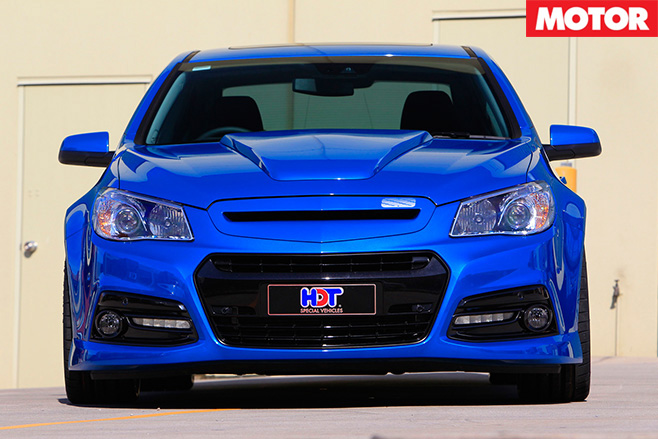
Now it’s the turn of the last-of-the-line VF Commodore. It’s a case of bring your own Commodore SS, SS V or SS V Redline sedan grade that must be factory Perfect Blue paint, which Holden released as a homage to Brock’s nickname ‘Peter Perfect’.
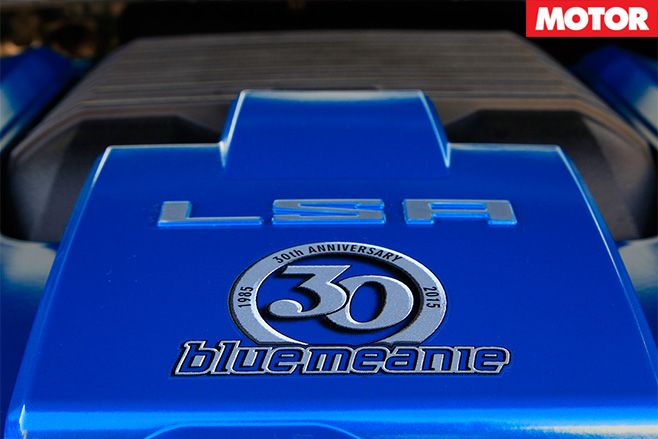
The result is a staggering 475kW – well beyond the 430kW produced by the HSV GTS. HDT doesn’t yet quote a torque figure or performance figures.
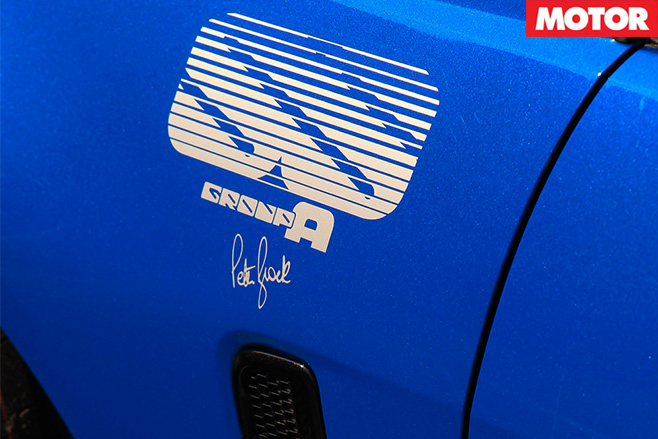
A requisite HDT bonnet scoop, grille and spoiler, and 30th anniversary side-flank badging with Peter Brock signature round out the external changes, while changes inside include a HDT badge on the standard sports seats and a numbered build plaque.
If a camel is a horse designed by a committee, where does that leave the family car? Some want space, others want storage, a few want street cred, at least two want it to drive well and a few others want it to keep its contents safe.
Once you own the car you start realising the importance of the ‘care’ details. Those are the design features that nag you because they are missing or don’t work, or they are the conveniences that make life in the front and back seats of a family vehicle easier and more comfortable.
Here are 11 details that will help maintain the peace once you hit the road.
1. INTEGRATED SUNSHADES
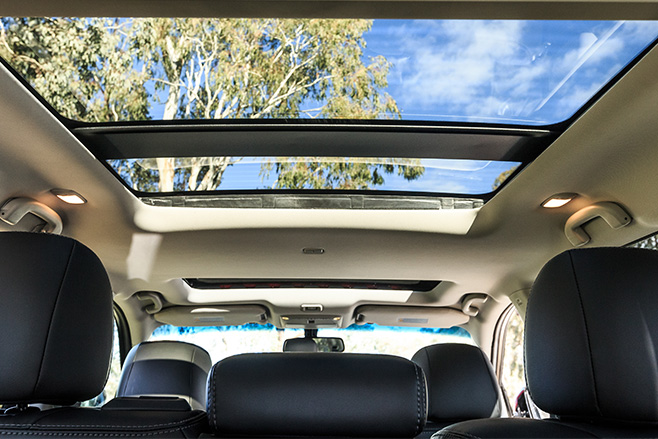
It is Australia people; the sun is hot and dangerous. As a minimum, you need to shade the sunroof so that your rear passengers don’t fry. Sleeping is also much easier without the sun’s glare. Use aftermarket stick-on window screens if you must, but the convenience and space-saving of a built-in shade is gold.
2. FISH-EYE MIRROR
The rear-view mirror is useful, but a convex mirror in an adjacent location will give the driver a full view of the rear seat.
3. SEAT-BACK, FOLD-DOWN TABLES
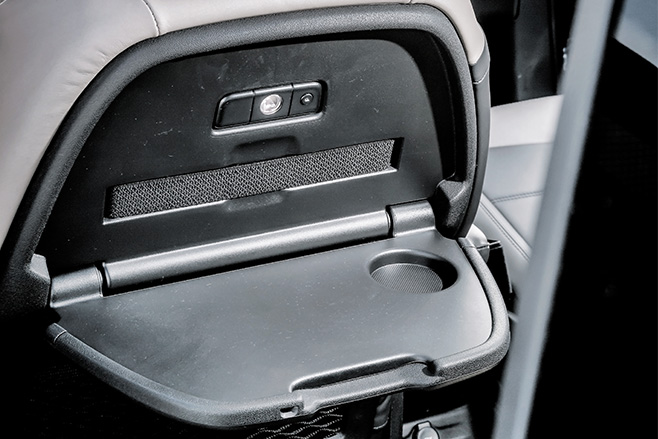
Kids can use them as play surfaces and for eating on the run; adults can use them to work or play games. Any option that makes rear-seat travel less monotonous is a winner, but the fold-down table is the best.
4. COOLER/WARMER IN THE CONSOLE
What better way to cool hot temperatures than with a refreshing drink or a piece of fruit. Many gloveboxes now contain coolers, and if you’re really lucky, you might option one in the centre console. It’s a welcome luxury on a long road trip.
5. REAR AIR
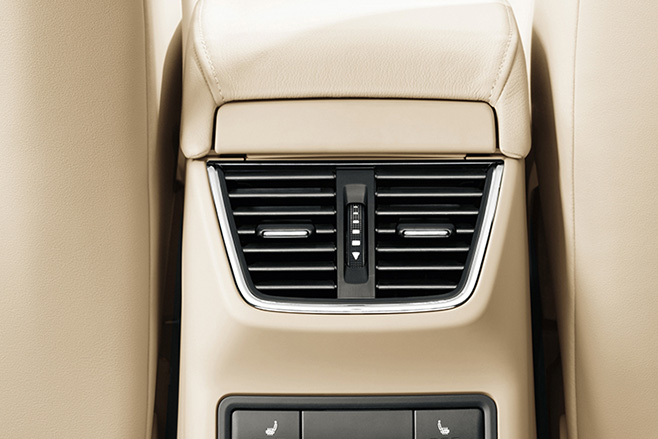
It’s surprising how many Australian cars don’t have rear air-conditioning outlets. While it’s true that a decent A/C will eventually cool the entire car, many travellers require a cool breeze to stave off carsickness. Unless you’re good with the thundering noise of rolled-down windows on a long drive, anyone road tripping with rear passengers will want rear vents.
6. KID-FRIENDLY REVERSING SENSORS/CAMERAS
Some cars are so high off the ground that their sensors will not detect a toddler. Reversing cameras are useful, but are sometimes so visually busy you can still miss a child or a pet. Sensors located low on the rear and sides of your vehicle are a great way to ensure your reversing is as safe as it can be.
7. TAN LEATHER, NOT BLACK
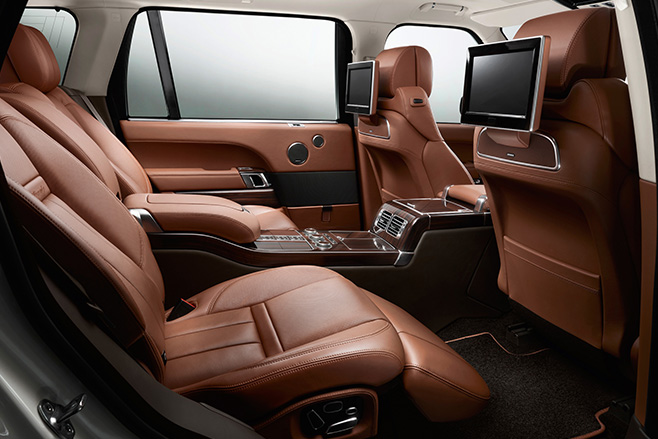
This is one for the ageing car, when non-stop family use starts leaving its mark. Black leather may have looked terrific in the showroom, but brown leather reflects more sunlight (thus doesn’t get as hot) and ages into scratches much better than black. A few years down the track, black leather looks old, while brown leather looks worn-in. It’s the same for interiors. For long-term leather: choose brown.
8. SLIDING MIDDLE SEAT
This can be the difference between a useable third row and lower body amputation. A middle-row slider means you can position a baby seat closer to the driver, make more legroom in the third row, or push the seat back for luxurious second-row legroom.
9. CARGO NETS BETWEEN BOOT SPACE AND REAR SEATS
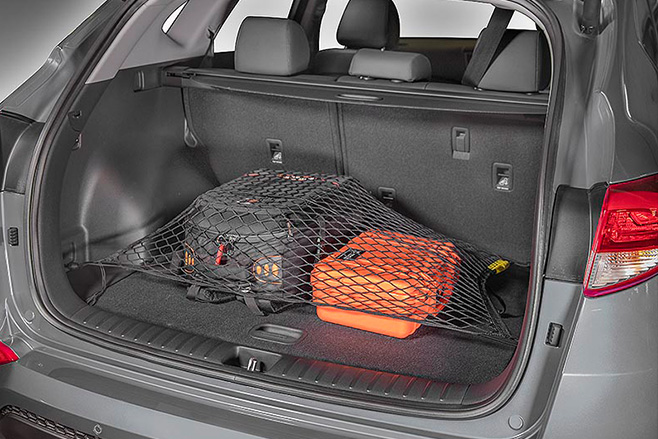
If your car is full, chances are the boot area is also jam-packed. An SUV or wagon has no division between the piled-high luggage in the back and the people in the front, so a cargo net is a must to stop heavy luggage flying forward in a sudden stop.
10. REAR RUBBISH BIN
A built-in, removable bin will bring you happiness you can’t even imagine.
11. SLIDE-DOWN SAFETY SCREEN
Parents of teenagers know what I mean. Take a tip from limo drivers, or at least install a taxi protection screen, so that you can negotiate safely without fear of attack.
We take the last Aussie-built Commodore for one final burn, bring you the low-down on Volkswagen’s diesel deception and help you get a grip on tyres in the 2015 Wheels Tyre Test.
- THE GREATEST! New Commodore V8 is fastest ever, best ever.
- Inside the Dieselgate scandal: How Volkswagen duped the world.
- 2015 Wheels Tyre Test: Helping you choose the best rubber for your daily drive.
- Competition in the compact SUV class heats up. Hyundai’s new Tucson, Ford’s Kuga and Subaru’s Forester take on the Mazda CX-5 juggernaut.
- Kia’s cheerful baby Picanto makes waves in the micro class.
- Porsche shocks Tesla with electric show-stopper.
- Plus our usual mix of news, views and showroom data. Available in print, on the iPad via the iTunes Store, or on Android devices via Google Play.
