
PLUS
- The way it corners. It’s a sweetheart – lithe and light on its feet, the 86 has one of the most ‘talented’ chassis this side of $150K.
- That steering. Meaty yet light, accurate yet not hyper-alert. This is about as good as it gets.
- The way it feels. You sit low and the interior wraps around you. The pedals, steering wheel are placed perfectly. It all just feels ‘right’.
- It’s satisfying to drive fast. After every drive up a twisty road, you always get out of an 86 thinking, god that was good.
- It’ll drift. Oh yes. And without much power, you need to get creative to get the 86 sideways. On the track, of course.
- The engine is a bit unremarkable. You could say it sounds a little emotionless, plus 147kW and 205Nm makes it a tad on the slow side.
- It can be uncomfortable. It rides like a skateboard and there’s lots of road noise. Sydney-Melbourne trips may require an overnight stop.
- It’s not hugely practical. It’s not a car for ambitious IKEA missions. The rear seats will get you out of trouble, but they’re not for the long-haul.
- The interior feels a bit cheap. It does the job, sure, but the materials are a bit budget. Yep, definitely from the same company that makes Camrys.
- It doesn’t have much grip. This could be controversial – some will love the 86’s low grip, some will hate it. Depends on your skill level, probably.
Alfa Romeo came out of nowhere with the 380kW, rear-drive Giulia – and now it is claiming a sedan-record seven minute, 39 second Nurburgring lap time.
Tagged as representing another great resurgence of the Italian brand, Alfa Romeo used the Frankfurt motor show to reveal more details about its sports sedan player that will soon battle the BMW M3 and Mercedes-AMG C63.
“On the mythical tarmac of the Nurburgring track … the all-new Giulia set a lap-time record for its class, a category which includes the sports versions of the most celebrated European high-performance sedans,” announced Harald J Wester, Alfa Romeo CEO of five years, at the show.
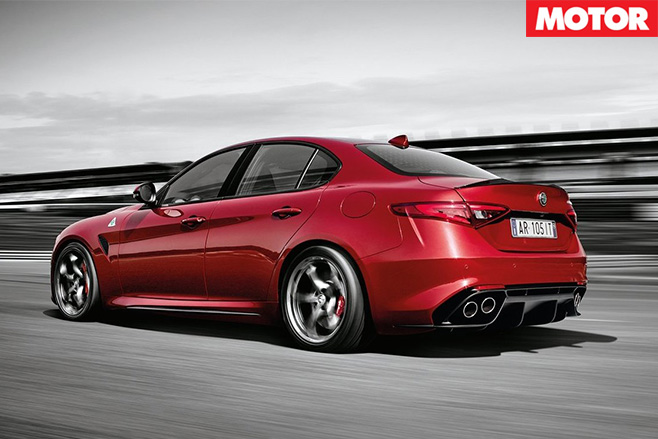
It seems the Alfa Romeo claim is claiming a few scalps along the way, with the BMW M4 (albeit the coupe version of the M3 sedan) posting a 13-second-slower lap time around the 22.8km northern loop of the famous track just outside of Frankfurt.
Incredibly, the Giulia Quadrofoglio matches the time set by the Ferrari 430 Scuderia from 2007, and is only one second slower than a 2010 Lamborghini Gallardo LP 570-4 Superleggera – good fellow Italian company to be around.
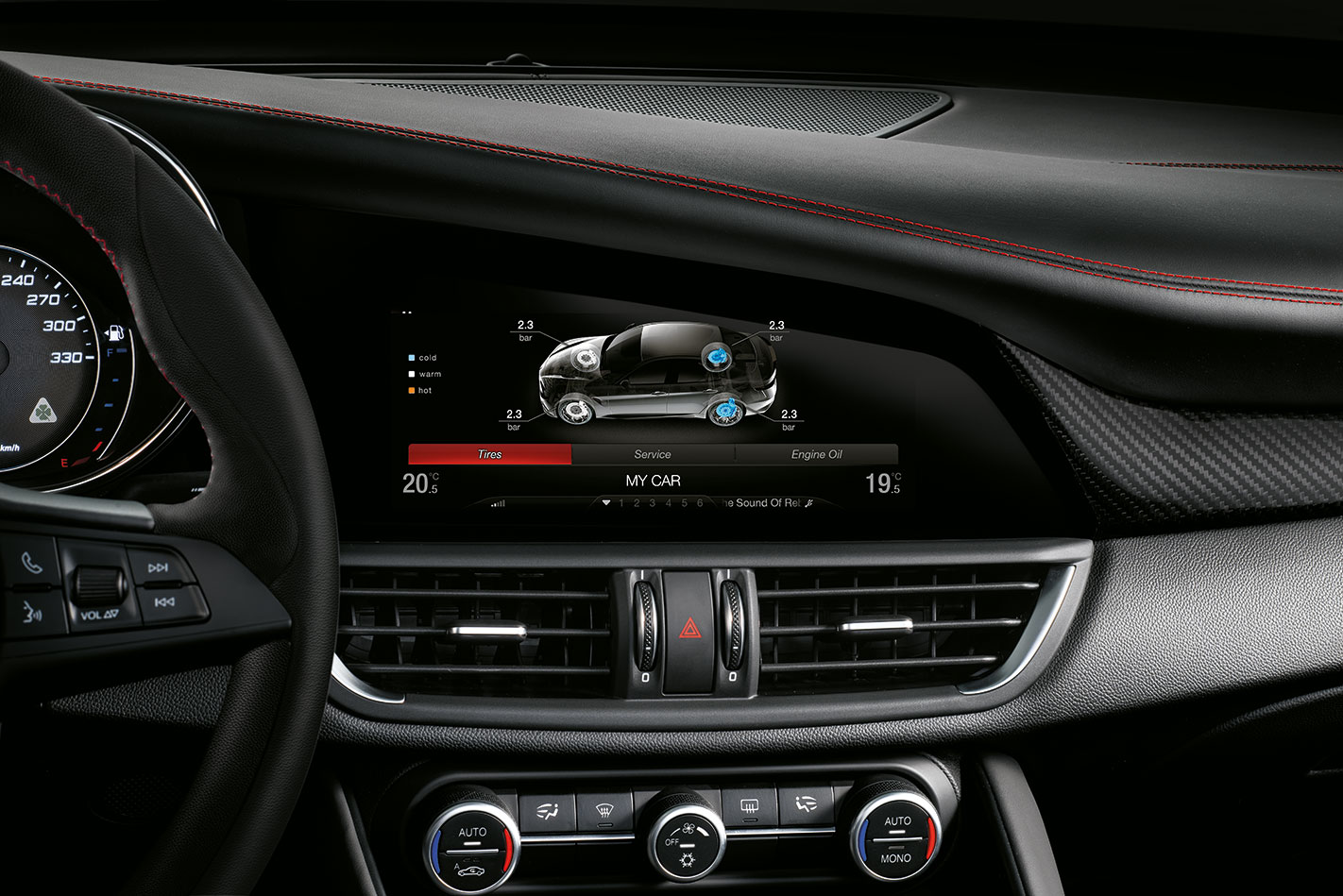
The 380kW 3.0-litre twin-turbocharged V6 sends power to the rear wheels via a six-speed manual transmission – surprising in today’s auto-obsessed age – to claim a 3.9sec 0-100km/h.
“The art of speed as perfected by Alfa Romeo is the art of balance,” added Wester.
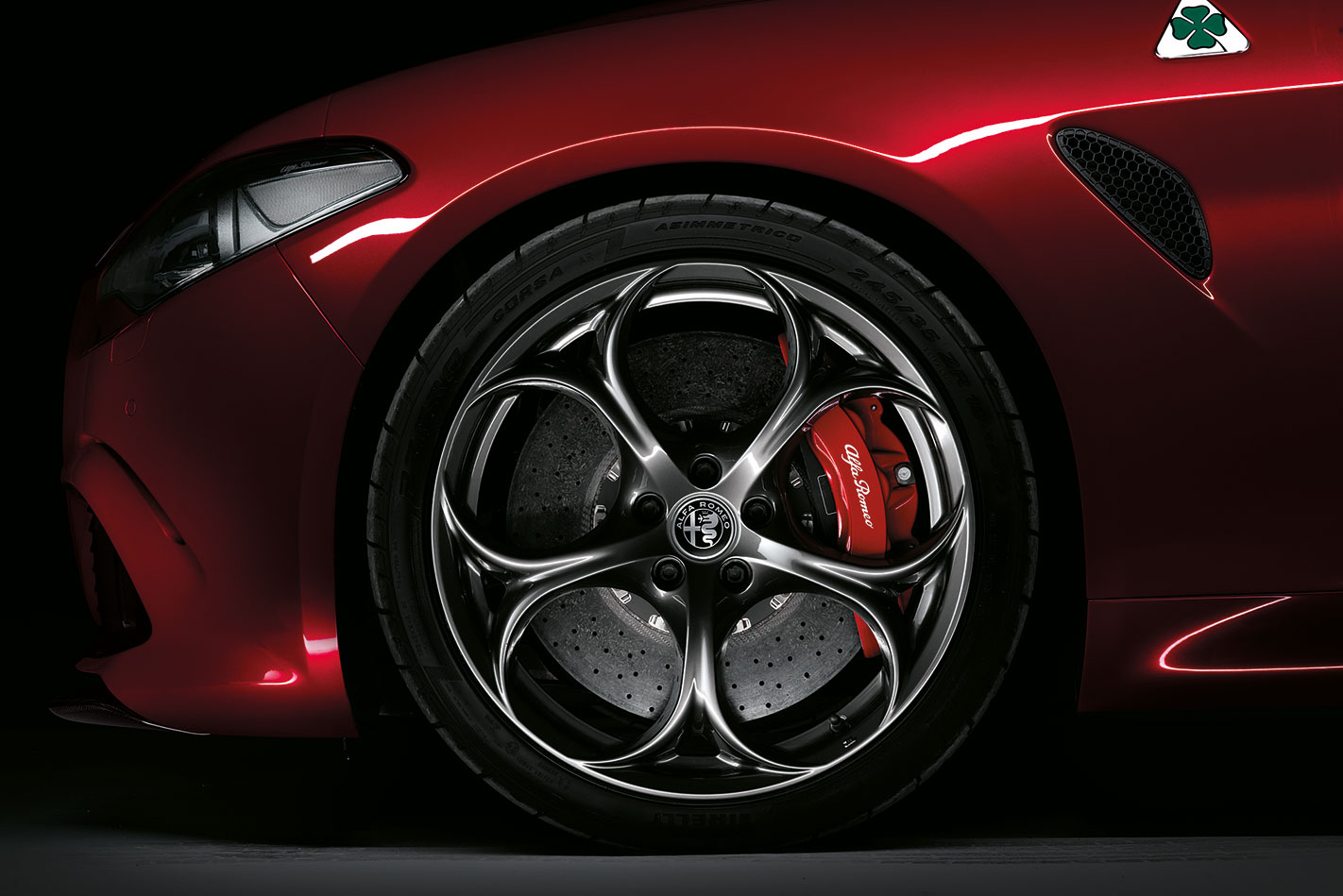
“We wanted Giulia to be much more than a comfortable cocoon. We wanted it to be the bodily extension of the driver. Alfa Romeos have become again a perfect fusion of man and machine. This is how all the new Alfa Romeo creations will be – authentic, pure … focused on the driver.”
VOLKSWAGEN cars in Europe have been confirmed to have the same ‘device defeating’ software that has embroiled the company in a global controversy.
German Transport Minister Alexander Dobrindt told Sky News: “We have been informed that also in Europe, vehicles with 1.6 and 2.0 litre diesel engines are affected by the manipulations that are being talked about.”
This means that Europe’s top-selling vehicle for the last seven years – the Volkswagen Golf – is affected, along with a range of Audi, Skoda and Seat models.
The scandal has already seen Martin Winterkorn step down as chairman and CEO. Overnight, German newspaper Spiegel has tipped 62-year-old Porsche boss Matthias Mueller to be confirmed as the new VW Group CEO in a VW Supervisory Board meeting scheduled for today in Germany.
Spiegel is also reporting that VW USA boss Michael Horn will lose his job, despite VW North America’s strong sales growth since he took the role in January 2014.
Audi R&D boss, Dr Ulrich Hackenberg, as well as Porsche technical director and board member Wolfgang Hatz – who was at VW when the EA189 engine at the centre of the controversy went into production – are also expected to be removed from their positions, says Germany’s Bild newspaper.
Volkswagen Australia is yet to confirm if any Australian-delivered models are affected, seven days after the scandal first broke on September 18
However the Australian Competition and Consumer Commission said yesterday it would examine whether car buyers here had been exposed to misleading claims, and if so what rights they might have under Australian law.
When cars crash and egos clash, fisticuffs are inevitable.
But if there’s anything to learn from these trackside tantrums, it’s that you won’t see a racing driver in a UFC bout any time soon.
1. PIQUET v SALAZAR (Formula 1, 1982)
Back-marker Eliseo Salazar destroyed Nelson Piquet’s chances for victory after ploughing straight in to Piquet’s leading Brabham when approaching a chicane. Luckily for Salazar, the fiesty Brazilian proved karate wasn’t his forte.
2. SIMKO v DENIS (Stock Cars, 2006)
We’re not sure what’s better, Michael Simko fly-kicking through Don Denis’s windscreen like a WWE pro, or Denis, built like a Wallabies prop on a Maccas-only diet, bull-charging Simko and flattening an innocent official in the process.
3. LONGHURST v MORRIS (Super Touring, 1994)
The only thing higher-strung than Tony Longhurst after some on-track aggro with Paul Morris was commentator Darrell Eastlake. As Longhurst let ’em fly Dazza bellowed, “[Tony’s] put the biffo back in to the bingle!”
4. YARBOROUGH v ALLISON(S) (NASCAR, 1979)
Cale Yarborough’s fight for the lead was ended by a track-greedy Donnie Allison. When Dale’s brother, Bobby, came over to check on him after the crash, Cale clobbered him with his helmet.
5. TAGLIANI v TRACY (Champ Car, 2006)
Paul Tracy clumsily collided with Alex Tagliani’s car when rejoining the race after over-cooking a corner. Fuming, Tagliani sought out Tracy and words, and a whimsical punch, were exchanged.
6. SKAIFE v INGALL (V8 Supercars, 2003)
Oh yes, you remember this one. Red-faced Mark Skaife came off second best on track with Russell Ingall and was eager to settle the score, but his fist-shaking didn’t scare The Enforcer.
7. BINGHAM v FRANSEN (Grand Am, 2006)
Chris Bingham and JC Fransen used a ‘hit ’em first, ask questions later’ approach after an accident took both drivers out of their Mexico City race. However, neither took off their helmets, so the only things damaged were their egos.
8. MURPHY v AMBROSE (V8 Supercars, 2005)
It was shaping up to be a track-side knuckle dance after Marcos Ambrose got the short straw in a pile-up he believed Greg Murphy caused. Up in each other’s grill, we expected at least a slap, but only words and finger-pointing came of it.
9. PIT CREW v PIT CREW (NASCAR, 2012)
NASCAR wouldn’t be what it is without a good, old-fashioned brawl. When Clint Bowyer was put in the wall by Jeff Gordon, Bowyer’s enraged pit crew made for Gordon’s camp with pitchforks. It was on.
FRANKFURT 2015 showed one thing: the SUV is the king, globally. No longer do we see a plethora of odd regional models at each show: the all-pervasive SUV now invades the space of hatches, sedans and even sports cars.
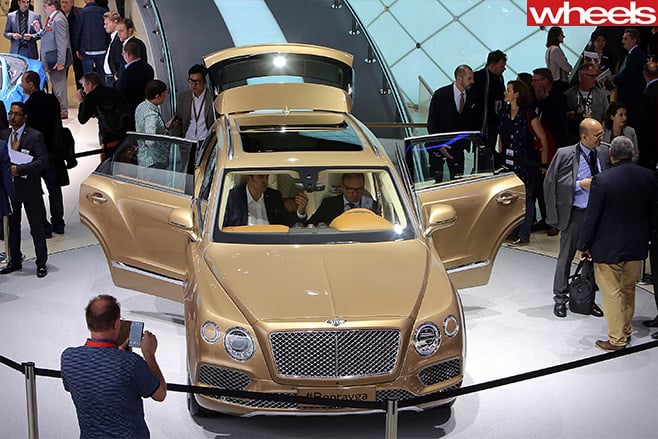
I hate it. A sunburnt orange Bentley Bentayga almost made me choke on the obligatory currywurst served up at the VW stand, and not just because of the colour. The press material ahead of the show bragged about it being the world’s fastest SUV, at 301km/h, by a single kilometre over the Porsche Cayenne Turbo. Yep. Okay then.
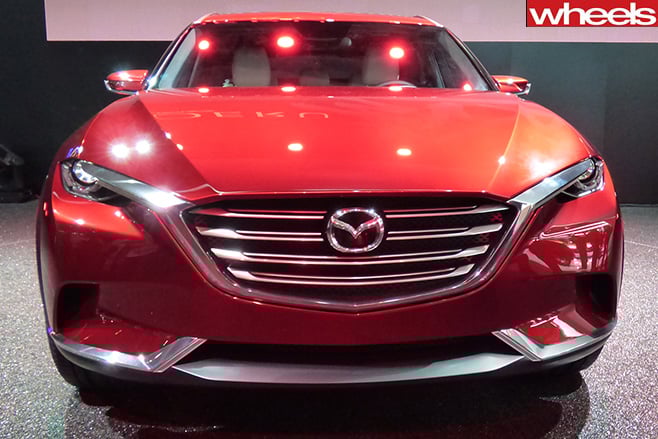
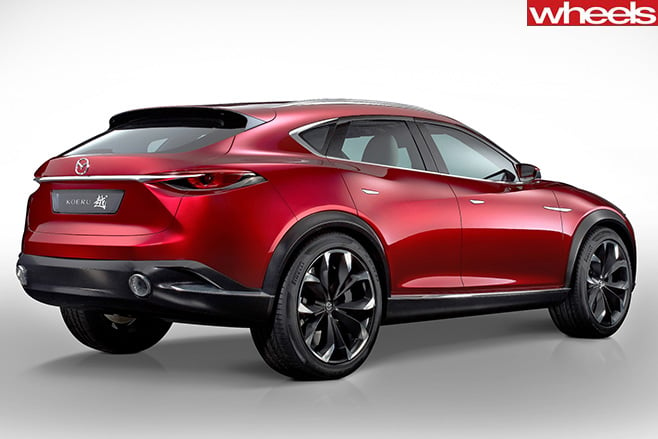
Over at Mazda, there was the Korea concept. Or Koeru. Or CX-4. It took the best-selling SUV in Australia, the Mazda CX-5, gave it a swoopier roofline and previewed future Mazda design language. That’s fine – in fact, Mazda chief designer Iwao Koizumi explained that the company won’t do a BMW X6-style production SUV, as he’s not a fan of the German adding, “I don’t like the look of it.”
Yet the rumour is that Mazda had Frankfurt down for the relaunch of its high-performance MPS models – but decided that the swoopy roof SUV was more important. The MPS 3 was rebuffed for the Koeru, and put on ice – even if there’s some respite in that a rotary-powered Mazda will be at the Tokyo show next month.
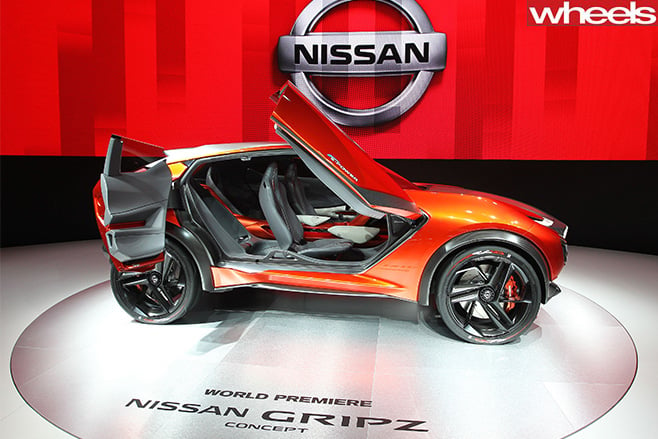
An SUV is a small truck, if I remember correctly. A Nissan Z-Truck? The Nismo Juke with the GT-R engine sold in the UK was cool, but killing a coupe for an SUV? At least Porsche still sells the 911.
There’s more evidence on the Renault side of that conversation, too. Stoll told us that RenaultSport was under pressure to expand, something backed up by its sales and marketing director, Regis Fricotte, on the second day of the show. Regis told us that RenaultSport plans to double its global sales, currently around 35,000 a year, by 2020.
It’s simple. Perhaps it will share the same platform as the Gripz, but here’s what we know about RenaultSport. We visited its Dieppe factory before the show, which we’re proud to report had many right-hand drives with AUST as their final destination on the line. Capacity? Up to 200 cars with multiple shifts, more realistically 70 per shift.
The current output is 30 RS Clios per shift (and 20 EVs for a French car-sharing scheme), and one shift per day. That leaves enough room for another niche model, say, sharing the same platform as the Clio, which sells really well.
On top of that, with Australia the RS’s second-best market after Japan, and the popularity of B-segment SUVs, it could be our own fault. We’ll buy it.
There’s something worse than this. Legendary brand Alpine – LeMans winning, 1973 World Rally Champion and France’s Ferrari – could top-hat its own body onto this to create an Alpine SUV. Ferrari has ruled out doing an SUV but neither Alpine boss Bernard Ollivier nor RenaultSport’s Fricotte would rule out an SUV when asked.
“If you look at all the other manufacturers, you can see sports versions of SUVs,” said Fricotte. “So there is no reason we should not look at it. I’m not telling you that there will be one, and when, but we’re looking at it.”
So when will the LeMans 24-hour be a race between hybrid SUVs? As soon as race cars need ISOFIX points.
One of the most appealing things about Audi’s RS5 Coupe has always been the rumble and baritone bark of its hand-built 331kW/430Nm 4.2-litre atmo V8.
So what better way to pump up the volume on this bent-eight boom box, than to get rid of its noise-muffling roof?
Audi’s quattro GmbH performance division has lifted the lid on the RS5, one of three new RS models heading our way in the near future; the others being the RS7 and the RS Q3.The RS5 Cabrio’s electric soft-top, with heated glass window, is claimed to open in 15sec and close in 17 at up to 50km/h. And just in case you’re not in the mood for aural engine entertainment, the roof is lined with an additional 15mm layer of acoustic foam to keep noise down.
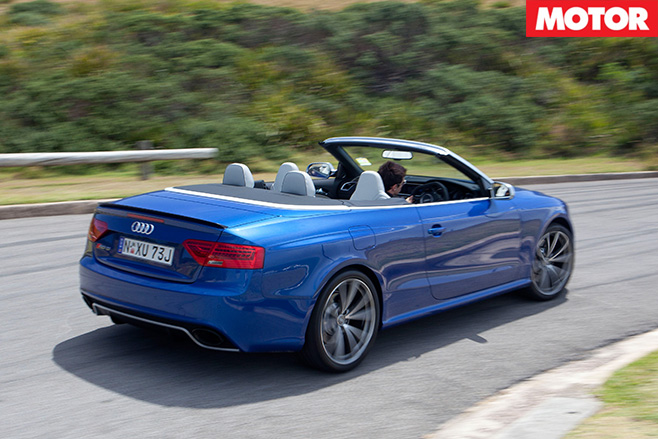
In terms of rigidity, Audi claims specific reinforcement components compensate for the absence of a metal roof, including extremely stiff tubes reinforcing the A-pillars, and diagonal struts running from the side sills to the front subframe, with a similar arrangement at the rear.
A solid aluminium frame, housing rollover protection, is located between the interior and luggage compartment, and if the system senses a rollover, pre-tensioned springs instantly push up aluminium supports behind the rear head restraints. The weight penalty for the extra metal and systems is 205kg, so the 1920kg Cabrio’s claimed 0-100km/h time of 4.9sec is 0.4sec slower than the Coupe.
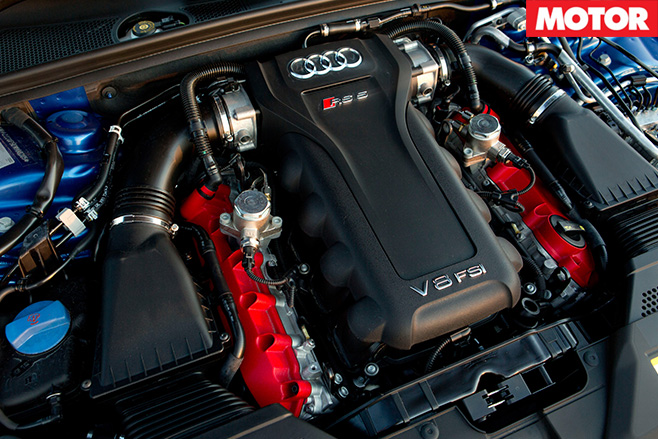
In virtually every other respect, the RS5 Cabrio aligns directly with its hard-top sibling. The seven-speed ‘S tronic’, dual-clutch ’box is standard, as is quattro permanent AWD, with self-locking centre diff and torque vectoring.
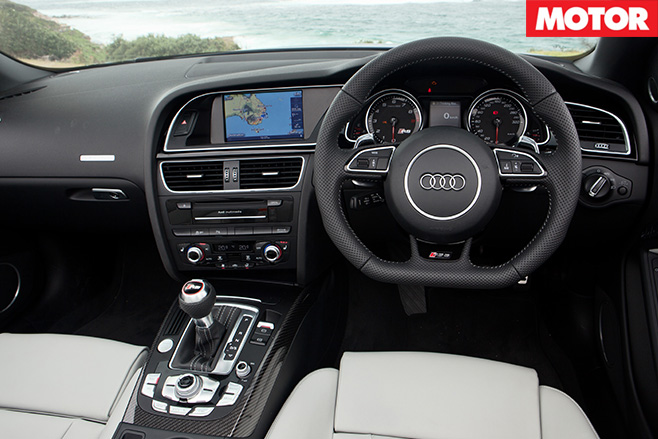
While it’s unrealistic to expect rock-solid rigidity in any soft-top car, there are cabrios costing far less than this car’s $175,900 that are more composed over typically pock-marked Aussie roads.
WHERE DOES IT FEEL AT HOME?
As you’d expect from a ute, the Triton is a hard-working vehicle. That is, it likes to carry tools, as much as it enjoys a tray full of camping gear. The city is its home, but it’ll just as easily adapt to those muddy off-road tracks.
WHAT IT’S MADE FOR
What isn’t it made for? It’s a light commercial pickup that’s more than capable of hard labour, but the Triton also has the comfort of a passenger car so it can easily adapt to transporting the family, and the off-road capabilities in most models means it can even take you beyond the realms of bitumen.
STAND OUT FEATURES
True to ute form, the Triton is basic. There are no flashy gizmos and gadgets. But there’s plenty to love.
WE LOVE
It would be remiss of us to talk about the Triton without mentioning it’s refinement as a decent passenger car. It’s comfortable and roomy, the tilted backseats mean passengers aren’t sitting too upright, and there’s enough legroom. Its quiet diesel engine is powerful enough and fuel efficient. The luxurious cabin in the new gen Triton also takes it up a notch as a handy ‘around-town’ ute. Not to mention that it comes with all the standard features you’d expect in a passenger car, as well as a four-wheel drive, including hill-start control and trailer-sway control.
THINGS WE’D LIKE TO CHANGE
However, it’s still not quite up there compared to some of its competitors, especially when you compare it to the refinement of the Volkswagen Amarok or Ford Ranger. While the legroom is satisfactory, the rear seats are not as wide as others, and we think Mitsubishi probably should have considered giving the decade old vehicle a bit of a facelift in its newest guise. More colours wouldn’t go astray either, with any colour choice beyond red or white costing extra.
WHO WILL IT SUIT?
Given it measures in at a pretty good price, we think the Triton is a pretty good option for most city-dwelling family tradies who also don’t mind getting their wheels dirty.
Click here to read the full review on the Mitsubishi Triton.
A decade ago, when most automatic transmissions were of the torque converter type, the slurred responses and inefficiency that went with a fluid-drive coupling meant the less expensive manual gearbox filled a fuel-efficient niche.
Today, though, the pervading dual-clutch is quicker to shift and delivers superior economy to a manual. At the same time, it delivers driver satisfaction a Tiptronic auto can’t, despite lacking the control and driver involvement of operating a manual’s gearstick and third pedal.
Yep, blame the dual-clutch for accelerating the demise of the classic, exposed-gate DIY transmission. It’s becoming more common to find an old-school stick shifter in the cost-conscious light hatchback segment than in a supercar. Ferrari doesn’t even offer a manual model, neither does Porsche in its driver-focused GT3.
Despite being relatively new to road cars, the dual-clutch could be considered old-school cool. The transmission made its motor racing debut in ’80s icons like the Le Mans Porsche 956 and World Rally Audi Sport Quattro (see breakouts).

Later, in the early ’80s, British company AP developed dual-clutch prototypes, however it was Volkswagen that readied the automated manual for the road. The dual-clutch made its mass production debut as the direct-shift gearbox (DSG) in the 2003 Mk4 Golf R32, and Volkswagen remains the world’s biggest producer of the semi-automatic. Yet it seems from Volkswagen’s recent woes, durability (and driveability) wrinkles are yet to be completely ironed out.
Since then, car makers and transmission manufacturers such as Getrag and Graziano have developed their own versions, and the dual-clutch has become the standard self-shifter for many marques.

Obviously, a Panamera Turbo with a seven-speed transmission has none of the limitations of a two-speed Toyoglide Corolla, but the new function can offer, say, a handy extra 6.5th ratio by hovering between sixth and seventh while slipping both its wet clutches.
On the move, dual-clutches are quick-shifting and offer uninterrupted power delivery, however, depending on the transmission and its computer calibration, low speed throttle tip-in, the sort that’s important when parking, can be jerky.
Like many modern systems threatening to make the driver redundant, the best examples make the problem insignificant, while in less polished applications you’ll wish for the smoothness of a torque-converter. Or a good old-fashioned manual.
VOLKSWAGEN Group CEO Martin Winterkorn has resigned, as the company he headed reels from its revelation yesterday that 11 million of its diesel cars used operating software that could cheat emissions testing.
The admission extended to cars sold globally findings announced last Friday by the Environmental Protection Authority in the United States, which said that 482,000 Volkswagen Golfs, Jettas, Beetles, Passats and Audi A3s had been fitted with software that could defeat official US tests.
After Volkswagen announced it would spend $10 billion on a response to the scandal and saw its share price plummet, Winterkorn, 68, said he was stunned at the scale of misconduct and hoped his departure could mark a fresh start for the company.
“Volkswagen needs a fresh start, also in terms of personnel,” he said. “I am clearing the way for this fresh start with my resignation.”
More to come.
IT’S AN ugly question that follows the keys to anything expensive and exotic.
“Is it YOURS?”
It arrives most in car parks and at service stations, where on the odd occasion when I drive something special, I’m approached by complete strangers. They use the question as a greeting.
It’s not the query itself that I mind, as much as the emphasis on the final word – like they can’t believe I could possibly own such a machine.
Maybe it’s the way I dress. Or the fact I’m in my mid-20s.

Not this time, though.
With the keys to the Wheels Porsche 911 firmly wedged in my fist I decide that this weekend, the 911 is going to be mine.
“I own a small IT company,” I’ll tell the strangers. Or, “I just sold a social media app to Yahoo.”
This decision is down to the 911’s spec, which if I had $270K to spend, makes it almost the exact Porsche I’d buy. My Porsche 911 Carrera S would be white not black, would have three pedals and not two, and I wouldn’t option those 20-inch Turbo wheels, but the rest of the car is spot on.
The Sports Chrono pack, for example, is a must, as is the $5890 sports exhaust.

Porsche is rolling out turbo engines across its entire range (only the GT3 and GTS are likely to avoid forced induction), which means weekend drives like this are on borrowed time.
The benefit from turbo engines will be oodles of torque (an extra 60Nm in Carrera S spec) and improved efficiency, but after ringing this 911’s neck up a twisty road near Melbourne’s Mornington Peninsula, I’m convinced some of the magic will disappear.
No turbo donk can replicate the razor sharp throttle response of Porsche’s atmo flat six, or that intoxicating feeling of having the revs exactly where you want them at exactly the right time.
Then there’s the sound. Get an aspirated 911 above 4000rpm and the way the noise builds from a bark to a unique, spine-tingling howl at 8000rpm is intoxicating. Good luck achieving that engine note with turbos.

So there will be benefits, and I expect switching to turbo engines will be much the same as the 911’s shift to electric steering. People will grumble at first, but quickly get over it.
And it’s not like the rest of the 911’s legendary recipe will change. There’ll be the same rear-engine layout, the same beautifully made interior and the same unique handling balance.
Also unlikely to change is the 911’s masterstroke, which is the way it treads the line between supercar performance and everyday discretion. It has enough personality and presence to feel special every time you drive it, yet remains understated enough to park on the street without having to worry that someone’s scratching it.
Perhaps this is why not a single person asked “Is it yours?” all weekend. It’s a shame, because come Sunday night, my answer would have been a truthful “I wish”.
