
IS THIS the best video you’ll watch all day? It shows racing legend Bernd Schneider attacking a damp Mount Panorama in Mercedes-AMG’s newest, and slightly bonkers, GT S hot-rod.
Sure, it’s Mercedes PR. But we mean attacking. At the 0m54s mark, Bernd is so crossed up he’s inches away from tearing the $295,000 car apart on Bathurst’s famous walls.
He doesn’t, though, and Bernd goes on to clock a lap time of 2:24.03, which you’ve got to admit, is bloody quick for a standard production car, even if it does have 375 kW.
The only options fitted to the Mercedes-AMG GT S used in the film were stickier Michelin Pilot Sport Cup 2 tyres and carbon ceramic brakes, both of which any customer can purchase for their car.
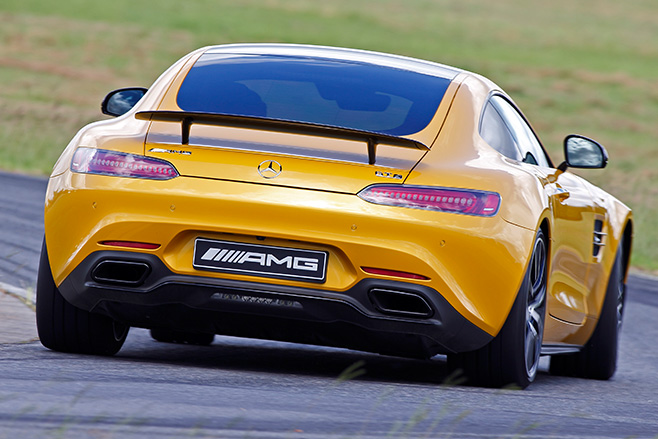
To put the GT’s time into perspective, a race-prepped V8 Supercar laps the Mountain in the 2:07 bracket. Schneider himself has gone quicker at Bathurst too, and lapped the famous circuit in 2:07.6 on his way to win the 2013 Bathurst 12 Hour in a SLS GT3. But these are racing cars bristling with slick tyres, slippery aero and racing suspension.
Hit play and watch Schneider and the GT S earn their keep.
And if you want to know how the car rates against the new Porsche 911 GT3, you’ll find a track showdown in the September edition of Wheels, on sale August 20.
Sign up here to receive the latest round-up of Wheels news, reviews and video highlights straight to your inbox each week.
WILL people pay $50 a month to watch V8 Supercars races live on Foxtel? Or will most simply grumble that every race should still be free on Channel 7 – while predicting a dire drop in viewer numbers for any that aren’t?
Strong interest in Peter McKay’s report of a ratings disaster for the V8 round at Queensland Raceway pointed firmly towards the latter, perhaps fuelled by the natural human fascination for seeing our gloomier prophecies confirmed.
Was it fears that the Bathurst 12-Hour might be moved behind the same paywall that drew readers to McKay’s companion piece on why V8 Supercars had bought the popular GT car event? Or just general curiosity about the future of an evolving lounge-room classic?
And what of our spy pictures of the Mercedes C-Class Coupe? That’s easy: when someone tries to prevent us from looking at something, it is natural to want to look at it. No less so when the something is a sportier version of the acclaimed, mid-priced Benz mid-sizer.
Plenty of Wheels readers were curious too about why Mazda would welcome a faster, Fiat-branded MX-5. Or maybe you just wanted to share a Mazda executive’s acerbic assessment of Fiat’s status in Australia, as delivered to Wheels features editor Stephen Corby.
And then there was Alex Inwood’s review of the bruiser from Ingolstadt, the new Audi Q7. Days after Corby observed that the featherweight new Mazda sports car sometimes struggled to haul you up hills, Inwood attributed embarrassingly prodigious pace to a hulking seven-seat diesel.
“Shifts from the new 8-speed auto are seamless and fast and make the response to flattening the throttle a revelation,” Inwood wrote of the 2135kg luxury SUV. “It’s like watching a two-tonne turtle effortlessly destroy Usain Bolt over the 100 metre sprint.”
Sign up here to receive the latest round-up of Wheels news, reviews and video highlights straight to your inbox each week.
FIAT Chrysler’s bid to wrest back more than $30 million it claims was misappropriated by its Australian division has taken a new twist, dragging in yet another high-powered former executive.
Veronica Johns, who replaced the man at the centre of the allegations, Clyde Campbell, and won the distinction of becoming the first locally born woman to head up an international car maker’s Australian operations, has this week been joined as a respondent in the Federal Court case, documents obtained by Wheels reveal.
Johns is mentioned numerous times in Fiat Chrysler’s statement of claim against Campbell, which alleges she authorised excessive payments for cars gifted to associates of Campbell and sold back to the company, accepted free cars bought by the company as prizes, and used company funds to renovate her kitchen.
Fiat Chrysler’s case against Campbell outlines numerous claims of unwarranted spending under his stewardship, including leases on planes, boats and luxury hotels, and overseas trips.
Fiat Chrysler has also applied to the court to file an updated statement of claim outlining where it believes the money has gone.
Campbell is contesting the allegations.
The case is continuing.
Sign up here to receive the latest round-up of Wheels news, reviews and video highlights straight to your inbox each week.
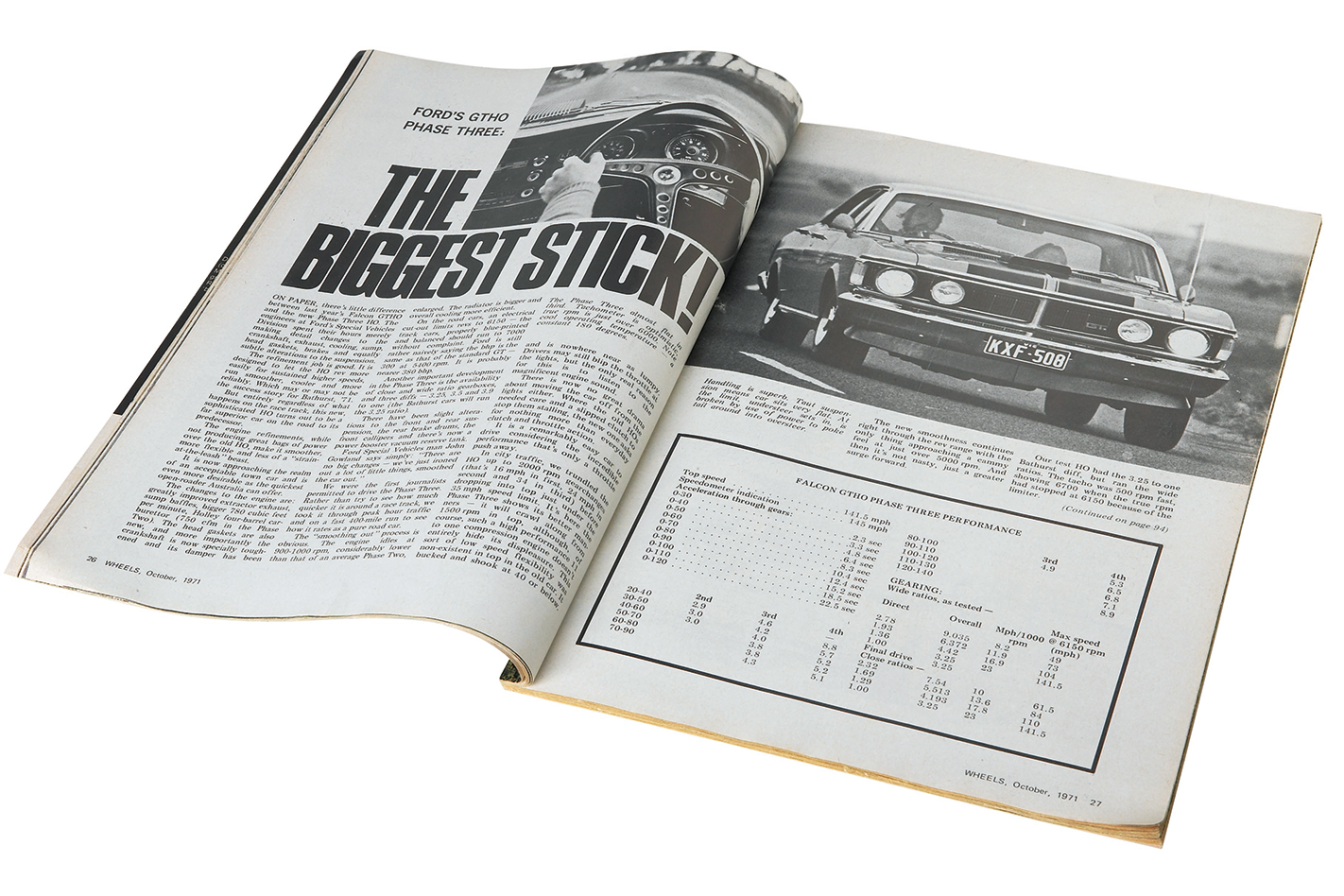
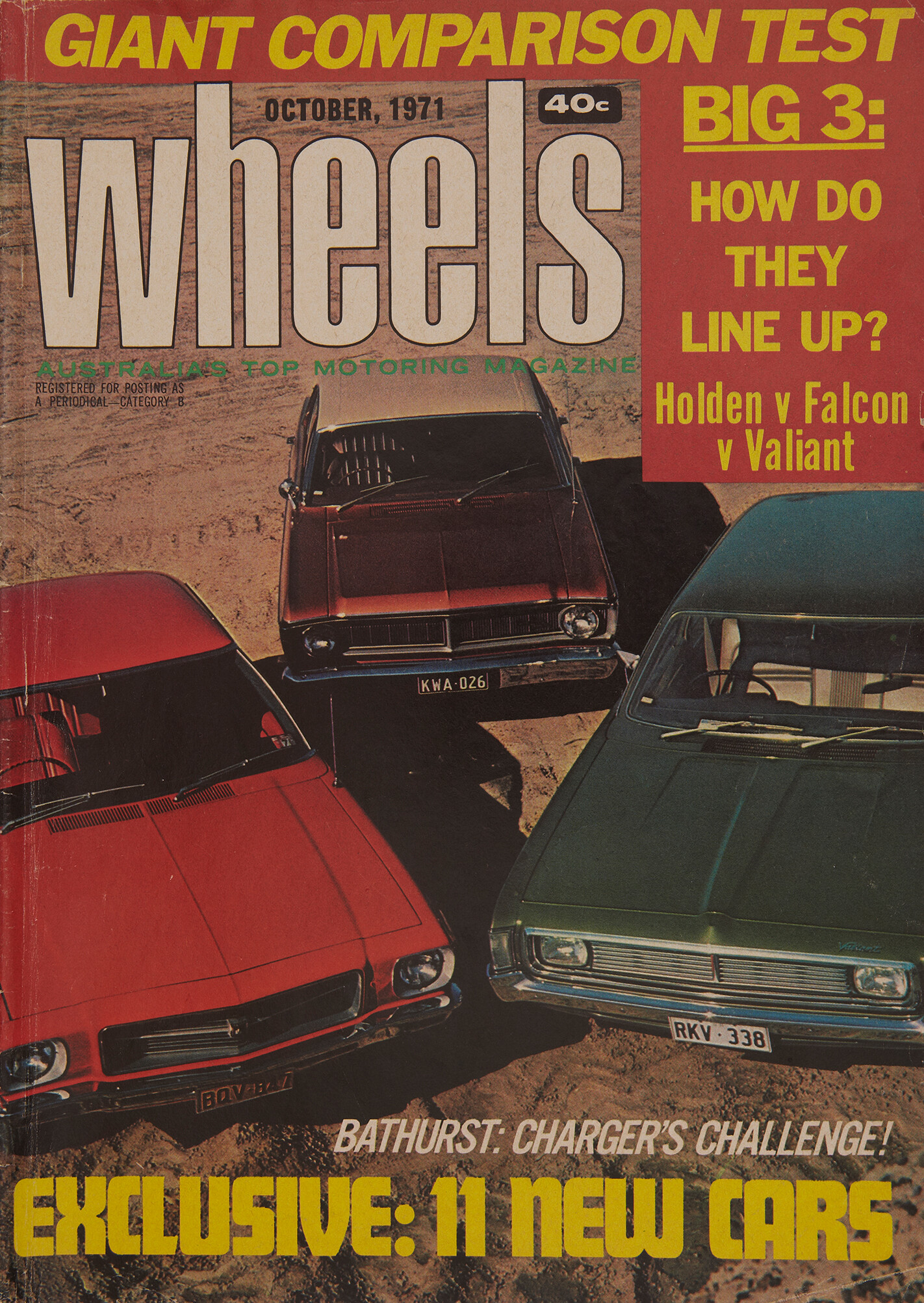
Wheels’ 1971 review of the Ford Falcon GT-HO Phase III was written straight, withholding details of the author’s high-speed research. Here is the story of the Hume Highway drive behind it, originally published in sister magazine Sports Car World four years later.
———-
PAINFULLY, heartbreakingly, as ideals give way to reality, young journalists learn that certain stories are too hot for publication. Some can never be told; others only years after the event took place. This is one of those stories.
It began in the carpark of the Ford Motor Company’s head office at Broadmeadows, near Melbourne, one afternoon in the middle of 1971. A car was waiting there for me in the feeble wintry sun. A mustard Falcon. One of the first GTHO Phase Threes to come off the production lines; so new, its existence was still a secret to all but a handful of people outside Ford. And of those people, here was I about to be handed the keys to the fastest, most awesome supercar Australian had ever produced.
Read former Wheels editor Peter Robinson’s tale about how this story came to be written.
Good organisation or coincidence – I forget which – had it that at precisely the same time as the HO was ready I was in possession of one of the first 5.0-litre V8 Bolwell Nagaris. Indeed, it was the car that had rushed me from Sydney to my assignation with the Falcon, putting the 570km of the NSW section of the Hume Highway behind me in the morning, and accounting for Victoria’s 310km in the afternoon.
Even so, we’d been running late, desperately worried that we wouldn’t make it to Broadmeadows before the Ford people went home, taking the keys of the HO with them. But it was okay because the mechanics were still working on the car even as I telephoned, breathless, from Wangaratta to beg them to wait.
And then I was there, pulling in alongside the thing, unwinding myself from the Bolwell and climbing, gingerly, expectantly, dubiously, half-afraid into the Ford. I can recall not one word the PR man was saying through the open window as the key slid into the ignition. I can remember only the tension, trying to stop my leg shaking and the racing of my brain. And then the trembling of the car and the flick of the shaker air filter in the bonnet as the 5.7-litre V8 churned to the starter and shook in its mounts. It fired, and filled the carpark with a thunderclap of exhaust as intimidating as the snorting of a charging rhinoceros. Then came the popping and sizzling and gulping as the throttle was prodded and the 780cfm bour-barrel Holley dumped too much fuel into the unready cylinders. Give it a little while; I used the time to adjust the mirrors, fine-tune the seating positions, fidgeted in the bucket and tugged the belt a snitch tighter until it nailed me to the squab.
And then I dared to move the car away, feeling a little tremble in the left leg as it fought against that big bastard of a clutch for the first time.
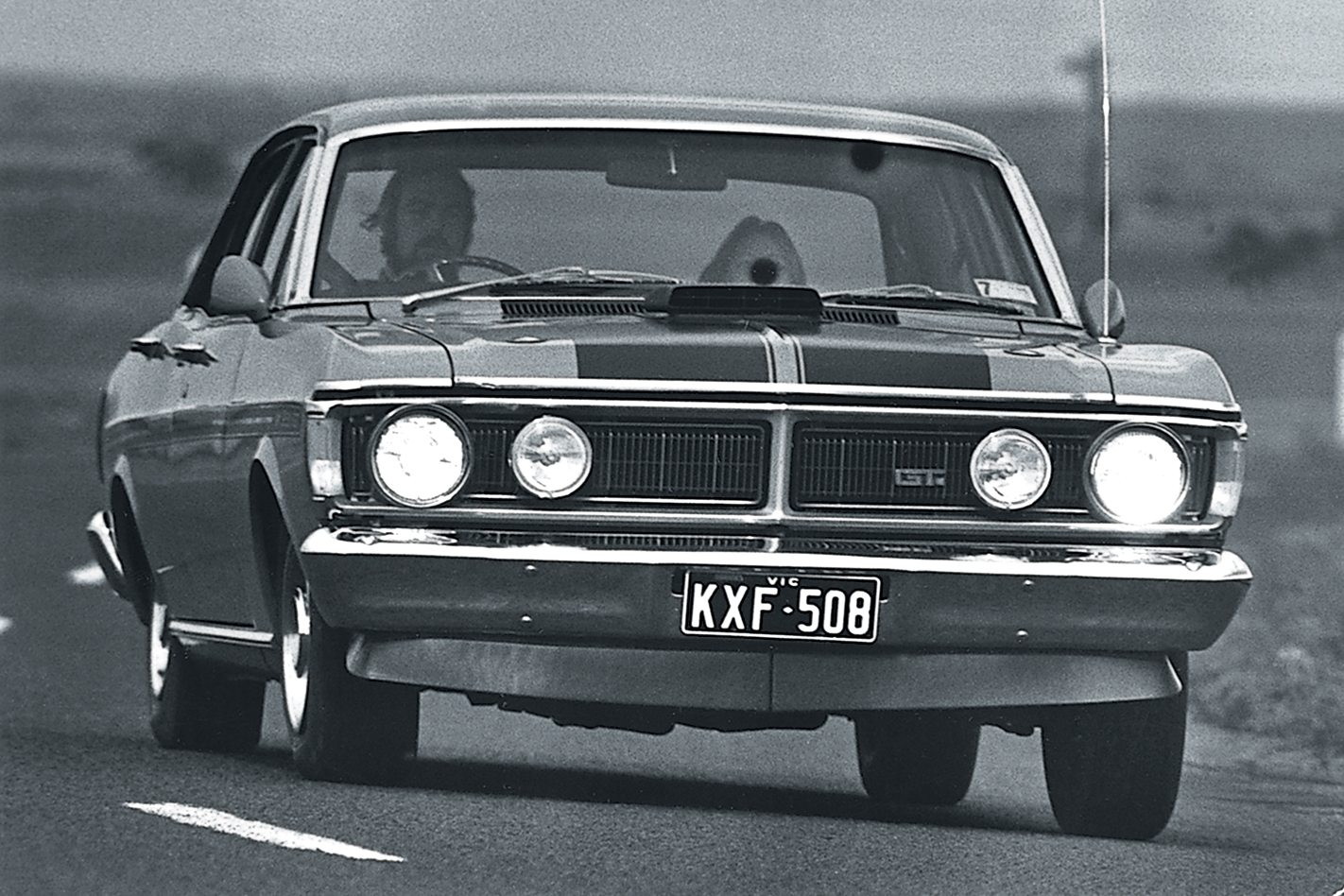
So I, too, trod down hard on the throttle pedal. And braced myself. Without yet completing my arc out through the median strip into the traffic. The car hiccupped … shuddered. Then – bloody hell! – it exploded into action. The front hurled itself forward and upwards like a charging tiger. The back tyres wailed and the tail snapped ‘way out. I speared sideways through the last of the gap in the central reservation. The opposite lock was on, intuitively – no time to think about niceties like steering feel now!
It flicked straight again as it lined up in the outside land of the road towards Melbourne. The engine’s snarling had reached fever pitch. I grabbed second just as the V8 hit its electric rev-cutout. It died momentarily, then picked up again and simply pelted me forward once more. Then senses raced, trying to adjust to the speed. Maximum revs – again. But so soon! Third, and I charged forward once more. And then it was hard on the brakes, getting a slight twitch because I was up to 145km/h in those scant few seconds and about to run right over the top of the Bolwell. We both slowed right down, both aware of just how much performance we had on hand, and how cautious we needed to be. Not because all that go is hard to control. Not at all. But you are so much faster than everyone else you’re out of place in the traffic unless you conform.
So we tip-toed into Melbourne. That early, blood-stirring blast probably did me a great deal of good. It showed me that the Phase Three was an eminently easy car to drive, so much more so than either of its two predecessors, and especially when one considers just how much power lay just a throttle push away. It was so smooth low down, so docile for a thumping great V8 with an 11:1 compression ratio. It was happy enough to trundle down to 1500rpm – 55km/h – in top gear, to idle steadily at 1000rpm compared with something approaching 2000rpm in the Phase Two. I found I was easing up to 2000rpm, changing up into top at around 55km/h. And so I came, very quickly, to feel quite at ease in the HO. Ready to drive it…
Uwe and I picked up two models early the next morning – a Saturday – and headed west to take pictures. I lounged in the warmth of the Falcon while he got on with his work.
And then it was time to start work with the HO. The only open bend we could find was not all that tight. I did one run and found that even 145km/h was too slow to make the car move. It just sat there, hugging the road. Doing nothing. Again: this time flat in third at 170km/h. Again no understeer, no oversteer; just a little bodyroll and the nose lifting jauntily. I went to 180km/h in fourth on the next run and it was still just as uneventful, but I daren’t go faster because I wasn’t yet entirely sure where the limits lay, even though I was getting a pretty good idea.
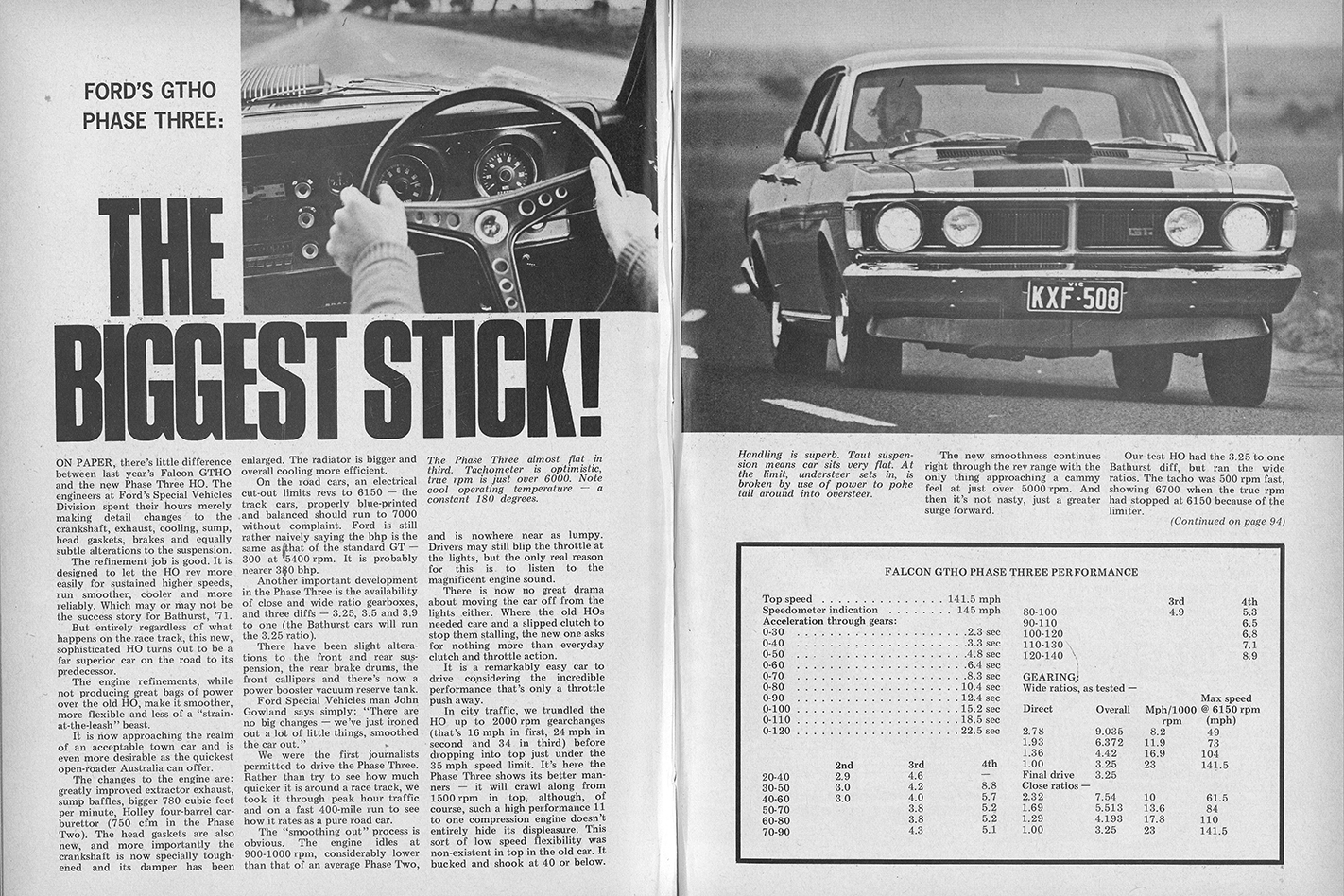
So I ran performance figures instead, ticking off the gear maximums at the 6150rpm redline at 79km/h, 117km/h and 167km/h with top’s maximum unreachable in the space. Then there was the acceleration: experimentation showed that the clutch had to come out at 2700rpm – nothing more and nothing less. If I dropped it at 2500rpm the engine died a little against the grip of the wheels. If I popped it at 3000rpm there was wheelspin for around 200 metres, again wasting time. So 2700rpm it was. And 0-160km/h in 15.2 seconds came up on the watches. But so effortlessly…
But what the hell, we still had the HO, didn’t we?
Indeed yes, and unbeknown to us at that moment, we were soon to subject it to one of the most exhilarating tests it would ever undergo on the road; to use it for what I suspect is one of the most remarkable journeys ever run in Australia. To thunder it flat in a drive etched for ever on the memories of the two of us who did it.
But for the moment we found ourselves tooling quietly through the cold Melbourne drizzle. Saturday night. No plans. No enthusiasm. Then something – I don’t know what – made one of us suggest going to Albury, 320km away on the Victoria-NSW border.
So we gunned the HO around, hit Elizabeth Street and headed north into the night. It was 7.30pm.
The rain grew heavier and the night nastier. There wasn’t much traffic, and what there was was going the other way. I don’t recall much until we were past the little Hume Highway town of Seymour, but I expect we’d been alone with our thoughts and the murmur of the radio, soloist to the steady background swish of the wipers, the hissing of the tyres and the downbeat throb of the V8. I only remember the ease of driving the car; how much at home I now felt in it, with a real idea of its capabilities now forming clearly in my mind. How comfortably it carried us, its lights hacking through the night. And then came the long, fast bends you strike after Seymour. Open bends. And I can remember the way the car just seemed to think itself through them, undeterred by the rain and travelling at ever-increasing speeds and showing me how strongly it could grip and how finely it was balanced.
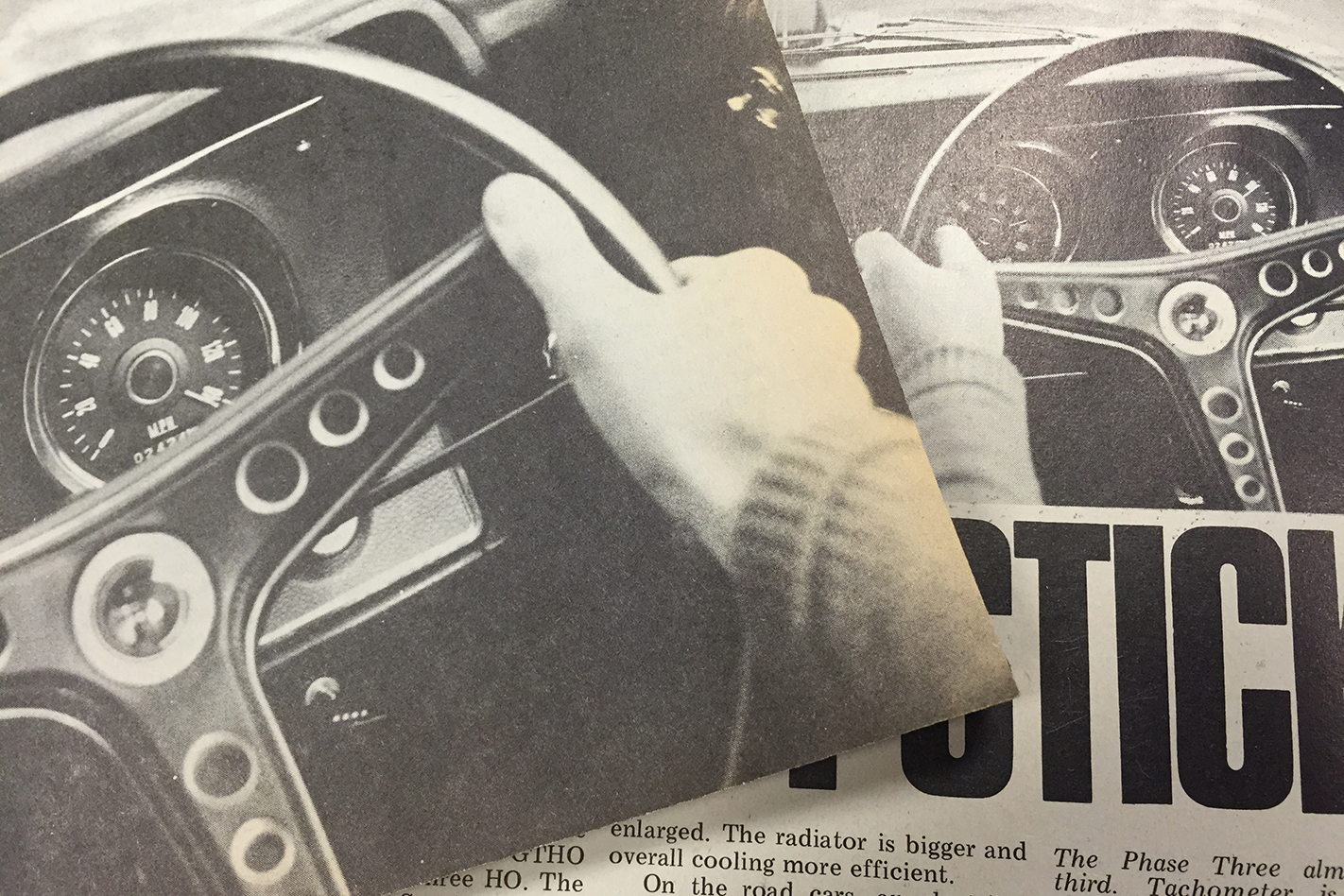
I flicked a glance at the speedo as we came into it now in the HO. I barely believed it – 200km/h. But there we were, rock-steady, the car just slicing on through, set up by the merest throttle lift then kept on line with gentle pressure on the pedal once more, and the tiniest smidgin of steerage on the big wheel. Everything about it was so clean, so beautifully and clinically balanced, like walking on a razor’s edge and feeling the elation of not slipping off. And that moment remains as one of my high points in years of road-testing. It was perfect – so perfect it was almost nothing.
We continued on holding 200km/h for what seemed like dozens of kilometres, and the only reason we didn’t go faster was that at precisely 202km/h the windscreen wipers began to lift off.
Then we were in Albury, purring gently through the glistening streets after a run that contained nary a sideways twitch, never a sliver of understeer, not one zizz of wheelspin. It was exactly 10pm. We had covered the distance faster than either of us would have imagined possible even in ideal conditions, let alone amid the elements’ atrocities of that night. Yet it was also the tamest, most uneventful trip either of us had had from Melbourne to the border. We were into the inner sanctum of the GTHO’s world.
And there was even more to come the next day.
Our arrangement with Ford was to hand the Phase Three back at nine o’clock on the Sunday morning and then get a lift back to Sydney with a Ford employee who happened to be driving from city to city that day.
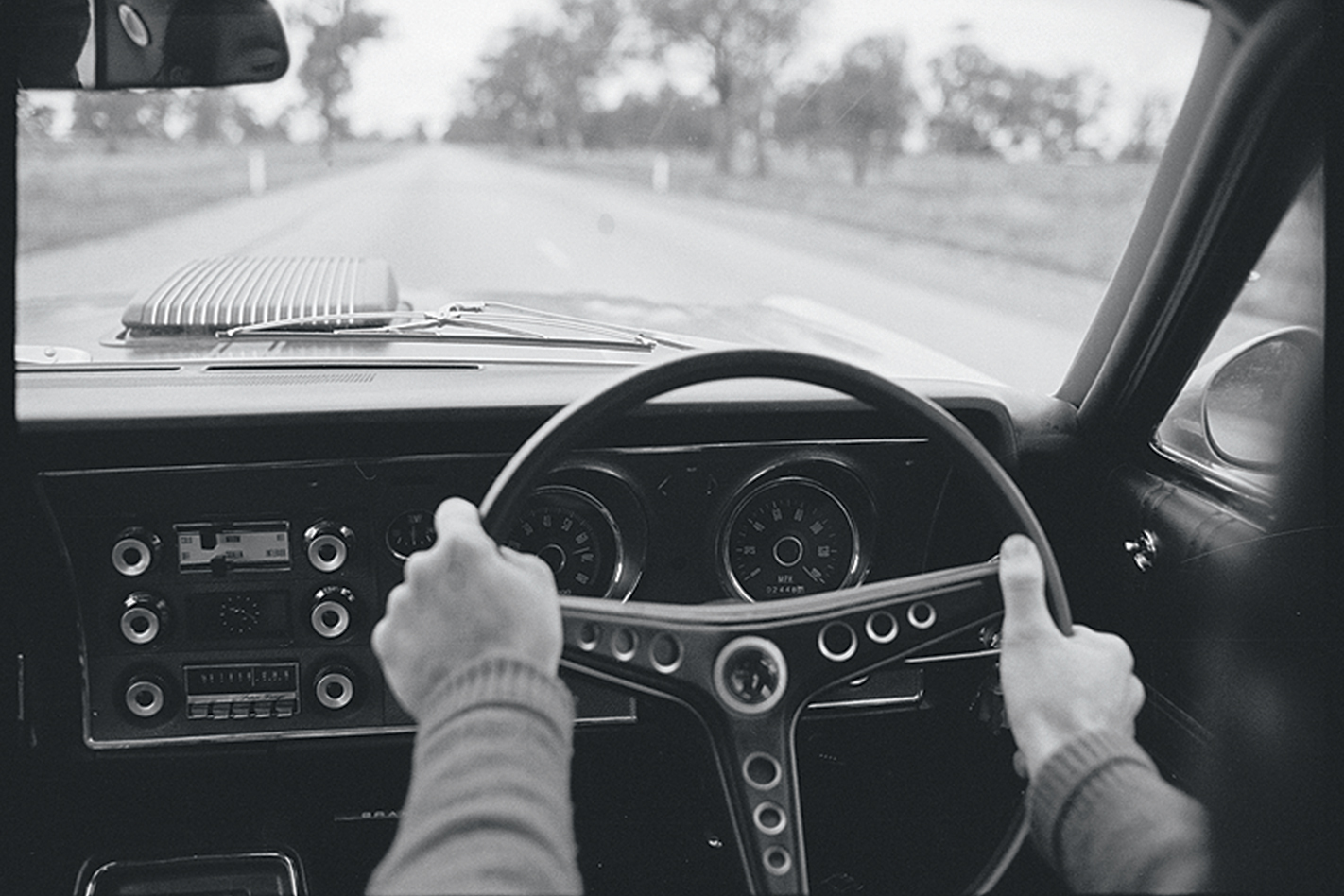
We checked the tyre pressures, polished the windows clean, and at 7.02am we left for Melbourne.
The morning was as perfect as the night before it had been foul. We went full out through the gears as we cleared the last speed limit of the border town complex with the HO now warm and ready, thundering past a couple of cars and a semi. The car’s nose was thrusting forward and upwards with the power once more, we were again enjoying the feeling of being pressed back into our seats as the thing was given its head. At last it was free of any and all restrictions. There was only the open road ahead.
Again we chewed up the kilometres and spat them out. In remarkably short time we were striking the long straights of the Hume about 225km north of Melbourne, and with the speedo steady at 200km/h I squeezed down still farther on the accelerator as the ribbon of road speared straight ahead.
The shaker heaved in the bonnet, the car sort of shrugged and the nose rose up even further from the road. It might have been a tiger kicked awake; the noise alone said that. The speedo needle went determinedly around the dial, and soon it was showing 233km/h. A true 227km/h.
But whoa! The engine started missing; fluffing and farting. For God’s sake – the rev-limiter! We’d run right up to it. In top gear. A full 6150rpm (the tachometer actually said 6700rpm; it was optimistic).
For minutes, for kilometre after kilometre, we stayed like that. The car was like a locomotive on rails, never deviating an inch from its path. The messages from its rock-steadiness came back through the wheel and the seats as unmistakably as pinpricks.
I remember how I felt. Relaxed, but razor-sharp, peering ahead a kilometre or more; my eyes, my brain, my nervous system forcibly lifted to a new height to deal with the speed. You feel so competent … so potent. Your mind seems to magnify everything, to pick up an extraordinary amount of information and to digest it amazingly quickly. It’s called concentration, and it’s delicious.
Road conditions and traffic allowed us to keep the HO close to its maximum speed for many more kilometres. But nearing Melbourne we came back closer to 160km/h most of the time, using the tremendous top-end acceleration to maintain a fantastically high average and to overtake in a quick rush of power and safety, since our exposure time was so brief and our controllability so vast. We toyed briefly with the stopwatches again, finding out to our amazement that 160-193km/h took a paltry 6.8sec and 193-225km/h just 8.9sec. And that is top-end performance, with all the excitement and advantages it entails, and simply unavailable in anything else this side of a Miura or Daytona or Berlinetta Boxer or Countach.
Stunned by the car, amazed yet again at such an extraordinarily rapid but effortless trip, we pulled at last into Ford’s offices at Broadmeadows. It was one minute to nine.
 Neither of us spoke. We just shared the silence of the moment, feeling a special sort of elation. Then we lifted our gear from the HO and locked it up and left.
I later thought of how I’d write the story, not yet realising that there was no way I could tell it all. I began to dream of another story. A race, full-out, no holds barred across the Hay Plain in NSW. Between Australia’s finest GT and the Lamborghini Espada, Italy’s finest four-seater. It almost happened, too, but with the Phase Four HO and not the Phase Three. We had it all planned, but then the politicians, remembering the hysterics of the Sunday newspapers when they had finally gotten wind of the Phase Three HO’s pace through the figures listed with my abridged story in Wheels, killed off the Phase Four before we could stage it. I only wonder now if those same politicians and newspaper beat-up merchants ever really know what the old Phase Three HO’s capabilities really were.
So, the new C63 has a smaller engine, uses less fuel and is more refined.
That might set off a few alarm bells, but I can assure you it is still a wickedly fast machine.
We tested the latest generation super C on some of the best winding roads near Victoria’s Apollo Bay this week. Any worries I had that the new car was somehow lacking were blown into the weeds by the side of the road.
Our love for the previous generation naturally aspirated 6.2-litre V8 remains strong despite its drinking problem and it goes down as one of the best sounding engines ever.
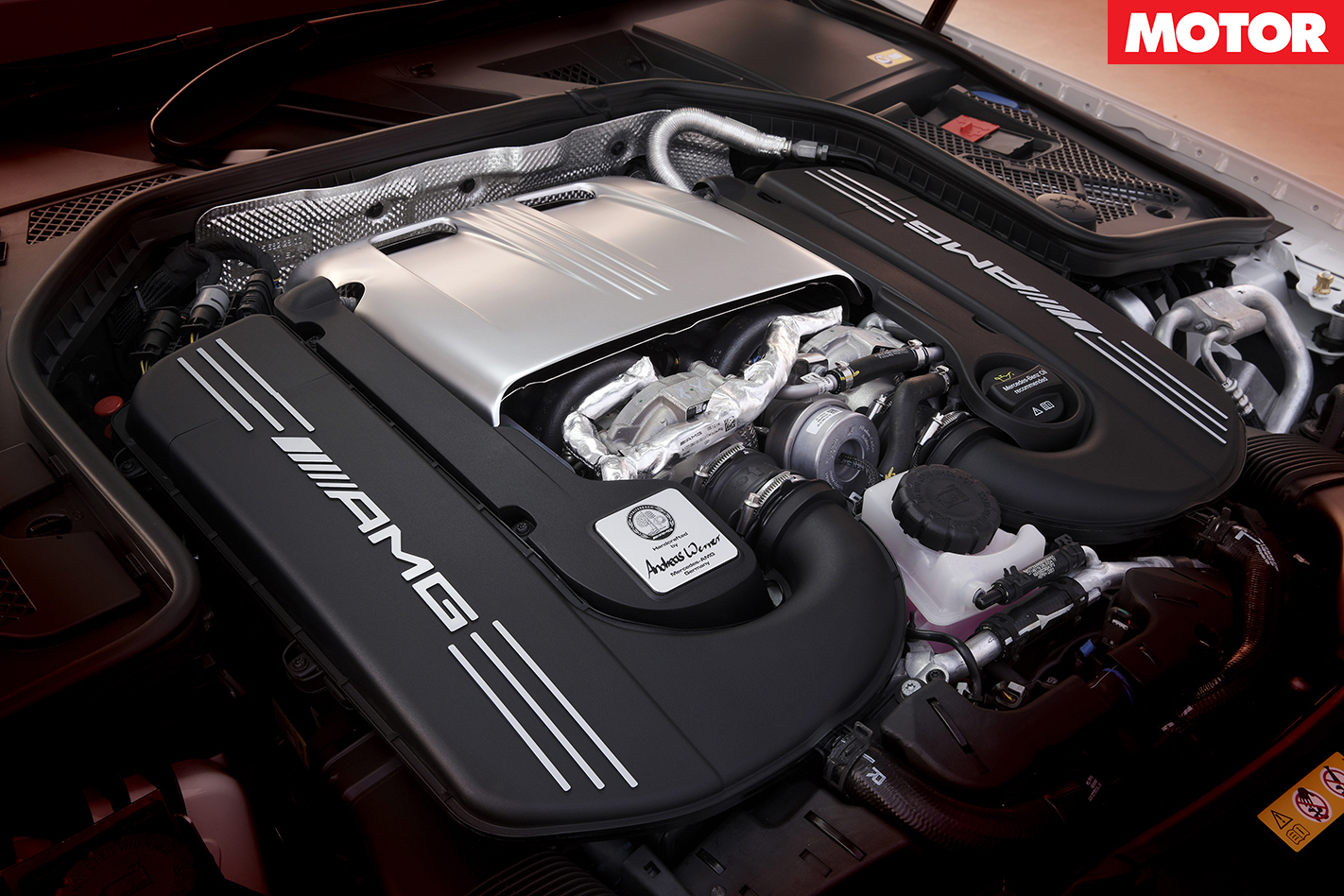
However, the new 4.0-litre twin turbo V8 that powers the new C63 is a stunner.
It will eat through a lot less of your life savings at the bowser, which is handy, but it is an absolute sledgehammer. Its 375kW is great, but it is the massive 700Nm of torque that is available all the way from just 1750rpm to 4500rpm that will push you back in your seat.
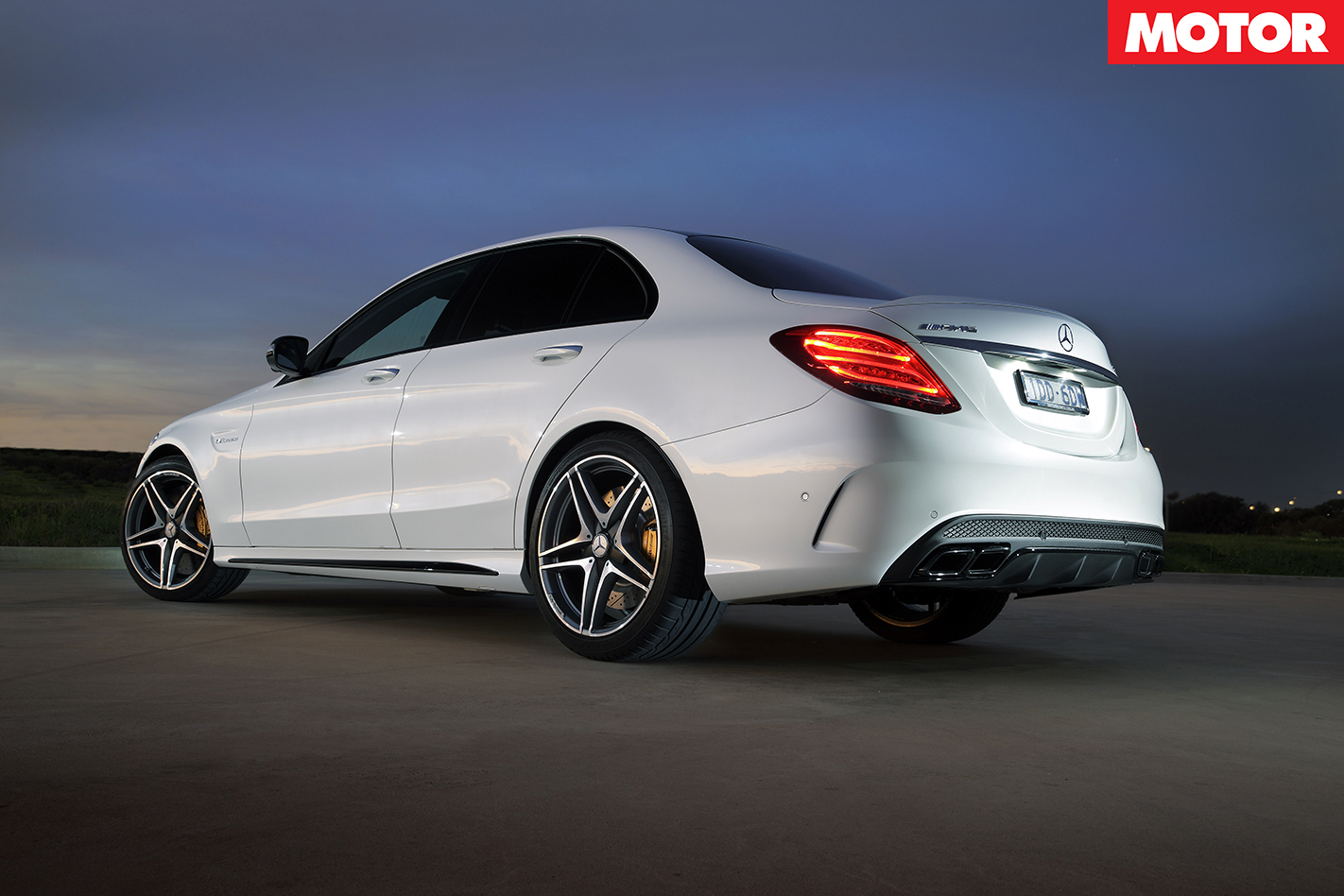
The sound is muscular at idle and builds up with the revs before it erupts with crackles and pops when you lift off or flick a paddle shift and change gears. Just like the last one, there is no manual, but the seven-speed wet clutch automatic has been upgraded and makes faster shifts.
Power is sent to the rear wheels through a new electrically-controlled locking differential, which allows for some gentle controlled slides out of corners.
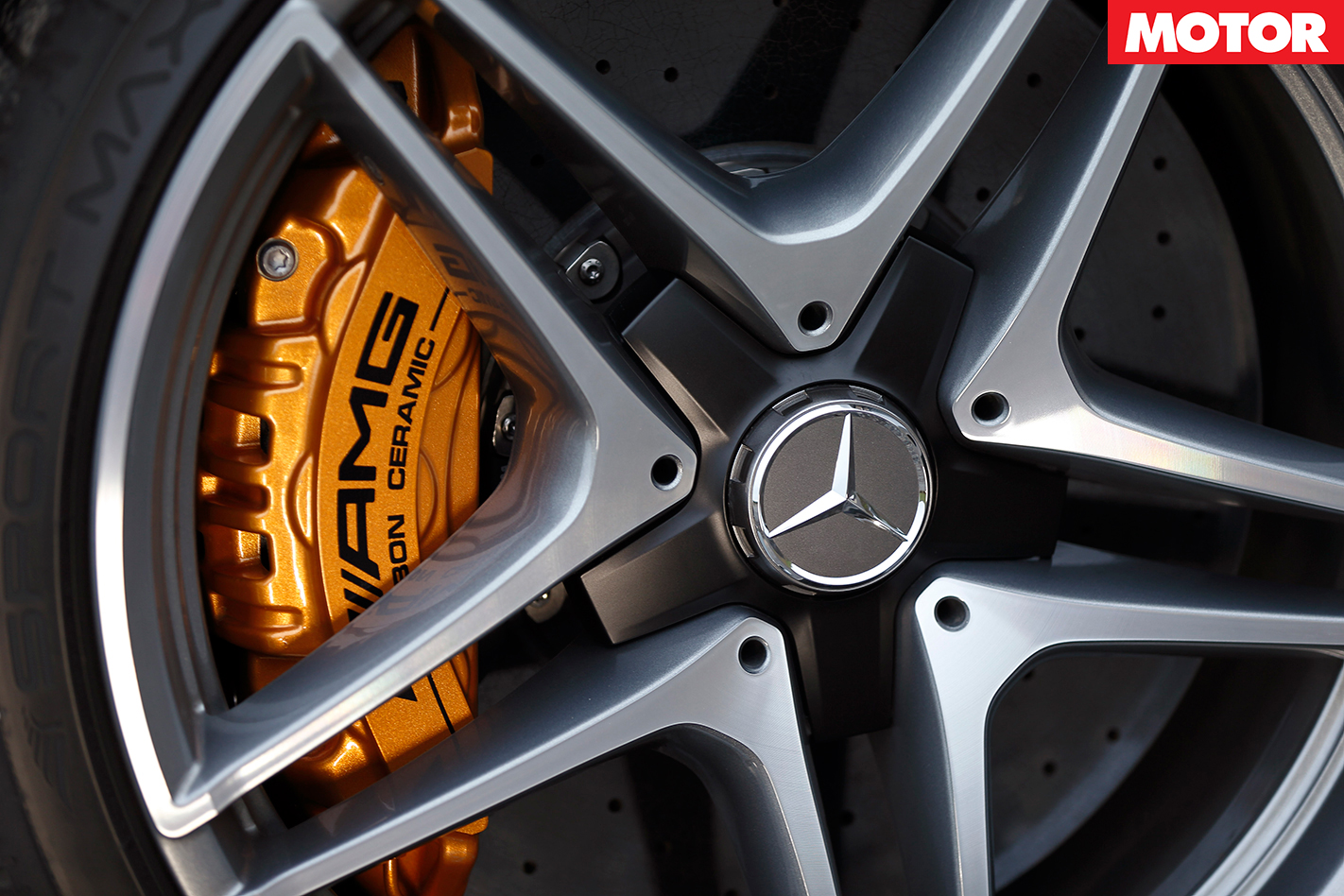
The new C63 has a new electrically-assisted power steering system, replacing the old hydraulic system. This was another element that could have buggered up the drive experience if not done perfectly, but thankfully the AMG white coats nailed it.
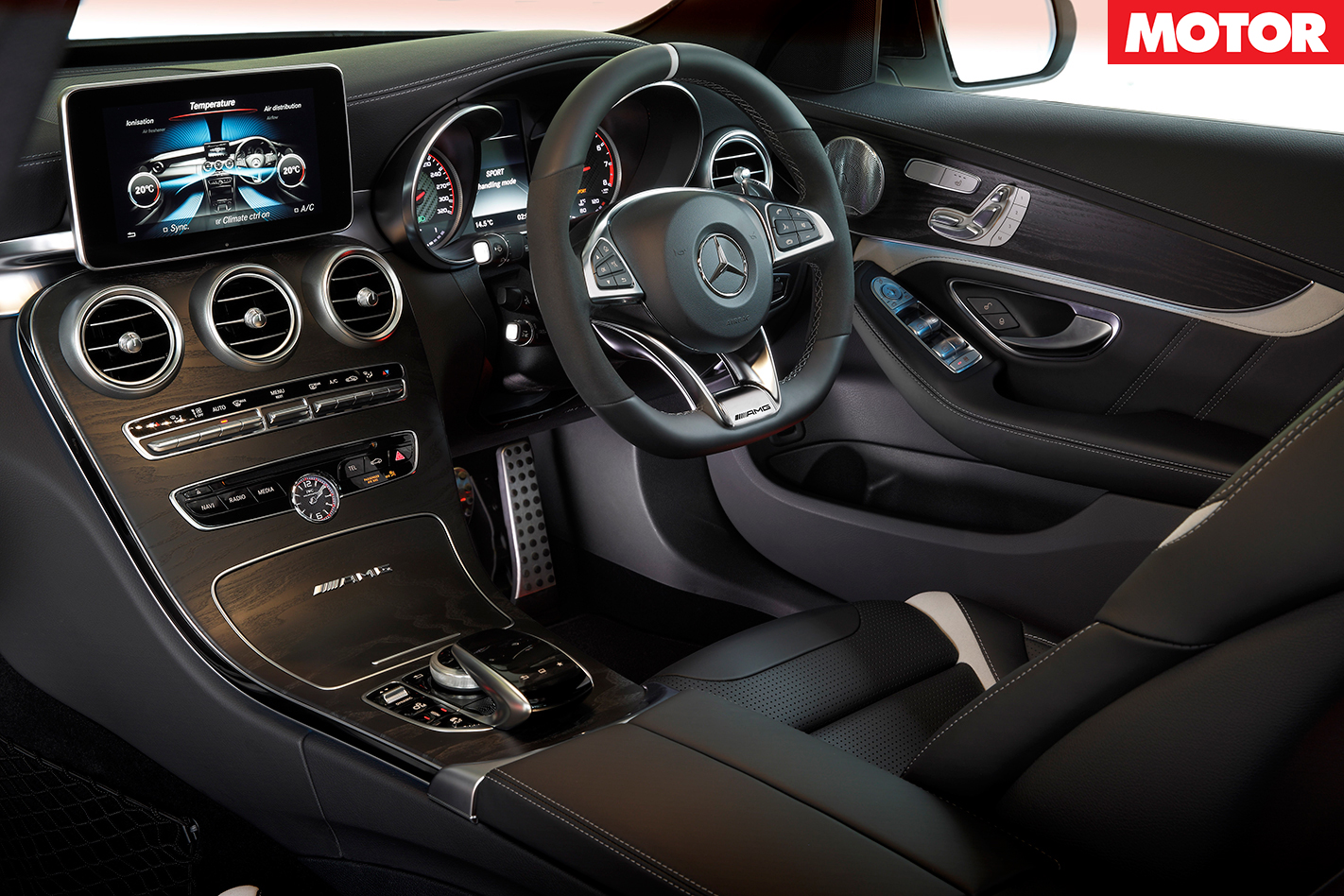
The cabin is a far more luxurious place to be and looks smart and elegant (as it should at this price). More variable elements including engine mounts that can harden in sporty modes, as well as the dampers, steering, engine mapping and exhaust make the difference between Comfort and Race modes more noticeable and mean this is a fairly comfortable machine to swan about in.
Incredible photos of destroyed vehicles from the site of the recent explosion in the Chinese port city of Tianjin show the terrifying intensity of the blast.
Over 10,000 cars are estimated to have been destroyed, however the loss of property pales into insignificance compared to the human cost – over 50 people are presumed dead and hundreds have been injured, many criticially.

The cause of the explosion has not yet been confirmed, though it’s believed the factory in question was used for storing hazardous chemicals.
These images show the intense heat of the resultant fires, with vehicles reduced to charred, almost unrecognisable metal shells, stripped of windows, tyres and paint.
While the images graphically show the aftermath, the video below, taken from a dash cam, shows the horrifying intensity of the blast, with people running frantically from the initial explosion before the shockwave from a second, larger explosion knocks over trees and signs.Our thoughts are with those affected by this tragic accident.
PLUS
- The M135i’s engine is a six-pot rocket that bolsters the M135i as one of the fastest hatches around.
- Its hatch body style matches its performance with practicality.
- Bi-Xenon headlights make a mockery of dark roads with bright and wide coverage.
- Interior’s typically high quality.
- The M leather steering wheel is delightful to grip.
- Keen drivers will appreciate how much grip the car can generate along with its balance.
- Eight-speed automatic transmission is silky, smooth, and fast changing in all conditions.
- Be judicious with your right foot, though. All that mumbo through the rear wheels means they’ll spin in wet conditions.
- While it’ll swallow luggage and four adults, it’s no station wagon. The longer the road trip, the less people you might want to lug with you.
- Like a lot of BMWs, you need to pay attention to its options. Its equipment list misses out on a rear-view camera, which will cost $1170 as part of the Advanced Parking Package. Meanwhile, keyless entry, electric seat adjustment, and seat heating come only with a $2730 Comfort Access package.
- Adjustable M suspension is fantastic but found in the options list, while some of its cheaper rivals have such technology standard.
Ever fantasised about flogging a V8 Supercar on public roads, wowing pedestrians and leaving big, black liquorice strips everywhere? Me neither.
But there are people out there who dream about such things and buy a 430kW HSV GTS to satisfy this urge, only to fang it for a week and get bored.
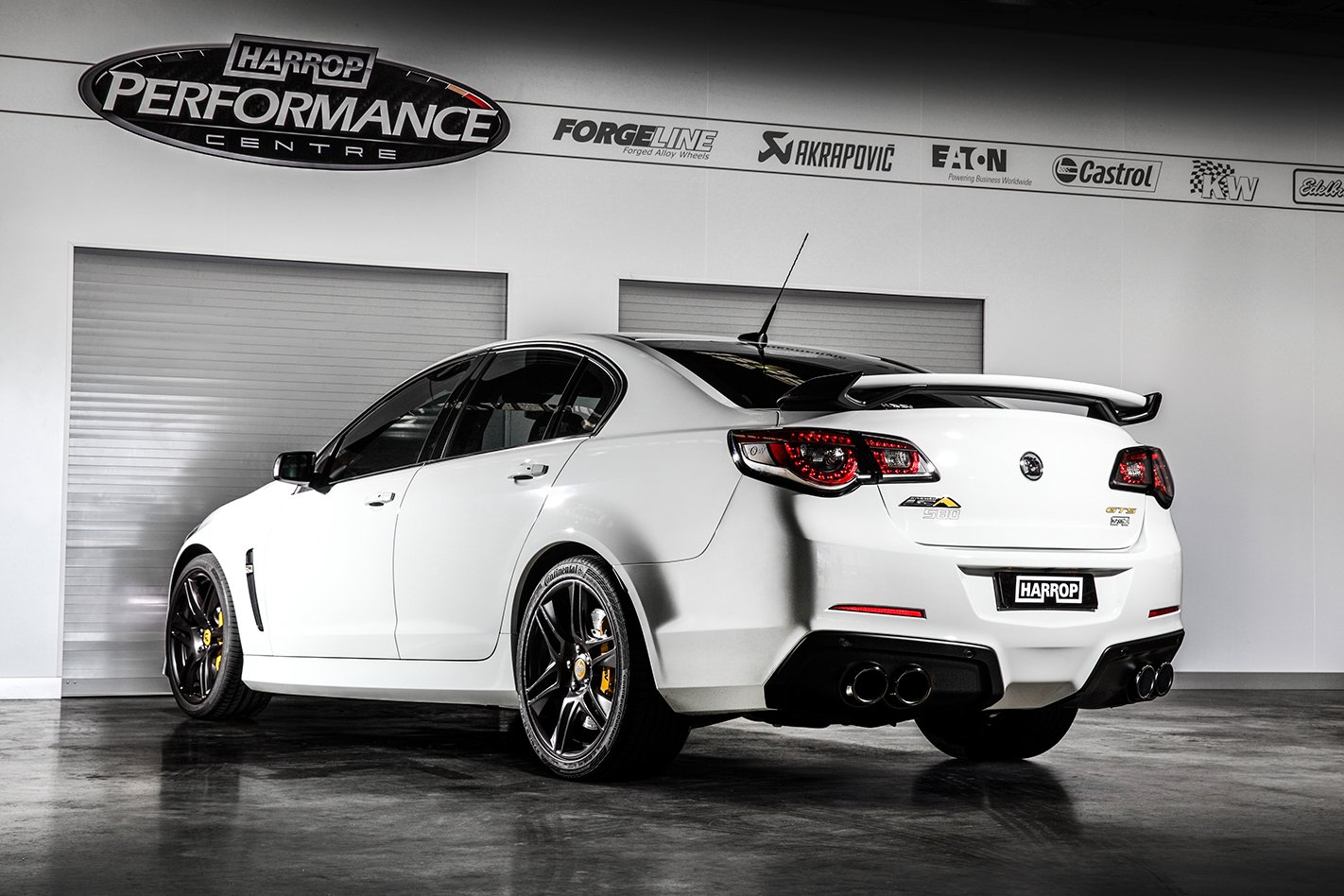
To keep this admittedly small market entertained, Melbourne-based tuning gurus Harrop Engineering have built this: a GTS with 580kW, 1100Nm, a manual gearbox, wild headers and a cat-back aftermarket exhaust with Tourette Syndrome. “One with the lot”, as Harrop puts it. They call it their Stage Three kit.
Stage Two adds an overdriven crank pulley, more boost, bigger injectors and another re-tune for 530kW and a stunning 1000Nm – over 25 per cent more than stock. Harrop will also warrant your driveline up to Stage Two.
It’s when you get to Stage Three, though, that “you’re on your own” when it comes to warranty, which then only applies to the bits Harrop bolts on, but nothing else. This is the package on the car pictured above.
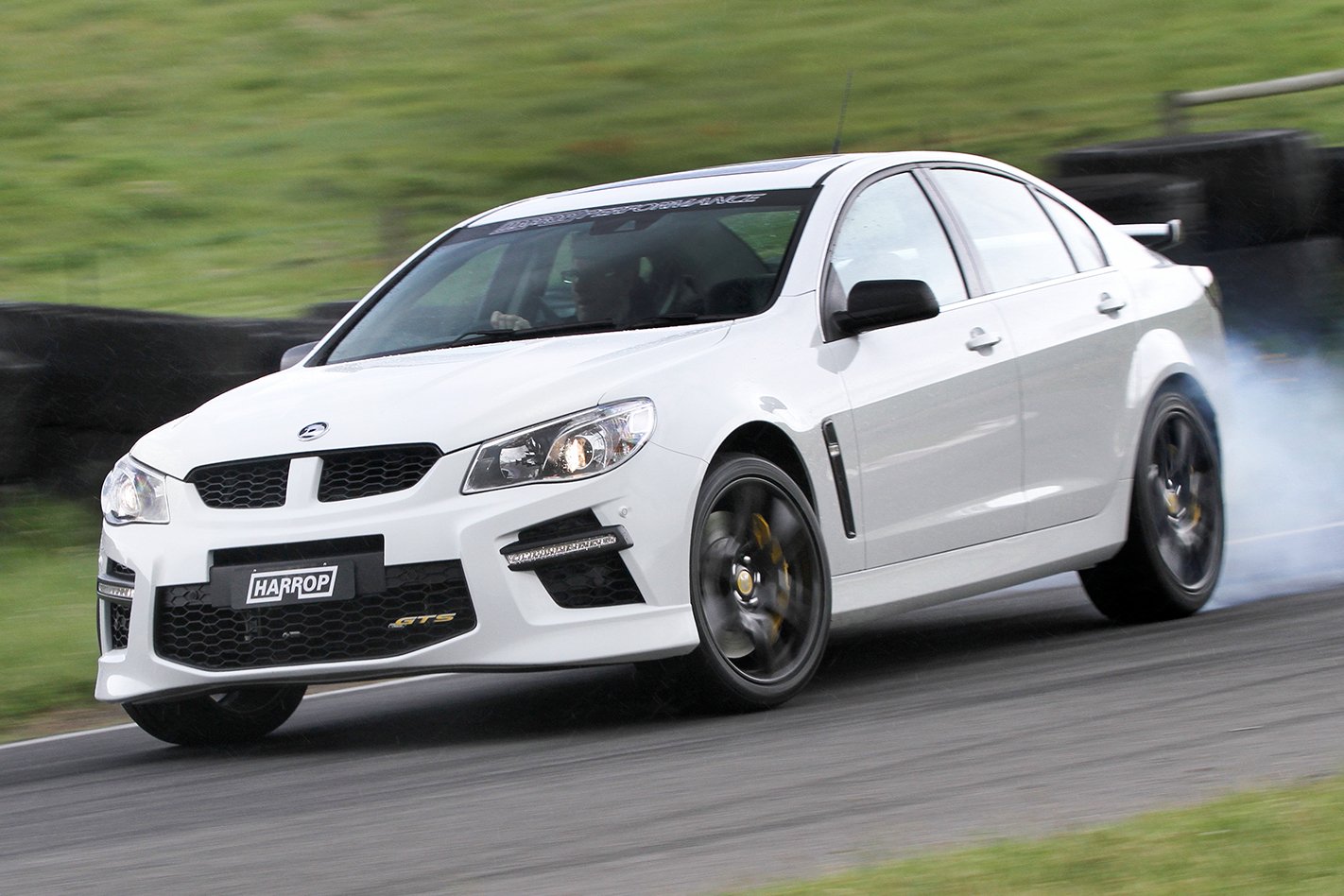
Or more than a V8 Supercar which, while having a better power-to-weight ratio, doesn’t try to put its power through road tyres like our test car pictured above, demonstrating what happens when you do such silly things to a car.
Harrop invited us to drive this Stage Three GTS which actually belongs to a customer who kindly lent it to us for this story. We agreed, and gulped.
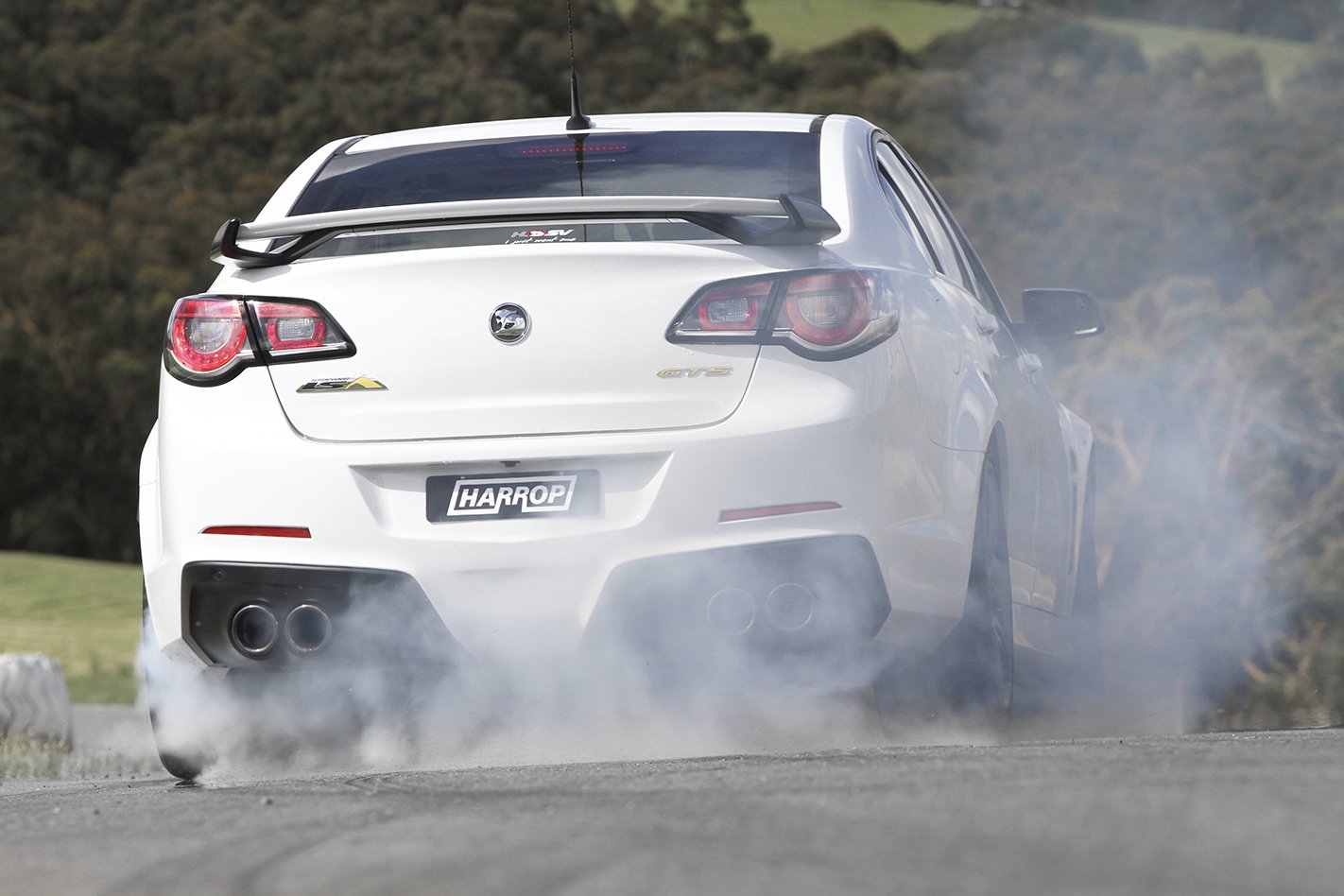
The interior is stock, too, and everything works. Fire her up and she’s a little louder than usual as the big cam rocks the car around like an old Beaufighter. But meandering through traffic, it is bewilderingly well behaved for such a wildly-tuned car.
Straight bit of road. Press the throttle towards the floor and, well, wow. You have to ease into the gas like you’re feeding a two-by-four into a bandsaw. The GTS squats and hammers, unleashing a huge, endless stream of thrust.
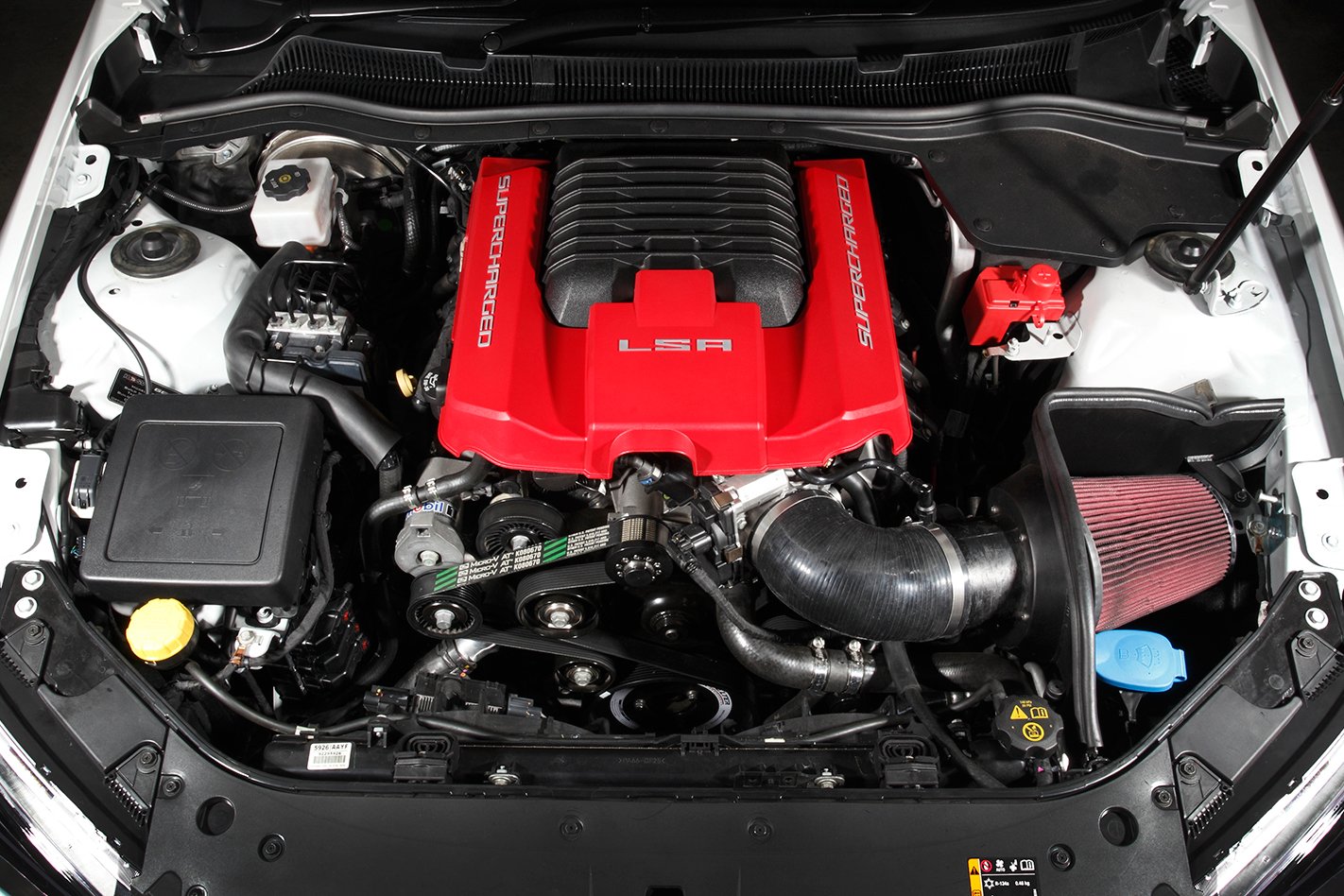
Touching the ESP button tests your self-preservation instinct. Indeed, you wouldn’t leave the Harrop GTS in inexperienced hands; disrespect the throttle and it will bite you.
A generous dollop lights up the rear tyres with hilarious ease, as if they’re made of butter. Indeed, Harrop says the owner has already chewed through a few sets of rears and he hasn’t even had the car that long.
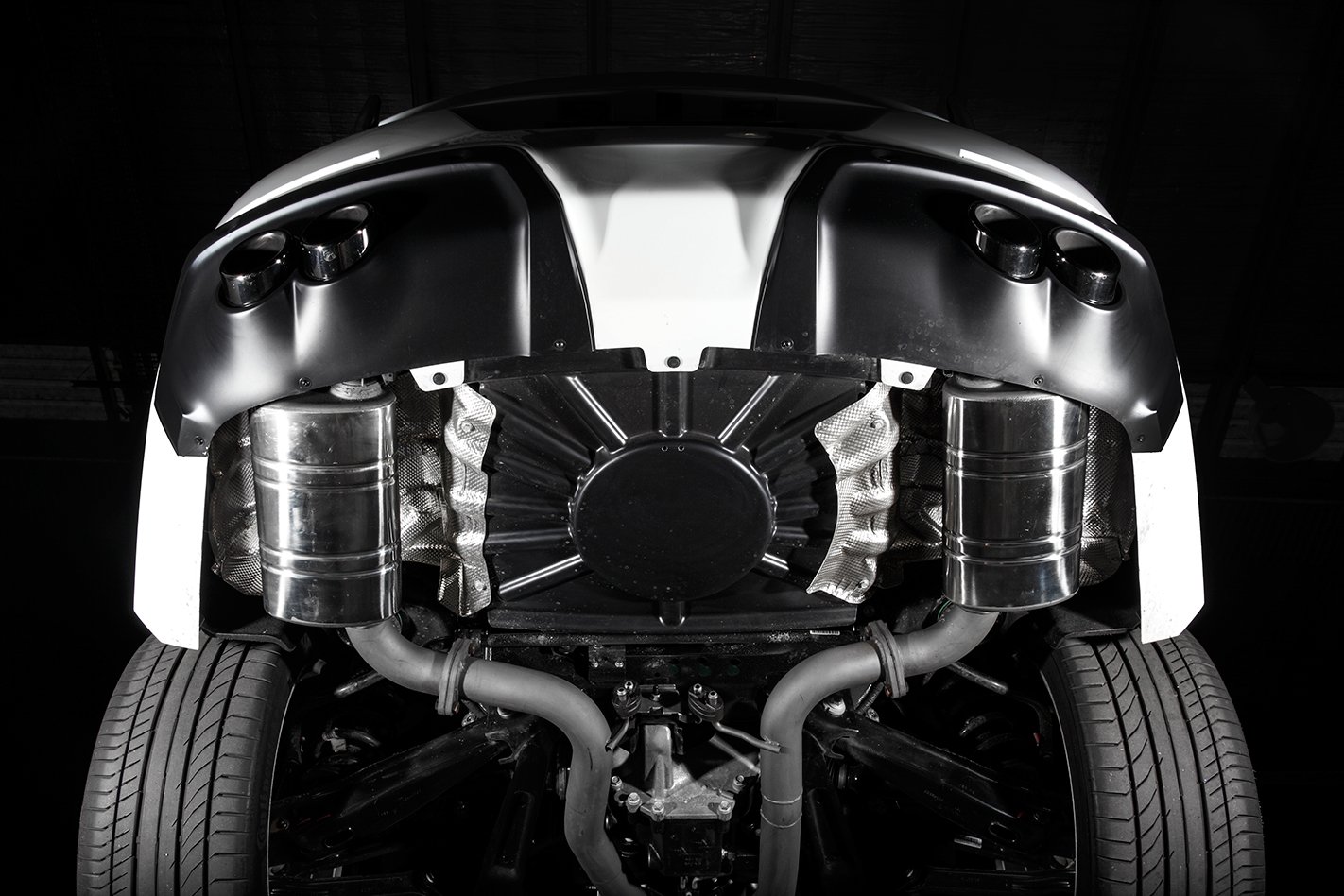
The aftermarket exhaust sounds tough, too, barking its V8 roar with a ferocity we wished the stock car had a little more of.
Fuel consumption? We were too scared to look. Although worrying about such things is a bit like injecting steroids into your arms and then worrying if your jojoba oil is certified organic.
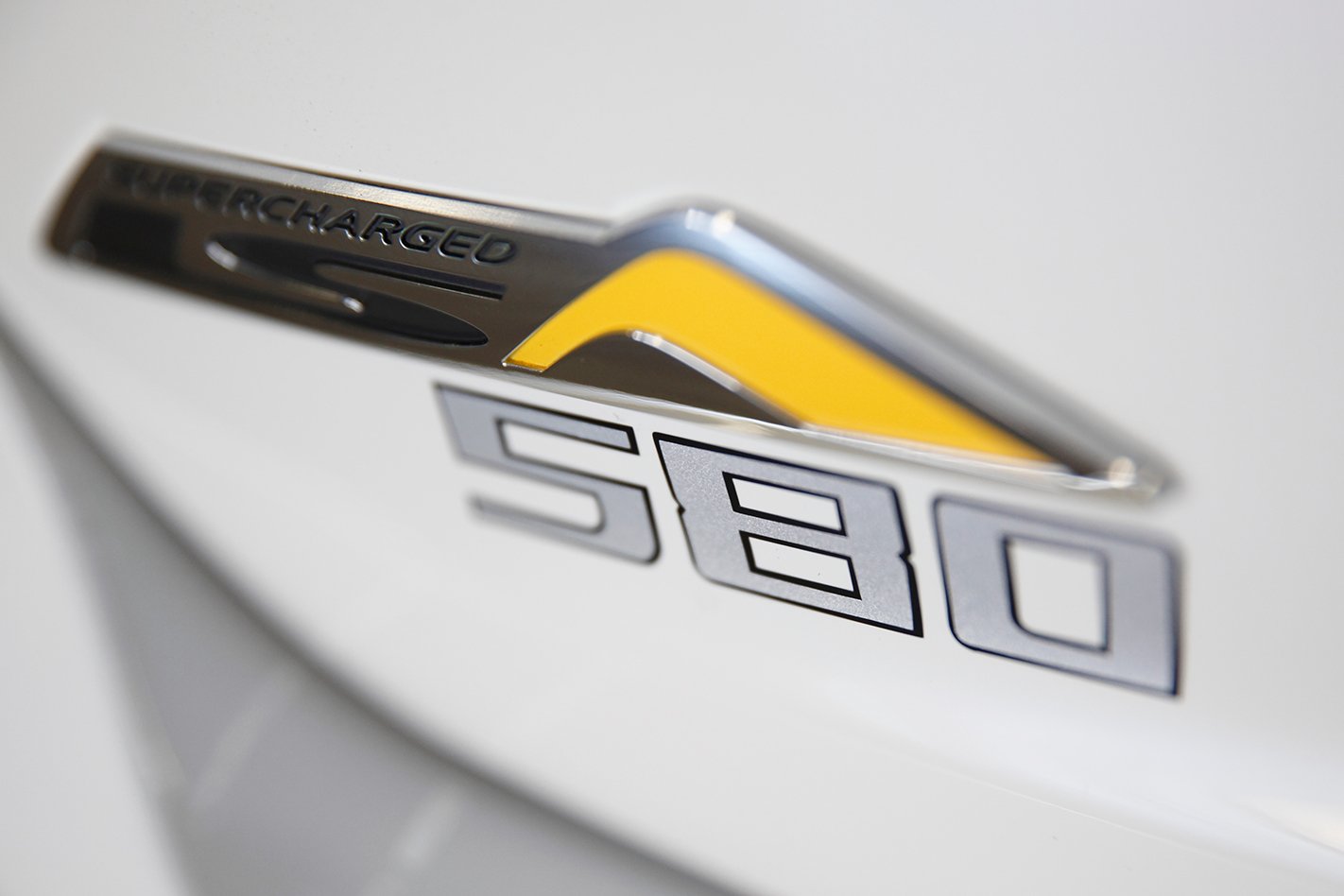
The stock GTS will hit 100km/h in 4.5sec and eat up 400 metres in 12.6sec (our times), so you could expect the Harrop-tuned GTS to easily dip into the mid-to-high threes for the 100km/h sprint, hamstrung only by its ability to put down all the power.
But, able to grab a few gears and better apply its ridiculous urge, the quarter would be something else altogether. A low eleven? A high 10? We’ll get back to you. If we survive to tell the story.
4/5
Specs:
Engine: 6.2-litre supercharged V8, OHV, 16v Power: 580kW @ 6200rpm Torque: 1100Nm @ 4300rpm Weight: 1880kg Price: $111.050 (including modifications)
Every Saturday, an otherwise unremarkable carpark in Irvine in outer Los Angeles becomes Mecca for car enthusiasts as it fills with an amazing array of rare, exotic and just plain cool vehicles.
You’d be hard pressed to find another place where week in, week out you’re guaranteed to see everything from Pebble Beach concours-winning 1950s Ferraris to classic American muscle cars to the latest McLarens and Lamborghinis.
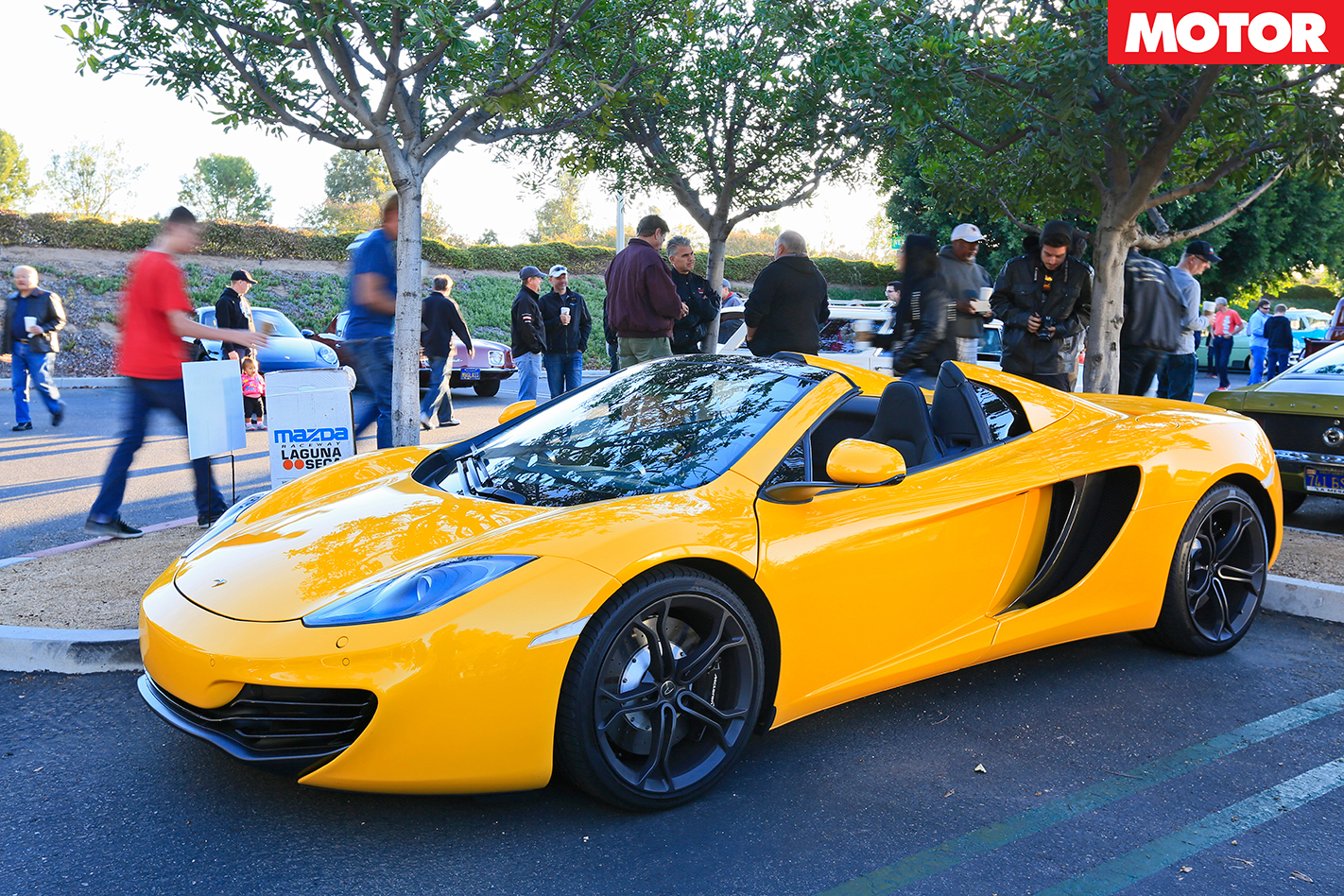
As the various groups of enthusiasts tell their circle of friends the reach of the group expands exponentially. This word-of-mouth approach means Cars and Coffee meets transcend specific scenes or styles of car appreciation, and the Irvine meet is a perfect demonstration of this.
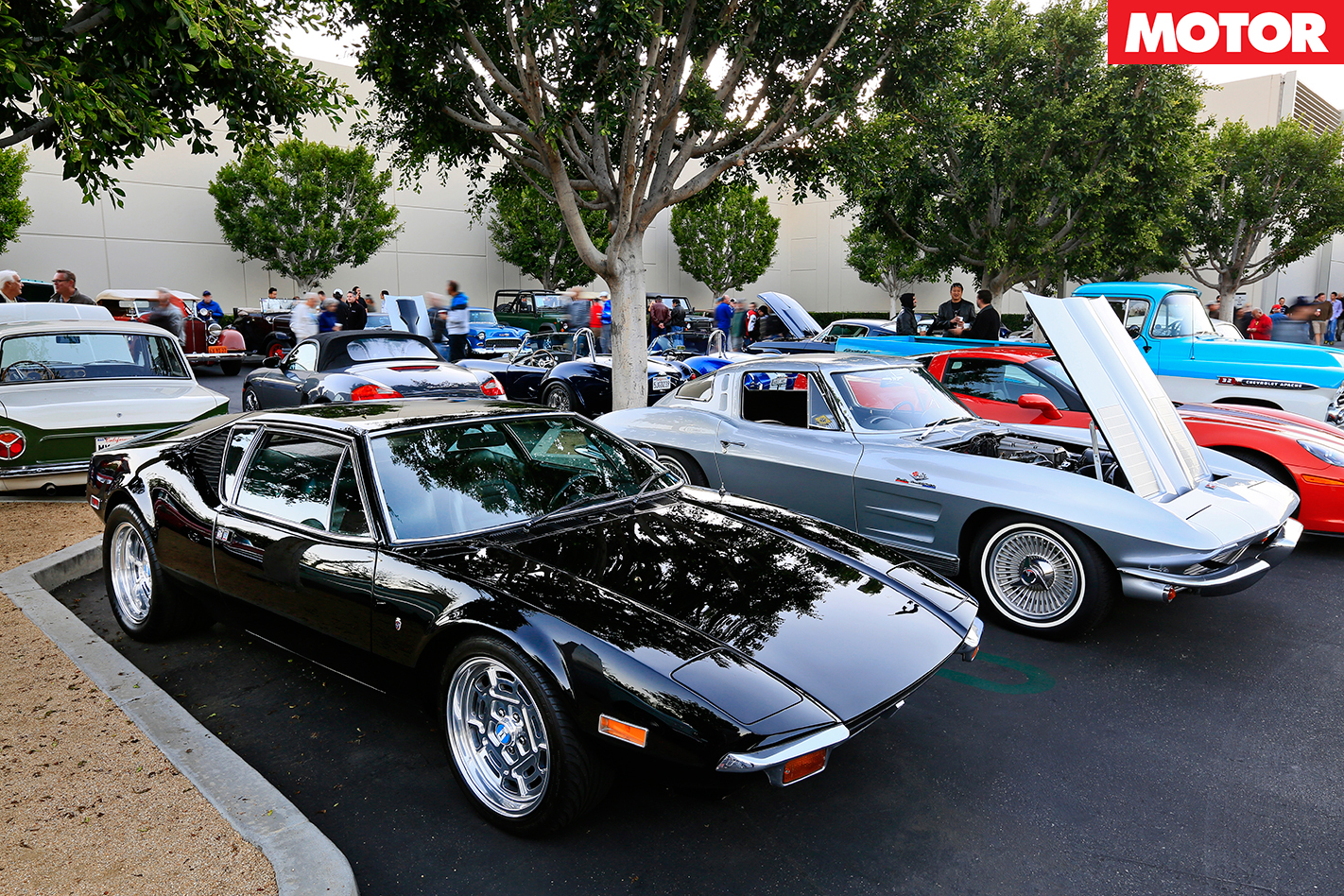
Watching the flow of arrivals and departures, some people come for a few minutes, see what they need to see then head off again, while others hang around all morning, catching up with friends and talking shop to anyone who’ll listen.
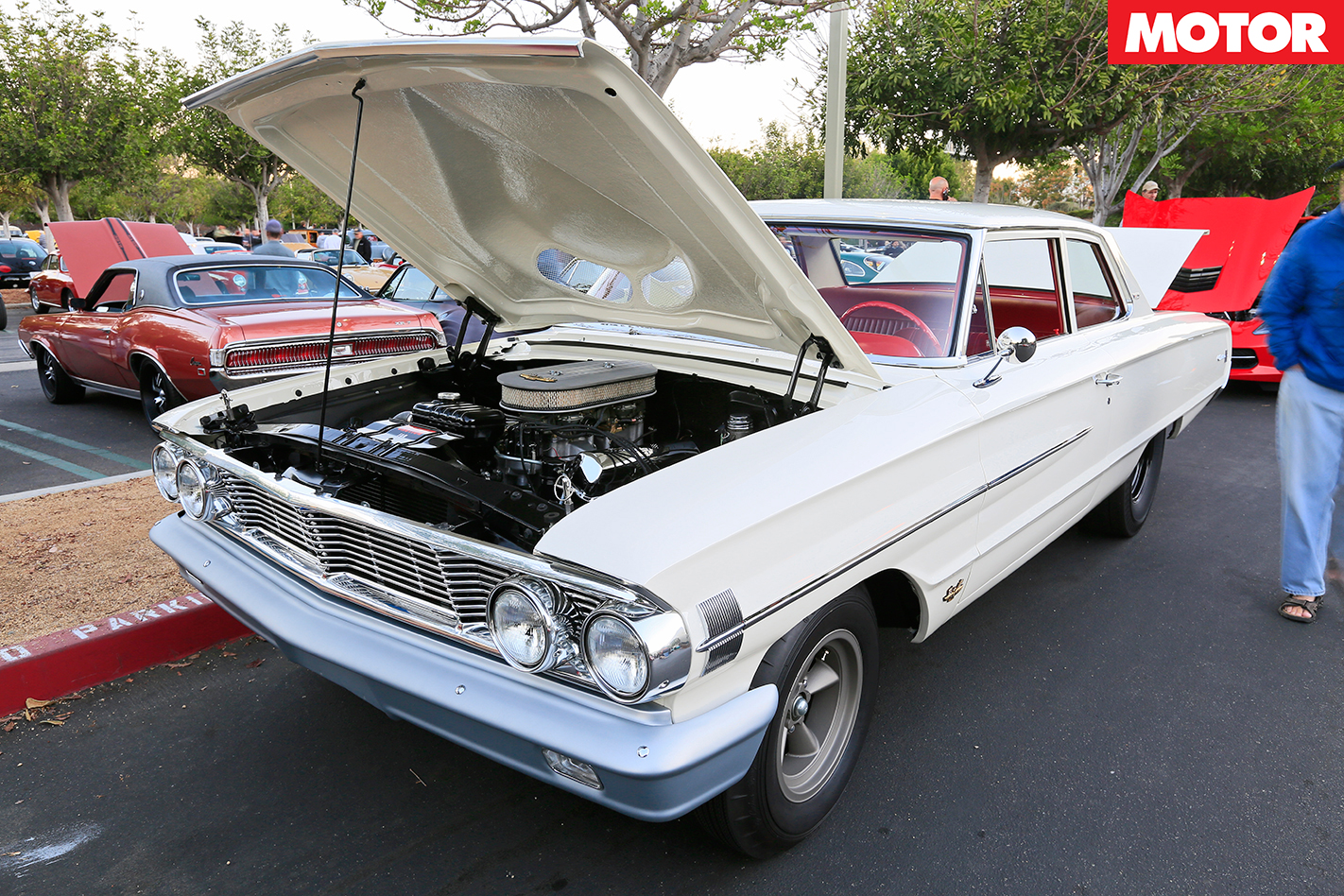
You’re unlikely to see the same set of cars two weeks in a row – hell, I couldn’t even find cars I’d seen drive in 30 minutes before when I tried to track them down.
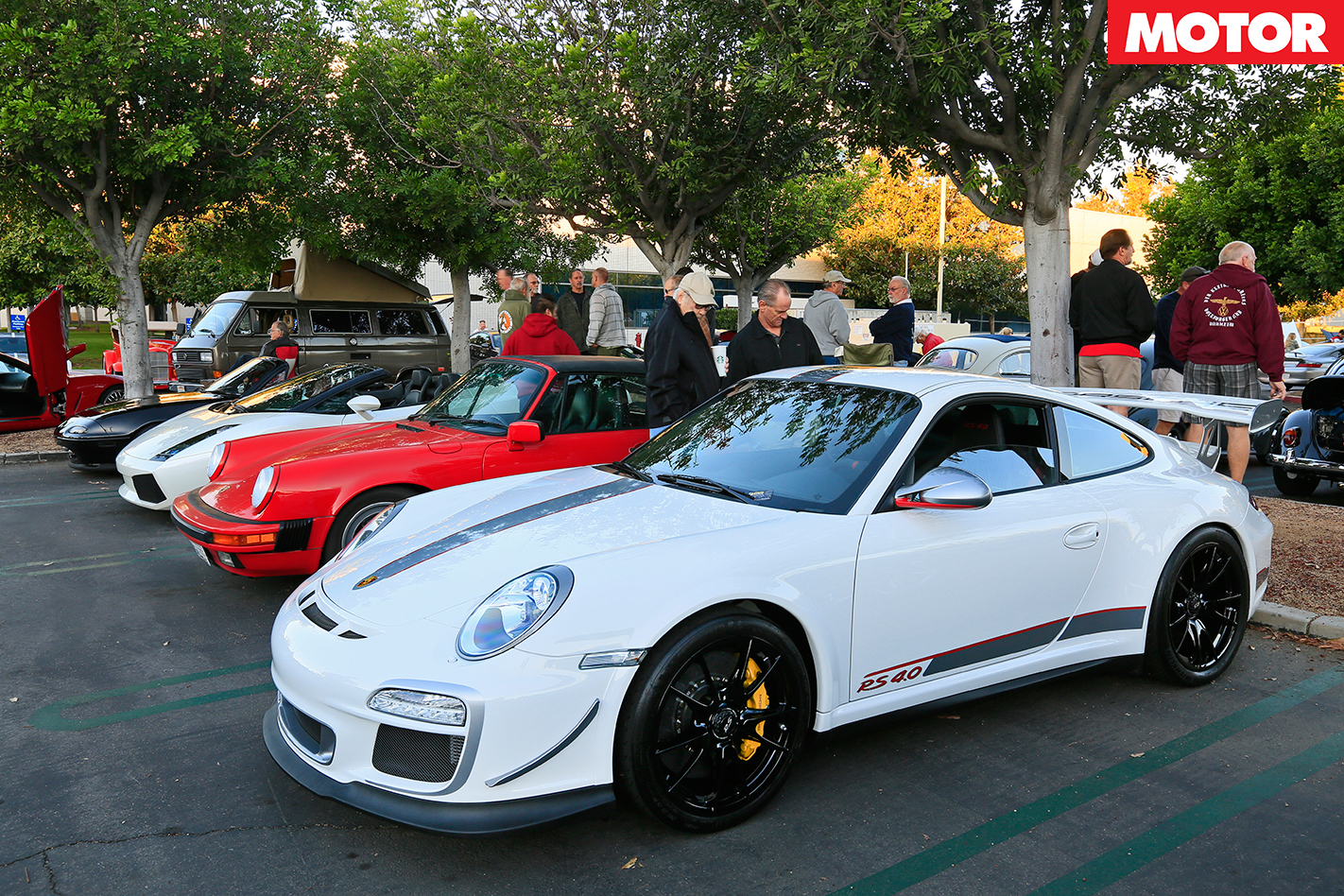
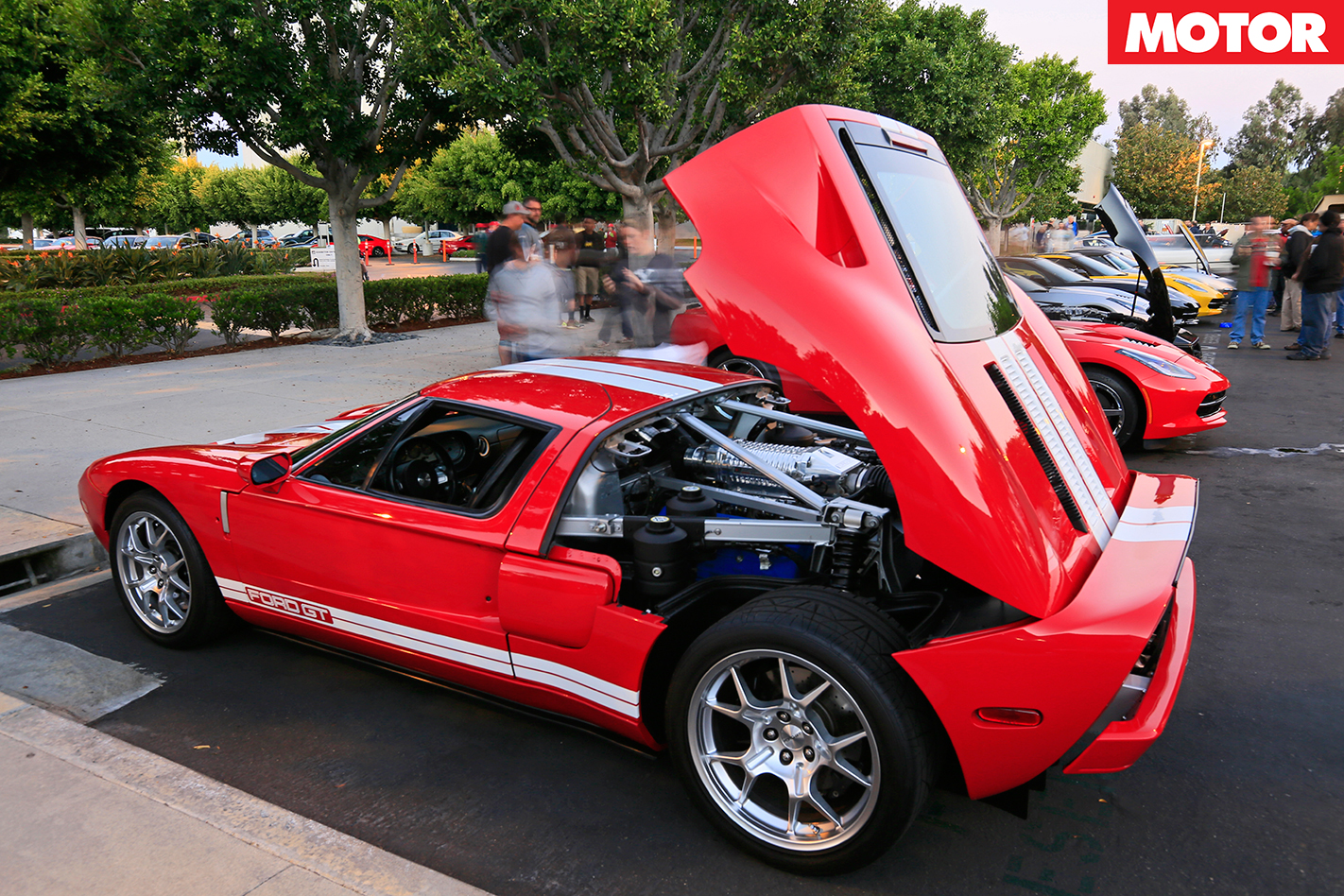
And just when you need a break from the new-age tin, restored classics like a 1958 Chrysler New Yorker keep the mix turning over. On top of the plethora of homegrown classics, there are plenty of local contemporary supercars, like one rather mean Ford GT in red.
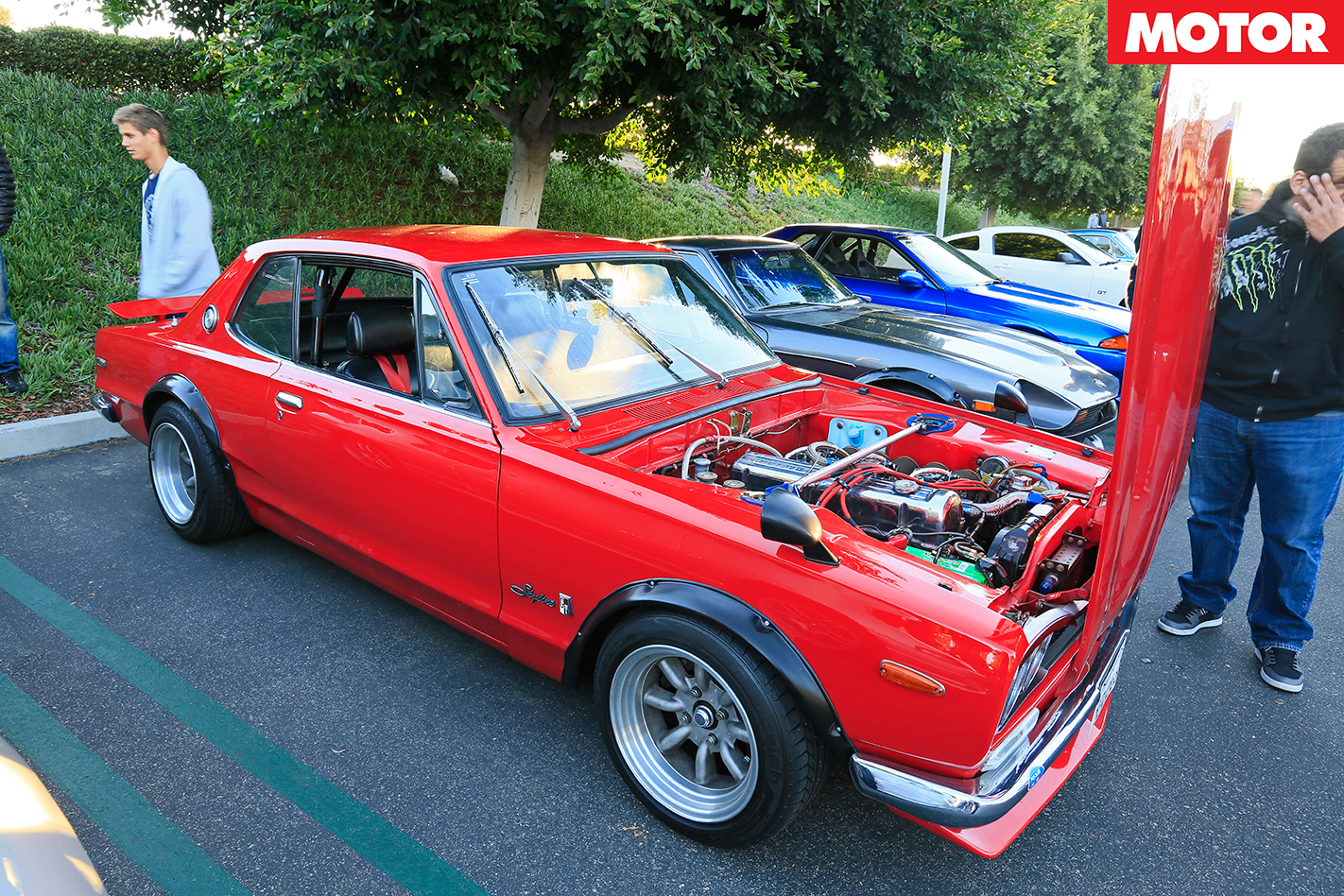
As for favourites? Harder to pick than a broken nose. Personally, I love the super-rare ‘lightweight’ 1963 Ford Galaxie built for NASCAR homologation and packing a factory 427 cubic-inch (7.0-litre) V8; the Ferrari Superamerica; and the beautiful reproduction of a Hakosuka GT-R Skyline sitting next to a dead-stock R33 GT-R.
It’s car perve heaven, all in a relaxed and friendly atmosphere. If you ever find yourself in the City of Angels on Saturday, set the alarm early and head to this unremarkable carpark in Irvine.
From the exotic to the mundane and downright bizarre, of the superabundance of car designs realized between the 1960s and now one pen stands out distinctly from the rest: Giorgetto Giugiaro. It’s an appropriately exotic name for a prolific man who radically rethought the external forms of a car, the way we enter and exit a vehicle and how we sit and drive.
Famous Giugiaro cars include the steel DeLorean DMC-12 mythologized in the Back to the Future movie and the Lotus Esprit S1 which morphed into a submarine in Bond’s Spy Who Loved Me. Long lean nose, slab sides, crisp edges, endless spans of top-hinged glass and always a hint of the space age, Giugiaro introduced an aesthetic often referred to as ‘polygonal folded paper’ design that has informed car design since the 1960s.
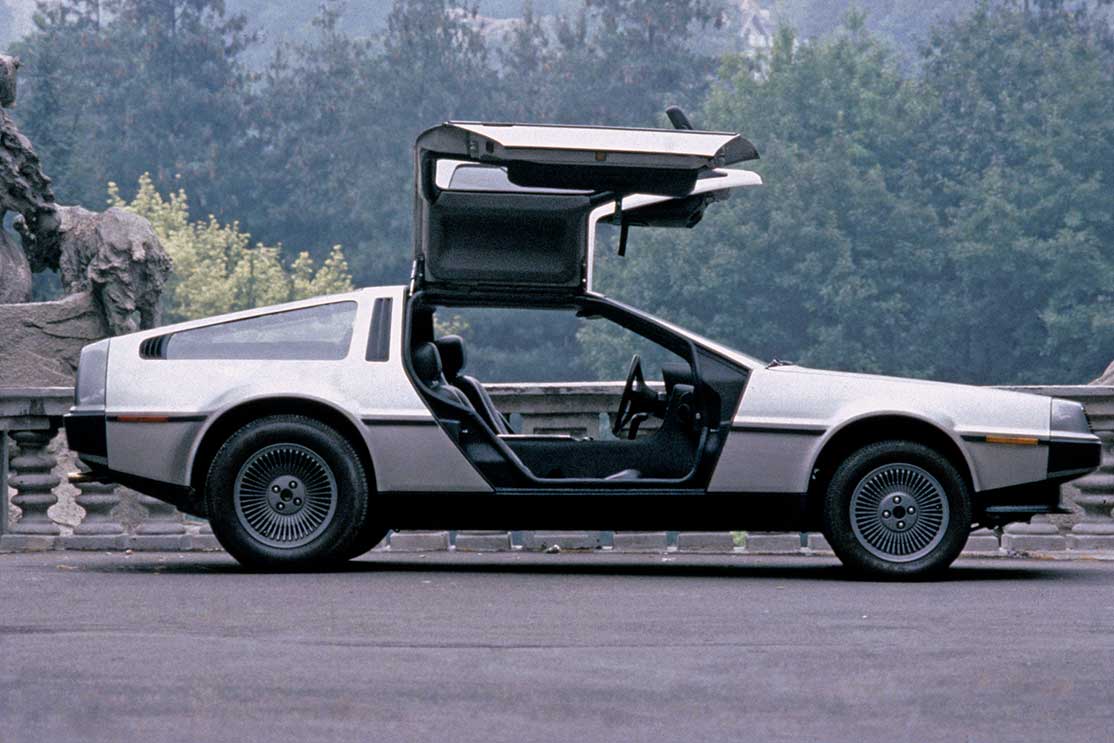
Equally important, though less obvious, were his interiors. Giugiaro introduced radical packaging concepts like top-opening windscreen doors, the idea of people movers and three-across front seating with the driver in the center. For a designer whose cars often provokes extreme responses, Giugiaro once said, “beauty comes down to mathematics. When designing a car you don’t start from emotions”. This is the story of the man named “Car Designer of the Century” by a panel of his peers in 1999.
Giugiaro was born in Piedmont, northern Italy, to a family of painters and artisans. His school artwork, which included car renderings, won him a job at the Fiat Concept centre, and then he was offered a position at the Bertone design studio. In a 2015 interview, the designer recounts how his career as a designer, rather than an artist, was fated.
“After four years (at Fiat)” he said, “I thought ‘I want to become an artist again’. I realized after years of being a mason within a crowd it would take years to become the architect”. But he also wanted money for a new set of skis, so when Nuccio Bertone met him at the 1959 Turin Motor Show and asked him to sketch a real car, Giugiaro obliged.
Drafted into National Service, Giugiaro drew at night for Bertone, working on what was to be the simple, beautifully balanced Alfa Romeo GT1300. At age 25 he designed the first Mazda, the familia van with similarly direct, well-proportioned lines to the Alfa but he also penned the sleek Iso Grifo with what became signature long, lean proportions. Giugiaro admired the way sharks and cheetahs “transform the concept of aggressiveness into harmony and speed”. First the Iso Grifo, then with his Maserati Ghibli and the DeTomaso Mangusta designs for design house Ghia, Giugiaro showed low slung, shark-nosed sports cars with gill-like detailing and lines that appeared cut with a palette knife. By the late 1960s Giugiaro had founded his own design house, Itadesign, and his shark shape had abstracted into a wedge that redefined the look of supercars in the 1970s and beyond.
Giugiaro’s “take no prisoners” hard-edged wedge aesthetic is known as his folded paper era. His detailing and packaging were no less futuristic than his forms: the 1968 Bizzarrini Manta concept sat the driver in the middle and a passenger either side, the 1970 Porsche Tapiro concept supports four gull wing doors off a central spine (similar to the upcoming Tesla ModelX SUV). The spectacular Maserati Boomerang concept pioneered a steering wheel integrated into an extruded console that sat in a formidable origami-like steel body with vast passenger “glasshouse”. Bonham’s European Auction House described it as “the first car of its time to create such a strong, angular style statement… considered by many to be one of the most remarkable designs of the 20th century”.
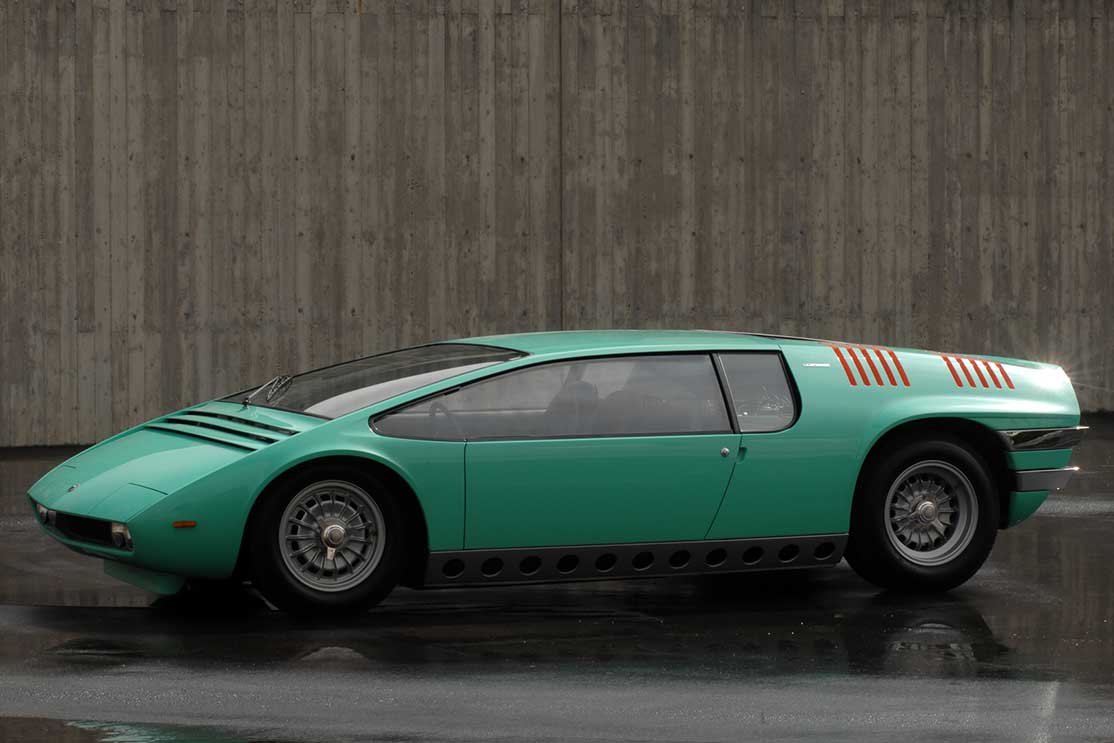
The Lotus, DeLorean, BMW M1 famously painted by Andy Warhol, and the hard lines of the Boomerang also translated to more utilitarian designs including a series of mid-70s train-blazing multi-purpose vehicles which showed the ability of “mini vans” way before other companies made them reality. This also influenced one of Giugiaro’s most poignant designs, the original VW Golf.
As an unparalleled risk taker interested in pushing technical limits, it was inevitable that some of Giugiaro’s creations would fizzle but then other concept proved functionally viable and stylistically futuristic. He designed skateboard chassis years before Ford, and cuboid city cars decades before the Kia Soul.
“I don’t look for decorative justifications,” Giugiaro said in an interview in 2012. “Form should be honest. I try to remove the superfluous and be harmonious; I strive for harmony in complexity. I know that I have to decorate the product, give it a characteristic and an emotion, so that it is not rejected by the market.” As for the professional marketers he said, “The consumer’s decision to buy is often instinctive, subliminal. I am not convinced that an aspiring wizard just out of school should dictate the dialogue”.
Part of a Giugiaro car’s appeal is its attendance to interior function. Many cars are a result of an external design team barely interacting with a separate team designing the interior fixtures and fittings. Giugiaro considers the car in its entirety so that the exterior reflects the comfort, functionality, visibility and space of the interior. His criticism of cars with rounded lines is the loss of space those curves represent. “Square lines and flat surfaces allow designers to use the inner room the best, both for passengers, mechanics and luggage”.
This year Giugiaro handed Italdesign over to Lamborghini Holding S.p.A, part of the Volkswagen Group. The designer is now officially retired but also works exclusively with the twelve brands in the Volkswagen Audi Group. At his estimation, Honda is the only major car manufacturer he has not worked with in his conjuring and crafting of more than 200 vehicles. In a nod to the future and recognition of his incredible design legacy the designer even has his own app on iTunes: the Giugiaro Timeline.
