
Circa-$45K pricing projected as the 7-seater Toyota Fortuner takes aim at Holden Colorado 7 and co.
THE MODERN-DAY Toyota 4RUNNER is here, as the Japanese giant attempts to fill yet another niche in its ever-expanding SUV line-up with the strangely named 2015 Toyota Fortuner.
Based heavily on the next-generation Toyota Hilux that will launch alongside it in October, the body-on-frame Toyota Fortuner will be pitched as a lifestyle diesel alternative to the resolutely petrol-only Toyota Kluger, and as such will be offered in a three-row, seven-seater, family-friendly configuration.
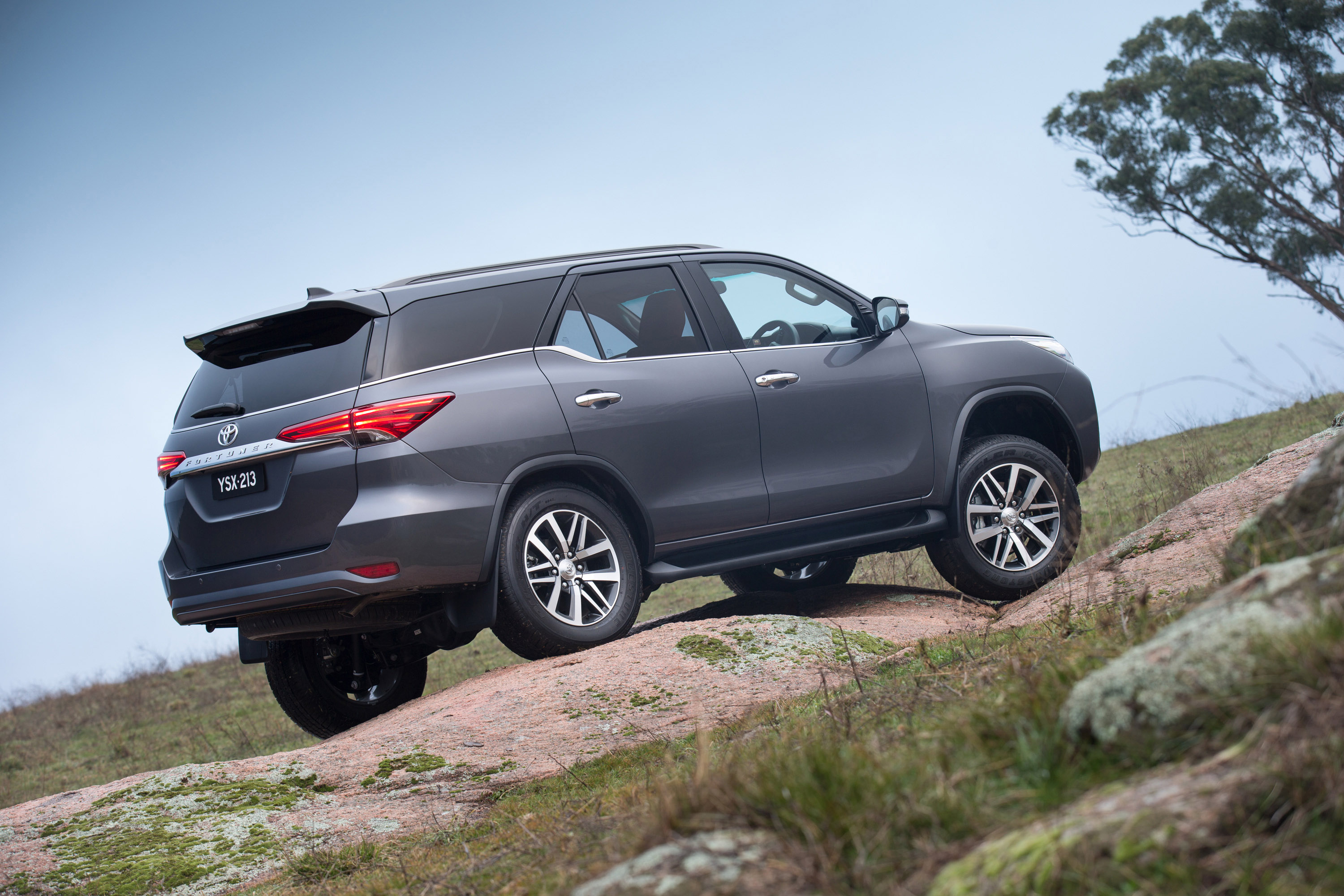
Toyota is staying mum on pricing, but expect the base Fortuner to follow the Holden Colorado 7, Isuzu MU-X, and Mitsubishi Challenger in the low-to-mid $40,000 region. In contrast, the more sophisticated Prado currently kicks off from $51,990 in GX 3.0D manual guise, while the upcoming Ford Everest starts at $54,990.
Powering the Toyota Fortuner is the Hilux’s all-new 1GD-FTV 2.8-litre four-cylinder turbo-diesel, producing around 130kW of power and up to 450Nm of torque. Drive is sent to the rear wheels predominantly via either a six-speed manual or six-speed torque-converter auto, with a part-time four-wheel drive system and lockable rear differential included for when the going gets tough.
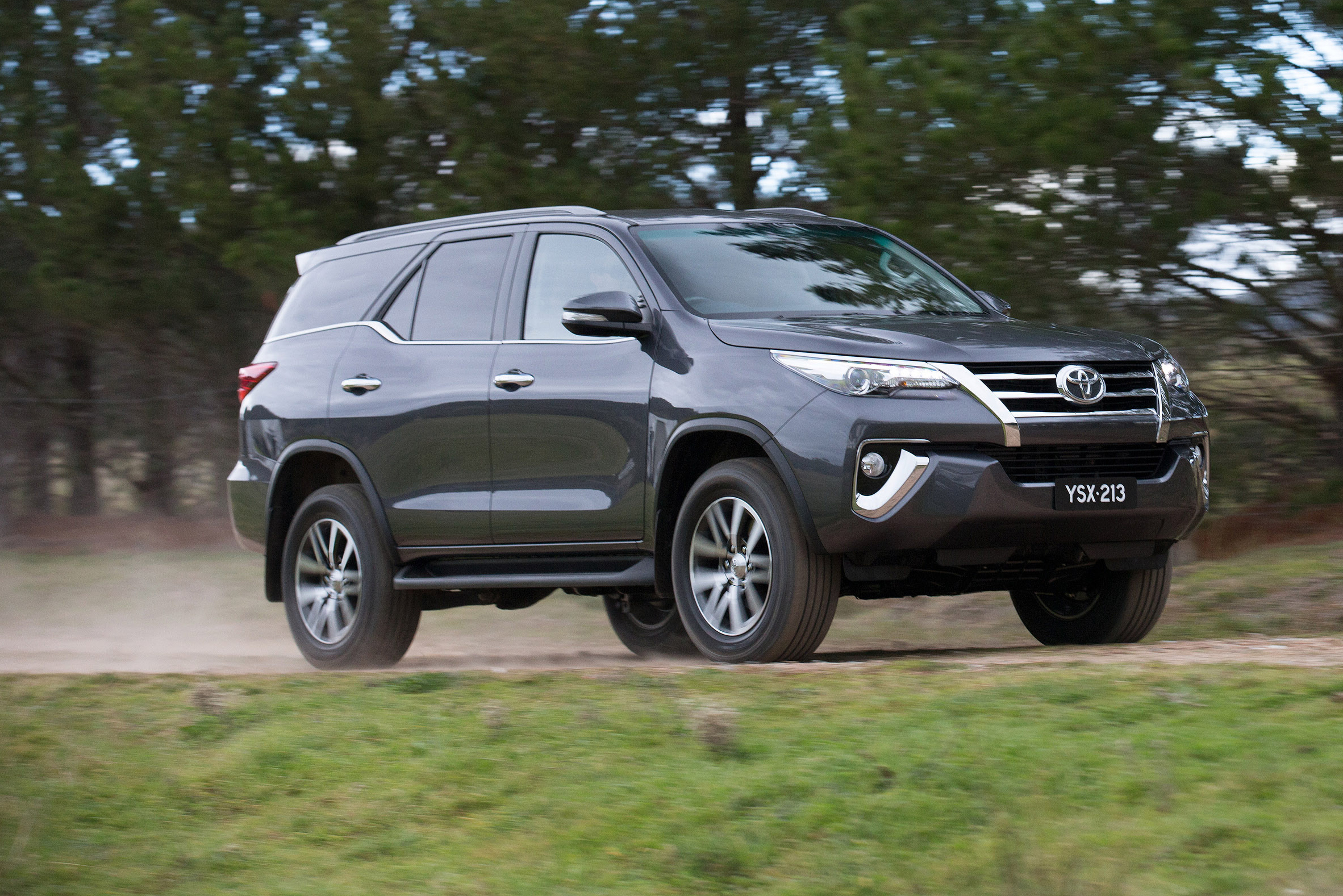
Unlike the Hilux, the Fortuner junks the leaf-spring rear suspension system for a five-link coil spring arrangement, though the separate chassis construction is very much off-road capable.
Significantly, an undisclosed amount of local tuning in Australia will ensure ‘comfortable on-road ride and handling characteristics, according to one Toyota spokesman. Apparently it is so effective that overseas markets in Asia and the Middle East will also adopt it.
The Fortuner’s towing capacity ranges between 2800kg and 3000kg according to transmission, with Trailer Sway Control, stability control, seven airbags, hill-start assist control, four-wheel disc brakes, and emergency stop signal also fitted as standard.
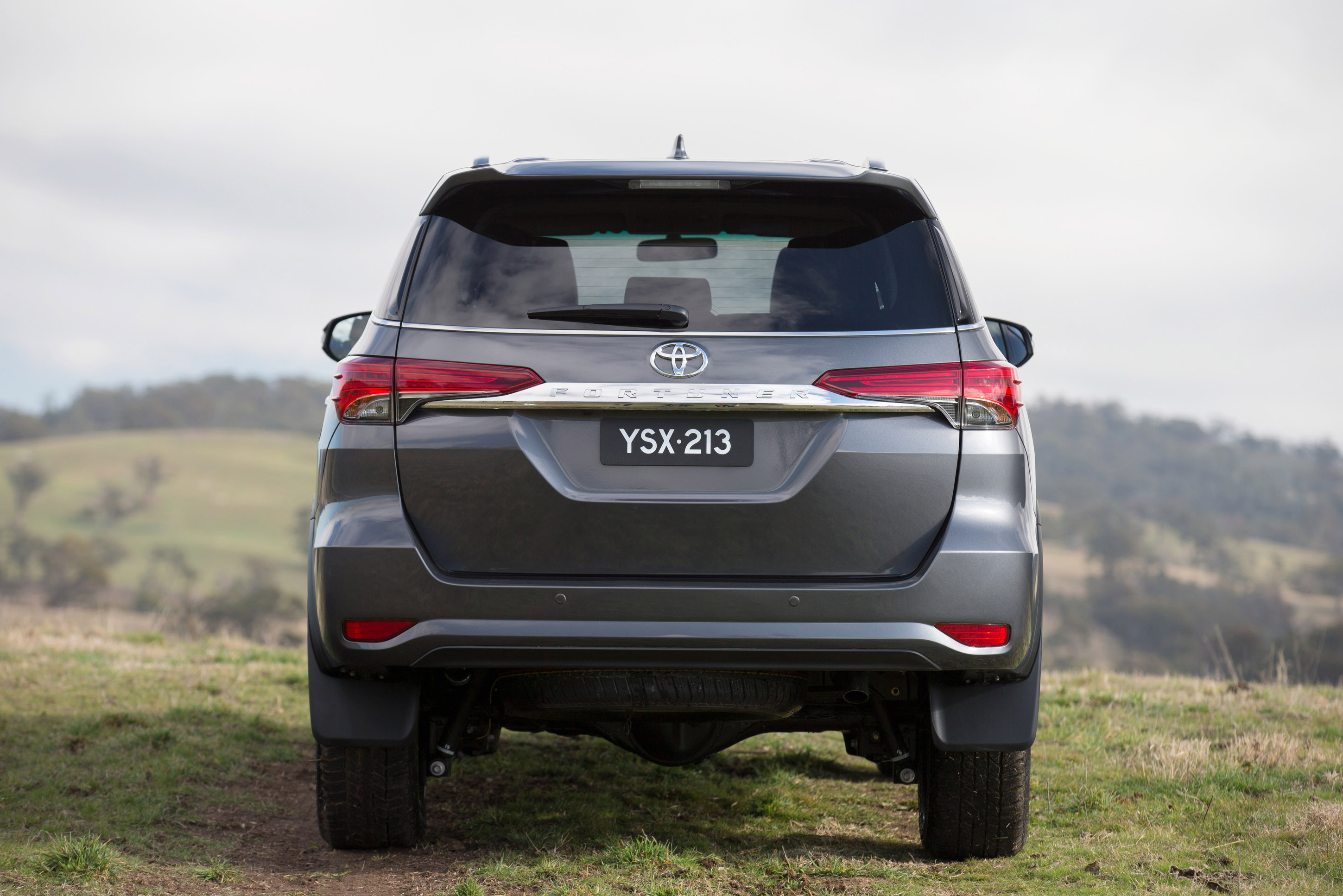
Toyota Australia sales and marketing boss, Tony Cramb, says the Fortuner is an essential addition to the T-brand’s six-strong SUV line-up.
“Fortuner provides a diesel alternative to the petrol-only Kluger range as the new entry point for customers looking to purchase a large Toyota diesel SUV,” he stated.
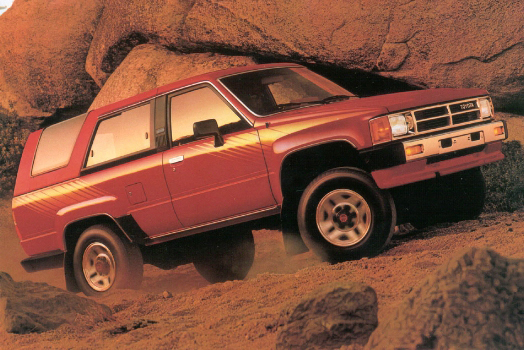
The Fortuner range can trace its roots to the 4Runner of the mid-’80s (pictured below), which morphed with successive Hilux updates as the Surf and – from 1998 – the Sport Rider in Asian markets. The Fortuner nameplate was finally introduced with the outgoing Hilux version in 2005.
Subaru has imported a batch of rally cars for local competition as it moots an official comeback to Aussie competition
SUBARU Australia has confirmed it is importing a batch of the latest FIA-homologated WRX STIs for motorsport use in the antipodes.
Subaru Australia boss Nick Senior has told Wheels that this shouldn’t be taken as a sign that the brand – once a dominant fixture on the local rally scene – is poised to jump back into the Australian Rally Championship next year.

In fact, Senior’s latest response to the old and regular question of Subaru’s possible return to the ARC is a familiar refrain: “Yep, we continually look at rallying and other areas but have not made any decision to [return]. Or not to.”
Revelling in the speculation, Senior explained: “The cars will be promoted and sold as an ideal vehicle for club racers and semi-serious enthusiasts −and will be priced accordingly. The WRX STi imports will be offered as base vehicles with roll-cages, allowing the buyers to spec up the cars themselves appropriate to the intended use. The Subarus meet the FIA’s new NR4 regulations, which replace the previous N4 and R4 classes. They are not road registrable.
Seven of the cars have arrived in Sydney, with five up for sale and two already sold. The cone of silence has been imposed on the identity of the buyer(s).
But with gossip never in short supply in motor sport, there is conjecture suggesting Walkden is the owner of two 2015-spec WRXs. Walkden’s history with Subaru is significant and he may be involved if Subaru was to make a comeback. Walkden was an interested observer at the Queensland round of the ARC, and when asked if he was planning a return, he merely grinned and said: “One day, maybe…”
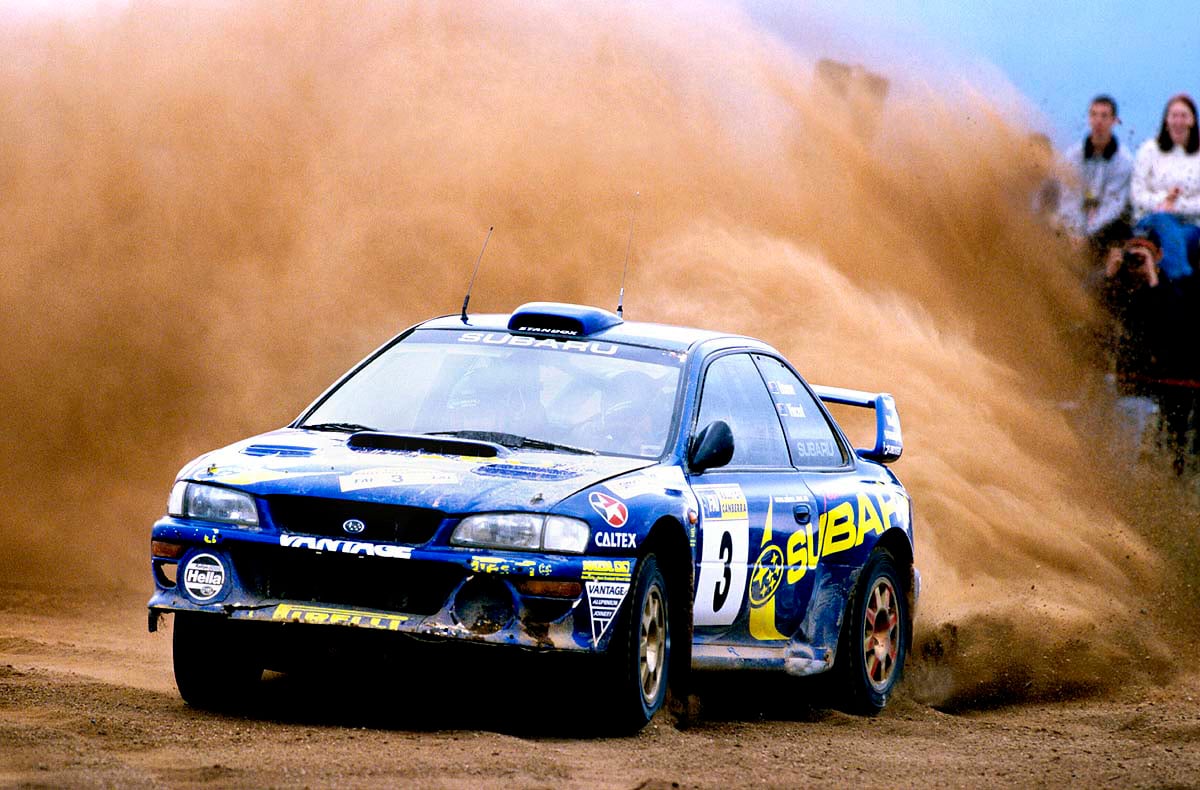
Subaru Australia exited the ARC at the end of the 2005 season, after its WRXs won a remarkable 10 titles consecutively. Senior explained the decision by suggesting the brand had nothing more to prove in the sport. But he was also unhappy with leniency granted to Toyota and its Group N (P) Corolla.
Subaru continued to actively campaigning Group N machinery around the world while Senior and the local importer re-directed their rally efforts to the Asia-Pacific Rally Championship, with the team being run in the 2006 season by Tasmanian Les Walkden.
There was also some dabbling in circuit racing. The 2007 Bathurst 12 Hour, where former ARC winner and ex-factory Subaru driver Cody Crocker teamed up with former Subaru team-mate Dean Herridge and WRC pilot Chris Atkinson, was the last official Subaru Australia motorsport effort.
Since then there have been periodic rumours of a Subaru return, and Senior is ever prepared to stir the pot. Last year he said that if the ARC rules allowed all-wheel drive turbocharged cars – an inherent part of Subaru’s DNA – the car maker would be “there in a flash”.
Sign up here to receive the latest round-up of Wheels news, reviews and video highlights straight to your inbox each week.
VOLVO has bought its performance partner Polestar and is looking to double sales of its high-performance models.
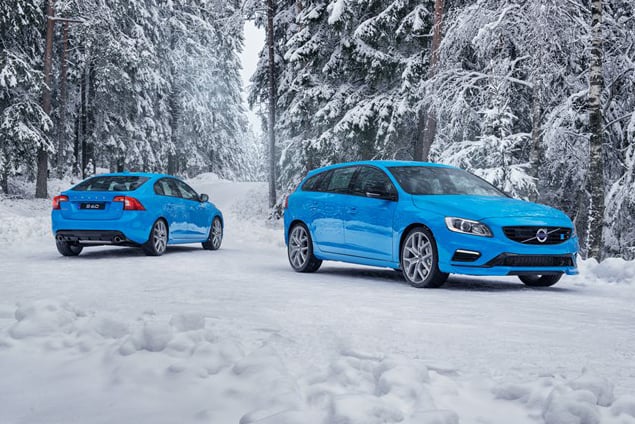
Polestar is the performance division of the brand, and is to Volvo what M-Division is to BMW or AMG is to Mercedes. Polestar will now be the name given to Volvo’s performance models. The move is part of Volvo’s plan to see sales of Polestar models blossom from the current 750 annual global sales to 1500 worldwide, and take-on cars such as the BMW M3 and Mercedes-AMG C63.
“Driving a Volvo Polestar is a special experience,” said Håkan Samuelsson, president and chief executive of Volvo Cars. “We have decided to bring this experience to more Volvo drivers, placing the full resources of Volvo behind the development of Polestar as the model name for our high performance cars.”
Financial details of the deal have not been disclosed. However, Polestar staff will become employees of Volvo, while the racing division will remain under the control of former owner, Christian Dahl. “We are extremely satisfied with the way the performance business with Volvo has developed,” said Dahl. “But we are a racing team first and foremost. This is an opportunity to return our full attention to our core business – to develop and race Volvo cars.”

Australia has played a crucial role as the development test-bed for Polestar’s road cars, with the first road-going Volvo wearing the blue Polestar square badge in the world, the S60 Polestar, released here in mid-2013 as a limited edition run of 50 cars. It played a pivotal role in the case for the latest S60 and V60 Polestar versions, which have become full-time models and are now sold into other world markets.
Polestar Performance AB was formed in Gothenberg, Sweden, in 1996, originally under the name Flash Engineering. Working alongside the Swedish car maker, it started with cars in the Swedish Touring Car Championship, a series that it has won seven times including in 2014, and expanded to supplying tuning and performance accessories for road-going Volvos in 2009.
Polestar is currently running first and second in the 2015 Swedish Touring Car Championship.
Sign up here to receive the latest round-up of Wheels news, reviews and video highlights straight to your inbox each week.
When we were offered the exclusive chance to be the first outlet in Australia to run performance numbers on the new Ford Mustang, we obviously jumped at it.
But to go one better, we lined up Holden’s SS V Redline for a good old fashioned quarter mile drag race, to see if Ford’s vaunted new Pony Car can go toe-to-toe with the General’s hottest local offering.
David Roscio from Adelaide-based outfit StreetFighter very kindly donated his left-hand drive US-spec Ford Mustang GT V8 to the cause and allowed us to thrash it up and down the Heathcote strip for an afternoon.
Of course, straight-line ability is just one piece of the puzzle, and you’ll be able to read a full comparison test between the Mustang GT and the SS V Redline in the September issue of MOTOR, on-sale August 6.
Get your free weekly report from the world of fast cars – subscribe to the MOTOR newsletter!
PLUS
- It’s an Audi, so it’s pretty safe to assume the interiors of the Q5 are bursting with class.
- The flexibility of the cabin is a big tick. We love that the rear seats can be flipped, folded and flattened to suit your needs.
- Perhaps the most notable of the extras is the ‘Connect’ infotainment system that hooks in to Google Earth. It also offers Internet access for rear-seat passengers, which the kids will love.
- Special mention goes to the Technik package, which includes three-zone climate control, reversing camera and sat navigation – a solution to the omission of these features in the base level model.
- There’s also the luggage rail system to secure any items loaded into the back, at an extra $450.
- It may not be the most spacious, but it doesn’t compromise on comfort.
- Its downside also includes wind noise, which is common in larger vehicles. While the large mirrors add to the visibility of the SUV, they can also get in the way and block out a bit of vision. We’re as confused as you are. They’re good and they’re bad.
- While the Q5 is stylish, compared to others in the luxury SUV market, like say the Evoque or Discovery Sport, it’s not as pretty. We feel mean just saying it.
- While the Technik package is a pro, it’ll cost you about $3890 extra, which forces us to pull out the red pen.
Click here to read the full review on the Audi Q5.
In the world of the super rich, the normal rules don’t apply. I ponder this from behind the wheel of Mercedes’ flagship roadster, the SL65 AMG.
As impressive as it is, I can’t help but wonder why you’d choose it over the SL63, which is near-as-dammit as fast and a hefty $85,000 cheaper.
Exclusivity, that’s why. Unless you have a Pagani Huayra parked in the garage, the only way to gain access to AMG’s 6.0-litre twin-turbo V12 is to buy a ‘65’.
For the target market (ie, not 20-something motoring journalists) having ‘V12 Bi-Turbo’ written on the front wings is worth every cent of that $85K premium.
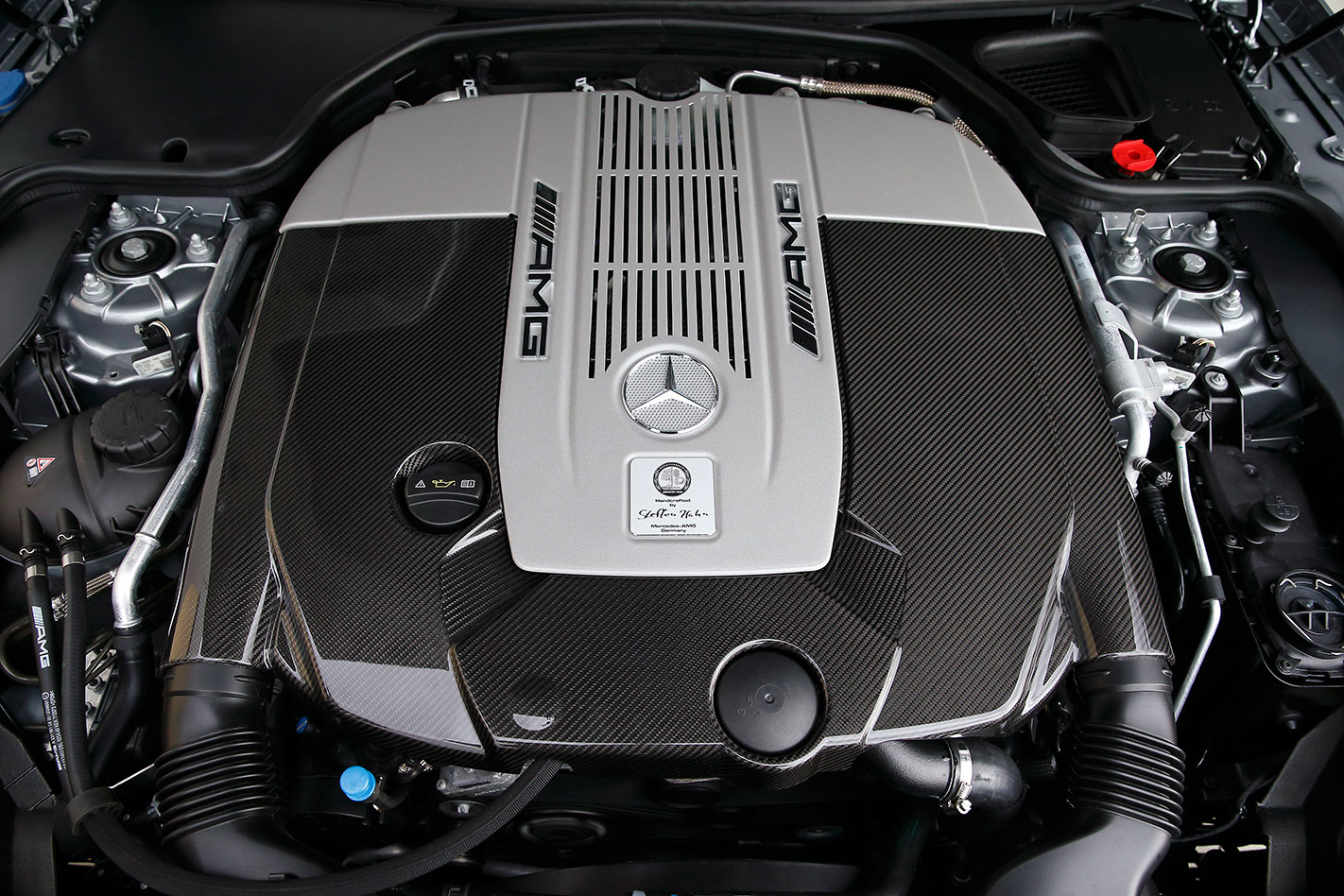
Speaking of which, AMG has finally engineered its seven-speed auto to handle the V12’s torque, which is slightly ironic given it could probably get away with a two-speed Powerglide.
Put your foot down and the SL65 AMG doesn’t so much accelerate as simply add 80km/h to your current speed without passing go or collecting $200.
In contrast to Merc’s slightly uncouth (and wonderful) V8s, the V12 delivers its insane slug of power with a minimum of fuss; a slight hum at idle becomes a rather industrial growl at higher revs with the turbos furiously sucking away in concert. But it’s not an engine you’d extend for its aural delights.
It’s only when the rear starts to edge wide in a third gear bend that you remember how much power it has, how much it weighs and how much it costs. Gulp.
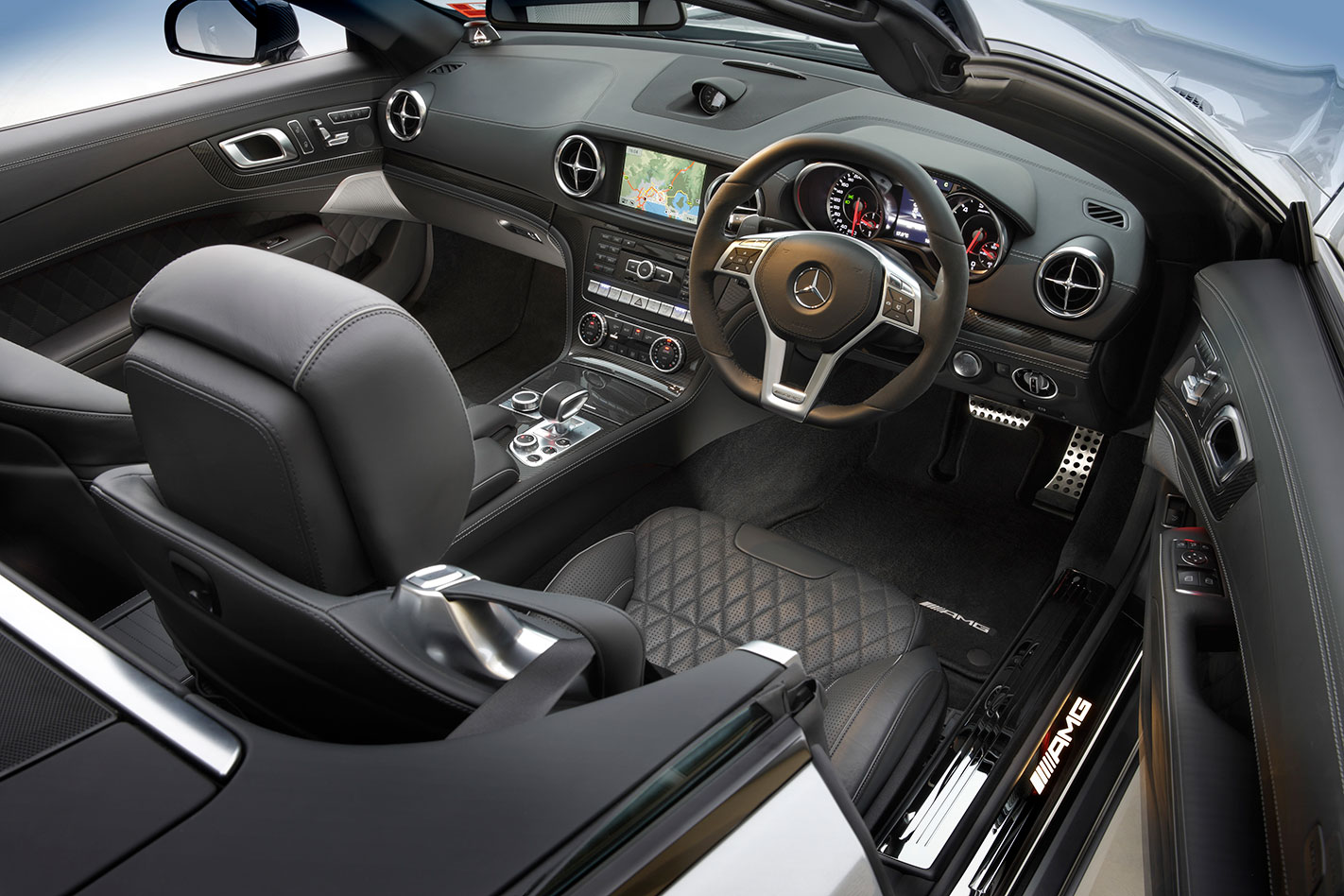
But driving hard isn’t really what this car is about. It’s about nestling into those diamond-quilted Nappa leather seats, turning up the Bang & Olufsen stereo to ear-bleed volume, dropping the roof, and enjoying the satisfaction of driving something very few other people have.
The SL65 nails its brief, but I’ll have the sharper, noisier SL63 every time, thanks.
4/5
Engine: 5980cc V12, DOHC, 48v, twin-turbo Power: 463kW @ 4800-5400rpm Torque: 1000Nm @ 2300-4300rpm Weight: 1870kg 0-100km/h: 4.0sec (claimed) Fuel consumption: haha, really? Price: $481,000
We’re not usually big fans of promotional videos here at MOTOR.
They tend to be made by marketers rather than enthusiasts, featuring heavily on “emotion” and “soul” while being light on actual action.
McLaren, however, are a company of racers through and through, and it shows with this new video for the 675 “Long Tail” – 675LT for short – which predominantly shows Woking’s new supercar being thrashed to within an inch of its life.
The 675LT is essentially a more focused, hardcore version of the 650S – what the Speciale was to the 458 – though the changes go much deeper than a little extra power and a little less weight.
Its acceleration is almost fantasy – 0-200km/h in 7.9sec – and its lap times are said to be much closer to the P1 than the 650S.
If the video is anything to go by, however, it still knows how to play, leaving two thick black lines through each corner.
If you like what you see, the McLaren 675LT is available to order now starting from $616,250.
Get your free weekly report from the world of fast cars – subscribe to the MOTOR newsletter!
WE ASKED earlier this year what the BMW M badge meant to you, and the best answers – just saying “Motorsport” didn’t cut it! – won the chance to participate in a specially tailored performance driving day.
Multiple manufacturers now offer these dynamic antitheses to the static motor show, with BMW’s Driving Experience roadshow, for example, covering 90 days every year, with about 3000 punters accelerating through three levels of courses.
The Intensive Driving Experience is BMW’s $1395 entry-level course, though for our winners there was a twist to turn it into the M Driving Experience – with the usual 428i Coupe, M235i, M3 and M4 joined by the M5, the recently refreshed M6 and the new, second-generation X6 M. That’s a collection of cars worth a princely $1.2 million.
This is a course attracting varied levels of driver skill, so the day begins with some illustrated theory behind car control basics to help discourage the meeting of sheetmetal and Armco steel.
The majority of the day is almost non-stop action otherwise, with braking and skidpan exercises – plus a timed motorkhana course to add the obligatory competitive element – sandwiched between two decent stints of full circuit laps. The instructors set the pace, gradually ramping up the speed once they’re comfortable with the abilities of the drivers behind.
The temperature of the pace is more rogan josh than vindaloo, but higher-level courses are available (see breakout), and it certainly didn’t stop our lucky readers from having a blast.
“The experience of driving these cars on the track isn’t something you get to do every day,” said Wheels reader Darren Hooton. “The [M] cars are all set up for speed, beyond 200km/h, but you can’t do that on the road.”
Fellow reader Steven Ktenas was still smiling half an hour after returning to the pits for the final time. “That was unbelievable; awesome. The vehicles were amazing and the course lived up to its name. Thank you, Wheels.”
And even if BMW is sometimes preaching to the converted (driving experience vouchers are included when you purchase an M car, for example), it still sees great value in reinforcing the brand.
“[People] don’t often get to drive M cars to the peak of their performance with expert tuition, and I think people really engage with that,” said BMW Australia marketing communications manager Nick Keen. “We often have BMW owners fall in love with their car more when they see what it can actually do.”
Training days
IF YOU weren’t in it (our comp) to win it, or just weren’t among the lucky winners, BMW has more one-day courses running in 2015. The Level 1 Intensive program is running again in October and November at Sydney Motorsport Park. Already consider yourself a half-decent steerer? Then it’s worth paying another $600 for the $1895 (Level 2) M Dynamic course, where the techniques taught and lapping pace step up another notch or two. And if you want to truly find out how far you can take your fast-driving abilities, then BMW’s ultimate course is the $3500 Fascination.
Sign up here to receive the latest round-up of Wheels news, reviews and video highlights straight to your inbox each week.
FOR THE 25th anniversary issue of Wheels we asked the leading engineers and designers from Ford and Holden to contribute their thoughts to the future of the car. We weren’t silly enough to expect them to be explicit or to reveal any forward model secrets and, of course, they haven’t but we’re still sure you’ll find their comments interesting.
LEO PRUNEAU GMH’s head of design
ON OCTOBER 27, 1977, Peter Robinson told me the May 1978 Wheels is its 25th anniversary issue.
He is planning a special issue and wonders if I could contribute an article on “Where is car designing going over the next decade?”
That is a very intriguing question. However, I would like to expand the time frame and cover car design in the next 25 years.
I plan to build the story around the Holden Kingswood SL. Perhaps we could look at it in 10-year cycles — the 1988 model, the 1998 model, and finally the last five years, or the 2003 Kingswood SL. I expect by that time the Kingswood as we know it, will be changed beyond recognition.
To get into the scenario we should first have look at some of the changes that will affect the design of the car. These have been broadly publicised, but I would, like to restate them:

Naturally there will be concern for energy conservation, road congestion will continue to increase, the price of the car to the average consumer will be an important factor, government intervention will continue, we will see the emergence of alternative energy powered vehicles, and may even see lower production costs due basically to design and engineering and manufacturing refinements.
I expect better management of resources for design and development through computers which will also play an important role in cost/price reductions.
As we go toward the end of this century the life expectancy of the car may tend to be shorter rather than longer.
Because of the shorter life expectancy of cars, fashion could have an even greater influence than it does today.
Other constraints which will influence the car, especially in suburbia, should be considered. We must ask ourselves, “will the car really be necessary?”.
I think mass transportation systems as they are being studied around the world will not play a significant part in the mobility of people, due to exorbitant costs of construction. Therefore the private car, even though it may be a totally different configuration to what we know today will still be the main mode of transportation.
Secondly, as metropolitan areas continue to expand and become more congested we will move to containerised living.
We will probably spend most of our time in one environment, for working, living and moderate recreation. The balance of our free time will be spent completely away from this environment.
The cities may become absolutely vacant during the leisure period. People will tend to go on weekenders away from their normal containerised environment.
I expect that by 2003, the work ethic will be completely reoriented; no more than half of our week will be spent at work, while the balance will be purely for leisure.
Assuming that the above scenario is within the ball park, let’s turn our attention towards the first 10 years of our time frame, the 1988 Kingswood SL and what influences there will be on its design.
First, the world car concept: Its main advantage is improved economies, where the basic development and testing is done on world-wide scale, rather than at specific localised points.
However, for the world car concept to succeed it must rely on local inputs for the environment in which the car must operate, and local tastes, and trends.
The world car concept is good, but models must have their own local flavour. The trend toward lighter cars will continue through this period, and substantial gains will be made in this area.
However, we must not allow smaller exterior dimensions to compromise interior efficiencies. This will be the real challenge to designers and engineers.
While we are reducing the exterior size of cars; especially for metropolitan applications, comfort levels must be continually evaluated. Moreover the safety aspects of the interiors must also be continually analysed.
Other criteria for the interior will be the heating and ventilating systems. These are totally inadequate.
Because of the long distances involved in Australia, aerodynamics will play an important role. There is much to be done in this area, and even though there are only marginal resources for such work in this country, it must be done.
Better visibility will also be a requirement, again especially for metropolitan areas where parking difficulties and congestion will increase.
Also, advanced road behaviour which is now beginning to come to the forefront in Australian designed cars, will be refined arid improved.
I do not believe that basic car construction will differ much from today’s vehicles. However, structural integrity of cars will noticeably advance.
No doubt the Kingswood will look different, but basically it won’t move too far from today. Just look back over the last 10 years and the 10-year period before that. Progress has been very slow; the curve has been relatively flat but as we move through this decade the curve will begin to accelerate.
I am sure new materials will be introduced but on a limited scale. Aluminium and plastics will be used more in the basic structure of the automobile. There are very sophisticated refinements of these materials currently under study around the world, in research laboratories in and out of the automobile industry. The aircraft and space industries are playing a major role in the development of these materials.
Another thing that will influence the price of the car during this time frame is the fact that we as designers (and in conjunction with engineers) will strive toward simplifying the car. The appearance changes through this simplification will be very marked indeed, and produce less complicated shapes which are less costly to produce and assemble. This will be a major area in which we will make advances during this first 10 years.
As I mentioned earlier, the trend will continue toward reduced size, smaller engines, smaller transmissions and braking systems. Everything will size down accordingly. We can look forward to some very exciting developments in engines, such as the turbo-charging which is currently underway in Europe.
Electronics technology is absolutely skyrocketing, and the feedback from electronics will find its way into the car.
During this decade we will see the first successful volume production electric car.
Electric cars have been around for some time, but they have really been no more than a refined golf cart. I firmly believe we will see the first successful vehicle of this type -a car rather than a cart. I also think we will see the emergence of alternative fuel sources for the reciprocating engine, perhaps alcohol-based fuel and possibly even hydrogen fuel.

I realise that hydrogen fuel is expensive to produce. But one of the important aspects of the hydrogen approach is that the basic technology of the engine is unchanged from today. This would not be the case if we went to a turbine power source or other exotics such as the Stirling engines or steam.
The hydrogen engine gives good fuel economy and good emission performance with today’s technology.
Moreover, the tools to produce today’s reciprocating engines are already in the plants. To change would obviously result in exorbitant costs for the manufacturer and the consumer.
Statisticians will tell us the vehicle density in Australia by the end of this period will be approaching three cars a family. Another trend that might emerge by 1988 is toward specific types of vehicles for specific applications. The business of designing one car for all purposes has nearly run its course. I believe we will have a go-to-work car, an outback recreational vehicle, maybe even an inter-state car, to name just a few. In the past we’ve tried to make one car do all jobs and as a result it does none as efficiently as it could.
Another important factor during this period will be that the government will try to influence the design of cars through legislating what they believe the consumer really wants. However, I expect this intervention will reach its peak during this period and begin to recede, primarily because of conflict between bureaucratic requirements and costlier preferences. Clean air, improved fuel economy and safety standards, are examples of potential area of conflict.
I think the role the government has to play is not in trying to legislate regulations toward the vehicle. Its energies should be channelled toward the software aspects of the car. By software I mean road and traffic management systems where it has the ability to implement and control.
Having outlined some of the influences that will determine the 1988 Kingswood, it’s probably safe to say that on percentage basis the 1988 Kingswood SL will be changed basically about 25 percent from today’s product.
Now let’s move on to the second 10 years of the next quarter century. This period should see a dramatic change. Exotic alloys and plastics will be introduced and the structural integrity of the car will be refined substantially over the previous 10 years. The lightweight materials we have mentioned will play a major role in the design of cars. We will see new mechanical arrangements emerging, including engines with the alternative power sources. They will advance from the drawing board into actual hardware.
The basic architecture of the car will start to change. The application of the car for all functions will almost be completely eradicated, and specific cars developed for specific needs will be pretty much the norm.
The electronic developments from the previous era will continue to expand and they will reach a very advanced stage for mass produced cars. The electric car will be fully accepted. It will continue to evolve in such areas as solar energy power.
I believe we should be on the threshold of a major breakthrough toward this source of energy to power cars during this period.
Aerodynamics should reach a very advanced stage, and will play a major role in the configuration of the long distance car. The exterior size of cars that are used primarily in the metropolitan areas will become smaller.
The packaging efficiency will continue to be a major challenge, but through better design and engineering in concert with computer technology there is little doubt we will reach our objectives.
The appearance of the car will change dramatically. The sophisticated software systems which I expect to evolve during this period will begin to take on new dimensions. The car and the software systems will become more coherent.
So I guess by the end of the second 10-year period the 1998 Kingswood will be unrecognisable from today’s models.
To put a percentage basis on the amount of change, it should be around 50 percent, and, as mentioned earlier, the development curves will have begun to accelerate and by the end of this period will be in a very steep slope.
The 1998 Kingswood SL should be a dramatically different car, and it will take us on to the final five years of the next quarter century. In 2003 who knows what cars will be like. Most things will be different; life styles can only begin to be imagined. The car as we know it today will not exist.
One scenario which interests me immensely is the development of a totally plastic car. By totally plastic car I am not referring to the current plastic/fibreglass cars, but rather a fully injection-moulded car completely cast in one shot.
The interior/exterior and possibly even engine block, and transmission case would be moulded integrally. Naturally the body will be colour impregnated and feature living hinges for doors, deck lids and bonnets. The only additional parts in the plastic structure will be the moving ones such as pistons, valves, crankshaft, camshaft, gears, plus certain suspension components.
This type of construction will enable us to have total quality control. Each unit will be exactly the same due to the precision capability of the injection moulding process. Nevertheless we will still have different types of cars with different body styles, but the basic concept of an injection-moulded car with its precision quality control should be outstanding.
I also believe that the injection-moulded plastic car may be of a biodegradable composition which will have the capabilities to be completely recycled resulting in a saving to the environment and to the fossil fuel resources which provide the basic ingredient.
Another by-product of this type of approach would be that it may eliminate completely the used car market, primarily because this car will be the first fully disposable automobile.
The new car will be purchased, used, and then discarded and recycled.
Because the purchase price will be low, turnover rate high – through the capability to be recycled – I expect that fashion will have a significant influence in the purchase of this car.
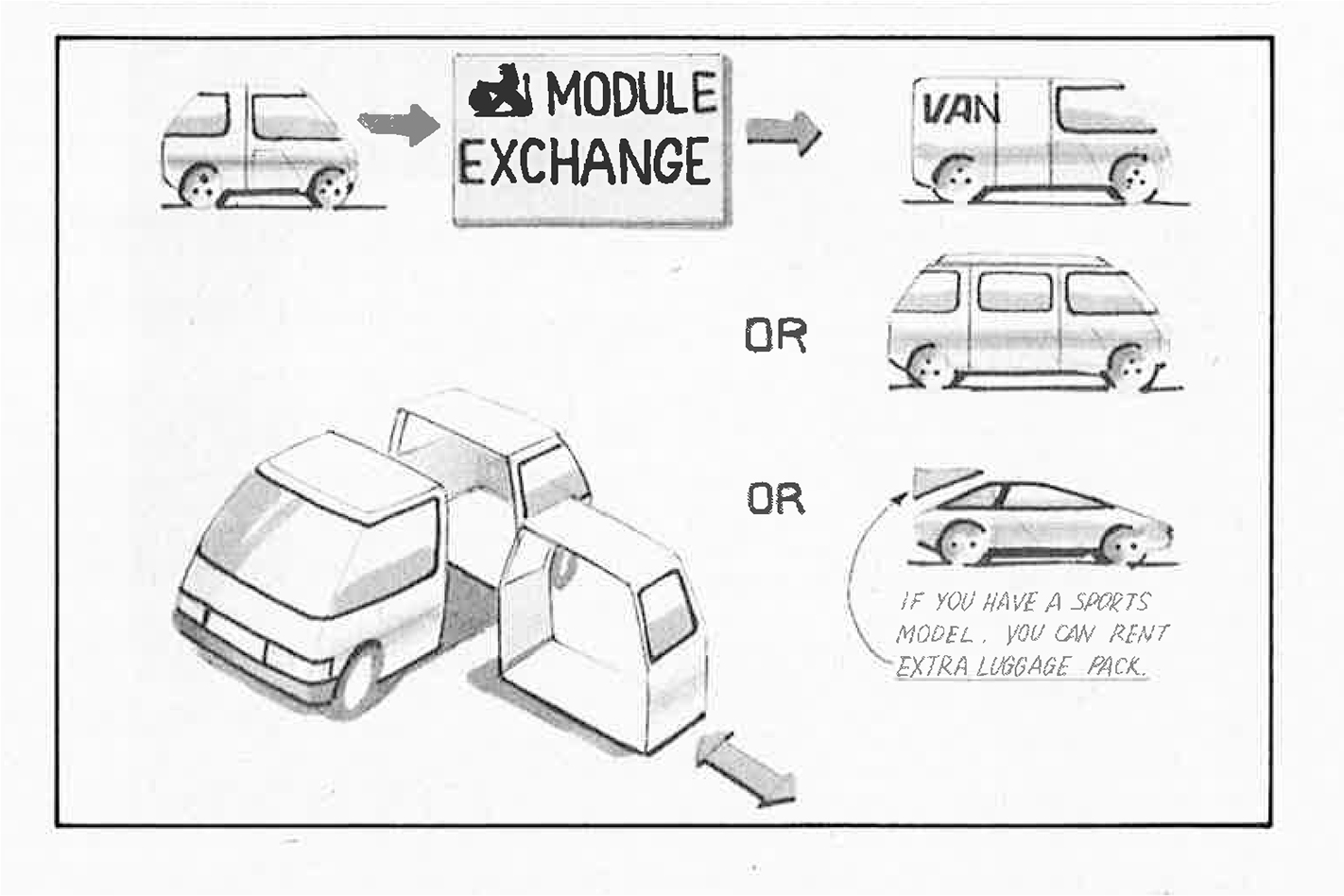
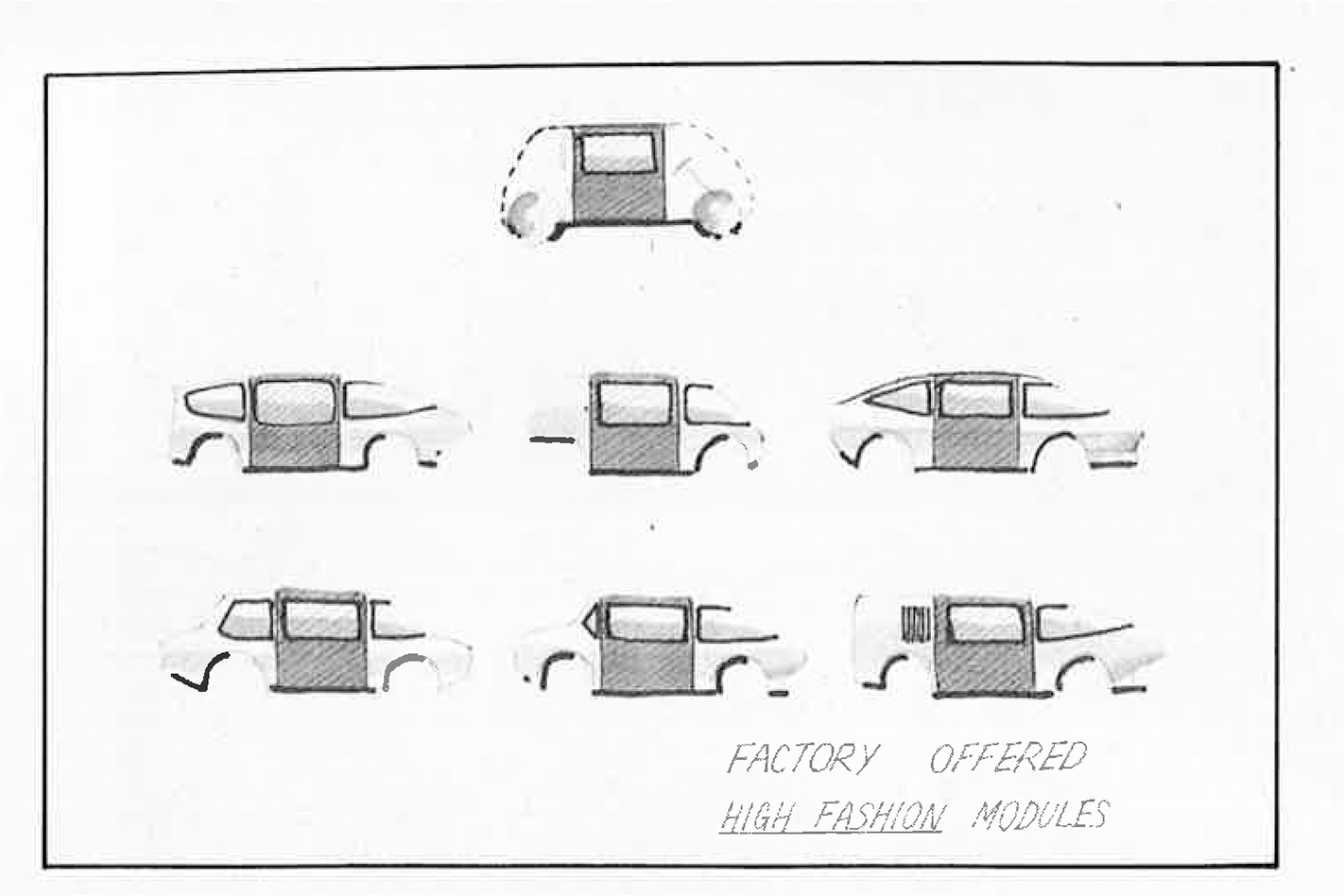
I expect the building of specific cars for specific applications will become the norms during the previous 20-year period. A further extension of this thought might be that cars and their specific application may be possible through a modular system. That is, modular power units, modular carrying units and modular fashion units. You own the base unit and perhaps rent the module you require to make up the car to do a specific job.
The congested mobility in large metropolitan areas will not allow the car, as we know it today, to exist by this time, and alternative modes of transport must be available. We could even see the use of hovercraft-type vehicles in this situation – perhaps an individual hovercraft which would enable us to be highly mobile in the most congested environments.
I also suspect that by the end of this era we could see such sophisticated transport systems emerging which would enable vehicles to have on-board pre-programmed destination capabilities. General Motors displayed an advanced transportation system of this type, known as “Mag-Lev”, in Seattle, Washington in 1975. This was just the beginning of an exploration of this mode of long distance travel. The concept allowed you to stay in your vehicle and travel long distances at very high speed aboard a pallet, the advantage being that on arrival at your destination you had your own private transport.
To develop commuting systems of this magnitude government intervention is essential. Perhaps the government in concert with the car manufacturers could provide mass mobility on a very large and sophisticated scale.
We have conjectured 25 years of automobile design. Who knows what our 2003 Kingswood SL will be like?
The amount of change during this final period must be in the neighbourhood of 100 percent from today’s products.
New power sources, new materials, new automobile configurations, new transportation systems will come; change will be inevitable.
People naturally aspire to something better. They desire to be individuals and express themselves accordingly. Finally, the quality of the products we develop will be automatic, because good design will ensure that this is so.
JOE WHITESELL GMH’s Chief Engineer
THE CAR of the future will be completely different, it will involve a totally different approach to design, development, and manufacture using new exotic lightweight materials. The most profound influence on the motor industry in the past decade has been regulations for safety and emissions.
Future demands for improved fuel economy will be even more profound unless these are met in a sensible way.
To elaborate: safety requirements were a shock to the industry as a whole. The industry tried to sell safety and failed miserably – people just wouldn’t voluntarily pay extra for it! Now they are paying millions of dollars for safety improvements, many of which are questionable. They have saved lives, but not all safety features save lives. Some offer little real value while at the same time wasting energy – all the way from extraction and fabrication of raw materials to the finished product.
Luckily Australian governments have been more sensible in their approach to safety arid have adopted few of the more dubious approaches to safety found elsewhere in the world.
Contrary to popular belief, the motor industry has not been against safety regulations, emission regulations, or — as now in the US and apparently coming to Australia — fuel economy regulations.
What the industry has been primarily concerned with is the timing of these regulations.
What does this really mean? In many cases these regulations require invention – a new contrivance resulting from much study and experiment.
Unfortunately no-one knows how to schedule such inventions to happen at a given time.
lt is said that the motor industry cringed at the very thought of it all, and well it might. However, as it has turned out, we’ve been very lucky with the abilities of our engineers throughout the world. They have been inventing things on time.
The US emissions laws have proved that the engineers have been lucky up to now. No-one was able to come up with a timed invention for the new US emission requirements, which have been deferred to enable people to continue to buy new cars.
I believe emission control has been the most difficult and complex problem ever faced by the industry. The study of emissions is so complex that volumes have been written about the many and varied applications. Millions of dollars have been spent — I am sure no one knows how much — and a large portion of it has been paid for by the voting taxpayers who buy cars.
Is it worthwhile? Yes; definitely. lt is beginning to bring about an improvement in air quality in various parts of the world. On a relative basis, air quality in Australia is superb. I have been in Sao Paulo, Brazil, when the emissions from industry, vehicles and other sources have been at such a level that one begins to question the safety of breathing the air.
I have been in Tokyo where the air was so contaminated my eyes burned and emitted tears as though I was crying.
Are we as industry, as engineers, against emission control? Definitely not! We are people too, we think and see and breathe and have the same basic concerns as all people.
Of course something must be done. However, we have to place it in a proper perspective. Timing is everything. lt is the management of time that determines our capability to do things.
In this regard the Australian market of less than 600,000 vehicles a year poses its own special problems. lt’s natural enough that people expect things to be done quickly, but the overall implications for industry and the country have to be considered.
With such a small market shared by so many, with regulations such as local content, no reversion, and with the costs resulting from all this, the motor industry is treading on a no-return platform. We have to be careful to avoid a situation in which people simply can’t afford to buy the products we build – a situation which would throw thousands out of work.
I’ve already said we’re in favour of emission controls. But let’s consider all facets, and all people affected, when it comes to setting deadlines.
Further, when considering emissions, we have a very specific interface with economy of operation of the vehicle. In the present state of the art, lower emissions bring greater fuel use. lt’s a natural phenomenon of physics.
There are many ways to conserve energy. But we get back to invention and timing again. I am sure that with a realistic and well thought-out approach over the next 25 years we will find the solutions. We engineers look forward to the opportunities, though we may differ in our approaches.
Fuel economy in the next 25 years will probably have the most significant effect on the motor industry as a whole.
I feel certain that the massive challenges ahead of us will certainly put some out of business unless regulations are structured to enable things to happen in an orderly manner. lt’s a matter of invention and investment against time.
There is a proper ratio, and it must be found. Don’t misunderstand me. As an engineer, I find the challenge of designing the cars of the next 25 years really exciting. Engineers like to work on challenging things, on safety, emissions, and energy savings devices, but not under unreasonable time pressures.
The cars of the future will be things of marvel. The implications of the advances in electronics as a result of the space industry are as yet beyond comprehension. These advances have, and will continue to have, great influence on the cars of the future.
The development of computer graphics has enhanced the design procedures used to conceive new cars. The use of computer analysis systems is rapidly improving our structural techniques.
Dynamic finite element techniques are now being used and the technological wave has started to become significant.
This wave’s accelerating, and will continue on into improved testing and development activities.
Computer techniques are expanding. Continuing computer hardware developments tend to reduce hardware costs, giving more people more use of the computer. New materials and processes will be developed. We already have the fibre-strengthened materials such as fibreglass, graphite and aramid.
We will certainly have other newly developed, strong, lightweight materials to work with. Use of plastics, aluminium and magnesium, will grow.
Processes are important and will probably be the key to any drastic change in material utilisation.
Future design programs will place great emphasis on weight reduction to achieve large gains in conserving fuels. Cars will be lightweight and smaller. Engines will be further developed to more efficient, high power, light weight units. Perhaps we will have commuter cars to carry only two people but with adequate parcel packaging to enable driving to and from the market place as well as to and from work.
We will still have larger cars but they will be lighter and more efficient. These are needed for cross-country touring and trailer hauling activities.
A lot of good has and will come from the regulations to the benefit of all who drive cars. Are industry and engineers against this? All I can say is Hell No! lt is a real opportunity – if it is sensibly timed!
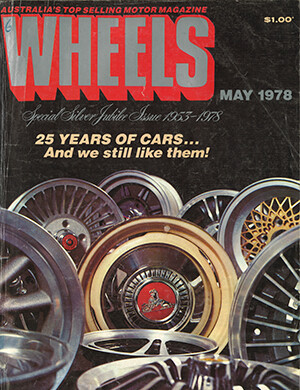
Car Design for the Next 25 Years was originally published in the May 1978 edition of Wheels.
THE comparison Ford didn’t want: The Mustang takes on our own Falcon XR8 in a battle of brute force as Ford’s present and future lock horns. Look inside the new Alfa Romeo Giulia – faster than a BMW M4, twice as beautiful and oh-so Italian; and forget Uber, try Bonzer, by Wheels, where we take a Lamborghini Hurracan and make many peoples’ day!
Check out Mark Webber’s new book – and what he really thinks of Vettel – the new Ford Everest and see if the new Land Rover Discovery Sport is the class of the SUV field.
Join us for the ride in this August 2015 edition of Wheels in print or iPad: on July 16 now.
Sign up here to receive the latest round-up of Wheels news, reviews and video highlights straight to your inbox each week.
