The 2015 Mazda MX-5 roadster bucks the technology trend towards autonomy to stay true to its driver-focused principles of pure and exciting driving. We drove the 1.5-litre in February, now we’re jumping behind the wheel of the more powerful 2.0-litre version.
WHAT IS IT? The Mazda MX-5 is the world’s best-selling roadster and Mazda’s fun-to-drive hero car. Front engine, rear-wheel-drive and powered by two new four-cylinder engines, the latest ND-series MX-5 is for those who care as much about the drive as the destination.
WHY WE’RE TESTING IT The fourth generation of Mazda’s two-time COTY-winning roadster offers two non-turbocharged engine choices for the first time since the 1989 original. We’ve driven the 1.5-litre model earlier this year, and now we’re behind the wheel of the ‘big-bore’ 2.0-litre version, which on paper promises to be an even more exhilarating drive.
MAIN RIVALS The Toyota 86 and Subaru BRZ twins are the most obvious because of their similar fun-over-fury ethos, even if they both have fixed roofs. The upcoming Fiat roadster that we’ve spied testing – which is based on this new Mazda MX-5 and will be built in the same factory – will also get some attention.
THE WHEELS VERDICT Who says more power corrupts? The 118kW, 2.0-litre Mazda MX-5 is as beguiling in the bends as its 96kW 1.5-litre sibling, and it’s faster on the straights. The extra grunt means it’s more flexible and easier around town, too.
PLUS: Steering; handling; grip; punchier engine MINUS: No steering reach adjustment; busier ride; engine note not as sweet; costs $6K more

THE WHEELS REVIEW Thank you America. And thank you Global Financial Crisis. Without you both, the fourth-generation Mazda MX-5 would not be this great. Thank you Toyota 86/Subaru BRZ, because without you two, the MX-5 would not be this cheap. Thanks also to Mazda for continuing to pursue the lightweight British Roadster ethos when all others refuse. And, finally, our thanks to Nobuhiro Yamamoto and his talented team for taking the world’s best-selling roadster to new heights.
We drove the 1.5-litre MX-5 in February. We know how good the fourth-gen MX-5 is. We know Mazda focused heavily on weight reduction − down as much as 150kg − to bring the MX-5 back as close to the original’s principles as possible. We know they succeeded.
This is our first drive of the 2.0-litre version of the fourth-gen Mazda MX-5. Strange to say, but it’s a variant that would probably not have existed if it weren’t for the GFC, and for America.
Product planning for this model began in 2007, just two years after the third-gen launched. At that time, the plan was for the MX-5 to have one engine: the smallest and most efficient SkyActiv advocate that adequately delivered on the pure driving pleasure goal.

A bigger 2.0-litre engine was not in the plan, for Japan, for America, or for Australia. Then along came the GFC, and Mazda, like many car companies, put development work on hold while the financial world collapsed. The ND MX-5 program was delayed.
Once development got back under way, Mazda North America aired doubts about the market appeal of a diminutive 1.5-litre engine in their next Miata, as it’s badged there. They wanted something bigger. They got it. And therefore, so do we. Which is lucky because it’s very bloody good.
Wheels drove both the 1.5 and the 2.0-litre MX-5 back-to-back in Scotland in late-June, both in six-speed manual form. A six-speed Aisin automatic will also be offered in Australia when the cars go on sale, the 1.5 first in September, and the 2.0-litre around December.
Mazda has confirmed the entry level MX-5 will be priced at $31,990, an astonishing $15K reduction from the third-gen’s $47,280. Strictly speaking, that direct comparison is unfair, because the 1.5-litre has a smaller engine and a soft-top roof compared to the outgoing 2.0-litre hardtop. And we’re not entirely sure of spec levels yet, so it’s hard to know the true value comparison, though it’s a fair bet the new car will carry more gear. So, big savings then. Mazda Australia denies the old price point was over-inflated, or that the new price point is a reaction to the Toyota 86 and Subaru BRZ’s impact on the market, but it’s surely a factor.
The 2.0-litre we’re focusing on here is expected to start around $37,000 in six-speed manual form. Compared to the 1.5-litre its engine has 22kW and 50Nm more. It also wears bigger 17-inch wheels and tyres and larger 280mm disc brakes front and back. And that’s pretty much the sum total of mechanical differences.
Final Oz specification is yet to be announced, but an i-Eloop energy recuperation system fitted to European models and similar to that on the Mazda6 will not be available on Australian MX-5s. It costs too much, says Mazda Aus.
In the corners, there’s very little to choose between the 1.5 and the 2.0-litre. When it comes to handling competence and corner carving abilities, both enjoy the same fast, fluid temperament. And where the last one felt fidgety at times and reactive to road conditions, the new model is more planted.
This is the MX-5’s first outing with electric steering, and it is sublime. Fast, direct and full of feel. Light too, as befits the car’s ethos. And, despite their engine differences, both have the same sweet chassis balance that favours neither the front nor the rear. Anyone who reckons they can feel the impact of the 2.0-litre’s extra 25kg is either a driving deity or delusional.
The 2.0-litre is more enjoyable than the 1.5-litre, but only incrementally so. A Sunday drive in either is sure to be an occasion for joy. In the 2.0-litre you’ll enjoy more punch out of a corner, and you’ll get to the next corner more quickly. But you’ll have a busier ride on lower profile tyres, and the engine isn’t as sweet high in the rev range. The 2.0-litre only revs to 6600rpm, by the way, unlike the 1.5-litre’s 7500rpm cut-out.
So, is that extra performance worth another $6K? I know quite a few people who’ve spent that and more extracting more performance from their cars. And as often as not the extra power corrupts the dynamic package. In this case, more power does not corrupt; it enhances what was already a brilliant, engaging machine, and makes for a more exhilarating drive. And that’s what the MX-5 is all about.
SPECS Model: Mazda MX-5 Engine: 1998cc inline 4-cyl, dohc, 16v Max power: 118kW @ 6000rpm Max torque: 200Nm @ 4600rpm Transmission: 6-speed manual Kerb weight: 1000kg Economy: 6.9L/100km (EU) 0-100km/h: 7.3sec Price: $37,000 (estimated) On sale: December
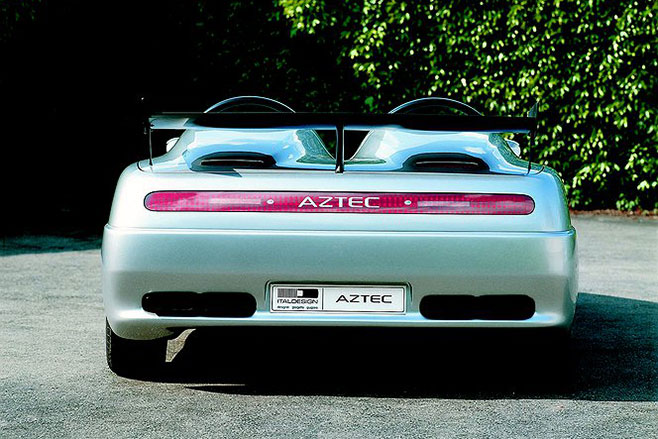
Looking like the spawn of a Subaru SVX and 90s Corvette that had speared through the movie set of Back to the Future, the 1989 Italdesign Aztec is something you don’t often stumble upon.
But that’s what has happened to Japanese car importer Iron Chef Imports, which came across the Aztec in a Japanese auction yard and promptly shared the interesting find to social media.
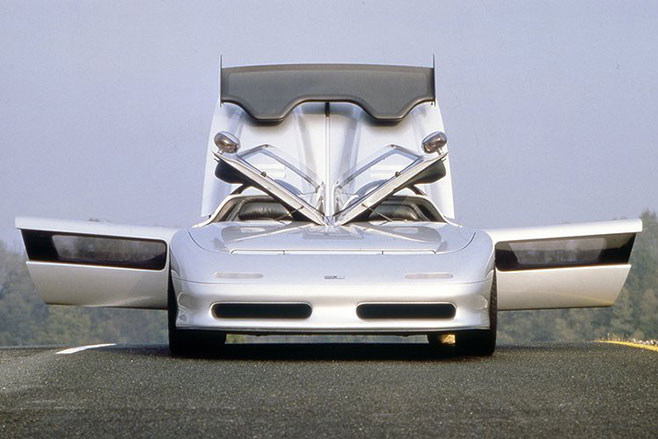
Designed to be an exclusive collector’s item that looked toward the future, pictures from italdesign.it reveal it was powered by an 186kW Audi inline-five cylinder engine. The unit seems to be nestled so close to the firewall it would have done well to double as a massage machine.
Then there’s its actual seat layout, where individual glasshouses separated the driver and passenger in a design that could have been inspired by Le Mans cars or an X-wing fighter – or both.
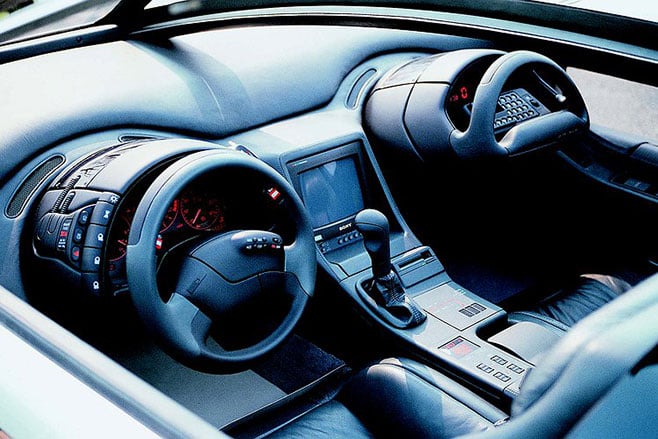
Adding to its bizarre personality, the passenger is also greeted by what look like a steering wheel. However to the benefit of the driver and detriment to his company it was a control console and not used for steering.
Keeping to its futuristic theme, exterior-wise there was a control panel installed in its right flank just fore of the rear wheels consisting of a speaker and code pad, here the driver input different codes to hear the status of vitals like coolant or oil levels. On the left hand side a similar arrangement stored a torch, screwdriver, fire extinguisher, and tyre inflator.

Regarding the most polarising aspect of the vehicle, Giorgetto Giugiaro was responsible for the Aztec’s build and design, a man who also penned the BMW M1.
As for price and build, Iron Chef Imports wrote “[Italdesign] was originally hoping to sell 50 of them, but at $750K and upwards retail, at a time when ‘greed is good’ took a dive with the stockmarket, they ended up selling something like 18.”
The particular example the importer found online is up for a $300K bid and wears 3000km on its odometer.
Kristian Appelt, director of Iron Chef Imports, also tells MOTOR the original owner bought the car for US$2.2million on account of it being chassis number one and being signed.
Unfortunately, though, if you’re interested in your own unique wedge-shaped slice of weird the selling Aztec rolls under the hammer in Japan today.
1. FIAT STILO MICHAEL SCHUMACHER EDITION
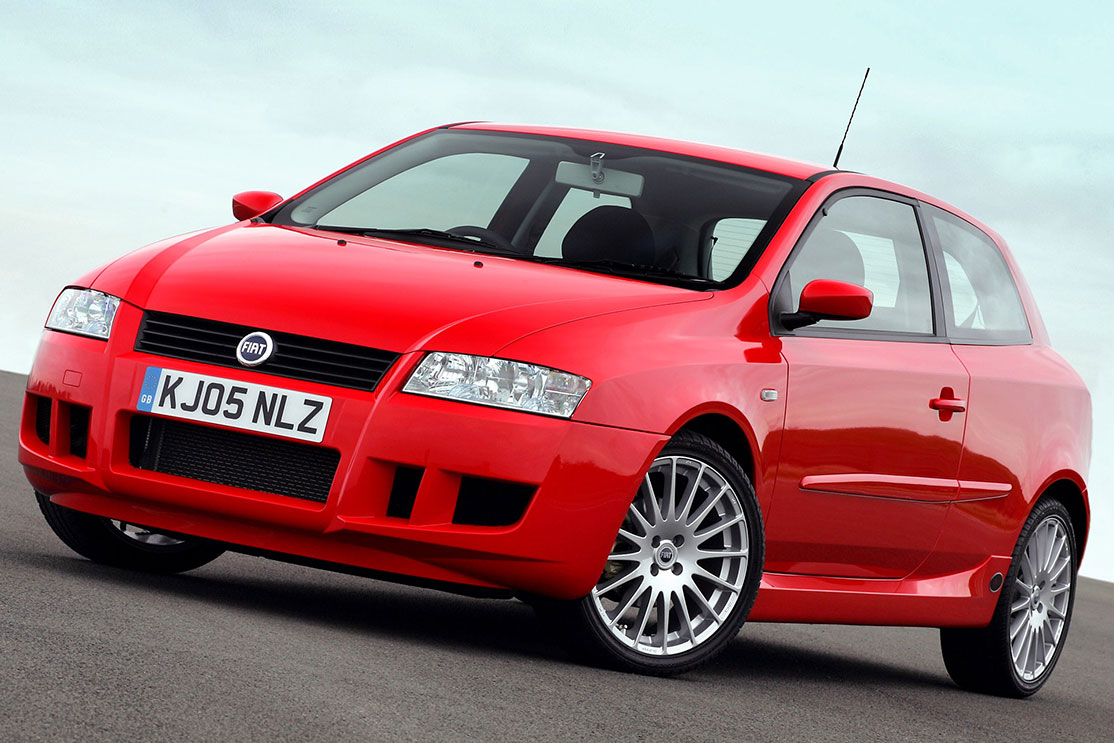
Given this was Fiat’s idea of a tribute to Michael Schumacher’s incredible feat of winning five consecutive Formula One titles, it’s little wonder he didn’t bother winning another. Not even the halo effect of Herr Schumi could save the mediocre Stilo from ending up both a sales and a financial disaster for Fiat.
2. LADA SAMARA TUNED BY PETER BROCK
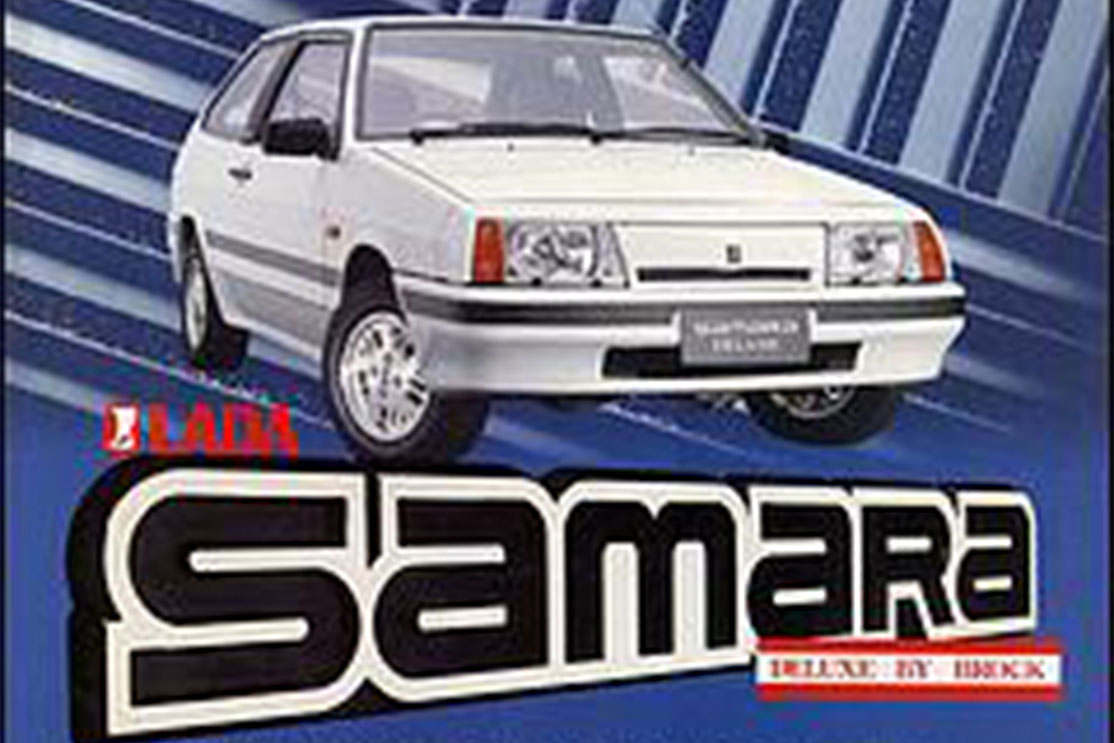
As the phrase goes: ‘you can’t polish a turd’. But that didn’t stop touring car legend Peter Brock, cast aside by Holden and desperate to remain in the public eye, from trying to turn Russia’s steaming dump that was the Lada Samara into something desirable. A lost cause if ever there was one.
3. SLR MCLAREN STIRLING MOSS EDITION
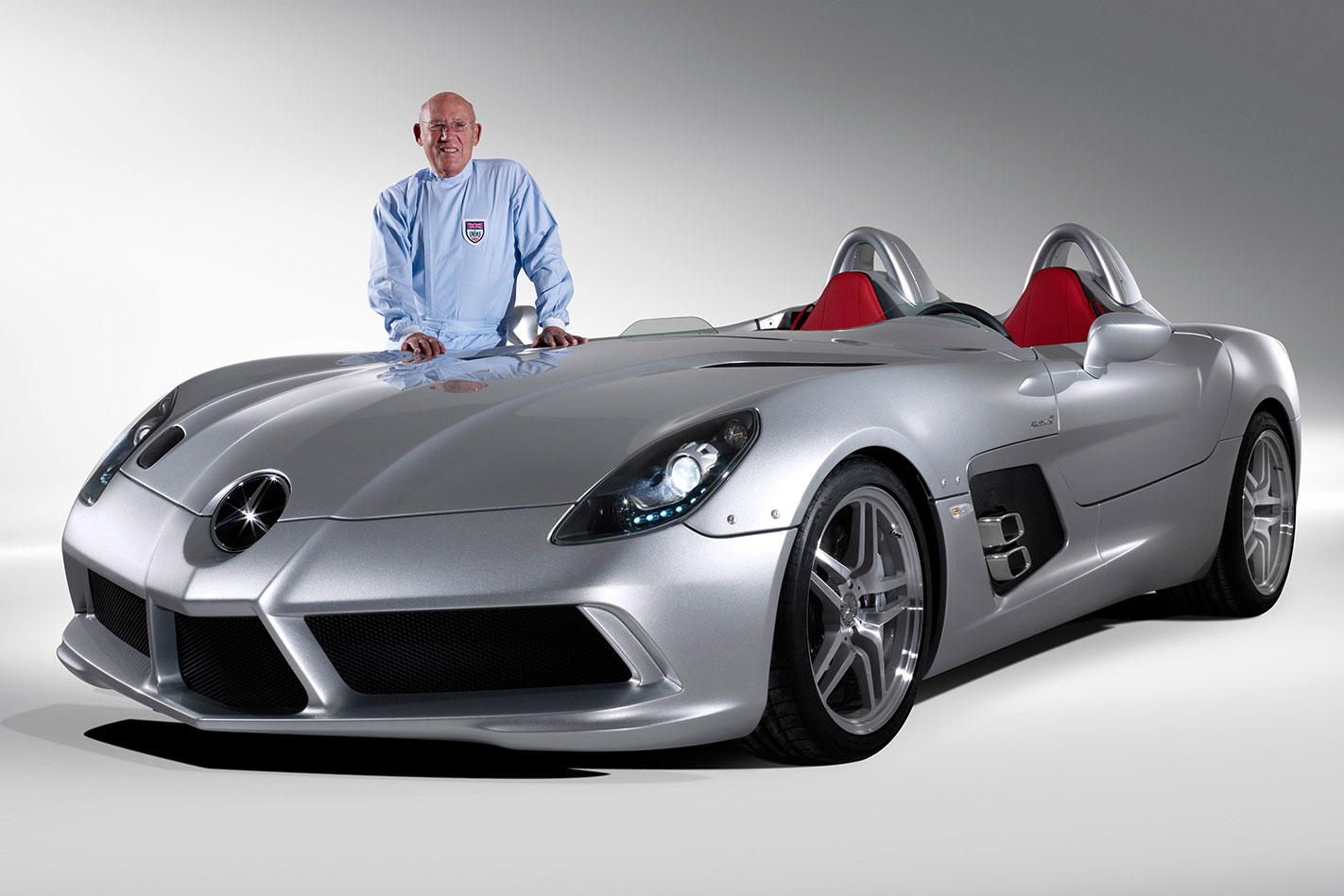
It must have been a big cheque. Surely that’s the only way Stirling Moss was convinced to put his signature on these monstrosities, if you ask us. Offered to existing SLR owners, McLaren somehow convinced 75 of them they needed an uglier, much less practical version of a car they already owned.
4. INFINITI FX50 BY SEBASTIAN VETTEL
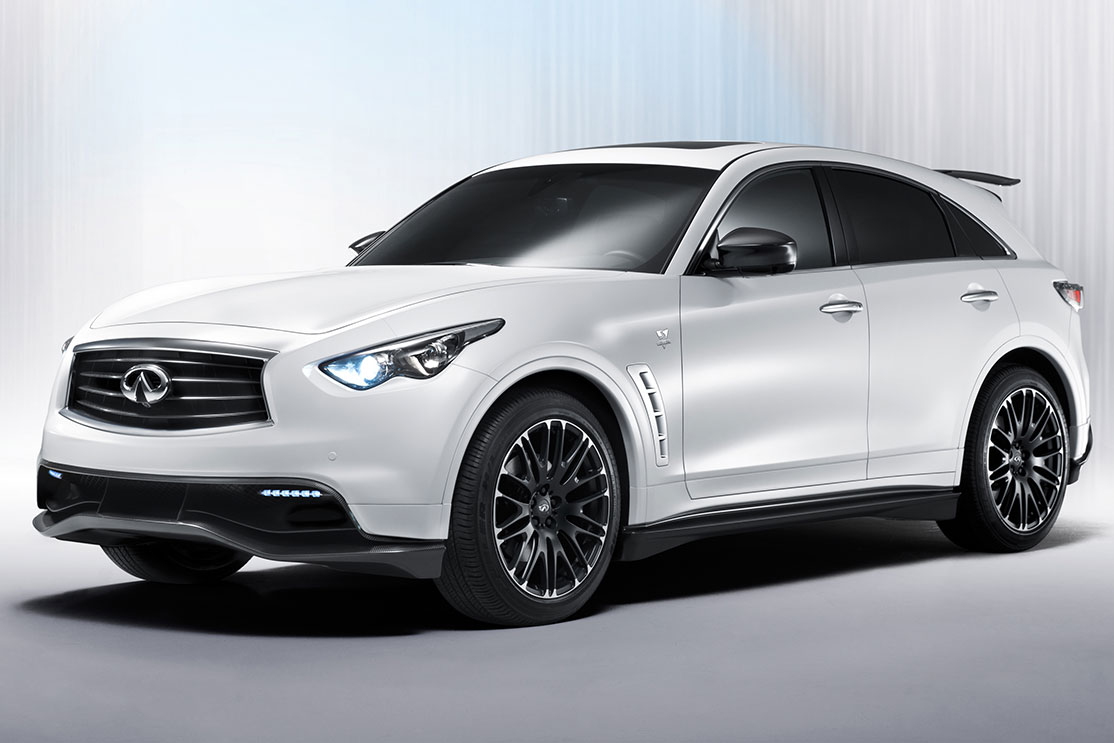
This was the first time you could be sure Vettel’s car was the same as everyone else’s. Spawned as part of the F1-driver’s role as Infiniti’s Director of Performance, the car’s 309kW 5.0-litre V8 and lots of carbon jewellery meant the FX50 wasn’t without appeal, but it cost twice the standard car.
5. CITROEN C4 BY SEBASTIEN LOEB
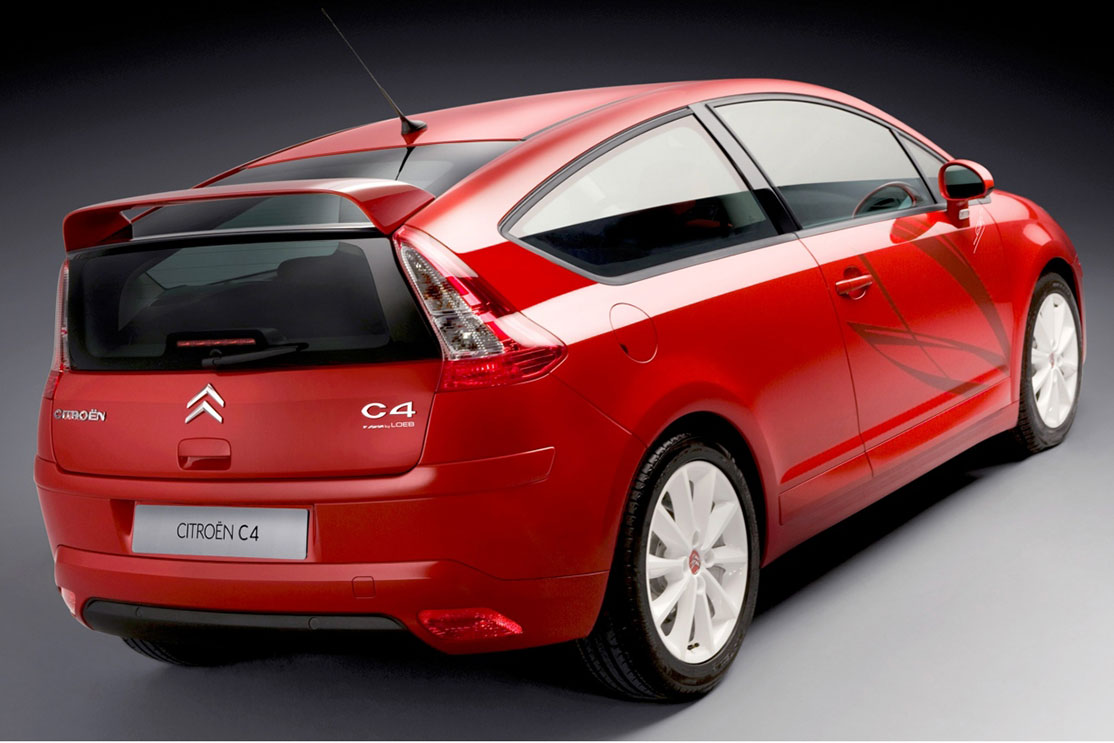
Are you a mad rally fan with more money than sense? Did you know they took gullible out of the dictionary? The Citroën C4 by Loeb is the car for you! Its competition pedigree is evident in the way it’s the same shape as the World Rally Car, while the ‘by Loeb’ badges added nothing but proof that you bought unwisely.
6. FORD FALCON XR UTE BY CRAIG LOWNDES
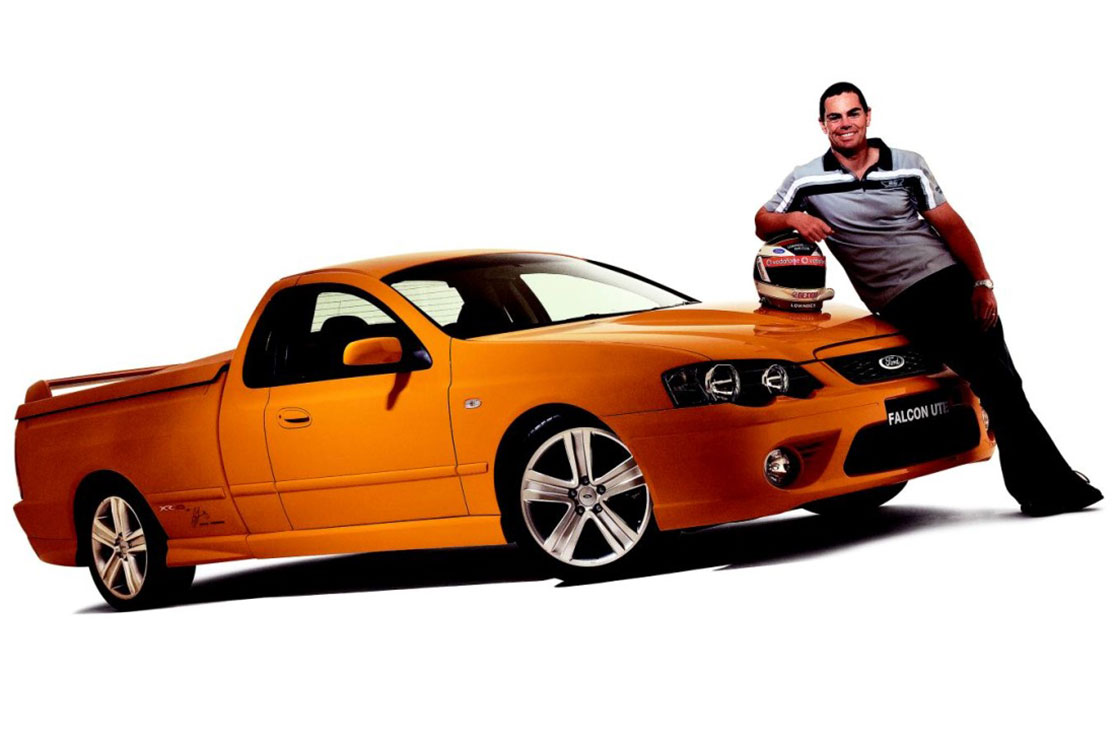
Lowndesy, mate, what were you thinking? No special chassis tuning, no extra power, the Kid’s contribution to this limited run of XR6, XR6 Turbo and XR8 utes was scrawling his name on the side and then smiling for PR pics. A crude way to move 650 Falcons, which would now be a fantastic month’s sales.
7. OPEL CALIBRA KEKE ROSBERG EDITION
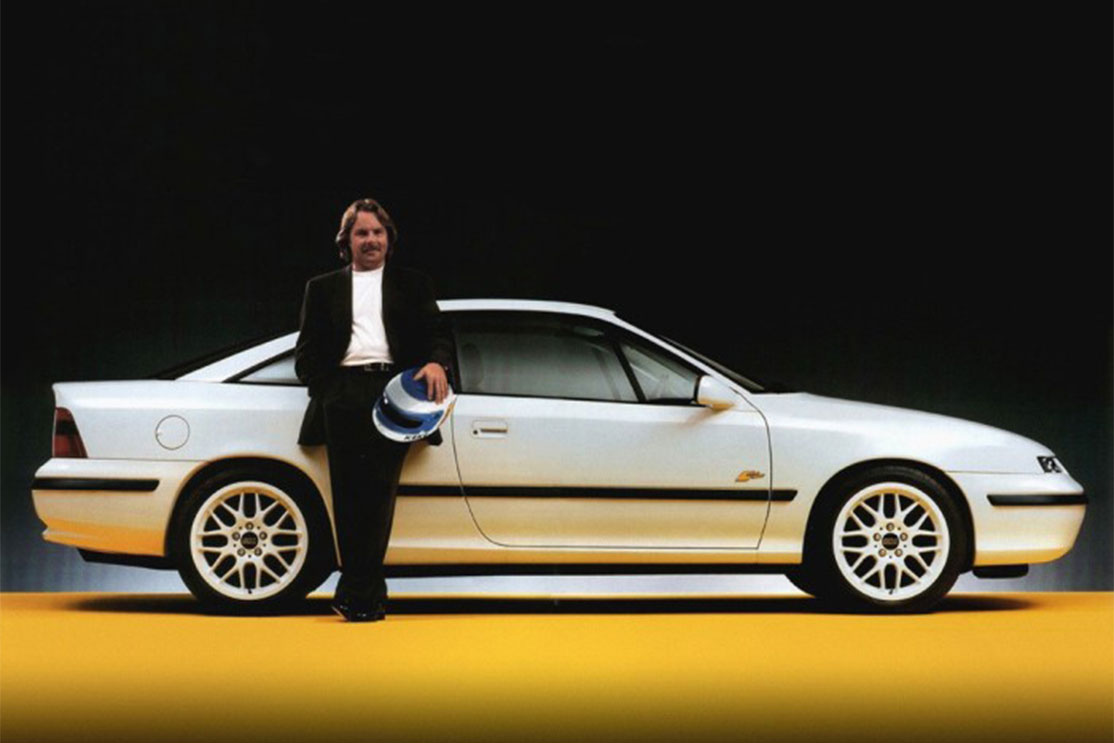
If you’re going to celebrate a driver’s achievements by sticking his name on your car, it’s best to first make sure there is something worth celebrating. Former F1 champ Rosberg drove for Opel in the DTM series in 1994-’95, but was soundly beaten in both seasons by teammates Manuel Reuter and Klaus Ludwig.
8. FORD XB FALCON JOHN GOSS SPECIAL
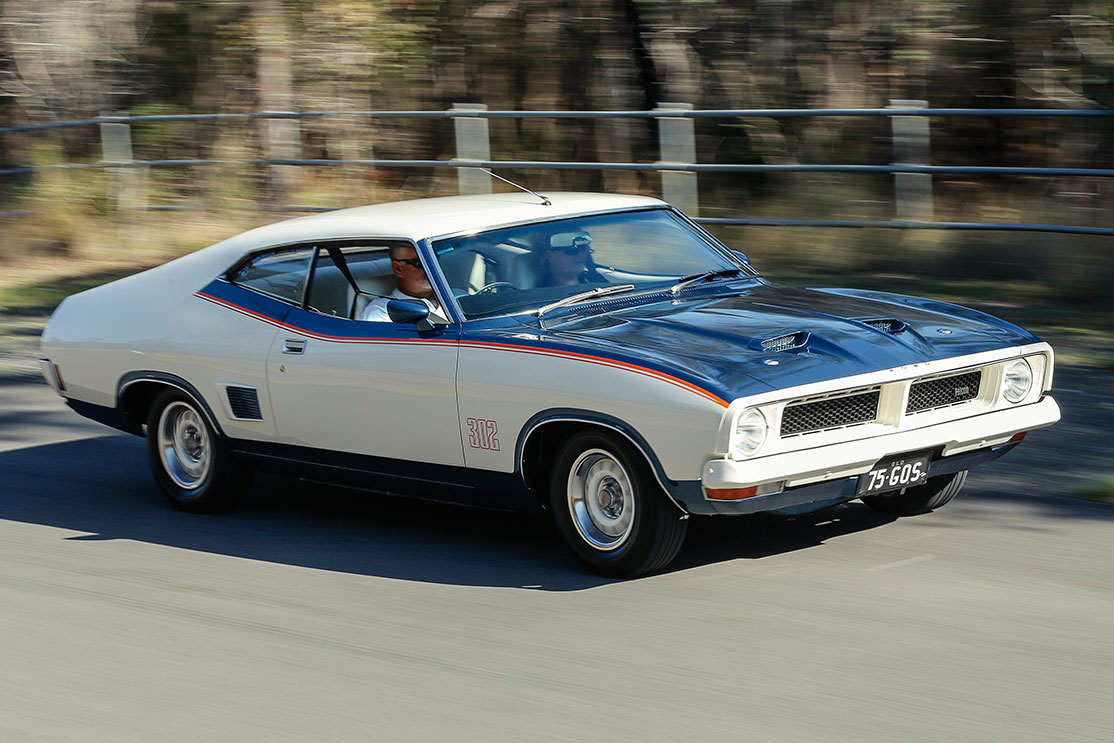
Essentially an XB Hardtop V8 fitted with the GS pack, the JGS was quite a nice car. Where it fell over was that the PR spiel suggested it was built to celebrate Goss’s Bathurst win, yet it wasn’t released until August 1975, 10 months after the actual race! It therefore had ‘cynical marketing exercise’ written all over it.
9. ALFA ROMEO NIKI LAUDA SPIDER
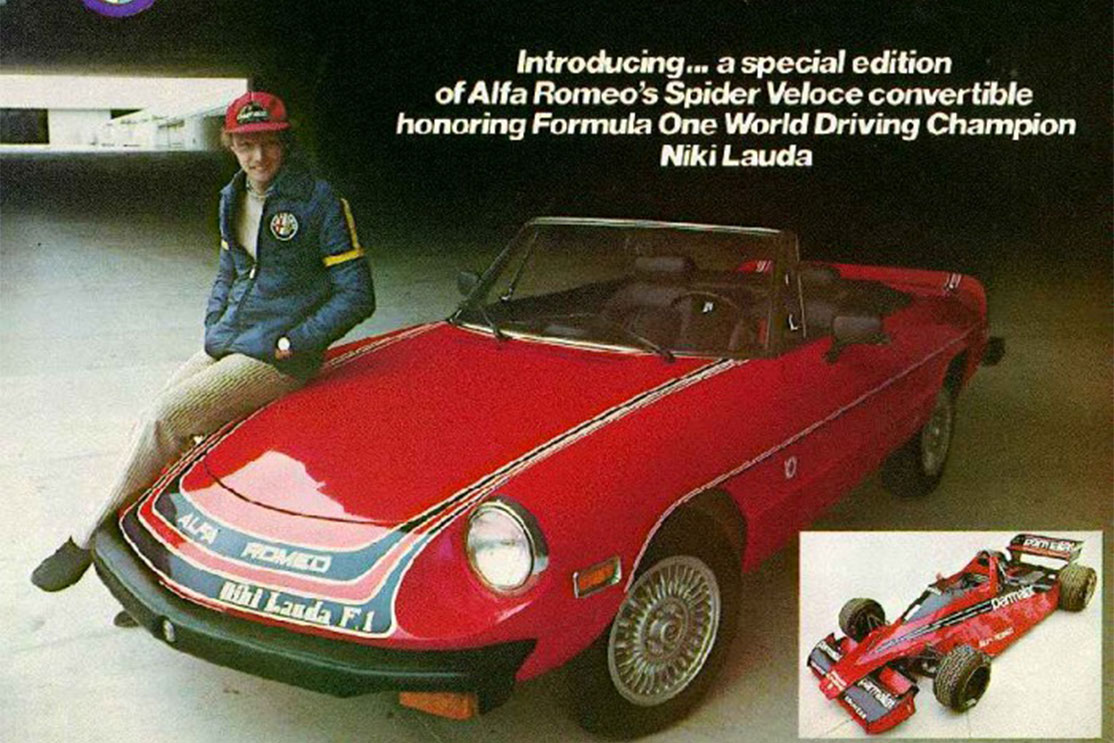
The Graduate made the Alfa Spider a huge hit in the US, but 10 years later Alfa still tried to milk the cash cow with this Niki Lauda edition. Naff decals were intended to make the Spider look like Lauda’s (Alfa-powered) Brabham F1 car, but the only thing the two shared was spectacular unreliability.
This article was first published in MOTOR December 2014
All this stuff about your car being a reflection of your deeper self is, if you want to know the truth, a load of old cods. What you drive is vastly more likely to speak of your budget than your belief system. It’s why people who have to move loads of kids drive people movers. It’s about arses, not aspirations.
That said, there are a handful of cars you will not see me riding in or driving. Dead or alive. It’s not that I have world championship levels of dignity, but even a grub like me has to draw the line somewhere.
Do you remember that dreadful dealer-fitted option Kia offered on the Rio sedan about a decade ago? Sure you do; it’s the one that attempted to turn a Rio into a Subaru WRX, complete with front and rear wings and even a Rex-aping bonnet scoop (which didn’t extend through to the engine bay, but anyway). But what really put the Kia Rio Sport-Pac (iffy spelling notwithstanding) permanently on the ‘do not touch’ list was the way it shamelessly attempted to fool people into thinking you were, in fact, driving a Subaru WRX. I’m talking about painting them in that trademark STi shade of blue (almost anyway) and fitting up a set of gold alloys.
Thing is, while the dolts who bought them went happily about imagining observers assumed they were driving WRXs, in reality, the message they were sending out was the complete opposite. As in: “I’d really like a Suby Rex, but for (please circle one) fiscal/skill level/parole condition reasons, I’m unable to have the real thing. Please spit on me.”
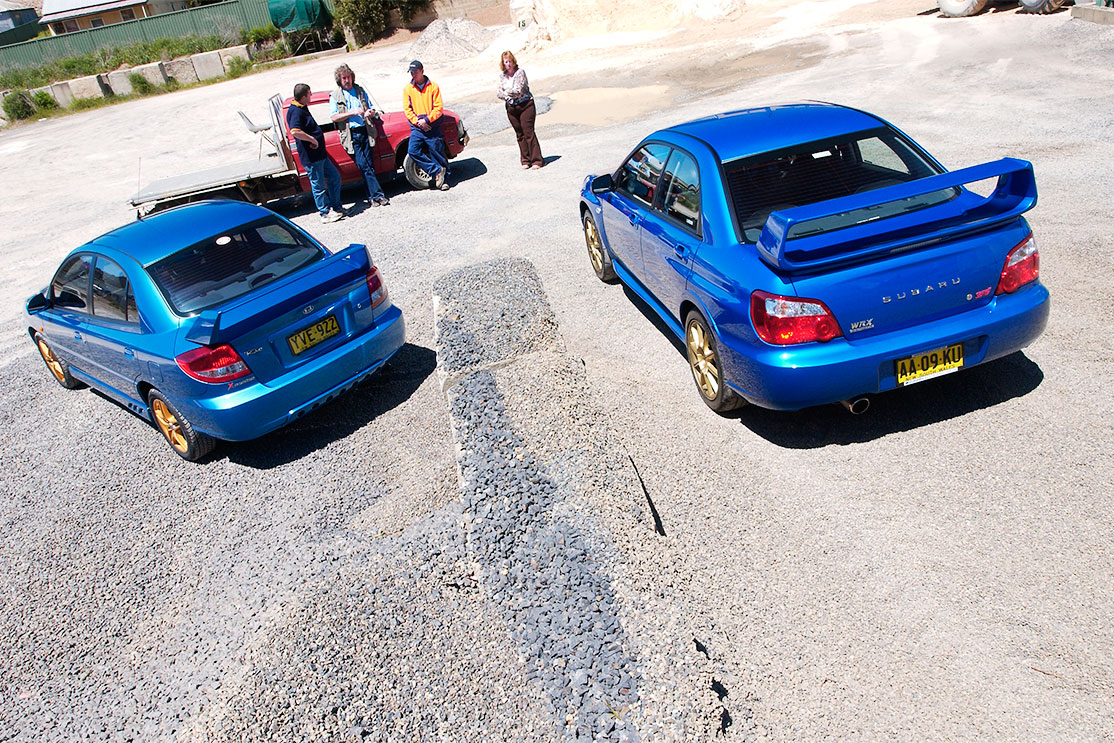
You bought a Rio Sport-Pac for precisely the same reason those weird, tattooed kids who wear their caps backwards drive up and down the local shopping strip in their V6 Commodores with the windows down and doof-doof soiling the air at Dickensian-anvil-factory volume levels. Because nobody will let them into a nightclub.
In its natural state, the Kia Rio was a mostly harmless little device that served a distinct purpose; getting kids to their first job or to uni with a minimum amount of brain damage for dad. At that task, they were mostly adequate, but as an alternative to a Subaru WRX they were more out of their depth than a Federal politician at an integrity hearing.
The other car I won’t be looking for on Gumtree in a hurry is a Lada Samara. In particular, the Brock Lada Samara. The standard car was awful; no question about it. But the Brock version had the smell of desperation about it, conceived as it was at a time when Peter Brock had just been cast out of the Holden family, HDT had imploded the same night and PB was keen (some would say too keen) to occupy his fertile mind and empty workshop.
Brocky was our greatest ever touring car driver, folk hero and, subsequently, about the most bankable Aussie male this side of Hugh Jackman, but the Brock Samara should serve as a lesson to all of us. Sometimes cars do reflect our circumstances. And it ain’t always good viewing.
This article was first published in MOTOR November 2014
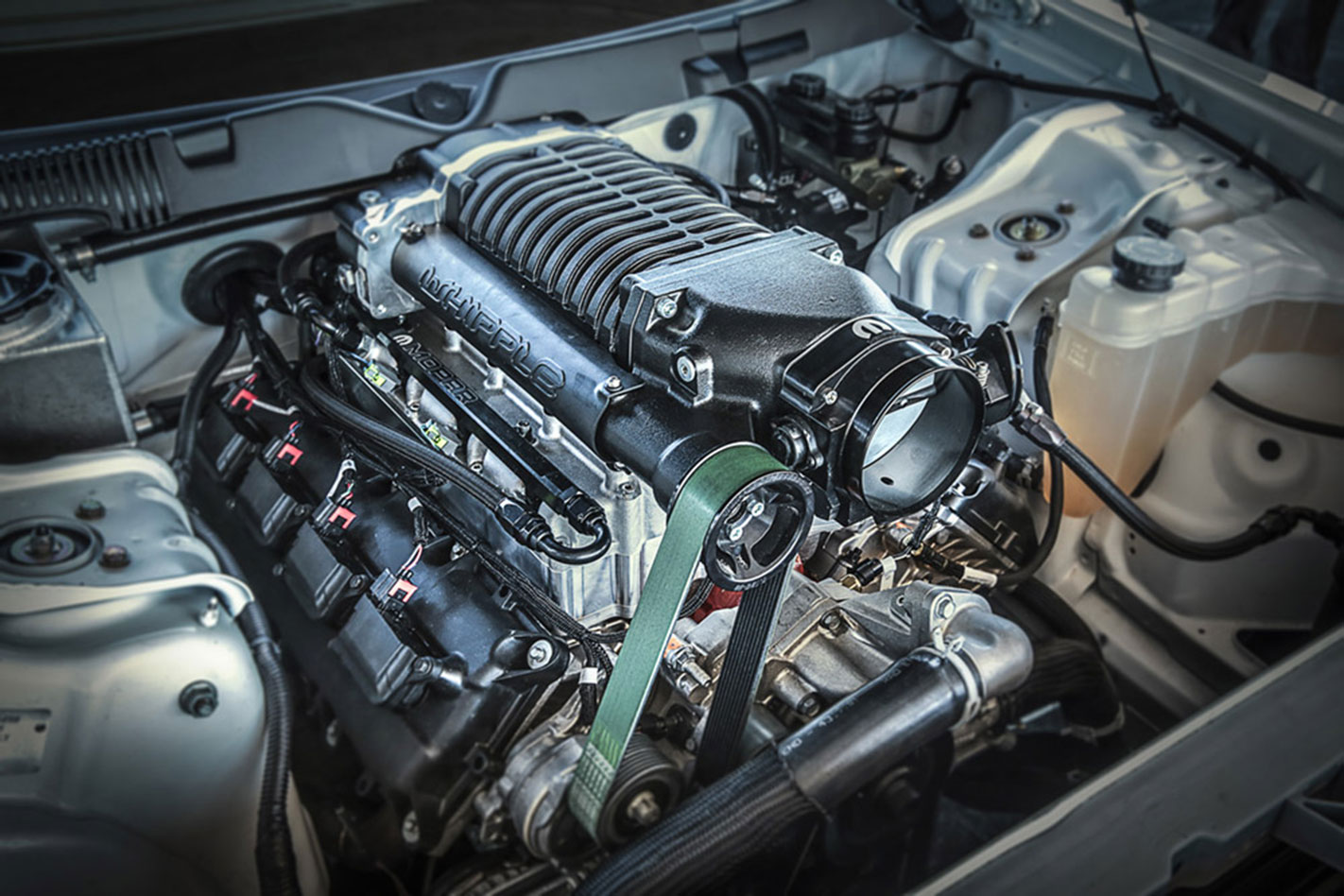
It does what it says on the tin – this Mopar Dodge Challenger Drag Pak is born to cut eight-second quarter mile times.
Available with either a 5.8-litre supercharged or 7.0-litre naturally aspirated Hemi V8 engine, the Drag Pak ditches road-going registration plates for a life singularly at the drag stip.
Official figures aren’t yet released for either engine, but each donk works with a three-speed “race prepped” automatic.
The 15-inch wheels are wrapped in chubby but skinny 114mm-wide rubber at the front, half that of the rears. Of course size doesn’t matter so much when you’ve got sticky Hoosier drag tyres that would have road-going varieties feeling more like watered-down glue.
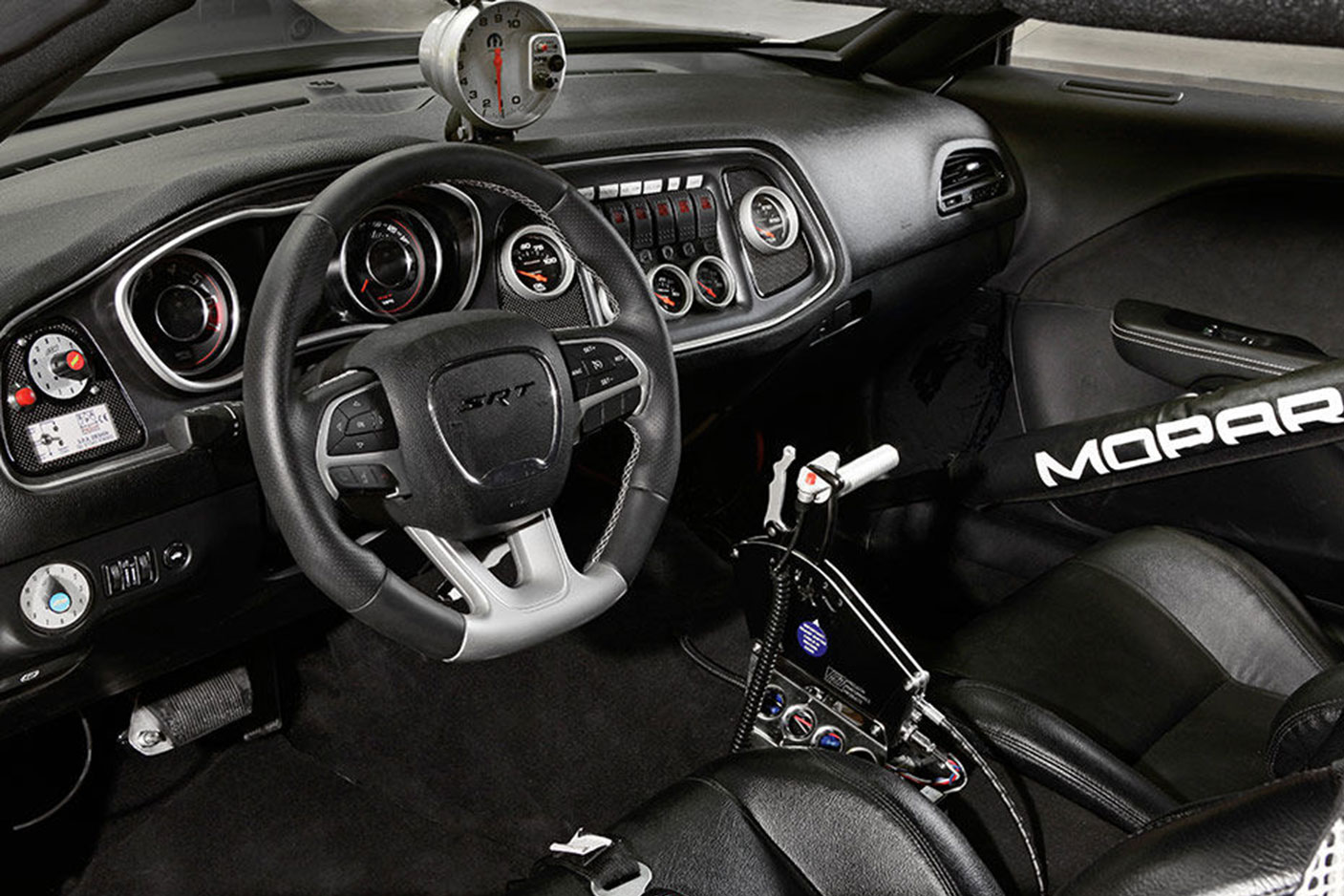
For an official ‘motor’ and ‘parts’ division of Fiat Chrysler Automobiles, Mopar is clearly having more fun than shifting stock over a counter.
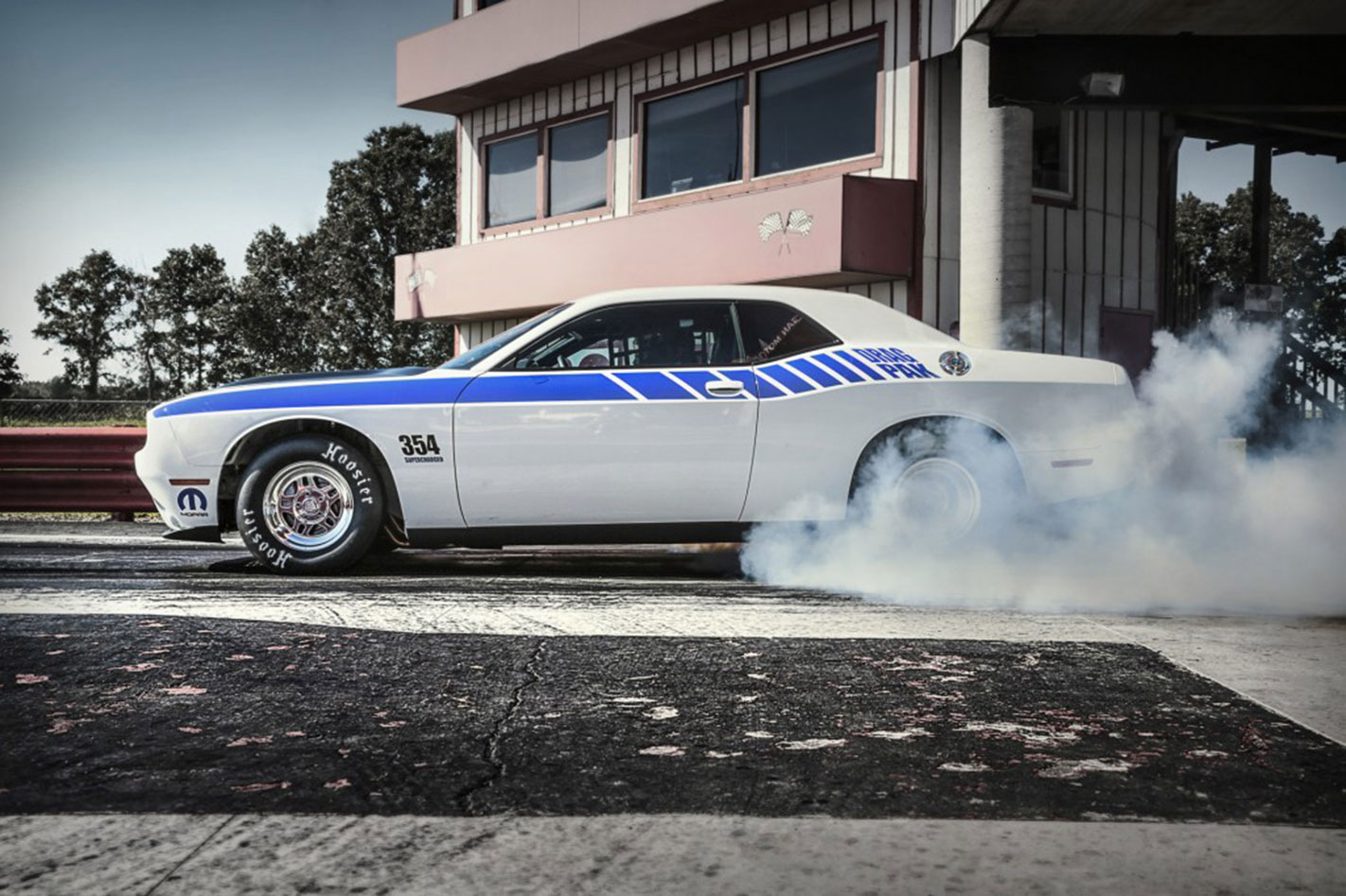
The US-only models are available in US$99,426 7.0-litre n/a and US$109,354 supercharged guise – and the duo is surely up there as the coolest niche builds from an official vehicle manufacturer anywhere in the world.
We don’t generally do off-roaders here at MOTOR, but we’ll make an exception for Texan tuner Hennessey’s latest monster, the VelociRaptor.
It uses a Ford F-250 Lariat as a base, to which Hennessey adds the SUV bodyshell, which allows the fitment of a middle row of ‘”captain’s chairs” and a rear bench resulting in accommodation for seven.
Under the bonnet is where things really get interesting, though. Hennessey can supercharge the existing 6.2-litre V8 to 447kW or 485kW, or for the economy-minded motorist there’s the diesel option – a 6.7-litre PowerStroke unit producing 328kW/1192Nm.
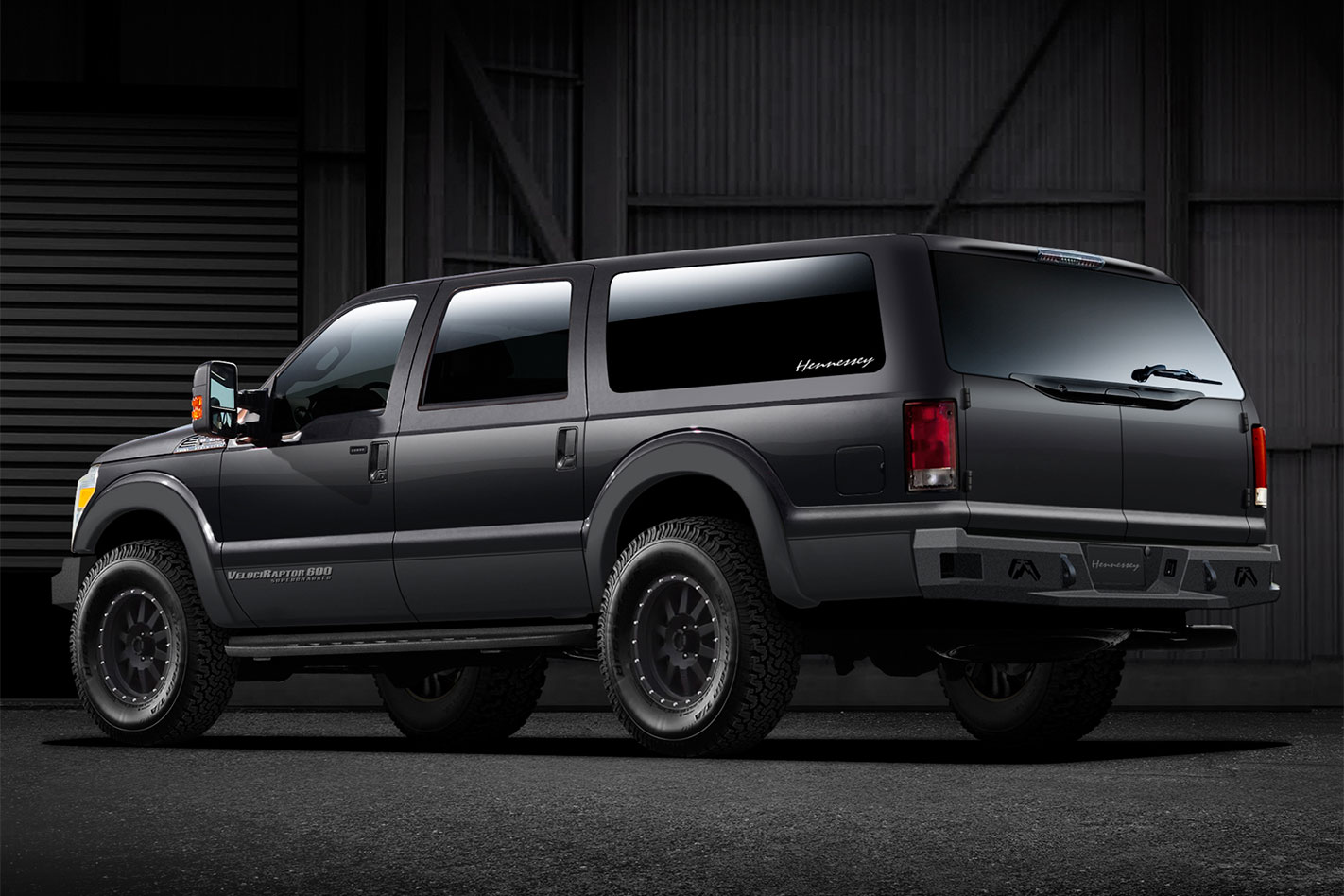
Cosmetic upgrades include VelociRaptor wheels and tyres, rear bumper and front bumper incorporating LED light bar and winch.
Unfortunately, the big numbers continue when talking price, as the VelociRaptor starts from US$159,500, or roughly the same as a Porsche 911 Turbo, and has a six-month build time.
Still, can a Porsche 911 Turbo seat the whole family and tow a boat the size of the QE2? Exactly.
Think Volvo wagons and the image that springs to mind, at least for those of us born before Gen-Y, is of fridge-swallowing bricks on wheels that were long on practicality but short on style. The Volvo 740 could house a Euro-pallet in its luggage bay, for Pete’s sake!
But the lumbering, underpowered and indestructible tanks of yesteryear have been replaced by modern machines that are more stylish affairs, thanks to Volvo’s determination to shake off its fusty image, with a focus on design that began with the hiring of talented crayon twirler Peter Horbury in 1991. The Brit has long since moved on, but his legacy lives on in a range of vehicles that boast a polished and distinctive design language.
In the case of the V60, which is simply the handsome station wagon version of Volvo’s second-generation S60 sedan, this entails market positioning that’s more ‘sportwagon’ than load lugger.
In industry parlance, the V60 is a compact mid-size wagon and is pitted against fellow European estates such as the BMW 3 Series Touring and Audi A4 Avant. In practical terms, this positioning ensures a not overly large 430-litre boot and a fairly compact rear seat, so our first family trip away in the D4 long-termer was always going to be a test of carrying capacity, packing skills and patience.
We Bulmers aren’t known for travelling light – we’ll take the kitchen sink and the blender too, given the chance – so a simple long weekend away can take on the logistical look and feel of a minor military manoeuvre.
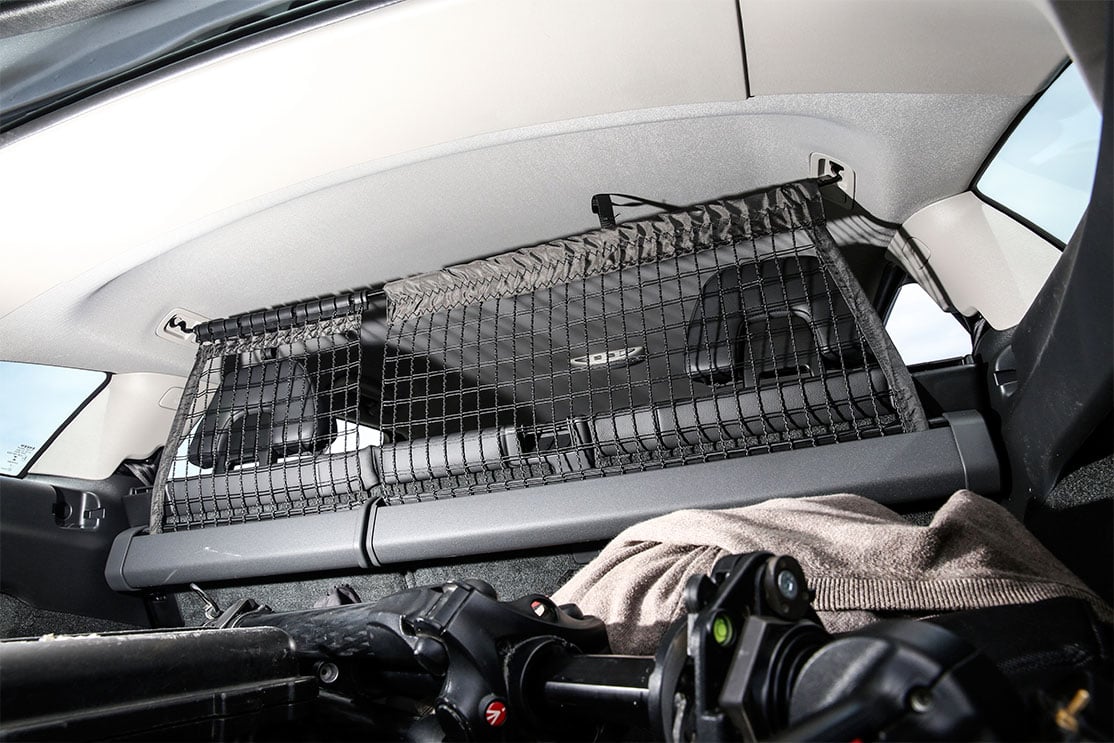
Hence why, halfway through jamming the intimidating pile of bags, scooters, skateboards and bazookas into the V60’s modestly proportioned derriere, I began to wonder if it was too late to add a roof pod to the options list. It was, so I unloaded and knuckled to the task of whittling down the load before repacking it.
In the process, I was pleasantly surprised to discover something missed in my haste to pack and go – those clever Swedes have thought of just such an eventuality and built a neatly integrated cargo net into the backs of the rear seats. The net pulls up out of a cartridge that runs the width of the cargo bay, clipping into mounts in the roof lining. It’s a handy feature as it enhances the amount of available space by enabling you to pack higher without fear the kids will cop a Samsonite tattoo under heavy braking. With the help of the magic net, both the bocce set and the budgie cage made the cut.
The Volvo V60 may not boast the pallet-swallowing ability of its box-like predecessors, but it has them well and truly covered in the style stakes, while also adding some neat practical touches.
This article was first published in Wheels May 2015
Everybody’s driving tastes are different. Some like to bend time and space with ferocious straight-line acceleration, others prefer to get their kicks from neck-straining cornering grip.
If you couldn’t care less about speed and crave the feeling of a car moving around beneath you, however, then we can tell you right now, there is no better fix than a Toyota 86 on a slippery surface.
Rally School has added one of each of the Toybaru twins to its fleet and it kindly flicked MOTOR the keys for a day of sideways fun at Werribee four-wheel drive park, where it holds its courses in Melbourne.
Providing instruction and making sure we don’t break anything was one of Australia’s top young rally drivers, Brendan Reeves, who helped us get to grips with the art of driving a rear-drive car on gravel.
Sadly, a few technical issues on the day meant the audio isn’t quite as clear as would be ideal, but hopefully the video above gives you a good idea of how much fun it is driving Toyota’s budget sports car when grip is at a premium.
Beyond the required safety gear, Rally School’s 86 is a fairly standard machine, yet is only a proper mechanical diff and set of gravel tyres away from being a fun and economical rally-ready weapon.
However, there’s no need to take our word for it, as you can sample it for yourself at one of Rally School’s courses, details of which can be found here.
Get your free weekly report from the world of fast cars – subscribe to the MOTOR newsletter!
Mid-size passenger wagons compared, in premium trim. In a world gone mad for SUVs, what will happen to the classic family stalwart?
WHO would’ve thought that the traditional station wagon would become an anti-fashion statement? Once upon a time, that ignominy belonged to families lumped with a 55- or 60-series Landcruiser, but today the aspirational vehicle of the working and middle classes appears to be an SUV of some kind, in all its rapidly expanding forms. Which leaves the mid-size wagon where exactly?
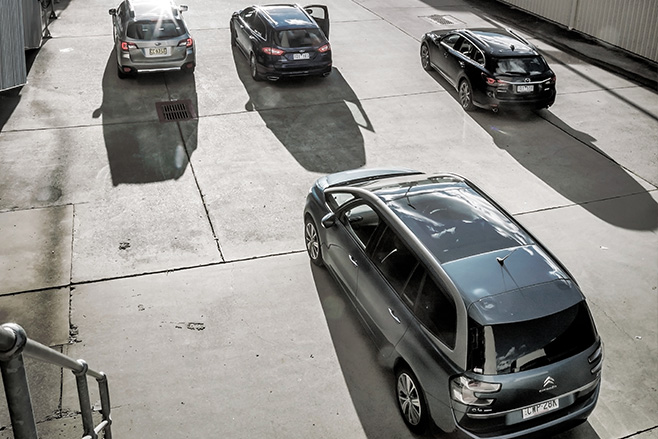
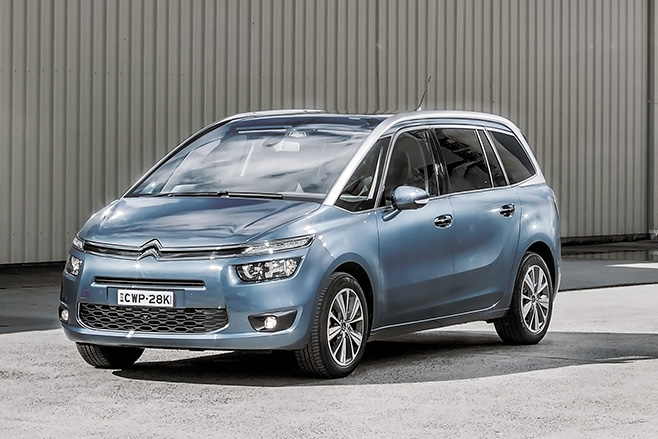
The beauty of indulging in a medium wagon from a bourgeois brand is what you get for the money. Close to 50 thousand smackeroos is plenty to spend on a top-shelf model, but you’ll be left wanting for almost nothing. And if being true to type seems a little predictable, as championed by Ford’s all-new Mondeo Titanium wagon and Mazda’s freshly facelifted 6 GT wagon, then how about Subaru’s new-generation, all-wheel-drive Outback Premium or Citroen’s haute couture seven-seat Grand C4 Picasso for the same money?
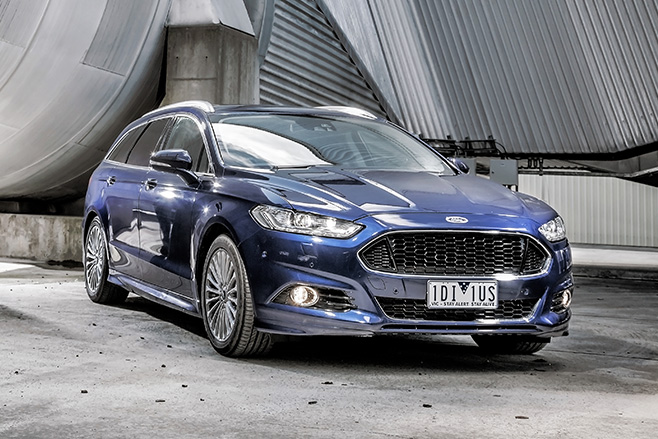
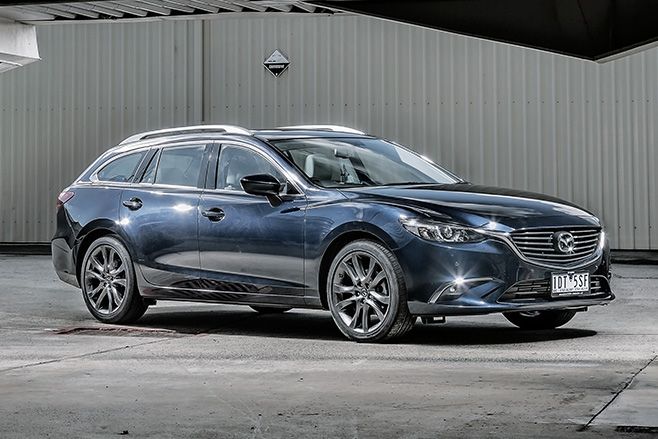
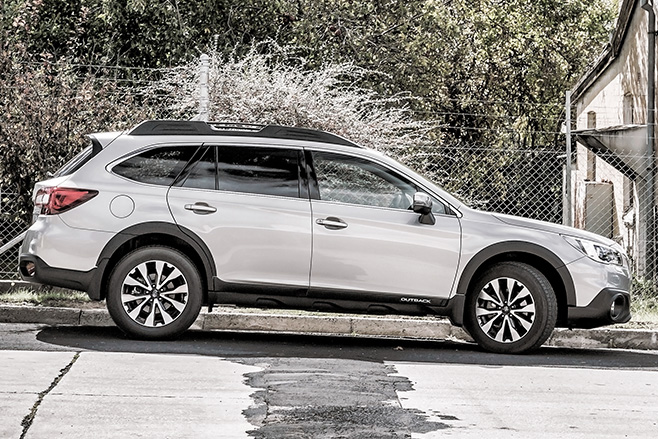
The Citroen is the odd man out, for good reason. As one of the sexiest people-movers of all time, it’s so goddamn stylish that its MPV categorisation carries minimal ‘mumsy’ baggage. And it proves you can have seven seats for the price of five, with a slimline pair best suited to children or small adults folding away into its rear floor, without affecting boot space.
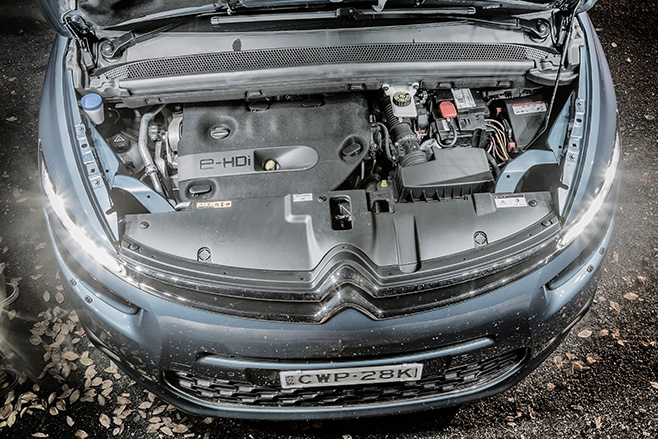
All four contenders tread a similar path in the engine department, with a few key differences. Unlike its six-speed automatic rivals, the Subaru uses a ‘Lineartronic’ CVT to power all four wheels, and unlike its 2.0-litre four-cylinder turbo-diesel compatriots, the Mazda boasts a 2.2-litre capacity for its brilliant ‘SkyActiv-D’ turbo-diesel.
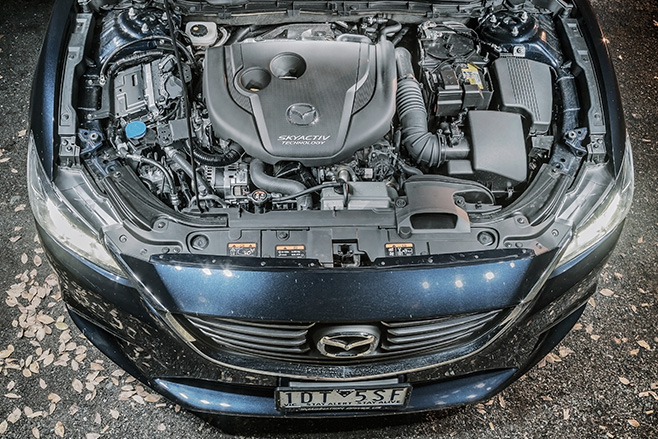
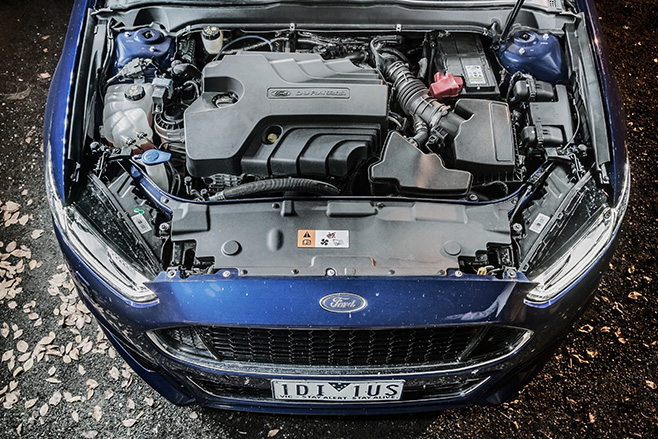
And boy can it give. The faster the pace, the clearer the Mazda’s lead, though Ford’s ageing but able turbo-diesel runs it surprisingly close. Where the 6 sounds genuinely sporty, the Mondeo still sounds like a diesel, though it’ll rev to nearly 5000rpm while pulling strongly – much better than the somewhat breathless Citroen – and it boasts an excellent dual-clutch gearbox that’s as lag-free as the Mazda’s auto.
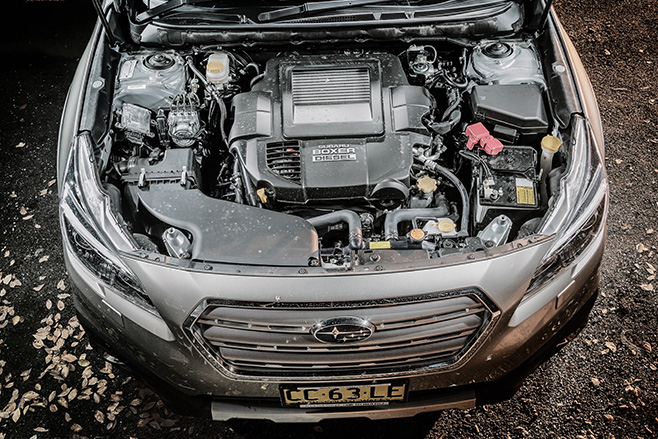
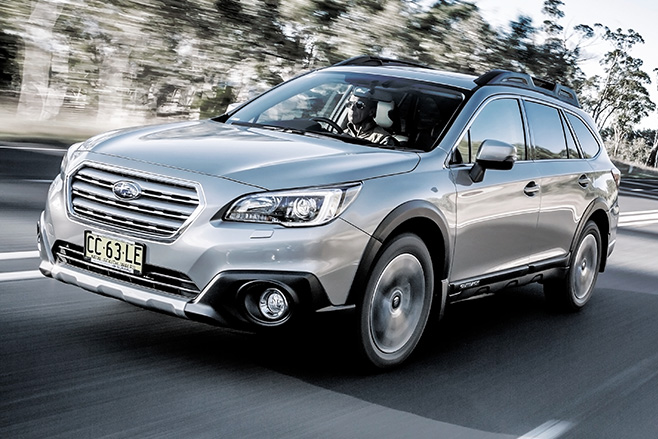
At a decent clip, its steering isn’t too bad, being reasonably accurate and less intrusively weighted, but at more sedate speeds it proves Outback’s main dynamic weakness. Often heavy and treacly, to the point where it can make your thumbs ache driving at a quarter-to-three wheel position, the Outback’s Oz-tuned steering set-up improves in really twisty stuff. But it ultimately can’t escape its jacked-up reality. Those all-terrain tyres exacerbate its lack of front-end point, making it understeer more than it should. And while there’s a good chassis underneath the Outback, without the Liberty’s road-biased tyres and lower centre-of-gravity, it’s all washed down the drain, along with any memories of GT and Spec-B wagons.
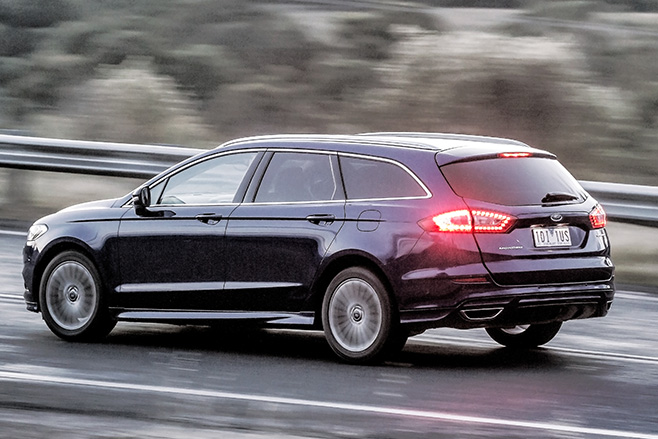
As a sporty Euro-flavoured, Japanese-engineered wagon, the Mazda 6 occupies the territory once dominated by Subaru’s Liberty. With sharp, carving handling and loads of grip, not to mention that stunning turbo-diesel engine, the 6 GT is a proper sports wagon that also happens to look the part. It’s a real driver’s car.
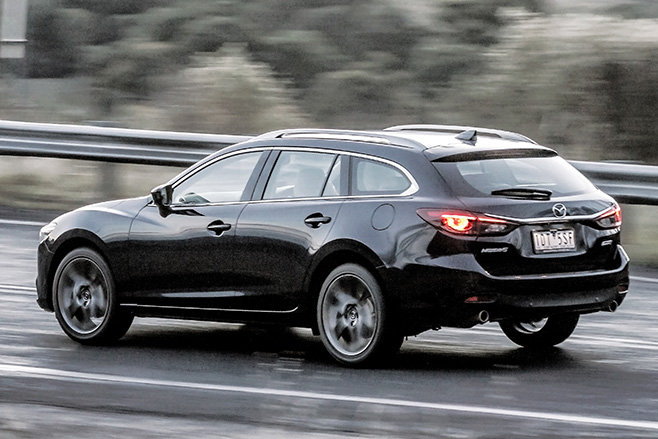
Surprisingly, the Citroen has both the firmest ride and the most road noise, though neither are intrusive enough to be offensive. What it does have is excellent damping control and an unexpected ability to tackle roads of all kinds with enthusiasm and amusement, begging the question “is this the greatest-handling MPV of all time?”
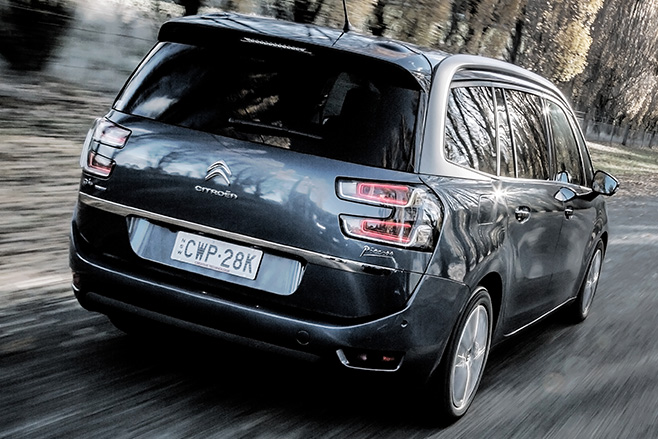
But what a view. The Citroen’s ‘Zenith’ windscreen enables its sunvisors and front headlining to be slid right back to above the driver’s head and, combined with a full-length glass ceiling, it gives a unique mise-en-scene best not experienced in the height of summer. Thankfully, all three rows get climate-control vents, the middle with its own fan controls.
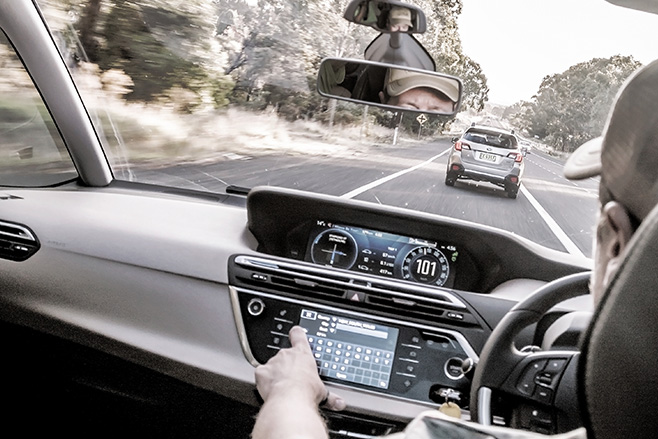
Like its ride quality, the Citroen’s seats are firmly padded and at their best in the front row. With supportive bolsters and three-position side armrests, the C4’s front buckets are great for big distances. Its middle trio aren’t quite as comfy, with hard backrests lacking a bit in the lumbar-support department, but each seat has its own fore-aft adjustment and will semi-recline, like on a plane, with neck-pillow headrests if you option full leather. Indeed, the Citroen is the only true five-seater here, plus it has another pair stashed in the rear floor, and easily the biggest boot (632-793 litres beneath the parcel shelf, depending on middle seat position).
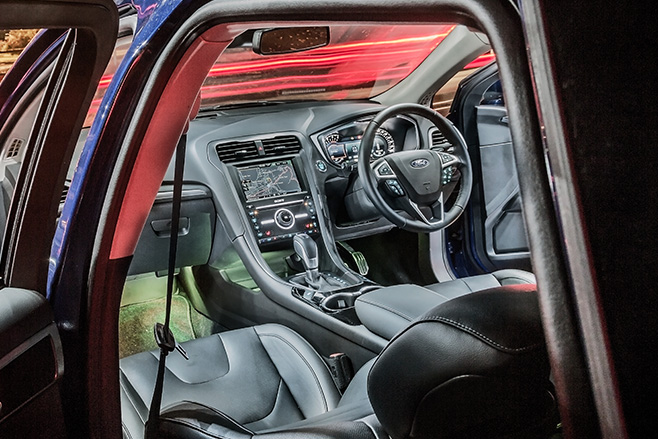
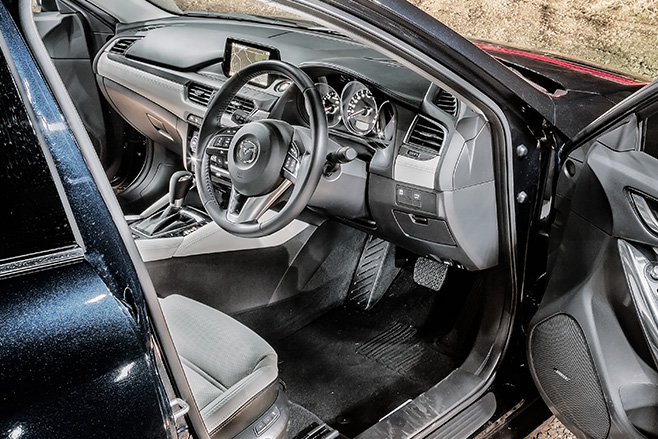
But the Mondeo can’t match the facelifted Mazda 6’s interior presentation, nor its feeling of expense. The Mazda looks and feels premium, like a Japanese Audi, and it’s this sort of quality that will keep buyers hunting in the mainstream-brand wolf pack.
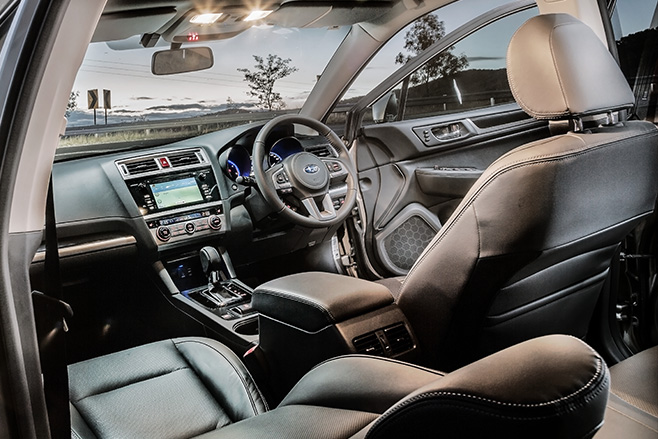
The Subaru doesn’t have the Mazda’s colour and design flair, but is of a similar quality. It’s hugely roomy, with a commanding view from every position, though you sit on the Subaru’s seats, not in them. It’s closer to being a full five-seater than the Ford and Mazda, with a rear backrest that can be reclined in three positions, and it uniquely squeezes a full-size 18-inch alloy spare wheel into a package that also includes a rear driveshaft. Plus, Subaru’s new infotainment touchscreen thingy is superb – especially compared to the fiddly piece of shite it replaces – with terrific audio quality.
The best thing about the Citroen is that it’s hard to categorise. Much sexier than an MPV, yet similarly space efficient, it’s a surprising contender in the fun-to-drive stakes, and it’ll have design types all aflutter with its quirky, airy, interesting interior. But its cabin materials aren’t quite up to PSA’s recent best, and its seats and ride comfort could use some finessing, to the benefit of overall passenger comfort. It also has a pretty dismal projected three-year resale value (44 percent), though its six-year, unlimited-kilometre warranty provides hope, as does Citroen Australia’s revival of fortunes since joining management forces with Peugeot.
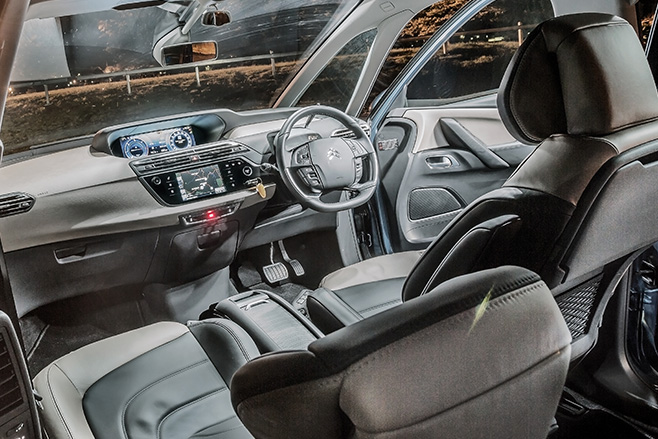
Yet Mondeo misses exactly where the 6 scores, making this test an extremely close one to call. The Mazda is a fine wagon and an almost classless object of desire, mixing Japanese reliability with Euro-style design flair. As a neat wagon for an active couple, it triumphs. But if you want your wagon to cop everything your family can throw at it, balanced with the stress-reducing qualities of class-leading comfort and refinement, the Mondeo remains unmatched.
Welcome to a preview of MOTOR’s packed August issue.
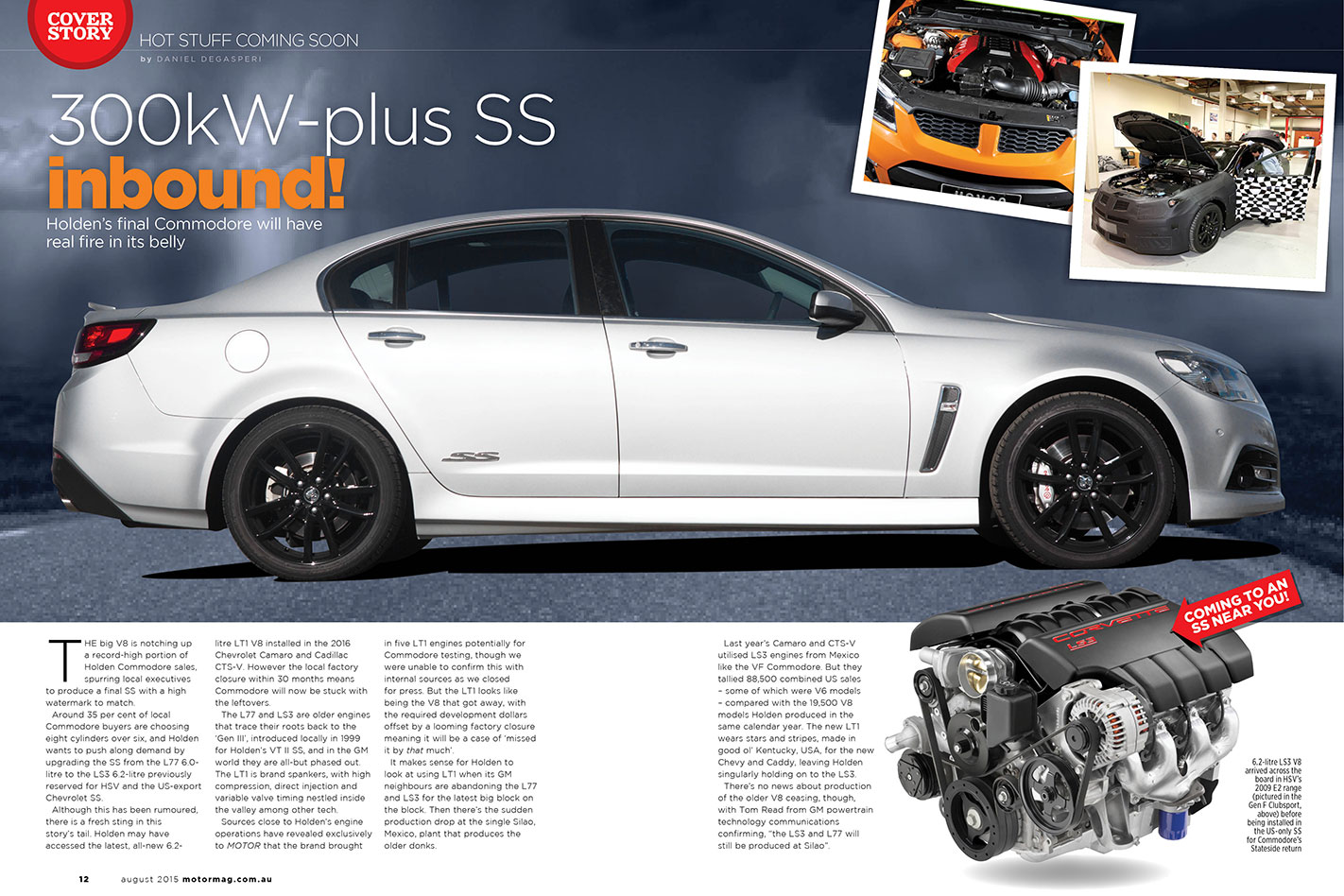
This month’s cover story dishes the dirt on Holden’s plans to give the Commodore a fitting farewell by installing the 300kW 6.2-litre LS3 V8 into the SS for the VF’s mid-life facelift due later this year.
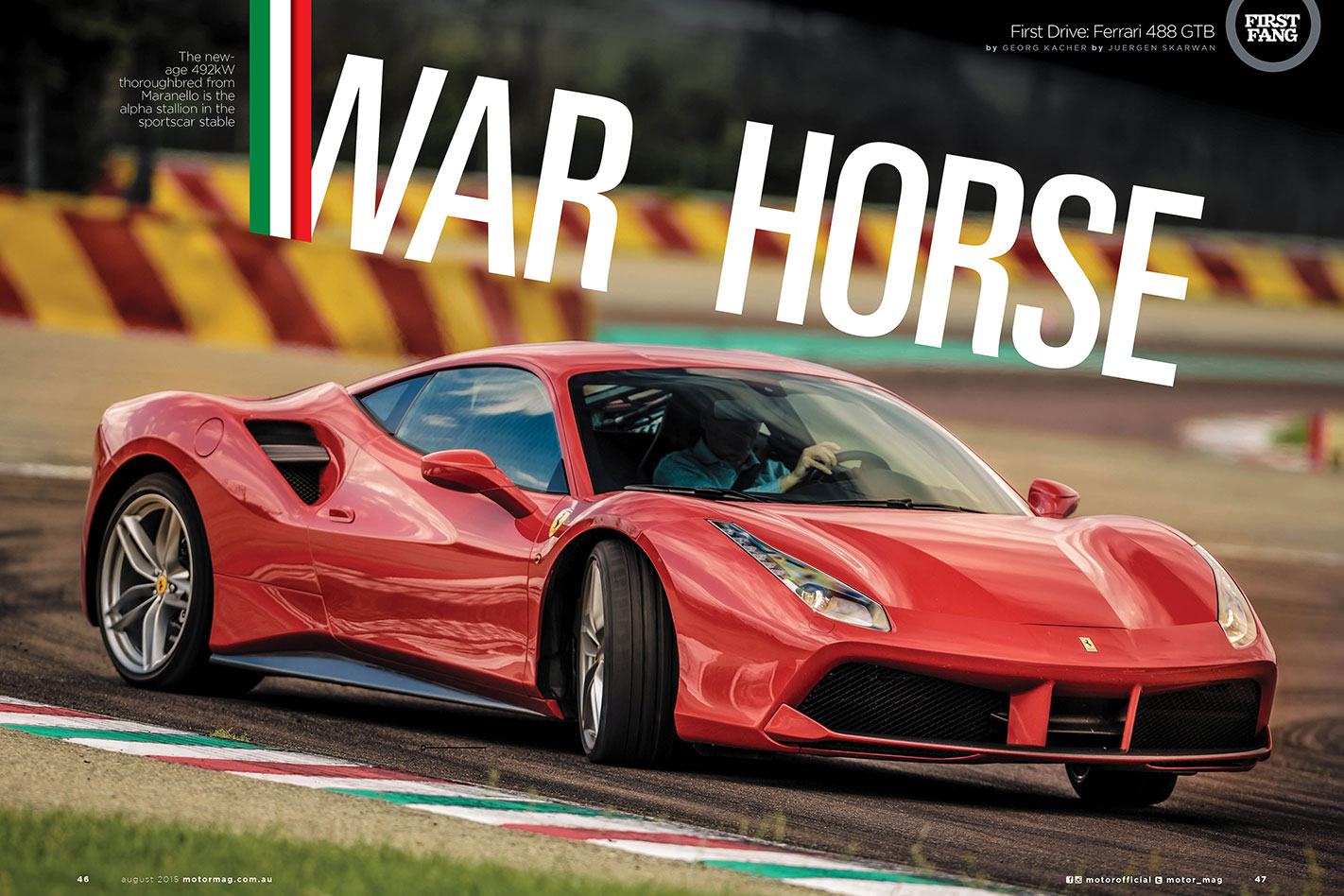
We drive Ferrari’s new 488, the marque’s first turbo sports car since the F40. Can it really be as good as the incredible 458 Speciale?
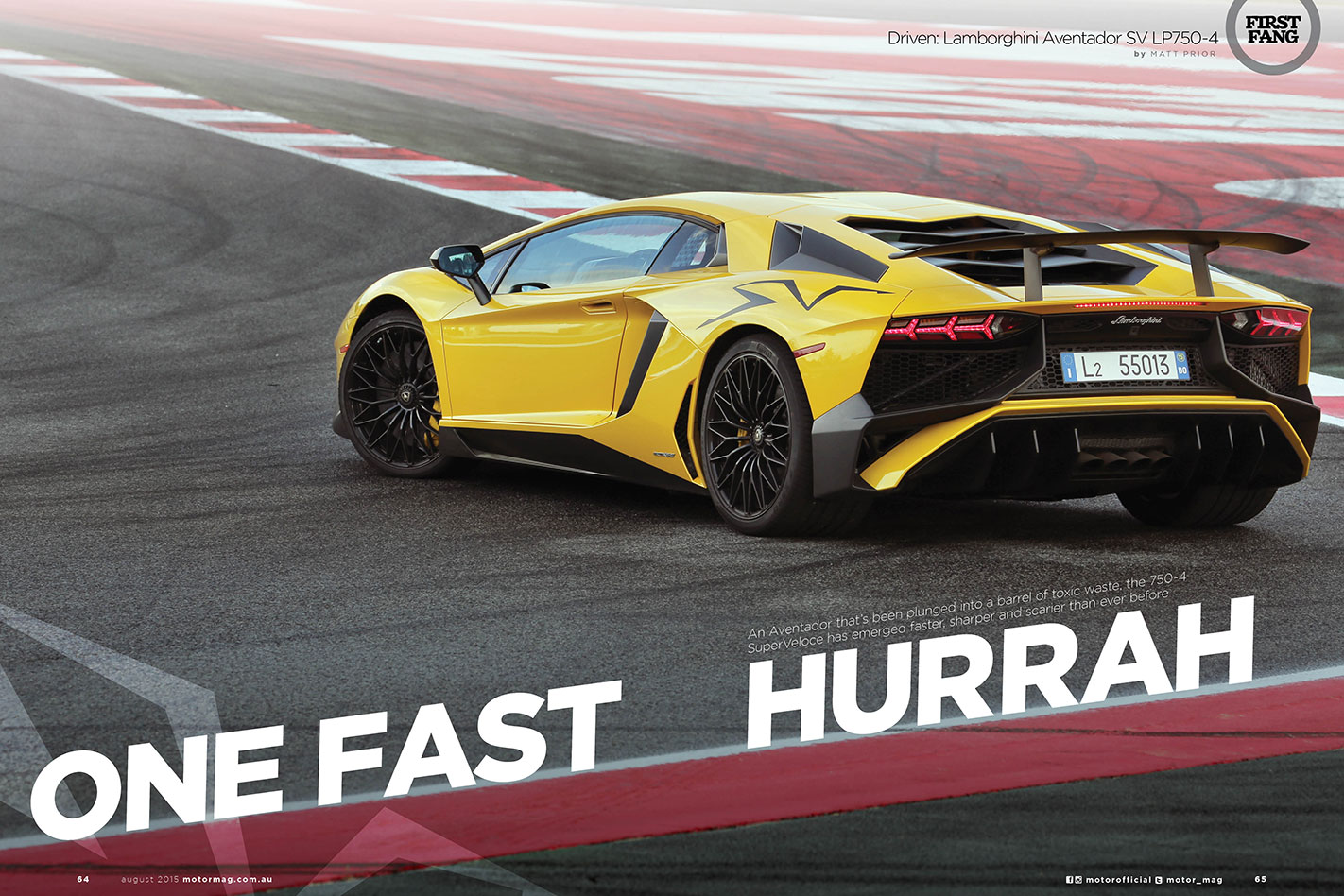
While on the subject of outrageous Italian supercars, they come no bigger or badder than the Aventador LP750 Superveloce, or SV for short. This is the car that recently set a stunning sub-7min lap around the Nurburgring.
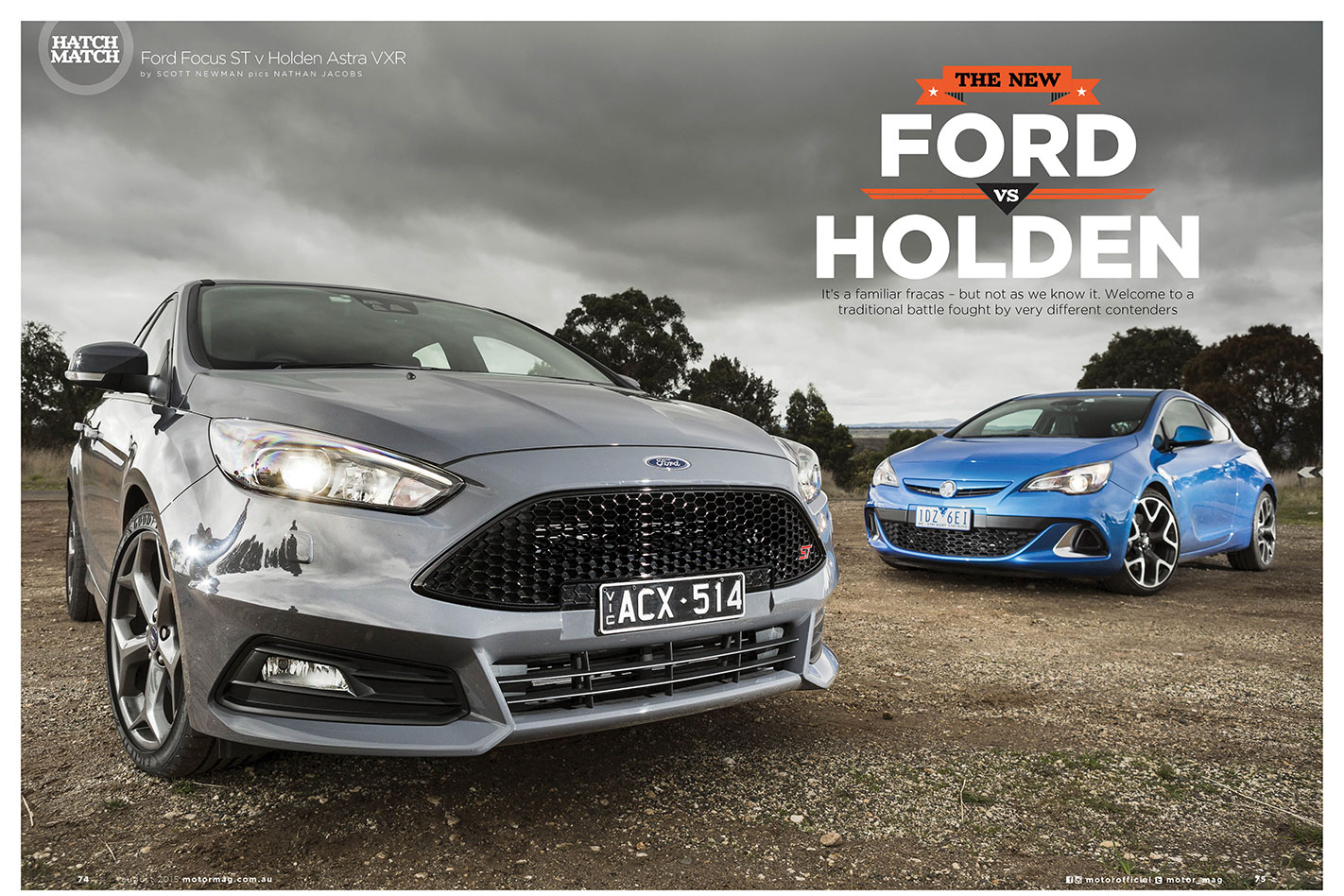
Back in the real world, we’ve pitted Ford’s newly updated Focus ST against the relaunched Holden Astra VXR to see who triumphs in this red vs blue stoush of a different kind.
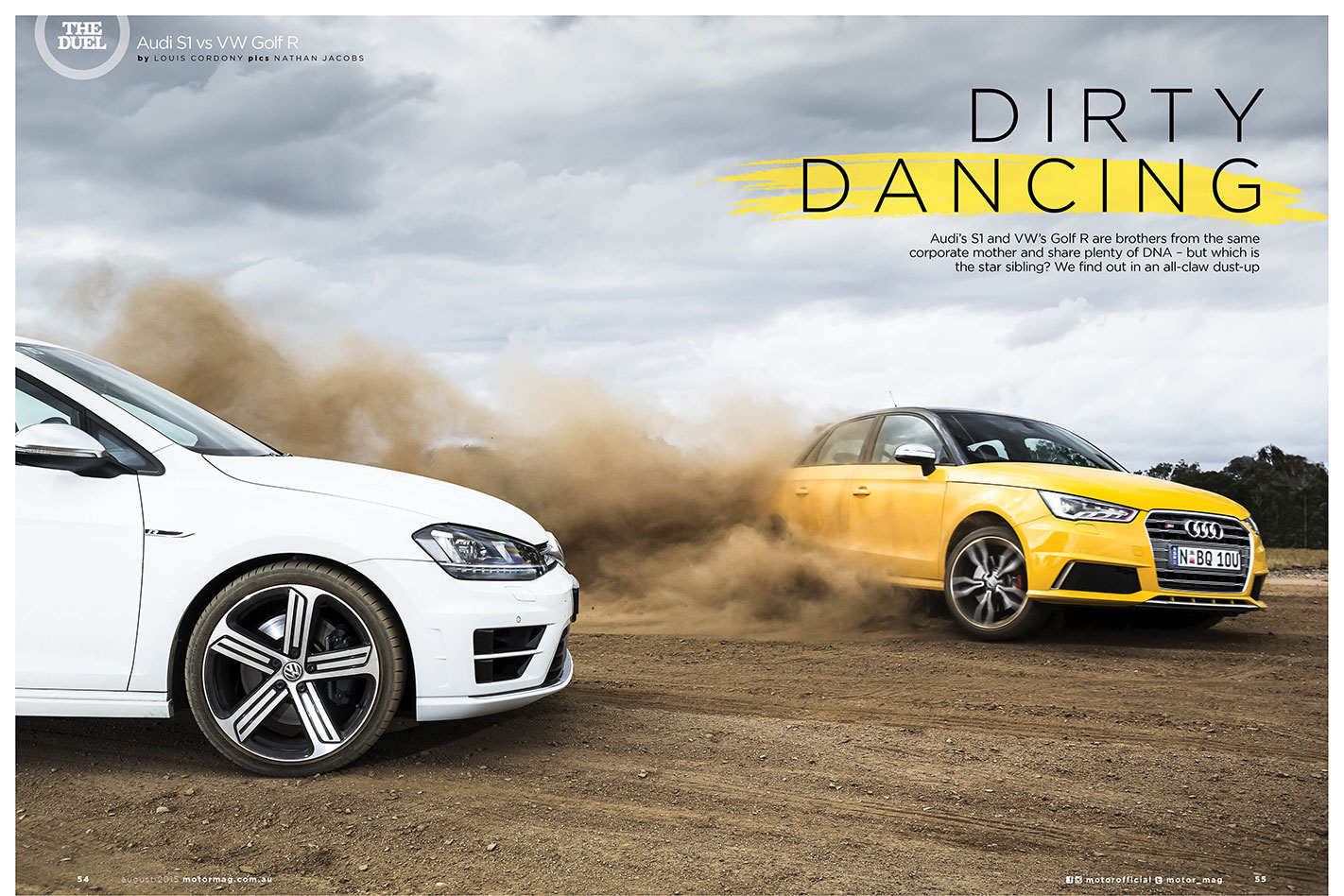
The hot hatch battles continue with VW’s Golf R taking on the Audi S1 for Volkswagen Group bragging rights. Can the S1 beat up its bigger brother? Check out our drag race video of the two here.
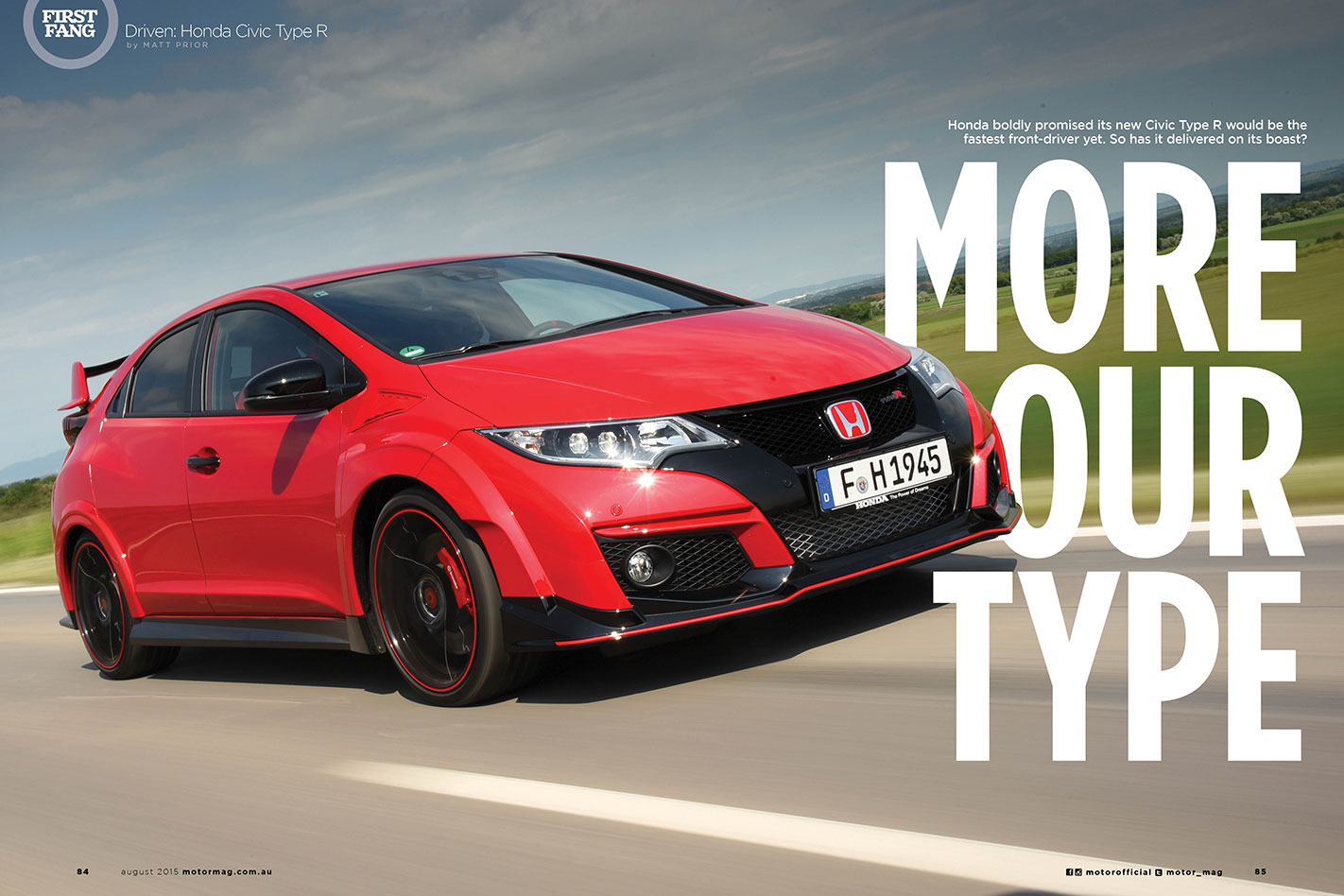
Hottest of all the hatches, though, is Honda’s eagerly anticipated Civic Type R. It’s still uncertain as to whether it’ll make it to local shores, but is it worth the lengthy wait?
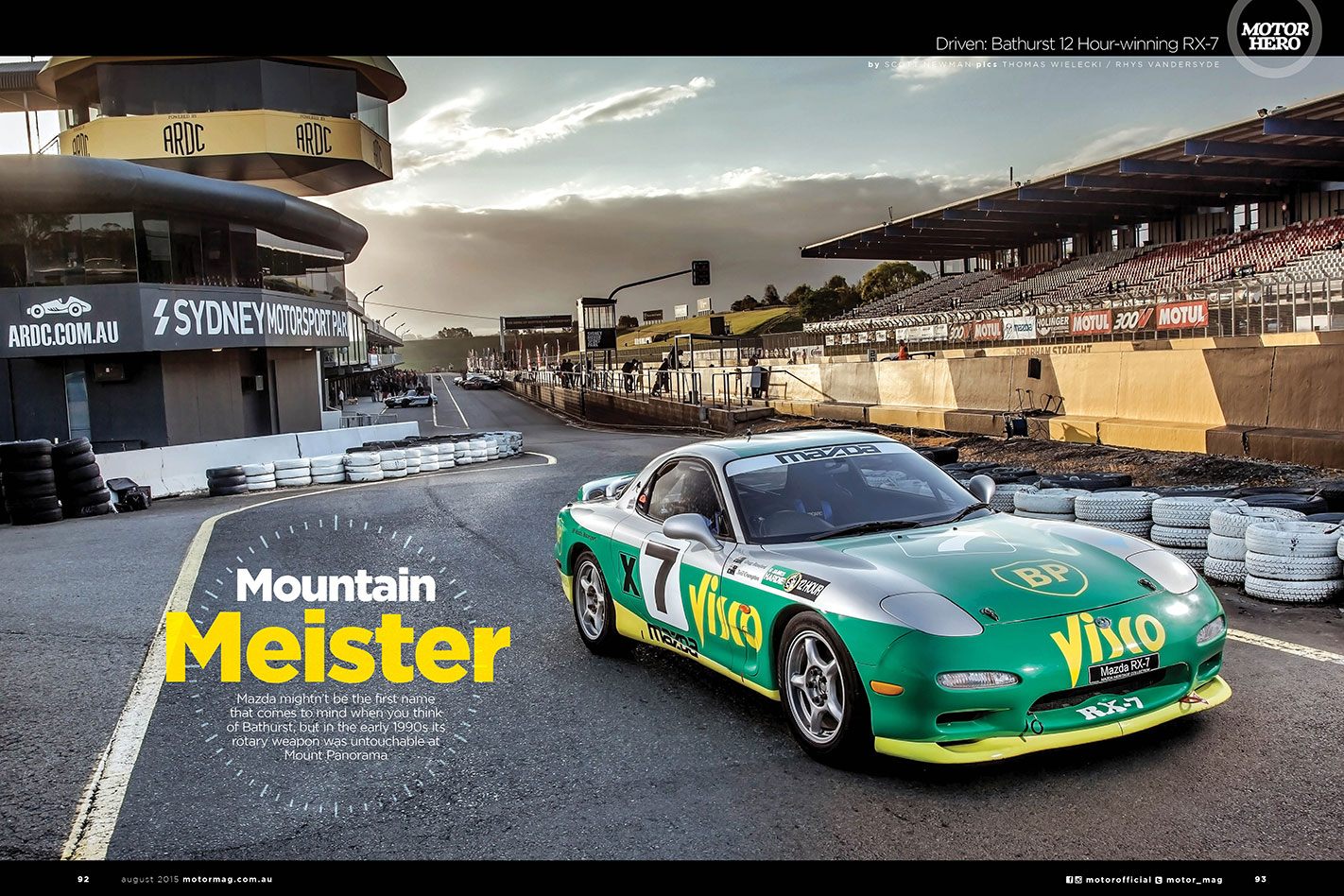
From a Japanese car of tomorrow to one of yesteryear. We strap into the Mazda RX-7 that won the 1994 Bathurst 12-Hour and discover just what made this rotary hero so special.
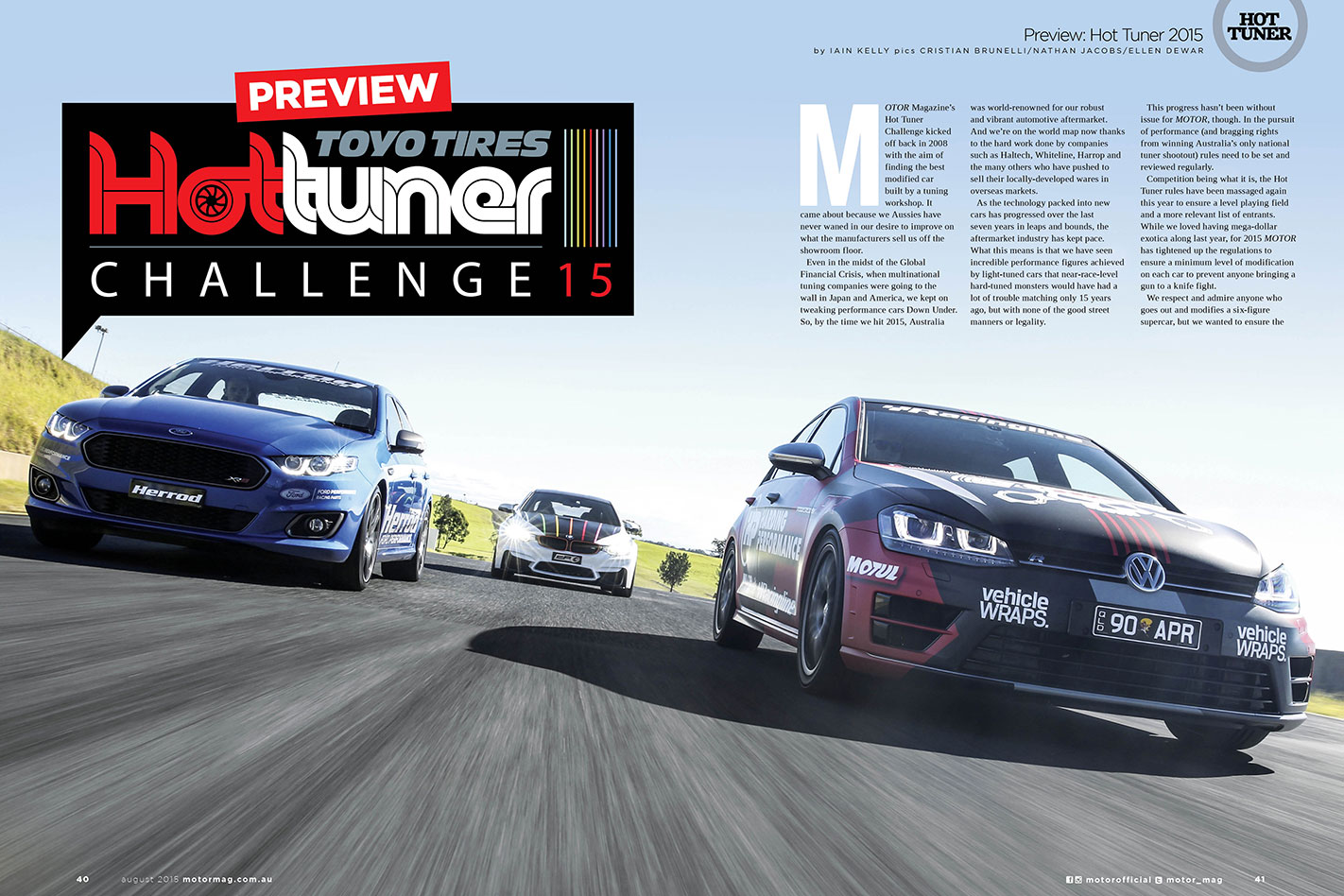
Next issue we’ll have full coverage of Hot Tuner 2015, the biggest modified car shootout in the land. In this preview we introduced the cars and give you a rundown of who, what, where and why!
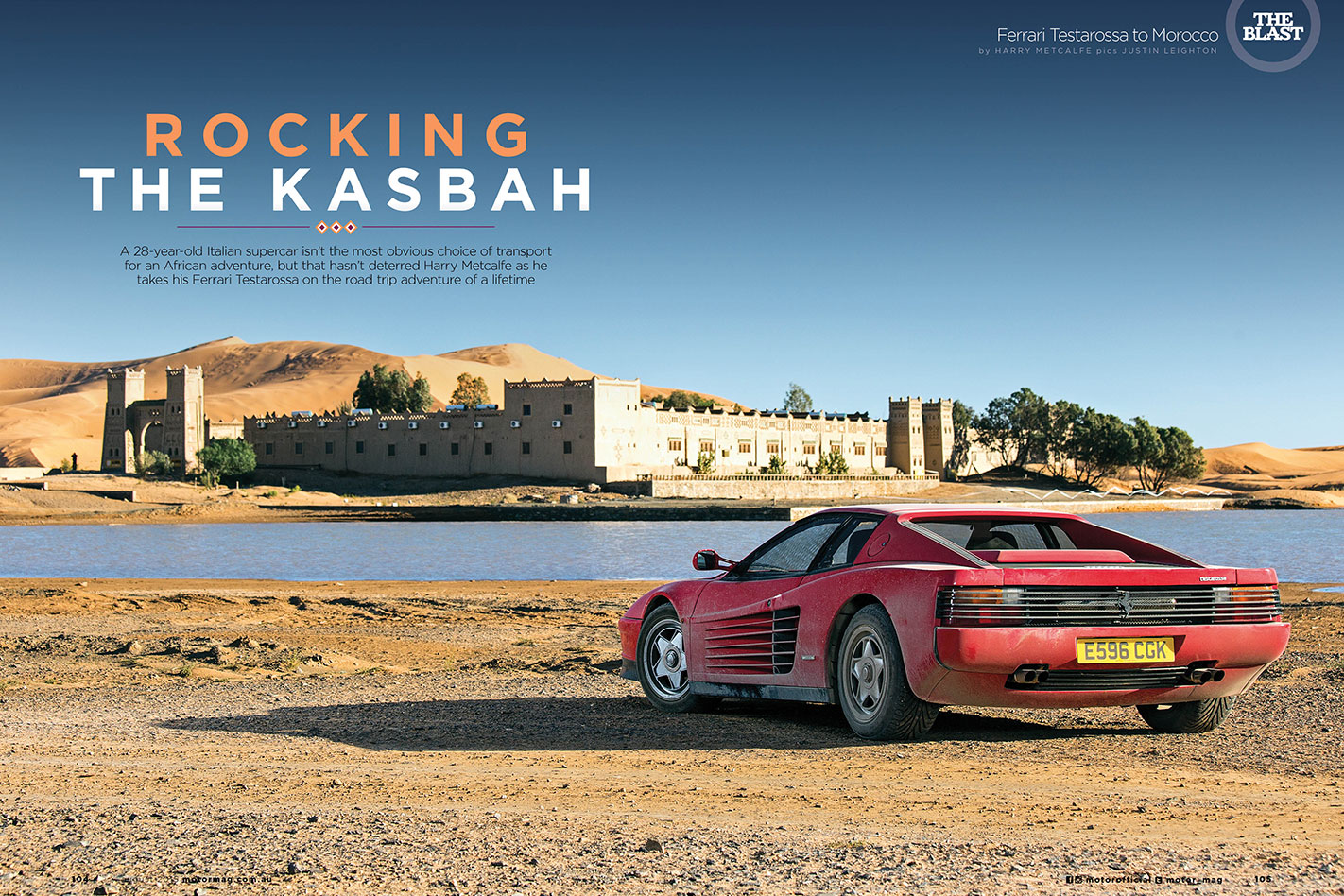
Only a madman would try and take a classic Italian supercar on a road trip. Well, what if that road trip was to Africa? Harry Metcalfe is one such madman and this is his incredible tale of taking a Testarossa to Morocco.
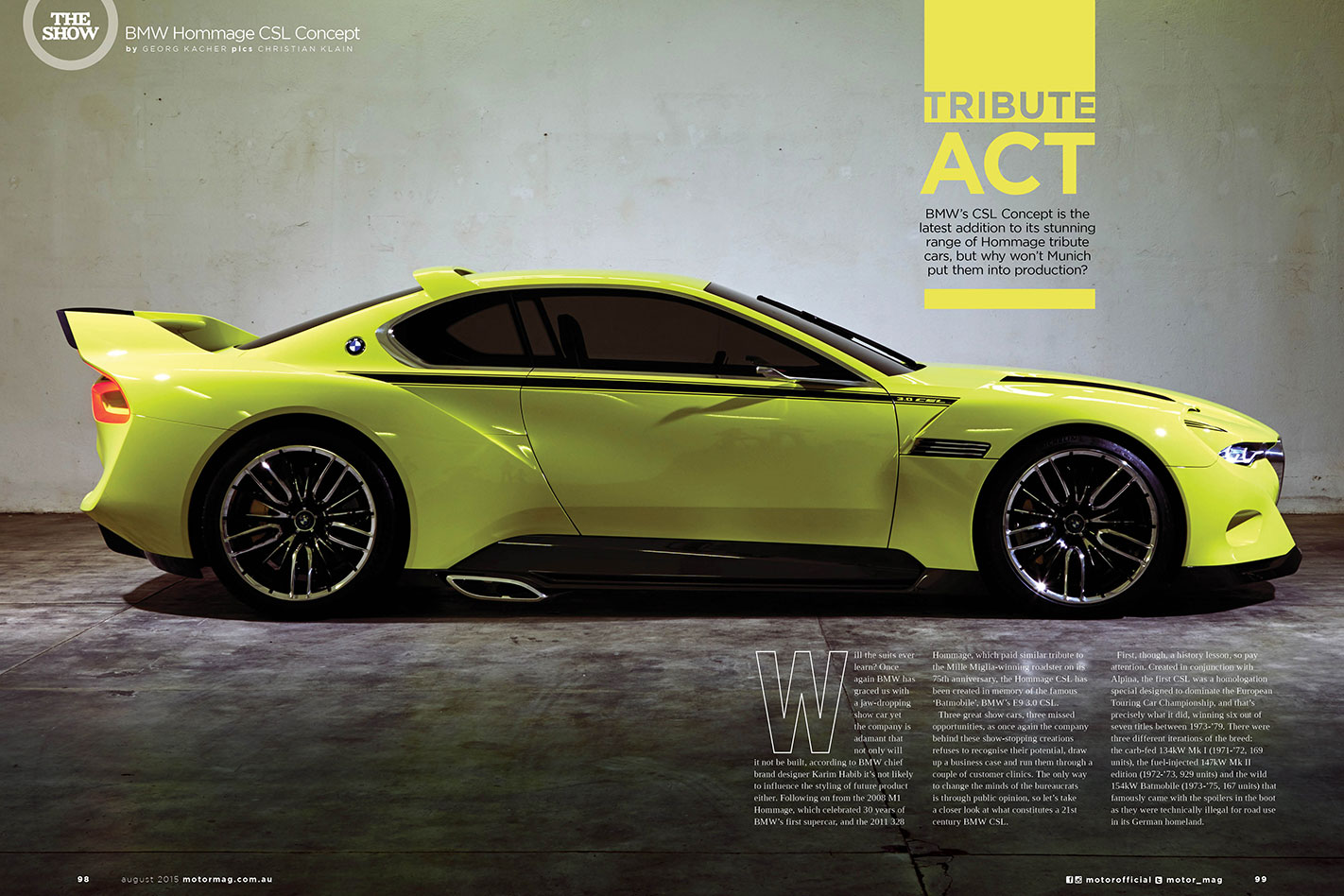
BMW’s latest concept car creation, the wild Hommage CSL, has been dropping jaws all over the world – so why won’t the Bavarians build it? Georg Kacher investigates.