
THE fossil-fuelled garden party that is the 2015 Goodwood Festival of Speed kicks off this weekend at the English estate of Lord March.
Cars ranging from Formula One open-wheelers to coachbuilt classics take it in turns over three days to run up the nine turns of the 1.9km hillclimb course.
Here’s a selection of images from day one of the event, including a few Aussie favourites.
THE 2015 Ford Ranger Wildtrak will wear a $60,090 showroom sticker, making it one of Australia’s most expensive tradies.
The $60K ask for the six-speed automatic version of the dual-cab 4×4 pick-up is well north of the Toyota Hilux SR5’s $51,740 sticker and Nissan’s new $51,990 Navara ST-X.
The refreshed Ranger flagship is also several thousand more than Holden’s Colorado Z71 ($54,990), though the Volkswagen Amarok Ultimate ($62,290) and Toyota 70-Series GXL ($65,990) are dearer again.
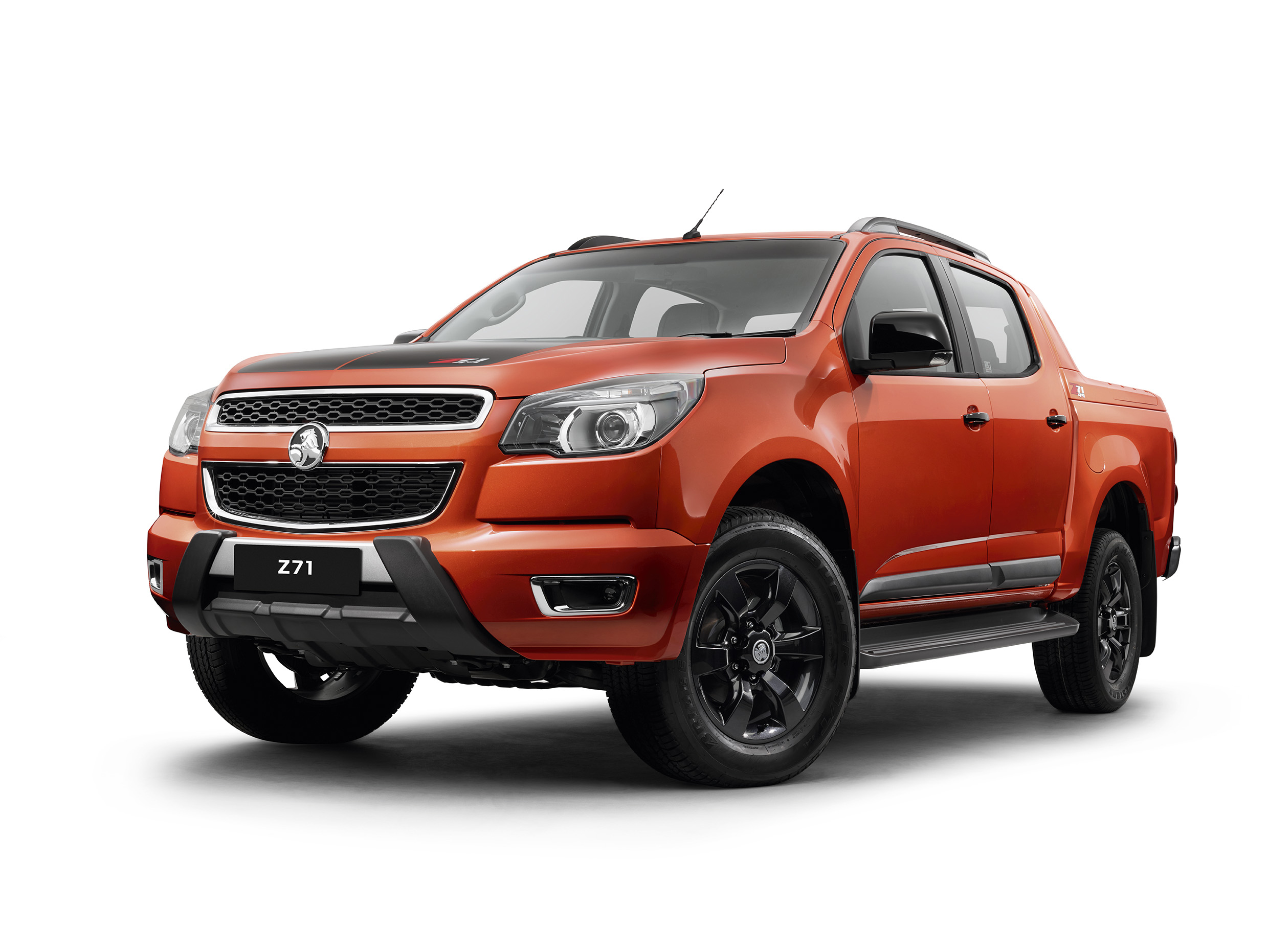
The Ranger is Ford’s best-selling product, and was the fifth most-popular vehicle in Australia last month. Ford sold 2500 Wildtraks in 2014, and so far in 2015 it has made up 8.5 percent of Ranger sales year-to-date. Ford expects that share to grow as customers of high-end utes continue to demand more equipment, with Ranger sales growth of both the XLT and Wildtrak leading the charge.
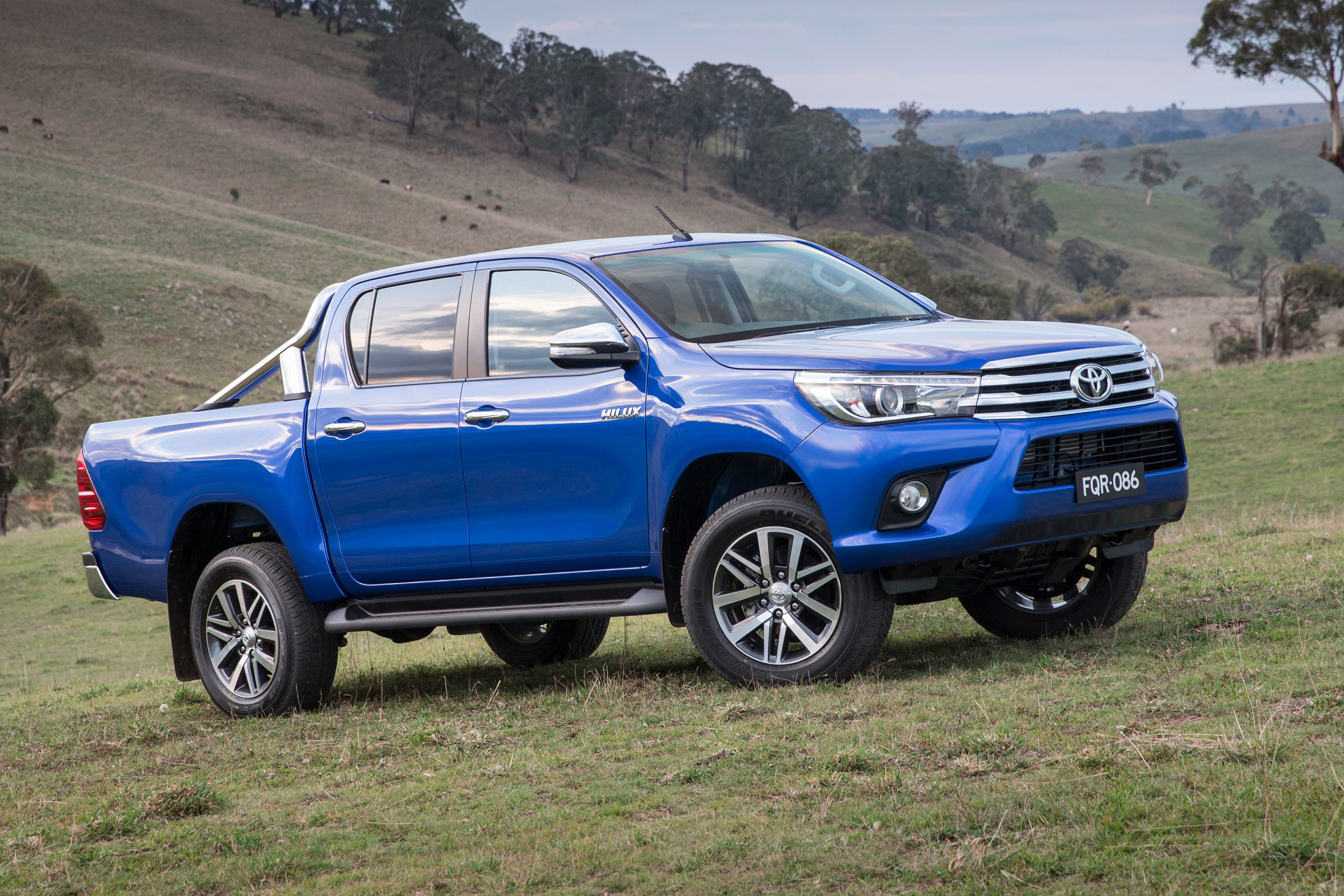
The Ranger faces stiff competiton from the hot-selling Hilux, which is still outselling the Ford despite a new model being revealed ahead of going on sale in September.
Sign up here to receive the latest round-up of Wheels news, reviews and video highlights straight to your inbox each week.
The big-selling Fiat 500 is undergoing its most significant makeover since launching eight years – but will the changes be enough?
FIAT fans, mark July 4 in your calendar, because that’s when the Italian carmaker unveils the biggest change to its million-selling sub-B supermini – the Fiat 500 – since the existing Tipo 312 generation launched exactly eight years ago to the day.
Before that happens, however, here’s a sneak peak of what the fuss will most likely be all about next Saturday, as Fiat attempts to reseize the retro highroad against the 2015 Mini Cooper, Opel Adam, and even the in-house Alfa Romeo Mito.
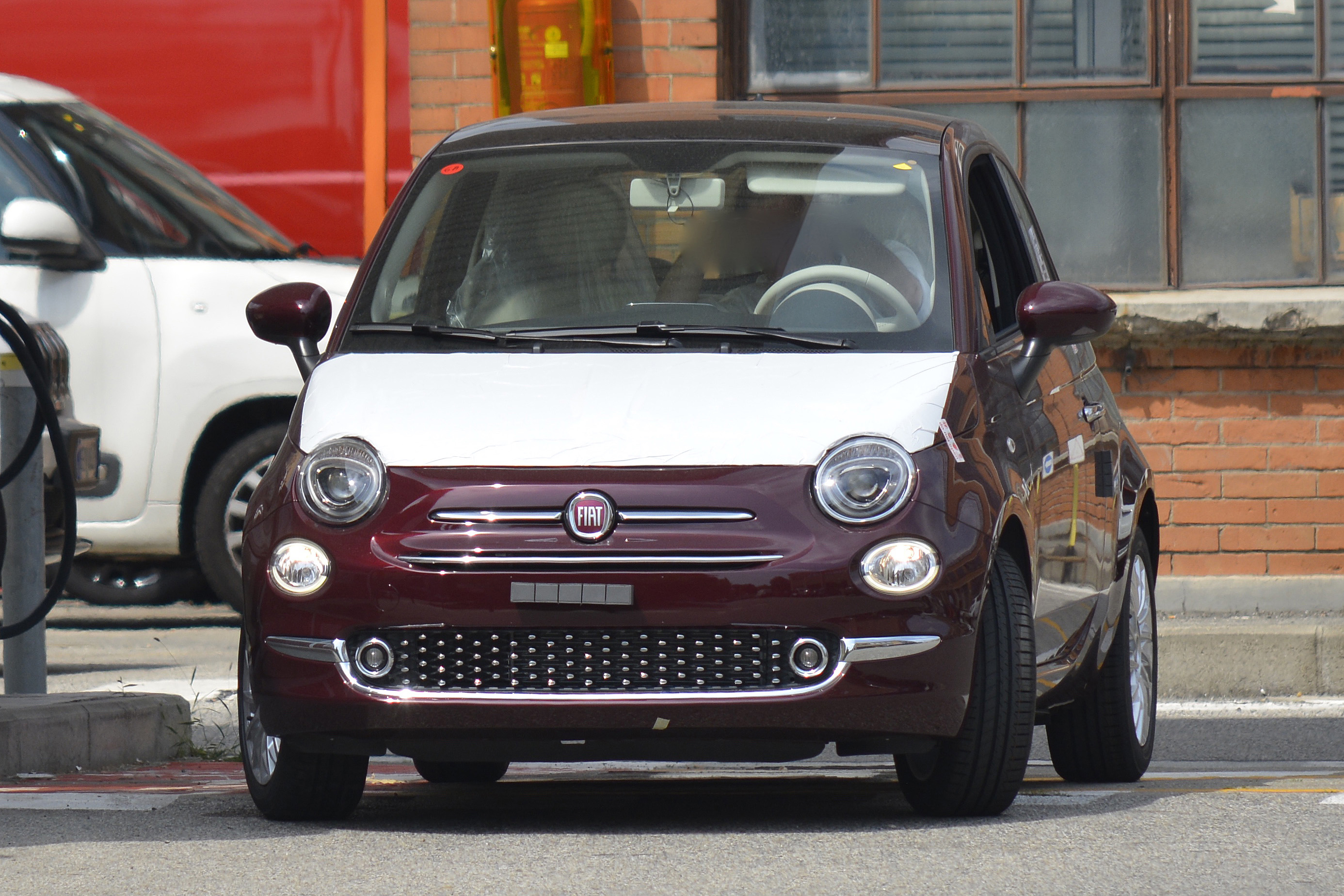
Fundamentally the body and chassis are thought to remain unchanged, with the non-metal bits – those oval headlights and tail-lights, bigger bumpers, and redesigned wheels – undergoing the most obvious alterations. The nosecone features a twin-bar grille, mesh-style lower air intake with a stylised chrome surround, and tiny LED fog lights – at least, on the higher-spec prototype snapped here. Apparently they’re designed to connect the Fiat 500 more closely to the newer and larger Fiat 500X crossover recently launched.
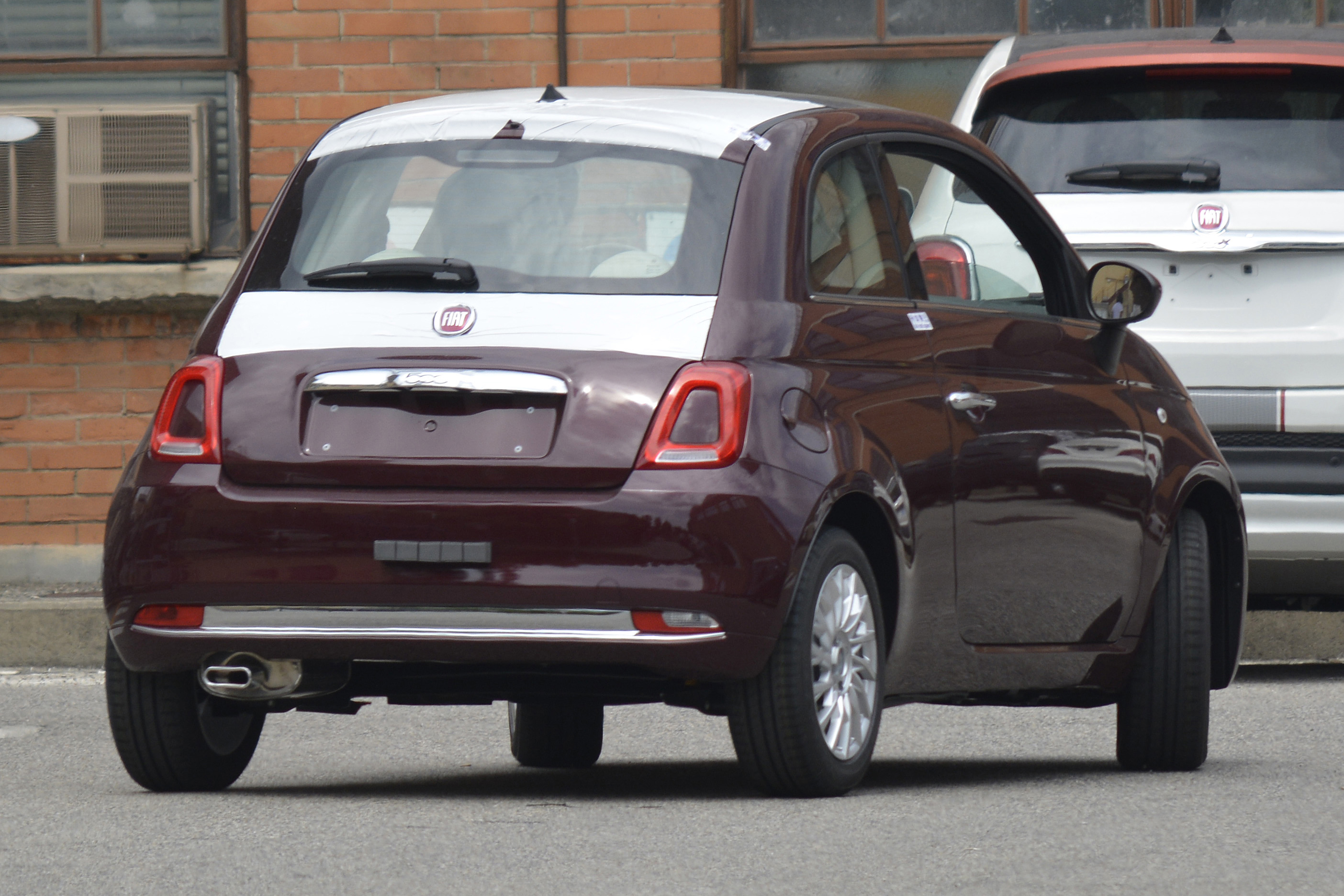
Inside, expect to find Fiat’s latest Uconnect 5.0-inch multimedia touchscreen on most variants, dominating a heavily revamped dashboard. New larger front seats, more storage, and an overhaul of materials and trim are also believed to be on their way. All aim to address some of the practicality and useability criticisms that have been levelled at the series since its 2007 launch. Increased personalisation options are also said to be on the way.
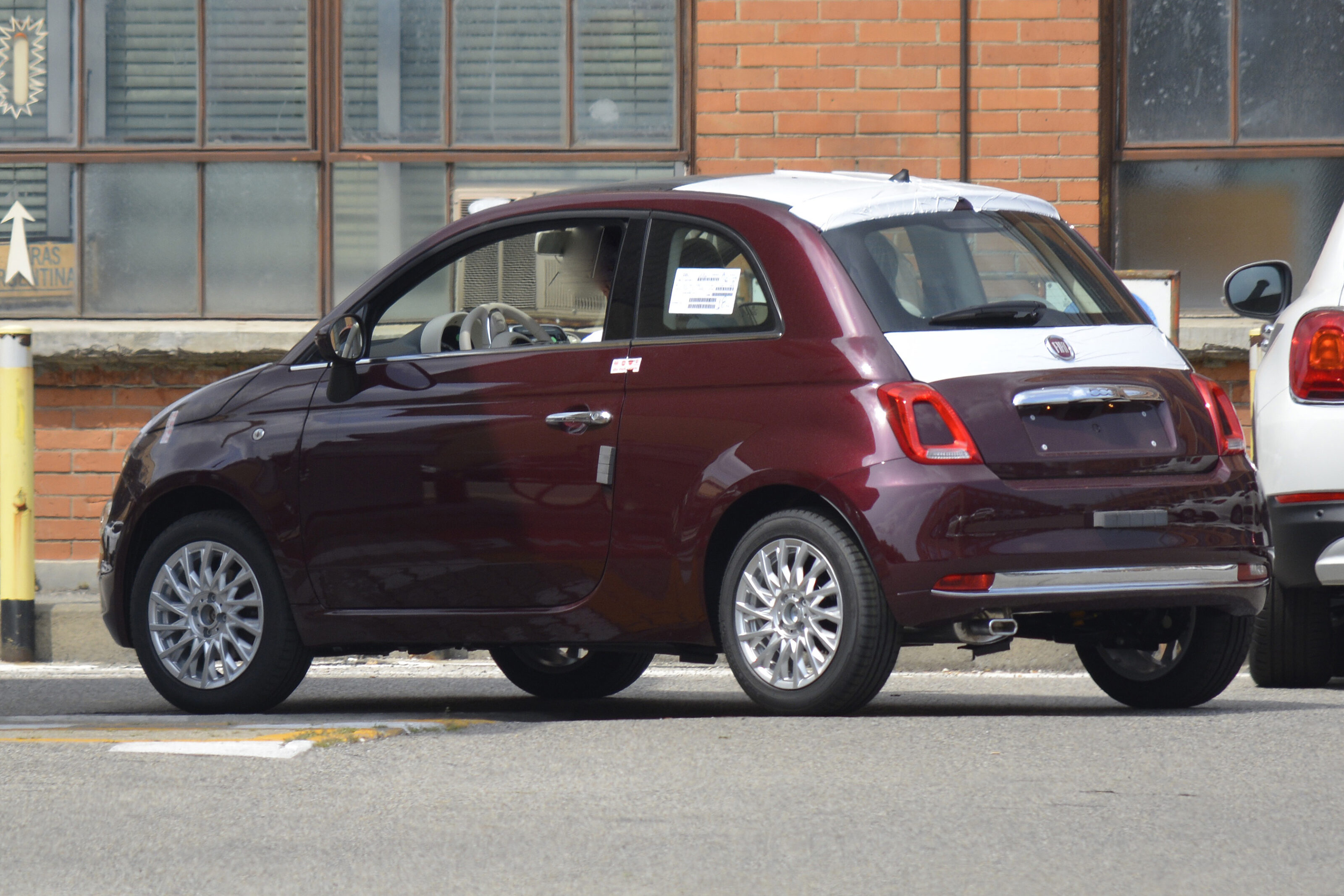
It’s understood that a raft of mechanical and driveline upgrades will be introduced with the facelift, including engine efficiency improvements designed to meet the latest Euro-6 emissions targets. Whether the steering and suspension systems also undergo surgery isn’t yet known.
The word on the street suggests the MY16 makeover is a stopgap measure to keep the Fiat 500 fresh until an all-new version arrives in about two years time. That will most probably adopt a more modern architecture than the 2003 Fiat Panda-based item currently serving the series.
Australian launch timing has yet to be revealed, but we’re counting on seeing the MY16 500 sometime during the first half of next year at the very earliest, with pricing to most likely mirror the $16,000 (1.2 Pop coupe) to $24,500 (0.9 Lounge Convertible with MTA automated manual transmission) range as per today’s version.
July 4, by the way, will also signal the 58th anniversary of the Nuevo Cinquecento – the rear-engined, rear-drive original that pretty much put post-war Italy on wheels from 1957 to 1975.
The MY16 Fiat 500 will go on sale in Australia in early 2016.
Have spy pics of your own? We’d love to see them. Just email them to [email protected]
The Ford Focus RS will again be the bully-boy of the hot-hatch genre, with huge outputs from its 2.3-litre turbo engine confirmed.
To match its lairy exterior, the all-wheel drive Focus RS will make a massive 440Nm between 2000rpm and 4500rpm, with 470Nm available for 15 seconds of full-throttle overboost. The accompanying 257kW will arrive just before the 6800rpm cut-out.
Those figures throw dirt in the face of the suit-and-tie Volkswagen Golf R (221kW/380Nm) and the darling of racing circuits, the 202kW/360Nm Renault Megane RS275.
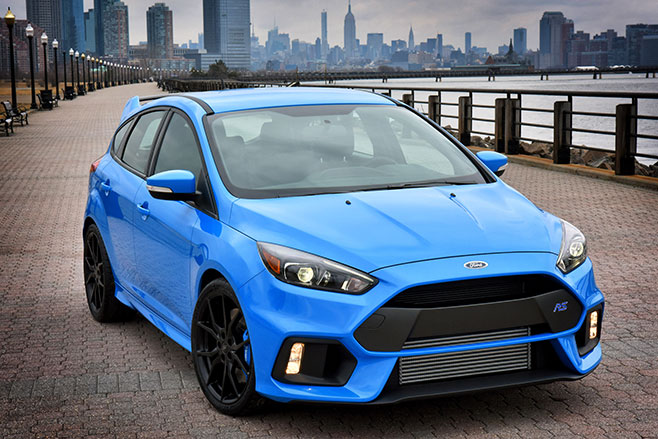
The Ecoboost engine is a unique adaptation of that in the Ford Mustang, adding a less restrictive air intake, a larger compressor for the twin-scroll turbo and a bigger intercooler. In fact, the RS’s jutted-out nose is needed to house the largest-ever radiator fitted to a Focus, “which provides the level of cooling demanded for intense circuit driving”.
A big bore exhaust, Ford politely says, “helps optimise the balance of back pressure and noise output”. If ever there was a doubt the emphasis would be on the latter, the brand also adds this: “engineers have tuned the RS to deliver a rewarding and sporty sound character during spirited driving, with the distinctive burbles and pops that are a RS signature”.
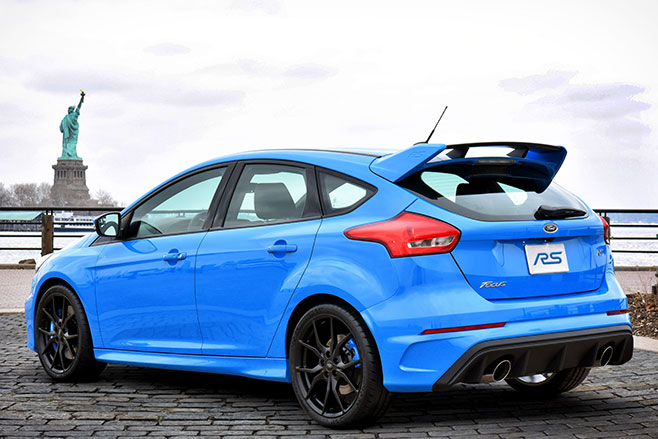
Ken Block will drive a prototype Ford Focus RS at the Goodwood Festival of Speed in July. Which is fitting because it’s the first Focus RS to get multiple driver-selectable modes including launch control and, um, a Drift Mode that “allows controlled oversteer drifts”.
In addition there are also Normal, Sport and Track modes. Sport makes the throttle more responsive, the exhaust louder and the steering firmer. Track adds a more aggressive all-wheel drive tune with wider slip angles for the stability control and harder suspension damping (that can also be independently selected/deselected).
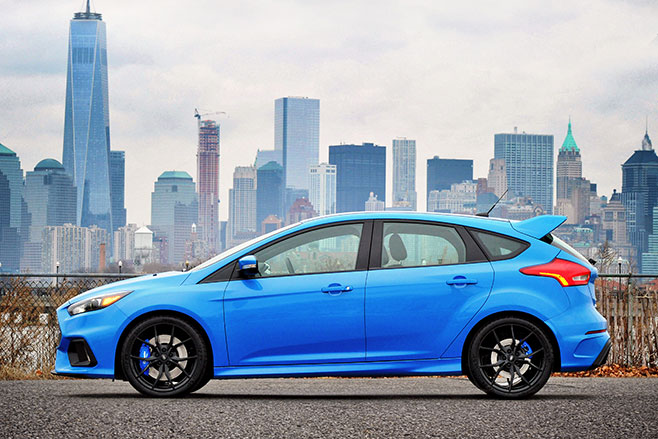
Its torque vectoring systems allows 70 per cent of drive to be sent to the rear wheels and 100 per cent of that to either side of the car. Ford gives an example of negotiating a hard left-hand bend where the Focus RS would fire 55 per cent of drive to the rear wheels and then 90 per cent of that portion to the outside right wheel that has the most traction.
We like this. A lot. And Ford’s new teaser video of the Focus RS properly sideways confirms why…
Get your free weekly report from the world of fast cars – subscribe to the MOTOR newsletter!
A Ferrari-developed twin-turbo V6 engine headlines the unveiling of the Alfa Romeo Giulia.
With 380kW, rear-wheel drive, a 3.9-second 0-100km/h claim and 50:50 weight distribution, the seeming eternity its taken for the Italian brand to return to the 3 Series/C-Class segment has been quite fruitful.
Only the flagship Giulia Quadrofoglio has been released so far, and it is faster than both the M4 and C63 to the benchmark sprint.
The propeller shaft, bonnet and roof are made out of carbonfibre, while the engine, brakes, suspension, doors and wings utilise aluminium. A power-to-weight ratio of “remarkably lower than 3 [kg from every HP]” means that this Italian stallion will wind the scales no further than 1530kg.
While the front suspension is a multi-link set-up unique to the Giulia, the multi-link rear likely pinches bits from the Maserati Ghibli. An adjustable front splitter and torque vectoring system that uses a double clutch to divide power between each rear wheel works in concert with the brand’s established DNA (Dynamic, Natural, Advanced Efficient and Racing) drive-mode selector.
There is no mention of the Ferrari-developed engine’s capacity yet, or the automatic transmission offered (though it is all but guaranteed to be a nine-speed unit), though a six-speed manual was seen sprouting from the centre console of the display car. However FCA says the donk gets cylinder deactivation tech and will “make that genuine Alfa Romeo sound” (just press play on the video!) while the available auto will deliver “lightning-fast gear shifts”.
The maker also claims to have engineered “the most direct steering on the market”, a body with “the most torsional rigidity in its class” and brakes that deliver “record-breaking stopping distances”.
While the cabin hasn’t yet been detailed, FCA says everything is clean and driver focused, with a slightly undulating dashboard and instruments to, “convey the impression of a tailor-made suit”.
For now we’ll just have to admire (or debate) the exterior. The new rear-driver boasts the longest wheelbase in the class sitting over the most compact of bodies, according to FCA.
The cabin sits well behind a long nose and short front overhang, while the stubby rear is perhaps the only link to the Giulia’s front-drive predecessor, the 159. Proportion, simplicity, and surface quality are claimed to be the three pillars designers have worked with.
Alfa’s rear-drive revival in the medium sedan class will likely arrive here next year.
“I can’t wait to welcome it to Australia,” remarked FCA Australia President and CEO Pat Dougherty. “With a potent blend of performance and style, the Giulia is not just an all-new player in the luxury and sports car segments, but the opening chapter of something truly special for the Alfa Romeo brand globally”.
Get your free weekly report from the world of fast cars – subscribe to the MOTOR newsletter!
Rather than watch Mini erode the A1’s lead in the posh baby spice club, Audi has sharpened the value, lowered prices and – best of all – dropped a sizzling 1.0-litre three-pot turbo in the base model, creating a more compelling (and fun) proposition.
WHAT IS IT? As the all-important young person’s Audi, 75 percent of A1 buyers are fresh to the Audi fold. It’s also Ingolstadt’s thorn in rival Mini’s side, and is based on the VW Polo platform, but sporting its own high-minded styling and quality-soaked cabin design. Cheaper and better value, welcome to the mid-lifecycle facelift.
WHY WE’RE TESTING IT It’s Apple Watches and boutique beer at high noon right now, thanks to the deadly duel between Audi’s A1 Sportback and BMW’s resurgent Mini. With the latter finally back on top, the former has cut prices, added more kit, and introduced two compelling engines to the facelifted range, in the hope of regaining the premium supermini class lead.
MAIN RIVALS Mini Cooper 5-Door, Alfa Romeo Mito, Citroen DS3 DSport
THE WHEELS VERDICT Audi has released the A1 that it should have had five years ago, with strong engines across the range, improved specification and – most of all – lower prices. And it is the newest of the drivetrains – a terrific turbo triple in the 1.0 TFSI – that is the most compelling, making the most of the VW Polo-based chassis’ inherent goodness. But cracks have also appeared in the harsh riding bigger-wheeled S-Line models, while the lack of rear camera availability shows off the A1’s advancing age.
PLUS: Punchy 1.0-litre engine; efficiency, handling, refinement, quality, design, standard ride MINUS: 1.8’s hard ride and road noise, no rear camera, still hardly cheap
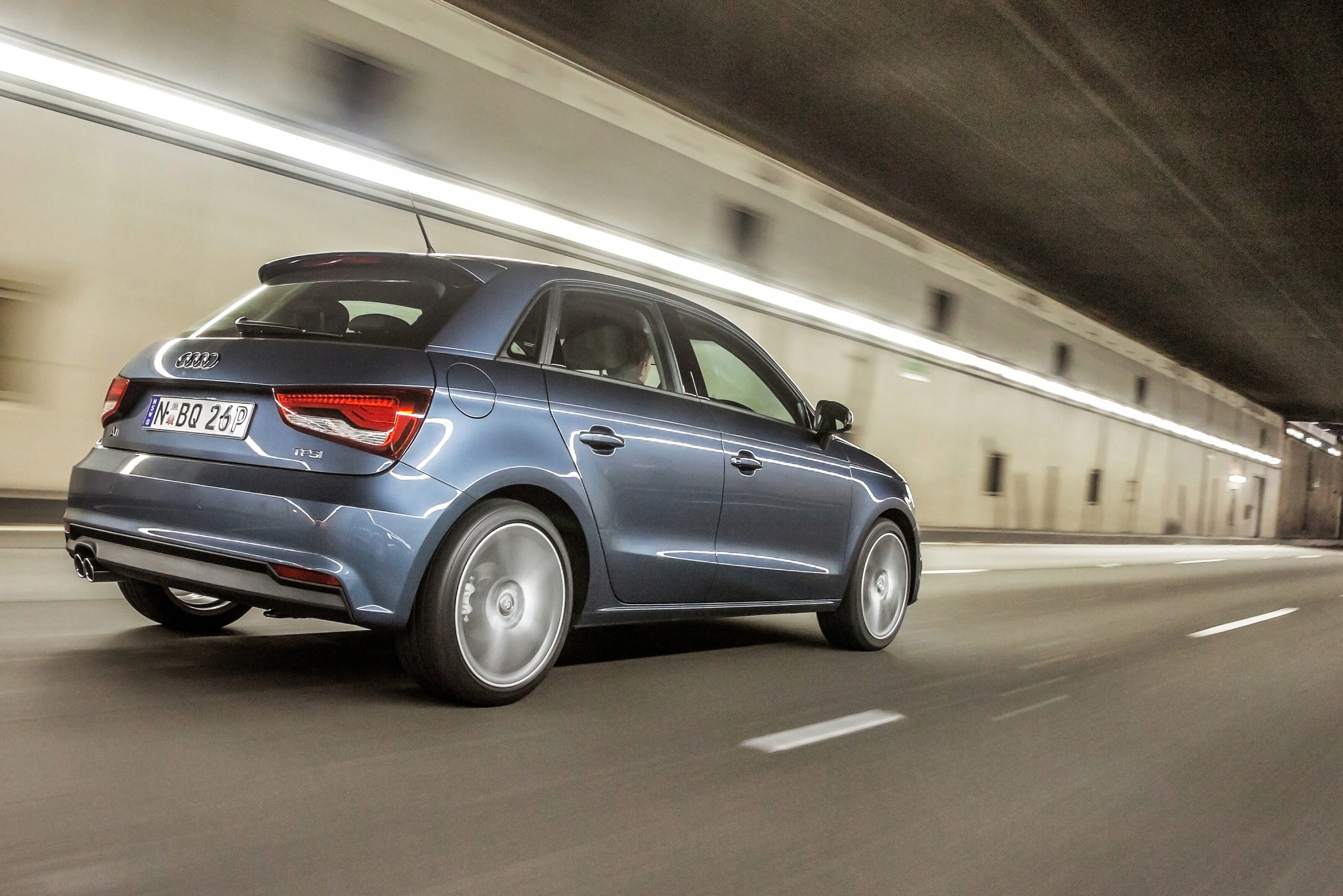
THE WHEELS REVIEW IN 1974, a fledgling Audi released a premium supermini called the 50. But overlords Volkswagen soon turned it into a Polo, forcing Audi to toil over turbos, quattro, and obsessive quality instead. We understand the tearjerker Not Without My Daughter, starring Sally Field, was all about Ingolstadt’s stolen baby. Probably.
Anyway, in 2000, it tried again with the all-aluminium Audi A2, an ambitious but expensive flop. So a cross VW ‘suggested’ Audi dovetail the 2010 A1 with its ever-improving Polo, ironically, finally reuniting mother and child, in THS True Hollywood Story fashion.
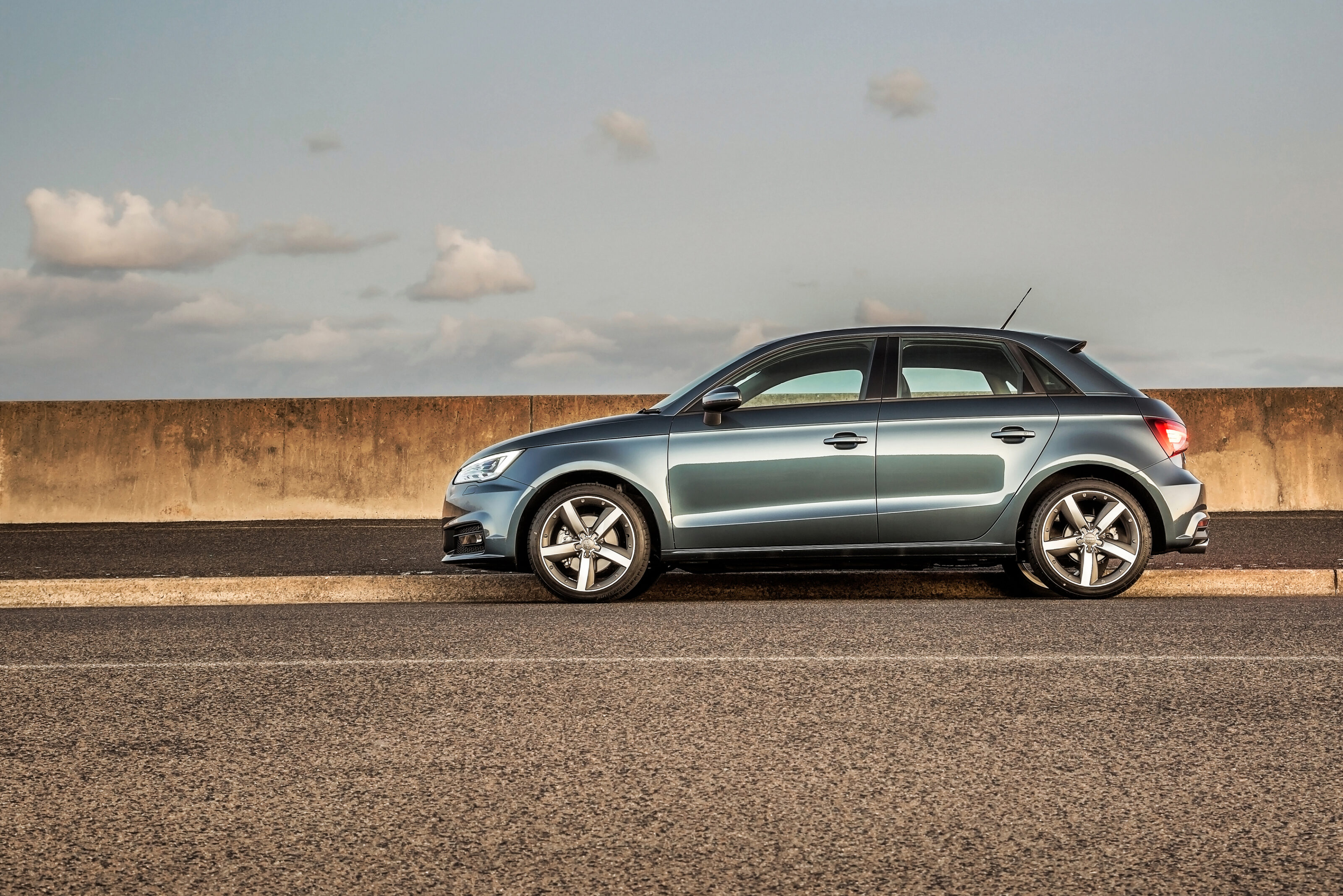
Now, 500,000 units later, the A1 Series II surfaces, with the world’s least visible facelift. Only wavy-style tail-lights give it away. Audi insists the grille is wider and the bumpers are bigger; the superb dash remains pretty much unchanged.
Fortunately, improvements underneath see the Belgian-built baby partly re-engineered to adopt the next-gen MQB-0 electrical architecture. That means upgraded infotainment/multimedia and electro-mechanical steering that now feels light yet still direct.
Meanwhile, the diesel’s history, replaced by a sub-$30K 1.0 TFSI turbo triple petrol, bringing a $4K-cheaper automatic for the people, since the previous 1.2 TFSI opener was manual-only. And it’s a brilliant, providing a punchy, sporty character to an already dynamic supermini. As with most forced-induction three-cylinders, there’s fizz and fervour aplenty off the line followed by a rousing mid-range kick, and all swathed in bubbling refinement. Dizzyingly intoxicating, it is like sipping on a granita cocktail.
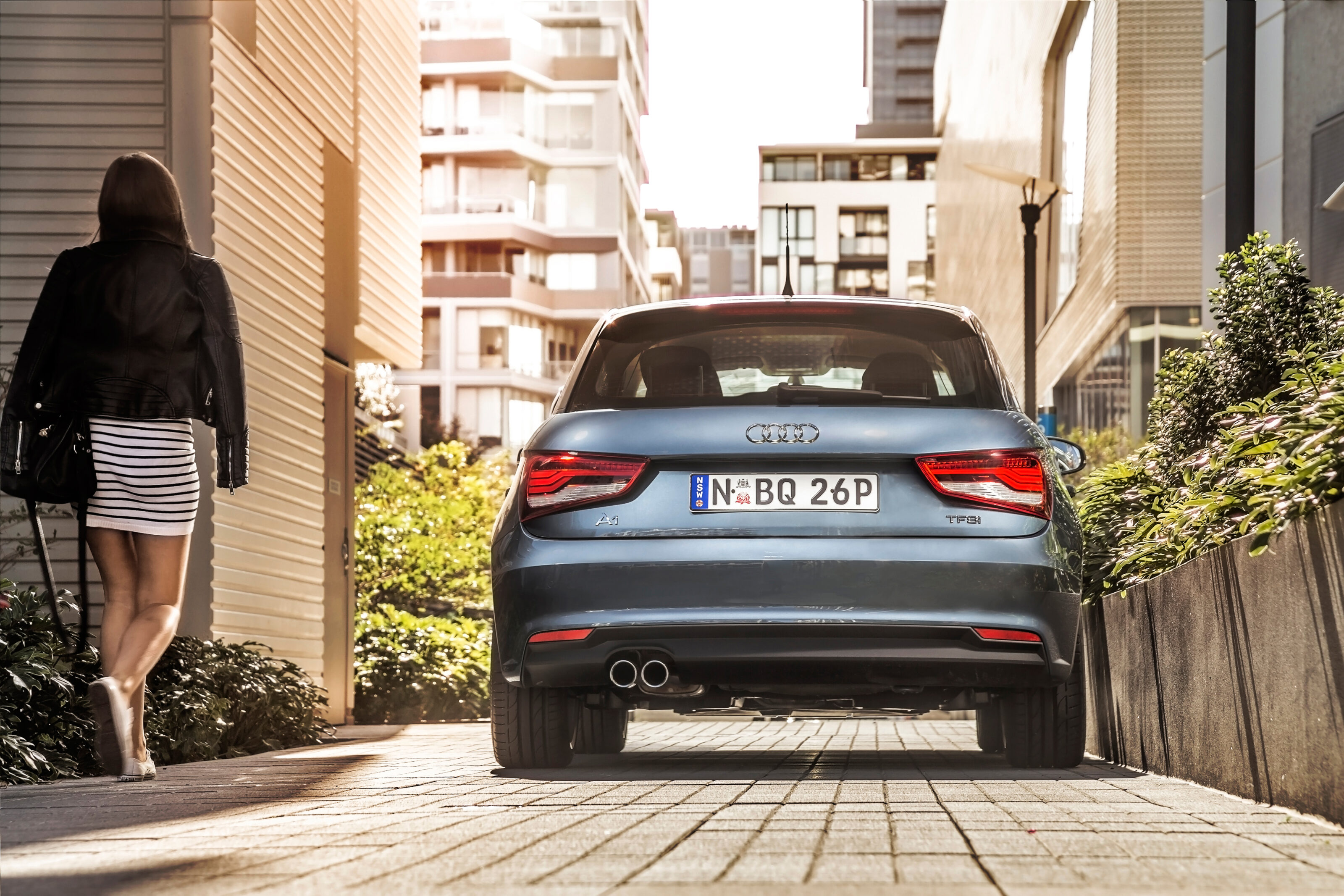
The 1.4 TFSI four-cylinder turbo volume seller, now with 92kW/200Nm, boasts incremental economy improvements thanks to Cylinder-on-Demand tech, so business-as-usual there. But the newly-minted $39,900, 141kW/250Nm, 1.8 TFSI S Line S-tronic (replacing the spirited 1.4 TFSI Sport Twincharger) just doesn’t soar.
Cribbed from the VW Polo GTI, its numbers are only slightly better – 6.9s 0-100km/h/234km/h v-max – questioning the logic of upsizing. That’s because the 105kg-porkier 1.8 TFSI abandons all ride suppleness on the (optional) 225/35R18 rubber (as tested), and lacks the 1.0 TFSI’s endearing alacrity. Sure, it’s quick, with outstanding grip and body control, but somehow this A1 misses the true hot-hatch point epically. Save with the more dazzling downsized models or save for the giant-slaying S1 quattro from $10K more instead.
And money, ultimately, is central to the facelifted A1’s story. It’s still expensive, but with $4K to $6K worth of extra kit according to variant, the Audi no longer screams rip-off. About the only (glaring) omission is no reverse-camera availability. Honed over 40 years of mostly-VW progress, the A1 is finally fulfilling its potential.
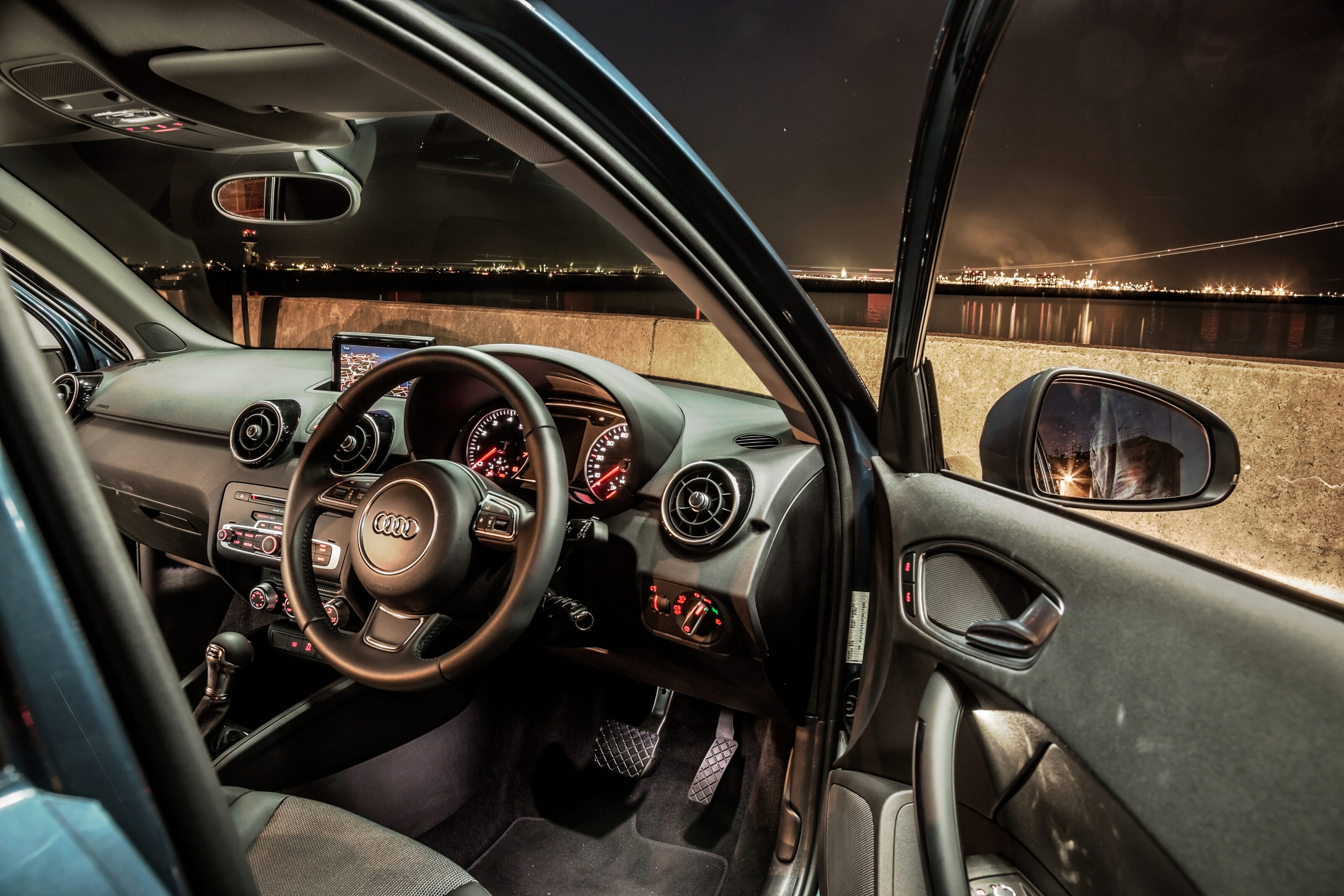
SPECS Model: Audi A1 Sportback 1.0 TFSI S-tronic Engine: 999cc 3cyl, dohc, 12v turbo Max power: 70kW @ 5000-5500rpm Max torque: 160Nm @ 1500-3500rpm Transmission: 7-speed dual-clutch Weight: 1090kg 0-100km/h: 11.1sec Fuel economy: 4.5L/100km Price: $28,250 On sale: Now
KPM Motorsport is the latest to reveal its intentions to supercharge the V8 American muscle coupe, in addition to creating other aftermarket performance modifications.
There are few technical details yet about what is dubbed the ‘Street Fighter’ Mustang, as KPM has only imported a left-hand-drive variant to test its mechanical and styling modifications six months before the official on-sale.
While rival Mustang Motorsport has already announced it will import official Roush and Shelby kits from the States, KPM owner David Roscio says his company’s point of difference will be the delivery of Aussie-built parts.
“The car [Mustang] is just brand new here now, it’s ready for our development so we start now,” explains Roscio.
“Australia has lost its manufacturing, we’re now going to be bombarded with US racing manufacturers … Street Fighter is going to be manufacturing the aftermarket [modifications] here for the overseas product.
“The products will be developed from here on in, so it’s pretty much watch this space on the car. There will be a whole range of kits to complement what’s coming over from the US.
“Let’s not get inundated with American products, we still want to manufacture for our local industry.”
While some tuning companies have previously chosen to swap the tiller of US special imports, the focus now is simply to give a boost to the production Ford Mustang that will already have its steering wheel on the right – and that’s especially the case when Ford Australia holds 2000 forward orders for the car ahead of its December arrival.
Get your free weekly report from the world of fast cars – subscribe to the MOTOR newsletter!
For a city mouse that spends more time behind their desk than behind the wheel, buying a four-wheel drive was not something I planned. But, it happened and now, after living with my new Land Rover Discovery, there’s no going back.
My weekends are no longer limited by a car with three-door access, cramped passenger space and trying to tessellate flat-pack furniture into a boot the size of a tissue box. Instead, I book a campground, load the car and prepare for a 5pm glide away each Friday to get outdoors and escape the Brisbane bubble. This is a far cry from the girl who two months ago drummed her heels at the suggestion of camping over Easter. The Disco wasn’t just a purchase choice; it was a total lifestyle overhaul.
Like a surfer who finds sand creeping into all aspects of their life, I can’t shake the sticks and stones from my floor mats, and the MaxTrax stowed in my lounge room are a dead giveaway of my off-roading obsession.
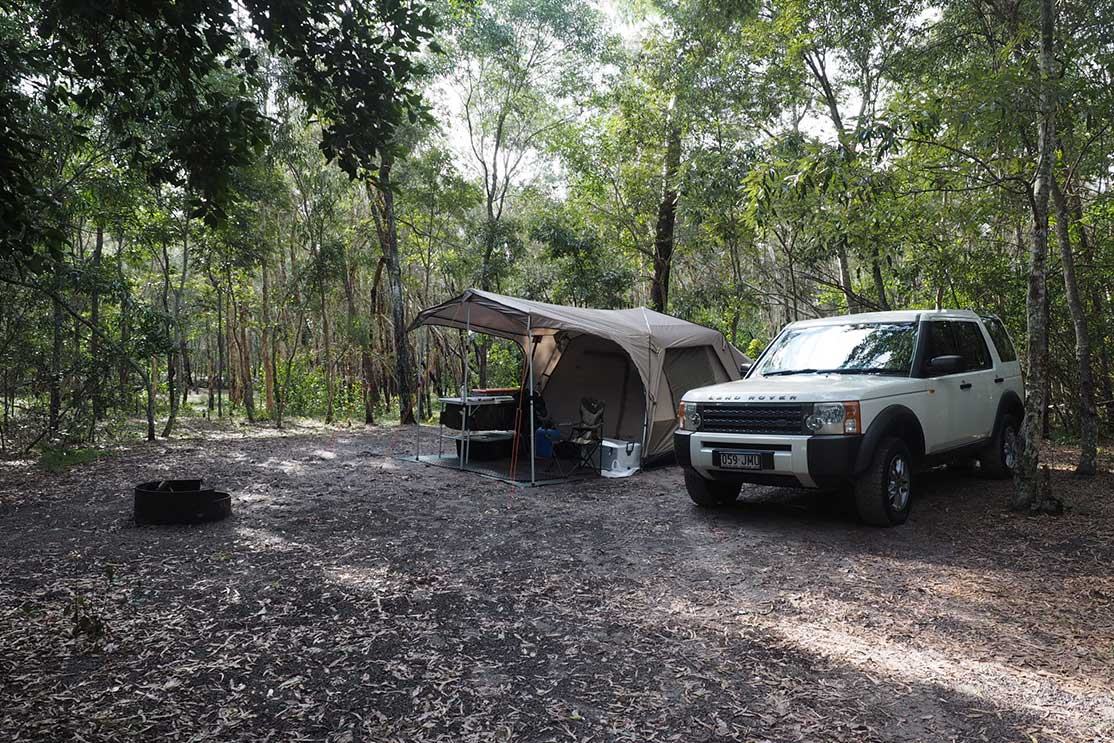
Now, in case you can’t tell from my position hiding behind the screen, I’m not your stereotypical off-roader. I’m a Lorna Jane wearing, latte sipping, city-gal – but give me leather seats and powerful air-conditioning, and even I can be outdoorsy. That’s probably why I ended up with a Land Rover Discovery; it’s a car that’s as much about style as it is about off-road capability. I mean, even Catherine, Duchess of Cambridge drives a Land Rover. I must confess that the old me didn’t really see the point of 4WDs. After all, don’t all cars have four wheels?
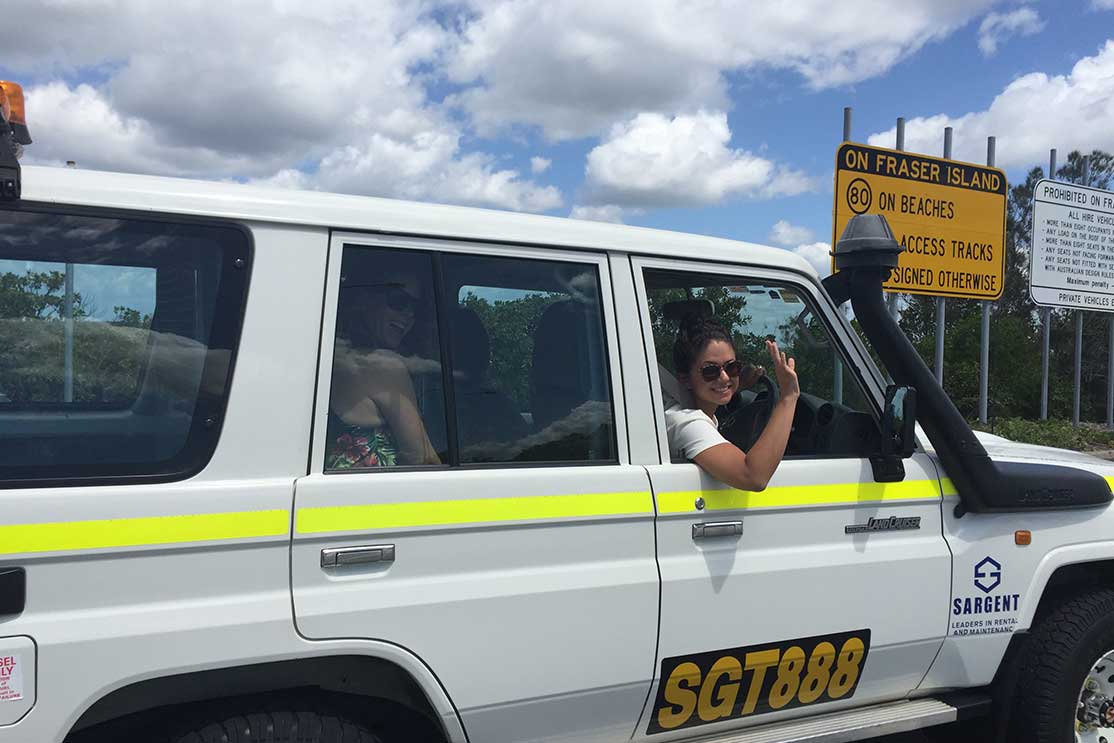
This all changed after a recent trip to k’Gari (Fraser Island), where I was taught the basics of 4WDing with Australian Offroad Academy as part of their Girls Got Grit training course. I ploughed through sand, crossed a couple of creeks and manoeuvred through rainforests – before I could yell Troopy, my 4WDing fire was ignited. I just had to have one and what better souvenir from Fraser Island than my own 4WD in the garage?
Ditching my Hyundai Getz to buy the Disco might not have been the most financially sensible decision I’ve made all year, but now I have the wheels, I can escape the rat-race at a moment’s notice – and you can’t put a price on that! Basically, the Disco gives me access to a mini-holiday with ocean views and beach access, all for the price of my weekly lattes. Given my penchant for weekend escapes, rather than long trips driving across the Simpson Desert, the decision to go with a Land Rover Discovery over other 4WDs was easy. Although, I’m not saying I’ll never go across the Simpson.
Mechanically speaking, Land Rover have been making safe cars since 1947, and the Disco is fairly renowned for its driveability in the city and the country (see, I did my research). I can attest to both, spending as much time driving on-road as I do off. It’s as easy as the flick of a low range switch to move from tarmac to sand. Design wise, everything from the charcoal grill at the front, bright tail lights and perforated leather seats are recognisably part of the Land Rover family. There’s a clear evolution from the old to the new Discovery models, but its signature boxy shape has remained, and for good reason – it’s as timeless as an Audrey Hepburn fashion statement.
Despite a myriad of metallic paint options, I played it safe with white. A few regular off-roaders mentioned that scratches don’t show up as easily on white paint as they do darker colours, and I’m so grateful I listened to their suggestion. Parking sensors and a rear-view camera take the sting out of reverse parallel parking, which is what you want when you drive a big car but live in the city. They prove quite handy off-roading too – “watch out for that tree!”
If there was one area of improvement I could pick on with the Disco, it’s the clearance height. Although, that’s probably more a reflection on my decision to go with the S model with fixed height coil suspension, rather than the HSE with air bag suspension which would allow for adjustable ride height (two months in and I’m talking like a pro. It changes you). Realising my car’s clearance would limit my off-roading adventures; I lifted the car, and found myself an extra 10cm of height. Did you know they could even do that?
I wish solving my own height problem was as easy as an aftermarket lift kit and two days at the mechanics. Standing at 208cm tall, I’d be lost without the Disco’s handles and step to get into the driver’s seat. I don’t think Land Rover make hydraulic city-mouse lifts… yet.
Hannah’s 4WD baby is a Land Rover Discovery 3. For more information on the latest Discovery, click here.
Turtle Wax Australia teams up with professional drifter Mad Mike Whiddett in a new video campaign. Watch the full video of Mad Mike putting his Mazda BT-50 through its paces, then check out Turtle Wax Australia on Facebook.
Turtle Wax Australia teams up with professional drifter Mad Mike Whiddett in a new video campaign. Watch the full video of Mad Mike putting his Mazda BT-50 through its paces, then check out Turtle Wax Australia on Facebook.
