
Nico Rosberg lands another punch on team-mate Lewis Hamilton’s title hopes; Craig Lowndes sets another record during a weekend of carnage; Eli Evans takes ARC lead; Sebastien Loeb’s winning ways in WTCC
NICO Rosberg has won his third Grand Prix of the 2015 Formula One season after beating team-mate and championship leader Lewis Hamilton in a straight fight at the Austrian Grand Prix.
A smart start from the dirty side of the track saw Nico Rosberg establish an early lead in Sunday’s race, after pole-sitter Hamilton’s clearest opportunity to pass his Mercedes team mate was thwarted by the intervention of a safety car after a spectacular coming-together between two ex-world champions saw Fernando Alonso’s McLaren perched atop Kimi Raikkonen’s Ferrari. Both drivers were fortunately unhurt but Alonso, whose car slid along the top of the Armco barrier perilously close to Raikkonen’s head, described the incident as “scary”. It prompted a six-lap safety car intervention while both cars were craned from the circuit.
Upon the restart, Rosberg steadily built his lead, aided by a five second penalty Hamilton later accrued for crossing the merge line after a pit stop. Felipe Massa, who achieved pole and a good result at this circuit in 2014, inherited the third step on the podium when Sebastian Vettel’s Ferrari was delayed by a recalcitrant right rear wheel during a tyre stop. Vettel closed on the Brazilian driver, but couldn’t pass him before the 71 laps were completed. Massa’s Williams teammate Valteri Bottas again displayed superb overtaking skills but was unable to equal his 2014 podium, finishing in fifth place ahead of newly-crowned Le Mans vwinner Nico Hulkenberg’s Force India. Daniel Ricciardo’s Red Bull scraped into a points-paying finish, crossing the line in tenth, after starting in 18th place.
It was unusual to see Ricciardo in the company of the McLarens of Jenson Button and Alonso at the blunt end of the grid after the Aussie was given engine change penalties, a burden also shared by the Perth driver’s Red Bull teammate Daniil Kvyat. Qualifying had been bizarre when both Hamilton and Rosberg spun off the track during the final minutes of Q3, but not before they’d secured their usual one-two positions ahead of perennial podium companion Sebastian Vettel, giving Mercedes-Benz a clean sweep of poles over a twelve month period.
With the absence of a Grand Prix in Germany this year, Austria’s Red Bull Ring was the nearest thing to a home race for Rosberg and Mercedes-Benz (and its Austrian principals Niki Lauda and Toto Wolff), but the next event is in Lewis Hamilton’s back yard at Silverstone where he will hope to increase his championship lead over Rosberg, which has slipped to just ten points.
V8 Supercars, Darwin: Craig Lowndes’ Century Shines Through Carnage
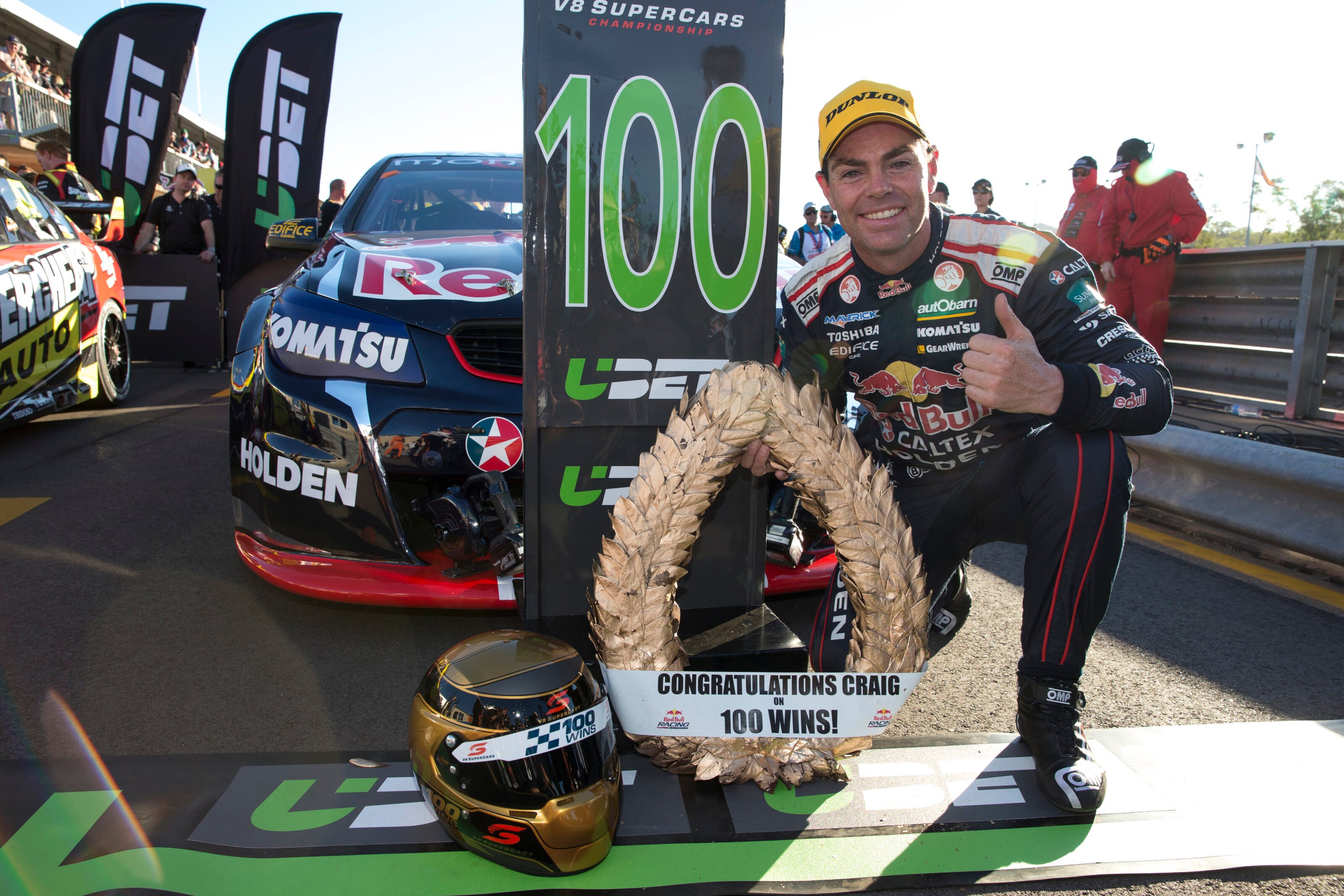
ON the day before his 41st birthday, in the 888th V8 race, Craig Lowndes in his Number 888 Red Bull Holden Commodore won his 100th race, an all time record ahead of Jamie Whincup on 91 and Mark Skaife on 90 victories. Lowndes shone at Hidden Valley, Darwin, on a Saturday otherwise memorable as a crashfest.
There’s simply not enough space to write about the Saturday morining carnage, but notable victims included Lowndes and his teammate Jamie Whincup, as well as pole sitter James Courtney and his teammate Garth Tander in Race One. The Smiling Assassin wasn’t looking too chirpy when penalised 15 points, Jamie and James both lost 25 while Jason Bright dropped 25 points twice. Unlike these vastly experienced competitors, young star Chaz Mostert in his Prodrive Ford was able to keep his nose clean by outpacing the field in front of teammate Mark Winterbottom and Rick Kelly’s Nissan who finished ahead of two more Nissans.
In Saturday’s second sprint race, no further penalties were deemed necessary other than a black flag for pole sitter Rick Kelly for taking out Fabian Coulthard. However, it was another demolition derby with the Mercedes-Benz drivers having a family squabble while Jamie Whincup had another dismal outing, unlike his teammate who enjoyed his unique achievement ahead of Tim Slade and Chaz Mostert in third.
Over the weekend Chaz proved to be the most consistent driver in the field by securing second in the 70 lap Race Three behind pole-sitter David Reynolds in the third of the Prodrive Fords, with Coulthard back in third position after having been punted off on the first turn in the previous two races.
In comparison to Saturdays’ two races, the Sunday event was almost free of controversy (other than Reynolds’ quaffing champagne from his sweaty shoe on the rostrum) although Reynolds, while leading, experienced a huge off while lapping a Nissan.
Championship rankings as the circus heads off to Townsville find Mark Winterbottom on 1165 ahead of Craig Lowndes on 1070 and Fabian Coulthard third on 1010, followed by Chaz Mostert up to fourth on 991.
Australian Rally Championship, IROQ, Queensland: Eli Evans Dominant in Caloundra
ELI Evans has taken the lead in the East Coast Bullbars Australian Rally Championship after scoring a resounding victory at the International Rally of Queensland. Crossing the finish line some seven minutes ahead of second-placed finisher Adrian Coppin, Evans now leapfrogs crowd favourite and winner of the last round, Molly Taylor. She finished third in Kandanga South, some two minutes behind Coppin after an event plagued by problems of one sort or another. She considered herself lucky to finish at all, let alone on the podium and now finds her 17 point lead over Eli switched to an eight-point deficit after the third round of the Championship.
The IROQ (International Rally of Queensland) is also a round of the FIA Asia-Pacific Rally Championship, with competitors participating from across the globe. Sweden’s Pontus Tidemand in a Skoda Fabia finished four minutes ahead of Kiwi Mike Young’s Subaru, with Indonesian Subhan Aksa’s Mitsubishi in third and Eli Evans fourth overall.
WTCC, Slovakia: For anyone wondering what happened to Sébastien Loeb, he’s still winning
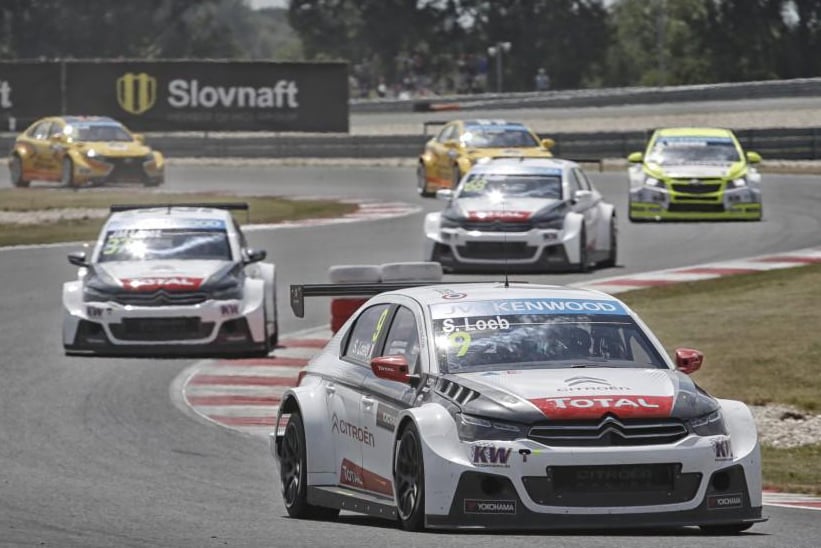
IN only his second season of circuit racing, nine-time former World Rally Champion Sebastien Loeb has won for the fourth time after taking out Race Two at the Slovakia Ring.
Loeb moved from eighth on the grid to second by turn one and then passed the enormously experienced Gabrielle Tarquini at the start of the second lap.
Loeb now stands third in the championship standings with 178 points at the season’s halfway mark, still within touching distance of second-placed Yvan Muller (209 points) and current leader Jose Maria Lopez (239 points).
Sign up here to receive the latest round-up of Wheels news, reviews and video highlights straight to your inbox each week.
HONDA attempts to reassert its technological prowess with a new-generation ‘i-MMD’ hybrid drivetrain headlining a new range-topping Accord variant
WHAT IS IT? The beginning of Honda’s post-GFC new wave, the Accord Sport Hybrid is all about “re-establishing our leadership in the technological space”, according to Stephen Collins, Director of Honda Australia. But it’s also about trying to salvage the Accord’s flagging reputation among its highly capable competitor set.
WHY WE’RE TESTING IT? Two years after the ninth-generation Accord’s unmemorable arrival here, the Sport Hybrid lands with the promise of “a groundbreaking drivetrain”, and much-needed improvements to the Accord’s dismal dynamics.
MAIN RIVALS At $58,990, Honda is shooting directly for the Lexus IS300h with the Accord Sport Hybrid. But where the Lexus is a dedicated premium product, the Accord is something of a ‘lipstick-on-a-pig’ proposition, seeing it is essentially a US-focused Toyota Camry competitior.
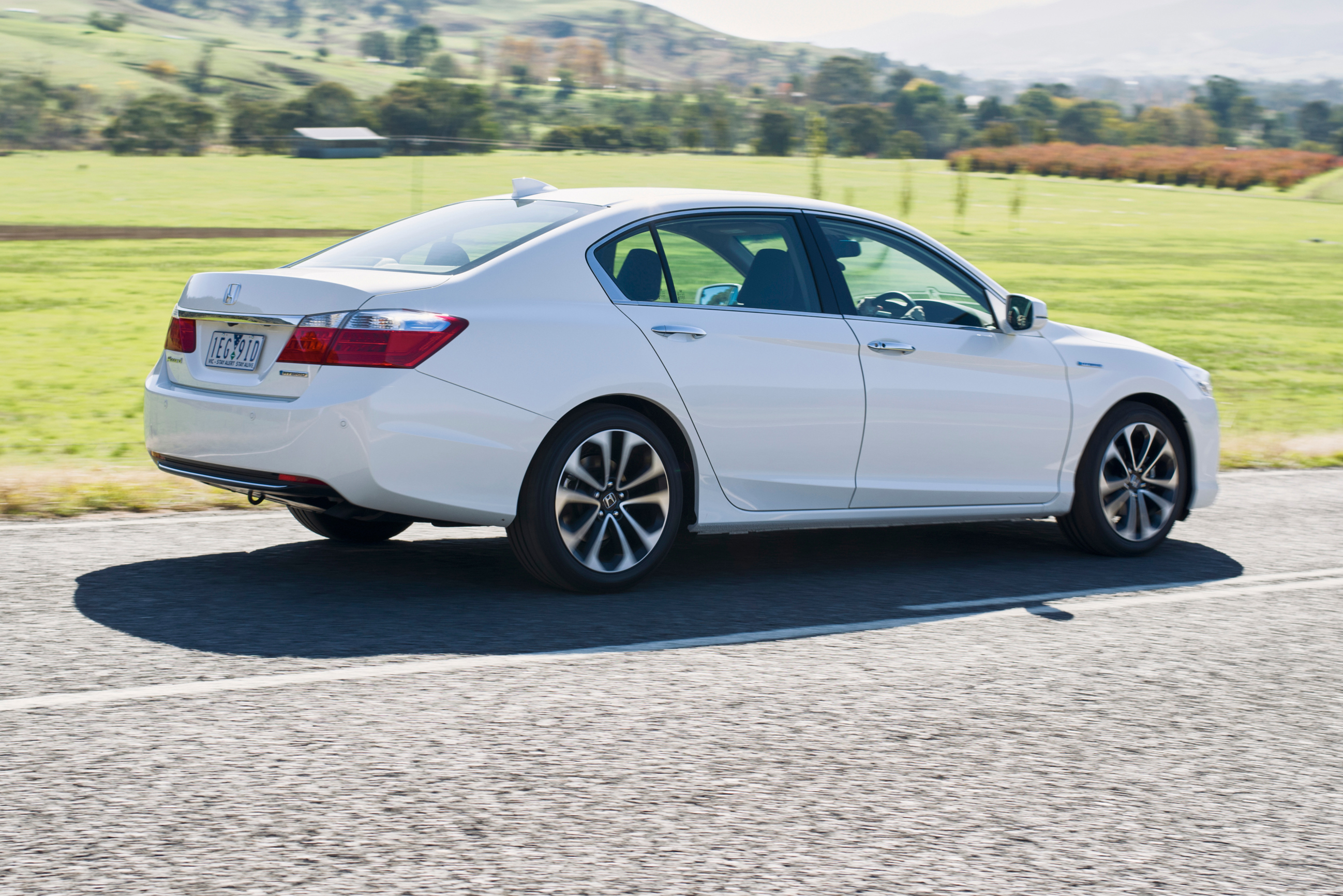
THE WHEELS VERDICT A measurably improved Accord – for a price – yet it still suffers most of the flaws that afflict its petrol siblings, such as an abrupt ride, computer-game steering and an overall lack of cohesion. This is a Camry Atara SL Hybrid competitor with some extra class, not a Lexus IS300h rival.
Plus: Impressive drivetrain smoothness and operation; space and seat comfort; solid build quality; much-improved handling balance; high-quality tyres Minus: Irritating and unresolved ride quality; anaesthetised steering; messy dash layout; B-pillar wind noise; reduced boot space; delusions of grandeur
THE WHEELS REVIEW THIS clean-cut 2015 Honda Accord Sport Hybrid might look vaguely like any other 18-inch-wheeled model from Honda’s ninth-generation range, but everything isn’t quite as it seems.
If the light-blue-tinted grille and headlights, and charcoal accents inside the wheel spokes don’t give the game away, then the ‘Hybrid’ badges on the front guards and bootlid surely will. Honda has finally moved the game on from the first-generation hybrid technology it pioneered here with the Insight in early 2001, and this flagship Accord Sport Hybrid is the vessel.
Labelled i-MMD (for Intelligent Multi-Mode Drive), Honda claims this Accord’s “groundbreaking drivetrain” will re-assert its technological prowess in the hybrid field. Integrated with an all-new, purpose-designed 1993cc ‘Atkinson-cycle’ petrol four-pot featuring a pair of counter-rotating balance shafts in the oil pan for smoothness, the ‘Multi-Mode’ part refers to the three drive modes – EV, Hybrid and Engine. But it’s the engine’s ability to power a separate generator that charges the lithium-ion battery pack, all while being disconnected from the drive wheels (in Hybrid mode) that raises Honda’s i-MMD hybrid system to a new level.
In EV Drive, the Accord has a range of around 2km in pure-electric mode before it transitions seamlessly into one of the other modes. Tied to an electric CVT transmission that uses a pair of motors instead of a belt to continuously alter ratios and transfer power, the Accord doesn’t switch to pure engine mode until it’s doing around 70km/h. The result is a class-leading 4.6L/100km combined fuel figure and carbon-dioxide emissions of just 107g/km, though we averaged 6.5-7.0L/100km on a two-hour freeway loop.
But does this vaunted, new-generation drivetrain transform the Accord from embarrassing frump to spritely filly? Sort of. A suspension retune not only compensates for the Hybrid’s weight increase (70kg over a 2.4-litre VTi-L) but is intended to make the Accord feel a bit sportier to drive. New two-piston dampers and thicker anti-roll bars (19mm front, 16mm rear) combine with top-notch 235/45R18 Michelin Pilot Sport 3 tyres to endow the Sport Hybrid with much-improved chassis balance and tenacious grip, even on wet surfaces, though the Accord’s dynamic ills are far from cured.
Diverting attention away from the Hybrid’s intrusive ride and robotic electric steering is Honda’s terrific new drivetrain. Seamlessly integrated in operation and satisfyingly sweet when singing in petrol mode, about the biggest criticism we can level at it is a delay in response from a briskly floored throttle to serious forward momentum.Even the braking system – dubbed Electric Servo Brake – which is fully hydraulic from the master cylinder to all four discs, but electronically controlled, and allows regenerative braking from the electric drive motor to slow the car in many circumstances, rather than the actual brakes, feels natural and well-calibrated. And while the Accord’s active cruise control is overly cautious in the distances it maintains, the excellent lane-keeping function will autonomously steer the car for minutes on the freeway.

The problem with the Accord Sport Hybrid is the Accord part. Developed during a GFC-imposed cost-cutting period at Honda, the current Accord remains a shadow of its former self. With the Euro version now dead, this is the only Accord the world sees and that’s a depressing thought. The Hybrid version may point more sharply and have a greater affinity for the road, but there’s no escaping the irritating flaws that conspire to undermine this car.
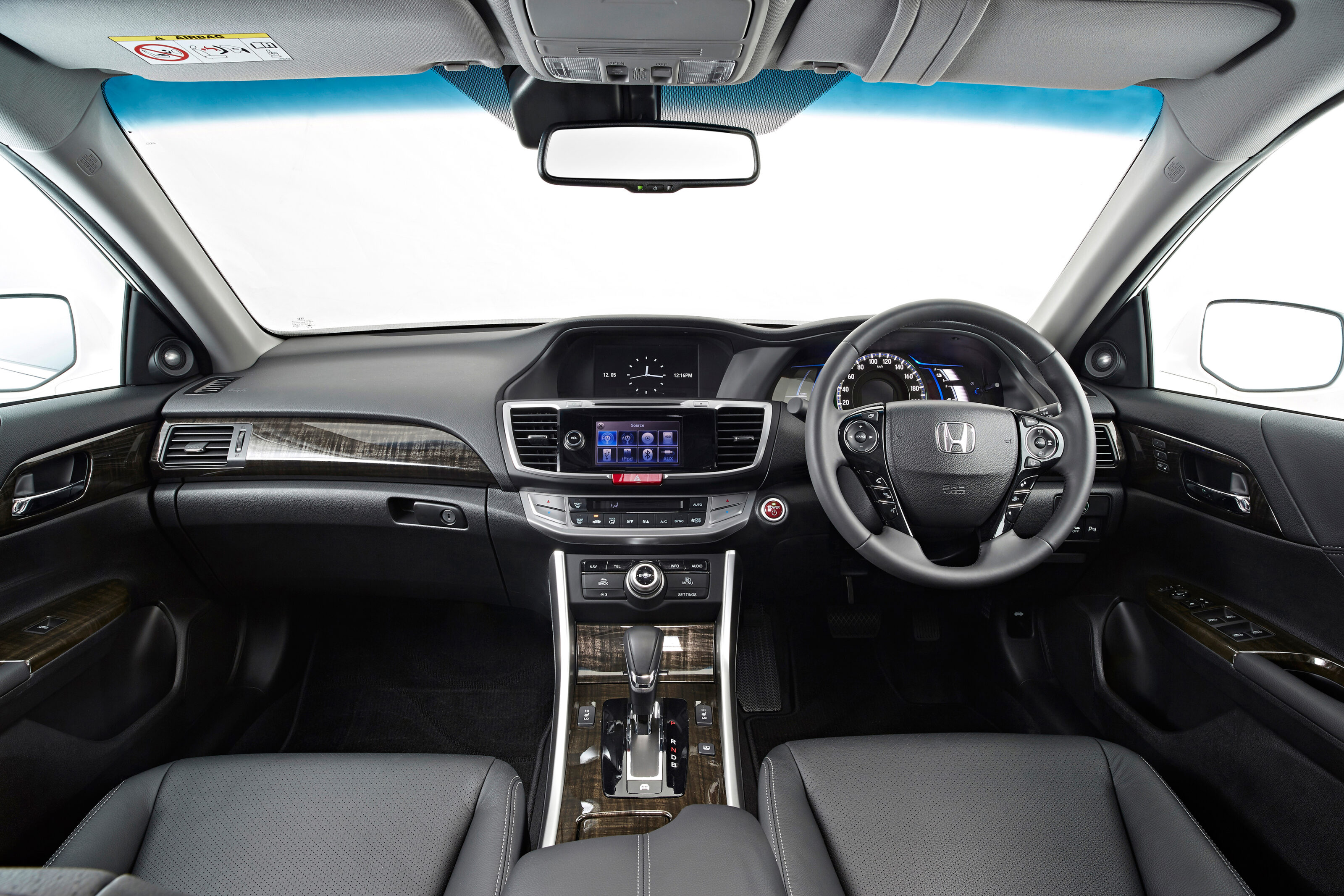
The slightly older demographic destined to be attracted to, and able to afford, the $58,990 Sport Hybrid will probably hate its jiggly ride. Then there’s the Accord’s dashboard, which is an incongruous mix of blotchy grey wood, a dated multi-screen dash display and no digital speedo. A Lexus IS smashes it for cabin class.
So while the front-drive Accord Sport Hybrid might be priced to compete against the rear-drive Lexus IS300h, the only areas where it scores is for cabin space and the excellence of its new-generation drivetrain.
Honda has promised that it will build more exciting cars in the future, starting with the 2016 Honda NSX and the next-gen Civic (also due here next year), including a turbocharged Type-R variant (a possibility for 2017). But until Honda gets rid of dead wood like the current Accord, not even a quality hybrid drivetrain will be enough to generate any ‘Power of Dreams’ mystique.
SPECS Model: Honda Accord Sport Hybrid Engine: 1993cc 4cyl, dohc, 16v + lithium-ion battery Max power: 146kW (combined) Max torque: 307Nm (combined) Transmission: CVT automatic Kerb weight: 1642kg 0-100km/h: 8.5sec (estimated) Fuel Economy: 4.6L/100km Price: $58,990 On sale: Now
Sign up here to receive the latest round-up of Wheels news, reviews and video highlights straight to your inbox each week.

See the official launch film for the new BMW M6 range featuring the M6 Coupé, the M6 Gran Coupé and the M6 Convertible.
See the official launch film for the new BMW M6 range featuring the M6 Coupé, the M6 Gran Coupé and the M6 Convertible.
A news snippet in a weekend motoring section brought the WRX to Jim’s attention back in 1993. “I thought, ‘this is going to be a good little car’, so I went up to my local dealership and said, ‘When are these coming in?’ This was about September, October; he said it’d be next year sometime. I said, ‘Okay, can I give you a deposit?’ They were released in March ’94, and I picked this up on the 30th of March ’94.”
Click here for Subaru WRX Celebration: Introduction
The first-generation Subaru Impreza sedan and hatch superseded the compact Leone and adopted the EJ engine series that was already doing duty in the larger Legacy/Liberty.
The Audi Quattro had used its all-wheel drive and turbocharging to change rallying in the ’80s, but in the latter part of that decade it was the wolf-in-wool-blend Subaru Legacy RS Turbo that, for those in the know, delivered those technologies with everyman’s affordability.
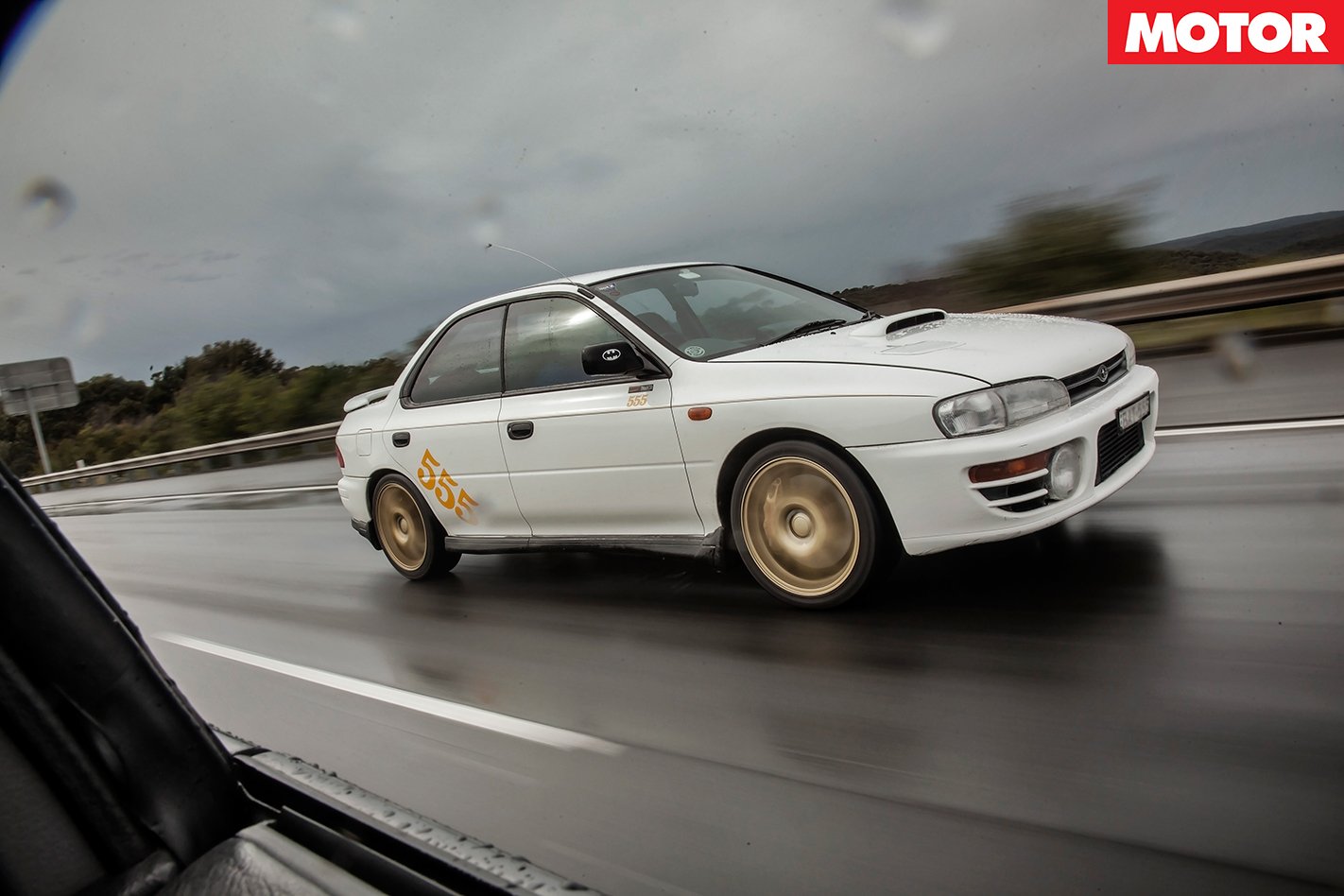
With the arrival of the WRX, the EJ20 turbo engine and all-wheel drivetrain of the RS Turbo were packaged in a smaller, lighter, soon-to-be World Rally weapon.
While the British American Tobacco-sponsored, 555-liveried Imprezas – Impretza if you were a Pommie rally commentator – blitzed WRC stages, Aussie tuners got to work modifying, in what soon became the WRX norm (a factor that made finding stock WRXs for this feature nearly impossible).
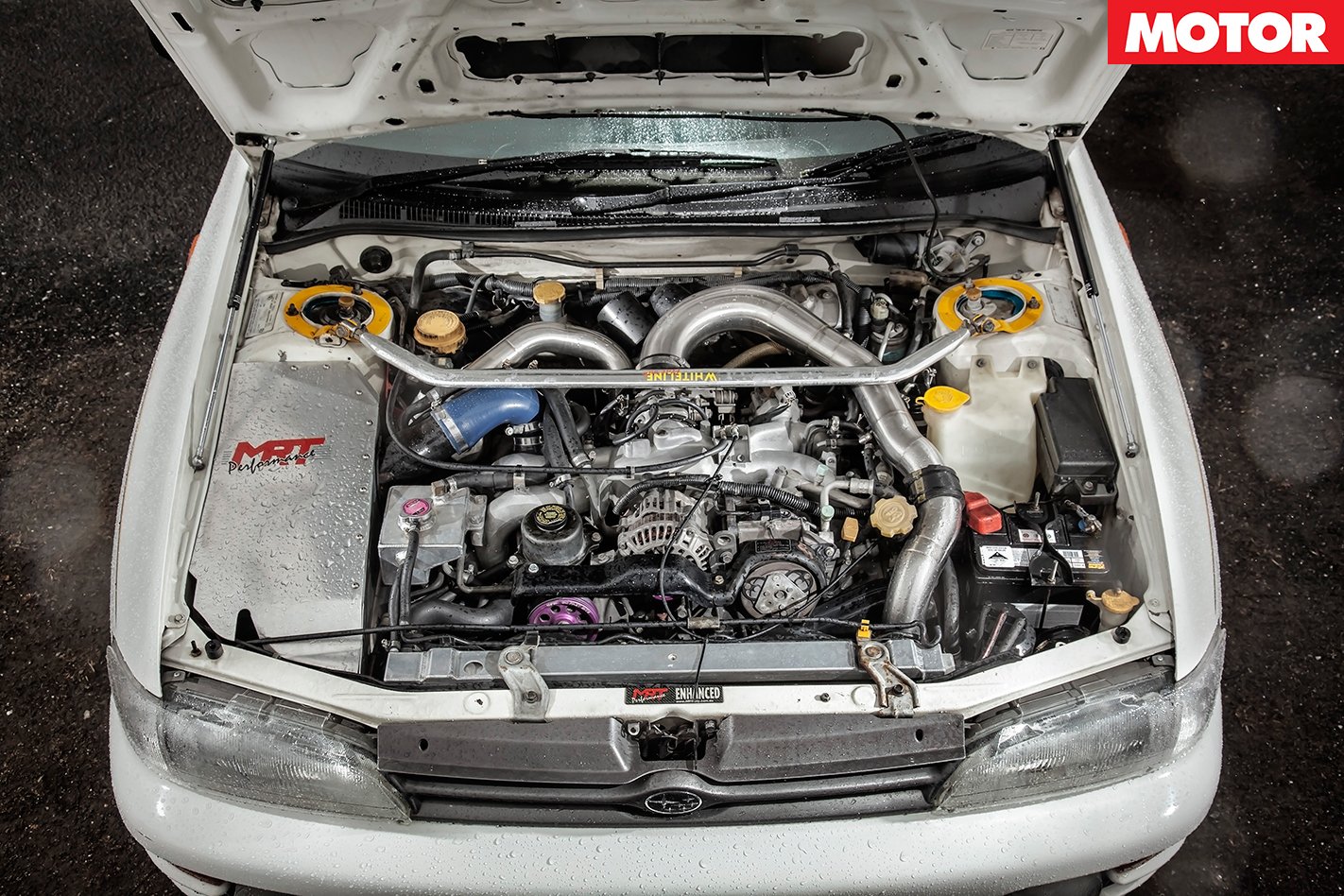
“Obviously, being brand new there was no aftermarket stuff available,” says Jim. (Seems hard to believe now, right?)
Rather, Parramatta dealership Marshalls, who sold him the car, offered a ‘555 pack’ which brought suspension upgrades, a larger exhaust and a cold air intake, making Jim’s MY94 one of the first modified WRXs in the land.
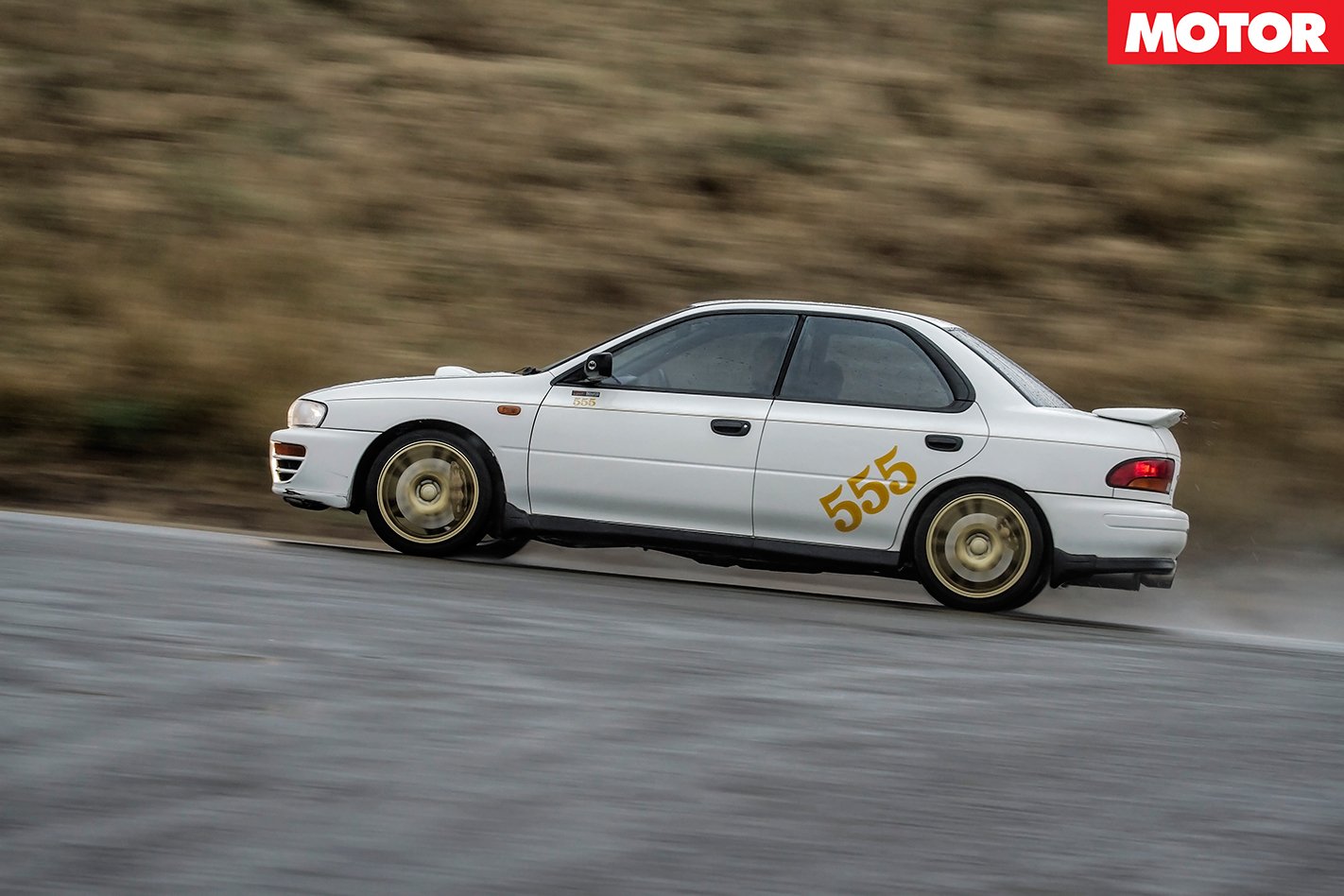
Since then, it’s been modded and modded again, evolving along with the WRX itself to the point that, today, it’s a bit of a grandpa’s axe. With more than 200kW at the wheels, it’s as quick around the track as the newest WRX here, a lightly modded MY09 – they both do 1:09s at Wakefield Park.
Jim’s car sits kart-flat and is sharper to steer and more racecar-like than any STi. The 2124cc stroker, with its old-school Garret 400s turbo, is laggy, but winds up to a furious top-end that delivers relentless shove through the close-ratio STi six-speed, backed by a whoosh and snuffle from the boxed pod air filter, and an exhaust note, via custom extractors, that’s more distinctly flat-four than WRX.
After a short time talking to Jim, it dawns on me – it wasn’t just the MY94, but his car that sparked the beginning of my WRX story. ‘BAT-555’ featured in brand-new, freshly modified form on the cover of the June 1994 issue of Fast Fours & Rotaries, which, to a 15-year-old me, was like a bible.
Eighteen years passed until I owned one. My ‘classic’ (first-gen) WRX of choice was an MY97 – it scored the race-style seats in place of the MY94-96’s flat, tweedy-trimmed items that looked like they were pinched from an Impreza LX.
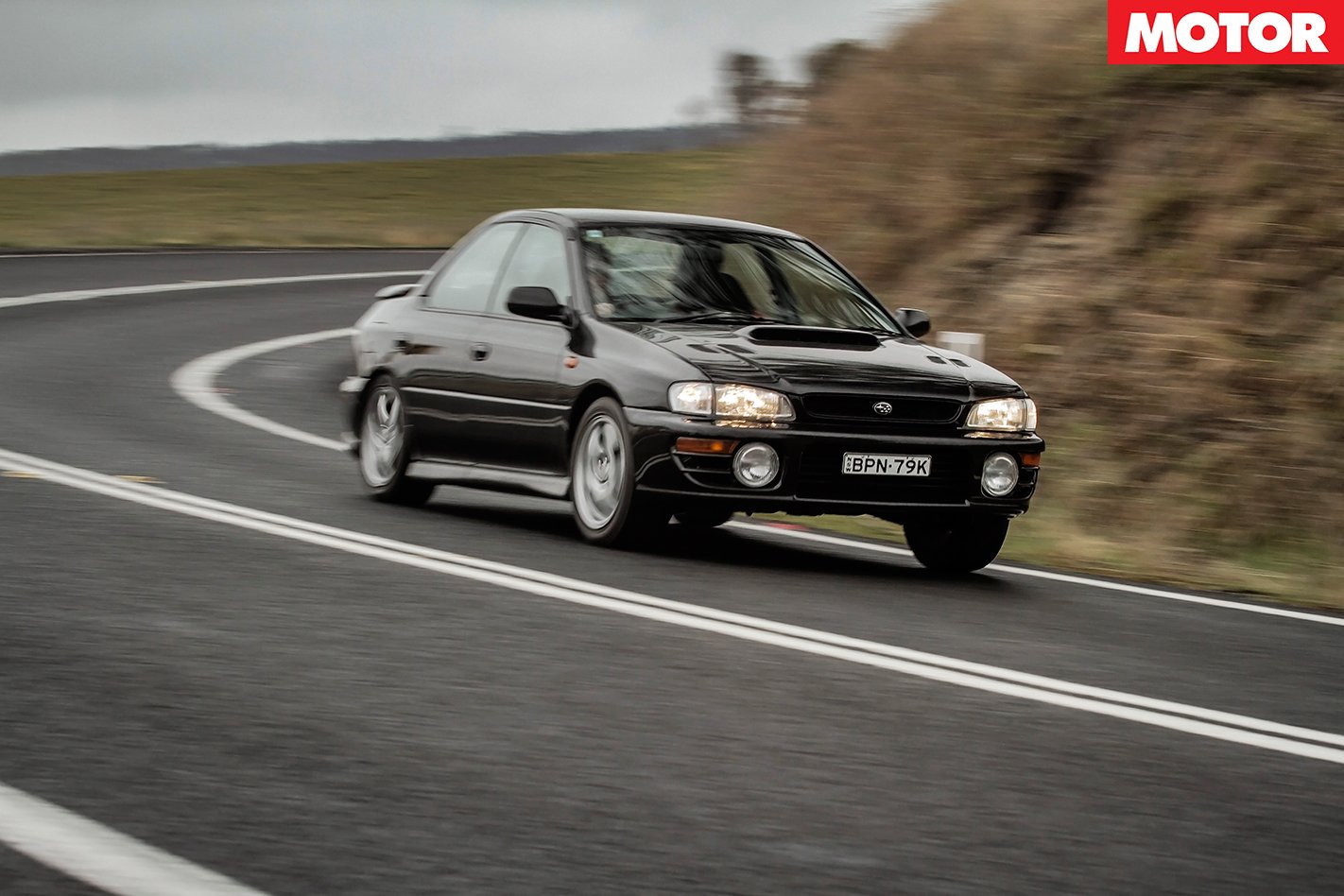
More importantly, though, the introduction of the new World Rally Car specifications in 1997 meant that for the MY97, the WRX could be offered with a smaller, more street-friendly IHI turbo in place of the larger, laggier Mitsubishi TD05H, which still resulted in a peak of 155kW, but torque rose 20, to 290Nm. (And yes, to whisper it is heresy, but the WRX once came with a Mitsubishi turbo, factory fitted.)
With these tweaks, and subtle styling updates, WRX mania took off – Subaru sold almost five times as many of ’em in 1997 as it did in 1996.
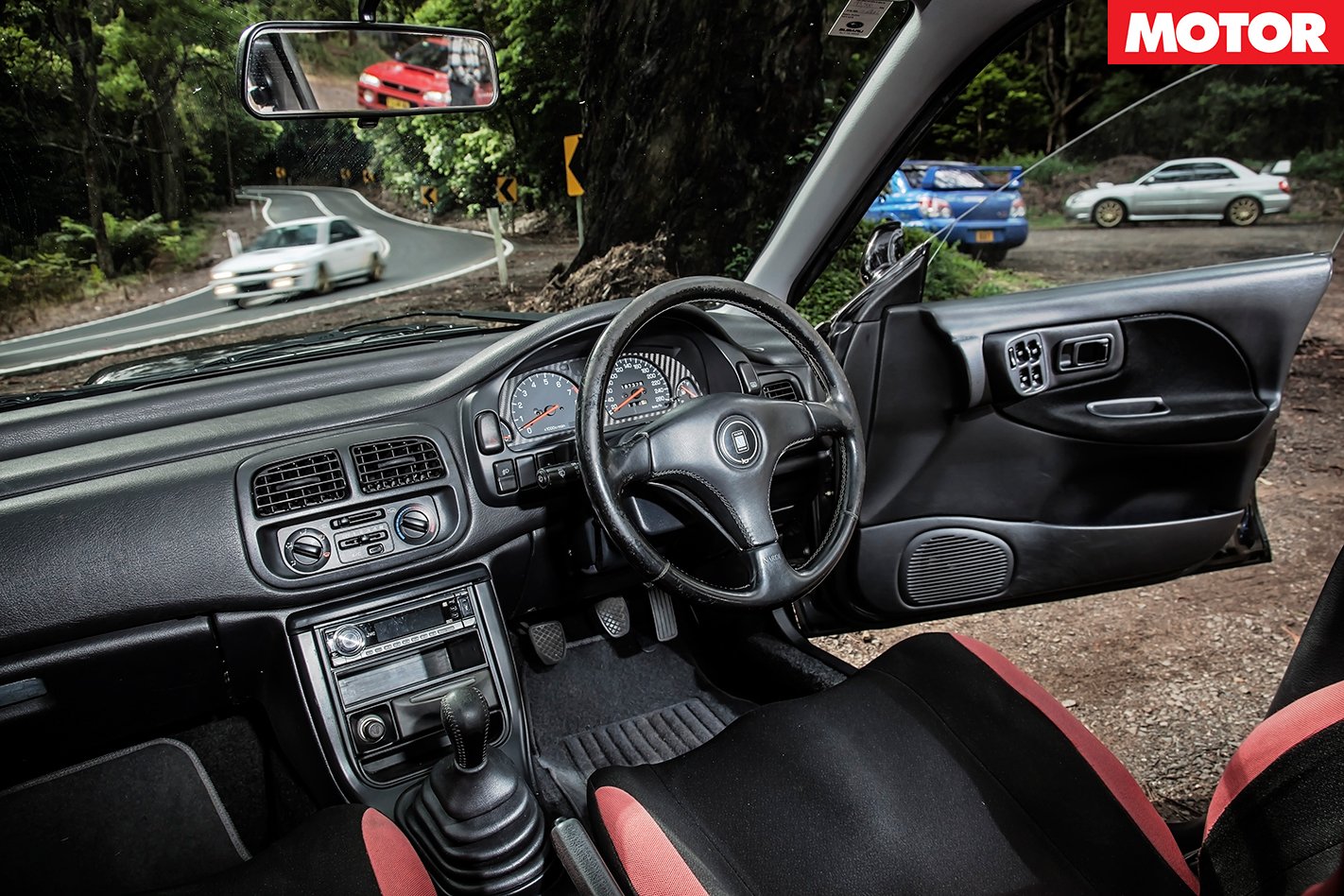
Also in favour of my chosen MY97 was that, among many molested early WRXs, this was the best car I could find. And, with 180,000-odd kays on the clock, it was barely run-in by Subie standards.
A first spin in my new, 15-year-old WRX suggested that the flimsy drive experience didn’t match the chunky look and all-wheel-drive promise, and during the first few weeks, the off-beat eggbeater exhaust thrum that followed me everywhere took some getting used to. Now, though, like many, I reckon that’s part of the appeal, along with unorthodox design features, such as the frameless door glass pioneered by the Leone.
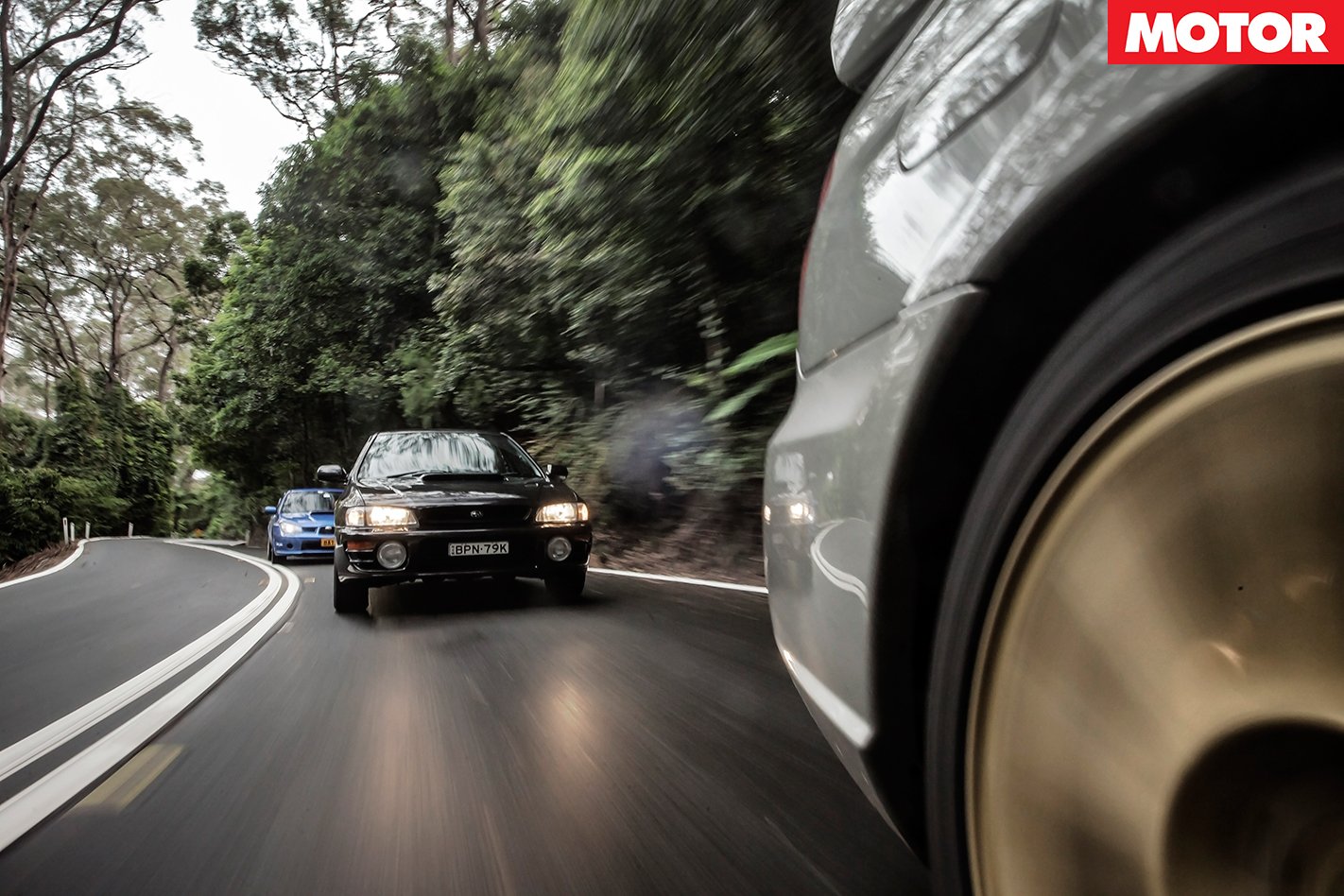
The immobiliser system fitted from MY97 models onwards proves little more than an annoyance in 2013 – who wants to steal a $10K Subaru? – insisting on re-arming with hideous regularity, although Jim tells me he had three theft attempts in the late-’90s ram-raider era, which made his aftermarket security system a must-have.
It takes a good, hard drive for the original WRX to reveal its greatness. Only then is it clear that age and kays haven’t wearied the 2.0-litre turbo boxer’s sprinting ability. The early EJ20 hits its stride at 3500rpm and delivers its kick until about 5500rpm but, thanks to a trim 1255kg kerb weight, it feels torquey from 2000rpm, though is a bit laggier than today’s turbos and nowhere near as smooth as later EJs.
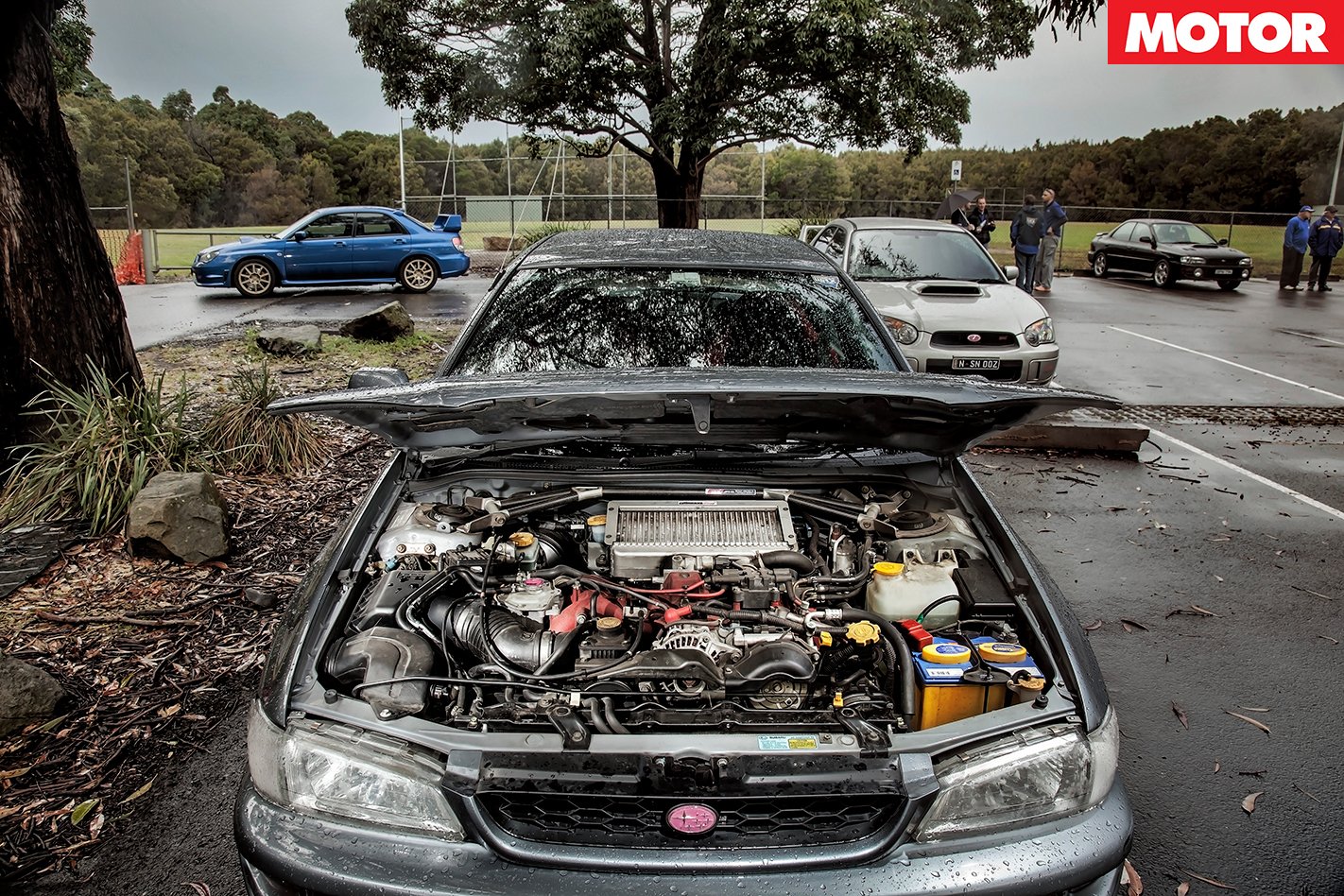
Even when parked, my WRX’s permanent snout-up stance serves as a flashback to what was a common sight at green lights in the latter part of the 1990s, and tells of a decade-and-a-half of lightning-fast getaways.
In MOTOR, back in the day, a stock, black, limited edition MY97 press car – that proved to be an especially healthy example – hit 100km/h from rest in 5.26sec and ran the quarter in mid 13s (Fast Fours & Rotaries later put a boost gauge on it and found it several psi up on the standard 13psi figure).
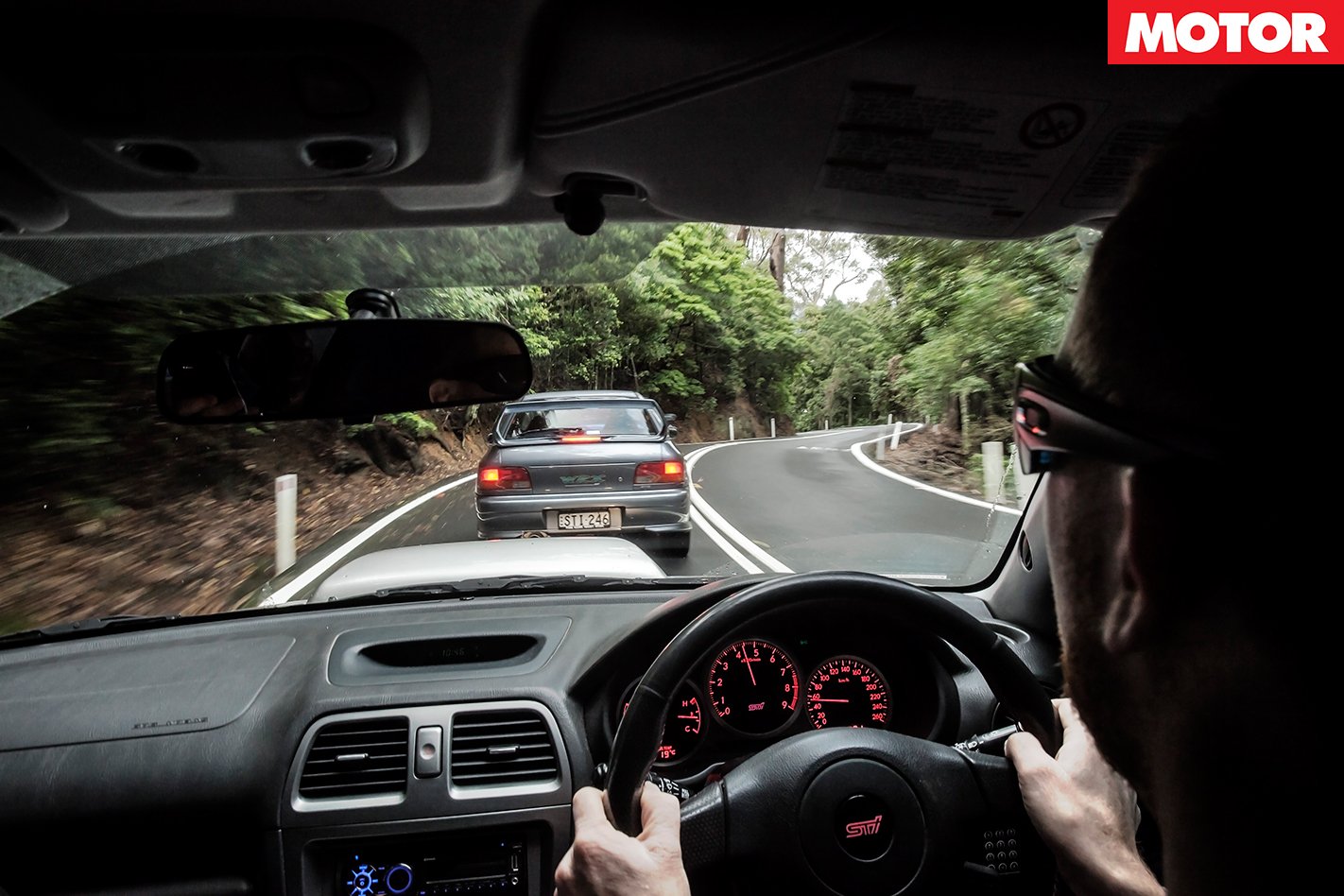
The early Rex’s playful rear-end and ability to spin an inside front wheel when exiting tight corners are proof that all-wheel drive doesn’t necessarily equal ruthlessly efficient speed at the expense of driver involvement.
The rest of the time the chassis remains unflappably poised and satisfyingly adjustable, which is perhaps the quality that helped the WRX win its first Bang for Your Bucks in ’98 (it also won in ’99, in STi form in ’02 and ’05, and in ’09).
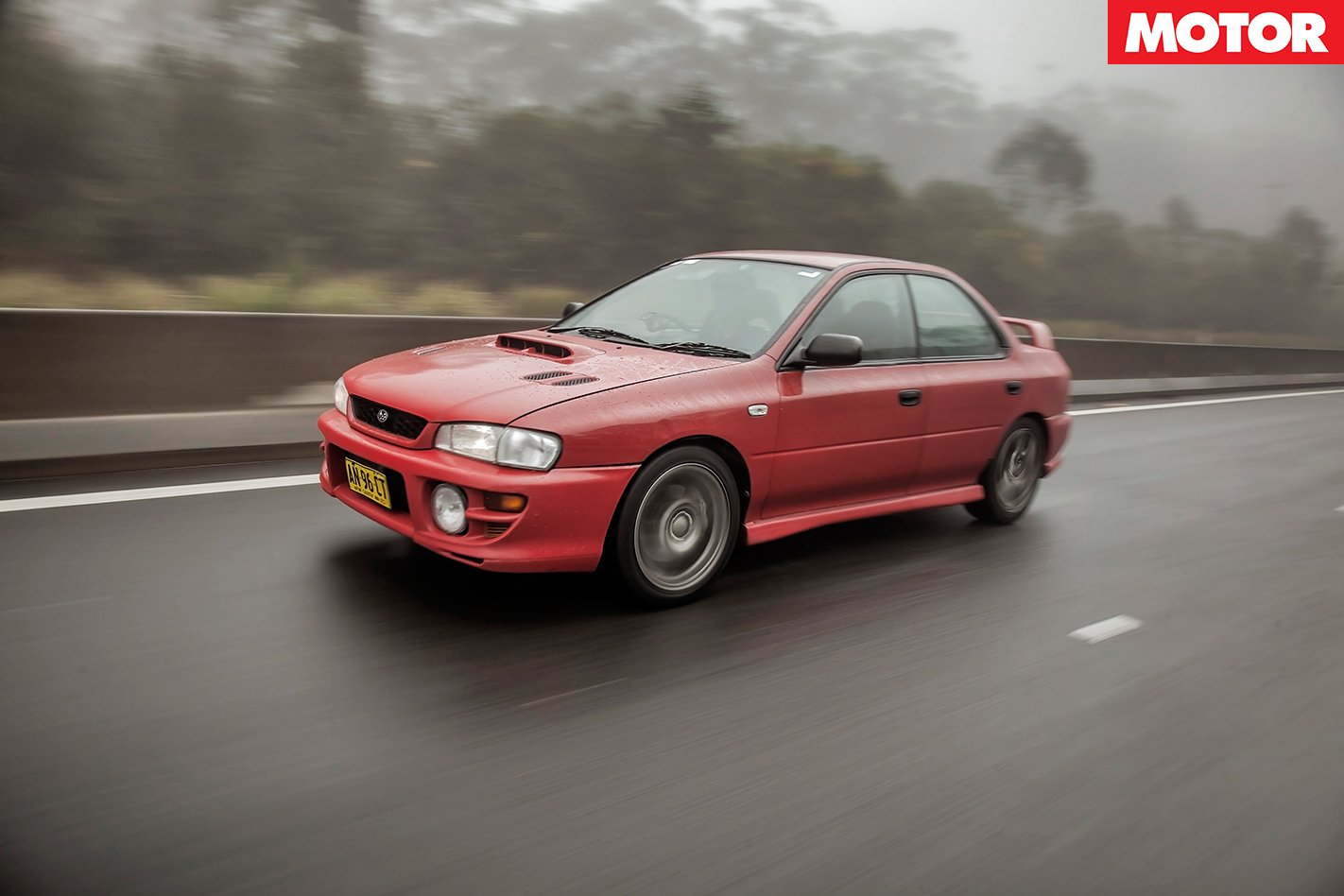
Classic WRX popularity peaked with the final MY99 and MY00 models, which brought the MY98’s updated, Forester-derived dash, as well as four-pot front brakes, a new front bar and a boot spoiler you could do your ironing on. Today, it’s the last of the line that’s the stuff of legend, and the one sought by enthusiasts.
Like me, MY99 owner Stephen seized upon the cost-effective performance offered by a classic WRX when he bought his red sedan two years ago, and the upgrade-me nature of your typical WRX club guy has meant most of his mods, including a cold air intake and a turbo-back exhaust, have come second-hand, and haven’t cost much either. Rough edges don’t diminish its appeal as an everyday-meets-track car, and mean Stephen and his WRX are in their element with dirt beneath the tyres.
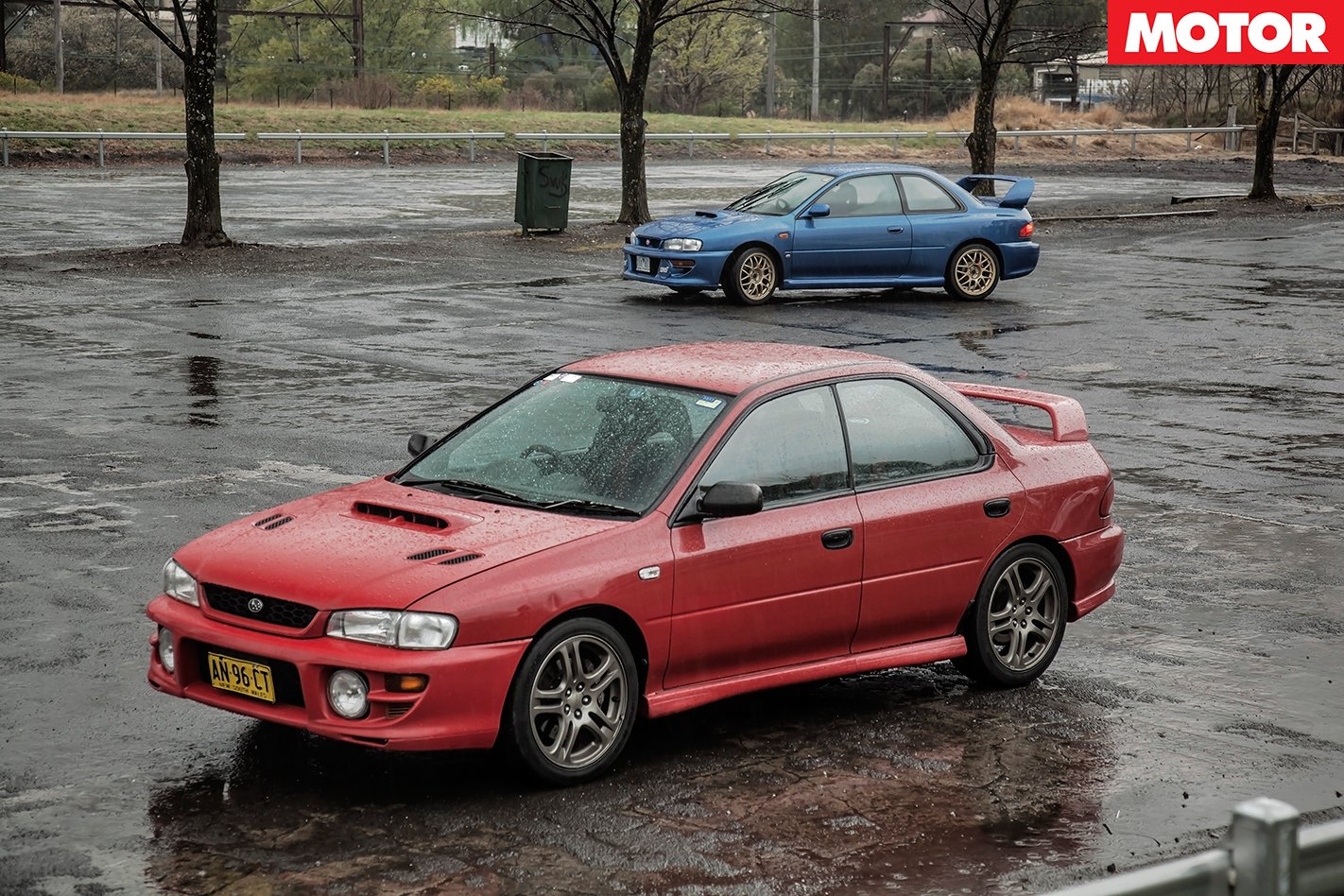
Precisely the opposite applies for Adam and his MY00 version 6 STi – neither modifications nor track days are on the agenda. He simply wants to enjoy his immaculate, limited-edition Subaru daily-driver on the road.
A larger, roller-bearing VF28 turbo pumps boosted air into horizontally-opposed cylinders in what is a slightly laggier set-up than that of a MY00 WRX. However, the free-spinning, full-fat top-end outweighs any complaints. Meanwhile, the hushed boxer rasp through the standard exhaust system lends his car a factory-fresh feel.
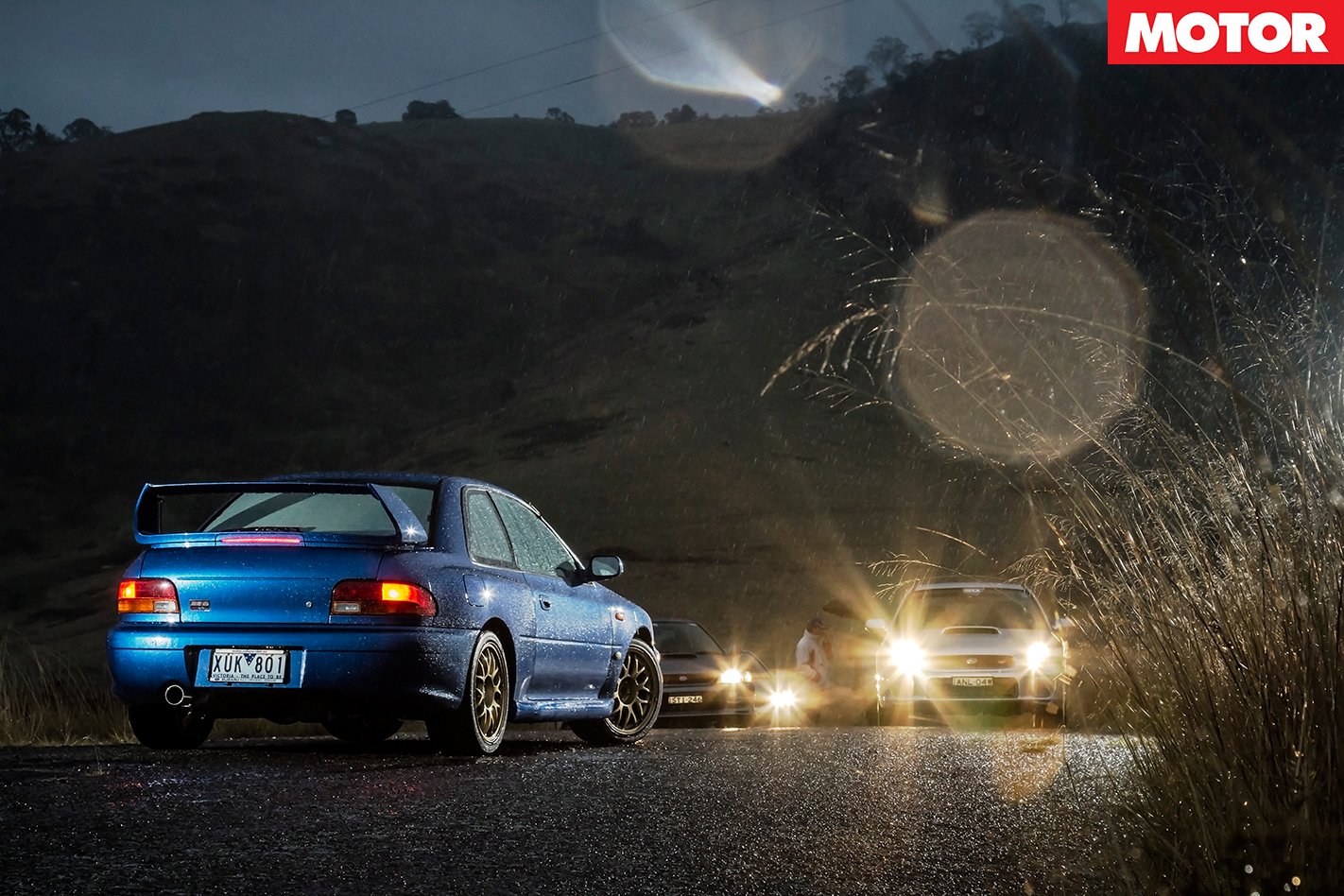
From the short-throw shifter of the close-ratio ’box to the immediacy of the steering and the firm ride, everything feels far tighter than in mine, which is as much a function of the STi specification as it is the fact that, at 90,000km, Adam’s STi has done half the number of kays.
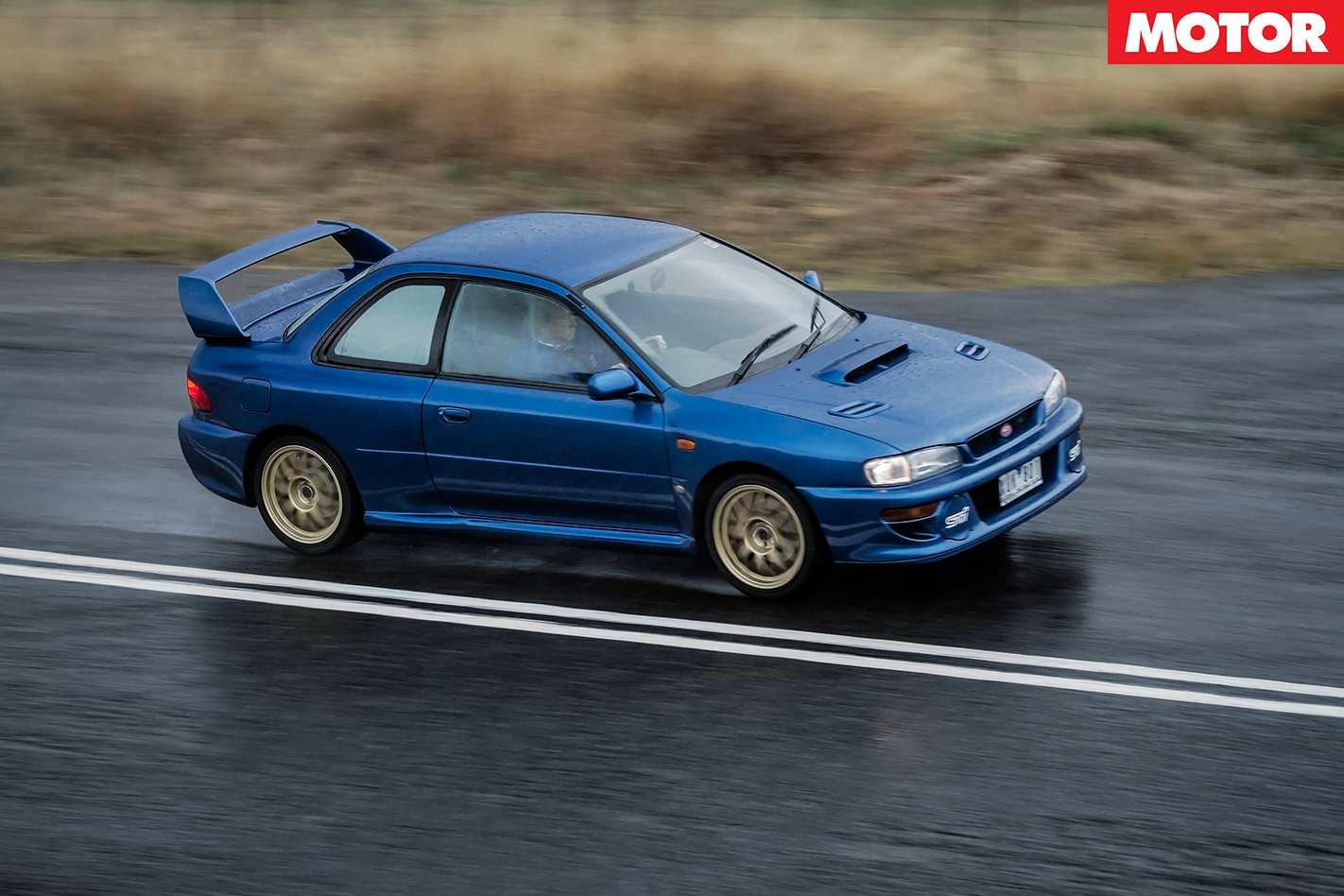
The version 6 proves the perfect lead into the ultimate incarnation of the original WRX – the haloed Impreza 22B STi. Subaru Oz brought just five of them into the country in 1999 – 424 were built in total – and this one, with less than 7000km on the clock, remains a permanent part of its collection.
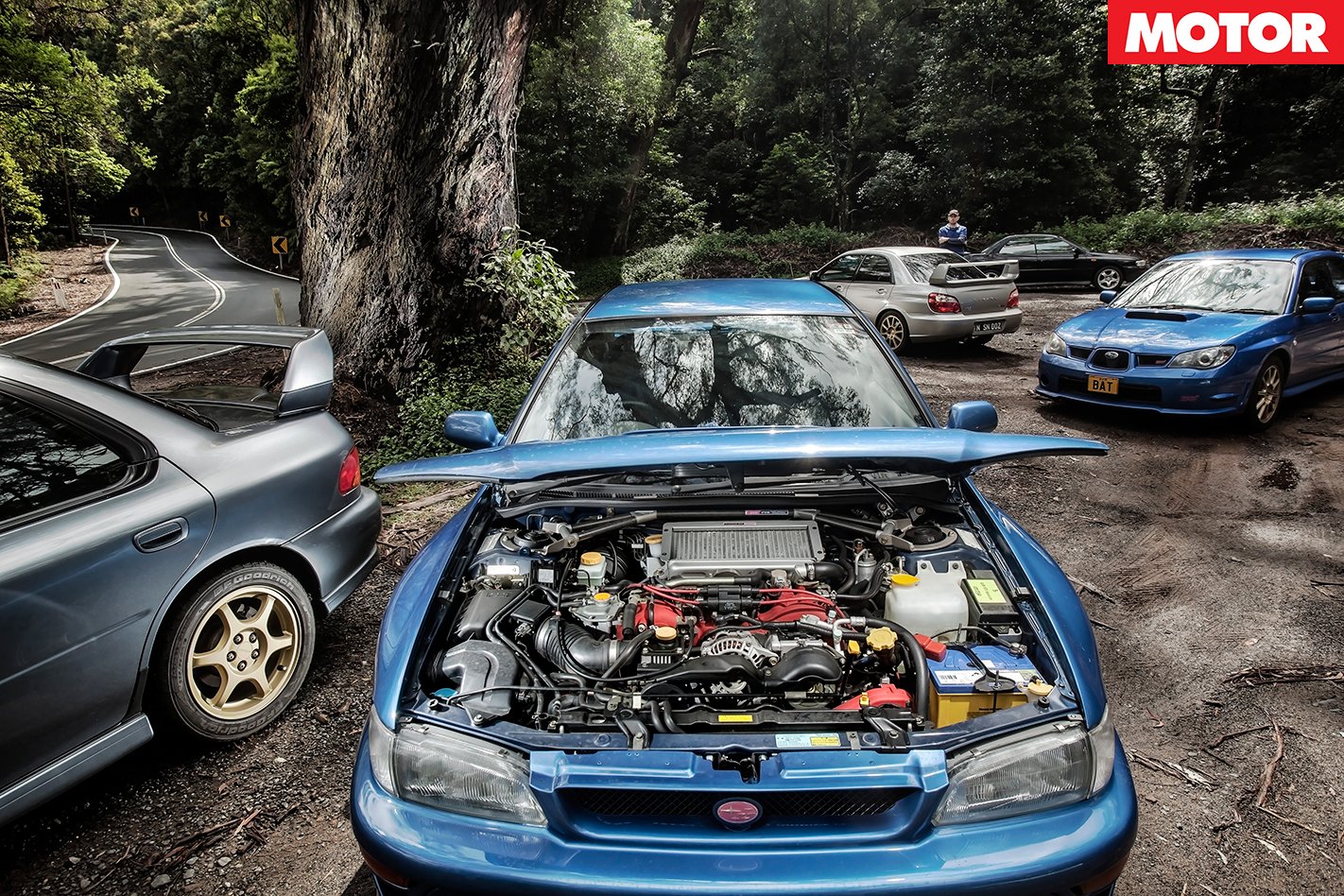
The 22B was the nearest thing to a World Rally Car for public roads, and was built in celebration of both consecutive WRC manufacturer’s titles (in 1995, ’96 and ’97) and Subaru’s 40th anniversary. Flared guards – that contributed to a total width increase of 80mm – cloaked hardware such as Brembo brakes, Bilstein dampers, a driver-controlled centre diff, and a hand-built, bored-out 2212cc boxer which, with its VF23 turbo, mustered 206kW and 363Nm.
In signature WRC Blue, arches bulging with deep-offset BBS alloys, it turns the heads of those who know it’s no version 5.
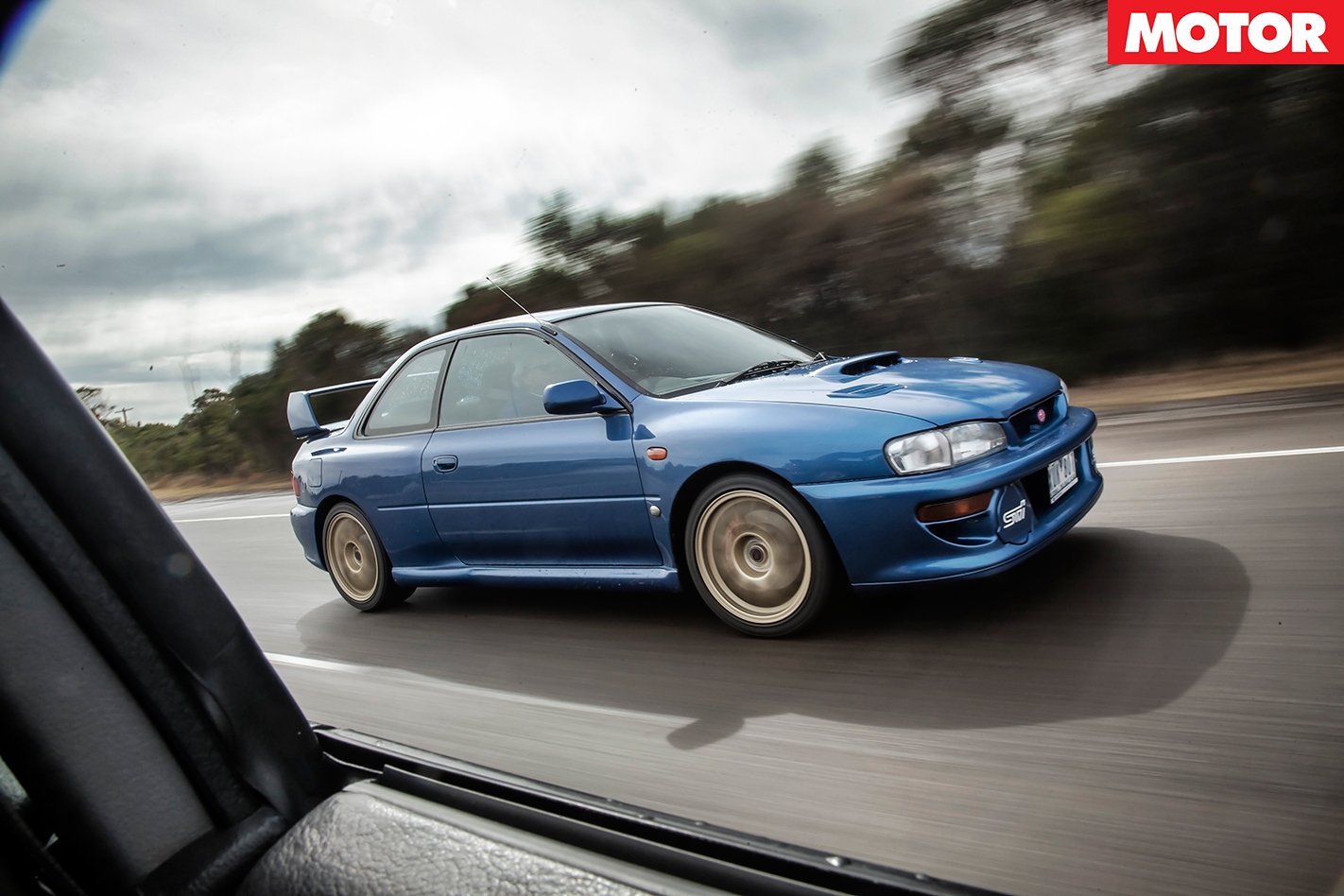
The drive experience is equally neck-snapping. From a flexible bottom end, it moves through the 3200rpm torque peak before exploding into a whooshing, raspy crescendo.
The low final drive, close-ratio ’box and racecar-taut ride – the rear suspension is rose-jointed – ensure the cabin and the driver buzz constantly, but the whole package has a togetherness that can be put down to its pedigree and pristine condition, and marks it as a fitting finale for the WRX that defined the legend.
Subaru WRX Celebration: Introduction
Subaru WRX Celebration: 2nd generation
Subaru WRX Celebration: 3rd generation
This feature first appeared in the December 2013 edition of MOTOR magazine.
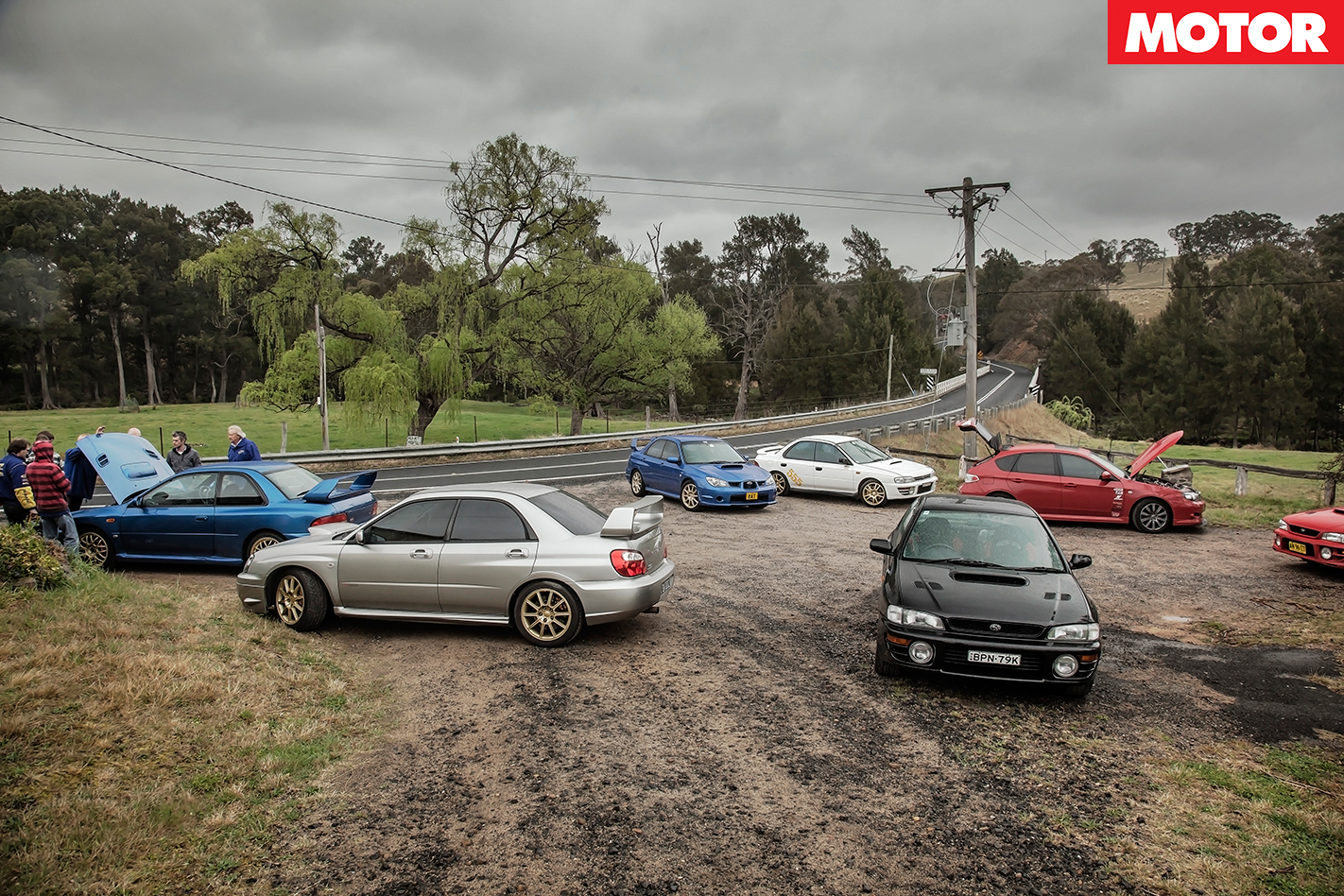
The WRX is more than two decades old, but put away the mini sausage rolls and the old, melted candles, we’ve got a better way of celebrating: reuniting the nine most heroic WRXs ever, and driving them all again. Hard.
Back in the ’90s, and now, the all-wheel-drive poise of an early WRX on humble rubber let it deploy its healthy kilowatt count on drenched roads like few other cars, making drivers of modest ability feel like Colin McRae, Possum Bourne or Petter Solberg in the process.
These attributes certainly proved their worth on the day of our photoshoot, but there’s more to the WRX’s allure than flattering dynamics and tenacious traction; appeals that have kept Subiephiles coming back to the turbo flat-four powered sedan and hatch, with the trademark off-beat burble, in the two decades since it went on sale in Japan.
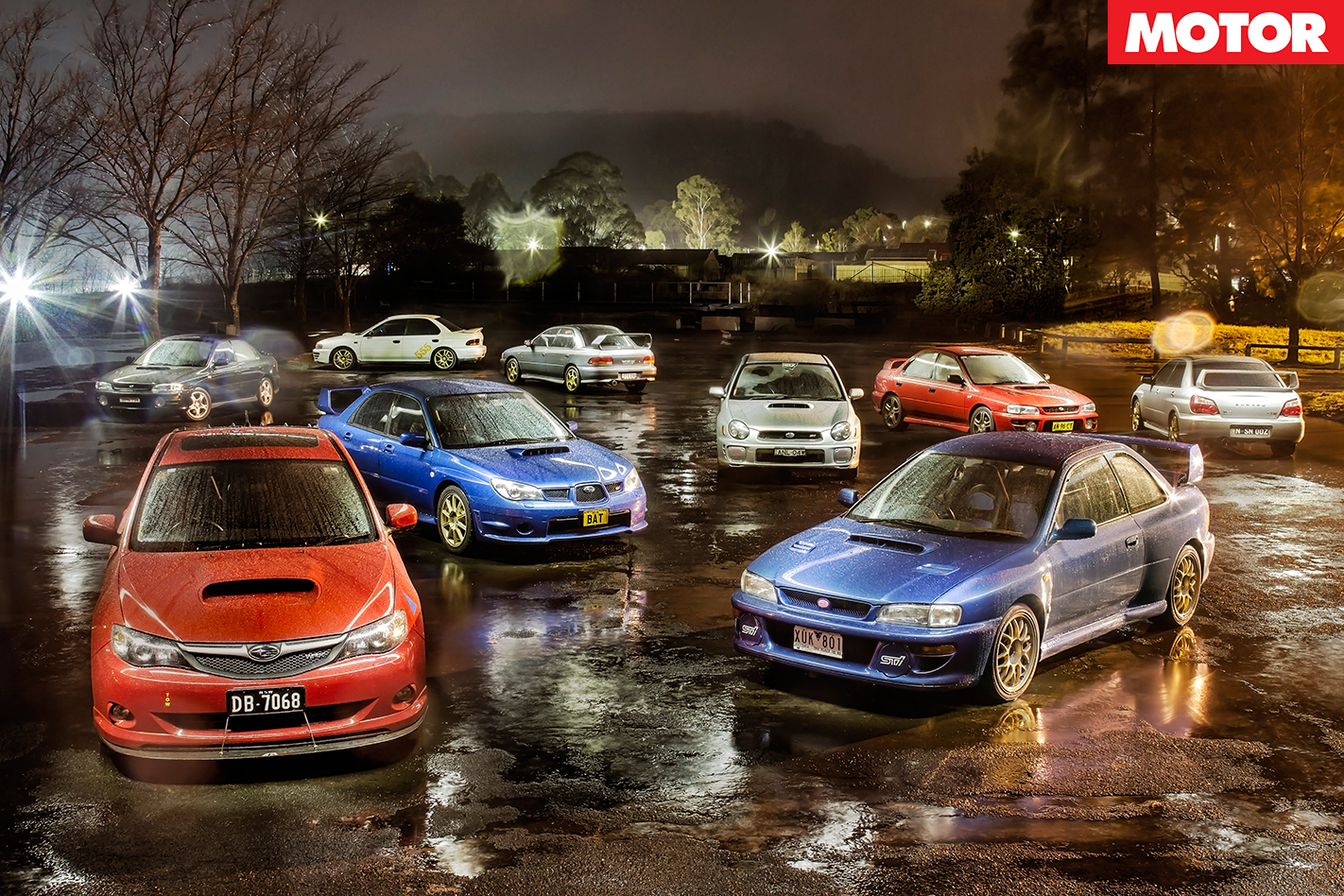
In celebration of the 20-year anniversary of the model, we’ve set out to get to the bottom of why the WRX has been so popular for so long. And to do so, we’ve compiled a best-of collection that spans nine models over three generations.
So, where did it start for members of the Impreza WRX Club of NSW, who were kind enough to provide the cars?
For MY09 owner David, the thing that sucked him in was the WRX’s practicality, “Yeah, there’s been some modifications, but I can still drive the kids to school – for me that’s the real attractiveness about this type of car.”
“I’ve always been into the practicality and performance of Subaru,” agrees MY05 STi owner and adventure sports man Craig, who’s owned his share of wagons (hatches, officially), an option that isn’t available to Mitsubishi Evo enthusiasts (aka, the enemy!).
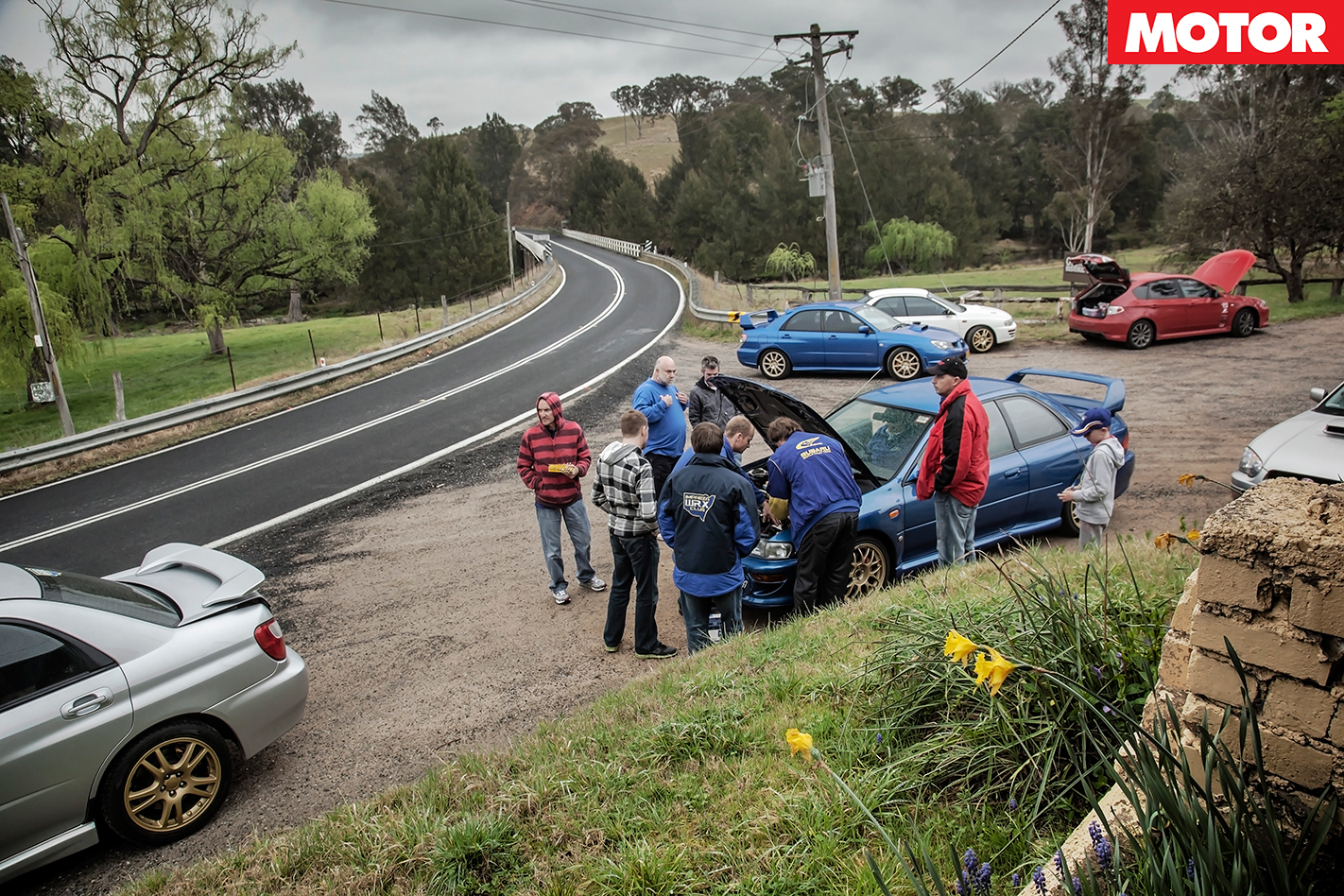
Others cite the brand’s reputation for longevity – case in point, club president Evan McNeill’s MY98 WRX. Bought used in 2001 with 30,000km on it, it first hit the track more than 200,000km later and, countless track days on, it has clocked 350,000km on the original engine and turbo. Impressive.
But there’s more to it than pragmatic factors such as practicality and reliability. For mine, it’s the fact that the WRX, with its all-wheel drive and turbocharged flat-four, set itself apart technically. It wasn’t different for its own sake – the powertrain brought a clear performance payoff and loads of character, which is a quality you certainly can’t count on in a cut-price Japanese performance car.
One way or another, the WRX has a way of getting under owners’ skin, because it seems the WRX club guys have either stuck with the car, the model, or the brand over the years.
Jim, for example, still owns the MY94 he bought new 19 years ago, while Craig’s had six Subies, Adam’s had four, and Ian’s on his third.
But can the club guys agree on the best Rex? “I think everyone’s got a soft spot for the classics, and things like the 22B,” says Ian, who started with a MY00 WRX, but now owns a MY06 STi. Version 6 STi owner Adam started with a MY00, too, but he’s stuck with it. “This is the model that I love – I’ve had three of the same.”
So that’s the club guys’ vote. Can we also find a favourite?
Subaru WRX Celebration: 1st generation
Subaru WRX Celebration: 2nd generation
Subaru WRX Celebration: 3rd generation
This article first appeared in the December 2013 edition of MOTOR magazine.
In stark contrast to Australia’s booming housing market, struggling Chinese developers are offering huge incentives to buyers in a bid to clear a massive inventory of homes.
The Sydney Morning Herald reports that Hopson Development Holdings is offering a free Porsche to the first 30 buyers in its new apartment complex in southern China.
Having borrowed heavily to begin new constuction projects, many developers are now stricken with debt and are desperate to clear masses of unsold properties.
So if you’re sick of attending over-subscribed Sydney auctions, fancy a seachange and want to show off your fancy new sports car in the world’s most populous nation, then here’s your chance!
Get your free weekly report from the world of fast cars – subscribe to the MOTOR newsletter!
The Nurburgring Nordschleife is the world’s most fearsome racetrack and its demanding layout makes it a favourite for car makers’ development programs.
It seems you can’t launch a new model these days without it having spent considerable time pounding around this famous German circuit, especially if it has performance connotations.
Audi has made no secret of the fact that it’s developing a high-performance version of its new Q7 SUV, said to house the first iteration of its new e-boosted turbo diesel.
Regardless of what eventually lives under the bonnet, one day of testing didn’t quite go as planned when a test driver stuffed one of the development cars into the fence.
Tipping all two-plus tonnes of Q7 into the famous Karussell at maximum speed, the car drifts slightly too high on the camber and from there it’s a short trip into the barrier.
The damage appears fairly substantial, though the car is still driveable. If you spend enough time driving fast enough, things will occasionally go wrong!
Get your free weekly report from the world of fast cars – subscribe to the MOTOR newsletter!
Fast blasts in the Lamborghini Aventador SV and the Porsche 911 GT3 RS, we compare four $50K load-luggers, buying into Ferrari, Isle of Man’s Lap of the Gods, plus our usual mix of news, views and showroom data. Available in print and on the iPad via the iTunes Store.
Join us for the ride in this July 2015 edition of Wheels in print or iPad: on sale now.
Sign up here to receive the latest round-up of Wheels news, reviews and video highlights straight to your inbox each week.
Mercedes-Benz’s coupe-esque CLA grows an even bigger tail and gains some practicality in wagon-esque‘Shooting Brake’ form
WHAT IS IT? A slope-backed, tailgated version of Mercedes-Benz’s CLA four-door ‘coupe’, with a very British model name but the same MLA platform and four-cylinder powertrains as the A-Class hatch it’s based on.
WHY WE’RE TESTING IT? The Mercedes-Benz CLA Shooting Brake is the final piece of the CLA puzzle – a progressive roll-out that began in October 2013 with the CLA200, 250 Sport and CLA45 AMG four-doors, supplemented by the CLA200 diesel in March ’14 and an all-wheel-drive CLA250 Sport 4matic in July ’14. But has the year-long wait for the wagon produced the best variant?
MAIN RIVALS No direct competitors leaves the Shooting Brake CLA pretty much in a niche of its own, as a tarty coupe-sedan with mini-wagon practicality. Only the BMW 3 Series GT has the CLA’s sexy frameless doors and swoopy rear roofline, though it’s a bigger and roomier car, with a slightly larger boot (520 litres versus 495).
THE WHEELS VERDICT A BETTER CAR than the functionally compromised CLA coupe-sedan, and quite a sweet one in CLA250 Sport 4matic guise. Or a seriously brutal one as a CLA45 AMG, especially with excellent sports suspension. But the front-drive Shooting Brakes are underwhelming and characterless, relying on brand image and styling to justify exalted prices
Plus: Useful luggage flexibility; improved rear-seat headroom over cramped regular CLA; entertaining handling of 4matic variants; 250 Sport’s all-round sweetness Minus: Below-par ride and lesser handling of front-drive CLA200 and 200 CDI; average cabin plastics; rear-seat’s zero under-thigh support; grumbly diesel
THE WHEELS REVIEW IF YOU want a road test of the back half of a car, then here you go. The 2015 Mercedes-Benz CLA Shooting Brake. A ‘sportswagon’ variant, for want of a better term, of the CLA sedan-that-isn’t, with greater load-carrying flexibility to accompany its marginal dimensional increases. Think of it as the CLA for those who didn’t previously like the CLA.
With the coupe-sedan’s droopy tail redrawn into a chunkier silhouette, from many angles the Shooting Brake appears to be more all-of-a-piece, though viewed from directly rear on, I can’t help thinking of an FB/EK Holden Station Sedan. You know, the wagon that was clearly a sedan with a pergola erected out back? The Shooting Brake is definitely less polarising than the coupe, but not necessarily more beautiful.
What it manages to do rather successfully, though, is achieve quite a lot more from not much more. The Shooting Brake is just 3mm taller than the coupe, and identical in wheelbase and overall length, yet it expands the coupe’s cramped rear-seat area to one that’s actually usable for fully-grown adults.
The seat remains completely devoid of under-thigh support, mind you, but the bonus here is a split rear backrest that folds almost completely flat, expanding the Shooting Brake’s 495-litre boot (470 for the coupe), in conjunction with an electric tailgate and ribbed metal floor runners, to create a spacey little mini-wagon.
The weight penalty for the Shooting Brake’s extra room is a scant 30kg, meaning it drives just like the coupe does. And that means a model range separated by driver appeal – the front-drive CLA200 and 200 CDI for those who want the look and the badge, or the vastly more entertaining all-wheel-drive CLA250 Sport and CLA45 AMG for people who actually enjoy driving.
It is brilliant all-rounders like Volkswagen’s Mk7 Golf that make the CLA200s feel so underwhelming. Inexpensive-looking cabin plastics around the cabin’snether regions are something you could easily live with, but it’s the lumpy, fidgety ride of the 18-inch-wheeled 200s that undermines their premium positioning. Disinterested steering too, not to mention a grumbly100kW/300Nm turbo-diesel that lacks the refinement expected at this price point, though the 115kW/250Nm 1.6-litre turbo-petrol’s somewhat insipid nature is more palatable.
Your best bet is to stretch to the $66,400 CLA250 Sport 4matic. While it lacks the hardcore drama of the $90K AMG version, its fruity 155kW 2.0-litre turbo-petrol crackles and pops away, encouraged by a poised all-wheel-drive chassis and pointy ‘Direct Steer’ steering that actually feels like it wants to sniff out an apex. The CLA’s firm ride quality makes sense in the 250 4matic, too, because it’s a genuinely sweet and sporting little pseudo wagon – one with a USP that no other car can quite match. Not yet, anyway
SPECS Engine: 1991cc 4cyl, dohc, 16v, turbo Max power: 155kW @ 5500rpm Max torque: 350Nm @ 1200-4000rpm Transmission: 7-speed dual-clutch Kerb weight: 1490kg 0-100km/h: 6.8sec (claimed) Economy: 6.9L/100km Price: $66,400 On sale: Now
