
Rallycross is taking the motor sport world by storm.
It’s short, action-packed races are perfect for the fleeting attention spans of today’s youth, and cars themselves look insane, with massive bodywork bulges and wild aero kits.
That’s because they are insane. Take this Audi S1, driven by one of the world’s most versatile and talented drivers, Mattias Ekstrom.
It packs 433kW and 854Nm into that tiny bodyshell, enough to 0-100km/h in a Bugatti Veyron-matching 2.5sec. And it’ll do it on tarmac, gravel, mud – any surface you care to name.
It’s the most fearsome Audi creation since the Group B days, so it’s only right that Ekstrom handed the keys to legendary rally driver, Walter Rohrl, for a few hot laps.
We’re promised there’s more footage to come from this day, but for now, check out the teaser video above.
Get your free weekly report from the world of fast cars – subscribe to the MOTOR newsletter!
THERE’S 918 reasons to crank up the volume this morning, with the release overnight of a video of the Porsche 918 Spyder hybrid sports coupe at full noise in the Australian outback.
The video shows the next-generation Audi R8 e-tron rival hitting its 350km/h straps after cruising for 25km under electric power alone from Alice Springs in the Northern Territory to the start of the derestricted part of the Stuart Highway.
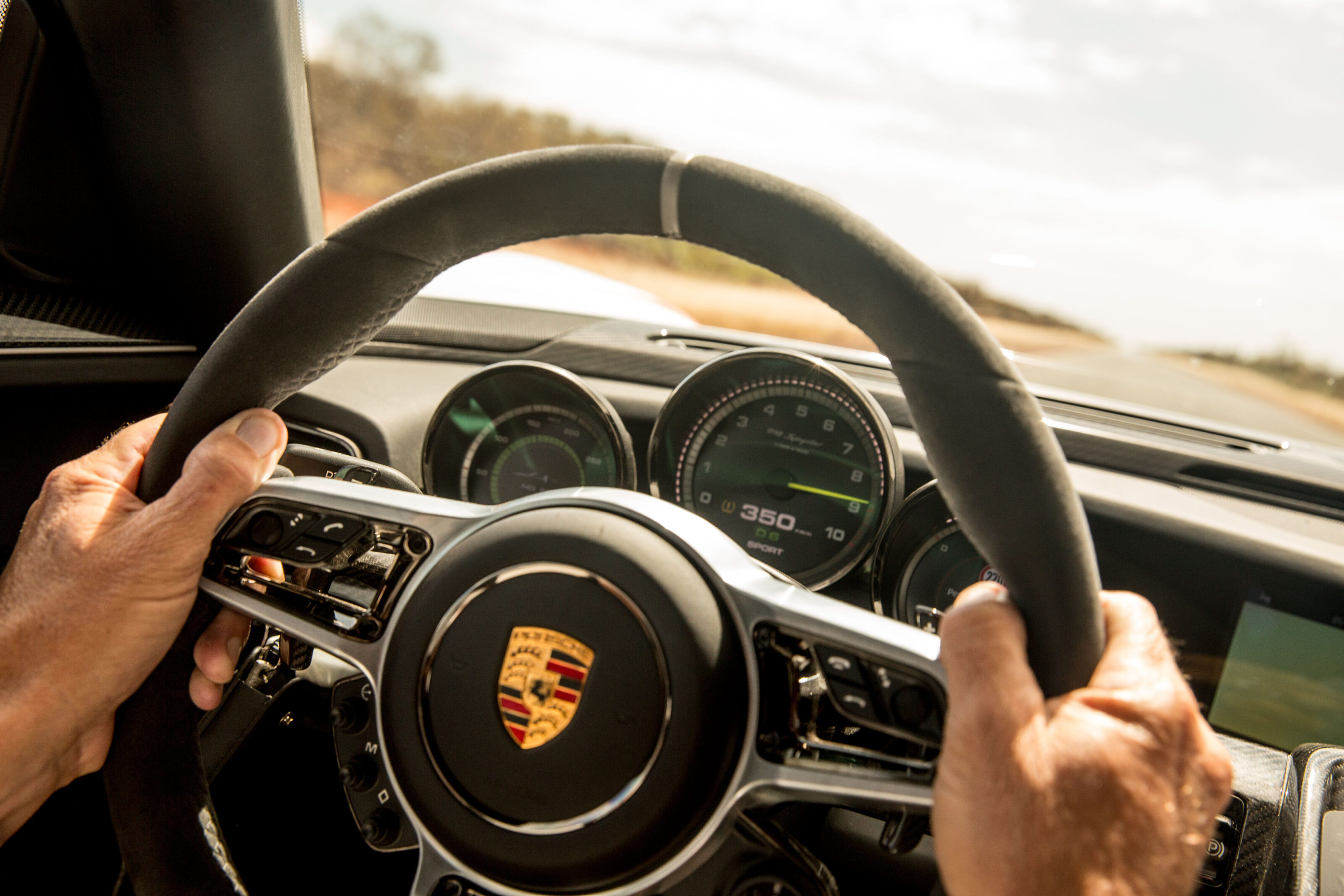
At this point, the full 652kW of the mid-mounted V8 and twin electric motors is combined to push the hybrid two-seater from 60km/h right up to the 350km/h limit just 40 seconds later.
Porsche said the controlled test took place with a professional driver at the wheel on the only stretch of public road in Australia where such a feat is possible.
The car maker used radios and spotters to ensure the road was empty of traffic at the time.
The left-hand-drive 918 Spyder is in the final days of an Australian promotional tour showcasing its hybrid technology.
Sign up here to receive the latest round-up of Wheels news, reviews and video highlights straight to your inbox each week.
As soon as the Northern Territory destricted its roads last year, manufacturers began flocking back to the top end to conduct high-speed hot weather testing.
Or, in Porsche’s case, publicity stunts. And if you’re going to test a car’s top speed, you might as well take something with a decent top speed to begin with, like the incredible 918 Spyder.
It hit 293km/h at Phillip Island, and blew us away with its ability during our recent first drive, but what could it do let off the leash?
A staggering 350km/h, and this from a car that drove the first 25km out of Alice Springs on electrical power alone.
Check out footage from Porsche’s outback adventure above, where it concludes its top-speed run with some old-fashioned dirt circle work. Because ‘Straya.
Get your free weekly report from the world of fast cars – subscribe to the MOTOR newsletter!
There’s a lot to see in this big country of ours, and few better ways to see than by car.
A long road trip consisting mostly of highway driving might not have played to the Subaru WRX STI’s strengths – the ride is too firm, the seats are too hard and it’s not particularly economical – but there were plenty of things to see along the way.
Above are some quick iPhone shots snapped during the three-day trip, which took us from Melbourne to Sydney via the Hume, then back through Canberra, an overnight stop in Jindabyne to check out Mount Kosciuszko, then through Bombala back to Melbourne.
Highlights of the trip included the spectacular scenery of our highest mountain range, an excellent Italian feed in Jindabyne, followed by a cracking bit of road the next morning linking Jindabyne and Bombala.
Lowlights? Australian speed limits, the monotonous drone of the Hume, and the world’s weirdest antique shop in Cann River.
For earlier long-term updates see below:
Get your free weekly report from the world of fast cars – subscribe to the MOTOR newsletter!
Only weeks away from local launch, the Mitsubishi Outlander makeover makes an unexpected Aussie appearance
MITSUBISHI’S bold new face for the future is only weeks away from making its Australian debut, as witnessed by the significantly updated Mitsubishi Outlander sprung whizzing through Wollongong’s streets by on-the-ball reader Michael Maida Birdaini. The facelift will give the Mitsbuishi Outlander a much needed boost against the Honda CR-V and Hyundai SantaFe and Kia Sorento twins.
Brandishing a redesigned nose that will also make its way on the next-generation Mitsubishi ASX, Pajero and – it is rumoured – long-overdue replacement for the eight-year-old Lancer small car, the Outlander (designated ‘ZK’) also sports a subtly yet effective rear-end tuck. Differences include fresh tail-lights, an altered tailgate pressing and more prominent rear diffuser.
The once-dour interior, too, undergoes a transformation, scoring higher-quality materials, better instrumentation, improved audio, and the de rigueur multimedia screen update with improved connectivity, to help address one of the outgoing model’s biggest criticisms.
Underneath, the engineers have beefed up body and chassis rigidity and fettled with the suspension and steering tune to improve the existing Outlander’s mediocre steering, ride and handling characteristics. Cutting noise/vibration/harshness pathways has also been a priority, as promised by the fitment of more sound deadening material throughout the crossover.
Last but not least, the Outlander facelift gains a broader selection of driver-assist technology, such as lane-departure warning, collision avoidance and radar-guided active cruise control on higher-end versions.
Along with restyled alloy wheels, all are part of what Mitsubishi Motors claims are over 100 engineering and design improvements for the third-generation series, which was released in Australia in December 2012. After a disappointing eighth spot in Wheels’ 10-strong Medium SUV AWD Megatest last year, the changes cannot come soon enough, and are vital in boosting the brand’s image after a slew of less-than-stellar offerings such as the feeble Mirage.
Prices are unlikely to stray too far from the current Outlander’s, which sees the base ES 2.0-litre manual petrol front-driver kick off from $27,740, rising up to nearly $52,500 for the Aspire PHEV plug-in electric/petrol twin-motor AWD flagship. Carryover 2.4 petrol and 2.2 turbo-diesel four-cylinder engines will also be available once again, matched to CVT and six-speed automatic transmissions respectively.
Unveiled earlier this month at the New York International Auto Show, the Outlander facelift rollout is only just beginning, with Australia likely to be one of the first markets in the world to see the important brand-boosting newcomer.
Have spy pics of your own? We’d love to see them. Email them to [email protected]
THE three-year-old Hyundai i30 C-segment hatch (and Touring wagon) is subtly modified with a more elegant nose, improved diesel efficiency and performance (courtesy of a new dual-clutch auto), and minor spec improvements.
WHAT IS IT Hyundai’s best-seller, the second-gen i30, is now in midlife crisis mode, undergoing a (successful) facelift, gaining a torquier diesel with a DCT dual-clutch auto, a reverse camera and updated multimedia. However, the volume-selling 1.8 petrol screamer remains untouched, sadly, and what of the dynamic and refinement issues?
WHY WE’RE TESTING IT Hyundai really needs the i30 to keep firing, but that’s becoming tough in the face of the marketing muscle-backed Toyota Corolla, redesigned Mazda 3, high-flying Volkswagen Golf and upcoming facelifted Ford Focus. The goalposts keep shifting, so we need to know if the i30 is keeping pace.
MAIN RIVALS Toyota Corolla, Ford Focus, Mazda 3, Nissan Pulsar, Kia Cerato, Honda Civic, VW Golf, Skoda Octavia, Mitsubishi Lancer, Holden Cruze, Peugeot 308
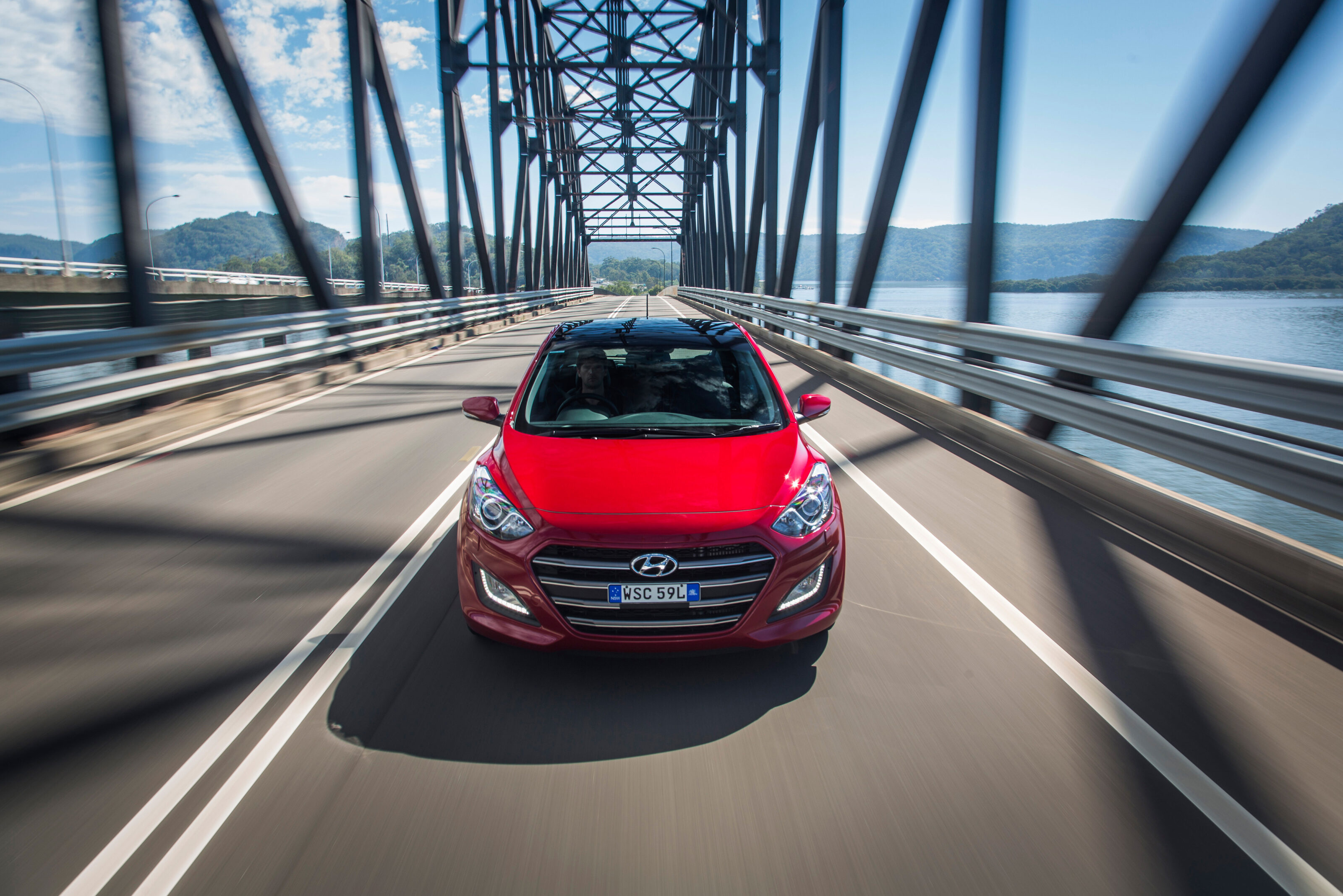
THE WHEELS VERDICT Hyundai is clearly treading water with its bestselling model, and we wonder whether that is a smart move when the Volkswagen Golf, Mazda 3 and Ford Focus are standing in its path. Still, the i30 is probably preferable to the Toyota Corolla, Nissan Pulsar and Mitsubishi Lancer.
PLUS: Appealing design; great cabin; generous warranty; driving ease MINUS: Dynamics remain unresolved; firm ride; noise intrusion; ageing 1.8-litre twin-cam petrol four-cylinder engine lacks sparkle
THE WHEELS REVIEW IT IS a convenient coincidence that the i30 is in the C segment, because that letter also defines the South Korean hatchback’s middle-of-the-road standing.
The face of the GD Series II range loses its odd braces for a more elegant, Genesis-style hexagonal grille treatment. Redesigned alloys, updated multimedia, standard reversing camera and minor spec improvements further help the still handsome i30 in its time of midlife-makeover need.
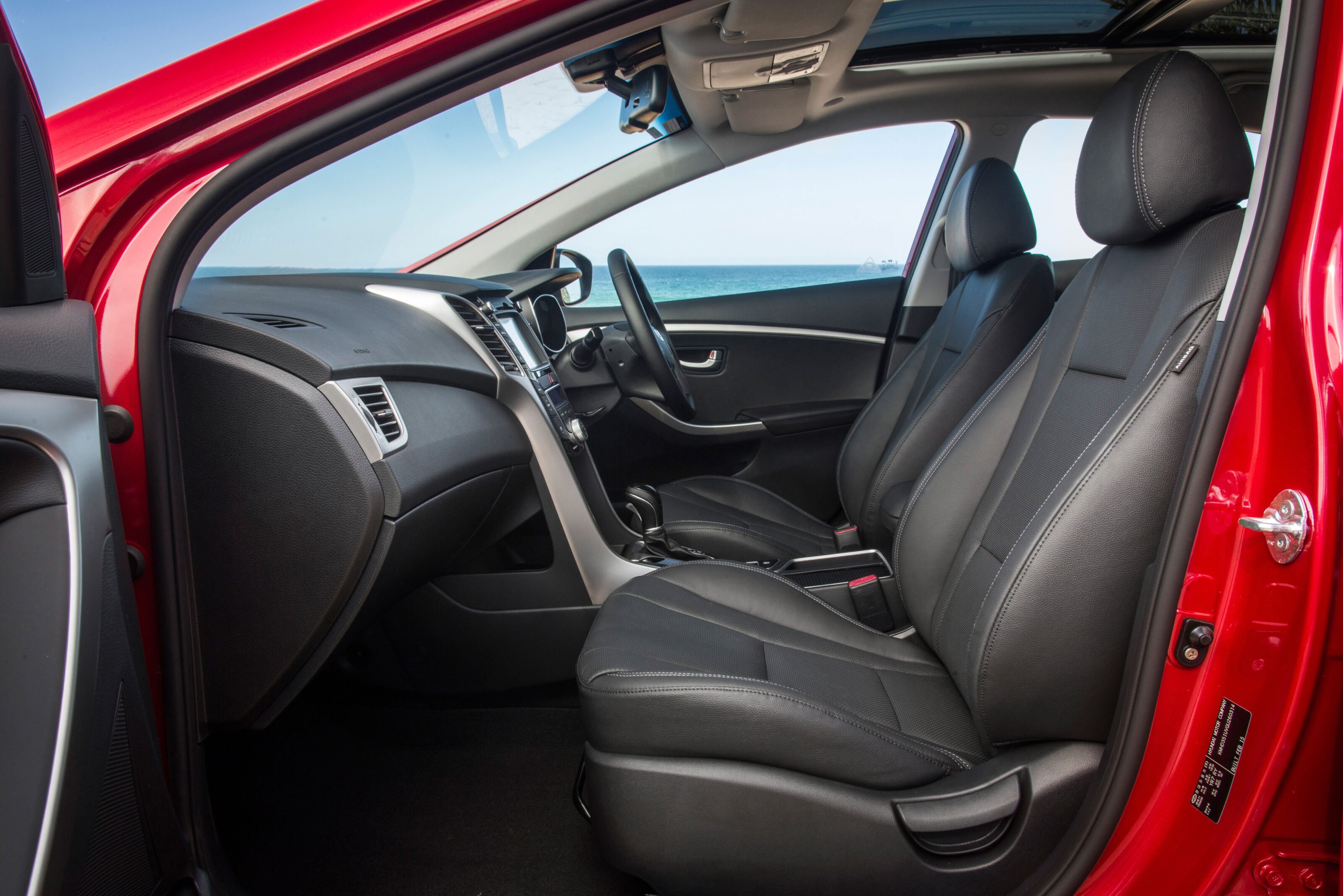
Not much was wrong with the spacious, solid and smart cabin, defined by thoughtful control placement, perfectly clear dials, ample ventilation, a laughable amount of storage, supportive seating and a flawless driving position. Sure, the leather feels like pleather, it’s all a bit of a button-fest, and rear vision is hindered by the upswept window line, but the quality and ambience places the Hyundai somewhere between Japan and Germany. For showroom allure, the i30’s a knockout.
Too bad the ride quality can be pummelling over bad roads, at least in the Elite-usurping Active X. Wearing vocal Hankook Kinergy Eco 205/55R16 rubber, we don’t know what is more wearisome – the fidgety suspension or incessant droning that both compromise refinement. Furthermore, comfort drops to a D-minus in the flagship Premium CRDi on Nexen 225/45R17s.
Keen drivers won’t much like the electric power steering set-up when roads get interesting, despite Hyundai’s local tuning efforts. Well planted if muted at the straight-ahead, the helm feels artificial and imprecise as speeds and turns pile on for a dissatisfying, disconnected experience. Moreover, electing Sport rather than the ridiculously wispy Comfort or overly light Normal modes only taxes the arm muscles.
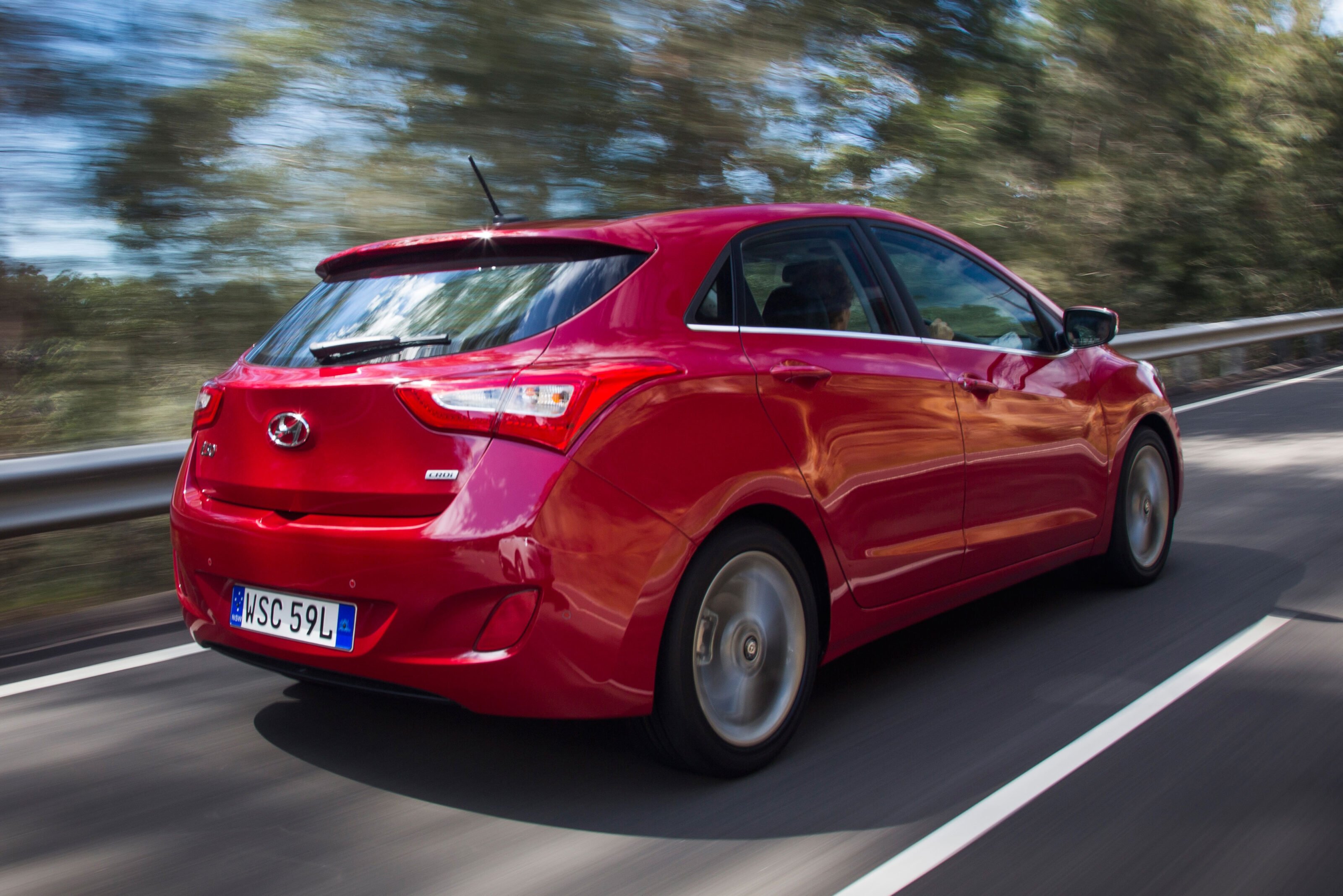
Likewise, a similar malaise infects the unchanged 107kW/175Nm 1.8-litre four-cylinder petrol engine’s performance. Lusty at low revs but lacking low-down torque, a call for more power will have the engine roaring raucously beyond 5000rpm all too regularly, further undermining refinement. The gutsier (and now $2500 cheaper) SR’s 124kW/201Nm 2.0 serves as a more appealing option to the thrashy 1.8 auto, but none were available at launch.
Relief is available via the stronger 110kW/300Nm 1.6 CRDi turbo-diesel, its newly minted seven-speed DCT dual-clutch auto meaning the self-shifting i30 gains a handy 40Nm advantage over the continuing six-speed manual version for effortless mid-range performance. But off-the-line lethargy remains an issue. At least fuel use averages fall below 5.0L/100km. Hyundai should also be commended for pricing its diesels from just $23,590.
With leading warranty/aftersales underpinning its good looks inside and out, the improved i30 from $20,990 remains on top of the averages. However, against A-grade stars like the Golf, this Hyundai is still a C proposition.
SPECS Model: Hyundai i30 Active X Engine: 1797cc 4cyl, dohc, 16v Max power: 107kW @ 6500rpm Max torque: 175Nm @ 4700rpm Transmission: 6-speed auto Weight: 1270kg 0-100km/h: N/A Fuel economy: 7.3L/100km Price: $24,390 On sale: NowClick here to read the full range review on the Hyundai i30.
FORMULA ONE: Was that really a motor race? WHAT a sad anticlimax. No doubt the F1 apologists won’t find fault with a mind-numbing race in Shanghai that finished with the protagonists dribbling around behind a safety car.

Formula One grands prix don’t often finish that way, so perhaps we should be thankful for that. But F1 should be trying harder to put on a genuine contest with an appropriate soundtrack and without the manufactured uncertainties of different tyres and compulsory stops.
Thank heavens for MotoGP, where the riders race from lights-out to chequer in a marvellously pure form of combat.
NASCAR, so often maligned by purists, had the good sense to implement a green/white/chequer regulation to try to ensure its races don’t finish with nary a whimper behind a slow-moving safety car.
There will be critics of such an idea. “The cars will need to carry more fuel.” Or…”the race could run beyond telecast times”. Or…”the sun may go down”. Or whatever.
But those at the track in Shanghai and millions more around the world were left unfulfilled when the safety came out a couple of laps from the set 56 lap distance … and stayed out while the Chinese track workers went all Mack Sennett on us as they laughably attempted to remove Max Verstappen’s Toro Rosso, replete with blown Renault engine.
Perhaps the safety car ending was a fitting, shallow end. It was produced after a race that provided a lot less than promised, a race in which the two Mercedes cruised to an easy one-two while Ferrari gave a futile chase, and the rest argued over scraps.
Yes, there was some entertaining racing … usually for worthless non-points paying positions. But at the pointy end, the top six didn’t really interact after the first few corners.
Nico Rosberg, who finished second to the rampant Lewis Hamilton, was aggrieved that the Brit appeared to take it easy up front mid race, backing up the Son of Keke almost into the clutches of third-placed Sebastian Vettel’s Ferrari. Rosberg was upset that Lewis was selfishly thinking of himself. Okay Sunshine, there is a simple remedy for your issues: out-qualify Hamilton, make a killer start and then YOU control the race.
After a Mark Webber-inspired start which tumbled him from seventh on the grid to 17th, our hope Daniel Ricciardo fought back to finish ninth, making more errors in one race than he made in total last year. Instead of battling with Ferrari and Williams, Ricciardo and team-mate Daniil Kvyat found themselves back with the little kids, Sauber, Lotus and (until they stopped), Toro Rosso. That Red Bull must be a beast. Daniel is already on his third Renault engine (from an allocation of four). So not only are the Red Bulls underpowered when compared to the Mercs and Ferraris, but they are also hand grenades. The next couple of races will be a real test of that almost mandatory smile.
“We got into anti-stall on the start, which hasn’t happened before; we have to look and see what happened,” reported Ricciardo afterwards. “It’s frustrating; that shaped the race and in the traffic we struggled to get by. At least some positives are that we learned a few areas where we need to improve and the smart guys in the team can find a solution. I had a little battle with Daniil, I don’t know if I was optimistic in trying to get past, we were on different race strategies but we’ll sort it out in the debrief. We underachieved today, but hopefully we find something in the next few days and have a better result in Bahrain.”
Until his late engine failure which brought out the safety car, man-child Verstappen was on course for eighth, and after showing some enterprising overtaking skills.
McLaren’s Jenson Button was hit with an F1 licence points penalty and demoted to 14th place from 13th after he was judged the guilty party in the shunt with Lotus driver Pastor Maldonado. Bet that penalty really hurt!
SPORTSCAR: WEC opener at Silverstone
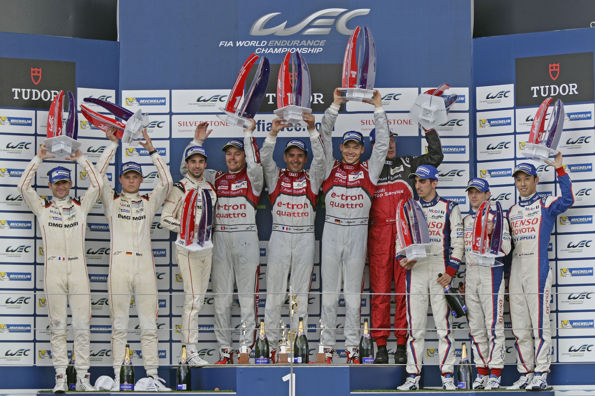
MARK Webber had a flash of glory in the first 80 minutes of yesterday’s Six Hours of Silverstone, the opening round of the World Endurance Championship, before his pole-winning Porsche 919 was pushed into retirement with a drivetrain issue.
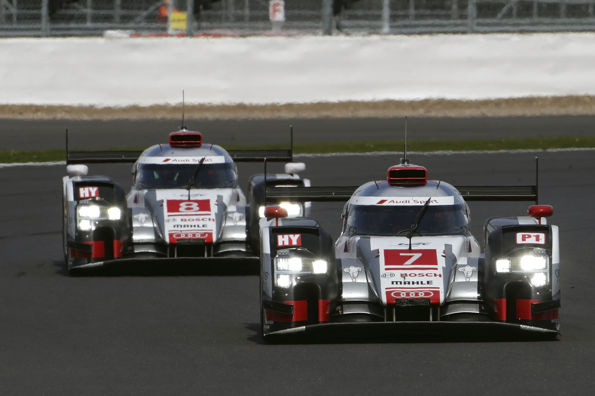
After six hours, Marcel Fässler, Benoit Tréluyer and André Lotterer took the honours for Audi in the #7 R18 e-tron quattro, but not without a late scare.
A 72-second lead for Fässler over fellow Swiss driver Neel Jani in the #18 Porsche 919 was reduced to just 11 with 15 minutes left on the clock when the #7 car was given a Stop-Go penalty for abusing track limits. This set up a great battle for the final few laps, but Fässler was able to take the win by just 4.6 seconds.
The Audi-Porsche duel was one of contrasts, with the R18 closing up on the twisty parts of Silverstone but then on the long straights the 919s would overtake or pull away.
Fässler and Jani were in scraps a few times during the six-hour race. “I must say this [the battle with Neel Jani] was one of the best fights I have had in my whole career and I really enjoyed this whole race today,” said the Audi ace. “I have to say it was pretty fair from Neel who gave space and I think we raced well together. It was a bit annoying him passing me on the straights like that!”
Jani, part of the second-placed driving combo wasn’t too unhappy “I definitely enjoyed the race with Marcel today, especially as I know we can trust each other driving side-by-side without actually touching. Obviously I couldn’t avoid smiling on the straights each time I went by him!”
Reigning WEC team Toyota took third and fourth.
The WEC is a global challenge played out in eight different countries, including the centrepiece 24 Hours of Le Mans and a further seven six-hour races in Europe, North America, South America, Asia and the Middle East.
Competing already are manufacturers Aston Martin, Audi, Ferrari, Porsche and Toyota and there is strong talk of a race in Australia in the future.
NURBURGRING: Ban on GT3 cars lifted, but speed restrictions imposed NEXT month’s 24 Hours of Nurburgring will now go ahead with the usual brace of outright contending GT3 cars on the grid following the removal of a ban on these cars racing on the legendary Nordschleife.
The prohibition on GT3 machines was introduced following a fatal crash last month when Jann Mardenborough’s Nissan GT-R GT3 became airborne at the Flugplatz, flipped backwards, and landed in a spectator area during the opening VLN race of the year.
Germany’s motorsport governing body, the Deutsche Motor Sport Bund (DMSB), immediately mounted an investigation into the crash, calling for input with drivers, representatives of the various manufacturers and race organisers, as well as safety and technical experts.
To allow the GT3 cars back – similar machines to those we see racing in the local championship and in the Bathurst 12 Hour – changes will include performance restrictions and speed limits at certain parts of the circuit where there has been a tendency for faster cars to get “air”.
Cars from the top GT classes will be hit with a five per cent reduction in engine performance. Also, to prevent cars getting airborne, a 200km/h speed limit will be imposed in the run up to the fast Flugplatz, Schwedenkreuz and Antoniusbuche sections of the Nordschleife along with a 250km/h limit on the long, flat-to-the-floor Döttinger Höhe straight.
The speed boundaries will be enforced via GPS, with heavy fines for those that break the strict rules.
DMSB chairman and racing legend Hans-Joachim Stuck subsequently proclaimed the changes will allow the Nürburgring 24-Hour race to proceed with the same outright sports cars participating.
However he warned of the likelihood of more technical changes aimed at a long-term fix. “DMSB will closely watch the racing activities and, with a commission of experts, search for appropriate measures to ensure safe and fair motorsport action on the Nordschleife in years to come,” Stuck explained.
He didn’t rule out possible construction work on the iconic racetrack.
MOTOGP: Marquez back where he belongs

After his stumble in the opening MotoGP race of the year in Qatar, reigning world champion Marc Marquez was untouchable as he won the Grand Prix of the Americas from pole position, maintaining his perfect Austin record in the process.
The 2015 victory was his third in a row.
Ducati’s Andrea Dovizioso beat the Honda star off the line to opening a slight gap until Marquez got down to business, inexorably hauling him in before powering to the front.
Game over.
Qatar winner Valentino Rossi (Yamaha) then also found a way past Dovizioso three laps later, but Marquez was 1.8 seconds clear.
He took the lead out to 4.1s, before easing off to win by 2.3s.
The frantic squabble for second was ultimately resolved in favour of Dovizioso but Rossi’s third place means he still holds the barest one-point margin in the title standings.
Andrea Iannone also bought into the fight for second, but he faded as the laps ran down, eventually relinquishing fourth to Yamaha’s Jorge Lorenzo.
The factory Ducatis of Iannone and Dovizioso ran out of fuel on the cool down lap, after what was the first grand prix since the regulators reduced their fuel allowance by two litres to 22.
Aussie Jack Miller benefitted from a few crashes ahead of him to finish 56 seconds behind the winner in 14th place, collecting his first championship points.
INDYCAR: Power seventh in Louisiana A great strategy call during a wild and unpredictable Indy Grand Prix of Louisiana on a road course outside New Orleans handed Canadian James Hinchcliffe a victory that looked set to go elsewhere.
Hinchcliffe, driving a Schmidt Peterson Honda, won as the race ended under a full-course caution, with Helio Castroneves, in a Team Penske Chevrolet, in second place.
Hinchcliffe’s team-mate, James Jakes, was third ahead of Simona de Silvestro, in her Andretti Autosport Honda.
First round winner Pablo Montoya in a Team Penske Chevrolet took fourth to retain the lead in the series, 10 points ahead of Castroneves.
Australia’s defending champion, Will Power, finished seventh in another Team Penske Chevy and sits third in points (70) while Hinchcliffe is fourth (65).
Run in fluctuating track conditions after heavy morning rain, was flagged due to the mandated time limit.
Most of the front-runners came to the pits on Lap 33 during a full-course caution, Hinchcliffe’s race strategist ordered the 28-year-old to stay out, where he inherited the lead.
There were just three more green-flag laps until it was called off, allowing Hinchcliffe to fend off Castroneves and the rest of his frustrated pursuers.
SPORTS CARS: Aussie Talbot off to a flyer at Monza
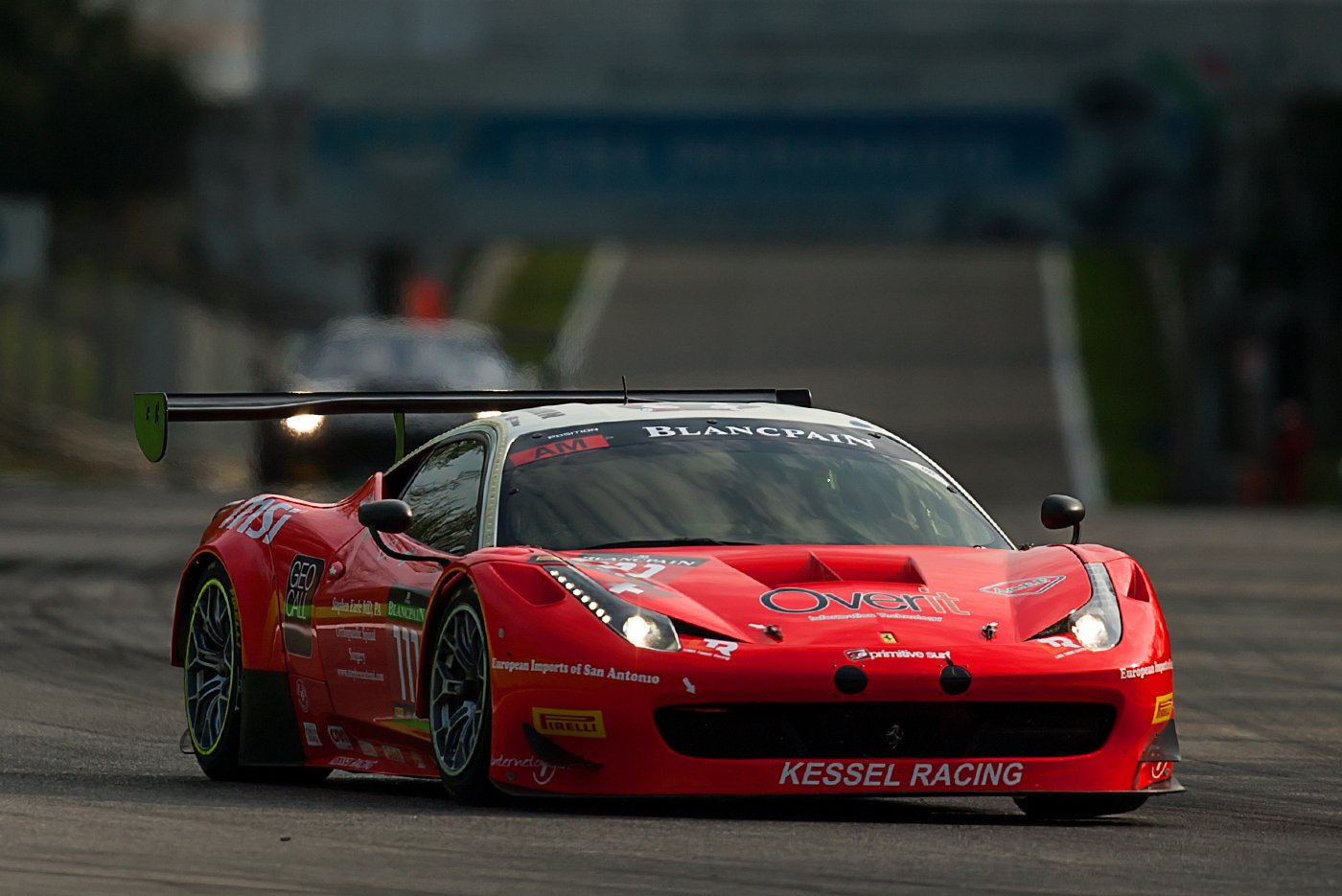
Queenslander Liam Talbot has fired away to a stunning start to his inaugural Blancpain Endurance Series campaign at Monza, first setting the fastest qualifying time in class, then backing it up with a class win in the opening round.
In his first race at the historic circuit, Talbot partnered with experienced Ferrari campaigners Steve Earle and Marco Zanuttini, setting the pace in the early stages before overcoming a challenge late in the race to secure victory.
Talbot will be campaigning the full Blancpain Endurance season with Swiss team Kessel Racing in the Ferrari 458 GT3.
“Surreal is the only way to describe this victory,” Talbot said after as he celebrated. “To be at the legendary Monza Autodrome racing in a Ferrari and coming away with the class win is truly unbelievable. Being my first time at this track and with only two years of racing experience, this result hopefully sets the tone for our 2015 season!”
The team will be looking to build on this early success as it heads to the second round of the series at the Silverstone on the May 23-24.
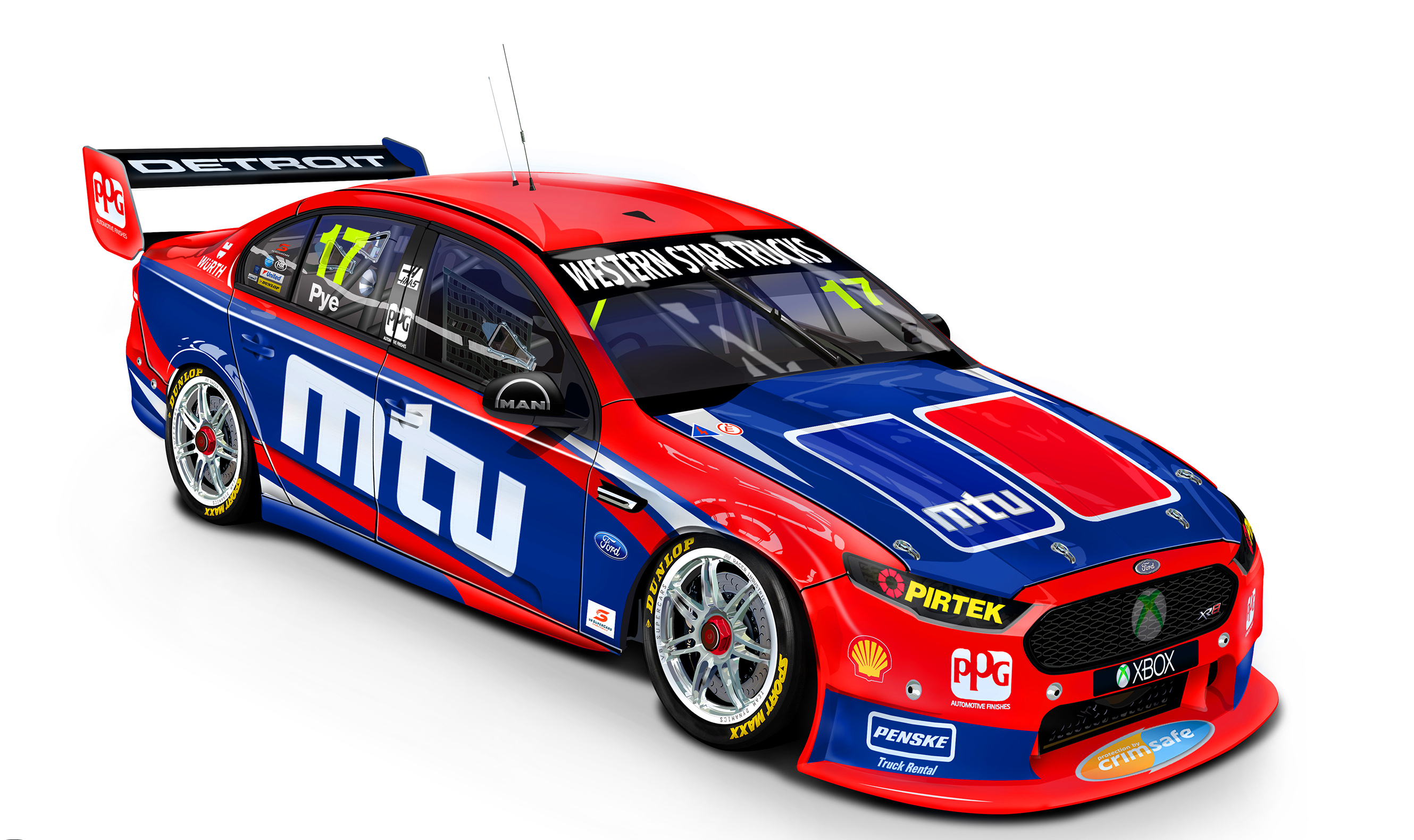
V8 SUPERCARS: Pye stays in DJR Team Penske Falcon for Perth DESPITE speculation to the contrary, Scott Pye will stay in the # 17 Ford Falcon FGX for the V8 Supercars Championship round in Perth.
There has been chat that Marcos Ambrose might elect to move back into the driver’s seat again after sitting out the recent Symmons Plains round to give Pye a chance to validate some of perceived failings in the Falcon.
The other development at DJR Team Penske is the announcement of its first major partnership with a Penske-affiliated company.
In Perth, the Falcon will run the colours of MTU, a leading manufacturer of diesel engines and propulsion systems distributed by Penske Power Systems.
V8 SUPERCARS: Got money and the inclination? V8 Supercars has launched a market tender process for a surrendered Racing Entitlement Contract (REC) ahead of the 2016 season.
An REC is effectively a legal entry into the V8 Supercars series, entitling the buyer to race one car in each Championship event next year and beyond. But it is also a highly enforceable contract to perform, a commitment to put a car on the grid at every race.
If sold, the REC – believed to be the one handed back late last year by James Rosenberg after pulling out of his relationship with Walkinshaw Racing to run a Commodore – will take the grid back to 26 cars.
V8 Supercars says it has already had interest from parties to purchase this REC. Triple Eight may be one bidder as it is yet to reveal how it will expedite running its third car in 2016.
Kiwi team Super Black Racing could also go after its own REC to replace the one it has leased for this season from DJR Team Penske.
And motor sport often has an innate ability to conjure up a rich dad who believes his kiddie can become the next Craig Lowndes, and is prepared to back this dream to the tune of a few million…
Mid last year, V8 Supercars opened tenders for of three surrendered RECs ahead of the 2015 championship season. V8 Supercars reported clear interest but no formal bids.
Two of those three RECs handed in at the end of 2013 – once used by Tony D’Alberto Racing and Triple F Racing – are on the shelf indefinitely. The third, initially surrendered by Lucas Dumbrell Motorsport, was later returned after a court challenge.
The value of RECs has ebbed and flowed according the factors such as the economy and market forces.
In the early 2000s, some were traded for circa $2 million, at a time when the TV deal was strong and teams could make a dividend on investment.
But when Archer Capital bought control of V8 Supercars in mid-2011, the annual dividend to teams quickly fell from over $900,000 per REC to nothing. The market value of RECs plummeted and they became virtually worthless.
With many teams in crisis, Archer recently agreed to change the profit sharing landscape, and owners are now looking at a possible windfall at the end of this year of around $300,000 per car. But for how long?
Still, RECs are certainly starting to increase in value again and there is some hope the present tender will produce a sale, and a reasonable purchase price.
But with the end of the local car industry around the corner and the full impact of the shift from free-to-air TV yet to be felt, none of the smarties are prepared to pay mad money.
Sign up here to receive the latest round-up of Wheels news, reviews and video highlights straight to your inbox each week.
“I wouldn’t mind coming out to one of these ‘track tests’ you do,” said the new OH&S lady with a perplexed look on her face.”
“It will help me complete your skills matrix, SOP document and risk assessment.”
It was like a doe-eyed cow innocently asking if it could tag along on a tour of the local abattoir.
Now, I’m not suggesting we’re unprofessional or running a dodgy operation here at MOTOR – safety first and all that malarkey – but when a health and safety person wants to come watch five blokes blast around a barely supervised, speed-unlimited racetrack, you know they’re going to need to bring the Bex and a stretcher.
Fortunately for the OH&S hand-wringers, day one started well. Kick-off was a wintry Monday afternoon at Winton (in case the last 25-odd pages hadn’t given it away) and our several weeks of nervous voodoo dancing to the weather gods, like some sort of office Haka, was rewarded with Winton drowned in glorious sunshine. In other words, the conditions were simply beaut.
For our two days and two nights of on-track photography, testing and general hijinks, Uncle Morley was again appointed chief babysitter for the Gen-Why MOTOR crew. However, no dummies were spat and no adult nappies soiled nor needed as the youthful judges acquitted themselves well on track – the word well used a little loosely, of course.
Herr Newman has now earned himself a reputation for punishing rear tyres like they’ve cursed his mother. And myself, well, I was forced to uphold MOTOR editorship tradition by swapping ends in a vehicle at least once during the event.
Did I balls it up mid-drift through Winton’s furious turn seven in the SS-V? Err, try the Mazda 3, entering pit straight using the rear vision mirror to see where I was going. Look, it likes to go sideways a little more than I was expecting, orright?
Meanwhile Brendan Reeves has lost his handbrake licence after fifty-centing a pair of tyres on our Peugeot 208 GTi long-termer. At highway speed there’s now a little more Cessna to its NVH than we would’ve liked… Bad Brendo.
He was forgiven as all watched, hypnotised, as the rally ace climbed aboard the diff-armed rear drivers and turned tyres into ghosts through Winton’s back corner complex. It made all other judges feel like we needed to go back to drifting school.
When not on the track testing, we were delicately arranging cars into position for the group shots which tested photographer Ellen’s vocal chords to their limits, while us other clowns schemed to get some sort of lairy shot in the hired scissor lift. Couldn’t switch the ESP off, unfortunately…
Overnight the MOTOR cavalcade bunked at Benalla Leisure Park – a venue we’d happily recommend as it’s only up the road from Winton, the price is right and the accomm comfy.
A few regular MOTOR faces were noticeable in their absence, too. Cockburn couldn’t accept our hurried, last-second invitation but with his licence suspension now over, he’ll be back at PCOTY next month. Meanwhile Luffy was off fanging Astons in Malaysia but he’ll be back to manhandle PCOTY’s big bangers next month.
At its conclusion, about the most that went wrong was a few sunburnt foreheads and some bug-splattered windscreens. Yep, Bang For Your Bucks 2014 ran a little too smoothly for our liking. Next year the red cordial is getting spiked. Got to keep the OH&S lady on her toes somehow.
TWO unrelated events led me to the GT. Early in 1963 (or was it ’64?) Ford issued a sketch of the proposed GT40, the Lola GT-based sports racing car that eventually evolved to become the GT40.
The drawing, which sadly I can’t find despite hours of internet searching, showed a mid-engine coupe so beyond low it was impossible to conceive. Famously, it was just 40 inches (100cm) high.
The GT40 looked utterly contemporary, instantly leaping a decade ahead of the still-new E-Type Jag in concept and appearance. In hindsight, the gorgeous GT40 vies with the Lamborghini Miura as perhaps the most beautiful sports car ever. Hard to imagine now that Ford of Britain struggled to sell road versions, though favoured motoring writers tested the car. Not me, not in Australia.
Then the great Belgian racing driver Jacky Ickx won Le Mans in 1969 in a GT40, Ford’s fourth successive victory. After 24 hours of racing, the margin over the chasing Porsche 908L was a mere 50 metres or so. The still-alluring Ford, by then considered outdated in racing terms, looked even better in the Gulf team’s now-famous blue and orange livery.
If I dreamed of driving one, I also knew it was an absurd fantasy. However, in 2002 Ford showed a concept of a modern GT40 at the Detroit show. I couldn’t believe they were serious about production, but three years later the GT arrived.
Much longer, wider and taller than the GT40, kind of 10 percent bigger in every dimension, the proportions and character of the original continued. If anything, it looked even more desirable, especially in the way the body flowed over the rear wheelarch and merged into the inbuilt rear spoiler.
I remember Camillo Pardo, the GT’s designer from Ford’s Living Legends studio, telling me: “We wanted to convey ‘GT40’, but it was tough to massage this larger car into the proportion of the low, sexy original. We ended up going through five iterations of modelling. I love that, because it’s the total antithesis of the computer-generated automobile. You can tell somebody has massaged the clay endlessly.”
It was crucial that my Bucket List car drive as well as it looked. That ruled out any late 1950s Detroit iron – think Continental Mark II – or 1960s Italian semi-exotics such as the Fiat Dino Coupe. Nothing else went close to matching the GTs exquisiteness with the serious grunt of a 410kW 5.4-litre V8 (for an 11.2sec 400-metre time), a double-wishbone-suspended chassis and 1540kg weight (the rego sticker claims 1470kg).
Dodging under a door top that forms the roof, the GT feels vast from behind the wheel, the driving position comfortable for my 192cm frame. Soft, too, and relatively quiet except for the supercharger whine, while the power-assisted steering initially feels too light for the task ahead.
Still, I’m reassured by a slick gearshift, strong brakes and the superbly supple ride, while the steering proves so quick it takes time to learn. Yes, the GT lacks ultimate grip by today’s standards, but through direction changes you can feel the delayed weight transfer, and oversteer arrives once you hit the throttle, so its balance can be adjusted relatively easily.
The GT’s road-ability seduces, just as it looks sublime. While the doors inhibit access and the interior is cheapish, Ford’s everyman supercar did not disappoint with its styling, driving and performance.
Simply brilliant.
Did you know?
- Ford produced 4038 GTs from 2004-2006, almost 500 short of the original plan
- The modern GT is three inches (76mm) higher than the original GT40, but Ford decided against calling it the GT43
- A new GT (designed by an Australian) was revealed at the 2015 Detroit show and will be built from 2016, powered by a 3.5-litre twin-turbo V6
Living the dream
“I’VE always been a Ford bloke,” says Ken Rintoule, owner of the GT. “I had an XT Falcon and Fairlanes, a 2007 Super Pursuit Falcon ute and now an FG. I’d seen photographs of the GT and heard hearsay. When I retired 10 years ago, I thought, why not?”
Rintoule, from Nhill in western Victoria, bought the GT in California in 2007 with 6000km on the odo. It cost $US158,000 ($A188,000 in 2007), the right-hand-drive body-in-white conversion another $98,000. With duty and shipping, the total cost reached about $350,000, but he’s been offered $550,000 for the car, one of 10 known right-hand-drive conversions in Australia.
“I put water in it once a year,” says Ken. “It never leaks oil; it’s now done nearly 100,000 kilometres – it’s been to Brisbane, Sydney, Adelaide and Bathurst – and I’ve just changed the clutch and muffler. You do bugger all to it.”
Model: 2005 Ford GT Engine: 5374cc V8 (90°), dohc, 32v, supercharger Max power: 410kW @ 6500rpm Max torque: 678Nm @ 3750rpm Transmission: 6-speed manual Kerb weight: 1540kg 0-100km/h: 3.7sec Economy: 16.6L/100km (US) Price when new: $US139,995 ($A190,400 in 2005)
Sign up here to receive the latest round-up of Wheels news, reviews and video highlights straight to your inbox each week.
‘LESS is more’ is a truism that overwhelmingly applies to the Lancia Aurelia GT. But that’s almost selling this breathtaking coupe short.
In the Aurelia GT’s case, less is everything.
Even the sedan it’s based on wasn’t just any old family hack. Featuring the world’s first mass-production V6 engine and the first standard fitment of radial tyres, it’s hard to believe the Lancia Aurelia Berlina was a contemporary of the 48/215 Holden.
But that’s what my humble bogan self is familiar with. Three-on-the-tree Holdens with no synchromesh on first, not dazzlingly beautiful, mega-buck Italian sports coupes of the same era. And just like the other Gen X dreamers in the motley Wheels crew, I never thought I’d even see an Aurelia GT in the flesh, let alone be handed the keys to one. Mike Simcoe’s keys. Yep, GM’s master crayon wielder is the name on the papers of this 1956 Lancia.
While I can’t deny having had a Countach poster on my wall as a kid, and a dog-eared 1982 Porsche full model line brochure with drool all over the 928 spread, I think the exquisite Aurelia GT is more deserving of my affection. I’ve always wanted to drink in its beautiful Italian body and the rasp of its glorious V6. And now here we are.
The tactile delicacy of this Lancia is truly something in which to revel. Its thin, frameless doors clasp closed via a neat little swinging chrome handle, but my favourite feature is its ashtray. An exquisite little chrome tray sprouting from the right-hand side of the dashboard, it only takes a gentle push down on the spring-loaded catch for the ‘ashie’ to glide open.
Ah, the romance of smoking… until you die from it.
Same could well go for the driving experience seeing the Aurelia GT is from a more innocent motoring age, when tailpipe emissions and crash safety were the rantings of crackpots.
But I never think about that stuff when driving an old car. It’s about the sound, the smell – even if it’s petrol – and the sensory delight. All of which the Aurelia GT over-delivers.
Redlined at 5300rpm, its all-alloy 2451cc V6 breathes through twin Webers and sounds frigging fabulous. Punching out about 115kW instead of the 82kW it produced when it left the factory, and tied to an optional Nardi four-speed floorshift, it sounds like an old race car as its exhaust blares angrily, building in both pitch and volume as the enormous tacho registers more than four grand.
There’s definitely a technique to driving it quickly. Slow-in, fast-out delivers the greatest satisfaction around Broadford, seeing the Aurelia’s ‘sliding pillar’ independent front suspension has its origins in the 1922 Lambda, though the de Dion rear end with transaxle gearbox gives it a degree of cornering poise.
But forget about seat support. If I didn’t have a massive wood-rimmed, alloy-spoked Nardi steering wheel to hang onto, I’d probably be in casualty having a handbrake removed from somewhere painful.
Sneaking out onto sinuous Flowerdale Road, the Lancia’s antiquated front end bobs around in quiet protest, but this sculpture on wheels isn’t about trying to be perfect – it’s about theatre. And occasion. From its rasping, dominating engine to its imperfect pedal placement and broom-handle gearshift, the Aurelia GT encapsulates what upper-class motoring in the 1950s must have been like. Loud, windy and fabulous.
As I arrive back at the track, Robbo walks over to the lumpily idling Lancia, leans in and says: “I think you’ve chosen the car of the day, mate.”
Perhaps he’s right. But maybe I should light a cigarette, draw back and think about it.
Did you know?
- The Aurelia was designed by legendary engineer Vittorio Jano, but the coupe’s styling is the work of Ghia’s Felice Mario Boano
- Competition highlight came in the 1951 Mille Miglia, the famous road race around Italy, when a 2.0-litre Aurelia was beaten only by a V12-engined Ferrari
- This particular car was imported to Australia in 1965 by Repco, which at that time was building F1 engines for Jack Brabham. It was fitted with numerous local components in its role as an R&D vehicle
Living the dream
GIVEN the Aurelia GT’s iconic style statement, it should be no surprise that its owner is Mike Simcoe, the former head of Holden Design and now the Melbourne-based executive director for design at GM International Operations.
Owned by Mike since 2001, even after 14 years he can’t get enough of one of Lancia’s greatest-ever designs. “Yes, I do really love this car,” he says with enormous pride. “From a style perspective, it’s a very simple, very pure design with proportion and style without too much embellishment. To my mind, it typifies the best of Italian design and motoring in the 1940s and ’50s.”
During Mike’s custodianship, the Aurelia has had its suspension rebuilt (“a little lower and stiffer”), the engine rebuilt “to something like the original performance spec”, and most things attended to, except for its perpetually gorgeous body.
Model: 1956 Lancia Aurelia GT Engine: 2451cc V6 (60°), ohv, 12v Max power: 82kW @ 5000rpm (standard) Max torque: 169Nm @ 3500rpm (standard) Transmission: 4-speed manual Kerb weight: 1280kg 0-100km/h: 13.8sec (est.) Economy: 11.2L/100km (est.) Price when new: £3346 (UK)
Sign up here to receive the latest round-up of Wheels news, reviews and video highlights straight to your inbox each week.
