
Buyers should note that a new-generation Kona EV will be here later this year, but if you can’t wait, this comparison is your guide!
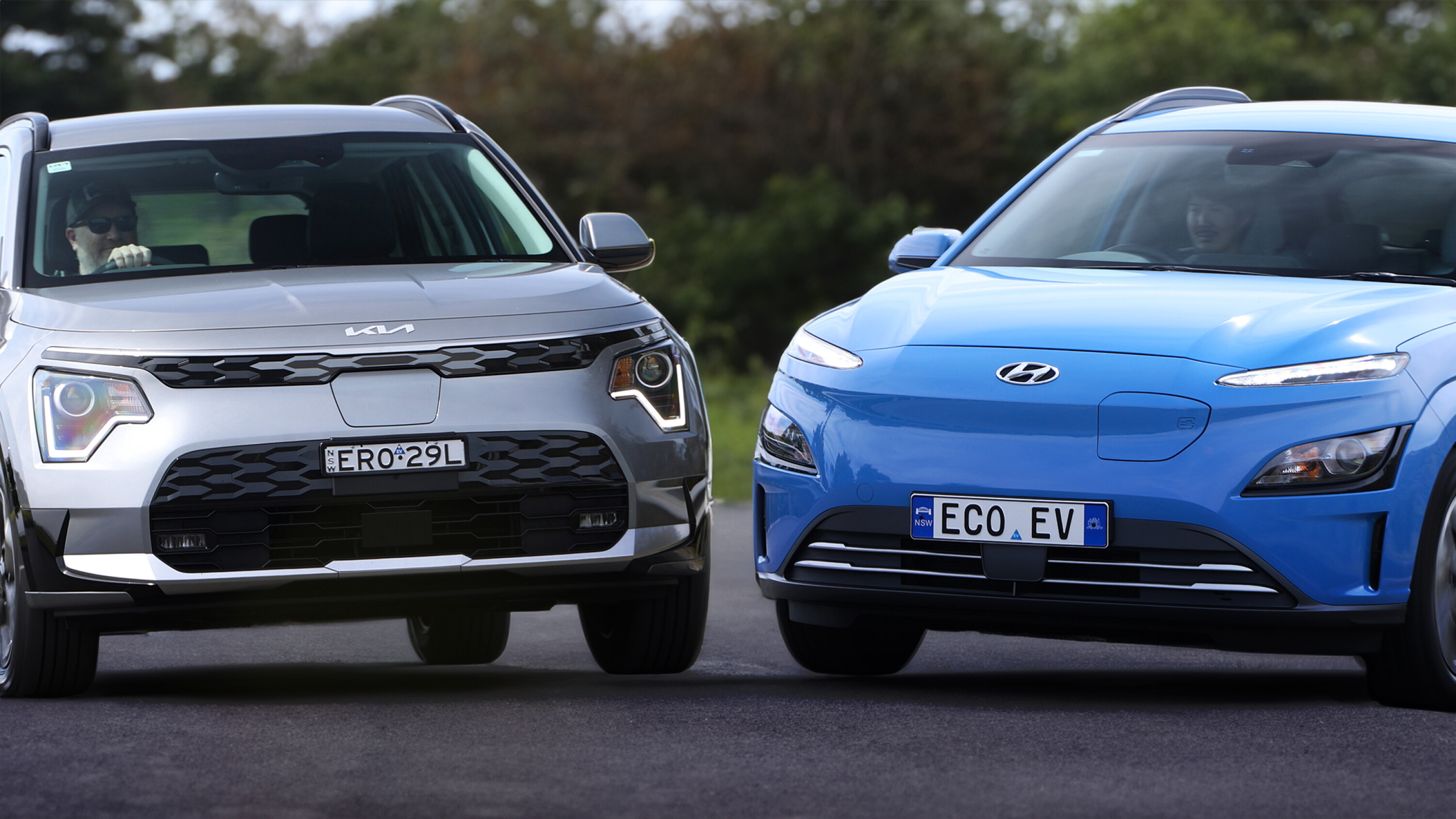
Kia’s Wheels 2022 Car of the Year win with the EV6 proved the Korean brand has the capability to take the electric car fight to Tesla, but can that form cascade down to its smaller offering?
Kia’s second-generation Niro arrived in Australia a little over a year since the original made its belated introduction here in mid-2021.
It remains on a platform set up for a mix of classic combustion and futuristic electrification, with the EV sitting above a hybrid Niro.
Hyundai’s platform twin to the Niro, the Ioniq, has now been discontinued, though Kia’s affiliate partner still has the battery-only version of the Kona to give us two electric compact SUVs.
The current Kona is slightly smaller and slightly cheaper, but does the Niro give you more for more?
New Kona incoming!
JUMP AHEAD
1
Pricing and features
Priced from $65,300 before on-road costs, the least-expensive electric Niro grants a $7290 saving over the entry-level EV6.
However, it also looks expensive when compared to similarly sized battery compact SUVs such as the BYD Atto 3 and MG ZS found below $50,000.
The Niro S’s standard equipment list looks a little sparse, too. There are relatively small 17-inch wheels and halogen rather than LED headlights. Stretching to the $72,100 (before on-road costs) GT-Line adds some pizazz with features including a Harman Kardon audio system, but this price is almost parity with the bigger (and better) EV6.
1
A Kona EV starts from $54,500 in Elite Standard Range form.
To get closer to the Niro S EV in terms of battery size, driving range and price we have the $60,500 Elite Extra Range (prices before on-road costs).
That additional $6K investment brings a large, 55 per cent increase in WLTP driving range: 305km to 484km.
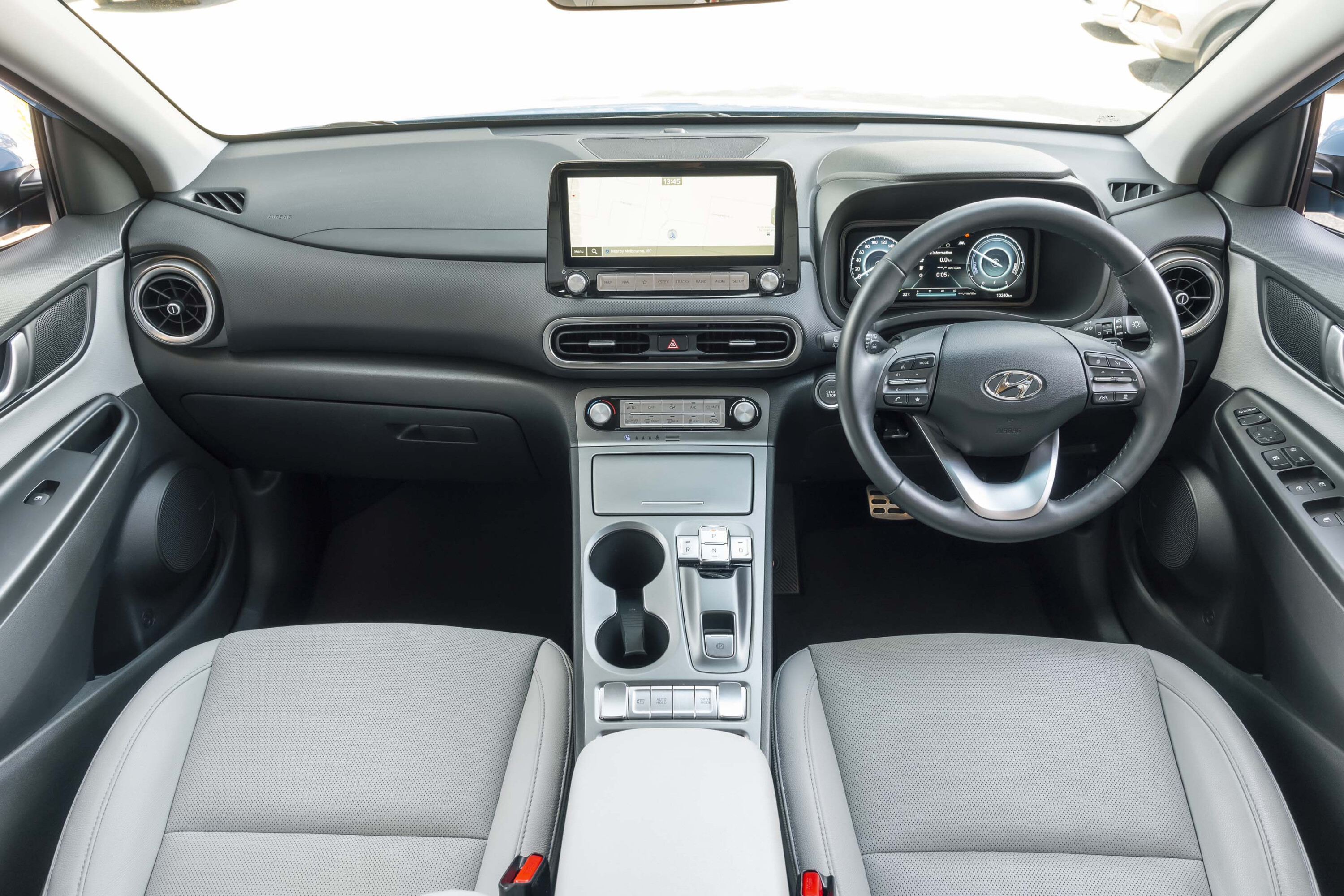
In Elite trim, the Kona competes quite favourably for equipment. Over a Niro S, exclusives include a fully digital (10.25-inch) instrument display, Harman Kardon audio, leather-appointed seats (versus cloth/artificial leather) and privacy glass.
Kia counters with electric driver’s seat adjustment but that’s about it.
Spending another $3500 on the Hyundai accesses power driver’s seat adjustment in the Highlander variant, which seems good value as other key extras include heated/ventilated front seats, heated steering wheel, sunroof, head-up display, front parking sensors and LED headlights with auto high beam.
The latter feature should be standard on the base models of the Niro and Kona, in place of the basic halogen lamps.
1
Interiors
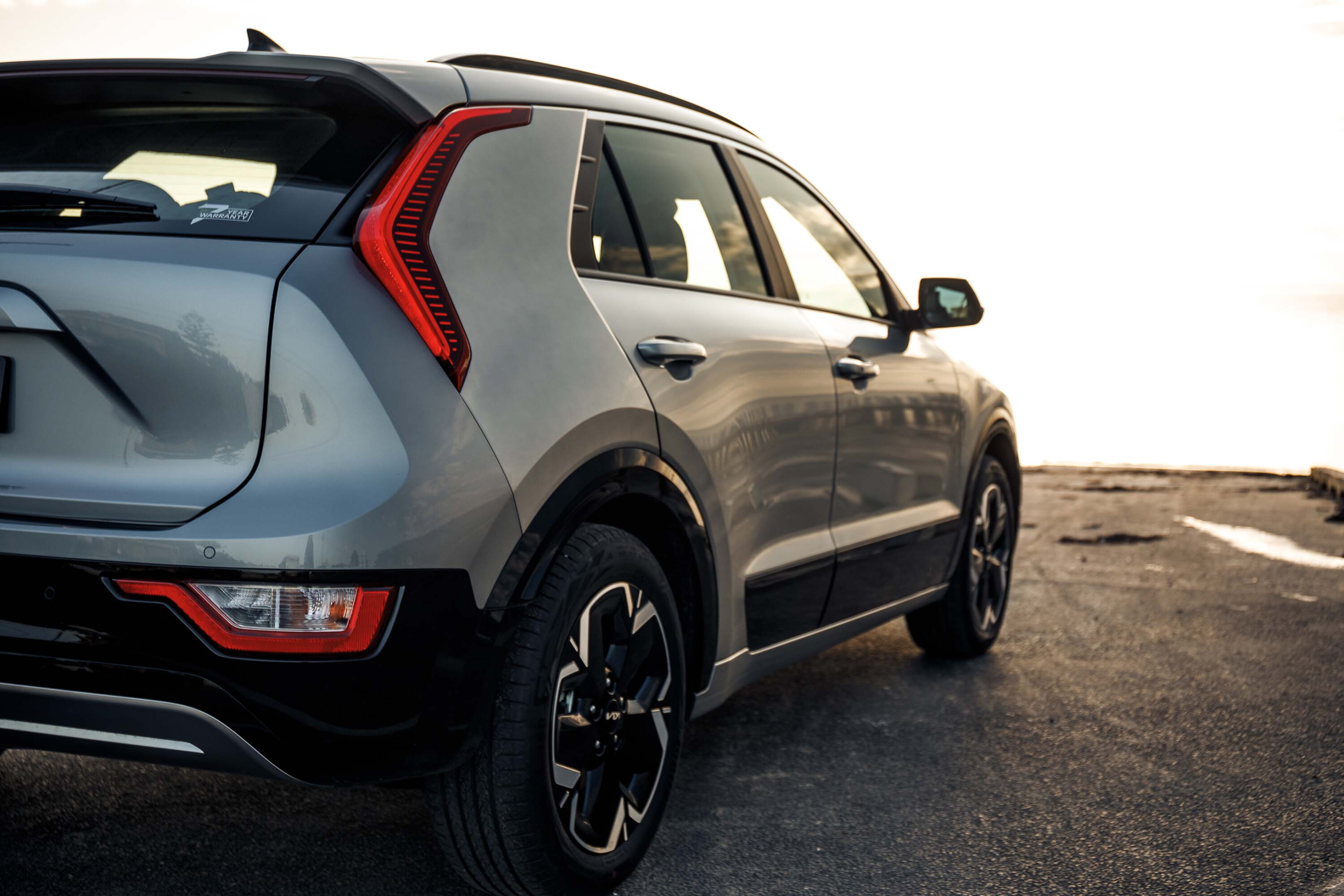
The Niro’s interior borrows some elements from its bigger EV6 sibling, including the two-spoke steering wheel and clever touch panel with controls that can alternate between infotainment and climate settings.
Plastics are generally hard but smoother than those that have commonly featured in Kia models, and there’s a soft, textured upper dash to give quality perception a lift at eye level.
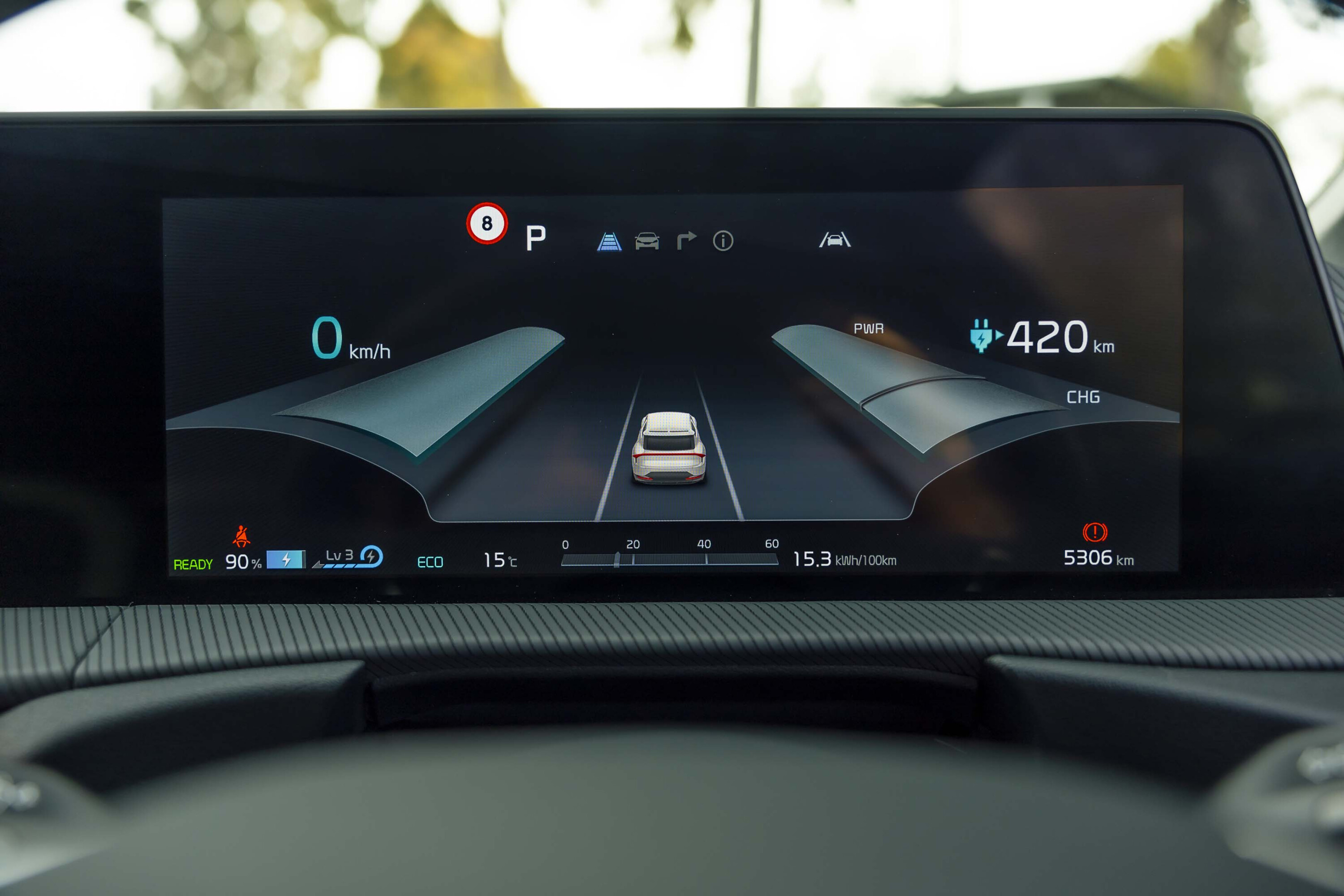
The infotainment display is less inspiring, with a small screen (yet wasted space surrounding it) and bland presentation, as well as an all-too-apparent join between this and the driver display.
Lots of blank buttons on the centre console then remind you that you’re not in the GT-Line, as does the phone tray that lacks a wireless charging function.
2
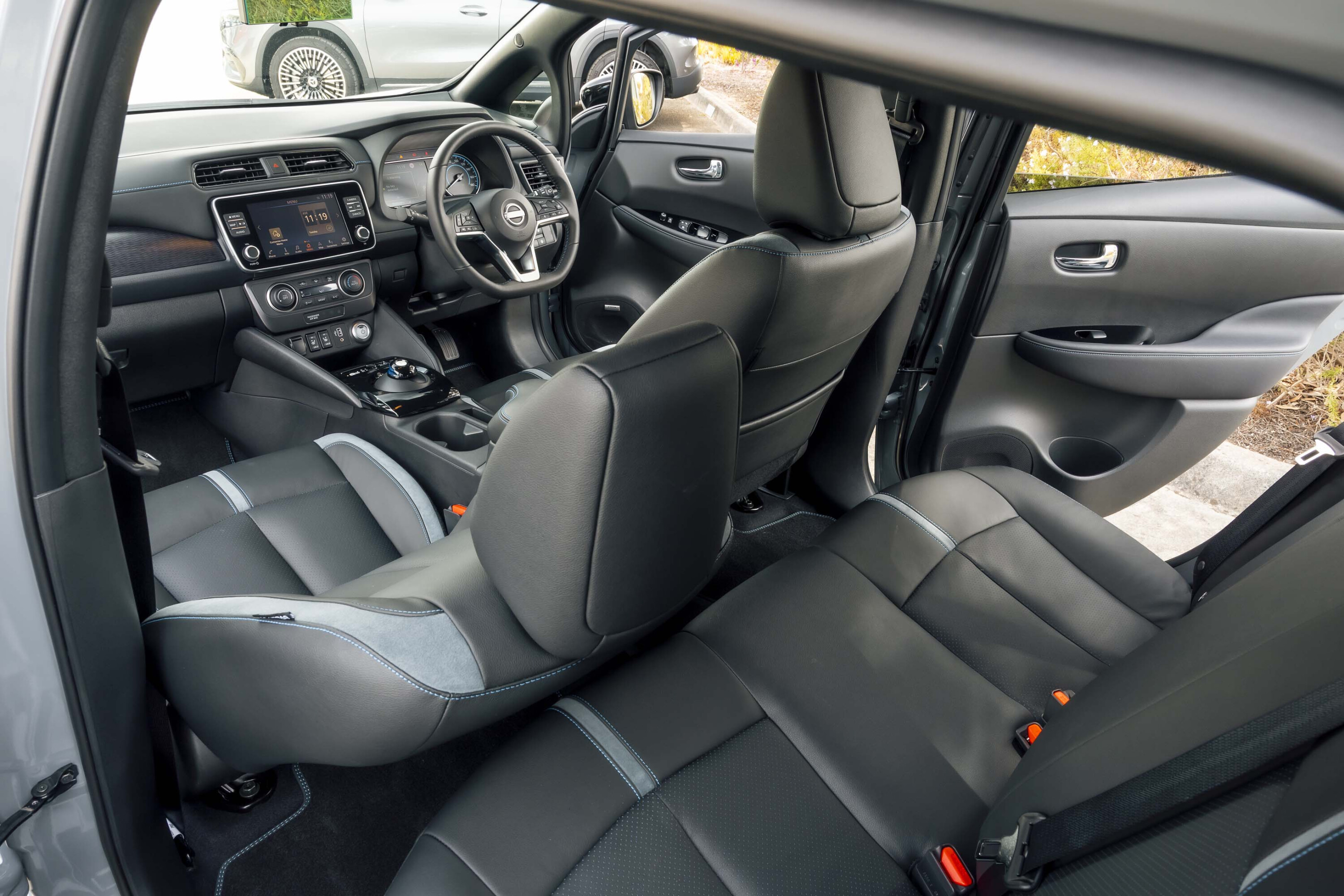
The Niro is 20cm longer than the Kona and it’s noticeable when you jump into the Hyundai.
Rear passengers get the same features regardless of variant, including vents, centre armrest, USB-C ports and even coat hangers integrated into the rear seatbacks. There’s also good legroom, though this is partly spoiled by limited toe space and the bench seat’s lacklustre under-thigh support.
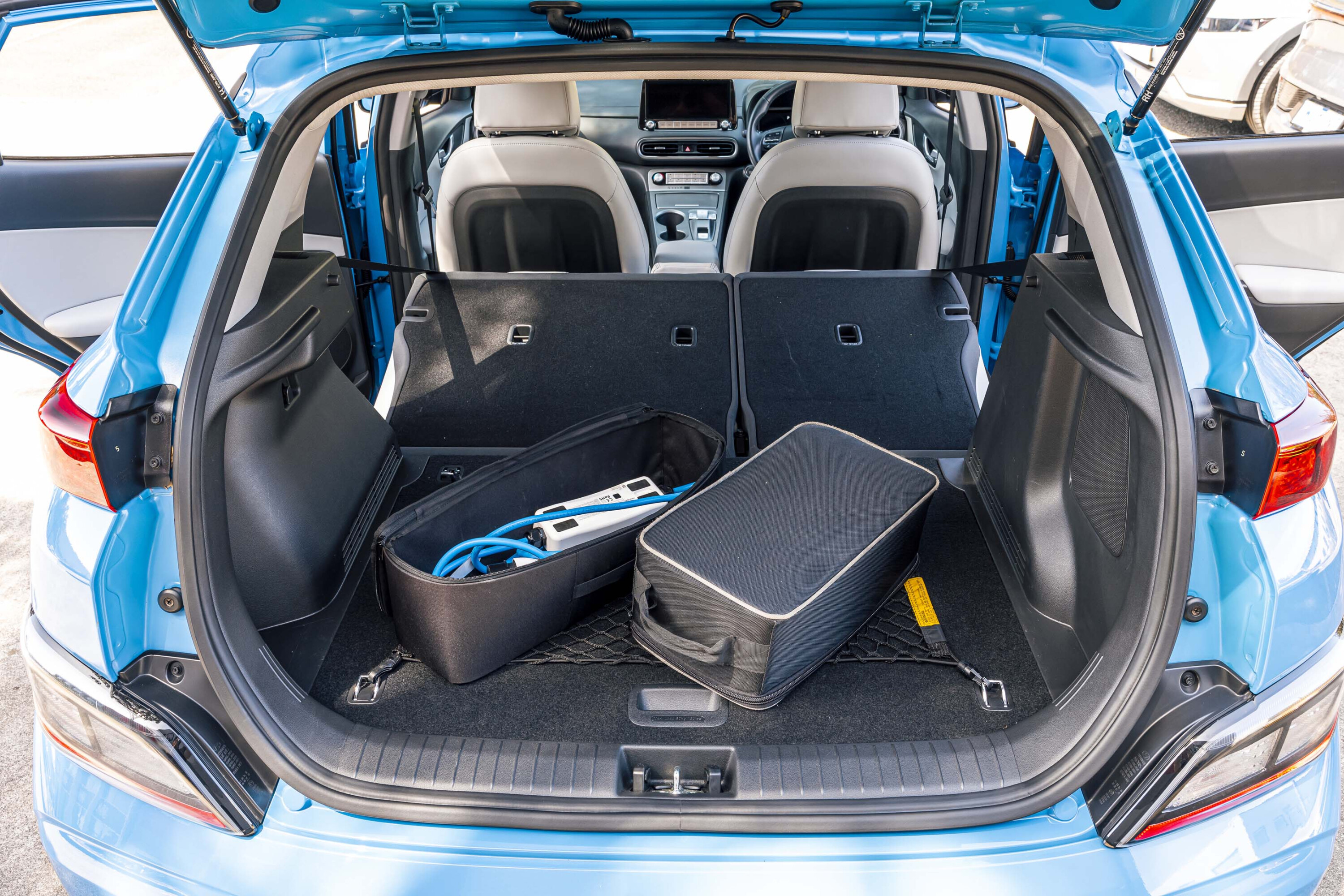
A 475-litre boot is further evidence of excellent vehicle packaging, and there’s a generous underfloor section for cables and more. That means no spare wheel, of course, just a puncture repair kit.
The Niro is 20cm longer than the Kona and it’s noticeable when you jump into the Hyundai. Legroom is tight in the rear cabin, toe room is restricted, and the news doesn’t get better for adults with the absence of air vents and a bench that feels too flat.
2
A boot capacity of 332 litres for the Kona is also well below average for a small SUV.
When the rear seats aren’t required, the 60:40 split seatbacks can be folded down though they don’t lie fully flat.
The charging cable (and bag) at least have a dedicated storage spot under the boot floor.
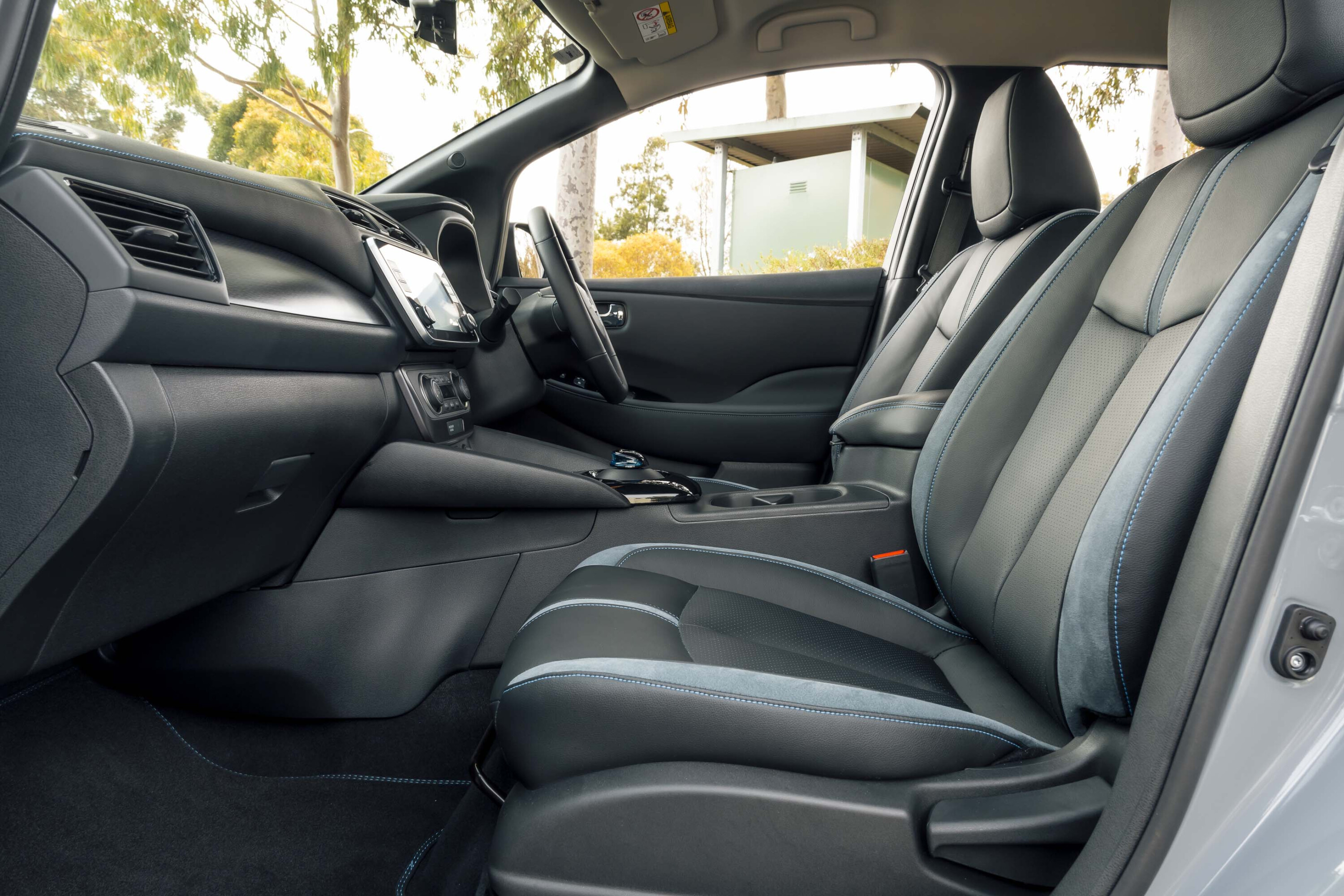
Seat comfort is much better up front in the individual, partially leathered pews, and it’s easy to get a good driving position even with manual adjustment.
Interior ergonomics are generally good, though the Kona’s cabin design is starting to look dated in some areas (a new-generation version is due this year).
1
On the road
From a 200km test loop, both Korean EVs returned theoretical maximum driving ranges that were impressively close to their WLTP figures.
We calculated 458km for the Niro – within 2km of its 460km claim – and 490km for the Kona – 6km over its WLTP distance.
This is not the first time we’ve seen electric vehicles from Hyundai and Kia deliver on their on-paper promise.
1
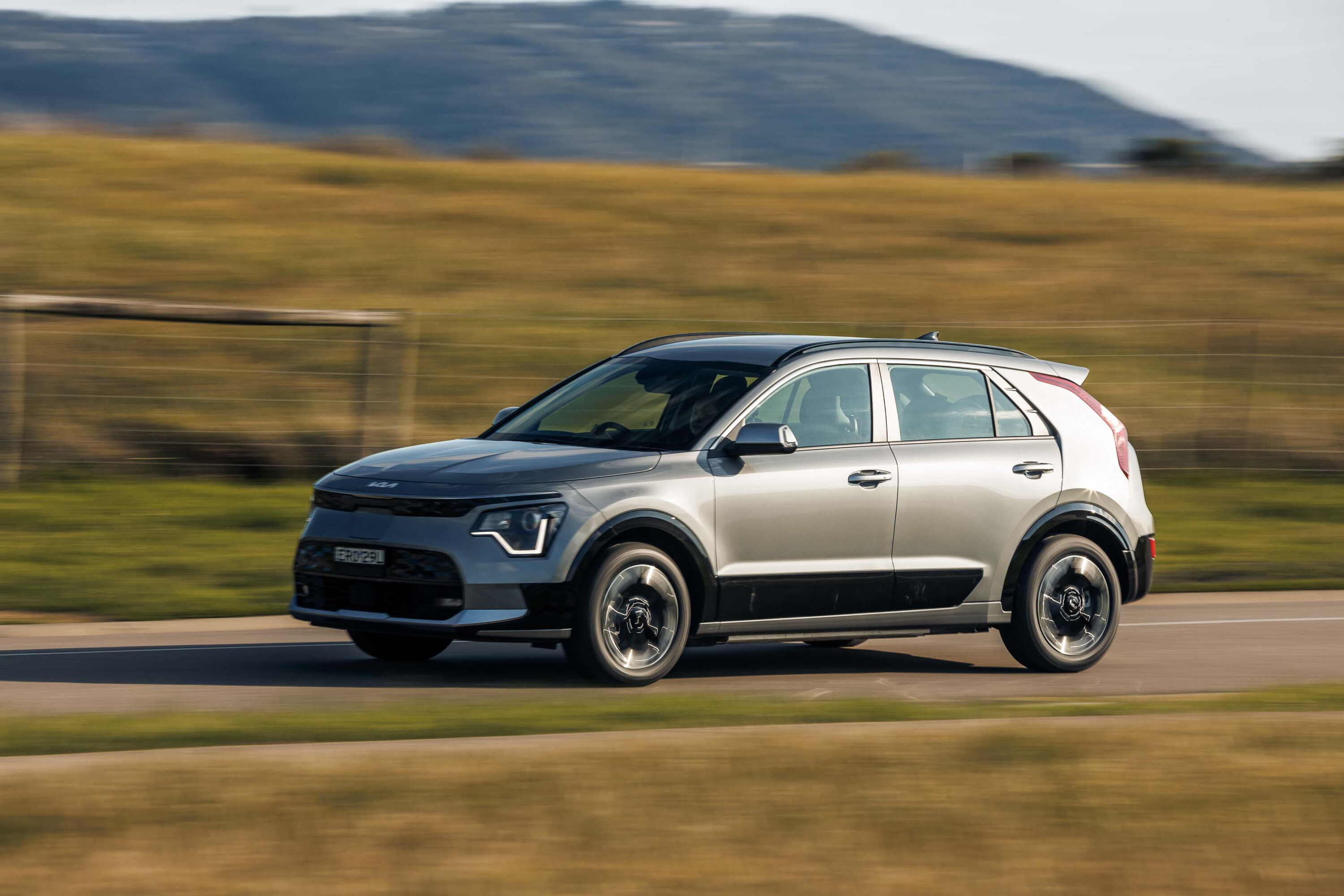
Power in the Niro is identical to the 150kW produced by the Kona EV, although torque is significantly less at 255Nm.
This doesn’t prevent the Niro from providing strong acceleration that more than compensates for its 1.7-tonne kerb weight (443kg of which belongs to the battery).
With a 7.8-second 0-100km/h claim, it’s not only much quicker than the petrol-electric Niro (10.4sec at best) but just a few tenths short of other single-motor EVs that are more expensive – such as the entry XC40 Electric, Polestar 2, and even the rear-drive EV6.
Regenerative braking is adjustable via the paddle levers and includes an i-Pedal mode that allows for one-pedal driving simply by pressing and releasing the accelerator.
Although the Niro’s power delivery is predictably smooth, the same can’t be said about its ride. The EV shares the Niro Hybrid’s tendency to be easily irritated by less-than-perfect bitumen despite the small wheels and chubby rubber.
The Niro feels stiff-legged compared with the Kona, as well as BYD’s Atto 3.
1
Inconsistent steering also partly blights the Niro driving experience, with heavier electric assistance noticeable just off-centre before lightening (and improving) as more lock is applied.
The Niro surprised on the twistiest part of our 200km test loop, with a willingness to be thrown into corners and, aided by plentiful tyre grip, giving the driver the ability to tighten the Kia’s nose simply by lifting off the accelerator pedal, using strong regen braking to manage entry speed rather than the brake pedal.
It’s commendable, even if nobody is likely to buy a Niro EV as a pseudo hot hatch.
The keenest of drivers should pick a Kona with an N badge, though the Kona Electric still provides an element of fun for buyers prioritising recharging over refuelling.
1
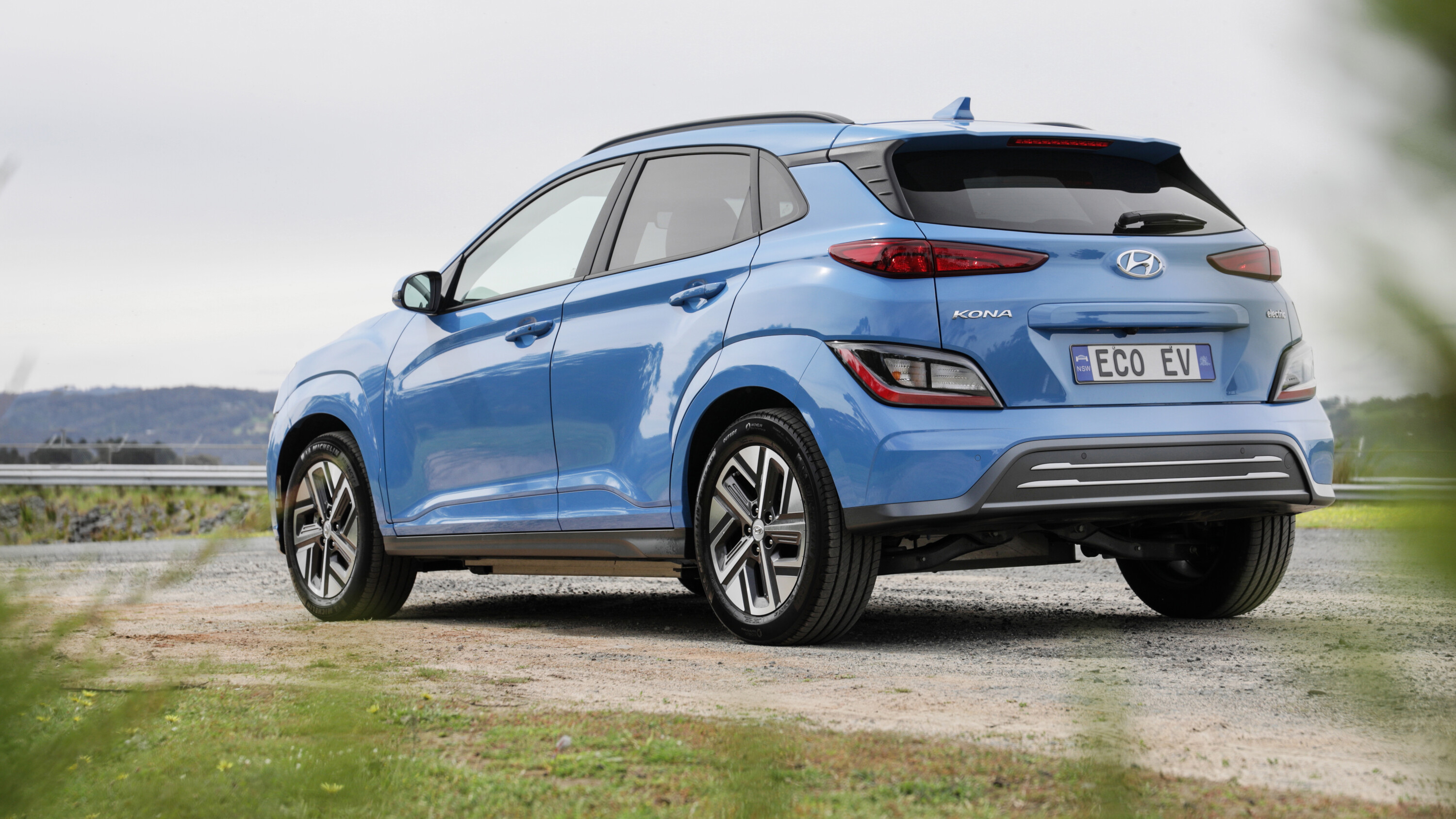
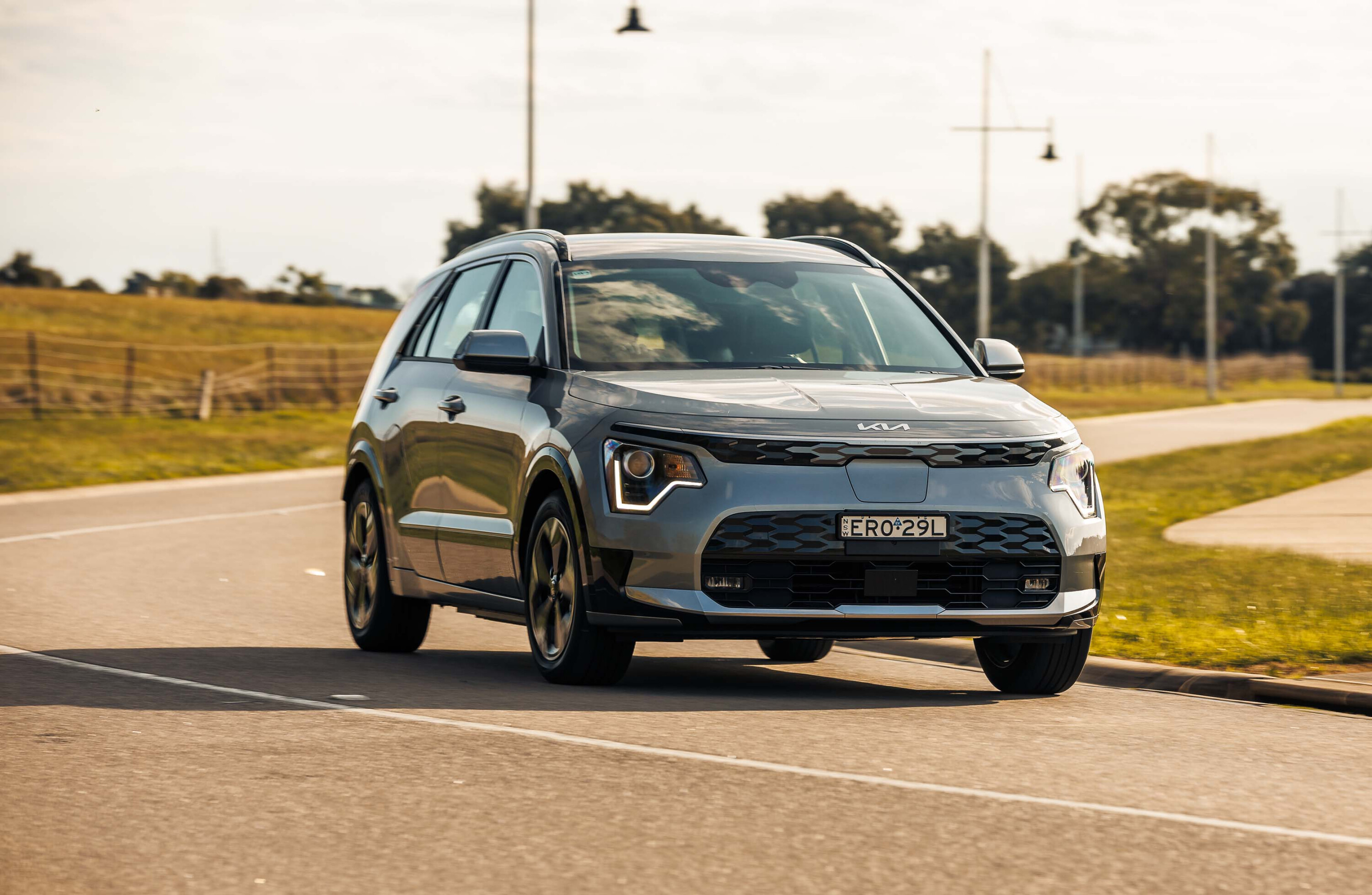
As with the Niro, the electric Kona shrugs off its 1.7-tonne kerb weight with sprightly performance off the mark. No lag – simply immediate response to a squeeze of the throttle pedal.
Hyundai doesn’t provide an official figure for the Kona Electric’s acceleration but it feels similar to the Niro, if not slightly quicker.
The Hyundai’s dynamics are competent rather than involving but more importantly for most buyers, the Kona provides a consistently comfortable ride and consistently smoother steering that gives it an everyday-driving advantage over its compatriot.
One-pedal driving is also available via adjustable regen braking.
1
VERDICT
Hyundai’s Kona EV isn’t as practical, but it gets our nod
For the Kia option, you should beg, borrow or steal – okay, we can’t condone the latter! – to stretch to a base Kia EV6 over the Niro. If it’s just too much, then the Niro at least offers excellent interior space for its more compact size.
Hyundai’s Kona EV isn’t as practical, but it gets our nod for its slightly longer range, better features, and more comfortable ride.
However, a new Kona EV is due in the last quarter of 2023 – bringing an increase in vehicle size and battery range.
SCORING
Hyundai Kona EV: 7.5/10
| THINGS WE LIKE | NOT SO MUCH |
|---|---|
| Real-world range | Tight rear seat |
| Sprightly performance | Small boot |
| Good on-road manners | Expensive for a small SUV |
Kia Niro EV: 7/10
| THINGS WE LIKE | NOT SO MUCH |
|---|---|
| Spacious interior with improved presentation | Priced too close to EV6 |
| Good performance plus one-pedal driving | Standard equipment level a bit lacklustre |
| 7-year warranty | Inconsistent steeringu00a0 |
| Fidgety ride unless roads are smooth |
| Hyundai Kona Electric Elite Extra Range | Kia Niro EV S | |
|---|---|---|
| Safety, value and features | 7 | 6.5 |
| Comfort and space | 7 | 8 |
| Drivetrain | 8 | 8 |
| Ride and handling | 8.5 | 7 |
| Technology | 7.5 | 7 |
| OVERALL | 7.5 | 7 |
MORE
Everything Hyundai
MORE
Everything KIA
| Price | $60,500 + on-road costs | $65,300 + on-road costs | ||
|---|---|---|---|---|
| Size & segment | Small SUV | Small SUV | ||
| Seats | 5 | 5 | ||
| Boot space min/max | 332L/1114L | 475L/1329L | ||
| Drive | Single motor, front-wheel drive | Single motor, front-wheel drive | ||
| Battery size | 64.0kWh | 64.8kWh | ||
| Outputs | 150kW/395Nm | 150kW/255Nm | ||
| Efficiency | 14.7kWh/100km | 16.2kWh/100km claimed, 13.9kWh/100km tested | ||
| Driving range | Claimed | Tested | Claimed | Tested |
| 486km | 490km | 460km | 458km | |
| Charging speed | Claimed | Tested | Claimed | Tested |
| DC fast charging | 77kW, 10-100% 47min | 24kW avg, 61-100% 51min | 80kW, 10-80% 43min | 28kW avg, 61-100% 59min |
| AC home charging | 7.2kW, 10-100% 9h15min | Not tested | 11kW, 10-80% 6h20 min | Not tested |
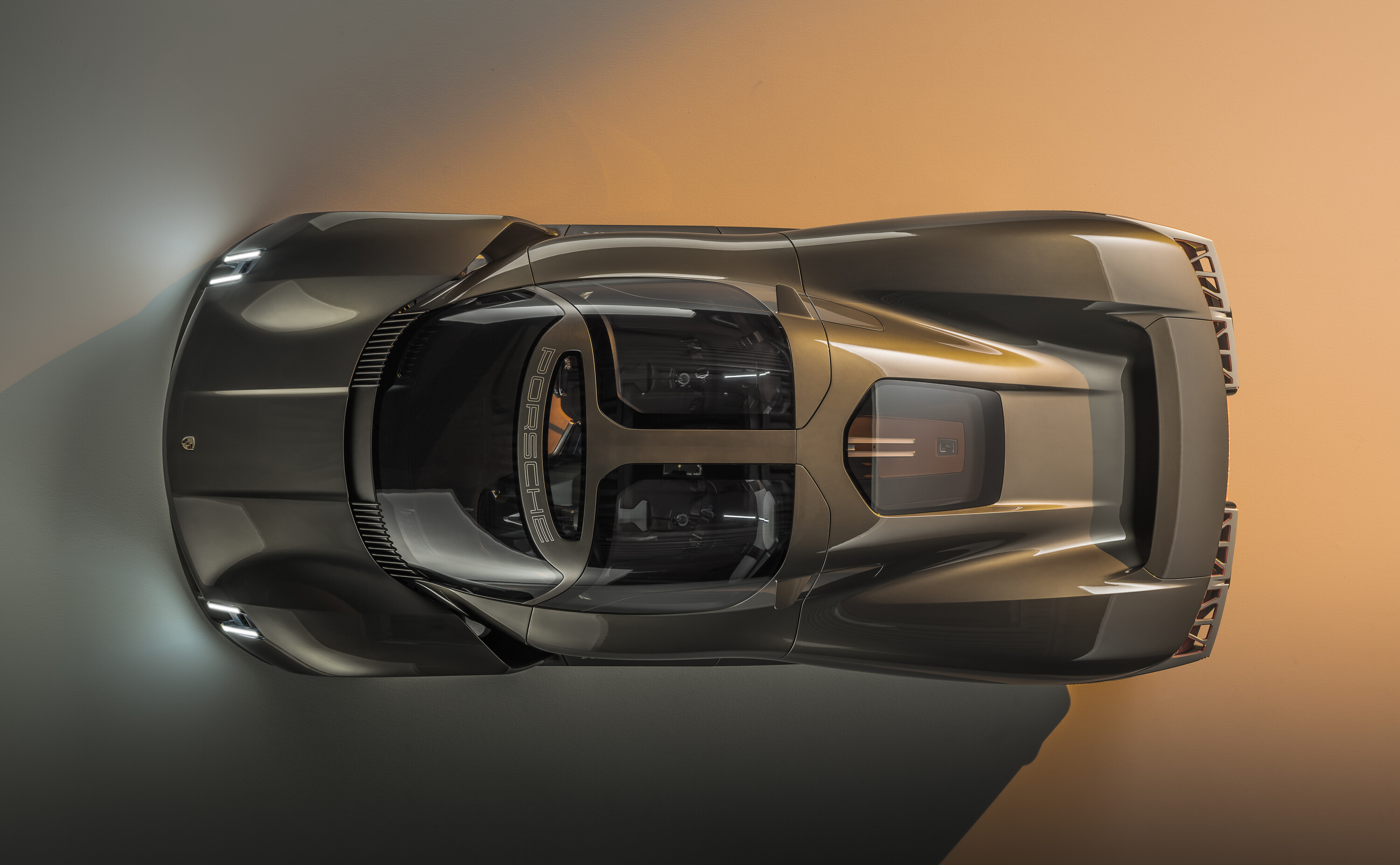
Porsche has unveiled an all-electric hypercar concept with a showroom-ready look.
The Porsche Mission X was unveiled overnight at the brand’s ‘75 years of Porsche sports cars’ exhibition in Germany, with the potential to enter series production.
A spiritual successor to the combustion-only 1985 Porsche 959 and 2003 Carrera GT, and the hybridised 2013 918 Spyder, the Mission X has the potential to beat the Mercedes-AMG One as the fastest production car around the famous test track.
1
The Mercedes-AMG One has a 6:30.705 lap time set last year, which is around 26.3 seconds faster than the 718 Spyder’s record set in 2013, and eight seconds quicker than the previous Porsche 911 GT2 RS MR record set in 2021.
If it enters production, Porsche claims the electric Mission X would need to be the fastest road-legal car on the Nürburgring and have a power-to-weight ratio of around one metric horsepower (0.74kW) per kilogram.
This means that Mission X is likely focused on weight reduction, with other electric hypercars, such as the Rimac Nevera, unable to reach that ratio.
1
Porsche also claims it would have “significantly more downforce than the current 911 GT3 RS”, and charge twice as fast as the 225kW-limited Taycan Turbo S.
Under the skin, the Mission X has a rear-mounted battery pack of unspecified size, which is expected to feature in the forthcoming all-electric 718 successors, and a 900-volt electric architecture – compared to the Taycan’s 800-volt.
The latest Porsche Mission concept follows the Mission E that previewed the Taycan and the Mission R, which provided our first look at the 718 successors.
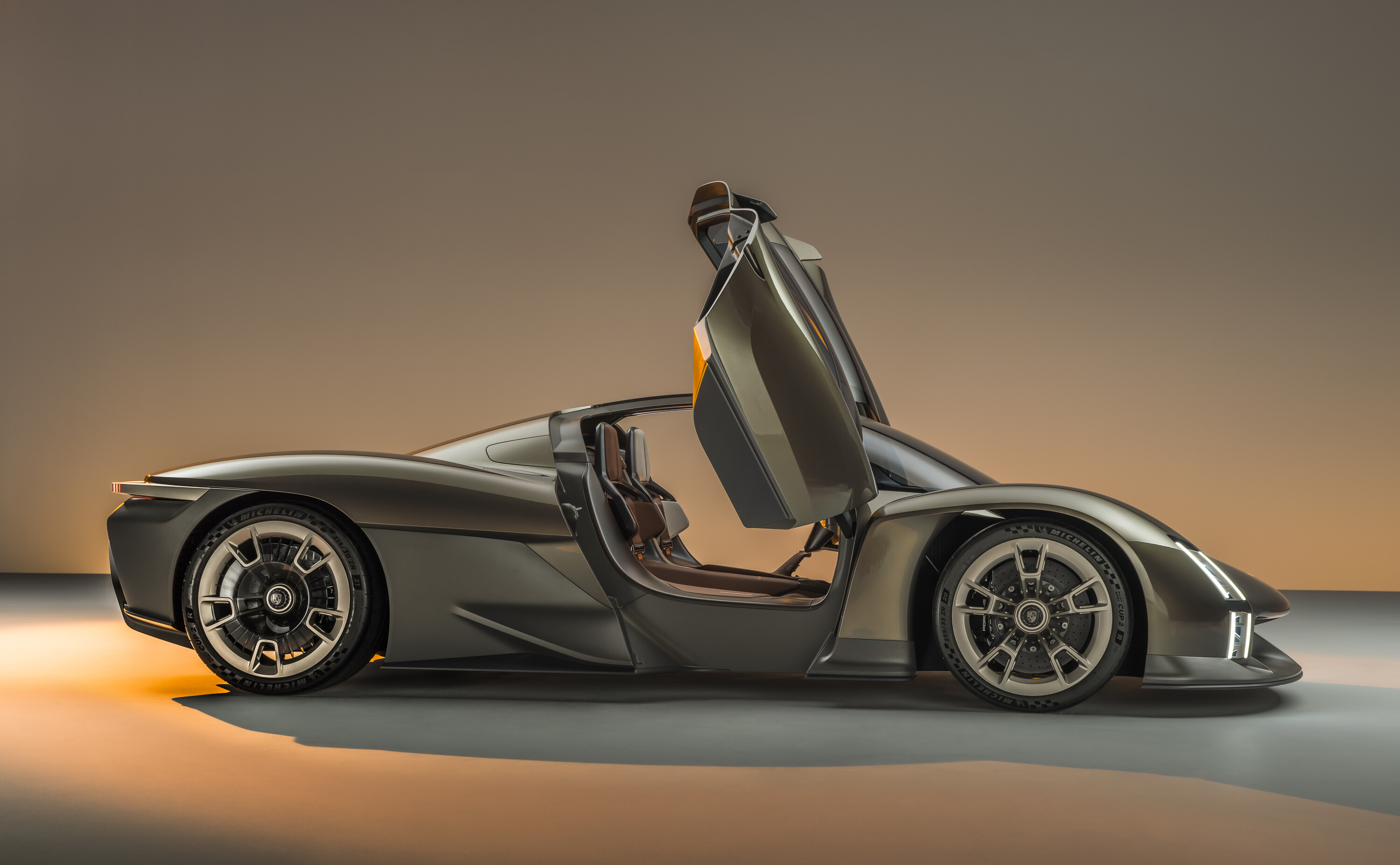
Measuring around 4500 millimetres long, 2000mm wide and 1200mm tall, with a wheelbase of around 2730mm , the Mission X is similar in size to the 918 Spyder, with a shorter but wider body.
1
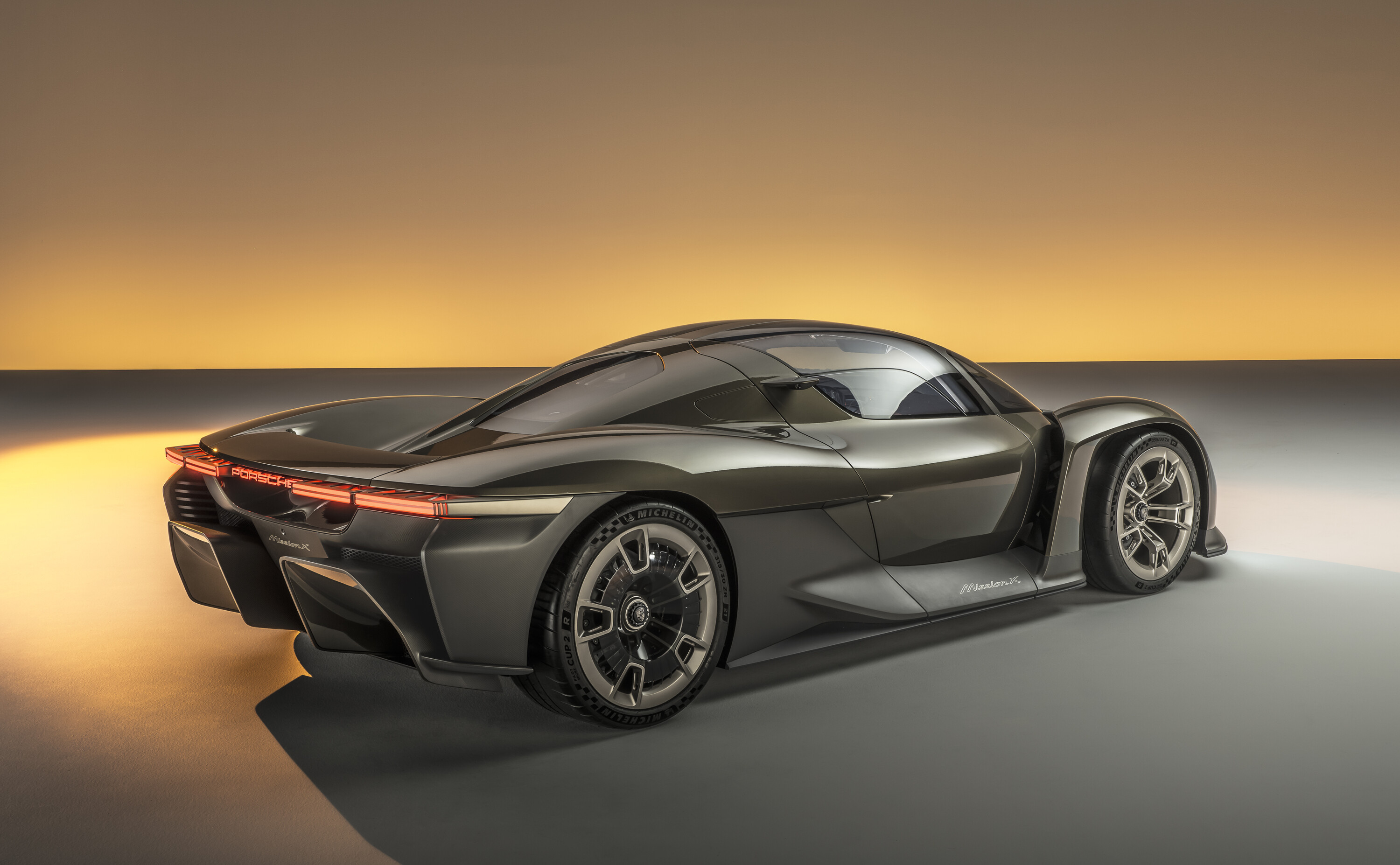
It has 20-inch wheels at the front, while the rear features larger 21-inch sets for aerodynamics.
A lightweight glass dome built from carbon-fibre-reinforced plastic sits above the driver and front passenger, while the Le Mans-style doors are similar to the Porsche 917 race car, opening forwards and upwards.
The overall look of the Mission X follows Porsche’s latest design language, with vertical four-point lights, a full-wight rear light strip with illuminated red Porsche lettering.
1
It also debuts the brand’s modernised logo, which is destined for the facelifted Panamera later this year.
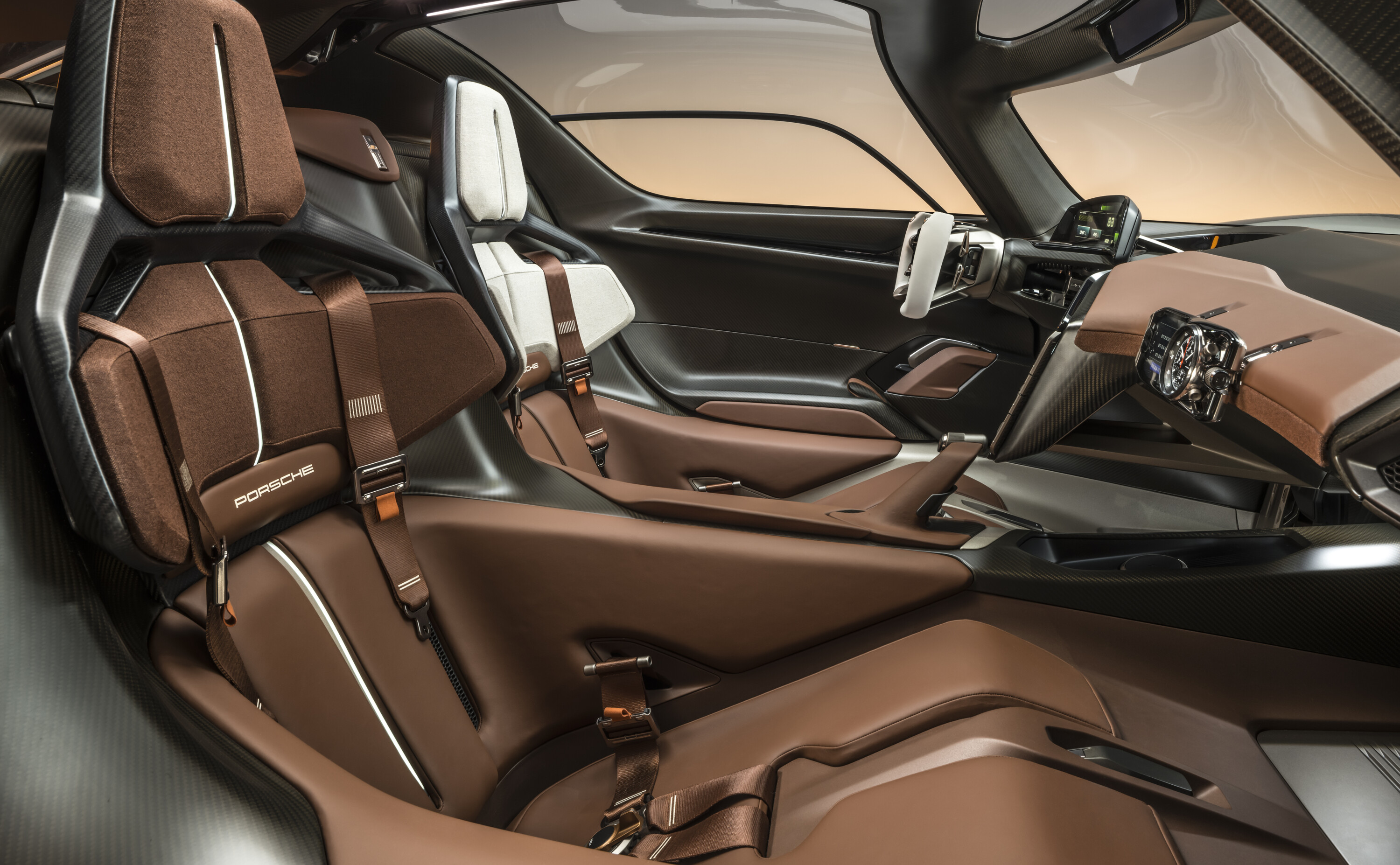
Inside, it features carbon-fibre shell bucket seats in ‘andalusia brown’, with a unique grey two-tone finish for the driver’s seat. Other parts of the cabin, such as the seat belts, centre console and dashboard, are also finished in brown.
The Mission X’s cabin introduces a ‘multi-purpose controller’ with a record button for the built-in camera, while there’s an available stopwatch module with an analogue and digital display.
MORE
Everything Porsche
More than a few icons and legends have been born in the running of Le Mans. Here’s our list of the greatest.
This story was first published in 2021.
1
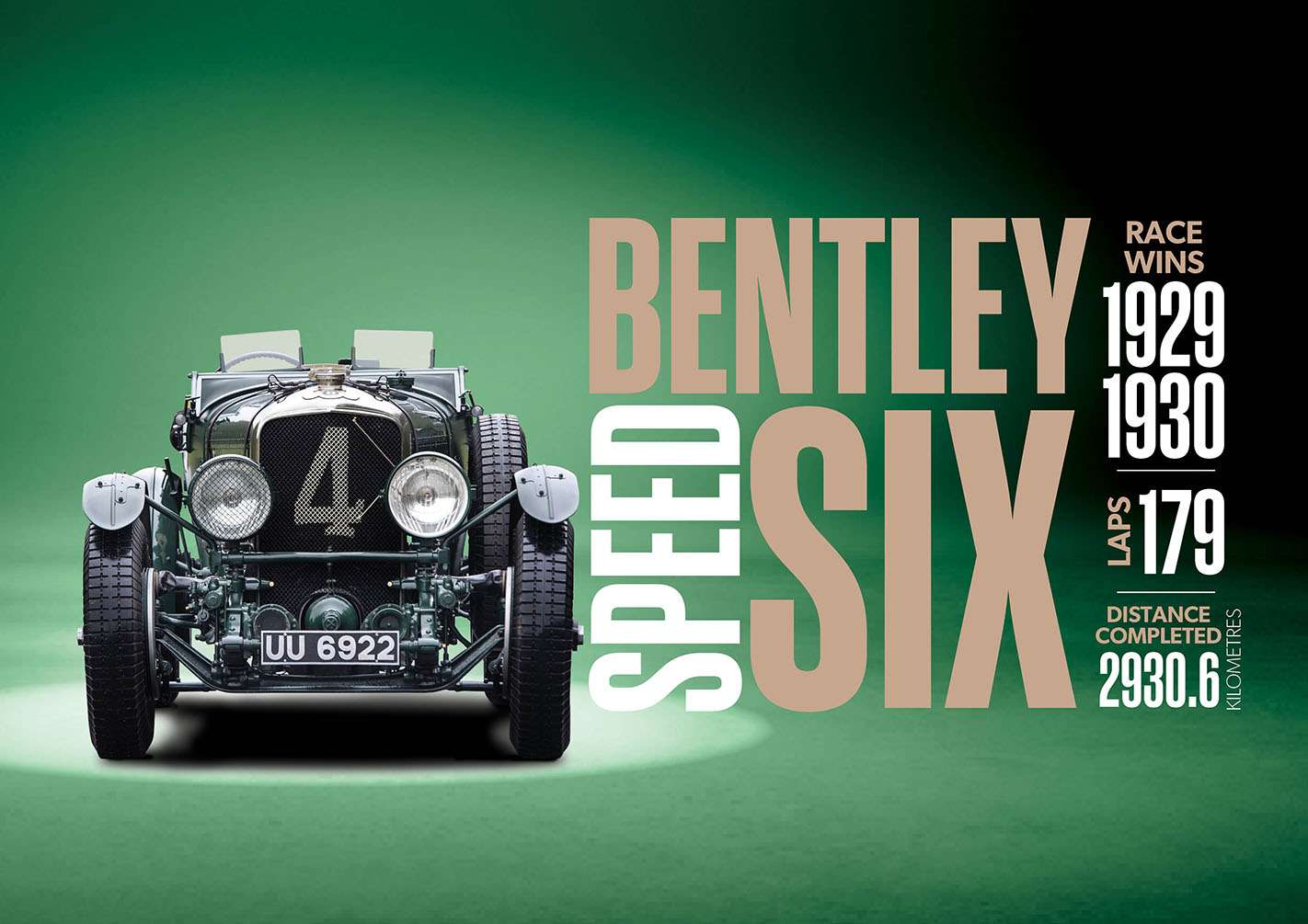
BENTLEY SPEED SIX
In the nearly 100 years since, there hasn’t been a group of racers quite like the Bentley Boys.
A collective of gentlemen racers, they won the 24 Hours of Le Mans five times between 1924-30. Their success came off the back of Bentley’s impressive late-‘20s motor cars, which culminated in victories in ’29 and ’30 with the Speed Six.
The Speed Sixes driven by the factory-backed Bentley Boys differed slightly to those sold to the public, with a ‘shortened’ wheelbase of 3353mm, with an extra 20kW (for a maximum of 150kW at 3500rpm) squeezed from the 6.5-litre straight-six due to an increased compression ratio.
On debut, the Speed Six crushed the opposition, running largely unopposed. By dawn on Sunday half the field had retired, allowing Bentley to stage a formation finish. Legend has it the victorious Bentley Boys then retired to a nearby estate, turned the driveway into a makeshift race track, and proceeded to drink the night away. A year later Speed Sixes again scored a formation one-two finish with both cars more than 10 laps clear of the competition.
Unfortunately, the champagne soon ran dry. The Great Depression saw Bentley sold to Rolls-Royce in 1931, but the Bentley Boys’ legacy is forever etched in Le Mans folklore.
1
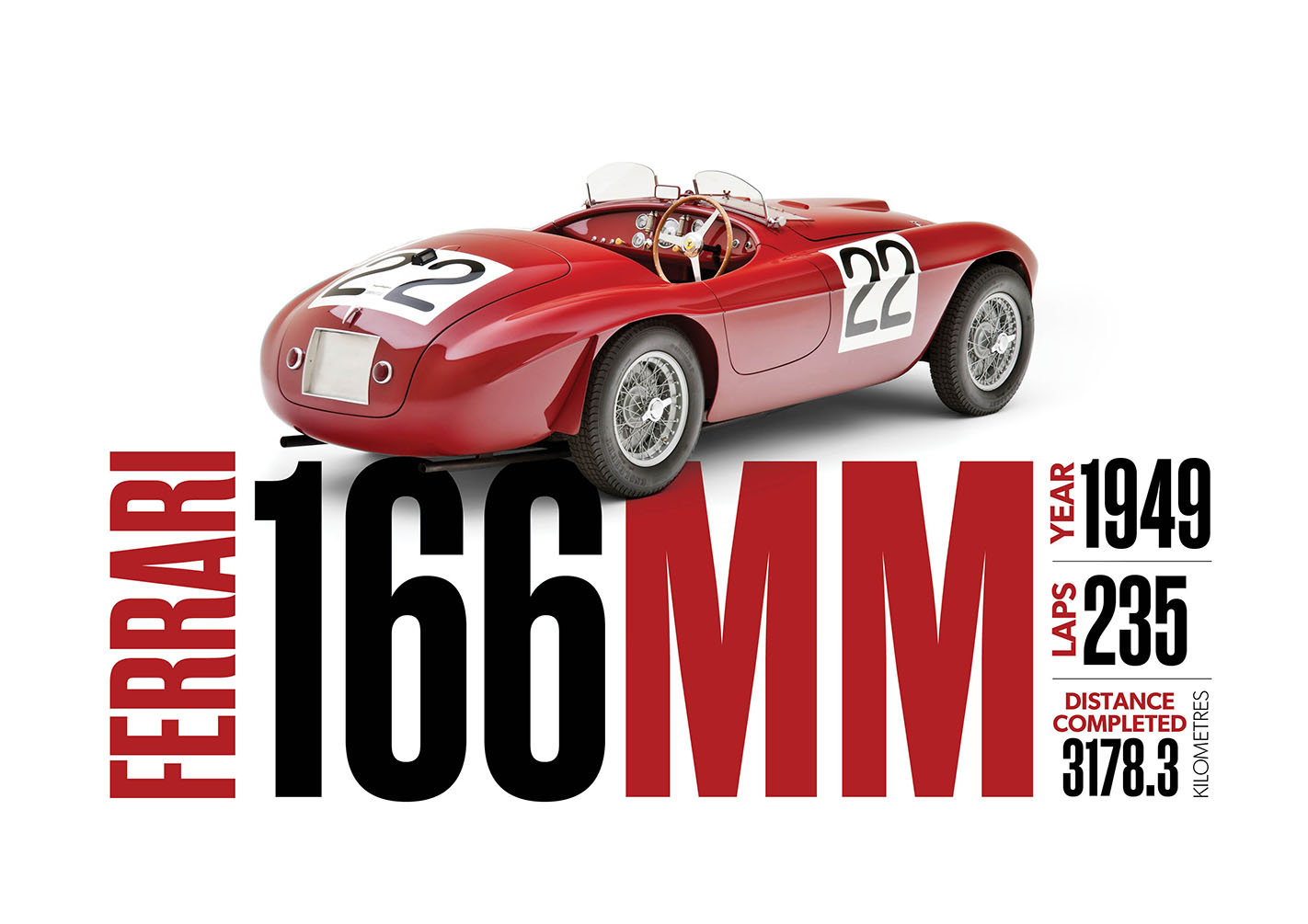
FERRARI 166MM
There’s an argument to be made that the 166 MM is the most important car in Ferrari’s racing history.
Others might be more iconic, and the F1 cars have enjoyed higher-profile success, but without the 166 MM Ferrari wouldn’t be the company it is today.
At the 166 MM’s reveal in 1948, the Maranello race team was strapped for cash and still reeling from its factories being bombed during WWII. Just 25 were to be built, with two privately entered into the 24 Hours of Le Mans in 1949 with the blessing of Enzo Ferrari.
Chassis 0008M was driven by hot shoe Luigi Chinetti and car owner Lord Selsdon.
Modifications specific to this chassis include an oil reserve tank on the passenger-side floor, so the team wouldn’t need to open the bonnet during pit stops.
With Chinetti at the helm for all but 72 minutes of the race, the 166 MM overcame a slipping clutch to claim a victory that would lay the base for Ferrari’s transformation into a motorsport powerhouse.
It was also the first V12-powered car to win Le Mans outright, and its 2.0-litre capacity made it the smallest engine to claim victory until the Porsche 919 in 2015.
1
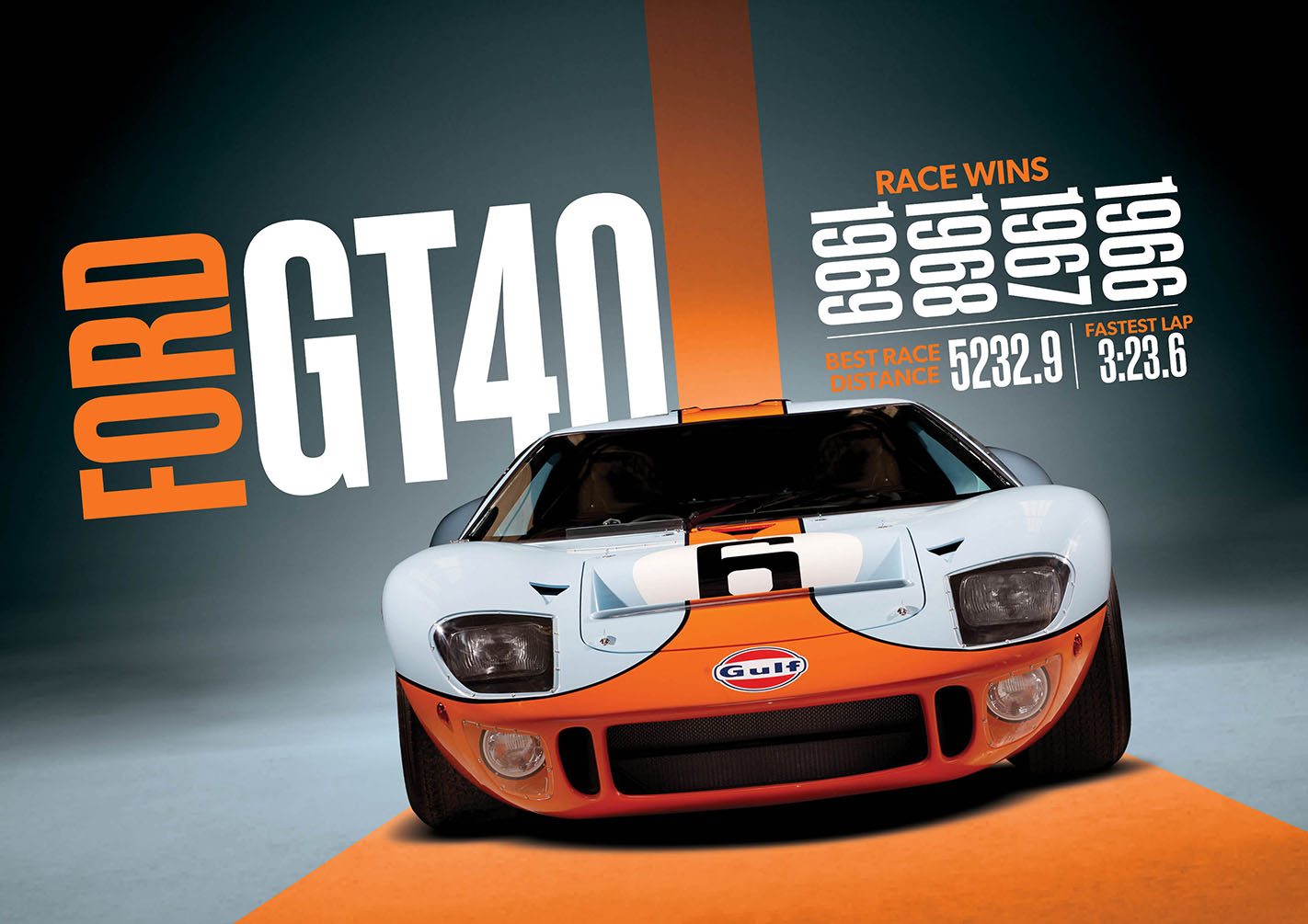
FORD GT40
The history of the Ford GT40 and its reason for even making the grid at Le Mans are well documented.
It was a gratuitous display of force by an American company that was sick of being the laughing stock of those dang snobby Europeans. Right?
Well, not quite. The thing is, the GT40 was as British as it was American. While all GT40s had Ford power, the Mk I, II, and III variants were all designed and built in England.
Based on the Lola Mk6, the GT40 was designed and assembled in Slough, not Detroit. Yes, the funding was all Greenback, and the engine was as American as they come – a stonking great 7.0-litre naturally aspirated V8 – but the engineering team was more tea and scones than bourbon and prime rib.
Another aspect often overlooked is the fact that the GT40 was built using ground-breaking technology.
While its design ethos was brutally simple, the GT40’s British development was incredibly high-tech, and included engine dynamometers that ran motors through non-stop simulations which, at the time, was something straight out of science fiction.
The first truly American GT40 was the Mk IV, of which only six were ever built. Claiming victory in 1967, the Mk IV became the first and only all-American victory at Le Mans, with the drivers, team, chassis, engine and tyres all crossing the Atlantic to compete.
1
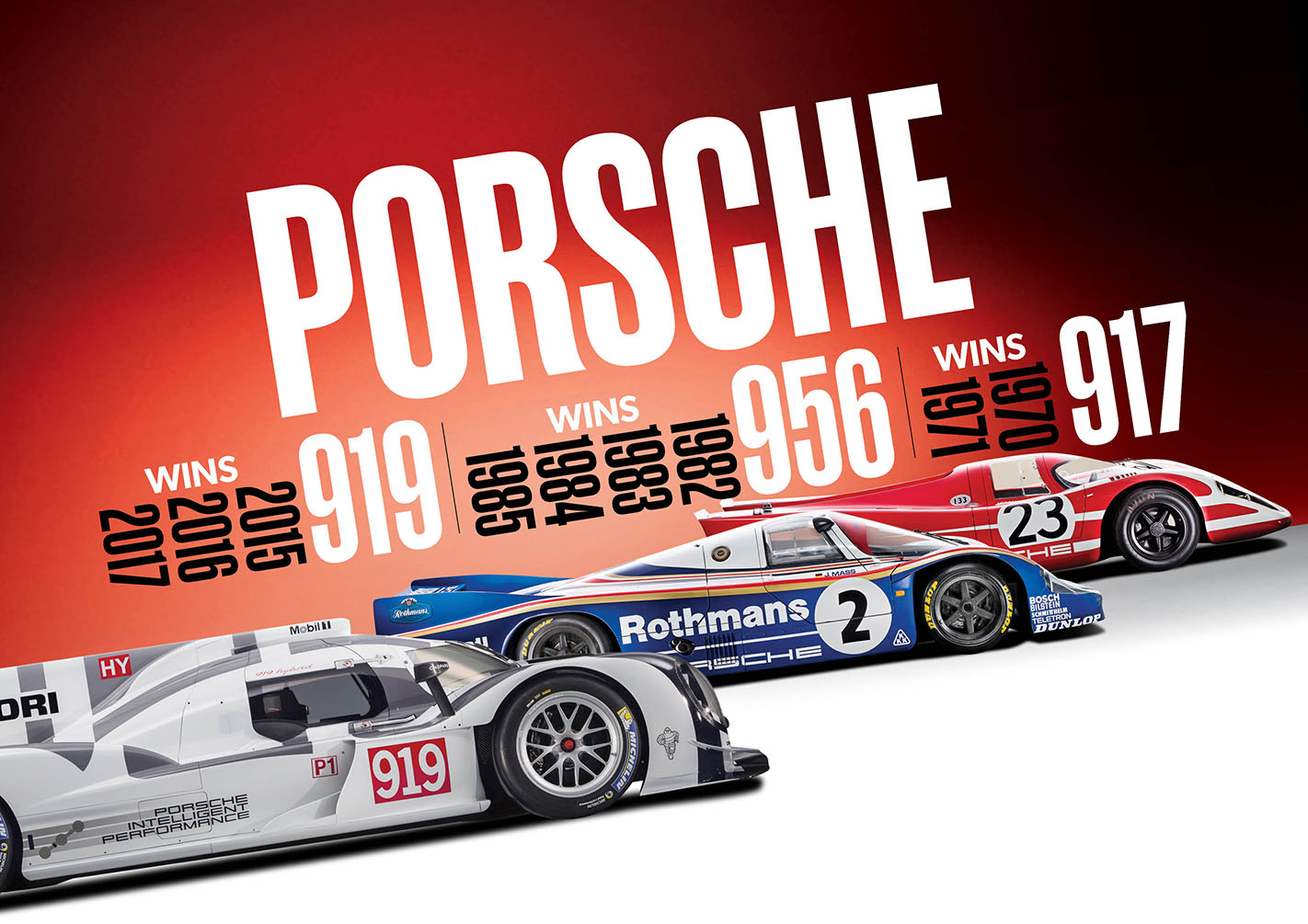
PORSCHE 917/956/919
Half a century ago, a diminutive red and white Porsche 917 claimed victory at the 24 Hours of Le Mans and changed the history of the race forever.
It began a dynasty of success that stands to this day; its progeny being some of the greatest racing cars in motorsport history.
Technically, the Audi R8 holds the official record for most victories by a single car at Le Mans with five wins (six if you include the Bentley Speed 8 which used the same chassis and engine).
However, a broader reading of the rules suggests the Porsche 956 is the greatest vehicle to ever tackle the La Sarthe circuit. It won four times in its own right, before evolving into the 962 (effectively the 956 with a longer wheelbase), to win another two times.
The same fundamental design would win a seventh time in ’94 more than a decade after it debuted by transforming from race car, to road car and back to racer again as the Dauer 962.
Porsche returned in 2014 with the 919 and its hybrid V4 powertrain. Three crushing victories and the departure of Audi was enough for the boardroom to be comfortable their outright victory tally was safe once again and they left at the end of 2017.
Rumours of Porsche’s imminent return to Le Mans persist to this day. Long may they reign.
1
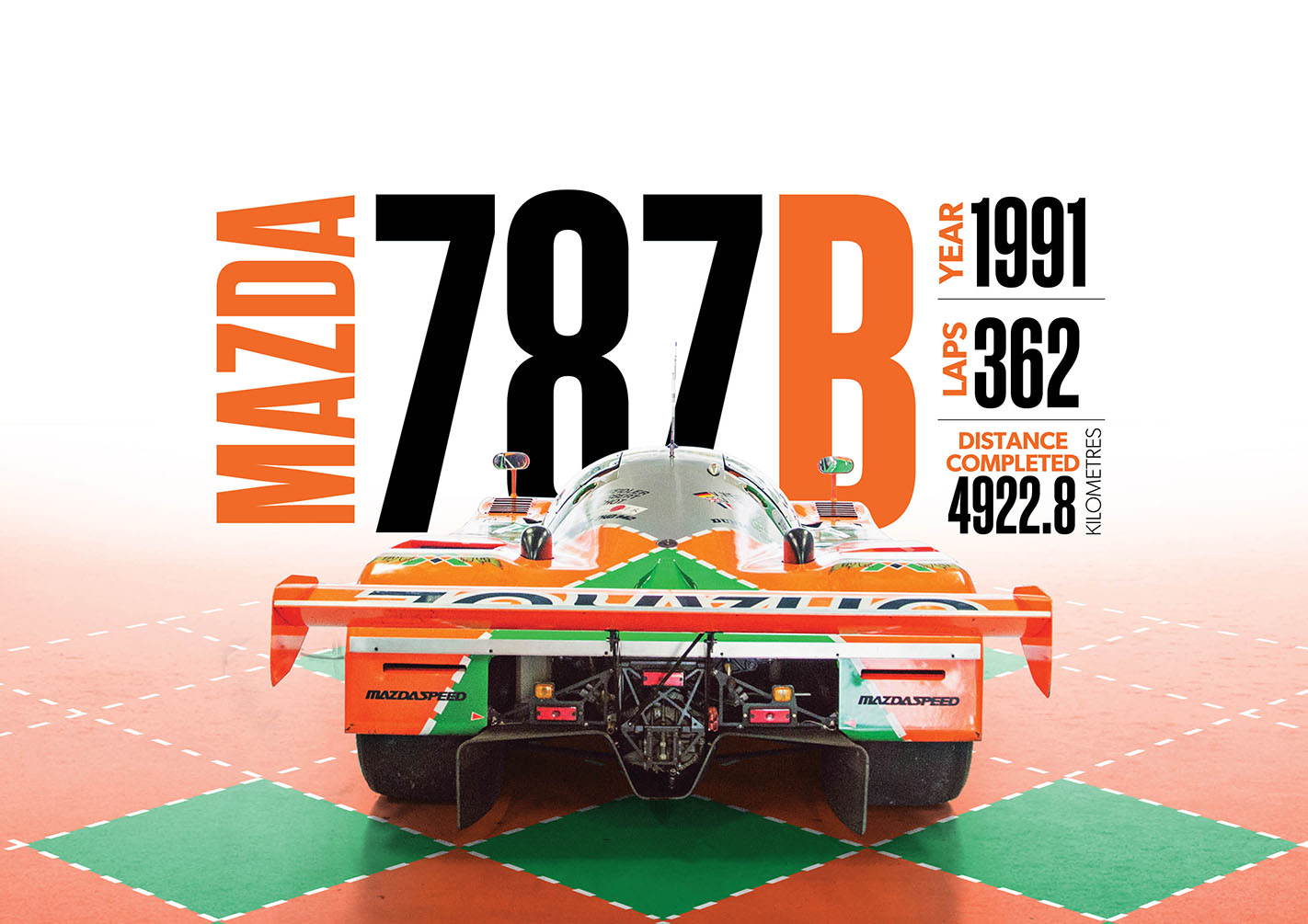
MAZDA 787B
This is going to be a hard pill to swallow for fans of the Japanese icon, but the Mazda 787 was slow.
In its 23-race history, the 787B only won once, never scored another podium, and never qualified on the front row of the grid. It just so happens that sole victory took place at the ’91 24 Hours of Le Mans, making the 787B the first Japanese car to win the endurance classic.
Powering the Group C racer was a four-rotor R26B engine, which Mazda claimed could reach 11,000rpm and produce 671kW. If that doesn’t sound very conducive to reliability, that’s because it wasn’t. Run at its full potential, the 787B would have detonated its engine just a quarter of the way into the race. In race trim the redline was set in the region of 9000rpm and power outputs capped at 521kW. And no, it wasn’t so good that rotary engines were banned.
Competing against the Sauber-run Mercedes-Benz C11s and Jaguar XJ-12s (prepped by TWR), the Mazda 787 was severely outgunned. Mazda’s runners started 19th, 23rd, and 30th on the grid.
For 22 of the race’s 24 hours, it looked like Mazda had no chance at victory, and was well off the pace. However, as competitors either fell off the road or were plagued by mechanical issues, the Japanese cars plodded along, maintaining a consistent speed.
At the end of the race, the #55 had a two-lap lead, and victory was secured.
1
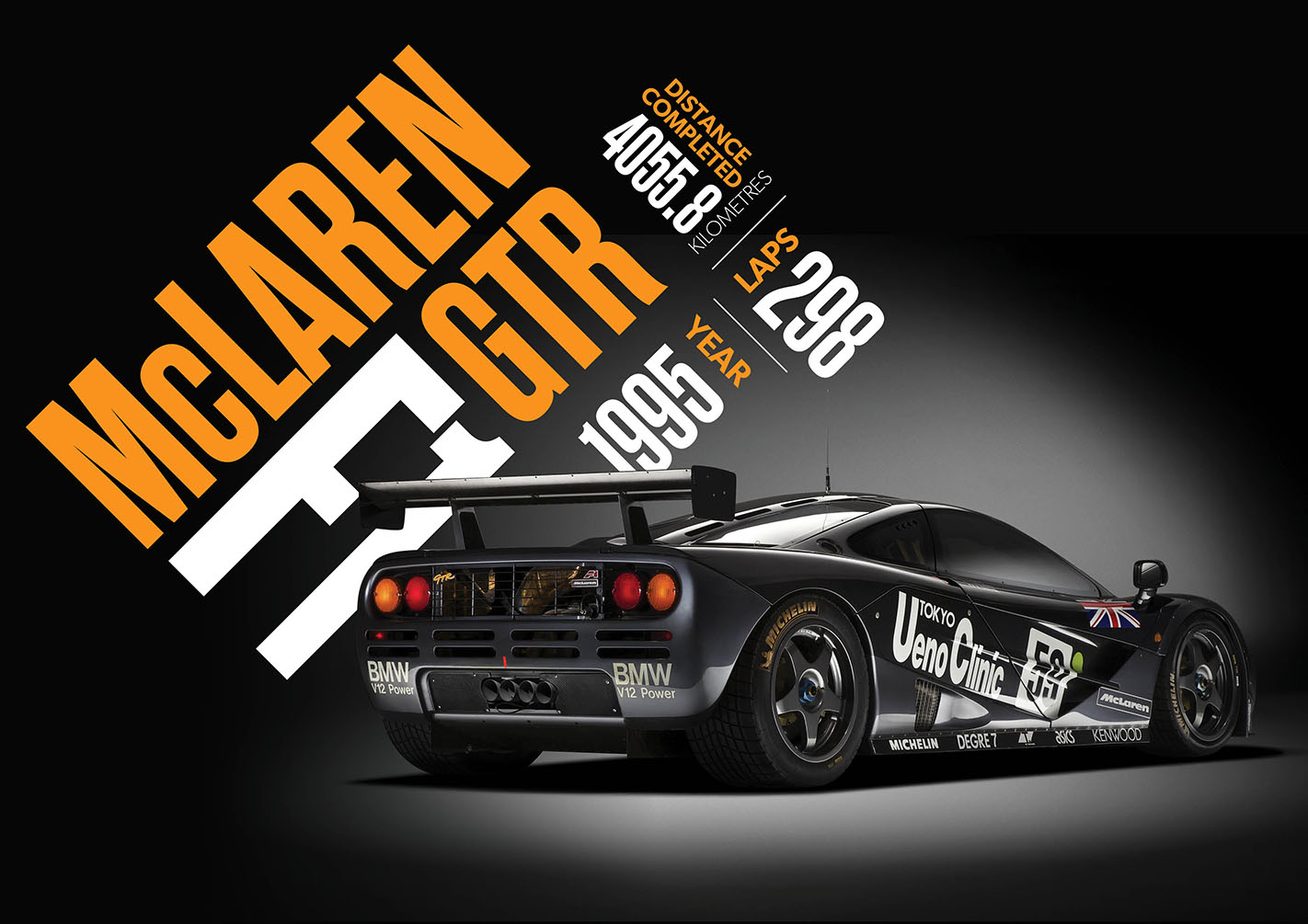
McLAREN F1 GTR
The McLaren F1 pulled off one of the most implausible feats in racing – winning a rain soaked 1995 24 hours of Le Mans outright as a GT car competing against full-blown prototypes.
Originally six F1 GTRs were slated to take part in the ’95 race. Then one Motokazu Sayama made a phone call to Woking. A die-hard McLaren fan and owner of the Ueno Clinic in Japan (a plastic surgery firm with an, ah, phallic specialisation), Mr Sayama wanted to sponsor an F1 GTR at Le Mans.
With none of the cars already entered having room for his logo, Mr Sayama told McLaren he was willing to pay to have a seventh GTR built.
McLaren wasn’t going to say no to a big cheque, but all that was left was the test mule, chassis #01R.
Preparations to get #01R ready for competition began just six weeks before the race started, with McLaren completing the task on a single condition. If the car, in unlikely circumstances, won the 1995 race, McLaren would retain possession of the chassis. If it didn’t, Sayama-san could buy it outright. Deal done.
History tells us that #01R held on to win the saturated race, and McLaren has kept the chassis in running order ever since.
To make up for not selling him the winning GTR, McLaren sold Sayama a heavily-discounted road-going F1 in a special two-tone paint job to match #01R. Not a bad deal if you ask us.
1
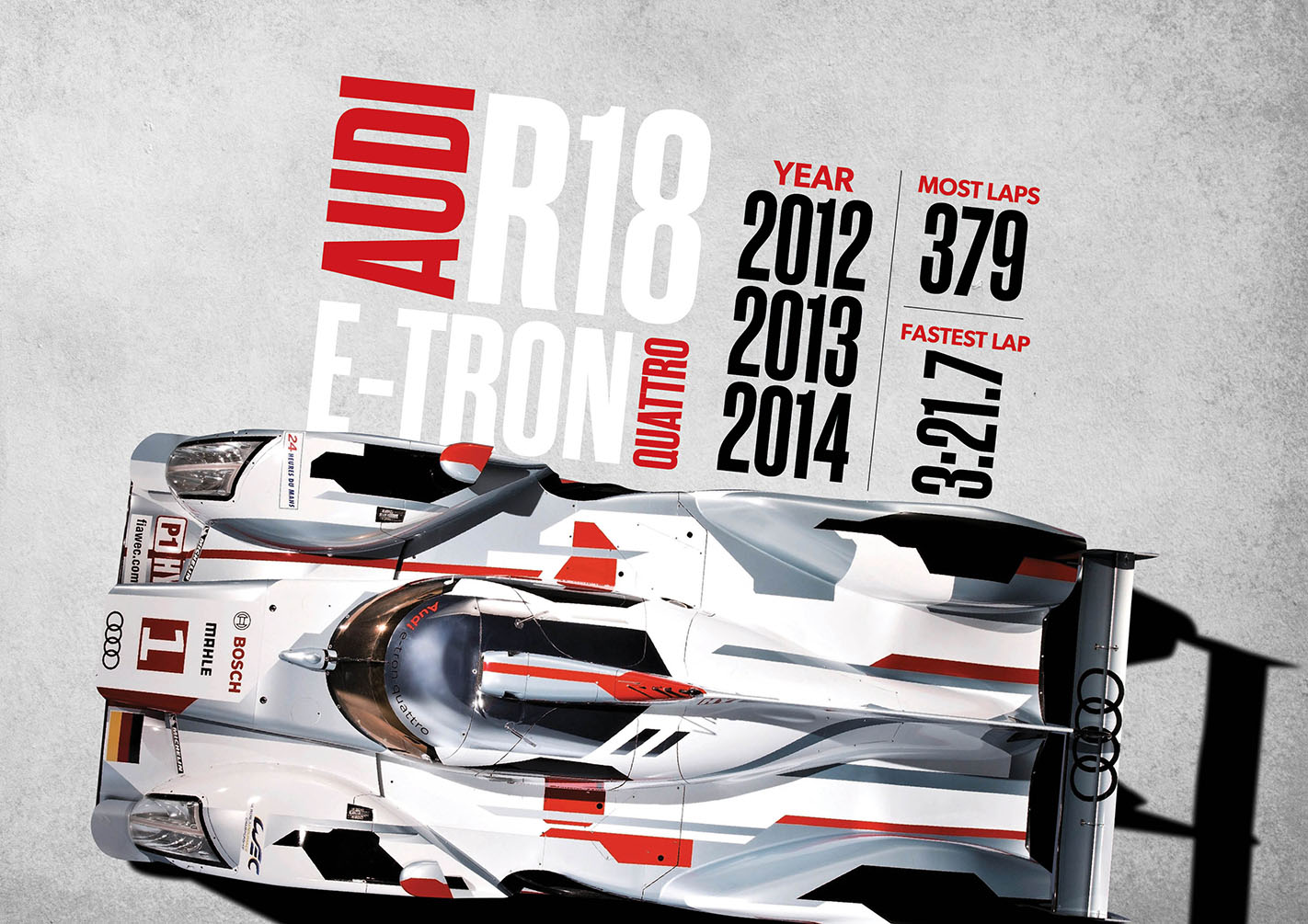
AUDI R18 E-TRON QUATTRO
You can’t have a celebration of Le Mans racing cars without including Audi.
While it hasn’t competed at La Sarthe in almost five years now, the race’s modern era has been defined by the German giant’s domination – winning 13 times in 15 years between 2000 and 2014. Rounding out that success was the R18.
There have been five iterations of the R18 between its debut in 2011 and its final race in ’16, winning the great endurance race four times. Initially powered solely by a 3.7-litre single-turbo diesel V6, the 2011-spec R18 produced a relatively humble 397kW.
Not as efficient as its Peugeot rival, the R18 would have to win the race on sheer speed. Three cars were entered for Le Mans that year, and while two failed to finish, the remaining Audi crossed the line first, with a margin of victory of just 13.8 seconds after 24 hours of non-stop near-qualifying pace.
In 2012, hybrid technology was introduced for the first time in Le Mans history, and again the R18 was successful, this time in its e-tron specification.
Electric power was harnessed at seven regenerative braking points around the track, and stored in a 140kWh battery pack.
This made the R18 not only the first hybrid Le Mans winner, but the first with two different styles of powertrain. Victories would follow again in ’13 and ’14, the latter being Audi’s last at Le Mans.
While the R18 would go through two further revisions, getting ever faster and more efficient, it was unable to match the newer Porsche 919 and 15 years of Le Mans dominance came to an end.
Keep your Monaco Grand Prix and your Indy 500… the 24 Heures du Mans is the most iconic motor race in the world full stop.
It’s the race where factory juggernaut outfits still clash hand-to-hand with garagistas to claim the ultimate honour in motorsport.
Here’s ten things you need to know before the race kicks off on Saturday night local time.
? How to watch the 2023 24 Hours of Le Mans
Australian fans can tune into the 100th running of the 24 Hours of Le Mans via the Stan Sport streaming service [↗], which is broadcasting practice and qualifying sessions.
Its race coverage starts at 11pm on Saturday 10 June. An added bonus; noted Australian racing commentator Richard Craill will form part of the Radio Le Mans broadcast team, while former Supercars caller Leigh Diffey will anchor the US coverage.
If you’re not a subscriber, sign up for a trial period, or catch up with the numerous team streams that will populate YouTube over the course of the event.
You can also buy a round pass from fiawec.tv [↗] to watch the entirety of the event, which will cost you a nick over $20.
https://www.instagram.com/p/CtKCBpeNdul/
There is one Aussie in the race…
Only a single driver will represent the green and gold this year, with 27-year-old James Allen suiting up in an LMP2 Oreca for Algarve Pro Racing. (The fella above on the right.)
We can kind of claim six-time IndyCar champ Scott Dixon at a stretch; the Kiwi who will race for Cadillac in the Hypercar class was born in Brisbane.
He will be joined by fellow Kiwi Earl Bamber (a two-time Le Mans winner in 2015 and 2017), while NZ’s Brendan Hartley will be going for a fourth win driving a Toyota GR010 Hybrid in the Hypercar class.
1
And one that should be
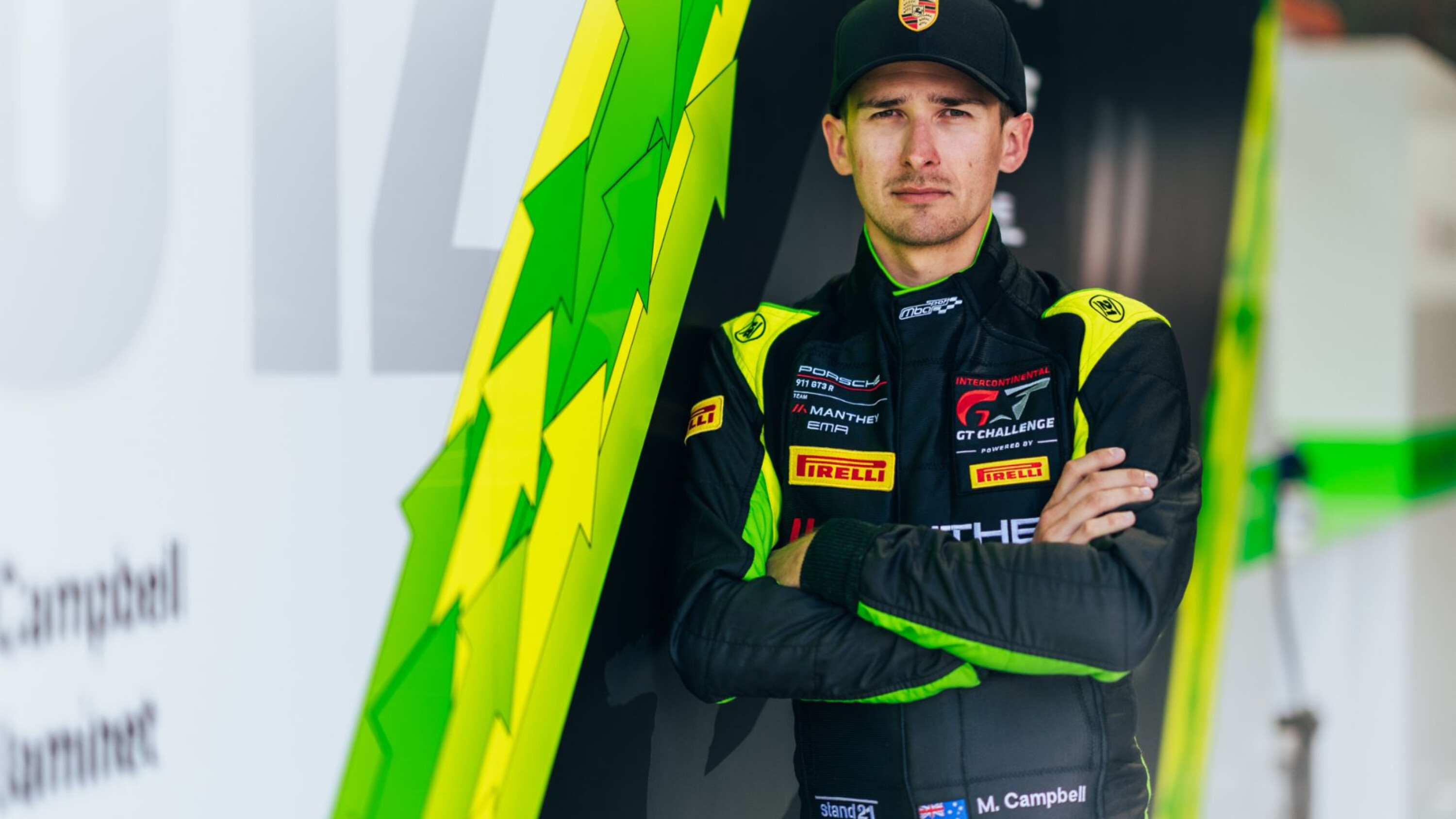
On the reserves bench for Porsche Penske Motorsport #75 Hypercar is Matt Campbell, who took a class victory at Le Mans on debut in 2018.
The quietly spoken Queenslander is an enduro expert, having competed in all of the biggest 24-hour races on the planet for the last five years.
His 2023 focus on the US-centric IMSA series in the Porsche 963, though, means that his WEC teammates get the nod for this year.
It’s the debut of the Hypercar
2023 marks the first running of the Hypercar at Le Mans, and Cadillac, Vanwall, Porsche, Toyota, Ferrari, Peugeot and Glickenhaus will all field entries in the premier class.
With a minimum weight of 1050kg and a mandated maximum output of 500kW, the Hypercar is far cheaper to build and run than the previous generation of Le Mans Prototypes. This has led to a 16-car field of top-flight Hypercars who will greet the tricolor on Saturday afternoon.
1
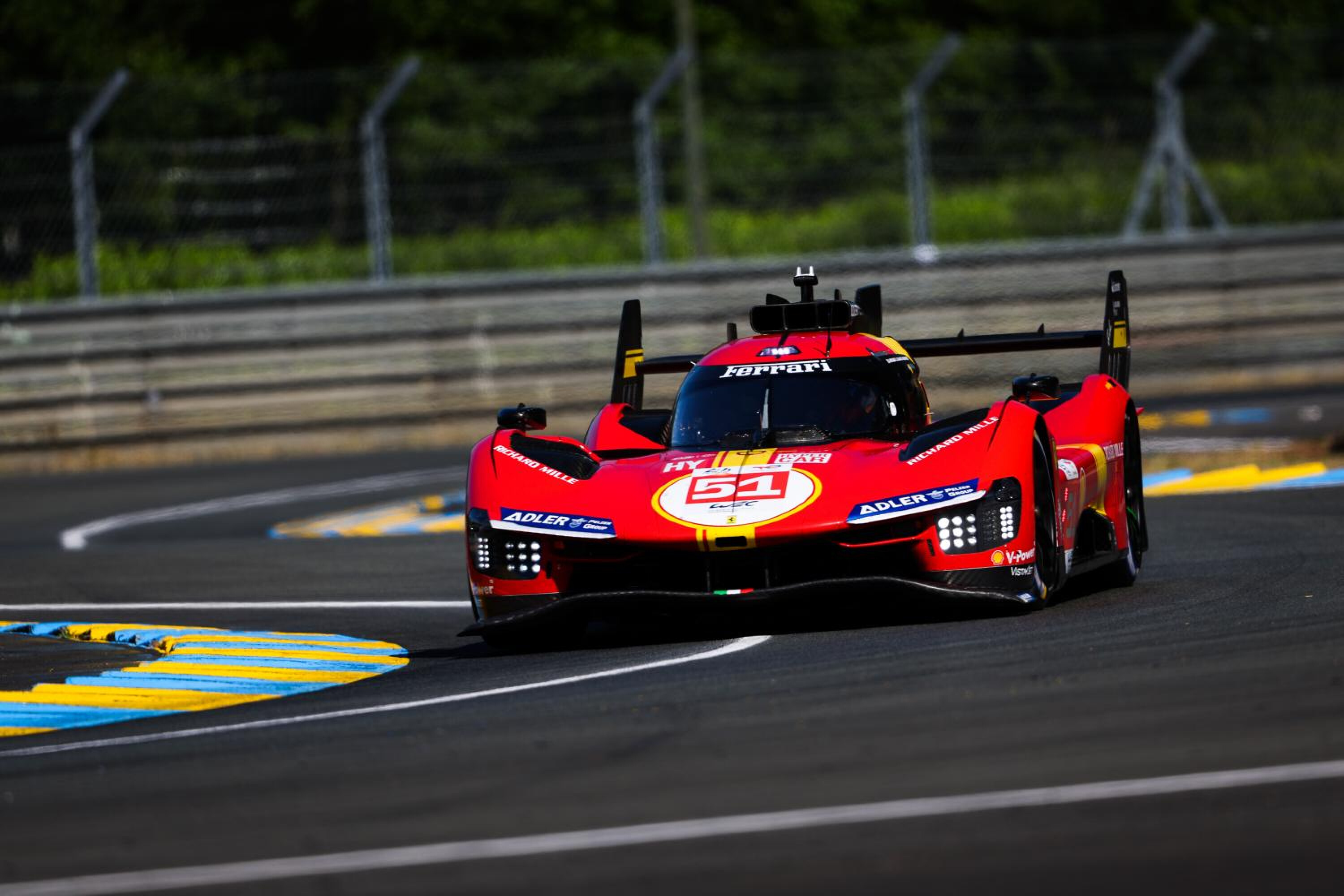
? Ferrari returns as a factory outfit
Ferrari has had a complicated relationship with Le Mans, but returns in strength as a two-car factory operation for 2023.
The 499P has seen mixed success in the World Endurance Championship in 2023, but it’s been reliable and increasingly pacy on the run up to June. Its driver line-up and pit crew are yet to be tested in the cauldron of the world’s biggest endurance race, though.
1
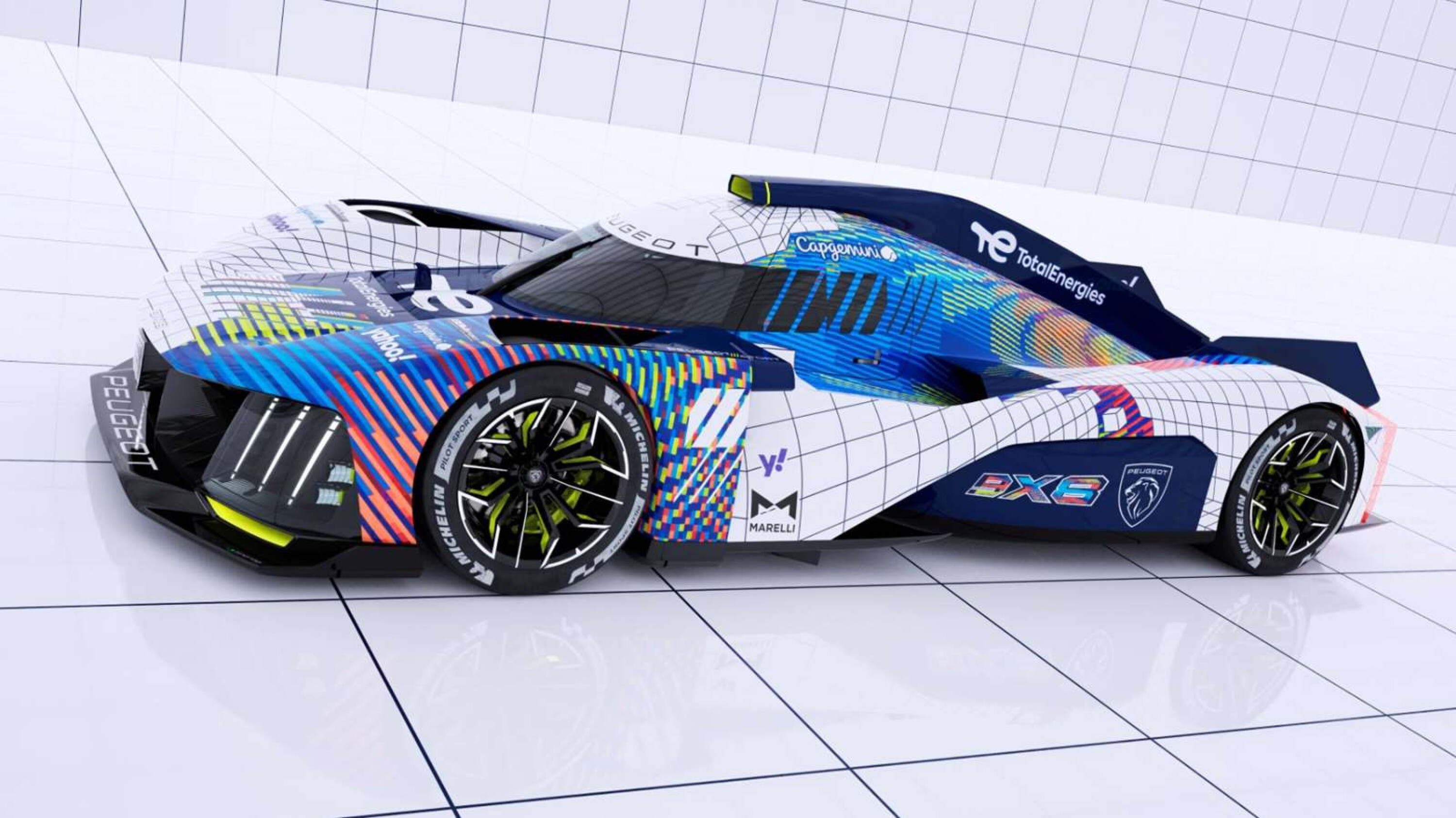
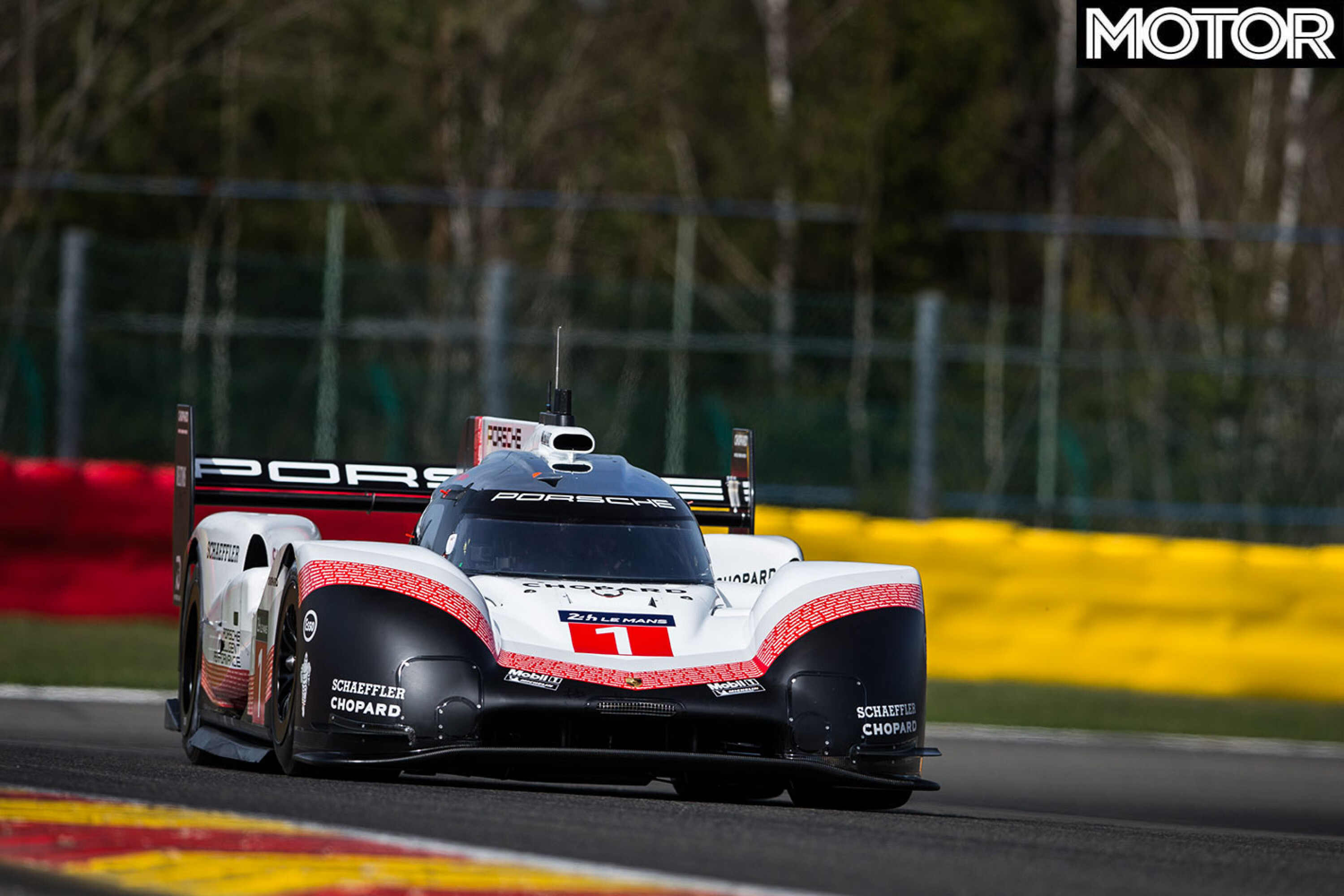
? And so does Peugeot
The quintessential French marque first ran at Le Mans in 1926 and has won the race just three times in its history.
If we’re honest, the 9X8 is long odds to add to that tally in the 2023 event, despite some recent balance-of-performance adjustments in its favour leading up to Le Mans.
A lack of both speed and reliability in the 2023 WEC season means it’s on the back foot from the outset.
1
? And so does Porsche
Teamed with the formidable Penske Racing operation, Porsche returns to Circuit de Le Sarthe as a factory squad for the first time since it ran the dominant 919 Hybrid.
Porsche’s last win came in 2017, and it would like nothing better than to celebrate its 75th Le Mans with a victory.
Like the Peugeot, however, the 963 has had a troubled gestation, with an up-and-down run through the 2023 WEC season. But with a crack crew and top-flight driver line-up, don’t count them out.
1
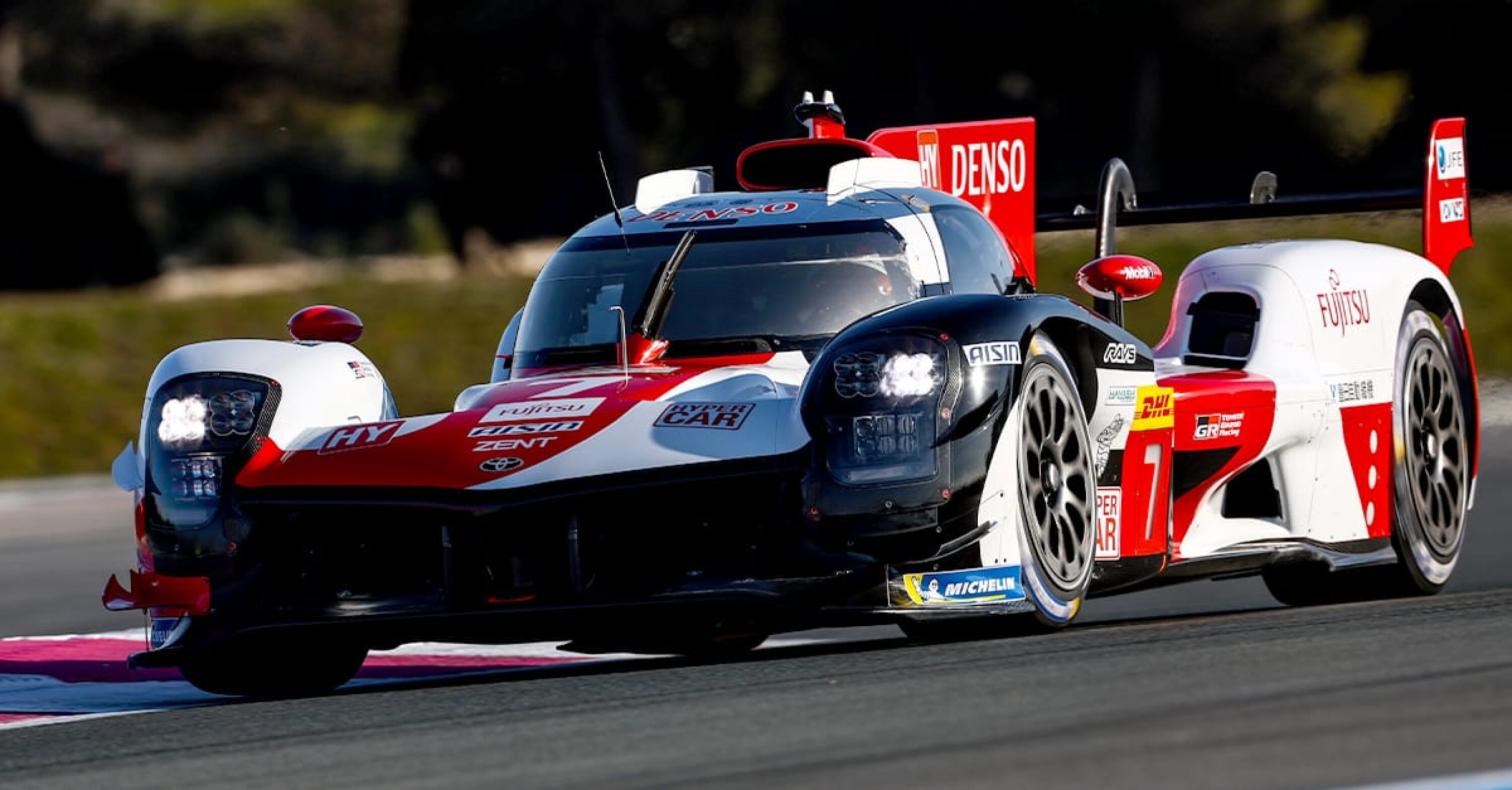
? Toyota is still the favourite
Ever since its gut-wrenching last-lap defeat in 2016, Toyota has won five of the last six Le Mans crowns, culminating in its fifth straight win last year.
The TS050 Hybrid has also jumped out of the blocks in 2023, winning the first three races of the endurance season.
Easily the most experienced team in the Hypercar paddock, Toyota will be red hot Le Mans favourites this year.
1
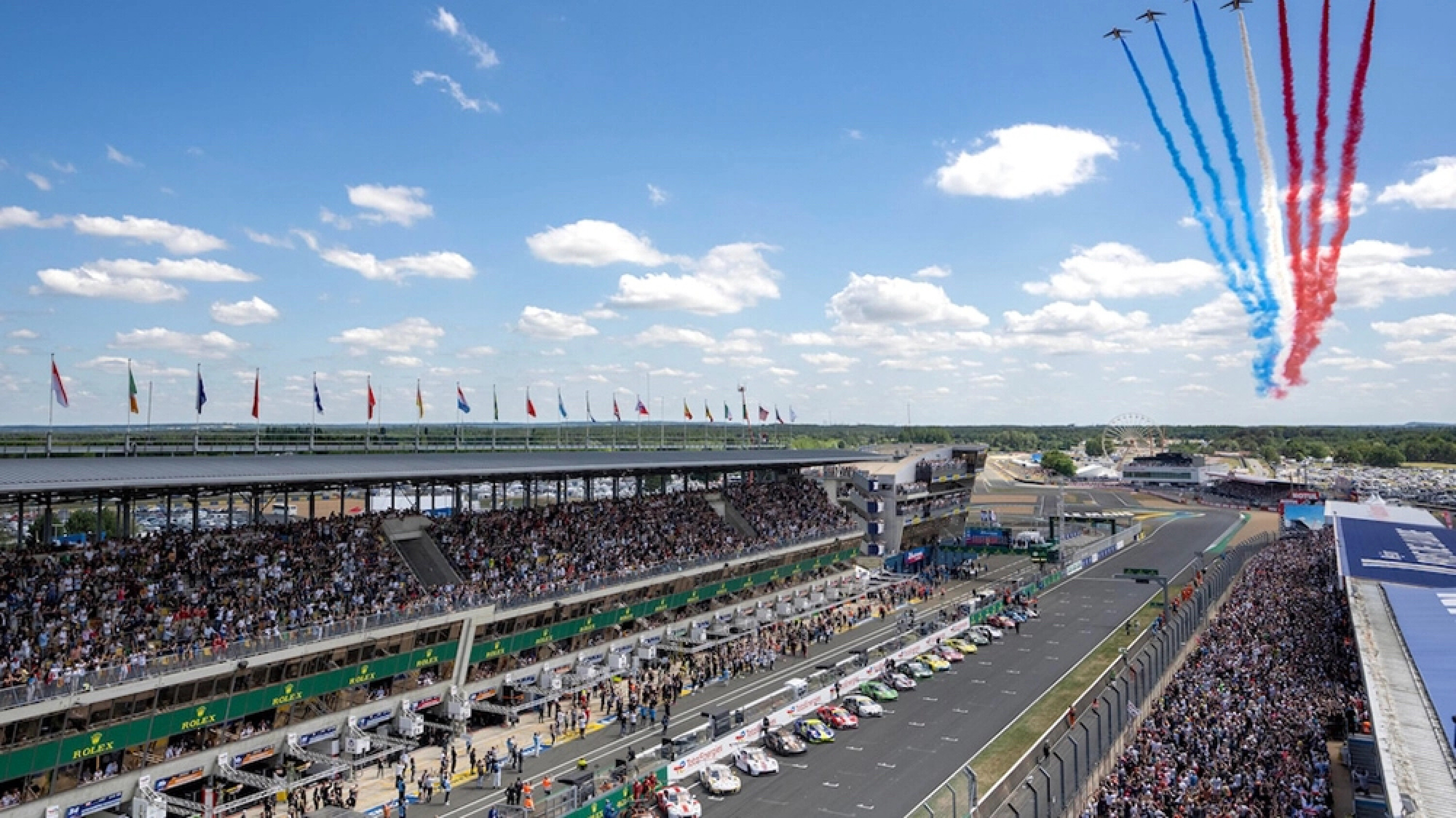
? Huge upgrades to Circuit de la Sarthe for 2023
While the trip to Circuit de Le Sarthe is a must-do for any race fan worth their chequered flag, the facility itself had fallen behind the times, with huge queues, sketchy grandstands and questionable facilities.
For 2023, however, a brace of work has been done to update the circuit to accommodate the sold-out crowd of more than 250,000 over the race weekend.
New grandstands and spectator bridges at key points combine with a new build at the South Entrance, more parking and a complete makeover of the event’s toilets (necessary, trust us!) brings the old dame up to date.
Not all teams are happy about the safety car rule change
Toyota isn’t rapt about changes to the 2023 race, which will ditch the notion of multiple safety cars over three sectors in favour of one single safety car for the entire 13.6km circuit.
Lapped cars will also be waved around to the rear of the pack.
The team’s technical director Pascal Vasselon reckons that the “Americanisation” of the rules will pollute the purity of the event and predicts teams will roll off the gas until hour 22.

1
? Rolex will customise a Daytona watch for the winners
For the last 22 years, the outright winning drivers of Le Mans have each received a unique Rolex Oyster Perpetual Cosmograph Daytona that’s engraved with the year of the event on the caseback.
2023 is no different, with Rolex once again proffering the 60-year-old watch as the ultimate prize in racing. And if you reckon you might want to get your hands on one, consider that Paul Newman’s personal Daytona traded hands for $18 million in 2018.

1
How to watch the 2023 24 Hours of Le Mans
Australian fans can tune into the 100th running of the 24 Hours of Le Mans via the Stan Sport streaming service [↗], which is broadcasting practice and qualifying sessions.
Its race coverage starts at 11pm on Saturday 10 June. An added bonus; noted Australian racing commentator Richard Craill will form part of the Radio Le Mans broadcast team, while former Supercars caller Leigh Diffey will anchor the US coverage.
If you’re not a subscriber, sign up for a trial period, or catch up with the numerous team streams that will populate YouTube over the course of the event.
You can also buy a round pass from fiawec.tv [↗] to watch the entirety of the event, which will cost you a nick over $20.
MORE
Motorsport
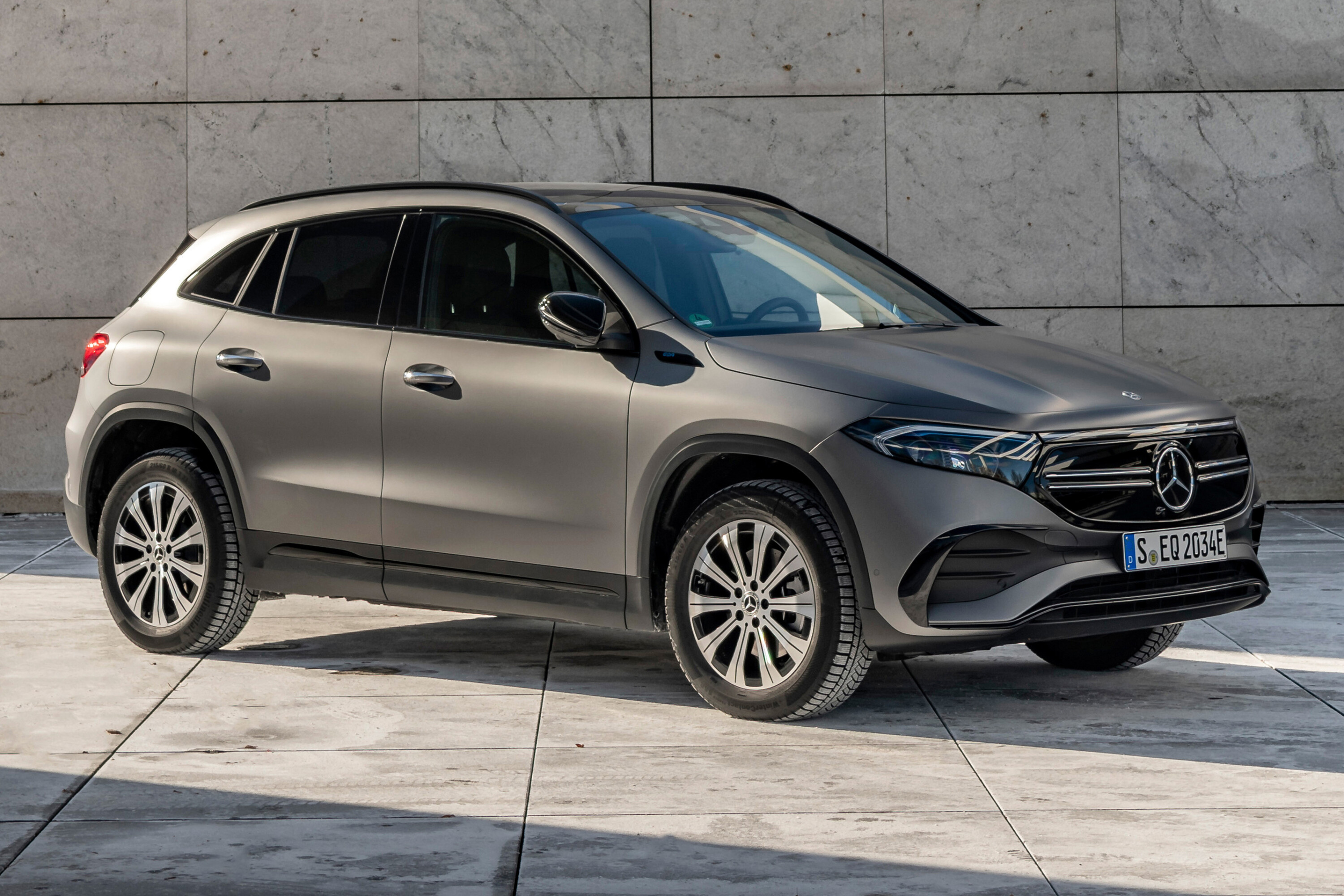
The price of some European-made electric vehicles could dramatically reduce as the Australian Government considers cutting or abolishing the Luxury Car Tax (LCT).
Snapshot
- Australia mulls over lifting or exempting LCT for European EVs
- Could save luxury EV buyers thousands
- Trade talks with Europe ongoing
Trade Minister Don Farrell has been in Europe this week to advance the Australia-EU trade pact and, as the Sydney Morning Herald [↗] reports, the EU has criticised the long-contested LCT – as no other imported luxury goods are subject to a similar levy.
1
Farrell said, “one option is to lift the threshold for electric vehicles“, an area where he believes they are “prepared to have some realistic discussions with the Europeans.”
It’s worth noting the LCT price threshold for ‘fuel efficient vehicles’ (i.e, any vehicle with a claimed fuel consumption of less than 7.0L/100km combined) is already higher than for ‘other vehicles.’
However, if the bilateral talks are successful and the LCT is completely abolished for European-made EVs, luxury EV buyers could save thousands of dollars (see table below).
What is the LCT?
The Luxury Car Tax is a compulsory 33 per cent levy based on the vehicle’s purchase price amount over the set threshold for each financial year.
The Australian Tax Office takes into account the Goods and Services Tax (GST), any options or modifications fitted (except for people with a disability), and dealer delivery charges at the time of purchase when determining whether LCT applies to a vehicle.
The LCT was introduced in 2001 to compensate for the new GST system that reduced the price of luxury cars while ensuring buyers purchase cheaper Australian-made vehicles.
1
The catch…
Farrell has warned the EU that he will not agree on a trade deal unless it opens its market for better access to Australian beef, lamb and wine.
The Minister claims the Union’s trade offer on beef is not “ambitious”, as local farmers criticise the EU for climate targets that limit agricultural export access.
The Sydney Morning Herald [↗] reports Australia has agreed to legally enforceable commitments on climate measures, gender equality, environmental issues, and labour standards, with the potential suspension of trade benefits if one party breaches international agreements and principles.
1
If successful, it would support the federal government’s Electric Car Discount policy, which included waiving a five per cent import tax – mainly benefiting European-made EVs – and fringe benefits tax (FBT) exemption for work novated leases.
The government has also promised to introduce ‘fuel efficiency standards’ later this year – a landmark policy to boost EV supply and affordability.
Which European EVs could be more affordable under the deal?
The LCT payable sums below are intended as a guide only, since car manufacturers do not disclose list prices before LCT.
We’ve included a $1000 dealer delivery charge in our calculations.
| Model | Price (before on-road costs, incl. LCT) | LCT payable | Country made |
|---|---|---|---|
| BMW i4 (all models) | $99,900 – $129,900 | ~$146 – ~$8328 | Germany |
| Mercedes-Benz EQA 350 4Matic | $101,800 | ~$664 | Germany |
| Mercedes-Benz EQB 350 4Matic | $106,700 | ~$2000 | Hungary |
| Mercedes-Benz eVito Tourer | $116,115 | ~$4568 | Spain |
| Mercedes-Benz EQC (all models) | $124,300 – $141,300 | ~$6800 – ~$11,437 | Germany |
| Mercedes-Benz EQE (all models) | $134,900 – $214,900 | ~$9691 – ~$31,509 | Germany |
| BMW iX (all models) | $135,900 – $222,900 | ~$9964 – ~$33,691 | Germany |
| Jaguar I-Pace (all models) | $148,800 – $165,600 | ~$13,482 – ~$18,064 | Austria |
| Mercedes-Benz EQV | $155,338 | ~$15,265 | Spain |
| Porsche Taycan (all models) | $165,700 – $365,100 | ~$18,091 – ~$72,474 | Germany |
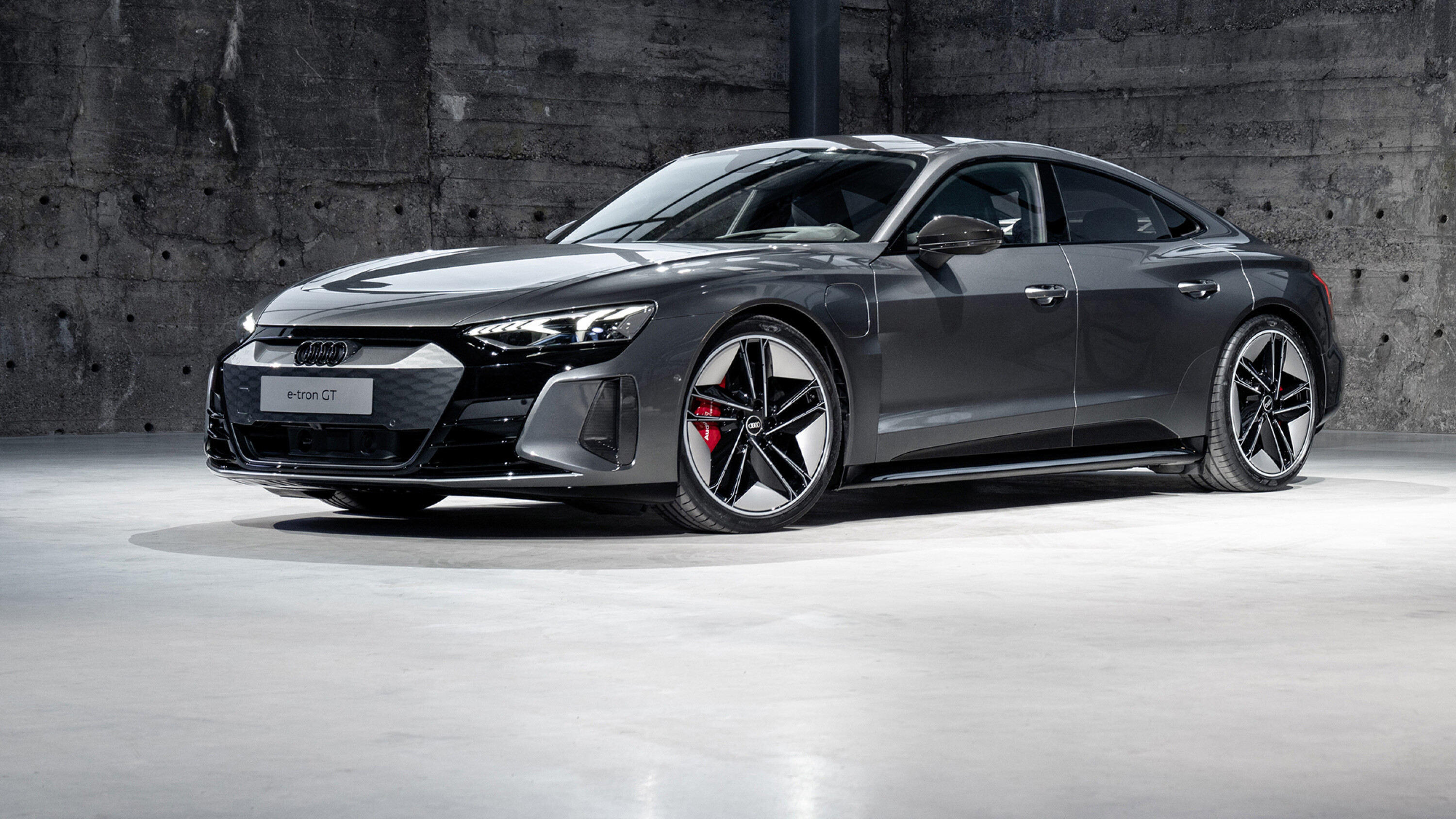
| Audi E-Tron GT (all models) | $180,200 – $248,200 | ~$22,046 – ~$40,591 | Germany |
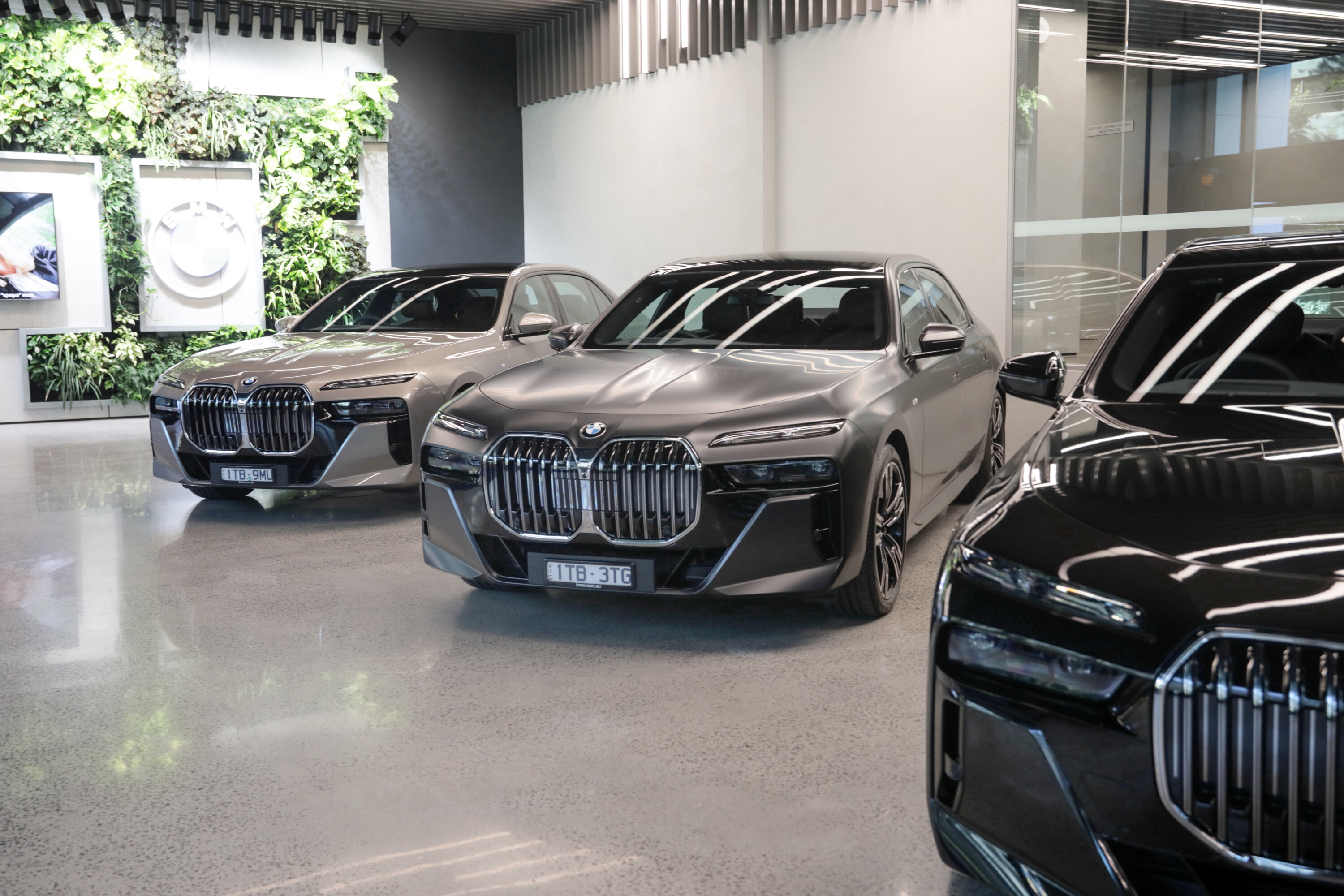
| BMW i7 (all models) | $306,900 – $344,900 | ~$56,600 – ~$66,964 | Germany |
| Mercedes-AMG EQS 53 sedan | $328,400 | ~$62,464 | Germany |
More EV stories to help you choose the best car for your needs
- ? EV news, reviews, advice & guides
- ❓ Short & sweet: Your EV questions answered
- ⚡ New EVs: Everything coming to Australia
- ? Australia’s EVs with the longest driving range
- ⚖️ Best-value EVs by driving range
- ? How much do EVs cost in Australia?
- ? How much more expensive are EVs?
- ⚖️ Number crunching: Is it time to switch to an EV?
- ♻ Should you buy a used EV?
- ?️ Are EVs more expensive to insure?
- ? Costs compared: Charging an EV vs fueling a car
- ? EV charging guide
- ?? EV servicing explained
- ? EV battery types explained
- ? When do EV batteries need replacing?
- ? Hydrogen v EVs: What’s best for Oz?
- ? How sustainable are EVs, really?
MORE advice stories to help you with buying and owning a car
February 2024: Lexus GX Australian details confirmed
The 2024 Lexus GX – heavily based on the all-new Toyota Prado – is due in Australia soon, and now the company has confirmed more of what we can expect.
July: Lexus GX confirmed for Australia!
As expected, the Prado’s luxo cousin, the Lexus GX, is on its way to Australia. Details at the link below.
June: 2024 Lexus GX unveiled
The 2024 Lexus GX off-road large SUV has debuted – and it is likely for Australia.
Snapshot
- 2024 Lexus GX: Upmarket Prado twin revealed
- First all-new model in 14 years
- New GX under evaluation for Australia
As the upmarket Lexus version of the Toyota LandCruiser Prado, this is your first glimpse at the first all-new Prado in 14 years.
The 2024 Toyota Prado should debut around October or November, with Australian arrivals likely in the first half of next year.
For everything you need to know about the new Prado, click the link below.
Like the new LBX baby SUV revealed this week, Lexus Australia said it “continues to assess models that may be suitable for the needs of local customers, with the GX no exception”.
It said, “a decision on GX will be made at a later stage”, but the sharing of local press material for the GX – while nothing locally has been said of the new Toyota Grand Highlander-based TX – suggests the GX is all but confirmed for our market.
If not yet confirmed internally, the local arm may have been proactively testing market interest in the GX by releasing teasers here – but it seems hard to believe Australian buyers would not be interested in a luxury version of the Prado.
1
If it arrives here, it will be the first time the Prado-based GX is built in right-hand drive.
The model – first introduced in 2002 – was previously focused on the North American, Middle Eastern and Chinese markets.
As with the larger Lexus LX’s connection to the full-size Toyota LandCruiser 300, the GX should share its body with the new Prado, but with unique Lexus touches.
The current Lexus GX is based on the Toyota Prado available in showrooms today – dating back to 2009 – with a 4.6-litre naturally-aspirated petrol V8.
1
The new GX will be available with two powertrains at launch, including a Lexus-first body-on-frame hybrid variant.
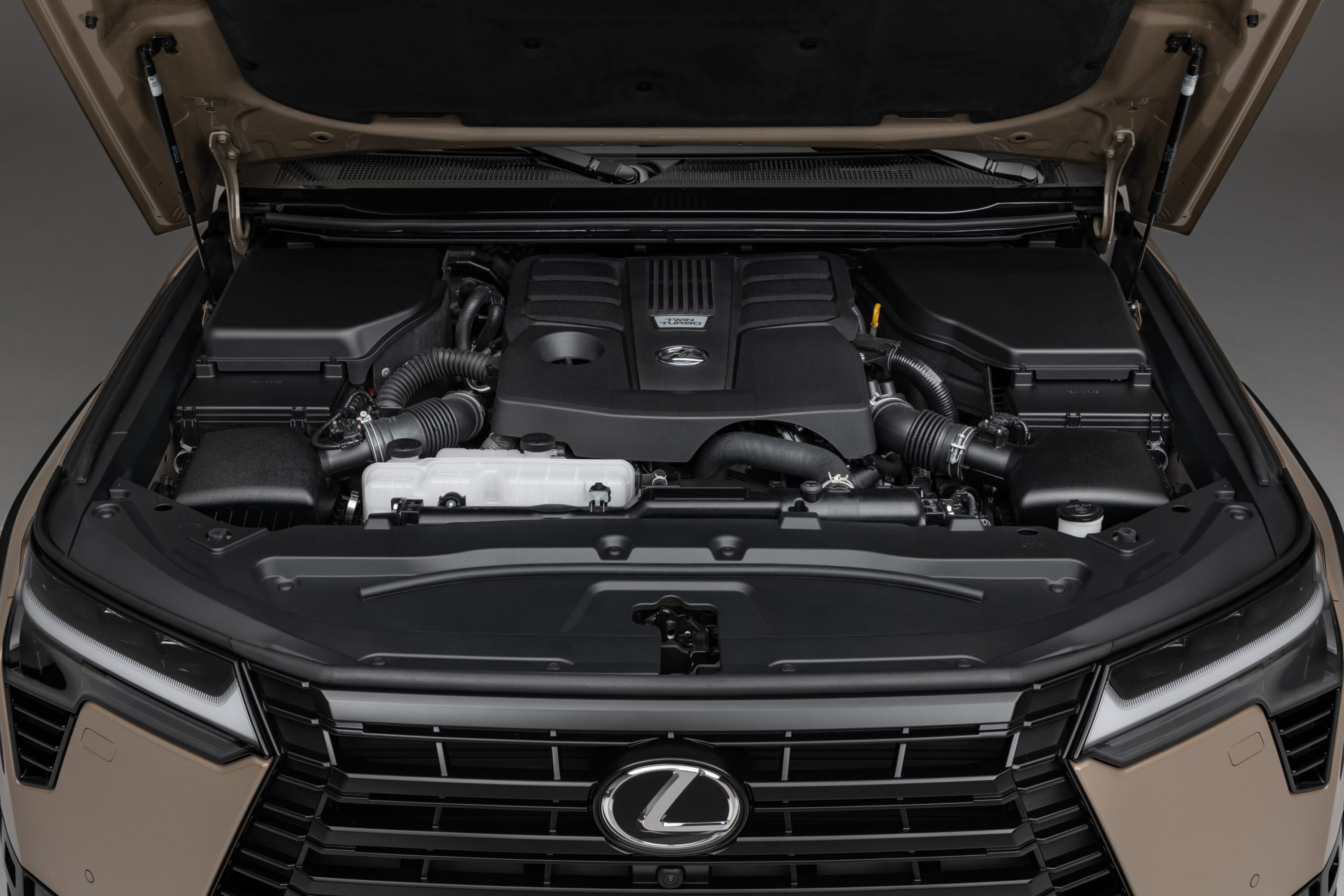
While full details are yet to be confirmed, Lexus has confirmed the GX will be fitted with a 2.4-litre turbo-petrol hybrid powertrain. This is the electrified powertrain tipped for the new Prado.
It is the same unit found in the new Lexus RX500h, but the GX’s body-on-frame platform means it’s likely to be similar to the new Tacoma hybrid, which features a single electric motor and a 1.87kWh lithium-ion battery pack.
The Tacoma’s hybrid system is more truck-like, with the electric motor sandwiched between the engine and transmission.
1
It has a 243kW and 630Nm total system output and an eight-speed automatic transmission in the Tacoma.
As expected, the GX is also powered by a 3.4-litre twin-turbo petrol V6 taken from the LX in GX 550 guise.
It produces 260kW and 649Nm – down 45kW over the LX – and is matched to a 10-speed automatic transmission, replacing the antiquated 227kW/439Nm naturally-aspirated V8 and six-speed transmission found in today’s GX.
Lexus has confirmed all GXs, including the hybrid, have a full-time all-wheel drive with a low-range transfer case and a locking Torsen limited-slip centre differential – pointing to a conventional system for the electrified Prado.
1
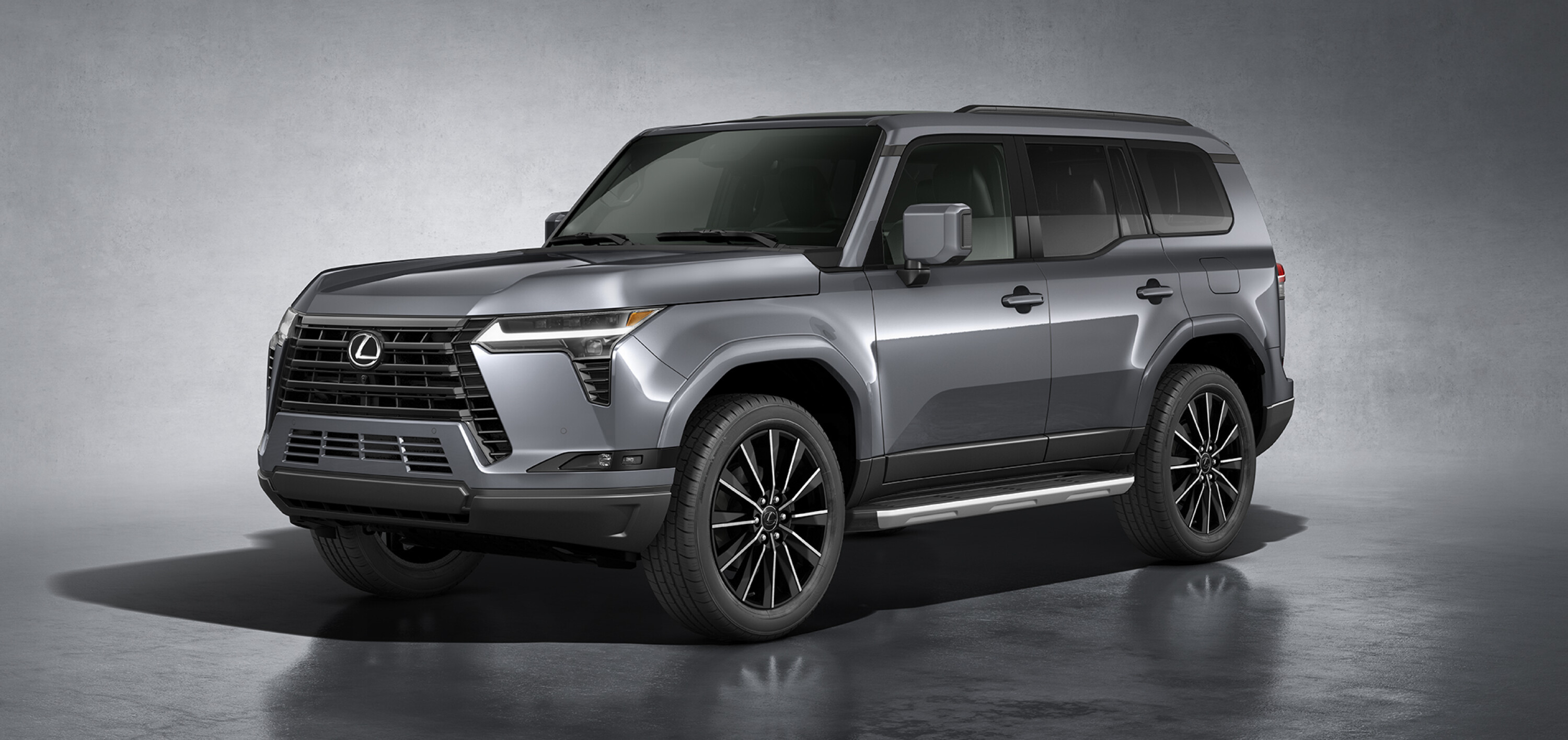
The new GX rides on Toyota’s latest TNGA-F body-on-frame platform shared with the LX and LandCruiser 300.
It measures 4949mm long, 1980mm wide and 1920mm tall in standard guise, roughly matching the rumoured dimensions for the new Prado.
This is 70mm longer, 95mm wider and 35mm taller than the current GX, while the off-road-focused Overland variant further increases height by 15mm to 1935mm.
1
It has an identical 2850-millimetre wheelbase to the LX and LandCruiser 300 – up 60mm over the current Prado and GX.
In addition, the Overtrail – exclusively available with five seats – adds 33-inch all-terrain tyres, 18-inch alloy wheels, black extended wheel arches, an aluminium skid plate, an electronic locking rear differential, and the E-KDSS system first introduced on the LandCruiser 300 GR Sport.
This system works on the front and rear sway bars to lighten tension when driving at low speeds off-road but tightens for firmer body control at higher speeds on the road. It can also automatically disconnect the sway bars when required off-road to improve axle articulation.
The GX’s 26-degree approach angle is up five degrees to boost off-road credentials, while the front overhang is reduced by 20mm.
1
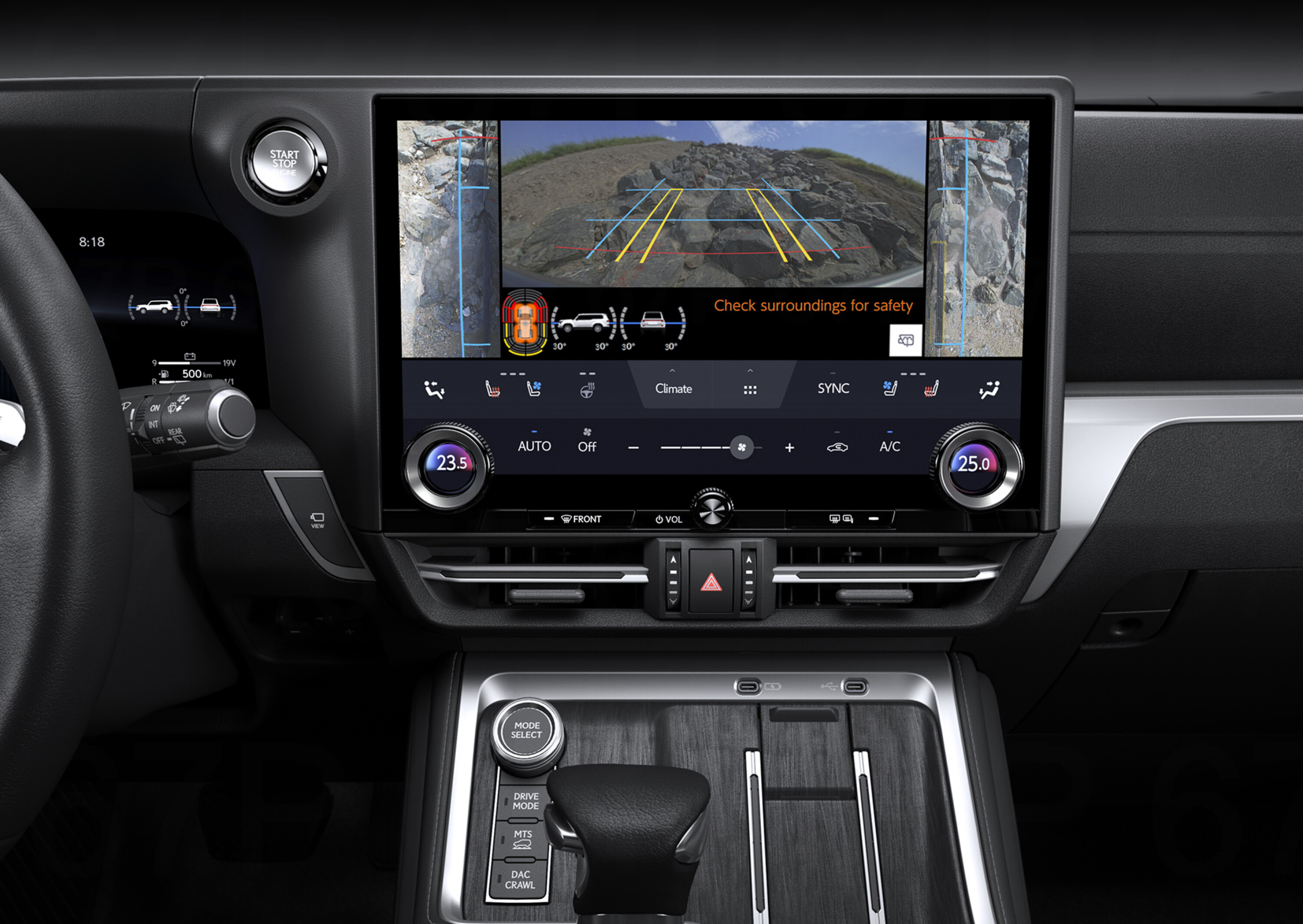
The Overtrail includes additional off-road functions, including multi-terrain select, crawl control, downhill assist, and a 3D multi-terrain camera system.
Under the skin, the GX has high-mount double-wishbone front suspension, with Lexus’s engineers employing a ‘finetuned’ coil spring rate, while “increasing the caster trail and minimising the king pin offset to promote excellent stability during straight-line driving, cornering and braking”.
It features a four-link rigid axle with lateral control arms at the rear, while the standard-fit adaptive variable suspension is said to improve on-road comfort and stability. The front and rear suspension feature independent telescopic valves and friction control modules.
Electric power steering replaces the hydraulic system to increase steering feel “on and off-road”.
2
Towing capacity has increased to 3628 kilograms in North America, suggesting the GX and Prado could feature an Everest and MU-X-matching 3500-kilogram capacity in Australia – up 500kg over the Prado’s current 3000kg limit.
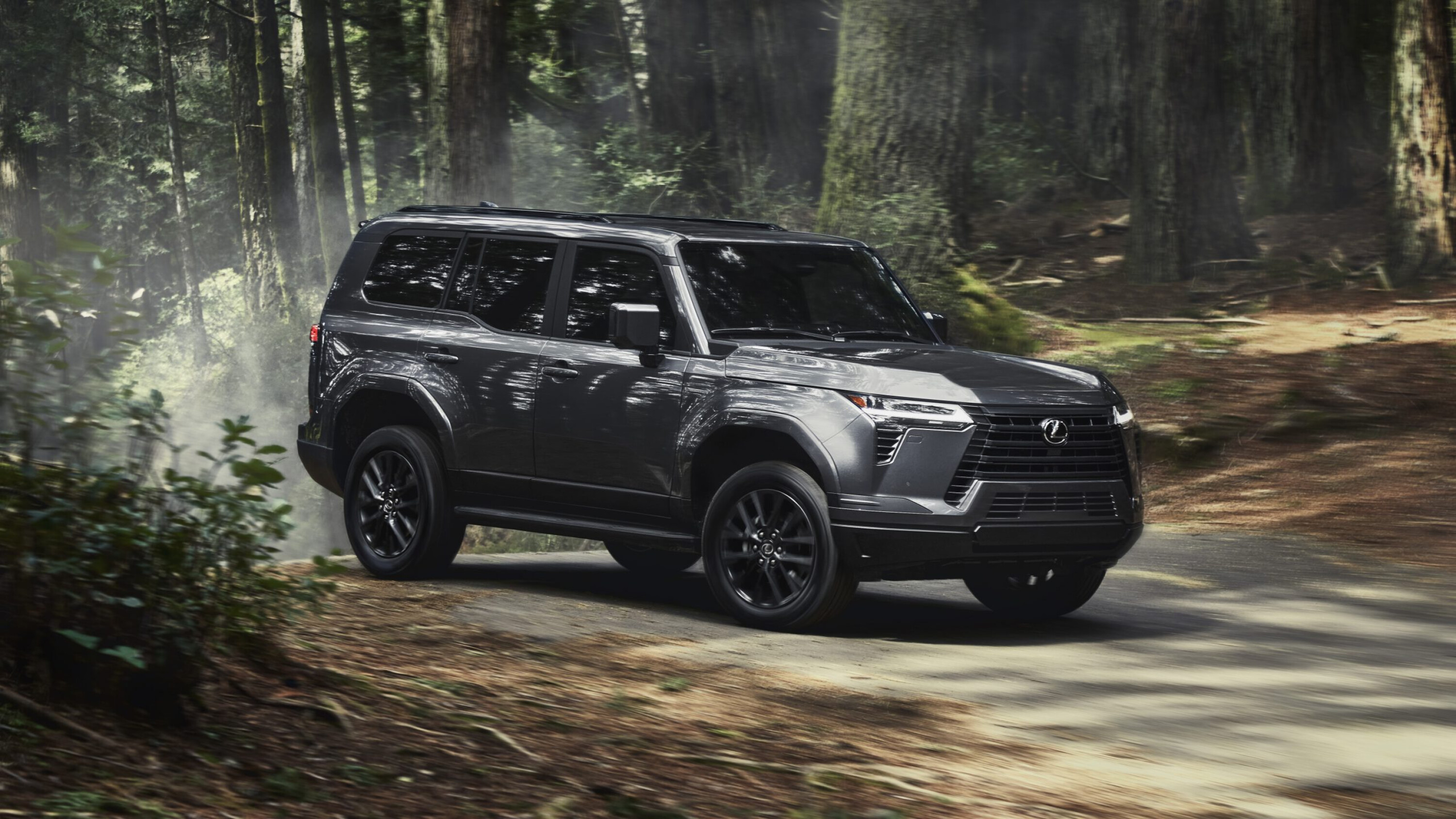
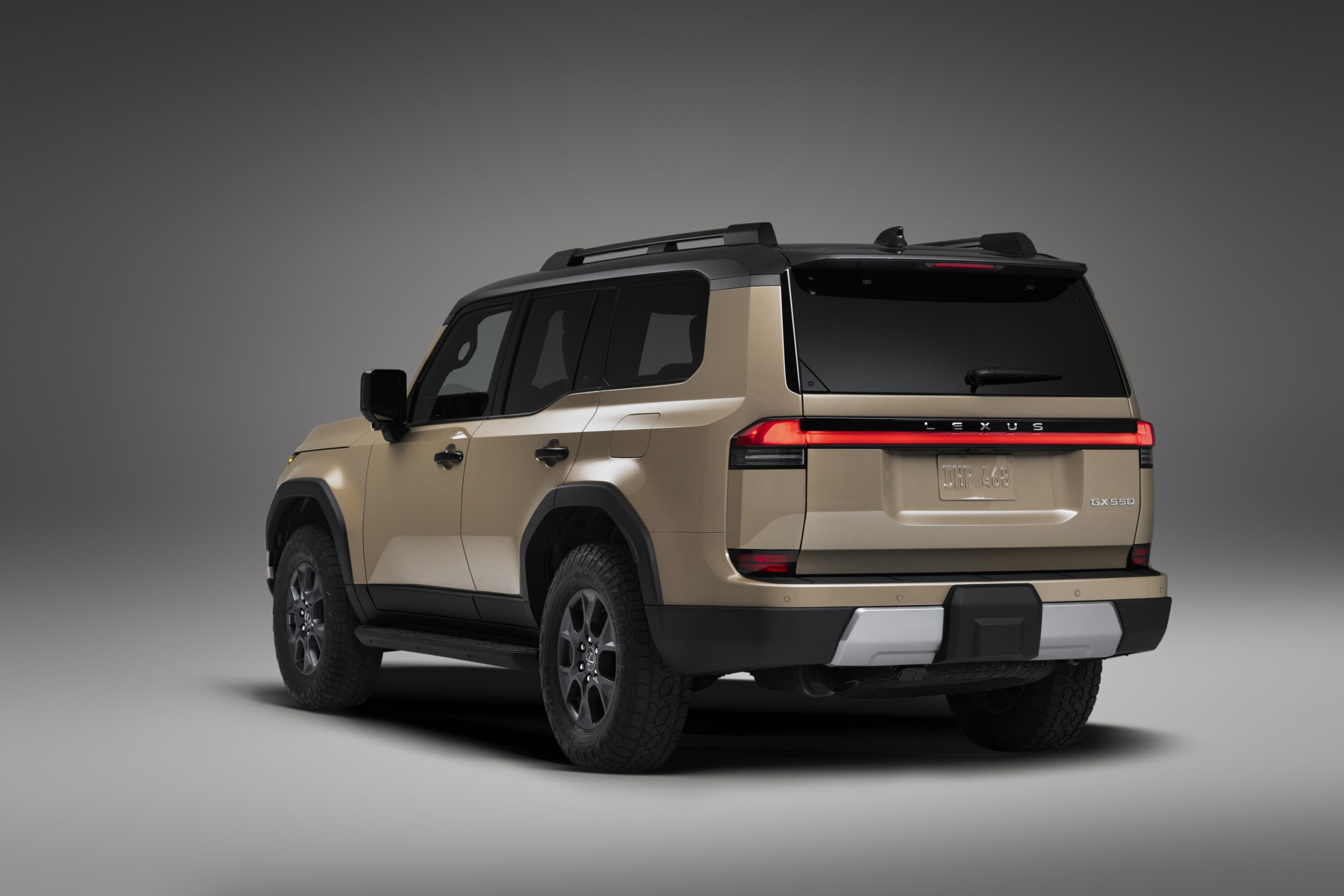
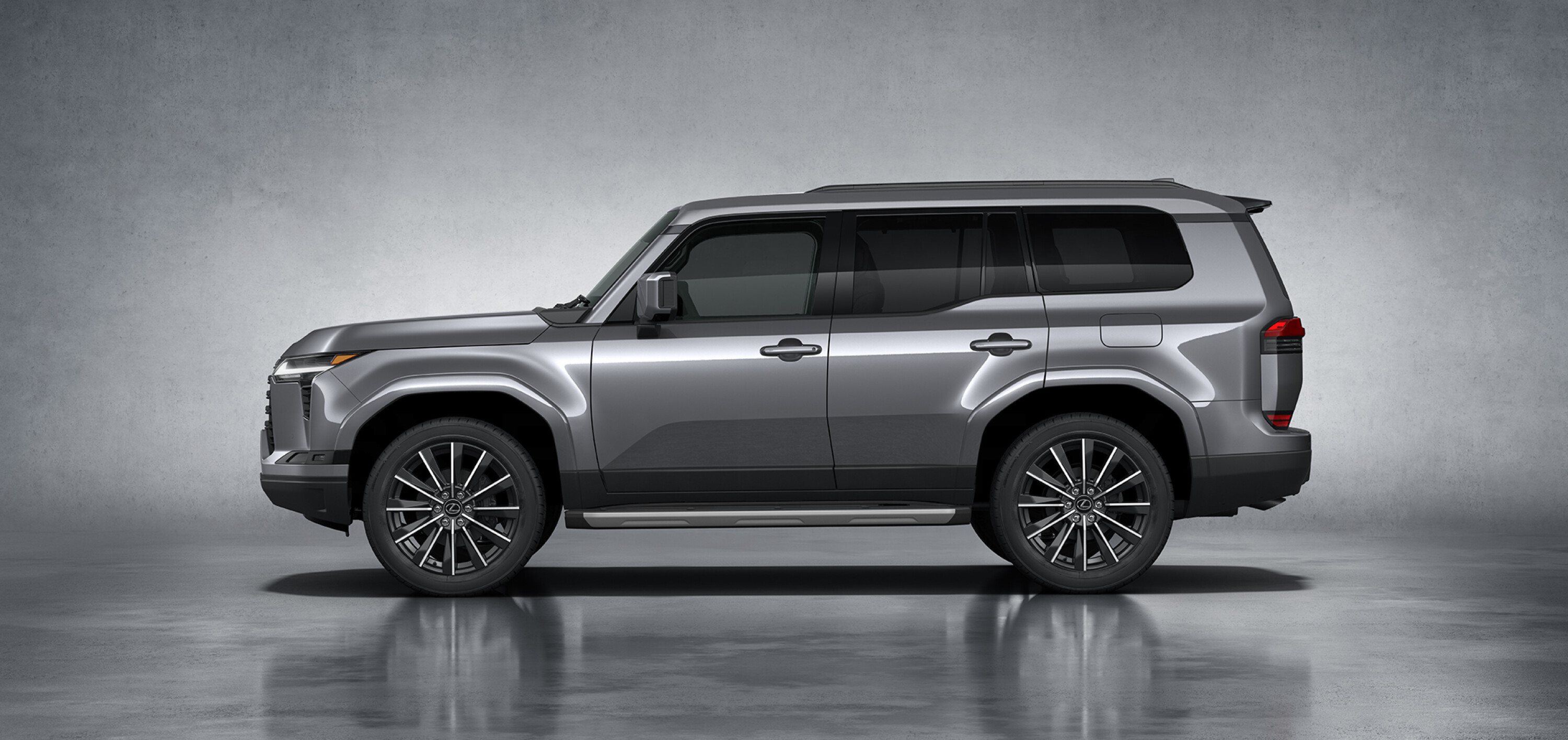
As with all Toyota-derived Lexus models, the GX should build on the new Prado’s appearance, with its own ‘spindle’ grille and L-hooked headlights similar to the LX.
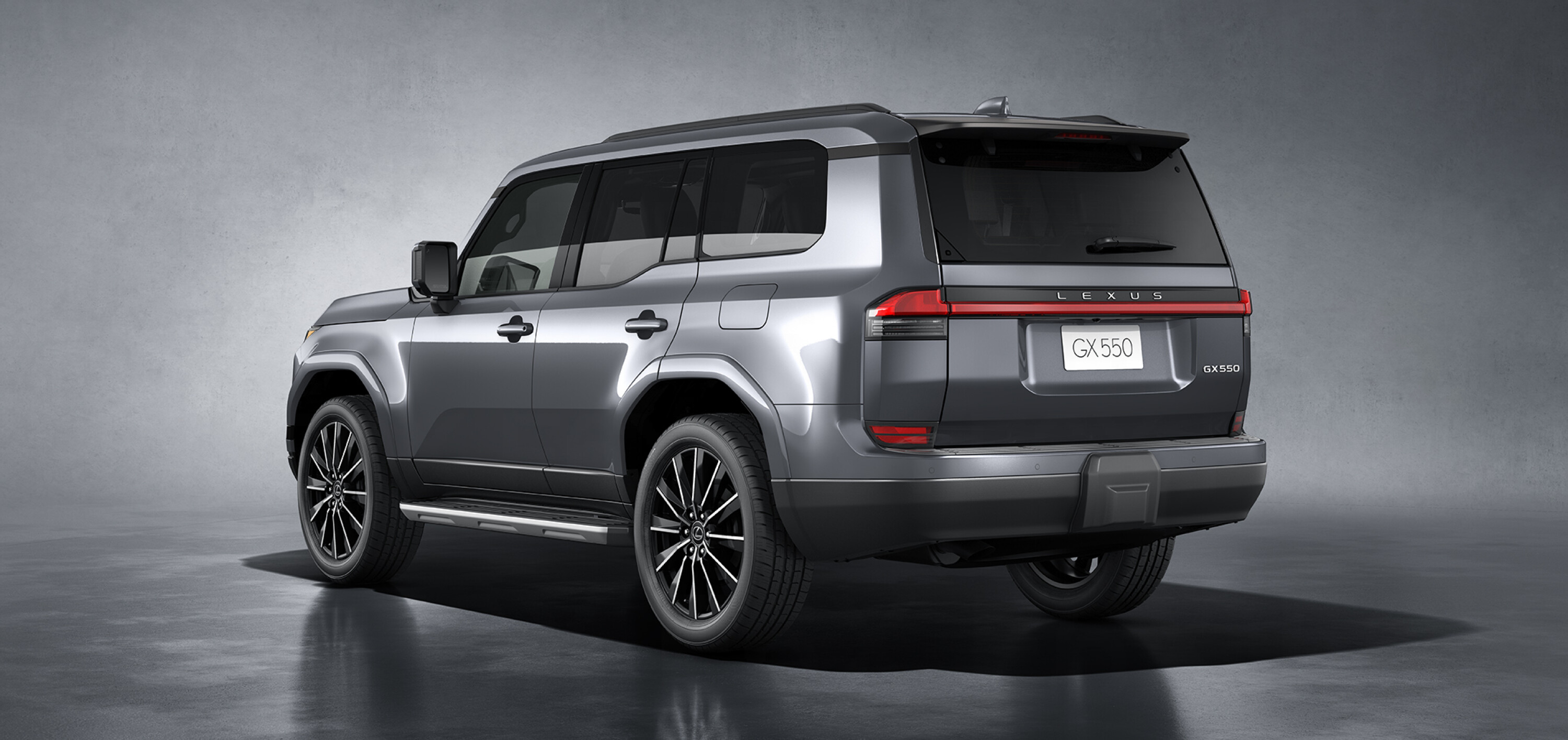
It has a more-rugged body similar to the Land Rover Defender off-road SUV, with a squared-off rear end, a boxier front end with an upright A-pillar and high bonnet line, and an available two-tone roof.
The chiselled bonnet – first introduced on the facelifted Prado in 2017 – is widened to improve forward visibility.
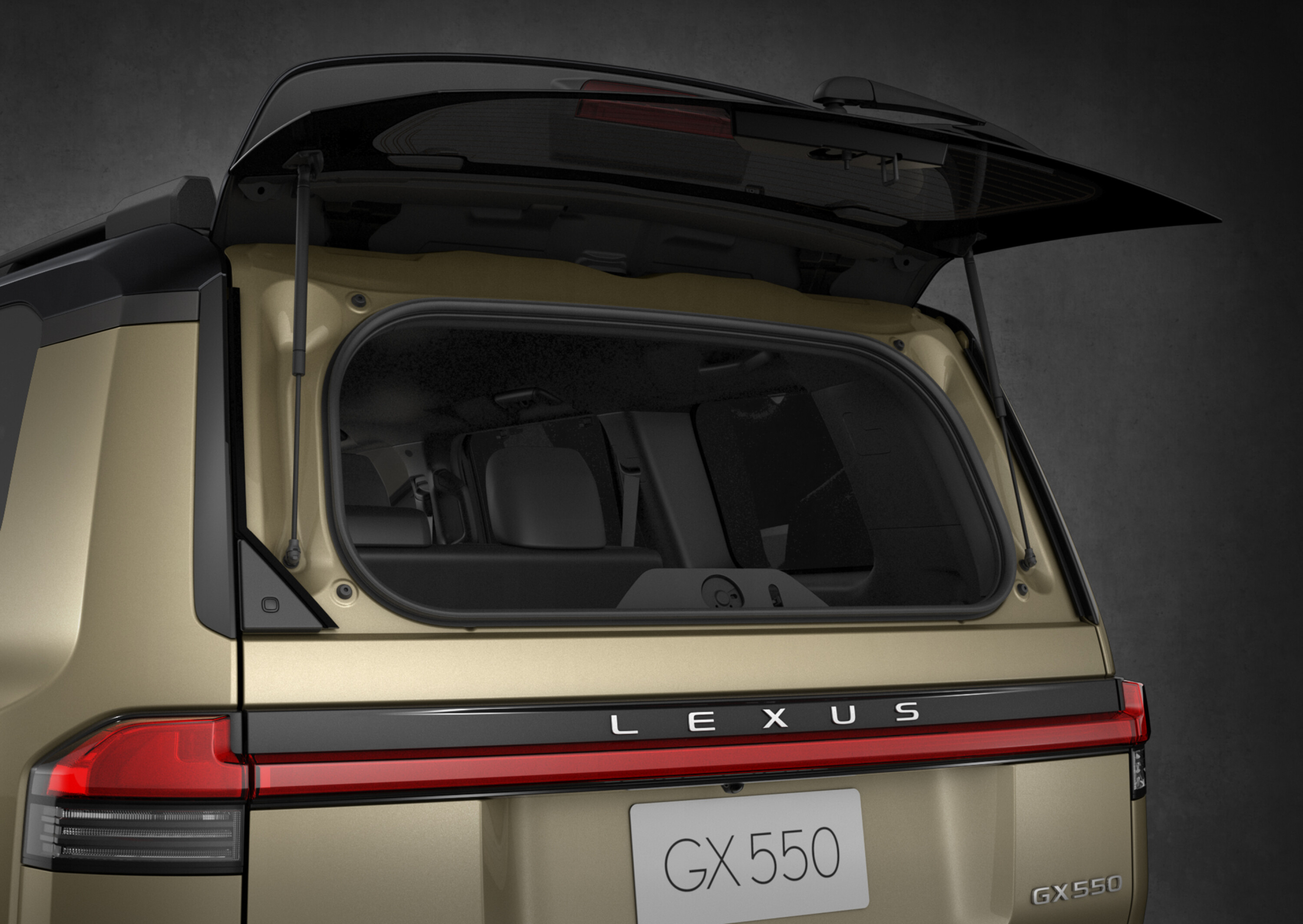
As with other Lexus vehicles, a full-width LED light strip runs across the tailgate that terminates at compact tail-lights, giving the GX a more practical look than most of its stablemates.
2
The GX’s barn door – a characteristic taken from the Prado – is replaced by a lift-up hands-free electric tailgate similar to the LX and other SUVs, with an opening upper glass compartment.
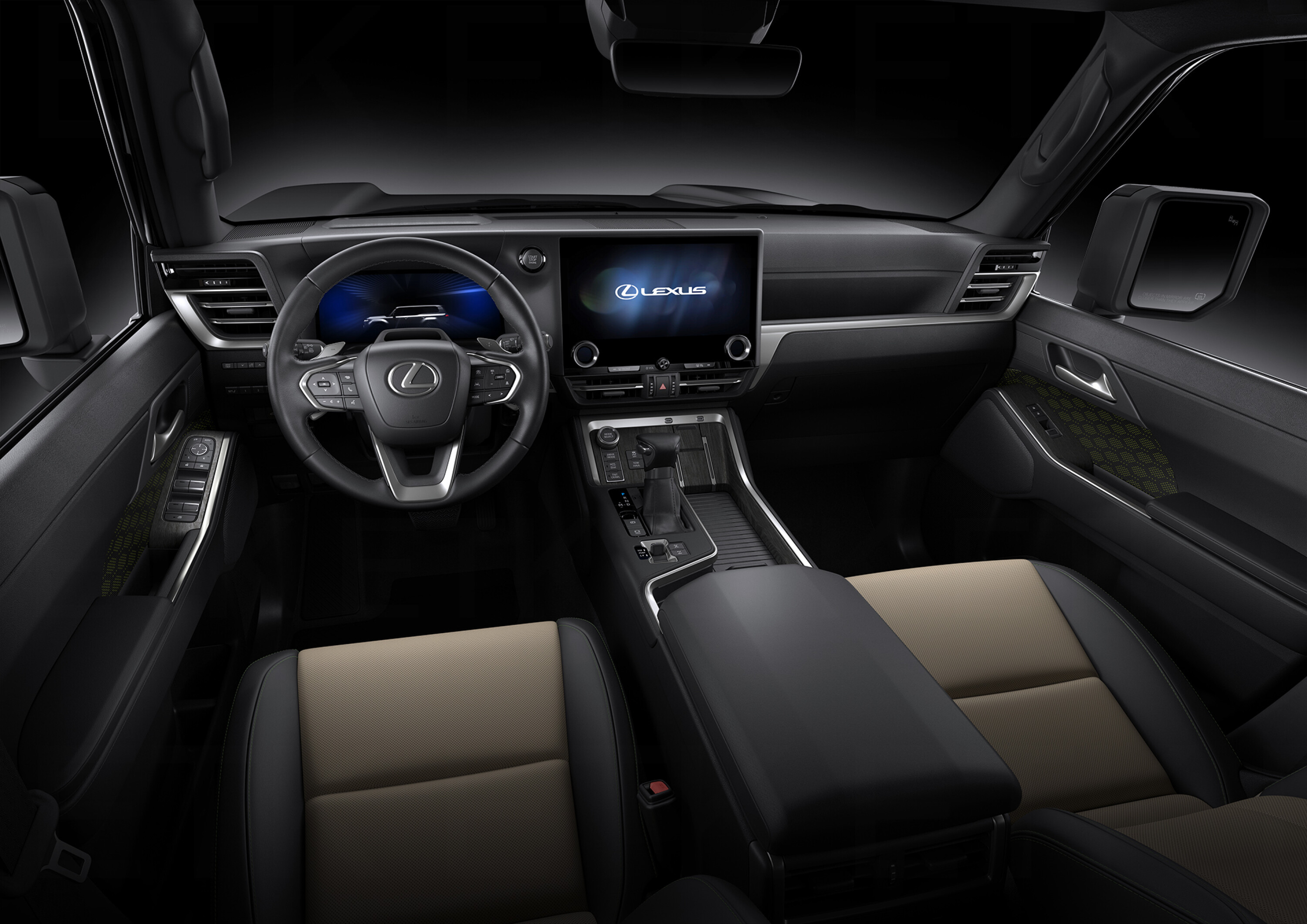
Inside, the new GX is a technological step forward over its predecessor, with a large 14-inch infotainment system running Lexus’s latest software. It has wireless Apple CarPlay and Android Auto, while over-the-air software updates and ‘Hey, Lexus’ voice recognition are also expected.
A 12.3-inch digital instrument cluster sits ahead of the driver, replacing the current analogue dials and small multi-information display – and beating the flagship LX’s 8-inch gauge cluster.
As before, there is seating for up to seven passengers, with a conventional 60:40 split-folding second-row bench or available captain’s chairs.
Available features include heated and ventilated front seats, heated second-row seats, a power-folding third-row, six illuminated USB-C charge ports, a 21-speaker Mark Levinson surround-sound audio system, a digital key, and a head-up display.
1
The 2024 Lexus LX will continue to be manufactured alongside the Prado at Toyota’s Tahara plant in Japan, with North American sales to commence in early 2024.
The GX remains under evaluation for Australia, with a final decision likely soon.
With the demise of the seven-seat Lexus RX L, the new GX would provide Lexus Australia with a more-affordable three-row SUV positioned below the larger LX.
As such, it would also help to fill the difference between the RX and LX, with a circa-$27,000 gap between the flagship RX550h and the entry-level LX500.
MORE
Everything Lexus
August 2: New 2024 Prado revealed!
New Prado makes global debut ahead of 2024 Australian launch.
Here it is. If you’re patient and keen on Toyota’s very latest 4×4 offering, the links below hold everything you need to know.
Get up to speed on the new Prado
The stories below will give you a guide to everything we learned about the new Prado when it was unveiled. All fresh stories published since then will be found on our Toyota Prado model page here.
2024 Toyota Prado coverage
- 2024 TOYOTA PRADO REVEALED
- Spec battle: New Prado v LandCruiser 300 Series
- 2024 Toyota Prado: Everything we know
- What is the towing capacity of the new Prado?
- New Prado: What YOU think so far!
- BONUS: New 70 Series facelift revealed
- A 2025 Prado ute? Yes please!
- ALL PRADO NEWS & REVIEWS
Friday Fancy: Hyundai’s Sonata gets the full N treatment
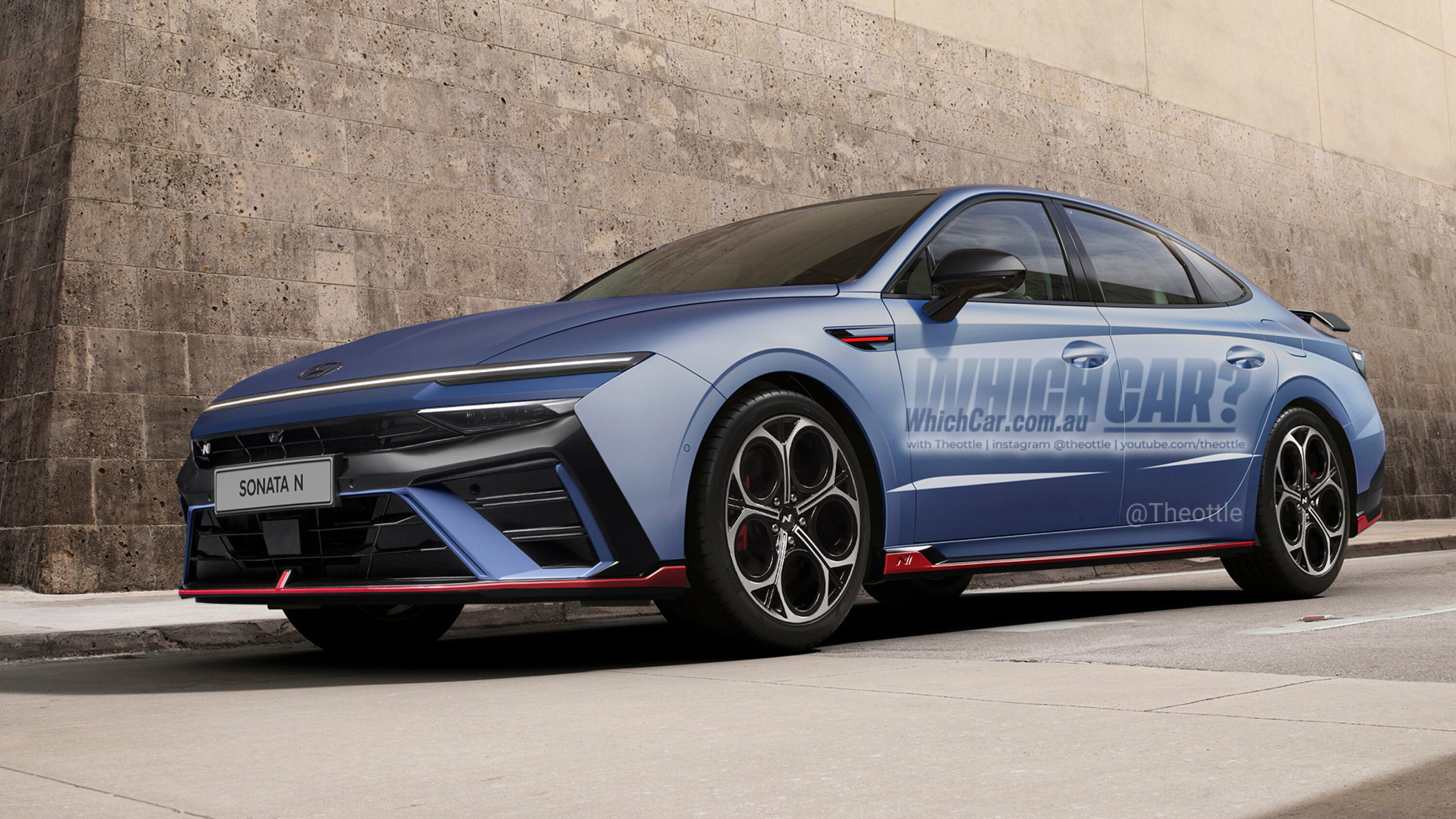
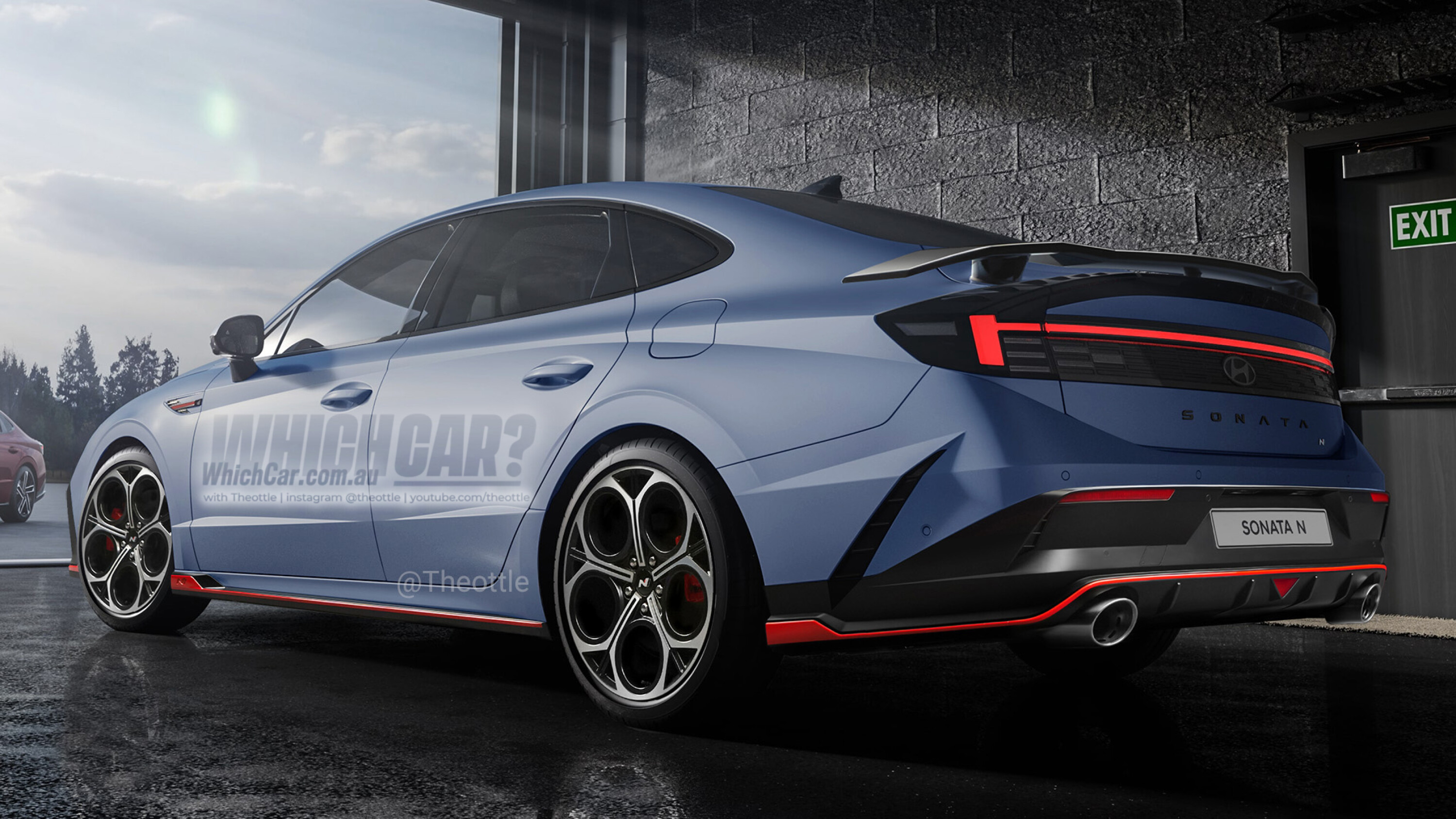
Our mate Theottle, a Photoshop wizard and a man with performance on the mind, has produced a digital take on the sedan we deserve.
This is, or should be, Hyundai’s new Sonata N hero sedan. The facelifted midsizer was unveiled in regular and sporty N-Line forms back in March, but as before, there’s no properly heroic N model planned.
Hit the video button at the top of this story to see Theo turn the Sonata into an N flagship.
1
1
That’s okay, from a business perspective, since nobody buys sedans anymore. Except for the i30 Sedan N, that is.
But not enough people around the world bought the Kia Stinger (despite some record sales in Oz), and if a muscly RWD sedan can’t rake in the dollars, Hyundai probably figures there’s no point to investing in a Sonata N.
And, really, the Sonata N-Line is plenty of fun in its own right.
But… we want a loud one, a faster one, a tighter one. We want a Sonata N.
What do you think of these renders? Should Hyundai N give the world a Sonata N? We reckon they should.
June 2023: GM follows Ford’s lead, joins Tesla charging standard
General Motors has confirmed it will join Ford in switching from the mostly global CCS charging standard to Tesla’s Supercharger format, officially known as the North American Charging Standard (NACS) – a somewhat prescient name, it turns out.
Announcing the news today [↗], GM CEO Mary Barra said the Tesla network represents the only certain way to satisfy EV owners in a market otherwise overflowing with faulty roadside charging stations.
“Our vision of the all-electric future means producing millions of world-class EVs across categories and price points, while creating an ecosystem that will accelerate mass EV adoption,” Barra said.
“This collaboration is a key part of our strategy and an important next step in quickly expanding access to fast chargers for our customers. Not only will it help make the transition to electric vehicles more seamless for our customers, but it could help move the industry toward a single North American charging standard.”
The news is unlikely to affect markets outside of the US, with Europe and Australia now firmly established as CCS-standard markets (See our story linked below for an explainer on plug types).
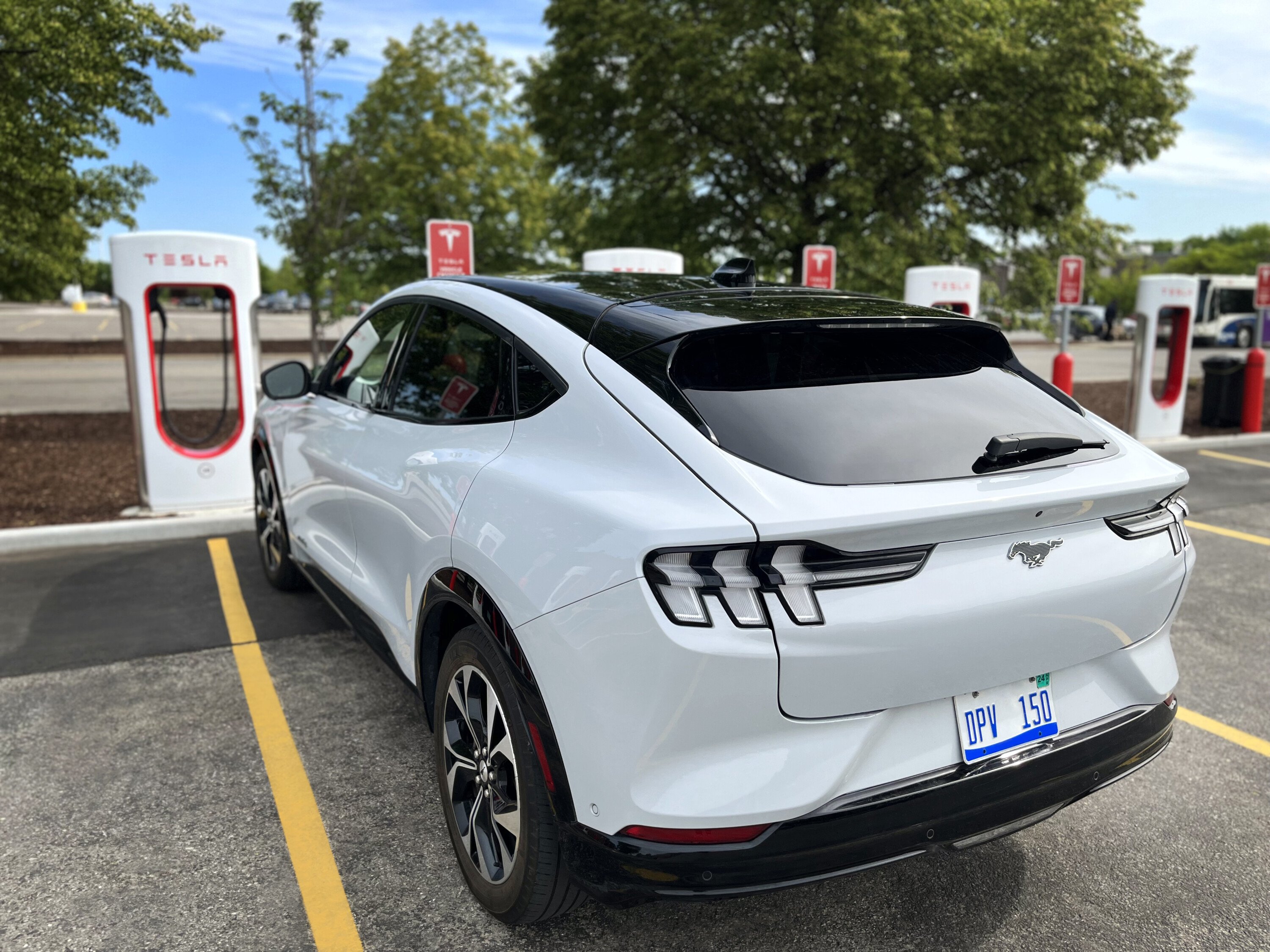
Tesla now also uses CCS in Australia, and it has opened its Supercharger network to EV owners from other brands.
1
May 2023: Ford is switching to Tesla’s charging standard and its popular Supercharger network
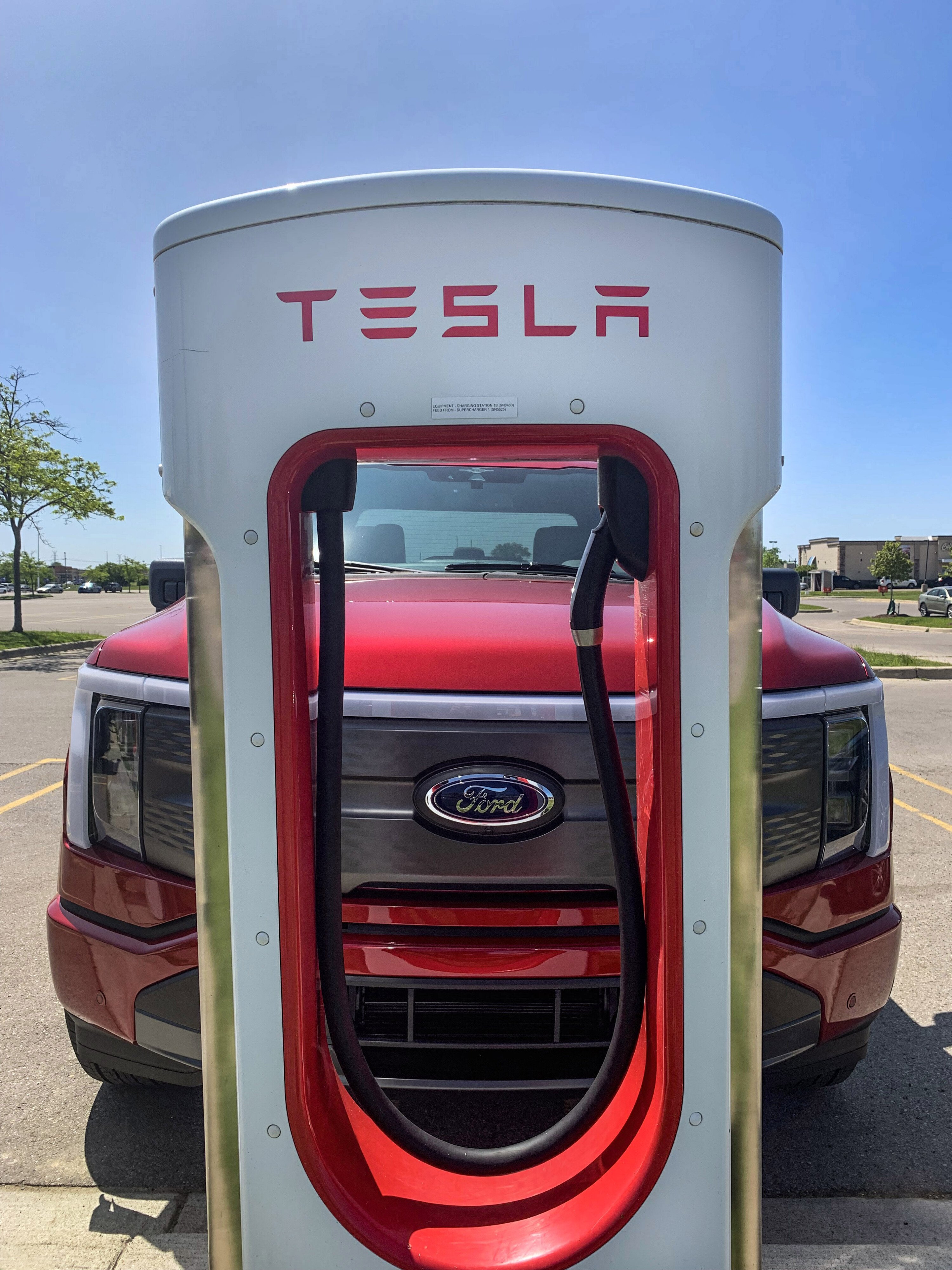
Ford has partnered with Tesla to take advantage of its Supercharging network – adopting its proprietary charging port standard in all North American electric cars from 2025.
Snapshot
- Ford EVs sold in North America to adopt Tesla charging connector
- Adapter to be offered for current owners
- Questions still loom about how it will integrate
1
Henry Man
In a surprising move for the continent’s top-selling automaker, it will ditch the common Type 1 / Combined Charging System Standard 1 (CCS1) port standard in favour of Tesla’s North American Charging Standard (NACS) connector in two years.
The landmark move will allow Ford’s next-generation EV models to access Tesla’s 12,000-plus Supercharging public DC network in the United States and Canada – which has long been lauded for its ‘plug and charge’ convenience, availability, and reliability.
While Tesla is already opening some Supercharging sites globally to all EV models, this is the first time another car manufacturer will integrate with its network using the built-in NACS.
Tesla’s charging connector is smaller, lighter and combines slow AC and fast DC charging into one unit.
But what about Australia?
Unlike North America, Australia adopts the European Type 2/CCS2 standard in almost all new EV models.
Tesla’s NACS connector didn’t appear in old Model S and Model X EVs locally (they used a modified Type 2 standard instead) and the company has now transitioned all models, including the popular Model 3 and Model Y, to Type 2/CCS2.
So, it’s unlikely that Ford EVs will adopt the NACS outside of its home continent.
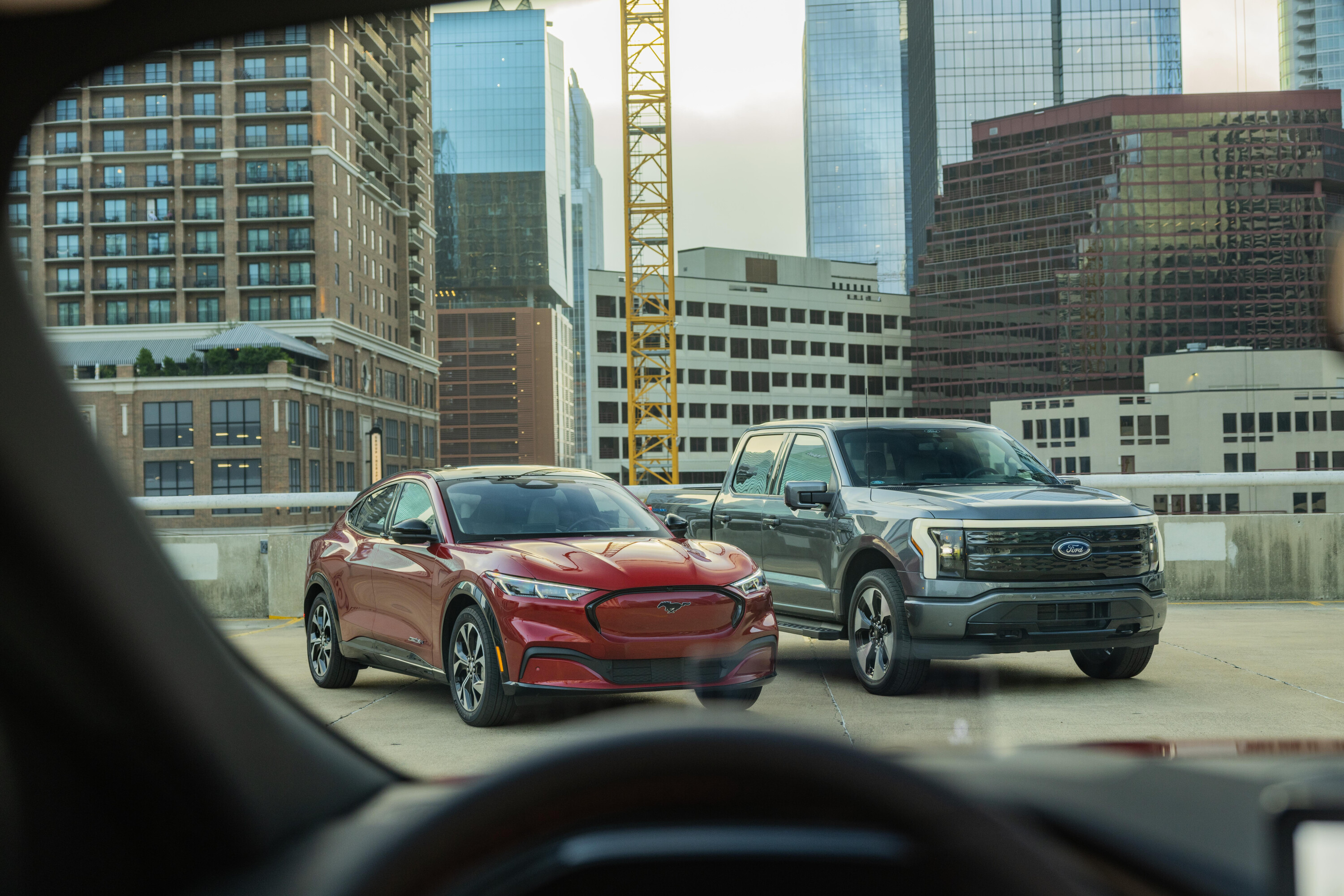
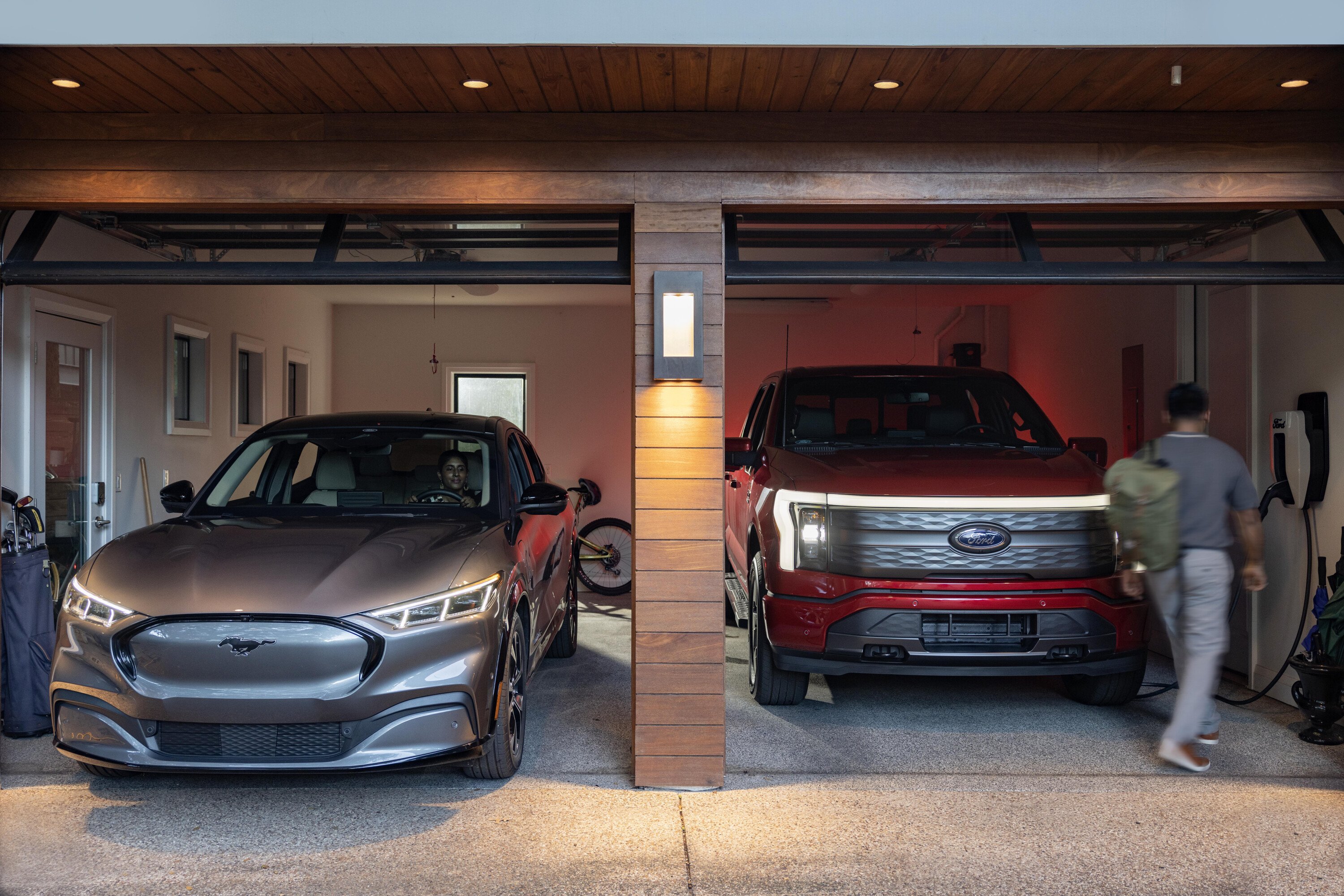
Additionally, the Blue Oval will offer current F-150 Lightning ute, Mustang Mach-E SUV, and E-Transit van models with a Tesla-developed CCS1 to NACS adapter from early next year to access 250kW DC capable V3 Superchargers only.
Its software will also support the activation of charging sessions and payment via its FordPass or Ford Pro Intelligence connected services.
All Ford owners will still be able to access standard public AC and DC charging stations in North America, including future models with the built-in NACS port (presumably via an optional adapter, as is the case with current Teslas).
1
Questions still loom…
When Ford’s upcoming electric models switch to the NACS in 2025, it’s unclear whether they will adopt Tesla’s rear-left quarter charging port position.
Why does that matter?
Tesla’s older V2 and V3 Supercharging stalls have been notorious for their short cables (addressed in the latest V4), which has made reaching Ford’s current left-front wheel fender port placement difficult.
Furthermore, it’s unclear whether Tesla will still charge Fords a more expensive charging cost as per current non-Tesla EVs on compatible sites.
1
This week, the Blue Oval admitted that large electric models with gigantic batteries are untenable, prompting its second-generation three-row SUV and ute to focus on improving aerodynamic efficiency.
In Australia, the Ford E-Transit electric cargo van just launched into showrooms and the Mustang Mach-E electric SUV will arrive by the end of this year, as a pricier alternative to the models such as the top-selling Tesla Model Y, Kia EV6, and Toyota BZ4x.
MORE
Everything Tesla
More EV stories to help you choose the best car for your needs
- ? EV news, reviews, advice & guides
- ❓ Short & sweet: Your EV questions answered
- ⚡ New EVs: Everything coming to Australia
- ? Australia’s EVs with the longest driving range
- ⚖️ Best-value EVs by driving range
- ? How much do EVs cost in Australia?
- ? How much more expensive are EVs?
- ⚖️ Number crunching: Is it time to switch to an EV?
- ♻ Should you buy a used EV?
- ?️ Are EVs more expensive to insure?
- ? Costs compared: Charging an EV vs fueling a car
- ? EV charging guide
- ?? EV servicing explained
- ? EV battery types explained
- ? When do EV batteries need replacing?
- ? Hydrogen v EVs: What’s best for Oz?
MORE advice stories to help you with buying and owning a car
April, 2024: Sportage Hybrid on sale in Australia
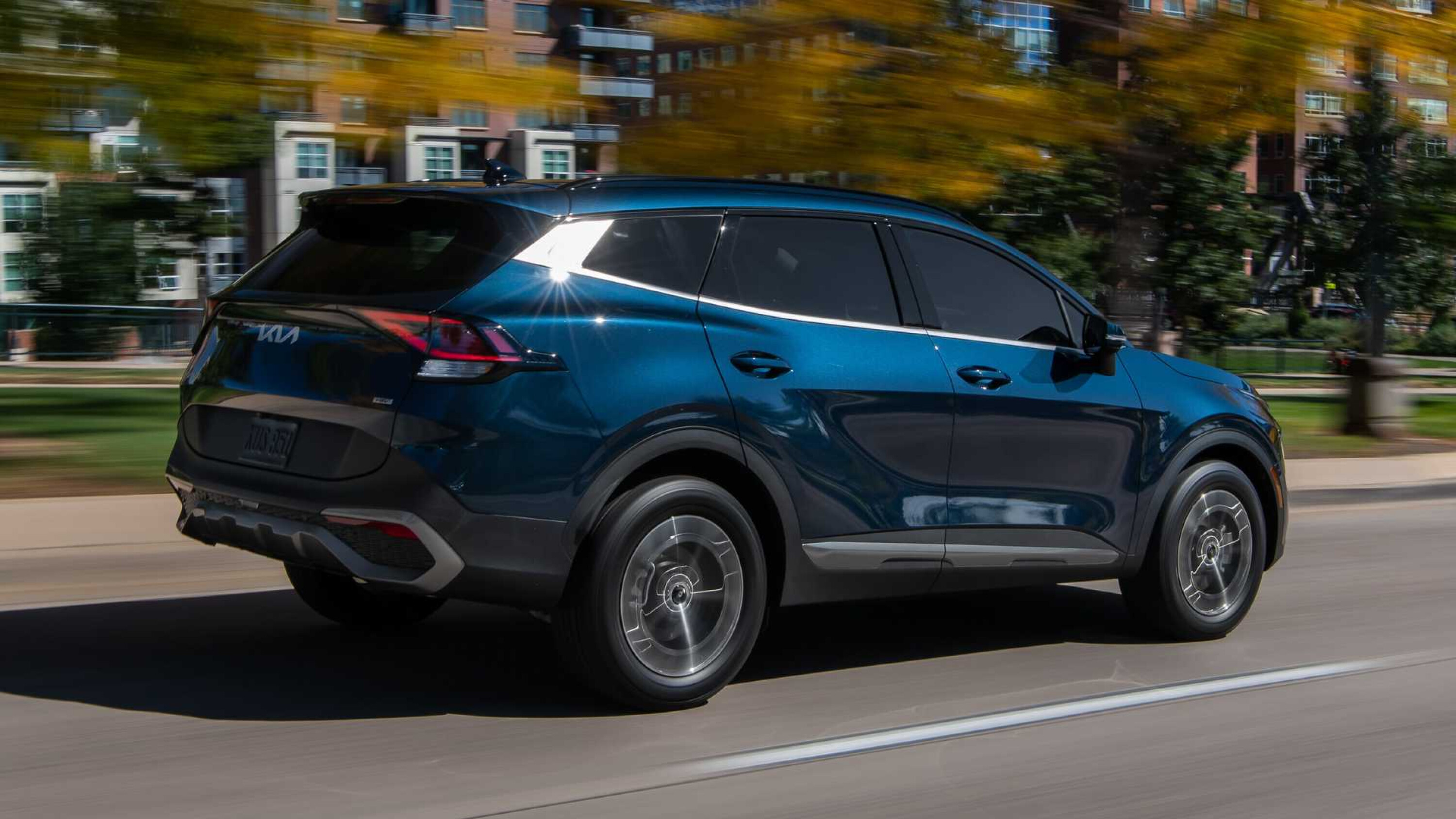
Kia has finally introduced a petrol-electric version of its Sportage midsized SUV to compete with the all-conquering Toyota RAV4 Hybrid.
March: Sportage Hybrid confirmed
Kia Australia has confirmed it will add a hybrid option to its popular Sportage mid-sized SUV range.
Snapshot
- 1.6 petrol + electric motor & six-speed auto
- Third hybrid in local Kia range
- Won’t be available in big numbers
Set to join the line-up early in 2024, it will be the third hybrid product to join the Kia roster, behind the smaller Niro Hybrid and the larger Sorento Hybrid. The news follows confirmation of local interest, around this time last year.
However, don’t expect it to dominate the Sportage line-up in the same way the Toyota RAV4 has leaned into hybrid power across its range.
“We’ll add another powertrain to the Sportage and we expect to start selling it in Q1 next year,” Kia Australia’s GM of product planning and training, Roland Rivero, said at a press briefing this week.
He confirmed that while supply will be more plentiful than that of the Sorento Hybrid, it won’t exceed a couple of hundred units a month, against sales of around 1200-1300 per month.
For reference, the Sportage currently sits fifth overall in the VFACTS sales chart, behind rivals that include the closely related Hyundai Tucson and the evergreen Mazda CX-5.
The Sportage Hybrid powertrain will mimic that of the Niro Hybrid, with a 1.6-litre four-cylinder petrol engine linked to an electric motor on the front axle, supplemented by a small 5.5Ah battery that can only be recharged by the petrol engine, not a plug.
A six-speed automatic transmission, meanwhile, will send drive through the front axle.
1
While final specs are yet to be confirmed, the new powertrain is likely to be offered on the two higher grades of Sportage, the SX+ and GT-Line.
Sourced from Korea, the Sportage Hybrid will retain the same longer wheelbase that’s offered on the petrol and diesel variants. A shorter wheelbase variant is available in overseas markets, but is not likely to be offered here.
And while the Sportage is set to gain a hybrid, Rivero confirmed that the smaller Seltos SUV – which has just received a mid-life refresh – will not score battery-electric assistance within its current lifecycle.
Australian motorsport fans can watch the 100th running of the 24 Hours of Le Mans on the Stan Sport streaming service [↗], which is broadcasting practice and qualifying sessions.
Snapshot
- Stan’s Le Mans 2023 coverage starts at 11pm on Saturday 10 June.
- You can also pay about $20 to watch it on fiawec.tv
- Australian racing commentator Richard Craill is on the Radio Le Mans broadcast team
When does Le Mans 2023 start for Australian audiences?
Stan’s race coverage starts at 11pm on Saturday 10 June.
How to keep up with Le Mans 2023 without a streaming subscription
If you’ve never been a Stan subscriber, try signing up for a trial period – or catch up with the numerous team streams that will populate YouTube over the course of the event.
Or…
You can also buy a round pass from fiawec.tv [↗] to watch the entirety of the event, which will cost you a tad over $20.
The Le Mans 2023 commentary team
Noted Australian racing commentator Richard Craill will form part of the Radio Le Mans broadcast team, while former Supercars caller Leigh Diffey will anchor the US coverage.
MORE
Motorsport
