
August 16: New teaser video handed down
A new teaser has come down today, offering a shadowy look at the new Mulliner Batur just days out from its big reveal.
As expected, the coachbuilt limited-production model will user in a new era of design for Bentley, pushing it beyond the familiar looks the brand’s models have worn for decades.
Under the bonnet, we’re expecting the most powerful version yet of its big and iconic W12 engine, sending power through a modern and advanced chassis.
Watch for more details in the coming week, ahead of the new model’s August 21 debut.
The story to here
August 11: Bentley has teased the hand-built Mulliner Batur ahead of its reveal at the 2022 Monterey Car Week on August 21.
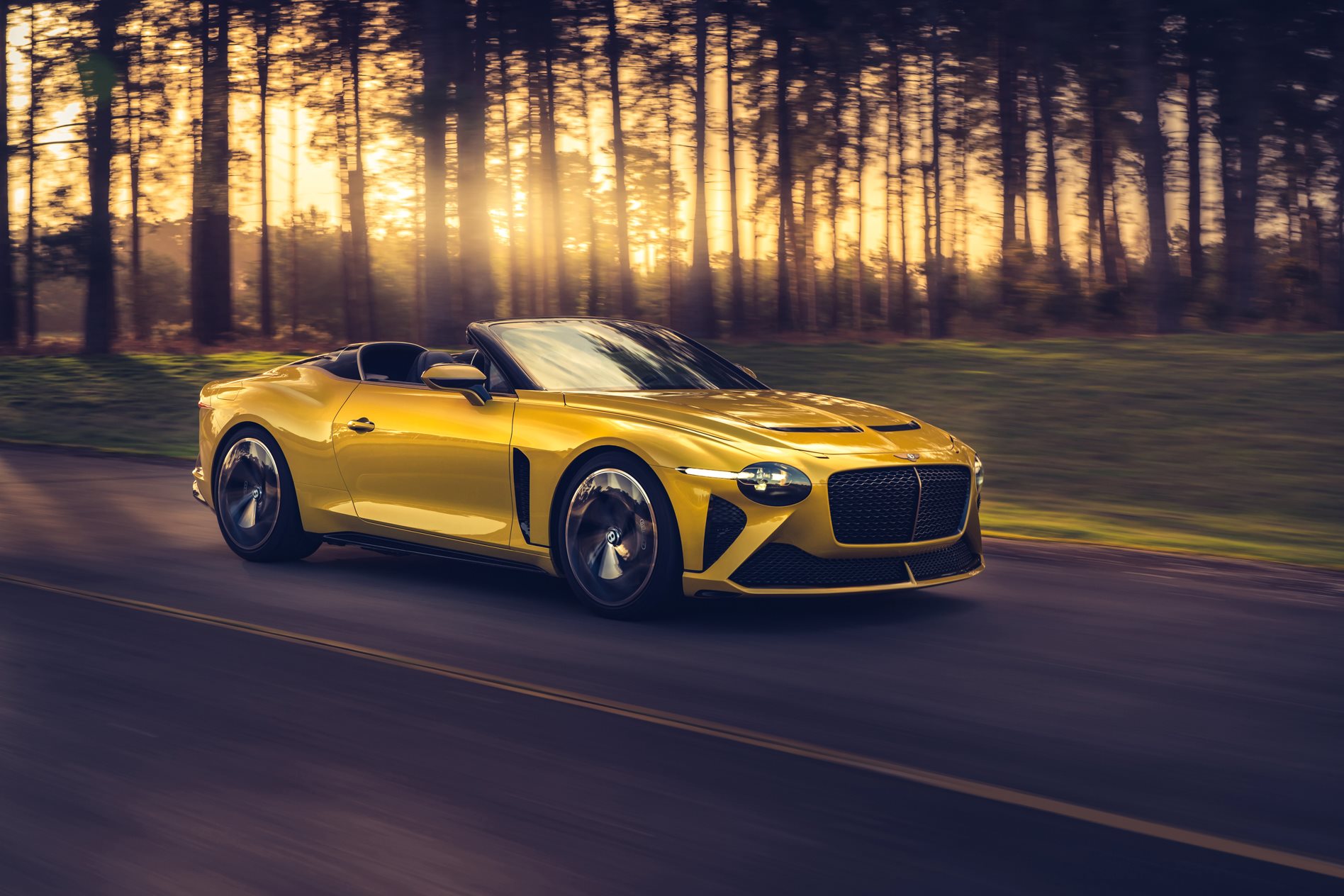
The grand tourer is the latest model from Bentley’s rejuvenated Mulliner coachbuilding division, succeeding the limited-run, two-door Bacalar convertible unveiled in 2020.
However, Bentley claims the Batur is “so much more than the successor to [the] Bacalar”, but the company is remaining tight-lipped on exact details for now.
Named after a lake in Indonesia, the Mulliner Batur will be unveiled in full at 1:00 pm AEST on Sunday, August 21.
Bentley has confirmed the Mulliner Batur will debut its new design language, previewing the “themes and forms” of its electric future.
A teaser video released by the brand reveals a close-up of the Bentley badge and a chrome grille with a V-shaped mesh pattern and red accents.
In a similar fashion to the ultra-rare Mulliner Bacalar, of which Bentley produced just 12 units, the Batur is likely to be hand-built in similarly limited numbers.
According to British publication Autocar, the Batur will be based on the Continental GT coupe and powered by the Volkswagen Group’s 6.0-litre turbocharged W12 engine.
The engine has featured in various models from Audi, Volkswagen and Bentley, with the Batur likely acting as a swansong for the mill as Bentley shifts towards an all-electric future.
First detailed last year, Bentley has declared all non-electrified vehicles will be phased out by 2026 – with the line-up to consist of electric and plug-in hybrid (PHEV) models – before it goes fully-electric from 2030.
Bentley currently sells two PHEVs: the Bentayga Hybrid and Flying Spur Hybrid.
The brand’s first all-electric vehicle will launch in 2025, potentially as a successor to the current Bentayga large SUV.
It is expected to be underpinned by the forthcoming Scalable Systems Platform (SSP), which will succeed the MEB and PPE architectures across each VW Group brand within the next five years.
As reported, a smaller electric SUV to compete against the next-generation Porsche Macan and Range Rover Velar is also likely.
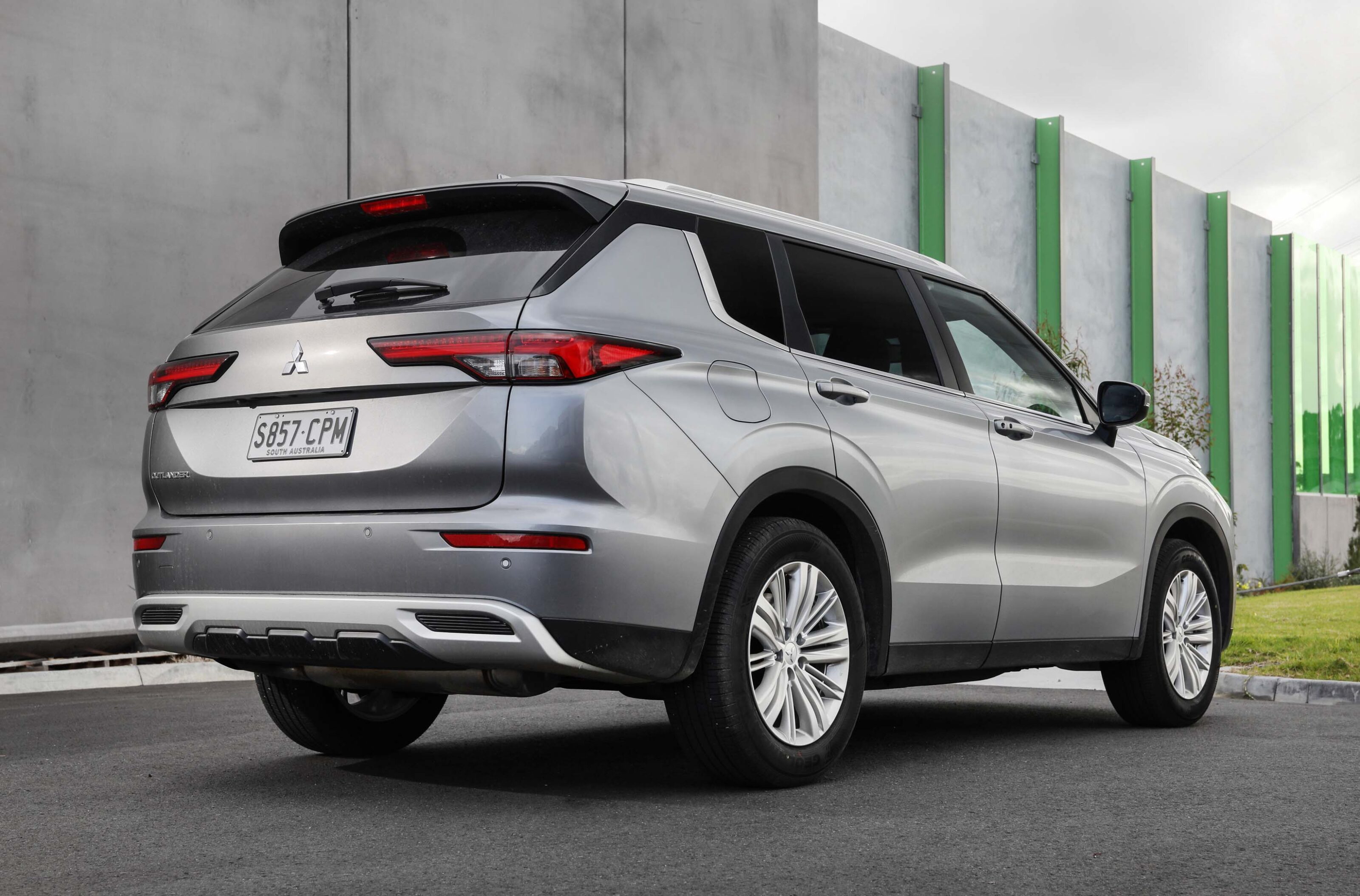
This new, 2022 generation of the Mitsubishi Outlander, launched locally in late 2021, aims to take a big step up over a predecessor that found success through its perceived value against more expensive and larger seven-seaters but offered a less-than-polished driving experience.
So, has Mitsubishi managed to right many of the old model’s wrongs while continuing to trade on the same merits that made the previous Outlander a success?
A good place to find out is one of the most affordable variants, the one-up-from-cheapest LS.
Pricing and features
The Mitsubishi Outlander range opens at $34,490 for the base ES 2WD five-seat, with the ES 2WD seven-seat asking an extra $1000.
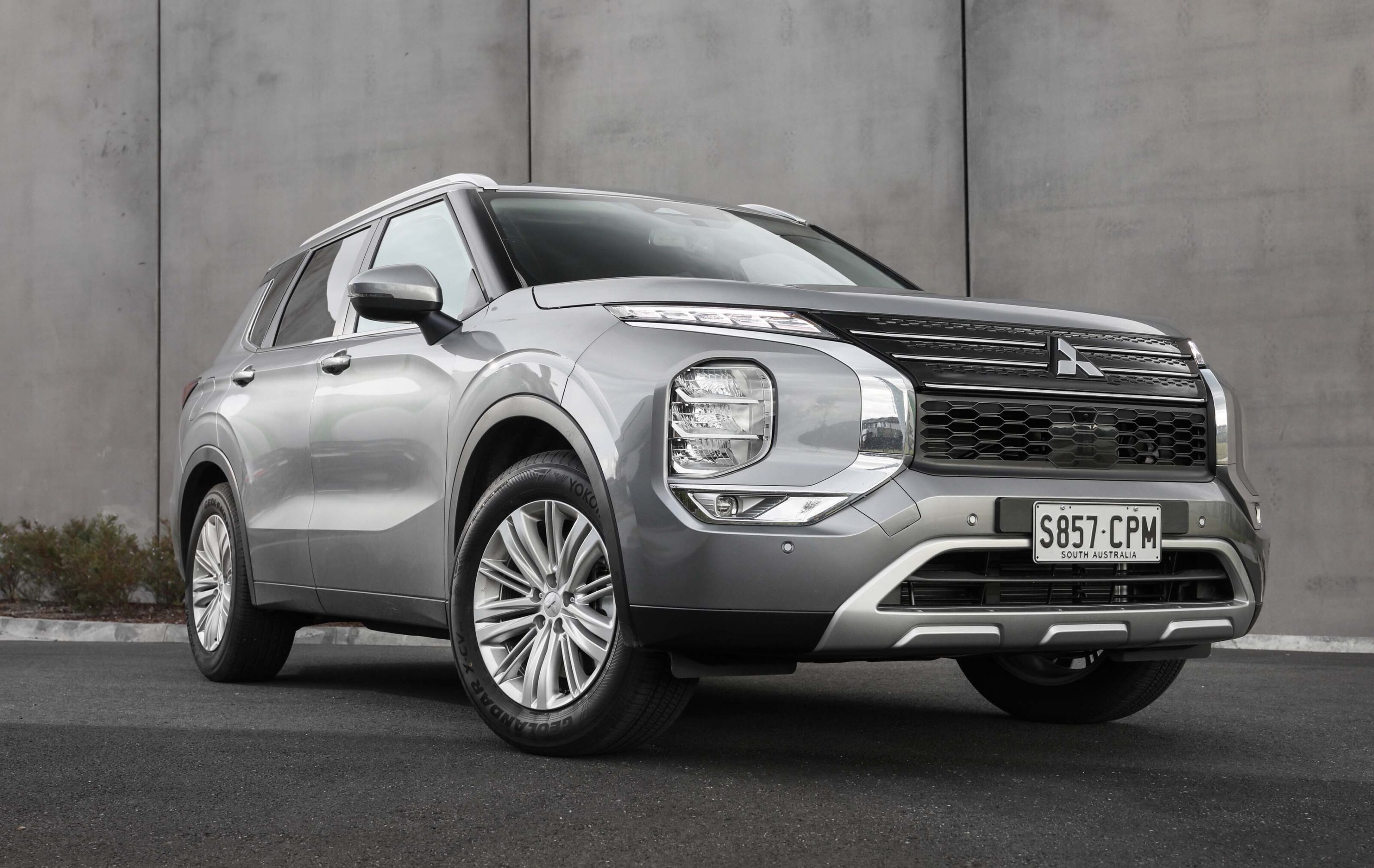
The LS 2WD variant we are testing today opens at $37,990 (saves $3500 compared to LS AWD), and comes standard with the extra two seats stashed under the boot floor.
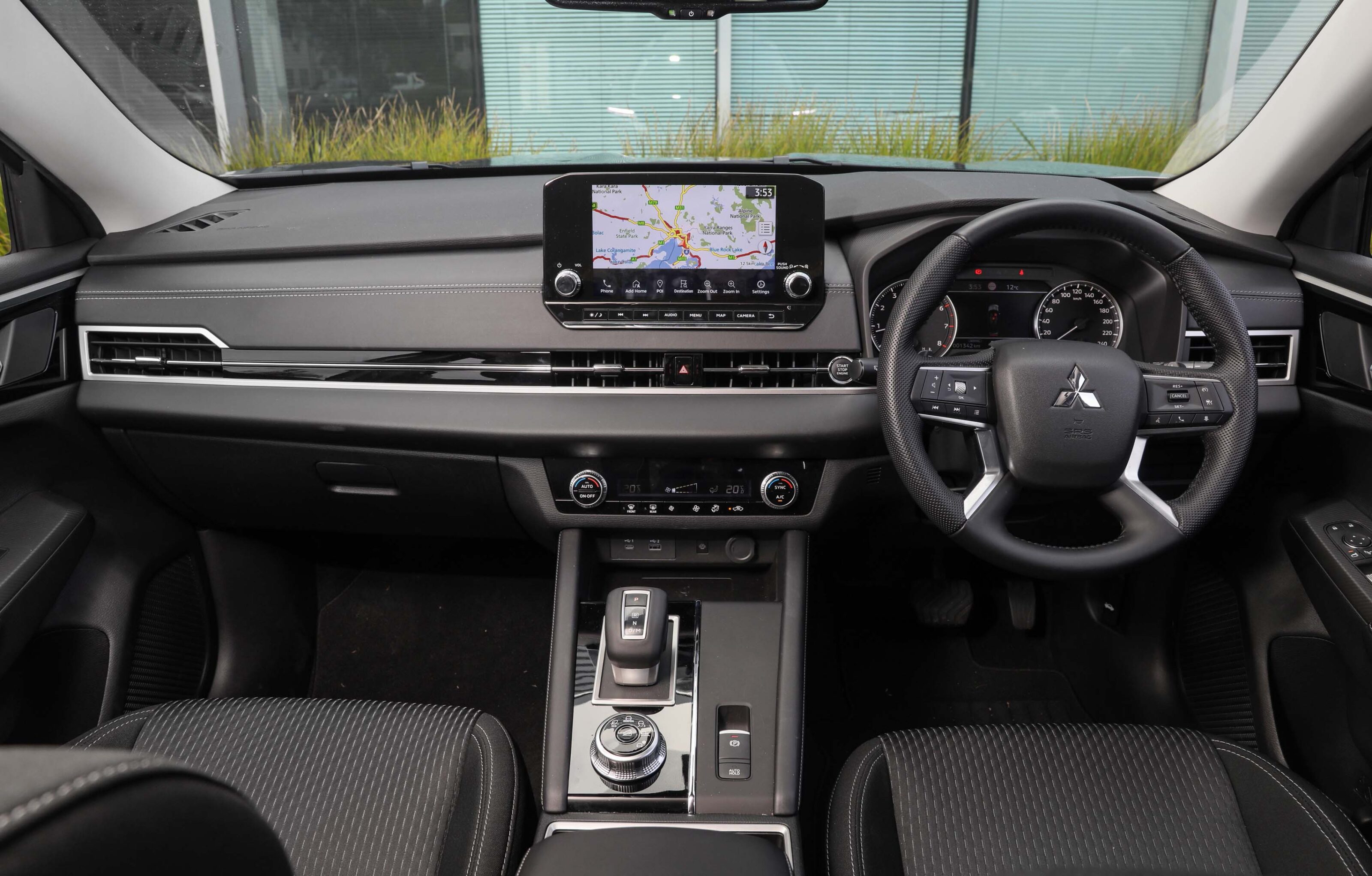
That money buys you a fabric interior, 7.0-inch driver display in the instrument cluster, 9.0-inch infotainment touchscreen with wireless Apple CarPlay and wired Android Auto, dual-zone climate control, second-row air vents, front and rear parking sensors, adaptive cruise control, and reversing camera.
There’s also 18-inch alloy wheels, privacy glass, cargo blind, leather wheel and shifter, silver front and rear bumper garnish, auto-dimming rearview mirror, heard and folding door mirror, auto headlights with auto high beam, roof rails, LED fog lamps, and automatic wipers.
Absent on the feature list is a powered tailgate, previously standard on the LS variant, which was de-specified by Mitsubishi for the latest 22.5 model year update in reaction to the ongoing semiconductor shortage.
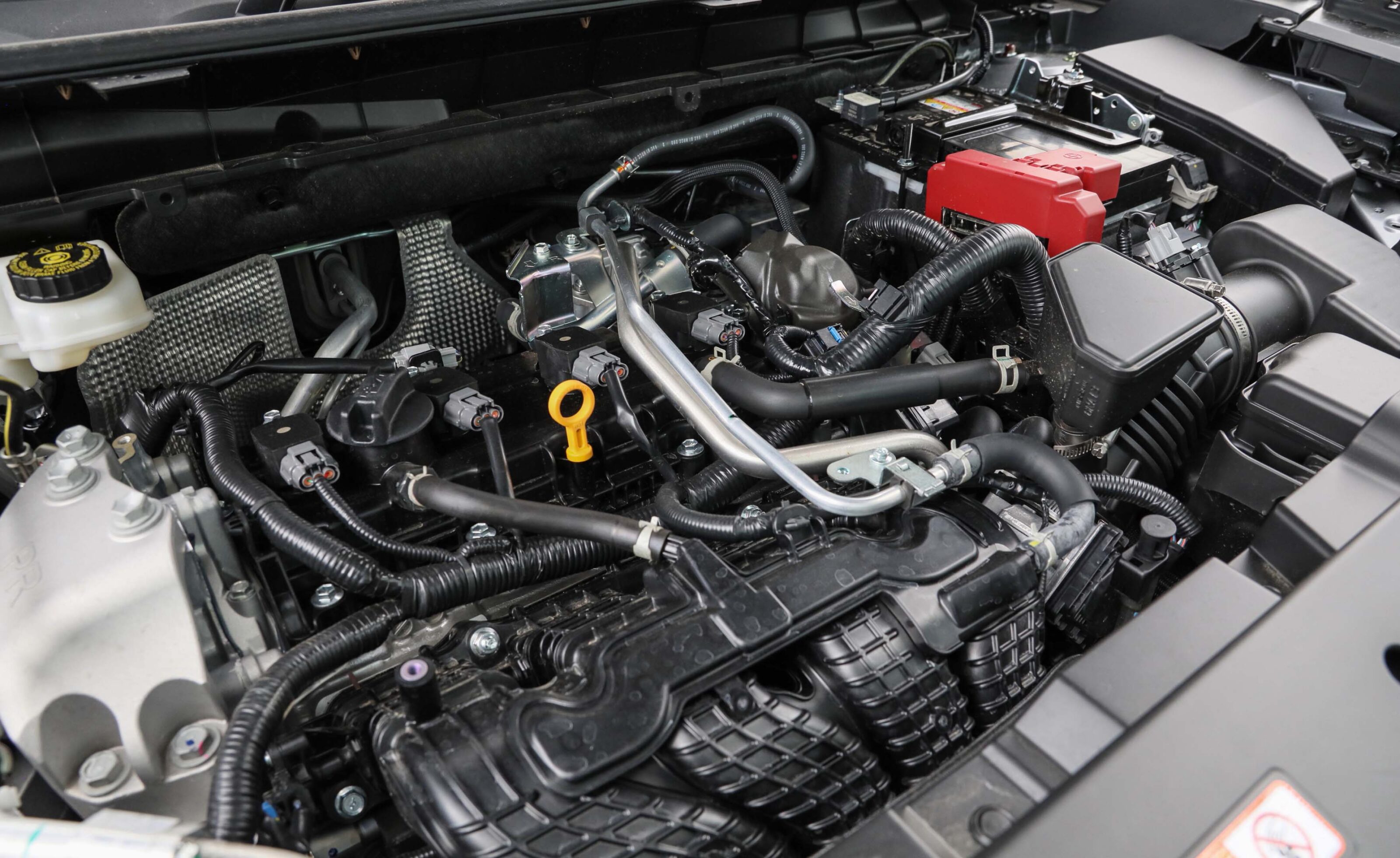
Powering all of the combustion, non-hybrid, Outlanders is an aspirated 2.5-litre inline-four cylinder producing 135kW and 245Nm, matched to a continuously variable transmission (CVT).
The 2022 Outlander wears a Five Star ANCAP rating, with safety, both passive and active, coming from eight airbags, high- and low-speed forward autonomous emergency braking (AEB), forward collision warning, reverse AEB, reverse cross-traffic alert, lane departure warning, lane-keep assistance and speed sign recognition.
Comfort and space
Despite its three-row seating status, Mitsubishi describes the Outlander as a ‘5+2’-seater, instead of an outright seven-seater. That’s because, while there is an abundance of space and comfort afforded to the front two rows, the third row seats are more of a temporary solution to a fleeting problem, rather than a usable everyday utility.
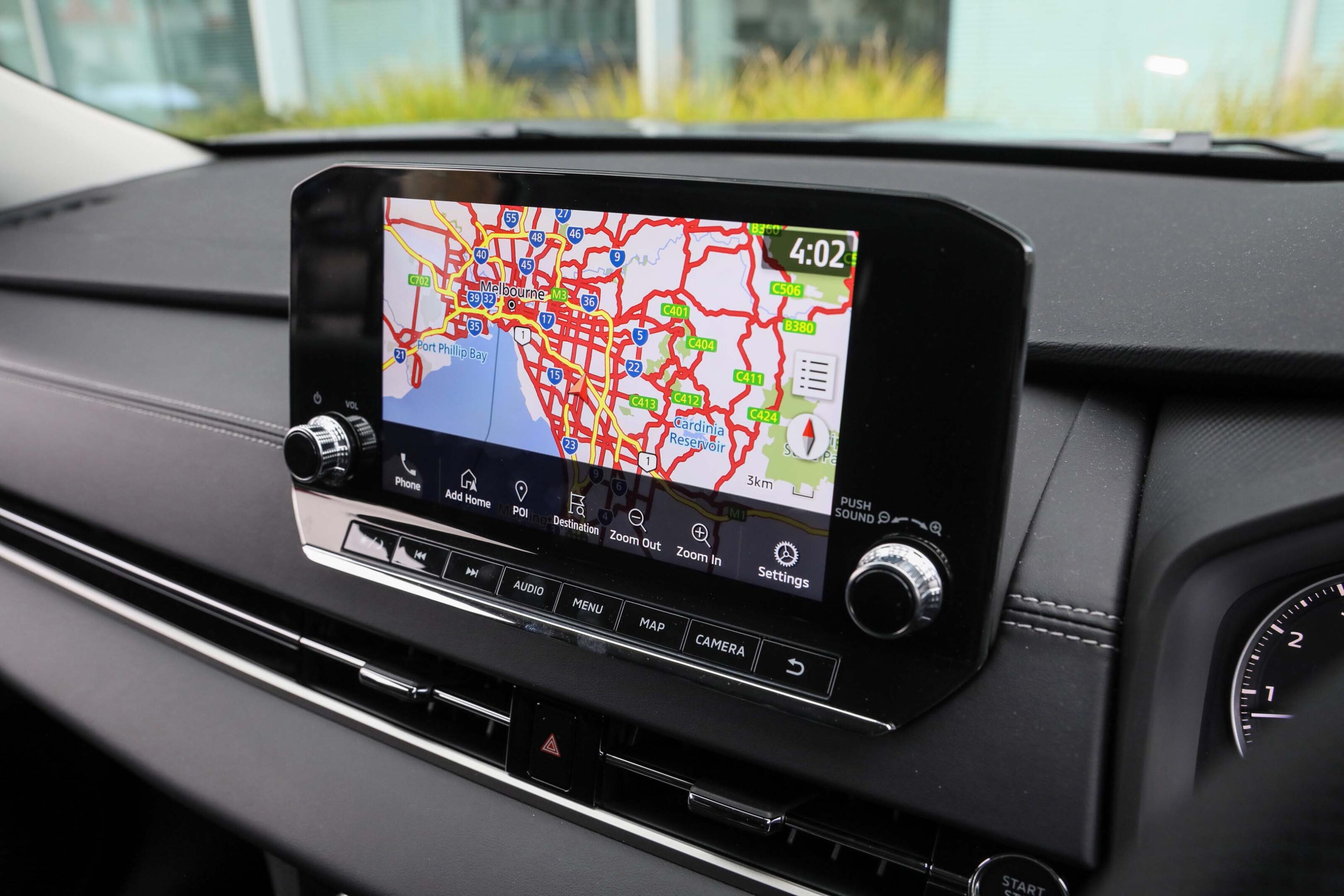
Up front, however, the 2022 Outlander LS’ cabin gets injected with a big dose of modernity with a 9.0-inch floating screen mounted atop a nicely sculpted dashboard, with dual-zone climate control and a wireless phone charger all easily within the driver’s arm’s reach.
Initial impressions are of an airy feel and materials quality that is markedly better than expected, a big step up over the old generation car.
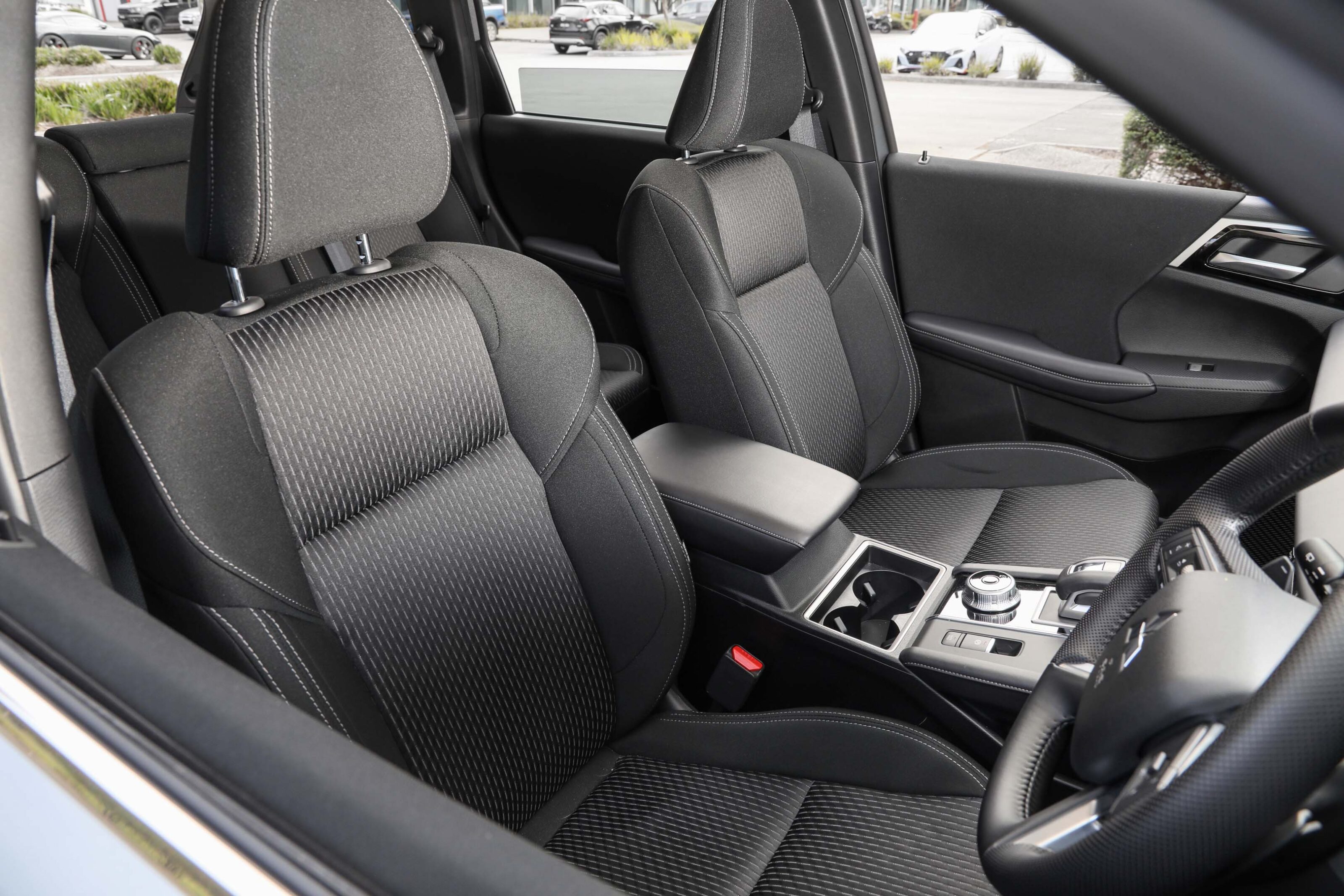
This spec is finished in black, with cloth trim, and isn’t the most visually dazzling of specifications available within the Outlander range, but looks and feels great for its price point.
The seats themselves are comfy and supportive and, along with the steering column, offer great levels of adjustment for drivers of all builds. You can have the traditional high-riding SUV position or, conversely, you can also mount yourself in a surprisingly low, almost sporty, seating position.
The infotainment screen is clear, easy to navigate and decently responsive but the user interface looks rather dated. Phone mirroring, however, presents and utilises the screen wonderfully.
Milled rotary controls and dials feature on the infotainment screen, HVAC controls and Drive Mode selector, and feel very nice in the hands. They can, however, reflect sunlight quite harshly in certain conditions. The new sliding gear selector is quirky, and a bit of a novelty, but functions fine and doesn’t take anything away from the experience.
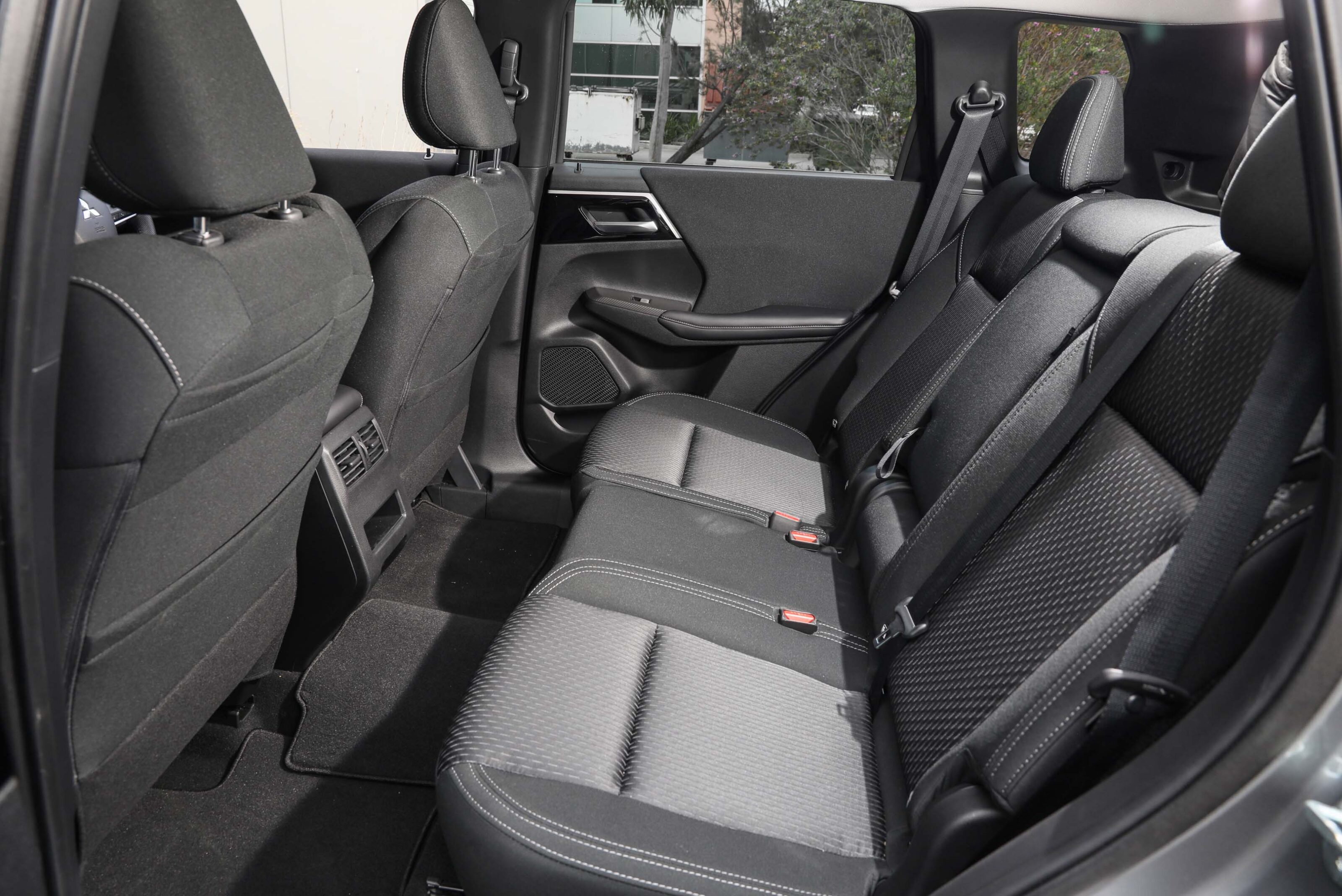
The second row continues continues with the spacious feel. The seats themselves look a bit thin and basic, but the actual materials and touchpoints back here are decent. Seats fold 40:20:40 for versatile through-loading, and there are rear air vents, with cup and bottle holders located in each door.
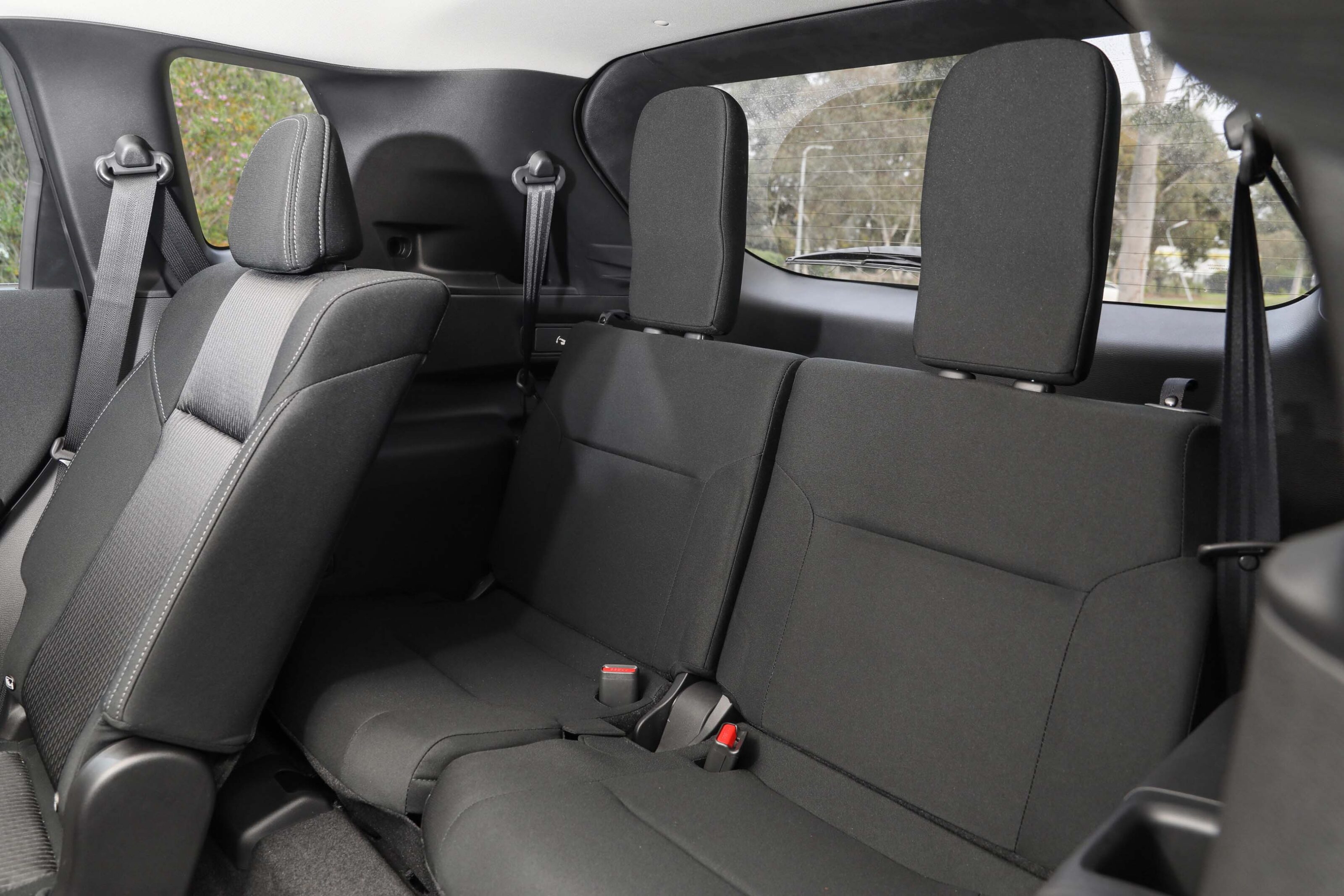
Further back is where things get complicated. Two jump seats fold out from the boot floor, offering flexible seating in a jam, say, when you need to ferry a few extra children to Saturday morning sports.
They’re hard to access, given the second row of seating don’t fold forward, and providing useable legroom for even an older primary school child would see the need to move the second row of seating forward – negating most of the legroom there.
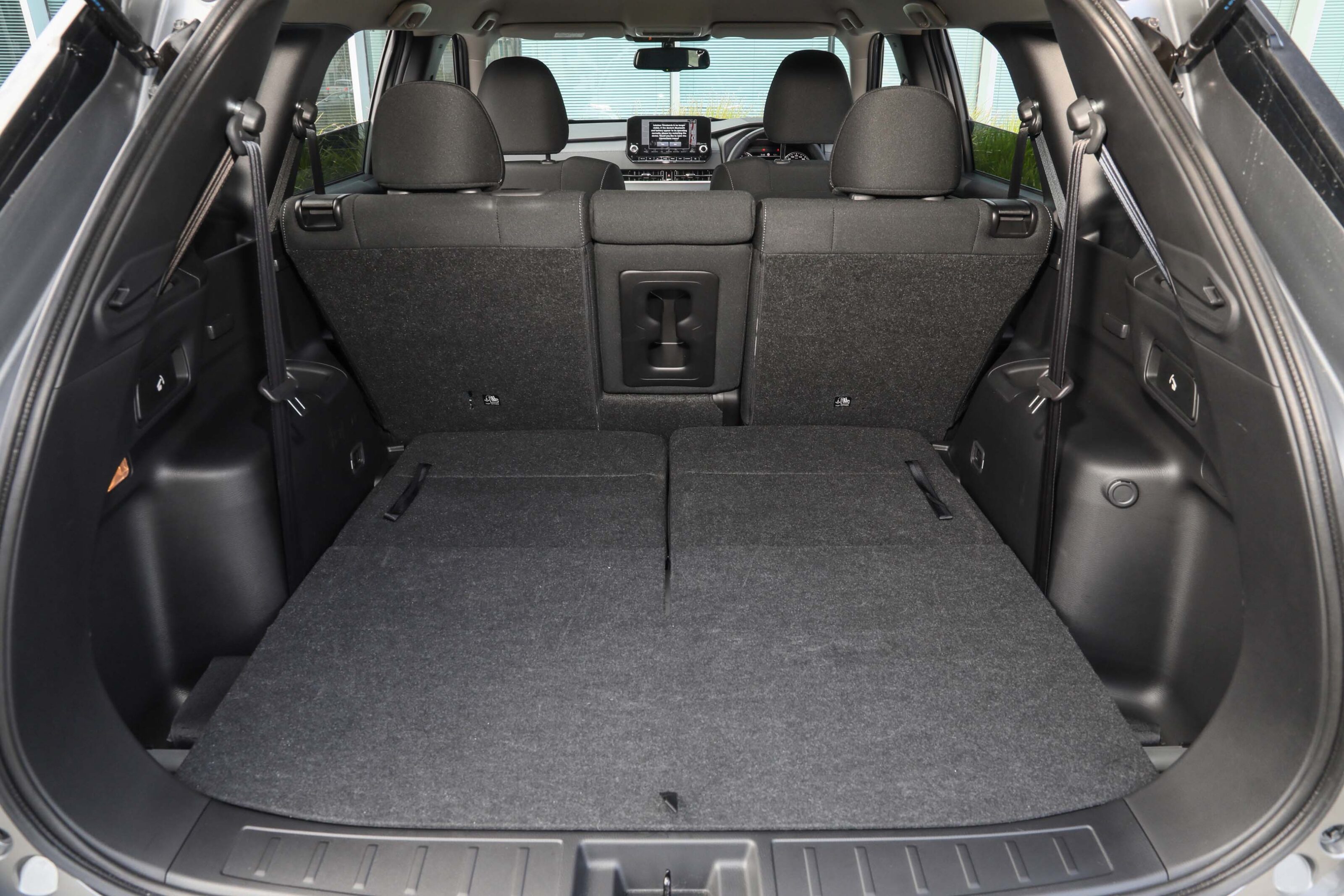
They’d likely be workable for short trips when you need a few extra seats in a jam, but it will come at the expense of comfort for both second- and third-rows. The extra seating mitigates negligible boot space, however, eating into just seven litres of cargo space.
With the folding third row of seats, boot space still measures a respectable 478-litres, which blows out to 1461-litres with the back seats folded.
On the road
On-paper at least, an aspirated 2.5-litre four-cylinder matched to a CVT driving the front wheels of a mid-size SUV isn’t the most inspirational recipe when it comes to on-road dynamics. But the execution of all parts coming together sees the Outlander impress with unexpected levels of polish and poise.
In actuality, much of the drivetrain is carried over from the preceding generation, though the engine has grown in displacement from 2.0-litres in the old front-drivers, and 2.4-litres in the AWD variants, to uniform 2.5-litres of swept capacity across the range.
From the 2.4-litre to the 2.5-litre engine, power increases from 124kW to 132kW, and 220Nm to 245Nm.
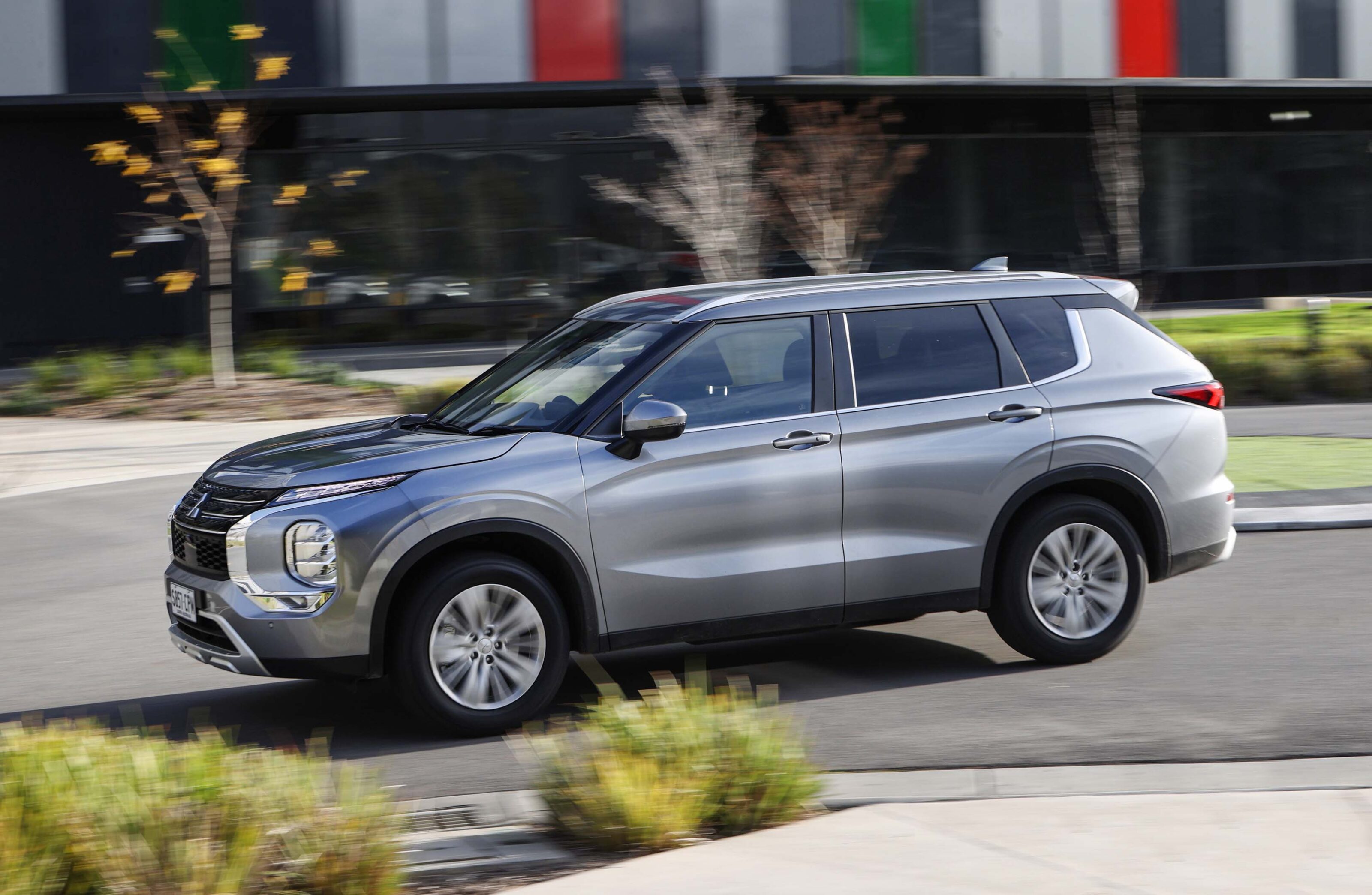
The throttle is nice and responsive by default. If anything, it’s perhaps a touch too touchy by comparison to many other lackadaisical family chariots of this segment.
There’s good breadth within the Drive Modes, too, comprising Eco, Normal, Tarmac, Gravel, Snow and Mud – adjusting throttle response, steering weight and stability control to suit.
Normal is a no-fuss catchall, though if you find the default throttle a little too spiky, Eco mode provides tremendously relaxed and smooth sailing. Tarmac is a sports mode by another name, making the throttle super responsive and also re-calibrating the CVT to let revs build and hold more freely.
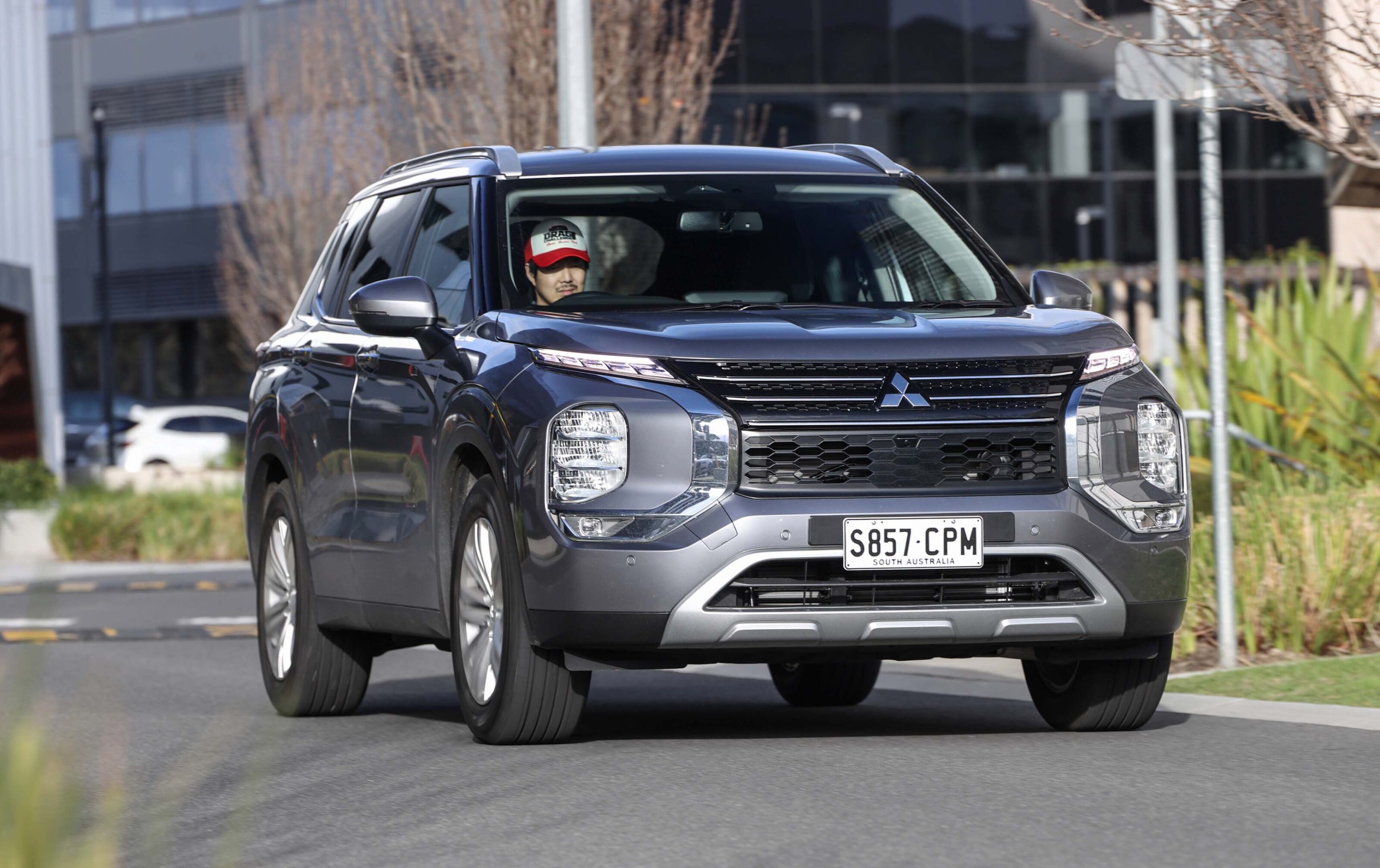
Despite modest power outputs, the improved CVT calibration makes the most of the engine, always keeping it happily in the zone it works best. Never once did I feel the need to take over gear changes for myself. Overall, it’s a very intuitive unit that is well-judged in its gear changes. Real strides in refinement have been made here to the powertrain.
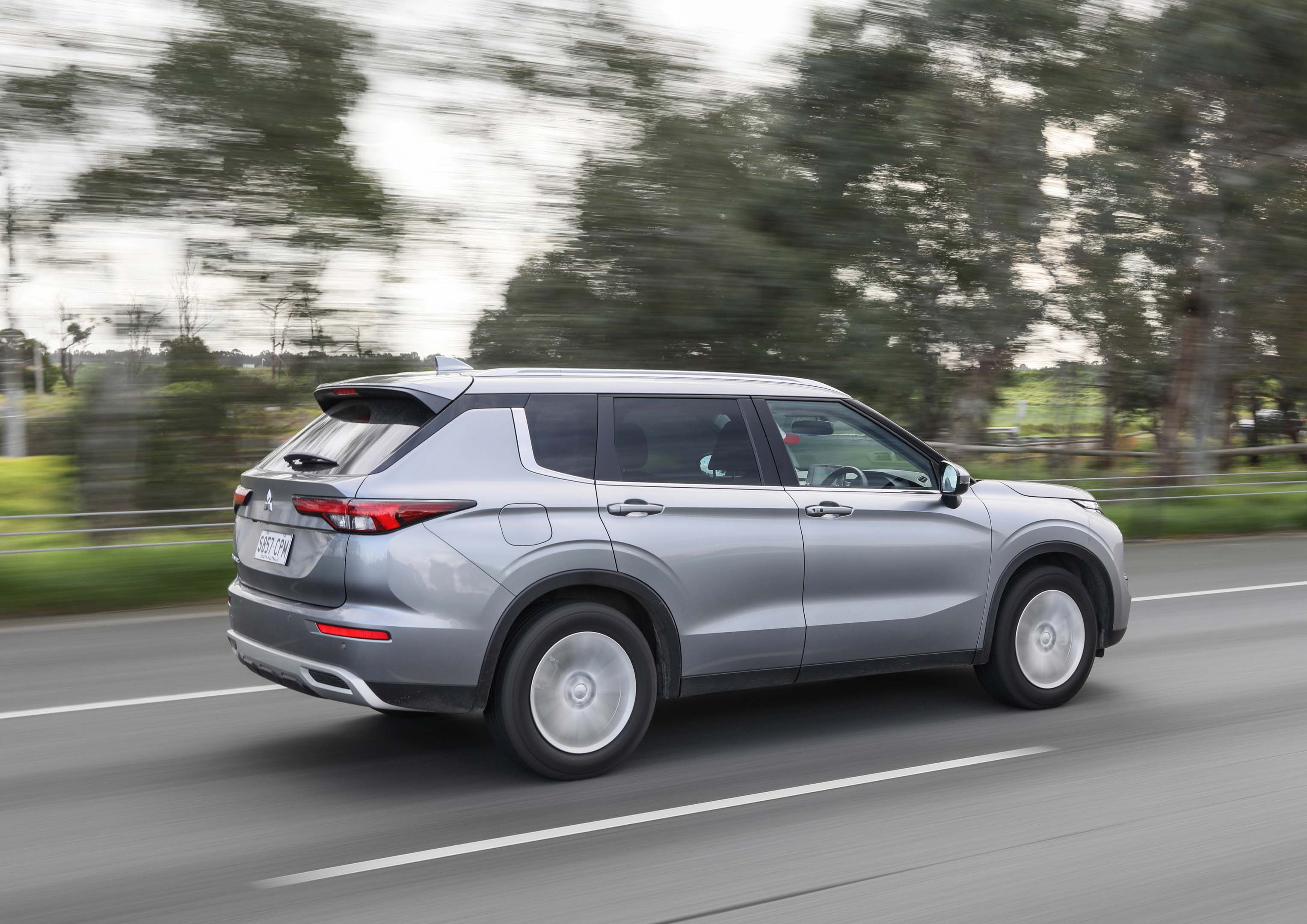
In fact, despite a significant increase in kerb weight of 200kg with this new generation of Outlander, tipping the scales at 1645kg, the smooth briskness of its acceleration, combined with its lightly weighted steering, gives the impression of shucking off its weight nicely.
In other scenarios, its mass does come to the fore. At low speeds, for instance, it can ‘fall into’ potholes and compressions with a bit of a thunk. Cornering with momentum also produces noticeable, but not egregious, body roll.
I also found myself having to input more brake when approaching a stop, as a few instances saw the car slowing at a lesser rate than expected.
This, however, likely has more to do with the doughy brake pedal calibration, given the Outlander boasts some decently-sized 350mm brake rotors up front.
Despite its sizeable footprint, the Outlander offers nice levels of urban agility and feels decently nimble around town. It’s quite frugal too, registering 8.5L/100km – not a far shout off Mitsubishi’s 7.7L/100km claim for this variant. From the driver’s seat, there’s a lot to like here.
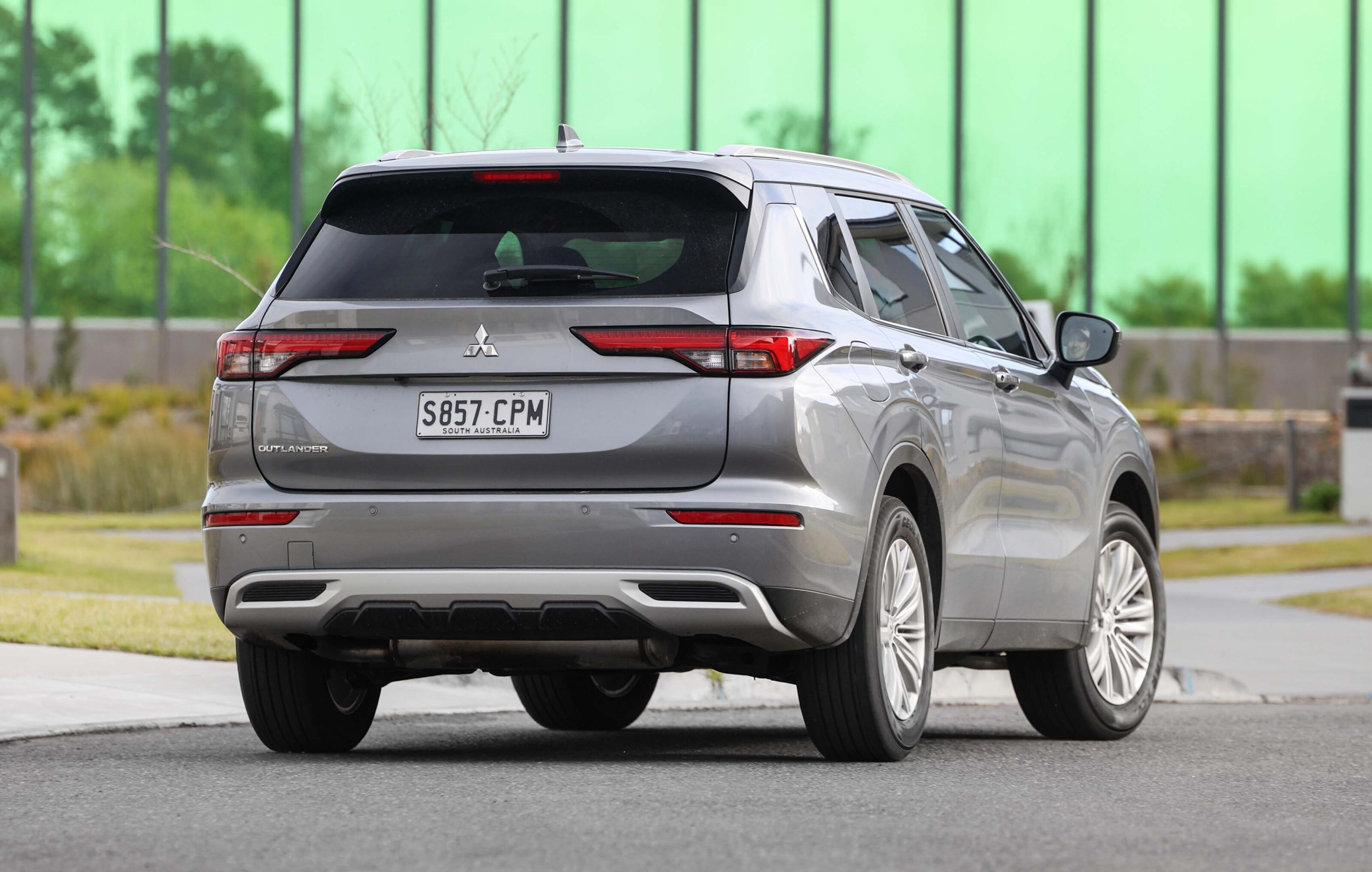
Ownership
All new Mitsubishis come with a standard new car warranty of 5-years/100,000kms (whichever comes first).
Buyers may be eligible for Mitsubishi’s Diamond Advantage extended warranty, Australia’s only new car warranty covering 10-years/200,000km – the caveat being that all scheduled servicing must take place at a Mitsubishi’s authorised dealer network.
Service intervals are pegged at every 12-months or 15,000kms, and Mitsubishi offers a nation-leading 10-year/150,000km capped price servicing regime.
The 2022 Mitsubishi Outlander wears a Five Star rating from ANCAP, awarded at the beginning of 2022.
VERDICT
The 2022 Mitsubishi Outlander has made bounds over its predecessor, and delivers versatile urban motoring with welcome doses of polish and nice presentation.
The third-row of seats are a nice and attractive feature but offer limited real-world use. They are still a benefit for a lot of people, however, as it’s always nice to have the option of that added flexibility, though they do offer mixed results in practice.
In all other areas, the Outlander LS comfortably fulfils the brief of a relaxed family hauler, delivering a lot of value for just under $40,000.
2022 Outlander LS 2WD specifications
| Body | 5-door, seven-seat medium SUV |
|---|---|
| Drive | Front-drive |
| Engine | 2488cc naturally aspirated inline-4, DOHC, 16v |
| Bore/Stroke | 89.0 x 100.0mm |
| Compression | 12.0:1 |
| Power | 135kW @ 6000rpm |
| Torque | 245Nm @ 3600rpm |
| Fuel Consumption | 8.5L/100km |
| Weight | 1645kg |
| Power/Weight | 82kW/tonne |
| Transmission | continously variable |
| Suspension | Struts, coil springs, anti-roll bar (f); multi-links, coil springs, anti-roll bar (r) |
| L/W/H | 4710/1862/1745mm |
| Wheelbase | 2706mm |
| Tracks | 1593/1602mm (f/r) |
| Steering | Electrically assisted rack-and-pinion |
| Brakes | 350mm ventilated discs, single-piston calipers (f); 330mm solid discs, single-piston calipers (r) |
| Wheels | 18 x 7.0-inch (f/r) |
| Tyres | 235/60/R18 Yokohama Geolandar X-CV |
| Price | $37,990 + on-road costs |
The new 2023 Porsche 911 GT3 RS has leaked online days before it was due to be officially revealed. First impressions? It needs more wing…
We’re joking of course. This is the fourth-generation of Porsche’s most hardcore, track-focused 911 and it’s easily the most visually aggressive yet courtesy of an enormous swan-neck rear wing, bulging side skirts, blistered guards and bonnet nostrils.
The most extreme road-going 911 ever? You’re looking at it.
First leaked on Instagram by user liucunyi_starandcar and later shared by Porsche UK’s official Instagram page, the new GTS RS wasn’t due to be officially revealed until August 17.
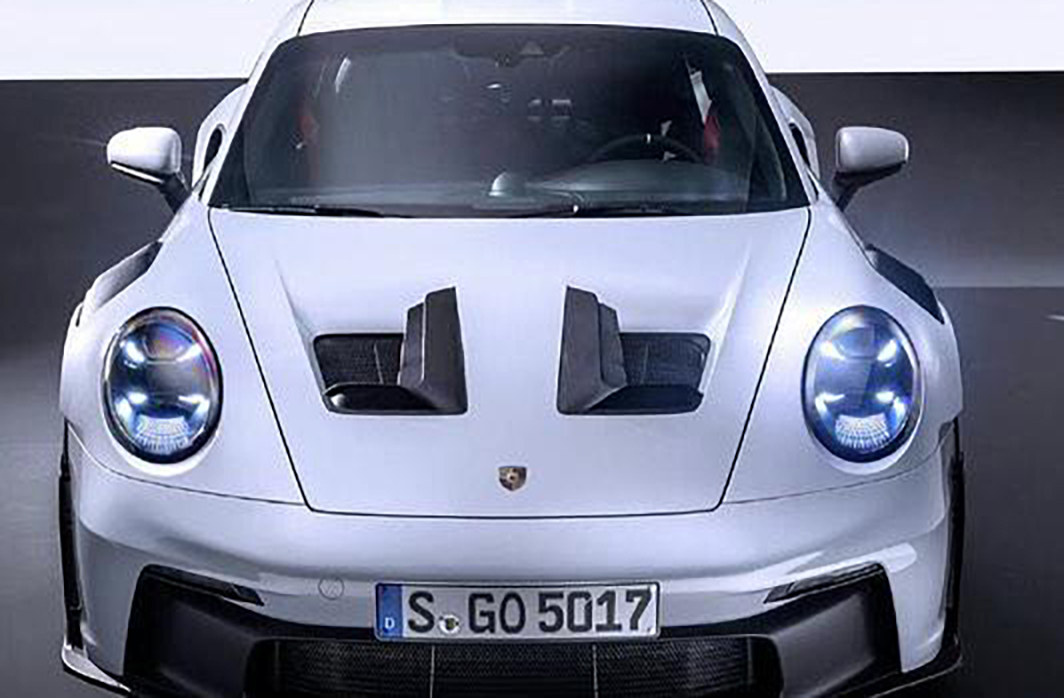
That means we’ll have to wait a few days for confirmed powertrain details, but for now we can feast our eyes and drink in the details. Not subtle is it?
As with the previous GT3 RS, managing airflow to generate as much downforce as possible is an obvious goal, but this new car has clearly dialled things up a notch.
The huge rear spoiler isn’t a surprise given we’ve spied it on testing mules for months now, but these images do reveal some fresh details.
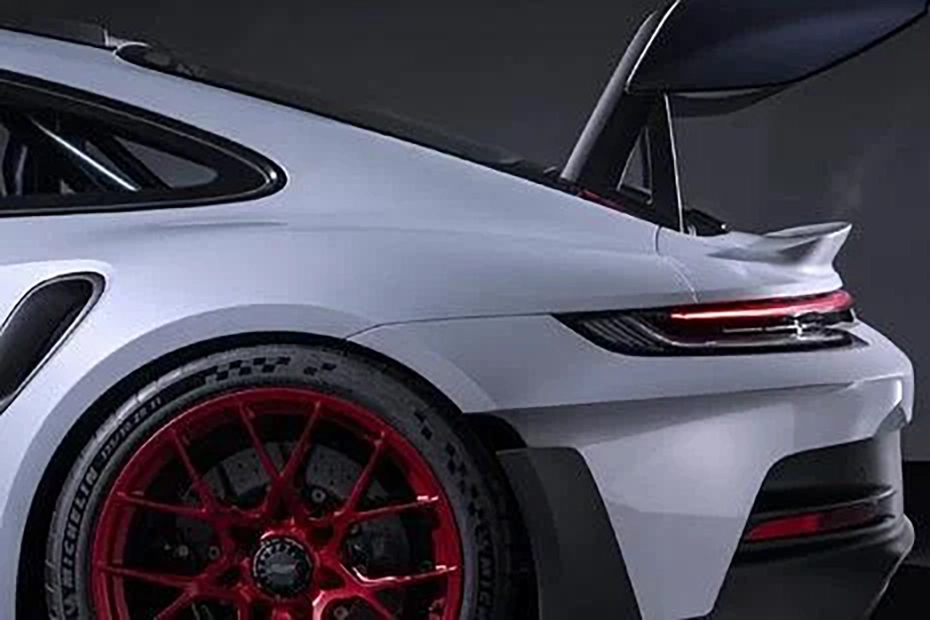
The wing appears to be adjustable, for example, with the pictures showing the two-tier element in both high downforce and low-drag configurations.
The appearance of a small red strut on the underside of the swan neck support also suggests it could be electrically operated.
The rear bumper itself features huge cutouts behind the rear wheels to help manage airflow – the Lamborghini Huracan STO features a similar design – while the aggressive rear diffuser houses two central exhaust outlets.
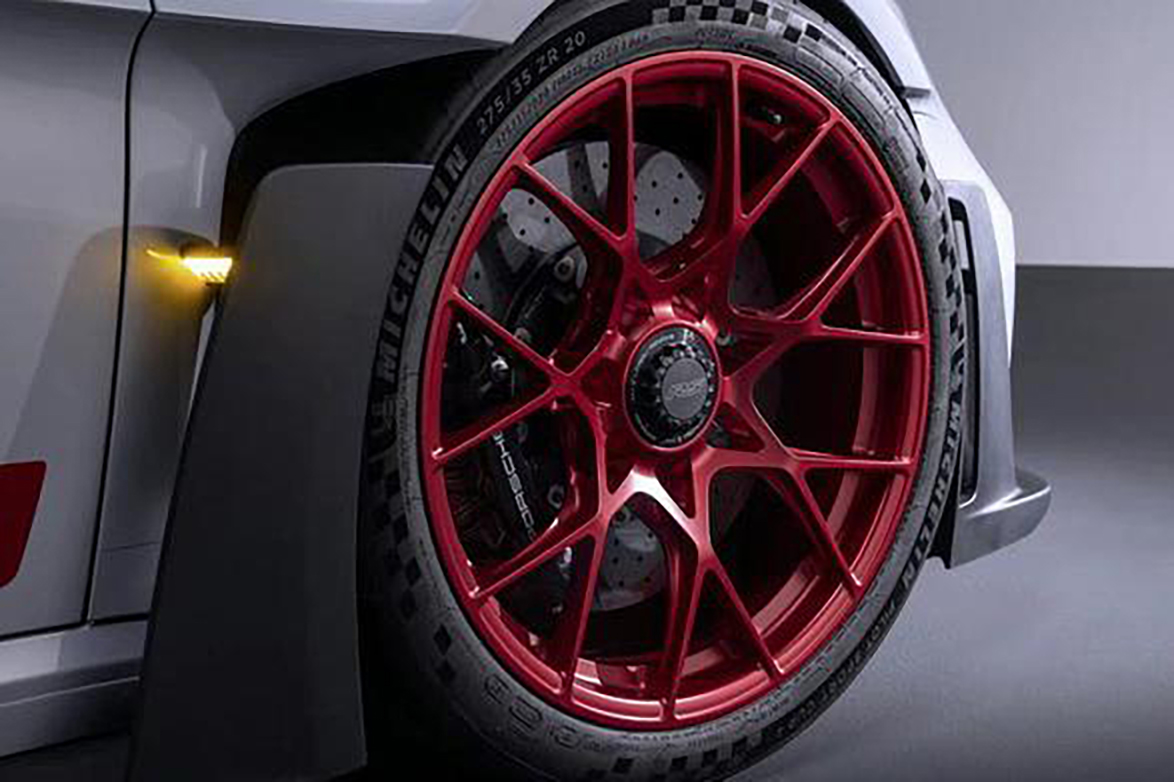
The roof has also grown a pair of strakes to guide air towards the huge rear wing and the bonnet nostrils, or NACA ducts, seem to have grown and now feature a more intricate design.
Sporting a red over white colour scheme – anyone else getting serious 996 GT3 RS vibes? This particular car is also likely to be fitted with the optional Weissach pack. That means the red wheels are probably made of magnesium and a half roll-cage also features inside.
The cabin details are equally intriguing. The steering wheel is fitted with four ‘manettino’ dials, though exactly what they control is unclear due to the low-res images.
And don’t get excited by the shape of the gearshifter, which looks deceptively like a manual gearstick. Porsche has said previously its RS models are strictly PDK only.

As for the rest of the powertrain, you can expect a 4.0-litre naturally-aspirated flat six with around 378kW.
That’s only a negligible increase over the ‘regular’ GT3, which produces 375kW, but straight line punch isn’t the focus in the RS. This car is all about lap times.
It’s also been speculated the GT3 RS could score the larger 4.2-litre flat six from Porsche’s GT3 racer. We won’t have to wait long to find out for sure, but one thing is for certain: you can expect a rev limit of around 9000rpm. Mega.
Stay tuned for the official details, but for now, what do you think about Porsche’s new racing car for the road? Needs more wing, right?
UPDATE, September 2022: Golf GTE, Tiguan eHybrid likely for Australia
Speaking at the Australian launch of its new T-Roc R and updated variants, a VW spokesperson has confirmed its Golf GTE and Tiguan eHybrid models are looking set for an Australian launch. Details at the link below.
Story continues
Snapshot
- Volkswagen Golf GTE on track for Australian launch
- Plug-in hybrid Tiguan also possible, following the Touareg R launch
- Mid-life update for the Golf expected by early 2024; more power rumoured for the GTE
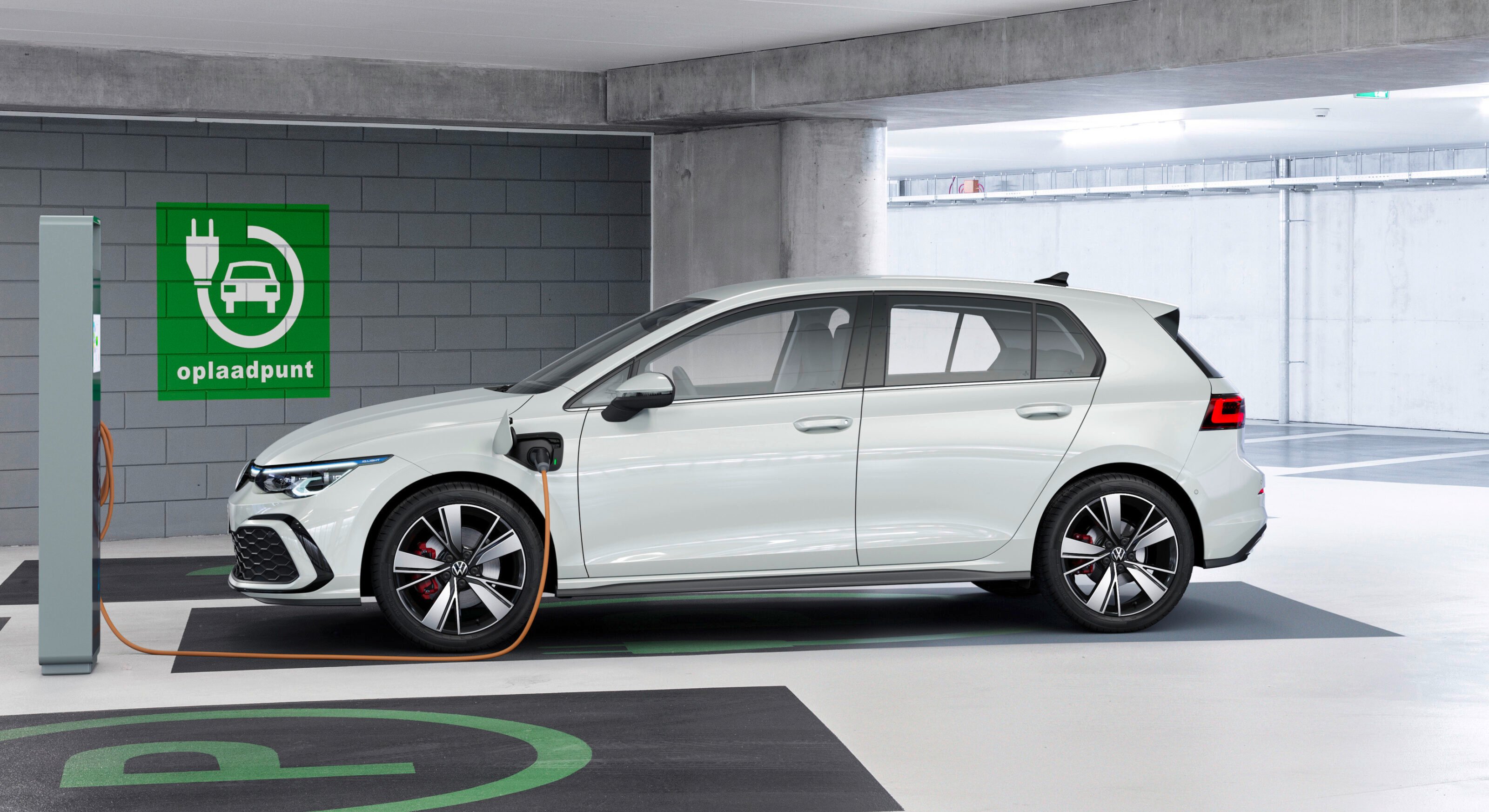
The plug-in hybrid Volkswagen Golf GTE is on track for a local debut, as the brand’s electrification push in Australia continues.
Speaking with Wheels, a spokesperson for Volkswagen Australia said the local arm is working to follow up the Touareg R with plug-in hybrid (PHEV) versions of the Golf small car and Tiguan medium SUV.
“Volkswagen will soon introduce the Touareg R as its first hybrid plug-in electric vehicle that combines heightened performance with fewer emissions,” they said.
“We are working to follow this first PHEV up with plug-in versions of the Tiguan and the Golf GTE.”
As reported, the plug-in hybrid Touareg R – due by early 2023 – will be joined by the Volkswagen ID.4 and ID.5 electric SUVs in the second half of next year, while the Golf GTE and Tiguan eHybrid PHEV are yet to be officially locked in.
“Globally Volkswagen is balancing supply and demand, however an electrification expansion is clearly our target in concert with pursuing the fully electric ID.4 and ID.5,” the spokesperson added.
The previous-generation Golf GTE was under evaluation for an Australian launch, with several examples reaching local shores for a potential 2018 launch; however, strong global demand led to the local arm scrapping its plans.
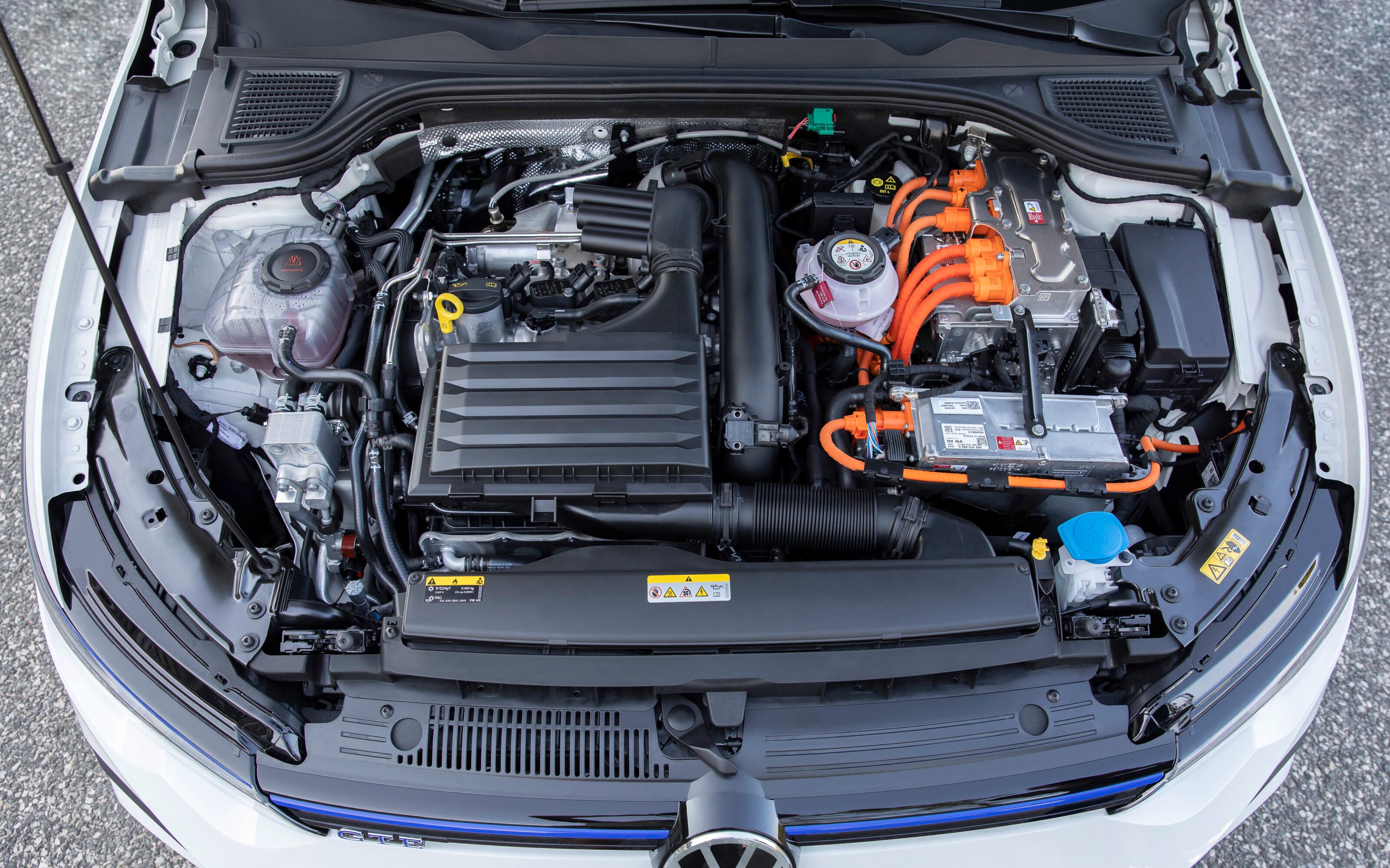
Under the bonnet, the latest Golf GTE and Tiguan plug-in hybrid feature a 1.4-litre turbocharged four-cylinder engine producing 110kW of power and 250Nm of torque, as found in the entry-level variants.
The petrol mill is matched with an 85kW front electric motor and 10.4kWh lithium-ion battery, with total system outputs rated at 180kW and 400Nm – on par with the Golf GTI.
It is mated to a six-speed dual-clutch automatic transmission, sending power to the front wheels in both vehicles.
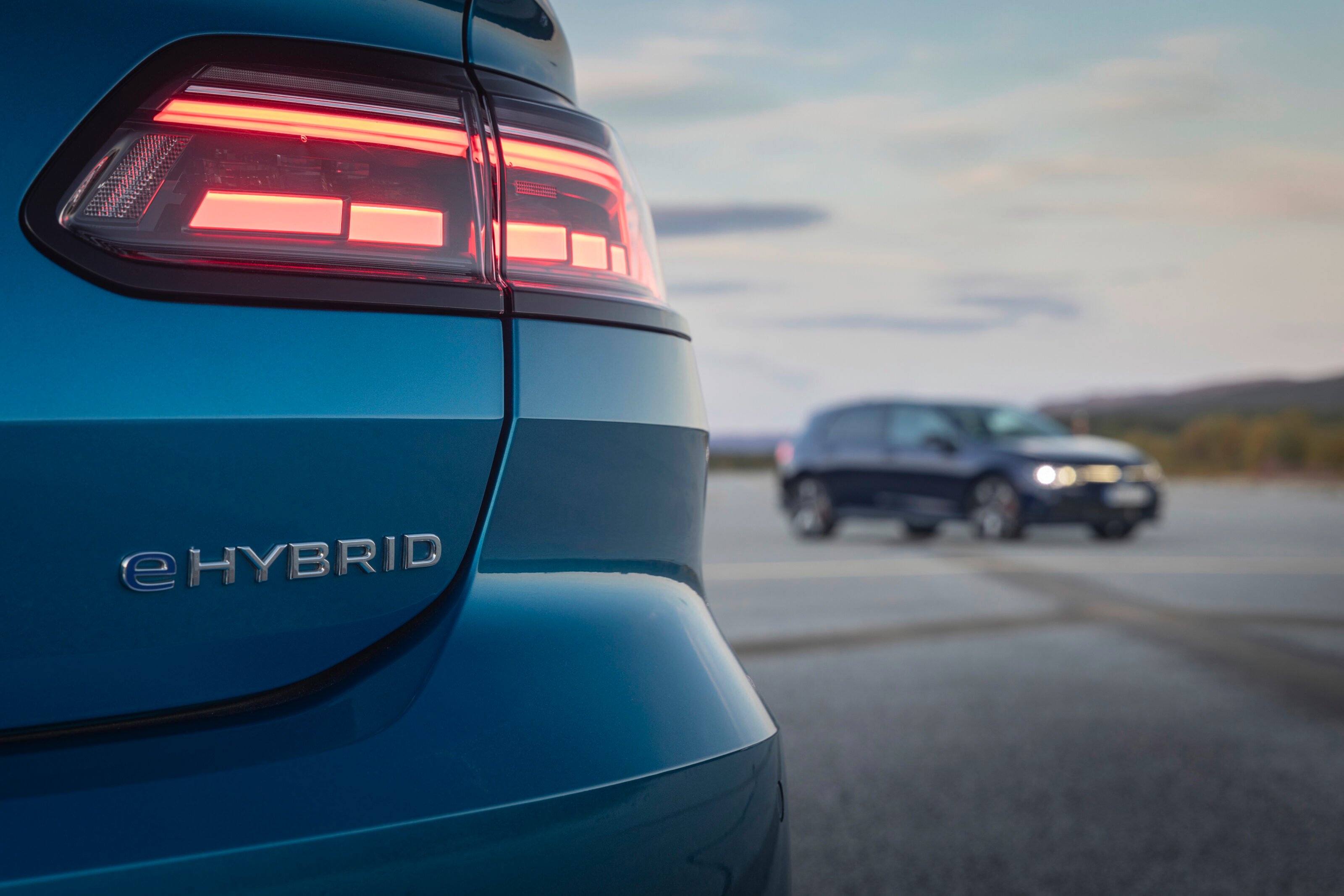
Volkswagen claims the Golf GTE can travel up to 62 kilometres in all-electric mode under the strict WLTP rating standard, while the Tiguan eHybrid has a lower 50-kilometre claim.
For both vehicles, a full charge is claimed to take approximately five hours using a 2.3kW alternating current (AC) domestic socket, while a 3.6kW public or home charger will top up the battery in around 3.5 hours.
While pricing is hard to determine, we expect Volkswagen to position the GTE plug-in hybrid between the GTI ($54,990) and R ($65,990) models.
For reference, sister brand Cupra has VZe PHEV versions of the related Leon hatch and Formentor crossover – featuring the same 1.4-litre setup – priced at the $60,000 mark.
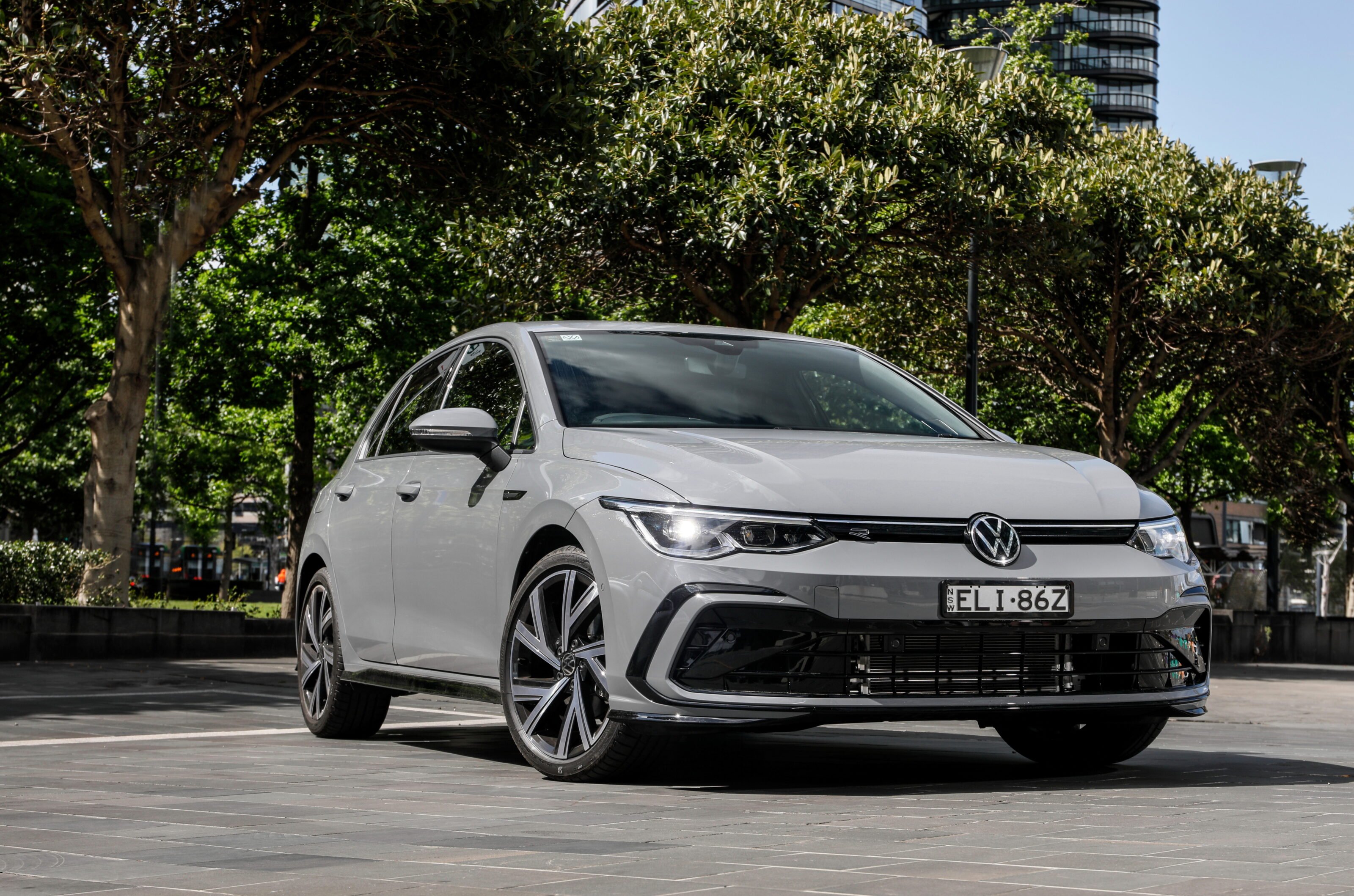
Golf 8.5 mid-life update coming
However, a more-powerful GTE is expected to launch alongside a mid-life facelift for the Volkswagen Golf – known internally as ‘8.5’ – in the next 24 months with more power, according to a new report.
Volkswagen Australia declined to comment on local timing for the updated Golf, but it is tipped to arrive in Australian showrooms from late 2023 – potentially with a staggered roll-out, akin to the previous-generation Golf 7.5 update in 2017.
Few details have surfaced regarding the updated Golf, but newly-appointed Volkswagen CEO Thomas Schäfer said the facelifted version is currently under development.
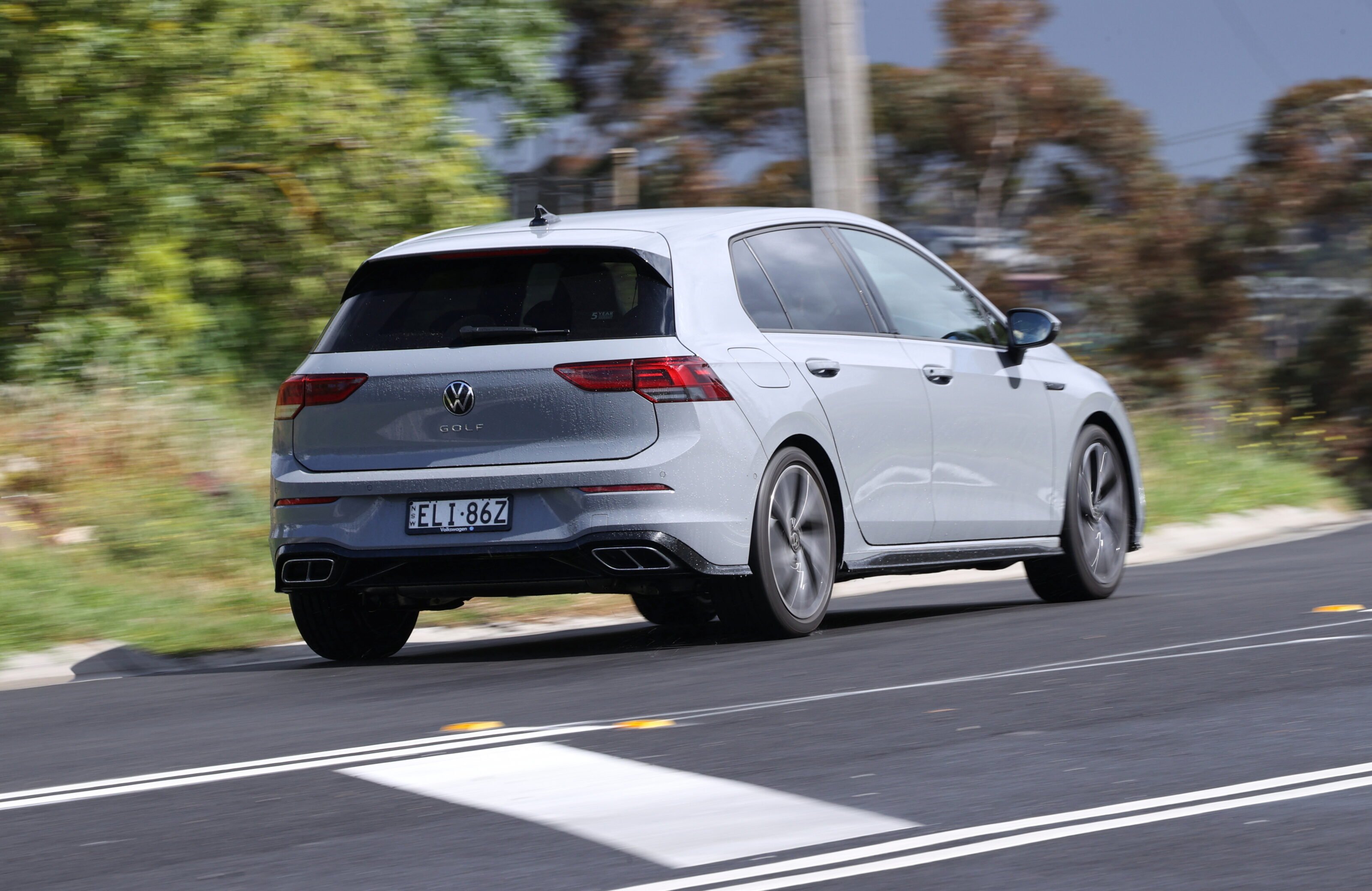
According to German publication Auto Zeitung, the revisions will focus on improving criticisms of the current Golf, which include its controversial front-end styling and capacitive touch-heavy interior.
The report states Volkswagen will introduce a redesigned front end with a higher grille, 3D-effect rear tail-lights, and the removal of faux exhaust tips on entry-level variants.
Inside, the current 10-inch central display and digital instrument cluster are expected to grow to 12.9 and 10.4 inches, respectively, with a simplified and “more fail-safe” infotainment system.
In addition, the volume and climate sliders below the infotainment display will reportedly gain illumination for easier use at night.
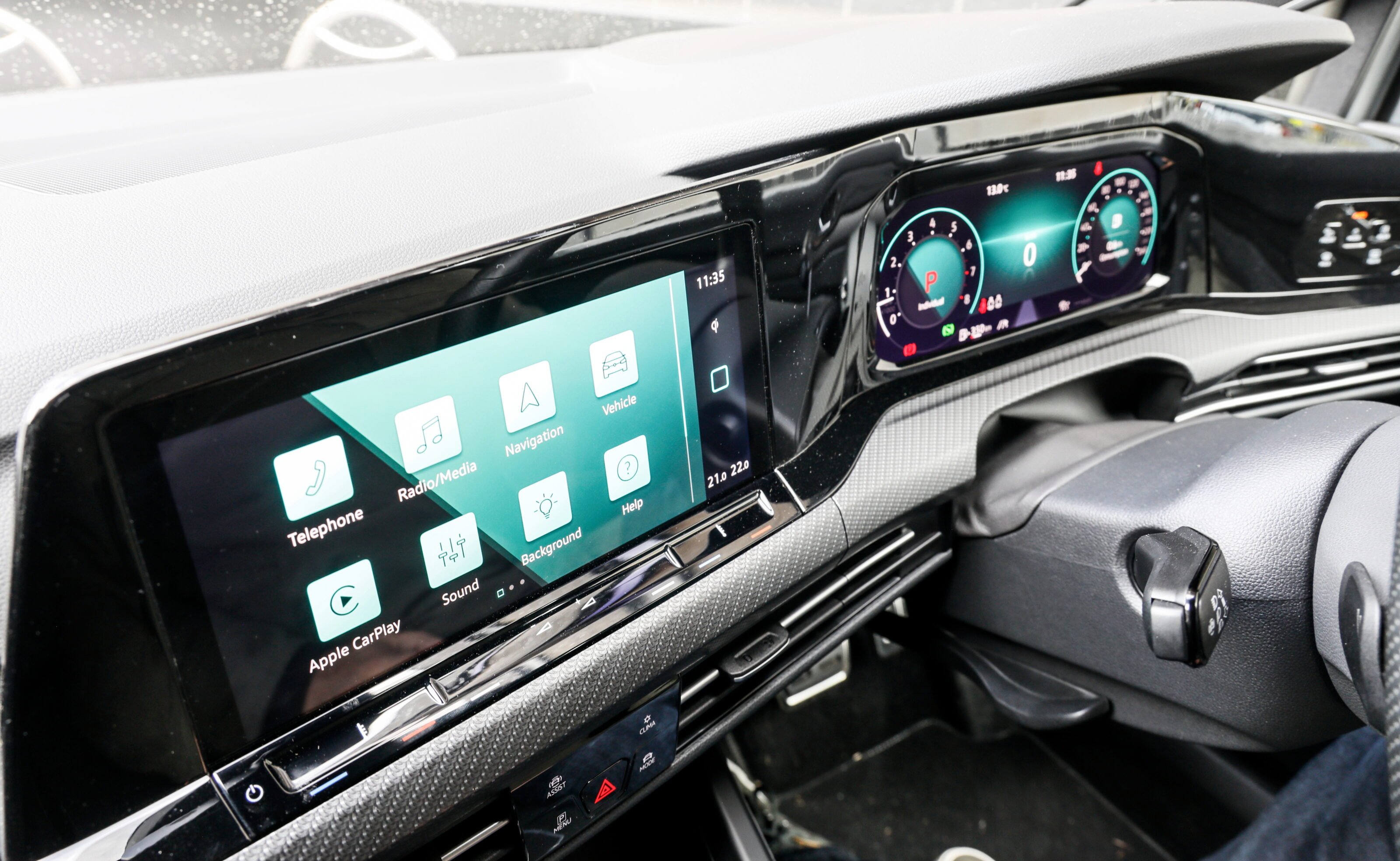
The updates follow a previous change in late 2021, which included a faster processor to reduce load times on start-up, and revised software with larger, easier-to-use icon tiles.
Other changes reported by Auto Zeitung include a new gloss black centre console, suede-like recycled fabric for the door cards, and an automated parking system that can retrace up to 50 metres of prior driving.
A range of updated mild-hybrid engines will reportedly join the more potent Golf GTE, which is rumoured to shift to a newer 1.5-litre unit with 191kW of power, up from today’s 180kW, and 100 kilometres of electric driving range.
The updated 2024 Volkswagen Golf is expected to launch in Australia from late 2023, with further news on the facelift and GTE hot hatch likely in the coming months.
Snapshot
- Electric EXC90 likely to be sold alongside XC90
- Full details still to be confirmed
- Australian timing unclear
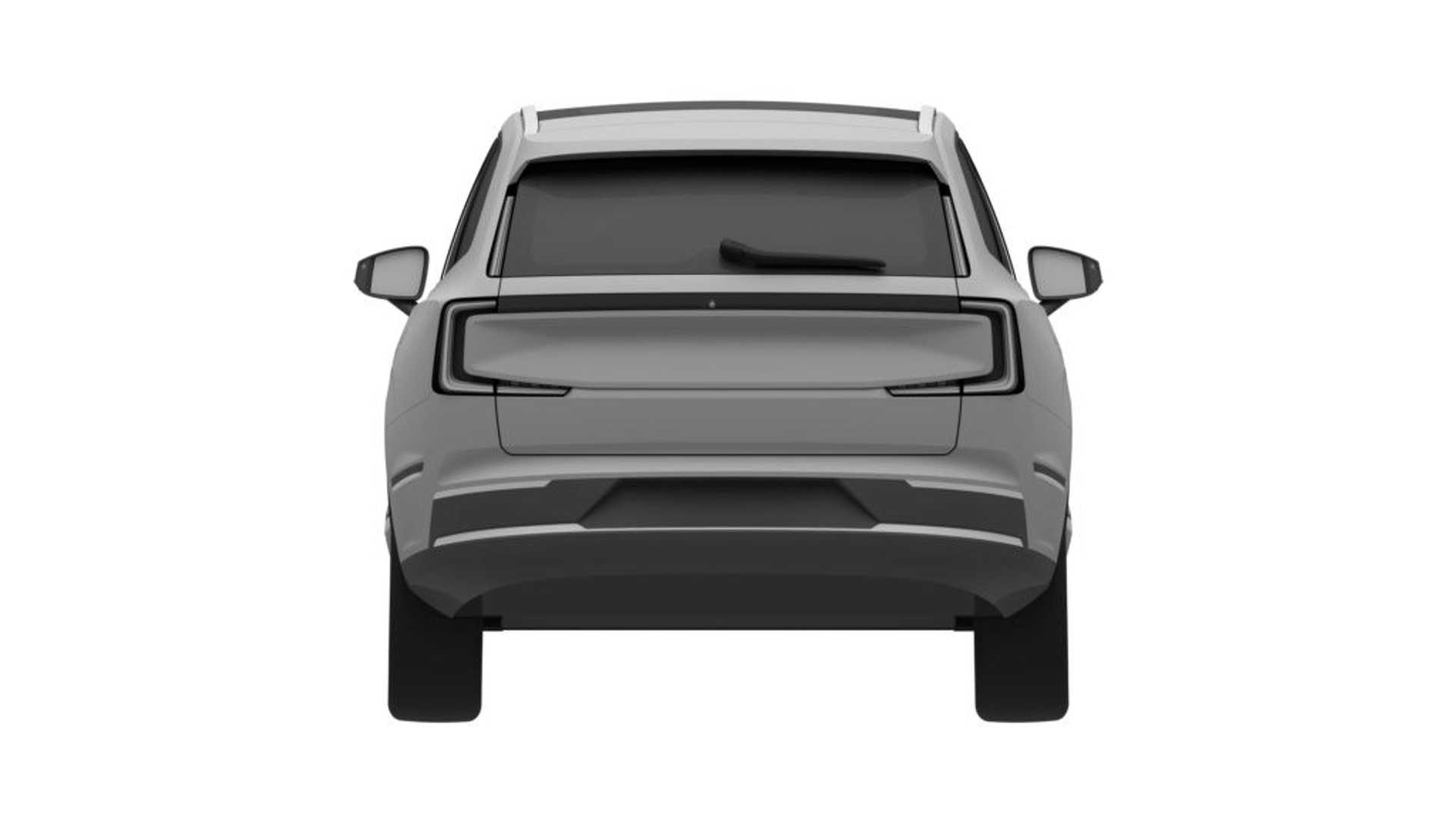
The upcoming all-electric replacement for the Volvo XC90 has surfaced online, thanks to a set of design patent images published in the European press.
Full details on the new model are still to be made official, although it’s known Volvo has trademarked the clever name EXC90 – which, while still pronounceable as XC90, will likely be marketed with the letters pronounced separately.
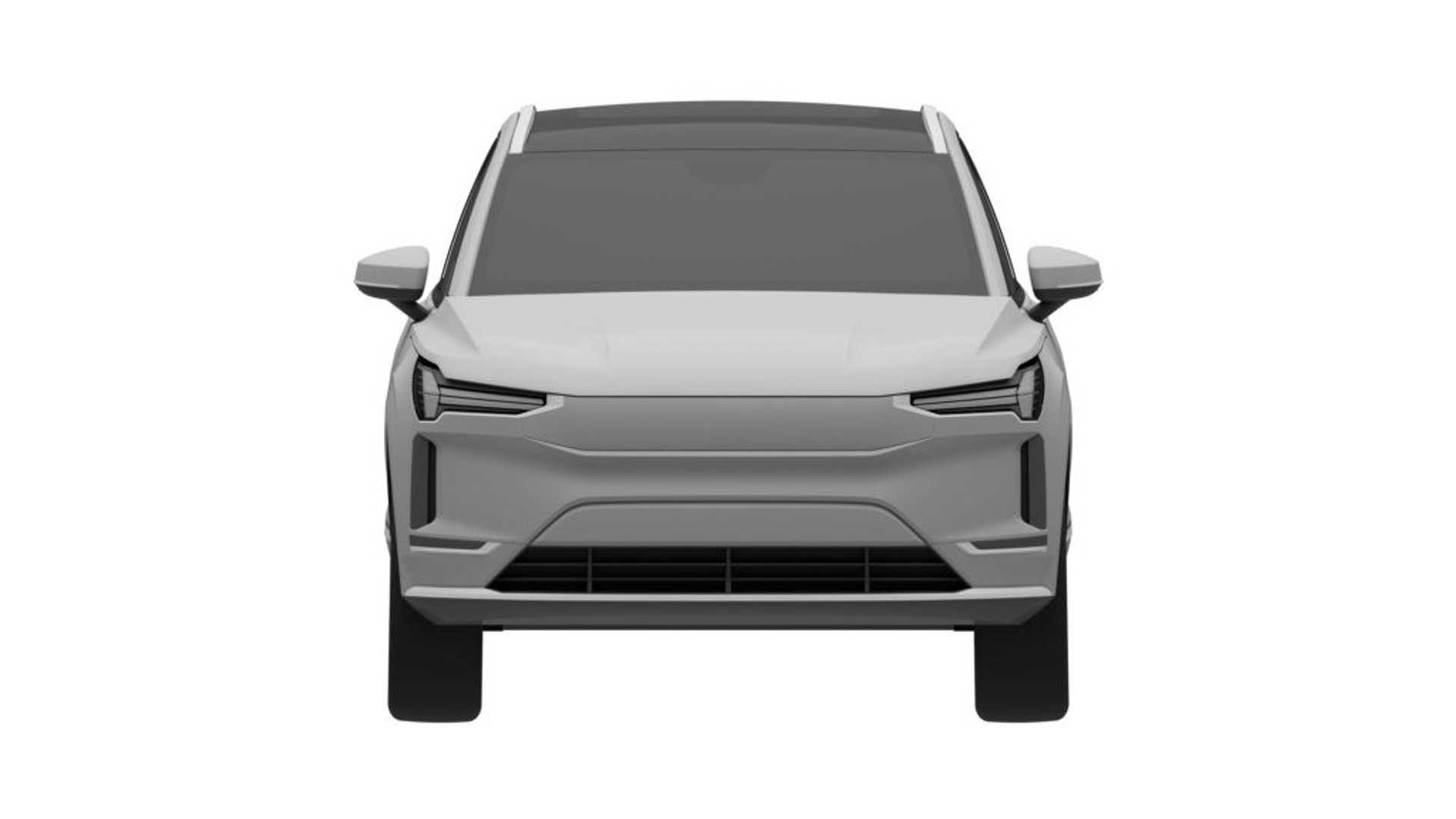
The new naming follows comments from Volvo boss Hakan Samuelsson in 2021, who said retaining the standard XC90 name for this new model “would be wrong because this is really a first of its kind”.
The decision is likely a practical one, because Volvo will need to continue selling regular ICE and hybrid versions of the XC90 in markets where the company cannot so quickly roll into its plan to go all-electric by 2030.
Indeed, it’s likely the EXC90 will be sold alongside a facelifted XC90 for sometime, before the brand drops its ICE models in Europe.
Reports also suggest we can expect Volvo to use the name ‘Embla’ in its strategy for replacing the XC90, although this too has yet to be confirmed.
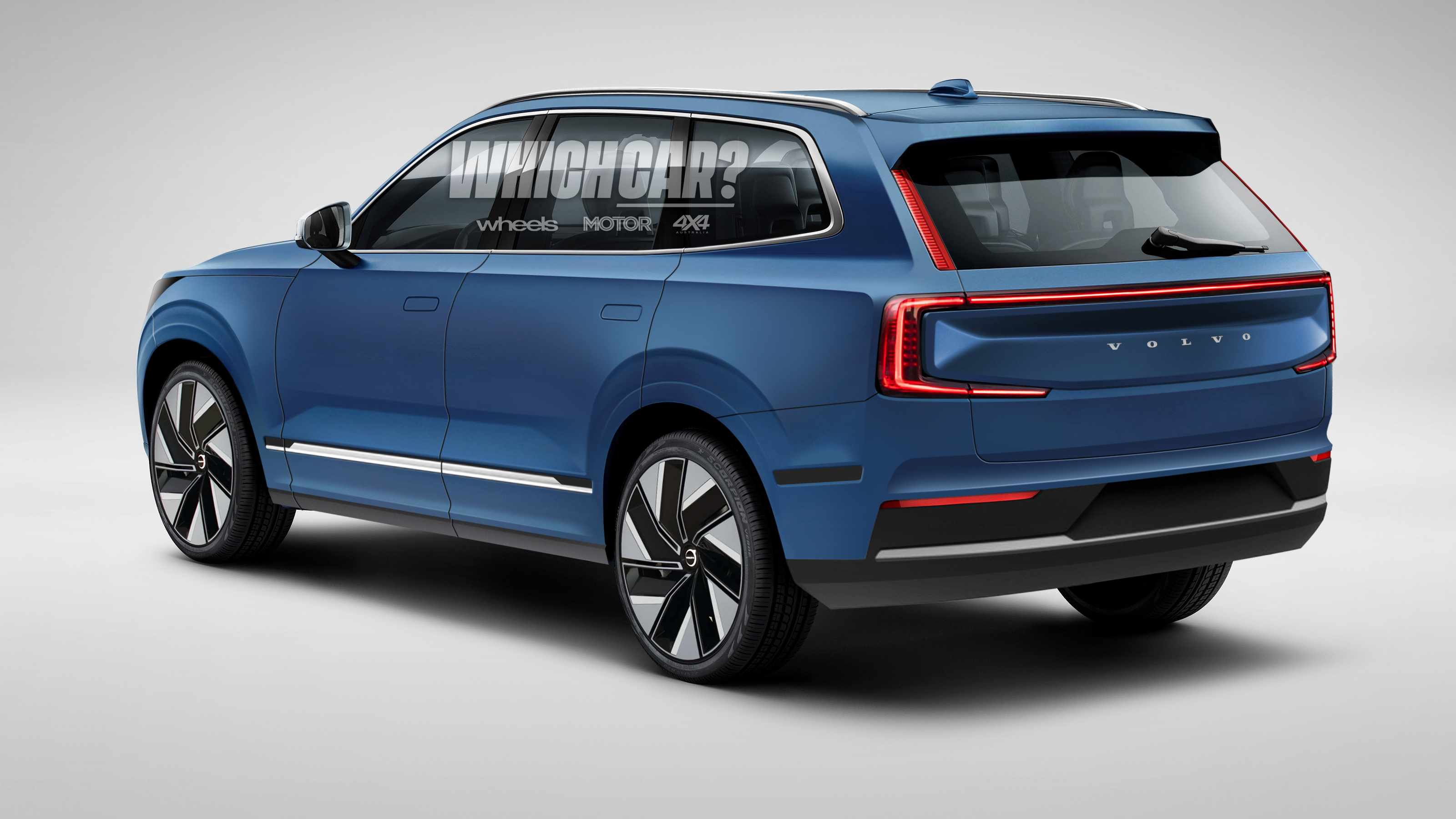
Working off the plain design patent images, our mate Theo Throttle has produced two renderings of how the EXC90 could look in its final production form.
Interestingly, the design of this new model, while largely familiar, sees Volvo reduce the prominence of the rear pillar lights that have been part of its SUV and wagon look for decades.
Instead, we see main rear lighting that has more in common with Volvo’s sedans and the spinoff Polestar range.
Depending on when it launches, the EXC90 will be one of only a few full-size family electric SUVs on offer, alongside models like the Tesla Model X and the Rivian R1S – neither of which can be ordered in Australia right now.
The Mercedes-Benz EQS SUV will stand out as another obvious rival to the EXC90, depending on the Volvo’s price point. The Merc will have a headstart on Volvo, with an Australian launch planned for the first half of 2023.
Watch for the EXC90 to be revealed in the coming months, and get more Volvo news at the links below
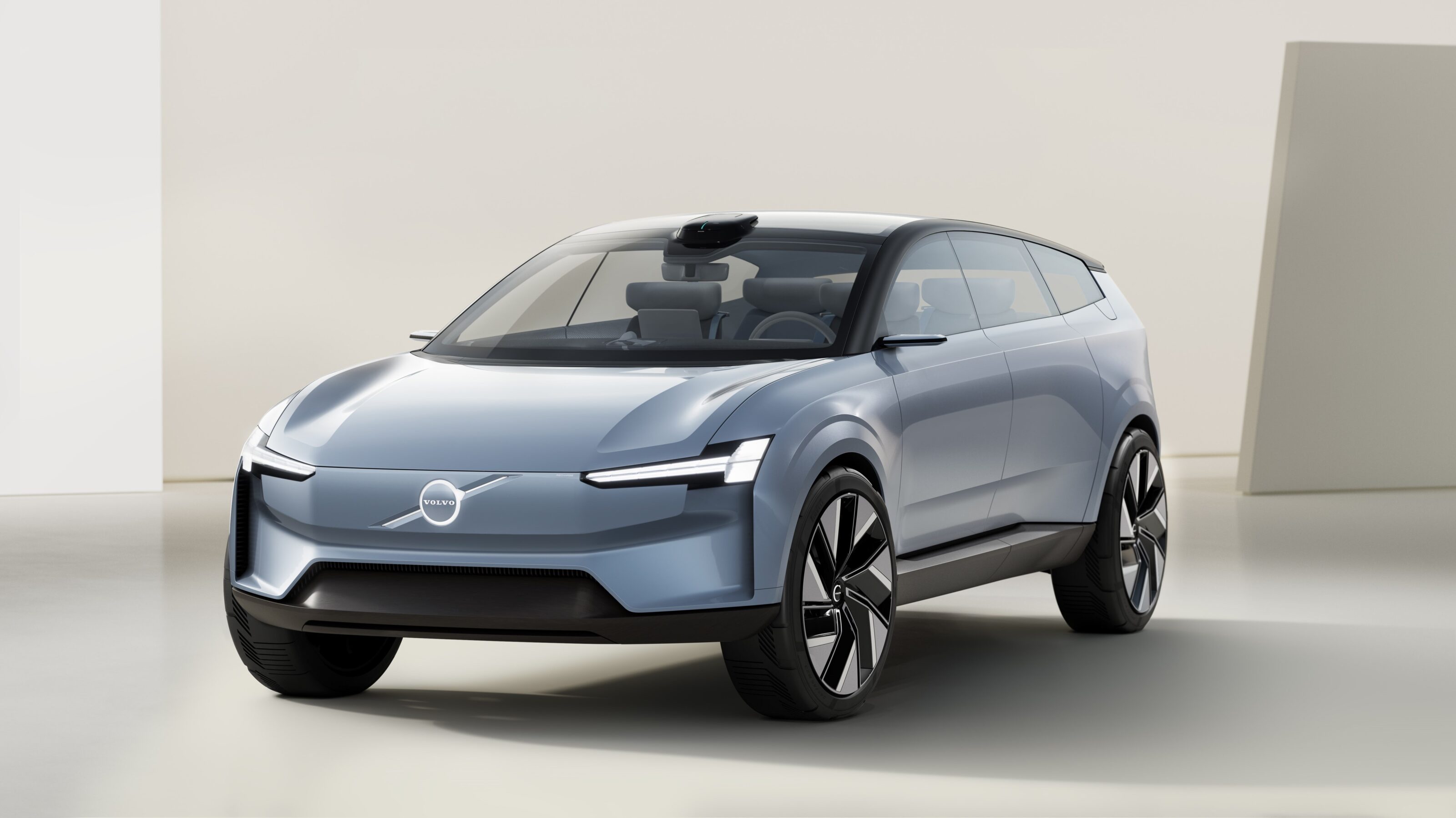
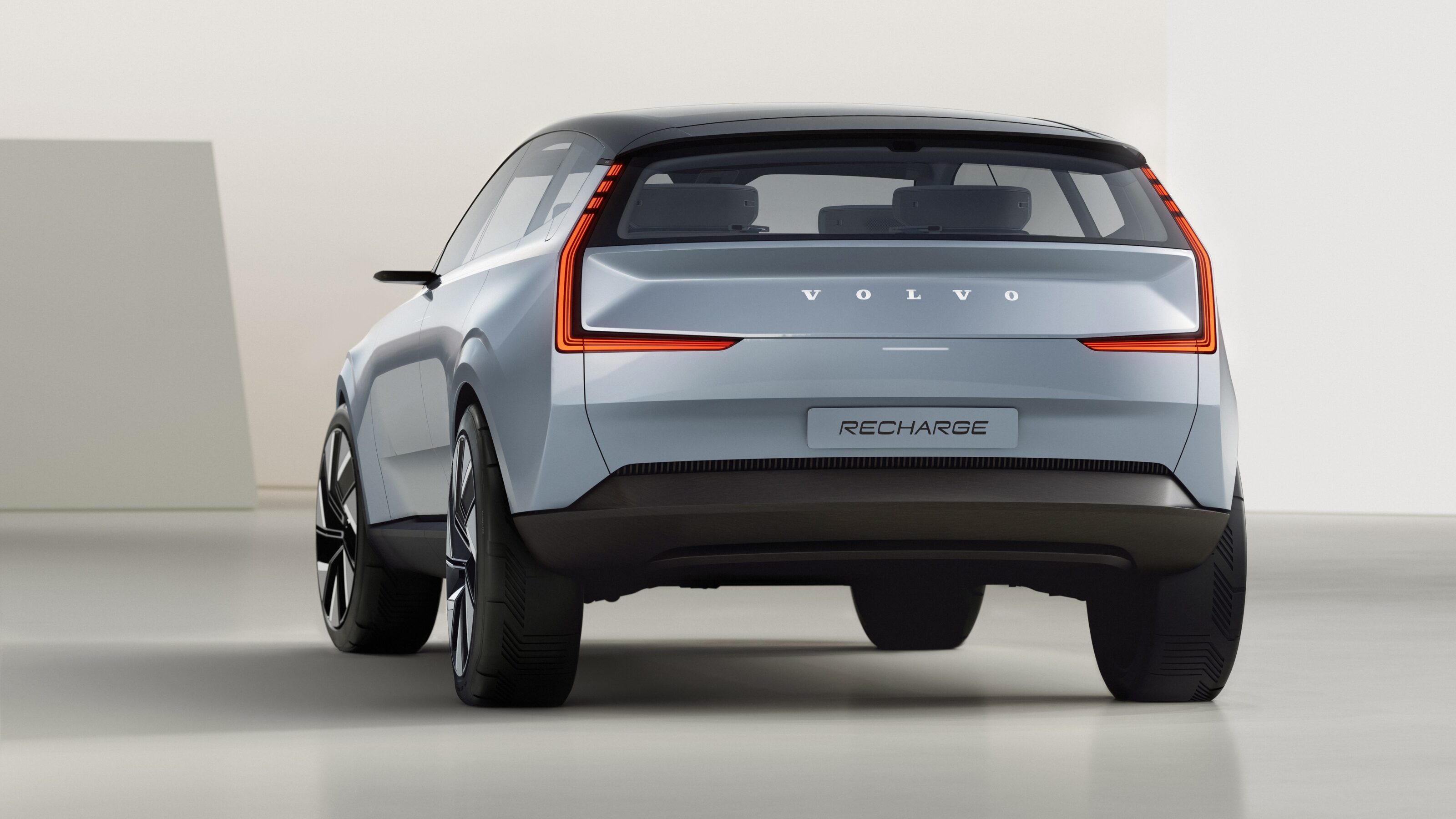
Below: the Volvo Concept Recharge concept
Cuts to the fuel excise have failed to help the hip pocket of Australian families, with transport costs rising beyond $100 a week on average for the first time in six years.
Today peak motoring body the Australian Automobile Association released its latest report showing average weekly fuel costs rose more than $5 to $100.39 a week across the country in the past three months.
According to the AAA data, the typical weekly household transport cost in the capital cities is now $412.21, compared to $342.98 in regional areas, amounting to roughly 15.2% of a household’s income on average.
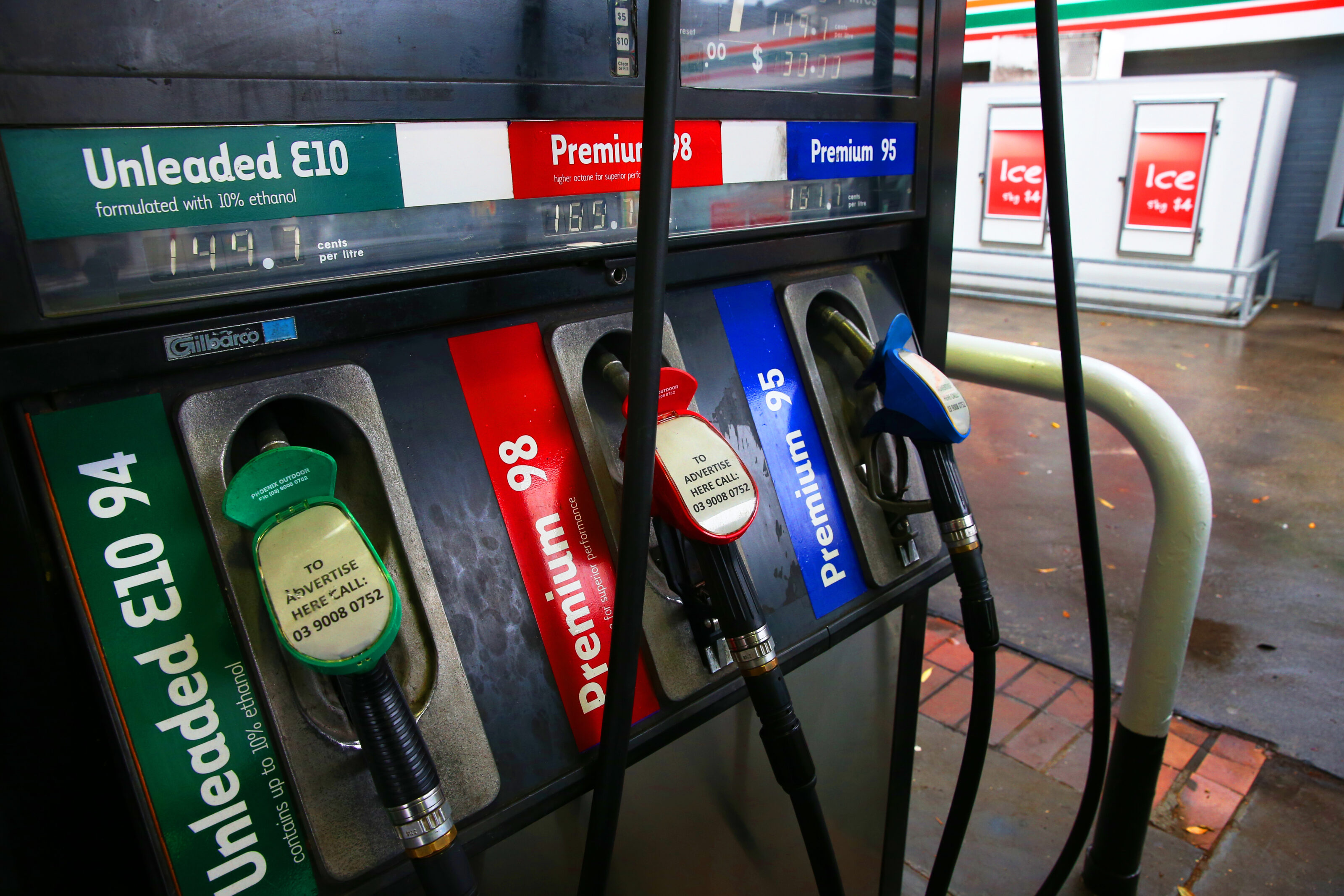
The latest results include the temporary halving of the fuel excise rate, which due to end next month, inflation at 6.1 per cent and the impact of global price shocks flowing from the war in Ukraine.
“Despite the temporary excise cut, fuel prices are rising and continue to be a significant contributor to cost of living pressures across both regional and metropolitan Australia,” AAA Managing Director Michael Bradley said.
“This is the first time the national weekly average spent on fuel has passed $100 since the index’s inception in 2016.”
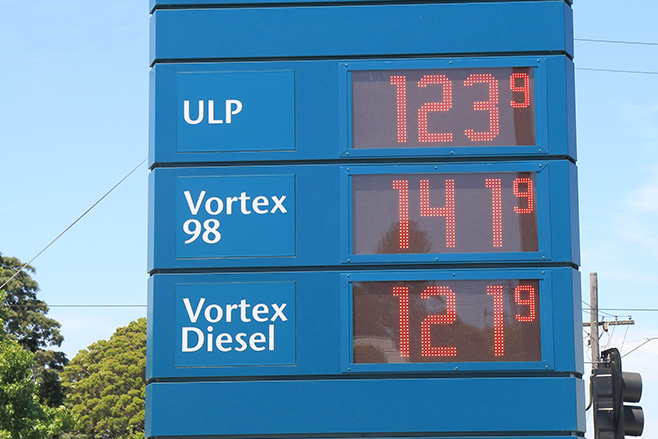
In capital cities, fuel costs alone are now hitting an average of $98.37 per week, with Hobart ($102.63 pw), Darwin ($99.84 pw), Sydney ($99.13 pw), Canberra ($98.92 pw), Brisbane ($98.15 pw) and Melbourne ($97.29 pw) the most expensive cities.
But regional areas are being hit even harder, with costs more expensive at an average $102.71 per week, with Bunbury ($122.70 pw), Geelong ($118.31 pw) and Launceston ($114.67 pw) the highest.
After declining in the previous quarter, car loan repayments have risen again too due to higher vehicle prices and interest rates on new cars.
Earlier this year, the former Coalition Government cut the fuel excise in half from 44cpl to 22cpl until September. However, when the Labor Government came to power in May, it said it would not continue the tax cut beyond the date set by its predecessor.
Kia’s new Sportage is pretty good. With striking, art-worthy looks and a terrific cabin, it has pretty much thrown all the cards in the air when it comes to Australia’s mid-size SUV segment.
It’s a very strong contender against the sales heavyweights of the Toyota RAV4, Mazda CX-5 and its under the skin sibling, the Hyundai Tucson.
Up until now, I hadn’t driven the six-speed automatic front-wheel drive petrol Sportage, having had several different tests of the twin-clutch turbo-engined GT-Line.
I had a suspicion that the petrol front-wheel drive would be a more agreeable car more of the time, despite the undoubted charms of the top-of-the-range Sportage, which narrowly beat the Tucson in a straight fight.
The SX is the second step in a Sportage range that is more expensive than before but a lot better equipped, better looking and, one imagines, a better drive. This is the one that looks like the sweet spot of the range at well under forty grand but with a pretty good spec list.

Pricing and features
The Sportage SX spec is an appreciable jump over the base model S. It’s not as though the S is a bare-bones hack, either, sporting an identical safety package to the higher models.
The car I had was the SX petrol automatic starting at a neat $37,000 before on-road costs, two and a half large over the S automatic. Both S and SX are available with a manual transmission for an equally neat $2000 less.
You get 18-inch alloys, a six-speaker stereo, dual-zone climate control, reversing camera, keyless entry, front and rear parking sensors, adaptive cruise control, automatic LED headlights, sat-nav, heated windscreen, leather wheel and shifter, powered heated and folding mirrors, auto wipers and a full-size spare.
Annoyingly, only white is free, the other five colours (Steel Grey, Gravity Grey, Vestra Blue, Dawning Red and Fusion Black) are $520 extra. Not a huge amount but not cheap either.

Safety
All variants of the new Kia Sportage come with a five-star ANCAP crash safety rating.
The huge safety package features seven airbags (including a front centre airbag to save you from head clashes in a side impact), the usual traction and stability controls, forward and reverse auto emergency braking, reverse cross-traffic alert, lane departure warning, lane-keep assist, lane following assist, blind-spot monitoring, exit warning and speed sign recognition.
A bunch of the cleverer safety features are not available on the manual, however.
For the kiddies, there are two ISOFIX points and three top tether anchors.

Comfort and space
As has become the norm with Korean SUVs, the lower end of the range sports a different cabin design, at least in the front. You’ll have the upgraded 12.3-inch touchscreen (the S has the 8.0-inch unit). It’s massive, quite nice to use and is paired with a digital dashboard that is simpler than the GT-Line’s. It’s quite clear and easy to decipher and still changes theme when you change drive modes.
There is also a traditional T-bar shifter and from the pictures, you’ll notice it’s very traditional. I kind of like it, a bit of a retro moment in a very tech-forward cabin.
The cloth seats are very comfortable and supportive in the front, too, and I’m That Guy who very often prefers the textile upholstery for both look and feel.
You also get two cup holders and bottle holders in the doors, space for your phone under the screen and a generous console bin.

Moving to the rear, the seats are very comfortable and you get rear air vents to help keep your cool when you find out there aren’t any USB ports back here. The transmission tunnel isn’t too big, but it will still be a struggle for three adults across the back without clashing feet. Headroom is expansive, as are foot and knee room.
Boot space
Rear storage starts at a hefty 543 litres, expanding to an impressive 1829 litres with the seats down, which is quite a lot.
You can carry more by towing 750kg unbraked and 1900kg braked – but with the least-powerful Sportage engine under the bonnet, you won’t be setting any land speed records.

On the road
As we discovered in the GT-Line, the 1.6-litre turbo-petrol and its seven-speed twin-clutch transmission are not the greatest pairing.
As with the Seltos, the lower-end versions have a 2.0-litre naturally-aspirated petrol (and a diesel, but I’ve not yet driven that to comment on it). That same engine is found in the Seltos and is more agreeable than the 1.6 in general duties.
The 115kW and 192Nm on offer is adequate in the sense that most people aren’t looking for startling performance in their medium SUV. Unlike the GT-Line’s turbo (and the gasping 2.0-litre Mazda CX-5, which is a chore), the Sportage’s slower version is a smooth, silent type.
You will notice the lack of grunt when fully loaded but in everyday driving, it’s really nice to drive – quiet, smooth and composed.
Then again it’s not a surprise to find out that a 1500kg SUV with those figures available isn’t a fireball. But, if it’s just you and one other person, it does go okay – and as I say, it’s lovely and smooth and stays out of your ears.

Also riding on 18-inch wheels with a bit more sidewall, the ride is markedly plusher on the SX, adding to the more relaxed vibe introduced by the engine.
You do lose a bit of the keenness of the GT-Line’s front end and the exclusively front-wheel drive motivation means a little less of that smug security in the wet. In the dry – we had about twenty minutes where it wasn’t raining the week I had the Sportage – it was pretty good.
The steering is nicely weighted and the body goes with you so if you’re on your own fancy a bit of a laugh, the Sportage does its best to stay controlled and planted. It also rides really well, shrugging off the bumps and slaloming required by Sydney’s understandably potholed roads.
It’s a very relaxed car and it’s really about being a nice place to be while stuck in traffic, which it absolutely nails.
Kia’s ADR testing yielded a fuel consumption result of 8.1L/100km on the combined cycle. A fairly sedate, mostly suburban week in my hands returned 9.7L/100km.

Ownership
Kia’s seven-year / unlimited-kilometre warranty applies, as does roadside assist.
The capped-price servicing regime covers the first seven services and you’ll need to return to Kia every 12 months or 15,000km. The prices themselves are identical to the turbo petrol but you have to roll in every 10,000km with those cars.
Over the seven services, you’ll pay $3749, Incidentally, this is what Qantas wanted to charge me to fly to Singapore from Sydney at the time of writing, which seems a trifle pricey for the flight.
It’s not especially cheap for the servicing either, especially when you see Toyota’s $200-odd-per-interval servicing and even Mazda’s pricing is cheaper (although with shorter intervals).

VERDICT
I knew I’d like this car before I got it, partly because this engine and transmission combo is predictably solid and predictably leisurely – but without the turbo 1.6’s gearbox histrionics.
It’s very comfortable, good value and packed with safety gear.
It also looks absolutely fantastic. You’re not supposed to be able to buy cars that look this good at this price and I reckon if I had one on the driveway, that would never get old.
What might get old, though, is the lack of power when you’re out on the freeway and need to overtake, or you need to break into fast-moving traffic.
If the Sportage had a better base engine, it would be night on perfect.
You’re not supposed to be able to buy cars that look this good at this price and I reckon if I had one on the driveway, that would never get old.
2022 Kia Sportage SX FWD specifications
| Body:u00a0 | Five-door medium SUV |
|---|---|
| Drive: | FWD |
| Engine: | 2.0-litre four-cylinder |
| Transmission: | Six-speed automatic |
| Power: | 115kW @ 6200rpm |
| Torque:u00a0 | 192Nm @ 4500rpm |
| Bore stroke (mm): | 81.0 x 97.0 |
| Compression ratio:u00a0 | 10.8 : 1.0u00a0 |
| 0-100km/h:u00a0 | 11 sec (estimate) |
| Fuel consumption:u00a0 | 8.1L/100km (combined) |
| Weight: | 1538kg (tare) |
| Suspension: | MacPherson struts front/multi-link rear |
| L/W/H:u00a0 | 4660mm/1865mm/1660mm |
| Wheelbase: | 2755mm |
| Ground clearance | 181mm |
| Brakes:u00a0 | mm ventilated disc front / mm solid disc rear |
| Tyres:u00a0 | 235/60 R18 |
| Wheels:u00a0 | 18-inch alloy wheels (full-size alloy spare) |
| Price:u00a0 | $37,000+ ORC |
To say a look inside the trophy cabinet of the Monash Motorsport team was impressive would be an understatement.
Behind the glass is a stack of awards, each showing an occasion said team has taken one of its race cars – designed and built on-site entirely by students at its Clayton campus in Melbourne’s east from the ground up – out into the world and smashed its rivals overseas.
Since mid-2018, Monash Motorsport had won nine Australasian competitions, achieved 40 awards on an international podium, and is now the highest-ranking Australian team on the World Rankings Leaderboard, as well as third in the world for the electric category.
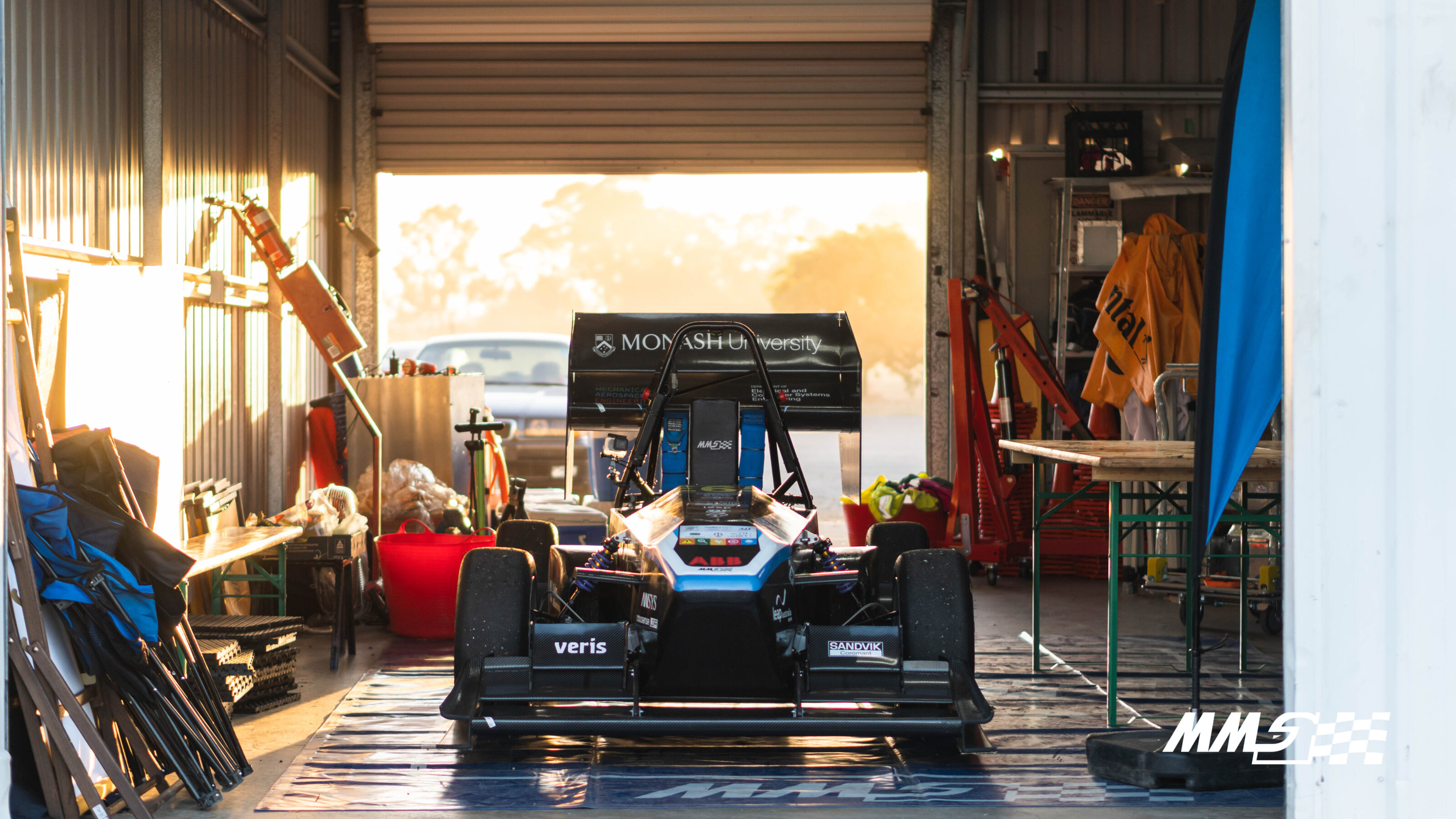
Established in 2000, the same year as the inception of the Formula Student competition in Australia (started by the Society of Automotive Engineers Australasia), Monash Motorsport was one of the first teams to exist outside of the United States – where the contest was first founded.
It boasts the support of a number of big sponsors, such as LiDAR tech firm Baraja and industrial equipment supplier Hi-Tech Metrology, as well as Dr Alan Finkel – former Monash Chancellor and now Special Adviser to the Australian Government on low emissions technology – as a donor.
Made up of around 80 students studying a range of disciplines from engineering and business, to law, science and design, the team began working on internal combustion engined race cars – but switched to autonomous and electric vehicles after ranking first in the world and needing a new challenge which was more future-focused.
In 2017, members designed and competed with their first electric vehicle before turning their hand to developing a competition-ready driverless car a year later. By 2019, Monash became, and remains, the only student team in Australia to have such a vehicle capable of dynamically navigating any given track.
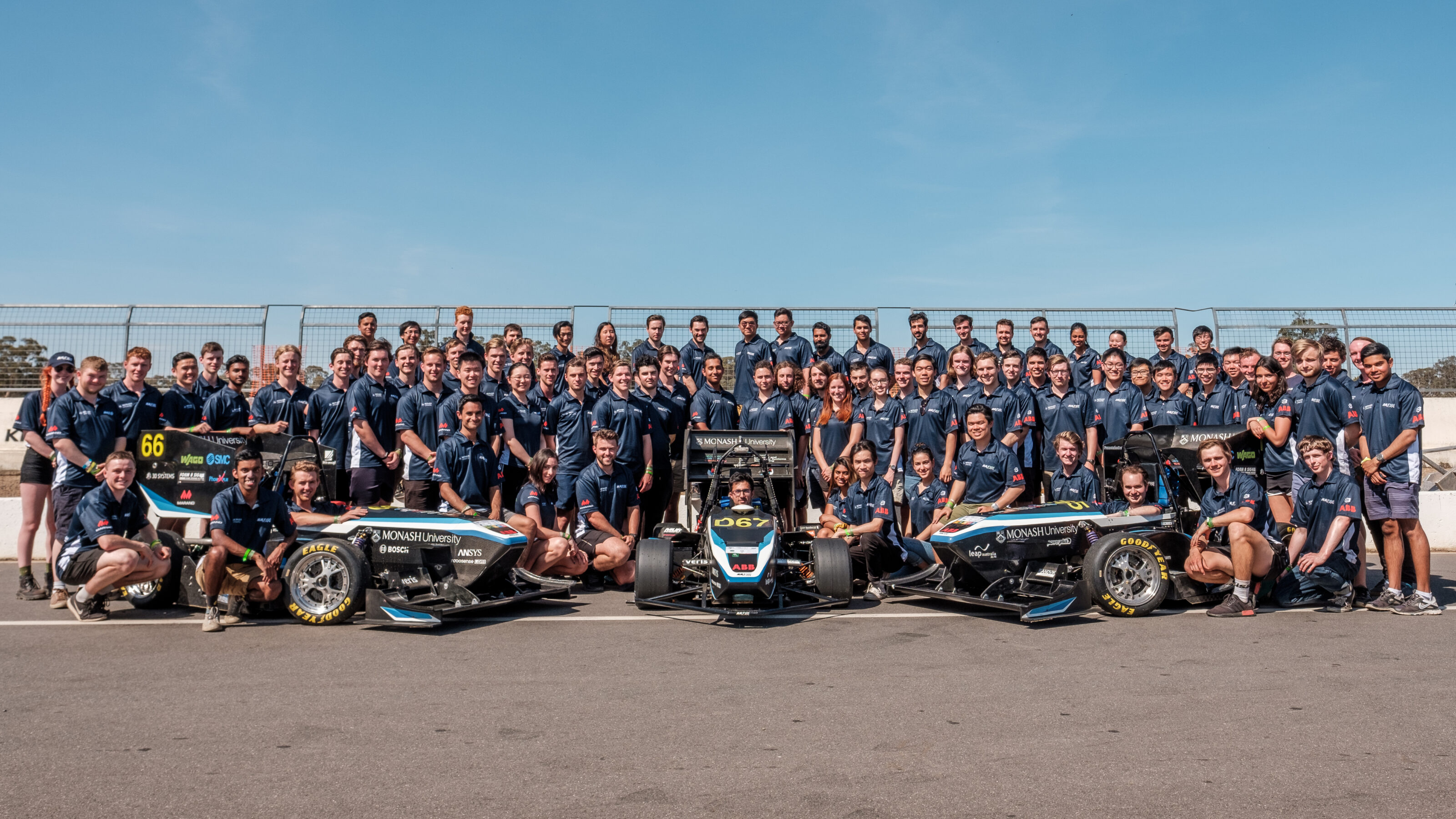
Following an extended concept development period due to the COVID-19 pandemic, the team’s most ambitious concept yet – its M22 all-wheel-drive, autonomous integrated vehicle – is capable of both driven and driverless racing. This vehicle concept, says Monash, pushes the frontiers of autonomous technology with a more powerful and efficient electrical powertrain, built from the ground up with driverless capabilities in mind.
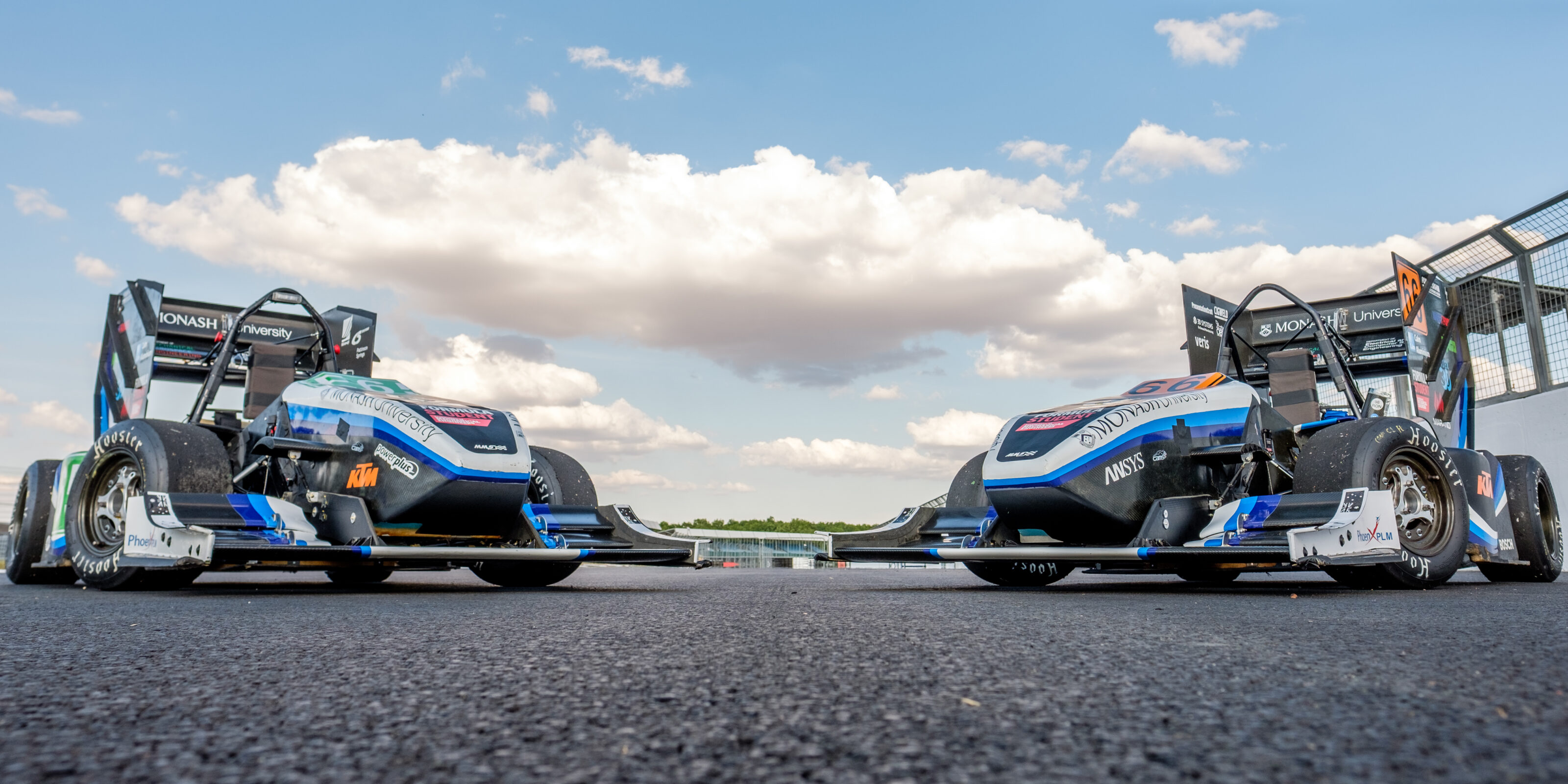
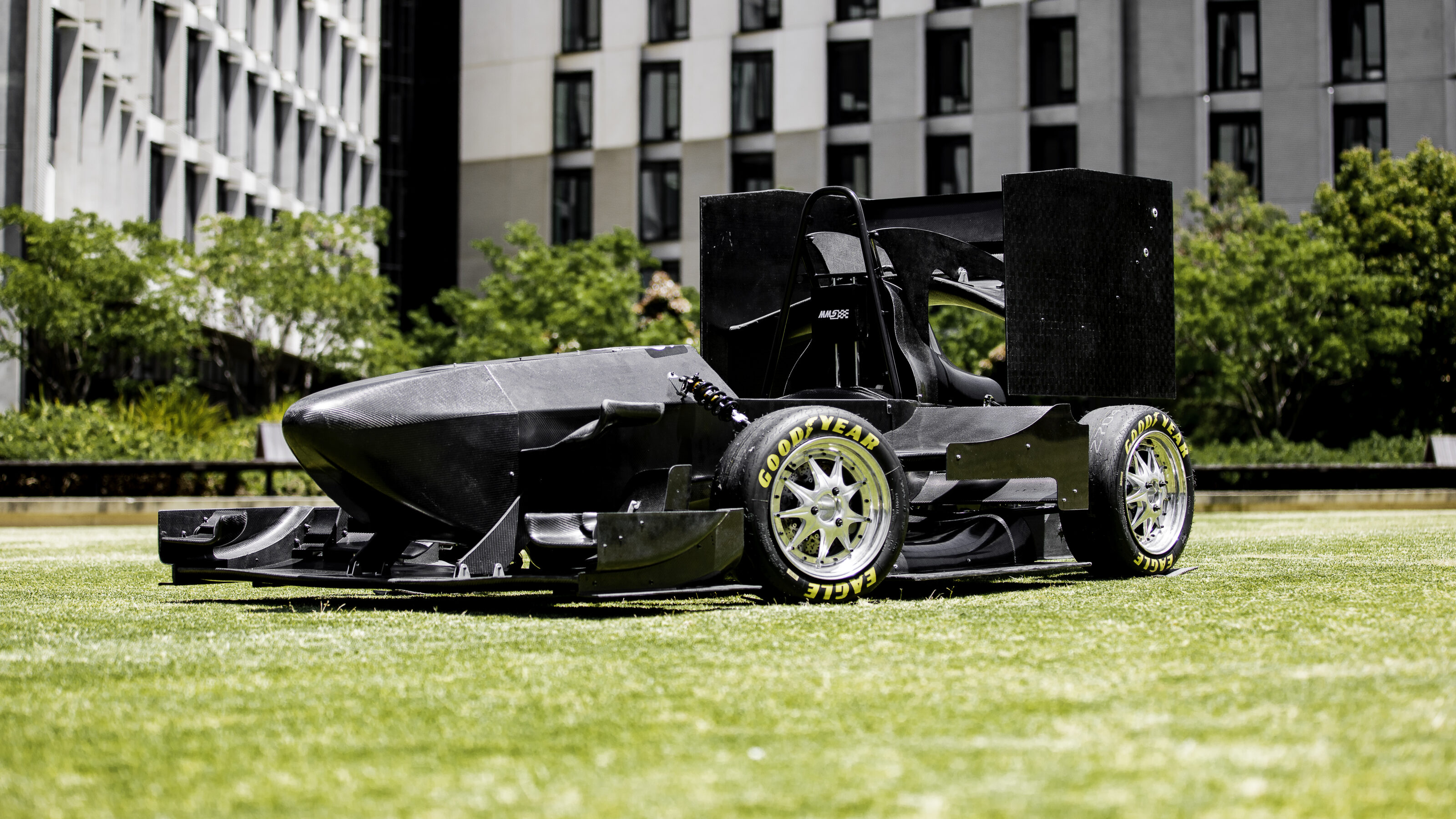
M22 has improved aerodynamics and vehicle dynamics compared to the team’s previous efforts to optimise performance through increased downforce and handling capabilities. With an estimated mass of 237 kilograms, Monash’s second-generation monocoque and total power limit of 80kW drives Fischer hub motors at each wheel.
A cutting-edge LiDAR system has an approximate 45 metre range, and the in-house designed battery management system and single quad-channel inverter are optimised for efficiency and safety – weighing less than previous designs.
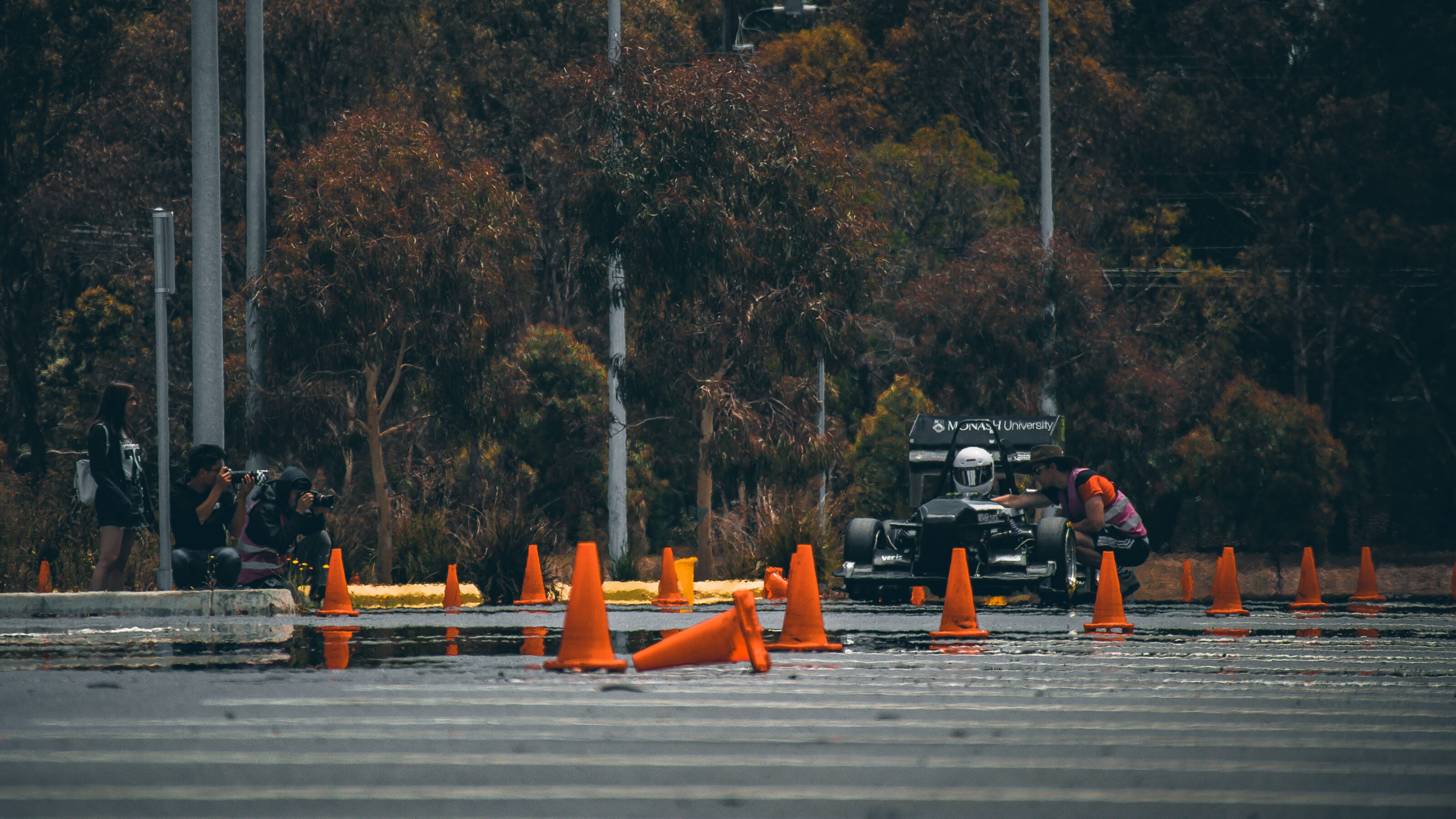
Next steps for the vehicle are to race it in Australia at the end of this year, before heading over to take part in the European competitions – which will be held next June, July and August.
At Monash University’s recent open day, CEO of the team, Chhavi Khathuria gave Wheels exclusive access behind the scenes at its facility – the Monash Makerspace – and gave us a glimpse of how both the EV and autonomous cars work.
“I think we’re brought together by a passion for cars, racing and engineering,” she says.
“Student teams are not compulsory, but a lot of people choose to go into them because they provide the perfect balance of applying your theoretical knowledge with practical application. We only start taking technical students from the second year onwards though, just because by that point they have the knowledge base that comes with having completed their first year.
“A lot of our team are doing double degrees – I’m studying industrial design and engineering – which we think makes them more multi-faceted and gives them a better range of skills. And most also go to TAFE – we have a relationship with Chisholm to make sure our members have the relevant machining skills, because they need to be not only good engineers and designers, but also able to manufacture.”
“It has been amazing to see the progression both the team and the competition has made technically,” adds Monash’s Director of Student Teams, Scott Wordley.
“When I started 20 years ago the cars were relatively rudimentary. They were reasonably quick, but the level of design and build – the performance of the new generation of cars – is just phenomenal.
“Over the past 20 years we have gained 17 student teams here at Monash just like this one. We don’t just do race cars – we do rockets, we do aircraft, carbon capture and conversiob, blacksmithing and forging. No matter what you’re interested in, there’s a way to develop practical skills to pursue your passion.”
With around 1000 teams competing in student racing worldwide though, we asked Chhavi what sets Monash apart from the crowd.
“I think, within Australia, what makes us different is that we innovate on our cars. We are often the trendsetters for what’s happening in the community,” she says.
“Take, for example, when we made the decision to go electric. The industry trend had begun moving that way – we could see that when competing in Germany, where an electric and driverless rule set was released quite early on – and that’s considered one of the best competitions. Motorsport Australia also released EV regulations a little bit later on.
“And I think, at the end of the day, because all our students want to go into industry, which is moving towards electric and driverless technology, we wanted to make sure that we’re also staying on top of that.
“On a bigger scale, focusing on autonomous vehicles sets us apart, but even on a smaller one, things like creating our own custom gearboxes, and M22 being our first all-wheel-drive is really setting the path towards the future of the competition. We’ve always been innovating in terms of technology.”

Monash Motorsport also touts an enviable alumni base as one of the reasons for its successes. Over the years, team alumni have gone on to work at places such as Red Bull, Aston Martin, BMW and in the F1.
“There’s a big emphasis on knowledge transfer – getting previous alumnis in to do design reviews, asking them questions, getting their feedback and advice is really useful as well. A lot of international teams are quite envious of that,” Chhavi adds.
In an industry heavily dominated by men, the Monash team also stands out in one other very important way – 50 per cent of its management are women.
In recent years, Chhavi tells us, the team has gone to great efforts to reach out to more women and girls, going to schools and expos to spread the word.
“We make sure they are aware of engineering, even if they don’t come directly to the team, more generally we want them to think of engineering as an option,” she says.
“Before COVID-19, we also hosted events in conjunction with Motorsport Australia – which we should be able to do again from next year. It’s a one day event which attracts around 200-300 students where girls can come and do a full day of activities, not just with our team, but also with other engineering student teams as well.
“That program is for years 7-12, but we’ve found the main issue with getting more women into engineering is that they’re not introduced to it early enough. Introducing them to it early, say year eight or year nine, is the best way to go so that they’ll go into it in the future.”
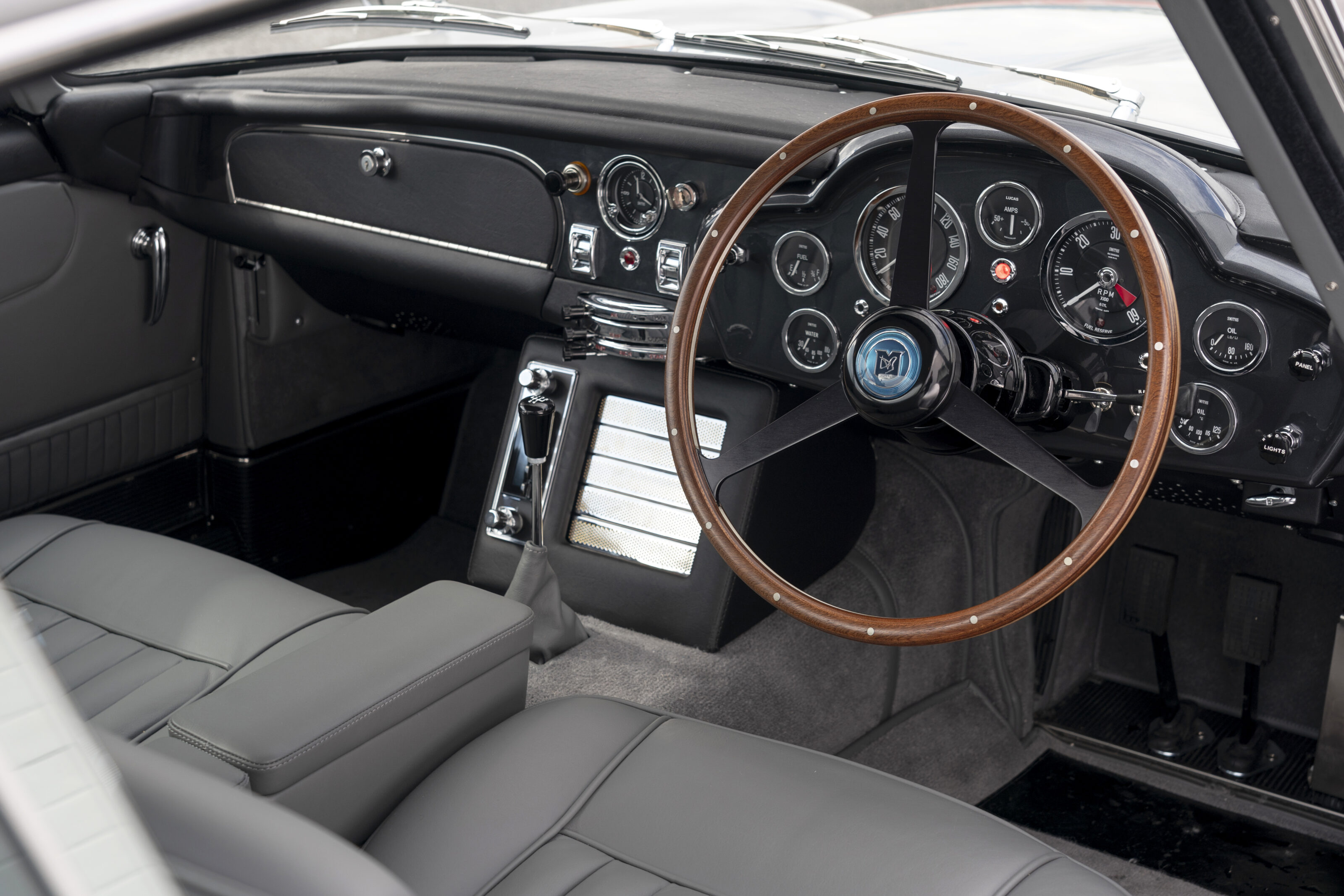
The biggest thrill in driving the Aston Martin DB5 Goldfinger Continuation isn’t channelling your inner Sean Connery, revolving the number plates, firing the machine guns, activating the bullet-proof shield and the rest of the 007 arsenal. No, it’s the fact that you’re driving a 1964 Aston Martin DB5 that’s brand new from its Avon cross-ply tyres up.
The machine guns don’t fire real bullets, it sprays water out the rear rather than oil, and you can’t get rid of a troublesome passenger with an ejector seat. But the DB5 Goldfinger Continuation is a genuine Aston Martin.
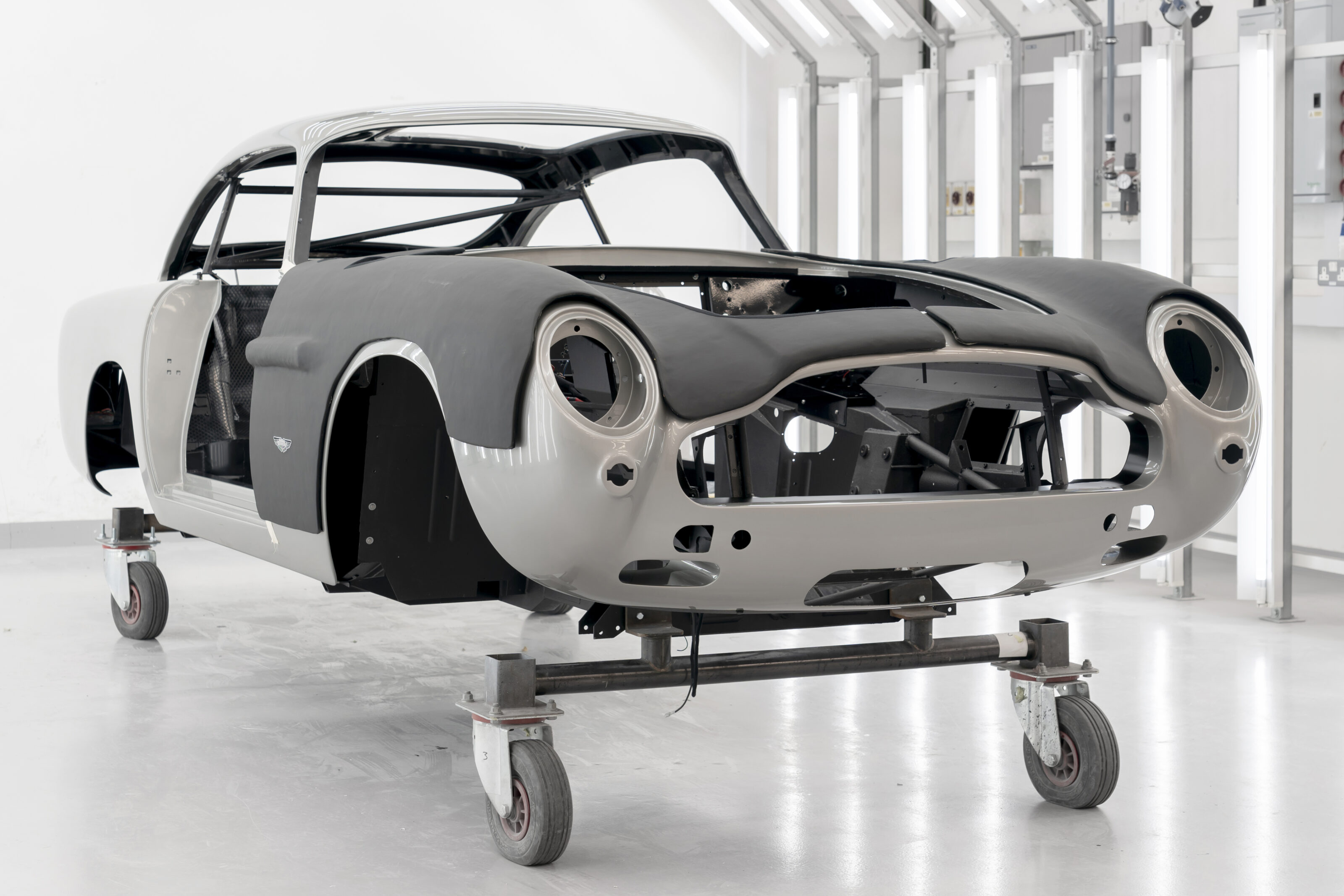
It’s made by Aston Martin Works, the company’s in-house classic and restoration shop, at Newport Pagnell – where fewer than 900 DB5s were built between 1963 and 1965 – using parts and components manufactured from original drawings and digital data.
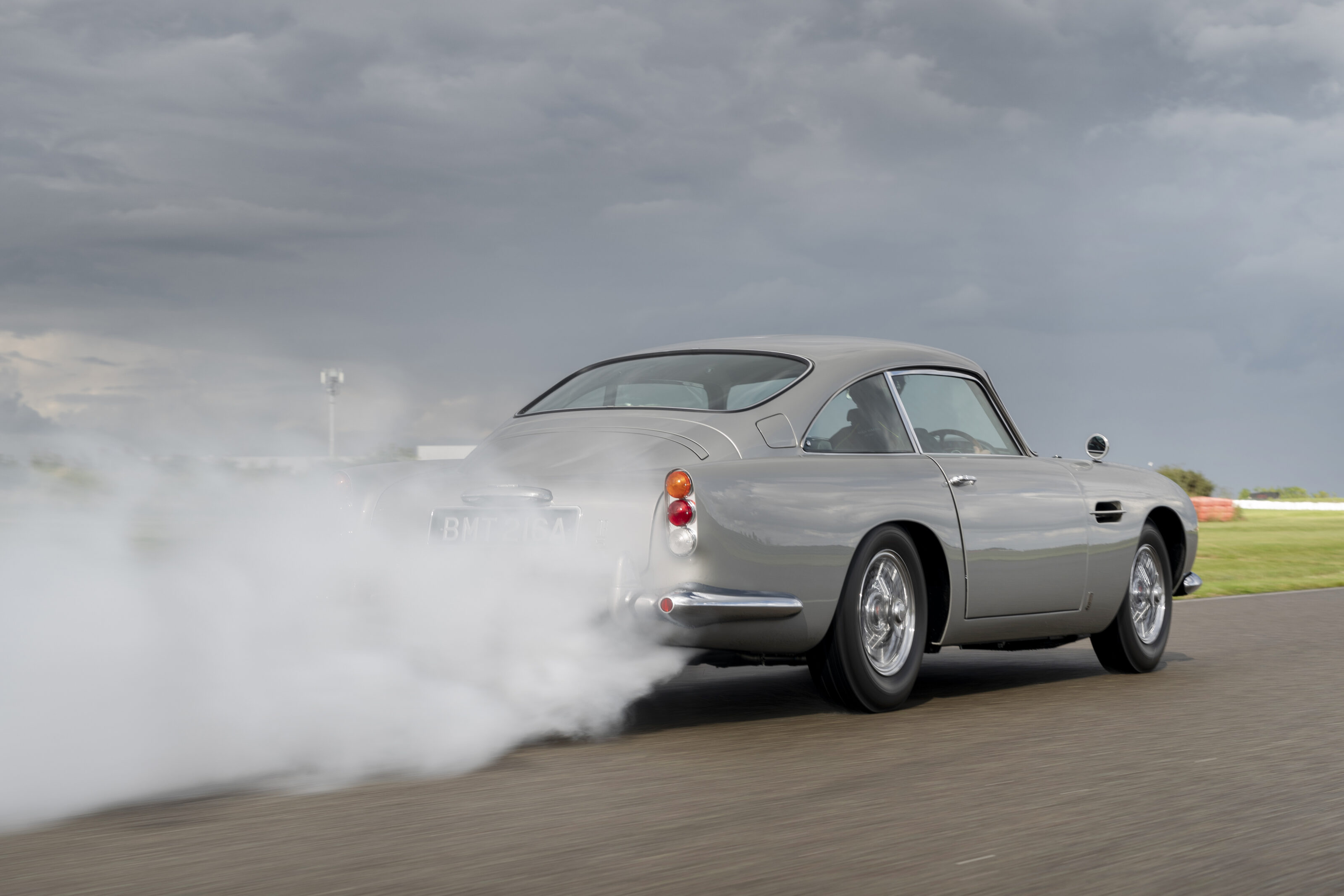
Sliding behind the wheel of the DB5 Goldfinger Continuation and firing up its 4.0-litre straight-six is like tumbling down a wormhole in the space-time continuum.
You half expect to hear a Beatles tune crackling on the radio as you muscle the shifter into first gear, taking care, of course, not to lift the flap on the knob and accidentally thumb the red button hidden underneath.
Just 70km up the road, in a quiet workshop on the outskirts of Coventry, Jaguar is hand-building a batch of brand new Le Mans racers.
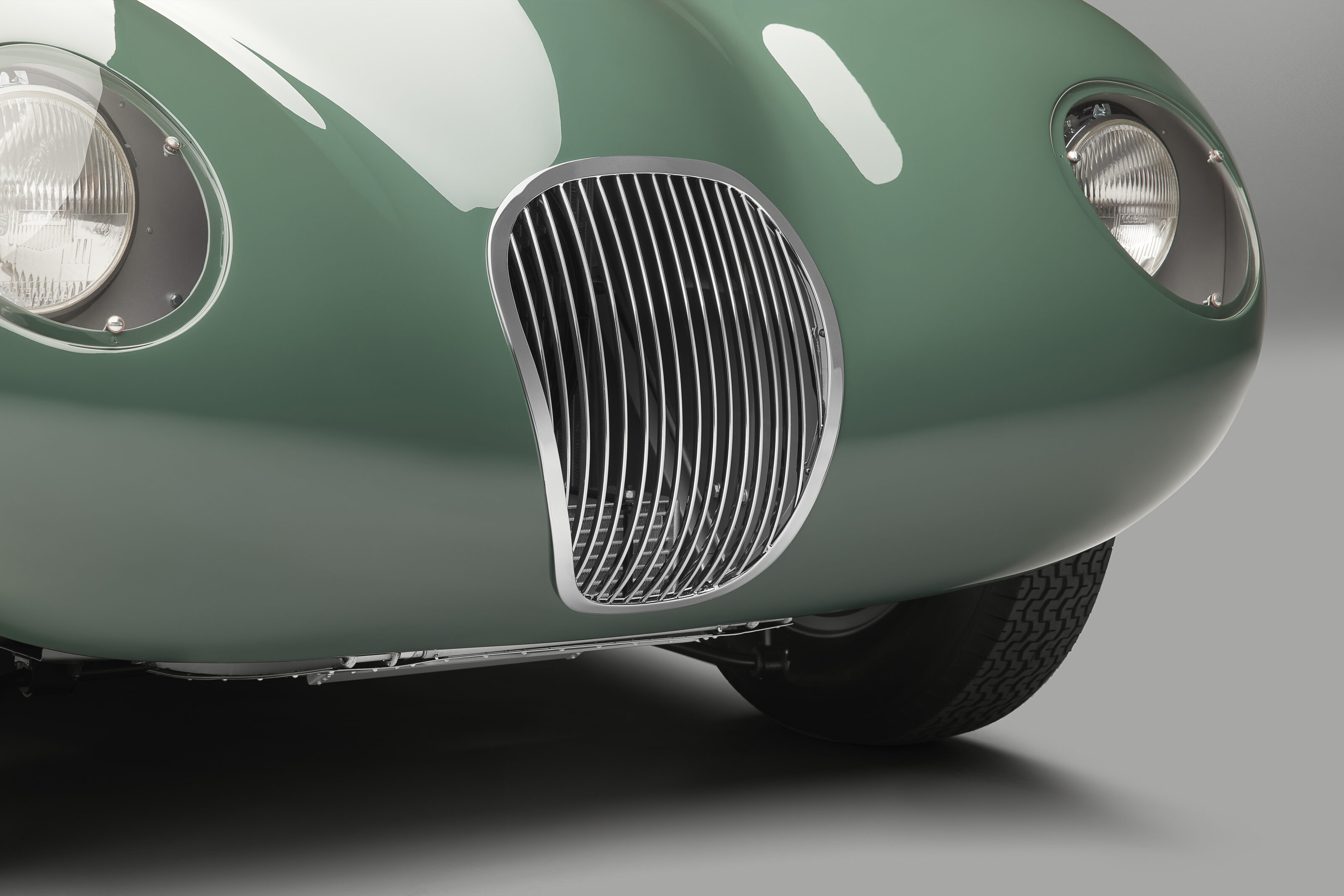
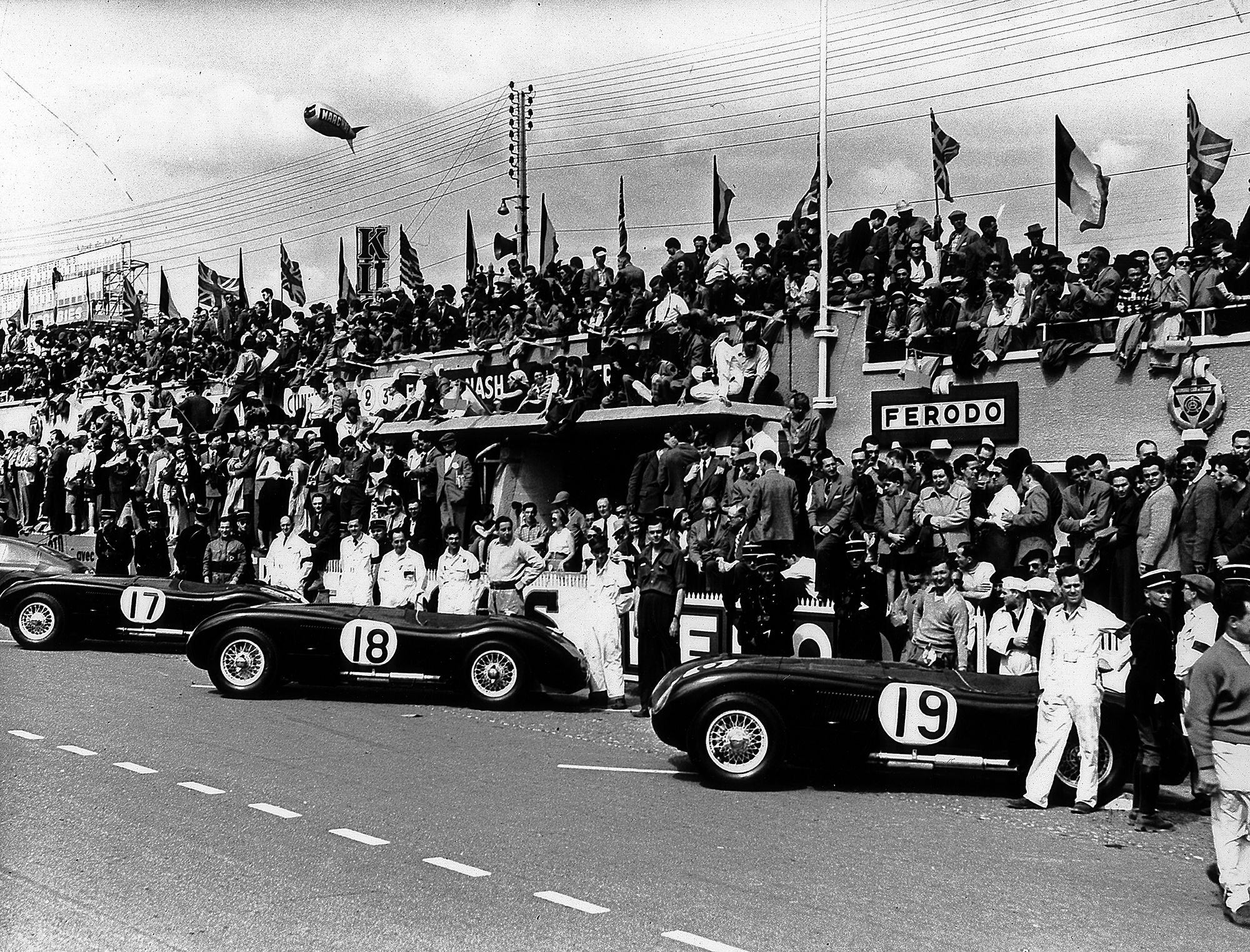
No, Jag’s not going back to the Circuit de la Sarthe to take on Toyota, Peugeot and Ferrari in this year’s 24 Hour race: these Jaguars are all C-Type Continuations, built to the exact specification of the 1953 works cars that finished first, second, fourth and ninth in that year’s event.
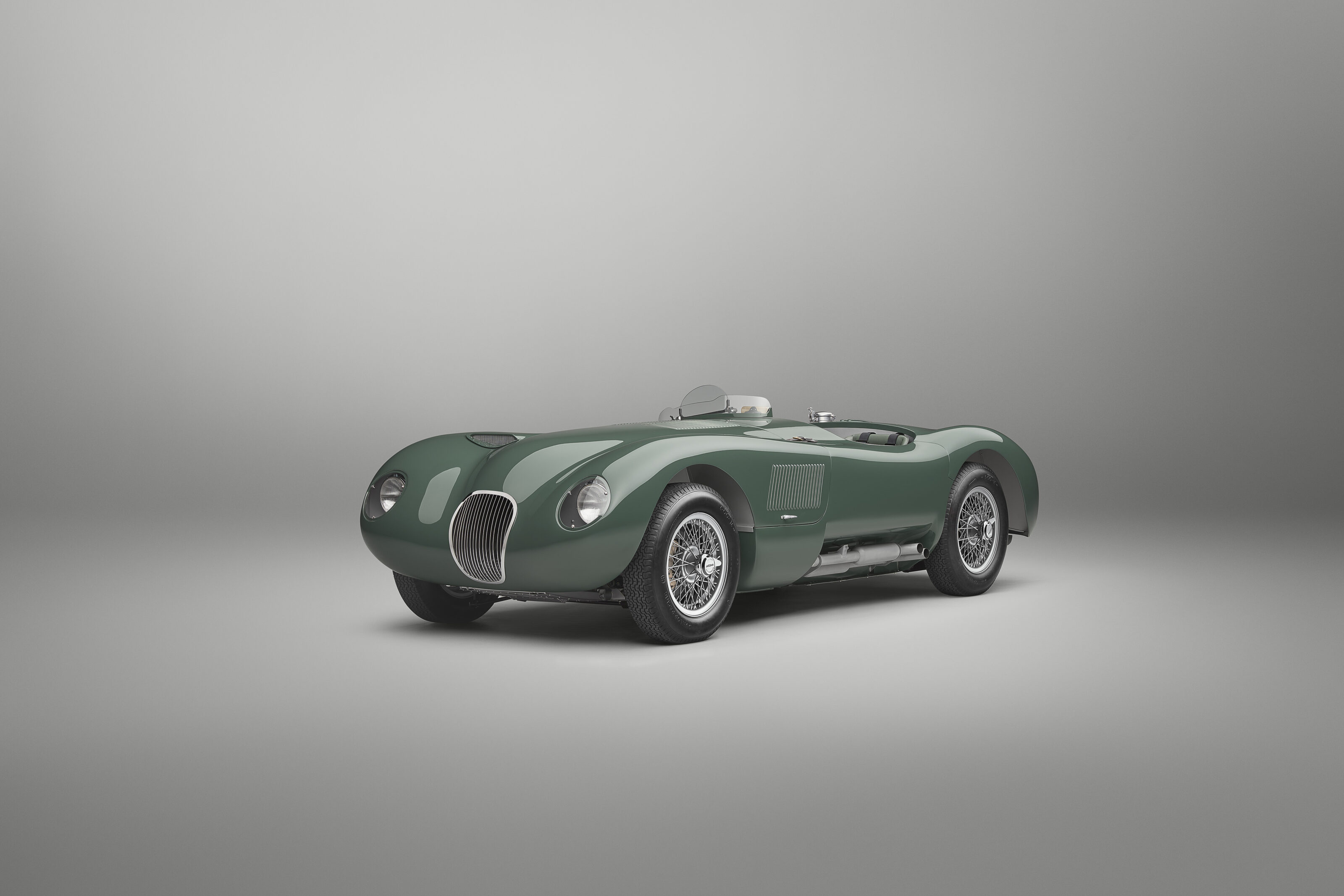
Jaguar Classic engineers consulted original drawings and the original engineering ledger, which contained details of more than 2000 parts, to create a digital 3D model to ensure every component made for the C-Type Continuation was identical to the original.
They even tracked down one of the few qualified arc-welders in the UK so the C-Type Continuation’s tubular steel chassis could be constructed using the same techniques as it was almost 70 years ago.
The C-Type Continuation is powered by a remanufactured 3.4-litre version of the famed twin-cam XK straight six that takes nine months to hand-build. The interior features a clock and gauges recreated to original Smiths Instruments specifications.
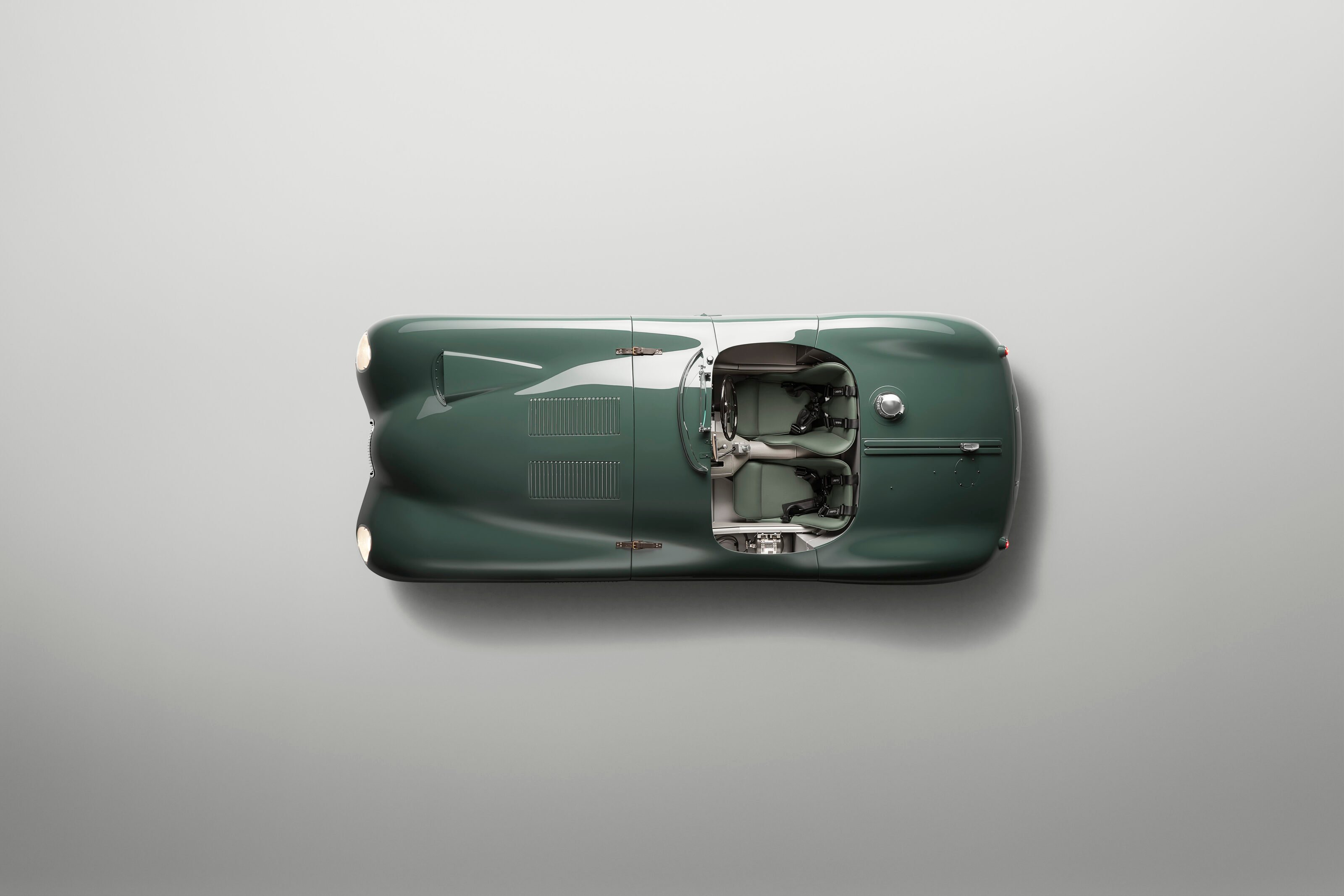
The period Lucas rear-view mirrors are genuine, and the Rexine artificial leathercloth on the dash and side panels, a material dating back to 1915 and still used by the British Motor Corporation in the 1970s, has been sourced from the last roll in existence.
The DB5 Goldfinger Continuation’s backstory is much the same. ZF’s heritage department built brand new five-speed manual transmissions to the same specification as used in the original DB5s, right down to the gear ratios.
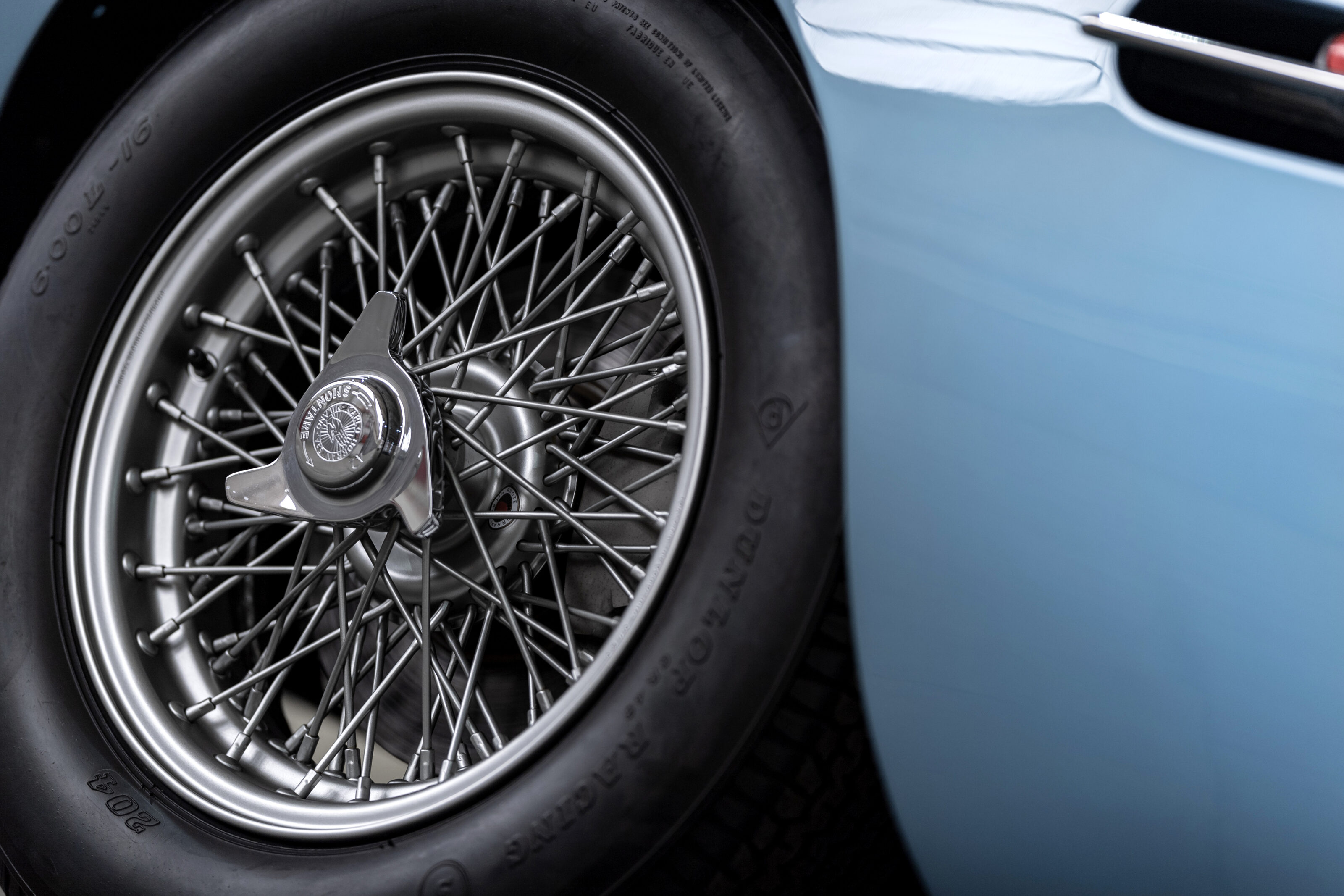
The brakes are identical to the original car’s four-disc Girling set up, as are the telescopic front shocks and old-school lever action units on the rear axle with its mechanical limited-slip differential. British tyre maker Avon made a fresh batch of cross-plies to the exact specification used on DB5s in 1964.
The decision to fit the DB5 Goldfinger with tyres of period-correct construction raised eyebrows among the Aston Martin chassis development drivers, many of whom had never driven a car on old-school cross-ply rubber and struggled with the lack of grip and precision.
But Aston Martin Works boss Paul Spires was adamant the DB5 Goldfinger Continuation not only had to look exactly like it did in 1964; it had to drive exactly as it did in 1964. “It’s supposed to slide and glide,” Spires says. “It’s how the car was back in 1964. We wanted that authentic feel.”
Spires acknowledges radial tyres would have given more grip and precision, but he insists they would also have fundamentally changed the entire car.
“Radials put more load through the suspension and therefore the car rolls more,” he says. “Then you start to slide out of the seats, and the steering feels heavy. It’s easy then to start chasing your tail on chassis set-up trying to fix it and you end up with a car that isn’t authentic.”
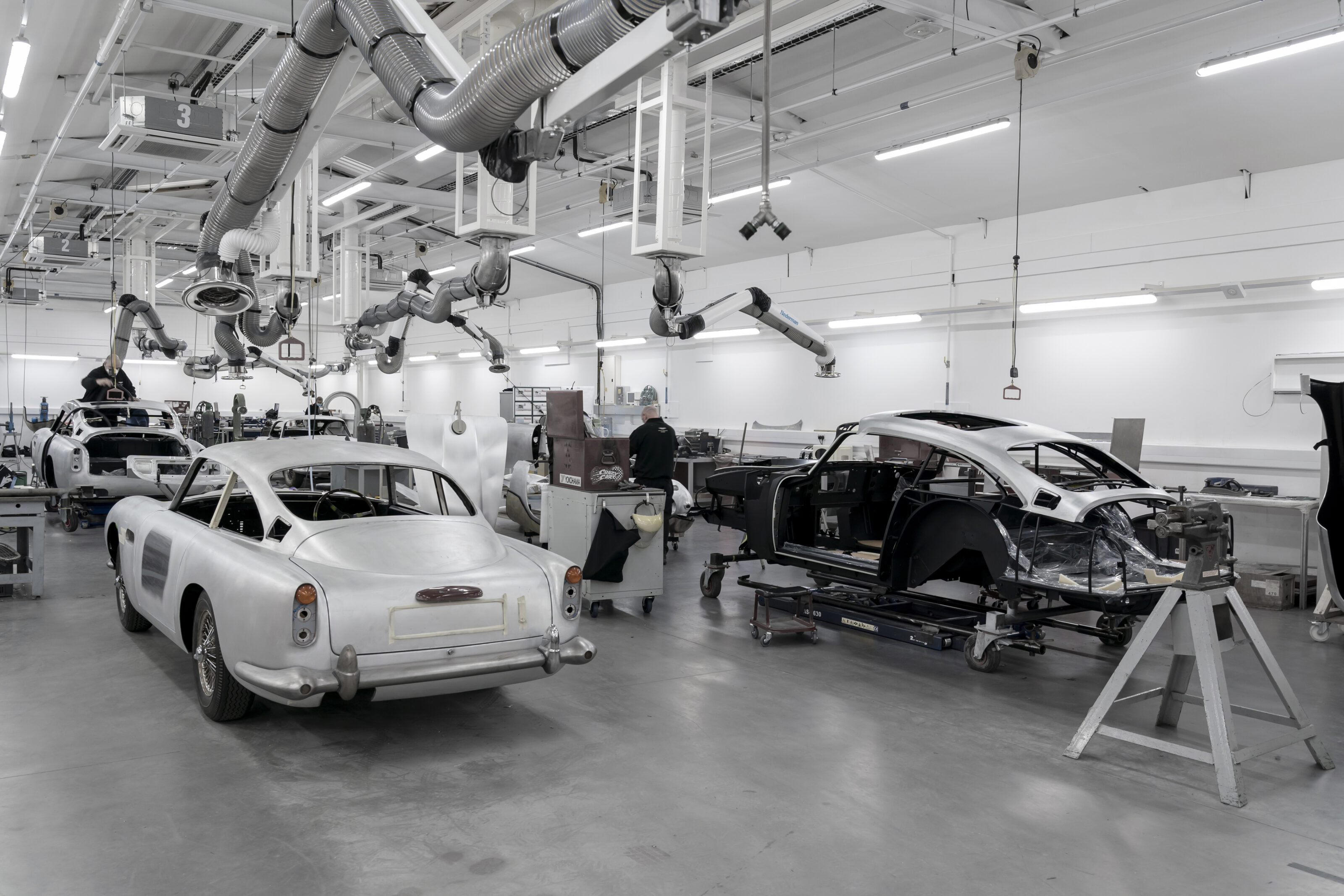
Sliding behind the wheel of the DB5 Goldfinger Continuation is like tumbling down a wormhole in the space-time continuum
But for Aston Martin Works, the idea wasn’t just to make the Goldfinger Continuation like new. It’s subtly been made better than new.
Several DB5 bodies were scanned during the early stages of the project and the data reworked by Aston Martin design chief Marek Reichmann’s team to ensure the surfaces were all true and both sides of the body were symmetrical.
Original DB5 chassis were also scanned, and the data overlayed with the 500 original drawings still in the Aston Martin archive to ensure accuracy. The 25 Goldfinger Continuation cars are the most dimensionally accurate and symmetrical DB5s ever built.
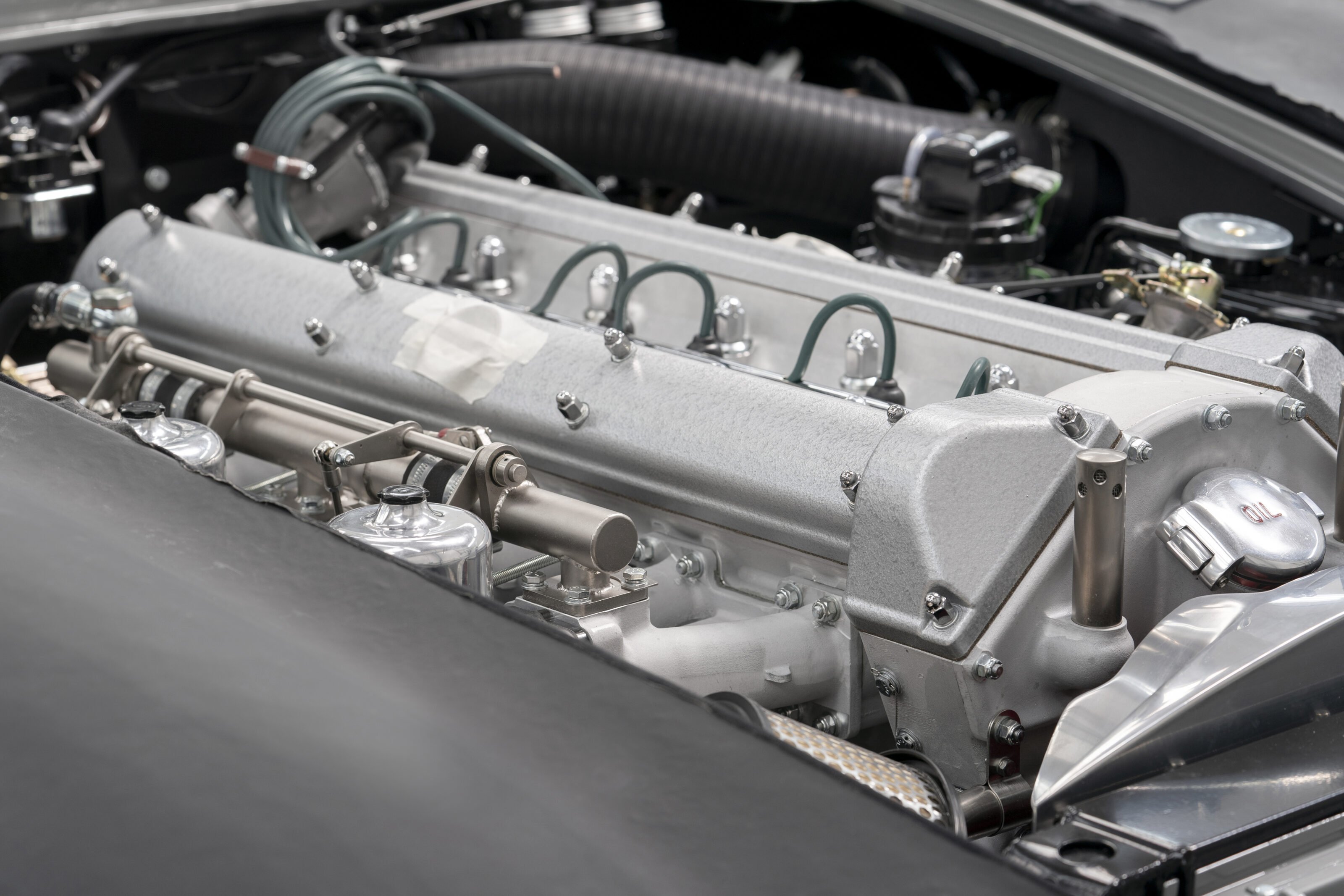
An original DB5 engine was put through a high-powered CT scanner and, using a program especially written by Siemens, digitally sliced into one-millimetre slivers so a set of new casting molds could be created.
This allowed engineers to correct an endemic overheating problem in the Tadek Marek-designed straight-six by making sure the cylinder head was cast the way it was originally intended.
Jaguar C-Type Continuation project engineer Dave Moore’s biggest challenge was not only the fact that no definitive factory-spec 1953 C-Type existed – just six were built out of a total C-Type production run of just 53 cars, and all were subsequently modified during their racing careers – but also that there was no record kept as to how the car was originally put together.
“By the time the 1953 Le Mans cars were being built, they had already decided they were going to make the D-Type,” says Moore.
“They didn’t write down how to build this C-Type, because why would they? As soon as the car was finished at Le Mans it was going to be scrapped. All we had was the ledger, written in original ink, which was basically just a list of parts, with their part number and a brief description.”
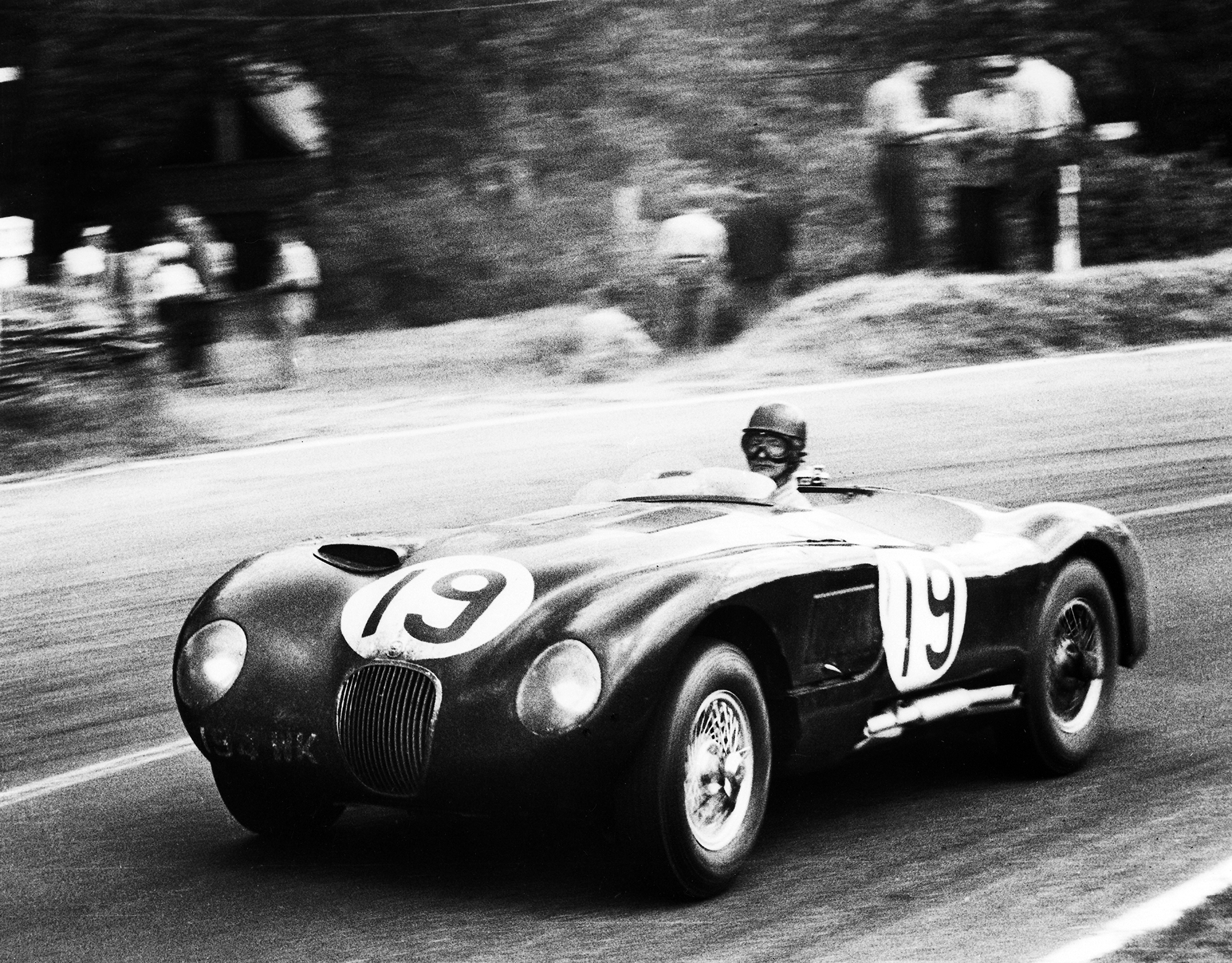
Any parts brought in from outside were simply noted as such, along with the name of the company that supplied them. “Most of those companies have now gone to the wall, so we couldn’t ask, ‘Have you still got the drawing?’ or ‘How did you make these components?’,” says Moore. “We’ve had to work it out ourselves.”
For example, Jaguar Classic remade the C-Type Continuation’s shocks from the original drawings, interpreting the data to figure out the damper curves. “We have a lot of confidence that car drives as it did in period,” says Moore.
Everything old is new again. It has been for a while. The retro styling trend, which reappropriated and repackaged iconic design cues from ’50s and ’60s vehicles around modern mechanicals, was kicked off by Nissan’s quirky Japanese-market ‘Pike’ cars in the late 1980s – the Be-1, the Pao, the Figaro – and by the late 1990s and early 2000s had crossed over to the automotive mainstream.
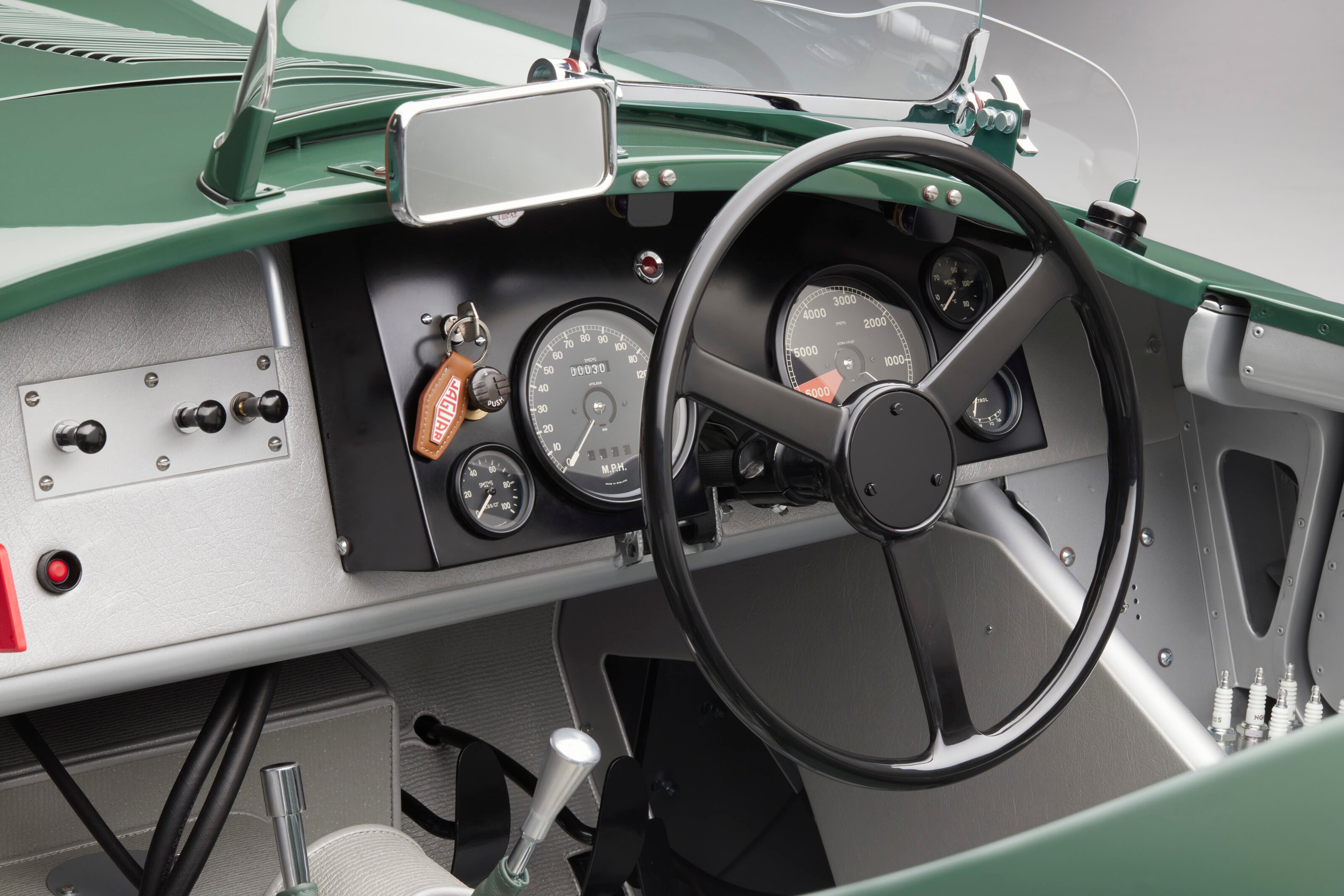
Some retro cars were wildly successful: Volkswagen’s New Beetle and Chrysler’s PT Cruiser between them sold more than 3 million units. Fiat’s 500 is still with us, while Ford’s Mustang is on its second retro redesign, and BMW’s Mini its third.
But retro styling is one thing; remaking painstakingly, perfectly rendered versions of cars originally built decades ago is something else entirely. And it’s not just about stroking a corporate ego or polishing brand heritage. It’s business. Good business.
The DB5 Goldfinger Continuation is the third continuation car from Aston Martin Works, following in the wheel tracks of the DB4 GT Continuation and the DB4 GT Zagato Continuation.
The C-Type Continuation is Jaguar Classic’s fourth, joining the D-Type Continuation, the E-Type Lightweight Continuation, and the XKSS Continuation cars. Between them, these cars – just 119 vehicles in total – have generated about $440m in revenue.
Made by the original manufacturers and sold by the original manufacturers, all are certainly more authentic cars than third-party replicas and recreations, no matter how well executed. But are they the real deal?
You might expect serious collectors would be upset that the continuation versions of these cars are being sold at a fraction of the value of vintage originals. But Hans Wurl, a specialist with Gooding and Company, a leading automotive auction house, says those who spend big money on classics are quite accepting of continuation cars.
For some collectors, continuation cars represent an opportunity to drive or race a manufacturer-made car that’s identical to the original one they already own without worrying about negatively impacting the original’s value.
For others they are an opportunity to drive a manufacturer-made car identical to one they’ve long desired to own and perhaps can’t quite afford. “They can have a $10 million experience for $1.5 million,” Wurl says.
Retro styling is one thing; remaking painstakingly, perfectly rendered versions of cars originally built decades ago is something else entirely
Others are happy to see manufacturers actively embracing their heritage for good, pragmatic reasons.
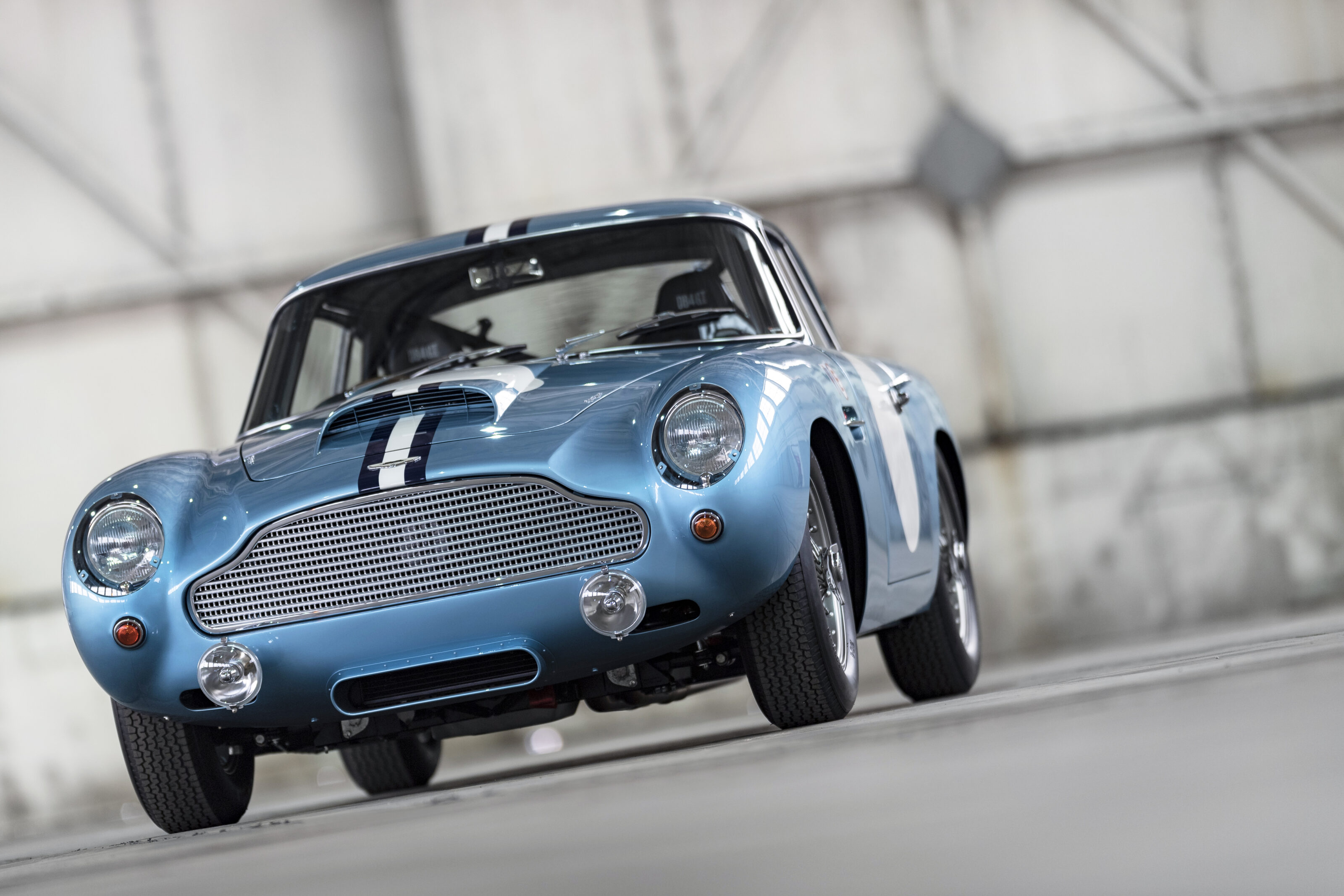
Paul Spires recalls a phone call from an angry owner of a DB4 GT when Aston Martin Works announced the DB4 GT Continuation: “He was really very against it,” Spires recalls.
“I invited him to come and see what we were doing. He said, ‘I was really concerned that you were going to do a cheap, nasty car and make as much money as you can, but what you’ve done is actually better than my car. And I’ve now seen that some of the componentry on my car is coming towards the end of its life, I can buy new parts’.”
For all that, Hans Wurl says most serious collectors believe that no continuation car, no matter how faithful its recreation, will ever have the same value as a vintage original.
“Provenance and history add value,” Wurl says, “and most serious collectors are motivated by the provenance and history of their classic cars. They want to sit in a car that’s 60 or 70 years old.”
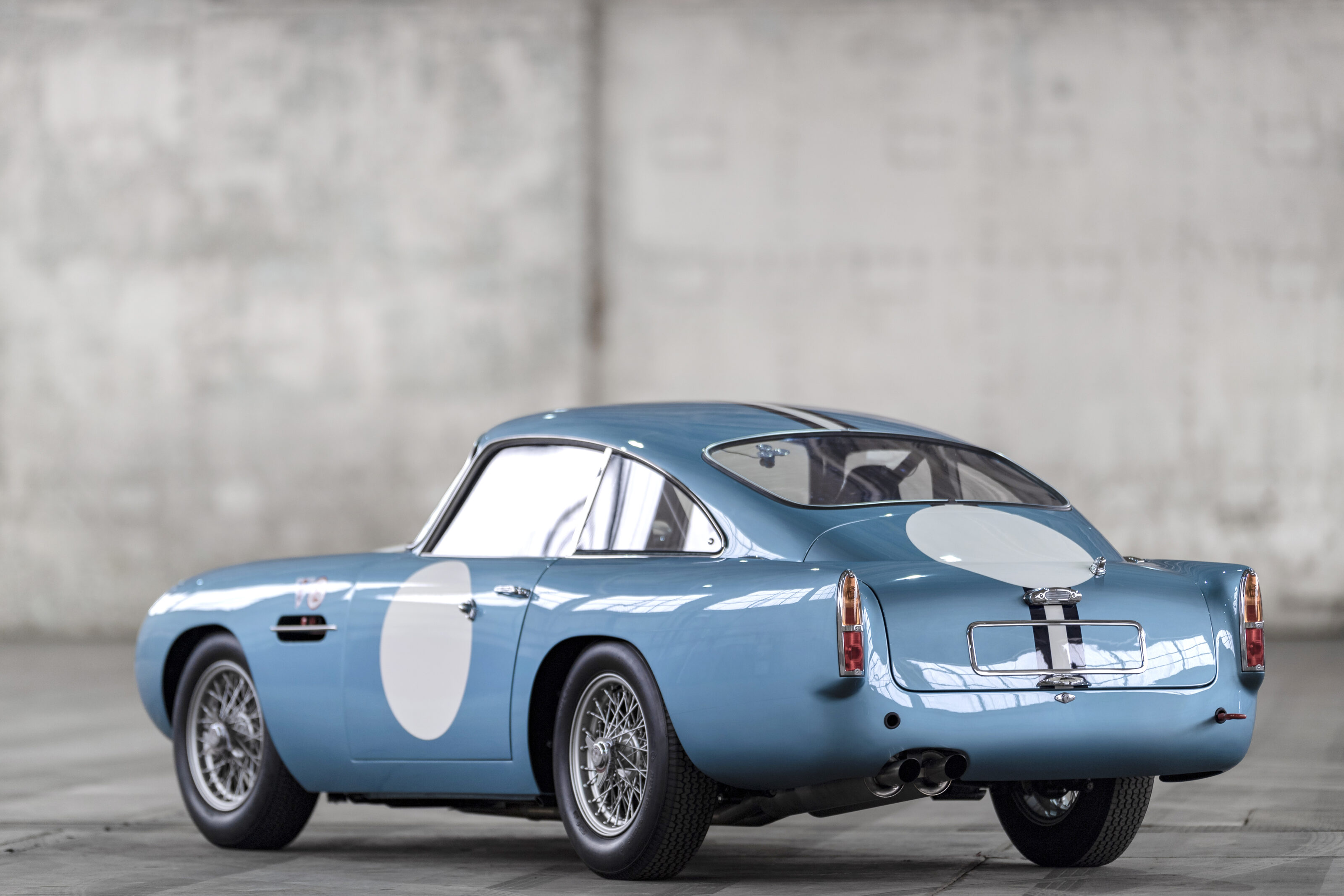
Wurl says that although Jaguar and Aston Martin have done the right thing by strictly limiting the number of continuation cars they build, they will never appreciate at the same rate as the originals, at least in the short to medium term. And in the long term?
“As we get 50 to 100 years down the road, there needs to be clear delineation between the continuation cars and the originals,” Wurl insists. “And it’s up to the collector car community to make sure that happens.”
Jaguar and Aston Martin have proven the past can be profitably brought back to life. But the problem for both companies now is: What next?
They have each already built the most obvious superstars from their back catalogues, cars that could justify multi-million-dollar investments in parts and labour by commanding seven-figure price tags.
And as all are cars from simpler times – times before plastic interiors and on-board computers and catalytic converters and stringent crash safety regulations – they have all been relatively straightforward to build.
For Jaguar and Aston Martin at least, playing the continuation game gets a lot trickier from here on in.
Dave Moore reckons one option for Jaguar Classic might be to build a brand-new XJR-9, the V12 Group C racer that won the 1988 Le Mans 24 Hour. Or remake what Jaguar insiders reverently call “The Holy Grail”, the one-of-a-kind Jaguar XJ13 Le Mans prototype from the 1960s.
“It’s not a plan we’ve ever discussed if I’m honest,” he admits of the XJ13 idea. “We’ve got the car in the Jaguar Daimler Heritage Trust collection, and we always look at it and think, ‘that would be really cool to do’.”
Like Jaguar, Aston Martin could look back to 1950s Le Mans racers and consider making continuation versions of its DBR1, one of which, driven by Carroll Shelby and Roy Salvadori, took victory in the 1959 24 Hour.
The same process that resulted in the DB5 Goldfinger could be used to produce continuation versions of the rarest DB6s, such as the Volante Vantage with the ‘C stage’ triple Weber straight six under the bonnet – just 13 were ever built – or a DB6 Vantage Shooting Brake. Just six DB6 Shooting Brakes were made, and a Vantage version recently sold for more than $1.4 million.
“We have a whole cycle plan of continuation cars,” says Paul Spires, though he refuses to be drawn on detail. “Unlike the heritage arms of some other OEMs, this place has to be commercially viable. We don’t do these things just because we want to. We have to look after our heritage.”
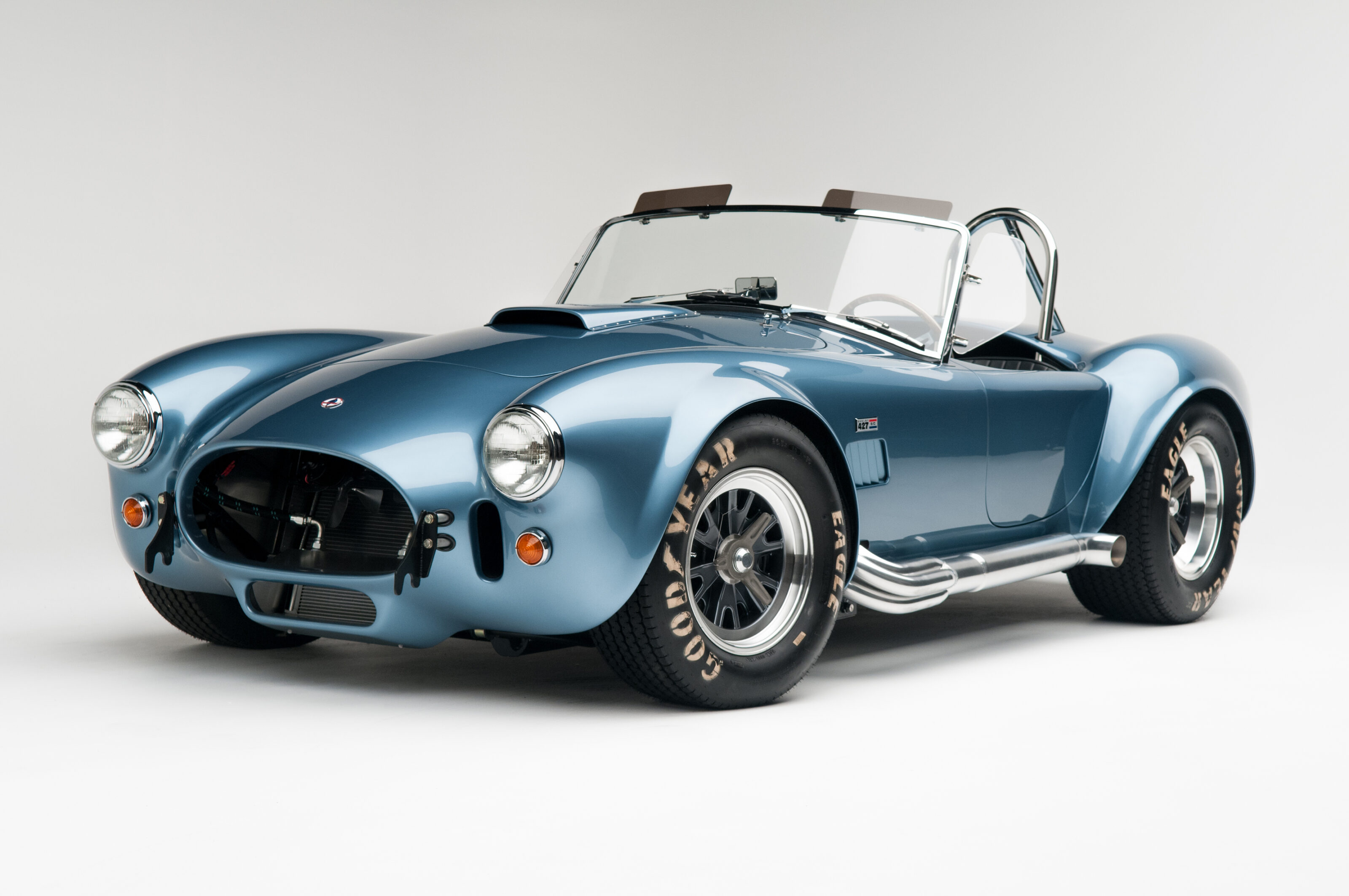
Closer look: Snake’s second bite
A new cobra better than the original
Storied British manufacturers like Aston and Jaguar aren’t the first ones to reap the spoils of the continuation movement. Shelby Cars also saw the opportunity to build the famed Cobra sports car as a continuation of the original which went out of production in 1967.
Produced in Las Vegas, Nevada, these cars didn’t follow the blueprint for 100 percent originality the way the Jaguar and Aston models do, having the appearance of their original 1960s ancestors, but tweaked for more reliable performance.
Not all compact SUVs are made equal. Some look amazing, some are loaded with tech, some are more fun to drive, some are dirt cheap and feel it. They come from just about every major car-making country on Earth, too, such is their popularity.
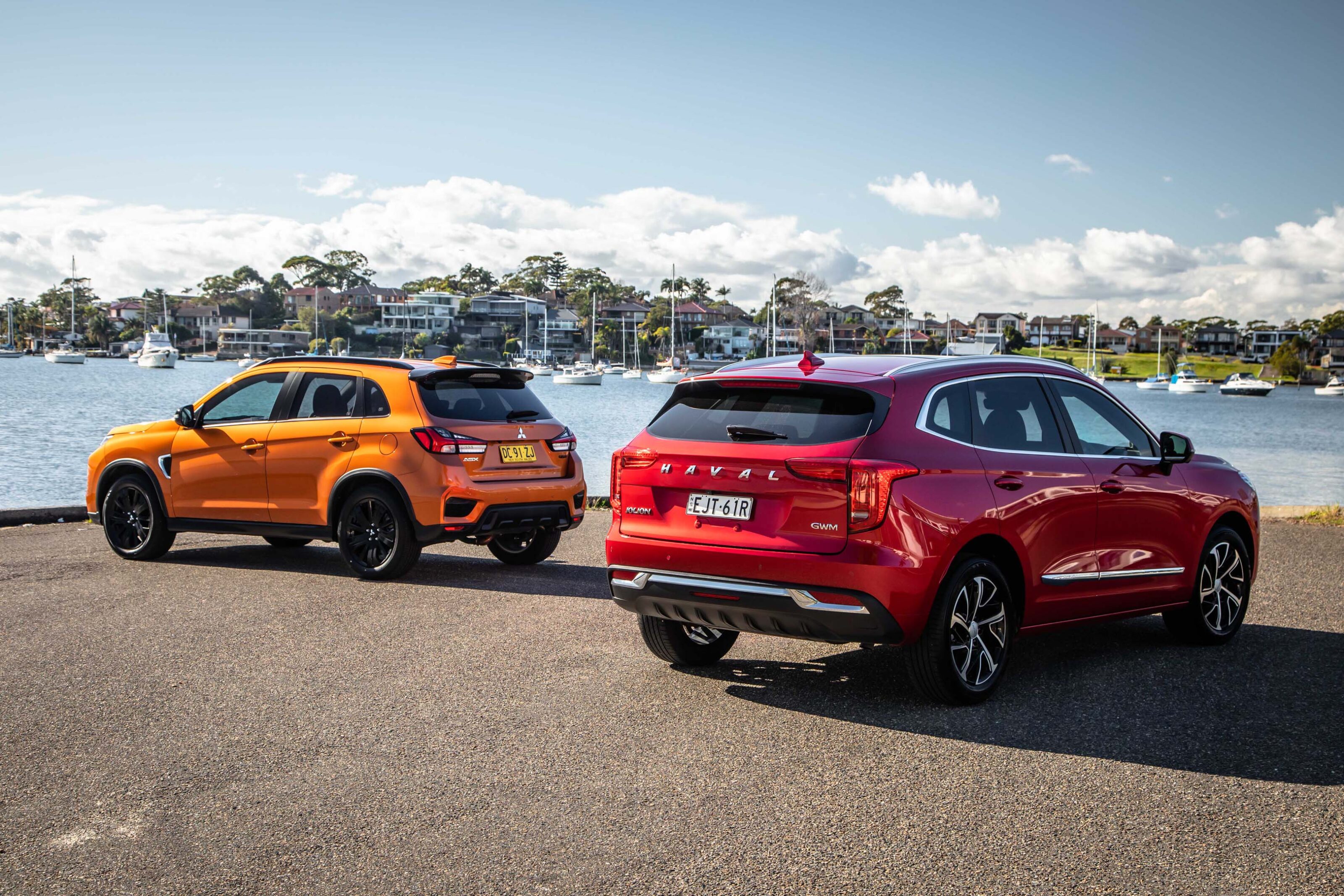
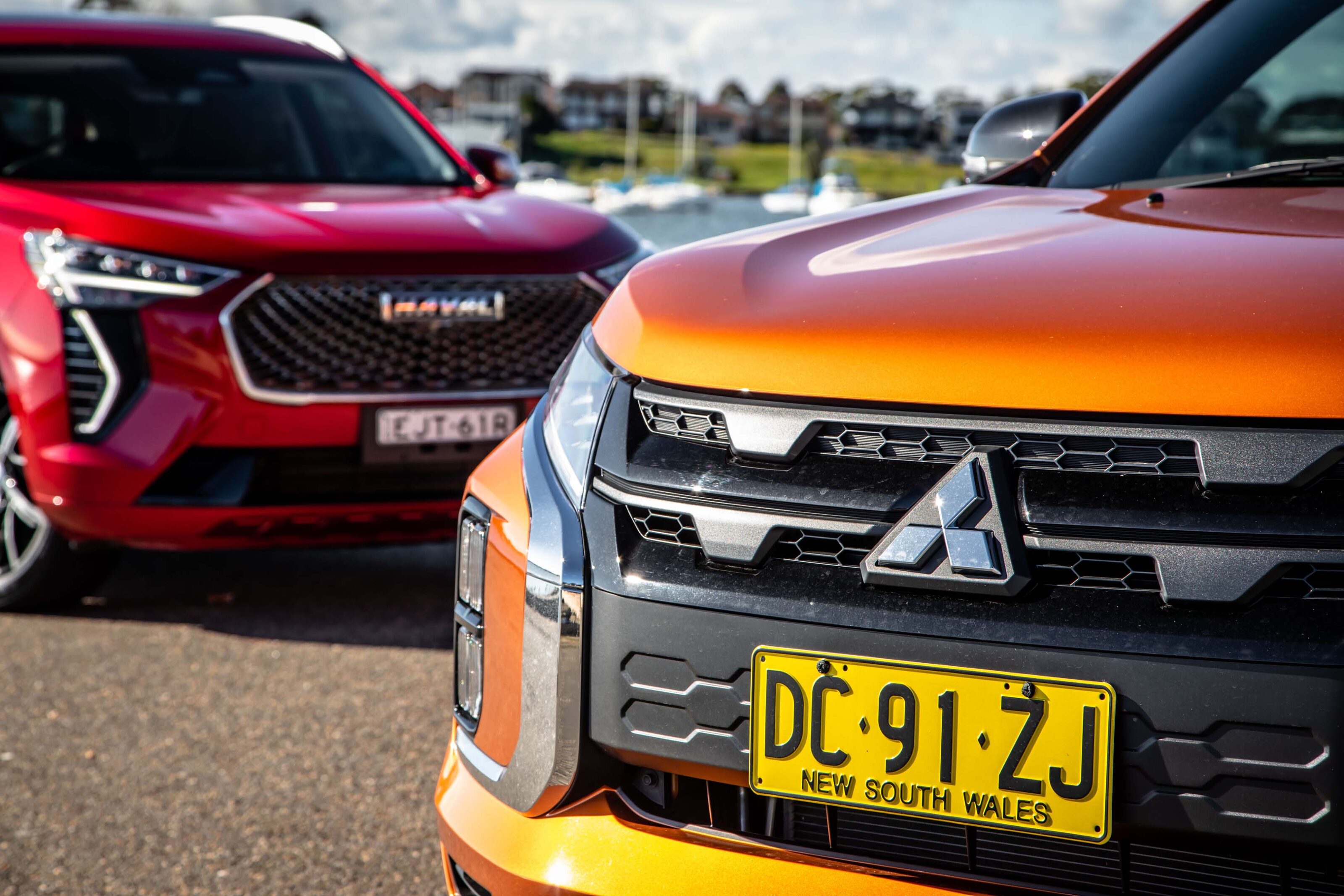
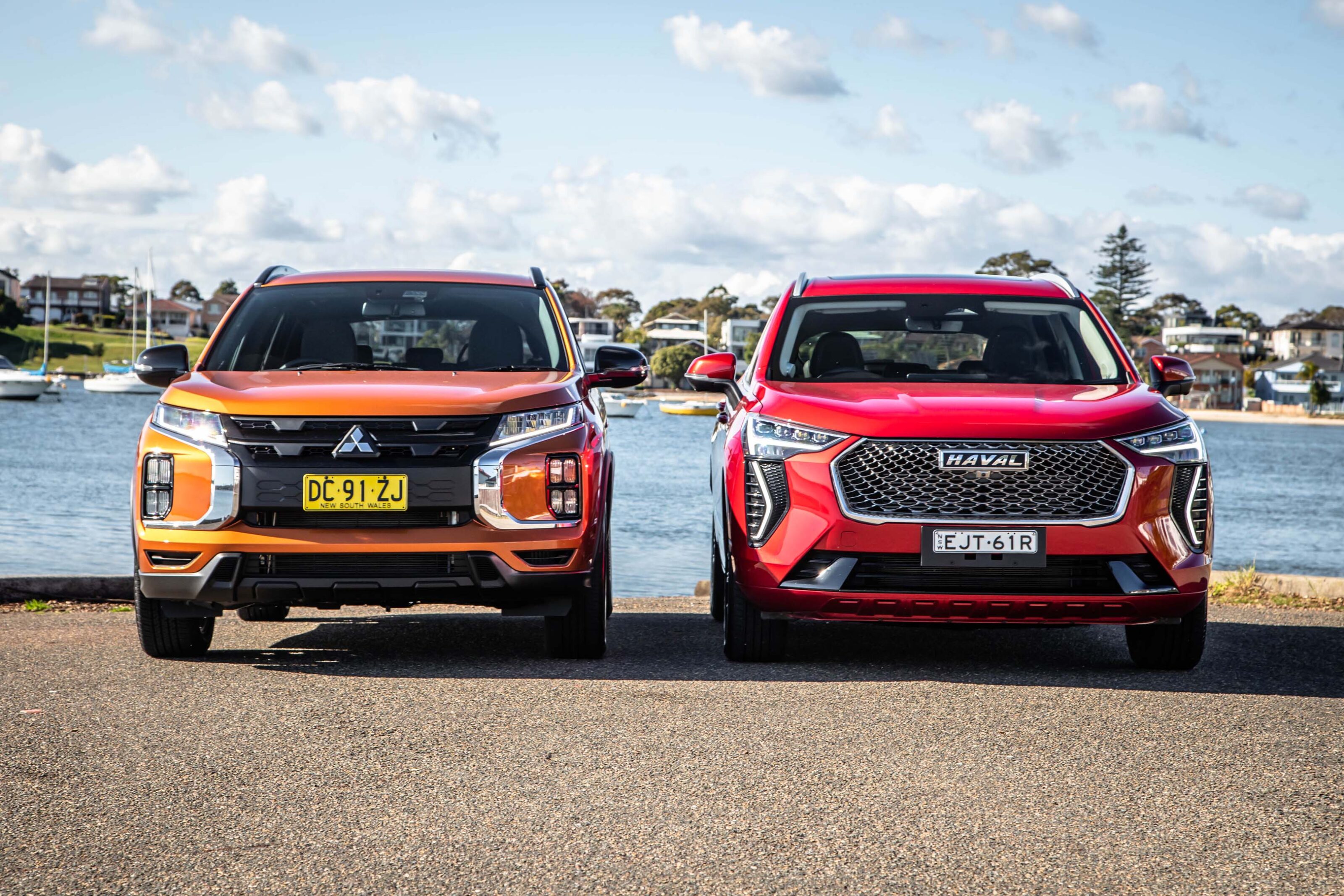
Here we have two seemingly similar competitors. They’ve got two of the biggest interiors in the segment and are two of the sharpest-priced. Dig a little deeper, though – you knew this was coming – and you’ll find a few differences.
One of the most intriguing differences is that one has been on sale for just a year. The other one is probably a year or so from being replaced after more than a decade on the market, having been a hot seller for a good chunk of that decade.
The price here is the key, though, with the Haval Jolion and Mitsubishi ASX priced seemingly against each other in a fiercely fought part of the market. This is the battle of two bang-for-your-buck SUVs.
Pricing and features
The ASX GSR starts off with a $31,990 price tag (before on-road costs). The GSR is a fairly recent entry in the ASX line-up, reviving an old badge first seen forty years ago on the Lancer. For nerd points, the ASX is based on the platform of the final Lancer first sold here in the mid-2000s.
Featuring 18-inch alloy wheels, a six-speaker stereo, climate control, reversing camera, keyless entry and start, rear parking sensors, cruise control, auto LED headlights with auto high beam, leather wheel and gear selector trim, power windows all round, auto wipers and a space-saver spare, it’s not a bad start.
The Haval Jolion Lux rolls in at $33,990 drive-away, with 18-inch alloys, reversing camera, multi-view cameras, front and rear parking sensors, fake leather trim, digital dash, 12.3-inch touchscreen, dual-zone climate control, powered and heated front seats, leather-trimmed steering wheel, LED lighting (including headlights, daytime running lights and fog lamps), six-speaker sound system, panoramic sunroof, wireless charging pad, head-up display and a space-saver spare.
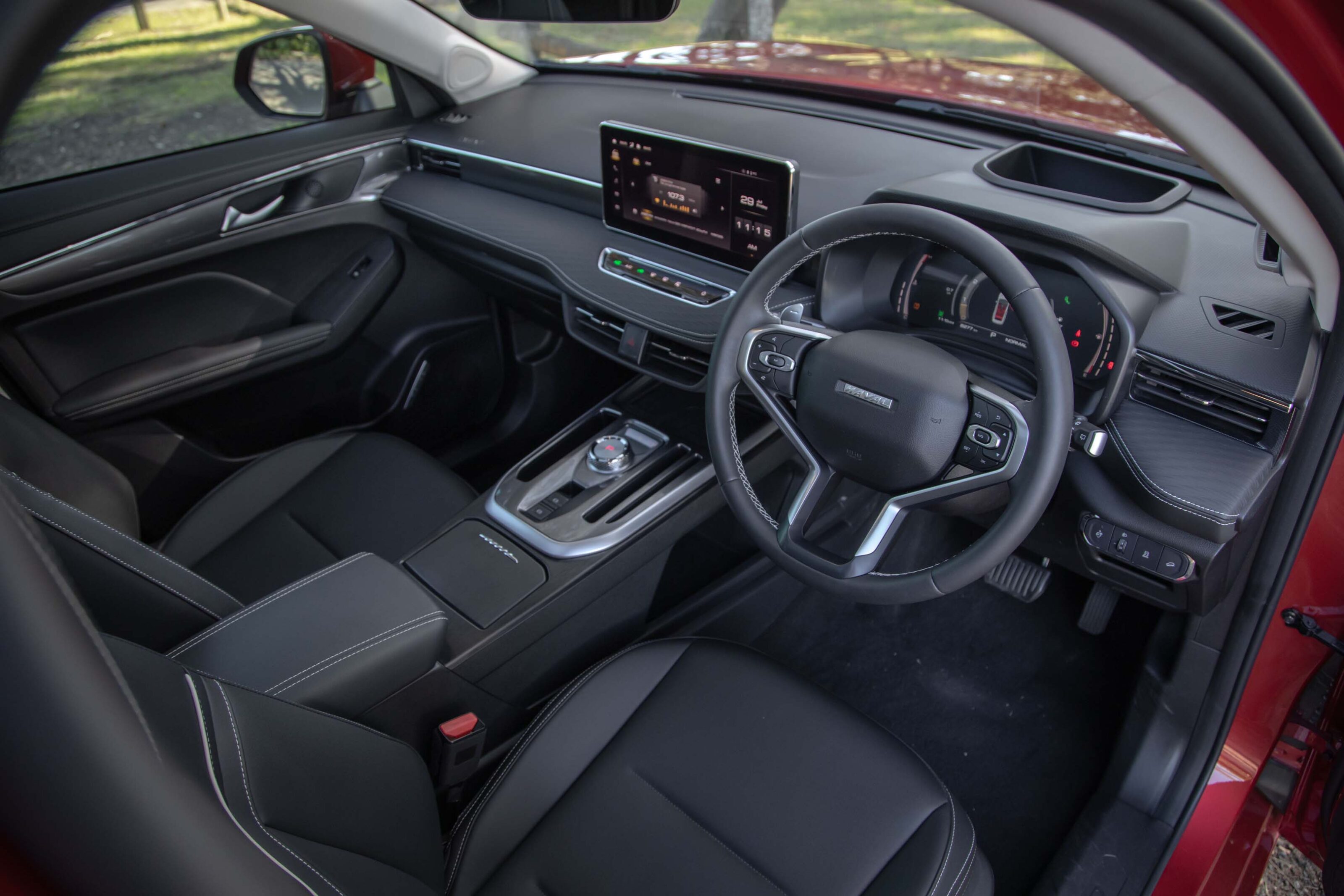
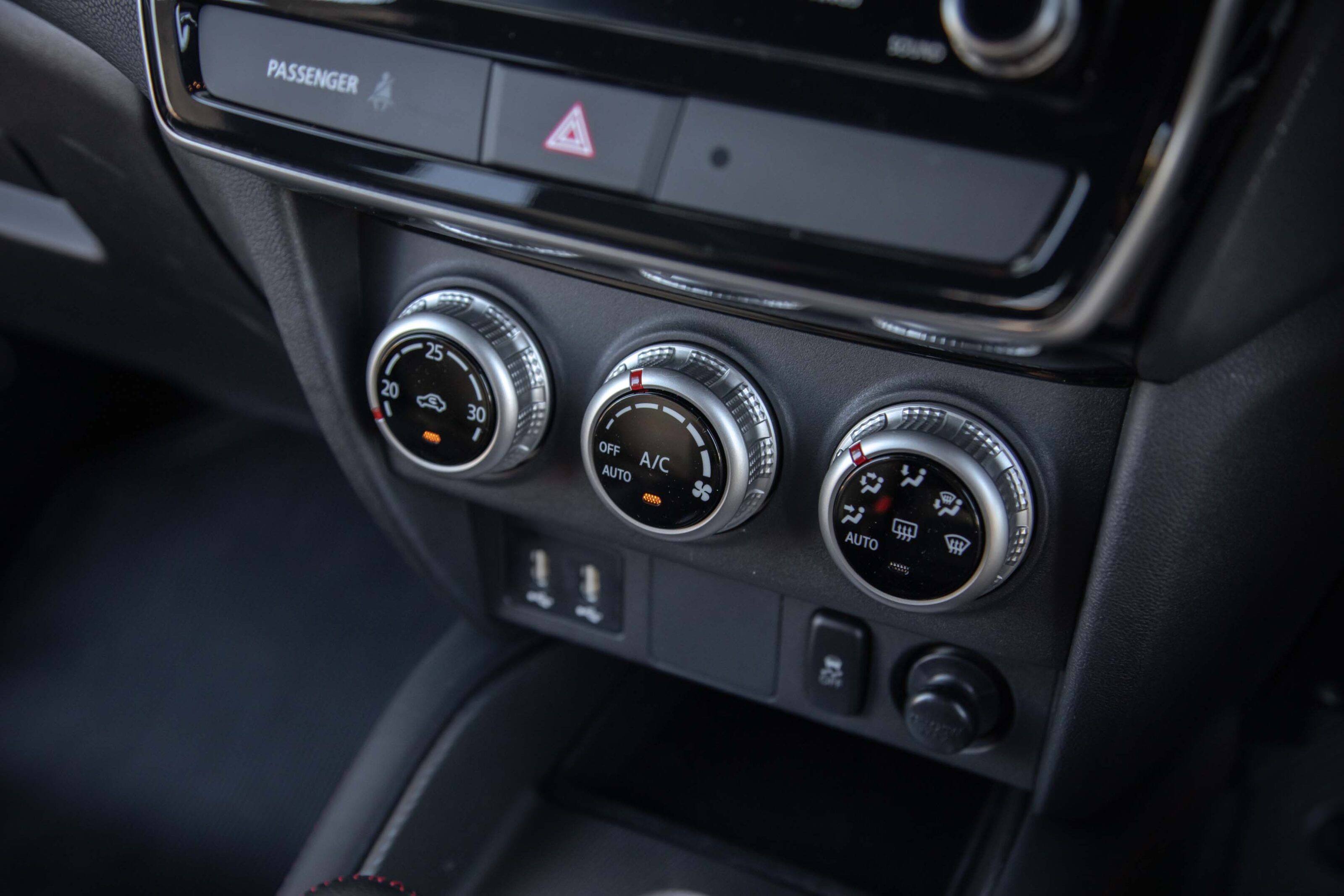
Both feature touchscreens but they couldn’t be more different. The Mitsubishi’s is a basic 8.0-inch unit with a mix of touch and physical controls, with the obligatory Apple CarPlay and Android Auto along with DAB+ digital radio. And not much else.
The Jolion’s 12.3-inch unit is a modern beast, with lots of features packed in at the expense of a lot of physical switches and knobs, such as climate control. It’s absolutely filled with settings and functions, some of which are perfectly at home, some that really should be easier to get to, easier to use or properly positioned for a right-hand drive car, like the seat heating controls.
Overall, specifications are where you really notice the age gap between the two cars. The Jolion is packed with contemporary technology for similar money.
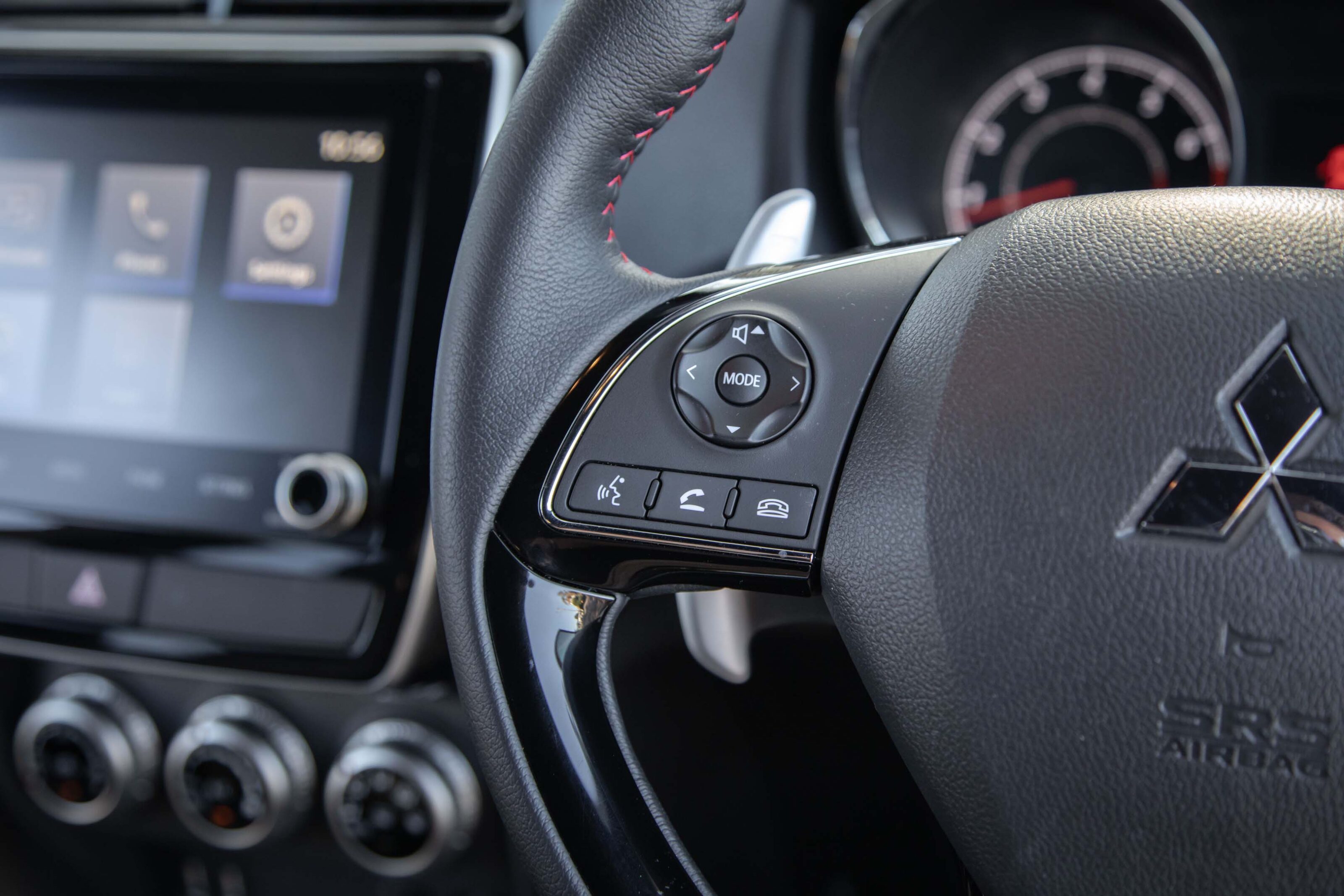
On the safety front, the ASX has seven airbags (including a driver’s knee airbag), blind-spot monitoring, forward auto emergency braking (up to 80km/h), forward collision warning, lane departure warning and rear cross-traffic alert.
The Jolion matches the seven airbags but the seventh is a centre-front airbag to help prevent head clashes in side impacts. It also has the usual braking and stability controls, secondary collision avoidance, forward and reverse AEB, rear cross-traffic alert, forward collision warning, lane departure warning, lane-keep assist, lane centring, emergency lane-keep assist, traffic sign recognition and blind-spot monitoring with lane-change assist, further underscoring the Jolion’s comparative modernity.
Both have three top-tether anchors and two sets of ISOFIX points.
A five-star ANCAP safety rating adorns the ASX, although it does stretch back to 2014. The safety specification has drastically improved on the Mitsubishi since then but today’s much tighter set of ANCAP rules make it unlikely that the ASX would renew a five-star rating. It’s not a bad spec, but as the Jolion – and other rivals show – it’s a solid start.
The Jolion is yet to be tested by ANCAP but with that very long list of features and the centre front airbag, it would be wholly unsurprising if the Haval scored the maximum rating, as its larger and closely related H6 sibling did.
Buyers of both can choose from just one free colour, white. While a Mitsubishi dealer wants a hefty $740 or $940 for metallic paint depending on the colour, the Haval dealer will instead try and extract a more reasonable $495. Neither has any factory options.
Comfort and space
Where these two really shine is in interior space.
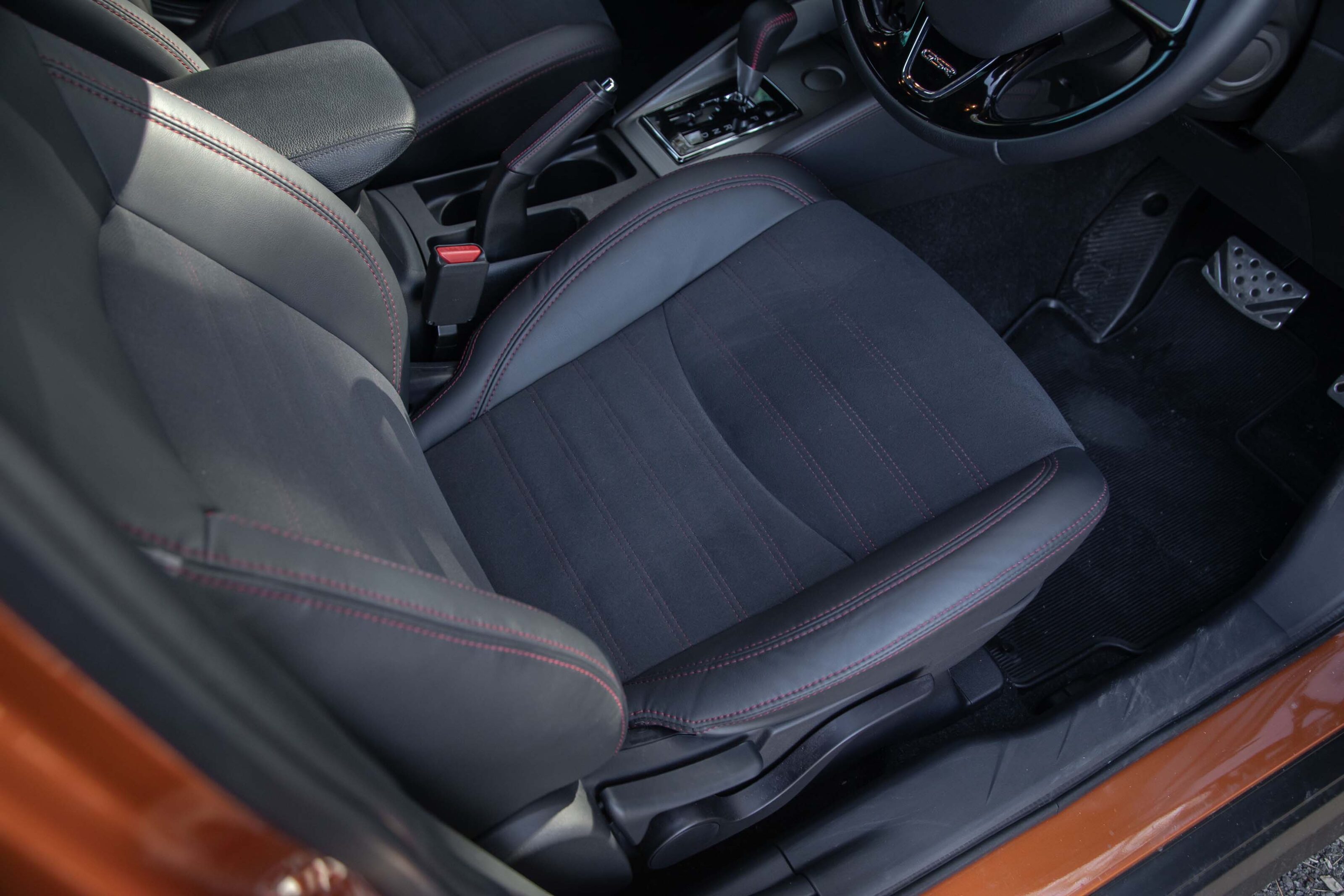
The ASX has a textile suede and fake leather upholstery combination that looks a lot better than it sounds. Apart from being quite comfortable – particularly in summer when the suede panels won’t scorch you as much as leather does – it looks quite good and matches the darker theme of the GSR. I personally prefer this upholstery but that’s definitely a subjective call.
The interior design of the ASX is very simple and completely unadventurous. There’s a lot of hard plastic in the structures and, once again, it shows the age of the car.
In the Jolion you have great swathes of fake leather not only on the seats but on the dashboard. The Jolion has a more interesting mix of materials than the Mitsubishi, although grey plastic dominates both.
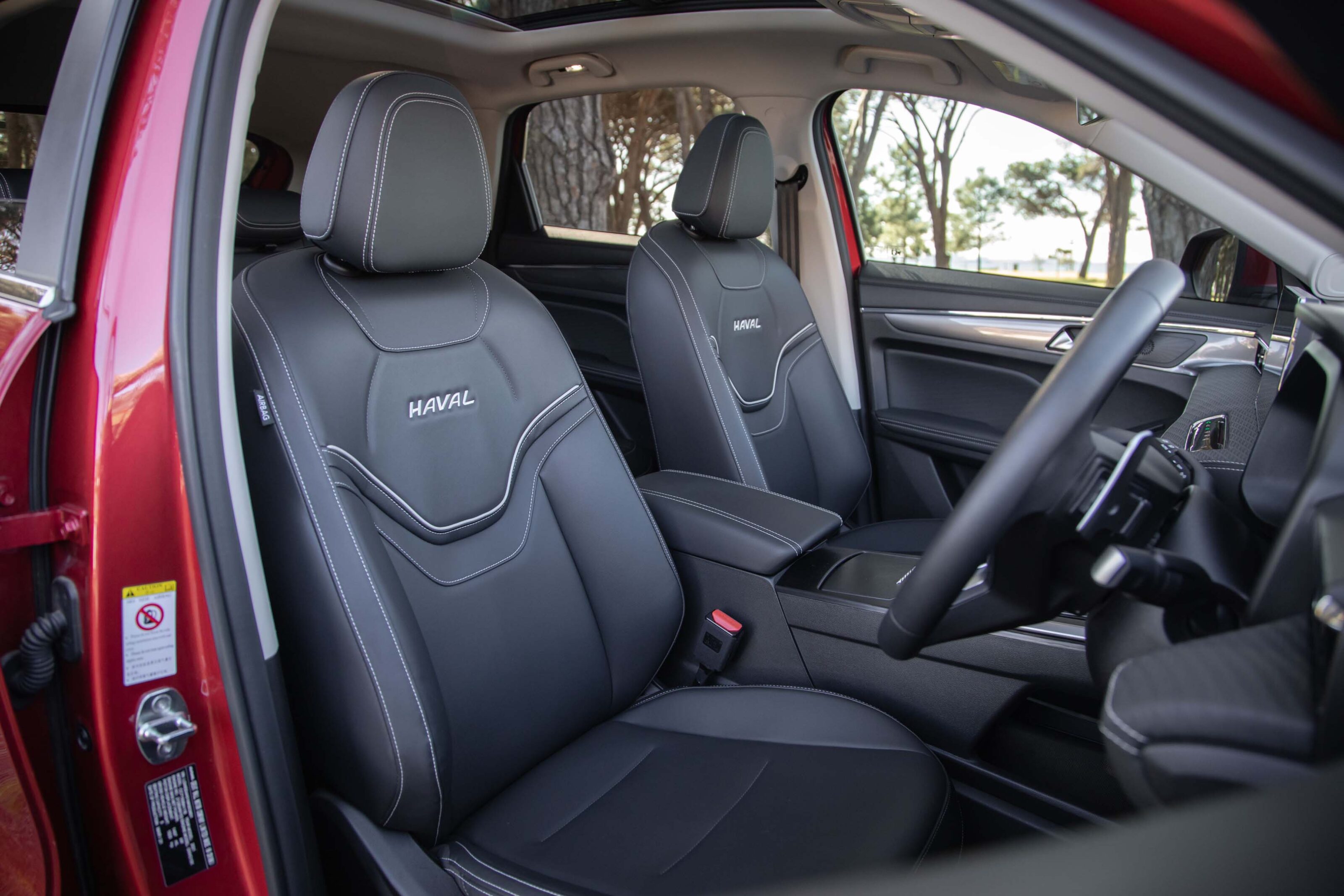
Both feature cup holders in the front and rear, bottle holders in the front doors (the Jolion also has them in the rear) and places for your phone in the front. You also get two USB-A ports up front in both and two USB ports in the back, although the ASX has the more modern USB-C, unsympathetically cut into the vent-free console.
The Jolion counters with air vents, a near-flat floor and, despite the ASX having a pretty good helping of legroom, the Haval trounces it. Both have heaps of headroom, too, but the Jolion’s cabin is slightly wider than the ASX’s.
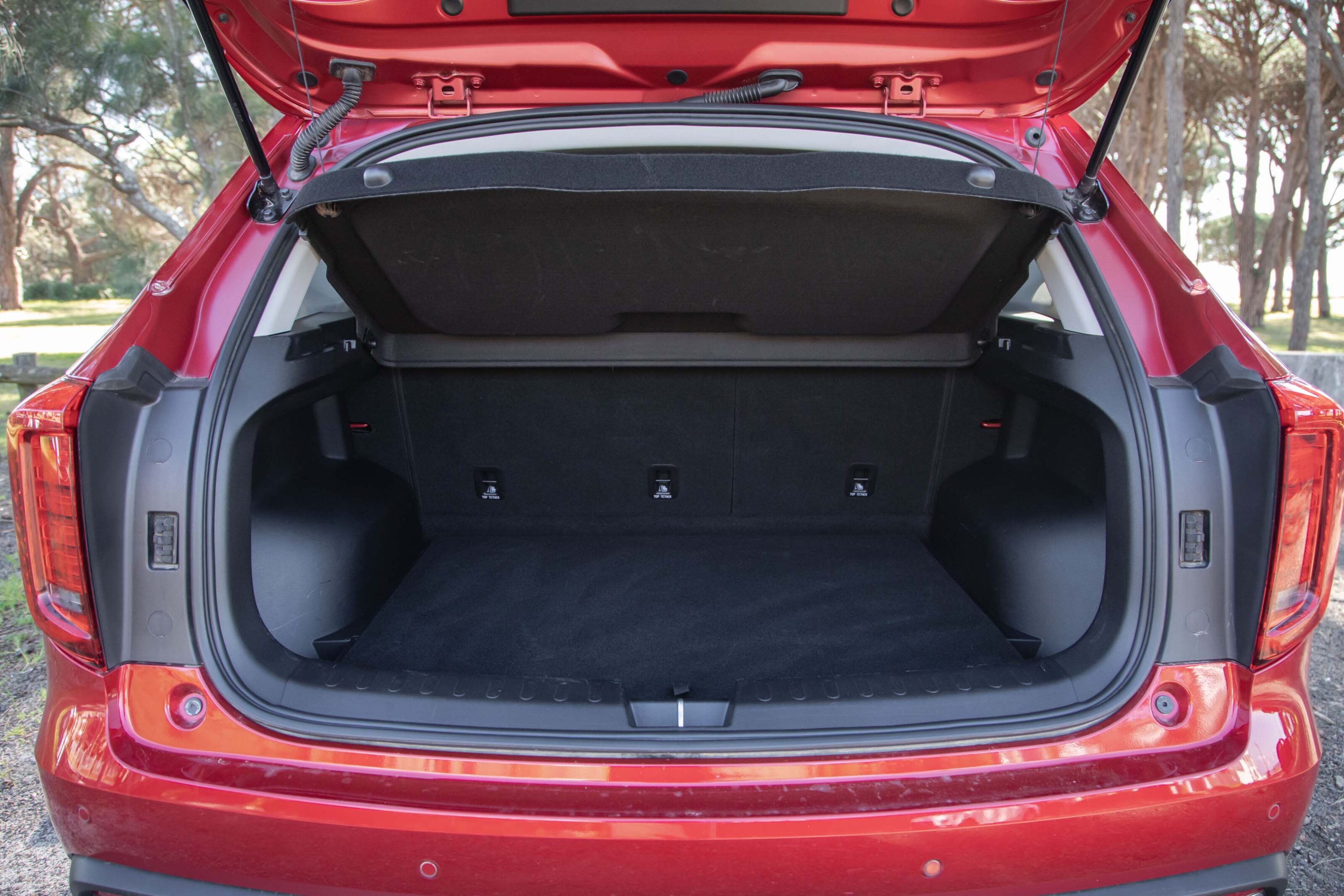
In terms of boot space, Haval again shades Mitsubishi, with 433 litres against 393L. In practice, that’s not a huge amount of difference and if you had them side by side, you’d think they were basically the same.
With the seats down, the Jolion’s 1133 litres is actually slightly smaller than the ASX’s 1143L, but again, you’re hardly going to notice. So we can call boot space even, back seat accommodation goes to the Jolion and overall accommodation also goes to the Haval.
On the road
As I said earlier, these two cars are at opposite ends of their lifecycle. The ASX stretches right back to the mid-2000s Lancer platform while the Jolion rides on GWM’s very modern if unfortunately titled Lemon B30 platform. Like the ASX, the platform is shared with other cars, in this case, the H6 and tremendously named Big Dog, a car we don’t get in Australia.
The two cars diverge markedly under the bonnet. Mitsubishi’s venerable 2.4-litre four-cylinder petrol is the more powerful of the two with outputs of 123kW and 222Nm. With an automatic continuously variable transmission (CVT) turning the front wheels it’s a fairly low-drama, tried-and-true kind of driveline.
Under the Jolion’s bonnet is a 1.5-litre turbocharged four-cylinder petrol producing 110kW and 210Nm, driving the front wheels through a seven-speed dual-clutch transmission. All very modern and a lot more complex but, unusually, that hasn’t resulted in higher servicing costs, at least not for the first five years.
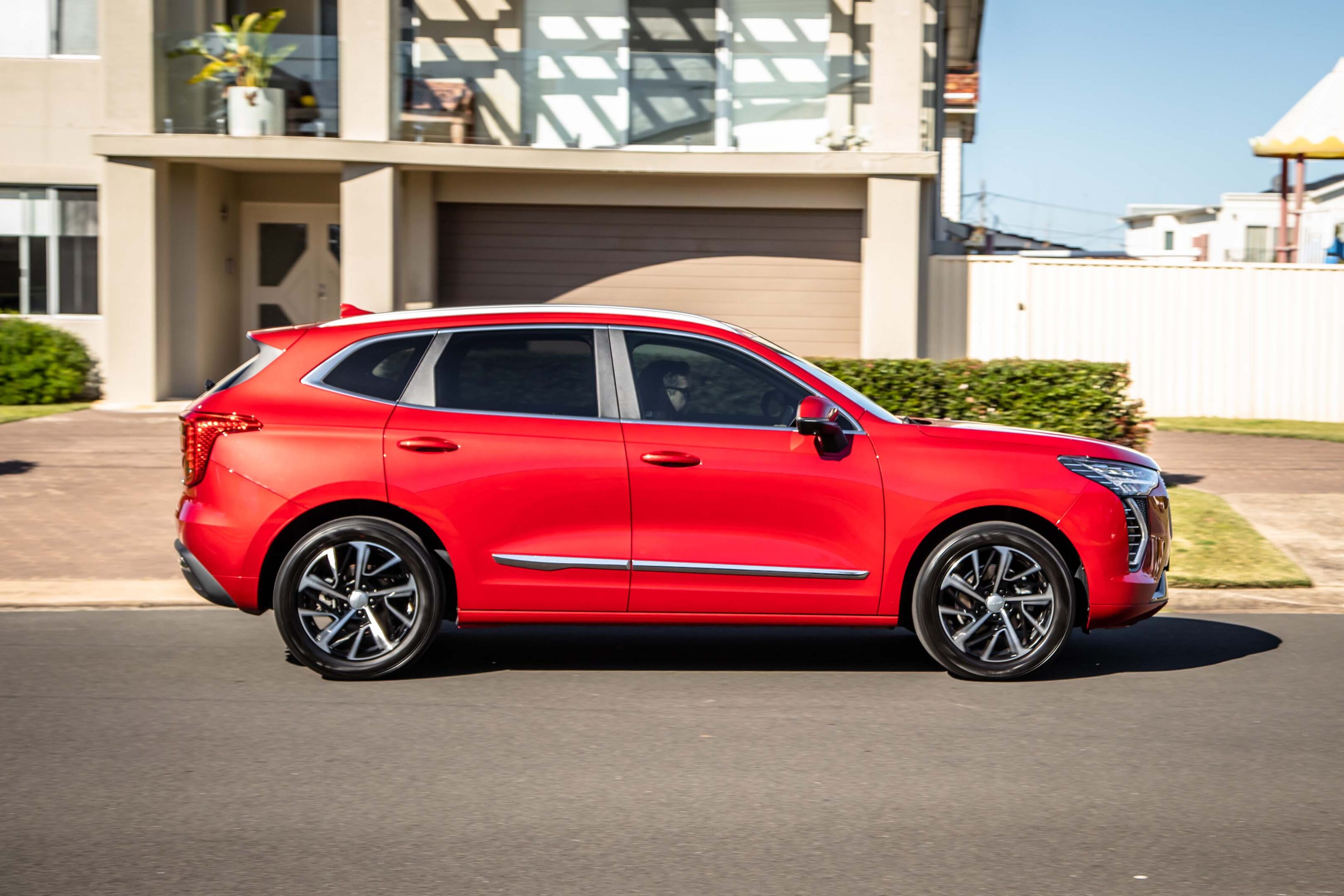
Unfortunately for the Haval, modernity does not translate into superior driveability. The engine itself seems reasonably flexible but it’s hard to tell through the vagaries of the seven-speed dual-clutch.
I’m a big fan of the slick rotary dial selector – something I never say because most of them aren’t very good – but the clutch engagement from a standstill or switching between Drive and Reverse is not very slick at all.
The gearbox is also not very adept at picking the right gear when you’re driving around the suburbs, holding third until you either pull the paddle or give the accelerator a prod in the way your partner might use their elbow when you say the wrong thing at dinner.
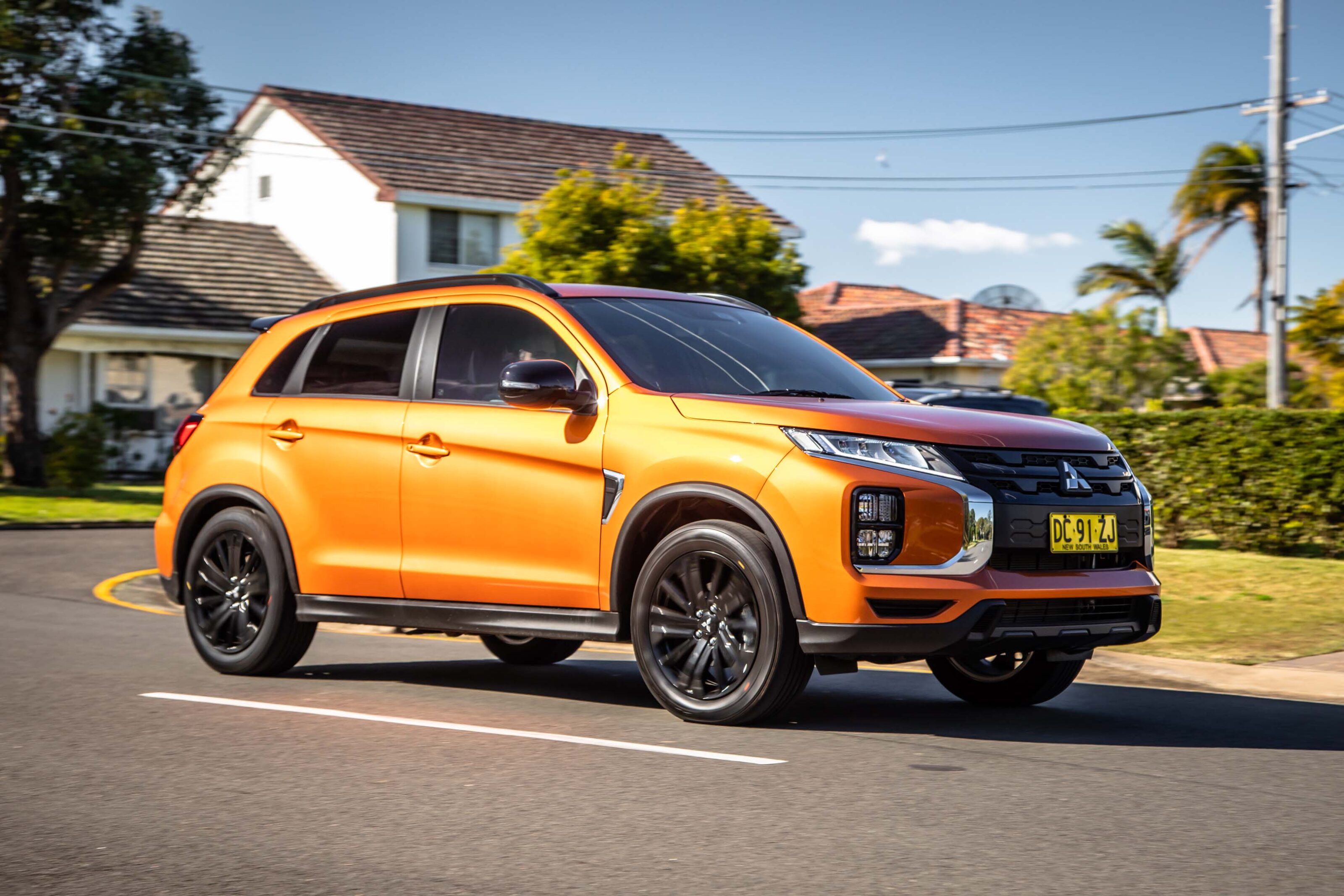
Helpfully, the Jolion recovers some ground by having a smoother ride, although it’s not quieter. With torsion beam rear suspension, it doesn’t look better on paper than the ASX’s multi-link rear, but there’s quite a gap between the ride quality of the pair.
The ASX bumps around on less-than-perfect surfaces and dislikes speed bumps whereas the Jolion sounds like it should be bumping around but doesn’t.
Both have similarly low-communication steering set-ups, the ASX’s wheel in particular not helped by being slightly too small for my liking (not everyone agrees). Both handle corners quite well and neither body rolls excessively but if you’re a keen driver, you’re not going to get too excited here.
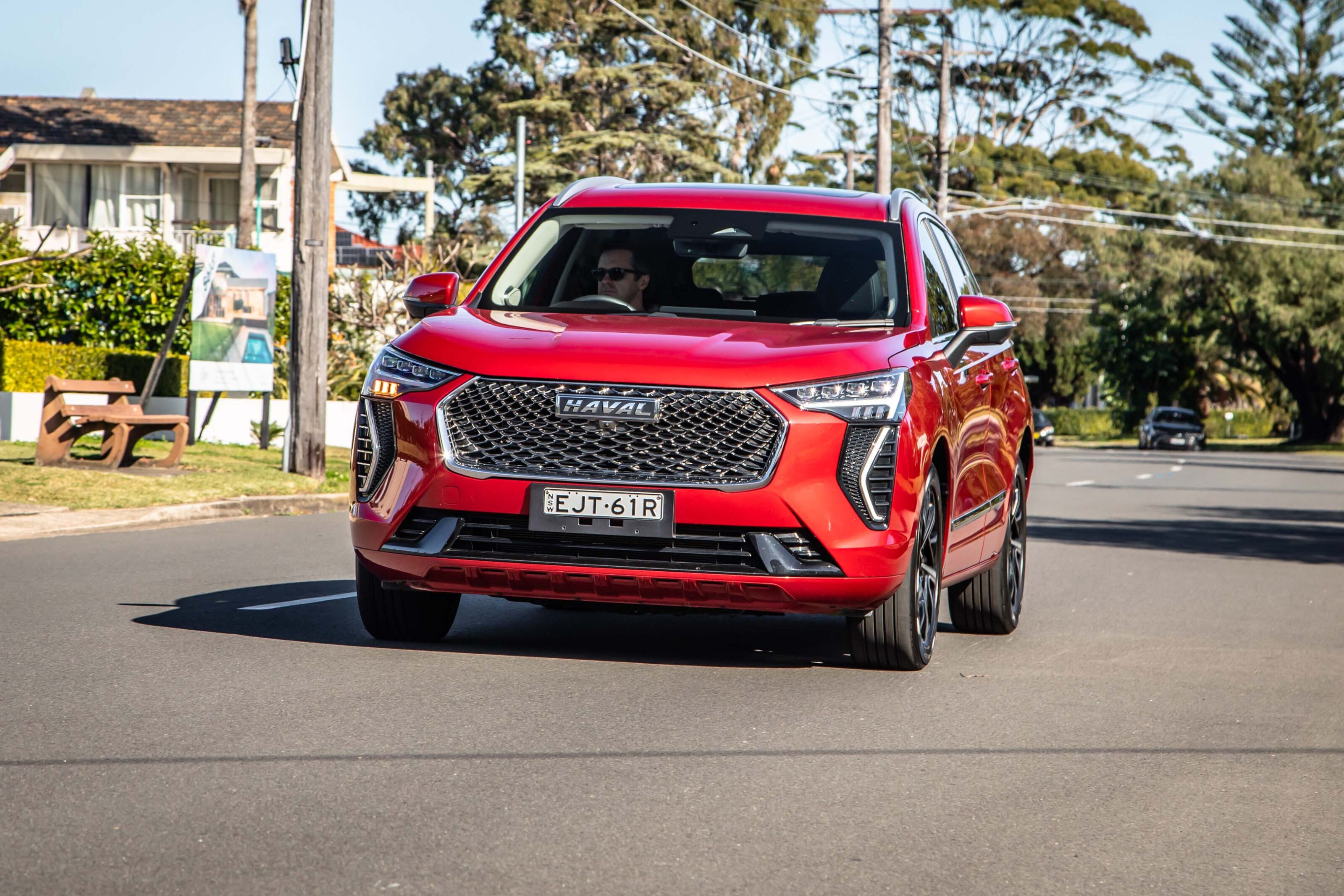
Where the Jolion’s drivetrain is awkward and occasionally shunty, the equally uninspiring-sounding ASX’s naturally-aspirated four-cylinder is better served by its continuously variable transmission. The CVT itself isn’t the peak of high technology but wrangles the kilowatts and Newton metres with considerably more decorum.
It seems to have improved over the years, too, with a little less flaring and a very positive pick-up from the lights (which sometimes means a wriggle of torque steer).
The ASX’s comparatively big-banger results in a higher real-world fuel consumption number than the Jolion’s. The official number of 7.9L/100km for the Japanese car has always seemed unattainable to me, having never got less than 12L/100km in nearly a decade of driving ASXs.
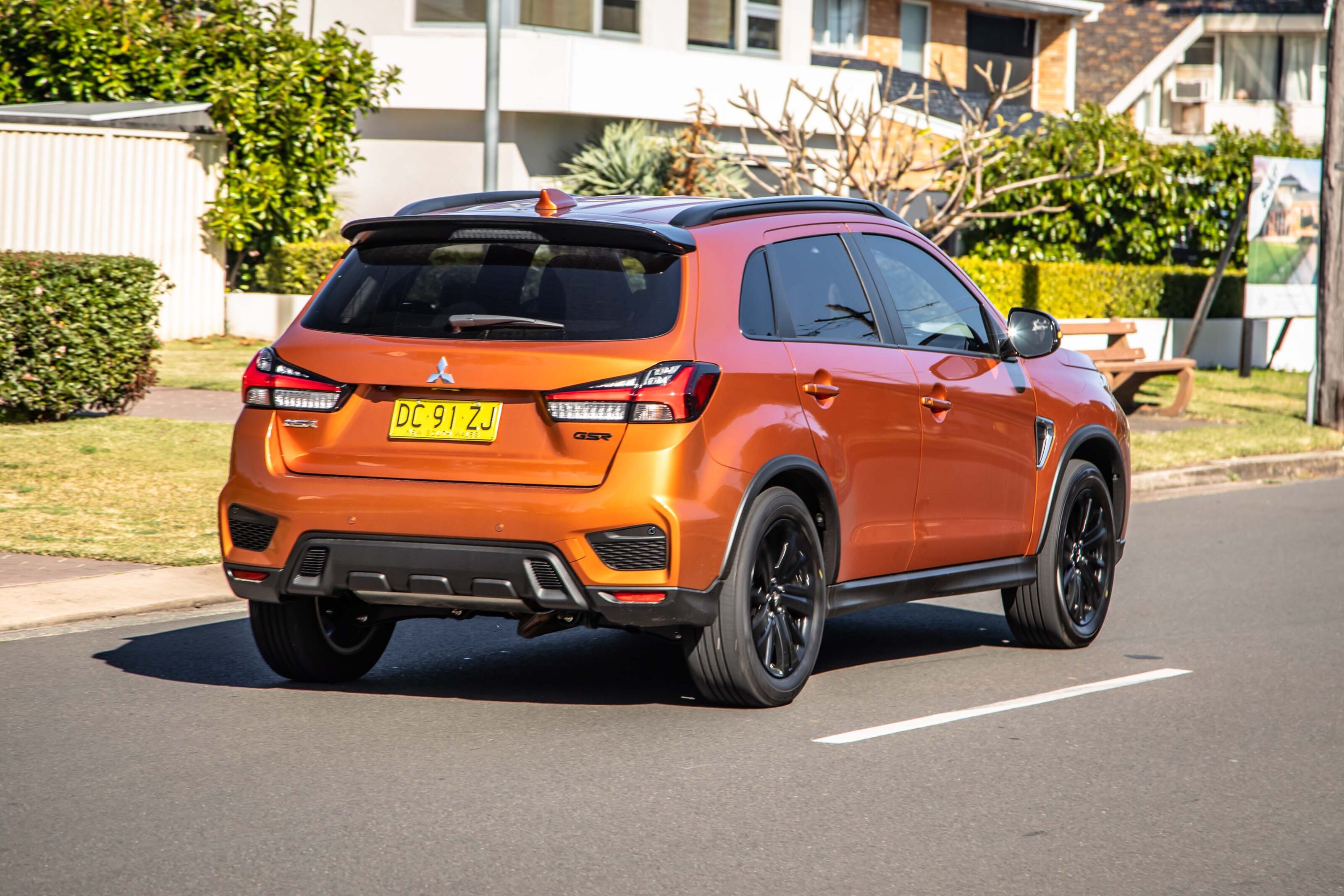
This time around I made it, but only by a solitary tenth of a litre, with 11.9L/100km.
I’d like to be able to compare the Jolioin’s 8.1L/100km figure against the real-world figure, but it’s impossible to find the average figure in the trip computer because, as I discovered in the Lux I drove last year, the steering wheel buttons don’t provide the ability to scroll through the on-screen information.
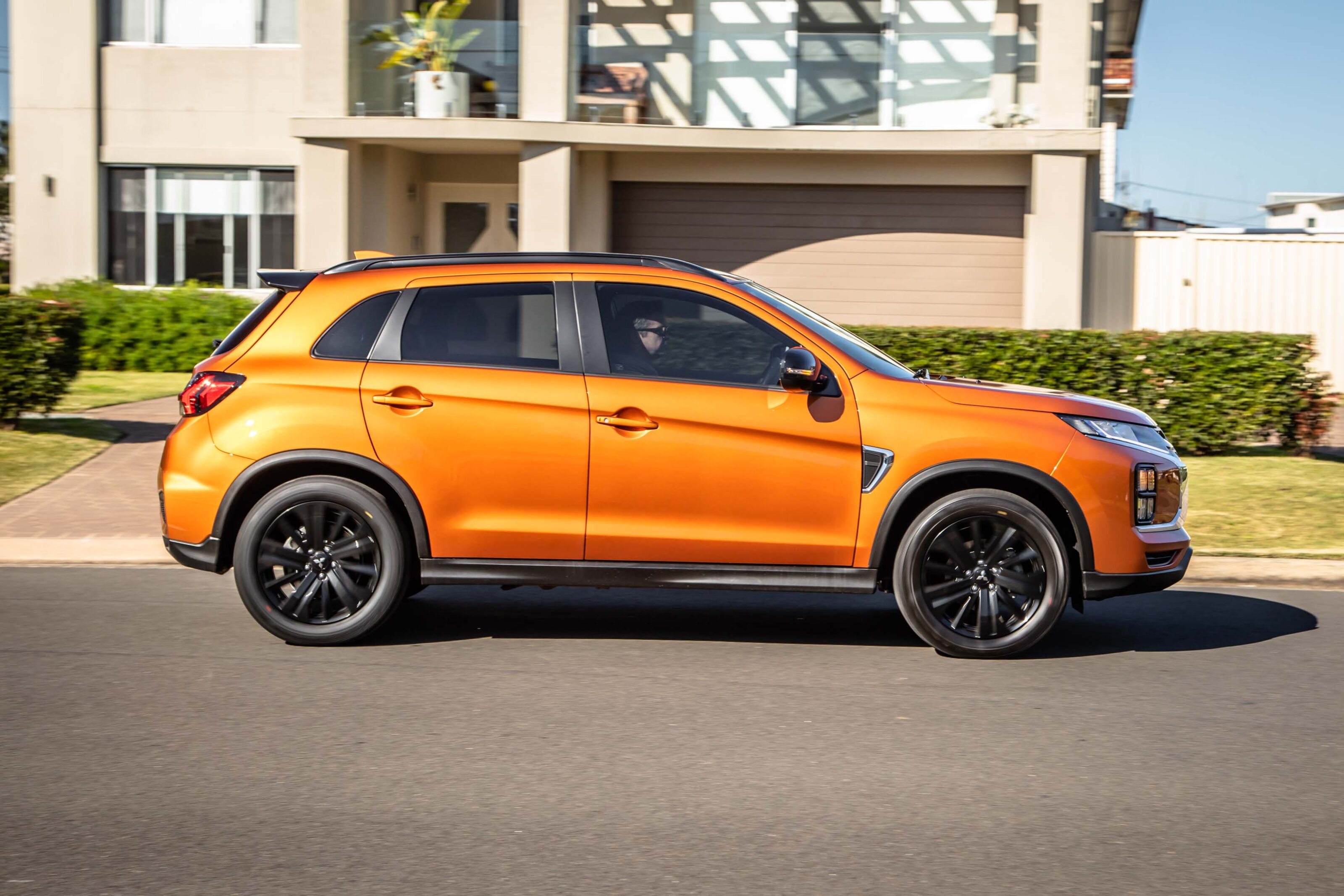
Ownership
Haval sends its cars out with a seven-year, unlimited-kilometre warranty, which is up there with Kia and beaten only by Mitsubishi’s ten-year warranty. There’s a five-year roadside assist package to go with it.
Also lasting five years is the capped-price servicing program. The first service arrives at 12 months or 10,000km but subsequent services stretch to 12 months or 15,000km.
The total for the first five services comes out at $1550 or an average of $310 per visit.
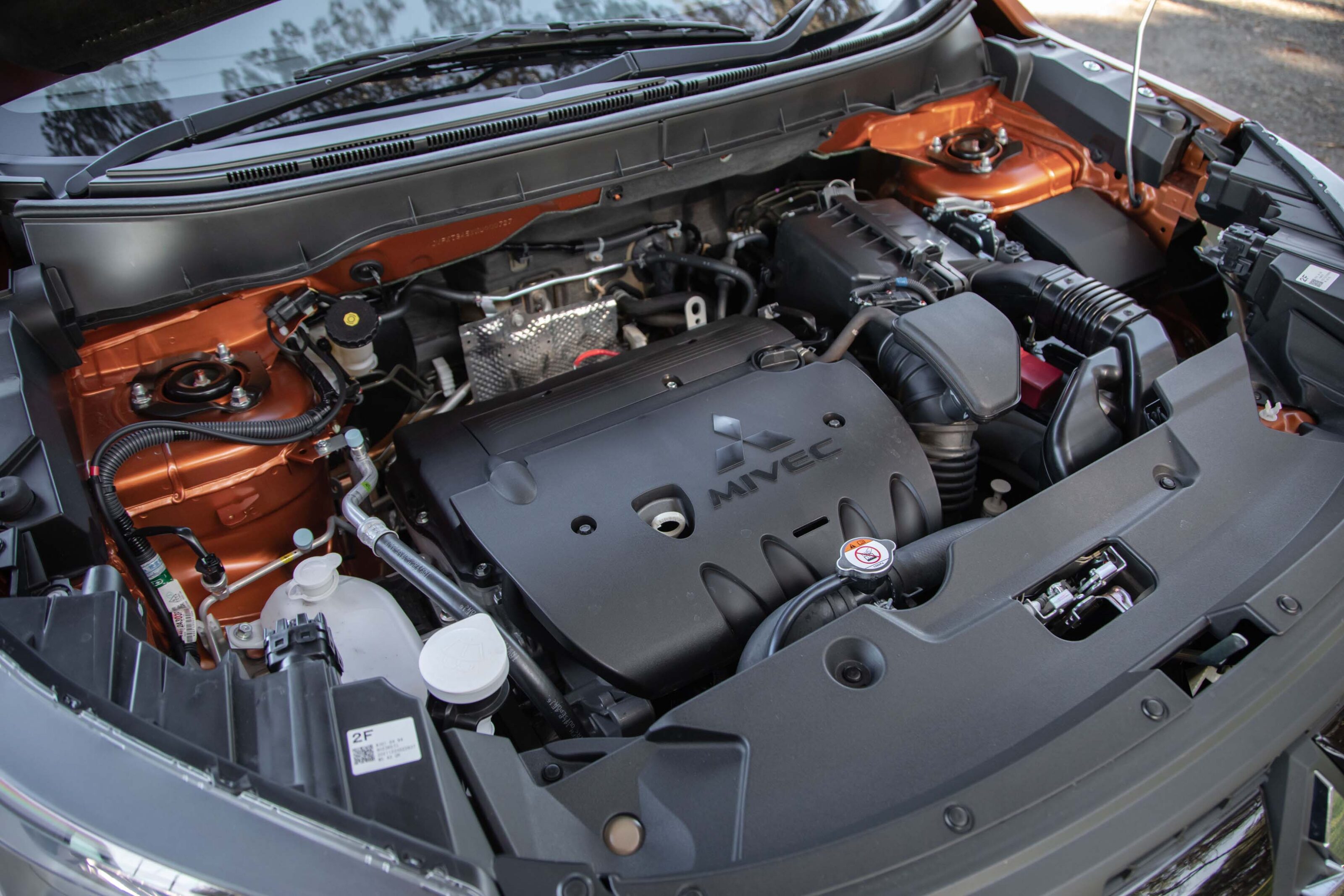
Mitsubishi’s headline ten-year/150,000km warranty beats all-comers. If you do crack the 150,000km limit, the warranty reverts to a five-year, unlimited-kilometre warranty, which is still good going if merely the current industry standard.
To go with the ten-year warranty is a ten-year capped price servicing program. For most of your visits – which come around every 12 months or 15,000km – you’ll pay $299. The sixth, eighth and tenth services jump to $599 each.
Over the decade of the program (that really is a very long time), that works out to $3890 or $389 per service.
While Mitsubishi’s program is longer, the Haval’s is narrowly cheaper for the first five years, so that’s worth considering if you don’t intend to keep your car for a long time.
VERDICT
The Haval takes a narrow victory but both of these cars share the same, solid values: sharp pricing, plenty of equipment and a whole of space for you and your things.
If the Jolion Lux were here, the gap would probably be slightly wider in favour of Haval as its smaller wheels result in a quieter ride and you’re not losing much from the Ultra’s spec list, at least not much that matters. And it’s cheaper. But it’s the Ultra we’re looking at here.
On the other side, the ASX GSR is probably the best-value ASX and the best-looking with its black pack theme. An unbeatable warranty ensures it closes the gap on the Jolion, along with a friendlier engine and transmission combo.
The ASX is still selling well and continues to beat the Jolion comfortably with its far more familiar badge.
But the Jolion’s victory in this test comes down to a bigger and better cabin, better ride and handling and comprehensive safety and technology package without the significantly bigger price.
SCORING
Haval Jolion Ultra: 7.7/10
What we like
- Solid cost of ownership
- Heaps of gear
- Huge interior
Not so much…
- Noisy ride
- Dash and media software lack polish
- Dithery gearbox
Mitsubishi ASX GSR: 7.3/10
What we like
- Huge inside
- Looking good in its old age
- Long warranty and servicing program
Not so much…
- Uninspiring drive
- Bitty interior
- Fuel economy
| Haval Jolion Ultra | Mitsubishi ASX GSR | |
|---|---|---|
| Body: | 5-door, 5-seat small SUV | 5-door, 5-seat small SUV |
| Drive: | front-wheel | front-wheel |
| Engine: | 1.5-litre four-cylinder turbo-petrol | 2.4-litre naturally-aspirated four-cylinder petrol |
| Transmission: | seven-speed dual-clutch | continuously variable |
| Power: | 110kW @ 5600-6000rpm | 123kW @ 6000rpm |
| Torque: | 210Nm @ 2000-4400rpm | 222Nm @ 4100rpm |
| Bore stroke (mm): | 84.7 x 75 | 83.0 x 97.0 |
| Compression ratio: | 9.3 : 1.0 | 10.5 : 1.0 |
| 0-100km/h: | 11 sec (estimate) | 11 sec (estimate) |
| Fuel consumption: | 8.1L/100km (combined) | 7.9L/100km (combined) |
| Weight: | 1400kg | 1398kg |
| Suspension: | MacPherson strut front / torsion beam rear | MacPherson strut front / multi-link rear |
| L/W/H: | 4472mm/1841mm/1619mm | 4365mm/1810mm/1640mm |
| Wheelbase: | 2700mm | 2670mm |
| Brakes: | Ventilated disc front / solid disc rear | Ventilated disc front / solid disc rear |
| Tyres: | 255/55 R18 Kumho Solus | 225/55 R18 Bridgestone Ecopia |
| Wheels: | 18-inch alloy (space-saver spare) | 18-inch alloy (space-saver spare) |
| Price: | $33,990 drive-away | $31,990 + on-road costs |
