
Snapshot
- Lexus NX scores over 80 per cent in all ANCAP categories
- Safety assist and adult occupant protection rated above 90 per cent
- Radar and camera-based AEB system praised for preventing/mitigating collisions with motorcycles
The 2022 Lexus NX range has been handed a five-star safety rating by independent crash testing authority ANCAP.
Having gone on sale earlier this year, the Lexus NX lineup is fitted as standard with autonomous emergency braking (AEB), lane keep assist (LKA), lane departure warning (LDW) and emergency lane keeping (ELK), a speed assist system (SAS) and blind-spot monitoring (BSM) – all of which contributed to its high score for safety assist systems.
This allowed the NX to score 92 per cent for its safety tech with 14.75 out of 16 points, the highest-scoring of the four categories, with perfect marks given to its occupant status and AEB junction assist systems.
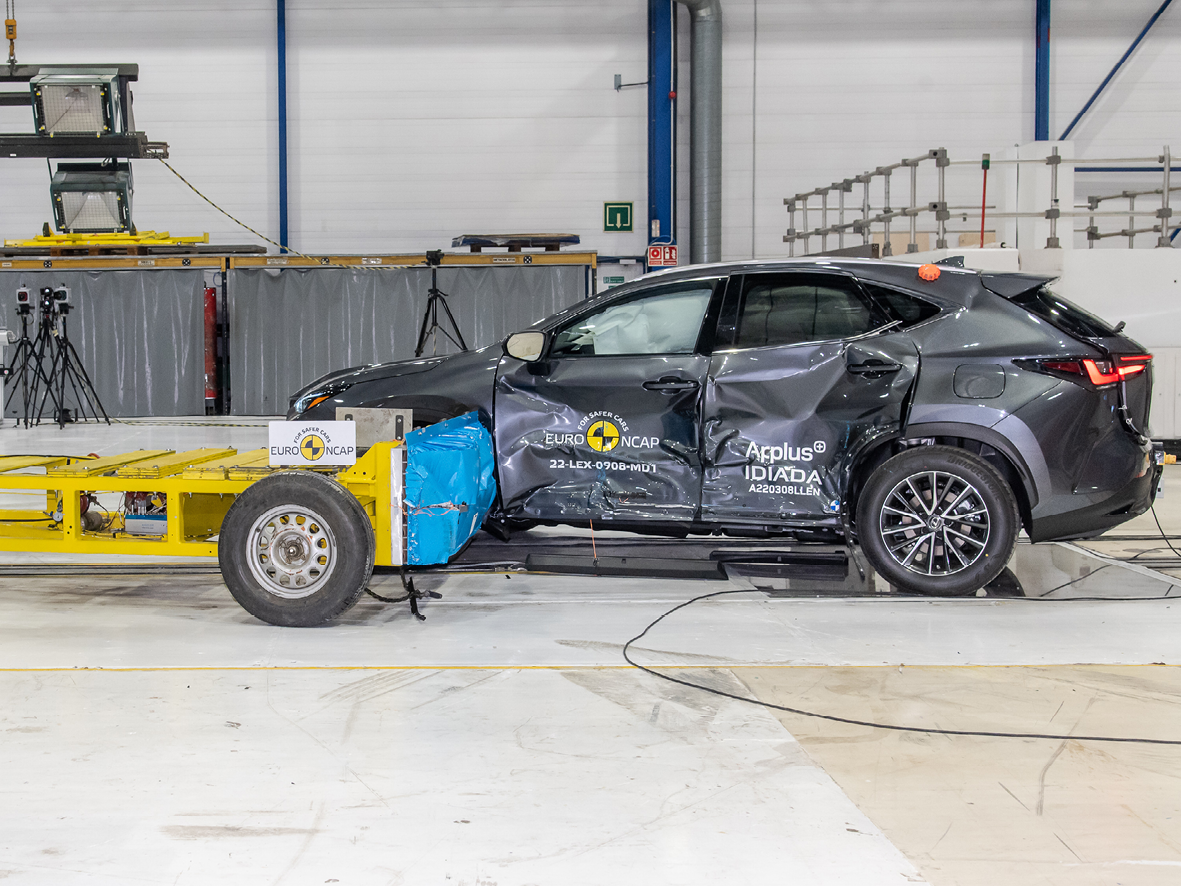
Just one per cent behind was the NX’s adult occupant protection rating, as 34.59 out of 38 points contributed to a score of 91 per cent – with only its frontal offset, MPDB test (vehicle-to-vehicle compatibility) given a penalty of more than one point, dropping its total to 6.68/8.
For child occupant protection it scored 89 per cent, with 43.87 out of 49 points, let down by a 0.13 point penalty in the front dynamic test – but helped by its lower Isofix anchorages on the rear outboard seats and top tether points for all rear seating positions.
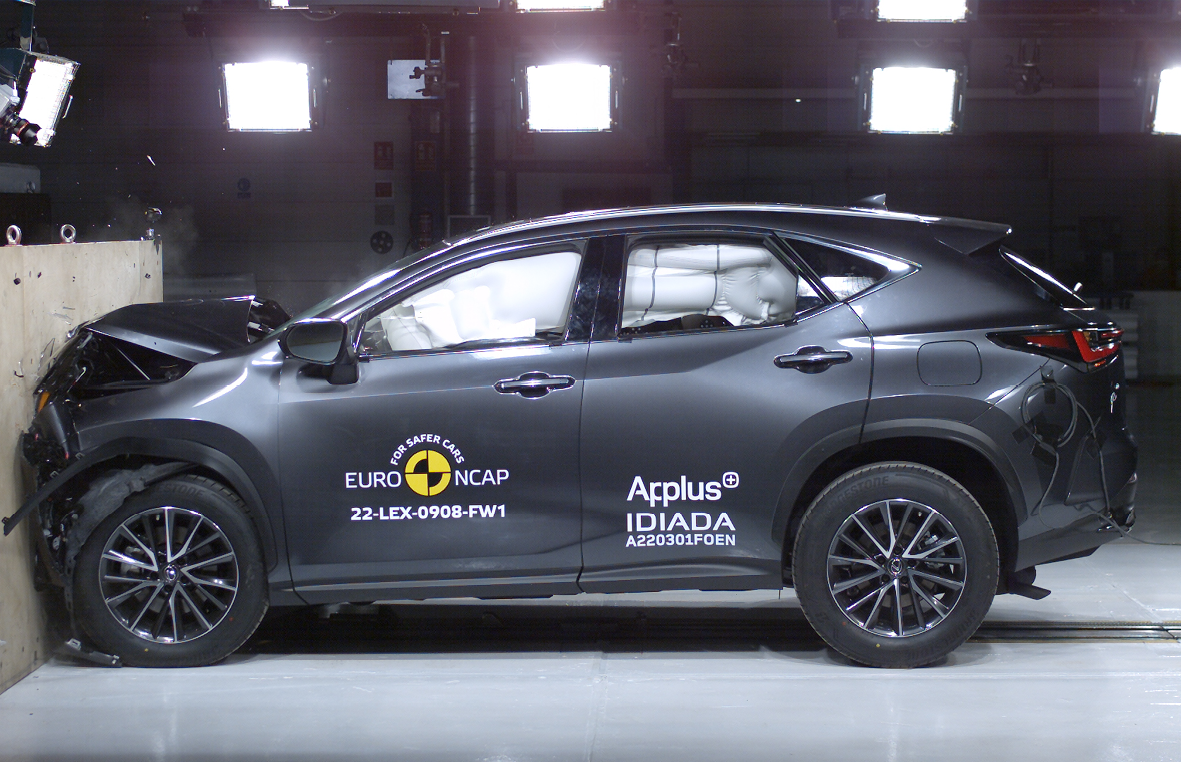
Last but not least was the NX’s vulnerable road user protection rating, with its 83 per cent final score helped by 45.15 points scored from a maximum of 54 available.
The NX fared particularly well with its upper and lower leg impacts, as well as forward AEB for pedestrians, although it lost two points due to the lack of an AEB backover system – as well as taking just 17.43 out of 24 points in head impact tests.
ANCAP Chief Executive Carla Hoorweg praised the NX, saying: “Lexus has provided an impressive suite of safety features and active safety equipment in its latest NX model.”
Set to take effect from January next year, ANCAP will implement testing for AEB systems and how they detect and prevent or mitigate crashes with motorcycles – a feature which is already fitted to the NX through its radar and camera-based AEB tech.
Snapshot
- BMW iX recalled due to airbag control unit fault
- Total of 245 units affected
- BMW is currently contacting affected customers
The BMW iX has been recalled less than a year after it landed in Australia.
Affecting a total of 245 units, the BMW iX arrived locally late last year as the brand’s flagship electric vehicle, although the SUV’s recall currently covers every example in Australia.
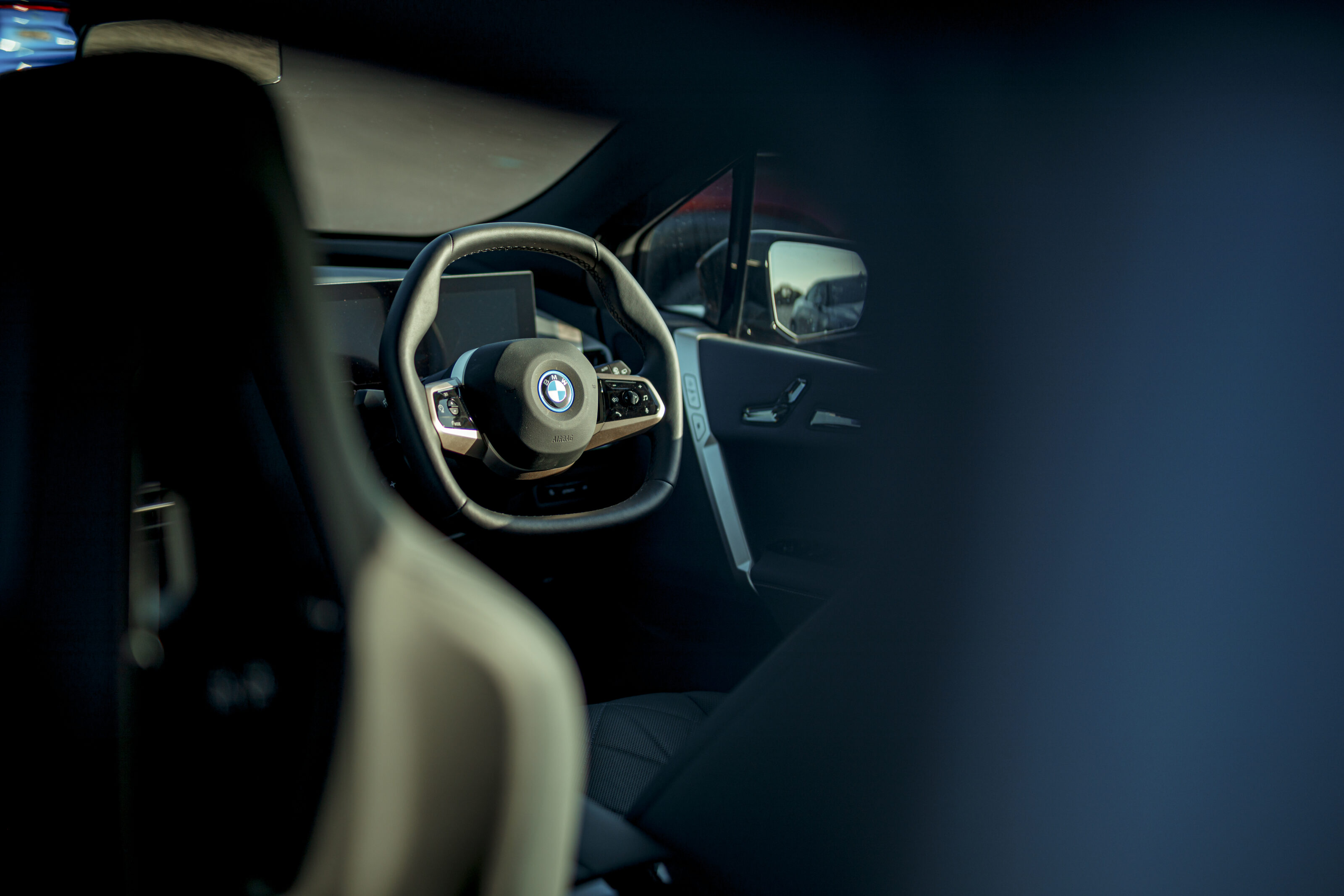
According to the recall notice, a software issue with the car’s airbag control unit, the warning lamp and message might not illuminate on the dash, potentially meaning occupants won’t know if there is a genuine fault.
The local arm of the German manufacturer says it is currently contacting owners of the 245 vehicles to have the problem rectified, free of charge.
BMW says owners can contact the Recall Hotline on 1800 243 675 or their preferred BMW dealer.
A list of VINs for affected vehicles can be found here.
How do you make a Yaris Cross? There’s a dad joke to be had there, but I’ll leave it to the end. To answer more technically, you take a Toyota Yaris Hybrid hatchback, jack it up a bit, futz about with the interior by adding cloth patterns from the 1990s, whack on a different body, call it a compact SUV and there we are – a Kia Stonic/Hyundai Venue competitor with a Toyota badge and price tag to match. Okay, it was only slightly more technical than the dad joke.
Toyota’s baffling decision to make the much-improved Yaris hatch vastly less affordable than before starts to make business sense when you see the Yaris Cross. And make business sense it has because while the Yaris Cross arrived fairly late to the sales party, it landed in second place pretty damn easily.
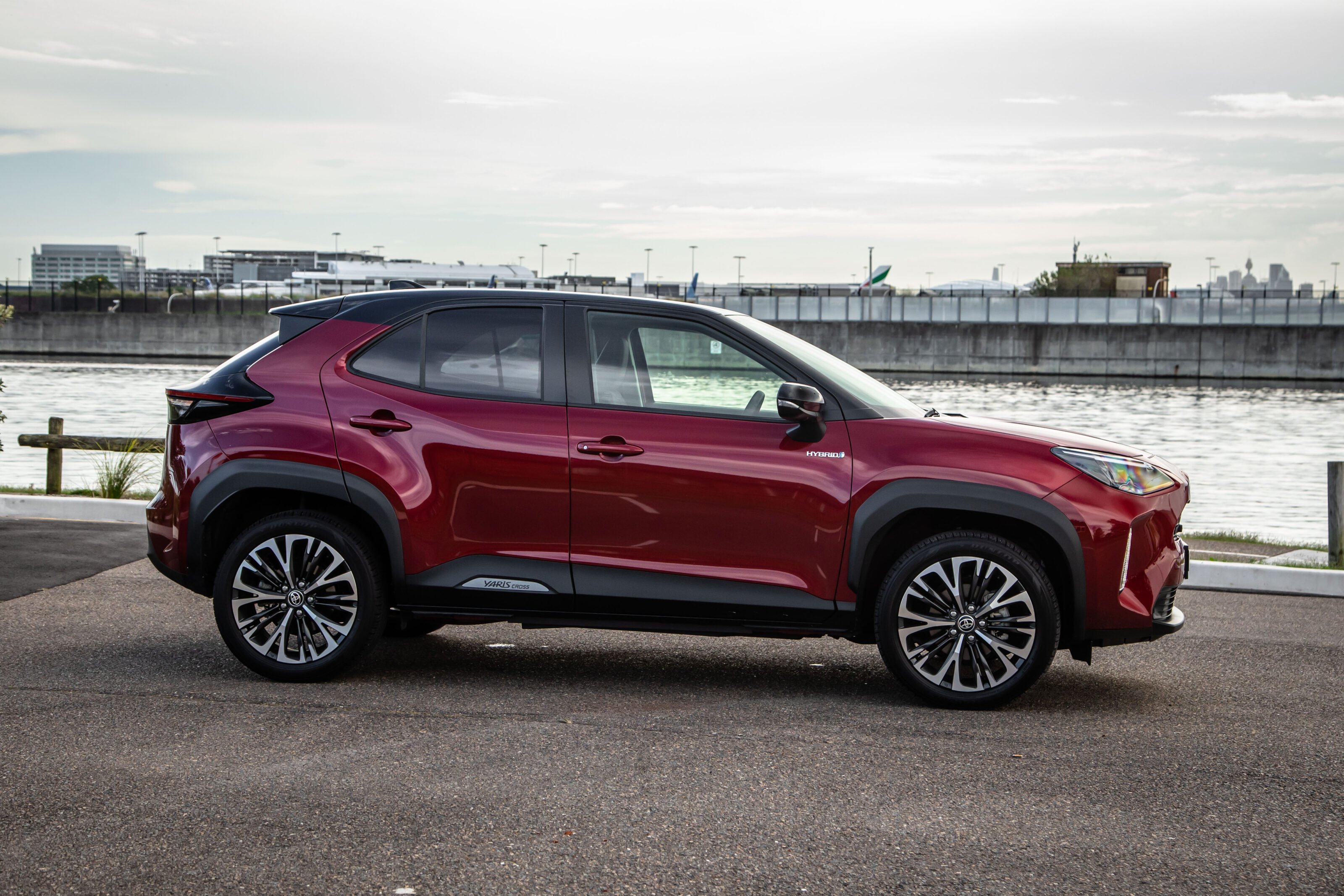
The Yaris Cross Urban is one of those badges that milks the SUV pattern while placing it firmly in the buyer’s mind as a city car, with all the cladding of its faux off-road roots but some spangly alloy wheels and a hybrid drivetrain. And, if you like, all-wheel drive, like the one I had.
Pricing and Features
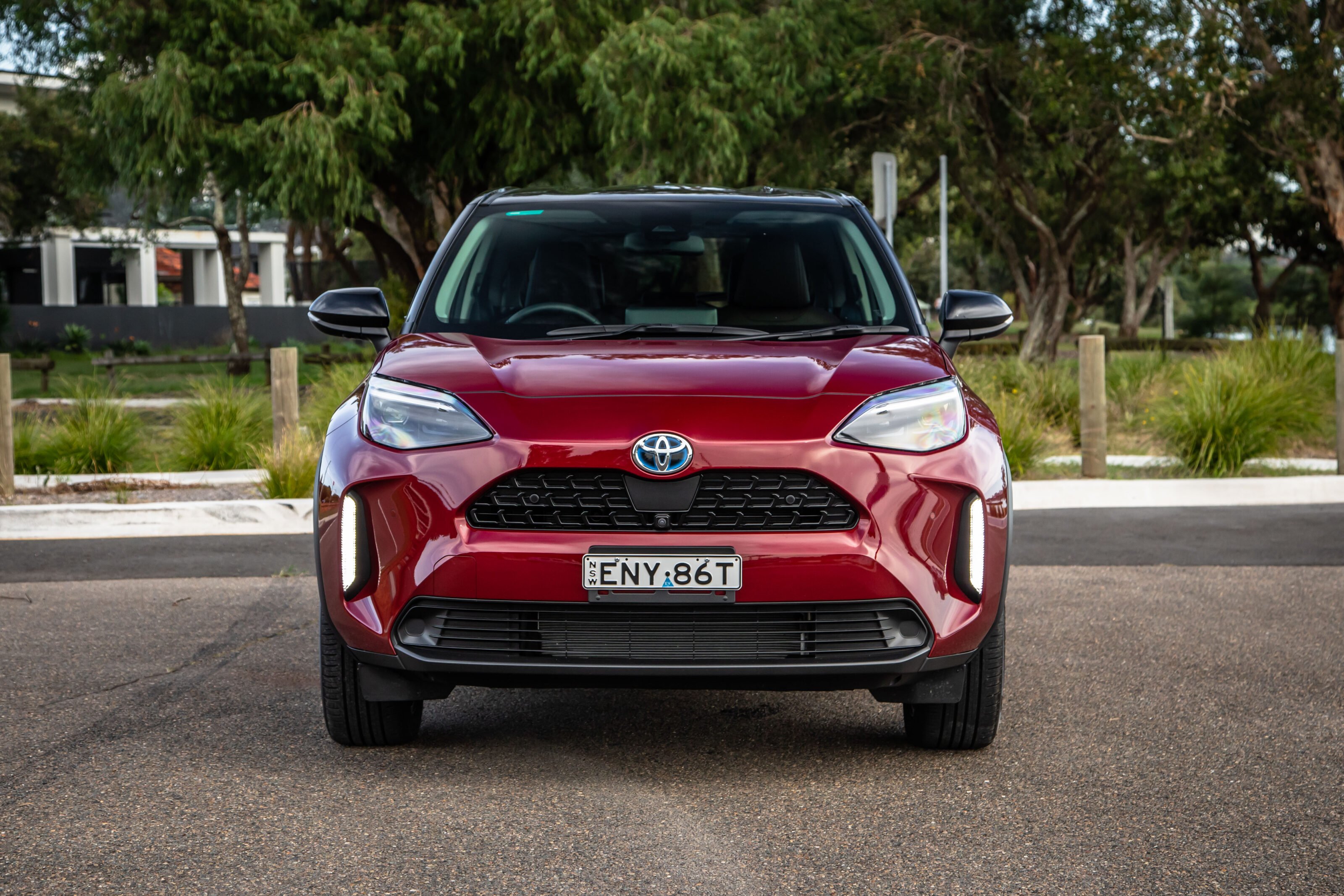
The Yaris Cross range starts off at $26,990 before on-road costs, a reasonable premium over the base Yaris but with a similar spec. Here at the other end in the Urban Hybrid AWD, you’ll be starting at $37,990 before on-road costs, meaning this is a $40K-plus on the road proposition.
If you’re happy with front-wheel drive and without hybrid propulsion, you can dip under forty grand or meet in the middle with a hybrid 2WD. But you’re still fighting with bigger machinery like the Kia Seltos Sport+, Hyundai Kona and even the VW T-Roc. To name just three in this wildly busy segment.
You’ll be getting 18-inch alloys, a six-speaker stereo, single-zone climate control, adaptive cruise control, reversing camera, front and rear parking sensors, keyless entry and start, electric driver’s seat adjustment, sat-nav, auto LED headlights with auto high beam, head-up display, powered folding door mirrors and a tyre repair kit in place of a spare. That’s worth knowing if you’re heading out of the city.
Toyota’s ongoing battle with modernity in the media screen continues, with a washed-out, cheap and small central touchscreen flanked by very cheap plasti-chrome buttons. It’s not befitting the megacorp that is Toyota, but clearly they and most of their customers disagree with me. It does have Android Auto and Apple CarPlay, though, so that’s some compensation.
All of that doesn’t sound like a lot for the money and to be fair, it isn’t. Until you look at the safety spec list that goes on forever. You have eight airbags (including a front centre airbag to prevent head clashes in a side impact), the usual braking, traction and stability systems, blind-spot monitoring, lane departure warning with lane-keep assist, forward collision alert (low-speed), forward auto emergency braking (low speed), rear cross-traffic alert and speed sign recognition. It’s a lot for a small car and it all adds up to a five-star ANCAP rating awarded in September 2021.
All of that doesn’t sound like a lot for the money and to be fair, it isn’t. Until you look at the safety spec list that goes on forever

A quick check of the price of an Audi Q2 was in order because the Yaris hatchback in its most expensive form costs almost the same as an Audi A1, but in this case, the gap is much wider. It’s a lot more than a VW T-Cross with all the boxes ticked, though.
The Korean tiddlers are pretty basic sorts of cars with funky looks and a long warranty, especially in the case of the Kia. But the Stonic GT-Line’s twin-clutch transmission is a bit blergh and the 1.0-litre turbo, while fun, won’t get anywhere near the Yaris Cross Hybrid’s fuel consumption.
But the bigger Kona and Seltos are still well within this price range and while they may not punch spec-for-spec with the Yaris, both are better equipped and bigger, though conspicuously missing out on reverse cross-traffic alert except at the top of their respective ranges. You could easily get a fully-specced T-Cross and, if you can find one, a mid-spec T-Roc.
And who could forget the hybrid-powered Toyota C-HR Koba or even GR Sport if you don’t need AWD?
Comfort and Space
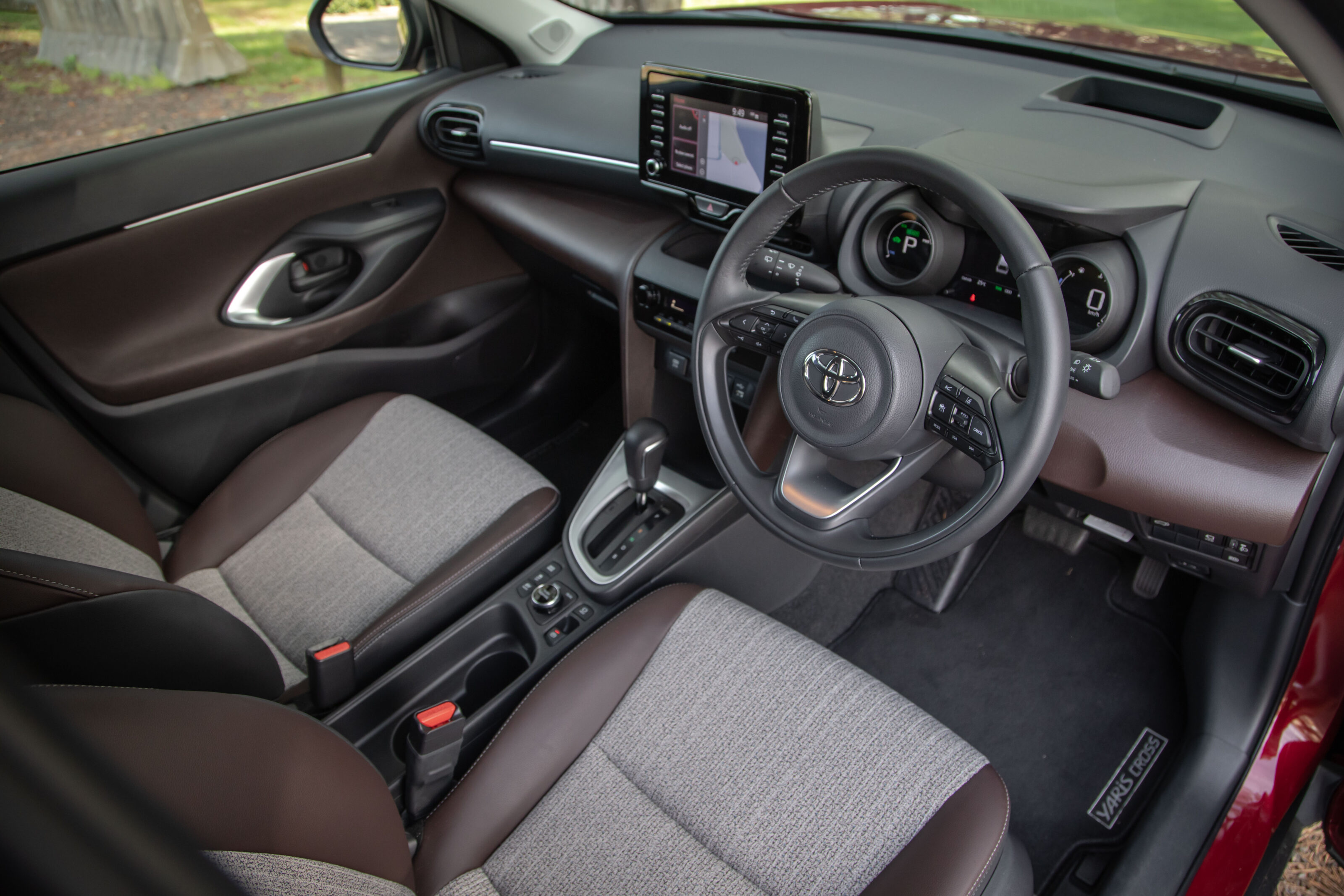
Being a jacked-up Yaris it’s basically what it says on the tin. A Yaris. While it’s slightly bigger on the outside, it’s pretty much the same on the inside…except. Hmmm.
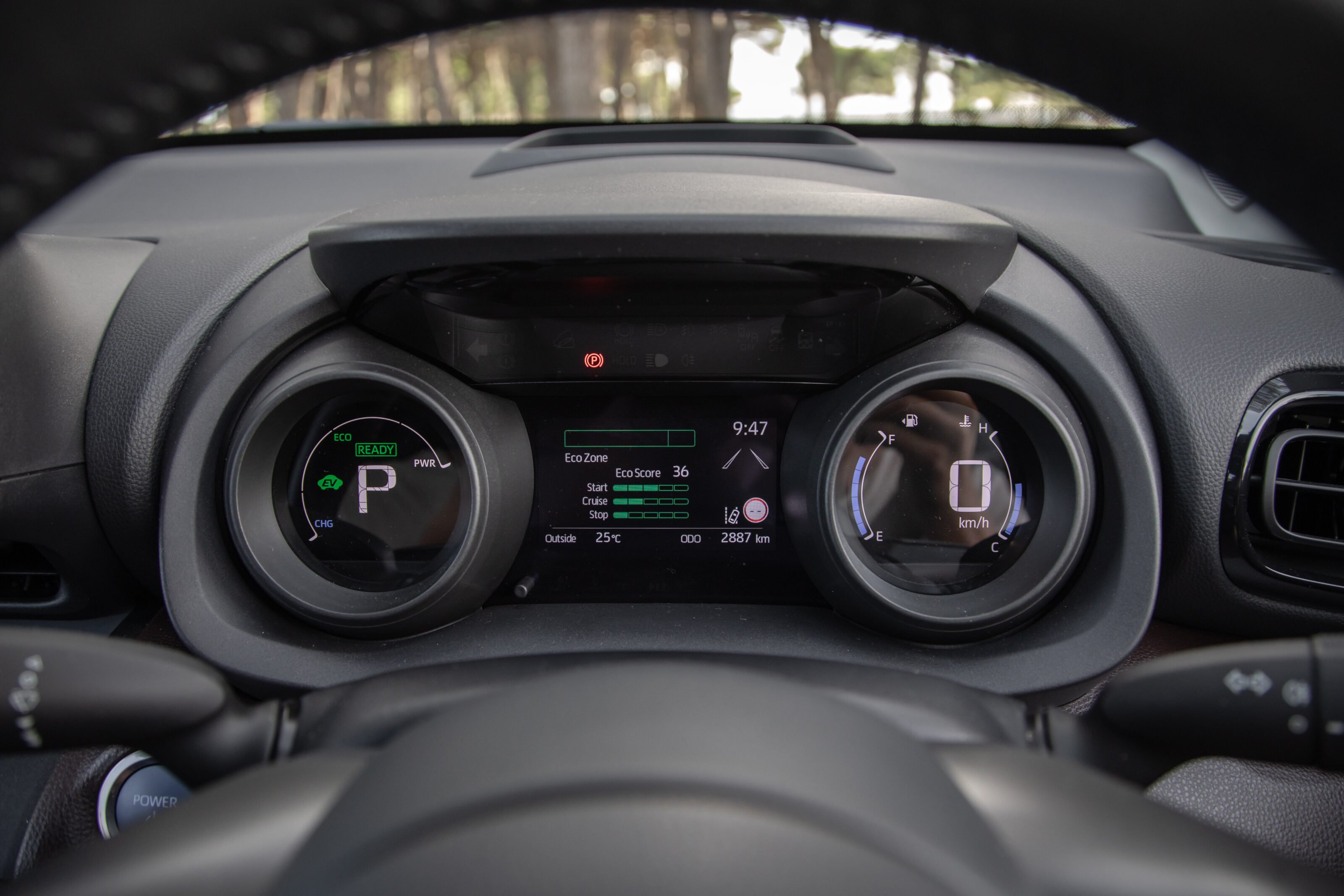
The dash architecture remains the same, with the funny pair of digital dials widely-spaced like the eyes of a Star Wars creature propping up a bar in the back of shot. The central instrument screen is full of useful information and that’s all well and good.
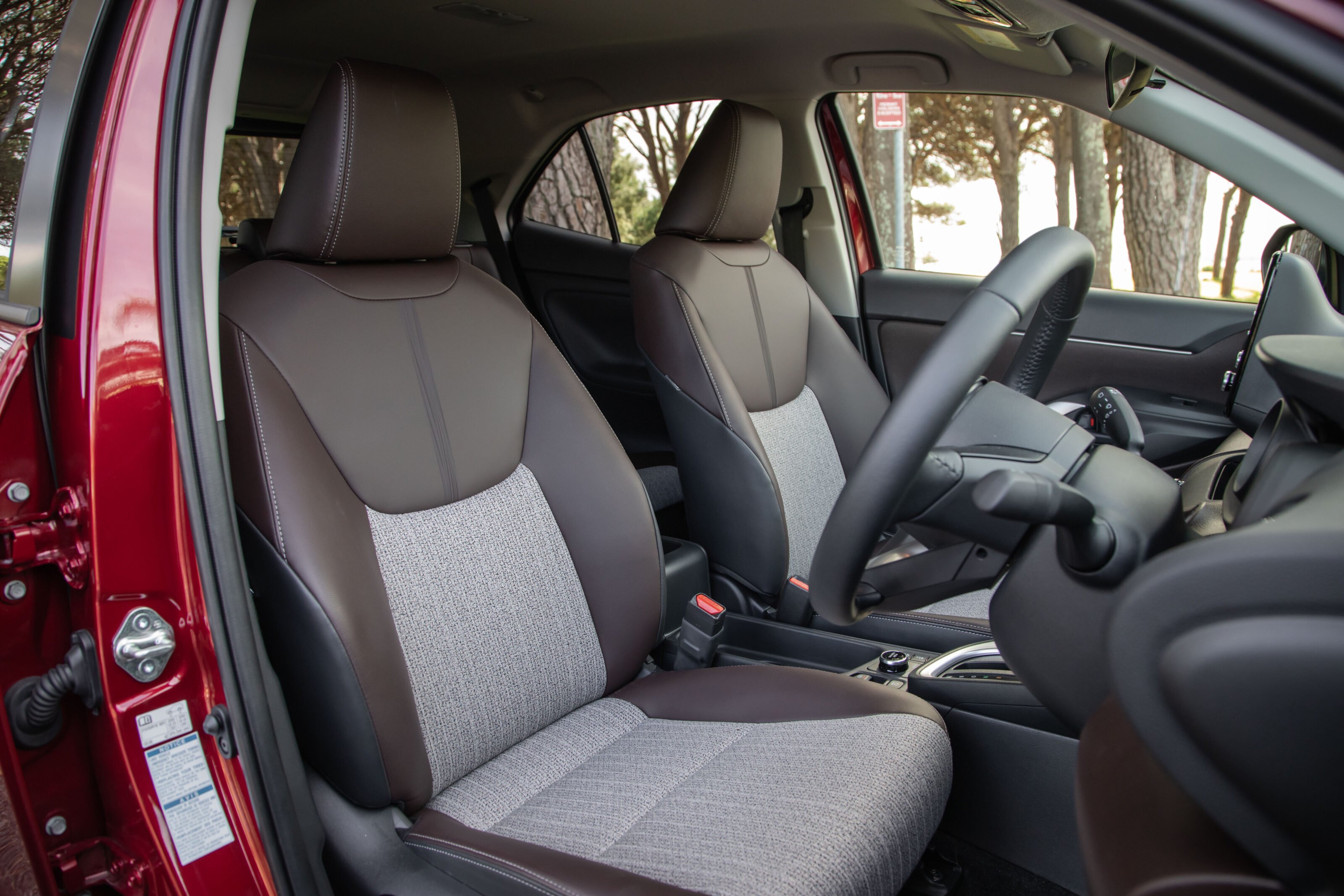
For some reason, Toyota has decided brown is a good interior colour, with solid lashings of it in plastic across the dash, and a fibrous/cardboard material in the door cards and on the seats. The seats themselves have cloth panels sewn in reminiscent of television static from the analogue days. It’s strikingly unpretty and makes me yearn for the daggy 1990s cloth of the top-of-the-range Yaris hatchback.
When you shut the doors they clatter and shudder. While I’m not an ‘I need that reassuring thunk’ type, it’s a bit unsettling as it’s the kind of noise you expect from a door with frameless windows. There are also a number of unmarked switches that, yes, are window switches but it’s weird that a company that usually pays attention to detail – and does elsewhere on the car – missed these two important things. And like the Yaris hatch, the auto shifter looks completely out of place and from a car you could buy 30 years ago.
For some reason, Toyota has decided brown is a good colour, with solid lashings of it across the dash, and a fibrous material in the door cards
Most of the rest of the cabin is pretty good though. It’s tight, of course, but there are two cup holders up front, and bottle holders in all four doors (although the rears are for smaller vessels). There appears to be space for a fitted removable tray over the cup holders but I couldn’t find anything that suggests it’s available, so that’s one for the 3D-printing crowd. There’s no centre front armrest either, and there’s an open cubby in lieu of a covered bin.
Rear seat passengers have to post themselves through the gap and will find themselves snug behind a six-foot driver. The middle-seat passenger will have you in The Hague before you can blink, which is just as well because if the outboard passengers want cup holders, they have to fold down the entire centre section of the rear seat, which is certainly better than nothing.
No rear air vents, though, or USB ports nor anything much else.
On the Road

As if I haven’t outlined enough irritating things about the Yaris Cross, Toyota still insists on failing to give us combined power and torque figures for the hybrid system. The 1.5-litre engine musters 85kW at 5500rpm and 120Nm at 3800rpm.
That’s obviously not the whole story because there’s an electric motor with its instant torque and additional power available that makes the Yaris Cross competitively sprightly despite the extra weight over the two-wheel drive ICE versions, while also using hardly any fuel.
As ever, the hybrid system is very good. Toyota has been pounding these out for over two decades now and is doing an excellent job. Smooth transitions between electric and petrol power, a well-integrated automatic continuously variable transmission (CVT) and an exceedingly useful drop in fuel consumption make it all worthwhile.

Here in the Yaris, though, the 1.5-litre is a bit rackety and gravelly. It seems obvious that almost no work has gone into making the triple-cylinder sound even vaguely appealing, with the CVT sending it to its power and torque peaks as required and leaving it there to growl at you like a bear with its foot caught in a trap. I love the sound of most three-cylinder engines but I don’t like this one.
There is also an uncharacteristic series of squeaks and chirps from the hybrid system, which I put down to a lack of sound deadening rather than anything sinister. Our resident youth with not-yet broken hearing said it made a lot of high-pitched noises I couldn’t hear and was wondering if I’d left the handbrake on.
One of the reasons for the difference in price to the two-wheel-drive version is that the rear suspension in this specification is double wishbones rather than torsion beams
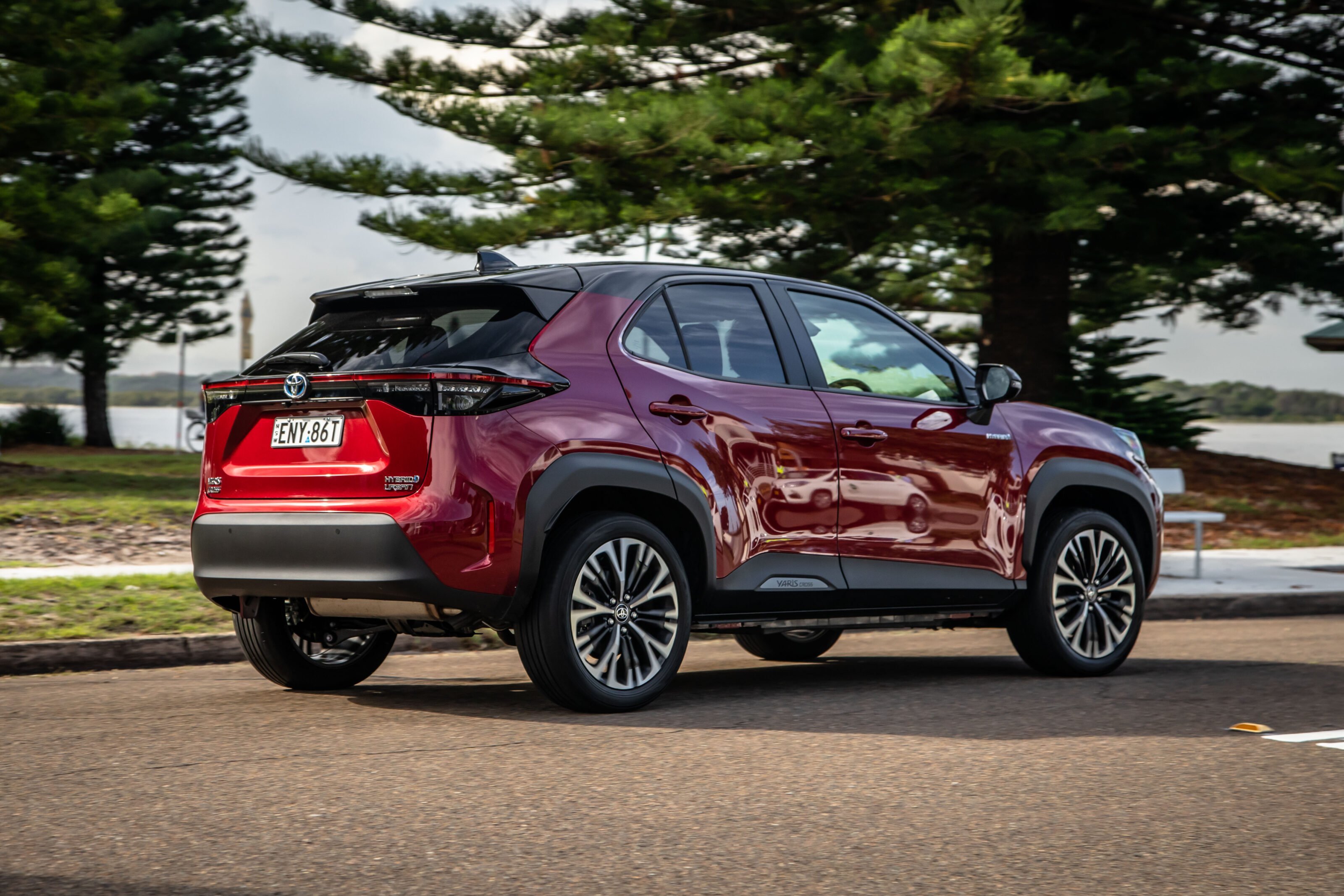
Also irritating are the endless beeps. The lane-keep assist is either wired on meth or sleeping peacefully, and beeps like a bastard when it’s the former. You also have to remember to turn the car off when you’re getting out as the system is too dumb to realise that if you’re locking the car it should shut itself off. Beeping, beeping, always beeping and the beeps all sound the same.
One of the reasons for the substantial difference in price to the two-wheel-drive version is that while they’re all based on Toyota’s hugely impressive TNGA platform, the rear suspension in this particular specification is by double wishbones rather than torsion beams. That woke me up when I read it in the spec sheet and explains why you can have quite a bit of fun on the Dunlop Enasave tyres.
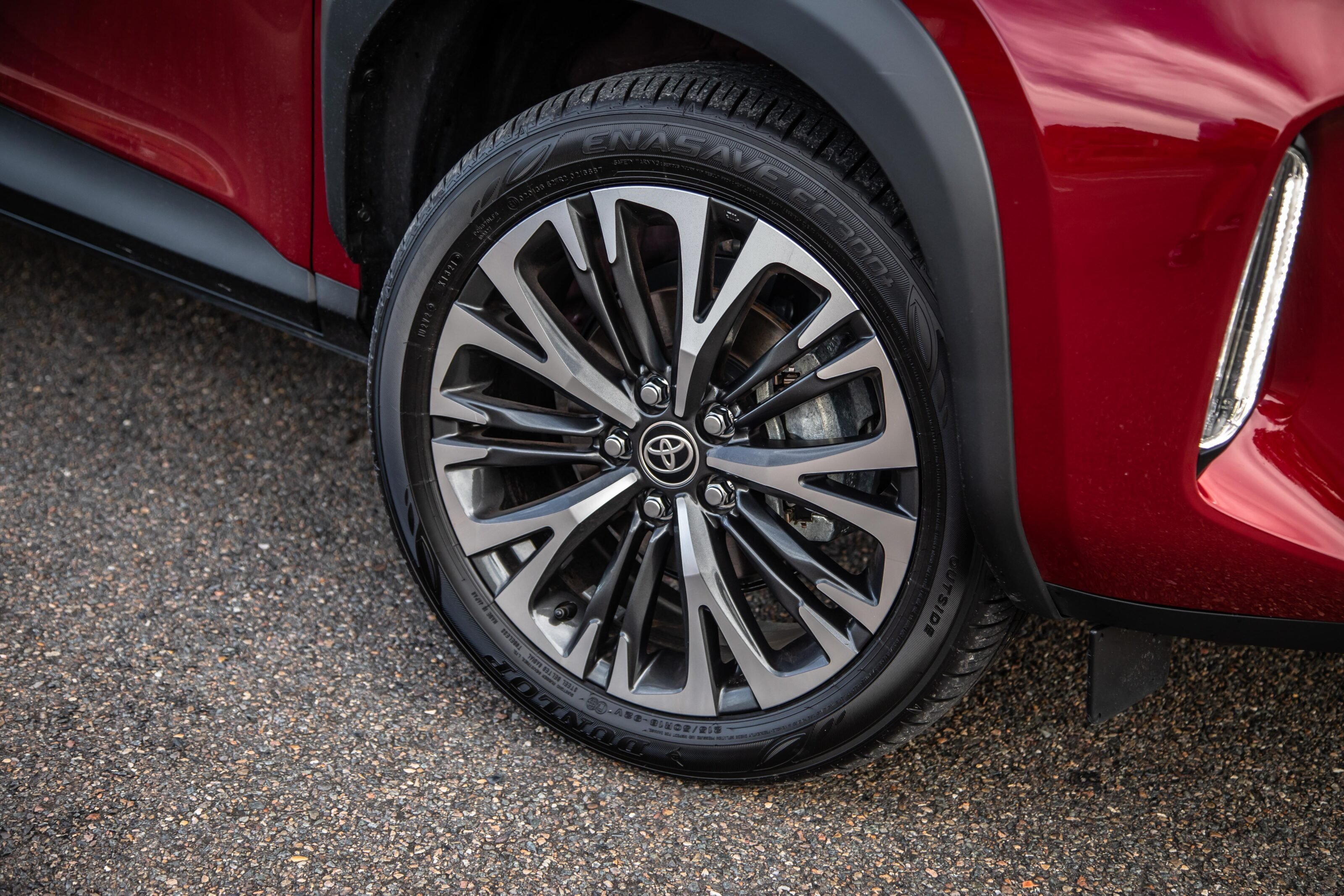
Just over 1300kg isn’t too bad for a modern car laden with so much safety and electrification. Combined with nicely weighted steering, you can have a bit of fun threading this car through the bends. The steering is accurate and the car goes where you want it to while delivering a pretty impressive ride for such a short wheelbase.
Around town, it’s also very good, with the electric motor ensuring you get off the mark quickly and smoothly, which is handy. I love the way it creeps around slowly under electric power, too. You can’t get too excited or the engine kicks in, but it’s a fun game in slow traffic or car parks.
Just over 1300kg isn’t too bad for a modern car laden with so much safety and electrification. Combined with nicely weighted steering, you can have a bit of fun threading through the bends
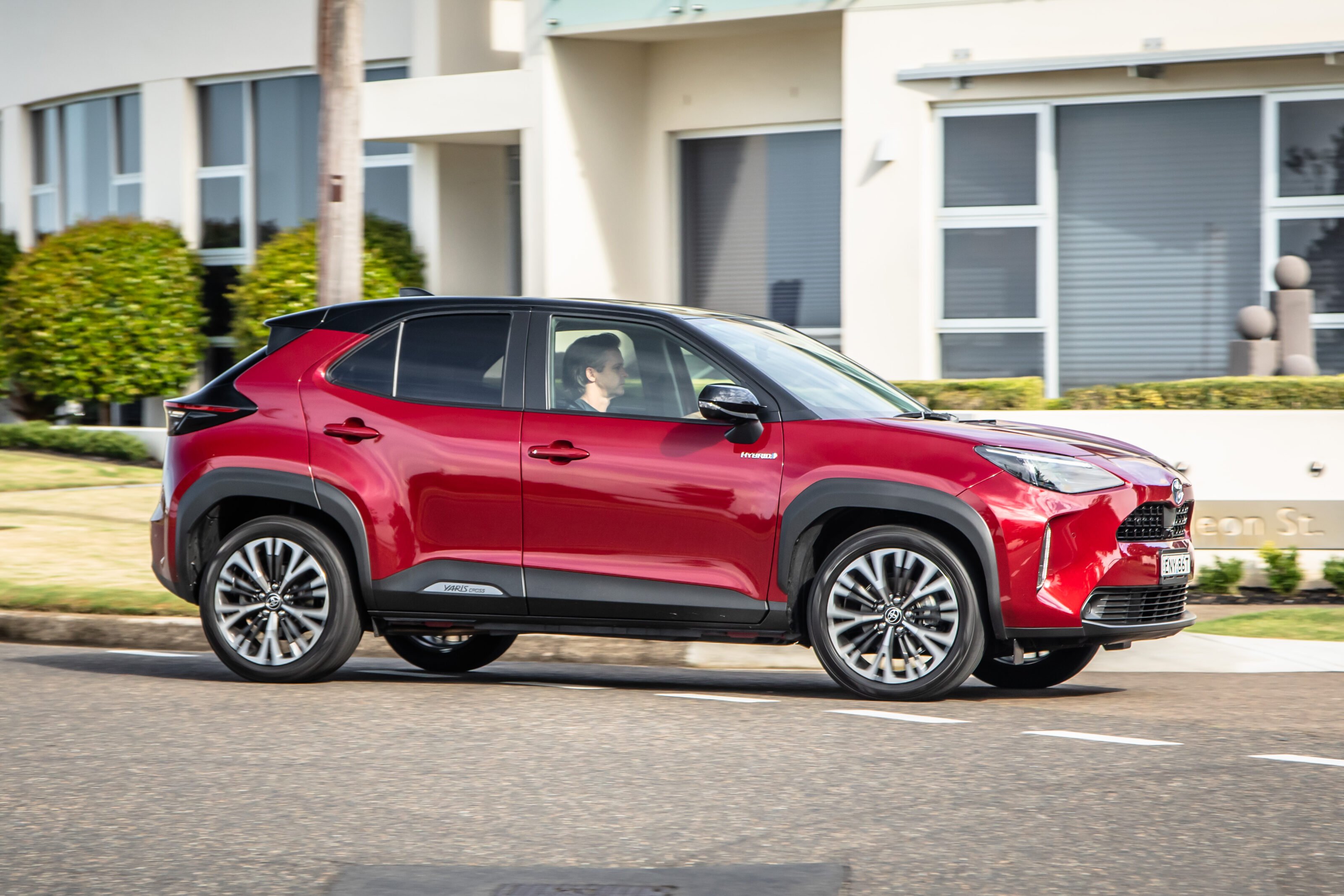
Our week with the Yaris Cross was pretty busy, including a run to the Blue Mountains and back as well as a lot of city and suburban running. The hybrid drivetrain delivered a mighty impressive 4.0L/100km which in these expensive times is extremely worthy. Most competitors will use twice that, which at the moment makes the difference between covering 100km for around $10 of fuel instead of $20. Toyota has been waiting a long time for an oil crisis and now it’s here…
Ownership
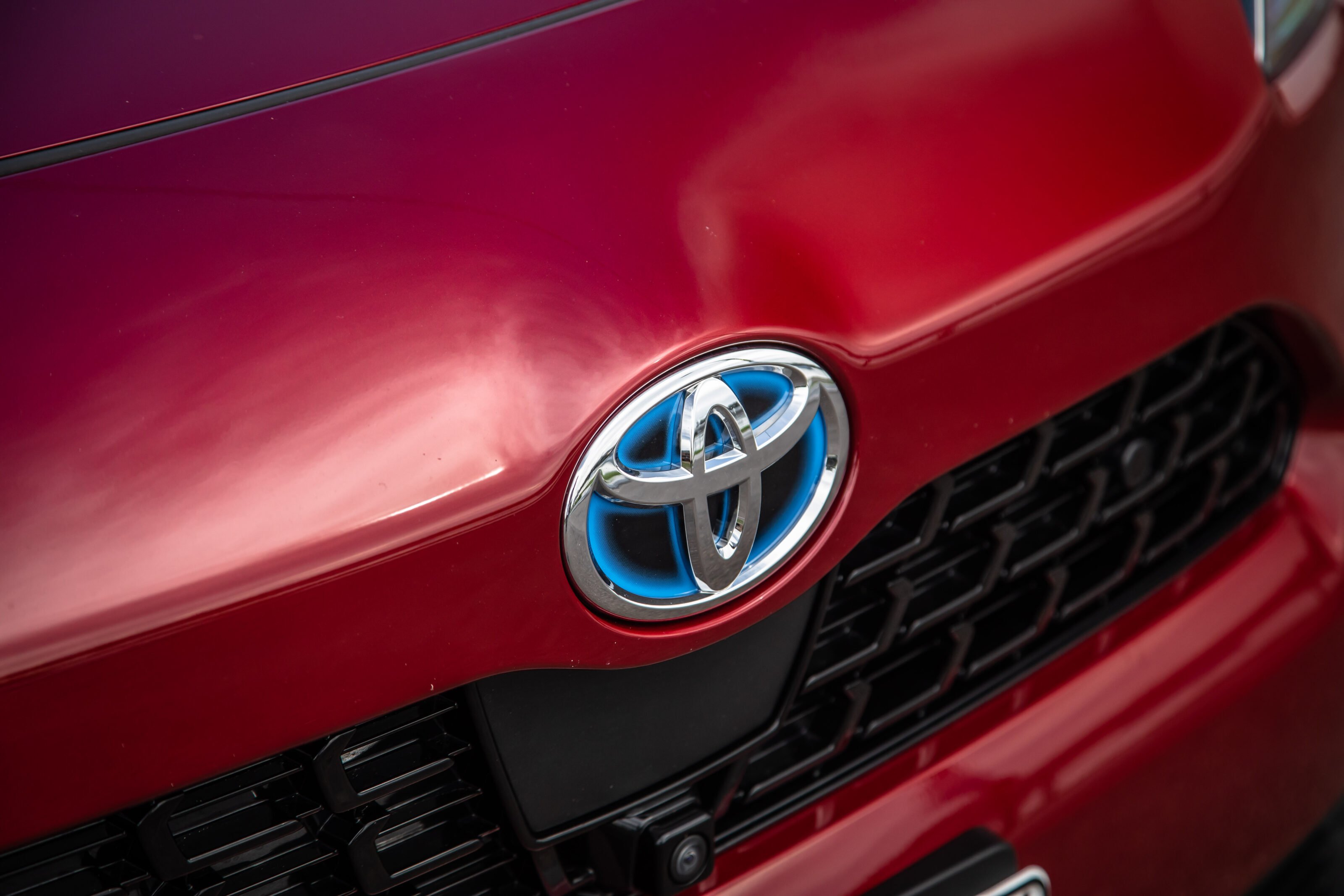
Toyota offers a five-year, unlimited-kilometre warranty on the Yaris Cross and if you keep up servicing at Toyota, you’ll get two more years on the drivetrain. The cover on the hybrid battery extends up to ten years.
Servicing is absurdly cheap at $215 per visit for the first five. Simple, straightforward and cheaper than everyone else.
VERDICT
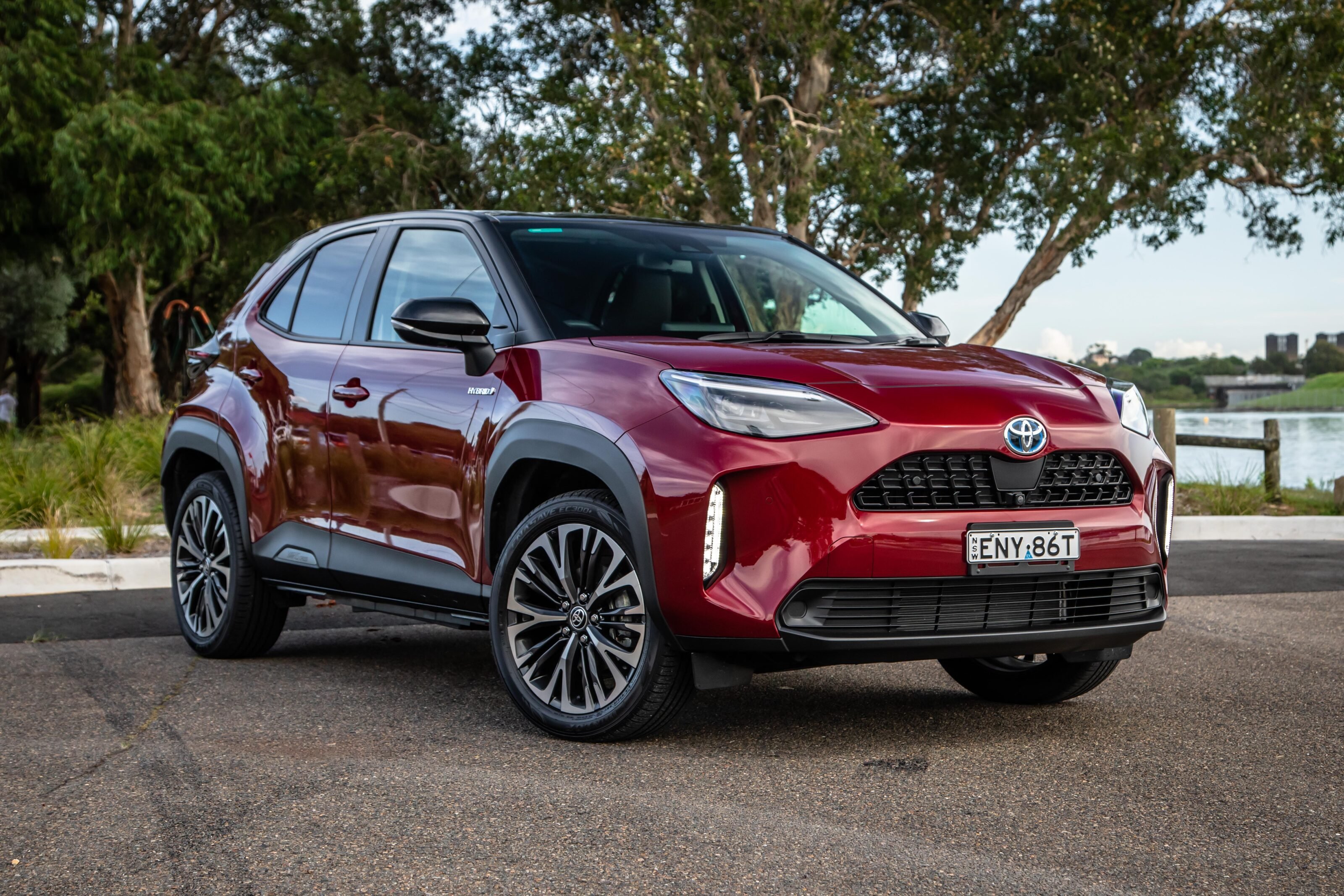
I can’t quite understand the kerb appeal of the Yaris Cross Urban given its weird interior and high price, but I’m obviously in the minority. It has many, many plus points such as the safety gear, low cost of ownership and that Toyota badge. Cheeringly, you can pay less and still get all of that while not missing out on anything of huge consequence.
It’s odd that this top-spec car has double wishbone rear suspension because I cannot think for a moment that the vast majority of its buyers care. But if you do, that’s the Yaris Cross for you. I just couldn’t justify spending over forty grand on a car with a ropey-looking interior.
Oh, how do you make a Yaris cross? By giving its bigger, younger brother all the attention.
I didn’t promise it would be a good joke, but it’s funny because it’s true.
2022 Toyota Yaris Cross Hybrid Urban specifications
Snapshot
- Tesla deliveries to Australia suspended for the rest of second quarter
- Only 52 Model 3s delivered last month, total of 4469 this year
- Manufacturer was on track to beat its 2021 record of 12,094 units delivered
Tesla customers will have to wait a while longer for their Model 3s, with the electric vehicle manufacturer facing extended delivery delays to Australia.
Despite Tesla enjoying a strong opening quarter to the year where it shifted 4417 units of its popular Model 3, local registrations dropped to just 52 throughout April, moving the model from the most popular electric vehicle in Australia to ninth on the EV sales chart.
Local Tesla tracking service VedaPrime believes a meeting at Tesla last week resulted in the Australian arm of the brand contacting customers to inform them of pending delays, with a number of responders saying they were told not to expect any deliveries throughout the rest of the second quarter (April to June inclusive).
Ongoing COVID-19 lockdowns in Shanghai are most likely affecting production at Tesla’s Chinese plant, the home of Australian-bound Model 3s and the upcoming Model Y.
Just last year, the Model 3’s local sales were recorded for the first time, with the 12,094 units sold in Australia throughout 2021 – well above its Model S and Model X siblings (211 and 292 respectively).
In March, Wheels reported extended delivery times for the Model 3 had blown out to between five and seven months alongside a price increase for the range, although the latest news about further delays would mean customers ordering the EV now would be lucky to receive their delivery before 2023.
Wheels has contacted Tesla for comment, but has not yet received an answer at the time of publication.
Snapshot
- All versions of Ferrari’s 458 and 488 recalled
- Potential brake failure stems from a minor part issue
- Total of 840 units affected
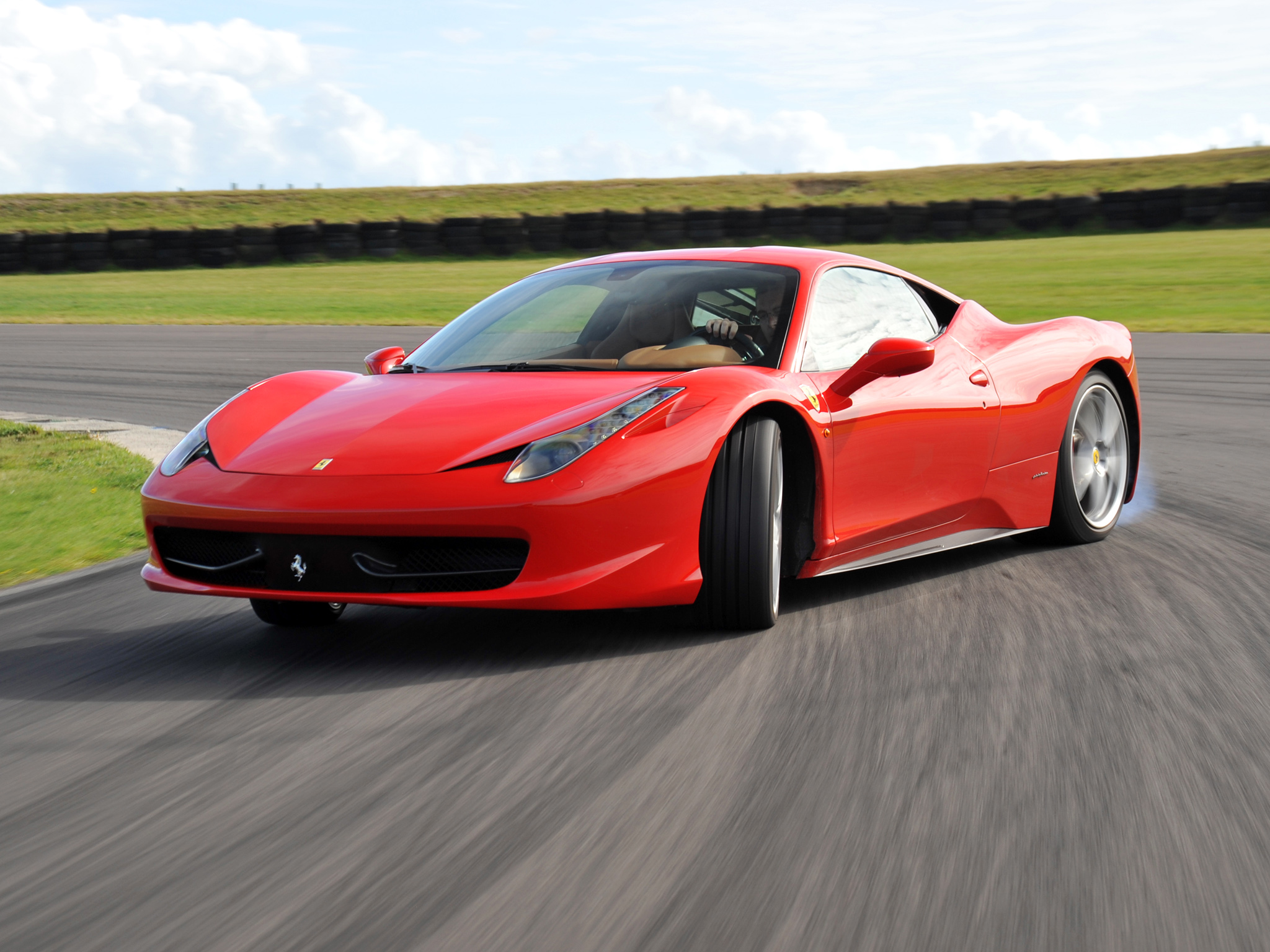
All examples and variants of two Ferrari supercar models have been recalled, with both affected by the same issue.
Covering a total of 840 vehicles in Australia, the 2010-2019 recall is applied to Ferrari’s 458 and 488 supercars.
According to the recall notice, the brake fluid reservoir cap in both models may provide insufficient ventilation to the brake fluid reservoir, leading to a reduction in the braking ability of the vehicle.
Owners of affected models are encouraged to contact their preferred Ferrari dealership or Ferrari Australia to arrange a replacement of the reservoir cap, with an additonal software update also needed, free of charge.
Those who are unsure as to whether their cars are affected can contact Ferrari directly on 1800 234 392, with the service available 24/7.
A list of VINs for vehicles impacted can be found here.
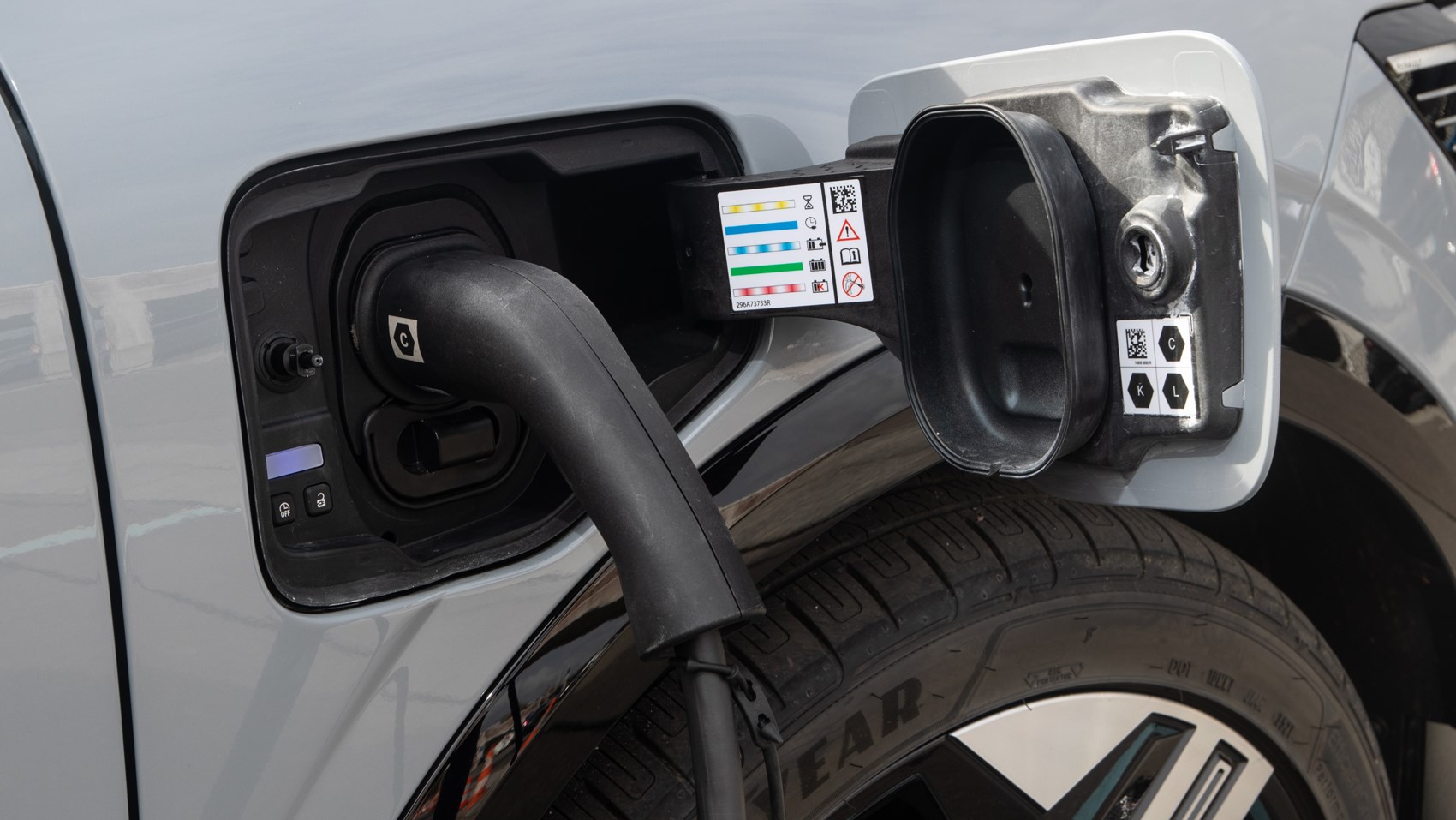
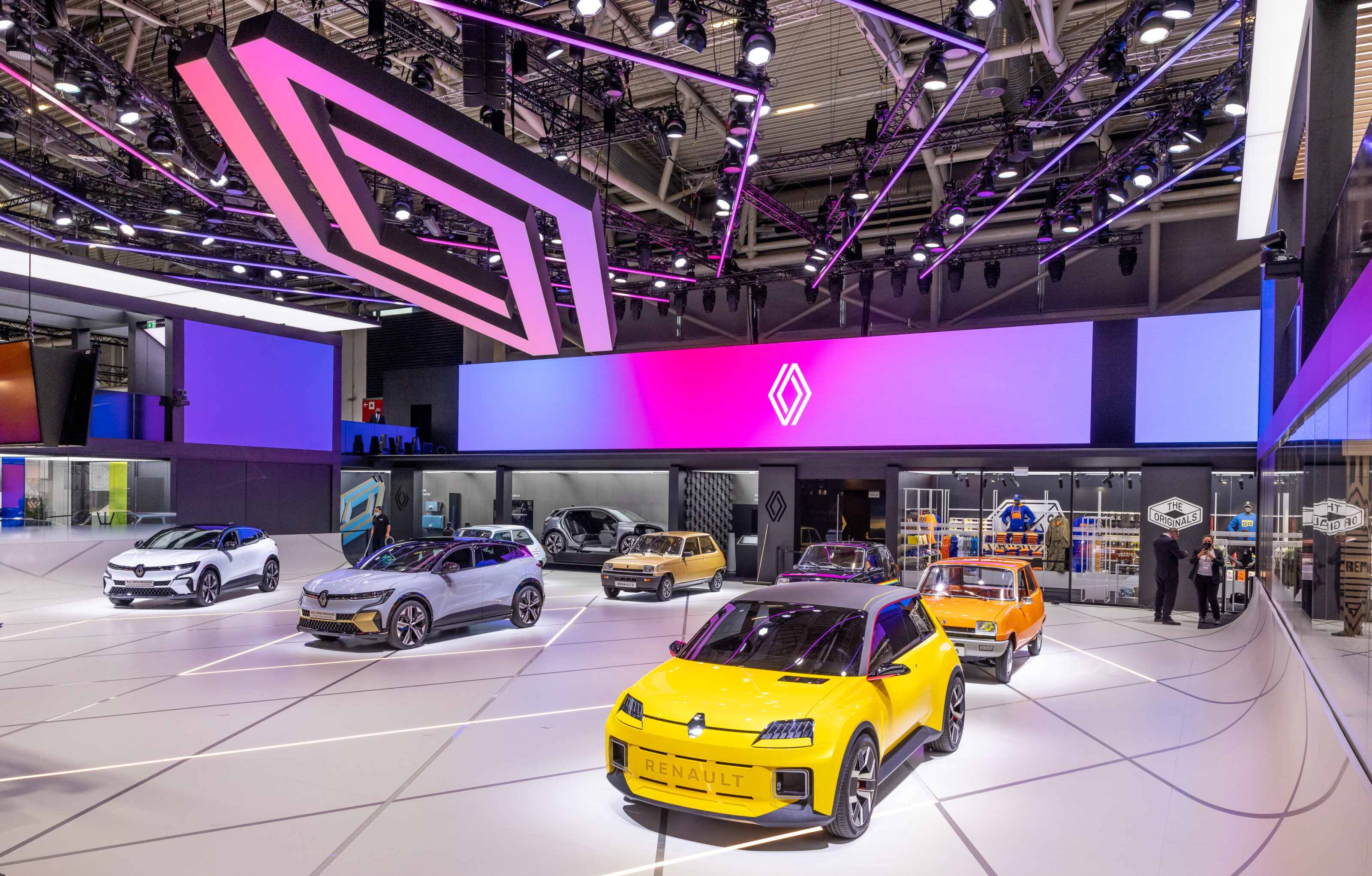
French manufacturer Renault has become the latest marque to announce its intentions to divide its internal combustion engine (ICE) and electric vehicle (EV) operations.
Following the lead of Ford, Renault has confirmed it will create a separate entity which will be dedicated to developing, producing and selling EVs with more than 10,00 employees by 2023, while ICE and hybrid development continues through its main business outside France, again with a target of 10,000 staff.
The announcement comes as Renault reaffirms its plans to reach 100 per cent EV sales in Europe by 2030, five years before the European Union targets a ban of non-zero emission engines.
While the EU is effectively banning ICEs through policy by 2035, international markets such as Australia will continue to be a source of demand for the traditional engines, something which the Renault Group acknowledges.
“Renault Group is also studying the possibility of combining its ICE and hybrid engine and transmission activities and technologies based outside France within a specific entity,” said the manufacturer.
“In view of the innovative capabilities and significant improvements in emissions reduction of this type of vehicle, Renault Group is convinced that thermal hybrid and plug-in hybrid vehicles have significant long-term prospects and outlets in Europe and on international markets, and that its technologies, such as E-TECH [hybrid], represent real growth levers.
“By bringing together its activities and technologies related to thermal and hybrid engines and transmissions, Renault Group aims to strengthen the potential of its technologies, but also to contribute to the development of low-emission fuels, LPG, etc., and thus create a world leader in powertrain for the automotive industry.”
It seems Nissan is waiting to see how the French arm of the Renault-Nissan-Mitsubishi Alliance’s decision plays out within in the evolving market, with Nissan’s Chief Operating Officer Ashwani Gupta telling Automotive News Europe the Japanese manufacturer has looked at dividing its ICE and EV operations, but is not yet ready to do so.
“It’s too early to consider because of our diversified market portfolio and diversified product portfolio,” said Gupta.
According to the Automotive News Europe report, Renault is also looking to reduce its 43.4 per cent ownership stake in Nissan, as the latter marque only holds a 15 per cent non-voting share of its French partner.
Earlier this year, the Renault-Nissan-Mitsubishi Alliance announced it would invest €23 billion (AU$36.4 billion) into developing EVs over the next five years, targeting the introduction of 35 new models by 2030.
Hang on, a special edition Porsche 911 GT3 Touring? Yep, that’s right. If you’re the type to consider the regular 992 Touring a little too ‘common’ Porsche is now offering 25 units of this limited run (deep breath time) Porsche 911 GT3 Touring 70 years Porsche Australia Edition.
Think of it as Porsche Australia’s birthday present to itself and you’re most of the way there. Naturally, they’re all sold, but even though you can’t get your hands on one from the factory (and expect them to sell for more than the list price on the seconds market), this is an intriguing car for two reasons: the first is Porsche has never allowed a market outside of Germany to make its own special edition before and the spec is tastefully done. And the second is this is our first chance to sample the 992 Touring on Aussie soil.

Oh, and did I mention this car is actually a museum piece? Once we’re done with it, it’s being shipped back to Germany to be put on display. That also means we can’t drive it on the road, so we’ve arranged a day at the challenging and technical Haunted Hills (brilliant name) hillclimb circuit. An empty racetrack, a sonorous 4.0-litre flat-six that revs to 9000rpm and a manual gearbox? Days don’t get much better.
Pricing & Features

The first thing you notice about the 911 GT3 70 years edition is that it isn’t actually silver. Officially, Porsche calls its exterior paint ‘Fish Silver Grey metallic’, and in Porsche’s own photography, the car looks about as silver as you can get. But when our test car catches the sun as it rolls off the back of the transporter, I’m intrigued to discover that in the metal it’s really a seductive shade of green.
Normally Porsche allows GT3 owners to choose from 14 exterior colours but for the 70 years edition, this beguiling green paintwork is the only option. Don’t like it? Too bad. The custom colour pays homage to the very first Porsche shipped to Australia – a pretty 356 Cabriolet imported by Norman Hamilton in 1951 – and it’s just one in a host of visual changes for this special edition.

The most prescriptive is a badge stuck to the B-pillar that features a little Aussie flag but there are also ’70 years’ decals on the dash inlay and the illuminated door sills. The leather on the central storage cubby is embossed with a ’70’ logo and owners also score a graphite blue car cover emblazoned with ‘GT3 70 Years Porsche Australia Edition’ on the side. Here’s hoping owners drive their cars regularly and don’t just tuck it under that cover to appreciate.
Other changes are more subtle and arguably more effective. The outer edges of the dark silver wheels are finished in body colour (we shudder at the repair cost if you accidentally nudge a gutter), and the 12-o’clock marker on the steering wheel and the shift-pattern icon on top of the gear stick are both finished in crayon grey.
Porsche calls its exterior paint ‘Fish Silver Grey metallic’ … when our test car catches the sun it’s really a seductive shade of green

The team at the Porsche Exclusive Manufactur department has also been busy with the interior.
Slip inside and you’re ensconced by heavily bolstered fixed-back bucket seats (an $11,250 option on regular Touring models) that have been trimmed in blue leather but feature chequered fabric inserts. There’s extended leatherwork throughout the rest of the cabin too, and it’s all beautifully done with what feels like miles of millimetre perfect stitching. The whole cabin feels special, and expensive, which it is.

A ‘regular’ 992 Touring costs $369,700 but this special edition carries a sticker price of $494,400. That’s a hefty $125K premium but as all 25 units are sold, it’s clear the market sees value here. Blame limited supply and ferocious demand.
Other minor changes compared with the regular GT3 Touring abound (the brightwork around the side windows, for example, is black not silver, as are the exhaust tips). Porsche has made all of the spec decisions for the customer, but there is one important choice owners had to make: what gearbox they wanted.
That PDK is arguably the best performance automatic in the world but we’re pleased to report the majority of 70 Years owners went for three pedals

Unlike the original 991 Touring, which was manual only, Porsche is offering a seven-speed PDK for this 992 generation. That PDK is arguably the best performance automatic in the world but we’re pleased to report the majority of 70 Years owners went for three pedals: 17 manual vs 8 PDK. It’s a smart decision because, as we’ll get to, the manual shift better allows you to revel in the 4.0-litre’s operatic top end.
Comfort & Space

There’s always more room in a 911 than you expect and that’s never been more true than with this larger 992 generation. Now built around a bigger and stiffer bodyshell, the 992 GT3 is 11mm longer and 8mm taller. It feels larger behind the wheel, and may actually be at risk of losing its famous 911 wieldy-ness, but the upshot is a cabin that’s surprisingly practical and comfortable by supercar standards. There’s room behind the front seats to throw soft bags and a deceptively large boot in the nose.
Don’t make the mistake of thinking that the ‘Touring’ spec of the GT3 is softer in any way. This car is just as hardcore as the regular bewinged GT3

Don’t, however, make the mistake of thinking that the ‘Touring’ spec of the GT3 is softer or more comfortable in any way. This car is just as hardcore as the regular bewinged GT3, with no concessions in the suspension set-up for comfort. That means it can feel overly stiff on gnarly B-roads but the trade-off to this tautness is incredible precision and speed, which is exactly how a GT3 should be. If you’re chasing long-distance comfort, there are umpteen other 911 variants to consider. This one is about delivering pure, unadulterated driving thrills.
One point to make, though, is that you can’t option the Touring with the Clubsport pack, which adds a roll cage, racing harness and fire extinguisher. So if you’re planning on regular track work, keep that in mind.
On the Track

Time to talk about that engine. Just like the suspension, the 4.0-litre flat-six in the back of the 70 years edition is unchanged from the regular GT3. In fact, all of the powertrain and chassis hardware is identical and given the GT3 has just won MOTOR’s Performance Car of the Year, we can attest that this is a good thing. This car is an event.
Press the starter button and the flat-six fires before settling into a metallic-sounding idle. The clutch is light and you need some revs on board to get moving but even at low speed, the soundtrack is engaging. A new exhaust system is 10kg lighter than before but it also now includes a petrol particulate filter, which is often kryptonite to exhaust noise. Happily, early signs suggest the GT3’s aural signature remains intact.
The soundtrack suddenly becomes all consuming, its ferocity and timbre changing as it rushes to the 9000rpm redline

Power and torque haven’t changed dramatically compared with the last GT3. Outputs of 375kW and 470Nm represent a 7kW and 10Nm bump over the old GT3 but they’re easily outgunned by turbo rivals like the McLaren 720S (530kW/770Nm) and Ferrari 296 (610kW/740Nm).
But the GT3 has never been just about outright grunt. The magic here is how the power builds, the linearity of its delivery and the crispness of its throttle response. And trust us, 375kW is ample in a car that weighs 1420kg.
The more revs you have on board, the better the GT3 feels. Flip flop through a tricky sequence before Haunted Hills’ short back straight, notice the rev needle hovering at 4500rpm on half throttle in second gear. Gun it. The 70 Years leaps forward. There are no turbos to spool, no delay from flattening your right foot to feeling the car respond. The soundtrack, which has been a vocal backing track suddenly becomes all-consuming, its ferocity and timbre changing as it rushes cleanly and hungrily to the 9000rpm redline.

And it’s here the manual comes into its own. The PDK is whipcrack fast but trust us, it’s more satisfying to manage the shift yourself. And it’s worth wringing out every last rev (max power is at a lofty 8400rpm), so juggling your shift action while also judging your braking markers is just more involving than simply pulling a paddle. Is slower than the PDK? Absolutely. Is it more exciting? Absolutely.
If the engine is an evolution of what we’ve had before, the way the 992 GT3 Touring corners feels entirely new. The front suspension now comprises double wishbones instead of the previous strut arrangement and the nose of the car is noticeably more eager. Combine that positivity with the agility of four-wheel steering and the 992 Touring dives into turns in a way no GT3 has before. Immense traction and drive on corner exit have always been a 911 strength but now it’s equally impressive on the way into turns.
Grip is immense on Pilot Sport Cup 2 rubber but there’s also plenty of playfulness and adjustability on offer. As ever, this is a car with layers to explore
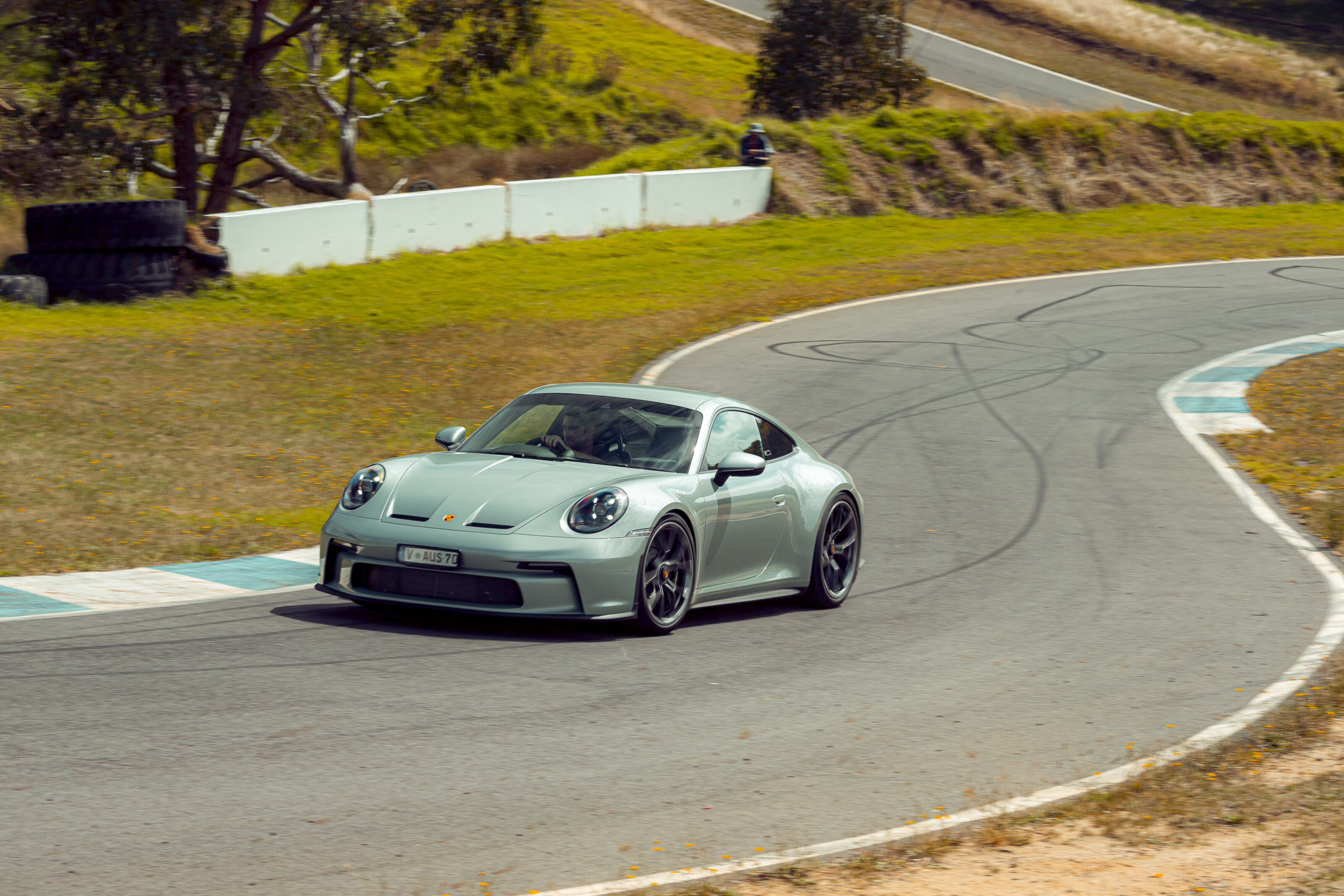
Grip is immense on Michelin Pilot Sport Cup 2 rubber (255/35 R20 up front, 315/30R21 out back) but there’s also plenty of playfulness and adjustability on offer. As ever, this is a car with layers to explore. Still, despite the fact it demolishes Haunted Hills’ technical sections, it’s soon apparent this circuit might be too small to extract the best from the 70 Years. We’re really only able to fully exploit second gear, and half of third, before we’re hard on the anchors for the next sequence of second-gear turns. Giving the car its head on a quicker track with higher-speed corners would be immense.
VERDICT

But even scratching the surface confirms the usual GT3 magic remains. This is a car that rewards and challenges the driver in equal measure. And the spec changes made for the 70 Years limited edition do make a special car feel even more so. Deleting the eye-catching rear wing also adds a degree of anonymity, which I find appealing.
So it’s another smash hit from Porsche’s GT Division and one that offers further proof you don’t need turbos or a zillion horsepowers to make a car feel properly exciting. The sting in the tail, of course, is that you can’t actually buy one of the 25 special editions made for Porsche’s 70th anniversary.
But the silver lining is that, if you can live without the special paint and tasteful interior/exterior spec changes, you can buy a ‘regular’ GT3 Touring that delivers the same driving experience for $125K less.
2022 Porsche 911 GT3 Touring specifications
Mitsubishi is joining the growing number of mainstream brands that are attempting to encroach on premium territory, with a more luxurious and equipment-packed offering at the pointy end of each model line-up.
With the new profile-boosting plan, the Japanese manufacturer will be following in the tyre tracks of rival brands such as Honda and Mazda which too are attempting to compete in higher-end markets with models that feature more technology and higher-quality interiors.

The strategy was initiated by the all-new Outlander SUV range, which was previously headlined by the Exceed, but in its fourth generation is now available as a freshly introduced Exceed Touring along with a corresponding boost to standard specification.
After that however, Mitsubishi Motors Australia CEO Shaun Westcott says the initiative will spread to other models as they are periodically refreshed.
“Everything that we do going forward, you’re going to see the same kind of shift that you’ve seen in Outlander,” he said. “It’s definitely going to become more premium where the range finishes.”

Westcott didn’t elaborate on how long the strategy would take to proliferate the entire five-model range, but it’s expected higher-spec versions of all Mitsubishi’s SUV and ute vehicles will ultimately eventuate – including the ageing ASX small SUV.
According to Westcott however, the smallest model to wear the three-diamond badge is in no hurry to get the premium treatment, which still performs well for the company despite being more than a decade since the current model was introduced.
“There’s a place for the ASX and it still sells extremely well. It still appeals to our target market, we get very good feedback from our dealers and we get good feedback from our customers.”
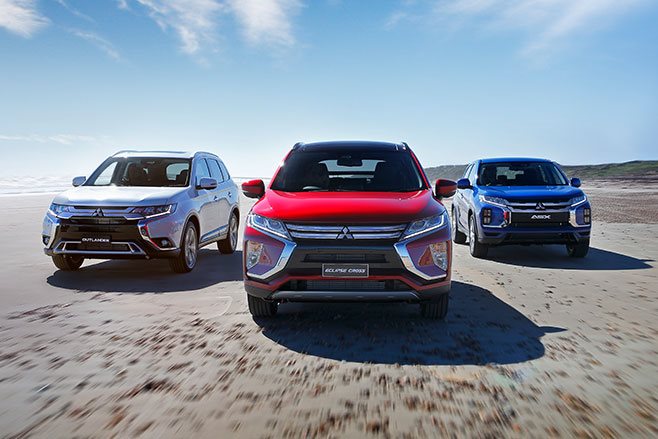
The arrival of more luxurious variants will not result in the disappearance of more affordable options at the entry and mid-points of each range according to the CEO, with the company expanding its appeal rather than repositioning it overall.
“We’re trying to address a broader spectrum and a wider target market. We’ll still take care of our core customers, but we are definitely targeting more premium in the top end. They’ve been loyal to us and we want to be loyal back to them.
“We are shifting the brand and we don’t want to define ourselves as being a value-for-money brand any longer. We still want good value for money, but that’s a very different thing to being a cheap brand.”

So while the flagship versions of the Outlander and Pajero Sport are likely to exceed $50,000 and $60,000 respectively, the entry points are expected to be fixed about the $35,000 and $44,000 mark for now.
With the departure of the Mirage compact hatchback, the most affordable model in the Mitsubishi family is the $24,490 ASX which, its maker points out, is not the cheapest option in the segment and evidence the company has already started the transition into more premium markets.
The strategy is already being recognised and responded to positively concluded Westcott.
“We’re conquesting people from other brands that would not typically have been our target market in the past. That is definitely the direction we will continue to pursue.
“There’s a lot of quality and capability within our vehicles and we want to transition to a more premium brand that people are prepared to pay more for because of what’s in it”.
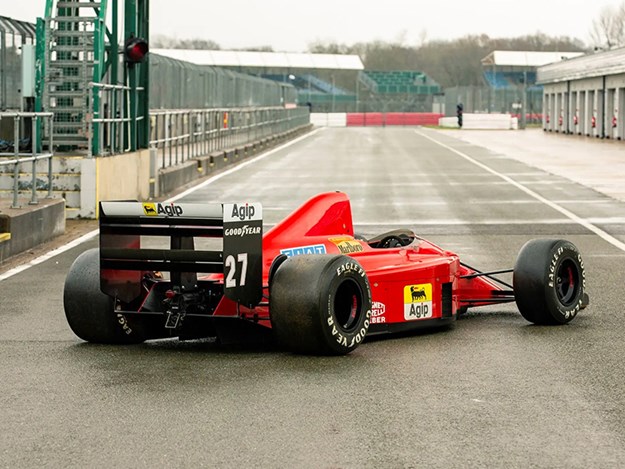
Bearing chassis number 109, it’s the car Mansell drove to victory in his debut with Ferrari at the Brazilian GP and later at the Hungarian GP after starting 12th.
He finished second in this car at his home GP at Silverstone.
It’s believed that it hasn’t turned a wheel since it was presented to him following the 1989 Australian Grand Prix in Adelaide, a race he retired from, but not in this car.
Mansell, a 31-time GP winner, was the last driver personally invited to join the Scuderia by Enzo himself and described the that moment as “one of the greatest in my career”. “Il Commendatore” presented the Englishman with a Ferrari F40 as a welcome gift upon joining.
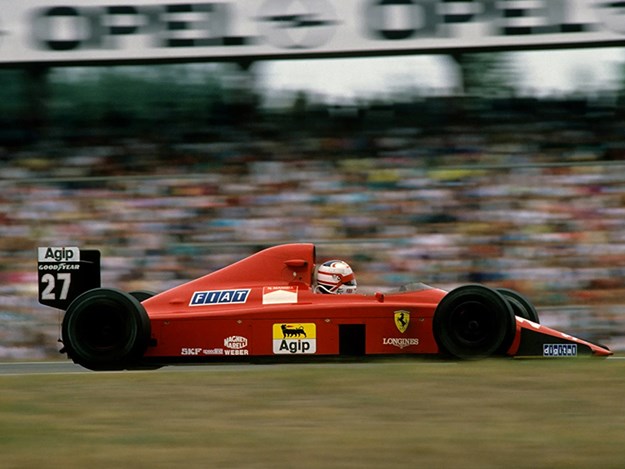
Mansell’s courageous driving style and win it or bin it mindset quickly earned him the nickname of “Il Leone”or ” e Lion” from his adoring Italian fans.
John Barnard, who was poached from McLaren, penned the 640 which is powered by a 3.5-litre, V12 engine. e 640 is instantly recognised by its sharp nose, narrow monocoque and wide bodywork housing the radiators. It is the first Ferrari F1 car fitted with a semi-automatic gearbox.
Ahead of the first race of the 1989 season, Mansell travelled to Italy for testing and promptly set a new track record on 5 January, 1989, at the Fiorano circuit.
From Unique Cars #465, April 2022
Originally published at our sister site, Unique Cars.
This reader resto was originally published to our sister site, Unique Cars.
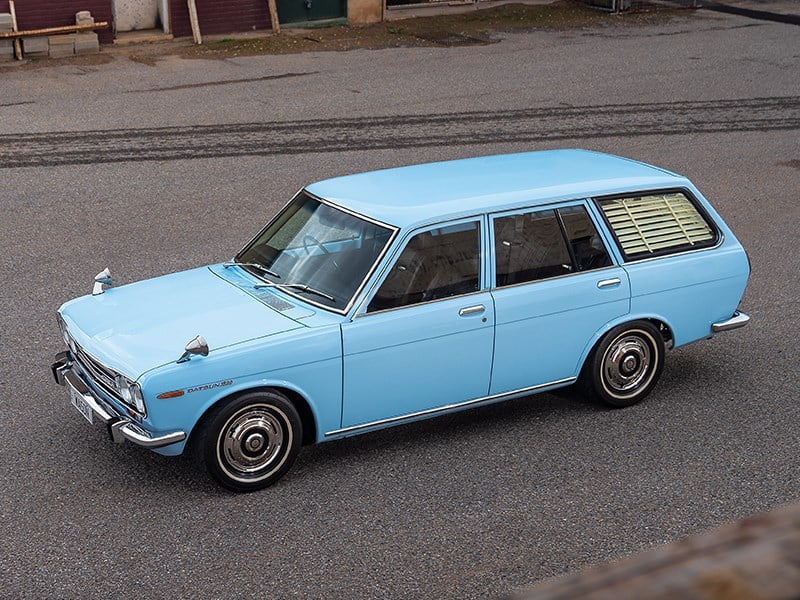
There was a time when this 1971 Datsun 1600 might have been regarded as just an old wagon, barely worth saving. However we’ve seen the revival of this series reach a point where they’re now valuable and well worth the effort. And that’s where owner Heath Mynhart found himself, some years ago.
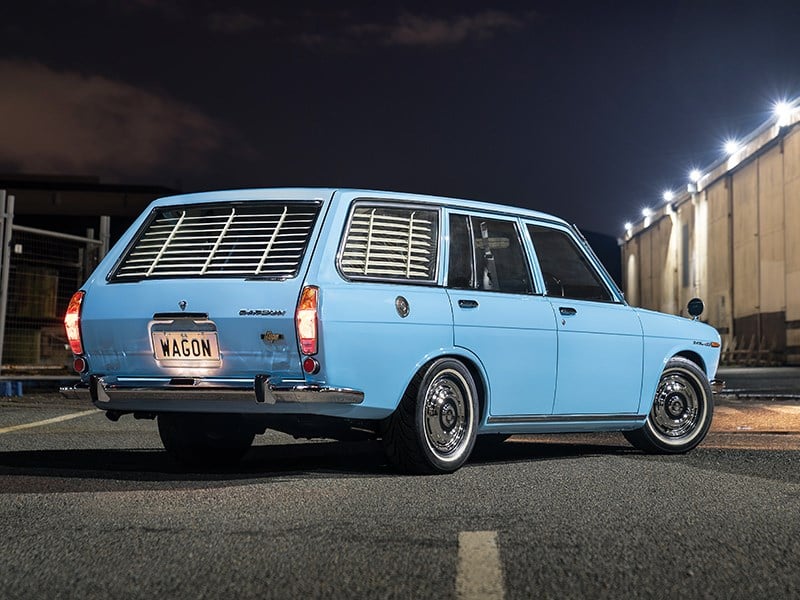
“I’ve always been a wagon fan – have had them since I was 16. Always into a bit of camping and a bit of surfing. You didn’t see a lot of 1600 wagons around and it seems a good thing to focus on. I’m not sure of the exact numbers, but I think there are around the 300 mark in Australia.
“It was almost half a rally car when I got it. I was searching for one for a long time and the choice was between this and a VL Calais wagon – they’re the two I always wanted.
“This one popped up in far north Queensland, so I went up there for a bit of a look and it all checked out.”
| Buyer’s Guide: Datsun 1600
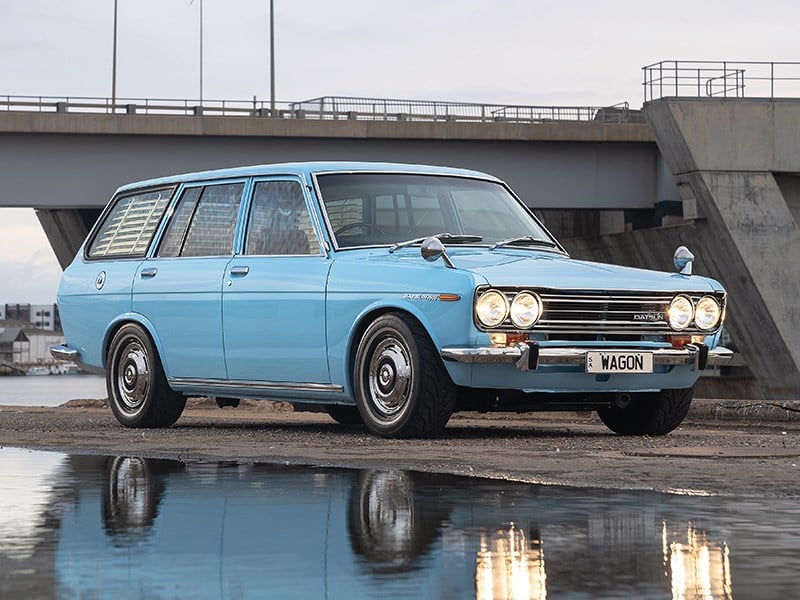
Surprisingly, despite the humid climate it hadn’t been killed by rust. “The amount we pulled out was about half a shoebox, it was unbelievable.”
That was the start of a project that took the best part of five years.
“I wanted something that looked original, like it came off the factory line, but with a few little perks.” Perks? Well, updated performance and handling were key, along with a little luxuries.
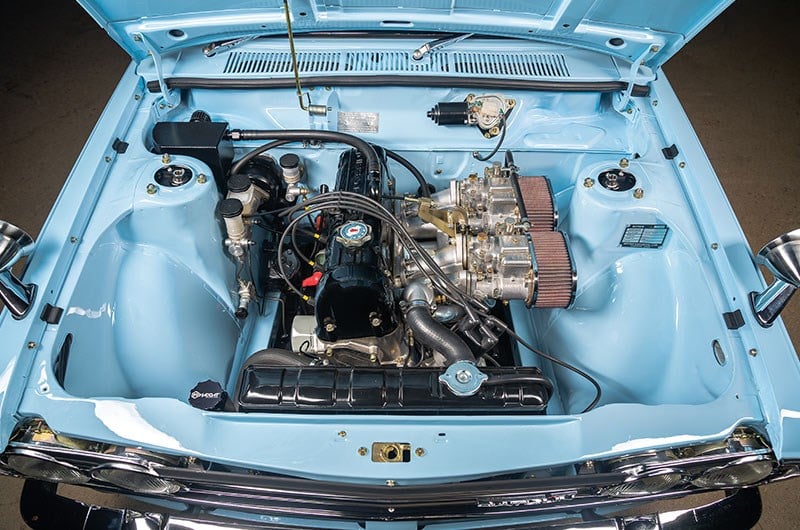
Though Heath considered a later turbo powerplant, in the end he plumped for a more or less period-correct L-series engine. That’s a two-valve overhead cam series that began production in the sixties and lasted almost 20 years.
| Read next: 50 years of Datsun 1600 (2018)
In this case it’s an L20B, albeit a few years later than the host car, but it looks ‘right’ in the engine bay. What started as a 2.0lt four good for around 97hp (depending on configuration), has though some painstaking development turned into a 2.4lt unit with a measured 217hp at the flywheel.
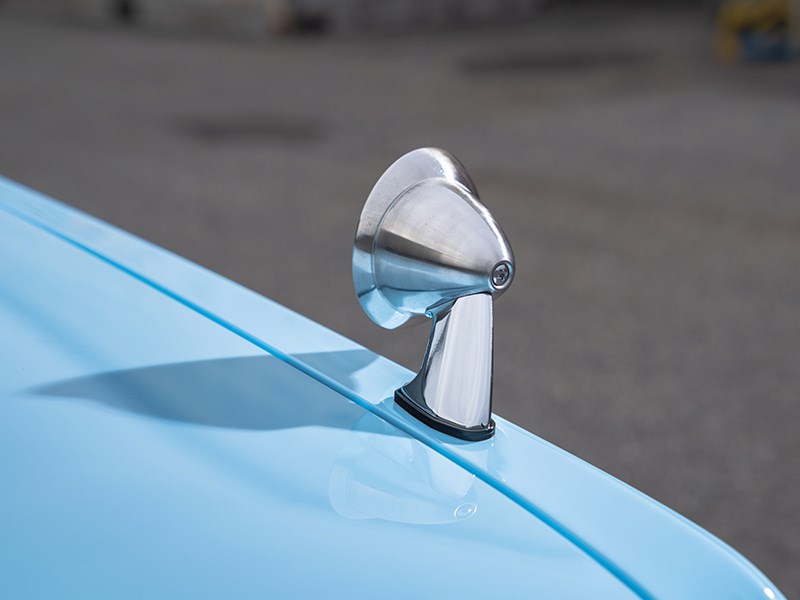
Getting the powerplant to that stage was no small feat, involving some setbacks along the way. It’s a stroker, running custom Carillo rods and forged pistons. That lot is being fed by a pair 47mm OER side-draught carburetors. The head has of course been fitted with larger valves and has been ported, while it exhausts through a set of custom stainless headers.
Meanwhile the transmission is another story in itself.
| 2021 Market Review: Datsun Bluebird/1200/1600/240K
It’s essentially a custom-built five-speed ‘stumpy’ 1600 gearbox running 240 internals and a short shifter. The driveline is finished off with a reworked H190 limited-slip diff in a solid axle.
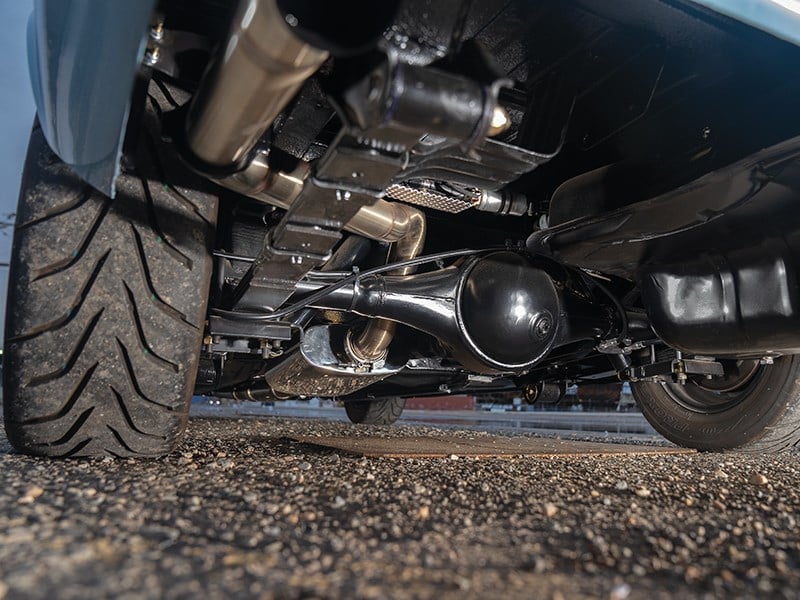
With all that performance on tap, Heath turned some serious attention to brakes and grip. Up front is a set of Wilwood four-piston discs, while the rear is handled by a set of single-piston discs from an R31 Skyline.
Suspension up front is a Maddat adjustable coil-over set-up with roll-centre adjusters and sway bar. Out back is a custom set of leaf springs with Koni shocks.
| Reader Resto: 1971 Datsun 1600 wagon 510 series
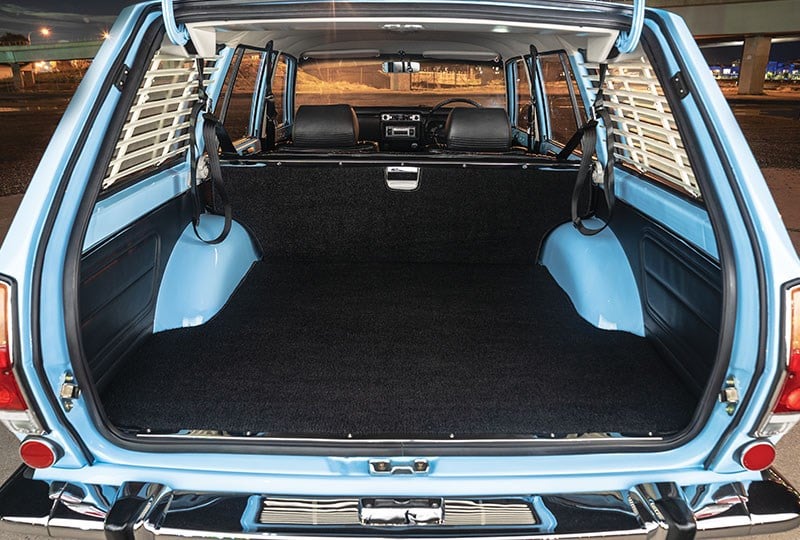
As you can see, it rides a little lower than standard and is sitting on 13-inch rims that at first glance look close to stock. They’re in fact modified to not only clear the custom brakes but cope with wider rubber. The latter is Toyo 205/60/R13 semi-slick.
One fitting that has us really curious is the addition of electric power steering, largely hidden up under the dash. “We put a lot into making sure it was out of sight,” Heath explains, “and you can adjust it from being very light to not being there at all.” He’s become a big fan of the system.
While the body may not have had too much rust, it nevertheless got stripped and repainted. However that was far from the end of the story. Heath described his frustration with the stock panel gaps – 8-10mm – and had them pulled back to more like 5mm. That alone would have soaked up a huge amount of effort and time.
Of course the interior got a complete going-over, with some subtle changes such as pumping out the seat bolsters a little to provide better comfort and grip for the occupants. However, as some of you will know, the real devil is often in the detail.
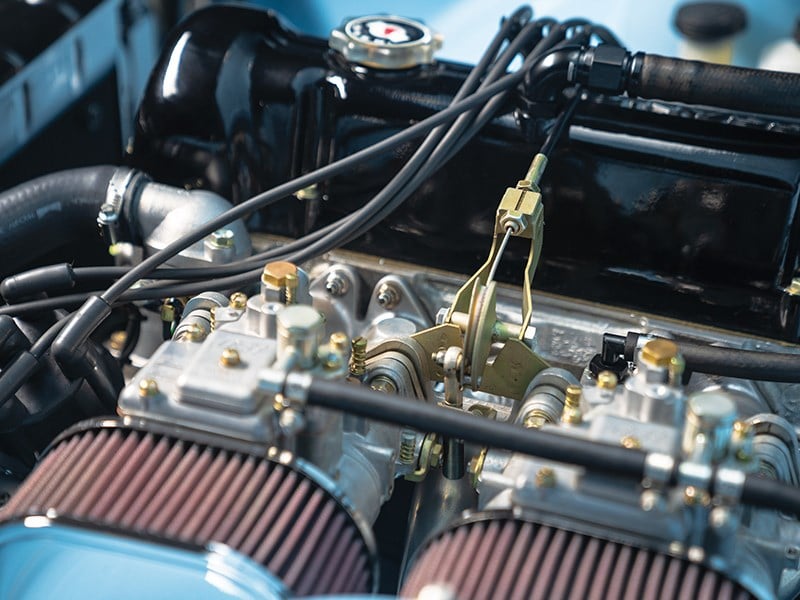
As with the mechanicals, there are some subtle upgrades. For example, the radio has kept its original fascia and buttons, but has modern internals.
Some interior pieces, particularly plastic fittings, were frustrating. Even new-old stock items often left something to be desired. “I’m not sure whether it was their age or that they weren’t all that well-made to start with,” speculates Heath, “Maybe a bit of both.”
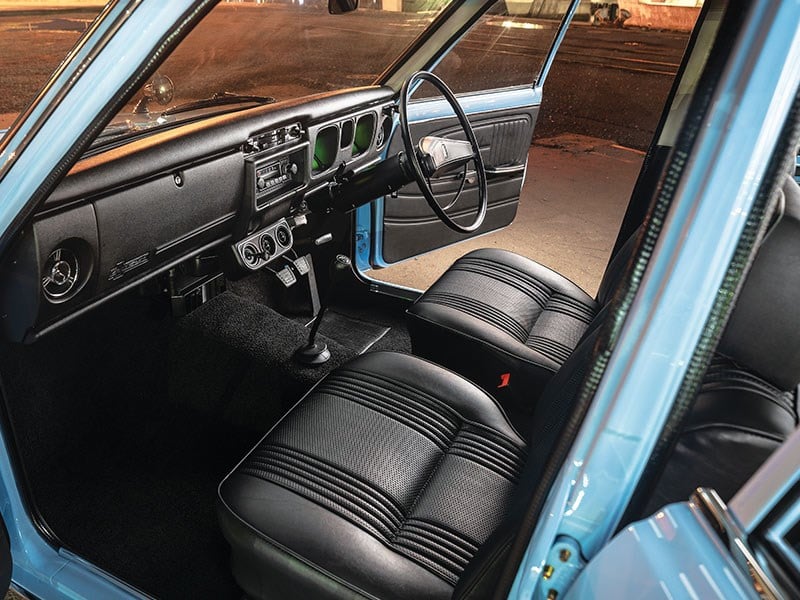
He even resorted to 3D printing some pieces, including an impossible-to-find seat clip that he ended up doing in a modest volume and selling on to other enthusiasts here and in the USA.
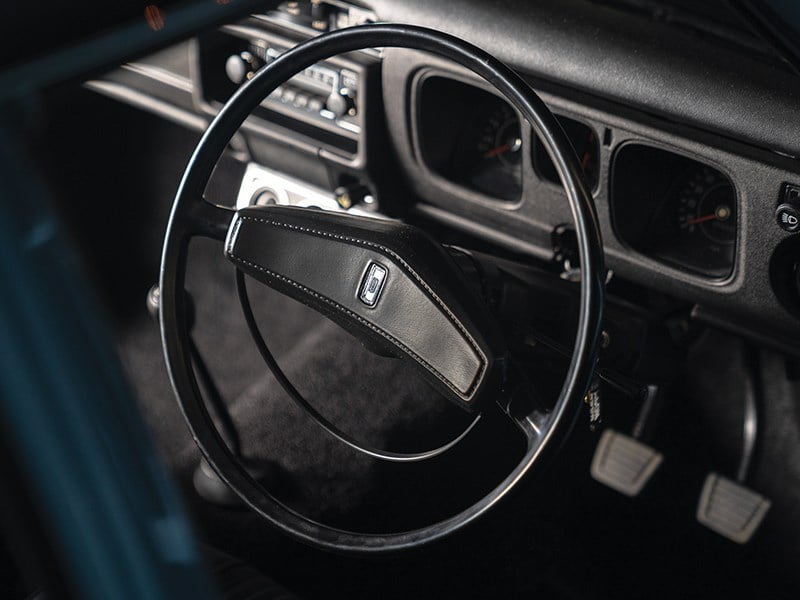
And the end result? Visually it’s stunning and maintains the spirit of the original car. As something to drive, Heath reckons it’s an absolute gem and he’s even now talking about how, one day well in the future, his young kids will get to drive it…
From Unique Cars #463, March 2022
Originally published at our sister site, Unique Cars
1971 Datsun 1600 wagon specifications
Thanks to:
• Custom & Classic Cars • Maddat • PMC Race engines • Les Collins racing • AJ Trim • SW Motor Sport • A Class Metal Finishers
1971 DATSUN 1600 WAGON
By: Guy Allen, Photography by: Troy Barker
Date: 24.04.2022
