
Not to be confused with AEB (autonomous emergency braking) ABS is industry-speak for anti-lock brakes, which we now take for granted and don’t necessarily realise when it has kicked in to help prevent an accident.
Before ABS, if you jumped on the brake pedal too hard, the brakes would actually overcome the grip of the car’s tyres and the wheels would stop turning. It’s called brake lock-up.
When wheels aren’t turning, physics insists they’ll skid in a straight line, even if the steering wheel is turned.
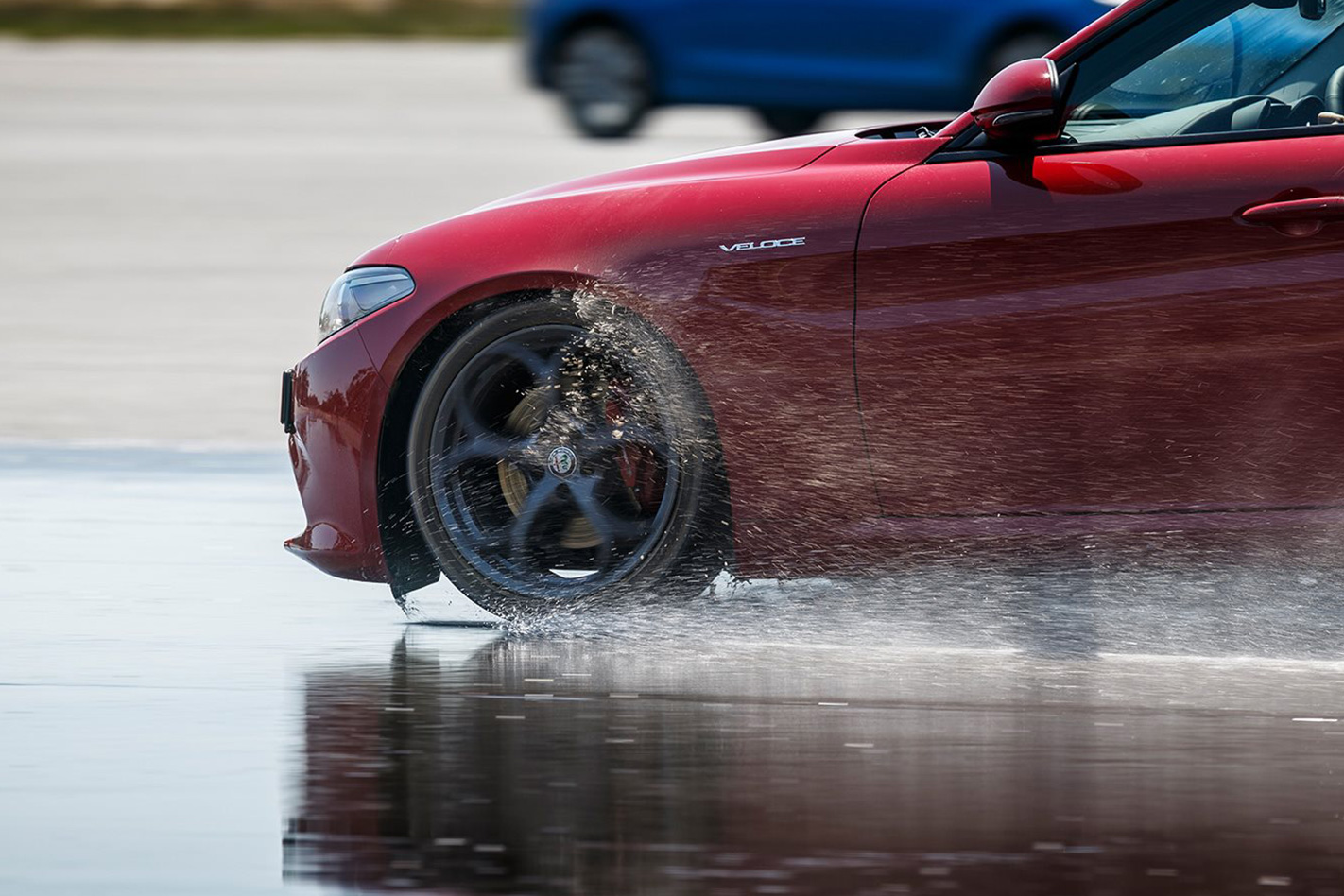
When that happens, the rest of the car won’t steer either and will simply continue straight ahead, usually into whatever it was that caused you to jump on the brakes in the first place.
Why hit the brakes so hard? Unfortunately, it’s the natural response to do so: If some braking is good, more must be better, right?
How does ABS work?
The ABS control module features a sensor that looks at whether the wheels have stopped turning, even though the rest of the car is still moving.
If it detects brake lock-up, the computer releases the brakes for a split second – just long enough to get the wheels turning again so you can steer the car around the kangaroo/pedestrian/stray dog/ or whatever else it was that caused you to stomp on the pedal.
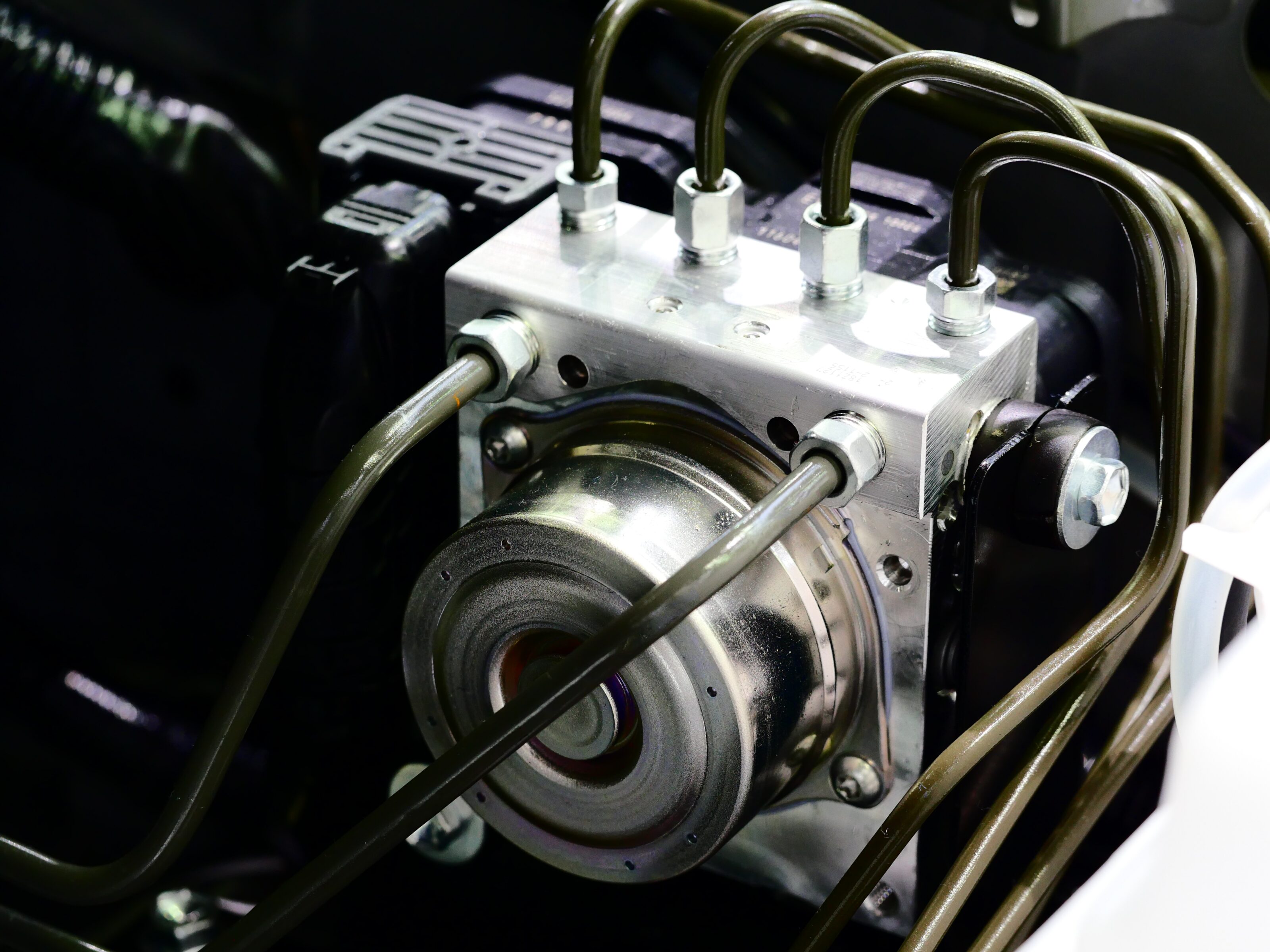
This all happens while your foot is still firmly on the brake pedal, meaning the brakes will lock up again almost immediately, and then release and so forth up to twenty times a second.
This means the ABS will maintain braking pressure while slowing down as fast as possible and allowing the driver to maintain control, which gives you a better chance of losing control and avoiding impact.
However, while ABS could reduce stopping distance time by preventing an uncontrolled skid, it is a passive safety system – the effectiveness of which relies on the car’s brakes and the driver’s response time.
Skoda is recalling more than 150 examples of its Octavia, Superb and Kodiaq models over a possible fire risk.
The issue affects 158 MY22 cars across the three models.
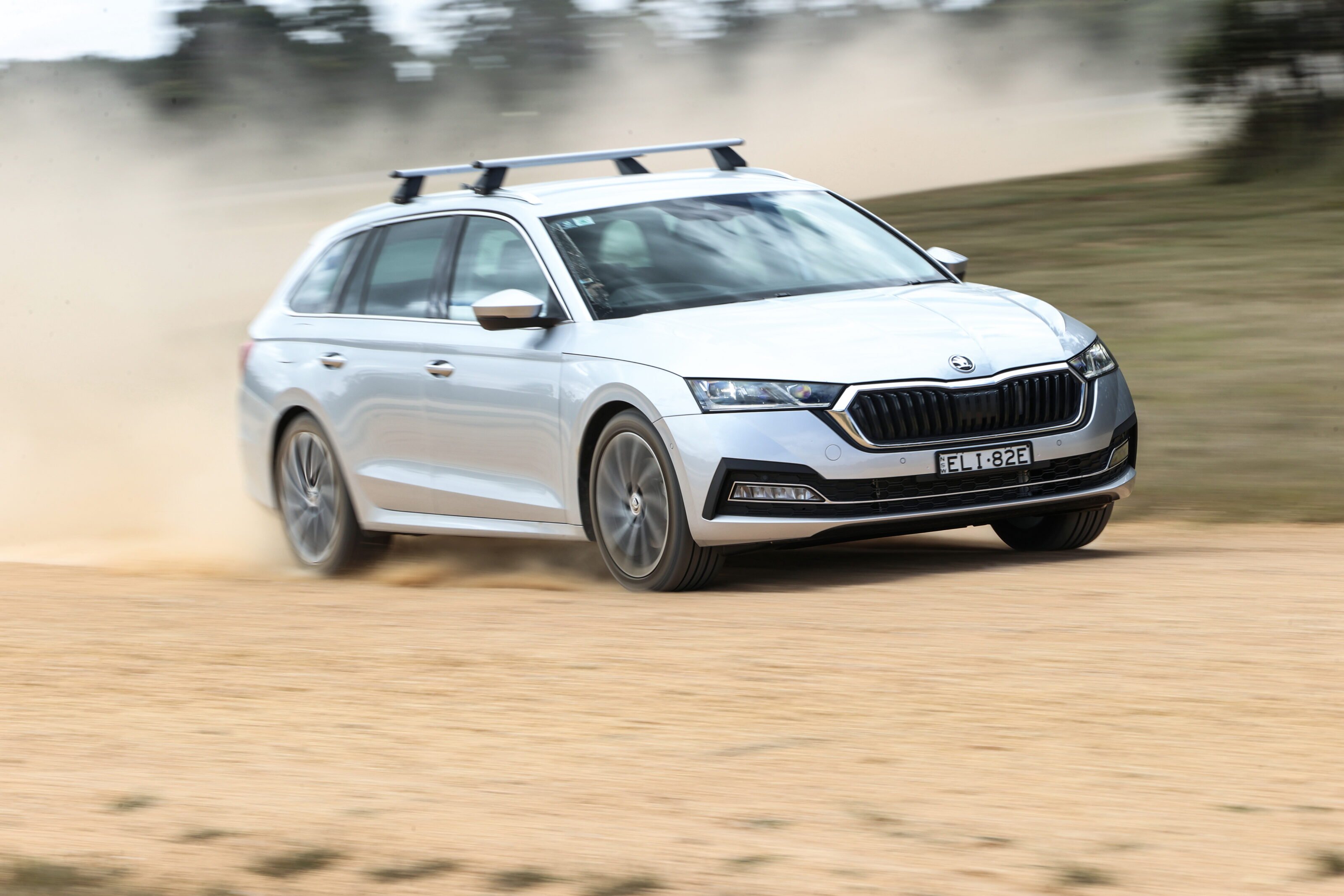
Due to manufacturing issue, the engine compartment cover may become loose, and if that happens, the engine cover may move and touch the turbocharger resulting in smouldering damage or an engine bay fire.
Owners should contact their preferred Skoda dealer to arrange to have their vehicle repaired free of charge, or alternatively can call the firm on 1800 607 540 or email on [email protected]
A list of VINs is available here.
Black ice is a thin coating of ice which forms when surface water or dew freezes on surfaces such as roads, which can make them very slippery.
It’s also known as clear ice, which is a more accurate term as it’s not black, but transparent, which makes it difficult to differentiate from a normal wet surface.
How to spot black ice
Black ice forms in cold areas usually at night or early mornings, or later in the day if the road isn’t exposed to direct sunlight.
It’s thin crust means it coats the road like varnish, with no bubbles, cracks or white frosty streaks, which makes any patches very difficult to identify when approaching in your car.
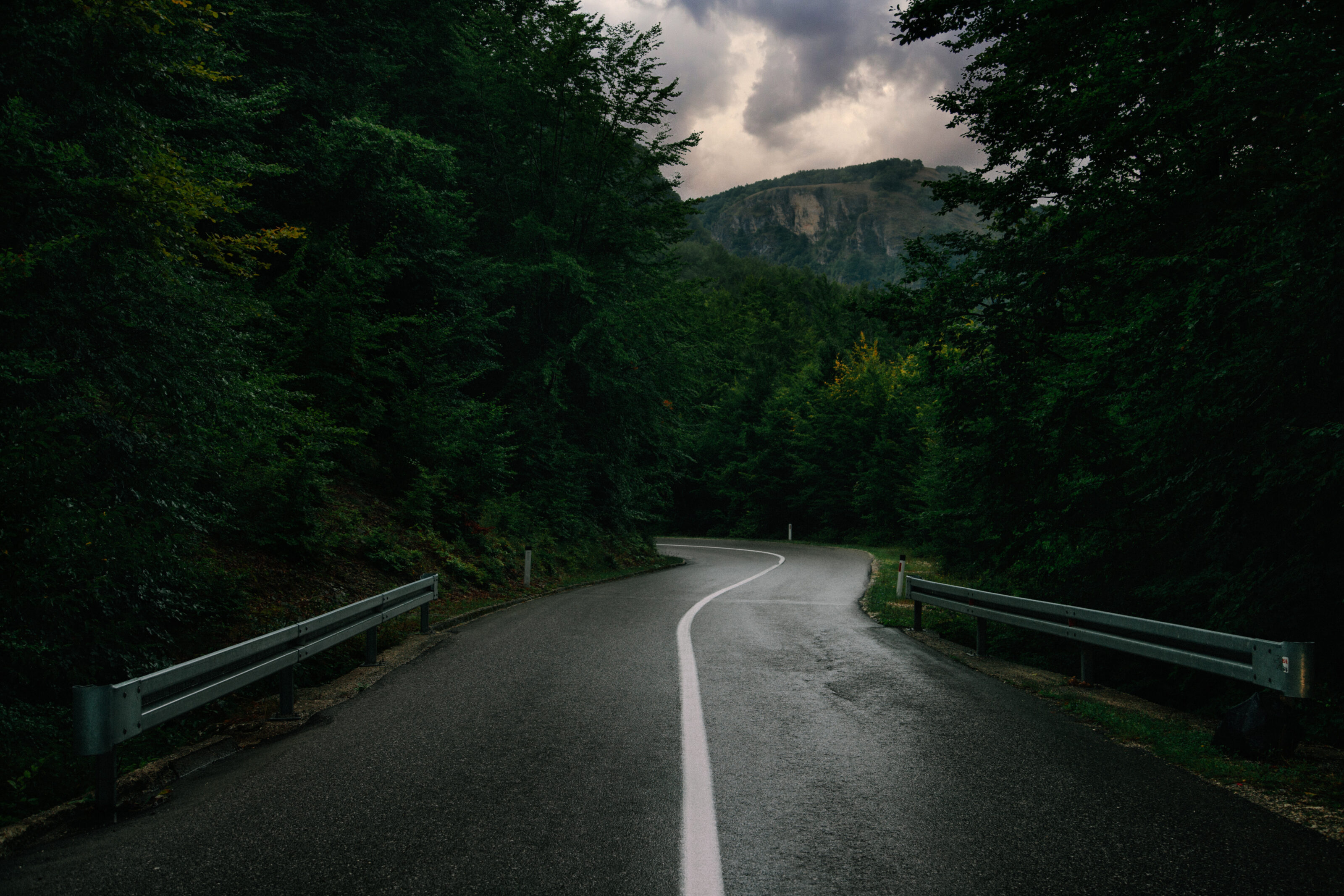
You are more likely to hit black ice on shady roads through forests or under overpasses. It is also prevalent on top of bridges and overpasses due to the road also being cold underneath.
When driving, it’s important to know if you’re travelling through an area prone to black ice and to check weather forecasts and traffic reports.
Roads that are prone to it may have warning signs and, in some instances, equipment which will detect black ice that will set off flashing amber lights when it is present.
In other locations look out for changes in the road texture ahead. If you see a glossy area standing out from the rest and the conditions are right, chances are it will be black ice.
What to do if you hit black ice
Being prepared for the prospect of black ice, slowing down in high-risk conditions and not exceeding advisory speed limits will go a long way in helping you avoid or react to a slippery situation. Also be sure to keep a safe distance from any vehicles in front.
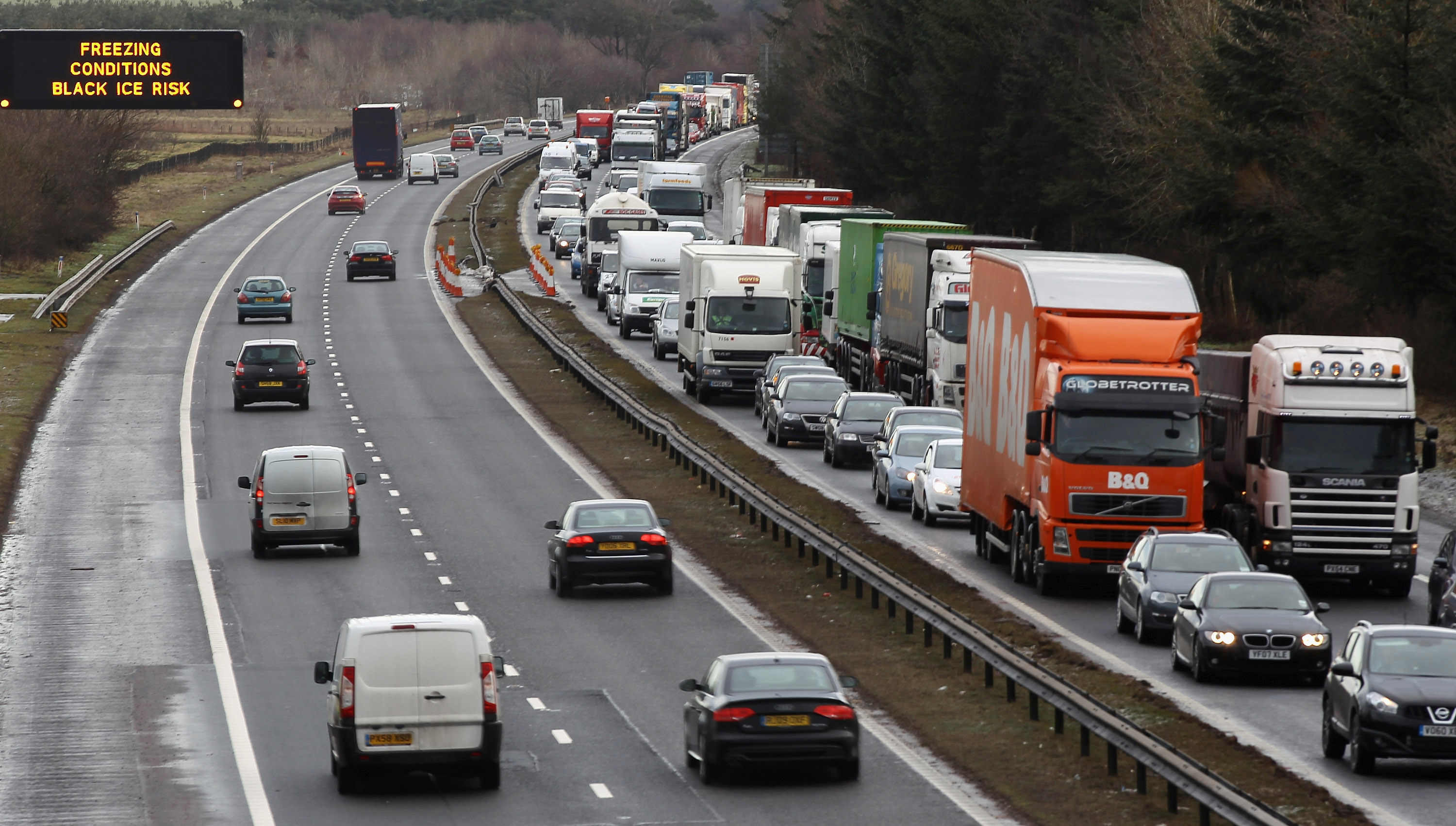
The good news is these patches don’t cover very long stretches of road so if you’re on a relatively straight stretch you should be able to slide off in the same direction.
If you hit a patch of black ice and lose grip:
- Try not to overreact
- Use the steering wheel, brakes and accelerator as little as possible to allow your vehicle to get to the other side. Struggling with the steering or stomping on the brakes will likely lead to spinning or sliding off the side of the road
- Try keeping the steering wheel straight and if you feel the car’s rear-end sliding left or right, make a very gentle turn of the steering wheel in the same direction
- To slow down gently, lift your foot from the accelerator. As you reduce speed you’ll start gaining more steering control. Shifting into a lower gear will also help gain control
- If the car starts to veer off road and there is a hard or dirt shoulder it probably won’t have black ice, so be prepared for the wheels to gain traction and use that space to regain control
- If the car ends up skidding on black ice, let the anti-lock braking system (ABS) do its job by putting your foot on the brake firmly, but not too fast, so the system can pump the brakes as you skid.
Renewably manufactured synthetic ‘fossil fuels’ could save the internal combustion engine, keep classic cars on the road for generations to come and more rapidly achieve the holy grail of net-zero global carbon emissions – all while preserving the noise and thrill of petrol-powered motorsport all over the world, well into this century.
Dubbed ‘eFuel’ and attracting significant investment from the likes of Porsche, Bentley, Ferrari and more, synthetic fuels rely on renewable energy to power electrolysis that takes hydrogen from water and combines it with carbon captured from the atmosphere.
A complex and expensive process, when refined into a green ‘petrol’ and burned in an internal-combustion engine, theoretically no carbon is released into the atmosphere that wasn’t there before.

That’s opposed to, of course, burning products from crude oil that’s been in the ground for millions of years. With eFuels’ simpler chemistry, the result is also a cleaner burn with fewer tailpipe nasties – and a fuel that utilises well-established, existing supply chain infrastructure geared around liquid energy.
New eFuels could also keep millions of internal-combustion vehicles on the road, as opposed to discarding them for brand-new electric equivalents, potentially saving a few million tonnes of manufacturing-related carbon emissions all on its own.
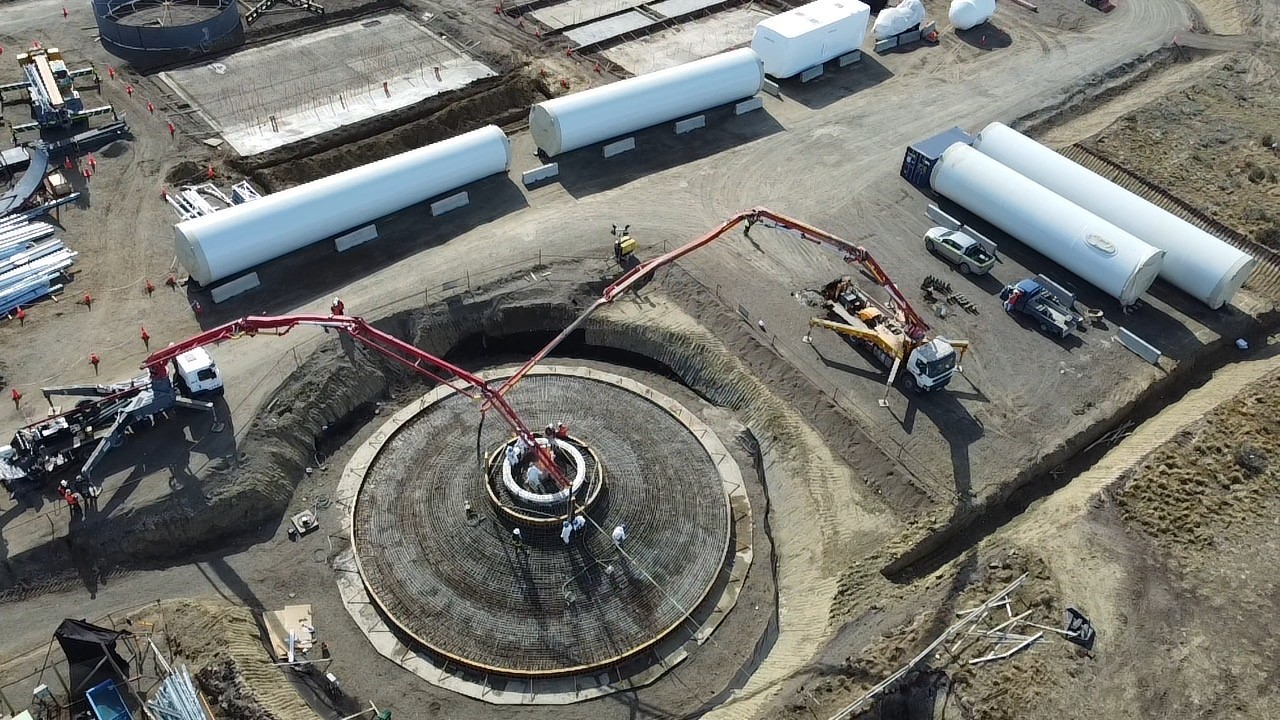
Another advantage of eFuels is opening opportunities and gaining flexibility often lacking with renewable power. Porsche, for example, has teamed with Siemens Energy and a global consortium to build an eFuels plant in Punta Arenas in Chile.
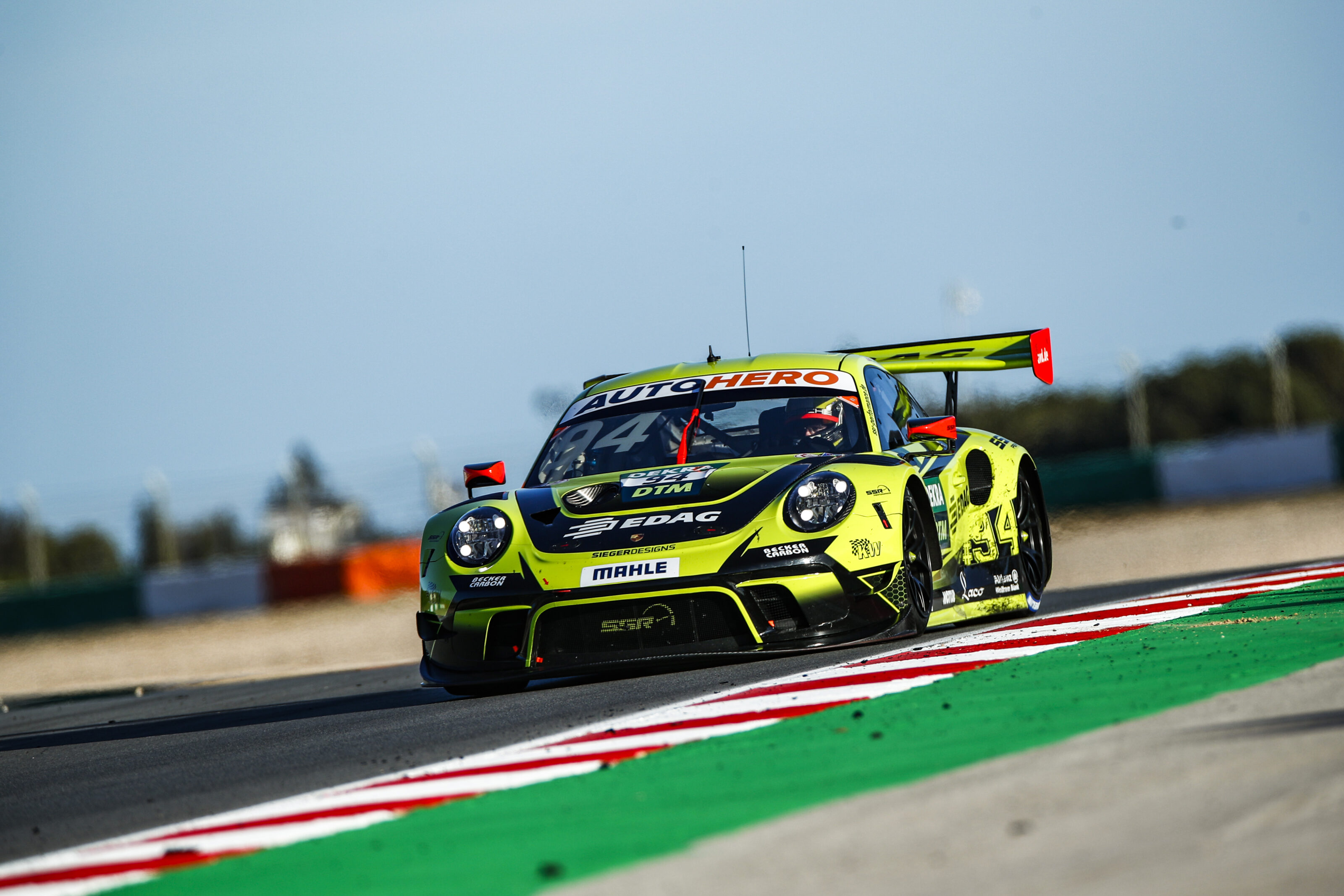
This remote part of South America is like a Middle East of renewable energy, but therein lies the problem – like many renewable hotspots on the earth, it’s in the middle of nowhere. By using its almost unlimited and dependable wind power, eFuels can be reliably manufactured but then easily transported all around the world – including to nations not blessed with the same natural renewable energy resources as others.
Porsche has mentioned Australia, as well, as being a candidate nation for an eFuels plant, taking advantage of the almost limitless solar energy beamed reliably on to the Great Southern Land every single day.
Dense with energy, synthetic fuels can also almost be thought of as another form of battery. Sometimes, of course, the wind doesn’t blow or the sun doesn’t shine. It’s cheaper to store energy as a liquid than in a giant lithium-ion mega battery. And in theory, great swathes of Australia could be covered in solar farms, the energy exported easily in liquid eFuel form.
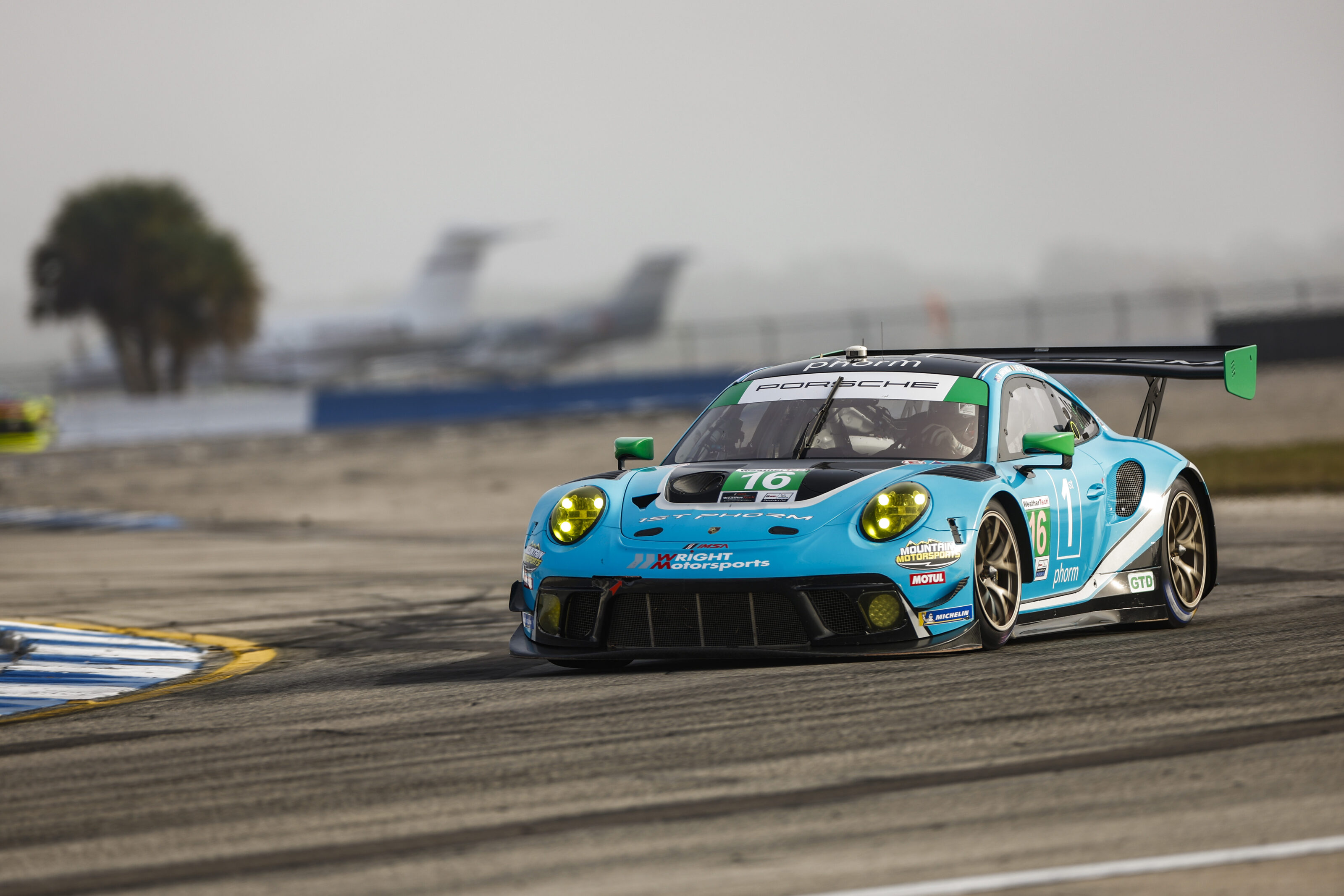
So if it’s as great as it all sounds, why aren’t we cracking into it? Of course, as is always the case with these things, there are major hurdles with eFuels – the first being they are at present frightfully expensive to produce. The dream is to reach price parity or undercut fossil fuels on a cost-per-litre basis, but there’s a long way to go before the necessary economies of scales are realised.
Currently one litre of eFuel is about A$13.50, meaning to fill a 50-litre tank would cost about $700. Porsche says it expects the cost of eFuel to reach closer to A$2.75/litre by the end of this decade. The Chilean plant is expected to produce 130,000 litres of eFuel this year, scaling up significantly to 550 million litres by 2026.
There are other problems, too, however. Manufacturing eFuels with renewable energy doesn’t pass the greater sniff test (although they are said to smell a lot nicer than petrol). From wind turbine to, say, creating momentum with an internal combustion car, eFuels can’t compete with a battery electric vehicle (BEV) for efficiency – meaning they are unlikely to ever end up as the primary energy source for the great unwashed.
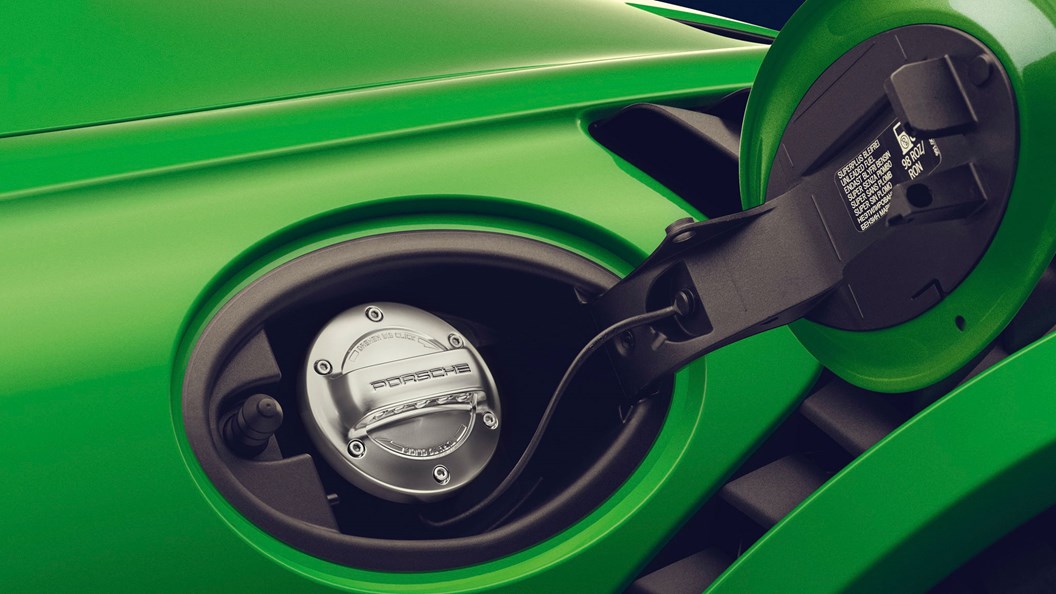
A 2020 study from the Society of Automotive Engineers found just 6-18 percent of the original energy captured renewably, made it to the wheels for an eFuel-powered combustion vehicle; versus 40-70 percent for a BEV. In fact, it would make more sense to use the renewable energy to manufacture green hydrogen to be used in a Fuel Cell Electric Vehicle (FCEV) which is more like 23-33 percent efficient.
And from a broader decarbonisation perspective, we need all the renewable energy we can get, deployed as efficiently and effectively as possible. Using it to produce eFuels doesn’t make sense next to replacing a carbon-billowing, coal-fired power station.
Instead, eFuels remind us that rapidly decarbonising the entire world requires an enormous suite of solutions. It’s going to be a very long time before we see a battery-powered Boeing 737; eFuels could eliminate the 12 percent of global emissions currently produced by aviation, relatively easily and quickly. But also keep that E46 M3 of yours bolting up twisty country roads for a long time to come.
STUTTGART’s GREEN burn
Porsche is spending big on eFuels as it tries to reach ‘carbon neutrality’ for itself by 2030. That means mostly transitioning to electric vehicles (and betting they will be recharged by growing quantities of renewable energy).
Down the track, at the factory, brand-new combustion cars are planned to be filled for the first time with renewable eFuel, while eFuel will also be used for Porsche’s driver experience events.
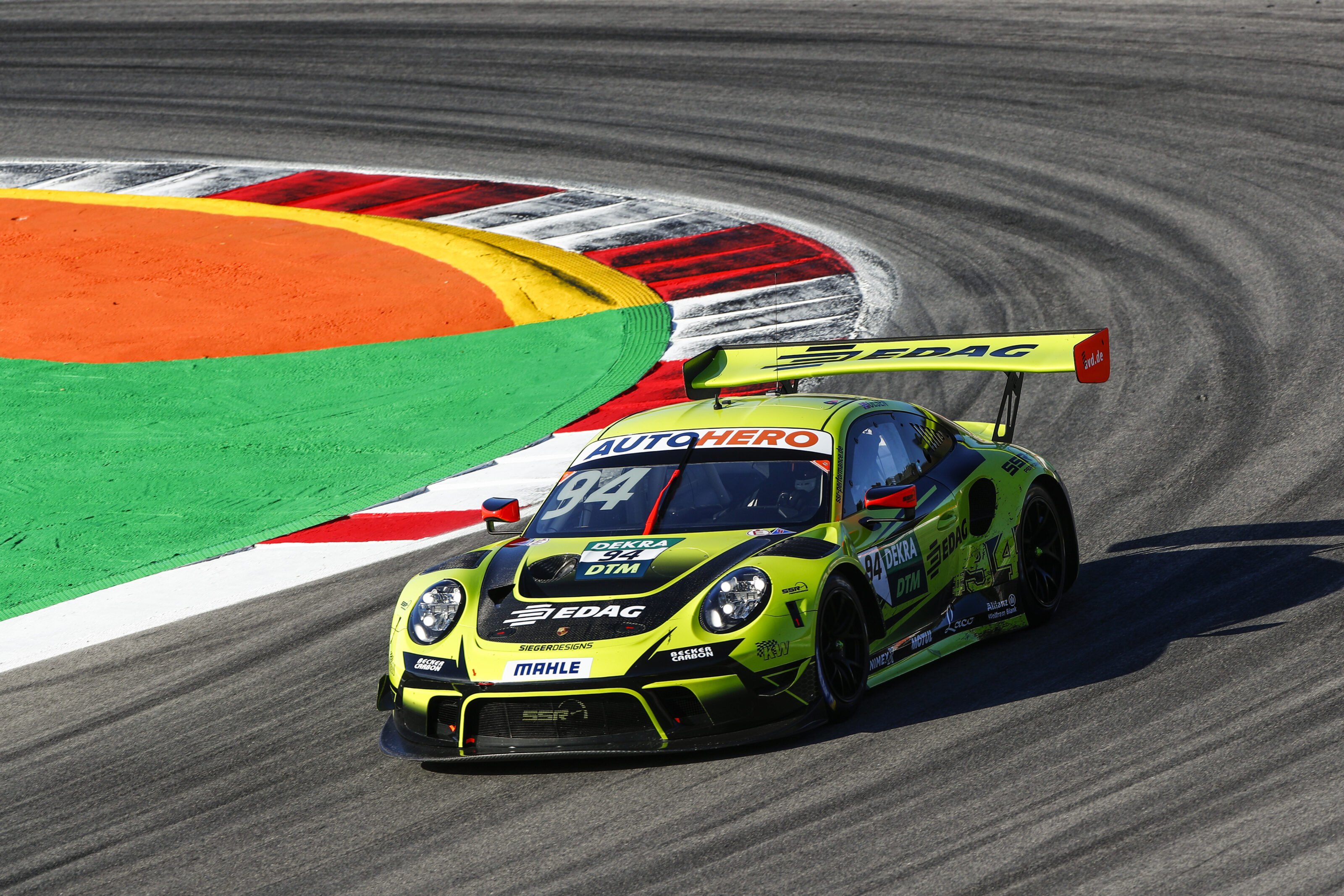
The German marque is also keeping classics in mind, with up to “70 percent” of all Porsche sports cars ever built still being on the road today. Meanwhile the first batches of ‘green’ synthetic eFuel from Chile will be used to power the Porsche Supercup championship in Europe as early as this year.
01
Synthetic fuels are artificially created hydrocarbons. Using electrolysis, hydrogen is extracted from water; and then combined with carbon ideally taken from the atmosphere.
02
That means eFuels are sort of like carbon capture. By then burning an eFuel, no new CO2 is being released into the atmosphere – it’s carbon ‘neutral’.
03
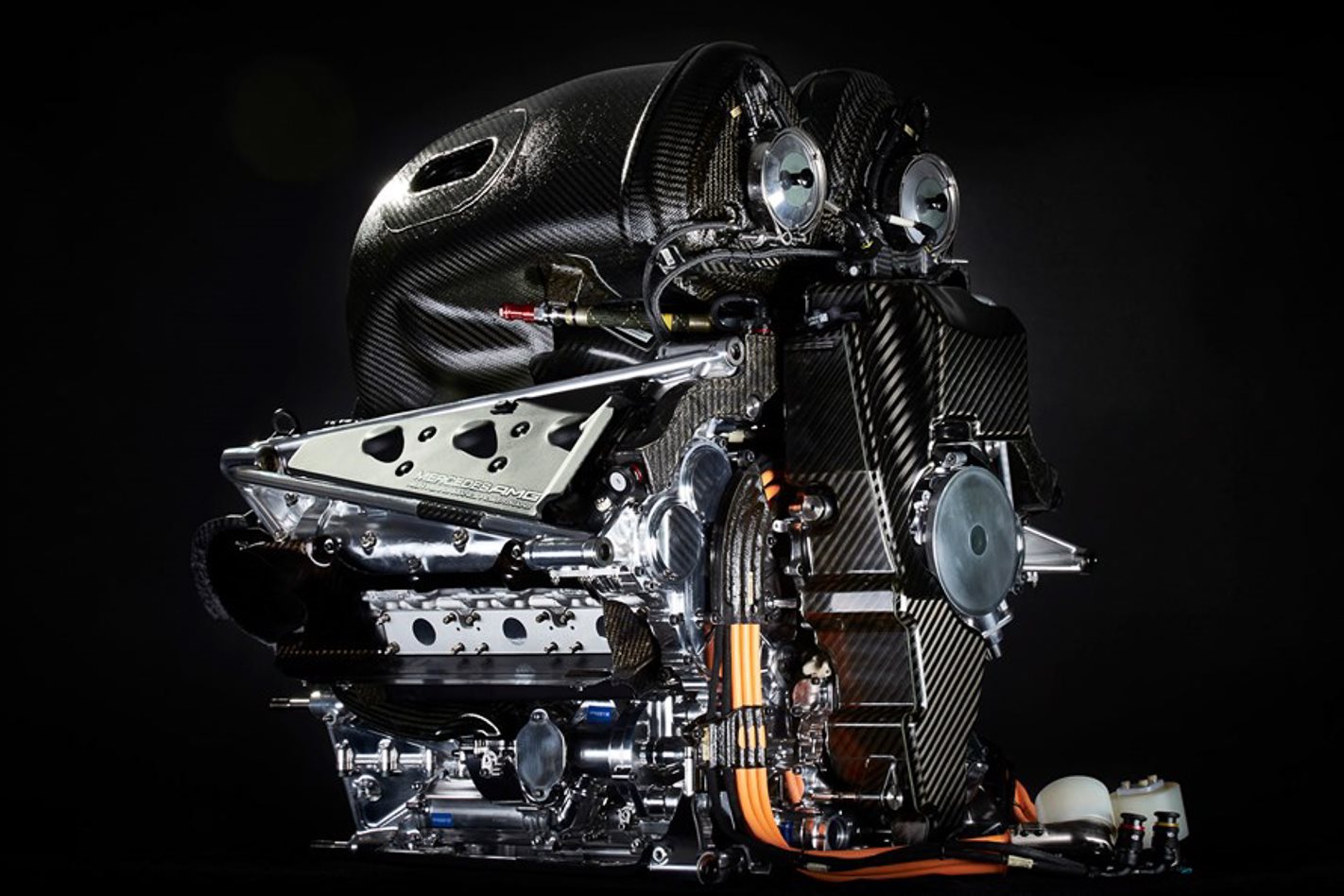
We’ve glossed over a lot of chemistry here, but the entire process must be powered by renewable energy. It makes no sense to burn fossil fuels to create eFuels.
04
Synthetic fuels burn ‘cleaner’ with less NOx and particulates. They can be blended with existing petrol; or refined to run in existing cars with no retrofitting whatsoever.
What’s in a name? Probably more than you realise, if you were eyeing up, say, a snappy electric hot hatch named Discharge, or a seven-seat electric SUV called the Cellulite.
So you probably wouldn’t have been queueing up like Elon worshippers to buy yourself a Wartburg, though there’s actually a lot more to this name than the unfortunate dermatological connotations. It originated with Castle Wartburg, which overlooks the German town of Eisenach (birthplace of Johann Sebastian Bach) where the Decauville, a two-cylinder French car, began production under licence in 1898.
By 1904, Wartburg had developed its own models and went by the name Dixi. After military production during WW1, in 1927 Dixi began building Austin 7s under licence. A year later, a certain aircraft and motorcycle maker from Munich decided to add cars to its catalogue and took over the enterprise, producing the BMW-Dixi (later BMW 3/15).
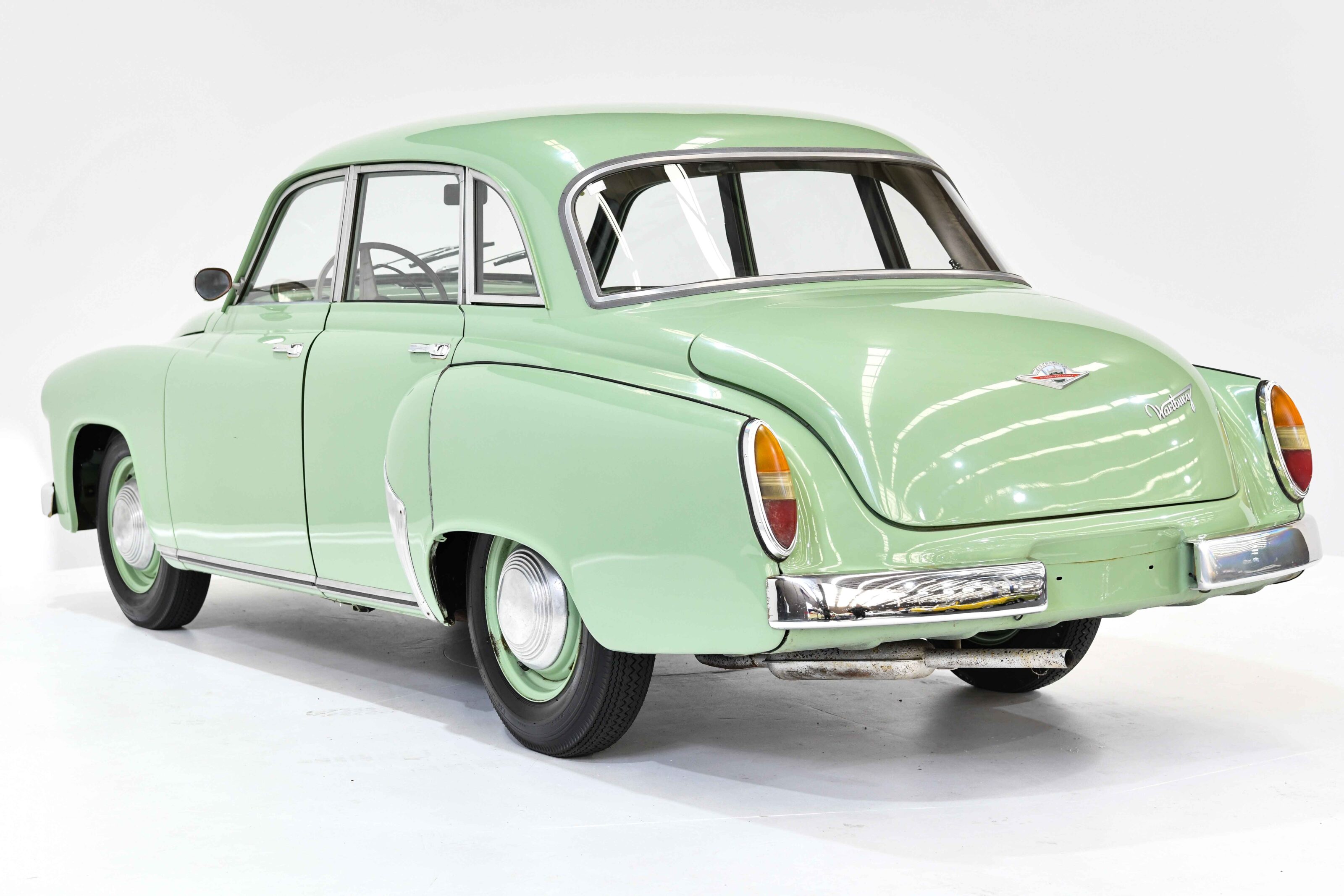
Thus, all BMW cars from 1928 until the Soviet takeover of East Germany in 1945 came from the Eisenach plant.
Annoyingly, while BMW’s Munich facilities began their recovery from WW2, the Soviets resumed production of pre-war ‘BMW’ models. In 1952, Munich succeeded in forcing Eisenach to change the name – which they did, to ‘EMW’, with a revised logo in red and white.
While BMW accelerated into the future with its all-new, Munich-built 501 and 502 luxury cars, EMW under commie rule inevitably went backwards. They commandeered production of the IFA F9, a pre-war DKW design, and in 1956 used its ladder frame, transverse leaf suspension and two-stroke drivetrain to underpin a larger and more stylish model family, the Wartburg 311.
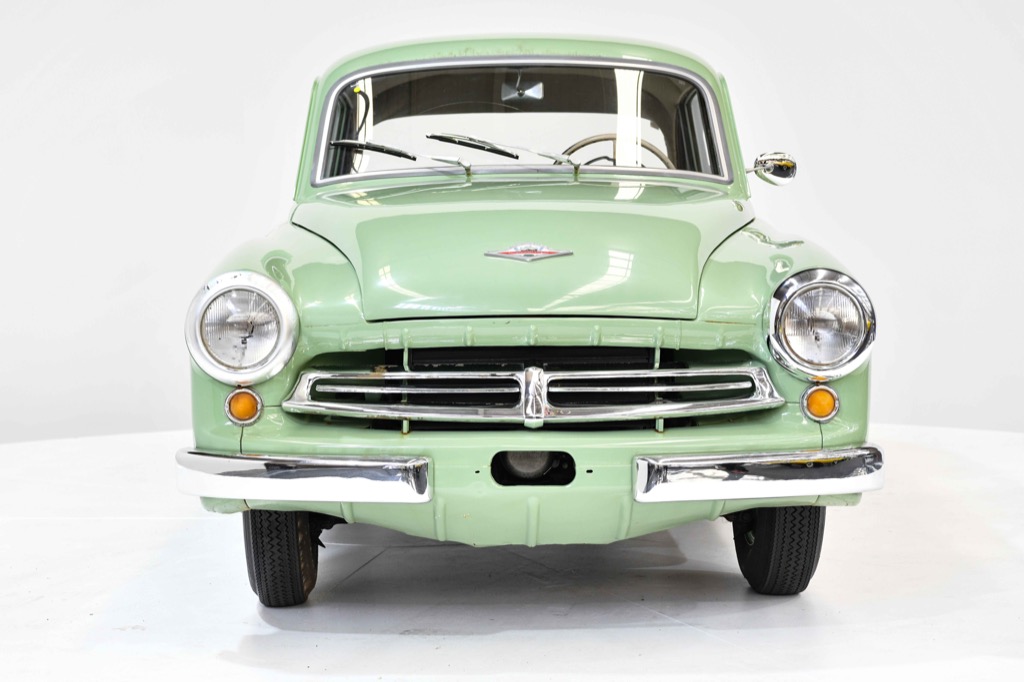
Styled by BMW-trained (and Eisenach-born) Hans Fleischer, the 311 came in no fewer than eight derivatives, including wagon, coupe, cabrio and utility, along with the sedan like the 1956 example here.
On styling alone, the 311 might have had a chance against western rivals like Mercedes-Benz’s 190 ‘ponton’. At least its smoker motor and front-drive did nothing to dampen demand behind the Iron Curtain, where the waiting list was said to exceed supply five-fold.
The 311 ceased production in 1965, when it was rebodied as the boxy 353, after 258,928 examples had been built. Interestingly, 20 percent of that production was exported to markets beyond the Iron Curtain – even, courageously, to the carmnist-hatin’ US.
Thank you for smoking
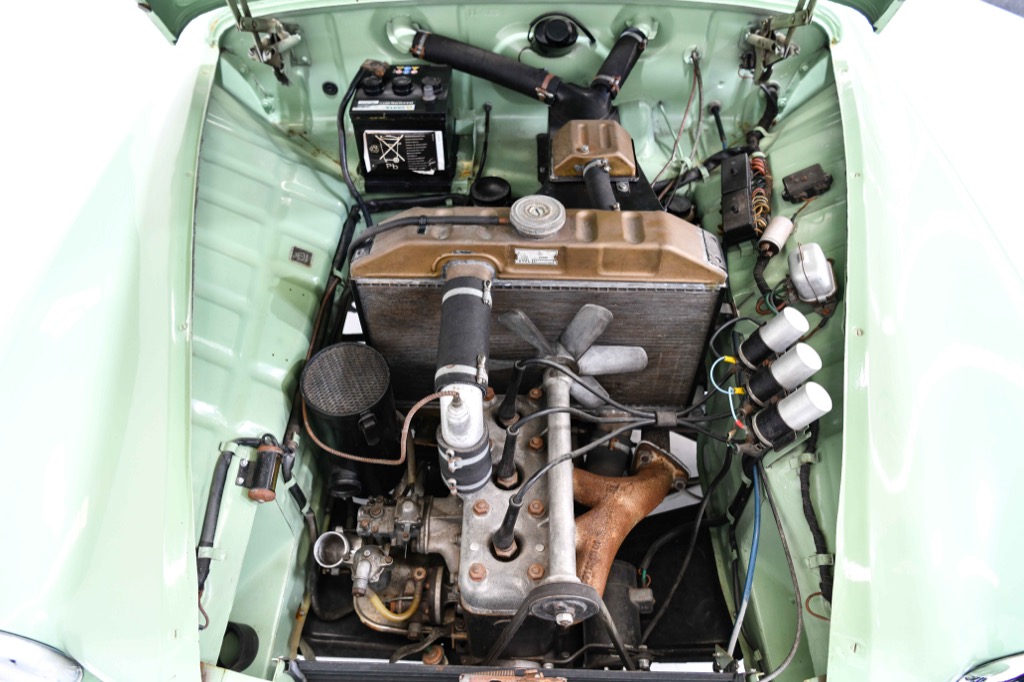
Mechanically, the Wartburg was no weirder than a Saab 92 or DKW F89. The latter donated the longitudinal three-pot engine, initially 901cc with 28kW and 81Nm (992cc and 33kW/93Nm from 1962), with radiator mounted behind, and driving through a three-speed manual (four-speed from 1958). Top speed was around 115km/h, and despite the simplicity of the transverse-leaf suspensions, they were said to be comfortable cruisers and solidly built.
Inside story
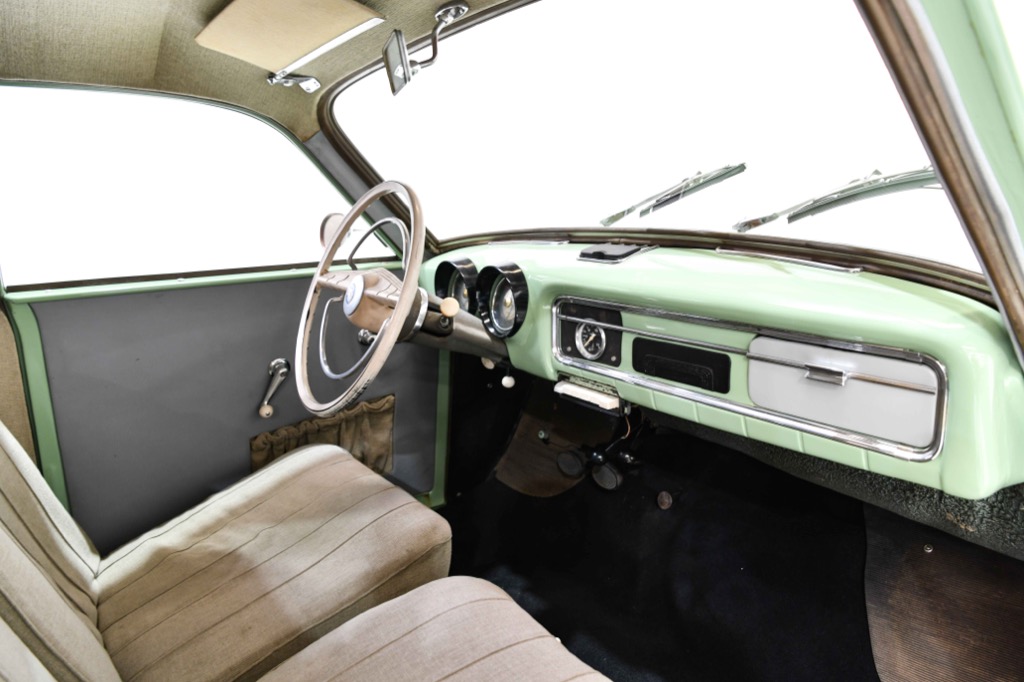
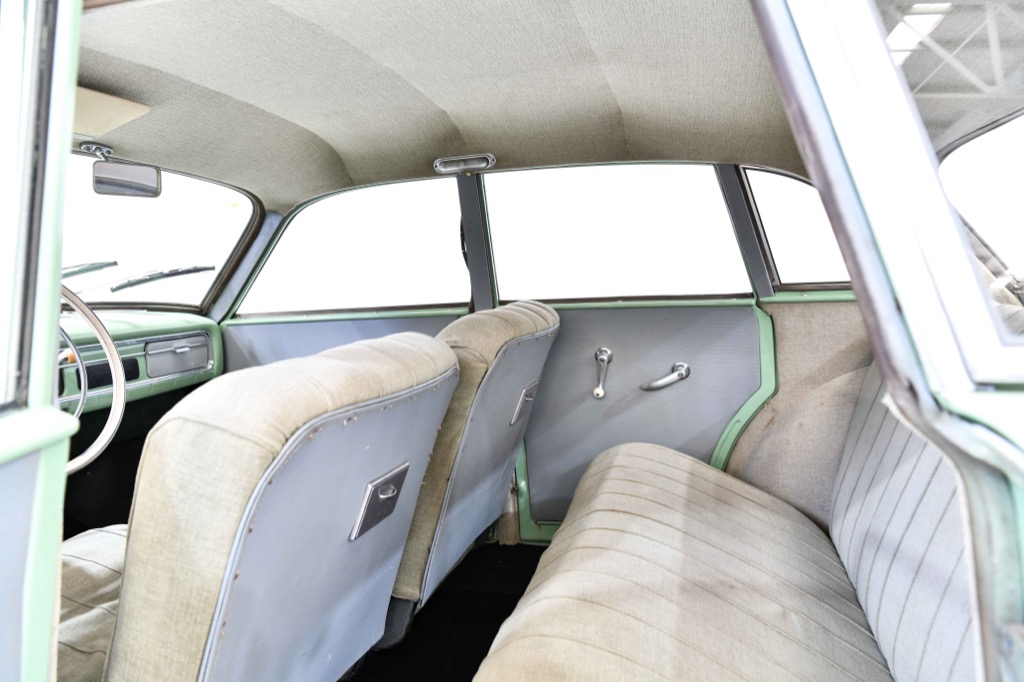
Interior ‘styling’ begins and ends with the Bakelite steering wheel, but the 311’s interior is spacious and comfortable, with fabric-trimmed front bucket seats fronting the unforgiving steel dash and basic instrumentation. Many roadster and cabrio versions – the most popular exports – extended to radios and leather upholstery. A novel feature of the sedan’s rear seat was the fold-down backrest giving boot access. A sliding sunroof was an export option.
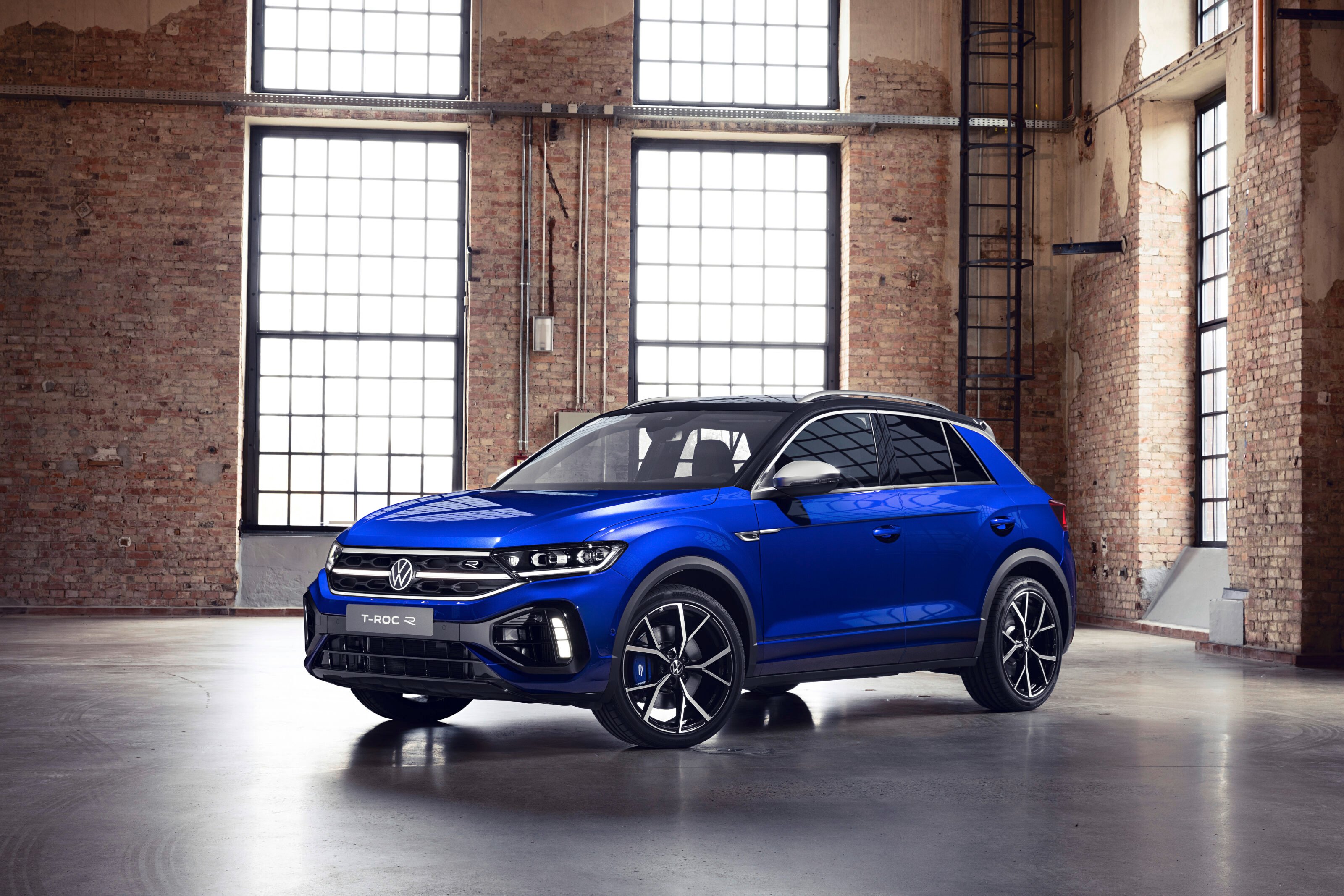
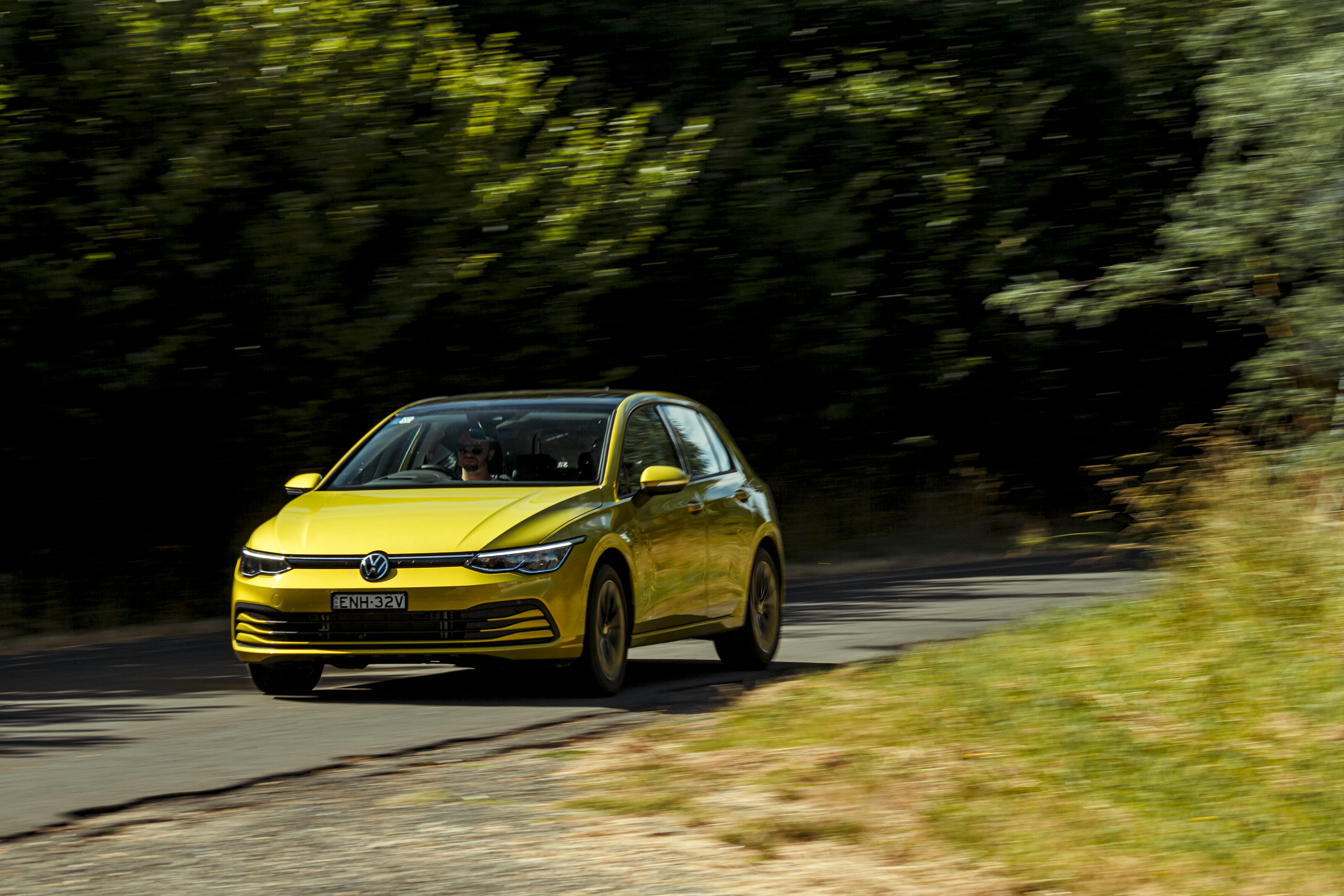
Volkswagen is recalling more than 600 examples of its T-Roc, Golf, Passat, Tiguan and Arteon models over a possible fire risk.
The issue affects 608 MY21 and MY22 cars across all the models.
Due to manufacturing issue, the engine compartment cover may become loose, and if that happens, the engine cover may move and touch the turbocharger resulting in smouldering damage or an engine bay fire.

Owners should contact their preferred VW dealer to arrange to have their vehicle repaired free of charge, or alternatively can call the firm on 1800 504 076 or email on [email protected]
A list of VINs is available here.
The 2022 Ford Ranger has been one of the most hotly-anticipated models in recent memory.
But the company has made no secret of its move towards electrification, with aims to drop petrol and diesel models in Europe by the end of the decade.
Earlier this week, Ford CEO Jim Farley confirmed the US car giant was preparing to launch a second battery-powered ute, after the F-150 Lightning.
While the company is remaining tight-lipped on which model will adopt an all-electric powertrain, a spokesperson did say it would be a “next-gen” pick-up, which suggests it’s more likely to be the Ford Ranger rather than the smaller Maverick sold overseas.
UPDATE, July 2022: New Ford Ranger review – it’s here at last
The new 2023 Ford Ranger is now on sale in Australia, and the local media launch has been run. The Wheels and 4×4 Australia teams have both driven the new Ranger, and you can find their stories at the links below.
Story continues…
With the next-generation Volkswagen Amarok being based on the Ranger, comments made in recent weeks by Volkswagen executives about a potential electric Amarok also increase the likelihood that Ford has something in development.
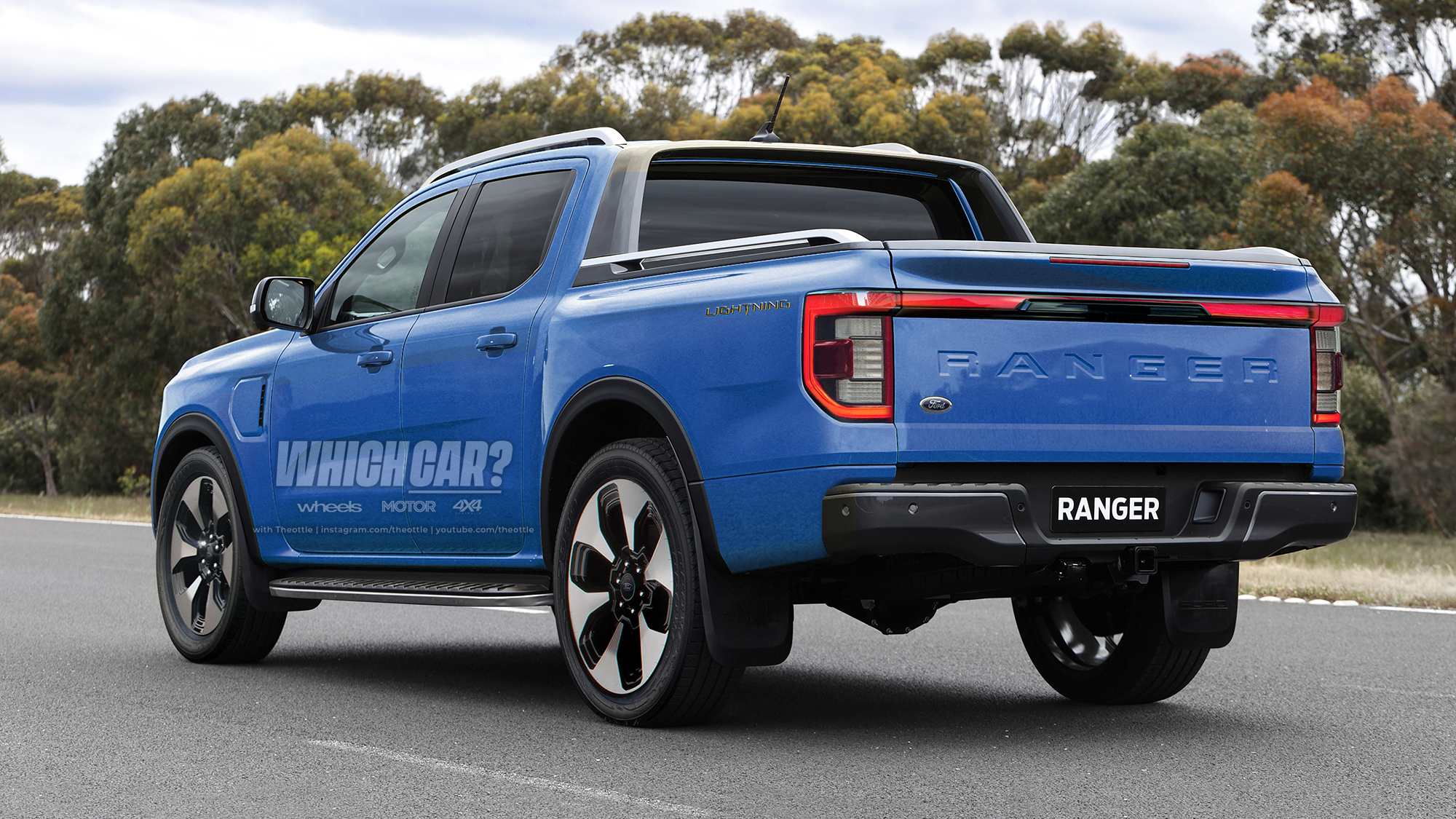
Enter the Ford Ranger Lightning – the next electric ute from the Blue Oval.
These digital renderings by artist Theottle provide a glimpse at what the vehicle could look like, adopting the F-150 Lightning’s blanked-off grille and full-width LED daytime-running light, as well as the aero alloy wheels to help reduce drag and improve driving range.
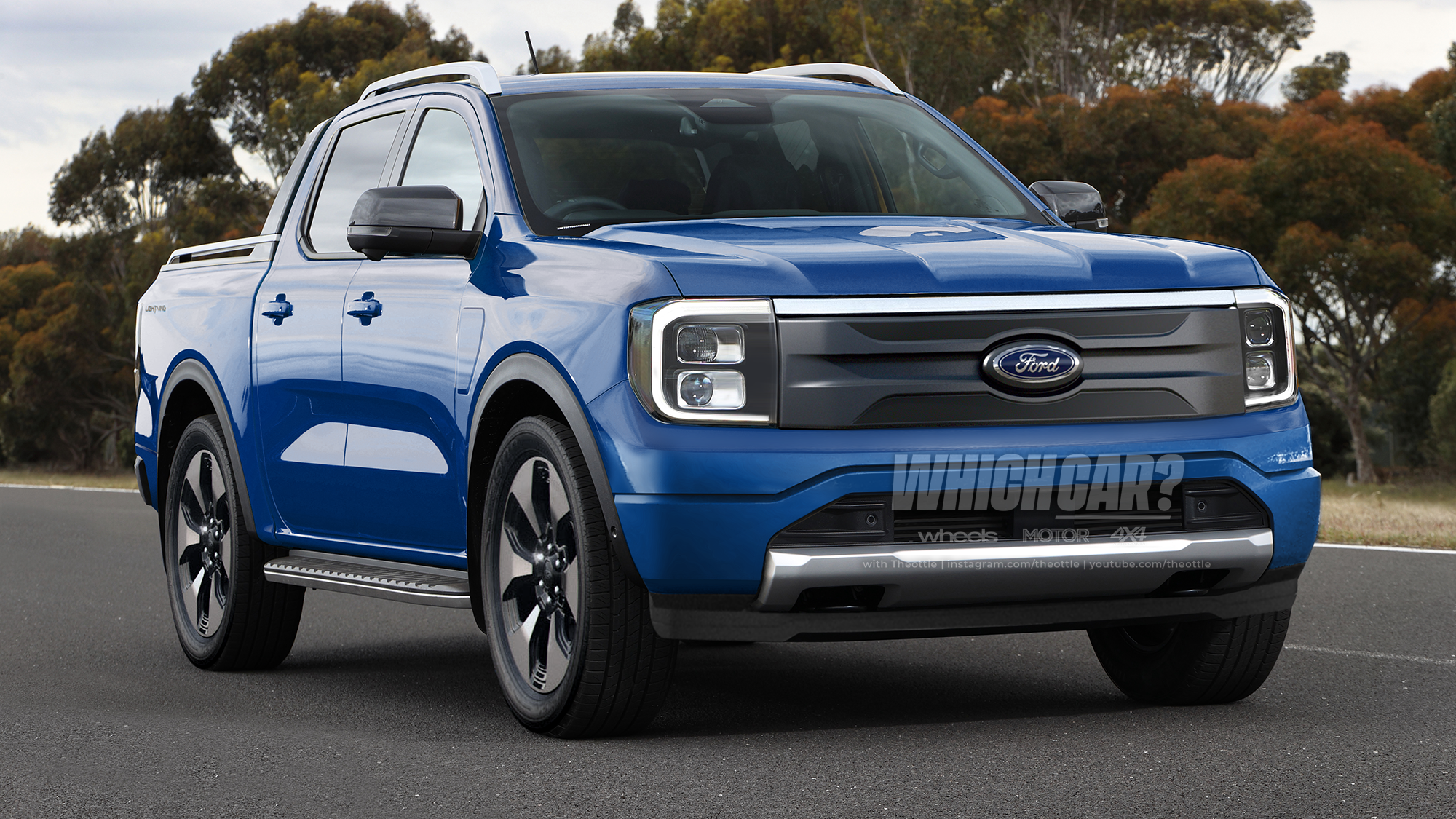
With some modifications to the ute’s chassis, Ford could potentially borrow battery packs and motors from the electric E-Transit van, set to launch in Australia in mid-2022.
This could see the Ranger Lightning using a 68kWh battery to power a 198kW/430Nm electric motor at the rear axle, with a driving range of roughly 300 kilometres to be expected from a single charge.
In performance terms, this would roughly place the Ranger Lightning’s powertrain between the 2.0-litre twin-turbo diesel four-cylinder which puts out 154kW and 500Nm, and the 3.0-litre turbo-diesel V6 producing 184kW and 600Nm found at the upper end of the line-up.
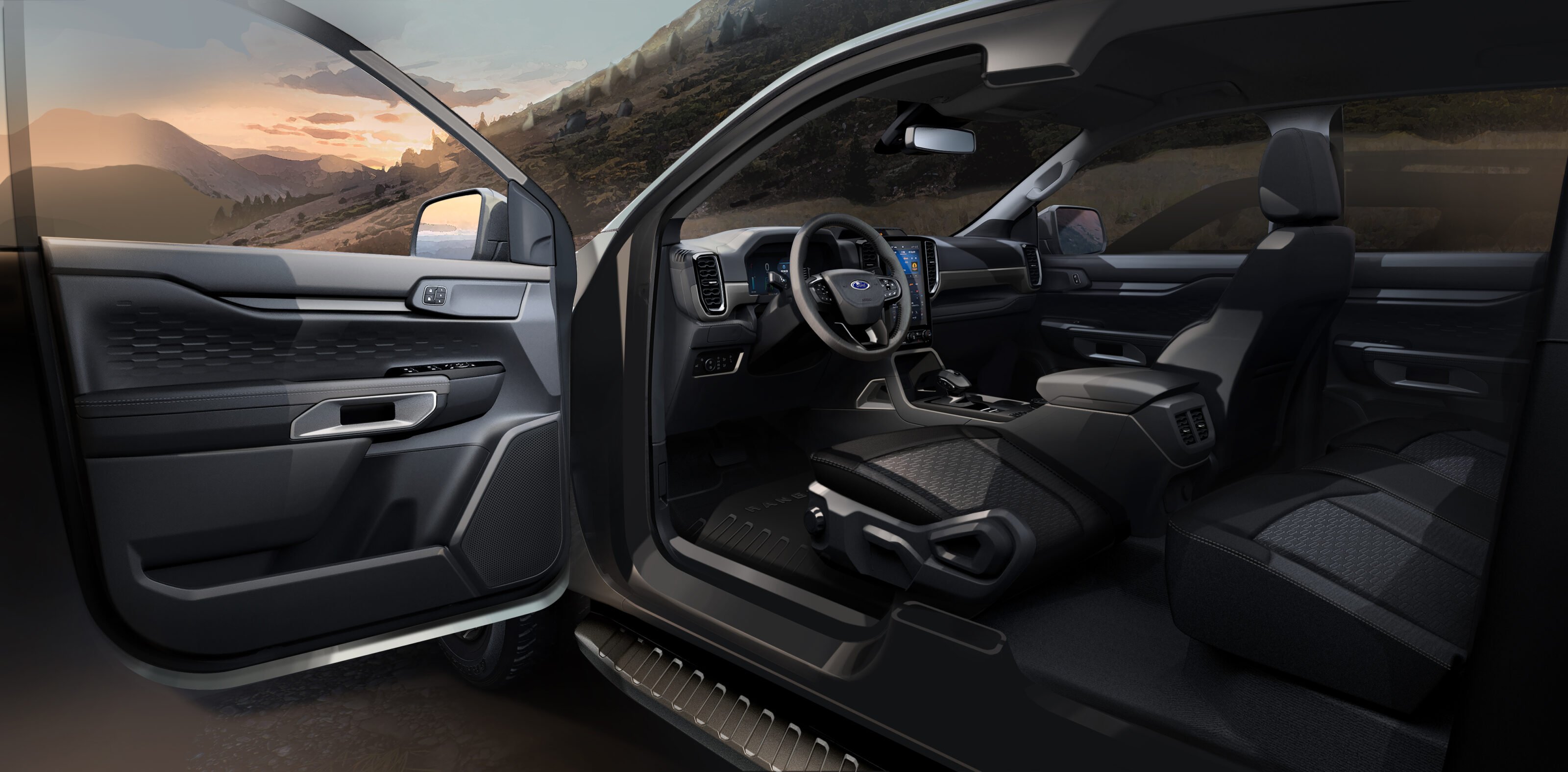
“We are accelerating our electrified future in Australia,” said Ford Australia President CEO Andrew Birkic at the launch of the E-Transit.
“We are anticipating the needs of each type of customer and bringing the best of our global line-up to meet those requirements.”
Ford recently announced it was splitting into two separate businesses – Ford Blue will be dedicated to petrol and diesel vehicles, while Ford Model E will develop the company’s electric vehicles.
What do you think of the Ford Ranger Lightning? Let us know in the comments section below.
The WhichCar team previously brought you the best ways to keep your paintwork looking showroom fresh, but if the advice comes too late and your car is already showing its age, what can you do to wind back the years?
In the worst cases of neglect and damage, the only option is to book in with a panel specialist and have a fresh new coat of paint applied. However, there are a number of tricks and treatments you can try before you are forced to opt for the most expensive solution.
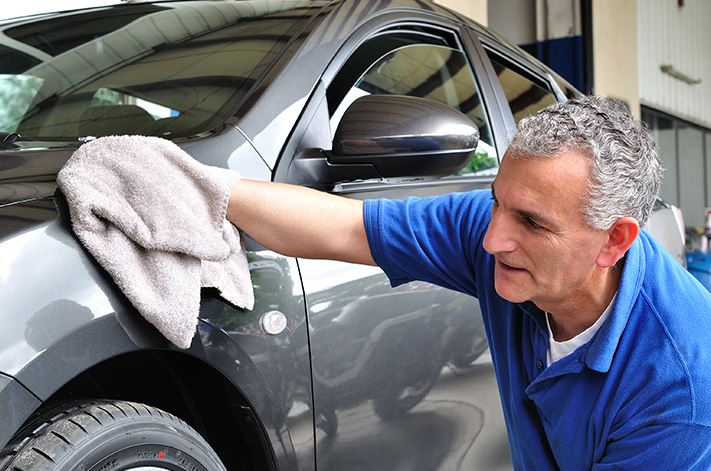
Here are our top exterior makeover tips to avoid pricey trips to the paint shop.
Know your paint
Depending on its age, your car is most likely to be coated in three different layers of paint. At the deepest level, the primer provides a bonding layer between the metal, plastic (or perhaps composite material) of the panel. If damage has occurred to this then it’s terminal and a spray-shop visit is your only option.
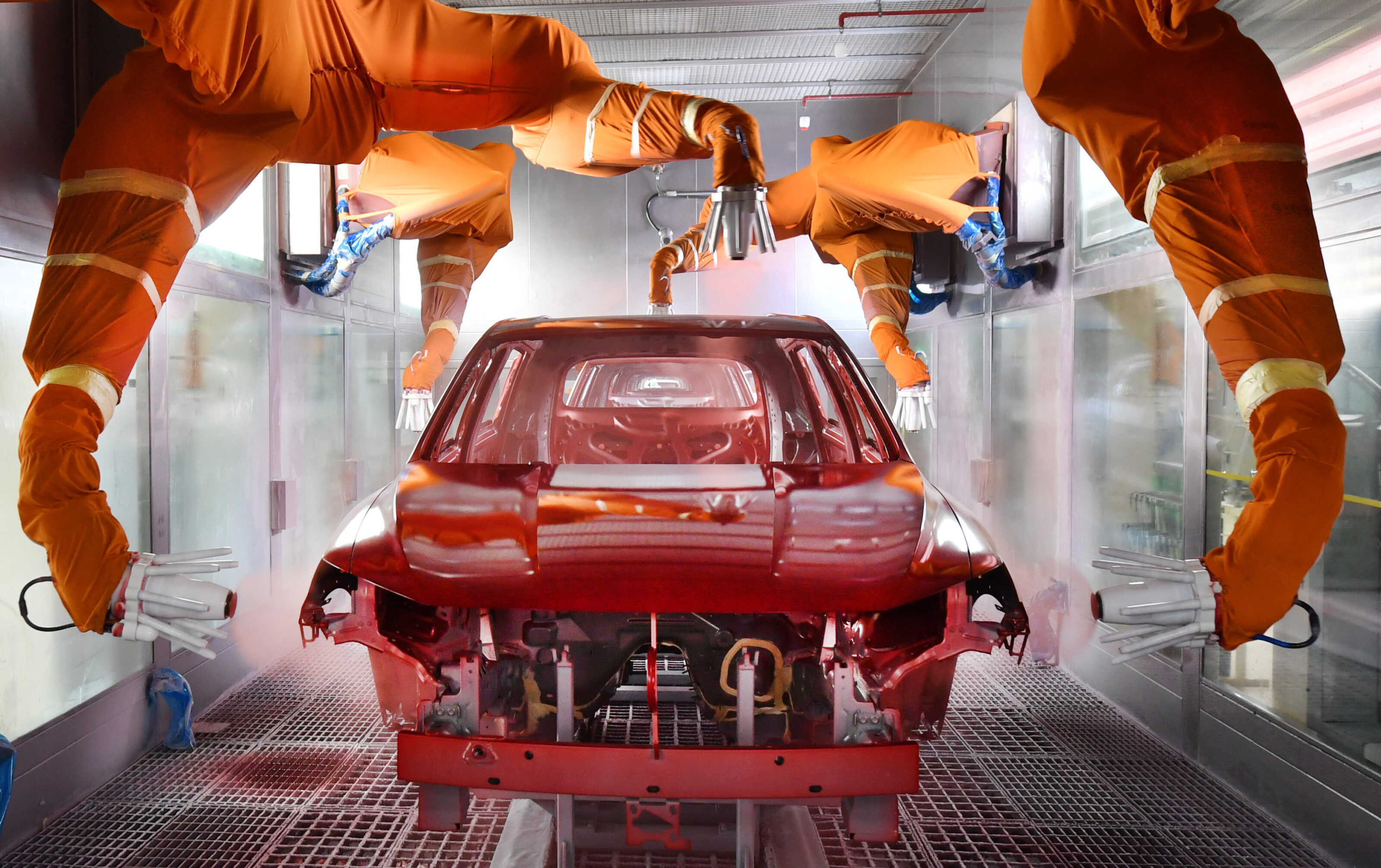
On top of the primer is the base coat, which normally provides the colour of your car. Base colours can be metallic, pearlescent or solid (sometimes called flat). For older colours and cars, a solid base was often the final layer – albeit applied in a number of coats – which makes it more susceptible to damage and degradation, but there is still the potential for improvement.
For everything else, the top or clear coat is the final layer and the colourless shell that protects all the other layers beneath it. The glossy varnish is surprisingly durable and can be significantly restored even after some very unkind treatment.
Now you know your paint, here is how to fix relatively minor defects.
How to repair small scratches
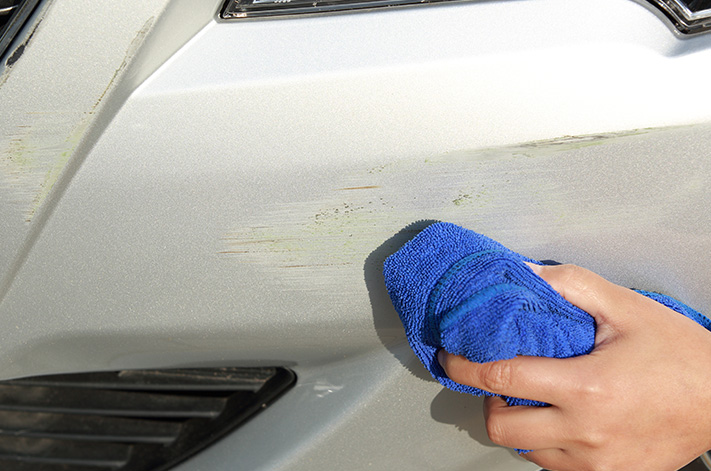
Abrasive pastes and polishes, similar to the paint restoration polishes, are available for removing shallow scratches and work in a similar manner.
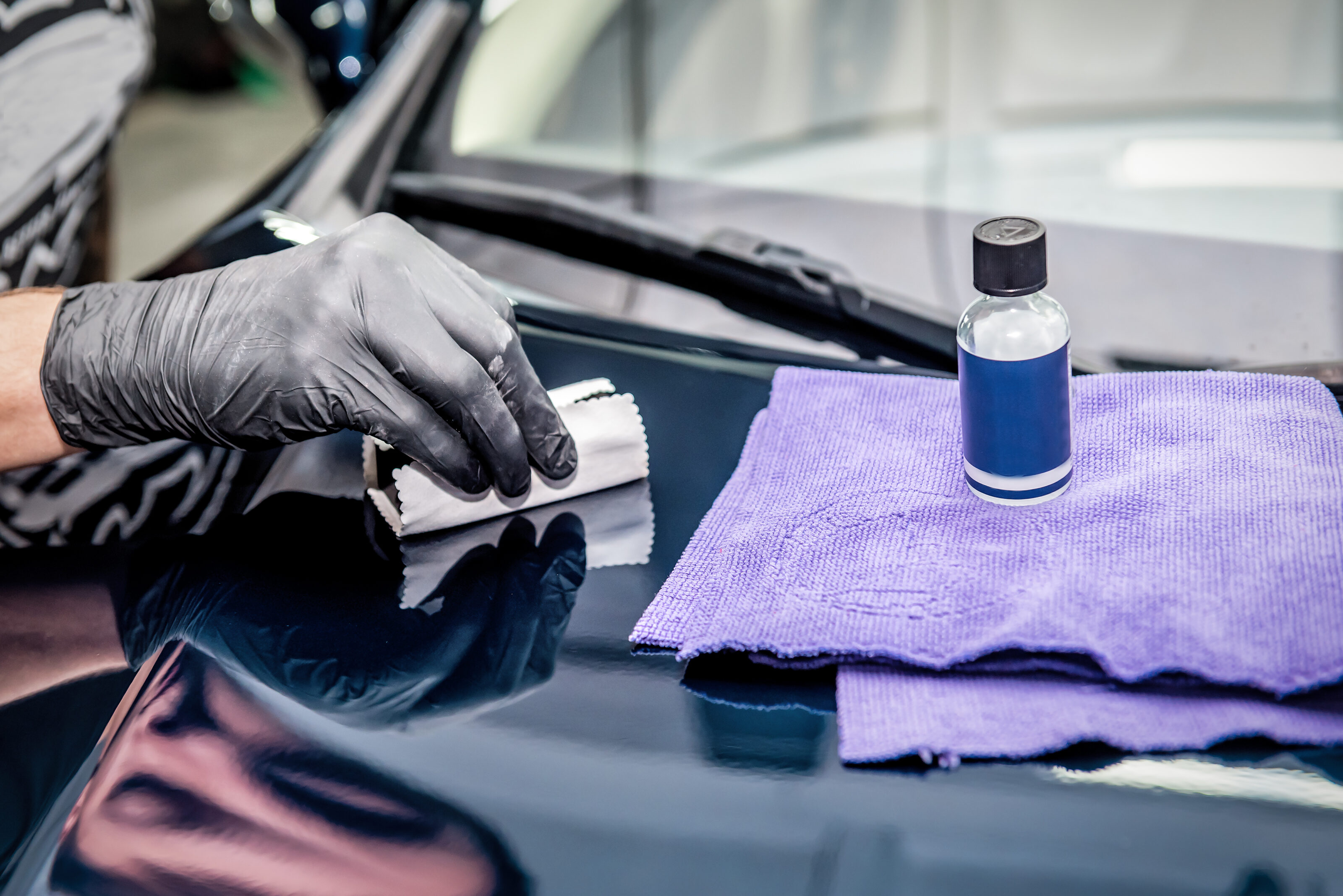
Provided the scratch hasn’t broken through into the base coat, the damaged clearcoat can be polished smooth again, hiding the scratch. It’s best to build up a layer of wax after this treatment too.
The same method can be used over larger expanses to remove fine scratches, frosted paint caused by using dirty car wash brushes or sand abrasion, and even minor damage from corrosive bird droppings, for example.
How to touch up stone chips
Where the impact of small stones has caused damage through multiple layers of paint, touch-up paint sticks can be used to hide damage, although rarely completely.
These little bottles of paint are matched to your paint colour code and come with a small brush for application, but here are two top tips for using the paint sticks:
- Source a paint touch-up from an approved service and parts centre. The original equipment version will only cost a few dollars more than the generic option and will be a perfect match for your paint
- Do not use the brush that comes with the bottle. If the damage is extensive enough to require a brush as wide as the one provided then it will need body shop attention. Much better is to find a small solid point, such as a cocktail stick, which allows a tiny amount of colour to fill the chip without spilling over to the surrounding undamaged paint.
How to restore oxidised paint
If your paint is one of the vehicles described above that does not have a clear coat over a solid base colour, the paint can be more susceptible to oxidation and UV damage. Reds are particularly vulnerable to the harsh Australian sun and can turn a chalky pink. Thankfully, all hope is not lost.
There are a number of paint restoration products that polish a thin layer of oxidised paint away to reveal an unaffected layer that was hiding underneath.
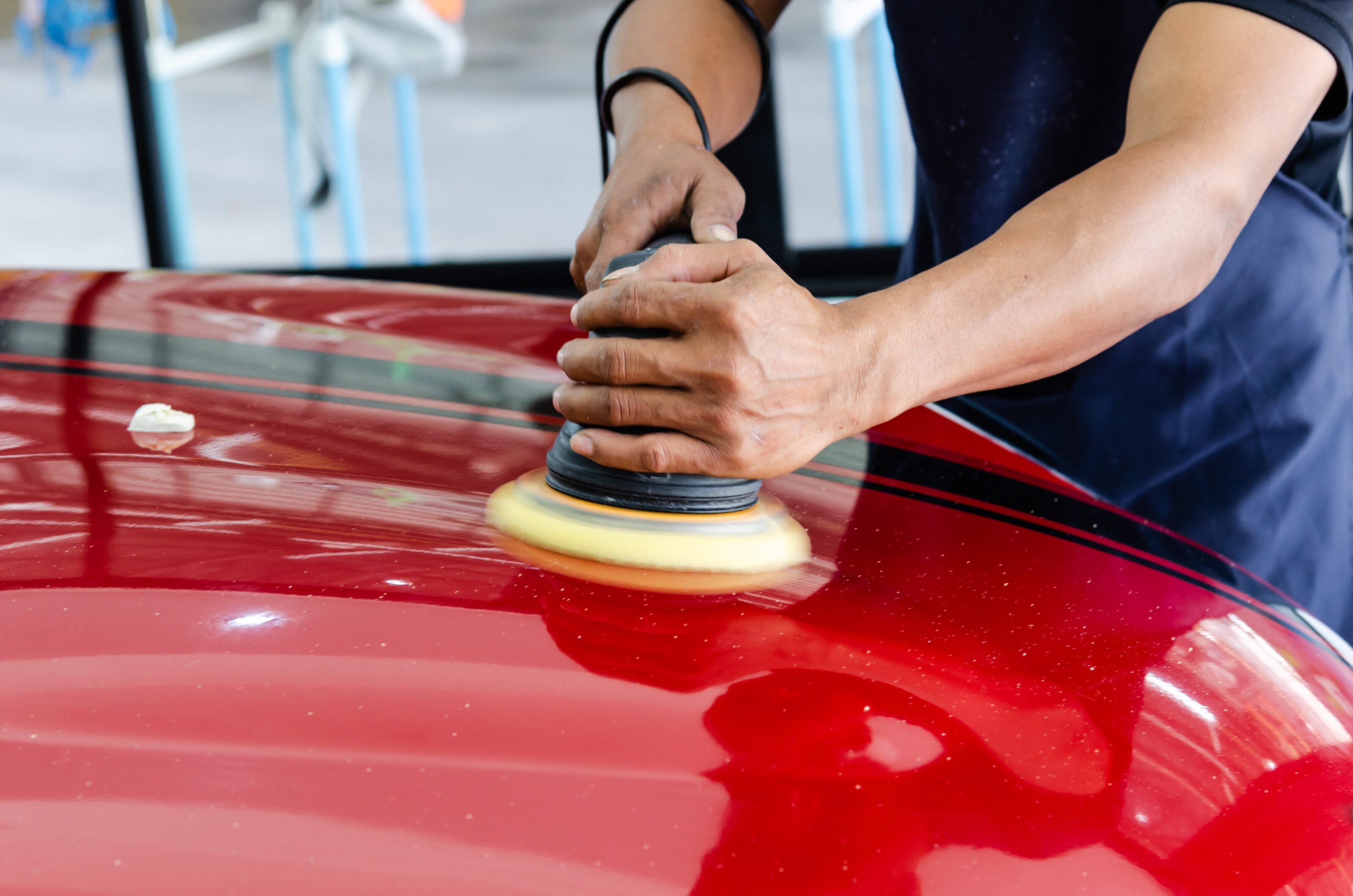
These polish products are not magical and require a fair bit of elbow grease or an electric polisher to work properly, but can be extremely effective.
Once finished, you will need to regularly apply a protective layer of good quality car wax to prevent the fresh paint oxidising again and undoing all your hard work.
Buffing out tar, sap and other unwanted waxes
If you are good to your car and regularly treat it to a wash and wax, you may find that all your hard work isn’t producing the concourse shine that you are looking for and this is likely to be due to the build-up of insoluble contaminants that are not removed by detergent or polishing.
But there is a little known industry secret that you might want to try, using a clay bar.
Available at all good auto consumable shops, the small bars of rubbery clay are simple to use and can be extremely effective at bringing back paint to a nearly new shine.
Simply wash your car as normal and then rinse. Then apply fresh soapy water with a sponge to lubricate the surface before gently rubbing the surface with the bar in circular motions. Initially, the bar will be hard to move as it catches the built-up grime and removes it, but when it glides smoothly over the cleaned paint, move on to the next section. Turn and fold the clay bar as you go to reveal clean clay.
After the deep clean, polish and wax as normal, stand back and give yourself a pat on the back.
There is nothing that can beat the result of professional attention at the body shop and a lick of new paint, but with a little hard work, you can breathe new life into tired bodywork and save yourself a lot of cash in the process.
Snapshot
- 2022 Kia Sorento Hybrid goes on sale in Australia
- Available in GT-Line guise only, with FWD or optional AWD
- Front-wheel drive priced from $66,750 before on-road costs, all-wheel-drive incurs $3000 premium
UPDATE, April 29: Kia Sorento Hybrid now on sale from $66,750
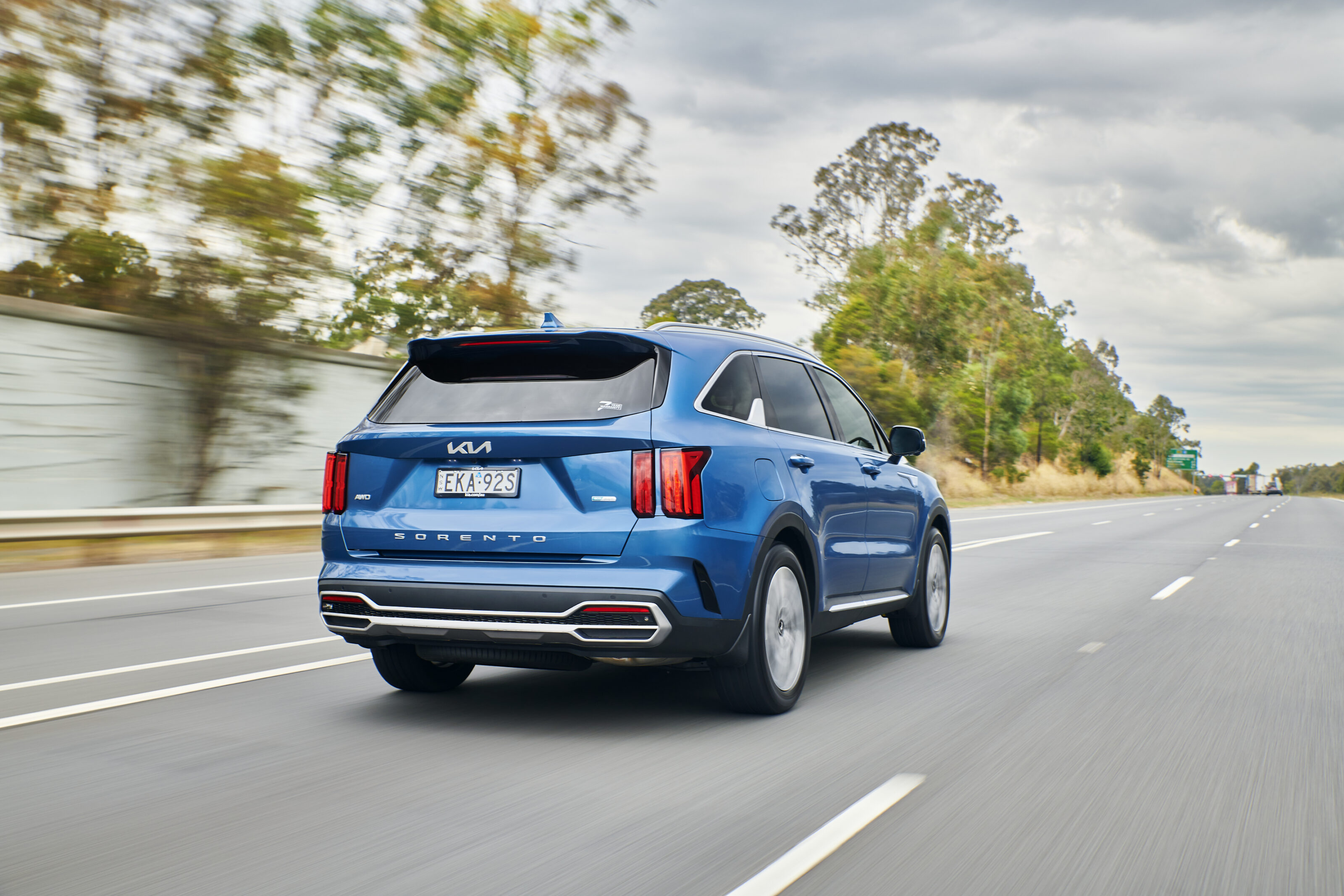
The 2022 Kia Sorento Hybrid is now on sale in Australia, more than a year since the electrified SUV was first intended to launch.
Local features and specification for the Kia Sorento Hybrid GT-Line were confirmed earlier this year (below), with the Hybrid variant now bolstering the model line-up with a fourth engine and drivetrain combination.
At a $1000 premium over the equivalent diesel, the Hybrid GT-Line is available in front- and all-wheel drive guise, both of which are around $10,000 less than the range-topping plug-in hybrid.
2022 Kia Sorento Australian pricing
| Model | List price (exc. on-road costs) | Drive-away |
|---|---|---|
| Sorento S petrolu00a0 | $47,650 | $50,790 |
| Sorento Sport petrolu00a0 | $50,270 | $53,790 |
| Sorento S dieselu00a0 | $50,650 | $53,790 |
| Sorento Sport dieselu00a0 | $53,270 | $56,790 |
| Sorento Sport+ petrolu00a0 | $54,850 | $58,390 |
| Sorento Sport+ dieselu00a0u00a0 | $57,850 | $61,390 |
| Sorento GT-Line petrolu00a0 | $62,070 | $65,990 |
| Sorento GT-Line dieselu00a0 | $65,070 | $68,990 |
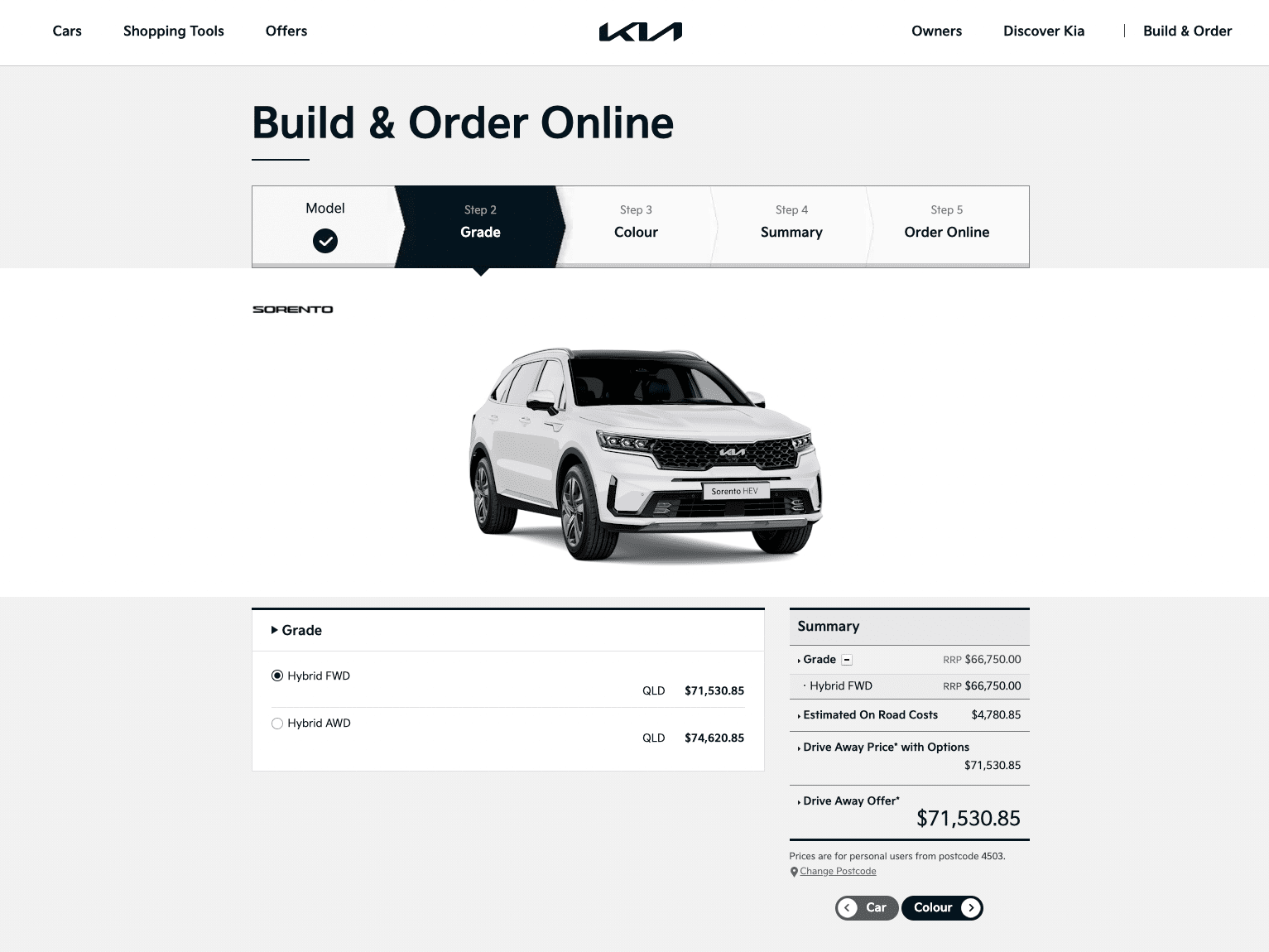
| Sorento GT-Line Hybrid FWD | $66,750 | N/A |
| Sorento GT-Line Hybrid AWD | $69,750 | N/A |
| Sorento GT-Line PHEV | $80,330 | N/A |
The story to here
March 16: Kia Sorento Hybrid pricing confirmed ahead of launch
Pricing for Kia’s new Sorento Hybrid has been confirmed with the new model appearing on the manufacturer’s Australian website.
As previously reported by Wheels, the conventional hybrid Sorento will go on sale in range-topping GT-Line guise only, with the front-wheel-drive variant setting buyers back $66,750 before on-road costs.
Stepping up to the all-wheel-drive Sorento Hybrid incurs a $3000 premium, bumping its list price up to $69,750 – sitting below only the plug-in hybrid (PHEV) Sorento which is on sale from $80,330 before on-roads.
Read on below for the full features of Kia’s electrified Sorento.
February 28: Kia Sorento Hybrid pricing leaked in dealer document
A leaked dealer bulletin has outlined local pricing details for the 2022 Kia Sorento Hybrid, as customer deliveries begin to take place almost one year after its first planned launch date.
Just like the recently-launched Plug-In Hybrid (PHEV) GT-Line, the regular Kia Sorento Hybrid will be initially exclusive to the range-topping variant, priced from $66,750 before on-road costs with front-wheel drive, the brand has confirmed to Wheels.
An all-wheel-drive version is also available, which adds an additional $3000 to the list price at $69,750 before on-road costs. This equates to a $10,580 saving over the PHEV GT-Line AWD that now retails for $80,330, following a recent price hike of between $800 and $1700 across the Sorento range.
In comparison to the GT-Line petrol FWD ($62,070) and diesel AWD ($65,070), opting for the petrol-electric Hybrid with either drivetrain will set buyers back an additional $4680.
Specification for the Hybrid GT-Line is expected to remain identical to the petrol and diesel variants, albeit with the omission of remote smart parking assist and smaller 19-inch alloy wheels shared with the Sport+ and PHEV GT-Line.
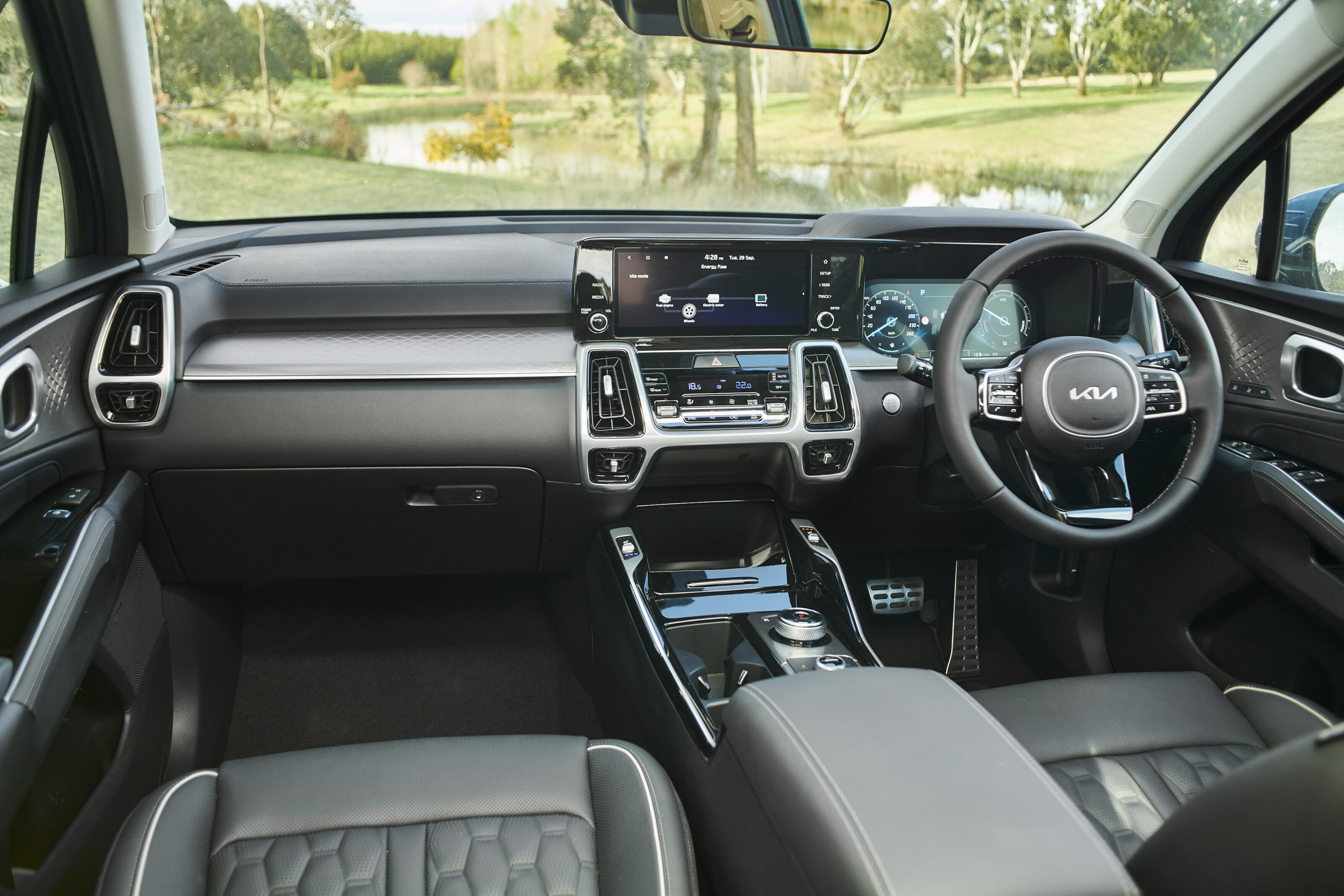
As such, standard equipment includes; a 12.3-inch digital instrument cluster, 10.25-inch infotainment system, wired Apple CarPlay and Android Auto, satellite navigation, quilted Nappa leather seats, blind-spot view monitor, 12-speaker Bose audio system, head-up display, wireless phone charging, heated front and rear seats, ventilated front seats, and a 360-degree camera system.
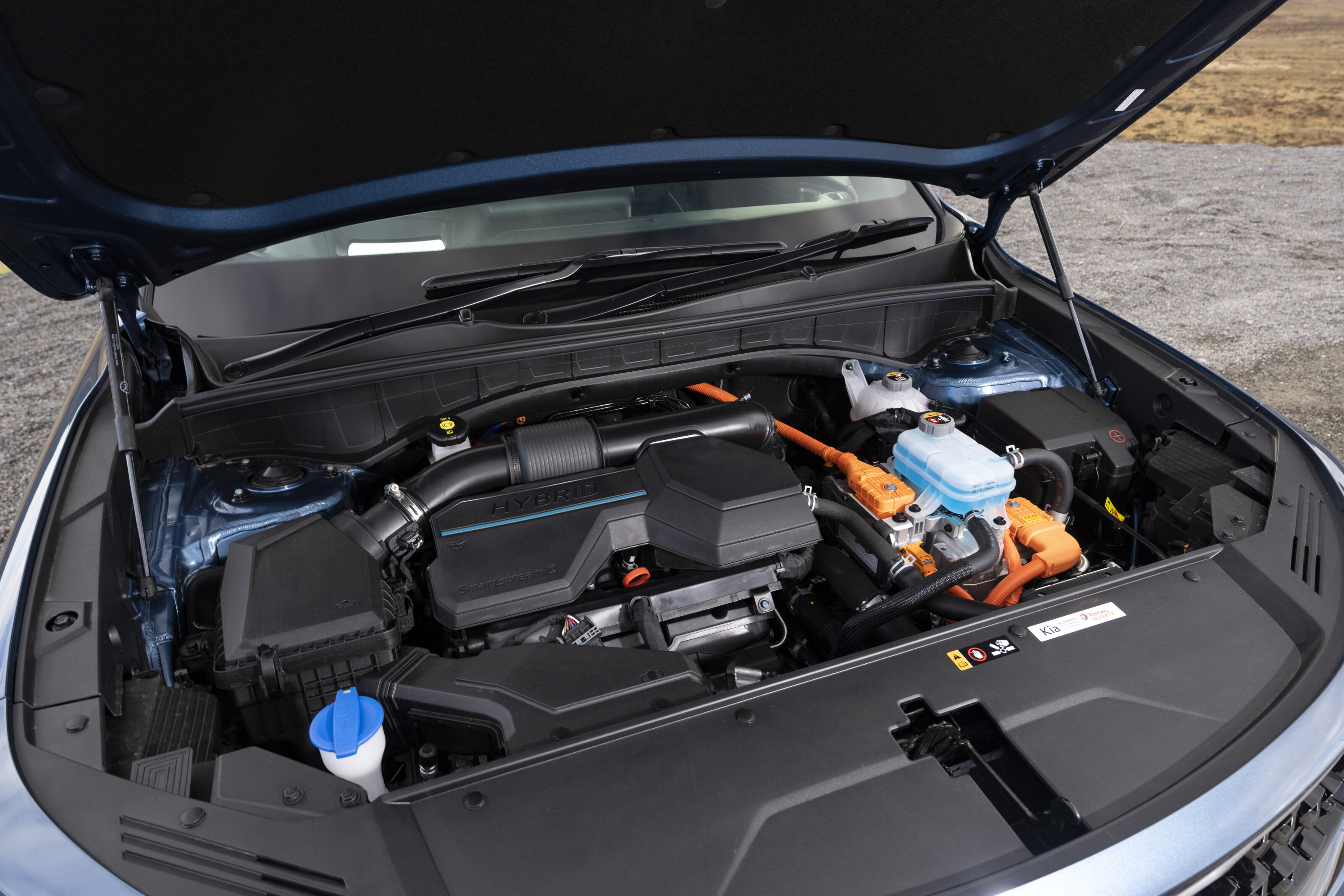
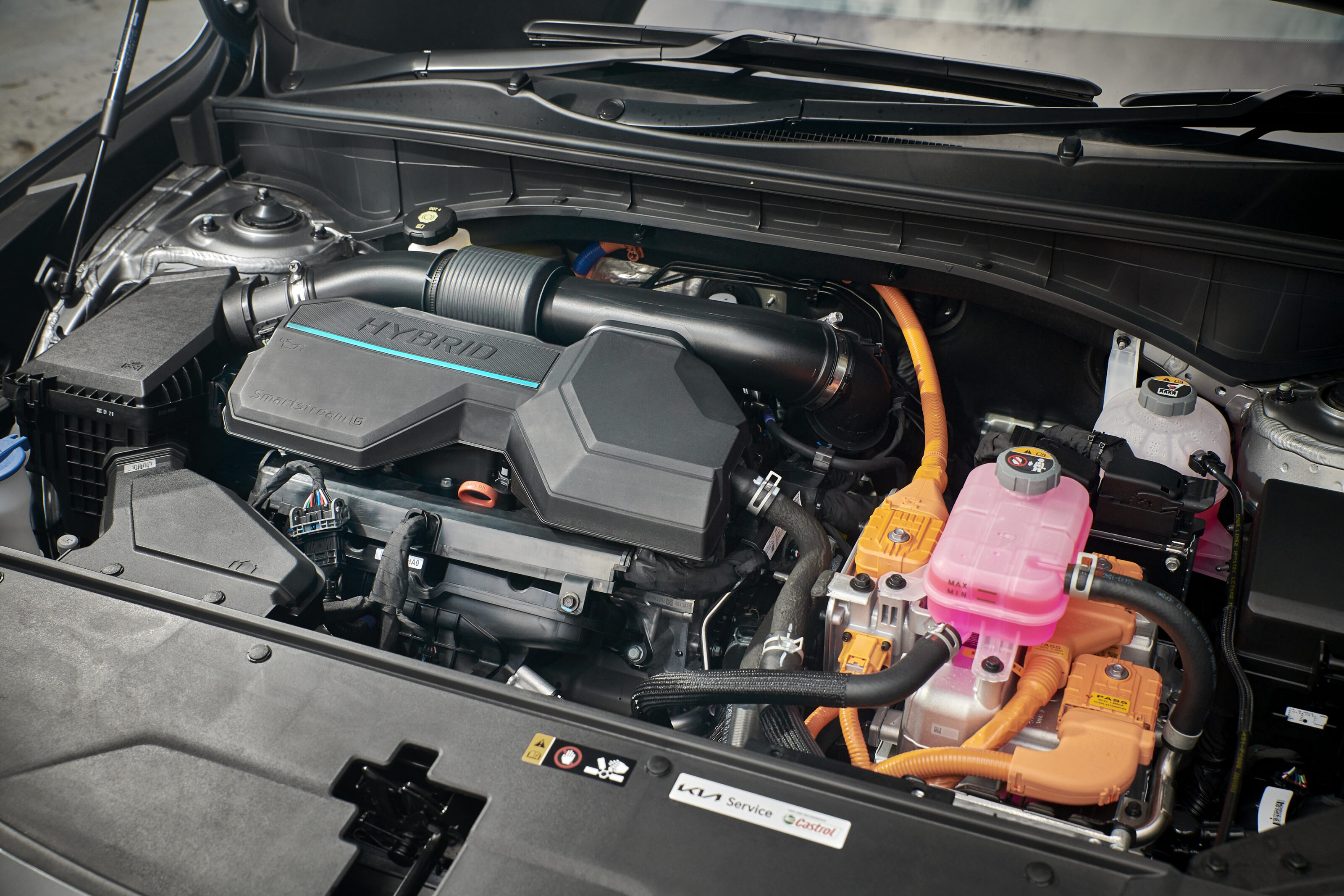
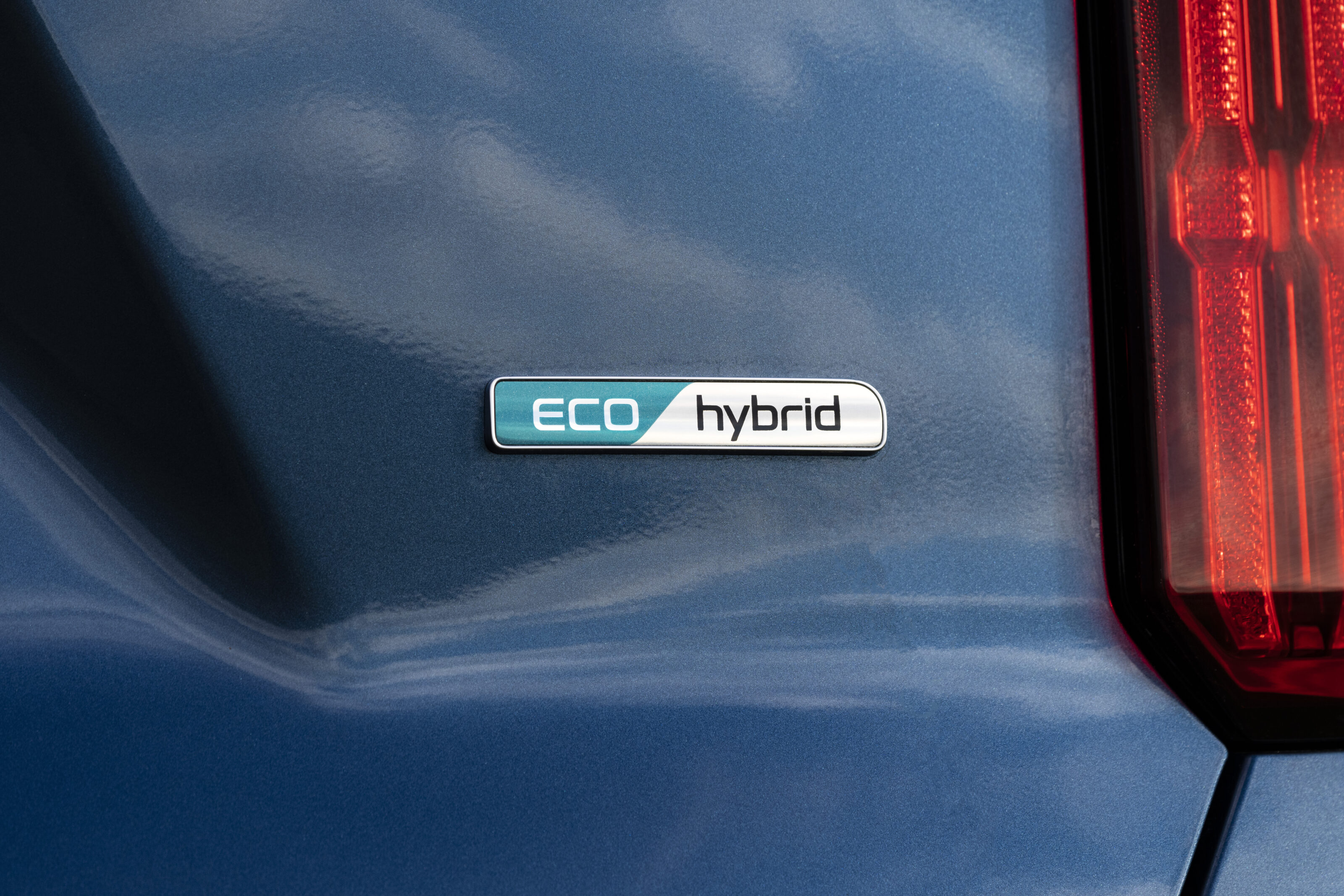
Under the bonnet, the Sorento Hybrid shares its 132kW/265Nm 1.6-litre turbocharged petrol engine with the PHEV. However, the Hybrid features a smaller 1.5kWh battery pack, 40kW electric motor and is self-charging only, rather than the plug-in’s 14kWh unit, 60kW electric motor and dedicated EV charging port.
The combined system power output is 169kW, sent to either the front or all four wheels through a six-speed torque-converter automatic transmission. An official combined fuel economy of approximately 5.4L/100km is expected – compared to 6.1L/100km for the diesel and 9.7L/100km for the V6 petrol.
Set to compete against the Toyota Kluger Hybrid, the Sorento Hybrid GT-Line is poised to go up against the flagship Grande eFour AWD variant, priced from $75,400 before on-roads.
More affordable versions of the Sorento Hybrid are currently off the table, with Kia’s local arm hampered by supply issues caused by the semiconductor chip shortage and greater demand in the eco-friendly European market.
Initially earmarked for a local launch in the first half of 2021, the Sorento Hybrid was delayed until late 2021, and again to the first quarter of 2022.
Speaking with Wheels at the Australian launch of the Sorento PHEV, Kia Australia product general manager Roland Rivero said “demand in Europe, in particular, is quite high and because they’ve got CO2 regulations and obviously there are tax penalties in Europe for that, priority will go to them first and foremost.”
“If you’re hearing dealers telling you it’s a six-to-eight month wait, they’re not lying. We’ve got some challenges ahead.
“In a perfect world where we had more supply we might have looked at more variants just to give customers greater choice, but what’s interesting is 60 per cent of our mix at the moment is looking at GT-Line anyway.
“You can argue that the majority of customers, when they’re looking at a Sorento, are effectively looking at the top of the range – particularly in the private space.”
Pricing and specification details for the 2022 Kia Sorento Hybrid GT-Line are yet to be formally confirmed by Kia Australia, with official details expected in the coming weeks.
The Toyota Kluger has a target on its back, with evidence emerging Chinese carmaker Chery may look to bring a large SUV to Australia.
While a leaked company document uncovered recently by Wheels shows Chery is planning a number of small SUVs and a dual-cab ute in the coming years, the company has been busy filing trademark applications for ‘Exeed’ – Chery’s luxury offshoot brand.
As Lexus is to Toyota, Chery has been selling its Exeed models as premium products across China, Russia, and the Middle East – and Australia could be its next hunting ground.
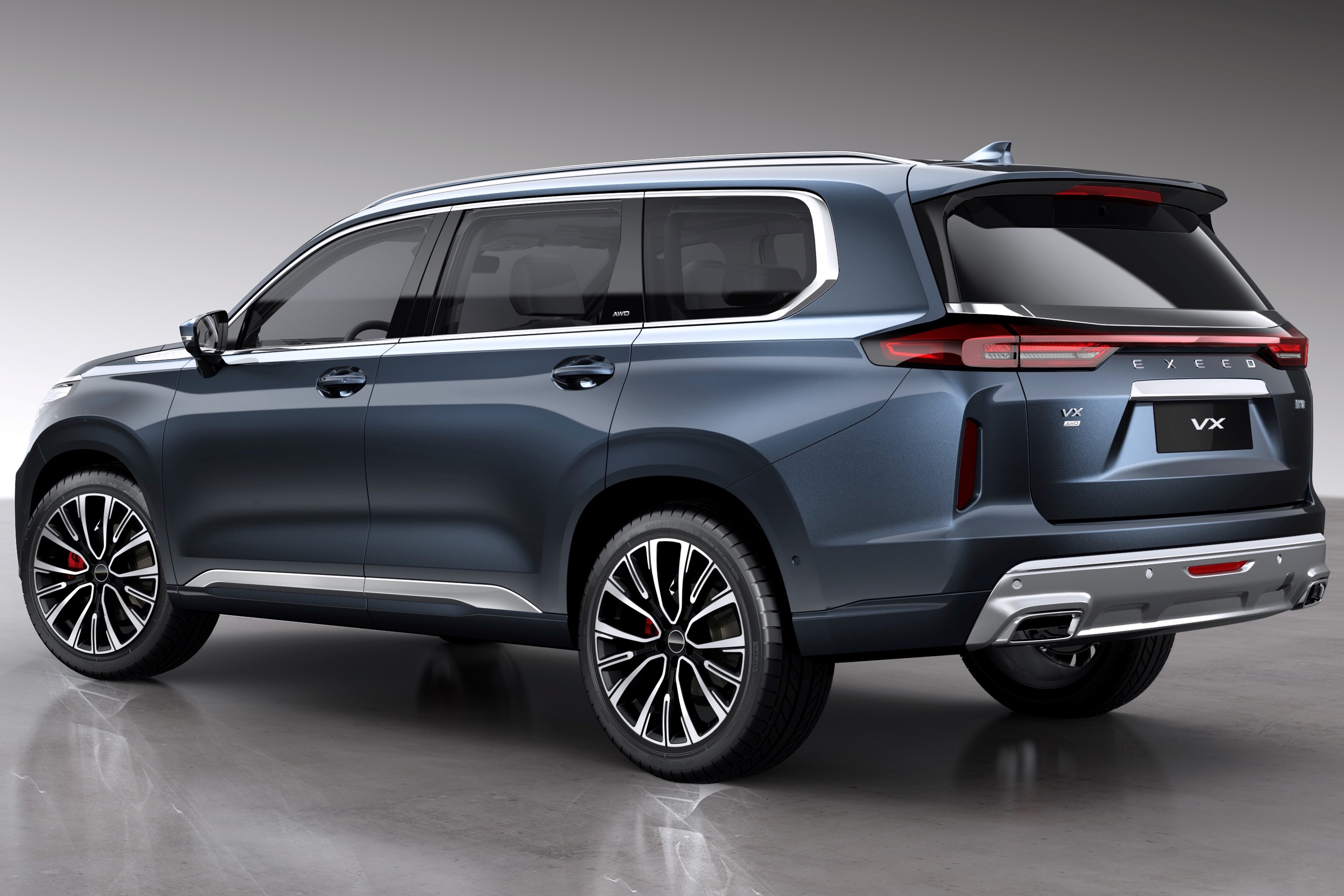
The Exeed VX may be one option for the brand locally, with the large seven-seat SUV offering similar dimensions to the Kluger, as well as a long list of features as standard.
| Dimensions | Toyota Kluger | Chery Exeed VX |
|---|---|---|
| Length | 4966mm | 4970mm |
| Width | 1930mm | 1940mm |
| Height | 1755mm | 1795mm |
| Wheelbase | 2850mm | 2900mm |
| Boot space (two rows of seats) | 552L | 520L |
In overseas markets, the Exeed VX comes with; a leather interior, LED headlights and tail-lights, an ultra-wide high-definition digital instrument cluster and infotainment screen measuring in at 12.3 inches each, panoramic sunroof, 360-degree cameras, radar cruise control, 19- or 20-inch wheels, and semi-autonomous parking.
While it’s likely Australia would see a higher level of safety technology at no extra cost, the carmaker offers satellite navigation with live traffic, lane-keep assist, automatic headlights, and traffic sign recognition as optional extras.
Buyers can choose from a seven-seat layout or a recently-introduced five-seater version, all powered by a 2.0-litre turbo-petrol four-cylinder engine and seven-speed dual-clutch transmission with either front- or all-wheel drive.
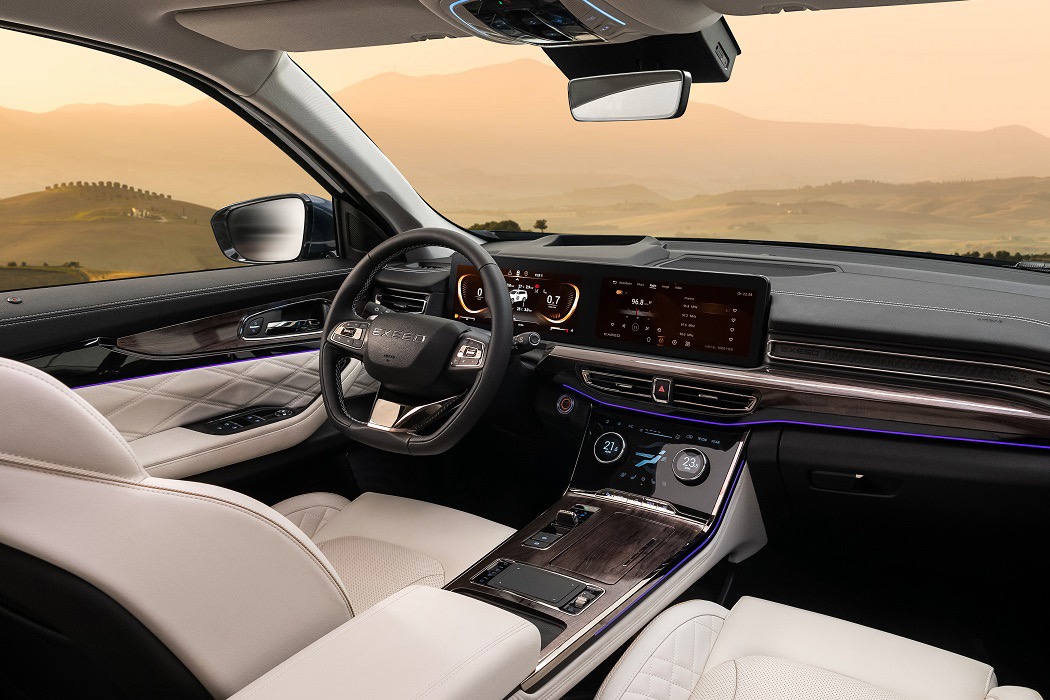
The engine is available with either 187kW and 390Nm, or a higher-output 192kW and 400Nm tune – roughly on par with the 218kW and 350Nm produced by the Kluger V6.
The higher-powered Exeed VX, known as the 400T, also gains a larger 65-litre fuel tank.
The company claims it has “brought on board hundreds of competent designers and engineers with profound experiences from BMW, Jaguar Land Rover and other European carmakers,” while boasting about the performance of its Exeed VX in temperatures as high as 55 degrees Celsius and as low as -50˚C.
Chery isn’t the only carmaker going after Toyota, with Chinese rival Haval looking likely to bring the Tank 500 to Australia to challenge the LandCruiser Prado.
