
Well, this is unexpected. A quick straw poll ahead of COTY testing had many judges tipping the Hyundai i20 N as a shoo-in to progress from the proving ground. Some even had it earmarked as a potential for the podium, so convincing did its promise seem of delivering the same magic as its bigger brother, the i30 N, at a more affordable price point.
So what happened to 2022’s most-hyped hot hatch? And did the rigours of COTY testing see Hyundai’s fledgling N brand suffer an uncharacteristic stumble?
Things started positively. The ‘walk-around’ component of COTY can be especially harsh on performance cars – compromises around comfort, features and safety systems are often exposed – but the i20 N’s packaging, interior execution and high standard equipment levels were all noted as clear strengths.
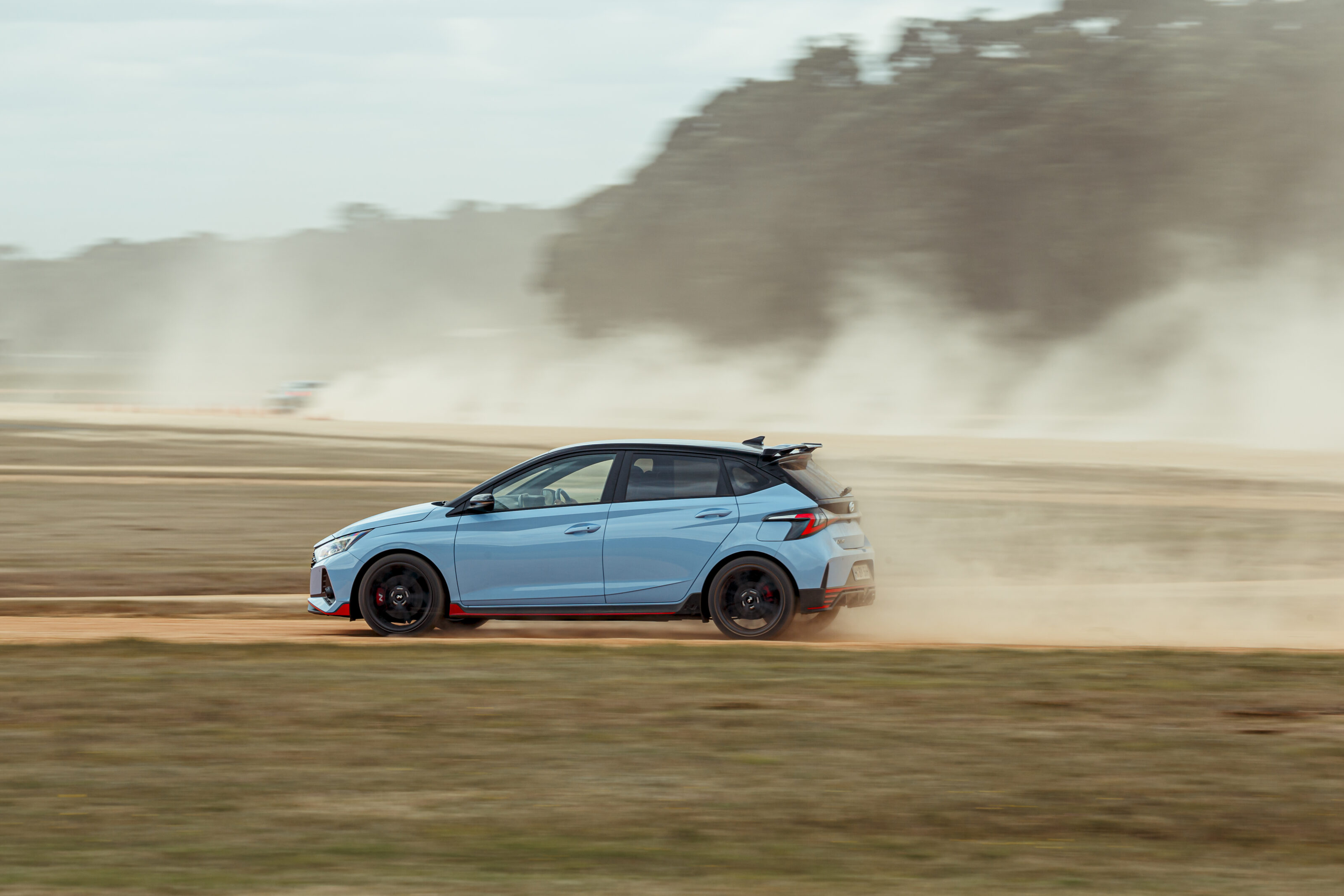
The cabin is surprisingly roomy for a light hatch. Front passengers are ensconced in supportive and heavily bolstered sports seats, the driving position is low, if a little upright, and there’s excellent adjustment for the leather-trimmed steering wheel.
The interior feels high-tech, too, and richly equipped for a $32,490 hatchback with a strong suite of standard safety gear. A digital instrument cluster and large centre screen dominate, and the graphics are clear and the structure of the many sub-menus is easy to follow if a little daunting.
Hyundai’s smallest car doesn’t forgo the practical stuff, either. The 310L boot is decent and houses a space-saver spare, the back seat folds 60:40 and there’s ample room for two adults on the rear bench. The only real weaknesses are a lack of rear air vents and some scratchy plastics below the belt-line, which are expected given the i20 econobox it’s based on.
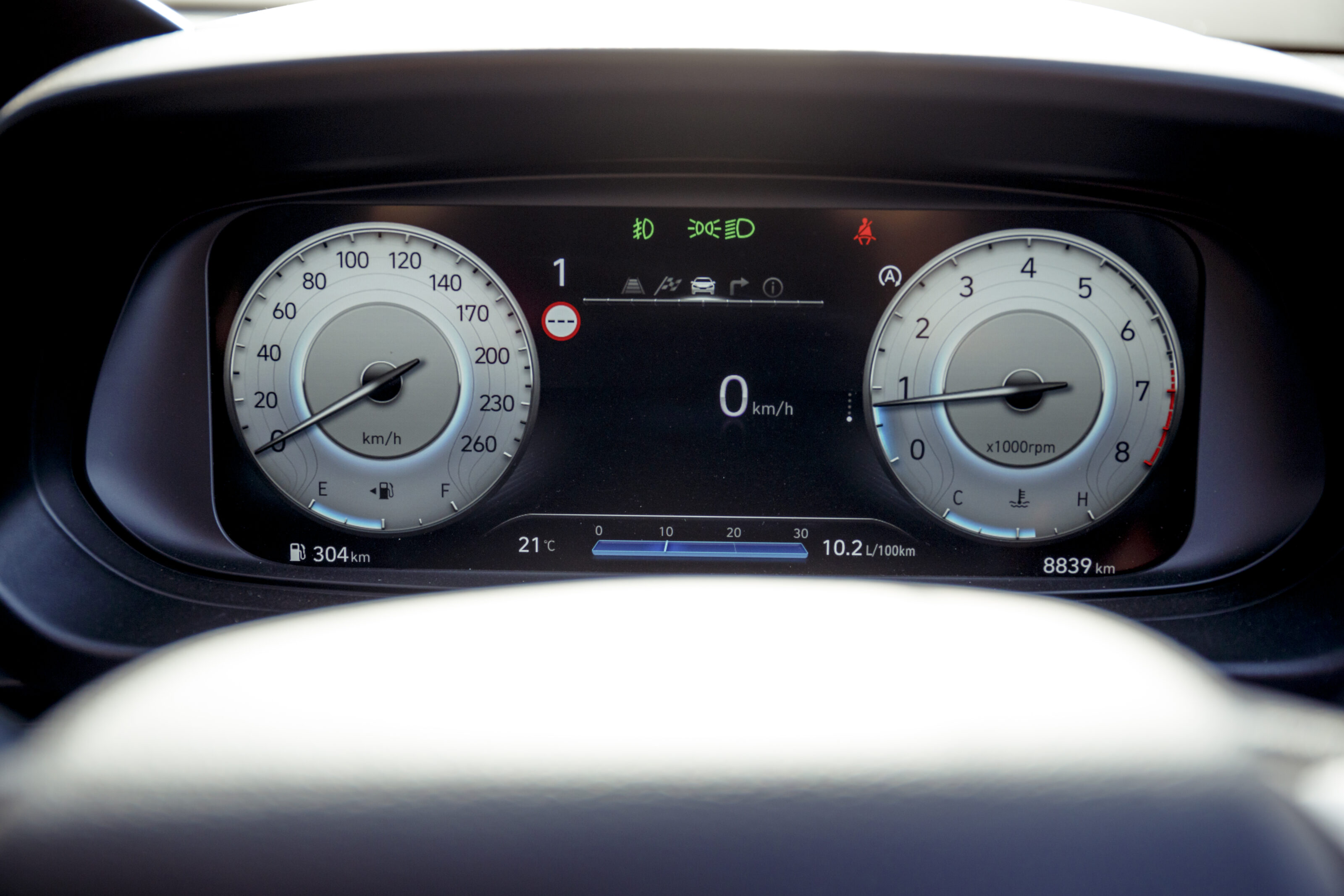
So even without turning a wheel the i20 N scored well for value, function and safety (AEB, blind-spot monitoring and lane-departure warning, rear cross-traffic alert and parking sensors all feature). Time to play its trump card: how it drives.
“Intensely involving to drive fast” – Daniel Gardner
Like the i30 N, there’s a clear focus on individuality and configurability with its many drive modes altering the powertrain, ESC and exhaust.
Yet for all its complexity, the way the i20 N steers is wonderfully analogue. In fact, you could even call its recipe of (firm) passive dampers, mechanical LSD, manual gearbox and turbocharged four-pot decidedly old-school.
Punchy performance, tenacious traction and excellent balance are dynamic hallmarks, with nearly every judge using descriptors like “chuckable” and “focused” in their notes.
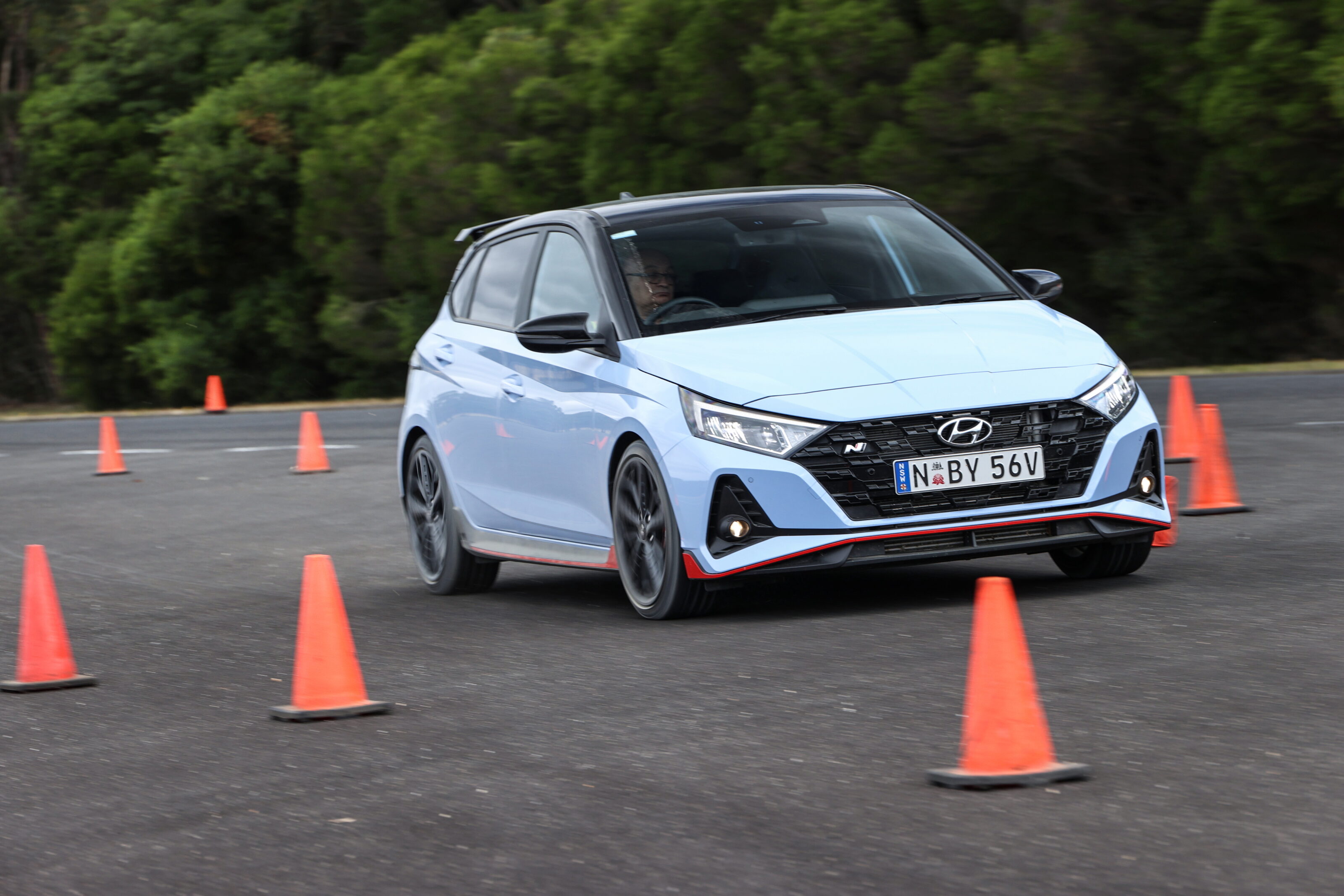
Intriguingly, it’s that capability that is both the i20 N’s biggest strength and also its weakness when viewed through a COTY lens. For all its focus and grip, every judge felt an extra dose of chassis adjustability would increase the ‘fun factor’. It’s certainly not as playful as its fiercest rival, the Ford Fiesta ST, which also offers a more charismatic engine. “The Hyundai’s four cylinder rises to the occasion,” said Jez. “It just sounds dull and artificial.”
The hard-edged nature of the i20 N’s ride was also a compromise that ultimately curtailed its shot at progressing onto our challenging, and exceptionally bumpy, road loop. “It’s pretty fierce on rough roads,” noted Curt, “especially across the rear axle.”
So it’s a brilliant hot hatch for those seeking hard-edged thrills but it’s also one that stumbles slightly against the COTY criteria – and its Fiesta ST rival –in more sedate driving. And in a field as competitive as this, that was enough to halt the little Hyundai’s tilt at our crown.
Volkswagen has announced deliveries of fully-electric vehicles increased by 65 per cent in the first quarter of 2022.
Despite issues surrounding the semiconductor chip shortage, the Volkswagen Group says 99,100 electric vehicles (EVs) were delivered to customers by the end of March.
The biggest increase was in the Chinese market, with 28,880 sales – four times the amount sold in the same period last year.
Europe contributed to approximately 59 per cent of EV sales – at 58,400 deliveries – while the United States accounted for eight per cent, with 7900 sales.
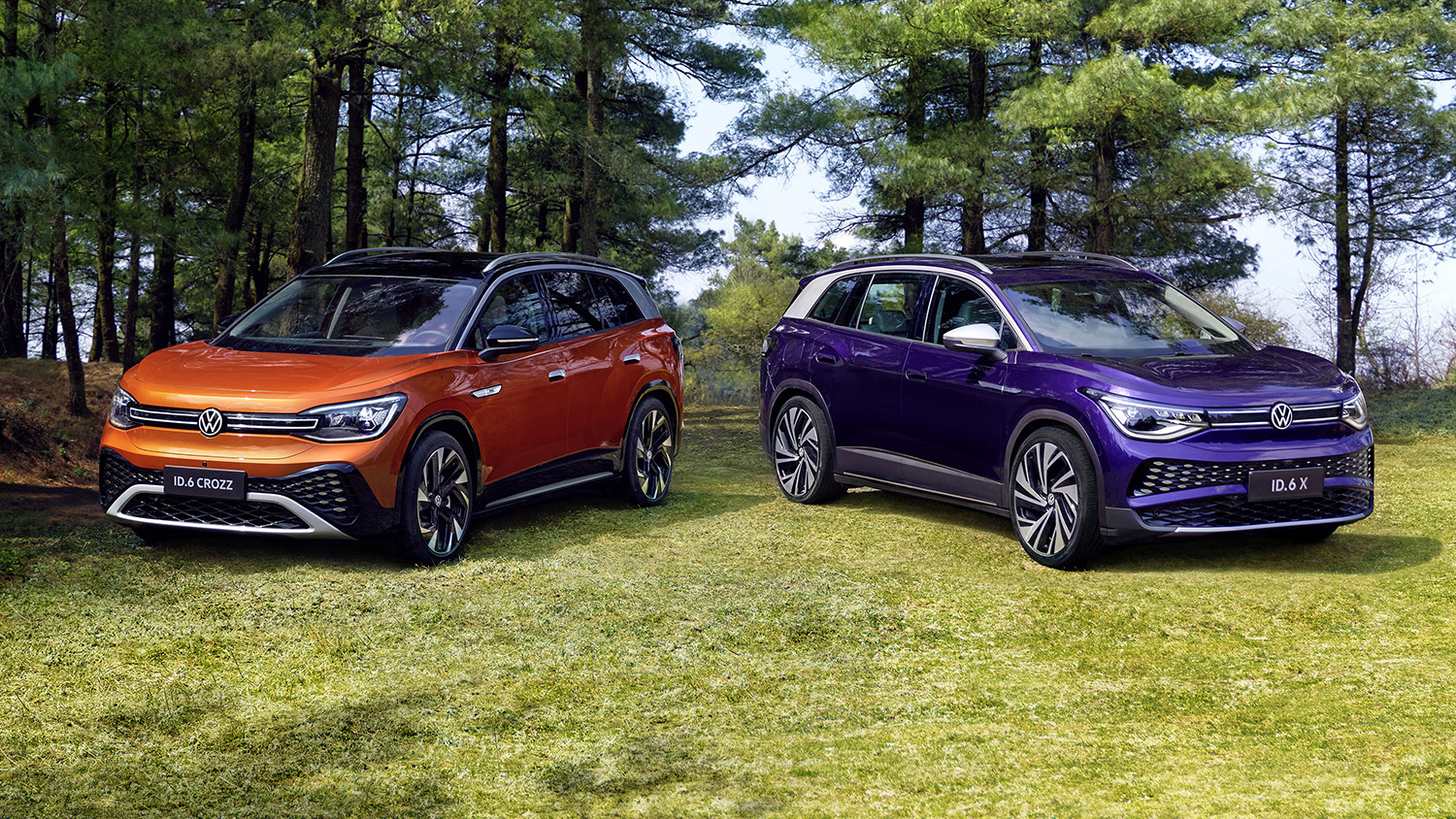
Volkswagen’s ID.3, ID.4, ID.6 and e-Up accounted for the bulk of sales, with 53,400 sales recorded.
This was followed by Audi (24,200), Porsche (9500), Skoda (8800) and Seat/Cupra (2200).
“Demand for our all-electric vehicles is very high worldwide and our order books are thus well filled,” said board member of sales, Hildegard Wortmann.
“The increase in BEV deliveries would have been significantly higher had it not been for the current supply bottlenecks.”
Volkswagen says it is hoping the semiconductor chip shortage will ease towards the end of 2022 to ”provide additional tailwind as the year progresses”.
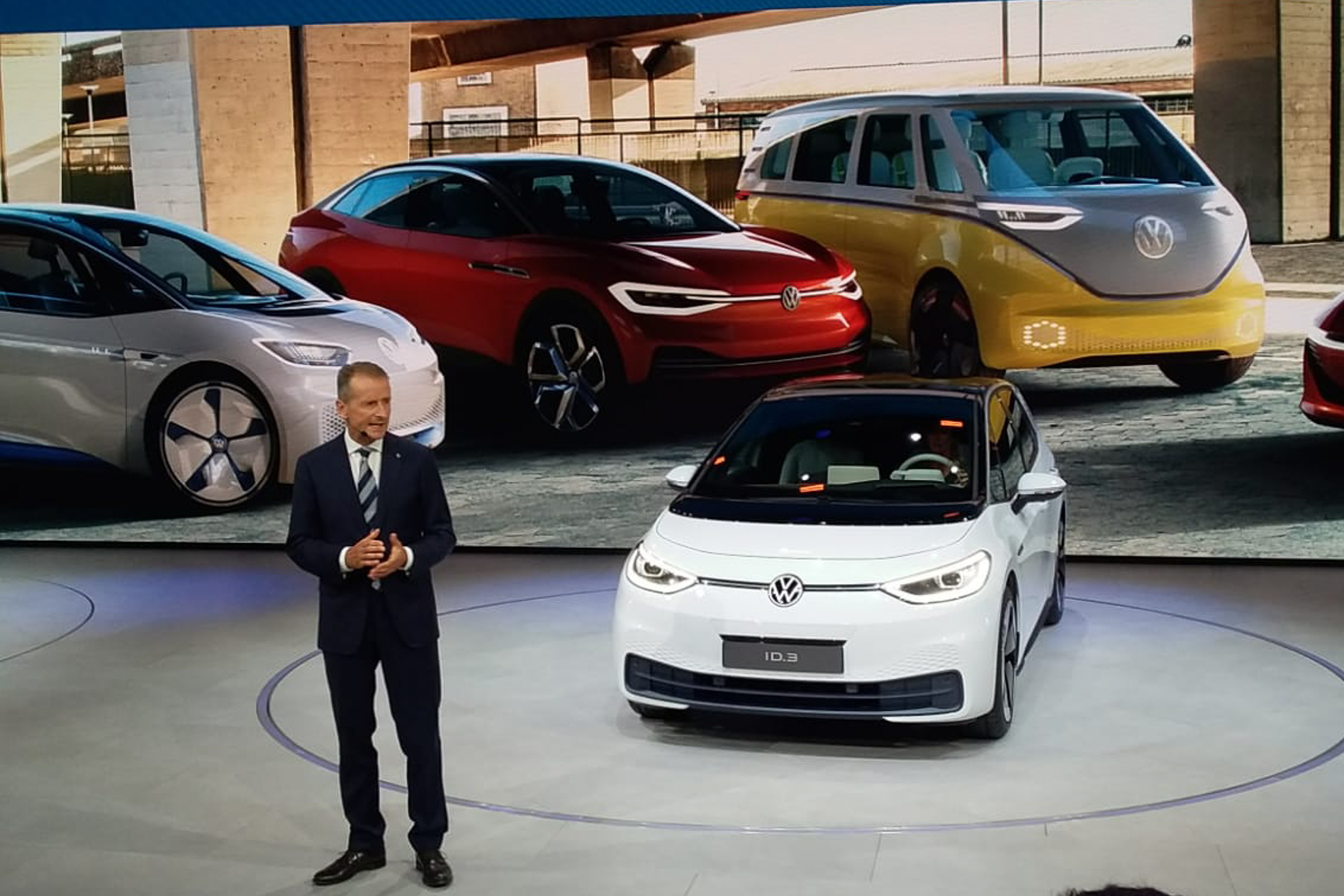
In an interview with US current affairs show 60 Minutes, Volkswagen Group CEO Herbert Diess touched on the company’s electrification ambitions – as well as the situation in Ukraine, criticism in China and rivalry with Tesla.
”We have to decarbonize the world, because climate change is happening. And to decarbonize the automotive sector, the only way — feasible way forward is electrification,” said Diess, in response to a question surrounding Volkswagen’s global electrification plans.
Diess also highlighted the rise of competitors in the electric car space, namely Tesla and technology giant Apple.
”It’s really the new competitors which are especially challenging for us… coming from software background, battery background, Apple being said to entering at some stage, no? Those are probably the competitors we have to take most seriously.”
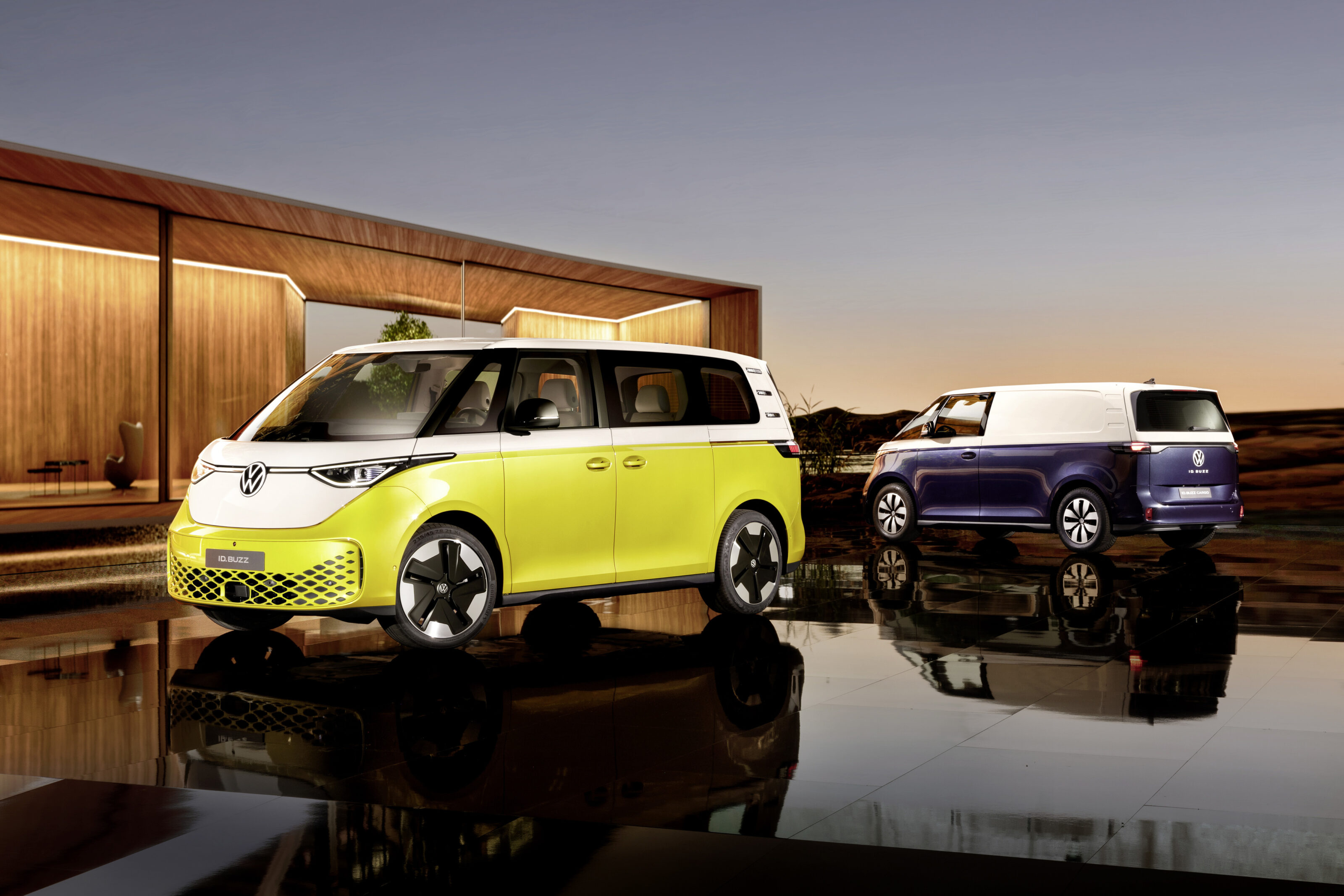
Across its portfolio, the Volkswagen Group will launch additional electric vehicles in the next 12 months.
This includes the MEB-based Volkswagen ID Buzz, and the PPE-based Audi Q6 E-Tron, A6 E-Tron and Porsche Macan.
A Tesla Model 3 will soon be driven around the coast of Australia, powered only by printed solar panels.
The Charge Around Australia project will embark on the 15,000km journey in September, harvesting the sun’s energy using a new type of low-cost solar panel to charge the Tesla, with the 18 metre roll of solar panels requiring around six hours to charge the Model 3.
Unlike traditional panels, the innovative printed panels use a lightweight PET plastic – similar to the material used to make soft drink bottles – coming in at around $13.50 per square metre.
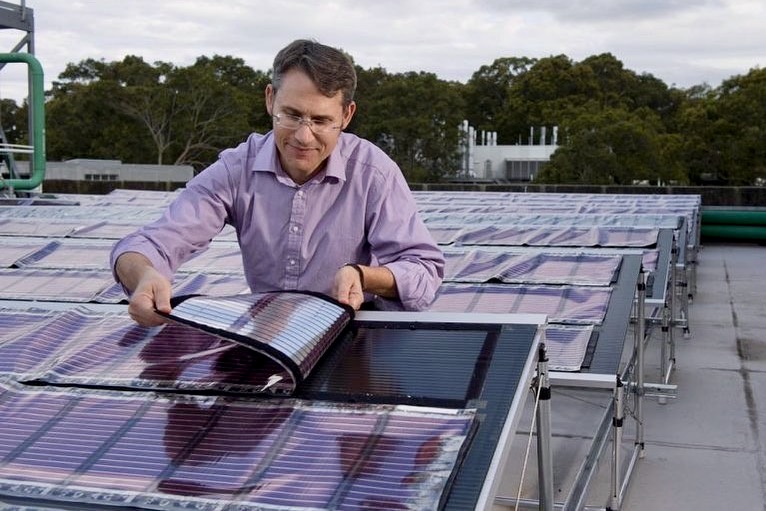
A commercial printer normally used for creating wine labels has been repurposed to print the solar panels.
“This is actually an ideal testbed to give us information about how we would go about using and powering technology in other remote locations, for example, in space,” Prof Paul Dastoor, one of the inventors of the technology, told Reuters.
Charge Around Australia (CAA) is the brainchild of Stuart McBain, a British accountant and businessman with an interest in sustainable technologies, who has partnered with the University of Newcastle in NSW for the road trip.
CAA will include a STEM (science, technology, engineering, and maths) roadshow, which will visit schools in remote and regional areas of the country.
To learn more about the project, visit the website by CCC website.
The Mercedes EQXX concept averaged 87.4km/h over a 1006km run from Stuttgart to Nice on a single battery charge with 140km of range still remaining.
At a notarised 8.7kWh/100km, it is now the world’s most efficient EV – but these truly amazing results were partly achieved at the expense of classic brand values like space, comfort, luxury and prestige.
The EQXX is low and narrow, an arc-shaped, tight-fitting bumper to bumper compromise that wears its once-proud brand logo as an inconspicuous 2D sticker on the functionless bonnet. True, this concept car was not conceived to mimic your father’s sumptuous all-in Benz.
Instead, this very special one-off Mercedes was from the beginning conceived as a radical mould-breaker detached from the marque’s illustrious past and present. Its concept was, after all, compromised for a reason, namely to use as little electric energy as possible over the longest achievable range at a reasonably inspired average speed.
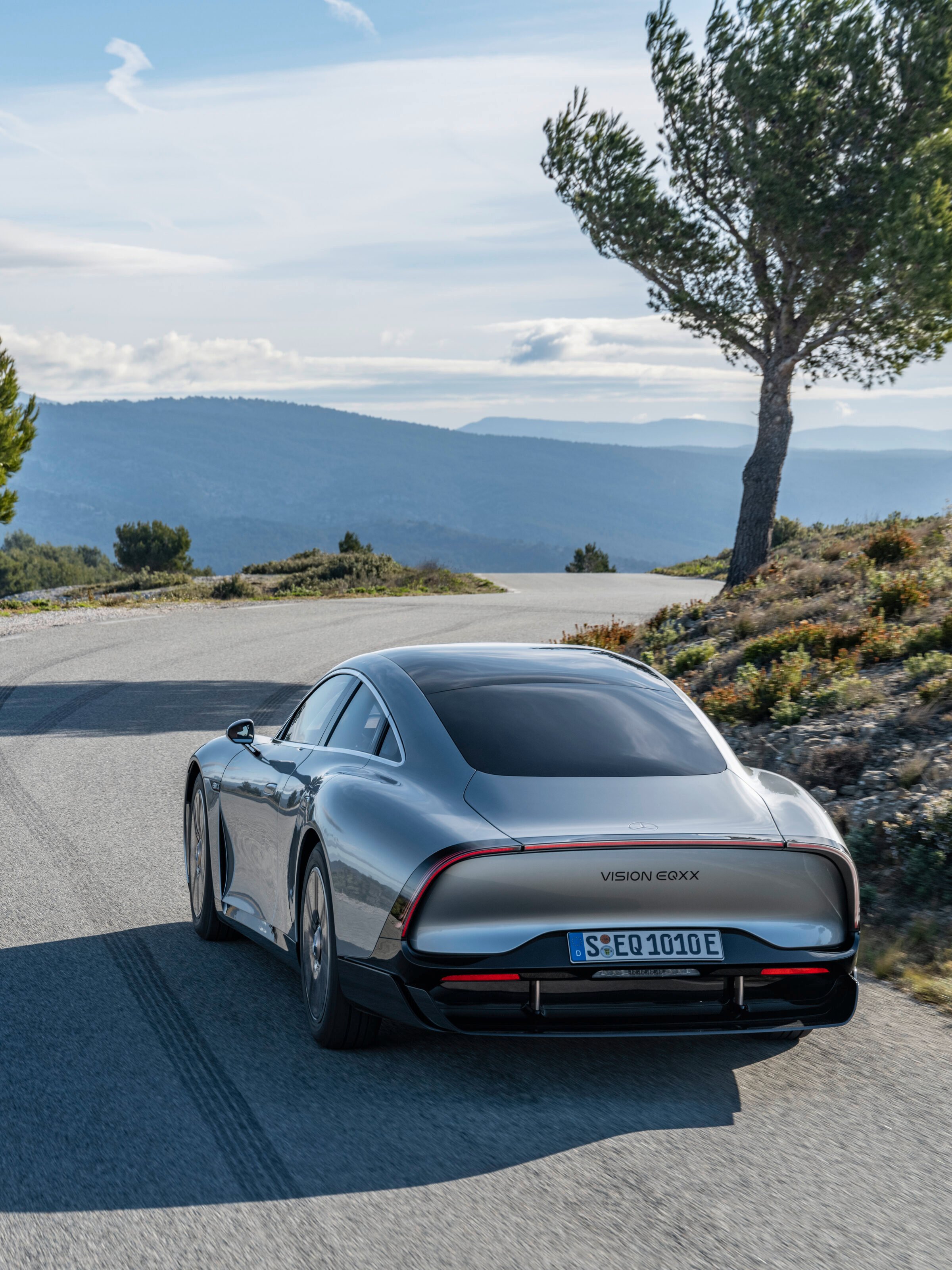
Mission accomplished? The numbers do speak for themselves. Covering in excess of 1000km between two charges should squash range anxiety once and for all, just as under 10kWh/100km of electric consumption marks a new efficiency record for a four-seater EV voluntarily limited to 140km/h.
But make no mistake – these achievements come at a price. Like a distinct shortage of head- and legroom for all occupants, arduous entry and exit, difficult manoeuvrability in tight spaces, and poor rear visibility despite camera-operated mirrors.
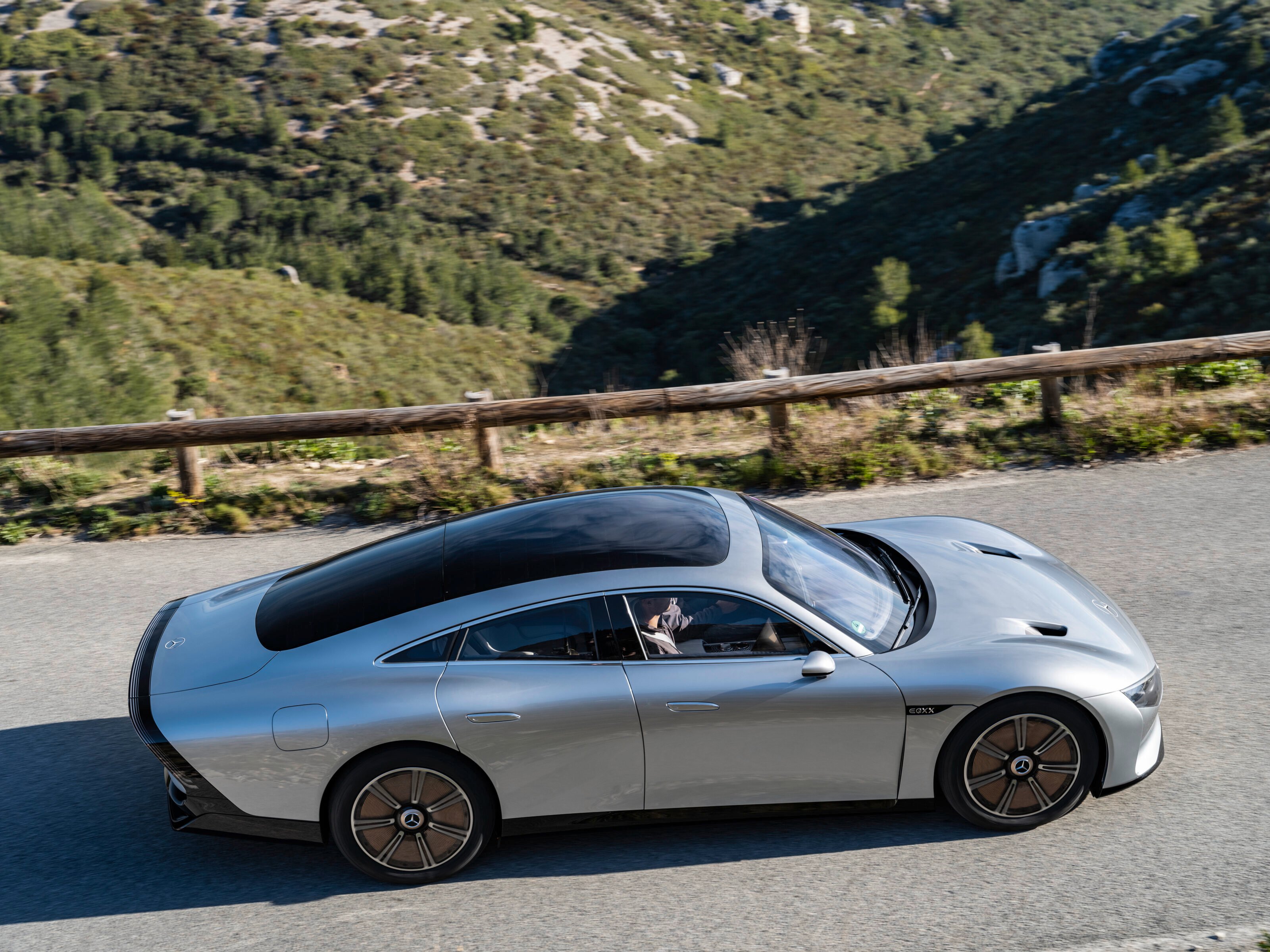
The design is functional to the extreme, not unlike previous aero pace-setters such as the GM EV1, VW XL1 or McLaren Speedtail. Except that the Mercedes has four front-hinged doors, four thinly padded bucket seats and a sensationally low drag coefficient of 0.17 supported by an equally radical frontal area of 2.12 square metres.
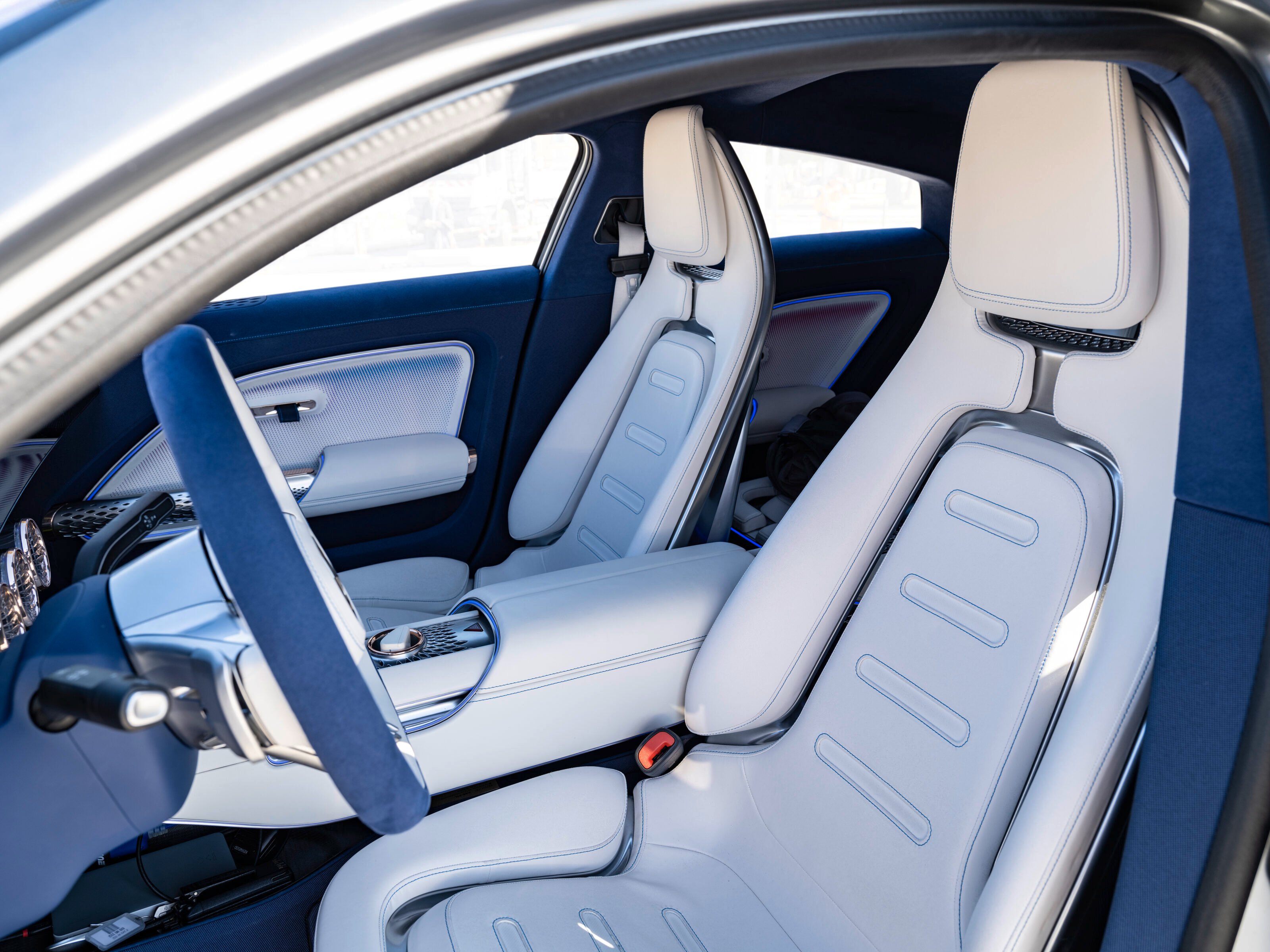
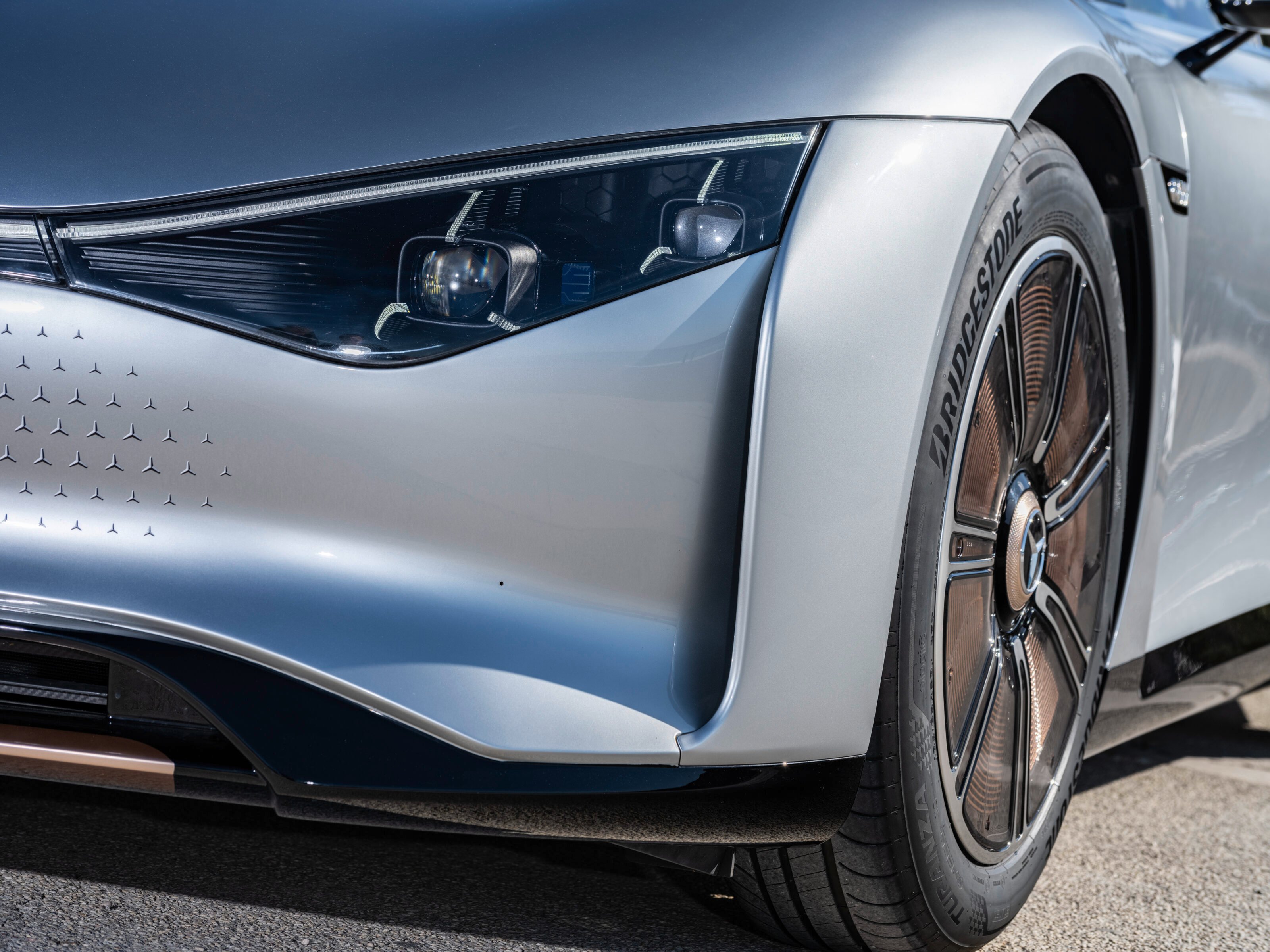
Its roof and the rear window are tiled with 117 solar cells that add up to 25km of extra range on a sunny day. The 20-inch composite wheels are shod with 185/65 low rolling resistance Bridgestone Turanza Evo tyres. An adaptive air flow control system governs a set of concealed nasal curtains and breathers as well as the motorised rear diffuser, which drops at speed.
Thanks to the more potent 900V system, air-cooled highly siliceous anodes and 100kWh of battery power, the EQXX drive unit boasts an energy density of 400Wh/L, thereby eclipsing even the previously untouchable EQS. Credit is also due to the battery pack of the concept car, which is 30 per cent lighter and 50 per cent smaller than the equally powerful counterpart fitted to the electric S-Class.
A highly complex multi-stage cooling system keeps the temperature-sensitive elements inside a narrow best-point window at all times. The bionic-inspired body architecture and a mix of lightweight materials ensure a commendably low kerb weight of 1750kg.
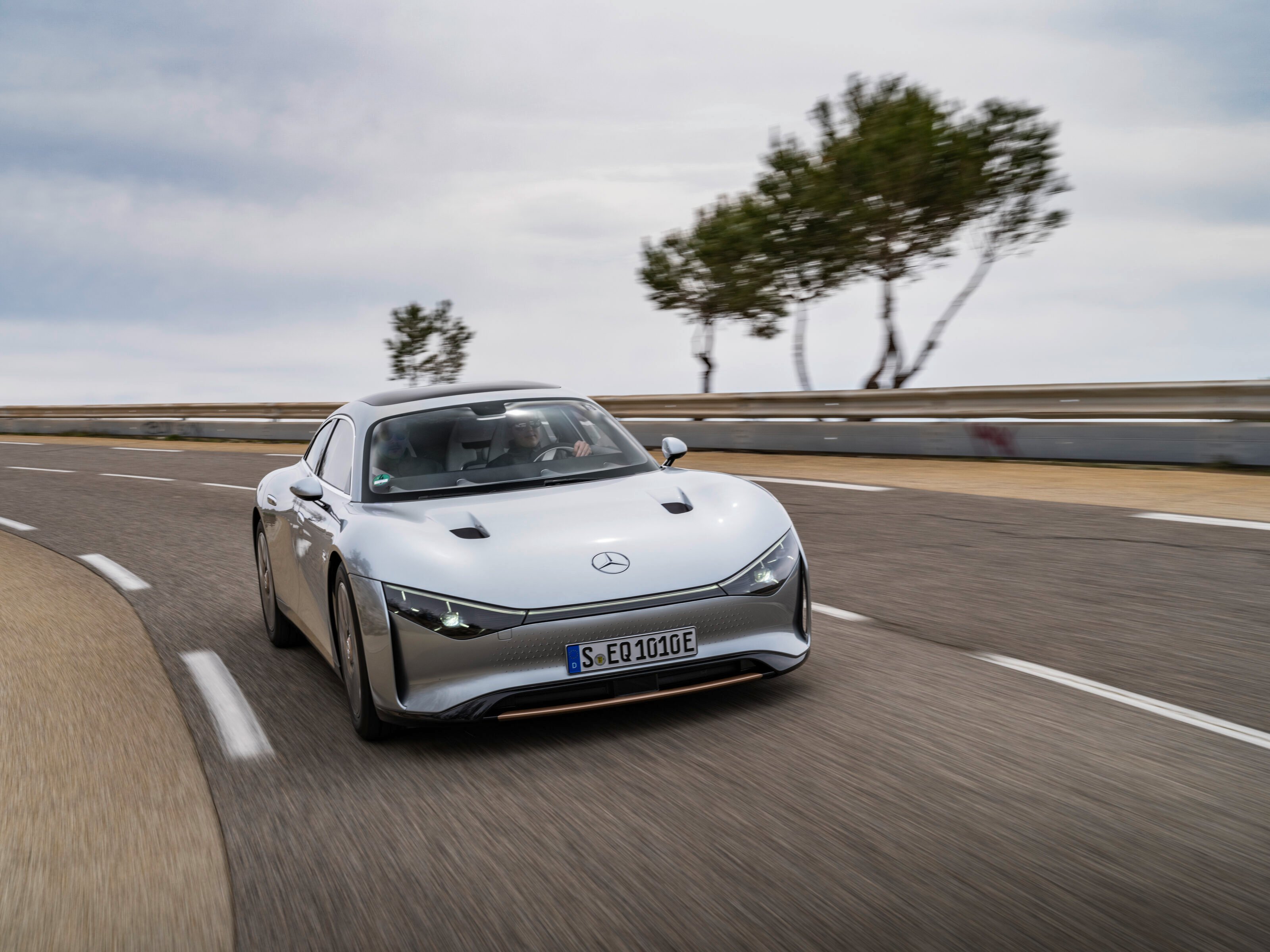
At 4977mm, the EQXX is slightly longer than the EQE but its 2800mm wheelbase is substantially shorter, the 1870mm width is about level with the A-Class, the tapered plan view creates a unique footprint and the low-flying 1350mm height matching the new SL.
The electric motor was developed in cooperation with Mercedes-AMG High Performance Powertrains (HPP), the company’s own F1 powerbrokers based in Brixworth, UK. It develops a peak 183kW and a constantly available 152kW. The energy regeneration system can be locked in four positions by a pair of conveniently positioned shift paddles.
No torque and acceleration data is available at this point, but we know that the drive unit operates the rear wheels via a single-speed transmission. Charging is by DC only at up to 120kW. Bunkering electricity for the next 320km takes a smidgeon over 15 minutes.
A major difference between EQXX and the EQS equipped with a nominally identical battery is the dramatically reduced energy consumption. The key game changer is the more potent, more heat-resistant and more efficient performance electronics.
The EQXX previews the next-generation MMA models in more ways than one. As a reminder, MMA is an acronym for the new electric-first Modular Mercedes Architecture that underpins the future A-Class family as well as the zero-emission C-Class, starting in 2024.
Commonalities include the extended, aerodynamically more efficient rear end with sharp tear-off edge, different track widths front and rear for that coveted teardrop effect, an active multi-level cooling system channelled above, past and below the battery pack, flush-fitting mirrors, windows and door handles, and the new trademark EV front end featuring matrix headlights, an LED crossbeam, full-width star-pattern graphics and not the faintest trace of a conventional radiator grille.
Inside, we expect a choice of cockpit treatments ranging from a straightforward single-unit display to a full-width second-generation hyperscreen.
The EQXX was equipped with a 47.5-inch touchscreen powered by 3100 individually controllable LEDs for a choice of cinema display, virtual trim selection, variable mood lighting and full data overkill.
Tomorrow’s Mercedes design follows two distinctly different aesthetic and functional routes. The low- to standard-height models are going to stick to the drag-cutting theme set by the EQXX concept car, which did exceptionally well in the wind tunnel.
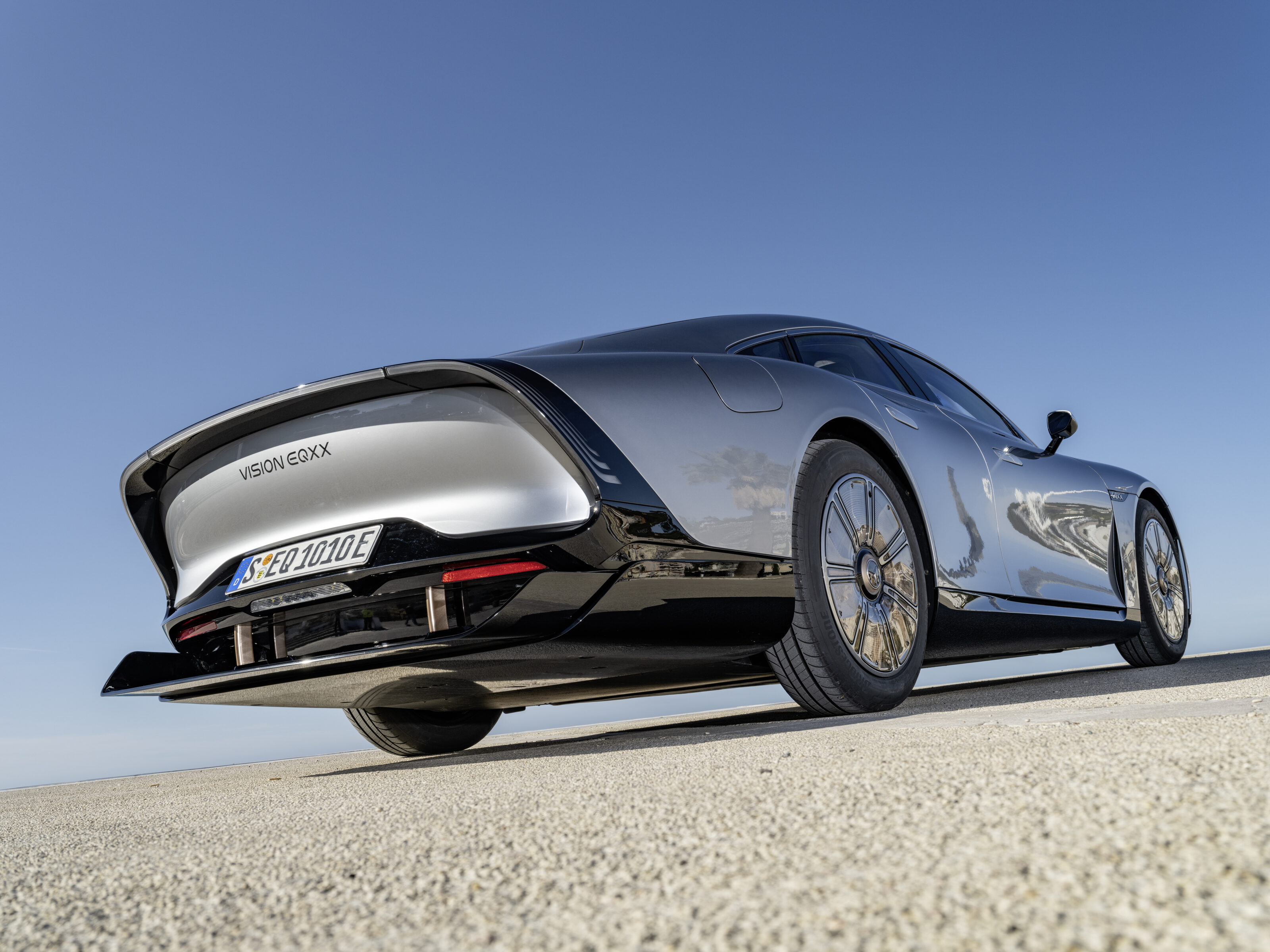
Less extreme variations of this aero approach are to be fielded by mid- to full-height crossovers and SUVs that trade a somewhat larger frontal area for notably more generous packaging solutions.
In the course of this transformation process, classic design features like the upright grille, the prominent three-pointed 3D star and the fixed light units are going to morph into a selective pre-set or on-demand orchestration.
In the works are large freely programmable surface sections designated to act as differentiators between models and model ranges, and as communication interfaces with other road users. These displays can relay different moods and intentions from festive and ornamental to sporty and dynamic.
There is no doubt about it: the future is electric in more ways than one.
Moments of unanimity among the COTY judges are cause for celebration, whether that be scorn for the previous night’s motel accommodation or high praise for the snot-block from the local bakery. In the new, 11th generation Honda Civic’s case, it was gushing adoration for a sparkling chassis that you simply didn’t want to stop driving.
“Gives a glimpse at how good the new Type R will be,” said Alex, a sentiment echoed by all other judges.
Indeed, it’s perhaps damning the new Civic with faint praise in getting excited for what it could be, but not yet is. So far, only one variant has arrived in Australia – the VTi LX – loaded to the gunwales with standard equipment.
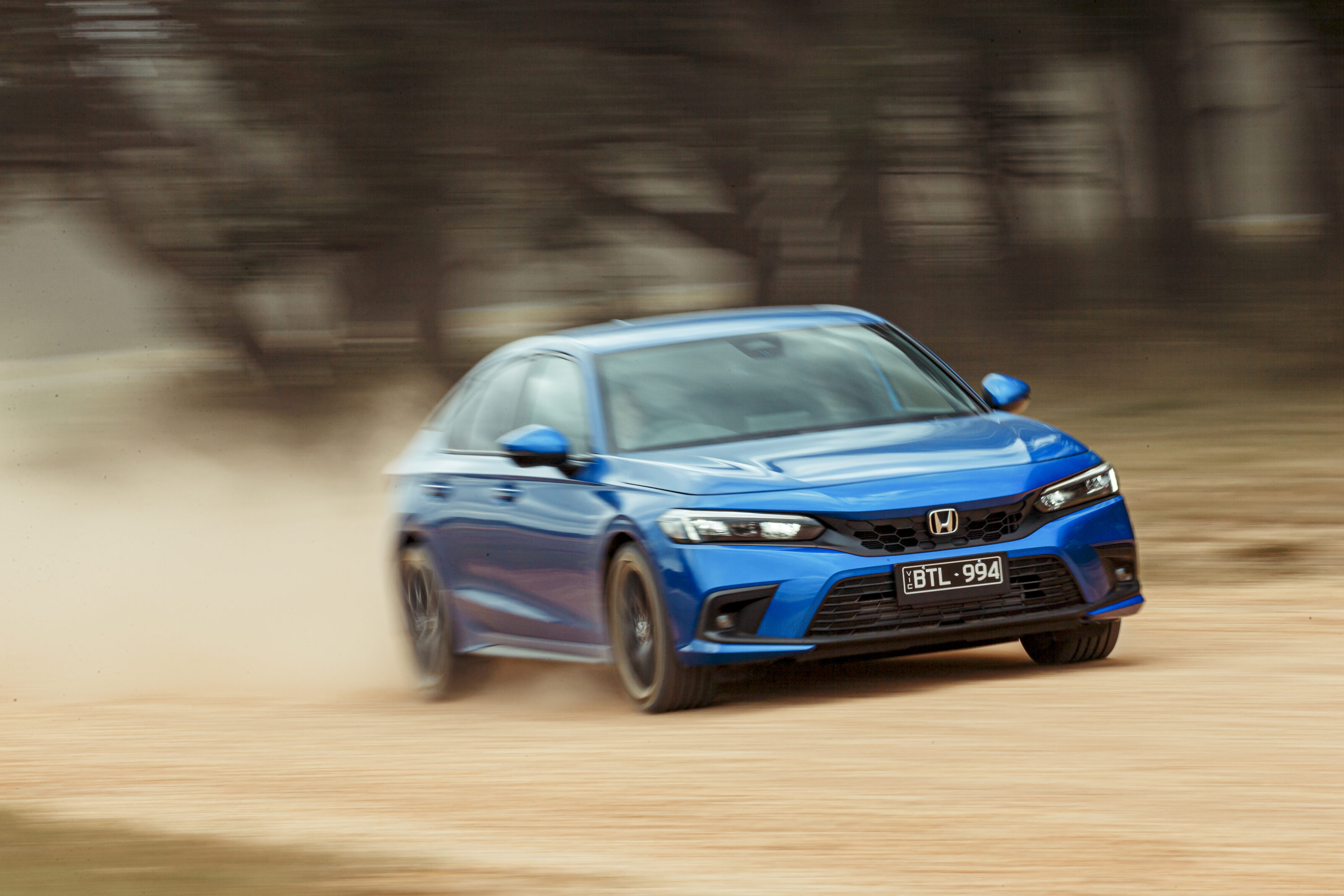
And this is a much better Honda Civic. Its handsome exterior styling has done away with the Japanese manga comic-book angularity of old, while the interior has also had a major overhaul.
While designed for the US market, it’s more European, more mature, with night-and-day better ergonomics including – hallelujah! – a physical volume dial for the infotainment. “No longer feels inspired by ’90s sci-fi inside,” said Curt. Forward visibility, another focus point for Honda engineers, is also much-improved.
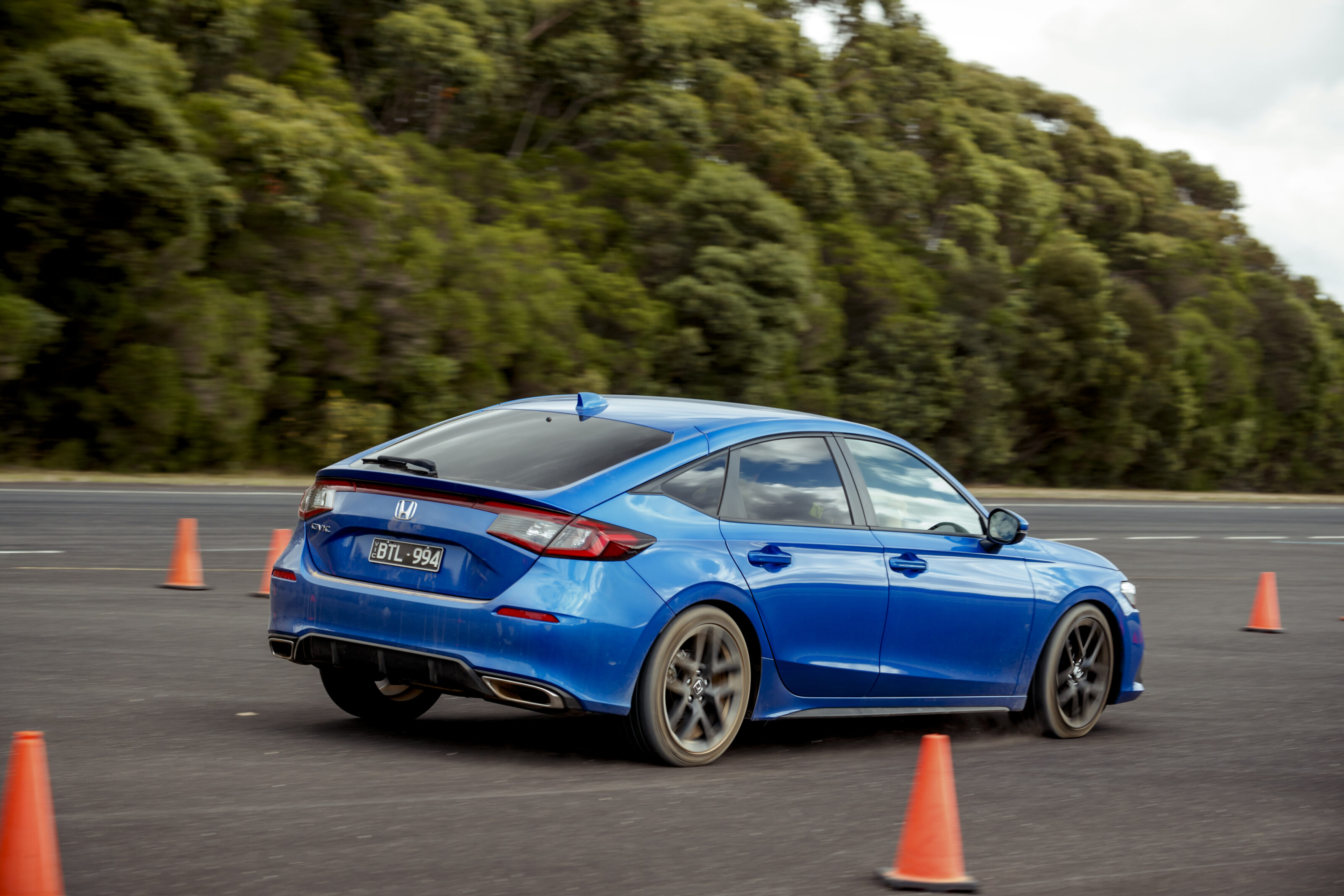
Around the proving ground, the Civic excelled again. Honda does some of the best control weights in the business – almost Porsche-like – making the VTi LX a joy to operate at low speeds. However as the speed picked up, despite claims of improved NVH, there was still a notable degree of tyre noise, the Civic’s 72.8 average measured decibels the fourth ‘loudest’ car tested.
“A more mature Civic with broader appeal than the old one” – Curt Dupriez
Ride quality was also comfortable enough, though a certain tautness hinted at a sportiness buried below – and the Civic’s incredible performance through the lane-change, in the dry braking and up the twisty Five Percent Gradient had every judge thinking about turning around and doing it all again. It really was that impressive, a lot of credit surely due to the independent rear suspension.
The magic handling, however, only made it more wanton there wasn’t the powertrain to match. With 131kW/240Nm, the turbo 1.5-litre four-cylinder provides the stage on which the chassis can shine – so to speak – but felt uninspiring and at times a bit thrashy, especially mated to a CVT. Zero to 100km/h in an as-tested time of 8.24sec doesn’t really cut the mustard.
That wasn’t the biggest of the Civic’s concerns, however. An are-you-sitting-down national driveaway fixed price of $47,200 had the judges wincing in early presentations, and from then on, the Civic was fighting an uphill battle to justify its positioning.
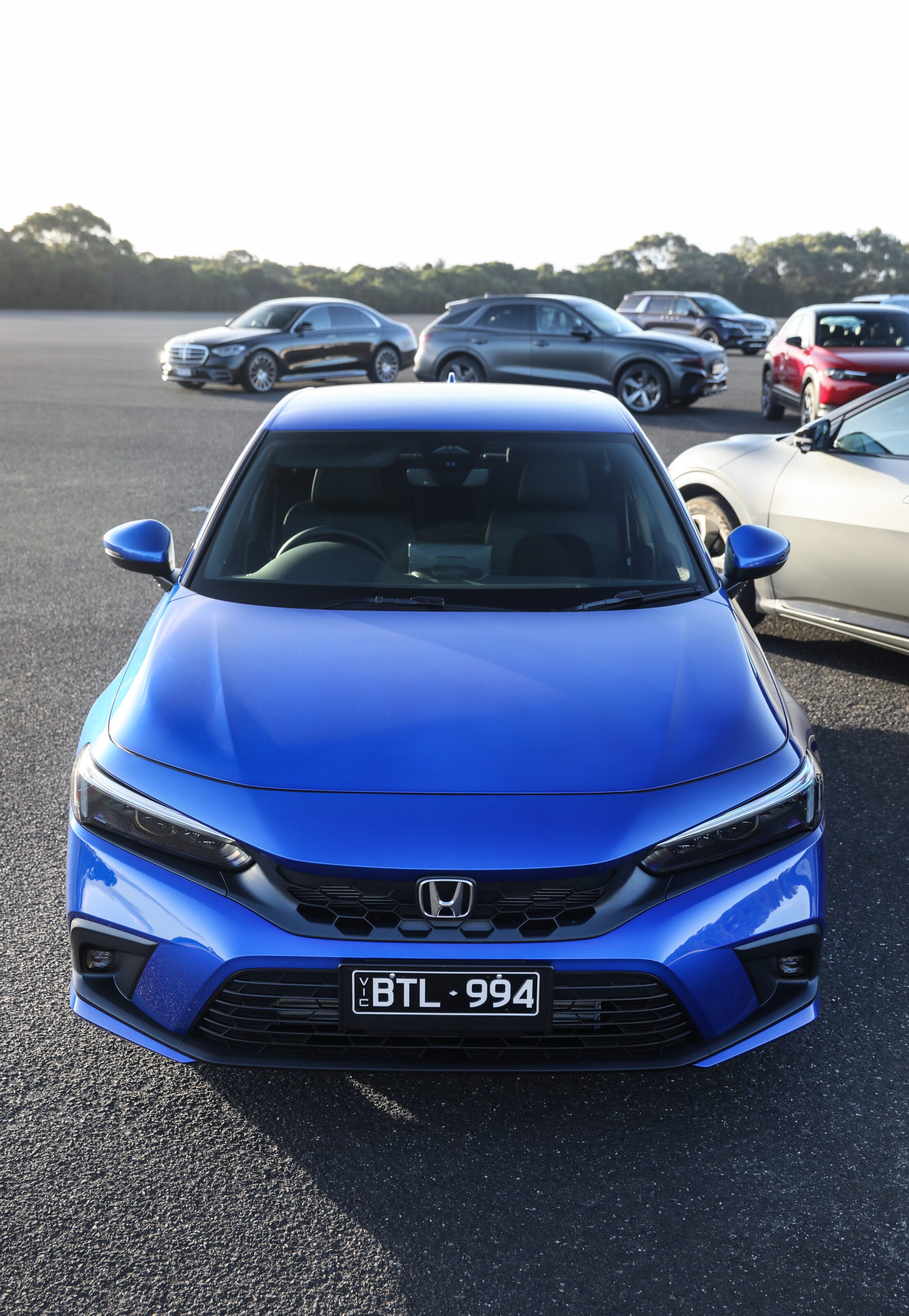
“Certainly the most premium a Honda has ever been this side of an NSX, but probably a little too much too soon,” said Dan.
Against other criteria, until the new hybrid model arrives, it doesn’t really break any new ground for technology; the 9.0-inch central touchscreen is also a bit small compared to rivals, and there is no head-up display. Eight airbags, however, bode great for safety, as does a full suite of active chassis gubbins. Claimed fuel use of 6.3L/100km is also commendable, but overall the Civic, while laudably performing its intended function, would have simply just done better if it was cheaper.
Instead the judges were left to agree that all it needed to be perfect was a fizzier, more powerful engine and a slick Honda manual gearbox.
So a Type R, in other words. All aboard the hype train.
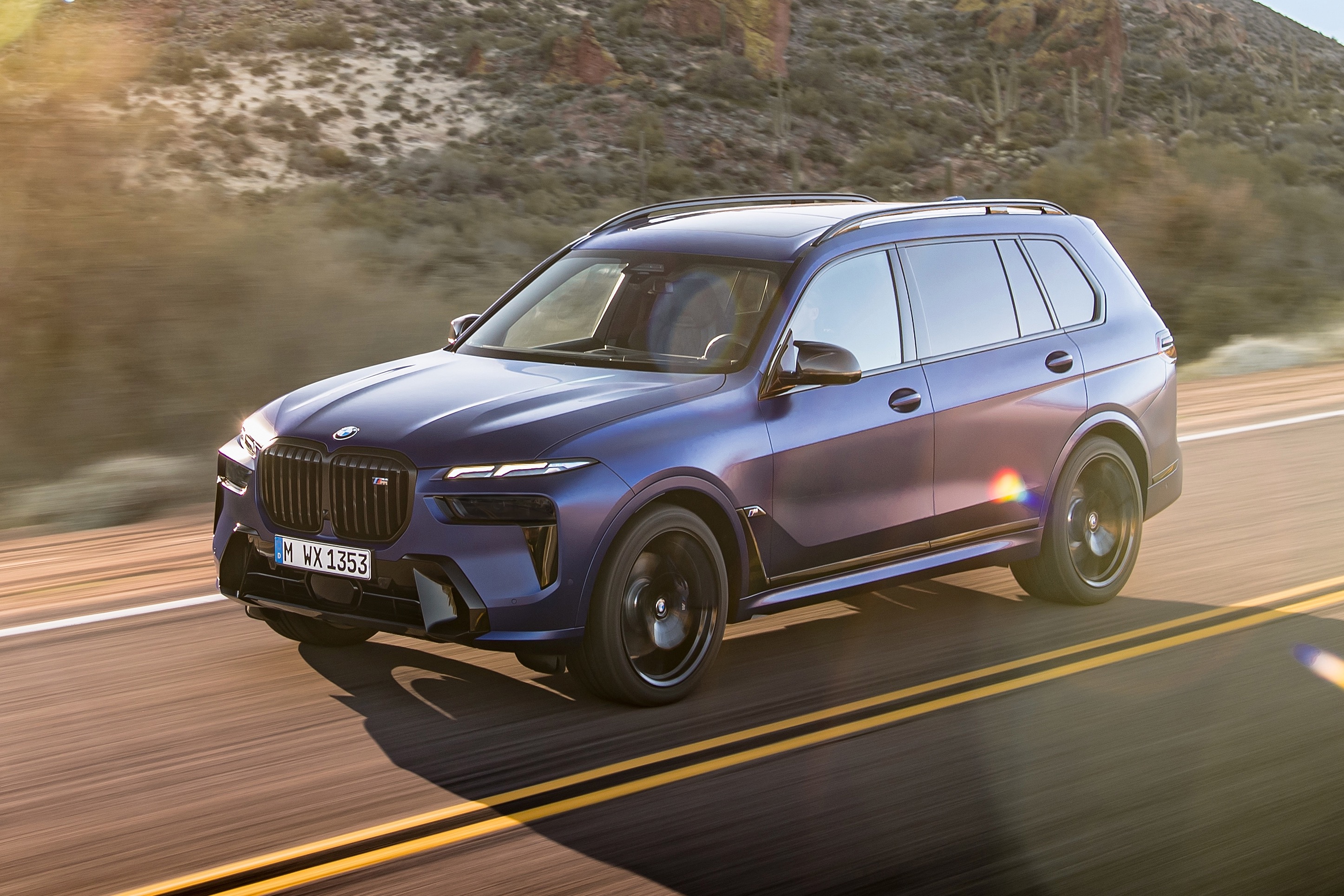
BMW Chief Executive Officer Oliver Zipse has issued a warning to manufacturers focusing on electric vehicles.
With well-known vehicle brands pledging to phase out internal-combustion engines, and some countries and regions placing outright bans, the shift to electric vehicles is rapidly speeding up.
Speaking with Reuters at the New York International Auto Show last week, Zipse highlighted the heightened reliance on selected countries with electric vehicles.
“When you look at the technology coming out, the EV push, we must be careful because at the same time, you increase dependency on very few countries.”
He also highlighted the supply of raw materials for electric vehicle batteries was largely controlled by China.
“If someone cannot buy an EV for some reason but needs a car, would you rather propose he continues to drive his old car forever? If you are not selling combustion engines anymore, someone else will.”
In addition, Zipse believes the evolution of electric vehicles in bringing prices down might not last, claiming manufacturers need to plan for higher energy and raw material costs in the future by focusing on efficient production and recycling initiatives.
“We have a peak now, they might not stay at the peak, but they will not go back to former prices,” he added.
“How much energy you need and use, and circularity, is important – for environmental reasons but even more for economic reasons.”
The claims follow recent announcements from automotive marques and governments surrounding the future of internal-combustion vehicles.
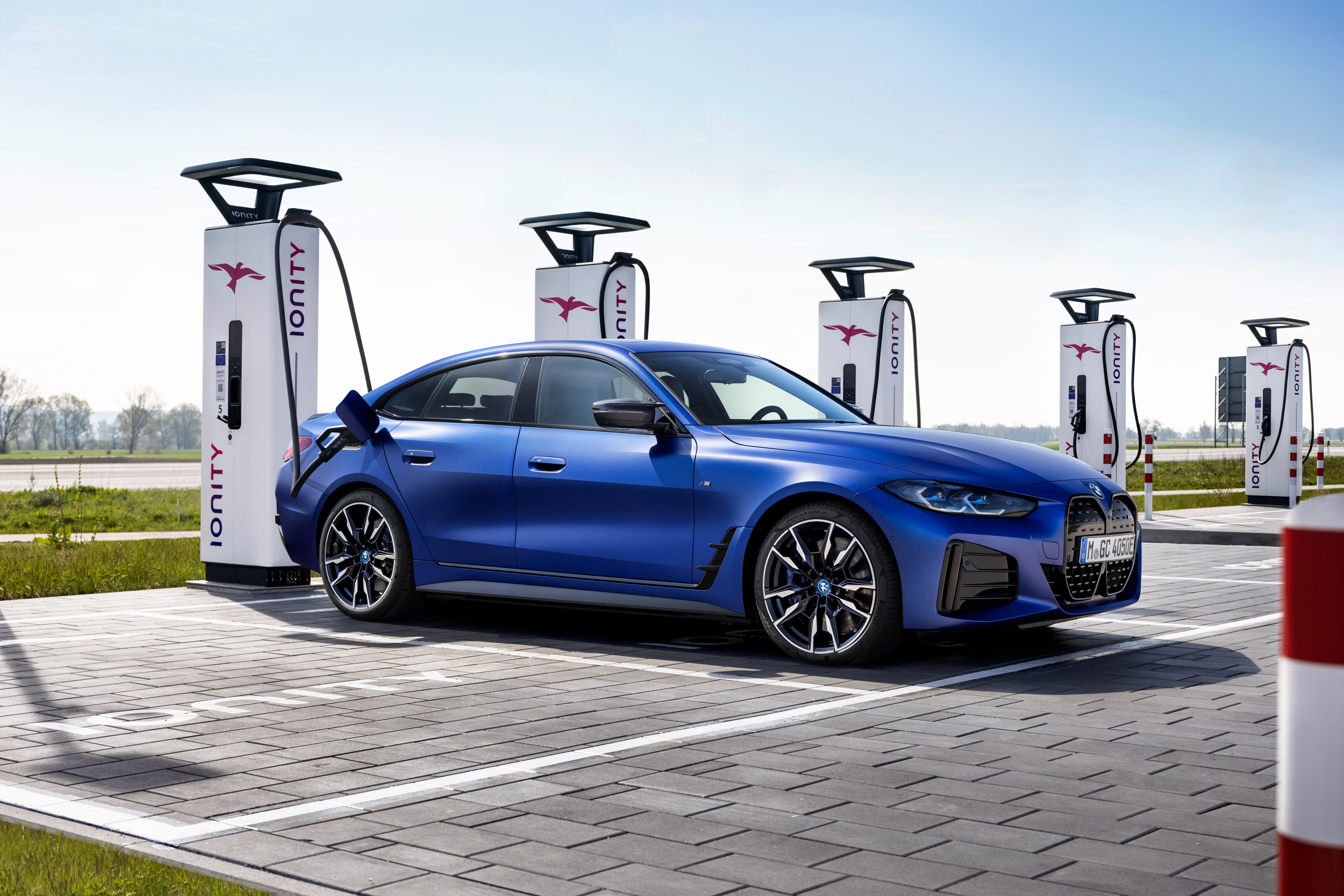
Last week, California outlined its aggressive plan to ban internal-combustion vehicle sales by 2035.
The proposed rule, issued by the California Air Resources Board, would also see the state require at least 35 per cent of vehicle sales to be electric or hydrogen by 2026. The current figure for zero-emissions vehicles in California is 12.4 per cent, according to the board.
BMW Group sub-brands Mini, Rolls-Royce and BMW Motorrad will phase out internal-combustion engines by the early-2030s.
The main BMW brand will continue building internal-combustion and electrified vehicles – including mild, self-charging, plug-in hybrid and EV models – beyond the early-2030s deadline.
Snapshot
- 2023 Volvo C40 Recharge EV to go on sale from $74,990
- Dual-motor variant will set buyers back $82,490 before on-road costs
- Deliveries to begin from third quarter of 2022
2023 Volvo C40 Recharge pricing and features for Australia
April 12, 2022: Local pricing and specs have been announced for the upcoming 2023 Volvo C40, with the single-motor variant to go on sale for $7500 less than its dual-motor counterpart.
Starting out at $74,990 before on-road costs, the model jumps up to $82,490 for the dual-motor, with its arrival slated to begin from the third quarter of 2022.
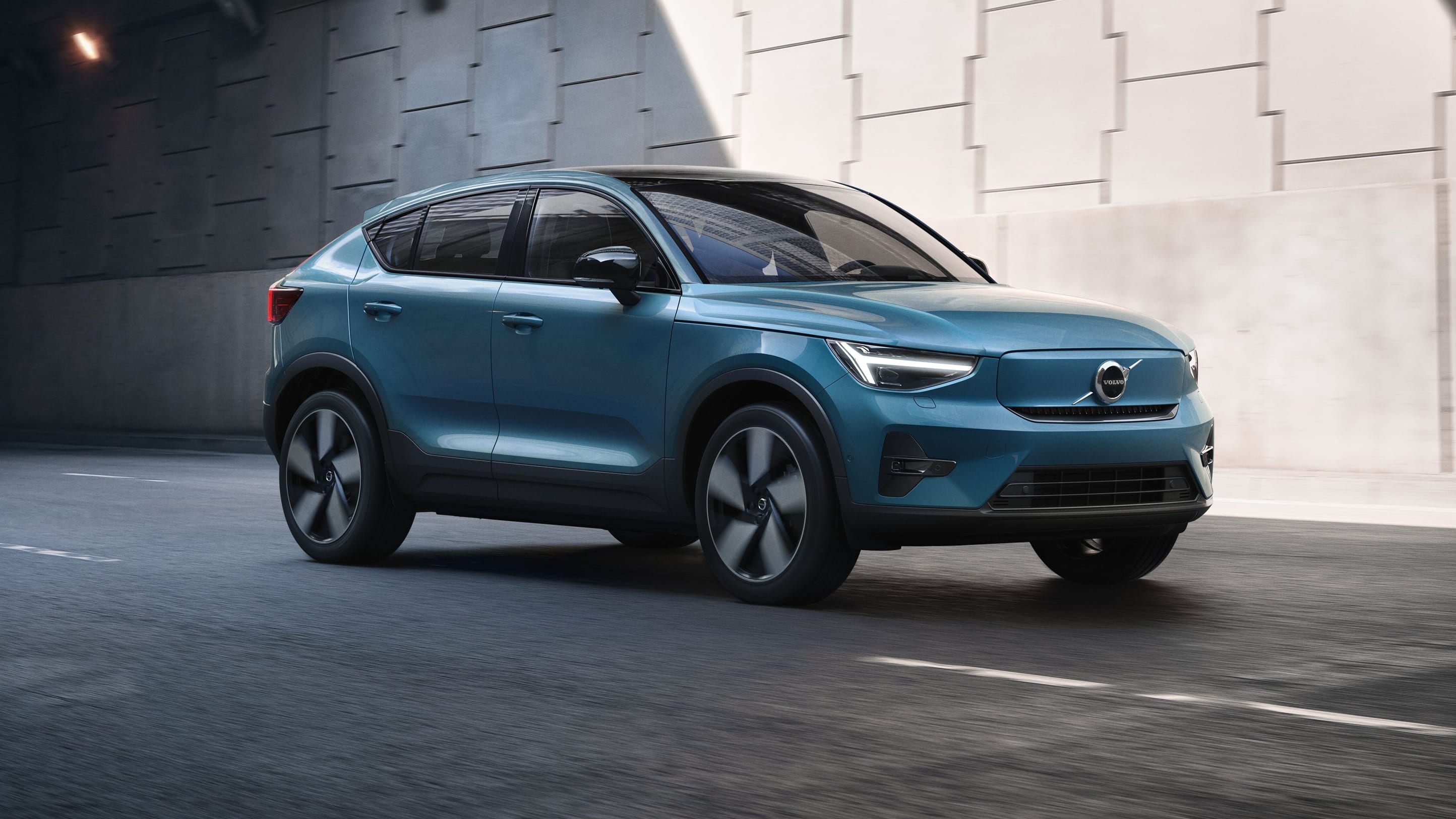
2022 Volvo C40 single-motor variant announced
March 7, 2022: Volvo has confirmed the C40 range will expand to include a single-motor variant, set to be sold alongside the dual-motor Recharge which entered production in October last year.
Dropping to a 69kWh battery pack from a 76kWh unit, the single-motor actually boasts a higher driving range of 434 kilometres, 420km more than the more powerful option.
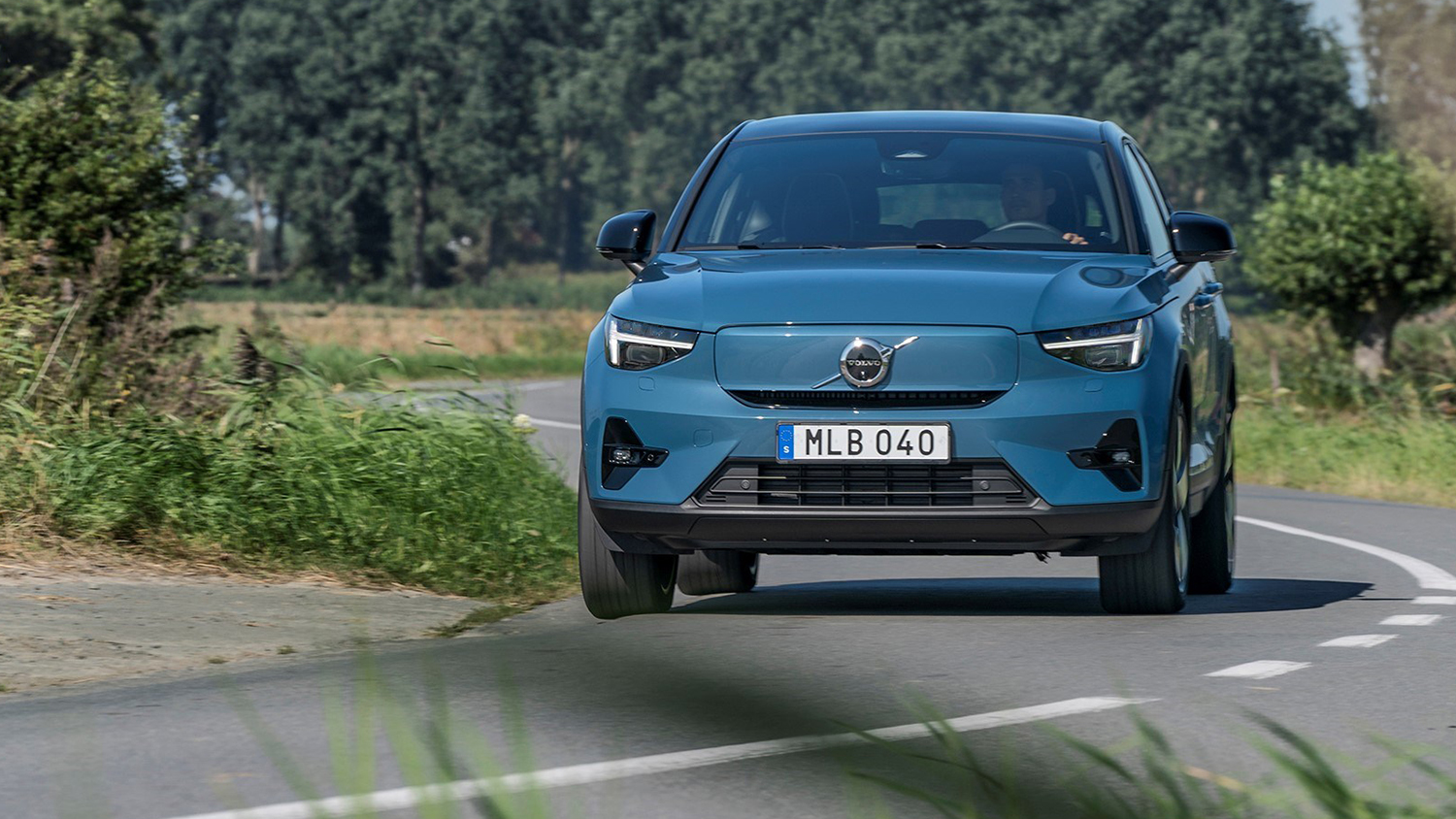
2022 Volvo C40 Recharge review: First drive
December 21, 2021: Our Dan Gardner became one of the first Australians to test out the C40 last year, shaking it down around Belgium’s winding roads.
Check out his written and video reviews of Volvo’s fully-electric small SUV which is set for a local arrival next year.
Volvo C40 Recharge electric SUV revealed, Australia confirmed
March 3, 2021: Volvo has revealed an all-new model that will be produced solely with a battery-electric powertrain.
Based on the XC40, the C40 Recharge coupe-SUV brings a high seating position that Volvo says its owners want, but with a lower profile and sleeker roofline than its first battery-electric model, the XC40 Recharge.
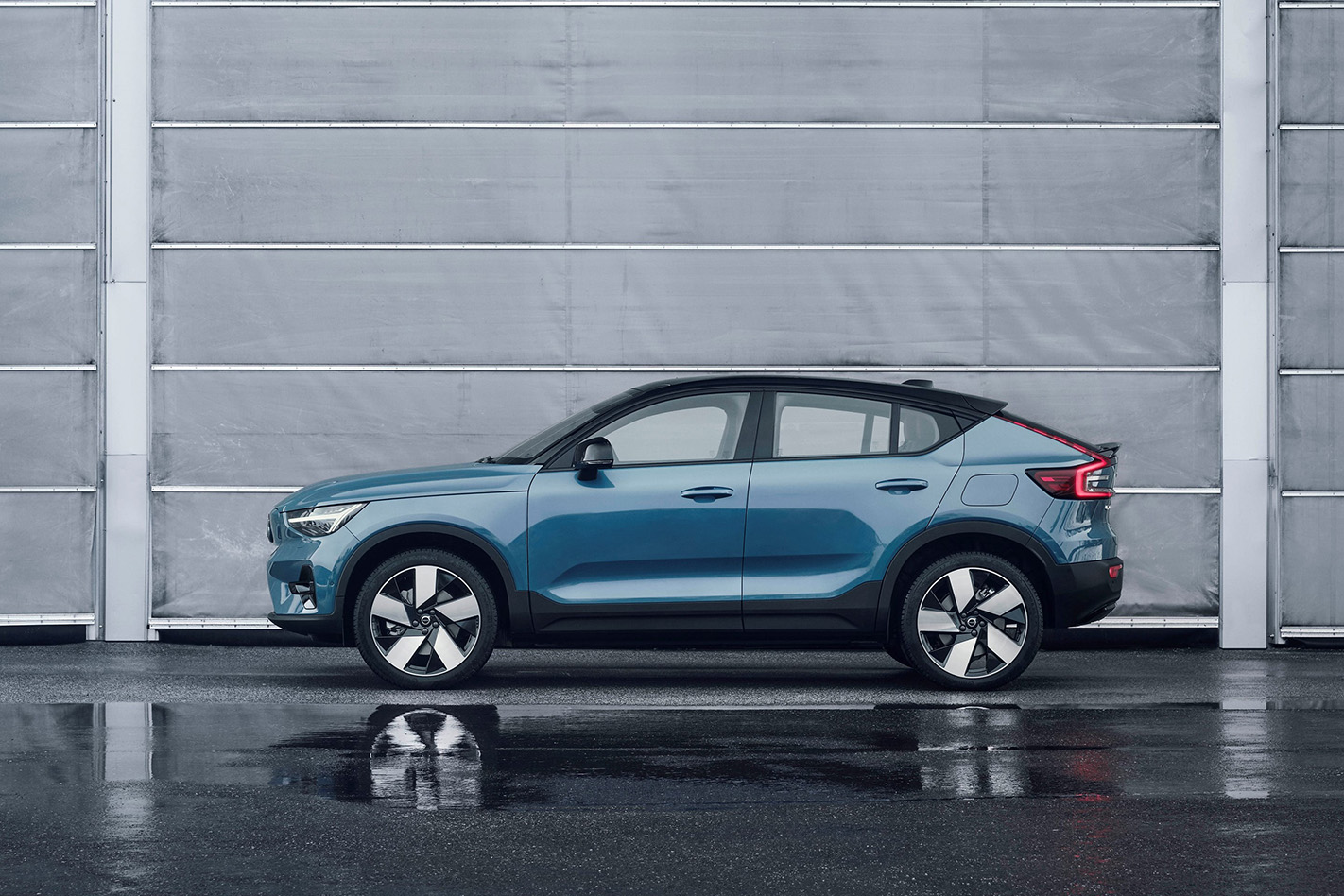
It’s otherwise very similar to the XC40 Recharge and shares its 78kWh battery that can be fast-charged to 80 percent in about 40 minutes, with power provided through two electric motors, with one at each axle.
Maximum range is an estimated 420km, though Volvo’s chief technology officer Henrik Green said that will improve over time with online software updates via unlimited data.
Speaking of online, the Volvo C40 will only be sold on the brand’s Care by Volvo website, as will all Volvo EVs produced from now on.
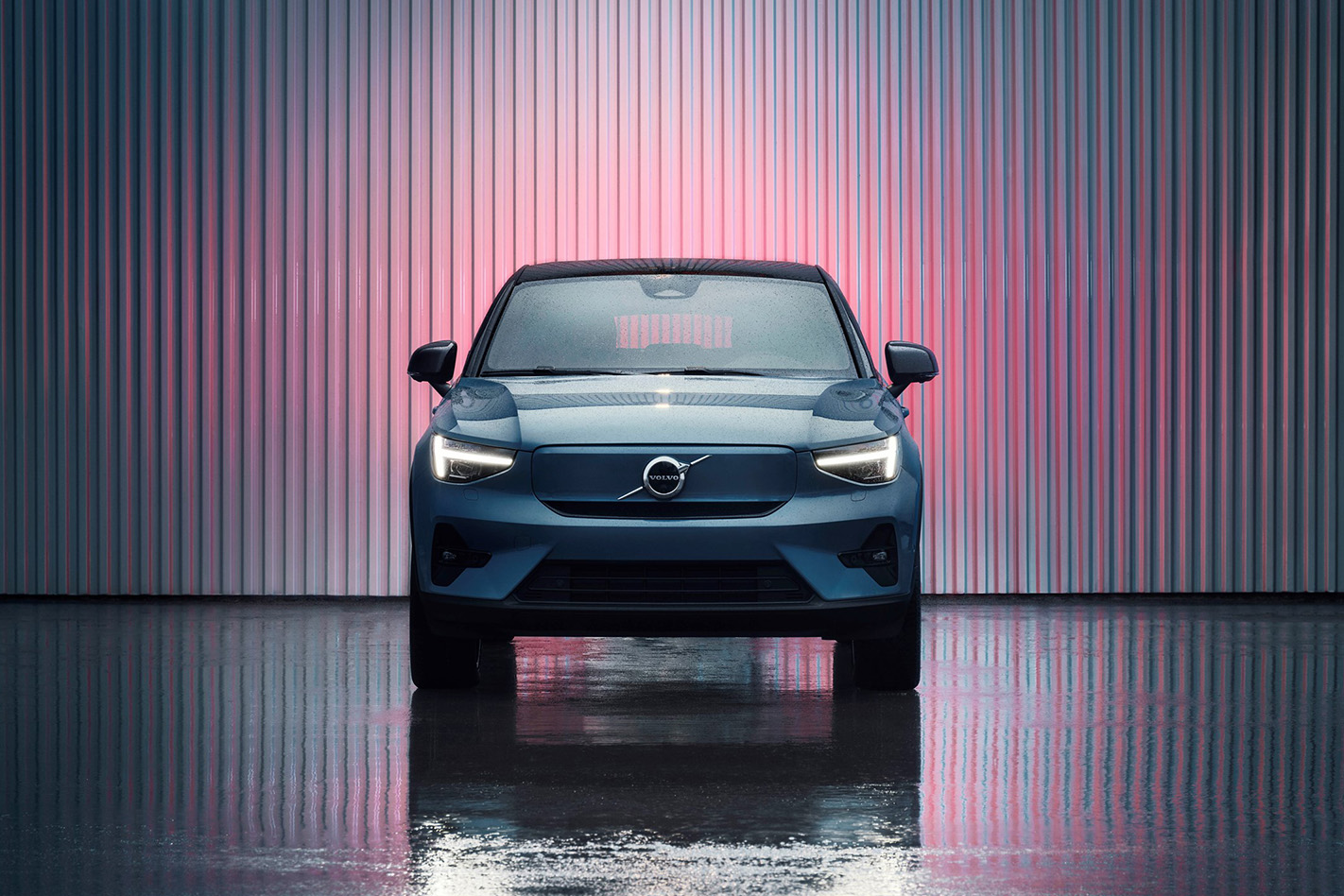
The online purchase will also bring a care package that includes servicing, warranty, roadside assistance, as well as insurance and home charging options.
The C40 debuts pixel technology headlights, and Google’s new Android Automotive infotainment operating system.
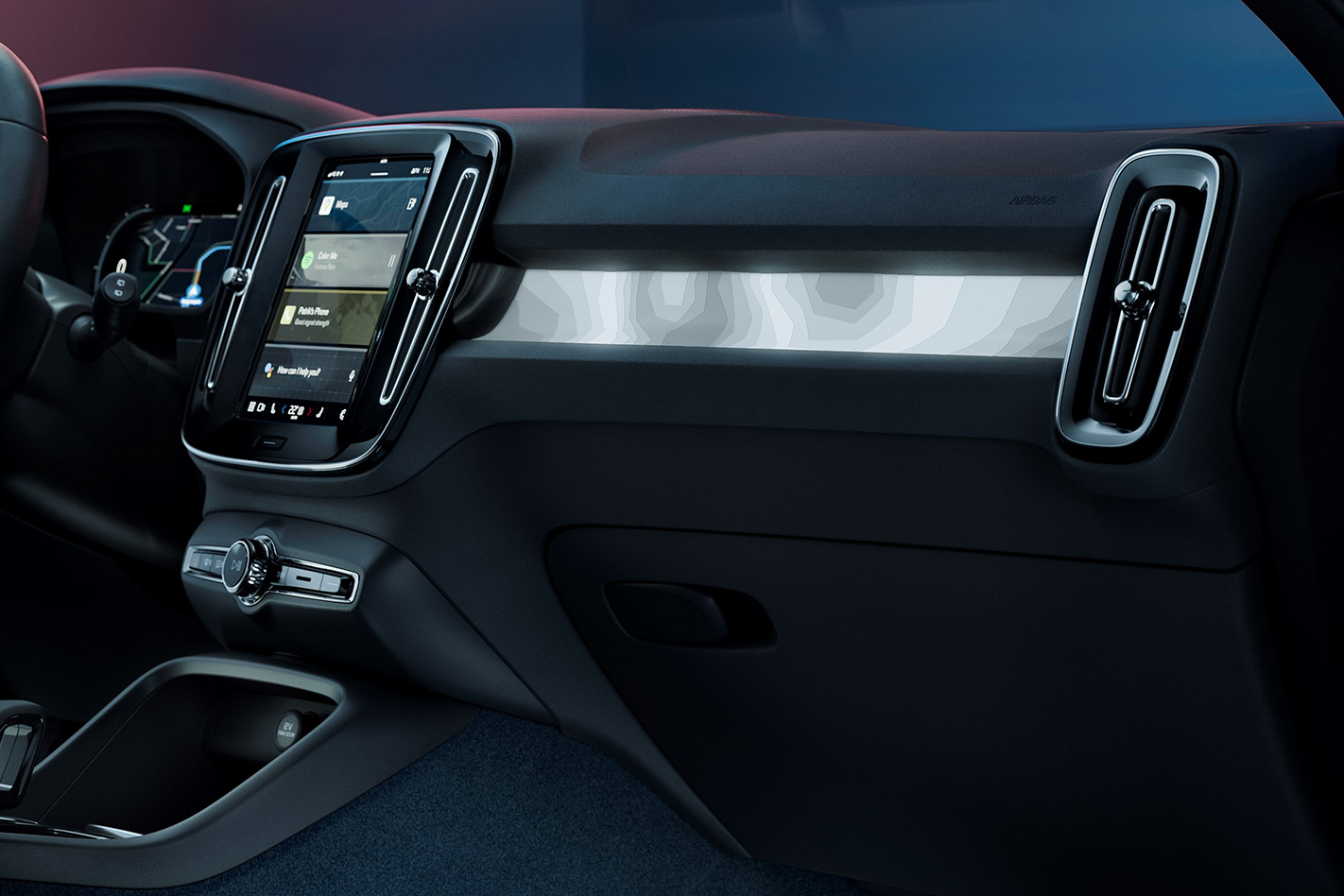
Boosting the C40’s environmental credibility is the pledge that it and all future Volvo models will be totally leather-free.
“The C40 is a car that shows where we’re going; all-electric, only sold online, leather-free, continuously updated and delivered quickly,” Green said.
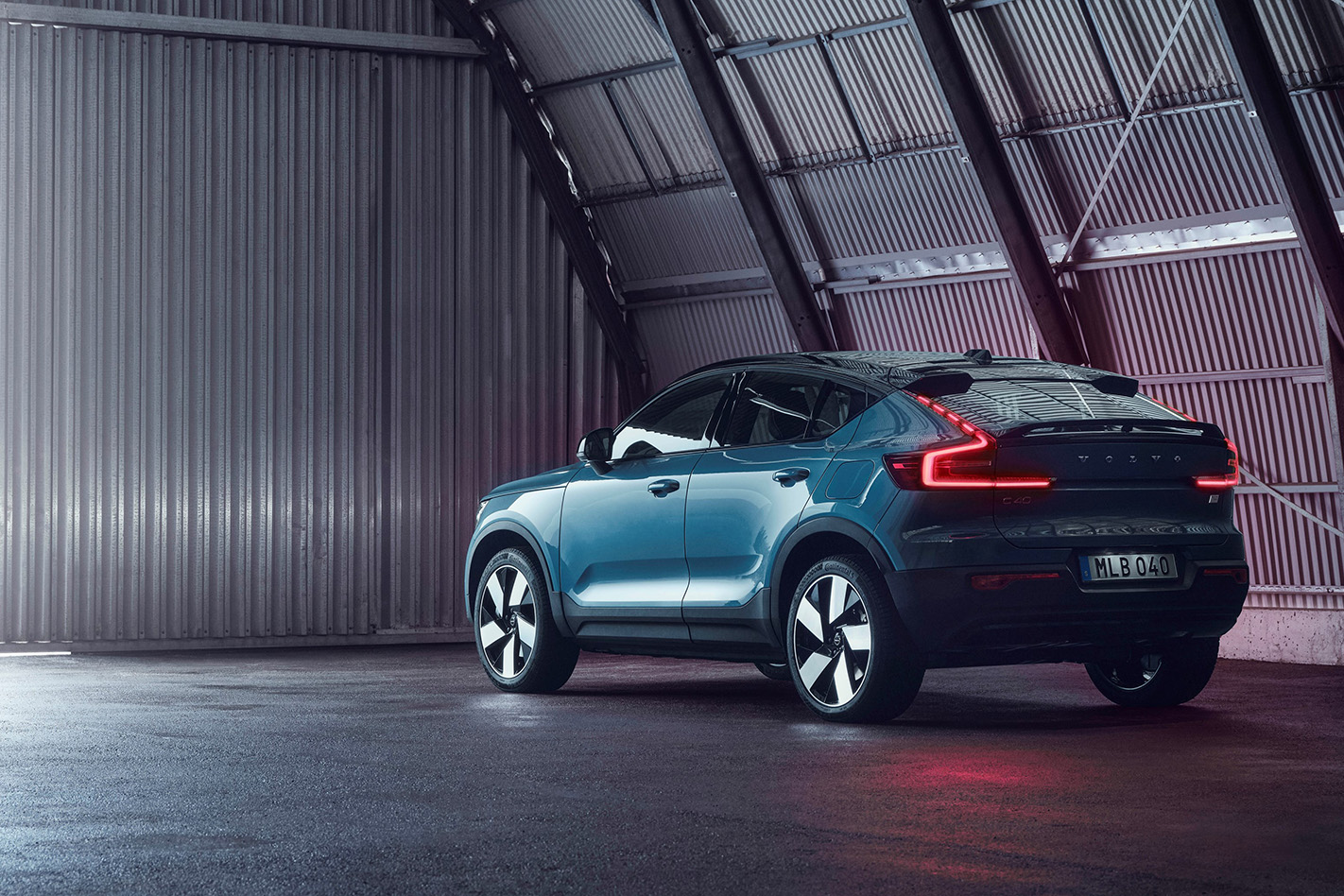
The C40 Recharge will go in production during the second half of 2021 and will be built alongside the XC40 Recharge at the Volvo manufacturing plant in Ghent, Belgium.
Earlier in the day, Volvo announced it was transforming to being an all-electric carmaker by 2030, with the C40 Recharge being the first of seven EVs to be released by 2025.
When will the C40 Recharge come to Australia?
Volvo has confirmed the C40 Recharge electric SUV will come to Australia in late 2022. Before then, buyers can expect to see the XC40 Recharge Pure Electric.
BMW’s first electric car went all the way at the 2014 Wheels Car of the Year, and arguably proved to be a hatchback ahead of its time.
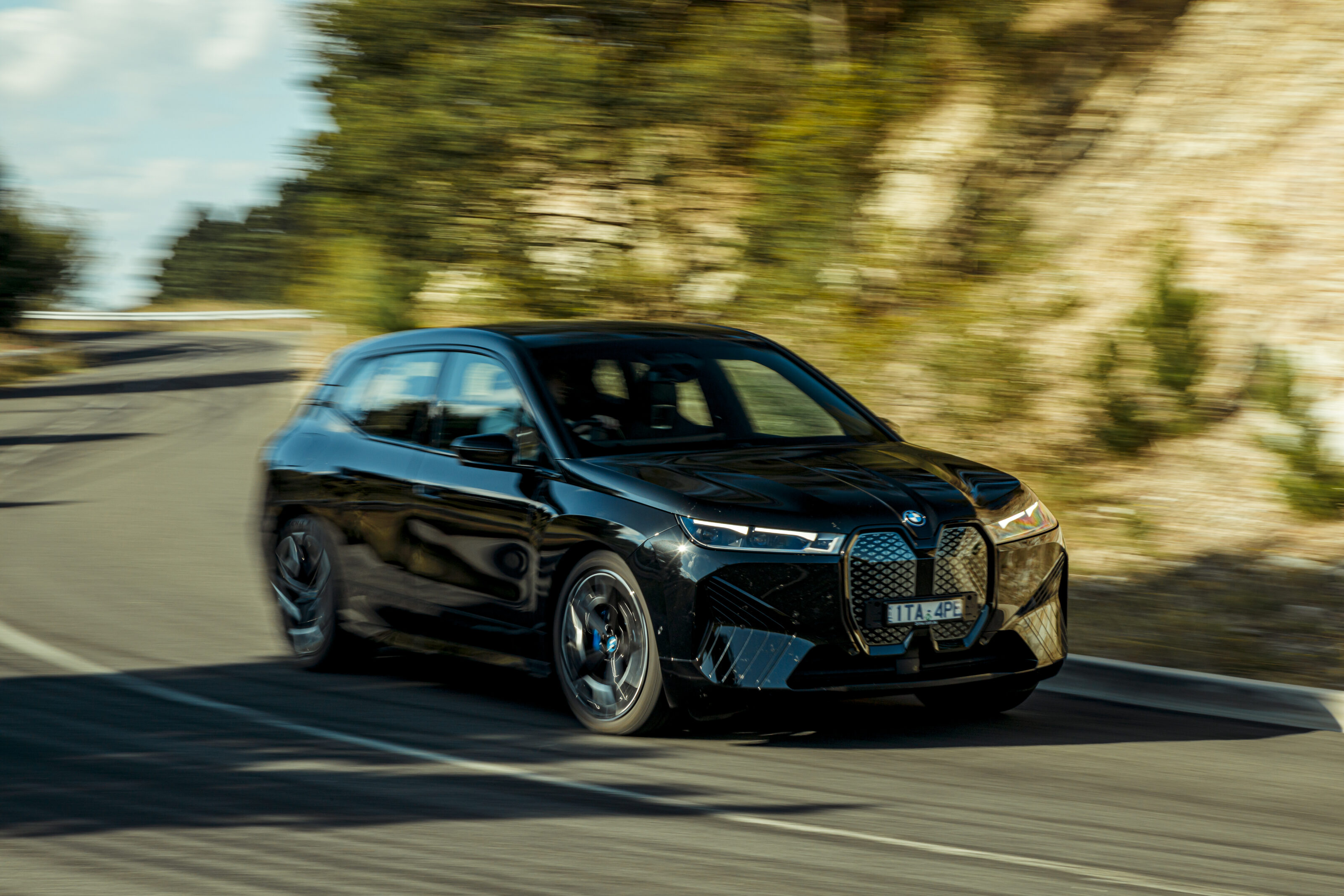
The German brand’s second battery vehicle effort, the iX, arrived at COTY 2022 with hopes of replicating that achievement while enjoying a more opportune existence.
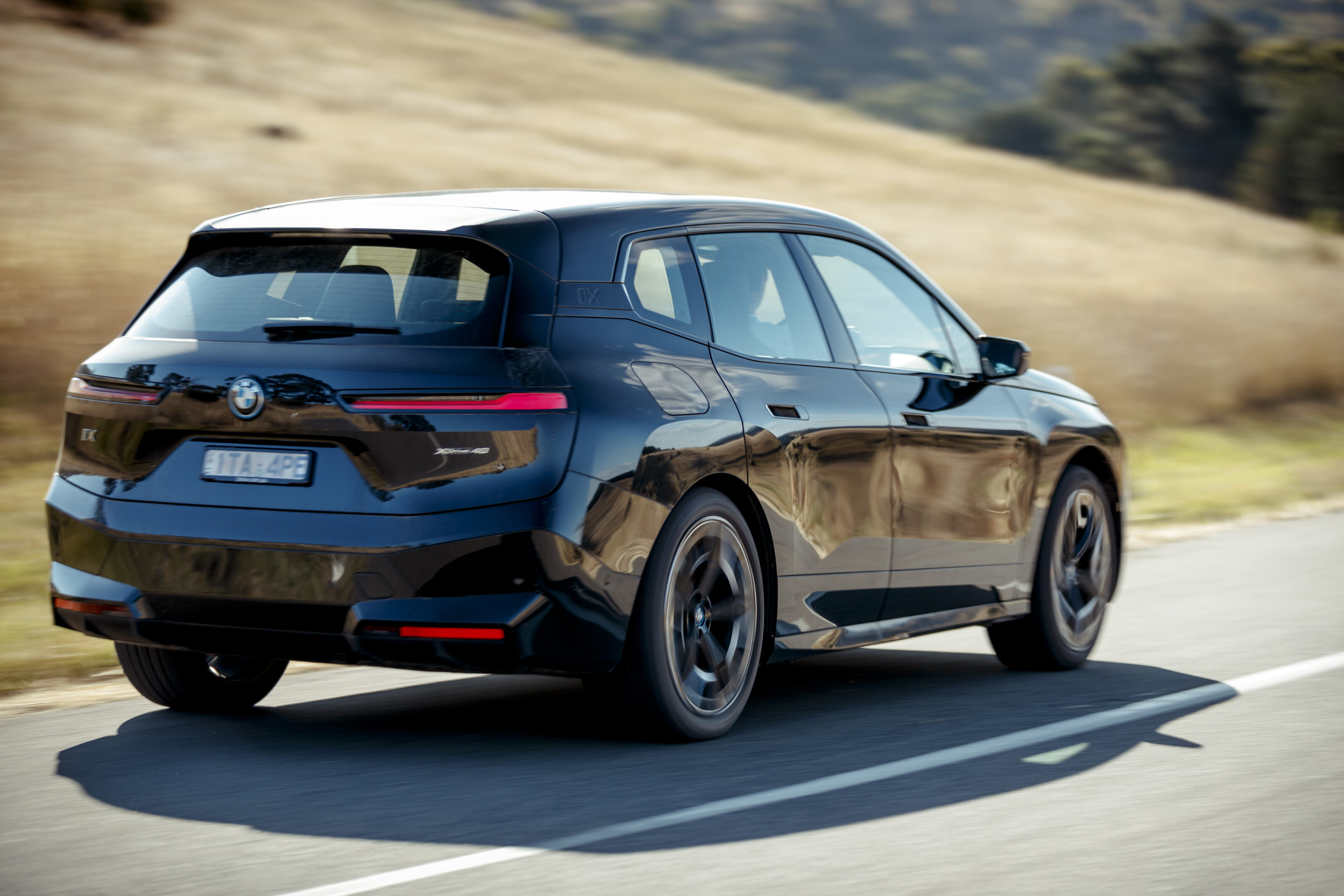
Such is its newness to market, the iX was another of the field’s untested wildcards. The variant made available for testing was the entry-grade xDrive40 in a Sport guise that adds a bodykit, performance brakes and 22-inch wheels. A mid-range xDrive50 featuring a larger battery and more powerful electric motors is also offered initially, with a range-topping M60 arriving later in 2022 as the first ever electric M car.
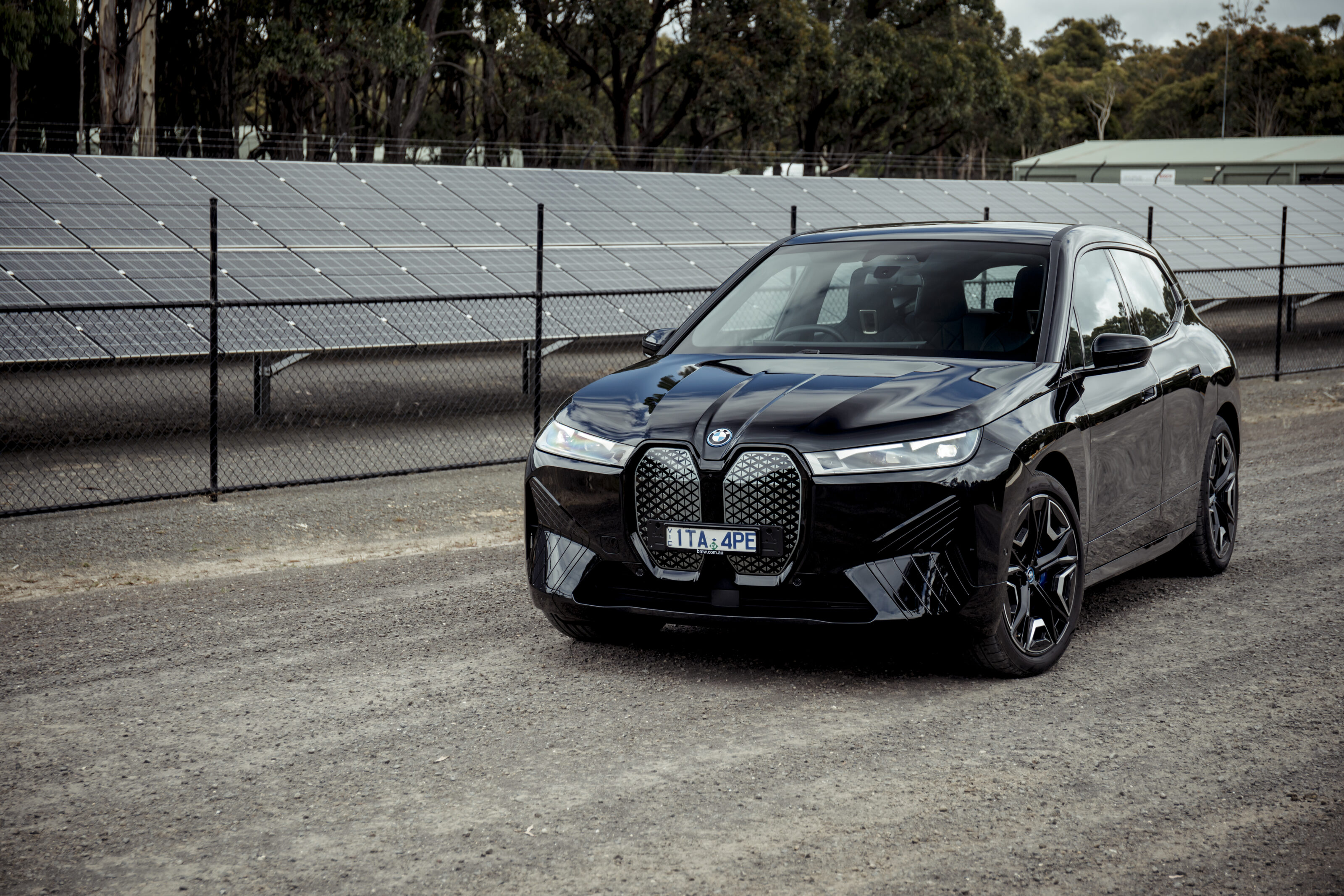
As a big SUV similar in size to the BMW X5, the iX is significantly more expensive than an i3 yet also right in the midst of a competitive group that includes the Audi e-Tron, Jaguar i-Pace, Mercedes-Benz EQC (our 2020 COTY winner), and Tesla Model X. This meant a starting price of $135,900 for the xDrive40, or $141,900 for the xDrive40 Sport, didn’t immediately harm the iX’s chances against the Value criterion.
BMW has also thrown in five years of complimentary Chargefox charging, and the German marque certainly hasn’t scrimped on its investment in the iX’s construction, either. Based around the company’s CLAR cluster architecture, an aluminium spaceframe chassis is combined with a ‘Carbon Cage’ utilising carbonfibre-reinforced plastic for reduced weight and increased rigidity.
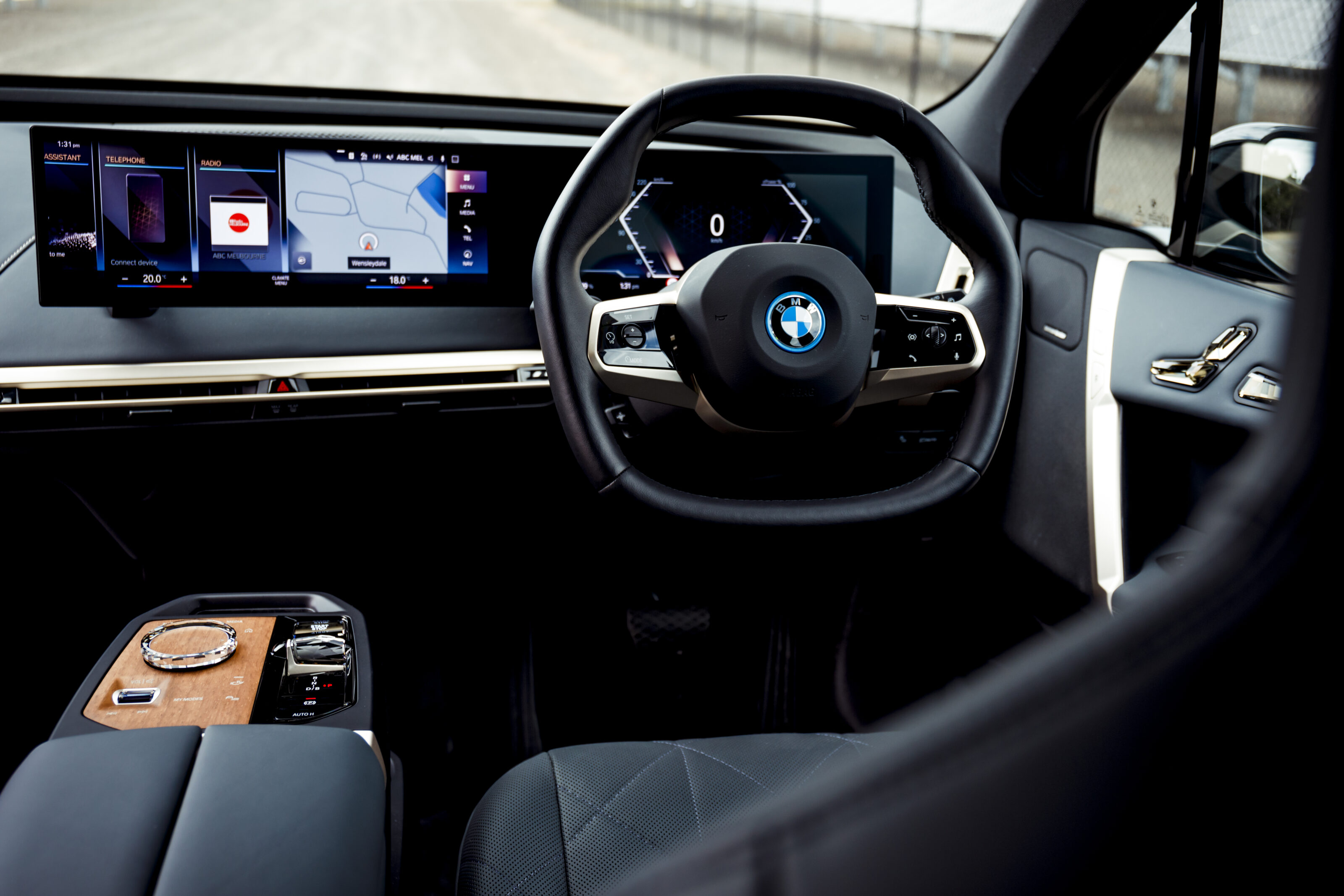
As with BMW’s former i-badged models, including the i8 hybrid supercar, there is exposed CFRP when you open the doors. Yet you would be excused for missing it as eyes are drawn to what is BMW’s most successfully ambitious cabin since the i3.
Accessed via frameless doors with additionally distinctive door-handle slots, the interior’s stylish minimalism, vast space and array of tactile textures are all notable – though not to the extent of the crystallised seat controls and gem-like console dial that suggest BMW’s interior designers raided a Swarovski store.
Curt reckoned the cabin had an “ostentatious futuristic vibe”. Alex agreed. “Interior has so much wow factor. Some of it strays into OTT territory, but I imagine it will blow people away in showrooms.”
“A weirdly compelling cabin that’s different but not just for the sake of being different. It’s a show-stopping interior that manages to be stunning while avoiding gaudiness,” said Dan. Design guru Richard joined the fan club, describing the approach as “intentionally pared back and minimalist, but with premium materials and excellent execution”.
“Plenty of wow factor and powertrain punch, but chassis tune falls short” – Alex Inwood
The iX doesn’t disappoint on space, with tonnes of headroom front to back and copious amounts of legroom – the latter aided by a three-metre wheelbase that’s 28mm longer than the X5’s. Three adults comfortably fit across the second row, too.
The proving ground was the first opportunity to sample various technologies. The vast and sharp HUD impressed along with the augmented-reality nav guidance, though not every judge was enamoured with the behaviour of the BMW’s electronic aids on the dirt section.
The hexagonal steering wheel, meanwhile, is certainly novel but was considered a design step too far.
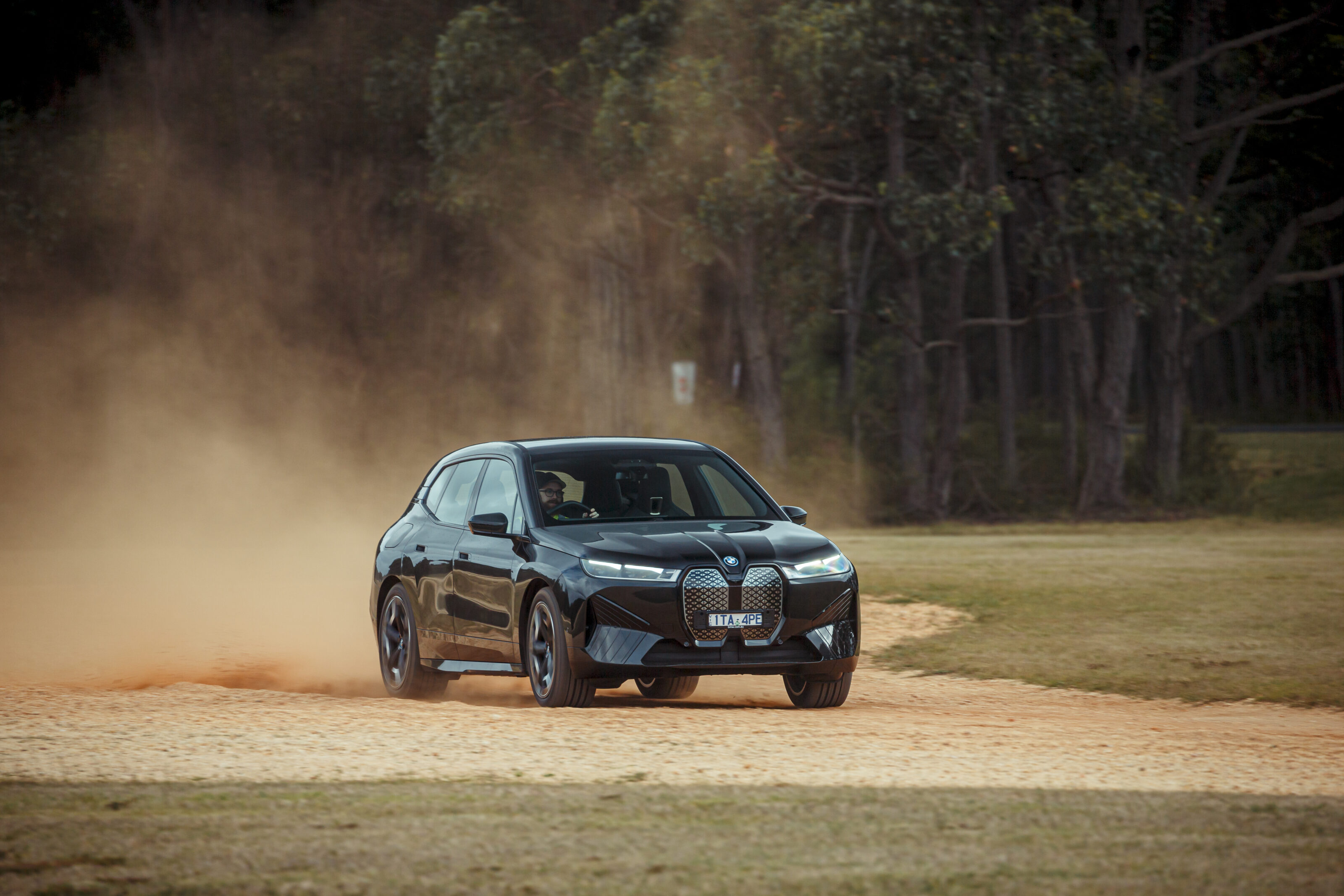
The iX itself, though, was considered worthy of taking the next step, securing sufficient votes to reach the finals stage.
A 77kWh battery resides at the heart of the xDrive40 variant, delivering 425km in WLTP-rated range and powering front and rear electric motors that produce a combined 240kW and 630Nm. That range is in the ballpark rather than being remarkable in the context of direct rivals, while quoted acceleration of 6.1 seconds puts it towards the bottom of the pack for the 0-100km/h sprint.
A best-variant case could be made for the xDrive50 that uses a 112kWh battery and more powerful dual motors to expand range to a Tesla Model X-trumping 630km and shrink the 0-100km/h time to 4.6 seconds that’s second only to the American SUV. The catch is a sizeable price-tag jump to $169,000.
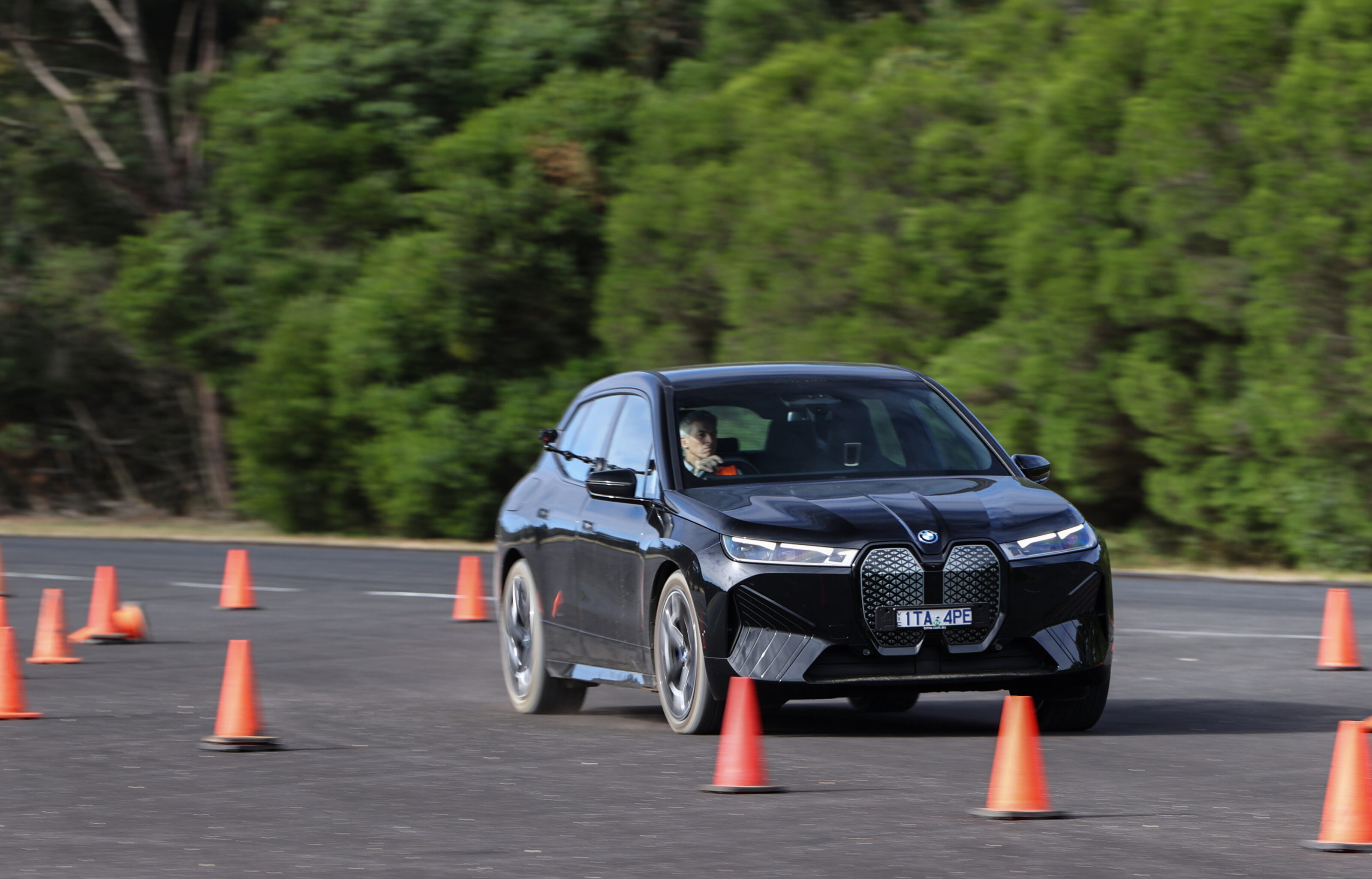
Yet a lack of speed was never raised as a concern for the xDrive40. “Benignly fast in a straight line and corners,” said Dan, essentially as a proxy for the entire group.
Judges all noted the iX’s eery yet impressive quietness, a vehicle that belies its bulk to slip through the air with a segment-leading 0.25 coefficient of drag, and one that was riding on special noise-reducing rubber.
Excellent vision is afforded by the expansive windscreen, tall side glass, and helpfully sized rear window. And no-one heckled when I suggested the iX’s front seats were second only to the S-Class’s for pampering comfort.
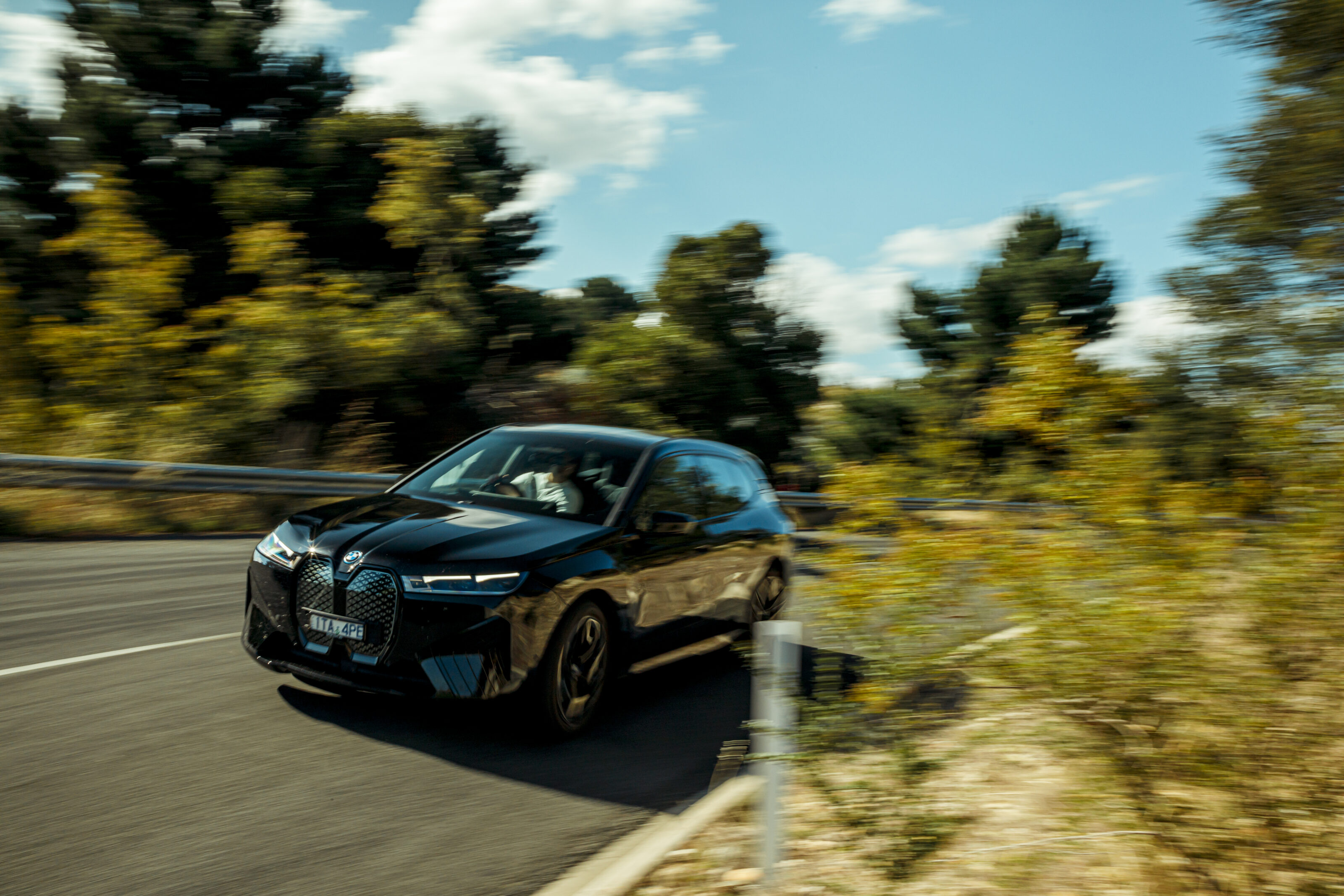
In the harsh light of a brighter day for the road loop, though, some form-over-function quirks were exposed. Centre console controls were hard to read, while further seat time didn’t bring anticipated improvements in the understanding of various controls and interfaces.
“The user interface, in places, is clumsy and unintuitive,” said Curt, going on to cite the console controller array, drive mode selection, and regen-braking adjustment as examples. Dylan reflected some general disappointment with the new-generation iDrive 8 that debuts here. “If you showed the iX’s infotainment system to a lawmaker, they’d figure out a way to ban it immediately. Requires a PhD to operate.”
Our challenging, real-world road loop also highlighted some chinks in the iX’s dynamic armour not so apparent at the proving ground. These included a restlessness to the ride that wasn’t experienced with any of the other finalists across the loop’s long stretches of country roads. Would the xDrive50 with its standard air suspension have fared better?
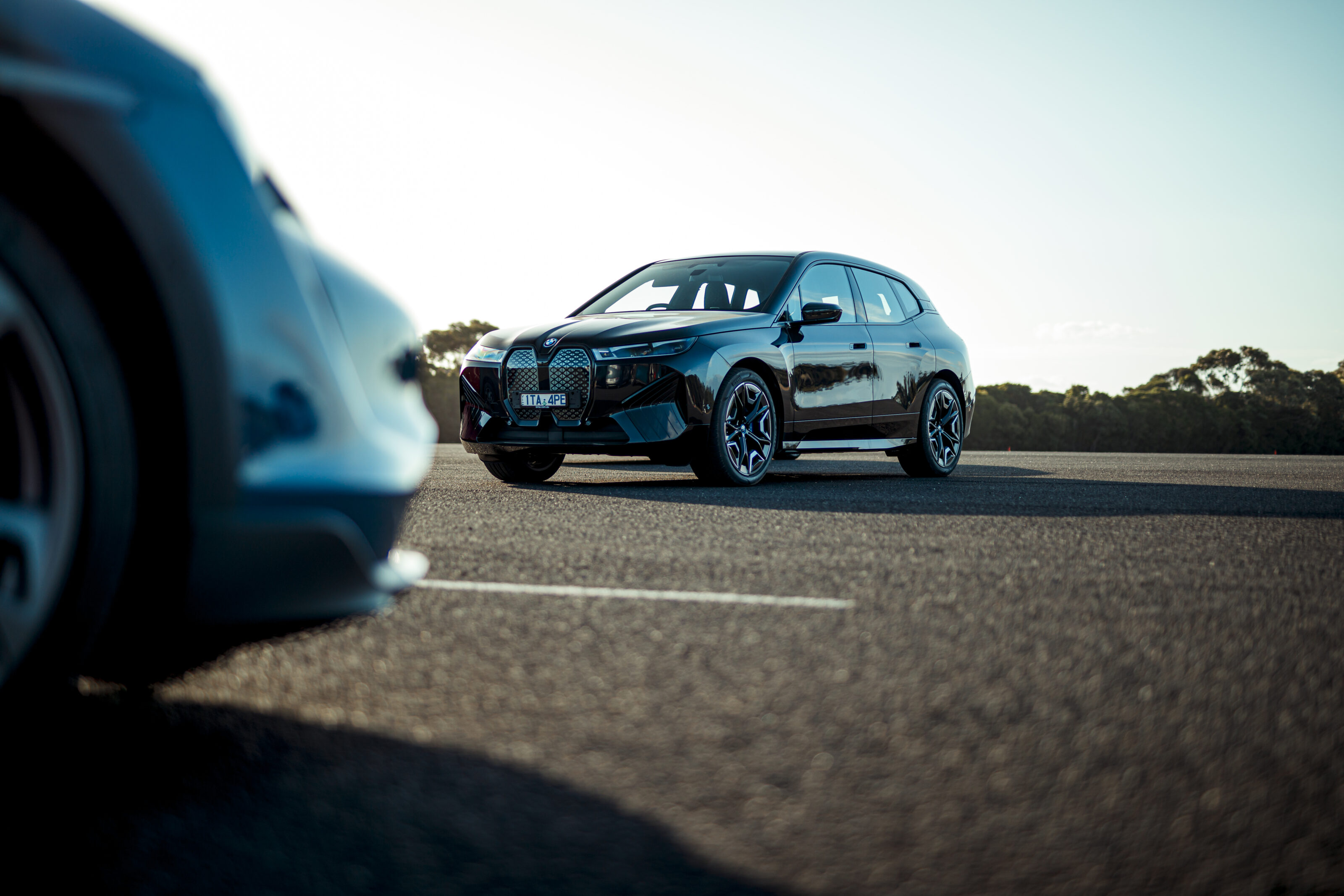
There’s also disappointment for any BMW fans longing for an electrified equivalent of the brilliant-handling E70 X5.
“Dynamically, it feels like you’ve got five burly blokes on board, a tank full of fuel, and a bootful of gear … except it’s just little old you in the car,” said Dylan.
Yet if the iX didn’t quite live up to the expectations of the traditional BMW driving experience, it delivers in many other ways as a fitting flagship for the German brand’s EV line-up.
On the face of it, this review is about two mid-size SUVs from premium manufacturers – the BMW X3 30e and Lexus NX450h+ F Sport – going head to head to see which is the better of the two.
Step back a bit, though and there’s a broader question – given the cost of these cars, can they really compete with the fully electric mid-size SUVs trickling into the market?
I used to be thoroughly convinced that plug-in hybrid electric vehicles – PHEVs – were the answer for buyers hesitant to commit to a full battery electric vehicle (BEV).
For some reason the ABC has me on regularly, shouting at people who claim buying a BEV is a no-brainer (hint: it isn’t for many people) and they tolerate it because I’m still right.

But after a week with these two, I’m not so sure. It’s not because they’re not good cars because they’re both as great as you might expect from these two titans. I just wonder, especially in the BMW’s case, if you’ve got access to a few more grand, why would you not buy the BEV version?
Of course, there are good reasons we will explore in this comparison but it’s a great opportunity to kill two birds with one stone – which is the better of these two PHEVs and should you even buy one in the first place?
Pricing and Features

The Lexus takes a clear and decisive win on pricing with the top of the range NX450h landing on your driveway for $89,900 plus on-road costs. BMW’s X3 30e is about fifteen grand more at $104,900 before on-road costs. Bosh.
Let’s start with what you get for your money on the Bavarian because for this price it had better be good – and not just because the Lexus is cheaper but because the BMW iX3 is ten grand more and doesn’t use any petrol at all. And the 30e is seventeen grand more than the unelectrified X3 30i.
While the M Sport package is standard on the X3, the NX450h+ is only available in F Sport guise. F does more than M in this case
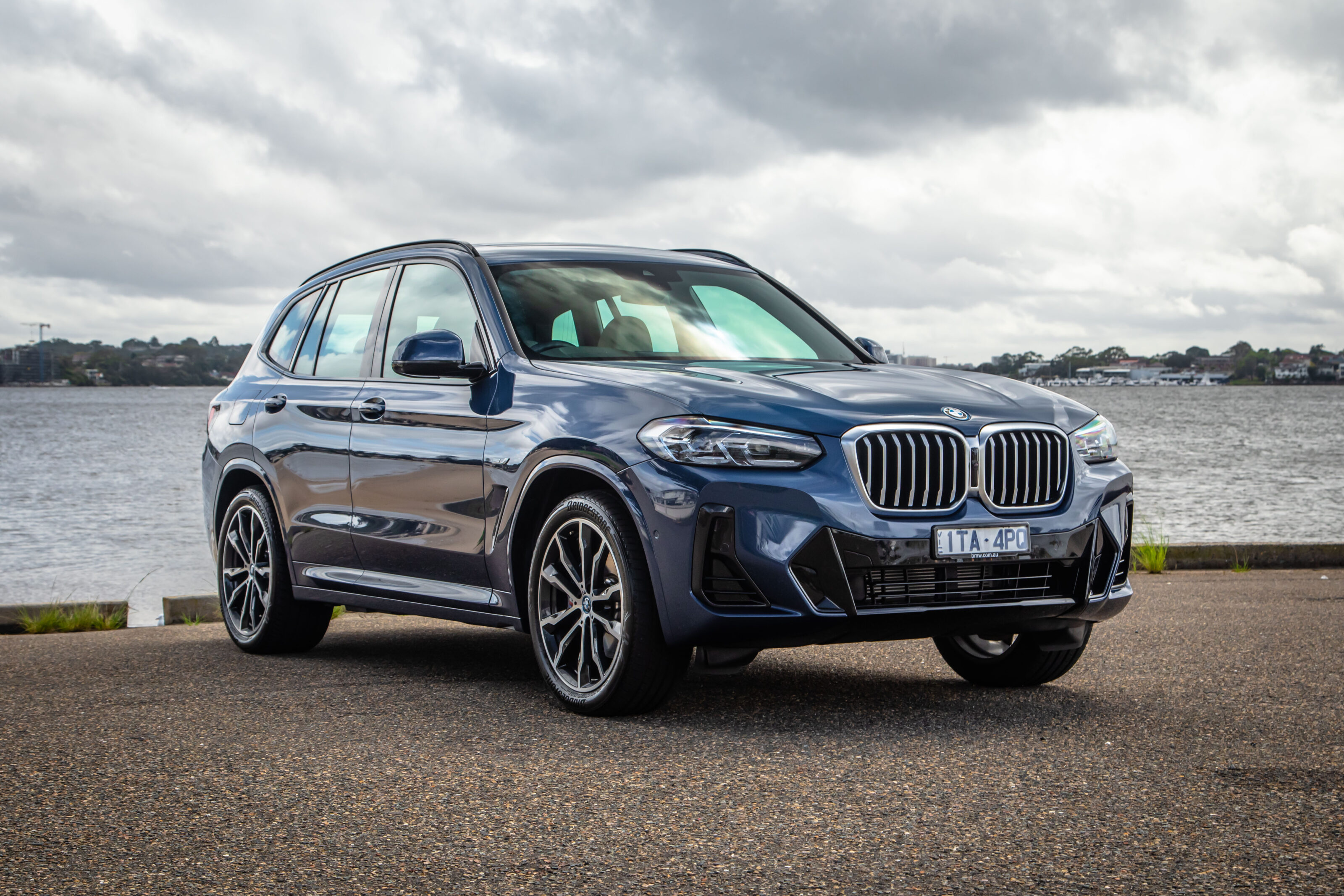
For your near hundred and five large you get 20-inch alloys, a six-speaker stereo, multi-zone climate control, cameras everywhere, keyless entry and start, front and rear parking sensors, electric front seat adjustment, adaptive cruise control, sat-nav, LED headlights (with automatic operation, auto high beam and active shadowing), head-up display, partial leather seats, auto parking, power everything (including the tailgate), auto wipers, digital dashboard, huge panoramic sunroof, tyre repair kit, run-flat tyres and wireless phone charging.
The Lexus counters with… well, pretty much all of this except the sunroof is a more traditional one that only covers the front row, the front seats are heated and ventilated, the stereo has four more speakers and you get a free 7kW wallbox charger at home. You don’t get auto parking, though, or the BMW’s clever system that backs you out of a tight spot from which you can’t work out how to extricate yourself.

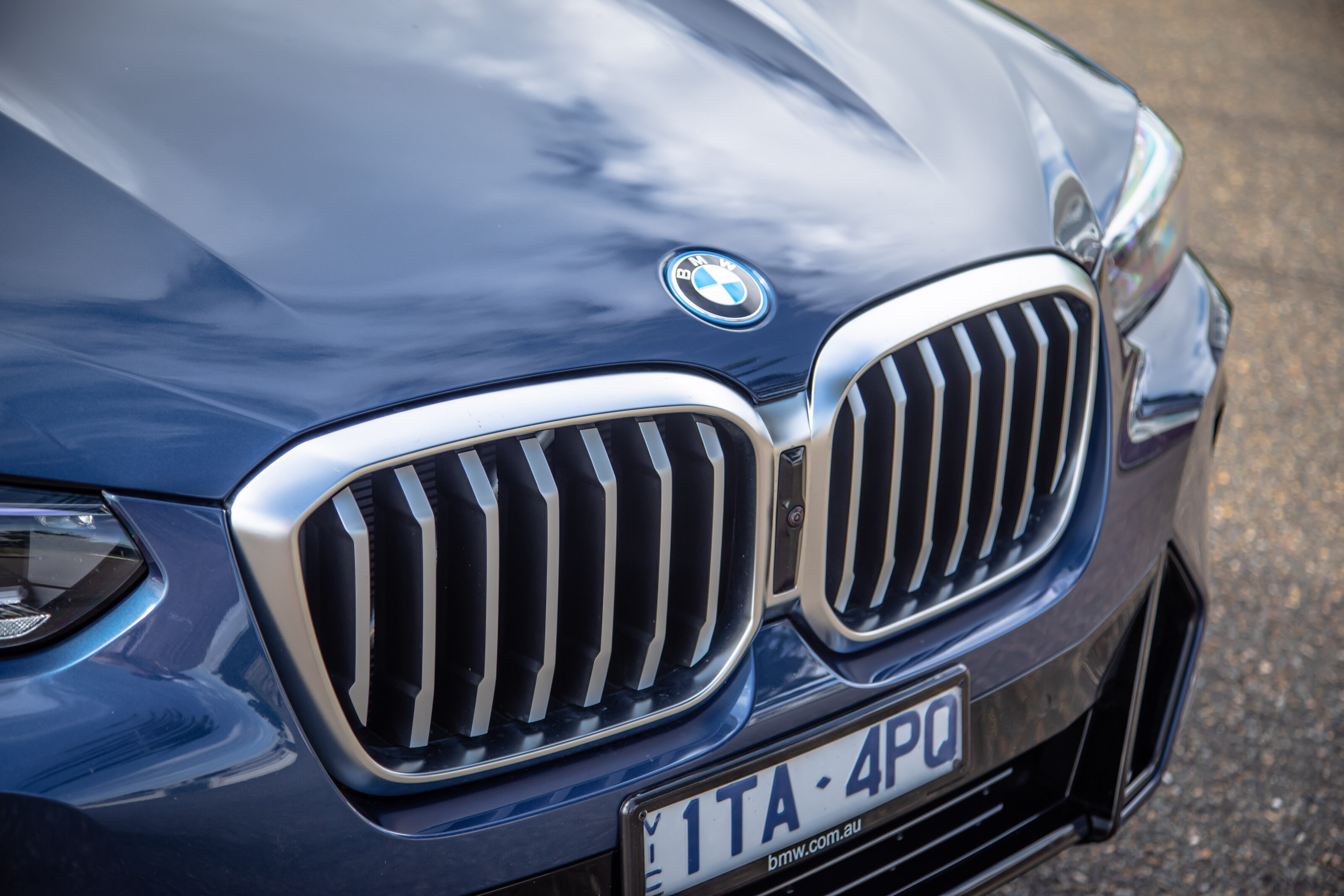
While the M Sport package is standard on the X3 (and seemingly every BMW sold here), the NX450h+ is only available in F Sport guise. F does more than M in this case, with a lot more visual frippery on the outside that appears more successful on darker coloured cars. The BMW’s is more subtle and looks great, although I’d prefer it if the grille was blacked out (which costs even more money).
BMW has resisted the urge to charge you for any of the seven available paint colours, which takes some of the edge off (it usually charges $2000) while Lexus will want an almost-scandalous $1750 for six of the eight colours. Also taking the Lexus closer to the BMW’s all-in price are a choice of two enhancement packs to better match the X3’s spec.
Comfort and Space

The NX’s rear seat is the lesser of the two when it comes to space. The leg and knee room are perfectly adequate for me behind my driving position (I’m 180cm tall) but the tapering glass makes it feel smaller than it is and, in truth, there is less space compared to the BMW because the wheelbase is shorter.
The BMW has more glass and more space – we’re talking about a couple of centimetres of leg and knee room here – a big sunroof and a ceiling that doesn’t slope down over your cranium conspire to more conservative looks but deliver a more agreeable cabin for rear-seat passengers.
Both have climate controls for the back as well as bottle holders, door pockets, two USB-C ports and a centre rear armrest with cup holders. Neither have particularly attractive middle seats, but the BMW’s foot space is slightly better as the centre console doesn’t thrust as far rearwards.
I’d take a long journey in the rear of the BMW before I went for the Lexus.

Up front is far less clear cut. The Lexus seats look fantastic and I fit into them like a glove. They’re not snug in the bad sense, but they feel really nice and hold you in place.
The flatter BMW seats are less racy looking and curiously devoid of the blue stitching often seen in electrified Beemers, but are supportive and comfortable and, for me at least, slightly superior over longer distances with what I thought was better lumbar support. But as ever with these things, your mileage may vary.
I guess I liked the way I sat in the Lexus, it feels more like a raised coupe whereas X3 feels like an SUV.
The Lexus has an imposing dash structure, with a huge 14.0-inch screen set into a big surround. In front of the driver is an 8.0-inch digital dashboard that is really just a pixel-painted version of the old analogue dash as seen in the RC (among others), but is very serviceable.

BMW’s LiveCockpit has evolved most satisfactorily over the years and looks terrific. The way it lays out information is clear and concise and you can either configure it manually or it will reconfigure itself depending on drive mode. There’s a lot going on, so the fact it’s easy to use is impressive.
The BMW’s architecture is more conventional and restrained than that of the Lexus. I can’t say I prefer one over the other but the Lexus has some really interesting design features that are there just to look good (which I appreciate) and the switchgear is really lovely compared to the BMW’s fairly conservative-looking if high-quality approach.
The BMW has more glass and more space – a big sunroof and a ceiling that doesn’t slope down deliver a more agreeable cabin for passengers
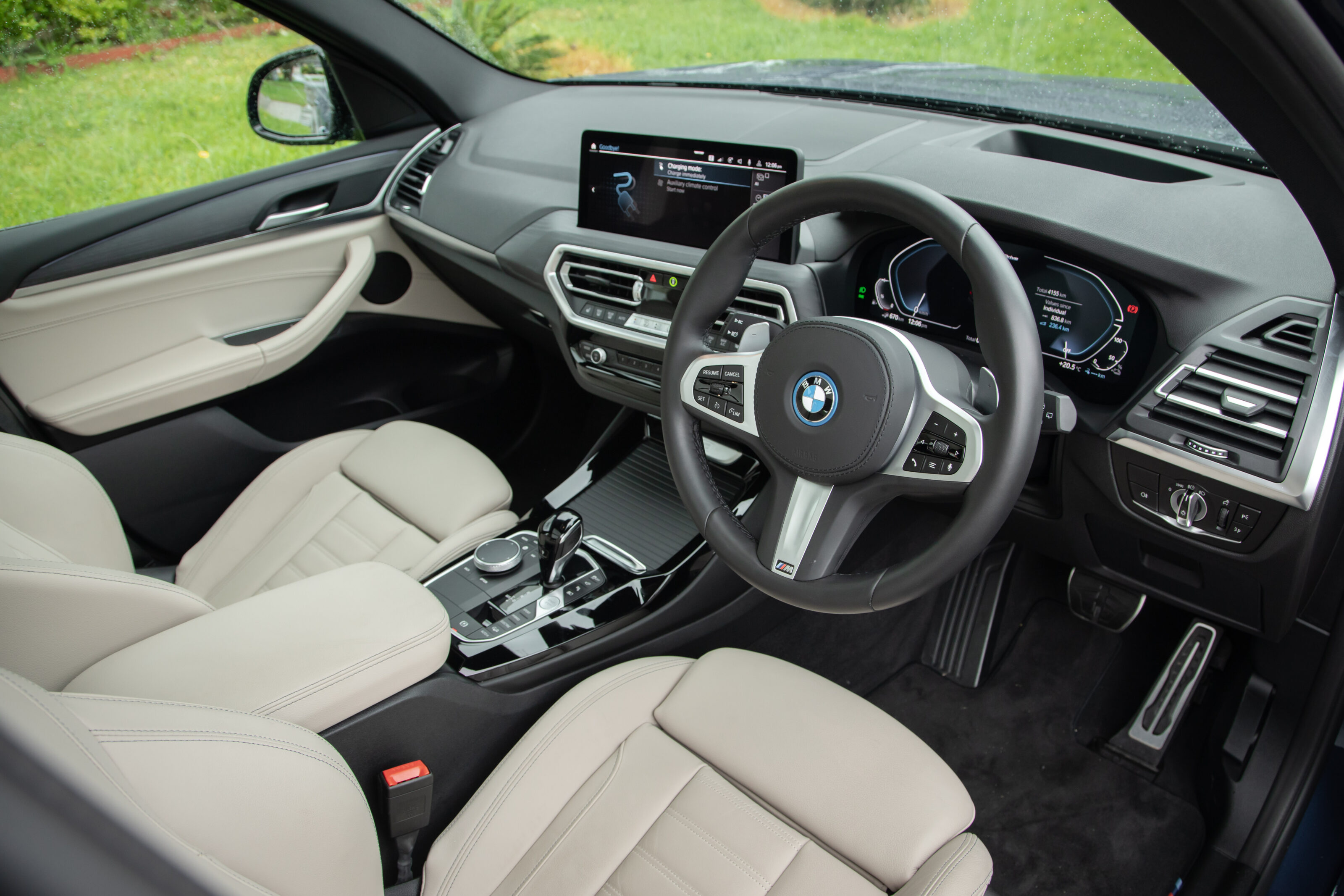
Both have terrific head-up displays and you can charge devices wirelessly in the Lexus as well as via one USB-A and one USB-C in the centre stack. The BMW treats you to the same but the A plug is at the base of the centre stack and the C hidden in the console bin.
The wireless charger in the Lexus is on a spring-loaded tray that slides into the dash to reveal a hidden storage area and it reminded me of that bit in Thunderbirds where the pool slides away to make way for Thunderbird 1.
Debuting in the Lexus is the new Tazuna cockpit. With the huge 14.0-inch display on the central screen, you get a massive sat-nav display as well as either Android Auto or Apple CarPlay (both via USB).
The system is a huge step from previous Lexus systems and the company has finally abandoned both the stupid clicker device and the even stupider touchpad that has driven me – and I’m sure many owners – nuts for years.

The screen is bright, useable and doesn’t have everything crammed into it, which is nice, especially with the climate controls being Range Rover style dials with little screens in the centre to show the chosen temperature. The fan control is an annoying soft switch slider, so you can’t have everything but another win comes in the form of a physical volume dial.
Weirdly, there’s no home screen, so sometimes it’s a bit baffling how you switch between the functions, which are instead stacked along the right-hand edge of the display.
To go from the built-in sat-nav, you have to tap the music icon, select a source and then get Apple CarPlay/Android Auto or whatever else you might want (say, DAB+) and what I’m saying is, it could be smoother. It’s good now, though, compared to the old system that was pretty but hard to use.
Tazuna also helps declutter the steering wheel. On the spokes, you’ll find a four-way pad and a menu in the impressive head-up display
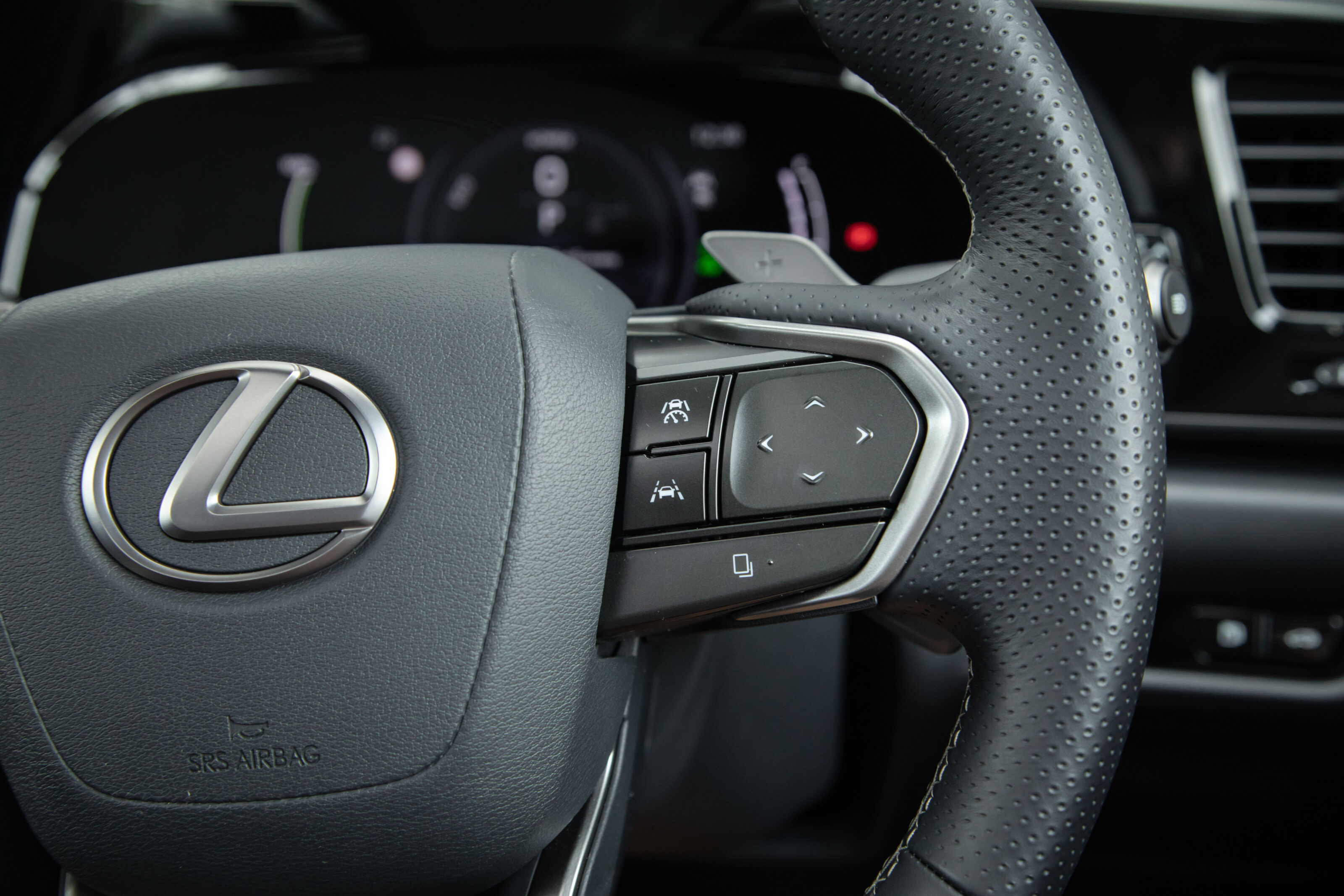
Tazuna also helps declutter the steering wheel. On the left and right spokes, you’ll find a four-way pad and when you activate the pad by touching it, a menu pops up in the impressive head-up display. It’s quite easy to use once you know what you’re doing and renders the 8.0-inch dash display almost irrelevant.
BMW’s OS7 continues to be excellent in the 12.3-inch touchscreen. Again, there are plenty of physical controls for the stuff you want to be able to use with muscle memory and not have to work your way through menus and the iDrive OS is as good as LiveCockpit, with some nice connected features like weather and traffic conditions.
The wireless CarPlay is a bit finicky but works really well when it works while the Lexus’ USB connectivity was also a bit fussy.

The NX’s boot will swallow 520 litres (45 up on the old car) and the space is no different to the non-hybrid versions. Dropping the rear seats doubles the available space and provides a nice flat floor.
Starting with a smaller 450 litres, the X3’s boot takes the lead with overall seats-down space at 1500 litres. Annoyingly, the X3’s boot has a fairly large step, which means the loading lip isn’t flat. It’s dressed in a nice looking metallic panel that may not take too well to the bashing and crashing of loading and unloading.
The iX3 manages a flat floor and you can put both cables beneath the floor, whereas the 30e only has room for one.
Charging and Battery
The NX sports an 18kWh lithium-ion battery and with the supplied 7kW charger you’ll be back to full in less than three hours. Without the wallbox it takes considerably longer at around nine hours. Sadly, you won’t charge faster than 7kW anywhere because that’s as good as it gets.
Both cars allow you to charge with the engine, the Lexus charging at 6.6kW. Obviously, you’ll be using more petrol to do that but if you’re bombing along the highway the difference won’t be significant and that’s when the EV motor is used less anyway.
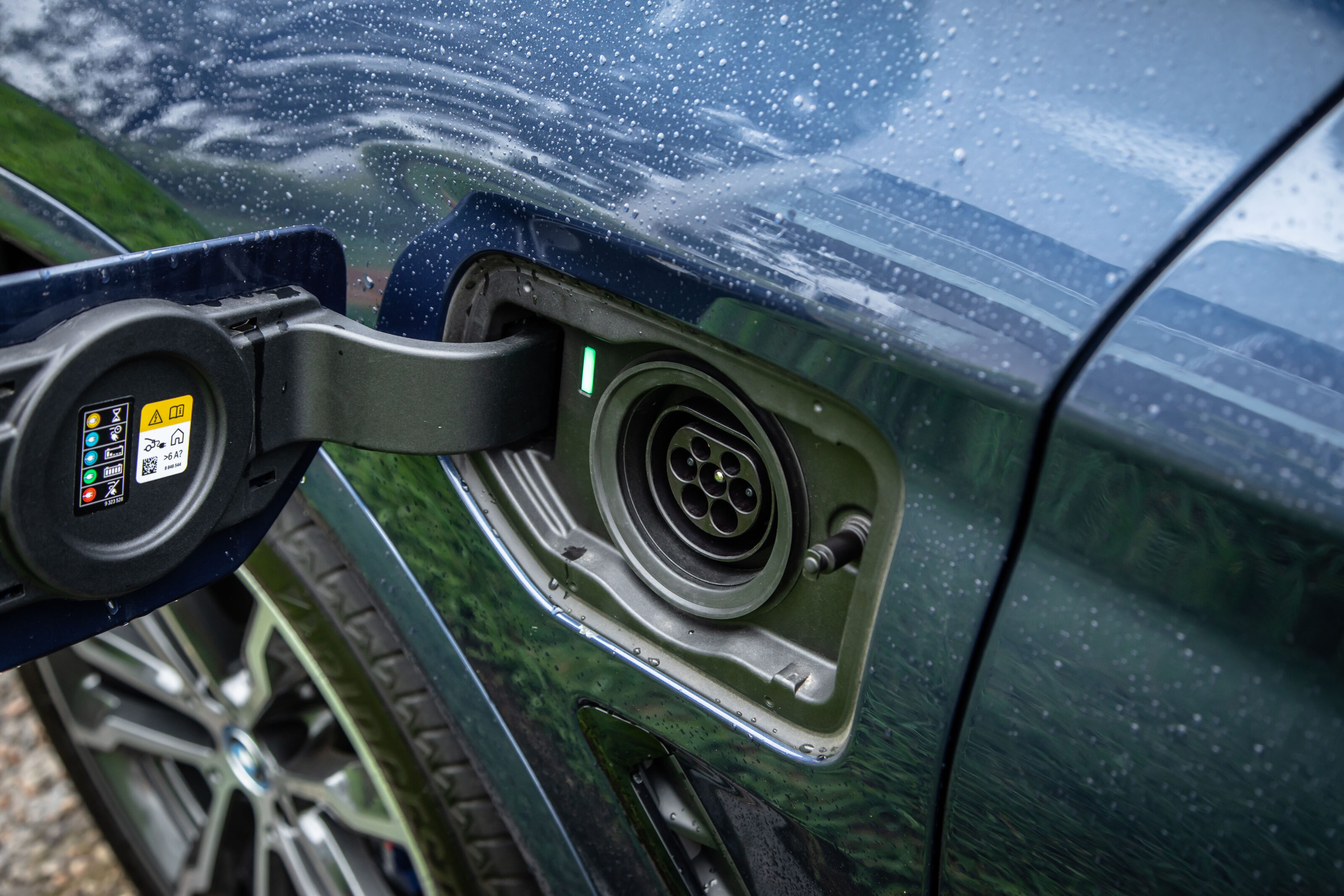
The NX’s charge port is on the rear right-hand side.

BMW’s lithium-ion battery is rather smaller at 11.15kWh. There is a wallbox that gives you an even less impressive 3.7kW charging speed and you’ll take nearly four hours to fill the battery bars. Maximum charging is like the Lexus at 7kW, so fast charging isn’t a thing.
The X3’s charge port is on the front left-hand guard in front of the passenger door.
This is kind of where the PHEV proposition falls down. You have to be really disciplined with your charging, there’s no room for “I’ll do it later” because the daily grind sees you out electrons, or close to. I wonder how much research by car companies indicates how rarely people charge their PHEVs. It might be skewed right now by high petrol prices, but I do wonder.
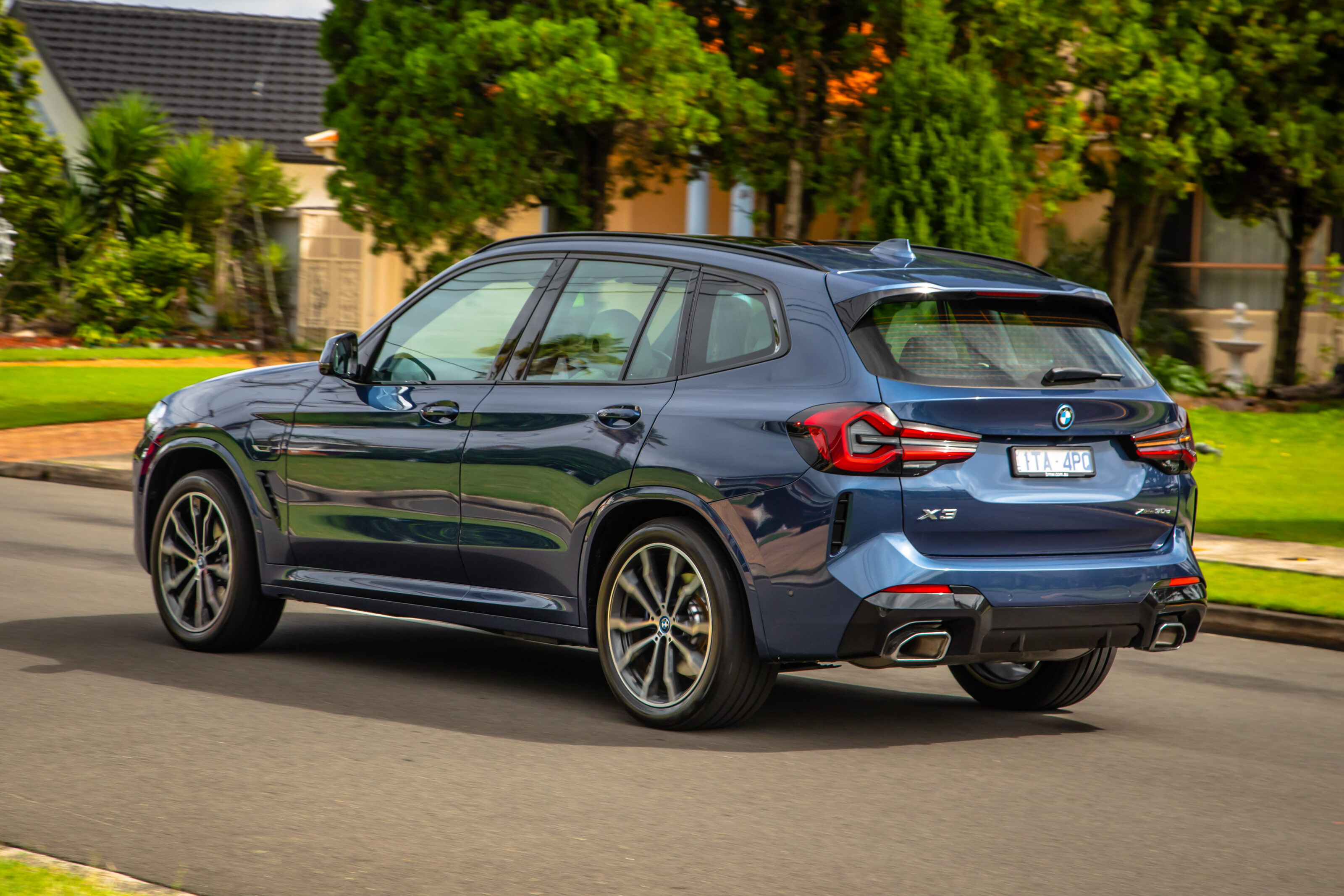
Again, if you’re looking at the 30e, it’s ten grand more to get into an all-electric iX3 that comes with a five-year Chargefox subscription and cheaper servicing so unless you’re doing really long trips, the 30e doesn’t look like a great idea. All you lose is all-wheel drive.
The Lexus might have more stuff than a Volvo XC40 Pure Electric Recharge or a fully-loaded Polestar 2 dual motor, but it’s more expensive to buy than either of them.
So if you’re looking for a PHEV to save money (yes, I know, if you’re spending this kind of cash on a car, it’s probably not the biggest issue), the total cost of ownership is suspect. In the NX’s case, a 350h looks like a smarter buy if you’re not going to be super-disciplined about charging.
On the Road
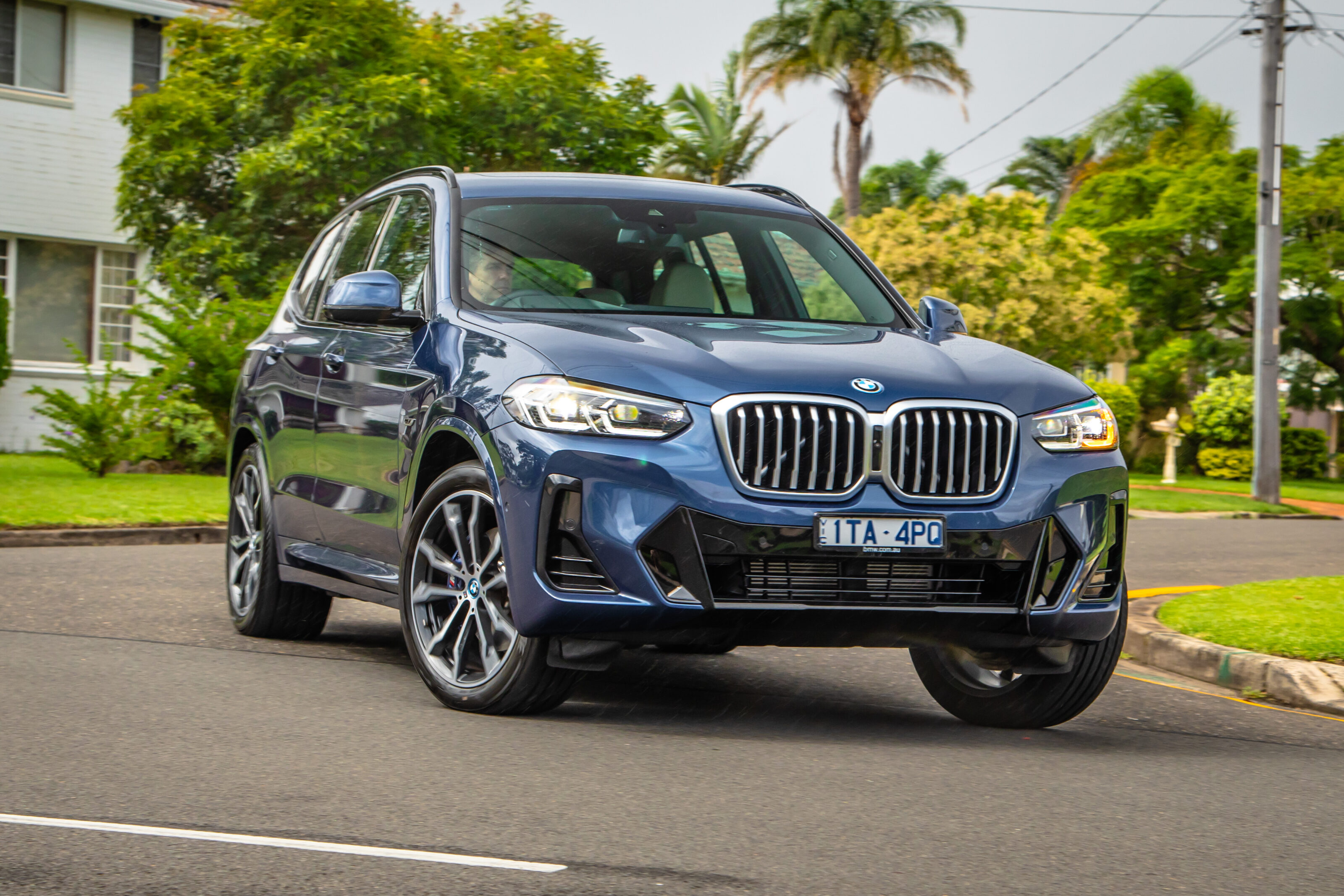
While these two have quite different powertrains, they’re both able to do roughly the same things with their hybrid systems. They will tootle around on EV power until you run the battery down to a certain level and then switch to hybrid operation with just the addition of a distant engine note.
You can force them to drain the battery using EV power, let the car decide or switch to modes that use the electricity and hydrocarbons together for a bit of faster fun.
BMW’s cringey name for that is XtraBoost. Not even joking.
Lexus and parent company Toyota have been doing hybrids for two decades, so you’d expect excellence on that front. And you get it. The Lexus is a very smooth machine, while still delivering a similar off-the-line punch to the turbocharged BMW.

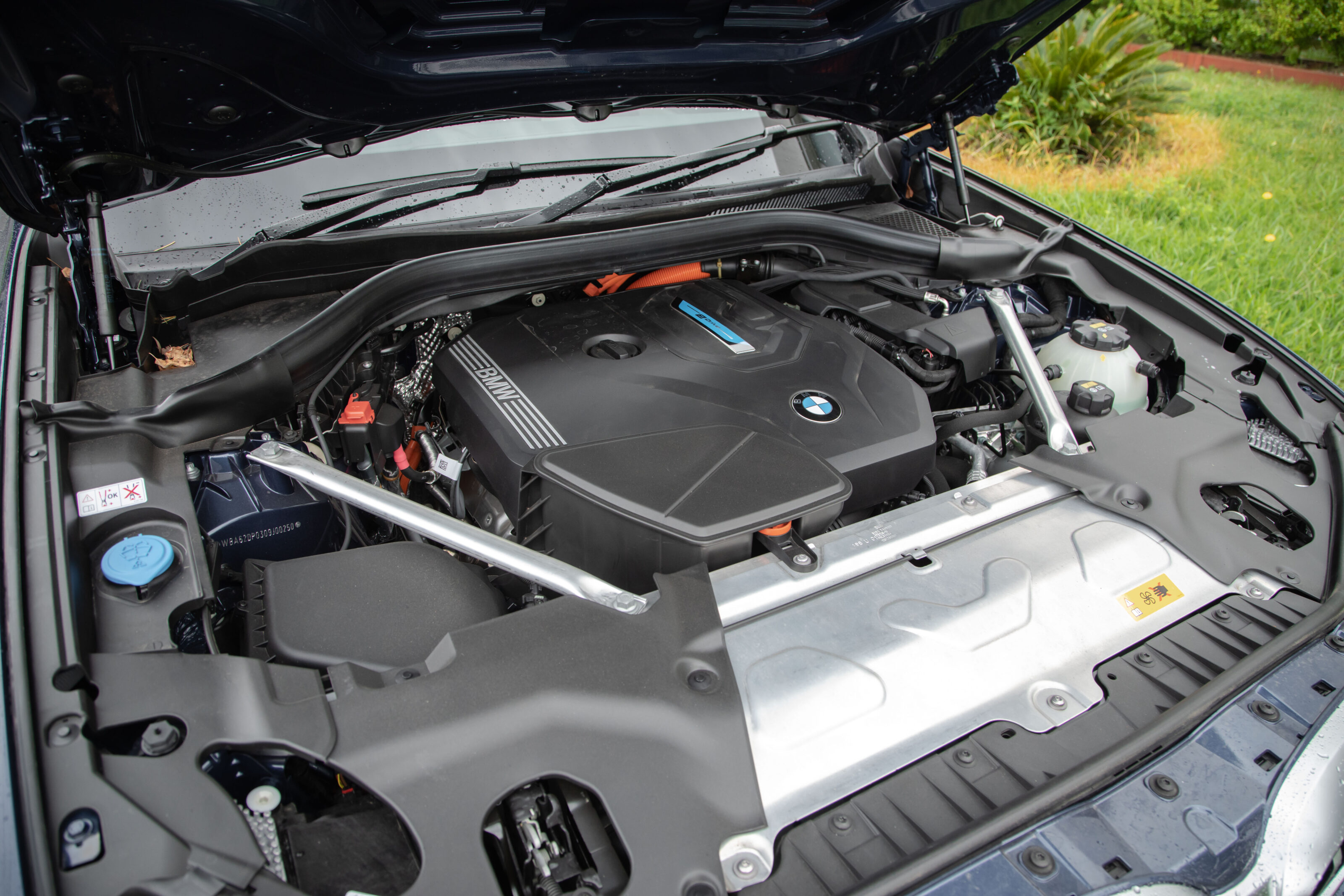
In the NX you have two electric motors to the BMW’s one but that doesn’t really deliver the kind of advantage you might think. With 134kW and 270Nm at the front and 40kW/121Nm at the rear, you’d expect an appreciable difference.
The Lexus probably moves along more smartly in EV mode and takes longer to activate the ICE engine, but where you’re using the electric motivation probably doesn’t make a long-term difference.
You will notice the extra battery capacity, though, the Lexus shipping with 18kW and the BMW 11kW, so the Lexus’ EV range is longer by about 20km in the real world.
Despite having a bigger EV range, the Lexus delivered 7.0L/100km. The X3 went back to BMW with a 6.6L/100km average

The Japanese car’s two electric motors are paired with a 2.5-litre four-cylinder petrol that develops 136kW and just 227Nm. Adding the permanent synchronous electric motors brings the totals to 227kW and in true Toyota style, a combined torque figure of ‘we’re not telling’.
BMW takes a slightly different approach, sticking the X3 30i’s 2.0-litre turbo and eight-speed automatic with a single 80kW/265Nm motor. That torque figure is higher than the combined EV torque of the NX, which explains why the two are so close on performance.
The ICE delivers 135kW and 300Nm. Combined power comes out at 215kW and torque 420Nm (for reference, the 30i ships with 185kW and 350Nm, the iX3 210kW and 400Nm).
Despite the two only being separated by fifty or so kilos, the Lexus feels heavier, with a greater focus on ride comfort than the BMW. Where the X3’s body is kept well in check and the front end has a more positive feel, the Lexus is a little lazier on the change of direction.
They both run on Bridgestone Atenza rubber, so it’s definitely down to the two different brand philosophies rather than any specific part of the car.
BMW probably has the edge on overall responsiveness. In EV mode they’re almost impossible to split and in suburban running with the cars in low battery/hybrid mode, they’re also fairly close. But when you’re wanting a bit more, the X3 has the edge with the excellent eight-speed ZF doing the shifting and a more rear-biased feel in the corners.
You don’t get that CVT engine flaring either and despite both of them being pretty quiet, the BMW’s engine sounds better.
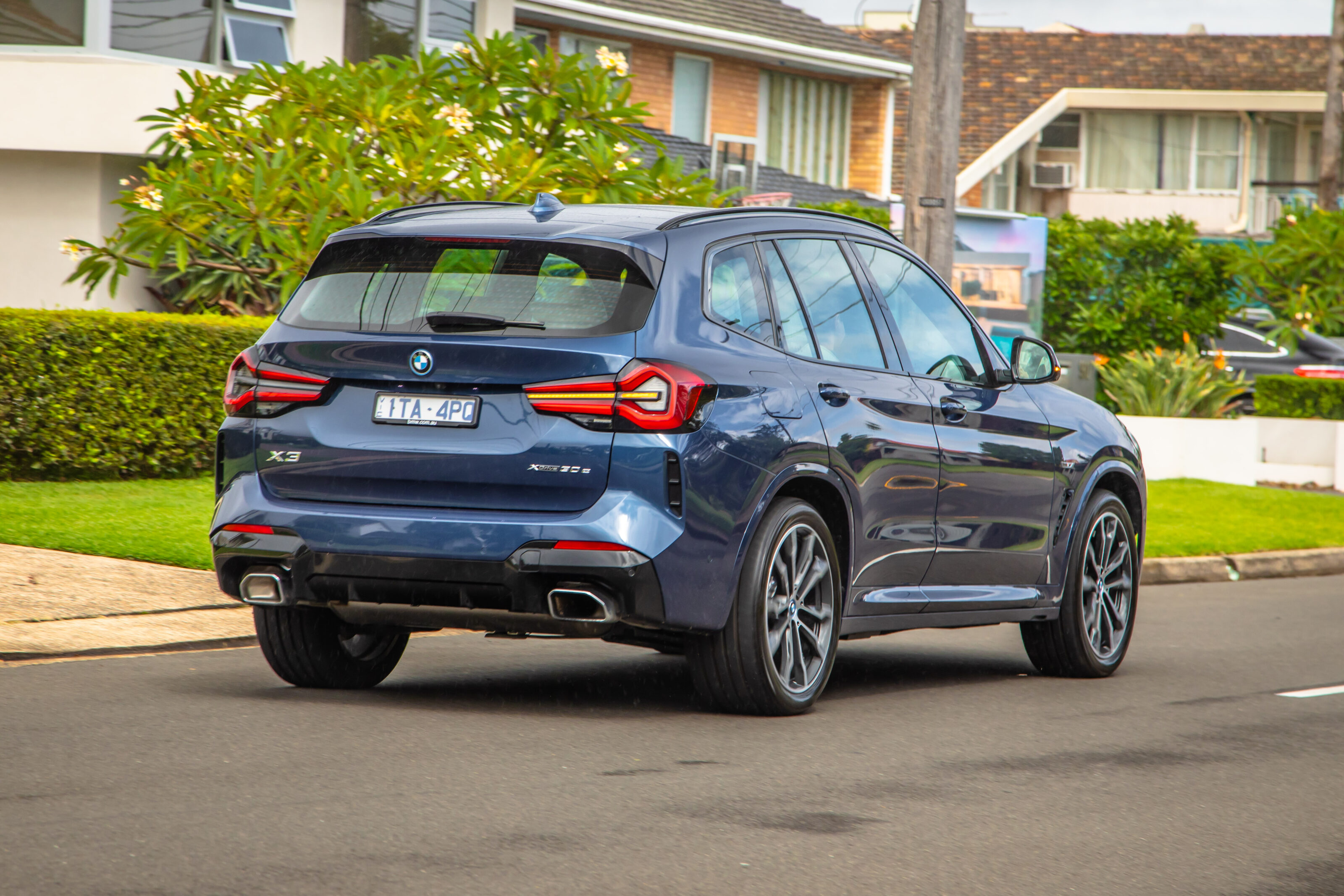
The X3 is more engaging to drive than the NX, with a tauter chassis through the corners no matter the chosen driving mode. The Lexus is very competent but doesn’t have that edge.
On the open road, the NX again has the edge with less road noise. Both of these cars are running on the same tyre, which isn’t the quietest of rubber, but the NX has less wind and other road noise for a quieter cabin.
Despite the two only being separated by fifty or so kilos, the Lexus feels heavier, with a greater focus on ride comfort than the BMW

The two were quite close on fuel consumption, although the BMW did manage to best the Lexus.
Despite having a bigger EV range (although nothing like the claimed 87km), the Lexus delivered 7.0L/100km on a mix of suburban and highway running.
The X3 went back to BMW with a 6.6L/100km average and pretty much nailed its claimed 42km of EV-only range.
Ownership

Lexus wallops the three-year, unlimited-kilometre warranty of the BMW with a five-year, unlimited-kilometre deal, making BMW look ever more isolated on its three-year perch. The BMW’s battery is also only warranted for six years or 100,000km, which is less than the big battery in the iX3.
Five years of servicing on the X3 can be prepaid at $2010 and while BMW says it’s condition-based, you’ll almost certainly be paying the dealer a visit once a year or at around 20,000km, give or take.
Along with two more years on the warranty clock, Lexus offers capped-price servicing, expecting you back every 12 months or 15,000km, with the first three services costing $495 each, so about the same as the BMW program but for two fewer years.
You get a loan car as part of the deal (or Lexus will come and fetch the car) and delivering a killer blow is the Lexus Encore Platinum program you get for three years. Usually, Platinum is reserved for rather more expensive Lexuses.
Platinum chucks in Lexus OnDemand where you can book a different Lexus four times for up to eight days per booking over the three years of the program and you grab the cars from some dealers and airports in both Australia and New Zealand.
You also get eight valet parking visits to Westfield and Chadstone shopping centres. I reckon that’s worth ninety grand just for someone to park your car for you in the run-up to Christmas.
On top of that, there are the usual track days, tedious (well, I think so) horse racing type activities and if you go to one of these events you’ll no doubt meet the usual coterie of celebrity chefs, retired sports stars and interior designers who act as brand ambassadors.
VERDICT

The BMW started this comparison with one wheel propped up against the wall. It costs a lot more than the Lexus without delivering a lot of extra features and falls down on warranty length. It is a sharper car to drive, though, which will convince a few folks. But given the yawning price gap between other BMWs and the Lexus itself, probably not too many.
I almost feel like the 30e is going to be a bit of an orphan, which is sad because it’s not a bad car, not by a long shot.
The Lexus is more affordable, has an overall better ownership proposition and did I mention it’s cheaper? They’re both good plug-in hybrids but I’ve come away thinking that while the Lexus is the proposition for the head, perhaps the head needs to look further afield if it wants more electrification in its motoring life.
SCORING
Lexus NX450h+ F Sport
VERDICT: 8.5/10
BMW X3 xDrive30e
VERDICT: 8.0/10
2022 BMW X3 30e and Lexus NX450h+ specifications
Nostalgia is a big part of Sandown International Motor Raceway’s story. Its significance in Australian motorsport is huge.
Its history, as the 161-lap lead into the Bathurst 1000, is rich. Yet, it’s often hard to speak emotively about Sandown when it comes to the actual track. Apart from a fast and descending left-hander at the end of the back straight, the 3.1km anticlockwise track is often deemed mundane compared to other Aussie circuits.
Our hired gun driver, Warren Luff, is here to tell you otherwise. Now it’s worth mentioning that Luffy has had a lot of success in Supercars at the Sandown 500. However, he assures us winning the event in 2012 (with Craig Lowndes) and 2016 (with Garth Tander) hasn’t given the Gold Coast local rose-tinted sunglasses.
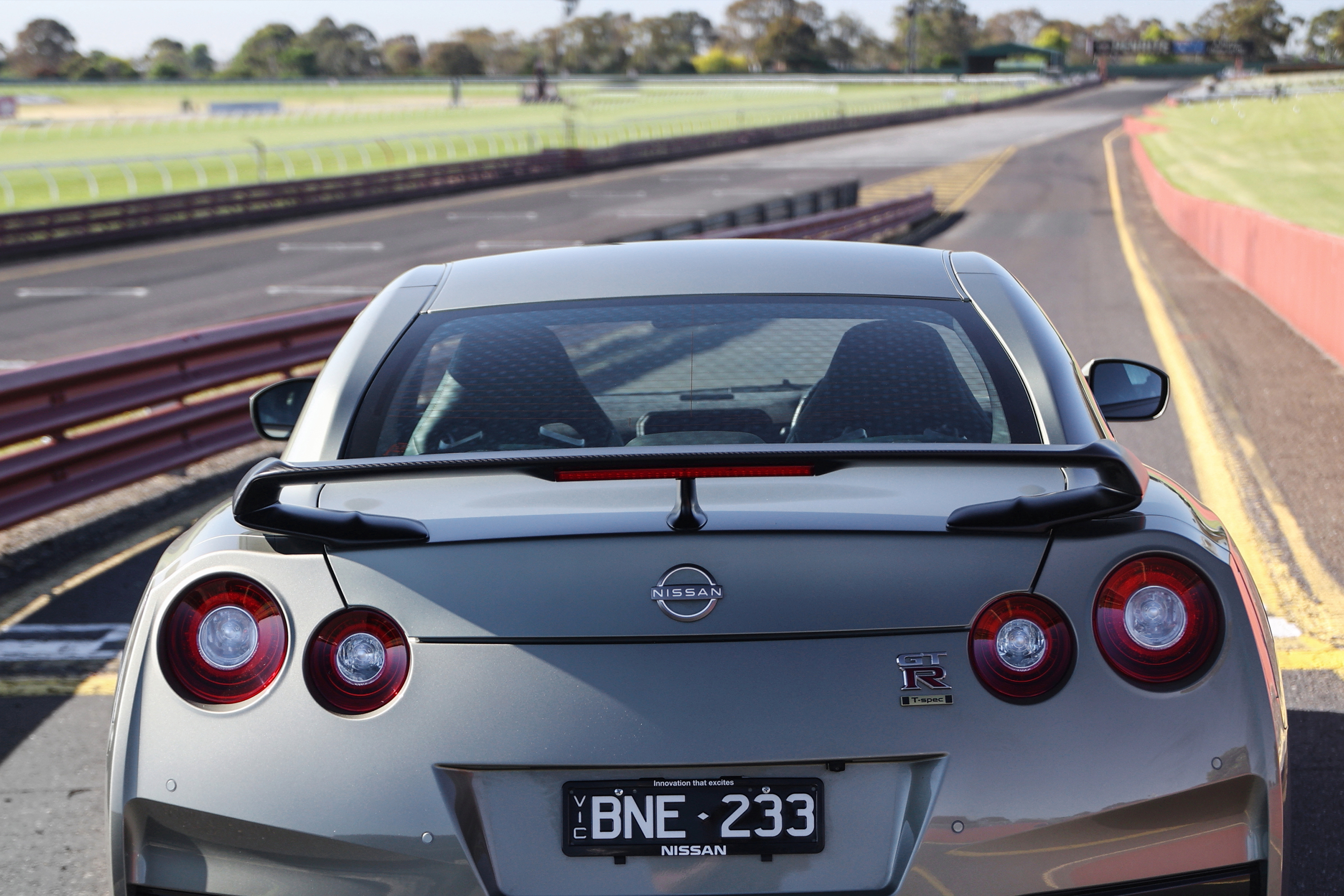
The facility is located in the suburb of Springvale in Melbourne, long before its positioning was considered to be close to the CBD (25km away). As a result of the urban sprawl, Sandown’s future is constantly under a cloud and it seems to be perpetually under a stay of execution.
While the horse racing section dates back to the 19th century, the tarmac track opened in 1962 and the venue held its first Australian Touring Car Championship event in 1965. Norm Beechey’s result here is significant. Not only did he win by a lap (in a 40-lap race), but it was the first global victory for the Ford Mustang in motor racing.
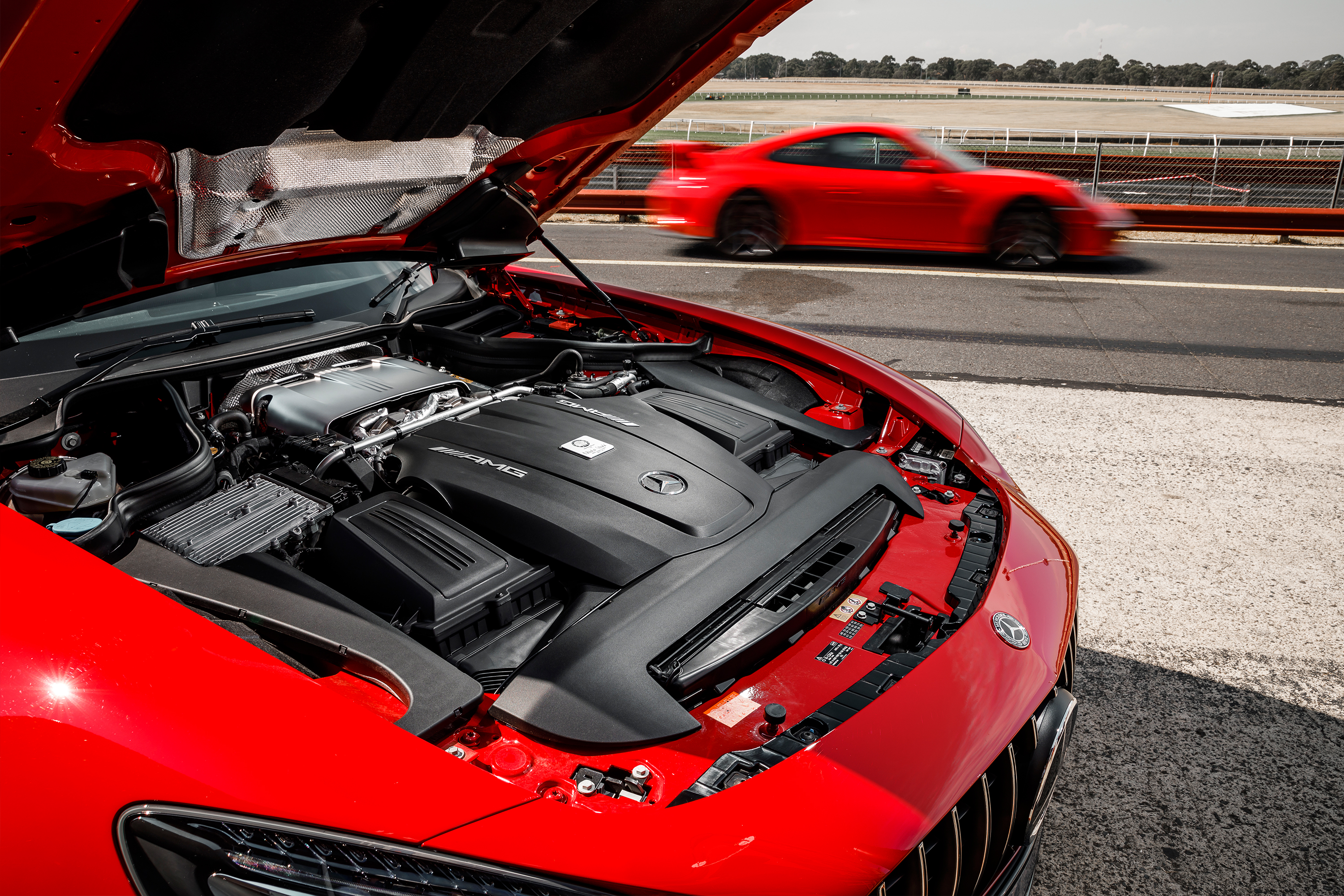
It’s ironic that the track encapsulating a horse-racing track would be so dependent on horsepower – just of a different kind. Here’s how to get the best out of Sandown.
Section One: Coming in Hot
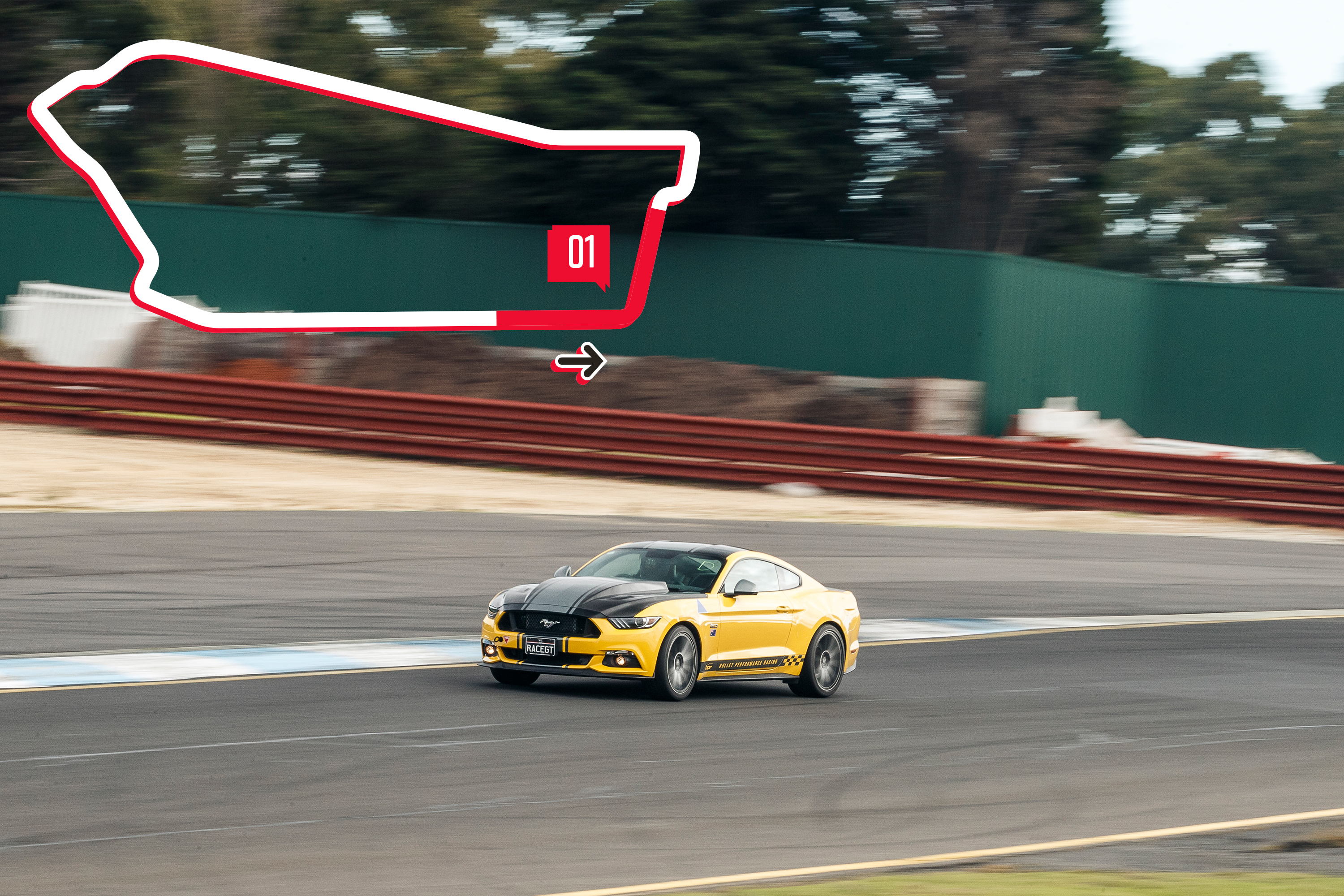
Turn One
The approach into Turn One is at quite high speed and the braking zone is noticeably bumpy, making things tricky.
Finding an appropriate braking mark is important given the varied surface changes. It’s worth noting that it’s an even tougher task in the wet.
Be careful with your downchanges as it’s easy to unsettle the car. Third gear is usually appropriate. It’s important to keep the nose loaded by trailing the brake most of the way to the apex, while keeping in mind that it’s a low-grip surface and easy to understeer off on exit.
The apex is just after the middle of the corner and you can be quite assertive in hustling the car there before smoothly transitioning back on the throttle. If you find you’re running out of road on exit, leave your turn-in a bit later and be more aggressive getting to the apex. There is loads of paved run-off.
MOTOR Tip
Always check your left mirror before turning in to check for other cars. Even on track days, it’s a good place to overtake slower cars in a safe way. However, the further you go to the left the worse the bumps are, so keep that in mind as it’s much harder to pull up. Be very careful.
Section Two: The Technical Bit
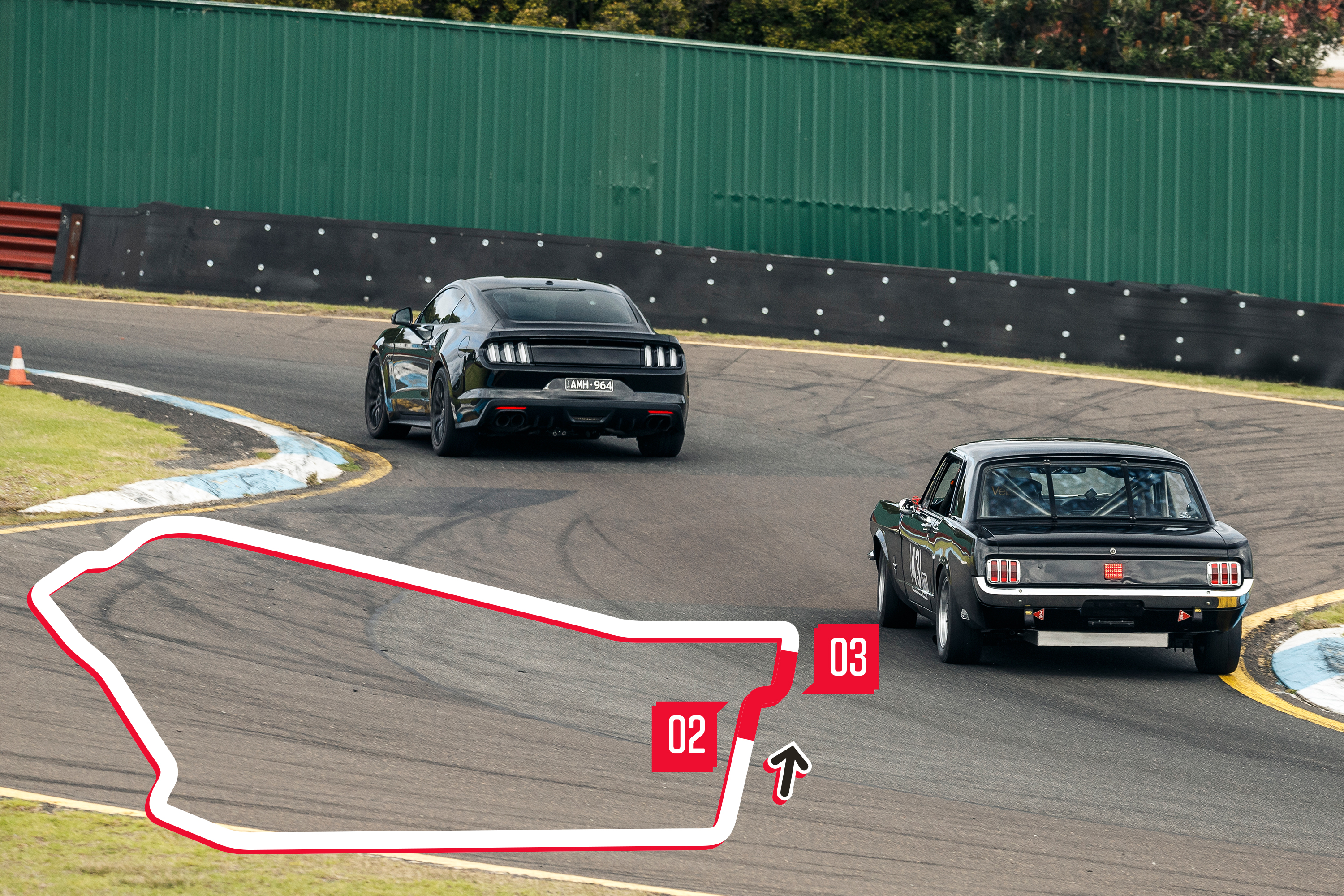
Turns Two and Three
Depending on your run out of Turn One you may need to grab a higher gear briefly before you brake. Be careful not to hit the hard cut/limiter.
You need to pay attention as to not stab at the brakes here and unsettle the rear on the way into the corner. Ideally you brake across towards the apex of Two, but it makes it easy to lose the rear.
Avoid turning too early because this will push you across to Three and make it tighter than it needs to be – or push you up onto the kerb. Through here you’ll want to use as little of the kerb as possible. They are very aggressive and will unsettle your car.
MOTOR Tip
Don’t think you’re in a Supercar or Porsche Carrera Cup Car and can smash the kerbs – because in a road car, you can’t. A road car isn’t going to have the durability to cope with the impact and it will also unsettle the balance too much. The best plan is to at most kiss the kerb’s base at Two and Three.
Section Three: Patience
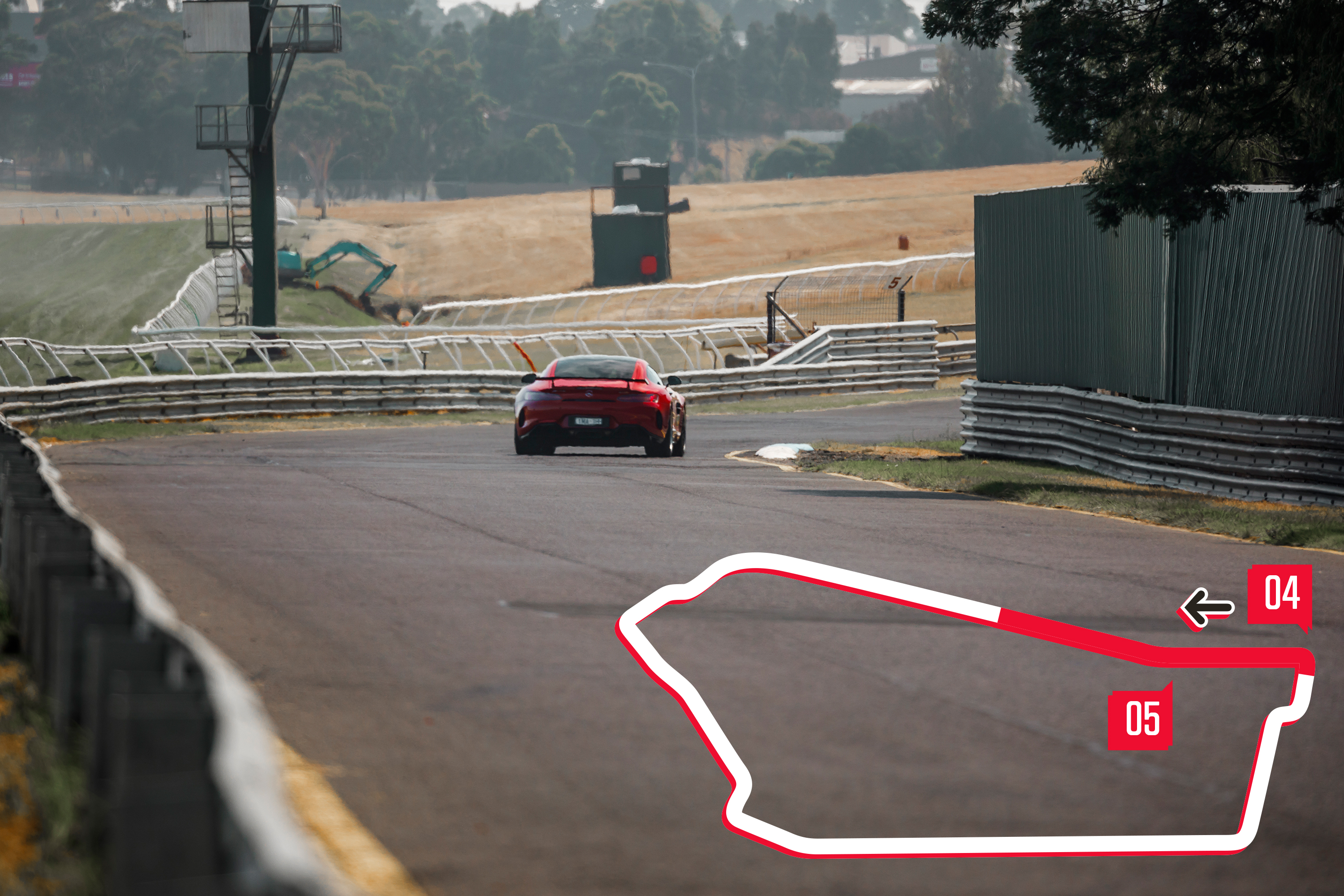
Turn Four
Making sure you achieve peak top speed down the back straight starts here. And there is now more mid-corner grip than ever with fresher tarmac. On face value it’s a relatively simple 90-degree, second-gear corner, but it is a critical section to get right for your overall lap time.
The key is to not get too excited and rush the entry and understeer wide out onto the exit kerb. It’s important to let the car rotate through the midpoint of Turn Four before seeing how quickly you can return to full throttle. Be patient so you don’t light up the tyres (front or rear) and waste valuable momentum.
Turn Five
This mild kink will be flat in all road cars, but look for standing water in the wet.
MOTOR Tip
A front-wheel-drive car is a lot fun through corners One to Four and you can dance the back end of the car around a bit. In a rear-drive car, you can use the throttle to turn the car and balance before powering out.
Section Four: Commitment
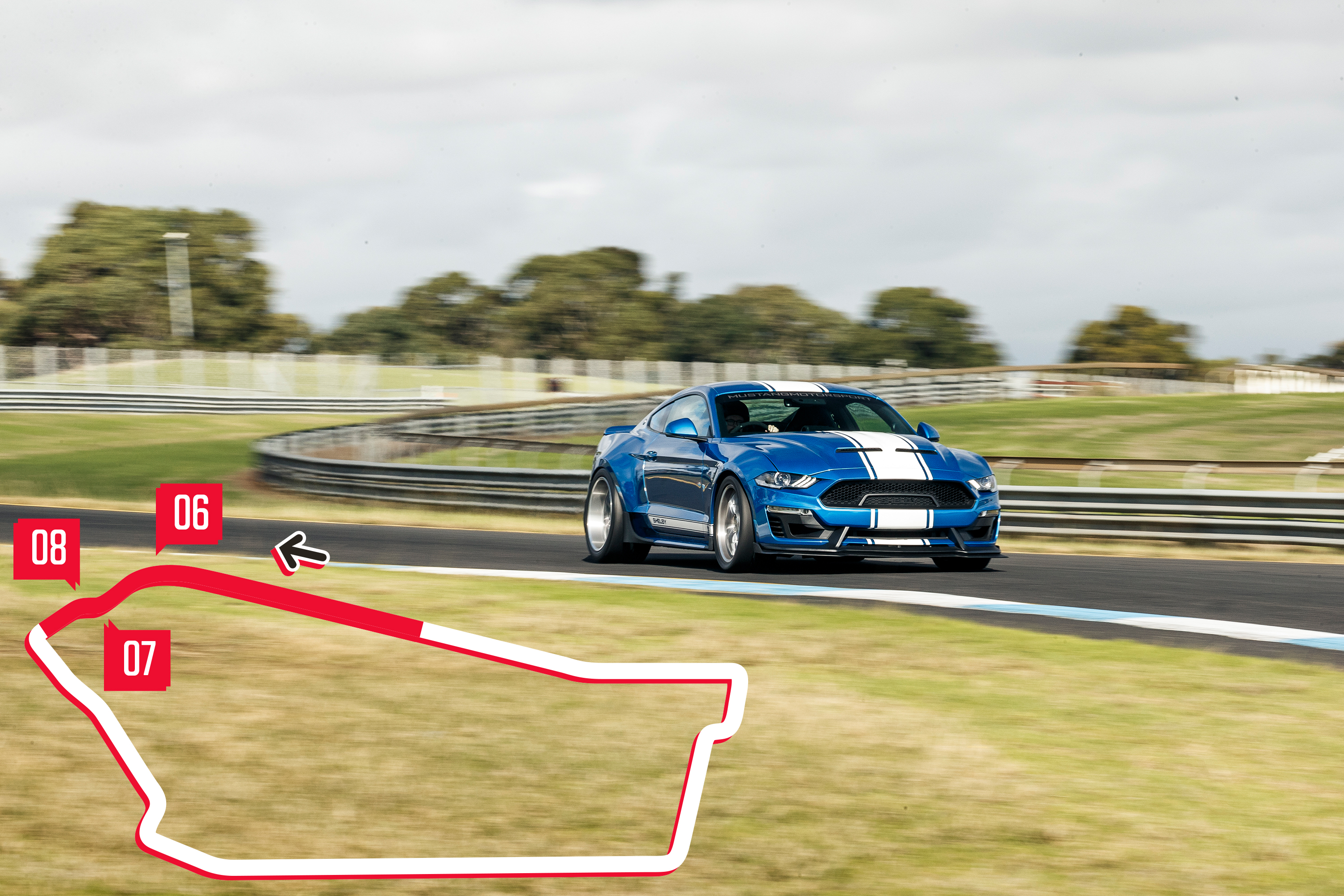
Turns Six, Seven and Eight
Turn Six is the most satisfying corner at Sandown. And it’s also a section you definitely don’t want to get wrong – even with the new run-off tarmac introduced for safety.
Reaching top gear coming over the crest will be likely in most cars before applying reasonable brake pressure and slotting down a gear on entry.
Balancing the weight on the outside front to keep it loaded is key as the car will naturally want to understeer. Keep in mind you can get a big head wind or tail wind which will affect not only your braking, but also the balance of the car on turn in.
As you come through Turn Six you want to line up the Turn Seven kerb and drive over it – depending on the compliance of the car you’re in. Ideally you should be going straight over it.
Be careful if you understeer through Six as the right-hand side of the car will still be loaded up for the Turn Seven kerb. You should be back on the throttle just past the Turn Six apex and then over the kerb at Seven.
Eight isn’t really a corner, but a slight kink on the way down to Nine. However, the kerb on the inside can be used as a brake marker once the car settles past Seven.
MOTOR Tip
The saw-tooth kerb on the inside is something that you can use but you need to be careful about brake knock off when you arrive at Turn Nine. It’s more common in race cars, but can happen with serious production cars, too. It means that as the tyre is going over the kerb the vibrations push the pistons back in the calipers. When you go to brake next the pedal will feel soft.
Section Five: Use the Kerb
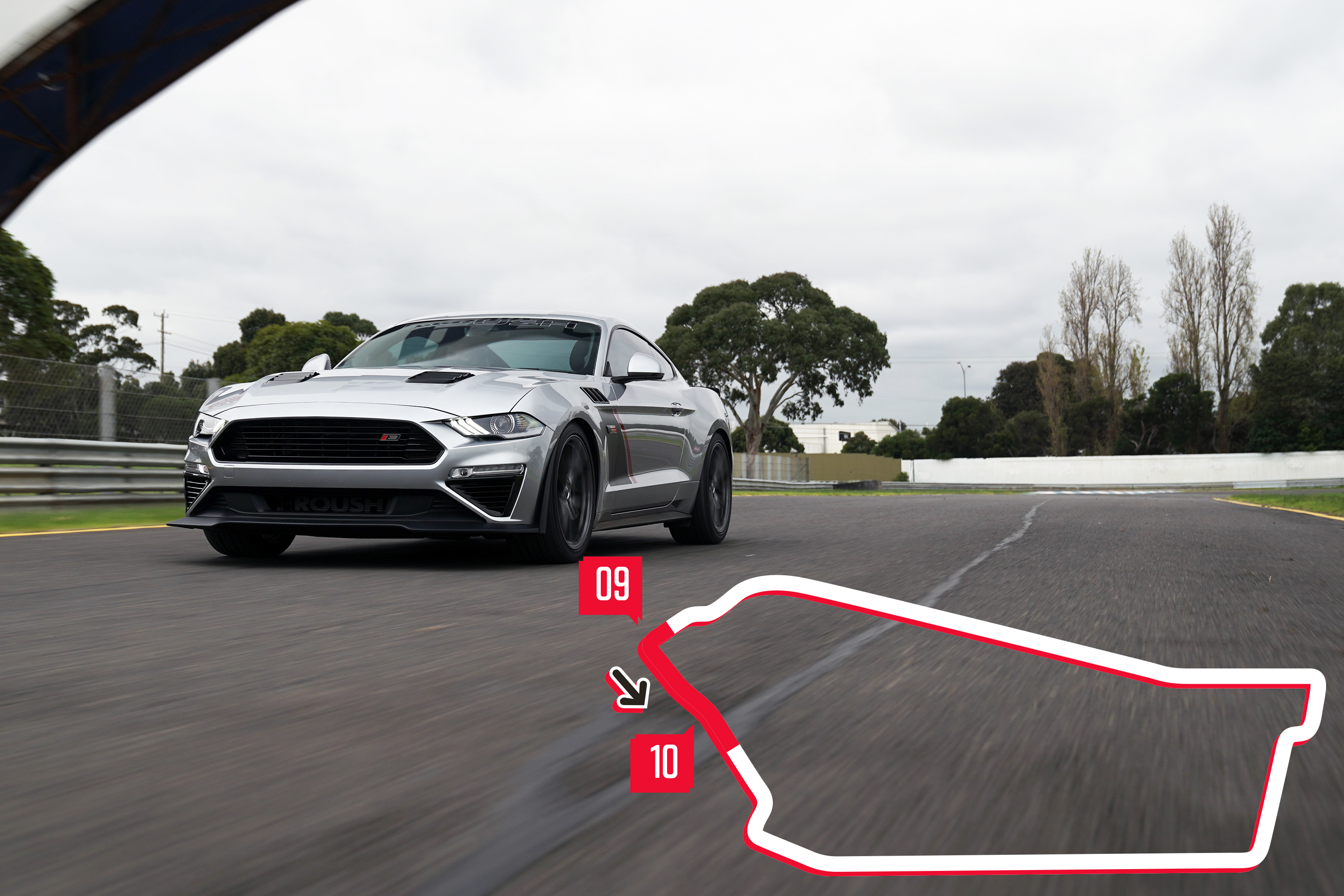
Turns Nine and 10
It’s a very easy corner to become too greedy under brakes and go in way too hot. Doing so results in an easy lock (cars without ABS) or understeering wide.
Be conscious to keep the car as stable as possible, however, you actually brake coming across the track to the outside of the entry to Turn Nine after clearing Eight.
You won’t get the car parallel with the outside kerb prior to braking. It’s been resurfaced in the recent past so the mid-corner speed is now higher. You can also use the inside kerb as it helps shift the weight to the outside rear of the car.
Turn in early to get to the apex. Focusing on power down on exit is important as it’ll impact your run to the final section. Turn 10 is a mild kink and doesn’t require much input on the run down to Turn 11 and 12.
MOTOR Tip
The general rule at Sandown in a production car, especially at corner apex, is to stay off the kerbs. However, turn Nine is the big exception to that rule given the surface changes and the raising of the bitumen level, which has essentially lowered the kerb.
Getting across it nicely will aid lap times. However, some track events/days might use a cone or a tyre bundle there.
Section Six: The Run Home
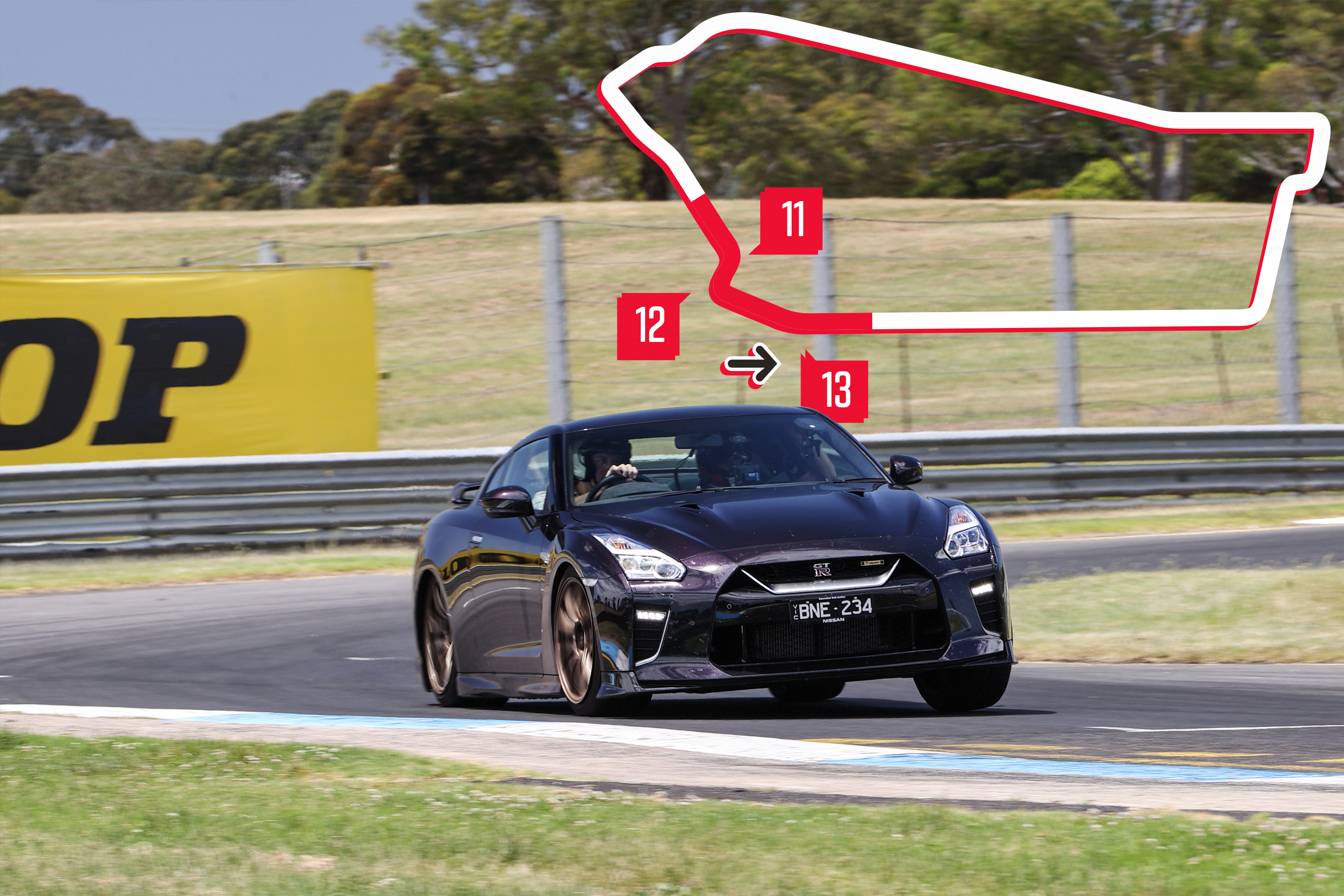
Turns 11 and 12
In most cars it’ll be a third- or fourth-gear approach before braking very late and trailing the pedal a long way into the apex. The reason you want to brake as late as possible and square it off is to keep the car as much to the right on exit as possible to aid your entry into 12.
This also sets up your run onto the long front straight. Provided you get Turn 11 right, 12 is a lighter brake application before getting on the power early.
Use the entire exit kerb, which then becomes the pit-lane entry. So, be careful that the person in front of you isn’t peeling off as you prepare to charge down the front straight.
MOTOR Tip
Sandown is often underestimated as a technical challenge and can be viewed as a simply a series of 90-degree corners. It isn’t, and it really punishes you for small mistakes.
Turns 12 and Four are very important to get right, especially on corner exit, because they lead onto the longest straights. There’s no two ways about it, Sandown is a power circuit, so getting the grunt to translate to the track is very important for lap time.
Sandown Raceway makes the world stage
A top-class facility right on the CBD’s door step – enjoy it while it lasts!
Sandown raceway hasn’t always been the same layout it is today. In fact, it started out as a much more free-flowing course from 1962 to 1984 despite covering the same 3.1km distance, with Peter Brock holding the lap record of 1:10.8. However, that all changed in 1984.
With an ambition to hold international championships, the track was extended (cutting out the current Turn Six roller coaster) with a technical in-field section.
The track was increased to 3.9km to meet FIA track length regulations. The Australian Touring Car Championship ran this configuration, but the desired World Sportscar Championship arrived in 1984 and 1988 – the only times the category has raced in Australia. The lap record is held by Jean-Louis Schlesser, setting a time of 1:33.58 in a Sauber Mercedes C9. The pits was also moved to its current position on the front straight.
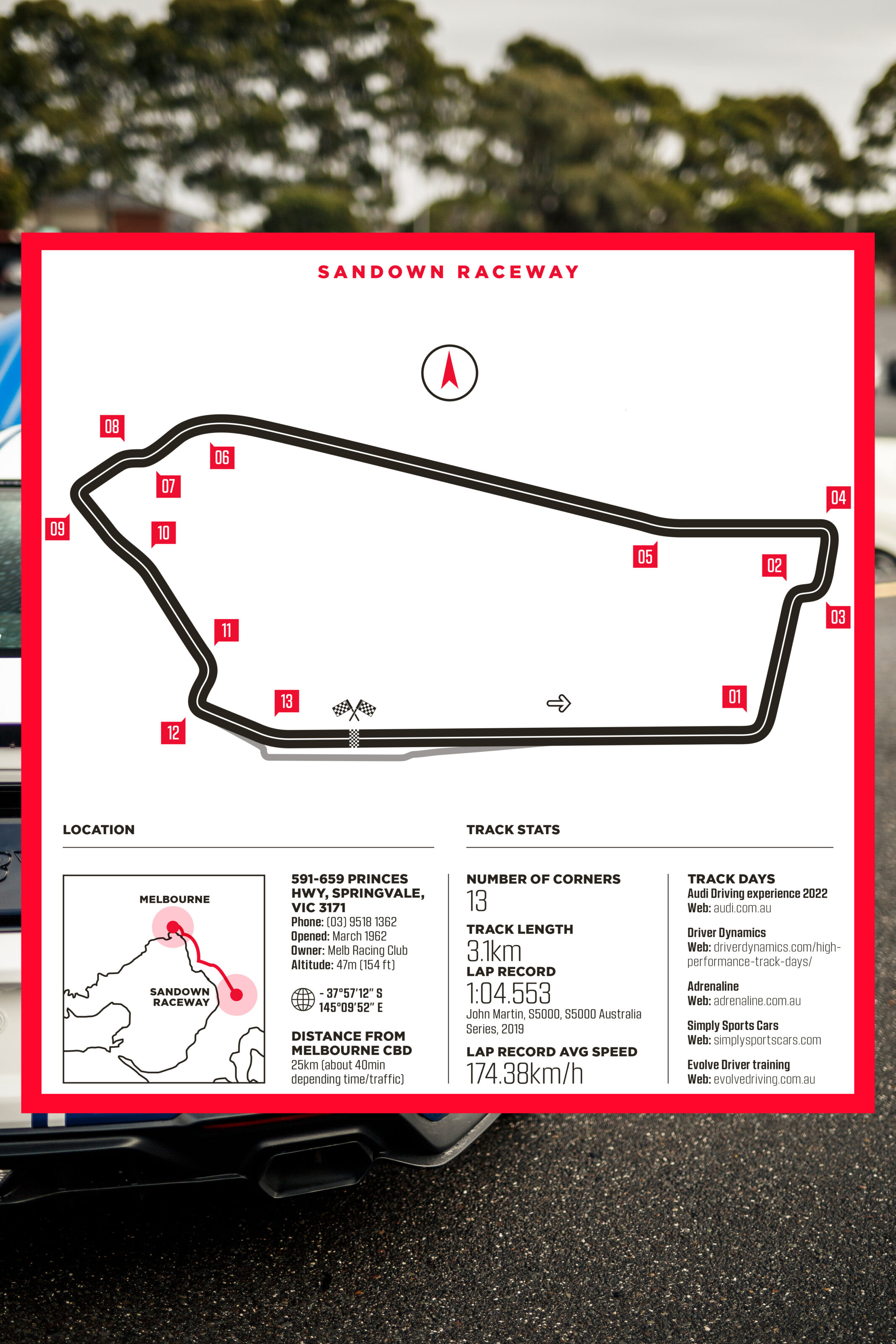
From the end of 1988 onwards the current 13-turn track has been used, with the lap record of 1:04.55 being held by John Martin in an S5000.
For something a little more realistic, the Production Car class clocks 1:20.62 with a Mitsubishi Lancer Evo X claiming that time. Sandown is also extensively used for driver training, not just racing.
The massive grand stand along the front straight is iconic and a popular viewing spot. So is the hill at Turn Six, with various other park-and-view areas.
Parking options are available, but public transport is preferable with train stations nearby. Otherwise, using Dandenong Road is the best option to drive there.
