
One of the most compelling things about the small but mighty Toyota GR Yaris is the narrative behind it and its much-publicised WRC connection.
Although its competition counterpart’s racing program was cancelled before it ever came to life, to Toyota’s credit, they rolled on with bringing its road-going special – the GR Yaris – to the market.
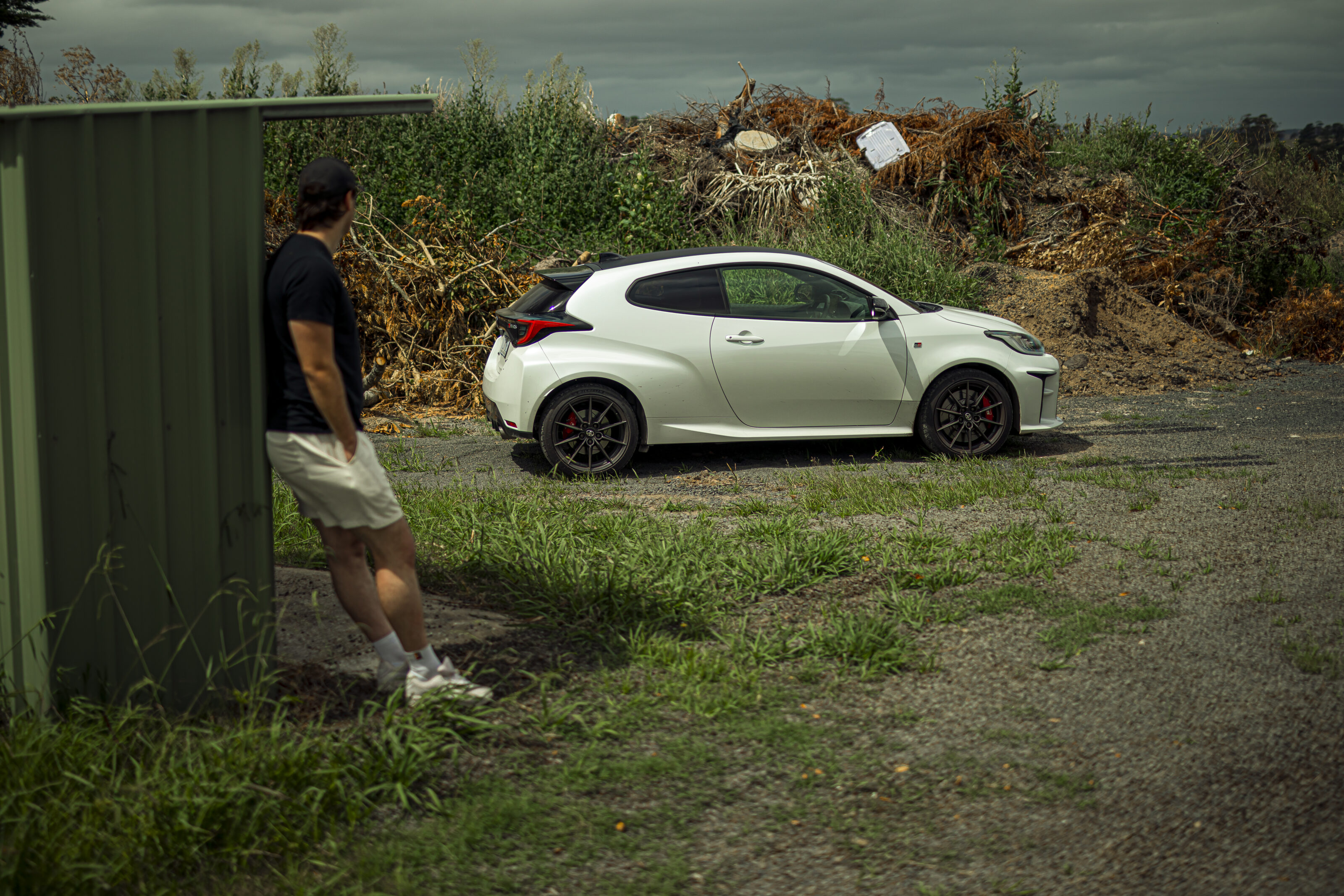
As a result, the GR Yaris feels bespoke in a way that eludes virtually all other mass-produced competitors in our sub-$100k Sports Car of the Year field. Perhaps it’s only the Mustang Mach 1, and its transformative upgrades, that can compare.
Unlike the Mustang, however, the GR Yaris’ upgrades over its mainstream counterpart are far from a simple bolt-on affair. In fact, Toyota had to splice together a whole new platform to cater for its all-wheel drive system.
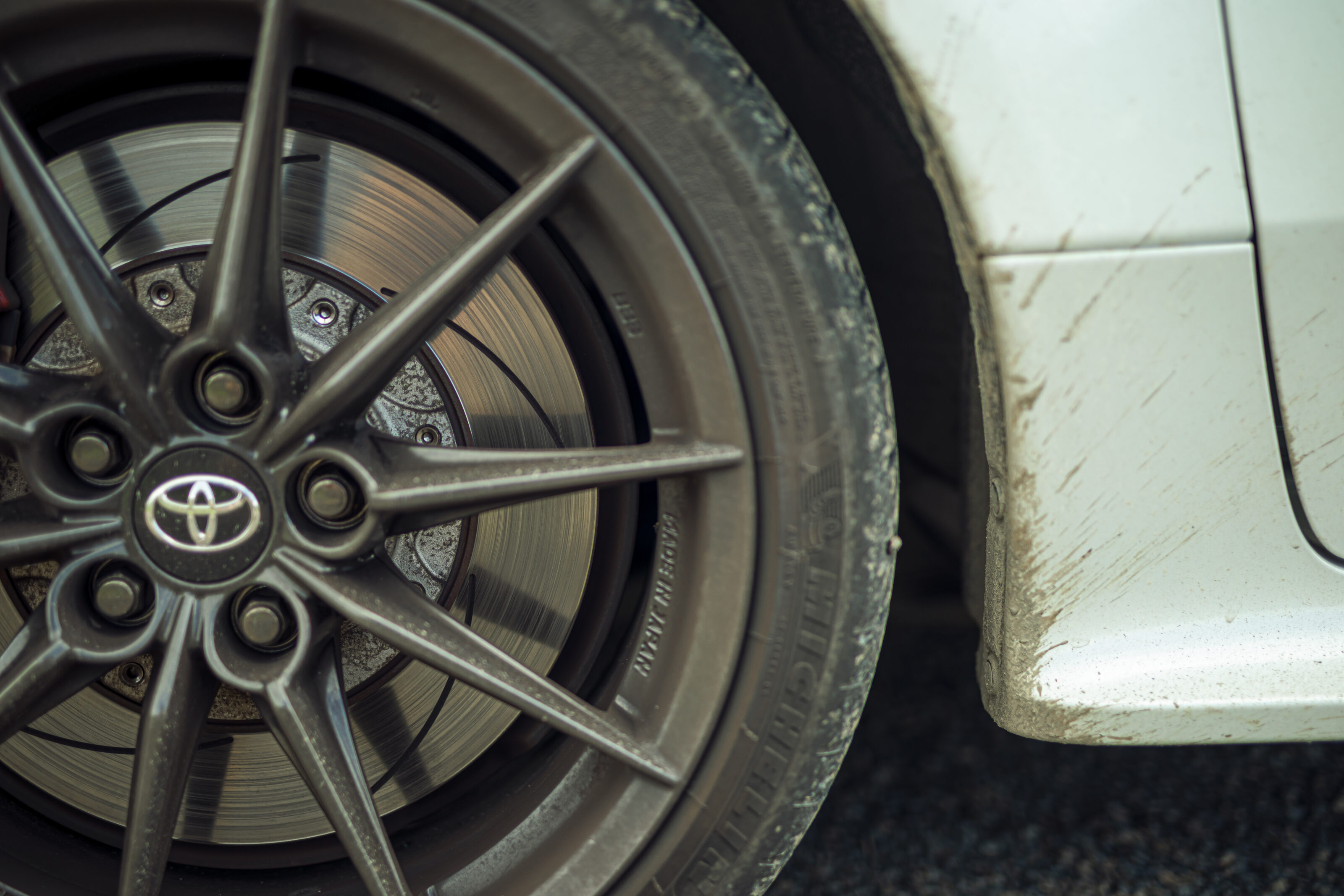
The front end of the GR Yaris is underpinned by Toyota’s TNGA-B platform which underpins the existing Toyota Yaris and Yaris Cross, and retains the standard MacPherson strut layout.
The rear end is provided by Toyota’s TNGA-C platform, underpinning the Corolla (and its incoming GR model), C-HR and Prius. The rear end of the TNGA-C platform was merged with the Yaris to house the clutch pack and differential, as well as utilise its rear double-wishbone design to better aid dynamics and roadholding.
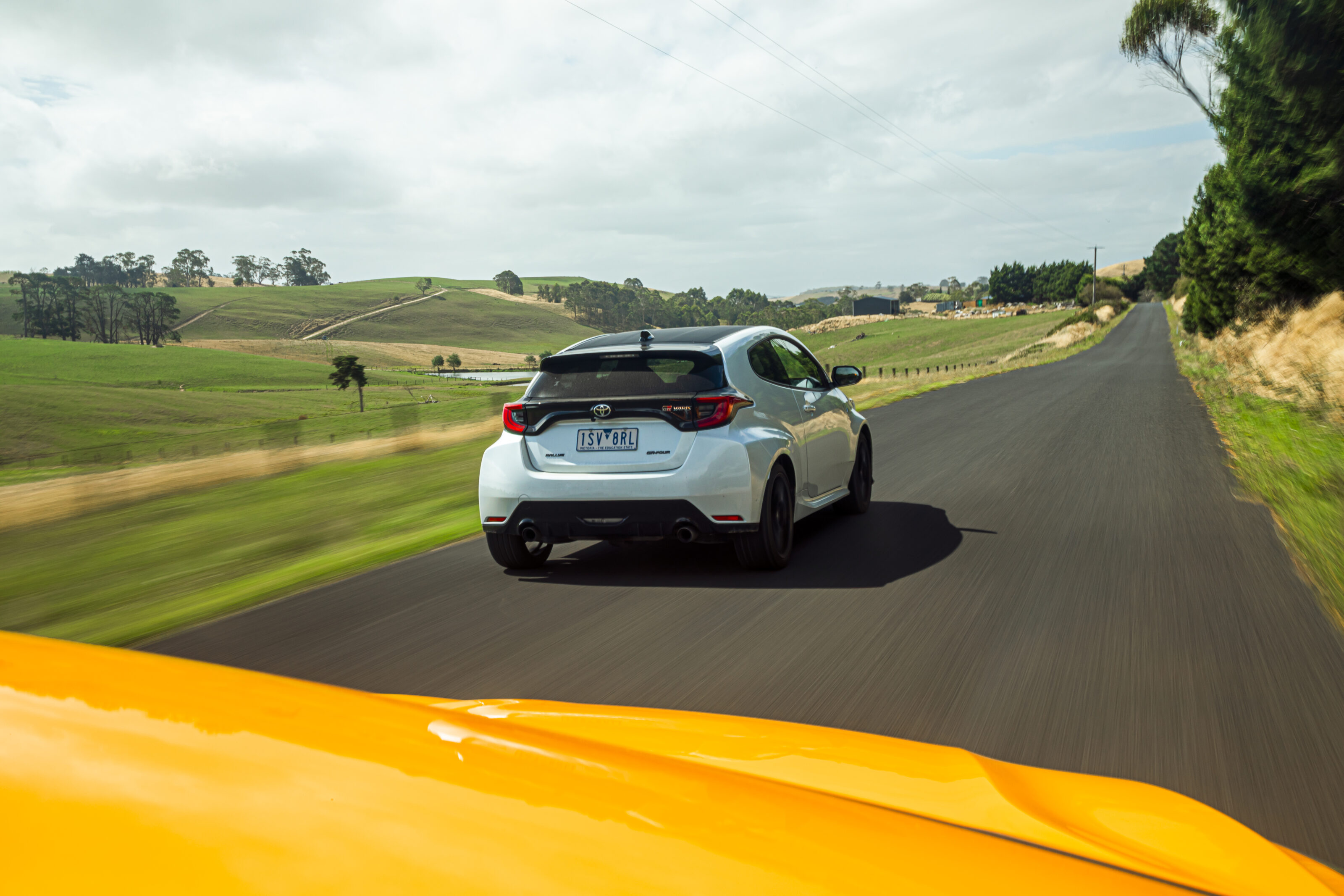
The clutch pack itself is sourced from Toyota Group’s own supplier, JTEKT, and is said to be both smaller and lighter than a traditional Haldex system. Another hallmark of Toyota’s AWD system is its permanent states of torque biasing: 60/40 in Normal, 30/70 in Sport and 50/50 in Track Mode, compared to an ‘active on-demand’ multiplate Haldex system.
While much of the GR Yaris’ bespoke development is hidden beneath its skin, even casual observers will notice how little the GR resembles the pedestrian Yaris. In truth, the front and rear light clusters are the only carryover parts, with the GR Yaris presenting in three-door guise, with a roofline 91mm lower and haunches 55mm wider.
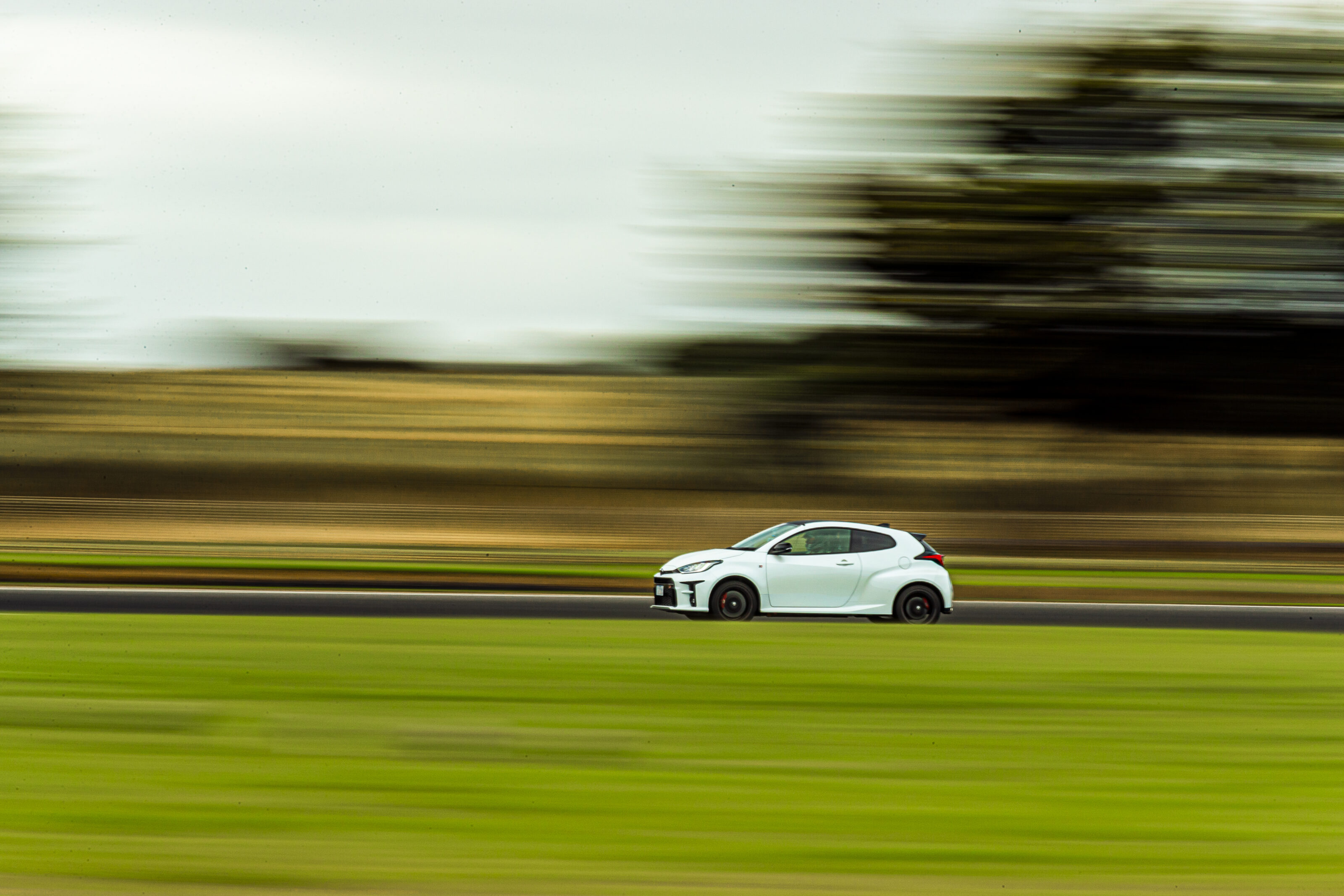
One of the most frequent points of criticisms of the GR Yaris is its price, with introductory driveaway deals long expired, $54,500 can be hard to reconcile for many would-be buyers.
Looked at another way however, and the GR Yaris delivers a tremendous amount of specialised technical development that exceeds even some junior supercars, and makes it available at a mainstream pricepoint. Good value? That’s for you to decide.
Ash T writes: “Having a bit of trouble here deciding my first car. It will be used for everyday things and also for work purposes such as carrying tools and equipment to work sites. I’ve narrowed it down to an ’04 Holden Crewman SS and an ’04 Ford Falon XR8 Ute. Looking forward to your input and open to any other suggestions”
It sounds like you’re after a daily workhorse with V8 drama for some weekend fun.
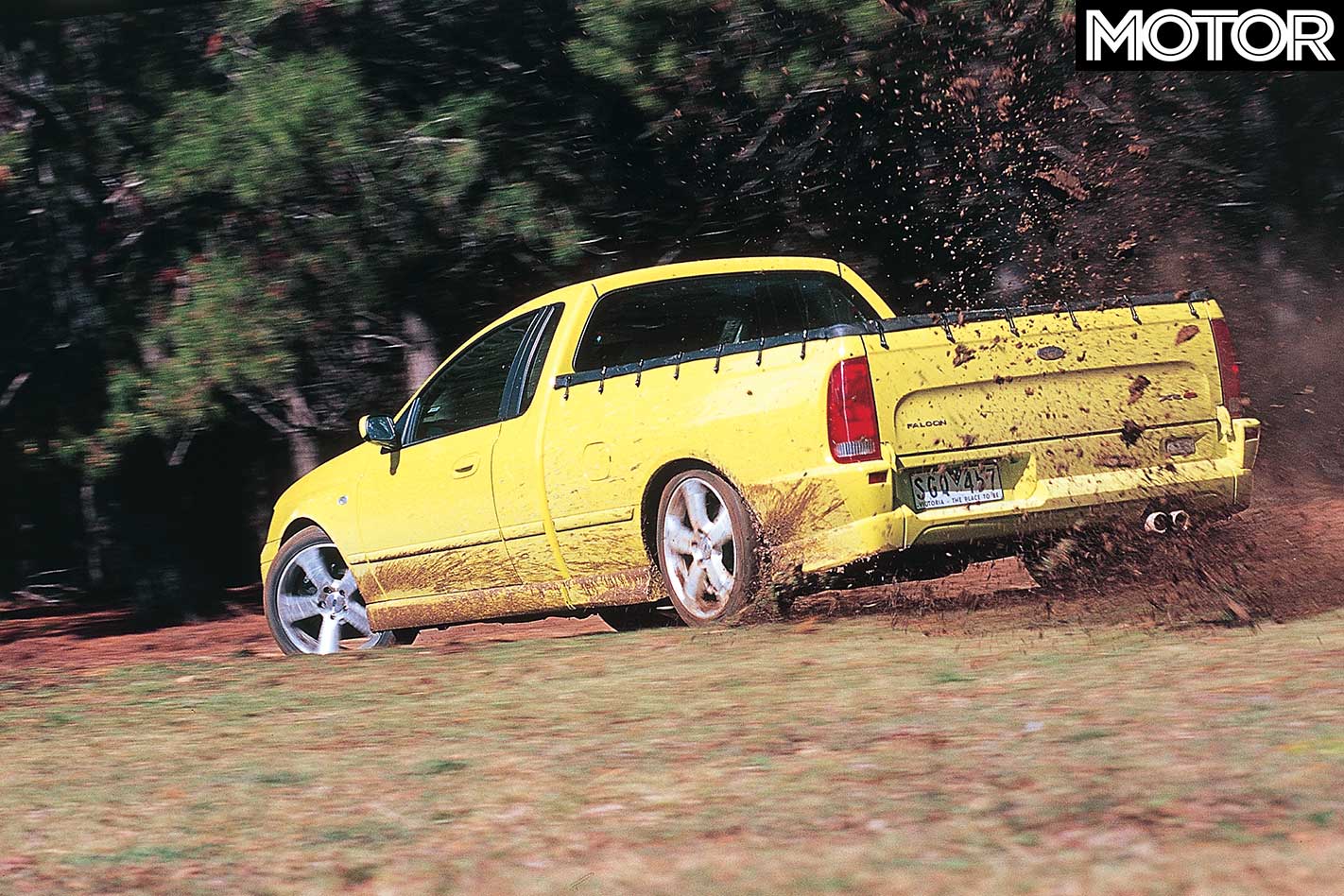
The lazy Boss 260 in the blue corner is a heavy unit, yet it gets up and boogies with revs. Its live rear axle doesn’t scream dynamic brilliance, but it looks the part inside and out.
Pragmatism is taken up a notch with the Crewman, especially if you want to bring mates along. The four-door Commodore monocoque (with the LS1 up front) is married to a tray chassis with leaf springs like the XR8. Corner carver it isn’t, but the V8 does have a braked 2500kg towing capacity.
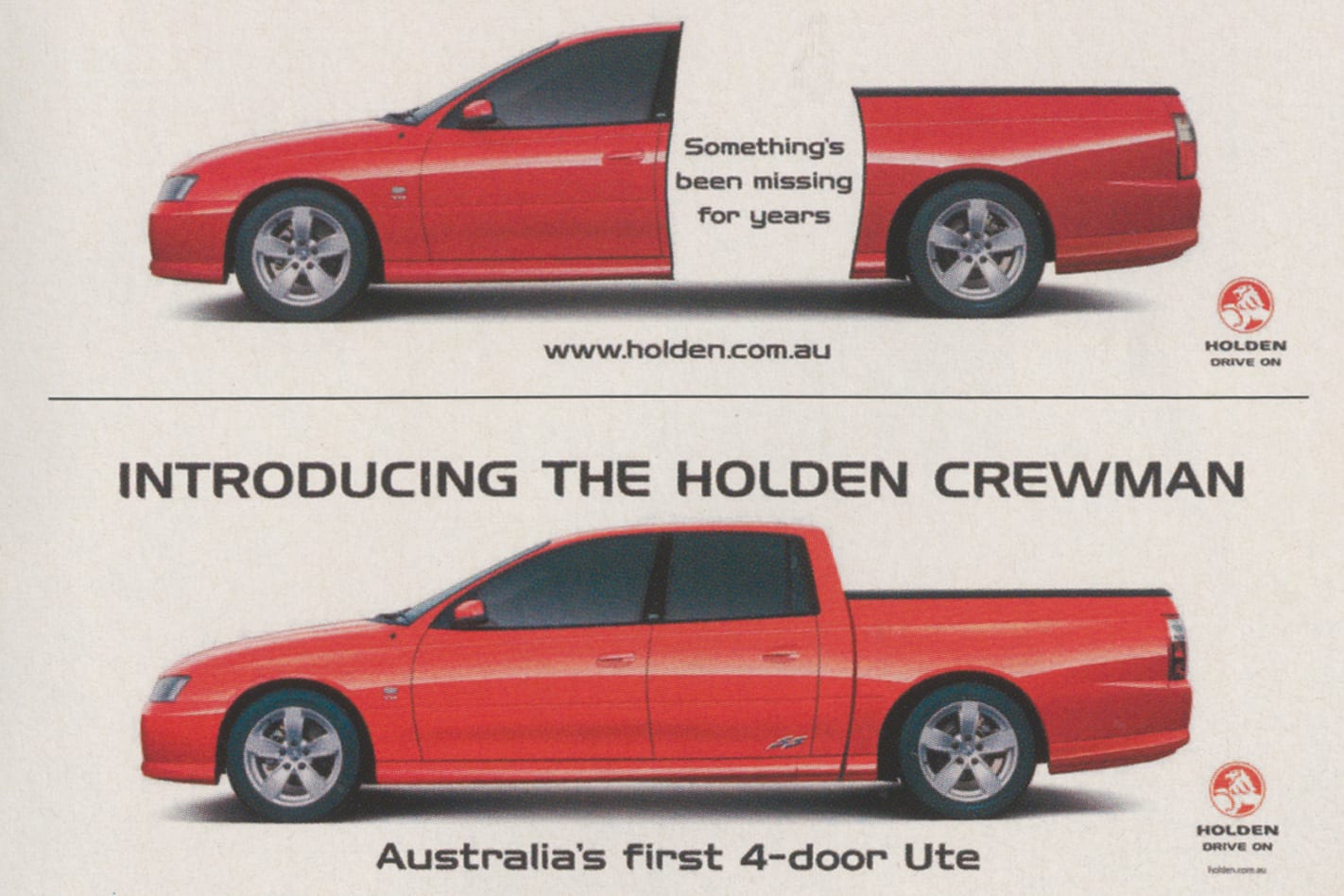
In 2005 an all-wheel-drive version was added. Both are best as a manual given the autos are four-speeds. But we’d buy an XR6 Turbo instead. After all, it’s claimed a BFYB title. – TG
Specs
Big surprises are not uncommon during Car of the Year, but with a near-5.0 metre length and eight seats, the Hyundai Palisade was exactly that in the most literal sense … and many more.
Big boxes were filled with big ticks from the outset and the value in Hyundai’s flagship SUV was easy to see before a single turn of its 20-inch wheels. Space is in abundance, yet despite the cavernous cabin and plenty of volume to play with, Hyundai has wasted none.
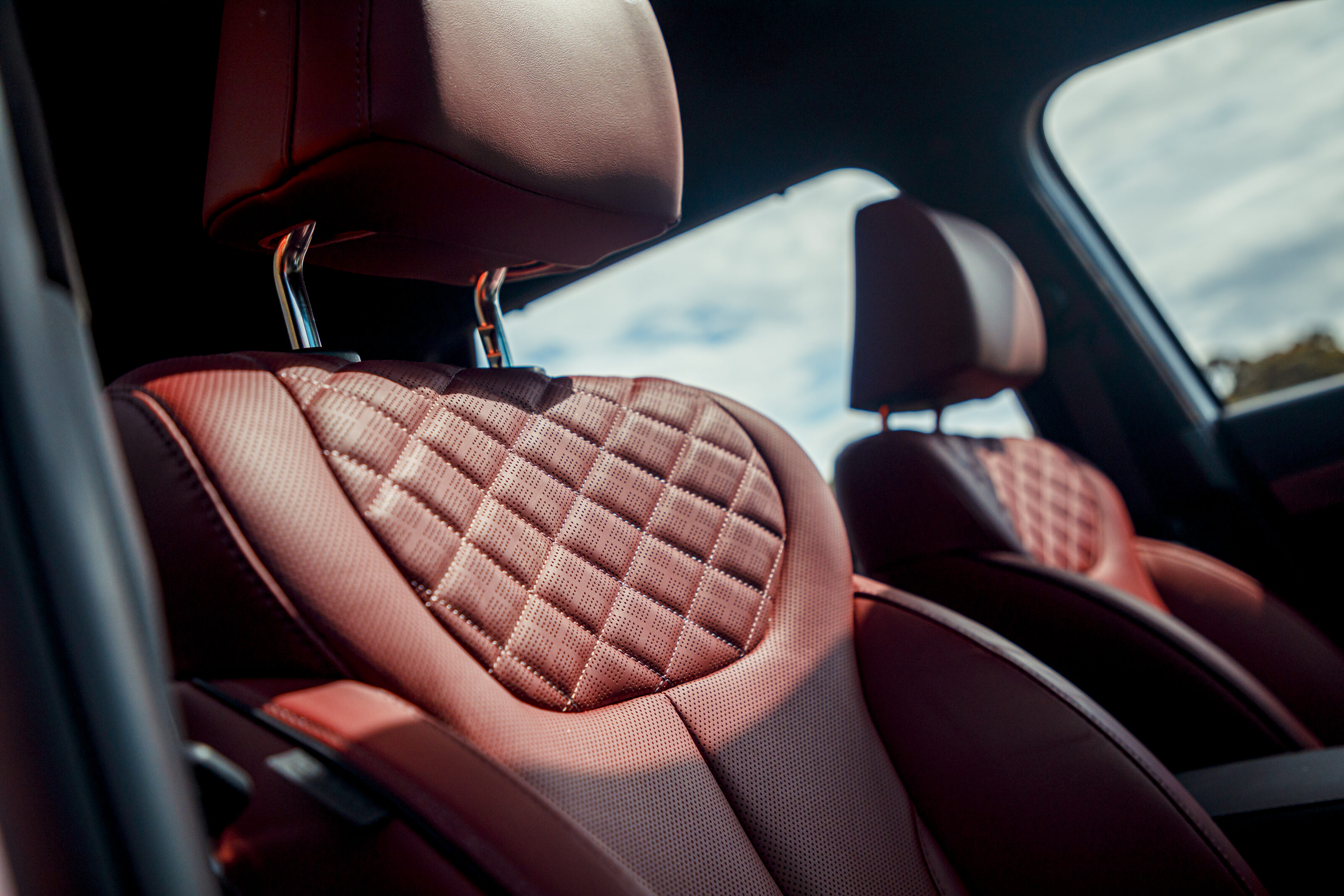
Throw a can of drink into the Palisade from the outside and there’s a greater chance of it landing in one of its 16 cup holders than hitting the floor, while the space is well utilised for people, too. In the front row, buttocks are treated to Nappa leather, heaters and seat cooling, with heating and tilt-and-slide adjustment for the second row, too.
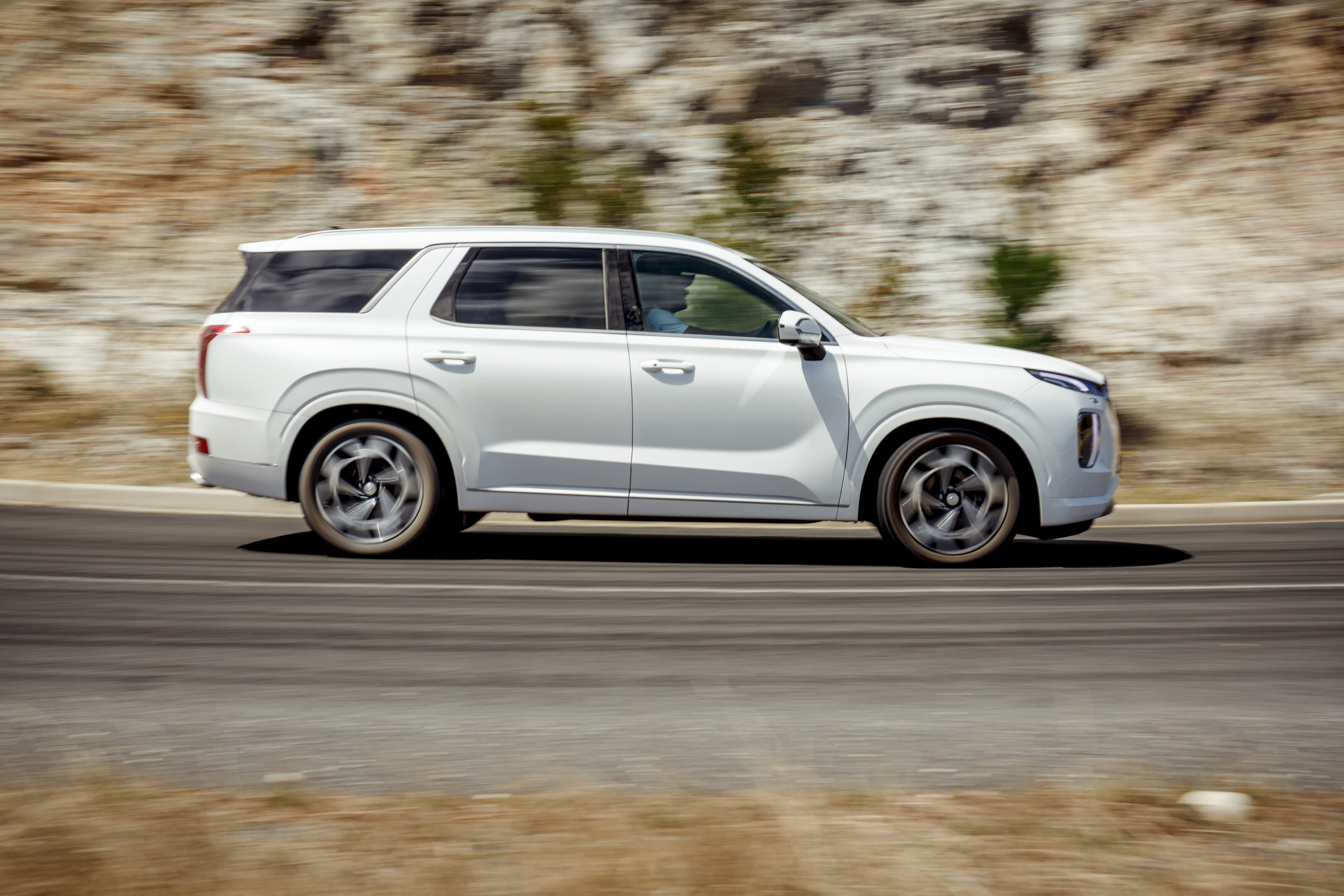
But while many three-row SUVs pertain to have accommodation for seven or more, few actually pull off the stunt. Board the back row in the Palisade, however, and an uncommon amount of space and comfort awaits with several of those aforementioned cup holders, USB device charging (two of seven scattered about the interior) and air conditioning. Even with all eight seats in play, there’s still 300 litres of boot space.
Fold away the third row and the cabin still seats five generously but luggage space balloons to more than 700 litres. There’s also a clever storage solution for the retractable parcel shelf under the boot floor. “Perfect for a large family or family of large people,” commented Richard.
A premium cabin raises the Palisade into classy territory with quality materials and apparently excellent build quality. Its inception was a little too late to benefit from the excellent fully digital instrument cluster found in the Santa Fe and Tucson, but a 7.0-inch display between conventional dials is useful, especially as it displays the cool blind-spot-eliminating cameras.
Forming an interior centrepiece, the 10.3-inch central touchscreen lifts the sophistication of the cabin and adds to the logically laid out dash along with simple but elegant push-button gear selector and driving mode dial. A big sunroof that pops, suede-look roof liner, wireless device charging and head-up display add to the equipment highlights.
The range starts from $55,000 but even if the focus is on the pointy end of the spectrum and the $73,650 diesel Highlander we have here, you won’t find another eight-seater SUV for less cash. It also has a five-star ANCAP safety rating and five-year unlimited kilometre warranty, so you’re probably sensing a ‘but’ as big as its butt and wondering why this Hyundai hulk isn’t on the final page this year.
This wouldn’t be the first time a COTY contender has weighed in with a compelling list of features on paper only for the equation to topple in practice.
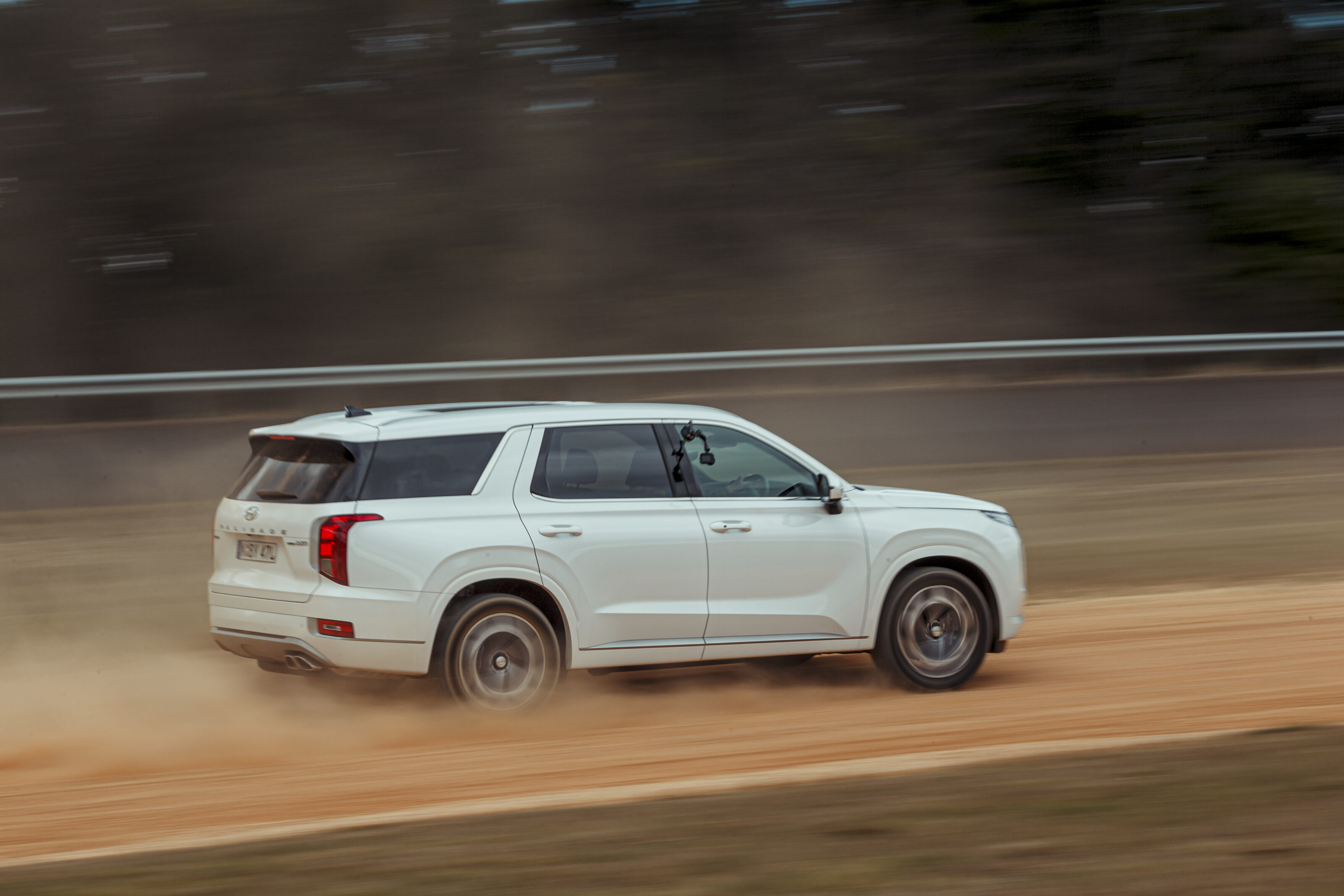
“A revelation on country roads with its assured road holding and compliant ride” – Jez Spinks
On the road, however, the Palisade gets even better. It might look like the South Korean leviathan was built for the American market, but its pin-sharp packaging and road manners translate enormously well to Australian roads. Ironically, it’s one of very few Hyundais that hasn’t had its suspension fettled specifically for local tastes and conditions, but it impressed all the judges with a balance of surprising athleticism in corners, an ability to deal with even the most horrid unkempt roads and smoothness and composure on better surfaces.
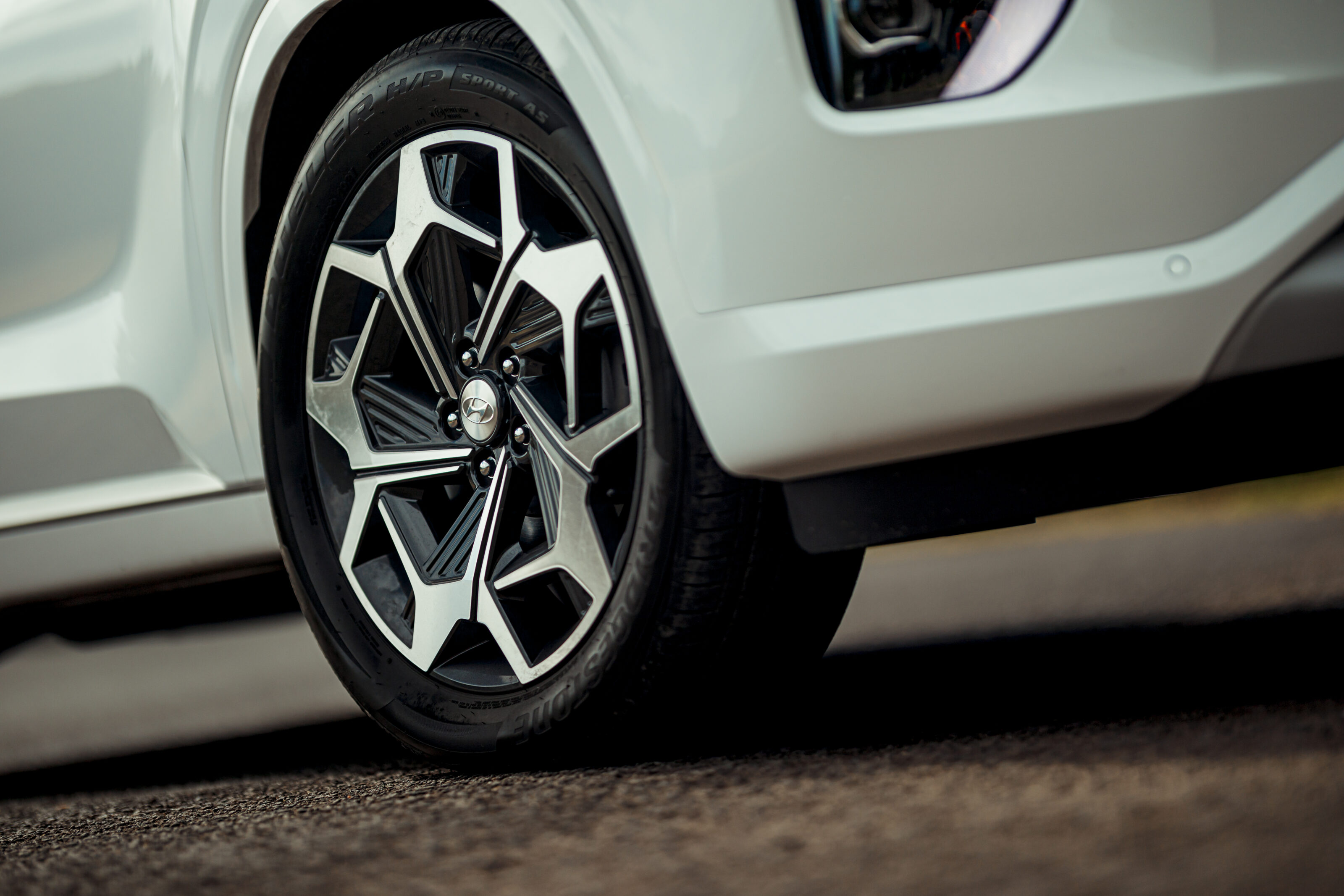
Ultimately it was the Bridgestone Dueller tyres that set the limits of performance but the all-terrain tyre was regarded as a pragmatic choice of boot given the SUV ground clearance and the promise of some off-road capability – it’ll also tow up to 2200kg.
Wind and road roar was all but absent, the 2.2-litre four-cylinder diesel was noted as refined and well-behaved, while overall noise, vibration and harshness levels were impressively low. “Delivers that rolling lounge-room effect, bundled into a package that’s pleasing to drive and resolved enough for the crookest of Aussie sealed surfaces,” said Curt.
Away from the sealed road, however, there was one chink in the Palisade’s armour – a worryingly loose ESC calibration that raised more than one of the judges’ eyebrows. A flick of counter-steer was always enough to maintain course but in the hands of an inexperienced, distracted or tired driver, the Palisade has the potential to pirouette on dirt.
A suite of driver-assistance systems and above-average visibility for the segment earned the Palisade praise for ease of use in suburban settings despite its heft. The big Hyundai really is suited to a wide range of duties. “A packaging masterclass!” said Inwood. “No larger than many of our EV contenders yet gets eight seats to their five.”
Without doubt, the more expensive CRDi diesel engine is preferable to the thirstier 3.8-litre V6 petrol that’s an option for all three Palisade variants, not least because the petrol is paired exclusively to front-wheel drive versus the AWD-only diesel combination. The atmo V6 might have a power advantage, but the CRDi has the upper hand in torque with 440Nm on tap and makes better use of its performance through the added traction of Hyundai’s Htrac system.
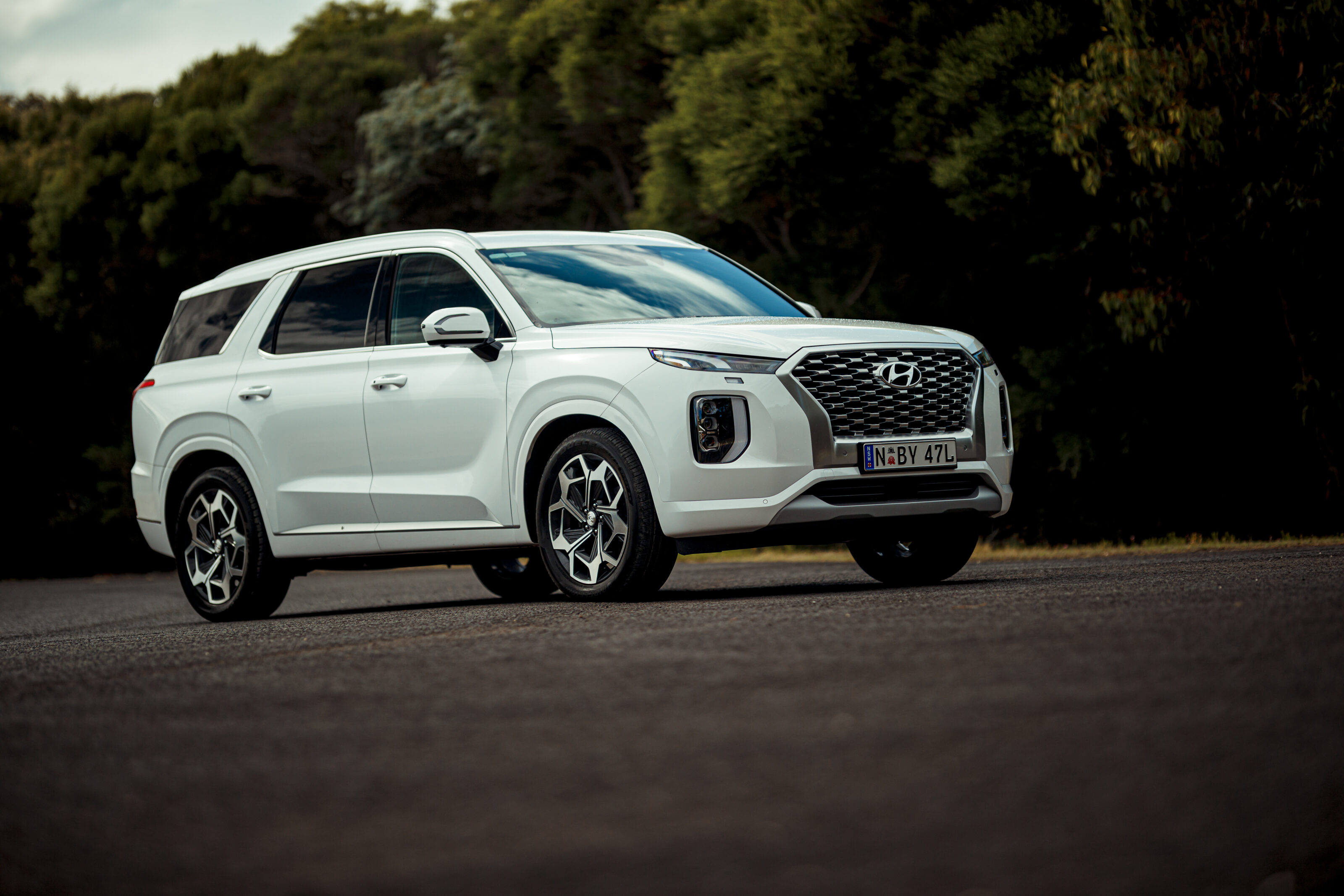
At launch, the Palisade was introduced with an entry version and the Highlander, but since then, Hyundai has introduced a mid-range Elite variant. There was some conjecture suggesting the $65,500 Elite diesel, with the same AWD and oiler combination but a leaner, value-sharpening set of standard features, may actually be the range sweetspot.
Regardless, the decision to send the Palisade through to the final round was unanimous and the panel was satisfied it had a chance to show the true breadth of its abilities and shine as one of the most impressive new cars in the past 12 months.
If that wasn’t impressive enough, its bargain eight-seat SUV status effectively puts it in a class of its own. The big Hyundai proved itself as a compelling alternative to van-based and people-mover models, bundled into an attractive SUV package.
“The car I’d take home from the event if I had to drive it for the next five years. Just does everything so well; it feels like a loyal servant,” concluded Dylan.
Snapshot
- Limited-run variants to on sale now, Formentor sold out
- Leon and Formentor gain Brembo front brakes at a discount
- Ateca receives an Akrapoviu010d exhaust system and unique 19-inch alloy wheels
UPDATE, May 5: Cupra Formentor Launch Edition sold out
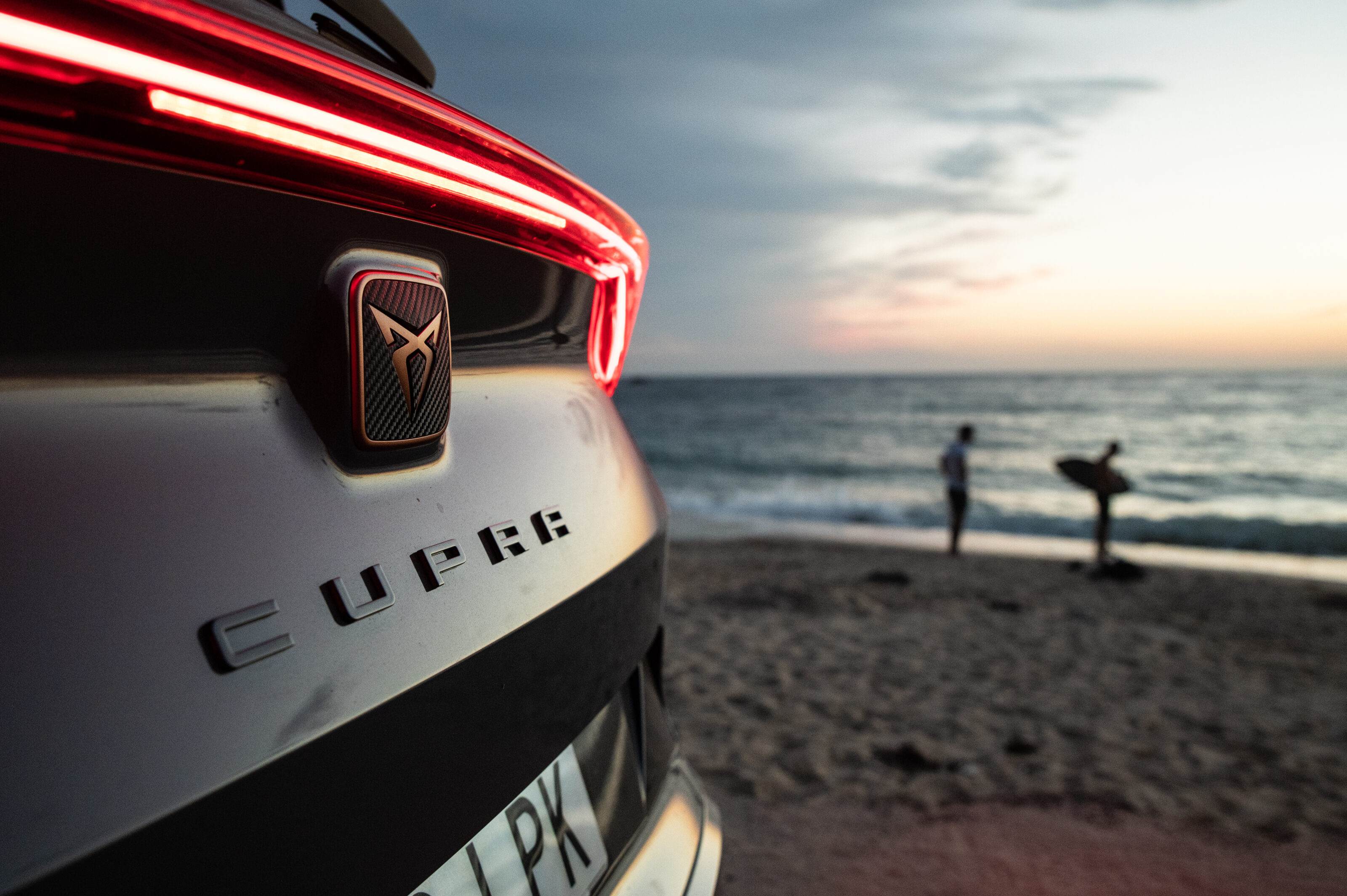
The first allocation of Cupra’s Formentor has sold out, as 50 Launch Edition units set for Australia were scooped up by eager buyers.
After the Formentor – as well as its Leon and Ateca siblings – went on sale at midday on May 4, Cupra reported all 50 examples up for grabs had been secured, leaving those who are interested in the crossover to wait for when the rest of the range launches in July.
“We’ve said from the announcement of Cupra coming to this country, that ours won’t be a brand that’s liked by everyone, rather it will be loved by some – and we saw that yesterday,” said Cupra director, Ben Wilks.
A limited number of Leon and Ateca Launch Editions still remain, with drive-away prices of $67,990 and $69,990 respectively.
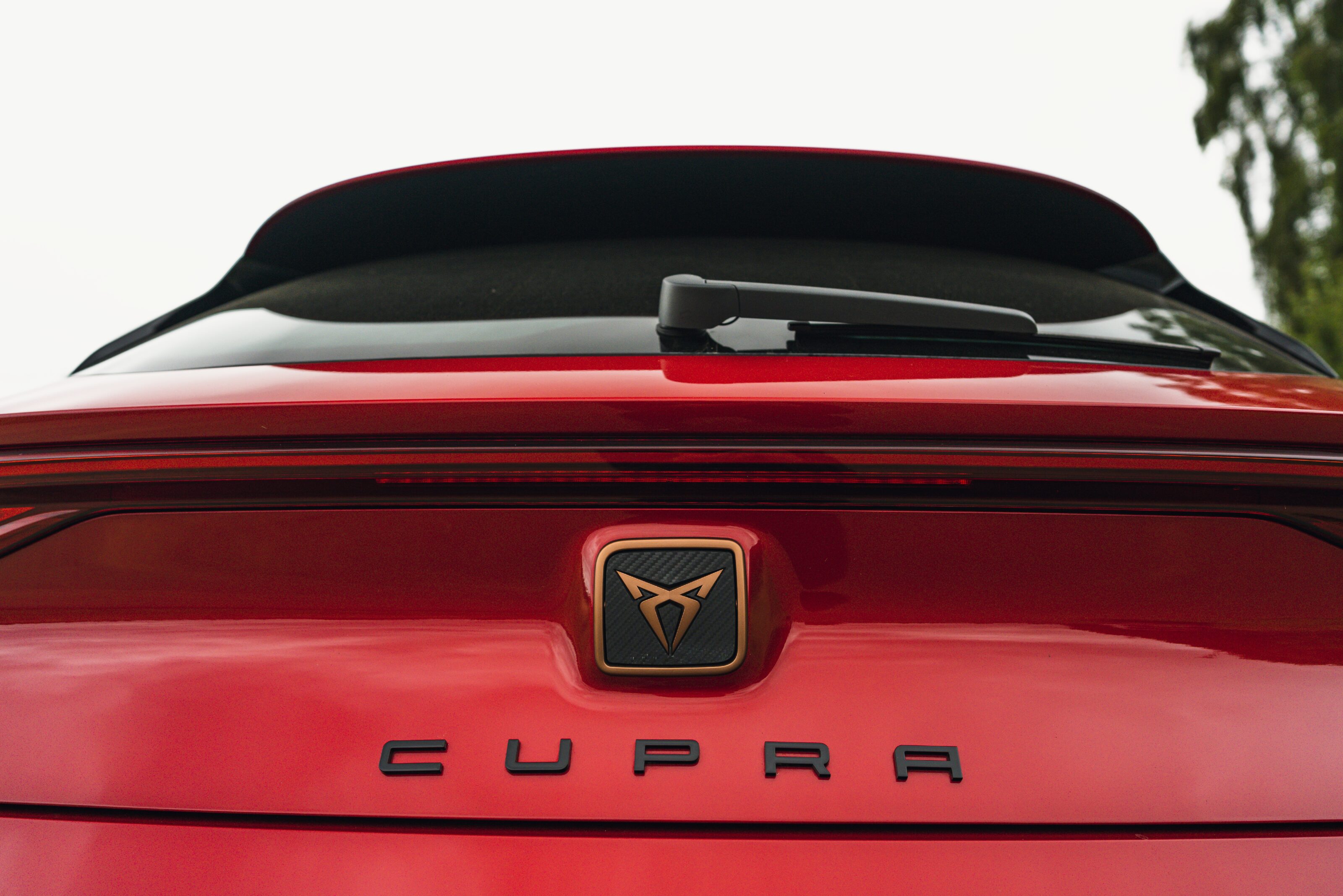
May 4: Cupra Launch Edition models on sale now
The 2022 Cupra Leon, Formentor and Ateca Launch Edition models are now on sale in Australia, with a starting price of just under $68,000.
The Spanish firm, part of the wider Volkswagen Group, said it had received more than 9000 expressions of interest in its products, with 30 per cent of the enquiries coming in the last two weeks alone.
However, just 100 Launch Editions are initially available from today. The rest of the line-up – which includes the Leon VZ, VZe and VZx, the Formentor V, VZ, VZe and VZx, and the Ateca VZx – will be on sale from June.
“Online ordering is now open for our Launch Edition models, which will arrive in July for early customers looking for the most design-led and performance-focused interpretations of Cupra,” said the company’s Head of Product and Planning, Jeff Shafer.
“Based on the flagship VZx specification of each model, we expect the Leon, Formentor and Ateca Launch Editions will be warmly welcomed by a country with an automotive passion for design, performance and technology.”
For more about each model and its pricing and features, read on to our original story below.
April 19: Pricing and features of Launch Edition models announced
Cupra has announced Launch Edition variants across the Ateca, Formentor and Leon ranges.
The limited-run models will launch in Australia during May, all based on the brand’s range-topping ‘VZx’ specification.
Across the line-up, this enables access to the Volkswagen Group’s 2.0-litre turbocharged petrol engine, producing 221kW of power and 400Nm of torque in the Ateca medium SUV and Leon hatchback, and 228kW in the Formentor crossover.
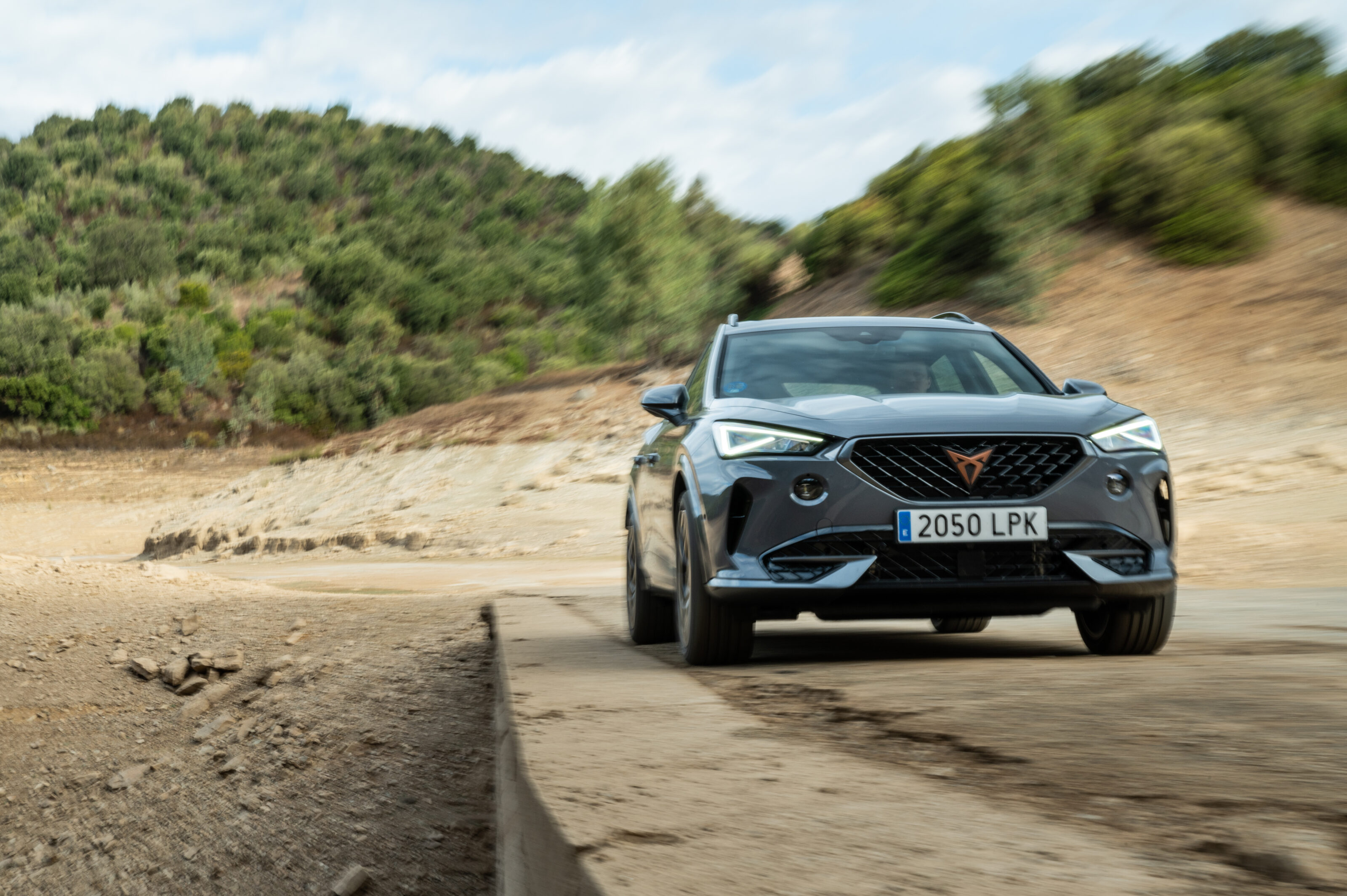
Cupra Leon
The least expensive entry to the range is the 2022 Cupra Leon VZx Launch Edition, priced from $67,990 drive-away.
Over the flagship VZx grade – listed at $64,990 drive-away – it gains Brembo performance brakes and is exclusively available in two shades of grey: Magnetic tech matte or graphene grey.
A set of front 370mm Brembo discs is available as an option on the Leon VZx, replacing standard-fit 340mm brakes, which add $3600 to the list price – with the Launch Edition representing a $600 saving.
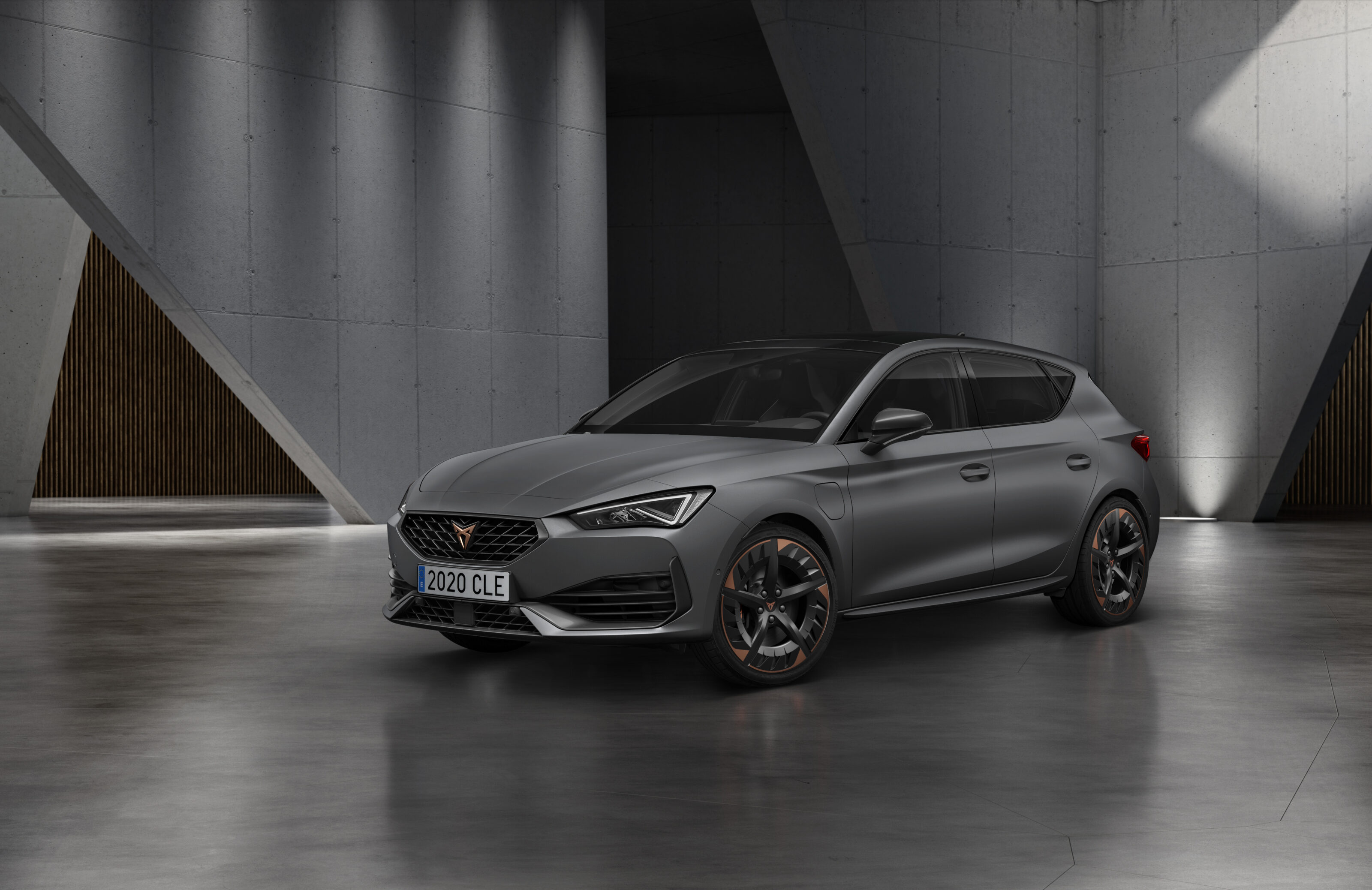
However, opting for the Brembo front brake package sees the addition of a tyre repair kit, in lieu of a space-saver spare wheel.
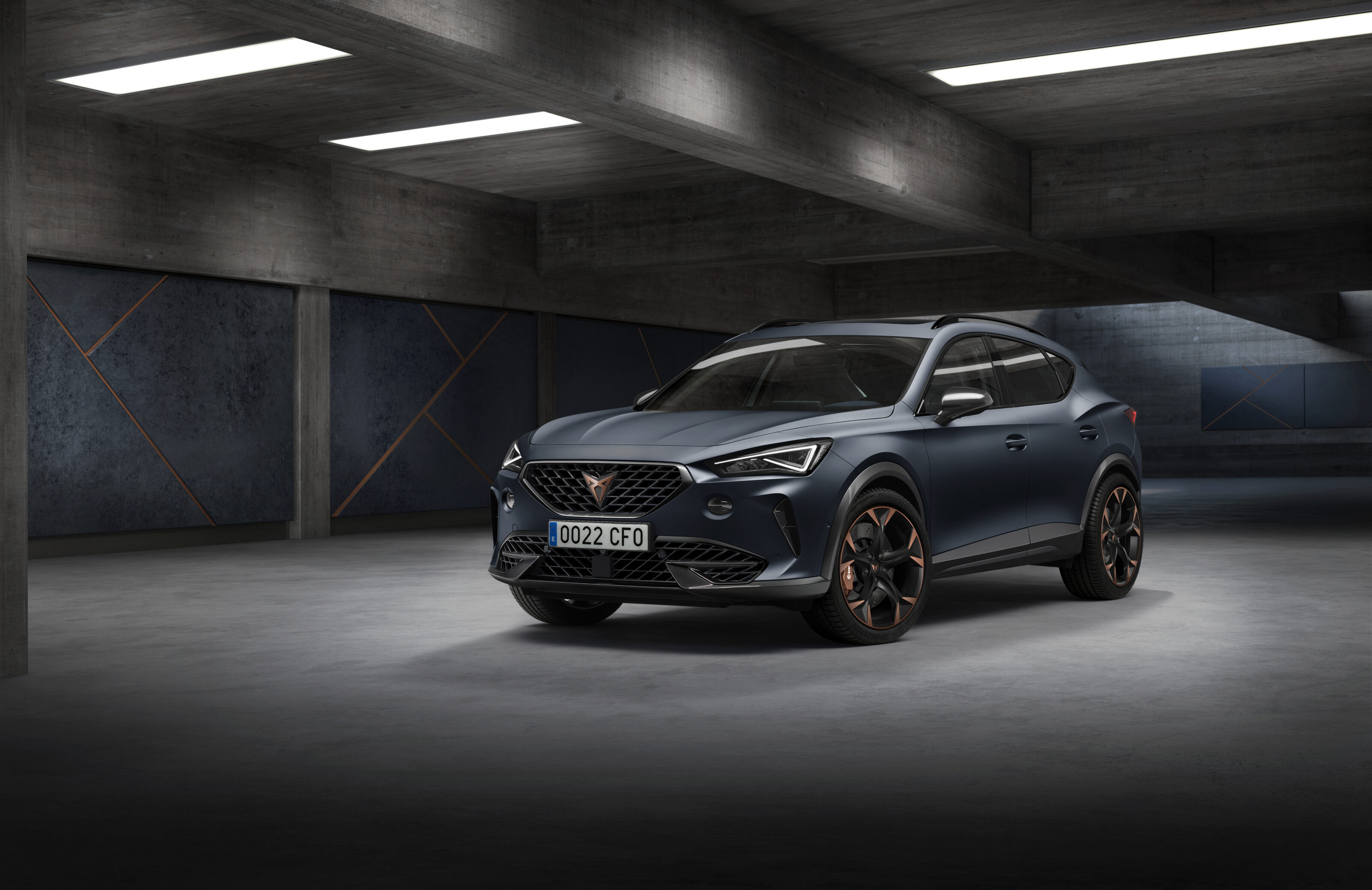
Cupra Formentor
Brembo brakes also feature on the 2022 Cupra Formentor VZx Launch Edition, available from $69,990 drive-away – a saving of $650 over the $66,490 VZx fitted with the $4150 brake package.
The colour range for the limited-run Formentor is limited to petrol blue matte or graphene grey.
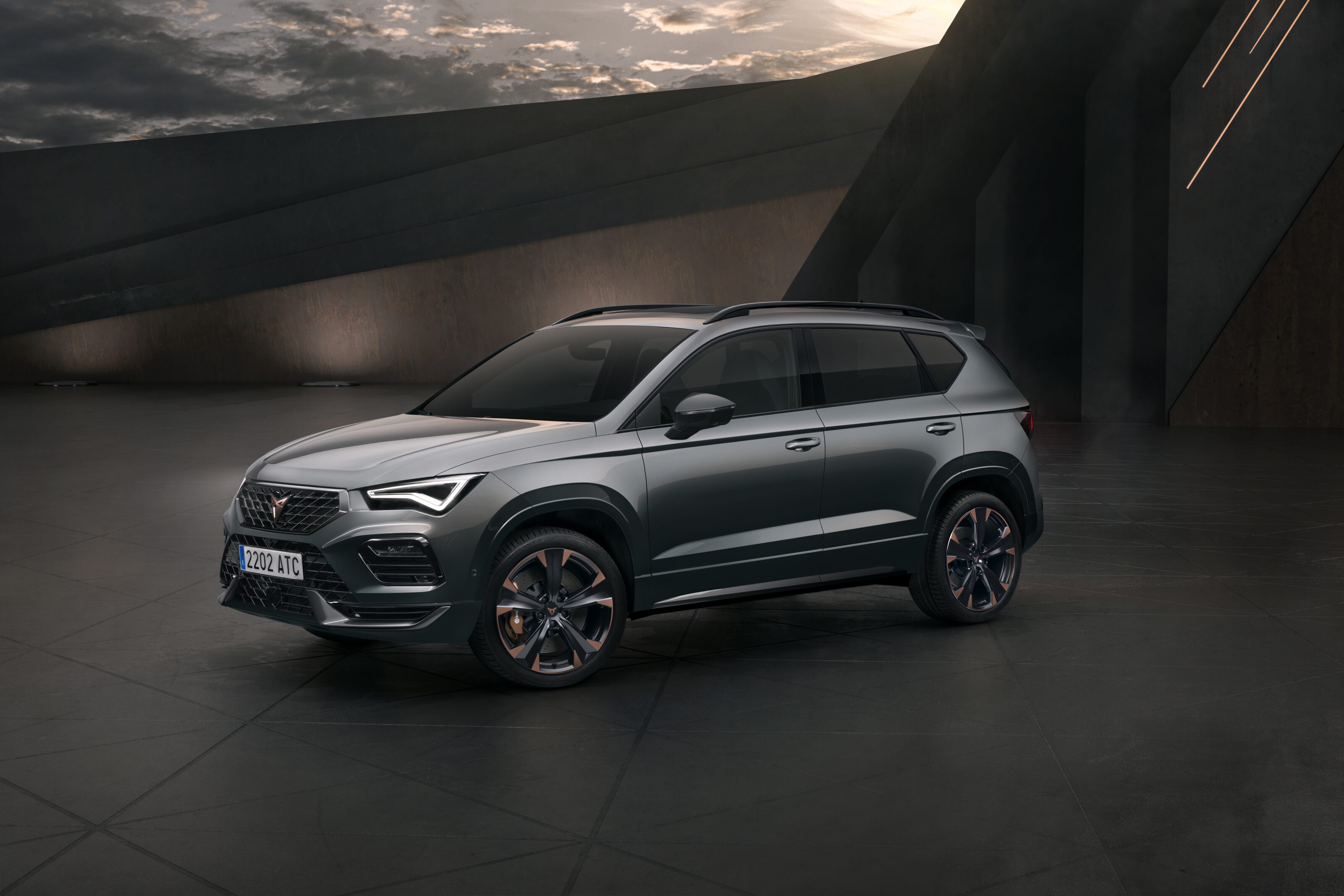
Cupra Ateca
Exclusively available in graphene grey, the 2022 Cupra Ateca VZx Launch Edition – priced from $69,990 drive-away – includes an Akrapovič exhaust system and unique 19-inch alloy wheels.
This represents the largest saving in comparison to an optioned-up VZx, with buyers maintaining $1950 against the $5950 exhaust option available on the regular model ($65,990 drive-away, or $71,940 with the Akrapovič exhaust system).
Cupra launch edition pricing
All prices are drive-away.
Features
Leon VZx Launch Edition
Formentor VZx Launch Edition
Ateca VZx Launch Edition
Availability
The limited-edition models are available now, ahead of first deliveries expected in July.
Tesla has cited low usage for the reason behind its decision to stop offering free Mobile Connector cables with each sale of a new car.
The change was noticed by Twitter user Tesla_Adri, with Tesla CEO Elon Musk taking to the social media platform to defend the company’s decision, arguing: “Usage statistics were super low, so seemed wasteful”.
Musk received widespread criticism from owners and regional Tesla clubs, with the company responding by dropping the price of the cable to US$200.
It’s unclear whether the decision will extend to Australia, with the carmaker’s local website stating the “Mobile Connector is included as standard equipment with a new Tesla”.

While a high proportion of Tesla owners have Wall Connectors installed at their homes, many say they used the Mobile Connector when on holidays or visiting friends and family, as well as finding the cable provided peace of mind.
Wheels has reached out to Tesla Australia and this story will be updated with its response.
UPDATE, Tuesday April 19: Chinese battery company CATL has announced it will partner with two companies to open a US$5.97 billion (AU$8.11 billion) facility in Indonesia.
Through a subsidiary company, CATL will join two state-owned businesses to create the project which will oversee the mining of material, the manufacture of batteries, and the recycling of used batteries.
It will be only the second country outside of China to host a CATL plant, with a facility opening recently in Germany.
The news comes a month after Hyundai announced it would be opening an electric vehicle factory in the country.
The story to here
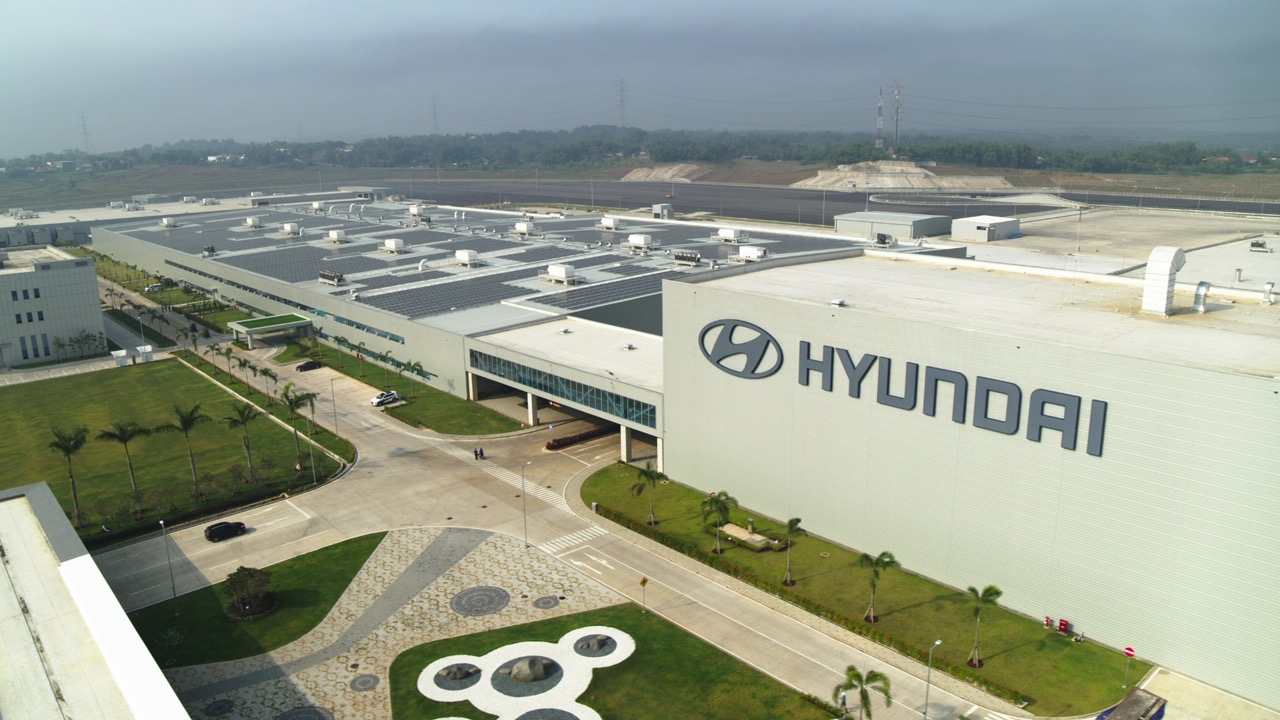
March 17: Hyundai has opened its first manufacturing plant in Indonesia, with plans to begin producing electric vehicles at the facility.
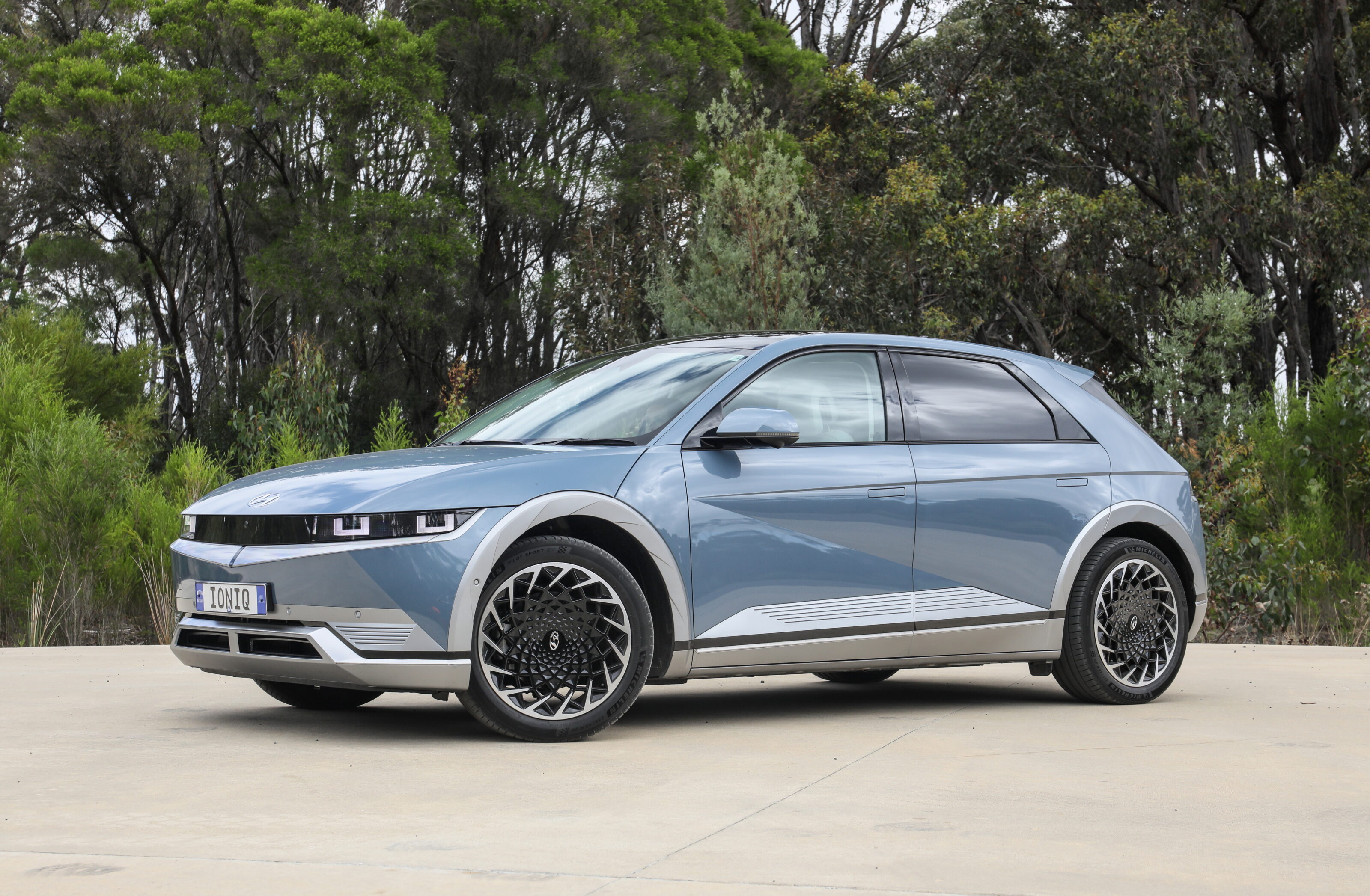
Located in Cikarang, around 40 kilometres east of Jakarta, the Hyundai factory will begin with the production of the Ioniq 5, along with the Santa Fe SUV and a number of models designed specifically for Southeast Asian markets.
The Indonesian Government has been pushing ahead with policies to encourage both the manufacturing and sales of electric vehicles (EVs), with plans for its automotive industry to be fully electric by 2050.
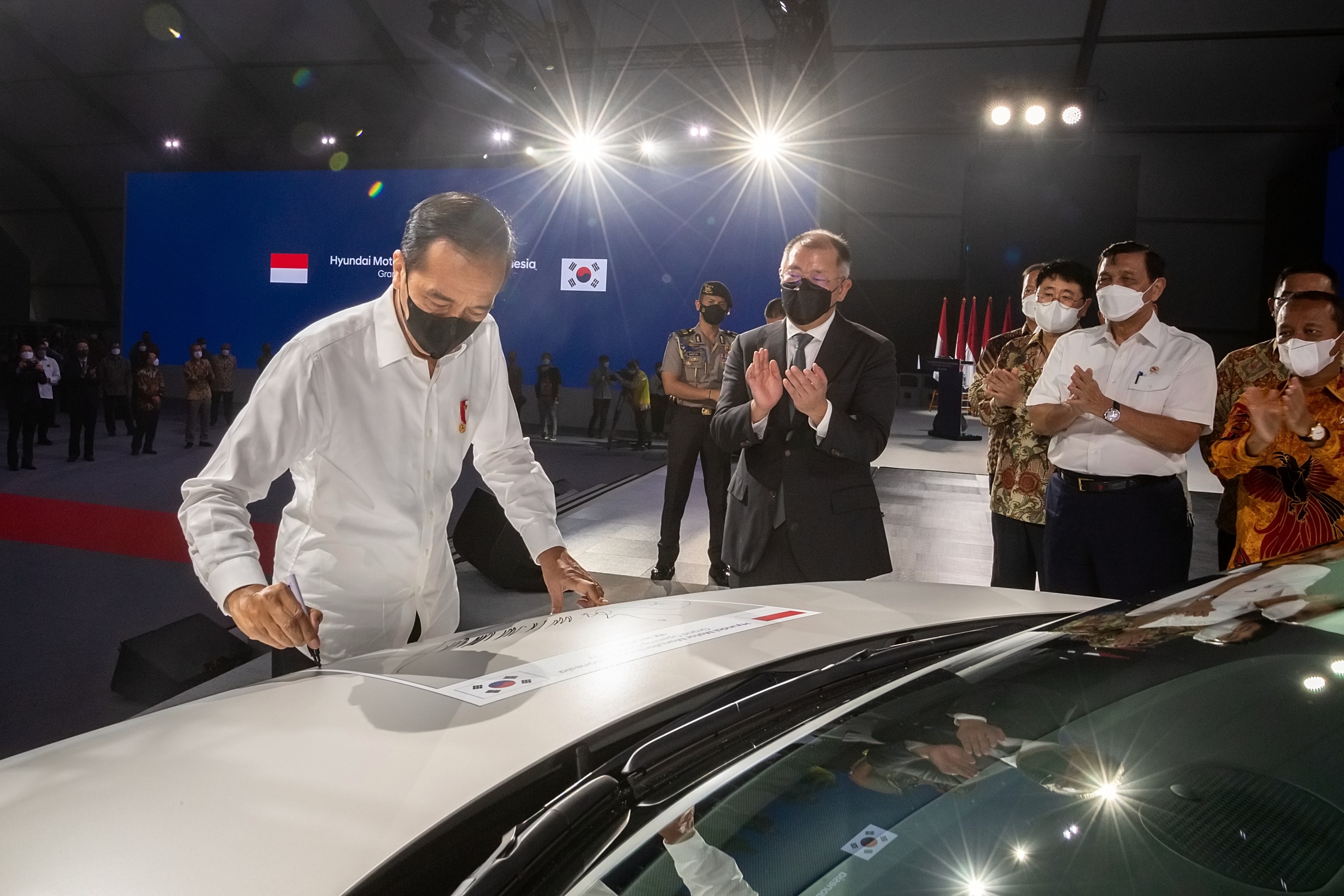
“Today, I inaugurate and launch Hyundai Motor Manufacturing Indonesia’s plant and the first Ioniq 5 electric car produced in Indonesia,” Indonesian President Joko Widodo said at the event.
“I hope that this Ioniq 5 from Hyundai will become an important milestone in the development of Indonesia’s electric vehicle ecosystem, and to further accelerate the electric car ecosystem that is more advanced.”
Hyundai is also working with Korean electronics giant LG to build a US$1.1 billion (AU$1.5 billion) battery cell factory in Indonesia, with production to begin in 2024. President Widodo says all domestic EVs will use locally-made batteries by that time.
“Hyundai will keep contributing to the establishment of the electric vehicle ecosystem in Indonesia through the battery cell plant currently under construction,” said Euisun Chung, Executive Chairman of Hyundai Motor Group.
“This will further help support Indonesia to play an important role in the global landscape. We hope Hyundai’s future technologies will be the foundation of greater collaboration with Indonesia.”
The country is a producer of nickel ore, cobalt, bauxite, and copper, which can all be used in the manufacture of EVs.
Despite neighbouring Indonesia being a right-hand-drive market, Hyundai Australia told WhichCar there are no plans in place at this time to source some models from the new plant.
Shipping and labour costs could make the Indonesian-made Ioniq 5 and Santa Fe more attractive for Hyundai – given the country’s minimum wage is around one tenth of South Korea’s, where Australian market vehicles are currently sourced from.
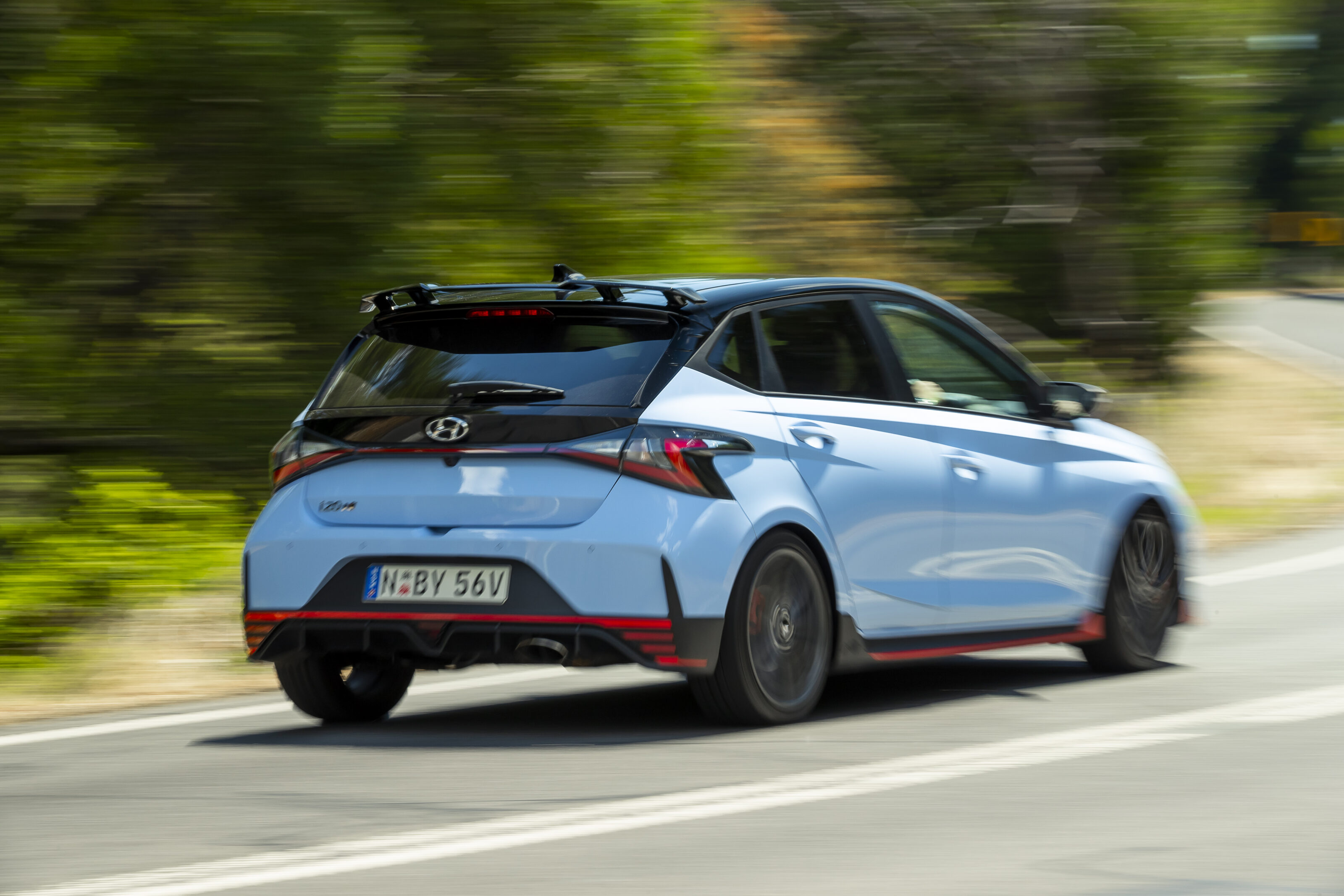
So good was the Hyundai i20 N’s package at Performance Car of the Year 2022 that its turbocharged 1.6-litre four-cylinder engine became somewhat overlooked. However, the four-pot is new and it isn’t the same unit found in other N Line products – the biggest clue being the extra 10Nm. Not only does the SmartStream-branded unit usurp the Gamma generation, it also features innovative valve technology.
For the i20 N the 1598cc powertrain also gains a bespoke turbo, intercooler, water pump system and a 350-bar high-pressure fuel injection rail. Total power outputs of the SmartStream unit come to 150kW between 5500 to 6000prm and 275Nm from 1750 to 4500rpm. In overboost conditions the i20 N produces 304Nm (2000 to 4000rpm).
Yet, it’s the Continuously Variable Valve Duration (CVVD) system that is of note. The technology supposedly enables high performance with light car fuel economy.
Variable valves aren’t new, we’ve all heard the VTEC punchlines, but CVVD works by opening the intake valve during the middle and end of the compression stroke to reduce resistance under light load. Conversely, under heavy throttle applications, the intake valve closes as the start of the compression stroke, taking advantage of the air available and improving performance.
The system is continuously variable, meaning it can be optimised to work in any part of the rev range instead of just chosen points (for example, up high for VTEC applications).
According to Hyundai, “the valve control technology regulates the duration of valve opening and closing according to driving conditions, achieving a 4 per cent boost in performance and a 5 per cent improvement in fuel efficiency … CVVD takes [valve] technology in a new direction by adjusting how long the valve is open”.
So while the i20 N’s engine failed to rouse the judges as much as its engaging dynamics, the 1.6-litre unit is still noteworthy. The baby N really is a sum of its parts.
Data doesn’t lie. There’s nowhere to escape or hide. However, it can also affirm sensations and deficiencies felt in the car while on track. And thanks to the detailed analysis gathered at Phillip Island by the VBOX team at PCOTY, we’re able to break down one of the causes of concern the judges held in regard to the BMW 128ti.
Let’s just stamp out one notion from the get-go. The BMW 128ti is fast in a straight line. Compared to its biggest rival, the Mk8 Volkswagen Golf GTI, the Bavarian’s turbo 2.0-litre four-pot has the grunt and traction to match its foe. A 0-100km/h time of 6.27 seconds is a mere 0.06sec away, while 400m is covered 14.33sec, just 0.02sec off the Golf – so virtually nothing.
The weaker top-end of the B48 sees the EA888-powered GTI pull away with a 5.6km/h higher top speed down Gardner Straight.
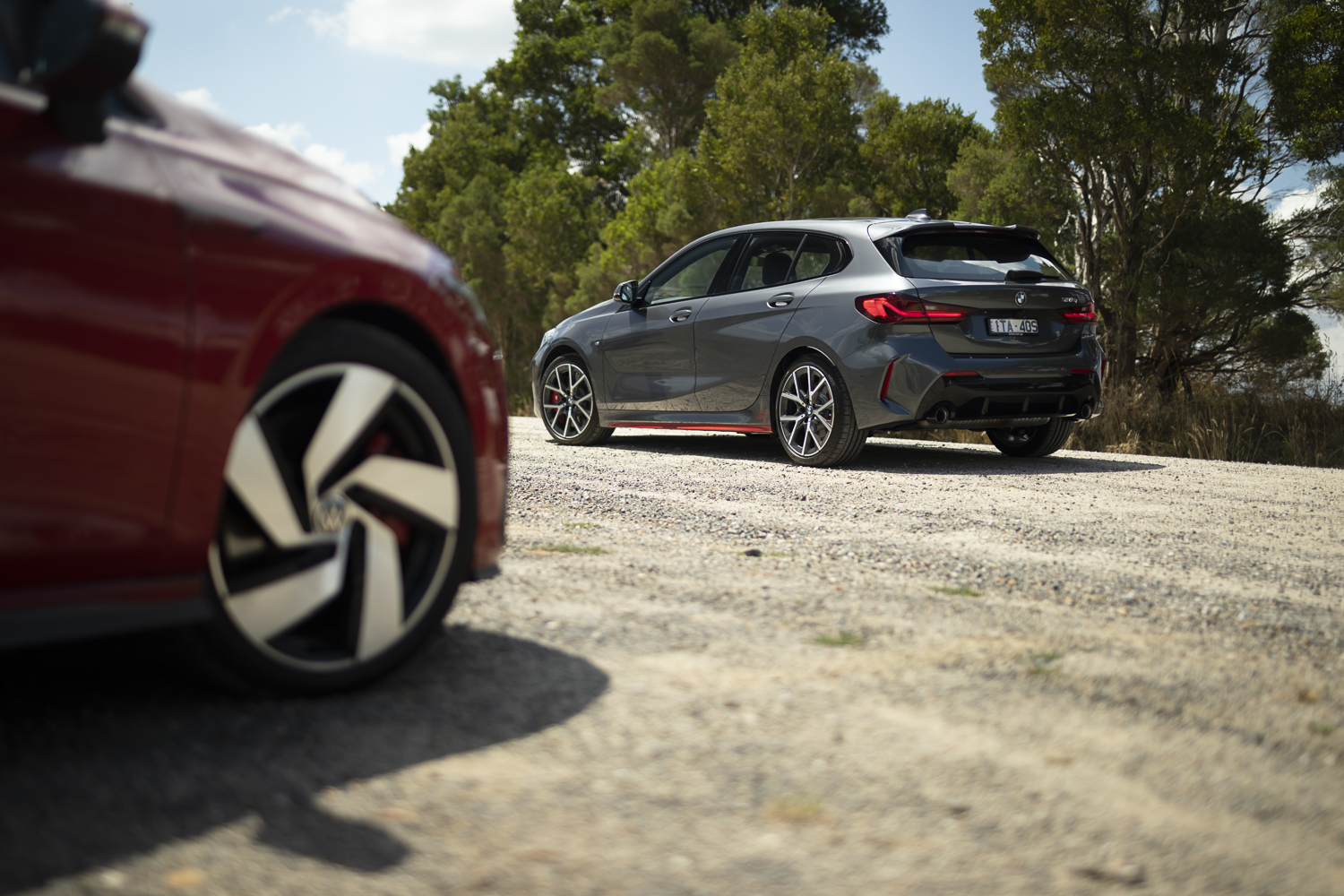
According to the straight-line numbers, it’s pretty much neck-and-neck. Our gun racing driver, Warren Luff, also uncovered loads of confidence under brakes, with the BMW arriving at the Southern Loop apex 15km/h faster than the VW. What’s more, the 128ti is 6km/h faster into the braking zone for Honda and 5km/h faster through the apex of Siberia and MG. So how does the GTI lap Phillip Island 2.4sec faster than the 128ti?
It’s largely down to a lack of traction and grip on corner exit, with the BMW losing all its time past the corner apex compared to the venerable VW. That 15km/h advantage on entry at Southern Loop turns into a 12km/h deficit on corner exit with the front axle struggling to harness the 180kW despite running a mechanical LSD and performance-orientated 225-section Pirelli P Zero tyres (although you can spec Michelin Pilot Sport 4 rubber, which we’d advise).
It’s also interesting to use the VBOX data to dissect the different lines Luffy uses to try and work with and around the different attributes and deficiencies. Despite struggling past the apex, the 128ti is stable under brakes which allows for a later mid-point. Essentially, Luffy is trying to square off the corner so that the 128ti is accelerating with the least amount of lock possible.
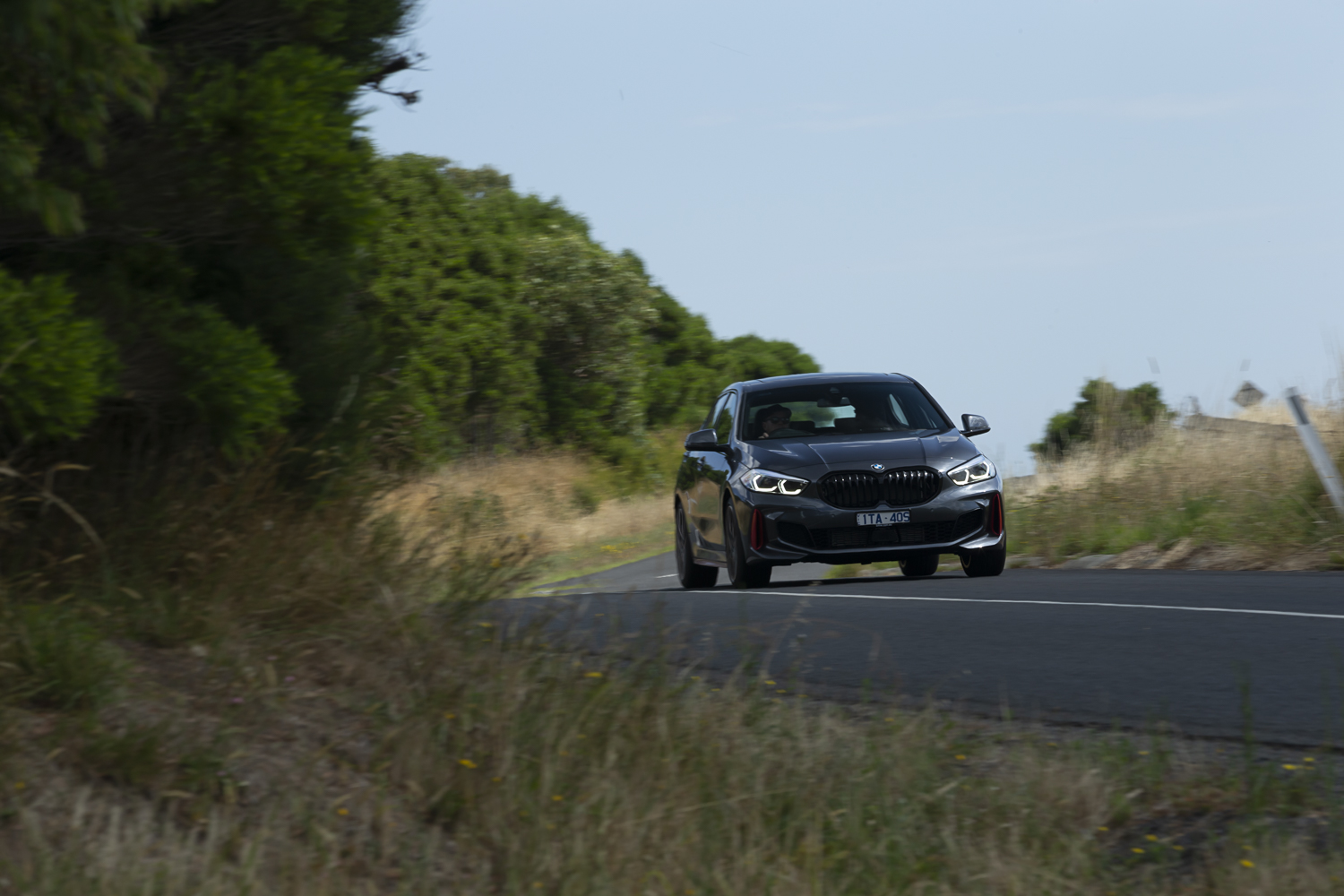
It’s all about the front 18-inch hoops doing less at once and not overwhelming the front axle. For instance, a much tighter line than the GTI is used out of Honda, with no drifting to the outside kerb, so that traction can be gained in a straight line.
On long-radius corners where squaring off doesn’t really work, the 128ti struggles. Exiting Lukey Heights, a section where the outside front is heavily loaded for a long period of time, the BMW is 13km/h down on the GTI. Through Southern Loop the BMW drifts out to a much wider line than the VW, with the GTI’s sorted front end allowing it to hug the apex much tighter than the BMW.
Ultimately, the track time and data gleaned from it shows that there is promise in the BMW 128ti platform. All the judges remarked that it was more fun on track than they’d expected, with a strong straight-line turn of pace impressing. Harnessing that and putting it to the ground is the next frontier.
Your car’s suspension is generally out of sight and out of mind, but it plays a crucial role – doing everything from ensuring the wheels stay connected with the road to stopping the car from shaking to pieces over rough surfaces.
As well as smoothing a bumpy ride, it also helps steering by absorbing lateral forces that make the car want to roll.
Suspension comes with two basic components – springs and dampers.
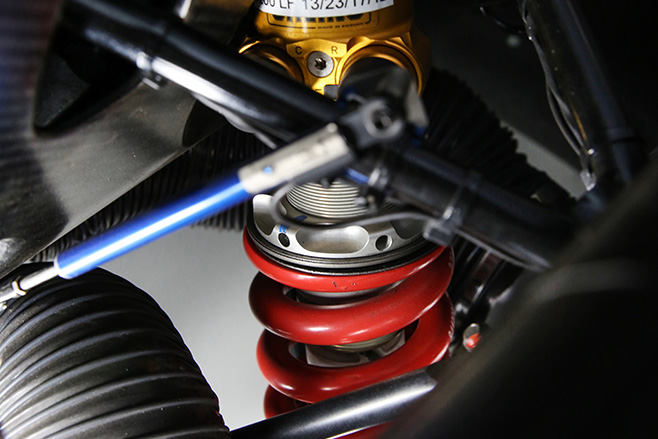
Suspension components
Springs
There are three types of spring – coil springs, leaf springs and torsion bars.
Most modern cars have coil springs, while older cars and many four-wheel-drive vehicles have leaf springs, which are layers of metal connected to the axle that flex under the weight of the car.
The torsion bar, meanwhile, is a length of metal rod that links the car body to the suspension lower link. It twists to absorb bumps and then returns to its original position.
Dampers (shock absorbers)
Dampers, commonly known as shock absorbers, cushion and protect the chassis from the jarring force caused when a wheel hits a bump and prevent the springs from continually bouncing. They also push the wheel back to the road surface.
A damper is a piston filled with oil that separates the chassis from the wheel. When the car hits a bump the piston pushes into the casing and is slowed by the oil, which flows into another chamber as it’s compressed.
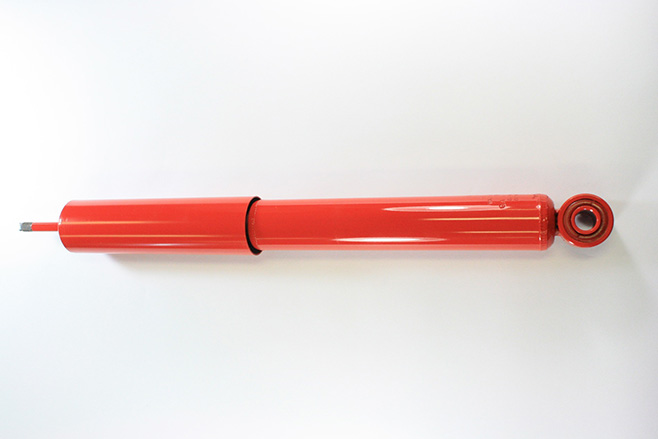
This flow resistance can be altered by changing the size of the hole, which is called the damping rate. The wider the aperture, the lower the resistance or damping rate, which means a softer ride.
A smaller hole means a firmer ride which improves handling at the expense of comfort. You may have noticed this difference if you’ve driven a car with adjustable damping modes, such as normal and sports suspension modes.
Suspension types
Springs and dampers are the basic suspension components that, along with other parts, are used to form various types of units used on different cars. Many vehicles have different suspension setups for their back and front wheels.
Non-independent suspension
Non-independent (dependent) suspension is where the left and right wheels share a single, solid axle. It’s still common with rear suspension on cars and still found upfront in trucks. The problem with non-independent suspension is the jarring is felt across the entire rear axle if one wheel hits a bump and it’s not great with preventing body roll.
Independent suspension
As you’d expect, each wheel is independent of the other which means any jarring is contained to one side or wheel. There are different types of independent suspension systems in modern cars, the most common of which are listed below.
MacPherson Strut
This is a very common front independent suspension system because it’s effective and simple.
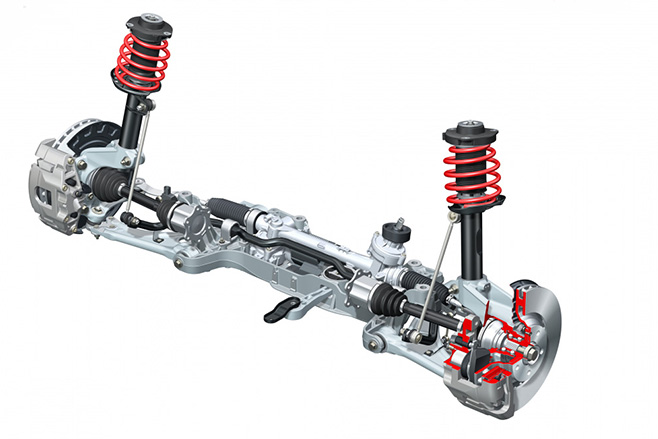
It combines a shock absorber and a coil spring into a single strut to provide a more compact and lighter suspension system that is particularly useful for front-wheel drive vehicles.
Double wishbone suspension
Another common front suspension type, double-wishbone suspension is also known as an A-arm and typically uses two wishbone-shaped arms with two mounting positions at the frame and one at the wheel.
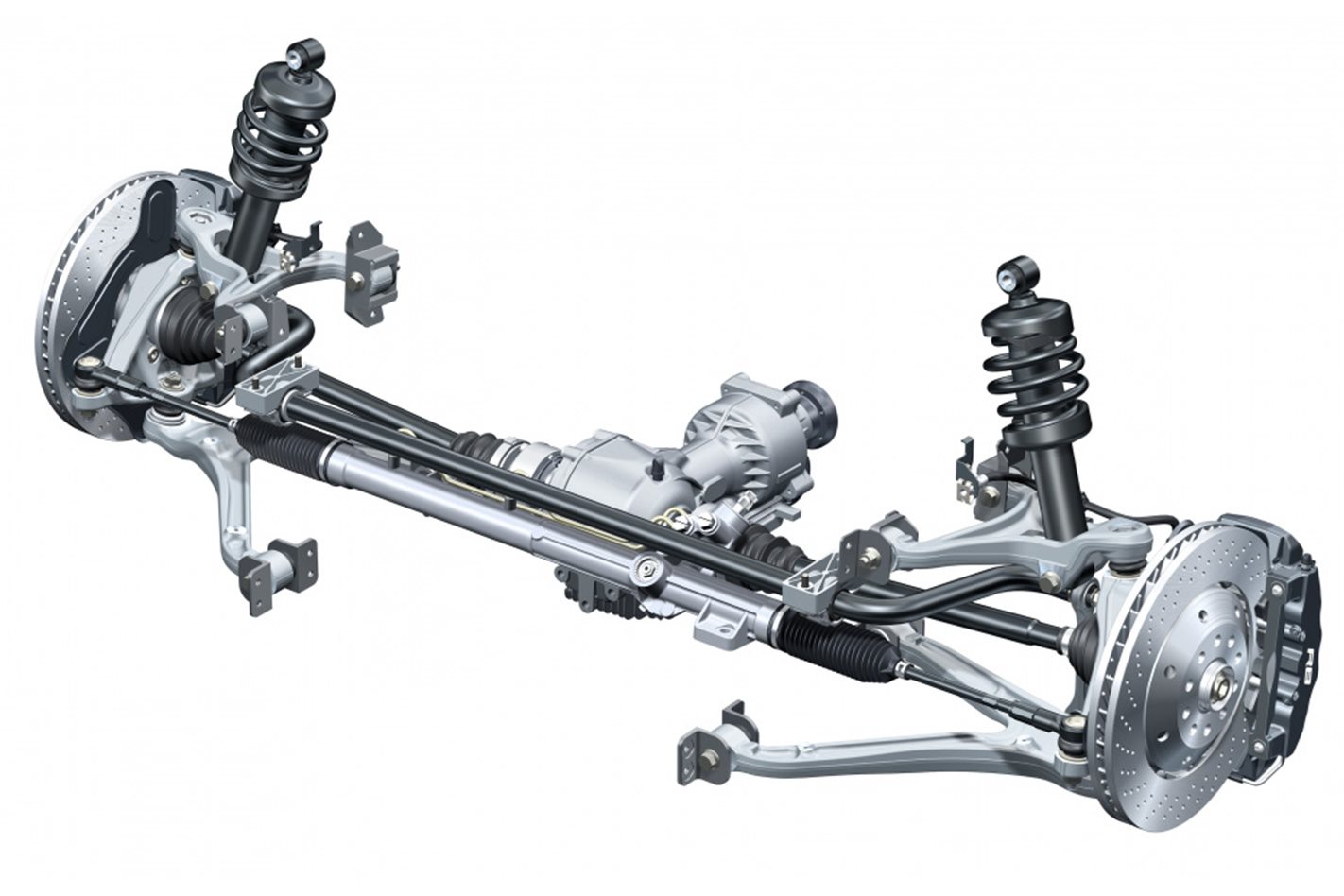
The coil spring and damper are on a strut linked to the bottom wishbone and chassis. Double-wishbone suspension helps reduce roll and is common on larger cars.
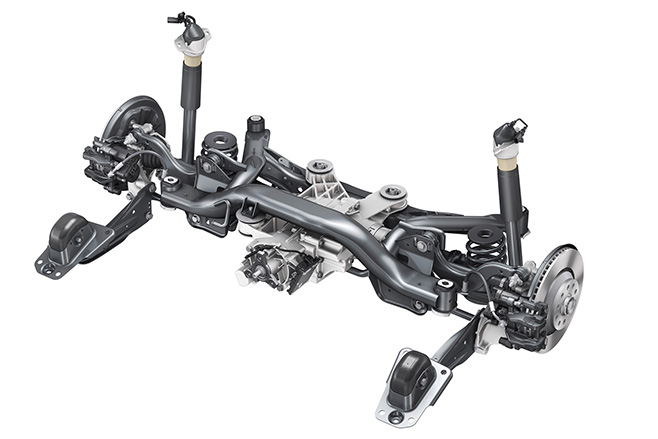
Multi-link suspension
This uses three or more lateral arms and one or more longitudinal arms which can be angled in any direction allowing for a better compromise between ride and handling. These are more likely to be used on performance cars.
Independent rear suspension
The above front independent systems can be found on the rear axles. Rear independent suspension is simpler because the wheels aren’t connected to the steering rack.
All-round goodness. By amalgamating virtues in design and execution while barely putting a tyre wrong, Volkswagen’s 48-year-young Golf nameplate has risen to COTY’s top spot three times in the event’s storied history. And by largely sticking to its well-worn and inimitable formula, the new Mk8 appeared well-armed to scale the competitive heap as generations one (1976), six (2009) and seven (2013) had previously.
The Life, repositioned as entry grade for MY22 at $34,250, flies the Golf torch into the latest COTY battle as the value-laden variant and perhaps Wolfsburg’s iconic small hatchback in its purest concept. Runs on the board in the lead-up saw the Life dispatching the popular Mazda 3 and Hyundai i30 in a three-way comparison (Wheels, January ’22).
Further, the base grade would, in 2021, draw deeper praise in review than its more exalted GTI sibling could muster against their respective competitive sets.
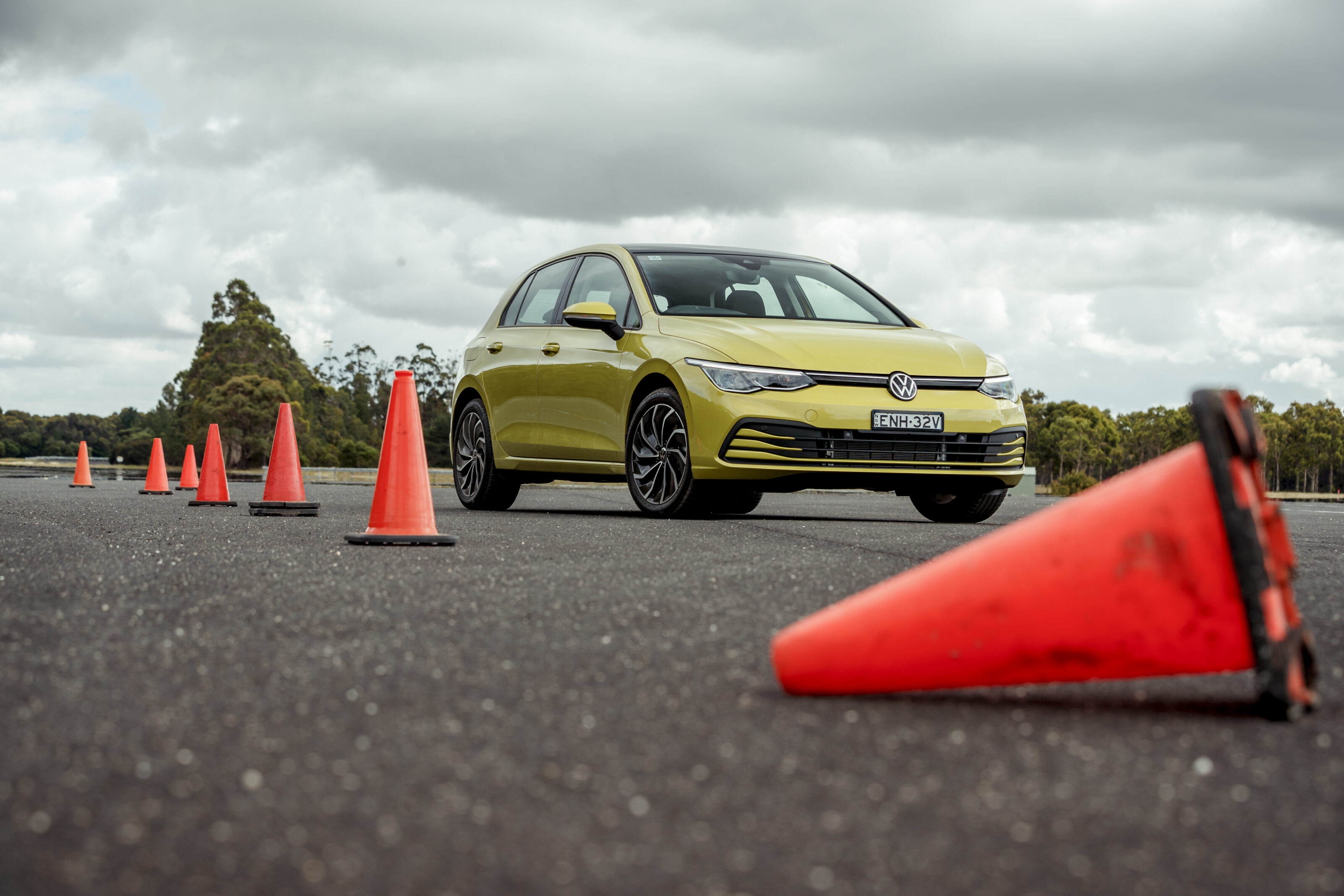
A new generation, a fresh face and a shake-up with its newly streamlined approach to cabin design are notable highlights, none meddling much with Golf’s tried, true and familiar elements central to its wide-ranging appeal.
Still, it’s established early in COTY rigmarole, during the walkarounds, that much of what’s going on under Mk8’s slicker facade is largely carryover, crucially its 1.4-litre engine in a familiar 110kW and 250Nm guise, as well as the MQB fundamentals that did its Mk7 forebear many favours in victory a long nine years prior.
“In some ways, it’s really a Golf seven-point-five-point-five,” opined Dylan.
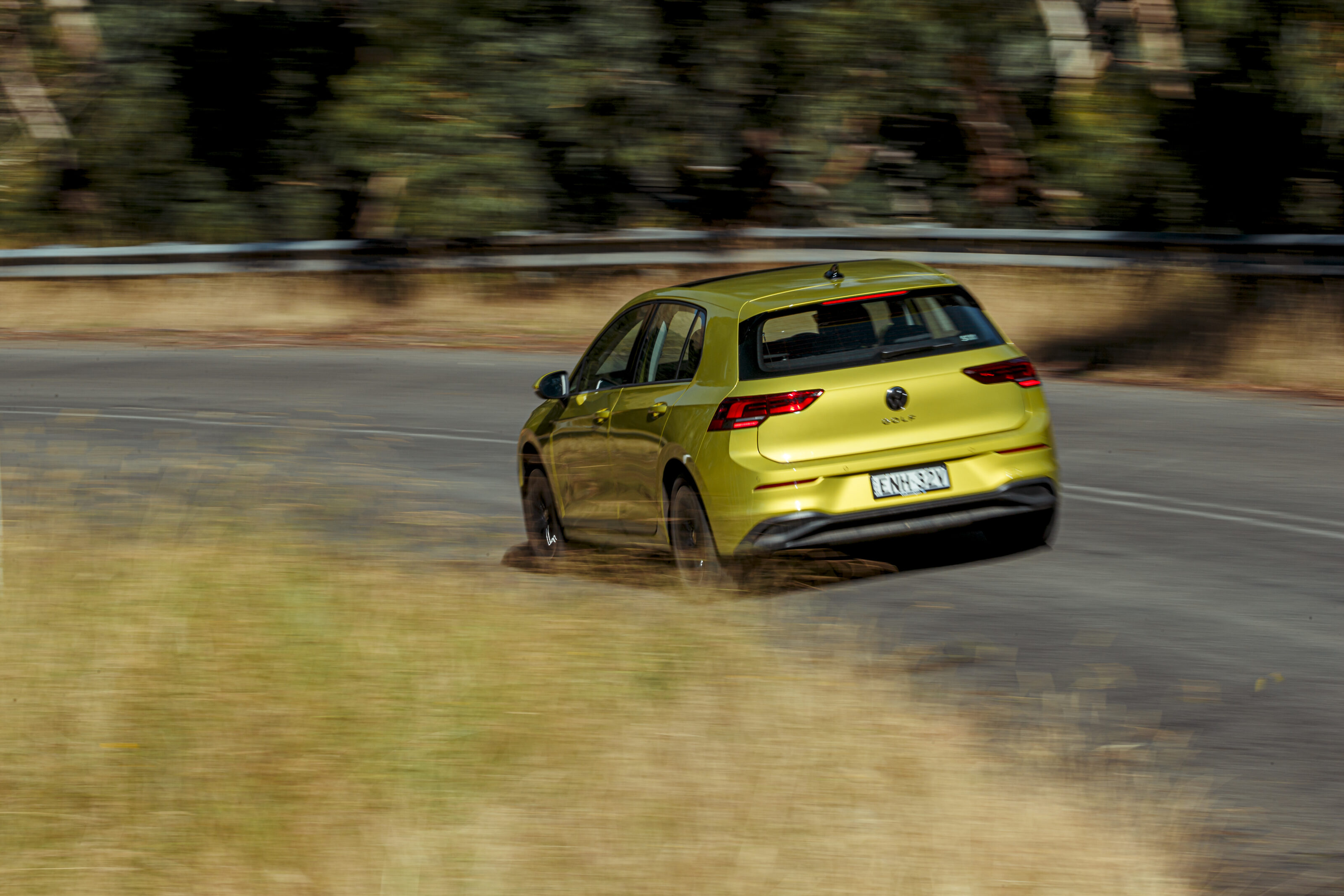
Indeed, the shift from Mk7’s dual-clutch transmission to now a torque-convertor automatic, while noticeably improving drivability and refinement, marks perhaps the most significant change and ultimately most tangible improvement. For a new model, there’s little else in the way of mechanical or technological advancement under what still remains a largely familiar skin.
“Has Golf design really changed, ever?” observed Richard.
Dan was a little harder on Mk8, charging that styling has “taken a step back from seven and seven-point-five.”
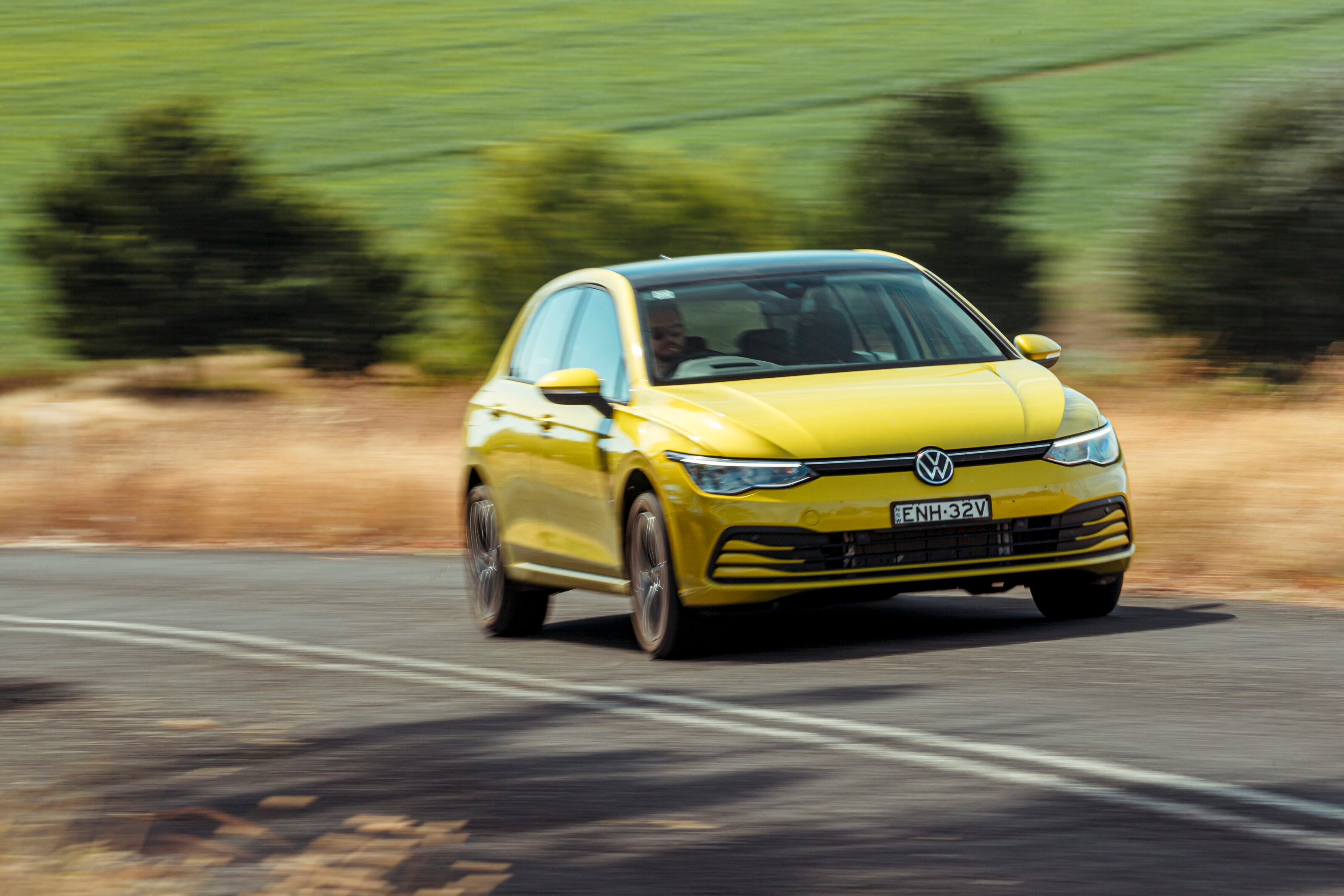
In fairness, exterior design is an area where Volkswagen clearly isn’t keen to mess too much with success. “The company knows its customers,” said Richard. While the lack of design evolution didn’t exactly win judges’ favour, areas changed – headlight look, for one – weren’t deemed much of an improvement either.
Equally, the new minimalist cabin theme – Golf’s showpiece hung with conspicuous digital window dressing and festooned with strip-style switches and knobs – drew mixed feedback from the judges.
“The Spartan dash layout looks great, but the approach to the user interface has impacted functionality detrimentally,”Dan noted. “The HVAC controls are fiddly and don’t illuminate at night.”
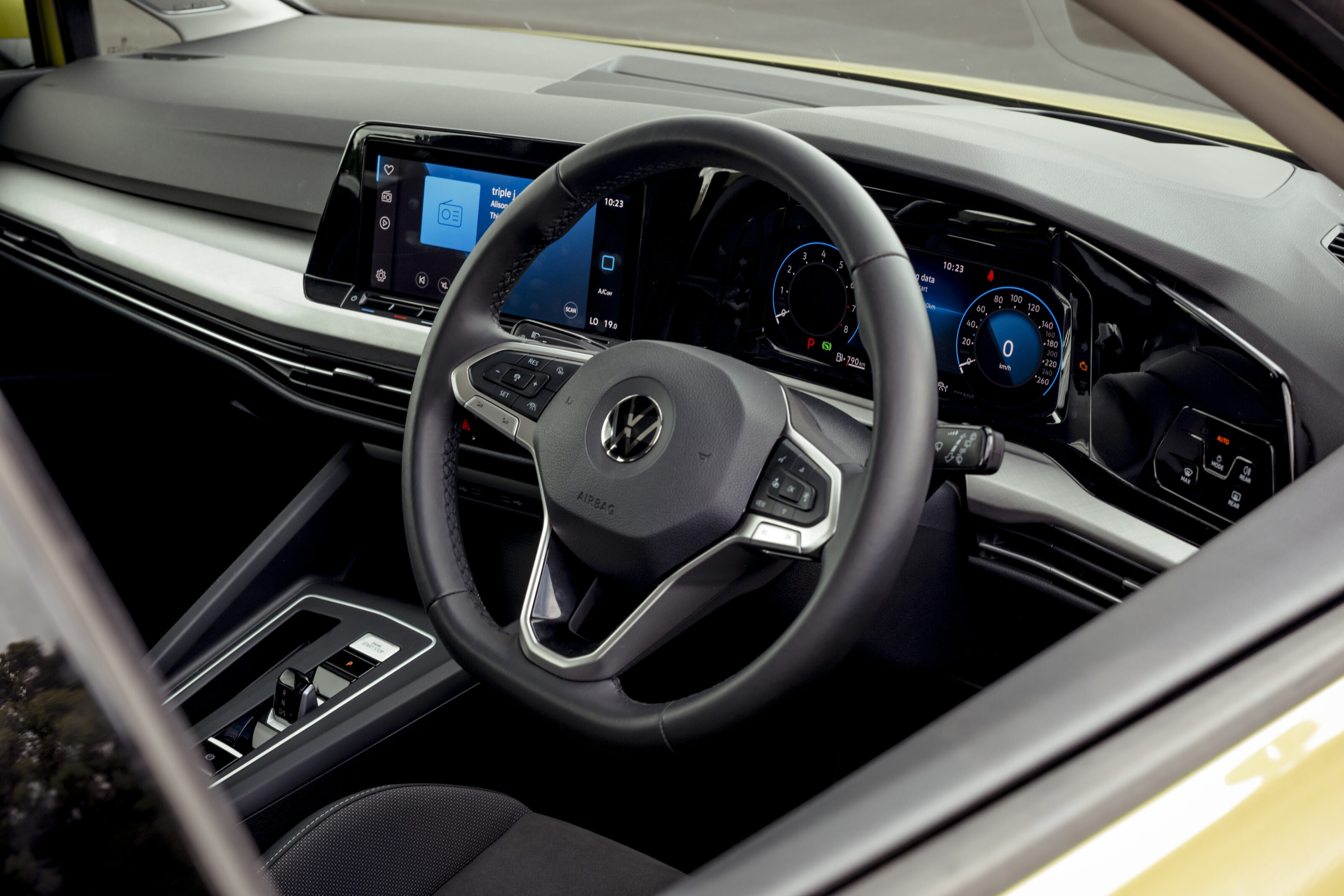
“The interior is slick if bordering on austere,” Richard observed. “Screen graphics are impressive if somewhat cryptic and you really need to get familiar with the systems before embarking on a journey.”
“The evergreen Golf once again transcends the mainstream class” – Jez Spinks
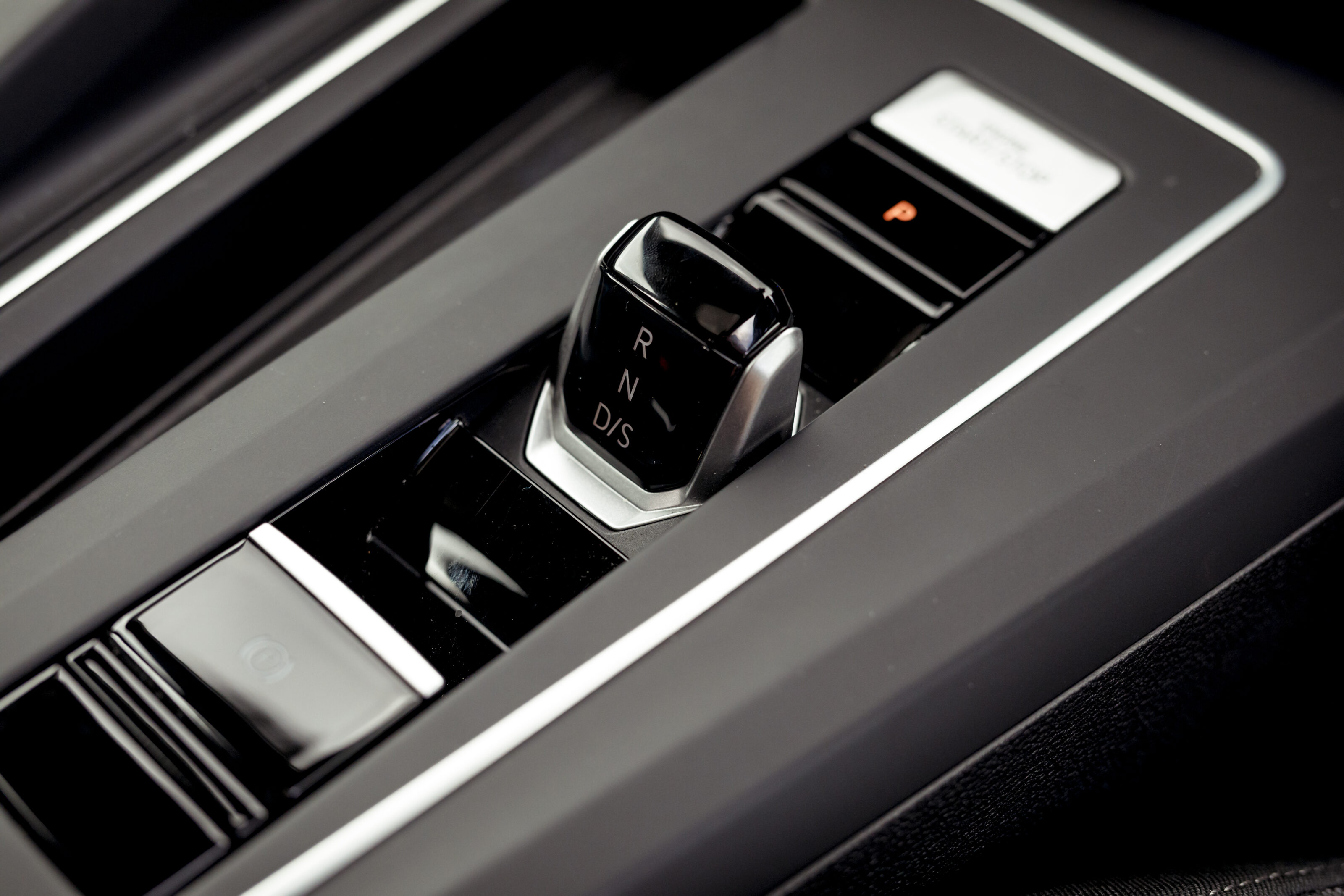
The neat transmission switch and park button array drew praise for quick one-touch convenience, but the user interface’s reliance on buttons and sliders copped criticism for being too clumsy and distracting on the move. Despite novelty factor, the new approach seems ill-fit for a model linage with a reputation largely built on well-resolved interior execution and ergonomics.
Despite this, the Golf remains a benchmark for packaging smarts, the judges applauding Mk8 for its spaciousness and practical boot space.
Then, on the move – thrust into the AARC proving ground amusement park – the Volkswagen delivered large. No matter how it’s driven, the Golf presents a certain synergy in its powertrain and chassis that’s wonderfully resolved. There’s maturity in the Golf’s manner and depth in its execution that truly deserves the ‘quintessential contemporary hatchback’ mantle, its pleasingly lithe and alert nature the antithesis of COTY’s many heavyweight hitters.
Ride and bump control are wonderfully measured, even in Life’s basic passive tune, with its organic engagement boosted by beautiful steering clarity and uncanny balance, be it on sealed or broken surfaces.
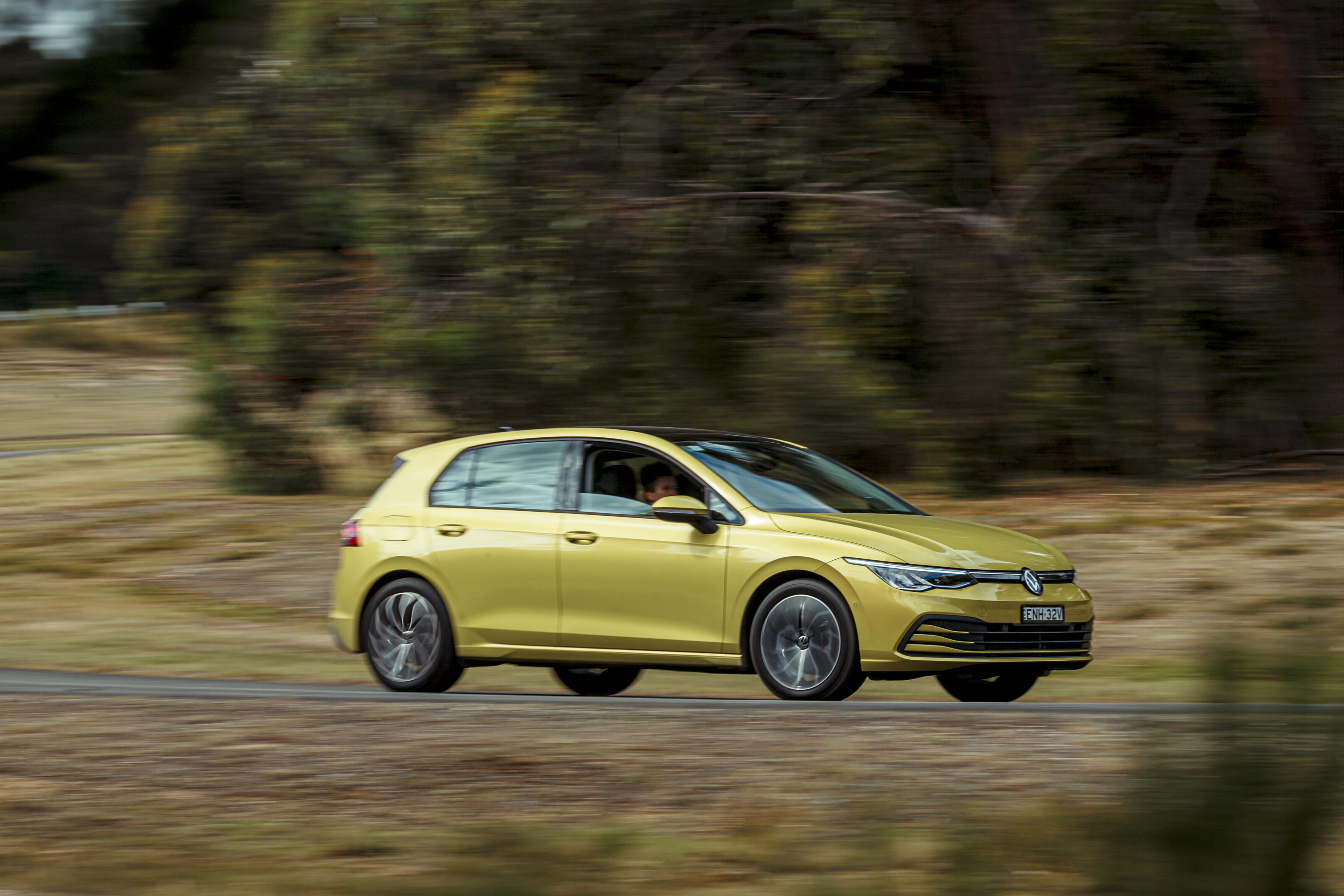
“It’s a superbly polished small car,” Alex said. “The steering is light, there’s great ride compliance and the ESC calibration is quite good.”
Its powertrain, too, is obedient and resolved, the turbo four-pot characterful when pushed, and matched perfectly to the package. Press on and there’s a real warm-hatch vibe to its dynamic responses and how it engages the driver, piling on an innate and ingrained fun factor that is truly surprising for a device that, for all appearances, promises virtually no sporting pretension whatsoever.
“The 1.4 turbo offers all the power and torque this grade of Golf needs,” Jez reckoned, an opinion shared unanimously by the judges. “Fizzy and responsive,” added Alex.
While Golf’s all-round goodness landed its guernsey for COTY competition, it’s almost entirely the driving experience that earned graduation to finalist status. And, thus, dispatching a quarter-mil-as-tested, new-school Porsche Taycan EV in the process. That’s quite the accolade in and of itself.
In the finalist road loops, judges felt that the Golf continued to punch well above its weight in the company of a pack of pricier and more elaborate machinery. Even driven without much in the way of sympathy, real-world consumption simply refused to sail north of the mid-six-litre mark, which was properly impressive.
The trade-off is that, in grander touring tasks, the modest turbo 1.4-litre engine does need to give its all on long uphill sections when the car is fully loaded.
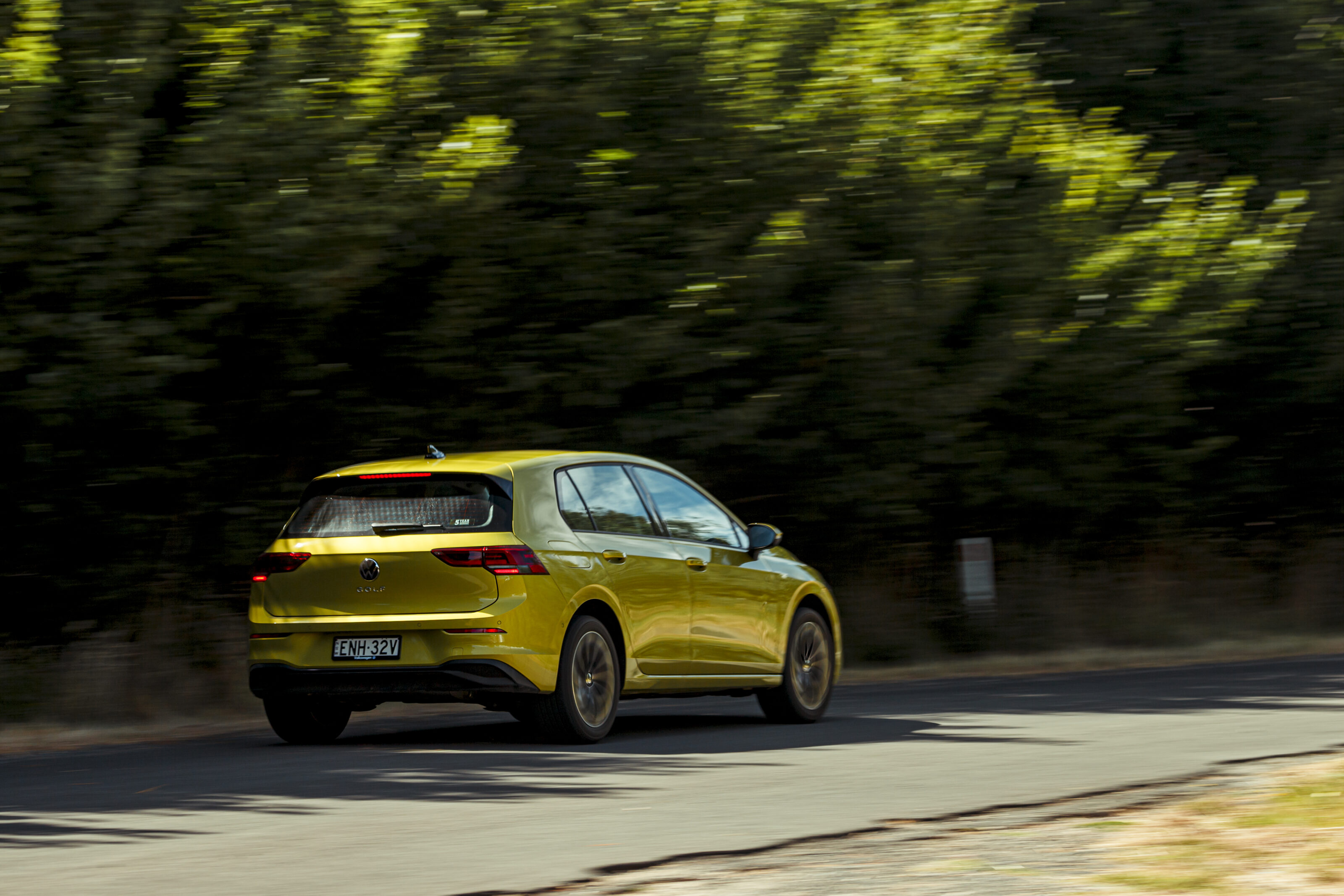
“It has a bit of magic about it that’s lacking in a lot of the other COTY competitors,” offered Dylan. “It casts a bit of a spell on you with the way it drives.”
But in Australia, at least, we don’t see Golf at its most advanced, at least in terms of powertrain tech.
“It would be nice to see some of the hybrid powertrains in Europe offered locally,” Jez commented.
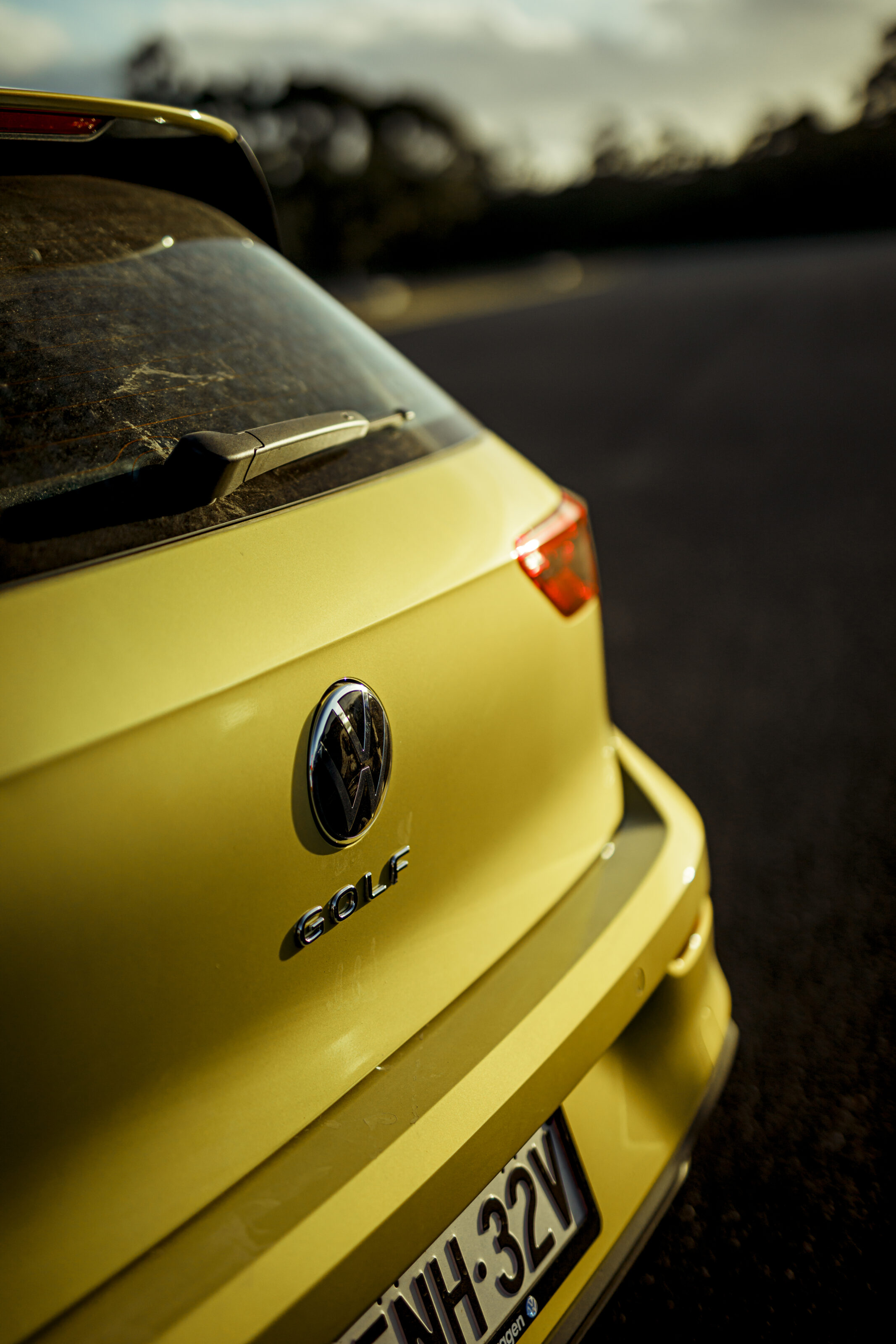
Despite its fine execution and efforts to freshen and sharpen its appeal in its eighth generation, a recurring topic amongst the judges was whether Volkswagen is now merely rolling its arm over with its internal combustion wunderkind now that it’s investing so wholeheartedly in an electric ID3 future.
“The biggest question is what happens to Golf if ID3 takes off?” Dylan posed.
And, by extension, the judges did ponder throughout the COTY event as to whether Volkswagen’s Golf concept, now as firmly minted as any motoring icon, is approaching its twilight faster than many who know and love it might think.
