
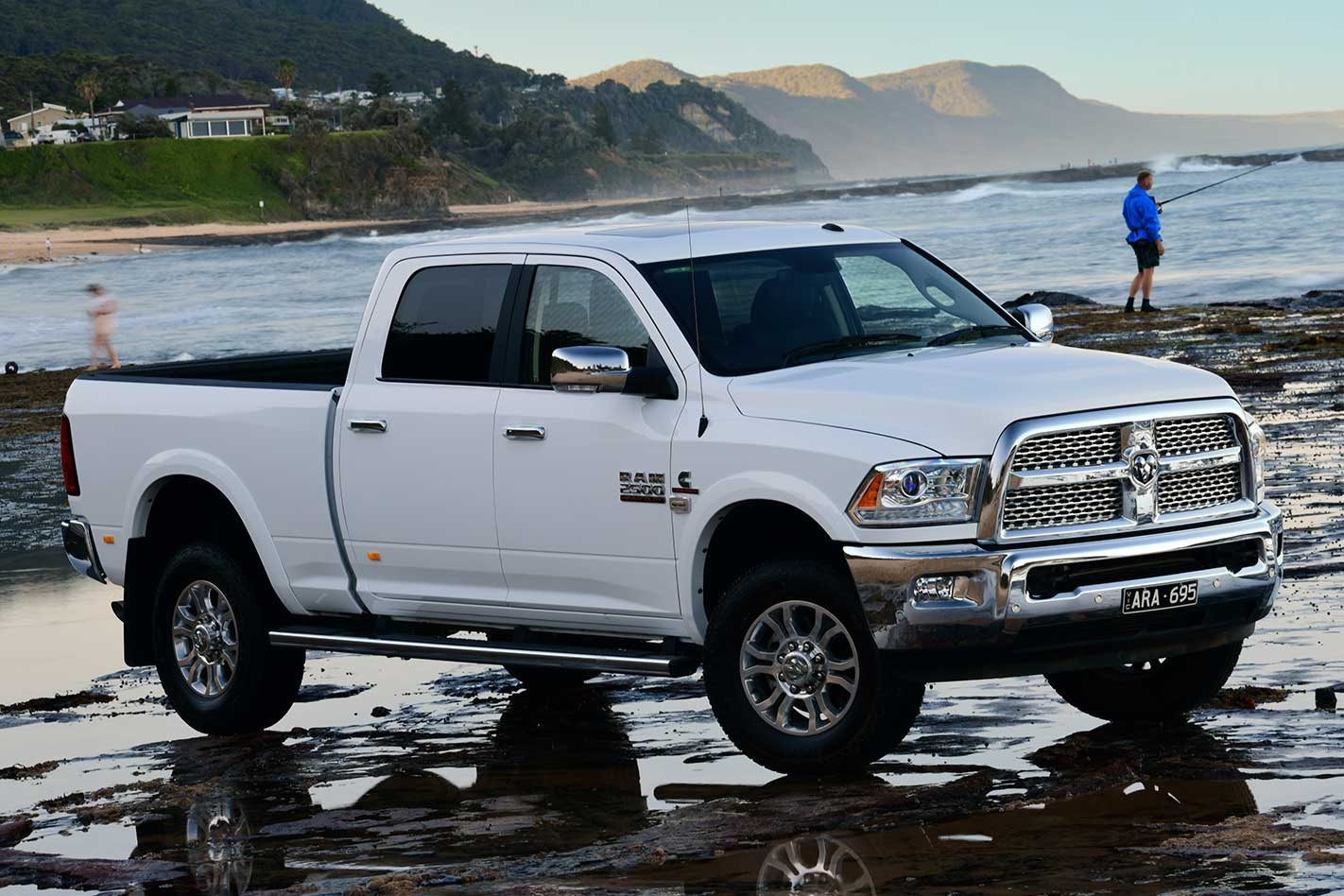
Ram is recalling its 2500 and 3500 utes over an issue with its Anti-Lock Brake System (ABS)
The problem affects 644 examples of the vehicles built between 2019 and 2022.
According to the Department for Infrastructure, which issued the notice, the Electronic Stability Control (ESC) may fail without warning, which could result in a loss of vehicle control and cause an accident.
A list of VINs is available here.
Owners of affected vehicles should immediately contact an authorised Ram dealer to have the work carried out free of charge.
Alternatively, Ram can be contacted on: 1300 681 792.
In the history of the Wheels’ Car of the Year award, you’ll look long and hard to find a brand that’s done what Kia has managed: made such a short and steep ascension from outlier, to midfielder, to victor.
Keep in mind that even in Wheels’ comparison tests, Kia’s first victory didn’t come until the launch of the third-generation Sorento in 2015. As for COTY, it took until 2018 for a Kia to make it to the second round of the testing process, when the seductive but slightly flawed Stinger advanced beyond the proving ground.
But given the Hyundai Ioniq 5’s second-placed finish at COTY 2022, it’s impossible to ignore to joint impact these two cars, and their shared E-GMP platform, have had not only on the Wheels award, but on the EV segment more broadly.
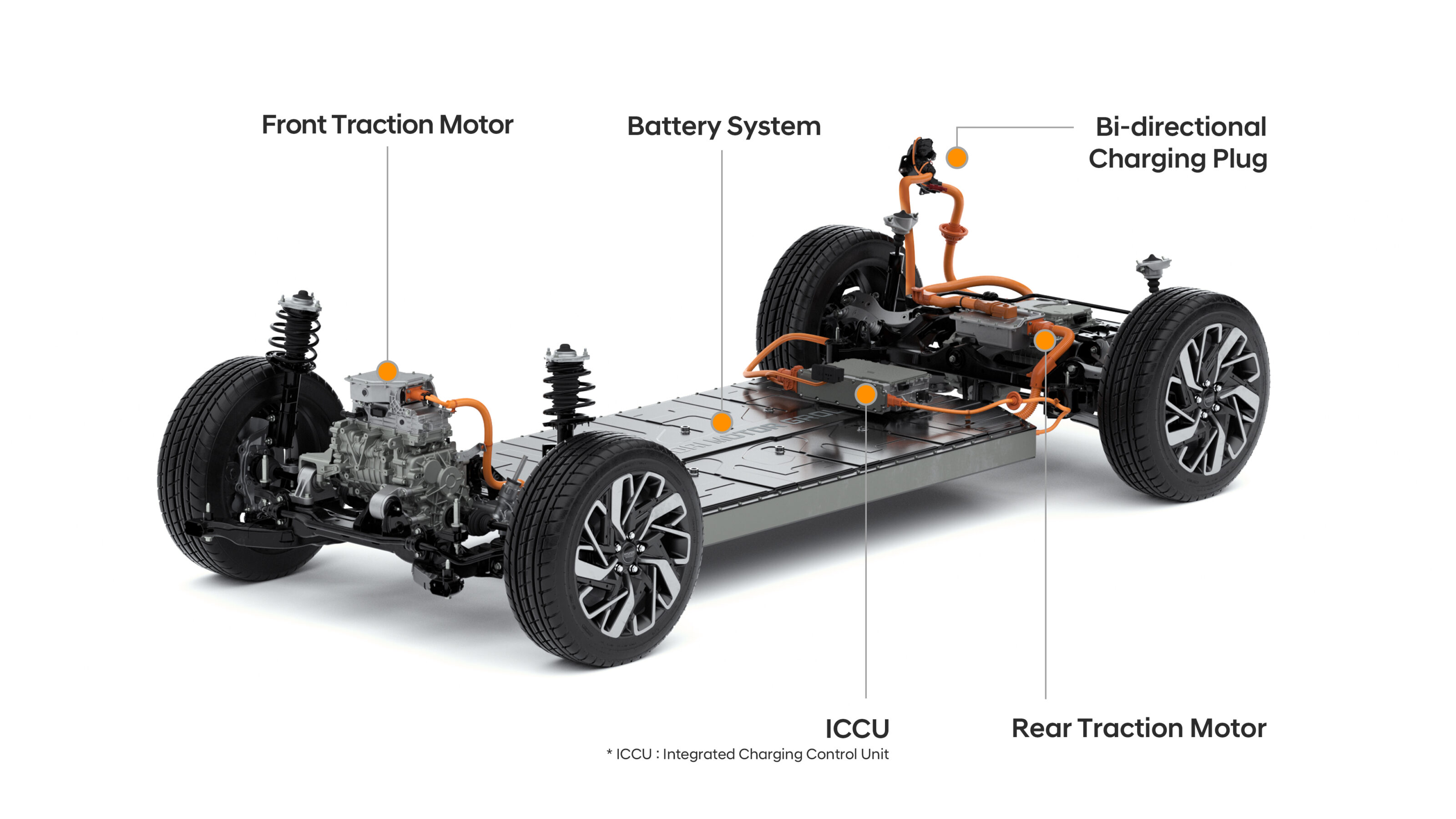
Consider that Toyota’s first model on a dedicated EV architecture – the bZ4X – is still months away from global launch. Only a few years ago it would have seemed inconceivable that Kia would have managed such a crucial jump on its leviathan competitors.
There’s no question that past years of heavyweight recruiting by the Hyundai Motor Group (HMG) has paid big dividends, and had a major impact on Kia. In fact it seems this is a key point that goes some way to explaining the rise and rise of the Korean giant. Sometime ago, veteran auto executive heavyweight Bob Lutz was asked to explain the success of Kia and Hyundai, and how the Korean automotive management culture differed from that of the Japanese.
“Japanese executives, in my experience, often get tangled up in history, tradition, and the supposed superiority of their culture,” said Lutz, “but I’ve found Korean leaders to be bold, tough, gregarious, and open to new ideas. The Koreans are not hung up on their culture: They hire the best, Korean or not. It’s their strength. They accept risk.”
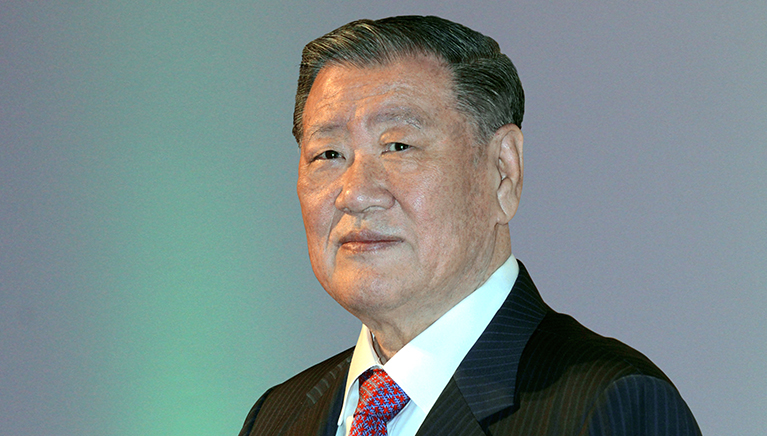
Hiring the best has been a visible key component of Hyundai and Kia’s success, a move championed by former Chairman Mong-Koo Chung, whose father Chung Ju-Yung founded Hyundai group as an engineering and construction company in 1947. Mong-Koo joined the company in 1970, three years after Hyundai Motor Co was established, was chairman of Hyundai from 1996, and then added Kia to his portfolio, too, after Hyundai bought a 51-percent chunk of it in 1998 to form today’s parent company, Hyundai Motor Group (HMG).
It was Mong-Koo who demanded a focus on quality assurance and oversaw the introduction of industry-leading new-car warranties, a strategy that no doubt helped propel HMG to where it is now: the fourth-largest car maker (by volume) on the planet.
Chung Ju-Yung’s establishment of the company in the aftermath of World War II is perhaps where the willingness to take calculated risks that Lutz was talking about came from: it seems he handed this character trait down through generations.

It was Kia co-CEO Eosin Chung (grandson of Ju-Yung and son of Mong-Koo), who, in 2006, made the bold move of poaching German designer Peter Schreyer from the VW Group. Schreyer penned the Mark 4 VW Golf and the design-zenith Audi TT, yet it wasn’t entirely clear at the time why the company selling cheap runabouts like the original Rio needed a rock-star designer.
It was this sort of move that helped turn Kia (and Hyundai) from makers of price-led transport into manufacturers of cars people really want. Schreyer gave Kia a visual identity, with the ‘tiger nose’ now seen as a pivotal transition point.
Current head of design is 52-year-old Karim Habib, who oversaw the exterior of the EV6 in collaboration with HMG chief creative officer Luc Donckerwolke. Habib previously worked by BMW, where he penned the stunning CS concept of 2007 and the fifth-generation BMW 7 Series. He’s also done stints at Mercedes-Benz and Infiniti before joining Kia in late 2019.
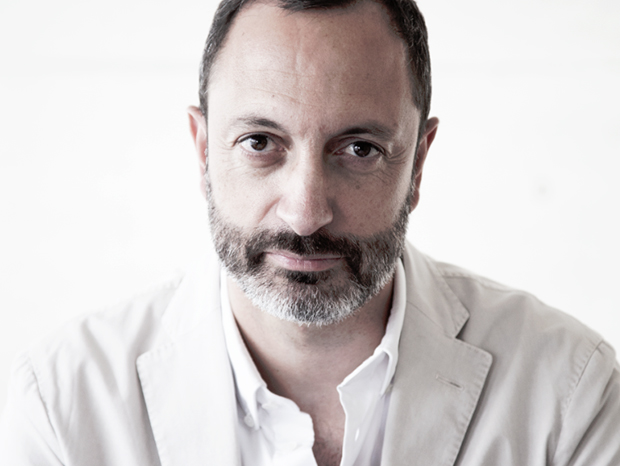
When asked about inspiration for the EV6’s striking exterior design, says Habib answered, “We wanted to strike a balance between contrasting elements – the sportiness of a fastback, the compact stance of a hatch and maybe even the raw strength of a rally car.”
Sometimes this sort of stuff from designers can come off as little more than lines fed to them by the marketing department, but in this instance we agree.
Then there’s the superbly honed open-road dynamics of the EV6.
One key part of the Kia’s COTY win over the related Ioniq 5 was its Australia-specific chassis tune and the use of a new suspension technology from ZF Sachs called Sensitivity Damping Control (SDC).
According to Kia Australia’s ride and handling engineer, Graeme Gambold, the finished tune of the Kia EV6 represents a “step-change” for electric vehicles.
“Sensitivity Damping Control is basically a frequency-dependent rebound valve – so it doesn’t deal with piston speed, it deals with piston frequency,” Gambold told Wheels.
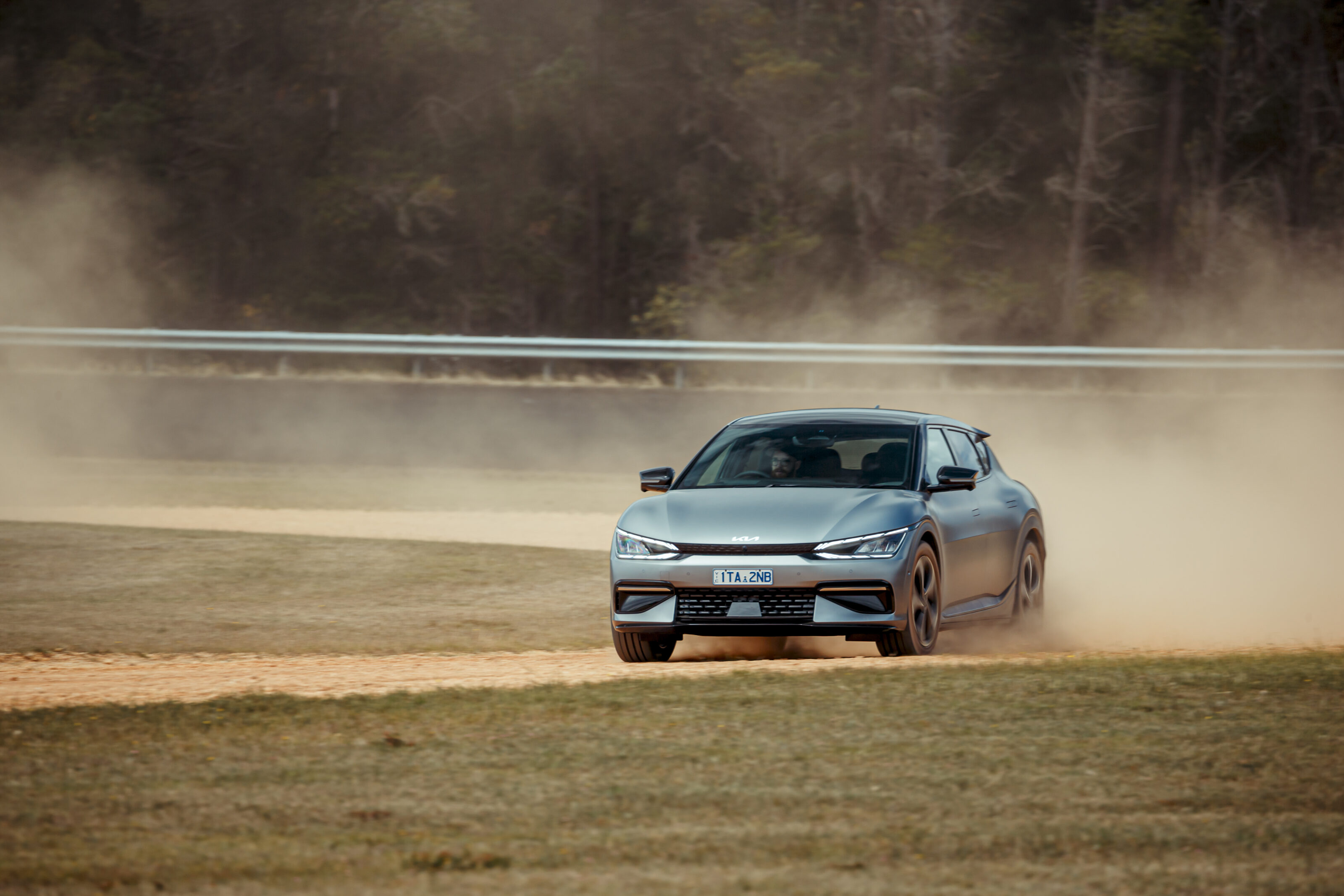
“It holds energy in a little energy bypass orifice, so when the car’s bouncing over a bumpy road, which we get in Australia a lot, it can control those large-amplitude body motions. In a two-tonne electric vehicle, that’s a lot of energy to control.
“It controls the energy by catching it. It’s a little bit like a Skyhook effect – you can have a lot of damping over a very big vertical rise, which an EV gets a lot of.
“Typically if you dampen for that, you lose your urban ride, but this shock absorber separates the two a fair bit so that we can recover some of that urban ride.
“As an engineer I know the challenges of controlling two tonnes worth of kinetic stored energy at the bottom of a big impact, and keeping the car’s dynamics in check and in control over country roads,” Gambold says.
Our back-to-back testing between Ioniq 5 and the COTY-winning EV6 saw this clearly demonstrated.
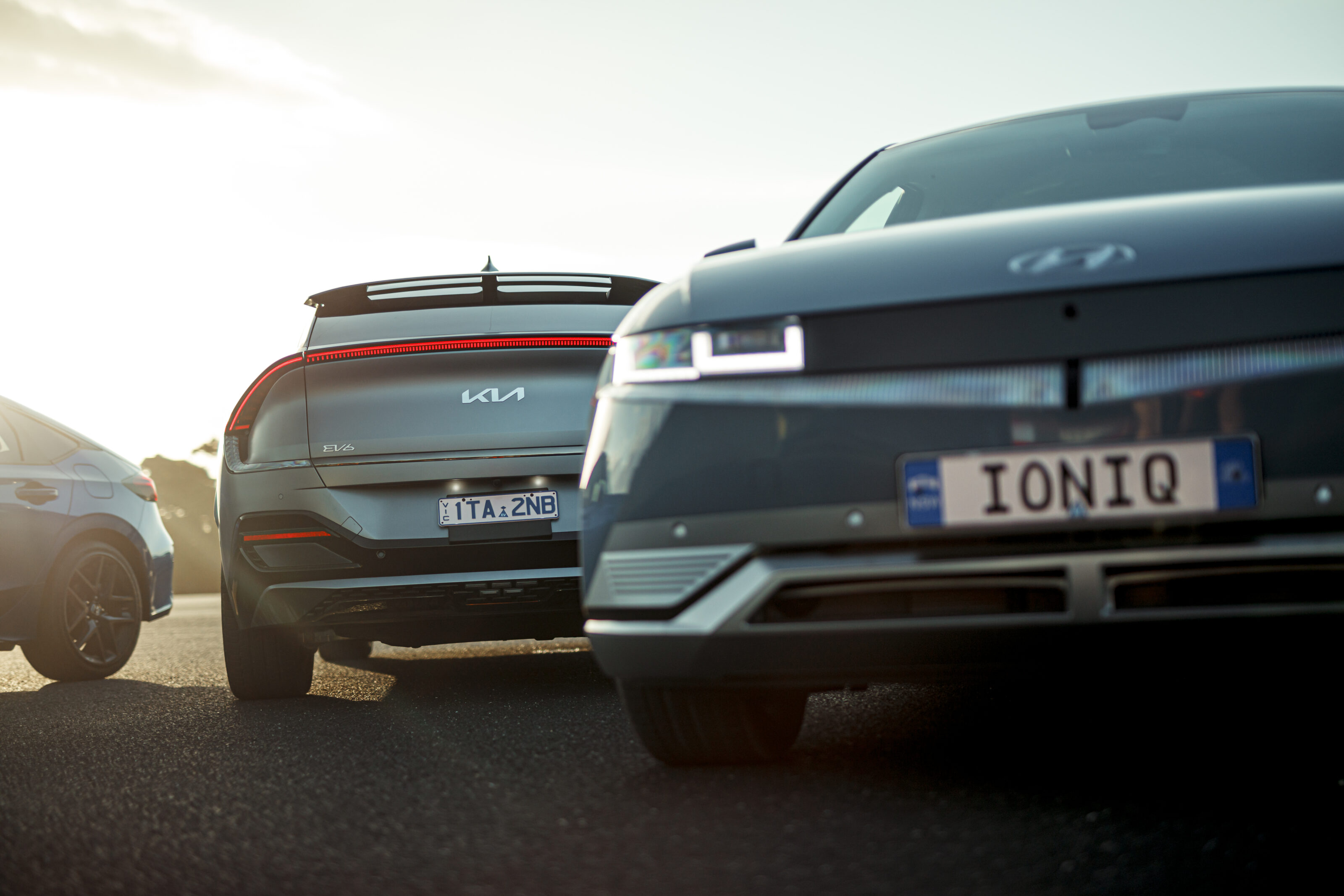
Of course, the current three-strong EV6 line-up doesn’t fully realise the performance potential that this EV will ultimately deliver. At a date still to be confirmed (but likely well into 2023) Kia will launch its electric flagship in the form of the EV6 GT, which pairsthe long-range 77kWh battery with more powerful electric motors making 430kW/740Nm combined.
Those outputs are sufficient to thrust the SUV from 0 to 100km/h in just 3.5 seconds and on to a top speed of 260km/h.
So, a Kia with comparable acceleration to a Porsche 911 Carrera S. It really is a brave new world. And one where Kia’s incredible transformation still has some scope to play out.
But for now read on to learn exactly why the remarkable EV6 is Wheels’ 2022 Car of the Year.
Kia EV6 wins 2022 Wheels Car of the Year!
Introducing the 2022 Wheels Car of the Year: the Kia EV6
It’s been a year of key releases for the Korean marque that brought three quality contenders to the fray in 2022. But its first ground-up electric vehicle, the EV6, is the genuine landmark model of the trio – and one that could well redefine the Kia brand from hereon in.
Not only is the EV6 Kia’s forward-thinking technical statement minted as an unabashed halo model; it demonstrates newfound levels of premiumness, build quality, refinement and luxury the brand has, to date, only hinted at.
Importantly, the electric newcomer’s core DNA promises to spearhead 11 new models moving forward, some undoubtedly more affordable and accessible, some more elaborate. New beginnings, then. But the EV6’s masterfully well-rounded showing at this year’s event bodes for an exciting future beyond the milestone it established today.
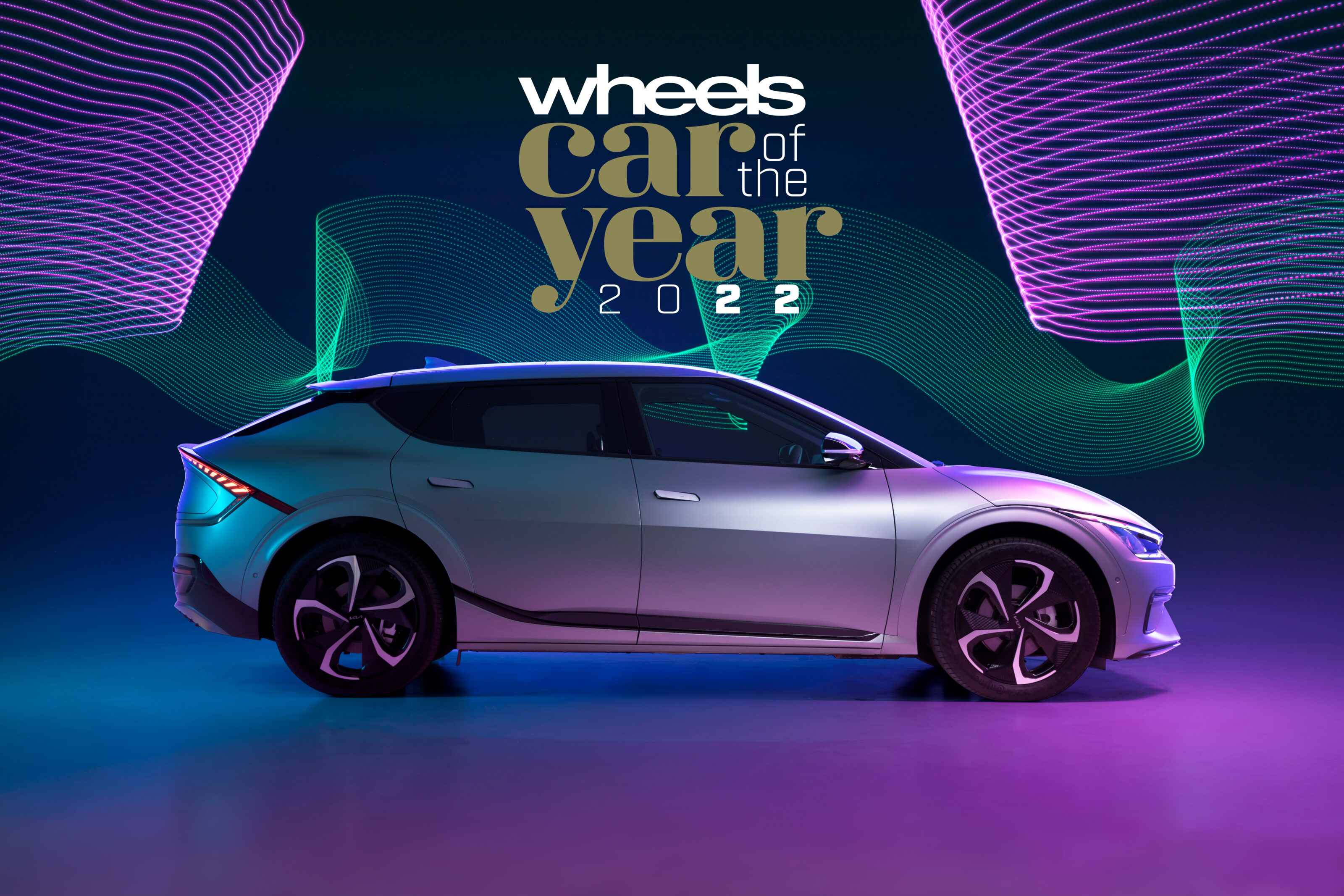
Further, as only the second fully electric winner in the award’s long history, the EV6 bottles the true, undiluted spirit of a proper COTY victor.
But it was a close call. And in more ways than one.
It’s no secret that corporate cousin Hyundai’s related Ioniq 5 has claimed many ‘best of’ accolades lately, though mostly in the absence of the fresh-faced Kia, whose local launch coincided with our three-way test last month. The EV6 came out on top in a result that arrived just prior to COTY kick-off.
The big debate was whether the GT-Line AWD, the flagship of the three-tier EV6 range, brought mixed blessings in match fitness for COTY’s new single-variant format. For pluses, the top-dog version offers full-featured fruitiness paired with the most potent 239kW and 605Nm outputs from its exclusive dual-motor, all-wheel drive package.
For minuses, its 484km advertised range is the slimmest of its home stable and, at $82,990, the EV6 fronted up seven grand pricier than its similarly underpinned Ioniq 5 ($75,900) competition.
Two discussions remained hot topics. As Jez considered, would EV6’s campaign been better served with a vastly more affordable ($67,990) and longer-range (528km advertised) entry-level, rear-driven Air version? And, further, were the Korean EV siblings-of-sorts close enough in make-up and execution to be considered inseparable twins, wherever they would collectively land, in the final standings?
Not identical twins, on the surface or below
Despite sharing Hyundai’s Electric Global Modular Platform architecture, on paper at least, the EV6 and Ioniq 5 are not equals. The Kia, for its part, brings an extra 14kW and quotes higher efficiency (16kWh versus 19kWh) with superior theoretical max range (484km plays 430km). Just five kilos separate them (2105kg v 2100kg), though the longer and lower EV6 has a 10mm shorter wheelbase sat on Kia’s proprietary suspension hardware and tune.
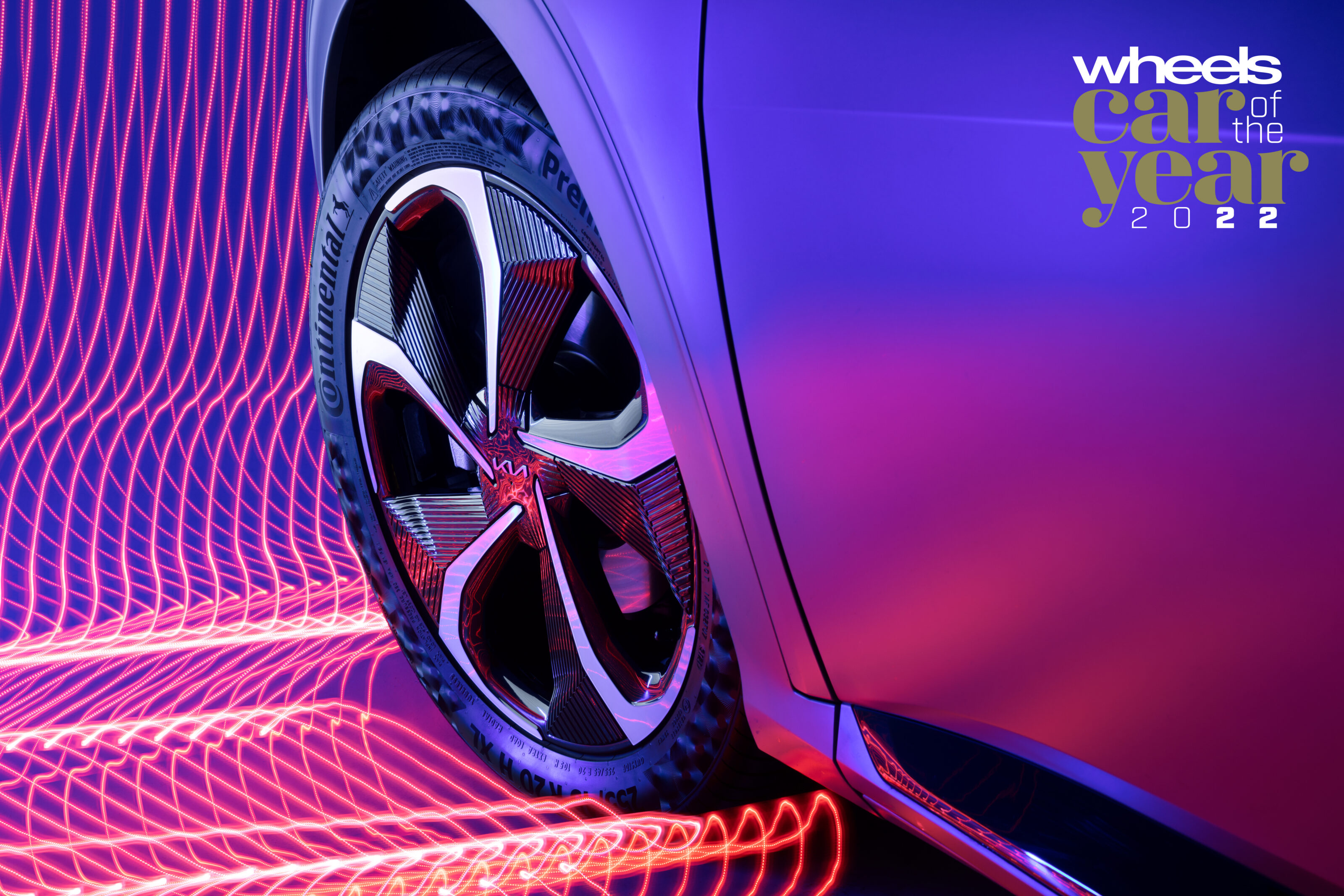
Initial walkaround assessment shook out more differences. Both Korean EVs offer similar 10-to-80-percent 350kW DC fast-charging in around 18 minutes and ‘quick juicing’ for 100km range boosts in around four and a half minutes.
But the Kia has the advantage of a seven-year warranty (versus five for the Hyundai) and there’s also the fact the Kia can be bought through a good old-fashioned dealership, rather than Hyundai’s online process.
Game on, then – every COTY challenger to itself.
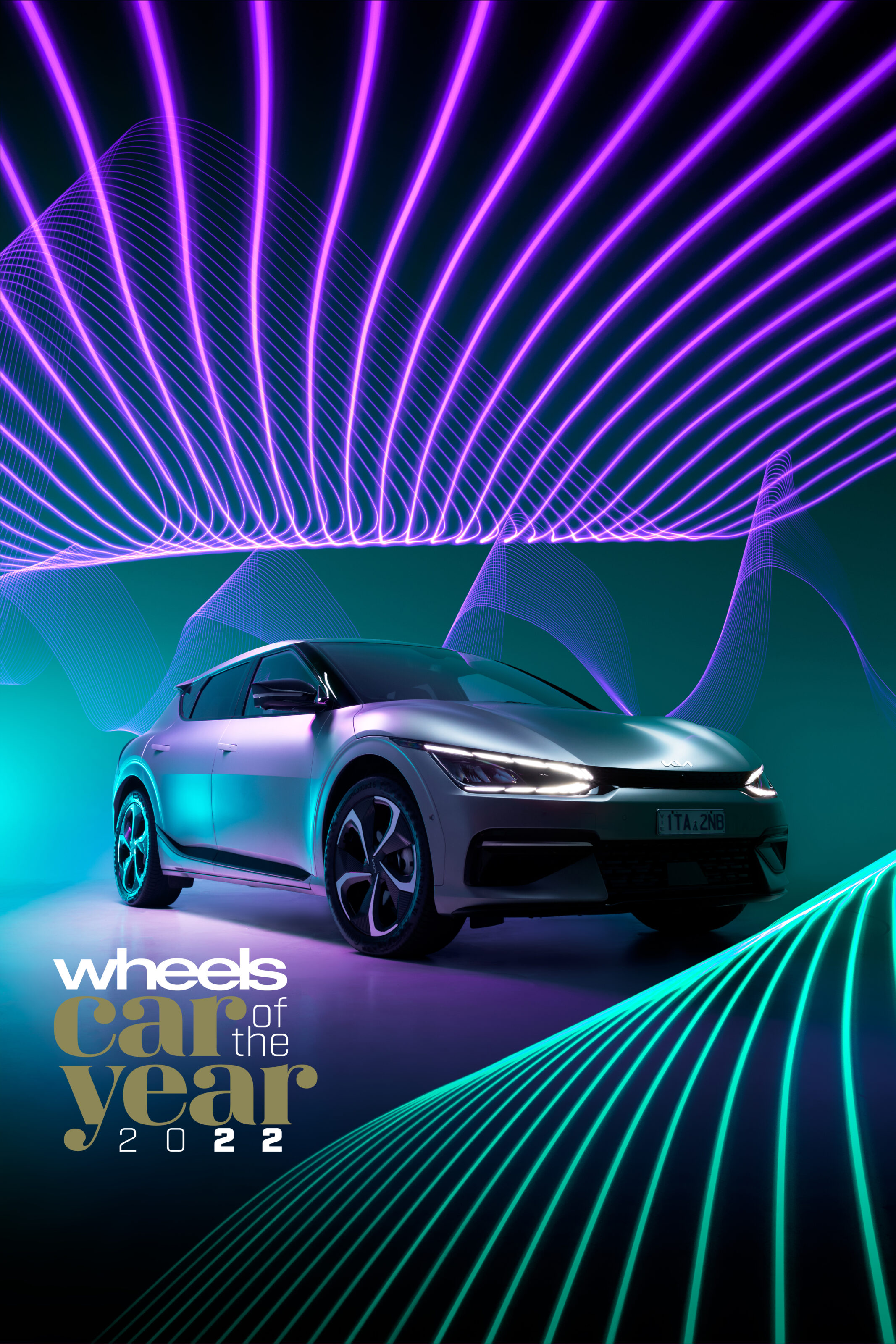
The EV6 seduces in the flesh. Beauty, eye, beholder, of course, though Kia brings an unashamedly futuristic theme with a certain restraint that mostly avoids some other EV rivals’ kitschiness and ostentation.
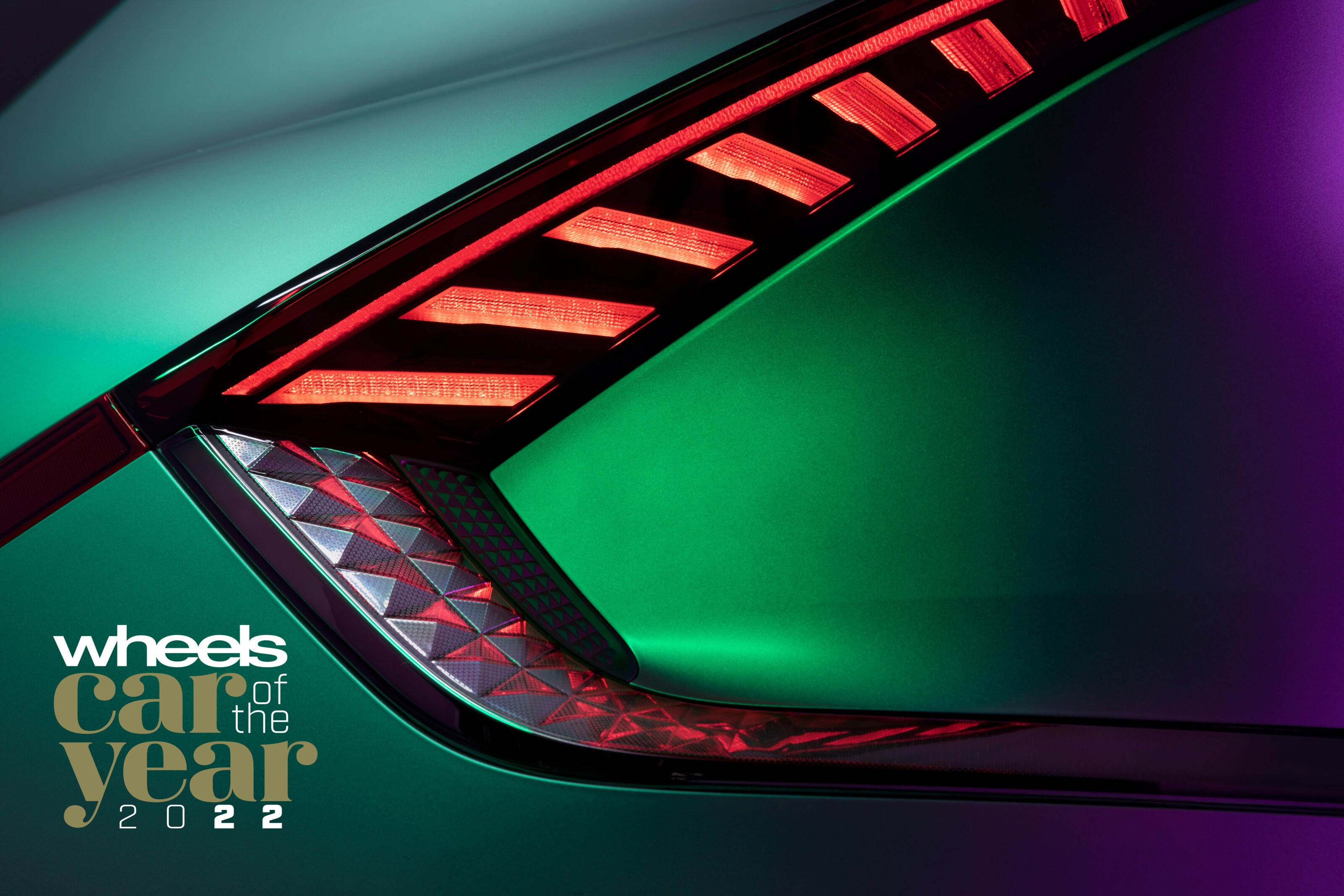
“It’s a very stylish exterior,” opined Richard. “A really contemporary mix of curves and crisp lines.”
Its interior also garnered high praise from the judges.
“Rocketship acceleration in a swoopy crossover body” – Richard Ferlazzo
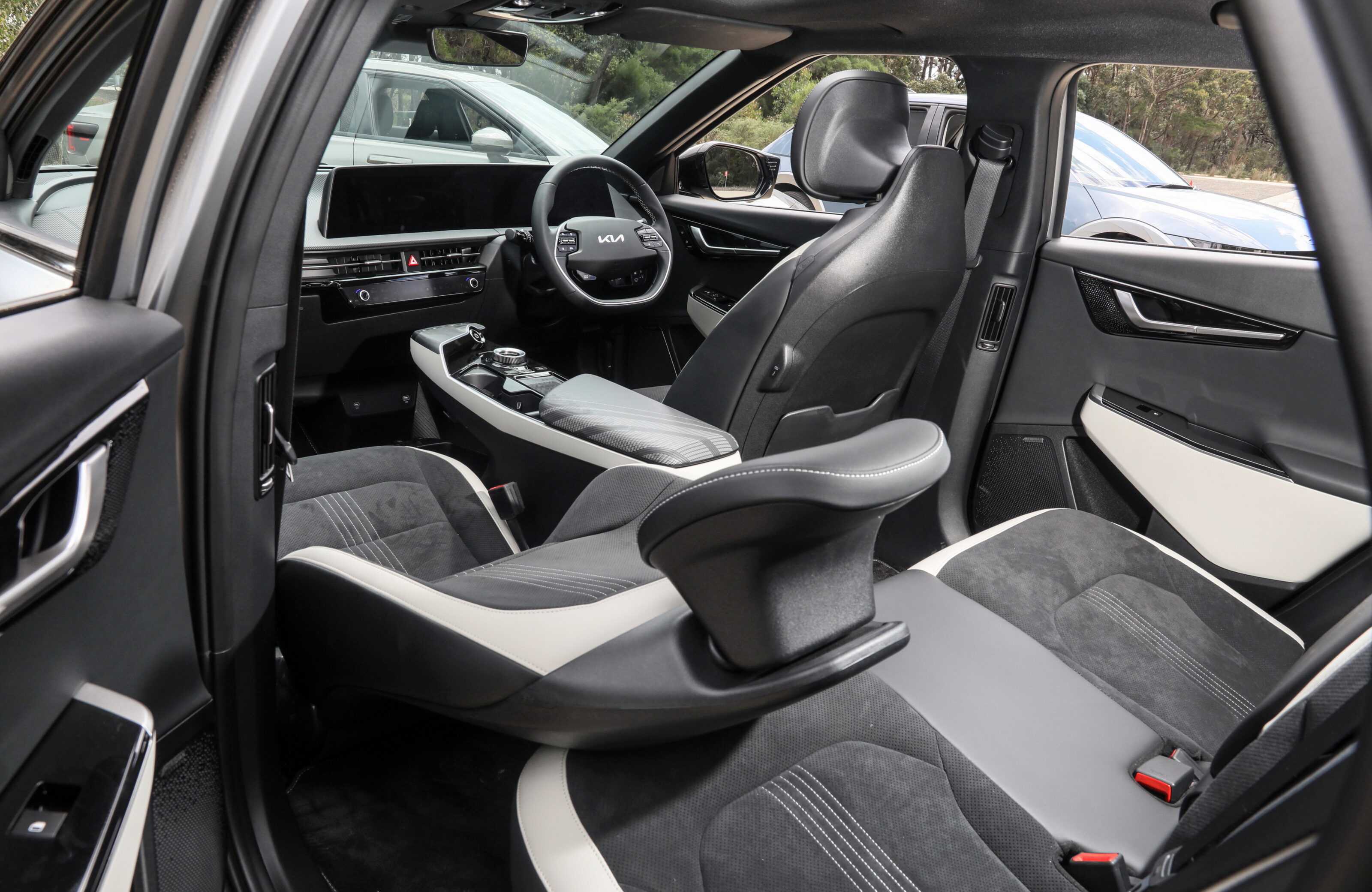
The EV6’s curved, dual-12.3-inch screens, with pin-sharp 3D-look display skins, anchors a theme equally conceptual and welcomingly natural. It maintains synergy and balance, nothing too oddball and with an intuitive user interface, anchored with driver-oriented controls and a purposeful vibe that doesn’t feel forced or heavy handed.
“It’s modern and smart without trying too hard,” observed Richard. “Spacious and accommodating, yet sporty and immersive.”
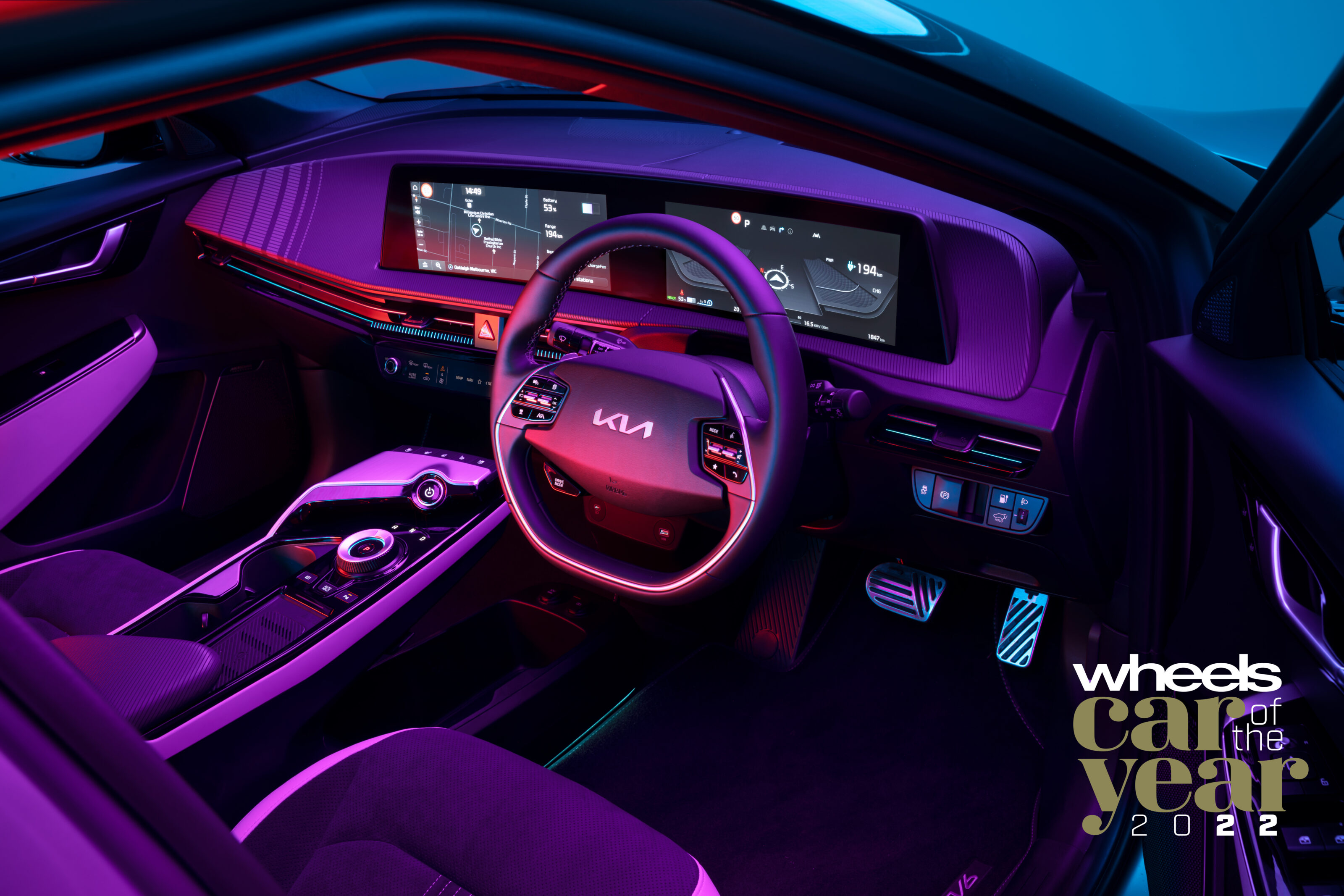
“Unlike the Ioniq 5, you sit in rather than on the seats,” said Jez, adding, “The coupe crossover format’s sloping roofline doesn’t compromise rear headroom, either.”
“Can’t believe this is a Kia,” Alex added. “It feels like a BMW. Also, tech, comfort and storage are all top drawer.”
Was the Kia’s sporty pitch just show-boating? Or placebo effect? Seems not. Despite identical claimed 5.2-second 0-100km/h performance for the Korean electric pairing, the EV6 proved one-tenth quicker than its maker’s claim, and two-tenths swifter than the Hyundai against the COTY stopwatch.
The Kia feels quick. Throttle response is clean and crisp; the thrust from its dual-motor all-paw drivetrain head-smackingly urgent off the mark and heady and relentlesson the move.
Its Sport drive mode delivers a tangible and satisfying lift in potency, though the Kia is so alert and real-world quick in its default setting that mode swapping seems largely superfluous in daily urban driving.
Its decibel reading (67.8dB) just pipped the Hyundai’s (68dB), but no matter how hard you pedal it, or which of the many and varied AARC surfaces you threw it across, the EV6 remained wonderfully quiet, refined, solid and exceptionally comfortable.
The Kia’s tuned-for-Oz suspension, that sees the fitment of bespoke ZF Sachs dampers (not offered on the Ioniq 5), does a remarkable job of masking the 2.1-tonne kerb weight and pays handsome dynamic dividends.
Along the AARC’s twisty ascending backroad, its low centre of gravity and generous mechanical grip brought engaging and impressively planted progress, with enough fluidity and character to feel properly sporty.
Its big party trick, though, was on gravel, where the Kia’s (and Hyundai’s) performance was, in some judges’ minds, a true revelation. Be it nudging neatly against the ESC threshold after a big-lift tail-slide or teasing a rally-style four-wheel drift on a constant throttle, the drive system calibrations offer the driver impressive cooperation, ever natural in dynamic response and predictability.
The balance, grip, poise and user-friendliness across the circuit’s slippery coarse aggregate and finely graded pebbles was downright remarkable.
“The EV torque distribution and versatility offers incredible traction on loose gravel,” Dan wrote.
And its fine bump control brought both excellent grip in the face of 2.1 tonnes of swaying inertia and a sufficiently compliant ride that foisted the Kia’s EV6 comfort factor on a broken surface.
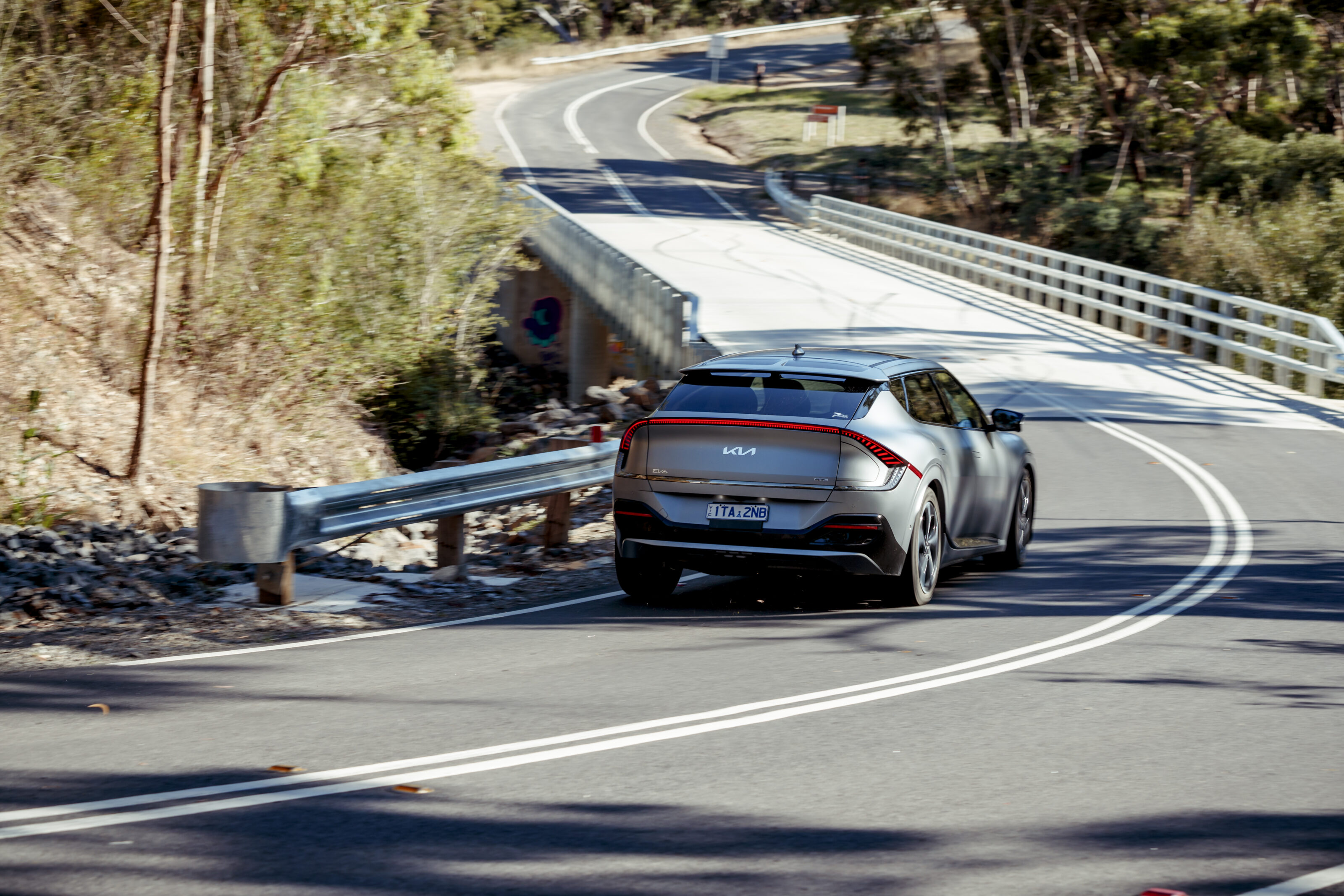
End of play, Day Three, once judges’ silent finalist ballots were lodged and counted, it was quite clear what cream was rising most conspicuously to the top of the field.
The EV6, for its part, had sailed well beyond many preconceived expectations judges might’ve had at COTY kick-off. And in broader, more multi-talented measures than one might imagine. But so too had the Ioniq 5…
Day Four. Road loops. Crunch time.
The Korean EVs were grouped back-to-back, first for one-up road loops and then loaded three-up with luggage, pointed across a back-country course featuring a complexion on the nastier side of “typically Australian”. And in these conditions, the EV6 proceeded to broaden daylight to its competition while carving out what would become an unassailable lead over its Ioniq 5 nemesis.
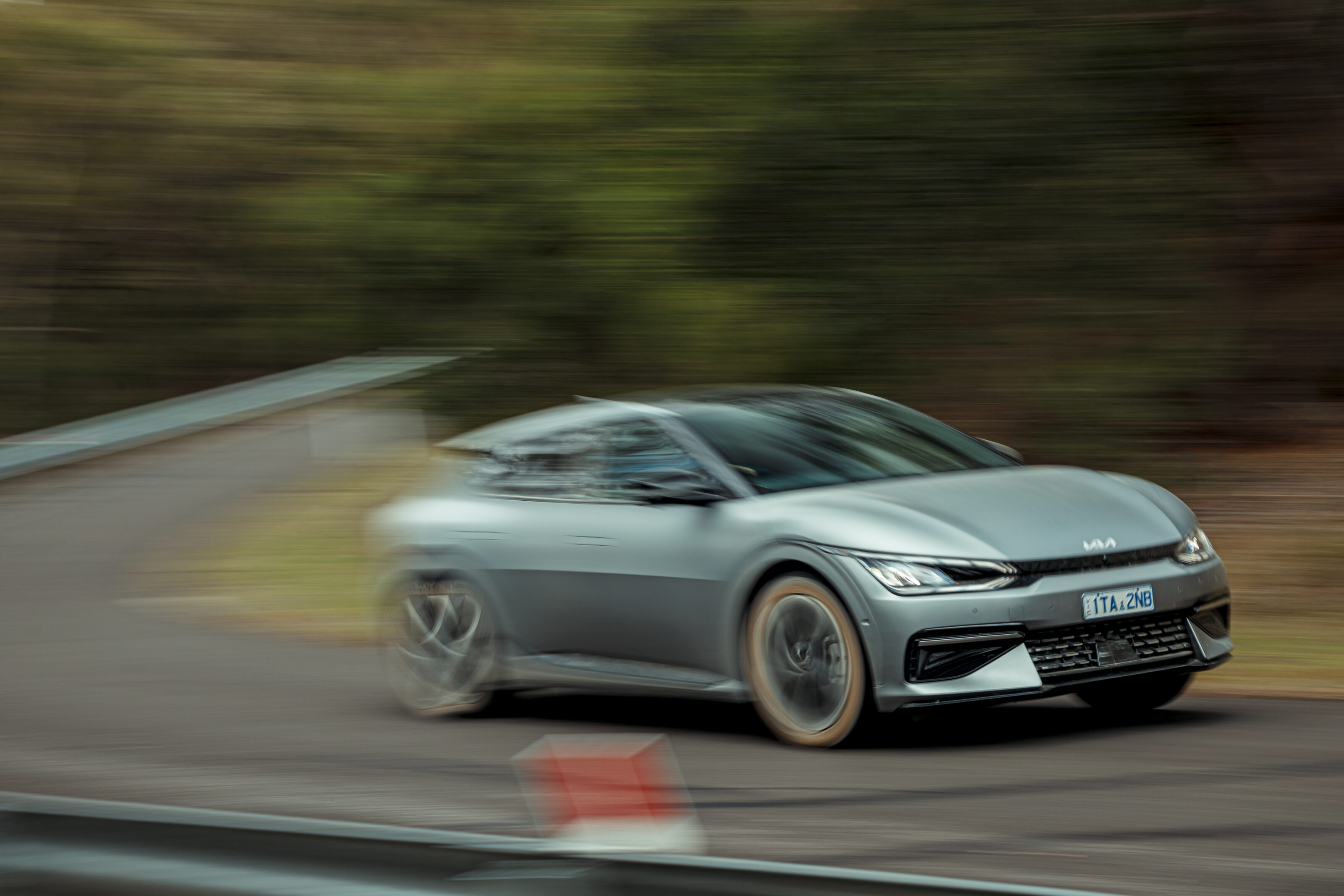
It’s a touch firm, most evidently so at low speeds, but with triple figures dialled up across the initial section of lumpy and pot-holed backroad, the EV6 assumed a planted and composed manner. Yes, it lacked the outright compliance of some ICE-powered competitors, but this is not out of kilter with its sports pretension.
Against its key Korean EV rival, though, the Kia demonstrated none of the fidgety vertical movement, the alarming bump steer or instability that would ultimately tarnish the Ioniq 5’s on-road experience.
“Composure on testing surfaces is impressive,” Alex noted. “It’s not as compliant as the BMW iX, certainly not as cosseting over bumps at the start of the road loop. But the trade-off is superior body control. You don’t get thrown around as much as you do in the Ioniq 5. There’s occasional shudder through the body but wheel control is impressive.”
“Rides firmly at lower speeds but never feels crashy or fidgety,” Jez added. “And at higher speeds the suspension is really effective at blotting out prominent bumps.”
Bombing cross country, the EV6 proved impressively quiet, unflustered and comfortable. It would make a fine tourer as grand as battery range allows. But downright addictive is its relentless appetite for acceleration.
Its 239kW/605Nm combination is well-matched for its package, shining brightly enough through the COTY lens to where its lower-grade 168kW/350Nm rear-driven stablemates would surely feel downgraded by comparison once you’re properly stretching their respective legs.
“Owning an EV6 just might ruin petrol cars for you forever” – Dylan Campbell
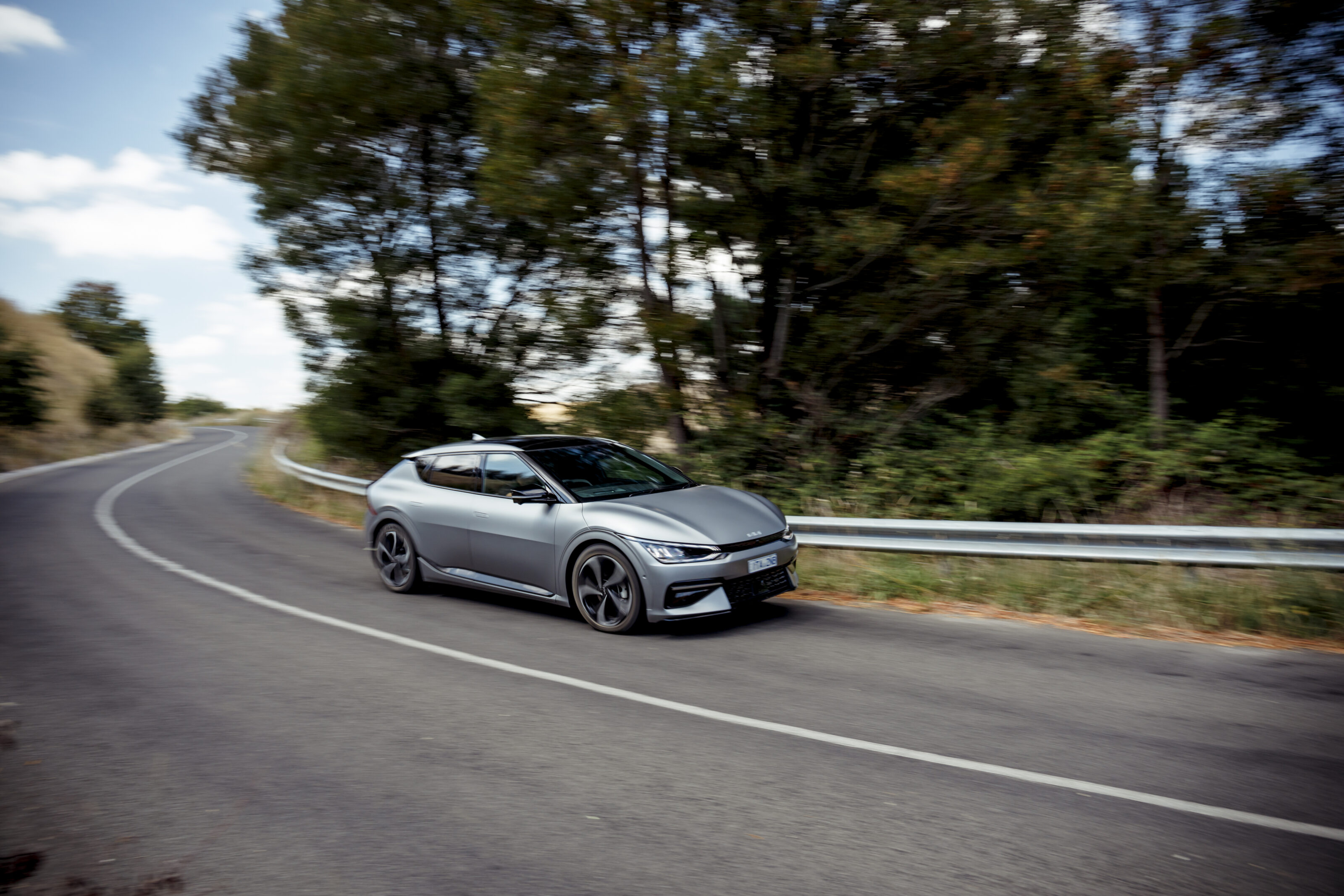
On road, the Kia demonstrated fitter handling than the Ioniq 5, too, covering tricky ground as swiftly as you like, or dare, its sporting sheen an ally of underpinning confidence. Against the Hyundai, there’s a crisper dynamic edge, a more predictable and cooperative manner, and its more settled connection with the road doesn’t whiten the knuckles quite so quickly.
“The Kia has more breadth to its personality than the Ioniq,” Dan said. “It’s more focused when you need it to be but also less bothered by large bumps.”
“The chassis engages you enough that you want to keep punting it hard up a twisty road,” said Dylan. “Getting the best out of it is a challenge to relish.”
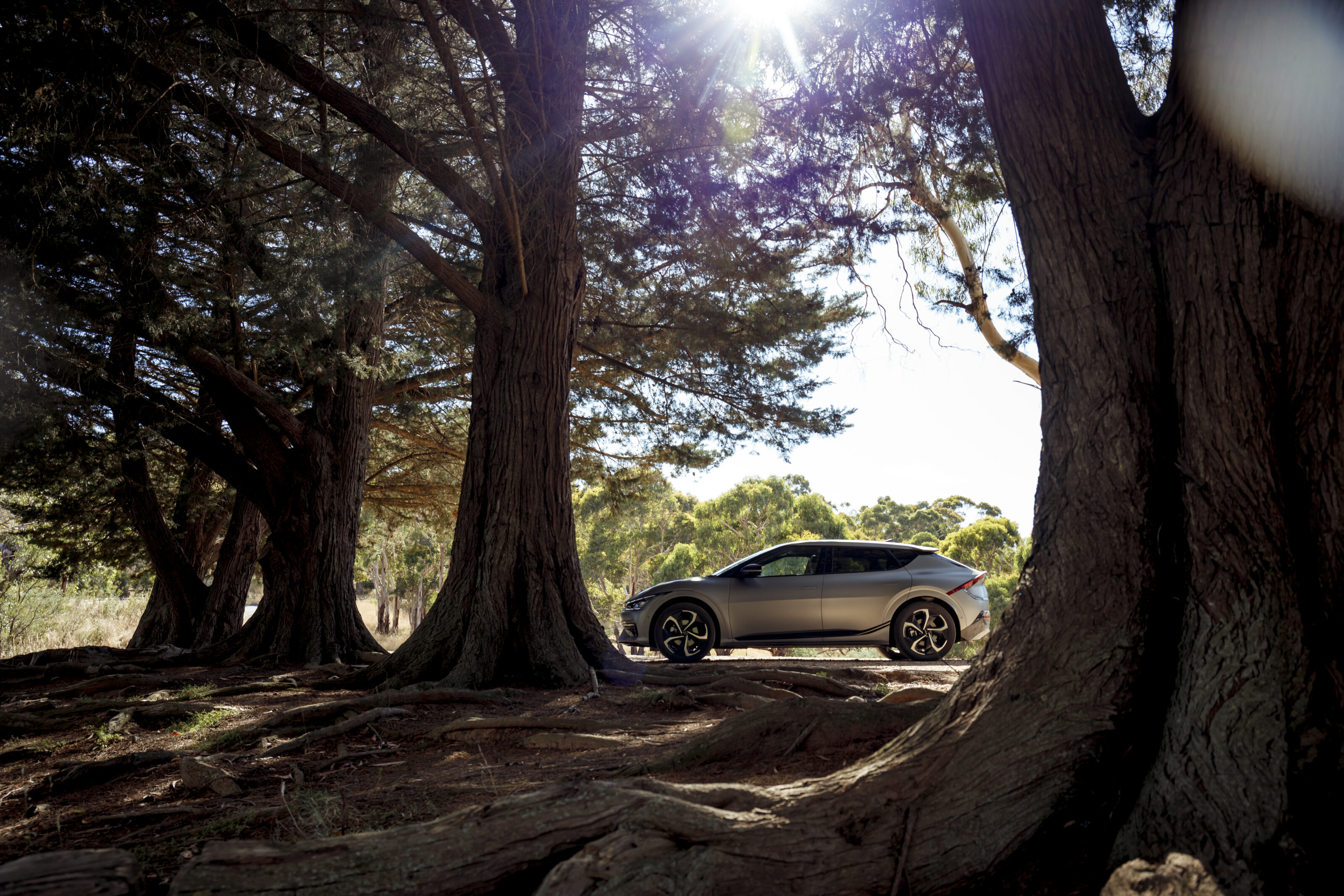
Jez added: “The more immersive driving position compared to the Hyundai really enhances the Kia’s sporty feel.”
As Kia’s debut electric vehicle, the EV6 is a remarkably accomplished, impressively well-rounded package with very few shortcomings. And it drove a sufficiently large tie-breaking wedge between itself and the Ioniq 5 to take a resounding victory.
The EV6 drove home one theme agreed upon by the six-strong judging panel who ultimately and unanimously voted the Kia as the COTY winner: if this is our electric-car present, bring on the electric motoring future.
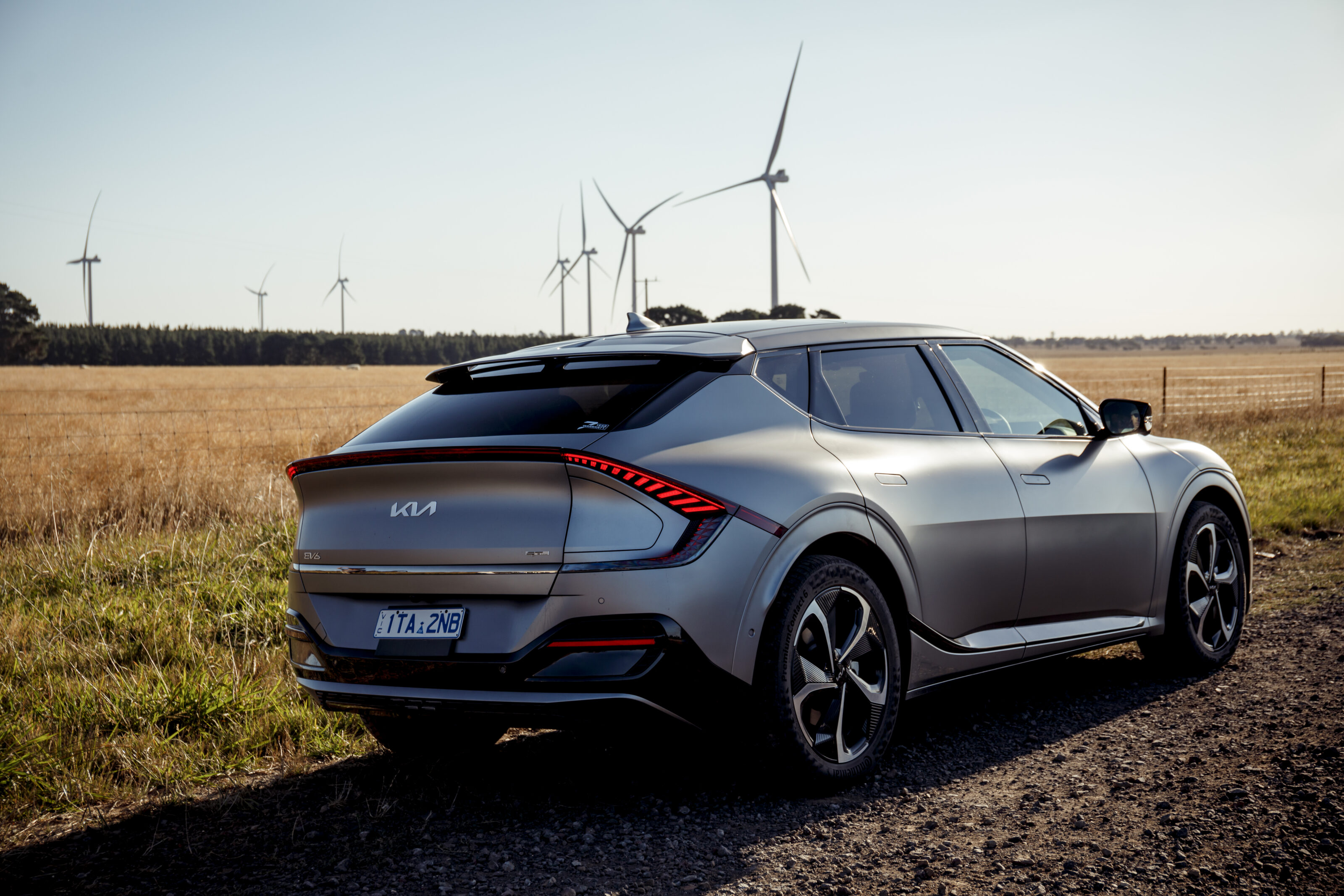
“One drive of this car should allay any reservations about the driving experience of an EV,” Richard claimed.
“It brings together all the things that make electric cars great,” Dylan added. “Responsiveness, performance, refinement and packaging.”
So COTY 2022 will be remembered as the year Korea’s two global heavyweights really delivered on the potential that has been hinted at for years. But ultimately it was Kia that really stepped out of its bigger brother’s shadow to claim our highest accolade.
2022 Kia EV6 specifications
UPDATE, December 2022: Q8 E-Tron driven!
Following its unveiling in November, we’ve now driven the updated Audi Q8 E-Tron (the SUV formerly known as ‘E-Tron’). Get our full story at the link below.
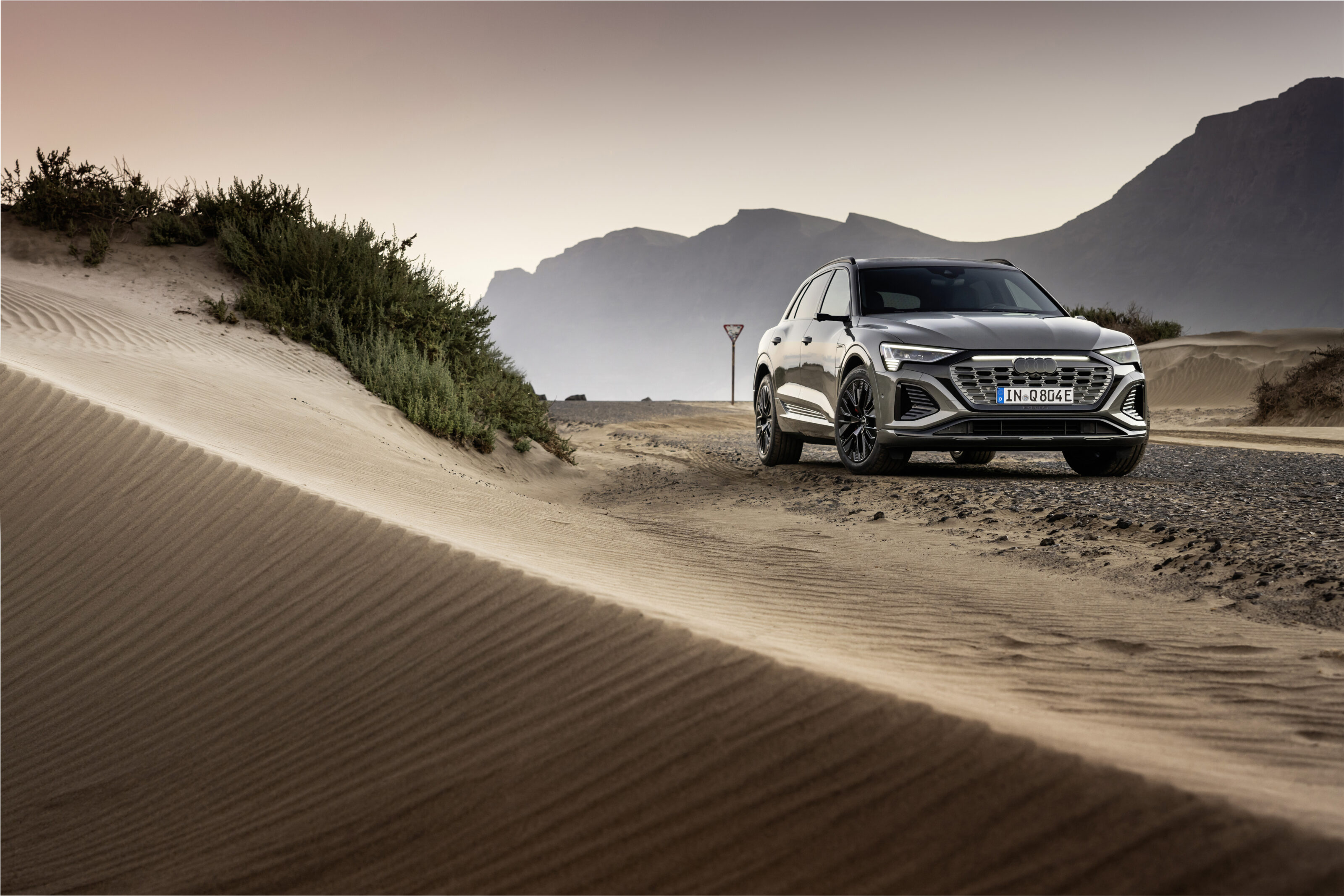
November 2022: Renamed Audi Q8 E-Tron revealed
Audi’s facelifted E-Tron, now known as the Q8 E-Tron, has been revealed. It has no relation to the existing Audi Q8, of course, but giving it a ‘Q’ name at least now brings it in line with the growing E-Tron line, including the Q4 E-Tron and E-Tron GT. Get the full story at the link below.
Story continues: E-Tron review
Three motors. Almost 1000Nm. And 4.5-second performance. Let’s not bury the lede on the Audi e-Tron S because before you dig into Audi’s first-ever electric performance model, it’s easy to get bogged in its murky branding.
Audi has applied ‘e-Tron’ branding to concept, race and road cars, both electric and hybrid, since 2009. A decade on, in 2019, Ingolstadt’s electrified arm, e-Tron, released its debut series-production EV. And also called it, simply, e-Tron.
Subsequent EV models – Q4, GT – have earned nameplates of distinction though, of course, they too carry e-Tron branding in their namesakes. It’s sure to confuse a few toe-dipping EV shoppers Audi hopes to lure. And one wonders how soon references of ‘Ur-e-Tron’ will crop up in the marque’s vernacular.
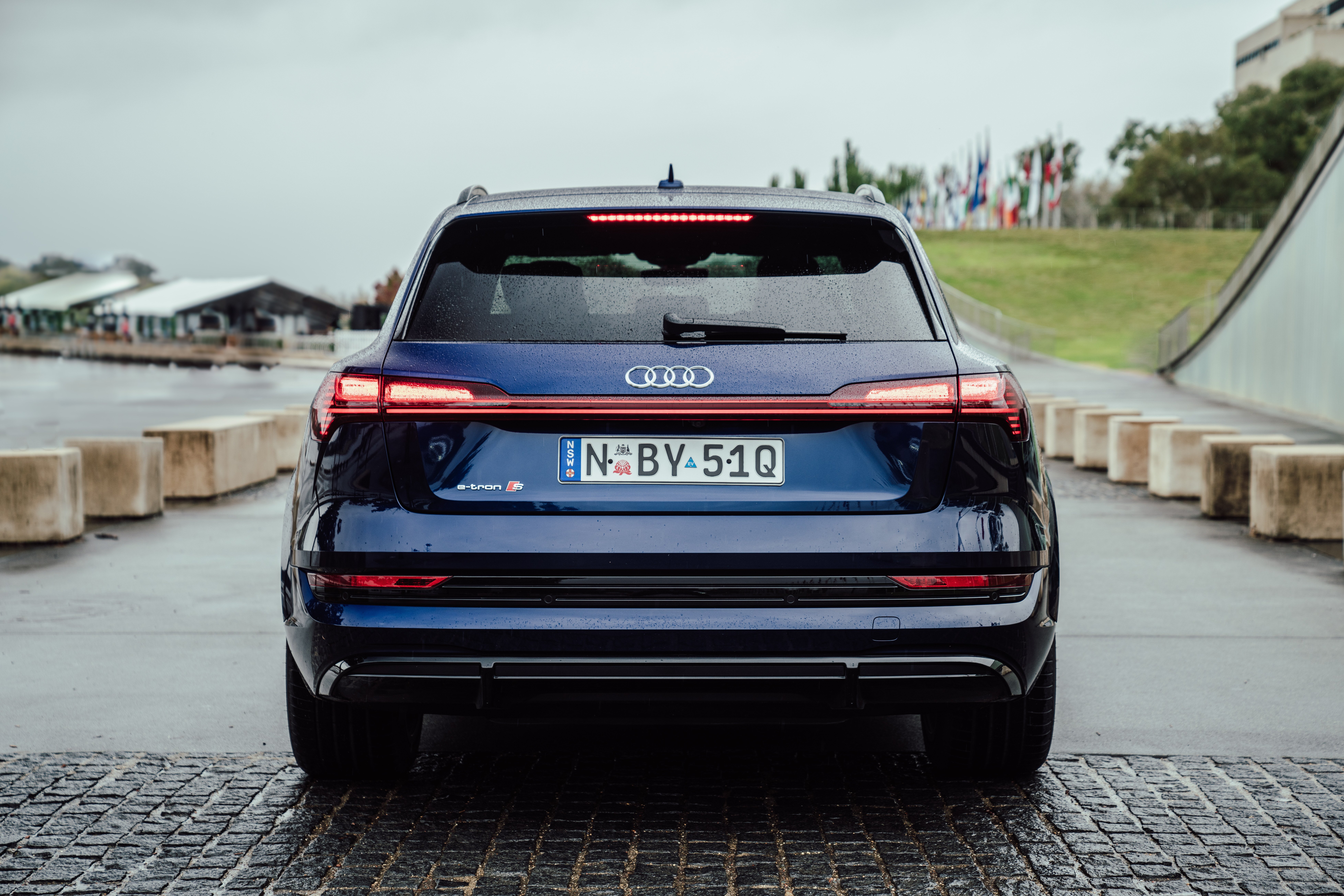
Enter the S-for-sport version, an Audi designation with much providence. And in creating its debut sports EV, Ingolstadt has figured that a tri-motor, 370kW/973Nm, mid-four-second proposition is seductive enough to fit conventional S expectations.
As it should. The e-Tron, derived from existing ICE-sourced MLB Evo architecture rather than a dedicated EV platform – ala Q4’s MEB underpinnings – separates itself from much of the EV market by bringing a conventional format with a conventional vibe. A familiar SUV experience with electric motivation, from packaging to on-road character.
Despite stats and spec, S designation doesn’t promise full-house RS-like fire. Or Tesla Model X Plaid levels of excessive silliness. But surely it must prove itself to be an engaging, enthusiast-tinged prospect that matches the magic of its S-fettled internal combustion stablemates.
Pricing and Features
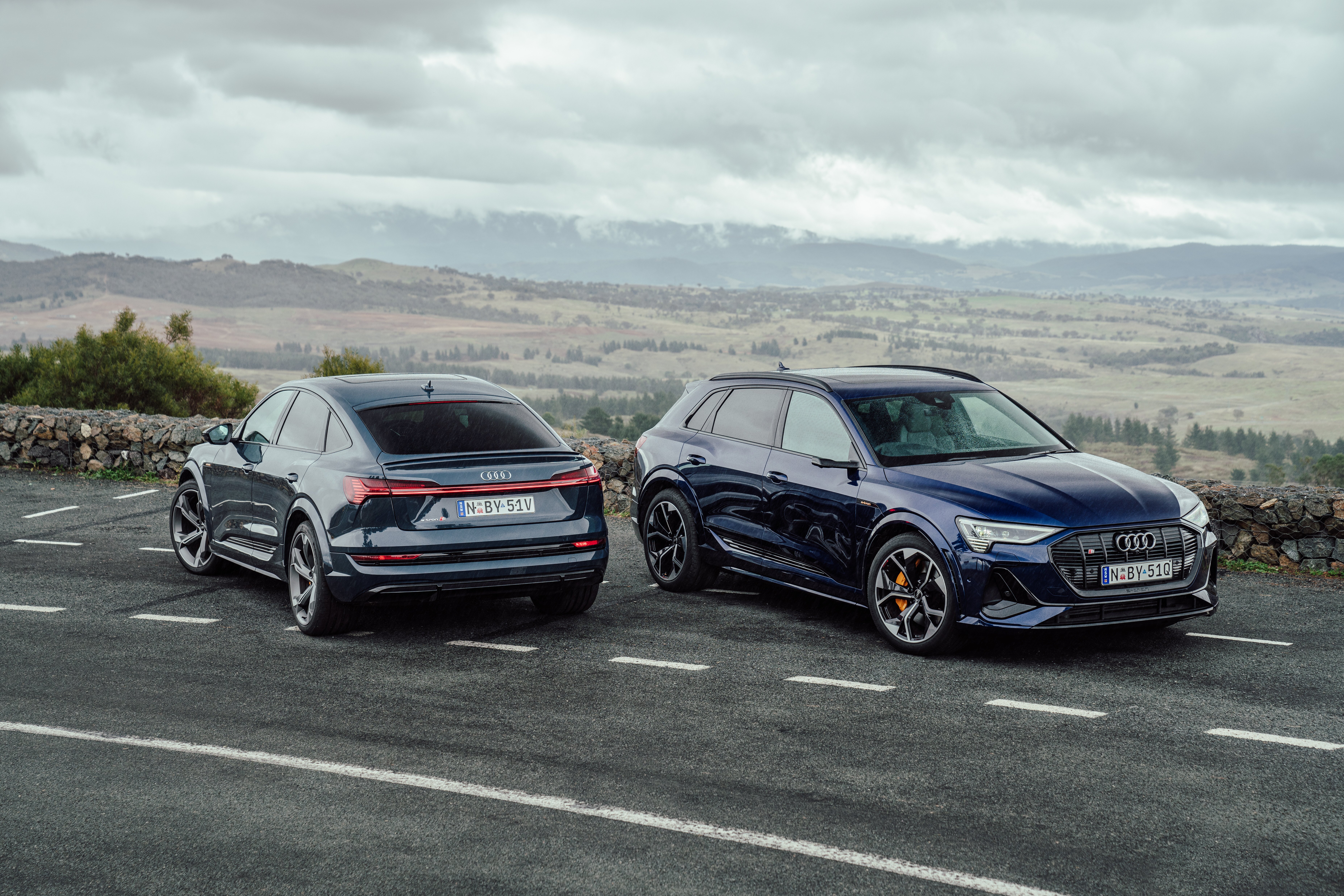
The e-Tron S wagon lobs at $168,400 before on-road costs with a seven-grand premium for the coupe-like Sportback version ($175,400 before on-road costs). There’s been some creep since pricing was originally announced in December 2021, when it was $165,600 and $172,700 respectively (before on-road costs).
Complicating matters is that some standard equipment, such as Phone Box Light, electric steering adjustment and tyre pressure monitoring have been omitted from early examples, such as those at the local launch program, due to component shortages, with pricing adjusted down accordingly.
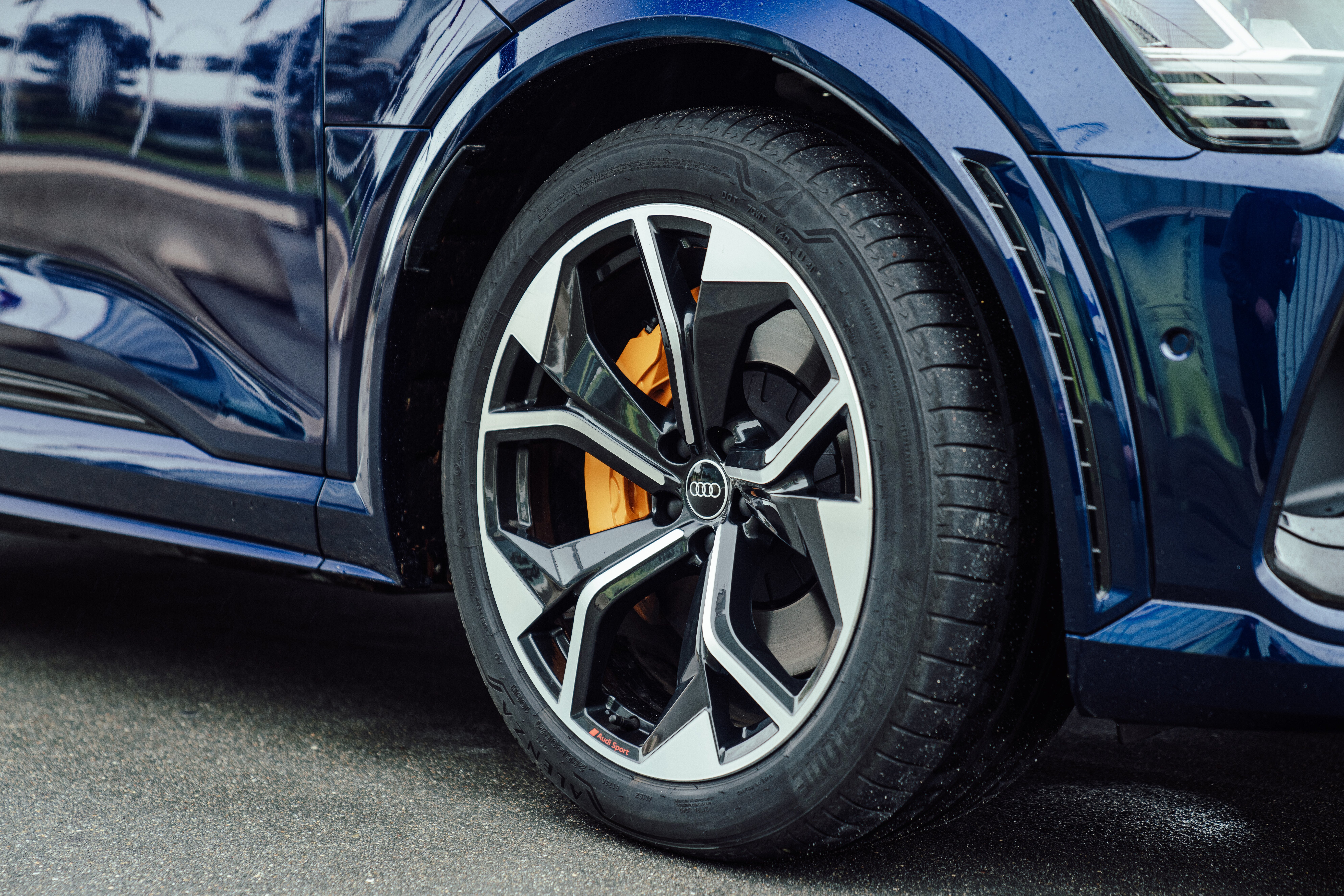
Whether Wagon or Sportback, the e-Tron S features list is suitably plump. It’s 46mm wider at the guards than a regular e-Tron, fitting 21-inch wheels, height-adaptive sports air suspension, S-specific styling, a panoramic glass roof, a gesture-controlled tailgate and Matrix LED headlights.
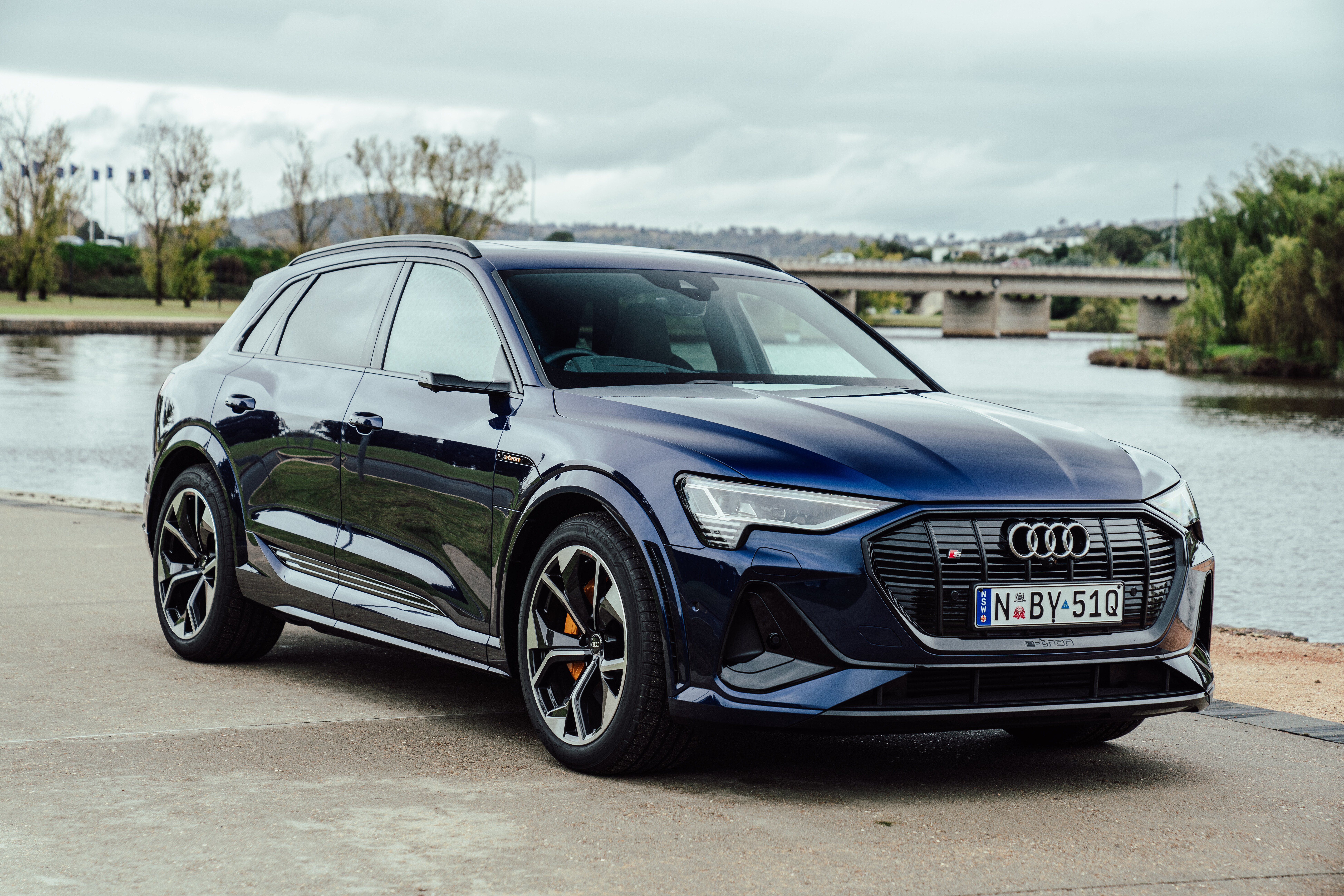
Inside, the e-Tron S fits heated Valcona leather S Sport seats, a heated steering wheel with paddleshifters, 12.3-inch Virtual Cockpit instrumentation with specific content, 10.1-inch MMI navigation plus infotainment with wireless Apple CarPlay/Android Auto mirroring, an 8.6-inch haptic control screen, four-zone climate control, a 360-degree camera system, head-up display, multi-colour ambient LED lighting and a 705-watt Bang and Olufsen 3D sound system.
The e-Tron S also debuts Audi’s all-singing, all-dancing Digital Matrix LED headlight tech, with Lane Light and Orientation Light functionality too in-depth to dive into here. It’s bundled into the Sensory package ($9600) that also adds niceties such as dynamic indicators, soft-close doors, extended Nappa leather trim, rear-seat heating, air quality enhancement and rear sunshades.
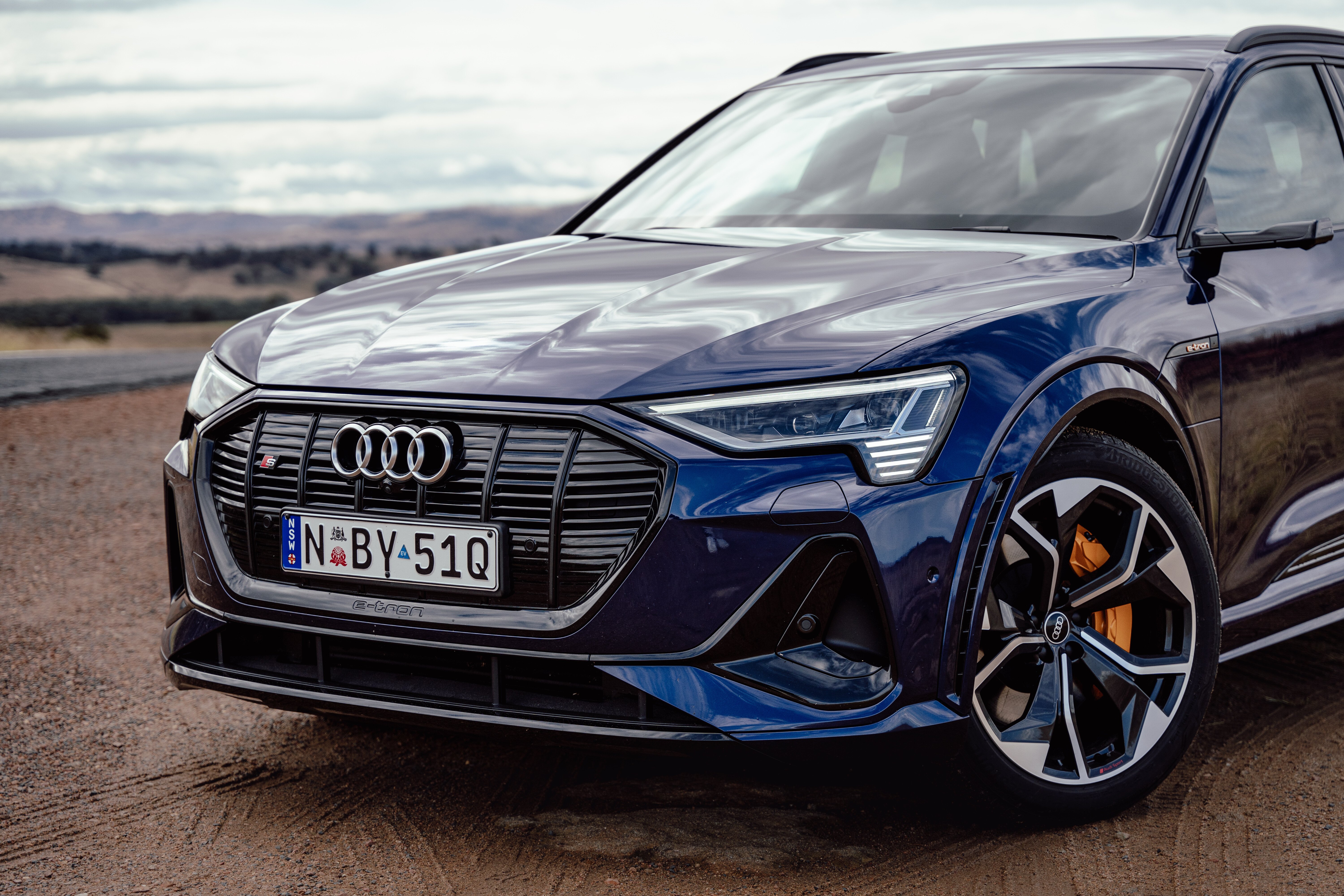
Other options include 22-inch wheels ($1600) and Audi’s opinion-polarising digital wing mirrors ($3500) as well as various colour and inlay styling tweaks at added cost. The fully loaded Sportback we sampled at the local launch sailed north of $190K before on-road costs were added.
There are some sweeteners, such as six years of complimentary servicing and six years of free DC fast-charging through the Chargefox network. An 11kW AC home charging kit (8.5-hour recharge) is supplied standard, while an optional 22kW AC charging package (4.5hr recharging) costs an extra $6900.
On the Road
Three motors, no name. Why the marque which concocted Matrix, Virtual Cockpit and Quattro, no less, hasn’t branded its tri-motor format is a headscratcher. Y’know, like ‘e-Trio’? Or something.
However, there is e-Quattro. And on paper, as performance-viable dynamics-friendly engineering theory, it appears downright brilliant.
As a default, tri-motor e-Quattro is rear-drive. In e-Tron S, it fits two 132kW/309Nm motors on the rear axle, one per wheel, independent of one another. Slip, lock, torque vectoring: all instant and precise, with no parasitic loss.
If you’re expecting RS-like fire, prepare for disappointment. If you’re hoping for a sport-infused luxury family hauler, there’s an awful lot to like
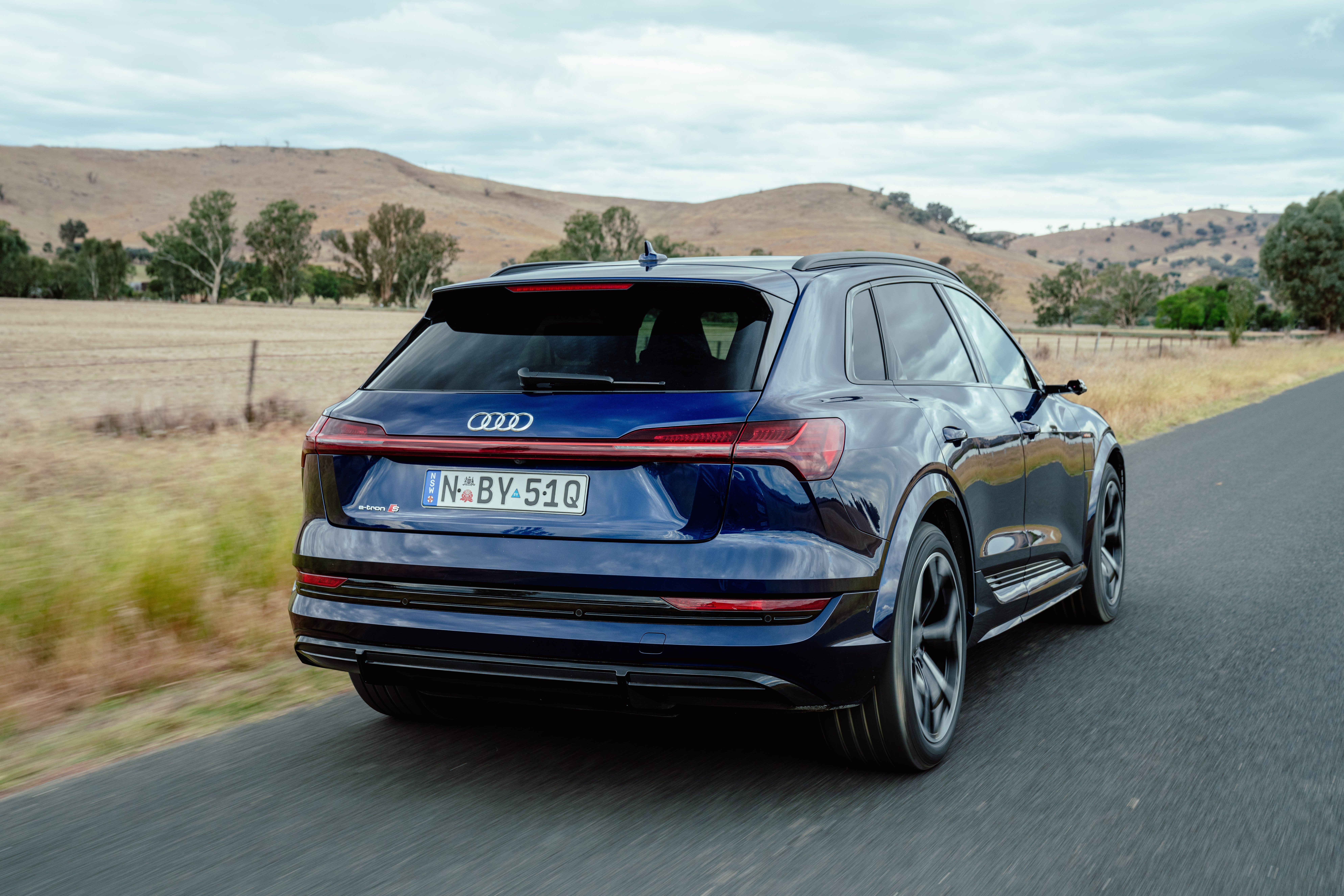
Then there’s a single 150kW/355Nm motor on the front axle where torque is apportioned via individual wheel braking. It operates independently from the rear axle, on demand.
It’s more sophisticated, particularly in lean torque distribution, than motor-per-axle dual systems. And less convoluted than motor-per-wheel complexity. And you can bet a house that Audi is developing both lighter/sportier and heftier/higher-performance configurations to roll out in future for different model demands.
But it’s not without trade. With the regular 320kW/808Nm outputs that spike to 370kW and 973Nm in ‘boost (Sport) mode’, the hardware required, including the 95kWh lithium-ion pack and related thermal support systems, leaves the e-Tron S in either body style nudging 2.7 tonnes.

Clearly, plying expected performance with acceptable range is a balancing act. Stay out of Sport/boost mode and you end up with a 5.1-second proposition with a theoretical 413km (wagon) or 418km (Sportback) maximum range according to the NEDC efficiency test. Or energy consumption of around 26kWh per 100km.
In practice, whether e-Tron S impresses or not depends largely on user headspace. If you’re expecting RS-like fire in S-like leisurewear, prepare for disappointment. If you’re hoping for a sport-infused luxury family hauler with long-legged touring chops while riding a huge undertow of torque, there’s an awful lot to like.
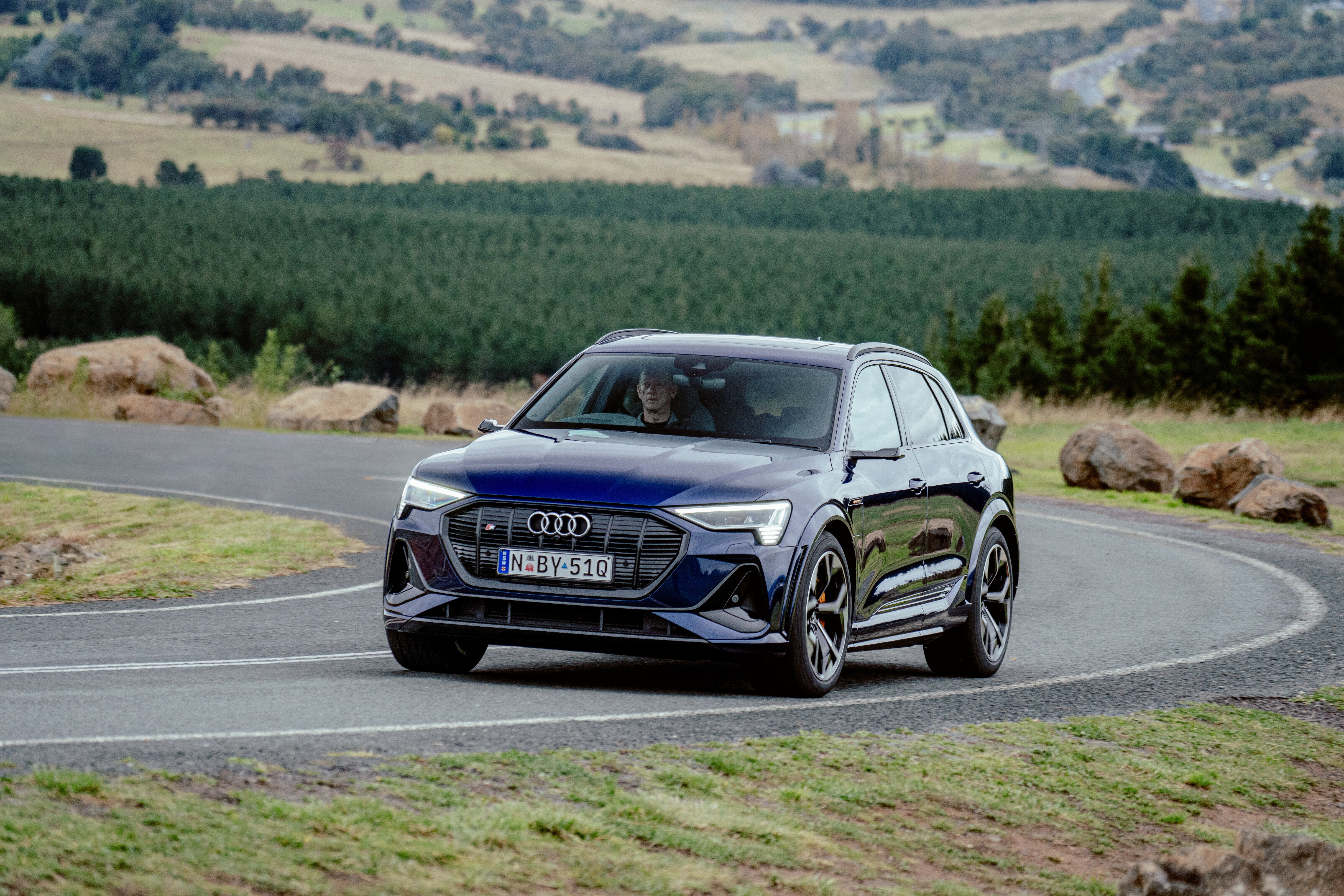
From the get-go, the sheer weight of the e-Tron S is ever-present. Around town, in traffic, when called to arms or hooking through some Australia’s finest twisties – such as the famed Snowy Mountains hot-mix where Audi chose to launch its electric flagship.
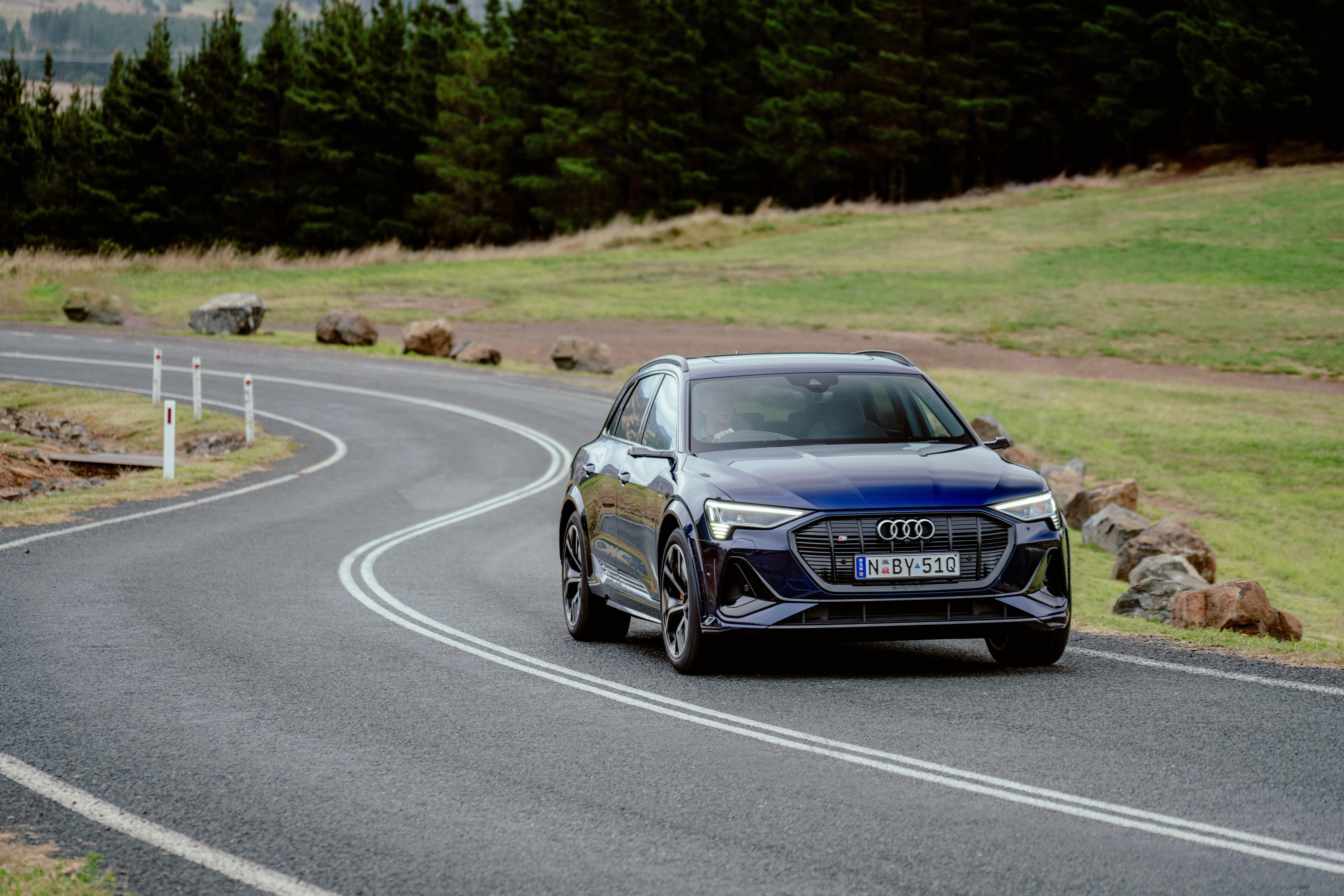
On the plus side, the big Audi’s response is immediate, progressive and impressively linear. In its tamer drive modes, you flex the right foot and it dials up pace cleanly and quietly, its seemingly effortless thrust propelling its considerable mass easily and without any noticeable fuss. Suitably, its torque swing is as well-rounded as it is broad, swelling rather than thumping with sudden urgency like you’d find in, say, Porsche’s Taycan Turbo.
At a cruise, it does feel like an oversized Q5, with which it shares its core platform, exhibiting a tauter and more focused character than the Q7’s tamer variations. It feels all the part exactly what it is: an electrified heartbeat in a familiar ICE-derived format.
And it certainly seems specifically calibrated that way, from the resolved ride and body control balance of the rather excellent S-spec air suspension to the light effect of the three-mode-adjustable regenerative braking, which is unobtrusive and demands normal ICE-style braking technique as a plus, if offering no handy one-pedal engine braking mode as a bit of a markdown.
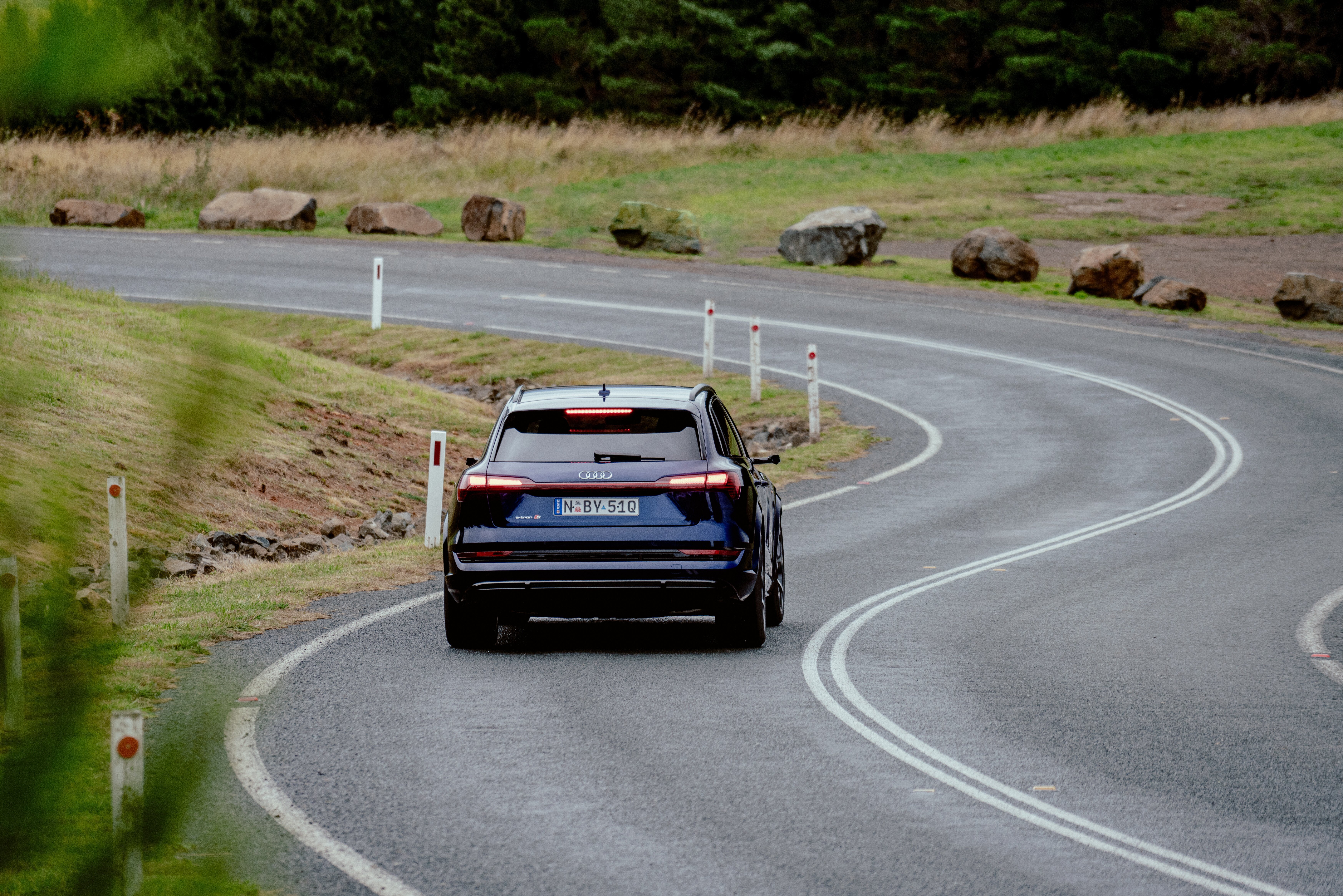
While the sheer inertia at play robs a veneer of crispness in forward progress, the roll-on and overtaking acceleration it instantly plies is worth a big chunk of its entry price. That surly on-tap energy pays handsome dividends once the road opens up and the hot-mix curves loom, or if the course ascends towards the blue yonder. Even before you dig into boost/Sport mode, which adds a clear lift in enthusiasm once activated.
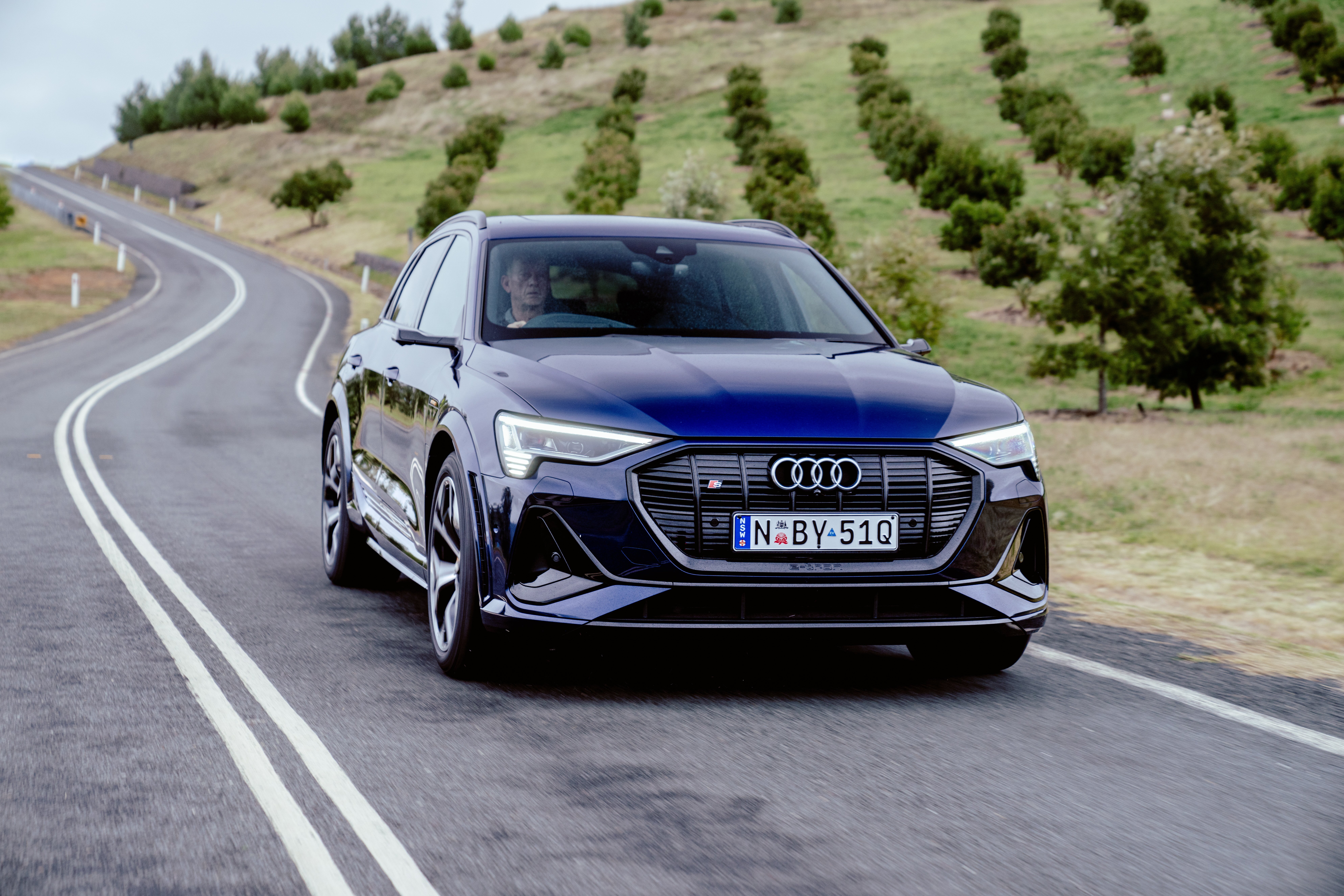
Attack a succession of corners and the e-Tron S does its best to shrink around you to some degree, mostly through its fluid nature, the impressive amount of grip its 285mm-wide Contis manage to muster, and the innate balance demonstrated, mostly because much of its hefty powertrain hardware is set low, across and between the axles.
In its keener modes, there’s plenty of handling focus in the air suspension, the chassis sitting impressively flat and generating plenty of front-end precision.
Steering, too, is faithful and accurate, if suffering a little from under-assistance and becoming a little leaden when you lean into the nose through certain corners.
Throughout, the e-Quattro remains wonderfully transparent. Whatever complex number crunching goes on co-ordinating its three motors, the net effect is impressively organic and natural. The real limiting factor, though, is lateral inertia: it’s a responsive if not terribly playful package and you don’t have to overstep the tyre grip much to step well into the ‘whoops’ zones, or worse.
All things considered, the e-Tron S really is as point-to-point swift as a sport-tinged large SUV needs to be. Moreover, it’s the comfortable and quiet nature while remaining surefooted and fatigue-free that really makes it a pleasing grand tourer for the tyranny of distance. Range, and the associated anxiety it still brings, notwithstanding.
Attack a succession of corners and the e-Tron S does its best to shrink around you, mostly through its fluid nature, the impressive amount of grip, and the innate balance
Even with long stints on cruise control, indicated consumption rises into the thirties (against a 26kWh claim) and total range drops well into the three hundreds. Launch programs, with a degree of requisite low flying, are never fair assessment of best-case EV range and by the time the fleet of SUVs makes the 275km trip from a Cooma charge station to Wagga Wagga, via the elevated Snowies, some of the test SUVs are impressively close to hitting range claim targets, while others are running the sniff of an oily capacitor.
So the jury is out on real-world range. Ditto recharge times from its 95kWh battery pack (86.5kWh net), which varies between 45 minutes (150kW DC fast charging) to 40 hours (2.3kW single-phase household). The supplied 11kW three-phase AC supplied with e-Tron S can fully charge in 8.5 hours. The optional 22kW three-phase AC package Audi offers for private charging drops that to 4.5 hours.
Comfort and Space
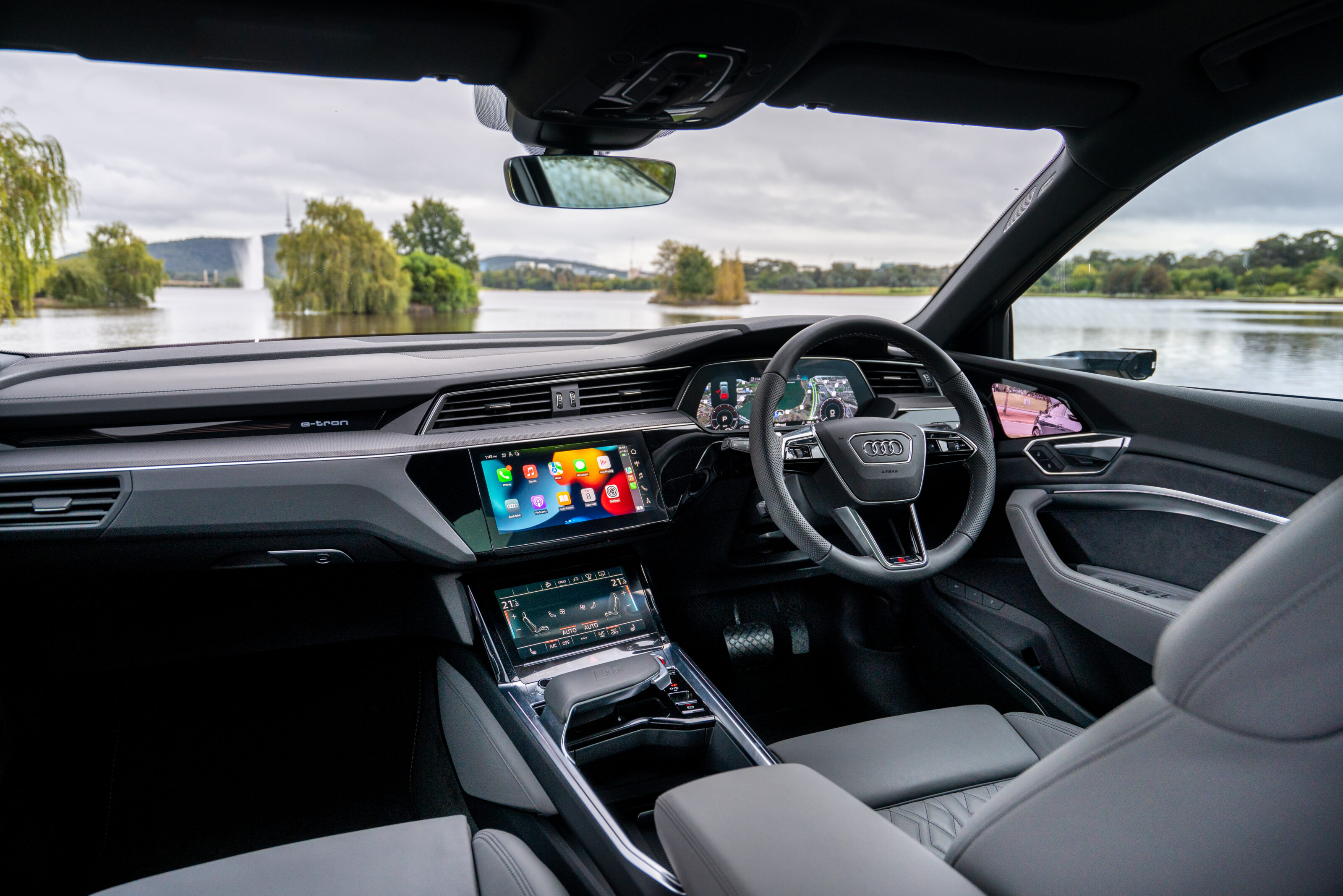
In the spirit of maintaining a conventional feel to the e-Tron family, the interior design doesn’t fall far from Audi’s traditional ICE tree. Styling, layout and format isn’t a big departure from a Q7, say, and it’s refreshingly free of hexagonal steering wheels, three-dimensional widescreen displays, laser beams or any other oddball EV gimmickry. The only weirdness is the thumb controller for that ‘gunstock’ transmission controller, but it’s easy to get used to.
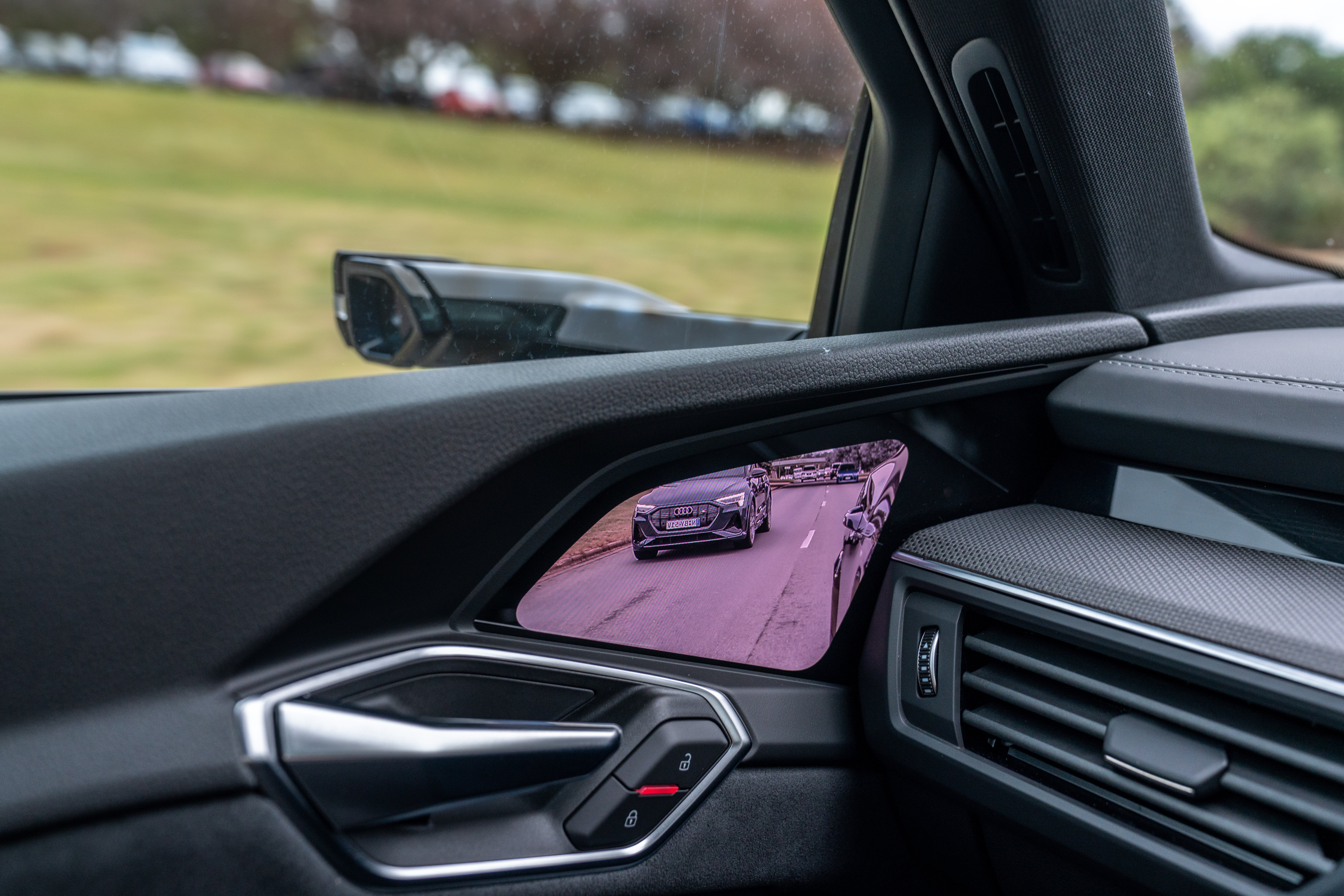
The one conspicuous exception to all this is the digital wing mirror feature. I didn’t like the theory and, having now experienced it, I quite dislike the practice. Audi knows I’m not on an island with my opinion, which is why it’s offered as a cost option and not as (deal-breaking) standard fitment.
The one conspicuous exception is the digital wing mirror feature. I didn’t like the theory and, having now experienced it, I quite dislike the practice
Compared with the regular e-Tron there are a few S-specific splashes, such as tweaked digital instrumentation content, a less stylised three-spoke wheel, diamond-patterned seat stitching and the odd S emblem. Plus some extra features such as four-zone climate and nicer Valcona leather. But the flagship builds only modestly on what is, admittedly, Audi’s already high standards.
Conversely, some material application is decent rather than rich and opulent, particularly some of the plastics, much of it with a look and feel no more upmarket than you might find in a Q5 at half the price.
Audi has hit a six with its stacked 10.1-inch and 8.6-inch central display screens that, in concert with Virtual Cockpit, manage to anchor a genuinely forward-thinking and techy vibe with quite intuitive usability. Similarly, the rest of the stylised cabin is friendly and logical to use with the usual array of SUV storage and convenience.
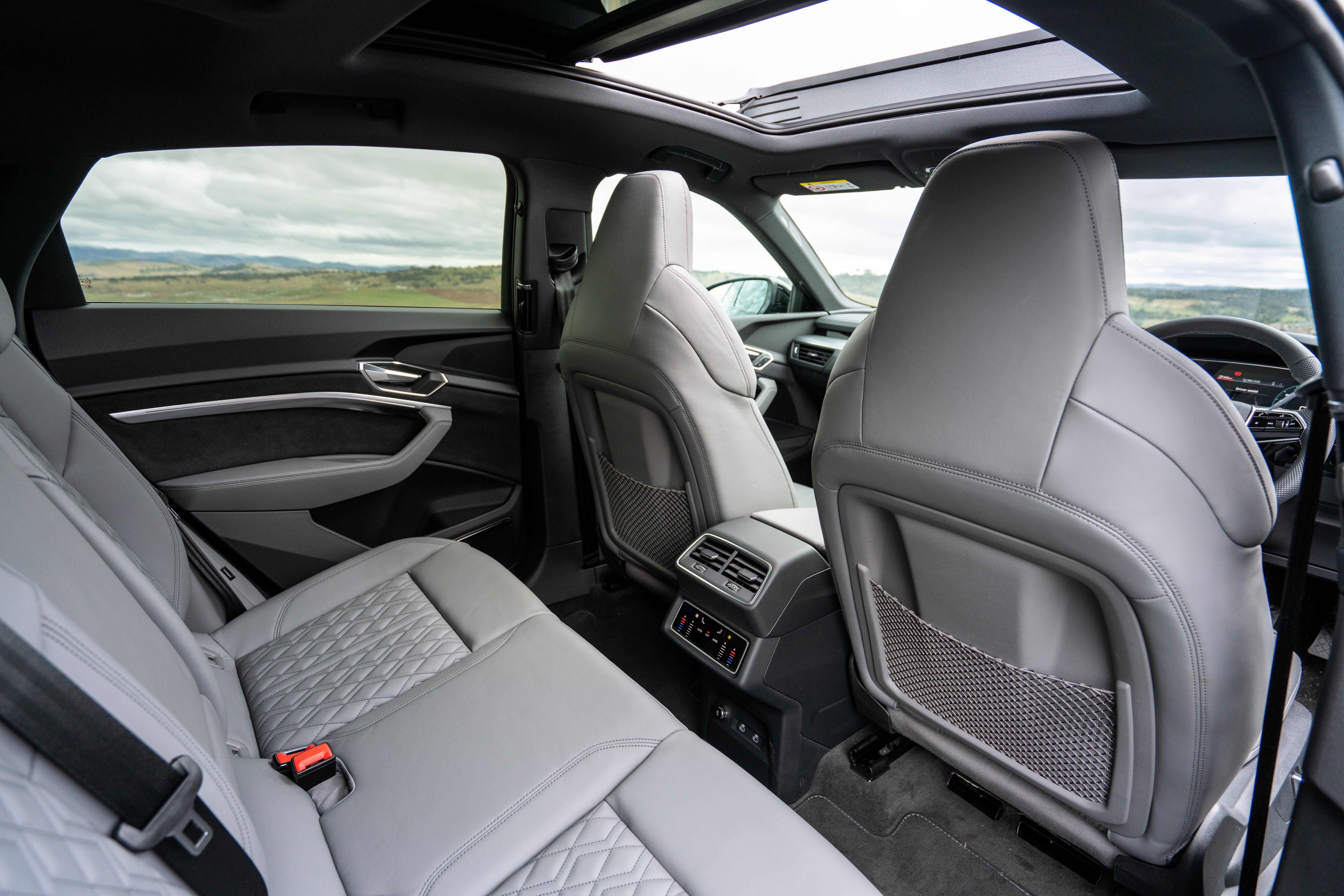
Rear room is decent and adult-friendly, with a fairly flat floor and little sense that the battery system under the carpet is robbing anything from the accommodation in terms of space. Jumping between the wagon and Sportback, any compromise that the latter presents in headroom constriction is realistically comparative nit-picking.
Where you do cop the hit in opting for the Sportback is boot space: at 615 litres, it loses 45 to the wagon. That said, the coupe’s luggage space is still well proportioned and highly useable.
Ownership
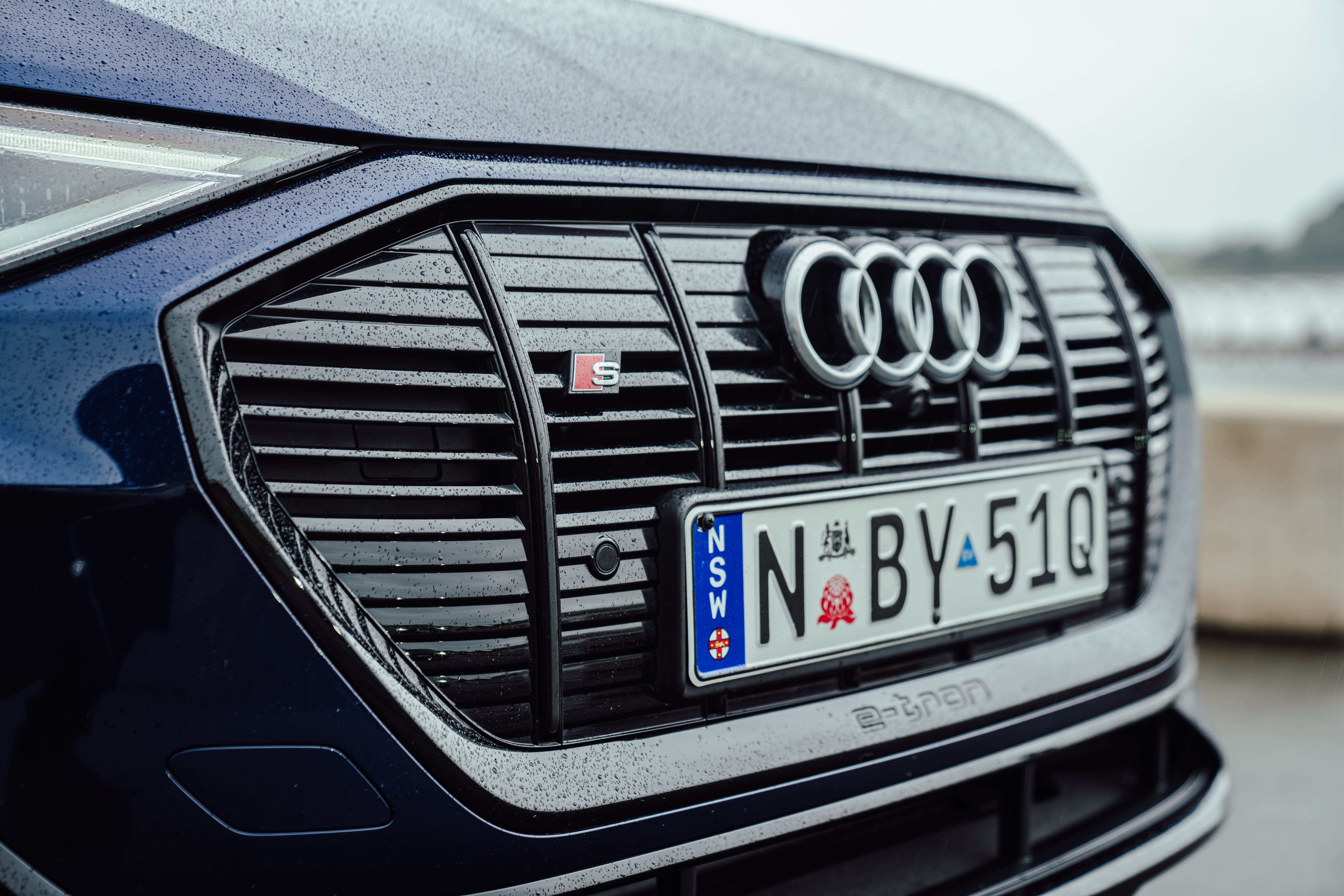
Finally, Audi has graduated from aftersales kindergarten and now offers a grown-up five years of unlimited-kilometre warranty from what was a paltry three. The battery comes with an eight-year warranty, though with a 160,000km cap.
The complementary six years of scheduled servicing is quite a dangling carrot, as is the six-year subscription to DC fast-charging through the Chargefox network.
VERDICT
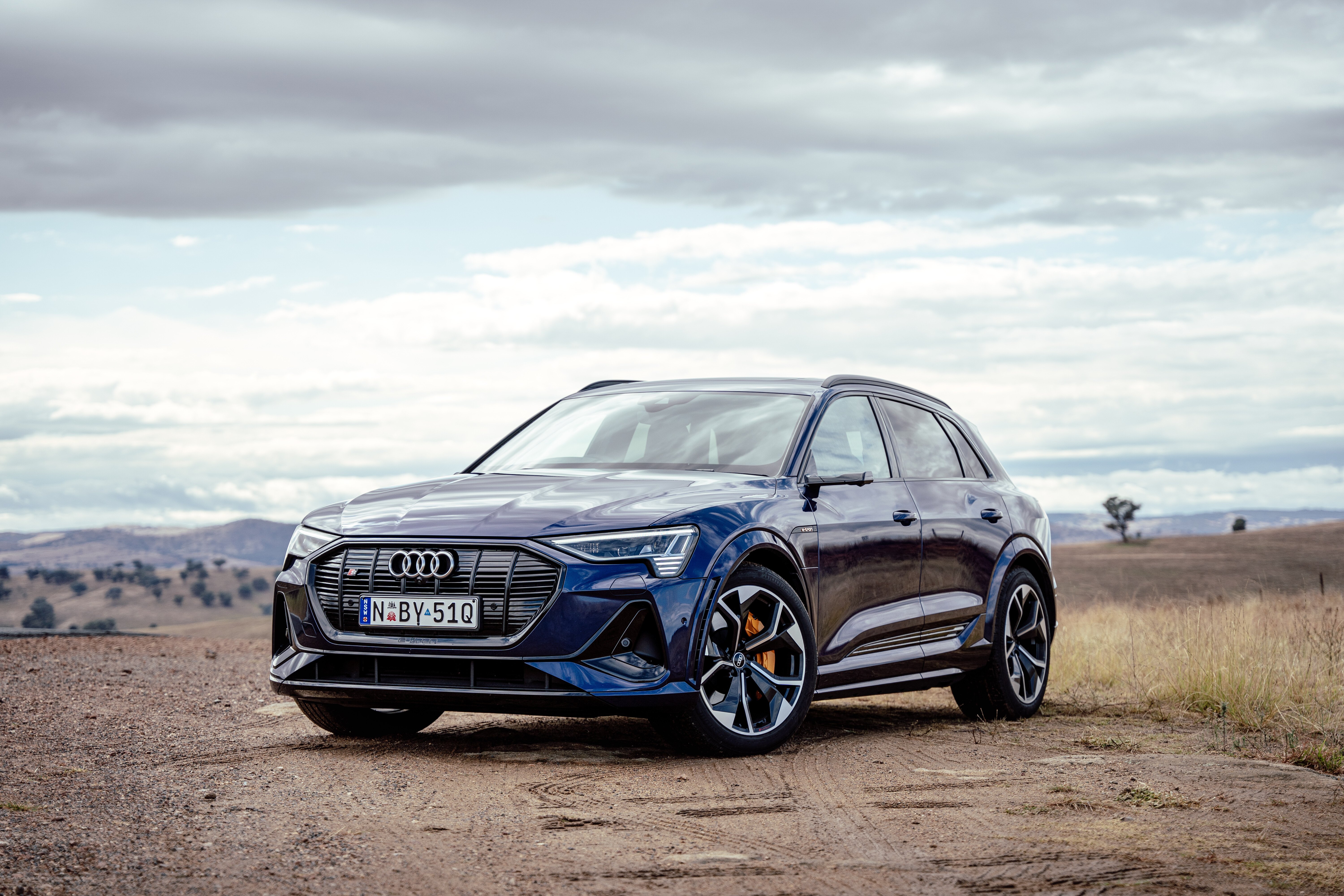
Convention is a big part of the e-Tron pitch. That much of its DNA is evolved from Audi’s ICE stock mightn’t serve high-brow techno cred on some levels, but it delivers a comfortably familiar and downright natural SUV experience that’s very much to its strength. There’s no learning curve here for those tempted to make the transition from internal combustion to EV-dom, at least in terms of the machinery.
Similarly, the S version very much brings the sort of added on-road indulgence as it has long delivered in petrol and diesel Audis. More heat, a sportier swagger, the sense you’ve stepped up to a higher tier. It’s a well-worn and much-loved formula that doesn’t deviate much in concept plied here in EV form.
Don’t expect head-kicking and fire-breathing. Instead, e-Tron S is a damn fine grand tourer, as comfortable, flexible and real-world swift as it ought to be
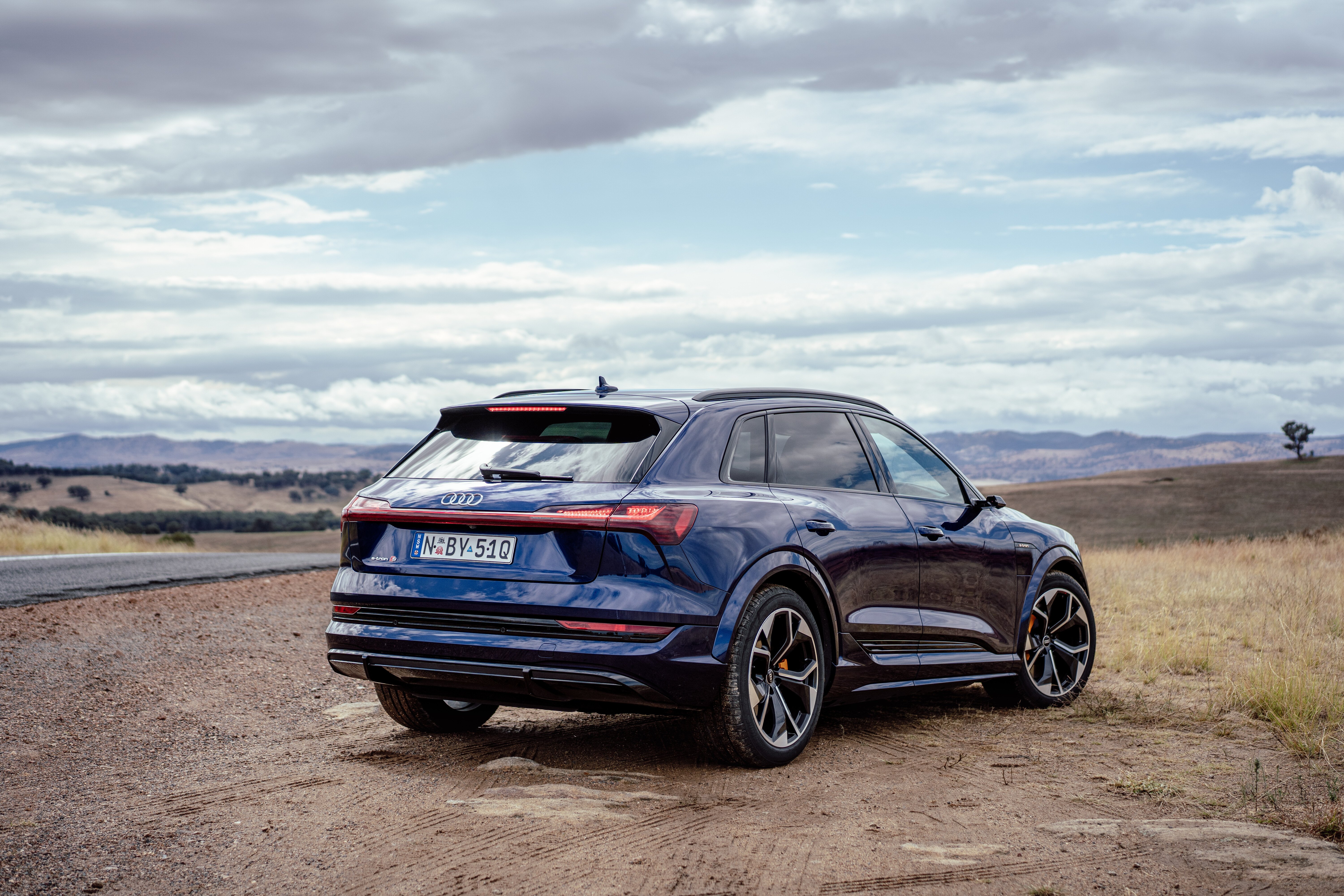
Do you need three motors and nigh on 1000Nm? Of course not. In wagon form, you’re fast approaching a $20K saving by stepping down to a dual-motor 55 Quattro that offers a longer 450km/h claimed range. But that’s not really the point.
Instead, the tri-motor big-torque S option does feel as special as it perhaps needs to be. As such indulgences go, once you get a taste for it, it just might be tough to settle for a more sensible and sedate EV option.
Just don’t expect head-kicking and fire-breathing. That’s not its pitch.
Instead, e-Tron S is a damn fine grand tourer, as comfortable, flexible and real-world swift as it ought to be. And unlike many stylised crossover electric offerings, it’s a grown-up, fully functional large SUV to boot.
2022 Audi e-Tron S specifications
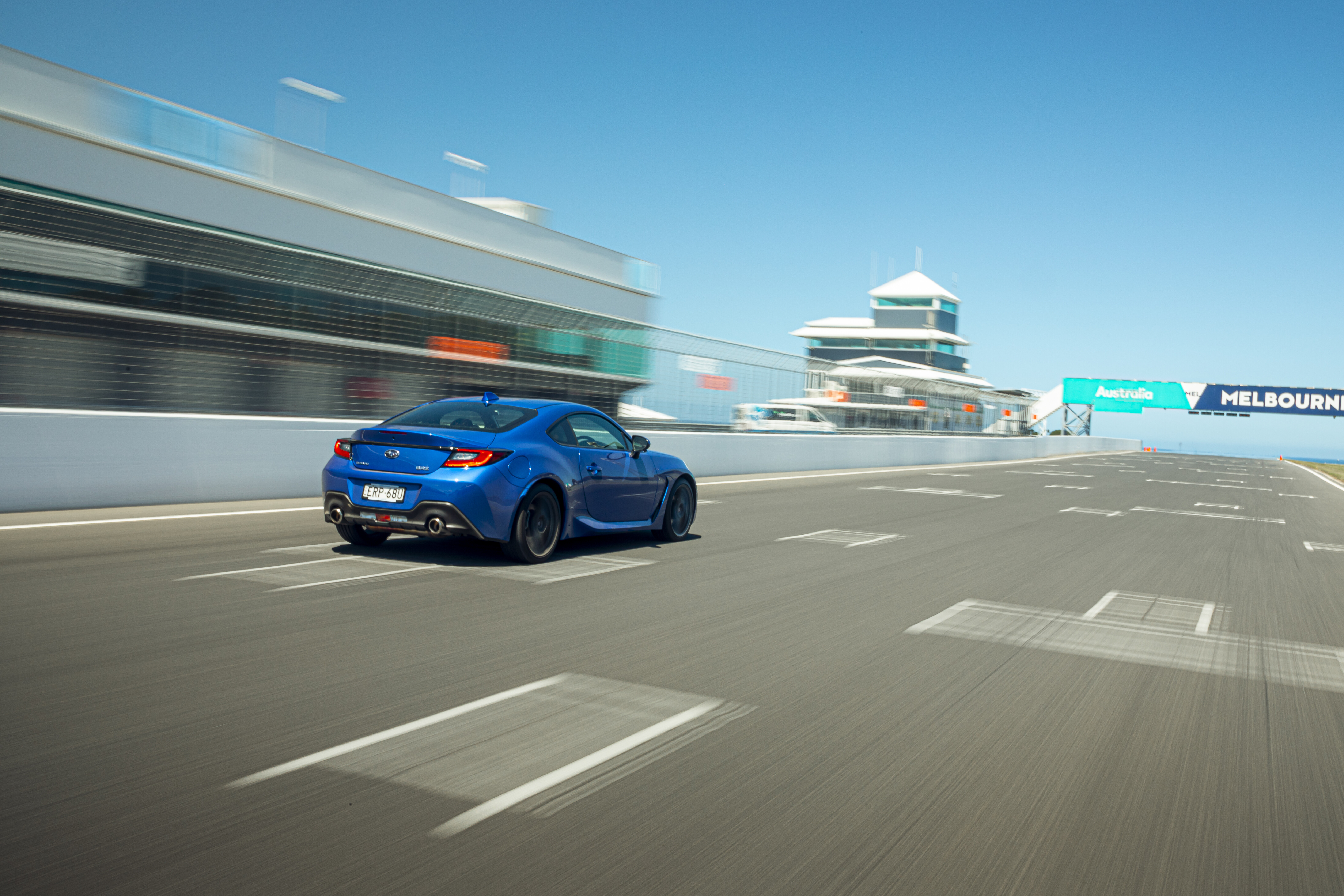
Park a factory-fresh turbocharged Nissan S15 Silvia/200SX and a post-1997 Honda NSX with the larger 3.2-litre C32B V6 next to a 2022 Subaru BRZ, and we’re guessing you’d have some preconceived ideas as to which one is ‘the slow one’.
It’s the Subaru, right? Of course it is. It’s a low-powered naturally-aspirated boxer-four packed with modern technology, and the other two are stripped-back bona-fide sports car icons – according to the digital zeitgeist. Reality, however, isn’t so cut and dry.
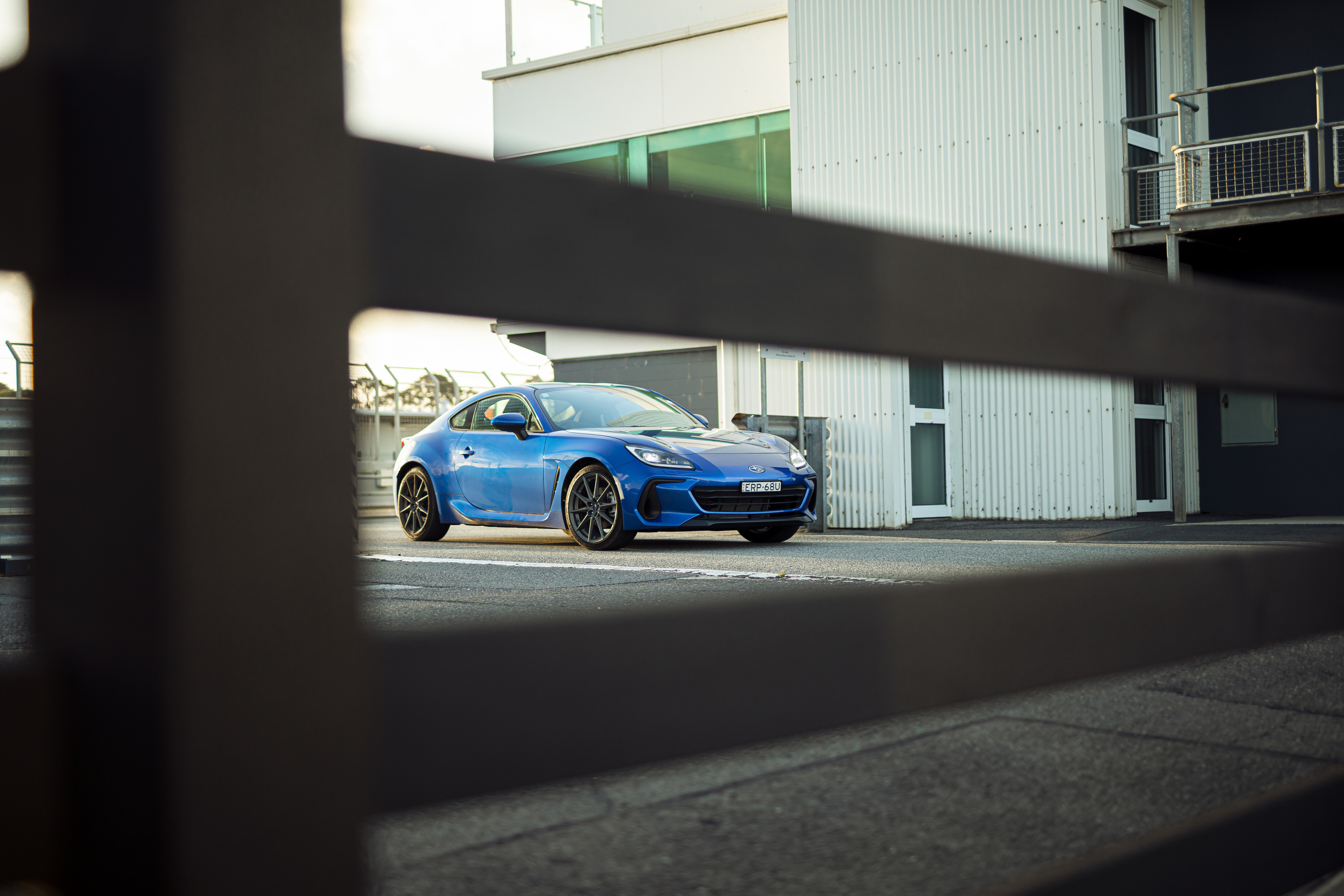
You know by now that the improved 2022 Subaru BRZ, MOTOR’s recently-crowned sub-$100k Sports Car of the Year, draws a further 22kW and 38Nm from its enlarged 2.4-litre FA24 engine.
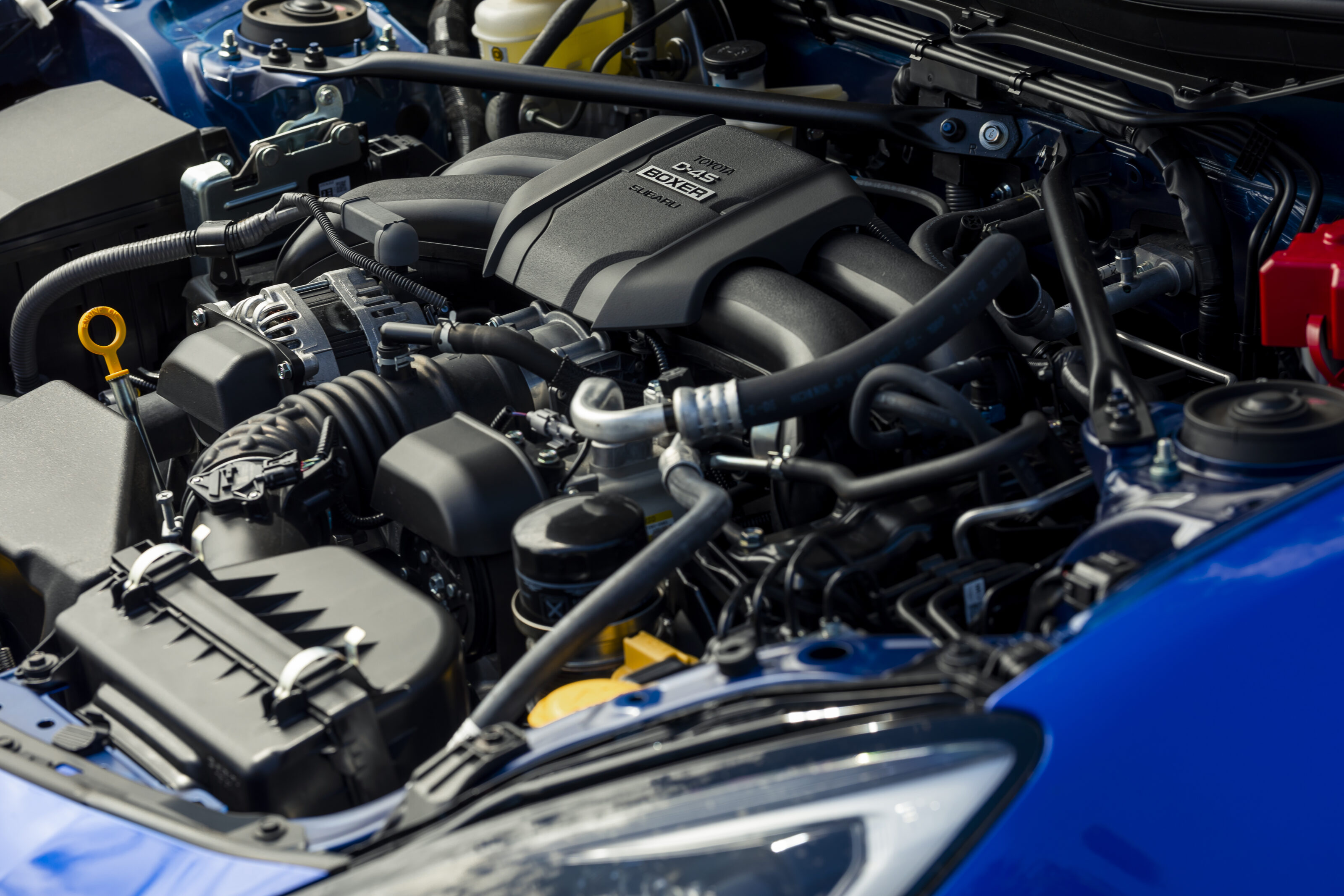
A grand total of 174kW/250Nm may not threaten to spin the bearings off a chassis dynamometer but the little blue bolt produced some very respectable results throughout the week of PCOTY testing.
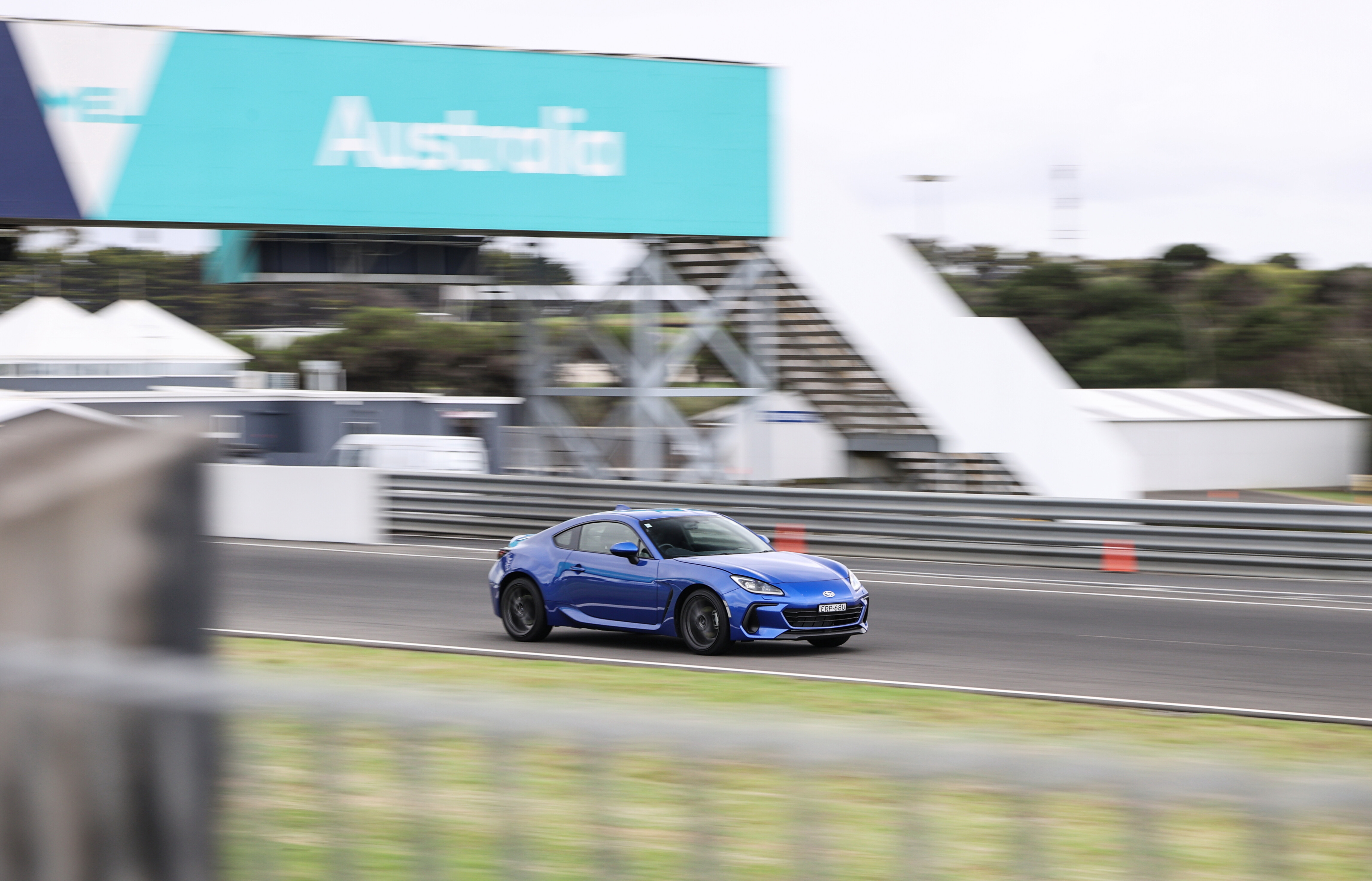
Its 0-100km/h time of 6.21-seconds eclipsed the more powerful 180kW Mk8 Golf GTI, BMW 128ti as well as the 206kW Focus ST.
Keep on running, and the BRZ will reach the 400m marker in 14.24-seconds, a tenth of a second ahead of the trio of turbocharged front-driving hot hatches.
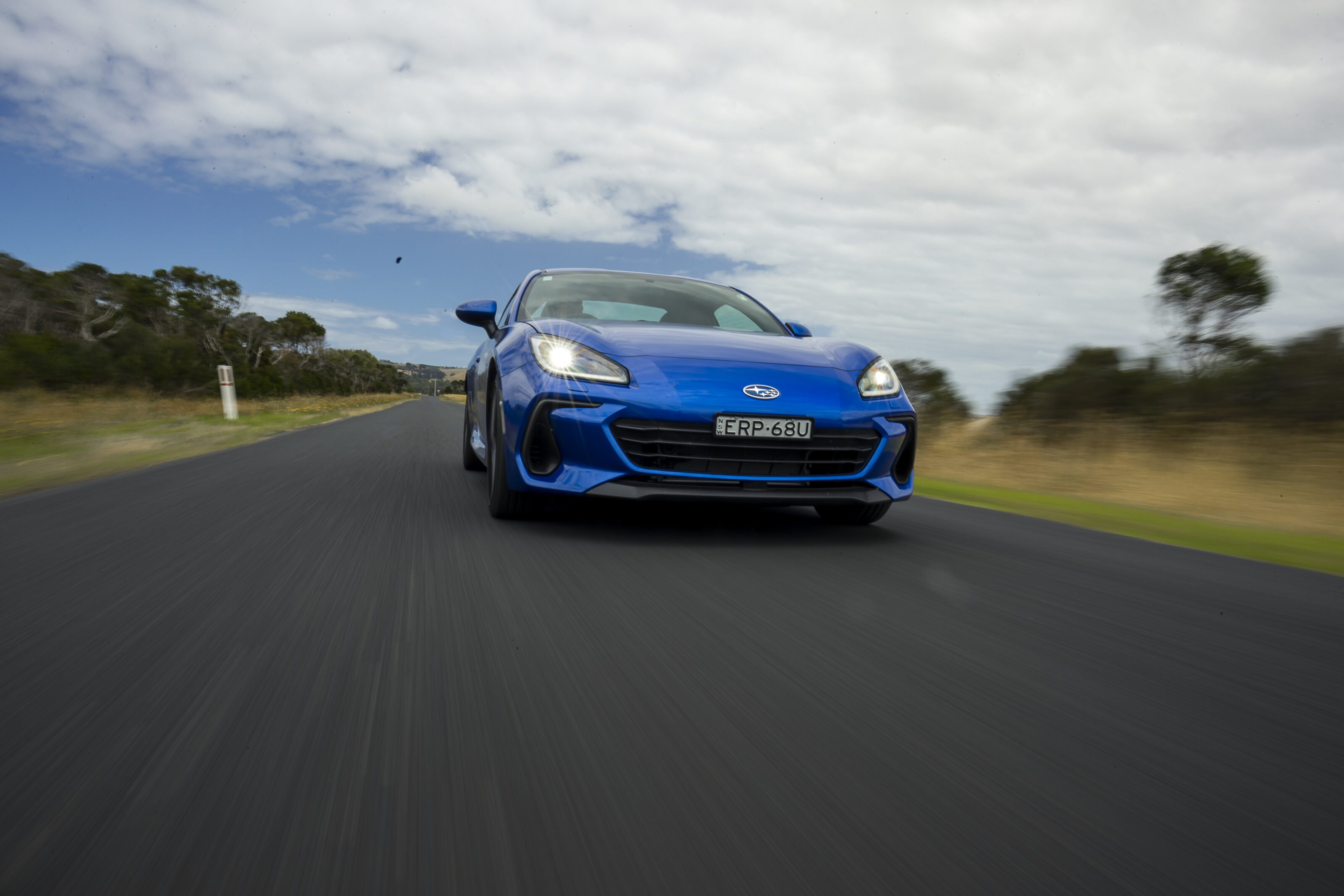
That’s good goings when compared with its turbocharged contemporaries, but things look even more remarkable when measured against those sporting heroes of yore.
Its 0-100km/h sprint of 6.2-seconds bests the 6.9-seconds MOTOR extracted from the SR20DET-powered 200SX that won the PCOTY title in 2001. And its 400m dash measures identical to the post-facelift Honda NSX we tested back in 2002.
Of course, progress is a given with 20 years passing in the interim, but there’s a lingering sentiment amongst some vocal enthusiasts that the Subaru BRZ, despite its dynamic delicacies, isn’t quick enough to garner the sports car tag.
It’s quicker than an S15 from 0-100km/h, as fast as an NSX over the quarter-mile and its 1286kg kerb weight renders it lighter than both.
Not fast enough to be a sports car? Tell us why in the comments below.
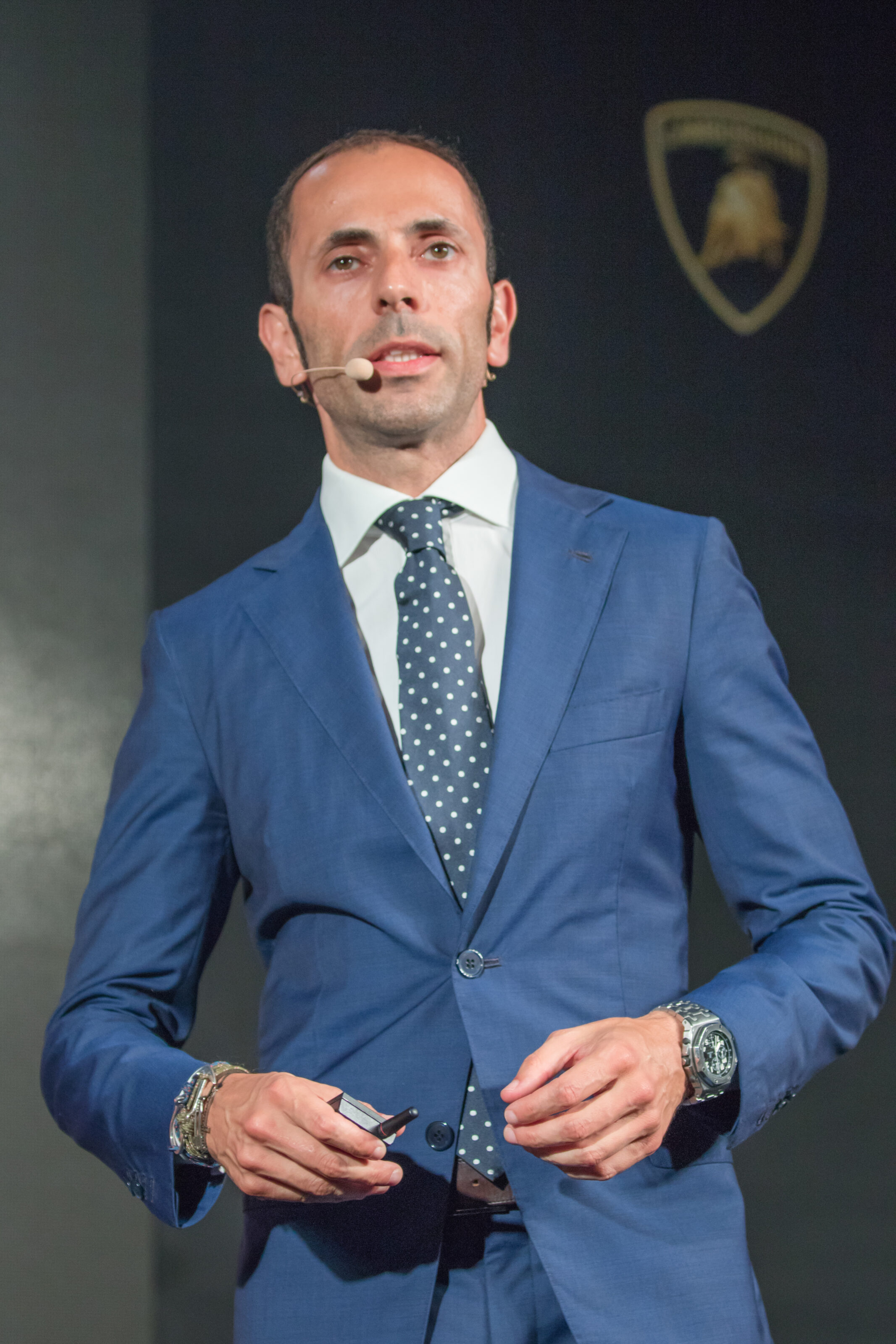
Francesco Scardaoni is a man with his hands full right now. Lamborghini is a business in rapid transition.
Twenty years ago, the business sold 424 cars a year. Ten years ago, it produced 2083 vehicles. Last year it shifted 8405 units. Show us a business that more than quadruples its volumes every decade and we’re always interested in the backstory.
As director of one of the fast-growing Asia Pacific market, Scardaoni has more on his plate than merely taking orders. We sat down with him at the Australian Grand Prix to understand where he sees the business.
Has the Urus lived up to what you expected in terms of bringing new customers to the brand?
Urus was a game changer since day one of its release. We presented Urus in 2012 Beijing Auto Show and we received tremendous feedback. Then we went to the market and released the car in 2018, and 2019 was the first full year of Urus out in the market and if you see the company result, basically we doubled.
We doubled in terms of production but in terms of change, it was not really change. The company changed: we didn’t double the number of employees but we increased the number of employees by 500. The company totally changed.
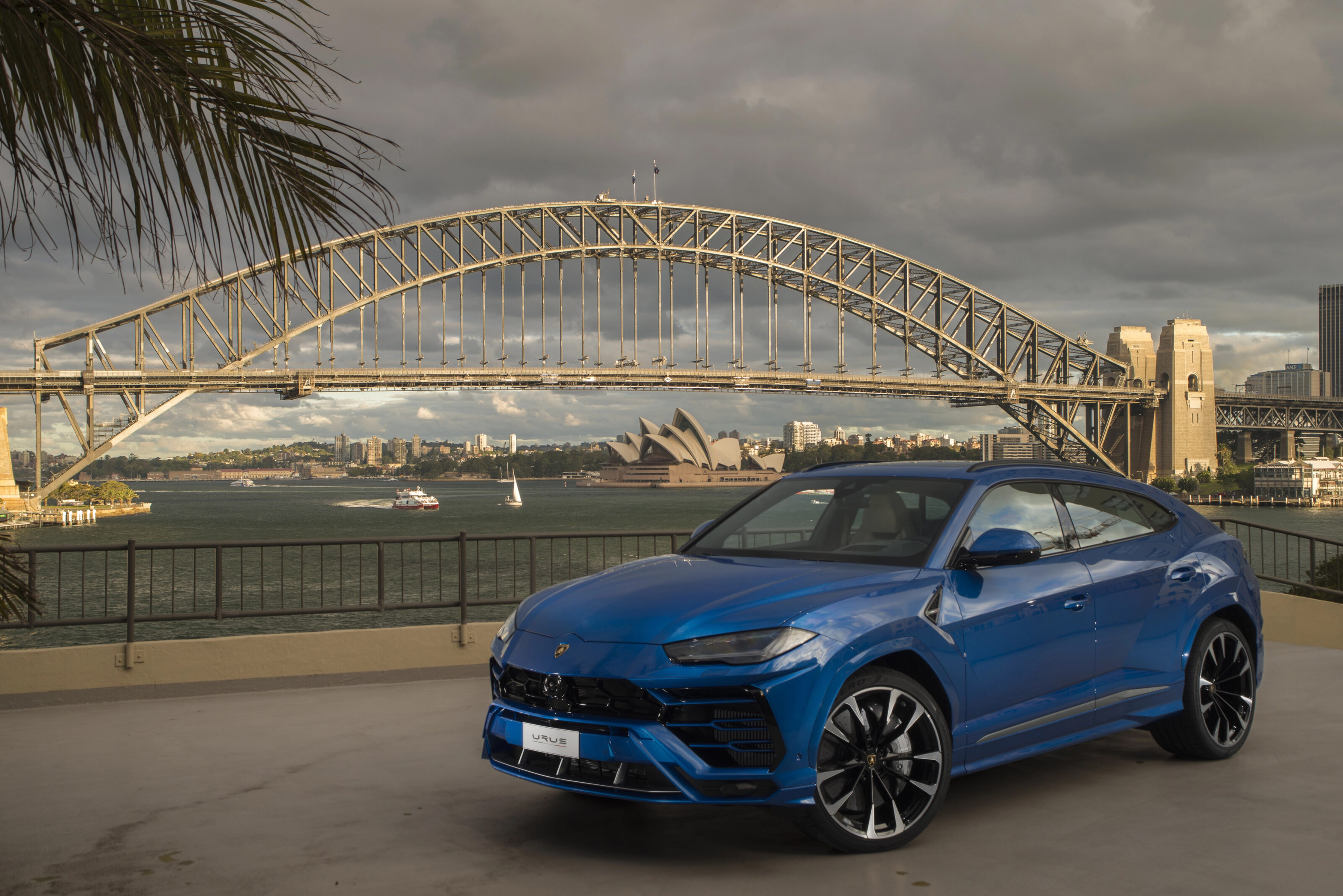
Also the customer type changed. Since the beginning [of Urus production] we have 70 per cent of customers new to the brand. This was the rate at the beginning of the launch. Of course this was sort of natural because a lot of the customers knew Lamborghini but they didn’t want to buy Lamborghini because of the comfort of the super sport car. When I say comfort it is not that the super sport car is hard to drive; it’s just the number of seats. Urus opened new roles, new possibilities; families, friends so on. That’s why we got a lot of customers new to the brand because they never considered Lamborghini as a potential car due to the number of seats.
The way the Urus is driven is totally different. It’s used by many customers to commute between office and home, but it drives like a super sports car. It’s a super sports car with the comfort of an SUV. The car doesn’t roll, it doesn’t pitch – it gives you the feeling of driving a super sports car.
Given the rapid growth in the business, what specific challenges have you experienced in scaling up?
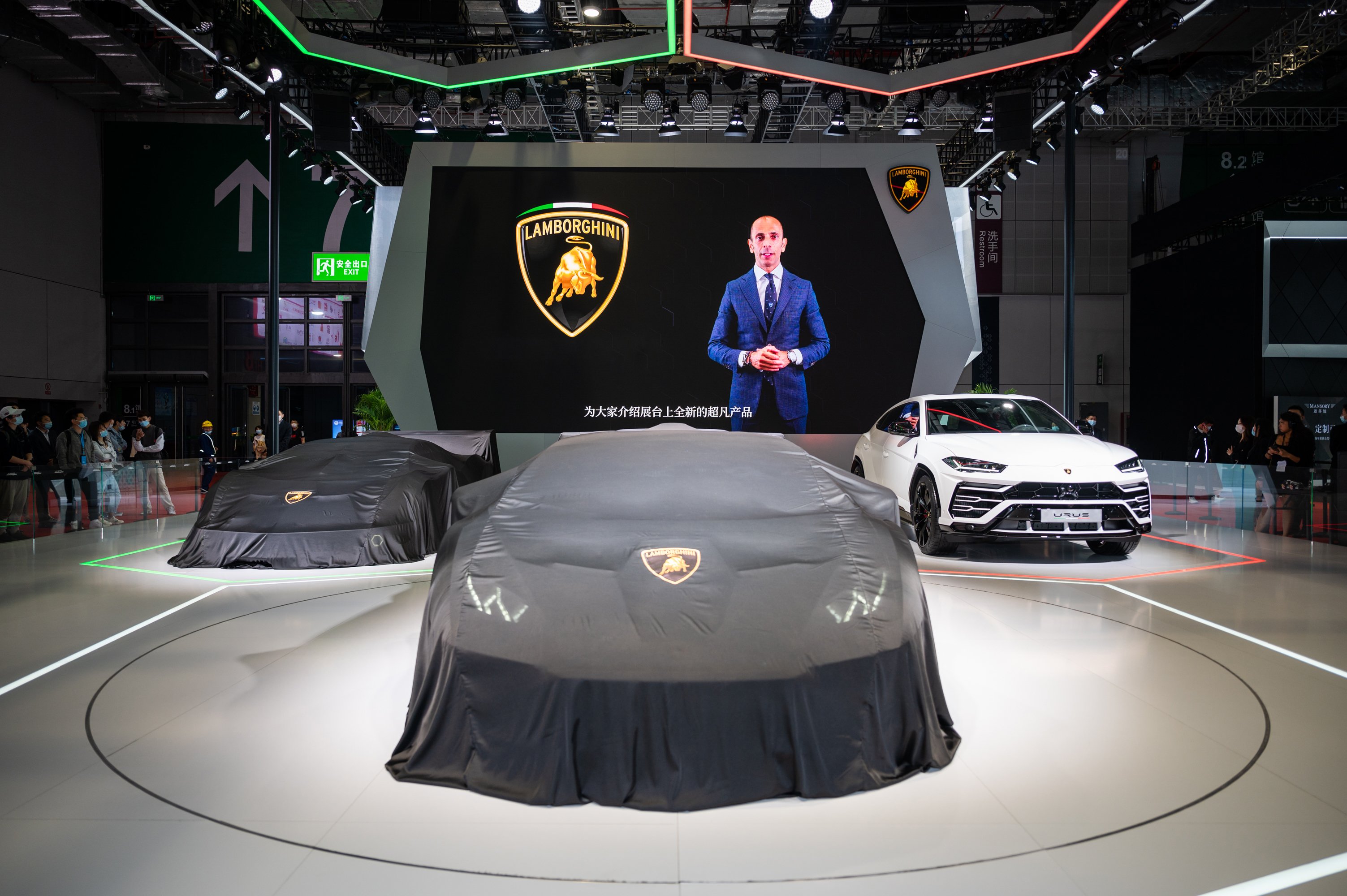
I wouldn’t call them challenges, but we needed to restructure the network according to the new volumes or the higher number of sales. Of course, we wanted to bring more detail into the market because we knew that we wanted to be closer to customers so we increased the population of our network.
We increased the number of dealers, we increased the size our workshops and our showrooms because we had to display the Urus and we have to service more Urus. We also increased the number of technicians. We started to provide training in different regions, so we introduced local training closer to technicians and dealers that had the need to be more deeply trained, so it was a game changer for our partners, our network.
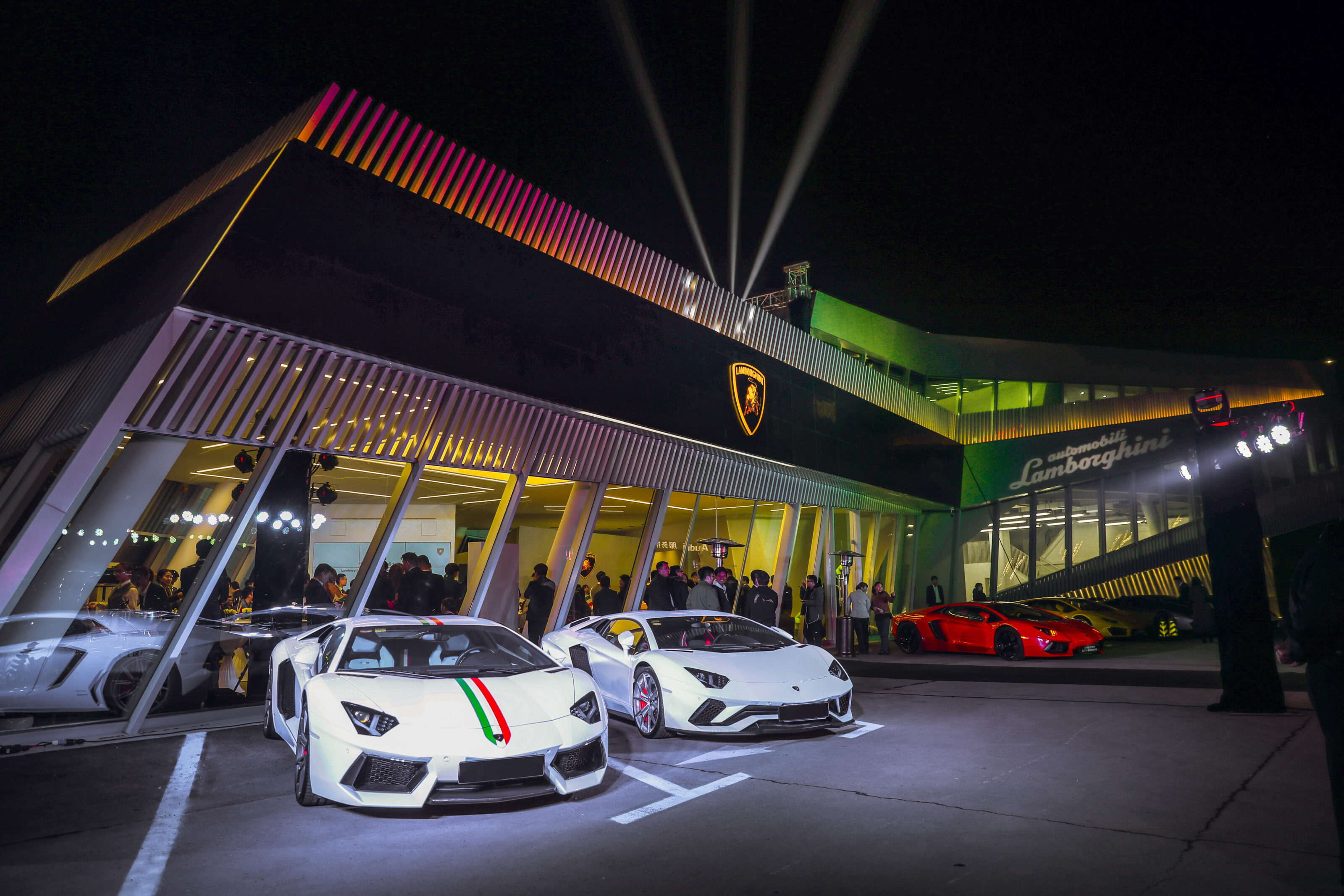
But it felt natural in rolling out the cars and now the network is fully prepared in servicing not only the Urus that have been sold up to now but all the cars that will be sold in future.
How does a company that’s famous for V10s and V12s communicate a commitment to sustainability?
Lamborghini started the sustainability since many years ago. Since 2015 we are carbon neutral in terms of premises in Italy with a large investment into our facility with many certifications. And then as Mr Winkelmann announced in May last year, we released a new strategy for electrification called Direzione Cor Tauri, meaning the heart of the bull. It’s our strategy for future electrification and it’s a strategy that’s set on three different steps.
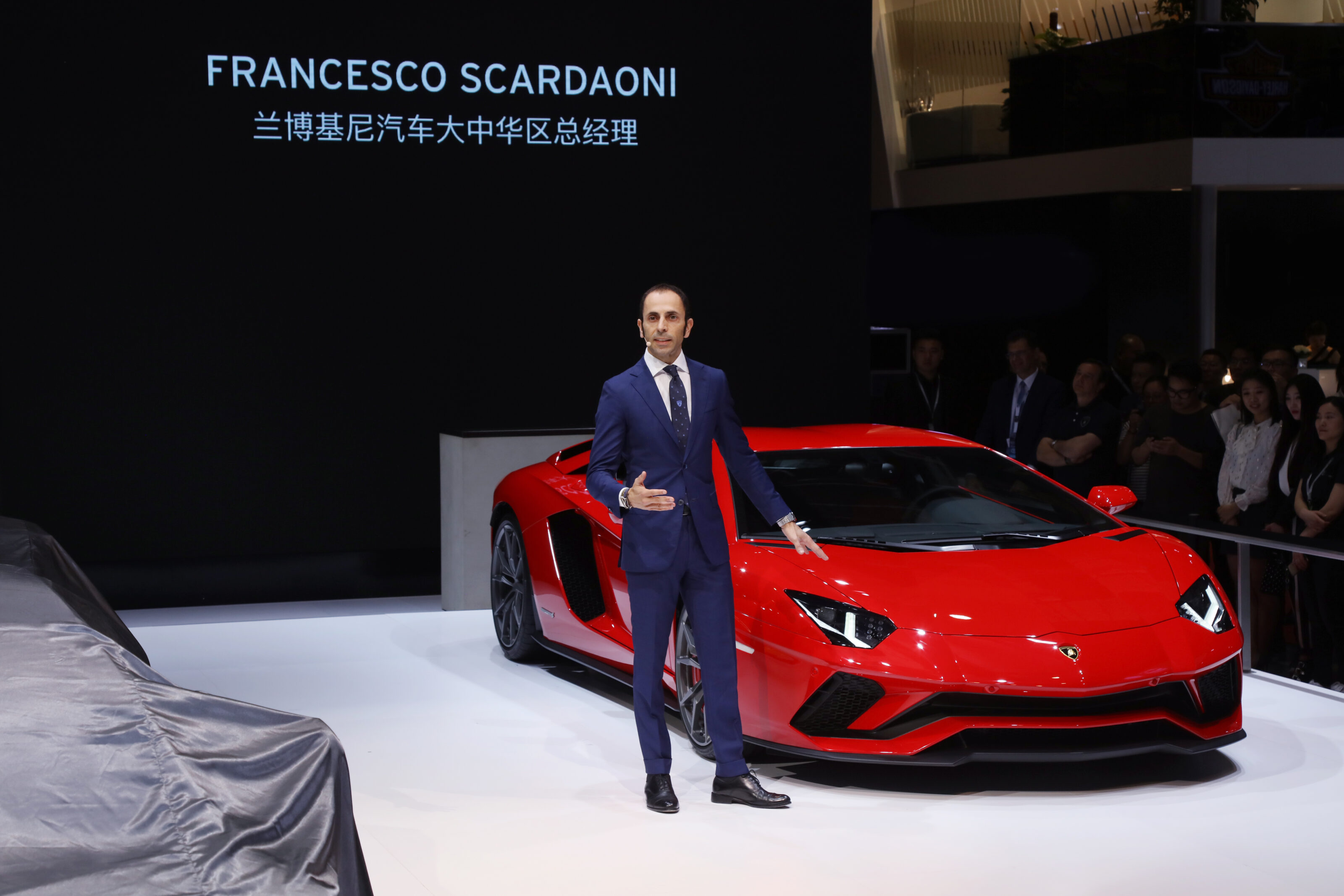
Then starting from 2023, we will step into the second phase of the electrification plan which is the hybridisation. So from 2023 we will have first hybrid Lamborghini which will be the Aventador – so the follower of the Aventador will be a V12 plug-in hybrid that will start the second step of our electrification plan and this will go up to 2025/2026 where all of our product range will be hybridised.
Also Huracan, and in order to complete the second step, Lamborghini already released the largest investment ever in the company – EUR1.5bn – to hybridise all of our product range and then to reach by 2023 a reduction in CO2 by 50 per cent. So a huge investment, a huge commitment to reach our target.
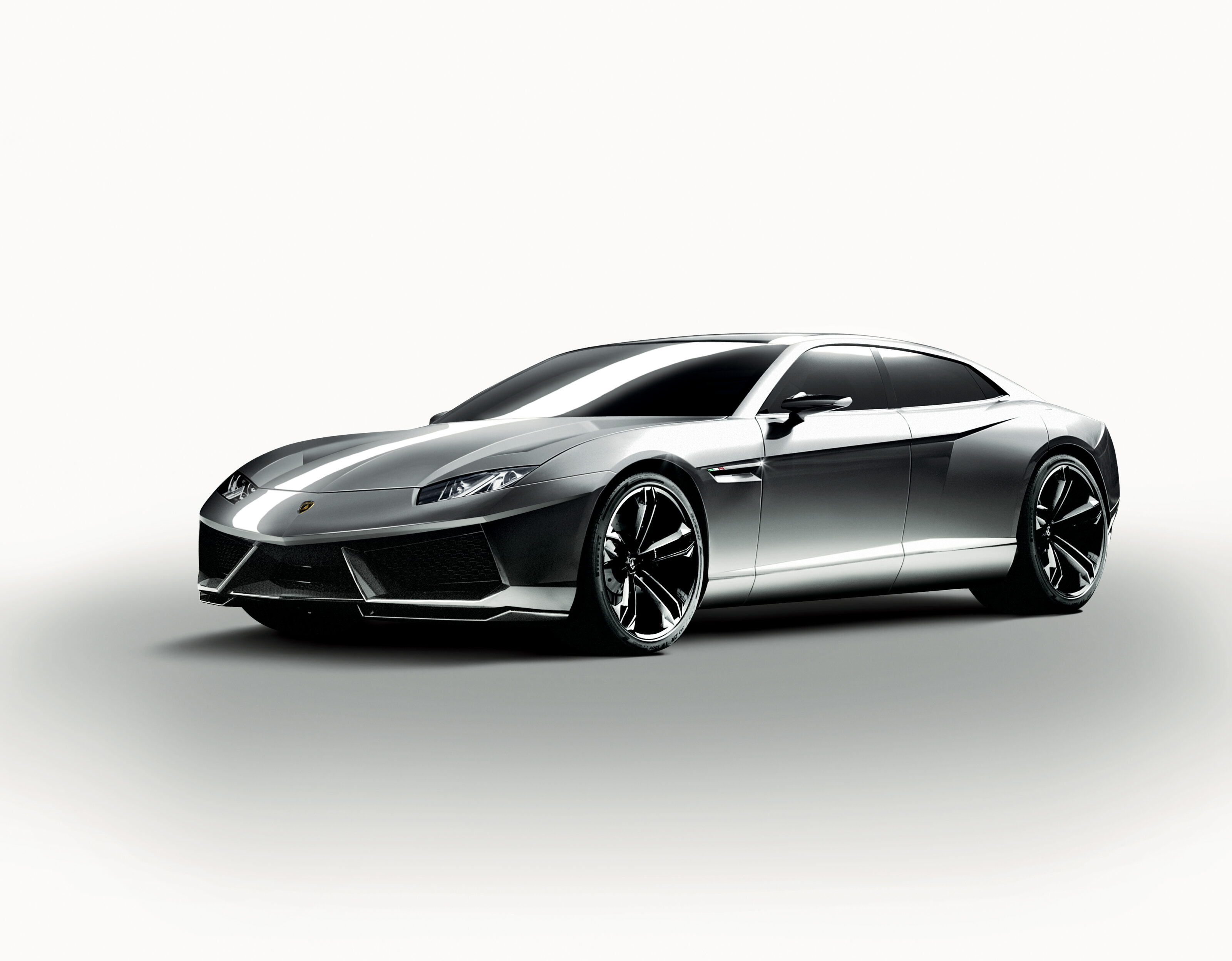
And then from the second part of the decade we will start with our pure electric phase, where we will release the first electric Lamborghini that will be a 2+2, two-door that we are still developing. That will be a new game changer for Lamborghini, introducing a fourth model. So we will have super sports cars, a super-SUV and a super-GT (a 2+2)
Maurizio Reggiani has been replaced by Rouven Mohr as Chief Technical Officer. Why was that and what changes do you see happening as a result?
Maurizio was with us for so many years. With his background in Maserati, Bugatti, Lamborghini, he’s the master of engineering. When you talk about super sports cars, he’s the man. Respect for Maurizio – he brought the company to where we are today. The models we have today are thanks to Maurizio.
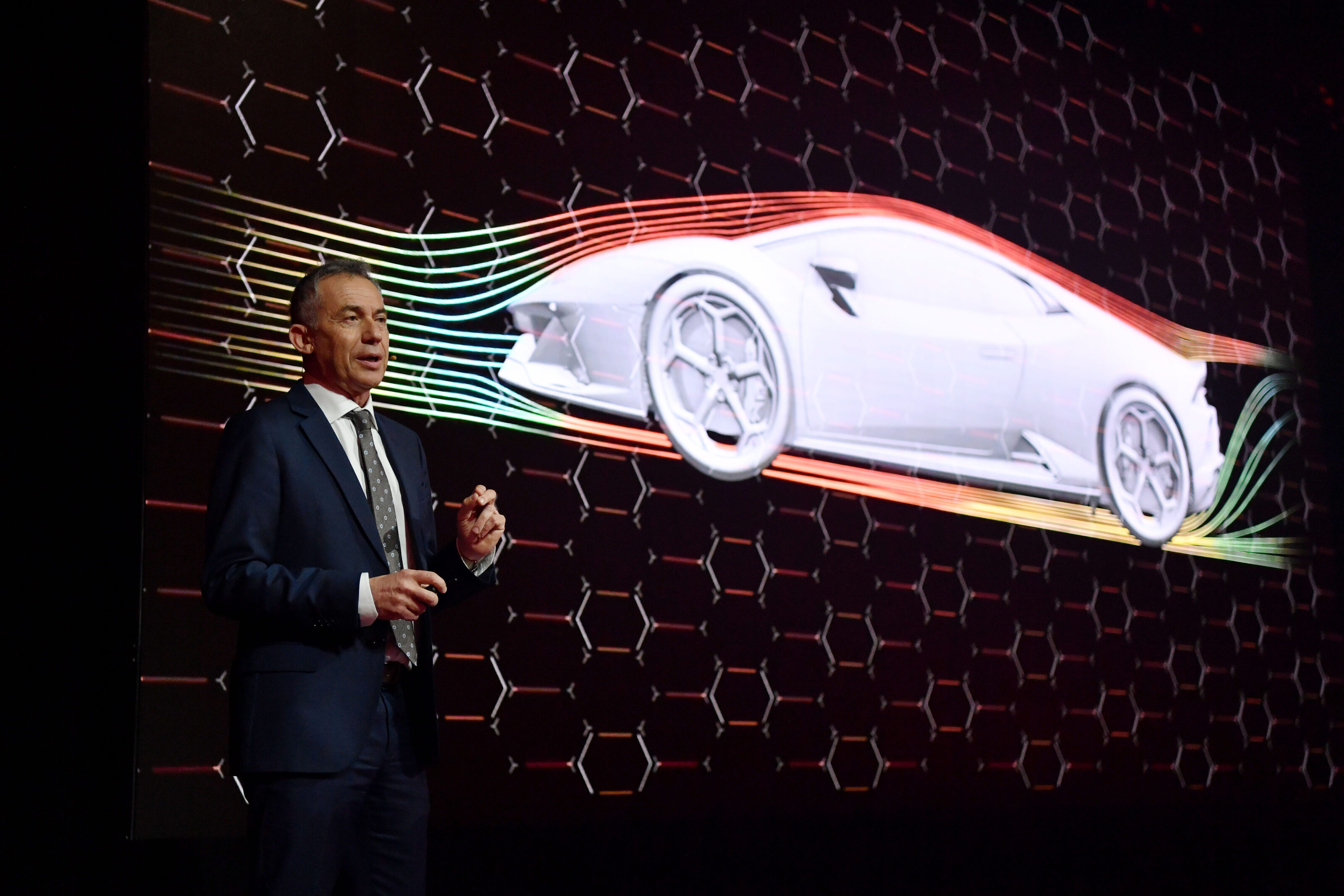
Maurizio is close to retirement and we are stepping into Phase Two – the hybridisation phase of our electrification plan – so we thought with Maurizio that it wouldn’t make so much sense to change the Chief Technical Officer in the middle of an electrification phase.
We thought it would have been better to start with the replacement of Maurizio at day one of the Step Two phase. This was a common agreement with Maurizio but he’s still in the company as motorsport vice-president and this is a sign that Lamborghini has some really big plans for motorsport.
It’s great to see sales growth of 14.4% last year here in Australia, but do you feel that you are over-reliant on one model in the Urus?
You are talking about delivering to customers. What we focus on a lot is order intake; order collection. What I’m really proud and happy to say is that we are witnessing how Australian customers are keen and they like the design of the cars. You see that with Urus and you see that with super sports cars. They love them.
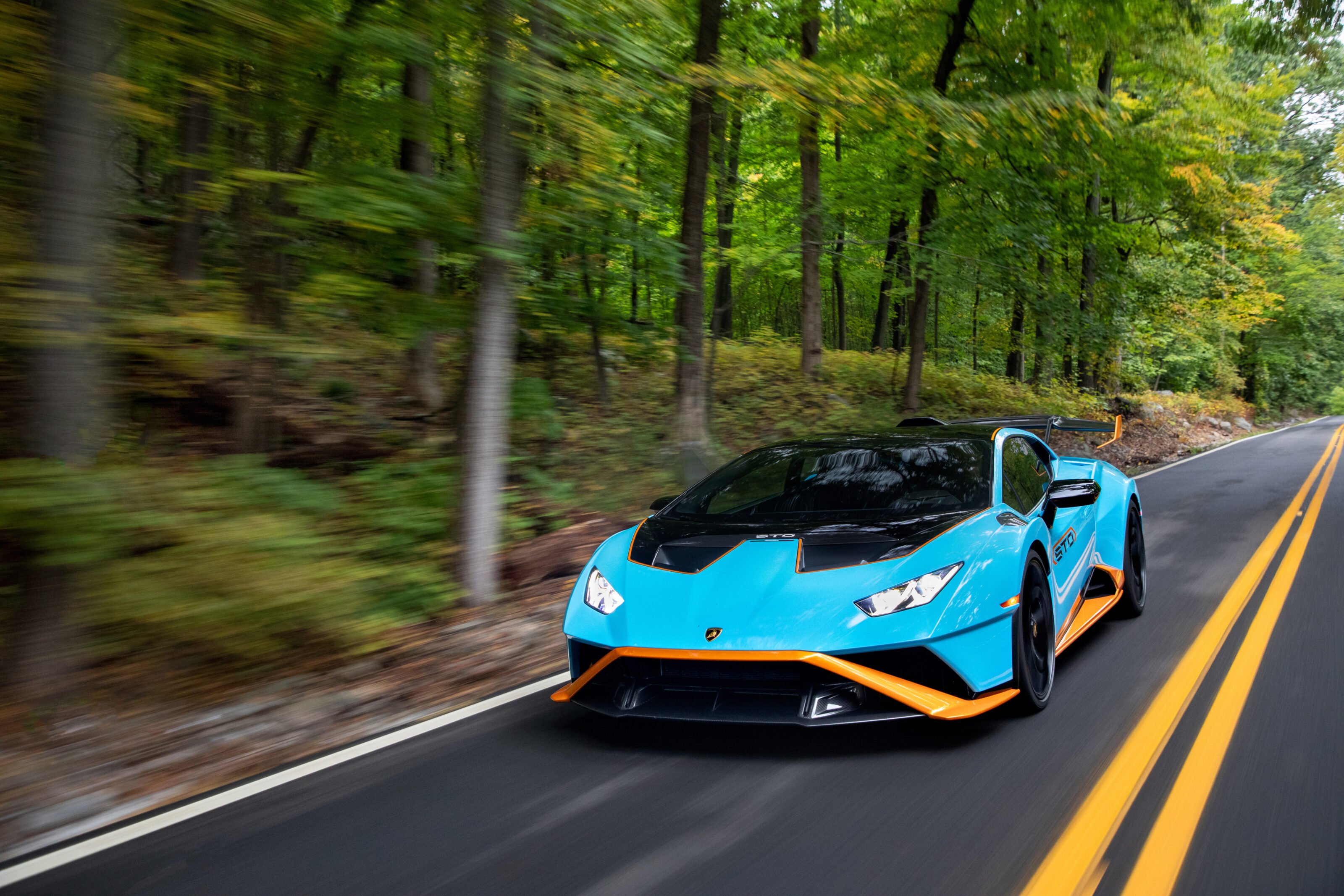
We are witnessing a huge order intake of super sports car. So basically our production plan for 2022 in Australia; super sport car – it’s already sold. So now we are selling 2023 – Huracan STO was a tremendous success here in Australia.
We had a driving session on Thursday and customers were getting out of the car shaking! The emotion of the NA engine sound, the feeling that I’m sitting in a Lamborghini, a car that is really a crystal clear car, like you have your hand on the asphalt. The steering feeling is so direct like a race car. The braking power is astonishing. It’s the first car that feels 1 to 1 to a GT3 car. The order collection that we see in Australia is unbelievable.
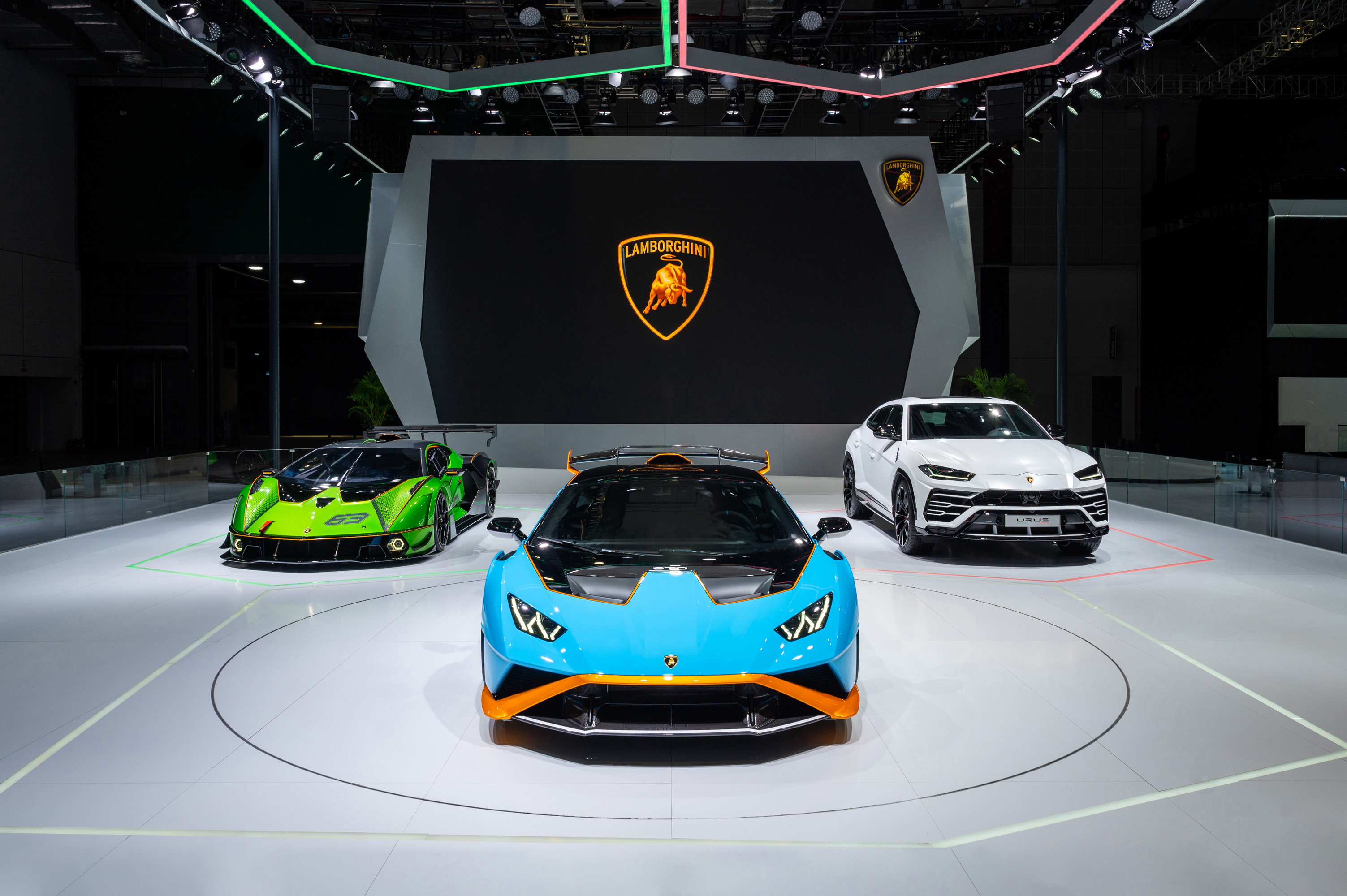
You will see in the near future that Urus will still be the most sold model but super sport cars will be almost there.
How have you fared in physically fulfilling those orders given the global supply chain issues?
Luckily we didn’t have a problem of shortage of semiconductors for two reasons. First of all we are able to share our long term production plans with our key suppliers so this allows them to of course properly plan their capacity. The main second reason is because we are part of Volkswagen Group and we are the brand with the highest marginality so that gives us priority on other brands. This helps us to get parts. We have the winning strategy.
What are the specific challenges of selling in Australia?
The challenge would be in the near future with electrification, especially when you speak about super sport cars. Thinking to have a pure electric super sport car can be not easy. Customers were stepping out of the STO shaking because of the emotion of a naturally aspirated engine sound and all the features of that. The transition to a pure electric car can be the most challenging project for a super sport car.
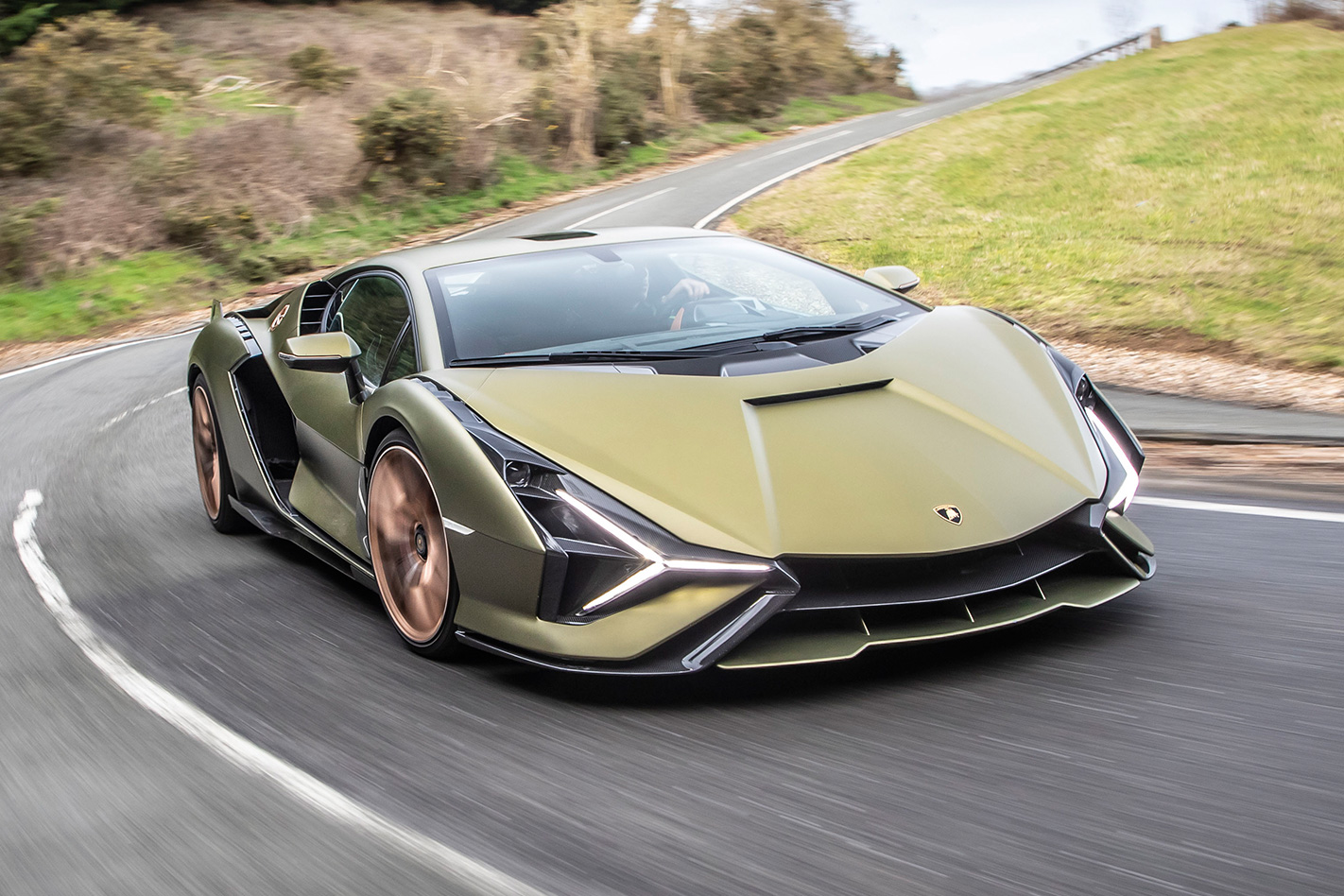
We need to develop our super sport car with all the main parameters of today’s cars: driving emotion, handling, performance etc. because all of our customers expect our cars to perform better than their predecessors. The next cars will be faster, better handling and so on. All of the performance measures need to be better.
It’s important that when a customer sits blindfolded in a pure electric Lamborghini, they will recognise immediately that they’re sitting in a Lamborghini. It’s not an easy task with electrification, to differentiate cars, so that’s probably the biggest challenge that we face.
What are your aims for 2022?
A lot of orders! (laughs) 2022 – my goal would be to resume travelling normally like it was before, to have a monthly face to face meeting with our guys all over the world, with dealers, which is important.
Face to face contact with dealers is so important and face to face contact with customers is key. Lamborghini is really an individual business and we as a brand like to stay in contact with our customers. We always listen to the voice of our customers and the voice of our markets. This is the strength of Lamborghini and I hope that from 2022 onwards we can resume that strategy.
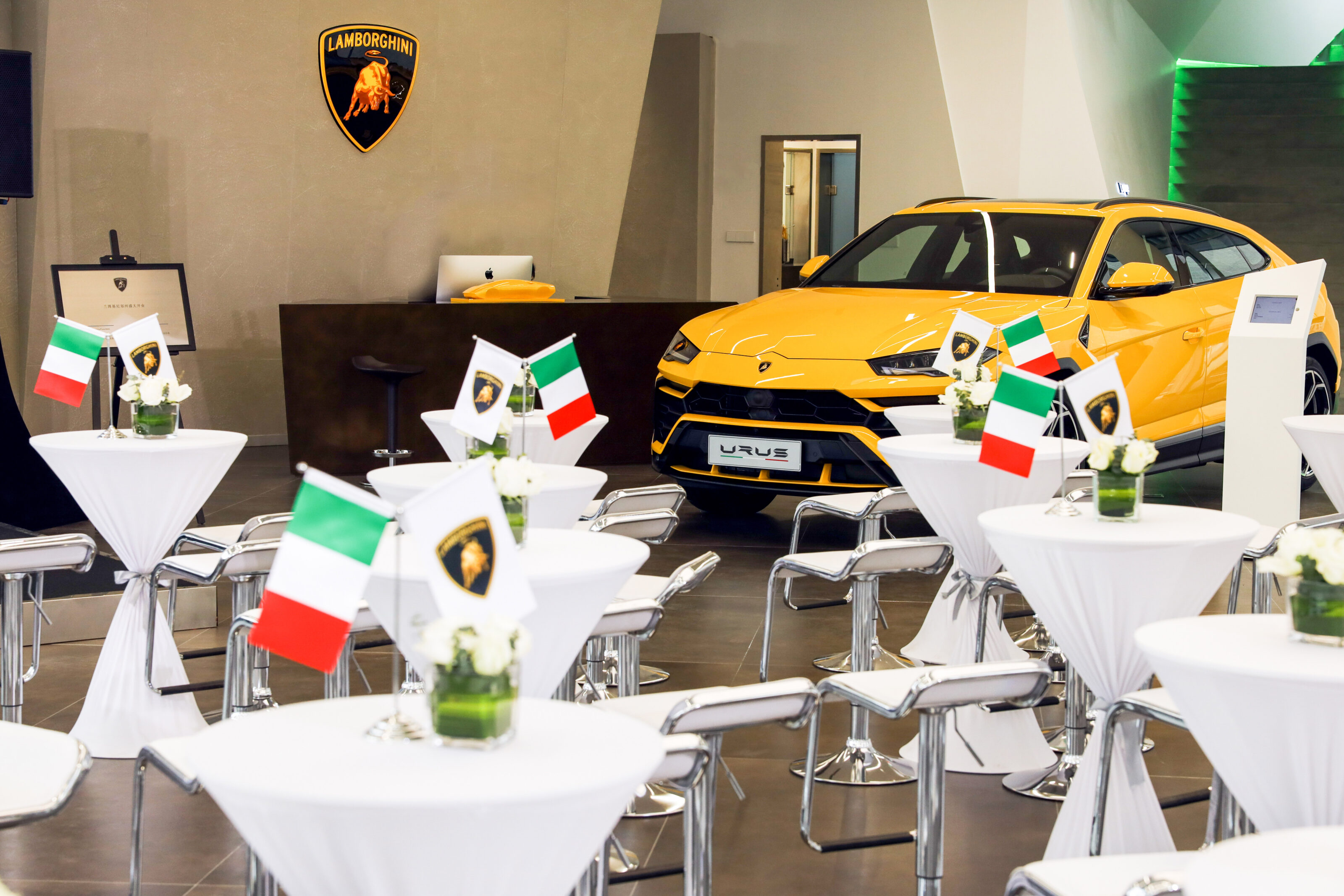
During those years, Lamborghini has been amazing to switch from when the pandemic started from above the line marketing activities to teach them so we launched more than four cars using virtual reality. We always wanted to be close to our customers, our media friends, our dealers in a moment that was not easy.
Now we want to go back again and be close to our customers, our media friends and our dealers face to face. We are in in an individual, personal business and we are a brand that likes to be feeling the customer close to us.
Snapshot
- 2023 Hyundai Palisade revealed with new design
- Updated interior and tech features throughout
- Arriving in Australia in third quarter 2022
The 2023 Hyundai Palisade has been revealed wearing the company’s parametric jewel pattern design language.
Hyundai debuted the facelifted seven-seat SUV at the New York International Auto Show overnight, announcing a host of new technologies to accompany the new looks.
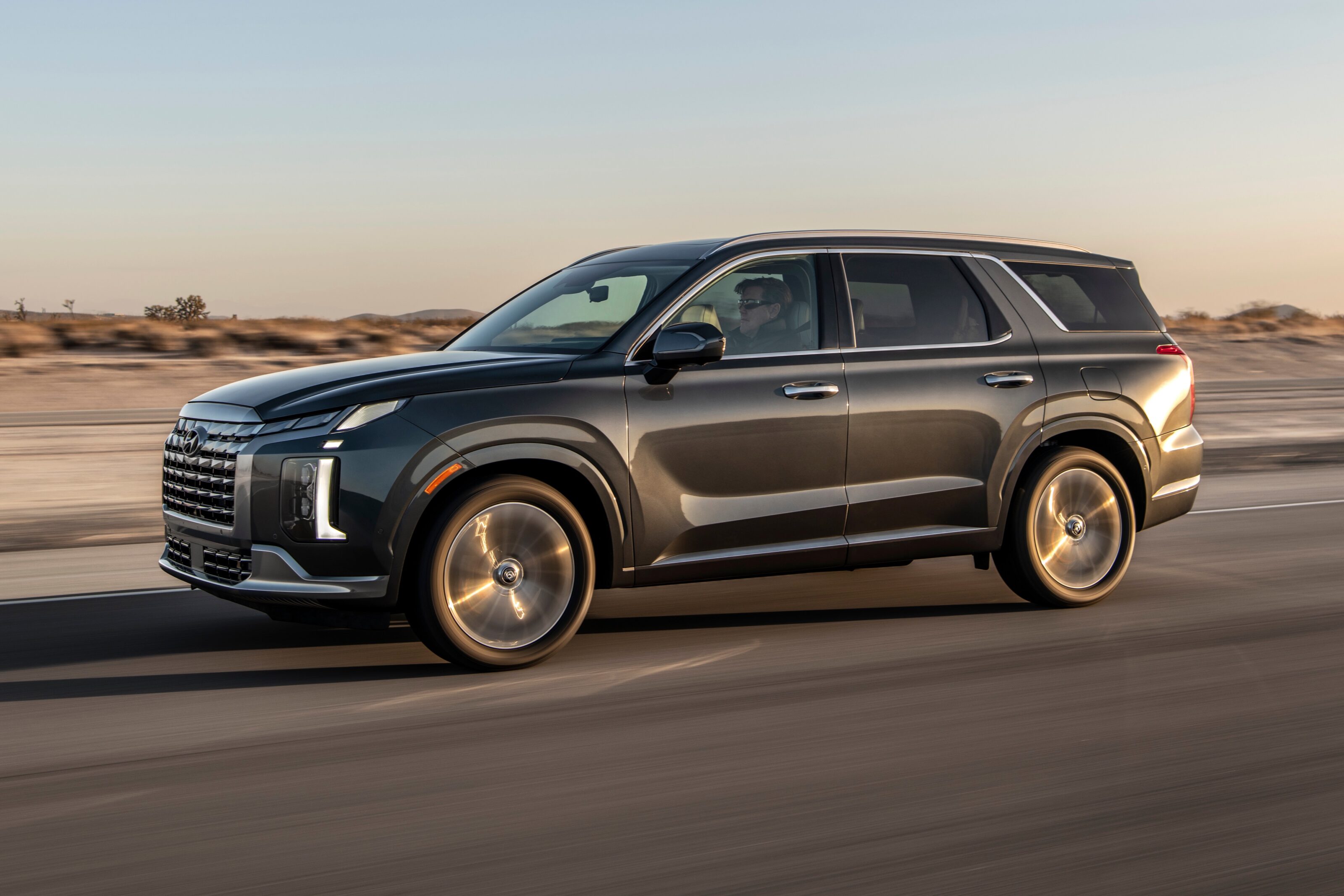
In an unusual move, the Korean carmaker has changed the Palisade’s design to more closely align it with the Grandmaster concept car from 2018 on which it was based, and has adopted a similar look to its sibling, the Hyundai Tucson.
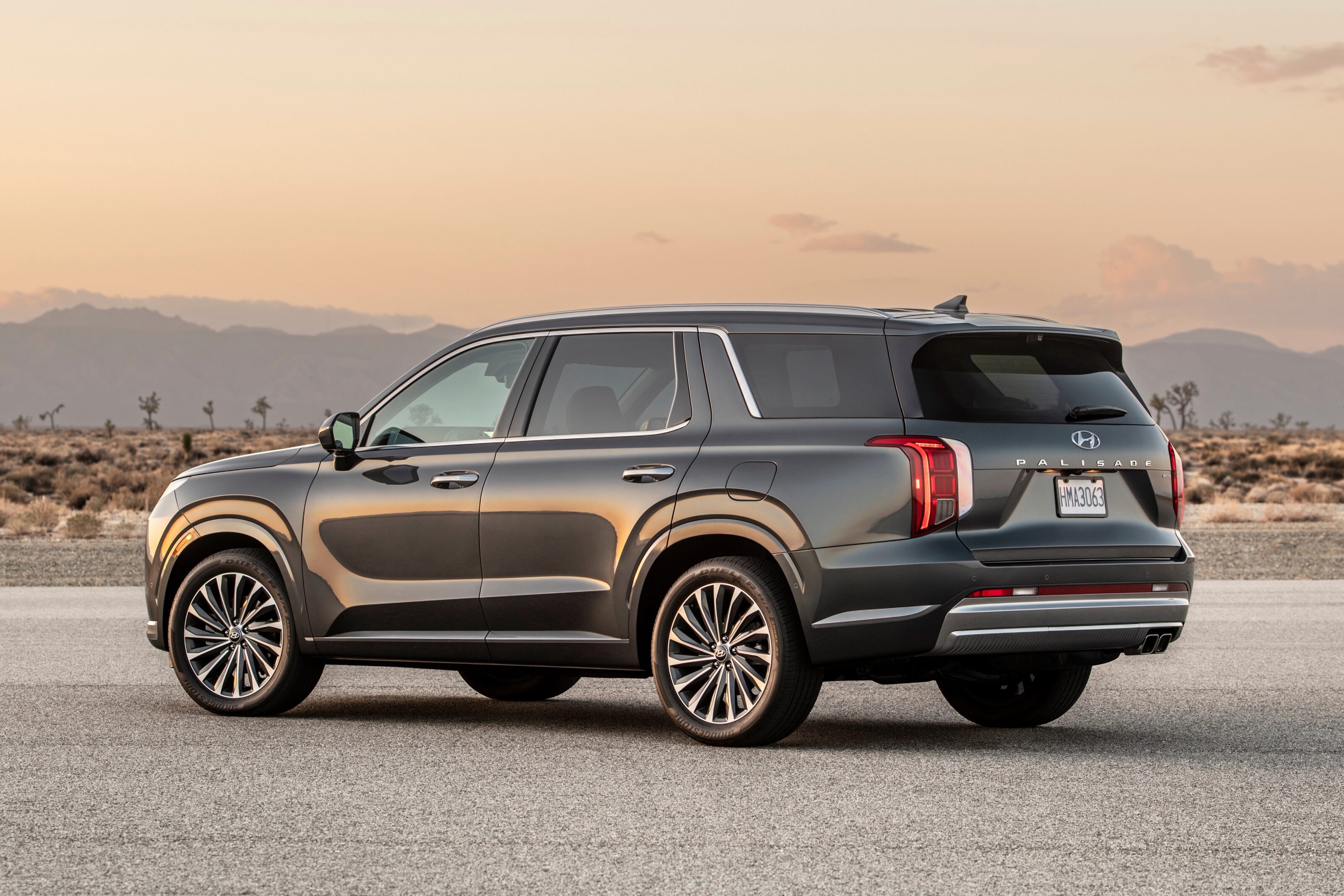
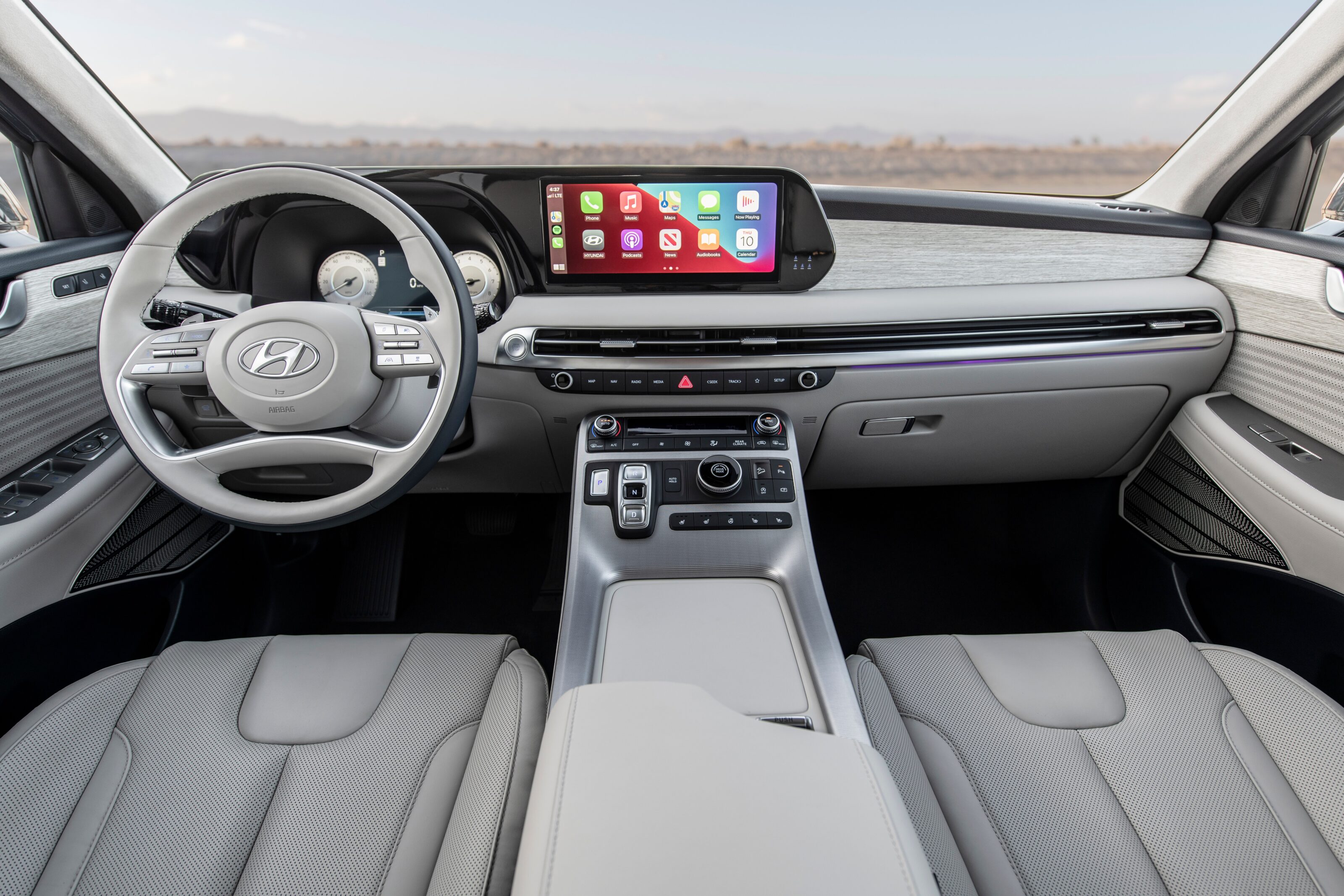
Complementing the Palisade’s new front-end is a set of multi-spoke alloy wheels, while inside there’s a new instrument panel, gauge cluster, and steering wheel.
The driver now gets an Ergo-motion seat – borrowed from Genesis models – which offers ‘Smart Posture Assist’ and ‘Smart Support’, as well as providing a massage-like function to help reduce discomfort on long drives and increased bolstering in Sport mode.
For the first time in a Hyundai, the Palisade will offer the driver a digital centre rear-view mirror, while third-row occupants will also benefit from heated seats.
The 12.0-inch infotainment screen offers satellite navigation with 720p resolution, and wireless smartphone charging will now be faster thanks to an increase from five to 15 watts. The Palisade’s USB-A ports have been replaced with smaller USB-C ports, also allowing quicker charging up to three amps.
Alongside the new Palisade, Hyundai will launch Bluelink for the first time in Australia, which connects the car with a range of features accessed via smartphone.
As well as being able to open and start the Palisade with Digital Key 2 Touch with Apple iPhones or Android smartphones, Bluelink allows drivers to set up their User Profile to customise the car’s settings to suit their personal preferences.
Bluelink can also be used to establish a connection with an operator in the event of an accident, as can inform the driver if there’s movement in the backseat and the car has been locked – this is designed to prevent children and pets from being left alone in hot cars.
The car can also notify the owner if the doors have been unlocked or windows have been opened, while allowing them to turn on functions such as seat heating in winter.
Passengers can use voice commands to change climate settings, seat heating and ventilation, steering wheel heating, or the radio, as well as opening or closing the power-operated tailgate.
Hyundai has also given the Palisade the ability to offer passengers a connection to the internet though a WiFi hotspot.
The 2023 Hyundai Palisade will launch in Australia in the third quarter of 2022 (July to September inclusive), with local pricing and specifications to be announced closer to the date.
Drivers in Queensland will see some fines increase by as much as 161 per cent under new changes to traffic infringements.
Speeding offences up to 20km/h over the limit are set to rise by 56 per cent, while those caught driving between 31km/h and 40km/h more will now pay $1078 – a 67 per cent hike from the previous $643 fine.
While not wearing a seatbelt and running a red light were both $413 fines previously, now those in the front seats who fail to clip-in will have to pay $1078, with red light runners only having to cough up $575 for their misdeed.
| Offence | Old fine | New fine | Increase |
|---|---|---|---|
| Speeding by 1-10km/h | $183 | $287 | 56% |
| Speeding by 11-20km/h | $275 | $431 | 56% |
| Speeding by 21-30km/h | $459 | $646 | 40% |
| Speeding by 31-40km/h | $643 | $1078 | 67% |
| 40km/h”}”>Speeding by >40km/h | $1286 | $1653 | 29% |
| No seatbelt | $413 | $1078 | 161% |
| Running red light | $413 | $575 | 39% |
“Today we are reaffirming our commitment to zero road deaths and serious injuries by 2050 by cracking down on driver behaviour,” Queensland’s Transport and Main Roads Minister Mark Bailey said at the announcement.
“In the first four months of our new seatbelt detection cameras going live, almost 14,000 seatbelt offences were recorded,” he said.
“We’ve been educating drivers on the importance of seatbelts for 50 years, but somehow the message didn’t get through to almost 14,000 people, so it’s time to get tough.”
As well as increasing the no-seatbelt fine to $1078, demerits will also increase from three points to four.
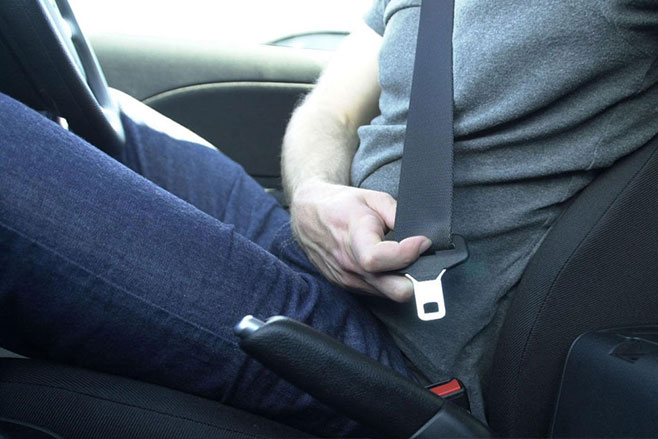
“We make no apologies for being tough on this reckless and dangerous behaviour, just like we did for mobile phone offences,” Minister Bailey said.
“The message is simple, if you don’t want one of these fines, do the right thing on our roads.”
Queensland Police has caught almost 500 drivers each day using their mobile phones since new cameras were introduced in November 2021.
“We know using a phone while driving is the equivalent of getting behind the wheel with a blood alcohol concentration of 0.07-0.10 – it’s just not on,” Minister Bailey said at the time.
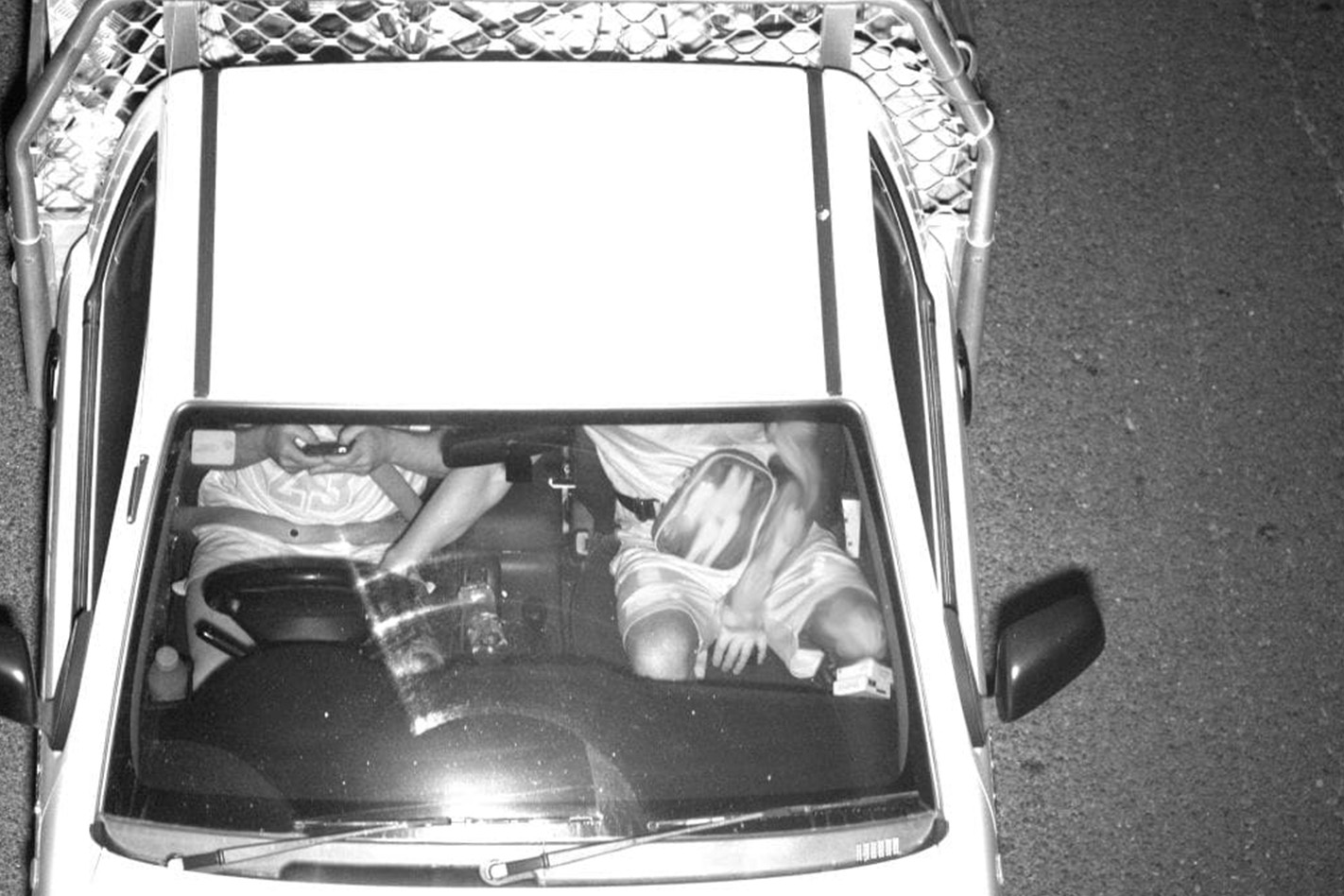
In an effort to reduce so-called ‘hoon’ behaviour, Queensland Police set up an online portal recently to allow citizens to share evidence of dangerous driving.
At the last budget, the Queensland Government forecast revenue from fines and forfeitures would increase by almost 40 per cent over the 2021-22 financial year, bringing in around $595 million.
Snapshot
- Construction of $500m plant to start next year
- Will use locally sourced waste
- Green hydrogen and green ammonia facility also coming
A renewable diesel and aviation fuel biorefinery facility is to be built in Queensland, with the State Government today confirming the $500 million project.
It will be the first commercial site of its kind in Australia, creating around 60 jobs directly with a further 500 regional roles expected during its construction – which is slated to begin in 2023.
The site, to be located in Gladstone on the state’s central coast, was selected by Oceania Biofuels and an agreement is now under contract with Economic Development Queensland.

The purpose-built plant will use locally sourced waste and sustainable feedstock such as tallow, canola and used cooking oil to produce more than 350 million litres of sustainable aviation fuel and renewable diesel per year.
“Oceania Biofuels were attracted to Queensland because of our commitment to develop a biofuels industry in this state,” said Acting Premier Steven Miles at today’s announcement.
“This project, in addition to Northern Oil’s Advanced Biofuel Pilot Plant, is growing this emerging industry in Gladstone, and strengthens our work towards creating a sustainable, export-orientated industrial biotechnology sector for Queensland, fuelling our economic future and contributing to our decarbonisation targets.
“Queensland has a great opportunity to gain a strong international reputation as the location for biofuels production in the western pacific region and this new plant will signal to the world we are ready.”
Queensland’s Minister for Regional Development and Manufacturing, Minister for Water and Member for Gladstone, Glenn Butcher, added: “Internationally, fuel security is a major issue, so this biorefinery will help improve Australia’s sovereign capability to produce and distribute finished fuels.”
In addition to the Gladstone facility, the Sunshine State is also home to Stanwell Corporation’s renewable hydrogen facility and Fortescue Future Industries’ hydrogen equipment manufacturing hub.
“We are thrilled to be bring this world class project to Queensland. These greener alternative fuels will help reduce emissions from our planes and heavy vehicles, while creating a bridge to a more sustainable future,” said Mike Everton, CEO of Oceania Biofuels.

“This is good news for Queensland and an exciting leap for Australia’s energy industry, creating regional jobs and a new export industry that will provide decarbonised fuel options.
“Gladstone is the ideal location for us as it has a highly skilled workforce and access to a deep-water port, furthering our export potential.”
The State Government’s announcement, which is part of its plan to invest $1 billion in the sector over 10 years, comes on the same day as Prime Minister Scott Morrison revealed his Government will hand over a further $250 million to Australia’s two oil refineries in Geelong and Brisbane to shore up domestic supply.
The Queensland Government also announced yesterday that Gladstone will play home to a proposed multi-billion complex producing green hydrogen and green ammonia.
It will be capable of producing up to three gigawatts of electrolysis and up to 5000 tonnes per day of green ammonia from 2025, and will use 100 per cent renewable energy from new-build solar and wind resources in the Queensland region.
Developer The Hydrogen Utility (H2U) will run the production plant, supplying green ammonia to mining and infrastructure solutions provider Orica at its manufacturing facility.
H2U and Orica estimate the “H2-Hub”, as it will be known, could create a total of more than 2500 jobs and attract a $4.7 billion investment during its phased construction.
Yesterday the two organisations signed a Memorandum of Understanding, with the possibility of exploring opportunities for a potential green ammonia export terminal at the Port of Gladstone also on the cards.
Snapshot
- New commercial and family EVs announced
- New NSX appears certain
- Australian plan unclear
Honda has confirmed it will introduce a fleet of new electric models by 2030, ranging from compact ‘kei’ cars to family vehicles, commercial options, a ute – and a pair of electric sports cars.
The announcement was light on detail regarding the models themselves, but preview images released today show a line-up of shadowy silhouettes, with “commercial-use mini-EVs” at one end and “high value-added EVs” at the other.
Of the two sports models, Honda says one will be a “specialty” model and the other a flagship. We can only speculate as to what that will result in, but one is clearly lower-slung than the other – suggesting supercar and grand tourer proportions, respectively.
Fans will be hoping the lower model is a new-generation Honda NSX, following the petrol-electric hybrid hero that was given a Type S swan song in the US last year.
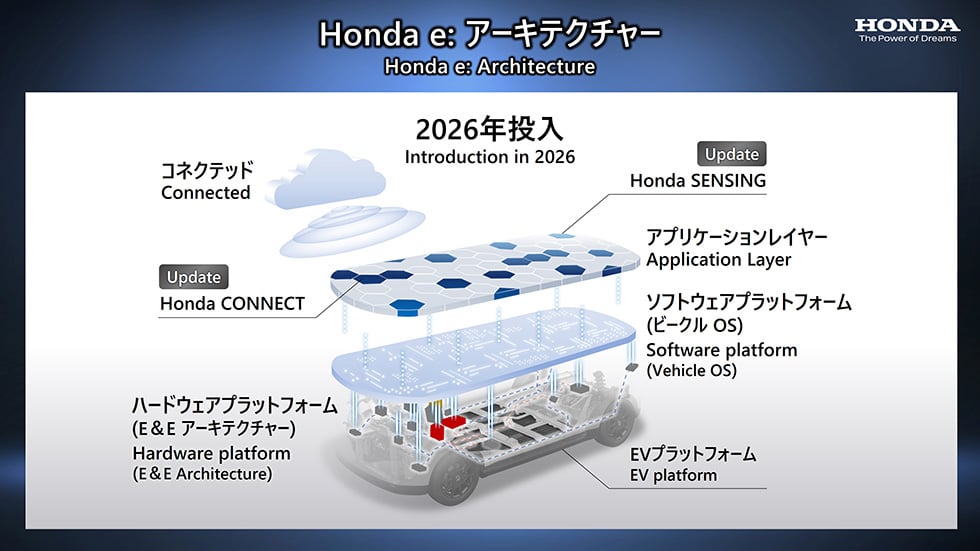
Elsewhere in the line-up, Honda says North America can expect a pair of medium and large electric SUVs in 2024, as part of a joint development and production program with General Motors. One of those models is already confirmed to be named Prologue.
The Chinese market will get 10 new electric models by 2027, while Honda’s home country of Japan will see a mini electric van introduced in 2024 before a line of passenger EVs launches.
The company has also confirmed it will build a “demonstration line” for new solid-state batteries, with “demonstration production” to begin in 2024. The new batteries are expected to make their way into the market by the second half of this decade.
As for Australia, there is currently no official word to be had on when we’ll see any full-electric Honda models on offer, beyond the incoming HR-V e:HEV hybrid and Civic e:HEV hybrid.
Locally, the brand is behind a number of key rivals in either launching or announcing full-electric models – but with the global arm recently now offering any significant details of its wider electrification plans beyond the compact Honda E hatch, the Australian office has likely been in a hands-tied position.
Just when Australian customers will be included in this global plan, remains to be seen.
