
The transitional period for the Road Vehicle Standards (RVS) legislation has been extended by 12 months, to June 30, 2023.
The Road Vehicle Standards Act 2018 (RVSA) replaced the Motor Vehicle Standards Act 1989 (MVSA) with a 12-month transitional period beginning on July 1, 2021.
The transition period allowed some approvals under the old MVSA legislation to remain in force to give industry stakeholders time to adapt to the new laws, which are designed to ensure all road vehicles sold in Australia meet new national road vehicle standards for safety, security and emissions.
The 12-month extension takes into account segments of the industry that have been affected by the COVID-19 pandemic and global supply chain issues, which has prevented them from transitioning to the new regulatory framework.
Any vehicle providers that have already transitioned to the RVS legislation will be able to continue providing their vehicles using approvals granted to them under the new legislation.
The story to here
November 2018: The Australian Government has passed the Road Vehicle Standards Bill, setting it on a path to becoming a fully-fledged ‘Act’ and replacing the Motor Vehicle Standards Act of 1989.
Apart from improving the standard of new and used imported cars, perhaps the most heavily scrutinised section of the RVS Bill by car owners and enthusiasts is that containing proposed changes to the Specialist and Enthusiast Vehicle Scheme (SEVS), which currently limits vehicles that are allowed as private imports.
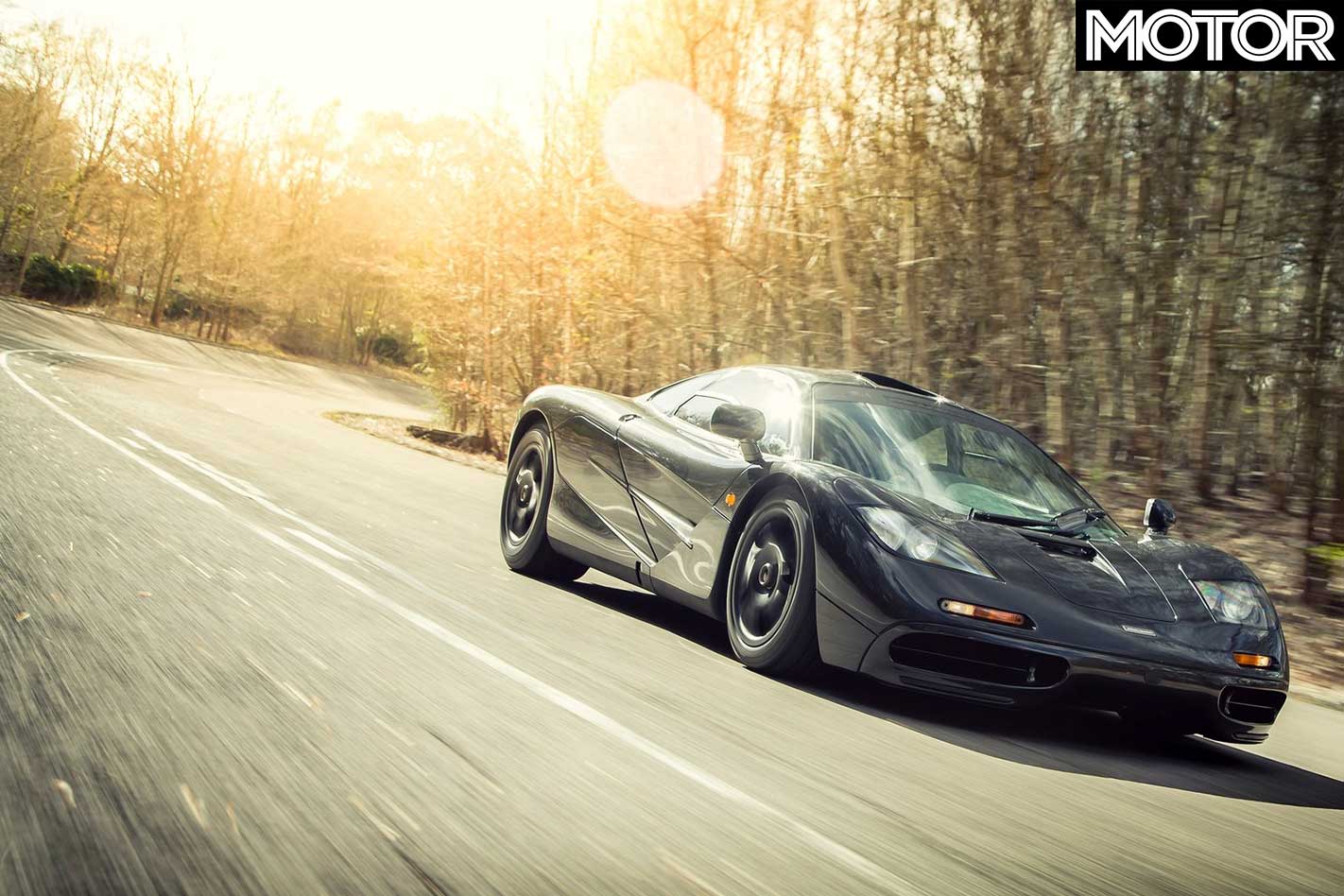
The Australian Imported Motor Vehicle Industry Association (AIMVIA) celebrated the 2018 decision to update the laws, saying Australians would have more choice over the vehicles they can purchase or import.
“Crucially, the new scheme allows model variants to be independently imported if they haven’t been sold in Australia by the manufacturer, granting access to a plethora of new vehicles that have never been seen on Australian roads,” AIMVIA said in a statement.
“Likewise, eligibility for import means that new models only need to meet one out of six new SEVS criteria rather than the previous two-out-of-four arrangement.”
These criteria are as follows:
- The car has more than 110kW/tonne if built in 1992 (or over an extra 1kW/tonne for each year following)
- The vehicle’s drivetrain is based on an alternate power source to internal combustion or it is in a micro-car subcategory for low power (low emissions) vehicles (such as a Kei car)
- It was originally manufactured or fitted from the factory with substantive specialist mobility features to assist people with disabilities
- Total production of the vehicle make is less than 3000 units per year, model is less than 1000 units per year, or production of its variant is less than 100 per year. In addition, “Left-hand drive vehicles imported under the rarity criterion will not require conversion to right-hand drive but will need state or territory agreement for use on their roads.”
- The vehicle was originally manufactured as a left-hand drive vehicle and not available as an OEM RHD vehicle in another world market. These vehicles will require conversion to right-hand drive
- The vehicle was originally built as a caravan or motorhome.
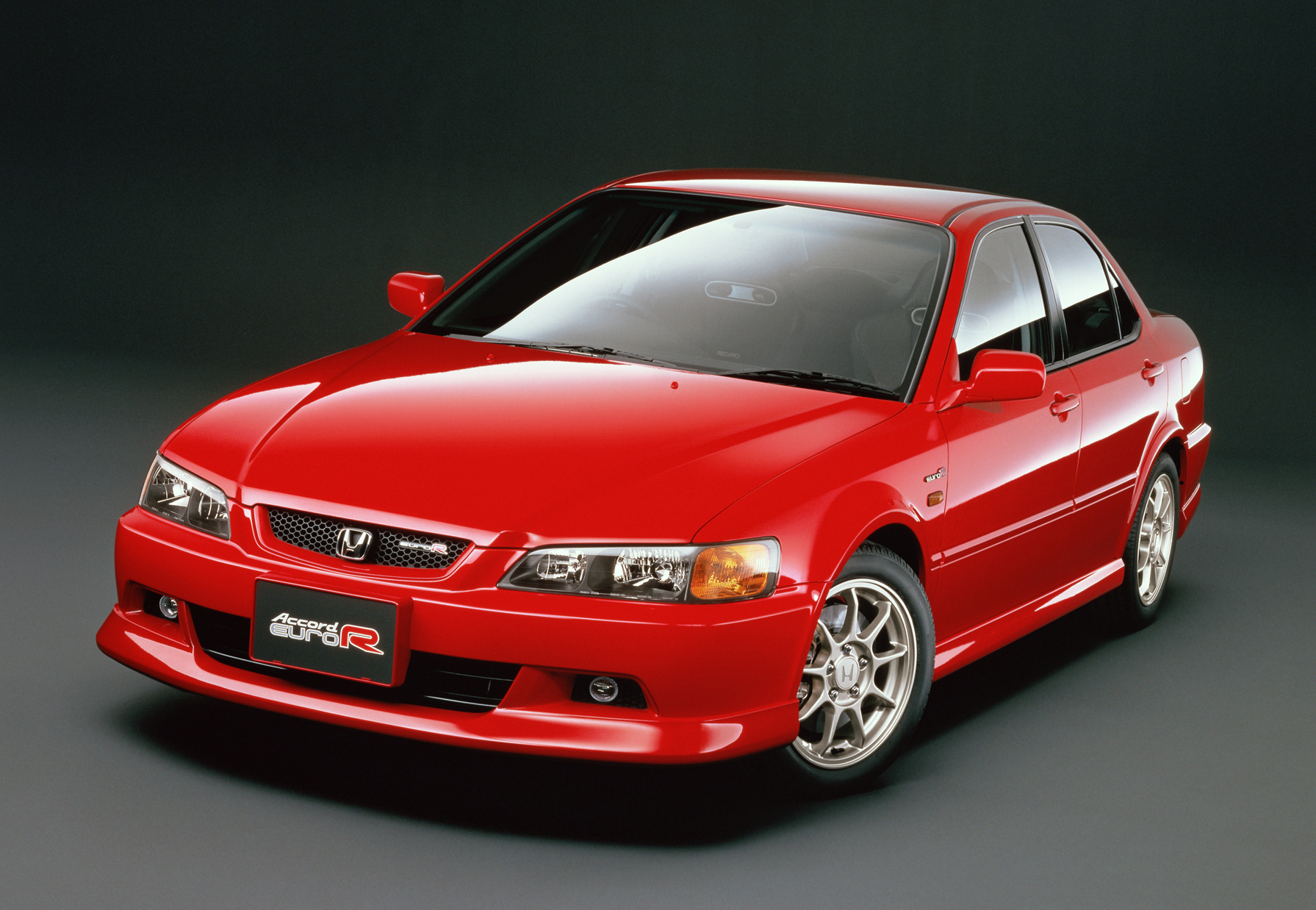
“The net result of these changes and others means there are a number of exciting new opportunities for car enthusiasts and the small businesses that supply these vehicles to the Australian market,” AIMVIA stated.
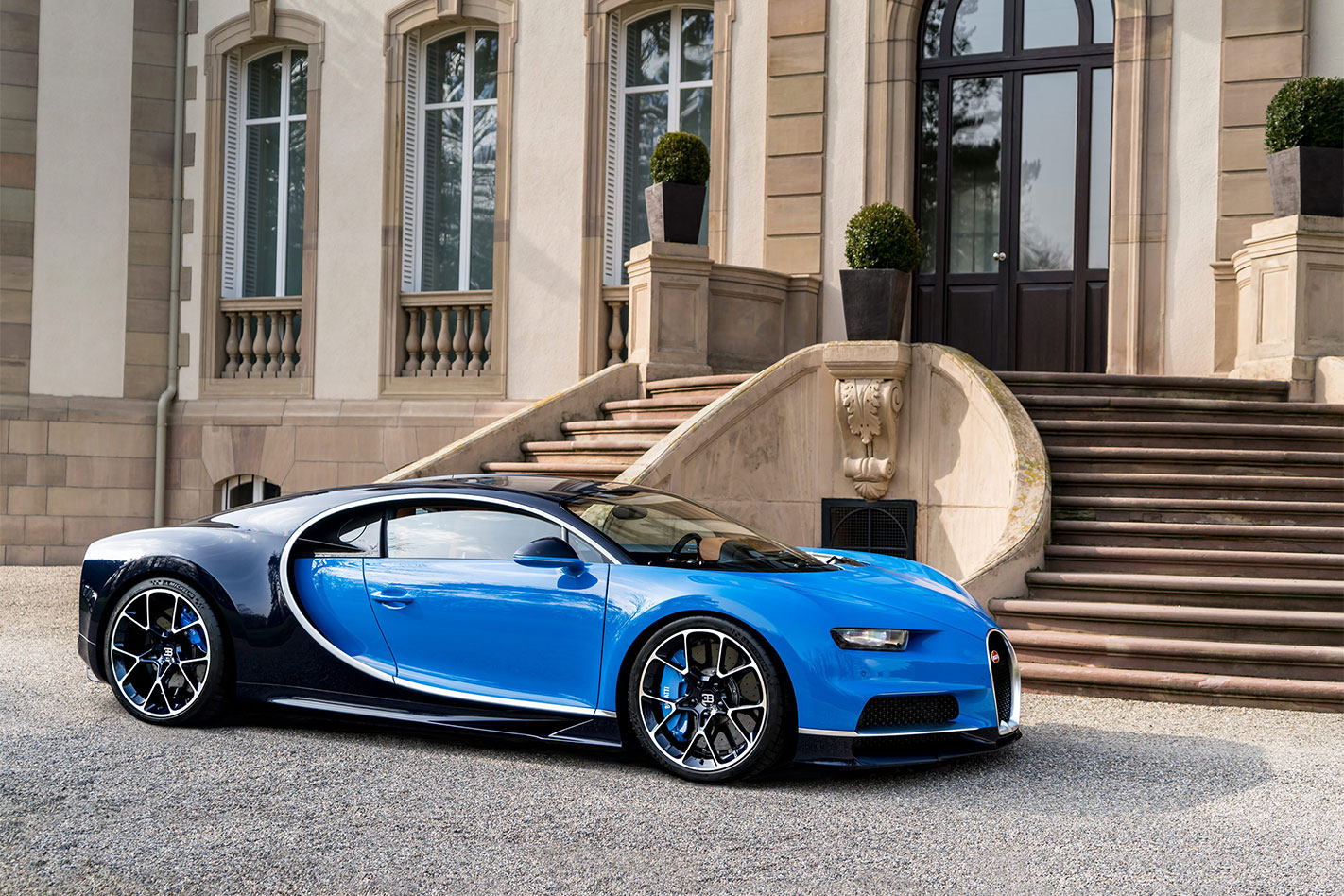
“For the first time ever, rare and exotic vehicles can be complied with Australian Design Rules without the need for conversion to right-hand drive, setting the scene for hypercars such as the Bugatti Chiron to be registered for road use.
“For classic car lovers, the new ’25-year rule’ allows any vehicle manufactured more than 25 years ago to be imported, enabling a number of collectible vehicles from the 1990s to soon reach our shores.”
The Federal Chamber of Automotive Industries (FCAI) also welcomed the decision at the time, after it expressed concern over the government’s previous consideration of a parallel imports plan, which local automotive brands said would allow individuals to privately bypass the ‘official’ importation process and lose the benefits of warranties and the like.
“We welcome the passage of the Road Vehicle Standards Bill and congratulate both the Government and the Opposition for their bipartisanship on this very important piece of legislation” says FCAI chief Tony Weber.
“The new motor vehicle industry plays an important role in the lives of everyday Australians, with vehicles remaining one of the most significant household and business purchases.
“The new Act will ensure that Australians have access to new vehicles with state-of-the-art safety technology in a similar timeframe to the rest of the world.
“We will work with the government in the development of enabling rules to ensure that the Specialist and Enthusiast Vehicle Scheme meets its intent of providing unique vehicles without creating a ‘de-facto’ broad used import vehicle scheme.”
The new BMW 7 Series can be had with internal combustion engines and, in i7 guise as explored here, as a zero-emission vehicle. It is spacious, comfortable, quiet and potent. But the design and the multimedia interface (MMI) polarise, again.
Excessive camouflage on this prototype does not bode well. The rectangular headlamps are tucked away in deep recesses, the eyebrow daytime running lights are an acquired taste, and that controversial in-your-face grille did once more grow in size and aggro appeal. Leaked photos of the real thing show, however, a more ambivalent, less frustrating picture.
While the silver 760i brochure queen definitely lacks the faintest trace of bedroom poster sex appeal, the all-black M770e plug-in hybrid exudes a visual meanness not even an S-Class treated by AMG can match. The new 7 is probably not a car rich many European customers want to be seen in, but it should do well in China and North America where overt opulence remains a strong buying motif.
Mercedes developed a bespoke electric architecture for the EQS, and Audi is doing the same for the 2025 A9 e-Tron. In contrast, BMW derived the i7 from the same CLAR matrix that underpins the rest of the 7 Series range. This pragmatic mix of oldish platform and new drivelines meets the tougher upcoming emission norms and extends the grace period for the petrol/diesel twins here in Europe until the end of the decade.

Both versions use essentially the same axles, brakes, steering, subframes, tyre dimensions and the E/E architecture. The model range is more extensive than ever. The line-up starts with a pair of 3.0-litre in-line petrol and diesel variants and a brawny 4.4-litre V8. One rung up, we find two frugal long-range plug-in hybrids. On the EV front, BMW will in November begin deliveries of the i7 in three performance stages.
Exclusively available in long-wheelbase guise, the 5250mm seventh-generation 7 Series may struggle to squeeze into standard-size parking spaces and garages. Chauffeurs may thus be pleased to learn that BMW is offering its new halo car with three different parking assistants. The system with the highest IQ can park automatically – remotely if need be – and it will, on demand, even fetch the vehicle in the right kind of digitalised environment.
Since an onboard chip memorises the last mile, backtracking in driverless reverse mode is a failsafe option to twisting one’s neck. The part-time autopilot takes you back to previously used or reserved parking lots, its sensors protecting the expensive mag wheels from kerb rash, and even iffy tasks like mastering a super-tight parking structure are taken care of with aplomb.
Other assets include active lane guidance, urban cruise control with traffic light recognition and the intelligent speed assistant.

A truly essential option is the integral active steering that tightens the turning circle and makes this lavishly equipped 2.5-tonner about as manoeuvrable as a 3 Series sedan. Although the new 7 Series is equipped with all the bits and pieces required to drive autonomously to Level 3 standards, country-specific restrictions may apply; in Germany, the hands-off top speed is for instance limited to 60km/h.
“We keep developing new means to strike a user-friendly balance between demanding too much and too little from the driver,” says Nicolai Martin, chief engineer in charge of the driving experience. “Markets like China appreciate automated driving because spending an average of 38 minutes at 28km/h on the way to and from work makes you want to make better use of your time.”
In the US, driver assistance is already legal on highways including on- and off-ramp manoeuvring.
Since the announced V8-engined mule was down with the flu, and because the 3.0-litre petrol version did not quite perform to expectation either, this first report is based exclusively on the i7. Fully loaded, the prototype came fitted with active anti-roll bars, rear-wheel steering and M Sport suspension with 20-inch wheels.
Rear-seat passengers could have enjoyed a fold-down full-width theatre display, reclining slumber seats equipped with all mod cons and a premium sound system with a guesstimated 20 speakers. Double glazing helps to keep the noise out and the cabin temperature at a constant level, the doors open and shut by magic proximity wands, and 5G internet turns the car into a mobile office.

As far as overall relax factor goes, the i7 matches the S-Class and beats the EQS. At the same time, this BMW conveys all the dynamic values the brand is known for. Except on long straights where the 1000bhp-plus Tesla Plaid and Lucid Air will devour it with great pleasure, the long-running ‘ultimate driving machine’ slogan is not far from the truth.
There are only two drive modes to choose from; Comfort and Sport. Comfort is compliant but not woolly or cushy, Sport is a bit firmer but still contains a large portion of that coveted magic carpet ride. Contributing to this effect are the hefty weight of 2.5 tonnes and extra-long wheelbase.
Following the X7 driven by the suspension guru Jos van As with a knife between his teeth is the easiest trick in the i7 book. Over brows and through tightish corners that make the big SUV in front of us heave and crunch like a duckwalking Chuck Berry, the electric 7 stays put and poised.
The same goes for crests, dips and higher-speed bends: while the X7 is all over the place like a Disney cartoon character, the whisperliner behind it simply follows the plotted line without shrugging a shoulder or even gesturing at the apex. Instead, it manifests a new level of balance and composure, albeit at the expense of playfulness. Even with stability control fully off, drifting this speedboat requires a frozen lake.

Key dynamic interfaces are the precise and balanced steering, the entertaining torque split of the standard all-wheel-drive system and the potent brakes. Although it weighs up to 500 kilos more than the outgoing model without an underfloor battery pack, the i7 feels less bulky and more manoeuvrable as well as infinitely more relaxed.
For those who are suspicious of noiseless carriages, Hans Zimmer composed a number of accompanying techno tunes – but why swap the splendid isolation that is a unique forte of every EV for a digital retro soundtrack? Unless of course one comes to the conclusion that acoustic bling is a compulsory match for the i7’s Architectural Digest-style command bridge cockpit.
Early 7s were masterpieces of ergonomic simplicity, and the iDrive concept did redefine the MMI across all brands and vintages, but most recently BMW’s interior design has gone downhill again.
Inspired by the oddball iX, the i7 features a concoction of weird instrument graphics garnished with virtual reality insets, no shift paddles but a single boost stalk that introduces the ten-second extra-oomph period with a dash of blue lightning, and a main display stuffed with more tiles than the bathroom of a five-star hotel.

Extra money buys levers, buttons and knobs made of crystal, which can dazzle you blind in bright sunlight. The regenerative braking modes are for some obscure reason buried in a submenu, the large displays in the door panels are anything but intuitive, and tall drivers like yours truly keep hitting the door opening sensor with their knee, which is a nuisance at best and dangerous at worst.
The true electronic breakthrough is of course happening outside the leather-trimmed cocoon. Its main means are a mix of short- and long-range radar, ultrasonic sensors, lidar and cameras for front, side and rear views, as well as object recognition.
Starting this spring, the new 7 Series will go on sale with a choice of re-engineered or heavily modified combustion engines prepared to meet future emissions norms. The base model is expected to sell for around €100,000 (AU$144,000) and the i7 will be about €140,000 (AU$201,500). Both PHEV versions rely on the familiar petrol straight-six.
While the less expensive model is said to be rated at 304kW, the top-of-the-line edition good for 426kW can apparently cover more than 100km in zero-emission mode. The i7 is expected to be available with a choice of three power units. The 50 xDrive shares its driveline with the iX, the 60xDrive rated here has 406kW on tap, and the i7 M70 xDrive that effectively replaces the V12 harbours in excess of 447kW and 1000Nm of torque, sources say.

The standardised battery pack stores 102.3kWh of energy; the interim voltage is 400V (there is more to come as soon as the infrastructure makes up leeway); at a maximum charging power of 200kW it allegedly takes only 30 minutes to boost the energy content from ten to 80 per cent.
On the autobahn, our i7 maxed out at an indicated 249km/h but the top speed is actually limited to a perfectly adequate 240km/h. The 0-100km/h sprint is over after 4.7sec, the WLTP consumption varies between 19.7 and 18.9kWh/100km depending on tyre size. The test car ran on 20-inch rims, but other options range from 19 to 22 inches.
In ideal conditions with a responsible person operating the accelerator pedal, BMW is promising a maximum range of 615km. But let a hooligan journalist grab the wheel, and you´re lucky to get 400km out of a single charge. The above numbers don’t deviate dramatically from the Mercedes EQS, but the Benz is only second-best in terms of rear legroom and headroom, overall ride quality and absolute noise suppression.
Which can make all the difference in the upper premium segment where space and comfort are among the top priorities.
The battle to win McLaren is heating up.
Audi wants to go all-in on McLaren Cars, McLaren Racing and Formula 1, while BMW wants to cooperate again with its former partner – and let’s not forget Porsche is beginning to think and act independently too.
The powers that be in Wolfsburg are watching this clash of egos and the overboarding frenzy of male fantasies with a mix of rapture, disbelief and scare.
The car industry is still a man’s world, and motor racing is the inner sanctum of this male domain. Even die-hard petrolheads who acknowledge that the future is electric carry the incurable speed and competition virus.
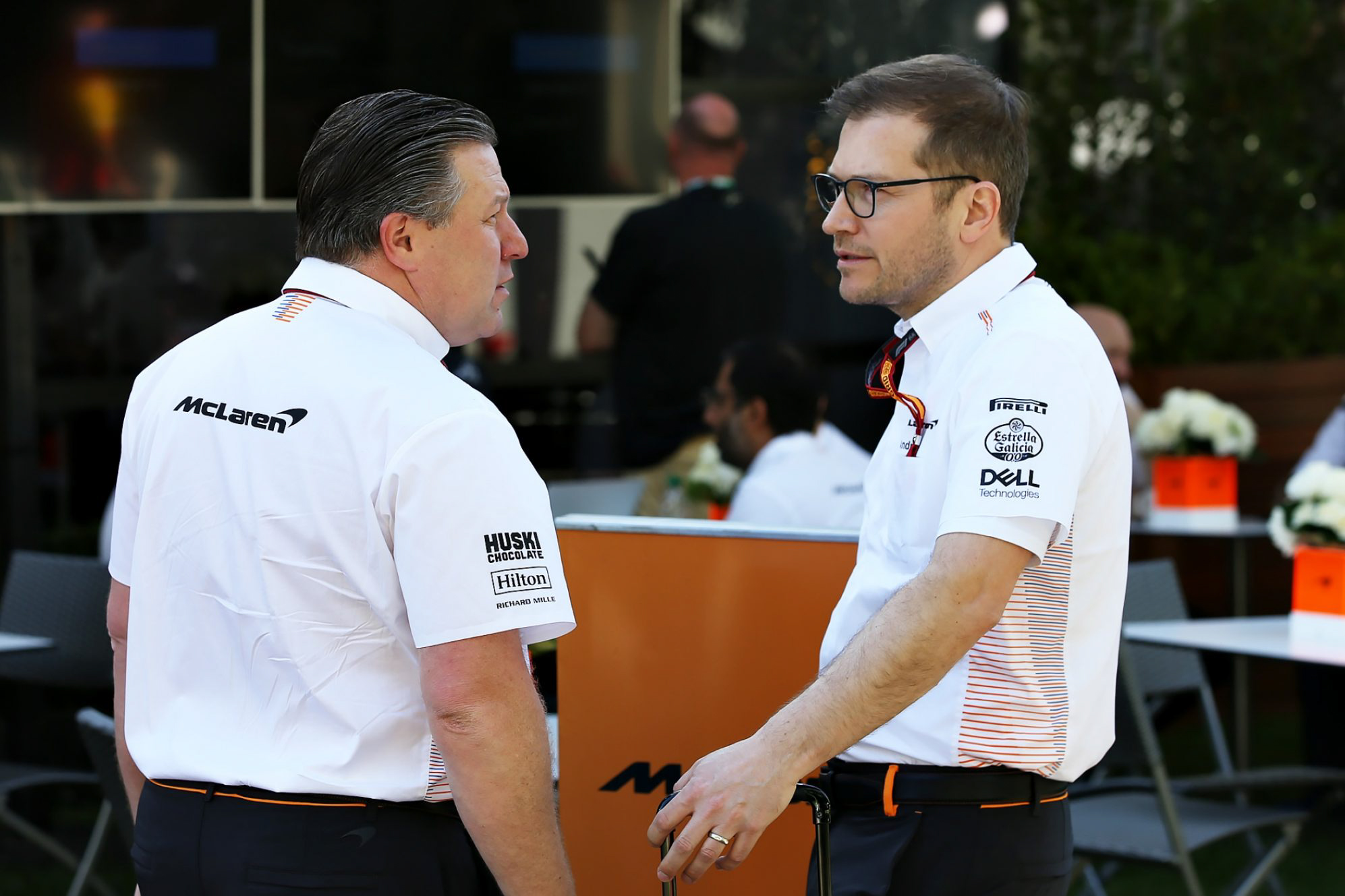
That’s people like; Markus Duesmann, CEO of Audi, Frank van Meel, director of the BMW M division, and Thomas Laudenbach, the man in charge of Porsche Motorsport. Or even messieurs Zak Brown and Andreas Seidl from McLaren, and Ola Källenius from Mercedes-Benz – Mr Electric Only, who is also one of the most prominent F1 supporters.
Without even talking to each other, all protagonists, sponsors and organisers came recently to the unanimous conclusion that after years of televised boredom, king class motor racing is suddenly a red hot property again. Not virtual-reality crazy like Formula E, but similar to Moto GP nail-bitingly exciting.
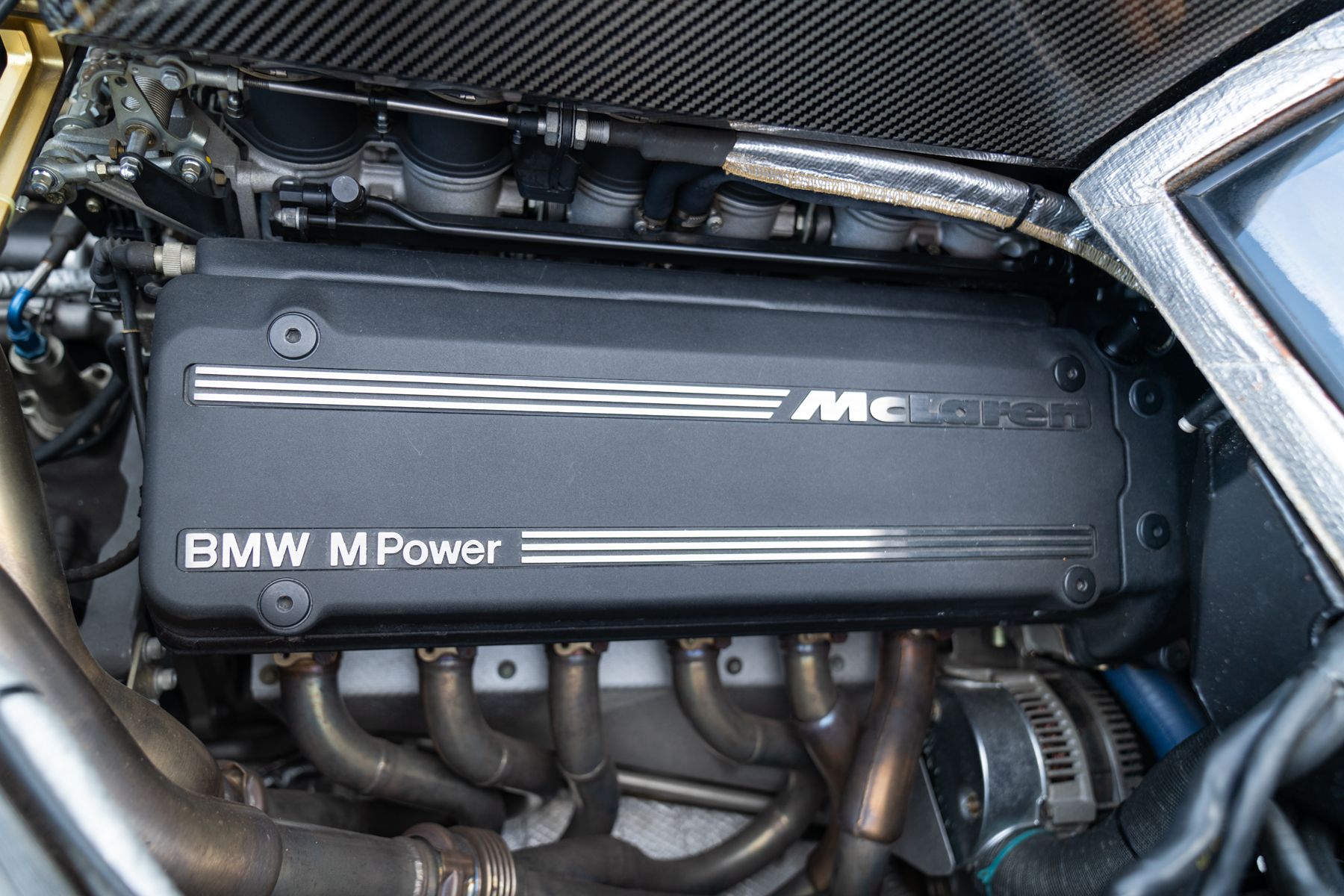
On March 23, a McLaren delegation paid a visit to BMW. The sole item on the agenda was a memorandum of understanding with regard to a jointly developed electric sports car architecture. Sounds significant, but may be a dead end. After all, McLaren Racing and McLaren Cars are separate entities, and the only strings that matter are pulled by the sheiks from Bahrain who own the biggest chunk of shares.
If Mumtalakat strikes a deal with Audi, this would automatically void every third-party arrangement. Having said that, BMW and McLaren have been very close on-and-off ever since the P1, the Le Mans victory and the mid-engined sports car project discussed by Mike Flewitt and Harald Krüger.
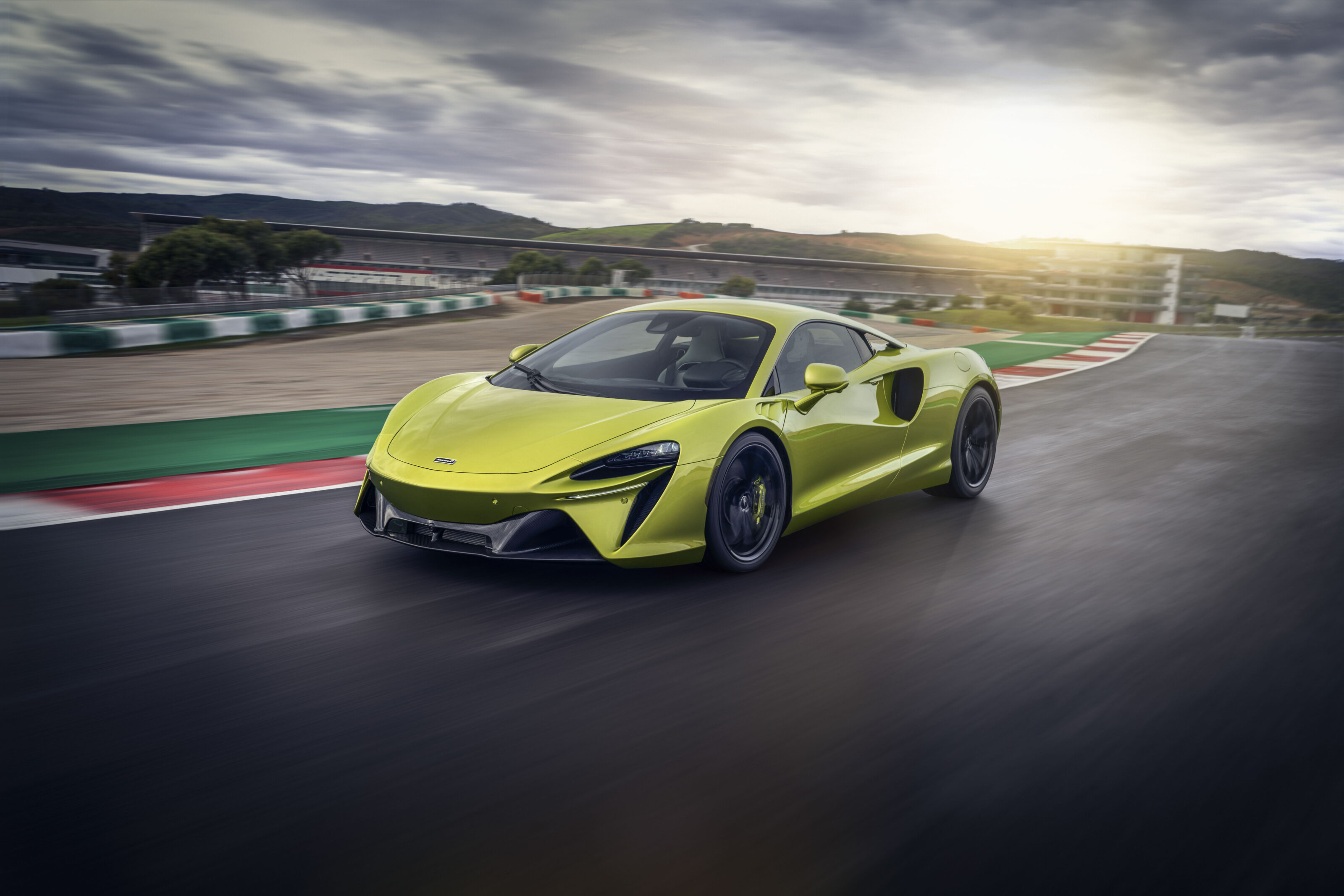
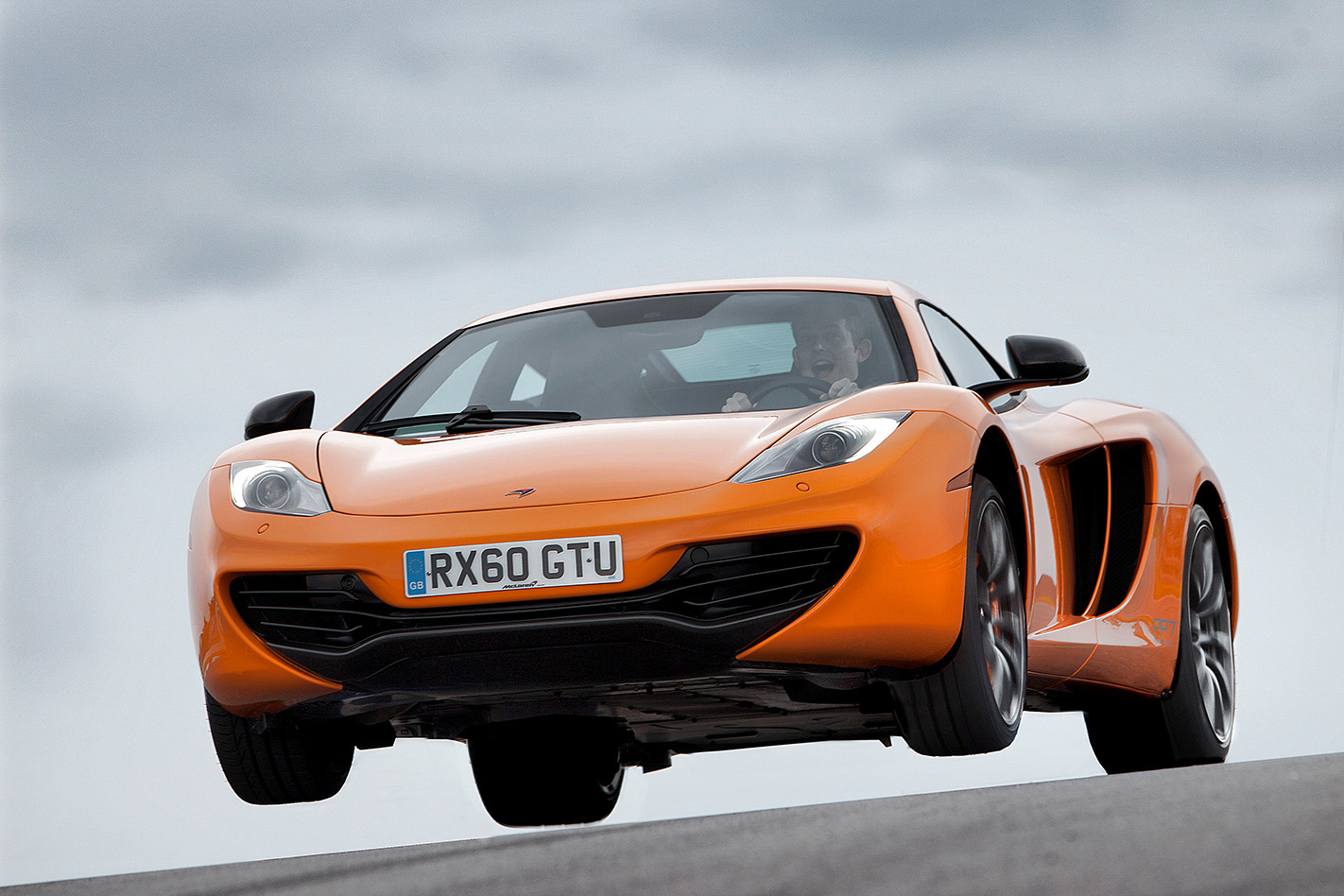
While the Bavarians have yet to sign off a new halo car, the Brits went ahead with Artura – a V6 hybrid coupé, the DNA of which may not stretch deep enough into the world of electrification. Since the New Class under development by BMW does not include a proper sports car, it did not come as surprise that the old buddies started talking again.
On April 4, a letter of intent composed by Audi was due to arrive at the HQ of the main shareholders in Manama. It allegedly details Ingolstadt’s offer to buy the McLaren Group. In a parallel move, the VW Group board of directors will meet this month to discuss the planned F1 entry by Porsche and Audi. Originally, Wolfsburg wanted to see the definitive regulations which apply from the beginning of the 2026 season, but since the final draft was delayed until the end of June, an earlier commitment cannot be ruled out.

While McLaren Racing is apparently in tip-top shape, the automotive division is reportedly strapped for cash. According to the Woking grapevine, McLaren Cars is valued at between £1 billion and £1.75 bn, but the higher number is pegged on between 4000 and 5000 sold cars per annum – which is a far cry from the status quo.
Recent media coverage suggests that the Germans offered initially only €450 million, a sum which was recently hiked to €650m, sources say. The size of the allegedly significant debt burden and the related pay-off scheme is unclear.
The Bahrain state holding is said to have four weeks to reply to the offer. If it accepts, due diligence is the next step. Audi is of course keeping mum about the whole business, but analysts reckon the strict cost cap in F1 and the substantial direct and indirect revenues should amortise the investment in five to seven years.
Markus Duesmann is determined to develop his own drivetrain, which would at McLaren replace the Mercedes power unit. Porsche originally intended to share the R&D work with its German partner, but since a carryover Audi system would not go well with the brand image, Weissach is now inclined to do its own thing with a little help from Red Bull.
Since the new legislation calls, among other things, for a 50 per cent-plus electric energy split and for green fuels, the emphasis of all e-tech wizards is on battery management, minimum degradation despite rapidly alternating charge and discharge cycles, and state-of-the-art short-term power storage.
BMW is primarily interested in an advanced sports car co-operation with McLaren. But F1 these days is an alien subject to the board of directors and the majority shareholders.
Audi on the other hand wants all or nothing. While McLaren entertained in the past a confusing array of essentially one and the same sports car matrix, the Germans plan to adapt the Lamborghini tech pattern and cycle plan to their pending UK acquisition.
There will, in other words, be; at least one SUV, one front-engined 2+2-seater, one sports car in coupé and spyder guise – as well as a supercar followed by a small-volume hypercar. While Audi and Bentley will cater for the sports-luxury segment, Lamborghini, McLaren and Ducati would form the newly created performance group.
This entity takes aim at Ferrari, Maserati and AMG–Aston Martin, but it is by definition also bound to rival Porsche. Ferdinand Piech would have loved this approach, but his successors may be less comfortable with the rapid rise of McLaren.
To secure a fallback proposition, Audi put out its feelers several months ago in the direction of Williams, where Jost Capito, formerly the head of VW Motorsport, is in charge.
Only three weeks ago, Aston Martin made an informal surprise move which brought a third option to the Ingolstadt table even before the finer details have emerged. We cannot confirm that Lawrence Stroll and Markus Duesmann have actually met, but we heard from two independent sources that Aston is looking for a F1 partner for 2026 and beyond.
What about Mercedes, you ask? Well, while Mercedes owns only a thin slice of the Aston cake, Mr Stroll is believed to prefer an even more committed backer, both for his racing team and, eventually, also for the slowly recovering car division.
What sounds like a potential exit scenario may in fact be no more than a storm in tea cup. Because at the end the day, the number one German premium brand would surely pull out all the stops to prevent Audi from taking Gaydon – lock, stock and barrel.
Snapshot
- Ford hasn’t ruled out hybrid tech for flagship Ranger
- Performance boost could complement fuel savings
- High performance packages to be offered from Herrod Performance
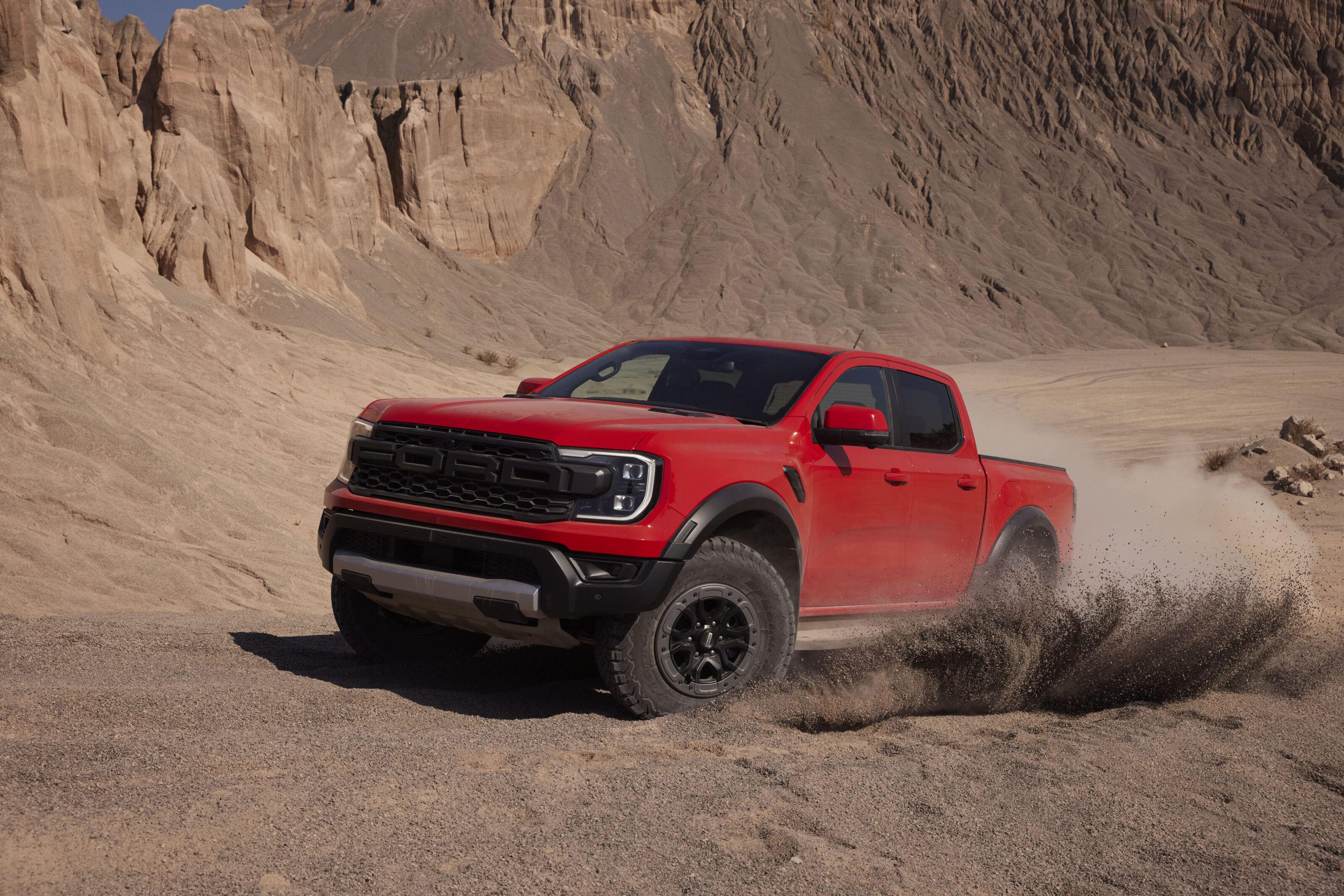
The new 2023 Ford Ranger Raptor has already delivered a big increase in performance – power has almost doubled to 293kW in the move to a 3.0-litre twin-turbo V6 – but if you’re like us, you’re probably wondering if there’s scope for even more.
And in good news for performance nuts, Ford has revealed there is.
Wheels spoke with the men in charge of the Ranger Raptor program at the new ute’s long-lead media launch, and they revealed there’s potential to make it even more capable by harnessing new technology and, eventually, electrification.
When we asked how Ford plans for improve the ute come facelift time, Ford’s program director for icons and Ford Performance, Ali Jammoul, said: “For this generation Ranger Raptor we’ve built in additional capability. Technology keeps growing and the way we did that was adding more and more technology to the vehicle and evolving our depth in the segment that we learnt through all our Raptor models.
“So we’re leveraging technology to give it that capability and hey, in the next generation we’ll probably leverage even more progression of that technology in the suspension and chassis. Same with performance and powertrain technology, electrification is certainly a big part. We don’t have any plans right now, but you can see the future has lots of potential for even more capability.”
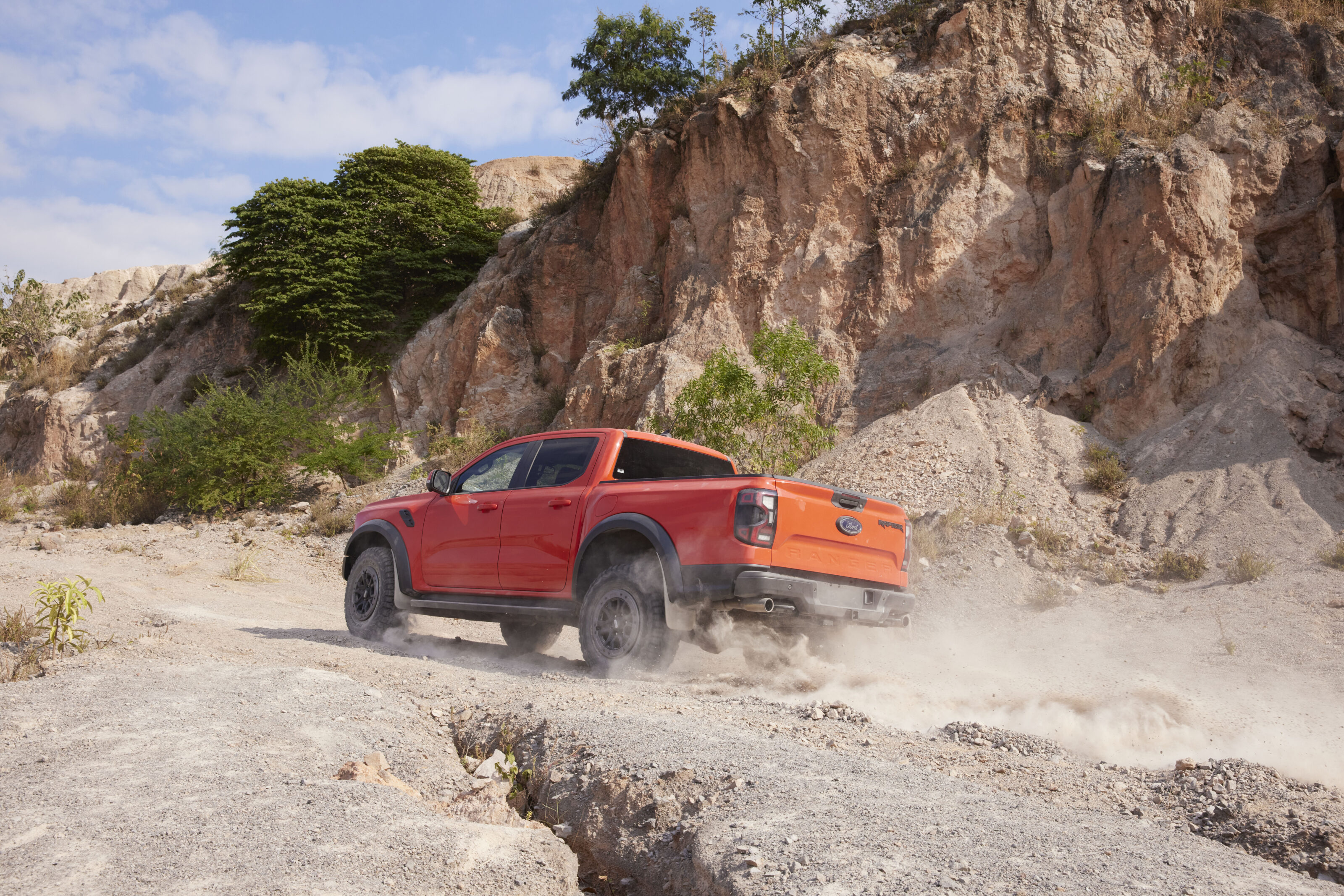
Jammoul’s reference to electrification offers the biggest opportunity for a performance leap, of course, but there are compromises to consider. Adding batteries adds weight, which dulls performance and agility, but Ford is confident it can create a hybrid Raptor that side-steps these issues.
“Every vehicle has constraints and compromises that you have to deal with,” said Jammoul. “Clearly there’s opportunity for hybrids on these higher performing vehicles. We’re looking at that; no plans yet, but we’re certainly looking at it.
“If you add weight, my personal opinion is you just take it out from somewhere else. And if you add it, add it in the right places.”
Leveraging lightweight materials and different grades of high-strength steel are two ways weight can be taken out of the Raptor, according to Jammoul.
“You can optimise the vehicle and take weight out where you don’t see that much stress. For sure there are opportunities.”
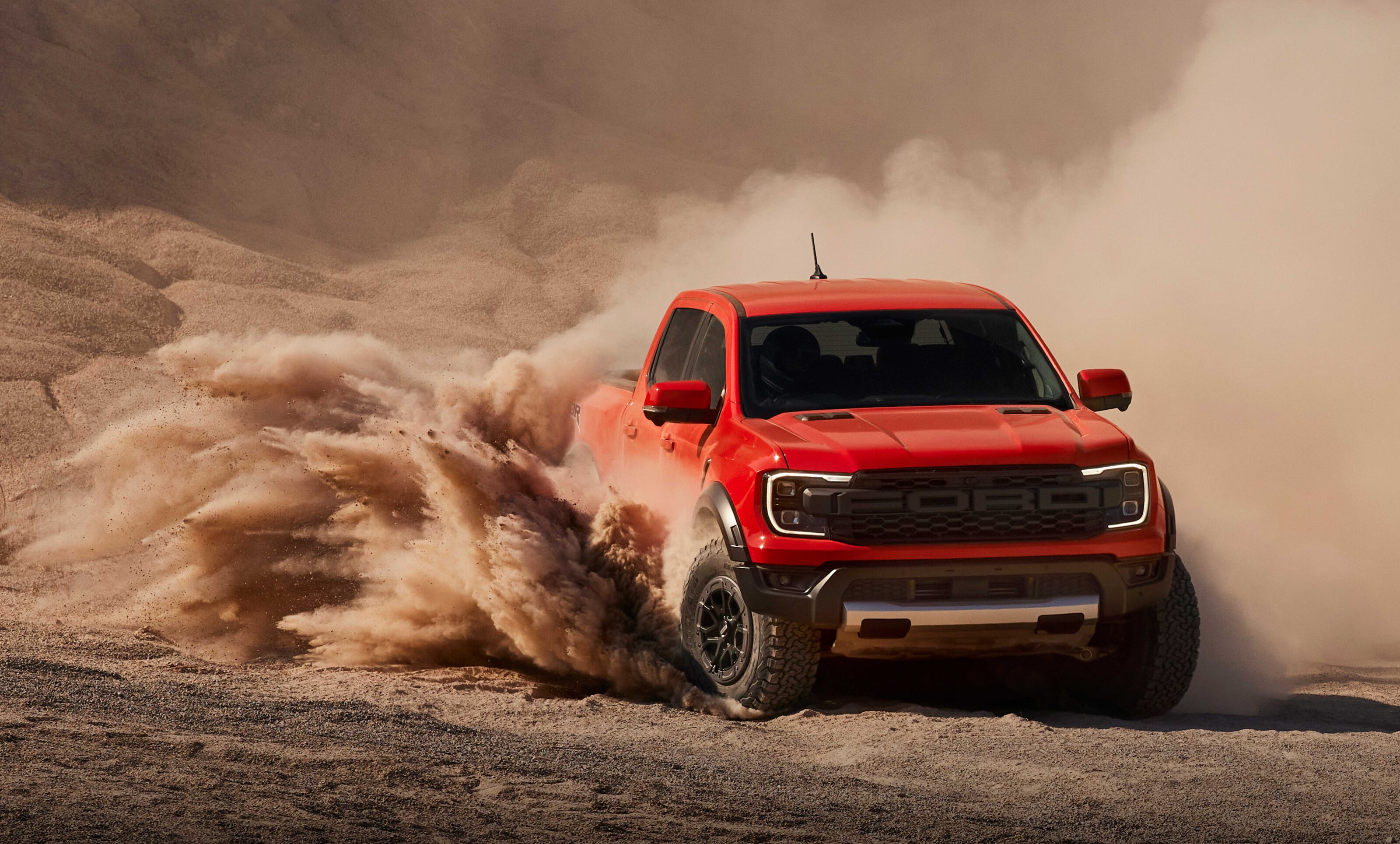
Ford is also exploring which combustion engine to pair with the hybrid tech. Moving to a smaller capacity unit would also save valuable kilos.
“If we electrify and do a hybrid what is the right engine to do it on?”, asked Jammoul. “In the regular F-150 we have a hybrid [paired with a 3.5-litre V6], so it really depends how much performance you want from the vehicle. It does help to downsize and we’ve got the 2.3-litre [four-cylinder], the 2.7-litre and the 3.0-litre in our portfolio. Which do we go for? We’re studying that.”
Offering buyers a powertrain with more performance that also uses less fuel is the goal. The petrol V6-powered Raptor might be the most powerful in its class, but it’s also thirstier than its rivals.
“It also helps with fuel economy, too,” added Jammoul. “Even in these vehicles people are going to think about fuel and how much economy you have.”
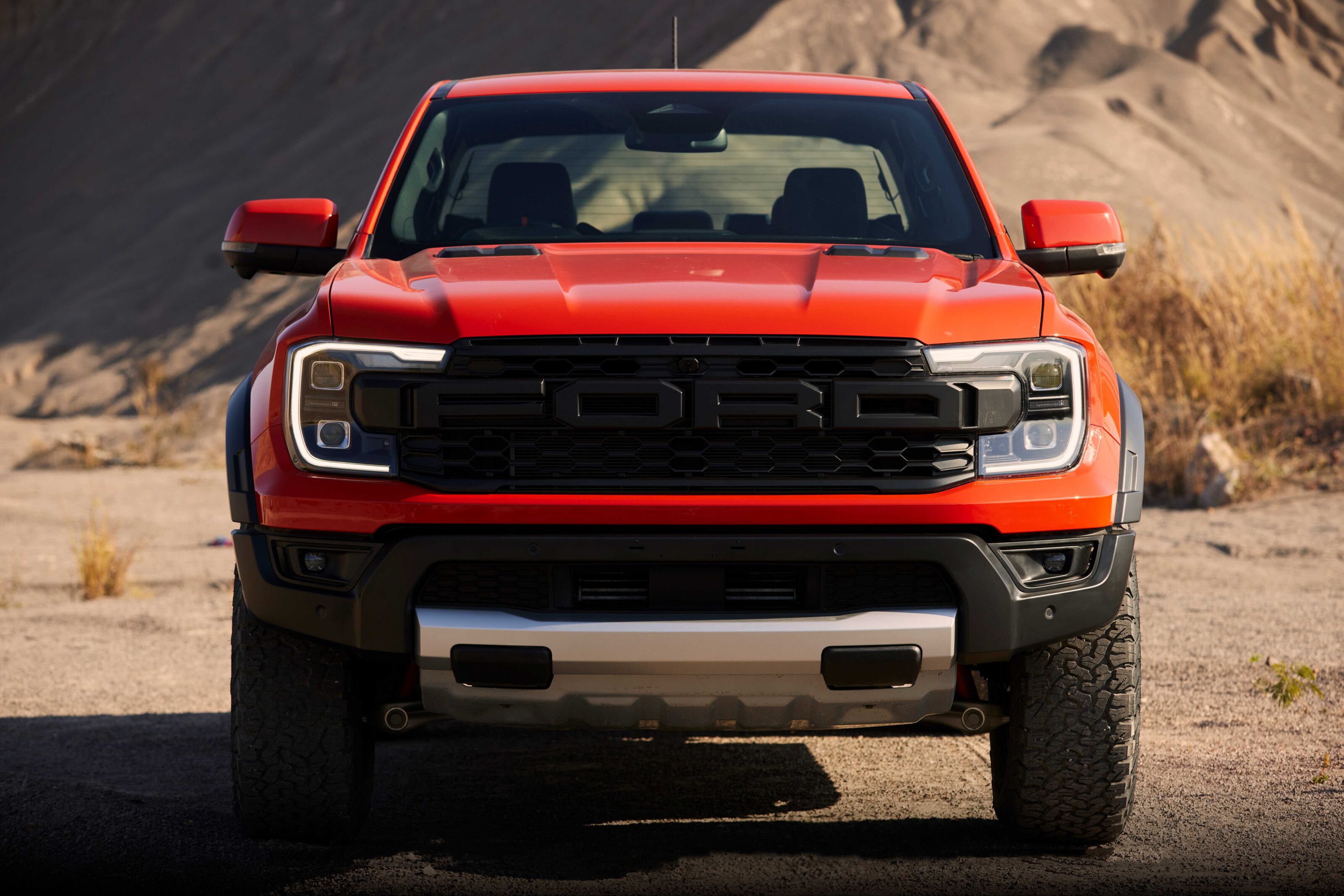
Gauging customer demand for a hybrid performance ute is another important consideration. The tech is yet to gain a foothold in the regular ute market in Australia, although the new Ranger, which is due in showrooms this June, is ‘hybrid ready’.
So a hybrid Raptor might be a way off but there are other options should you wish to liberate more grunt in the short term. As we revealed last month, Herrod Performance is well advanced with plans to offer a powertrain upgrade for the new twin-turbo V6, which will be backed by a Herrod Performance warranty.
One of the major things the MOTOR judges took away from Performance Car of the Year was a new found respect for both the Alpina B3 and BMW M3 for the way both cars walk vastly divergent paths with many of the same core ingredients.
The best showcase of this same-same-but-different mentality is the S58 3.0-litre twin-turbo straight-six engine that sits under the bonnet of both the German sports sedans.
By sharing an engine, you’d be forgiven to thinking both the Alpina and BMW deliver their power in much the same way. The truth couldn’t be more different.
To explain why, we need to provide a little bit of context. Previously Alpina made good with the softer N-designated version of BMW’s engines. The B3 is a landmark model, being the first to receive a full-fat S-designation M division engine.
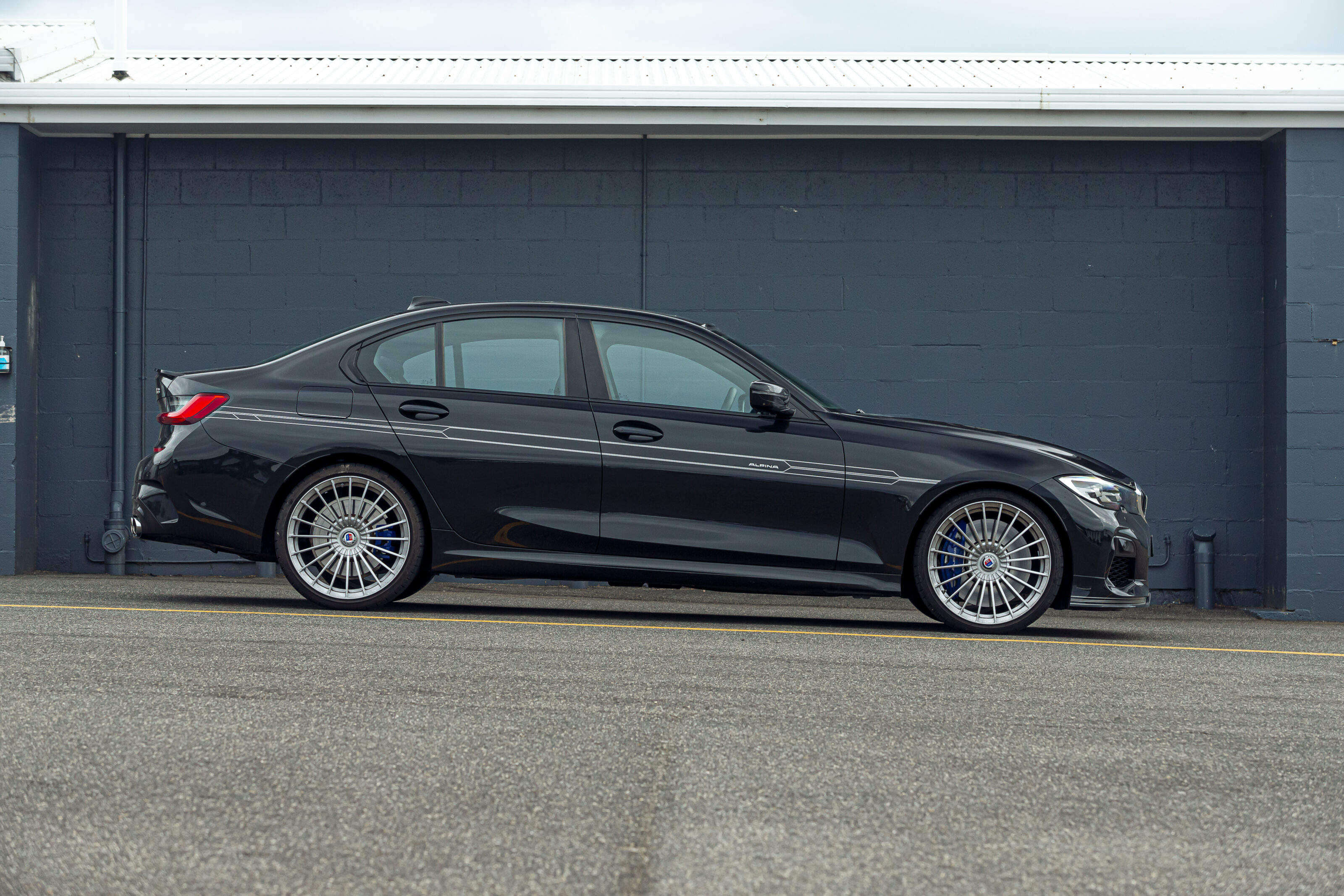
Being a stand-alone manufacturer in its own right, Alpina wasn’t going to be content with simply taking the engine out of the M3 and plonking it into the B3. That just wouldn’t do. So they got to work making some key adjustments.
In order to get the S58 to display the personality traits Alpina looks for – namely improved torque and a wider power band – both turbocharger housings were decreased in size compared to what is fitted to the M3, with a revised air intake fitted, and new cooling system joining the party.
All accounted for, the B3 produces 340kW between 5500-7000rpm, and 700Nm between 2500-4500rpm. Compare that to the standard M3’s 353kW at 6250rpm and 550Nm spread between 2650-6130rpm.
Even from a surface level reading of the power outputs you can tell the S58 engine has been tweaked to have two distinct personalities.
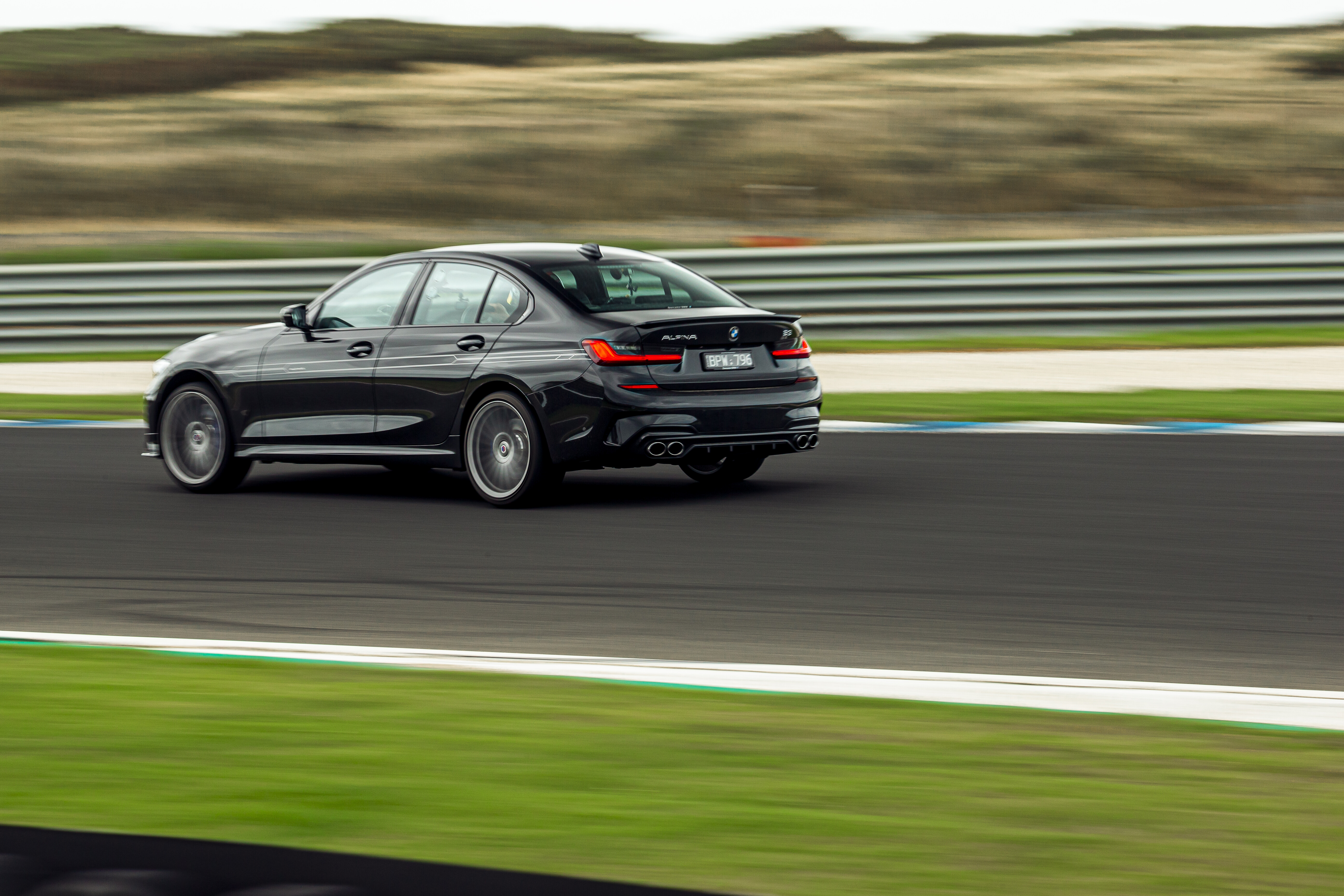
This shows through from the driver’s seat. In the B3 power is a wave that takes a little longer to arrive than in the M3, but paired with the eight-speed auto you ride constantly. The power band goes from peak torque, to peak power then straight into a new gear bang on top of the peak torque. Rinse and repeat.
In the M3 there is a more fervent rev, and the six-speed manual means you fall more easily in and out of the sweet spot. Less outright shove, but a stronger top-end punch means you push the M3 to the end of its rev range with each gear.
And that’s just the engine, with each car’s dynamics and suspension similarly independent in style. Both cars are all the better for it.
The European Commission has opened two new laboratories for testing vehicle emissions.
The Commission, which is the executive arm of the European Union (EU), said the increased scrutiny of the new-car industry was a direct result of the so-called Dieselgate scandal, in which Volkswagen Group brands and others were found to have installed software into diesel models specifically designed to subvert emissions testing laws.
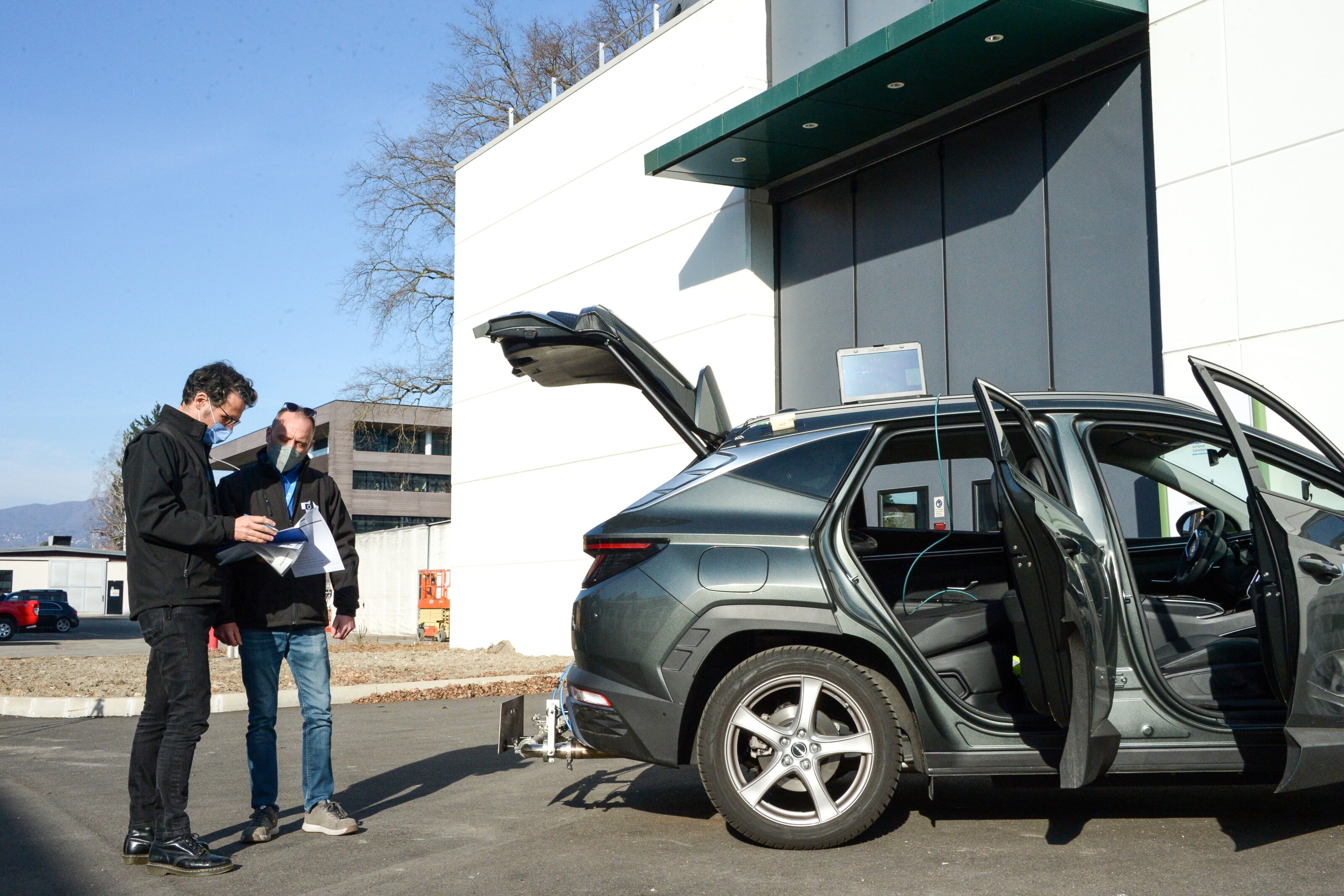
The two labs were opened at its Joint Research Centre (JRC) in Ispra, Italy, expanding the bloc’s testing capacity ahead of Euro 7 emissions regulations being introduced in 2025.
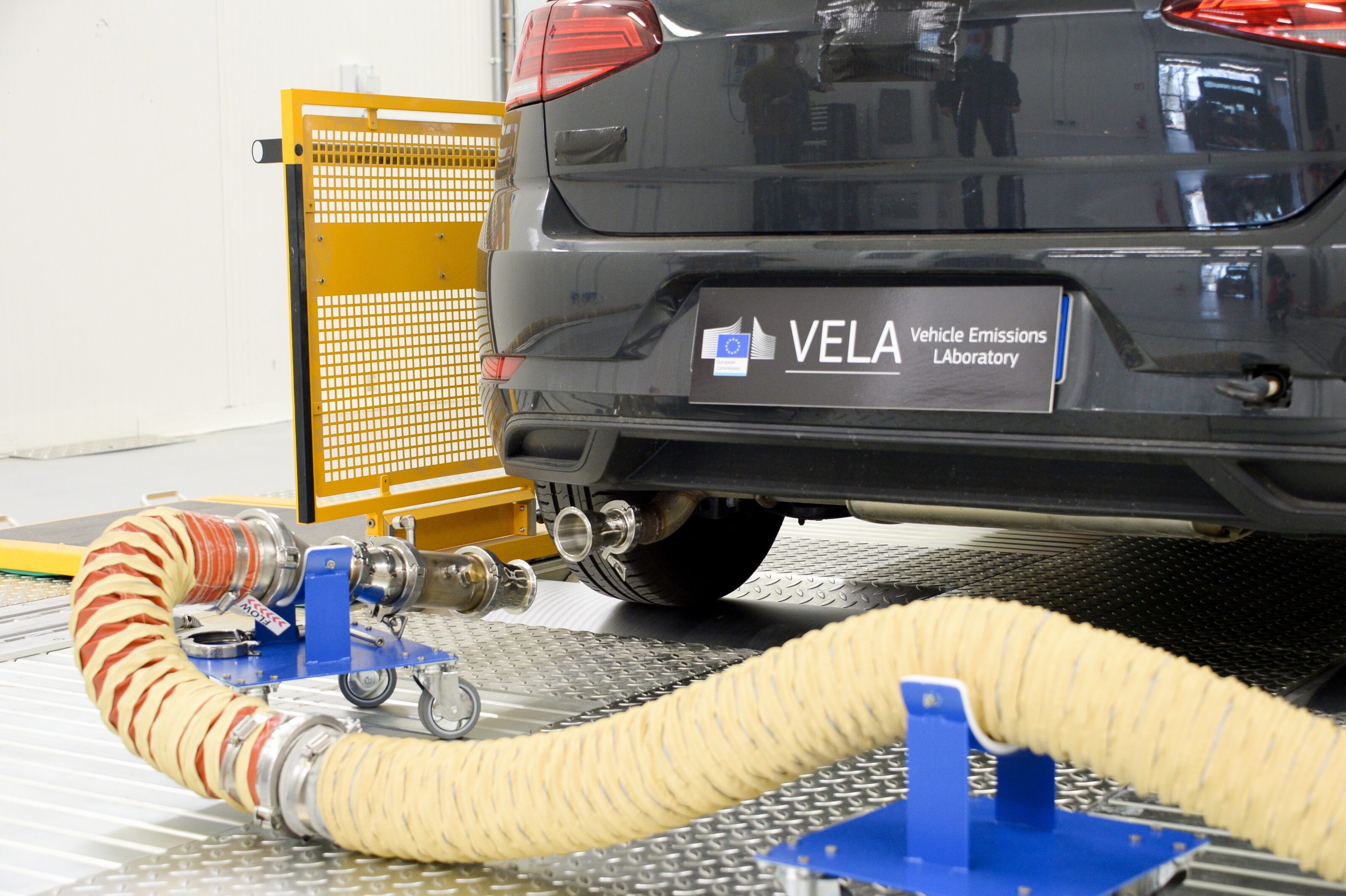
“These new top-notch laboratories will allow the JRC to continue, with increased efficiency, to ensure that cars comply with emission rules in the EU,” Innovation and Research Commissioner Mariya Gabriel said at the inauguration.
“It is great news for all consumers and Europeans, and a step forwards towards the ambition to become a climate neutral continent by 2050. Another important example on how science helps policy.”
While each country is responsible for its own testing, a consequence of the Dieselgate scandal is that the Commission can now carry out emissions compliance checks, issue fines, and trigger recalls across the European Union.
Some industry analysts are predicting the strict Euro 7 laws will be the beginning of the end for internal-combustion engines (ICE) when they come into effect, with Nissan previously citing it as the reason it will stop development of petrol and diesel cars for Europe.
“So what we have decided is that we will not develop the ICE engine in Europe,” Nissan COO Ashwani Gupta said at a press conference in February.
“We do believe at the time of Euro 7, customers will have to pay much more for an ICE car than an electrified car.”
A handful of European carmakers have also announced they will move to all-electric portfolios by 2030, with ICE development to cease around the same time Euro 7 are introduced.
Snapshot
- Focus ST production stops due to infotainment system supply
- Centre touchscreen usually sourced from Ukraine, manufacturing impossible given conflict
- Fiesta ST impacted by various stock shortages until after Easter
Ford is facing multiple supply delays worldwide as production lines for the Focus ST and Fiesta come to a halt due to parts shortages – forcing their local launch to be pushed back.
Worst hit is the Focus ST, currently slated to re-enter production in June thanks to a shortage of touchscreens, with the 13.2-inch SYNC 4 unit now in scarce supply due to its manufacturing base in Ukraine being unable to meet demand on account of the current conflict with Russia.
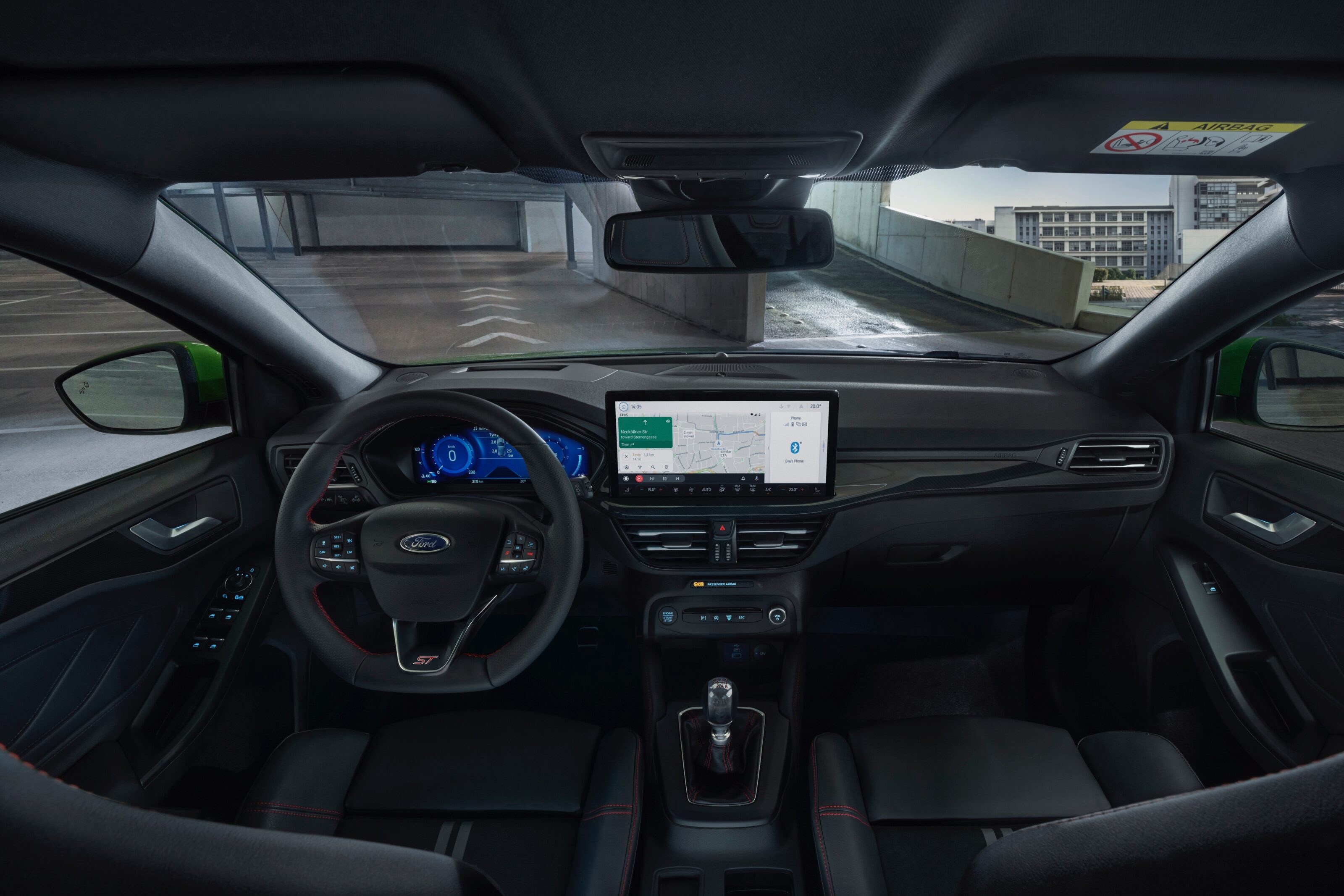
Ford had planned to introduce its updated Focus ST to the local market in May, but the production delays have forced it to delay the Australian launch, potentially back to August barring further issues.
While the native European market of the Focus ST has copped a downgrade to an eight-inch, SYNC 3 system, Ford Australia says it won’t de-spec local examples.
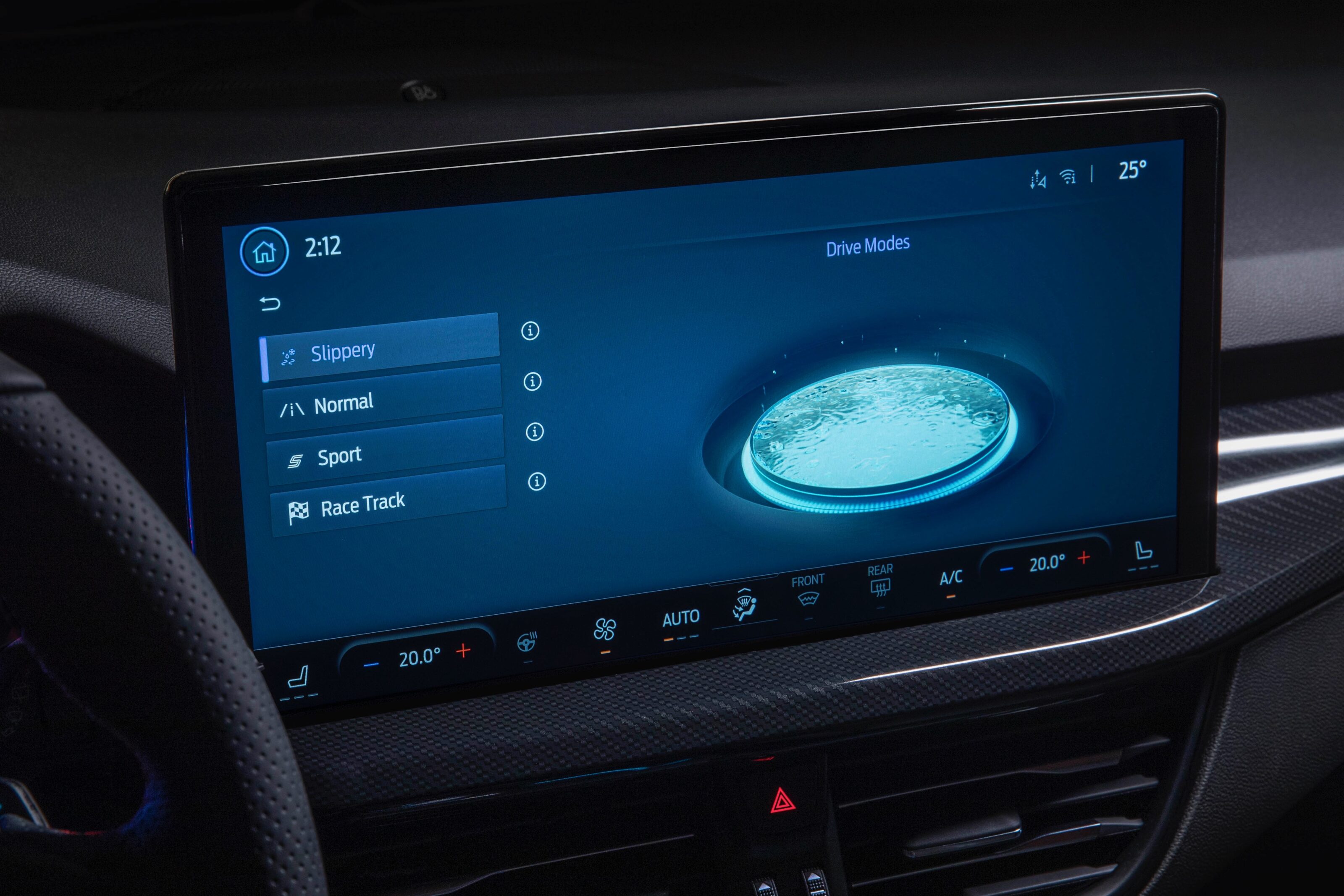
“The SYNC 4 parts shortage is still ongoing in Europe and we don’t have definite timing yet as to when it will be resolved,” a Ford Australia spokesperson told Wheels.
“What we can confirm is that at this stage is that our approach is not to compromise on spec, and as a result Focus ST production is currently on hold until June, when our relocated suppliers expect to be able to supply the parts, and semiconductors, to build the SYNC 4 assembly.”
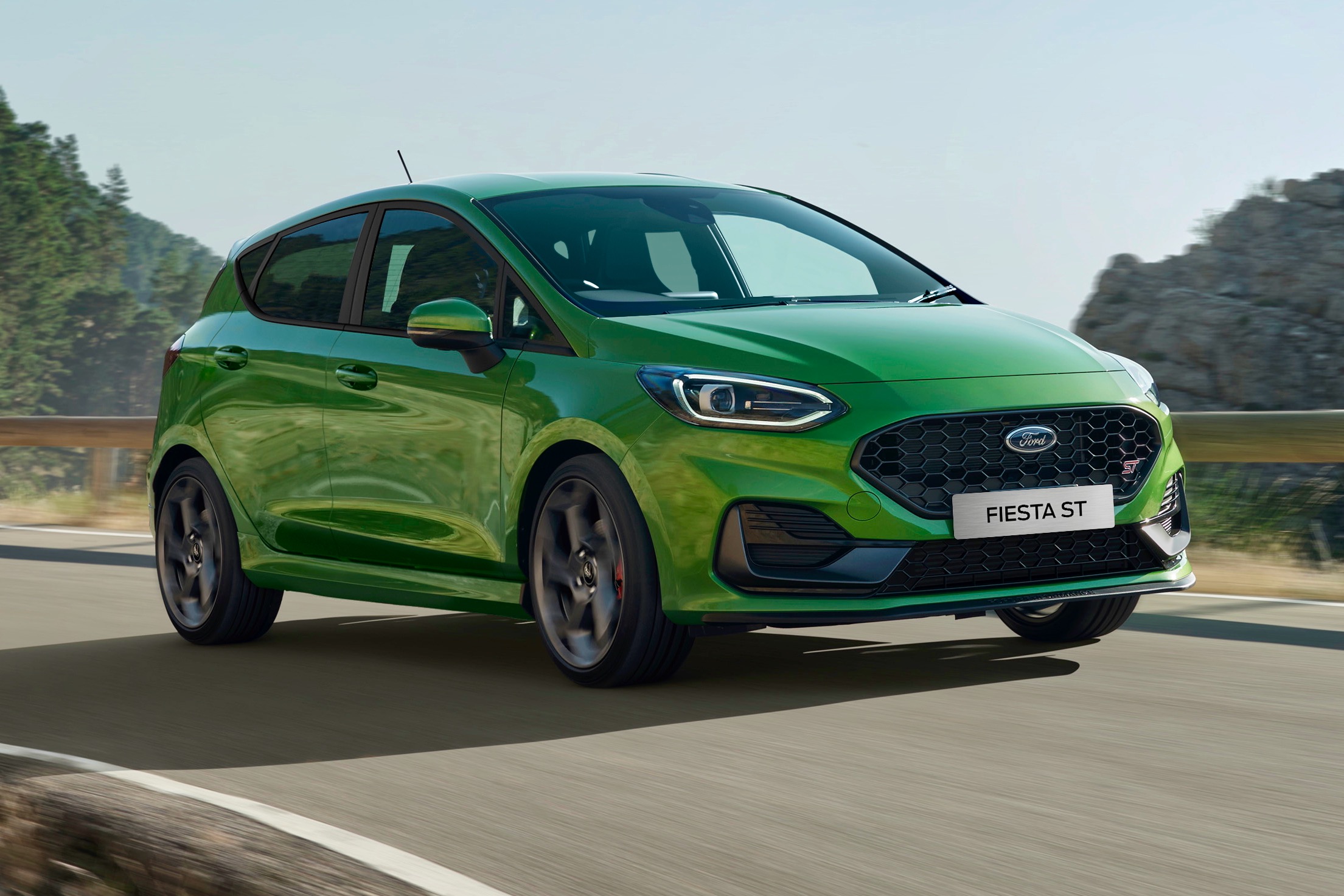
The Fiesta ST will also suffer from production stoppages, though not as much as the Focus, as a report from German publication Automobilwoche states Ford’s Cologne factory won’t resume production of the hatchback until April 25.
In February, Ford announced its upcoming updated Fiesta ST would arrive in Australia sans blind-spot monitoring and rear-cross traffic alert, with semiconductor shortages leading to the safety equipment being taken off its hot hatch.
Ford’s supply struggles, as well as its decision to revise the Focus and Fiesta ranges to ST-only variants, has resulted in sales of both models to drop in 2022, with just 79 Focus STs (down from 356) and seven Fiesta STs (down from 123) shifted to the end of March.
General Motors and Honda have announced they are collaborating to create low-cost electric vehicles (EVs).
The first models are planned to hit the North American market in 2027, utilising GM’s Ultium battery system, and likely to be wearing badges from both Honda and Chevrolet.
The companies say the partnership will result in a “series of affordable electric vehicles based on a new global architecture,” suggesting the EVs will be created to accommodate right-hand-drive format used in markets such as Japan and Australia.
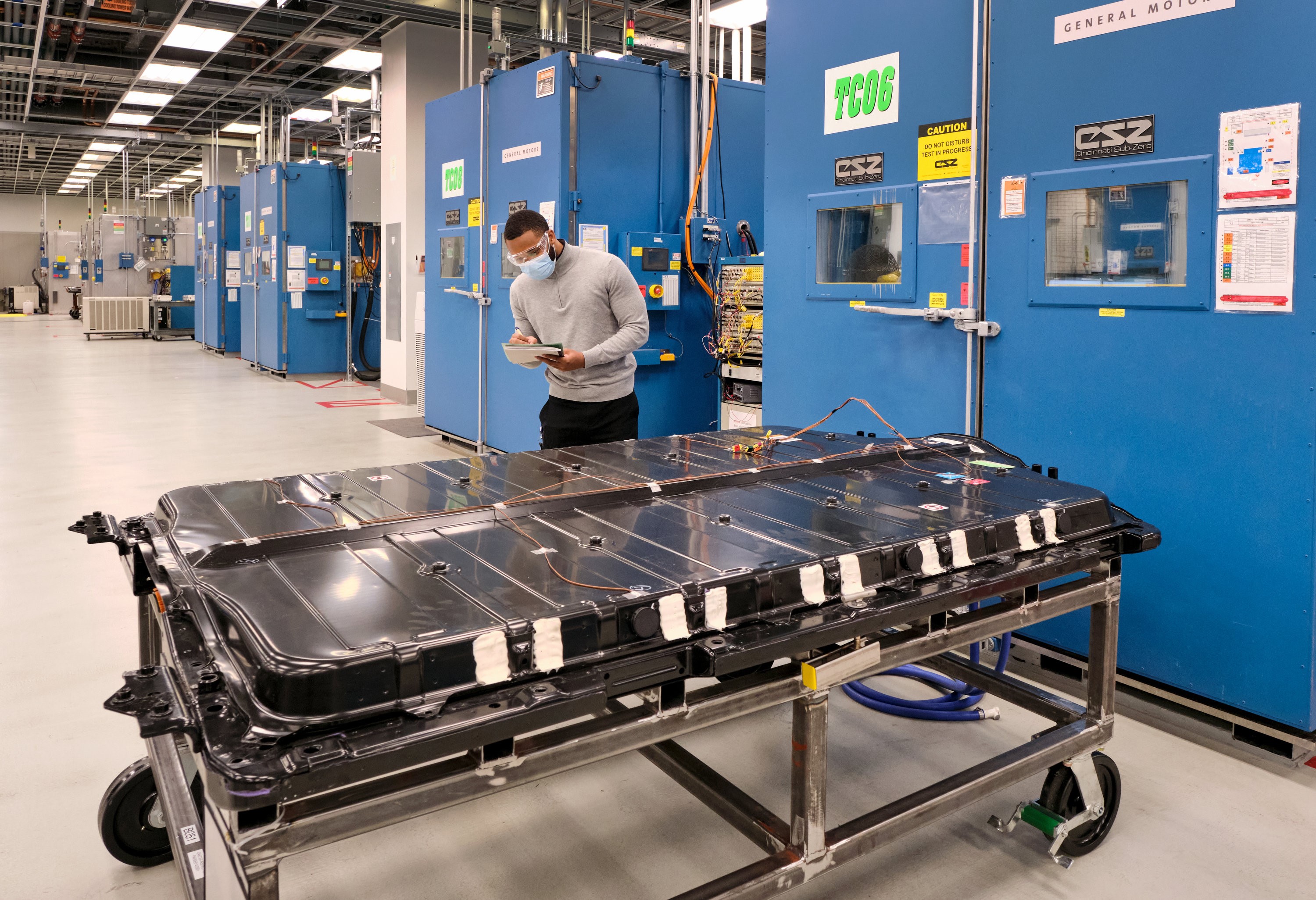
Compact crossovers will be part of the project, with the aim to produce “millions of EVs” from global production.
“GM and Honda will share our best technology, design and manufacturing strategies to deliver affordable and desirable EVs on a global scale, including our key markets in North America, South America and China,” said GM boss Mary Barra.
“By working together, we’ll put people all over the world into EVs faster than either company could achieve on its own.”
With GM only offering the Chevrolet Silverado pick-up and Corvette in Australia, it’s likely the jointly-made EVs would be offered here through Honda. The Japanese brand is targeting 40 per cent of its sales to be EV and hydrogen-powered models across major markets by 2030.
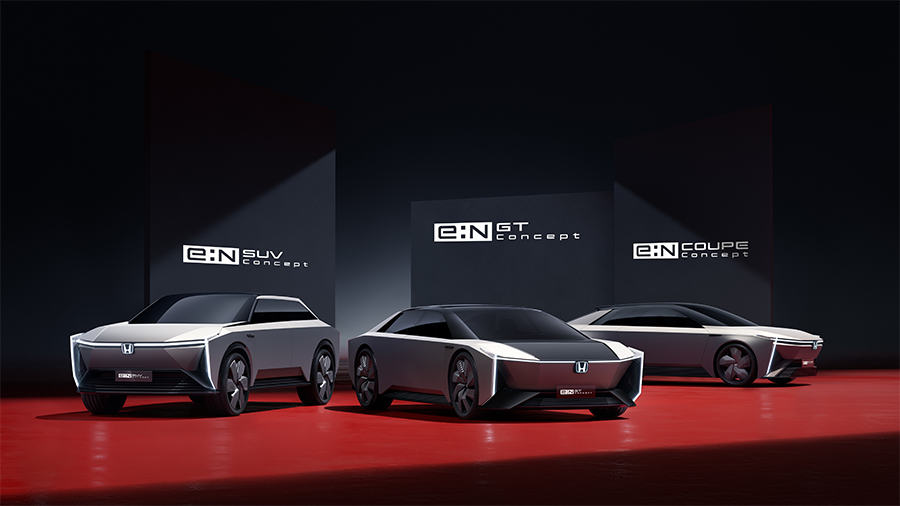
However, it’s not clear how the “affordable EVs” will fit into Honda Australia’s plans to go upmarket, as it aims to reposition the brand as a premium offering – with prices to match.
The two carmakers have been working on zero-emission projects for almost a decade, exploring hydrogen and battery propulsion since 2013, as well as autonomous technologies more recently.
Snapshot
- SL 43 becomes the world’s first road car fitted with an electric exhaust gas turbocharger
- Mild-hybrid, four-cylinder engine to produce up to 290kW and 480Nm
- Australian deliveries expected from the fourth quarter of 2022
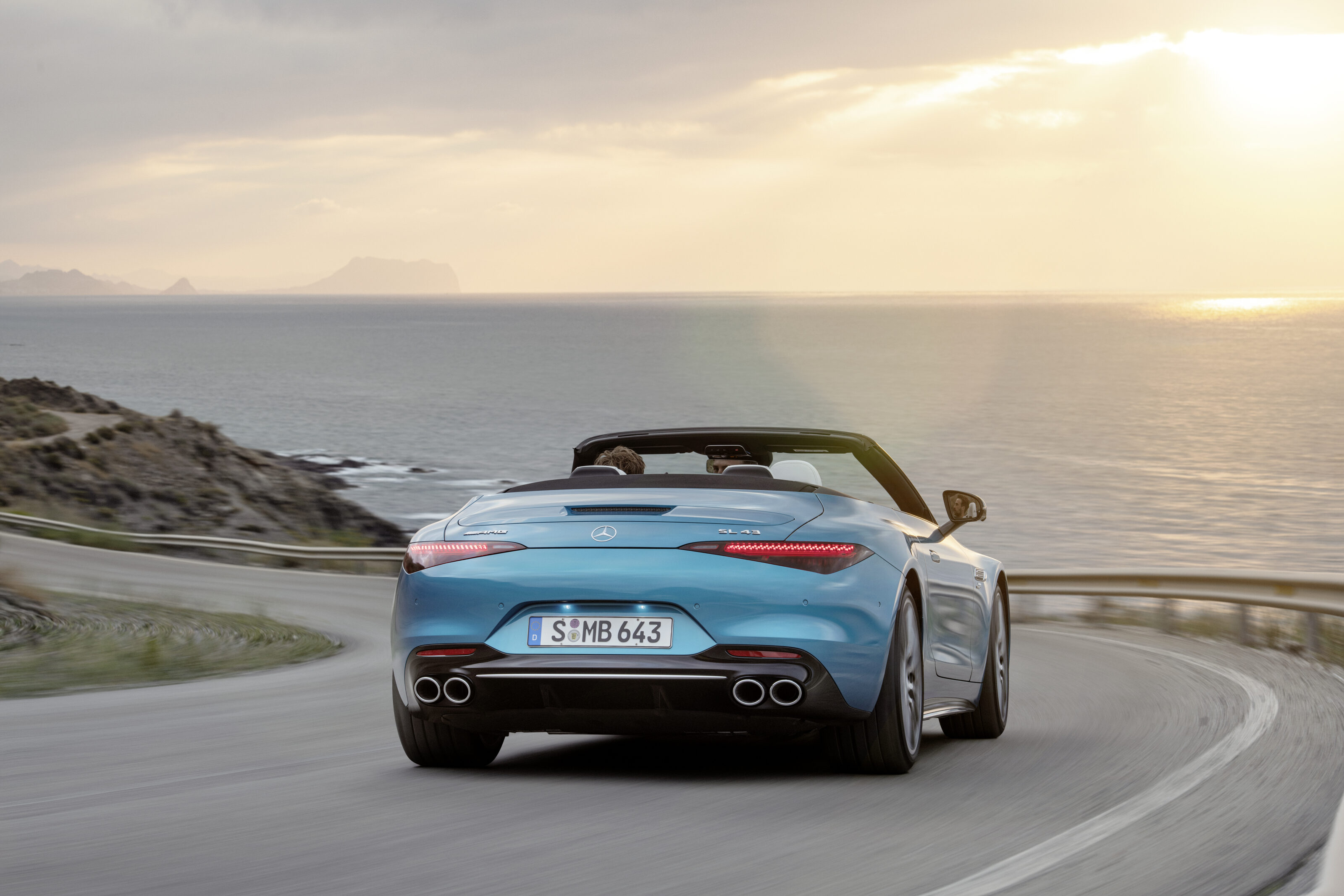
Mercedes-AMG has revealed its SL 43 – a four-cylinder convertible featuring Formula 1 turbocharger technology to give buyers an entry point to its SL range.
Placed under the V8-powered Mercedes-AMG SL 55 and SL 63, which were unveiled last year, the SL 43 becomes the ‘entry-level’ offering for what is now a standalone AMG model, dropping the all-wheel drive systems of its siblings in favour of a rear-wheel drive layout.
Under the bonnet, it packs a 2.0-litre, turbocharged four-cylinder engine, producing up to 290kW and 480Nm, delivered to the rear axle through a nine-speed multi-clutch automatic transmission.
While its outputs might sound like a downgrade from the other SLs, which pack 350kW/700Nm and 430kW/800Nm in 55 and 63 guise respectively, there is one feature on the 43 which makes up for having half the capacity, cylinders and turbos as its counterparts.
Borrowing technology from its Formula 1 program, Mercedes-AMG and Garrett have created the first electric turbocharger for a road car, with a 48-volt electric motor bolted onto the compressor’s charger shaft.
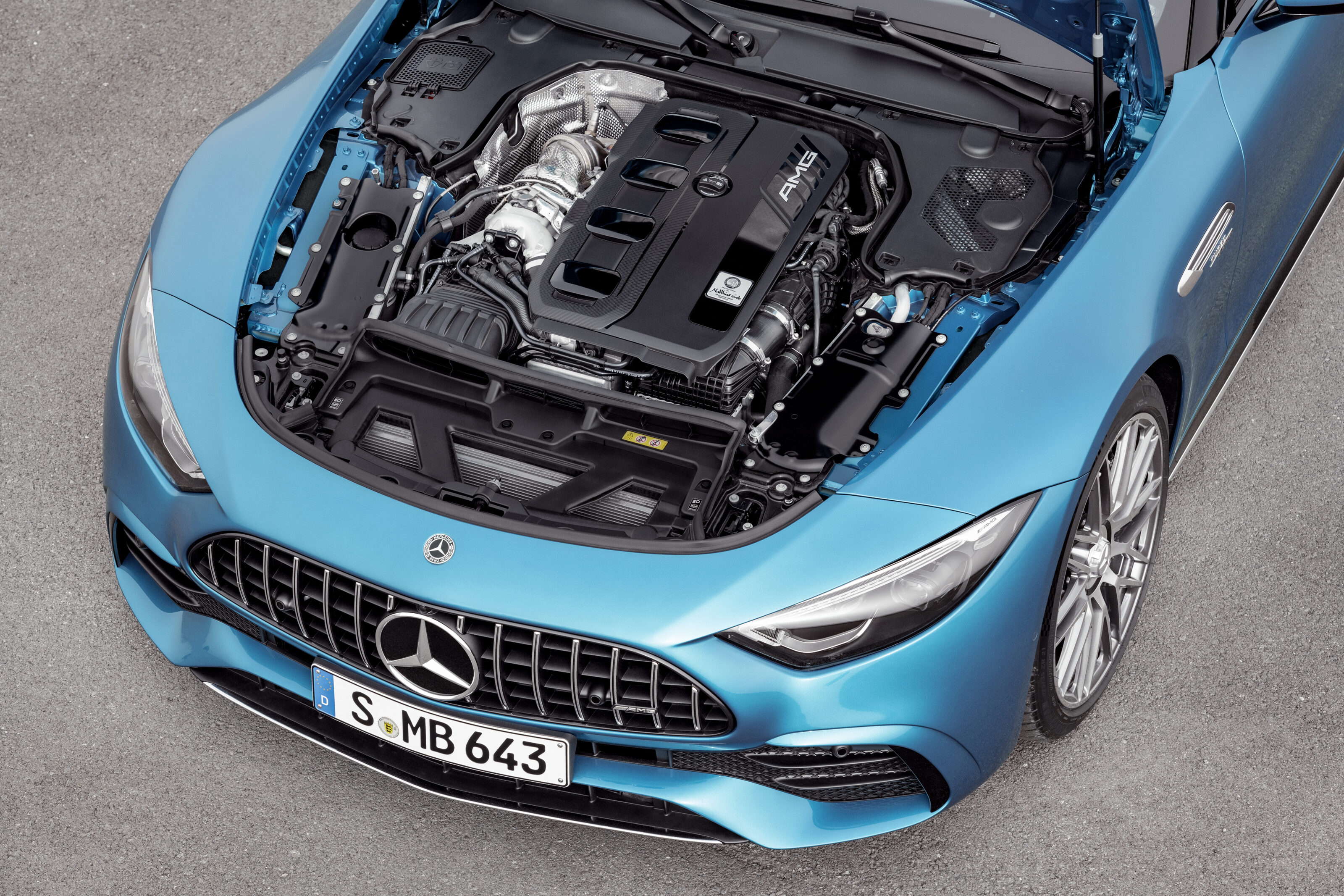
To negate the effects of turbo lag, the motor spools up the turbine wheel while waiting for sufficient exhaust gas to flow through the compressor, allowing it to deliver peak boost on demand at almost any point in the rev range.
With the internal combustion engine pushing out its peak power of 280kW at 6750 rpm and holding maximum torque from 3250 rpm to 5000 rpm, a belt-driven, 48-volt starter generator can act as a mild-hybrid system to bump up the power by 10kW.
Outside of the engine bay, the SL 43 is set apart from the V8s with tweaked front and rear bumpers, as well as round exhaust tips, and the four-cylinder 2+2 roadster also rides on 19-inch wheels as standard – although 20- and 21-inch alloys will be available as optional extras.
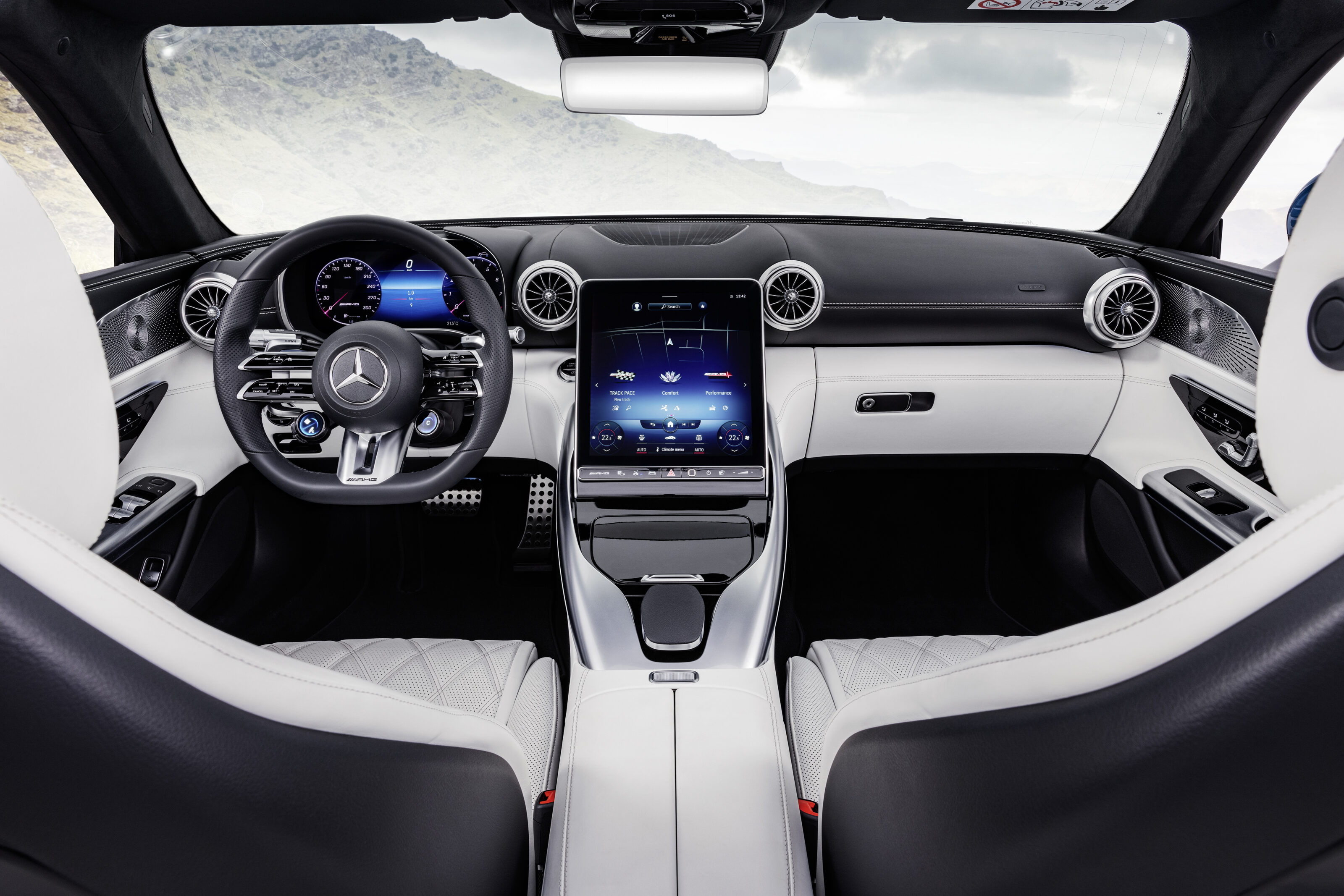
After the introduction of the R232 SL series last year, all grades within the range benefit from; its aluminium construction with active aerodynamics, an electric soft-top, AMG adaptive ride control, composite brakes and the latest iteration of Mercedes’s MBUX infotainment system – featuring a 12.3-inch digital instrument cluster.
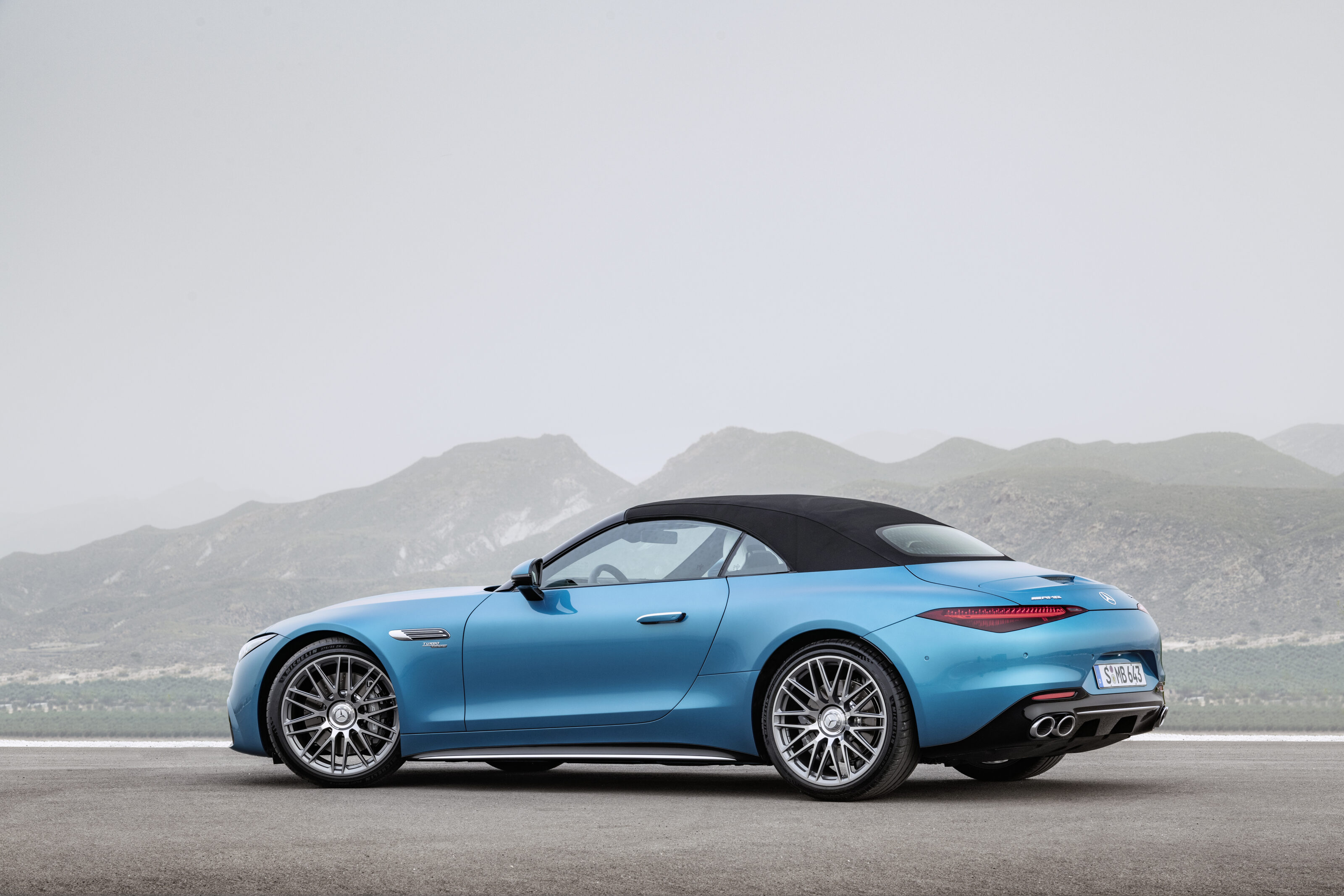
Optional features on the SL 43 will include rear-wheel steering and AMG’s Dynamic Plus package, adding equipment such as; dynamic engine mounts, an electronic rear differential, ‘Race’ driving mode, lowered suspension (providing a 10 millimetre drop) and yellow AMG brake calipers.
It’s not known whether these options will be available locally or what specification the car will be offered in, but Mercedes-AMG has confirmed the SL 43 is set to join its local line-up, with pricing and features to be announced closer to its launch in the fourth quarter of 2022.
If anyone needed proof that the Sports Car of the Year field is a tough one, the BMW 128ti’s ranking is a serving of reality on a platter.
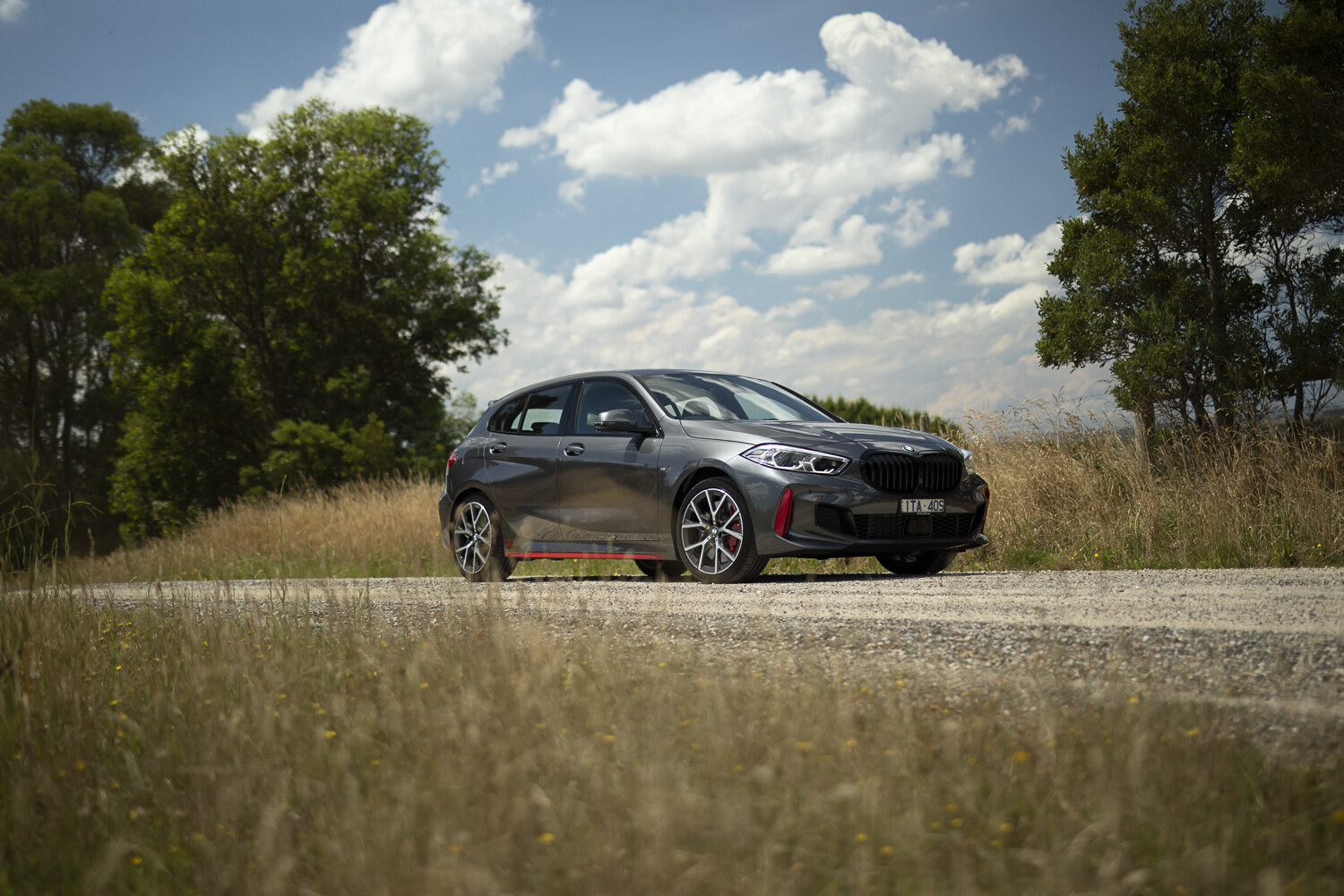
By nature, most people are competitive. Some more overtly than others, but there’s generally a vein of mongrel, an unwavering will to win in everyone. Therefore, for competition to work there has to be a wooden spoon. And in the case of the Sports Car of the Year for 2022, that gong goes to the BMW 128ti.
However, finishing 10th shouldn’t be seen as a loss for two reasons. The SCOTY field is a competitive one and it’s full of the best cars of the past year. Merely gaining a position on the starting grid should be seen as a win. Then there’s the fact that while all the judges placed it last in their rankings, a common consensus formed that the 128ti is a package endowed with a subtle turn of pace and a certain elegance to its finish.
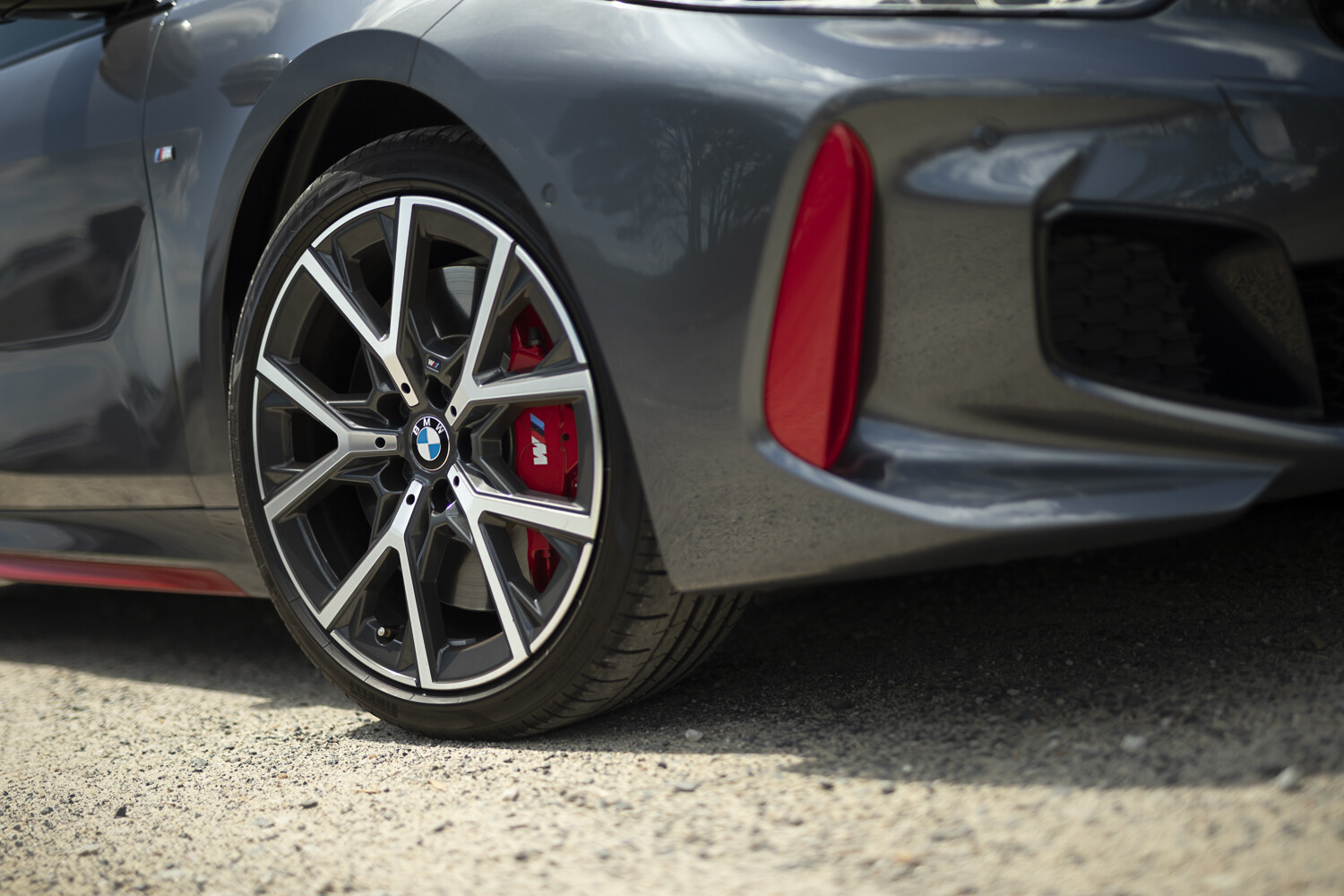
It’s ergonomically sound, too, with the judges praising the seating position as well as the functionality of its controls and interfaces.
So, why didn’t it do better? As Kirby states, “it’s a car that seems very convincing on paper” due to its 180kW/350Nm four-pot. However, harnessing that grunt through the Torsen limited-slip diff and Pirelli P Zero hoops is the hard part, with torque steer being an issue. The steering, too, drew criticism for its muted and inconsistent response while most felt the damping was too flinty given the relaxed body control. Dynamic cohesion isn’t the BMW’s strong point.
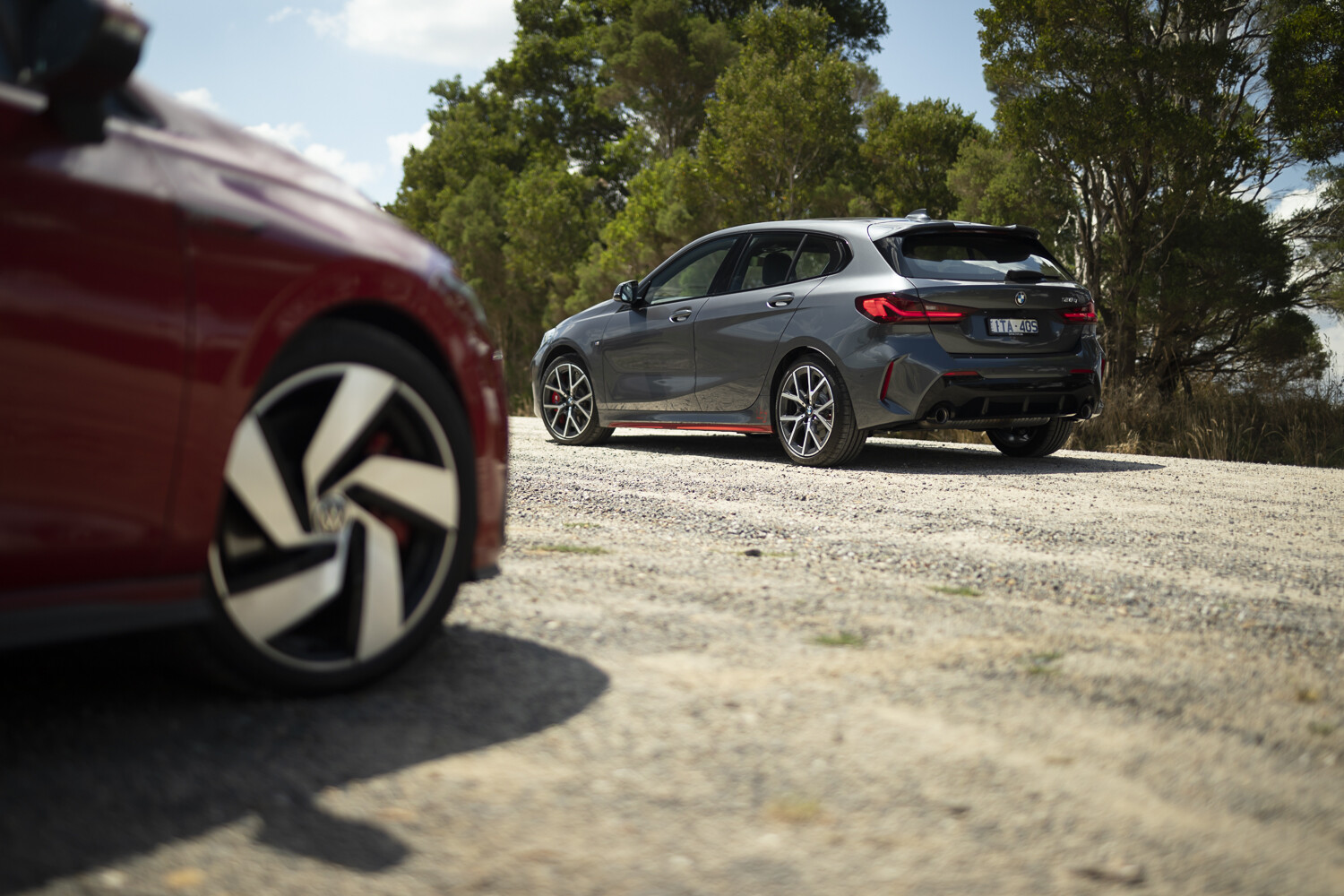
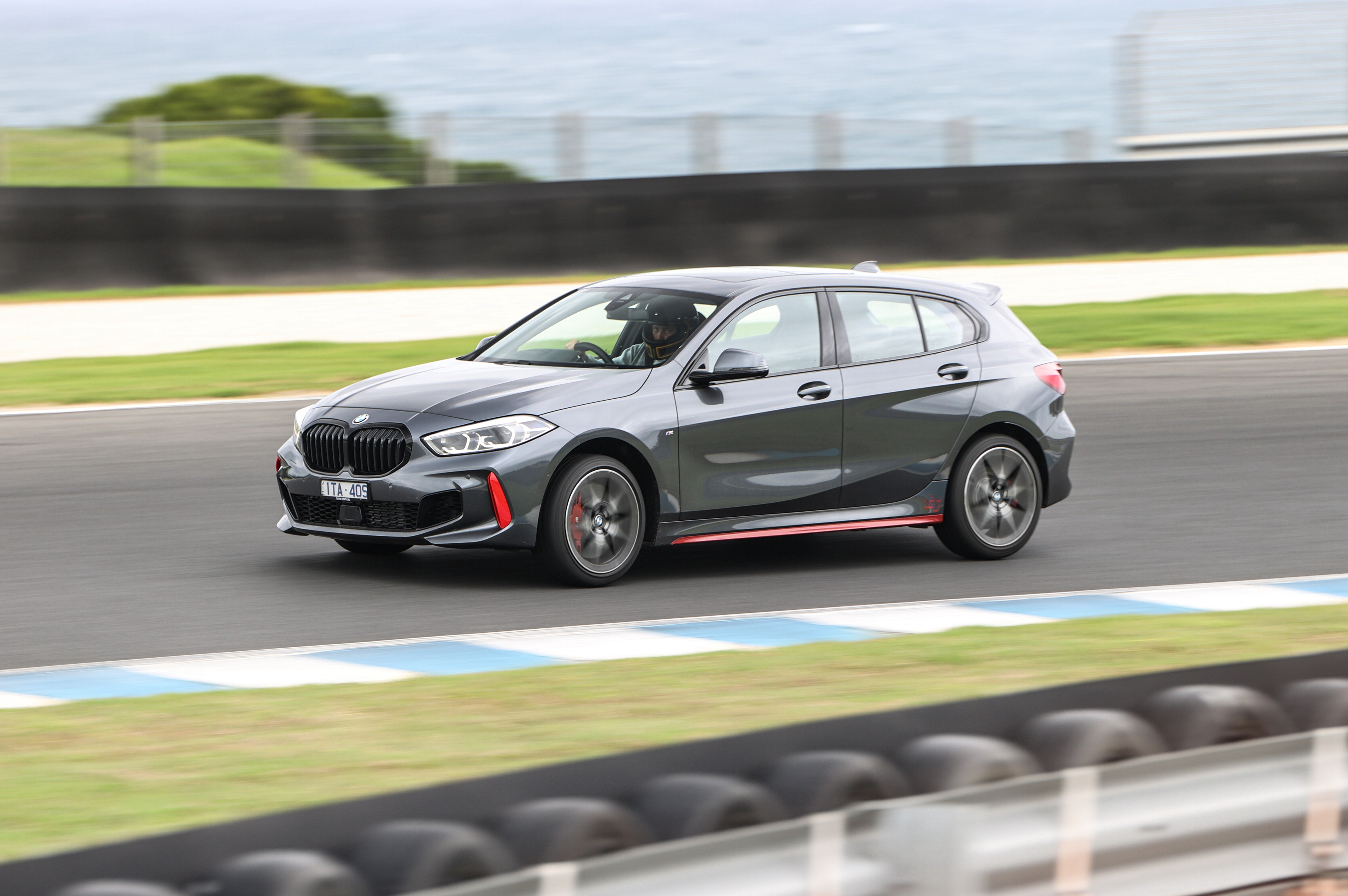
The most damning figure for the 128ti is its lap time. At 1:56.16 it’s a whopping 2.4 seconds slower than the Golf GTI despite being within a tenth of it in the 0-100km/h sprint. Delving deeper, the BMW slightly gains time under brakes and to the apex, but then loses the advantage and more through the mid-point and on corner exit.
Comparisons with the Volkswagen Golf GTI are unavoidable. After all, it’s the car BMW targeted to beat and it’s clear VW knows its audience with its venerable Golf. Considered genesis for the hot hatch, Wolfsburg has decades of expertise behind it. However, the 128ti proves that Munich is still on the first page of its journey into front-wheel-drive performance. In many ways Bernie sums up the 128ti best by professing it’s “the hot hatch for the non-enthusiast”.
The ultimate sign of a car’s popularity and competence is how much time its key spends in the event key box. BMW’s hot front driver virtually booked a week-long stay in it, only being released from its confines on a needs-must basis.
A quickish, amenable and upmarket hatch it might be, but in a fiercely competitive SCOTY field where driver involvement is paramount, the 128ti was perhaps the only disappointment.
The judge’s comment
Alex Affat
“If you owned this and you’re not the most serious driver, you’d probably enjoy it.”
Ranking: 10th
Andy Enright
“What a weird bag of dynamic inconsistencies. Nothing seems in harmony with anything else. Shame.”
Ranking: 10th
Trent Giunco
“I had high expectations for this. Torque steer and its struggle to put power down weren’t highlights for me.”
Ranking: 10th
Cameron Kirby
“Less than the sum of its parts. Never really coalesces into something as polished as we’d like.”
Ranking: 10th
Bernie Quinn
“Very little nice steering feedback. Torque steer. Gets flustered by mid-corner bumps.”
Ranking: 10th
Luffy’s view
“Engine and gearbox are good but the chassis is fairly weak when pushed to the limit. Mid-to-exit understeer is quite bad.”
The key figures
| 0-100km/h: | 6.27sec |
|---|---|
| 0-400m: | 14.33sec |
| LAP TIME: | 1:56.16 |
