
Key Points
- Cayman and Boxster to be fully-electrified by 2025
- Porsche line-up will have 80 per cent EVs by the end of the decade
- Hybrid vehicle to account for half of all deliveries in the coming three years
UPDATE, March 21, 2022: It’s confirmed: the 2025 Porsche 718 Boxster convertible and Cayman coupe will move exclusively to electric powertrains.
While leaked dealership information back in November pointed to battery-powered Boxster and Cayman models – the most recent rumour after years of speculation – Porsche has announced its plans to drop petrol engines from the 718 range by the middle of the decade.
The move is part of its ambition to switch 80 per cent of its new-car line-up to electric by 2030, with assurances from company chairman Oliver Blume this new generation of cars will retain their Porsche DNA.
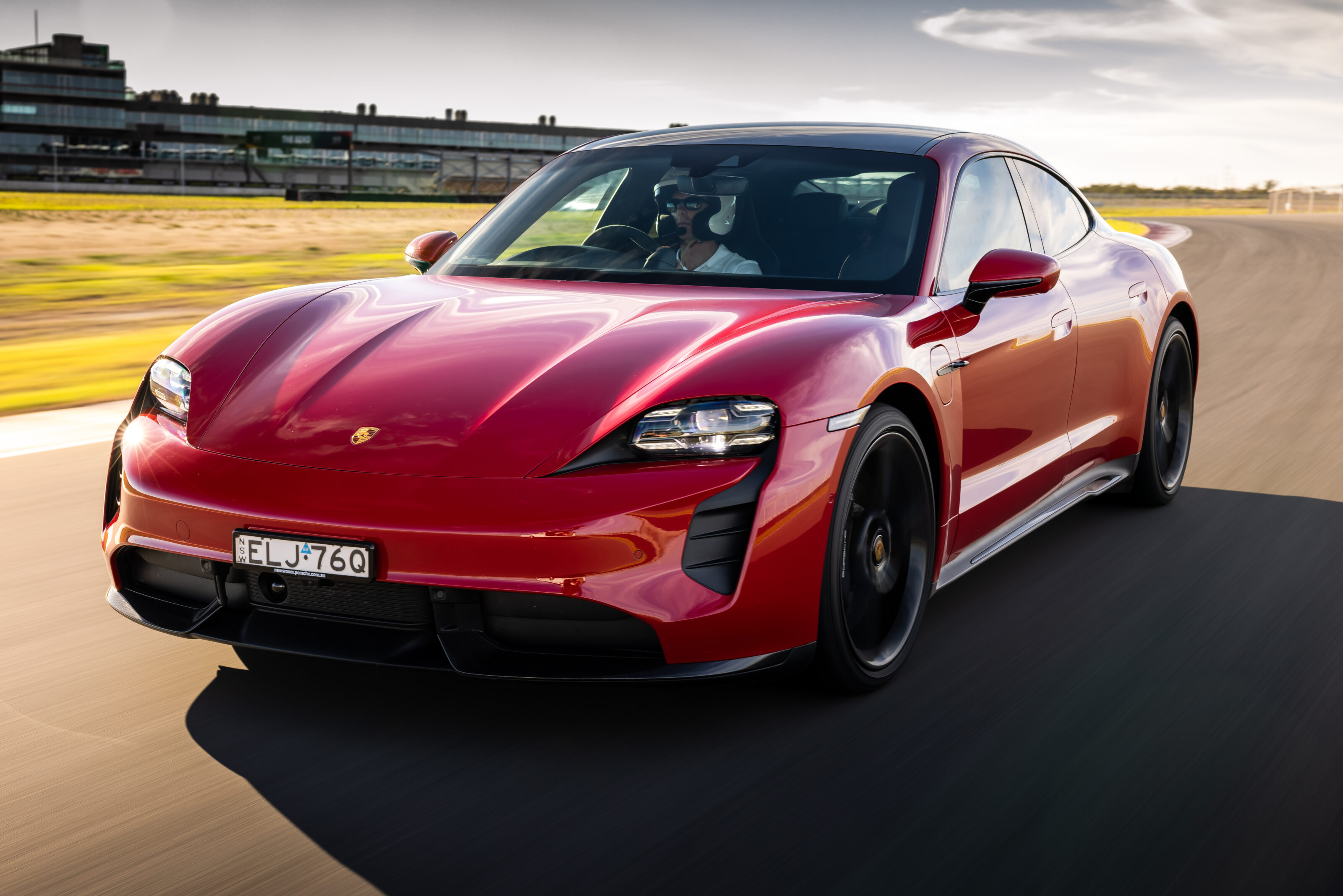
“The Taycan is 100 per cent a Porsche and inspires all kinds of people – existing and new customers, experts and the trade media,” Blume said at the carmaker’s annual conference.
“We are stepping up our electric offensive with another model: by the middle of the decade, we want to offer our mid-engine 718 sports car exclusively in an all-electric form.”
By 2025, Blume says half of its sales are expected to be derived from either fully-electric or plug-in hybrid models.
While hybrid models are in the pipeline, it’s expected Porsche will keep a number of 911 variants as petrol-only, with the brand investing heavily in the development of synthetic fuels.
The story to here
November 24, 2021: The 2025 Porsche 718 Boxster and Cayman will move to all-electric powertrains.
Porsche revealed the move at a confidential dealer briefing in the US, where designs of the next-generation Boxster and Cayman were also shared, Automotive News reports.
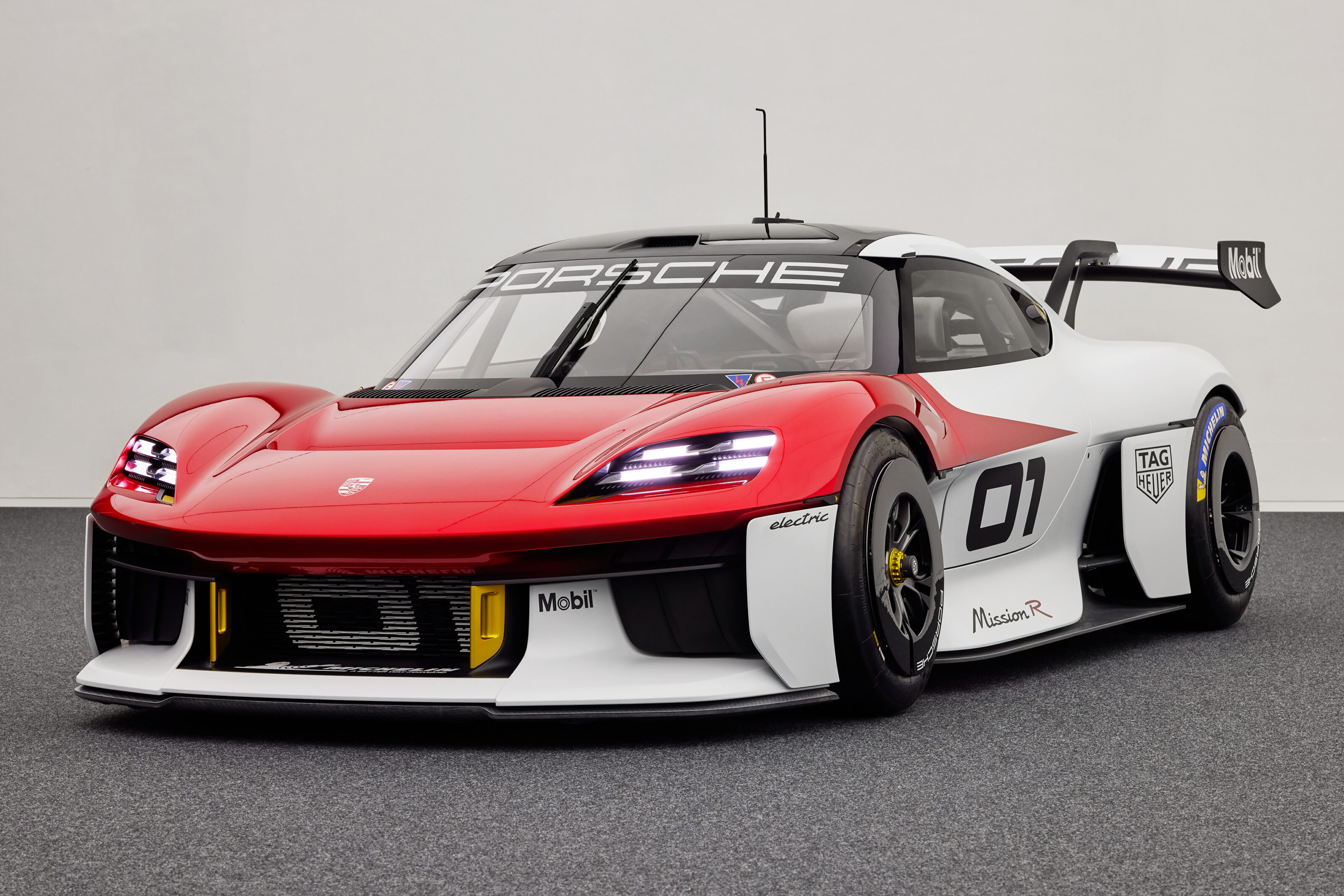
Insiders described the look of the new 718 models as being similar to the current electric Taycan at the front and rear – likely borrowing styling cues from Mission R concept study shown in September, and imagined in these renderings from AutoEvolution.
In March, UK publication AutoExpress quoted Porsche CEO Oliver Blume as saying the final decision on whether the next-generation was a few months away – but it appears now as if the company is forging ahead with the battery-powered sports cars.
The leaked information from the dealer conference all but confirms a report from US magazine Car and Driver in September, which quoted sources from both within and outside Porsche saying the 718 models would move to pure-electric power by the middle of this decade.
Speaking to Porsche collectors Jerry Seinfeld and Spike Feresten in recent weeks, Porsche GT boss Andy Preuninger gave a glimpse into how the carmaker is approaching electric vehicles.
“I think we have shown with the Taycan we can do a performance – a very entertaining car as an electric,” Preuninger said on the Spike’s Car Radio podcast.
“For sure you lose one of the senses [in electric cars], definitely – the action from the engine. This doesn’t make it easier. It means all the [other senses] must be better.
“The cars must be appealing, they must touch you, the driving experience must be very, very unique. That’s the challenge for the future.”
Preuninger said the company was taking a split approach to sustainable motoring, offering electric vehicles on the one hand, but also investing in the development of synthetic fuels to help reduce the emissions from the vast majority of internal-combustion vehicles that will remain on the road in the coming decades.
The September article from Car and Driver also suggested the Porsche 911 will be powered by petrol beyond 2030.
As with other Volkswagen Group brands, Porsche did not sign up to the recent Glasgow Declaration which promises to ban the sale of new internal-combustion vehicles by next decade. An environmental official from Germany instead sought clarification as to whether synthetic fuels created from renewable engine could be excluded from the pact.
It’s expected the all-electric 2025 Porsche 718 Boxster and Cayman will be unveiled in 2024.
Mercedes design of late has been, to my eyes at least, a bit of a mixed bag. While the brand is moving away from that worn-down lozenge look, it’s still not doing elegance the way it used to. One car, however, in all its years on sale has managed to be both pretty and striking – the Mercedes CLS – the latter aspect amplified somewhat with the Mercedes-AMG CLS 53 4MATIC+ version tested here.
Now in its third generation, AMG’s version of the CLS has ditched the hissing, spitting twin-turbo V8 and instead fits a clever, calmer engine that is more befitting of the sleek, four-door coupe in which it is housed.
A colleague once said to nobody in particular that car companies these days are going for striking rather than beautiful. BMW’s overgrown schnozzes, lots of cars with dramatic swoops and slashes and scars, the only antidote seeming to be Audi’s continuing restraint that detractors decry as boring. The same ones complaining about the proliferation of cars they don’t like the look of.
It’s very much an air of, “Make more interesting cars!”, which the carmakers do and then the same people shout, “No, not like that!”
Except, perhaps for this AMG-fettled CLS. But does its visual balance stack up with the way it drives?
Pricing and Features

The idea of not-quite-the-full-monty AMGs is not new. My particular favourite of the genre is the A35 AMG, a classier performance A-Class that really hit the spot. The C43 was really the pioneer of the idea, a car for those who didn’t need that potty-mouthed V8 urge or maybe couldn’t afford it.
You can have the CLS 53 4MATIC+ on your driveway from $183,600 plus on-road costs. At the moment, it is the only CLS you can buy in this country, which is kind of a shame but points to the fact that nobody wants the other ones for SUV reasons. There is no CLS63 AMG at all anymore, which is probably less of a shame because its brutality doesn’t really go with the vibe of the CLS.

For that not-insignificant sum, you will receive a well-equipped four-door coupe with 20-inch alloy wheels, dual-zone climate control, cameras everywhere, keyless entry and start, Mercedes’ well-regarded MBUX dual-screen media and instrument system, adaptive cruise control, front and rear parking sensors, powered front seats, sat-nav, auto LED headlights, auto wipers, head-up display, Nappa leather seats, power everything, wireless charging and a tyre repair kit in lieu of a spare.
Unusually, all but two of the available colours are free. You can spec a carbon exterior pack for $3800, the Limited Edition Pack is $14,000 and is a selection of a lot of options, internal carbonfibre trim is a whopping $5500 and you can get power-closing doors for $1300.
At the moment this is the only CLS you can buy … There is no CLS63 AMG, which is probably less of a shame because it doesn’t go with the vibe of the CLS

Mercedes’ excellent MBUX system powers two massive screens that stretch two-thirds of the way across the car. The dash screen is endlessly configurable and displays a comprehensive set of information options that can take a long time to get right. The second screen runs all the available functions, you can set themes that change both the central and dashboard screens and it runs Android Auto and Apple CarPlay in full glorious widescreen.
Comfort and space
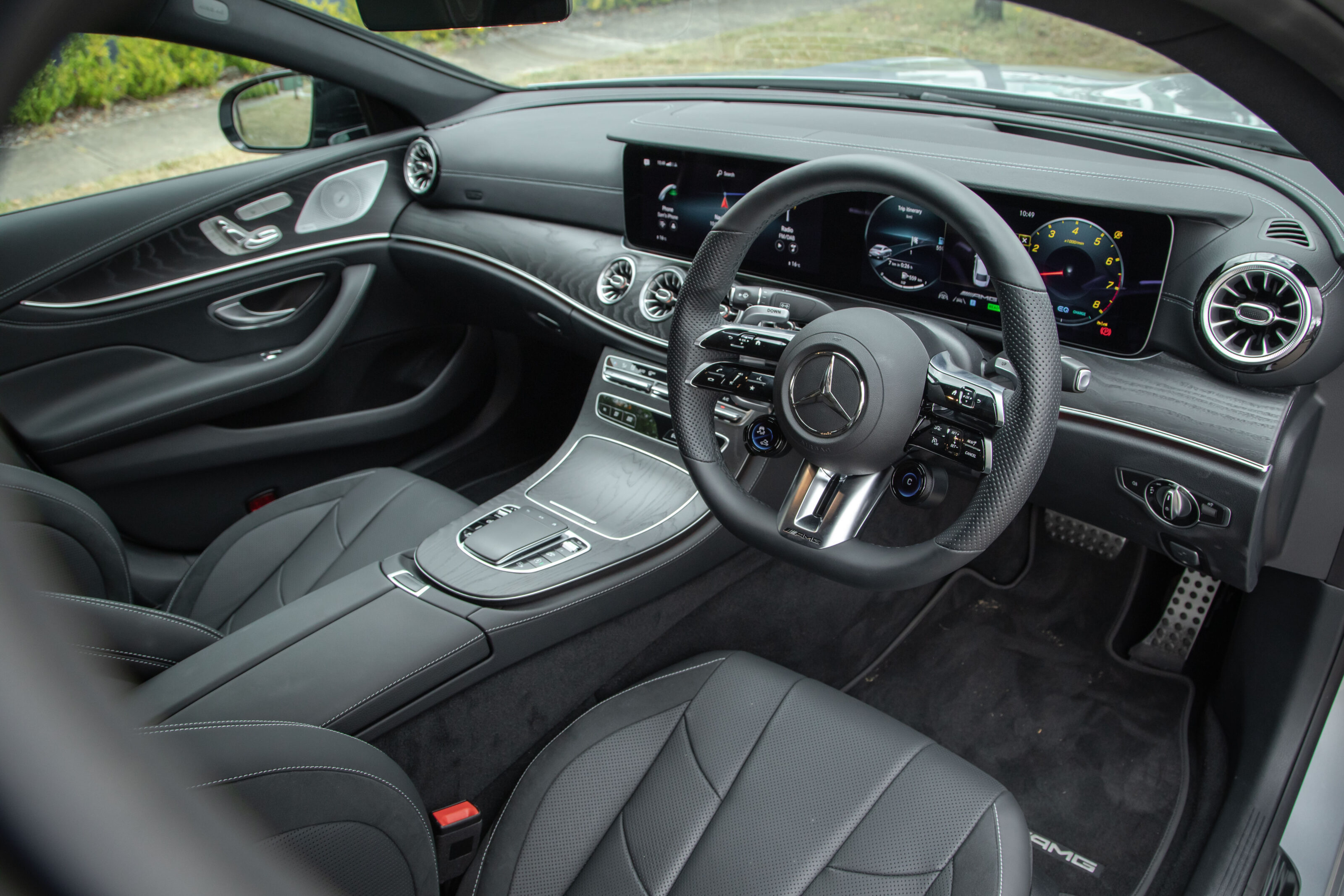
While the CLS might be a lot of car, it’s not especially spacious, but you already knew that. Four-door coupe is a quick way of saying, “Hey, you like a car the size of an E-Class but you rarely have anyone in the back because let’s face it, you like driving and probably don’t have kids, or if you do, they’re in the back of a GLC or GLE.”
So while the rear seats themselves are comfortable, entry is nearly as tricky as Apollo 13’s (not really) and you have to beware a bashed skull as you negotiate the fast C-pillar. Once you’re in, leg and knee room are adequate if you’re up to about 180cm but at that height, you’ll be brushing the headlining on bumps. Any taller and it won’t be much fun.
So while the rear seats are comfortable, entry is nearly as tricky as Apollo 13’s and you have to beware a bashed skull as you negotiate the C-pillar

Needless to say, the body is shrunk down tight over the chassis, so the transmission tunnel is substantial and the middle seat an afterthought rather than a thing you’d actually use.
Boot space is pretty decent at 490 litres and you can tow up to 1900kg. I would pay good money to see a CLS dragging a caravan.
On the Road

In a car like this, you’d expect a 63 in the name and that glorious twin-turbo V8. Sadly but not unreasonably, that’s not the case. Clearly, CLS owners weren’t keen on that less-than-couth power unit so Mercedes has opted for the very clever M256 3.0-litre straight-six.
If you’re new to this engine – the unit itself is not new, it’s been around a while – it’s quite clever. If you already know about it, skip a couple of paragraphs.
It’s a lovely engine. Almost the equal of BMW’s straight-six in sound and character, it’s got an uncommonly high redline and doesn’t mind finding it

On one side of the engine is an electric compressor. To generate enough electricity to drive that, there is also a 48-volt mild-hybrid system with an integrated starter in the transmission to harvest electricity in coasting and braking while then punching back up to 250Nm (!) of twist and a handy 16-odd kilowatt boost. It cannot move the car on its own, hence the name mild hybrid.
Anyway, part of the reason for the electric compressor is because on the other side of the engine, up nice and close to the exhaust ports, is a big turbo. Like, old-fashioned big turbo that would usually mean sounding the turbo lag klaxon, but the electric compressor is there to help things along. It’s not as simple as being another turbo; it’s there to generate pressure in the system as well as eliminate turbo lag.

Power is an exceptionally reasonable 320kW at 6100rpm while torque from the ICE comes in at an also-hefty 520Nm. So if you’re rejoining us having skipped the description of the engine, you may already be aware that coupled to a nine-speed MCT (not a dual-clutch, but a multi-clutch pack, like a motorbike) and a very rear-biased all-wheel-drive system, you’ll hit 100km/h from zip in 4.5 seconds.
It’s a lovely engine. Almost the equal of BMW’s straight-six in sound and character, it’s got an uncommonly high 7000rpm redline and doesn’t mind finding it. When you’re up for some fun, the engine comes right back at you with plenty of smooth, linear power to rocket you up the road.

Obviously, it doesn’t have the hooning character of the non-existent 63 variant I’d been pondering during the time I had it, but you know what? It just doesn’t fit this car. And that’s for a bunch of reasons. It’s too stylish, it’s too sleek and it’s already quick enough.
It’s a big unit, too, at 1980kg, but the 4MATIC+ hides its weight well. The adaptive air suspension manages to feel like steel springs most of the time but uses its cleverness to hide the bumps and spots on the bad stuff, made more remarkable by the sheer size of the 20-inch alloys.
It doesn’t have the hooning character of the non-existent 63 variant but then again hooliganism just doesn’t fit this car. It’s too stylish, it’s too sleek and it’s already quick enough

Pushing on, it’s all about the flow. While the brakes are more than up to that heavyweight fighting mass, you can really get into a flow with the CLS. Equally, it’s a commanding cruiser, burbling quietly along in ninth gear as the miles pass under you without fuss. It’s an extremely pleasant car in which to either pass the city or country commute.
Fuel use is a small issue, or was for me anyway. The official ADR figure is a creditable 9.2L/100km but I got 14.7L/100km. No, I did not drive like my mum, so perhaps you’ll do better if you’re less addicted to that AMG punch.
Ownership

Mercedes offers owners a five-year/unlimited-kilometre warranty, recently joined by Audi, bettering or matching its premium rivals such as Jaguar, Lexus and BMW.
You can control your service costs by buying a service plan. You need only visit the dealer once a year or every 25,000km, whichever comes first and for a three-year plan, you’ll pay $3300, four years $4300 and five a sobering $6150. That’s an average yearly spend of either $1100, $1075 or $1230 respectively. I reckon the service plan is a good idea versus the pay-as-you-go alternative that likely costs substantially more as the years go on.
VERDICT

People crap on about Bentleys being the car of choice for people who like driving themselves and always forget to mention the bit about the colossal cost of the British classic. While the CLS isn’t cheap, it’s cheaper than a Bentley and weighs half a ton less while it’s at it. It’s definitely the car for moneyed folks who like driving themselves, though (as if having a chauffeur is much of a thing in Australia) because it fulfils so many of the criteria drivers like.
It’s handy in the corners, comfortable in the straight-ahead stuff, looks gorgeous and the tight back seat means you won’t have people fighting to go with you when you just want to be on your own or in the company of just one other person.
It’s definitely the car for moneyed folks who like driving themselves because it fulfils so many of the criteria drivers like

More seriously, though, this is a fine automobile. The inventive powertrain, excellent chassis and all-rounder capabilities are more than enough to soothe the disappointment it doesn’t contain the turbo V8. But I think – and I don’t often say things like this when it comes to that engine – the CLS 53 might be all the better for not having it.
And while my colleague was on the money about striking over pretty, this is the exception that proves the rule.
2022 Mercedes-AMG CLS 53 4MATIC+ specifications
| Body: | 4-door coupe |
|---|---|
| Drive: | all-wheel |
| Engine: | 3.0-litre straight-six mild hybrid |
| Transmission: | 9-speed multi-clutch transmission |
| Power: | 320kW @ 6100rpm |
| Torque: | 520Nm @ 1800-5800rpm |
| Bore stroke (mm): | 83×92.4 |
| Compression ratio: | 10.5 : 1.0 |
| 0-100km/h: | 4.5 sec (claimed) |
| Fuel consumption: | 9.2L/100km (combined) |
| Weight: | 1980kg |
| Suspension: | 4 link front/5 link rear, air springs |
| L/W/H: | 5012mm/1896mm/1422mm |
| Wheelbase: | 2939mm |
| Brakes: | 370mm ventilated disc front / 260mm ventilated disc rear |
| Tyres: | 245/35 R20 front / 275/30 R20 |
| Wheels: | 20-inch alloy wheels (tyre repair kit) |
| Price: | $183,600 + on-road costs |
Could burning hydrogen save the internal combustion engine?
Toyota, Mazda and Subaru seem to think so. All three brands (Toyota is Subaru’s single biggest shareholder) have just entered a joint-venture to see if it’s possible; Toyota has even built and raced a Corolla hydrogen combustion car with a real exhaust note.
In theory, replacing petrol with hydrogen in existing internal combustion engines is relatively simple and – provided the cost of hydrogen itself comes right down – a potentially quicker way to zero carbon emissions. Unlike petrol or diesel, burning hydrogen produces none of the sort.
Toyota, too, has other motivations. Akio Toyoda wants to save – or at least appear to be trying to save – the hundreds of thousands of manufacturing jobs in Japan associated with internal combustion engines that might otherwise disappear in a total shift to electrification.
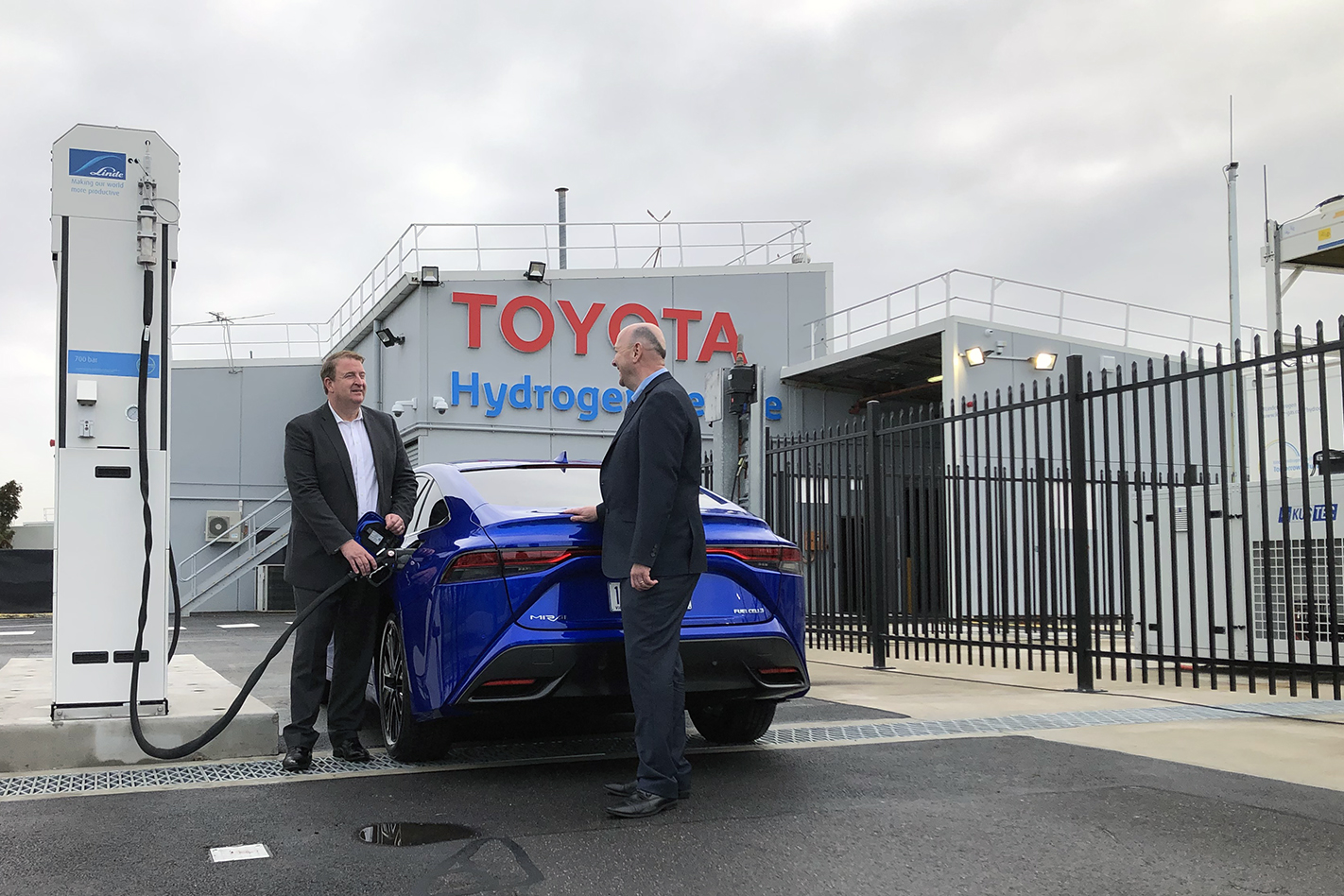
Of course, this is not the first time hydrogen combustion has been explored. BMW went down that road with a V12 7 Series from 2005 to 2007. During the 2000s, Mazda experimented with hydrogen rotary combustion engines. Aston Martin, Chevrolet and Ford have also had a look, but mostly the technology has been a lame duck.
But it seems hydrogen is having its time in the sun – so to speak – yet again. That’s due to the sheer urgency and effort required to decarbonise as the world sets itself ambitious deadlines of 2030 and 2050. At present, nearly everything is powered by fossil fuels, and it might be quicker to cut carbon emissions by burning hydrogen instead – buying precious time as we move en masse to renewables, batteries and electric motors.
It makes sense, too, given hydrogen’s retrofitting potential into existing infrastructures. In Europe, for example, where fossil fuels are widely relied on for heating buildings – a hugely ‘carbon expensive’ task – hydrogen can be integrated into existing gas networks relatively easily.
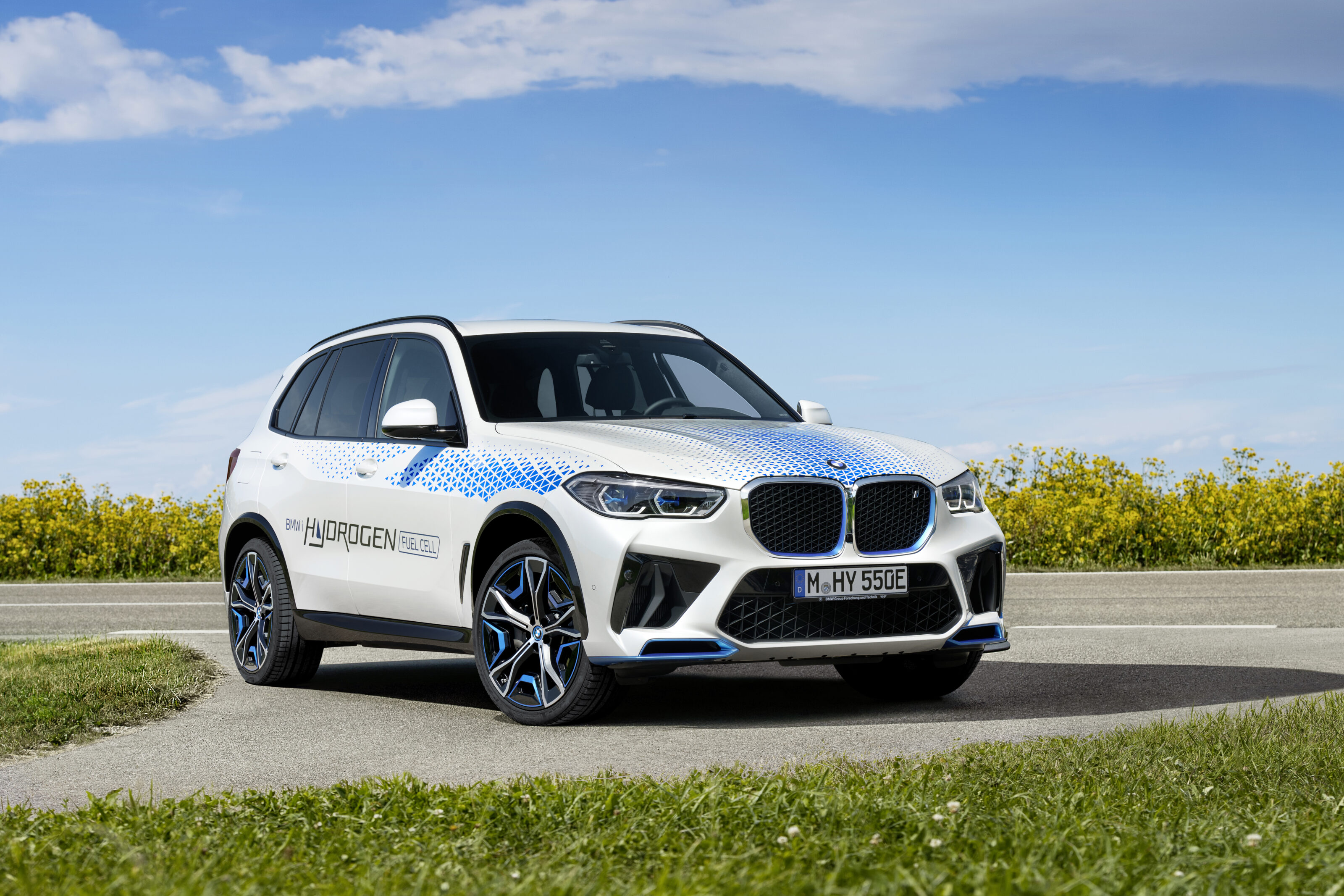
Some start-ups in America, too, like HyTech Power, are already offering retrofittable hydrogen combustion set-ups for diesel trucks. Converting America’s existing fleet of 15.5 million diesel haulers to hydrogen combustion could cut emissions a hell of a lot quicker and more cheaply than outright replacing them all with electric.
But for car enthusiasts, could hydrogen really save the internal combustion engine – and the exhaust note along with it?
In theory, yes, but not without overcoming some probably terminal obstacles. Currently, hydrogen is very expensive – and carbon-intensive – to produce. First, it would need to become significantly cheaper; and its manufacturing would need to be powered by renewables rather than fossil fuels, otherwise you’re pinching from Peter to pay Paul. But global demand for ‘green hydrogen’ is tipped to skyrocket in the coming decades – at least, that’s a bet Australia is making by investing in new hydrogen manufacturing capabilities, as announced only a few months ago.
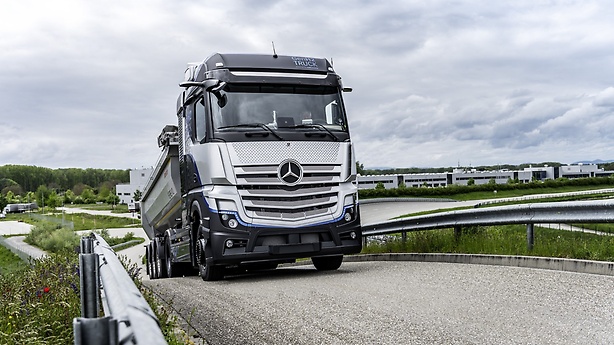
Secondly, until it’s cheaper, burning hydrogen compared to using it in a fuel cell is caveman stuff. Like petrol engines, burning hydrogen is only about 25-35 percent efficient; but in an electric fuel cell, that’s more like 60 percent. To go the same distance burning hydrogen as you could using it to generate electricity in a fuel cell, you’d need a fuel tank twice the size, and it would cost twice as much.
When combined with forced induction, hydrogen can actually yield around 15 percent more power than petrol without any carbon emissions whatsoever. However, it does produce nasty nitrogen oxides, a somewhat major drawback. If you switched every internal combustion engine in the world to hydrogen overnight, you’d be creating a new problem, one catalytic converters maybe couldn’t solve alone. Hydrogen fuel cells, on the other hand, are genuinely ‘zero emission’, only emitting water vapour.
Then there’s the question of storage. Hydrogen is less energy dense than petrol, so you simply need more of it to get the same results. Compressing hydrogen at 700 bars is obviously more fraught than simply filling up a fuel tank with liquid hydrocarbons. Liquid hydrogen, while more dense, needs to be kept just below its boiling point, which is minus 252 degrees Celsius – not easy, especially within a tightly-packaged car.
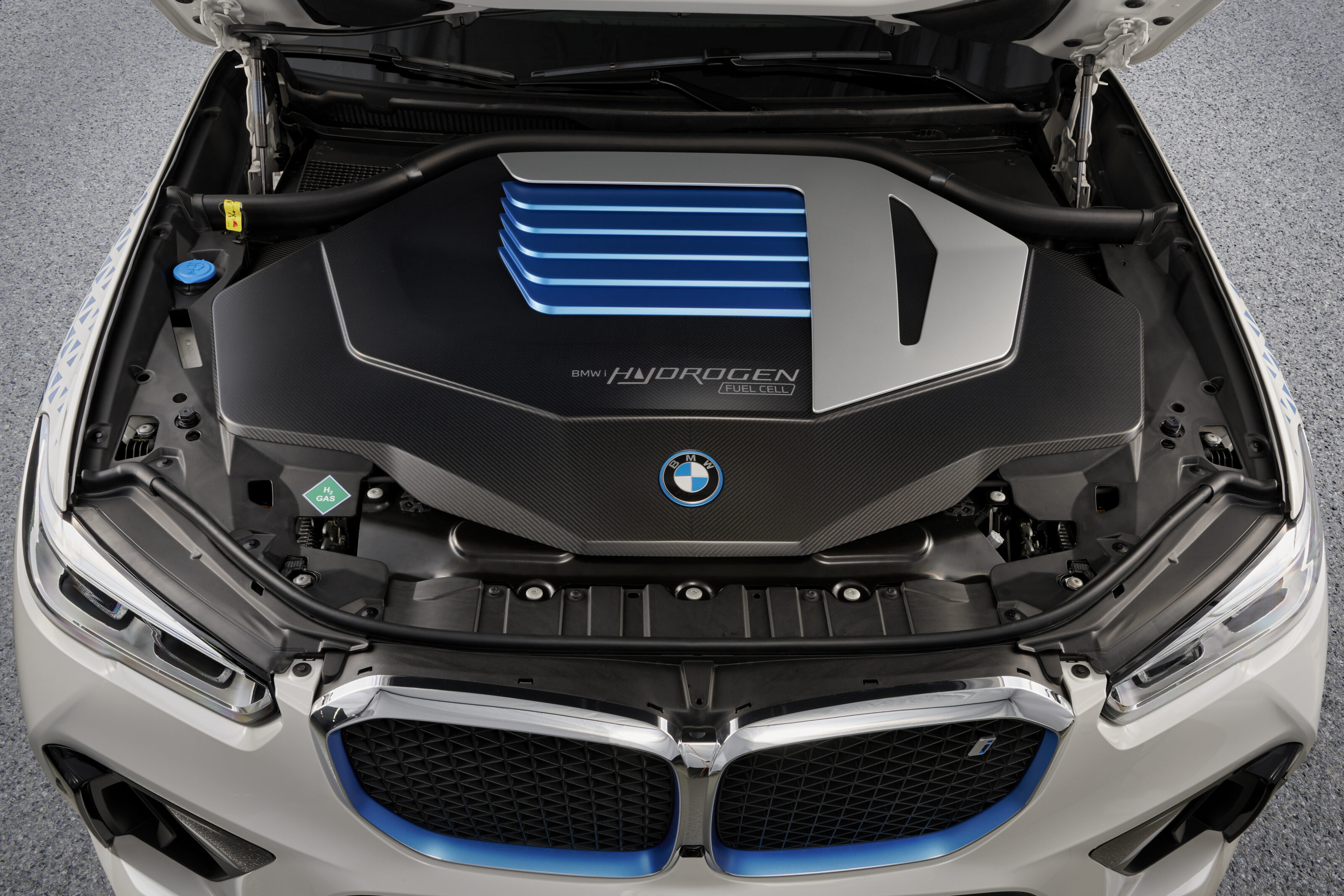
All this aside, there’s still a chance hydrogen combustion could be used in motorsport where noise is a critical part of the show (such as Formula One) – and cost is no issue. But on this stage, hydrogen must compete with new, emerging biofuels.
And back on the open road, economies of scale and battery breakthroughs are on track to give electric vehicles an unbeatable financial edge over anything with a complicated combustion engine. Electric motors, after all, are simple and comparatively cheap – it’s the heavy, expensive batteries that have held EVs back, but possibly not for much longer.
The potential for hydrogen combustion certainly exists, but the winds of change are not blowing in its direction.
The relationship between Ferrari and Maserati has often been a complex one, both companies producing beautiful Italian supercars yet each managing to carve its own niche. Modena and Maranello, for the most part, have avoided squabbles despite what for many years has been a convenient if uneasy truce.
That equilibrium was tilted on its axis by the arrival of Maserati’s new (and hugely impressive) mid-engined halo MC20. The Trident’s supercar arrives at an opportune time for the brand. Ferrari’s F8 Tributo has just been replaced by the V6 hybrid 296 GTB, and there doesn’t appear to be a muscle-flexing special edition like the 458 Speciale and 488 Pista in the near future.
This leaves Maserati space to create a dramatic, track-focused variant of its new mid-engined halo to fill the Maranello-shaped hole in the supercar market. Yes, there is a 1000hp SF90 lurking in the background from Ferrari, but its million dollar plus price tag means Maserati has a $500,000 price pond to lure customers in. Its hook could be the MC20 Trofeo.
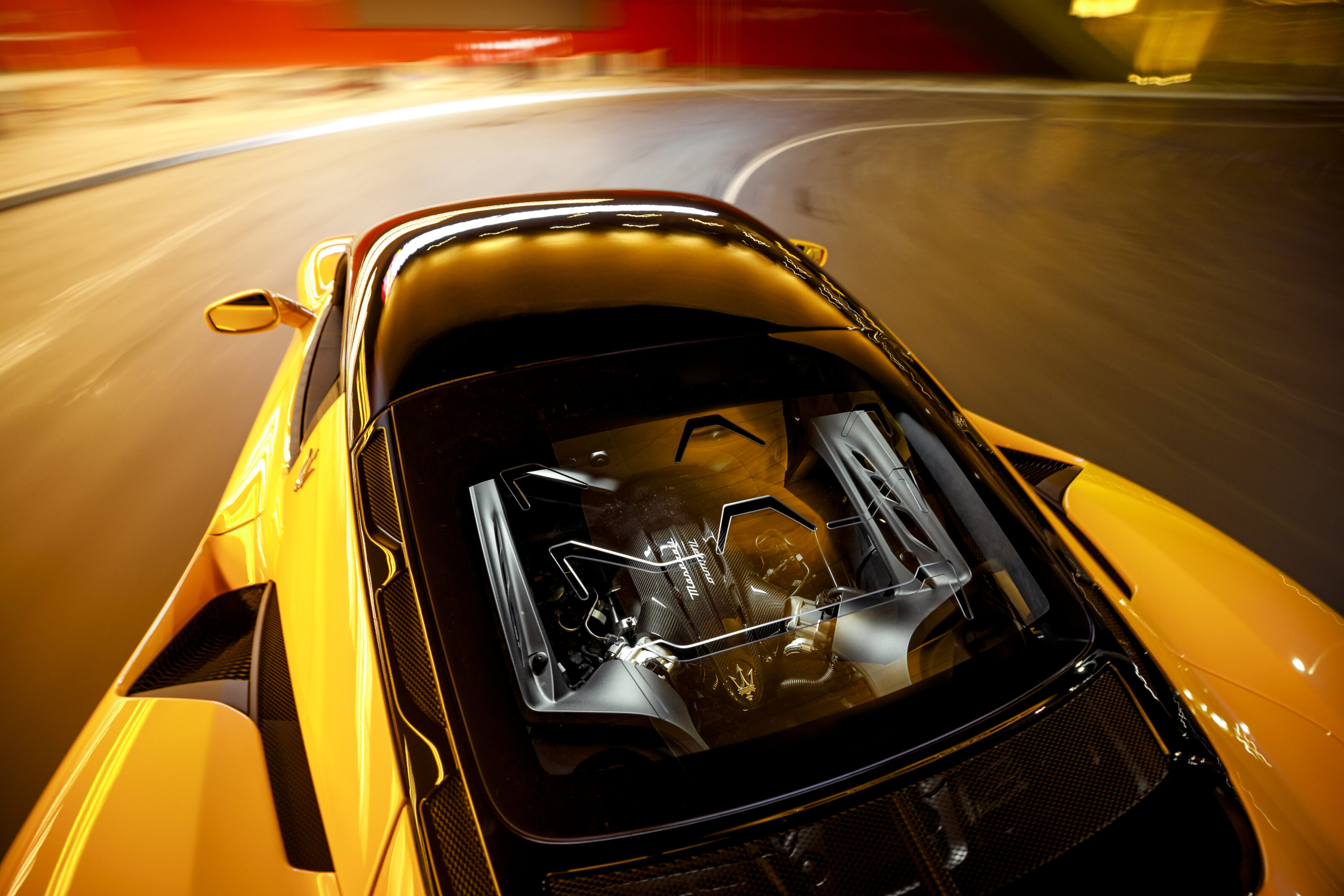
Maserati already stole a home-run with the standard MC20, so improving the breed will provide a considerable if not impossible challenge. First port of call will be the engine. Retaining the oversquare bore and stroke of the standard Nettuno engine means the 3.0-litre capacity remains unchanged. However, the 90-degree V6 engine will gain an extra 800rpm, with the extra rotations required for a 8800rpm redline delivered thanks to lightened crankshaft, conrods and pistons.
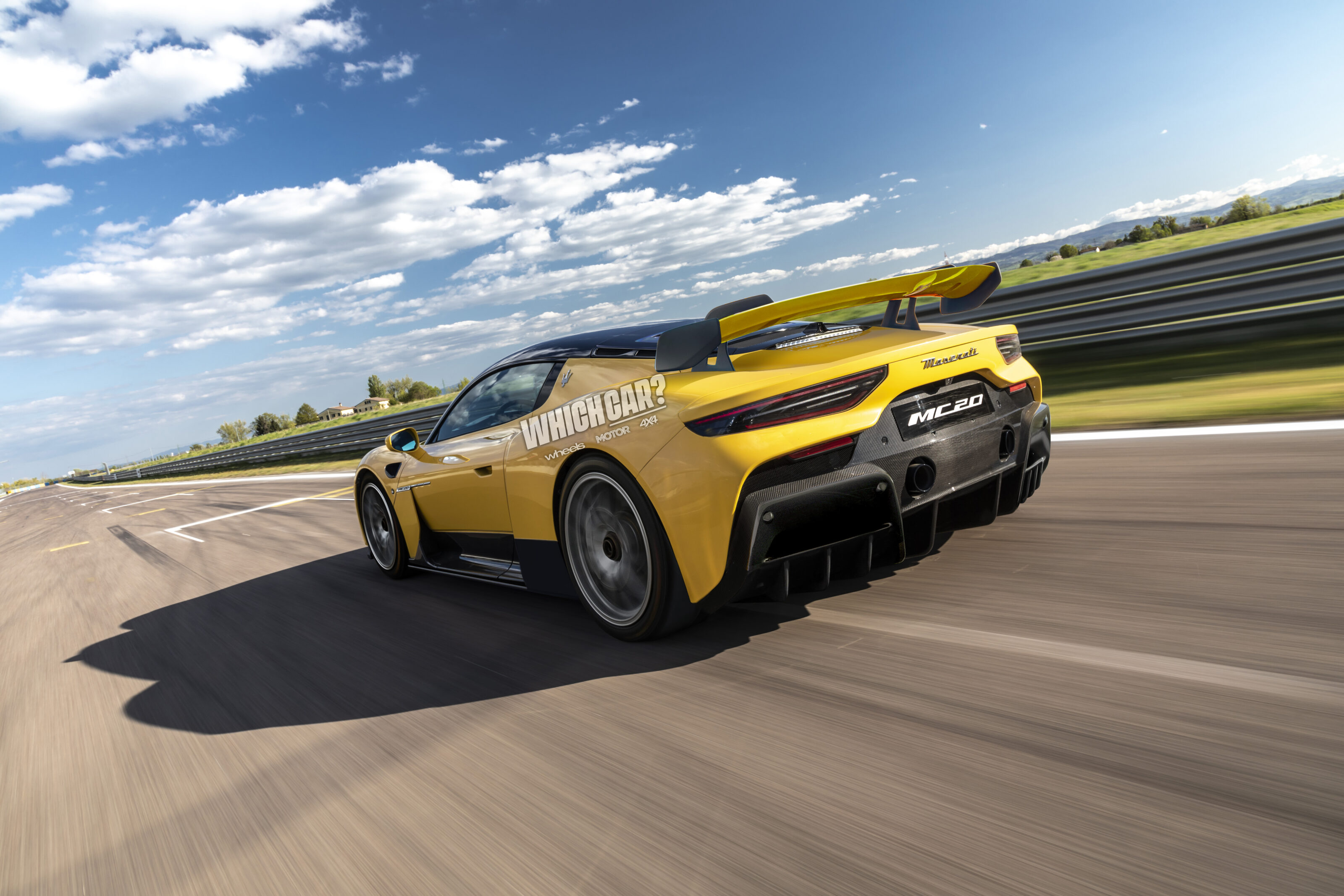
An increase in turbo boost means peak power will lift to 500kW, with outright torque bumping to 750Nm. While the latter isn’t a dramatic increase, the band within which every Newton is transferred to the rear wheels will widen to 2500-5500rpm.
While a power bump is nice, it’s the changes to the mid-engine hero’s dynamic ability that are more drastic. Inspired by GT3 and GT4 racing machinery, the MC20 Trofeo gains significant aerodynamic addenda, with the car producing 400kg of downforce at 200km/h – something not even a Porsche 911 GT3 can match. Variable dampers of the standard model are replaced by manually adjustable Blistein units.
A carbon-fibre monocoque and aluminium subframes don’t leave much scope for weight saving unless you begin pulling the interior to pieces, but Maserati’s engineers are able to cleave 75kg from the kerb weight to tip the scales at 1400kg. Most of the savings come from a reduction in sound deadening, lithium battery, lighter forged wheels and new bucket seats.
This is Maserati’s opportunity to strike while the trident is hot. Read on to discover how we’d make the MC20 Trofeo a reality.
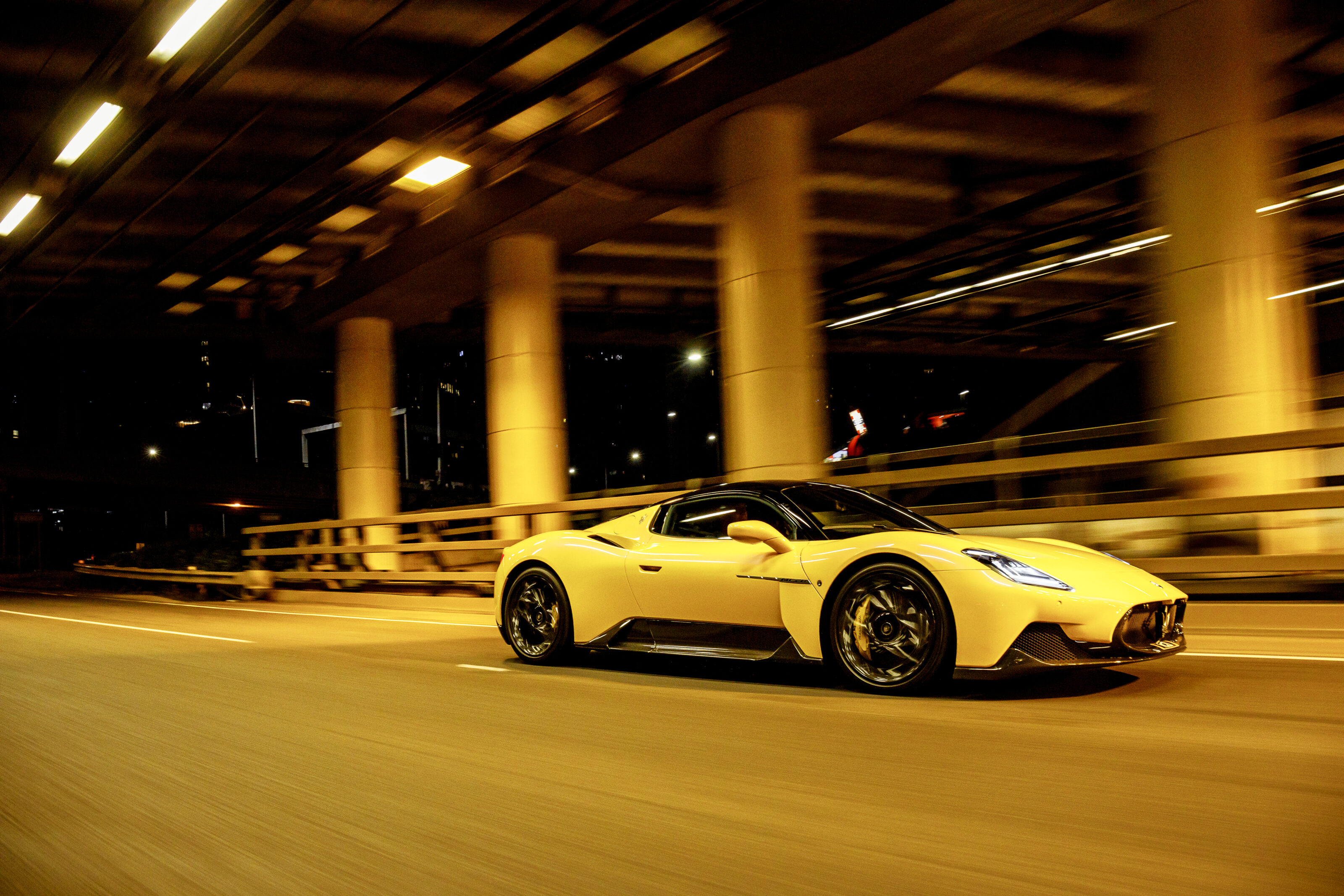
How we’d build it:
Step 1: Fixed back
The full carbon-fibre fixed-back buckets can come with optional Sabelt five-point harnesses. What won’t be optional is seat placement, with the seat locked firmly in position, but the pedal box and wheel gain extra adjustability.
Step 2: Copy book
Lessons learned from international GT racing will help the Maserati stick to the road. Swan-neck rear wing produces more downforce than a regular mount, while a fully flat floor feeds the dramatic rear diffuser. New ducting behind the doors helps keep both the engine and rear brakes cool. That large central duct on the front bonnet isn’t a performance aid, instead helping feed the car’s climate control system.
Step 3: Bigger is better
Going is one thing, stopping is another. The Trofeo’s standard Brembo carbon ceramic brakes (optional on the standard car) will increase 10mm in diameter to 390mm up front, while the rear jumps an additional 20mm to 370mm. Caliper clearance will be taken care of by the new motorsport-inspired rims.
Step 4: Big foot
There is no replacement for mechanical grip when it comes to going fast with confidence. This is achieved in the MC20 Trofeo with a frankly gargantuan rubber footprint. The 20-inch diameter rims at each corner grow considerably in width to 12.5-inches, with 325/30 aspect rubber at all four corners. Pirelli P Zero Trofeo tyres are standard, naturally.
Step 5: Teacher time
MC20 Trofeo customers won’t be unleashed on the world with a potent track weapon without adequate preparation. As a part of the purchase price, owners will be inducted into a driver program that includes regular track days (covered by warranty) and one-on-one professional tutelage at various circuits.
A recent study examining the combined roles of car safety, road quality, and the driver in determining the seriousness of road accidents has highlighted the effectiveness of modern technologies in newer vehicles.
The paper, published by the Centre for Automotive Safety Research at the University of Adelaide, looked at 105 fatal crashes and more than 130 accidents, which resulted in serious injuries, through the lens of a safety model created by the Swedish Road Administration (STA).
The STA model considers a wide range of factors which can contribute to an accident, including: whether the car was travelling at or below the speed limit, whether the driver was intoxicated by alcohol or drugs, if vehicle occupants were wearing a seatbelt, if the car had a EuroNCAP rating of five stars, if the car was equipped with electronic stability control (ESC), and the quality of the road.
Of the fatalities studied, it was found none of them fully complied with the STA model – that is, in no scenario was the driver obeying relevant laws, a five-star grade safe car, and a high-quality road. In only one case resulting in serious injuries were all three factors found.
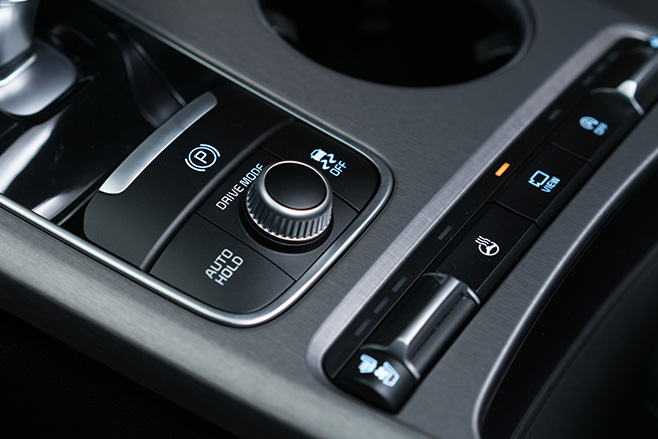
Perhaps more tellingly, only one of the 105 fatal crashes was found to have involved a vehicle fitted with ESC – a now-mandatory safety system for passenger cars, which helps to prevent a driver from losing control and spinning out.
However, as the fatal crash data used in the study was taken from 2010 and 2011, and the serious injury data was from between 2014 and 2017, the average age of the vehicles in this study would be from 2000 to 2007 – well before 2011 when ESC was made a standard feature on passenger cars.
With the current average age of vehicles sitting at 10.6 years old, based on the 2021 Motor Vehicle Census, only now are we reaching the average age where ESC will have been fitted to the majority of vehicles in use on our roads.
According to data from the National Road Safety Strategy, road user deaths have dropped by more than 20 per cent over the past decade, as both passive and active safety technologies have improved.
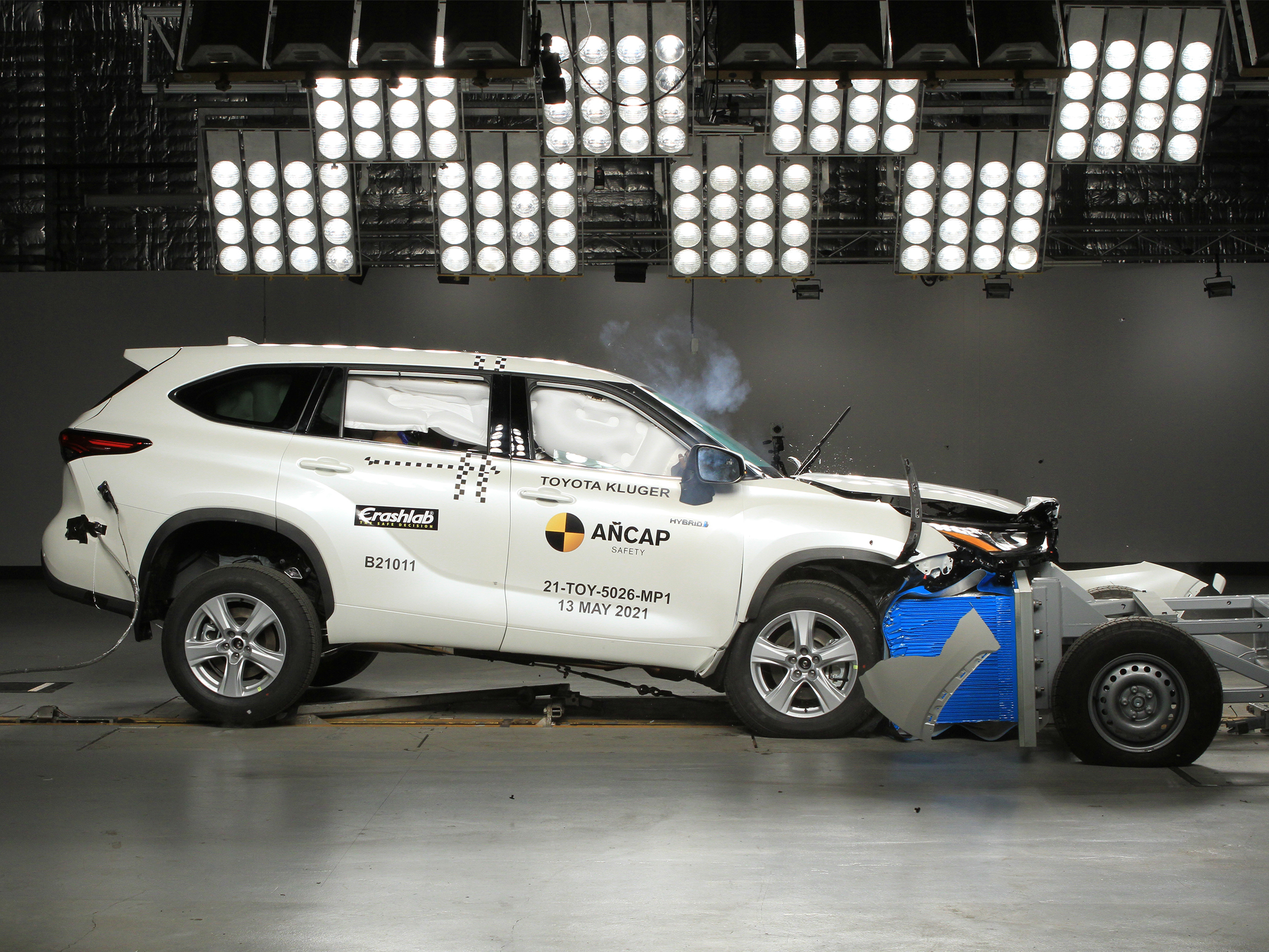
“The safety features, and particularly active safety technologies, fitted to today’s new cars provide their occupants and other road users with the best chance of survival out on the road,” ANCAP CEO Carla Hoorweg told WhichCar.
“Two active safety technologies ANCAP has been encouraging for some time are Autonomous Emergency Braking (AEB) and active Lane Support Systems (LSS), and each of these have been shown to reduce the risk of fatal crashes by around 30 per cent,” she said.
“It’s very important that new car buyers are aware of the safety benefits that come with today’s newer vehicles as the presence of these systems can mean the difference between whether you are involved in a crash or not.”
While the active safety systems in newer cars, endorsed by ANCAP, can prevent or reduce the severity of an accident – the study from the Centre for Automotive Safety Research also shows a sober, rested, and attentive driver, together with a high-quality roadway, can also contribute to lower fatalities and serious injuries.
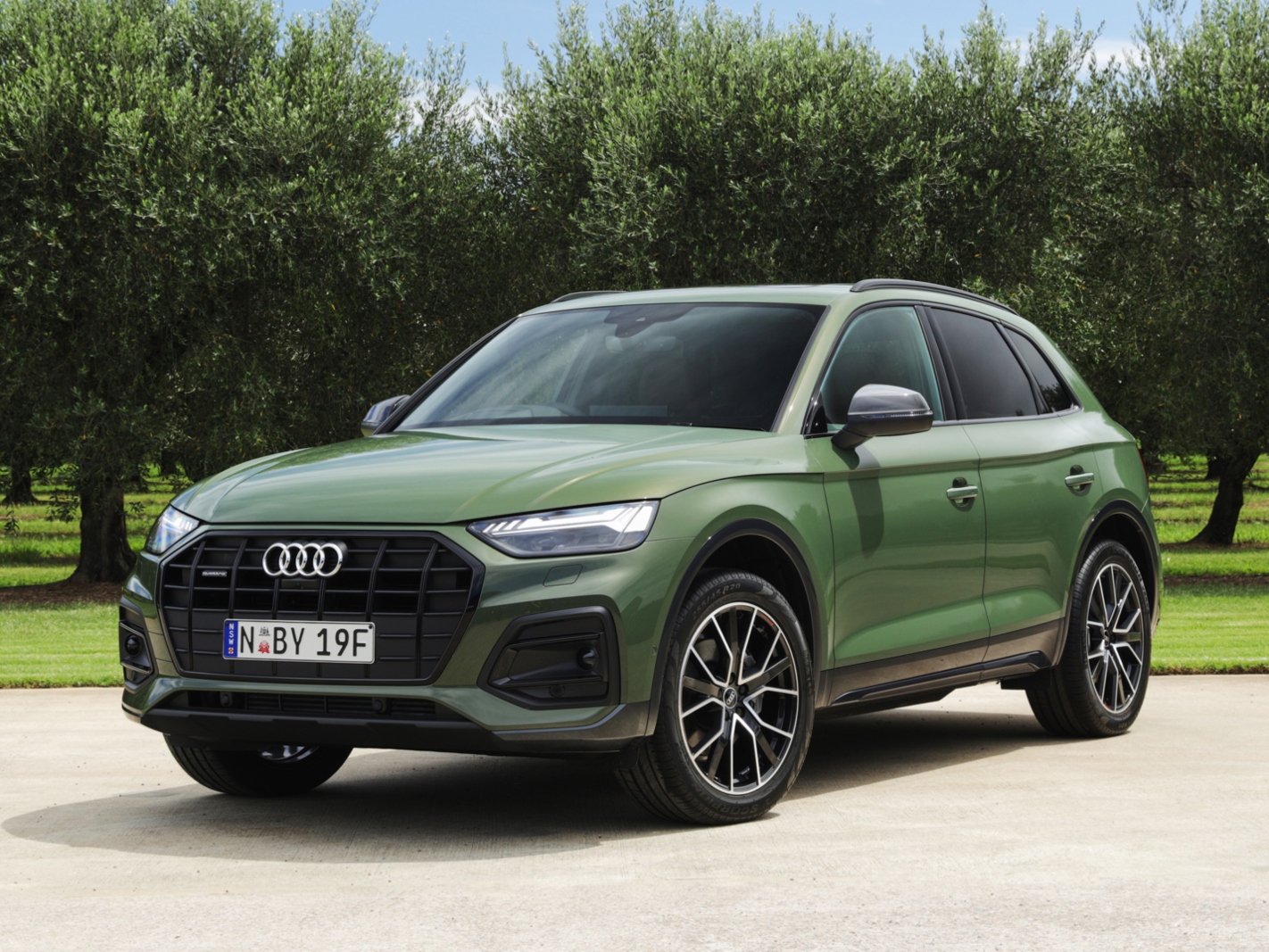
Audi Australia is recalling more than 18,000 examples of its Q5 SUV over fears even a small amount of liquid leaking onto the rear seats could cause a serious electronic failure.
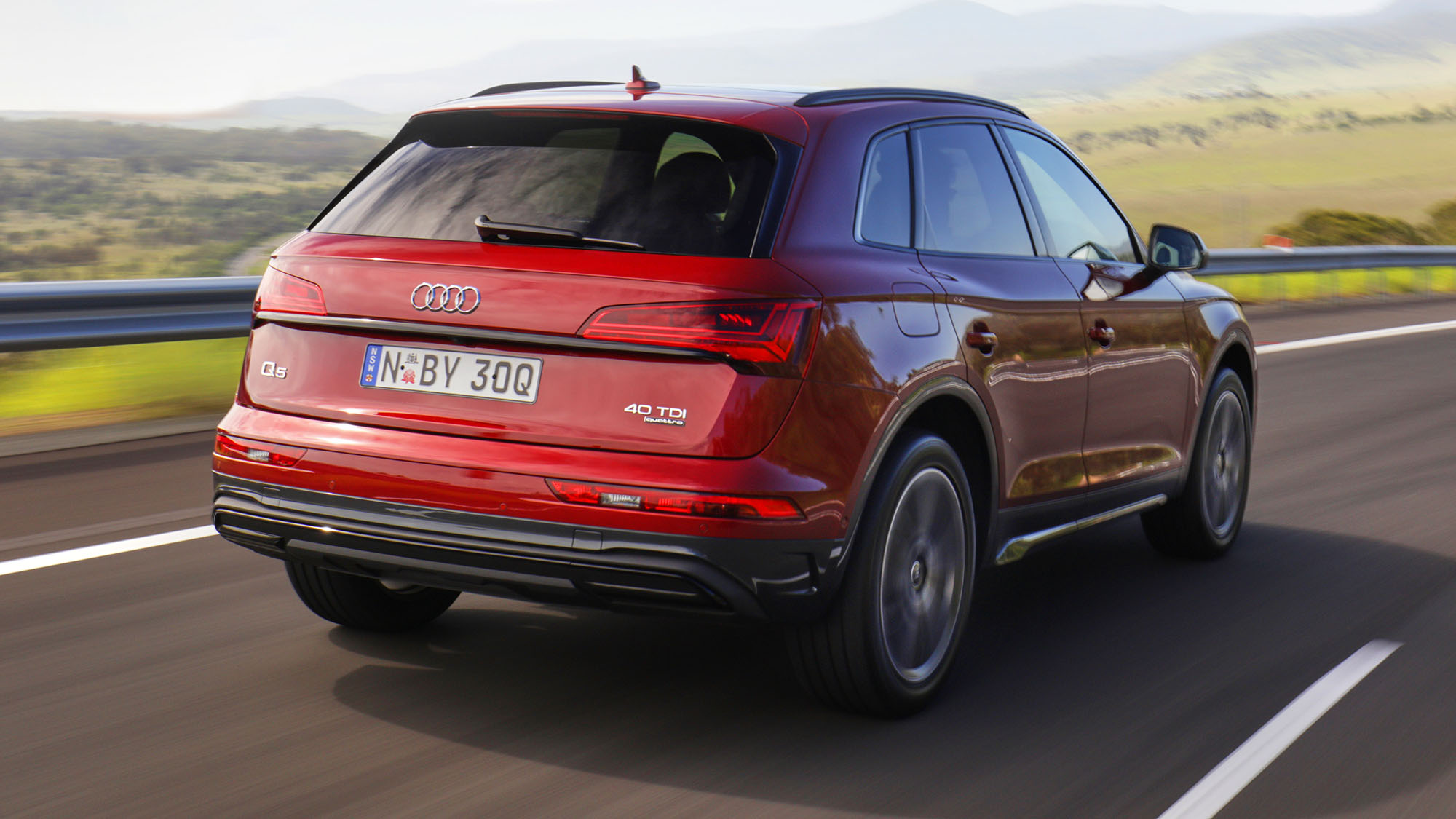
The issue affects 18,186 Q5s built between 2016 and 2021.
According to the Department for Infrastructure, due to its installation position, if there is liquid or liquid droplets spilt on the rear seat bench the central electronic control data network management unit may become damaged and fail.
This could have a variety of effects and restrict functions such as:
- Engine – The engine enters emergency running mode and continues running with reduced performance
- Gearbox – The automatic gearbox interrupts the power flow in the drive train
- Steering – The steering reduces the steering assistance in stages; it may therefore be necessary to use more force to turn the steering wheel as the vehicle slows down.
If this happens, it is feared it could increase the risk of an accident, causing serious injury or death to vehicle occupants, other road users and bystanders.
A list of VINs for affected vehicles is available here.
Owners are advised to contact their local authorised Audi dealer to make an appointment to have the work carried out free of charge. Alternatively, for more information call 1800 502 834 or email [email protected]
As the MOTOR team traverses the world wide web, it’s not just cars that catch our eyes and make us dream. From house decor to garage equipment, here are the ten coolest products we’ve been lusting over lately.
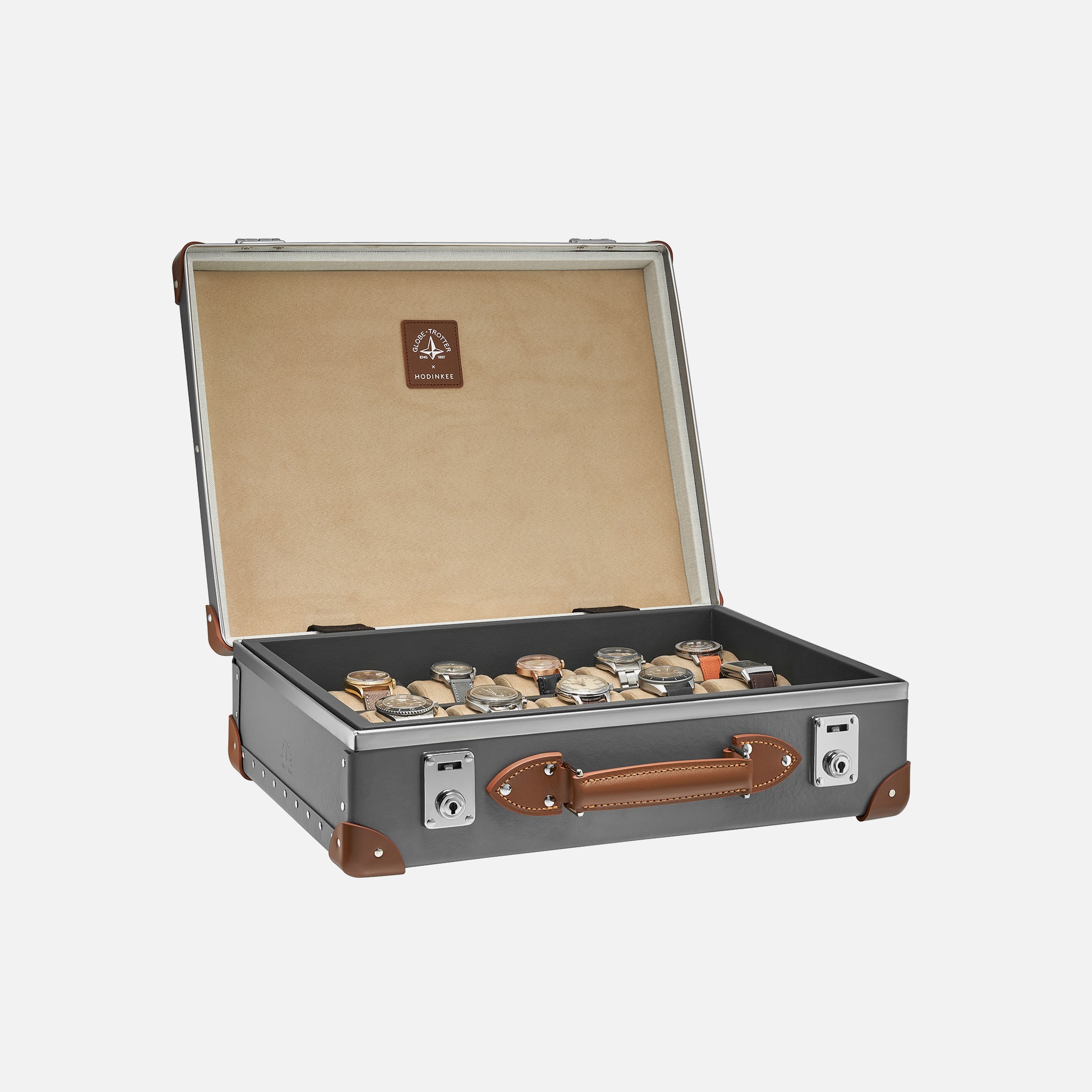
1. Globe-Trotter x Hodinkee 10-watch Attaché – $2640 – shop.hodinkee.com
Handmade British luggage, used by the likes of The Queen and James Bond, create limited edition 10-watch carry case in collaboration with premiere horology website, Hodinkee.
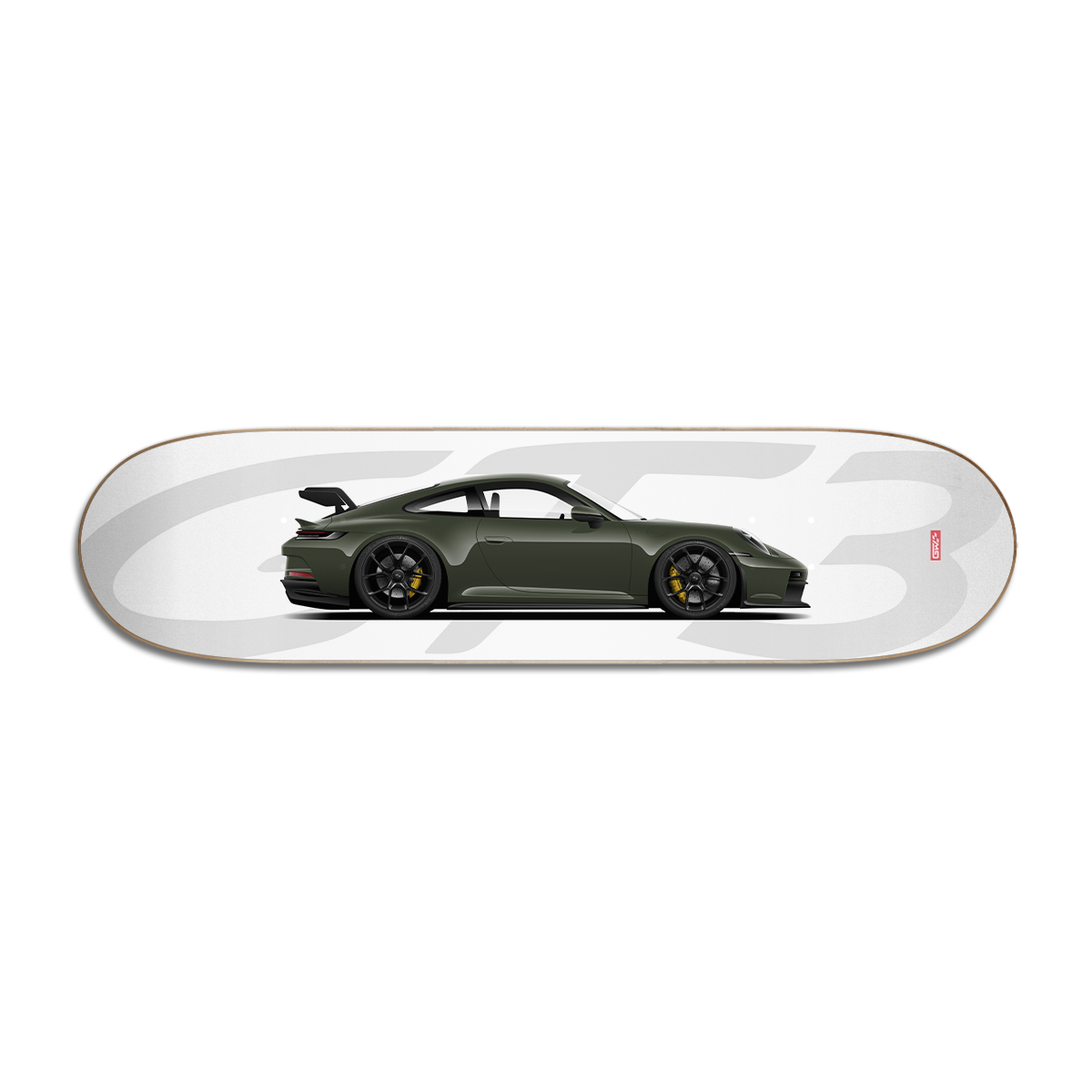
2. GarageWelt Nato 992 Skateboard Deck – $98 – garagewelt.com
Skate and destroy, or hang and admire: GarageWelt’s line of art decks make for striking office or garage decor and are made of 7-ply maple.
3. Parc Fermé ‘Round and Round’ Hoodie – $154 – shopparcferme.com
New Canadian streetwear label sees vintage motorsport and modern style collide. Their first capsule release is out now.

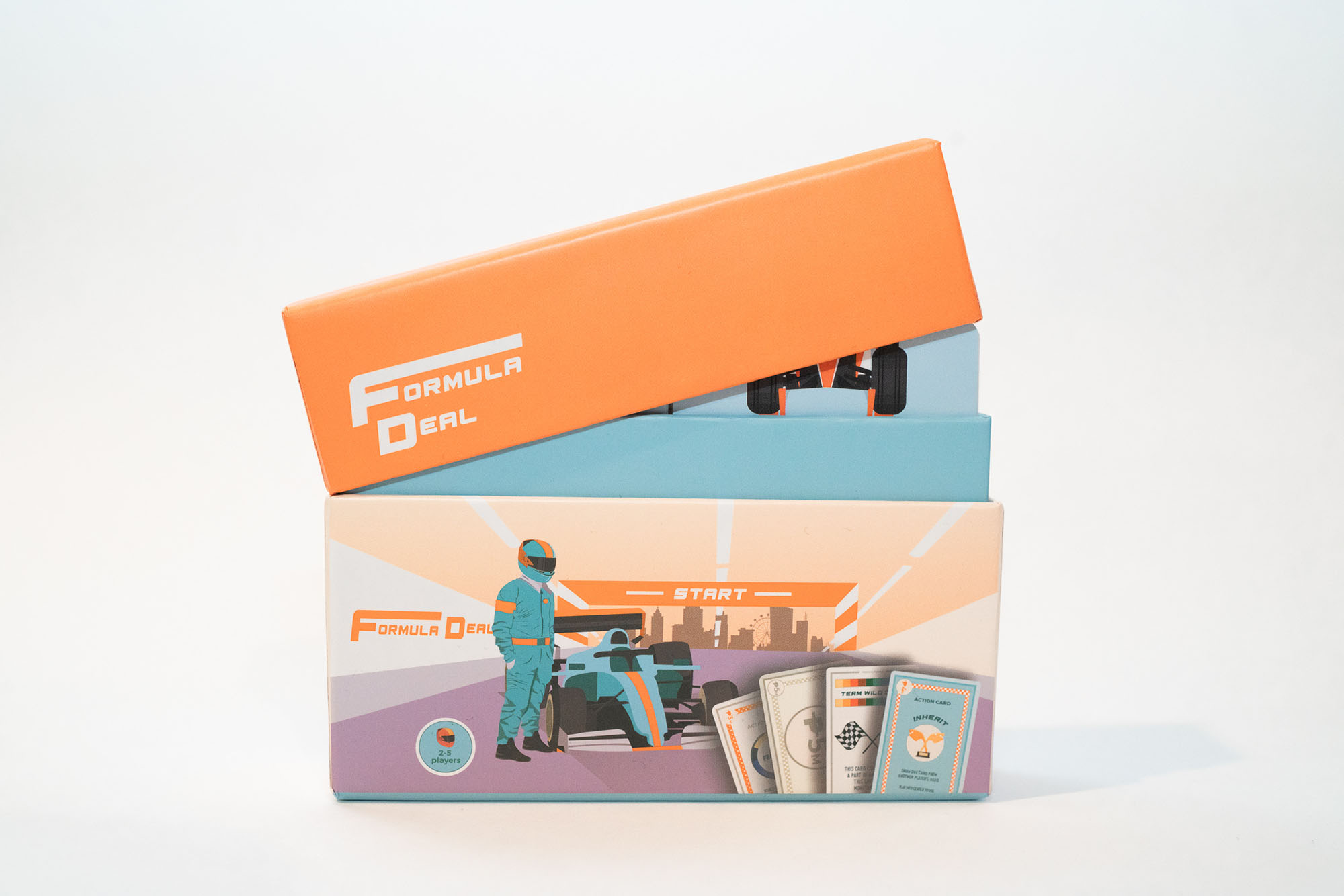
4. Formula Deal Card Game – $49 – yearsinprint.com
Is your games night missing some automotive action? The first ever racing-inspired card game sees you and your friends race to collect teams and finish in the winning circle. Comes in sturdy display-worthy box.
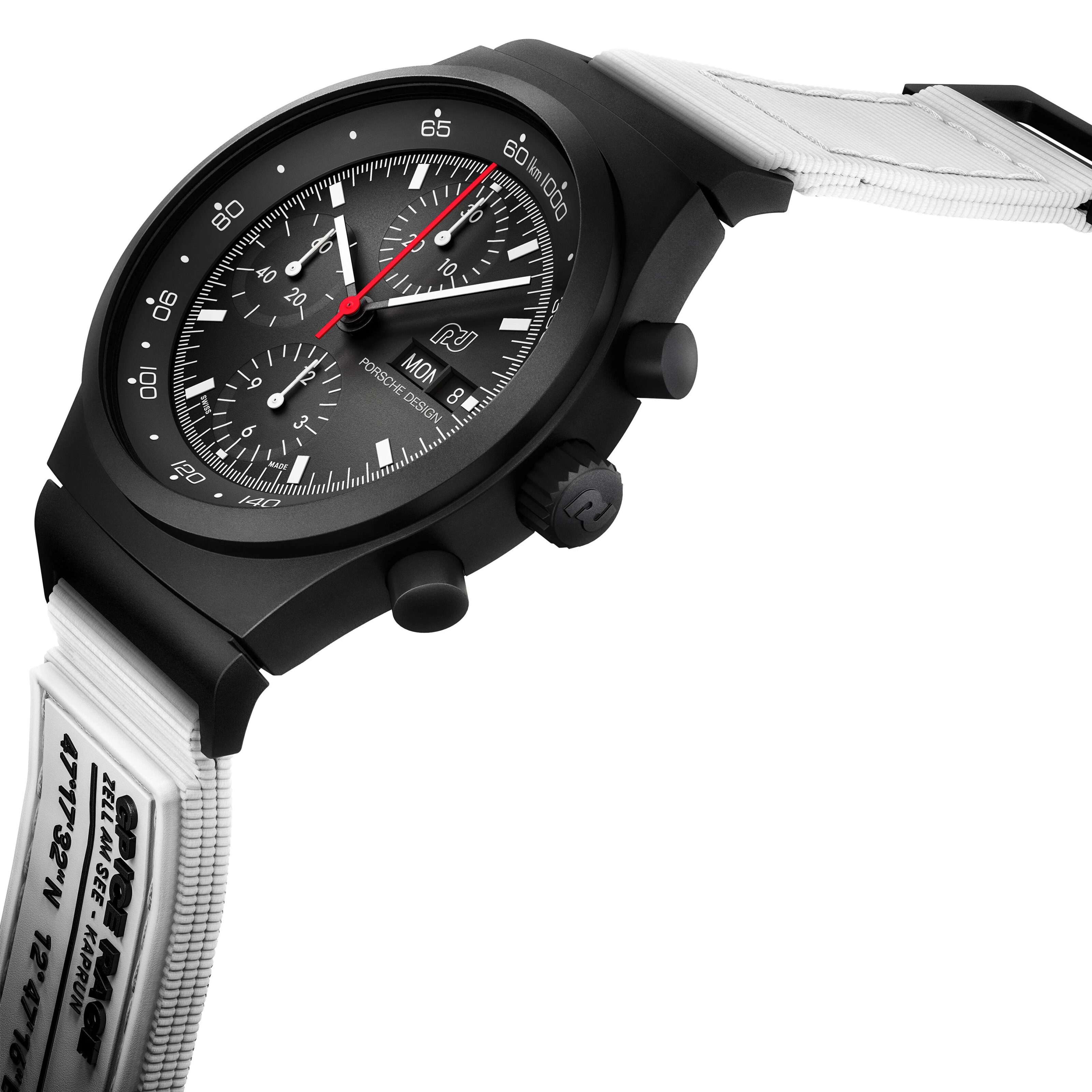
5. Porsche Design Chronograph 1 GP Edition 2022 – $11,000 – porsche-design.com
40mm Chronograph watch from Porsche Design was created with Ferdinand Porsche to celebrate this year’s 2022 GP Ice Race. Features an in-house caliber with 48 hours of power reserve and is limited to 50 pieces globally.
Track Pack
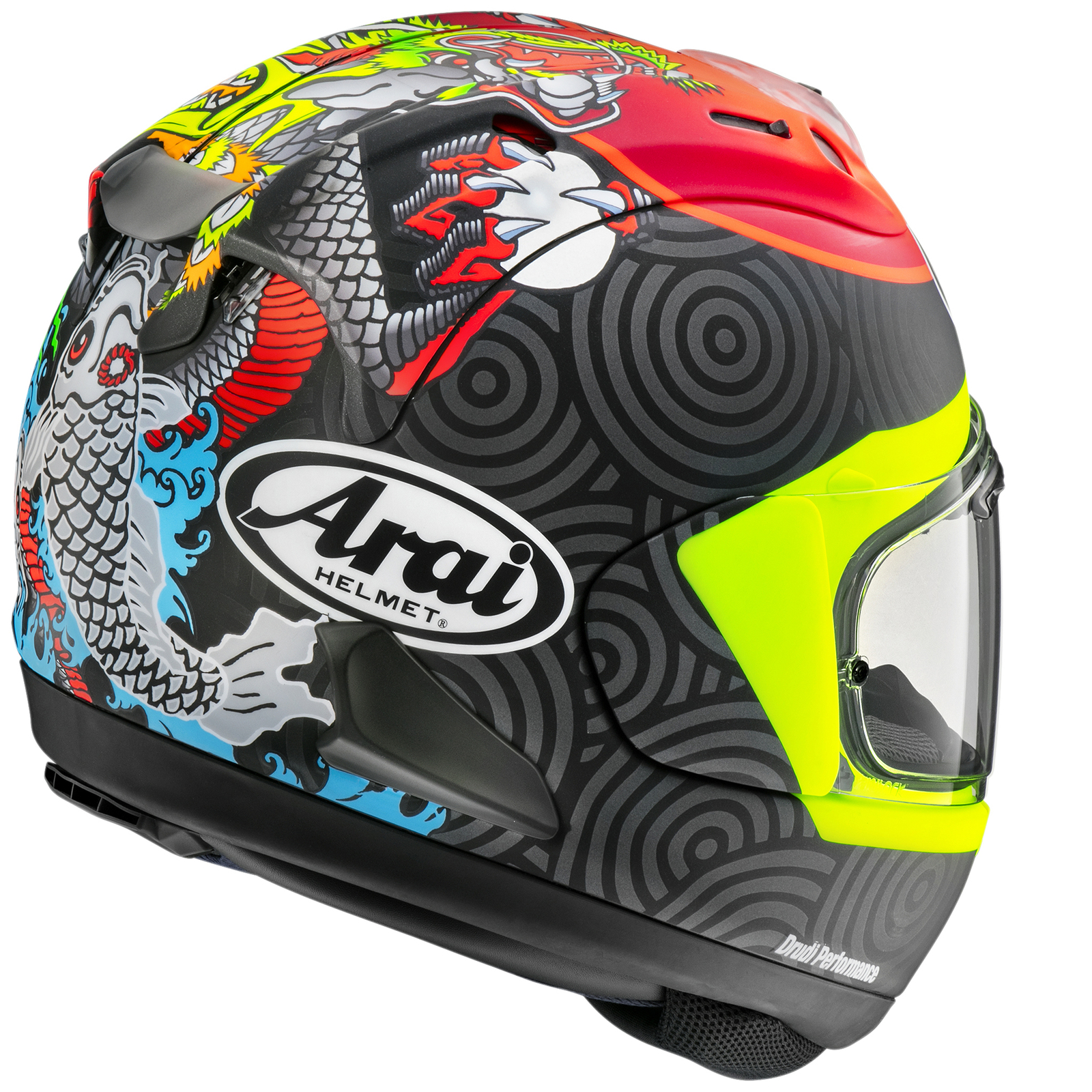
6. Arai RX-7V Tatsuki Helmet – $1175 – championhelmets.com
Designed for Moto3 rider Tatsuki Suzuki, Arai’s colourful RX-7V helmet comes with Snell Certification, strong PB-SNC2 shell construction, revised liners and air channels and a five-year warranty. Will turn heads and protect your own.
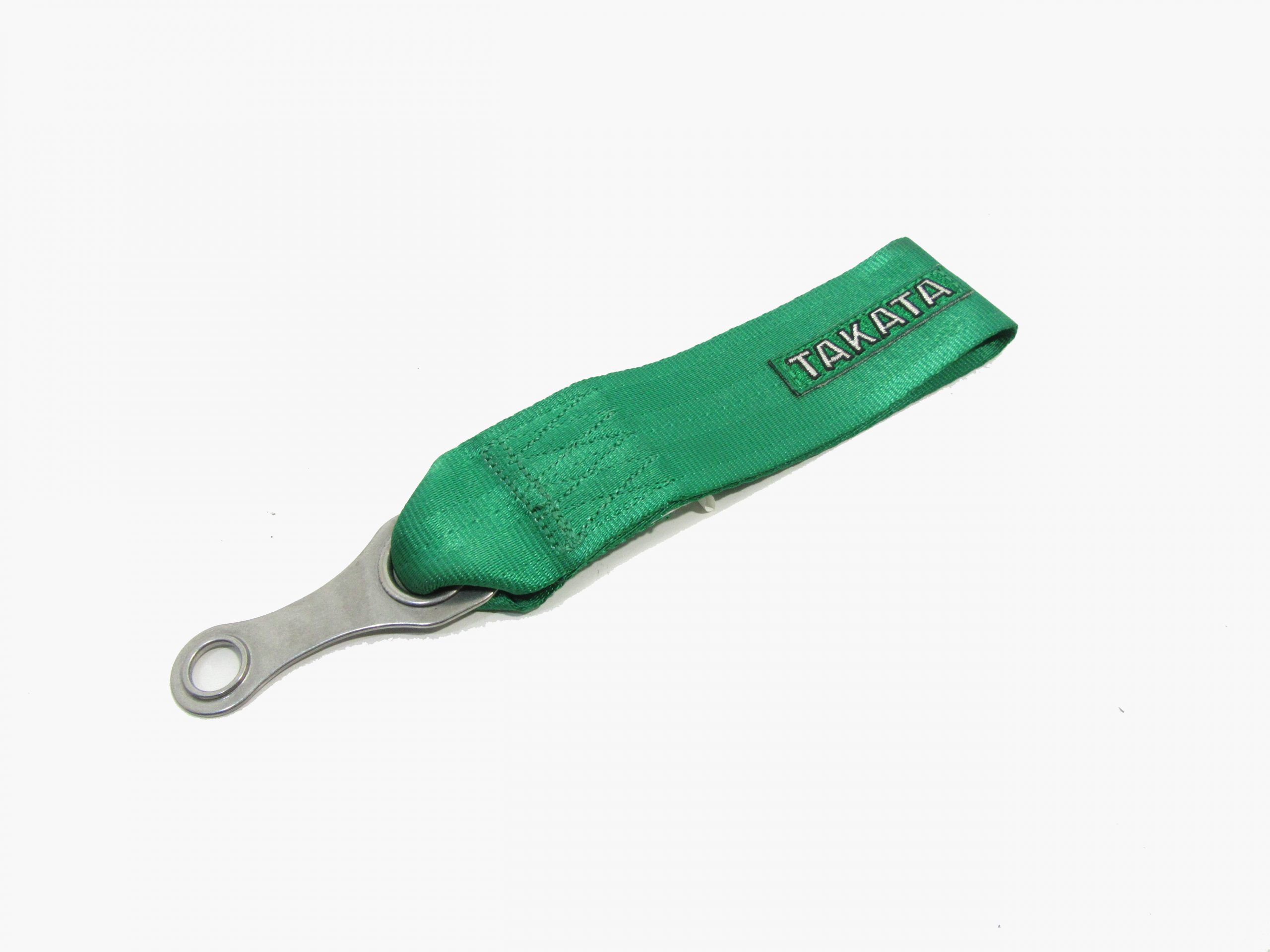
7. Takata Tow Strap – $44 – racerindustries.com.au
OEM metal tow hooks, while looking cool, can turn a minor parking prangi nto something much more serious. Get flexible with these 1800kg-rated tow straps.
8. Alpinestars ZX Top Evo V2 – $210 – revolutionracegear.com.au
While full suits aren’t necessary for grassroots days, undershirts provide added fire-protection while helping regulate body temps and sweat.

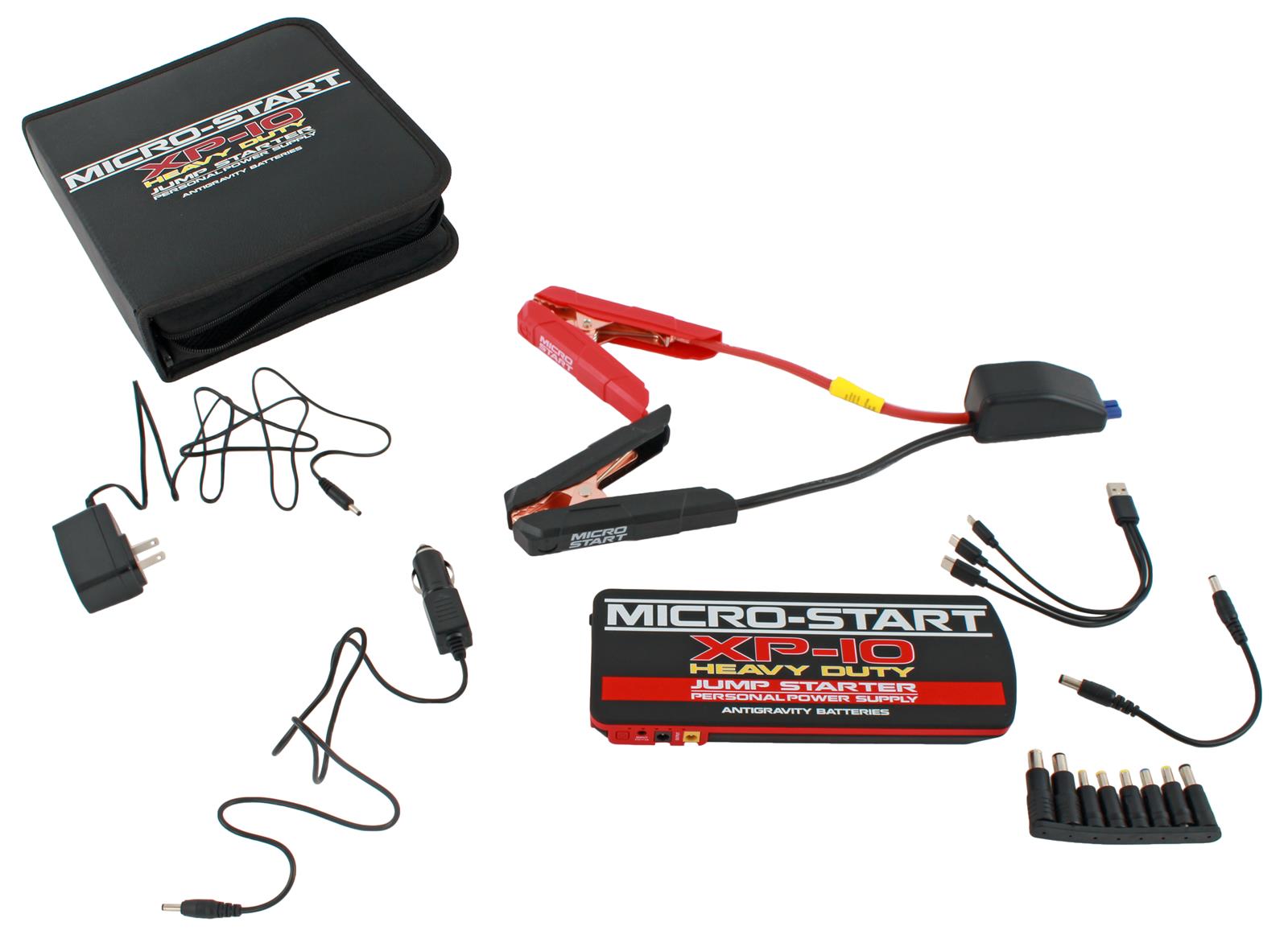
9. Antigravity Batteries XP-10 Micro Start – $200 – antigravitybatteries.com
Don’t get caught without this small but mighty portable jumper pack. Offers up to 600A peak with 18,000mAh capacity.
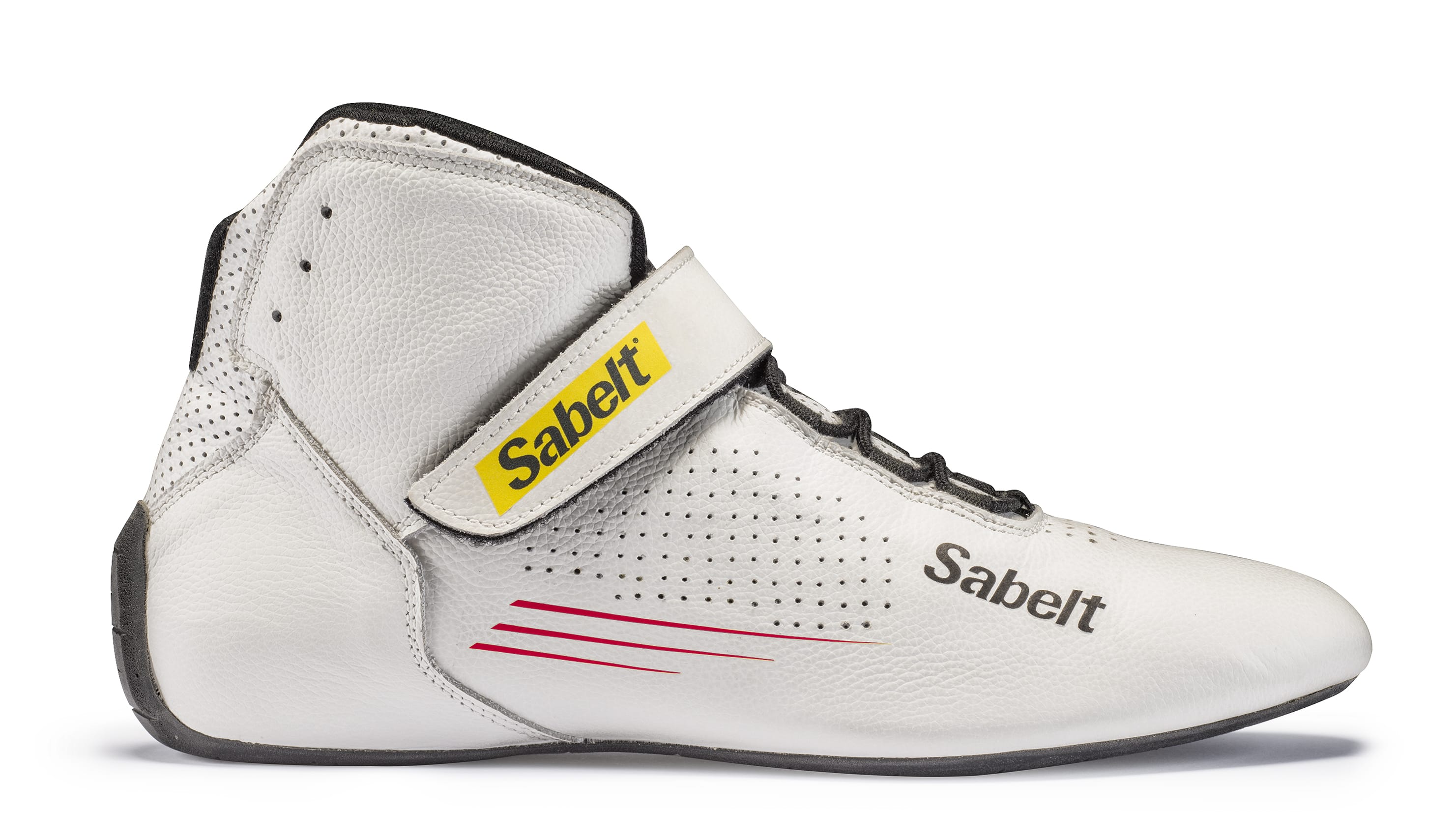
Ten. Sabelt Hero TB-9 FIA Race Boot – $299 – vsport.com.au
Mid-cut boot offers safety, comfort and function with lightweight leather uppers, Nomex interior and ultrathin sole. FIA 8856-2000 homologated.
If you want a supercar that straddles the lines between exotic, sophisticated, and pragmatic, the main option you once had in Australia is on the way out. If you can still find an Audi R8 in a showroom by the time you read this, it’ll be one of the last. But it’s not for a lack of success. The R8 wasn’t a sales giant here, but nor was it by any means a failure.
Worldwide, more than 40,000 Audi R8s were sold by the end of 2020. Australia makes up a modest – but not unusual for our market – portion of just under 1.7 percent. But as an exercise in image building and a showcase of engineering, the R8 was an unequivocal winner for Audi.
The 2003 Audi Le Mans quattro concept came as a surprise to many. Put together in relative secret by a handful of designers and engineers in a skunkworks team, the striking two-seater aimed to show that the premium brand could build something truly exciting.
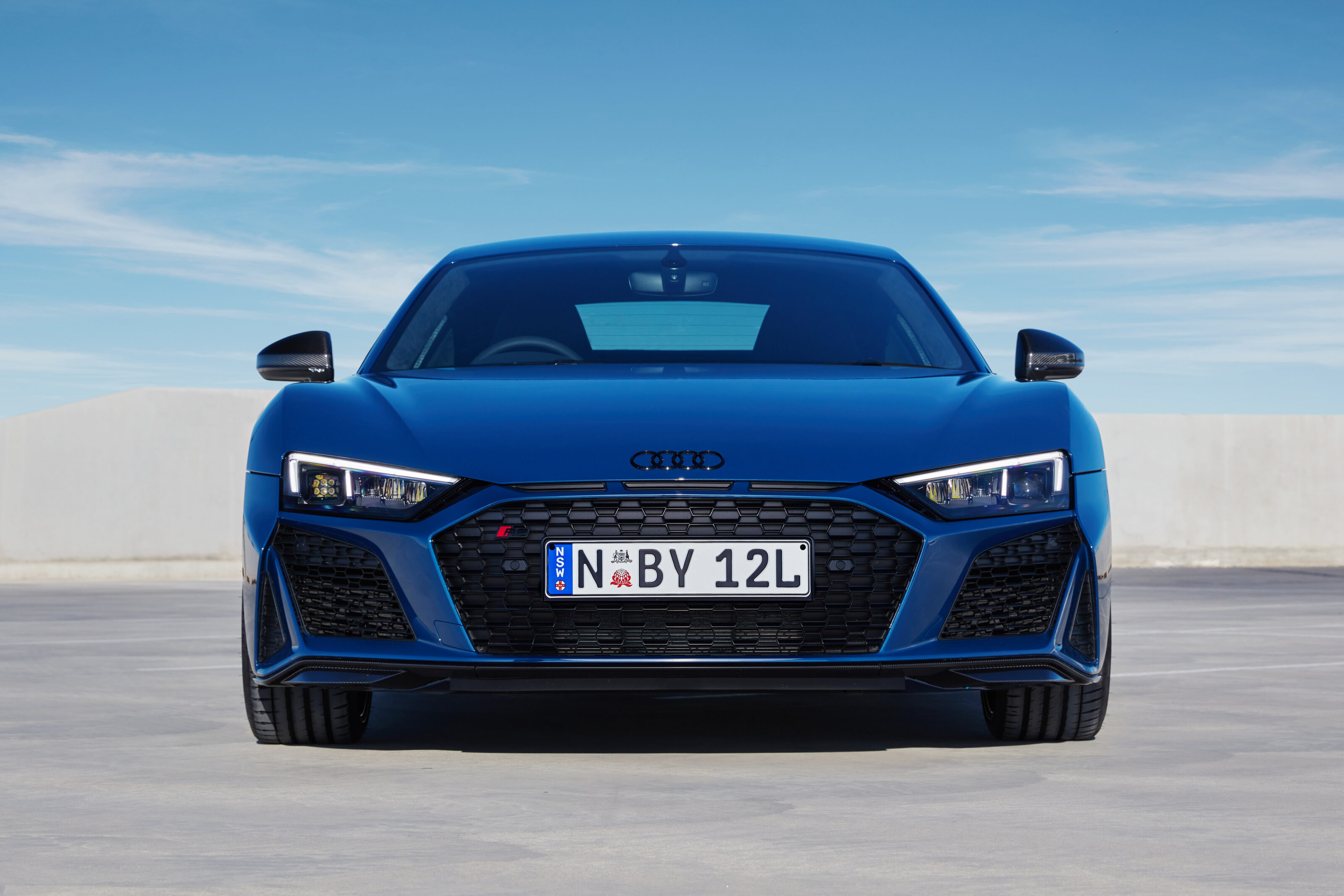
Of course, in 2006, the R8 debuted with a dry-sumped, 309kW version of the RS4’s 4.2-litre V8, while its cousin, the Lamborghini Gallardo, remained the true V10 exotic. R8 buyers were offered a choice of gated six-speed manual or an R-tronic robotised ‘manual’. Extensive use of aluminium for the spaceframe chassis, double-wishbone suspension and body panels kept the weight – despite mandatory all-wheel drive – relatively light.
In 2009, the 5.2-litre V10 from the Gallardo found its way into the R8, bringing 386kW, and transforming it from mid-engined sports car to true supercar. The convertible Spyder came in 2010, available with either engine, widening the car’s appeal, especially in the US.
Five years later, the second-generation R8 (model 4S, taking over from 42) debuted and ditched the V8 altogether, and brought a sharpened, more aggressive interpretation of the original’s exterior design. Carbonfibre would be incorporated into the spaceframe structure to help contain overall weight.
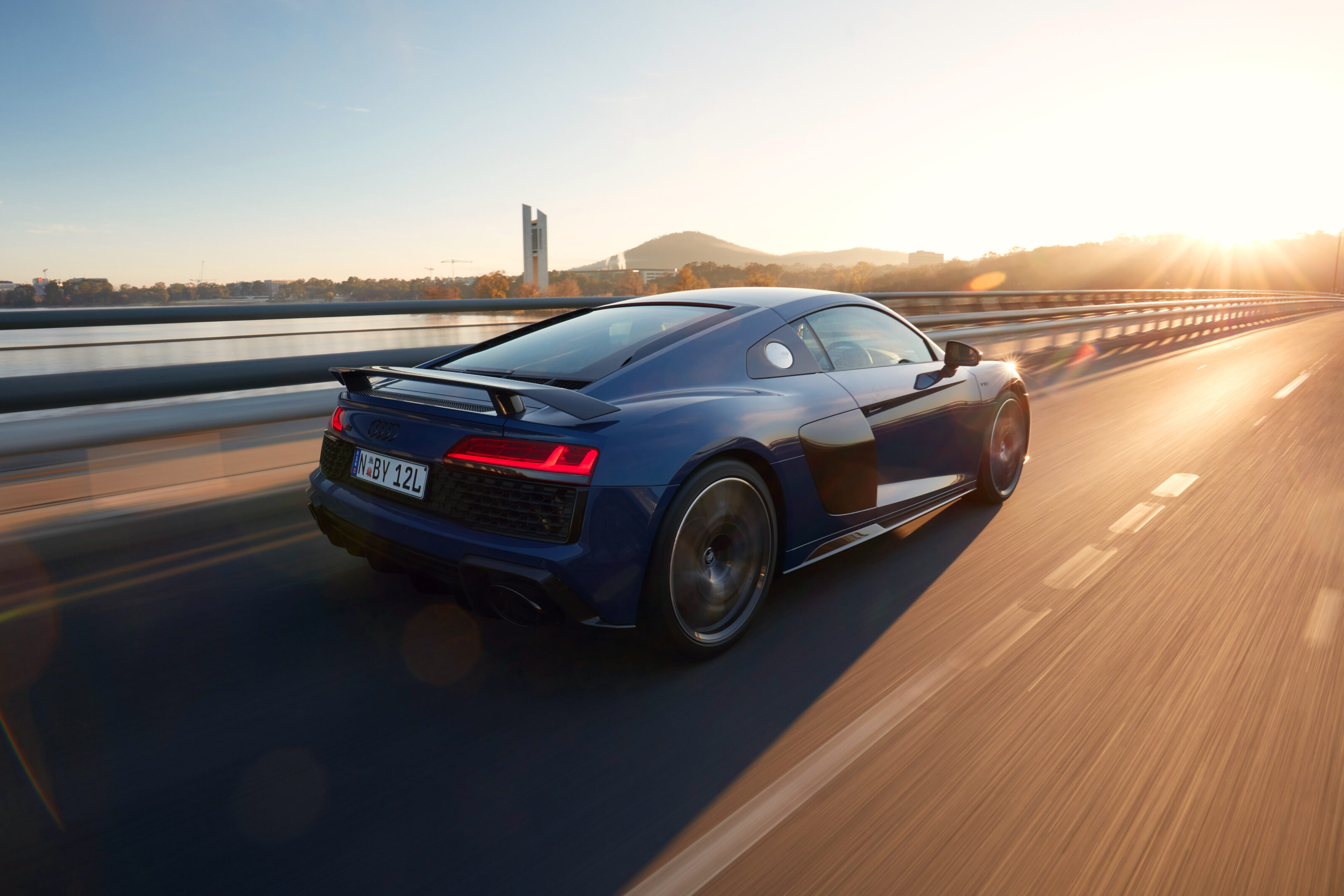
It was around this time that Audi also dropped a few hundred million Euro on its Böllinger Höfe facility to build the R8 to the highest standard possible. For years, human hands have been a highly important part of the construction process, with robots doing the more finicky or strenuous tasks. But for Australia, the fruits of that labour are now out of reach.
In Hungary, where the V10 for the R8 is built, it’s been decided that the Australian specification of the engine, sans petrol particulate filter, will no longer be produced. These engines leave the factory slightly down on power to accommodate the lack of PPF, but the required difference in tune is apparently no longer worth the financial burden, small as it might be.
The R8’s cousin from Italy, the Huracan, will still be available here as Lamborghini continues to bring to Australia just about every model it creates. For Audi, the next time a car like the R8 arrives in Australia, it’s not likely to have 10, or eight… or any cylinders at all.
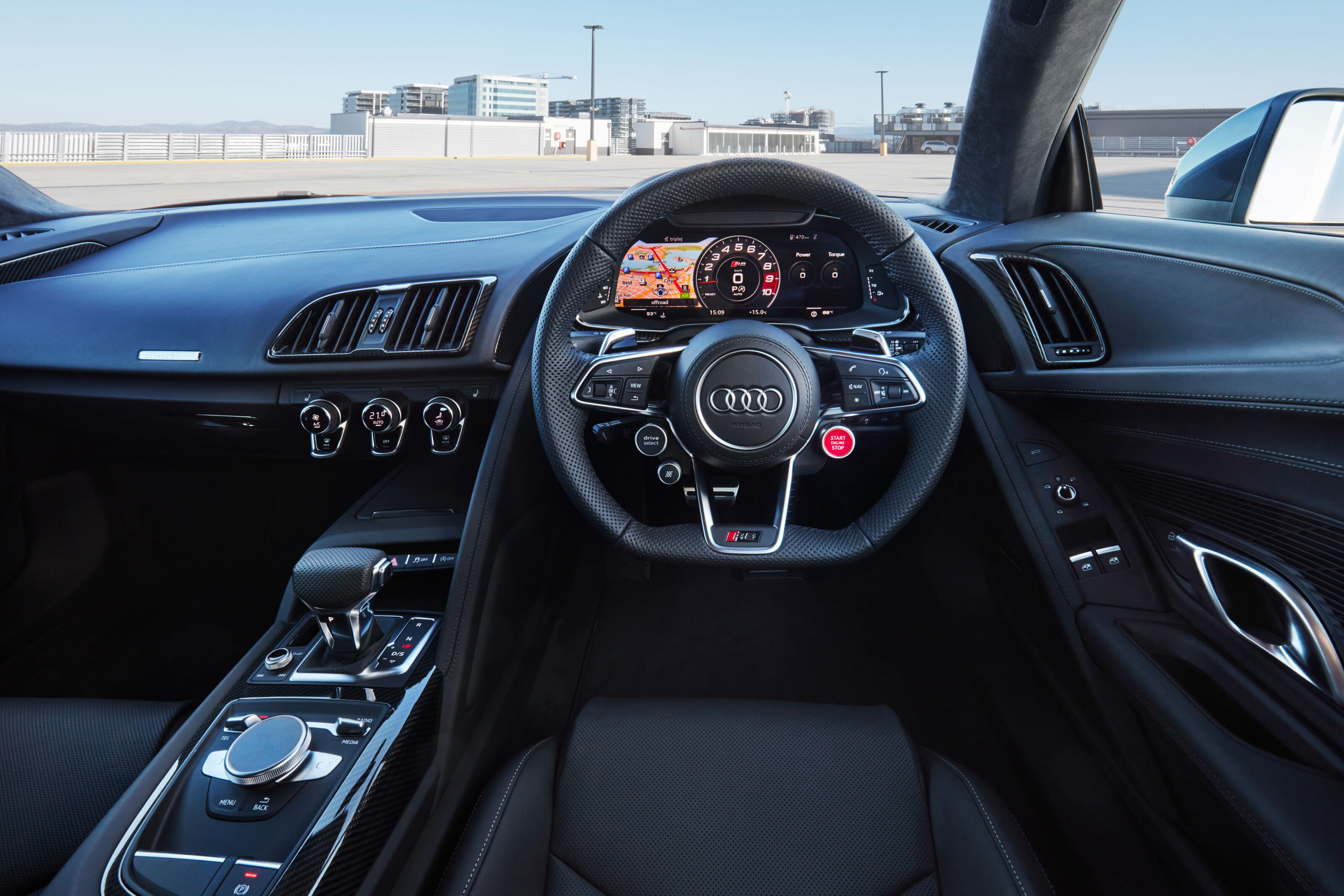
Audi R8 Aussie sales
Audi is looking to take in-car entertainment to the next dimension, with virtual reality set to be rolled out in certain vehicles as early as this year.
Developed in conjunction with tech start-up holoride, the system will allow passengers in the back seat of certain Audi models to put on VR glasses and be immersed in the virtual world – whether it be through video games, films and interactive content.
The holoride system was first launched at the 2019 Consumer Electronics Show, showcasing the technology’s capabilities by allowing vehicle passengers to play a Marvel Universe game, made in co-operation with Disney Games and Interactive Experiences.

Having been shown off in Germany at last year’s IAA Mobility Show in Munich, it has been recently implemented in an Audi E-Tron at the Salzburg Festival, with users travelling around the town to search for a young Mozart.
Unlike most VR headsets, which require the use of cables to establish and maintain a connection, holoride’s system is connected wirelessly via Bluetooth Low Energy (BLE).
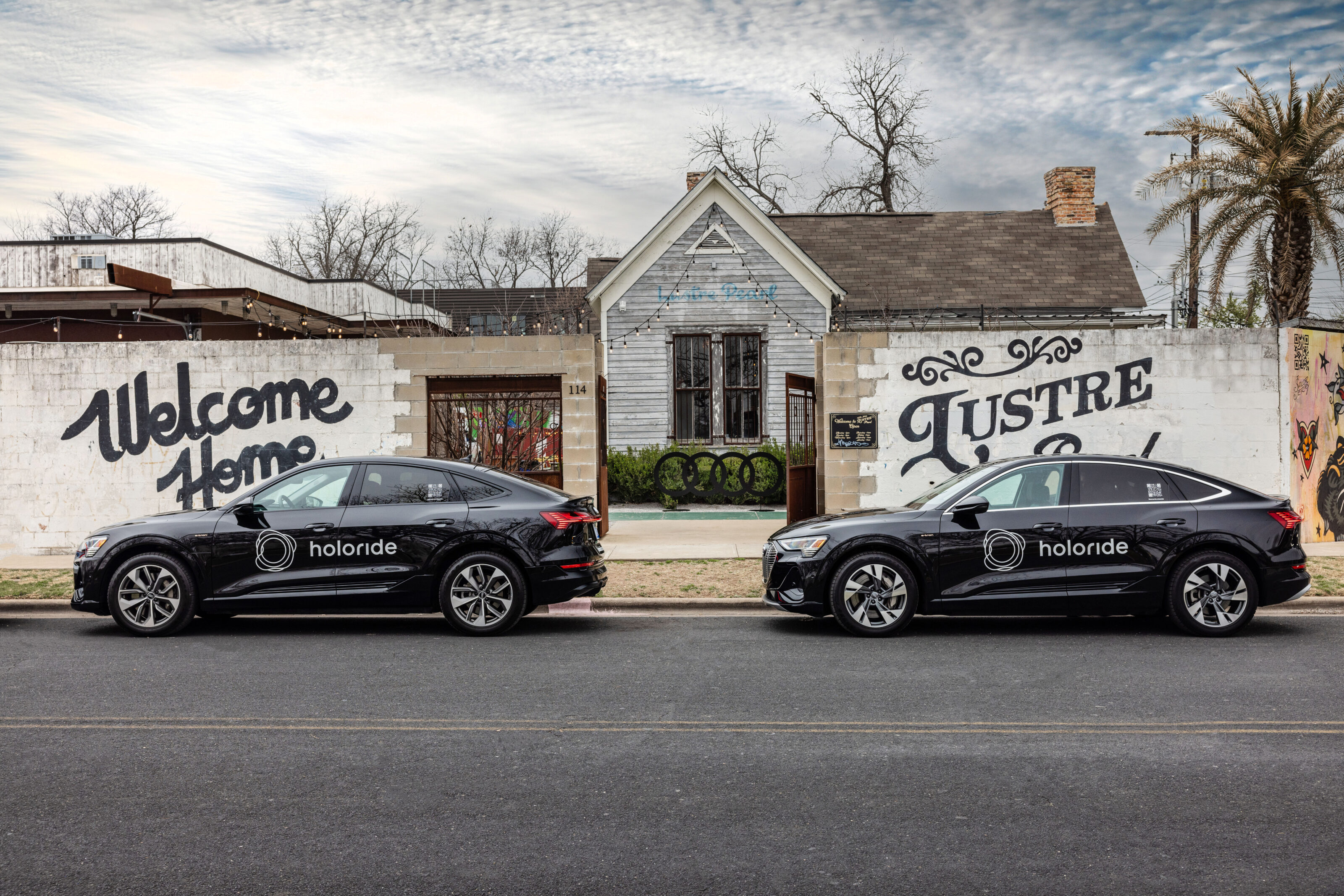
Set to be introduced to the public at this year’s South by Southwest (SXSW) festival in Austin, Texas, the system will become compatible with all new Audi models to roll off the production line from June 2022.
Audi will also provide an update for all models fitted with its MIB 3 infotainment system to allow them to connect to holoride, covering the A4, A5, A6, A7, A8, Q5, Q7, Q8, E-Tron and E-Tron GT Quattro.
Updates will be made available for customers in Europe, North America, Japan and China before it is rolled out worldwide.
Launched in 2019, British online auction house Collecting Cars have rapidly expanded to their operation across the globe, including right here in Australia.
The latest addition to their auction schedule is Supercar Sunday, which does exactly what it says on the tin. The auctioneers handpick a bunch of supercars from all over the world, with the auction wrapping up on Sunday 20 March.
With 42 supercars lining up for this very first Supercar Sunday, we decided to cherry-pick our favourites for your enjoyment.
All the top bid figures quoted are accurate at the time writing and don’t account for any buyers premiums or fees.
Our first victim is this 1992 Ferrari 512 TR, which is currently owned by Top Gear host and renowned motoring journalist Chris Harris.
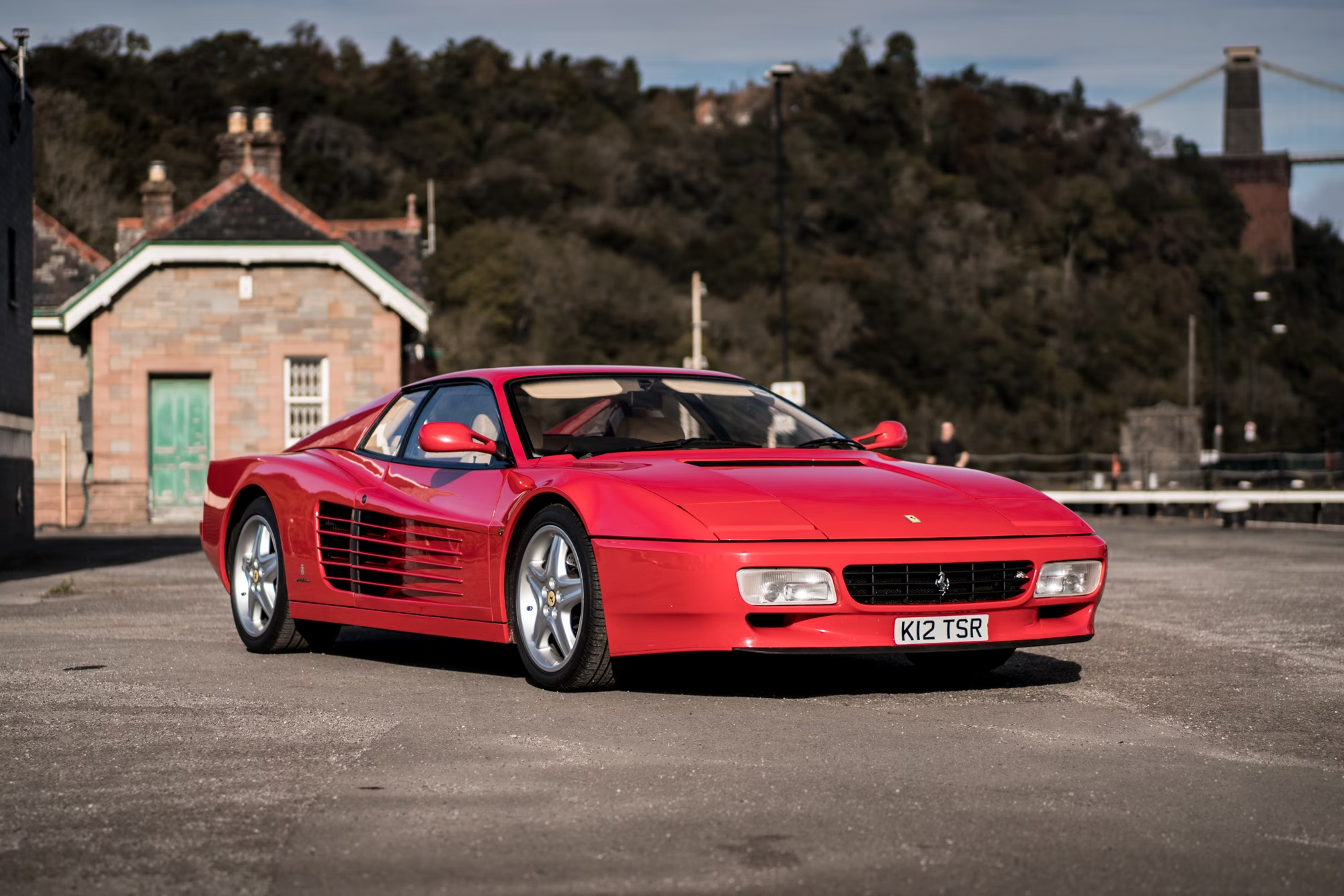
In the advert Chris describes the car as ‘not quite perfect, but plenty good enough’. The car has 66,000 miles on the clock and being a RHD 512 TR makes it a bit of a rare bird. The car is located in the UK, with bidding at £81,000 (AU$144,190).
Just saying ‘Lamborghini Diablo’ and hearing the way it rolls off of your tongue makes you want to own one, and that’s before you even lay eyes on the damn thing.
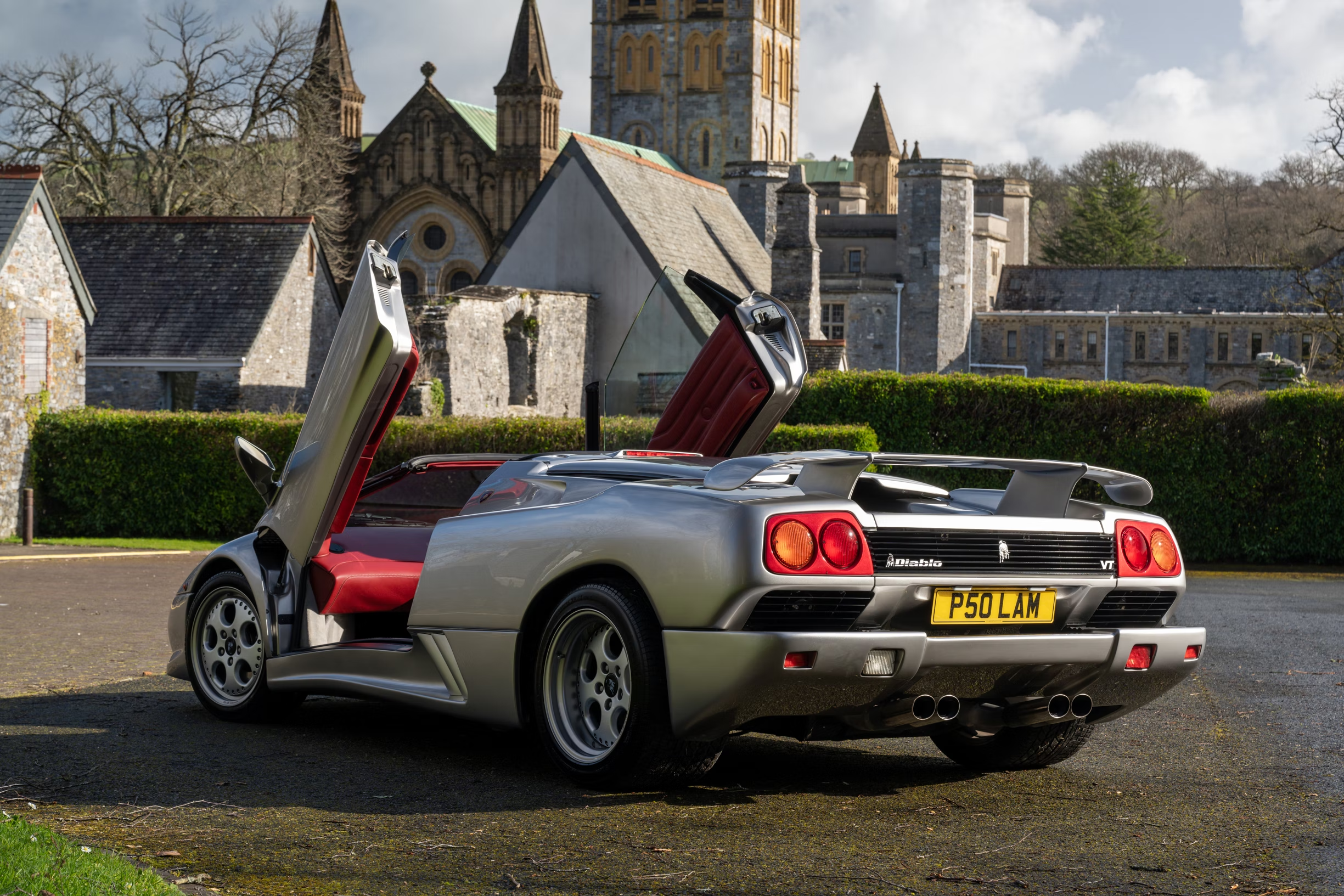
This one hitting the block is a 1997 VT Roadster, also in right hook configuration and showing just 19,000km of work.
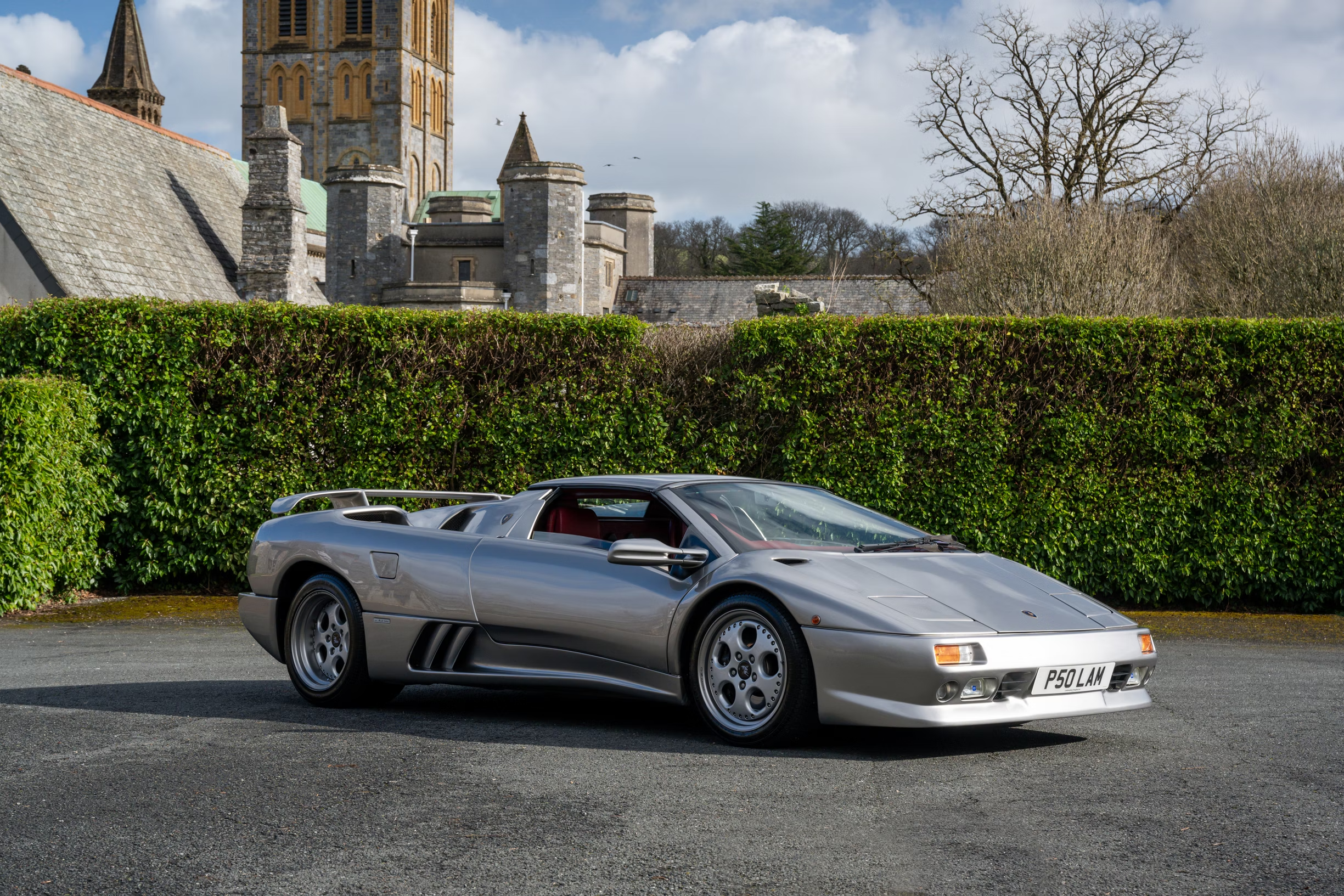
With only 200 roadsters built and just 30 of those being RHD, it’s rare even for a raging bull. It’s still living in the UK at the time of sale, with a top bid of £175,000 (AU$311,449).
Even though Aussie deliveries of the C8 Corvette Stingray have only just started to be filled, one has already popped up for auction locally in the hopes of tempting a buyer looking to jump the queue.
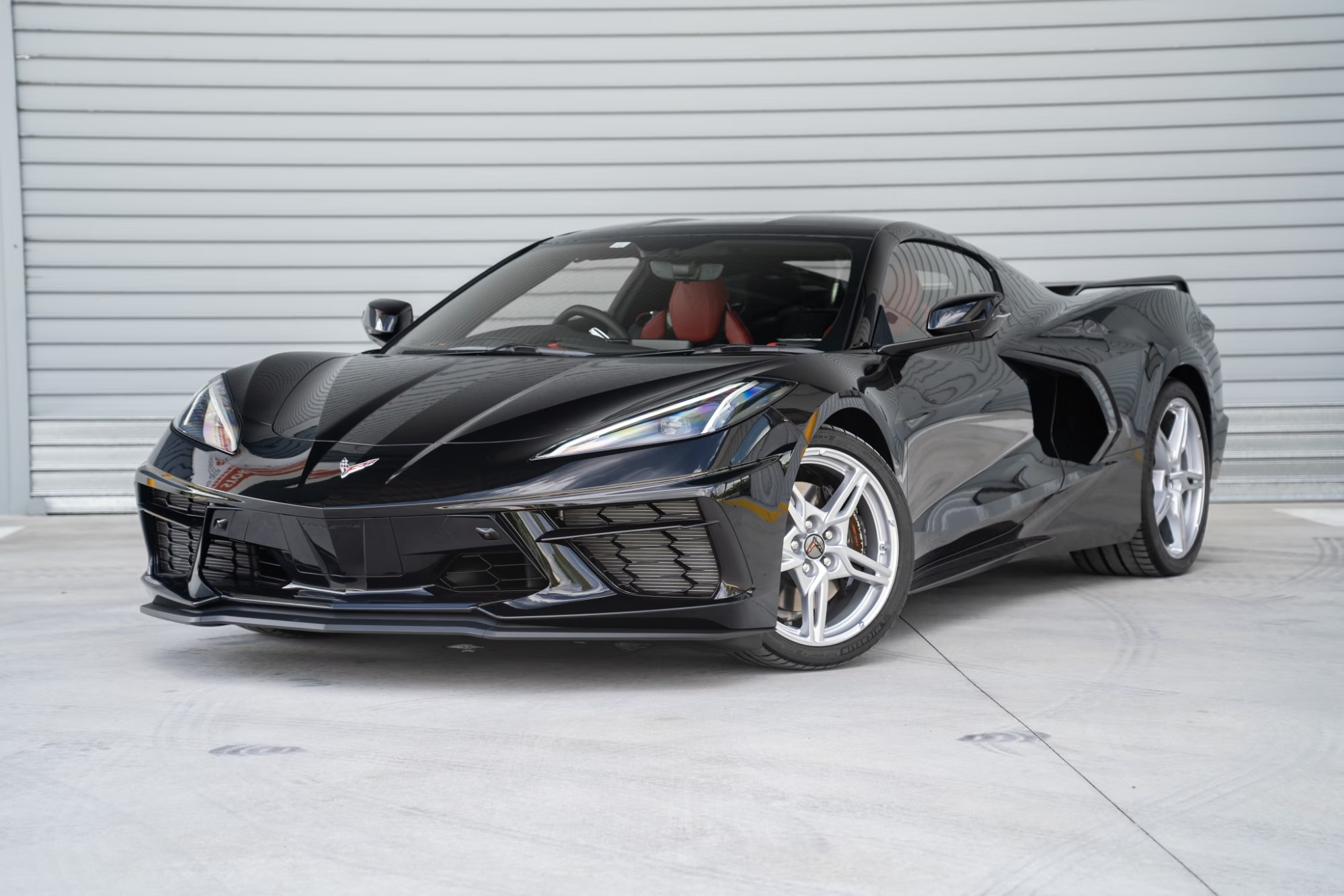
This 2021 RHD Stingray has been delivered in 2LT trim and with the Z51 Performance Pack, having only been registered for around a month and indicating 483km.
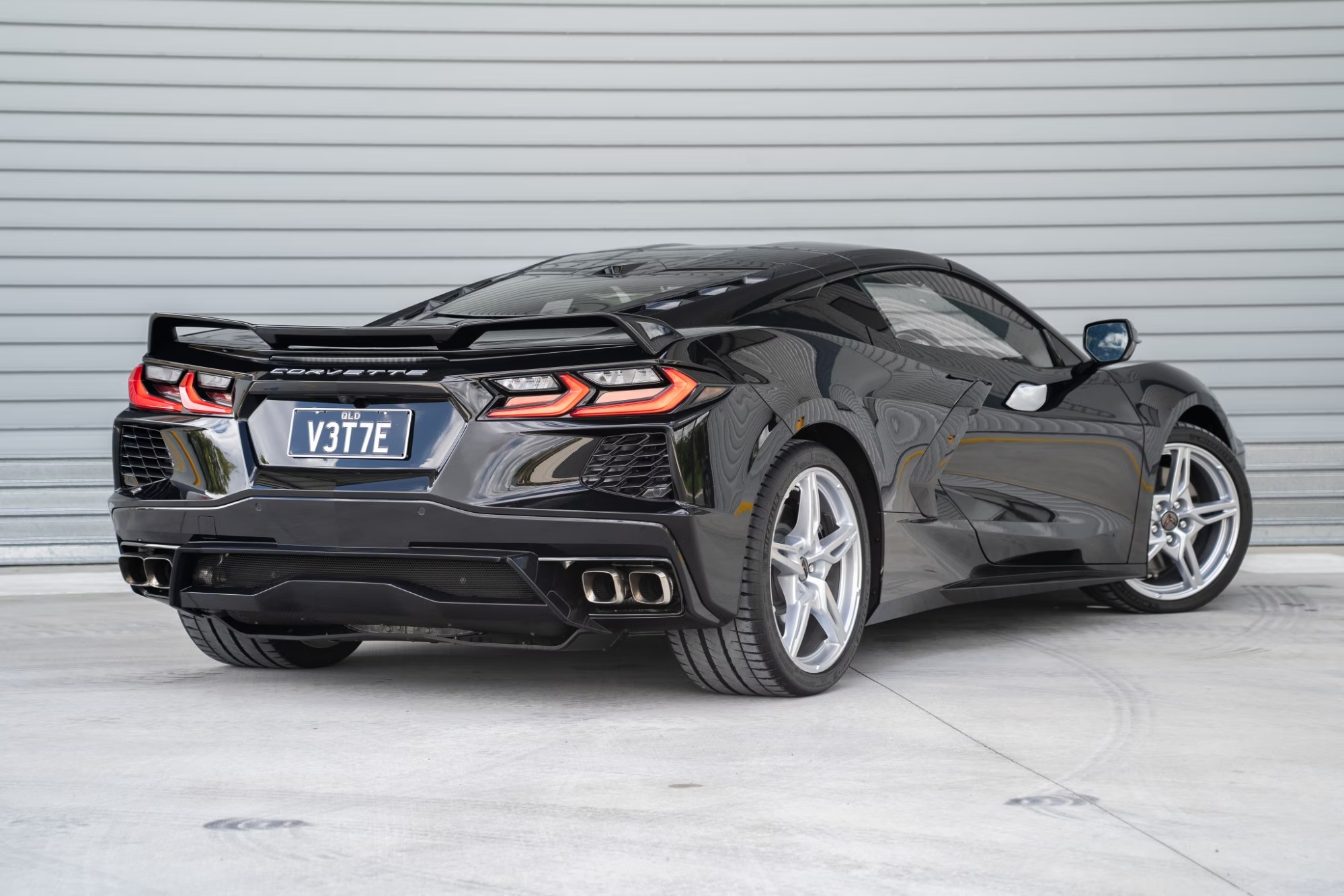
Bidding is already up to AU$205,000, which is the best part of AU$50K more than the base asking price for a C8 from GMSV.
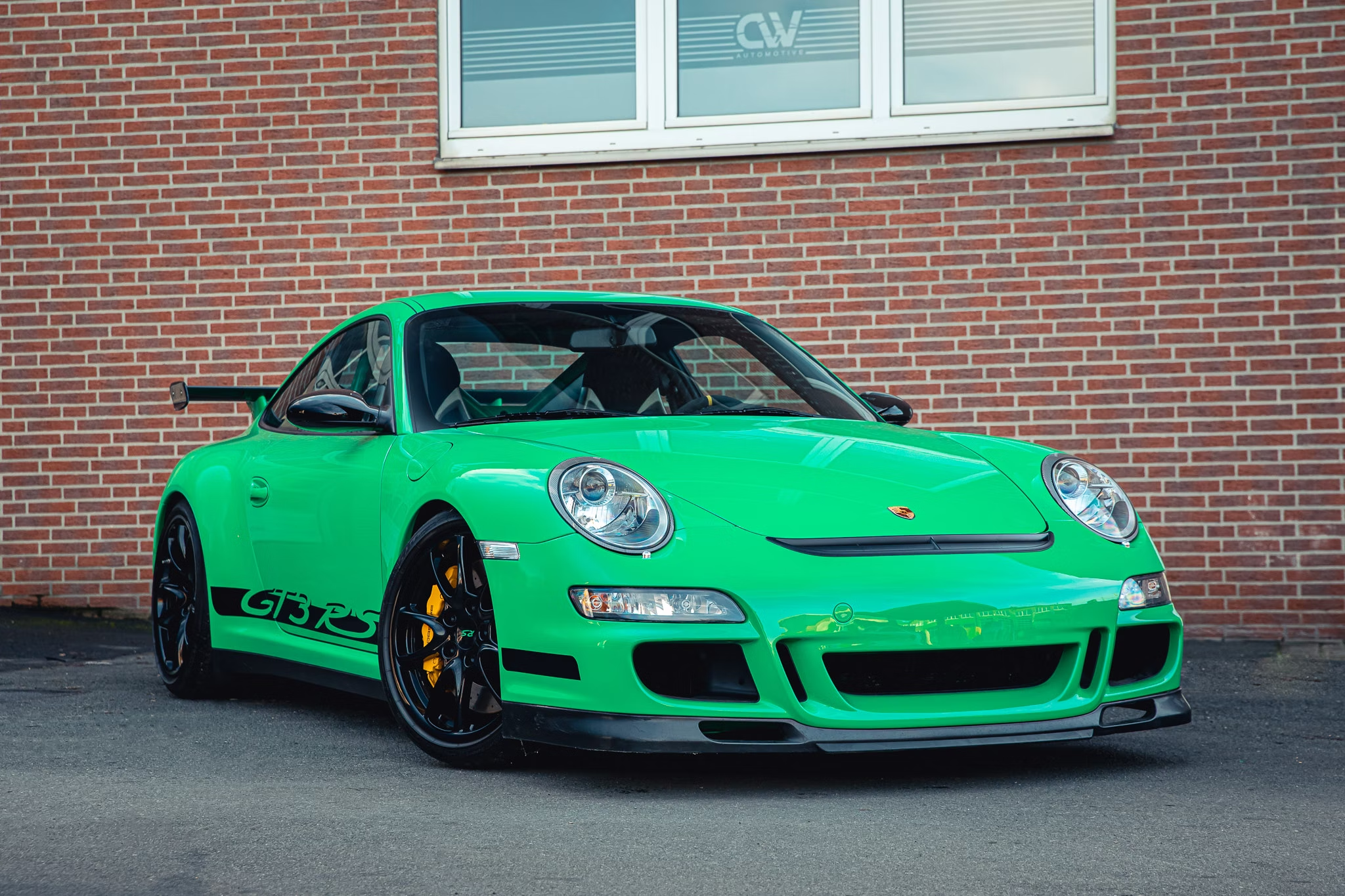
There’s a smattering of Porsches in this supercar auction, but our favourite of the lot would have to be this 2007 997 GT3 RS.
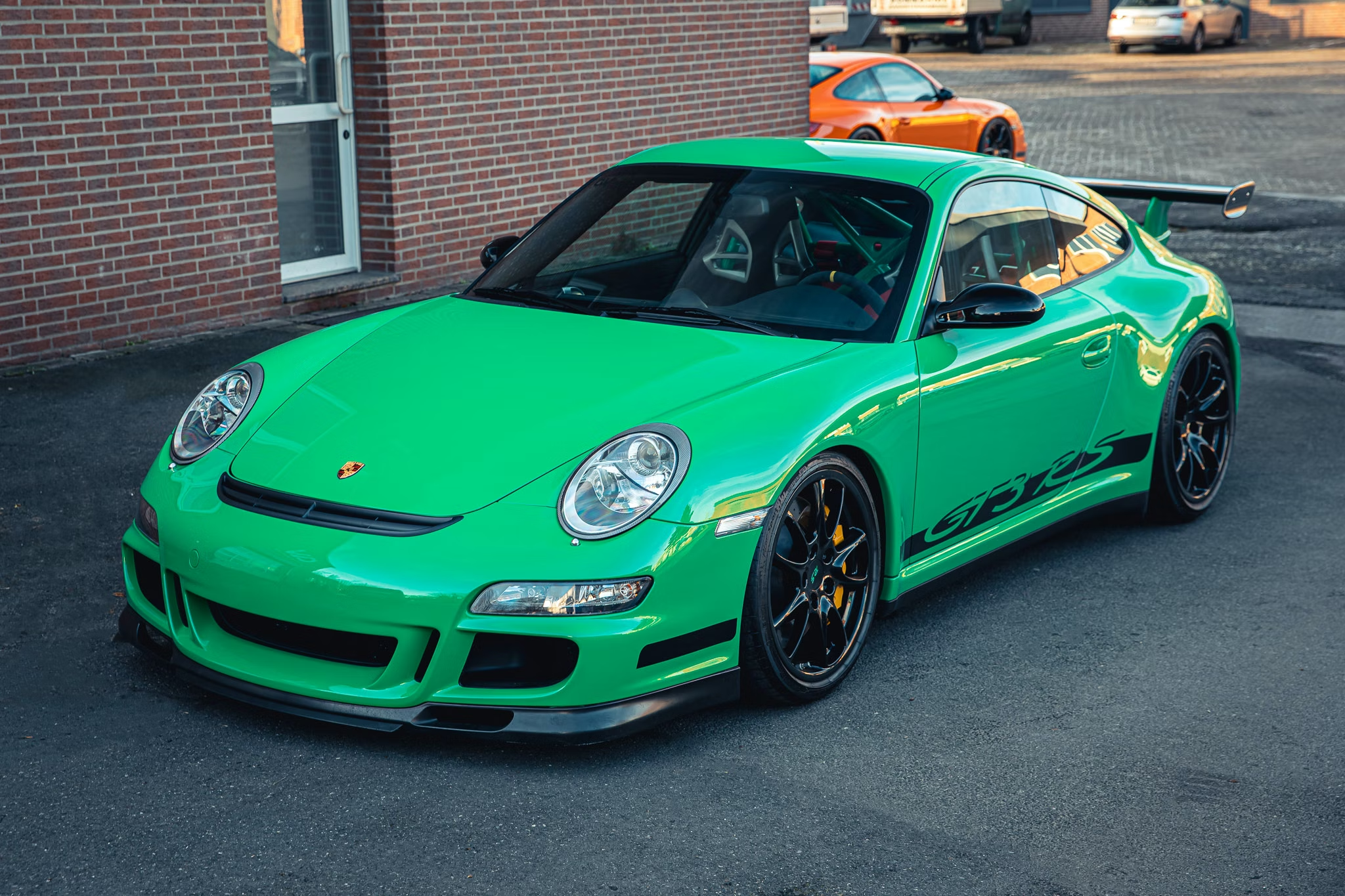
It’s a former press car, which means it’s spent the time in the hands of many great names including the German rally driver and Porsche afficionado Walter Röhrl.
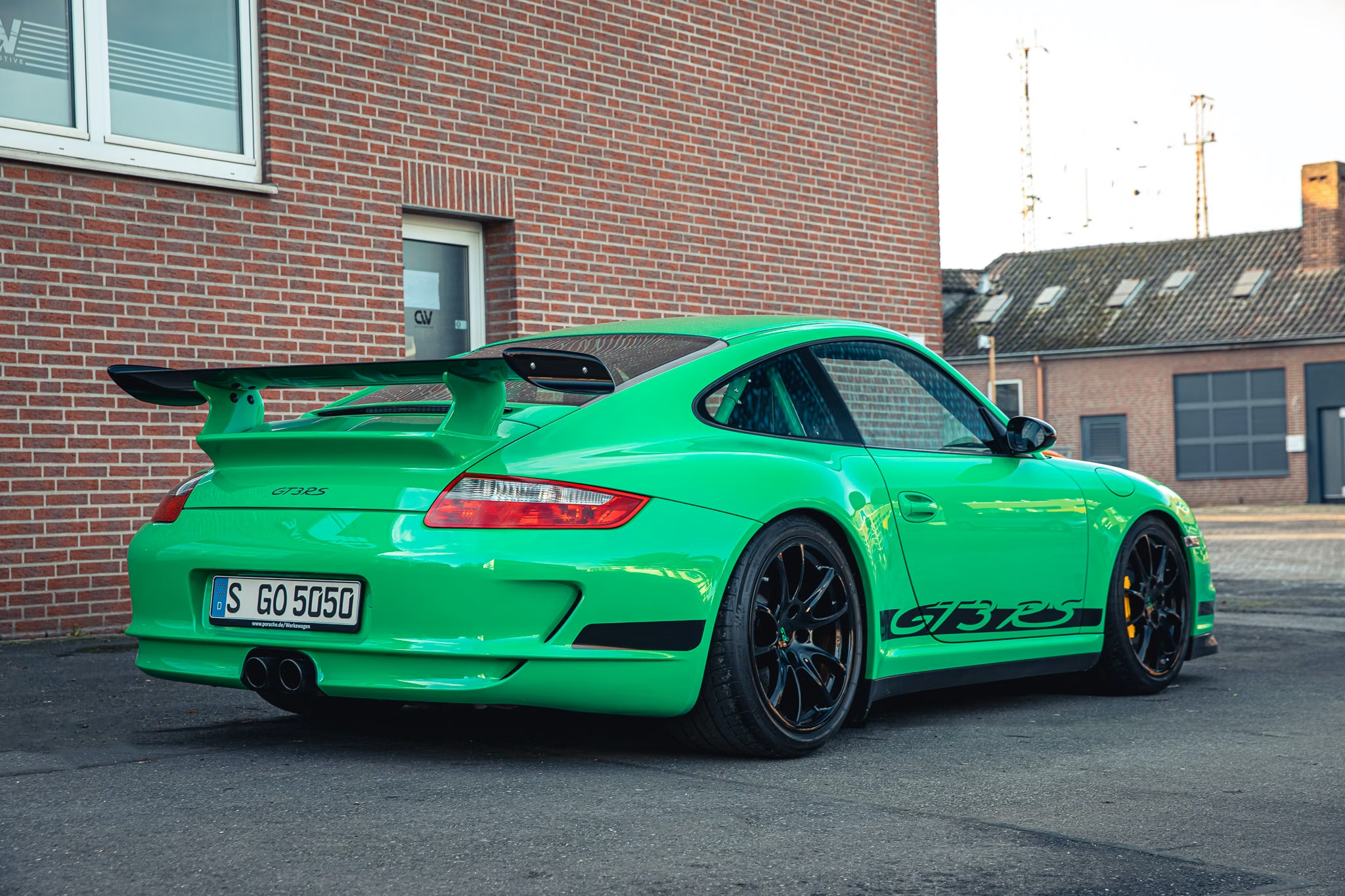
The left-hook green machine is located in Germany, with a top bid of €115,000 (AU$172,148).
The Merdeces-Benz SLR McLaren barely needs any introduction, as even to this day it’s still considered one of the behemoths of the supercar world.
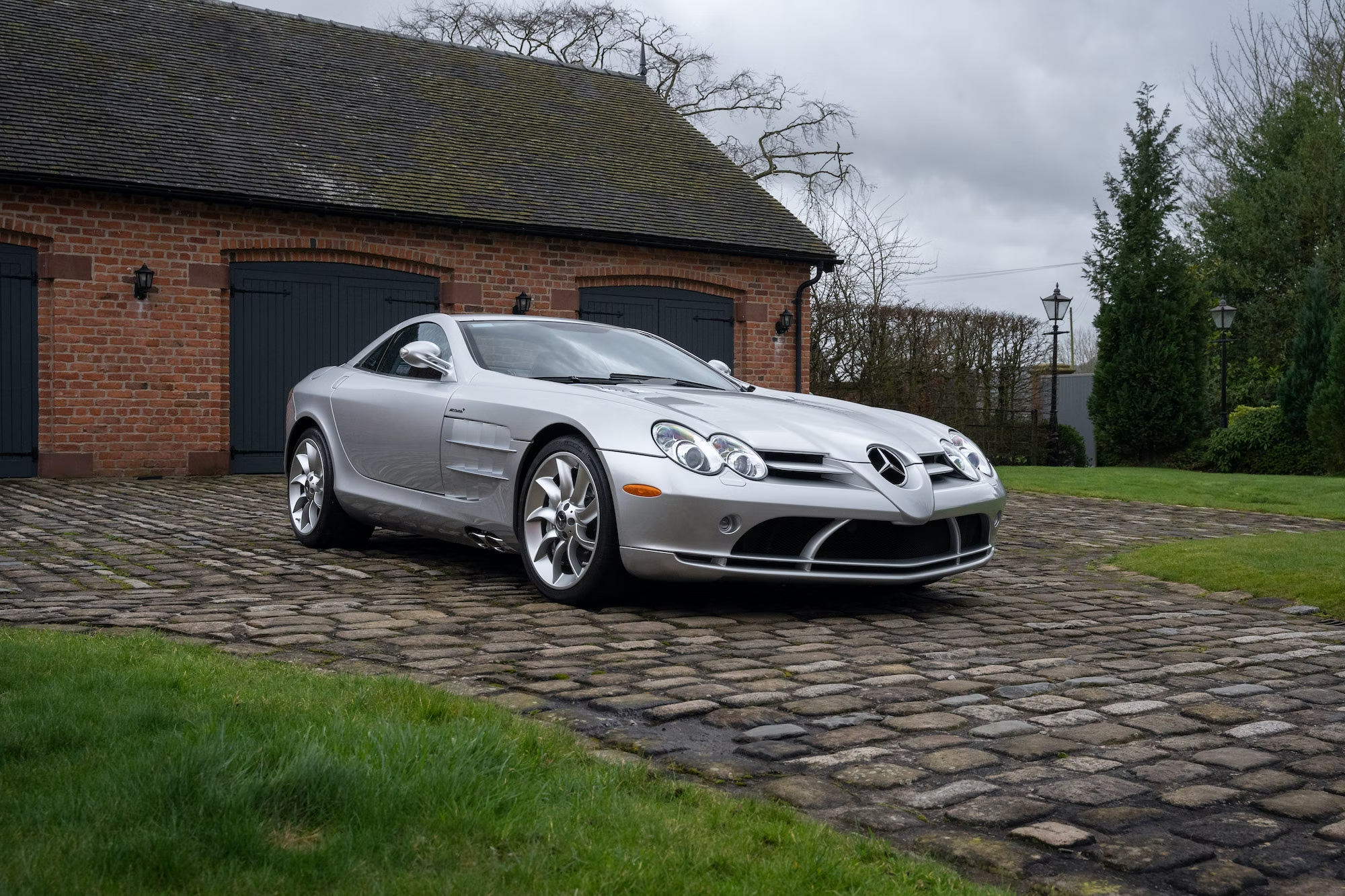
This car is chassis number 95 and entered the well-known car collection of Michael Fux straight from delivery, and has only covered 1264 miles since it was built in 2004.
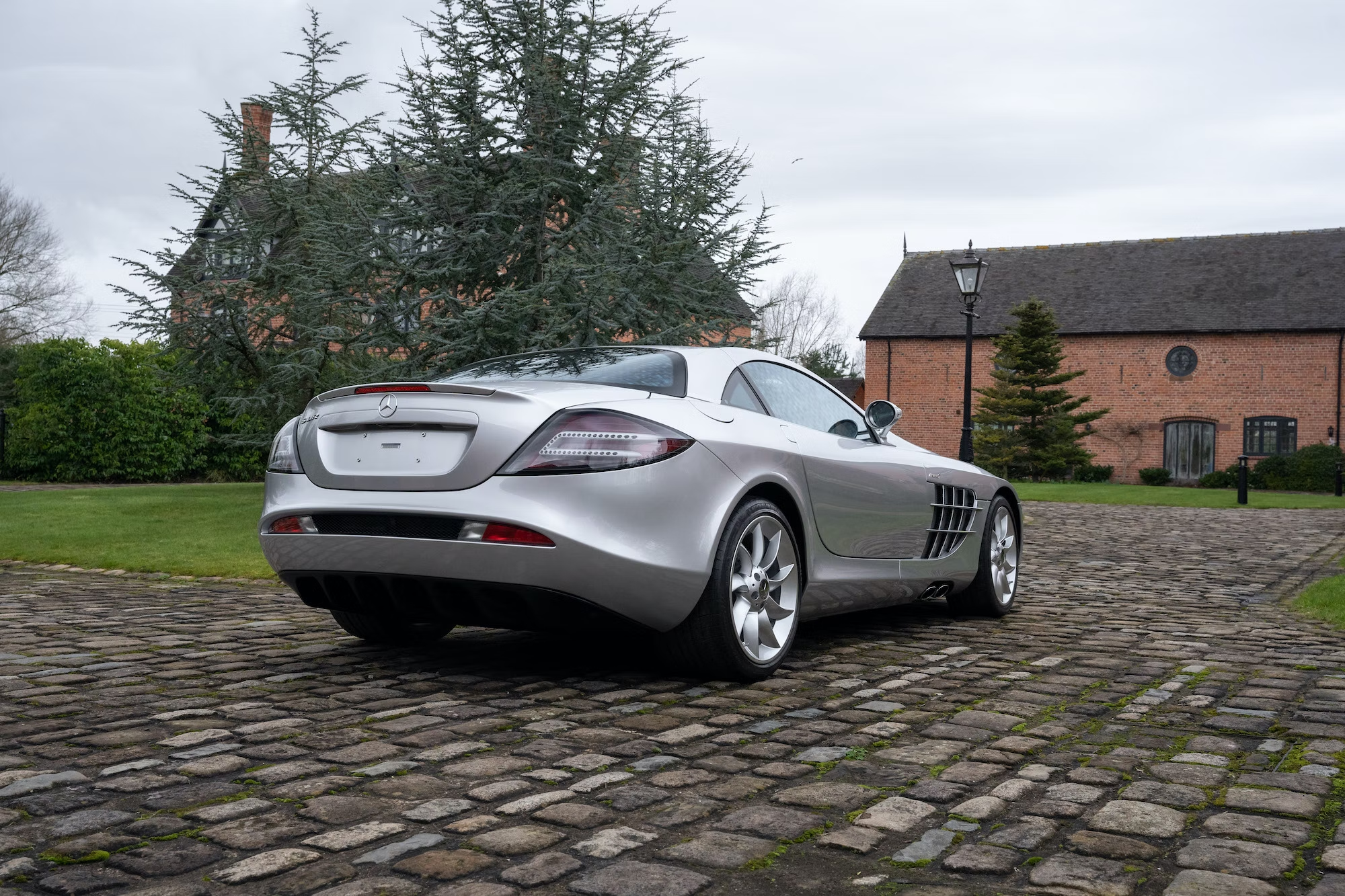
The car is now located in England, with a current top bid of £213,000 (AU$318,848).
We couldn’t do a supercar auction story without mentioning another Ferrari, and this isn’t any normal F430.
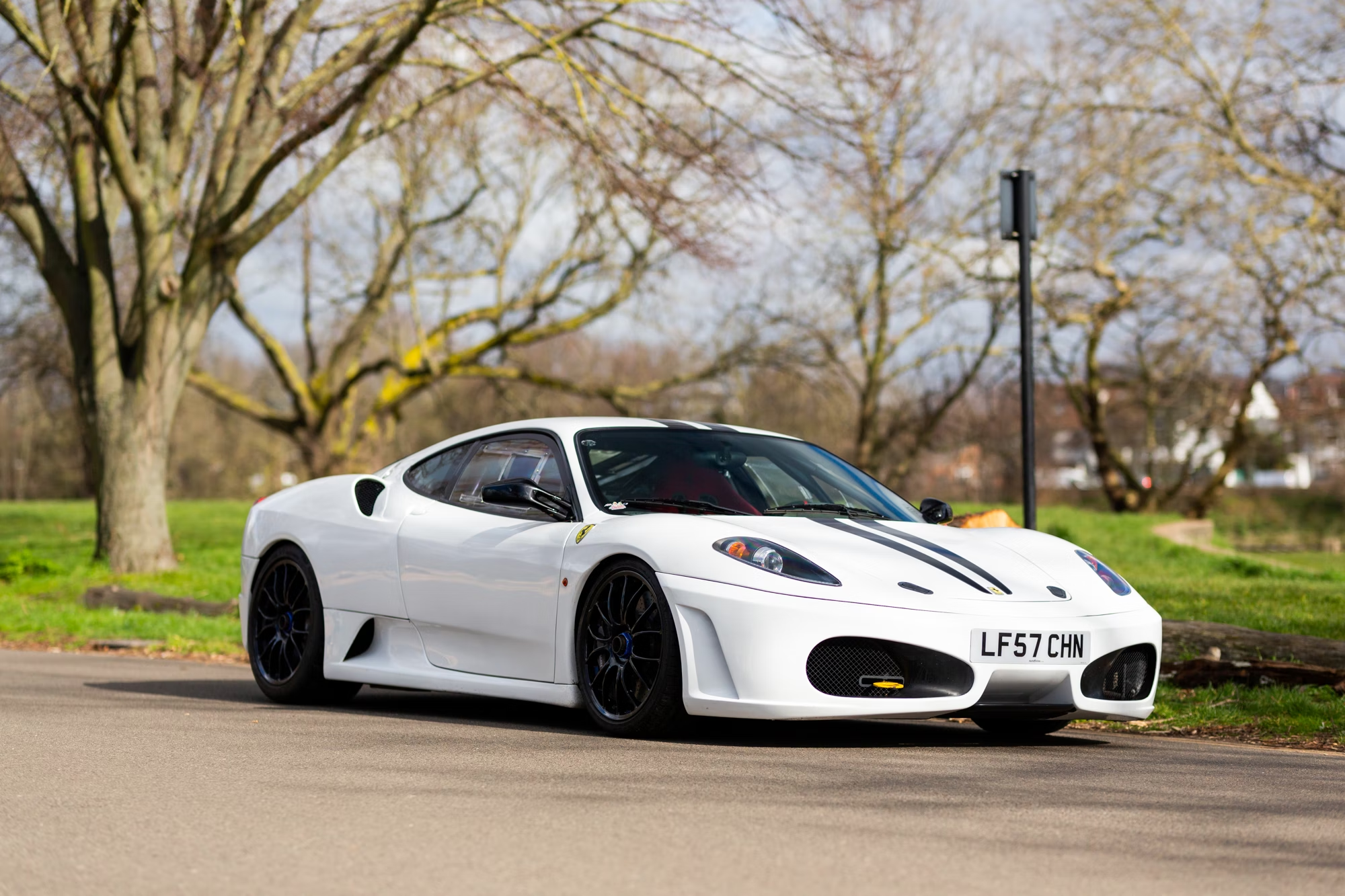
The F430 Challenge cars were originally built for Ferrari’s one make racing series and were never built for road use.
Rules are made to be broken though, and this Challenge-built car underwent a conversion to a road-legal status around five years ago. Being a Challenge car means this F430 has centrelock BBS wheels, a six-speed ‘F1’ automated manual gearbox and a mechanical locking differential behind the 4.3-litre V8.
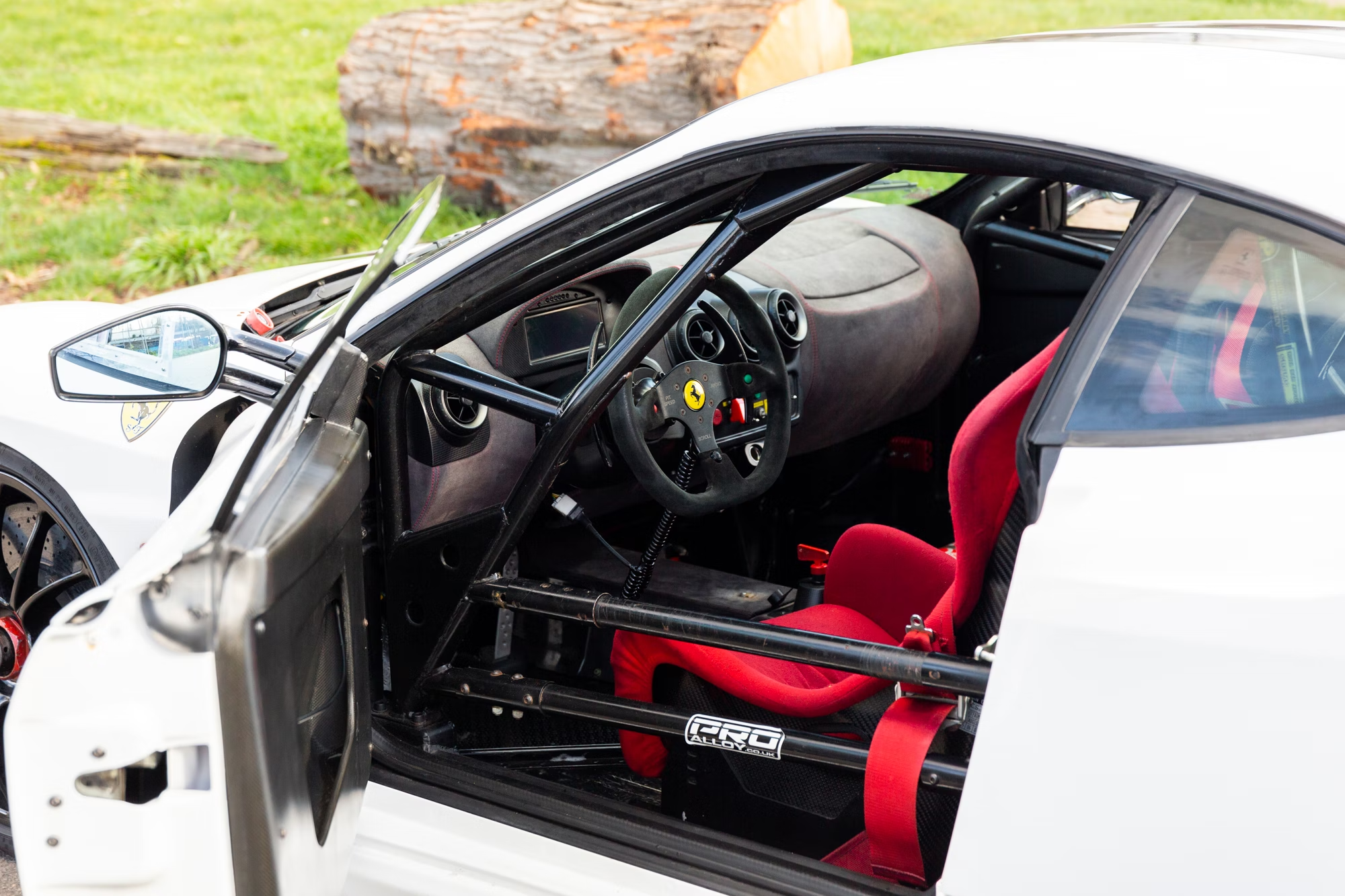
The car is located in the UK where is has been complied for road use, with a current bid of just £42,500 (AU$75,637).
How about an Audi R8 GT, one of just 333 built?
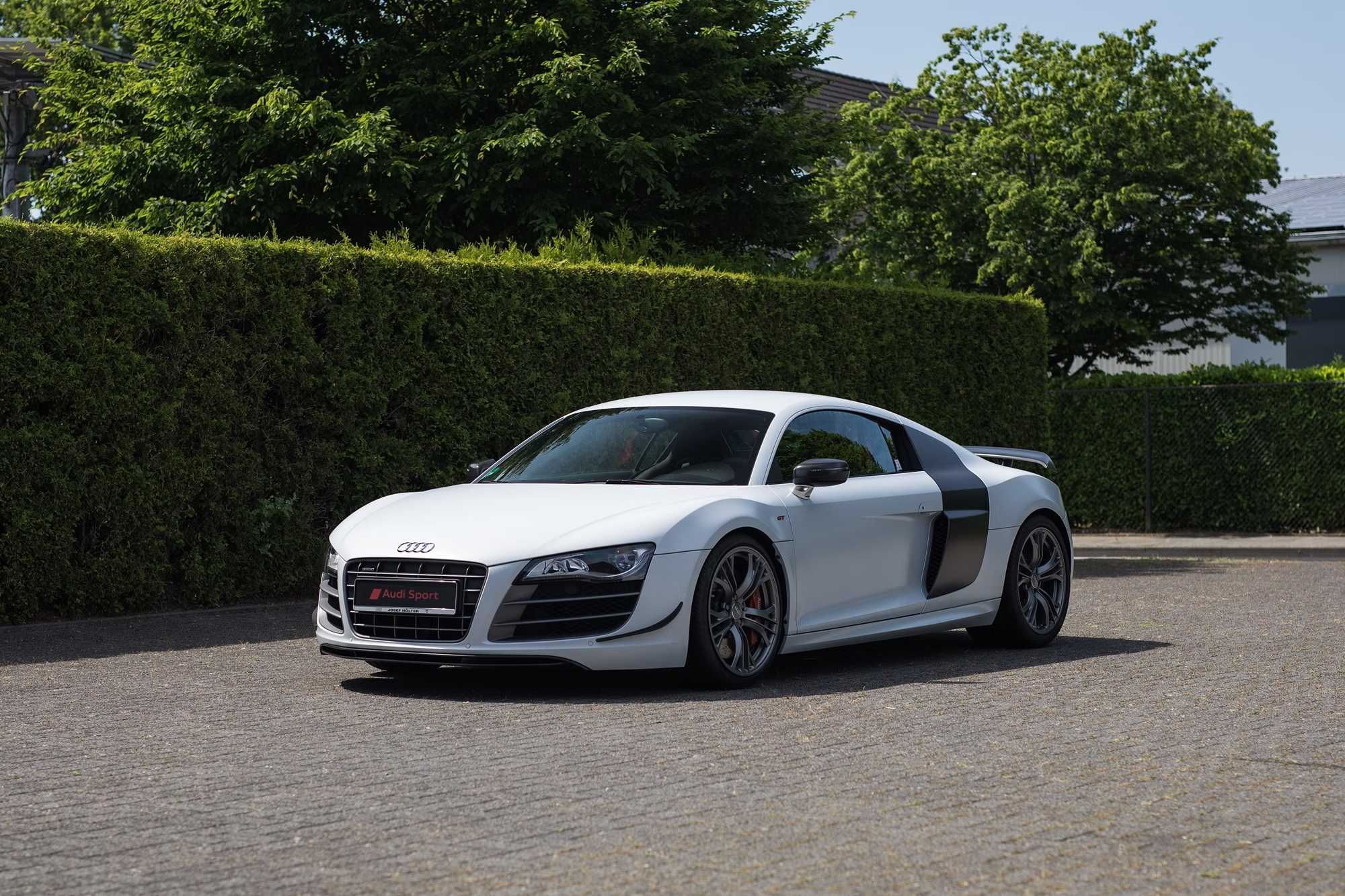
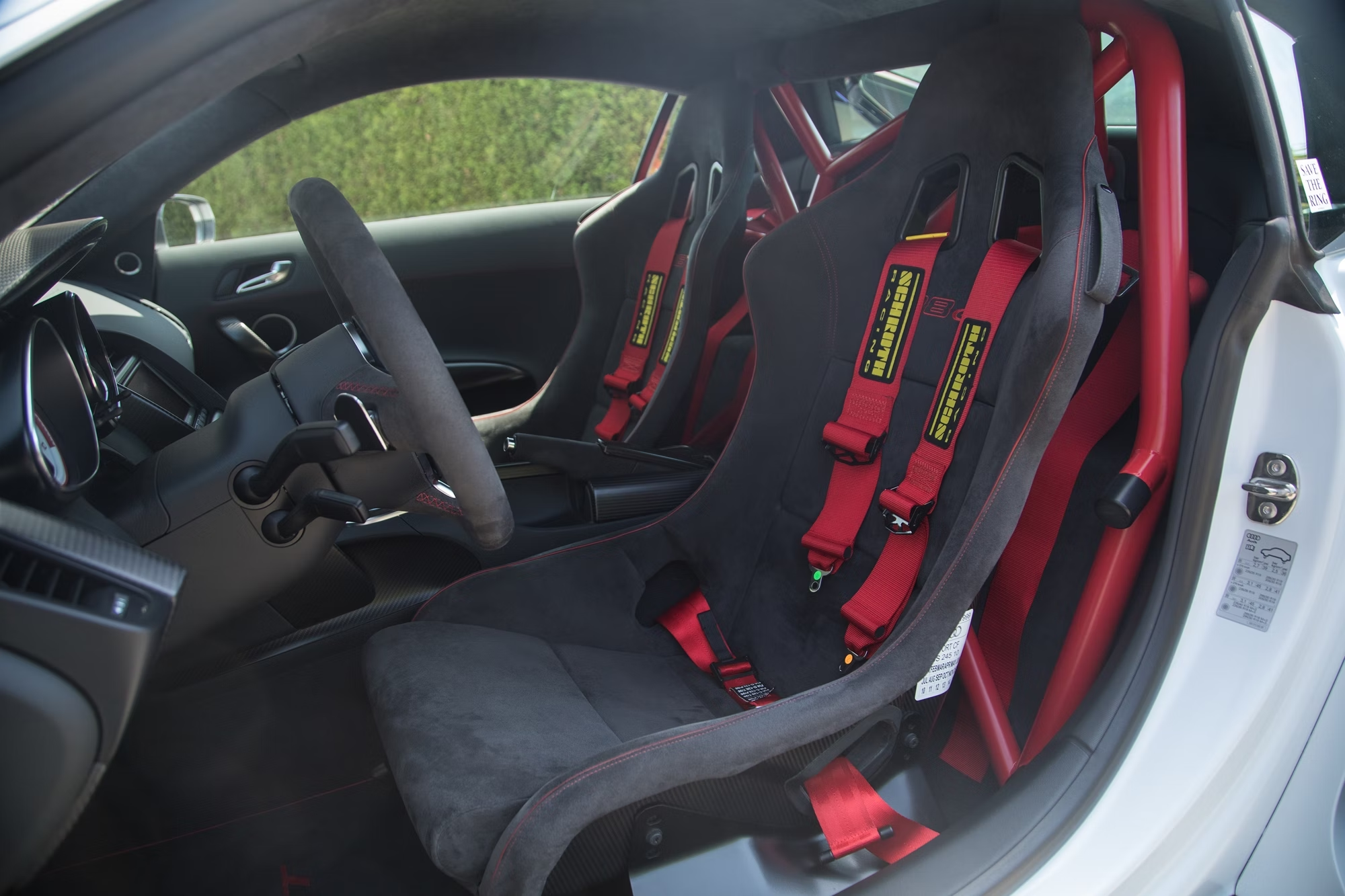
Being a GT means you get the full sauce 560hp, 5.2-litre Lamborghini V10 engine paired to a robotised manual R-Tronic transmission with paddle shift and race-oriented bucket seats and belts.
This GT has covered 29,000km, and is currently located in Germany with a current bid of €55,000 (AU$82,421).
Bidding for all these lots wraps up tomorrow and you can view the full auction listings here.
