
If Future is an Attitude (the current number one Audi catchphrase in Europe), the brand’s post-diesel mindset calls for a distinctly different balance of products and technologies.
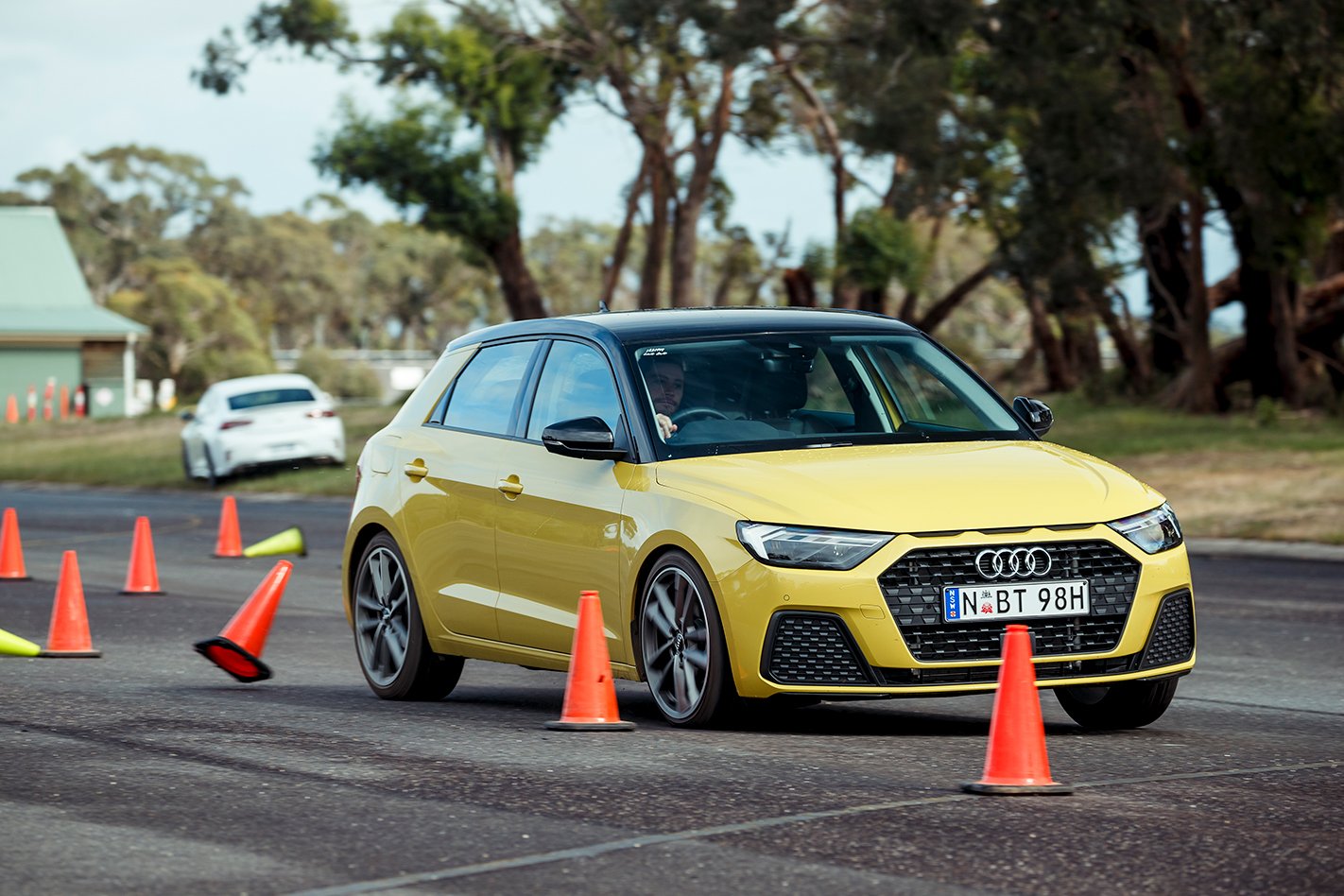
In this new up-market scenario, the A1 will not be replaced because what is essentially a tarted up Volkswagen Polo lacks the required minimum content of premium-ness and desirability.
The Q2 also bites the dust because it is by and large an overrated yet under-qualified Q1/Volkswagen T-Cross which picked up the wrong badge and is not consistently up to Audi standards either.
The TT loses its job as coupé and roadster because the market for two-door models is in free-fall, even for versions fitted with that charismatic five-cylinder engine. The R8 is no longer appropriate because of its larger-than-life CO2 footprint created by the doomed V10 engine.
The E-Tron and E-Tron Sportback will go down in history as one-hit, one-cycle wonders because their hotchpotch architecture was merely an intermezzo on the road to bespoke fully-electric motor cars.

What exactly is the compensation for fewer emotional products and niche models? A bunch of new members of the E-Tron family, to start with.
But hold your horses – the next A3, A4, A5, A6, Q3, Q5, Q7 and Q8 still remain faithful to their combustion engine roots. Hot on their heels, however, Audi will between 2023 and 2032 launch a full range of battery-powered clean-air machines of similar style, format and vocation.

Perhaps the most exciting all-new E-Tron ambassador is the 2025 Landjet which may be badged E9. This is, you guessed it, the production version of the Grand Sphere concept.
What is going to happen to the Sky Sphere roadster and the Urban Sphere luxury people mover? The low-volume Sky may be too flamboyant for its own good, but the Urban looks like it has got what it takes to write the next chapter of the still young CUV history.
Also ranking high on our thumbs up list are the 2025 600kW-plus R8 – twinned with the Lamborghini Huracan replacement – the 2023 Q6 E-Tron and Q6 E-Tron Fastback – to run on the same platform as the Porsche Macan E – the Q8 E-Tron – twinned with the 2029 Urus, and the still-to-be-approved R6 E-Tron, based around the same platform as the electric successors to Porsche’s Cayman and Boxster.
When it comes to performance cars, Audi, BMW and Mercedes-AMG are joined at the hip at almost every segment intersection – with one notable exception. While the trio of German manufacturers just can’t help themselves when it comes to building natural rivals to each other’s machinery, there remains a BMW-shaped hole in the hyper hatch sector.
Audi’s heavily updated RS3 is set to launch locally soon, while Mercedes-AMG has almost achieved perfection with its 310kW A45 S. The best Bavaria can muster is the M135i xDrive, whose relatively paltry outputs of 225kW/450Nm just won’t cut the mustard. Time to call in the M division cavalry.
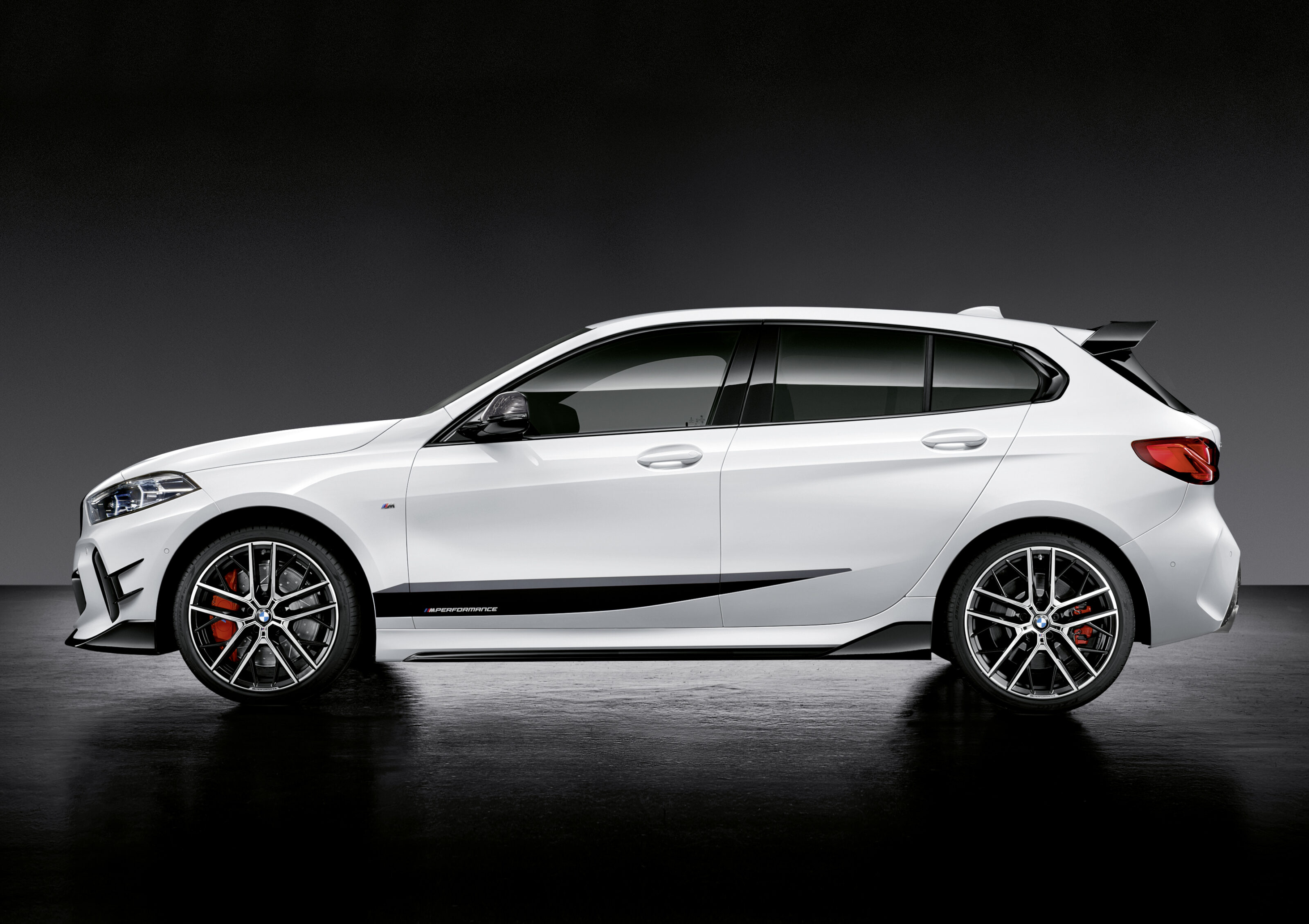
There are not only the intra-nation rivalries to consider, but internal legacies, with the 1 Series being the logical platform for a full-M hyper hatch – which would mean reviving the 1 M badge. That silent ‘ooh’ face you just pulled is the weight that will burden the shoulders of BMW’s engineers.
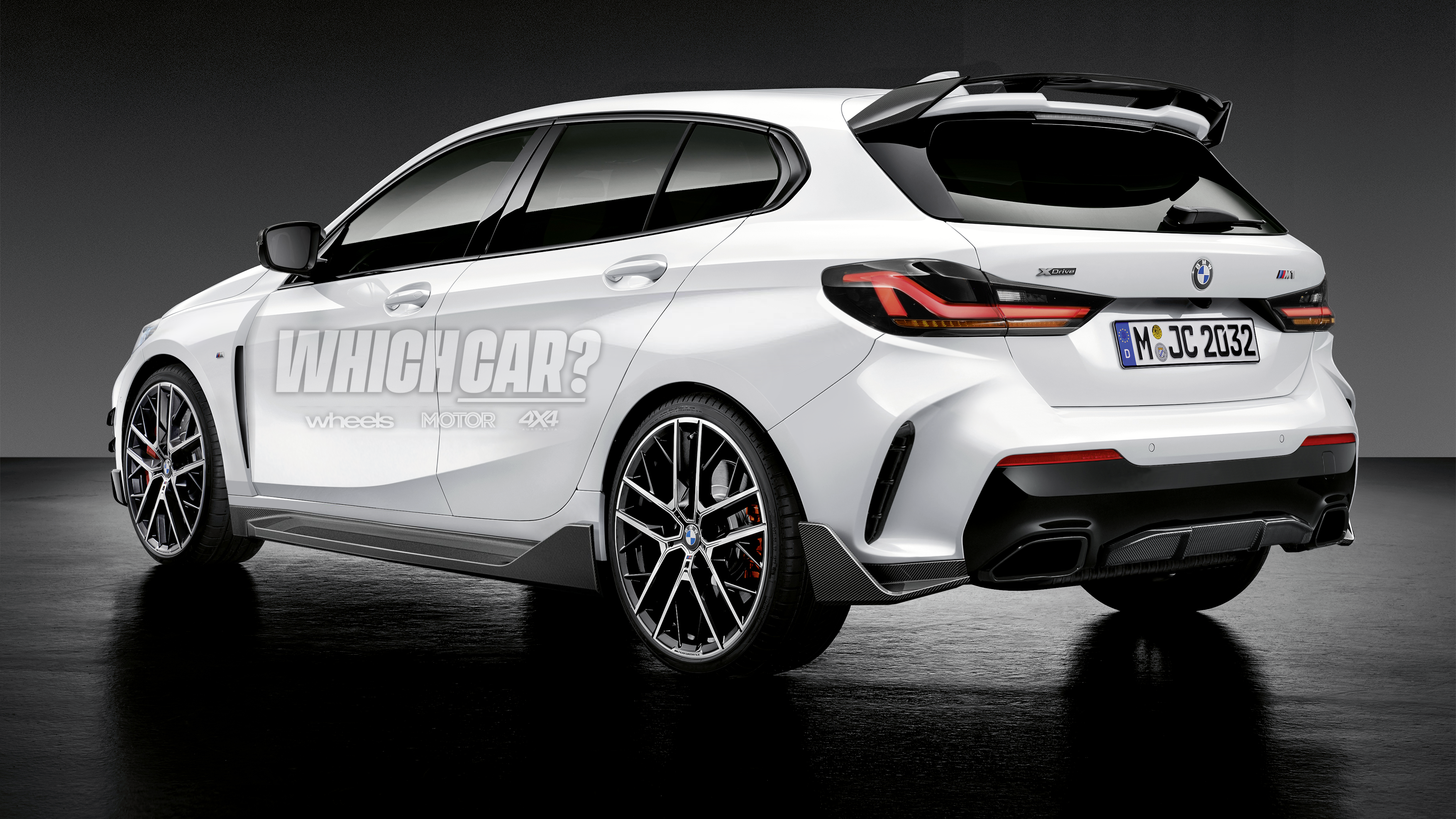
BMW hasn’t been shy of usurping tradition lately, least not with its styling. This hard-nosed stubbornness would continue with the new 1 M’s mechanical philosophy. No straight-six, no RWD. Hyper hatch, remember? The B48 2.0-litre turbocharged four-cylinder petrol from the M135i would remain, but with some serious fettling to get it on par with the likes of Audi and AMG.
West Surrey Racing use a version of the B48 developed by NBE in its G20 330i BTCC racer, producing in the region of 280kW. Putting the Motorsport back into the M Division, BMW’s 1 M will take inspiration from this competition-spec unit to build a proper A45 S rival. Stronger internals, as well as a larger turbo will do most of the work required to boost overall outputs to 290kW/500Nm.
Mated with a new eight-speed automatic transmission, the BMW 1 M will be capable of cracking 100km/h from a standstill in 4.0 seconds flat thanks to the help of launch control. Fully customisable M driving modes selectable from the steering wheel will even allow the driver to fine tune launch RPM.
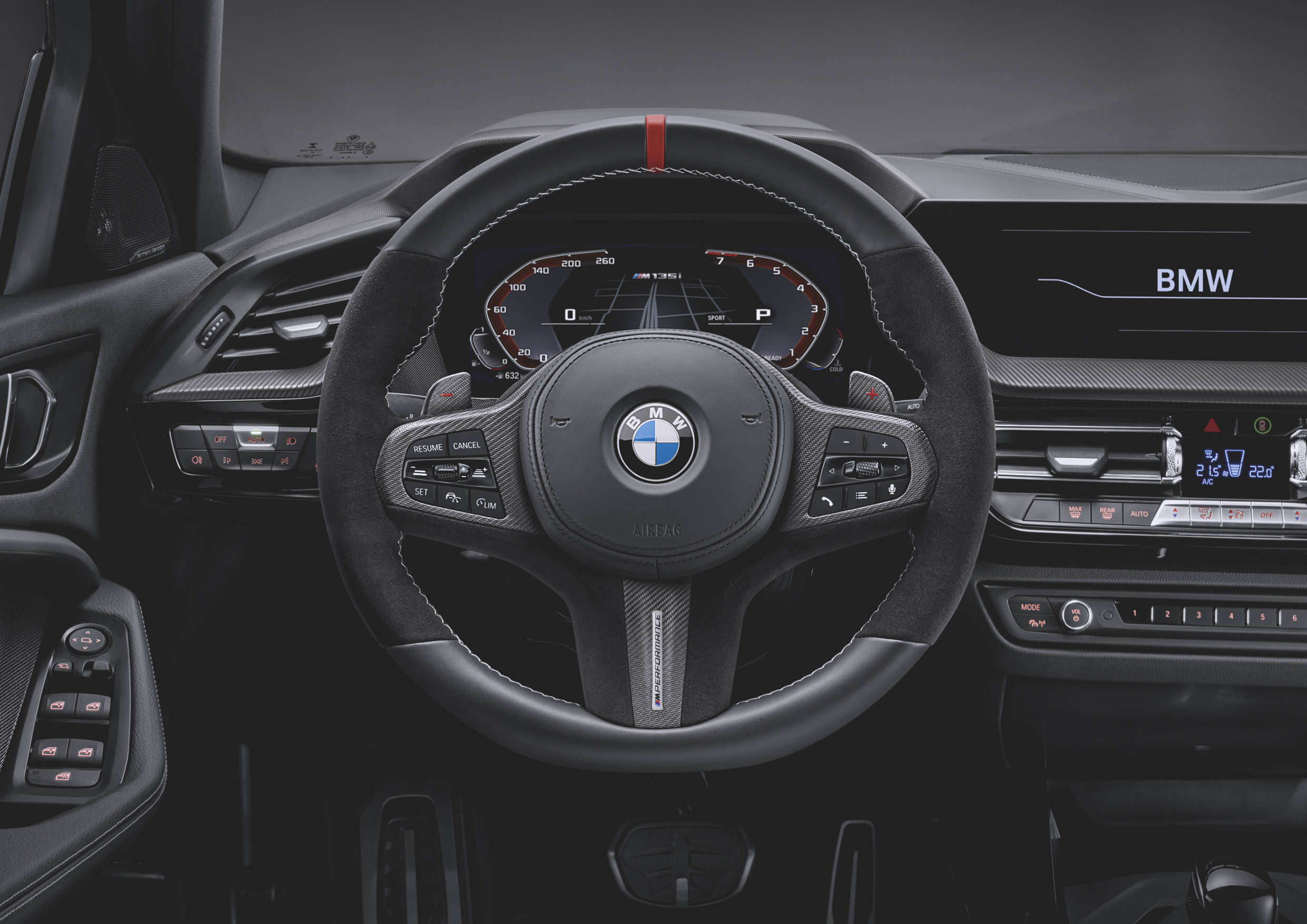
Keen drivers will be spoiled with a raft of dynamic settings. Multi-stage traction control and stability control mean nanny-state interferences will be a thing of the past. Adaptive dampers will be fitted as standard, while the front electronically locking limited-slip differential will also have multiple settings to choose from. A central and rear limited-slip diff will underscore the 1 M’s dynamic ability, even if it won’t have the straight-six, RWD ethos of its predecessor.
Want to play fantasy product planner with us? Send your best ideas to [email protected]
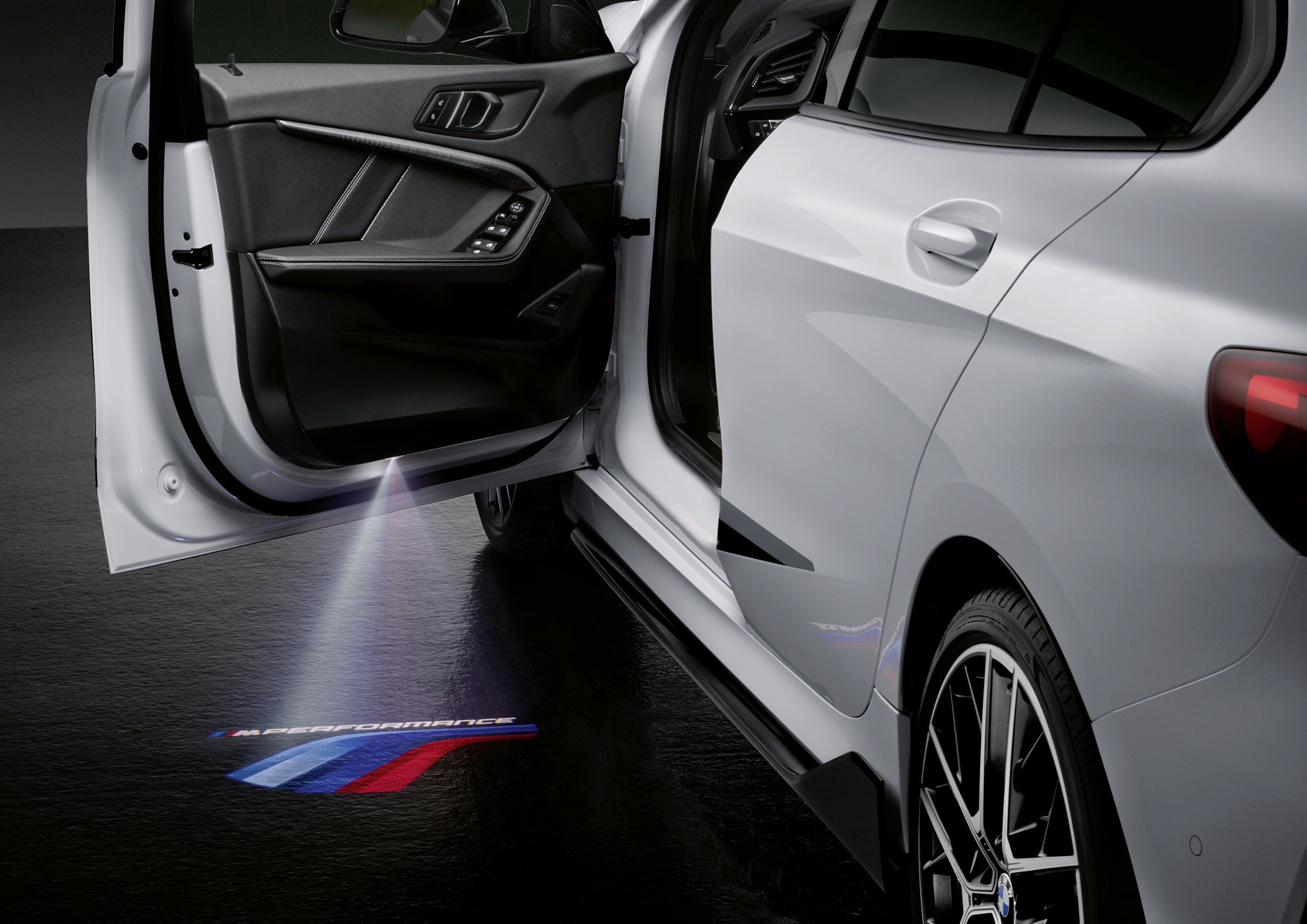
How we’d build it
01. Hand built
To get the B48 to make the appropriate power, BMW’s M Division will need to get hands-on, literally. The engine will need to be hand-built with stronger forged internals, before being slotted into the 1 M. As a result, production numbers will be suitably limited. Quality over quantity.
02. Shift games
A major gripe with the M135i is that it just plain refuses to send appropriate levels of power to the rear wheels. This won’t stand for the 1 M, with a modified version of the eight-speed auto from the M3/M4 xDrive being adapted to mate with the B48 and diff array.
03. Akrapa-who?
Unfortunately, the B48 doesn’t make a sound that truly stirs our soul. To rectify the issue, Slovenian masters of exhausts Akrapovic will be brought in to tune a factory-option system which sounds more rally car than Nan’s car.
04. For the love of aero
To wing, or not to wing, that is the question that will haunt the thoughts of every Tarocash-wearing broker that is about to sign a lease agreement. Not just for looks, the carbon fibre additions will provide a boost in high-speed stability. We’ve rendered the 1 M in its full M Division guise, but a de-badged, de-winged version would go nicely as a daily sleeper.
05. Sticky Stuff
Michelin Pilot Super Sport tyres would fit the 1 M’s everyday remit, while also ensuring the car’s improved dynamic talents aren’t hidden. Michelin Pilot Sport Cup 2 R tyres will be available as an option for the true track day heroes.
Newly published patents reveal Porsche has been investigating a split ‘turbocharger’ system on a six-cylinder engine.
Online patent registries have published information on filings Porsche made in Germany back in July 2020, revealing key insights to the radical turbocharger technology under development at the firm.
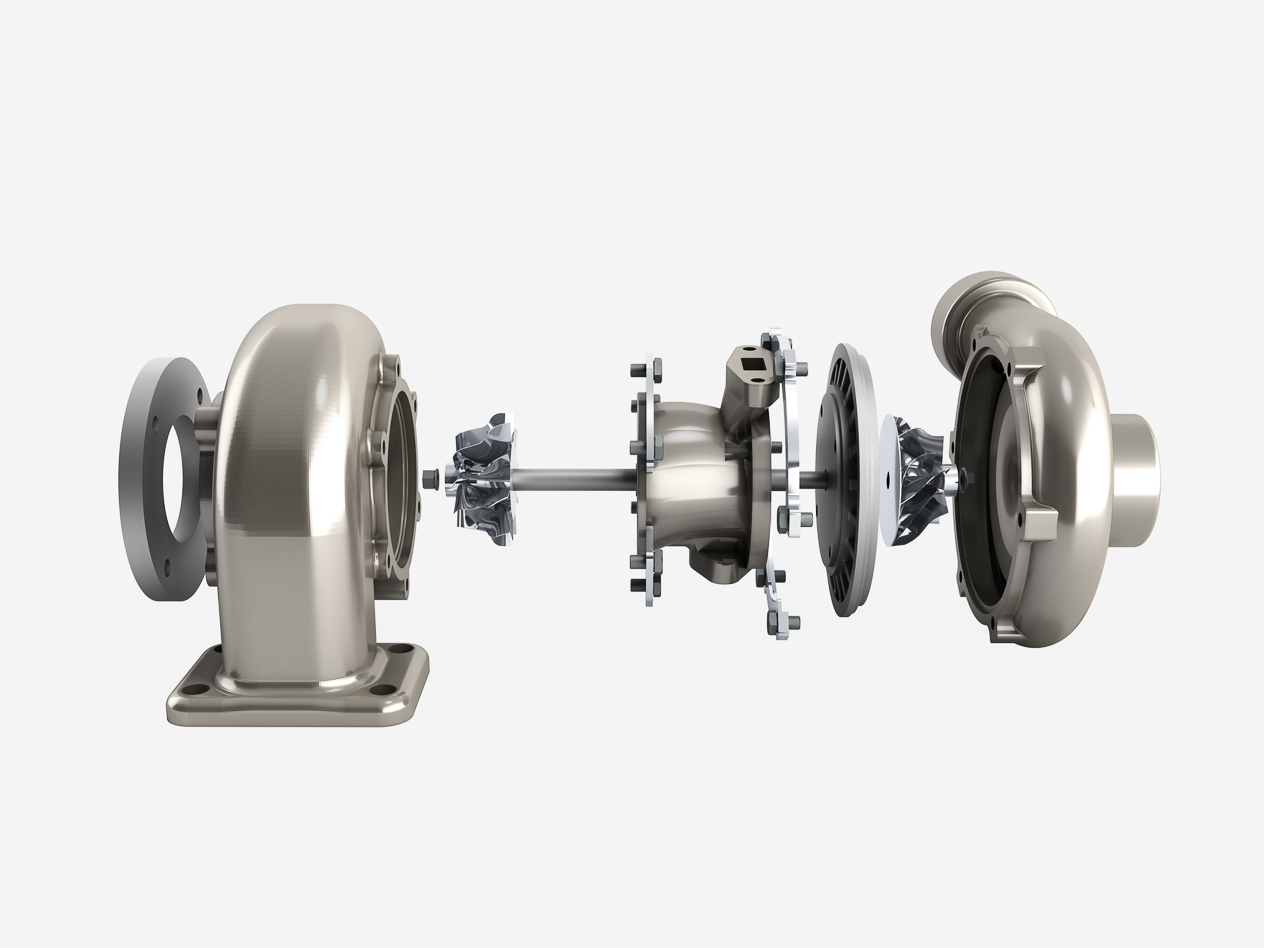
In concept, it’s not unlike the turbocharger system Ferrari had announced almost four years ago. Porsche’s designs outline a petrol-powered six-cylinder engine with a turbocharger split into two separate parts.
These parts comprise the boost-generating compressor and exhaust-driven turbine that are systematically linked through an electric motor and generator.
As the patent reveals, Porsche intends for exhaust gases to drive a pair of turbines connected to a generator unit.
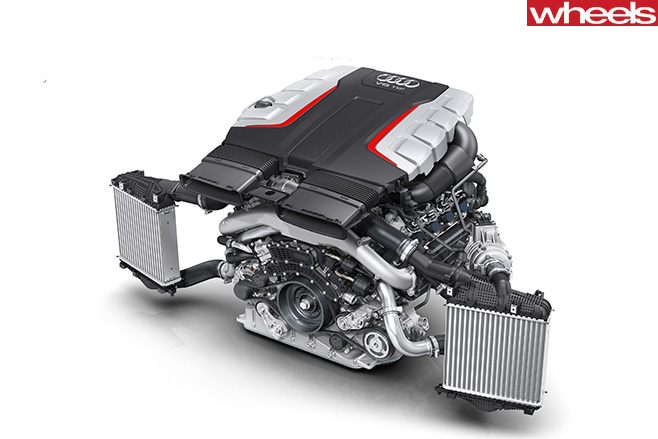
This generator charges a battery that supplies charge to an electric motor that, you guessed it, drives the compressor – which creates pressurised intake air for the engine.
What this means in the real-world is a system of forced induction that harnesses the best of both supercharging and turbocharging.
On one hand, you get instant boost response from the motor-driven compressor, while the generator ensures exhaust gases are not wasted.
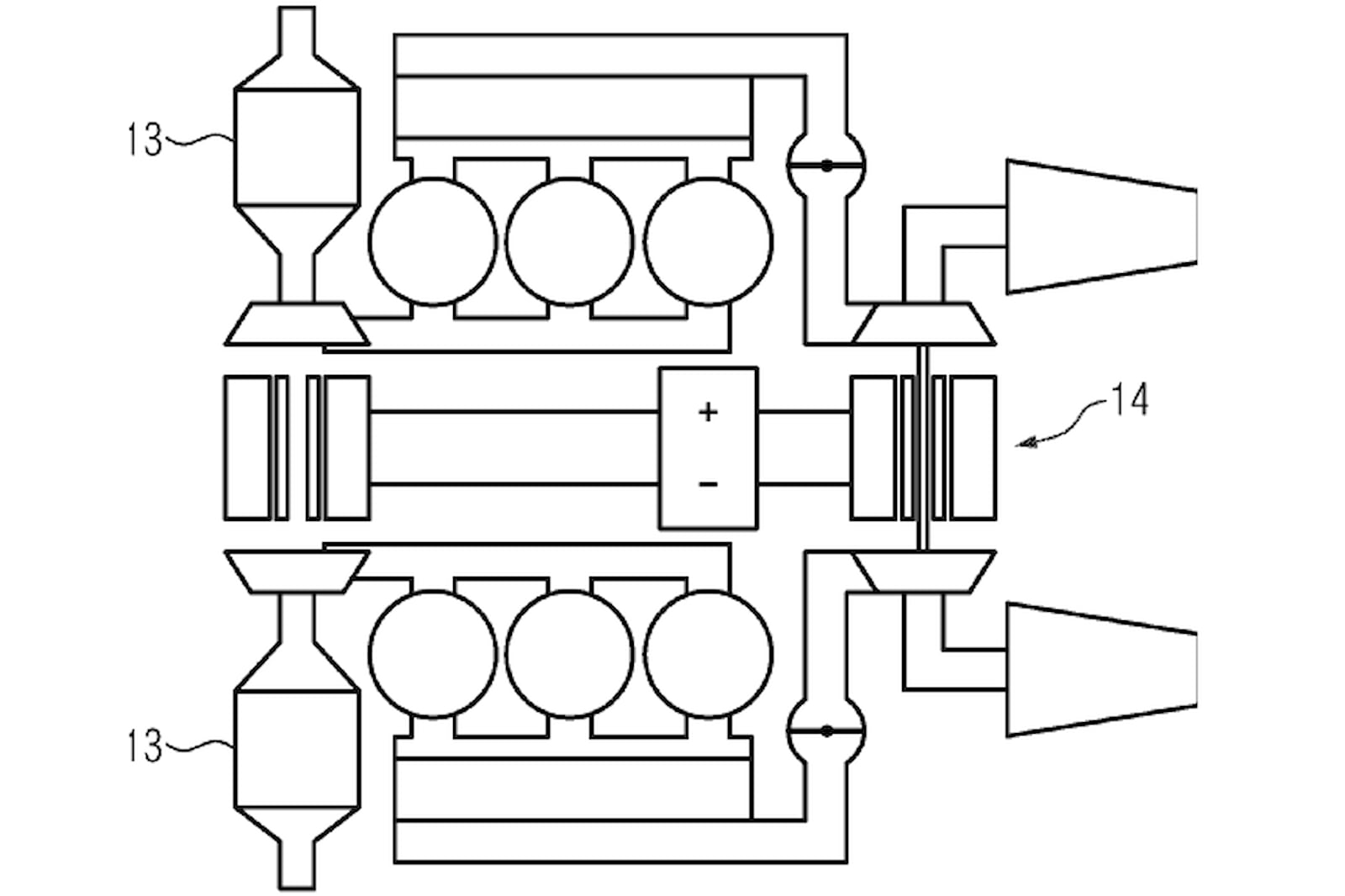
Both the compressor and turbines can be operated at independent speeds, Porsche claims, and maximum efficiency more often.
As well as this, Porsche also employs axial turbine technology, further boosting the efficiency on the engine’s exhaust side.
The setup could also employ more than one compressor, according to images published on Carbuzz, which show compressors share a common shaft with the electric motor – like the turbines do with a generator.
This would ultimately allocate a turbine and compressor to a bank of cylinders each.
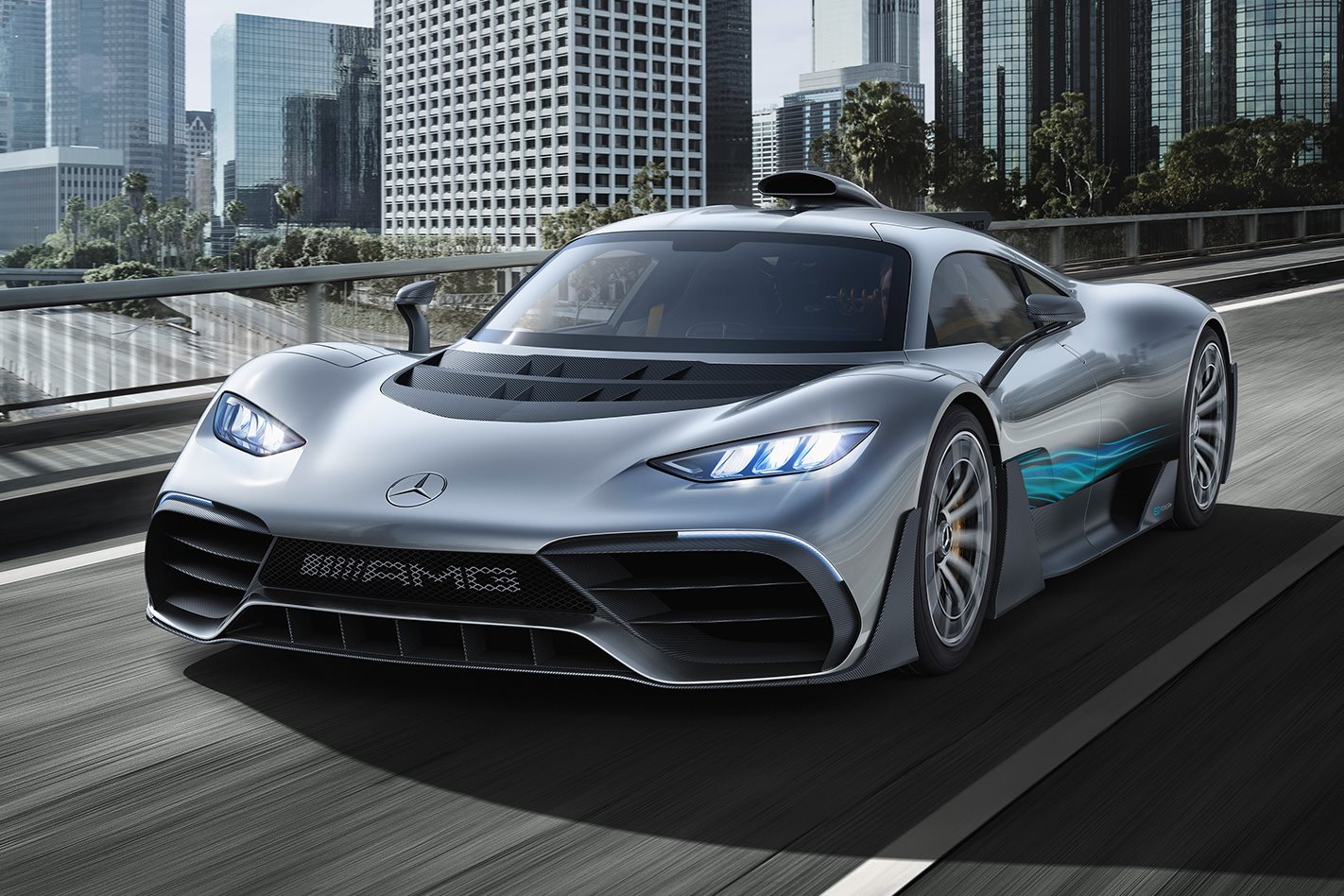
Either way, we’re yet to see this sort of turbocharging system on the road. We are set for something similar, though, when Mercedes-AMG debut the Project One hypercar.
Designed around the engine which powered the F1 championship-winning 2015 W06 racer, it employs a split-turbocharger system which accommodates a generator on a common shaft. It’s due for release this year.
A 19-year-old security researcher from Germany has allegedly been able to hack into 25 Tesla vehicles across 13 countries, exposing a weakness with some of the manufacturer’s vehicles.
David Colombo tweeted to say he had been able remotely access certain functions on various Tesla models, allowing him to unlock doors, open windows, start the vehicles remotely and totally disable their security systems, all from the comfort of his home.
Worryingly, the teenager also claimed early in his Twitter thread that there was no clear way for the owners to report a security breach, potentially delaying the manufacturer from rectify the issue if it was done maliciously.
In a wise move to potentially save himself from the wrath of Tesla’s legal team, Colombo chose not to specify the process of hacking into the vehicles but said the issue was not due to any fault of Tesla, rather the owners.
“This is not a vulnerability in Tesla‘s infrastructure. It‘s the owners faults. That‘s why I would need to report this to the owners,” he said.
“I could also query the exact location, see if a driver is present and so on. The list is pretty long.
“And yes, I also could remotely Rick Roll the affected owners by playing Rick Astley on YouTube in their Teslas.”
If the thought of having “Never Gonna Give You Up” suddenly blasting at full volume on your sound system isn’t enough to make you check your security settings, what will?
Snapshot
- M500 will be cheaper and less powerful than the M600
- Ford’s 3.5-litre EcoBoost V6 will power the new model
- Targeted production of 50 units per year
Niche British manufacturer Noble is back, revealing its new M500 supercar which will become its first new model since 2008.
As first reported by Autocar, the M500 will become the successor to the M600, first launched in 2008 and lauded for its Volvo and Yamaha-derived 4.4-litre, twin-turbocharged V8 engine, a unit which produced up to 485kW and 819Nm on its highest boost setting.
While Noble says the new M500 is set to retain around 70 per cent of the M600’s underpinnings, it has turned to Ford for its latest powertrain, choosing the 3.5-litre, twin-turbo V6 EcoBoost engine which is also found in the Blue Oval’s GT supercar (as well as some of its pick-up trucks), aiming to develop around 410kW when it enters production.
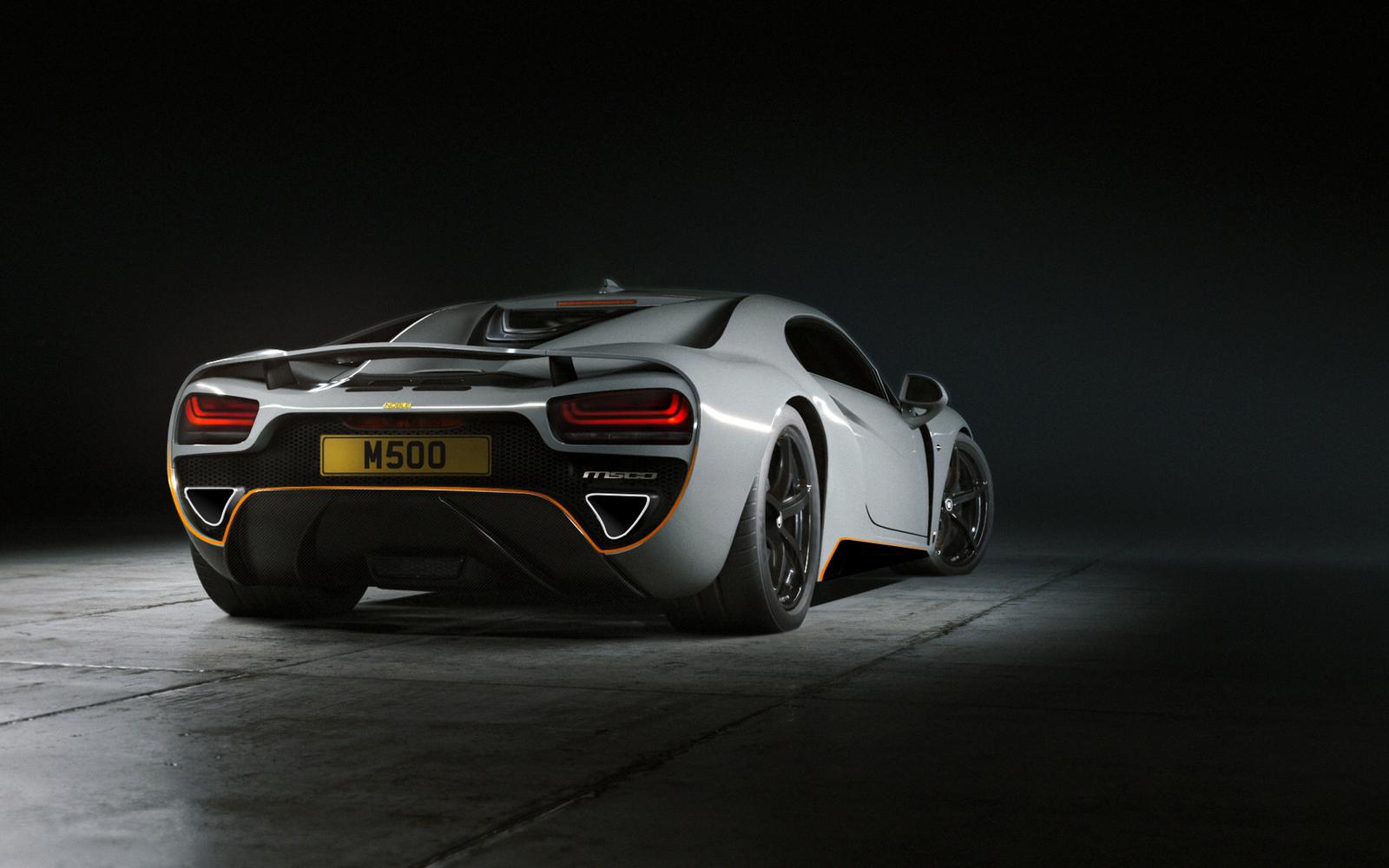
It’s not the first time Noble has turned to Ford for its power solutions – turbocharged V6 Duratec engines featured in the M12, M400 and M15 before the its change to Volvo power, although at the time the Swedish manufacturer was also owned by Ford.
Autocar claims the prototype weighs around 1400 kilograms but its production weight could be shed down to 1250 kilos, roughly the same as its predecessor but now with a less powerful engine to push the mass around.
Hallmarks of Noble’s past will remain, as the M500 is tipped to go without anti-lock brakes or airbags while also retaining a gated, six-speed manual transmission for maximum driving purity.
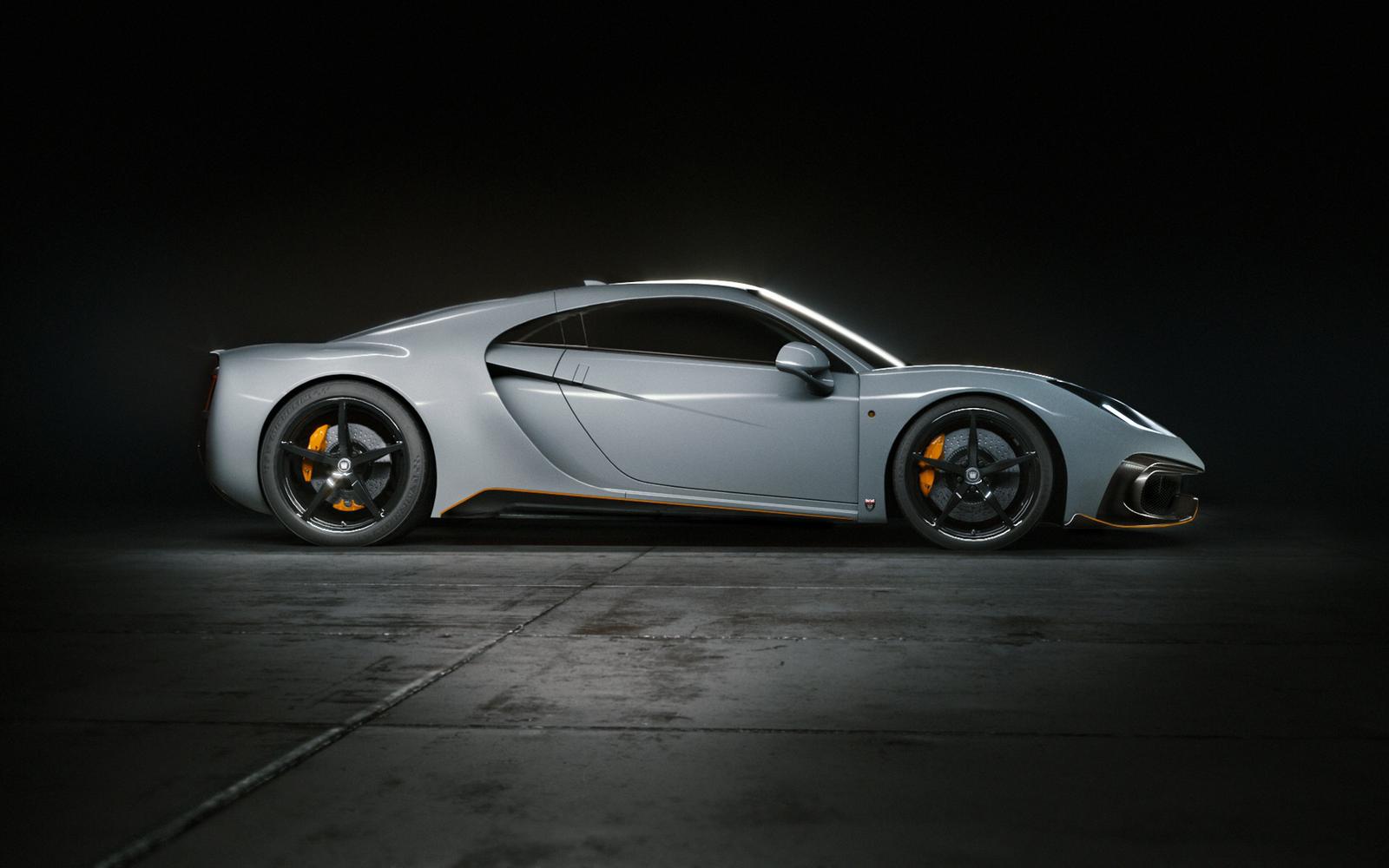
Since the M600’s production run came to an end in 2018, Noble has been working on the more refined M500, smoothing out its body to give a sleeker, more modern look but also giving the car a flat floor, allowing air to be channelled towards the rear diffuser for maximum downforce.
Expected to go on sale for a base price around £150,000 (AU$280,000) before options and special edition packages, Noble targets production of roughly 50 units per year, or one every week on average.
The 2021 Hyundai i30 Sedan N Line joined the line-up in mid-2020, some four years after the hatch variant came onto the scene.
But we might have known about it a little sooner. In early January 2020 – when I was mainly writing about modern classic cars and not keeping fully abreast of new-car market happenings – I was driving down the EastLink freeway in Melbourne when I spotted an unmarked police car.
I spent some time trailing the cop car because it was the first time I’d seen this particular sedan, sporting ‘pennant’ slash cuts down the side and an unusual boot design. I knew it was a police car, as there was no number plate surround, a weird aerial or two, some boxes and wires on the dashboard, and two men in short-sleeve shirts who stared at me intensely as I drove next to it for a closer look.
Six months later – and me now working on a news desk – we were sent press images for the i30 Sedan under embargo, and I had to come to terms with the fact that I’d seen an uncamouflaged Hyundai i30 Sedan undergoing testing and hadn’t realised it. So to say I have a troubled relationship with the car before I’ve ever driven it is an understatement.

The i30 Sedan before you is the N Line Premium variant. Anything from Hyundai wearing an ‘N’ badge denotes it as a full-fat performance variant – powerful engine, tuned suspension, sticky tyres, and a special interior. As Chris Thompson remarked in his review of the 2021 Hyundai i30 N Line hatch, anything with an ‘N Line’ badge translates to ‘N Lite’. So you can think of the car before you as the Smarter White i30 Sedan… but it has a bit more than just two per cent fat.
Being the Premium version, this is essentially the range-topping model before you move to the upcoming i30 Sedan N. Priced from $37,690 before on-road costs, the N Line Premium gets a 1.6-litre turbocharged four-cylinder petrol engine, sending 150kW and 265Nm to the front wheels through a seven-speed dual-clutch transmission.
Either a six-speed manual gearbox or the seven-speed automatic can be optioned with the i30 Sedan N Line, but the N Line Premium can only be had with the auto – helping to deliver the vehicle to 100km/h from a standstill in 7.6 seconds.
Pricing and Features

As well as a 25 per cent power bump over standard models, the N Line variants get larger brakes – up from 280mm to 305mm – while the N Line Premium gets heated and ventilated seats, and a 10.25-inch infotainment screen (up from 8.0 inches) with satellite navigation, DAB+ digital radio, Apple CarPlay and Android Auto, and all running through a Bose premium audio system.
A power sunroof, digital instrument cluster, auto-dimming mirror, front parking sensors, power driver’s seat adjustment and LED ambient interior lighting are also exclusive to the Premium variant, along with a leather interior, automatic wipers, wireless phone charging, rear parking sensors and a reversing camera.
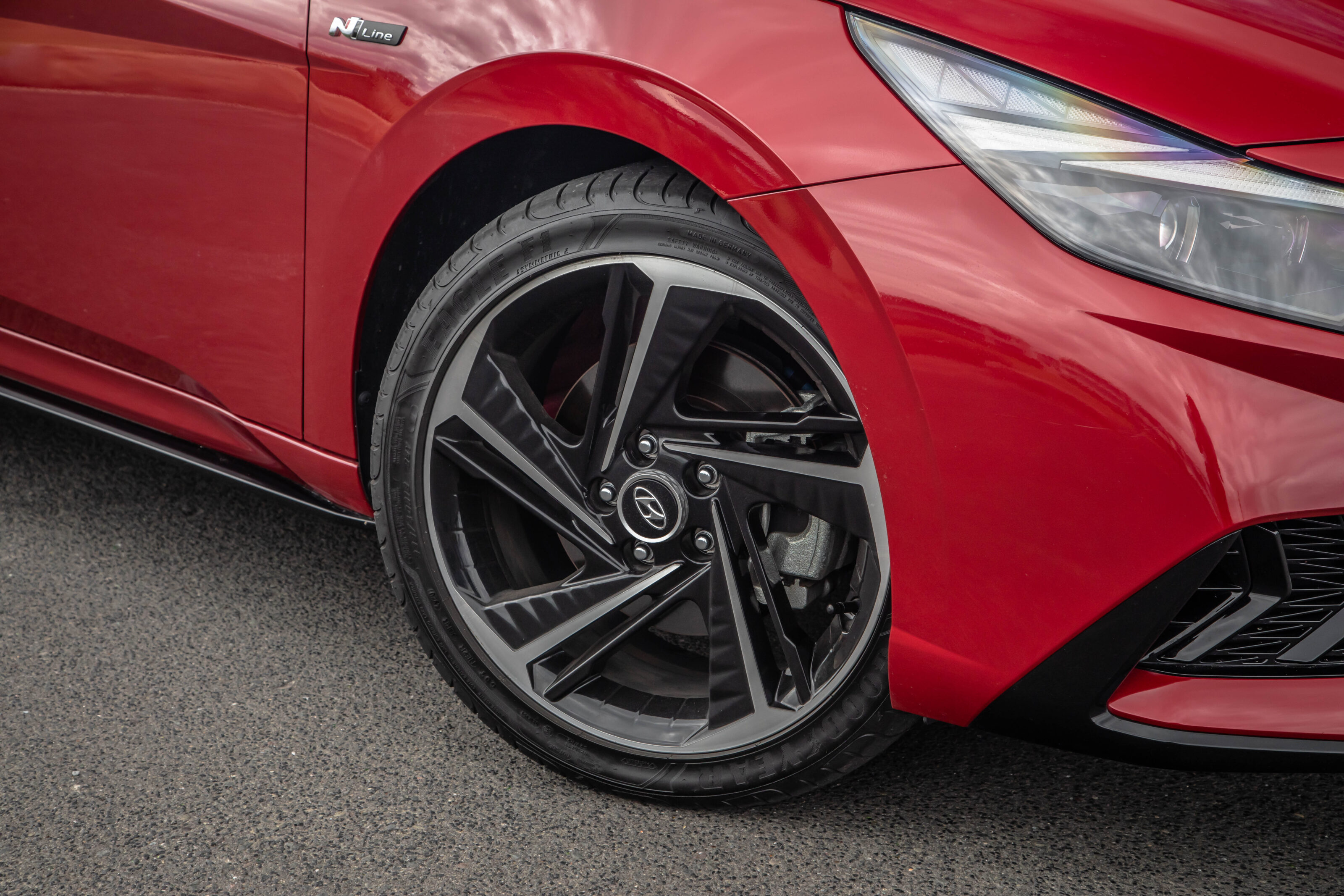
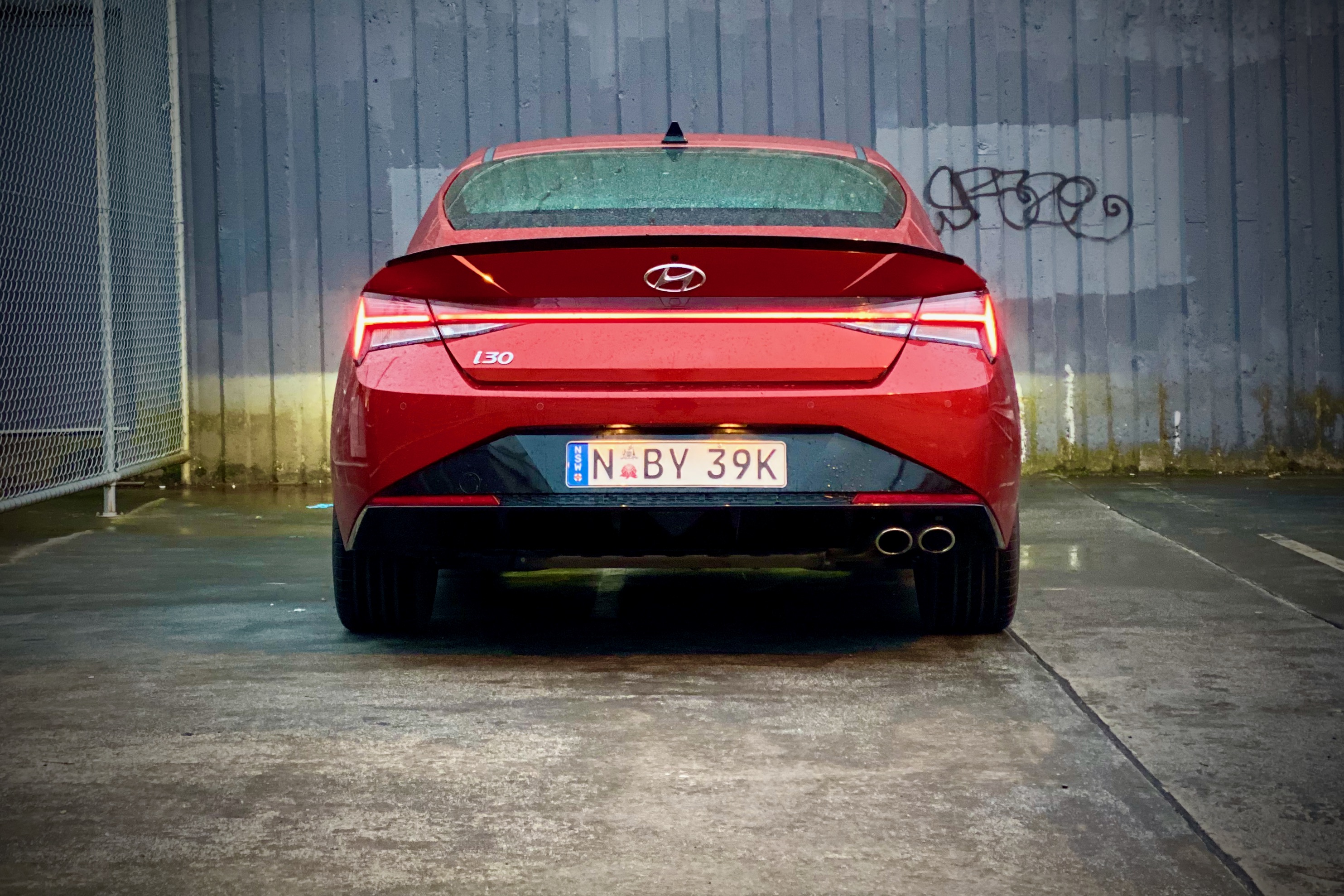
On the outside you get 18-inch alloy wheels clad in Goodyear rubber, a more aggressive body kit, dual chrome oval exhaust tips, LED headlights and tail-lights, and black highlights.
Compared to the ‘base’ i30 N Line hatch with automatic transmission for $31,420 before on-road costs, the range-topping i30 Sedan N Line Premium represents excellent value at $37,690 plus on-roads. It’s quite a jump in interior design, technology, and features.
And while not a direct comparison, it’s worth noting that the recently departed Hyundai Veloster Turbo Premium cost $42,410 before on-roads when optioned with an automatic – and you get a lot more car with the i30 Sedan N Line Sedan Premium.
Anything with an ‘N Line’ badge translates to ‘N Lite’. So think of the car as the Smarter White i30 Sedan … but it has more than just two per cent fat.
Comfort and Space
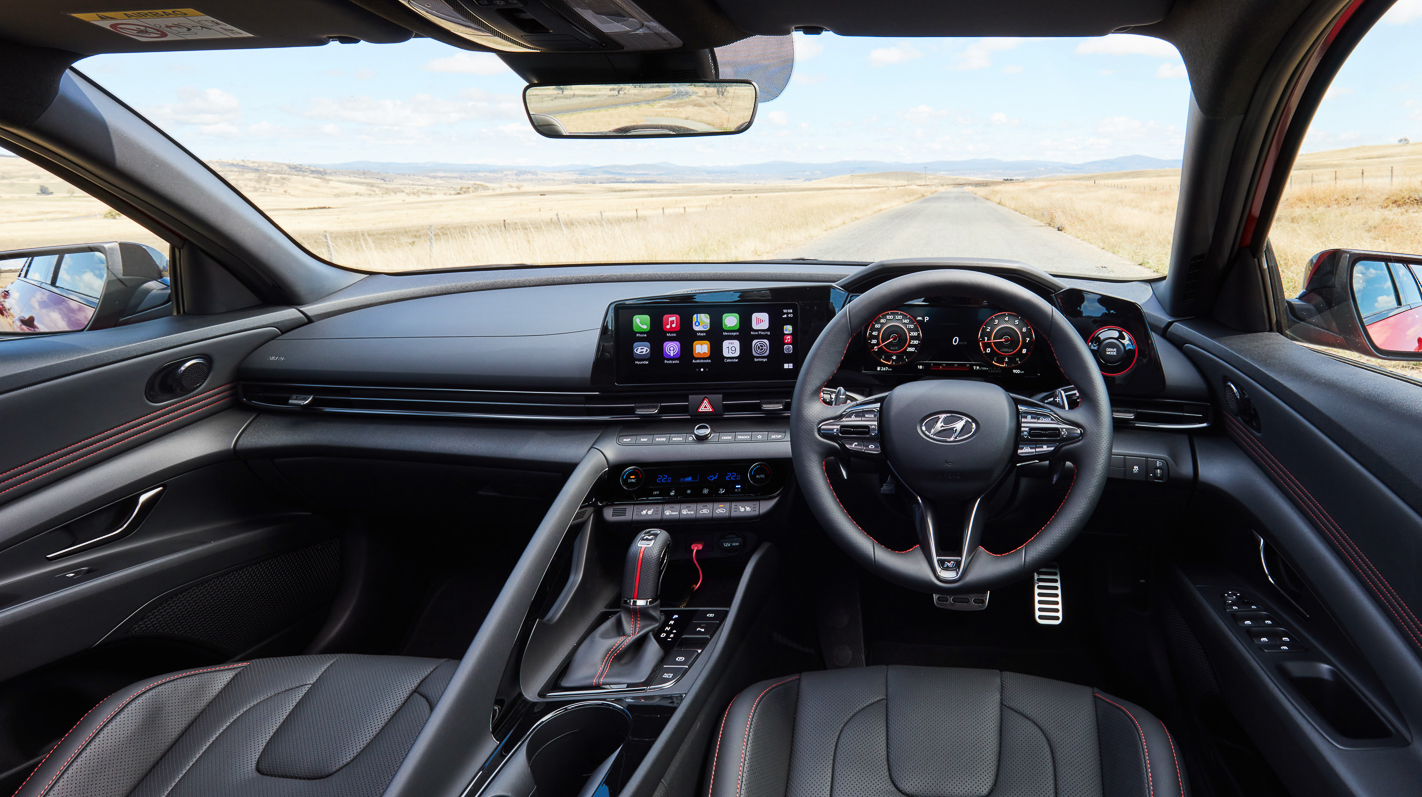
Spend some time behind the wheel, and you would be hard-pressed finding anything major to complain about inside the i30 Sedan N Line Premium. The design and technology will be more than enough for the car to feel fresh and up-to-date for the rest of this decade, and for the vast majority of people, this sedan has more than enough space.
Its 10-way power-adjustable driver’s seat enables a very comfortable position to be found, and the mixture of genuine and synthetic leather feels both supple and hardy – as if the upholstery will stand the test of time, like Mercedes’ famous MB-Tex. Without being overly firm, there’s extra bolstering, some N logos embossed into the seats and red contrast stitching to match the red highlights throughout the interior.

As with the outside of the car, inside you’ll find the cabin has quite a modern look too – almost to the point of being overdesigned. The driver-centric dash layout is appreciated, with sweeping lines providing a flowing visual frame at the upper edges. But while I liked the grab handle for the passenger in the centre console, the plastic itself felt a little hollow and uninsulated – especially noticeable considering almost all other cabin touchpoints feel high-quality and thoughtful.
It might not be the first choice of professional chauffeurs, but the i30 Sedan provides plenty of room in the back seat for adult passengers too. The lack of USB or 12-volt power outlets for second-row occupants seems like a bit of an omission in this day and age, but at least there are rear vents to keep everyone at a comfortable temperature. There is a decent amount of space in the boot, with 474 litres compared to just 395L in the i30 hatch.
On the road

Not that I recommend doing this, but close your eyes and I suspect most would have a hard time finding much of a difference between the Hyundai i30 Sedan N Line Premium and some of the smaller sedans offered by the likes of Audi, BMW, and Mercedes-Benz. The ride and handling – tuned specifically for “Australian conditions” – feel spot-on for a daily commuter car with a sporty flavour. It’s compliant and comfortable but has a sharp turn-in and reasonably flat cornering at speed.
There’s a real premium character that perhaps comes from the feeling of the car being finished. The driving experience doesn’t give the impression of cost-cutting or being put to market too early – there’s a sense of wanting to make the car as good as it could be that helps the Hyundai feel as if it’s nipping on the heels of a BMW 2 Series Gran Coupe.
What does betray the German car experience is cabin noise. Certainly not the worst I’ve experienced by any means, but there is a higher level of din than I’d prefer, and it could contribute to increased fatigue when driving longer distances.

The dual-clutch transmission can also suffer from a shuddery start at times, almost encouraging you to feed in more throttle when the light goes green and forcing you to lean into the car’s sporty flavour.
Having spent some time behind the wheel of a manual Veloster Turbo, I can say the seven-speed dual-clutch automatic in the i30 Sedan – when combined with a newer version of Hyundai’s 1.6-litre turbocharged powertrain – frankly makes a lot more sense. The closer gearing and the improved torque delivery from the engine really help to keep the car in its sweet spot, making the i30 very useable day-to-day, but ready to take on more demanding tasks at a moment’s notice.
Hit the almost comically large Drive Mode button to the right of the digital instrument cluster and the design of the gauges changes to a sporty red theme to let you know you’re ready to rock. And the car really does step up to the task. Its 0-100km/h time might not seem all that fast by today’s standards, but it’s brisk enough to satisfy a spirited drive on a winding road without ever feeling like there’s too much under your foot to send you over the edge. It’s quick, manageable, and most importantly: it’s fun.

What’s more, the exhaust note provides a surprisingly fruity soundtrack, which was unexpected but welcome. Under the right circumstances, the car will deliver a ‘brrt’ between gear changes, reminding you that this ain’t your aunty’s base-spec i30.
The slightly longer wheelbase does also change the car’s character when compared to the i30 hatchback. There’s less of that pointed dart feeling you get in the hatch, and more of a mature and confident footing around bends that adds to the driver’s belief in themselves and the car.
Perhaps the only annoyance was the difficulty I had using the infotainment system. It wasn’t as intuitive to navigate as others I’ve used, and I found myself concentrating on the screen trying to figure out the digital radio more than I was on the road, which led to my first drive being done in silence to avoid letting myself get into bother. No doubt five minutes of training by dealership salespeople would have you working it without issues, but I like to go in blind to see if someone of average intelligence can handle it.
Ownership
The Hyundai i30 Sedan N Line Premium comes with a five-year/unlimited-kilometre warranty and 12-month/10,000km service intervals – whichever comes first.
Up to 50,000km of pre-paid servicing can be included in the purchase for $1562.20 before on-road costs are added, equating to an average service cost of $312.44.
Hyundai claims fuel consumption of 6.8L/100km on standard unleaded petrol, but my time with the car had the average sitting at around 7.4L/100, thanks to some enthusiastic squirts during mainly suburban driving, with a bit of freeway time thrown in.
VERDICT
My relationship with the i30 Sedan may have started under unusual circumstances, but the car really impressed me. In spite of its edgy, in-your-face design, this car is mature, sophisticated and enjoyable to drive.
Not only do the ride, handling, engine performance and technology really propel the Hyundai to a step above, but the car feels as if it’s much more mature and sophisticated than, say, a Corolla sedan. The Hyundai is more on the same spiritual level as a Skoda Octavia, while offering arguably even better value for money. And the Octavia is a car known for being good value already, so that should tell you something.
It may be the four-door version of Hyundai’s small car – designed to compete against the Toyota Corolla and Volkswagen Golf – but in most dimensions, the i30 Sedan almost feels like it’s from the next segment up, as if it’s deserving of an i45 badge.
The Hyundai i30 Sedan N Line Premium could be the perfect solution for buyers who’ve decided they want a fast car for the first time – not some super high-powered German or Italian car. The N Line is lively, quick, and has a sure-footedness when being pushed that makes it easy to drive fast within the realities of driver skill and road law.
If you’re one of the dozen Aussies not looking to buy an SUV and you can get on board with the extroverted styling, the Hyundai i30 Sedan N Line Premium might surprise you. It’s practical, fun, and is a great deal at $37,690 plus on-roads.
In spite of its edgy, in-your-face design, this car is mature, sophisticated, and enjoyable to drive.
2021 Hyundai i30 Sedan N Line Premium specs
| Body | Sedan |
|---|---|
| Drive | Front-wheel drive |
| Engine | 1.6-litre turbo-petrol four-cylinder |
| Transmission | Seven-speed dual-clutch automatic |
| Power | 150kW @ 6000rpm |
| Torque | 265Nm @ 1500-4500rpm |
| Bore/Stroke | 75.6mm x 89mm |
| Compression ratio | 10:1 |
| 0-100km/h | 7.6 seconds (claimed) |
| Fuel consumption | 6.8L/100km combined (claimed) |
| Weight | 1340kg |
| Suspension | MacPherson strut front; Multi-link rear |
| L/W/H | 4675mm/1825mm/1430mm |
| Wheelbase | 2720mm |
| Brakes | 305mm ventilated discs front; 284mm solid discs rear |
| Tyres | 235/40R18 95Y Goodyear Eagle F1 Asymmetric 2 |
| Wheels | 18×8-inch alloys |
| Price | $37,690 plus on-road costs |
Flashback
Got something on your mind, or a question that needs answering? Get on the horn and let the MOTOR team know.
We want to hear it, and have a 12-month subscription to MOTOR Magazine to give away each month to the most entertaining wordsmith that lands in our inbox.
This month, we want to know your ultimate $250k three-car garage. There’s just one catch: all cars must have pop-up headlights. So go on, send us a letter at [email protected], you know you want to.
Read on to see what your fellow MOTOR readers had to say this month.
TOO FAST, TOO FURIOUS
Indulge me for a moment. I’m 62 this year and I suppose this is a refrain that many of us feel as we creak on a bit, but as I look at today’s motoring landscape with the benefit of a certain experience, I have to ask, how fast do road cars really need to be?
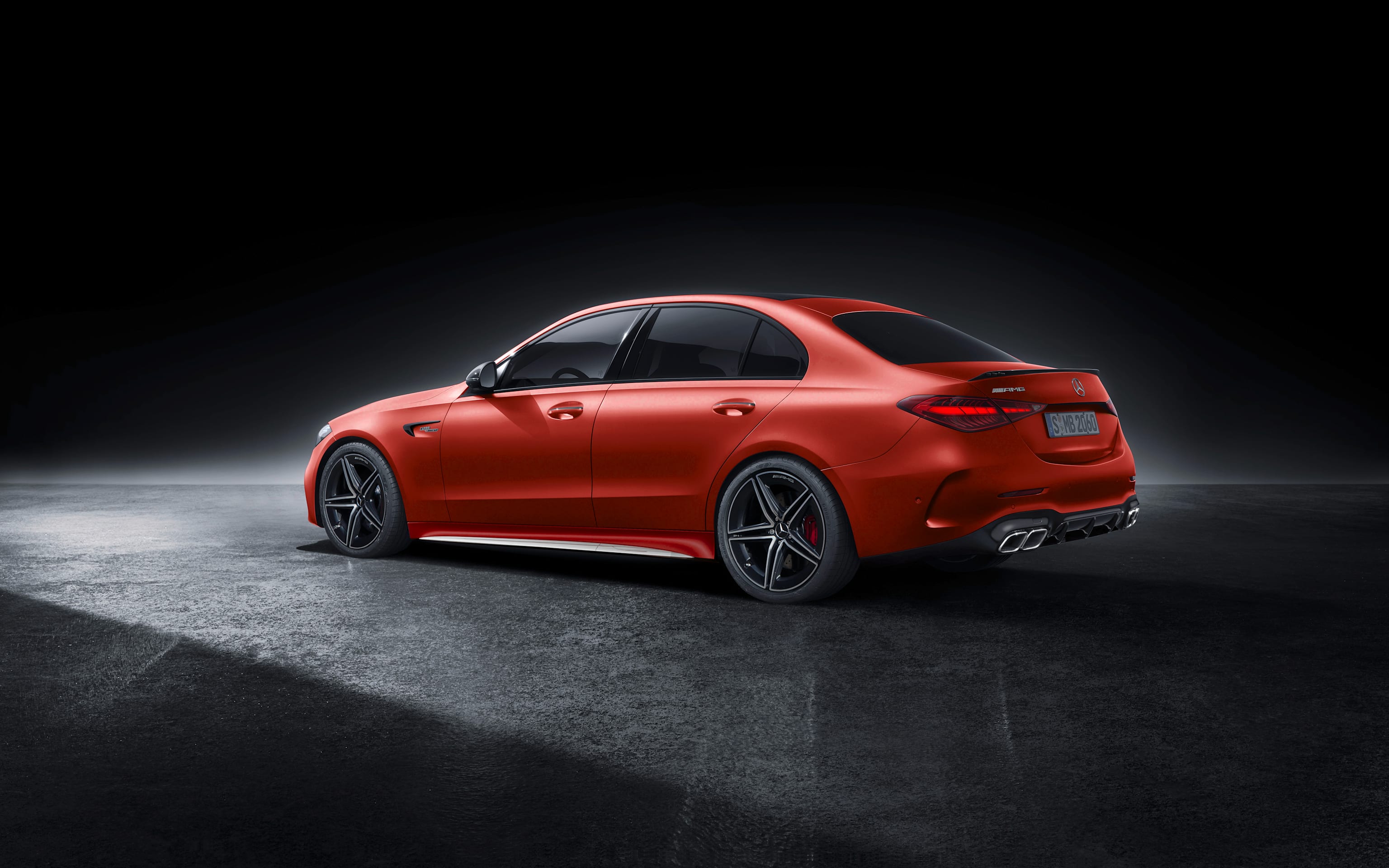
The thing that prompted this thought was the news that the next Mercedes-AMG C63e could have 480kW. That’s more power than a McLaren F1 and only a handful of kilowatts less than a Ferrari Enzo. It’s not a supercar or a track car, so why do we need that much power? I drive a C43 AMG as my daily and with 270kW it’s one of those cars that’s never found wanting for power on road. I can’t approve of another 210kW on top of that. What on earth is the point? I appreciate that for most performance car enthusiasts, more power is the right answer but there has to be some point where we’re just buying capability we’ll very rarely need or be qualified to exercise. Maybe it’s time for a modern reprise of the Japanese manufacturers’ Gentlemen’s Agreement?
Harold Carmichael, via Email
I’m a firm believer in customer choice. At this price point, customers are often buying intangibles. I had a friend who wouldn’t countenance an SL55 AMG because the SL65 AMG V12 he paid almost twice as much for ‘felt nicer’. AMG will furnish the range with less powerful cars to choose from, so there’ll be a model for almost everyone. – Ed
CHECK YOURSELF
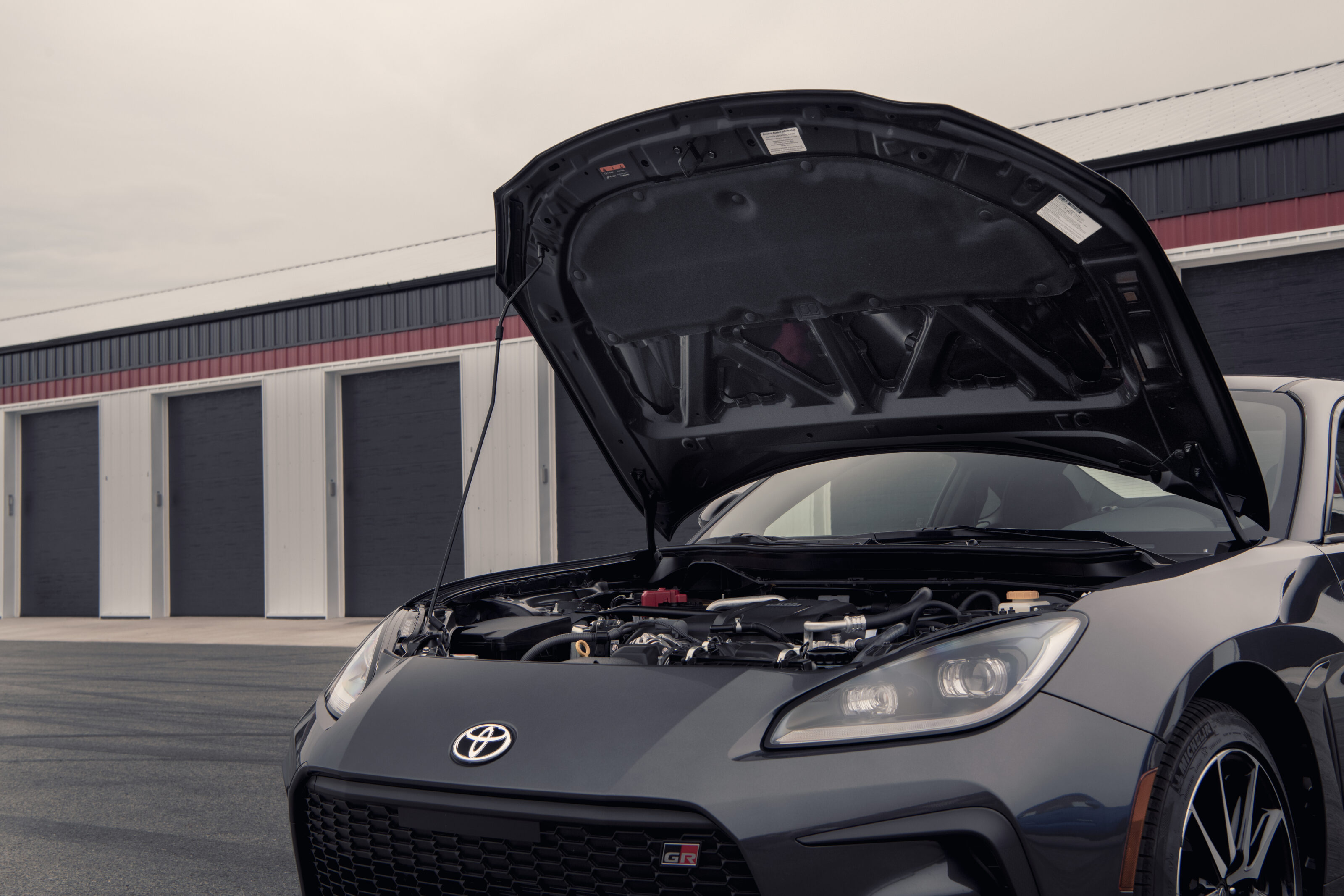
I recently heard that the new Toyota GR86 might not be available in Australia until late 2022, so I was wondering whether I should upgrade my current 86 with a supercharger kit to give the car a new lease of life on track and back roads.
I seem to recall that there were a few kits in the old ‘Hot Tuner’ feature but they seemed to be flaky. Has the tech improved in the past couple of years to make them worthwhile, or should I save my money until the new car comes out?
Rhys Simmons , via Email
To be honest, the best go-faster investment you can make is in yourself. Driver training appropriate to your skill level will always be a transferable asset no matter what car you end up with.– Ed
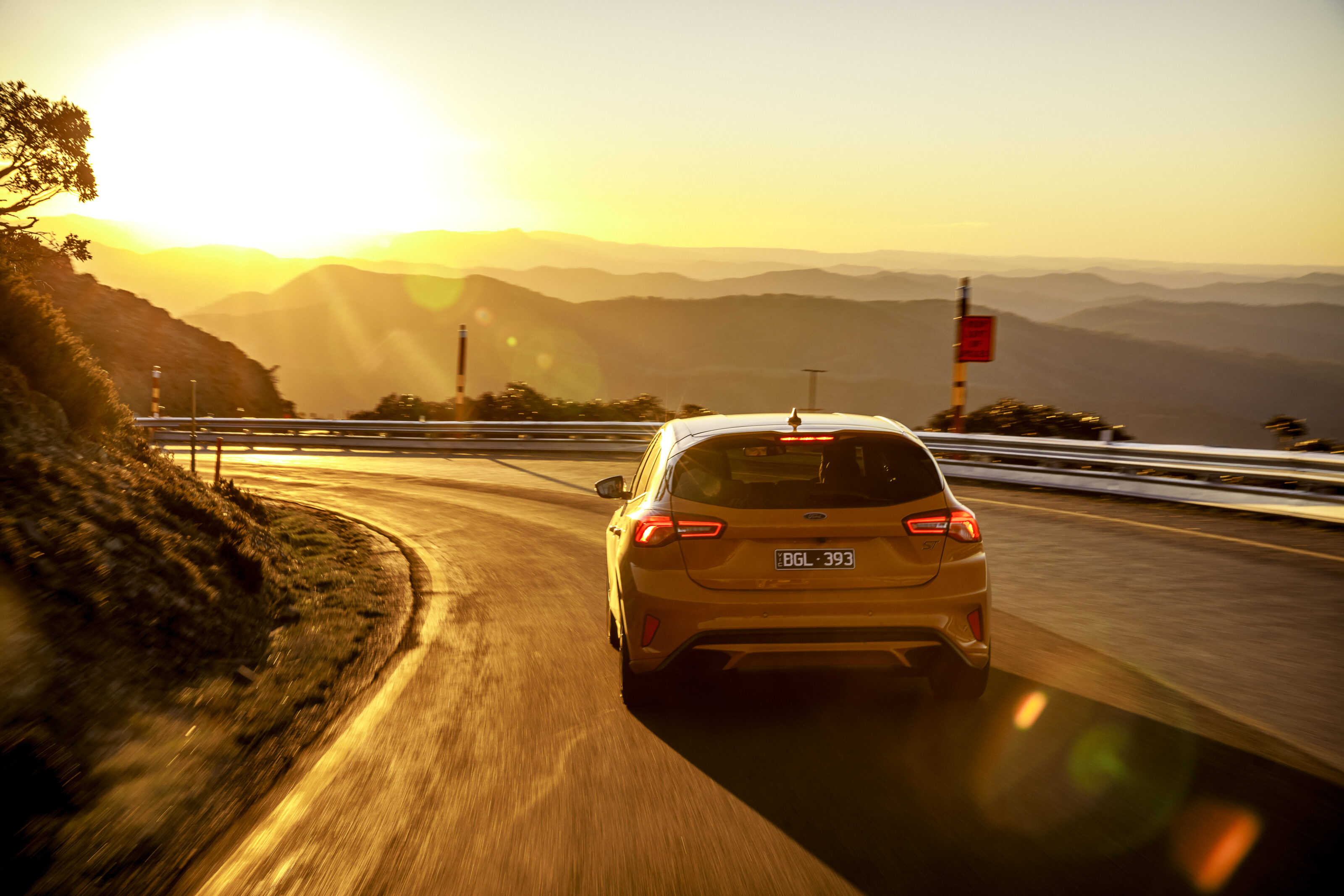
WHAT ABOUT US?
Loving the latest mag, especially the Alpine Rally feature. It’s so cool to see genuinely well-written and relatable Aussie stories in the magazine on cars that don’t require a Powerball win. One issue though. I know that Covid has seen us all withdraw a bit into ever-smaller circles, but can we make some of the drives a little less Victoria-centric?
Paul Taylor, Townsville QLD
Funny you should say that, Paul. Now that things are opening up a bit, your fellow banana bender Cam Kirby has some features rolling out in the next few months that ought to be right up your street. – Ed
CLASSICAL GAS
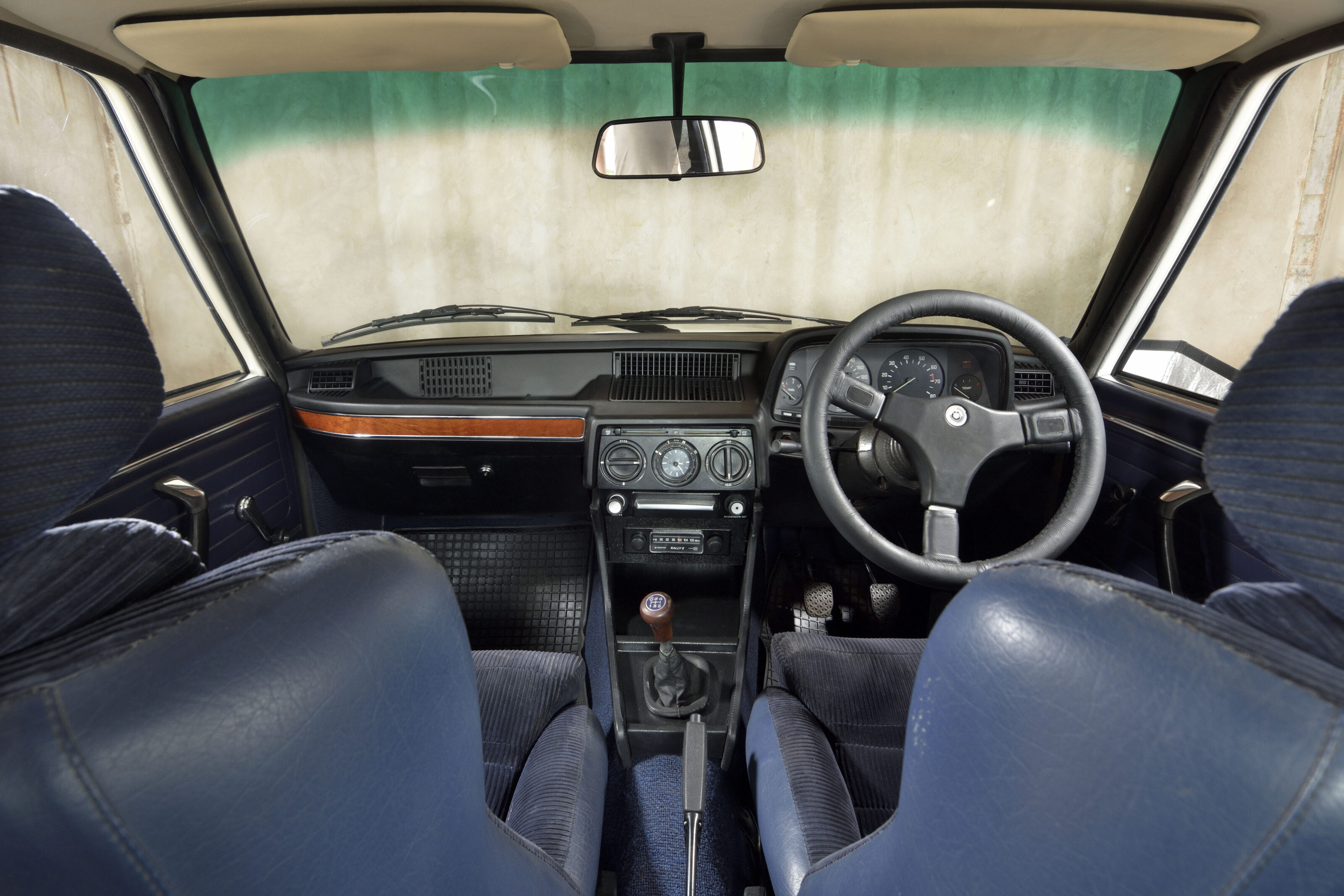
Trent Giunco’s sign-off line in this month’s Forgotten Fast Cars piece on the BMW 530 MLE really stuck a chord. Apparently Enright got out of the car and thought it ‘smelt nice’.
I know exactly what he means. There’s something about 1970s car interiors that gives off this incredibly nostalgic smell and I can’t quite put my finger on how or why it changed in the 1980s and 1990s into that more generic sickly ‘new car smell’.
If I had to guess I’d say it was something to do with the way the plastics are made, but there’s an almost organic smell to a 1970s car that can’t just have come about from half a century of farts.
Brian Taylor-Ellis, Caloundra
TRIDENT TRUSTED?
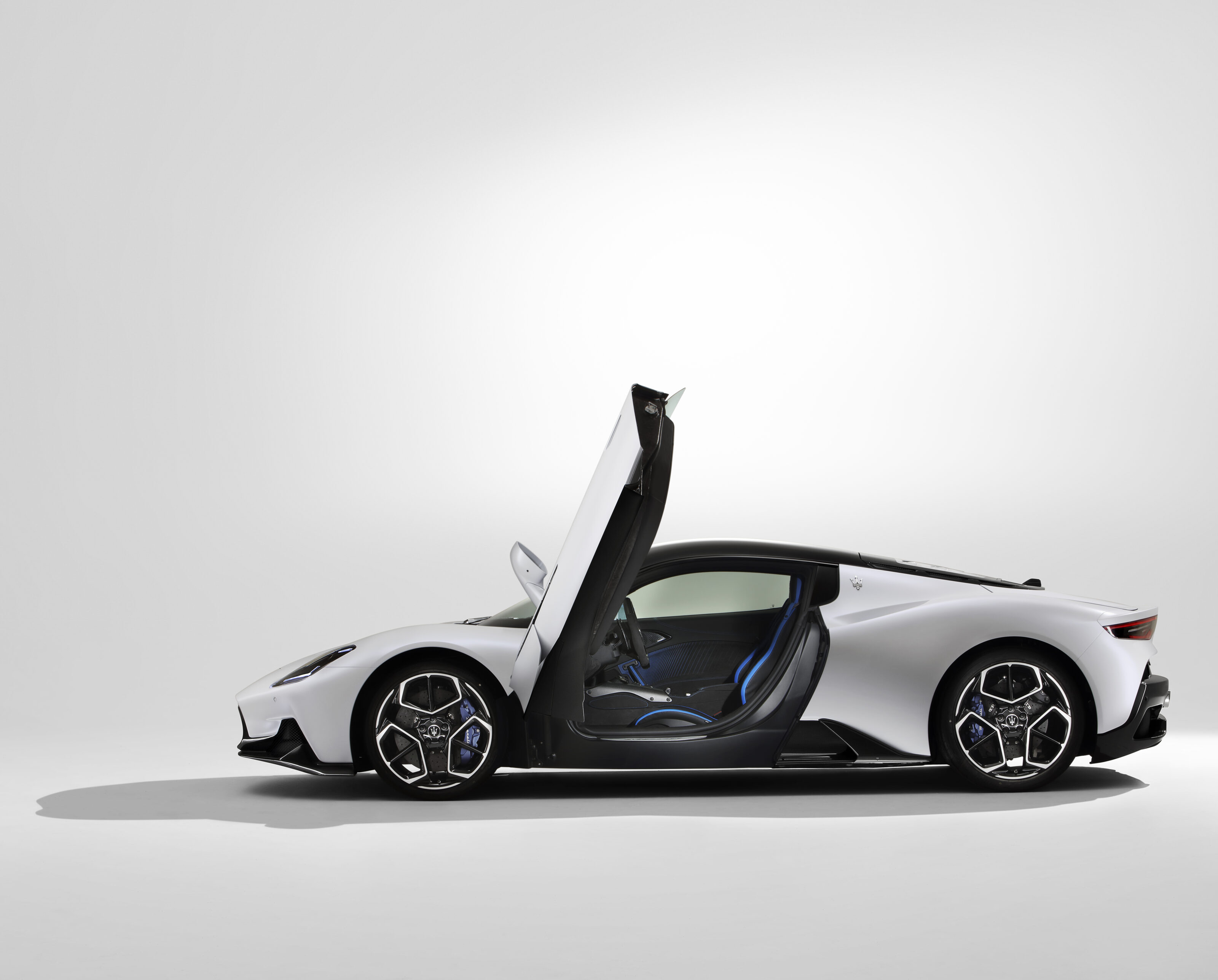
As much as I love the look of the new Maserati MC20, I do wonder whether it’ll be a flop. After all, the last mid-engined series production Maser was the Merak that finished up in 1983. That’s nearly 40 years ago.
From the road tests at the time, even that wasn’t much chop. So re-entering that market when it’s already absolutely rammed to the gills with heaps of supercar rivals strikes me as a great way of micturating their money up a wall. I’d love to be proven wrong, but I just can’t picture all these people who’ve been patiently sitting on their money for the best part of half a century to get their hands on a Maserati with an engine over their shoulder. What’s your take?
Jim Bryant, Goulbourn, NSW.
It’s certainly a bold move on Maserati’s part and will go a long way towards bringing hard-won authenticity to a brand which has had its share of ups and downs. Stay tuned for next month. – Ed

CIRCLE WORK
Can someone there please explain what a tyre’s friction circle is? I’ve looked it up but I don’t really understand the maths involved. Is there a simpler way to explain it to someone who glazes over when presented with formulae?
Michele di Natale, via email
In its simplest form, the friction circle is a graphical illustration of the limits of a tyre’s grip, covering both longitudinal and lateral acceleration. A driver can’t expect to call upon a deep reserve of acceleration or braking when the tyre is at the limit of its lateral adhesion mid corner (illustrated by the left and right-hand extremes of the circle) and vice versa. Picturing this on a dual-axis diagram, the friction circle allows us to see how techniques such as trail braking can maximise the amount of frictional effort put into the tyre. In other words, maintaining a position as close to the edge of the circle as possible, in theory at least, guarantees that the tyre is operating at its optimum. Remember that this is a basic interpretation and doesn’t take into account factors such as slip angle, traction slip and certain nonlinear measures. The ‘circle’ is not fixed in size and shape as well, though I’ll leave that to you to figure out why. -Ed
FAST TRACKED
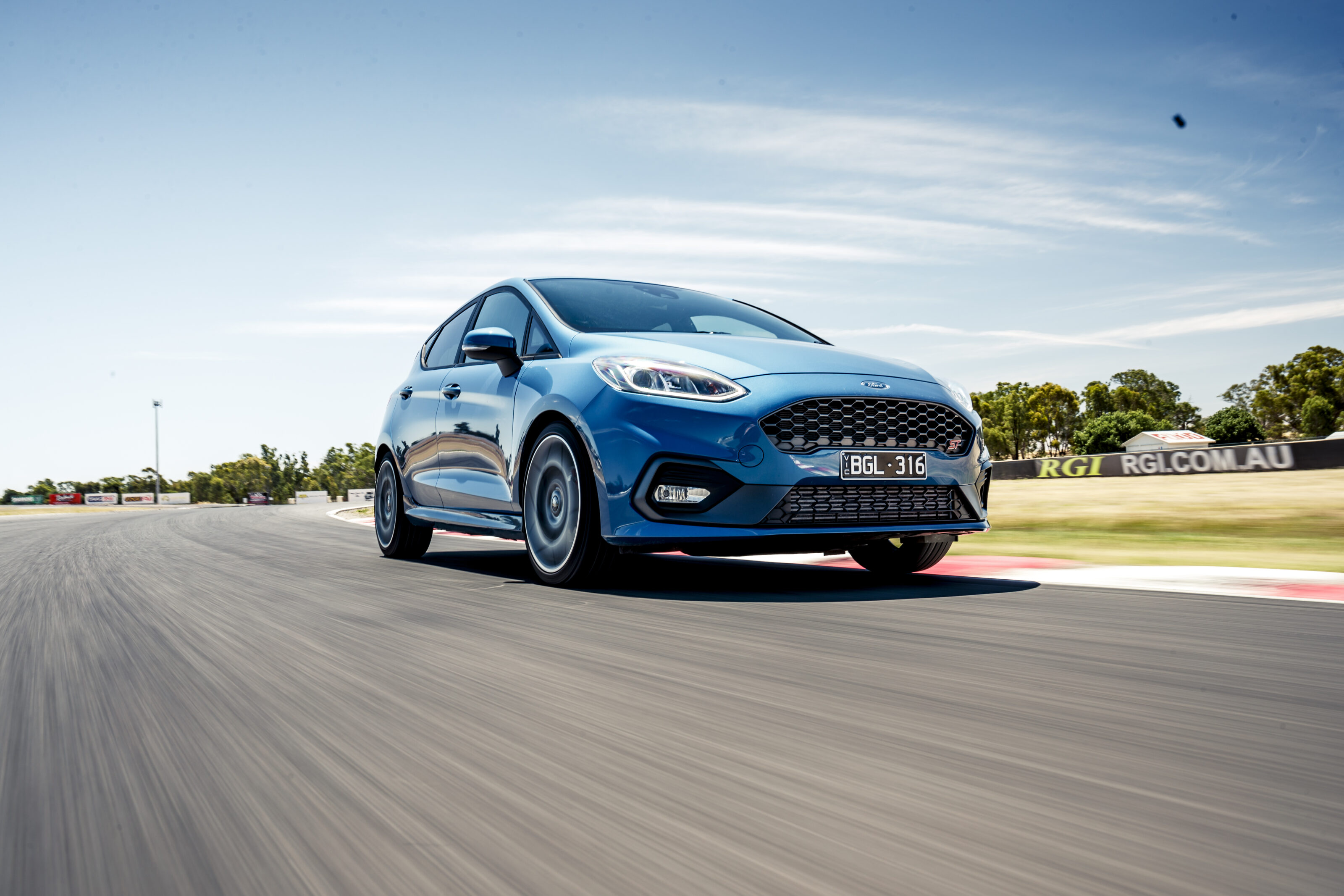
I’d been talking about attending a track day as something I may get round to, but my wife has rather taken the initiative and wants to buy me a track day at Phillip Island for my birthday.
I have the suspicion that PI could well be a bit of a big boy’s track and that I might be better off somewhere else, but I don’t want to appear ungrateful. Is there anywhere you’d recommend over the Island for my first taste of track driving? I’m based in Melbourne and I drive a 2017 Ford Focus RS.
Anil Sharma, via email
Instruction is a good tip at virtually any race circuit, but if you just want to take things at your own pace, maybe somewhere like Winton could be a good deal less intimidating and a bit safer for your experience level. Check out our track guide in our October issue for a primer on what to expect up Benalla way. – Ed
FRATRICIDE!
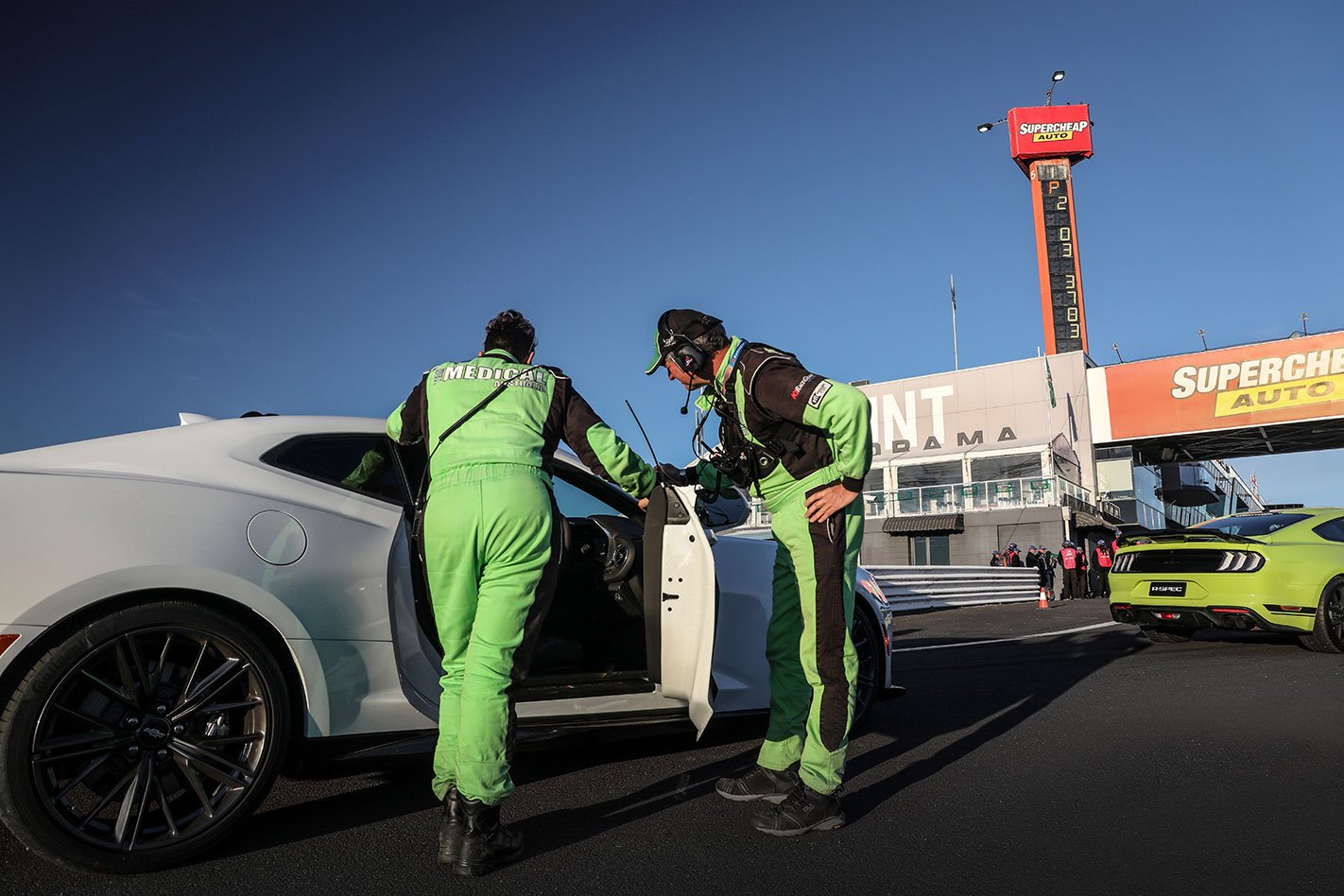
Can I lob a hand grenade into the Letters page? The MOTOR team and the Wheels team are challenged to nominate four of their staff and have a relay race at Bathurst, with each journo doing four or five laps before handing over to their colleagues. Who wins?
James Sturridge, Via email
Great question. If the race was in Kia Carnivals, I reckon Wheels would definitely edge it. Team MOTOR would probably be incapacitated with laughter trying to follow human missile Ash Westerman over the mountain. – Ed
REVERSE PSYCHOLOGY
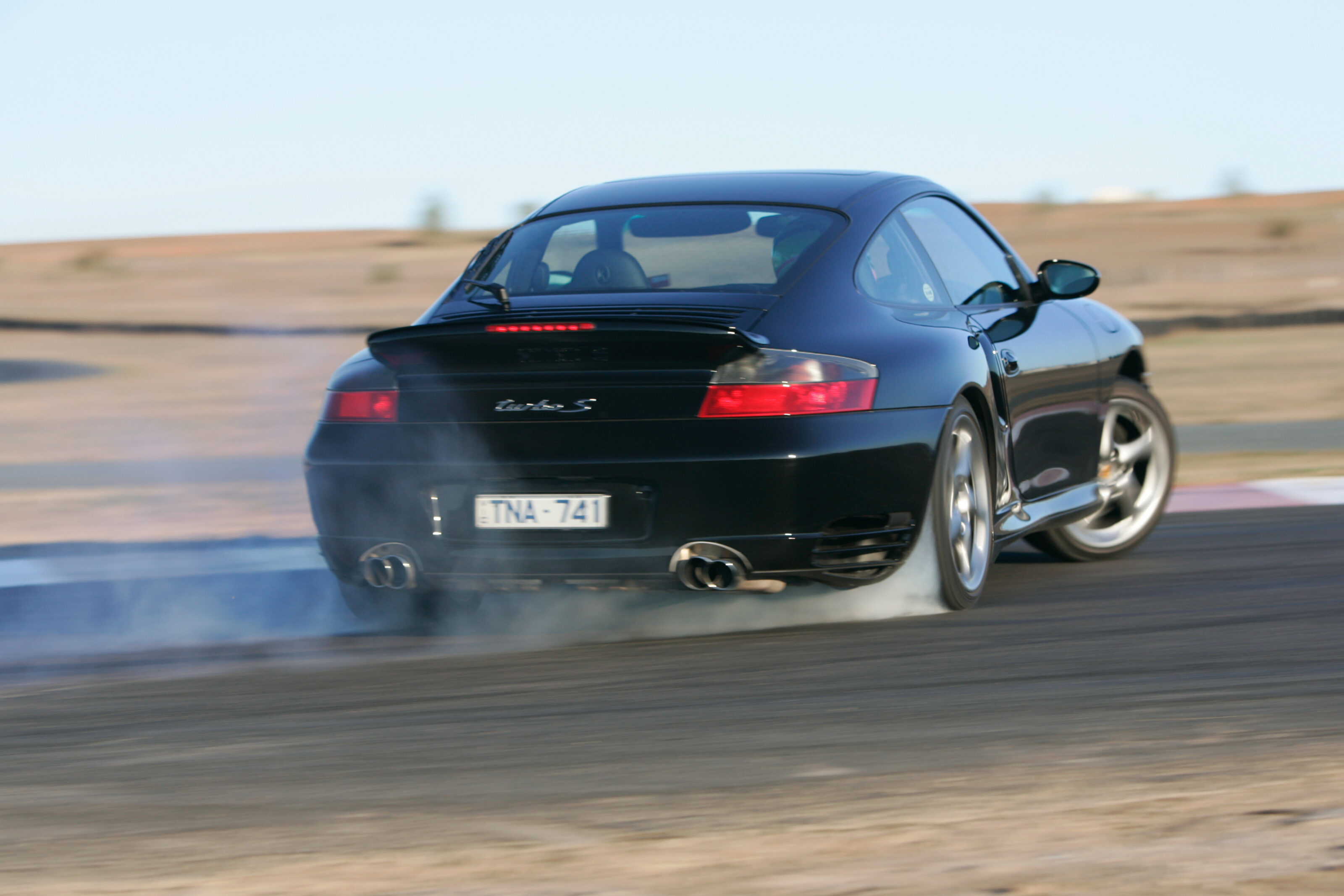
I’m looking to buy a Porsche 996 Turbo and had my heart set on a manual model, but I’m coming round to the idea of the Tiptronic automatic. While I was discussing this with a mate, he told me that the auto version has two reverse gears. This sounds absolutely cooked but after a bit of research, I believe this may well be true. What the actual?
Simon Mole, Via email
The 996TT actually works really well with an auto ’box. It’s no sharp-shifting PDK but suits the nature of the car and is actually a mechanically tougher thing than the manual. The auto is the same Merc 722.653 ’box found in the SL 55 AMG and, yes, it does have two reverse gear ratios. On cold start, first forward and first reverse gears are used to warm the engine. Once up to temperature, the car moves away in second and utilises its second reverse gear. – Ed
The 2023 Audi Q8 E-Tron may be the new name for the Audi E-Tron, according to a new report out of Germany.
German industry publication Automobilwoche says Audi will be renaming the E-Tron as the Q8 E-Tron when the facelifted electric SUV makes its debut in the latter part of 2022, clearing up the carmaker’s confusing model names.
The E-Tron was Audi’s first electric production car, but the badge was quickly adopted to represent other battery-powered models in its stable, such as the Q4 E-Tron and Q5 E-Tron.
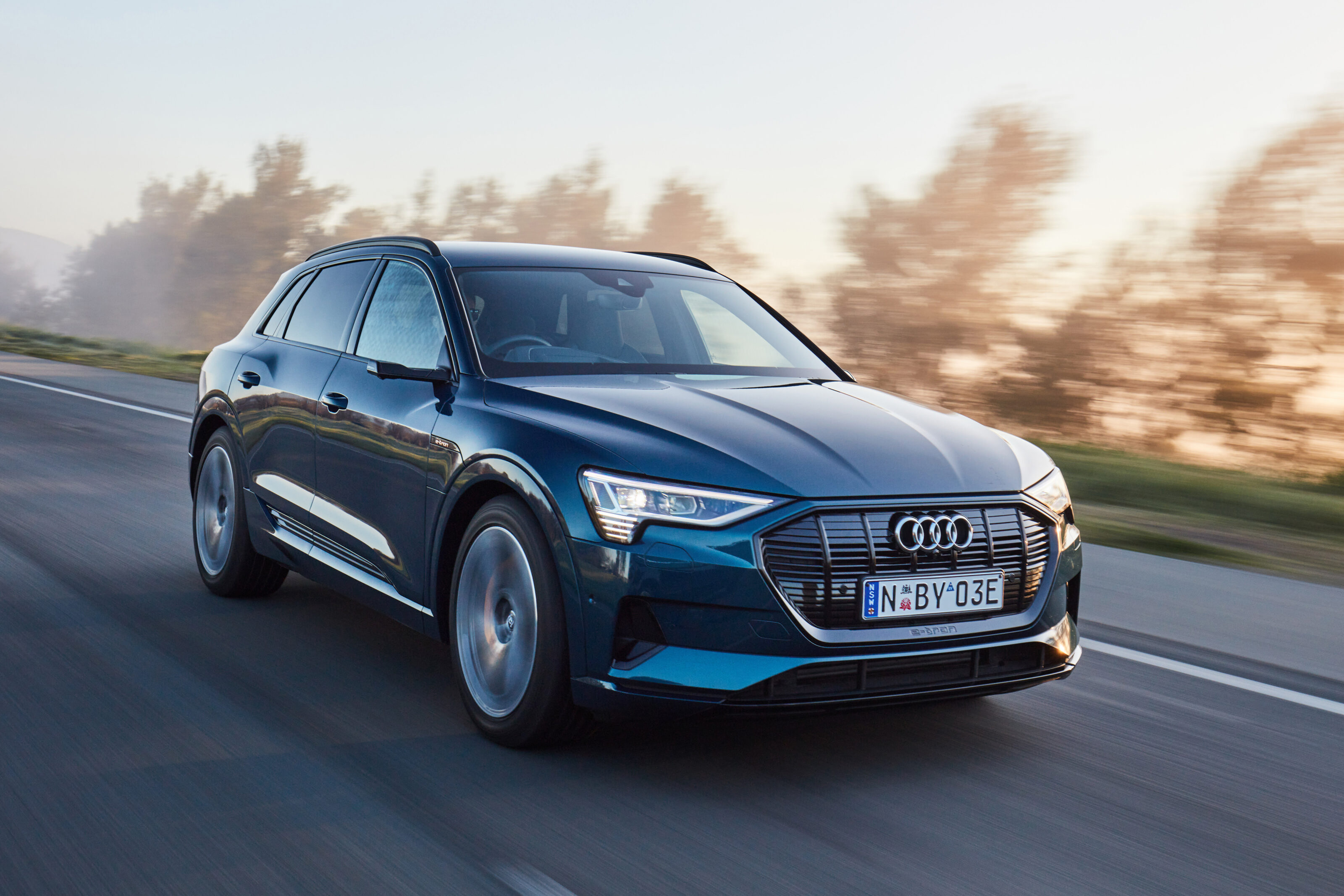
The current situation could be confusing for Audi buyers, as it may not be immediately obvious where the Audi E-Tron sits within a portfolio with typically easy-to-understand naming conventions: A1 to A8 for passenger cars, Q2 to Q8 for SUVs, S for performance variants, and RS for high-performance vehicles.
However, news from last month pointed towards the Q8 E-Tron name being applied to a future flagship SUV from the German luxury carmaker in 2025, which will likely replace the current E-Tron.
If the latest report comes to fruition and Q8 is added to the E-Tron from 2023, it appears as if it could be a deliberate strategy employed by Audi, rather than a mere lack of foresight.

Other manufacturers have worked from the same playbook in recent years. The Hyundai Genesis and Hyundai Ioniq models allowed the company to introduce those names to consumers – linking them with the premium segment and battery-electric powertrains respectively – without the large investment required to launch each as a new brand.
Due to arrive in Australia this year, Volkswagen Group’s Cupra brand originally started life as a badge on sporty models from Spanish carmaker Seat, before also being spun-off as its own entity.
Audi has yet to confirm whether the E-Tron will indeed become the Q8 E-Tron for 2023, but we should get an answer when the facelifted model is unveiled in the third quarter of this year (July to September inclusive).
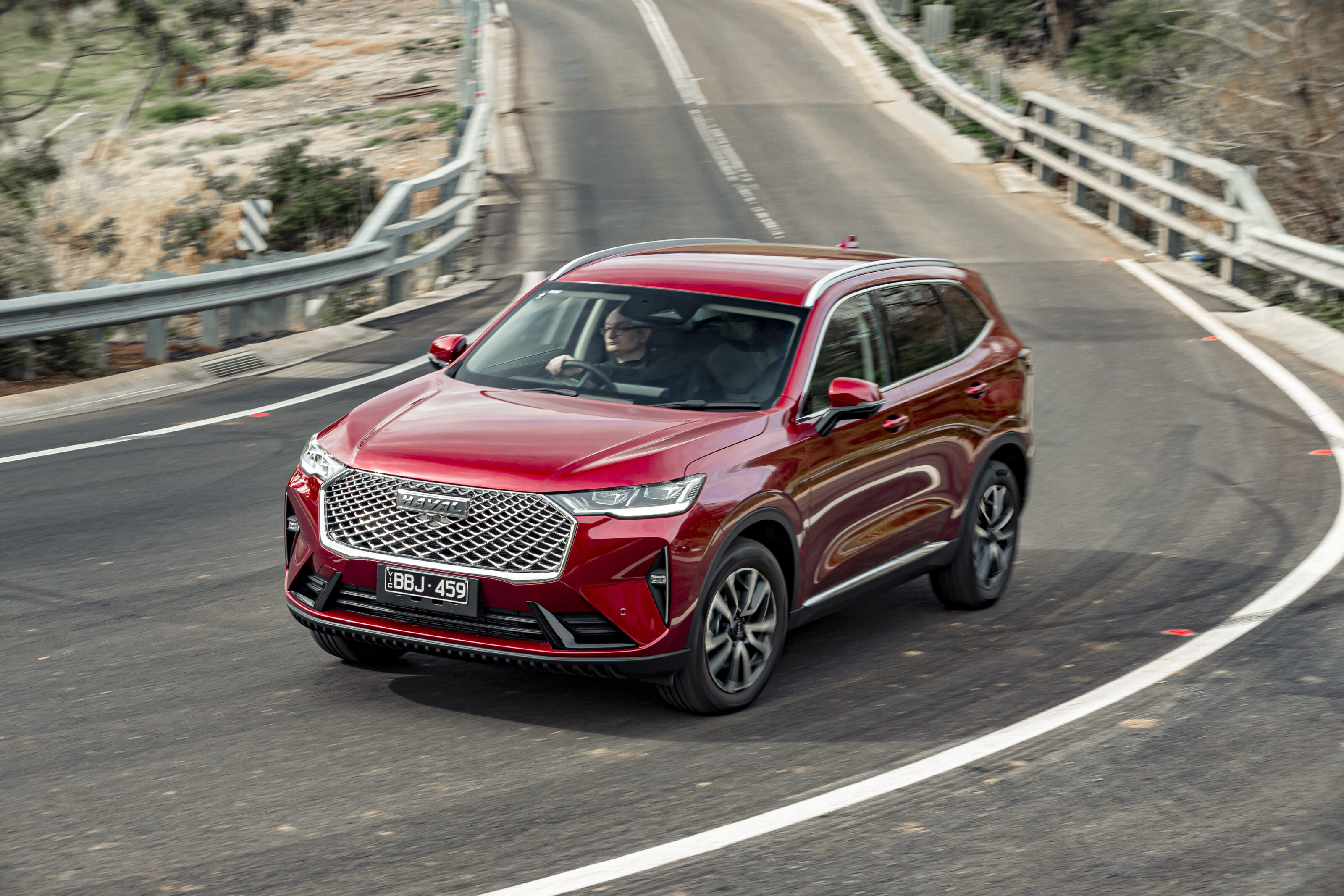
UPDATE, January 12, 2022: The 2022 Haval Jolion and 2022 Haval H6 have gone up in price by $1000 for the second time in three months.
The price hikes represent an increase of 7.9 per cent for the entry-level Jolion and 6.5 per cent for the entry-level H6 since the two Haval models went on sale less than a year ago.
The price increases came as the Chinese carmaker introduced a new limited-edition variant to the H6 line-up this week, costing $1000 more than the Ultra on which it’s based – with buyers getting a blacked-out grille and black alloy wheels – but what amounts to a $3000 increase over pre-October prices.
Wheels has contacted GWM Haval and this story will be updated with its response.
Price tables have been updated to reflect the latest changes.
The story to here
November 9, 2021: The 2022 Haval Jolion and 2022 Haval H6 are now $1000 more expensive across the line-up.
Haval increased prices for both the Jolion and H6 at the beginning of October, with a company spokesperson telling Wheels the decision was a “result of increased costs across the supply chain, including procurement and shipping”.
The entry-level Jolion Premium now starts at $26,490, topping out at $31,990 for the Jolion Ultra Launch Edition.
The Haval H6 range is now priced between $31,990 and $39,990. All prices are drive-away.
While both the Jolion and the current-generation H6 have been on sale for less than a year, the price change represents an increase of between 2.5 and 3.9 per cent.
According to Trading Economics, Australia’s inflation rate has slowed slightly from 3.8 per cent in the second quarter to three per cent in the third quarter of 2021.
2022 Haval Jolion Australian pricing
Note: All prices are drive-away.
| Jolion Premium | $27,490 |
|---|---|
| Jolion Lux | $29,990 |
| Jolion Ultra | $32,990 |
2022 Haval H6 Australian pricing
Note: All prices are drive-away.
| H6 Premium 2WD | $32,990 |
|---|---|
| H6 Lux 2WD | $35,990 |
| H6 Ultra 2WD | $38,990 |
| H6 Vanta 2WD | $39,990 |
| H6 Ultra AWD | $40,990 |
| H6 Vanta AWD | $41,990 |
The 2022 Haval H6 Vanta has just been announced as a range-topping, limited-edition variant of the Chinese SUV.
The Vanta is essentially a styling upgrade for the flagship H6 Ultra, with Haval adding a black front grille and black 19-inch alloy wheels, with stock limited to just 1000 vehicles set for Australia.
Priced at $1000 more than the Ultra, the new H6 Vanta is available in two versions: a front-wheel-drive model from $39,990 drive-away, and an all-wheel-drive variant from $41,990 drive-away.
Both are powered by a turbocharged 2.0-litre four-cylinder petrol engine producing 150kW and 320Nm, with combined fuel consumption figures of 9.3 litres per 100 kilometres and 10.2L/100km respectively.
The Vanta carries over the Ultra’s interior, tech, and safety features, with the new variant available in four colours: Burgundy Red, Blue Sapphire, Golden Black and Hamilton White.
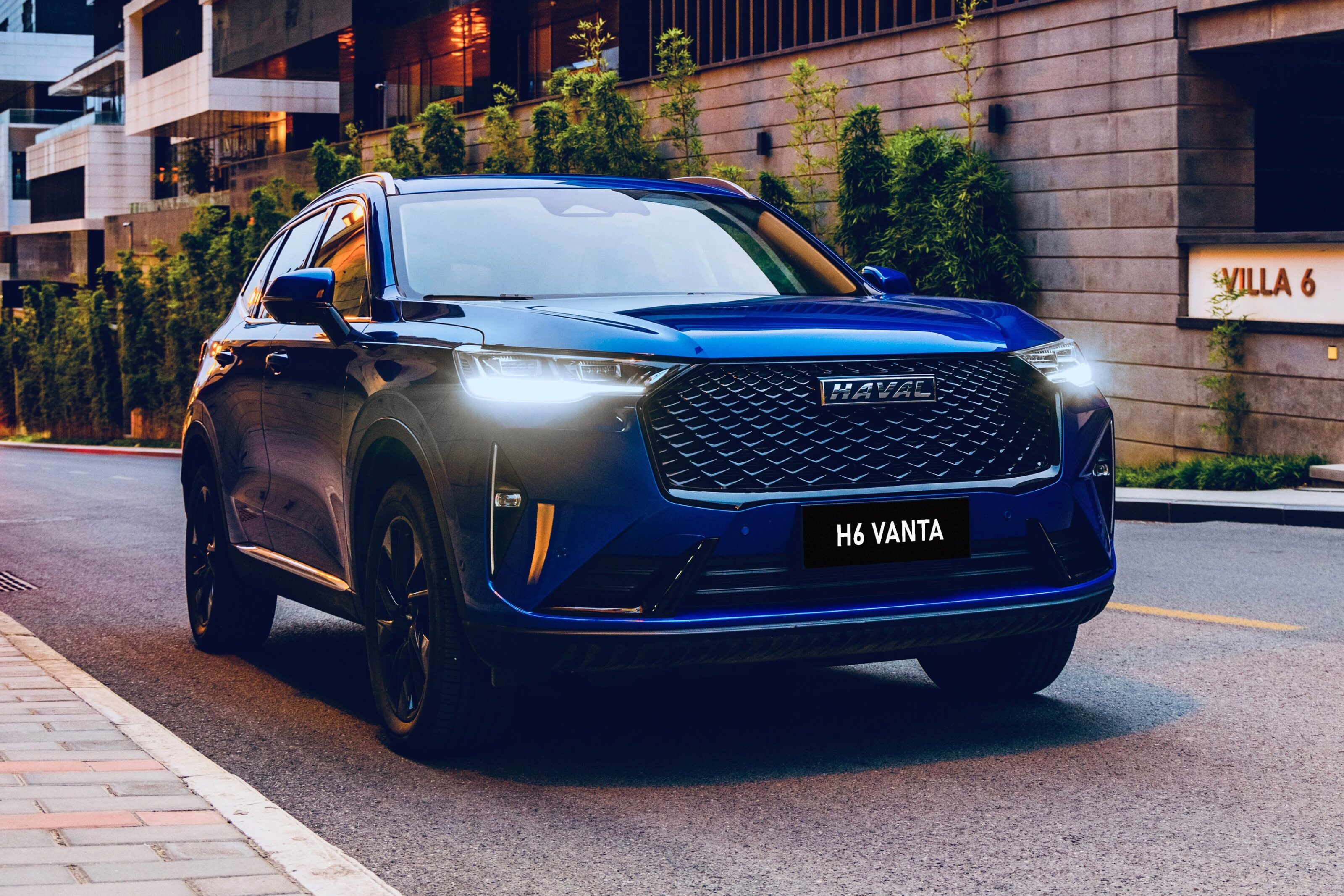
The Haval H6 saw a 280 per cent increase in sales for 2021 compared with the previous year, with the Chinese carmaker selling a total of 3635 locally – meaning stock of the limited-edition Vanta should last well into 2022.
GWM Haval have confirmed the H6 Hybrid will join the line-up in the coming months, but the company told Wheels in December there were “no firm plans” to bring the recently-revealed H6 Plug-in Hybrid to Australia just yet.
