
Key Points
- GT500KR nameplate returns after 13-year absence
- 5.2-litre V8 makes over 670kW
- Six examples will be available for Australian customers
Shelby American has provided a throwback to its heritage by announcing the return of the GT500KR, one of the most powerful Ford Mustang packages available.
Available for MY20, MY21 and MY22 Shelby GT500s, the GT500KR package increases the 5.2-litre V8’s output from 760 horsepower (565kW) to in excess of 900 horsepower (670kW) with the help of a 3.8-litre supercharger.
The King of the Road upgrades are more than just an extra dollop of power, the GT500’s Magnaride suspension tweaked to work better with new adjustable springs and sway bars at the front and rear.
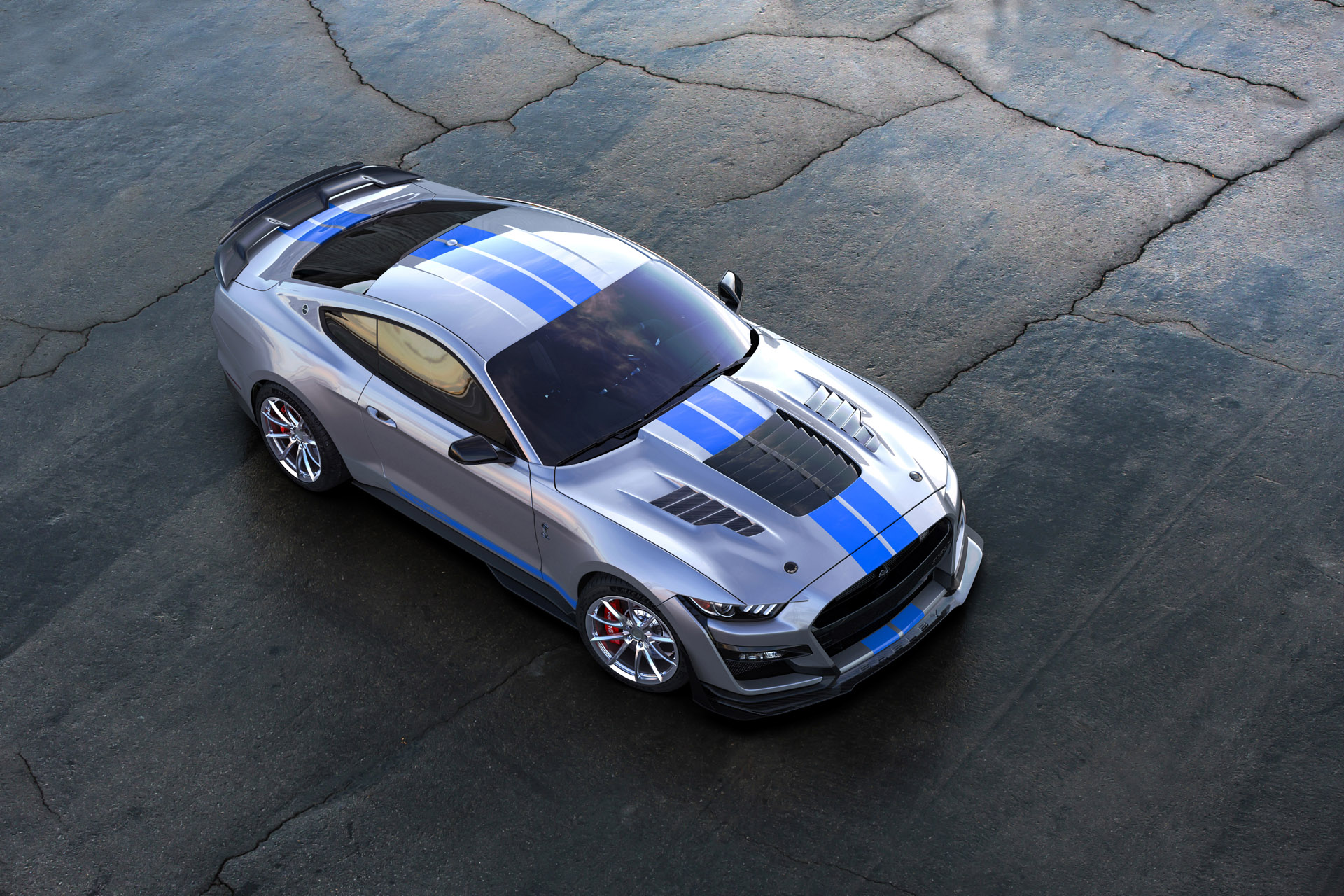
While the base GT500 looks anything but discreet, going for a GT500KR takes it up a notch with new one-piece, 6061-T6 forged aluminium wheels (20-inch x 11.0-inch front and 20-inch x 11.5-inch rear) on all four corners, coupling with a carbonfibre bonnet, front splitter and rear diffuser to make its stance even more aggressive.
Despite the GT500KR featuring an impressive level of equipment, Shelby offers a range of optional features for buyers to further enhance their car, ranging from Le Mans style ‘over the top’ stripes, painted stripes, a polished supercharger, rear seat delete with harness bar and its Shelby Wide Body kit.
Special 60th anniversary badges are available for MY22 models as a no-cost option, honouring the 1962 formation of Shelby American that ultimately led to the first GT500KR being conceived in 1968, before the nameplate was revived in 2008.
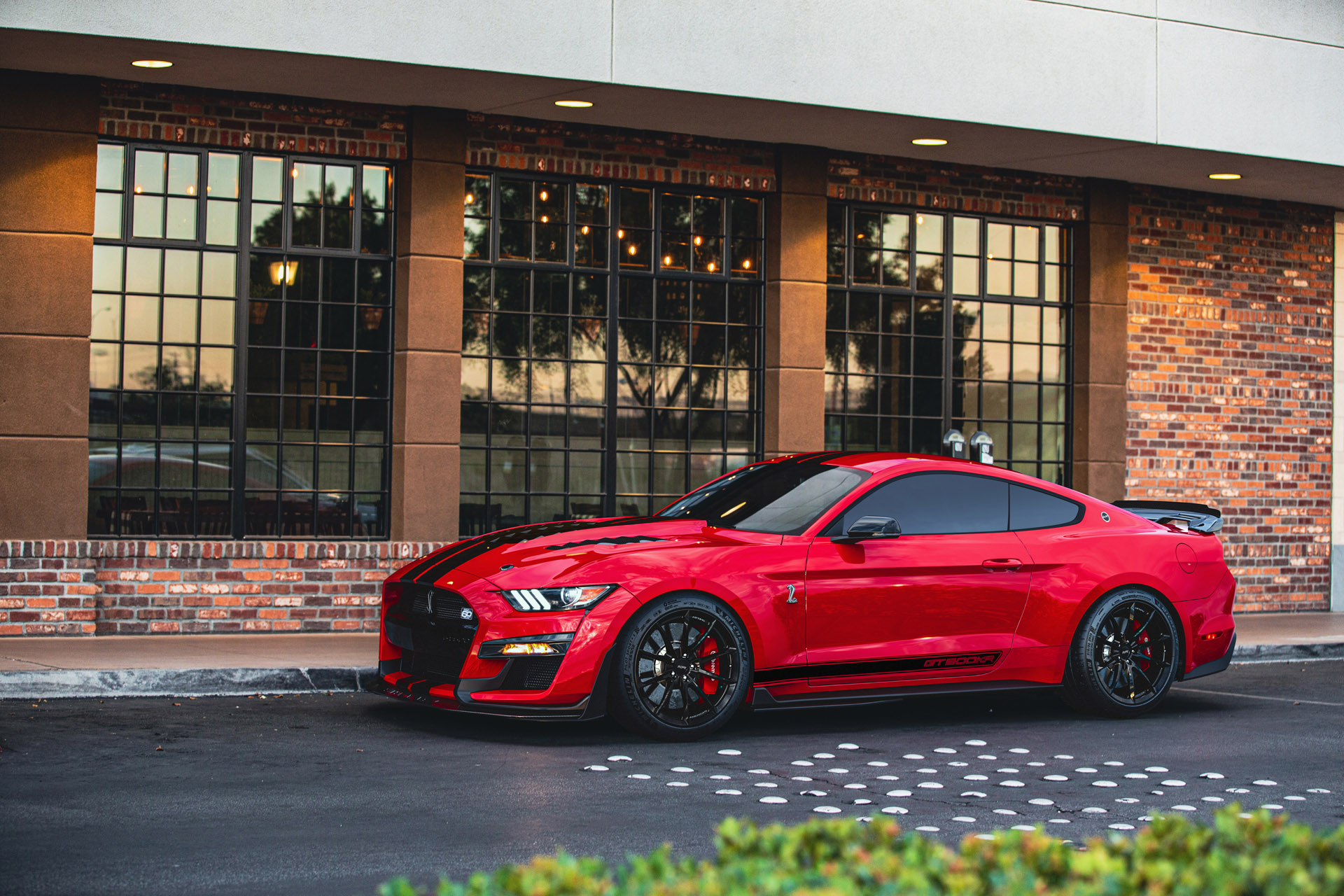
Limited to just 225 units worldwide, 180 of those will be available in the United States while six are slated for Australia, where Shelby’s local supplier Mustang Motorsport is offering two units per model year, as the MY22 cars gain the aforementioned anniversary badging.
At a cost of US$54,995, a representative for Mustang Motorsport told MOTOR it expects the package to be available locally for roughly the exchange price of AU$76,600 plus GST and shipping, potentially bringing it up to the $100,000 mark, not including the base vehicle.
YouTube sensation Ken Block has revealed his first bespoke electric vehicle since joining Audi, taking the covers off the S1 Hoonitron.
Its full name of Audi S1 E-Tron Quattro Hoonitron doesn’t leave much to the imagination about what it was inspired by, with its title and design heavily influenced by the Audi Sport Quattro S1 E2 Pikes Peak that Walter Röhrl took to victory in the 1987 edition of the iconic hillclimb.
As opposed to its spiritual predecessor, the S1 Hoonitron does away with any wild five-cylinder turbo engines, instead adopting an all-electric powertrain that is likely borrowed from Audi’s Formula E machine and its Dakar Rally contender, the RS Q E-Tron.
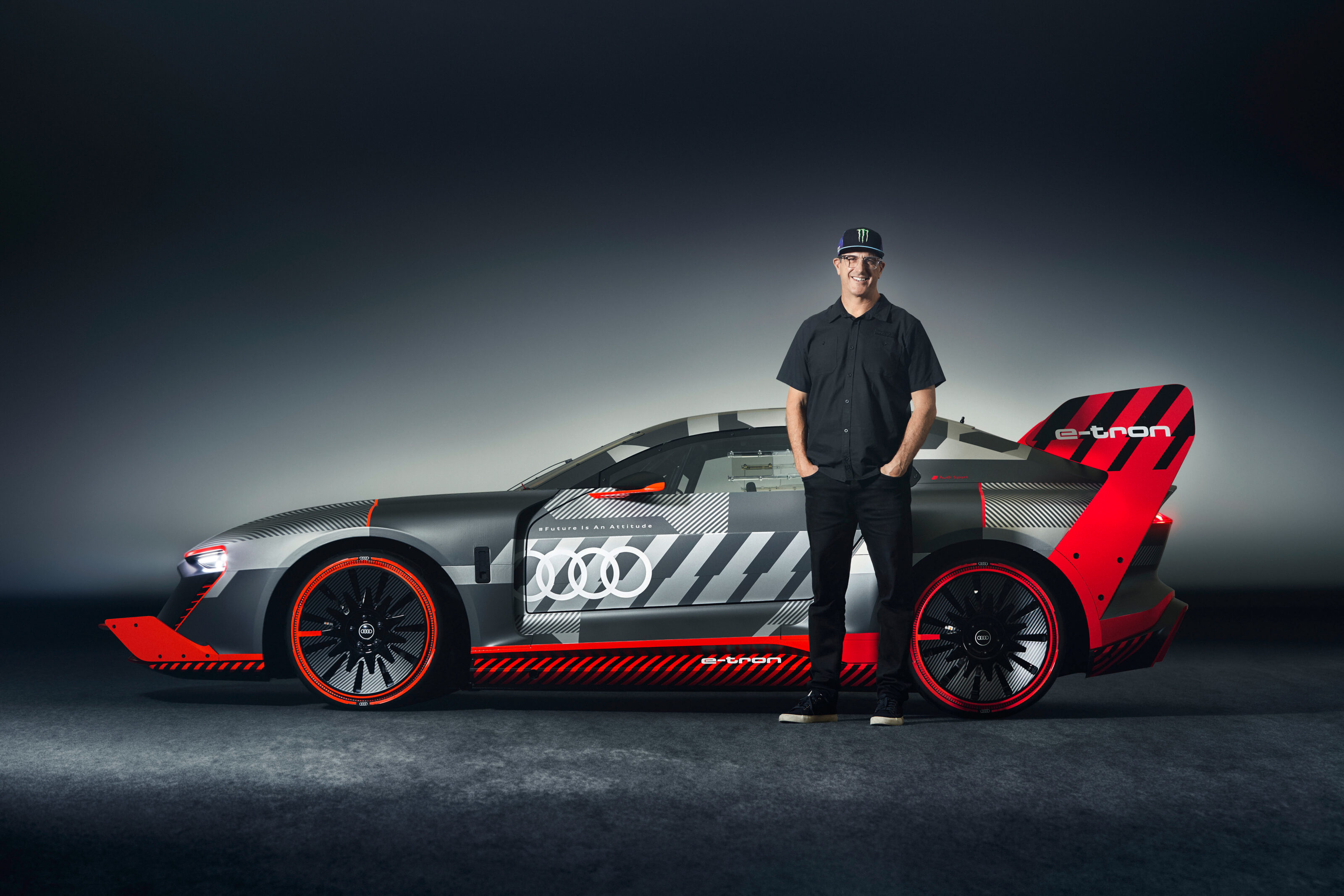
Block, who had previously partnered with Ford for over a decade, said it was Audi’s rally monsters that left a lasting impression on him in his formative years, with the S1 Hoonitron allowing his journey to come full circle.
“The Audi Sport Quattro S1 E2 Pikes Peak had such an influence on me growing up,” Block said.
“Audi’s two wins on that mountain, as well as their success in the Group B era of the World Rally Championship, played a huge part in me being inspired to be a rally driver.
“And now, that incredible race car has been used as a design guideline on a new prototype E-Tron car that Audi has built me to drive in the next Gymkhana film.
“The S1 Hoonitron combines a lot of what Audi was already famous for in the nineteen-eighties.
“For instance, the car’s spectacular aerodynamics have now been translated into a totally modern form. I think it’s cool that the Audi designers have been inspired by their own past and uniquely transferred the car’s technologies and appearance into the present.”
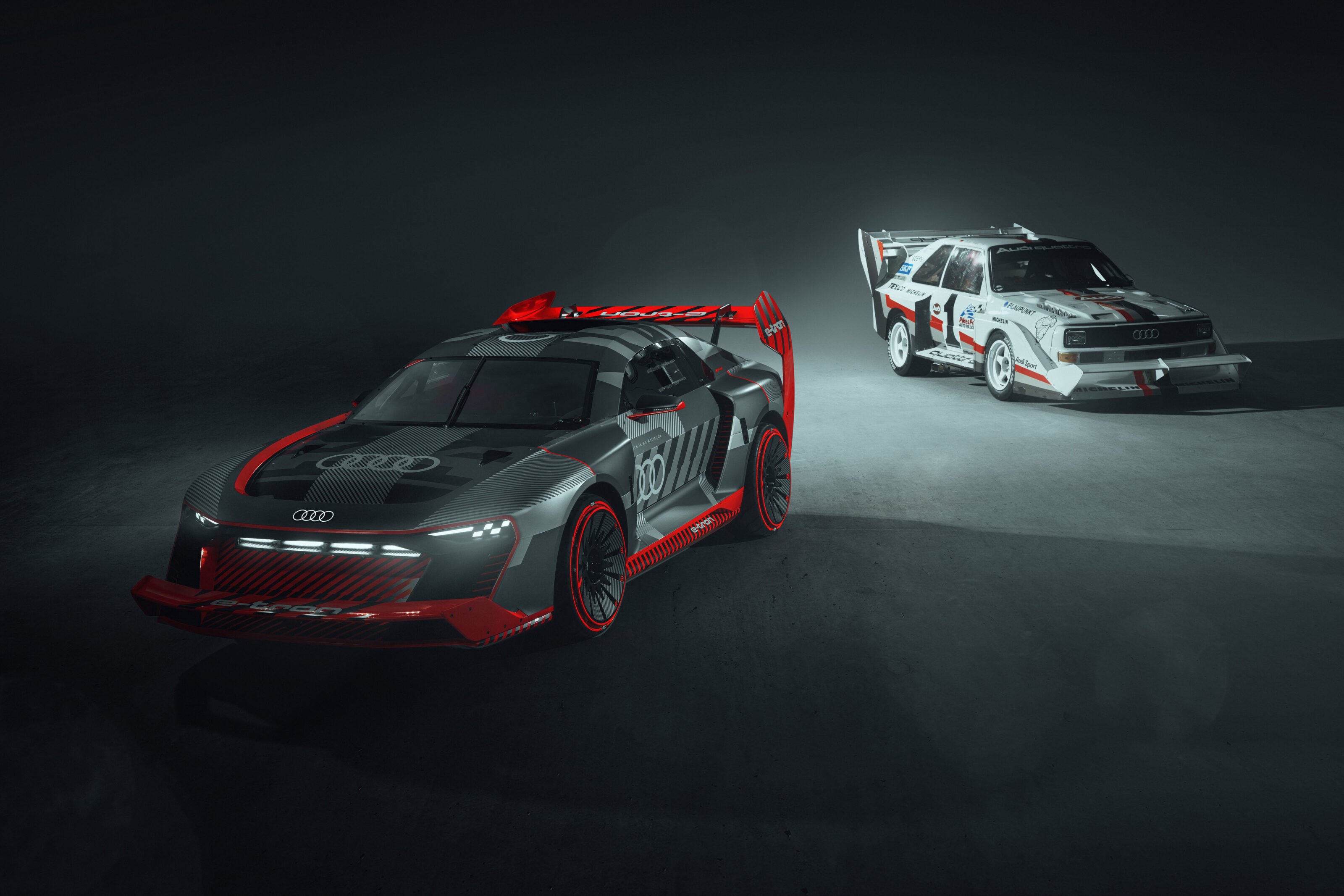
More accustomed to fire-breathing monsters such as the S1 Hoonicorn and his various other gymkhana vehicles, Block is getting used to the EV’s one-pedal application as he applies his craft.
“Audi gave me the opportunity to test it for a few days in Germany,” he said.
“I’m familiar with a wide variety of cars using internal combustion engines and transmissions, but there were a lot of new things for me to learn here.
“Spinning into a donut at 150 km/h directly from standstill – just using my right foot – is an all-new experience for me. Our work was focused on getting the car and I used to each other.”
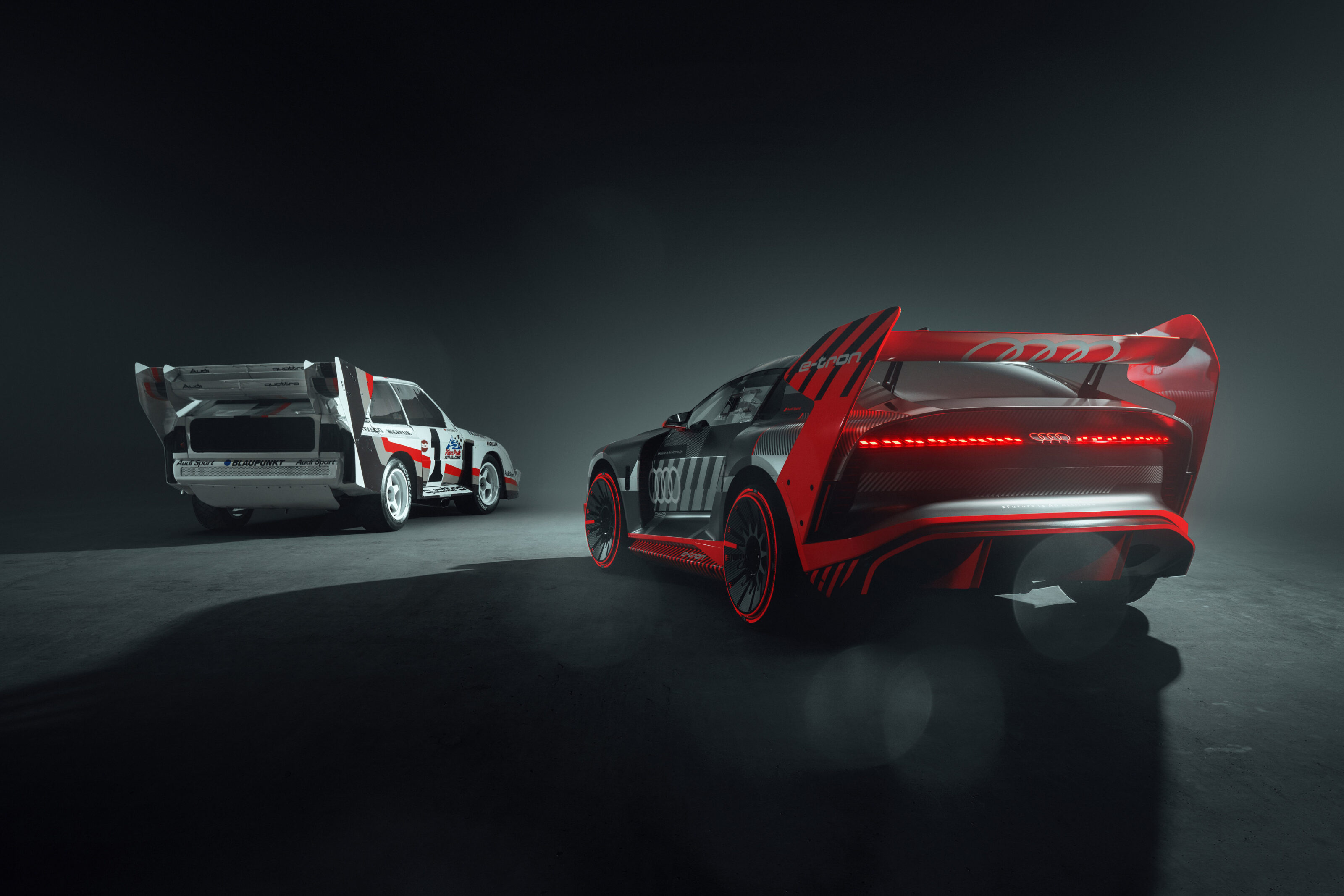
While the car was assembled at Audi Sport’s base in Neckarsulm, head designer Marc Lichte and his team at Ingolstadt were responsible for the S1 Hoonitron’s aggressive stance.
“When we first heard about this project, the whole team was thrilled immediately: we had the opportunity to develop a car that combines an icon of our brand with the future,” said Lichte.
“It was about creating a modern, all-electric interpretation of the S1 Pikes Peak. The timeline was extremely tight: while our design process normally takes one to one-and-a-half years, we only had four weeks from the first drawing to the final design. We were constantly in touch with Ken Block and his team and engaged in intensive exchanges.
“Knowing that we’re developing a car for a video with Ken Block that millions of people around the world are going to watch has provided our team with additional motivation. These new inspirations are also immensely important for our daily work. The development of this car will encourage us to approach future projects with an even more open and progressive mindset.”
It’s not yet known when Block’s next gymkhana video – Elektrikhana – will drop, but it promises to add new flavour into his trusted recipe.
A new rear-wheel steering system with up to 10 degrees of motion has been designed by BMW.
While typical set-ups only allow around five degrees of steering from the rear wheels, CarBuzz has uncovered a patent filing from BMW which redesigns the rear-end to allow for greater movement.
Due to space constraints, most cars with rear steering will use the track rod to adjust toe. The new system adds an additional wheel carrier on both hubs, featuring an actuator on each side maintained by a grooved guide.
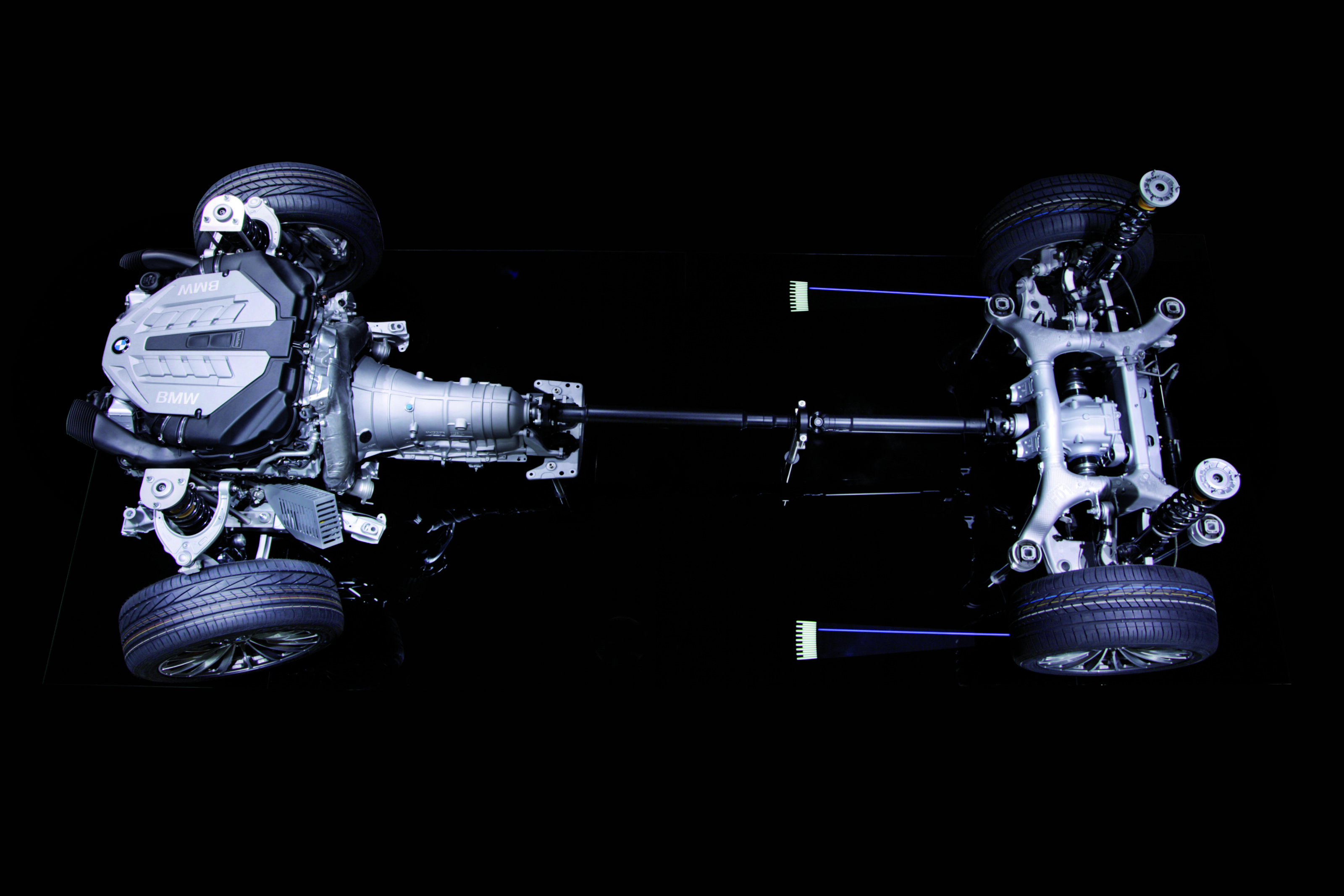
Rear-wheel steering systems can not only help with a turning radius in city driving and parking when steering in the opposite direction to the front wheels, they can also provide improved lane-changing abilities at freeway speeds by turning with the front wheels, allowing a smoother diagonal movement.
With the German carmaker unveiling the XM in recent weeks – the first dedicated model from BMW M since the M1 – the large high-performance SUV seems like a perfect candidate for the technology to aid handling characteristics.
UPDATE, December 16: Audi Sport boss Dr Sebastian Grams has said any future supercar from the company will use battery power, reaffirming comments made last week.
Speaking to Top Gear, Grams stopped short of confirming an R8 successor was in development by Audi, but ruled out an internal-combustion powertrain.
“Audi RS is following the fully-electric strategy of the main Audi company. This is [the plan] with our S and RS models,” he said.
“If we should build a new kind of super sports car, it will be electric. It follows our strategy, our vision, into a fully-electric future.”
The comments squash earlier rumours out of Germany suggesting the next-generation Audi would adopt the brand’s 4.0-litre twin-turbo V8 powertrain.
While the R8 was dropped from the Australian line-up in September, a report from 2019 suggested the model is scheduled to end production in 2023.
The story to here
December 10: The Audi R8 successor will axe its internal-combustion engine for battery power, according to a company official.
Speaking to US publication Roadshow, Audi Sport’s head of product marketing Linda Kurz confirmed the brand’s next-generation supercar would be fully electric – but whether it’s called the R8 or something else has yet to be locked in.
Kurz was clear the company’s next halo car would be electric, positioned within the company’s performance R segment under the Audi Sport brand, with 80 per cent of the Audi RS line-up to be electrified by 2026.
In June, Audi CEO Markus Duesmann announced the German premium carmaker would only develop zero-emission powertrains from 2026, with the aim to phase out petrol and diesel models entirely by the early 2030s.
However, a report out of Germany in October suggested the 2023 Audi R8 could drop the model’s ageing V10 engine in favour of the 4.0-litre twin-turbo V8 shared with the Audi RS6 and Lamborghini Urus. It’s possible the supercar could also adopt some level of hybrid electrification as a stepping stone towards an all-electric successor.
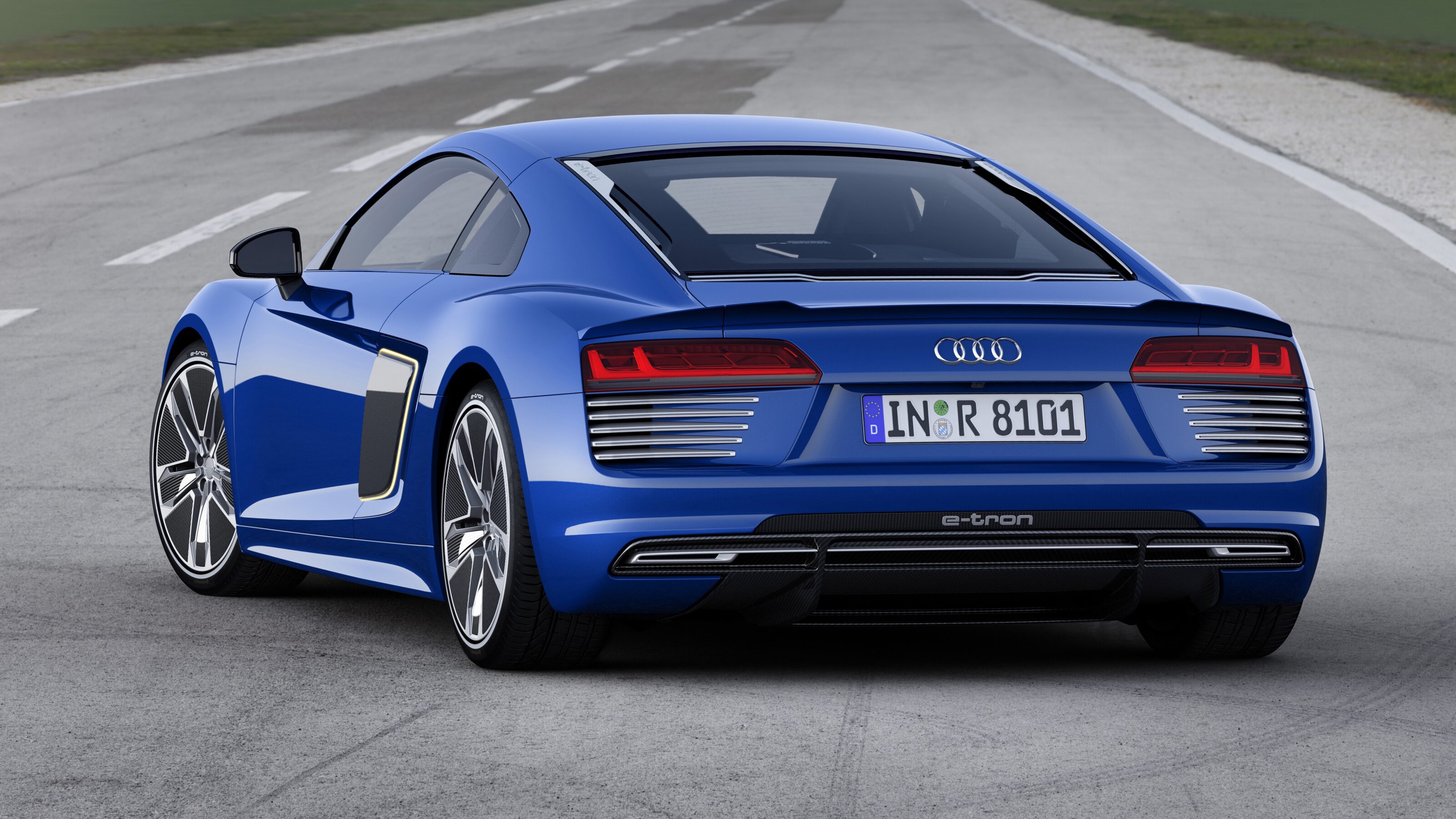
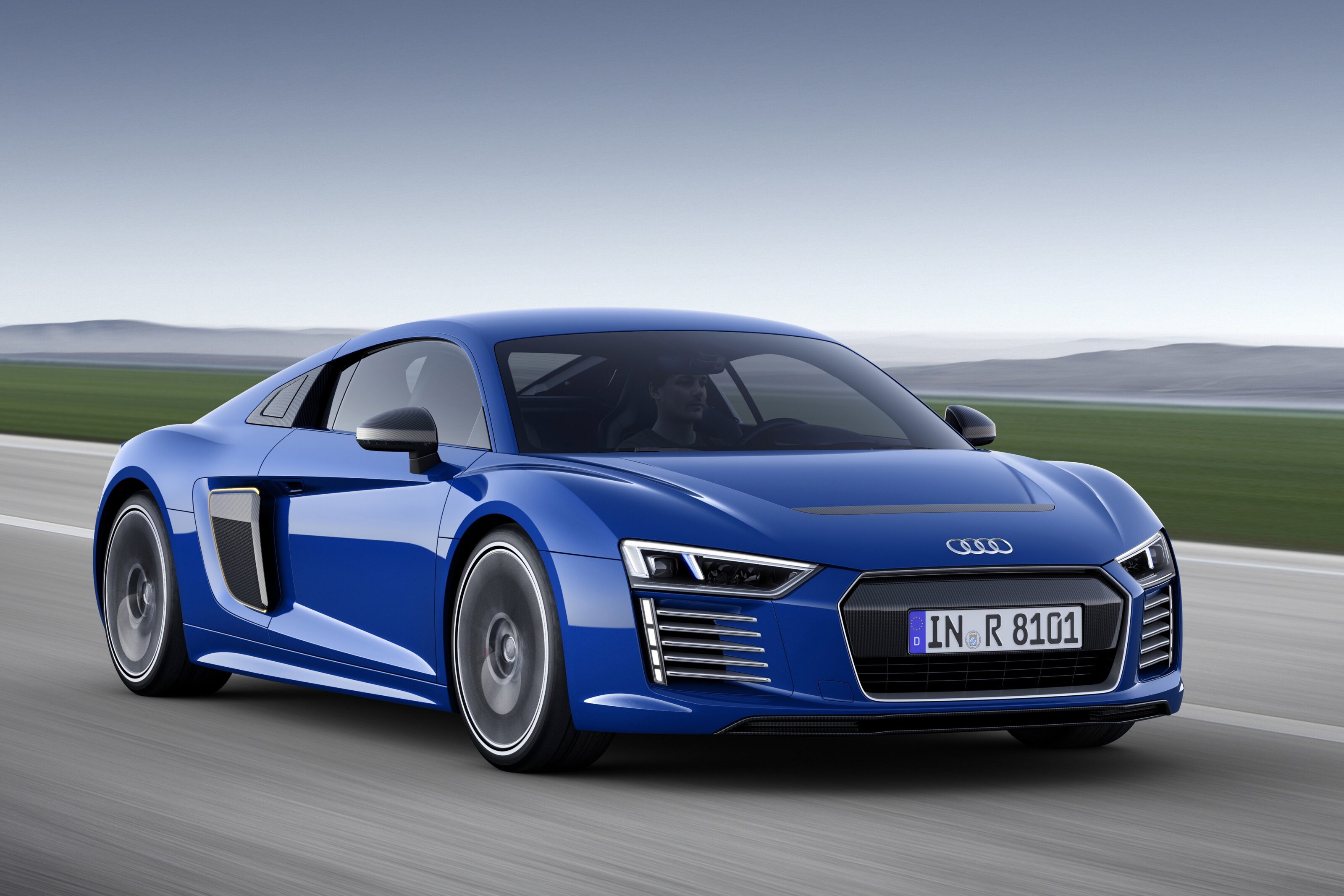
It’s not the first time the R8 has swapped petrol for electricity. In 2015, the million-dollar Audi R8 E-Tron entered limited production: fewer than 100 vehicles were manufactured with a 92kWh battery pack offering a driving range of 450km, delivering 340kW and 920Nm from dual electric motors at the rear axle.
Audi will add an ‘upper-large’ flagship model to its E-Tron electric SUV line, expected to launch soon after 2025.
The model could logically be called Q8, although recent reports suggest the existing E-Tron SUV will be renamed Q8 E-Tron in an upcoming update.
A Q9 badge, then, could perhaps debut this big new model – although a recently spied prototype, believed to be a more conventional ICE and plug-in hybrid offering, is also expected to wear the Q9 badge.
No official images of the new flagship E-Tron SUV have surfaced, but sources say we can expect similar styling to the current crop of Audi electric vehicles – which have slim headlights, a fully-covered grille, and hulking proportions similar to those of the Q4 E-Tron, although much bigger in this new model’s case.
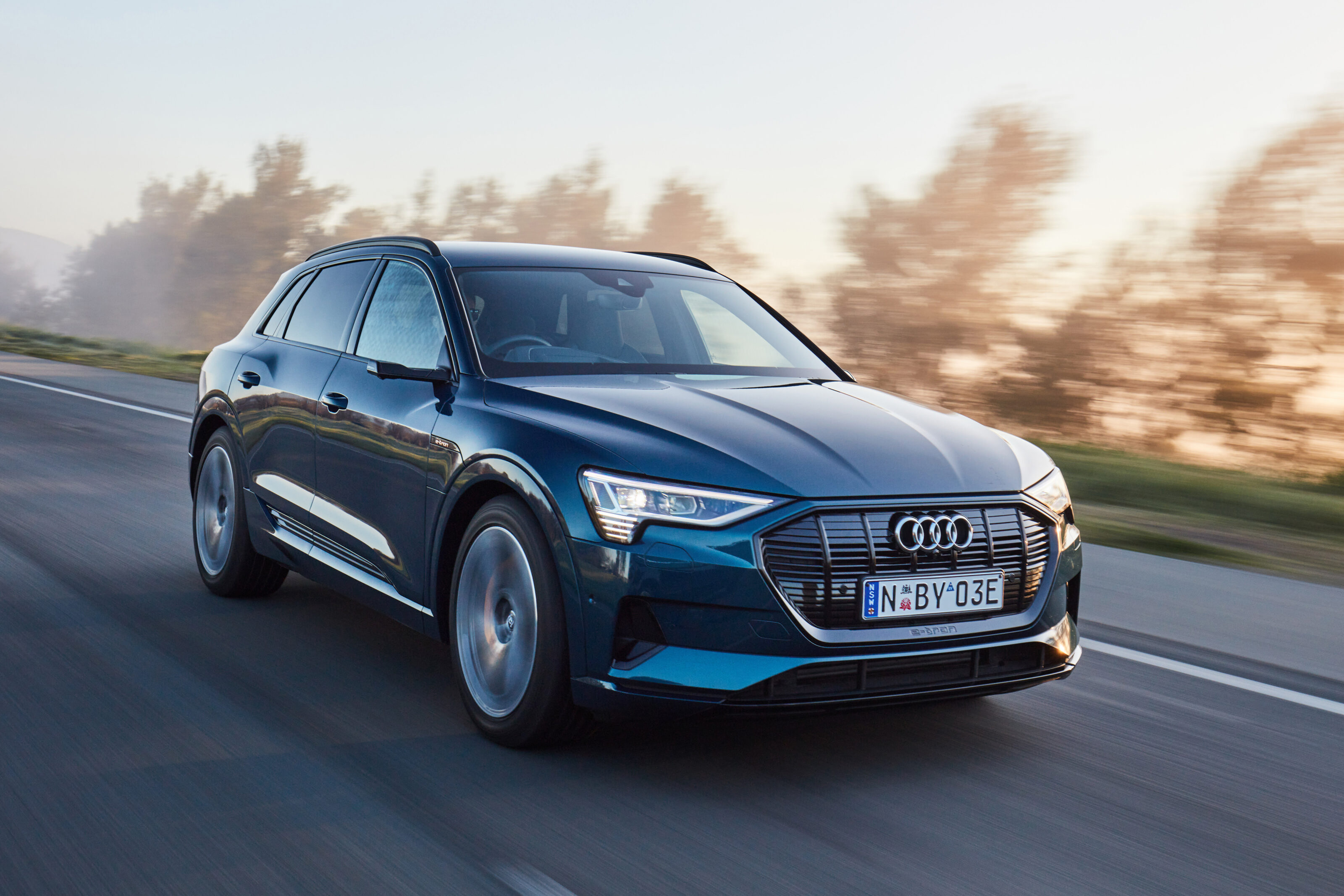
The performance will come courtesy of Quattro dual motors producing in excess of 370kW if the base model E-Tron GT is anything to go by (and at least 390kW on ‘overboost’), with a performance RS variant potentially bringing around 500kW and thumping acceleration from the big electric SUV.
Providing the juice will be a large battery nearing 100kWh and enabling a driving range over 600 kilometres in normal circumstances, and perhaps even more with the advances Audi is making in battery technology.
Most likely to based on the latest PPE platform developed in conjunction with Porsche, which underpins the upcoming Audi Q6 e-tron, it should have an advanced 800-volt electric system compatible with DC rapid charging speeds of up to 270kW. Such voltage will help provide five to 80 per cent charge in less than 25 minutes.
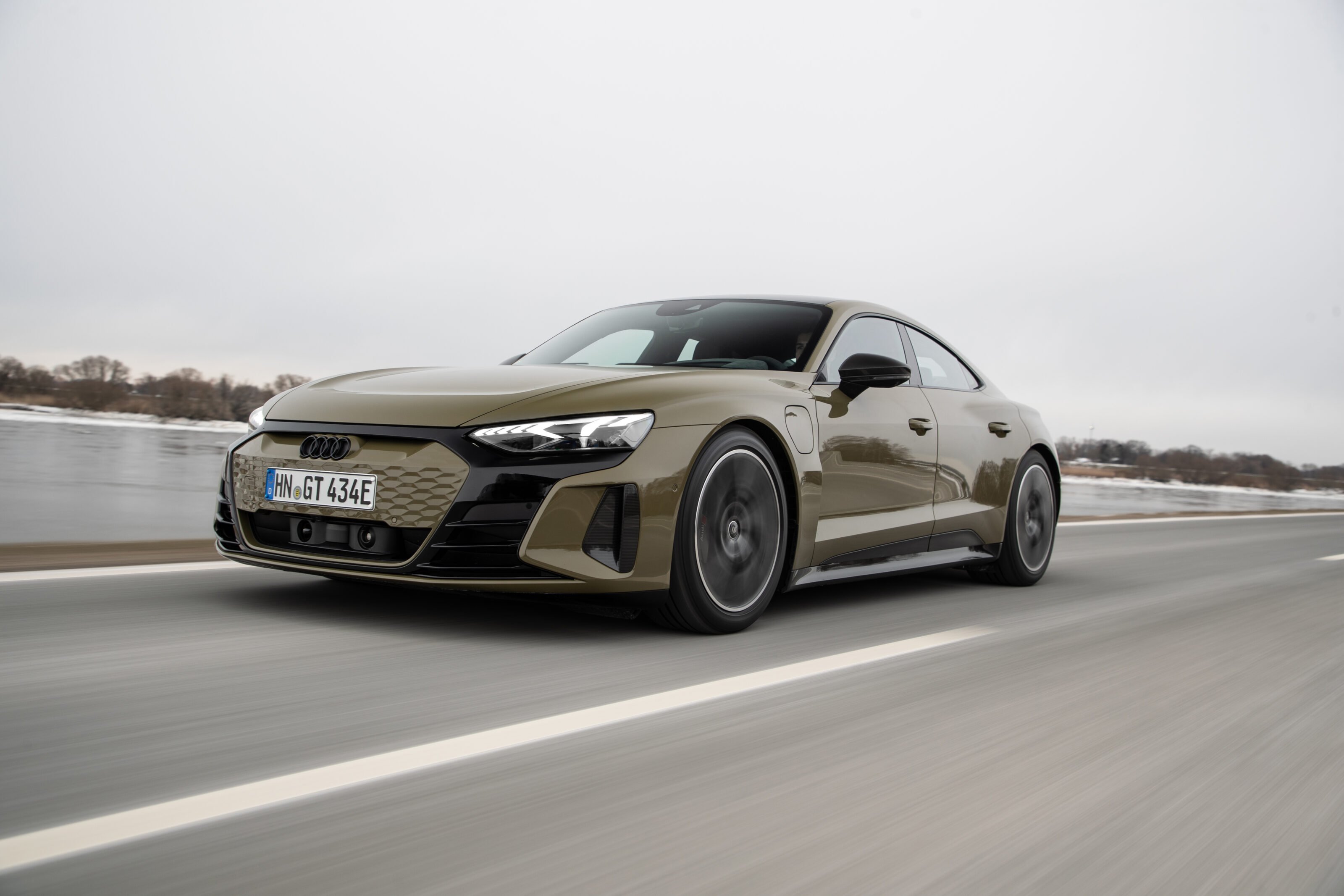
The latest advanced technology from Audi will be inside too, and styling could be inspired by the Grandsphere concept shown earlier this year at the Munich motor show – a vehicle which featured a revolutionary cockpit.
Although it likely won’t be fully implemented in the new E-Tron SUV, newly developed MMI touchless response systems, gesture controls for climate functions and Level 3 driverless systems could all become standard equipment.
In line with the rest of the E-Tron range, the new model is due to be built on Audi’s production line in Brussels rather than in Ingolstadt, Germany, where the Q6 will be produced.
Key Points
- Second allocation to open at 12pm today
- First lot will be available to NSW and ACT buyers only
- Order timing won’t influence delivery timing
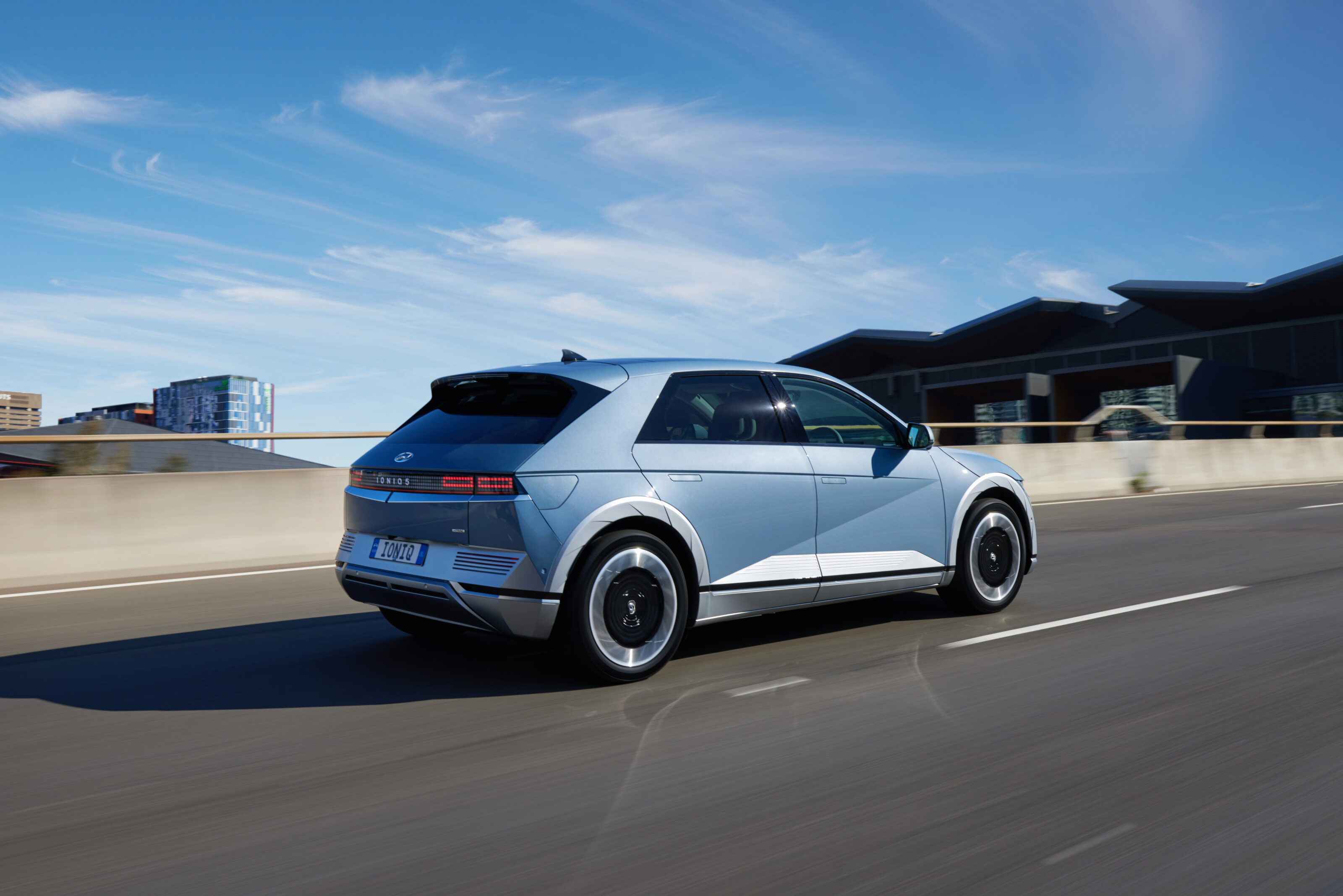
The second batch of Hyundai’s Ioniq 5 electric car is set to be made available today, with those who missed out the first time round benefitting from the second allocation.
Available only to prospective buyers in New South Wales and the Australian Capital Territory for now, the first wave of the second Ioniq 5 release comes two months after the initial allocation of 240 units sold out in just over two hours, which included a temporary crash of Hyundai’s ordering site.
Excluding on-road costs, the rear-wheel-drive Ioniq 5 goes on sale from $71,900, while the all-wheel-drive variant is an extra $4000, coming in with a list price of $75,900 – below the luxury car tax threshold.
A spokesperson for Hyundai Australia wouldn’t disclose to Wheels how many units would be available to order for NSW and ACT customers, although the two states will not receive their cars sooner than other areas around the country.
“The next allocation of Ioniq 5s will be released and processed state-by-state,” they said.
“The first release will be for NSW and ACT, and will go on sale Thursday, December 16 at 12pm AEDT via the Hyundai Australia website. Customers will be sent a link prior to this time. Timings for other states is TBC.
“We can’t confirm the number of cars which will be available to order at this time.
“We are staggering the ordering process across the other states [and territories] in the coming weeks to assist in managing order processing timeframes. Note that this will not affect delivery timing – that is, even though NSW and ACT have ordered first, they will not receive their cars before other states.”
Our own Jez Spinks recently road tested the Ioniq 5, which you can read about and watch here.
Welcome to the MOTOR Awards 2021, where our team offer a tip of the hat to those that displayed automotive excellence in the last 12 months.
Best Design Winner: Porsche 992 911 GT3 front suspension
Of course there will be those who will just roll their eyes and claim that in fitting proper double-wishbone front suspension, Porsche has finally caught up with the 1934 Citroen Traction Avant. That would be to ignore the fact that, at that time, the MacPherson strut hadn’t even been invented and its genesis was an exotic piece of engineering from the aerospace sector.
What’s most significant about changing the 911’s front suspension design is that the 911’s front suspension design has been changed. This just doesn’t happen. More than five and a half decades have elapsed with every roadgoing 911 featuring strut font suspension, so to change that design is possibly even more of a departure than switching the 996-generation carfrom air to water cooling.
Porsche is a company that recognises tradition and heritage, so for the company to radically change part of its DNA is a big step into the unknown.
Designing and building the double wishbone suspension isn’t particularly difficult. Porsche has been doing just this on its RSR Le Mans race cars, and the advantages are easy to identify.
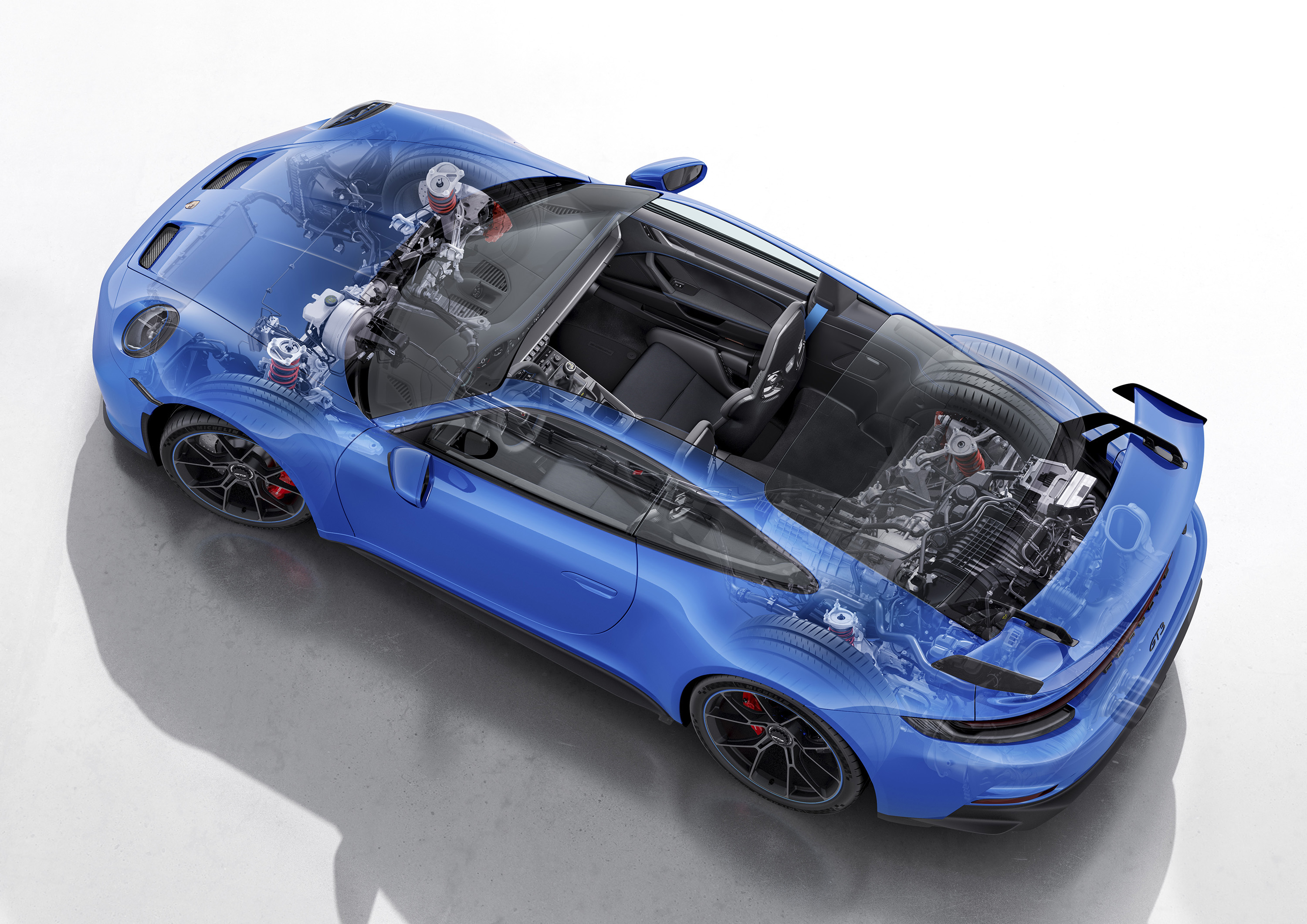
More subtly, because the MacPherson design puts all the braking forces into the damper, you need a very stiff damper, reducing the number of options for the chassis engineers. With a double wishbone design, the damper sits between the two forged aluminium wishbones and benefits from their anti-squat and anti-dive protection.
What has been a particular issue for Porsche has been the physical space on the Zuffenhausen line. Yes, line singular. Aside from Taycan, which is built separately, the rest of the cars built at the Zuffenhausen factory go down one line and, given that they’re all 718s and 911s, they all have strut front suspension. Until now.
With incredibly tight tolerances for the robots and rigid scheduling, a whole new means of building a front suspension hasn’t been easy to productionise.
With this thorny problem cracked, does this mean that future Porsche sports cars will all feature double wishbone front suspension? We wouldn’t bet against it.
Honourable mention: Nissan Z tail lights
A nod to the past without going too far into retro kitsch, the capsule-style tail lights of the latest Nissan Z mirror those of the much-loved Z32 300Z. Look closely and the design of the new car’s grille makes a similar tip of the hat.

Honourable mention: Maserati MC20 wheels
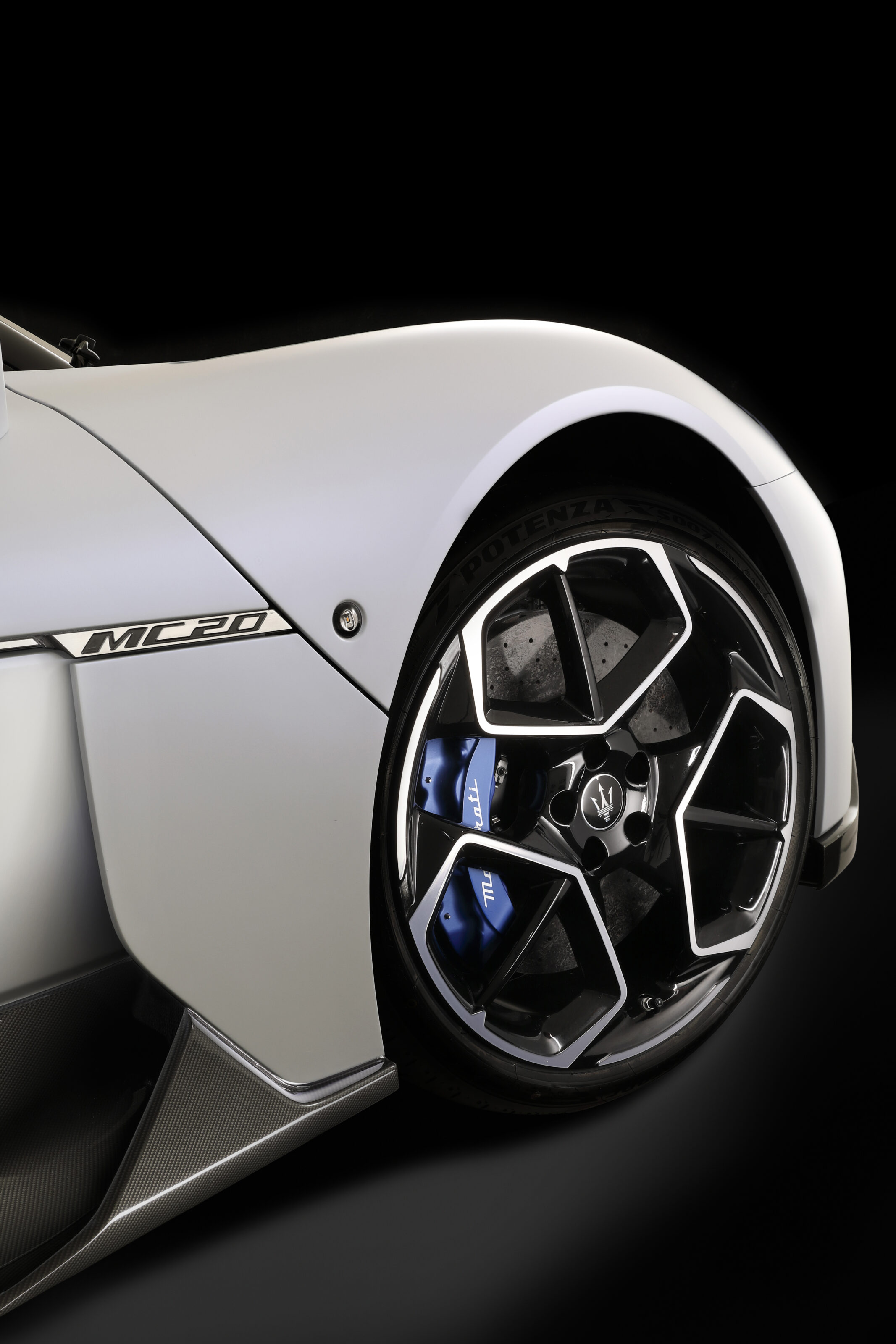
Could this be the start of the three-spoke revival? Back in the ‘90s, tri-spokes were on everything from hot Fiestas to RAV4s, Saabs and Vipers. Then, they just died out. We saw a toe in the water with Alfa Romeo’s MiTo, but it might well take the swagger of Maserati to bring them back. On the MC20, the three-spoke design looks stunning.
Businesswoman, racing driver, and Lotus co-founder Hazel Chapman has died at the age of 94.
Born Hazel Williams on May 21, 1927, she met Colin Chapman at a dance in 1944. Her parents allowed Colin to build the Lotus Mark 1 in their garage in North London in 1948.
Hazel continued development of the Mark 1 and Mark 2 as Colin entered the Royal Air Force, with Lotus vehicles enjoying competition success at the hands of them both.
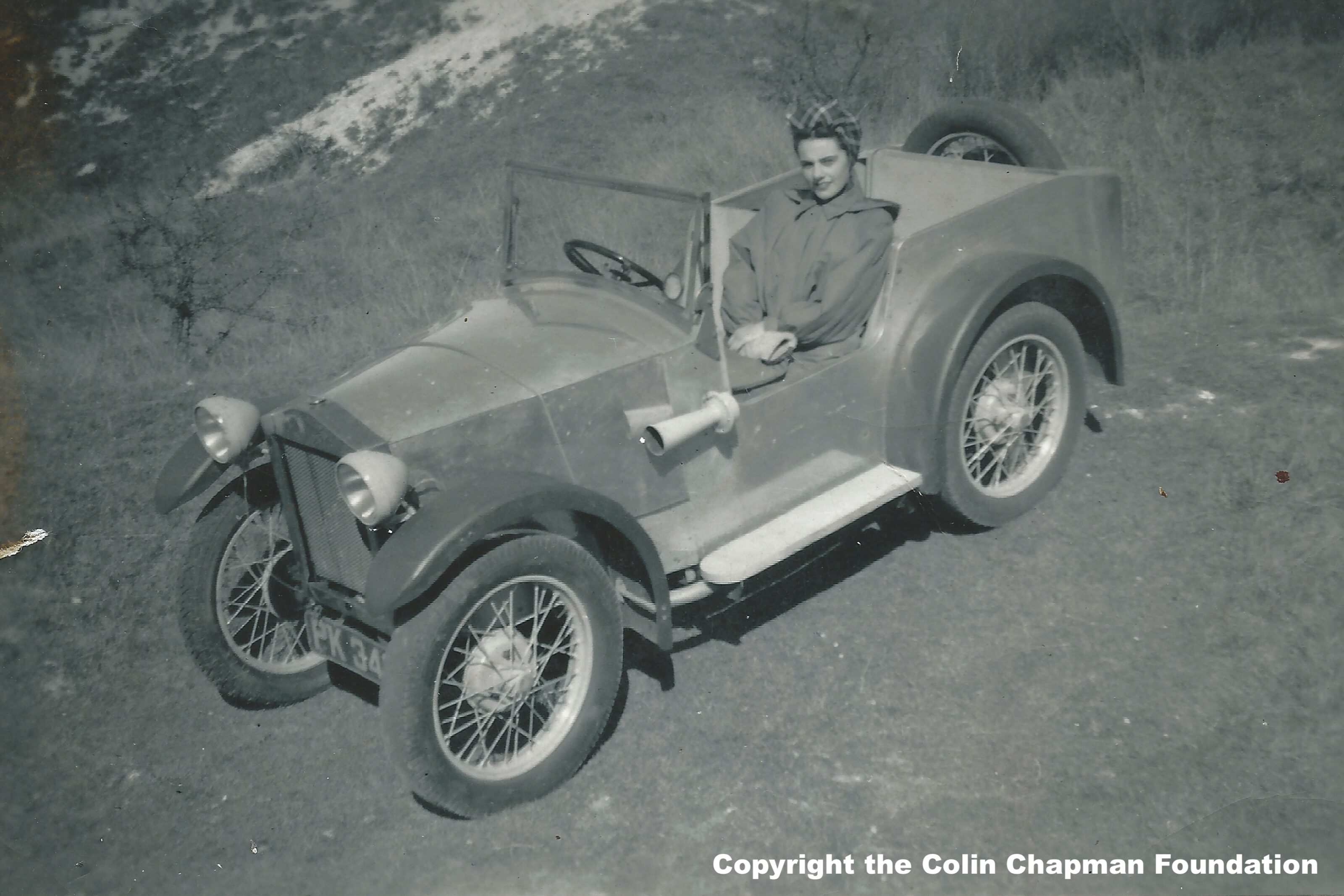
Lotus became a limited company in 1952 thanks to a £25 payment from Hazel, with the business’s engineering services being sought off the back of its motorsport success.
The two married in 1954, and Hazel played a pivotal role in the company’s worldwide growth, sitting on the board of directors for Lotus Cars, Team Lotus, and Lotus Components.
Despite Sir Colin Chapman’s passing in 1982, Hazel remained active in all areas of the Lotus business, and eventually founded The Dog House motorsport club for women.
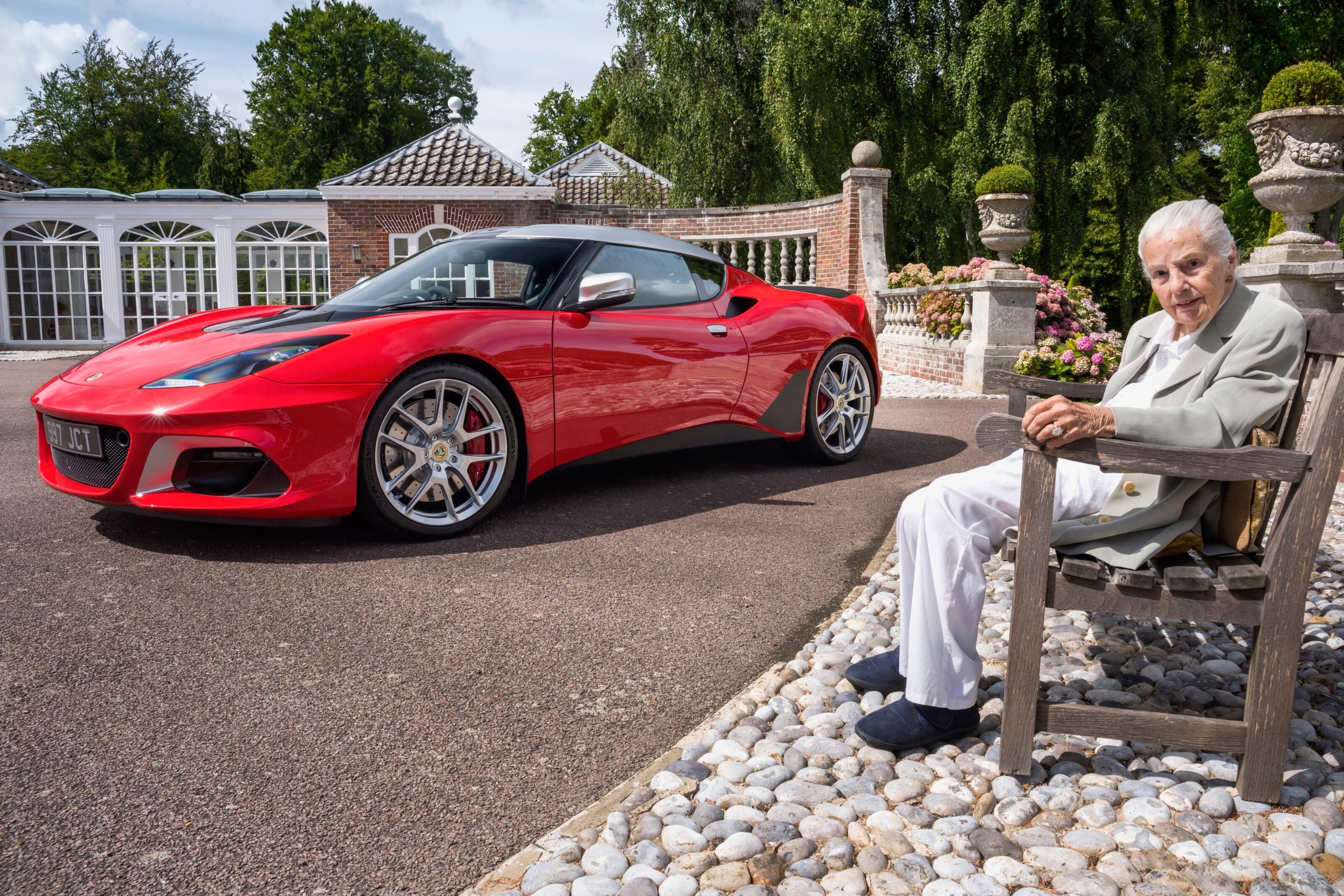
In keeping with tradition, Hazel was always shown the latest Lotus road car prior to its public unveiling.
“This is a very sad day for everyone around the world associated with Lotus,” company Managing Director Matt Windle said.
“Without Hazel Chapman there would be no Lotus. The entire Hethel team, and those working at our facilities around the world, send their sincere condolences and best wishes to the Chapman family.”
“You can’t do the same thing forever… well, actually, you probably can,” says Todd Kelly. But he and Rick won’t be doing the same thing anymore. At the end of the 2021 Supercars season, the Kelly Brothers, Todd and Rick, will hand over the keys of Kelly Racing to their current father-and-son team partners, Stephen and Brenton Grove.
Currently, the Kellys and the Groves each have a 50 percent stake in the racing team, presently known as Kelly Grove Racing. Already a year of transition – the first without Rick Kelly behind the wheel of one of their cars – 2021 will also be the last without the brothers running the team.
But why? With the ink not yet dry on exactly how Gen3 will run, and after more than a decade of being busy managing a race team and manufacturing business, it’s understandable that now is the time the Kellys are handing over the team.
After 13 seasons under a very ‘old school’ team model, Kelly Racing has hit peaks and troughs through an at times wildly transformative era in Supercars. Rick’s focus is no longer on racing, having hung up the boots at the end of 2020, and Todd’s main two roles as team principal and managing the factory side of the business have left him understandably busy in the years since he last drove… not that he complains.
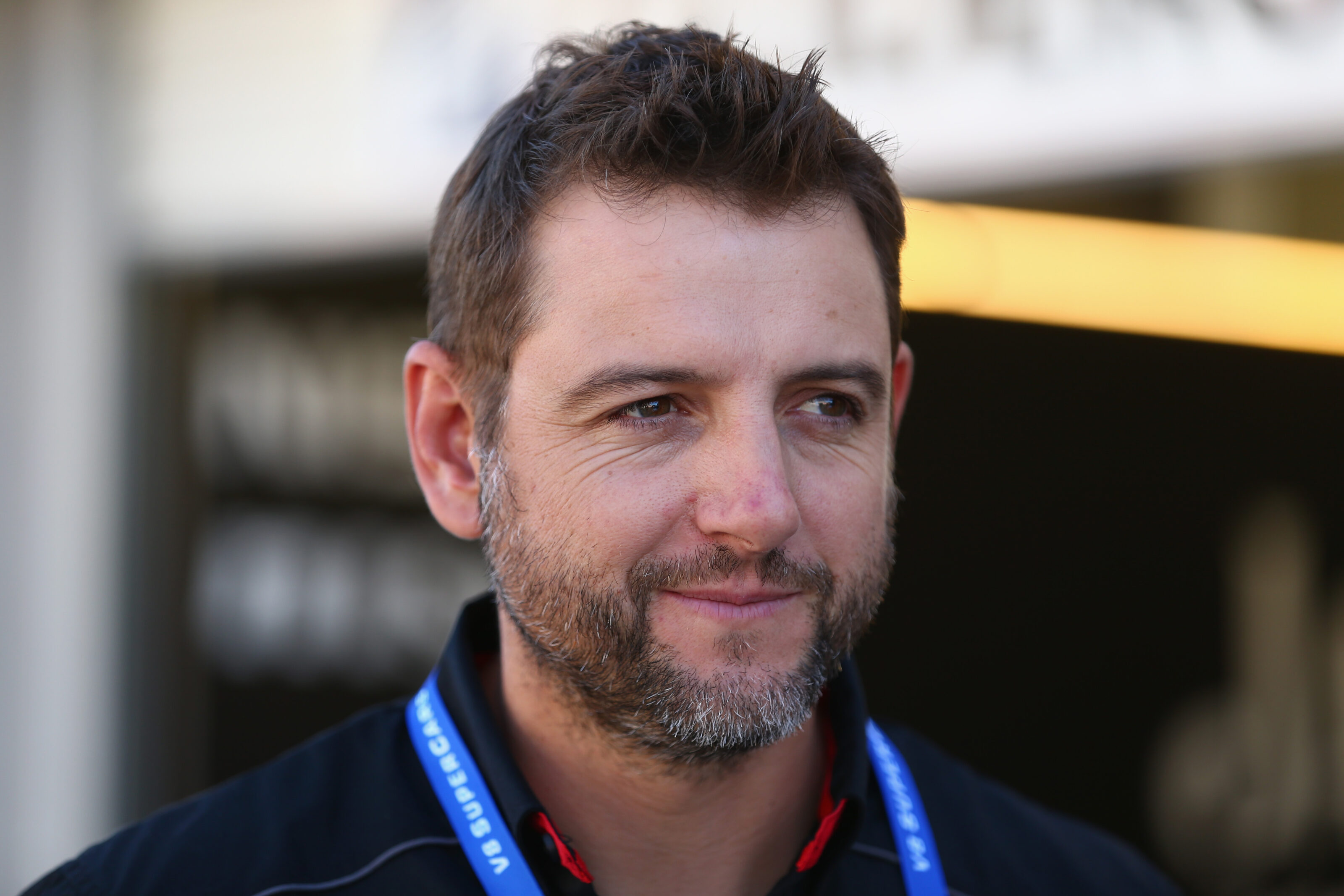
But the brothers never departed from a core value that Todd intends to take into the post-Kelly Racing part of his life – self-sufficiency.
“When we kicked off we always wanted to do everything ourselves, internally,” Kelly says.
“There are a few different business models within race teams and it’s quickly changing as the sport evolves. In the old days the teams like the Stone Brothers, DJ, HRT, and Perkins used to do most of the work themselves.
“They all had their own engine shops, their own CNC (Computer Numerical Control) machine shops and fabrication departments. Most teams did their own bodywork and paint, but as things have evolved, some teams have gotten bigger while others have gotten smaller… and the small ones are just customer teams.
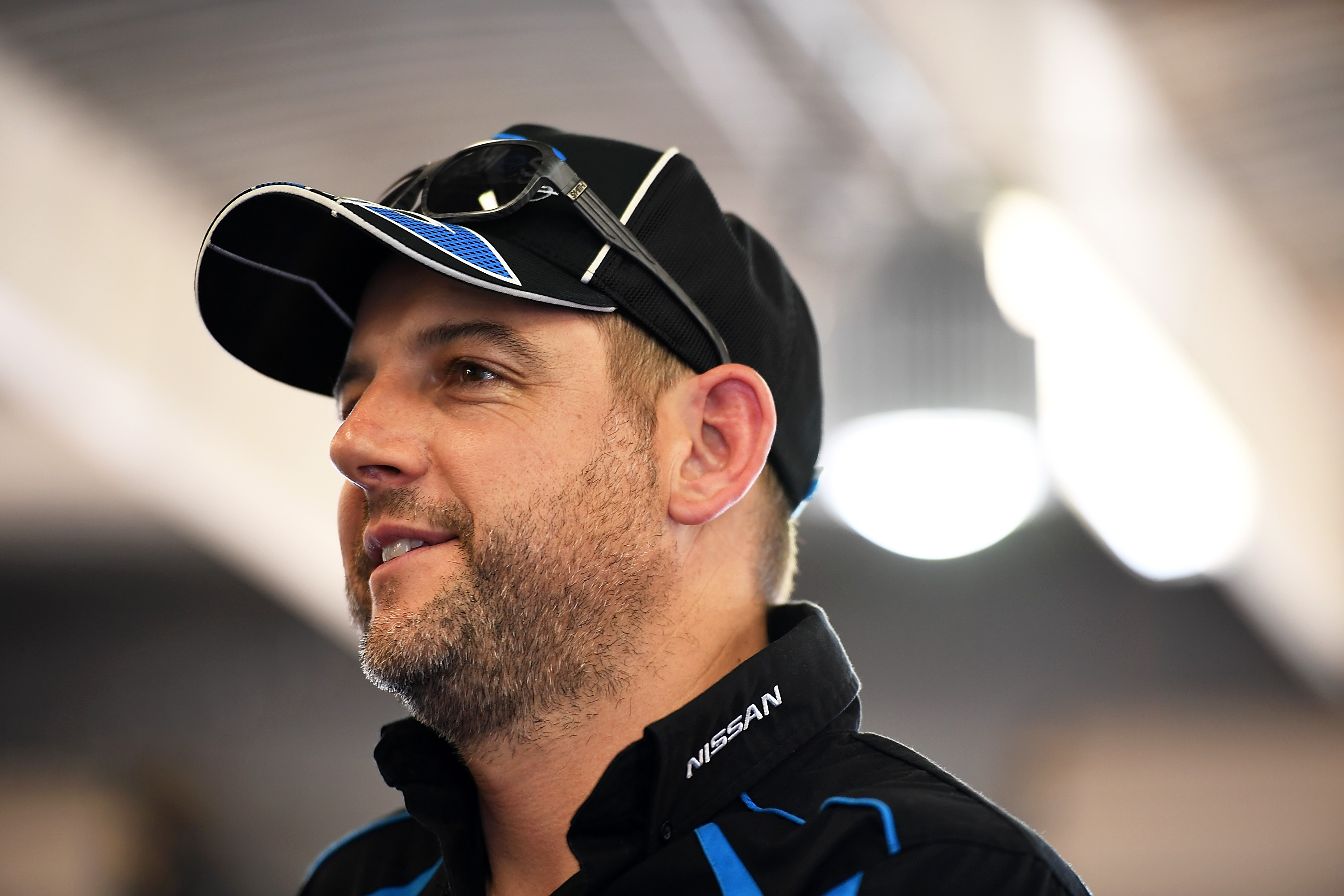
“In the future, not being able to build your own engines… well, those are the things I really enjoy doing. At the moment we’ll continue to do that, but in terms of what our involvement will be, we’ll see where it goes in the future as to what you can and can’t do.”
What’s certain is Todd will continue to manage the manufacturing side of the business, which will service and supply not only Grove Racing in some capacity, but also Supercars into the Gen3 era. That aspect of Kelly Racing, Todd says, had been the team’s major advantage through the years.
I won’t be a team owner next year, and potentially won’t be at the track…
“As it turned out, that really enabled us to bring in Nissan, as we had the capability to do every aspect of the Nissan car [on site here in the workshop] at a time when not many teams had that ability.
“The operation was [initially] set up just for ourselves, but as time went on we’ve built it up and taken on some extra customers on top of the race-team work, both inside of and outside Supercars and motorsport. It’s a good operation which was built to facilitate the race team, but also to complement it and stand alone.”
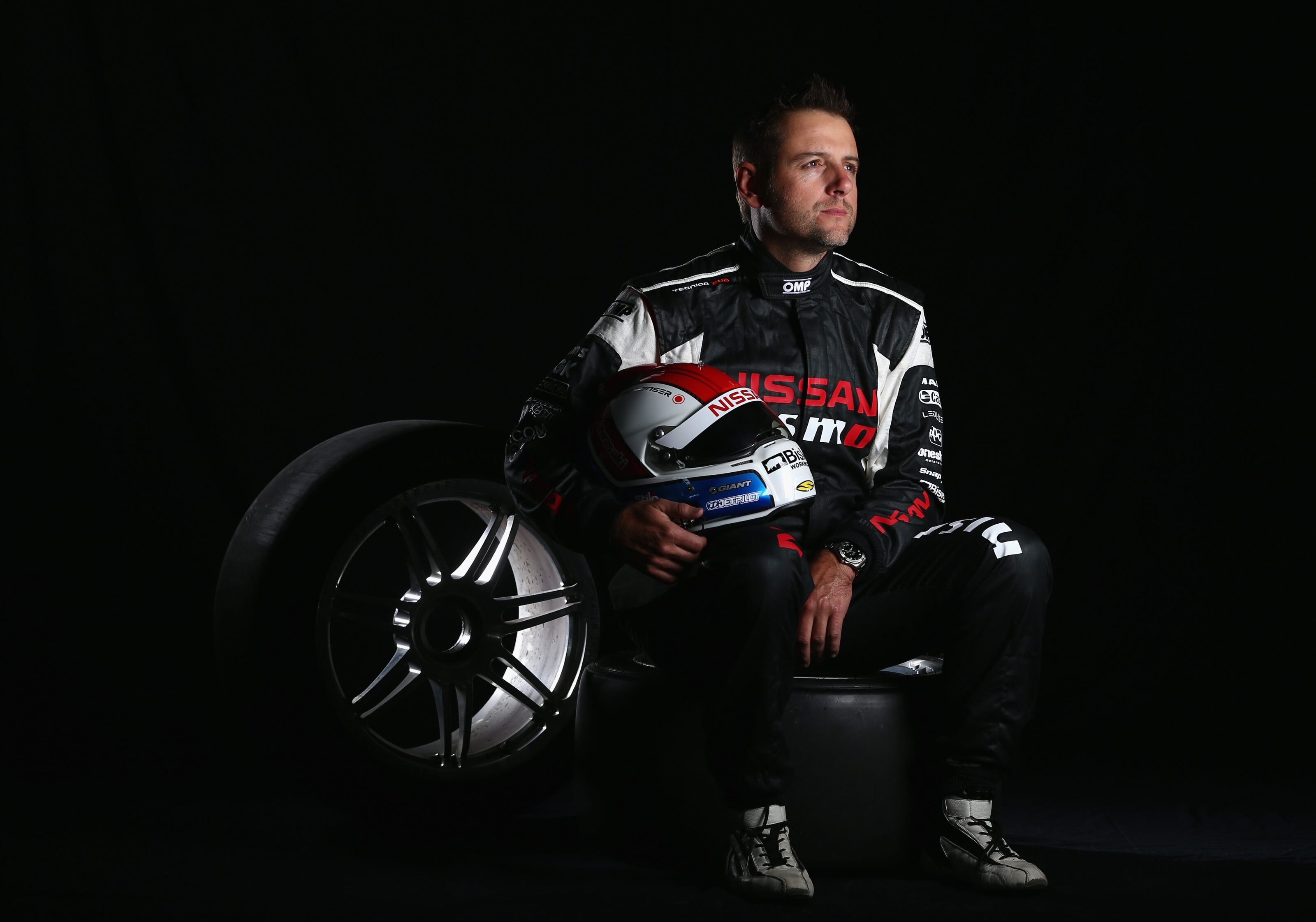
Are there any other teams with a focus like this? “Nobody to our level. A lot of teams still outsource signwriting, and it’s only Tickford and Walkinshaw that do their own engines in-house. And us. Everybody else outsources. There are varying levels but there’s not another team that does as much as us internally.”
With the changing of Supercars and Gen3 regulations on the way, Kelly says some of the traditional aspects of the sport (engineering, for example) might not be as big a focus for the category, but he’s not letting that go quite yet. While the Groves will take the race team in the sale, the manufacturing assets and engineering capability stays with the Kellys.
“I won’t be a team owner next year, and potentially won’t be at the track – I hope to find an engine tuner that can travel and look after the engines on the race weekends. I’ll be workshop-based, looking after everything in the background.
“We’re making quite a few things for the Gen3 cars, but as things get drawn up and released we’ll have a go at creating as much of it as we can through the Supercars tender process. There are just thousands of tiny little things, from little bobbins that need to be welded into the roll cage, to complete suspension components… all of those things are still in the tender process.”
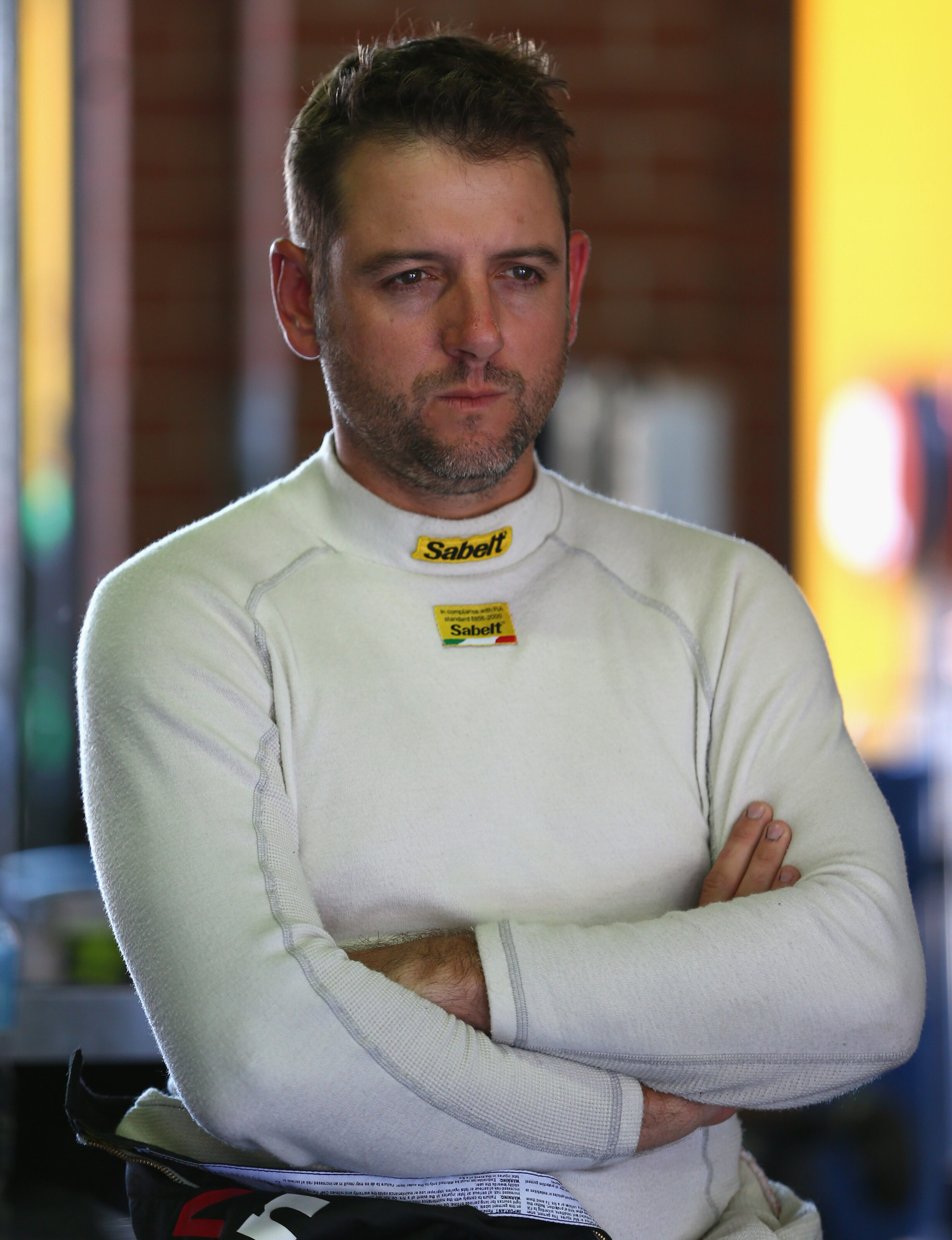
Life in the Kelly gang
2009-2012: The Commodore Years
With assets bought from Perkins, the Kelly family (including parents John and Margaret) started the team and ran four VE Commodores. Rick, Todd, Dale Wood and Jack Perkins comprise the team’s first driver line-up. Their first win came in 2011, with Rick taking out the team’s maiden victory at the Hamilton 400.
2013-2019: Nissan Altima
As regulations changed and the ‘Car of the Future’ entered, the Kellys switched to the Altima and rebranded as Nissan Motorsport. Michael Caruso, Dean Fiore, and Simona de Silvestro are among the team’s mainstay drivers with the Kelly brothers through this period. Todd retired from driving at the end of 2017, replaced by Andre Heimgartner for 2018.
2020-2021: Ford Mustang
Following Nissan’s exit from Supercars, Kelly Racing swapped to the relatively new-to-Supercars Ford Mustang after using 2019 as a transitional year with the Altima. 2020 was also Rick Kelly’s last year behind the wheel, with the team in 2021 running only two cars, driven by David Reynolds (a former Kelly team driver) and Andre Heimgartner.
Toyota has teased its next generation of vehicles overnight, with more than a dozen battery-electric models set to be introduced by 2025.
Among them, Toyota showed off a dual-cab pick-up, a LandCruiser Prado-sized SUV, a small four-wheel-drive Bronco competitor, and a mysterious GR sports car – all with what are believed to be zero-emission powertrains.
The Japanese carmaker looks to be drawing inspiration from its past, as well as providing electric alternatives to its current line-up.
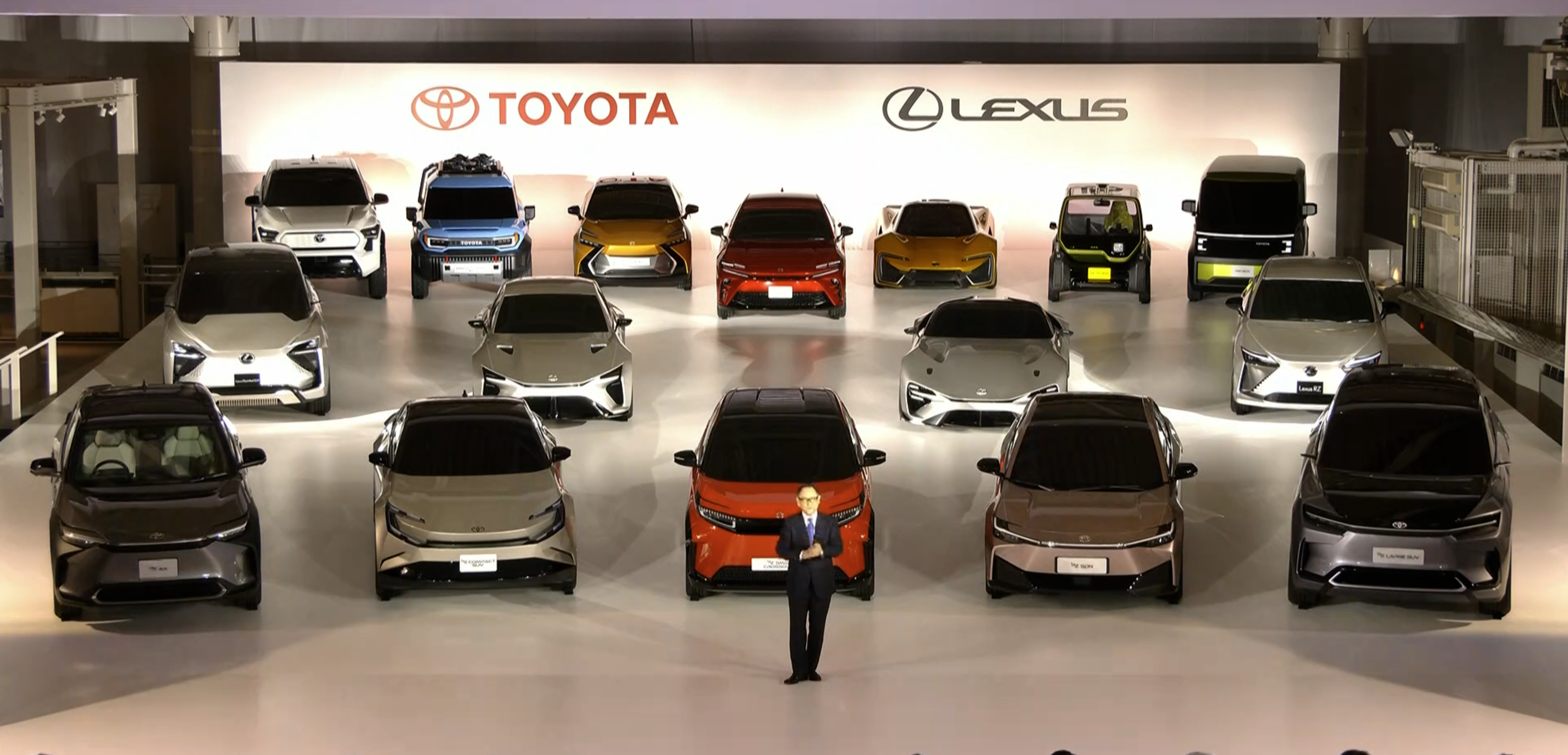
“Each electric vehicle should be unique and special. Not only those on dedicated platforms, but also those related to existing models,” Toyota Design’s Senior General Manager, Simon Humphries, said at the event.
“Now whether that means building on Toyota’s off-road heritage to create new and exciting recreational experiences, or finding new ways to combine versatility with dynamic driving.”
While full details have yet to be revealed, here’s what we know so far about the electric vehicles.
Toyota LiteCruiser
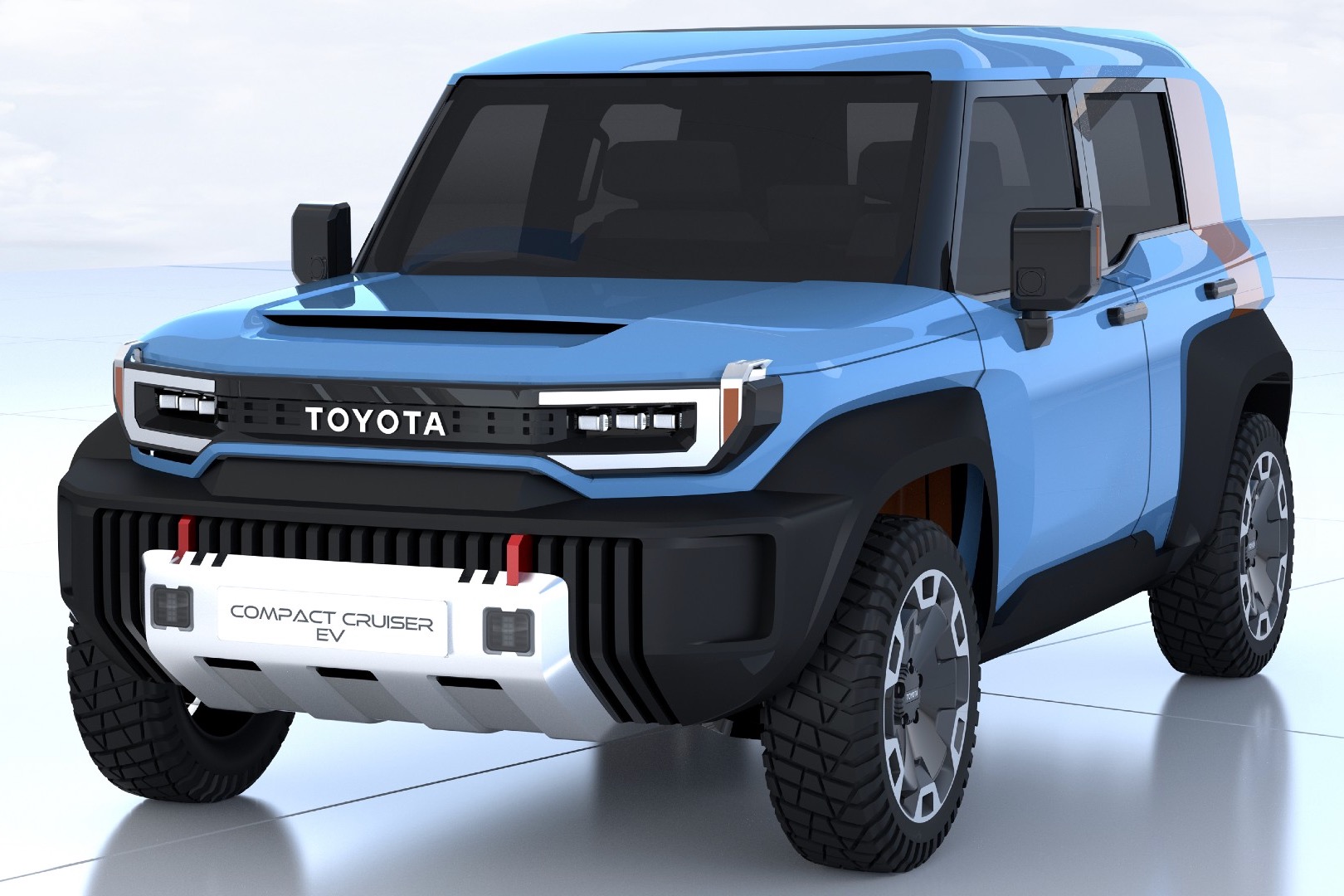
Following the success of the company’s FJ Cruiser, Toyota has unveiled the Compact Cruiser EV, which marries rugged retro design with a smaller body.
However, a glimpse of the concept’s interior shows what appears to be the LiteCruiser name on the dash.
Styling has been heavily influenced by LandCruiser models of the past, with the rear quarters borrowing elements from the FJ Cruiser, and featuring a ‘TOYOTA’ logo on the front grille.
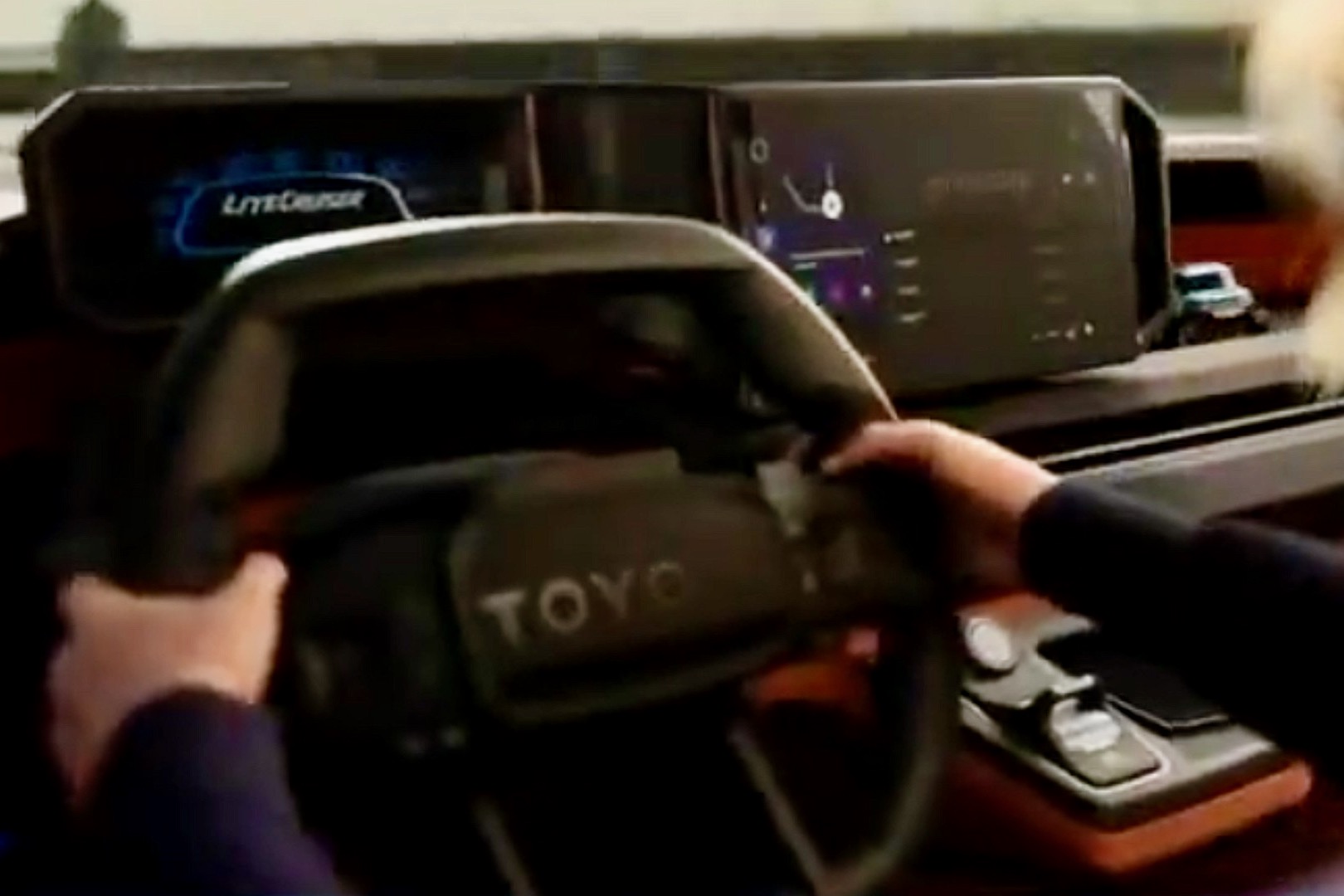
Inside, the rugged theme continues, but with the addition of a large panel encompassing the digital instrument cluster and infotainment screen. A hexagonal-shaped steering wheel also features the Toyota name spelled out – a feature normally reserved for off-roaders – rather than the more typical Ellipses symbol found on most models.
Given the LiteCruiser’s tough looks – and the brand’s extensive history of celebrated four-wheel-drives – expect the electric powertrain to provide a high level of off-road capability.
The model is expected to provide a modern alternative to the Jeep Wrangler and Ford Bronco when it launches in the coming years – and possibly even steal sales away from the much-rumoured five-door Suzuki Jimny Long.
Toyota electric dual-cab pick-up
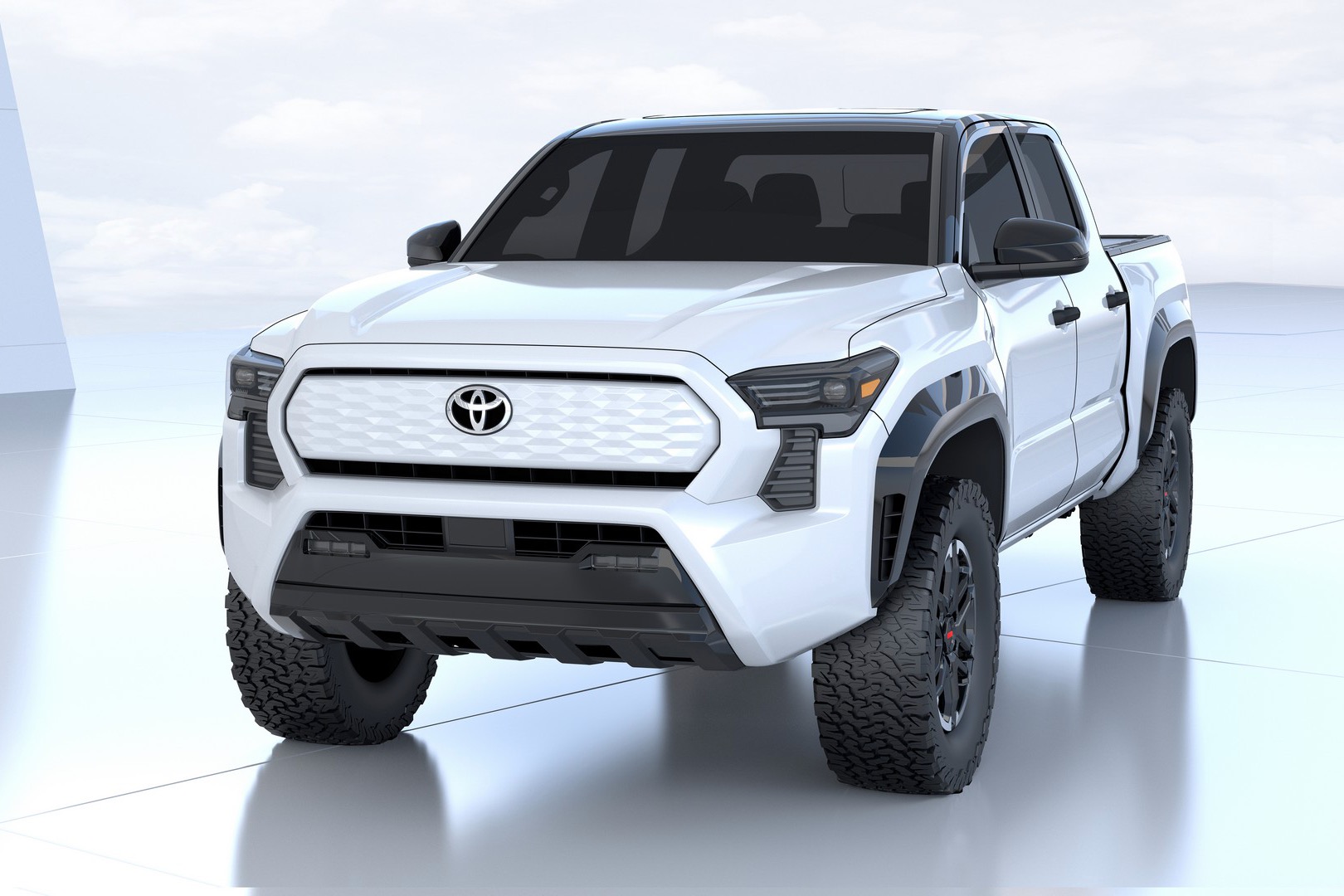
A name has not been given to this electric concept, but the model is clearly an electric version of the Toyota Tacoma pick-up – North America’s equivalent to the HiLux ute, albeit slightly larger.
With the current Tacoma expected to be replaced in roughly 2023, some recent reports suggest the next-generation model will be based on the company’s TNGA-F platform, which underpins the LandCruiser 300 Series and the Tacoma’s larger sibling, the Tundra full-size pick-up.
While we know the TNGA-F architecture can accommodate electrification – with a hybrid Tundra unveiled in September – this would be the first time Toyota has previewed a fully-electric version of the platform.
Toyota GR Sports Concept
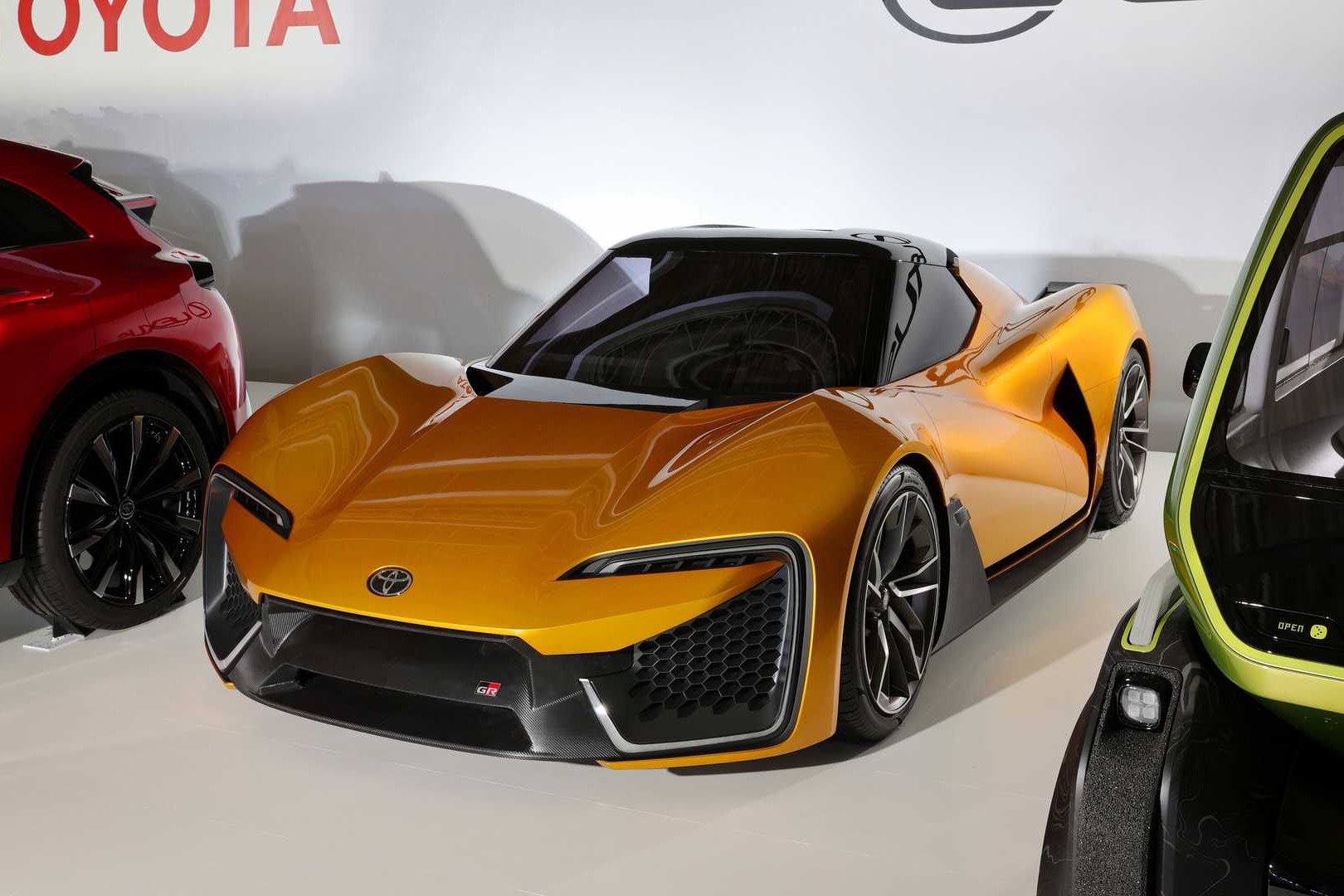
The presentation showed off what could be the first fully-electric model from the company’s high-performance arm, Gazoo Racing.
Unnamed, but adorned in GR badges, the concept could be the source of the many Toyota MR2 rumours in recent years. Its shape is not dissimilar to a mid-engined sportscar, leading some to suggest this is the spiritual successor to the MR2.
Japanese publication Best Car recently reported Toyota was working with Daihatsu and Suzuki to develop an MR2 successor.
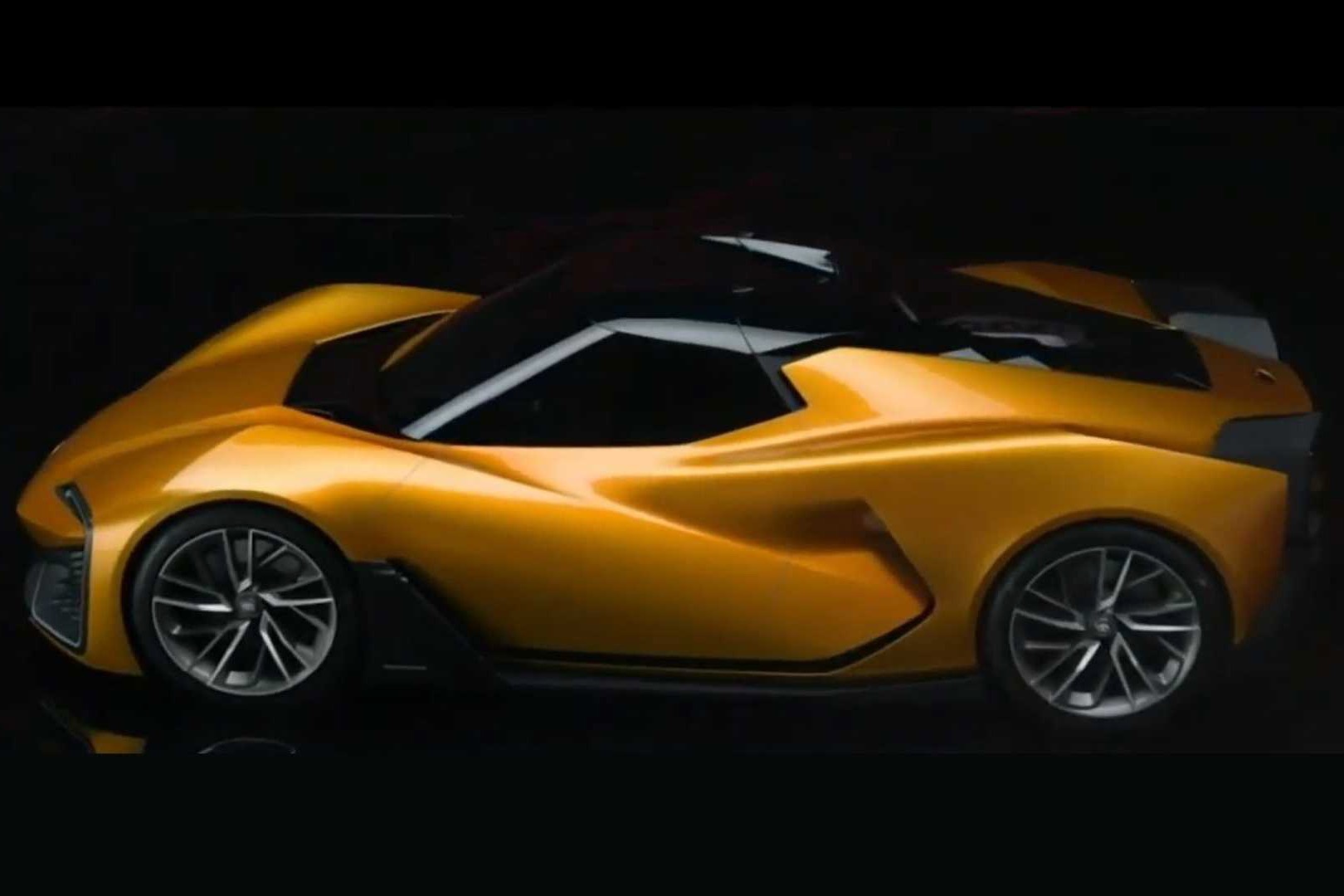
Given Suzuki and Daihatsu’s history of producing compact ‘kei’ sports cars, and the GR concept’s smaller size, we could be looking at a new model designed to compete with the Mazda MX-5 RF.
However, Toyota could be looking at pitching the GR concept against the Porsche Cayman.
Leaked dealer information has the next-generation Cayman and Boxster siblings moving to battery power in 2025, and providing Toyota with an opportunity to offer an electric competitor.
Japanese outlet Spyder7 recently reported Toyota had approached both Porsche and Lotus to help with engineering the MR2 successor.
Toyota Beyond Zero family
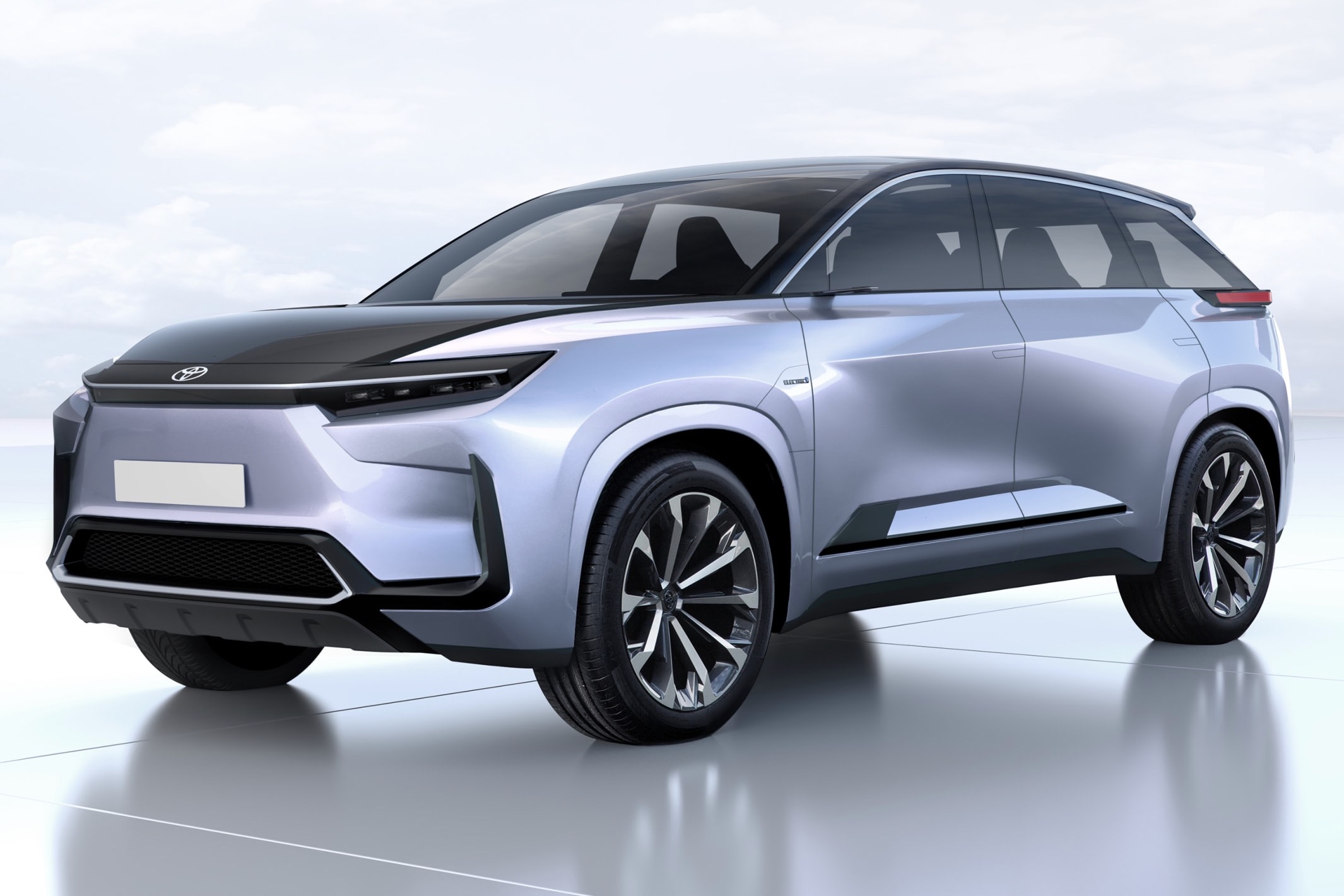
A number of new models will join the recently-unveiled Toyota bZ4X SUV, with the line-up appearing to mirror the wider Toyota range.
While the sedan could offer an electric alternative to the Corolla, a large SUV could be positioned as a battery-powered Kluger or LandCruiser Prado stablemate.
The model – which may end up being named the bZ5X – offers three rows of seating, but isn’t expected to be pitched as an off-road model. It’s more likely the Toyota is put up against the Hyundai Ioniq 7 and Kia EV9 in the coming years.
