
Key Points
- Chrysler to cease local operations at the end of 2021
- Only the 300 sedan has been on sale since 2019
- Manufacturer to focus on electrified vehicles
American manufacturer Chrysler has announced it is officially pulling out of Australia, signalling the end of right-hand drive sales for the brand.
After years of uncertainty for the Stellantis-owned manufacturer, Fiat Chrysler Automobiles Australia has confirmed it will cease to bring any further Chrysler-branded vehicles to the local market – with its remaining stock of 30 cars to be shifted before it exits the country.
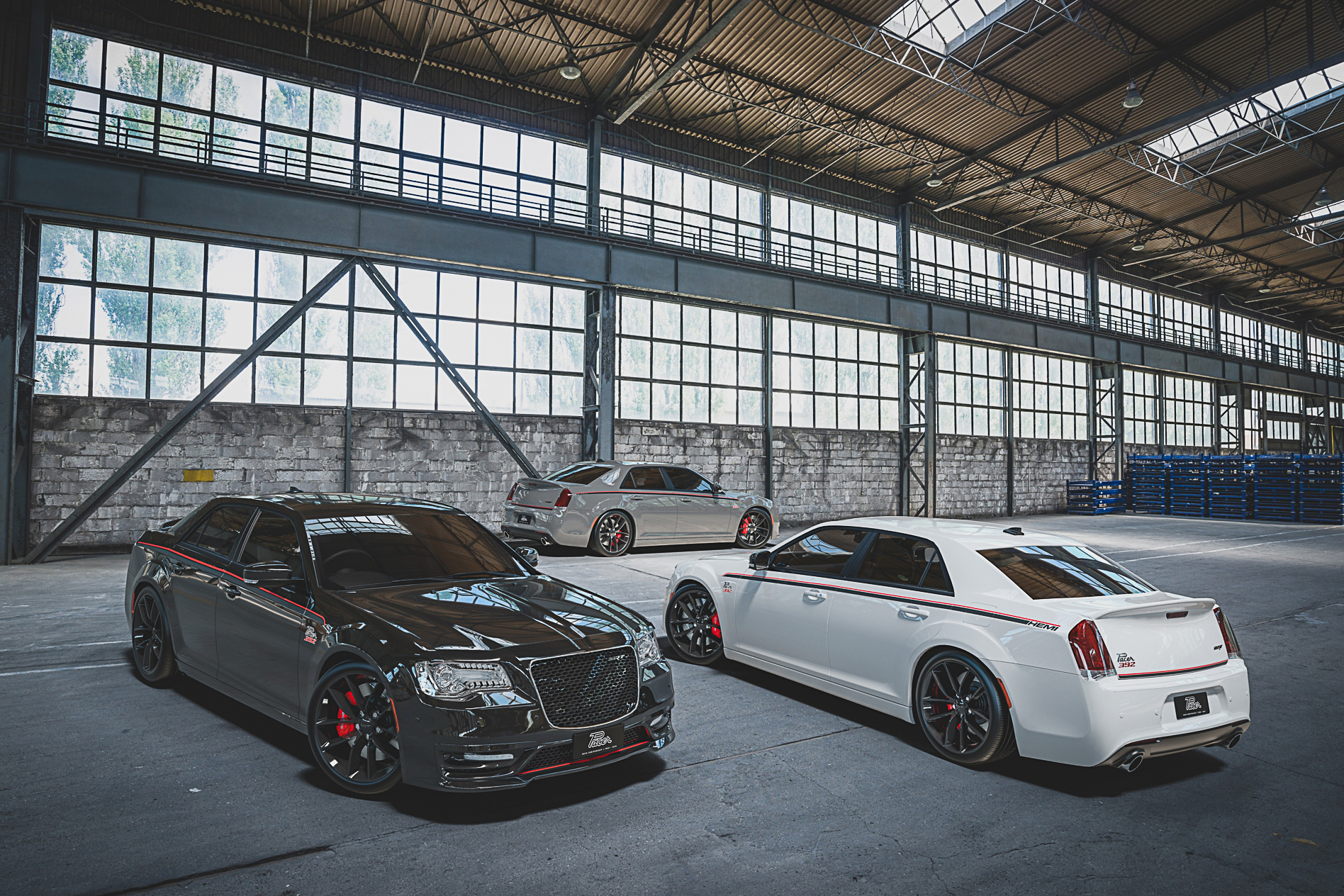
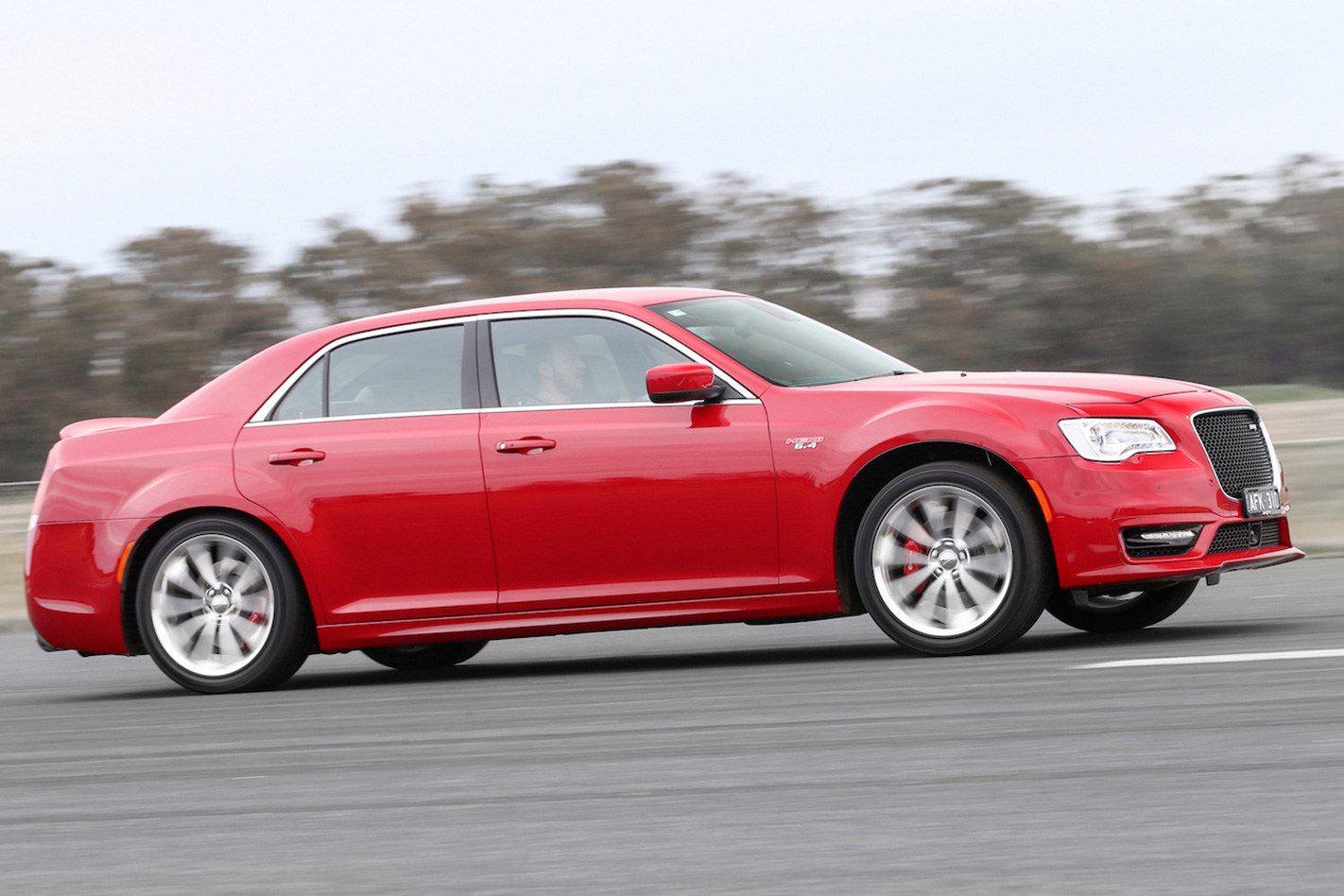
Since 2019, Chrysler’s sole offering in Australia has been the 300 sedan, with sales of the vehicle declining over the period, dropping from 292 units in 2019 to 152 year-to-date at the end of October 2021 as only 30 examples currently remain with dealers.
Pre-global financial crisis, Chrysler’s local sales peaked at 3610 units in 2006, as the first-generation 300C contributed to over half of the brand’s sales and outsold rivals such as the Ford Fairlane and Holden Caprice, while only just missing out on the top spot in the executive category to the Statesman.
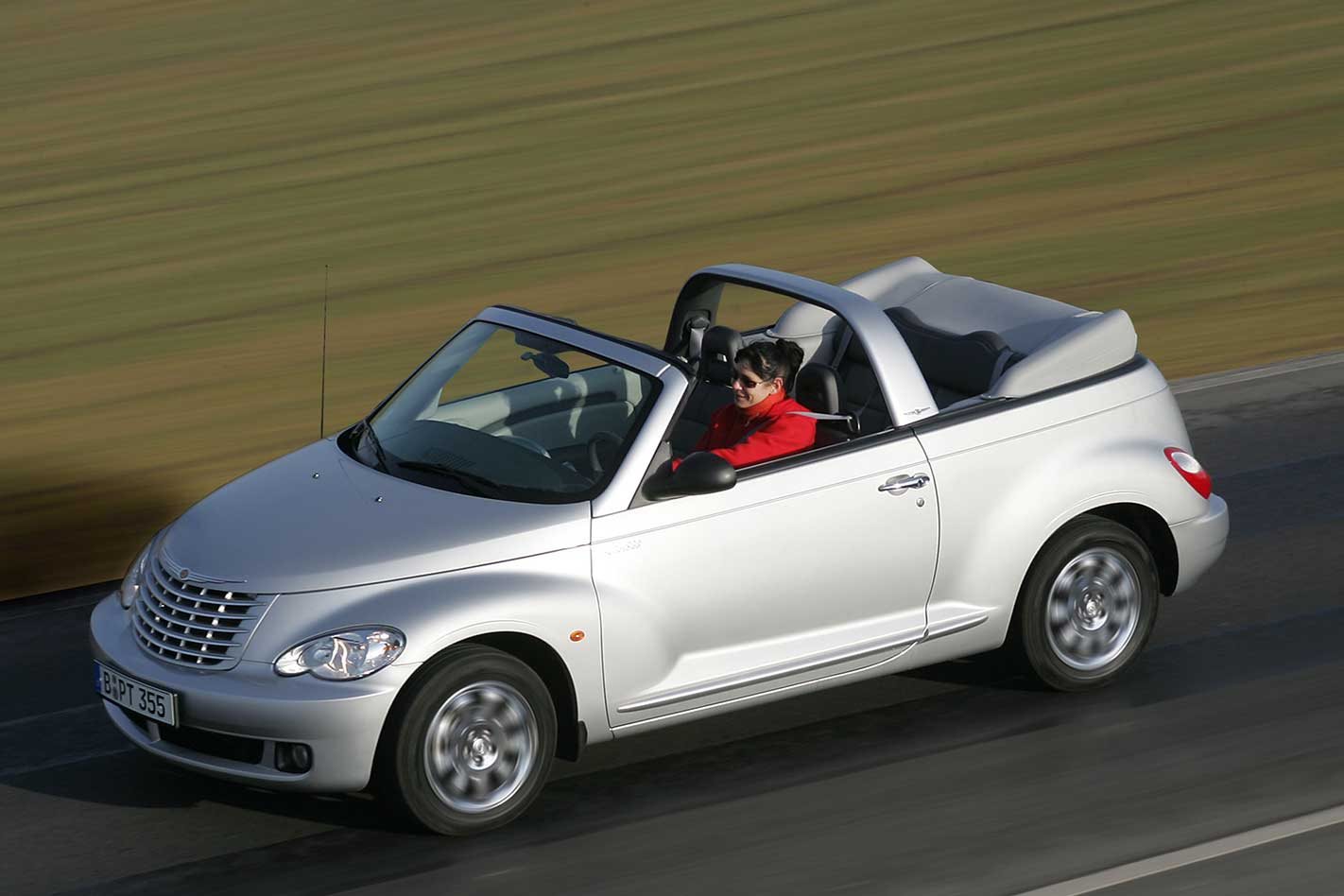
Other models have come and gone throughout Chrysler’s modern tenure in Australia, such as the Sebring, Neon, Crossfire, PT Cruiser and Voyager – the latter of which was only dropped in 2019.
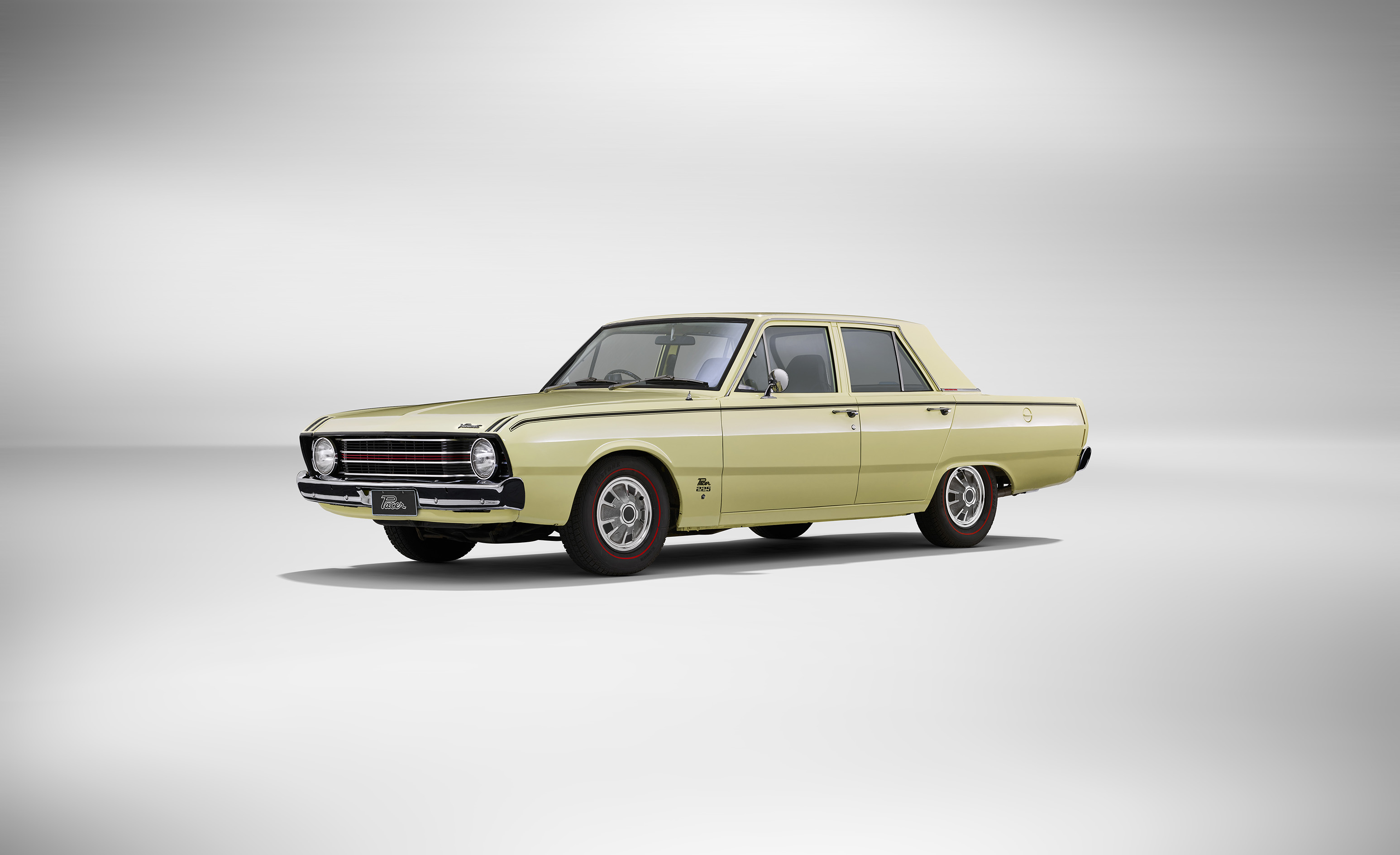
Today’s announcement marks the end of Chrysler’s second adventure in the Australian market. The brand’s first salvo began in 1951 with the formation of Chrysler Australia Ltd. Initially, Chrysler Australia assembled North American-built cars. The turning point for the brand came with the introduction of the Valiant in 1962, which was fully competitive with its Holden and Ford rivals. Australian production began in 1963 and wound up under Mitsubishi ownership in 1981.
James Voortman, Chief Executive of the Australian Automobile Dealers Association, told Wheels Chrysler’s decision was inevitable, but a lack of communication to its dealer network set the wrong tone.
“This is not a great surprise as the Chrysler brand has not sold in great volumes for a number of years,” said Voortman.
“While most dealers will understand the rationale behind this as a business decision, some of them might have appreciated a bit more notice ahead of this announcement.
“The focus will now move to all of those people who have purchased a Chrysler vehicle here in Australia and the dealers will work closely with Stellantis to ensure these customers can continue to have their cars serviced and repaired by qualified technicians using genuine parts.”
FCA Australia has confirmed to Wheels its dealers will continue to operate as normal given only a handful still sell Chrysler products, with servicing set to continue as per usual throughout its dealer network, as FCA expects its entire base of staff in Australia to be retained off the back of the announcement.
FCA Australia’s Managing Director, Kevin Flynn, said removing Chrysler from its portfolio allows it to focus on the electrified future of its remaining brands, as Jeep looks to transition towards electric vehicles over the coming years – a wider goal for Stellantis as a whole.
“We are very excited about this new era of mobility,” said Flynn.
“Stellantis is dedicated to becoming the market leader in low-emission vehicles and committed to developing the most capable and sustainable high-performing and four-wheel-drive vehicles in the world.
“We have a hugely positive year ahead of us, focusing on electrification and moving into a very premium offering with our all-new, two- and three-row Jeep Grand Cherokee, as well as the PHEV Jeep Grand Cherokee 4xe. These models represent real advancements in terms of technology, luxury, efficiency and capability.”
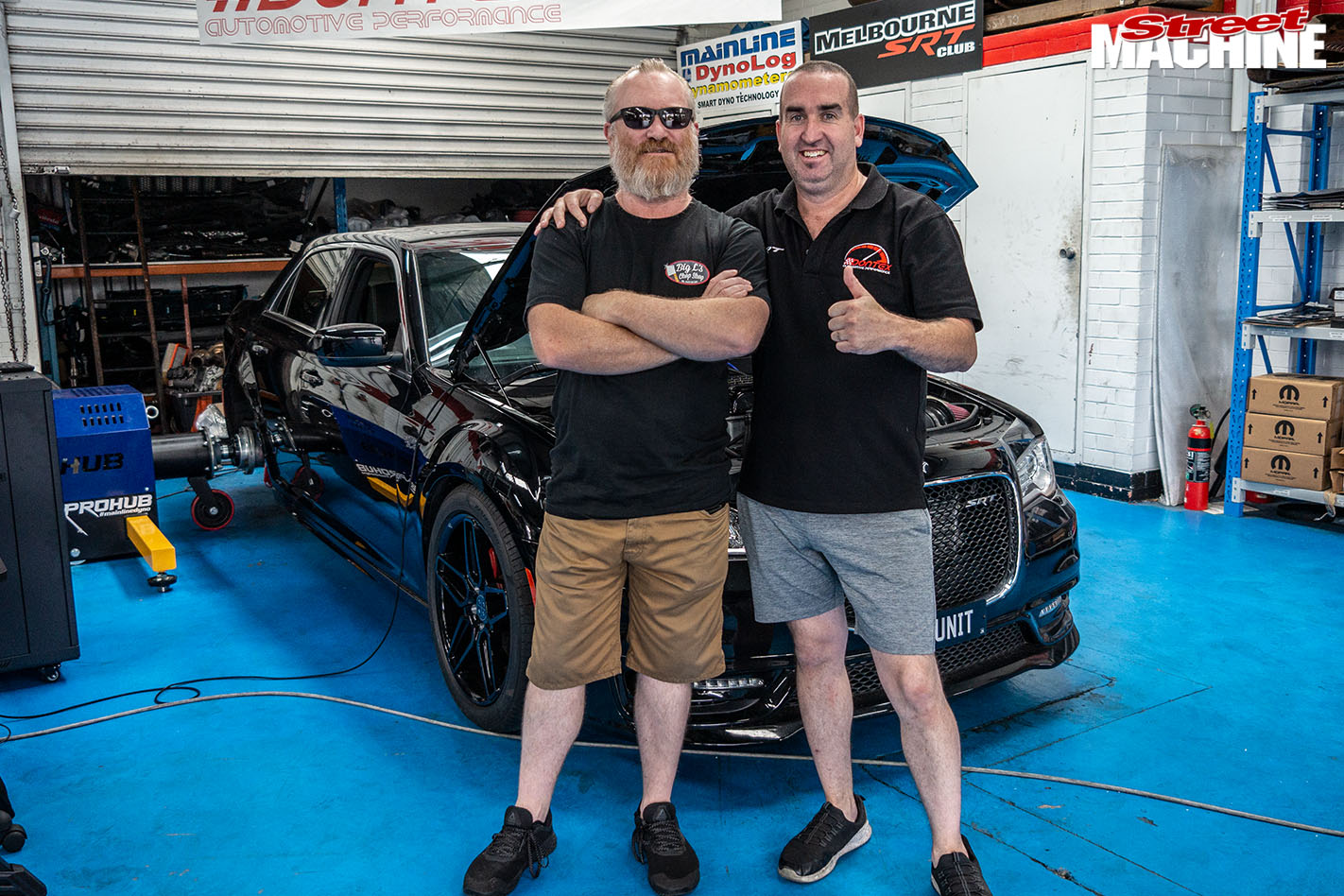
Lee Forward from Dontex Performance has been working on Chryslers and other Mopar cars for over a decade, developing his business within a niche community which has now lost a key pillar.
“I was into Holdens my whole life, but came over to the Mopar side about 15 years ago. The community sticks together and that’s what it’s all about,” he said.
“The Chrysler community is very tight and very passionate – they’re enthusiastic and love their cars.
“I would say about 50 per cent of the customers who currently own Chryslers are previously Holden owners – they don’t have the opportunity to own a Holden V8 anymore so they venture into something else.
“Anything from 2012-2016 is quite popular but half of them are jumping out of Holdens and into the Hemi – they absolutely love them!”
“We’ve got about 30 to 40 Hemis here at the shop right now and there’s roughly 10 Chryslers.
“We’re a niche business and all we do is Mopar, so this hurts my business in the long term. Short term, I think there won’t be too many dramas over the next five years, but it still hurts because we’re all passionate about this brand.”
Chrysler’s Australian annual sales
| Sales per year | |
|---|---|
| 2000 | 2413 |
| 2001 | 2726 |
| 2002 | 2106 |
| 2003 | 2009 |
| 2004 | 2167 |
| 2005 | 2479 |
| 2006 | 3610 |
| 2007 | 3059 |
| 2008 | 2469 |
| 2009 | 1818 |
| 2010 | 1464 |
| 2011 | 580 |
| 2012 | 1359 |
| 2013 | 2676 |
| 2014 | 1657 |
| 2015 | 925 |
| 2016 | 965 |
| 2017 | 735 |
| 2018 | 250 |
| 2019 | 292 |
| 2020 | 198 |
| 2021 | 152 |
McLaren Automotive CEO Mike Flewitt has stepped down and, at the time of going to press, the business was still searching for a replacement. In the interim, the newly recruited former Porsche CEO Michael Macht will step into the vacated role.
Flewitt, the ex-Ford Europe production supremo who joined McLaren as Chief Operating Officer in 2012 before ascending to the CEO position a year later, oversaw an explosion in new product from Woking.
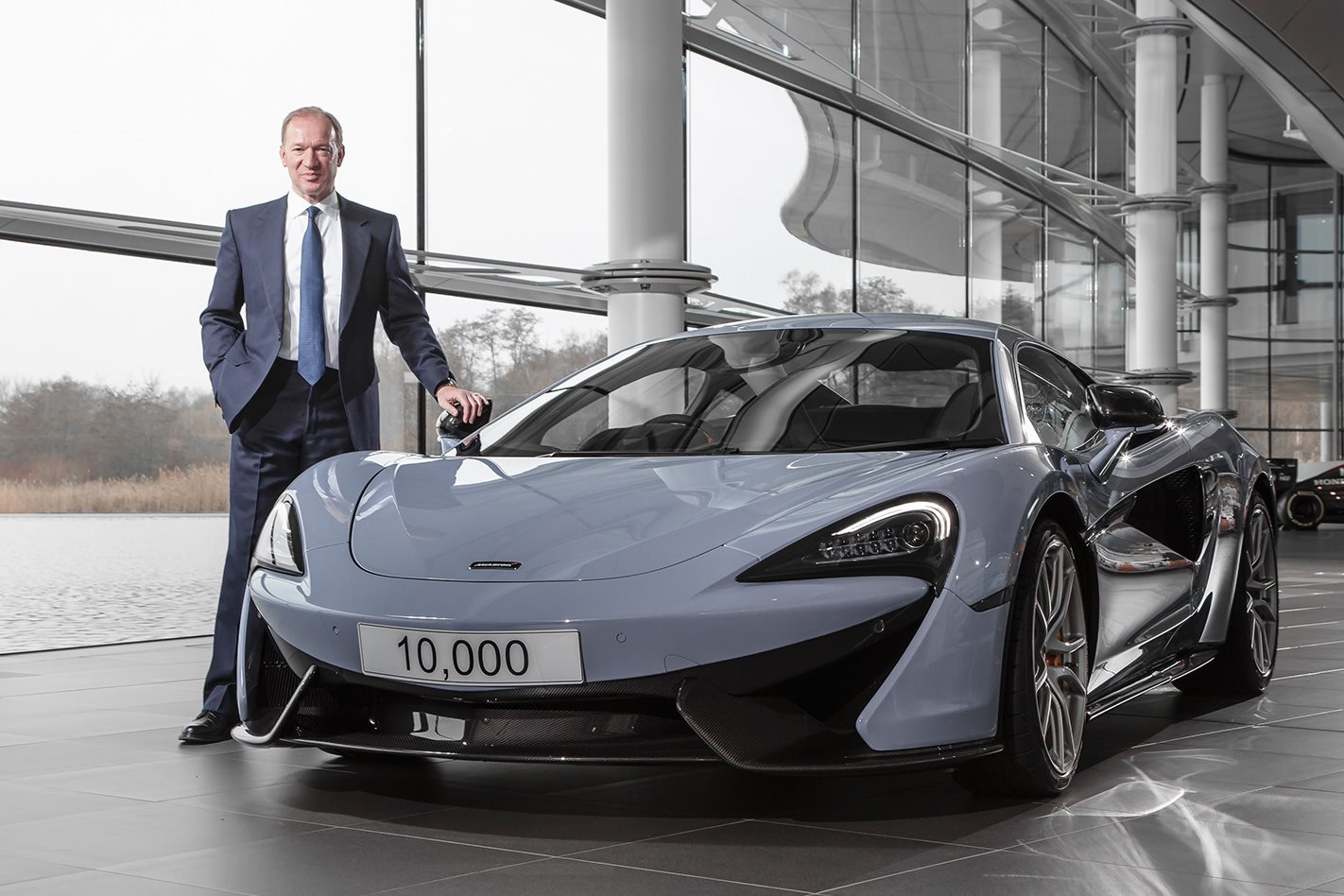
After the botched launch of the MP4-12C, previous boss Anthony Sheriff fell on his sword, with Flewitt overseeing that car’s remedial development into the 650S, as well as the splitting of the vehicle lines into Sports, Super and Ultimate series.
Acknowledging the exigent nature of supercar demand, Flewitt introduced the Track 25 plan in mid-2018, promising 18 new McLaren road cars by 2025: nearly three models a year.
While delivering a pipeline of exciting new metal, the unintended consequence of Track25 was the exacerbation of nascent issues with oversupply and the consequent rapid obsolescence of models, contributing to unspectacular residual values for many of the series production models in the McLaren range.
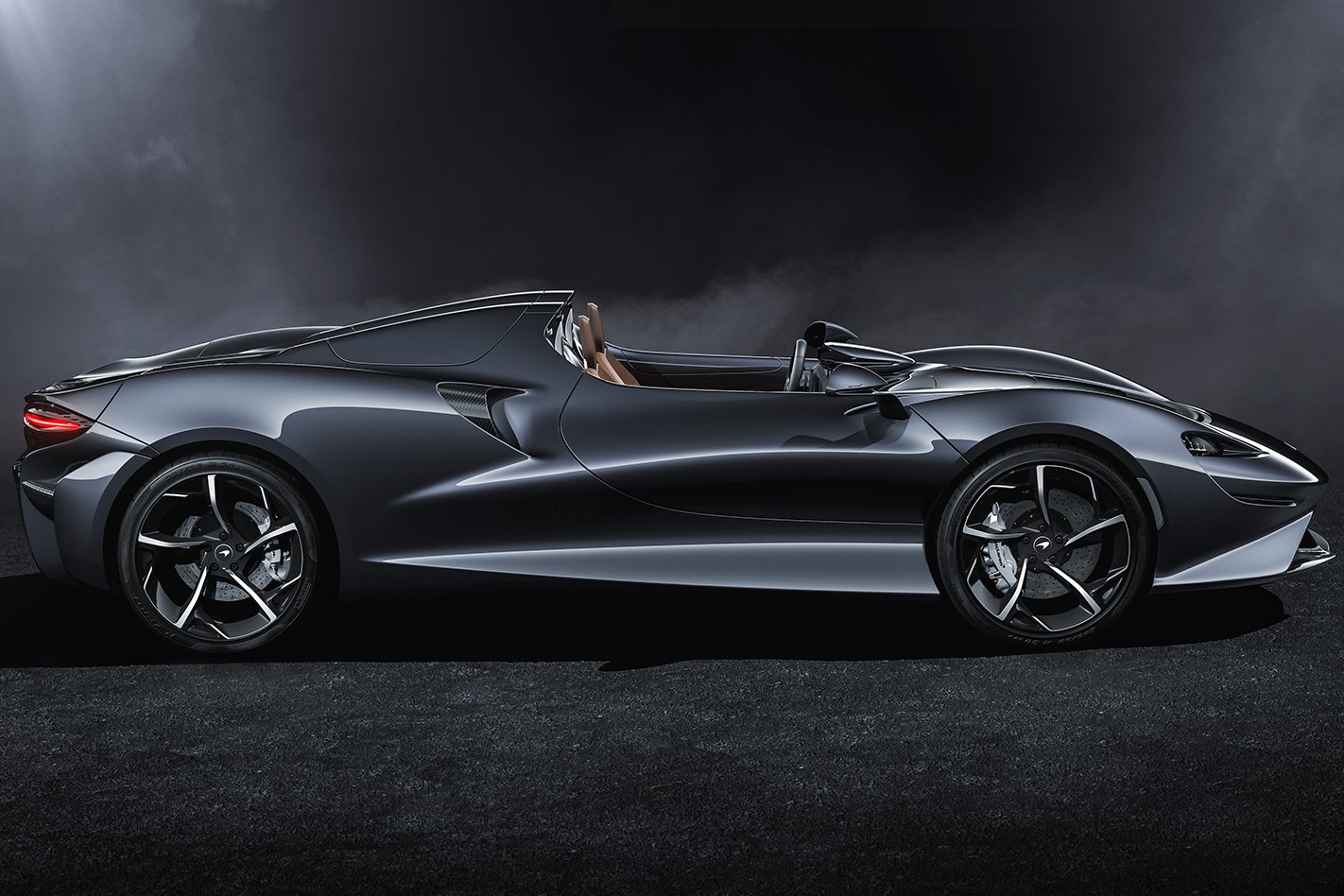
Belatedly, the company has switched to a lower volume, richer product mix. Flushing excess Sport Series inventory out of the dealer network and pivoting to a greater proportion of Speedtails, Sabres, Elvas and 765LTs in 2021 has seen McLaren rebound from a tough 2020, when the automotive division’s revenues slumped by 51 per cent compared to 2019. Last year it sold 1640 cars, down from a high of nearly 5000 in 2018.
McLaren is sitting on a significant pile of debt, something Group Chief Financial Officer Kate Ferry will have to grapple with. The A$323m sale and lease back of the McLaren Technical Centre in Woking will only partially offset that debt, which is set to include A$336m of US dollar denominated and A$678m of British pound denominated five-year Senior Secured Notes which comes due in July of next year.
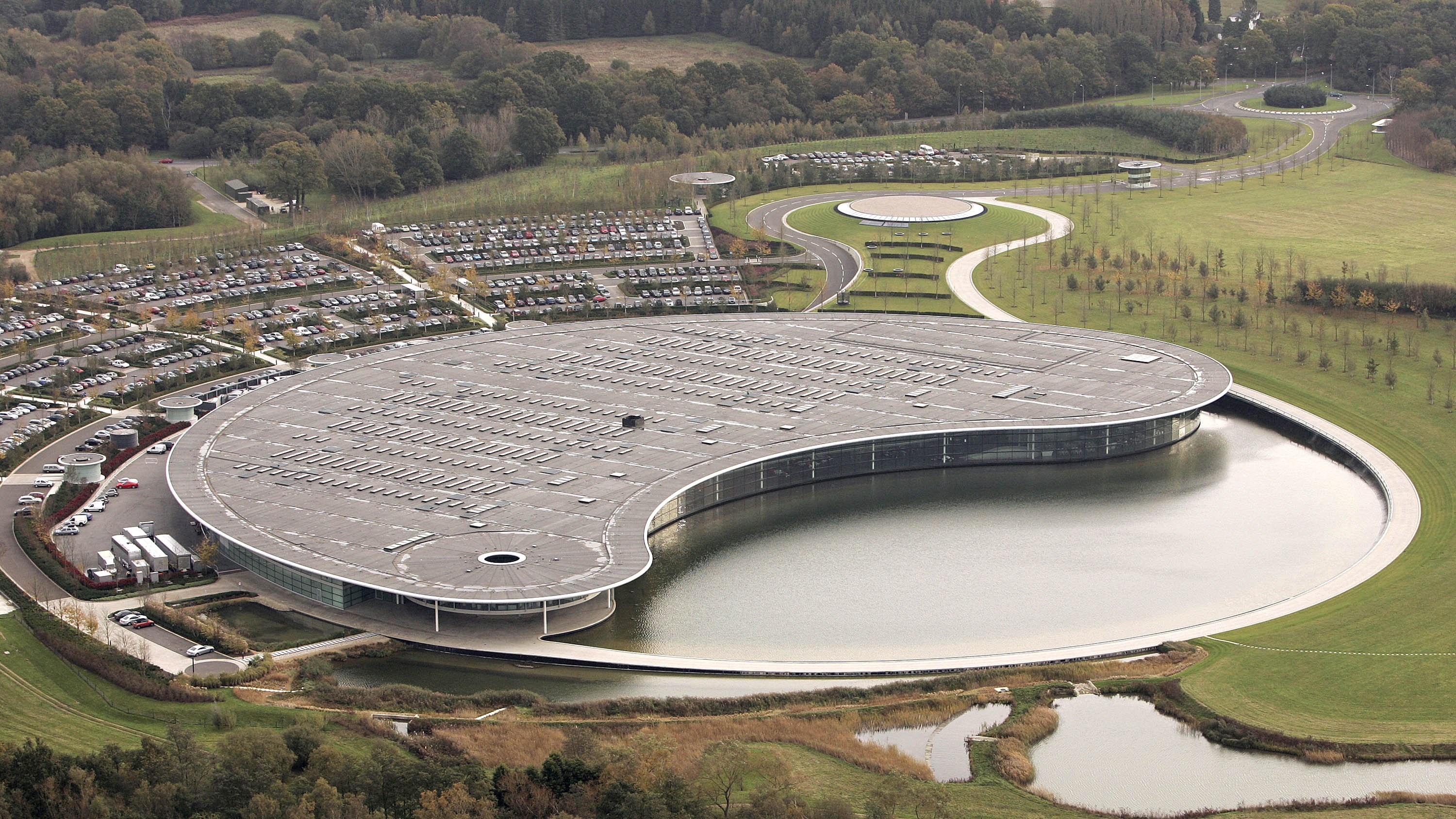
All of which puts a massive focus in getting the launch of the new Artura, McLaren’s ‘volume’ model right. The Artura was scheduled to be on the cover of the next issue of MOTOR, with drives happening in late October, but an unspecified software issue caused Woking to cancel the launch.
Having been burnt once by launching the MP4-12C without a fully functional IRIS infotainment system, it’s not an error McLaren can afford to make again. What’s more, it will only put the finish of the first customer Arturas under even greater scrutiny.
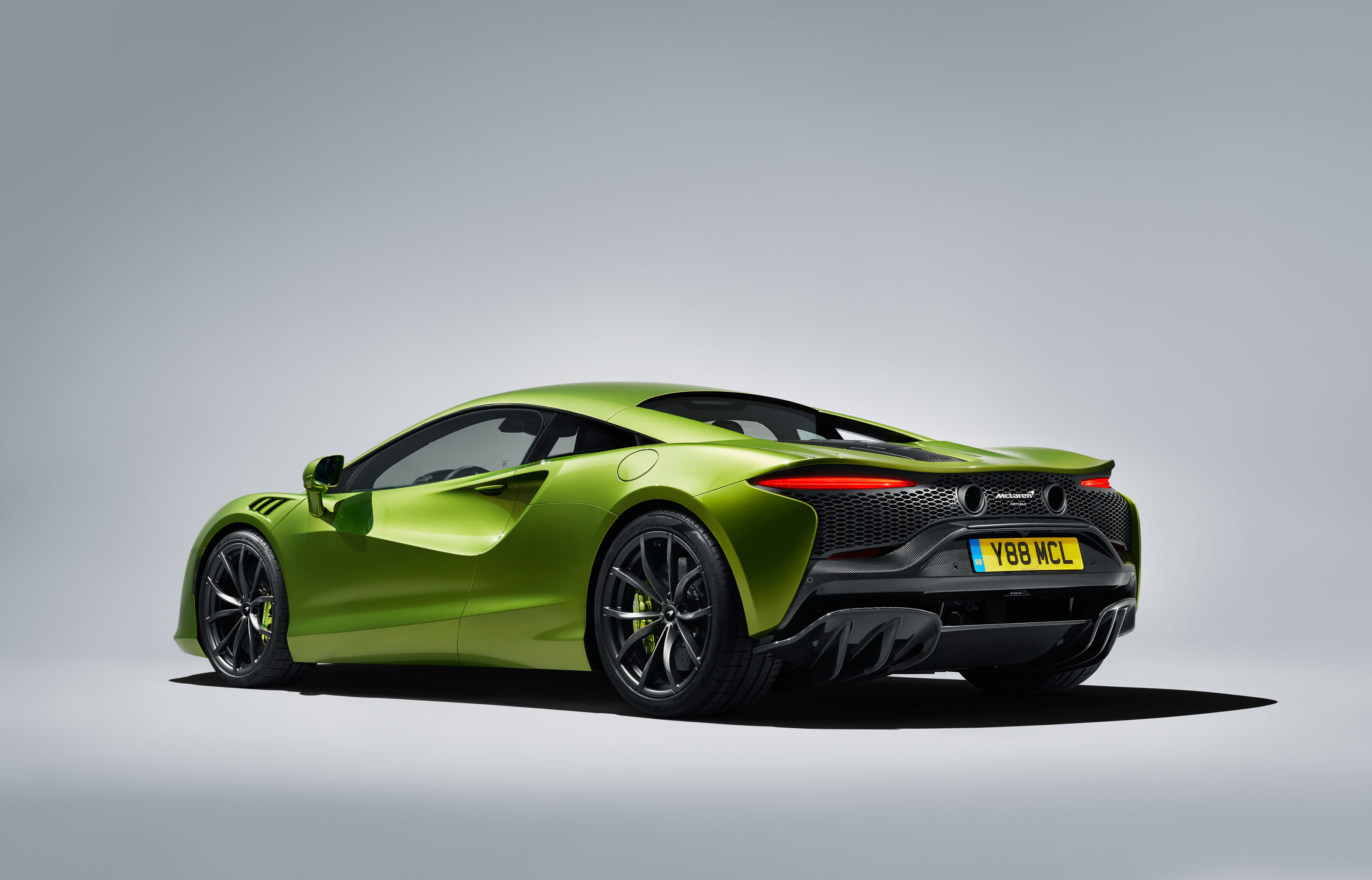
For the time being, Michael Macht has a quandary. The next all-new Ultimate Series model is not due until 2025, so expect a number of McLaren Special Operations projects to fill that void, with another go-faster spin-off of the 720S line and performance upgrades for existing Ultimate Series models P1, Senna and Elva. McLaren has already committed to a hybrid fleet by 2026 with a full electric model arriving by 2030.
How will the investment for that arrive?
Many analysts are anticipating an IPO via a special purpose acquisition company, with the Financial Times claiming that McLaren has been in talks with at least one SPAC, with a view to raising around A$950m through a flotation.
Of course, there’s also been speculation that a rescue will come from without, with recent reports from Autocar suggesting Audi is interested in acquiring the company’s assets, while German publication Automobilwoche stating that BMW is circling, hinting at a meeting between BMW and Mumtalakat, Bahrain’s sovereign wealth fund which retains a majority 62.5 per cent stake in McLaren.Both parties have strenuously denied any plans to acquire the British supercar business. Nevertheless, speculation has only intensified. As indeed has the betting on who will be the new CEO to guide McLaren through an intriguing period of flux.
Mercedes-Benz Australia is recalling examples of its GLB SUV because the side spoilers may not have been mounted correctly at the tailgate.
The issue affects 61 GLBs made between 2020 and 2021.
According to the Department for Infrastructure, which issued the notice, a side spoiler may detach from the vehicle whilst it is being driven, and this could increase the risk of an accident causing injury or death of other road users.
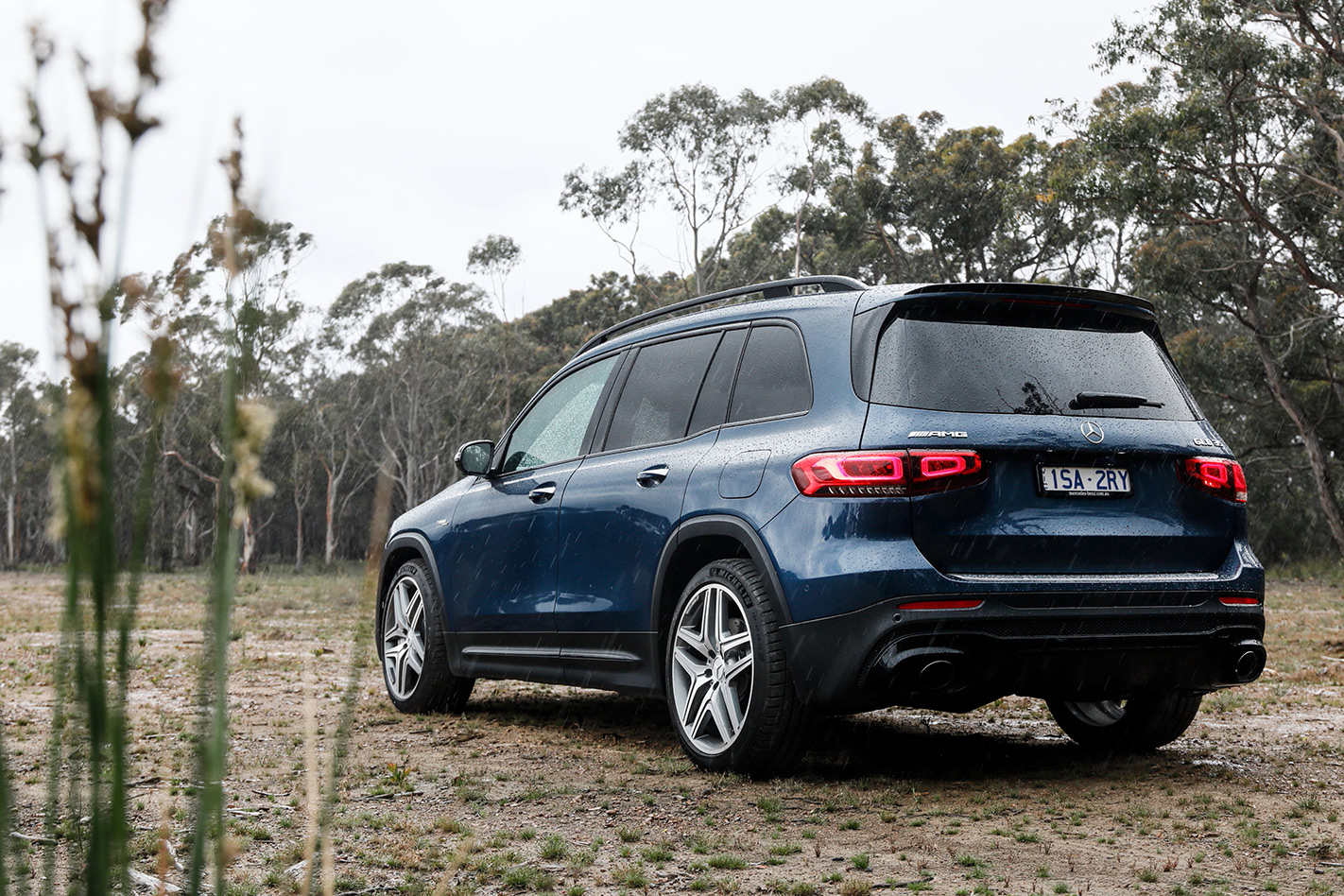
Owners of affected vehicles will be contacted by Mercedes-Benz and asked to make arrangements with their nearest authorised dealer to have the work carried out as soon as possible.
A list of VINs is available here.
A full list of authorised dealerships can be found at: https://www.mercedes-benz.com.au/passengercars/mercedes-benz-cars/dealer-locator.html
Alternatively, consumers can call 1300 300 896 or may use the Mercedes-Benz online booking service, by visiting www.mercedes-benz.com.au/servicebooking
UPDATE, May 11, 2022: Australian pricing for the new 2023 Nissan Z has now been announced. Get all the details at the link below.
The story to here
The 2023 Nissan Z is set to land in Australia in mid-2022, heralding a new era of sportscars for the brand.
Nissan will offer the Z with a 3.0-litre twin-turbo V6 engine, sending 298kW and 475Nm through a six-speed manual gearbox to the rear wheels.
While it’s months before the Zed’s Australian launch, YouTuber and Nissan enthusiast Jeff, from channel Burnt Rubber, happened to come across a prototype vehicle parked on a street in Sacramento, California.
The test vehicle has clearly seen some action, but if you want to skip ahead to the action, it all starts at the 4.30 mark.
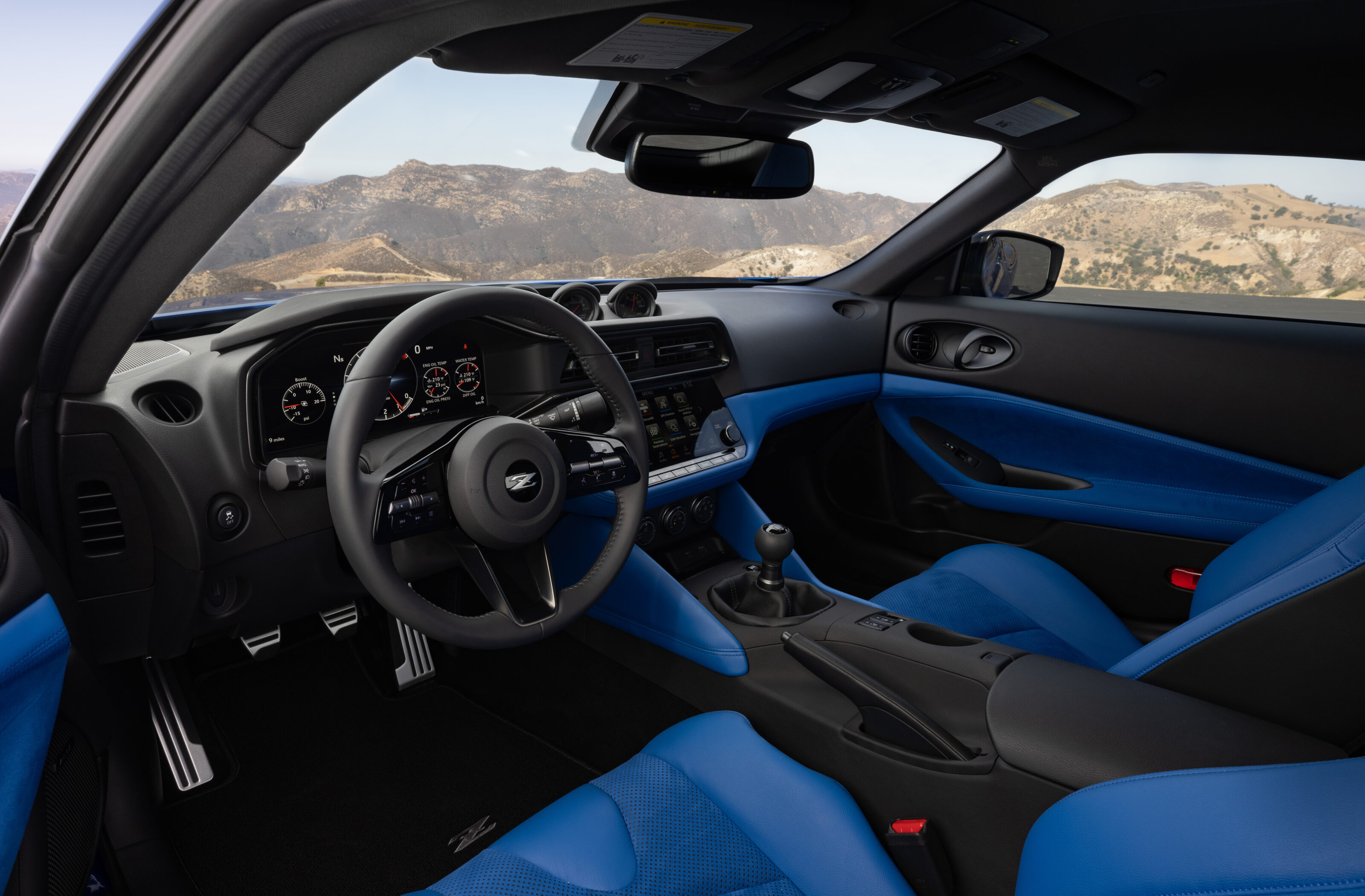
Being a Nissan R35 GT-R owner – and with plans to buy a new Nissan Z as soon as it’s released – Jeff poured over the unlocked car before the (presumed) Nissan engineer returned to the vehicle, offering to give him a “baby launch”.’
The mule was fitted with the optional nine-speed automatic transmission, allowing us to hear Z’s exhaust note as it accelerates through the first three gears.
It may not be a comprehensive review of the final production car, but the video provides a real-world look at what to expect when the 2023 Nissan Z arrives next year.
What do you think of the new Nissan Z? Let us know in the comments section below.
Being a modern motoring enthusiast is a lesson in pessimism – or so the naysayers will claim. Cars are too expensive, they shout. Automatics are taking over, they bemoan. The larrikin spirit is dead, they declare. To hell with all of that, says Hyundai.
The Korean company has finally unleashed its i20 N in Australia, and after spending two days in the pint-sized rocket on both road and track, we can emphatically confirm it is as engaging, rewarding, spirited and quick as any car lover could ever want.
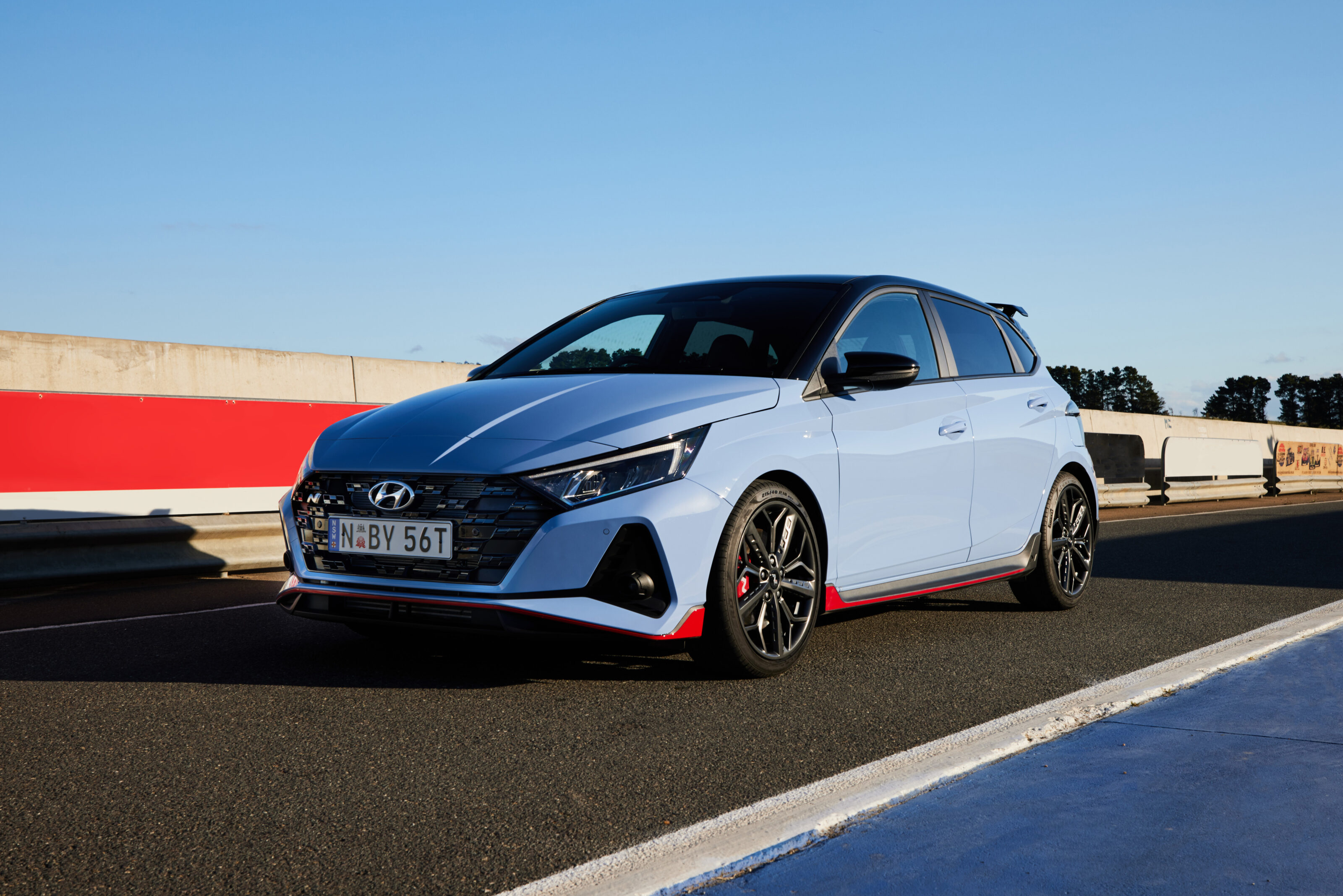
For those that are disappointed in the increasing inaccessibility of modern performance cars, the i20 N is a financial breath of fresh air. Just a single variant is available, priced at $32,490.
While that is a $200 premium over its key rival – the Ford Fiesta ST – the Hyundai is more powerful, lighter, and faster than its Blue Oval nemesis on paper. We’ll reserve an official verdict until we can compare the pair head-to-head. Watch this space.
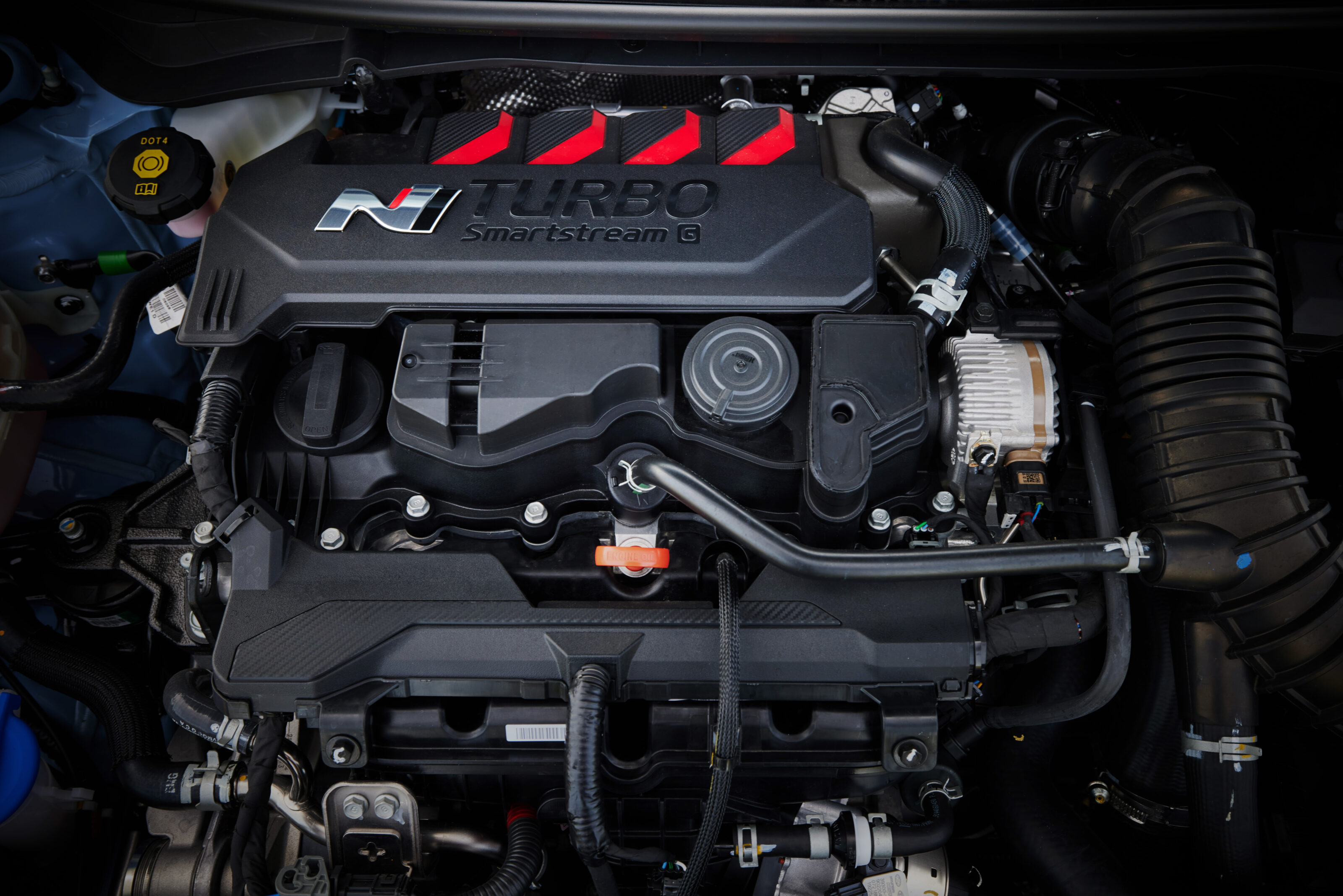
Powering the i20 N is Hyundai’s turbocharged Gamma II 1.6-litre T-GDi four-cylinder, producing 150kW and 275Nm. An overboost function is available, with the peak torque figure increasing to 304Nm in the meat of the power band if the conditions are right. Namely, maximum throttle application and appropriate engine temperatures. This tickle of extra shove is signalled to the pilot by a green turbo indicator that illuminates on the 10.25-inch digital instrument cluster. It became a point of great glee to see the symbol when accelerating hard.
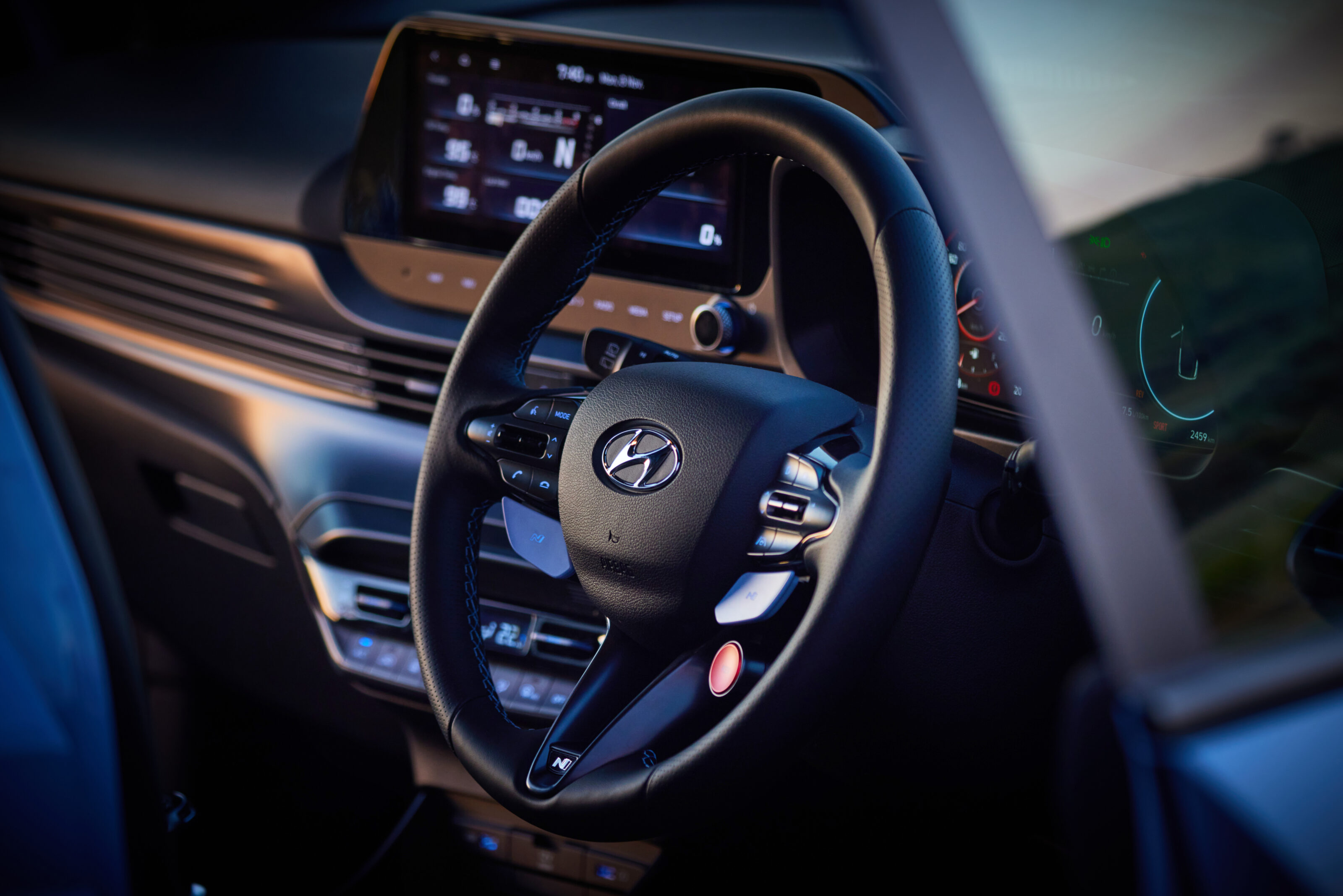
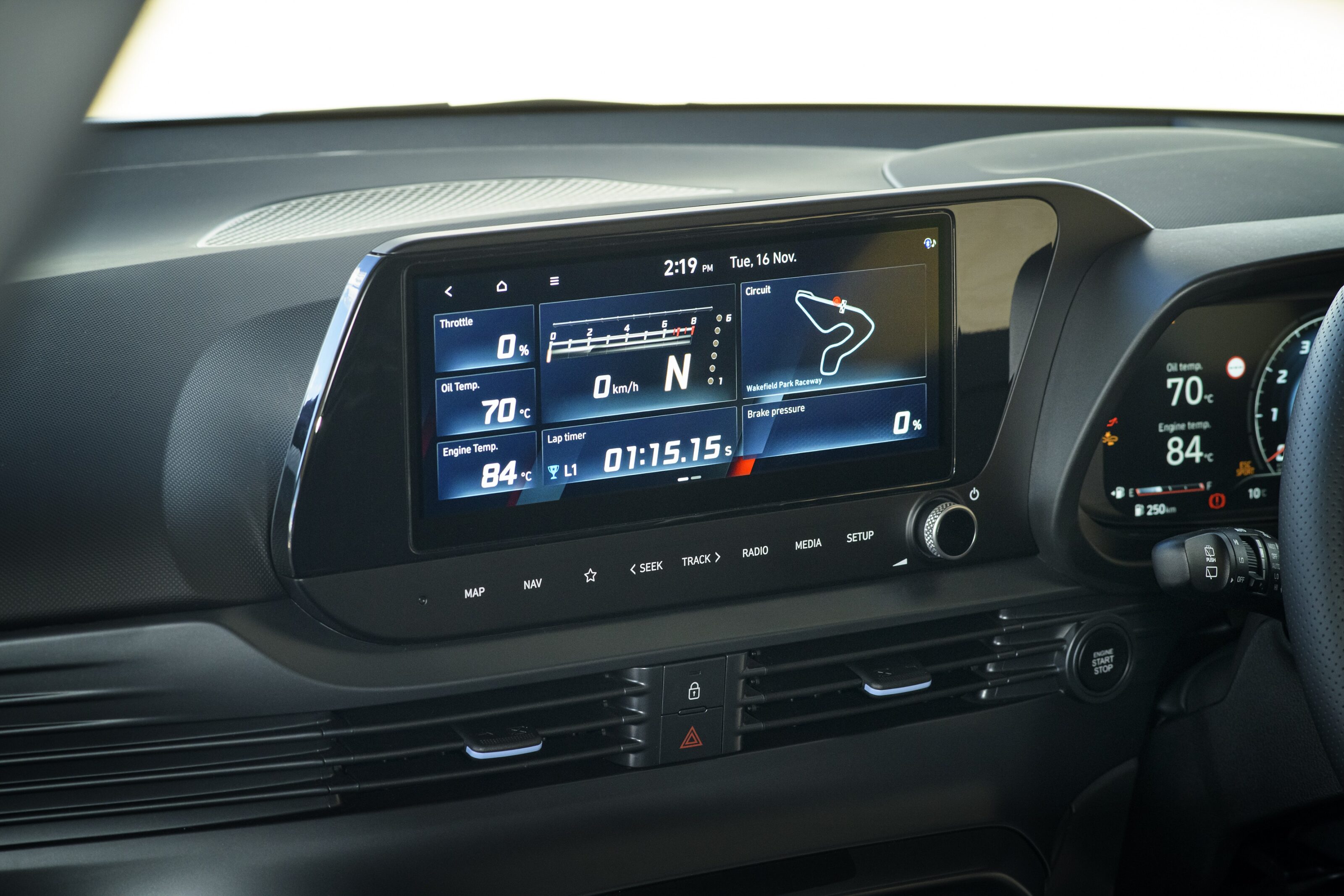
Despite the affordable entry point, Hyundai hasn’t skimped on standard equipment in the i20. Along with the digital instrument cluster there is a 10.25-inch infotainment touchscreen which features a wickedly cool Performance Driving Data System (more on that later). Additional standard equipment includes 18-inch alloy wheels, rear privacy glass, leather steering wheel, LED lights, fog lamps, smartphone mirroring, a Bose audio system, button start, and a wireless charging pad. Literally the only options available are premium paint for $495 and a two-tone roof for $1000.
Active safety features include Forward Collision-Avoidance Assist, Lane Follow Assist, Intelligent Speed Limit Assist, and Rear Cross-traffic Collision Warning. There is no radar cruise control, which isn’t a massive loss for performance driving, but it is a spec omission that we’d be happy to see added to the i20 N’s rap sheet.
Towering above all of that is the key reason the i20 N should be on every enthusiast’s short list regardless of price – how it drives. In short, it’s an ode to everything that we wish a hot hatch could be. It is liveable day-to-day, playful on your favourite mountain road and surprisingly quick on track.
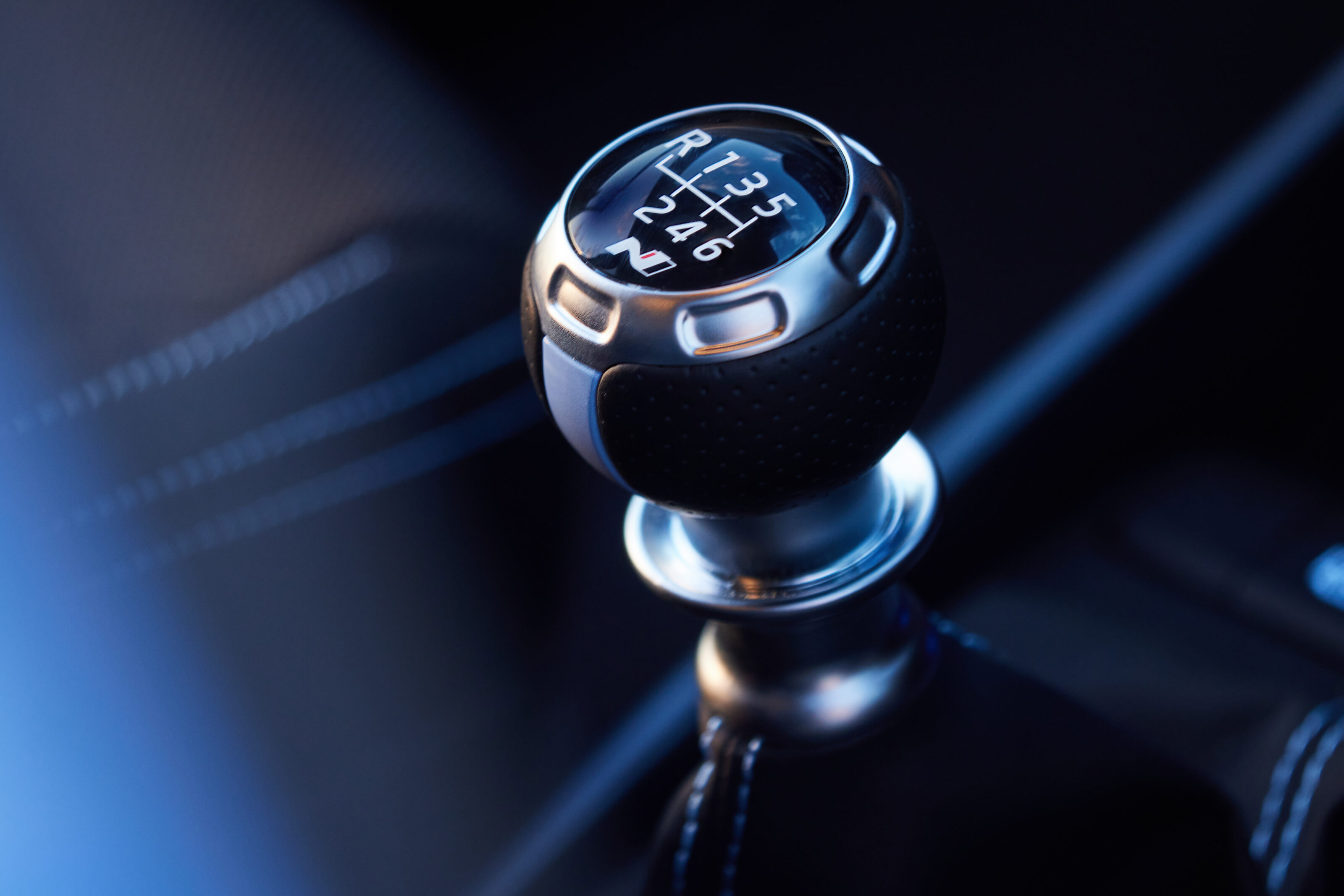
The engine, while not as vocally active as the 2.0-litre turbo fitted to the i30 N and Kona N, is gutsy and has a whooshing induction note. A six-speed manual is the only transmission available, meaning if you spot an i20 N in the wild you are identifying as ‘one of us’. Behind the wheel is a person who appreciates the art of three-pedal driving. Fitted with a Torsen mechanically locking limited-slip differential, the i20 puts its power down without excessive levels of torque steer. In fact, during our testing we found it to be mostly absent from the driving experience, even when giving the car a caning on track.
There are six drive modes to choose from, with four being the traditional Eco, Normal, Sport and full-fat N. The two remaining modes are customisable, and can be activated by the large N buttons on the steering wheel, while a third rim-mounted button turns the rev-matching system on and off.
The care that Hyundai has put into making the i20 N a compelling driver’s car is most evident in the control weights. The steering is wonderfully weighted and calibrated, with the column-mounted electronic power steering system delivering ample, crisp feedback. The gearshift is positive and slick, with the only real gripe of the six-speed manual being that the gates can be a touch indistinct when passing through the dogleg.
Hyundai has gone to great lengths to ensure the i20’s chassis is up to the task of being a proper performance car. For the N the bodyshell has been reinforced in 12 different places, with a bespoke suspension compared to the ‘regular’ variant that includes stronger top mounts and front knuckles. The end result is a car that feels taught and hunkered down. Its purpose-built vibe isn’t by mistake – Hyundai took the requirements of the N into account when developing the base i20’s chassis.
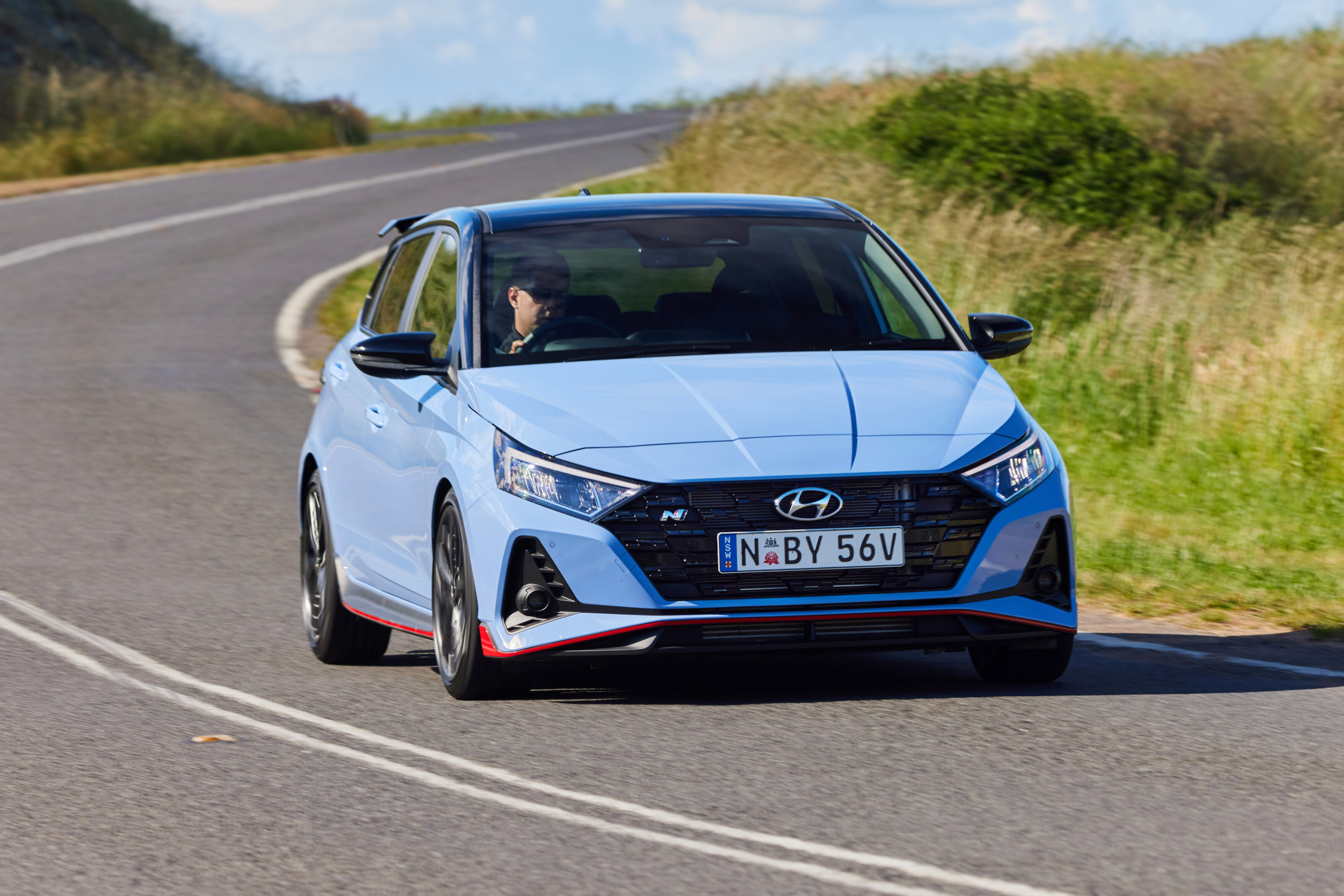
On fast and flowing roads the i20 N demonstrated confidence inspiring high-speed stability of a vehicle with a much larger footprint, while a wheelbase of just over 2.5 metres made it a giant-killer on tight mountain roads. The i20 gets up on its toes and dances eagerly, egging you on to push harder.
Fixed-rate dampers do an impressive job in a range of uses. There’s no denying the ride is firm, but it isn’t crashy or brittle. It could be argued that the urban ride is perhaps on the busier end of the comfort spectrum, but in the context of the car’s purpose and entry price it’s an amenable trait.
On road the i20 N’s worst foible is the intrusion of road and wind noise. You can’t expect S-Class hush in a car of this size, and with a remit as focused as this, but constant roar from the tyres is noticeable and tiring at highway speeds.
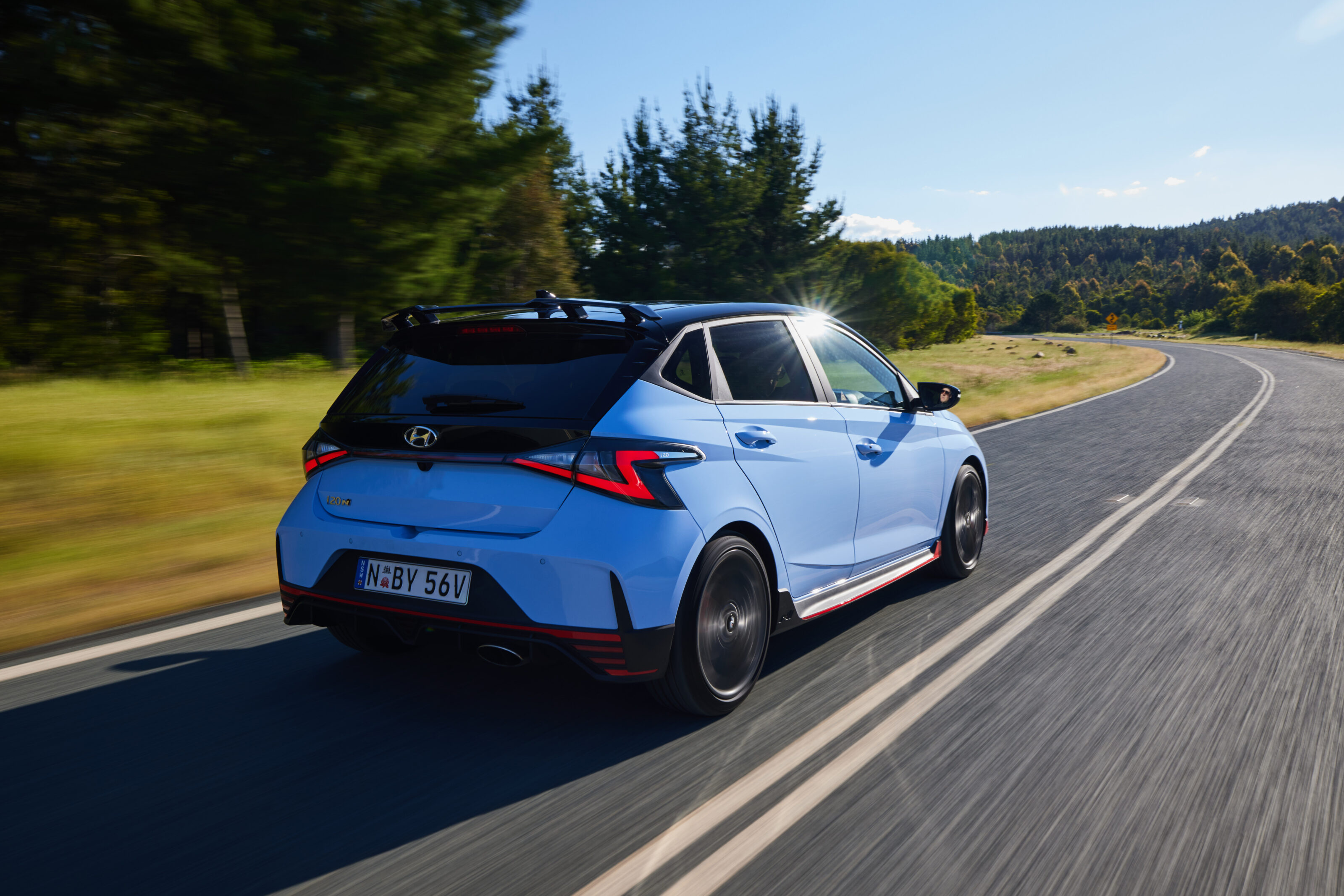
Hyundai once again affirmed that the five-year, unlimited kilometre warranty that the i20 N is offered with includes track driving. Handy, given that every future owner should take their vehicle to the circuit. On a race track the i20 N is an absolute riot. In its sport ESC mode the i20 rotates beautifully on corner entry, with the planted front end diving eagerly toward apexes. Get really silly with it and you will even be able to prompt big lift-off slides should you tire of hunting ultimate lap times.
Large 320mm ventilated front brake discs are capable of taking one hell of a punishing. Only at the end of a lengthy day of track action was the brake pedal starting to transmit indicators of fade. Braking stability was impressive, particularly during heavy applications. Hyundai’s engineers have also designed the system to allow left-foot braking while maintaining throttle applications which is handy when flying through Wakefield’s first kink. With braking performance being one of our major gripes with the Ford Fiesta ST, this middle-pedal salvo from Hyundai is an important one.
Track day enthusiasts will be particularly keen on Hyundai’s new Performance Driving Data System which is fitted as standard. Accessible through the cars infotainment screen, the system includes a lap timer that is linked to the on-board GPS, and will soon be pre-loaded with a slew of local venues.
Hyundai didn’t need to build the i20 N. Its raft of SUVs is incredibly popular here and internationally. While Toyota is preaching about the homologation link between its Yaris GR and the WRC racer, the rulebook doesn’t actually require a direct link. The Koreans could have easily kept pumping out pedestrian i20s for overseas markets and never put the time and effort into building a proper performance version. But it did, and it did so with the kind of passion usually reserved for companies that have been doing it for centuries. When you drive the i20 N on a good road, you can feel the enthusiasm of the N division through your fingertips at every corner.
Being a modern motoring enthusiast isn’t all doom and gloom. Not when cars like the i20 N exist.
2022 Hyundai i20 N specs
If you think the new Porsche 718 Cayman GT4 RS is the meanest of its kind, the track-only Clubsport variant revealed here will make you reconsider.
Succeeding the 981-series model Clubsport special, the new GT4 RS version has undergone aero, handling, interior and drivetrain tuning at the hands of Porsche Motorsport to race in the GT class to which it owes name.

Arriving in 2022, the GT4 RS Clubsport has focused on improving drivability and performance. Of course, the latter is helped by a 4.0-litre flat-six pinched from a 911 GT3 Cup car, employing 368kW/465Nm and now rated to last 100 hours between service intervals.
Although those figures are only 15Nm up on the road-going GT4 RS, it’s importantly 55kW/40Nm more than the old GT4 Clubsport’s 3.8-litre unit. Those outputs are channelled through a new seven-speed PDK with shortened gear ratios and Clubsport-spec locking rear differential.

Handling upgrades include redesigned suspension with two-way adjustable dampers and new sword-type adjustable anti-roll bars at both ends.
That’s combined with bodywork changes such as a new splitter and side flics, while the engine now also inhales via large ducts sitting aft of the B-pillar – equalling a two per cent improvement on lap times over the old car.

Porsche is testing a new flax-fibre material with the Cayman GT4 RS Clubsport while considering it for road cars, used on the widened front guards and bonnet as a natural alternative to carbon fibre.
The front and rear bumpers are also made from a specific material to reduce costs once they’re inevitably bent.
Inside, Porsche has updated the steering wheel and added a full-course yellow button in place of the old cruise control. The traction control and ABS have also been tweaked.
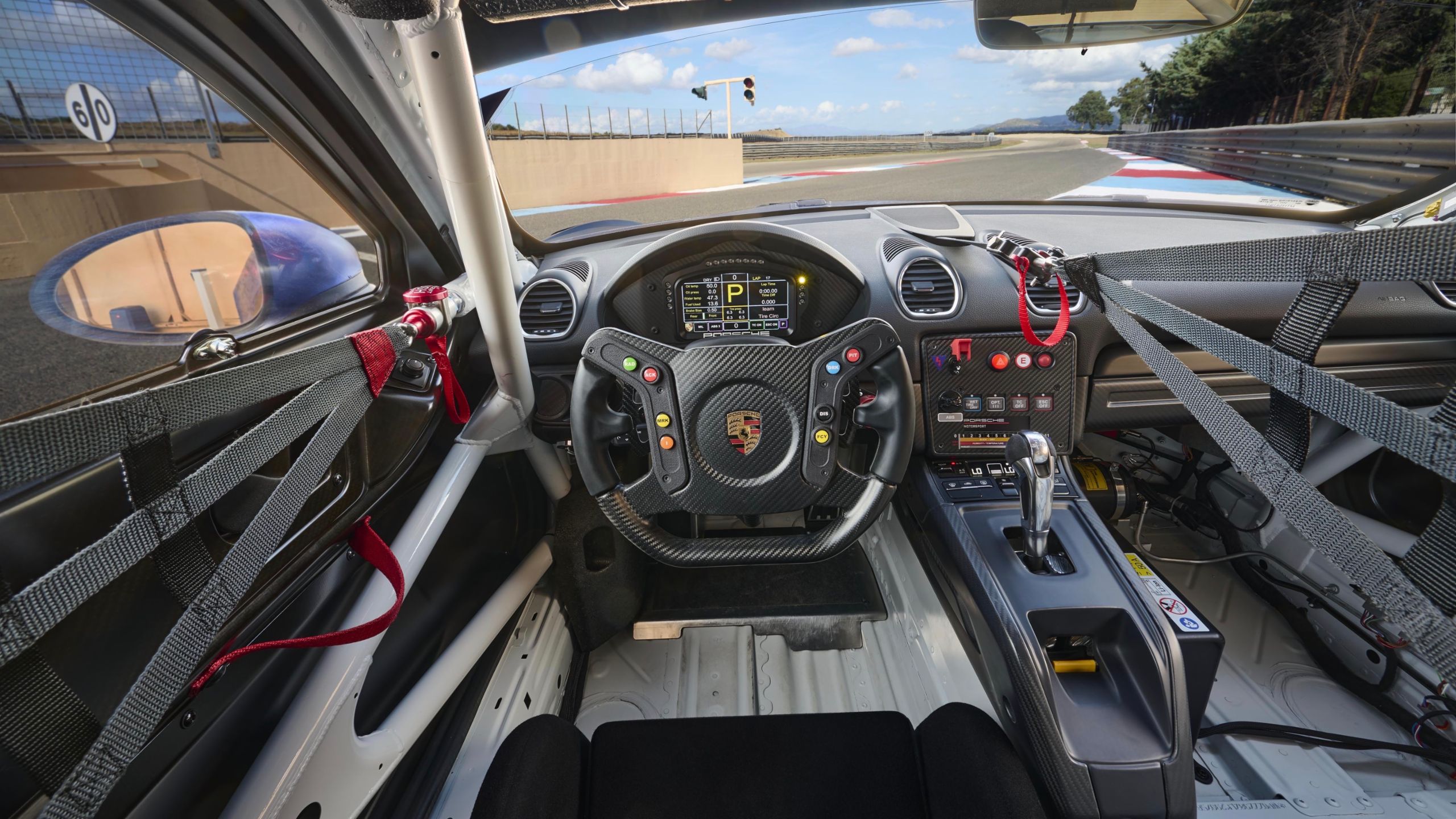
And as you’d expect with a turnkey racecar, a welded-in roll-cage, six-point harness feature, built-in air jacks, 115L safety fuel-cell and fire-extinguisher are also included.
If this sounds like your bag, Porsche has not yet published pricing, but expect one on application should you be keen to race the new Clubsport when it arrives in 2022.
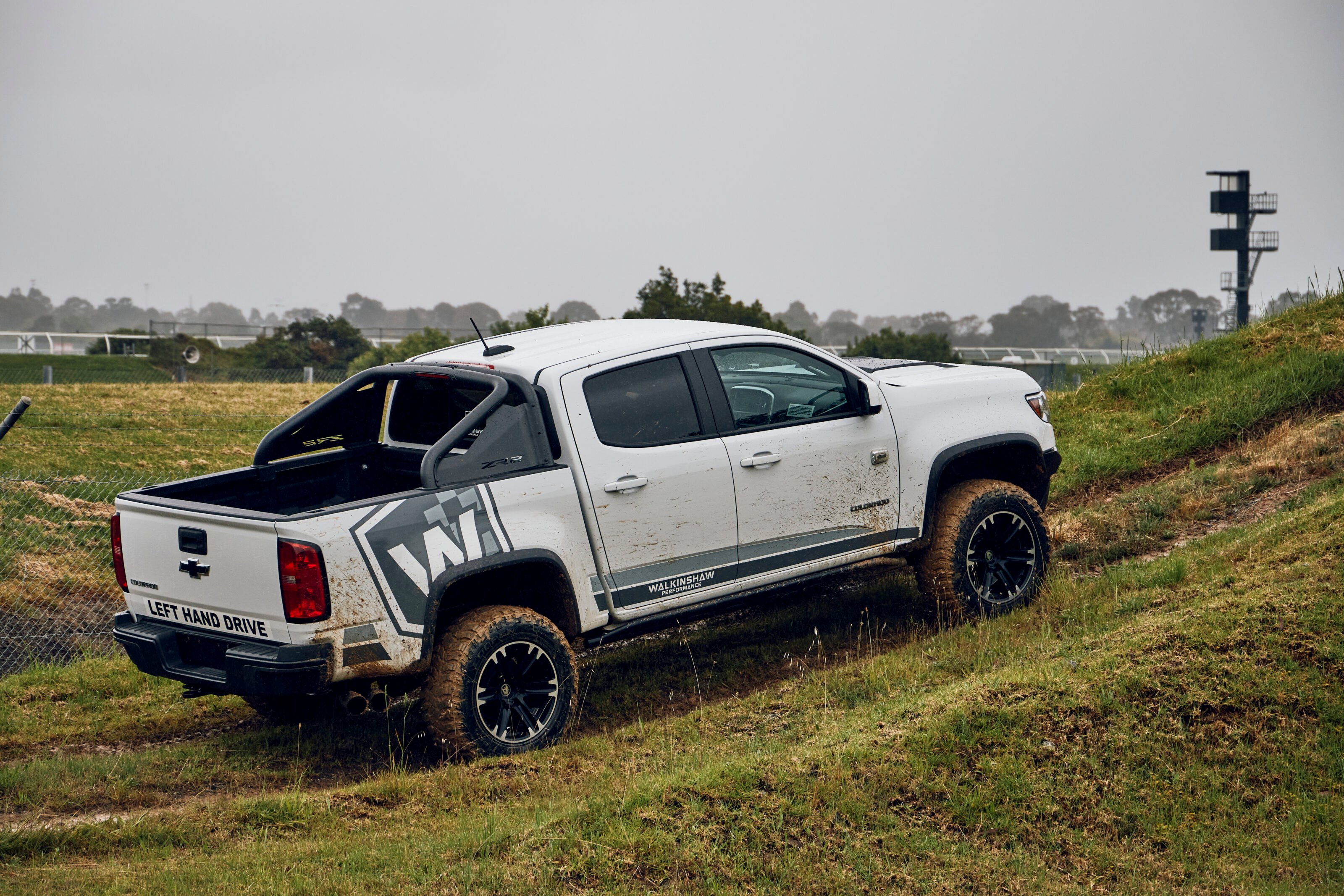
The model name will be familiar to Aussies, but the US-spec Chevrolet Colorado is a very different beast to the Colorado that graced Holden showrooms.
It ramps up the aggression factor by roughly 300 per cent, especially in ZR2 guise with its 2.0-inch (5cm) lift and 3.5-inch (8.9cm) wider tracks, flared guards and massive bonnet bulge.
However, even in the horsepower-obsessed US, the Colorado’s engine choices don’t really back up its looks, customers offered either a 135kW/500Nm 2.8-litre four-cylinder turbo-diesel – a similar engine to that offered in the HSV Colorado SportsCat locally – or a 230kW/373Nm 3.6-litre petrol V6.
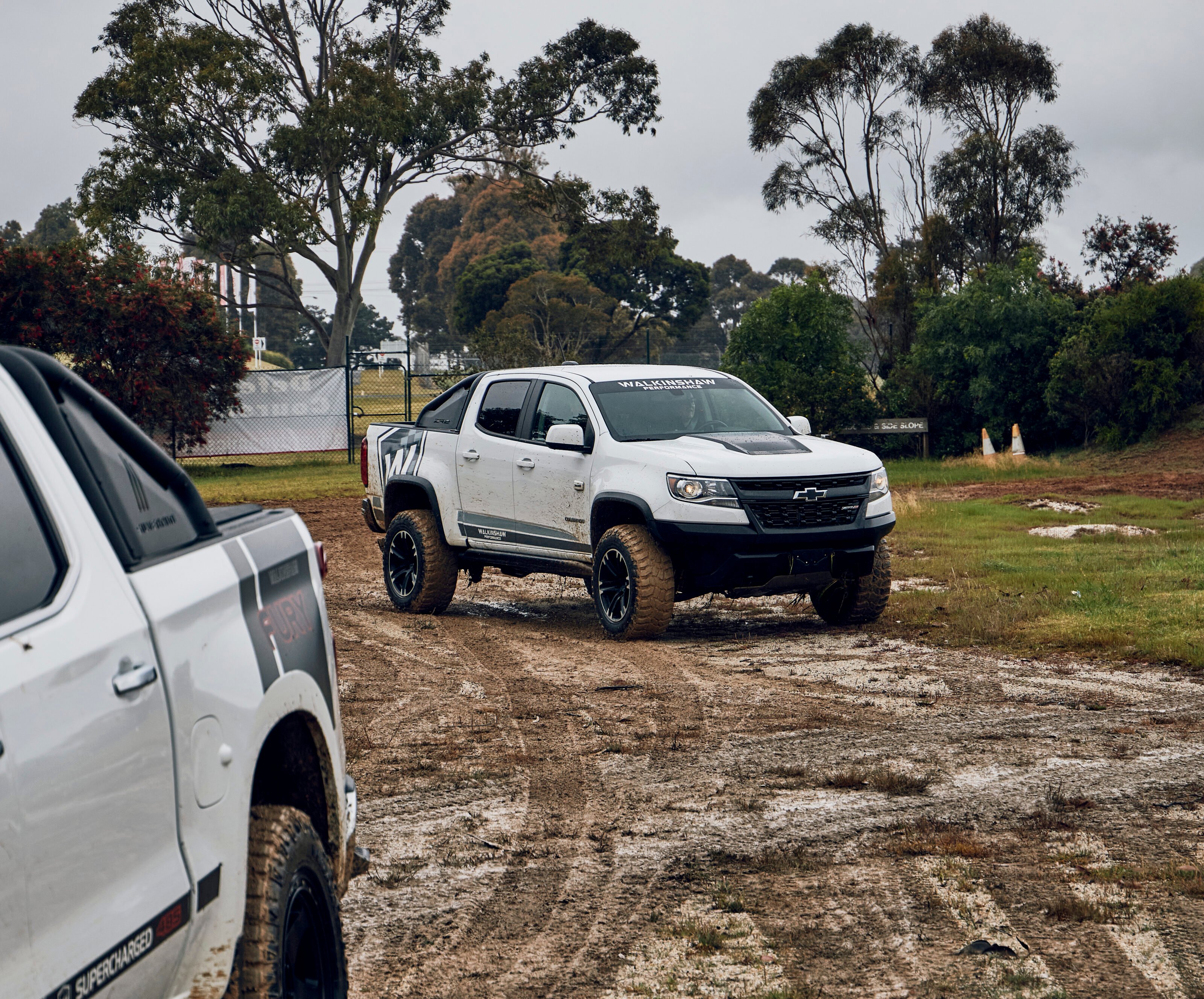
A solution to this has come from an unlikely source in the form of Walkinshaw Performance. Under the bonnet now sits the 339kW/614Nm 6.2-litre LT1 V8 from the Chevrolet Camaro, along with an eight-speed automatic and transfer case from the previous-generation Silverado.
The upgrades don’t stop there, with the Camaro also donating its front brakes – 345mm rotors with four-piston calipers – and the HSV SportsCat sharing its rolling stock, the 18 x 10.0-inch wheels with 285mm Cooper tyres further fattening the Colorado’s stance.
Sadly, it’s not a project that will be offered for sale. The Colorado ZR2 V8 is a proof of concept, presented to GM by Walkinshaw Performance, but with keys in hand, we have a chance to find out what might have been.
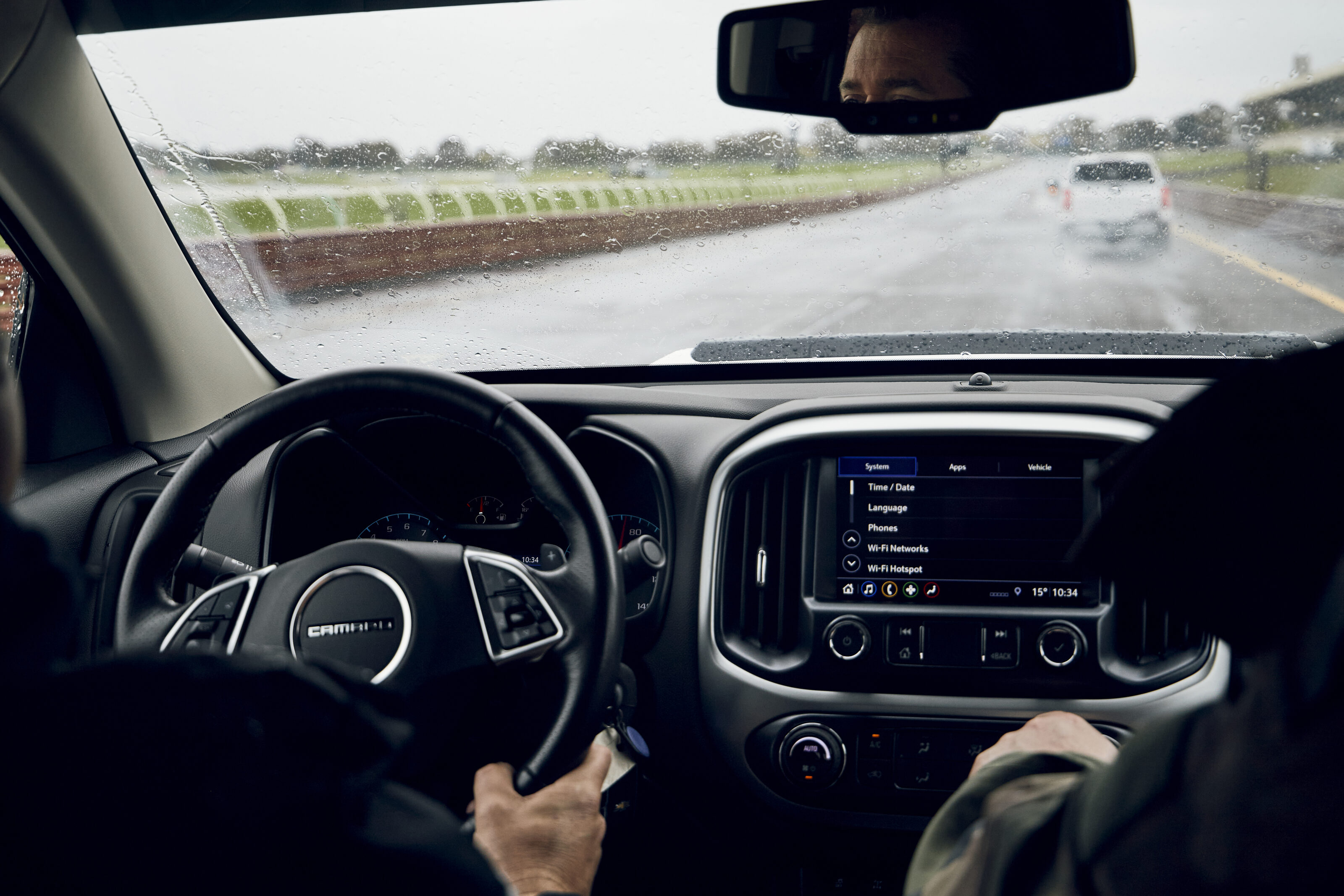
The confusion starts with entering the car and being presented with a blank dash. Force of habit sees you enter the right-hand side of the car but the ZR2 is still a left-hooker. Mistake rectified, the confusion continues with a Camaro’s steering wheel and paddleshifters.
Obviously, this wouldn’t have carried over to production but it’s a sign of how well put together this prototype is. Often these Frankenstein’s monsters are a bit thrown together, but despite the disparate component set, there are no warning lights and the engine fires immediately with a twist of the key.
Walkinshaw Performance senior engineer David Kermond reaches under the bonnet and fiddles with something to engage track mode.
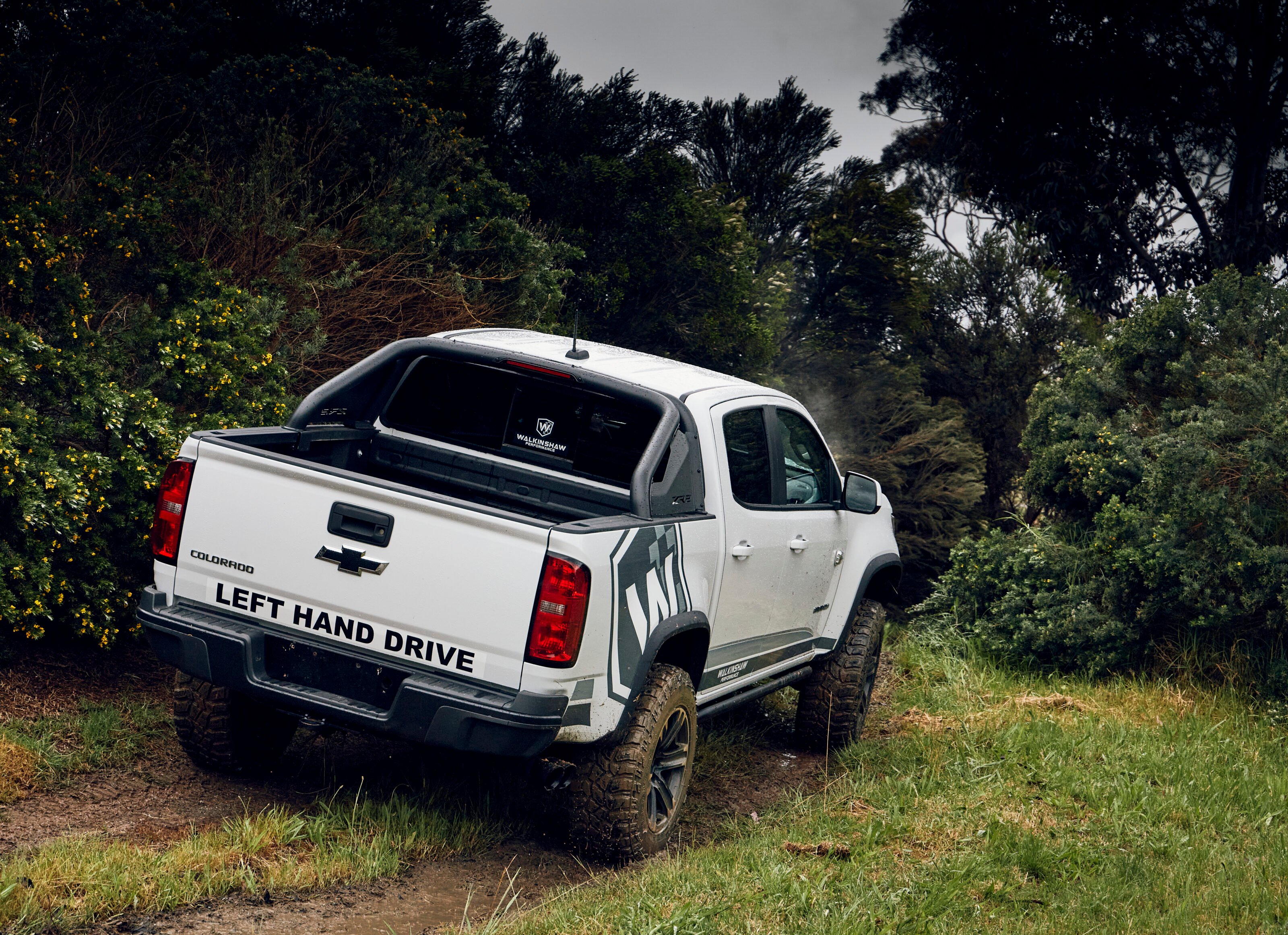
Appropriate given our drive is taking place at Sandown Raceway – being an engineering prototype, this Colorado can’t be driven on public roads – but slightly incongruous in a high-riding off-roader.
It turns the powertrain up to its most aggressive setting, not that it really needs any help. The Camaro V8 makes the Colorado ZR2 sound and feel like a monster truck. It rears and roars under acceleration, with ignition-cut cracks from the exhaust on full-throttle upshifts.
Walkinshaw claims 4.5-5.0sec from 0-100km/h; even the latter feels slightly optimistic, but it also feels more than fast enough from the elevated driver’s seat.
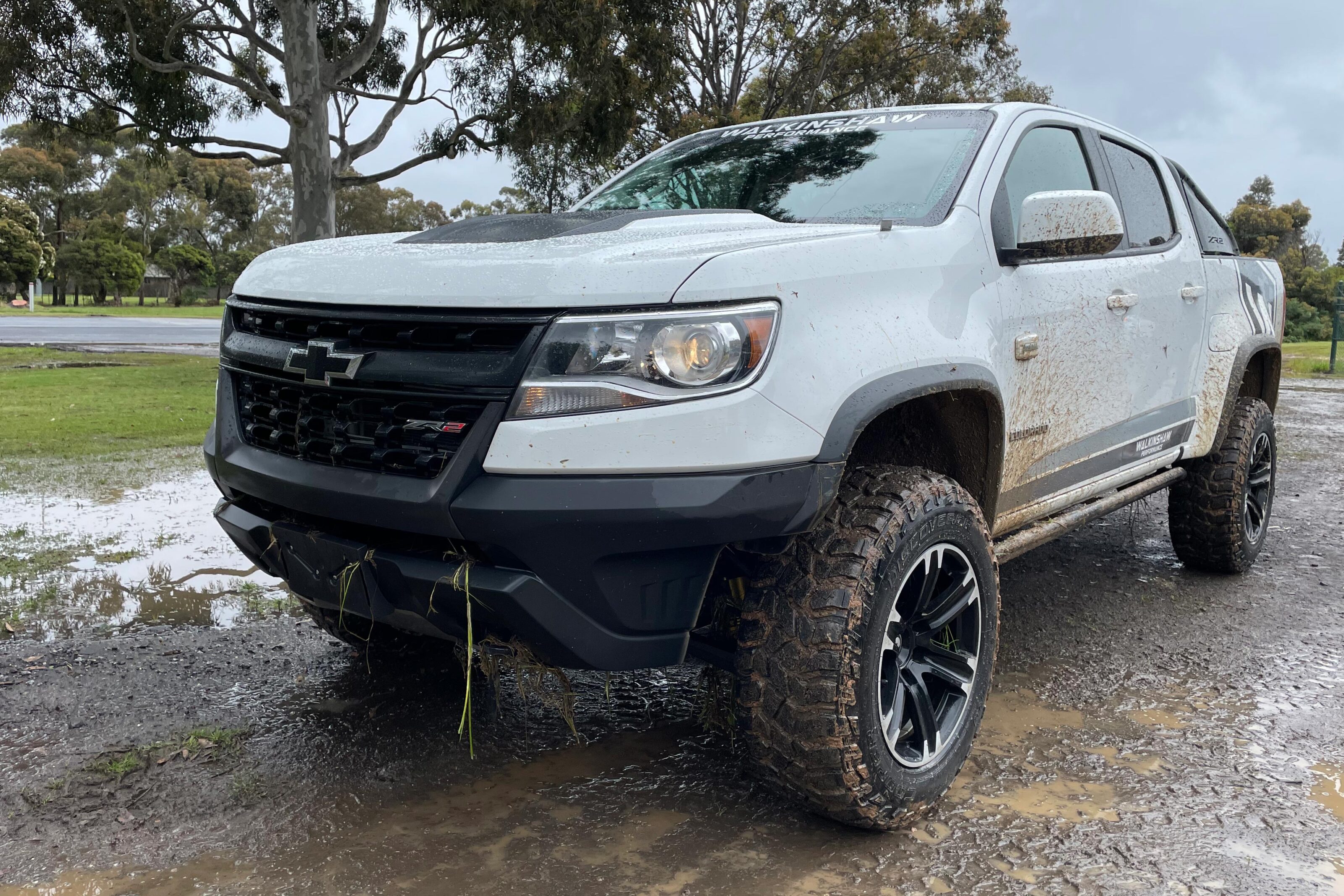
The speedo only goes to 140km/h and the needle quickly sails off the end of the dial, a process you want to repeat over and over again due to the outrageous noise.
Fuel consumption in this thing would be horrendous, not just because of the 339kW/2200kg combination, but also because you can’t help but floor it at every opportunity.
Handling is … not a priority. Walkinshaw has added a rear anti-roll bar to settle things down a bit and the wider rubber from the SportsCat does provide a bit more purchase but it certainly feels out of its comfort zone on a racetrack.
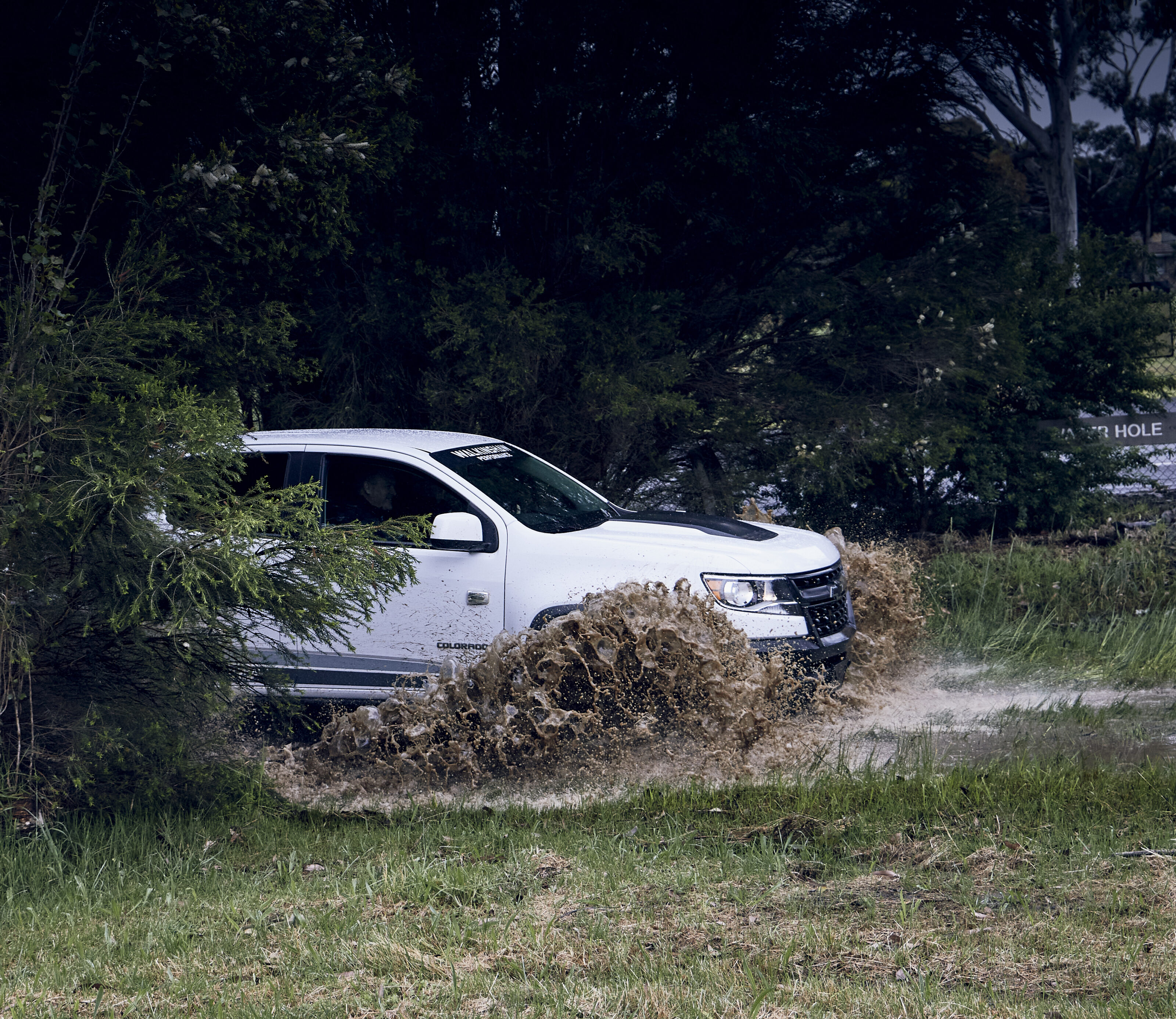
The Camaro wheel feels to have a Camaro rack behind it as well, as the steering is quite sharp and responsive; having not driven a standard Colorado ZR2 it might be unchanged but it would be quicker-steering than the vast majority of dual cabs.
Another example of the thoroughness of Walkinshaw’s conversion is that the ESP remains fully functional, as does the choice of rear- or all-wheel drive with high- and low-range.
Sandown’s short off-road course isn’t particularly challenging, even when waterlogged, especially when the ZR2 boasts front and rear locking diffs and Multimatic’s DSSV (Dynamic Suspension Spool Valve) dampers, which are typically found in the likes of the Ford GT, Chevrolet Camaro ZL1 1LE and Ferrari SF90 Assetto Fiorano.
Instead of shims in the dampers, these use precisely machined holes to control oil flow which allows for less variance between dampers, more precise damping control and greater temperature resistance.
It all adds up to a tantalising taste of what could have been and surely the US public would’ve lapped up a mid-size (in US terms) ‘pick-up’ that sounded and performed like this. Still, presumably, if GM wanted a V8 Colorado it would’ve made one itself!
The Colorado ZR2 V8 is one of those cars that doesn’t really make a lot of sense on paper but when you drive it you can’t help but laugh at the absurdity of it. At which point it makes quite a lot of sense after all.
Specifications
| Body: | 4-door, 5-seat ute |
| Drive: | rear-/all-wheel drive |
| Engine: | 6162cc V8, OHV, 16v |
| Bore/stroke: | 103.25 x 92.0mm |
| Compression: | 11.5:1 |
| Power: | 339kW @ 6000rpm |
| Torque: | 614Nm @ 4400rpm |
| Weight: | 2200kg |
| Power/weight: | 154kW/tonne |
| Transmission: | 8-speed automatic |
| L/W/H: | 5395/1978/1834mm |
| Wheelbase: | 3264mm |
| Tracks: | 1674mm (f/r) |
| Suspension: | Struts, coil springs, anti-roll bar (f); solid axle, leaf springs, anti-roll bar (r) |
| Steering: | Electrically assisted rack-and-pinion |
| Brakes: | 345mm ventilated discs, 4-piston calipers (f); ventilated discs, single-piston calipers (r) |
| Wheels: | 18 x 10.0-inch (f/r) |
| Tyres:u00a0 | 285/60 R18 (f/r) Cooper Zeon LTZ |
| Price: | US$50,000* (est.) |
This is going to take some explaining. Just ten minutes earlier, the affable Mercedes-AMG PR man had been regaling me with the fact that this AMG GT Black Series costs $796,100 and that there are over $230,000 of taxes to pay on top of that, making it an easy $1m+ car on the road. Now I’m about to remodel it.
I’m steaming in to Hayshed, a big commitment right hander. Turn in good, apex nailed. I gently open the steering to let the car run out to the left hand side of the track when an ibis decides now is a good time to merge onto the circuit. Instructor Sam Brabham flinches reflexively as I accept that attempting to avoid the suicidal bin chicken is only going to make a bad situation worse. It’s coming through the windscreen straight into Brabham’s face, before flaring its wings and passing over the door mirror, a tumbling whorl of feathers and legs in the vortices streaming off the car.
We’re both a bit shaken. There’s a greasy smear of some kind of unidentifiable bird juice atop the mirror housing but apart from that the car is unscathed. I bring it into the pits to decompress and avail myself of a party pie. The AMG GT Black Series is one of those cars that isn’t easy to sum up in a sentence.
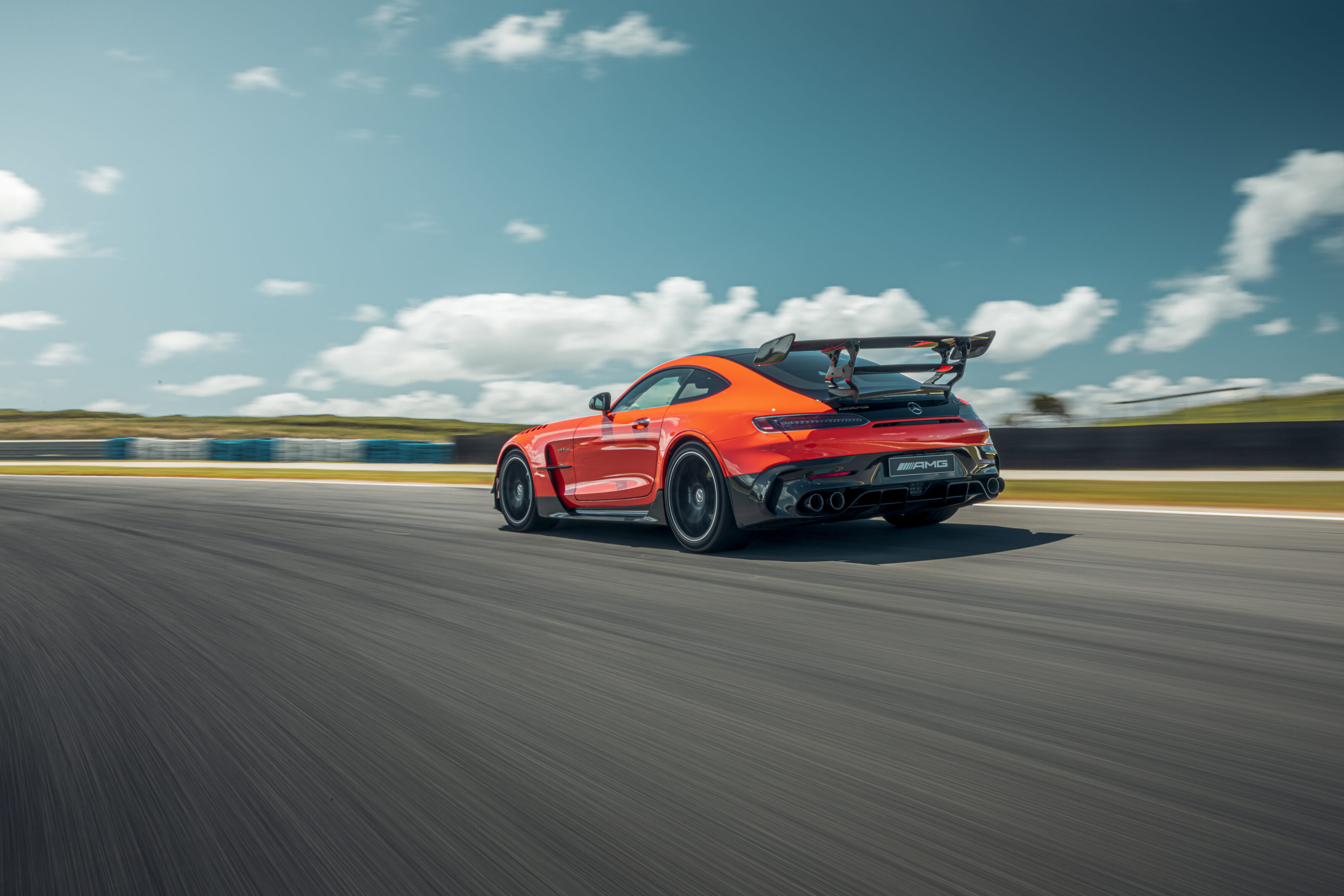
To all intents and purposes, it’s an end stop. It’s the last of the great internal combustion AMG sports cars and, to that end, Affalterbach has thrown everything it knows at the Black Series. Engine, aero, suspension, software, brakes, tyre tech – everything. The price almost becomes an irrelevance. Only 28 are coming to Australia, they’ve all been sold and there will never be another road car that wears the three-pointed star to equal it. From here, AMG’s evolutionary path diverges.
The bald facts you probably know. The M178 LS2 4.0-litre V8 engine has been extensively reworked, now featuring a flat-plane crank, and it develops 537kW @ 6700-6900rpm, a massive 107kW more than the GT R Pro that’s our current Performance Car of the Year. Torque is rated at 800Nm anywhere between 2000 and 6000rpm, all that drive going to the rear wheels via a carbon torque tube that provides the impetus for a seven-speed dual clutch ‘box, mounted aft in a transaxle arrangement.
So far, so impressive. What we’re here for is to find out what this technical tour-de-force is like to drive, hard. Four-point harnesses cinched, front splitter jutting forth in Race setup and a deserted Phillip Island Grand Prix circuit at our disposal, it’s time to find out.
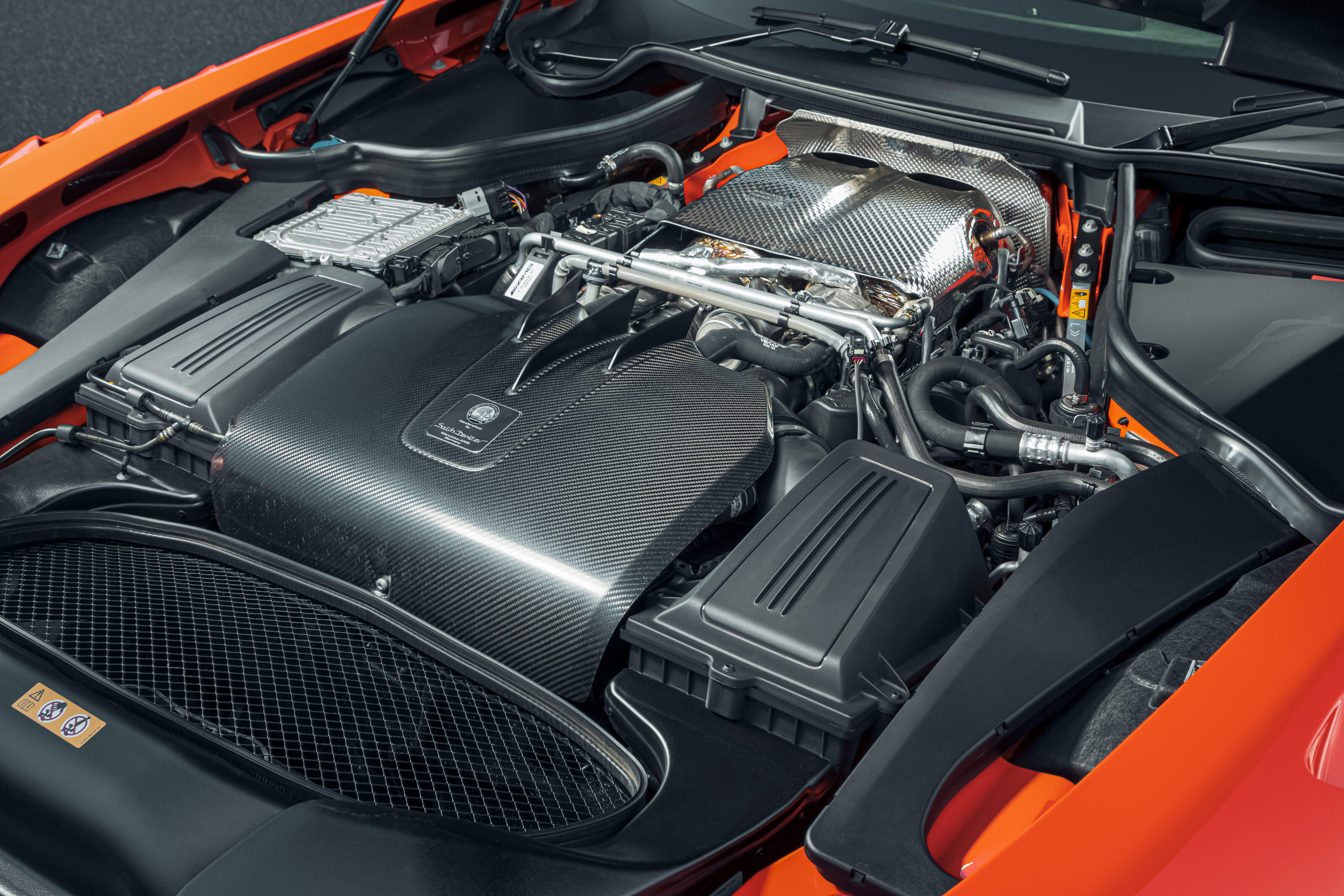
The engine settles to an urgent chunter at idle. Unlike the GT R, there’s no cross-plane woofle. It sounds what it is, a pair of fused two-litre four-pots, firing order 1-8-2-7-4-5-3-6. Headroom is surprisingly good when seated in the fixed-back carbon buckets, even with an Arai lid on. Nudge the rear-set stub of a gear-lever into drive with your elbow and head out of the pit lane.
After easing into a warm-up lap in an attempt to respark muscle memory dulled after months of lockdown, it’s clear that this is a very different confection to the GT R Pro. It thrives on revs, and there’s a sharp step change in the acoustic signature at 6000rpm that turns what was a fast car into a feral one. There’s no great beauty to the engine note, but accompanied by intake roar and the buzz saw-like stainless-steel exhaust, there is a lot going on. What was already a ferocious and intense experience ramps up dramatically. It’s like VTEC by Charles Manson. Unlike the manic, barely conceivable scrabble of a McLaren 720S, the GT Black Series feels better anchored and more effectively transfers that torque to the rear treads. It takes a couple of laps to figure out how.
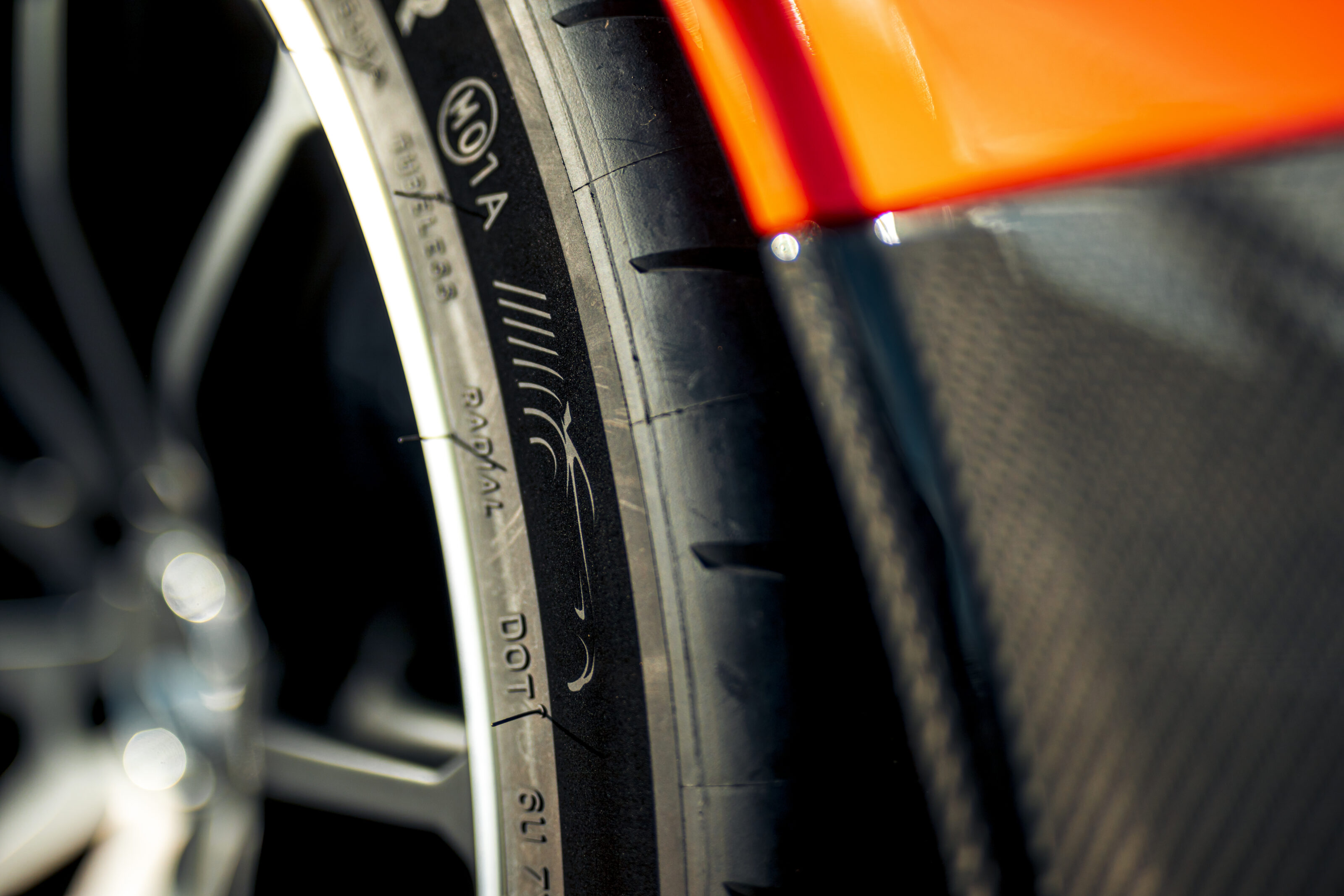
The tyres are a big part of it. It’s riding on Michelin Pilot Sport Cup 2 R rubber in a special compound developed for this car. Look closely at the sidewalls of the Mercedes Original ‘MO1A’ soft compound tyre and you’ll see a laser-cut silhouette of the Black Series. You probably won’t find these at Bob Jane’s.
Then there’s the aero package. The bi-plane rear wing with active centre flap helps develop more than 400kg of downforce at 250km/h when set into its most aggressive angle of attack. For reference the McLaren Senna develops 800kg and an F1 car around 2500kg at the same speed. Moving forward, the underbody is almost entirely flat, with longitudinal fins channelling air to the rear diffuser. The front end is a riot of flics, intakes, and huge air vents in the bonnet and over the front wings. The jutting front diffuser features an elastic inverted aerofoil that further increases downforce on the front axle.
In fast corners, there’s a moment where you expect the Black Series to have teetered into understeer, but it doesn’t come. You can provoke it with throttle as the nose lifts slightly, but keep the car level and you have a seemingly impossible envelope of additional steering input available to you. Throw the Black Series into Turn 2 at Phillip Island and it’s possible to rotate the car into the second apex, square off the line out of the corner and get onto the throttle earlier than you’d ever deem possible.
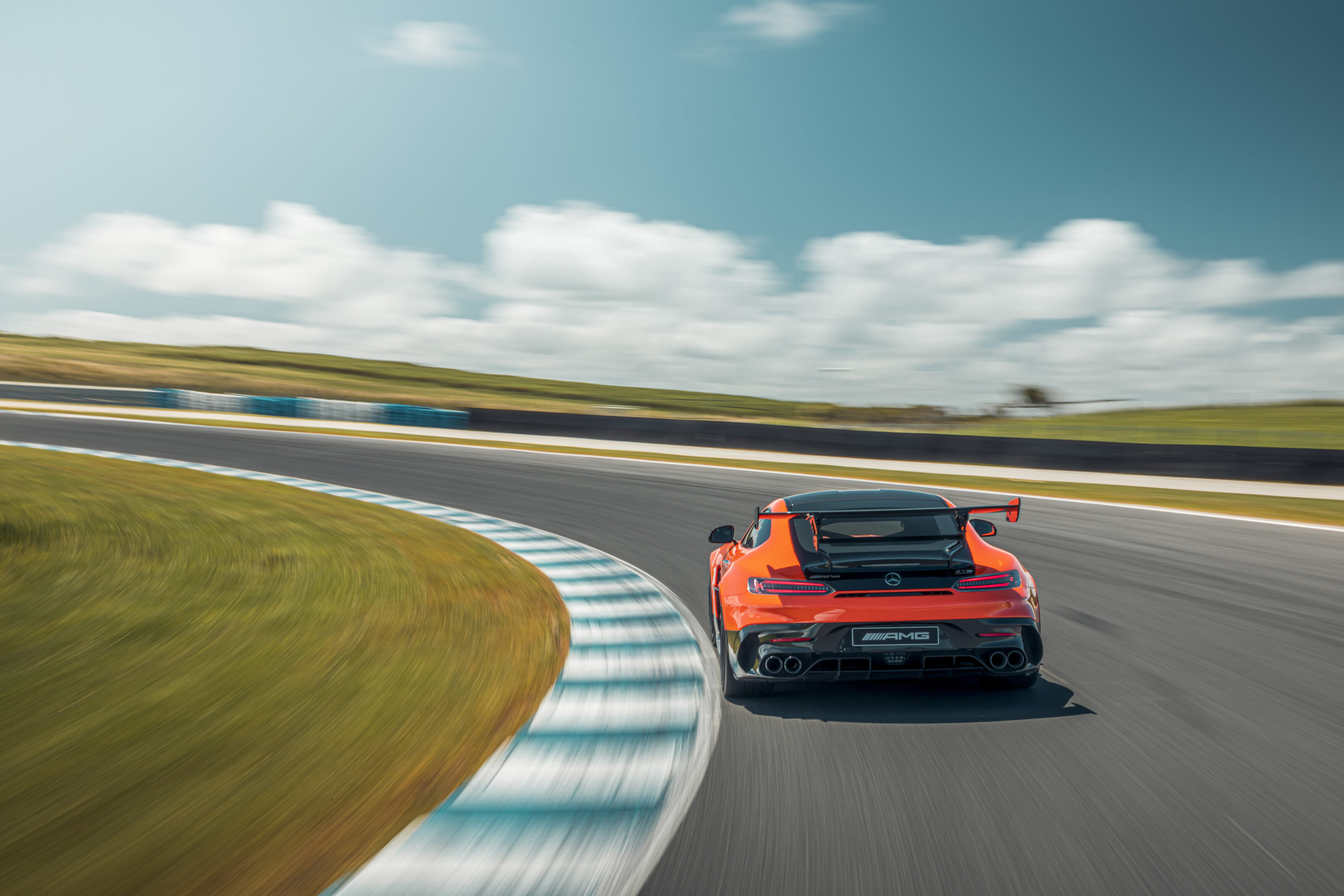
Leaning into that aero advantage is a steep learning curve and after a few laps, I’m only beginning to get an appreciation of where this car’s limits reside. The carbon ceramic brakes are mighty and don’t have any issue shucking off the Black’s 1520kg mass at 280km/h at the end of the start/finish straight. The only dynamic peccadillo that would irk me is the transmission’s insistence of holding a gear, in this case out of Honda and into Siberia, whereupon on throttle demand it would shift down a couple of ratios with a moment’s pause followed by a huge and amateurish-sounding gout of revs. The simple solution is to pluck the gears yourself.
The steering feels lantern-jawed and a little mute, but there’s decent heft to the wheel and the way that the engine is set back in the body means that the balance doesn’t feel typically long bonnet point-and-squirty to drive. I can’t say I got a handle on the attributes of the three-stage adaptive damping on a smooth race track, but body control is excellent, offering just enough reassurance in pitch and roll to key you into shifting the masses around to your advantage.
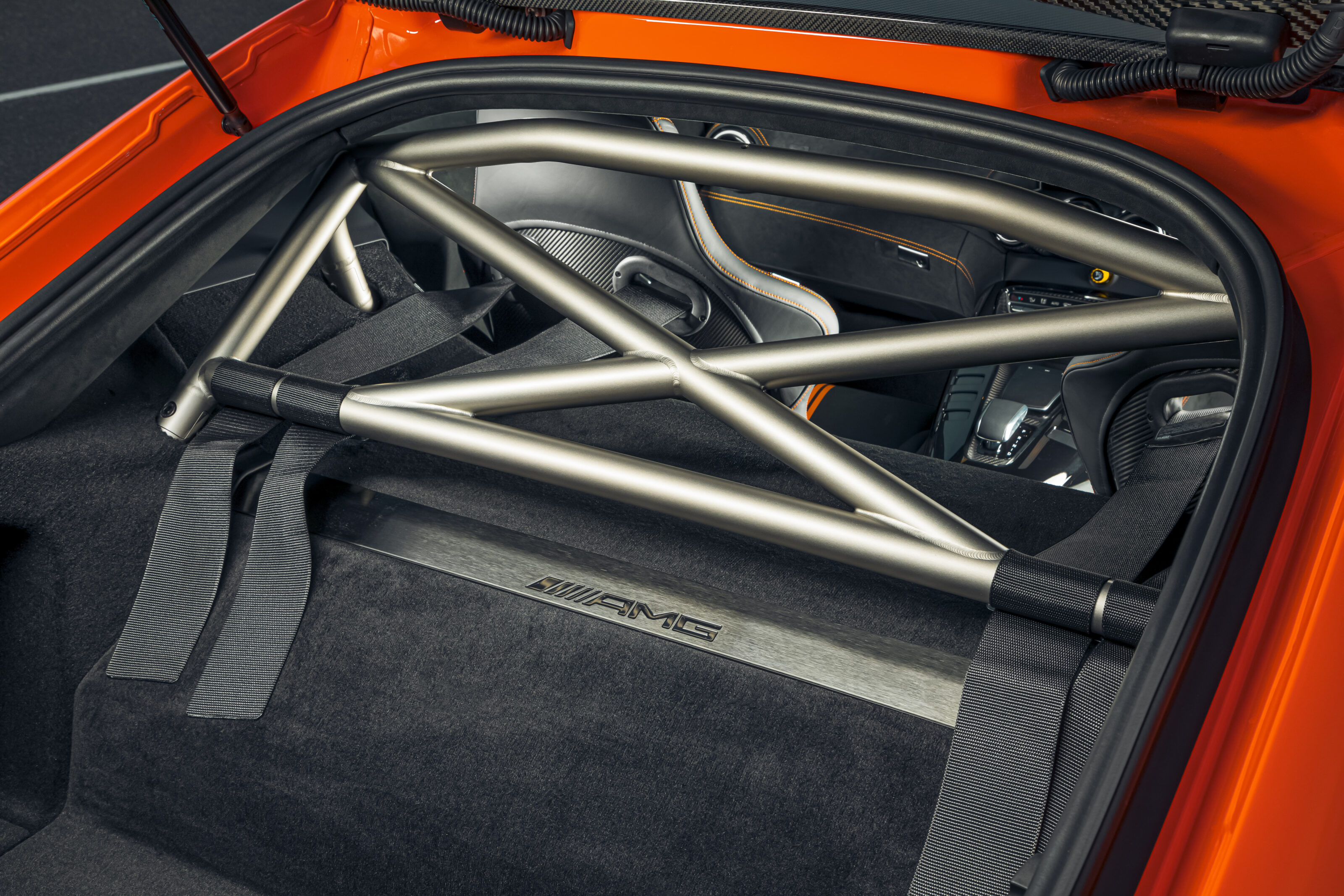
Both anti-roll bars are manually adjustable, as is the camber on both front and rear axles, AMG supplying a custom shim set with the vehicle. Also standard (but an option in other markets) is the AMG Track Package, which comprises a titanium roll bar, those four-point harnesses which, incidentally, retain the inertia-reel belt, and a 2kg fire extinguisher in the passenger footwell.
Amazingly, the straight line performance of a car that can dispatch 200km/h from rest in less than nine seconds is far from the most impressive aspect of the AMG GT Black Series. Affalterbach has built a car as close to a street-legal GT3 racing car as it dares. Of course, there will be those who point out that for $1m, you could buy a lightly-used GT3 car and enjoy the slick-shod benefits of the real thing at a race track of your choice, but that is to ignore what this car is and what it means.
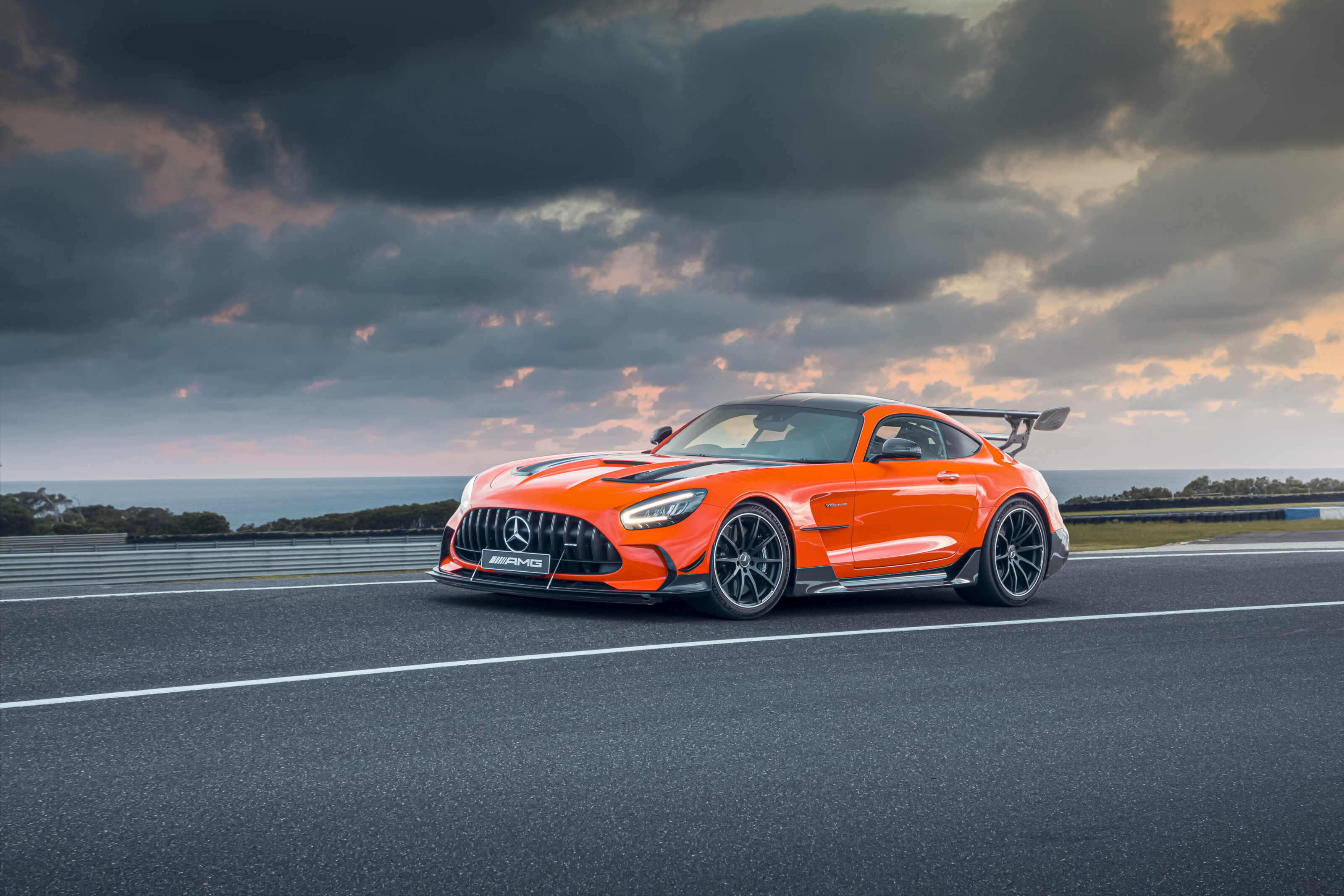
This is AMG’s line in the sand, a statement of everything the company knows about internal combustion-powered sports cars. As such, it will never be bettered. As a performance car, it stands comparison with the best that Porsche’s GT division can build right now. That may change as and when Porsche decides to throw all of their know-how at an ICE final special. For the time being, the GT Black Series is one heck of a love letter to AMG’s motorsport tradition and the art of the internal combustion engine.
Moers’ Crystal Ball
Cast your mind back to 2012 when AMG launched the last of the Black Series cars, the SLS AMG Black Series. Only 12 of these gull-winged coupes ever made it to these shores, making it one of the most sought-after cars of its generation.
Ignore that for a moment, and consider what then-boss Tobias Moers was briefing behind the scenes. He forecasted the power and torque for the next Black Series to emerge and predicted – virtually to the second – the 6m46s Nordschleife lap time that the AMG GT Black Series would achieve a dozen years down the track.
Light, Fantastic
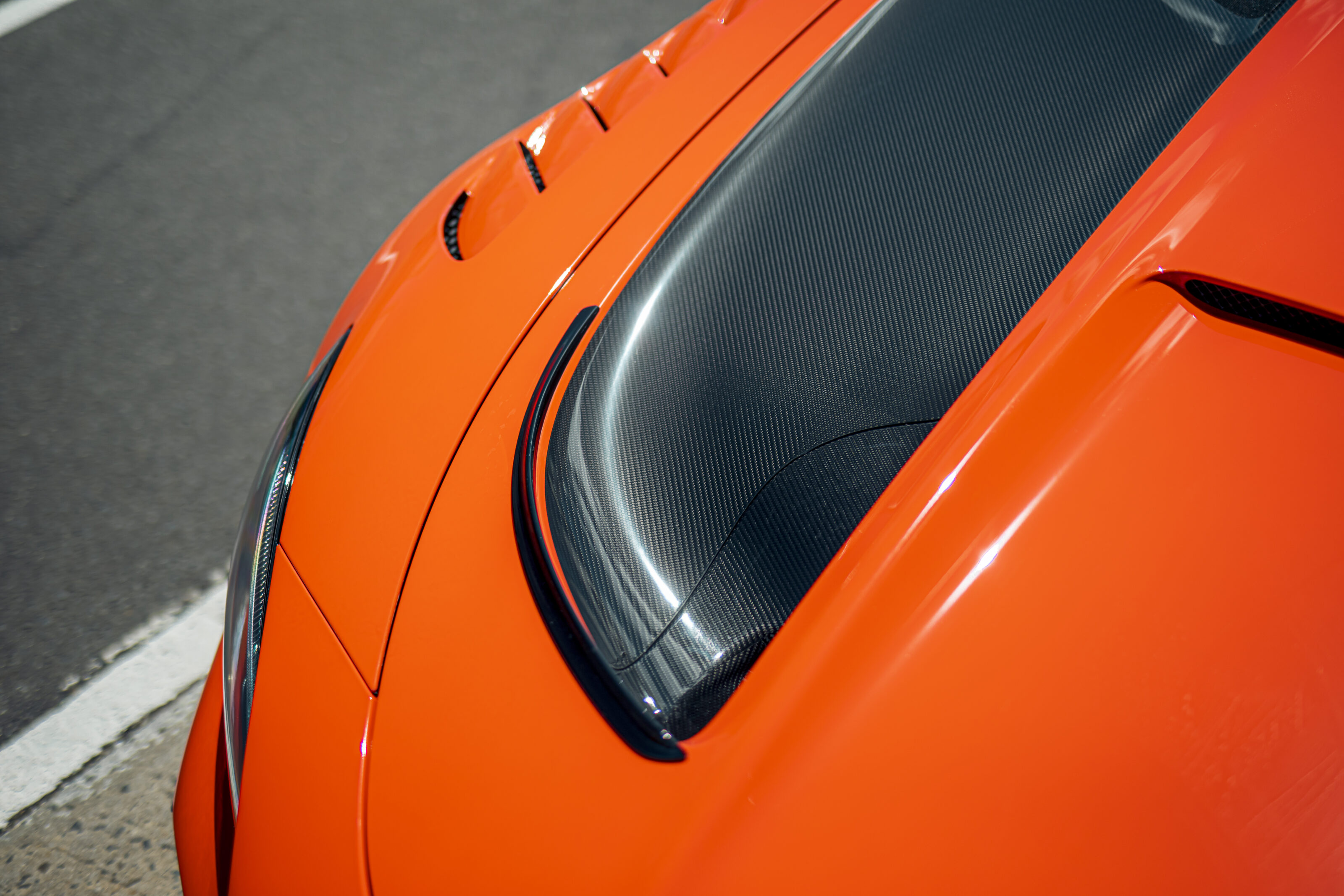
As well as carbon fibre bonnet, roof and tailgate, the AMG GT Black Series also features thinner glass, polycarbonate windows at the back, a carbon fibre torque tube, carbon fibre transmission subframe, forged aluminium wishbones, steering knuckles and hub carriers, as well as a lightweight titanium bolt-in roll cage.
Power Up
The flat-plane M178 LS2 engine also features new camshafts and exhaust manifolds as well as significantly bigger turbochargers compared to those fitted to the GT R. Featuring a larger compressor wheel, the Black Series’ turbochargers can ladle a total of 1100kg of air per hour compared to the 900kg/h of the GT R.
Bigger intercoolers guarantee that the charge-air temperature is kept as low as possible. This engine adheres to AMG’s ‘one person, one engine’ build philosophy, and only six people at Affalterbach are qualified to build the M178 LS2.
2022 Mercedes-AMG GT Black Series
Oh Happy Days! Editors and addresses may change at MOTOR but the big picture does not.
So I’m en route to God knows where to analyse the most brutally powerful motor piece handy to management in circumstances totally unfamiliar to science.
Editor’s note: This article was first published in MOTOR magazine’s May 2014 issue, by the late Paul Cockburn
Accordingly, I arrive in Melbourne without a clue as to why until Photographer Brunelli meets me at the airport with an outline of the adventure ahead and 1000Nm worth of twin-turbo V12 SL65 AMG that will take us to it.
Burbling away before us is surely the torquiest Mercedes ever made. Cristian swears the engine originally made 1200Nm but was dialled back in the interests of longevity. Of both car and driver I’m guessing. The remaining twist, however – plus 463kW at just 4800rpm – is quite enough to fascinate. If only briefly. Unless you’re commuting across the Northern Territory, naught-to-licence-loss takes less than five seconds and what happens in the remaining two-thirds of the speedometer awaits discovery by only the bravest.
That, mercifully, is not expected of us this time. We are, instead, to report on folly of an entirely different nature: the Australian Tractor Pull Championship to be held in Rokewood, 133km west of Melbourne. The first order of which is to determine who’s driving the Mercedes and that privilege goes to the one with the greatest number of currently valid licences. Cristian wins with one and, accordingly, I get to analyse life from the left.
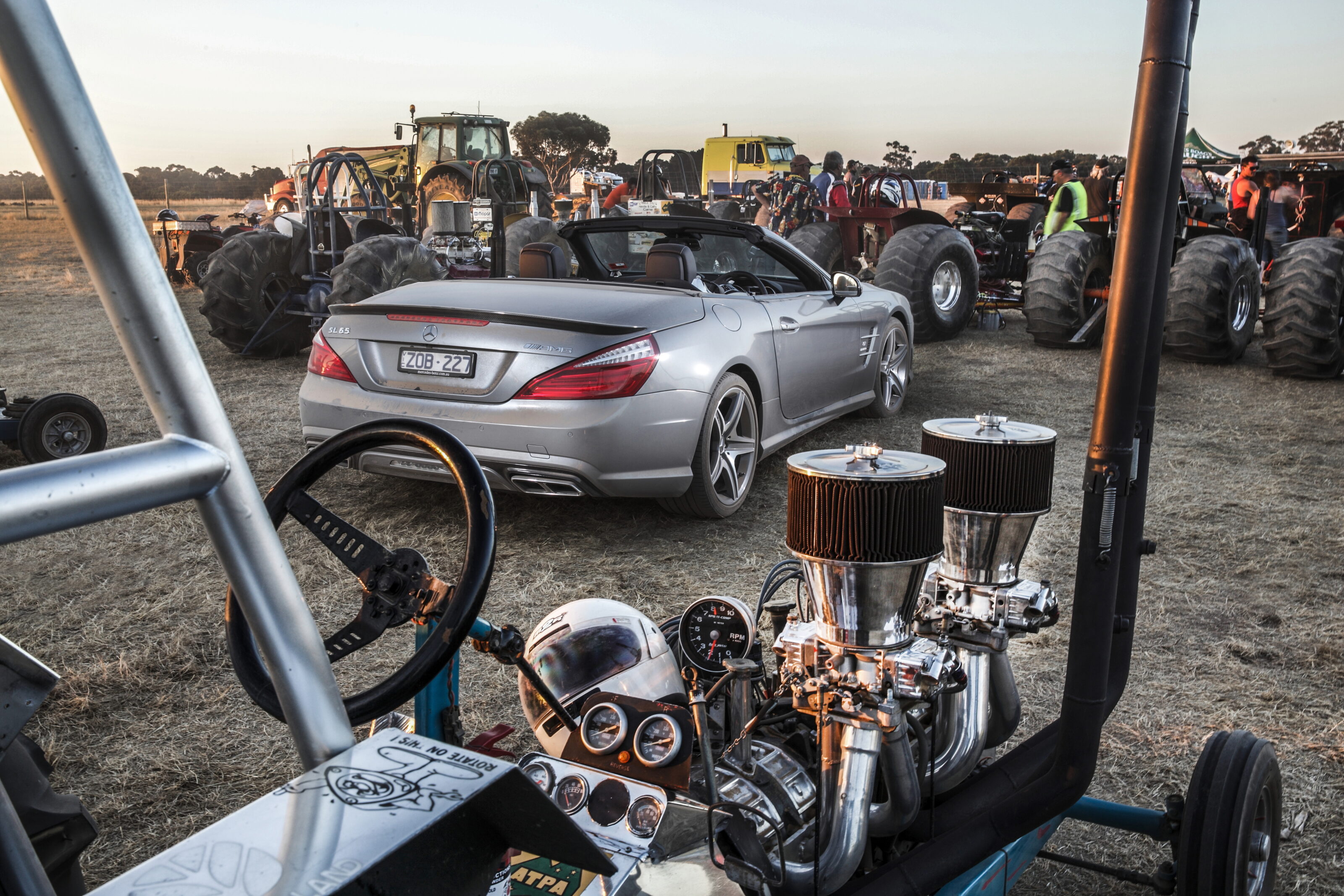
Which is by no means dull. Indeed, adventuring is guaranteed by the pilot wearing steel-capped work boots and, from his first tap on the treadle, it’s clear even regular inhaling will require concentration.
Okay, the SL (Super Lightweight) part of the tag is a tight fit on its 1.9 tonnes but this car’s response to the throttle is still astonishing. And, in truth, the massive power on hand (or foot) is what the SL65 is all about. You could, after all, get most of the rest of it in the entry-level SL350 for half the price, but the 360km/h speedo tells you what you spent your half-a-million on.
And every assistance, including four ranges of Sport selection plus traction and suspension control is on offer to make that indulgence available for one’s savouring. For five seconds. Victoria’s noted intolerance of anarchy ensures Brunelli’s strict observance of the clock and, on lifting off with an alacrity that equally challenges breathing, he likens it to having a supermodel girlfriend who won’t let you go all the way. With any luck the rest of his road-test observations will reveal less of such longings.

Unsatisfying on a more refined level is its accompanying soundtrack. While restraint during cruising is both expected and appreciated, the melody during main course is well short of operatic. Indeed, unlike the arias from rivals, the Merc’s work-song is mechanical rather than musical. Disappointing indeed – if you can’t use the performance you should at least be able to hear it.
But these musings are replaced by an entirely new set as we roll into Rokewood in the middle of a heat wave and down a dirt trail into an unshaded paddock being ploughed level by a tractor. Surely that’s not what we’re here for.
And it isn’t. As we burble into the pit area an entirely unexpected world is revealed. There are tractors on this Earth and then there are TRACTORS! Tractors with engines beyond all belief running on tyres I had no idea existed. Tractors with airfoils for God’s sake! Tractors that tell you whatever happens here ain’t gonna be pretty. And in turn tell us why we’re here; to crash this colour-spread with the torquiest toy from the outside world.

And they’re right. From the moment we roll in we’re welcomed to join the party, commencing with a driver’s meeting that calls for an attempt at common sense and then blesses all hands with the wish of a good day’s pulling. And whilst that sentiment may be familiar in motorsport, this is clearly an uncommon variety of the game.
Born of farmers’ arguments about their tractor’s supremacy, it evolved as they tried different ways to prove it. I’m told they tied them back-to-back and nearly killed themselves wheelstanding, and raced them down the paddock, nearly rolling them over, before settling on the current format of towing an increasingly-weighted sled down a 100m course, the completion of which is called a Full Pull. But distance covered is the only scoring parameter and the burden is increased until a winner is found.
And that burden can be breathtaking. Up to 14 tonnes hauled by a span of engines, from single to multiple installations of radial or piston units, from virtually any source. The range of classes is initially bewildering but typical of the breed, all brute strength and back tyres, is the first one I see being prepared for launch. I’m told if we put our Mercedes against it over 100m, the tractor would win. Scoffing, I say we have 600 horsepower (463kW) on tap. Turns out this tractor has 2500hp (1865kW). Yep, this is the right place for MOTOR.

Another early eye-catcher is Australian Tractor Pullers Association vice president Brett Harris’s ‘Blown Income’, formally an Open Mini Modified but, to the untrained eye, an overgrown go-kart with over 2000hp (1492kW) on tap from its blown Chevy. Beautifully presented, it’s also impressively engineered, with an all-up weight, including driver, under the class limit of 900kg.
Even more ambitious is Ian Moerman, whose ‘Raptor’ is powered by three alloy Leyland/Buick V8s, together displacing some 15 litres and bragging about it through 24 open pipes screaming skywards. It is indeed an impressive effort and now only needs a 10kg driver from pre-school to make the target mass.
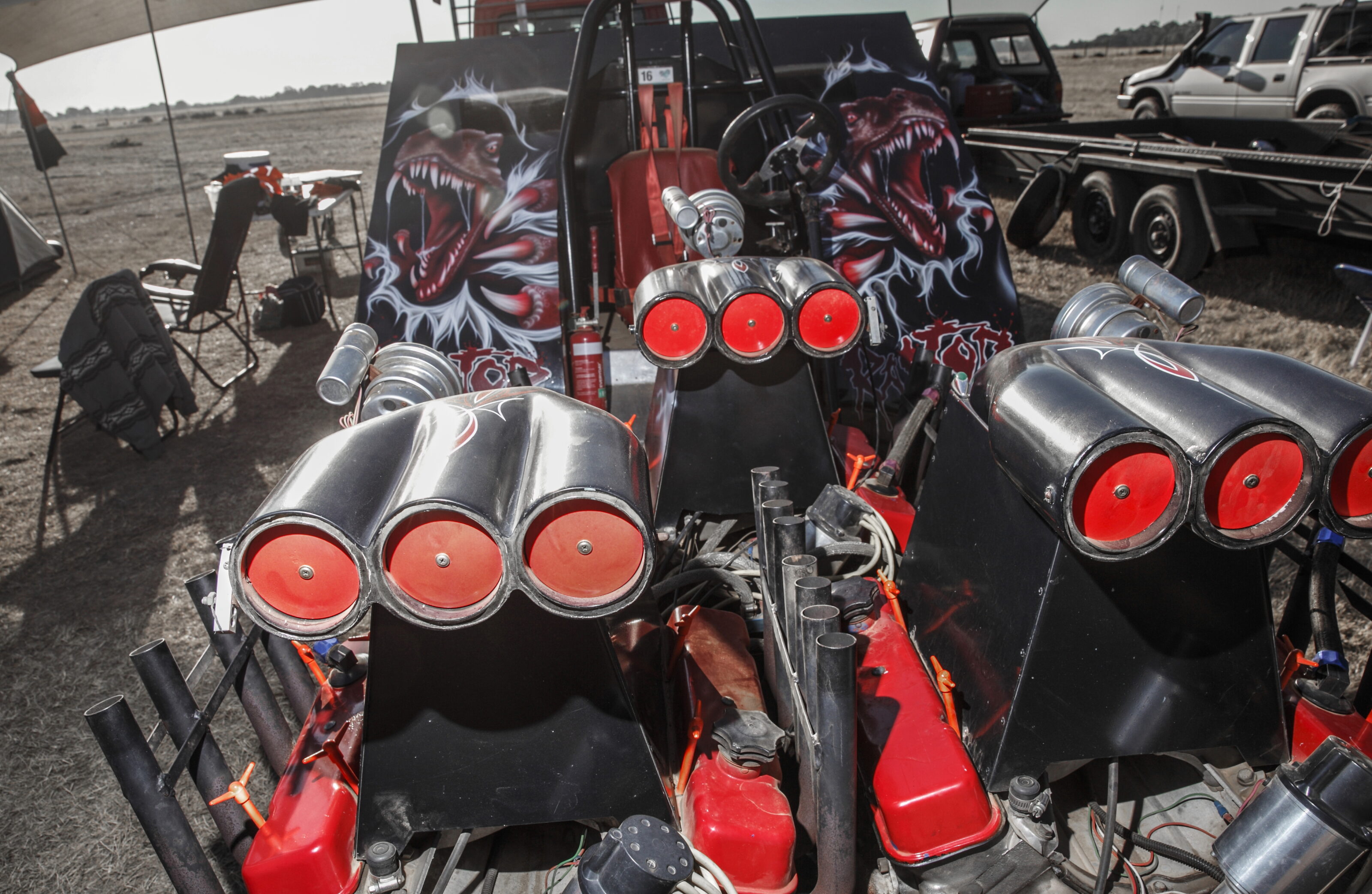
But towering above them all in the Open class is ‘Riverina Screamer’ created by Joe Cottam and, by any measure, a triumph of bush engineering. Cheerfully unconcerned about weight, this brute exploits the resulting traction with a Rolls-Royce Merlin V12 – of WWII Spitfire fame – displacing 27 litres, converted by Joe to DOHC and maximising improvement with two massive turbines.
And if the range of firepower is vast in this sport, so is the span of pilots. Drivers of both sexes today range in age from 16 to 74 and, to sow the seed, 8-16 year olds pull in junior competitions with ride-on mowers, limited to 16hp (12kW), fitted out with roll cages and motocross tyres. All of which reflects both the family spirit and splendid hospitality on offer as both host and visitor ogle each other’s toys and, in each case, are happy to try them on for size.
This culminates, as we wait for the show to begin, with me satisfying Cristian’s need for action shots of the Merc, the locals’ desire to see the thing in action and my own – purely scientific – interest in its driving ergonomics by trying it down the track. Several times. And so would you.
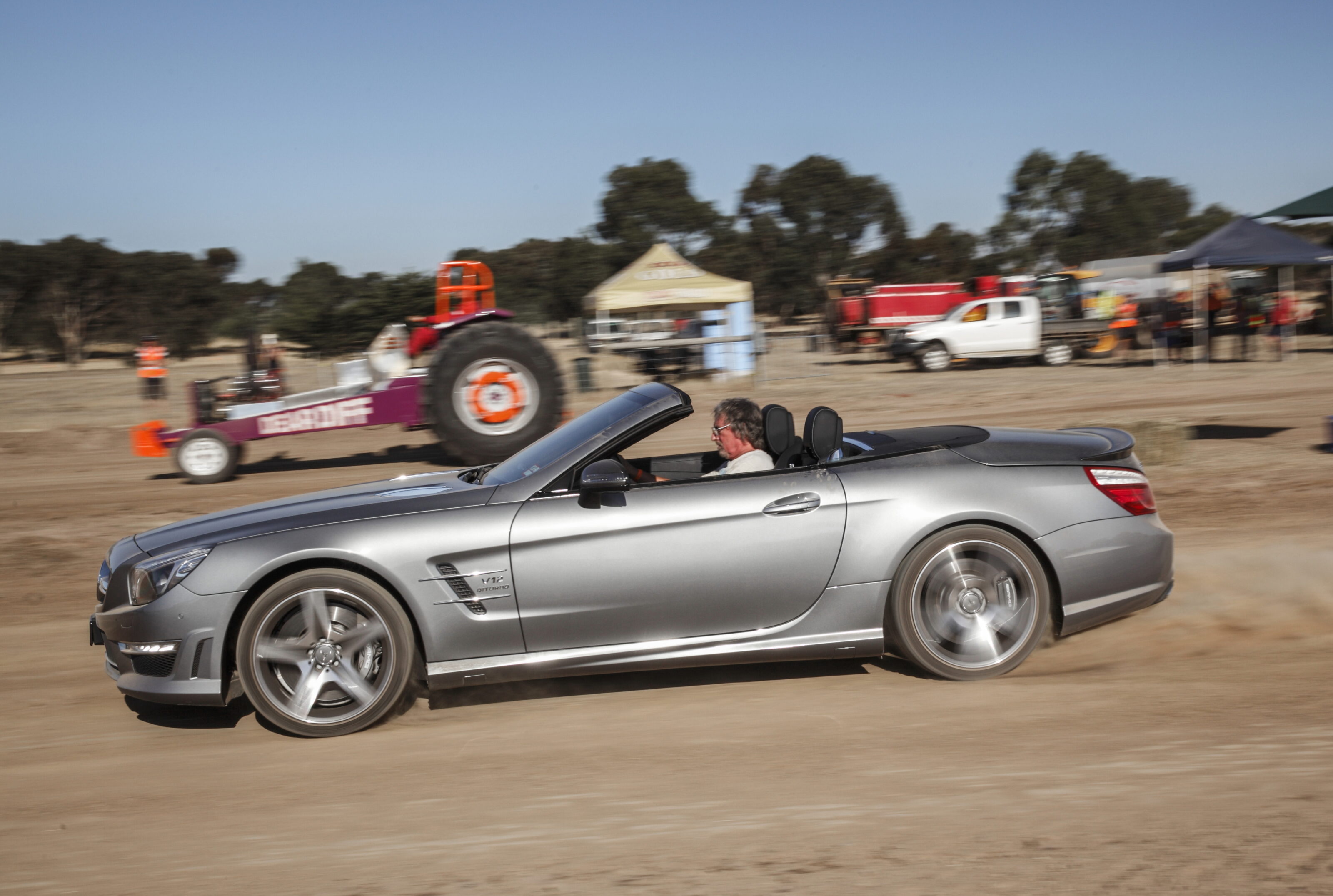
All of which merriment swiftly abates as the long sled each contender will pull is now prepared and the nature of its role becomes obvious. At the beginning of each run, the ballast is borne over its rearward wheels and, as the run progresses, this mass is winched forward to increasingly bear down on a flat-bottomed tray, thus raising the tractor’s workload throughout the run.
Elegant is an adjective which surely does not apply, as the competitors begin to fire their motors. There is no concern for niceties now and no call for silencers out here. This is a chorus of raw, rural power and, as the torque-fest begins, I subtly do the city-thing and slip earplugs in. Just in time. Because, at start of play the racket amply relays traction problems on the loose-packed surface. But with use the grip soon improves, as do feats of strength.
Notable is Blown Income’s early run, in which it takes off like the best V8 Supercar you’ve ever heard, then gets louder. It’s stunning. Enveloped in noise and dust, it keeps slogging forward, unbeaten, to register a Full Pull. Brilliant!
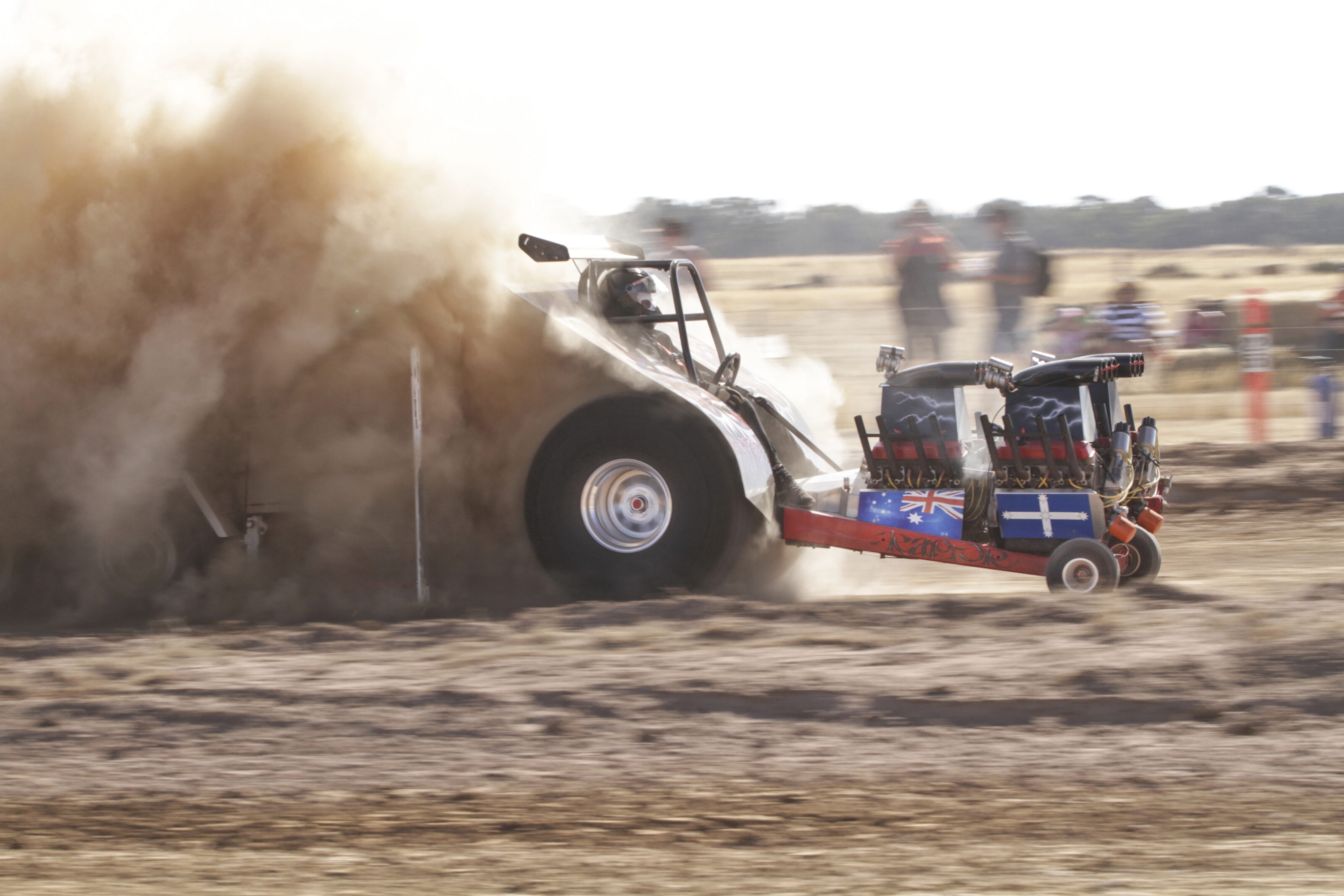
Next highlight is the triple-motor ‘Raptor’, which employs its own motorbike-engined contraption to start it and, trust me, you’ve not lived until you’ve heard all 24 cylinders suddenly explode into life. Even through earplugs it’s a force beyond nature. Way beyond. But not beyond the curse of dust that, dry in the aching heat, fills the air so badly driver Ian Moerman Jnr can no longer see where he’s going. Less than halfway through he aborts.
While no-one would debate that decision on safety grounds, Moerman Snr assures me it’s an uncommon one. “The three engines in ‘Raptor’ are locked together”, he tells me, “and if one breaks loose, the over-rev light comes on. But once it’s past the 60m mark we’re not backing off. We’ll let that engine throw a rod out, we’ll let it burn, and we’ll keep full throttle on. We’ll keep the boot into it. And then I’ll take it home and be very nice to the wife and raid the bank account and start building it back up again.”
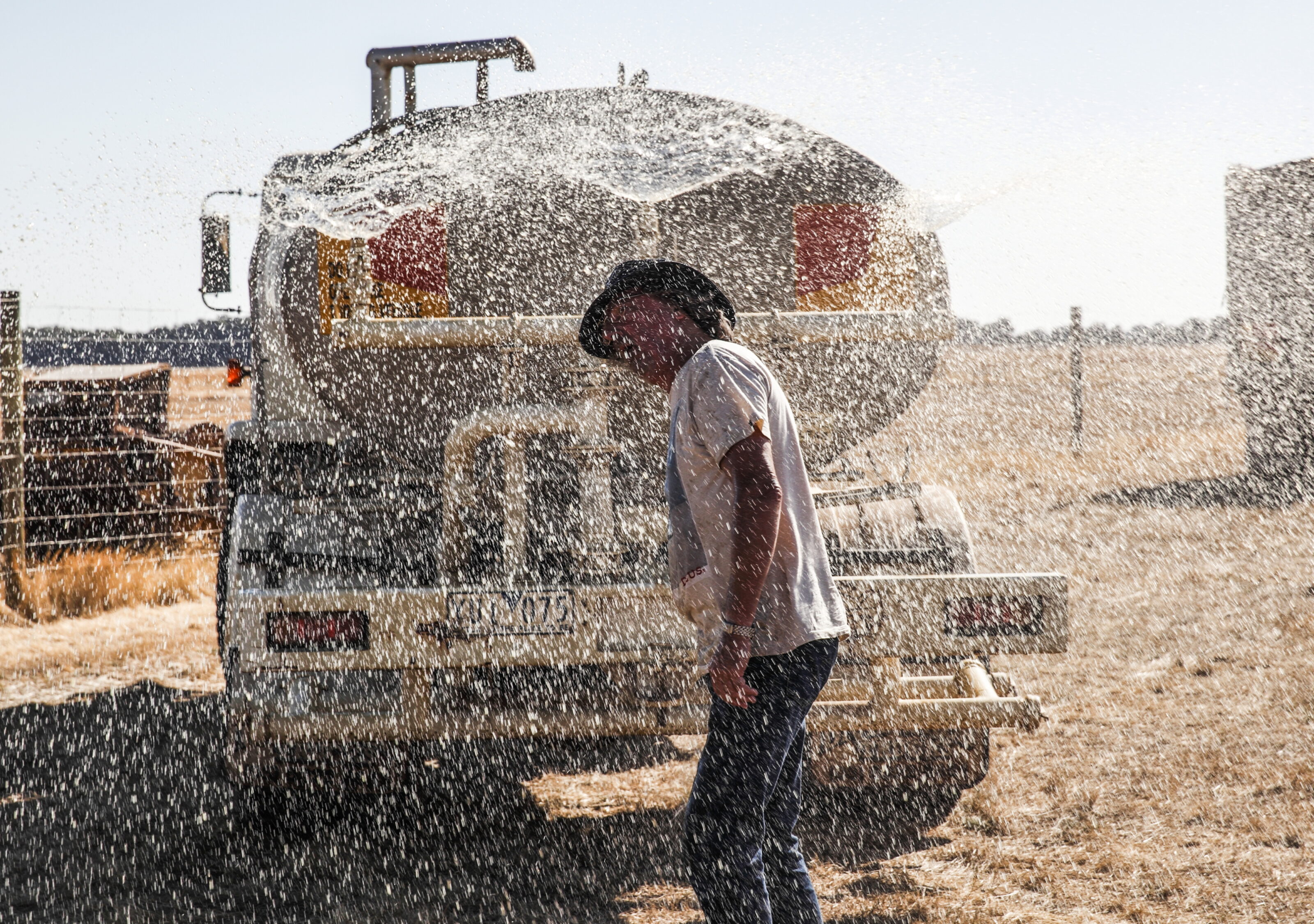
No less determined to keep the show rolling, the marshals call a brief break to damp the track down, a task made no easier by an ambience of approx. 900 degrees in the shade. Except there isn’t any shade. That the ice cream man isn’t charging in gold bars shows he’s got no business sense at all but none of this concerns the ‘Raptor’ crew who blast off a second time and post a very competitive run in the high 90-metre range.
However, none of this prepares me for the mighty Merlin firing up. Twenty-four cylinders is one thing, but 27-litres is a whole ’nother. I swear, as it backs into the starting position, the earth shakes, increasing in its slamming pulse until the brute explodes from the start. Into silence.
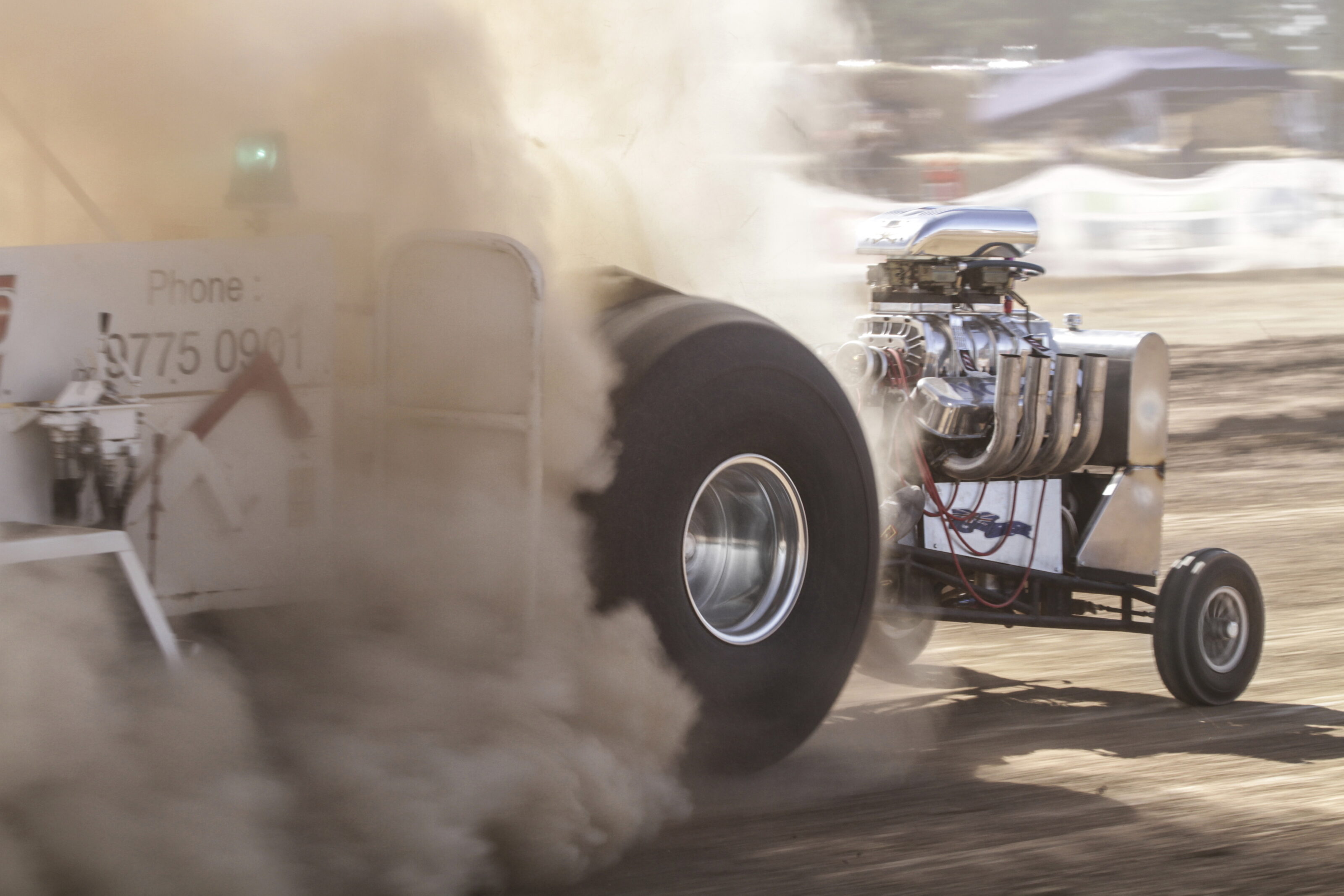
One of the many systems that can only be checked under this load has failed. And it’s going to be hell in a heat wave to diagnose or fix. But bush engineering is as much about spirit as skill and, as the contest roars on around them, the Cottam crew labour through the afternoon until, in the last of fading light, the massive V12 finally barks back to life and powers to the start line.
Bugger it. I take my earplugs out. I’m rewarded as, just metres away, the monster erupts in a massive, Vesuvian launch and, firing vast clouds and clods into the sky, powers to a fabulous Full Pull!
Did it win? God knows. The scores are to be sorted as we leave and, in truth, that formality matters little. ‘Screamer’ has already won its biggest battle today and the other big winners have been us. Sent on a mission beyond all imagining, we have enjoyed it beyond all reason.
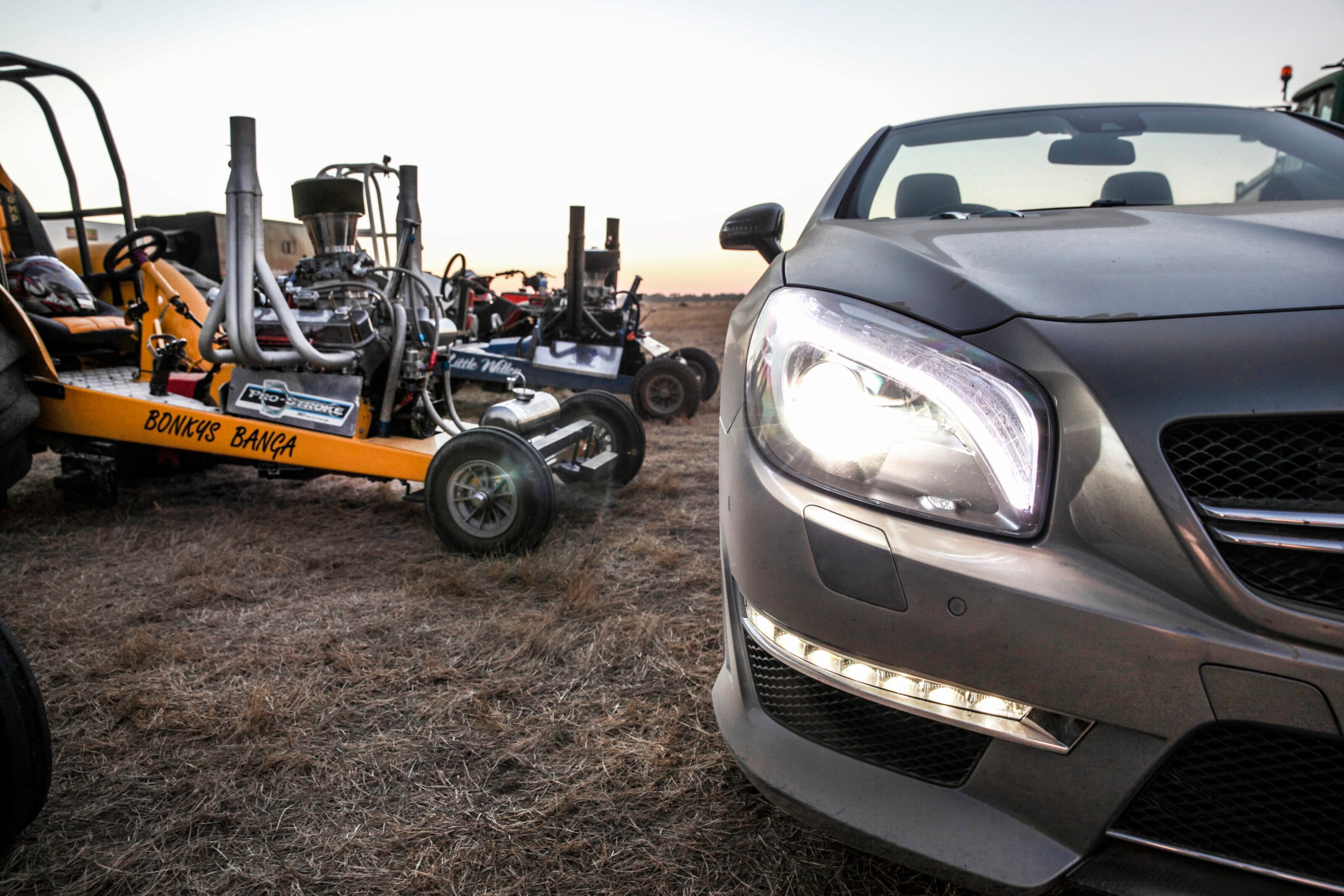
As we head home, the Mercedes now seems surreally civilised – stilling its engine at every stop and merely sipping fuel between them. And, as the rural road unfolds, the car invites us to contemplate the options it offers beyond the raw force that has themed this day. And I’m sure we shall on the night road ahead.
But right now Cristian has brought the SL65 AMG to a halt and is carefully pressing some buttons. We both know this is no normal road test. But, hell, for just a few, fabulous seconds.
2014 Mercedes-Benz SL65 AMG specs
Key Points
- T-Roc receives facelift for 2022
- New ‘R’ variant to come to Australia
- Updated comfort and safety tech included
Volkswagen’s T-Roc has been given a facelift, with the crossover gaining a host of new features and variants for 2022.
First launching in Europe four years ago, the T-Roc only arrived in Australia last year but it is already in line for an update, as the European arm of Volkswagen redesigns its front end.
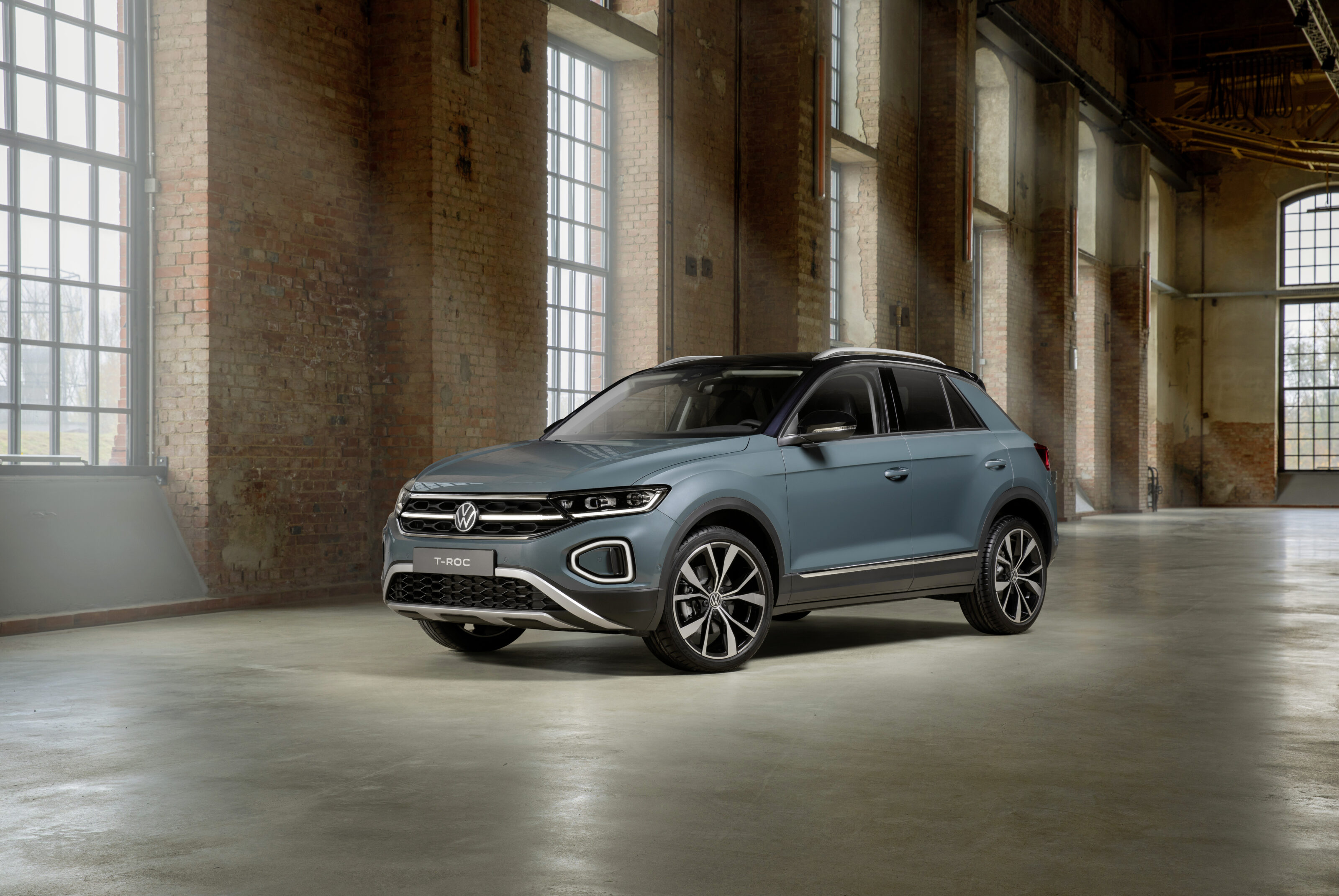
New LED headlights flank the revised front grille, which incorporates an LED light bar, with fresh lower air intakes and fog lights making an impact as the most obvious exterior changes.
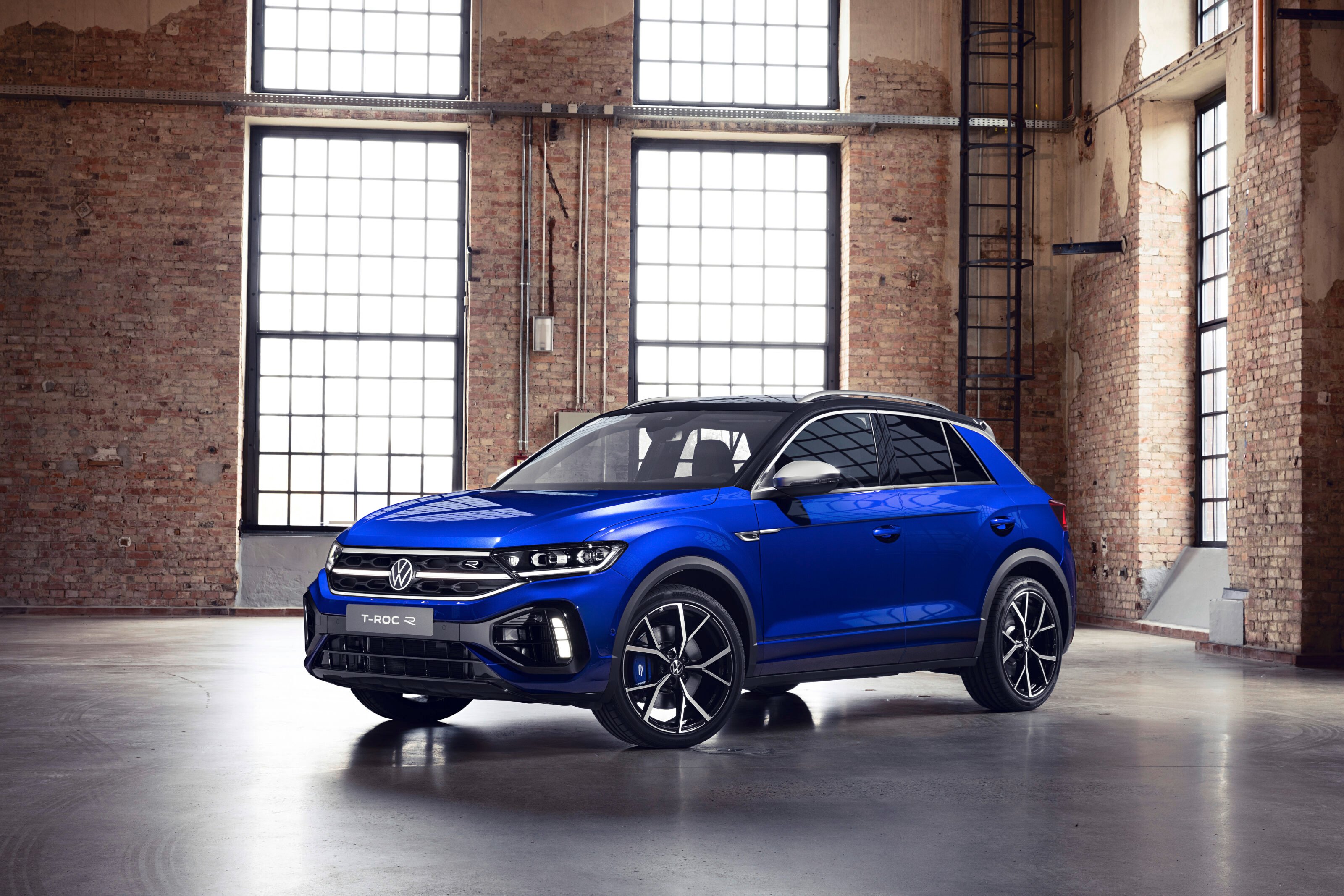
While the European market still has access to Volkswagen’s diesel donks, local T-Roc deliveries will continue to have petrol-power only – ranging from the existing 110TSI (110kW/250Nm) and 140TSI (140kW/320Nm) units to the new T-Roc R, which features a detuned version of the Golf R’s engine.
Developing 221kW, the 2.0-litre, turbocharged four-cylinder will deliver its power to all four wheels through a seven-speed dual-clutch gearbox, resulting in a combined cycle fuel consumption of 7.8L/100km.
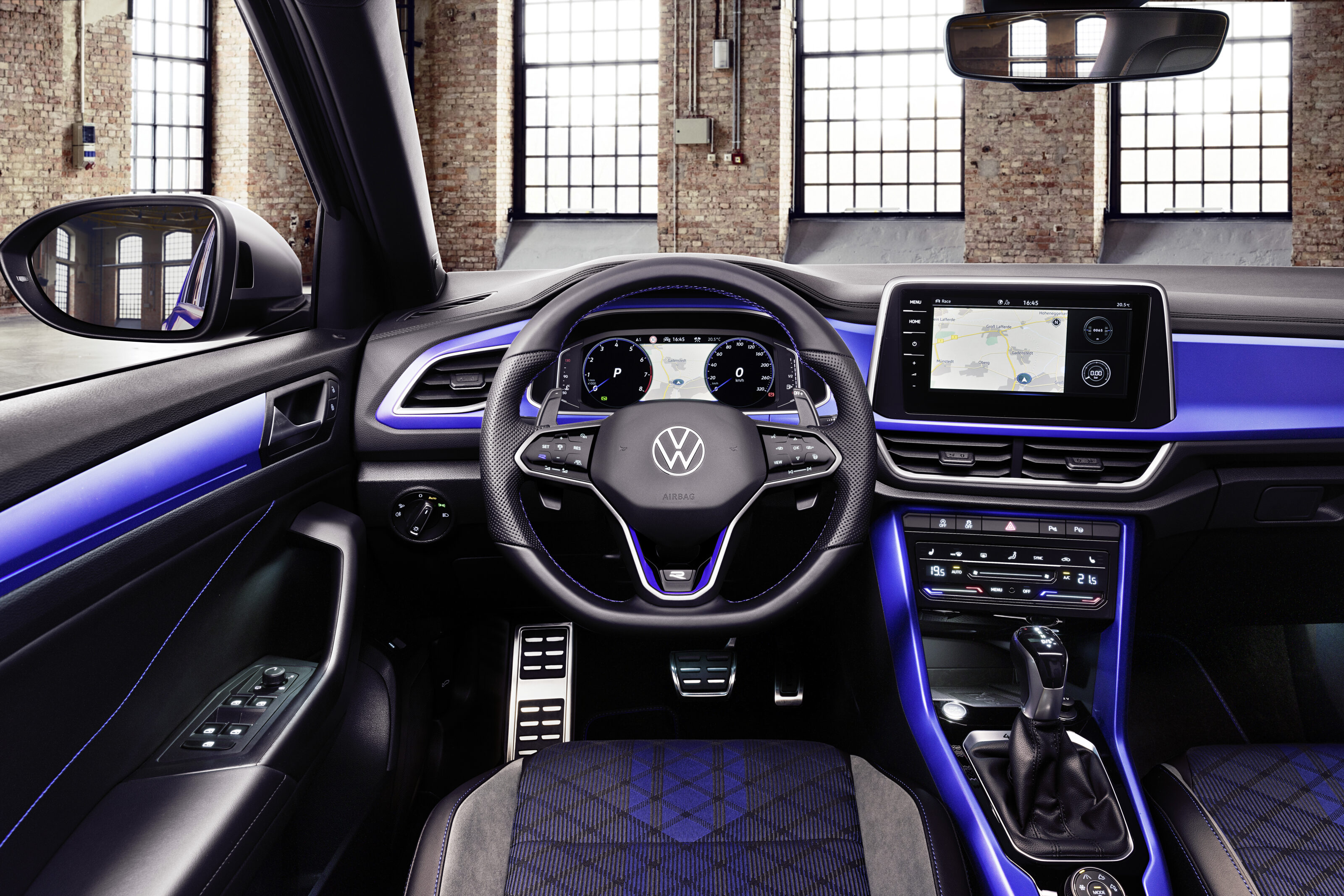
It’s not just the engine which is carried across from the Golf R – the T-Roc R can be purchased with either its 18-inch ‘Jerez’ or 19-inch ‘Estoril’ wheels too.
All 2022 T-Roc variants benefit from an update to the rear styling – with new LED tail-lights, a redesigned bumper and exhaust tips differentiating it from its predecessor.
Inside the cabin, lower-grade T-Rocs now benefit from an 8-inch digital dash which can be upgraded to the 10.25-inch Digital Cockpit Pro, while the infotainment screen is also available in eight- or 9.2-inch sizes, the latter of which is standard in the flagship R.
Haptic controls mirror other vehicles in Volkswagen’s current model range, with the climate control panel and steering wheel now adopting the equipment.
Technology upgrades are also standard throughout the T-Roc line-up – from wireless Apple CarPlay and Android Auto to front assist, lane assist, travel assist, adaptive cruise control and autonomous emergency braking.
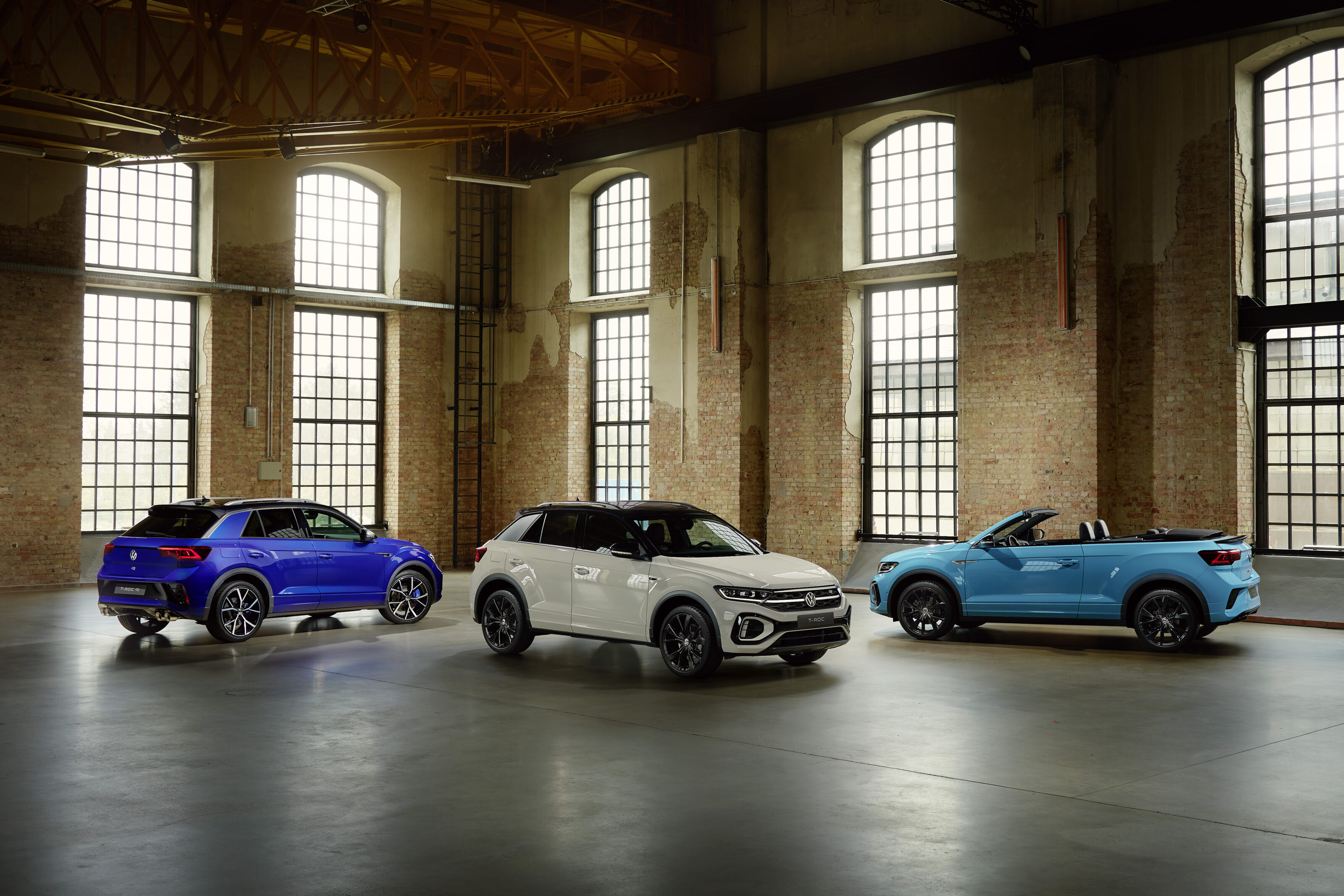
European buyers not only get their choice of diesel engines – but also a drop-top version of the T-Roc, with the Cabriolet available in certain markets. However, it’s expected this won’t include Australia as Volkswagen currently offers no convertibles locally.
A spokesperson for Volkswagen Australia told Wheels it expects to see the new T-Roc land locally in the third quarter of 2022, although specific grades and specifications won’t be known until we get closer to the launch date.
