
The next title in the Forza Horizon video game series has been given a dramatic Australian launch, featuring a Polaris dropping from a helicopter.
Attached to the bottom of a chopper some 1400 metres in the sky, the Polaris side-by-side vehicle eventually makes its way down to terra firma gently thanks to its parachute, followed by professional skydiver, Ossie Khan.
Kahn then removes his and the Polaris’s parachutes – the work of a mere moment thanks to some editing trickery – and then proceeds to tear across the paddock, kicking up so much computer generated pink smoke it makes it look like he’s leaving a gender reveal party.
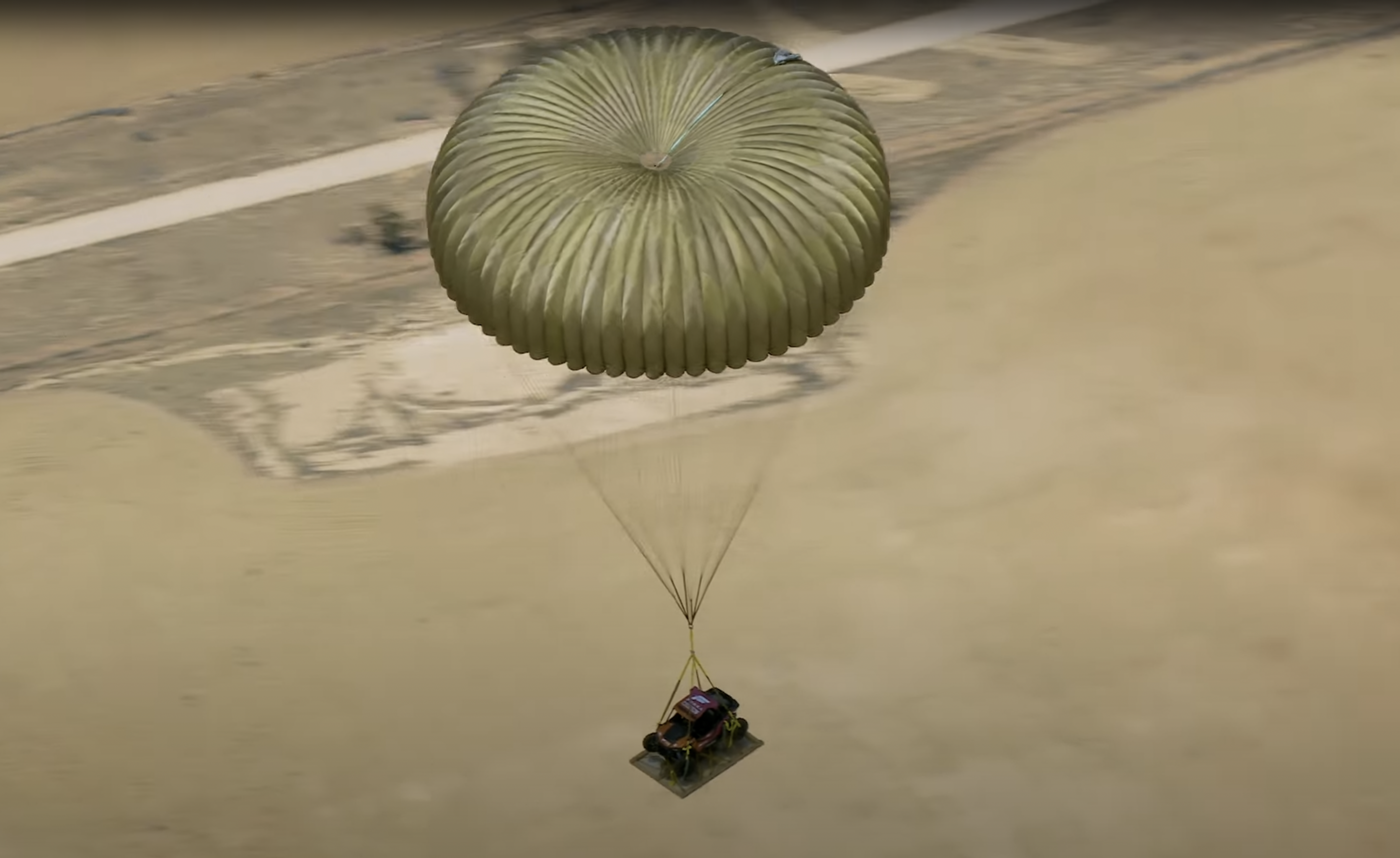
The stunt was released on YouTube on the same day Horizon 5 officially goes live for all Xbox and PC owners, featuring around 500 cars to choose from.
Based in Mexico, the game’s map is around 50 per cent larger than the environment from the previous title, Horizon 4 – itself a significant jump over the Australian-based Horizon 3.
With the seventh instalment of the Gran Turismo game series set to launch in March next year for Playstation, Microsoft is hoping it has the clear jump over its console rival.
Ford CEO Jim Farley has flagged electric vehicle manufacturers Tesla and Rivian as being threats to the Blue Oval.
The Ford boss told employees in a company-wide meeting the carmaker can no longer ignore the pressure from Tesla, citing the Model 3’s sales-topping results from Europe and parts of the US.
“Think about the value creation of Tesla right now. And [it has] resources, smart people, the Model 3 is now the best-selling vehicle in Europe. Not electric. Flat out,” Farley said in the meeting, CarScoops reports.
“It was the best-selling vehicle in the UK. Most months, it’s the best-selling vehicle in California. Not just electric, but overall. If we’re going to succeed, we can’t ignore this competition anymore.”
Farley also pointed out Rivian has already begun deliveries of its electric ute, despite being a start-up – beating Ford’s battery-powered F-150 Lightning by around six months.
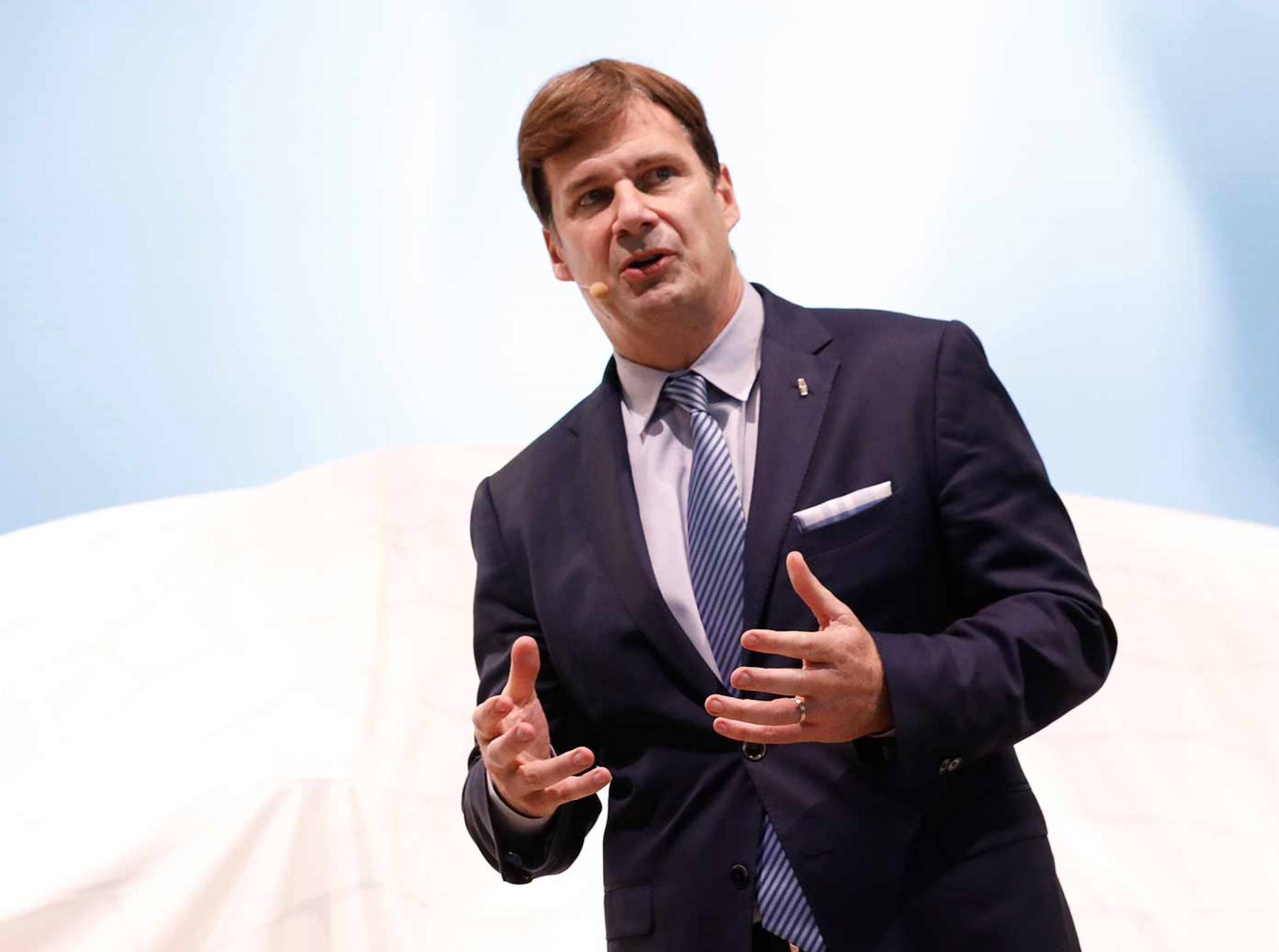
Rivian could reach – or potentially exceed – Ford’s valuation when the company makes its public debut on the New York Stock Exchange this week.
A new report from Pitchbook shows Rivian could reach a market capitalisation of US$70.6 billion (AU$95.1bn), based on a US$73 share price. Ford’s market cap is currently US$80 billion (AU$107bn).
It’s not all dark clouds for Ford – the company has invested US$7.5bn (AU$10.1bn) into Rivian, taking a 14.4 per cent ownership of the electric newcomer.
Key Points
- Chrysler 300 goes up by just under $1000
- Jeep increases range from $400 to $3200
- Only Jeep’s Gladiator pricing has remained unchanged
Automotive group Stellantis has rolled out price increases across its range of brands, with Chrysler and Jeep vehicles particularly hit by higher premiums.
At least four Jeep models, as well as Chrysler’s sole local 300 offering, have undergone price hikes throughout 2021 – ranging from $400 up to $3200.
A spokesperson for the Australian arm of Stellantis told Wheels the increased prices are due to a range of external factors, although no specific examples were provided.
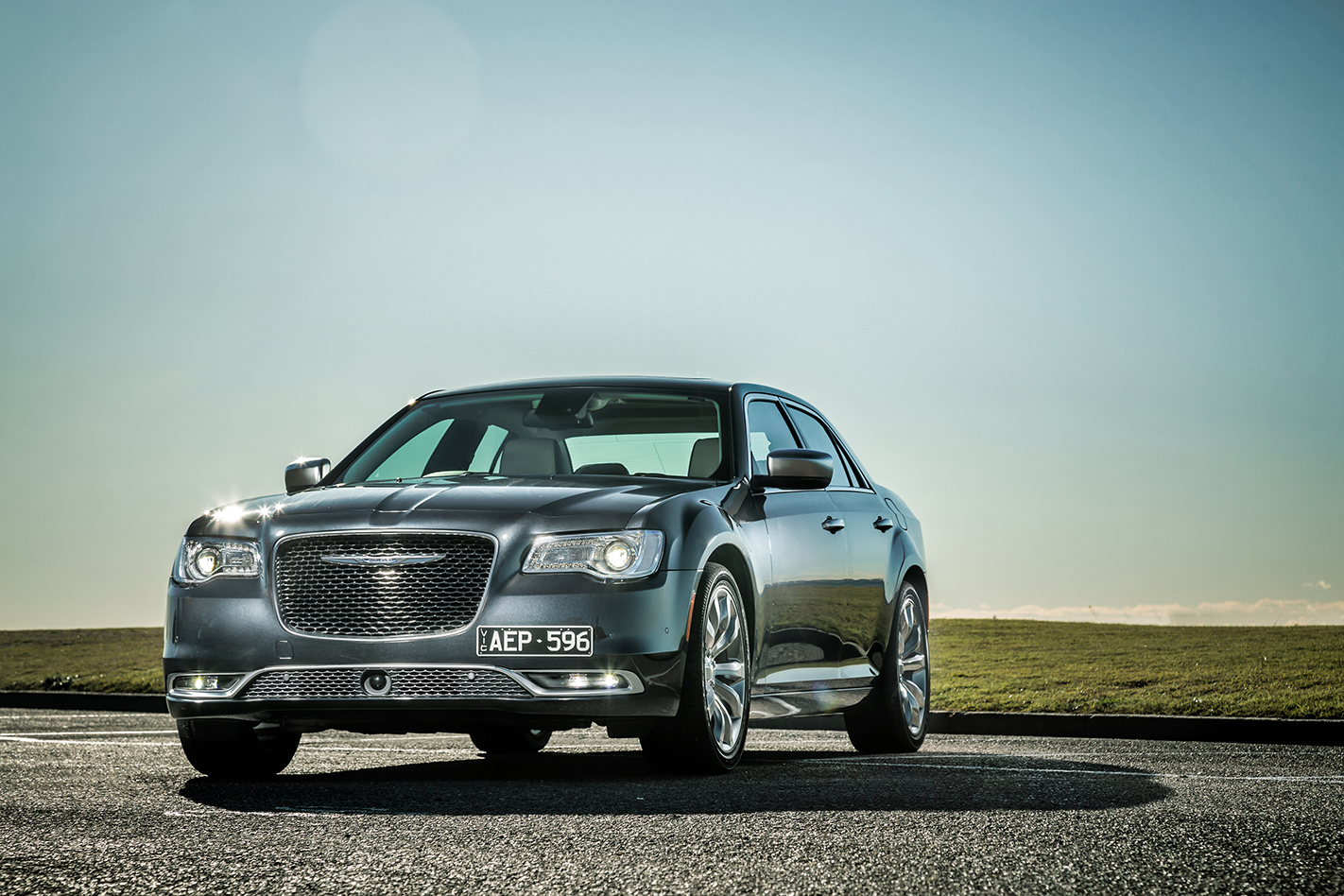
2021 Chrysler 300 Australian pricing
Prices exclude on-road costs.
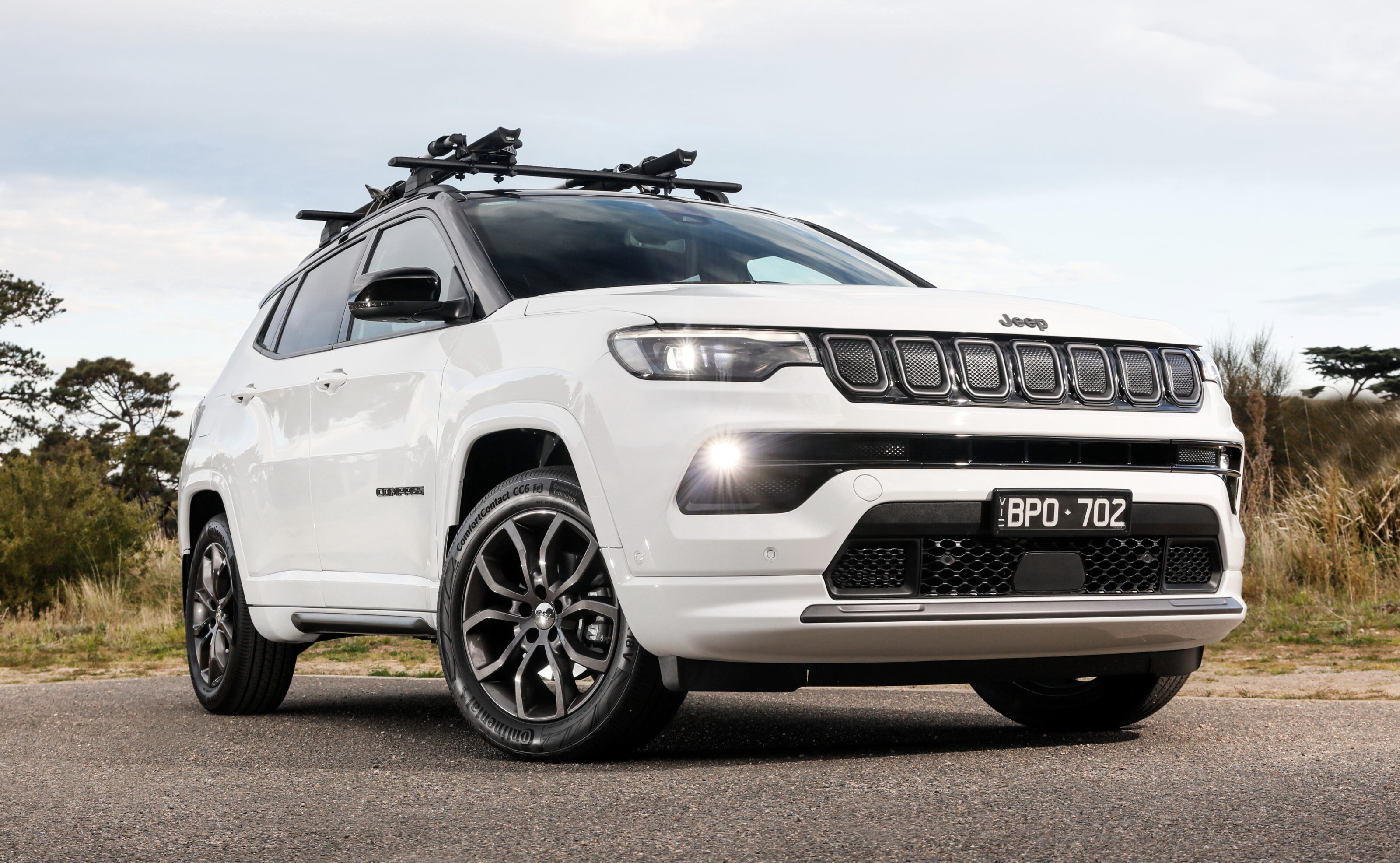
2021 Jeep Compass Australian pricing
Prices exclude on-road costs.
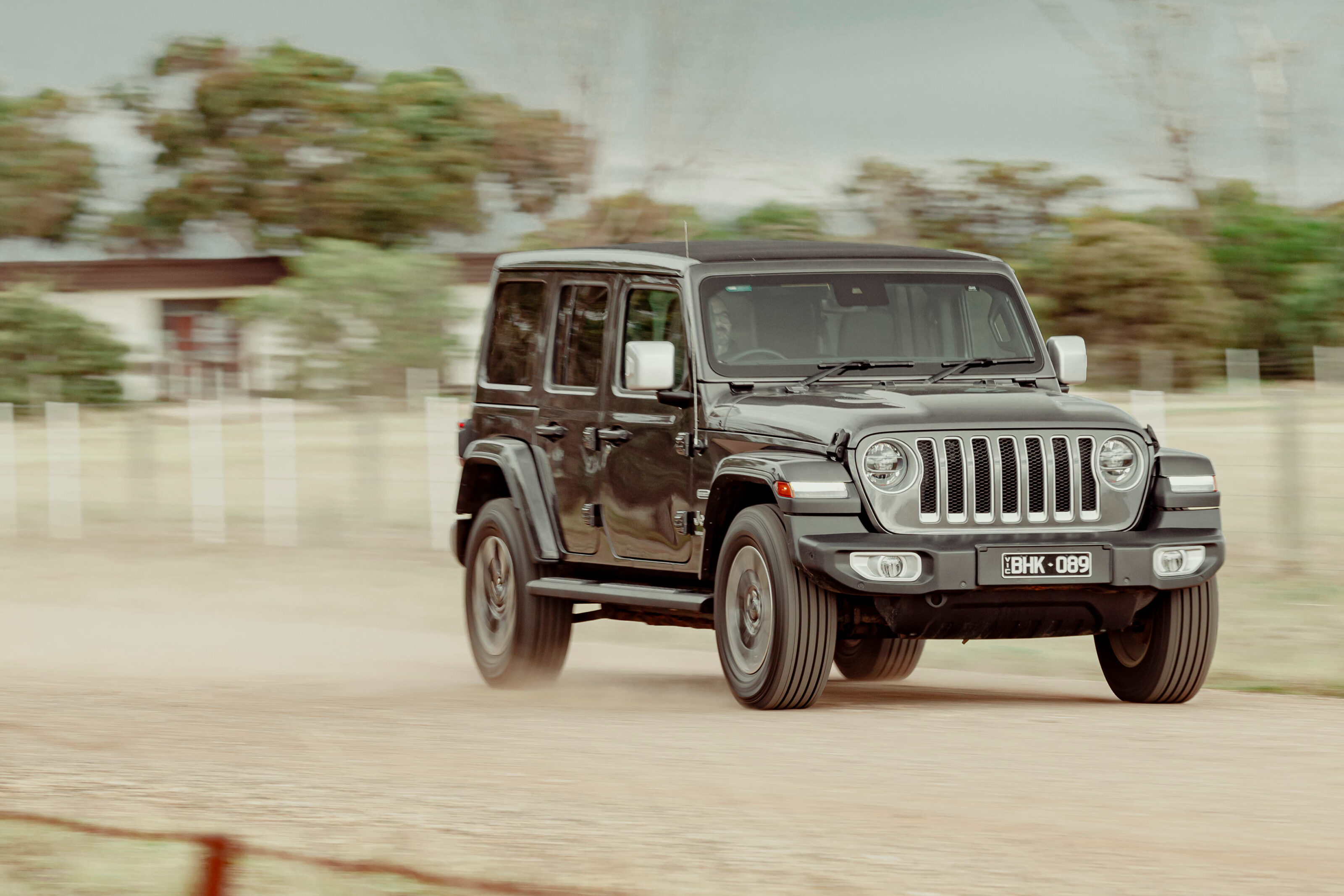
2021 Jeep Wrangler Australian pricing
Prices exclude on-road costs.
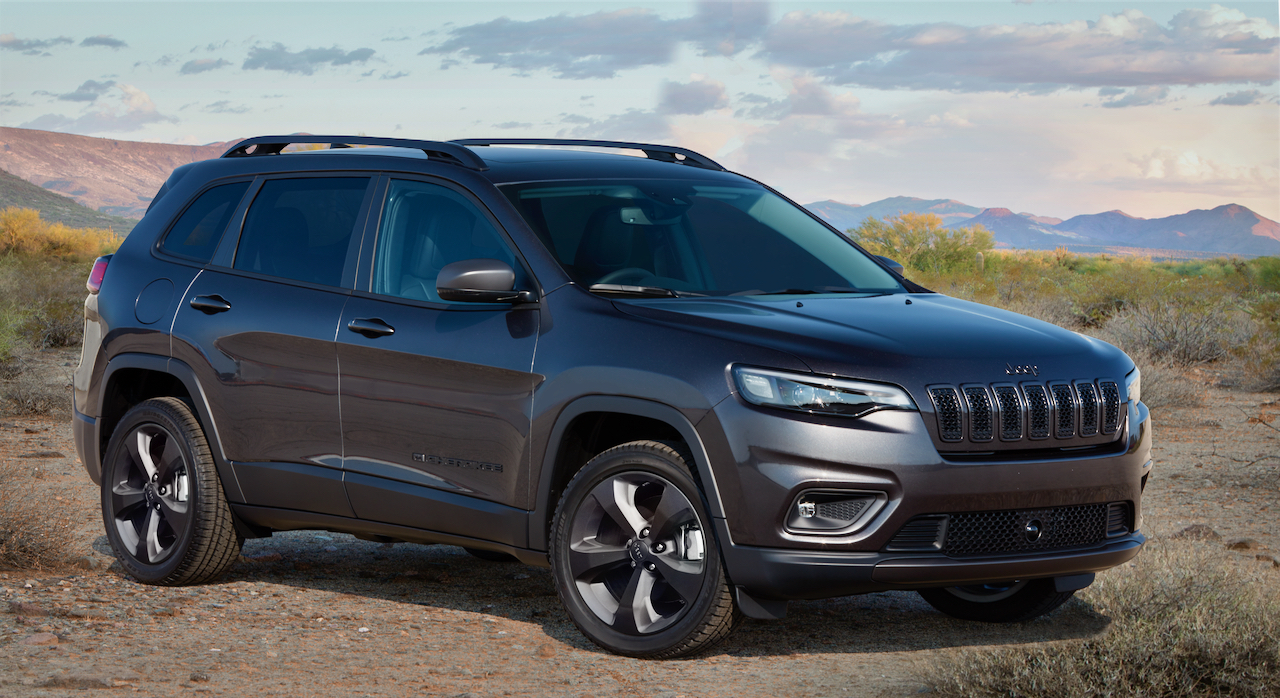
2021 Jeep Cherokee Australian pricing
Prices exclude on-road costs.

2021 Jeep Grand Cherokee Australian pricing
Prices exclude on-road costs:
How quick is the Audi RS5 Coupe? It only takes a brief look at the specs to know the answer to that question is very quick indeed.
The 2.9-litre twin-turbo V6 produces 331kW and 600Nm, which when paired with an eight-speed automatic and all-wheel drive, launches the RS5 to 100km/h in just 3.9sec. According to Audi, at least.
But here at MOTOR we don’t want to just take its word for it, so we lined it up on the Heathcote strip to record 0-60mph (for any overseas readers), 0-100km/h, 0-400m, 80-120km/h and 100-0km/h figures – a comprehensive test of how the RS5 stops and goes.
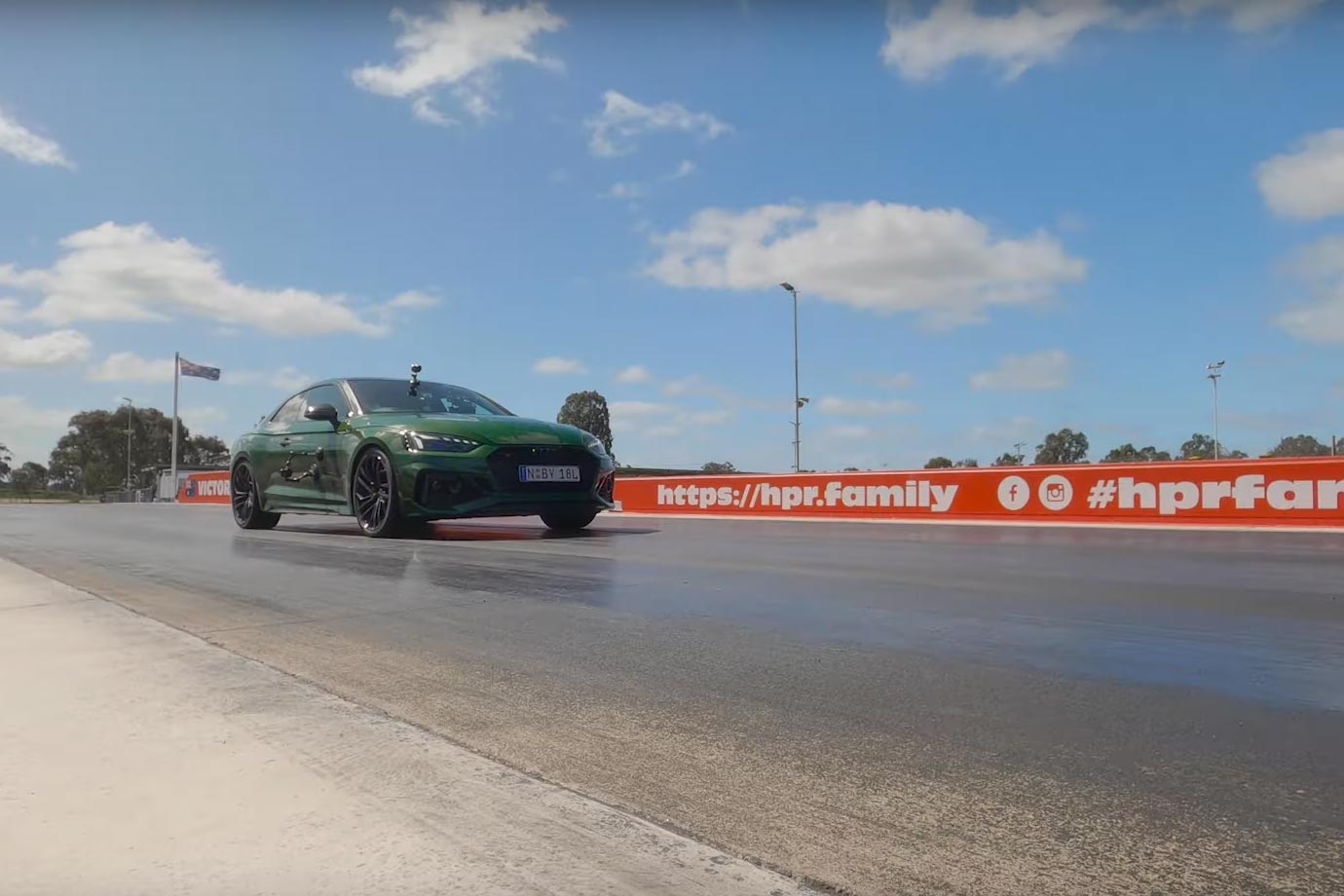
Before attempting to activate launch control, a baseline run is recorded by simply loading the transmission against the brake to build a few revs then flooring the throttle and letting the car do the rest. That baseline is pretty impressive, the RS5 managing 4.1sec from 0-60mph, 4.2sec from 0-100km/h and a 12.3sec quarter mile at 186.3km/h.
The idea was then to test the launch control system, however, an ‘oil overfill’ warning (better than underfill!) prevents the system from being activated. This isn’t a huge drama in the RS5, however, as being a torque converter automatic, the launch control closely mimics the more traditional method.
The automatic allows just over 3000rpm to be built at a standstill, at which point those 600Nm rocket the RS5 from the line, all four wheels spinning slightly in first before each gear is eaten in rapid succession like an Audi-badged Pac-Man.
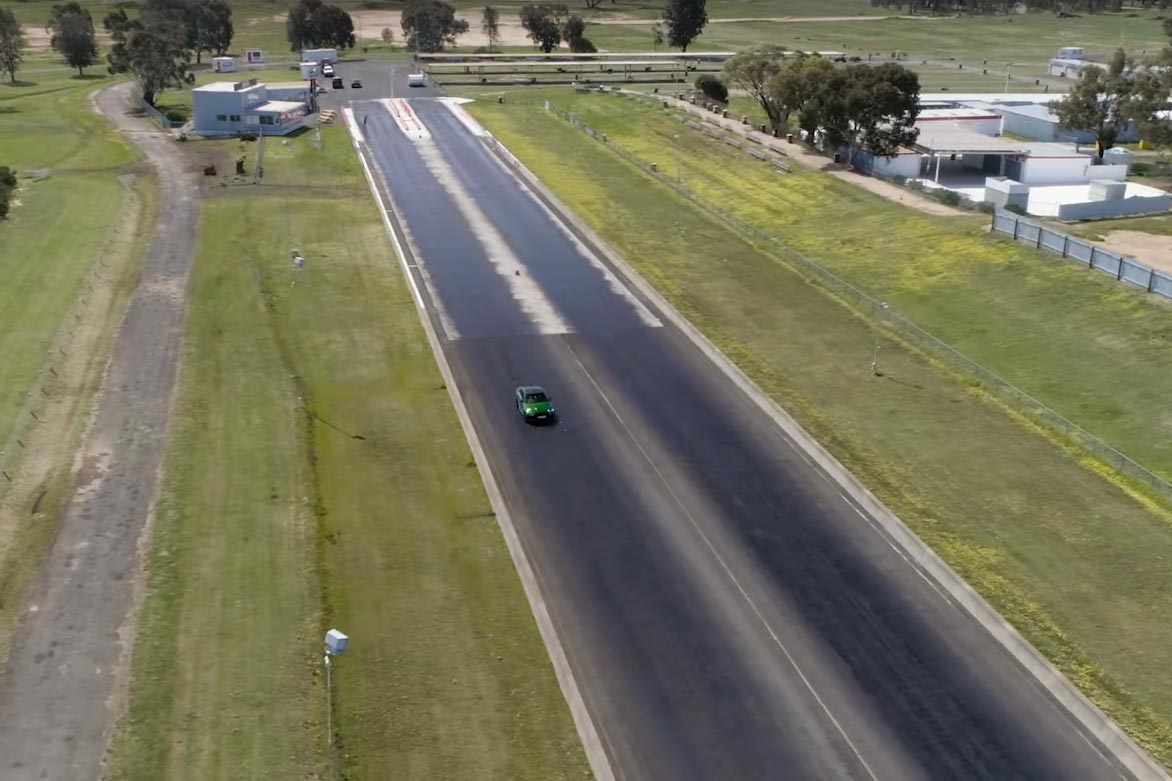
Launch control or not, the RS5 hit 60mph in 3.7sec, 100km/h in 3.8sec – a tenth faster than its claim – and a 12.0sec quarter mile at 186.6km/h, numbers it more or less backs up (albeit a tenth slower) on the next run. On the return, it flies through 80-120km/h in just 2.4sec and the carbon-ceramic brakes pull it up in 36.8m.
There is a really simple way to cut some time of your acceleration runs, however, and that’s called ‘rollout’. It’s a drag racing term, referring to the distance between a car triggering all the start lights and then actually crossing the start line and starting the clock.
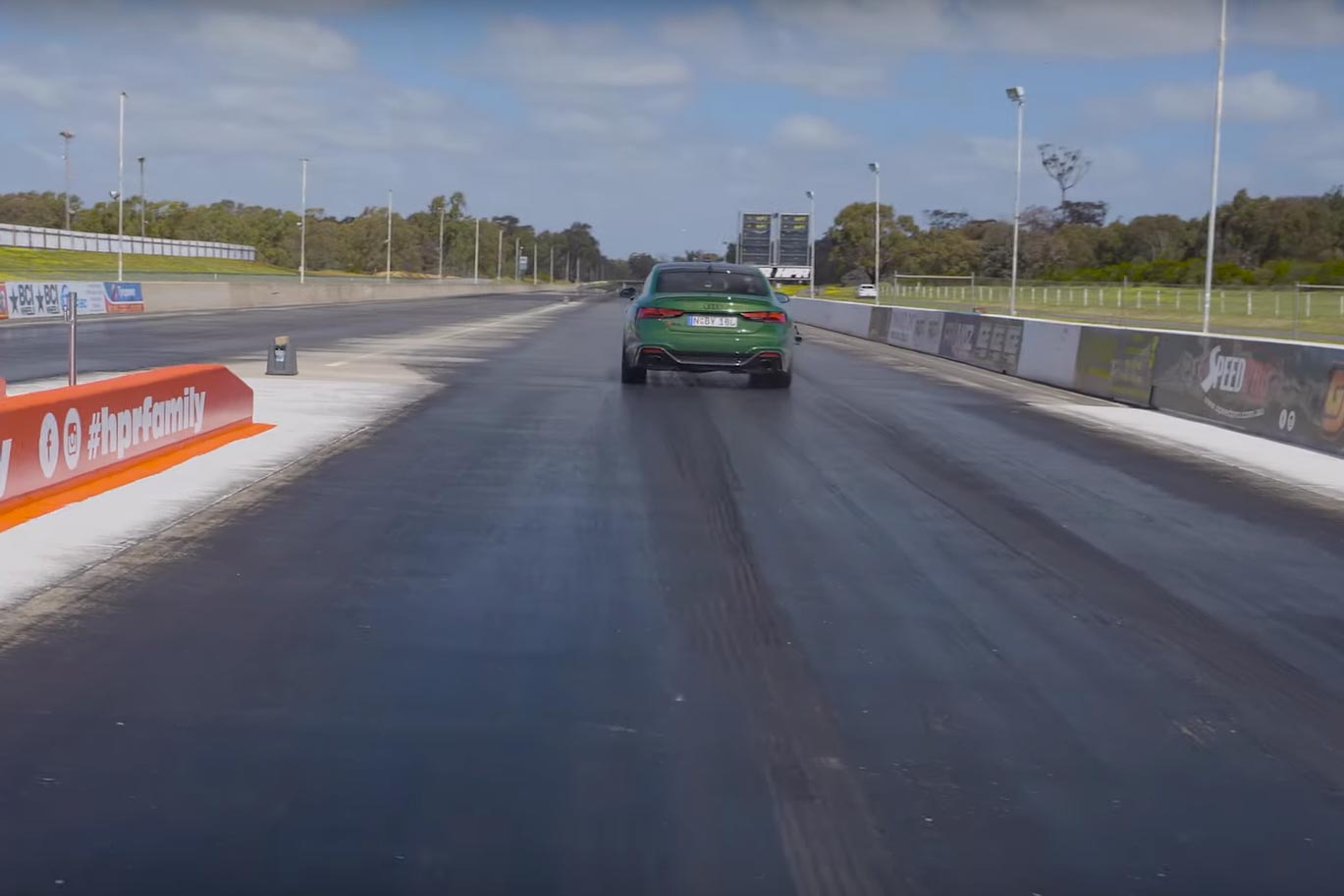
As we use satellite-based timing gear, which starts recording the moment the car moves, we don’t traditionally use rollout, but given doing so is as simple as pressing a button on the DriftBox we thought it would be interesting to do a run and show the difference.
US media outlets in particular favour using rollout and the RS5 clearly illustrates why American figures are often eye-poppingly quick! Rollout activated, 60mph flashes up in just 3.4sec, 100km/h is passed in 3.6sec and the quarter-mile takes 11.8sec at 187.09km/h. Straight away, two tenths of a second for free.
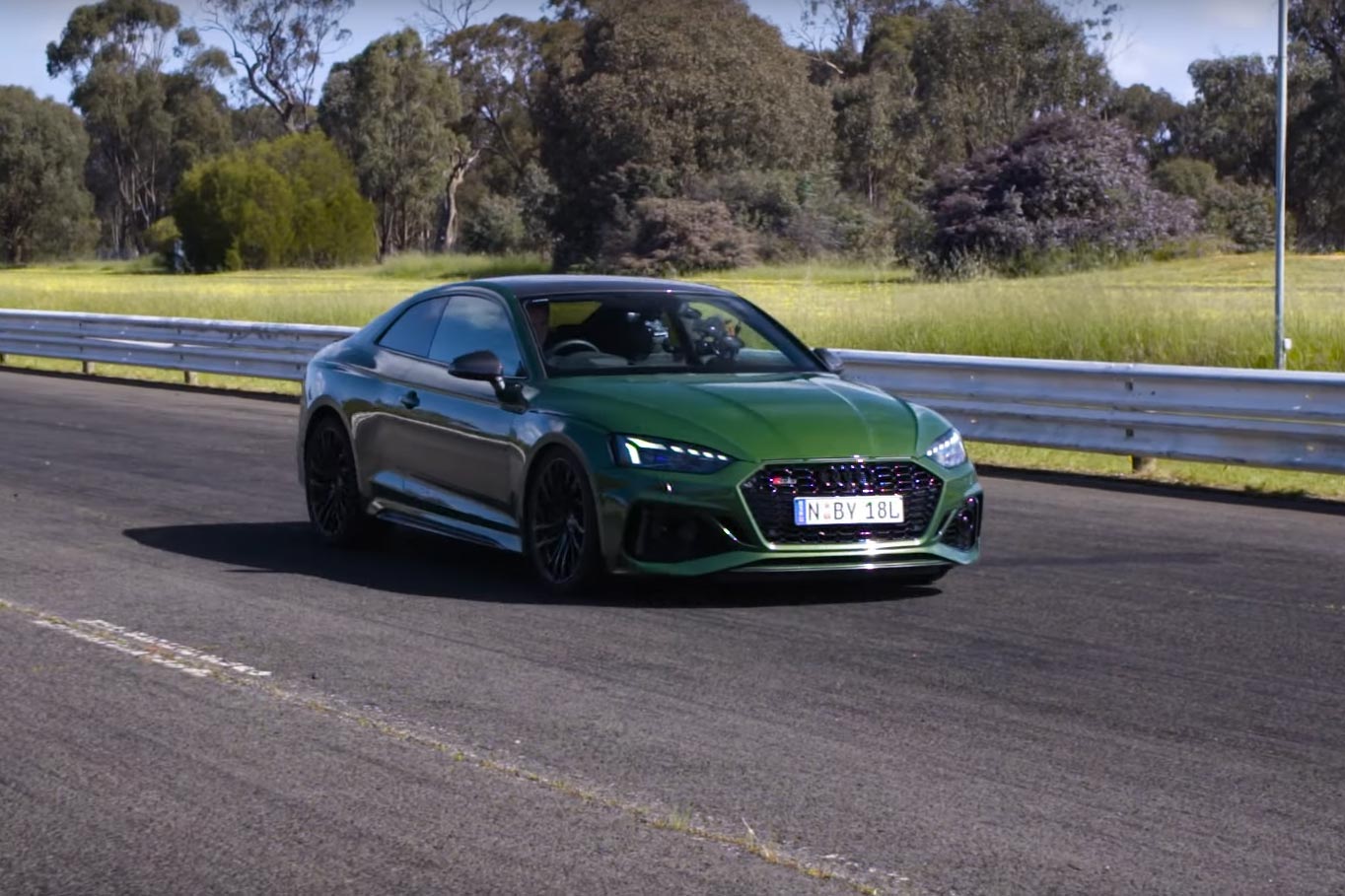
If you consider a car being measured with rollout to 60mph versus one measured without rollout to 100km/h, the difference is a substantial four-tenths of a second: 3.4 vs 3.8sec. Regardless, as mentioned at the top, the answer to the question “how quick is the Audi RS5 Coupe?” is “very!”
From the day Audi unveiled its gorgeous A5 Sportback, it was inevitable that it would get the RS treatment. It is almost unquestionably one of the prettiest cars on the road today, eschewing the look-at-me-and-my-pig-grille antics from Munich and sticking with a sober, elegant but exceedingly pretty set of lines. The hoons at Audi Sport just threw a few black bits and air intakes on.
While it’s not the most practical RS – that goes to the RS4 Avant – it’s better looking than its coupe counterpart and manages to not just fill the gap between the two cars in the range, but feels like it stands alone. Low and sleek, it shares all of the Avant and Coupe underpinnings, with the Porsche-developed 2.9-litre twin-turbo V6 and a sophisticated driveline full of Quattro, ZF and limited-slip diff goodness.
It’s also loaded with gear and tech to (hopefully) match the price and with that reinvigorated competition from its German rival as well as the constant stalking horses from AMG and Alfa, the RS5 Sportback has much to contend with in the second half of its life.
Pricing and Features
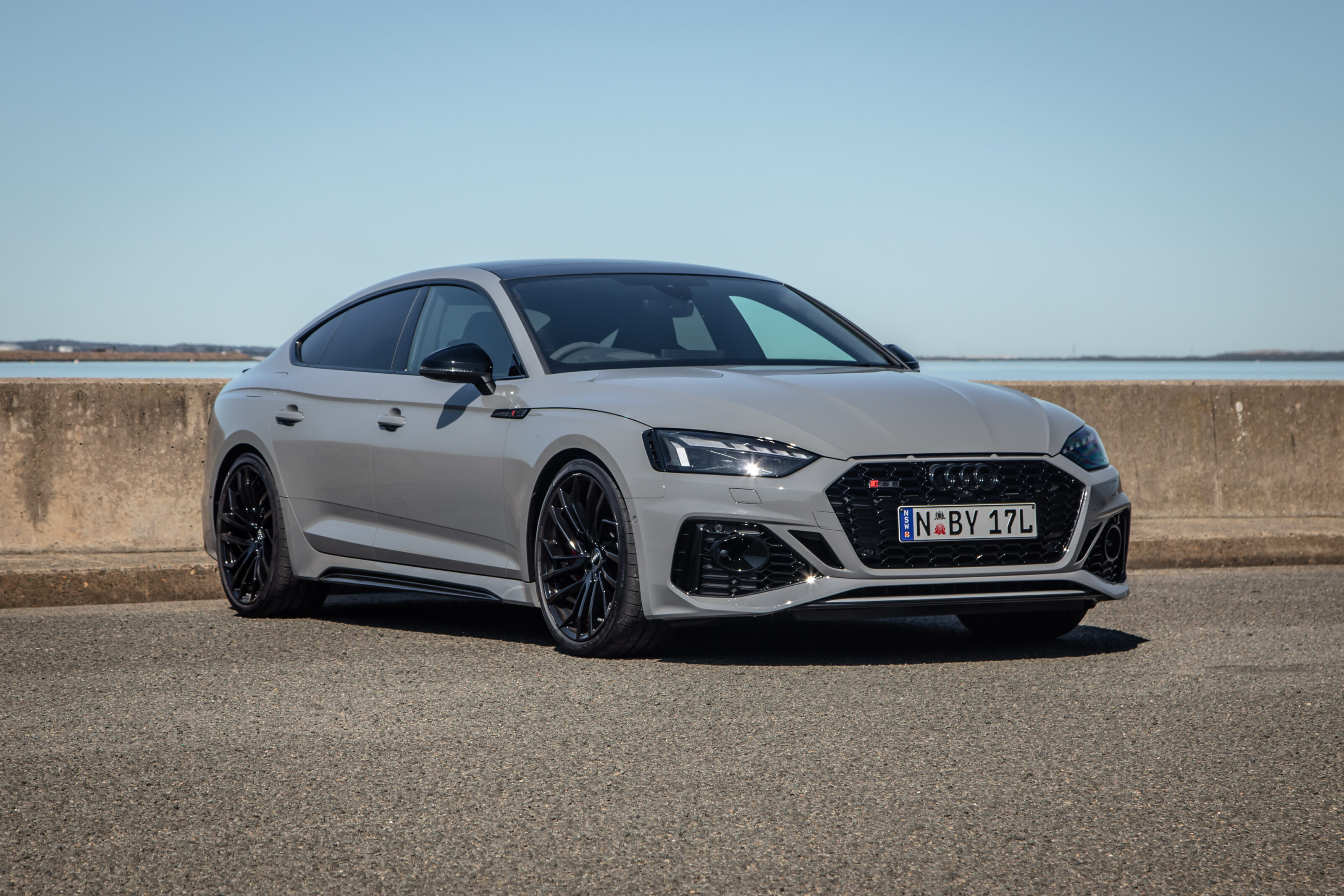
Audi comes out punching with a starting price of $153,900 for the RS5 Sportback, which is a hell of a start but not far off the price of its M and AMG rivals. But the right kind of not far off – it’s priced lower than the BMW M3 Competition and I can tell you without even looking it’s cheaper than a C63 AMG (okay, I checked, it’s cheaper). No, it’s not as direct a BMW rival as it might be if the M4 Gran Coupe existed, but it doesn’t and we just have to sulk about that.
It’s worth pointing out that the original pricing of the RS5 from 2019 was more than $7000 higher than it is now, so that’s unusual and if my research is correct, it’s become better-equipped since then too.
The RS5 ships with 20-inch alloys, Matrix LED headlights, keyless entry and start, heated and folding rear vision mirrors, foot wavey boot opening, a panoramic sunroof (why?), rear privacy glass, Nappa leather seats, electric front seats with memory and heating, three-zone climate control, LED ambient lighting, Virtual Cockpit digital dash, wireless phone charging, 19-speaker B&O-branded sound, adaptive cruise, around view cameras, head-up display and a space-saver spare.
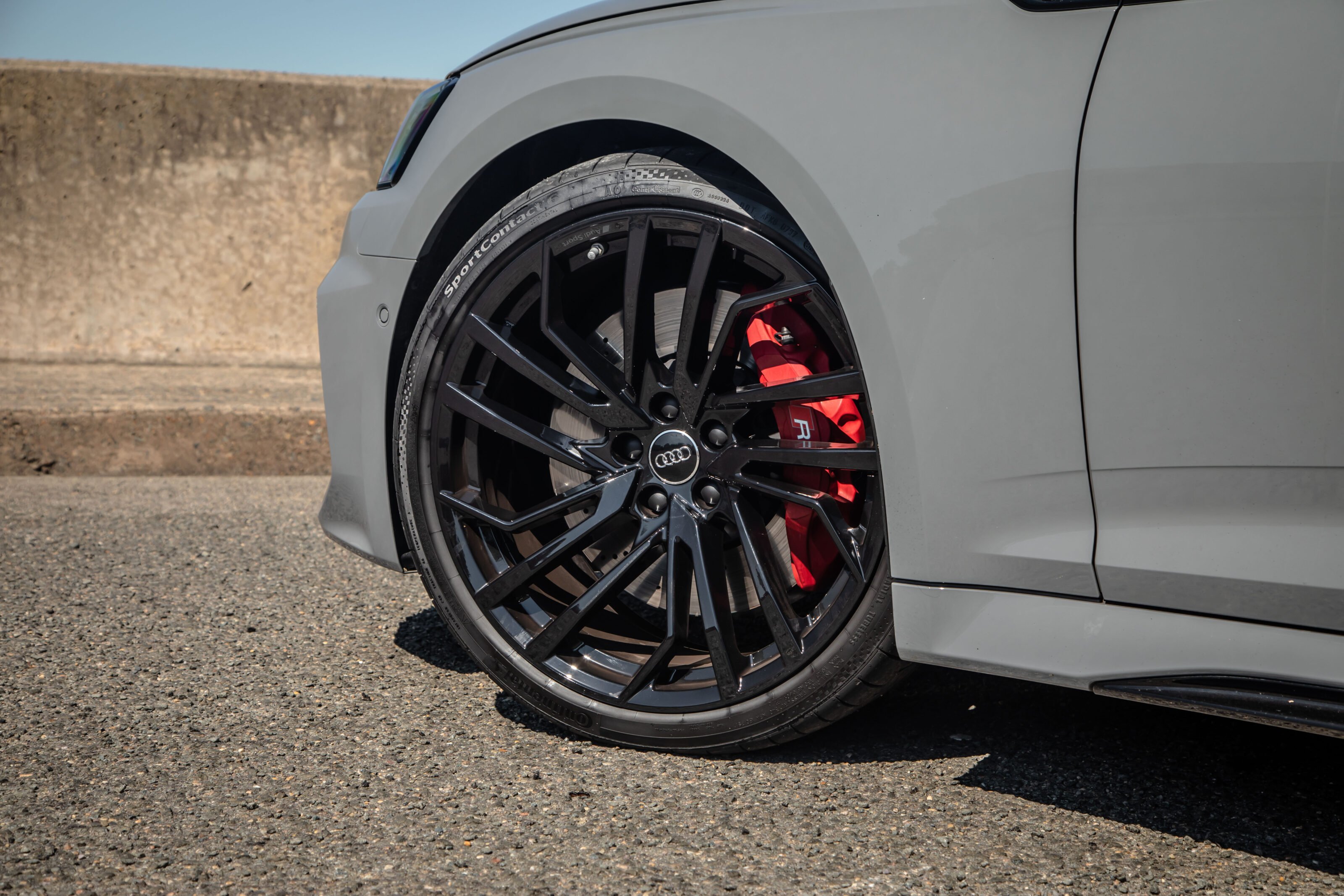
If you go insane you can add carbon-ceramic front brakes for a whopping $13,600. Slightly less insane is the $4400 dynamic damping setup added to this car, although it’s annoying that it’s not standard. This car also had the $3400 RS Design package that adds an Alcantara wheel and shifter, Nappa leather on the doors, more Alcantara on some surfaces, red edging on the seatbelts and front floor mats with RS stitching. I’d be happy with just the Alcantara wheel for a lot less, but here we are.
Five-star ANCAP safety comes courtesy of six airbags, blind-spot monitoring, reversing camera, front and side cameras, high- and low-speed forward AEB, forward collision warning, driver attention detection, auto high beam, lane-keep assist, lane departure warning, exit warning and reverse cross-traffic alert.
If you go insane you can add carbon-ceramic front brakes for a whopping $13,600. Slightly less insane is the $4400 dynamic damping setup added to this car
Comfort and space
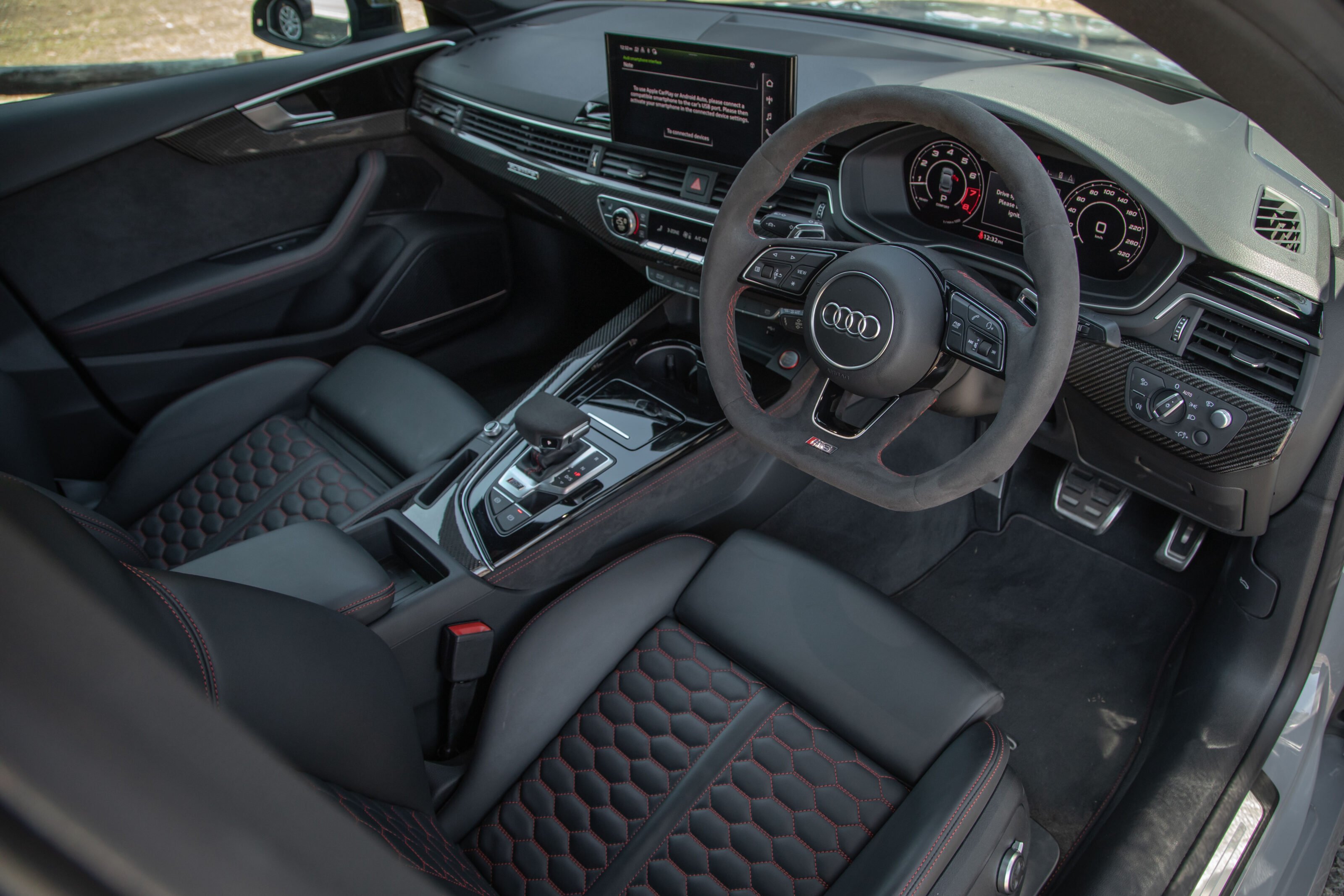
Here in the mid-size segment, you’ve got a choice of three RSes – the RS4 Avant, RS5 Coupe and RS5 Sportback. Unlike its rivals, it’s not available in a four-door sedan option, but again, neither do the other two have five-door coupes. Swings and roundabouts, I guess. I think the Sportback is the best of the three Audis, combining the five-door coupe looks with a hefty boot and space for four.
The front seats are sensationally comfortable, look great and have a ton of adjustment. You sit lower than you do in the Avant but pretty much the same as the coupe, so if you feel like you’re missing out, you’re not (as long as you don’t look behind you). The optional Alcantara steering wheel is absolutely lovely, too, as is the same material on the seats and the shifter.
You get bottle holders in the doors that actually hold bottles and a pair of cup holders in the centre console. Under the armrest, there’s also a wireless charging pad. This car had wireless Apple CarPlay but also USB Android Auto.
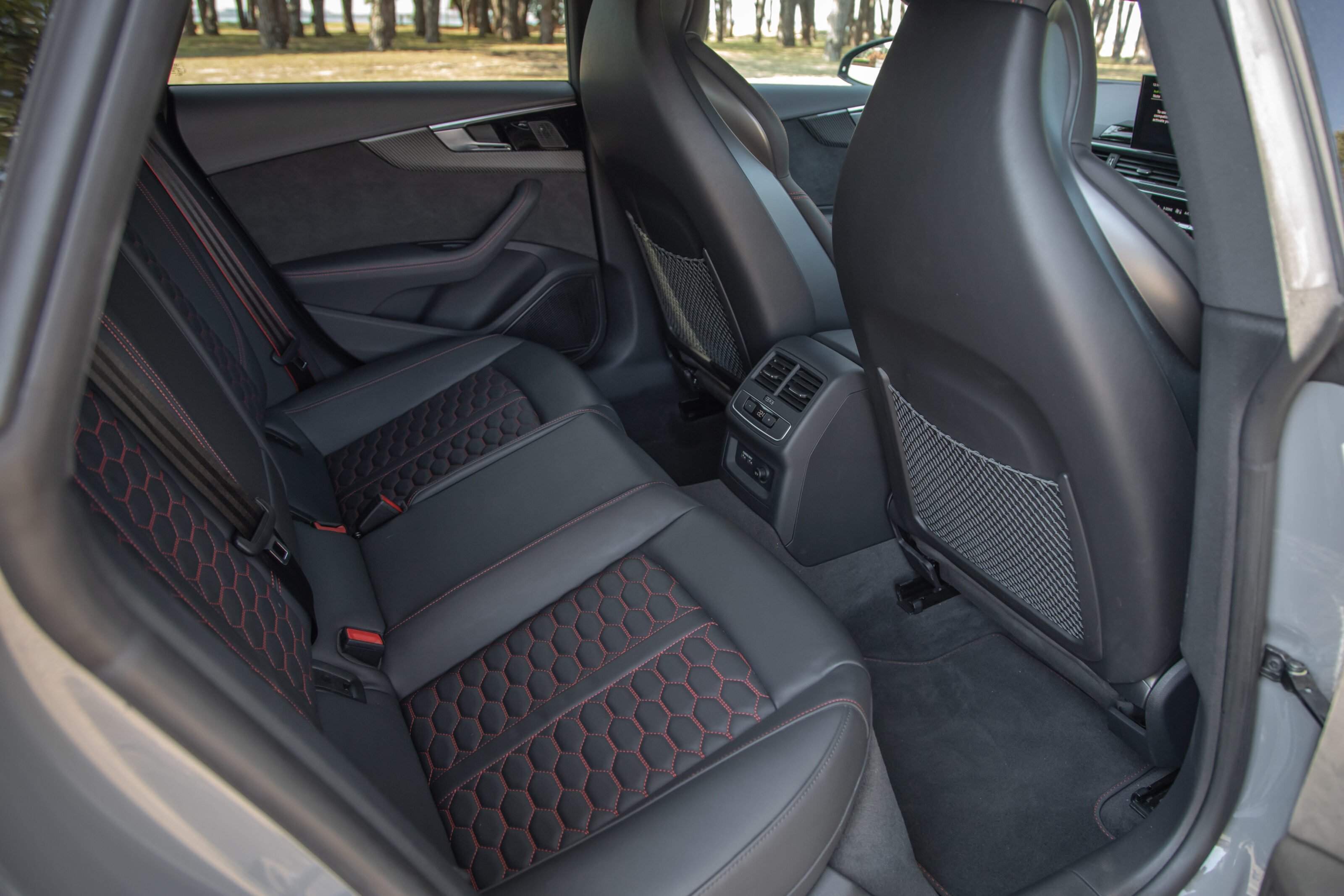
The rear seats are very comfortable but a little more claustrophobic than the Avant’s wider open space. The diving roofline means less light gets in (unless you open the headroom-robbing panoramic sunroof blind), so it’s definitely cosy but with an okay view out of the shallow glass line. It reminds me a bit of the rear of the Aston Martin Rapide, actually, which I’m sure is an entirely relatable thing to say.
The centre armrest should really be fixed in place because unless you’re very short and don’t mind crossing legs with both outboard occupants, there’s not a lot of space here. And there’s a transmission tunnel to take yet more space, but at least you have your own set of climate controls. So as I said, space for four, as five is really a pinch.
Boot space in the RS5 starts at 465 litres, just 15 down on the non-existent RS4 sedan and only 40 fewer than the Avant, it’s all just a different shape. I mean, the dog will have far less fun in the RS5’s boot than the RS4 Avant’s, but then again, does the dog really want to see how quickly you’re entering that corner?
On the road
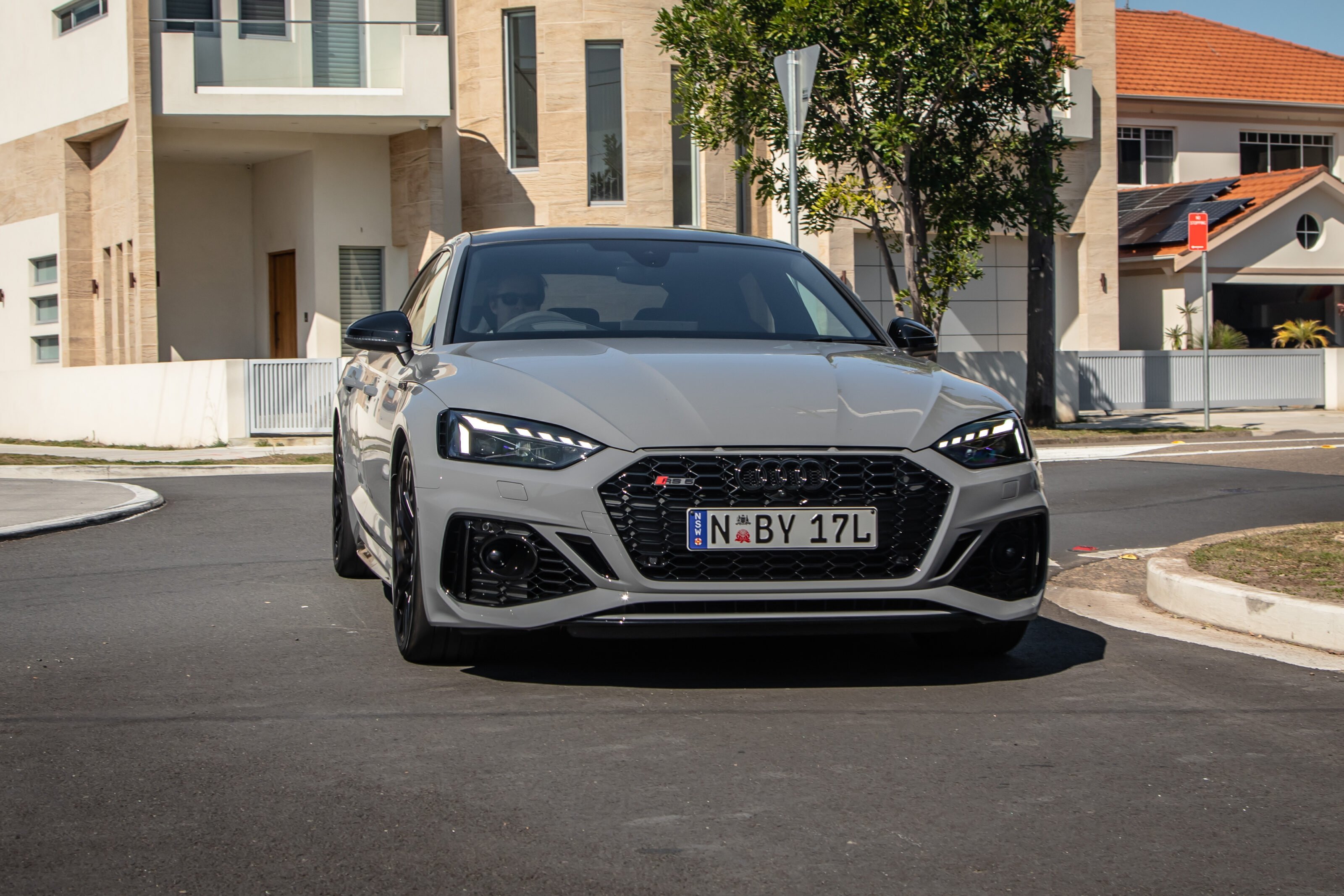
Audi’s curious policy of maintaining two separate and very different twin-turbo V6s continues to baffle me, but who cares because the 2.9-litre is a whistling, chuffing and popping delight. Delivering 331kW between 5700rpm and 6700rpm and a monster 600Nm from 1900rpm to 5000rpm, to say it’s got a bit of mid-range is an understatement.
It’s so fast both off the line with its sub-four second run to the ton but all that torque available for so much of the rev range, you’re in a position to move extremely quickly with just a flex of the ankle. And it’s so smooth while it’s doing it that it’s almost necessary for the exhaust to go bang to provide the drama.
The official fuel economy figure is 9.4L/100km and it’s unlikely you’ll get anywhere near it, with my week or so sending fuel through the lines at a rate of 12.8L/100km, including my wife’s calming influence both when with me and when she was driving.
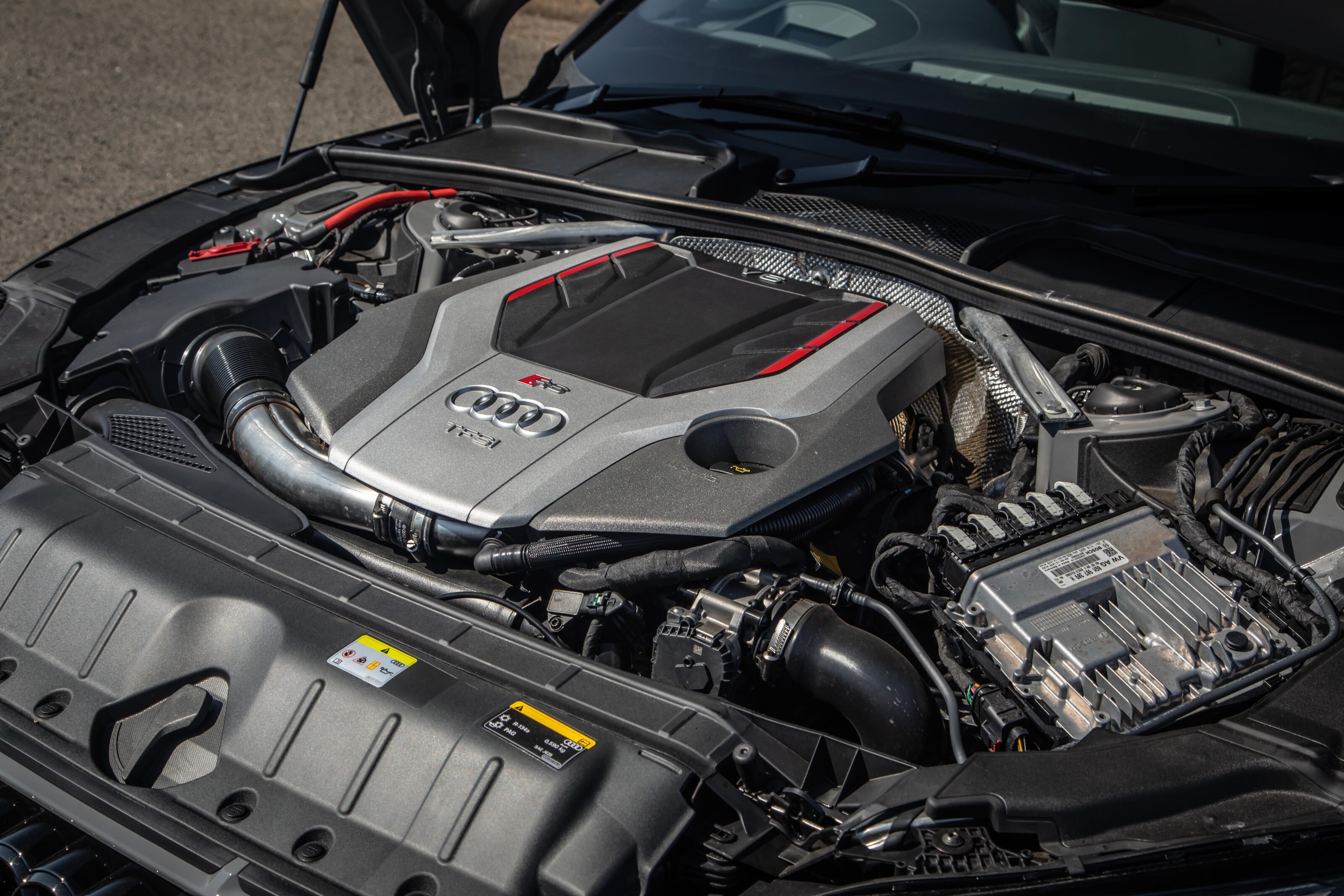
An eight-speed ZF automatic does the shifting and it’s now de rigeur for most fast premium stuff (AMG has its own wacky nine-speed multi-clutch unit). Here in the Audi, it seems a bit crisper in the more enthusiastic modes than it does in the BMW, which is interesting. It’s soft and pliable in normal modes and sharp and responsive when you’re up for a fight.
The all-wheel-drive system is unique in this class in October 2021, at least until the M car arrives with a similar arrangement. Unlike the forthcoming M, you can’t switch off the front wheels, which is a shame but the rear-biased Quattro system isn’t the Haldex you’ll find the usual internet bores trashing when this car comes up. In RS mode, the system can send up to 85 per cent of the power to the rear wheels, so that’s not messing about.
The RS5 also has a proper limited-slip diff between the rear wheels for the inevitable shenanigans should you wish to try this car out on a track, which I cannot recommend enough having done so before our world closed in around us. Obviously, it’s not just useful on the track, but handy to know it’s there.
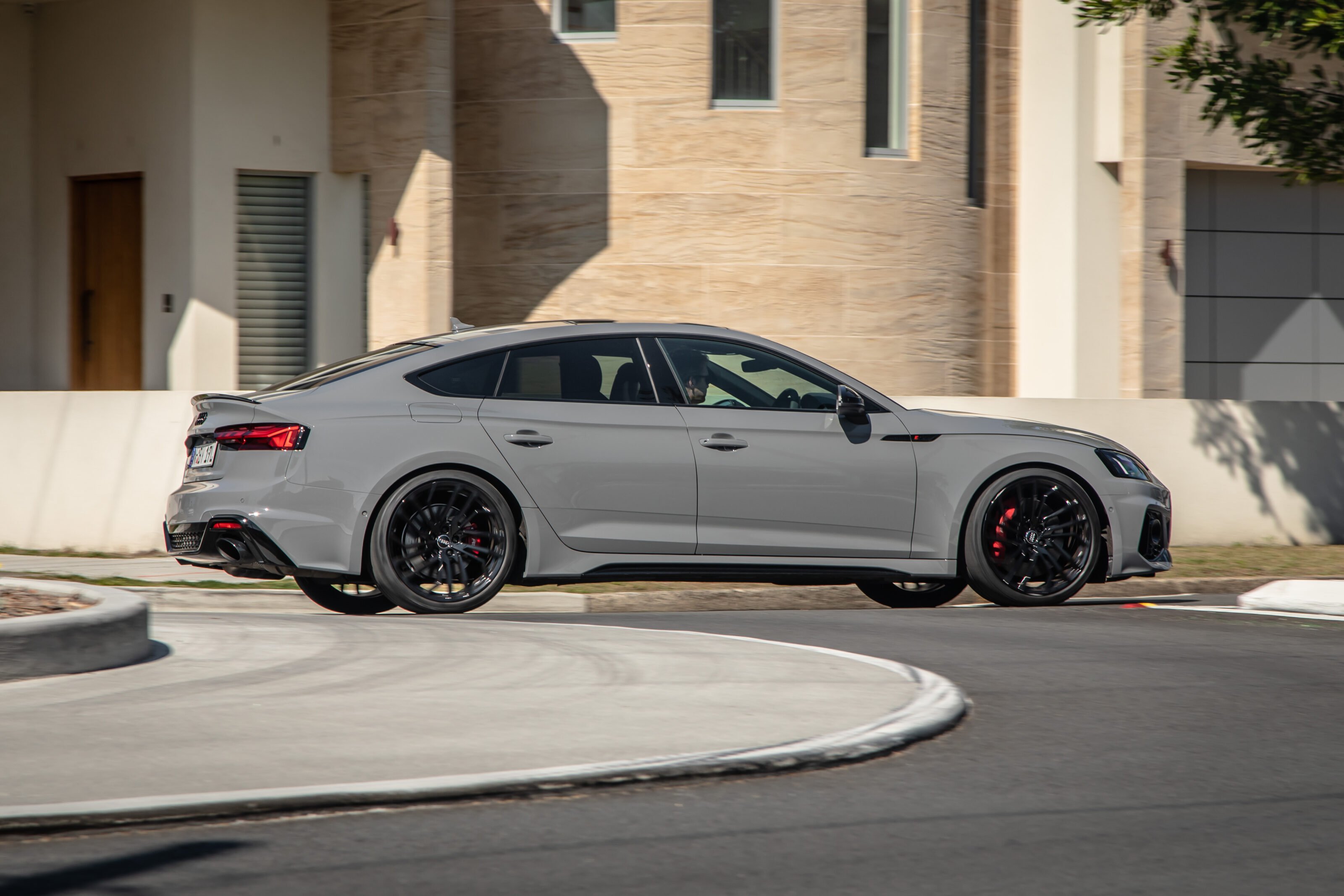
This car had the optional-but-should-be-standard dynamic damping. In Comfort mode, it’s extremely manageable on a day-to-day suburban drone, something I did a lot of given the rules in a local government area of concern in Sydney. It coped perfectly well with the combination of poorly-maintained Sydney suburban roads, 80km/h and higher runs and everything in between. In its hardest mode, usually self-selected when you press the RS button (like BMW and Mercedes, the two RS modes are configurable), it’s very hard but on a smooth road, effortlessly grippy and fast.
Turn-in is impressive, helped by the rear diff and the very sticky tyres, which on this car were from Continental (Audis come with whatever is on the shelf on the day at the factory, but none of them are bad). The trade-off for the big rubber is of course thundering tyre noise across coarse surfaces. Audi’s efforts to dampen the racket are valiant if not entirely successful, so you will have to raise your voice on the garbage surfaces that abound in Australia.
It’s so fast off the line and all that torque is available for so much of the rev range that you’re in a position to move extremely quickly with just a flex of the ankle.
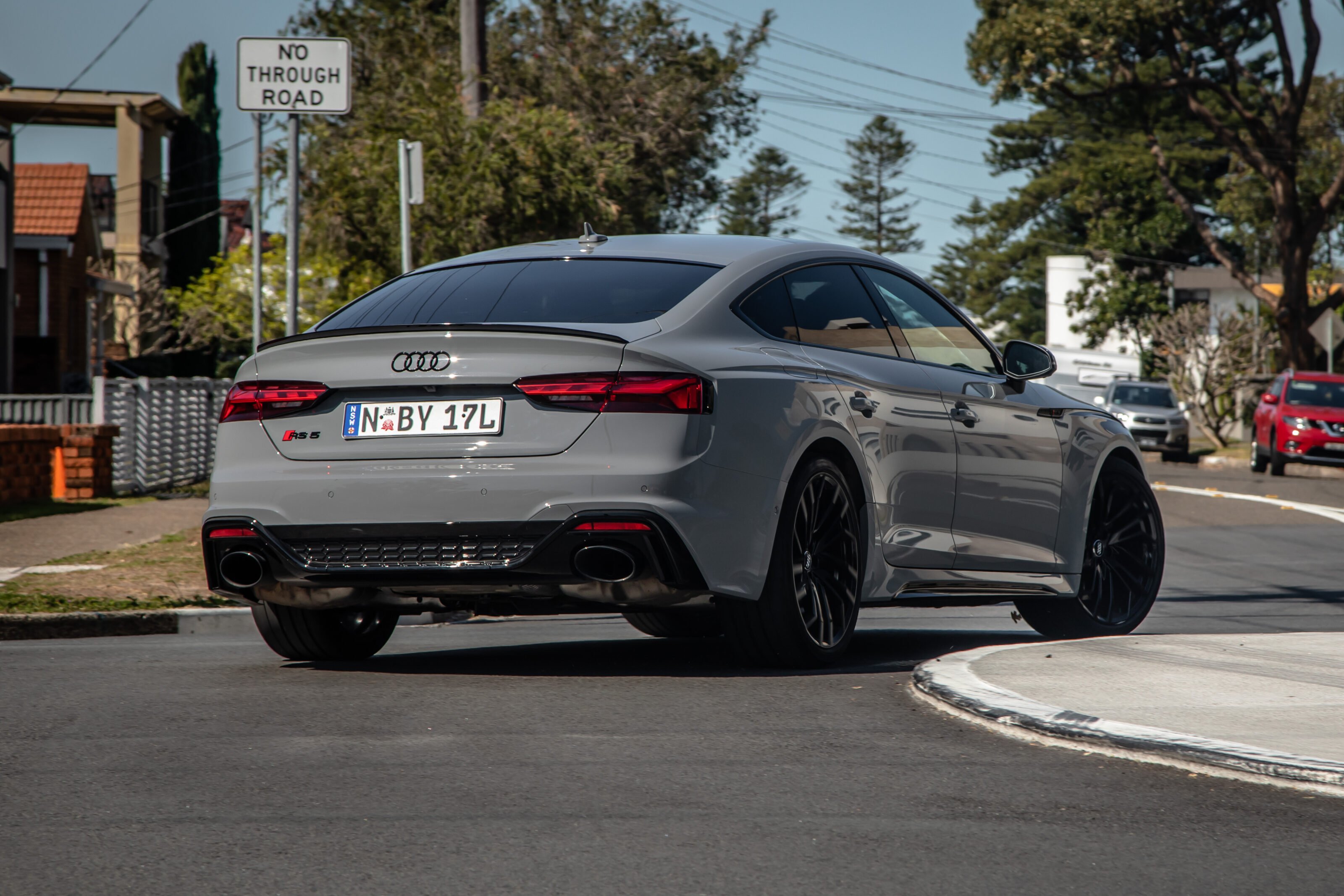
It’s that engine, though, which really impresses. While I recently drove – and praised – the S4 sedan for being a lovely all-rounder, the RS5 will blow it into the weeds, which is quite an achievement. Everything is turned up past 11, making it probably one of only two noisy Audis left, the other being the V10-powered R8. Regulations have toned down the bonkers RS6/RS7 V8 and the newer fives in the RSQ3 and, one assumes, the RS3 will also be quieter.
The colossal brakes match the engine power and they never feel like they’re even considering fading. Quite why you’d need the carbon-ceramics – apart from the lack of brake dust – is beyond me, in normal use at least. What’s more impressive is that this is not a light car. The wrong side of 1700kg means there’s a lot of energy to deal with when you hit the brakes, and they do a tremendous job. And that weight also means that an RS5 without the dynamic damping is a car that feels heavier.
Putting it all together, the RS5 is a car with a deep well of performance as well as an inherently secure vibe on the road. Flooring it even in the wet gets you just a flicker of traction control as the Quattro sorts itself out and sends you towards the next set of lights with an exuberant bang on the very firm upshift. The seats ensure that cornering won’t dump you into the door, but make very sure you fit before you buy this car because while they look great, they might be a bit narrow for wider folks.
Ownership
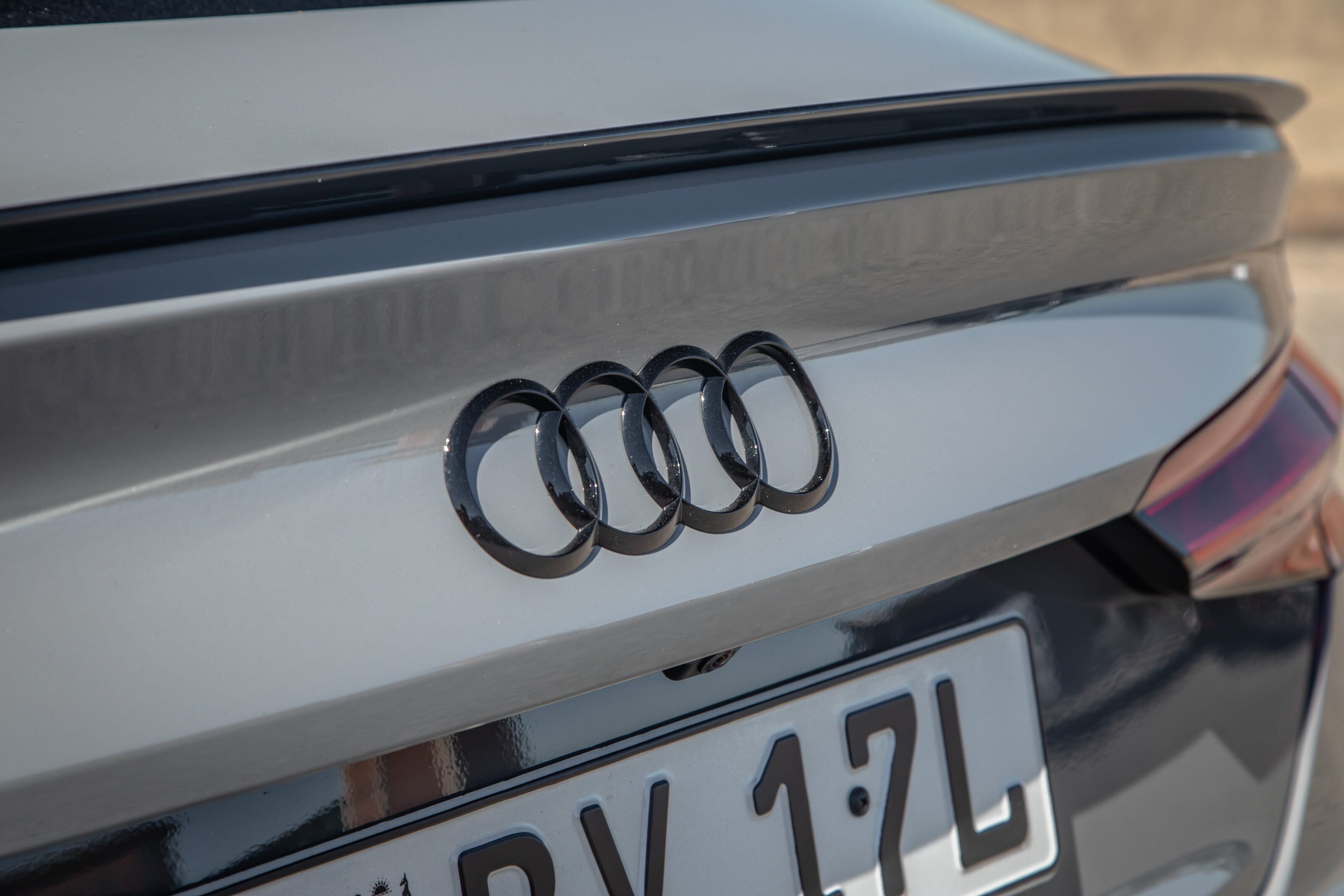
Audi’s adherence to the three year/unlimited-kilometre warranty package remains perplexing and annoying and yes, I know its Southern German counterpart is behaving in an equally baffling manner when it comes to longer coverage.
Cheeringly, a five-year service plan is available for a startlingly reasonable $3240, meaning over five visits (due every 12 months/15,000km), you’ll be paying an average of $648 per service. Some Korean cars cost nearly this much, so it’s not terribly expensive.
Verdict
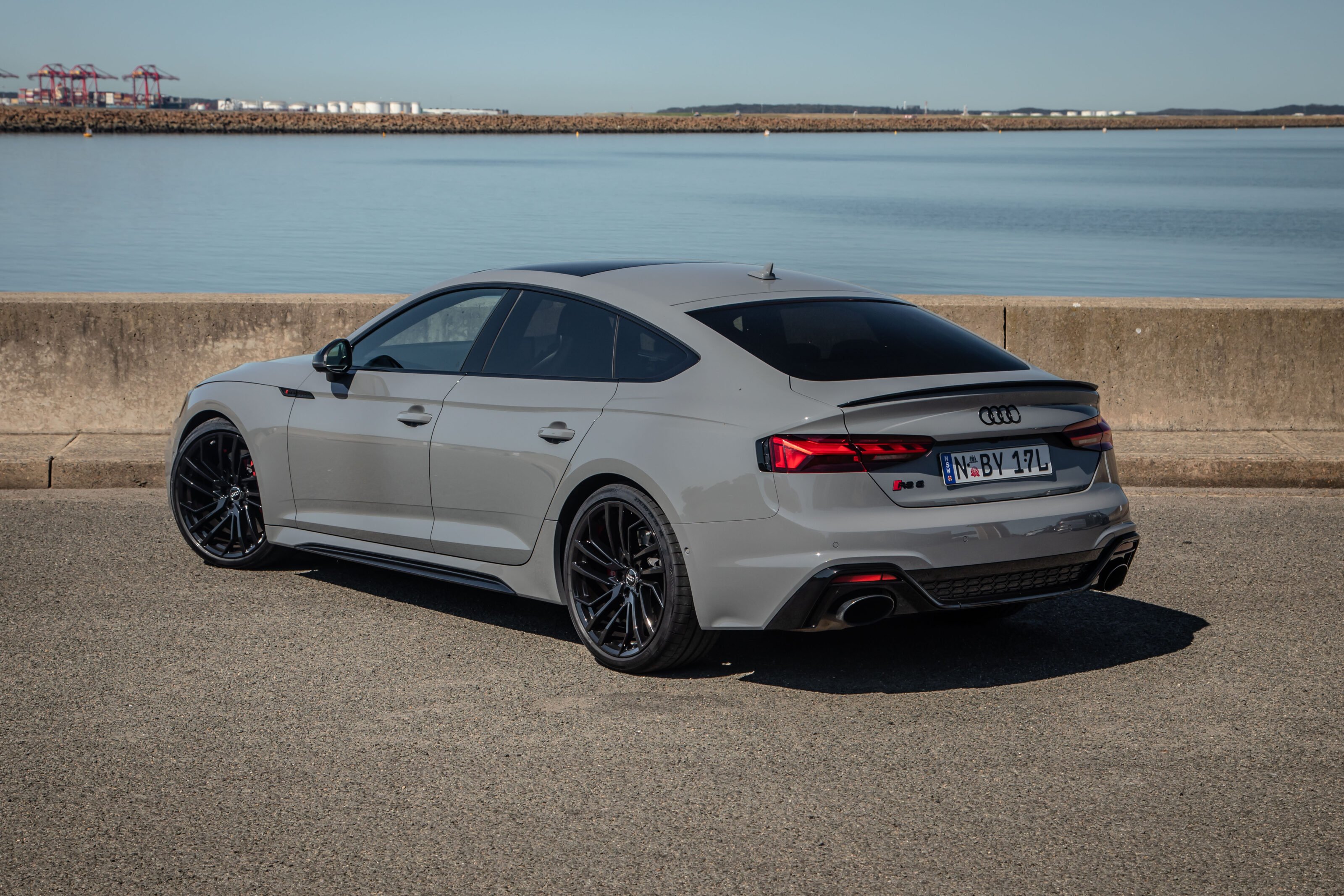
While the RS5 doesn’t have the charisma of the BMW M3’s lively chassis, it’s infinitely prettier in this Sportback bodyshell. This is a properly cool car and you will always love looking at it. It’s also less shouty than the AMG C63 which, while a lot of fun and probably a scooch quicker to 100km/h, is harder (even since the suspension was tweaked) and more aggressive. Then there’s the flawed genius of the Alfa Giulia QV to contend with. So it’s not like the RS5 isn’t up against some quality competition.
The RS5 sits in the overlap of the Venn diagram of the other three cars. It doesn’t have the big personalities of the Alfa and the AMG, it doesn’t have the colossal and sometimes terrifying performance of the rear-drive BMW. But it does take the good bits of each of them and adds Audi Sport’s Quattro expertise to stand apart from the crowd. It’s almost impossible to split them, so it comes down to looks and what you want from a sporting sedan. The Audi sure hits a lot of my KPIs.
Fast food chain Hungry Jack’s has partnered with Evie Networks to begin offering electric vehicle (EV) charging stations at its restaurants.
The first fast-charger was launched at Hungry Jack’s Cabramatta in Sydney’s south west, with funding coming from the Australian Renewable Energy Agency’s (ARENA) Future Fuels Fund.
“This partnership will help grow the national footprint of electric vehicle charging infrastructure, providing greater accessibility for the increasing number of electric vehicle drivers, who can now conveniently charge their car while ordering a Hungry Jack’s meal,” Hungry Jack’s CEO Chris Green said at the unveiling.
Evie CEO Chris Mills says the partnership allows drivers to use charging points 24 hours a day, seven days a week, with access to food, drink, and amenities – helping both the car and driver to fill up.
“Our focus is to bring fast charging to where drivers work, shop and play,” Mills said.
“Gone are the days where we drive to fuel stations; instead, drivers can charge while they grab a bite to eat.”
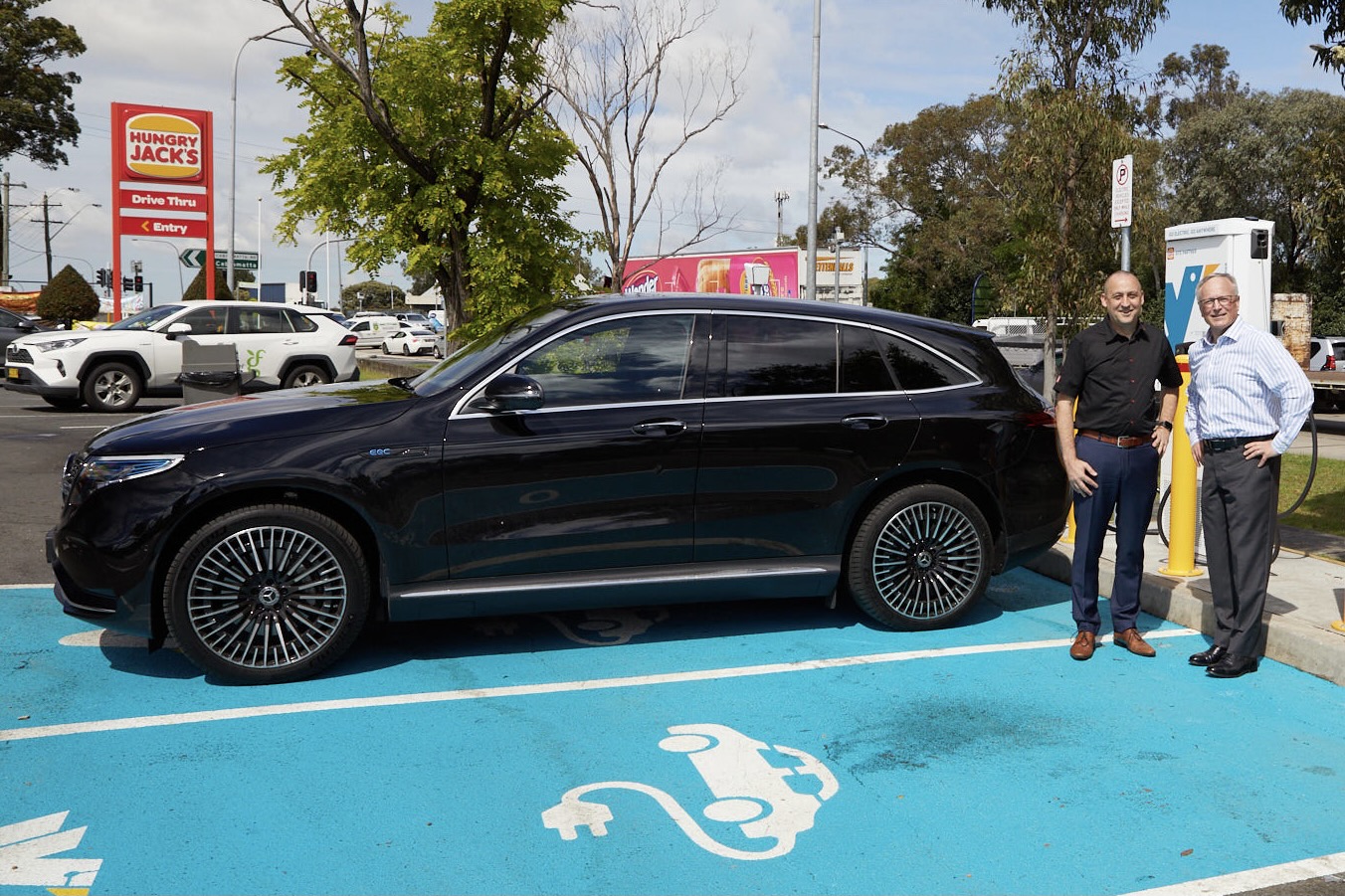
ARENA has committed to funding 158 public fast-charging stations through Evie, at a cost $8.85 million – with the EV charging network company owned by billionaire Trevor St Baker’s Energy Innovation Fund, which invests in sustainable businesses.
“If the demand is there, we will look at other Hungry Jack’s sites for Evie Networks chargers,” Green said.
If the idea gains traction, it means EV owners may only need to search for an HJ’s wherever they are in Australia, rather than relying on EV charging maps.
Key Points
- BMW boss outlines plans to tackle emissions
- First time speaking at UN climate summit
- Carmakers use EV Rally Scotland to showcase models’ capability
The chairman of BMW Group’s board of management has given a keynote speech setting out the car industry’s priorities at the UN’s climate summit in Glasgow.
For the first time, Oliver Zipse addressed the three-day COP26 event to outline how his company plans to tackle the fight against climate change.
“The key to sustainability lies in innovation: in innovative technologies, but also in innovative thinking that accepts no boundaries,” he said.
“Most importantly, together we must choose and follow a binding path with clear goals. Always according to the motto: No more waiting. No more clever tactics. It’s time to act – now.”
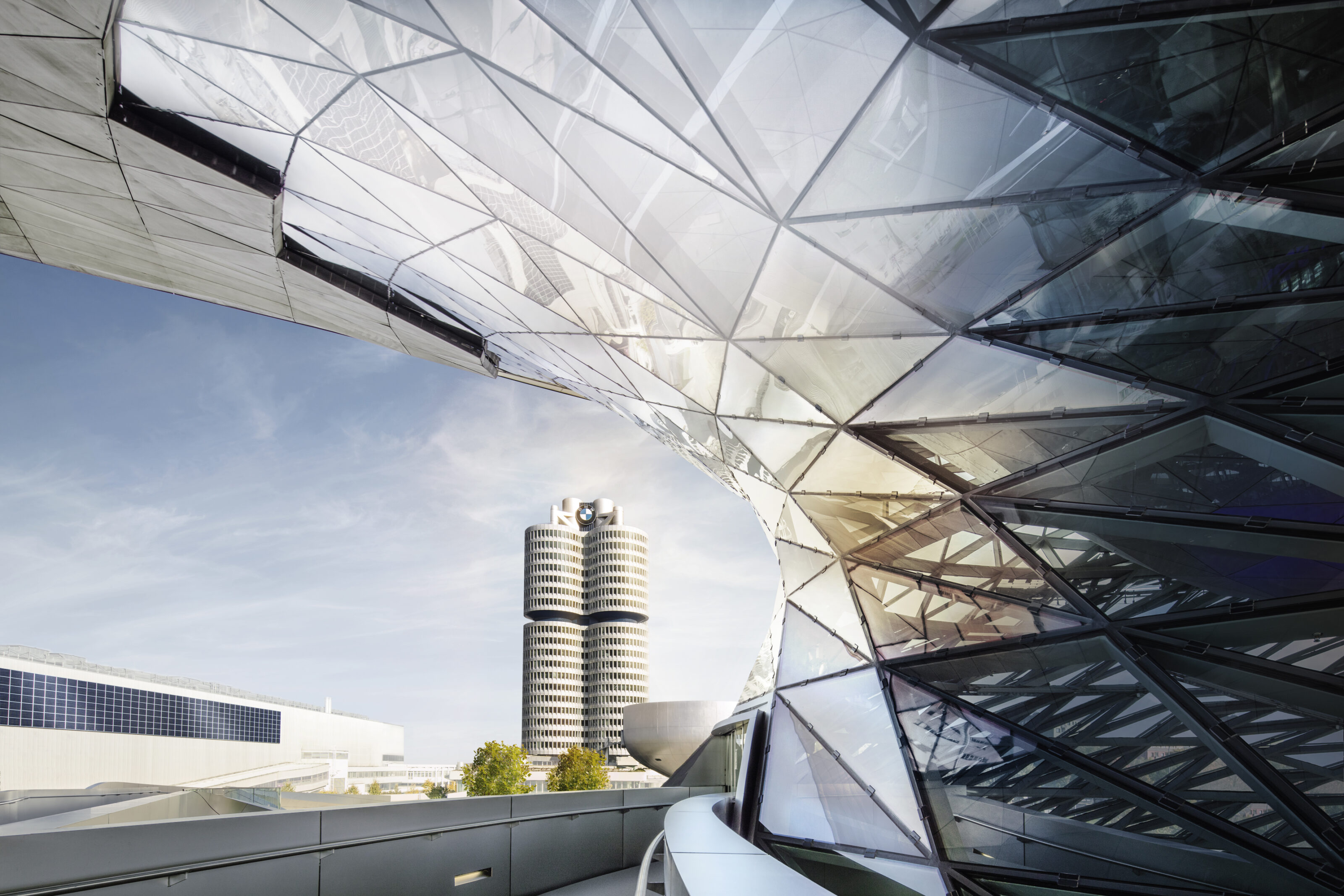
The BMW Group has attended every UN climate summit since 2008. At this year’s COP 26, hosted by the UK, the company is showing off the BMW i Vision Circular, which is produced from 100 per cent secondary materials.
By 2030, BMW plans to reduce CO2 emissions from its vehicles by at least 40 per cent – starting with the raw material, through the supply chain, production and the use phase, all the way to recycling. The firm also says it is committing to a goal of total climate neutrality by 2050.
The BMW Group released the first electric car produced in Germany on a large scale, the BMW i3, back in 2013, and by 2030 more than 50 per cent of its annual vehicle sales will be fully electric.
Sub brands Rolls-Royce and Mini will also be exclusively all-electric from the early 2030s onwards, with the latter announcing yesterday that the successor to the current Mini Countryman will be sold as an electric vehicle – though combustion engines will still be offered in the range.
“Ramping up electromobility is the single most important factor on the road to climate-neutral mobility. But even in industrialised countries, there is still one major obstacle: the lack of infrastructure,” Zipse added.
Alongside the summit, carmakers including Stellantis brands Peugeot, Citroen, DS, Fiat and Vauxhall, as well as Korean firm Kia, are taking part in the ‘EV Rally of Scotland’ – a five-day, 1,234-mile (1985-kilometre) race to showcase the capabilities of electric vehicles.
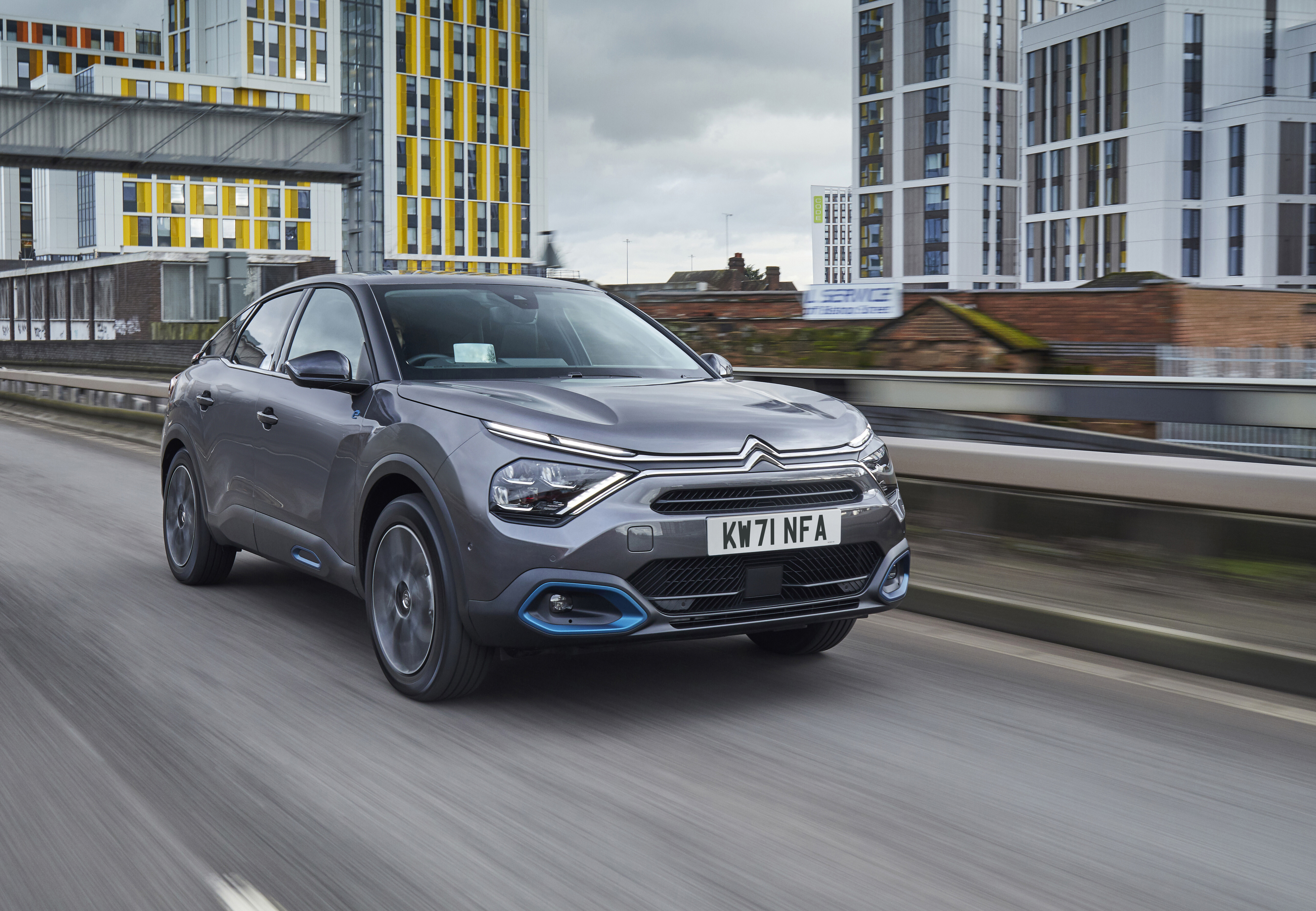
On show for Stellantis are the Peugeot e-208, Citroën ë-C4, Vauxhall Mokka-e, Fiat 500 and DS 3 Crossback e-Tense, while Kia is taking its EV6 and e-Niro to the Scottish roads.
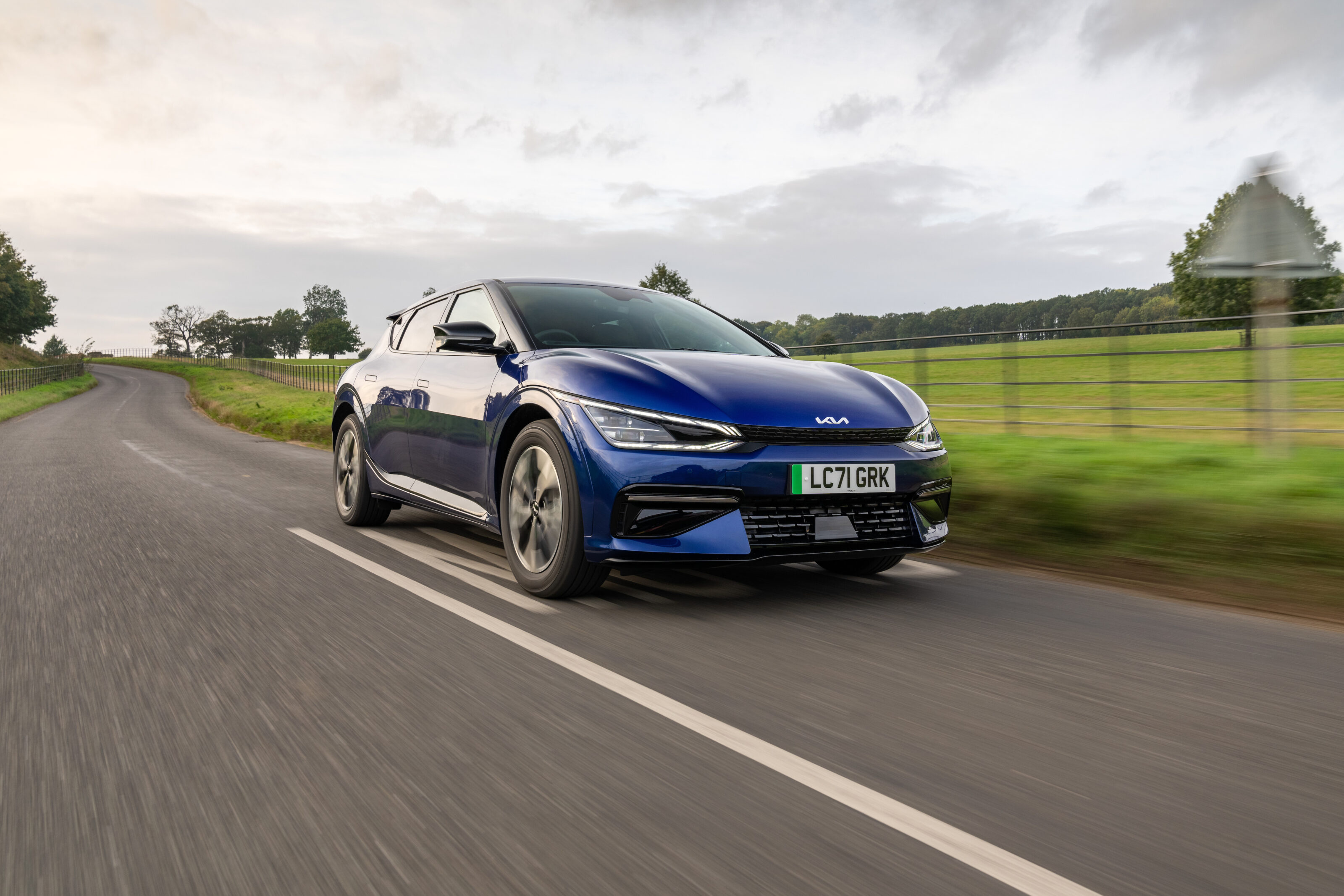
Stellantis plans to have low emissions vehicles account for 70 per cent of total sales in Europe by 2030. From 2028, Vauxhall will only sell full-electric vehicles, whilst from 2025, DS will only sell full-electric and plug-in hybrids, with both brands being several years ahead of the UK Government’s ban on the sale of new petrol and diesel cars and vans.
Kia’s EV6 is the first of 11 EVs due to make up the brand’s global electrified line-up by 2026.
Meanwhile, local firm H2X has shared its own breakthroughs at the conference, showcasing its hydrogen fuel-cell technology and powertrains for vehicles and machinery.
This tech will be used in its Warrego Ute, a fuel-cell electric utility vehicle, alongside a range of other heavy-platform vehicles – all of which are set to be manufactured in Gippsland, Victoria.
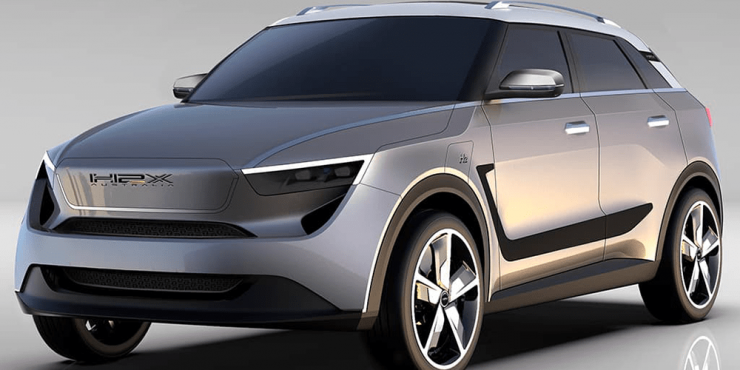
The company’s hydrogen fuel-cell hybrid technology is designed to drastically reduce refuelling time and increase driving range and hydrogen efficiency. Its modular platform allows the hybrid energy system and fuel-cell to be customised to maximise efficiency and performance according to the user.
“The global hydrogen market is accelerating with governments around the world committing billions of dollars in incentives to accelerate the transition to renewable energy and meet their net zero emissions targets,” chief executive Brendan Norman said.
“Hydrogen fuel-cells have become a key focus for many given the technology advancements that have enabled hydrogen FCEVs to refuel more quickly and travel longer distances.
H2X recently reached an agreement with the Gippsland Circular Economy Precinct to manufacture hydrogen fuel-cells, electrolysers, hydrogen fuel-cell powered vehicles, and a range of hydrogen power units, including generators and emergency power supplies, in the region.
Jaguar has announced the 2022 F-Type range – revealing the supercharged 5.0-litre V8 set to exclusively power the model will again do so through the rear wheels.
Dropping the four-cylinder and six-cylinder F-Type to rationalise the range has reduced the variants from six to three: a base F-Type R-Dynamic P450 coupe and drop-top and a halo F-Type R coupe.
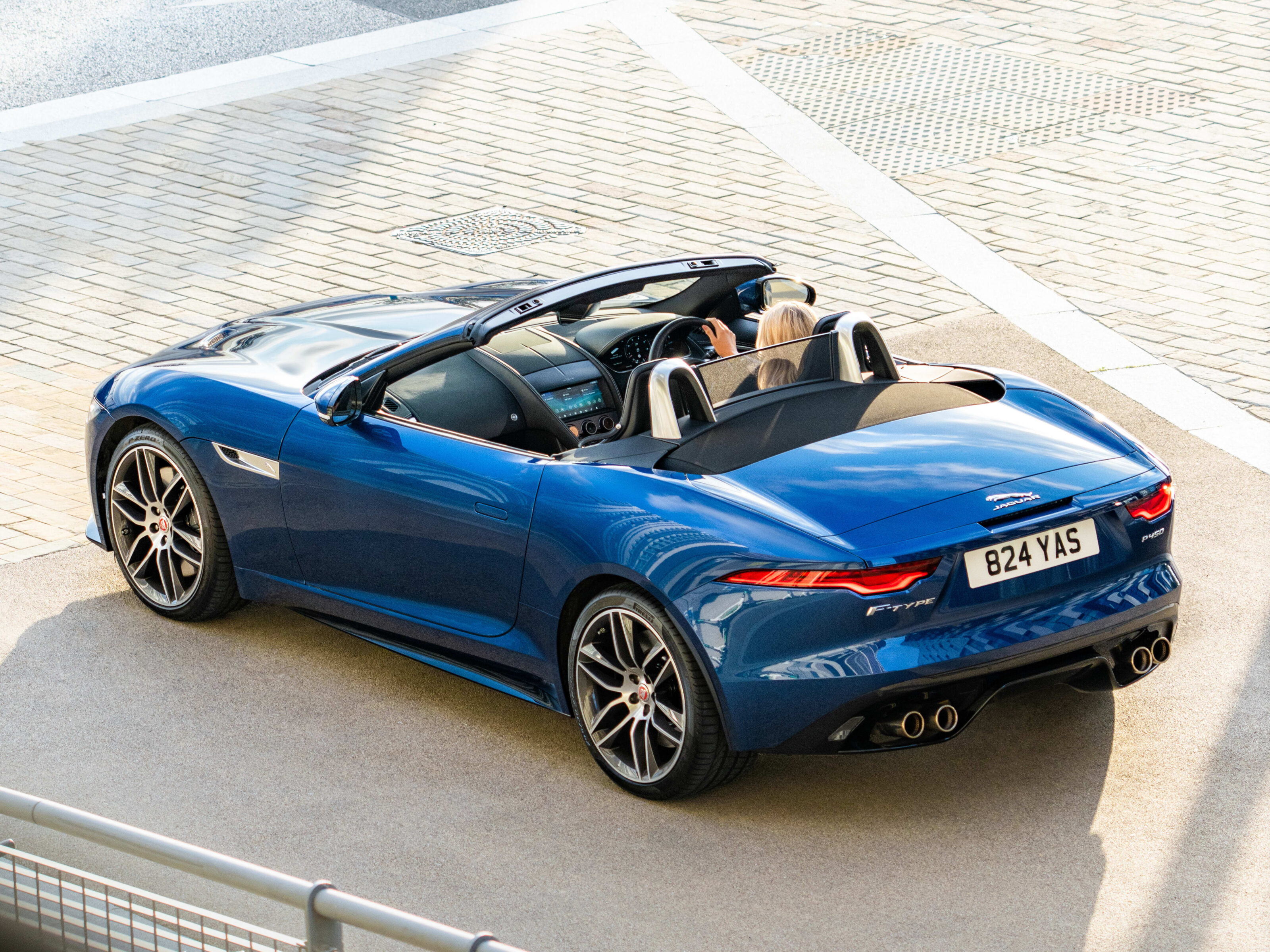
But the R-Dynamic also marries its new V8 with rear-wheel drive, reviving a powertrain layout Jaguar dropped from our shores in 2017. Each comes with an eight-speed automatic transmission.
With 331kW and 580Nm, or 51kW/100Nm more than the outgoing V6 R-Dynamic, the new V8 car offers a relatively safe reintroduction to the concept of a V8 RWD F-Type.
After all, the old RWD F-Type R mustered 405kW/680Nm – perhaps to the delight of luxury car panel beaters everywhere.
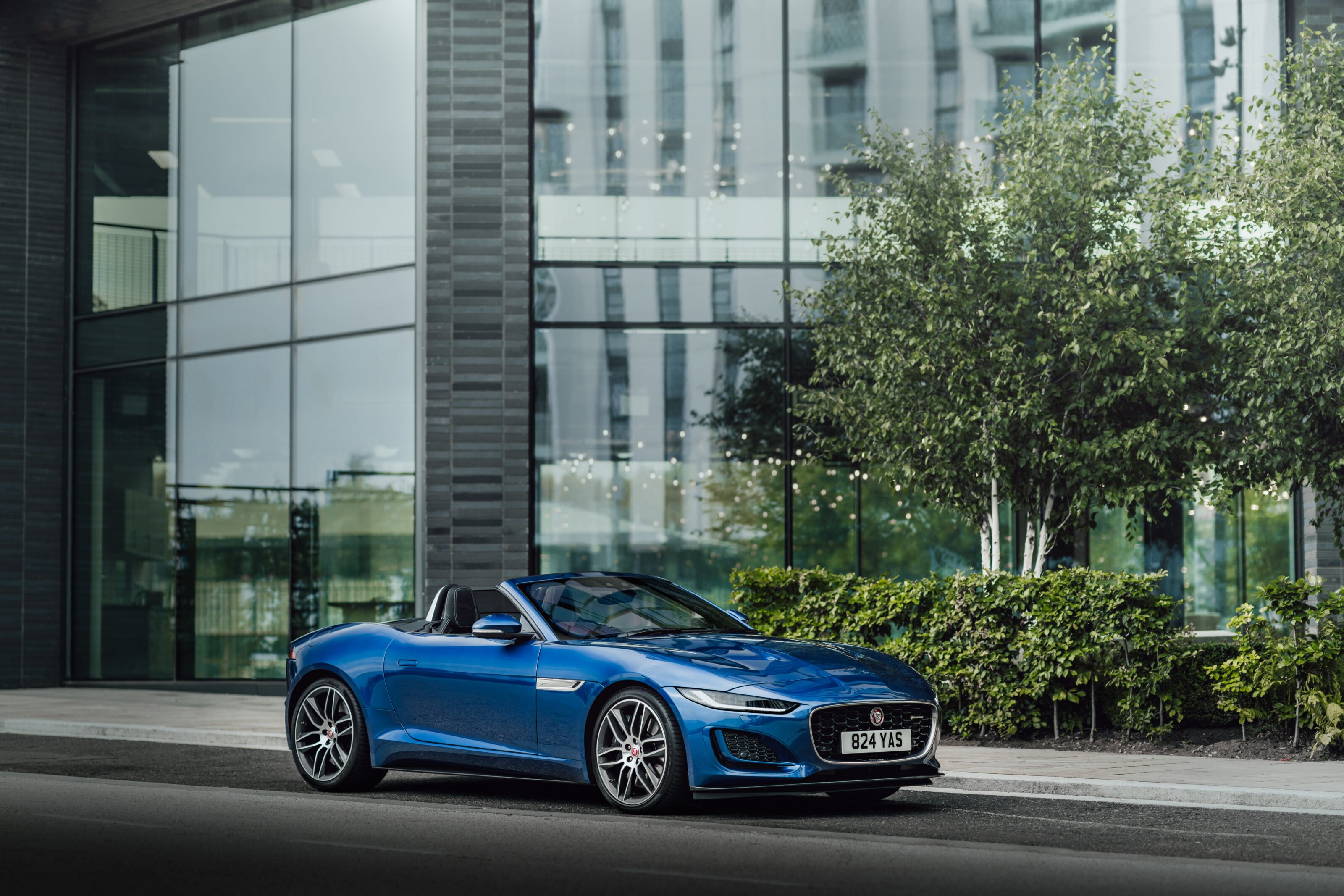
With no more $128K four-cylinder variant kicking off the range, the 2022 F-Type range now begins at $159,900 for the base R-Dynamic P450 V8. Add $5000 for a convertible.
Fortunately, the new P450 is more than $14,000 cheaper than the outgoing V6 version.
For all the P450’s extra power, though, it’s still claimed to reach 100km/h from rest in 4.6 seconds, matching the old V6 variant. Even with an electronically controlled rear differential.
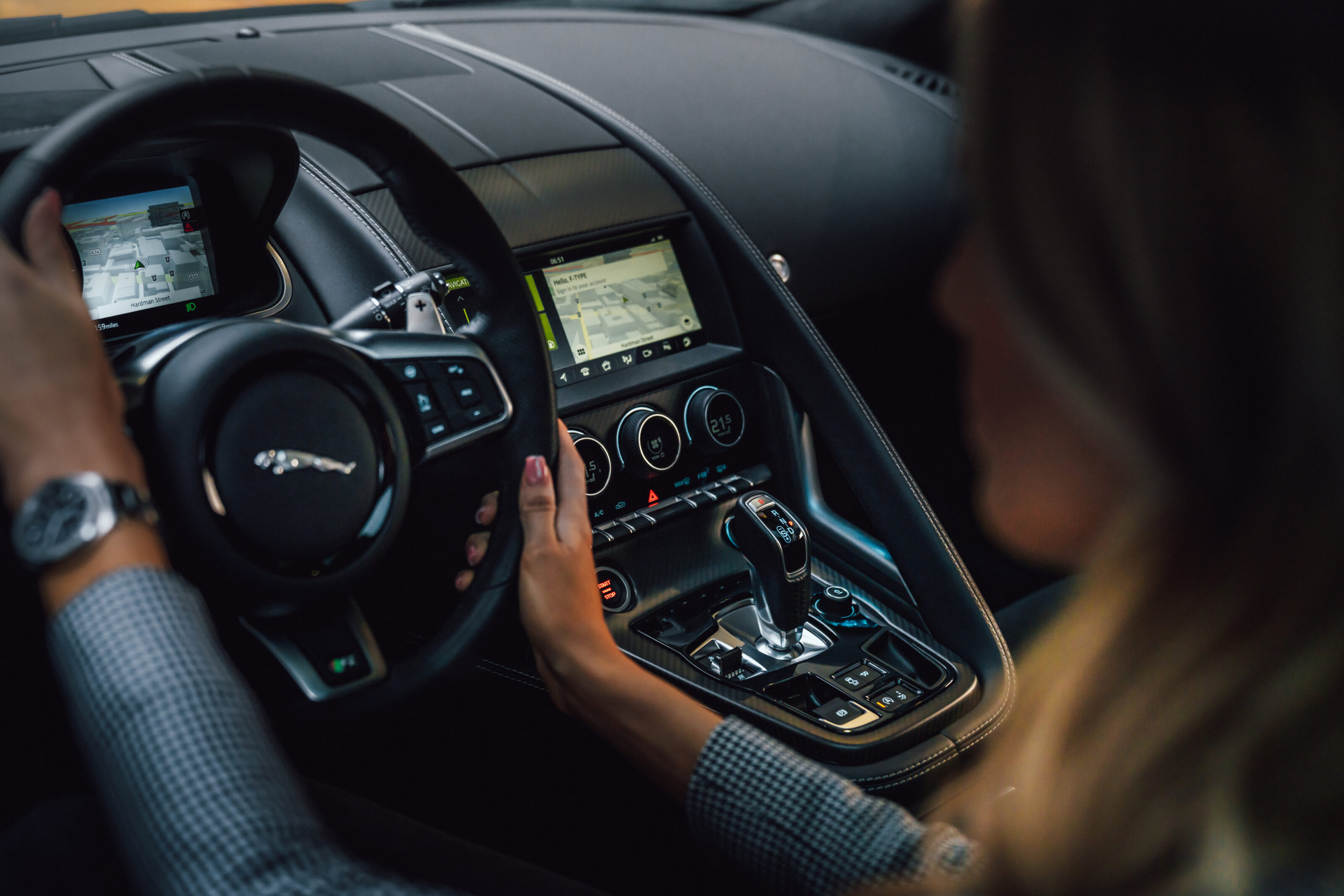
The 2022 F-Type’s equipment comprises a 12.3-inch digital cluster, 10.0-inch centre screen with Touch Pro software and navigation, a 10-speaker Meridian sound system with 380W and digital radio, smartphone mirroring and 20-inch wheels (up from 19-inch on V6 F-Types).
Stepping up to the F-Type R – available only in coupe form – bumps power up to 423kW/700Nm, the same as it has now, equalling a 0-100km/h sprint in 3.7 seconds thanks to all-wheel drive, which it gained post-2017.
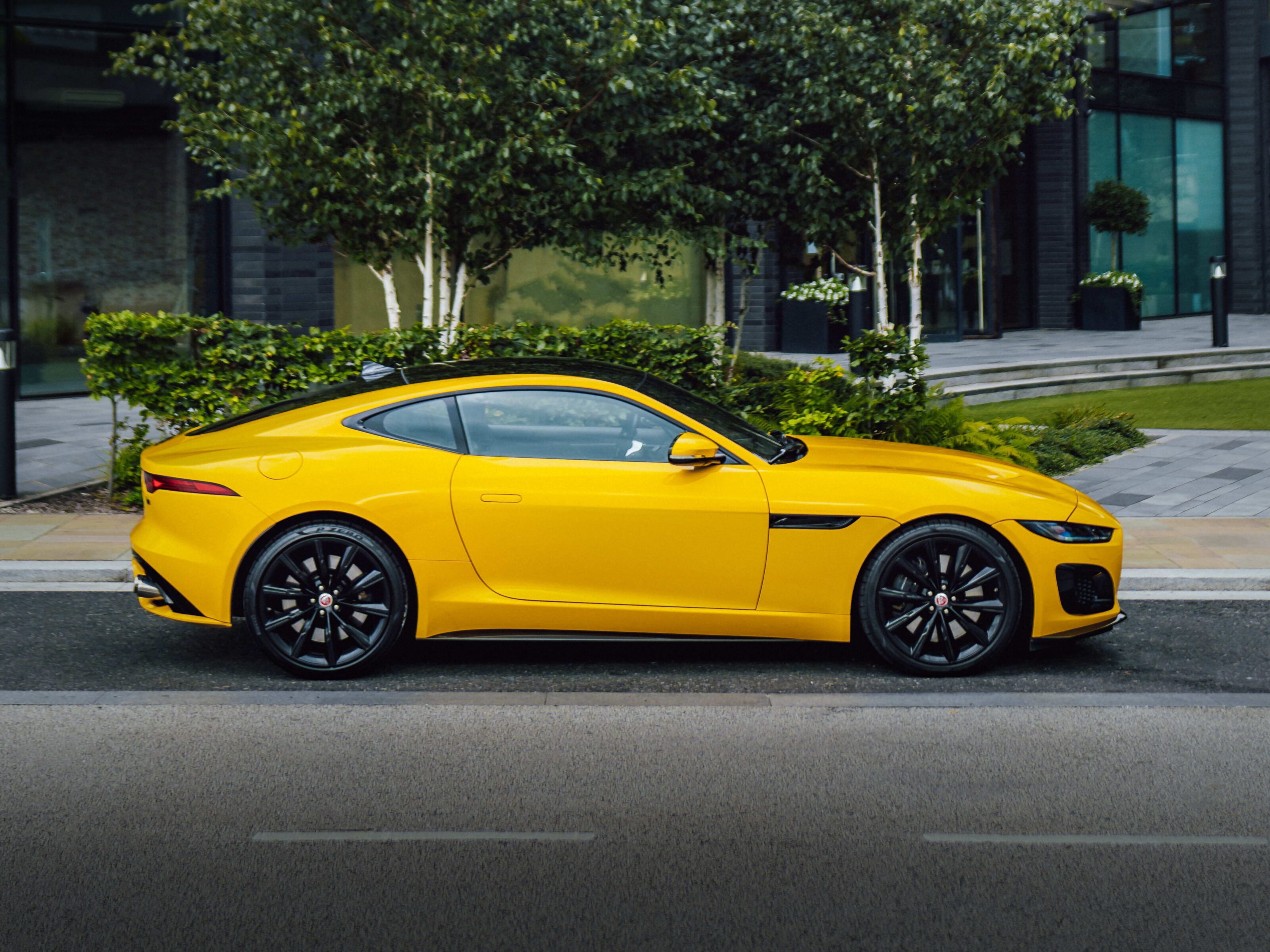
Pricing on the 2022 F-Type R remains unchanged at $264,965, but it’s been upgraded with metallic paint as standard, as well as a fixed panoramic sunroof, black exterior design pack, alloy shift paddles and blind-spot assist with tyre pressure monitoring.
Orders on the new F-Type range are now open, with Jaguar saying deliveries are expected this December.
2022 Jaguar F-Type pricing for Australia
Pricing excludes on-road costs, deliveries expected from December 2021
| F-Type R-Dynamic P450 Coupu00e9 | $159,900 |
| F-Type R-Dynamic P450 Convertible | $164,900 |
| F-Type R Coupu00e9 | $264,966 |
Key Points
- Platinum Edition trim to be applied to Panamera, 4 and 4 E-Hybrid
- Unique exterior design package highlights Platinum upgrades
- Prices to start from $205,400 before on-road costs
The Porsche Panamera will be available to order in a limited-run trim package for 2022, with the Platinum Edition being launched today.
Available on all three powertrains offered in the model’s range – Panamera, Panamera 4 and Panamera 4 E-Hybrid – the Platinum Edition package adds a host of exterior features to the four-door grand tourer, setting it apart from the base vehicle.
Standard equipment now includes Porsche’s Exclusive Design Sport 21-inch platinum wheels, black exhaust pipes, high-gloss black side window trims, Exclusive Design rear lights, platinum painted outlet trims and badges.
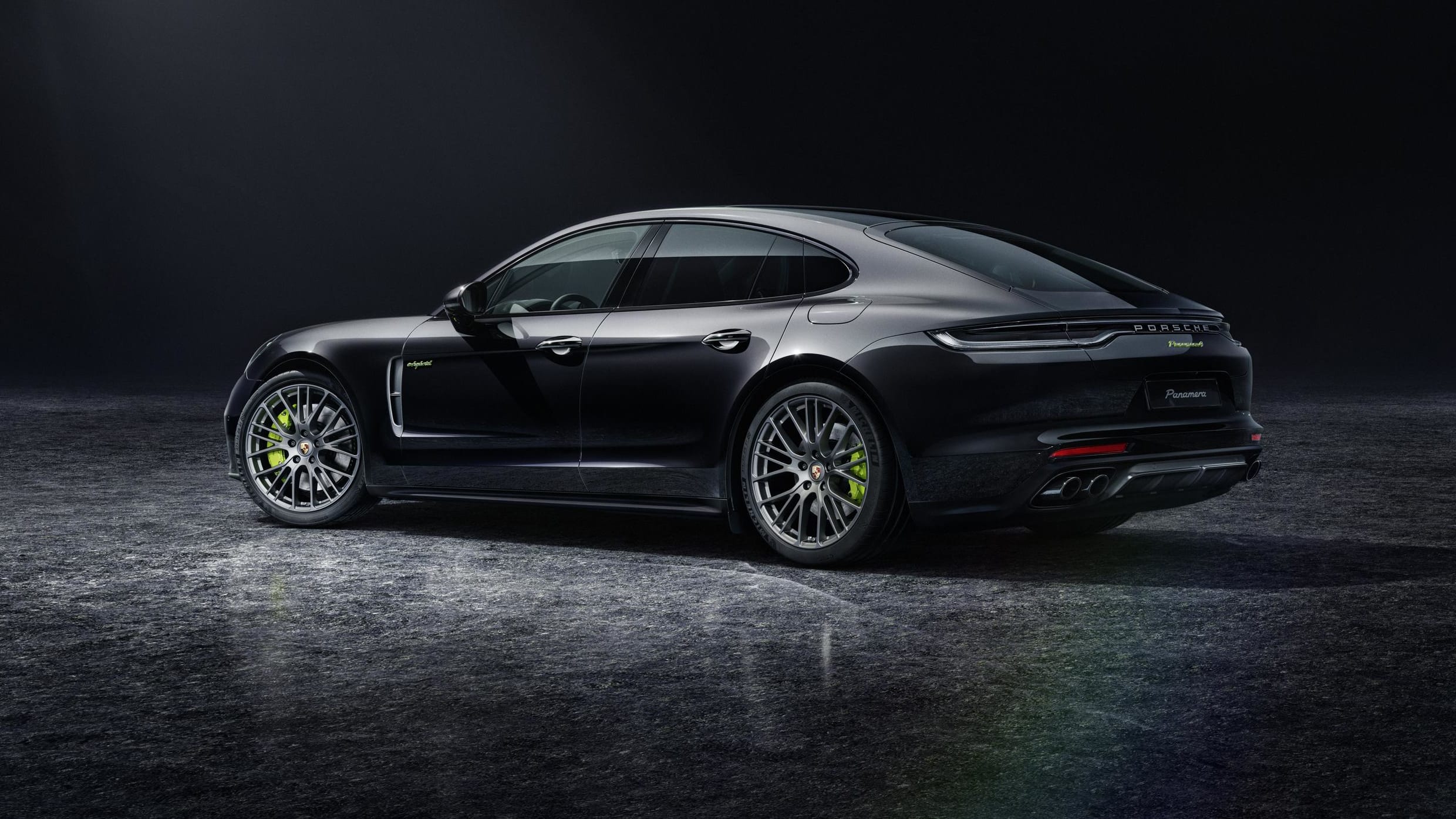
While Panamera E-Hybrid owners now score an on-board 7.2kW AC charger as standard, a downsize to 20-inch Panamera Style wheels in platinum is available as a cost option.
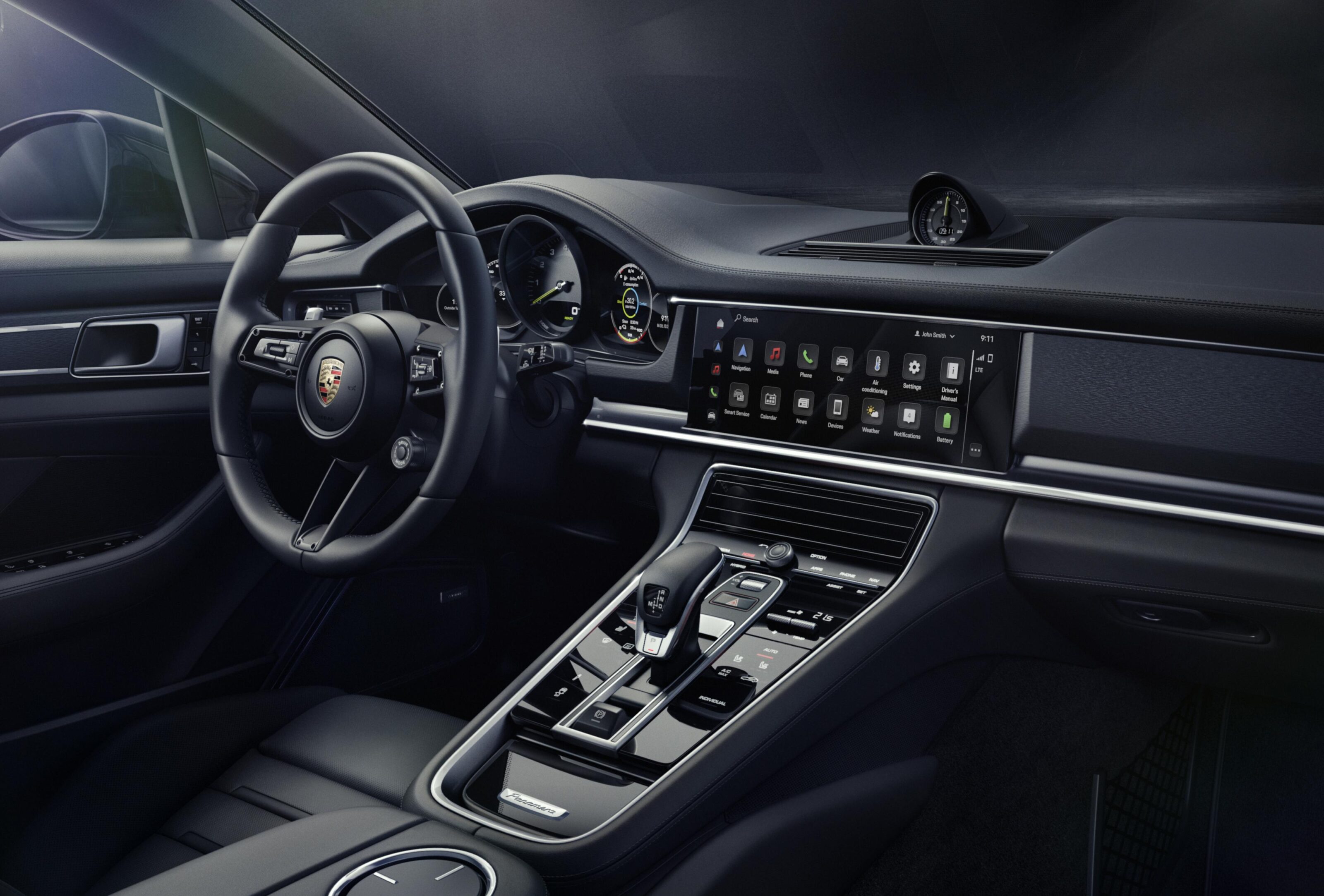
Inside the cabin, Platinum Edition Panameras are equipped with an analogue clock in the dashboard as standard – as well as receiving extra equipment such as; a GT sports steering wheel, heated rear seats, a brushed aluminium interior package in black and Porsche crests on the headrests.
There are no mechanical or performance changes for the Platinum Edition models, with all three powered by the same 2.9-litre, twin-turbocharged petrol V6 engine – which develops 243kW and 450Nm, although the E-Hybrid’s electric motor adds an extra 100kW and 250Nm.
Making its public debut at the Los Angeles Motor Show next week, Porsche expects local deliveries to begin from the second quarter of 2022.
2022 Porsche Panamera Australian pricing
Prices exclude on-road costs.
| Panamera RWD | $203,500 |
| Panamera Platinum Edition RWD | $205,400 |
| Panamera 4 | $213,700 |
| Panamera 4 Platinum Edition | $214,700 |
| Panamera Sport Turismo AWD | $221,000 |
| Panamera E-Hybrid | $249,500 |
| Panamera E-Hybrid Platinum Edition | $249,500 |
| Panamera Executive | $223,100 |
| Panamera Sport Turismo E-Hybrid | $256,800 |
| Panamera E-Hybrid Executive | $258,900 |
| Panamera 4S E-Hybrid | $294,600 |
| Panamera GTS | $312,900 |
| Panamera Sport Turismo GTS Sport | 320200 |
| Panamera Turbo S | $415,700 |
| Panamera Turbo S E-Hybrid | $426,500 |
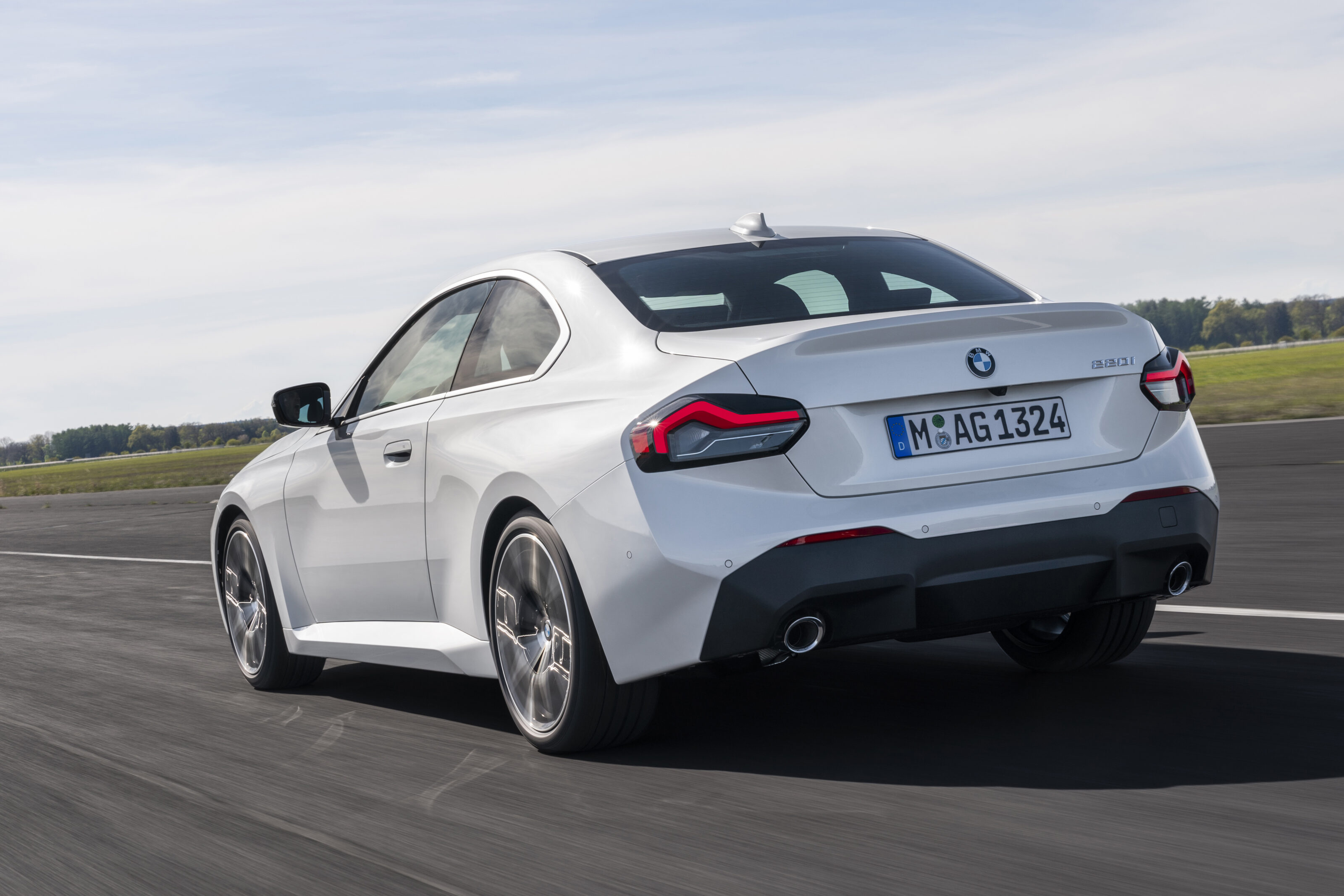
UPDATE, November 9: BMW Australia has confirmed a number of its models will not be available with a touchscreen and reversing assistance functionality.
The German marque said examples of its 2 Series Coupé, 3 Series Sedan and Touring, 4 Series Coupé, Gran Coupé and Convertible, Z4, X5, X6 and X7 entering production from this month will not be fitted with these features.
A spokesperson for the the company’s local arm told WhichCar BMW “has had to temporarily revise the specification of certain models in light of the global semiconductor shortage and has adjusted pricing accordingly”.
Australian buyers will receive a price reduction of $800 (including GST and LCT) to accommodate the changes.
“Our aim is to ensure supplies continue to reach our production plants. To this end, we are in constant exchange with our suppliers and communicate our realistic requirements in good time,” the BMW Australia spokesperson said in a statement.
The story to here
November 8: BMW has taken the drastic step of removing a number of key features from its models to ensure its production lines continue to operate.
The global semiconductor shortage has caused major disruptions for all car companies, with many being forced to either temporarily halt production or store incomplete cars until more chips arrive – though some, like BMW, have opted to remove items from its models.
BMW employee Jon Shafer posted details of the changes on internet forum Bimmerfest, which covers 3 Series, 4 Series, Z4, X5, X6, and X7 models.
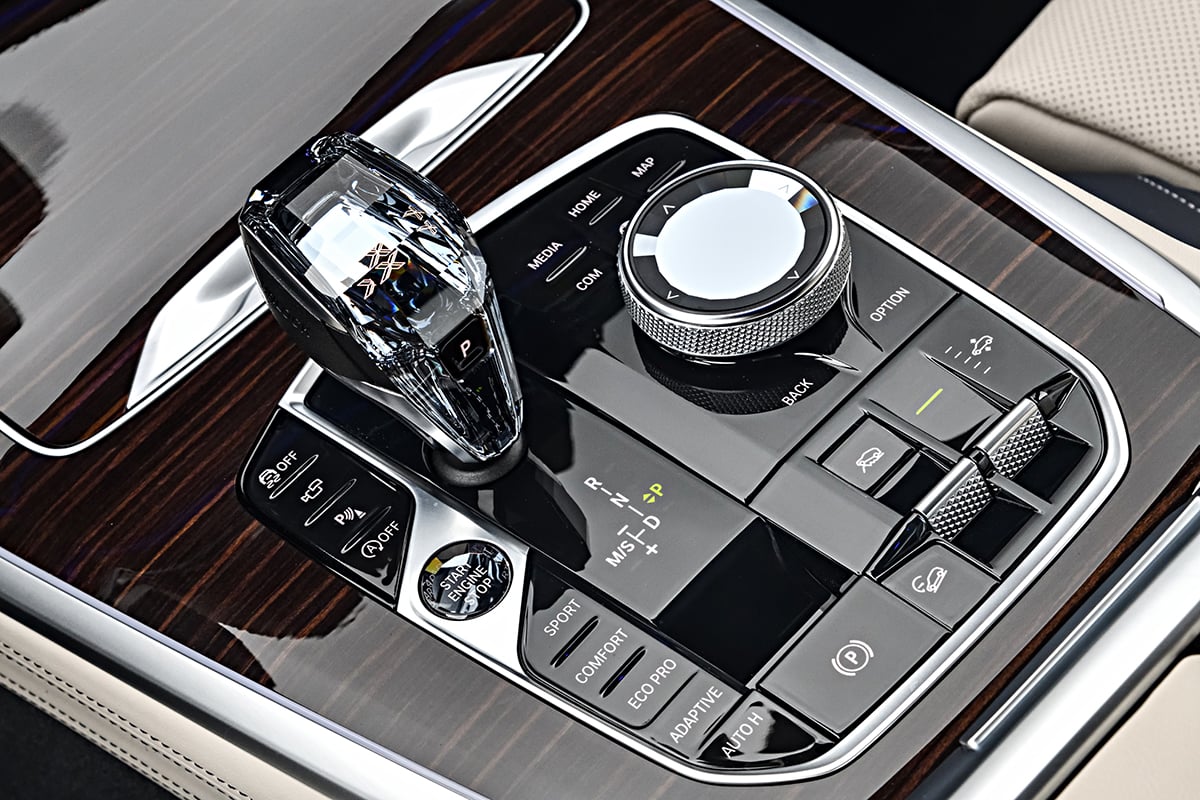
The post outlines ‘Option Code 6UY’, which deletes the touchscreen functionality from the infotainment screen, along with the semi-autonomous parking assist feature. The infotainment system can still be navigated using the iDrive controller and voice command.
“In an effort to maintain production levels through the end of the year, we have decided to remove the touch functionality from the Central Information Display in several vehicles starting production this week,” Shafer says in the post.
Buyers in the US will be provided with a US$500 (AU$675) discount as compensation.
However, a report from August shows BMW has already dropped other features from local models, deleting passenger seat lumbar support and width adjustment.
Unconfirmed rumours suggest the digital key fob, wireless smartphone charging, and hands-free boot opening, as well as the removal of park assist and radar cruise control have been removed for lower models in some markets, and Harman Kardon and B&W premium sound systems have been deleted across the range.
“I expect the general tightness of the supply chains will continue in the next six to 12 months,” BMW CEO Oliver Zipse said in early September, but added he saw no long-term issues.
Last month, BMW Group reported global sales were down 12 per cent year-on-year (including BMW, Mini, and Rolls-Royce brands), citing the semiconductor shortage.
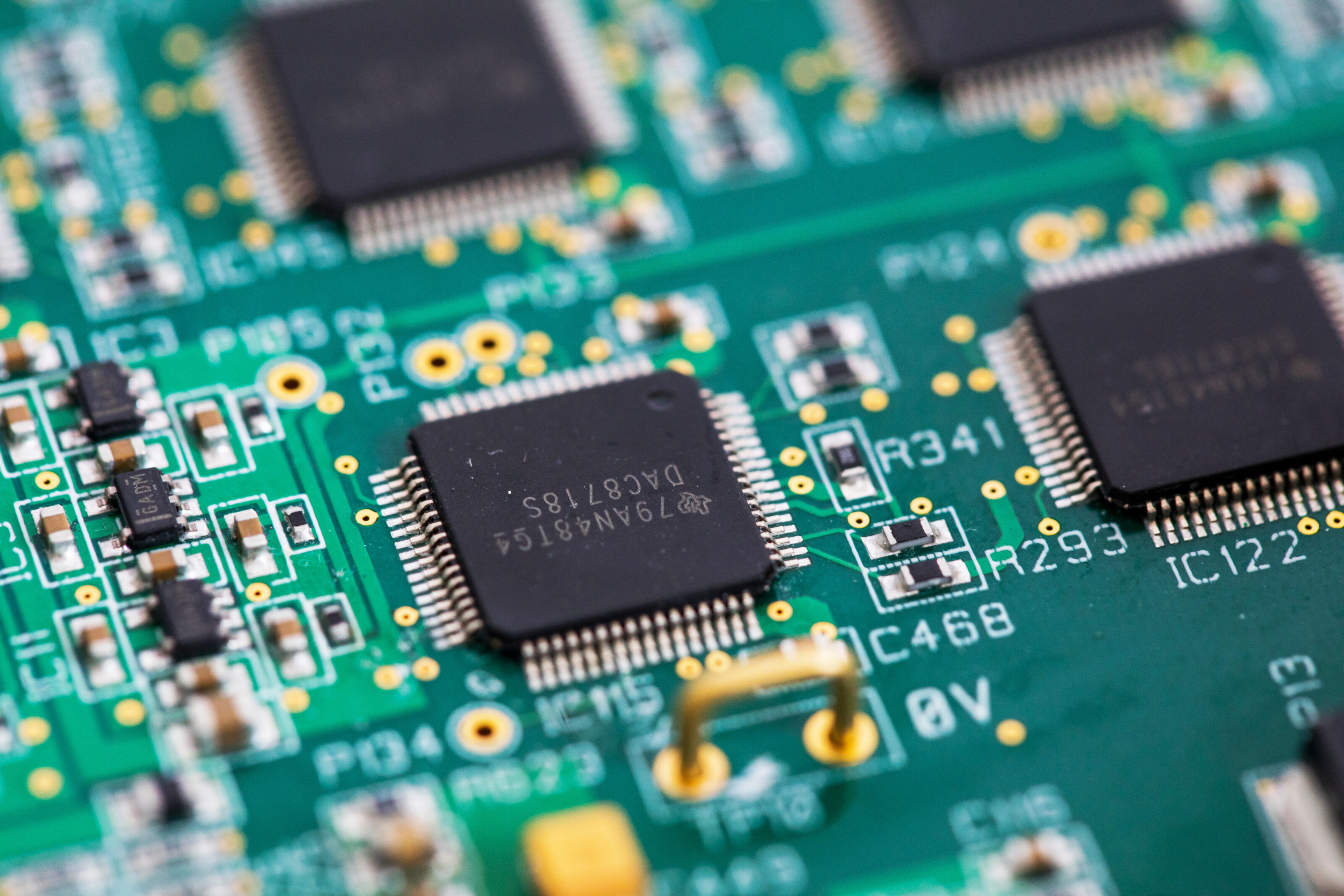
With the small computer chips being key to the operation of electronics, some estimate traditional internal-combustion vehicles using as many as 200, while electric cars can use as many as 3500.
Though the coronavirus pandemic was blamed for the early supply-chain disruptions, Forbes has reported tech giants like Apple have been outbidding automotive manufacturers to ensure their supply of the semiconductors continues.
