
If Hyundai’s luxury sub-brand Genesis has always had big shoes to fill, then its belated entry into the premium medium SUV market is a size-17 RM Williams boot.
Like the rest of the vehicle market, the premium brands are riding on the back of mid-sized SUVs, with Audi the Q3, BMW X3, Lexus NX and Porsche Macan being their brands’ biggest sellers and the Mercedes-Benz GLC and Volvo XC60 coming a close second in their respective line-ups.
As predicted, this has already been the case with the Genesis GV70 that, since arriving in Australia in June, has already outsold the G70 and G80 sedan models combined and overtaken the GV80 large SUV on monthly sales.
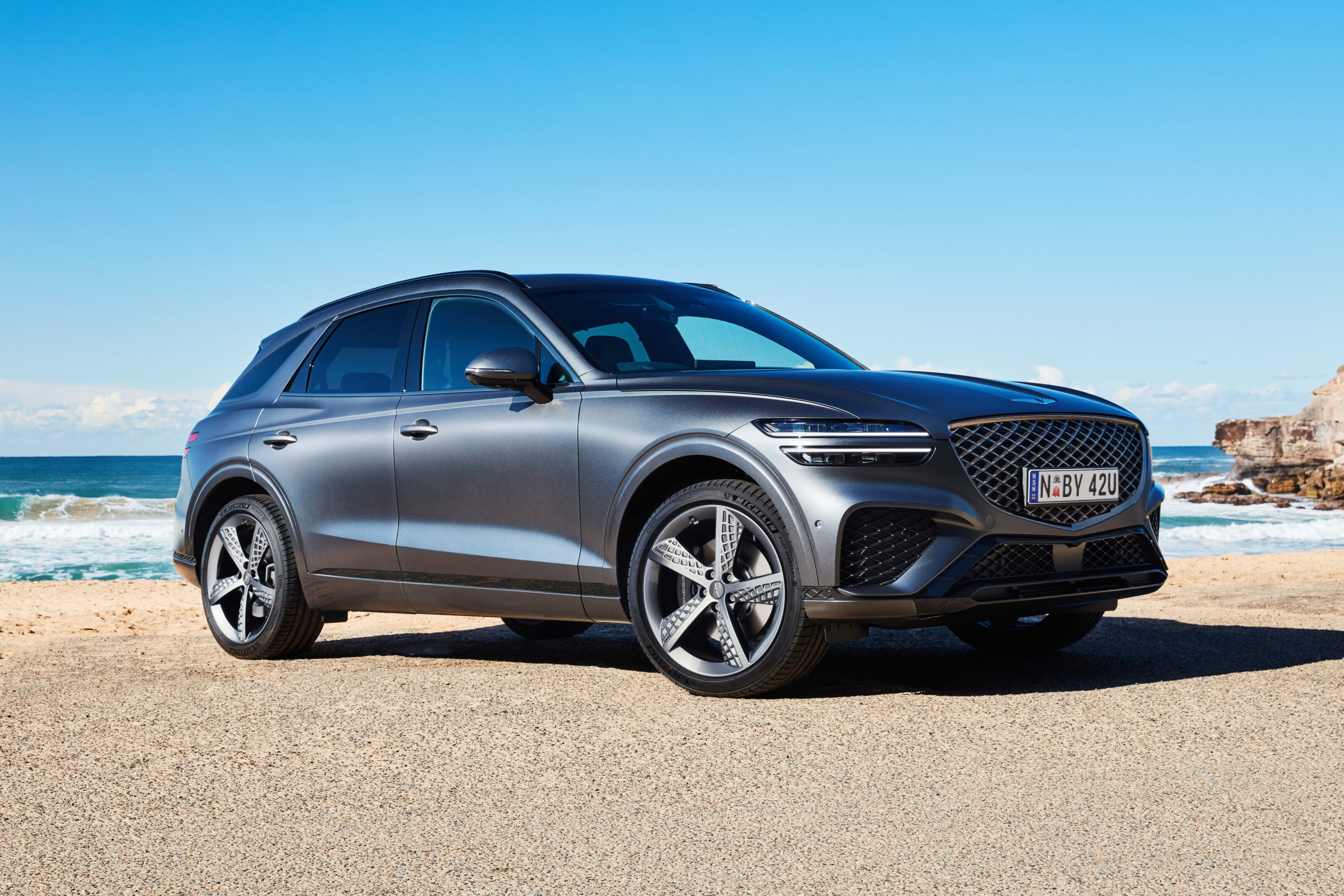
But, whether or not this new kid on the block will make an impact on the premium medium-SUV market remains to be seen.
As you’ll see below, there’s a lot going for it, including a choice of three powertrains and four variants brimming with standard kit, ranging in price from $66,400 before on-roads for the GV70 2.5T petrol RWD to $83,400 for the GV70 3.5T petrol AWD range-topper that’s the subject of this review.
What is the Genesis GV70 3.5T AWD Sport like to live with?
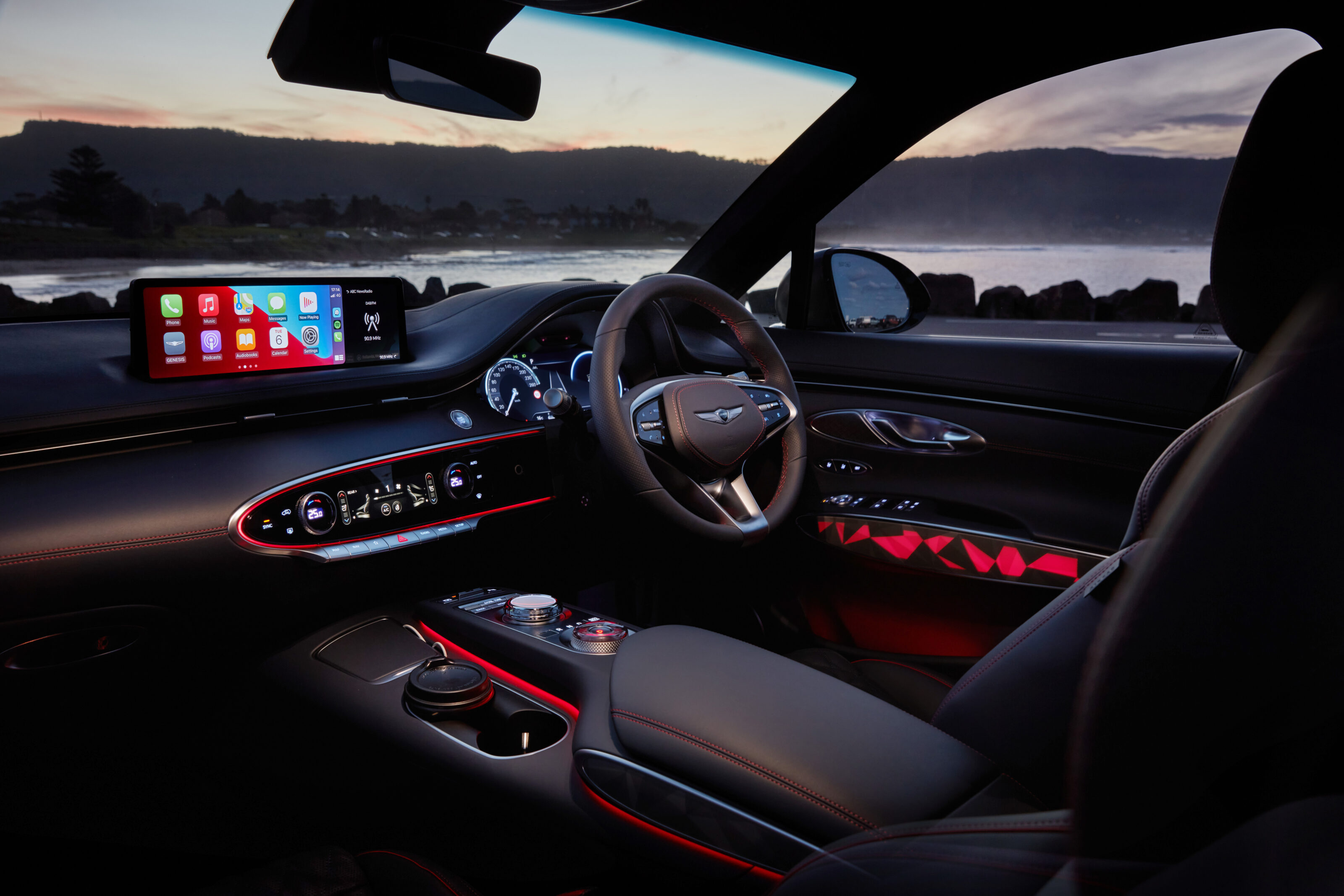
The GV70’s boldly styled yet elegant interior is replete with quality materials including double-stitched leather that clads the dashboard, steering wheel, doors and centre console. Everything is soft to touch, even the lower door cards, and there are plenty of real metal bright spots and switches with attractive knurled edges.
Standard GV70 features include a 14.5-inch touchscreen display, panoramic sunroof, heated and ventilated 12-way power-adjustable front seats, reclining rear seats and adjustable ambient lighting.
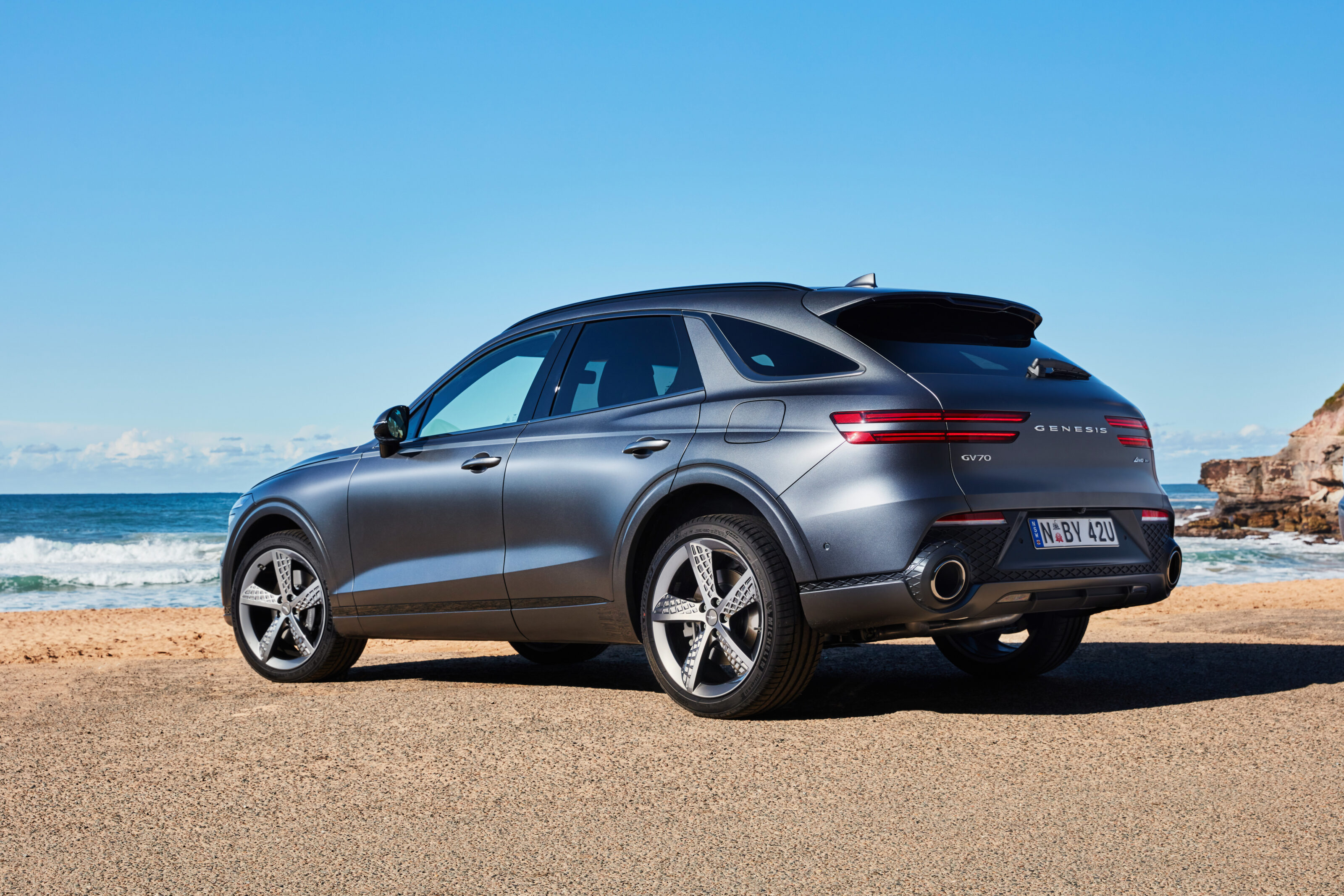
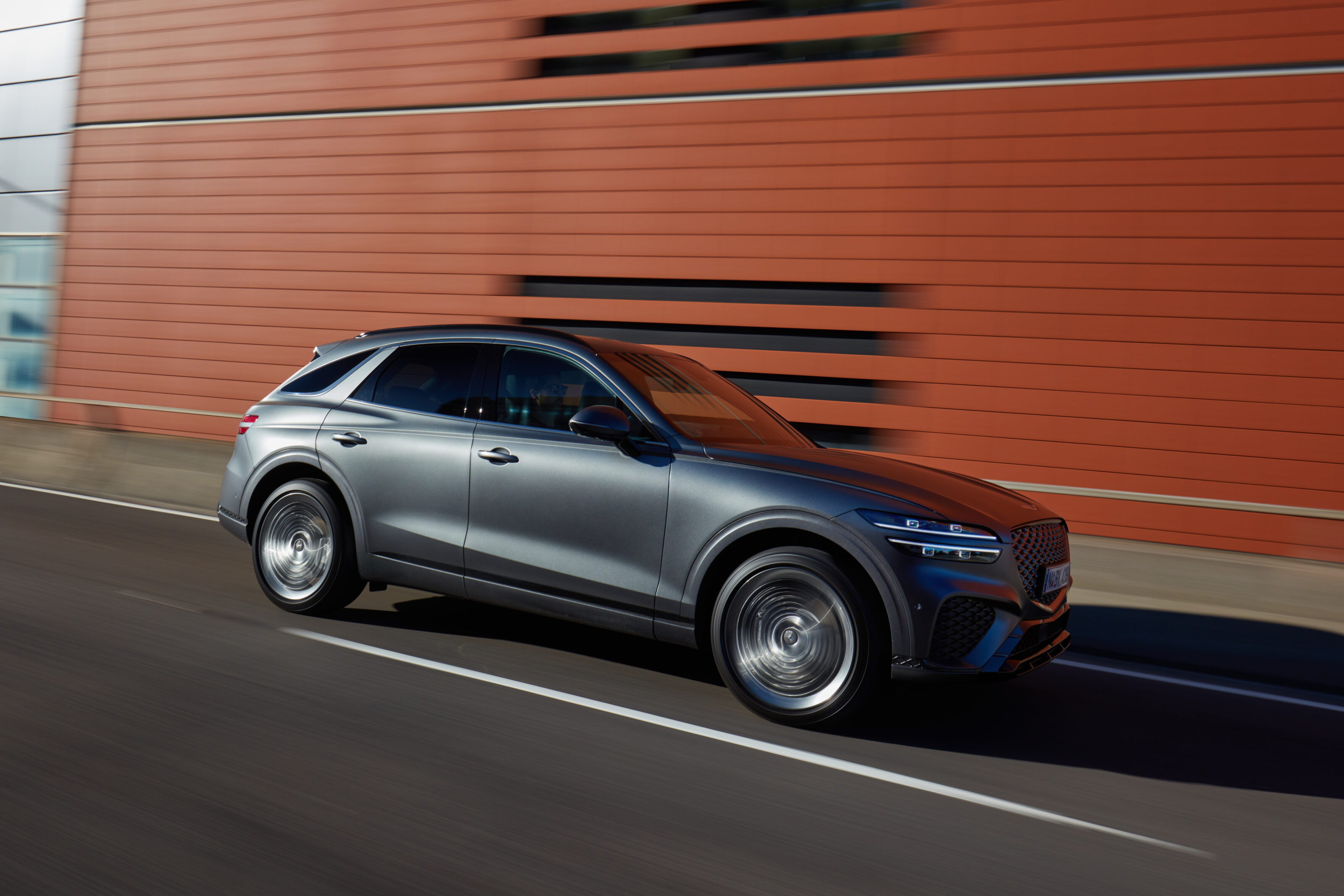
Spending more on this top-spec variant brings bolder looks including a racier front bumper with larger intakes, a dark chrome radiator grille and big-bore dual exhaust tips. It also comes with 21-inch alloy rims compared to the 19s on the other variants.
The interior is also enhanced with premium Nappa leather upholstery, suede seat inserts, genuine leather sport steering wheel with perforated hand grips, aluminium trim, and both the headlining and sun visors are coated in suede.
As well as the ballsy twin-turbo V6 engine, it also gains a sports brake package, limited-slip differential and Sport+ drive mode.
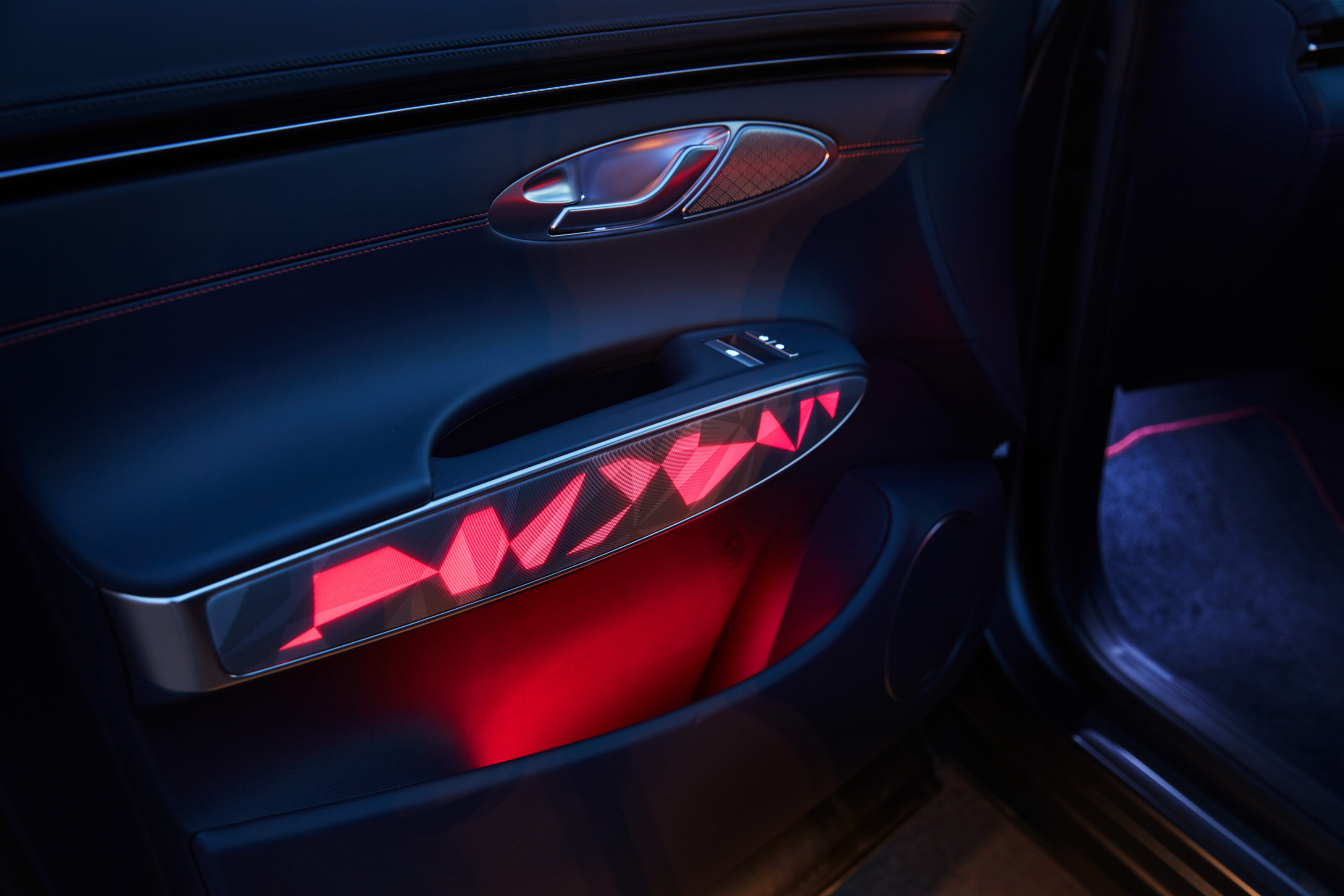
If all that isn’t enough, you can opt for the Luxury Package that features in our test vehicle, which for $6600 brings a 12.3-inch digital gauge cluster, eye-catching 3D-effect backlit door trim, three-zone climate control, head-up display, remote smart parking assist (with smart key), 18-way adjustable driver’s seat, driver’s seat massage function, quilted seat upholstery, rear privacy glass, and a 1050W Lexicon sound system by Harman audio with 16 speakers.
This takes the price to $90,000 before on-road costs, but you do feel like you’re getting plenty of bang for all that buck.
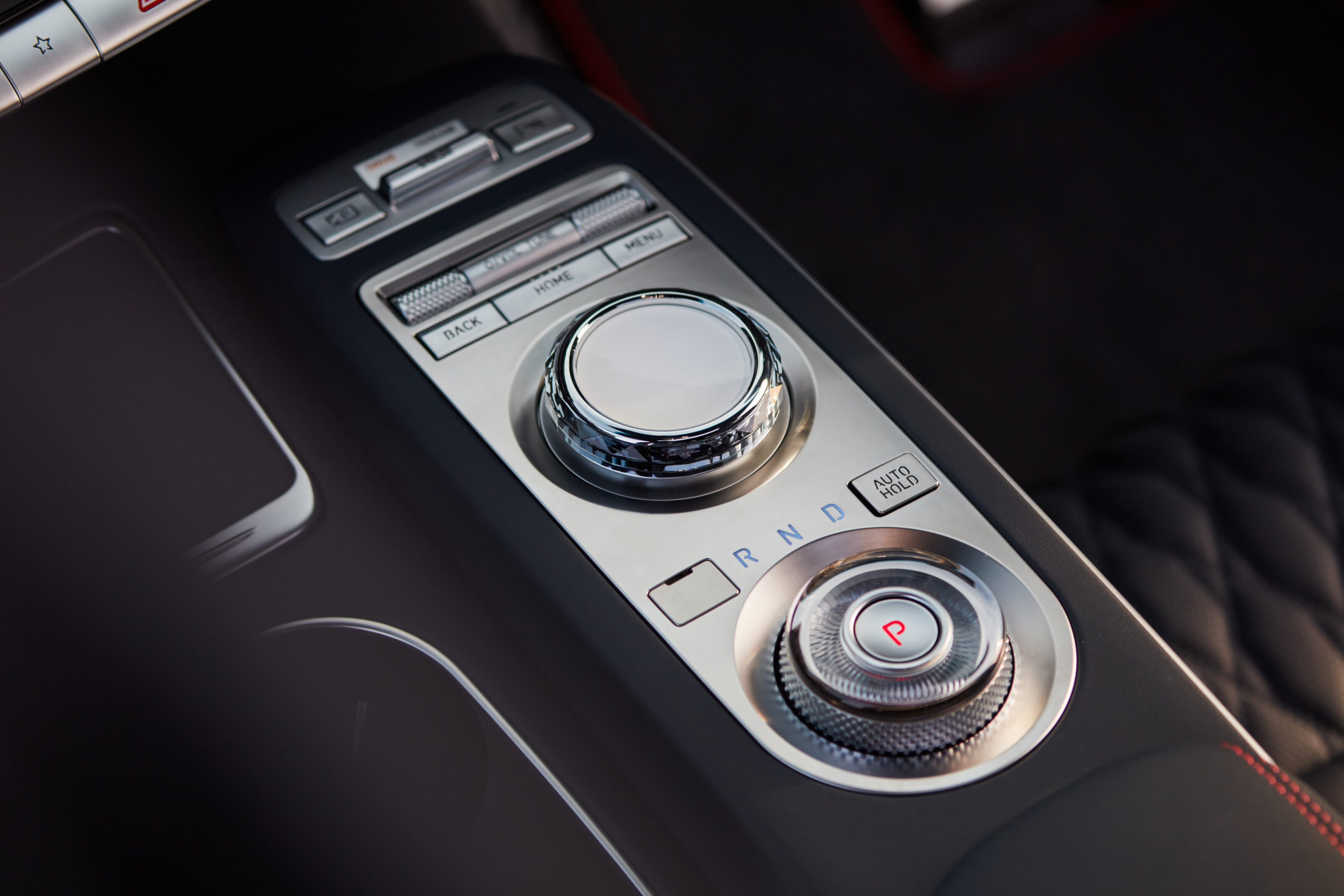
The cabin is well laid out and features a high centre console with a big padded armrest and an aperture for the wireless phone charger that sits at an angle to prevent the phone from overheating. It also houses the rotary gear shifter that I quite like, though I often found myself mistaking it for the nearby rotary infotainment controller, which occasionally saw me put the vehicle in neutral when wanting to select a new radio station.
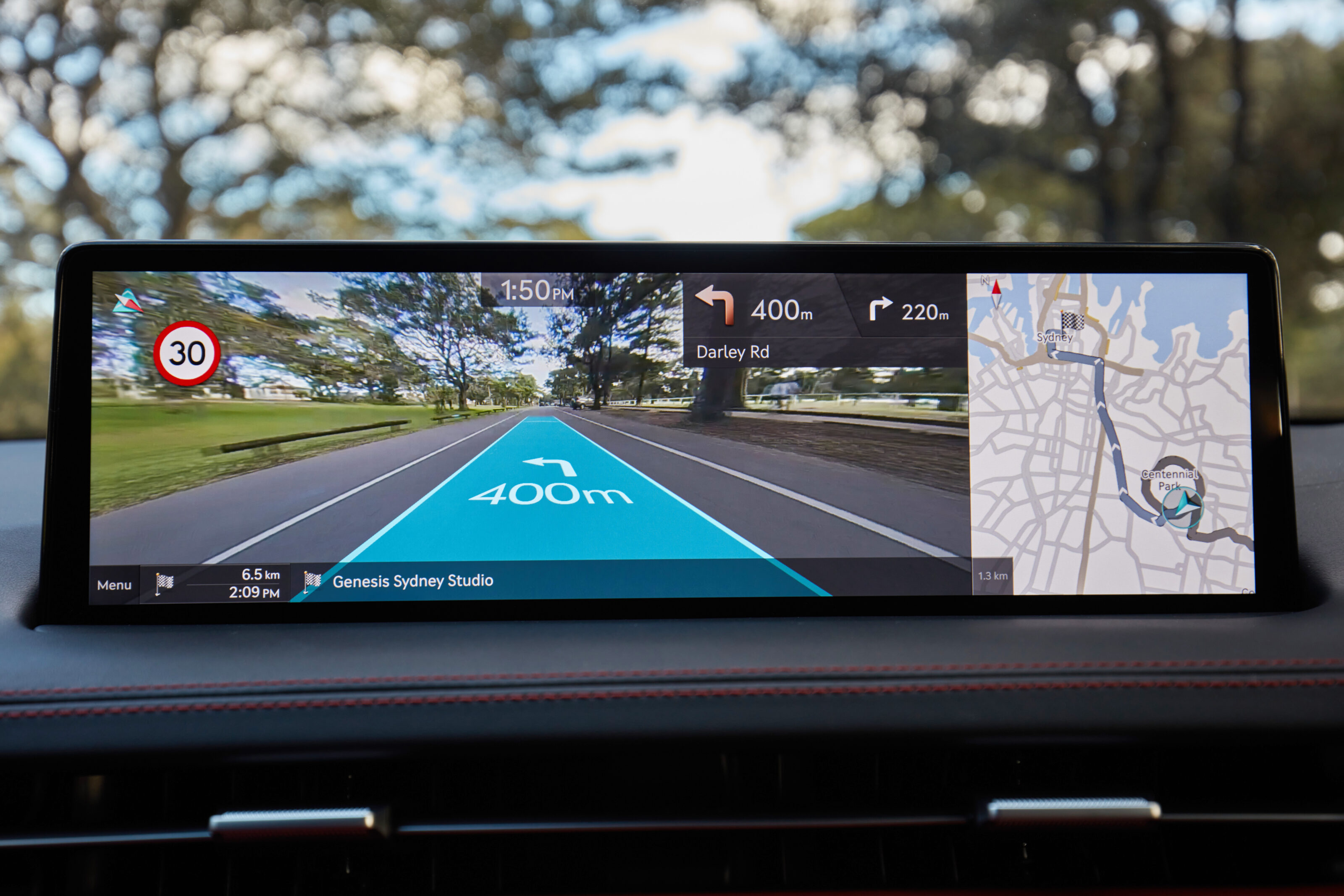
Despite that, polished metal switches and buttons are intuitively arranged and the dashboard is largely clutter-free. The panoramic touch-screen display houses in-built navigation that features an Augmented Reality (AR) view function and live traffic updates.
As you’d expect, Apple CarPlay and Google Android Auto compatibility is included, as is digital radio.
The digital HVAC controls below the touchscreen also look attractive and while there are no physical buttons as such, I prefer them to systems that are buried within the infotainment screen and can often be difficult to operate while driving.
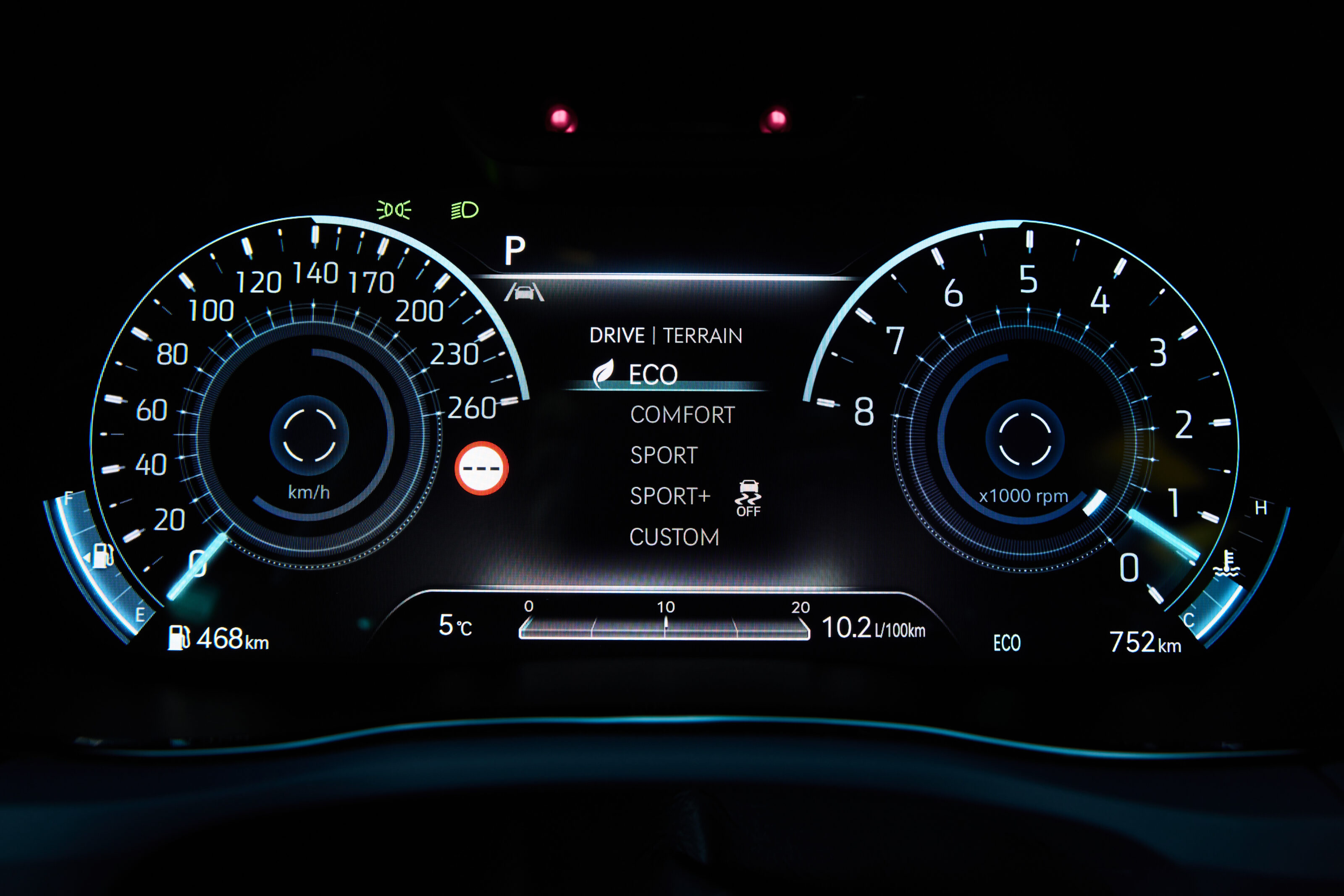
A 3D function in the 12.3-inch full-screen instrument cluster adds depth to the picture, but given all the different settings, it is curious that there is no easy-to-read digital speedo.
Standard features include a panoramic sunroof, heated and ventilated 12-way power-adjustable front seats, and reclining rear seats.
Down back, the rear seats offer good legroom and reasonable headroom considering the panoramic sunroof. The cushioning is a little firm but comfortable and the slight recline function offers a more relaxed seating position. You’ll fit three adults abreast, but the middle seat is a little tight with the transmission tunnel compromising legroom – it also misses out on seat heating installed in the outboard positions that come with the Luxury Package.
Rear seat passengers also benefit from their own HVAC controls and air vents, a pair of USB ports, netted map pockets and pop-up window shades.
The GV70 has a handy 542 litres of boot space, which translates to 950mm from the boot lip to the rear seatbacks. It is 1300mm at the widest point and 1020mm between the wheelarches. Folding the rear seats down yields 1678L of space.
In the luggage area are four tie-down hooks, a cargo net, a first-aid kit and a safety kit that includes a torch, fluoro vest, poncho, hand cleaner and a mat to put on the ground when changing a tyre with the space saver wheel.
The Genesis G70 is covered by a five-year/unlimited-kilometre warranty and five years of free roadside assist.
Owners also receive five years of complimentary scheduled maintenance that includes valet service, meaning your car is picked up for servicing and returned. You can also secure a courtesy vehicle if needed.
What is the Genesis GV70 3.5T AWD Sport like to drive?
If you’re opting to pay top dollar for a GV70, it’s likely to be for the 279kW/530Nm twin-turbo Lambda V6 engine that’s shared with the bigger GV80, and the Kia Stinger albeit with a slightly different tune.
The output is similar to the 287kW/520Nm twin-scroll V6 in the Mercedes-AMG GLC 43 that sells for about $112,000 before you tick an option box.
According to Genesis, this will do 0-100km/h in 5.1 seconds, which is just 0.2 seconds slower than the AMG, and achievable when engaging the eight-speed automatic transmission’s launch control system.
In normal conditions, it doesn’t exactly leap off the line due to the slight delay in getting its two-tonne-plus heft moving. But once it gets going it’s quite a delight and barrels down the road with a combination of momentum and brute force.
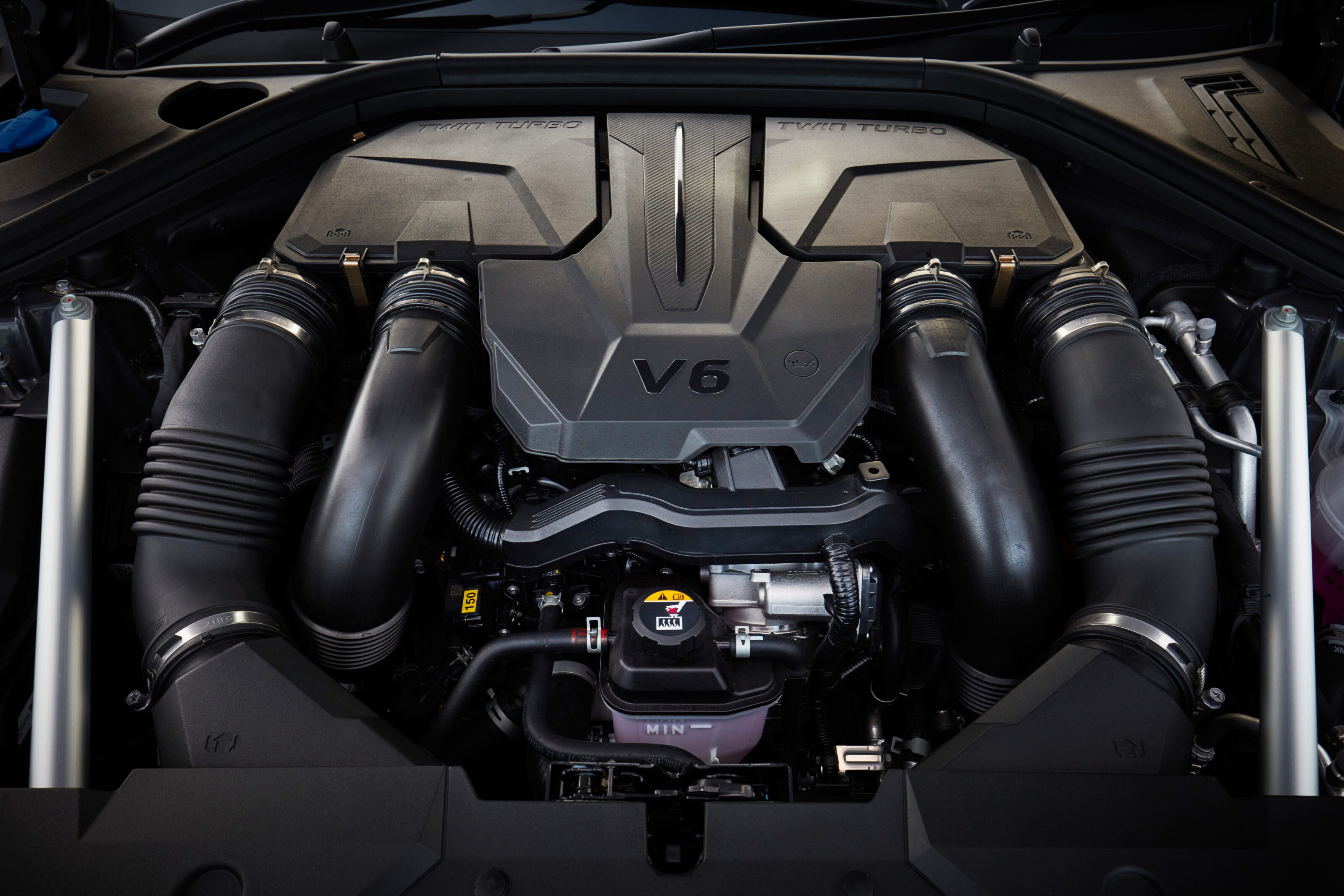
The one downside to having all this power to propel a luxurious SUV that weights 2038kg before adding a full tank of petrol and bodies, is the greedy fuel consumption – the official combined fuel economy is 11.5L/100km (the AMG GLC43 consumes 10.4L/100km) which scoots up to about 14L/100km with some spirited driving.
Then there’s the 15.9L/100km urban fuel consumption that makes my old 5.0-litre VY SS Commodore seem like a teetotaller.
The SS Commodore makes a decent noise when you put the foot down too, unlike the GV70 that remains relatively quiet even at high revs. To compensate, Hyundai has provided a synthetic engine note that’s pumped through the audio speakers, which sounds okay but just isn’t the same as the real thing. That said, this is a luxury vehicle so a bit of shush isn’t a bad thing – road and wind noise are also well tamed.
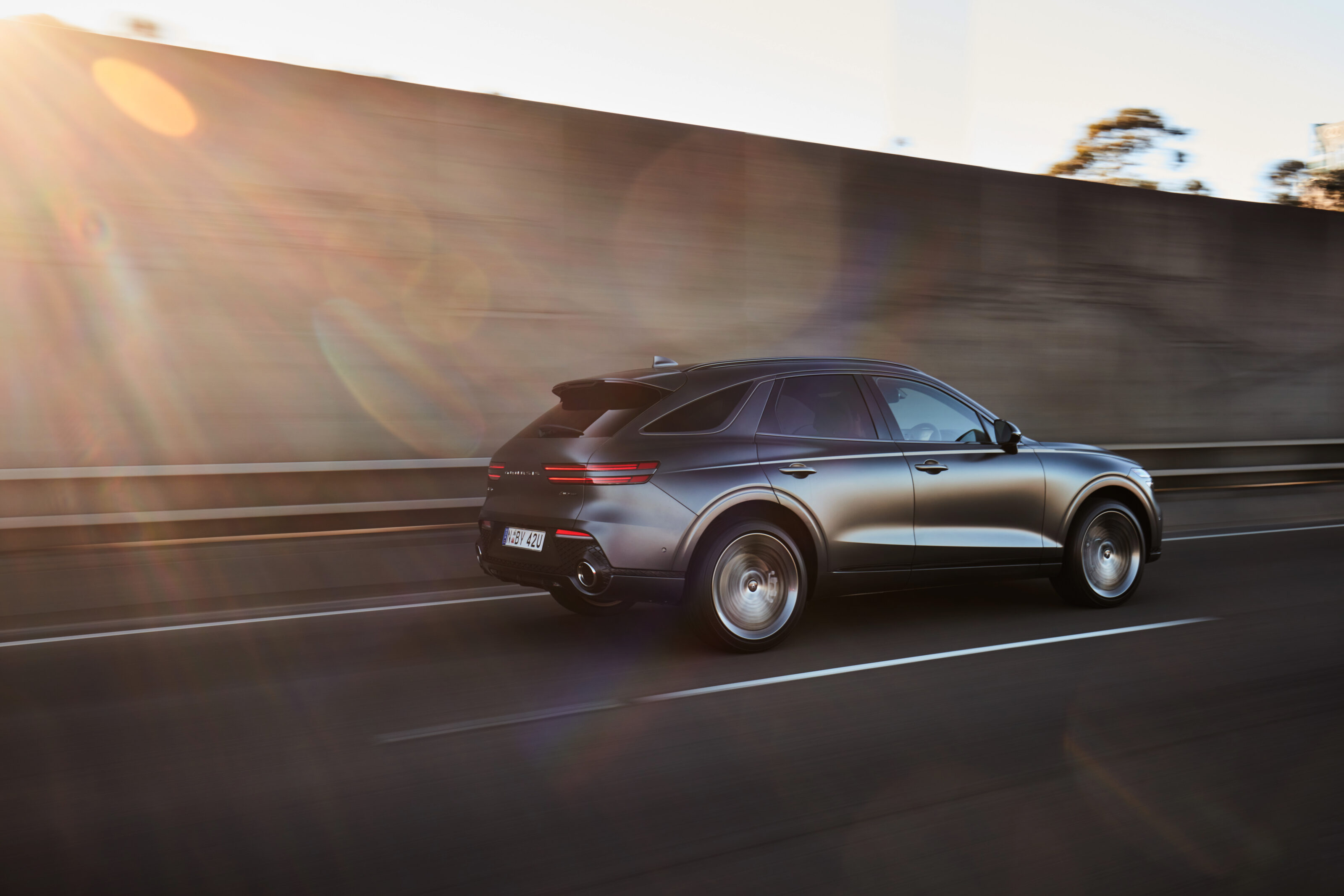
The eight-speed torque converter automatic transmission feels refined and shifts through the gears effortlessly, but it doesn’t really like it when you stomp the foot down, preferring gentle throttle inputs.
Paddle shifters are provided for manual input and, like the AMG, there are different drive modes, including Eco, Comfort, Sport and Sport+ that alter powertrain, steering weight and chassis response to suit.
Because this range-topping GV70 variant is presented as the sporty option, you feel compelled to drive it as such, but to me it feels best when driven like a grand tourer knowing you’ll always have more than enough power and Newtons than you’ll ever need.
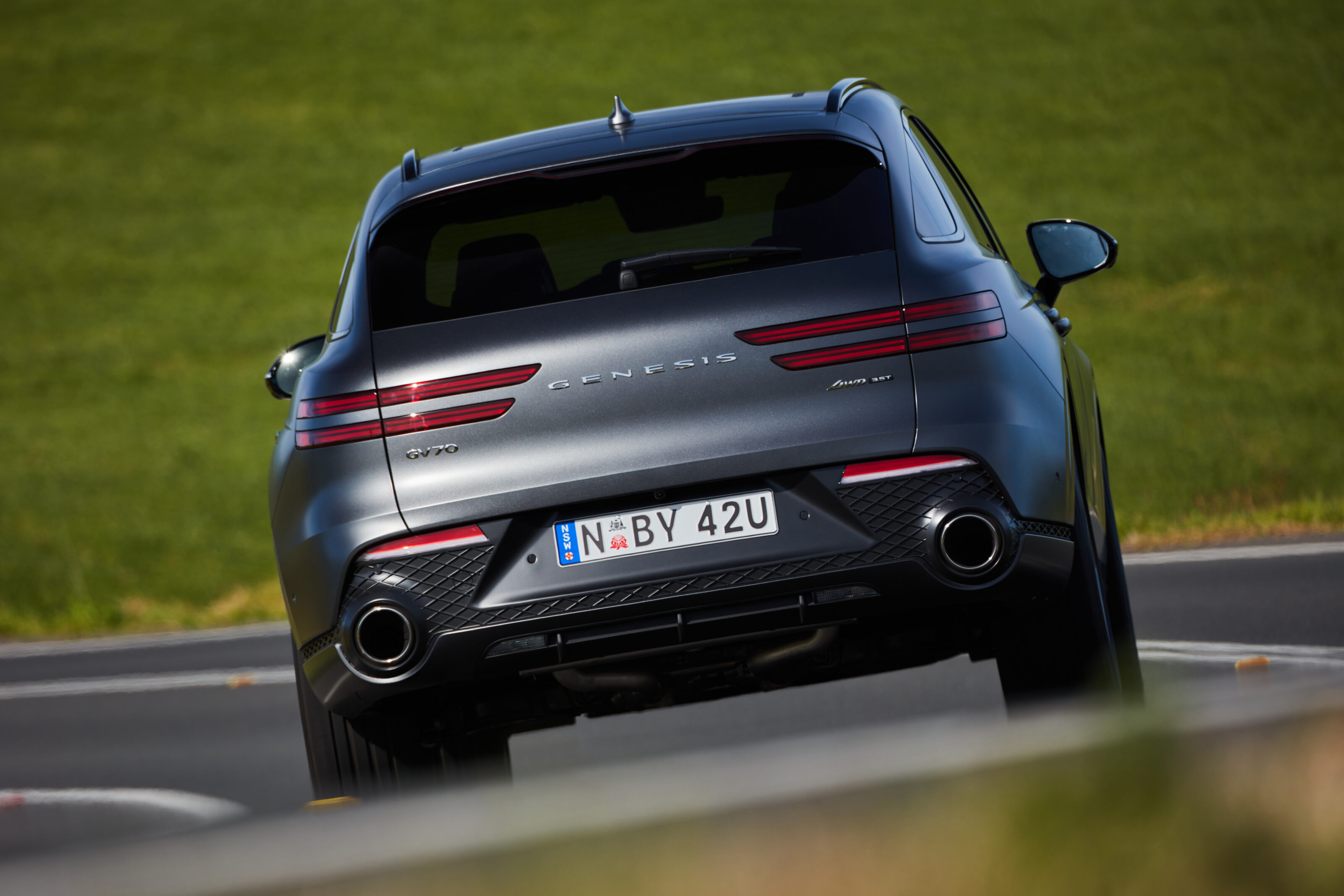
This is the only GV70 variant with adaptive dampers, which deliver exceptional ride quality. Driven in Comfort mode, it feels particularly smooth on freeways but also remains composed on rougher roads despite rolling on big 21-inch rims shod with low-profile (255/40) Michelin Pilot Sport 4s.
One trick the adaptive suspension has up its sleeve is a camera-operated ‘road preview’ system that looks for changes in the road surface and tweaks the shock absorbers accordingly before you drive over them.
One trick the adaptive suspension has is a camera-operated ‘road preview’ system that monitors the road surface and tweaks the shock absorbers accordingly.
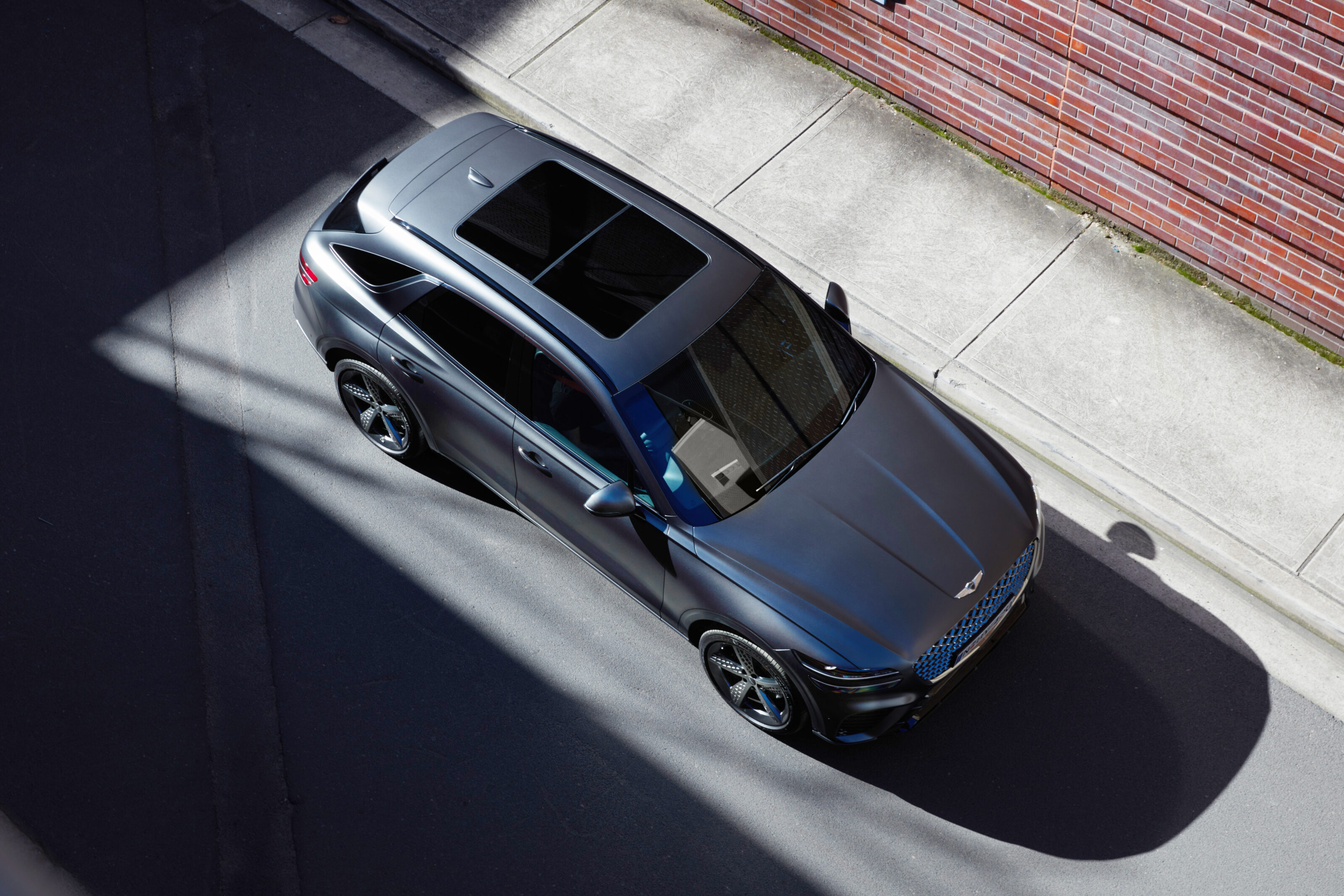
Ride comfort doesn’t come at the expense of driving dynamics. There’s little body roll through bends and you feel well planted to the road thanks to the all-wheel-drive setup that favours the rear wheels but benefits the front axle when needed – if you’ve ever driven a front-wheel-drive V6 SUV like the Hyundai Palisade, you’ll really appreciate the extra traction.
That said, it’s not as sprightly through tight bends as the four-cylinder version due to the extra weight of the V6 engine over the front wheels, meaning you’ll have to ease off the gas a little sooner.
The steering is light but direct and works well in all driving conditions, including when tight manoeuvring is required in city streets or when parking.
What is the Genesis GV70 3.5T AWD Sport like for safety?
The GV70 comes with a comprehensive list of standard passive and active safety features, which includes eight airbags among which is a centre-side bag between the front seats. It also features smart cruise control with stop & go function, and ‘Forward Collision-Avoidance Assist’ that incorporates AEB with car/pedestrian/cyclist detection and will also brake or take over steering if it detects a collision at an intersection or when changing lanes.
Other safety features include:
- Active bonnet
- Blind-spot collision avoidance
- Blind-spot monitor on the gauge display
- Driver attention warning
- Leading vehicle departure alert, that goes off when you’re caught napping at the lights
- High-beam assist
- Intelligent speed-limiter
- Lane following assist
- Lane-keeping assist
- Rear cross-traffic collision avoidance
- Rear occupant warning
- Safe exit assist
- Surround-view monitor
- Trailer stability assist
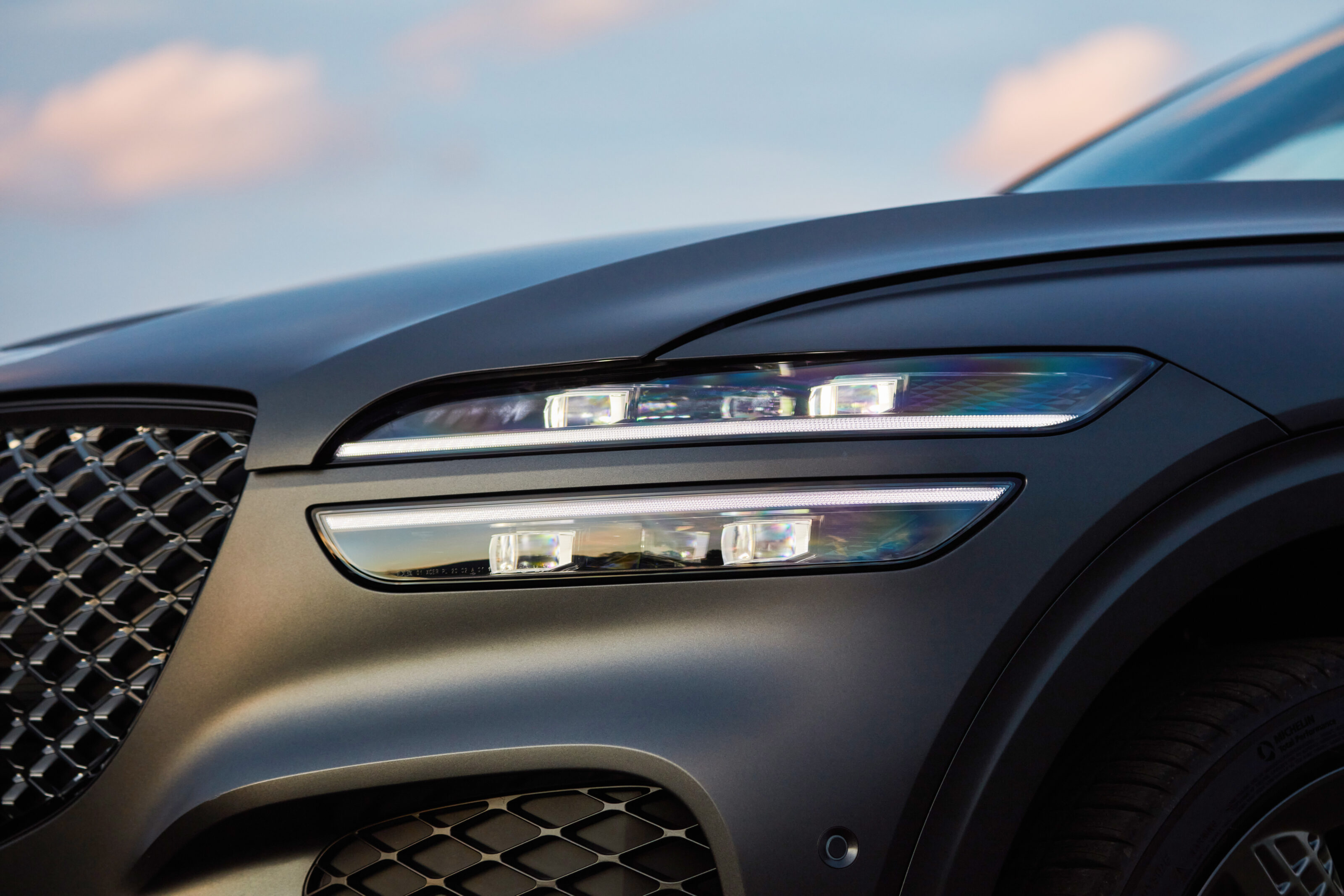
The Luxury Pack adds reverse collision avoidance and Hyundai’s Intelligent Lighting System that reduces the intensity of the headlights for oncoming traffic, but only as much as necessary.
It’s yet to receive an ANCAP crash safety rating, but considering the three other Genesis models have achieved five stars, including the G70 sedan on which the GV70 is based we’d be very surprised if it scored any lower.
The Verdict
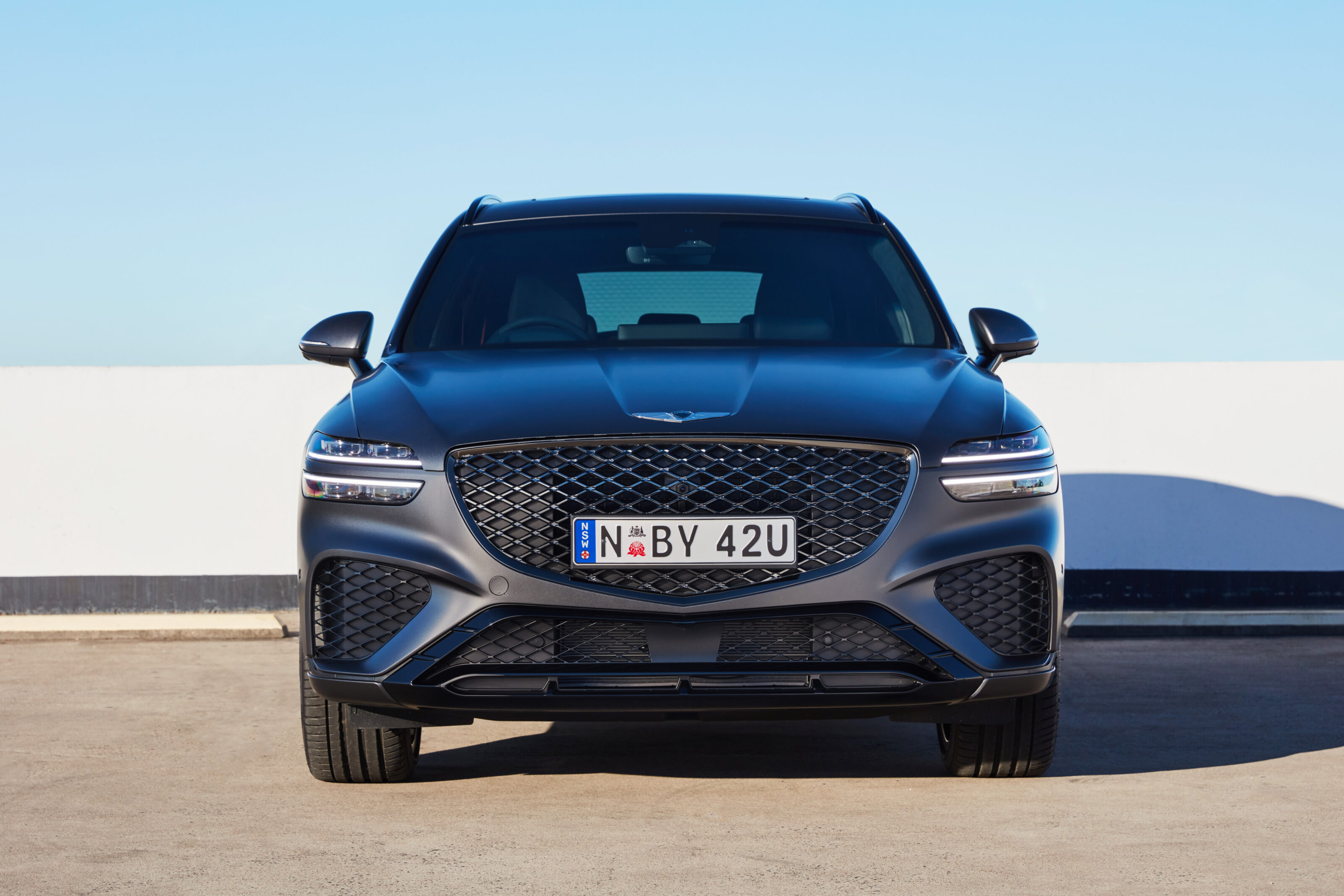
Australia’s appetite for medium SUVs has already seen the GV70 become the biggest-selling Genesis here. The more affordable and less greedy 2.5-litre four-cylinder variants will account for most of the model’s sales, with this twin-turbo V6 flagship bringing performance cred to the marque.
It also delivers plenty of luxury SUV for under $100K, but its real appeal, as well as being a delight to drive, is its bold look-at-me appearance that stands out against the Lexus NX and its German rivals, certainly giving it the edge at private-school drop-off time.
The fuel bills might make some potential buyers think twice, however, and while they will be somewhat offset by free servicing throughout the warranty period, I do wonder how they will affect resale value after five years considering we’ll be well into the EV revolution by then.
2021 Hyundai GV70 3.5T AWD Sport specifications
| Body | 5-door, 5-seat medium SUV |
|---|---|
| Drive | All-wheel-drive |
| Engine | 3470cc, V6, DOHC, 24v, twin turbo |
| Bore/stroke | 92.0 x 87.0mm |
| Compression | 11.0:1 |
| Power | 279kW @ 5800rpm |
| Torque | 530Nm @ 1300 – 4500rpm |
| 0-100km/h | 5.1sec (claimed) |
| Fuel consumption | 11.5L/100km |
| Top speed | 250km/h |
| Weight | 2038kg |
| Transmission | 8-speed automatic |
| Suspension | Front MacPherson Strut & Multi-link;Rear Adaptive Control Suspension |
| L/W/h | 4715/1910/1630mm |
| Wheelbase | 2875mm |
| Boot space | 542L / 1678L (seats up/down) |
| Steering | Electrically assisted rack-and-pinion |
| Brakes | 360mm ventilated front discs with 4-piston calipers;340mm ventilated discs with 1-piston calipers |
| Wheels | 21 x 9.0J +43 alloy |
| Tyres | 255/40 R21 102Y Michelin Pilot Sport4 SUV |
| Price | $83,400 + $6600 Luxury Pack ($90,000 + ORC) |
Key Points
- AC charger comes with free installation
- Free ChargeFox public charging for three years
- Premium Encore reward scheme membership also included
Lexus is offering buyers of its first battery-electric vehicle, the UX300e crossover, a range of benefits including a free AC fast charger for their garage.
In addition, UX300e owners will also receive three years free access to the 1400-strong Chargefox national high-speed DC charging network – with rapid ports able to fully juice up the UX300e in about 80 minutes.
The 7kW home chargers will be installed by Melbourne based infrastructure specialists JetCharge and will be able to fully top up the UX300e’s 54.3kWh lithium-ion battery from empty in about 6.5 hours, delivering a driving range of up to 360km.
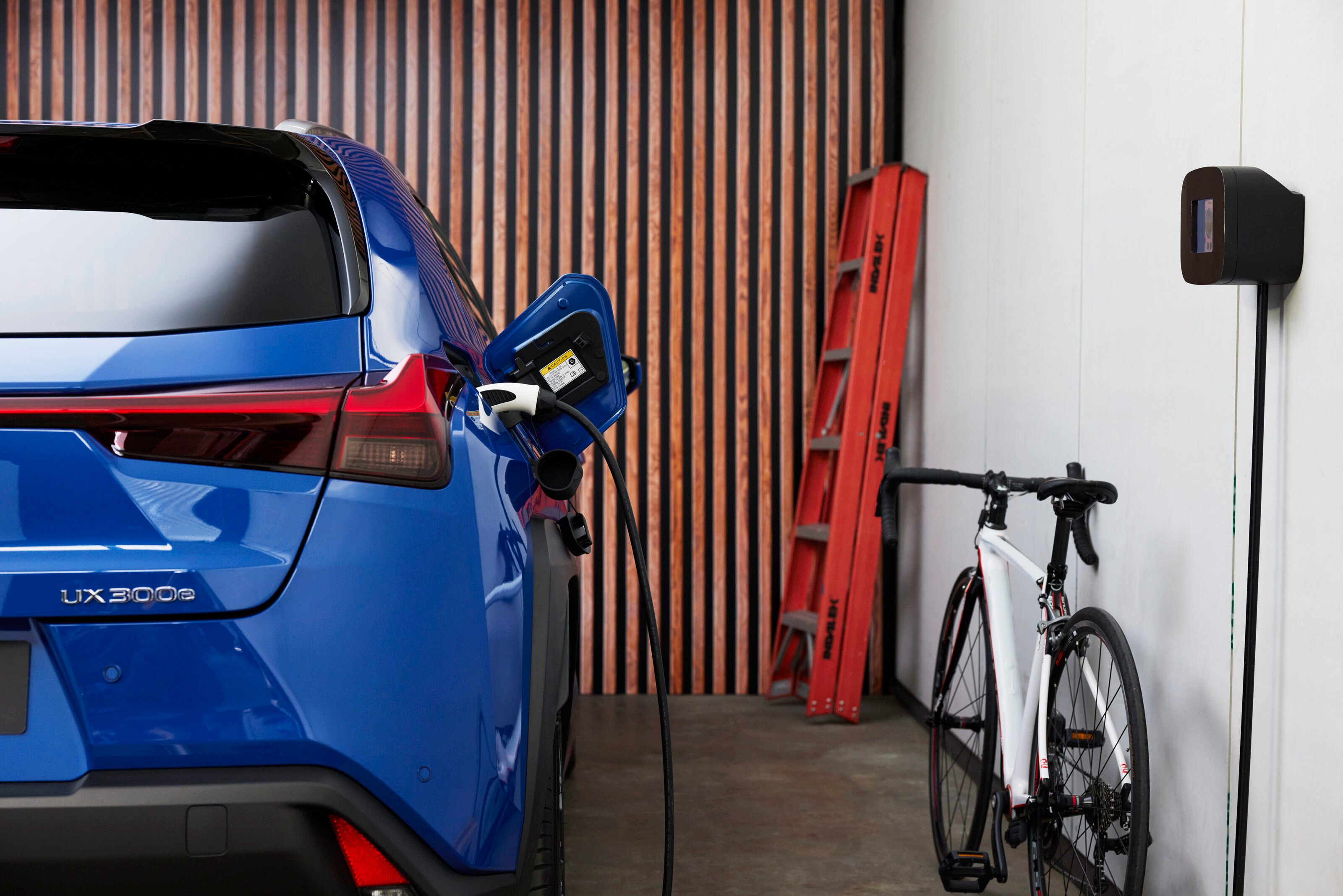
Owners will also have the option to upgrade to a more advanced home charger featuring; a touch-display, Wi-Fi and Ethernet compatibility, smartphone app connectivity, and dynamic load management – which measures their home’s live energy usage and automatically adjusts the charge in harmony with the local grid, thus avoiding peak time and even blackouts.
The incentives will be complemented by a further ownership element, set to be announced alongside pricing at the launch of the Lexus UX 300e later this month.
The model will also come with three years of complimentary membership of the Japanese luxury carmaker’s Encore Platinum owner benefits program, joining the Lexus LX, Lexus LC and Lexus LS.
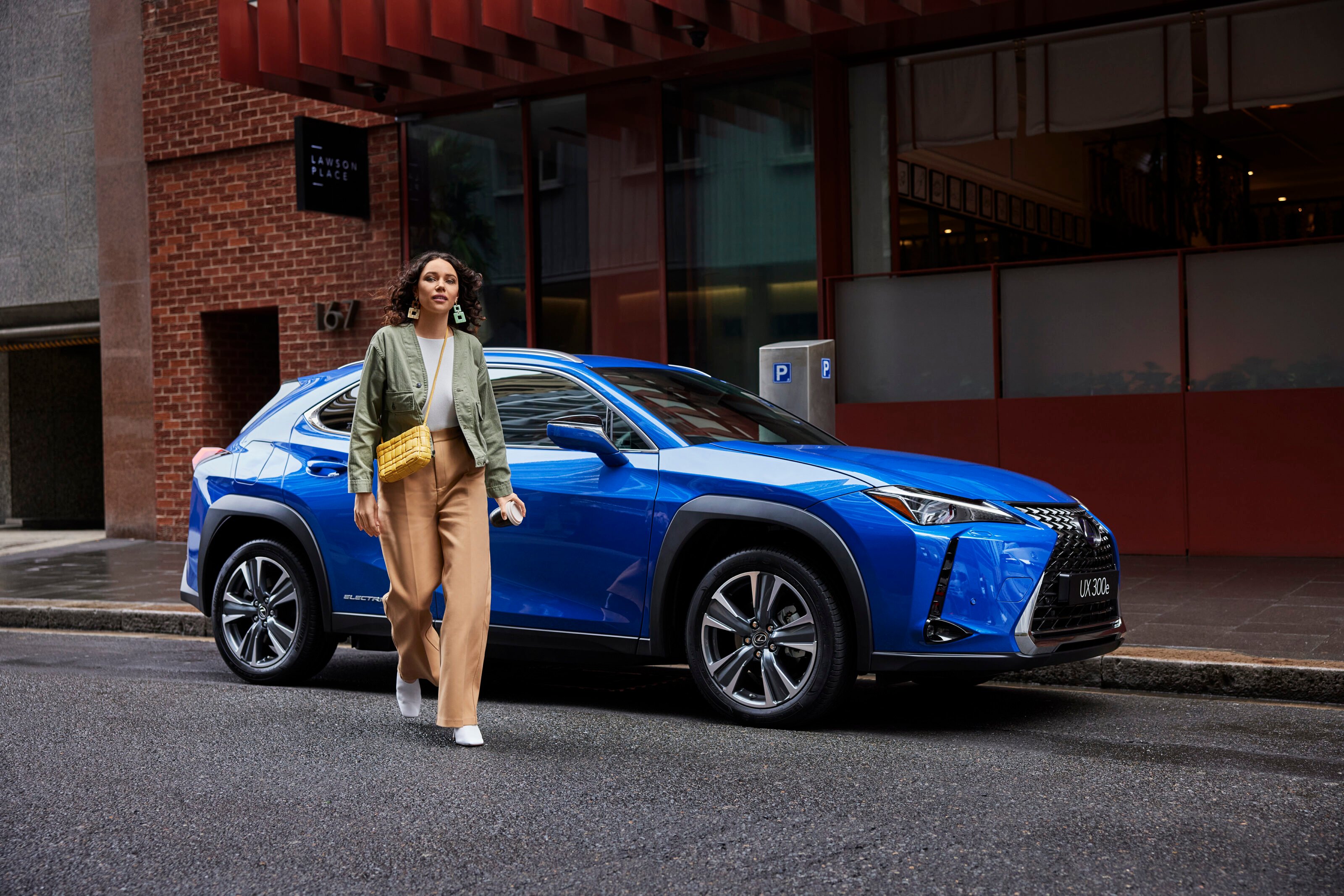
The program allows participants to borrow another Lexus four times in their membership period, and for up to eight days at a time when travelling interstate or to New Zealand – these can be booked for collection at the Qantas valet of Sydney, Melbourne, Brisbane, Adelaide, Perth, Auckland and Queenstown airports.
Alternatively, if the UX300e doesn’t suit a particular need, members can book another model, such as the LX large SUV on demand for collection at a number of Lexus dealerships nationwide – the UX 300e will be added as an available Lexus on Demand vehicle, for members who want to try the brand’s first BEV.
Other benefits include free valet parking on eight occasions at Westfield shopping centres across Australia, as well as specifically Chadstone shopping centre in Melbourne.
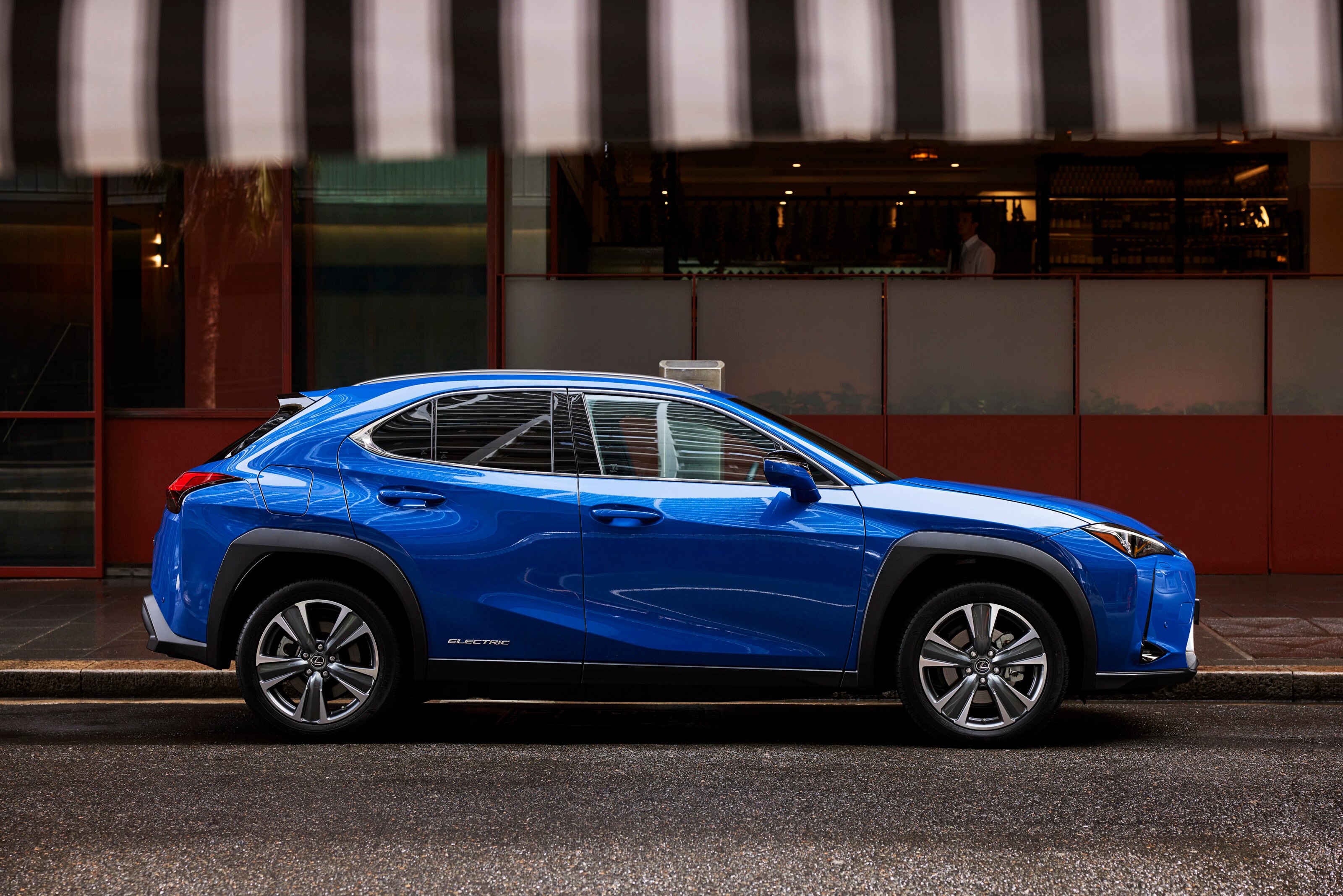
UX 300e owners will additionally receive a Lexus-exclusive upgrade to five years of capped-price servicing. Each scheduled service costs $295 and the UX 300e can be collected from an owner’s home or work, with a complimentary loan vehicle delivered to their door.
The UX 300e shares some equipment with the existing petrol powered UX200 and the mild-hybrid UX250h and will be available in Luxury and Sport Luxury trim.
Local pricing will be announced at launch.
Gravel clatters noisily as the car dances over the rocky outcrops and into the dusty corner. On the brakes, a quick heel-and-toe downshift and a left-right flick on the steering wheel to get the tail moving. Sideways. Grab some opposite lock and get on the power. The turbo motor snarls and grunts, the rear tyres spit rocks, the nose stays tucked into the apex. The corner opens. Traction builds. Full throttle now. Wind off the lock, grab the next gear, the trees by the side of the road a blur of green at my elbow.
I laugh out loud. Oh yes, the Morgan Plus Four CX-T is an implausibly brilliant thing.
Jacked up and armoured underneath, with a roll cage, rally lights and chunky off-road tyres, the Plus Four CX-T looks like a post-apocalyptic manga comic take on a 1930s British sportscar; Brooklands meets Mad Max, ready for a tea party on Fury Road.
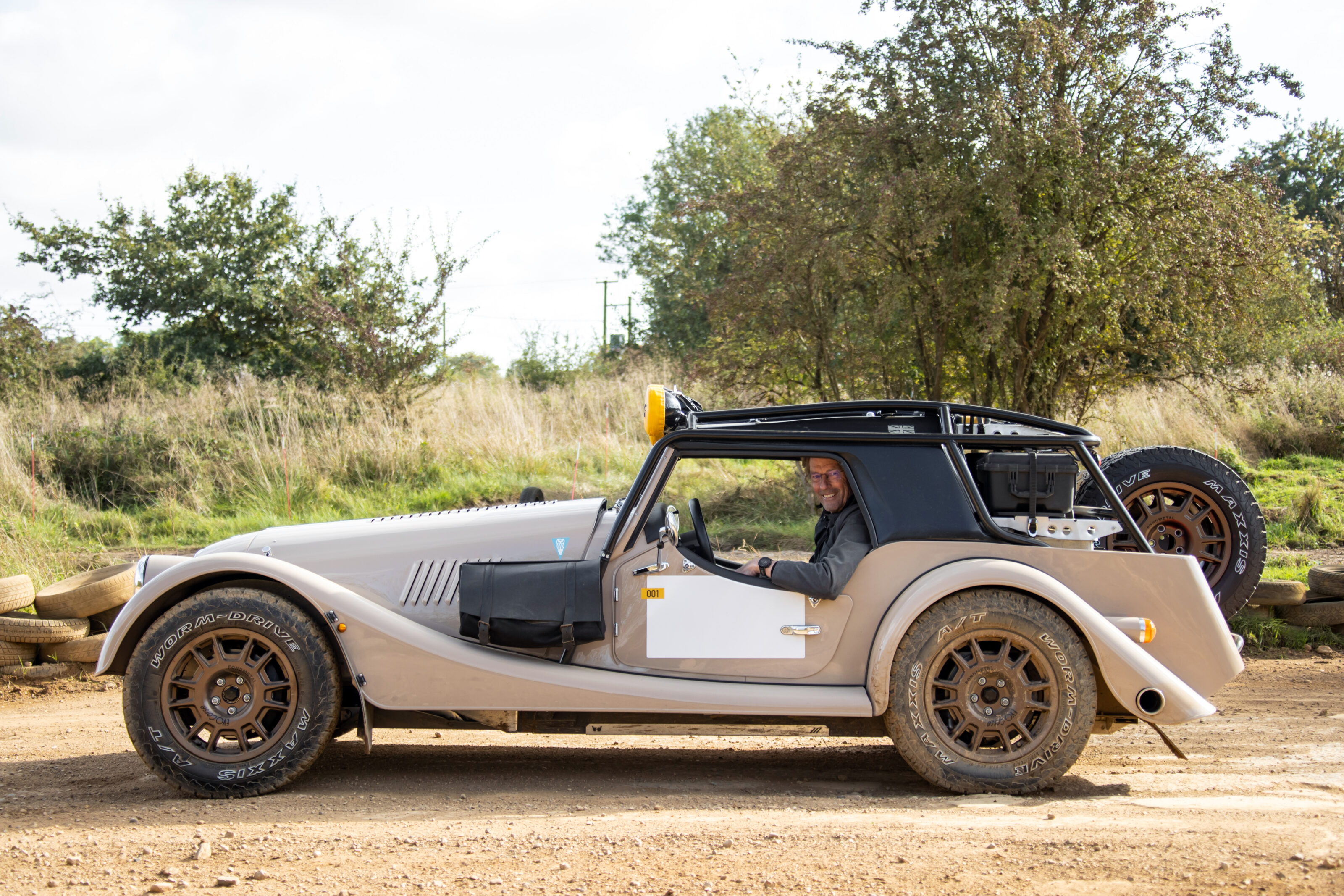
Morgan calls it an “adventure car” and says it’s designed to handle any road short of a full-on 4×4 track. Just eight are being built. All are sold, and despite an eye-watering price tag that equates to about $315,000, plus tax, one has been snapped up by an Australian enthusiast.
Though the CX-T started life as a fun sketch by Morgan design chief Jonathan Wells, the engineering behind it is deadly serious. When Italian businessman Andrea Bonomi – founder of private equity group Investindustrial that has owned a majority stake in Morgan since early 2019 – saw the sketch he said: “We should build this.”
Within weeks, Wells was sitting down with Mike Jones – whose company, Rally Raid UK, has built more than 60 Dakar Rally cars – to figure out how to make the sketch a reality.
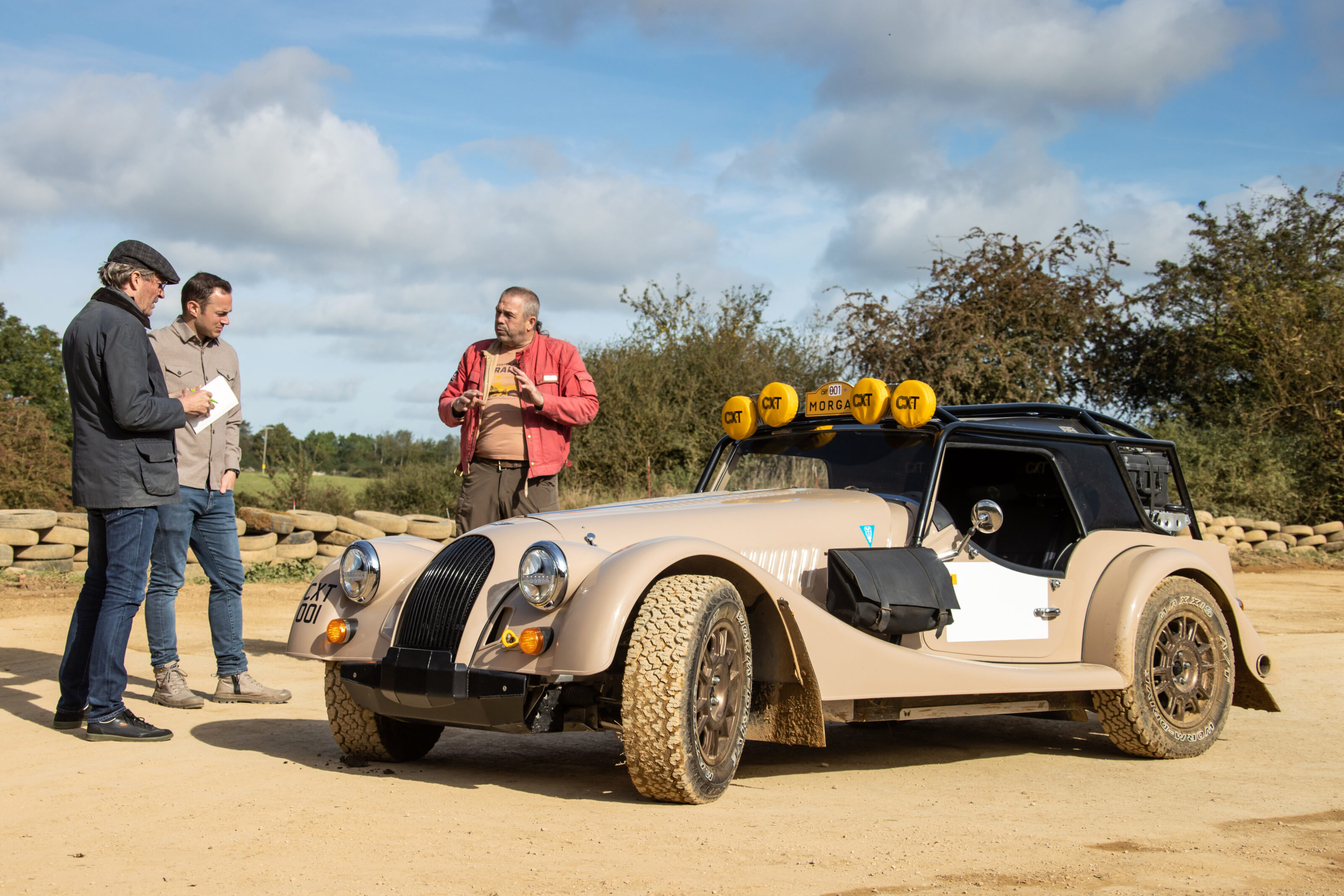
The CX-T is based on the six-speed manual version of the new CX-platform Morgan Plus Four that launched last year. The new Plus Four might look a lot like the 4/4 Morgan introduced in 1936 and kept in production with minimal changes for 83 years, but under that old-school skin is a bonded aluminium chassis, multi-link suspension front and rear, and the punchy 2.0-litre turbocharged four-banger more usually found under the bonnet of BMW’s 330i. The engine makes 190kW and 400Nm when hooked up to the ZF eight-speed automatic. In the manual, the torque output is dropped to 350Nm.
That’s still enough to propel the 1013kg Plus Four to 100km/h in about 5.0 seconds and to a top speed of 240km/h. That’s quick, and it feels even quicker in a car with no roof, cut-down doors, and no traction or stability control. Wells and Jones figured it was performance enough for the overlanding CX-T: Other than a new Dakar-spec air filter system – cleverly hidden away in the leather satchel on the right side of the car – and a new exhaust, oval in profile under the car and with a side exit to increase ground clearance, the powertrain has been left untouched.
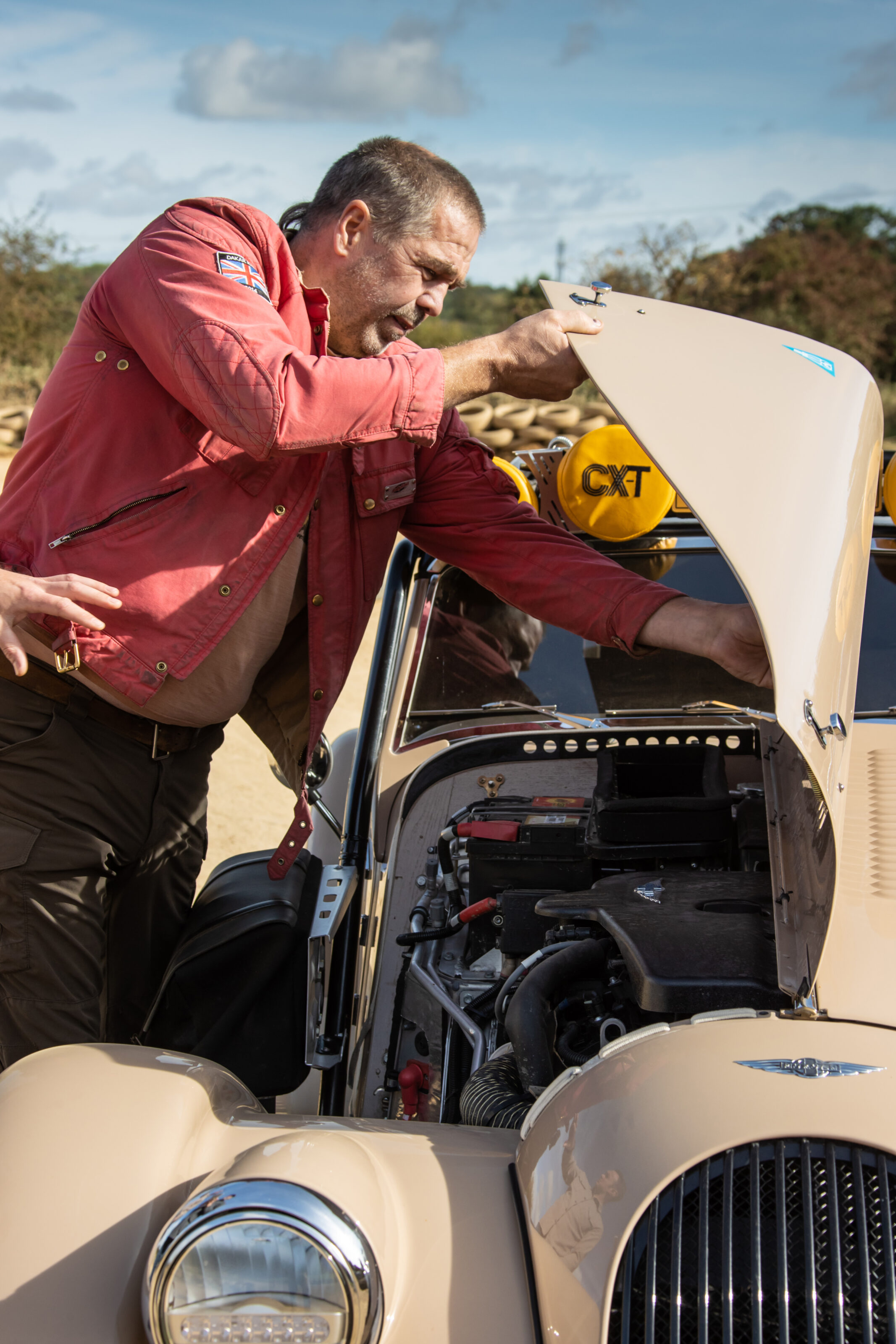
Most of Mike Jones’ input into the project has been focused on making the Morgan capable and durable. Ground clearance has been increased from the standard car’s 120mm to 245mm and everything underneath is shielded by a tough five-piece protection system that comprises an engine guard, rear chassis guard, mid-section shield and rear undertray.
“There’s no low hanging hardware,” says Jones. “The car will slide over rocks without damaging anything.” Jones claims the Plus Four CX-T will wade through at least 360mm of water – more if you’re careful to get a bow wave going – but he warns you’ll get a wet bum as the door sealing is not exactly amphibious spec.
Though the CX-T started life as a fun sketch by Morgan design chief Jonathan Wells, the engineering behind it is deadly serious.
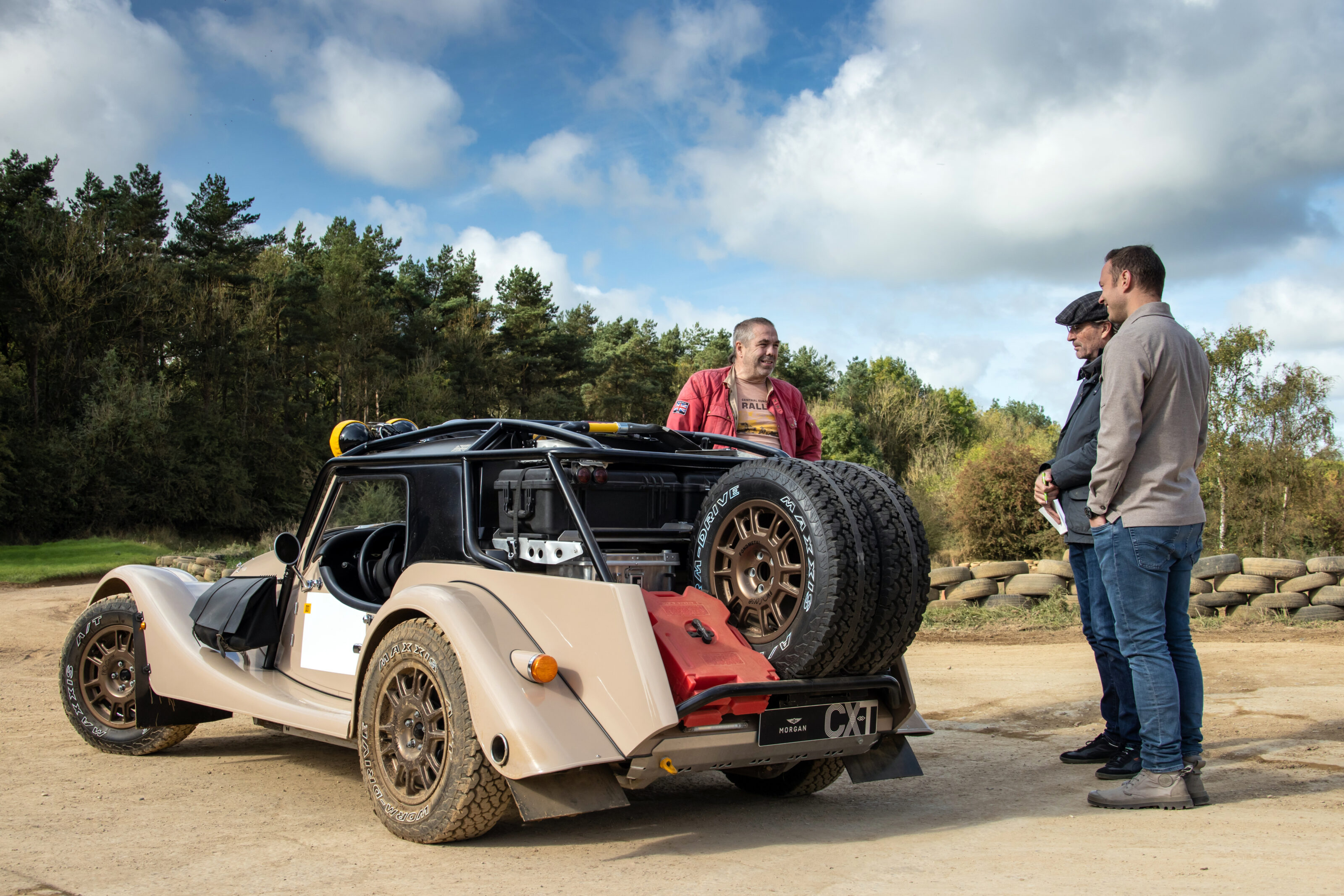
To increase wheel travel, the standard Plus Four suspension arms have been replaced with longer items from the wide-body, wide-track Plus Six roadster (which is powered by BMW’s 3.0-litre, 250kW turbocharged straight-six). “We could have increased suspension travel even more, but we didn’t want it to look like a monster truck,” Jones says.
In place of the standard springs and shocks are Dakar-spec EXE-TC coilover units with remote reservoirs. The wheels are Italian-made Evo Corse items, a favourite among Dakar racers, shod with 215/70 R16 Maxxis A/T Worm Drive all-terrain tires.
All this is covered by the wider guards from the Plus Six, their arches cut out to allow for the extra wheel travel. The rear of the centre-hinged bonnet has been raised to improve cooling, and the body’s side panels have been extended at the rear in the style of the four-seat versions of the Morgan 4/4 built between 1937 and 2016 to partially enclose the rear load space. A removable composite hardtop nestles under a roll cage that further braces the already stiff CX platform.
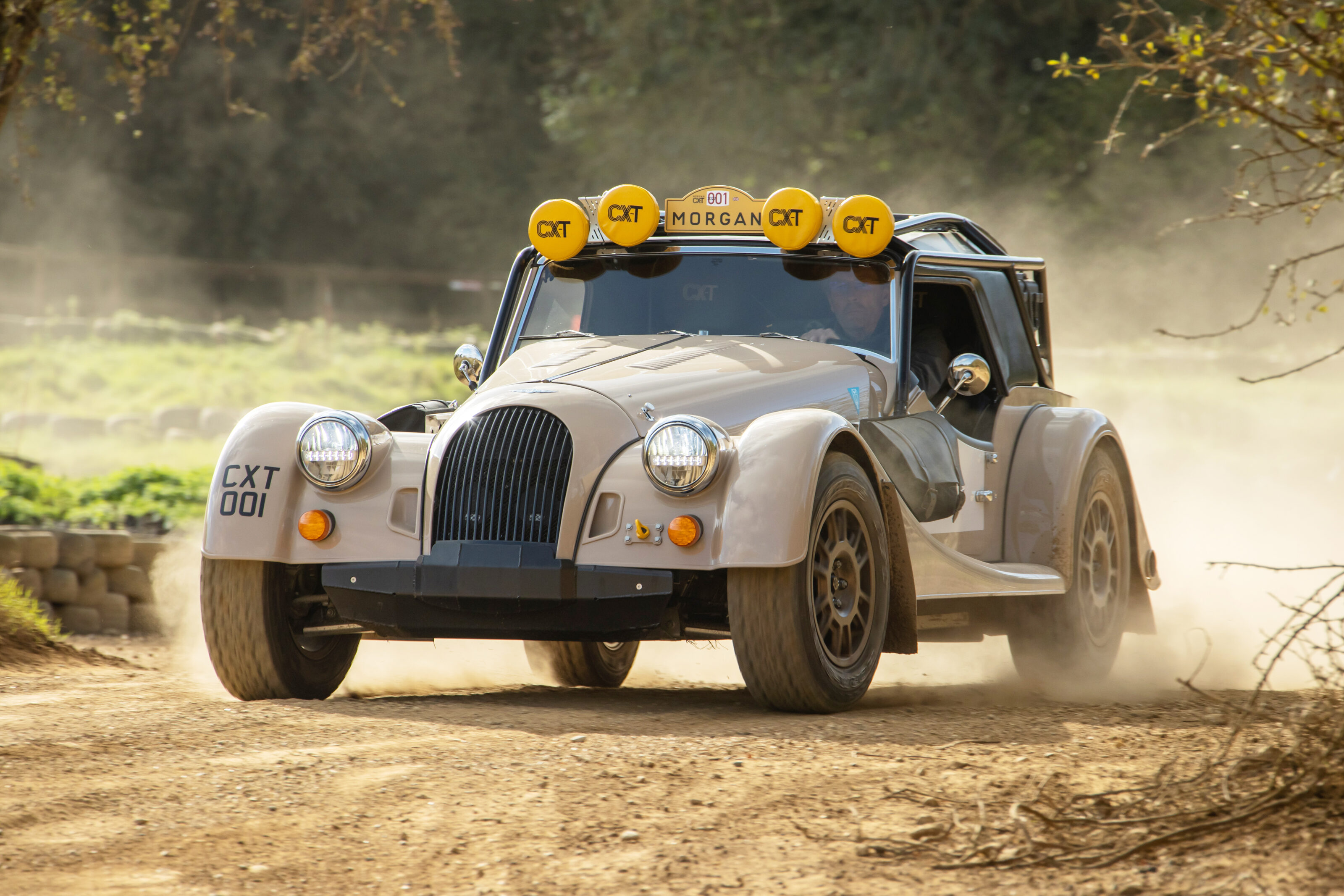
The rear axle features a BMW X-Drive electronic differential, with a bespoke calibration developed by BMW engineers, and three modes selected via switches on the CX-T’s dash. In Road mode, the diff is fully open.
All-Terrain mode locks to diff to about 45 per cent to improve traction in slippery conditions, and All-Terrain Extreme locks the diff completely. The final drive ratio is shorter than that of the regular Plus Four, partly to compensate for the larger rolling diameter of the all-terrain tires and partly to help when negotiating steep and rough tracks.
Neat details abound, evidence of Mike Jones’ long experience building vehicles used in some of the world’s most extreme environments.
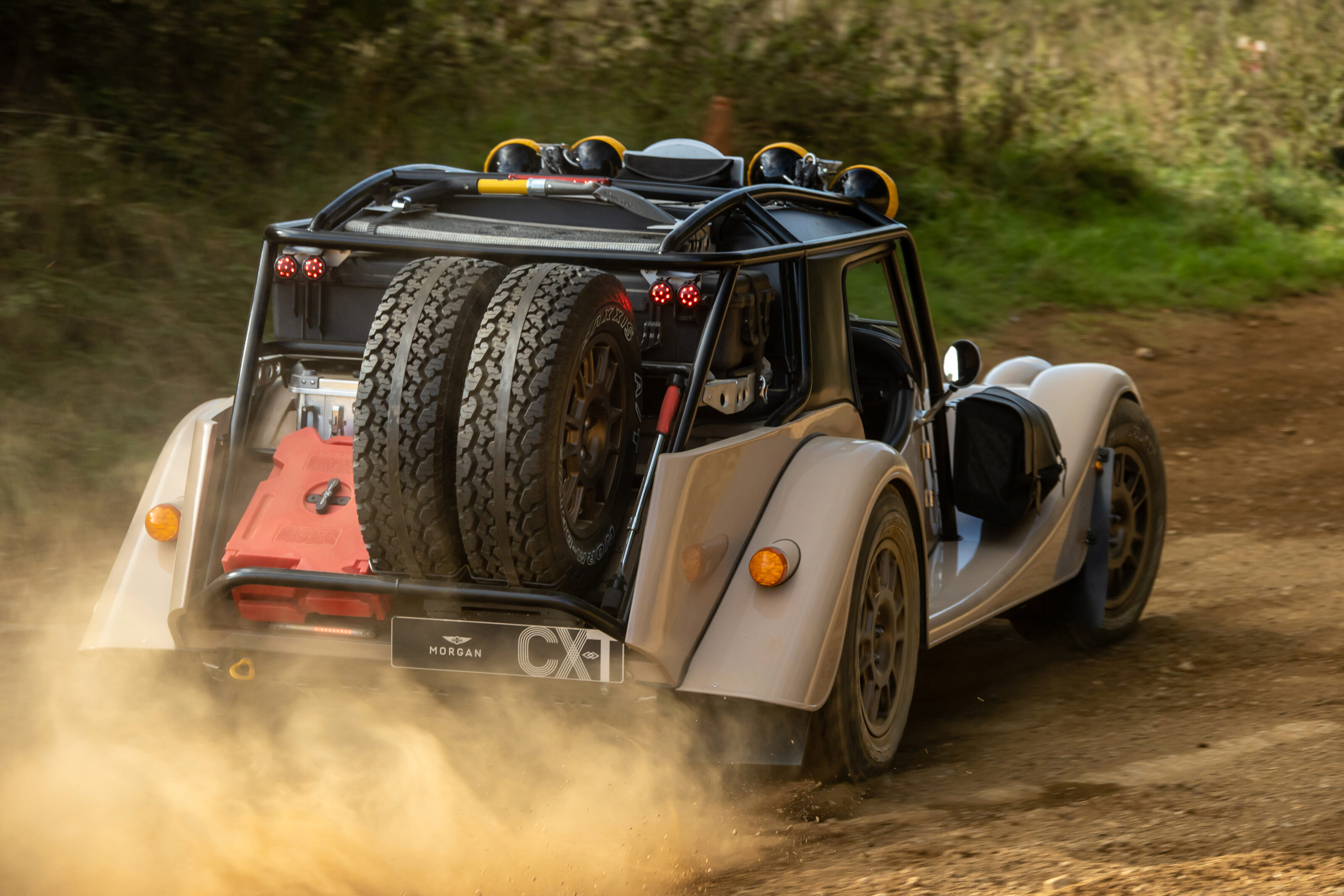
The two spare wheels, a jack and a wheel brace are stacked at the rear of the car so they can be readily accessed, as are the two 11-litre plastic fuel containers, and a tool kit that Jones says will enable a decent mechanic to fix most things on the car in the event of a mishap. Two fully trimmed, water- and dust-proof Pelican cases will keep your spare clothes and toiletries clean and dry. Under a small shovel are four ultra-light carbon composite sand mats.
“Nothing’s more than one level down,” Jones says. “You don’t have to unload everything to get something you need.”
Recovery gear is stored in the leather satchel on the left side of the car. There’s a documents holder on the centre console, a tungsten map light on the dash, and insulated food bags at the front of the seat squabs. The side screens, with their integrated sliding windows, can be secured to the roof of the car when not needed to keep the rain out.
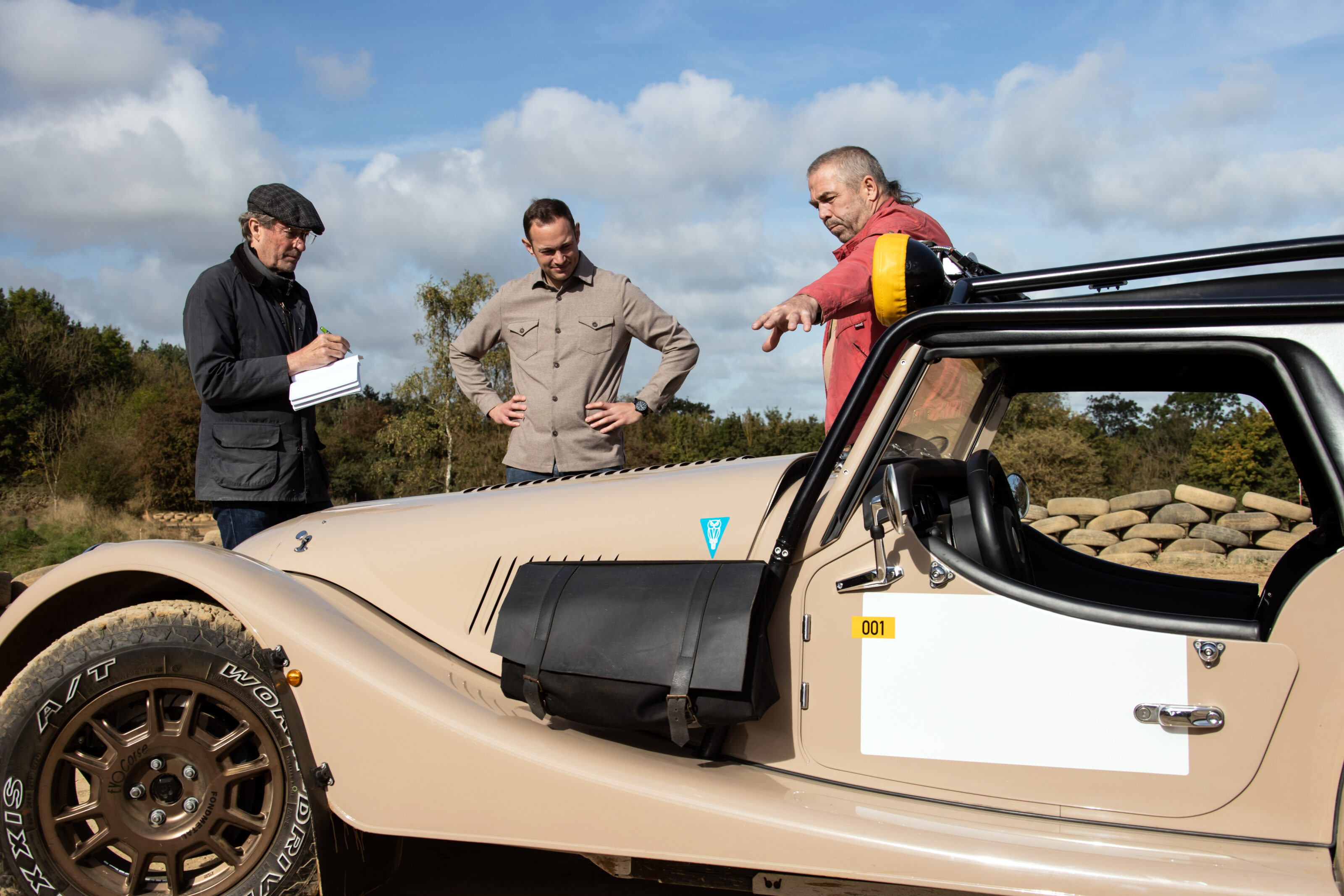
The Plus Four CX-T feels Dakar-ready when you hammer it down a rough road, skipping over bumps and holes and rocky outcrops that would punch a strut through the bonnet of a RAV4 at similar speeds. The BMW engine is smooth and punchy, especially in the mid-range, with a snarling note that sounds most un-turbo like. Even in full overlanding regalia, this Morgan still weighs less than 1200kg, so it’s very lively.
With your backside almost on top of the rear axle and the front wheels way off in the distance, the CX-T feels unlike any modern car on the dirt; you have to aim that long nose into the corners, and you’re much more aware of the slip angles at the rear. If you’re pushing, a little more bite from the front end would be nice, especially to help initiate Scandinavian flicks on corner entry, and it would be handy to be able to switch off the ABS so you can get the thing stopped better.
The Plus Four CX-T feels Dakar-ready when you hammer it down a rough road, skipping over rocky outcrops that would punch a strut through the bonnet of a RAV4.
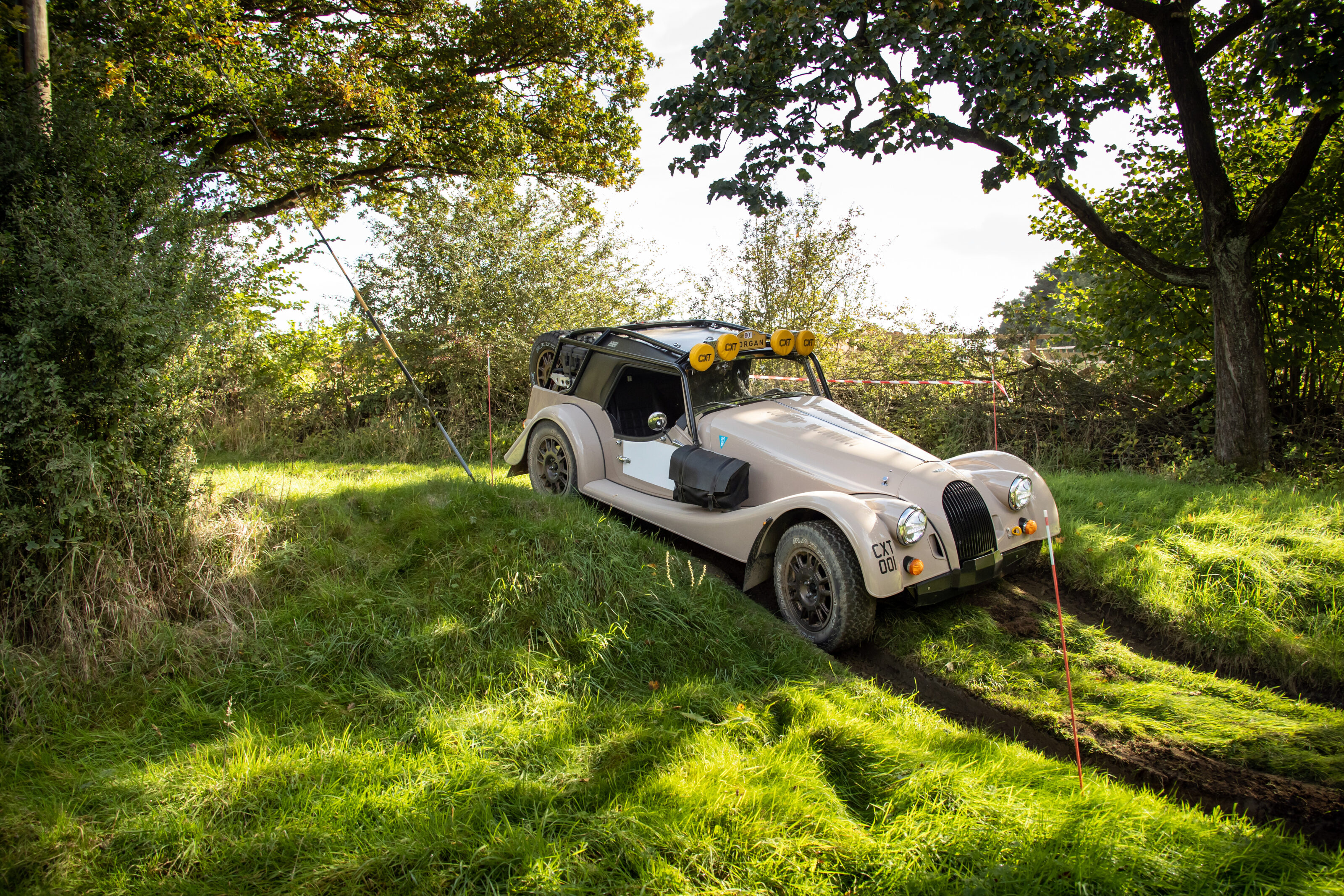
But this Morgan isn’t meant to be a special stage weapon; it’s for touring off the beaten track, its suspension, tyres and underbody protection robust enough to deal with a sudden washout or rocky outcrop. That said, the locking diff, grippy tires, and high ground clearance will get you through some surprisingly gnarly terrain if you’re careful. The CX-T is a nod to the Morgans that competed in gruelling trials in the 1920s and 30s, where simply getting along a muddy road, across a river, or over a rocky outcrop meant winning a prize.
Cynics might suggest the Morgan Plus Four CX-T is nothing but an expensive toy, and by any rational measure, they’re right, though you could say exactly the same about a Lamborghini Aventador. The whole point of this eccentrically capable Morgan is its irrationality. This is a car that will leave you with an ear-to-ear grin without having to drive it on the ragged edge or at warp speeds. It’s fun, pure and simple.
2022 Morgan Plus Four CX-T specifications
| Engine | 1998cc, I4, DOHC, 16v, turbo |
|---|---|
| Max power | 190kW @ 5000rpm |
| Max torque | 350Nm @ 1550rpm |
| Transmission | 6-speed manual |
| Weight | 1200kg (estimate) |
| 0-100km/h | 5.2sec (estimate) |
Car manufacturing could return to Australian shores – if Mike Cannon-Brookes has his way.
On the Energy Insiders podcast, the Aussie billionaire revealed he’s been pushing Tesla CEO Elon Musk to bring car production back to the country by establishing a Gigafactory (Tesla’s name for its new-car plants) here.
“I’ve called him again, I’ve done a little bit of lobbying over time on the Gigafactory,” Cannon-Brookes said.
“Look, at some point, I think it makes logical sense to me, I don’t pretend to understand the internals of those businesses exactly. But it’s clear that we have a lot of the raw materials.”
Tesla chair Robyn Denholm previously signalled the company’s intention to spend more than $1 billion on raw materials mined from Australia in order to create electric vehicle batteries.
At the same conference in Canberra, Denholm – who is Australian and helped establish Toyota’s Melbourne factory – suggested the country could see a return to car manufacturing.
“Can Australia move even further up the value chain? To large-scale cell manufacturing? To vehicles? In my view, that’s a possibility. Australia has the minerals, the know-how and many of the skills.” Denholm said in June.
Investment bank Morgan Stanley recently published a report in which the idea of Tesla manufacturing in Australia was raised, according to The Driven.
Mike Cannon-Brookes was instrumental in having Tesla build its large battery facility in South Australia in 2017, following an exchange of tweets with Musk.
The Tesla boss has been vocal about his troubles with government bureaucracy as the company works towards getting its German Gigafactory up and running.
The electric vehicle maker has also reportedly been facing difficulties with Chinese authorities in recent months, as well as parts suppliers having to reduce output due to electricity shortages across the country.
Following the tragic trio of deaths at the 2021 running of Targa Tasmania, Motorsport Australia formed a tribunal to investigate the circumstances of the accidents and provide recommendations to improve competitor safety in subsequent events. After extensive consultation with Targa competitors and officials, as well as motorsport experts both local and international, the tribunal has handed down its findings including 23 recommendations for future Targa competitions.
The tribunal was chaired by Garry Connelly AM, Motorsport Australia’s FIA delegate and the Chair of the Australian Institute of Motor Sport Safety, as well as being the man who brought the WRC to Australia in the late 1980s.
Joining him were four-time Australian Rally Champion and team principal of the Toyota Gazoo Racing Australia rally team, Neal Bates, and lawyer Matthew Selley, an FIA International Gold Steward, member of the stewards’ panel for Formula 1 and Formula E. He’s also a long-time rally competitor, including a two-time outright winner of the Classic Adelaide and three-time South Australian Rally Champion.
Submissions were heard over six hearings from a wide range of witnesses, including rally organisers and officials, current and past competitors, Targa and Motorsport Australia representatives and international safety experts. In addition to written and video submissions, evidence included competitor and vehicle data, official paperwork (service crew information, reconnaissance notes, scrutineer reports) as well as footage and photography from the accidents in question.
In both fatal incidents, the tribunal found that the accidents were essentially down to driver error, however the seriousness of the accidents was exacerbated by a number of factors, including driver ability, vehicle setup, failure to follow emergency protocols and lack of understanding of said protocols.
For example, the Mazda RX-7 crash on day five occurred at a slow speed, but evidence showed that the vehicle’s suspension setup and R-compound tyres were ill-suited to the wet conditions, and the driver’s response to a loss of control was poor but it was the circumstances around the crash, namely the vehicle rolling into a body of water, that led to its tragic outcome.
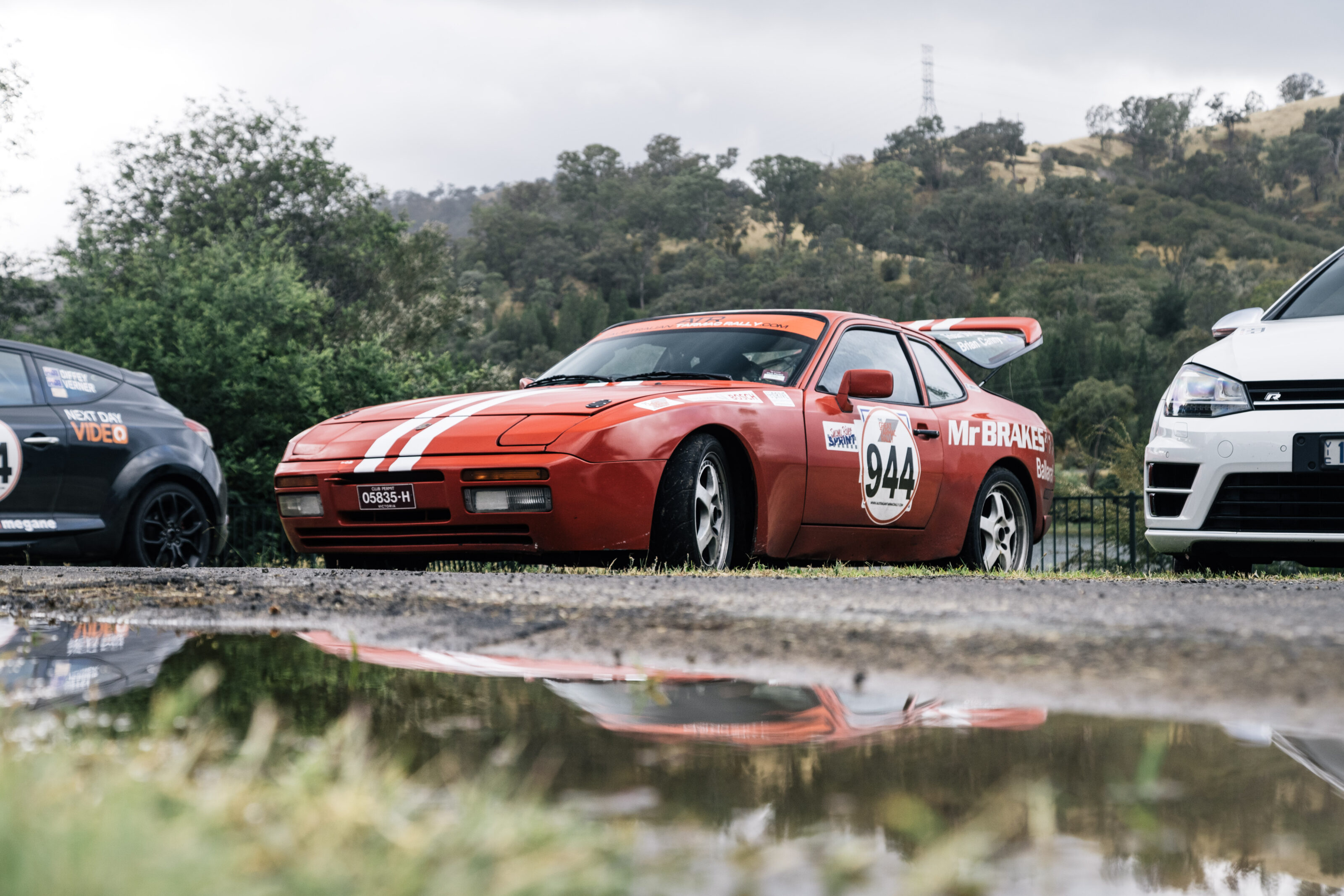
No stage should exceed the 132km/h average mandated as a limit by the FIA and the route should be altered regularly in order to reduce complacency and encourage every crew to complete pre-event reconnaissance.
The position of the car and stress of the situation meant the co-driver was unable to follow the appropriate emergency procedures, subsequent competitors misinterpreting his requests for assistance as instruction to drive on.
In its findings, the tribunal put forward 23 recommendations to Targa and Motorsport Australia “to provide guidance to the sport’s governing body concerning the overall safety of the event whilst concurrently balancing this with its desire, and that of the Targa Tasmania’s many stakeholders, to see the event continue in a safe and sustainable manner, and to retain wherever possible, the traditions of the past, and the many unique features of the event embedded by its founders”.
Recommendations were grouped into four categories: course design; vehicle preparation, suitability and related issues; driver/crew licensing, preparation and suitability; safety systems and processes. The tribunal recommended that a 200km/h speed limit be put in place for the event and that the route should be designed to avoid vehicles being able to exceed this speed wherever possible.
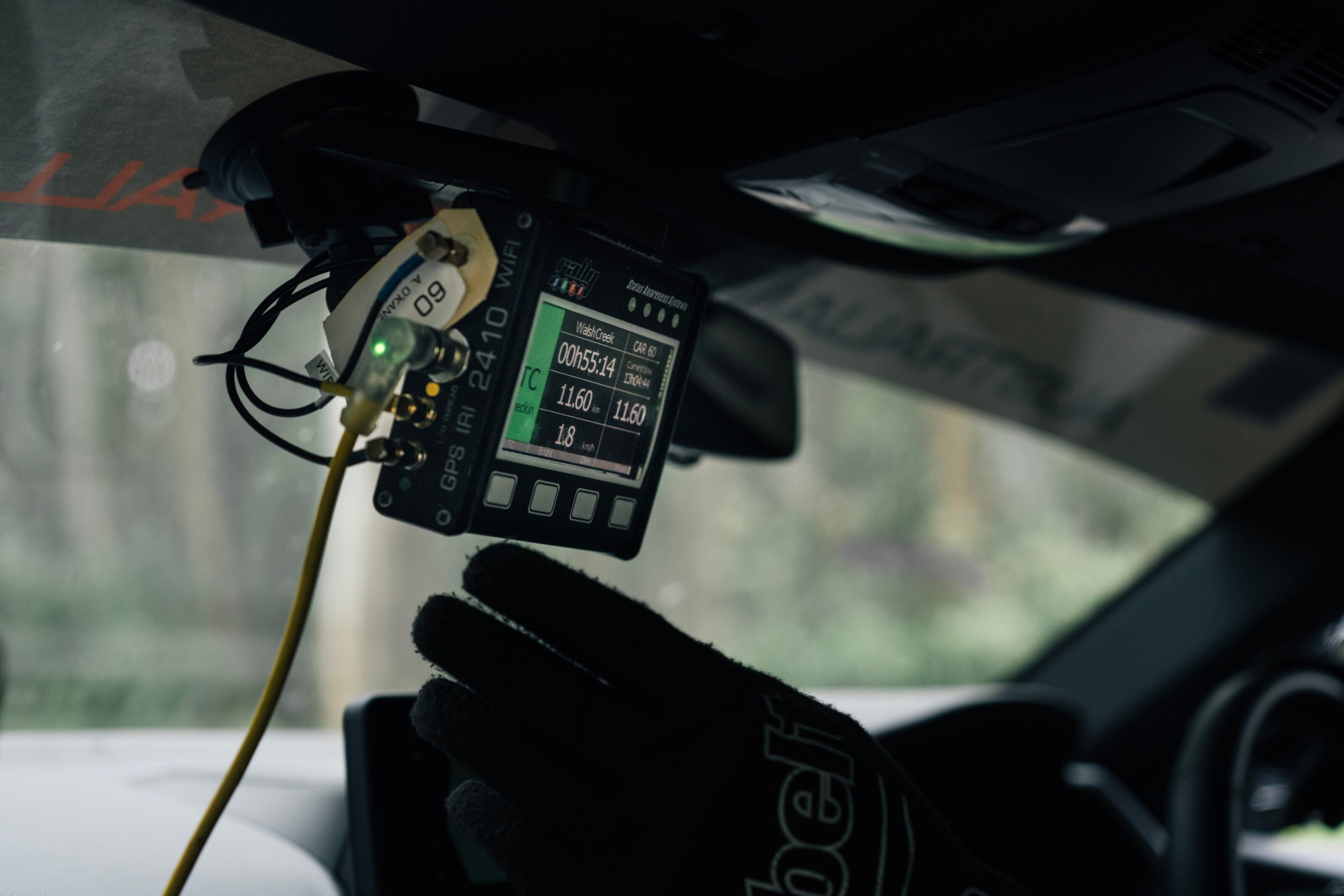
In stages where this isn’t possible, speed reduction methods such as chicanes or speed restriction zones should be used, particularly ahead of any hazard that could result in a car exceeding the limits of its suspension design, such as a significant dip or a crest.
No stage should exceed the 132km/h average mandated as a limit by the FIA and the route should be altered regularly in order to reduce complacency and encourage every crew to complete pre-event reconnaissance.
Furthermore, the tribunal recommended that all crews in the unlimited speed categories sign a statutory declaration that they have conducted at least one pass of the stages prior to the event, and that those crews who are unwilling or unable to complete a full reconnaissance be transferred to a speed-limited category of the competition.
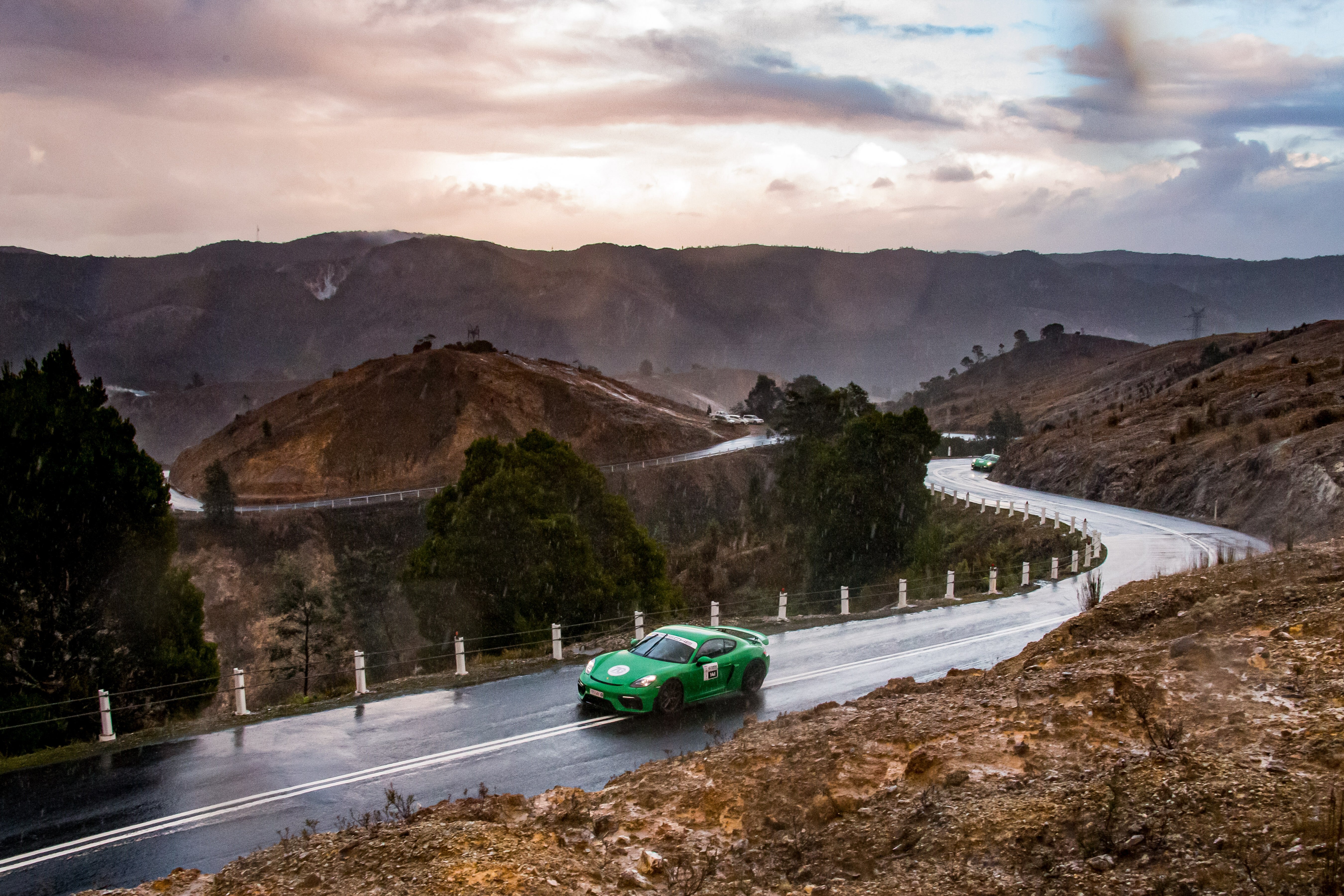
In the area of driver suitability, the tribunal recommended that Motorsport Australia develop a tiered licensing system for tarmac rallies, to ensure that crews have the requisite skill and experience to handle the latest high-performance machinery that is eligible.
Neal Bates, who won Targa Tasmania in 1995, told MOTOR: “The stages haven’t changed over the years but obviously the cars have changed a lot in the last 30 years. Most supercars [now] do 0-100km/h in around three seconds, they’re capable of top speeds of 300km/h; if you look back in the day the equivalent cars did 220-230km/h, so cars have changed massively over time and become a lot faster. And when you look at supercars, [they’re] probably less equipped to handle rough roads as well.”
The vast majority of the remainder of the recommendations were to do with competitor education, including vehicle setup, emergency protocol familiarity, operation of the RallySafe system and the risks associated with tarmac rallying.
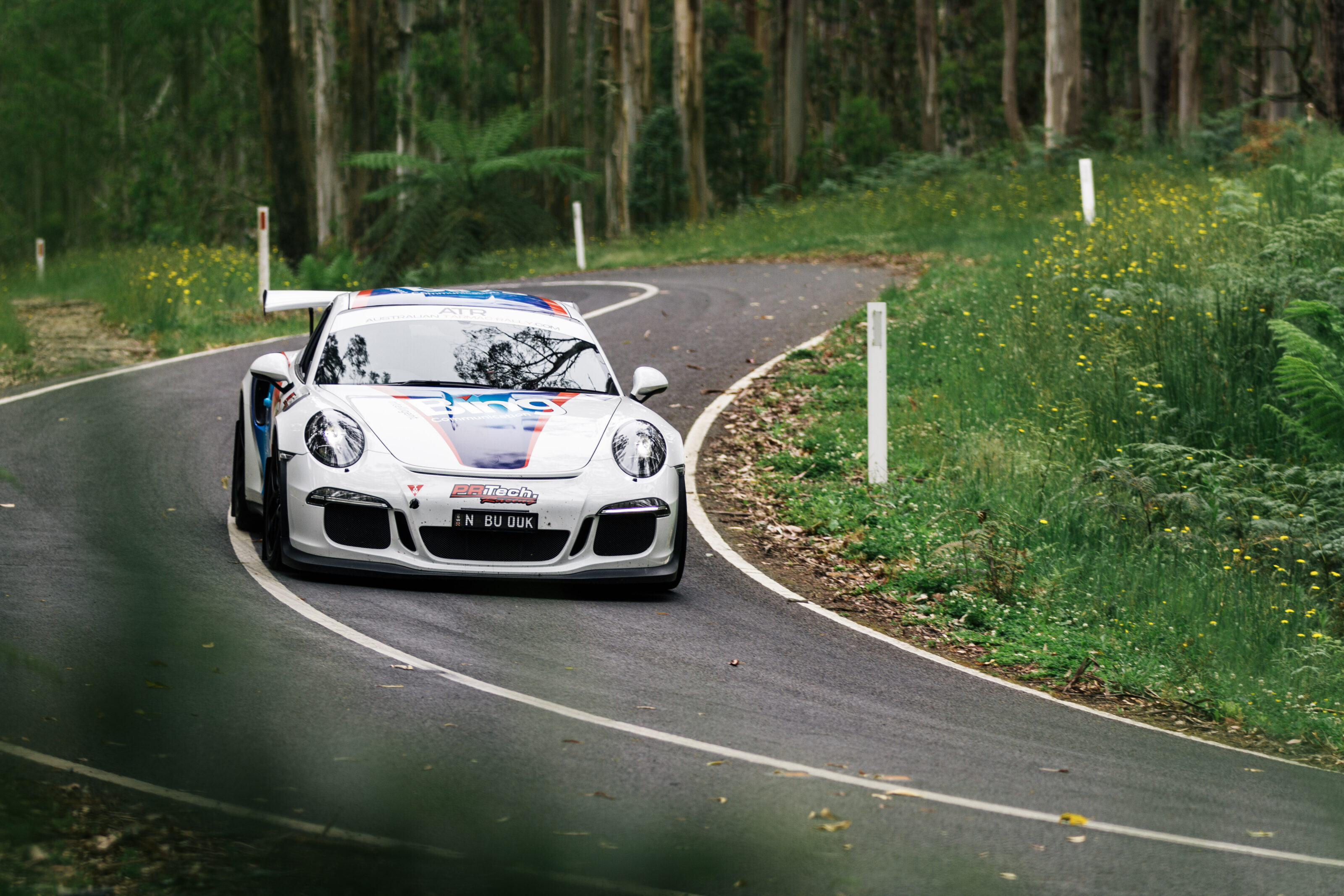
Says Bates: “If you look at the tribunal report, a lot of it is about education. You’ve got a lot of inexperienced people in incredibly fast cars and what you want to do is try and make these people understand what they’re doing and what the consequences are if they get it wrong.”
However, important recommendations were also made regarding the use of wet weather tyres – crews currently being limited to six tyres for the entire event – the implementation of a more detailed manual vehicle tracking system to back up the automated RallySafe system and a more relaxed schedule to reduce crew fatigue.
In response to the tribunal’s findings, Targa quickly announced it would adopt all 23 of the recommendations. Targa CEO Mark Perry told MOTOR that recommendations 1-4, 6, 13 and 16, primarily about reducing vehicle speeds and increasing hazard awareness, were adopted for early September’s Targa Great Barrier Reef.
Perry also said that while plans were in place to adopt the remaining recommendations for the 30th running of Targa Tasmania in 2022, the slight delay of that event from early March to late April will simply give the team extra time to implement them.
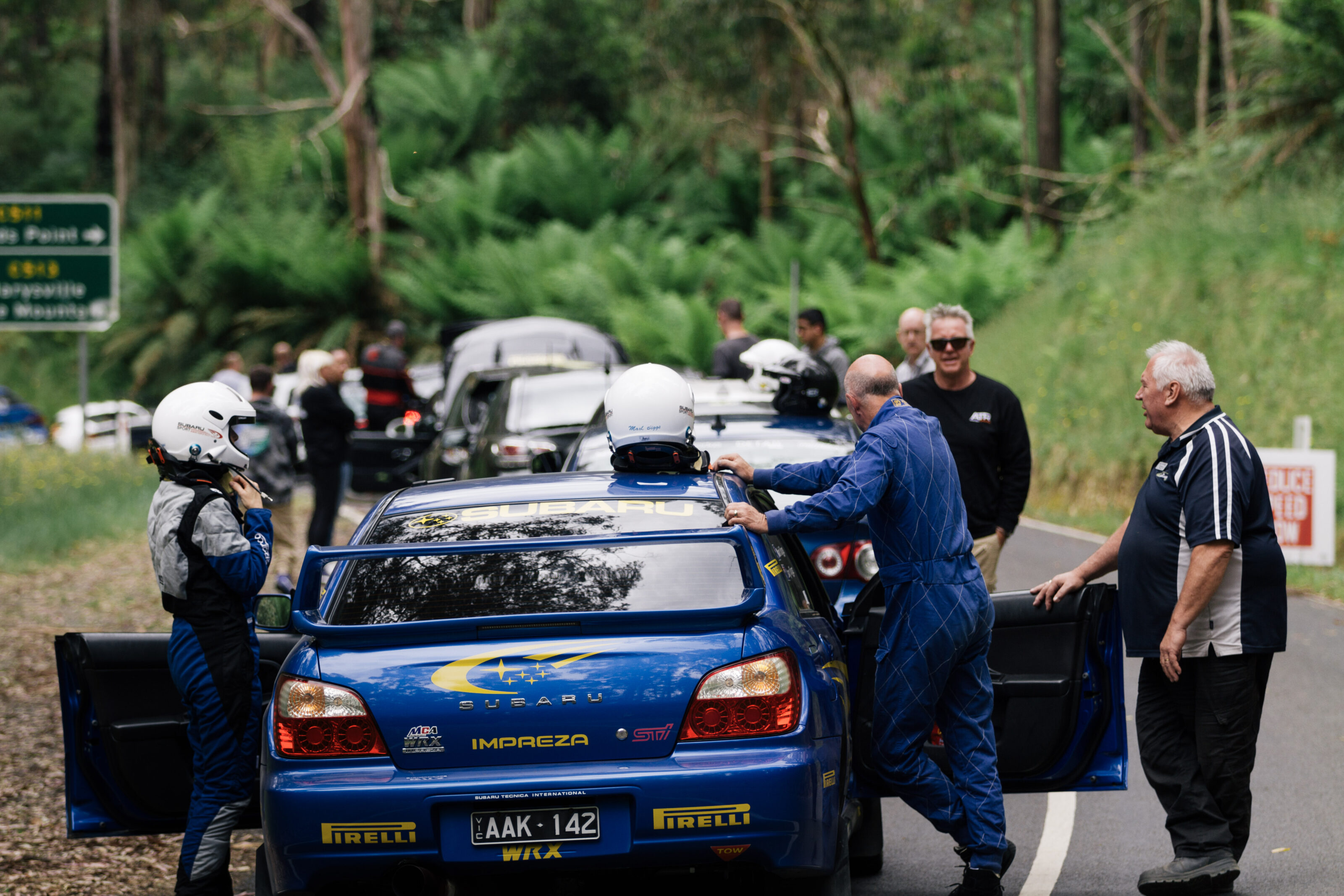
In regards to limiting speeds, especially on some of Targa Tasmania’s faster iconic stages, Perry told MOTOR: “The course for 2022 was already well down the design and approval process when the recommendations were released. We are currently assessing the best options for each stage and it won’t be a case of ‘one size fits all’, with every stage being like a different race track. Expect to see a variety of agreed measures in place across the course to achieve the planned outcomes. It is vitally important to Targa Tasmania’s legacy and future success that the nature of the course, with its iconic stages and the endurance element, which has made the event famous around the world, is retained, whilst ensuring that all agreed measures are in place.”
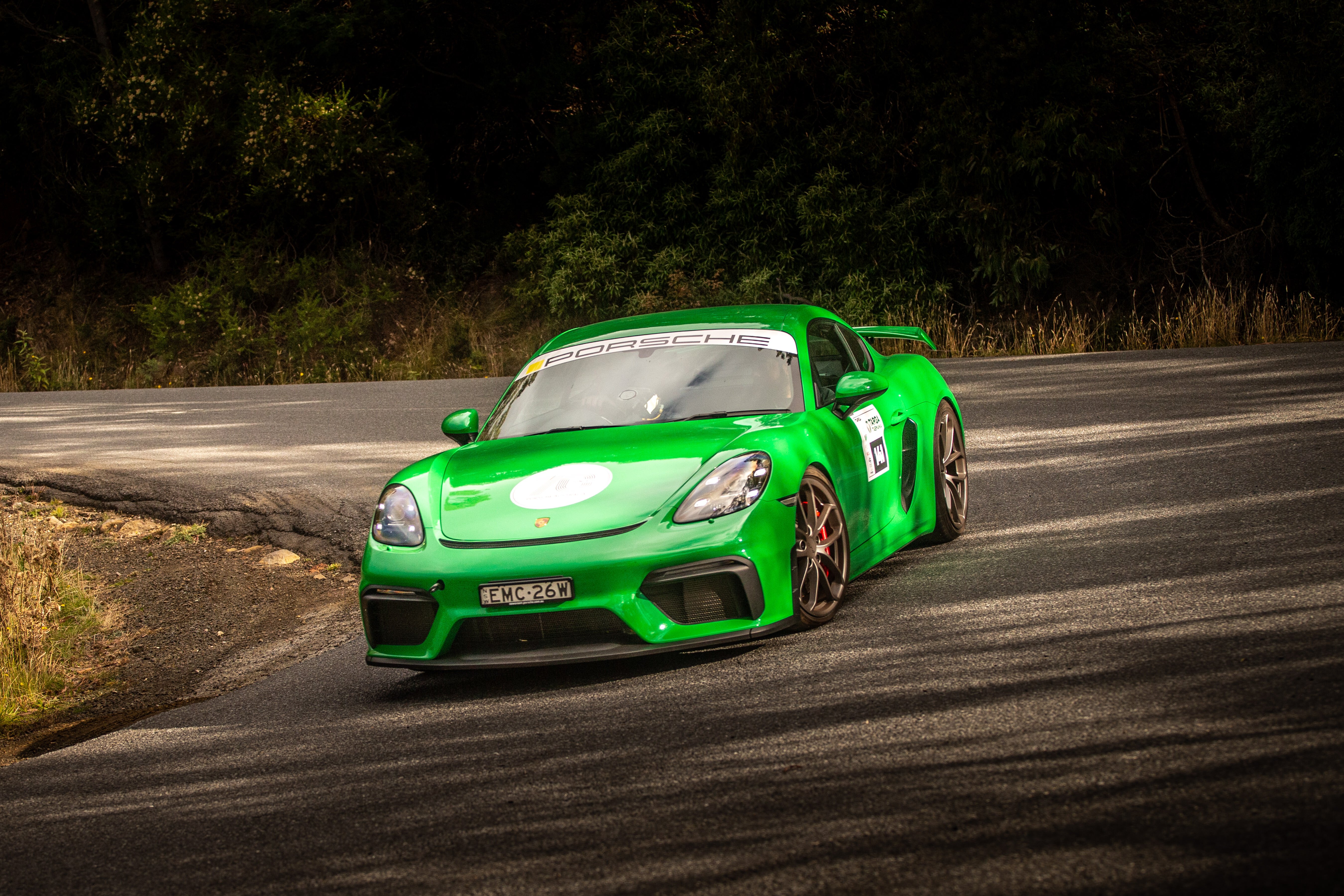
A tiered licensing system will also be introduced, Mike Smith, Motorsport Australia’s Director of Motorsport and Commercial Operations, telling MOTOR: “This is currently in the planning stage. Motorsport Australia will be ready to implement these changes from March 2022. We will work closely with all tarmac rally event organisers, including Targa, on introducing these changes to make it as seamless as possible for competitors, while ensuring we meet the recommendations outlined by the tribunal.”
Targa’s 30th Anniversary event will take place from April 26-May 1, having been delayed slightly to move beyond COVID restrictions, with Perry saying in a statement: “We want to make the 30th anniversary something special – the event of the year for motorsport and car enthusiasts. We have some exciting things planned – not just for our entrants but all the Targa fans in Tasmania as well.”
The full tribunal report can be read on the Motorsport Australia website.
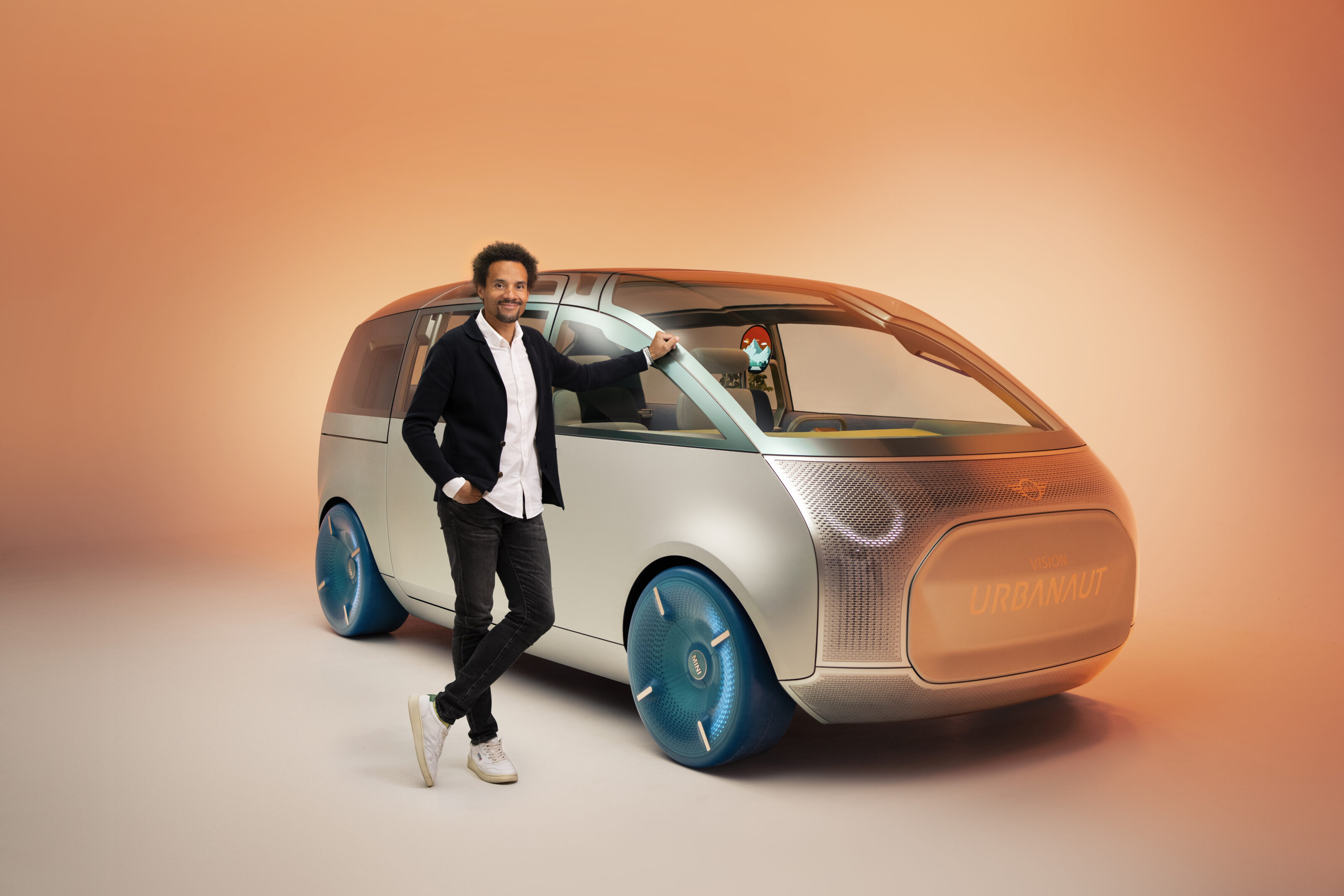
Even though Great Wall Motors will build the first bespoke electric Minis starting in 2023, the future of the brand does not – in contrast to the smart-Geely connection – lie solely in the hands of a Chinese manufacturer. Instead, the heirs of Sir Alec Issigonis will do things their own way, with a little help from the BMW think tank and parts pool.Bernd Körber, 46, is the antithesis of the archetypal BMW top manager. While the CEO Oliver Zipse had to jump over his own shadow to swap the trad penguin suit for the all-black Steve Jobs livery he wore at the zeitgeist-enlivened IAA keynote speech, the Mini mastermind comes across as even more down-to-earth and accessible than Dieter Zetsche in his final jeans-and-sneakers sessions.
Unlike most of his colleagues, the father of two does not chase the limelight but prefers to tell a story. “Today was the first day we talked about the Mini strategy for the 2030 to 2037 timeframe,” was his uncommonly frank opening gambit when we spoke one-on-one late last month. “We got the next five years pretty much buttoned up, but even thinking about the platform that will replace the matrix introduced in 2023 is still spooky stuff right now.”
After all, this is November 2021, the order books are fuller than ever, and Mini could go from strength to strength if it wasn’t for the increasingly critical supplier situation. After all, almost the entire car industry still uses outdated and underperforming semiconductors of which production capacity won’t be ramped up again after the COVID-triggered drop in demand.
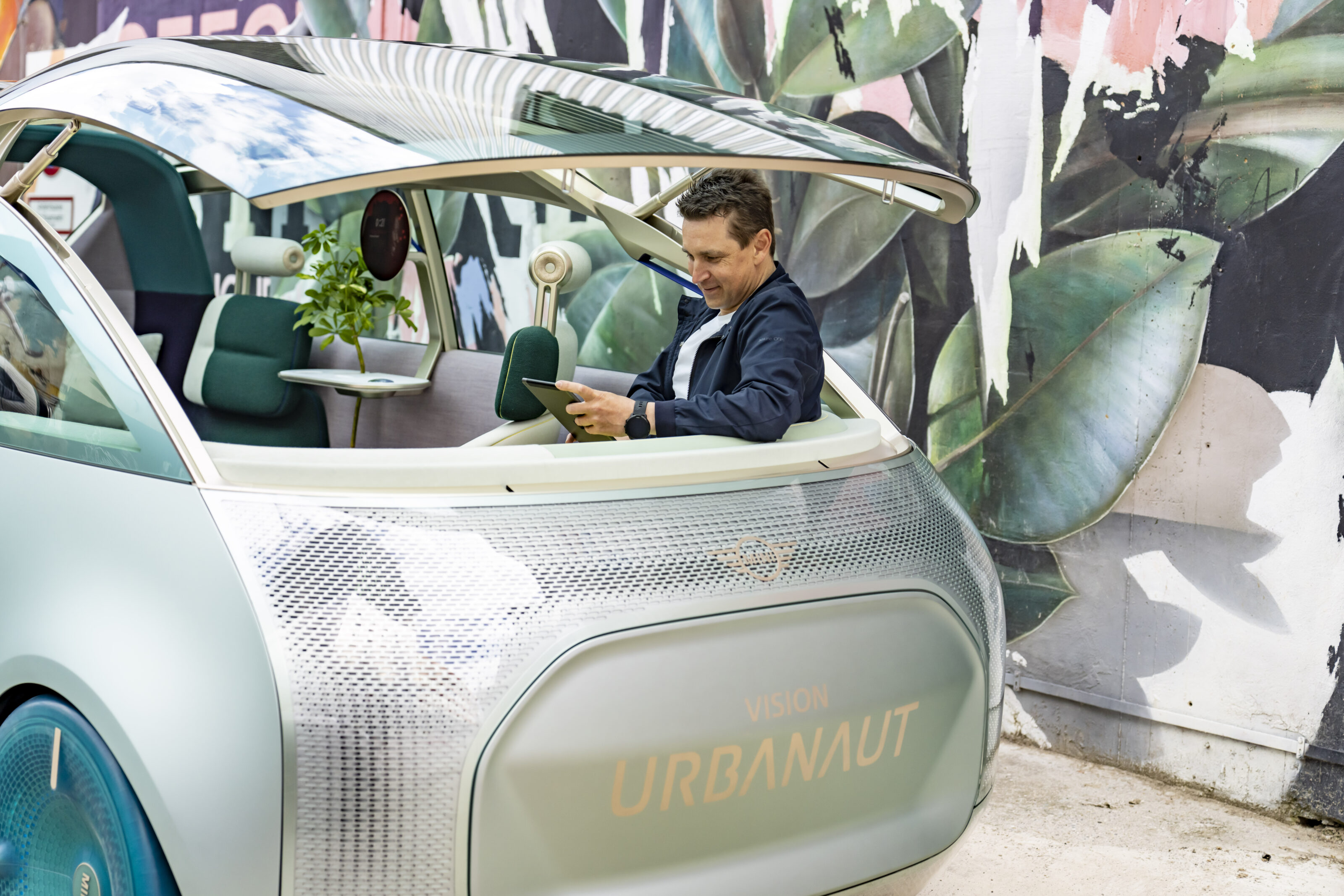
Theoretically, Mini could easily sell 350,000 units this year, but unless the parts backlog bubble bursts, a five per cent increase over last year’s total of 292,000 sales looks like the best-case scenario. Even optimists don’t expect the ultimate goal – a substantial half a million Minis annually – to materialise before the second half of the decade. By then, Mini should have doubled the number of production sites to four (two in China, one each in Germany and the UK), introduced up to five new volume models, and extended the bookends of the portfolio with an ultra-compact all-electric three-door hatch and a more extravagant iteration of the Urbanaut concept.“Come 2030, Mini will be fully electric,” states Bernd Körber. “This also applies to the John Cooper Works portfolio. The plug-in hybrid is merely a transformation technology, but the internal combustion engine remains in production for nine more years, at least in most models bar the Clubman. In the future, Mini will use two different architectures – a bespoke EV matrix developed in Munich but assembled in China, and a comprehensive evolution of the existing platform.
The smallest common denominator of this parallel product strategy is the three-door hatchback that kicks off as an EV in 2023 while carrying on as ICE version until mid-2025. Here’s a surprise: the visual difference between the two cars will be hard to spot. How come? “Because we won’t mess with our prime icon. A Mini is a Mini, no matter whether it is battery- or petrol-powered.”Originally, Great Wall intended to sell redesigned down-specced Minis under one of its own nameplates, but this plan is off the table – apparently, Chinese customers prefer larger vehicles, and when they do choose a sub-subcompact, it had better be the real thing. Codenamed AO, the new EV models will be distributed on a global basis exclusively through the Mini network.
Unlike the BMW i3, the motor of the three-door Mini EV drives the front wheels. What is going to happen to the five-door variant, you ask? It soldiers on in combustion-engined form, but there won’t be a battery-operated equivalent. Instead, 2024 is the scheduled launch date of a brand-new five-door zero-emission CUV that will almost certainly also be available with all-wheel drive. Think of it as a reimagined four-door Paceman with a less rakish roofline and the new XXL body-coloured grille. Except for image and price, it plays in the same league as the MG ZS and the Hyundai Kona.Those who prefer engines to motors can choose from three models based on the heavily revised Genesis platform (2025-2031) née UKL1. In addition to the three- and five-door hatch, Mini keeps the cabriolet going on the olde-worlde layout before eventually switching to the new EV architecture at a still-to-be-determined date.
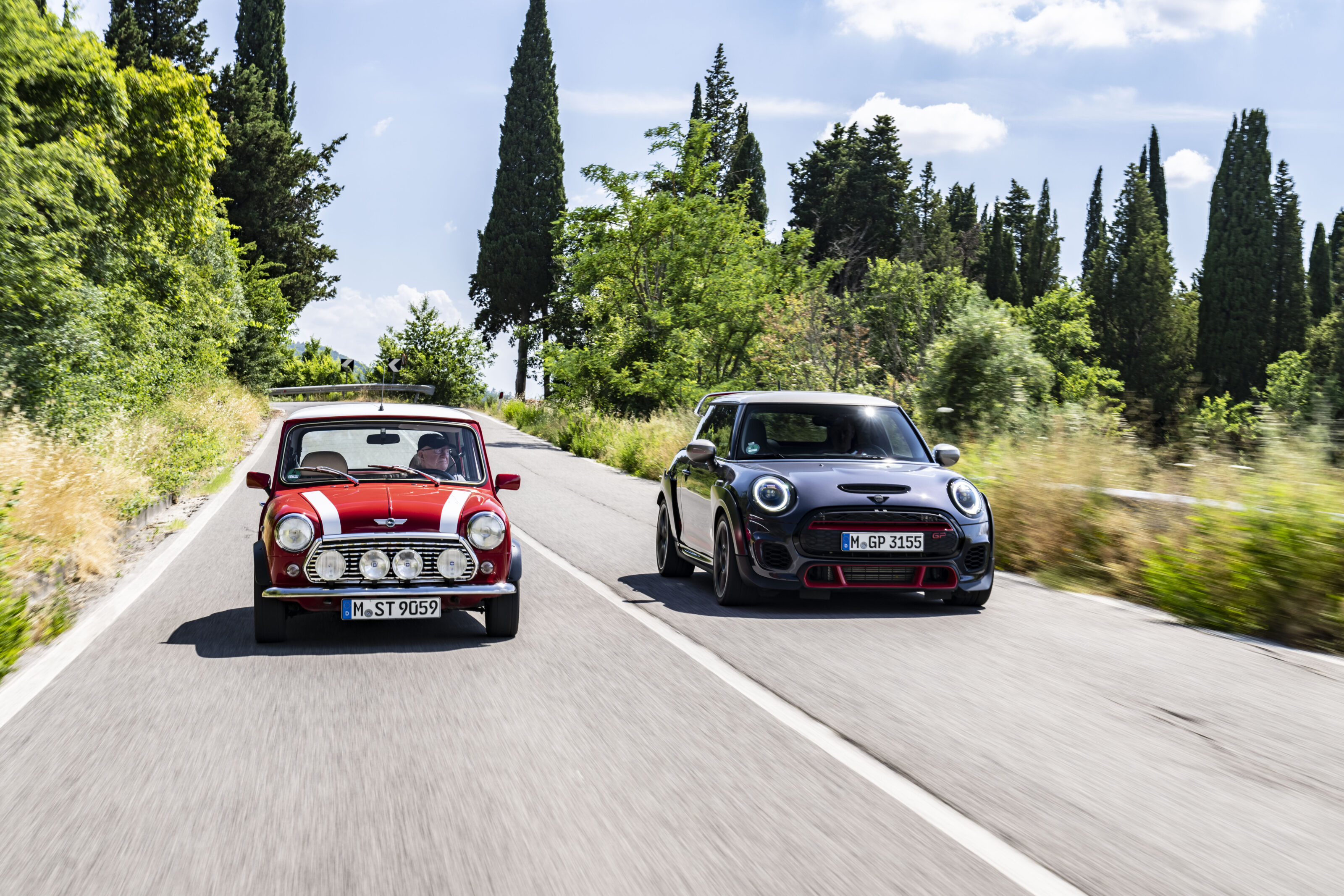
The next Countryman, built in Dresden (the first Mini ever made in Germany), will however drop the familiar component set in favour of the bigger BMW X1/iX1 hardware. Both the ICE version and its all-electric sibling are to share the same platform and the same design. Comments Bernd Körber: “The plan is to market the CUV as a small electric-only crossover and to position the bigger third-generation Countryman SUV about half a notch above the current model. Thanks to the modular layout, there should be no practical downside for either drivetrain option.”So far, so good. The critical time span for the marque begins once all of the above models are up and running. After all, the range extension strategy entails recurrent freshenings between 2025 and 2030 when that all-new common DNA is due to materialise. By reading between the lines, it seems clear that Mini will also use the second half of the decade to move its bookends further apart.
At the bottom of the range, we expect a smaller three-door electric hatch along the lines of the Rocketman design exercise and the on-off MiniMini. This city car should eventually replace the barely larger three-door hatch. At the other end of the scale, a less extreme yet even more versatile version of the Urbanaut is tipped to address the people and cargo mover segment. While MiniMini will likely raid the Chinese AO parts bin, the evolution of the Roomba MPV theme first discussed over five years ago is a UKL derivative. According to an inside source, the Urbanaut effectively replaces the Clubman that will be discontinued in late 2023. It adopts the Clubman name and features the sliding door, the packaging and the lounge layout of the show car, sources say.“From now on, we need to expand and brush up the range in much shorter intervals,” says the CEO. “I’m even thinking about annual updates focusing on what we call speed styles – the core design elements that have become Mini trademarks. Like the side scoops, wheels, stripework, roof treatment, taillight graphics, toggle switches or seat patterns. All it takes to generate a fresh look are new colours, different materials like knit surfaces, mood changes by projection and special style packs.
“On top of it, we would like to fan out the choice of limited-edition specials which may be heritage-inspired or future-oriented.”
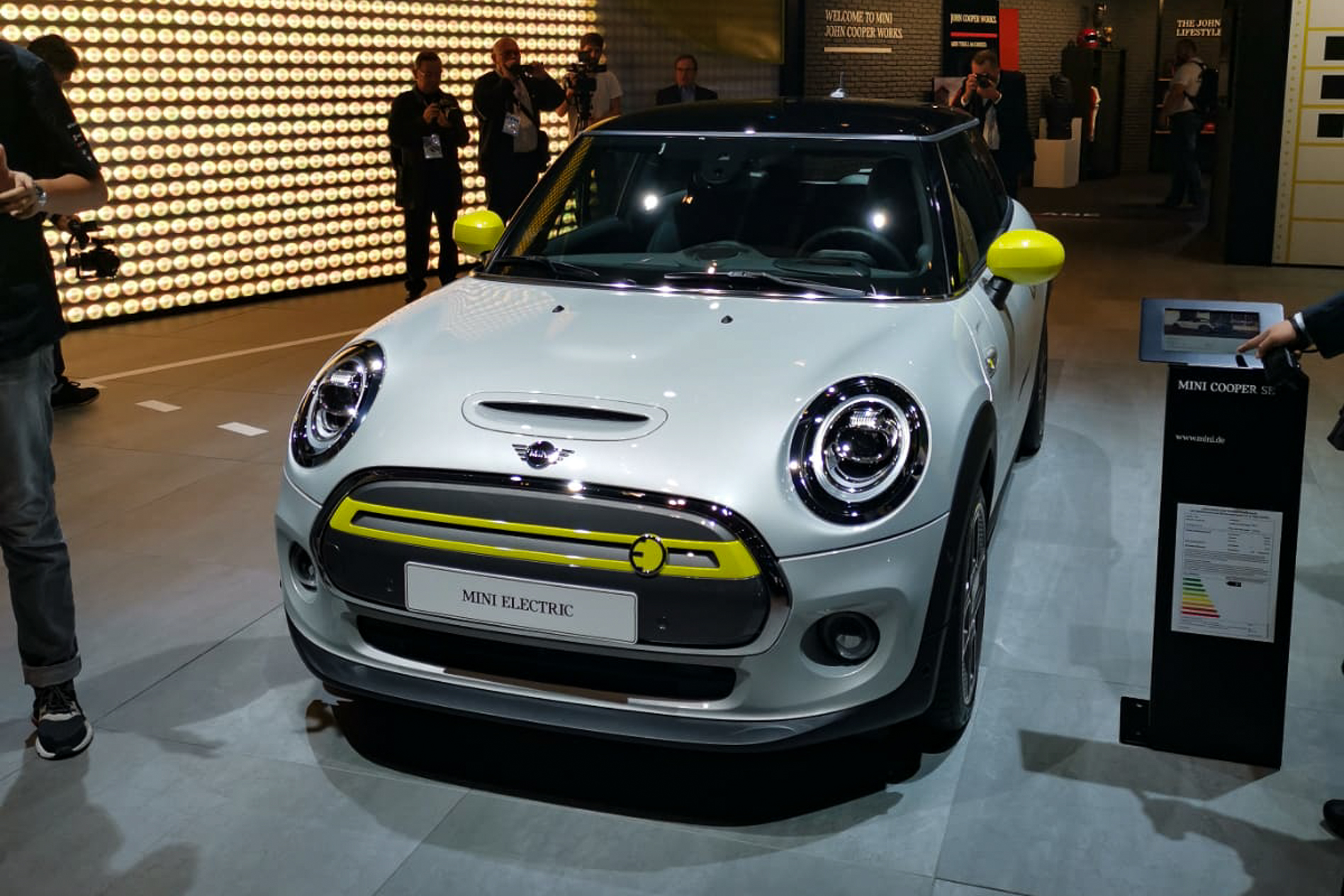
The first ace product planning has up its sleeves is a selection of coachbuilt Minis. That’s coachbuilding as in fresh sheet metal, bespoke interiors, reworked engineering, different bodystyles and very small build runs of plus/minus 100 units. True, these will be quite expensive brand-shapers, but according to the Mini management, there is a market for such highly visible collector’s items.Even though the coachbuilding team won’t take up operation for another six to nine months, they are already talking to outside suppliers who would have to carry out the conversion work. Names from the past that come to mind in this context include Radford Engineering, Wood & Pickett, Broadspeed and Ogle Design, but in today’s environment outlets such as Roding Automobile are more likely candidates. The most obvious recreation project is of course the iconic Mini Moke.
Other favourites are said to include a street-legal Formula E pace car, a Pikes Peak crackerjack inspired by the 1964 Monte-Carlo winner, and a dramatic single-seater high-performance Speedster. On a less extreme scale, we may furthermore see a more stylish Countryman derivative and a sporty five-door CUV capable of completing the sales mission the three-door Paceman never came close to.Ace number two details the future of the JCW sub-brand. “This is still work in progress,” admits the man in charge. “We know for sure that JCW will eventually also go fully electric, but perhaps we should kick off one more truly radical project before the high voltage revolution strikes.”
Interesting thought – but would such a decontented JCW GPR with more power, a quickshift manual transmission and carbon-ceramic brakes not point the brand in the wrong direction? Apparently, this is an ongoing debate, and there are those who believe Mini should instead accelerate its electrification efforts. In either case, extra performance is the name of the game.
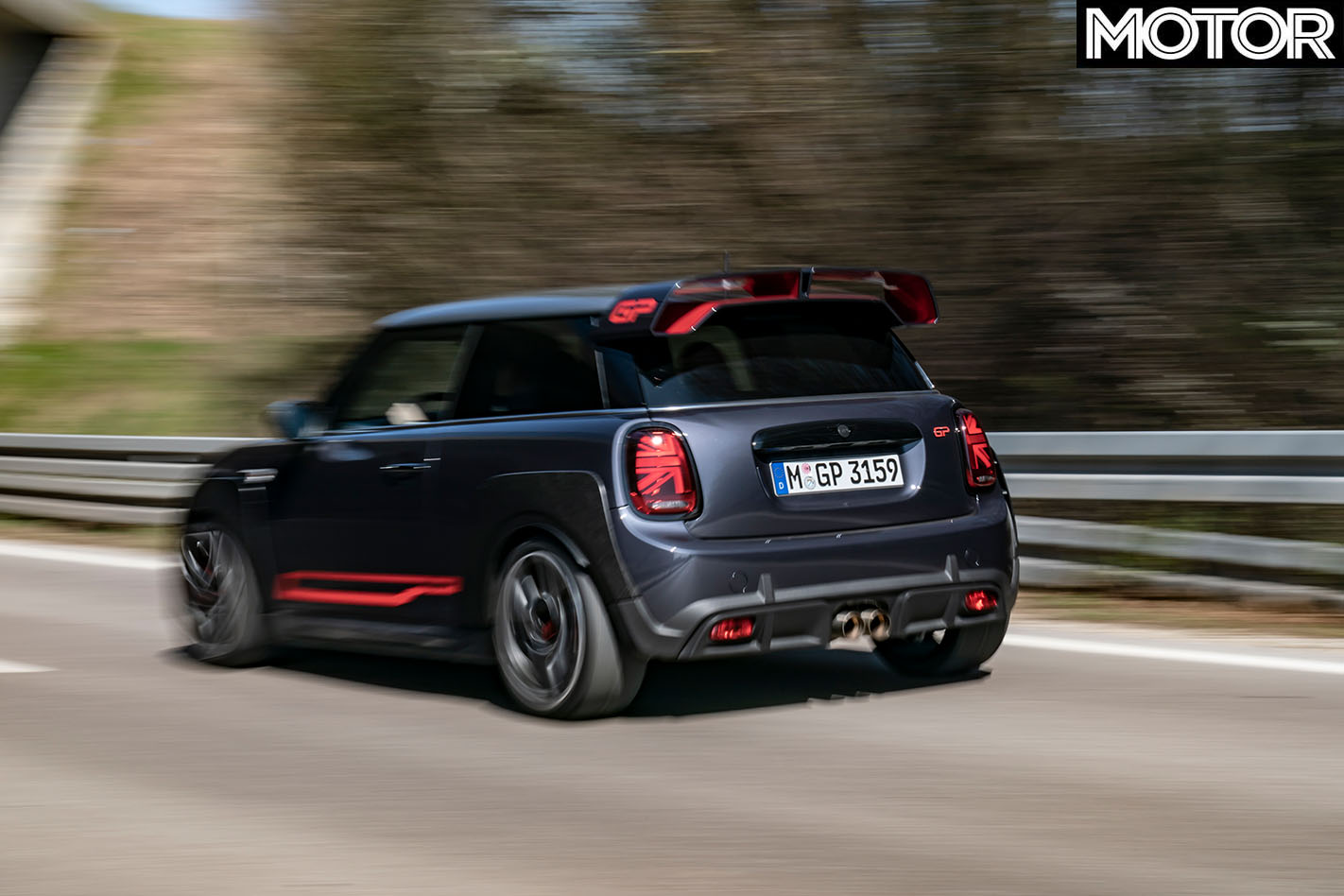
While the 2.0-litre four currently rated at 228kW has very nearly reached its limit, the ultimate electrified JCW GT could easily muster between 260 and 300kW. To keep the weight down, insiders predict relatively small 40 and 60kWh batteries, modest ranges of 300 to 400km, and a fast-charging 400V system.Long-term, Mini is bound to arrive at a T-junction where it can go its own way or join the BMW parent company. It’s too early to tell whether the AO approach has the potential to evolve into a more efficient second-generation EV architecture, which would have to be supported by more advanced batteries and dramatically upgraded software – after all, autonomous driving remains high on the wish-list of every premium manufacturer.
If AO does have enough mileage left in it, BMW may even be tempted to adopt it for a future i1 and i2, which at the moment exist only in the Munich ivory tower. Alternatively, Mini could tag onto the entry-level set of modules derived from the Neue Klasse gene reservoir. Whichever way the pendulum swings, the brand still has five more years to decide, and there is always the option of joining a certain plan C mapped out by Great Wall Motors…
- Welcome: Star Spangled Hammer
- Update 1: A Case of the Bends
- Update 2: In for the Strong Haul
- Update 3: Done dirt Jeep
Welcome: Star Spangled Hammer
Price as tested: $72,950 Fuel this month: 1221km @ 13.9L/100km
Welcoming the Jeep Grand Cherokee S-Limited to the Wheels garage is a bit like making friends in an old person’s home. The hard truth is it’s not long for this world. Over a decade has passed since Jeep debuted this generation of Grand Cherokee, and you can already register your interest online for the next all-new model.
But there are reasons why the S-Limited deserves a run in its twilight years. For starters, its 5.7-litre Hemi V8 is whispered to power the new model from the outset. And that engine is why this S-Limited even exists at all.
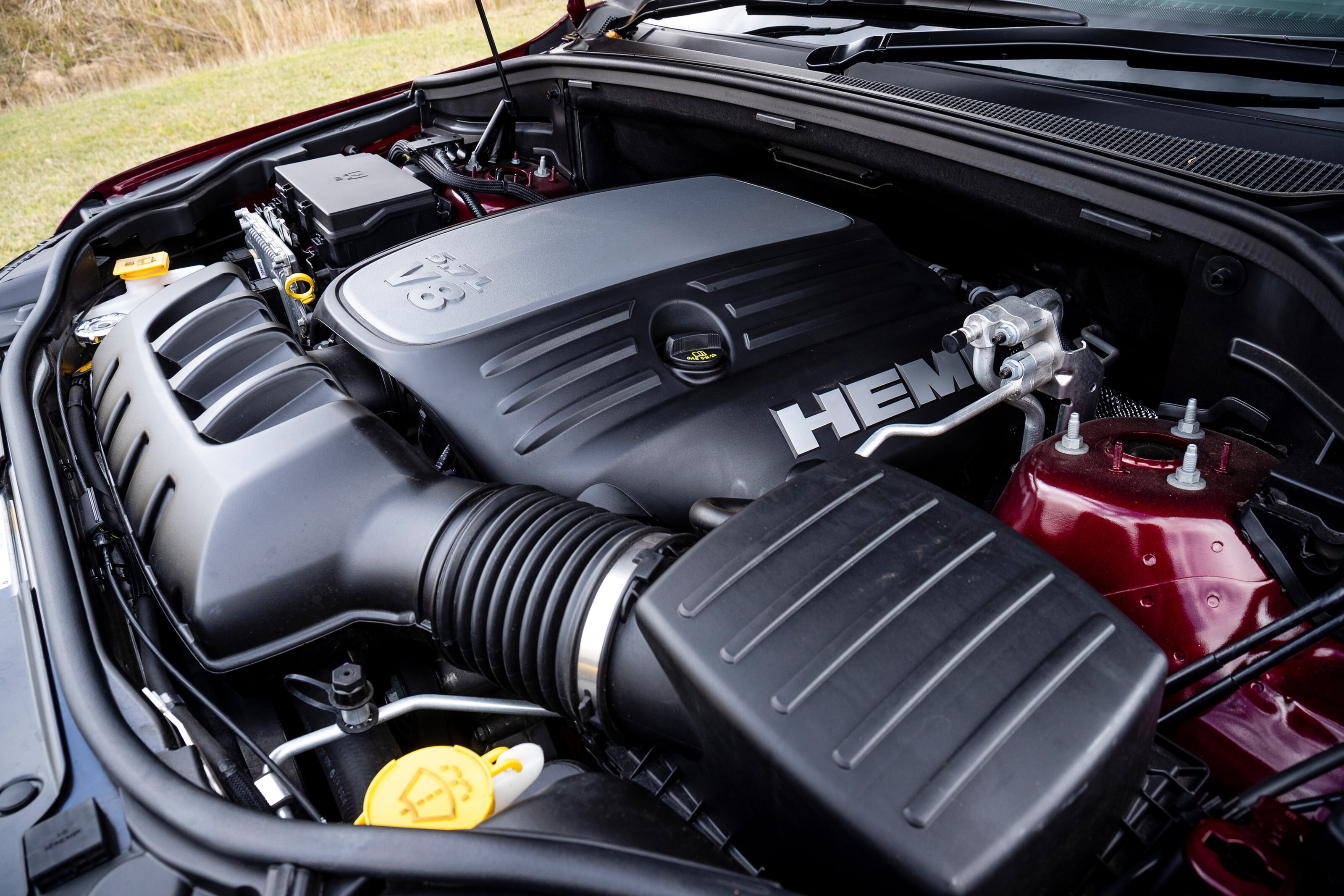
After the engine bowed out from the Grand Cherokee range in the nose of the Limited years earlier, it was reinstated in late 2019 when the S-Limited arrived as a limited edition. Then, after Australia snapped up the first 100 units, Jeep decided to keep the S-Limited in its line-up full-time. So, not ‘limited’ at all, really, but welcome all the same.
With outputs like 259kW and 520Nm, the S-Limited sits one rung down from the (supply constrained) 6.4-litre V8 Grand Cherokee SRT making 344kW/624Nm. Meanwhile, the supercharged and slightly unhinged 6.2-litre V8 Trackhawk produces twice the power, with 522kW/868Nm. Grunt is channelled through an eight-speed transmission.
Visually, our S-Limited scores gloss-black 20-inch wheels to match the darkened window trim, wing mirrors, badges and front grille. The front bumper and side skirts are a more aggressive design, too. It also comes with premium LED foggies, darker lights front and rear, darker window tinting and a pair of trapezoidal exhaust tips to round out the visual differential over the models below it.
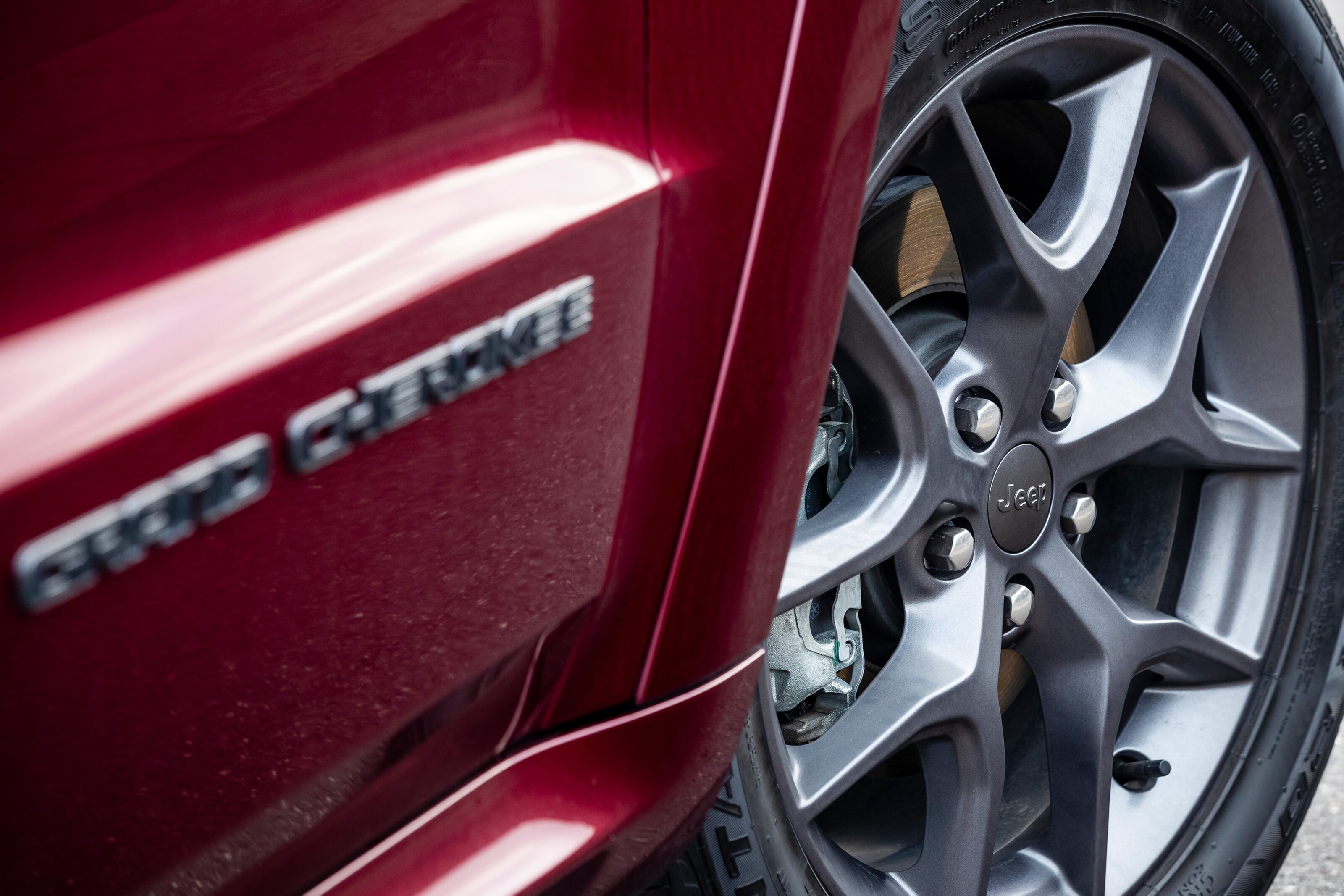
Some features are obvious in their absence. For instance, air suspension and a more rugged Quadra-Drive II all-wheel-drive system are saved for the S-Overland – the circa-$4500 more expensive diesel variant two steps up the range.
Without them, the S-Limited can focus on value. It’s priced at $72,950 before on-roads, which is still a hefty wedge. The days when the Australian dollar had a bit of strength against the US greenback and $61,000 bought a Grand Cherokee Limited 5.7 are long gone. Even an SRT could be had for $77,000 (!) back then.
So far, during our time spent together, the S-Limited is stacking up as an SUV after our own hearts. The 5.7 V8 has perfect manners. It’s quiet during easy driving – which is most of the time, let’s be honest – only revealing a growl when you’re up it. The engine is super-flexible, too. There’s ample low-down grunt, but it also enjoys unfurling into the upper revs when you need a kick in the back.
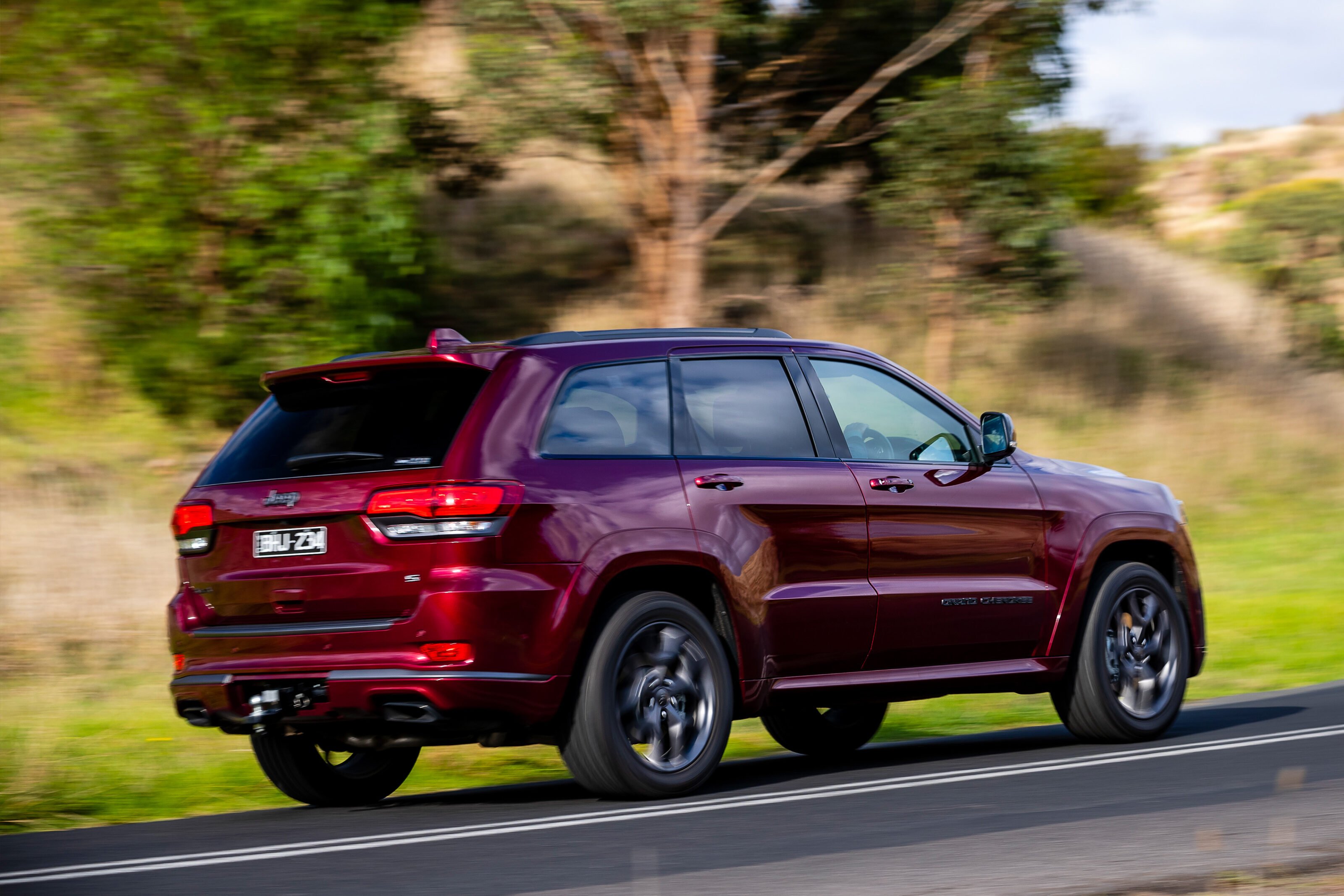
But the consumption will need to be discussed – it’s already drinking above its official 13L/100km – and we’ll investigate how it behaves when asked to tow a load approaching its 3500kg braked limit.
As for other plans, that Quadra-Trac II drive mode dial, with the option to drop the transmission into low-range gearing, will get a workout once we head bush to test its off-road ability.
So far, during our time spent together, the S-Limited is stacking up as an SUV after our own hearts.
Update 1: A Case of the Bends
In search of answers to dynamic questions
Fuel this month: 1124km @ 12.7L/100km Fuel consumption so far: 2345km @ 12.4L/100km
How fast is it? Few questions loom larger in my mind after I meet something that has a V8. So when the video team asked if they could borrow my Jeep Grand Cherokee S-Limited as a camera car at Heathcote drag strip, I obliged with one condition. An experienced tester was to run the S-Limited down the strip and record the figures.
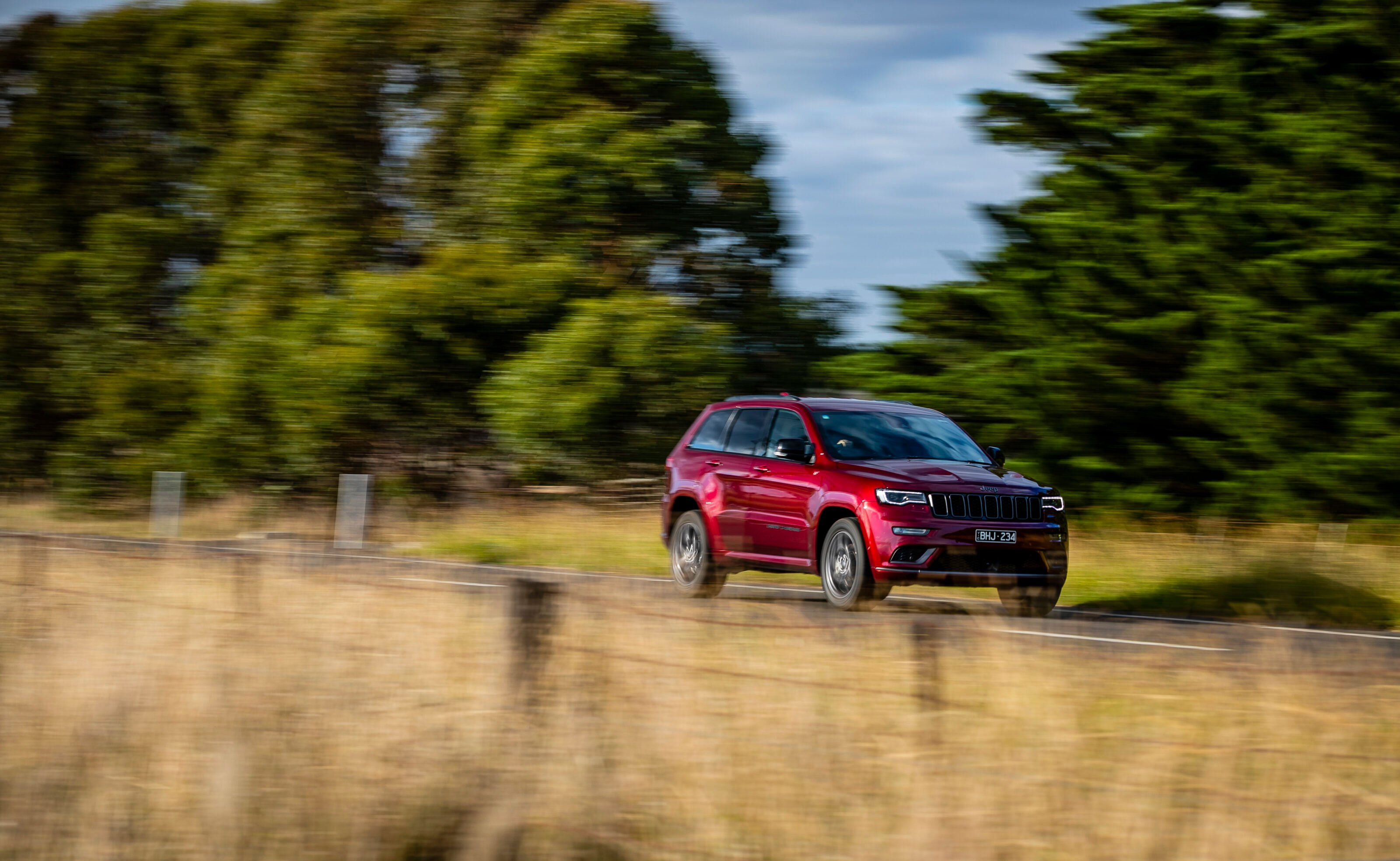
I got my wish. Editor of sister magazine MOTOR, Andy Enright, forwarded me the data the next day. And there were surprises, to say the least. It turned out the S-limited accelerated to 100km/h from rest in 8.1sec and needed 15.8sec to cross the 400m line at 142.5km/h. For comparison, a Genesis GV80 with a twin-turbo V6 producing 279kW/530Nm can deliver 5.9sec/14.1sec 0-100km/h and 400m runs, respectively.
I called Enright for further explanation. It turns out that rain on a nine degree Celsius day doesn’t bode well on a recently resurfaced track. The S-Limited was losing traction despite having all-wheel drive and 265mm-wide Continental tyres to ground its 259kW/520Nm.
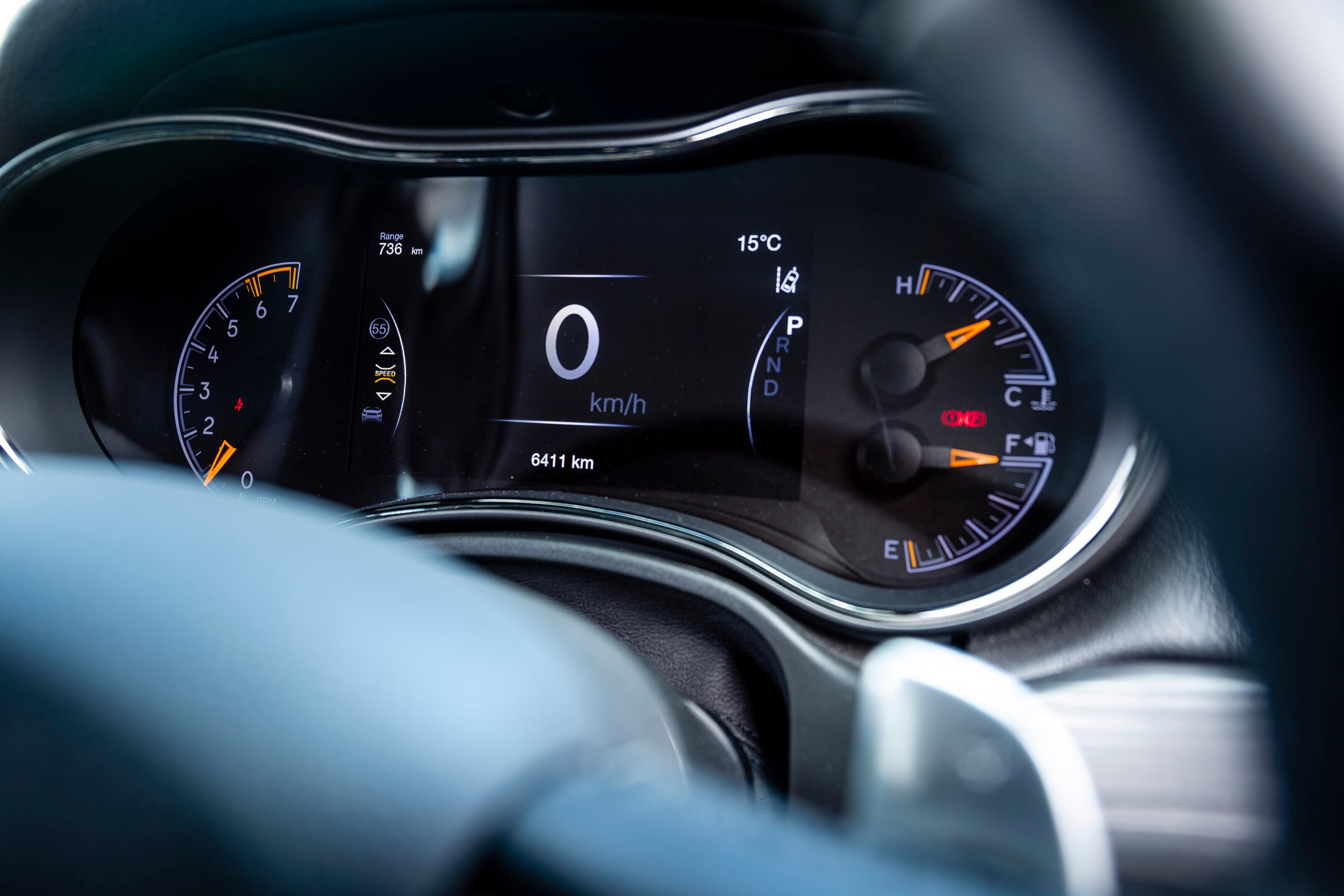
The chance to certify the S-Limited as a grunt-machine would have to wait. So once I had the keys, I took it to a road more winding to gauge how it handled corners.
Even though this Grand Cherokee generation debuted in 2011, it is based on the Mercedes-Benz ML-Class that arrived in 2005, dating it at almost 17 years. However, the Mercedes-Benz platform also meant the Grand Cherokee upgraded from a live rear axle to a more sophisticated multi-link rear suspension arrangement. It also brought a stiffer body structure.
As a result, the S-Limited handles with poise, up to a point. The electric steering offers good weighting, and the front-end responds more keenly than you would expect. The eight-speed ZF transmission and disc brakes also stand up well, both offering good feedback.

Push beyond six tenths, though, and bodyroll on fixed-rate suspension increases noticeably. The sidewall flex on the 50-profile tyres also delays its responses. Meanwhile, the Continental Crosscontact tyres offer low grip, allowing wheelspin as the rear open differential struggles out of tighter corners.
However, the Jeep’s obvious limits should not surprise. The S-Limited touches on a time when a V8 was a reliable way to put smooth, effortless power in a big, luxury-focused car. Call it the V8 Calais of the Jeep Grand Cherokee range. But just don’t ask me how fast it is.
The S-Limited handles with poise, up to a point. The electric steering offers good weighting and responds more keenly than you would expect.
Update 2: In for the Strong Haul
Grand Cherokee earns its keep with a tow
Fuel this month: 405km @ 14.9L/100km Fuel consumption so far: 2750km @ 13.0L/100km
Filthy. That’s how my Honda Integra Type R sits (unregistered) on one side of my garage. Anyway, it might have been the snap Melbourne lockdown forcing me into the garage, but I decided it was time for at least a wash. However, since I wanted to test the Jeep Grand Cherokee S-Limited’s towing ability, the two needs became mutually beneficial.
I’d rent a car trailer and clean the Integra at a DIY wash bay. This would give me a chance to test both the Jeep’s 750kg unbraked and 3500kg braked towing capacity while exploring more of its peripheral features.
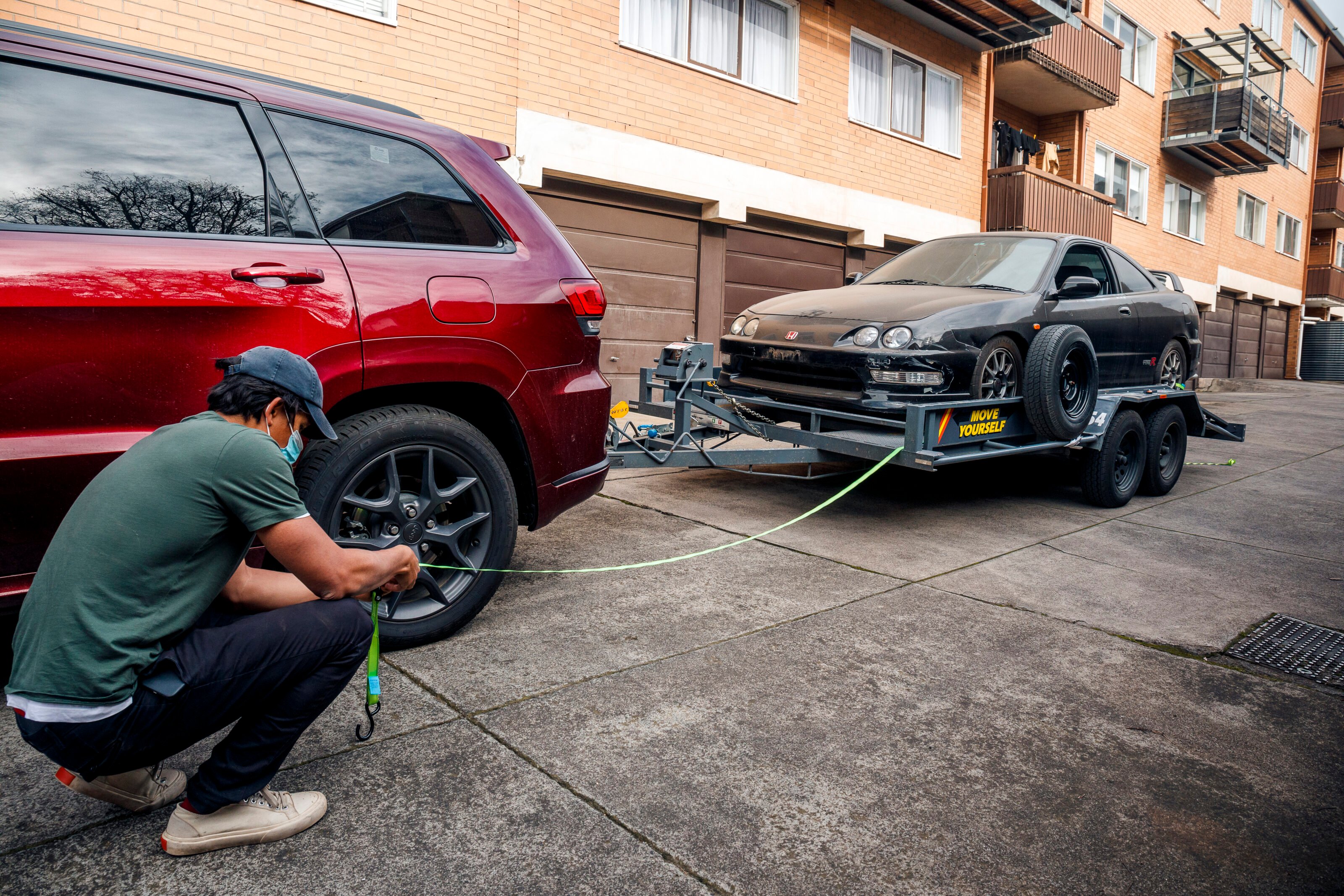
It’s nice to know, for example, that a towing package is included as standard on the S-Limited. It’s integrated well into the rear bumper and when I arrived to pick up the trailer, I discovered another handy feature as well.
First, like most cars, the reverse camera’s image is overlaid with lines to show where your rear wheels are going. But there’s another line for the tow ball that changes trajectory with your steering input, so you can line up a hitch. It works an absolute treat.
Backing the S-Limited into a cramped servo car park to hitch a trailer is always going to be tricky, but this centre line impressively reduced a lot of the guesswork.
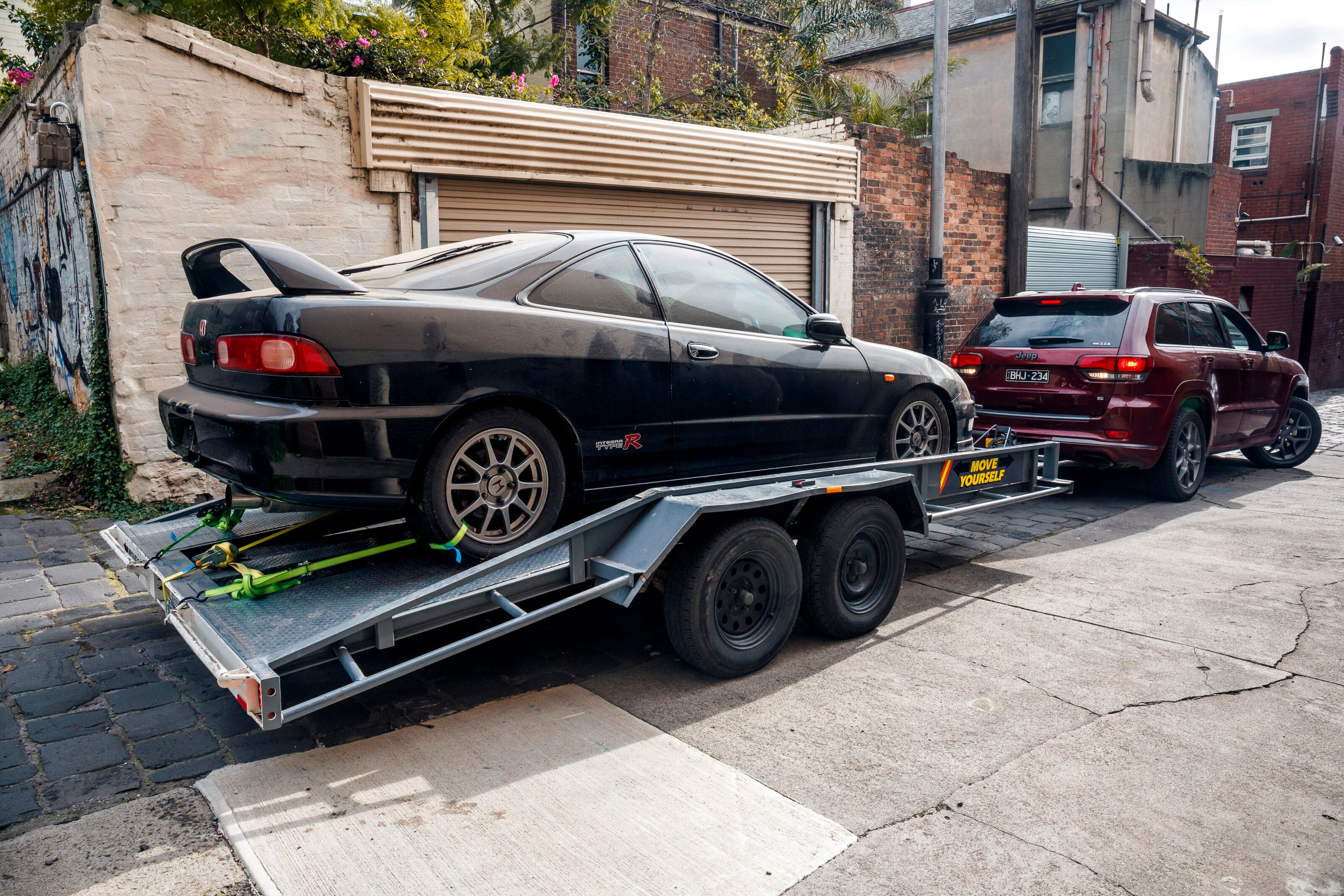
Once loaded onto the trailer, we still weren’t near the S-Limited’s 3500kg tow rating or 6099kg maximum gross combined mass. The trailer only weighed 1876kg total, with the Integra’s 1087kg (tare) aboard. Combined with the S-Limited’s 2370kg and my 80kg, we only weighed around 4330kg in total. But it made a difference.
You can feel the 180kg hanging from the tow ball lifting the S-Limited’s nose to lighten the steering ever so slightly. It also pre-loaded the rear suspension and reduced the damping’s well-judged absorbency over urban roads. The brakes certainly felt it, as well, when the trailer’s system annoyingly disengaged too early at traffic lights.
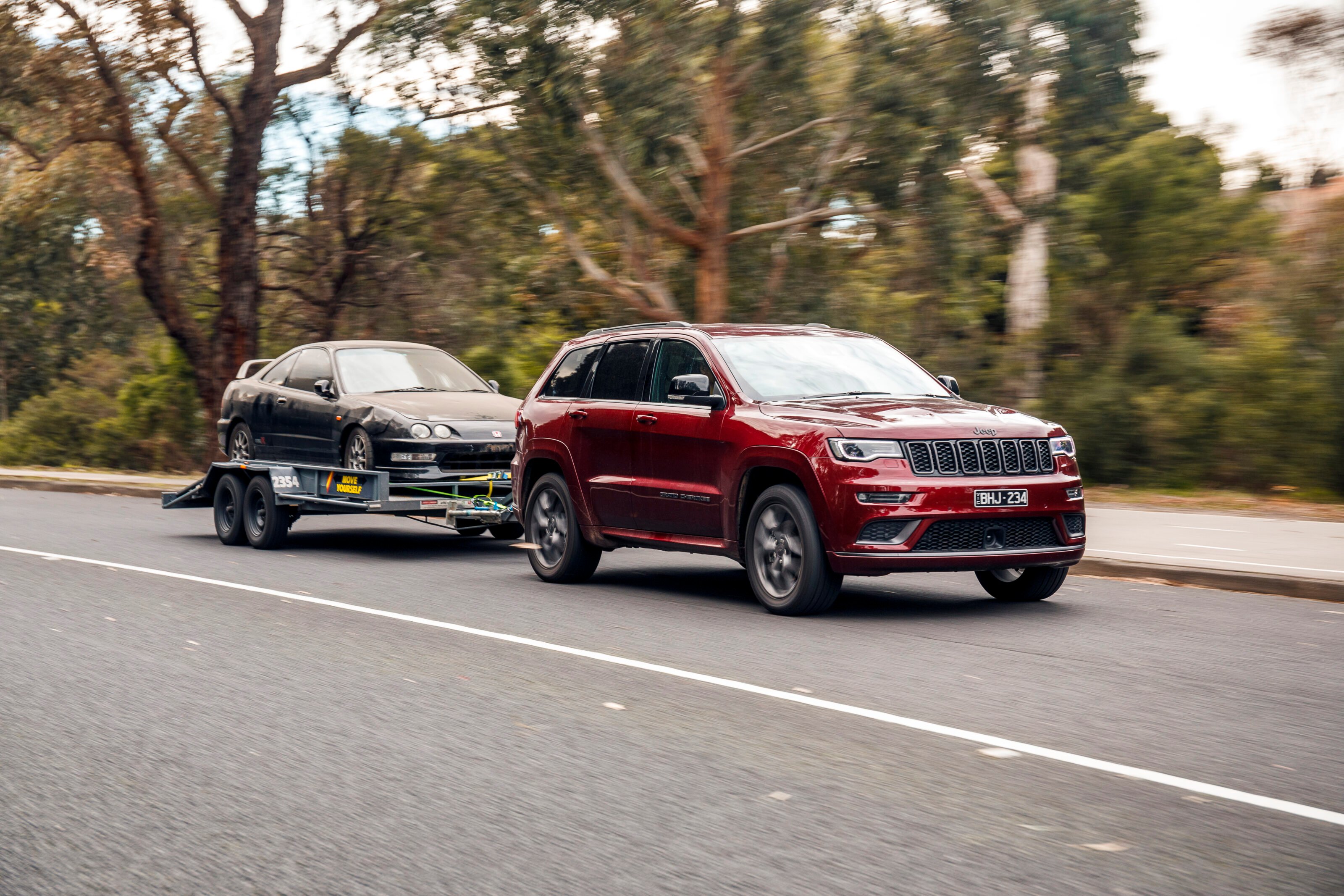
Again, however, the Jeep’s Hemi V8 powertrain proved it’s ever the workhorse. Even on the highway at 90km/h, the S-Limited pulled much more convincingly than an Iveco 50C van I was reviewing with only 950kg aboard. The eight-speed transmission was also unfazed by the extra load, upshifting and downshifting with ease.
Overall, the Grand Cherokee S-Limited does a bloody good job towing. Yes, you’ll know when something close to two tonnes is hanging out back, while the ride and steering response might also deteriorate the closer you get to 3500kg. It’s still no truck.
Just make sure you check the car wash is open before you plan a journey to one…
The Hemi V8 proved it’s ever the workhorse. Even on the highway, the S-Limited pulled more convincingly than an Iveco 50C van with only 950kg aboard.
Update 3: Done dirt Jeep
Sombre send-off for bent-eight bruiser
Fuel this month: 897km @ 13.3L/100km Total Fuel consumption: 3820km @ 13.1L/100km
When someone from the PR team at Fiat Chrysler Automobiles (FCA) appeared on my phone, my heart sank. I quickly realised why they were calling. My Jeep Grand Cherokee S-Limited was expected back – and it was overdue.
But that didn’t make the phone call any less of a surprise. While I had partly forgotten, it spoke to how comfortable I had grown with having the S-Limited around.
I know, a V8-powered large SUV in inner-city Melbourne doesn’t seem like the most pragmatic choice, but the Jeep always had a way of proving itself useful during a changing roster of press cars. And for a wide range of reasons, too.
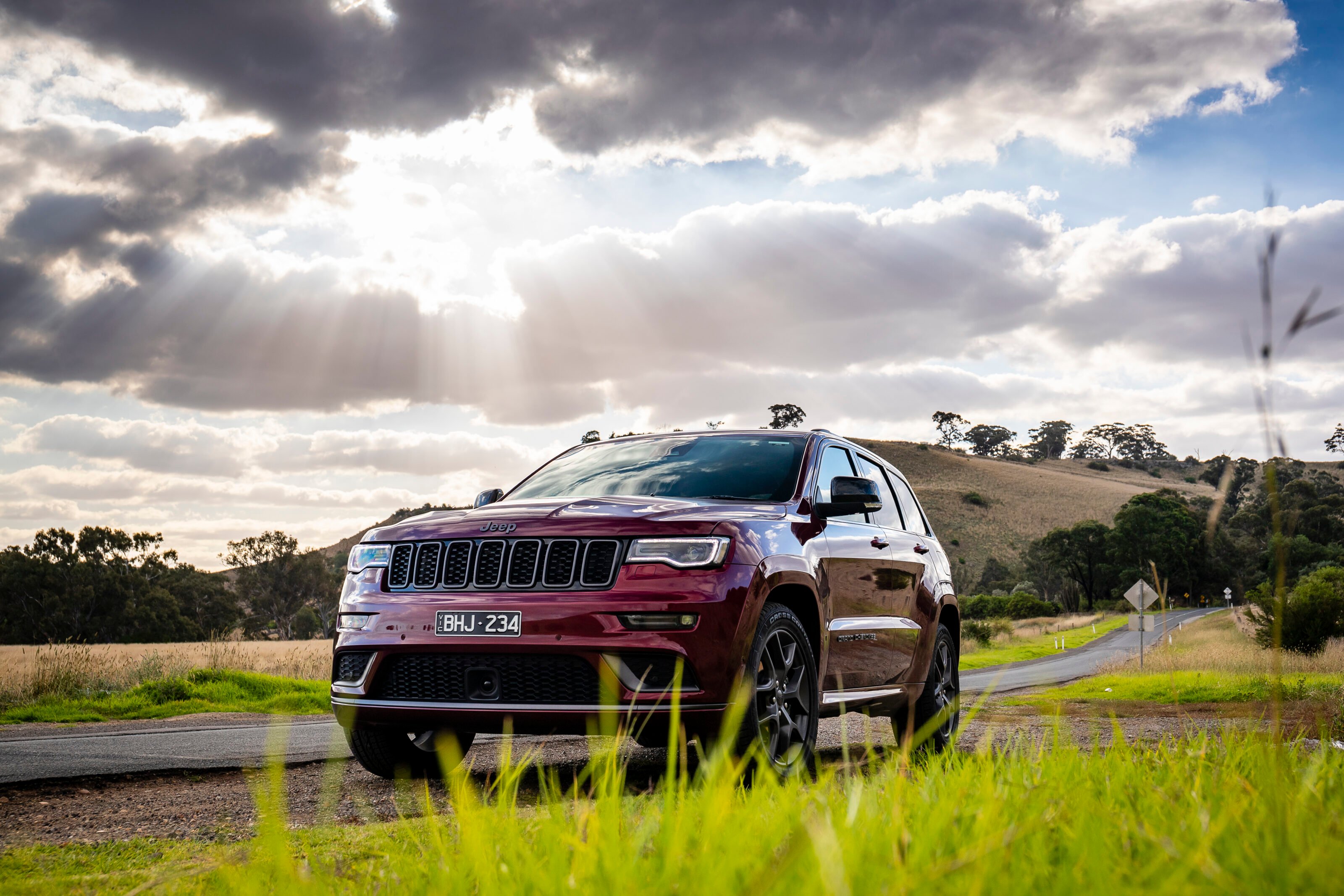
Sure, as we documented a couple months ago, its handling composure is bound to wilt as you ratchet up the commitment in corners. But for most driving, it steers positively and responds to inputs predictably.
So, despite its considerable bulk at 2303kg, the Jeep felt manoeuvrable in urban confines. And highway stuff? Easy. Mainly because the S-Limited variant’s suspension tune offers a welcome degree of touring compliance. Its damping is perfectly judged over the undulations you’d find on the open road, while 50-profile tyres help absorb minor intrusions.
This ride quality and leather seats that are firm and supportive lulled my family to sleep during a trip to Benalla. And I happily did all the driving for the four-hour round journey, thanks in part to a full suite of active safety gear.
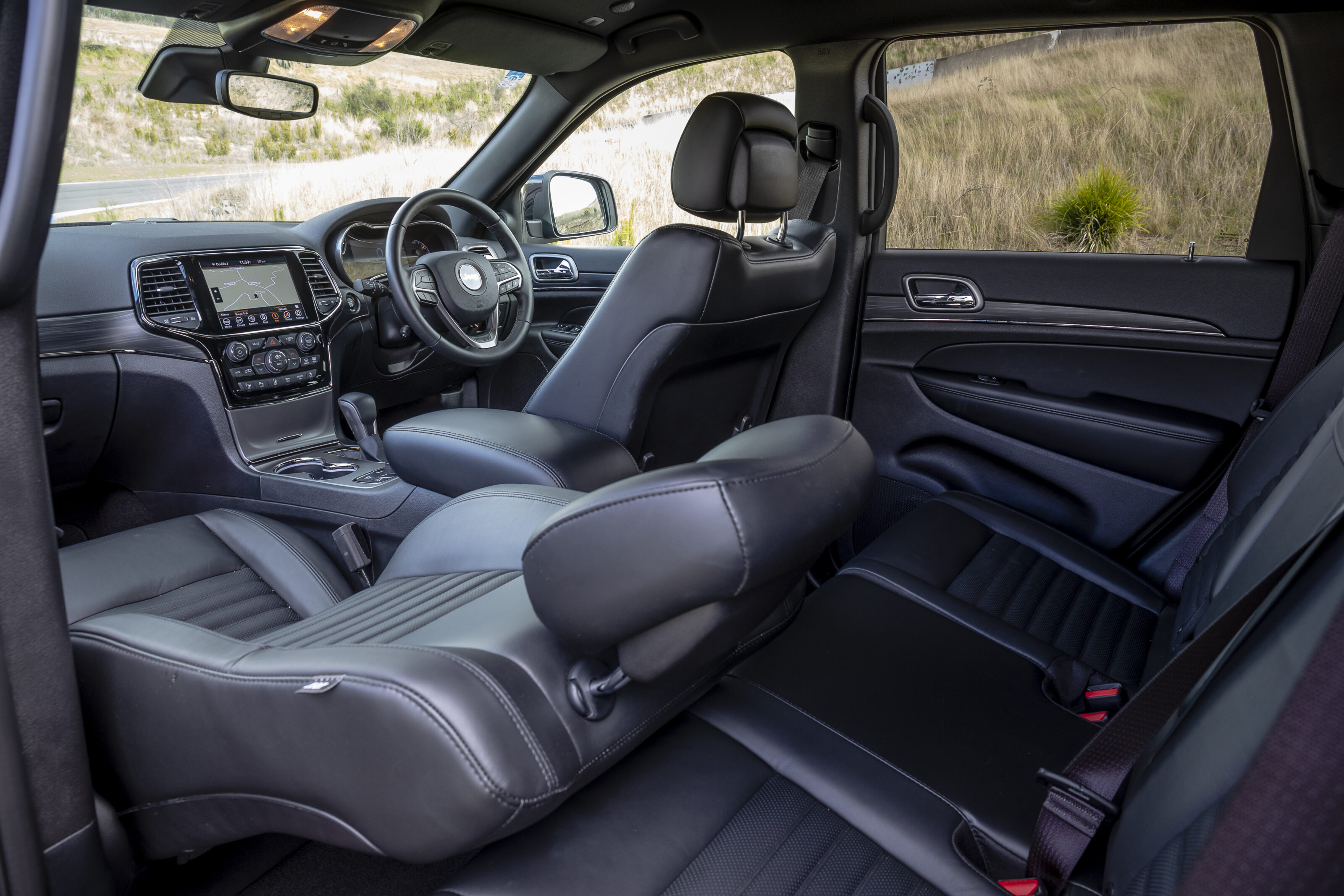
For the most part, the Jeep’s active cruise control system works great. The radar maintains distances well, and it’s refreshing to adjust the set speed with buttons on the steering wheel instead of with a stalk hidden away like some European cars I’ve tested recently.
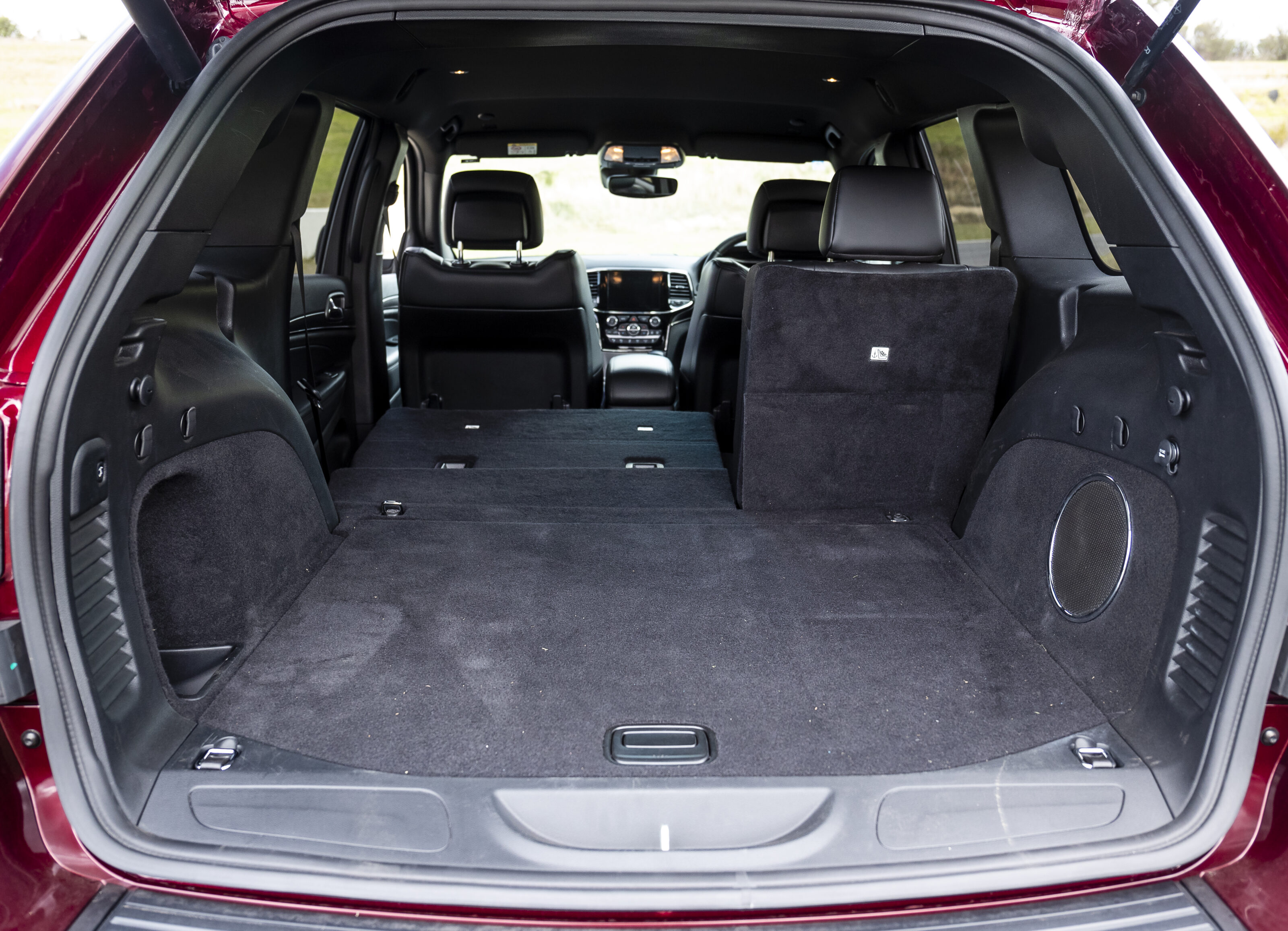
Better is the boot that’s been designed for easy loading, with rear seats that fold level with the floor and the convenience of a powered tailgate, all of which made the Jeep the default choice for airport trips.
You’d never find yourself wanting for convenience, either. I was grateful to sit on the S-Limited variant’s heated seats as temperatures begun their descent into a bone-chilling winter. The S-Limited also has a heated steering wheel, but it only has one mode (scorching), so I’d turn it off after a couple of minutes.
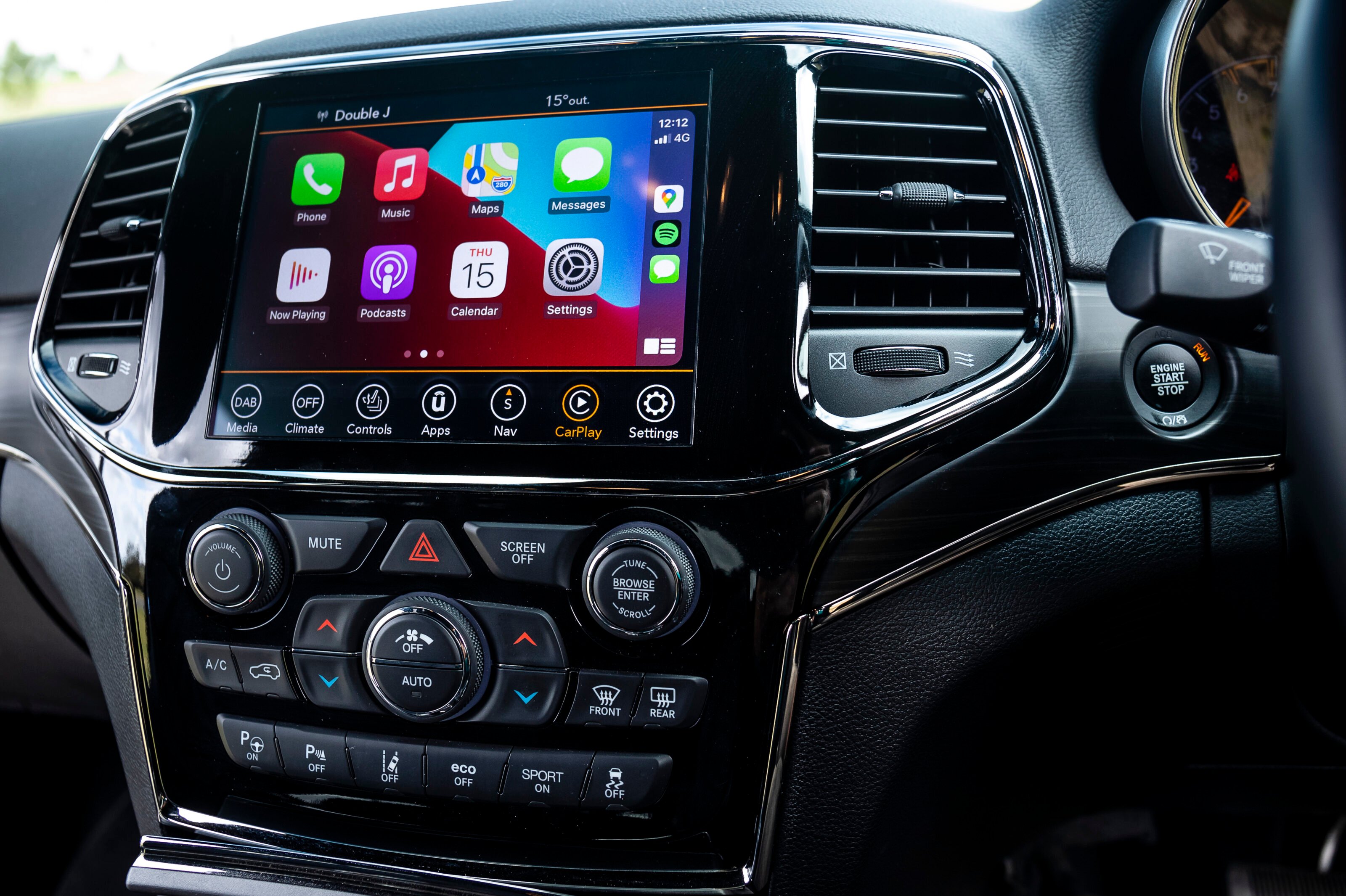
There are loads of extra features, too. Like rear seat 60/40 folding split, an 18-inch space saver under the boot floor, ISOFIX seat anchors, rear ventilation, and twin USB ports in both the front and rear. Smartphone mirroring is the preferred choice for infotainment, but the native U-Connect software is reasonably intuitive and well designed.
The Jeep’s thirst was to be expected. Obviously, our overall average 13.1L/100km (which matched Jeep’s claim) consumption figure is up there. Especially compared to diesel engines in the segment. But for a 5.7-litre V8 that can comfortably haul a car on a trailer, that’s the price for something with a lovable growl and unbeatable throttle response.
But as for gripes? Objectively, the Grand Cherokee lacked interior refinement. The steering wheel buttons feel cheap. The plastics around the centre console and outboard vents look dreary in grey. And the foot brake is a primitive throw-back.
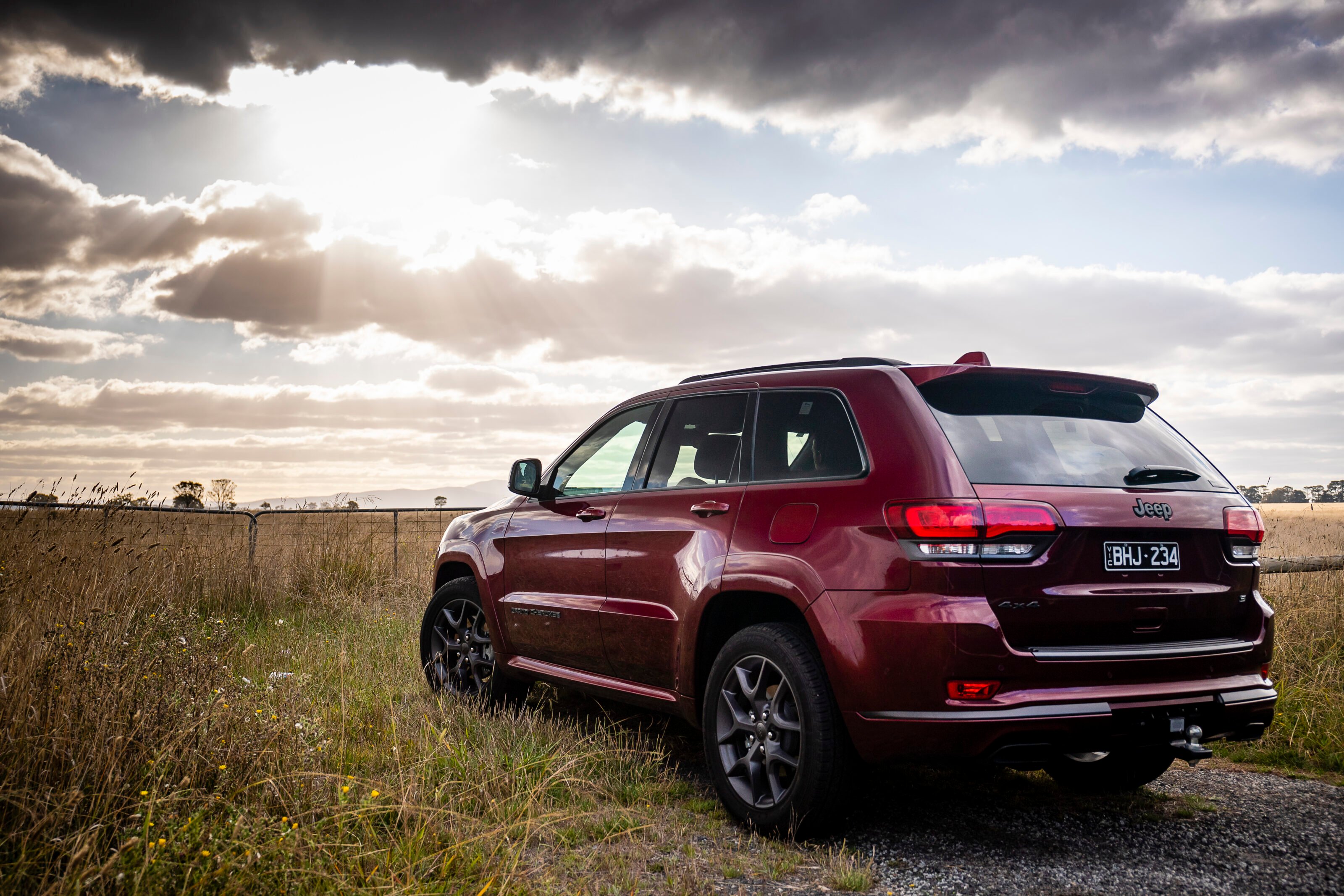
But, despite its age, the S-Limited strikes a unique balance of talents, including on-road driving pleasure and comfort, practicality, driveability – underpinned with off-road features that have been verified as more than just pretensions.
This combination will be even rarer after the Mitsubishi Pajero bows out this year. Still, here’s hoping the new generation Grand Cherokee – based on the Alfa Romeo Giorgio platform – can repeat the formula when it arrives within the next year or so. Hopefully on time, unlike yours truly.
Despite its age, the S-Limited strikes a unique balance of talents – underpinned with off-road features that have been verified as more than just pretensions.
Have you ever been to a popular fast-food chain or proper restaurant that has a secret menu? One that is only available to those in the know. As it turns out, this isn’t a phenomenon restricted to the hospitality industry as, in a round-about way, Mercedes-Benz tried the same act with a hot version of the W203 C-Class.
The rear-drive C32 Sedan, and to a lesser extent, the Estate are well known. But there is a go-fast Coupe version of the same ilk that also gains the AMG moniker. Except, it wasn’t a full production model. The process required buyers to place a special order via AMG STUDIO. The team would then convert the standard vehicle into a C32 Sports Coupe “to individual customer requirements at Mercedes-AMG in Affalterbach”.
It’s a technicality, but it’s not a traditional coupe either. The CL 203 offering is more of a three-door liftback. Essentially, Mercedes-Benz wanted a rival to the E36/E46 BMW 3 Series Compact. Both transitioned out of the body style and into proper two-door coupes.
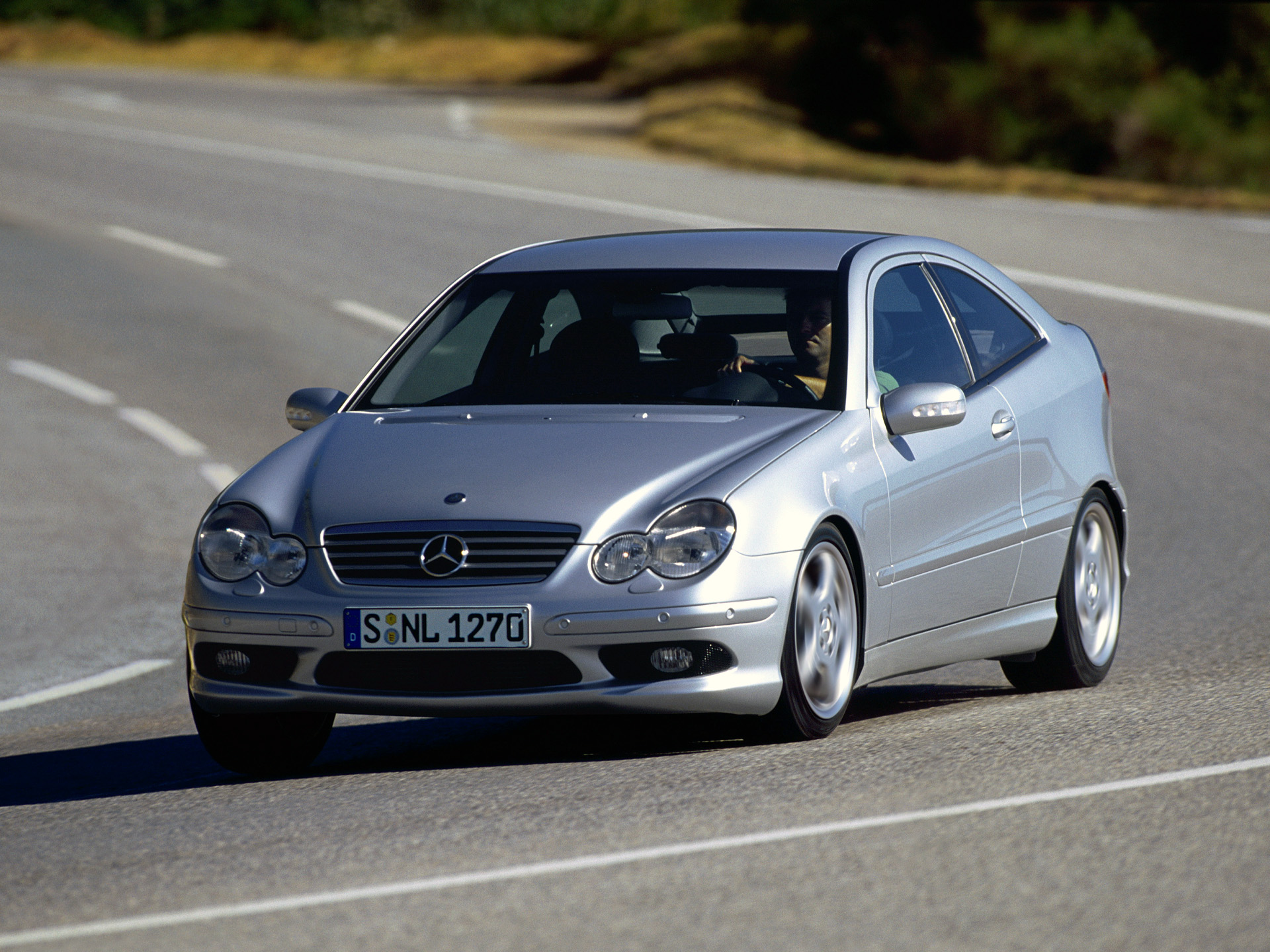
The special-order AMG is based on a Merc Sports Coupe and uses the same supercharged V6 found in the Sedan and Estate. Its 3199cc of swept capacity isn’t by chance considering BMW was using a 3.2-litre straight six at the time. The bent-six produces a healthy 260kW (6100rpm) and 450Nm thanks in part to the helical twin-screw type IHI supercharger. There is no three-pedal option, instead a five-speed automatic (AMG Speedshift) is tasked with shuffling gears.
The performance is brisk with a claimed 0-100km/h time of 5.2 seconds. It’ll hit 200km/h in 18.3 seconds before going on to an electronically limited top speed of 250km/h. According to a Mercedes-Benz press release at the time, the C32 Sports Coupe has “performance to rival thoroughbred sports cars”.
The C32 SC gains retuned springs and dampers with a drop in ride height (30mm) and beefed-up stabiliser bars. Visually there isn’t anything too crazy to signify its AMG talent, apart from the 18.0 x 8.5-inch front and 18.0 x 10.0-inch rear wheels. They’re wrapped in rather wide 245/40 and 275/35 tyres respectively.
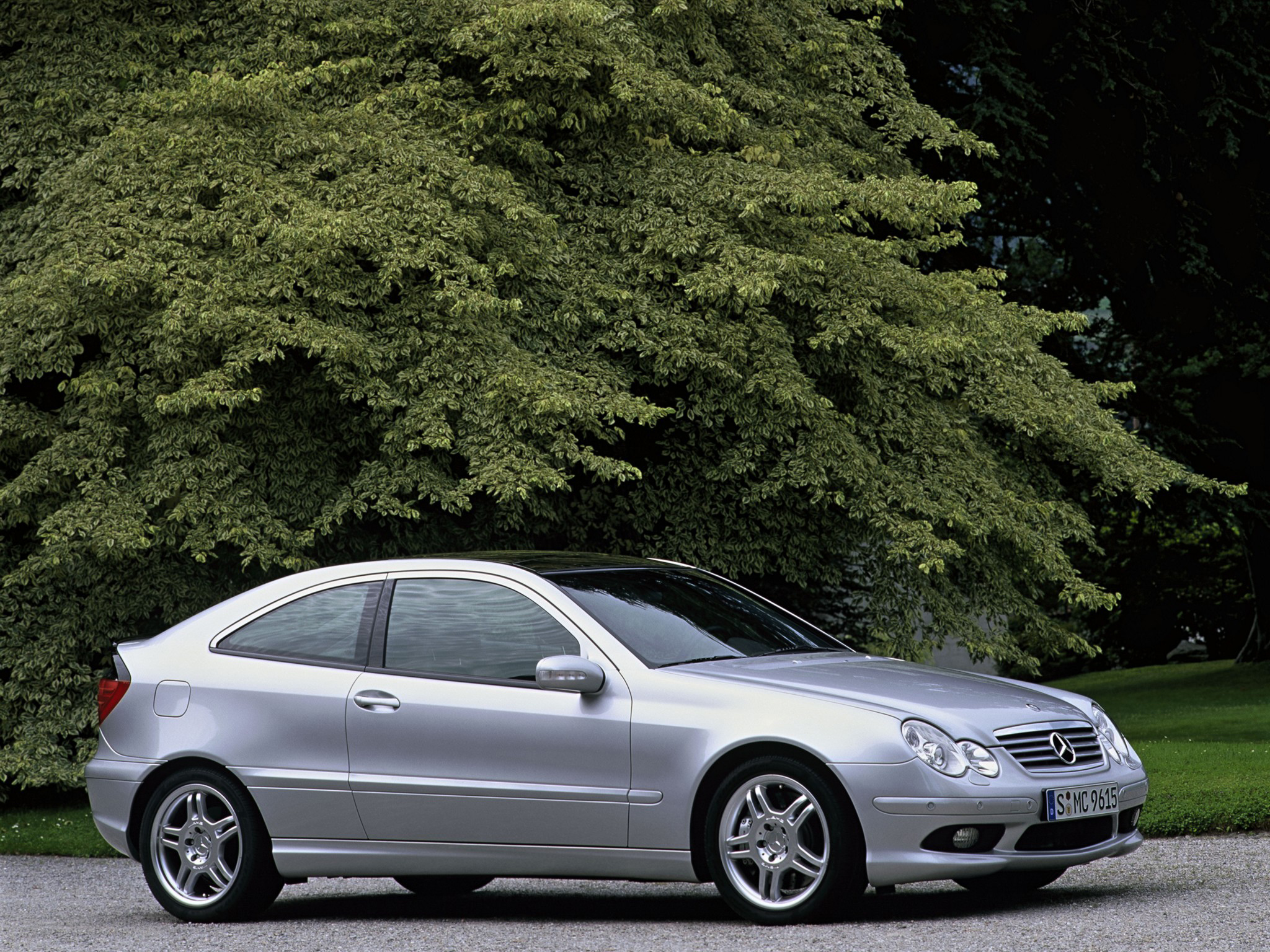
An offshoot to this program is the C30 CDI AMG. Yes, that’s right, a diesel, in fact the only oil-burner to be adorned with an AMG badge. Aesthetically identical to the C32 apart from its “V6 Kompressor” badging, the C30 is motivated by a 3.0-litre five-cylinder turbo diesel with 170kW and a giant-killing 540Nm.
However, the three-door-liftback genre never took off and the Sports Coupe was axed in 2011. The supercharged E32 ML version of the M112 V6 petrol engine could also be found in the Chrysler Crossfire SRT-6, which rides on Merc SLK underpinnings. Now that’s also a certain AMG secret-menu item.
2002 Mercedes-Benz C32 AMG SC specs
The V8 engine said to be powering the 2023 BMW XM and next-generation M5 has been spied more than a year before it’s expected to go into production.
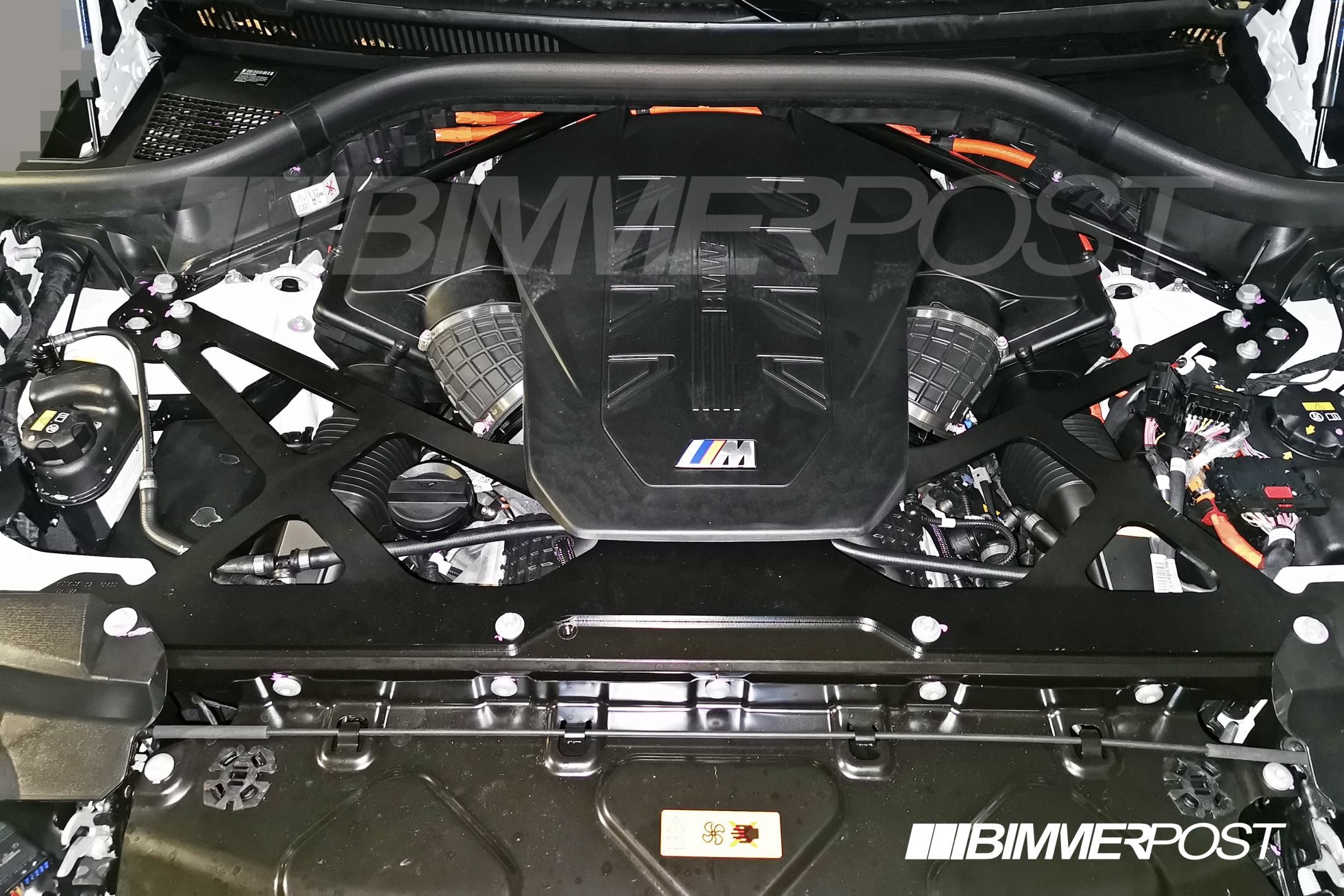
The image, posted on forum Bimmerpost, is claimed to be from the upcoming BMW XM – also referred to as the X8 M – and has a number of clues to make this an exciting discovery.
The badging clearly shows this is a high-performance engine from BMW’s M division, while the dual air intakes indicate this is indeed a V8.
Perhaps more telling are the bright orange cables at the top of the engine bay – typically reserved for high-voltage lines found in hybrid vehicles.
In August, the UK’s Autocar published information from unnamed sources pointing to both the XM and M5 being powered by a plug-in hybrid twin-turbo V8 engine, producing as much as 560kW.
Rumours suggested the new powertrain will be an evolution of the brand’s current twin-turbo V8 found in the M5 (among others), but mated to a 150kW electric motor to aid performance and offer electric-only driving.
Along with the M5, expect the engine to make its way into a new high-performance M7 model based on the 7 Series, following a report from CarBuzz in August showing BMW has trademarked the name – along with M9.
With a number of BMW’s key competitors already signalling their intention to go all-electric by 2030 – and lawmakers overseas eyeing a ban on internal-combustion engines by 2035 – it’s possible we could be looking at the last petrol V8 engine from the marque.
The spy photo shows significant bracing within the engine bay itself, which is expected to greatly improve chassis stiffness and handling – strongly suggesting the vehicle is the much-anticipated flagship SUV from BMW M.
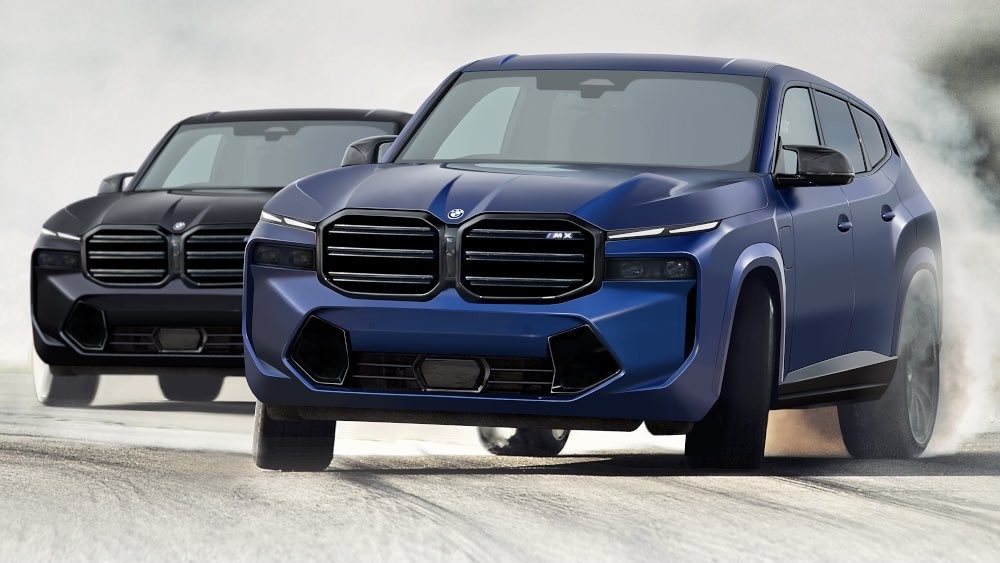
As previously reported, the XM is expected to come as standard with a limited-slip differential, dark blue sports brakes, sports seats, colour-coded seat belts, carbon-fibre trim, and alloy wheels up to 23 inches in diameter.
A well-placed source has also suggested the model will receive “next-level” driving assistance technology in mid-2023.
According to BMWBlog, the BMW XM is set to be unveiled on November 29, but Wheels understands the model won’t enter production until late 2022 for an Australian arrival in early 2023.
As for the M5, it’s expected the next-generation model will arrive in 2024, adopting BMW’s ‘Neue Klasse’ concept and based on the brand’s modular CLAR platform.
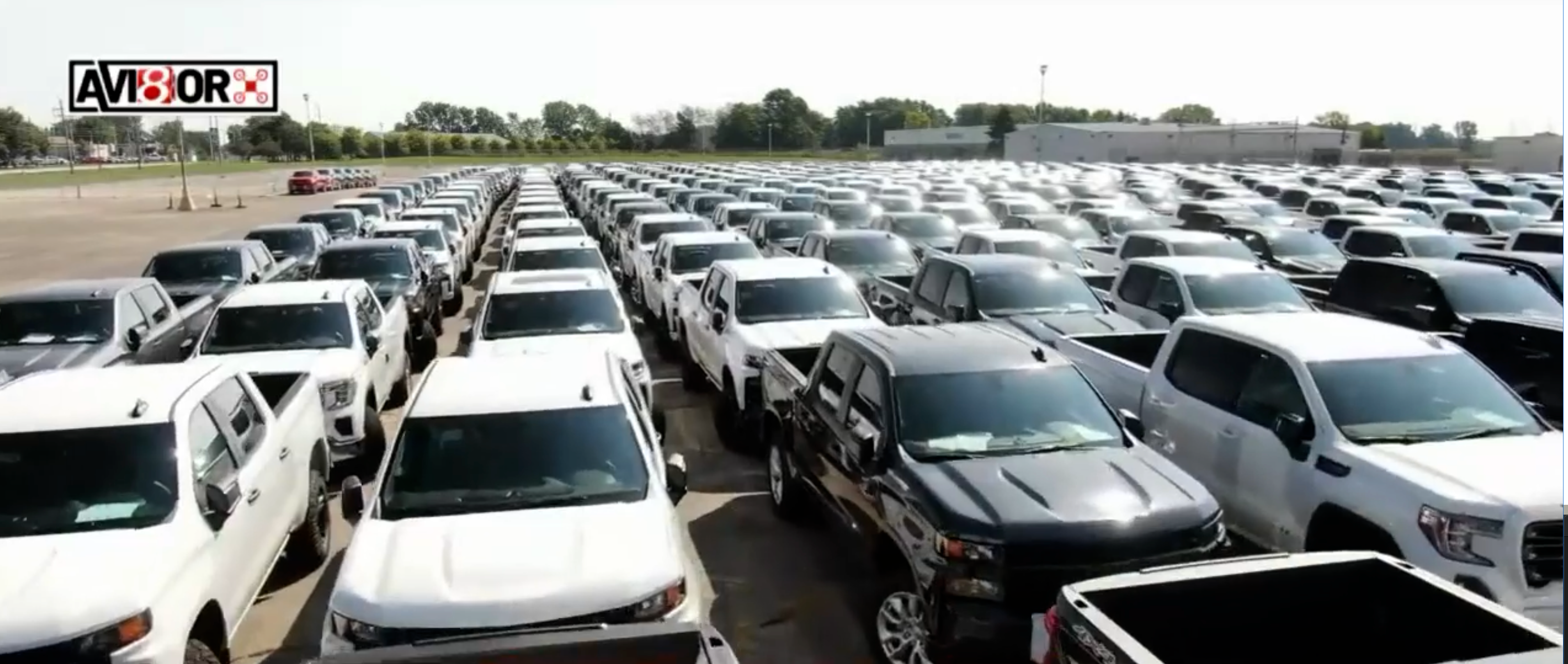
UPDATE, November 5: General Motors is transporting between 5000 and 7000 uncompleted trucks to sit at one of its defunct plants – despite only just managing to clear through half its backlog, according to reports.
Indiana-based news service WishTV reports that the vehicles, which are unfinished due to the global shortage of semiconductors, are being transported from its Fort Worth facility to a former GM factory in Kokomo.
In a twist of irony, the Kokomo facility was previously used as a production plant for microchips and other electronic components until 2017, while last year it diverted its efforts towards manufacturing ventilators in the wake of the COVID-19 pandemic.
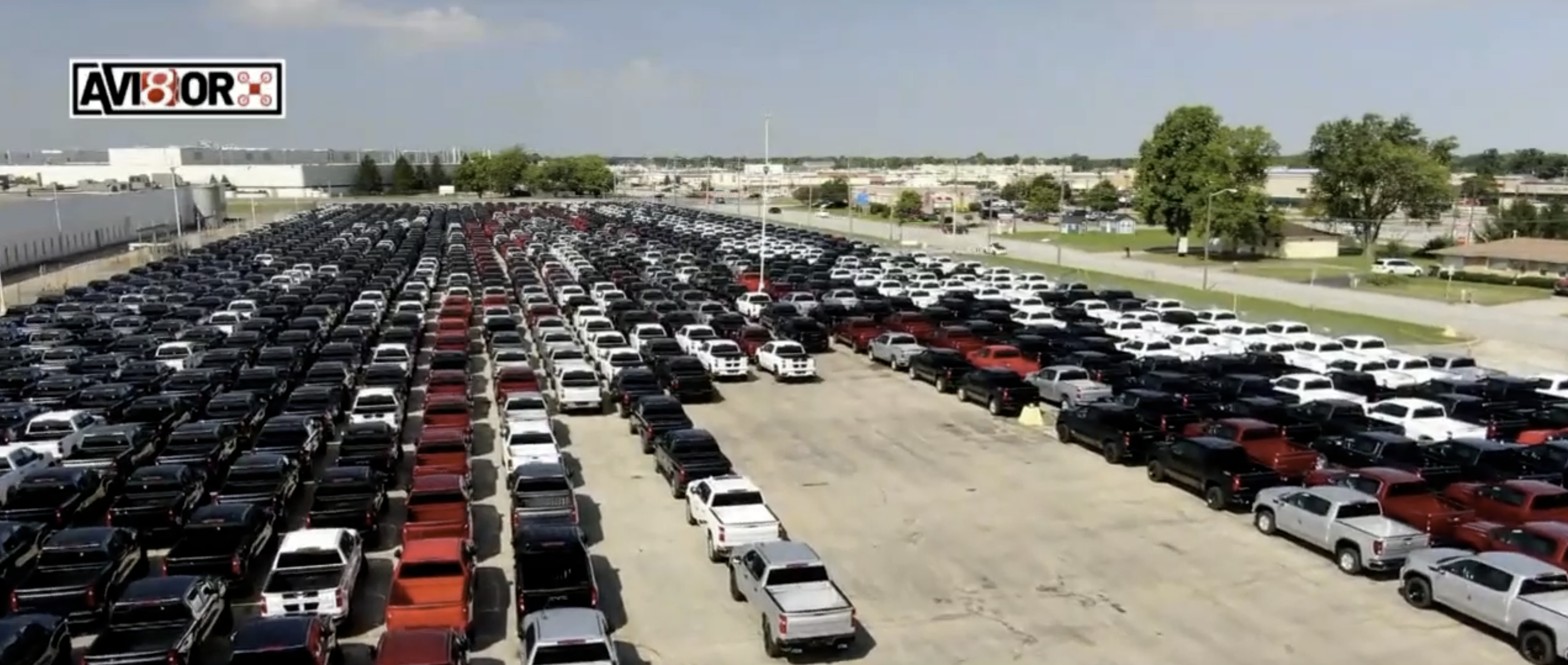
To add insult to injury, especially for the local residents, previous attempts by former employees and the United Auto Workers union to bring semiconductor production back to Kokomo have been shut down by GM, with the Kokomo Tribune reporting the manufacturer instead decided to invest US$1 billion (AU$1.35bn) in its Mexican plants.
The chip shortage has been tough on General Motors, the firm having recently reported a 40 per cent drop in profits on 2020 levels – now at US$2.4 billion (AU$3.19bn) to the end of September.
The story to here
October 25: American automotive giant General Motors has reportedly bounced back after a hard few months, triggered by the worldwide shortage of semiconductors.
As previously reported, some GM factories in the United States were storing up to 1000 incomplete vehicles a day as the production couldn’t be finished without semiconductors, leading to a backlog of more than 10,000 SUVs at one location.
According to Reuters, the problem is halfway towards being resolved with GM able to complete most of its 2021 models and ship them off to dealers, putting the focus on 2022 vehicles.
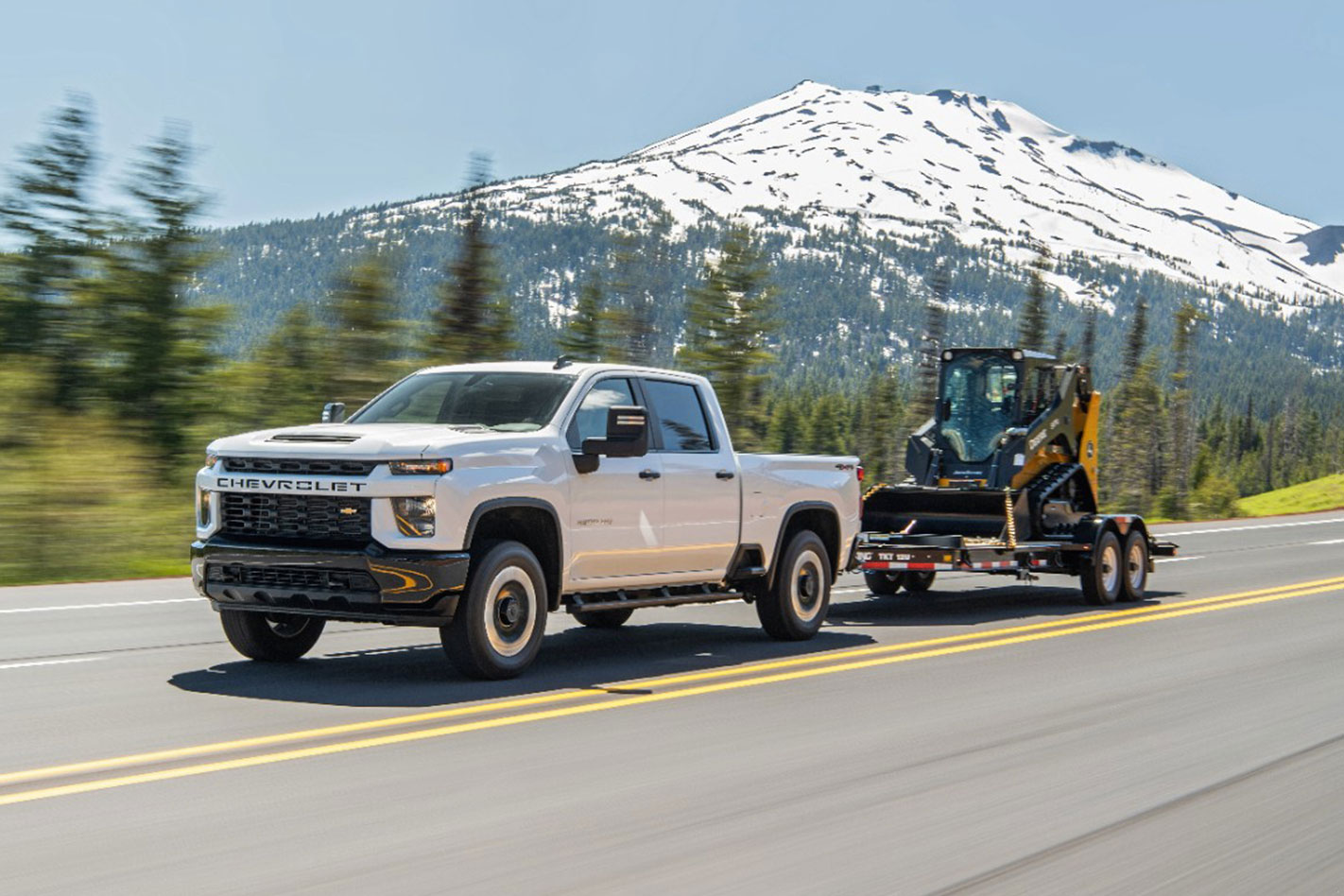
GM’s North American chief executive, Steve Carlisle, said company could now look ahead rather than keep worrying about its excess of incomplete vehicles.
“We’ve made great progress,” said Carlisle.
“We’re a bit better than halfway through that at the moment and our goal would be to clear out our ’21 model years by the end of the year. We’ll have a bit of a tail of ’22 model years into the new year but not for too long.”
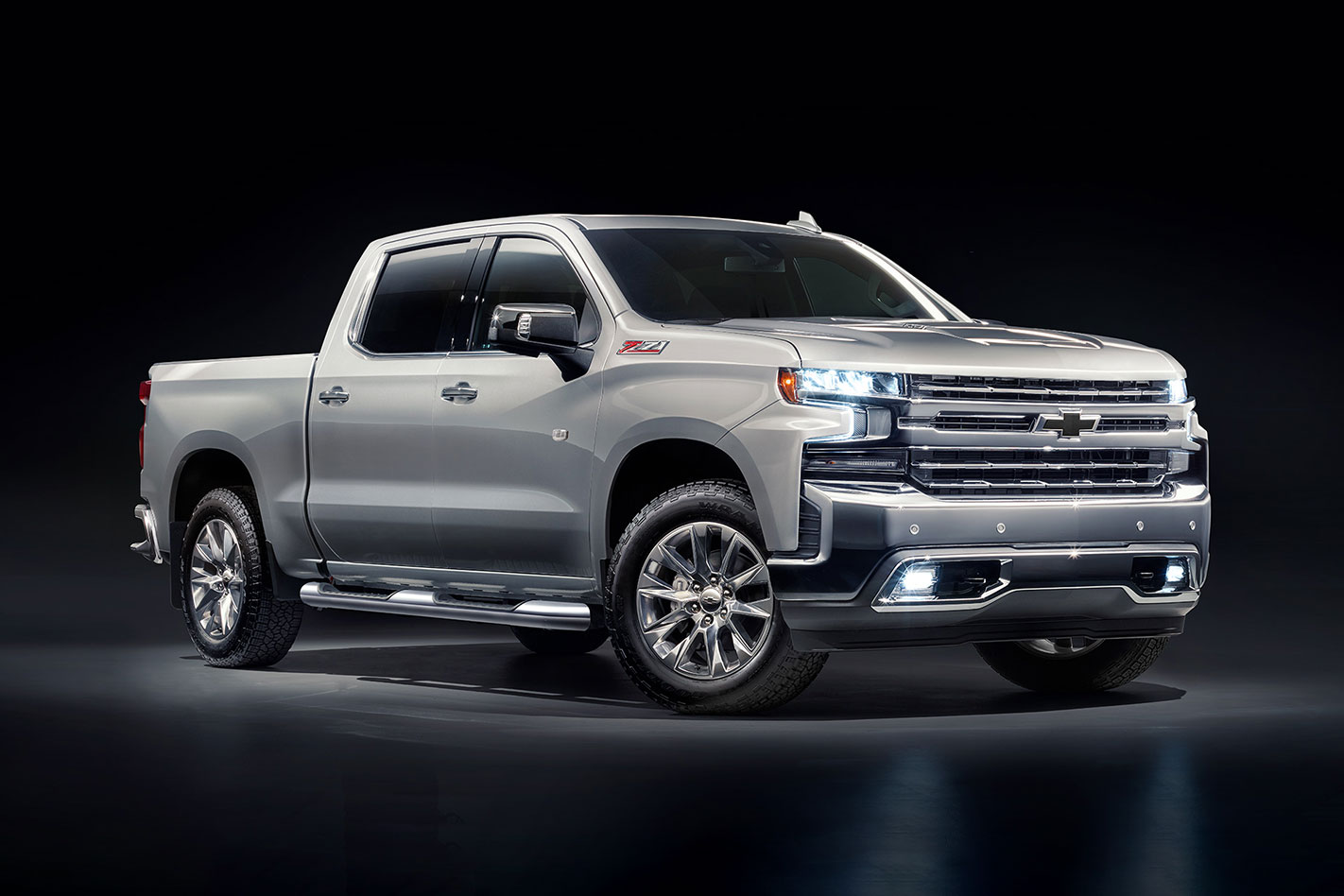
The pauses in production for GM have seen it slip behind Toyota in the race for the top-selling manufacturer in the United States, with the Japanese marque leading on 1.86 million units sold compared to GM’s 1.78 million at the end of September.
If General Motors lost the top spot at the conclusion of 2021, it would be the first time since the 1950s where the conglomerate of brands hasn’t been able to end the year as the best-selling automotive manufacturer in its home market.
