
Key Points
- 31 speakers, six offering ‘3D’ sound
- Massive subwoofer and 1750W of power
- Australian timing unclear, likely mid-2022
Buyers of high-end Mercedes-Benz models will be treated to high-end audio wizardry in 2022, with the announcement this week of Dolby Atmos technology coming to some cars.
Available initially in Maybach and S-Class models only, the system will utilise a total of 31 speakers in the cabin, with six of those working as ‘3D’ speakers above passengers.
Included in that count of 31 will also be four ‘near-ear’ speakers for the front seats and an 18.5-litre subwoofer. The list goes on, with two ‘exciters’ (read about those here) in each seat.
Two amplifiers power the the system, producing a total of 1750 watts.
Mercedes isn’t the first auto brand to bring Dolby Atmos to its customers – that honour goes to American startup electric vehicle brand Lucid, although its ‘Surreal Sound’ package features a mere 21 speakers.
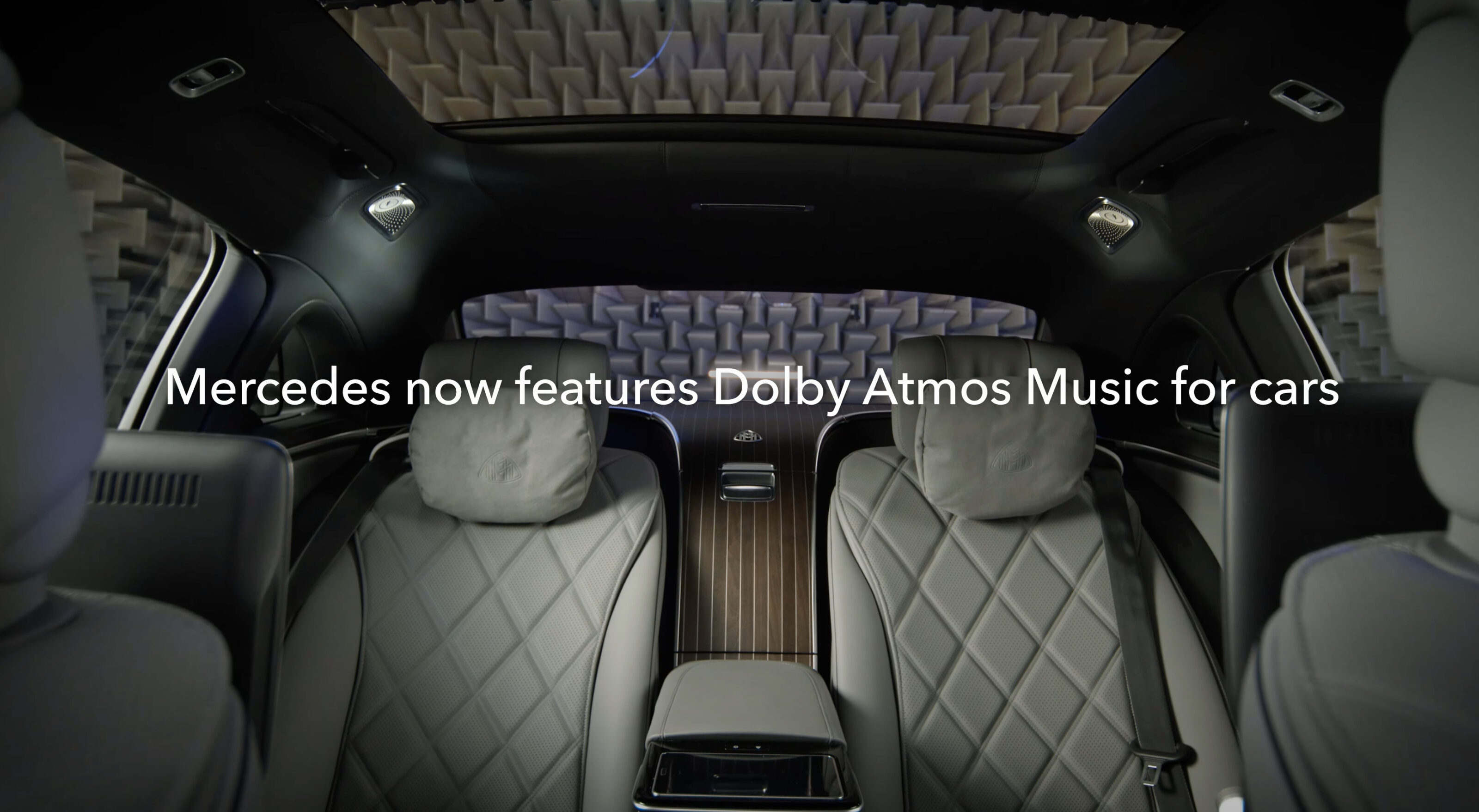
There’s no word, for now, on when these features might make their way to less-exclusive models in the Mercedes-Benz range, although the brand’s history of launch timing would suggest we might see the Dolby package arrive around the middle of 2022.
Elsewhere in the Maybach universe, 2021 saw the debut of 100-year editions for Maybach S-Class and Maybach GLS in October, along with a first look at the Maybach EQS electric SUV concept.
In September, Mercedes-Maybach revealed the GLS 600 as a titanic rival to models like the Bentley Bentayga and Rolls-Royce Cullinan, and high-end versions of the new-generation Range Rover – revealed just this week.
Snapshot
- 2022 Mercedes-AMG SL to launch with two V8 models
- All-wheel drive and rear-wheel steering feature for the first time
- Australian pricing to be announced closer to a local launch in second half of 2022
The 2022 Mercedes-AMG SL has been unveiled, marking a new generation of the German carmaker’s iconic GT sports car.
For the first time, the SL will be offered as a standalone 2+2 model from AMG, having been developed from the ground-up by the Mercedes-Benz high-performance division.
Two variants of the new roadster will initially debut – the 2022 Mercedes-AMG SL 55 4Matic+ and the 2022 Mercedes-AMG SL 63 4Matic+ – offering two different power outputs from a hand-assembled 4.0-litre twin-turbo V8, each mated to AMG’s Speedshift multi-clutch nine-speed automatic transmission sending power to all four wheels.
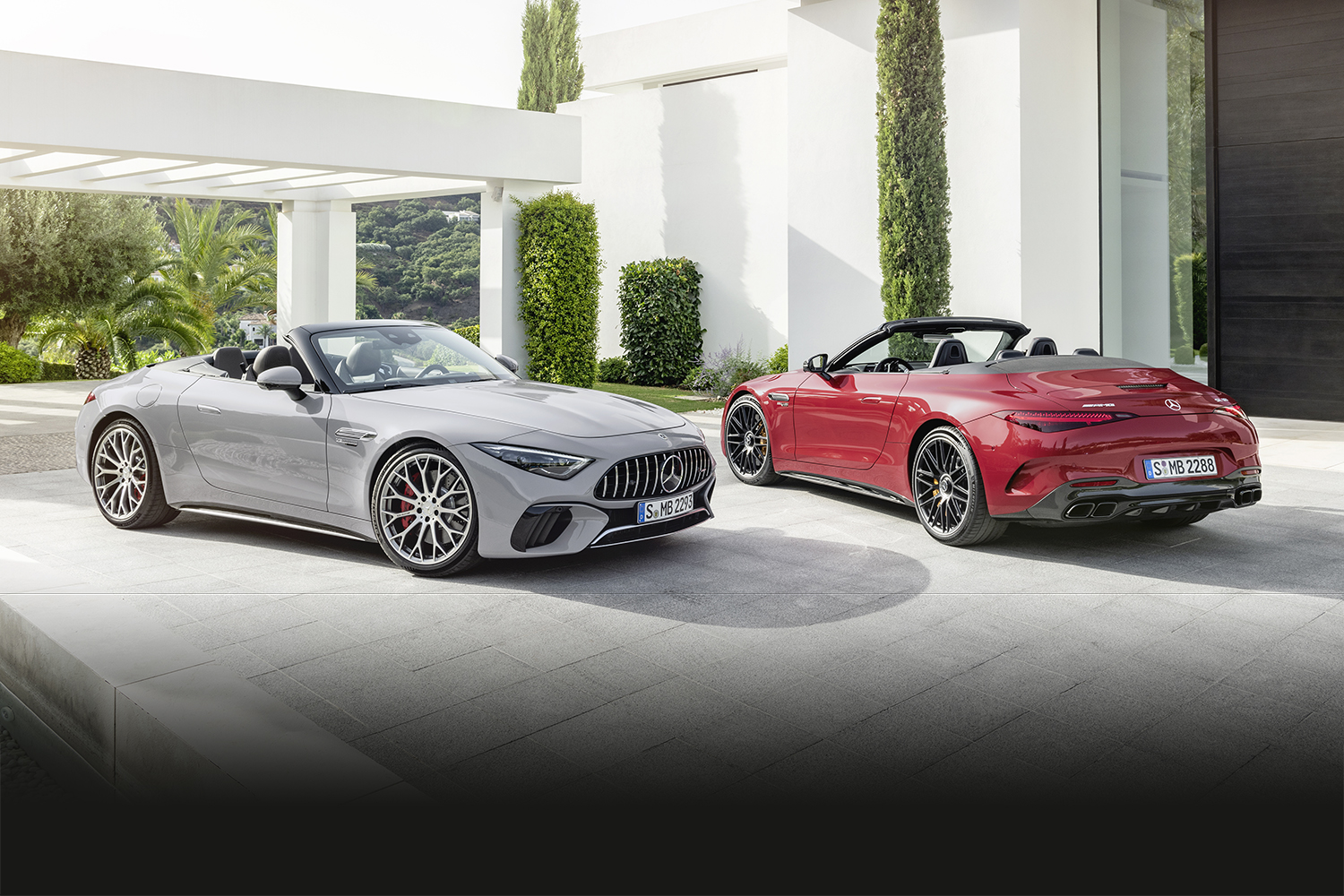
The 2022 Mercedes-AMG SL 55 produces 350kW and 700Nm to deliver the vehicle to 100km/h from a standstill in a claimed 3.9 seconds, on the way to a maximum of 295km/h.
The range-topping 2022 Mercedes-AMG SL 63 takes that to 430kW and 800Nm, dropping the 0-100km/h sprint time to a claimed 3.6 seconds, with the car’s high-speed rated at 315km/h.
Additional powertrain options will be added in the future, including a high-performance petrol-electric hybrid.
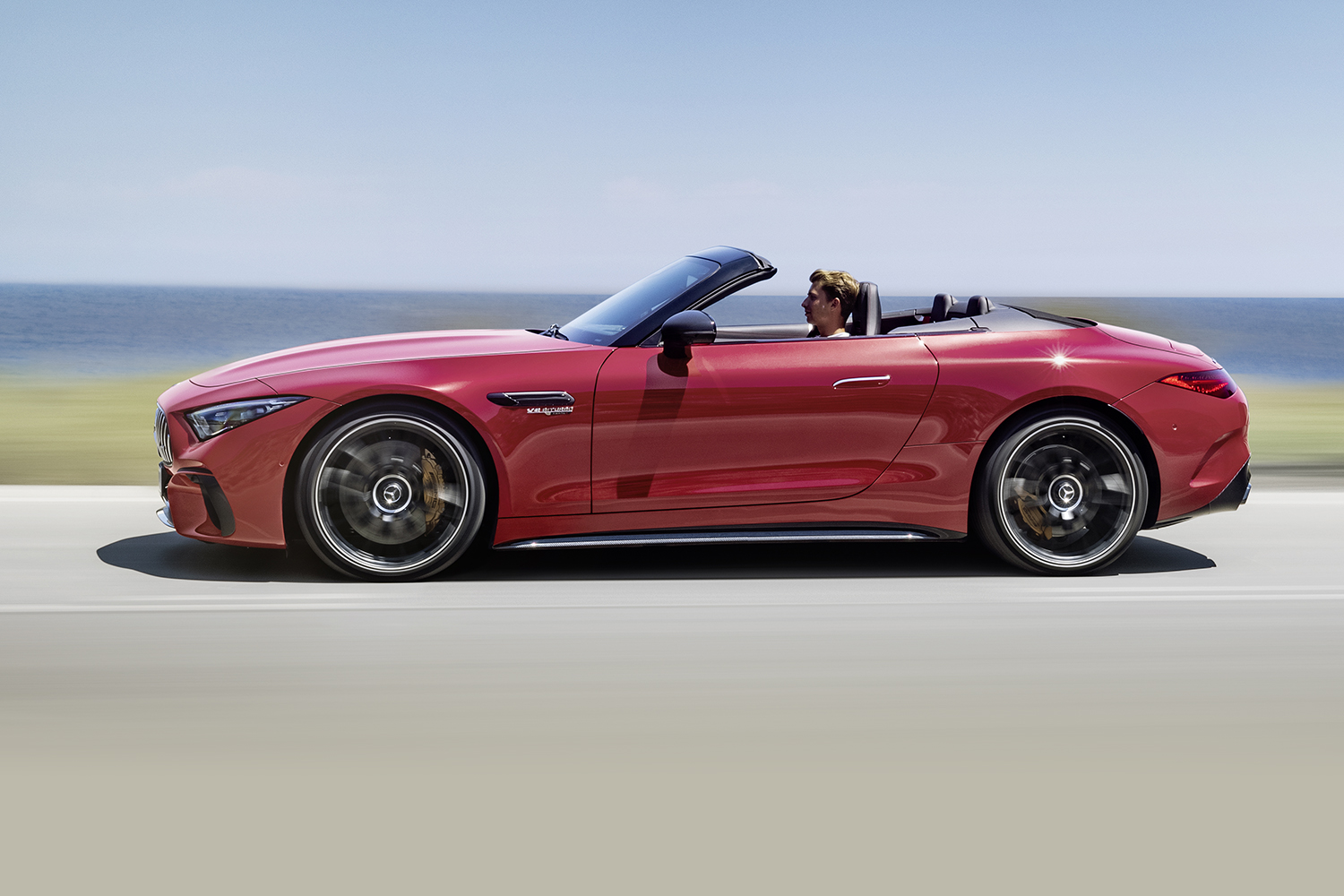
Along with all-wheel drive, the all-new SL features rear-axle steering – allowing the rear wheels to steer with the front wheels for smooth lane changes on the freeway, or go in the opposite direction to them at speeds below 100km/h – with greater responsiveness when when sport+ driving mode is selected.
Along with Sport+, the driver can choose from slippery, comfort, sport, and individual modes, with race driving mode available as standard on the SL 63, or as part of the optional AMG Dynamic Plus Package on the SL 55.
Handling has been a focus of the new roadster, with a lightweight composite chassis said to have been developed for a lower centre-of-gravity, as well as delivering high levels of rigidity. The carmaker states the new SL has 50 per cent higher transverse rigidity than the outgoing AMG GT Roadster, with longitudinal being 40 per cent higher.
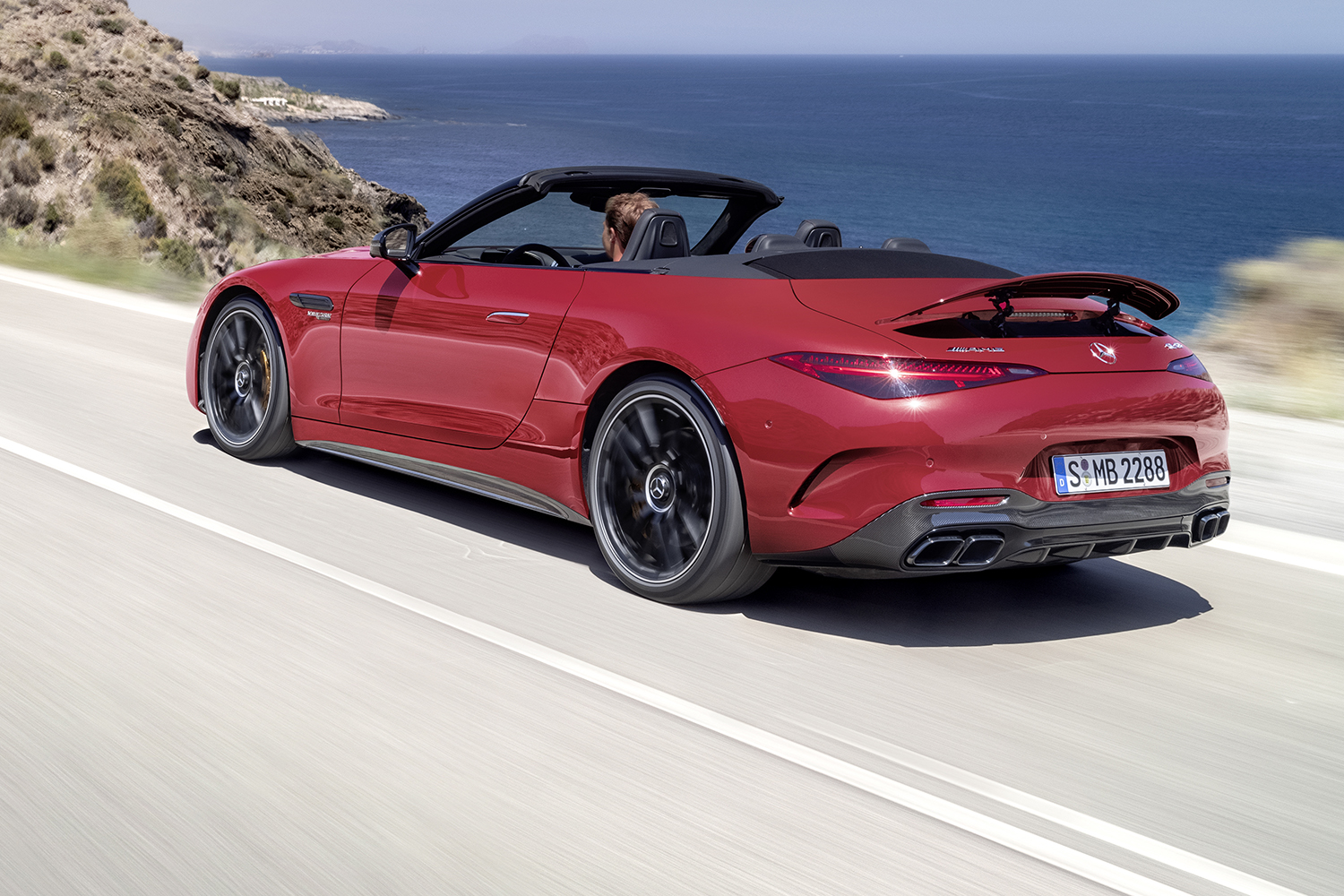
The SL 63 also debuts AMG’s Active Ride Control, which uses hydraulic anti-roll technology to replace traditional passive stabilisation bars. Mercedes says the newly-developed system allows the vehicle’s suspension to deliver a comfortable ride, while keeping the body flat during cornering.
All suspension links, steering knuckles, and hub carriers have been created from forged aluminium to reduce unsprung weight, further improving ride and handling, while a special technique has been developed to reduce the heft of the car’s springs.
An electronically-controlled limited-slip rear differential comes standard on the SL 63, and as part of the SL 55’s optional AMG Dynamic Plus Package.
Pulling the V8 roadster up is a set of 390x36mm drilled and vented composite brake discs, coupled with six-piston fixed callipers at the front, and 360x26mm rear rotors with single-piston callipers at the rear.
Buyers can option a ceramic high-performance composite system, increasing the disc size to 402x39mm and 360x32mm respectively, while further reducing weight.
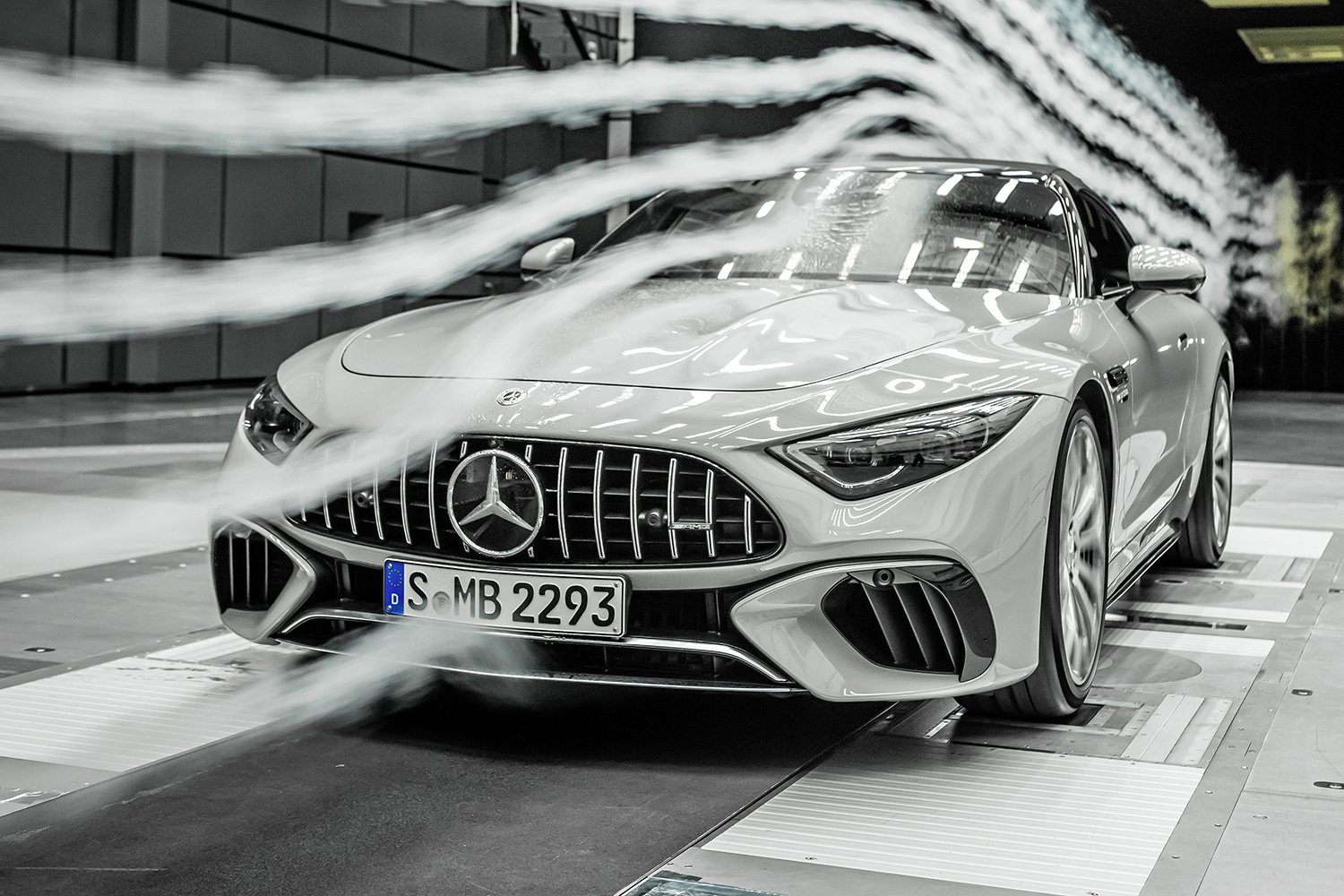
A two-piece Airpanel has been created to improve the AMG’s aerodynamics, with two hidden louvres placed behind the front air intakes to help direct airflow to the car’s active undercar profile – unless engine temperatures trigger their opening.
At the back of the car, an integrated rear spoiler helps lower drag or increase rear-axle traction – depending on the vehicle’s speed and the driver’s inputs.
The combination of active aero has reduced the SL’s drag coefficient to just 0.31 – a fair way off the 0.20 from the electric 2022 Mercedes-Benz EQS, but an impressive number for a convertible.
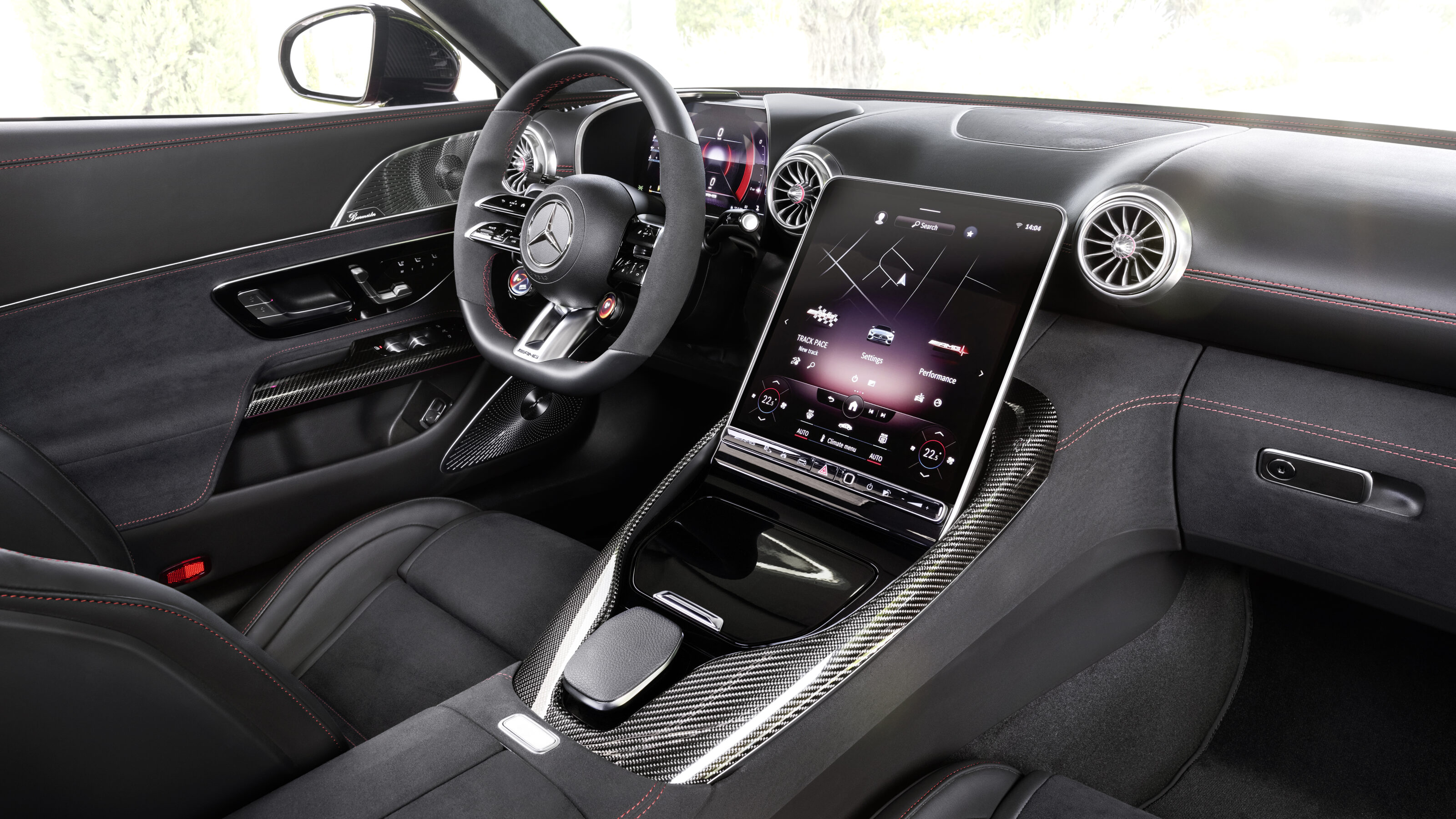
Inside, the driver is greeted with a 12.3-inch high-definition digital instrument cluster, integrated into an aviation-inspired dashboard with ambient lighting. Located in the centre console is an 11.9-inch portrait-mounted touchscreen featuring the latest generation of the company’s MBUX infotainment system.
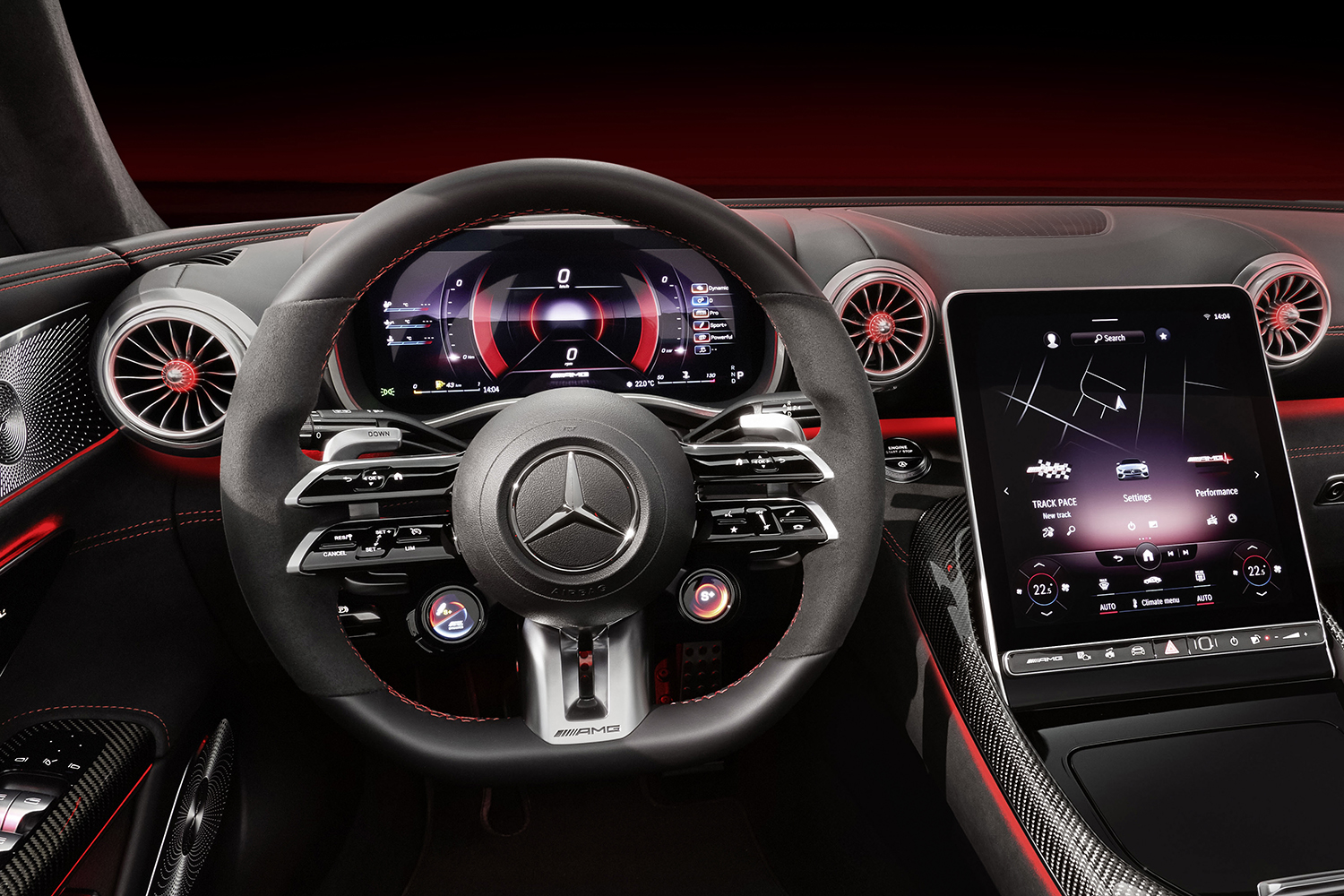
As well as Apple CarPlay, Android Auto, and bluetooth connectivity, MBUX offers DAB+ digital radio, satellite navigation with live traffic and real-time parking capability, Car-to-X communication, and Mercedes Me Connect, as well as ‘Hey Mercedes’ hands-free voice assistant across 28 languages.
The Mercedes-AMG SL also features the latest active driving safety systems as found on the S-Class, which includes attention assist, active cruise control, lane-keep assist, traffic sign recognition, lane-change assist, emergency stop, active brake assist with cross-traffic function, and blind-spot alert with safe exit warning.
To aid night driving, the digital light function allows the car to project warning symbols onto the road surface to warn the driver of hazards such as pedestrians, roadworks and intersections.
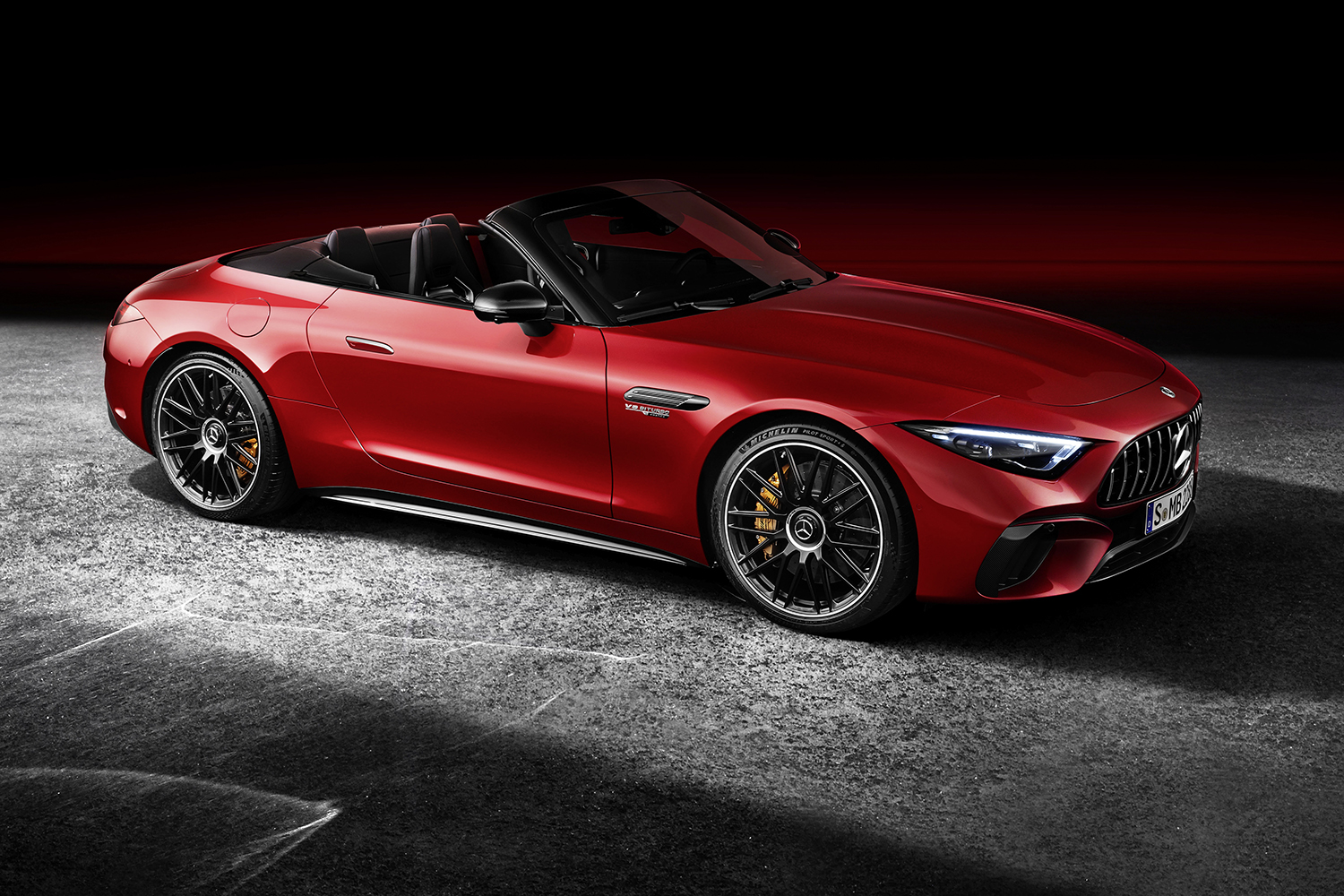
Buyers can choose from 12 paint options, including two exclusively for the SL, along with three roof colours and a number of wheel options ranging from 19 to 21 inches.
While Australian pricing and specification has yet to be released, it’s expected the new model will be similarly priced to the outgoing Mercedes-AMG GT Roadster and previous-shape 2018 Mercedes-AMG SL 63 at approximately $370,000 before on-road costs.
The 2022 Mercedes-AMG SL is expected to arrive in Australia in the second half of next year.
Key Points
- New 990S edition weighs just 990kg
- 1.5-litre engine and open differential fitted with no option to upgrade
- Brembo brakes help to bring weight down while increasing stopping power
Just as you thought mainstream cars were getting heavier and heavier, Mazda has stripped out its MX-5 to make a new lightweight legend.
As reported by Japanese site Car Watch, the MX-5 990S weighs – you guessed it – just 990kg, the first iteration of Mazda’s iconic roadster to dip below one-tonne since the original NA 30 years ago.
Based on the entry-level 1.5-litre MX-5, the 990S drops 43kg off the kerb weight of its donor vehicle.
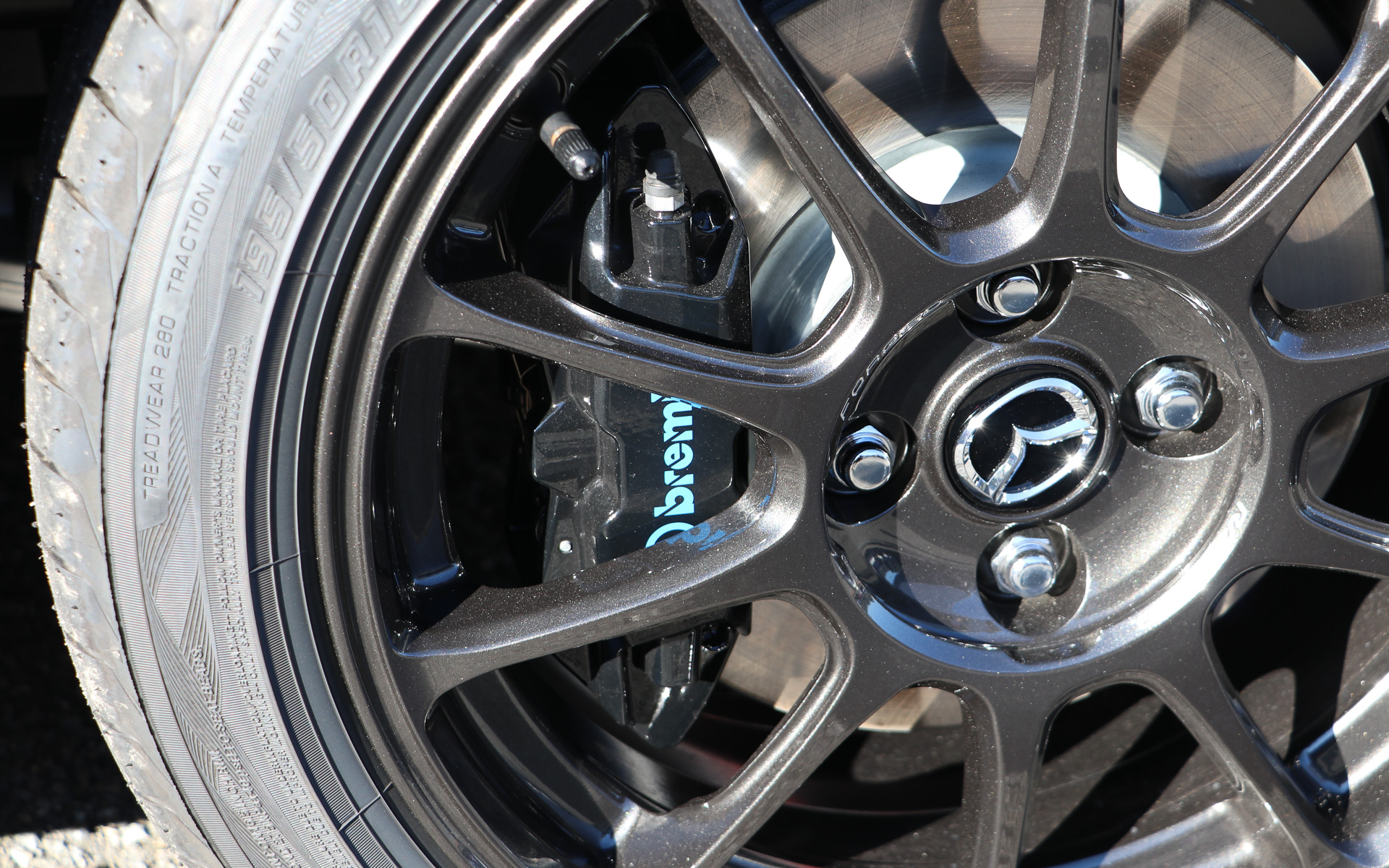
To make this happen, Mazda made some modifications, starting with a full set of Rays alloy wheels which trim 3.2kg off the total – but more importantly reduce unsprung weight on each corner.
This is further reduced by a pair of Brembo brake calipers and rotors fitted to the front axle, taking off another 700g despite being larger units than the standard car’s stoppers, denoted by black paint with blue lettering.
More work has been done behind the scenes with sound deadening left in the factory to minimise the amount of material used in the car, while the addition of a blue soft top and air-conditioning vents helps to distract from the slightly increased noise.
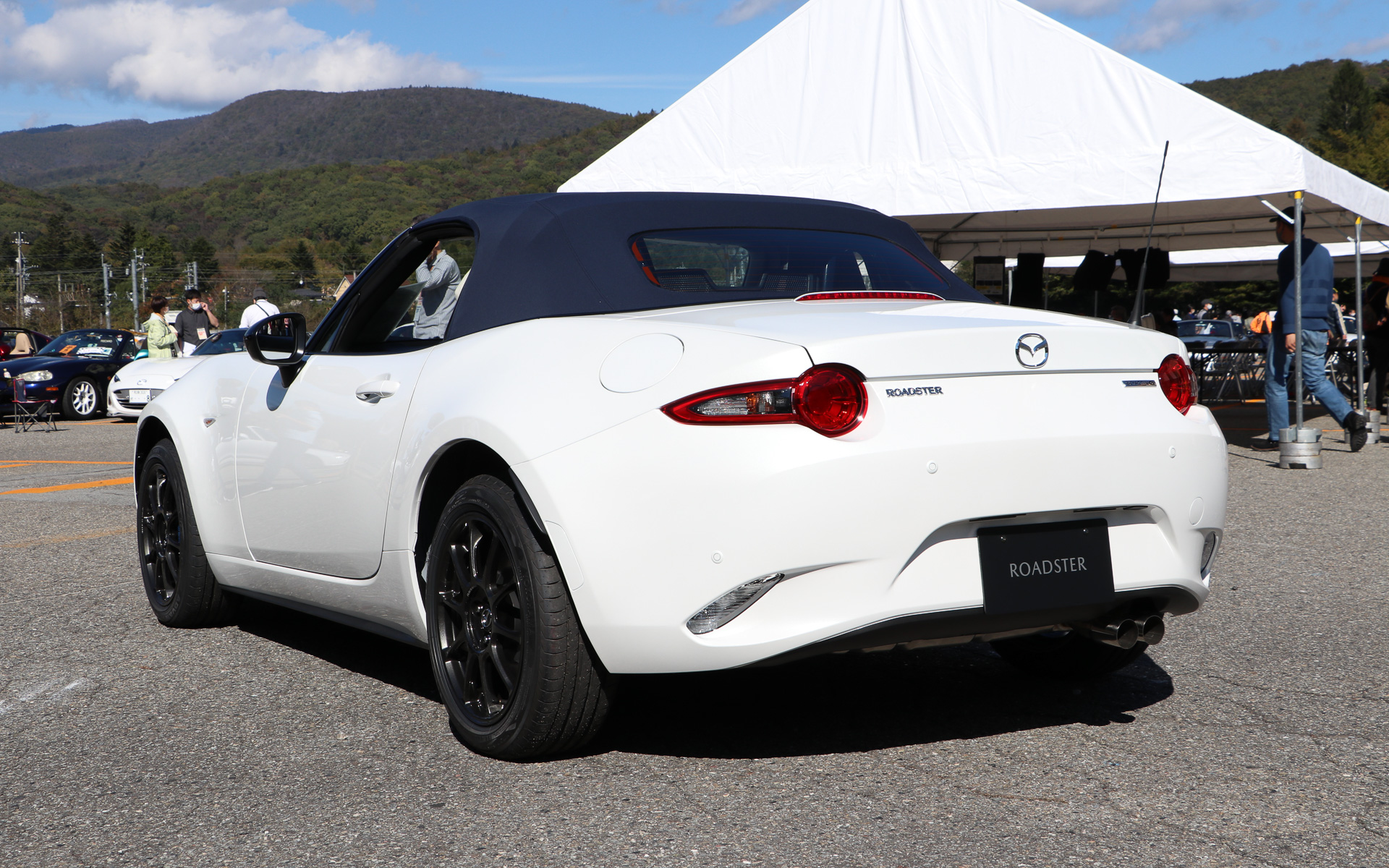
Despite the omission of a limited-slip differential, the open diff is coupled with Mazda’s new Vehicle Attitude Stabilisation Control system, designed to reduce roll in corners by lightly applying brake pressure to the unweighted rear wheel when cornering above 0.3G.
Although this system isn’t a direct replacement for electronically adjustable dampers, Mazda believes it will still provide an engaging experience for drivers.
Set to launch in Japan only, the chances of seeing any 990S variants in Australia is low, unless anyone decides to import one à la the 1991 Limited Edition.
The official Lexus line that its mid-sized stock, such as this newly facelifted ES, underpins the brand might sound like lip service.
But some 2.65 million sales across seven generations of ES sedan – a quarter of all Lexus sales to 2020 – bring much weight to the claim, regardless of whatever prevailing buyer shift there is, regionally or globally, away from medium-sized sedans.
The Lexus ES continues to carve its own indelible space, one nudging five metres in length, ‘medium’ in marketing palatability if somewhat ‘large’ by the tape measure.
The perception, of course, is that you get a lot of luxury indulgence for your investment, the now expanded eight-strong range kicking off at $61,620 before on-road costs for a base Luxury in new petrol 250 guise that joins what was previously a hybrid-only line-up of 300h versions.

That’s right: growth and expansion. Because whatever sedan doomsayers charge, ES popularity among Aussie buyers has been on the constant up – 203 per cent in the past 12 months – since the seventh-generation model arrived in 2018.
Here on review is the familiar 300h, sampled here in flagship Sport Luxury form (the five ES guises available across three variant nameplates consist of Luxury, F Sport and Sport Luxury).
It remains the anchor point of the local line-up, with Lexus Australia predicting hybrid power will account for 85 per cent of buyer uptake, be it privately or as the no-brainer powertrain format for commercial use in limousine hire circles.
Pricing and Features
The MY22 ES 300h Sport Luxury tops the range tree at $78,180 before on-roads, marginally up on its pre-facelift forebear.
All other variants sat below this top dog wear Luxury or F Sport designation, either with or without a cost-optional Enhancement Pack, in a choice of the two available powertrains. Sport Luxury, though, is available as a hybrid only.
In terms of European alternative, you’re well deep into Audi’s A4, with the 45 TFSI S-line undercutting Lexus at $70,800, while BMW’s 330i sits at $79,900 and Mercedes-Benz C300 wants for $75,300 as competition in the fiscal ballpark. None, however, are hybrids or flagships. In the Korean corner, the high-spec Genesis G70 3.3T Sport clocks in at a somewhat similar $75,876.

In the broader strokes, the ES facelift brings squint-and-you-miss-it headlight and grille remodelling, a conspicuous new 12.3-inch touchscreen infotainment format range-wide and a host of variant-specific changes such as junction AEB, bamboo trim inlays and rear suspension enhancement. In typical Lexus style, the mid-life spec and equipment polishing and honing are both widespread and detailed.
As the richest end of Lexus’ characteristically value-hedged luxury pitch, the Sport Luxury brings everything plus two kitchen sinks in what is an exhaustingly long features list.
Exclusive variant highlights include BladeScan LED headlights (ala Audi’s Matrix trickery), semi-aniline leather-accented trim, power-adjustable reclining rear seats, three-zone humidified climate control, Mark Levinson 17-speaker sound, a heated steering wheel and expansive row-two control over everything from seat heating through audio volume to the powered rear sunshade.

There’s also a choice of four interior colour schemes with three different wood ornamentation styles.
Non-exclusive features include 18-inch wheels, powered 14-way driver/10-way passenger adjustment of the heated and cooled front seats, full-LED exterior lighting, a moon roof, an 8.0-inch semi-digital driver’s display, a head-up display, wireless phone charging, four USB-C ports, rear privacy glass, auto comfort access, a surround-view camera system, rear manual blinds and a hands-free powered boot lid.
The new 12.3-inch touchscreen infotainment integrates proprietary sat-nav, DAB+ digital radio, Apple and Android smartphone mirroring and Lexus Connected Services.

Absent from the Sport Luxury fit-out, though, is the adaptively damped suspension offered on the 300h F Sport, instead adopting a single-setting passive design that is a bit of a headscratcher given the flagship positioning.
Safety-wise, the facelift brings the aforementioned Intersection Turn Assist and BladeScan trickery as well as new emergency steering assist for collision avoidance and tweaks to the adaptive cruise and lane-keeping/following smarts. Active assistance includes lane-departure and blind-spot warning, road sign assist, rear cross-traffic alert, and parking support brake with vehicle and object detection.
This five-star ANCAP proposition, tested in 2018, features a ten-airbag suite that includes knee airbags for front occupants as well as chest and head coverage across its two seating rows.

Comfort and Space
Despite the relative youth of this ES generation, the interior is minted in an old-school luxury ethos that’s either pleasingly familiar or unappealingly passe, depending on taste.
Either way, it’s clearly the centrepiece to the Lexus experience, its biggest drawcard or deterrent (to taste), and unsurprisingly the Sport Luxury grabs the marque’s penchant for grandiose richness and fussiness then runs with it in a full sprint.
Hugely appealing is the sheer variety of the materials used, the elaborate manner in which they’re blended together, and the sumptuous tactility of the surface chosen. There’s nary a hint of cheapness or cost-cutting anywhere, your attention assaulted by the assortment of finishes and nooks of the detailing.

The front seats are excellent, not merely in the tactility of the trim work but in support and comfort. There’s also an organic sportiness thanks to the low seating, the console height and wheel positioning, though the presentation is pleasingly bereft of racy F Sport-style accoutrements that might otherwise conflict with the flagship’s unabashed luxury limo vibe. That’s the good bit…
Far less fetching is its outdated approach to user interfaces. The first row is an ocean of dedicated buttons and switches for the ES’s myriad features, lacking intuitive placement and with an ad-hoc approach to appearance and labelling. It is, in short, a jumbled mess of a design, one that seems to have left well behind compared with contemporary European trends towards cleanly streamlining. It’s a point of difference, just not a very convincing one by current standards.The window-dressing, too, seems only half committed. The semi-digital instrumentation, while fundamentally pleasing to the eye, is quite incohesive in displaying information.

And the new 12.3-inch infotainment system, a real opportunity for Lexus to drag itself into the present, is only a partially improved Band-Aid fix for the chronic ills that remain with the system’s universally panned user interface.
It still, confoundingly, locks out basic feature adjustment while the vehicle is moving, with a saving grace that, when using smartphone mirroring, it finds a way to mimic modern multimedia usability.
The ES’s medium-plus sizing and vast 2870mm wheelbase afford a palatial spaciousness that befits the luxury ambience. Particularly in row two.
You’ll have a tough time finding this amount of legroom short of venturing in rival Euro marques’ A6s, 5 Series or E-Classes.

And as a dedicated four-seater, with the armrest down and business-class control array at hand, the second row is easily the most comfortable and convenient place to spend time during a long haul, save for the slightly low ceiling caused by the coupe-like roofline.
Similarly, the boot is long in length and short in height, bringing a generous 473 litres that’s sufficient for a couple of large travel cases.
Worth noting here, too, is just how quiet the ES is on the move, mostly down to the amount of physical sound deadening applied to the sedan’s structure, but also via the active noise cancelling smarts facilitated by the sound system.
On the Road
Engineers have thrown a spanner or three at the GA-K platform that debuted in the seventh-generation ES, which managed to massage a semblance of dynamic alacrity in a five-metre-long front-driver encumbered with lugging around hybridisation’s hefty technical excesses.
Given the highlight reel of changes centres mostly around stiffening the rear suspension structure and not much else, it’s fair to expect that the mid-sized Lexus hasn’t suddenly transformed into a 3 Series hunter.
In a general sense, the ES’s ride and handling balance fits the brief, if less so for the former and more for the latter. Suspension tuning is essentially carryover and it seems that in the pursuit of dialling in a moderate degree of natural connection between driver and steed, the secondary ride has been compromised.

Across small bumps and general road acne, the ES is conspicuously fizzy and there’s not enough pliancy to prevent movement rippling through the cabin. Primary ride, however, is excellent and the suspension supremely supportive, with cushioning bump control and quick, neat settling on rebound.
But again, the headscratcher is that the flagship Sport Luxury lacks the adaptive damper smarts – even a simplified, soft-or-softer two-mode option – as found on the more-affordable 300h F Sport…
The trade, it seems, is for crisper control at the helm than you might otherwise expect. The ES is no dynamic pulse-raiser, but there’s a handling competency blending direct steering, neutral balance and commanding road-holding that makes the ES predictable, surefooted and safe when getting its hustle on across a back road. Less in the service of fun, more in bringing a sense of relaxed and confident pace when you feel the need or desire.

Its hybrid powertrain is mostly innocuous and generally quite polished, if not quite to the point of seamlessness. That the Atkinson Cycle petrol four, with its paltry 221Nm, seems lacking for certifiable shove is only really apparent under hard acceleration on evidence of its hard-working soundtrack chiming in, such is the low-end torque-filling nature of the electric side.
Together, the hybrid’s separate power units generally work as a handy team, with an on-tap thrust seemingly a little healthier by the seat of the pants than its 8.9-second 0-100km/h officialdom suggests.
Drive is passed around, in series or parallel, fairly cleanly and to a reasonably satisfying net effect across driving situations, though it can get caught out with nips and nudges through the driveline as the petrol engine clocks on and off duty.

On that, the petrol’s stop-start function on the open road is properly impressive, as is the fuel consumption’s resilience to fluctuation depending on driving style. Be it stuck in heavy, slow-moving traffic or stretching its legs on light-throttle cruise control, the onboard readout remained faithfully around the 4.7L/100km mark, a tenth fairer than its advertised combined consumption claim.
The 300h powertrain is almost wholly characterless, but it does fit the large-luxury cruiser format supremely well primarily due to its almost soothing politeness while packing enough energy on command to never really feel caught out or short-changing the driving experience.
Its real-world frugality makes this hybrid system a no-brainer choice for the ES package, even if the new petrol alternative might bring a little more charisma to proceedings.

Ownership
Lexus offers a four-year, unlimited-kilometre warranty for the ES, which is more enticing than the slim three-year pickings from Audi or BMW if short of the five-year surety offered by Mercedes-Benz and Genesis.
Servicing intervals are a typical 12 months or 15,000kms, whichever comes first, capped at $495 for the first three services for Lexus’ basic Encore program.
VERDICT
“A level of unparalleled opulence not available in rivals costing under $80,000,” is how Lexus pegs the ultimate ES. And it’s a quote that typifies the brand’s particular value-for-money skew that underpins its luxury pitch, both in features count and how lavishly it’s packaged and presented.
It’s certainly an ethos many premium luxury car buyers are drawn to and on which the ES 300h Sport Luxury does deliver handsomely.
Those same buyers might not be bothered that, in many ways, the ES lacks some resolution, a properly logical user interface or streamlined and contemporary smarts. Nor does that mean the mid-sized sedan should avoid such criticism.
No, this facelift doesn’t bring much difference to the breed, but it does present the ES’s particular luxury spin in a generally more compelling, slightly shinier, evermore fruitier guise for those who very much like the cut of its jib.

2022 Lexus ES 300h specifications
| Body: | Four-door sedan |
|---|---|
| Drive: | FWD |
| Engine: | 2.5-litre petrol-electric hybrid |
| Transmission: | CVT |
| Power: | 131kW @ 5700rpm (engine)/88kW (e-motor)/160kW combined |
| Torque: | 221Nm @ 3600-5200rpm (engine)/202Nm (e-motor) |
| Bore and stroke: | 87.5mm x 103.4mm |
| Compression ratio: | 14.0:1 |
| Fuel consumption: | 4.8L/100km claimed |
| Weight: | 1740kg (kerb) |
| Suspension: | Strut (f); multilink (r) |
| L/W/H: | 4975/1865/1445mm |
| Wheelbase: | 2870mm |
| Brakes: | 305mm twin-piston front/281mm single-piston rear |
| Tyres: | 235/45 R18 Dunlop Sport Maxx |
| Wheels: | 18×8.0-inch wheels, space-saver spare |
| Price: | $78,180 + ORC |
Historically, enthusiasts looking for an affordable entry-point into the Porsche brand would have gravitated towards Stuttgart’s range of front-engined coupes. Or, for those demanding an engine behind them, an early at the back, an old 911.
Early in the last decade, however, the air-cooled Porsche market exploded, and what was once ‘just a cheap old 911’ suddenly became a globally prized classic. On the other side of the fence, more modern water-cooled 911s still demand a costly outlay, especially when you start looking at more specialised variants. With 70 years of history to explore, is there still value to be found?
One model in particular still represents the last bastion of affordable 911s. And that’s Porsche’s seminal sports car of the new millennium: the deeply controversial 996.
First produced in 1997, the new 911 was more powerful, comfortable and roomier than its predecessor. So why has it traditionally been snubbed as the black sheep of the family?
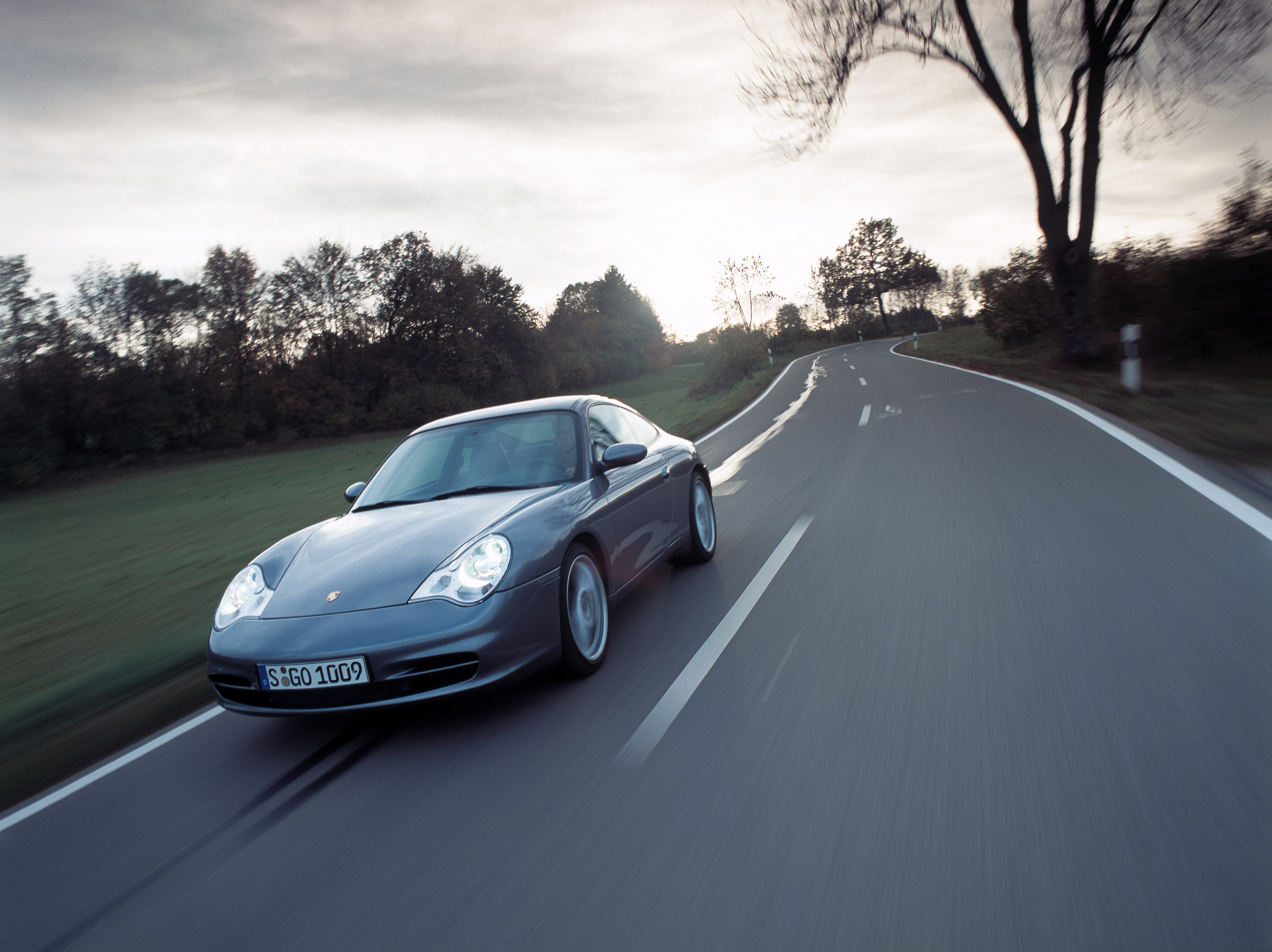
Despite improving on the 993 in virtually every measurable metric, Porsche traditionalists maligned the 996 for its pivotal departure point within the 911 lineage. For once, the popular air-cooled flat-six, which had been in service for 34 years, was traded for a new liquid-cooled unit. The body was all-new as well, representing the 911’s most comprehensive redesign.
Despite the fresh metal, Porsche’s newfound exploration of component sharing didn’t help the 996’s reception, borrowing heavily from the Boxster which had just debuted a few years earlier. While traditionalists got hung up on the minutiae, the 996 made real strides in development.
Torsional stiffness increased by 45 per cent, and bending stiffness by 50 per cent. The controversial water-cooled. wet-sumped M96 engine also innovatively had liners cast into the crankcase, and was far more resistant to overheating in traffic – a particular worrisome situation for old 993 owners.
Ironic, perhaps, that many of the reasons the 996 was castigated when new make it an astute modern classic purchase today. It was a hugely significant car for the 911 story and, upon reflection, is a genuinely attractive package that’s belatedly receiving the love it deserves.
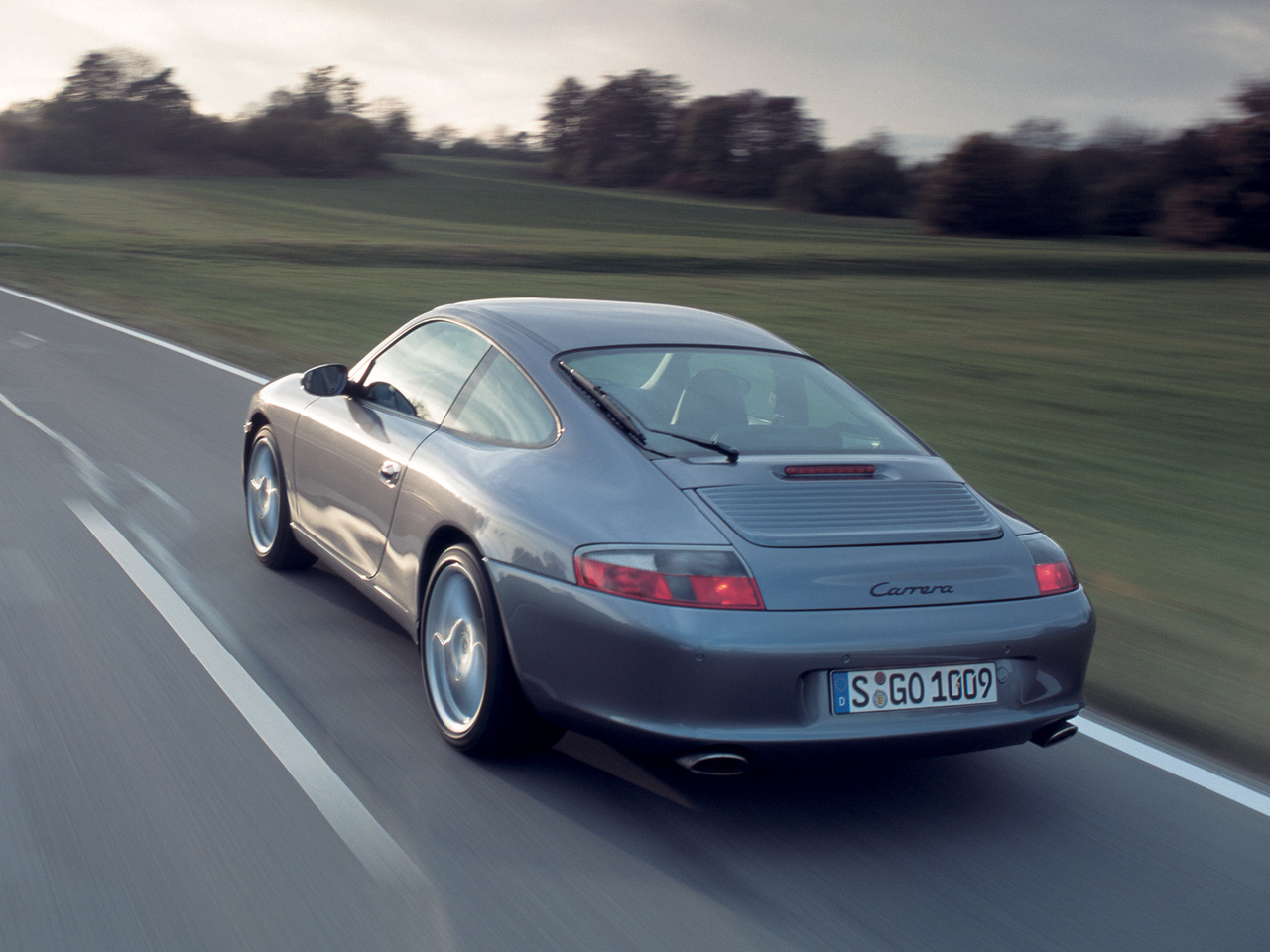
There seems to be no clear disparity in price between pre- and post-facelift cars, although prices quickly snowball as you walk up the range.
Porsche 996 911 essential checks
Despite the 996’s unloved reception, across nine years of production, 175,262 units were built making the divisive new model the most successful one yet. Subsequently, there’s virtually a 996 to suit everyone and almost every budget.
The market begins as low as $40K, though you’ll mostly find cabriolet and/or automatic examples in the sub-$50K category. Manual examples begin at around $55K, while Carrera 4 and 4S models start at about $75K. There seems to be no clear disparity in price between pre- and post-facelift cars, although prices quickly snowball as you walk up the range.
The 996 Turbo, a $317K car when new, asks from $125K, while GT3s still command north of $150,000. Just 29 GT2s were delivered locally and will see you forking out around $250,000.
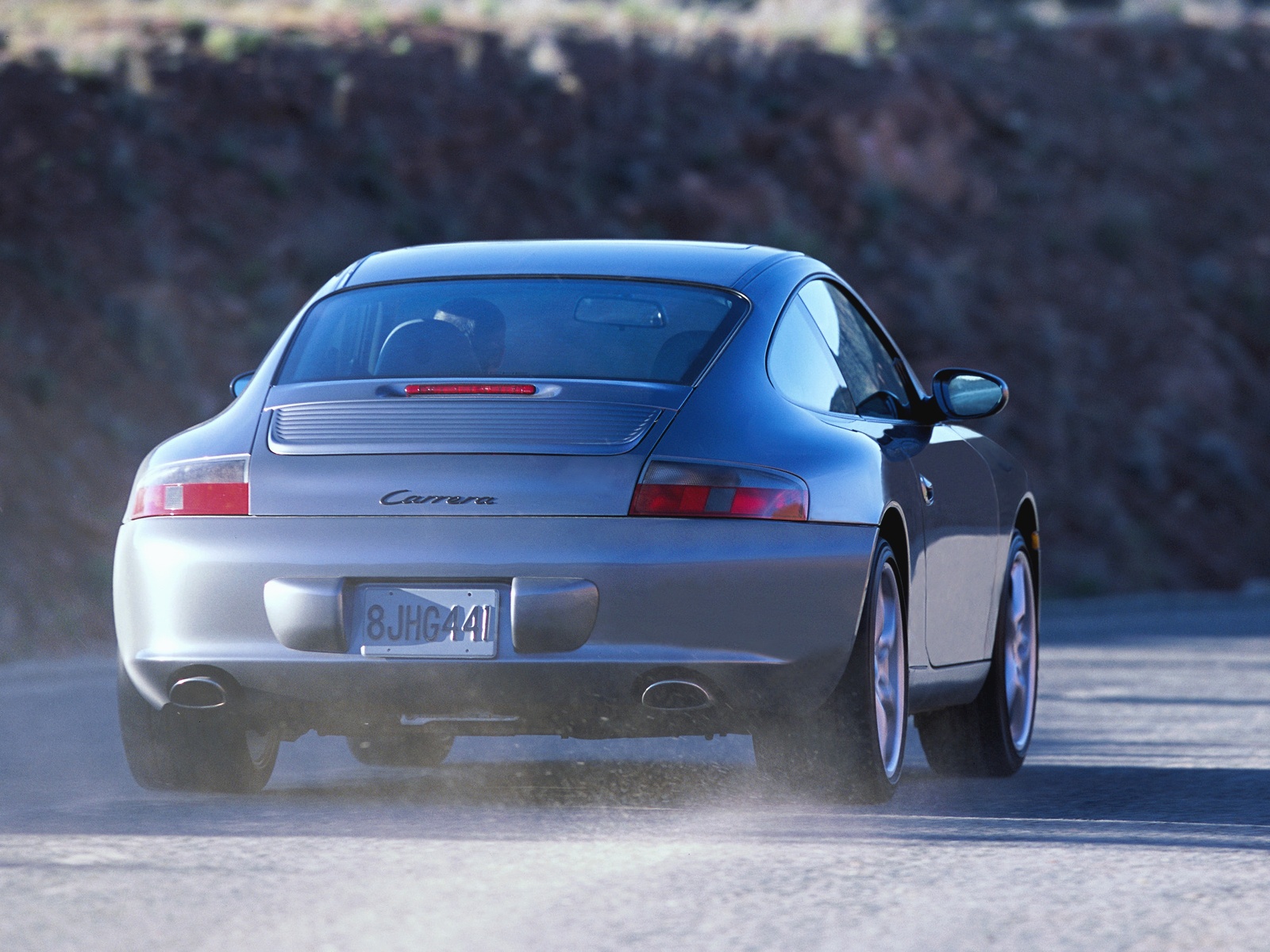
Body & Chassis
Porsche’s original 10-year anti-rust warranty may have lapsed, however, they are generally regarded as corrosion-resistant. There was a particular case with early 996s whereby the doors would droop slightly when open and would eventually rub away a small patch of paint underneath the latches which could subsequently corrode.
Prior accident damage should also be inspected. Ensure gaps and paint between panels is uniform.
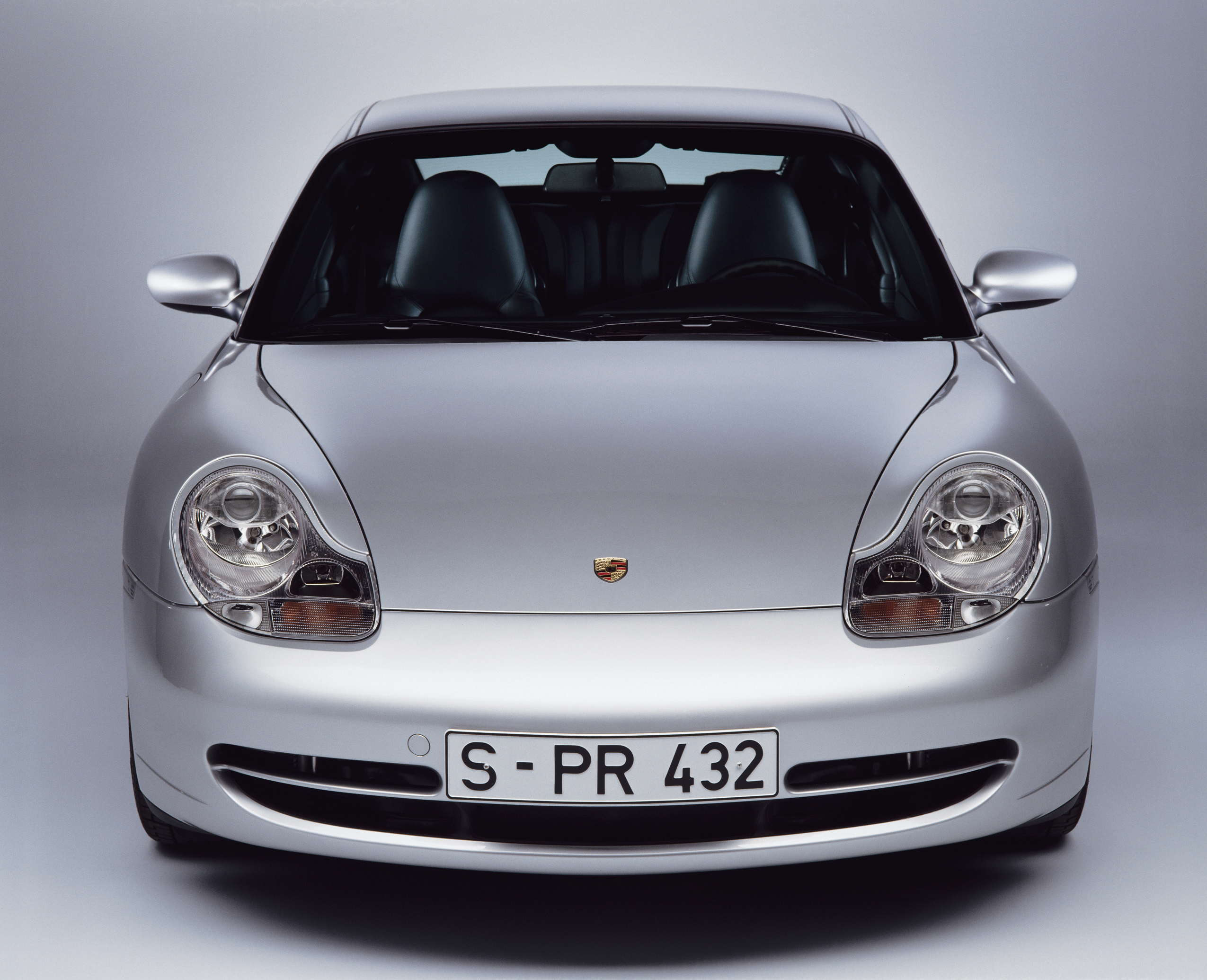
Engine & Transmission
With a knowledgeable ownership base and proven solutions to virtually all inherent problems, a 996 can spin up hundreds of thousands of fuss-free clicks with the proper love.
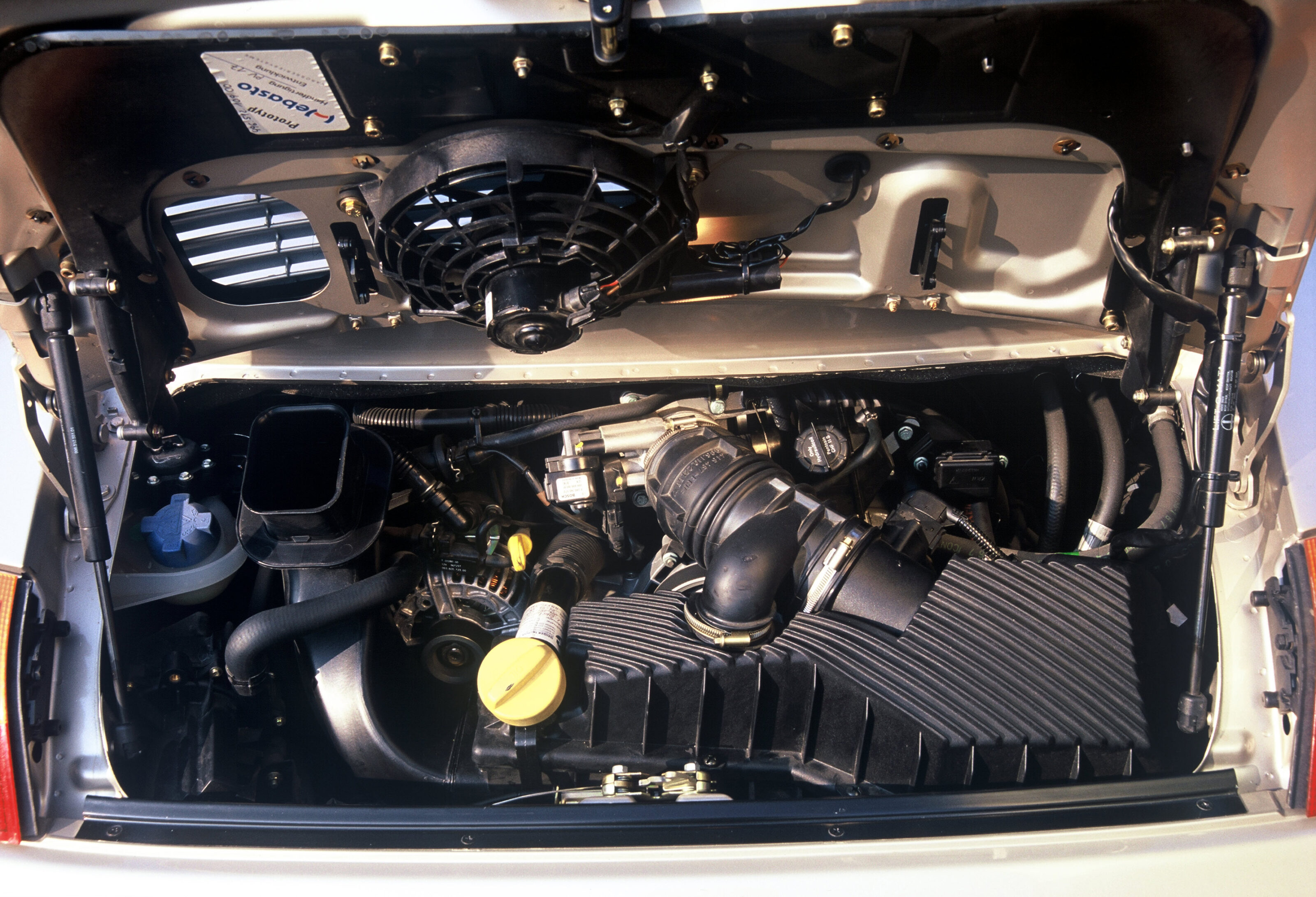
The intermediate shaft (IMS) bearing and rear main seal (RMS) are notorious bugbears of 996 ownership. Failure of the factory IMS bearing can lead to catastrophic engine failure and was said to afflict around 8 per cent of cars produced between 2000 and 2005 (according to a 2004 class action lawsuit brought against Porsche North America). Uprated bearings are often replaced as a pro-active or preventative measure within routine maintenance.
The rear main seal was also a factory weak point. While it’s a relatively cheap component to replace, it’s a labour intensive and costly job due to the difficulty of access within the engine bay.
Suspension & Brakes
Owners indicate that you can expect to begin replacing components from around 130,000kms, in line with routine servicing intervals. Lower control arms have been known to wear prematurely, however, and are often signalled by a creaking or rattling from one of the four corners.
Power steering is hydraulic and should feel smooth throughout. Ensure the gaiters on the steering rack are not split or perished.
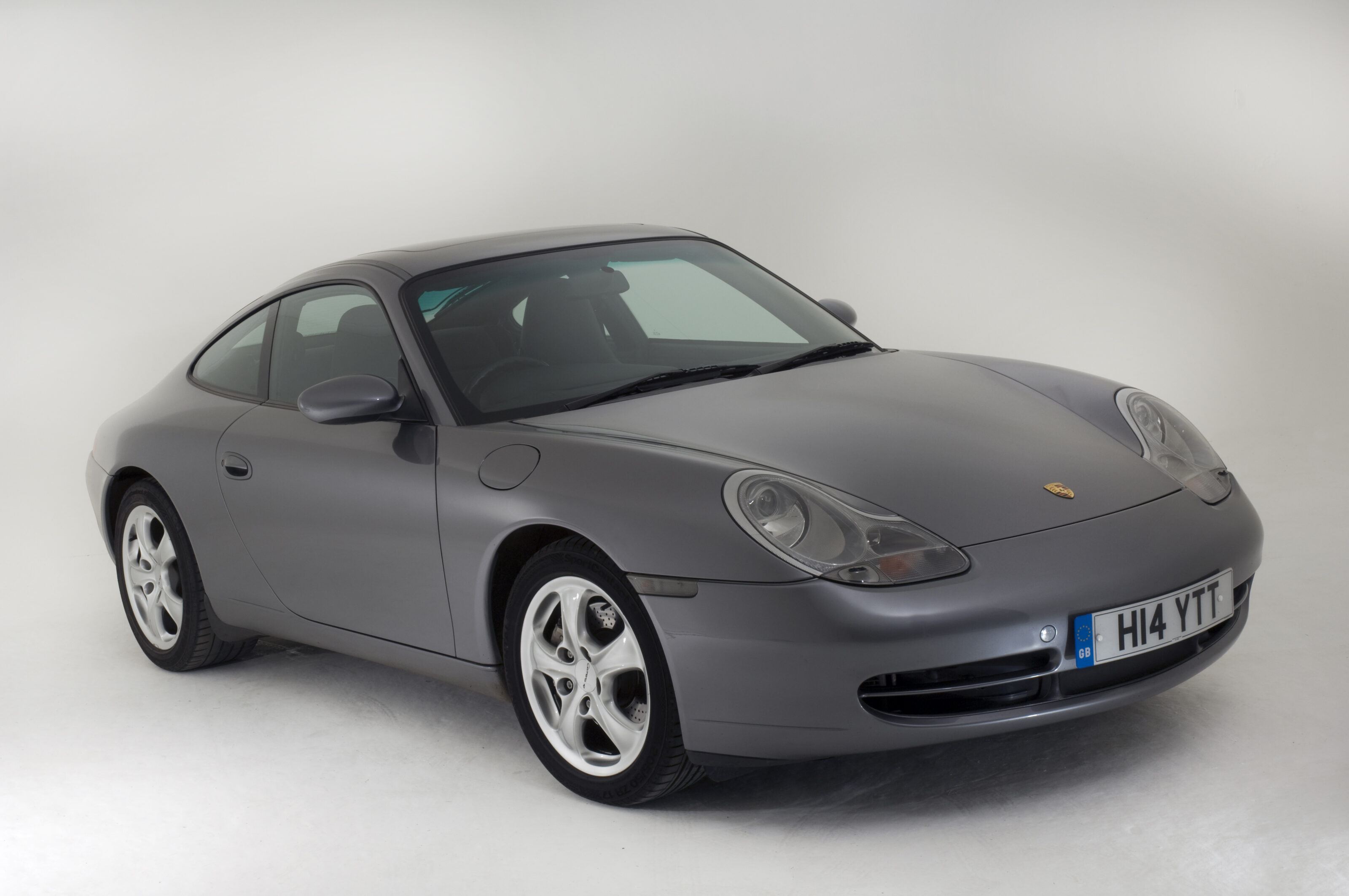
Interior & Electronics
Age and use often see cars prone to developing squeaks and rattles, as well as worn away icons on buttons and frequent touchpoints.
With power on, check that all warning lights on the instrument cluster illuminate. Also check that they all disappear upon ignition, too. Airbag lights aren’t unheard of, and can sometimes be rectified as easily as cleaning the connector within the seatbelt buckle.
Test every button and function, and check effectiveness of air-conditioning.
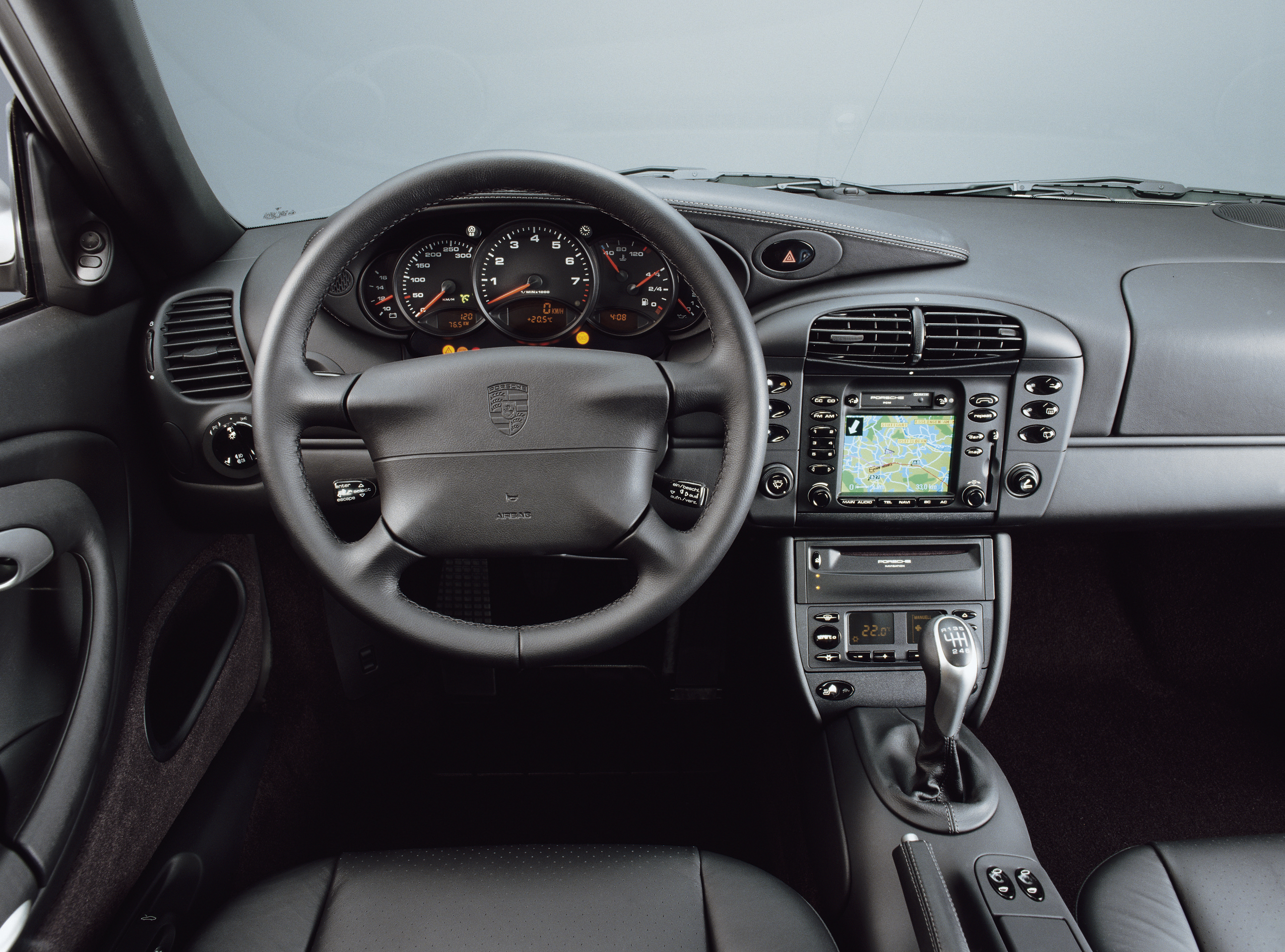
Three other options you may consider
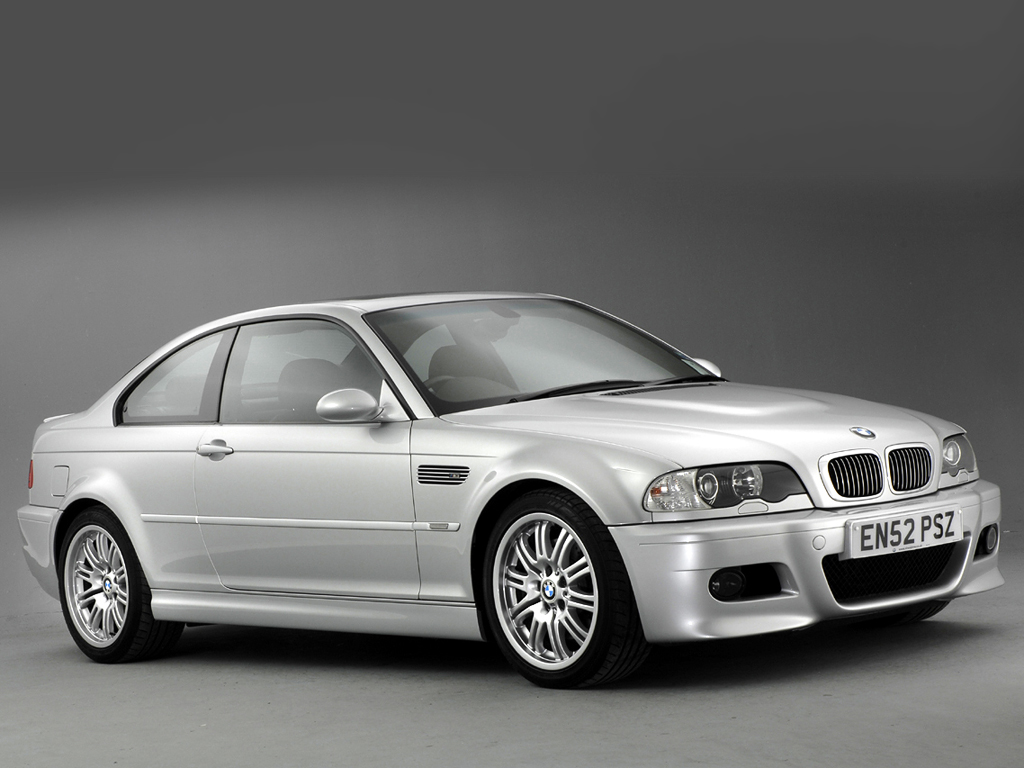
The obvious: BMW E46 M3
BMW’s E46 M3 is another paragon of early-00s driver’s cars, and also boasts a raspy atmo six cylinder and lauded dynamics. The market ranges from $35K to $100K, and the M3 may be more everyday useable than the 911.
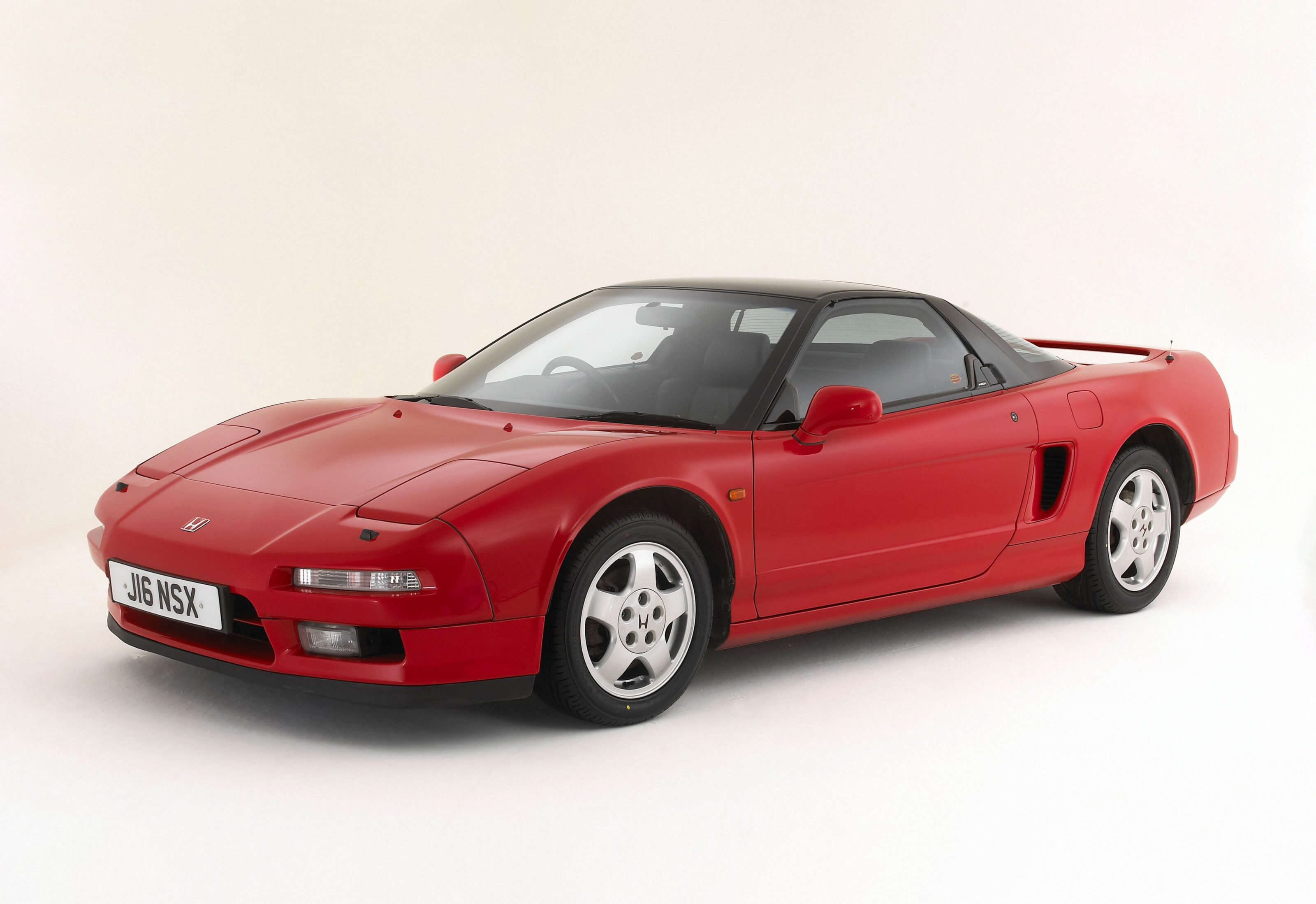
The unexpected: Honda NSX
Honda’s NSX cost almost $70K more than the facelifted Carrera back in 2002. Even today you’re talking between $100K-$200K, so they’re more of a Turbo/GT alternative than a simple Carrera. Just as exotic though.
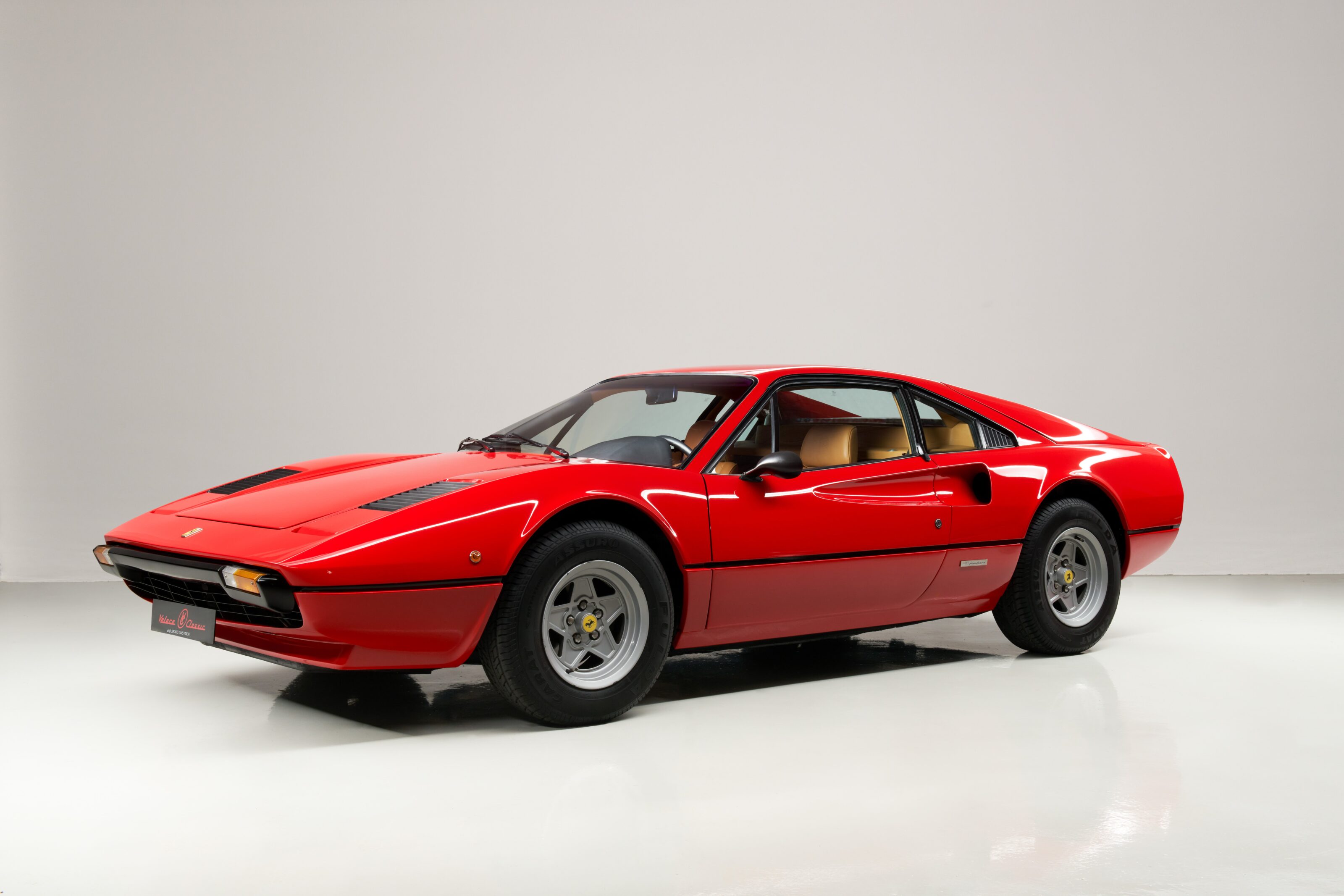
The oddball: Ferrari 308
If it’s exotic you really want, how about the Pininfarina-penned 308 GTB? Don’t expect the 911’s driving experience from this mid-70s Ferrari, but bonus points if you can score one of the 808 ‘vetroresina’ fibreglass-bodied cars.
Porsche 996 911 Carrera specs
Welcome to the new series of MOTOR track reviews, where we’ll be testing all the latest and greatest (and maybe not so great) performance cars at the limit to see how they stack up.
First cab off the rank is the Lexus RC F Track Edition. A niche vehicle to start with, perhaps, but a ‘Track Edition’ seems appropriate and we wanted to sneak it in before Australia’s new side-impact regulations mean it has to be discontinued.
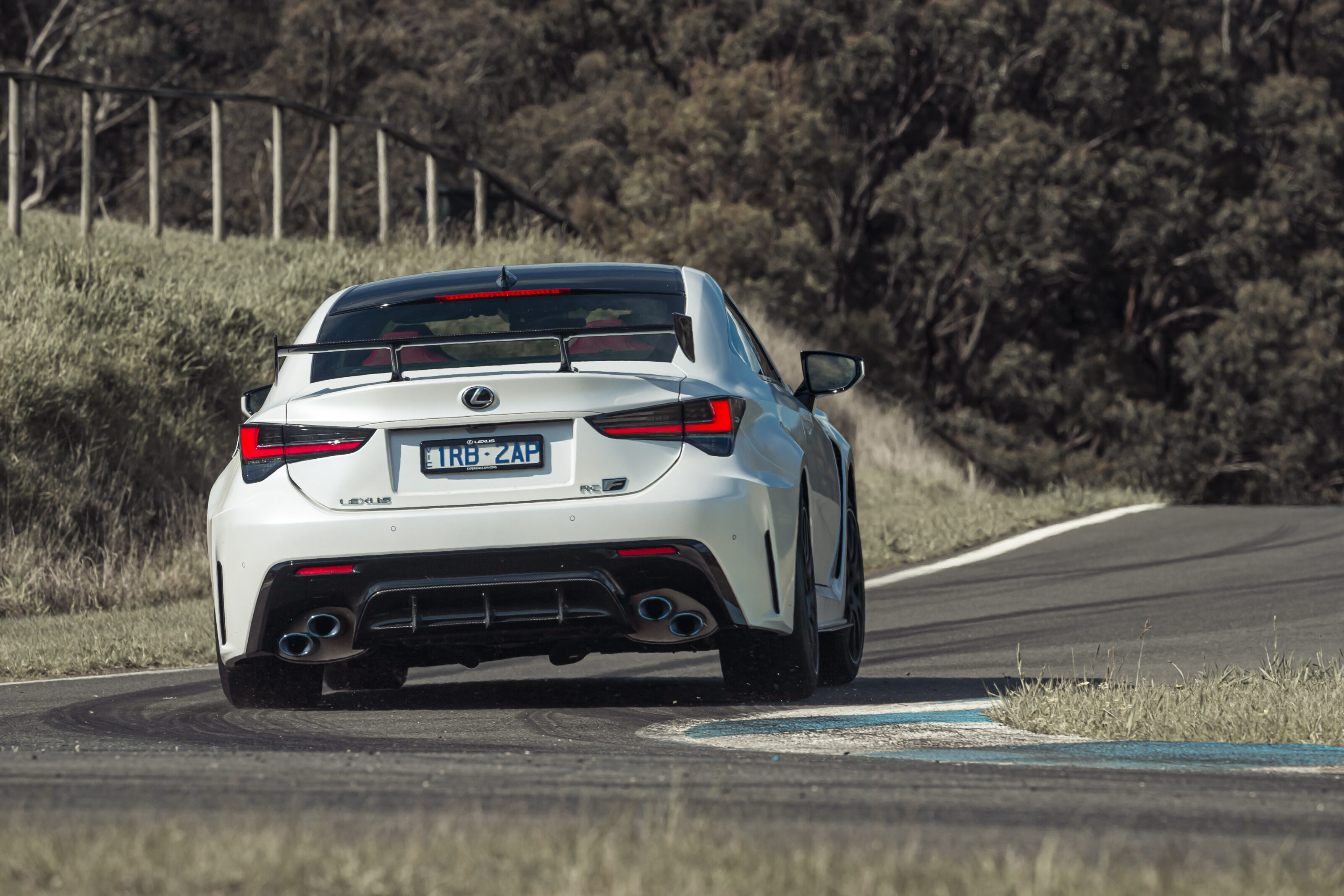
The Track Edition essentially shaves a heap of weight from the RC F, a total of 65kg, courtesy of a carbon fibre bonnet, roof, front spoiler and rear diffuser, seat brace and wing.
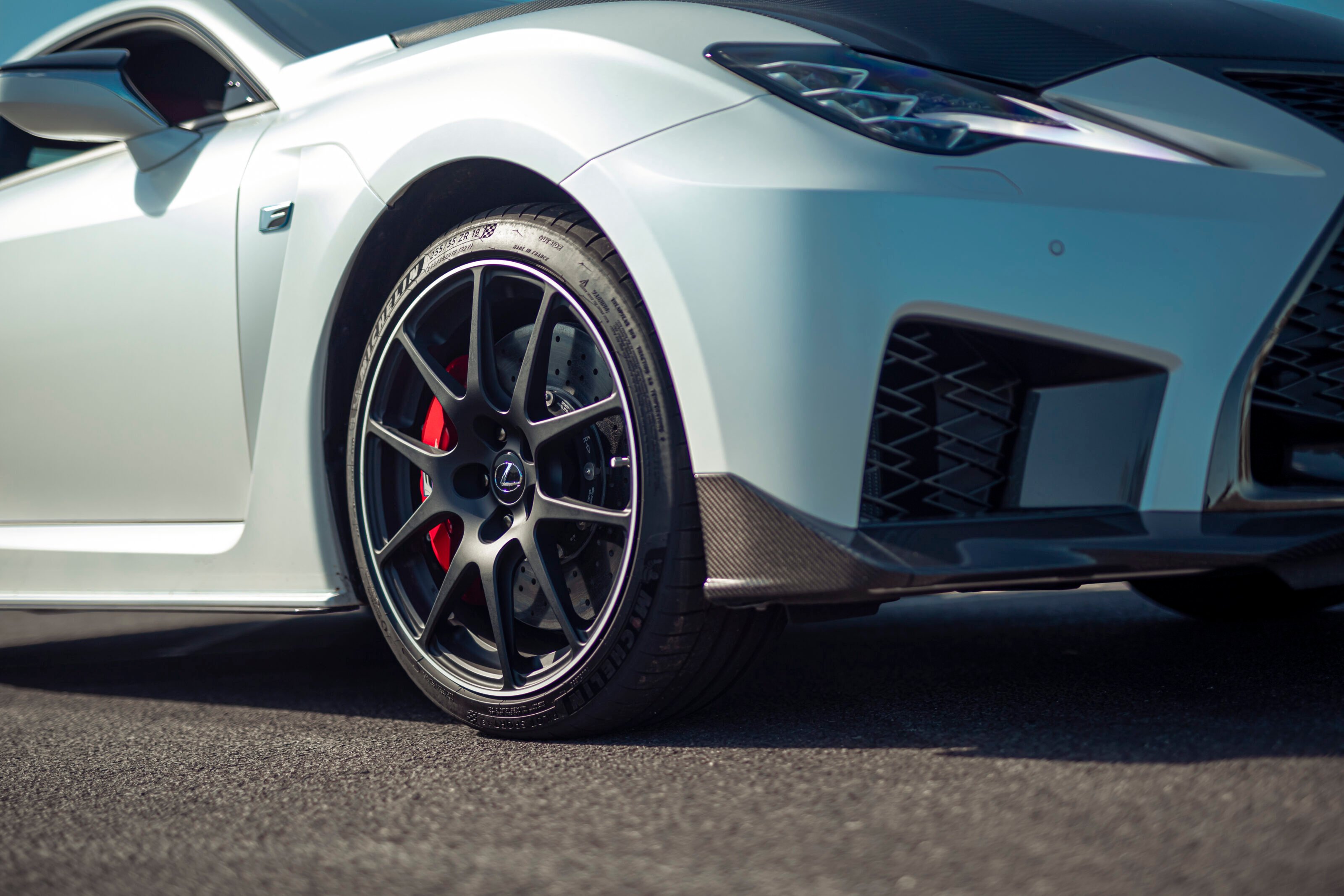
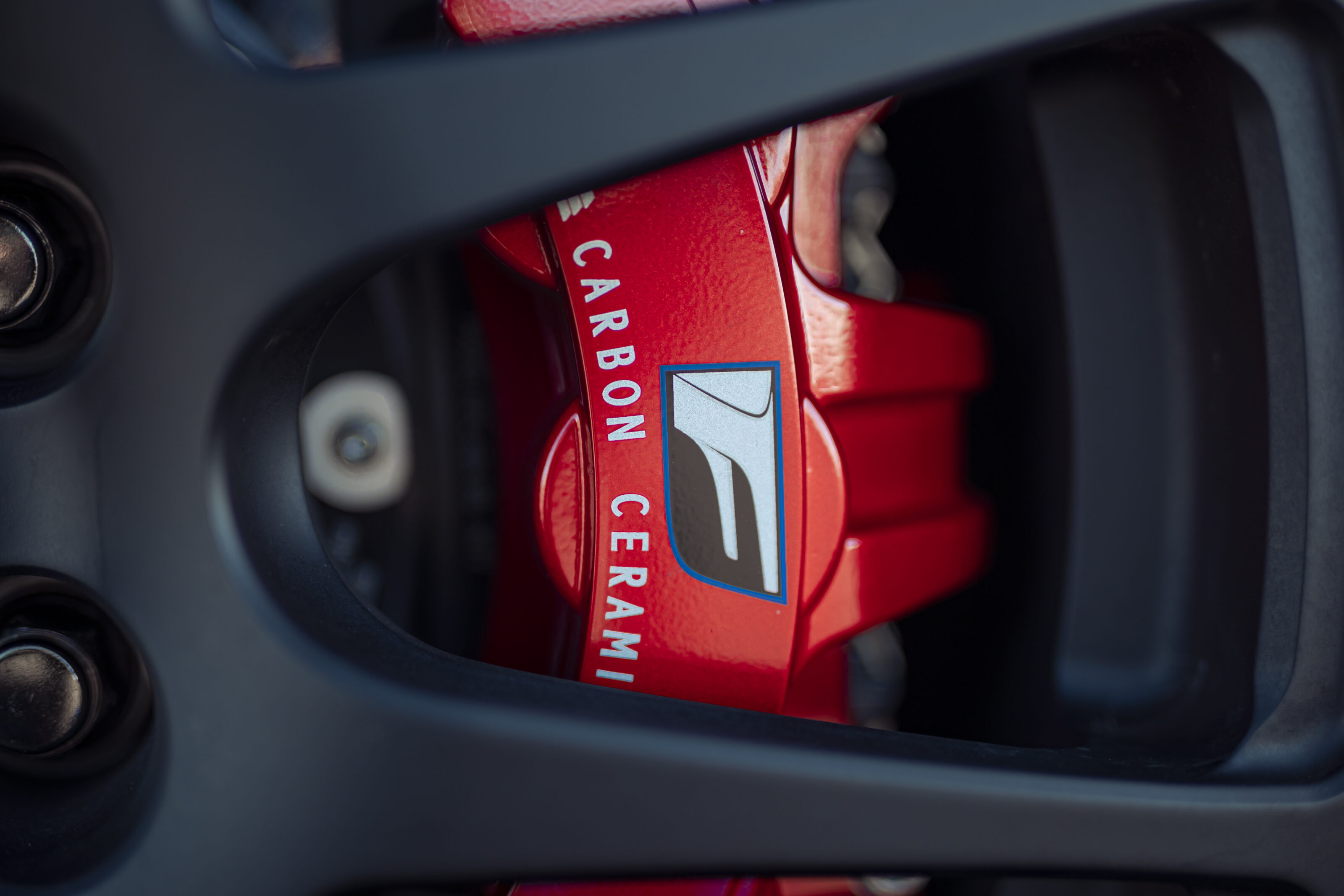
Lightweight BBS alloy wheels and standard carbon-ceramic brakes – 380mm discs at both ends with six-piston front calipers and four-piston rears – shave another 25kg, while a titanium exhaust deletes another 6kg.
There are myriad other minor differences that reduce weight, such as a manually-adjustable steering column, no heating or ventilation for the seats and a fixed rear wing. The wing, along with carbon side fins and a front spoiler, helps to reduce lift and generate a small amount of downforce.
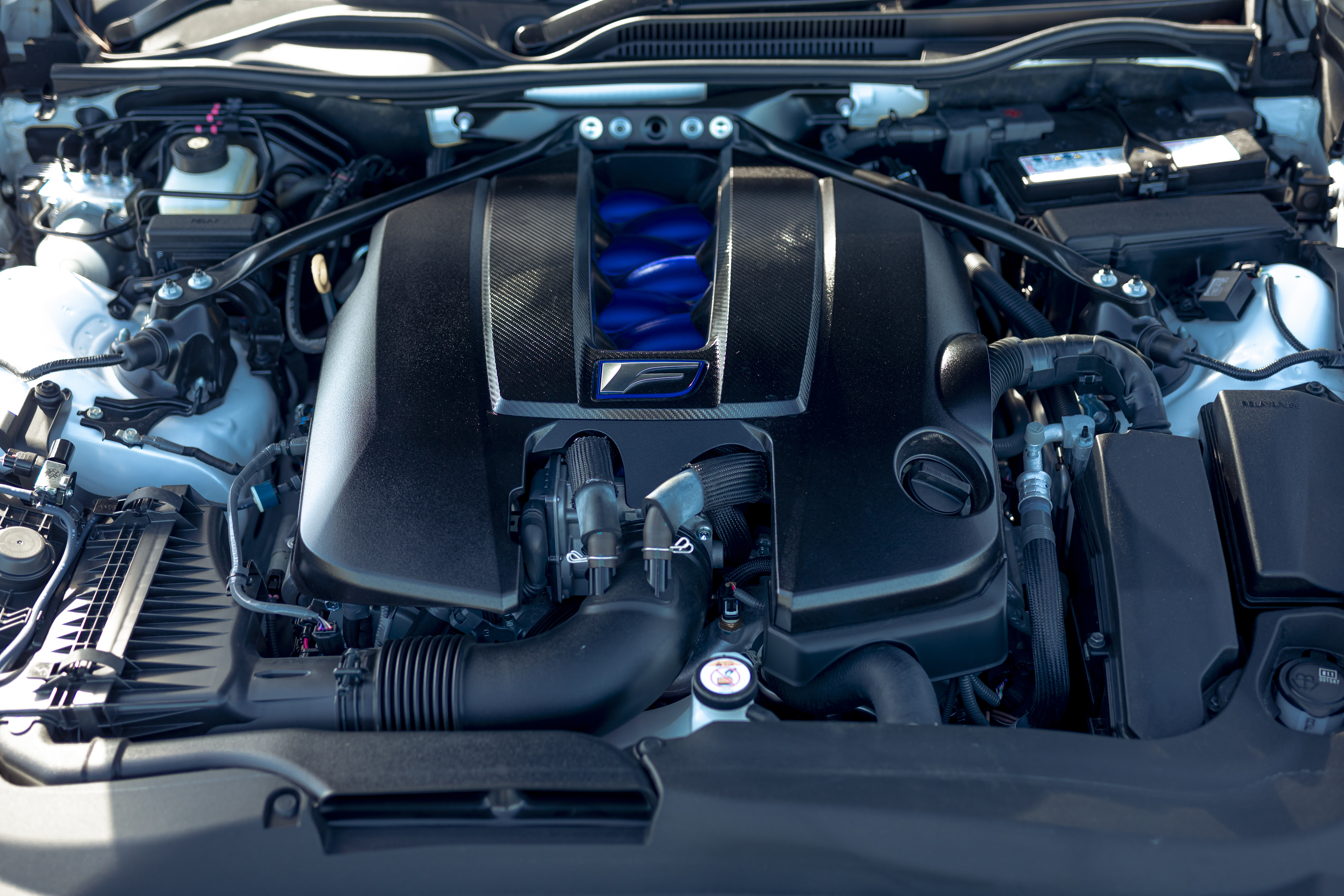
As ever with the RC F, the highlight of the Track Edition is its wonderful naturally-aspirated 5.0-litre V8 engine. Producing 351kW and 530Nm with a rev ceiling of 7500rpm, what it lacks in torque in comparison to its turbocharged competitors it makes up for with fantastic throttle response – once Sport+ is selected, as in Normal it can be quite doughy – and a searing soundtrack so sharp it’ll cut your ear drums.
A torque converter automatic isn’t usually the obvious choice for a track car but the RC F’s eight-speeder is at least pleasingly aggressive, with quick upshifts and responsive downshifts that zing the tacho around to its upper reaches.
The Track Edition’s chassis enhancements might be fairly mild compared to the standard car, but they do work. Front end grip in particular is enhanced allowing more confidence when committing to a corner and an improved ability to rotate and adjust the car mid-turn.
Steering feedback is a little absent, especially around the straight ahead, but it’s accurate enough to place the front tyres where you need them and the ratio is nicely judged, not too quick nor too slow. What do provide great feedback are the carbon-ceramic brakes, as well as tireless stopping power.
Grip levels are impressive, though semi-slick tyres such as a Michelin Cup 2 or Pirelli Trofeo R – appropriate for a Track Edition but perhaps a step too far for Lexus – would improve things further.
The Sport+ damping mode is extremely firm, the RC F hopping even on the relatively smooth Bryant Park surface, but a switch to Normal through the Custom mode (thus keeping the drivetrain in Sport) results in too much pitch, the nose lifting under throttle and increasing understeer.
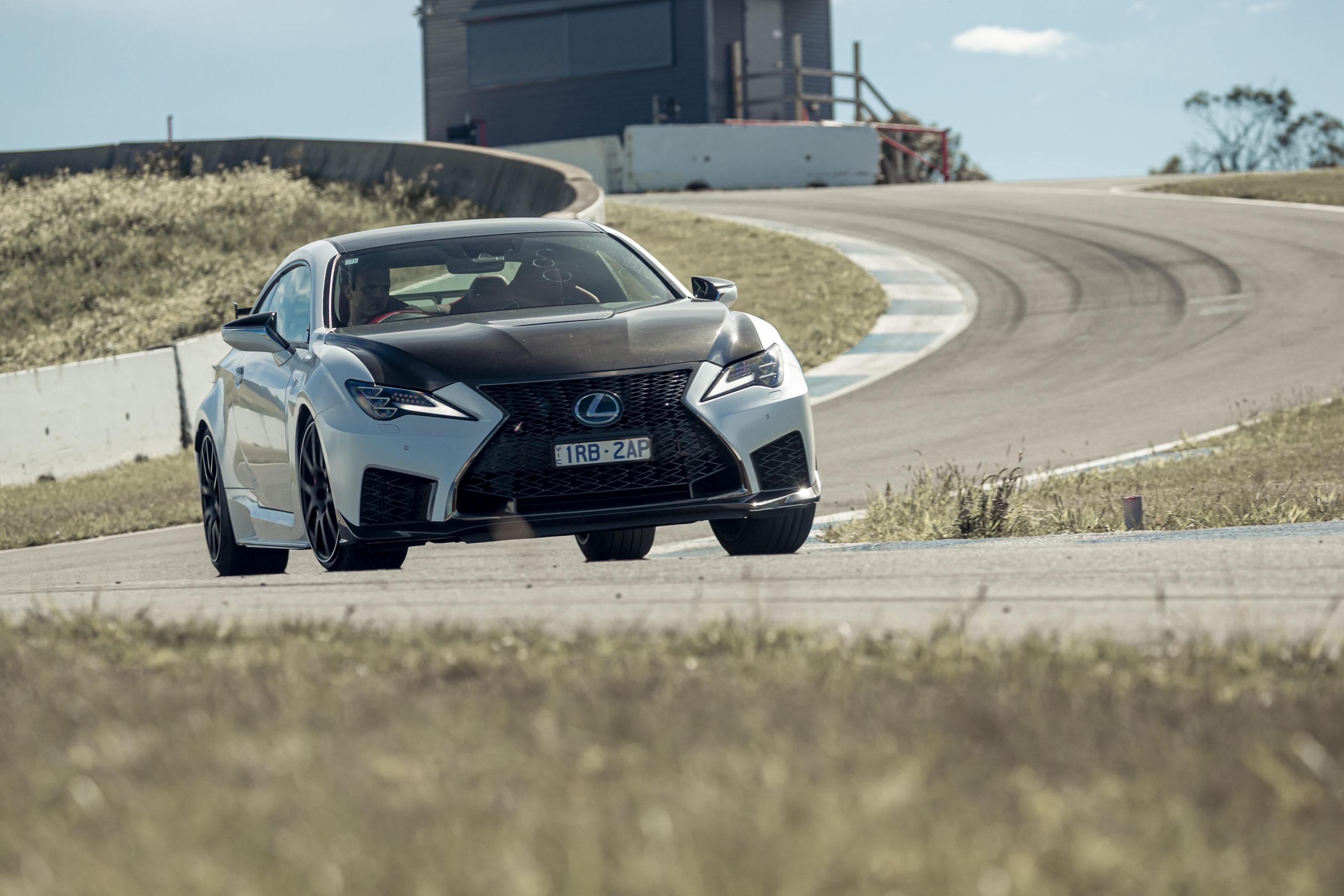
But what really makes the Track Edition enjoyable is its adjustability. Even with the ESP system in its Expert mode the car can display plenty of attitude and requires driver correction, but with it deactivated you can alter the balance at will using either the brakes or the throttle.
Once you’re used to its responses you can throw it around like a V8-powered Toyota 86, which isn’t necessarily the quickest way around a track but it is very enjoyable. This friendliness does pay dividends against the stop, though, as you feel confident to extract the RC F’s maximum.
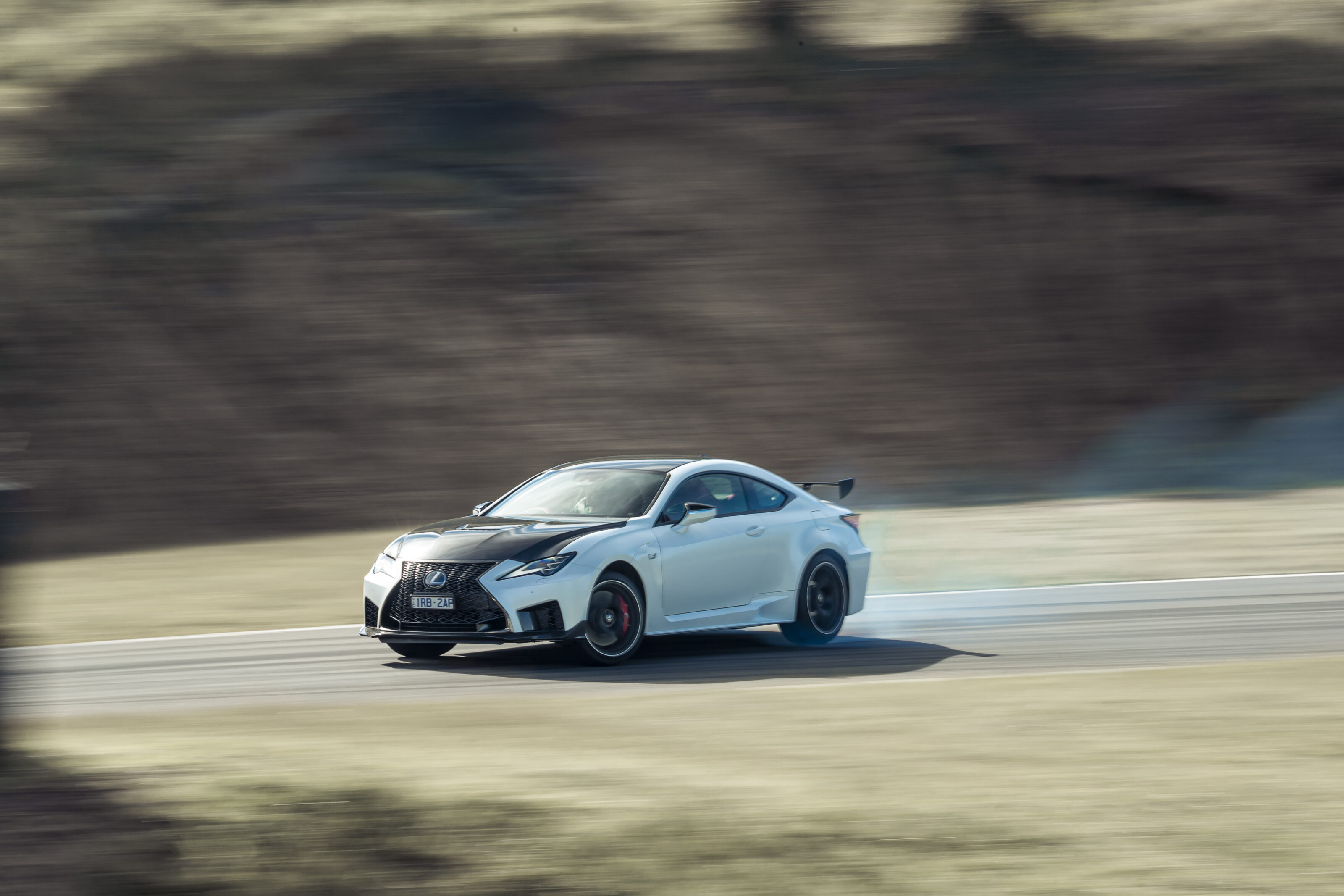
As we’ll see in subsequent tests, its best time of 1:06.8 isn’t groundbreaking, but it is pretty quick for such a heavy machine around a tight track. The Track Edition’s biggest shortcoming is its limited-slip diff, which isn’t tight enough and allows scrappy inside wheelspin in tighter corners.
The other problem with the Track Edition is that it’s no longer available. As of November 1, Australia’s new side impact regulations have consigned the Lexus RC – as well as the Nissan GT-R, Alpine A110 and others – to the history books, but it deserved an opportunity to shine as it’s a characterful, enjoyable V8 coupe that we’re going to miss.
LEADERBOARD
| Lexus RC F Track Edition | 1:06.8 |
SPECIFICATIONS
| Body: | 2-door, 2+2-seats |
| Drive: | rear-wheel |
| Engine: | 4969cc V8. DOHC, 32v |
| Bore/stroke: | 94.0 x 89.5mm |
| Compression: | 12.3:1 |
| Power: | 351kW @ 7100rpm |
| Torque: | 530Nm @ 4800-5600rpm |
| Power/Weight: | 205kW/tonne |
| Transmission: | 8-speed automatic |
| Weight: | 1715kg |
| 0-100km/h: | 4.3sec (claimed)/4.79sec (tested) |
| Suspension: | Double wishbones, coil springs, adaptive dampers, anti-roll bar (f); multi-links, coil springs, adaptive dampers, anti-roll bar (r) |
| L/W/H: | 4710/1845/1390mm |
| Wheelbase: | 2730mm |
| Tracks: | 1555/1560mm (f/r) |
| Steering: | Electrically assisted rack-and-pinion |
| Brakes: | 380mm ventilated/drilled carbon-ceramic discs, 6-piston calipers (f); 380mm ventilated/drilled carbon-ceramic discs, 4-piston calipers (r) |
| Wheels: | 19 x 9.0-inch (f); 19 x 10.0-inch (r) |
| Tyres: | 255/35 ZR19 (f); 275/35 ZR19 (r) Michelin Pilot Sport 4 S |
| Price: | $165,690 |
The announcement of the first fully-electric Range Rover this week marks the beginning of a new era for the luxury off-road brand, as well as the wider Land Rover line-up.
The battery-powered Range Rover is one of six pure-electric Land Rover models to arrive from 2024, with the British marque set to begin expanding its product lines from the middle of this decade.
As parent company Jaguar Land Rover (JLR) initiates the introduction of electric vehicles (EVs) to its range, it will also start phasing out diesel engines from 2026 – with internal-combustion engines set to disappear from its portfolio entirely 10 years later.
The BMW 4.4-litre V8 announced for the latest Range Rover appears to begin the start of a rekindled relationship between the German giant and JLR. In 2019, the two companies announced they would jointly invest in EV technologies and share components on future models.
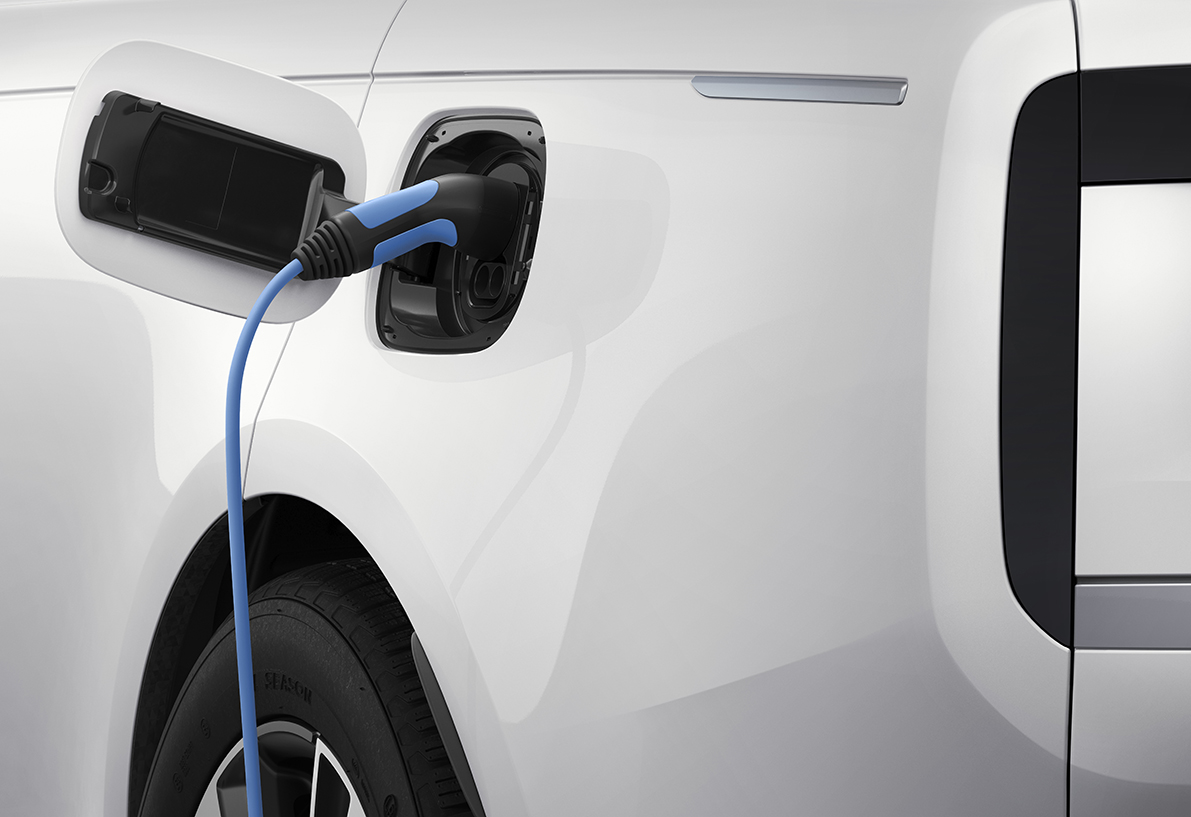
With the first electric variant due to arrive in 2024, the Range Rover line-up was rumoured to be joined by a so-called ‘Road Rover’ – a low-slung SUV with shared architecture from the Jaguar XJ – but earlier this year sources told the UK’s Autocar the project had been axed.
The same publication says sources within the company are now looking at plans to offer a more luxurious SUV based on the underpinnings of the just-unveiled Range Rover – but with the model set to wear a Defender badge.
The large luxury Defender would be aimed at the likes of the Mercedes-Benz G-Wagen, which is a vehicle of choice for those able to afford its combination of rugged looks, performance, opulent interior, and off-road capability.
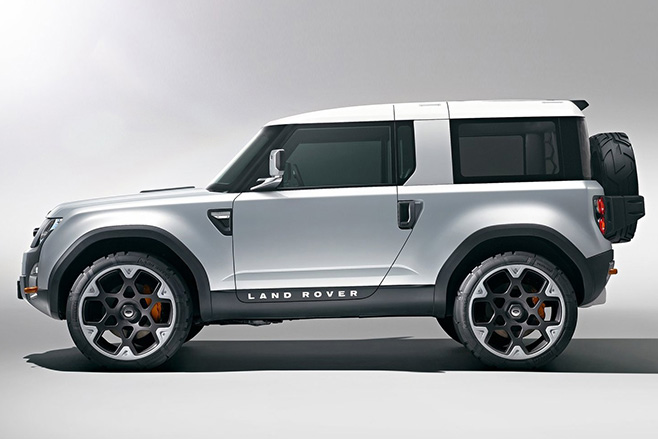
A report from the UK’s WhatCar suggests the other end of the range will also grow, with the addition of a ‘baby Defender’.
It’s said the small SUV will come with a 1.5-litre turbocharged three-cylinder engine, as well as the option of a plug-in hybrid powertrain. The baby Defender is rumoured to come in both front-wheel drive and all-wheel drive, with the expectation the model will compete directly with the likes of the Suzuki Jimny.
As with Range Rover, it’s thought both the Defender and Discovery product lines will mature into their own pseudo sub-brands, covering a greater area of the new-car market from the second half of this decade.
August, 2022: Outlander PHEV launch review
The Outlander PHEV is now on sale in Australia, and you can see our full first-drive and video review at the link below.
July 2022: Outlander PHEV pricing announced
Australian pricing and details for the Outlander PHEV have now been revealed. Even better, we’ve also driven it! Get the full story at the links below.
Story continues
Key Points
- Increased battery capacity now at 20kWh
- Electric-only driving range tested at 87km
- Front and rear motor power up by 40 per cent
The new for 2022 Mitsubishi Outlander plug-in hybrid will boast more power and a greater driving range than its predecessor.
Revealed today by the Japanese manufacturer, the second-generation Outlander PHEV joins the new internal combustion engine powered line-up, revealed earlier this year ahead of a late-2021 arrival.
Mitsubishi says the 2022 electrified Outlander, which was the world’s highest-selling PHEV in its previous generation, features improvements across all aspects of the powertrain – with lessons learned from the outgoing model put into practice in its successor.
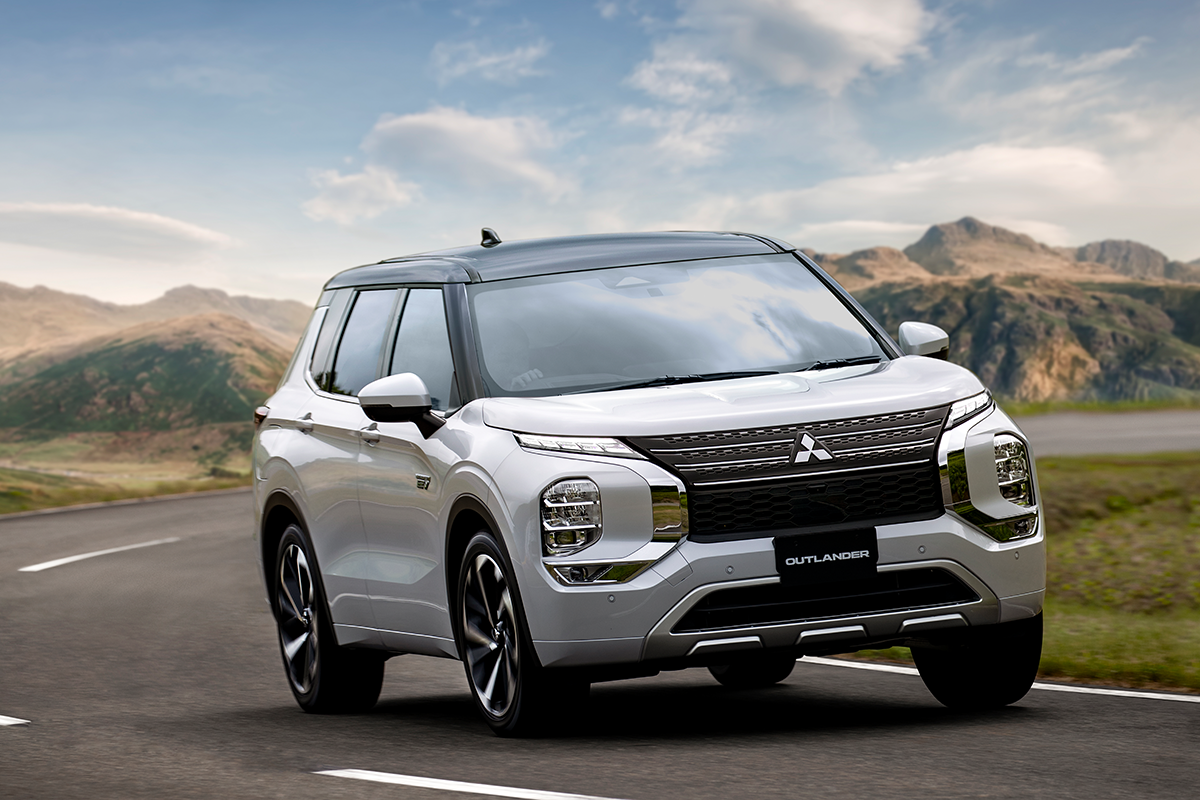
While no specifics were provided, Mitsubishi said output of the front and rear motors is up by “around 40 per cent” over the existing Outlander PHEV, which utilised two 60kW electric motors across the front and rear axles to assist its 2.4-litre engine.
It’s unclear as to whether Mitsubishi will continue to use the existing 4B12 engine from its old Outlander PHEV or if the new 2.5-litre, four-cylinder Nissan PR25DD can be adapted to work with the electric setup.
On top of its increased power outputs, driving range has also been extended, with the 2022 PHEV model now able to travel for up to 87 kilometres in electric-only mode – a 60 per cent improvement over the 54km capability of the current Outlander.
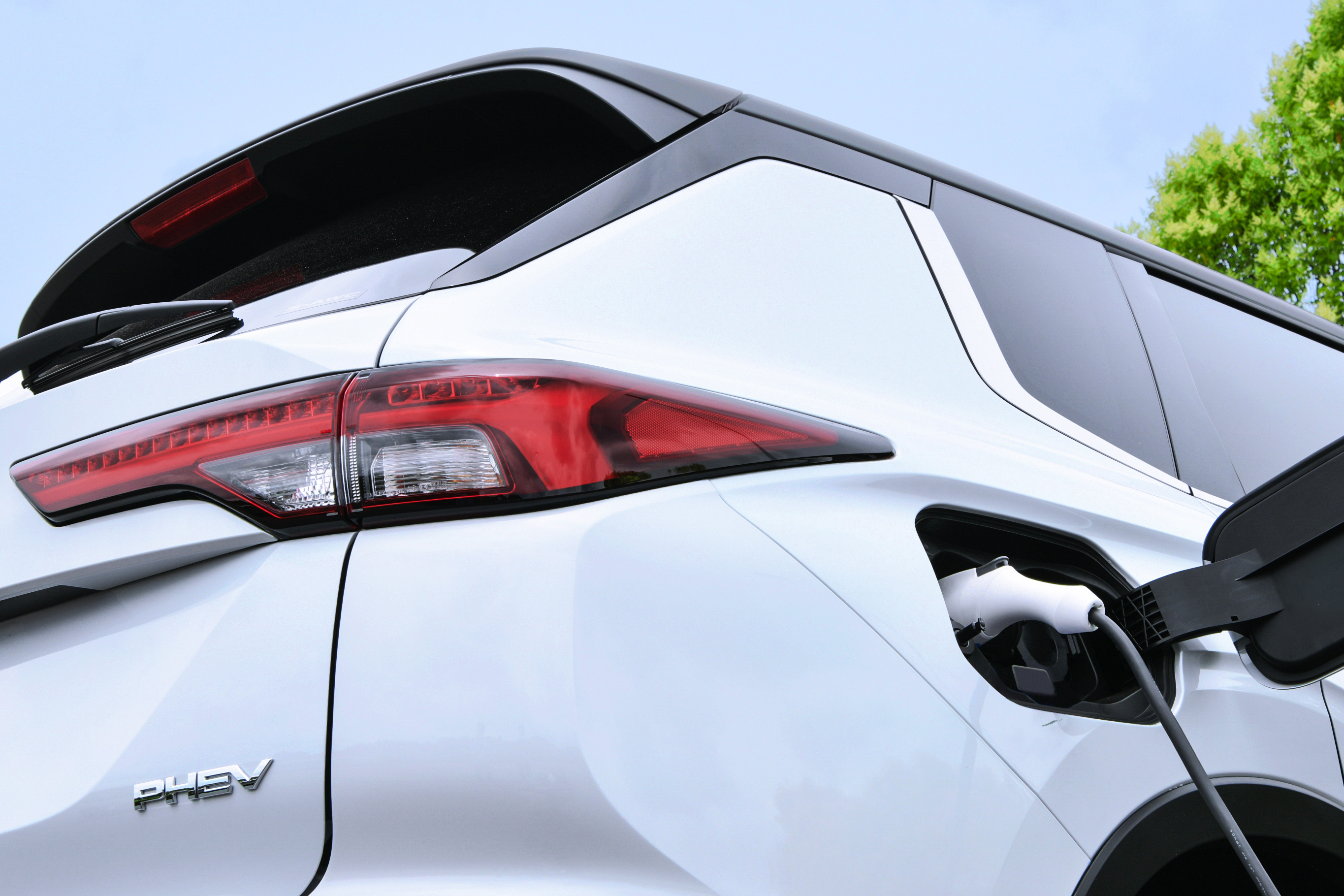
This increased driving range and power comes thanks to a larger battery pack now underpinning the vehicle, as the previous 13.8kWh unit has now been replaced by a 20kWh pack – providing a 53 per cent bump in capacity.
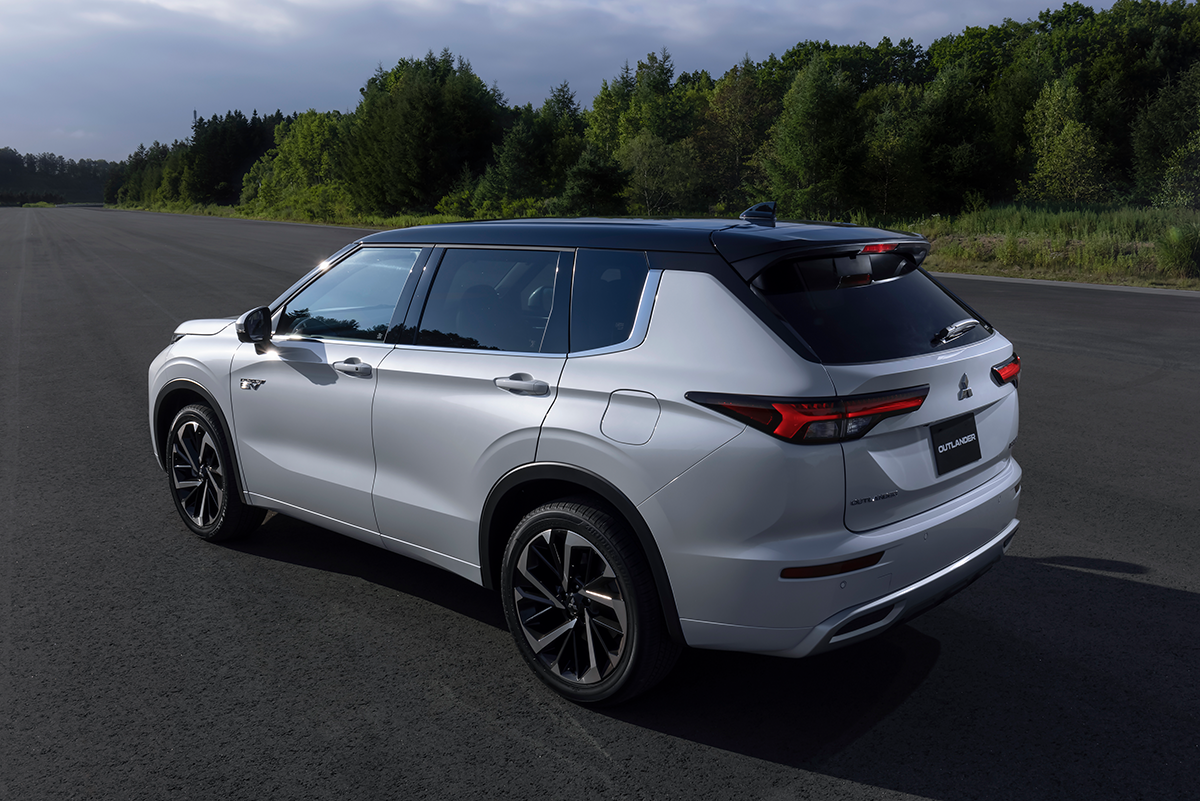
Keeping the power and torque under control will be Mitsubishi’s new brake Active Yaw Control (AYC) technology, featuring seven different driving modes to suit almost any condition drivers would encounter.
Pricing for the PHEV variants hasn’t yet been announced, although the previous generation saw the electrified grades incur a premium of around $12,500 more than the solely-internal combustion engine-powered equivalents.
2022 Mitsubishi Outlander Australian pricing
Prices exclude on-road costs.
Key Points
- Archer Capital sells Supercars after 10 years as majority shareholder
- RACE consortium to take control from 2022
- Teams sell 35 per cent share to new owner
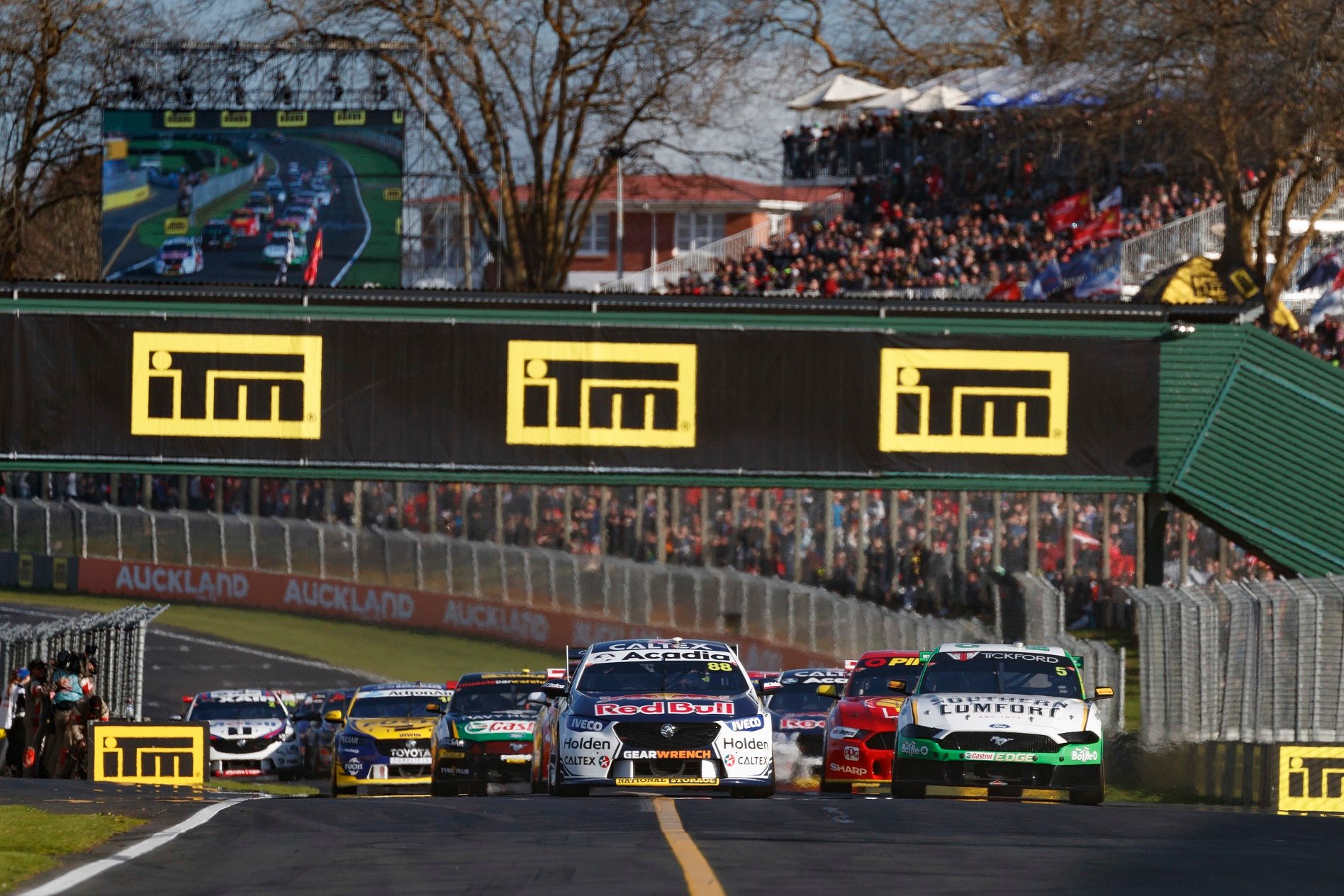
The Supercars Championship has officially been sold, as majority shareholder Archer Capital agreed to sell its stake to a new owner.
Having taken control of the sport 10 years ago, Archer Capital will relinquish its majority share of Supercars to Racing Australia Consolidated Enterprises Ltd (RACE) – a consortium comprised of TGI Sport chairman Barclay Nettlefold, the Australian Racing Group (ARG) and advisory firm Henslow.
Supercars and ARG have been locked in a heated battle since 2019 when the latter introduced TCR Australia to the local motorsport community, although both Supercars and TCR will feature at this year’s six-day Bathurst 1000.
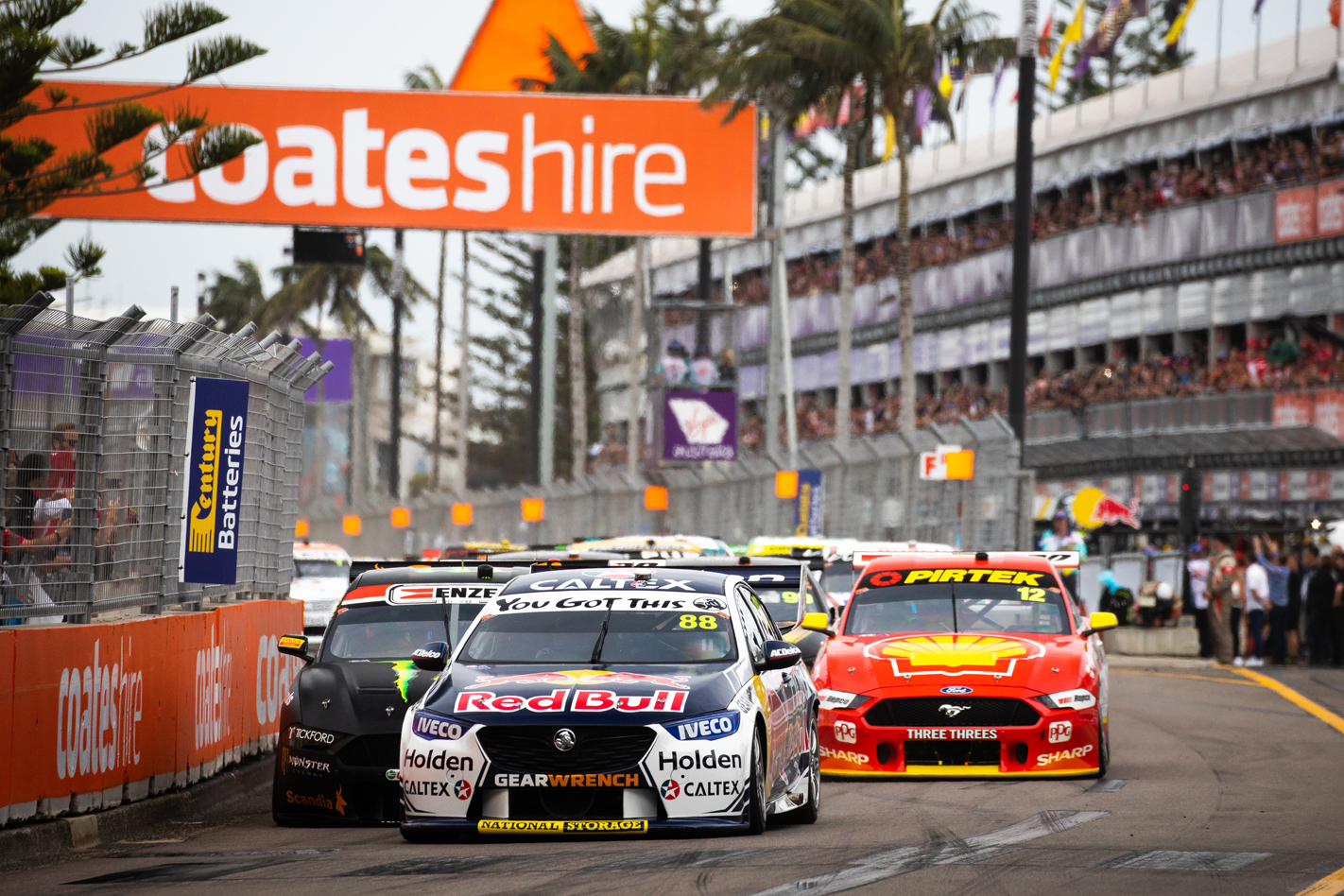
Peter Wiggs, chairman of Supercars and Archer Capital, said the sport will be in good hands under RACE, as the transition of shareholding is expected to be completed by the end of 2021.
“We set out to find a new majority shareholder that would be able to build on the work that Archer and the management team have done over the past five years,” said Wiggs.
“The expertise that RACE has in sport, media, marketing and digital will enable just that.”
Barclay Nettlefold, whose TGI Sport company is a part of multi-sport operations across the globe, said the sport couldn’t have survived the pandemic without Archer’s support.
“Supercars, with the support of Archer, has done an amazing job navigating the past two years.
“The RACE Board and I look forward to combining our collective resources, heralding an exciting new era in the growth of a sport that Australians love.”
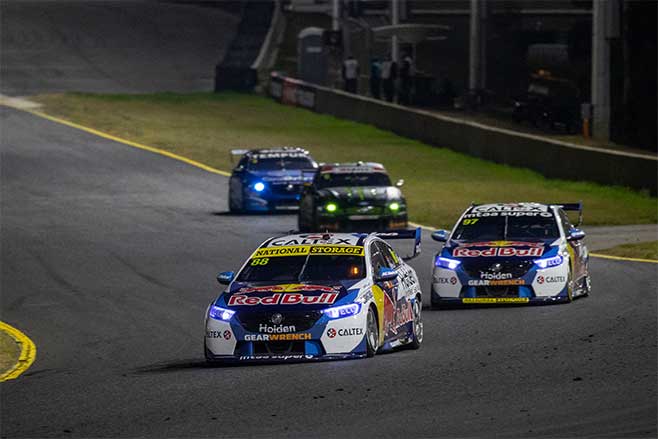
The sale is an important step for the future of the sport after it entered a new TV rights deal with the Seven Network and Foxtel at the beginning of the year, as well as its aim to introduce the new Gen 3 regulations from 2023.
It is understood RACE will not only be taking over Archer’s complete 65 per cent stake, but also buying the remaining 35 per cent share from the teams, according to motorsport publication Speedcafe.
Since listing its portion for sale earlier this year, numerous parties became interested, from previous owners IMG, to NASCAR’s France family and a five-part consortium of Peter Adderton, Paul Morris, Mick Doohan, Alan Gow and Pete Smith.
Snapshot
- Pure Electric given full five stars
- Ranking matches that given to other variants
- Additional testing done for EV and PHEV
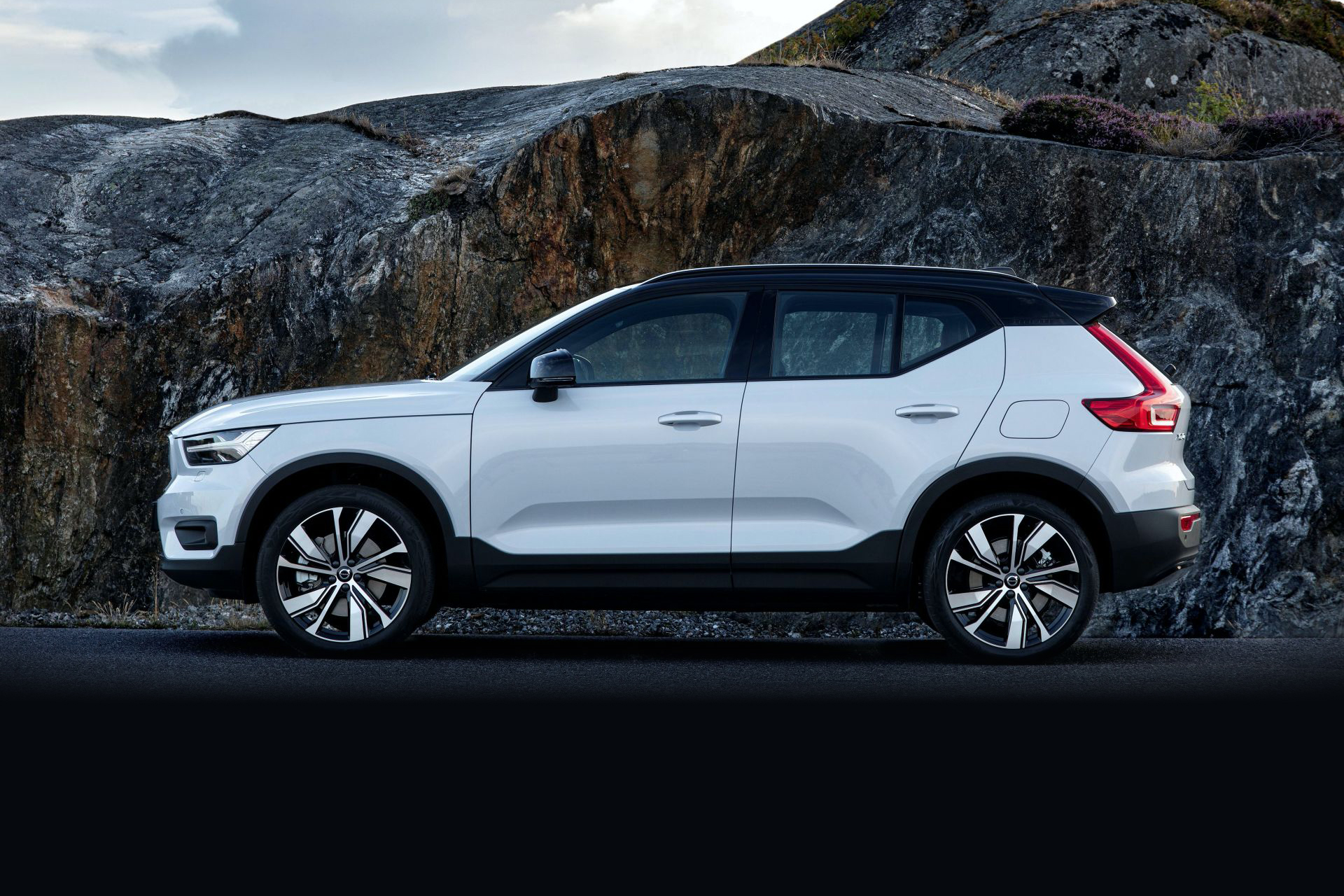
The newest addition to Volvo’s XC40 SUV line-up has earned itself a five-star ANCAP safety rating.
The XC40 Recharge Pure Electric variant has joined its plug-in hybrid and petrol/diesel siblings in gaining top marks in local testing. Though the rating is based on the original model’s 2018 result, ANCAP says newer versions have been put through their paces here since to ensure they meet the same standards.
“To ensure safety is not compromised for consumers wanting to buy an alternative-powered vehicle, for battery and hybrid electric vehicles we conduct additional checks to make sure they don’t pose unique risks such as battery rupture or electrical hazards to the occupants or first responders,” ANCAP CEO Carla Hoorweg said.
“This gives consumers peace-of-mind and assists fleet buyers in meeting their safety and environmental targets.”
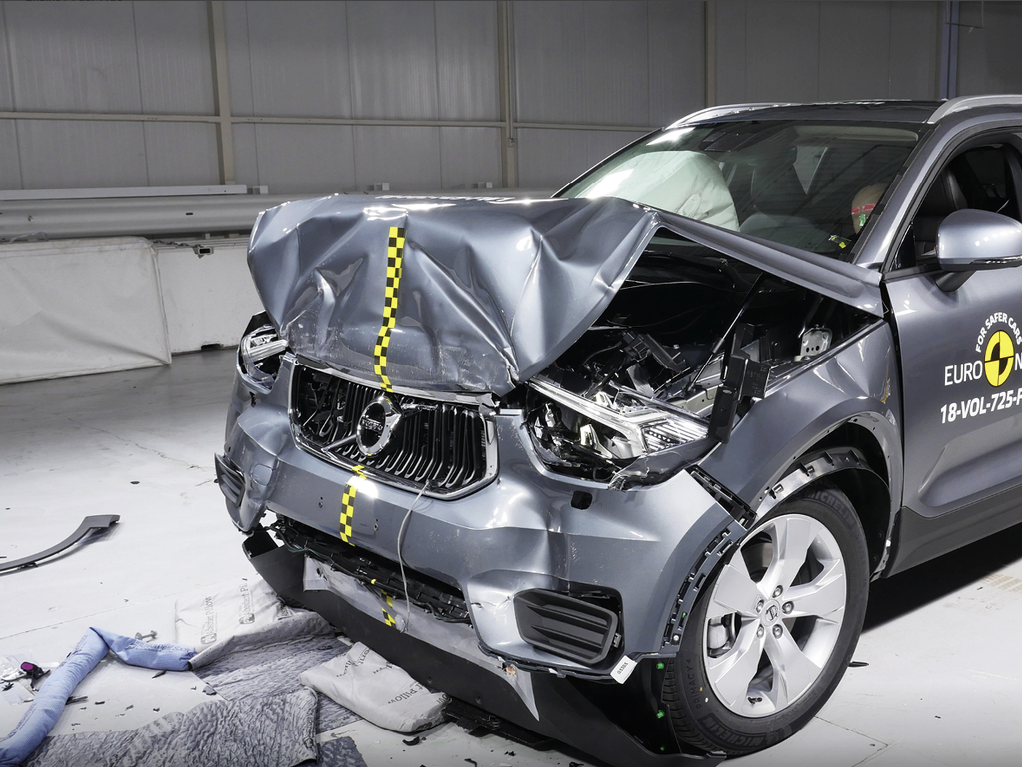
In the adult occupant protection category, the EV scored 97 per cent overall (equivalent to 37.19 out of 38 points on offer) with best marks in this test going to its city autonomous emergency braking (AEB) which was given 4/4 and oblique pole and side impact protection both gaining 8/8.
For child occupant protection it achieved slightly less stellar results, with 84 per cent (41.62 out of a possible 49). While the front and dynamic tests were both awarded top marks (16/16 and 8/8 respectively) the on-board safety features let it down in this category only earning six out of the 13 on the table.
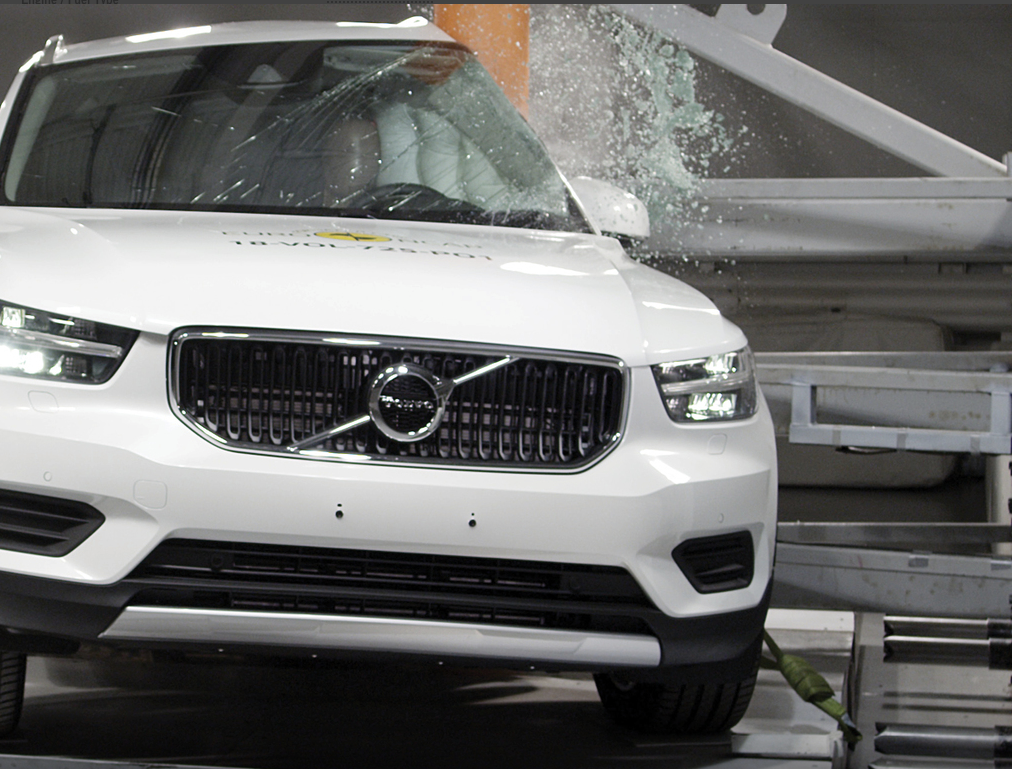
In the vulnerable road user protection tests, the electric variant (as was the case with its hybrid and fossil-fuelled siblings) was given a lower 71 per cent score overall (equalling 34.49 out of a possible 48). Its best result in this category was for lower leg impacts which gained 6/6 marks, while less impressive was the upper leg impacts ranking 3.14/6.
And finally in the safety assist section the electric XC40 ranked at 78 per cent (nabbing 10.23 out of 13), with its speed assistance systems, seatbelt reminders and lane support systems all notching up 2.5 marks out of five, while its interurban AEB gained 2.73 out of three points.
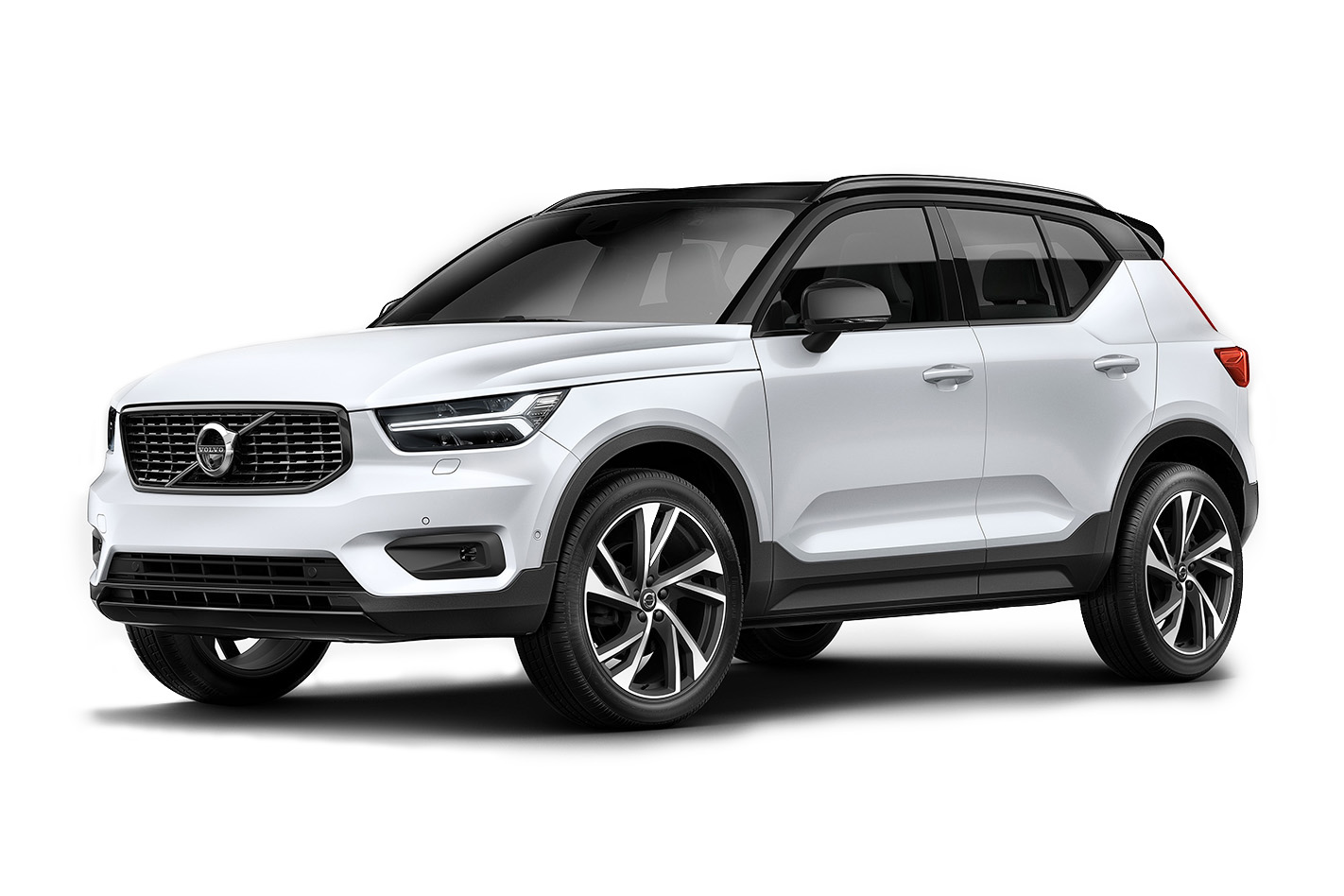
Supply of the first ever fully-electric Volvo sold out when it went on sale locally in August, with the Australian arm already making requests to Sweden for further allocation.
Priced from $76,990 before on-road costs, the Recharge Pure Electric is the most expensive model in the XC40 compact SUV range. It carries a $12,000 premium over the Recharge plug-in hybrid model.
The all-wheel-drive Pure Electric features an electric motor on each axle and a 78kWh battery pack, with total outputs quoted at 300kW and 660Nm.
