
Perhaps one of the most highly-anticipated new cars to break cover, the Gordon Murray Automotive T.50 has made its public debut at the Goodwood Circuit, giving the world a first taste of its howling V12.
On show at the 78th Goodwood Member’s Meeting, the brainchild car of four-time Formula One championship winning designer Gordon Murray was driven around the iconic race track by Dario Franchitti – with the Scot putting the 4.0-litre Cosworth-developed V12 through its paces
The four-time IndyCar Series champion and three-time Indy 500 winner couldn’t push to set a lap record thanks to the typically British damp conditions, however the car’s 40kW fan and large rear diffuser kept it stuck to the road.

Seen as the natural successor to Murray’s McLaren F1, the T.50 carries similar features to the former fastest car in the world – namely its three-seat layout with a central driving position, over-the-roof air intake and mid-mounted V12.
Limited to a maximum 12,100rpm, the naturally-aspirated engine produces up to 488kW and 467Nm, allowing the sub-1000kg supercar to achieve a power-to-weight ratio of 501kW per tonne.
Exclusively sold with a six-speed manual transmission, Gordon Murray Automotive is selling the T.50 with a price tag of £2.36 million (AU$4.37m), as production is limited to just 100 units worldwide.
Snapshot
- Entry-level 2.0-litre engine only offered in ST trim
- Front and four-wheel drive available throughout range
- First deliveries expected to arrive in December
The Nissan X-Trail has undergone a minor update ahead of its 2022 run, with the next-generation model set to launch later next year.
After an earlier update at the start of 2021, the diesel-powered TS has now been dropped from the line-up, replaced in the middle section of the range by the ST+, offering a stepping stone between the entry-level ST and the ST-L/Ti.
With Nissan offering its 2.5-litre petrol engine as standard, only the base ST can be purchased as a manual with a smaller 2.0-litre engine, priced well below the more powerful variants.
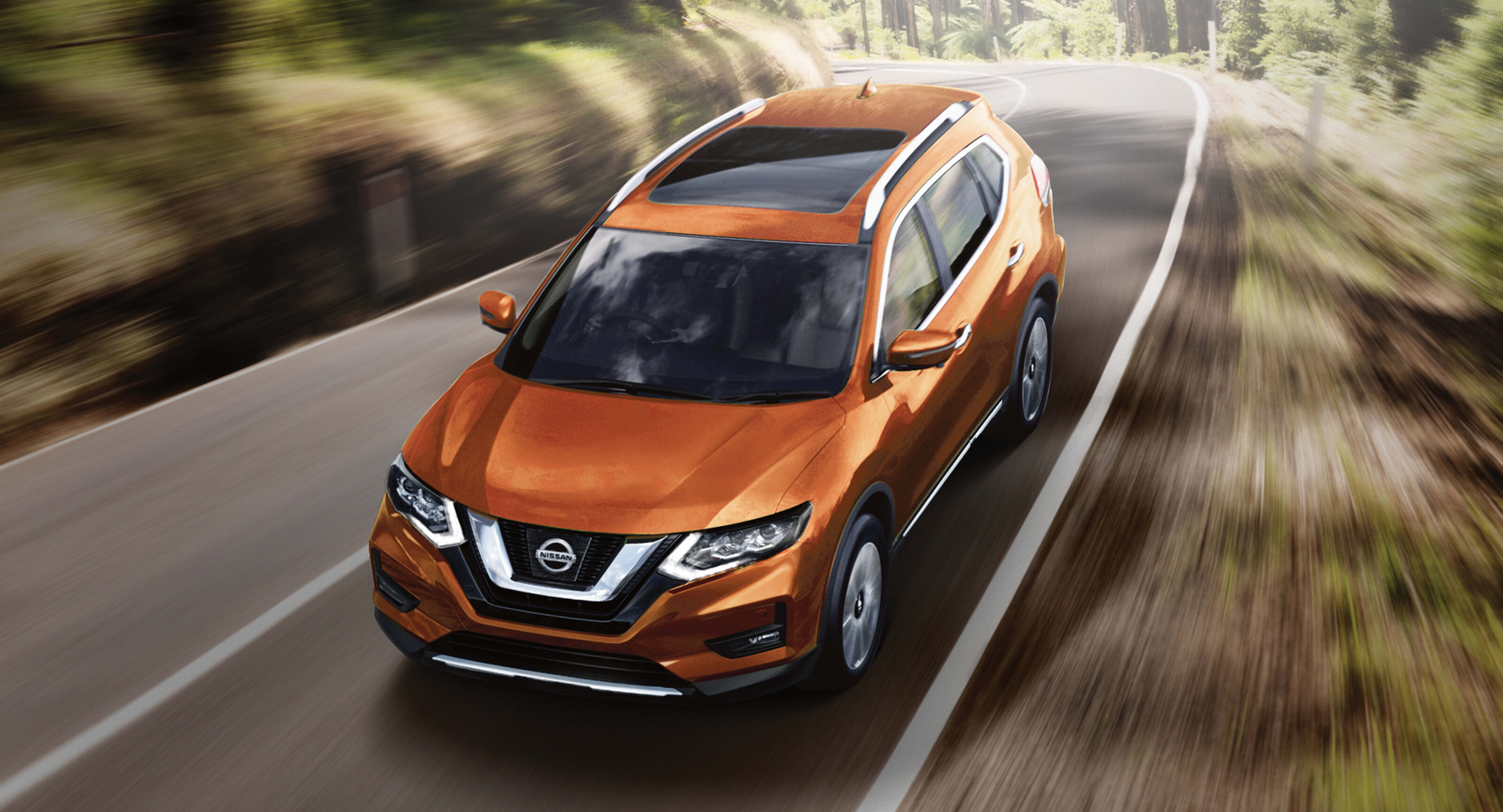
2022 Nissan X-Trail pricing
The entry-level ST remains unchanged in price while the other grades have received minor increases, as the new ST+ drops itself just above the base model.
Prices exclude on-road costs.
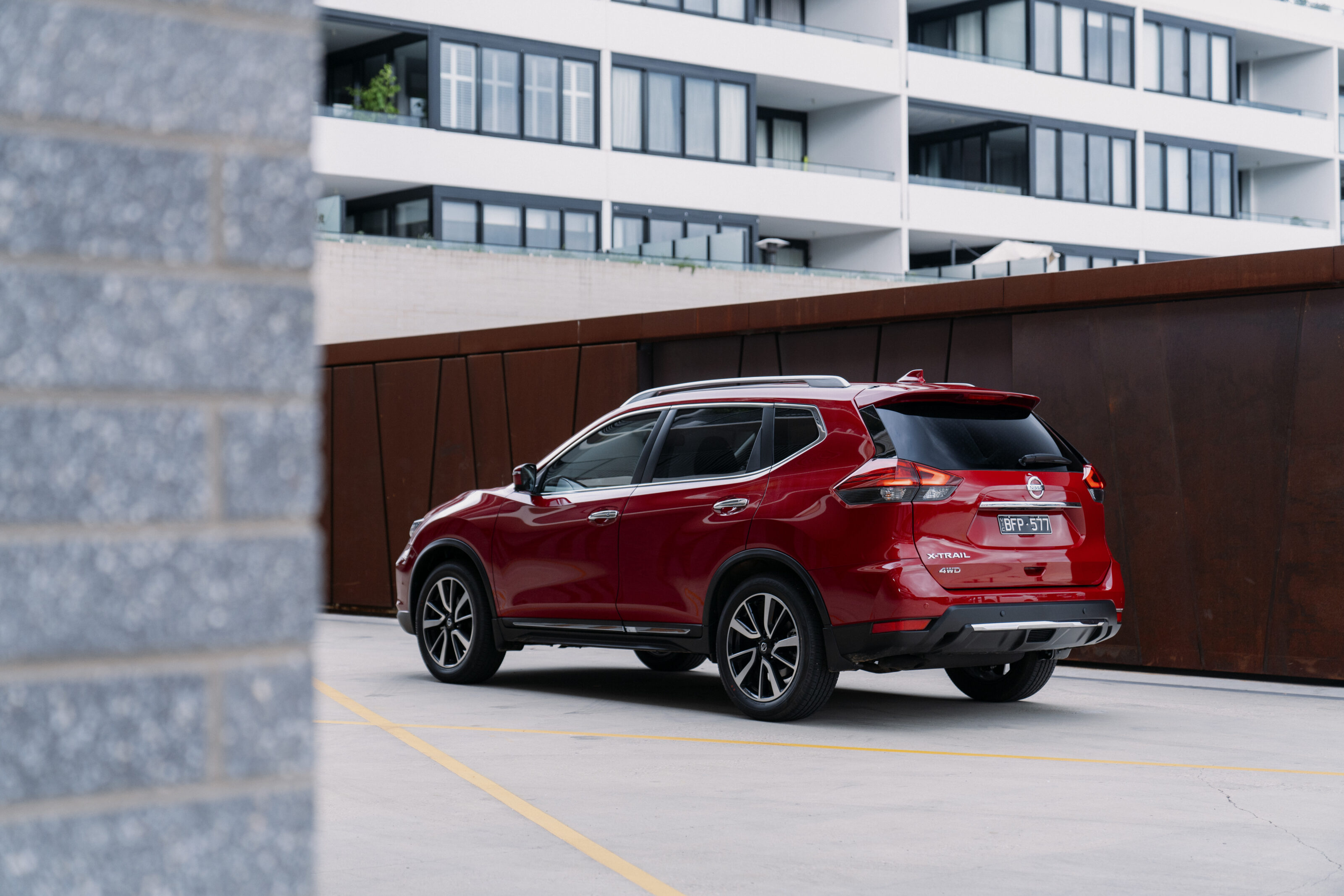
Features
As the entry-level variant, the X-Trail ST includes equipment such as:
ST
| 17-inch alloy wheels |
| Daytime running lights |
| Body-coloured mirrors with electric folding, electric adjustment and integrated indicators |
| Rear roof spoiler |
| Second-row 40/20/40 split fold-down sliding/reclining bench seat |
| Flexible cargo system (5 seat only) |
| 7.0-inch next-generation touchscreen display |
| Apple CarPlay and Android Auto integration |
| Digital radio, bluetooth |
| NissanConnect |
| Voice recognition |
| All mode 4×4 system (4WD Only) |
| Intelligent key |
| Push-start engine. |
The new ST+ grade scores a minor safety and tech upgrade over the ST, including:
ST+
| Around view monitor |
| Moving object detection |
| Front park sensors |
| Rear park sensors |
| Satellite navigation. |
ST-L gains a host of luxury additions on top of the ST+, although extra safety features are also included:
ST-L
| Rear privacy glass |
| Front fog lamps |
| Roof rails (100kg) |
| Heated door mirrors |
| 18-inch alloy wheels |
| Leather-accented steering wheel |
| Leather-accented seats |
| Power-adjust driveru2019s Seat (six-way) |
| Power-adjust front passenger seat (four-way) |
| Heated front seats |
| Dual-zone climate control |
| Intelligent driver alert |
| Blind spot warning |
| Rear cross traffic alert. |
The range-topping Ti has gained just one new feature in its 2022 year, with front parking sensors added to the list of equipment:
Ti
| Adapative LED head lamps |
| Auto-levelling headlights |
| Rain-sensing wipers |
| Power tilt and slide sunroof |
| 19-inch alloy wheels |
| Motion-activated tailgate |
| Auto-dim rear view mirror |
| Heated steering wheel |
| Heated rear seats |
| Tan leather (no cost option) |
| Bose Audio with eight speakers |
| Intelligent key (incl. rear tail gate) |
| Front park sensors (new) |
| Lane departure warning |
| Lane departure prevention |
| AEB with pedestrian detection |
| Intelligent cruise control |
| High beam assist. |
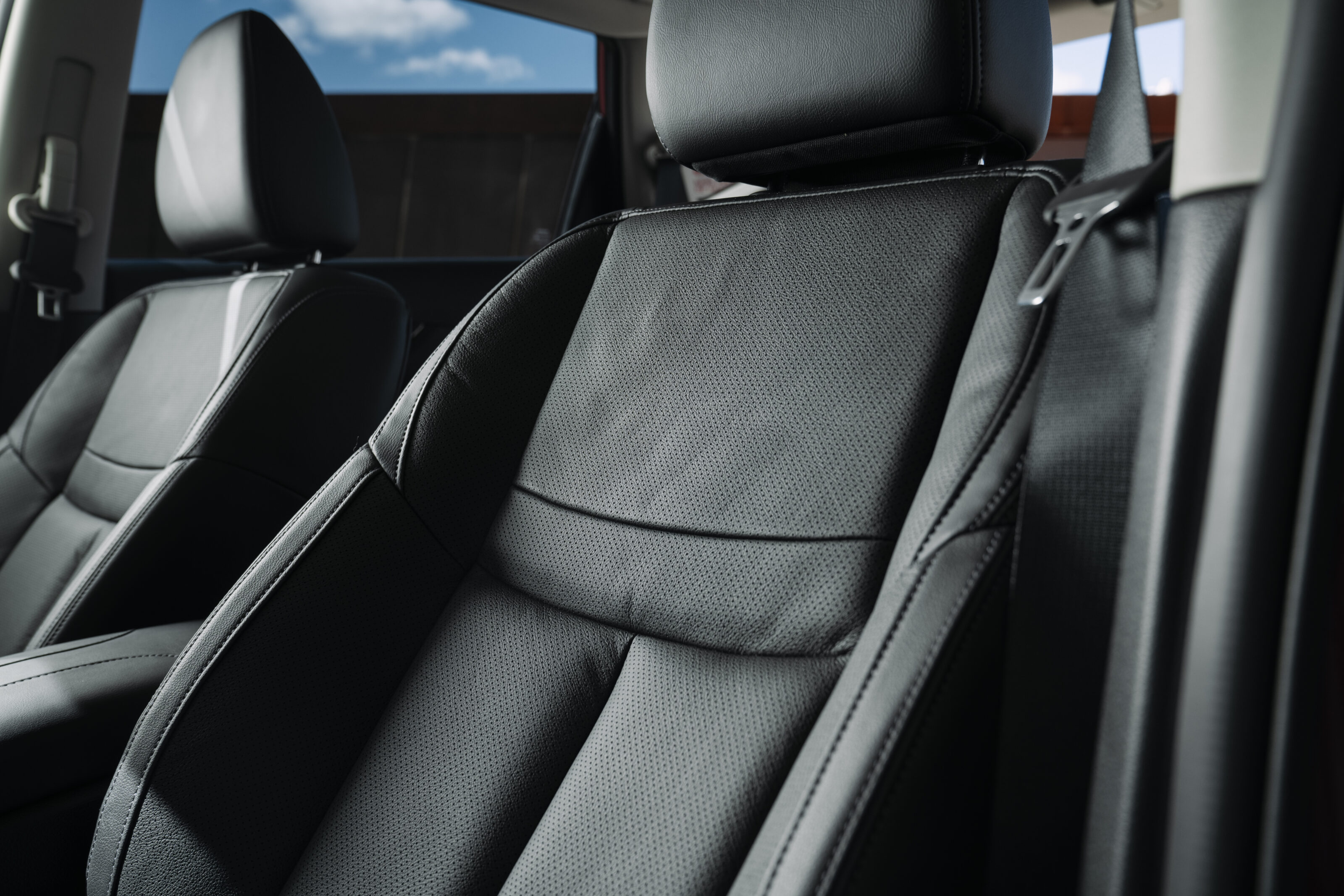
Engine, drivetrain and fuel economy
While there is no longer a diesel-powered X-Trail, the base ST front-wheel drive manual is still the only variant available with a 2.0-litre, four-cylinder petrol engine, producing 106kW of power and 200Nm of torque with a combined fuel consumption figure of 8.2L/100km.
All other X-Trail variants are powered by a 2.5-litre, four-cylinder petrol unitwhich offers up 126kW and 233Nm, delivering its power through a CVT transmission to either the front or all four wheels, returning a fuel economy rating of 7.9L/100km and 8.3L/100km respectively.
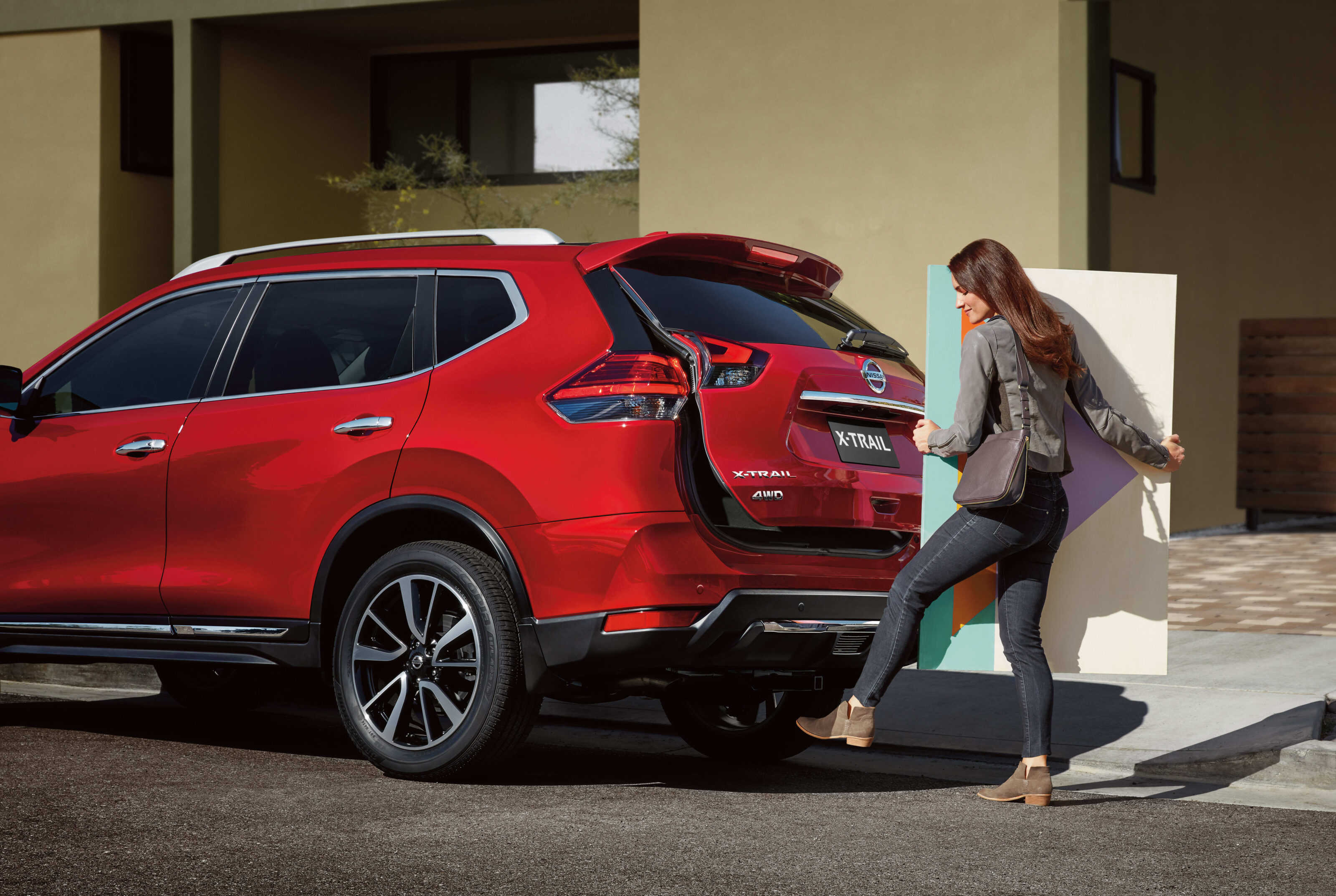
Warranty and servicing
As with the rest of the Nissan model range, the X-Trail is sold with a five-year/unlimited-kilometre warranty.
Capped price servicing is offered for the first six years/60,000km of the X-Trail’s ownership, ranging from a total cost of $1882 for the manual ST up to $1916 for all other grades.
Availability
Nissan anticipates the 2022 X-Trail to arrive in Australia from December, with its new fourth-generation X-Trail expected to launch in the back end of next year.
The 2022 Kia Niro has leaked online, with images snapped showing the small electrified SUV without its usual heavy canvas camouflage.
Kia is expected to unveil the second-generation Niro before the end of the year, with confirmation the vehicle will arrive in Australia in the second half of 2022.
The Niro has been photographed in various states of disguise in recent months, but the images posted to the Korean forum Sportage NQ5 Club (via The Korean Car Blog) show the car’s rear-end in detail, unseen before now.
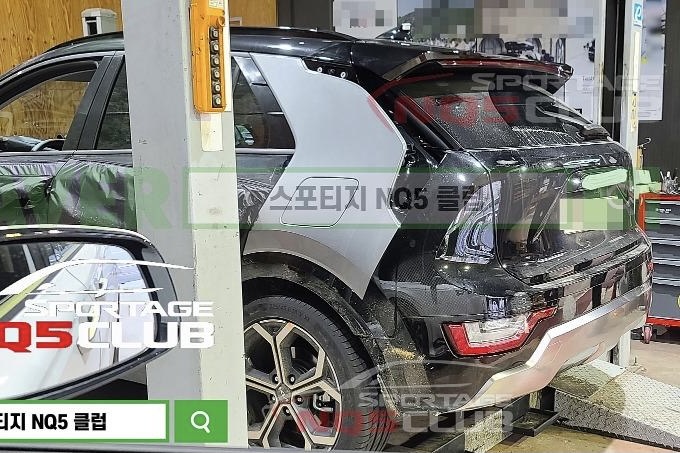
As with the front-end, spied at the beginning of the month, the overall design of the car takes its influence from the Kia HabaNiro concept car of 2019.
Unusually, it does appear as if Kia will offer the small SUV with a contrast exterior colour at the D-pillar, also following the look of the concept car closely – whether the two-tone paint will be optional or standard has yet to be confirmed.
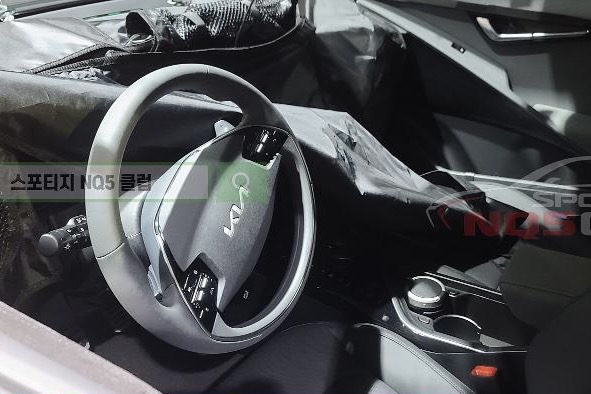
Though most of the interior remains covered up, the pictures confirm the Niro will adopt the two-spoke steering wheel from the all-electric EV6, slated to arrive here in the first half of 2022.
While the first-generation Niro only went on sale locally in May 2021 – available with petrol-hybrid, plug-in hybrid, or fully-electric powertrains – the model has been on sale in overseas markets since 2016, meaning Australian buyers will see a new model within around 18 months.
Earlier reports suggest the next-gen Niro will continue to offer the same powertrain options as the current model, though expect some improvements in efficiency and driving range.
Be sure to follow Wheels on Facebook, Twitter, and Instagram to see the 2022 Kia Niro when it’s officially unveiled.
The performance car pantheon comprises machines of all kinds, with a body style and powertrain configuration to appeal to virtually every taste and need.
Not everyone wants to drive a low-slung impractical sports car every day though and, even if you do, sometimes the circumstances of life call for something a little more responsible.
So if it’s time to grow up, but not to grow old, here are ten engaging cars that deliver a driving experience you might not expect by looking at them, or their positioning.
In no particular order, MOTOR presents the ten most unlikely driver’s cars on sale.
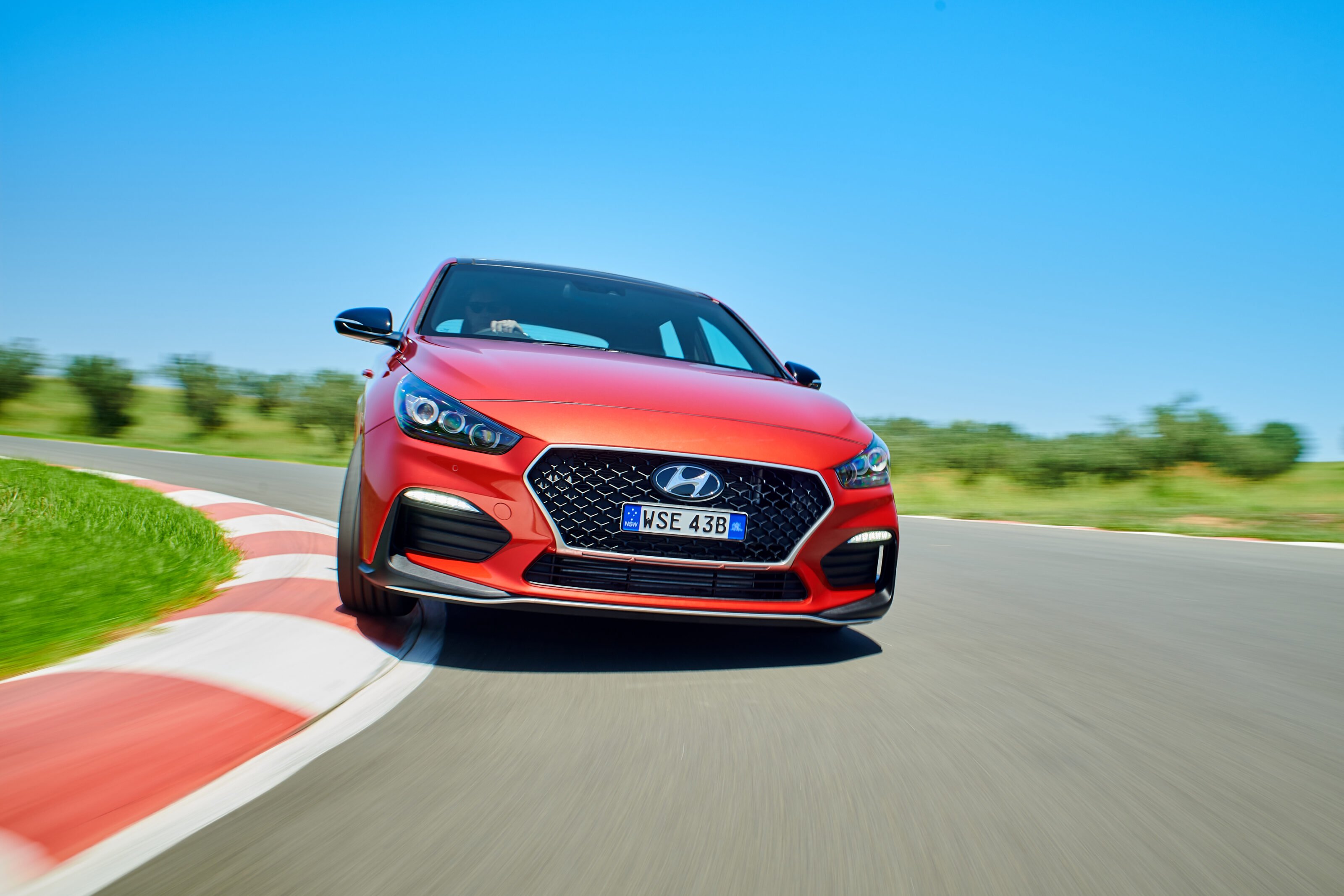
Hyundai i30 N-Line
- PRICE: $29,420
- PWR: 114kW/tonne
- Engine: 1591cc inline-4, DOHC, 16v, turbo
Much of the winning formula remains, as the attractive list price affords you a gutsy turbocharged 1.6-litre inline-four, a segment-leading 150kW/265Nm, and generous levels of standard equipment.
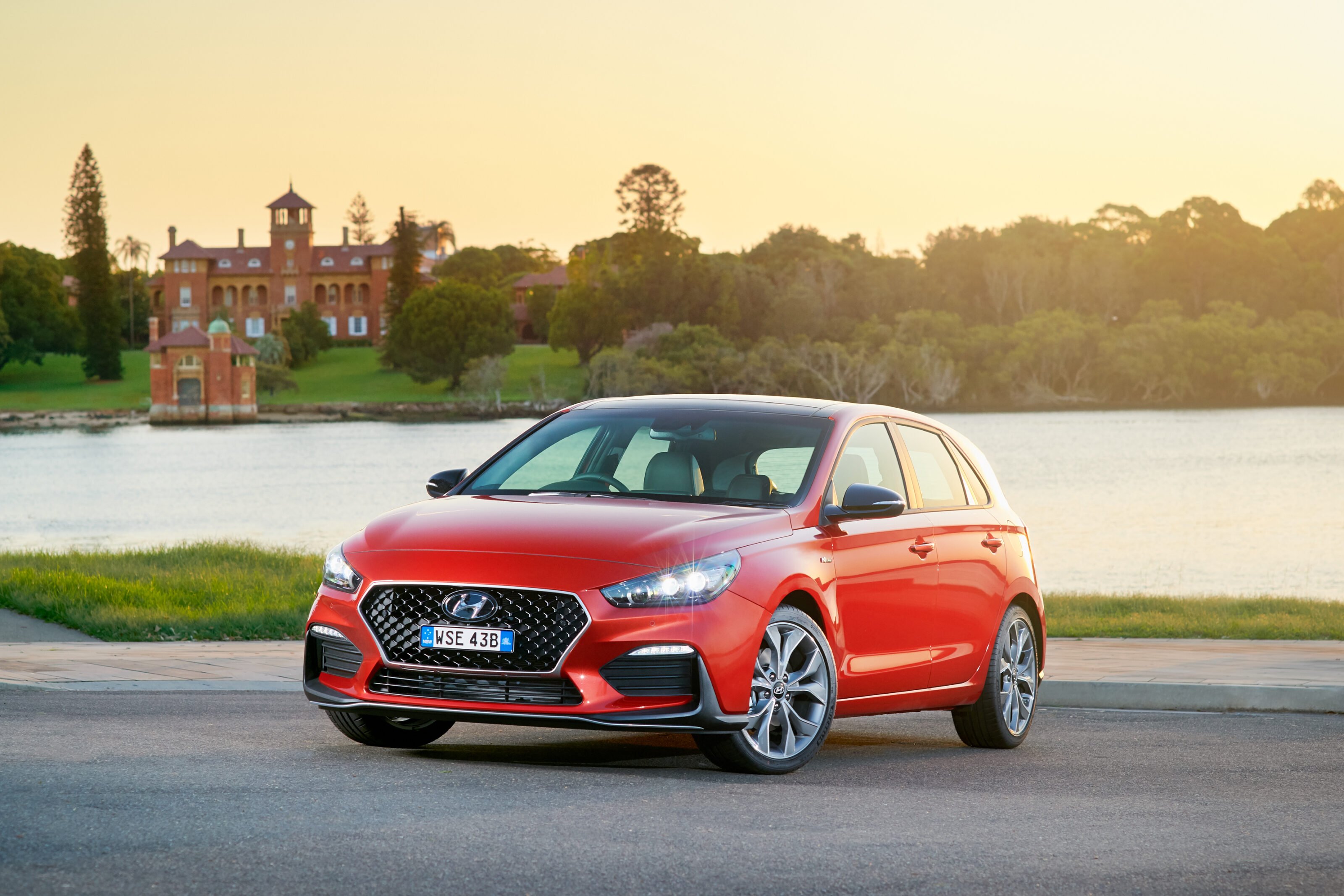
It’s more accessible in its talents and will spur smiles on a challenging road while nailing the brief as a pragmatic hatchback.
Factory Michelin Pilot Sport 4s and 305mm front brakes signal real sporting intent and the Korean hatch follows through with excellent body control. Front-end grip is tenacious and ultra-progressive in the way its controls lighten to communicate when its limits of grip are tested.
Damping is firm, but it’s liveable and well-controlled. Steering, too, is nicely weighted, precise and direct; with a tactile front-end that firms nicely with speed.
Opting for the six-speed manual also sees the list price dip below $30k, but even the seven-speed dual-clutch is an effective and fun unit to engage with, delivering solid and decisive shifts through its paddles or tiptronic shifter. The full-fat i30 N is still the range’s enthusiast hero, but the N-Line captures a lot of that magic for a smaller price. It’s more accessible in its talents and will spur smiles on a challenging road while nailing the brief as a pragmatic hatchback.
BMW X3 M40i
- PRICE: $113,900
- PWR: 146kW/tonne
- Engine: 2998cc inline-6, DOHC, 24v, turbo
The outgoing BMW X3’s M40i was a great example of the astounding rate of progress within the fast four-by-four arena. A distinctly rear-biased xDrive system, variable torque split and rear differential make the most of the B58’s broad power band.
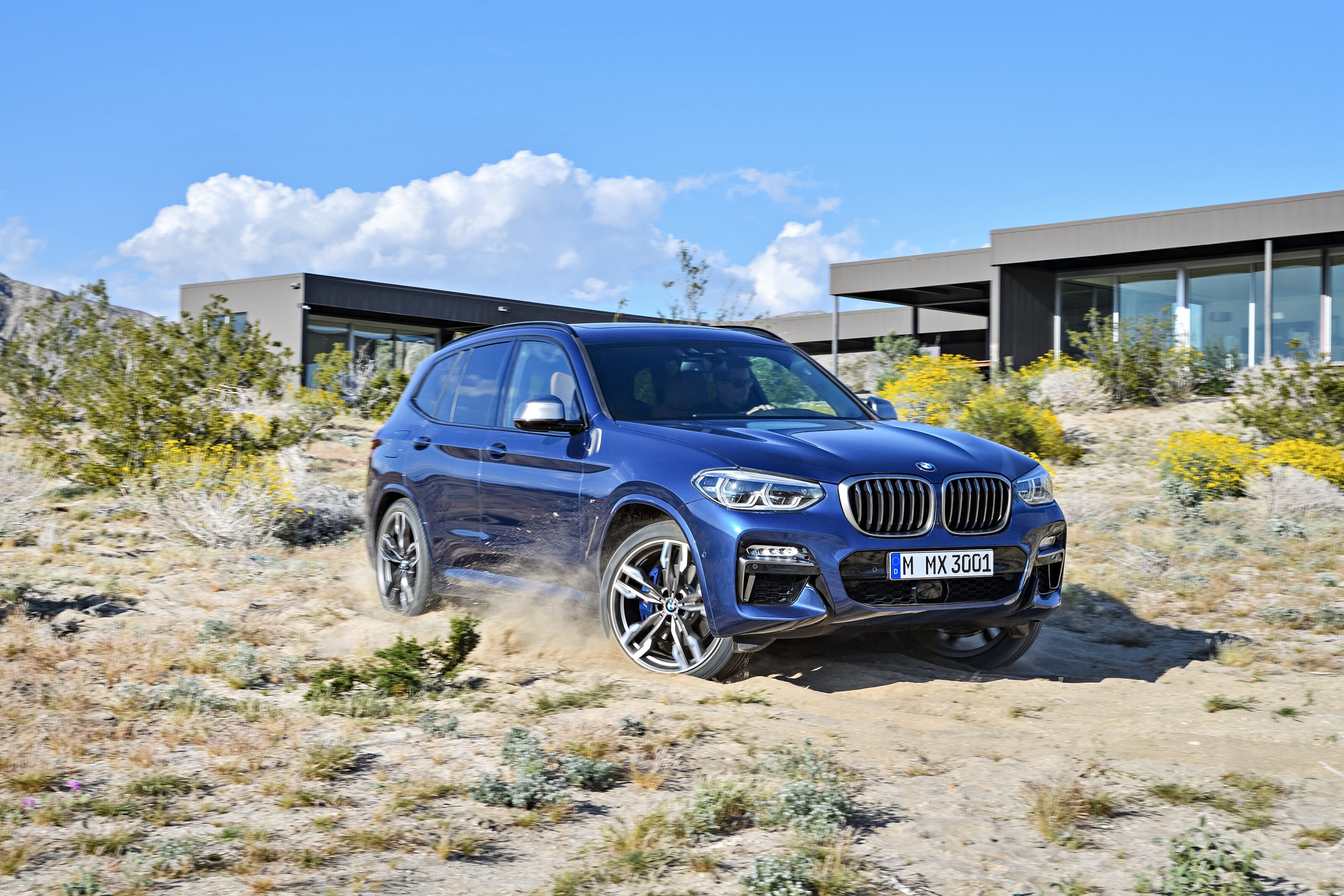
Also, 265kW and a 4.7-second sprint from 0-100km/h is nothing to scoff at from a full-size 1810kg SUV. A good useable chunk of the maximum 500Nm is on tap from as low as 1520rpm, too. It’s seriously rapid in a straight line with a crackling soundtrack that seems more M-badge than X-badge.
You can’t overcome physics though and, close to the limit, the X3 will always give ground to an equivalent wagon or saloon. For some, however, life simply calls for an SUV and, if that’s the case, you’re no longer penalised in the fun or dynamics department in the way you once were.
Need an SUV but haven’t given up on life? The X3 M40i is a charmer and one that makes even more sense as a nearly-new purchase.

Peugeot 508
- PRICE: $57,490
- PWR: 115kW/tonne
- Engine: 1598cc inline-4, DOHC, 16v, turbo
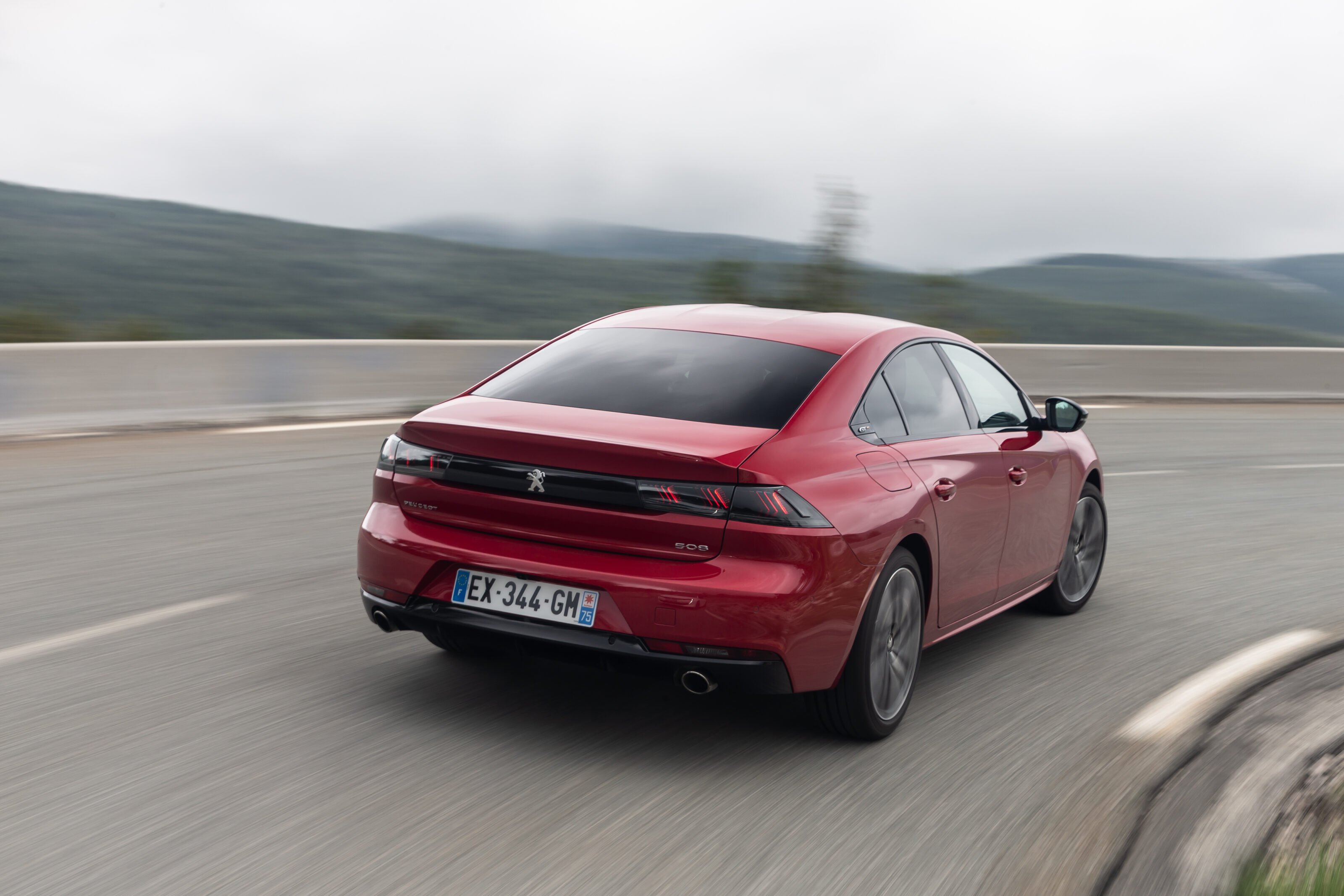
Available overseas in 133kW or 169kW variants, Australia is treated to a single-spec range of the sportier GT. At $57,490, the 508 GT undercuts both the entry level C-Class and 3 Series by about $13k. It’s lighter than all bargain options of the German Big Three and, in most metrics, is an objectively superior car.
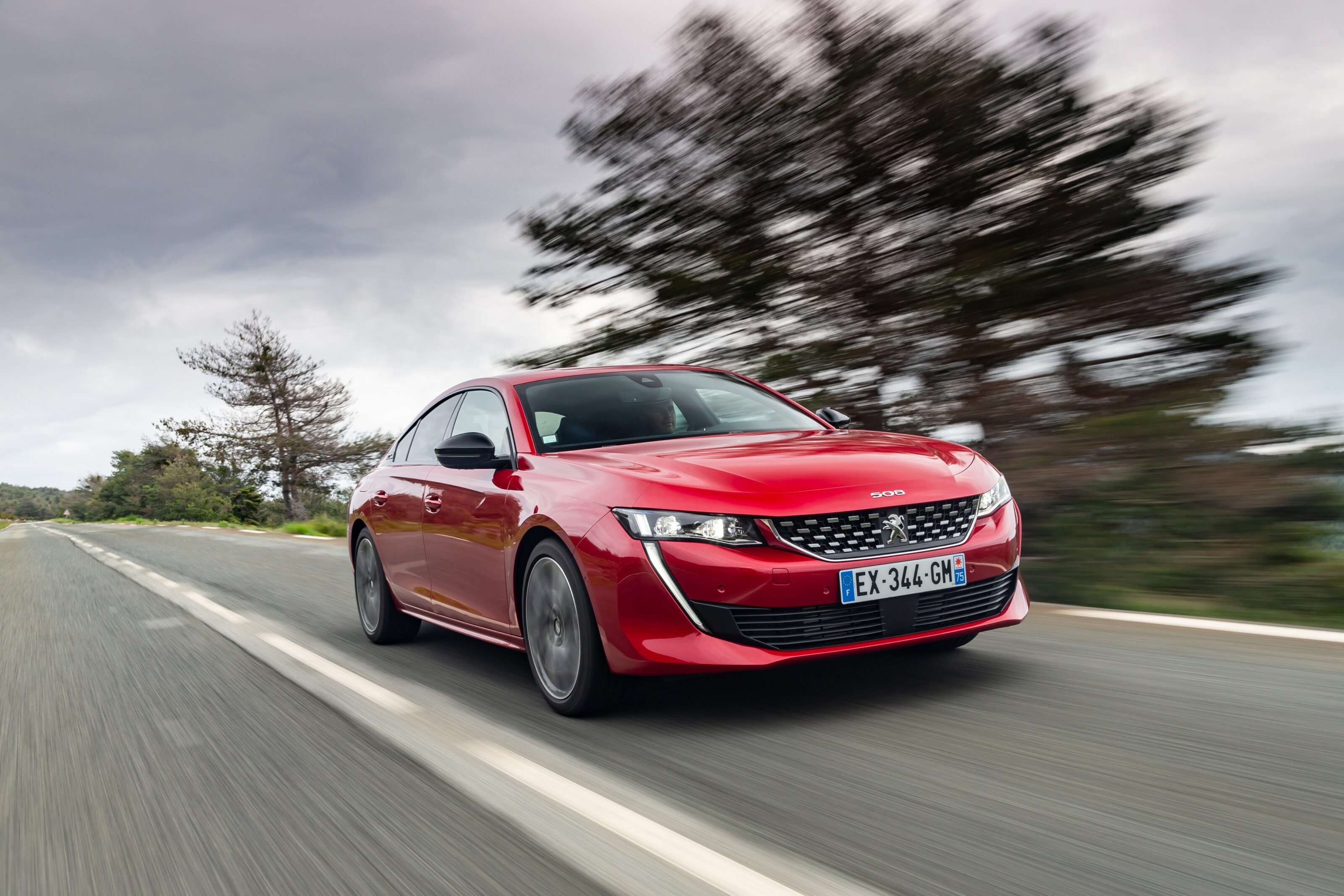
Fighting from the weight class of a warm hatch (1430kg), the fashionable Frenchie feels sprightly and light on its feet. Peugeot steering is distinct in its light- and lightning-quick steering, and the 508 is no exception. Don’t let its front-drive layout deter you.
Bolstered by the GT’s adaptive dampers, big brakes and Michelin Pilot Sport tyres, the front-end grip is immense. Body control? It’s as good as you’ll get with any sedan at this price point and the ride is so supple that the 508 will cover ground on so-so roads where others would be backing off. As a package, it feels much costlier than it is.
If you’re after an accomplished and capable mid-size sedan that stands out from the crowd, we’d recommend checking out the Peugeot 508. Oh, did we mention you can get a wagon, too
Jaguar i-Pace
- PRICE: $137,848
- PWR: 143kW/tonne
- MOTORS: Twin synchronous permanent magnet
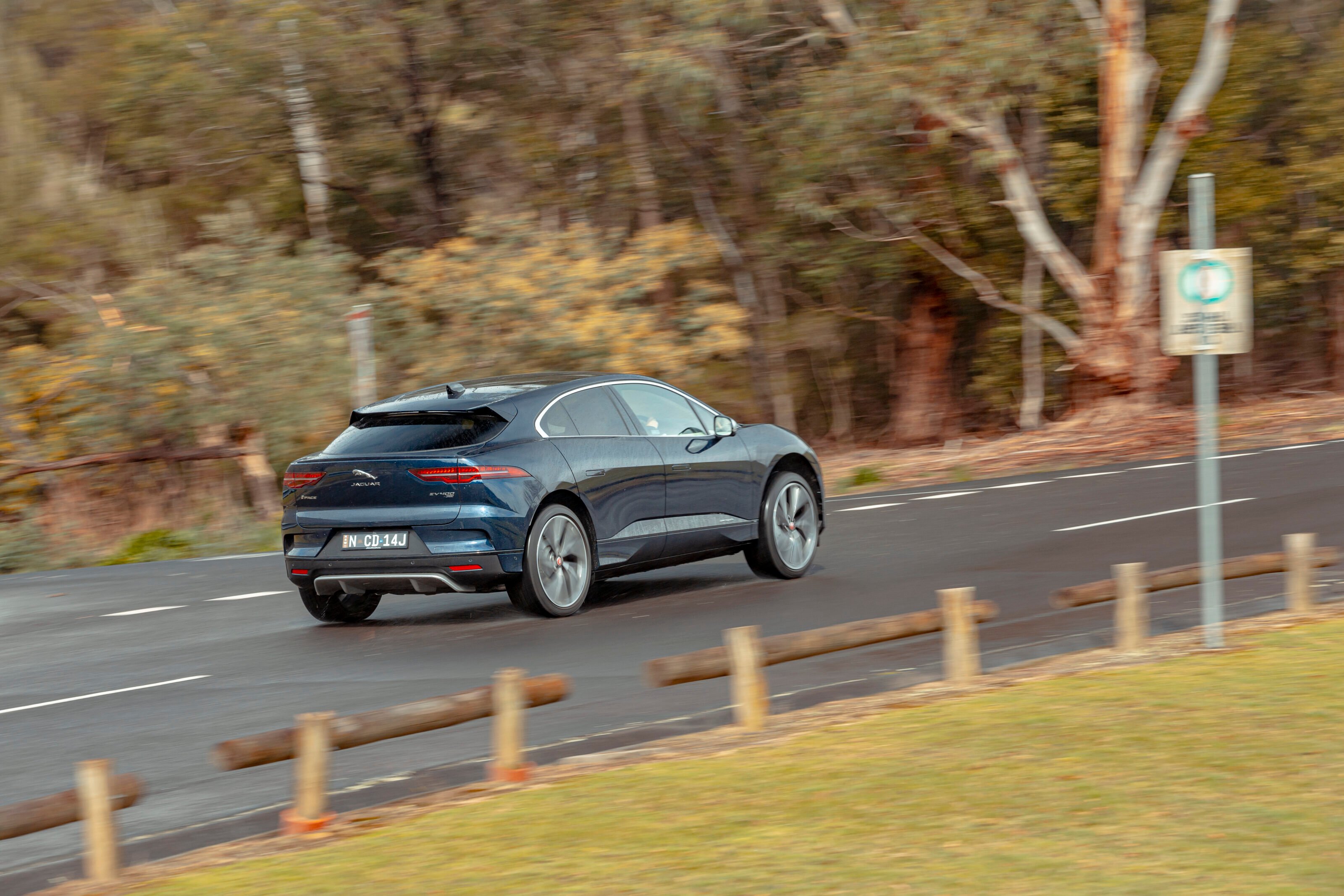
Synchronous permanent magnet electric motors are featured on both front and rear axles, creating all-wheel drive and a combined output of 294kW and 696Nm. Those are serious numbers, which are delivered with the intensity of a light switch.
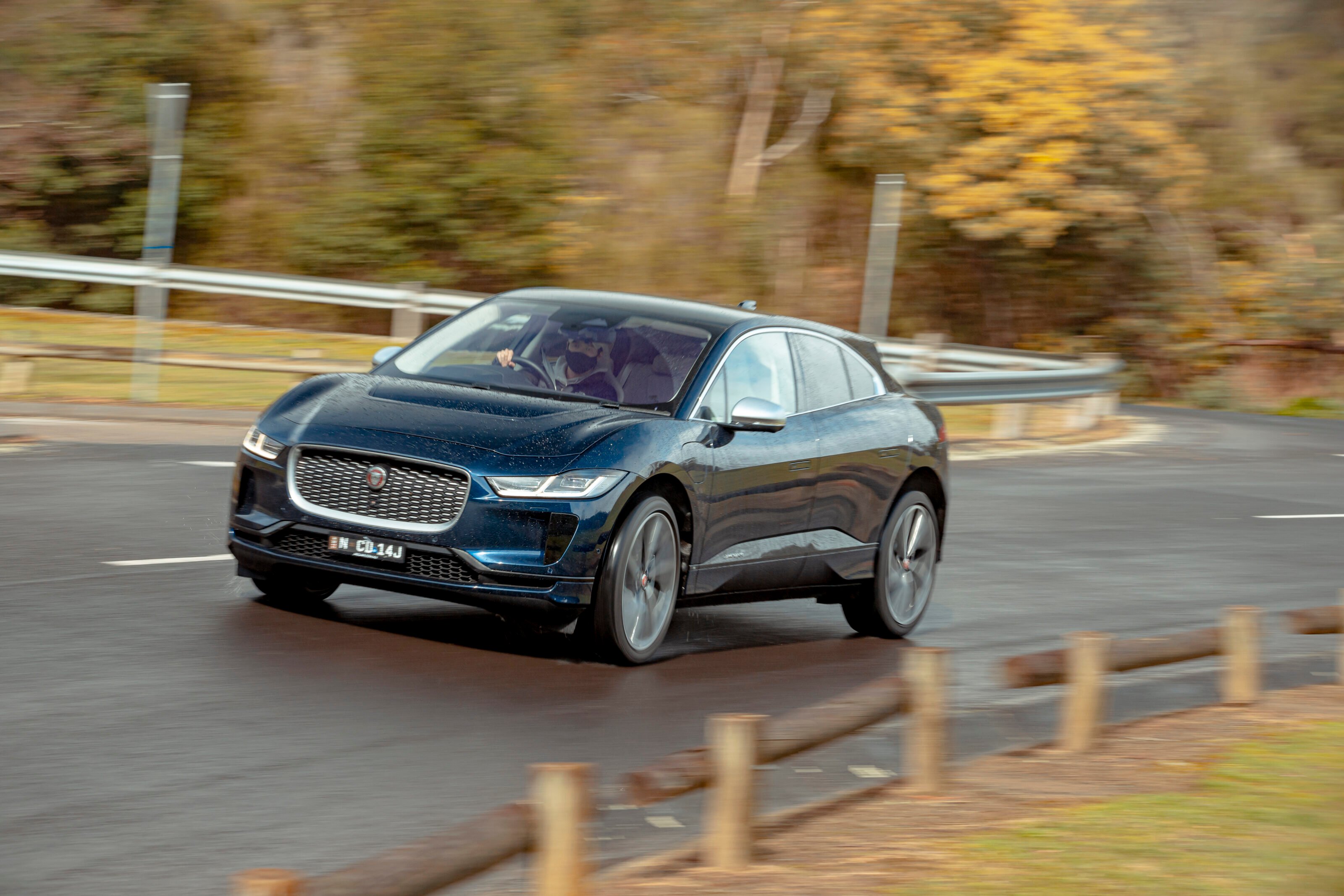
But rapid acceleration and big outputs are part and parcel for the EV experience. The i-Pace, however, impresses with how car-like it feels to drive. The battery pack is contained within the chassis floor, yielding a tremendously low centre of gravity and 50:50 weight distribution.
With its four wheels pushed as far outboard as possible, the electric Jag will hook into corners, and clamber with all its paws on exit as you power down post-apex. It’s an addictive, confident corner carver and is a genuinely quick tool to cover ground with.
There is still range anxiety to contend with, which is especially right-foot dependent in the case of EVs, but if you’re ready to make the switch: consider this a driver’s choice.
Skoda Octavia RS
- PRICE: $47,790
- PWR: 124kW/tonne
- Engine: 1984cc inline-4, DOHC, 16v, turbo
It’s a proven mechanical package: based on the Volkswagen Group’s MQB platform, powered by the Golf GTI’s full-fat 180kW EA888 four-cylinder turbo, and matched with the seven-speed DSG gearbox, yet the Octavia is a small-volume player in the local market.
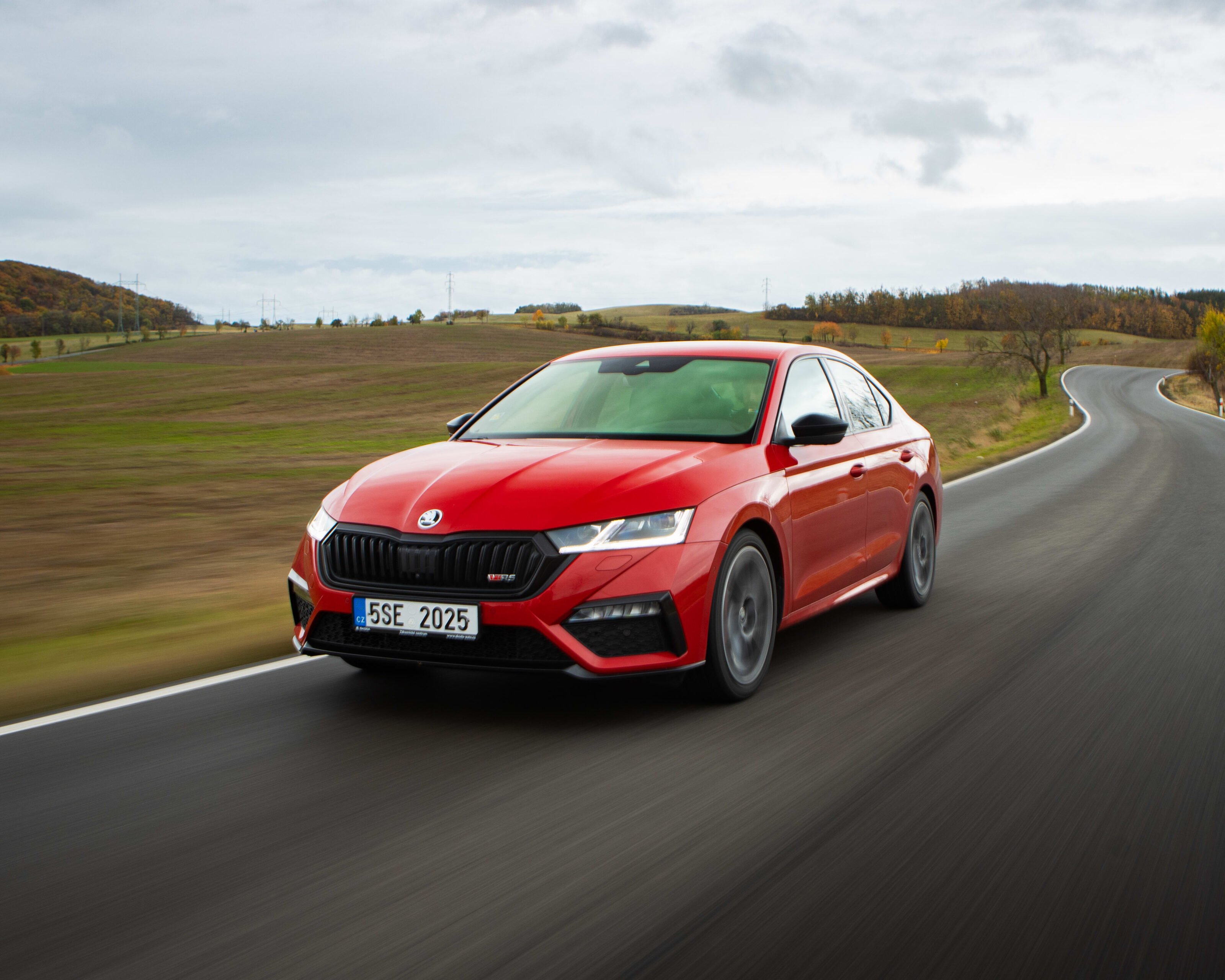
Subsequently, the range is simple with just two variants, but even the standard model comes generously equipped for its price with standard-fit LSD and Pirelli P Zeros speaking to local buyers’ propensity for high-spec and high-performance variants.
It may present as a simple Golf-twin on paper but, in many ways, the Czech emerges as a more mature option. The DSG calibration, in this application, feels less aggressive than elsewhere in VAG, but the LSD can struggle to contain the front-end on corner exit.
It still feels properly rapid and rewarding to guide through back-roads, delivering an experience beyond its family companion positioning.

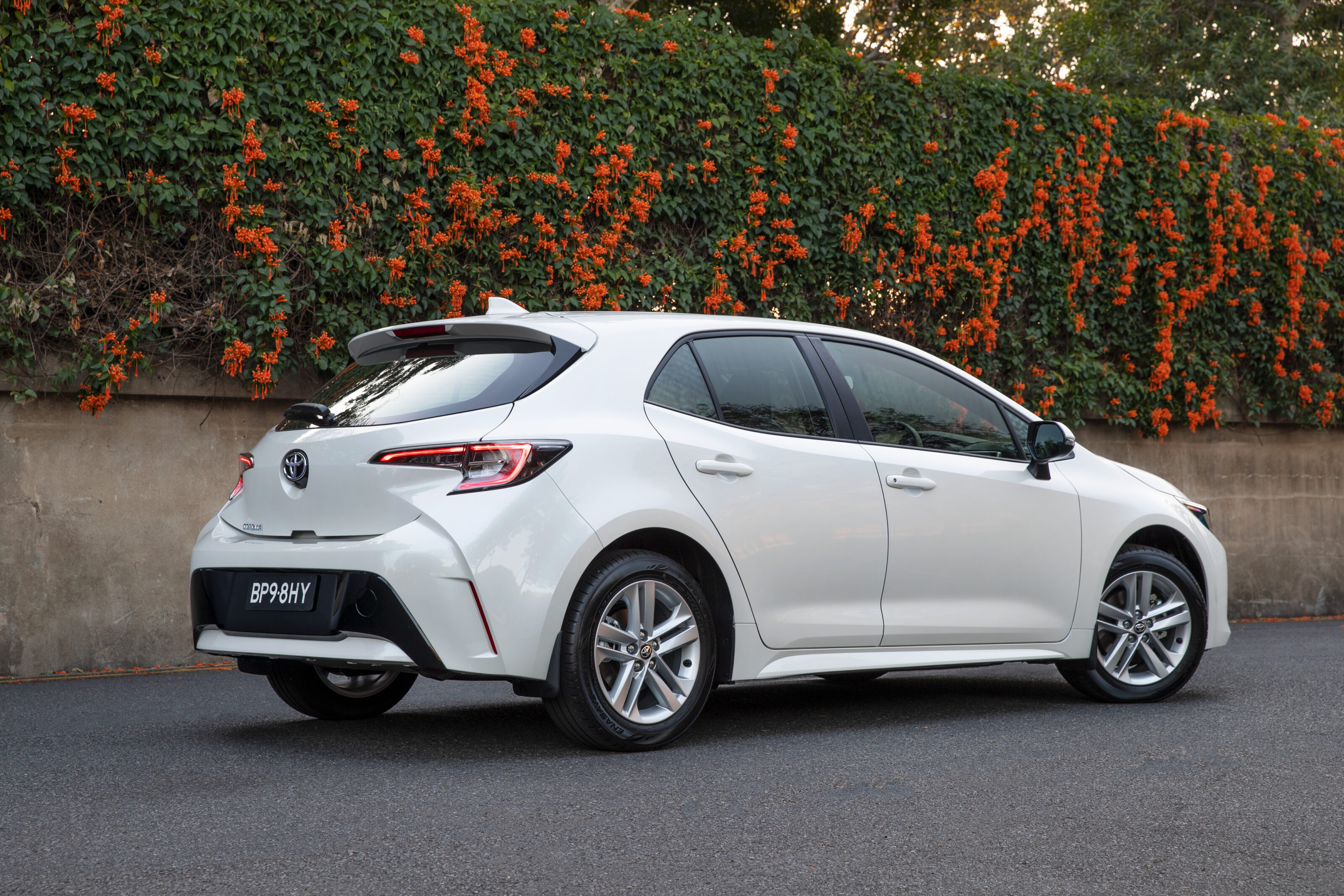
Toyota Corolla Ascent Sport
- PRICE: $23,895
- PWR: 94kW/tonne
- Engine: 1986cc inline-4, DOHC, 16v
The new 2.0-litre naturally aspirated engine delivers 125kW/200Nm, is lighter than the old 1.8, and will feverously spin the tacho up to a 6850rpm redline. Don’t bother with the CVT, the Ascent Sport is only offering in the Corolla range that you can option with three pedals and an H-pattern.
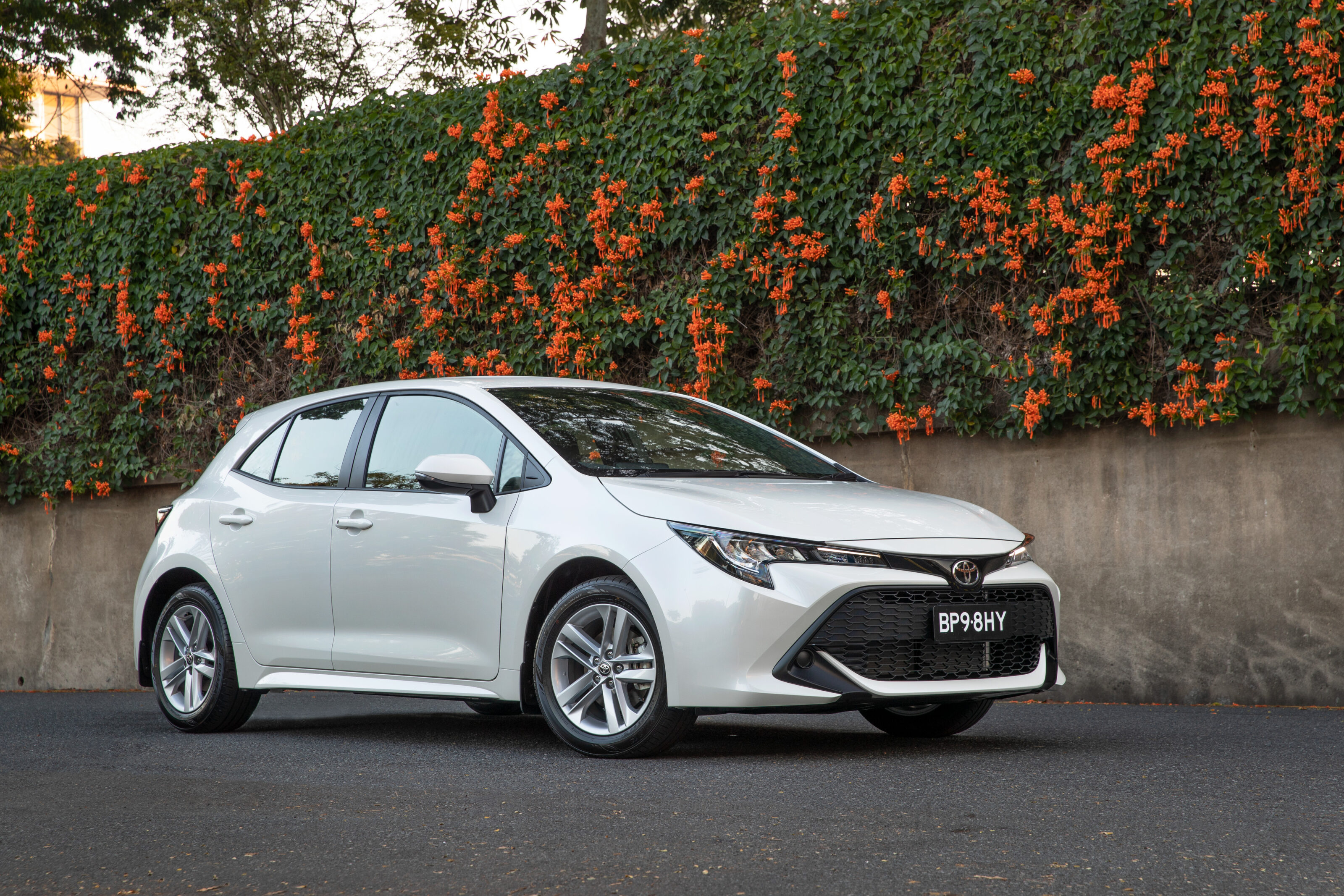
In doing so, the ’Rolla becomes an enthusiastic and engaging urban pedaller with great chassis balance and direct, linear steering. It’s not a car that serves up its dynamic payoff on a platter, instead requiring you to work for it by carefully balancing braking, gearing, steering and relatively modest tyre grip to maximise momentum through corners.
If you lament the loss of pared-back simplistic driver’s hatches of yesteryear, the humble hire-spec Corolla may provide an honest modern rendition of the notion. It even has rev-match technology.
Audi TTS
- PRICE: $101,200
- PWR: 165.5kW/tonne
- Engine: 1984cc inline-4, DOHC, 16v, turbo
Looked at another way, the stereotyped hairdresser’s car is almost $20k cheaper – yet faster – than a Porsche 718 Cayman. The TTS delivers an experience far greater than it’s often given credit for.

The chassis is wonderfully taut, cornering flat and hard. Steering is light in typical Audi fashion, but it’s incredibly direct and effective once you key into it.
The lighter four-pot up front makes the car feel even more urgent to reach apex on turn-in and, as your hip point sits incredibly centrally, it delivers that satisfying ‘pivot around you’ feeling.
It’s a truly poised and capable coupe and while it lacks the rear-biased character some may be seeking, it’s a serious traction monster from a dig or on the move. And when the going gets wet, it’s a genuine giant-killer.

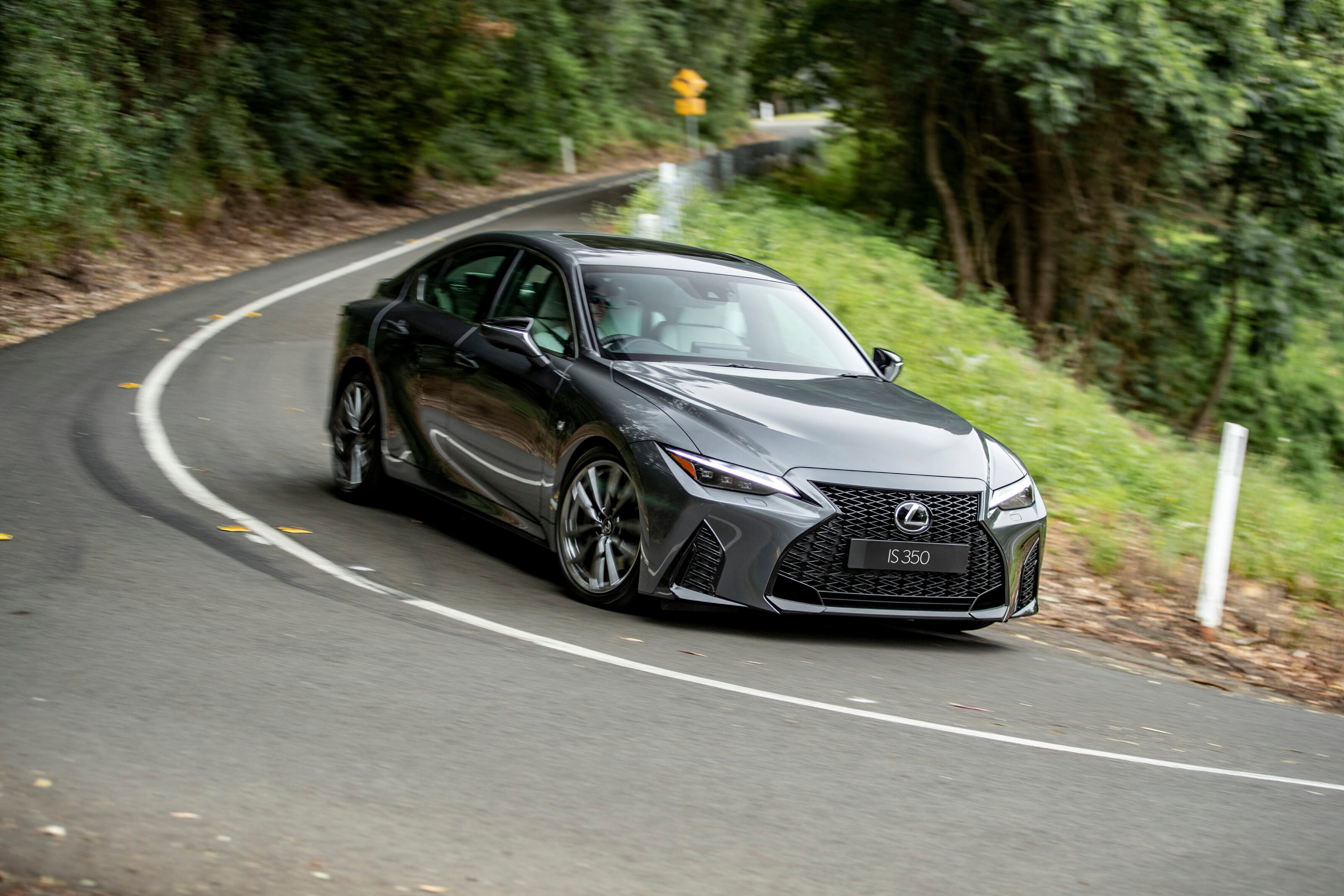
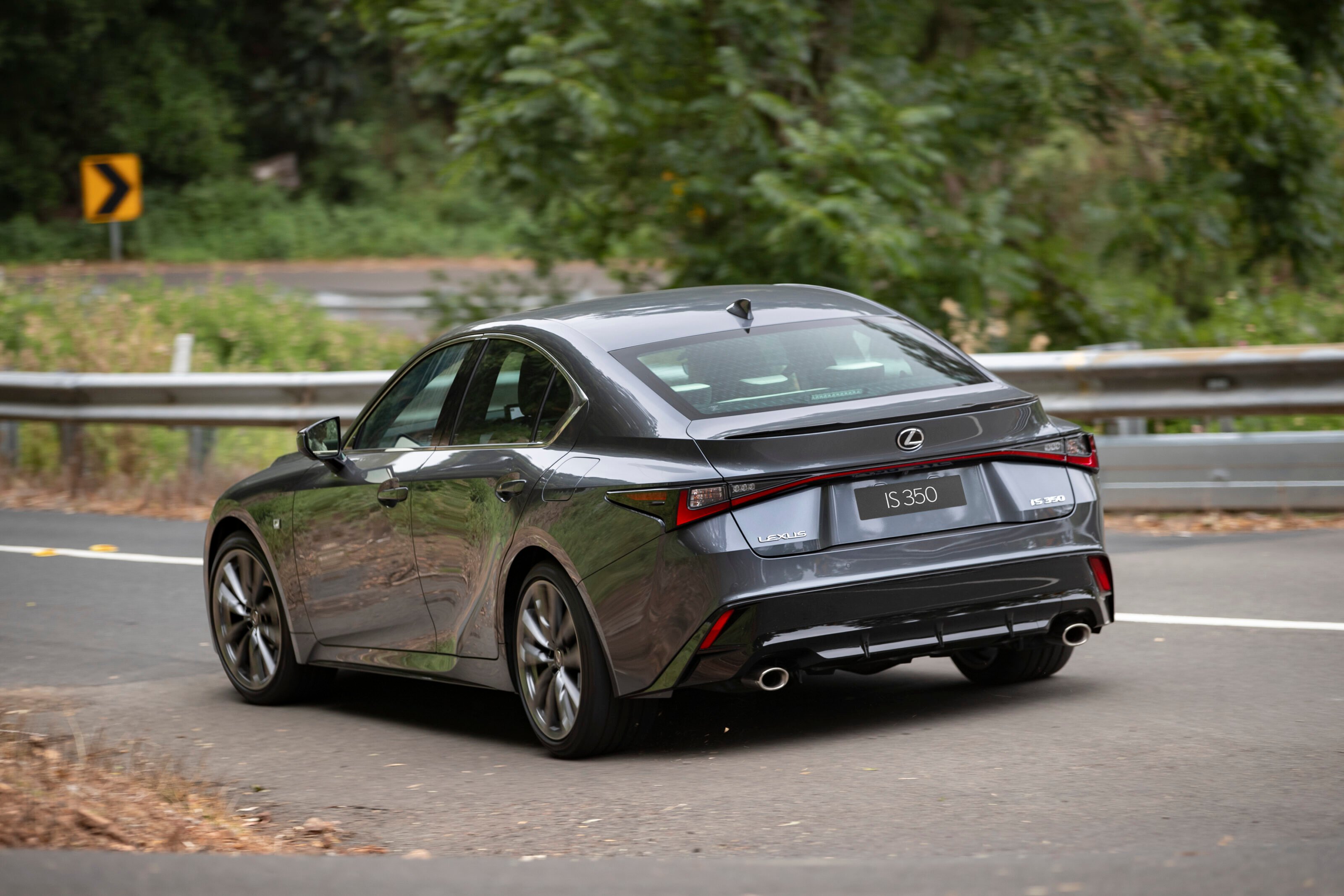
Lexus IS350
- PRICE: $75,000
- PWR: 138kW/tonne
- Engine: : 3456cc V6, quad-OHC, 24v
As the range’s flagship model, the IS350 swings in with a respectable 233kW/378Nm 3.5-litre quad-cam V6, representing a 50kW advantage over the cheaper turbo-four model for just a $2k premium.
Its engine tech, gearbox logic and some other elements, date the Lexus in the face of younger C-Class and 3 Series rivals, but spend some time with it and it coalesces as a surprisingly rewarding road car to drive fast.
The chassis is inherently well-balanced and, while it lacks the hurried rush of its turbocharged contemporaries, the naturally aspirated mill encourages – and rewards – you to seek out the upper regions of the rev range.
It’s a deftly engineered sedan that won’t flatter your talents in the way others might, but it requires you to be more aware of how you’re driving and the inputs you’re making. A thinking man’s driver’s car? This might be it.
Ford Mustang 2.3
- PRICE: $54,690
- PWR: 137.5kW/tonne
- Engine: 2261cc inline-4, DOHC, 16v, turbo
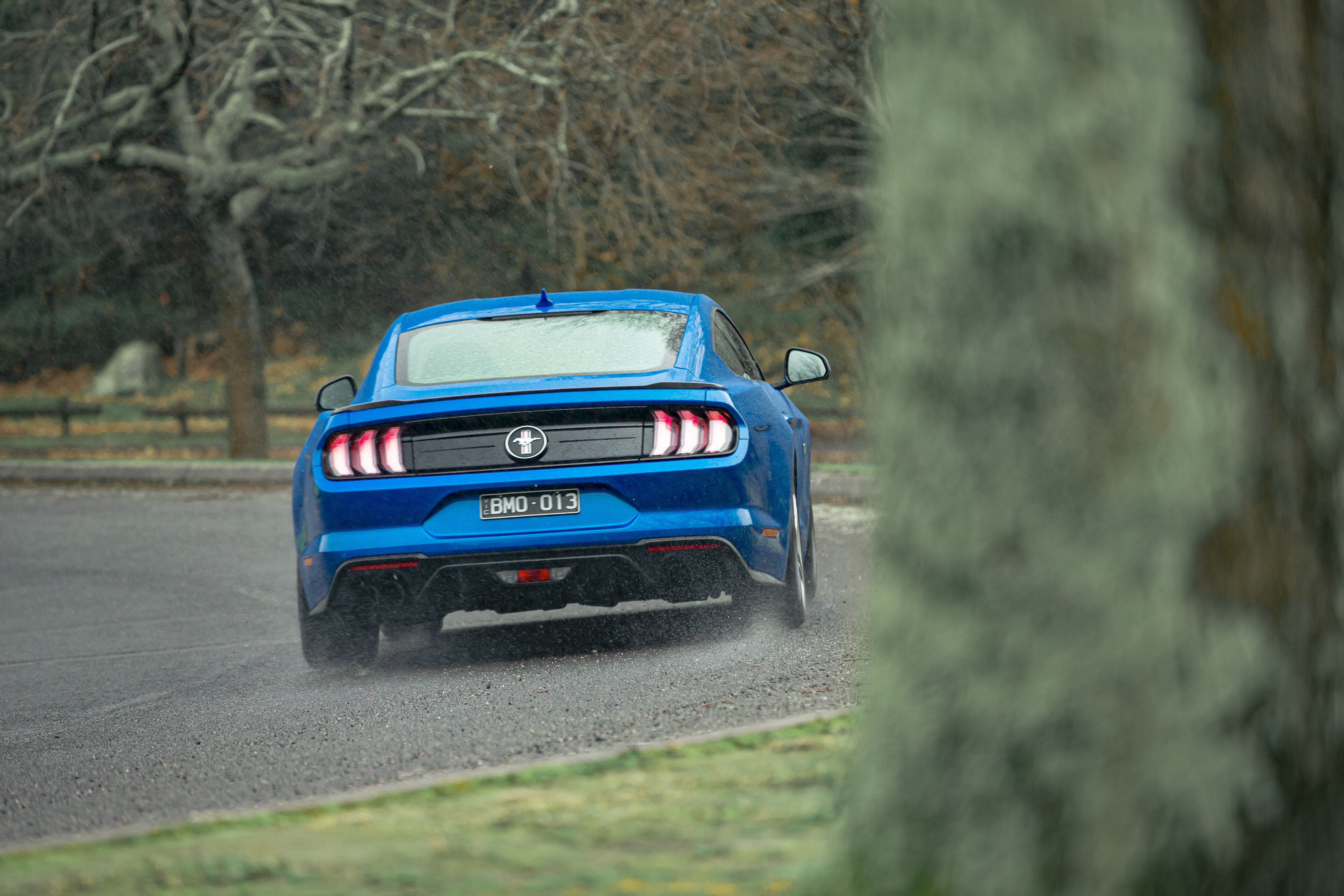
The 236kW, longitudinally mounted turbocharged inline-four weighs almost half that of the big 5.0-litre and gives the entry-level ponycar a superior weight distribution, and a discernibly more responsive front end. The V8 GT may have the character and the soundtrack, but is encumbered by the weight of its steering while the 2.3’s rack feels delightfully light by comparison.
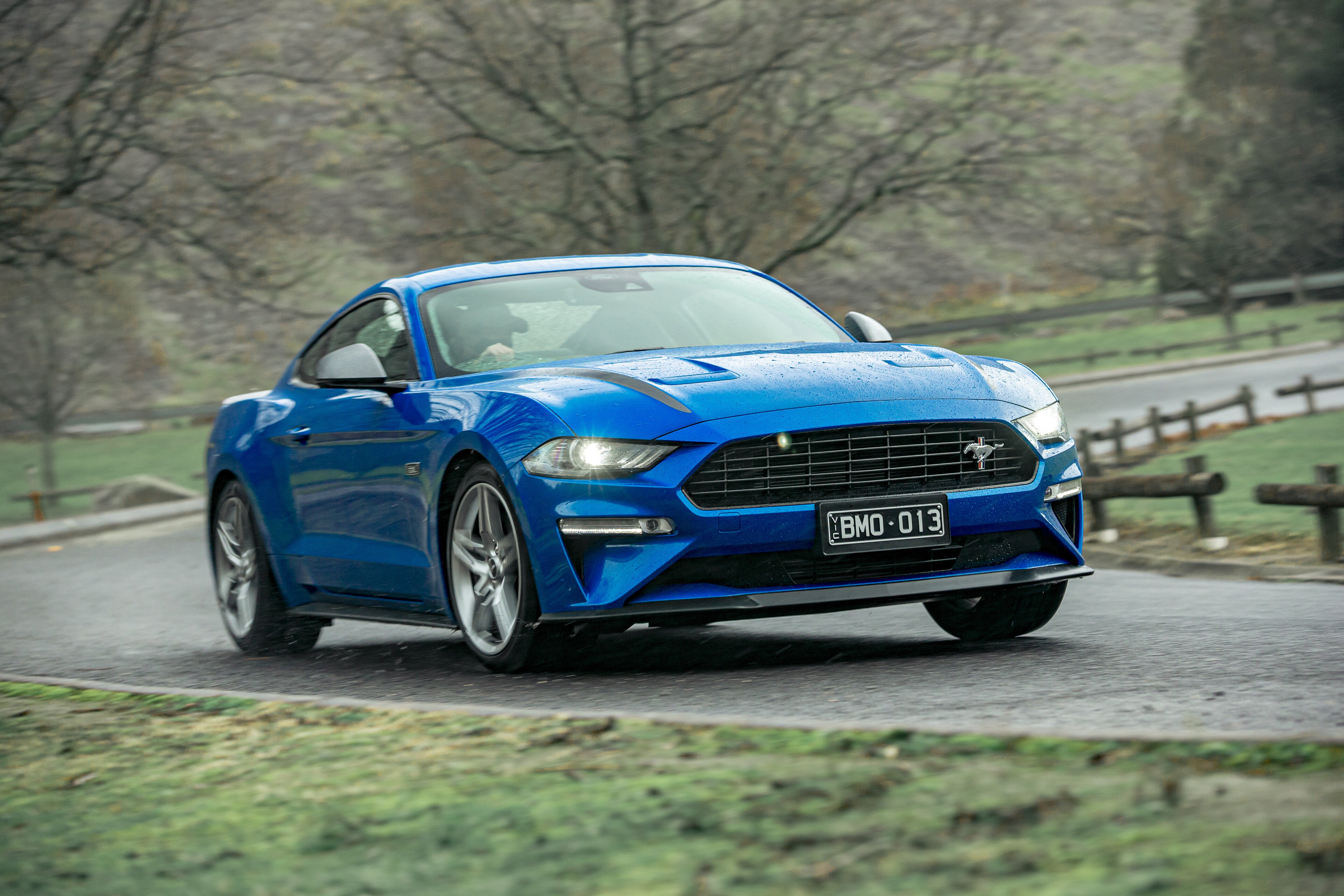
It’s not as fast as the V8 but it doesn’t ‘feel’ significantly slower when you’re on a winding road. Power delivery is punchy with around 90 per cent of useable torque accessible between 2500 and 5300rpm.
For the three-pedal purists out there, it’s also the cheapest manual turbocharged coupe you can still buy. The pedals aren’t perfectly heel-toe compatible, but the six-speed features a very effective auto-blip feature and a burly shift action. It’s a far more involving option than the 10-speed auto.
Forget what you thought about the four-pot pony car. Sure it’s not a V8 but there are a lot of redeeming qualities to be found.
Kia Picanto S
- PRICE: $15,190
- PWR: 62.5kW/tonne
- Engine: 1248cc inline-4, DOHC, 16v
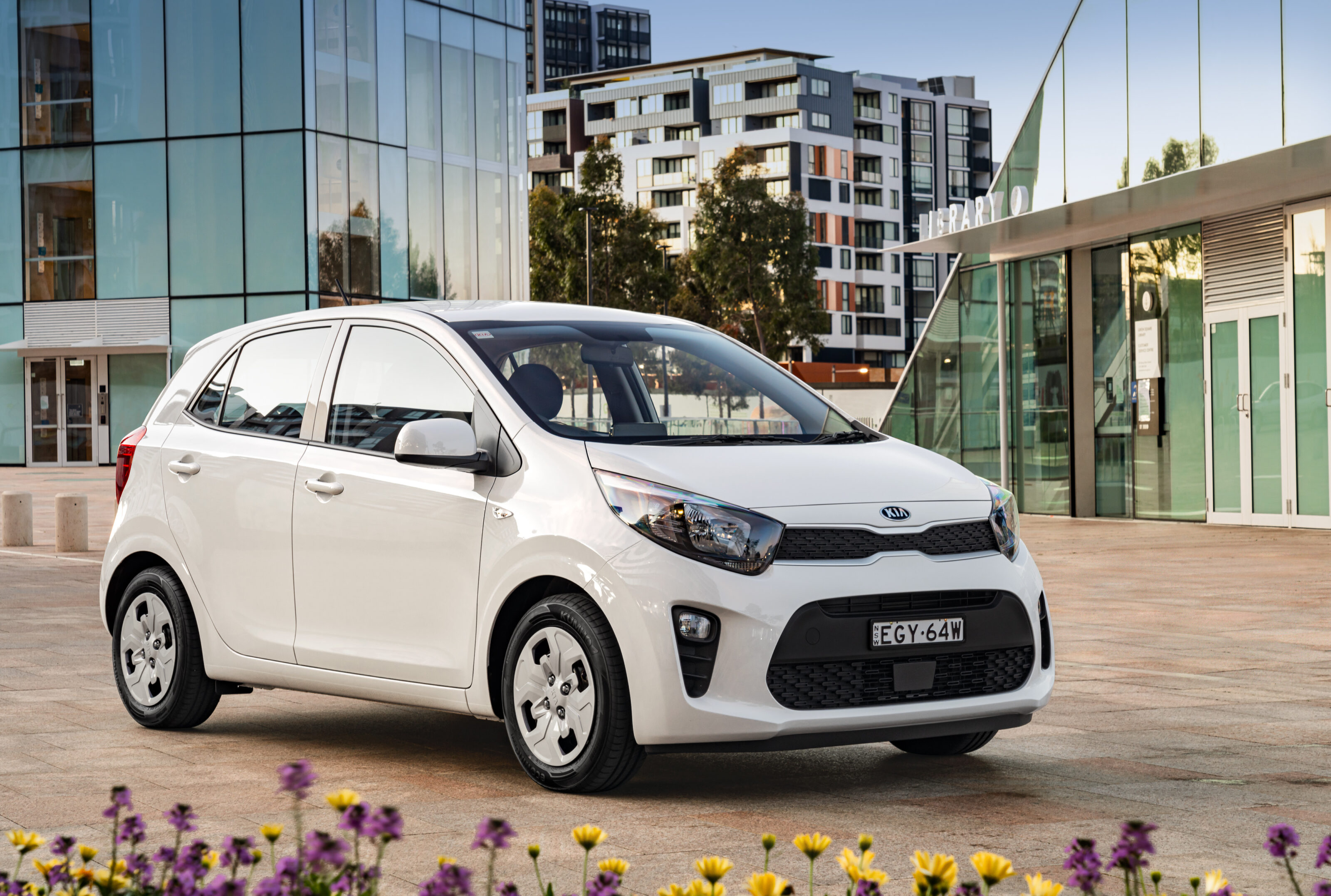
So, is the Kia Picanto S secretly the 911 GT3 you’ve been dreaming of? Its sub-tonne kerb weight and three-pedal manual gearbox should certainly appeal to the driving purists. Yes, it might be an underpowered budget city car, but that’s exactly the appeal.

With just 62kW in its arsenal, you’re able to extract 100 per cent of its performance virtually 100 per cent of the time. The act of rowing gears through its light and positive five-speed gearbox is even more satisfying when you’re not fast enough to fear attracting the local constabulary.
Even the steering is a treat, remaining light and effortless at low speeds before adding weight as the pace increases. It’s a go-kart compared to the size of modern traffic, and seems expertly suited to life as an inner-city urban dweller.
If it’s cheap thrills you’re after, the humble Picanto offers huge fun for a relative pittance. Dep Ed Cameron Kirby says it’s still one of his favourite long-termers, proving big things do come in small packages.
Fun fact: you can replace the whole car for less than the parts and labour involved in replacing the front carbon-ceramic rotors on a Mercedes-AMG GT R.
Snapshot
- 11 vehicles affected from 2020-2021
- Issue with child restraint system
All variants of the 2020 – 2021 Lamborghini Urus SUV have been placed under recall over an issue with the child restraint system.
Specifically, the automatic locking retractor (ALR) used on the middle rear seat may not lock properly, which can lead to failure when connected to a child seat in the event of an accident or heavy stop.
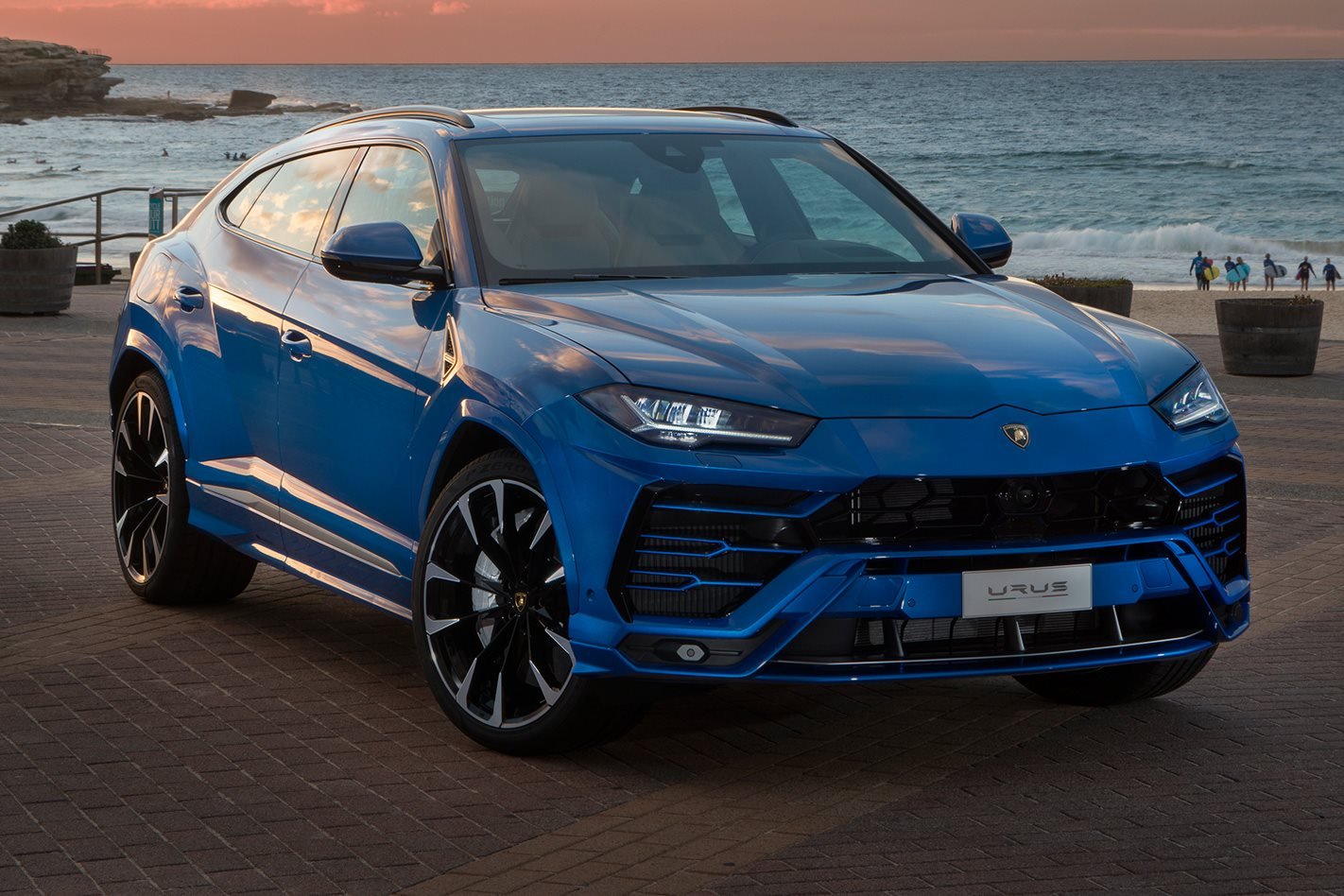
Given the Urus is an expensive and low volume car, the recall affects just 11 vehicles.
Owners can still use their cars, but are advised to use either the left or right section of the rear seat instead of the middle for child restraints until they have the fault fixed.
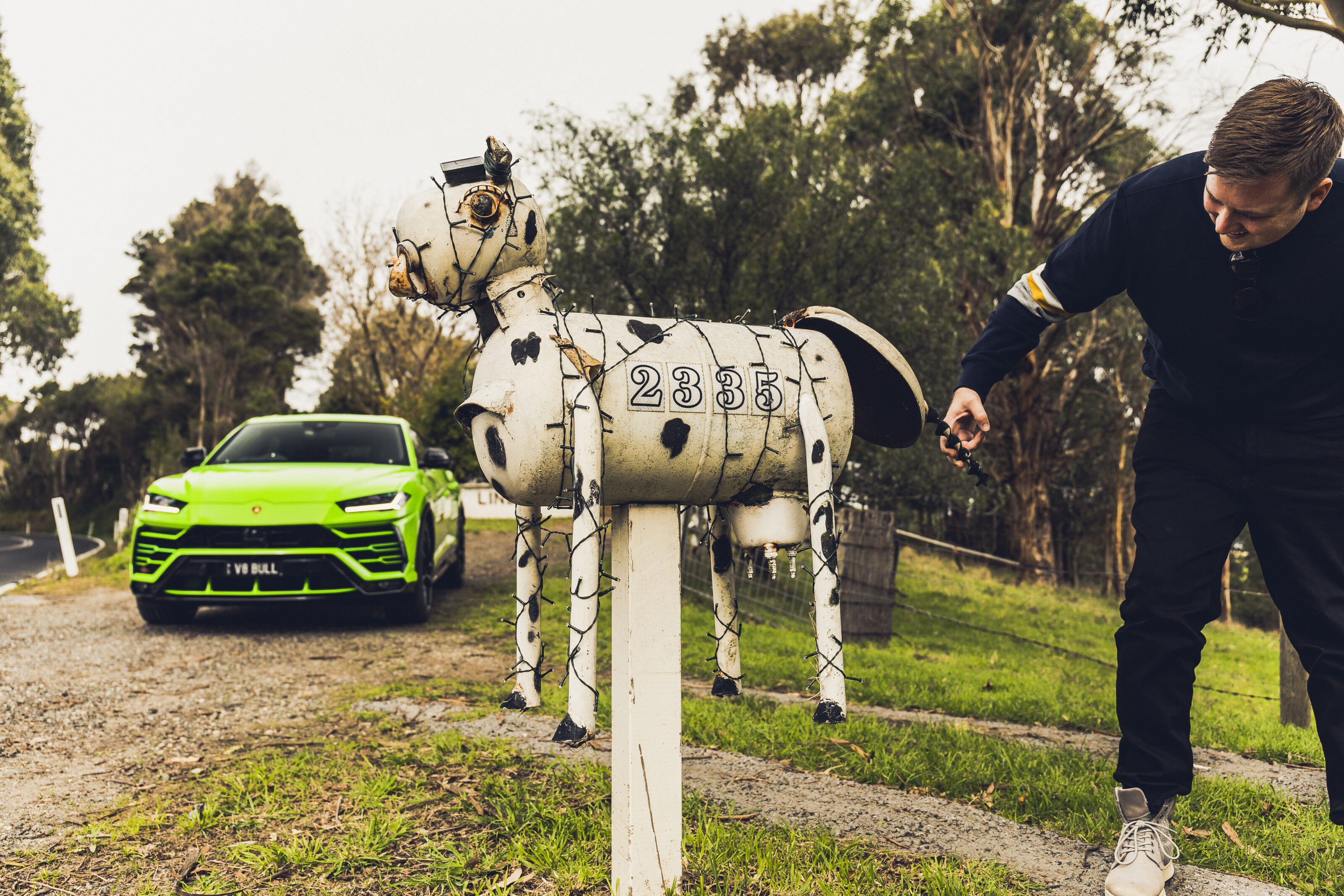
Owners can contact their local Lamborghini dealer who will fix the fault free of charge.
A list of VINs is available here.
Snapshot
- Expected shortage could hit as early as 2026
- Global demand projected to reach 3.4 million tonnes a year by 2024
- Majority of governments overseas are targeting a move away from ICEs
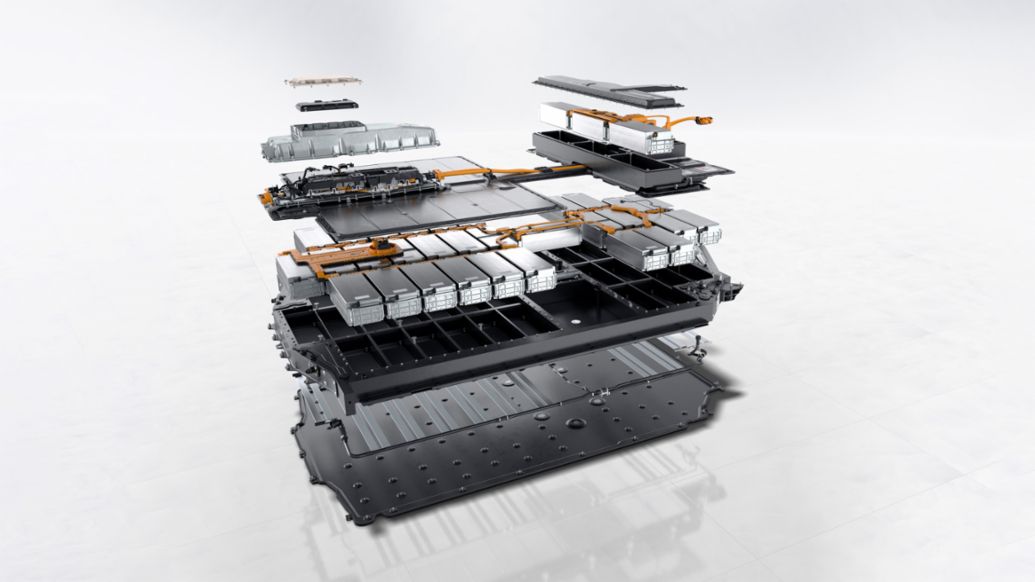
Supplies of nickel are expected to dwindle in the coming years – giving rise to potential problems in manufacturing increasing numbers of electric vehicles.
Rystad Energy has said high demand for the material, thanks to the production of EV battery cells, could result in a shortage of nickel by 2026, reports E&E News.
The firm also projected annual nickel demand could rise from its current level of 2.5 million tonnes per year to 3.4 million tonnes by 2024, a 136 per cent increase over a three-year period.
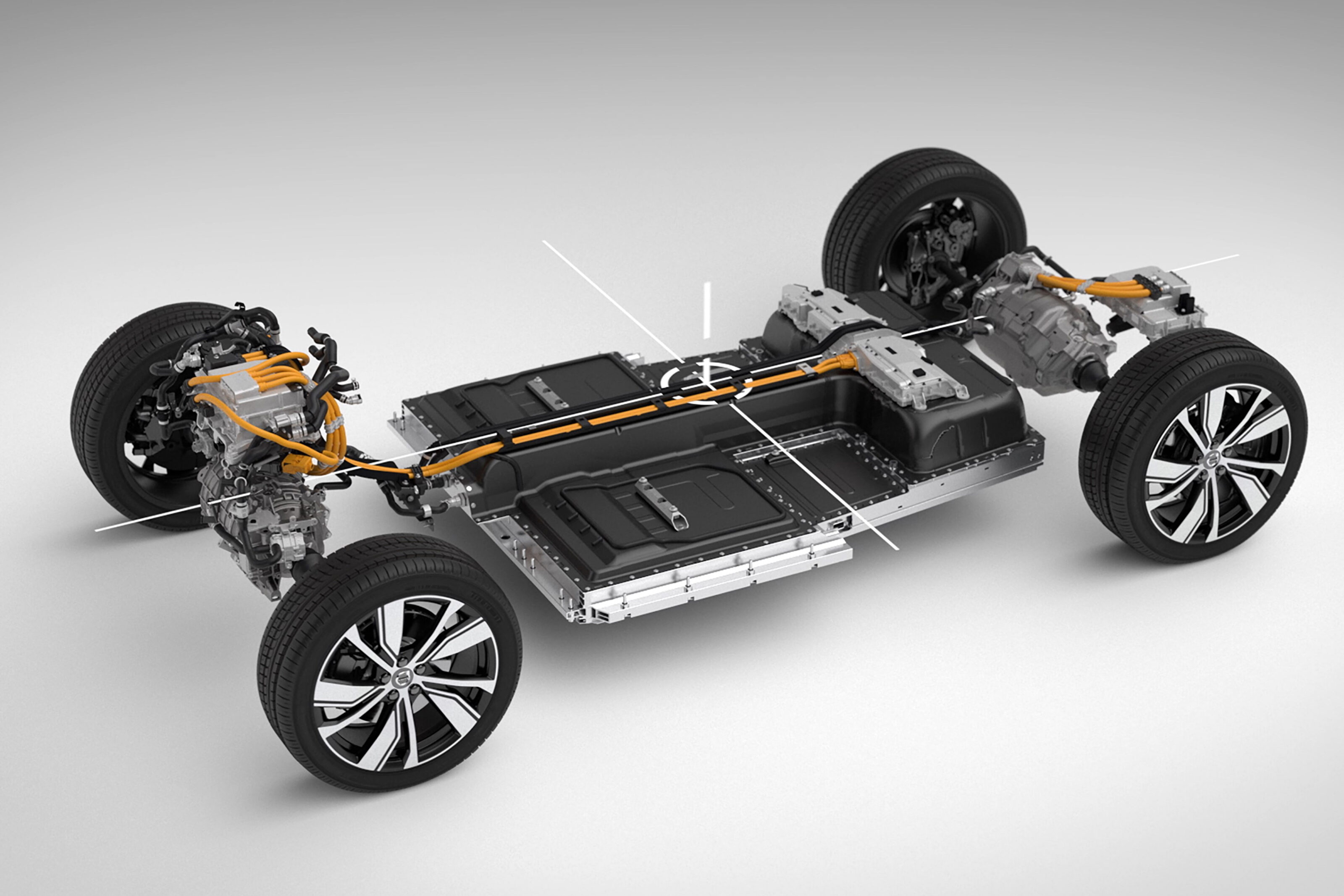
While nearly all current EVs in production are powered by lithium-ion battery packs, nickel is actually the more predominant element used in the cells – helping to deliver higher energy density and storage capacity at a lower cost.
The potential shortage of materials has seen automotive manufacturers such as Volkswagen Group, Daimler and Stellantis searching for adequate supplies of lithium, nickel, manganese and cobalt, according to Automotive News.
All three companies have recently invested heavily in battery production facilities, popping up all over Europe in addition to similar efforts from Ford and Chevrolet in the United States. However, a lack of raw material supply could seriously disrupt the automotive industry in a similar way to the current semiconductor shortage.
Increasing demand for EVs can be attributed, in part, towards legislation being introduced overseas to ban the production of internal combustion engine-powered vehicles – with the UK targeting an outlaw date of 2030 while the European Union has set its sights on 2035.
In the United States, home to EV giant Tesla, the recently-appointed Biden Administration is pushing for fully-electric vehicles to make up at least 40 per cent of production volume by 2030 – triggering the country’s ‘Big Three’ manufacturers to rethink their line-ups.
A lack of unified policy in Australia has seen multiple manufacturers call out the Federal Government’s position on EVs and hesitate to bring their respective full ranges of products to the local market, with no date yet set on a move away from fossil-fuel powered vehicles.
GT. It’s shorthand for the Italian gran turismo, and long before they became cynically bastardised as a trim level on tarted-up sedans and warmed-over hatches, those two letters usually meant you were about to strap yourself into something sleek, powerful and expensive for an epic cross-country drive. GT and Speed? Well, that’s a combination that promises to make the journey even more memorable. And the 2021 Bentley Continental GT Speed delivers on that promise.
The Speed specification is now the only way you can order a 12-cylinder engine in the third-generation Continental GT, a car that shares its platform architecture, triple-chamber air suspension, 48V anti-roll system and eight-speed dual-clutch transmission with the Porsche Panamera.
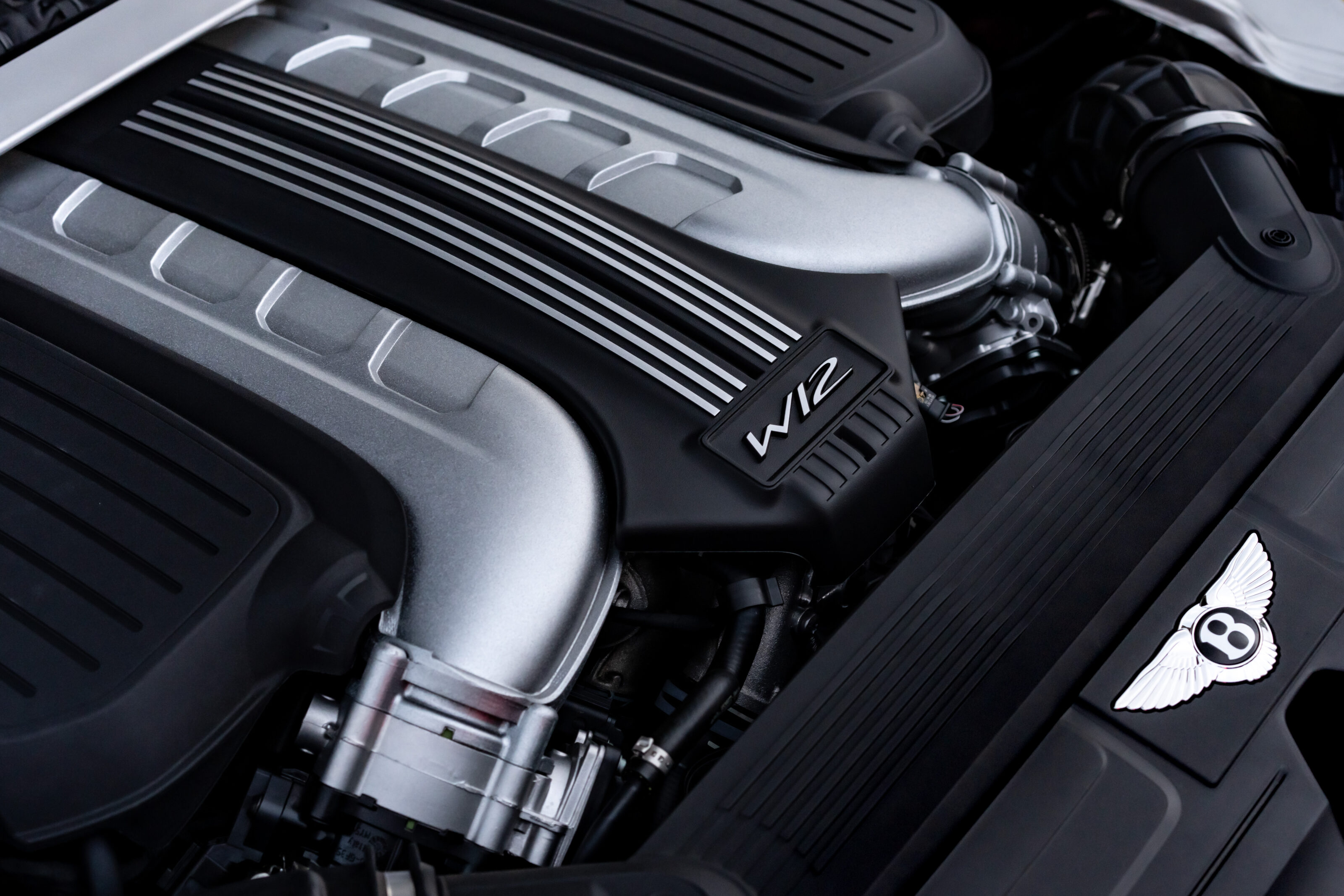
Bentley has built more than 100,000 of the 6.0-litre, twin-turbo W12 engines since the launch of the original Continental GT back in 2003, but other than the 522kW, 1016Nm monster created for the limited-edition Continental Supersports a few years back, the new GT Speed’s version is the most powerful yet. While the regular W12 makes 467kW at 6000rpm, the Speed engine makes 485kW from 5000rpm to 6000rpm. Peak torque of 900Nm is identical to that of the regular W12, though it now occurs from 1500rpm through to 5000rpm rather than 1350rpm to 4500rpm.
The Continental GT Speed is big – both the coupe and convertible are 4850mm long, 1954mm wide and roll on a 2851mm wheelbase. It’s also heavy, the coupe weighing 2273kg and the convertible 2436kg thanks to the frame and the motors required for the powered soft-top, the mechanicals for the pop-up rollover protection system behind the rear seats, and extra bracing required to stiffen a roofless body structure. And it’s fast, the factory claiming a 0-100km/h time of 3.6 seconds for the coupe and 3.7 seconds for the convertible, as well as an autobahn-scorching 335km/h top speed for both.

So far, so Bentley. But the moment you turn the steering wheel, this new GT Speed feels different from every other Continental GT ever built. New chassis hardware and software have endowed the bulky Brit with impressive agility.
The hardware changes are surprisingly few, and mainly focused on the rear axle, which has been fitted with the rear-steer system first seen on the Flying Spur sedan as well as the first electronic limited-slip differential ever fitted to a road-going Bentley. The steering ratio has been quickened, and a new carbon-ceramic brake system, with monstrous 440mm front rotors – the largest ever fitted to a road car, says Bentley – is available as an option.
Meanwhile, the software for the stability control, the spring, shock and roll rates, and the active all-wheel-drive system has been revised to work with the rear-steering and the e-diff to ensure the GT Speed reacts more rapidly to driver inputs.
The moment you turn the steering wheel, this new GT Speed feels different from every other Continental GT ever built.

The original Conti GT, built on a platform optimised for front-drive and shared with the Volkswagen Phaeton, was blisteringly quick between corners. But with 58 per cent of its mass over the front axle, it was also a car that demanded absolute precision on corner entry and patience with the throttle. Though the Porsche-developed MSB platform gives the third-gen Conti GT a longer dash-to-axle, the architecture of the all-wheel-drive system, which places the W12’s block ahead of the front axle, means it still carries 55 per cent of its mass on the front wheels.
As a result, the GT Speed still likes to be slowed and steadied before you turn in to a corner. But it dives towards the apex with an alacrity that belies its size and weight, rotating confidently and allowing you to get back on the power earlier than any previous 12-cylinder Conti GT.
You can feel the weight transfer to the rear and the traction punching you out of the corner. The rear-steer system, the e-diff, the torque vectoring by brake, the 48V anti-roll system and the active all-wheel-drive system all work together, adjusting everything from turning radius to roll rates to front and rear and cross-car torque splits in real time, to deliver agility and balance that feels reassuringly natural.
And with the ESC set to Dynamic Mode (one quick press of the button on the centre console) or switched all the way off (a longer press) the big W12’s titanic swell of torque will push the tail as wide as you want, and you can use the power to keep it there. Yes, this Bentley will drift.

The GT Speed coupe is the driver’s choice. It’s not just that the convertible is heavier, it also rolls on suspension that is approximately 10 per cent softer, partly to reduce impacts through the less rigid body structure and partly because Bentley has found convertible customers prefer a slightly softer ride than coupe buyers.
If you’re paying attention, you’ll notice a slight hesitation the moment you pull the steering wheel off-centre as the chassis works through the increased compliance and takes a set. But once you’re through the transitions, the convertible feels quite composed, though there’s slightly more patter from the big 22-inch alloy wheels and low-profile Pirelli tires – 275/355 up front and 315/30 at the rear – than in the coupe, a touch more laxity in the body motions, and an occasional mild shudder through the steering column.
A proper GT is a car in which you’ll want to spend a lot of time behind the wheel, and in the case of the Continental GT Speed, that’s indeed a wonderful place to be. Nobody does an interior like Bentley, awash with flawless chrome, highly polished veneers and sumptuous leather.
You can mix and match colours and veneers in an almost uncountable number of ways. Bentley offers 15 different leather colours that can be arranged across six different colour splits, including a unique Speed configuration that includes grippy Alcantara inserts on the seats and around the steering wheel rim, paired with 12 different veneers.

The Continental GT Speed might be the range-topping two-door Bentley, but Crewe doesn’t make a show of it. Subtle Speed badging on the front guards, a discreet number 12 in the vent behind the front wheels, a unique multi-spoke wheel design and oval tailpipes are the only clues to the fact you have rear wheels that steer and 50 per cent more cylinders under the hood than the regular Continental GT.
As a coupe, the Continental GT Speed is arguably the ultimate modern gran turismo. It is everything you expect of a two-door Bentley – it’s big and fast and luxurious and lush (the ride characteristics in Comfort and Bentley modes are identical to those of the non-Speed Conti GT), a car that can effortlessly devour 1000km in a day and leave you feeling calm and relaxed at the end of it. But, uniquely, it’s a Bentley that’s also ready, willing, and able to play when the mood takes you.
A proper GT is a car in which you’ll want to spend a lot of time behind the wheel, and the Continental GT Speed is a wonderful place to be.
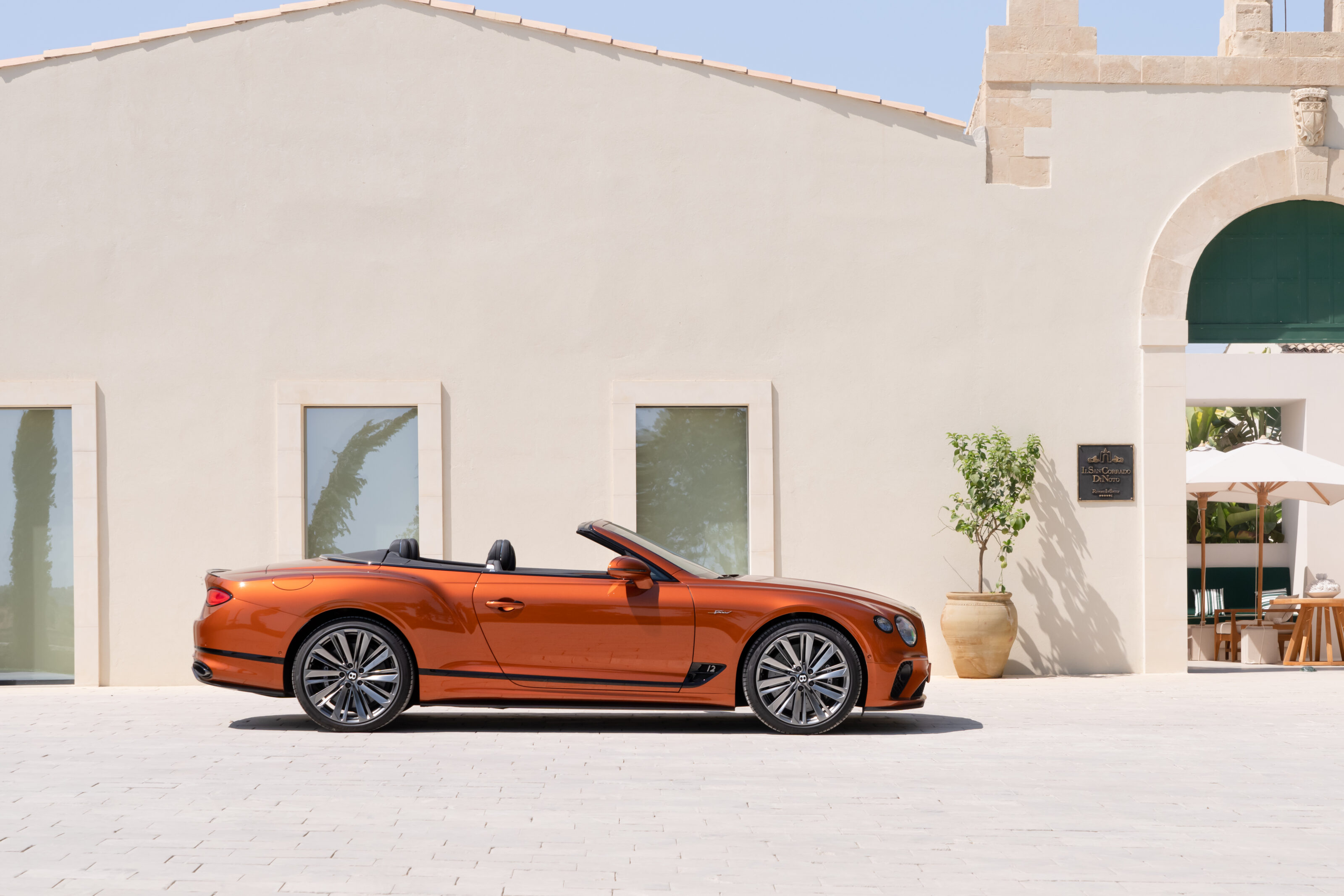
The GT Speed convertible is a little more complicated. Its less-rigid body and softer suspension mean it’s not quite as accomplished as its hardtop sibling – less of driver’s 12-cylinder Bentley, for more money – and although prices are yet to be confirmed, the convertible is expected to cost about 10 per cent more than the coupe.
The regular V8-powered GT Convertible, more than 440kg lighter, significantly less expensive, only four-tenths of a second slower to 100km/h than the GT Speed soft top and still capable of coming within a whisker of 320km/h, is arguably the rational choice for those who simply want to enjoy wafting around in one of the most charismatic and beautifully built luxury convertibles money can buy.
But Bentley expects half the GT Speeds sold will be convertibles, confirmation, perhaps, that buying a Bentley is the antithesis of a rational car purchase. It’s an indulgence, pure and simple, and Bentleys don’t come much more indulgent than the Continental GT Speed – with or without a roof.
2021 Bentley Continental GT Speed specifications
| Engine | 5950cc, W12, DOHC, 48v, twin-turbo |
|---|---|
| Max Power | 485kW @ 5000-6000rpm |
| Max Torque | 900Nm @ 1500-5000rpm |
| Transmission | 8-speed dual-clutch |
| Weight | 2273kg (coupe);2436kg ( convertible) |
| 0-100km/h | 3.6sec (coupe);3.7sec (convertible) |
| Fuel consumption(WLTP Combined) | 13.7L/100km (coupe); 14.1L/100km (convertible) |
| Price | TBA |
Snapshot
- Rare CSL 3.2 Phase 2 listed with u00a3449,995 price tag
- Originally sold to the Bahrain Royal Family
- Nut and bolt restoration
A unique example of one of the world’s most iconic touring cars has come up for sale in the UK, commanding a hefty price for a road-going piece of history.
First launched in 1972, the original 3.0 CSL was dubbed the ‘Batmobile’ for its relatively wild aerodynamics (not previously seen on a touring car) and its strong 3.0-litre, straight-six engine – a homologation special for the Group 2 European Touring Car Championship regulations at the time
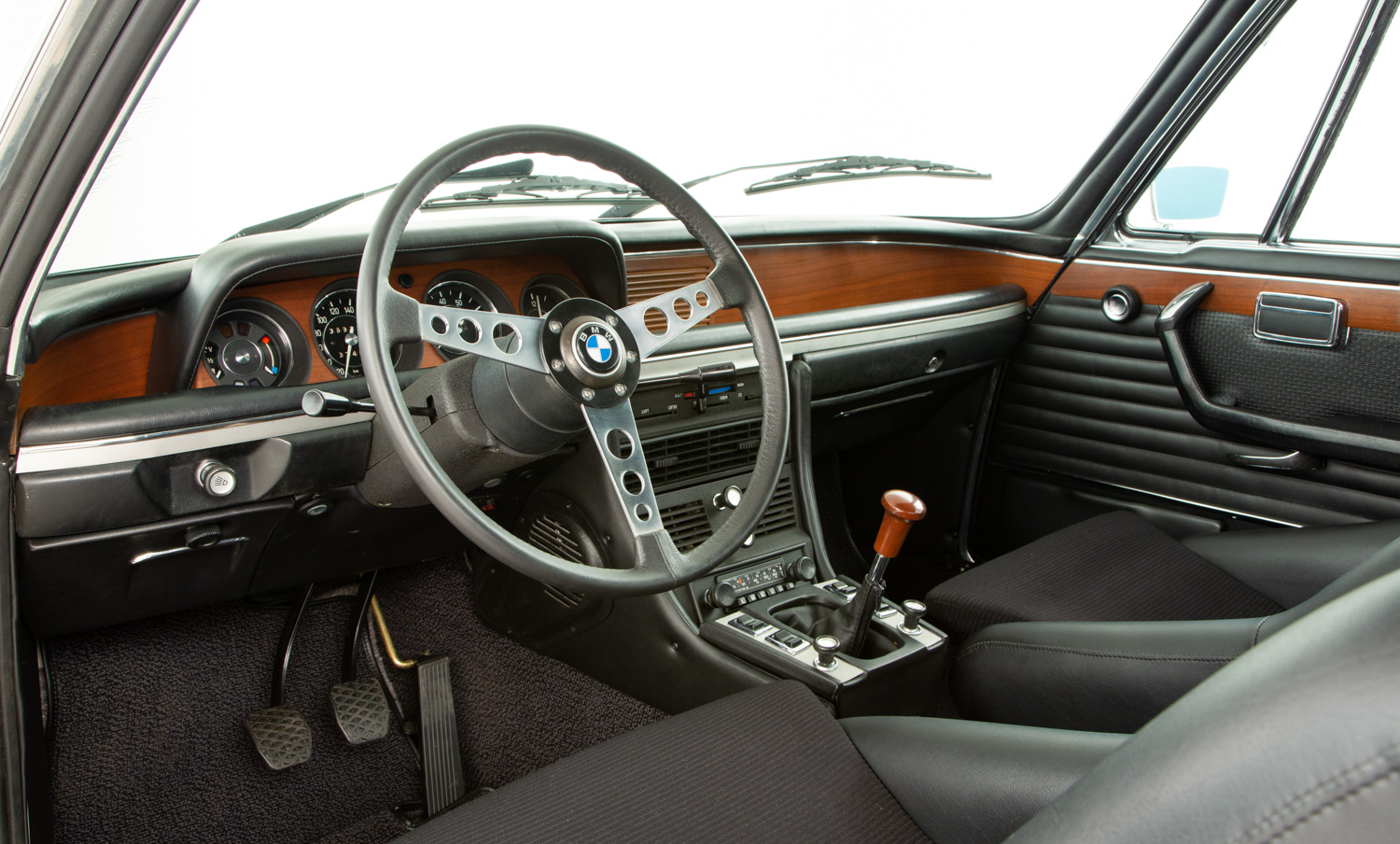
This 1974 BMW 3.2 CSL Phase 2 is number 22 of 57 made in the last 1974-75 run of production, powered by a bored-out version of the straight-six engine, now at 3.2-litres and developing 152kW and 286Nm, delivering the power to the rear wheels through a four-speed Getrag gearbox.
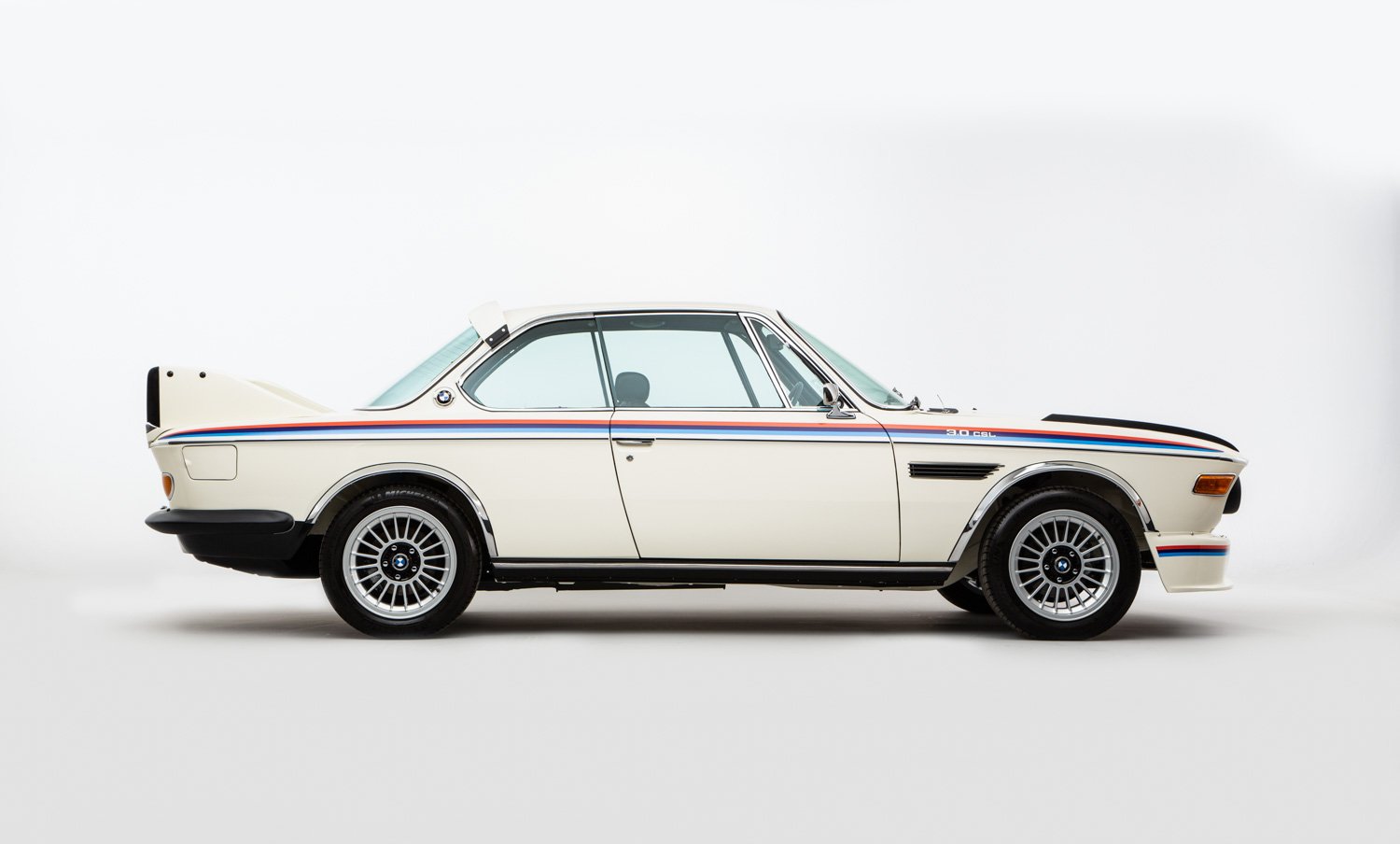
As one of the last road cars, this example was factory fitted with electric windows and air-conditioning, as well as the three-support rear wing kept in the boot to get around German laws prohibiting the exterior modification.
Delivered to A.A Zayani and Sons BMW in Bahrain, the car was originally painted Chamonix white before the Royal Family requested it be resprayed to golf yellow – remaining in the colour until its restoration.
While there are just 36,000 kilometres on the odometer, the car had gone through as many as four owners before its fifth custodian found it in Bahrain, untouched for almost 30 years.
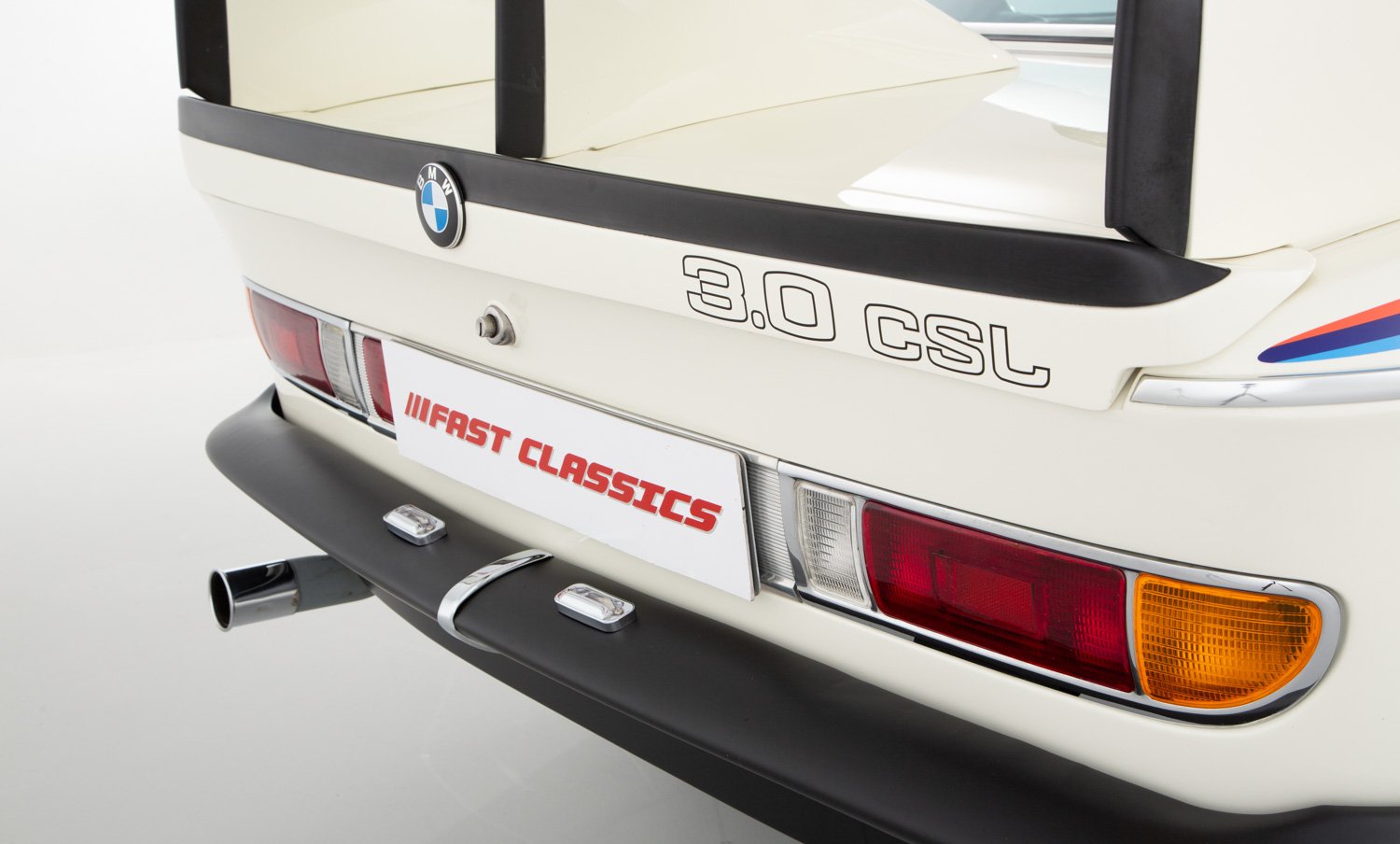
After being imported to the UK, the restoration took two years to complete as a full nut and bolt job. The new owner brought the car back to its original Chamonix finish, as well as a refurbishment of its original 14-inch wheels, although it is sitting on 16-inch Alpina alloys in the photos.
At £449,995 (AU$832,355), it’s anything but cheap, however there aren’t many 50-year-old cars with such a back-story, nor do many claim to have the verification documents this Batmobile does.
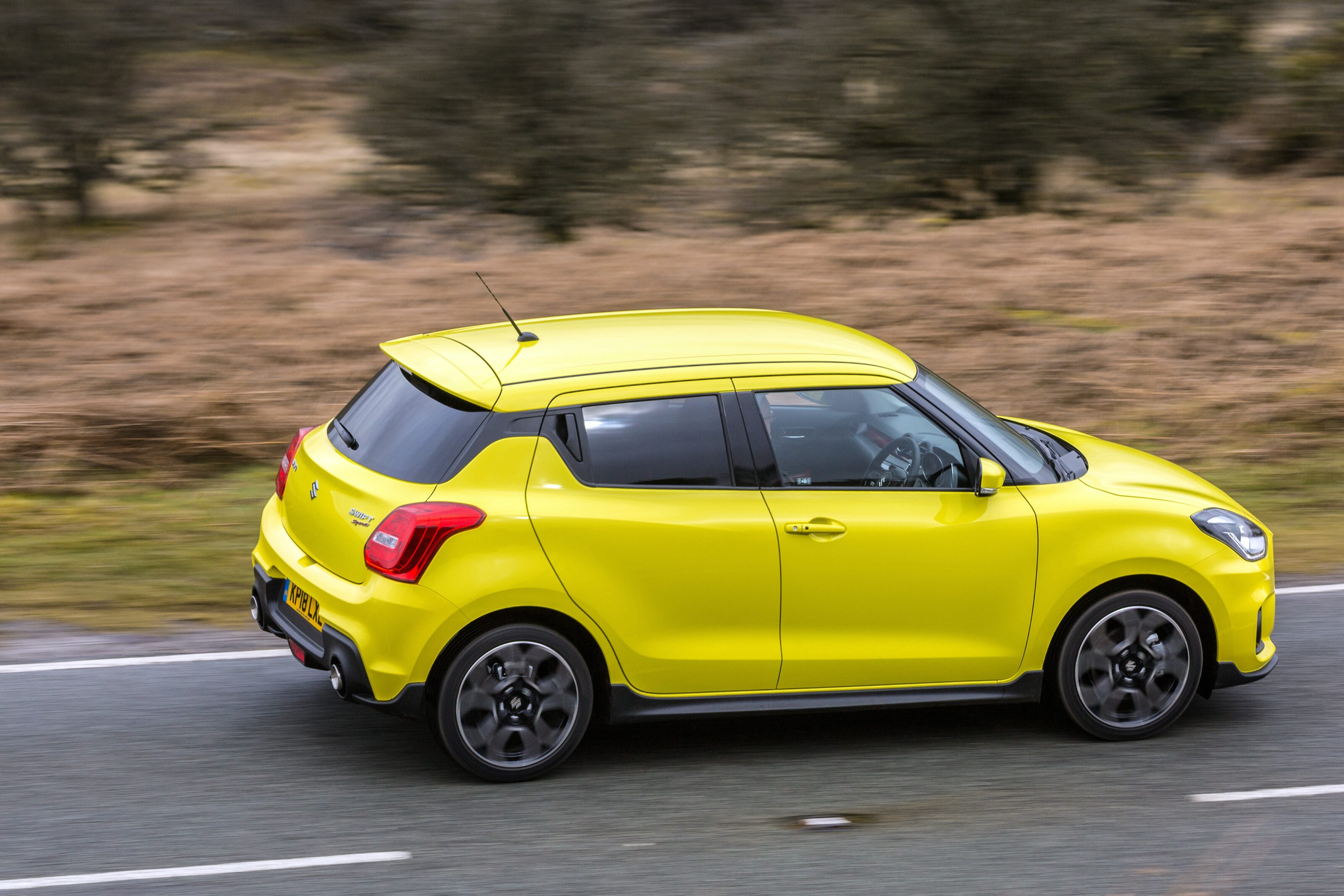
My 18-year old son’s off to university and he wants a fun car. He’s after a 2015 Suzuki Swift Sport, but it’s out of warranty now and I’m worried about the ongoing costs. Would the $20k budget be better spent on a new Kia Picanto GT? – Roman K
There are a few things at play here, Roman. A 2015 Suzuki Swift Sport is a cracking junior hot hatch, and a reliable one to boot, but it’s a significantly more costly car to fuel and insure for an 18-year-old and any ongoing maintenance is likely to come straight out of the good ol’ Bank of Dad.
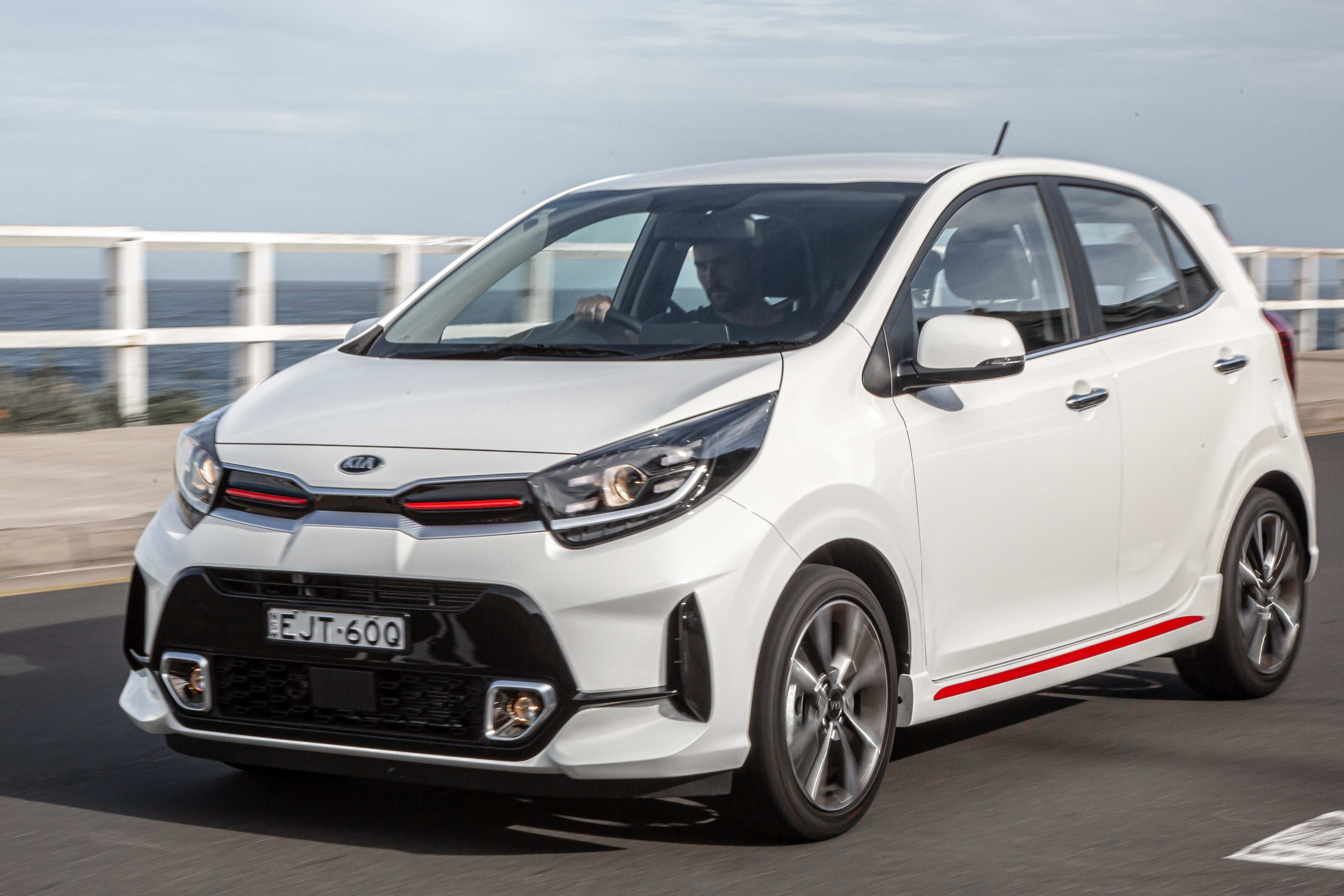
Yes, he’s only getting 74kW from the Kia versus 100 from the Suzuki, but while you’re footing the bill, you get to make the rules.
In the Picanto’s favour is that it’s a brand-new car that’ll still have years of warranty remaining when he graduates. We’d go Kia and let him know that if he subsequently wants something faster, it’s up to him to fund it. – AE
| u00a0 | 2021 Kia Picanto GT | 2015 Suzuki Swift Sport |
|---|---|---|
| Engine | 998cc I3T, DOHC, 12v | 1586cc I4, DOHC, 16v |
| Power | 74kW @ 4500rpm | 100kW @ 6900rpm |
| Torqueu00a0 | 172Nm @ 1500-4000rpm | 160Nm @ 4400rpm |
| u00a0Weight | 1012kg | 1060kg |
| 0-100km/h | 9.9sec | 8.7sec |
| Price | $19,995 | c. $20ku00a0u00a0 |
Snapshot
- Based on extra cab SR5
- Replica sold for US$110,000
A faithful replica of Marty McFly’s iconic Back to the Future Toyota Pickup has sold for a healthy US$110,000 at a Mecum auction in Chattanooga, Tennessee on Friday.
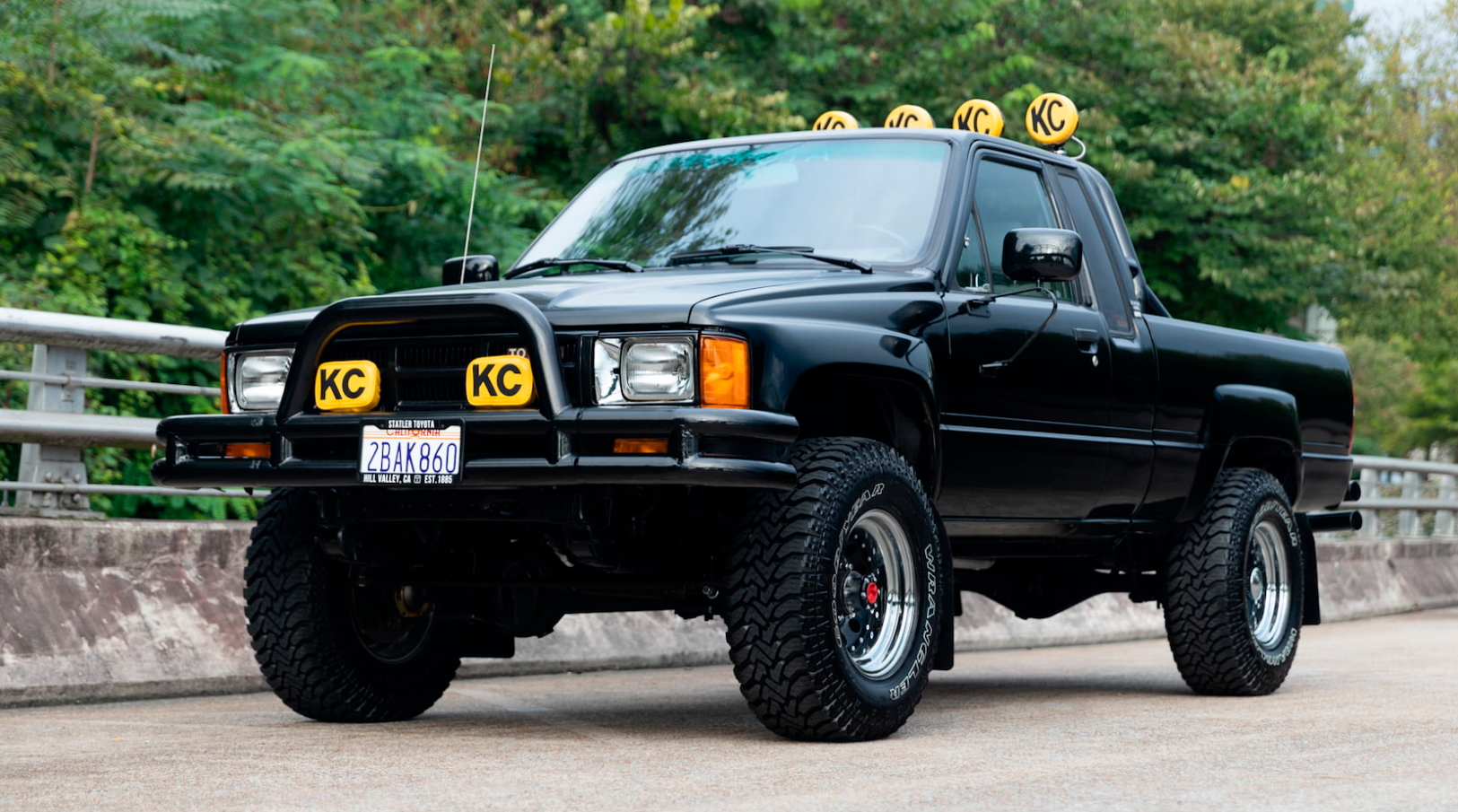
Built on a 1985 ‘Xtra Cab’ 4×4 Pickup (or HiLux everywhere else), the movie replica is packed with screen-accurate components.
Custom bar-work, blacked-out wheels, Toyota windscreen banner and all-important KC spotlights feature on the solid-axle pick-up.
Even the California ‘2BAK860’ plate matches the truck’s appearance in Parts II and III of Back to the Future. Just like the movie car, it’s a fuel-injected, five speed example, and appears to be in excellent condition.
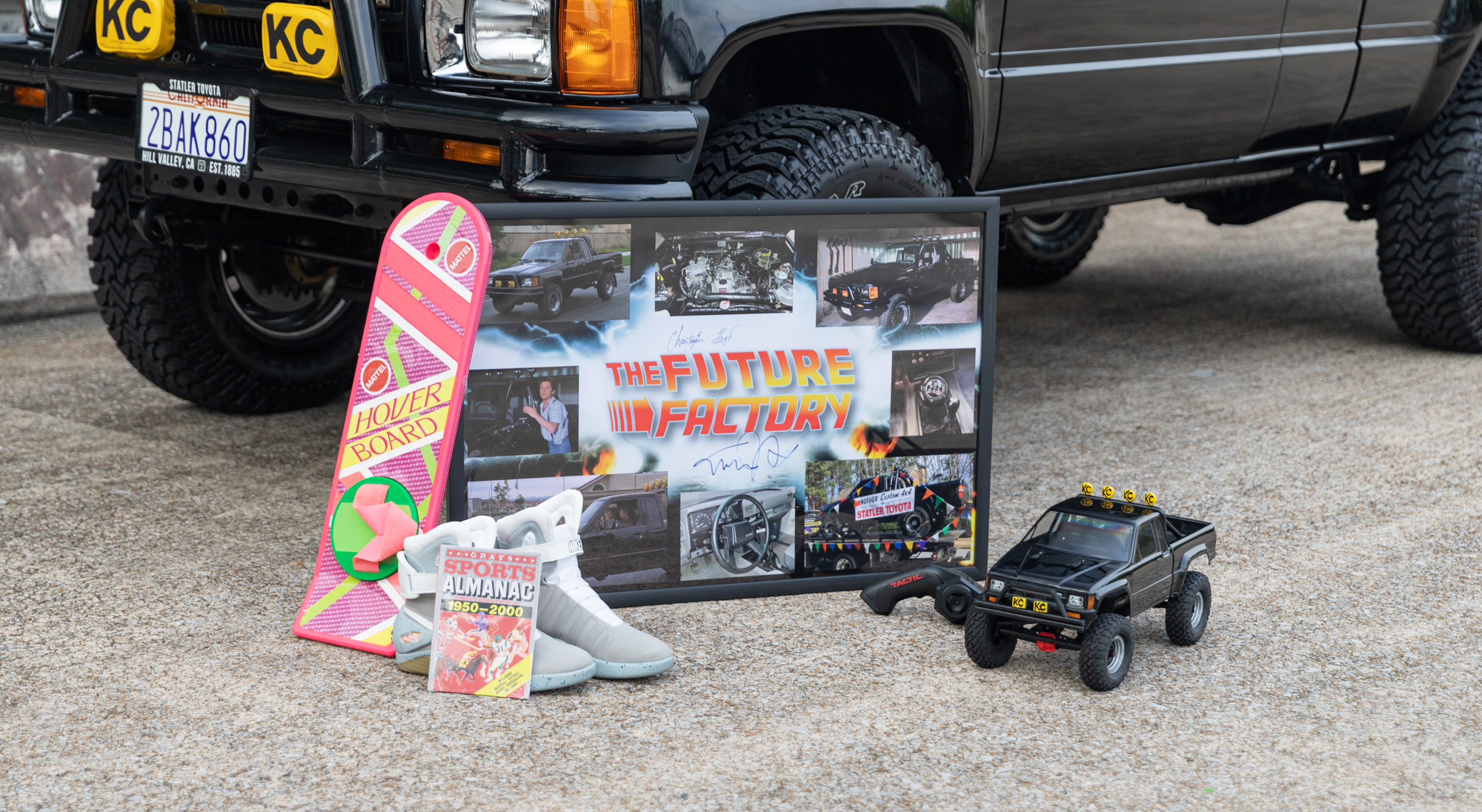
A selection of movie memorabilia is included with the sale, including a signed image of the original SR5, replica self-lacing Nikes, and even a 1/10 scale RC model.
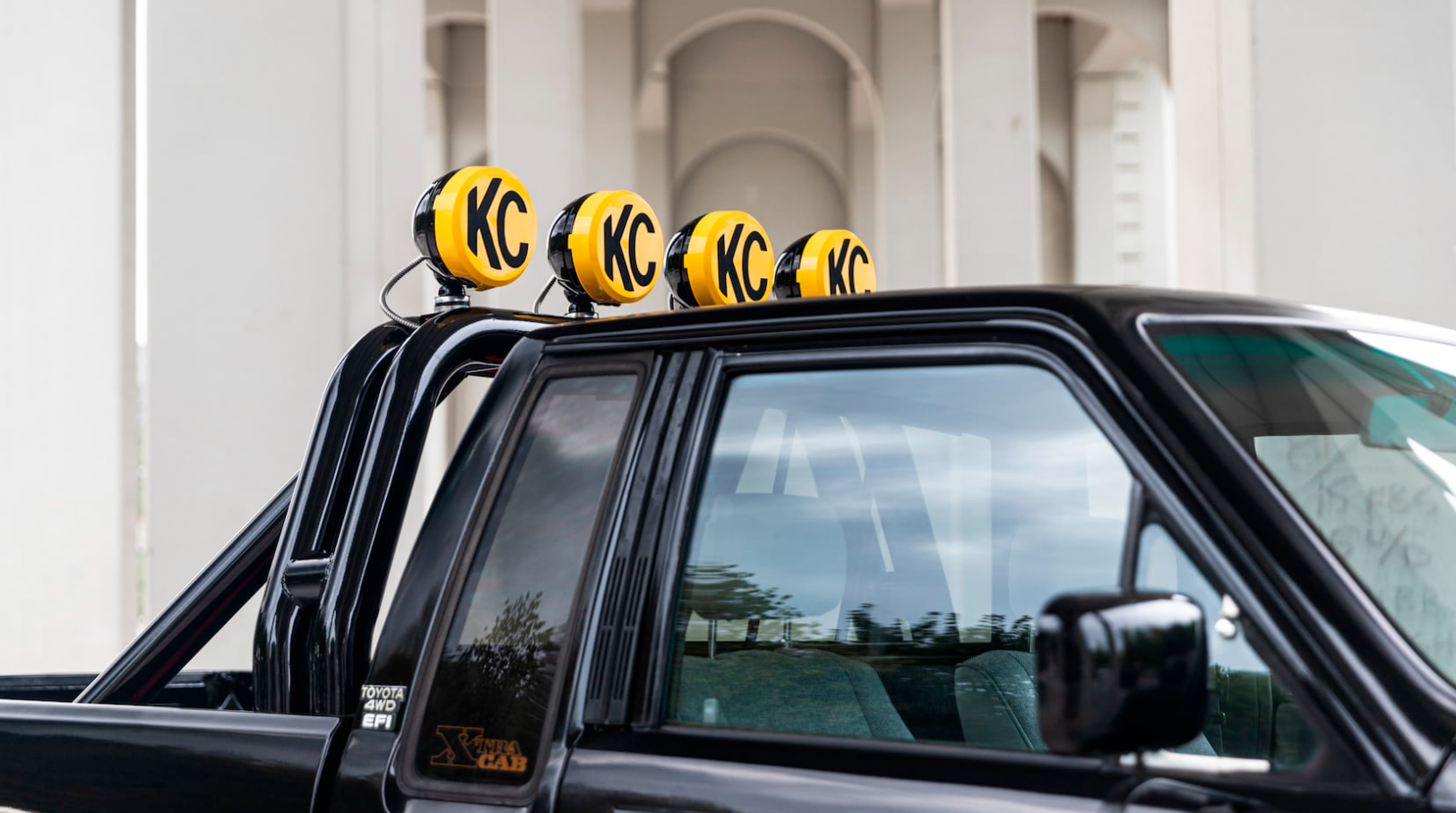
The black SR5 appears in all three movie instalments — firstly as an object of Marty’s desire, and later as his daily driver upon returning to a changed future.
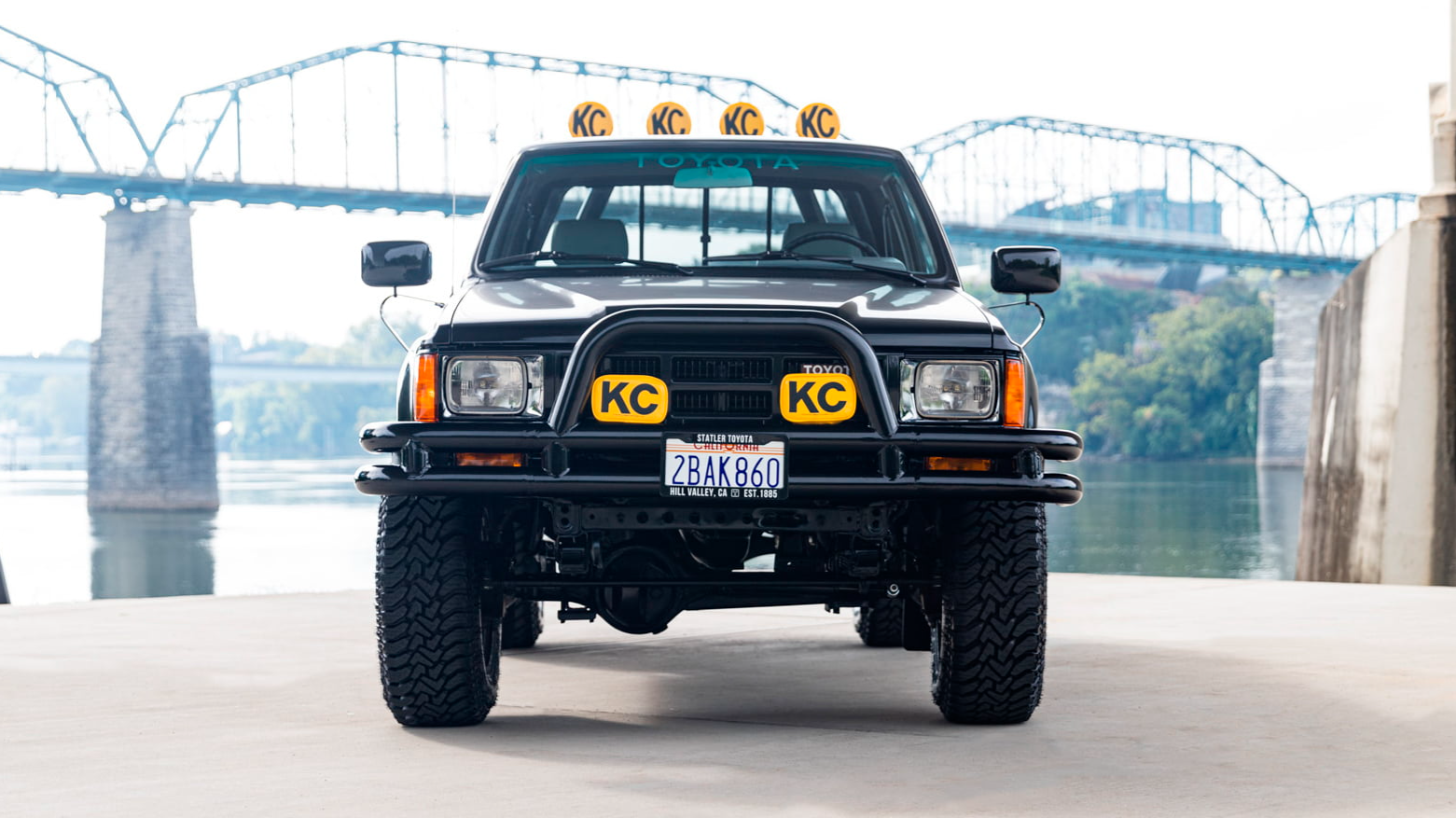
Several replicas of the vehicle have been created and sold over the last three decades, with one fetching a huge US$58,000 (AU$78,468) last year. That’s well above the $69,990 asking price attached to a top-model, 2021 HiLux Rugged X.
Extra-cab third-generation HiLuxes remain popular in Australia, and command a premium over single or twin-cab versions.
Numerous ‘wanted’ advertisements can be found on Gumtree, some of which use images of the movie truck.
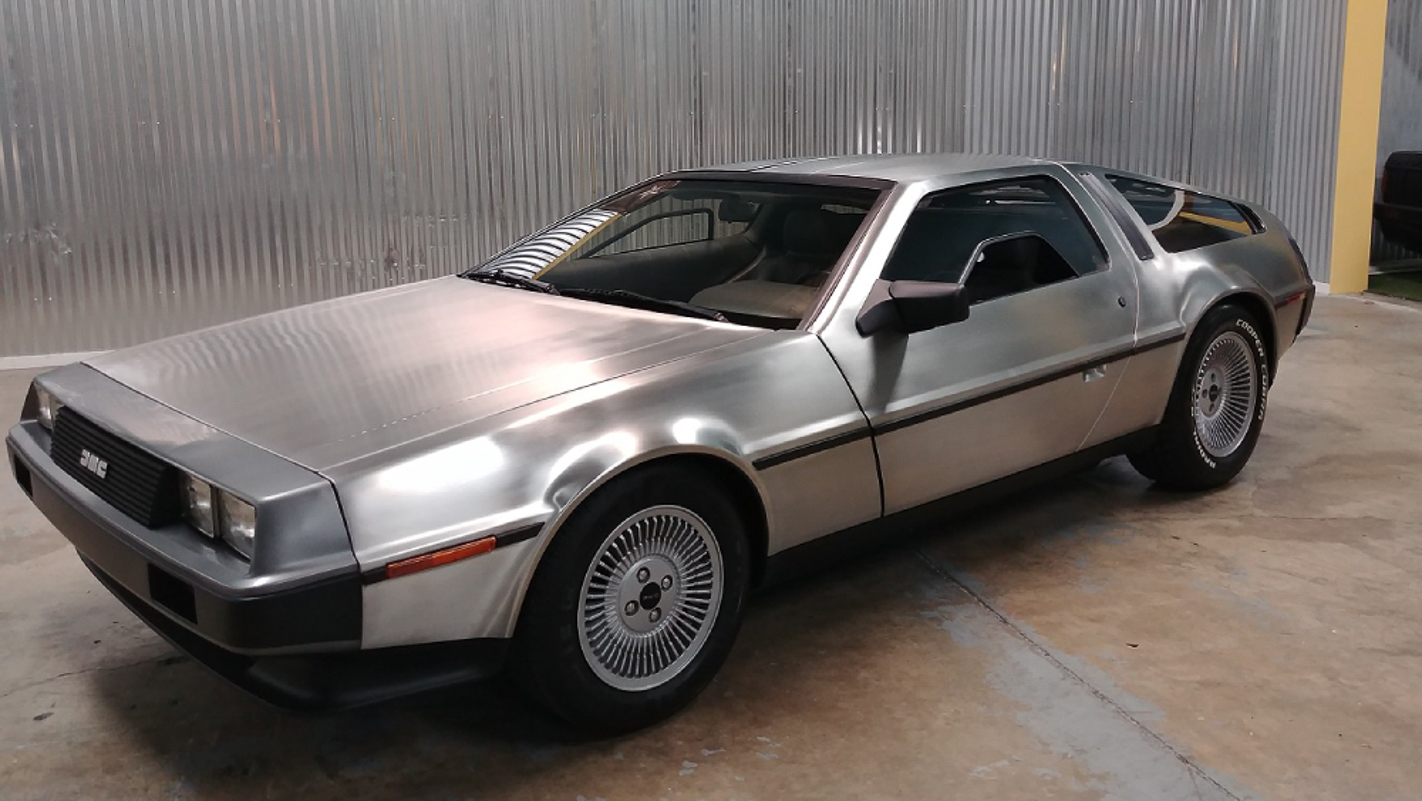
Of course, the SR5 is not the only four-wheeled Back to the Future hero. DeLorean’s famous DMC-12 was elevated to legendary status as Doc Brown’s time machine, earning a permanent association with the trilogy.
A low-kilometre, left-hand-drive DMC-12 was listed for sale in NSW for $88,000 last year, while a screen-used time machine sold in 2011 for US$541,000 (AU$741,121).
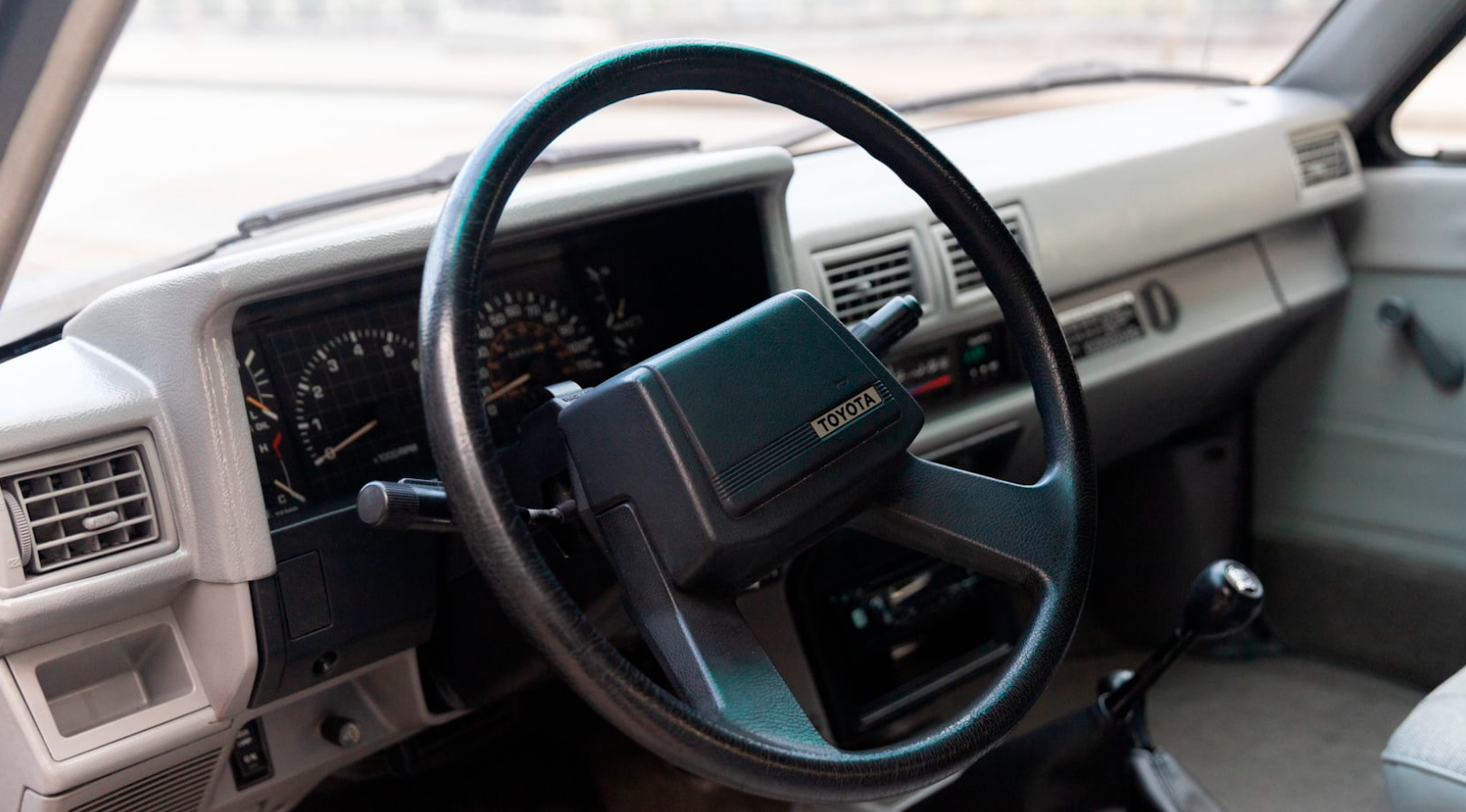
The Toyota Pickup will go under the hammer at Mecum’s Collector Cars auction in Chattanooga, Tennessee, on Friday, October 15.
