
Traction Action
Two days, 1200 kays and every weather and road condition we could find. We put HSV’s Coupe 4 through its toughest-ever test
After a brief chat over coffee at its Melbourne HQ, HSV director of sales and marketing Chris Payne asked what we had planned for his Coupe 4.
This feature was first published in MOTOR magazine’s October 2004 issue
Shooter Brunelli and I exchanged furtive glances, shrugging shoulders. To be honest, we’d only cooked up a half-arsed plan to get us back to Sydney.
It ran, that we’d grab a map from Brunelli’s place (talk about preparation), then gun out of Melbourne and over to the snowfields of Mount Buller to check out the car’s all-wheel-drive grip on icy mid-winter roads. From there, we’d head across country to overnight at Albury on the NSW-Victoria border.
Then, tomorrow, we’d criss-cross the Murray before heading toward Tumut, where we might even find some more white stuff. Next, we figured to say g’day to the Dog on the Tuckerbox at Gundagai, and then jump on the Hume for the push back up to Sydney.
If our half-cooked plan worked out, we’d subject the HSV to a comprehensive test of its all-wheel-drive abilities over 1200 kays and across every road and weather condition. Intent outlined and keys in hand, it was time to load up the quad coop and head for the hills.
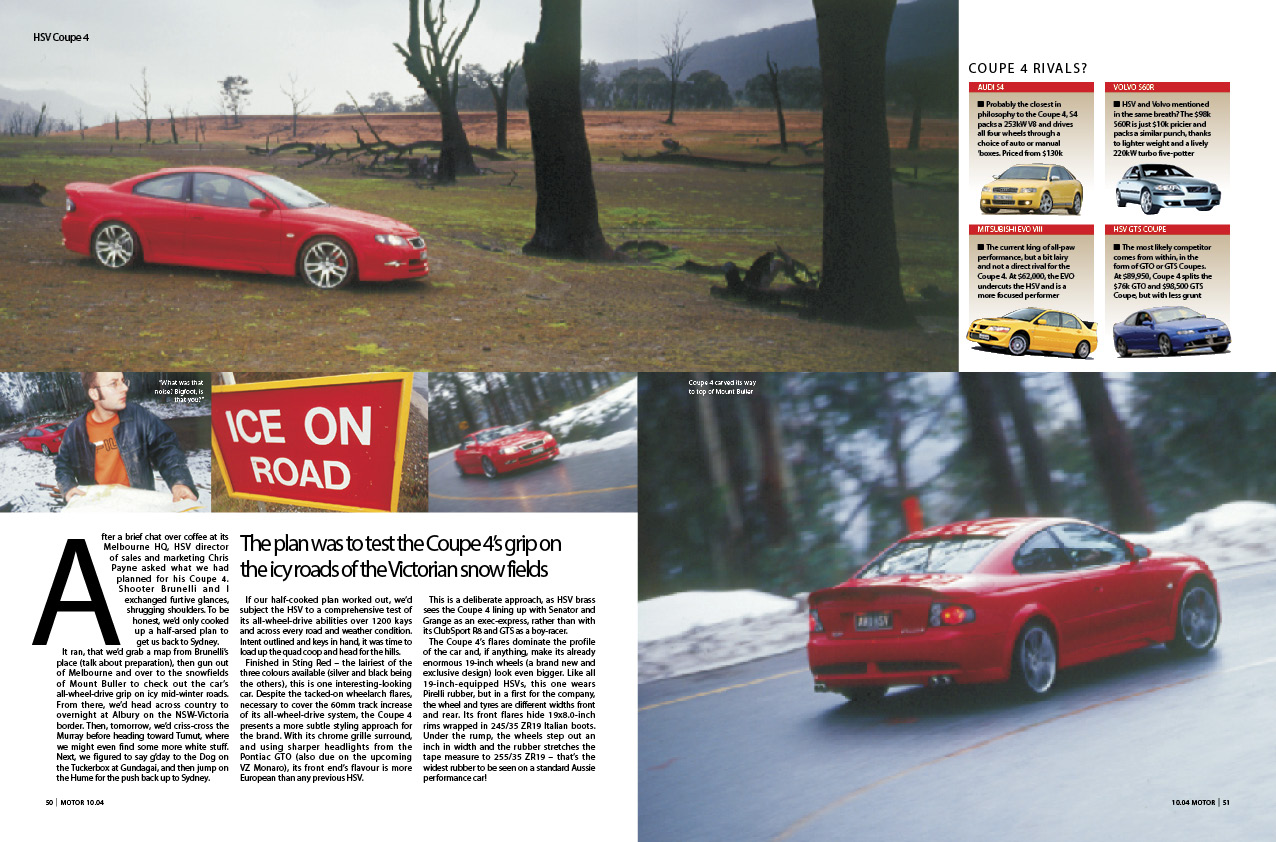
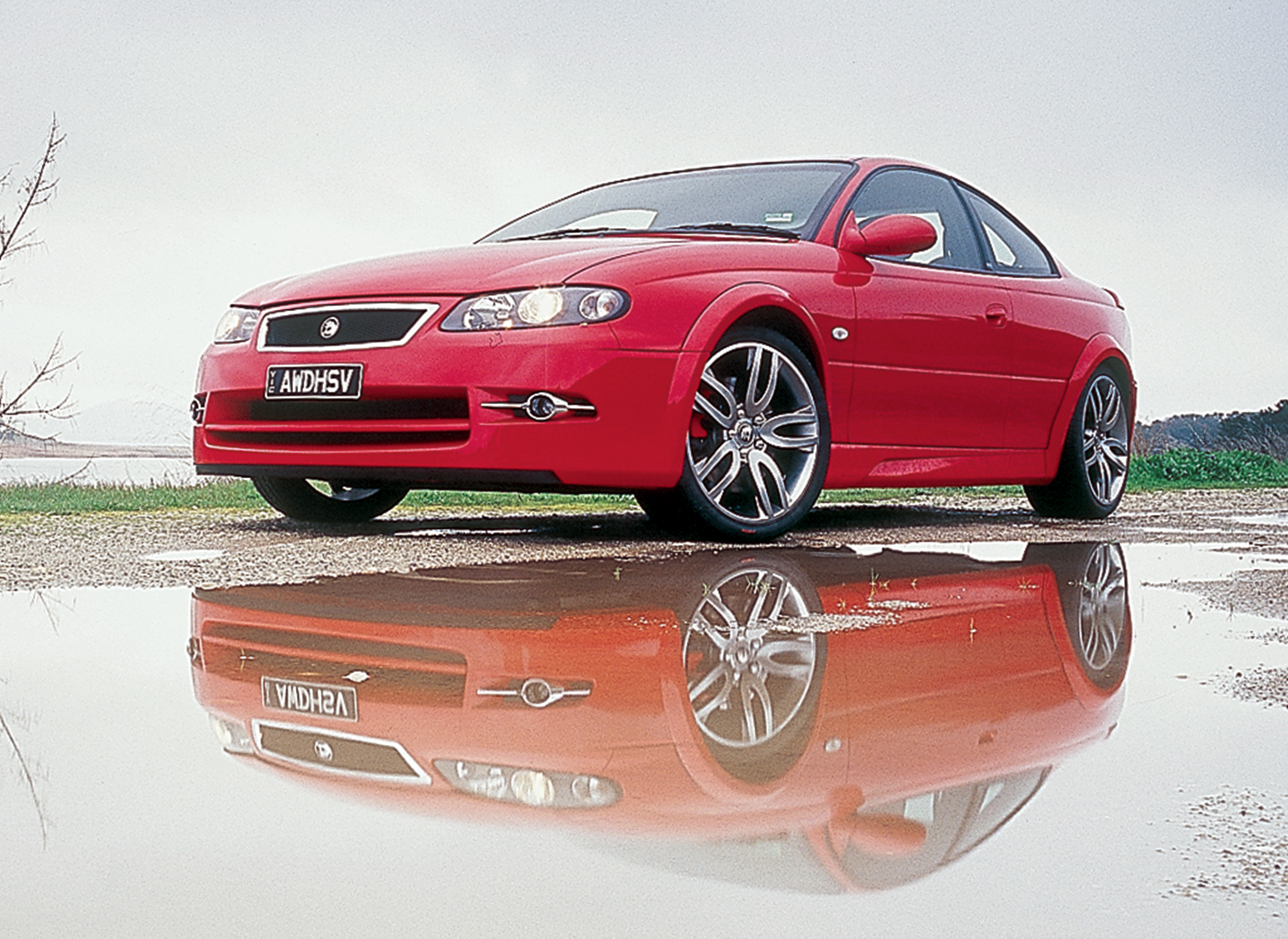
Finished in Sting Red – the lairiest of the three colours available (silver and black being the others), this is one interesting-looking car. Despite the tacked-on wheelarch flares, necessary to cover the 60mm track increase of its all-wheel-drive system, the Coupe 4 presents a more subtle styling approach for the brand. With its chrome grille surround, and using sharper headlights from the Pontiac GTO (also due on the upcoming VZ Monaro), its front end’s flavour is more European than any previous HSV.
“The plan was to test the Coupe 4’s grip on the icy roads of the Victorian snow fields”
This is a deliberate approach, as HSV brass sees the Coupe 4 lining up with Senator and Grange as an exec-express, rather than with its ClubSport R8 and GTS as a boy-racer.
The Coupe 4’s flares dominate the profile of the car and, if anything, make its already enormous 19-inch wheels (a brand new and exclusive design) look even bigger. Like all 19-inch-equipped HSVs, this one wears Pirelli rubber, but in a first for the company, the wheel and tyres are different widths front and rear.
Its front flares hide 19×8.0-inch rims wrapped in 245/35 ZR19 Italian boots. Under the rump, the wheels step out an inch in width and the rubber stretches the tape measure to 255/35 ZR19 – that’s the widest rubber to be seen on a standard Aussie performance car!
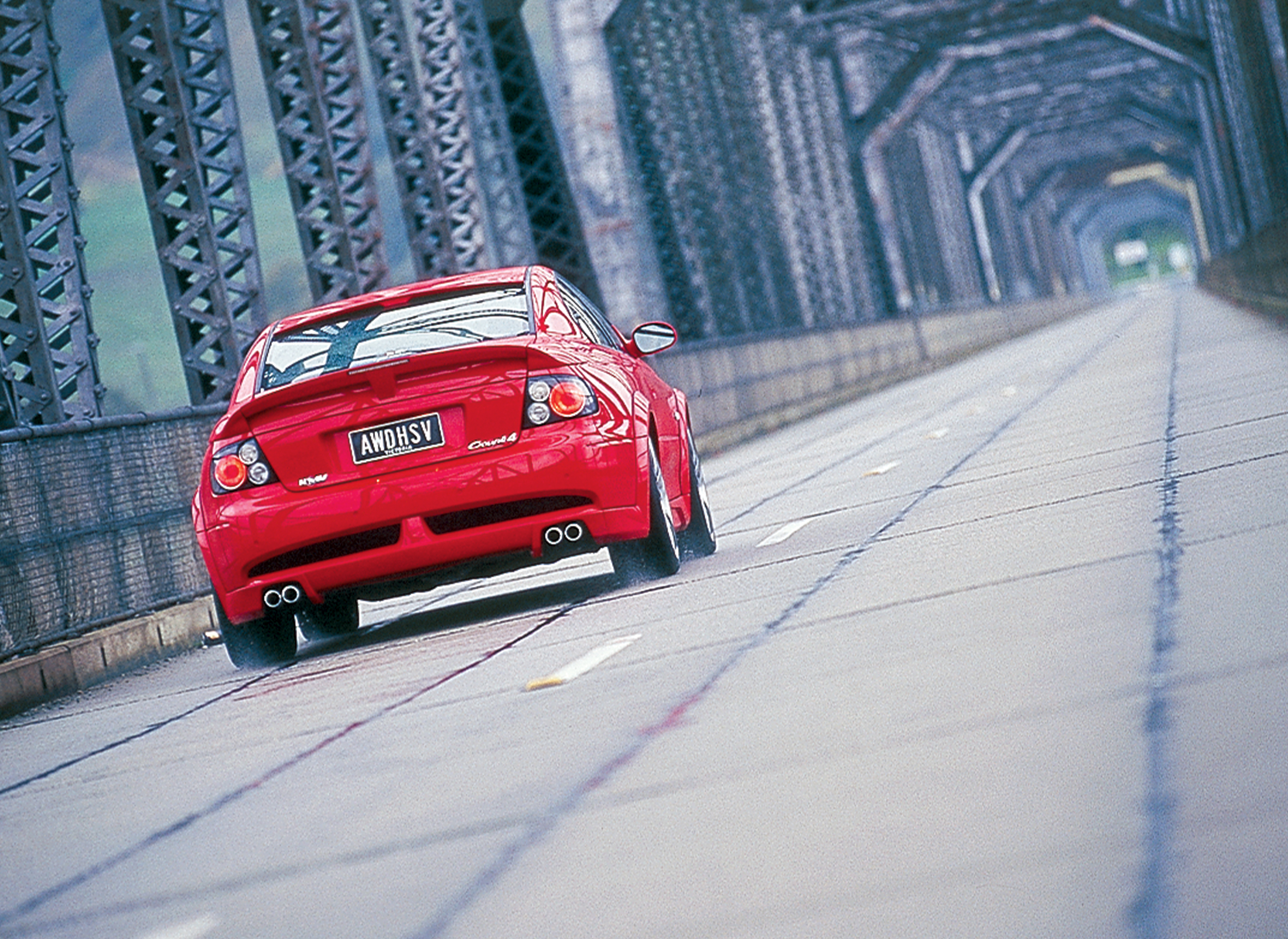
Throwing our gear in the boot, including the usual pile of photographic gear, reveals the enormous reduction in boot space brought about by relocating the fuel tank behind the Coupe 4’s rear seats. The move, first seen on the US-bound batch of GTOs, allows for the fitment of twin exhausts all the way through. It also shifts the fuel filler to higher on the driver-side rear guard.
Firing up the Coupe 4, there’s that familiar Gen III rumble, but its twin pipes give it more bass and an added dimension to its wall of noise as revs rise.
With 270kW at 5700rpm and 470Nm at 4000 revs, however, the Coupe 4 drops 15kW and 35Nm on a ClubSport and doesn’t rev as high in the process. Clearing the extra doings of its all-wheel-drive system necessitates the narrower header pipes which bring about those smaller numbers.
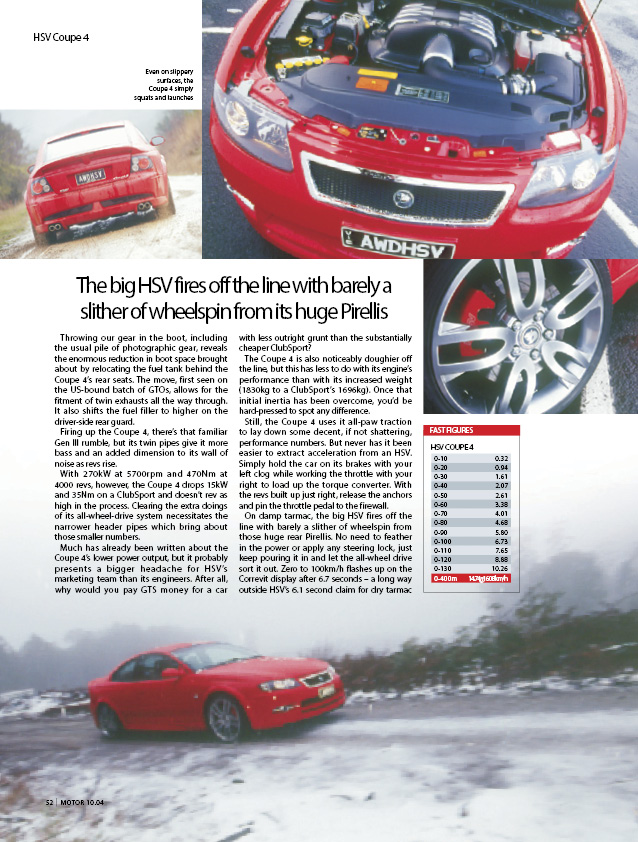
Much has already been written about the Coupe 4’s lower power output, but it probably presents a bigger headache for HSV’s marketing team than its engineers. After all, why would you pay GTS money for a car with less outright grunt than the substantially cheaper ClubSport?
The Coupe 4 is also noticeably doughier off the line, but this has less to do with its engine’s performance than with its increased weight (1830kg to a ClubSport’s 1696kg). Once that initial inertia has been overcome, you’d be hard-pressed to spot any difference.
Still, the Coupe 4 uses it all-paw traction to lay down some decent, if not shattering, performance numbers. But never has it been easier to extract acceleration from an HSV. Simply hold the car on its brakes with your left clog while working the throttle with your right to load up the torque converter. With the revs built up just right, release the anchors and pin the throttle pedal to the firewall.
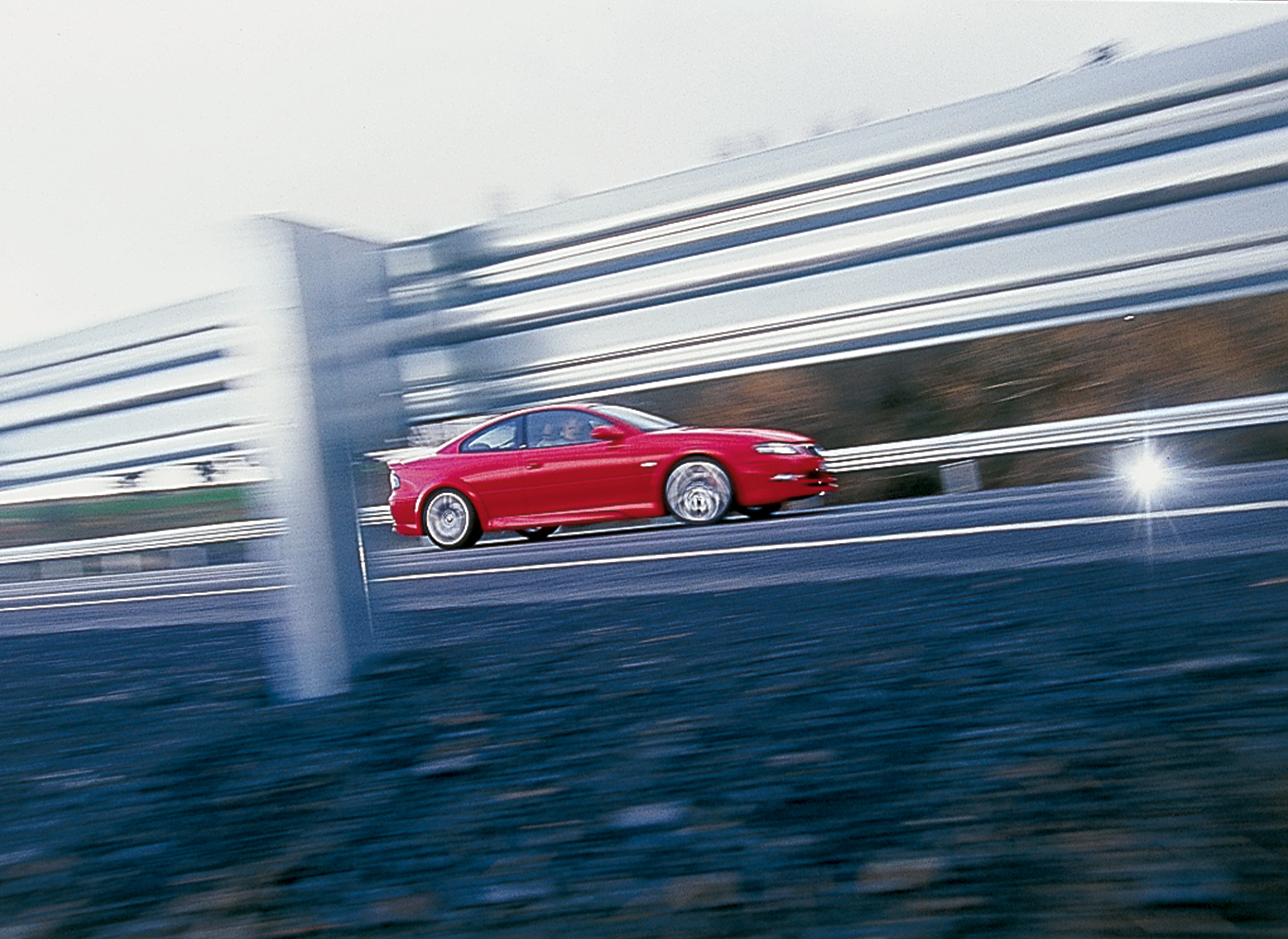
On damp tarmac, the big HSV fires off the line with barely a slither of wheelspin from those huge rear Pirellis. No need to feather in the power or apply any steering lock, just keep pouring it in and let the all-wheel drive sort it out.
Zero to 100km/h flashes up on the Correvit display after 6.7 seconds – a long way outside HSV’s 6.1 second claim for dry tarmac – and even falls behind the 6.6 boast on dirt. But, before you start howling like buggery and firing off your emails, the rain-slicked surface actually helped prevent its engine bogging down off the line.
Over the rest of the quarter mile, the HSV made up a little, but a 14.74-second time is still the best part of half a second outside the claim. In the pantheon of performance cars built locally, these times rank the Coupe 4 dead last! That’s right, it’s slower than every HSV, save the high-riding Avalanche and XUV; it gets outgunned by Commodores and Monaros, and it gets dusted by all fast Fords, including the less powerful XR6 Turbo.
The drag strip also highlights the Coupe 4’s only other major problem. After a few runs, and the subsequent big stops from a dollar sixty, its brakes quickly go south.
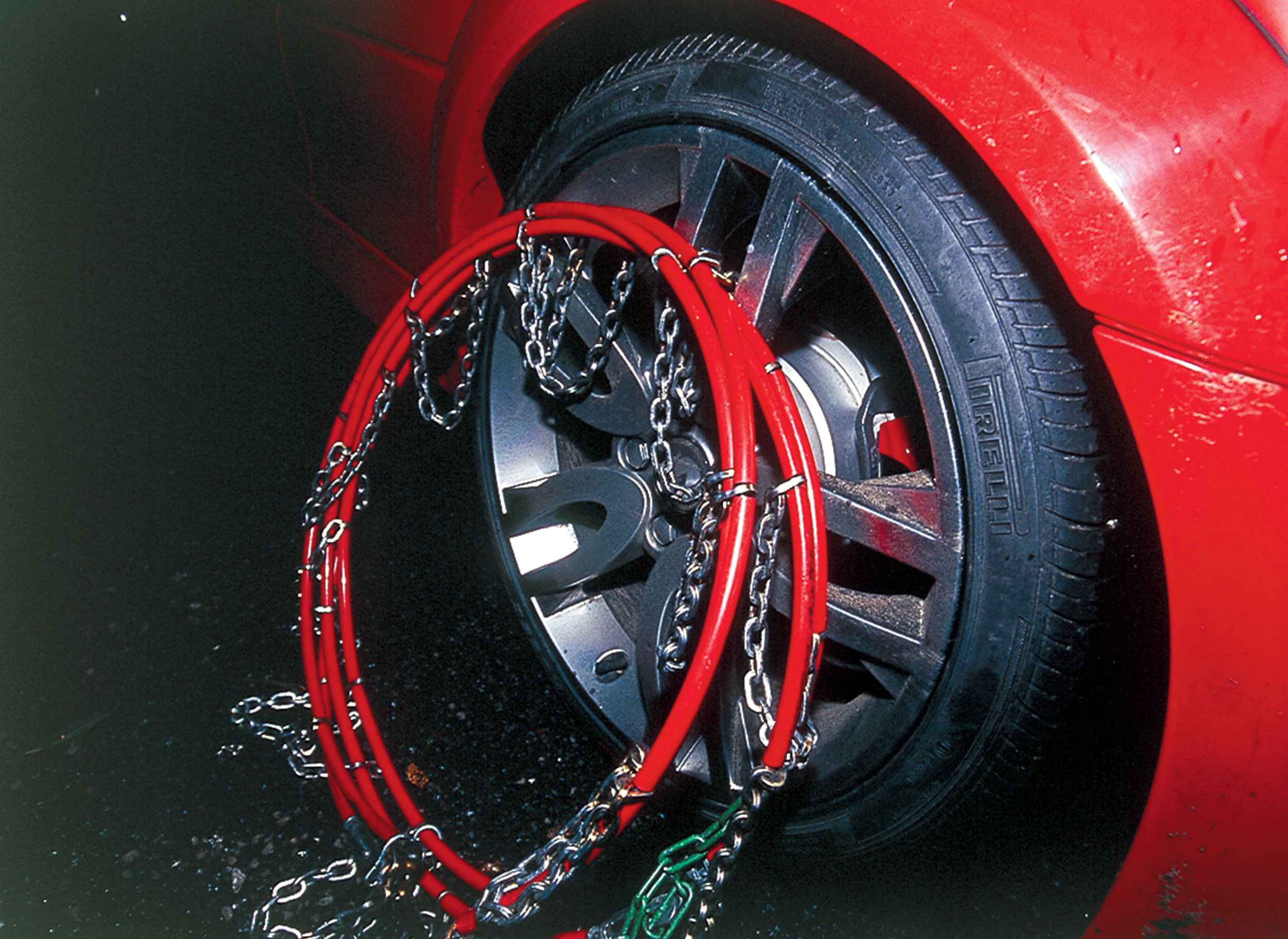
By the third stop, the pedal has gone hard, dropped an inch or two, and all feel has gone out of the window. This is not something you expect from HSV, whose range usually feature tireless brakes. But the Coupe 4 (plus Avalanche and XUV) makes do with the smallest anchors offered on any HSV.
Its slotted rotors are a still-chunky 336mm front and 315mm at the rear. But, thanks to the limited clearance available with the new front hub, its front discs are squeezed by two-piston calipers and its rears by single-piston clamps. On paper, that still sounds ok, but with over 1800kg to haul down, the brakes soon protest.
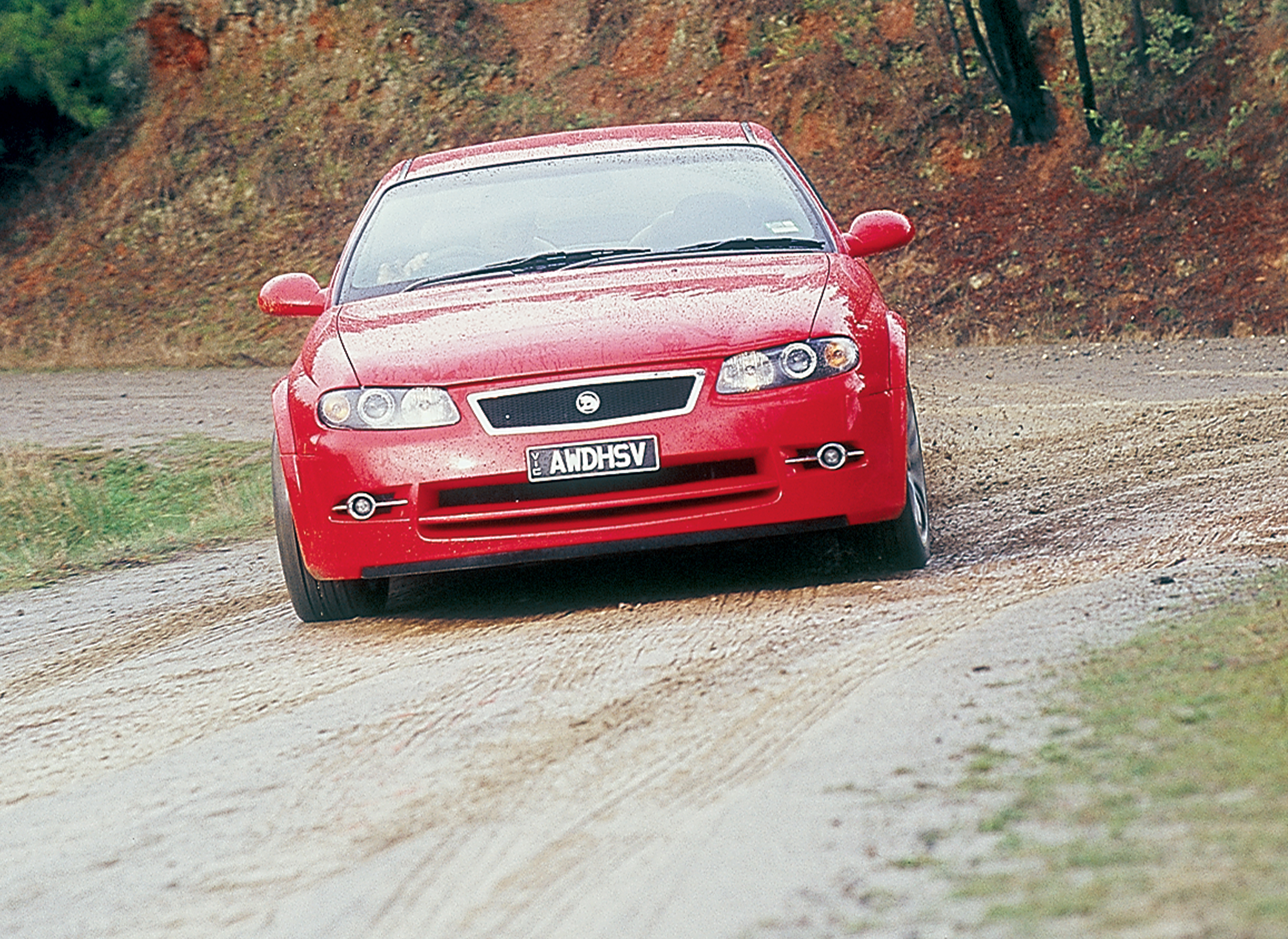
For all this negativity, however, if ever a car can prove that straight-line performance is only one dimension to a car’s overall score, it’s the Coupe 4. On the country road run toward Mansfield at the base of Mount Buller, the rain started to bucket down, but there was never a fear of unprovoked oversteer through the tight, second-gear corners.
Those big-foot Pirellis cut through the standing water, and deliver plenty of grip at either end. The push understeer you usually find in all-wheel-drive cars, especially heavy ones like the Coupe 4, is all but absent. And with a 38:62 torque split there’s enough rear-drive bias to pedal around the understeer if and when it arrives.
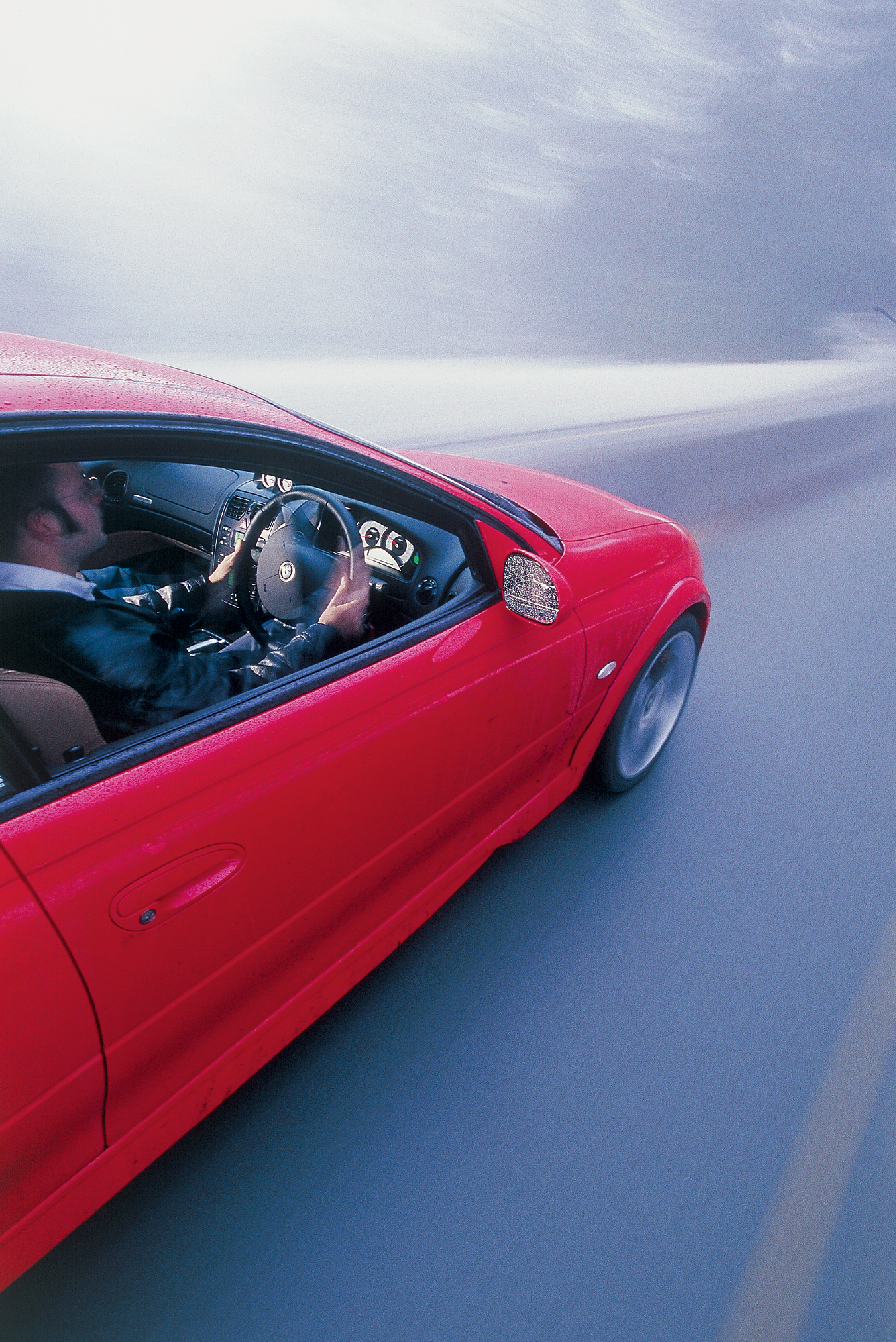
Up the wet, but not icy, slopes to the top of Mount Buller, the Coupe 4 simply carved its chosen line. Admittedly, the two-wheel drives were still getting through without chains, but their drivers lacked the confidence to use more than a sniff of throttle.
The Coupe 4, however, could use full power into and out of corners. With chunky linear ratio steering (also shared with the 2004 GTS) still feeding plenty of info, despite the often dulling effect of AWD, the HSV gives you so many options.
You can drive it slow-in, fast out, and even have a sniff of oversteer on exit – and if you’re having a real go on low-grip surfaces, you can even bring traction control into play. Or you can tip it in quick while still on the brakes and getting its tail involved a bit earlier. Or you can just be smooth and pick up the throttle nice and early.
Whichever option you choose, the HSV Coupe 4 is a devastatingly quick way to cover ground, especially in the wet.
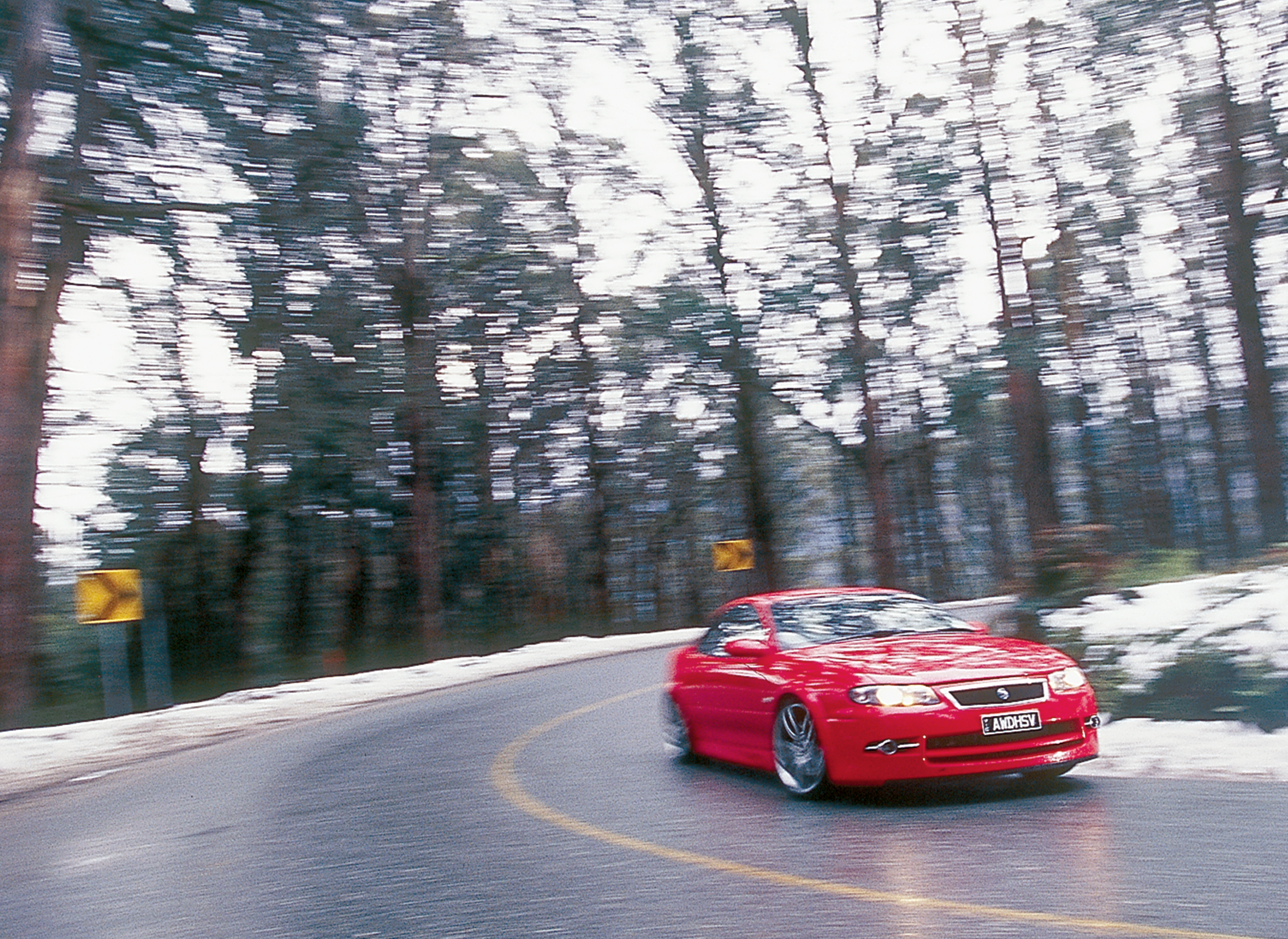
Only the constant hunting of its four-speed auto dampens the fun on the quick twisties. Best to take manual control and shift between second and third yourself.
On day two, after our little ‘incident’ (see break-out on page 55), we joined the Hume after some more cross-country running.
Despite feeling stiffer in the rear than a Clubbie or GTS, the Coupe 4’s ride quality over typical Aussie roads is superb. There’s an initial compliance that you don’t expect with a car running 19-inch rubber, and vertical travel is well-controlled, so the big girl never gets floaty. And that extra weight also keeps it settled over bumps.
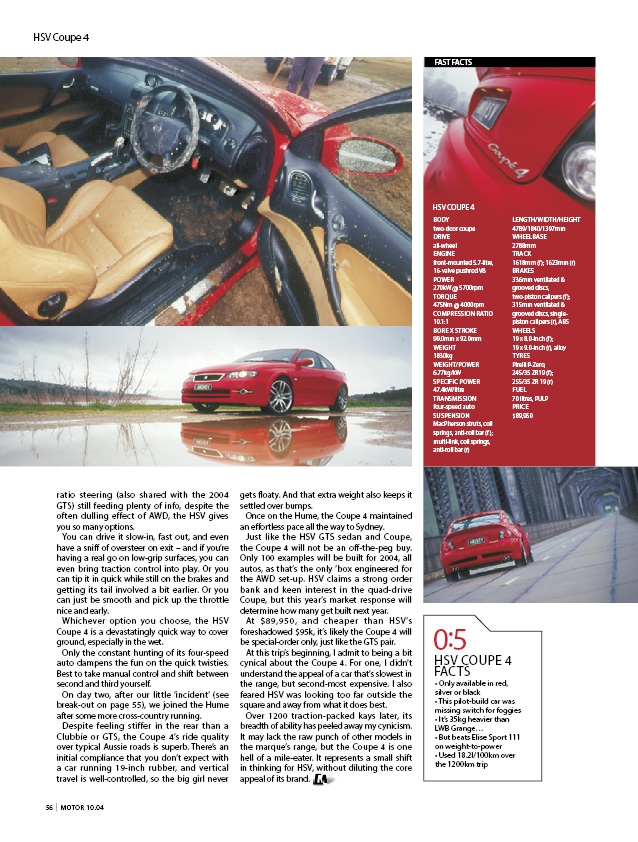
Once on the Hume, the Coupe 4 maintained an effortless pace all the way to Sydney.
Just like the HSV GTS sedan and Coupe, the Coupe 4 will not be an off-the-peg buy. Only 100 examples will be built for 2004, all autos, as that’s the only ’box engineered for the AWD set-up. HSV claims a strong order bank and keen interest in the quad-drive Coupe, but this year’s market response will determine how many get built next year.
At $89,950, and cheaper than HSV’s foreshadowed $95k, it’s likely the Coupe 4 will be special-order only, just like the GTS pair.
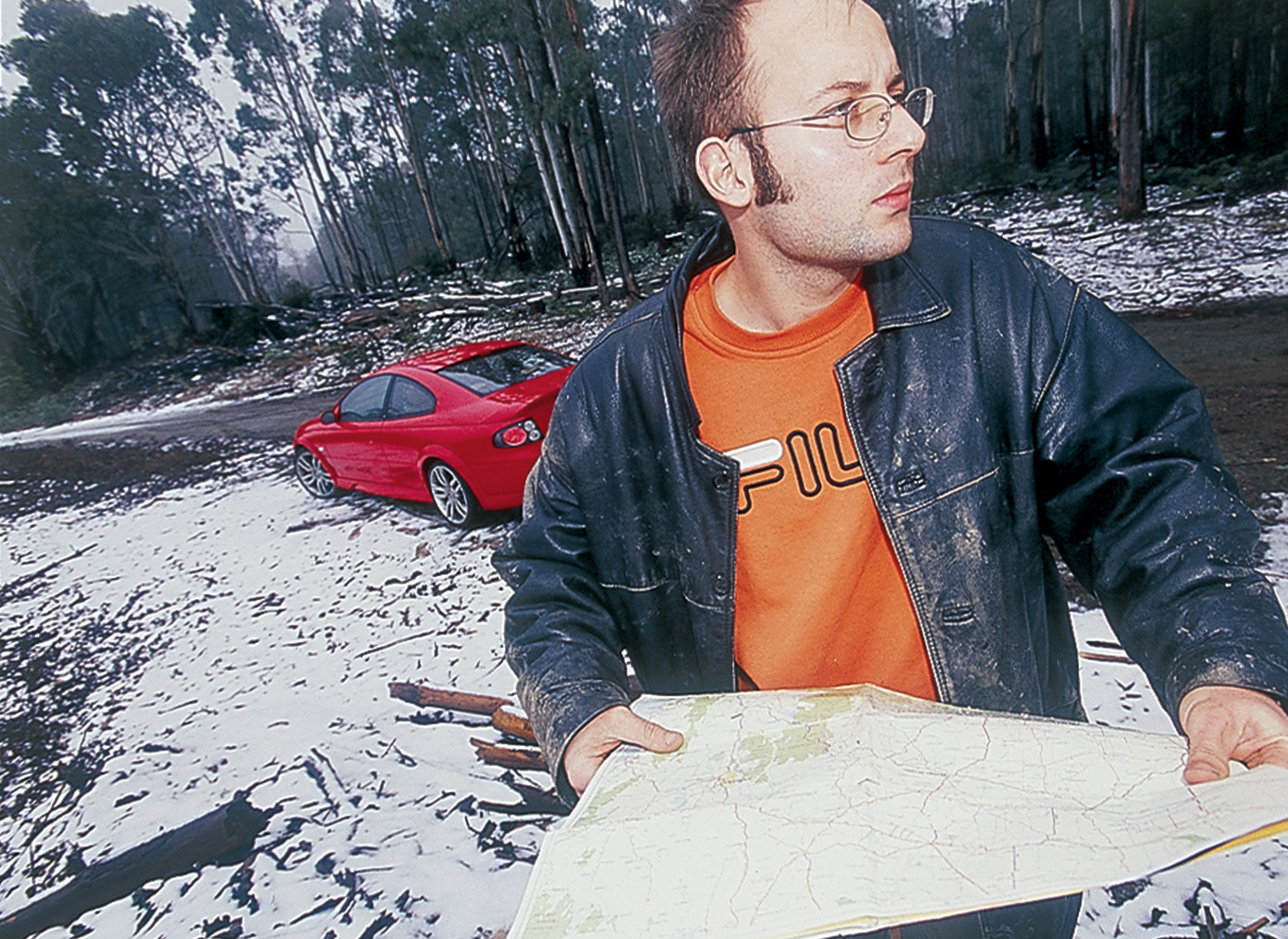
At this trip’s beginning, I admit to being a bit cynical about the Coupe 4. For one, I didn’t understand the appeal of a car that’s slowest in the range, but second-most expensive. I also feared HSV was looking too far outside the square and away from what it does best.
Over 1200 traction-packed kays later, its breadth of ability has peeled away my cynicism. It may lack the raw punch of other models in the marque’s range, but the Coupe 4 is one hell of a mile-eater. It represents a small shift in thinking for HSV, without diluting the core appeal of its brand.
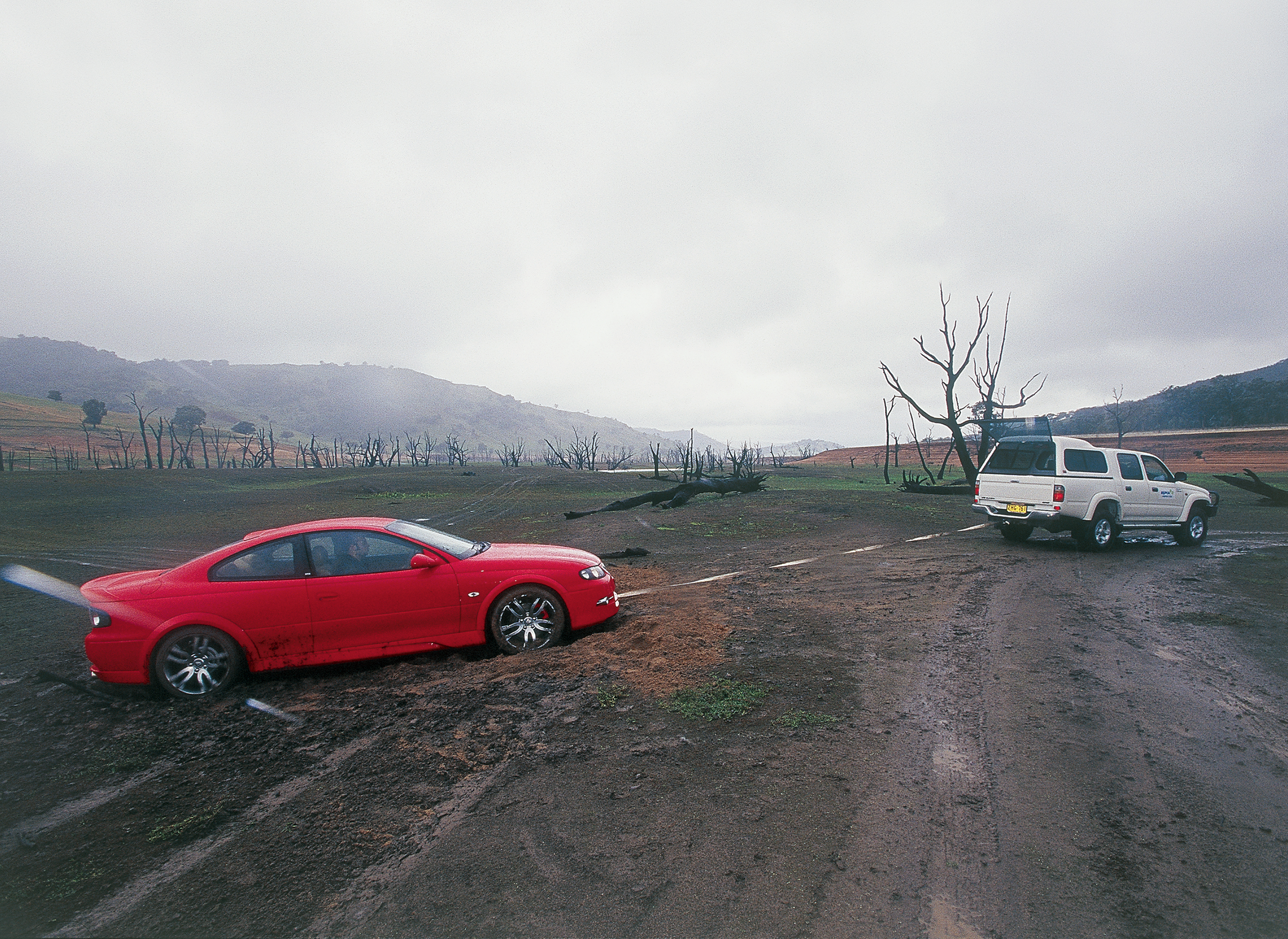
RSPCA Rescues big dumb animals
We’d slithered our way to the very edge of the Murray River for what was going to be a killer static shot (see main image on page 50), and now we sat cocooned in the tan leather cockpit of the HSV Coupe 4 waiting for the teeming rain to ease long enough for snapper Brunelli to brave the elements and fire off a few frames.
With the rain easing to torrential, we got our shot and attempted to ease 270kW and 1800kg out of the quagmire.
With profanities a-plenty and a whole load of wheelspin, we were on our way, only for Brunelli to change the plan. Ever keen for the great shot, Cristian suggested I back it up and snap the Coupe 4 into “a rally drift.” Why not?
With no forward momentum and not much in the way of sideways action, the big coupe ground to a halt in the swamp and promptly sank to its sills. Successive half-arsed attempts to get the Coupe 4 out only succeeded in burying it further.
Admitting defeat, we staggered to the main road through the blinding rain and waited for help to drive by, only for the first car to swerve onto the wrong side of the road to avoid our abject pleas for assistance.
Thankfully, Lionel Smith from the local RSPCA stopped soon after and took pity on us. He’d already rescued an injured joey that morning, so saving two further bedraggled animals was all in day’s work for Lionel. Even so, his 4X4 HiLux struggled on the sticky mud.
From a tenth-scale remote control Ford works rally car to a Garrett PowerMax replacement snail, here are ten car life products we’ve found this month that will be going in team MOTOR’s letter to Santa.
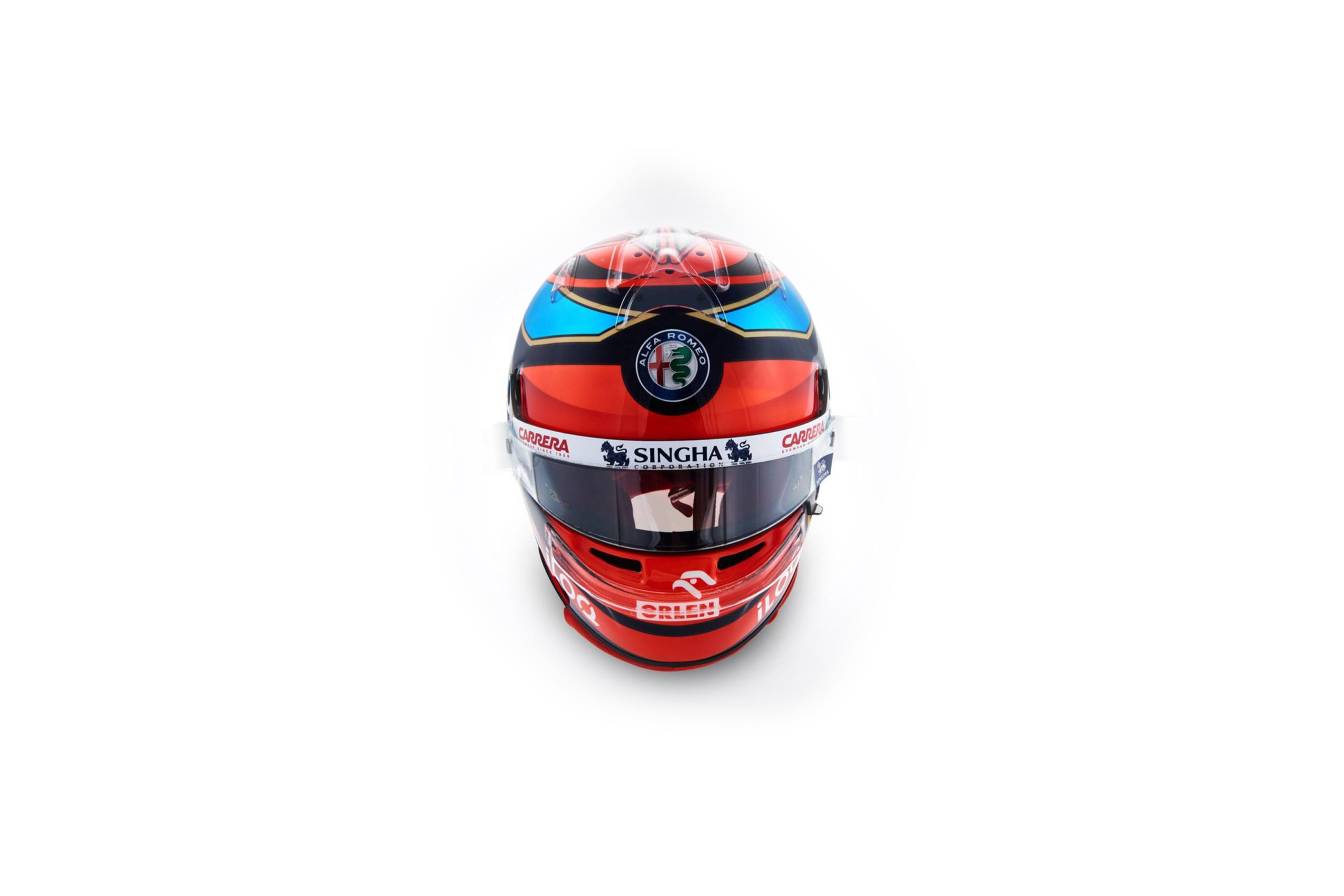
Kimi Räikkönen 2021 1:2 replica helmet – $235 – f1authentics.com
Remember the final season of the Iceman and celebrate Kimi’s 20-year career with this desktop replica. It’s half scale, so don’t even try…
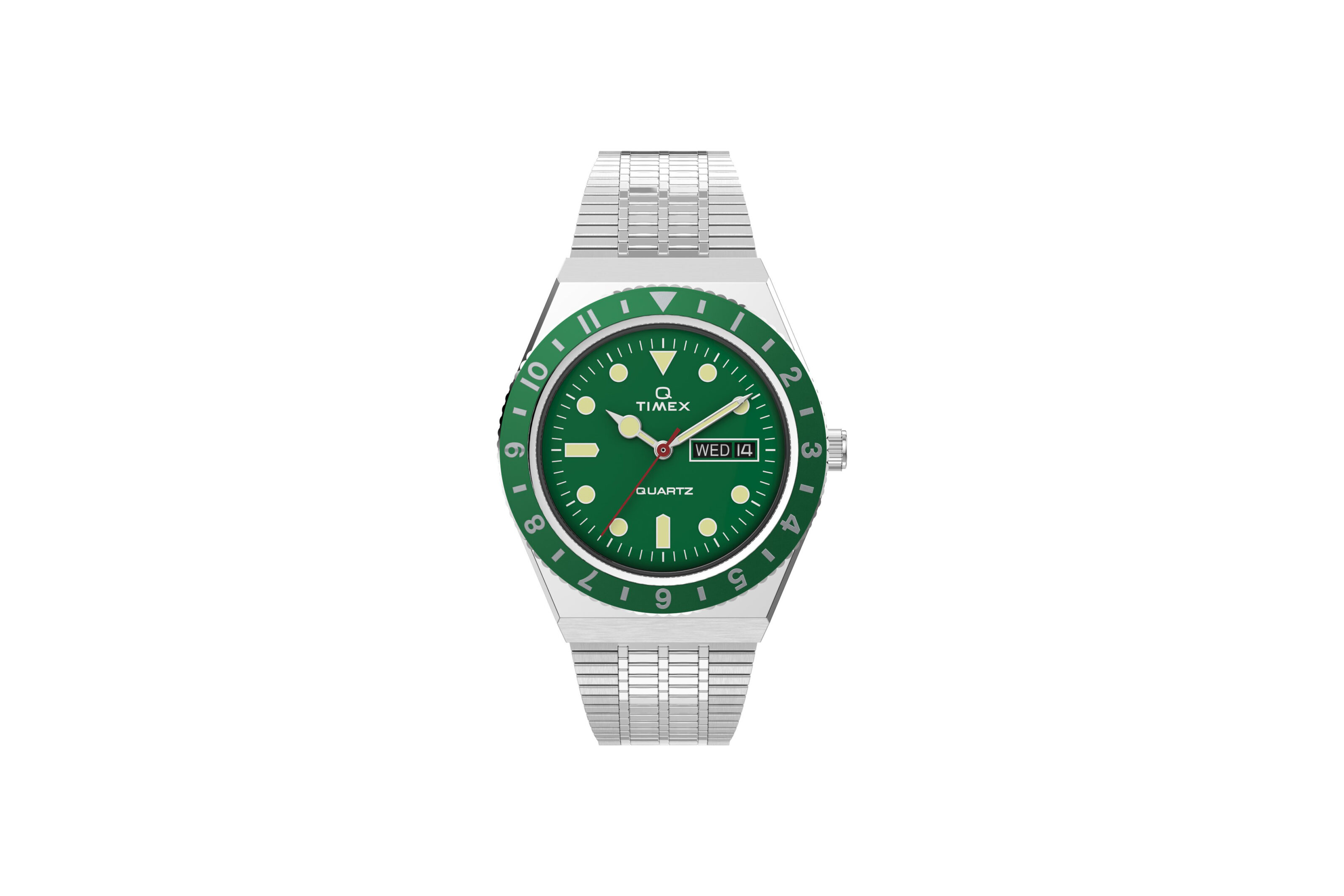
Timex Q Reissue Green – $320 – timex.com
Timex adds new colours to its popular and stylish Quartz-powered Q Reissue. The green is our pick, doing its best impression of a ‘Hulk’ Rolex Submariner just for 1% of the market value.
205 T16 hoodie – $163 – periodcorrect.com
SoCal outfitter’s recent collection taps Peugeot’s Group B 205 T16, which took the fight to the Audi quattro in 1984 and set the template for the category’s golden era

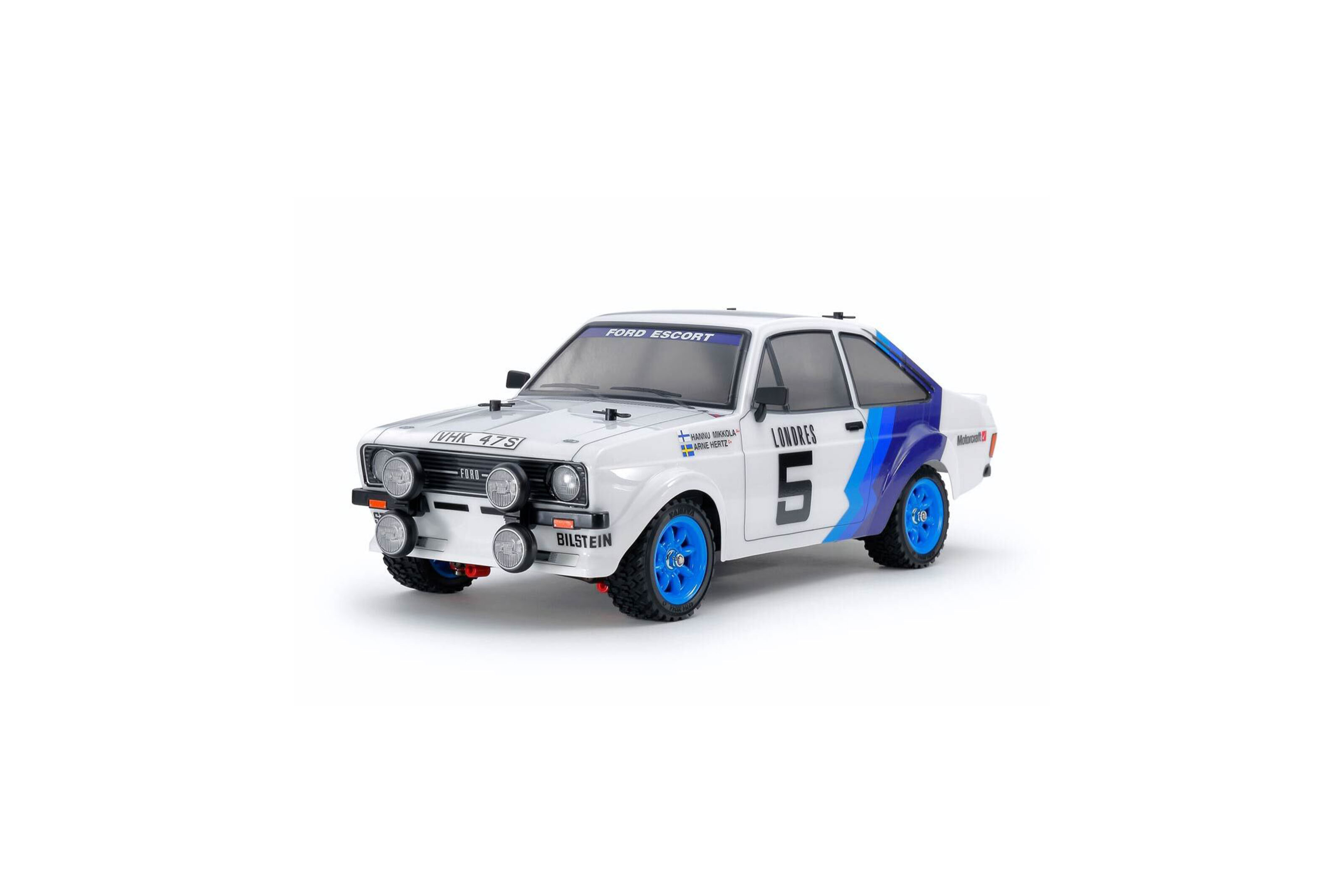
Tamiya 1:10 Ford Escort MK.II Rally – $290 – metrohobbies.com.au
Reflecting Hannu Mikkola’s Mk.II ‘Eskie’ from the early 1979 season, this 1:10-scale Tamiya R/C car is equally at home on the tarmac or dirt
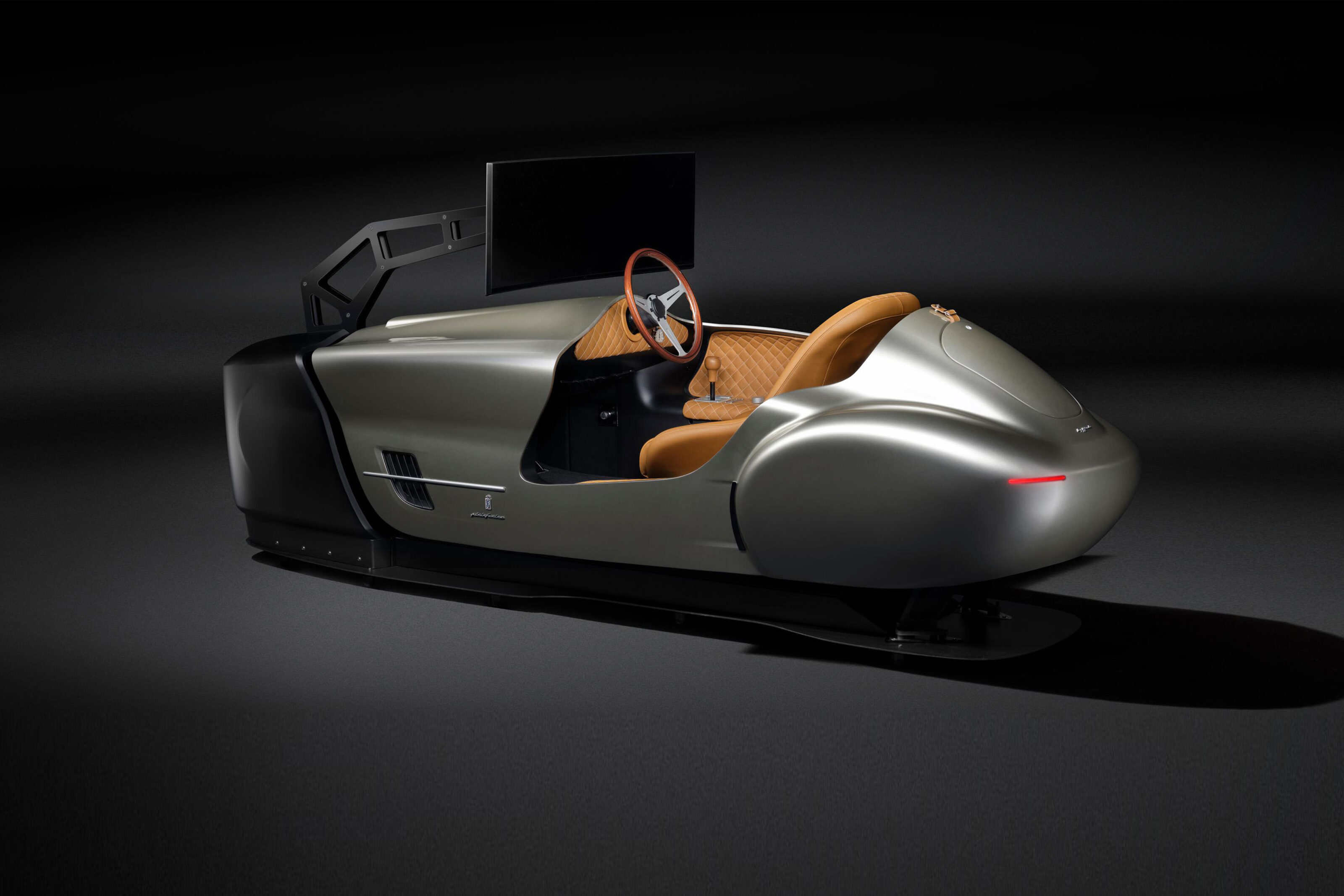
TCCT eClassic Simulator – $220,000 – eclassic.com
Fancy a driving simulator, built by Pininfarina and inspired by its stunning 1946 202 Cisitalia? Liechtenstein firm The Classic Car Trust has commissioned nine of these astounding rigs and the first completed examples was recently auctioned by RM Sothebys earlier this month. The upper estimate stood at AU$220k, however the winning bid amounted to just over AU$280,000. Yikes!
Track Pack
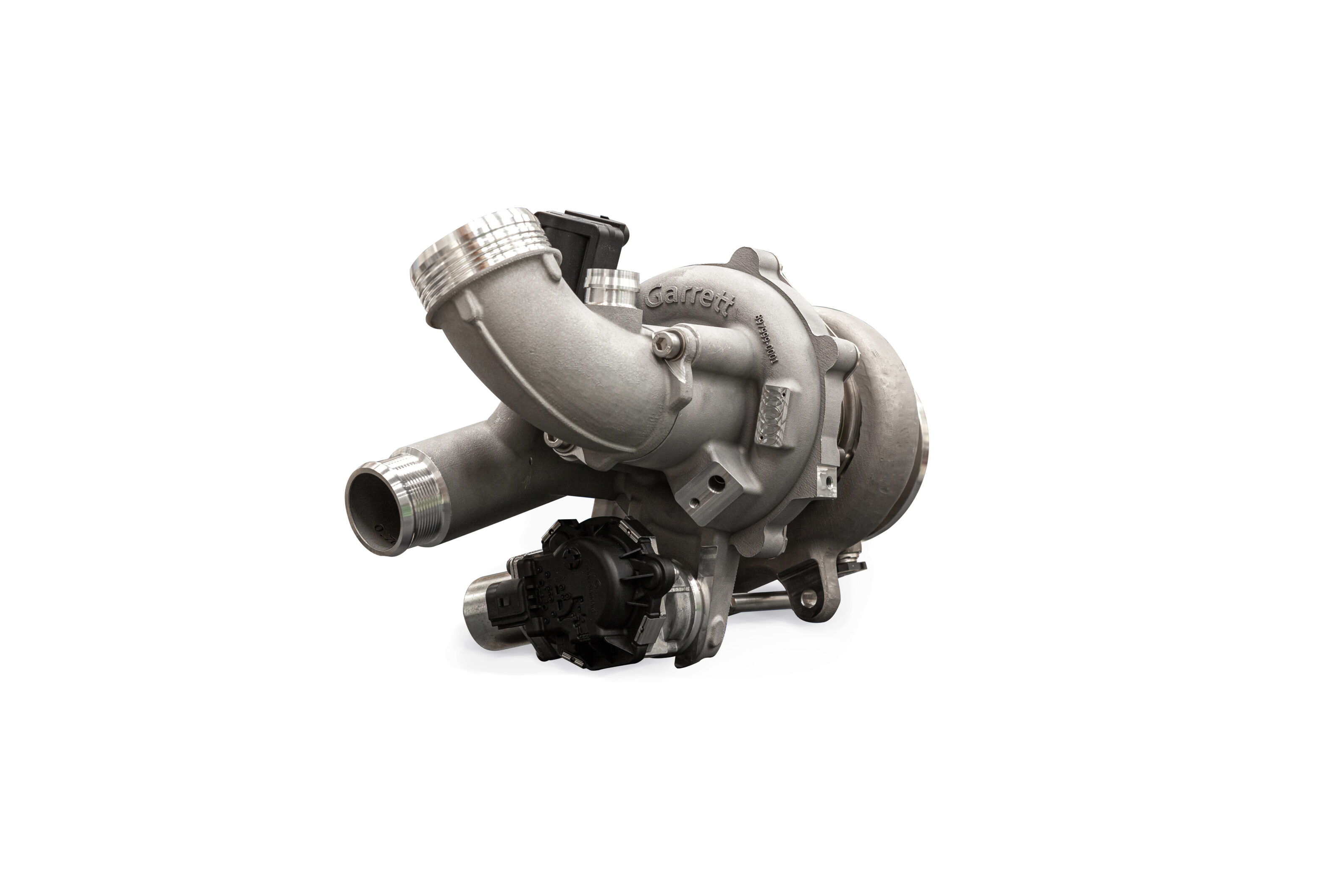
Garrett PowerMax VW/Audi 2.0 TSI turbocharger – $2050 – gcg.com.au
Direct OEM-fit replacement turbochargers from Garrett suit a range of VW-group MK7 2.0 TSI platforms and deliver increased airflow, efficiency and performance. Stage 1 is capable of a stout 362kW
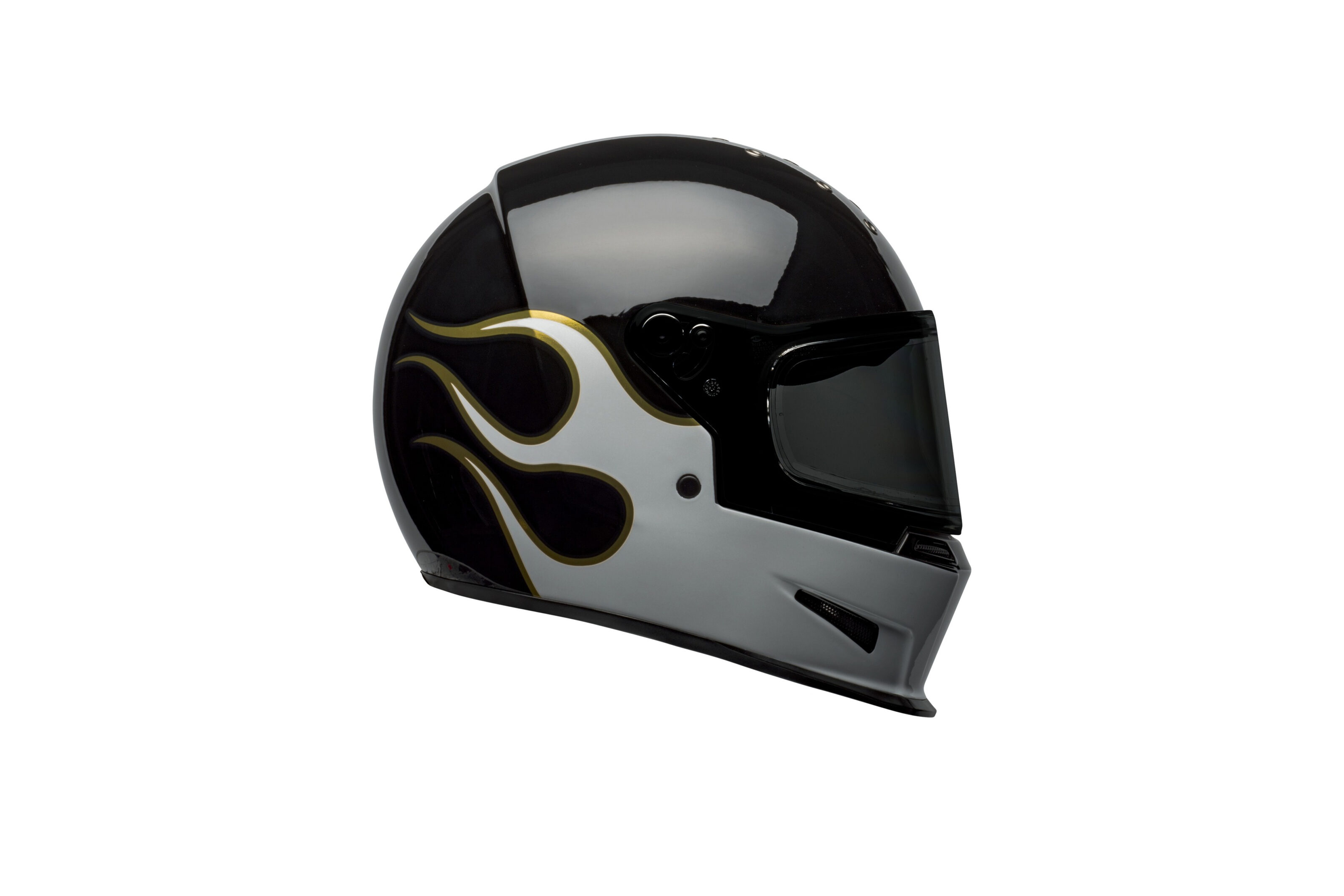
Bell Eliminator ‘Stockwell’ – $699 – mcas.com.au
Limited edition Eliminator helmet by Bell has been designed by custom motorcycle legend Charlie Stockwell. DOT-certified, suitable for grassroots use
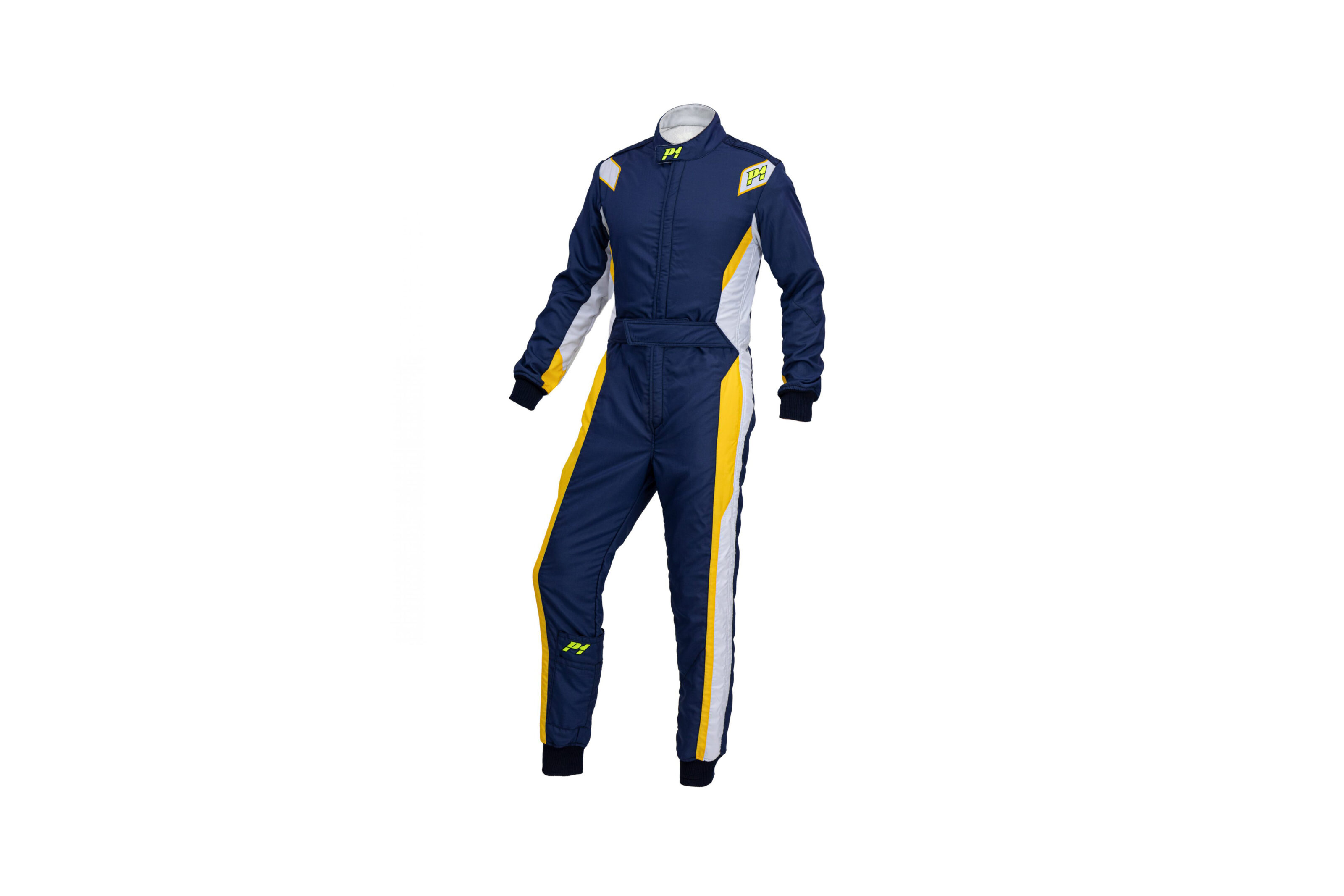
P1 Lap FIA Suit – $950 – performanceracegear.com.au
P1’s ‘LAP’ suit is a popular mid-range offering. Started by the original founder of Sparco, production is based in Italy with the latest FIA 8856-2018 certification
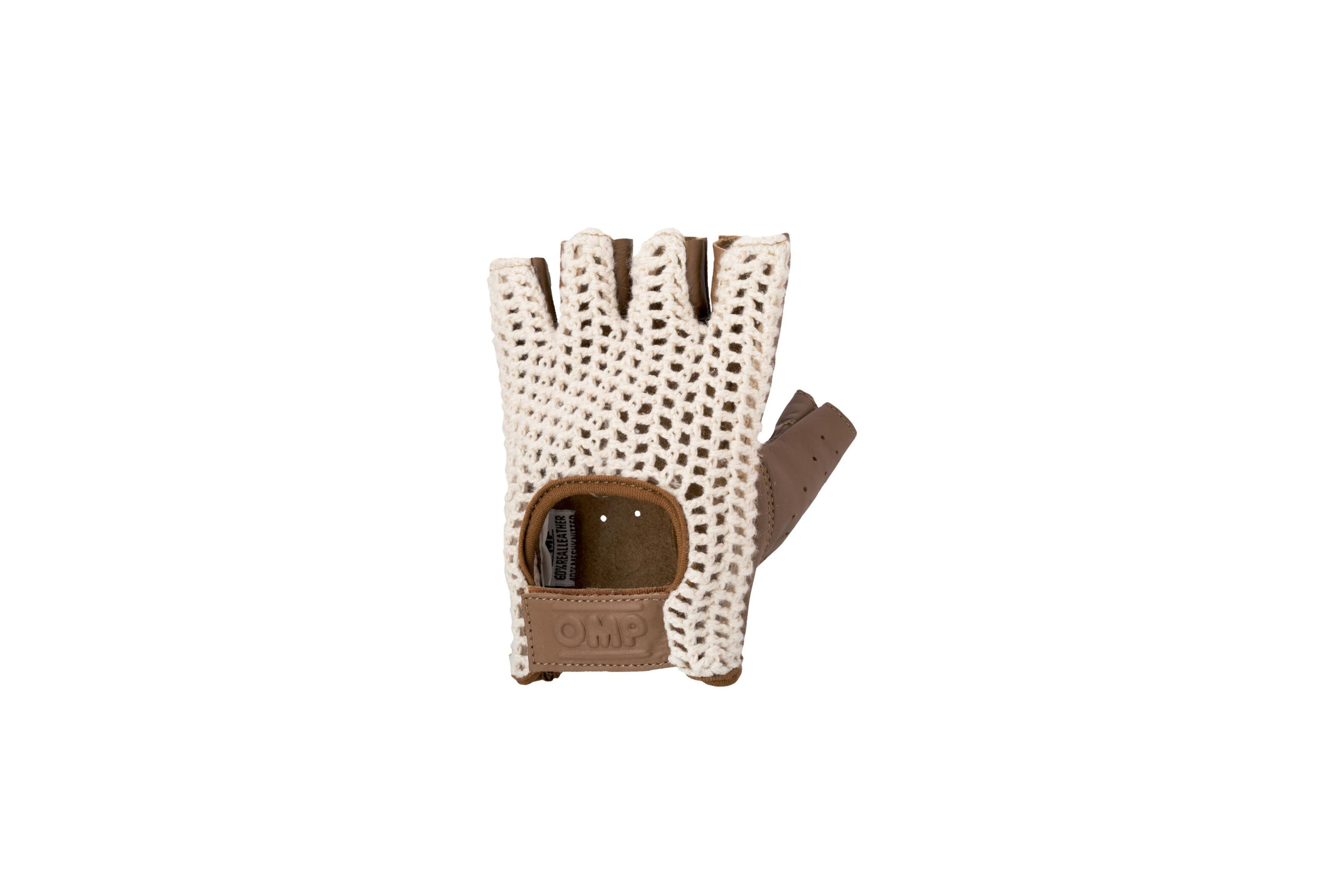
OMP Tazio Vintage Driving Gloves – $65 – autosport.com.au
These vintage-looking OMP mits won’t be as protective as full gloves, but might get you that much closer to feeling as cool as Paul Newman
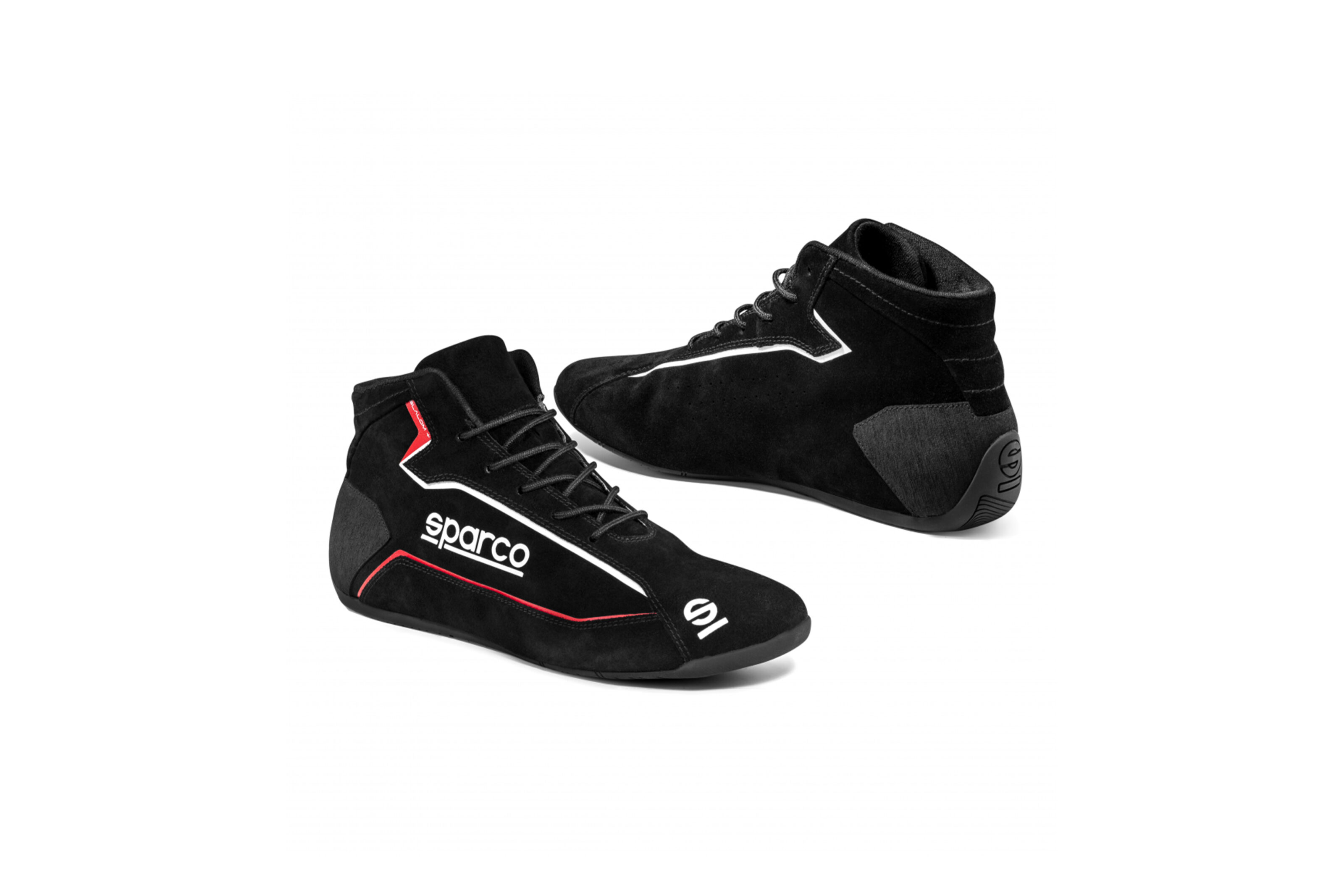
Sparco ‘Slalom+’ Shoe 2020 – $235 – racerindustries.com.au
Suede Sparco boots look the goods, and also feature varying ‘grip zones’ on the sole, reinforced toe and leather heel to maximise feel
UPDATE, July 2022: Australian pricing announced for new Skoda Fabia
Local pricing and features for the new-generation 2023 Skoda Fabia have now been revealed. Get all the details at the link below.
The story to here
Cars like the Skoda Fabia do not make up a large part of the ‘new car traffic’ we see on the road day-to-day. Specifically, Skoda has sold just 625 of these so far in 2021, which means the Fabia holds a 0.085 per cent market share of the 732,828 cars Australians have bought.
But, for Skoda buyers, that seems to be part of the appeal.
So, at the end of the current-generation Skoda Fabia’s lifespan, is there any scope for new buyers? With a version like this, somewhat bluntly called the Run-Out Edition, there might be. I’ll save you the cricket puns, too. This version of the Fabia adds things like 16-inch alloys, a black roof, a couple more visual trim upgrades, a sportier steering wheel, and slightly stiffer suspension.
What the Fabia aims to do is, as with most models in the Skoda family, offer something a little left-of-centre to draw some (really, just some) buyers away from cars like the Kia Rio, Suzuki Swift and Toyota Yaris, or even its Volkswagen sibling, the Polo.
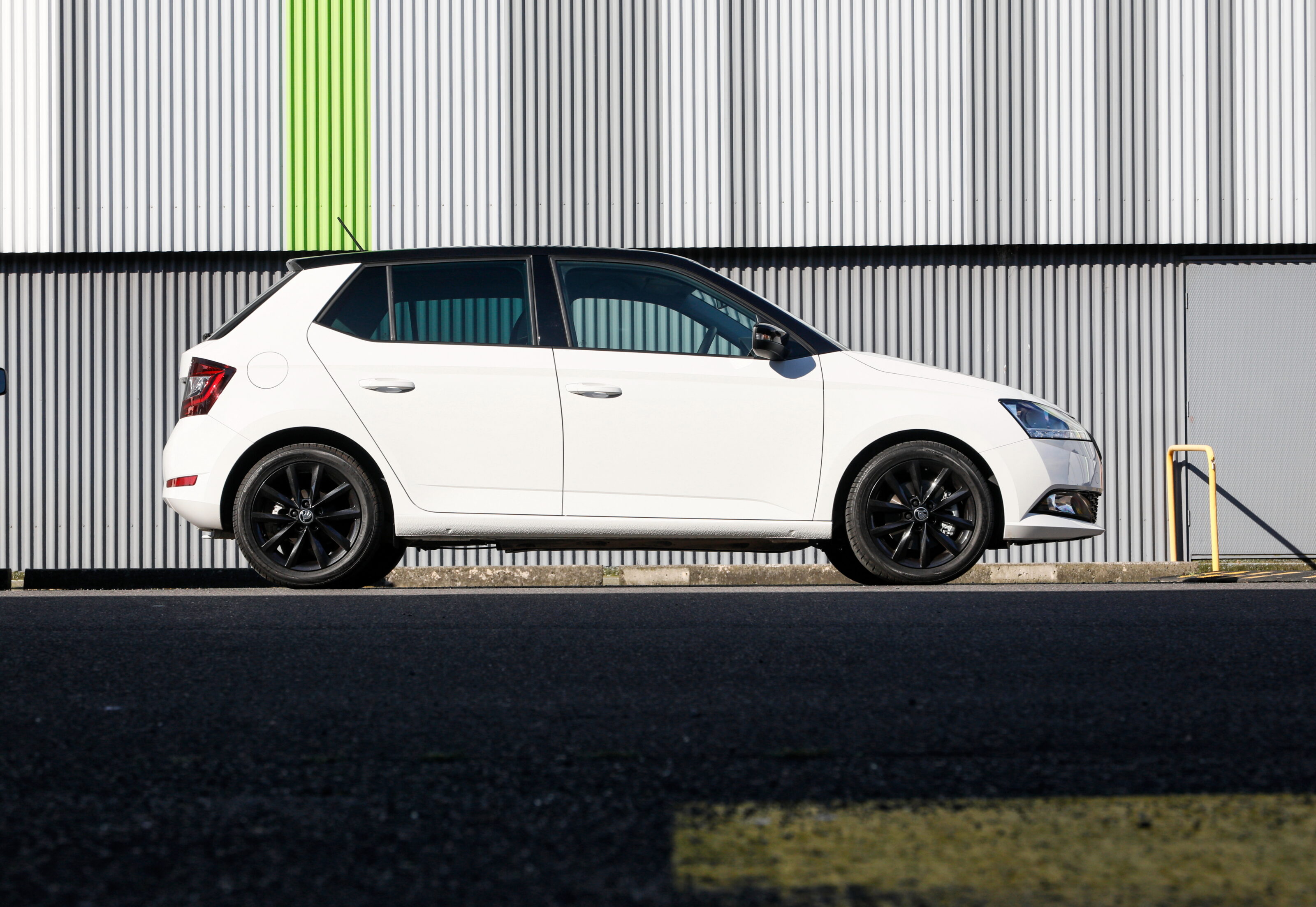
The Fabia isn’t, however, based on the current-generation VW Polo. It actually dates back to the last-generation Polo, about seven years old, but that’s not such a terrible thing when you consider this car costs a touch under $24,000 before on-roads while a Polo in similar spec adds a few thousand. Plus options.
Effectively, what a $30K Polo might get you, you can get here for around $25k drive-away.
Even the Yaris, once the king of affordable small cars, now costs roughly the same as the Fabia in its basest model, the Ascent Sport, for $23,630 + ORCs. And that doesn’t even have alloys.
Where the Skoda does fall down a little when comparing features on paper is its tech, and its safety list. Having been around for the better part of a decade means its five-star rating (from Euro NCAP) is six years old, and developments in safety and testing have since moved on.
There are also some interior aspects of the Fabia that have dated slightly, though in terms of function the critical elements are still there.
What the Fabia does have is ABS, stability control, six airbags, AEB, all the usual suspects in a modern car. It also gets tyre-pressure monitoring, post-collision braking to stop a second impact, and ISOFIX child seat anchor points on outboard rear seats with tethers.
What it doesn’t get as standard is blind-spot detection, which is part of a $3200 pack that also includes rear cross-traffic alert, plus keyless entry, LED headlights, and auto rain-sensing wipers.
There are also some interior aspects of the Fabia that have dated slightly, though in terms of function the critical elements are still there. Perhaps most notable is the centre stack, which features a small infotainment screen that looks several years old but does feature smartphone mirroring that operates smoothly and without drama. Better even than in some brand new systems. It doesn’t have its own native sat-nav, though.
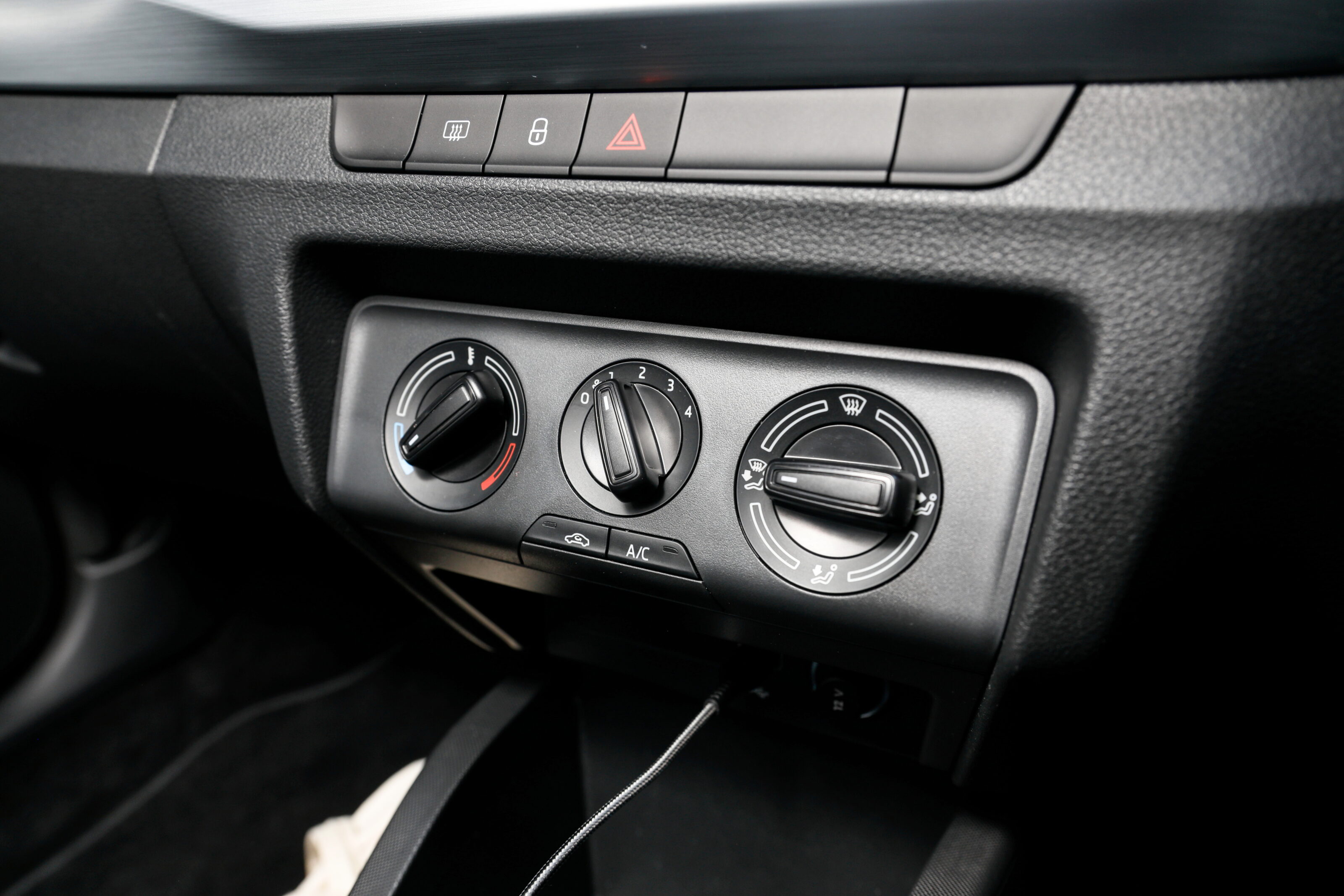
Below that, the ventilation controls look decades old, but are simple and functional with three dials for temperature, fans, and function, and a button each for recirculated air and air-conditioning. That’s all it really needs to be, right?
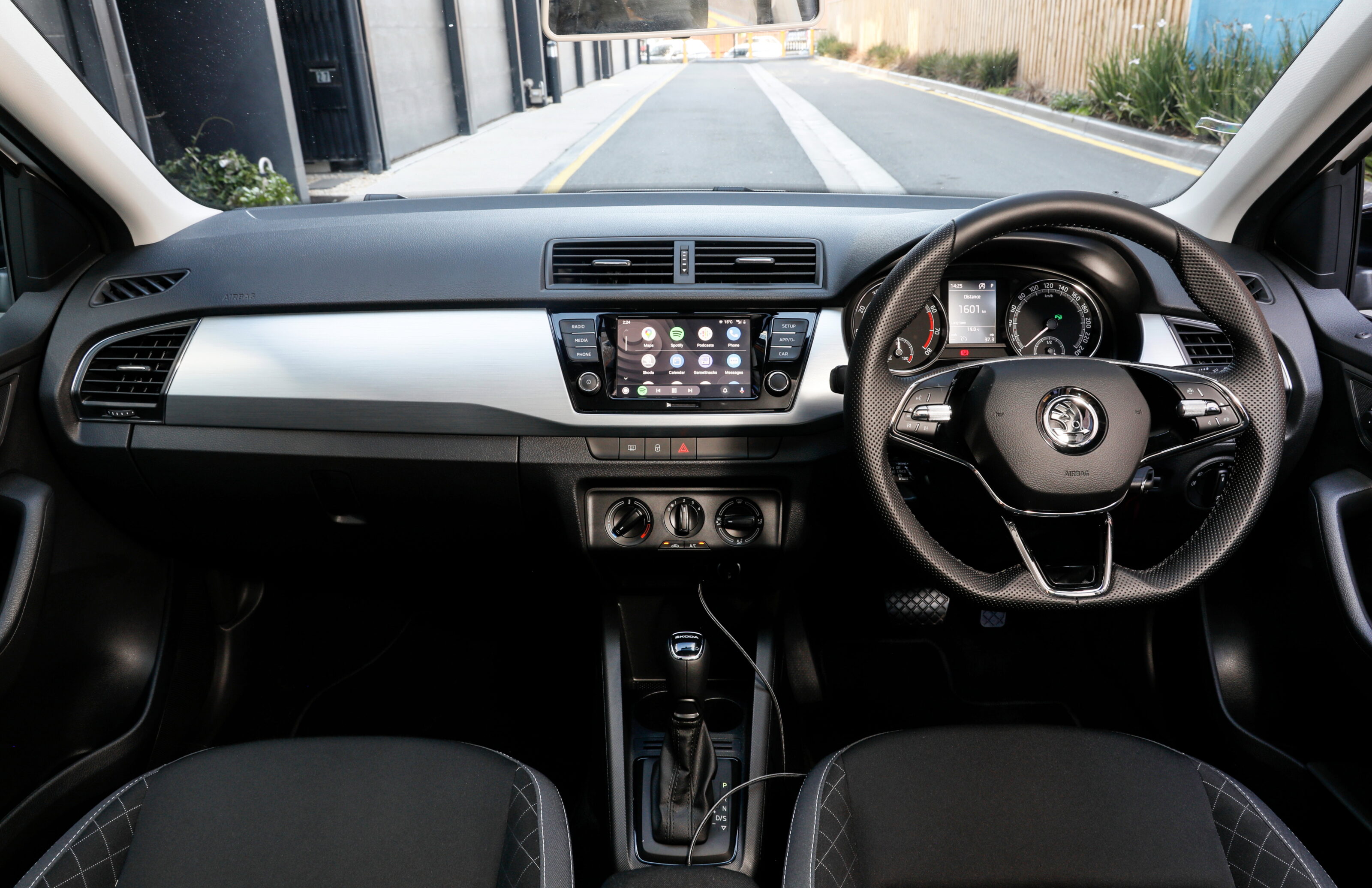
Around chest-height on the dash is some faux brushed aluminium, which is a little glary when the sun hits it, but cabin materials are otherwise unremarkable and fairly budget-focused. Plenty of black, scratchy plastic, though touch points like the centre bin lid and door armrest are softer fabric suitable for elbow-resting, and the Run-Out gets a nice, up-to-date but simple steering wheel from higher up in the Skoda Range. Seen even in the current Octavia, the sporty, flat-bottomed wheel is perfect for holding at nine-and-three and has a few simple controls that don’t distract.
Through that, the small driver display with actual analogue dials and a small digital display is visible. The display is able to bring up some key driving data and options, but not much else.
There’s a USB port, low in the centre of the dash right next to the 12-volt socket, both set back behind where a water bottle might sit if it’s in one of these cup holders. It’s a little annoying to get to them if they’re blocked.
But don’t worry, you probably won’t be able to fit a biggish bottle in those cup holders anyway. They are about the right size for takeaway coffee cups (both regular and large), or maybe a 600ml plastic. For anything else there’s the space in the doors, which probably could fit one of those chunky gym bottles.
Just behind the water bottle holders in the doors is one of the reasons Skoda’s ‘Simply Clever’ tagline is sometimes not too far off the truth, even though in this case it looks a little bit tacky. It’s a little plastic bag holder that acts as a bin, and it’s in the door just out of sight, ready to accept your garbage.
With some bass-heavy music playing, it rattled a little bit while I was driving so I took it out of the door, but the thought that people may need somewhere to put rubbish is nice.
Another one of these little Skoda features is the hidden umbrella, which most models have stowed somewhere. In this case, it’s under the front passenger seat, and it’s particularly useful in a city like Melbourne where it can rain at the drop of a hat.
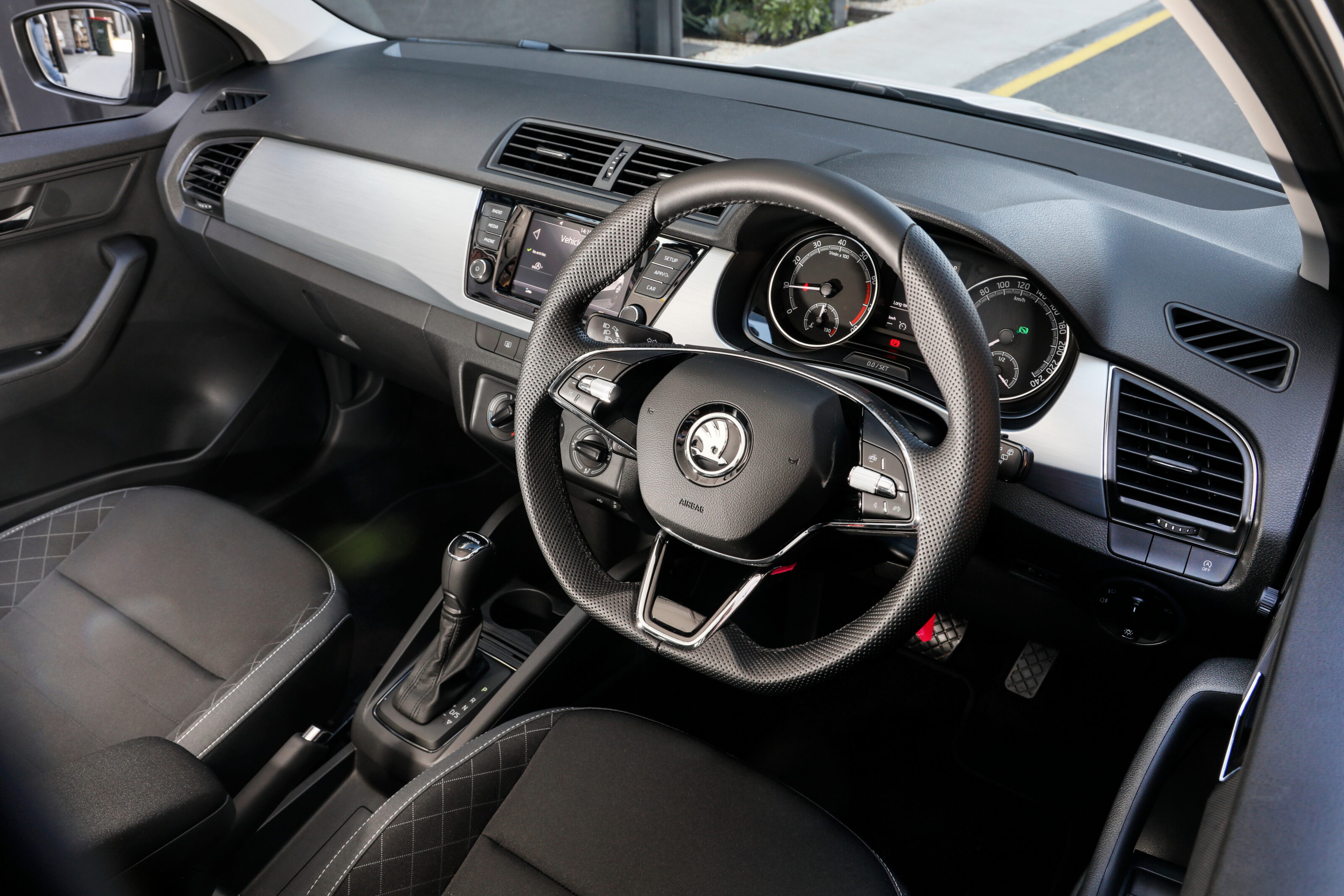
The seats, too, are comfortable and supportive, with a decent amount of bolstering that holds one firm without squishing. The adjustment is all manual and backrest adjustment is via twist-wheel that provides plenty of precision but a pain if you need to, say, completely recline the seat for photography. Hypothetically.
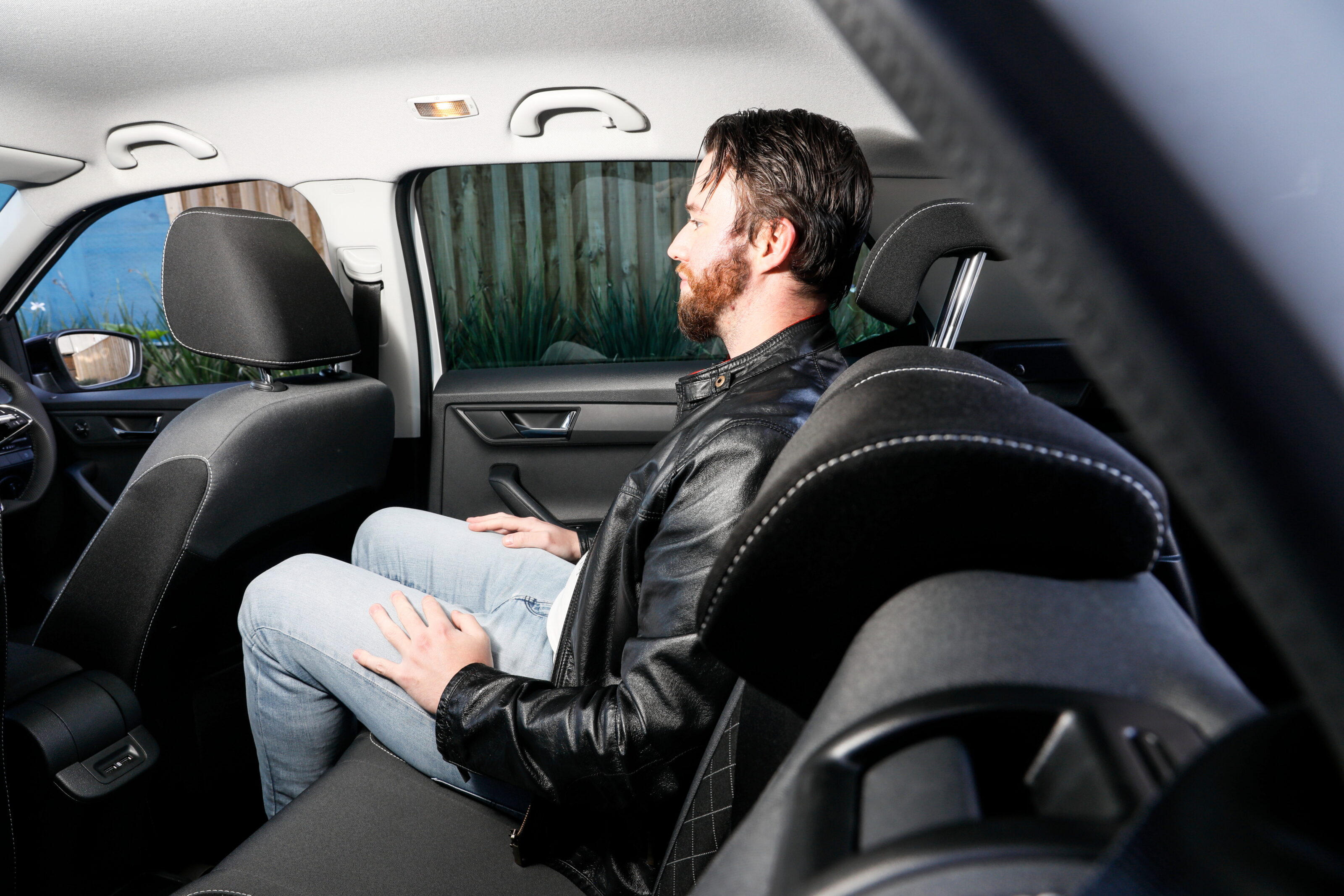
In a similar way to the front seats, the rear seats are nicely sculpted. It is pretty slim back there in terms of features and the centre armrest doesn’t even have cup holders. You do get a funny little storage slot though, down below a couple of USB ports. A document holder behind the front seat instead of netting is a welcome addition. Much like the front seats, there’s room in the door bins for big water bottles and such.
Knee room, headroom and elbow room are all fine but not incredible, but the comfort of the seat really does make this feel like a place you could sit for longer than you would expect by looking at it.
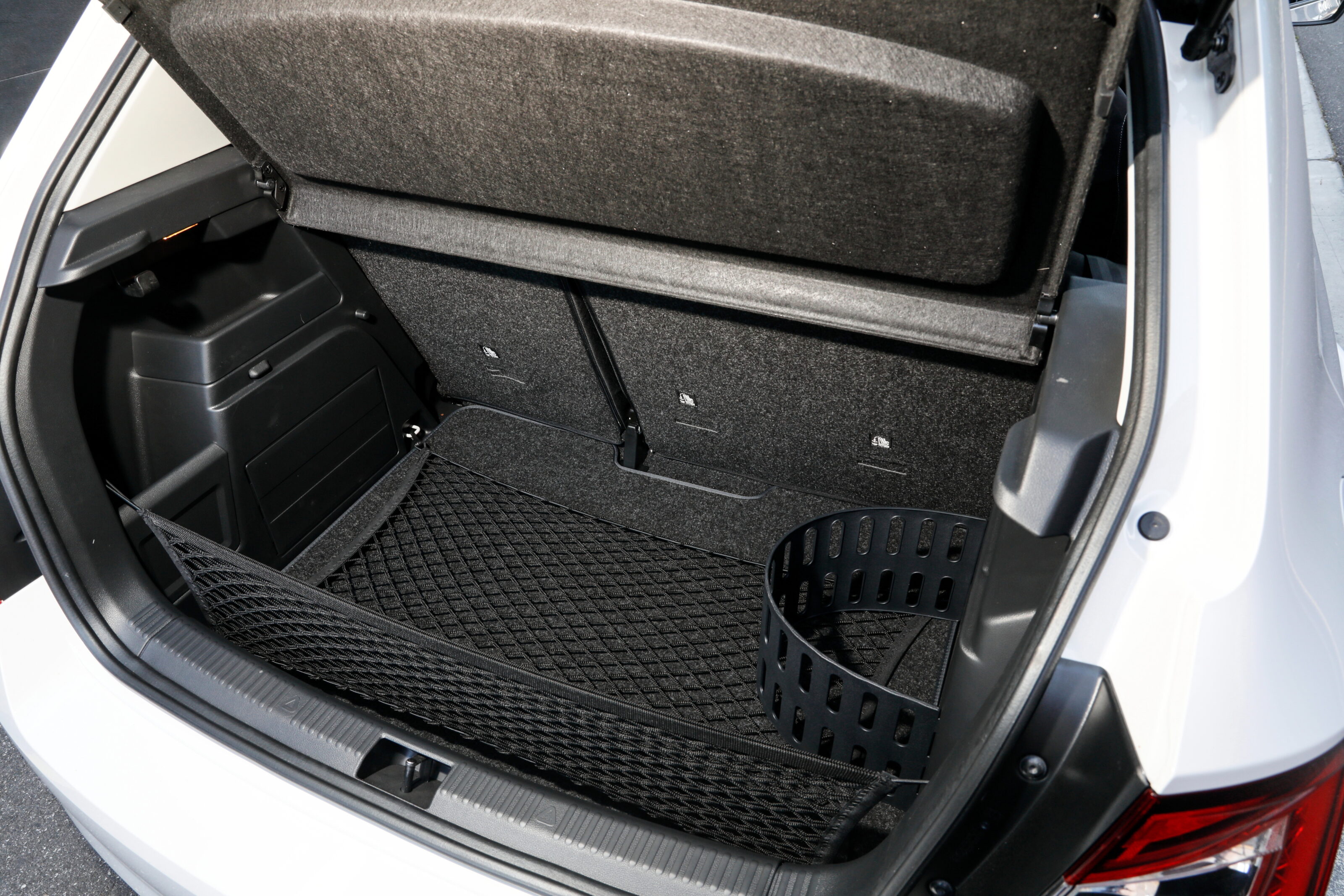
A little further back, the boot is pretty spacious for a compact hatch, with 330 litres of space to the newer VW Polo’s 351L, but far ahead of cars like the Toyota Yaris (281L), Mazda 2 (250L), or Suzuki Swift (240L).
It’s also full of netting, hooks for hanging bags, and even a plastic guard to stand something up in or stop it rolling around. It’s also all removable, in case you need to fit something bulky in the back.
If 330 litres isn’t spacious enough, the rear seats fold down (you can remove the bottom part of the seat to fold the backrests flatter too) for 1150L, or maybe even spend an extra $1100 to buy the wagon version of the Fabia, which offers 530L and 1395L respectively.
For a car that looks so inconspicuous from the outside (I wouldn’t call it boring, but it’s a safe design), it’s surprising how much is unique about its interior. What’s more is that it’s full of things that had me saying ‘why don’t other cars have this?’
Onto the mechanical matters, and there’s something else this car has that’s not so common these days; a manual option. If you really wanted the bargain-basement price, a manual Run-Out can be had for $20,790, or around $22K drive-away, Skoda says.
It does come with a less powerful engine than this seven-speed dual-clutch auto which makes 81kW and 200Nm to the manual’s 70kW and 160Nm, though neither makes for a hugely quick car. Instead, the 1.0-litre turbocharged three-pot in the 81TSI takes a moment to gather up its boost and then its vigour seemingly arrives all in one relatively quick burst. It’s quite fun when you’re used to it and ready, but it could prove hard to gel with for some, and might even be a reason to take up the five-speed manual.
Hesitant takeoffs aside, this little Skoda is a fun and feisty jigger, with its 200Nm doing a great deal to pull the front-driven Fabia along smoothly at higher speeds, feeling like a more powerful and larger car given how stable it comes across in situations like highway driving.
In more dynamic driving, the Fabia is talented, but it’s no hot hatch. It can tackle fast corners until reaching its surprisingly high limits, before gradually shifting into manageable understeer. It could even do with some paddleshifters for more control over its revs, just for that extra spice.
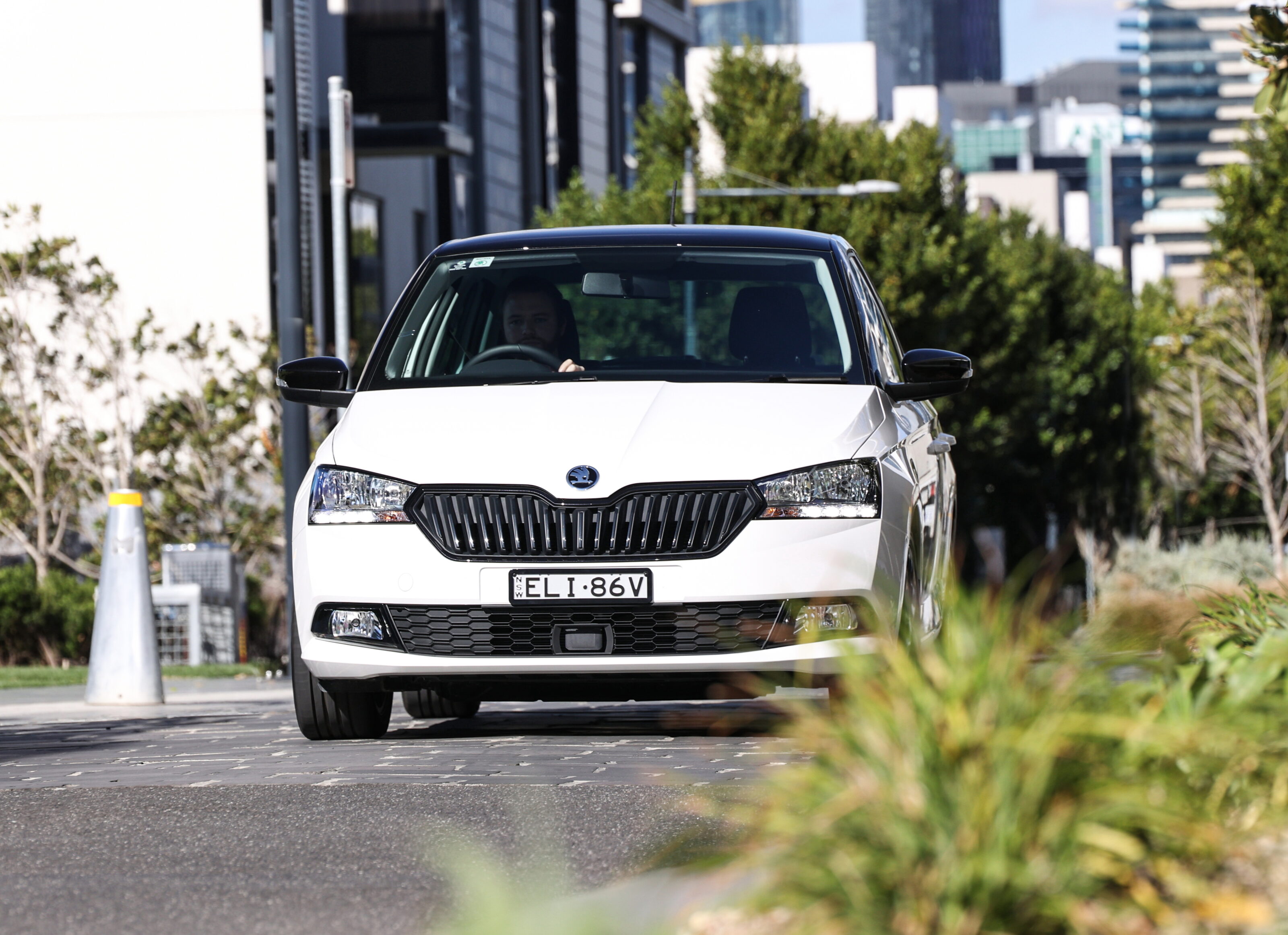
Weighing in at 1092kg (around the same as a new Mazda MX-5!) helps its lively nature, too, as does the stiffer suspension it gains as the Run-Out Edition. Some might find it errs too far into the ‘uncomfortable’ range for longer drives or over lumpy roads, but for myself as a single twenty-something who enjoys driving, it feels well-tuned as a daily that can double as a drive just for fun. If you cross lots of tram tracks or cobbled laneways in your day-to-day, perhaps the Fabia Run-Out isn’t for you.
But like the interior, the Fabia is a simple car to drive. Its adaptive cruise control, for example, didn’t encounter any ‘confused’ moments about follow distances or approaching objects. Its other (admittedly limited) active safety features didn’t annoy or intervene either, while visibility around the car is great and its relatively squared-off shape means judging parking spaces is a breeze.
The steering is light and accurate, feeling weighted with enough feedback that both commuting and barrelling along backroads is done with confidence.
As far as fun drives in this segment go, the Fabia has a couple of rivals in the likes of the cheaper but smaller ($20K) Kia Picanto GT or the pricier ($30K) Suzuki Swift Sport, but the dynamic joy of the Skoda comes unannounced, and is a welcome surprise.
It could even do with some paddleshifters for more control over its revs, just for that extra spice.
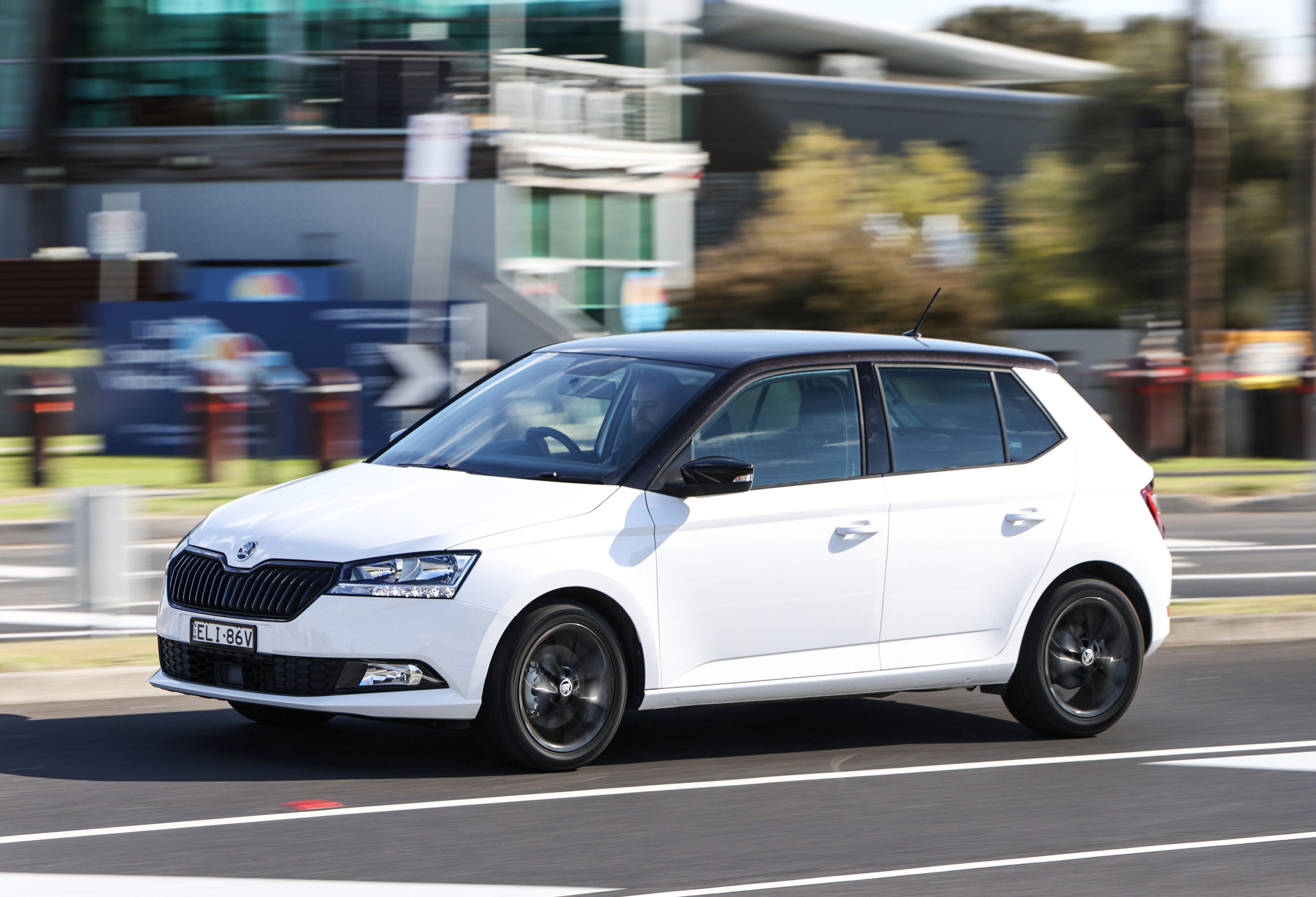
Speaking of confidence, there is a reason why right now might be a good time to get into a Skoda if you’re on the fence. For cars bought up to December 31 this year Skoda is offering a seven-year warranty, two years more than usual. As well as this, Skoda has created a seven-year service pack that includes the first three services for free.
For the Fabia, seven years of servicing costs $2100, or $600 more than the old five-year offer. Without a pack, Skoda’s servicing prices are based on monthly subscriptions, but with four levels based on how far you drive, across three ‘tiers’ of plan: Complete, Essential, or Value. Pricing ranges broadly between $35 per month and $184 per month, so it’s best to see which one suits.
Another little running cost, that of petrol, shouldn’t be a huge worry in the Fabia. Skoda claims 4.7L/100km for the little hatch, and even though on test our loan Fabia was often idling for photography or video, our trips barely topped 6.0L/100km each.
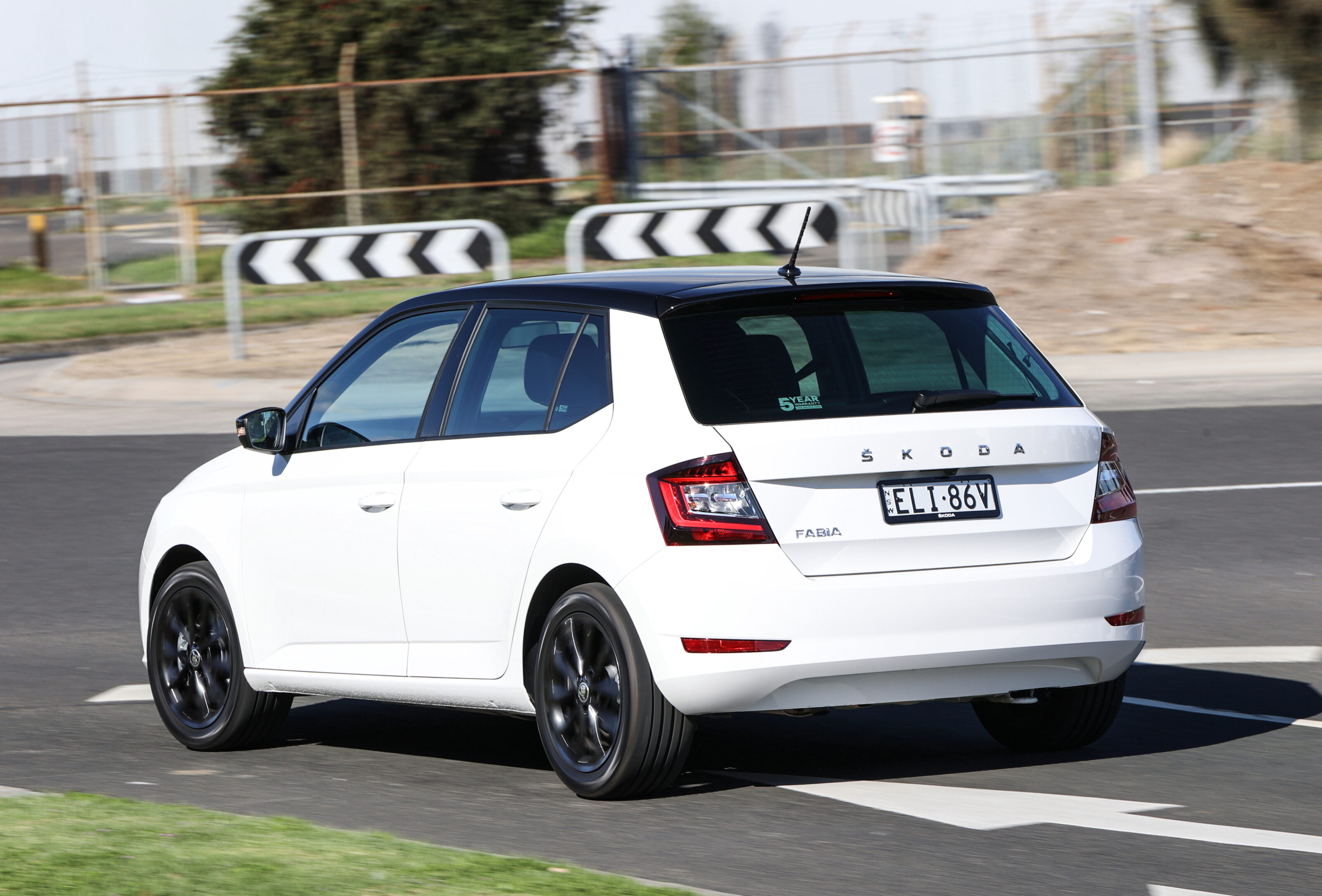
At its price point, the Fabia Run-Out certainly makes an enticing offer, but in some ways, it’s a little bit of a niche car. For a start, you really have to look past some of the outdated interior components. Hopefully, if you got that far you also like its exterior design. Then there’s the fact it’s quite difficult to gel with the drivetrain at first, and that its suspension does nudge towards the stiffer side of things.
But it does have plenty of those fun and quirky Skoda conveniences and, if you’re someone who likes driving, this is the kind of car that I could personally steer all day.
The timing suits too, because of that seven-year warranty, which puts the mind at ease in terms of those weird little worries some people have about European cars and reliability.
So maybe it’s not the car for most, but if you’re trying to be smart with your cash and you don’t want something ‘standard’ then here it is.
| Body | Five-door hatch |
|---|---|
| Drive | FWD |
| Engine | 1.0-litre 3cyl, turbo petrol |
| Transmission | 7-speed dual-clutch |
| u00a0Power | 81kW @ 5000-5500rpm |
| Torque | 200Nm @ 2000-3500rpm |
| Bore x Stroke | 75mm x 76mm |
| Compression ratio | 10.3:1 |
| 0-100km/h | 10.1sec (claimed) |
| Fuel consumption | 4.7L/100km (ADR combined) |
| Weight | 1092kg |
| Suspension | Double wishbone (front)/Multi-link (rear) |
| L/W/h | 3997/1958/1467mm |
| Wheelbase | 2470mm |
| Brakes | Discs (front & rear) |
| Tyres | 215/45 R16 (front & rear) |
| Wheels | 16-inch alloy (front & rear) |
| Price | From $23,790 + ORC |
Snapshot
- Sebastian Vettel latest to call for speed restrictions on the autobahn
- The famous route is under threat from goals to reduce road deaths and carbon emissions
- The F1 driver claims racetracks should be the place for fast driving, not public highways
Formula One driver Sebastian Vettel is calling for the entirety of the German Autobahn to have its speed restricted.
With a new government in charge of the nation, questions have recently been raised over whether a maximum speed limit on the world-famous motorway should be imposed.
For the thousands of German drivers who use the almost 13,000 kilometre-long network daily, safety has become a concern.
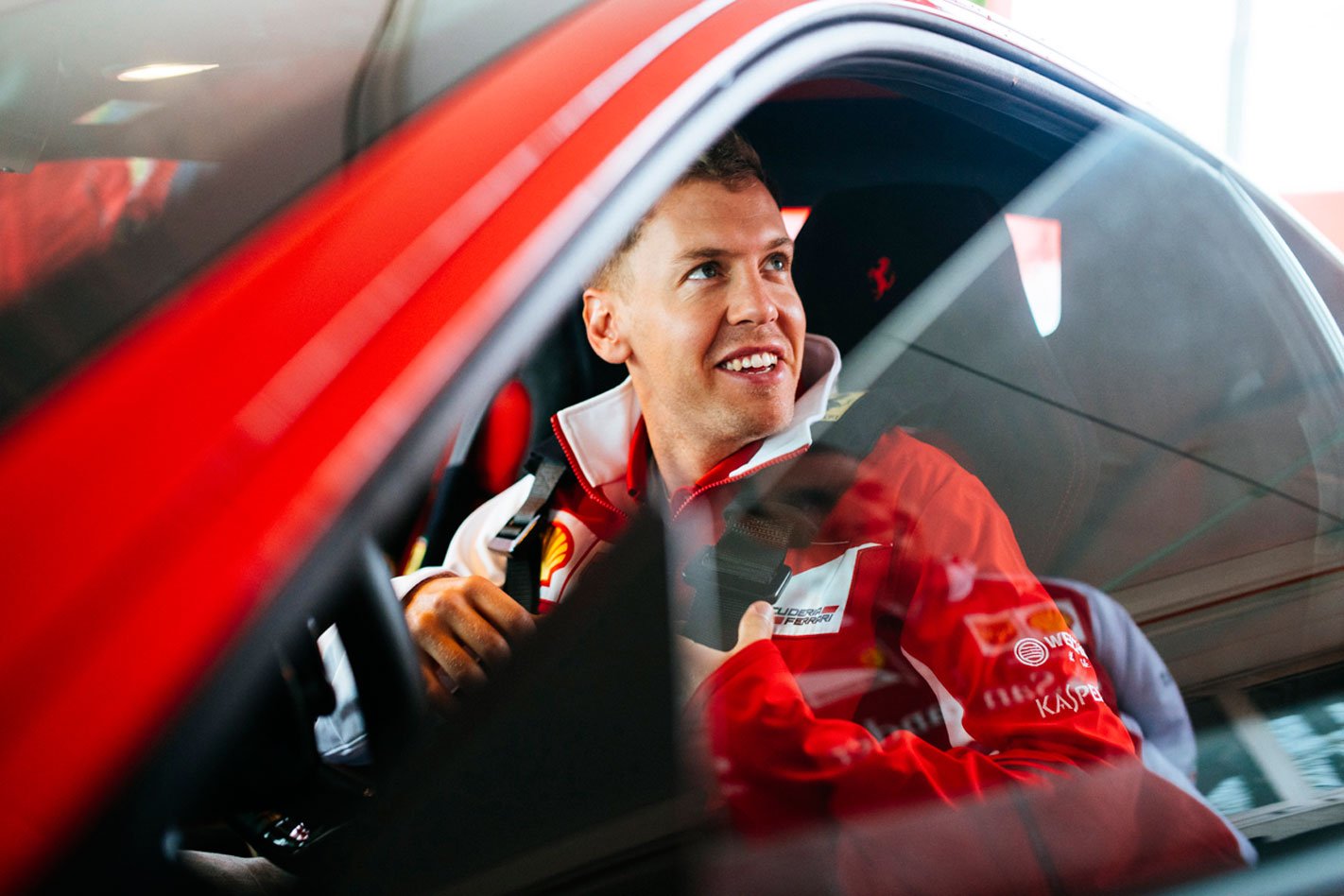
Speaking with German publication Auto Motorsport, Vettel explained the reasoning behind his thoughts, claiming the positive benefits a speed limit would have for both carbon emissions and road accidents.
“It’s not about personal feelings. You have to look at the big picture. A speed limit would save almost two million tons of CO2 emissions. And it would make the roads a bit safer,” he said.
Vettel, who is also passionate on the issue of climate change, added: “There are accidents in Germany that only happen because we don’t have a speed limit. If you only save the life of a single person, then that’s a no-brainer for me.”
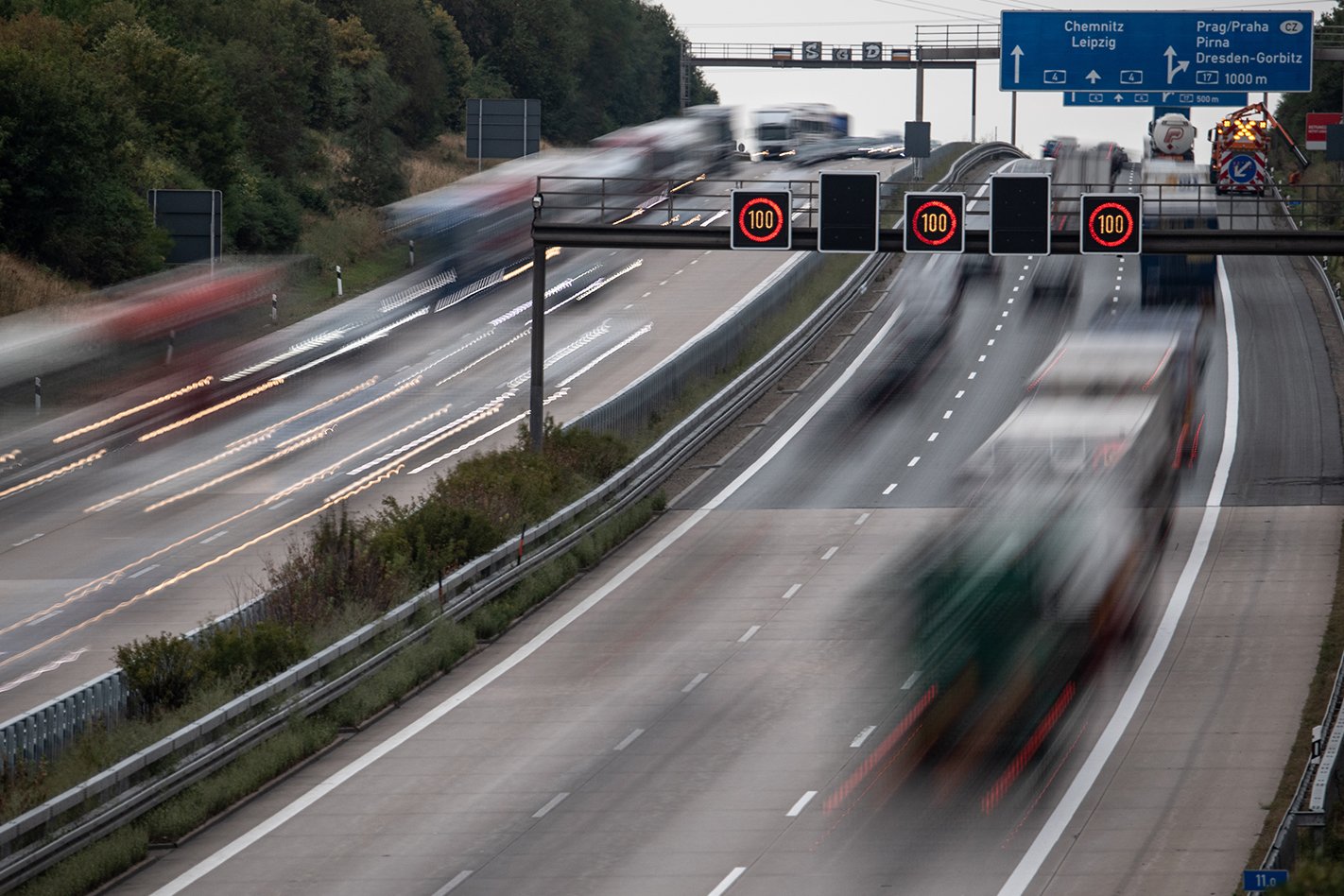
In addition to calling for a speed limit on the Autobahn, Vettel said those who “want to step on the gas” should do so at a racetrack, where “you can test your limits without putting others in danger.”
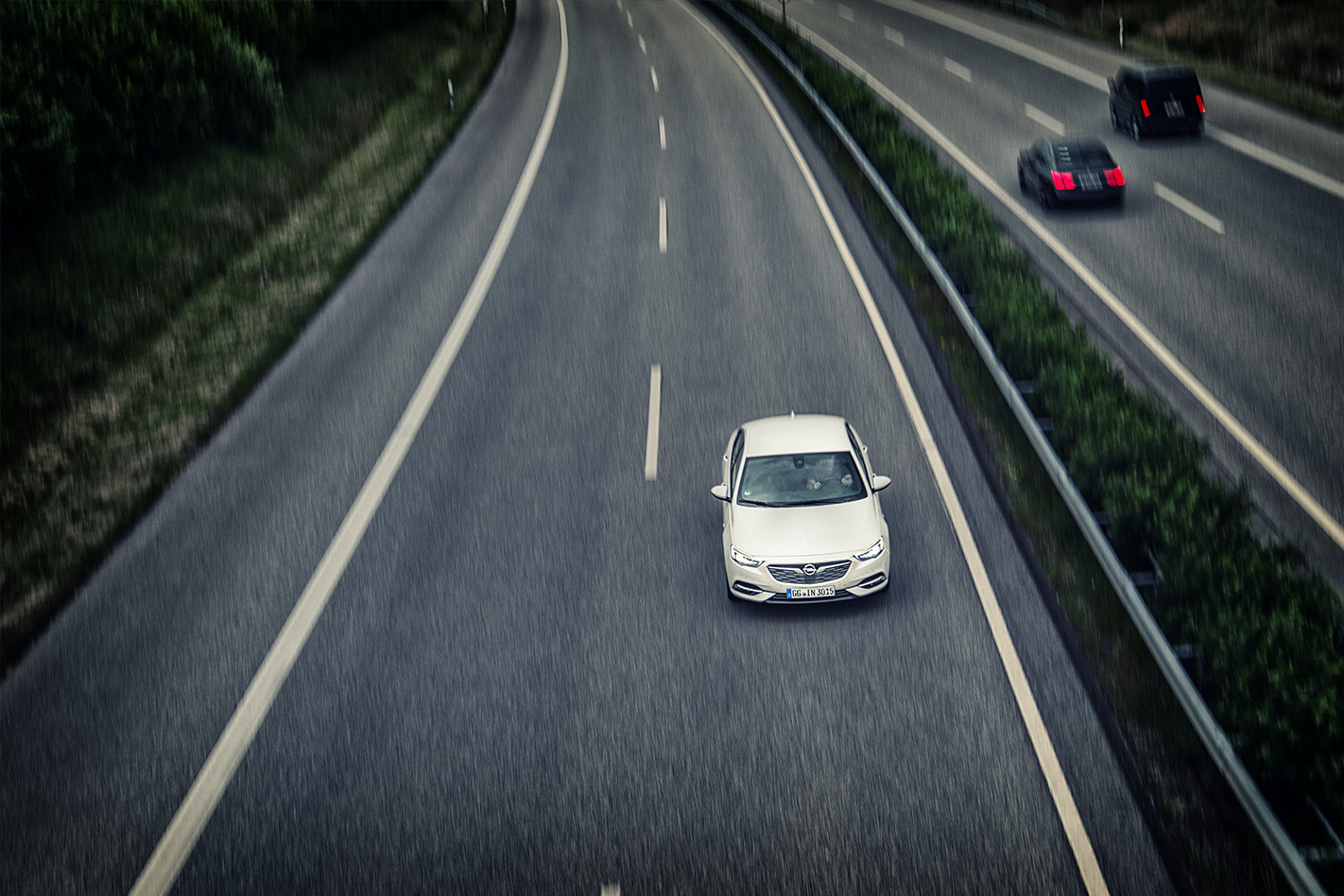
Widely celebrated for its vast length of quality bitumen, the Autobahn is famous for having sections with unrestricted speed limits, allowing drivers to quickly travel from A to B – with some motorists using the route as an opportunity to test the prowess of their vehicles.
UPDATE, April 1, 2022: The 2023 Toyota GR Corolla has now been officially revealed, and confirmed for Australia. Get the full story at the link below.
The story to here
If you like performance cars, Toyota has long been the world’s most frustrating carmaker. From the twin-cam, six-cylinder 2000GT launched in 1965, this is the company that over the years has produced gems like the mid-engine MR2s, sundry super-quick Celicas, brawny, barrel-chested Supras, and the Lexus LFA, whose screaming 412kW naturally aspirated 4.8-litre V10 remains one of the greatest engines ever put in a road car.
Yes, Toyota can build – has built – some impressive driver’s cars, but it’s just never seemed all that committed to the idea. It launches them, then invariably leaves them to die of neglect while it gets on with building more Priuses.
Akio Toyoda wants to change all that.
The scion of Toyota’s founding family is a bone fide performance-car enthusiast. He’s raced in the 24 Hours of Nurburgring several times, and is one of the founders of Gazoo Racing, Toyota’s global motorsport brand. On becoming president of Toyota in June 2009, he declared he wanted the company to stop building boring cars.
He’s reiterated that desire several times since – Toyota’s formidable bureaucracy is a challenge even for a man who’s had a version of his family name on more than 195 million vehicles built since 1935. But the launches of cars like the 86 and Supra coupes, and the edgy GR Yaris – a near hand-built World Rally Championship homologation special – have suggested Akio’s might be finally getting what he wants.

The GR Corolla proves he’s finally getting what he wants.
Toyota sources have confirmed exclusively to Wheels that the long-rumoured GR Corolla is 100 percent go for launch in late 2022 or early 2023. What’s more, the car will be powered by the quirky turbocharged 1.6-litre three-cylinder engine from the GR Yaris, driving all four wheels through a six-speed manual transmission.
But that’s not all. While some have suggested that if the GR Corolla were to get the GR Yaris powerplant it would be slightly detuned, our sources insist the 200kW, 370Nm three-pot will be tweaked to deliver even more power and more torque for the bigger car.
With that punchy rally-bred turbo three-pot under the bonnet and all-wheel-drive traction, GR Corolla will be the hottest Corolla since… well… ever.

The GR Yaris, designed and engineered specifically to get FIA homologation as the base car for Toyota’s WRC contender, shares almost nothing with the XP210 Yaris launched in Australia in 2020.
What’s clever about the GR Corolla is that Toyota doesn’t have to reinvent the wheel to create the car. The GR Yaris, designed and engineered specifically to get FIA homologation as the base car for Toyota’s WRC contender, shares almost nothing with the XP210 Yaris launched in Australia in 2020. Other than the front and rear lights, exterior rearview mirrors, and the roof aerial, every exterior panel and component is unique to the GR.
Underneath is a unique platform that combines a chunk of the TNGA-B platform from the XP210, with a rear section adapted from the TNGA-C platform that underpins the Corolla and C-HR crossover.
The GR Corolla, by contrast, will likely retain much of the basic body hardware of the current E210 Corolla five-door hatch.
Unlike the GR Yaris, which is 56mm longer and 61mm wider than the standard car, and has three doors instead of five, with new A-pillars, new bodyside stampings and a new roof that is 46mm lower at the front of the car and 94mm lower at its rearmost point, the GR Corolla will share the standard car’s roof, bodyside, doors, hatch and bonnet.
It will, however, get similarly aggressive front and rear fascias, with a deeper spoiler and splitter up front and GR badging on the grille, and the currently fashionable faux diffuser at the rear with a single big-bore exhaust outlet on either side. Visually, think Golf GTI versus standard Golf, or Hyundai i30N versus a regular i30.

The GR Corolla will retain the standard car’s MacPherson strut front suspension, albeit with strengthened components and different geometry, and will likely use a version of the bespoke multi-link setup from the GR Yaris at the rear as the back halves of both cars’ platforms are identical.
Expect big disc brakes at each corner – the 356mm front rotors available up front on the GR Yaris are larger than those on the GR Supra, while the rear rotors are 297mm items. The GR Yaris rolls on 18-inch alloy wheels, but as the top-spec Corolla ZR and ZR Hybrid are both fitted with 18s, it’s logical to assume the GR Corolla may get 19in wheels, or even 20s, if only to ensure visual differentiation.
As Toyota has confirmed the GR Corolla will be all-wheel drive, that means it will use the simple and light performance-oriented AWD hardware from the GR Yaris.
The first new AWD system developed by Toyota in more than 20 years, it has a fast-response centre coupling that can be set in three modes – Normal, which sends 60 percent of the torque to the front wheels; Sport, which sends 70 percent to the rear wheels; and Track, which splits the torque 50:50. A hypoid gear transfer case links it all to a conventional six-speed manual transmission.

Toyota, which lobbied the FIA to allow a three-cylinder engine in the World Rally Championship, says the G16E-GTS engine in the GR Yaris is the smallest and lightest 1.6-liter turbo motor in the world, and the world’s most powerful three-cylinder production engine.
Why three-cylinders? “We preferred this engine due to its light weight and compact size,” says development project leader Atsunori Kumagaya. “It’s simple to install and the lack of exhaust gas interference made it easier to obtain power.”
In the GR Yaris the G16E-GTS makes its 200kW at 6500rpm, and the 370Nm of torque is available from 3000rpm to 4600rpm.
With features such as oil jets to cool the pistons, large exhaust valves and a single-scroll turbocharger integrated into the exhaust manifold whose turbine spins on ball-bearings to reduce lag – and given that for the 2021 WRC car the engine would have comfortably pumped out 280kW and 450Nm with the mandatory 36mm airflow restrictor in place – it’s clear it has a lot of headroom for power and torque boosts, even in road-legal tune.

Depending on spec, the GR Yaris weighs between 1280kg and 1310kg, giving it a power-to-weight ratio of about 154kW per tonne, enough to scoot the little Toyota to 100km/h in 5.2 seconds and to an electronically limited top speed of 230km/h, according to the factory.
Toyota has a couple different ways it can go with the GR Corolla but given Toyota sources have confirmed the G16E-GTS will be tweaked to deliver more power and torque, and that the car will be all-wheel drive, the Volkswagen’s 234kW, all-wheel-drive Golf R, which has a similar power-to-weight ratio to that of the GR Yaris, is an obvious target.
For cost reasons the GR Corolla is unlikely to be subjected to the same degree of expensive light-weighting as the GR Yaris, which has an aluminium bonnet, tailgate and doors, and a forged carbon-fibre roof to lower its centre of gravity.
The regular Corolla hatch weighs between 1400kg and 1420kg. Assuming a 150kg bump due to the GR Corolla’s bigger brakes, heavy duty suspension components and the all-wheel drive system (for reference, the 1551kg Mark 8 Golf R weighs about 120kg more than the front-drive Golf GTI) that suggests an output of about 230kW and more than 400Nm of torque.
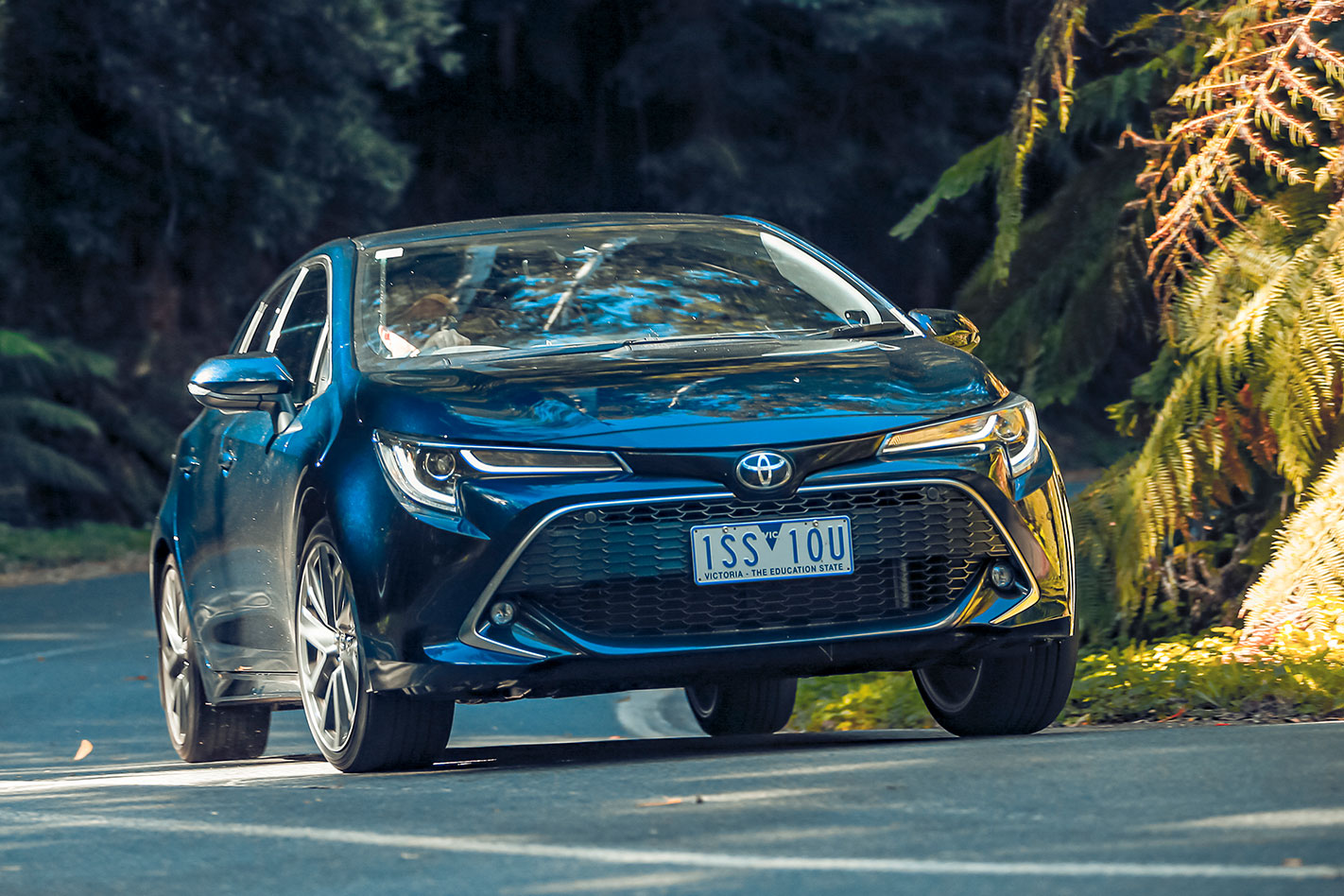
That would be grunt enough to get the GR Corolla to 100km/h in around 5.0 seconds, and to a top speed of 250km/h. That’s right in Golf R territory.
Likely price? That’s a tricky one. You’ll spend between $48,500 and $57,000, depending on spec, for a Hyundai i30 N. A Golf GTI costs around $58,500. The GR Corolla would easily be quicker than both, with the benefit of all-wheel-drive handling and traction.
The Golf R isn’t currently available in Australia, but in the UK the car commands a 17 percent price premium over the GTI, so call it at least $68,500.
Therefore, the opportunity for the GR Corolla is that for under $70,000 – significantly less money than a Supra – it could deliver class-leading levels of performance in a car that has much more room and offers more creature comforts than the little GR Yaris.
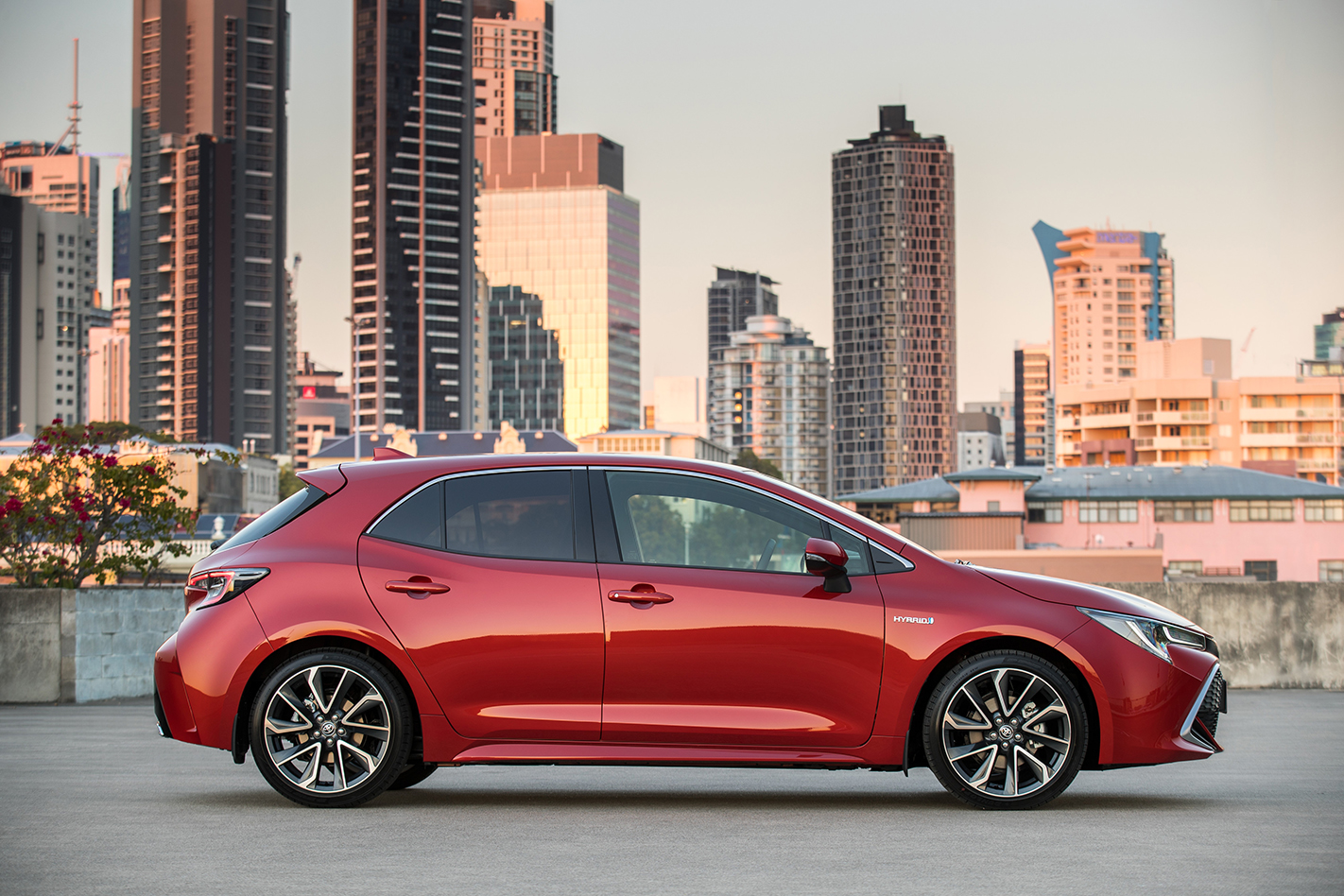
And for those who want even more performance and precision, Toyota could offer a version of the GR Corolla that, like the GR Yaris Rallye, comes with stiffer suspension, lighter forged alloy wheels, and Torsen diffs front and rear.
Volkswagen sells a lot of Golf Rs, while the growing swarm of Hyundai N cars – i30 N, i20 N and Kona N – represents a clear threat to Toyota in terms attracting young enthusiast drivers to the Korean brand.
The GR Corolla is a no-brainer for Akio Toyoda’s Toyota.
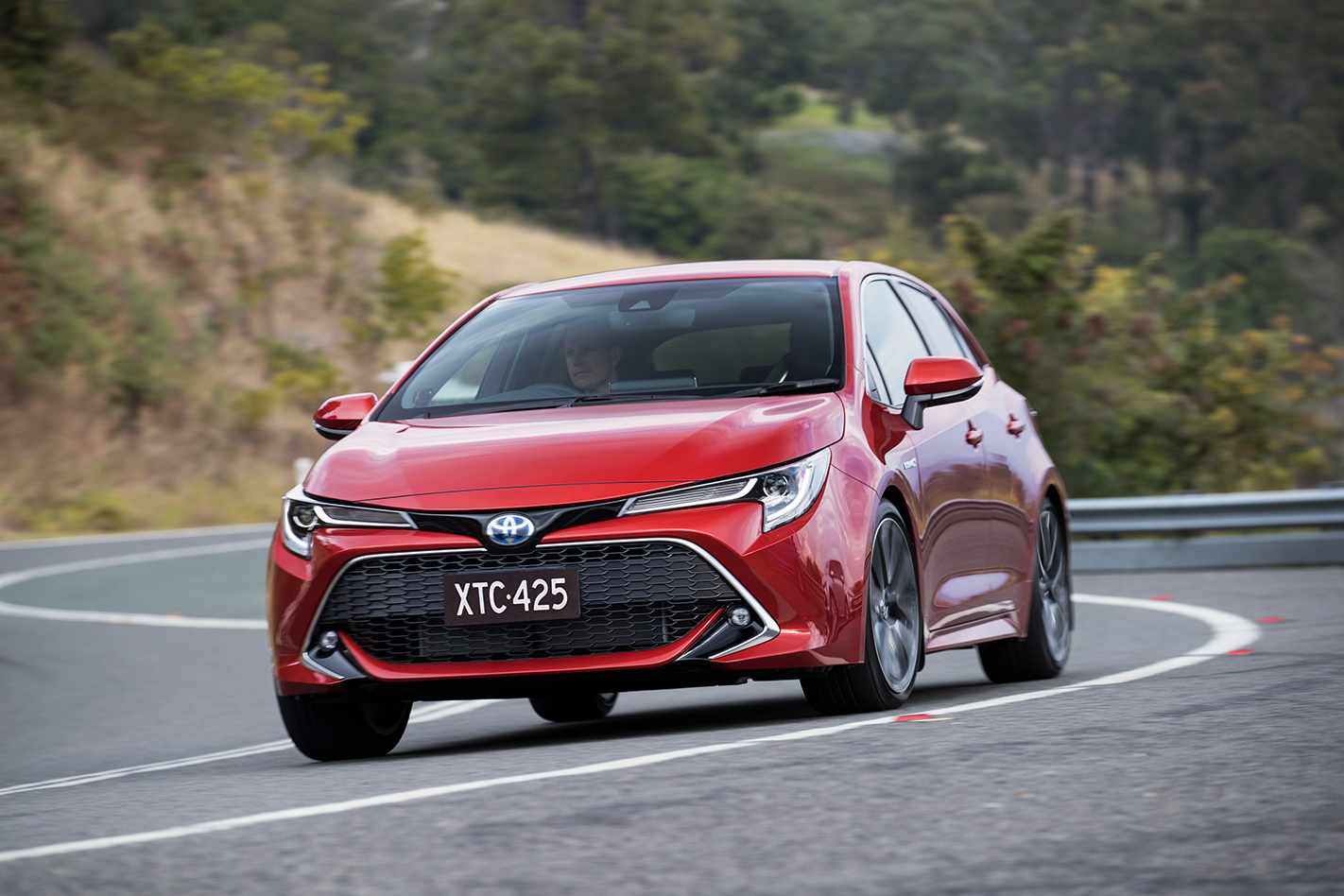
GR’s position of power: Toyota’s hi-po division carries real clout within the company
GR is now a fully fledged division of Toyota, reporting to Shigeki Tomoyama (pictured), an engineer who has run Toyota’s e-commerce, IT and information systems groups and has overseen various parts of the Gazoo Racing operation since 2016. In 2020 Tomoyama was made responsible for GR product planning; he’s now one of six executive vice-presidents at Toyota who report directly to Akio Toyoda.
As one source put it, Tomoyama’s position – and his relationship with Akio Toyoda – means GR now no longer specifically needs buy-in from one of Toyota’s powerful chief engineers (the men responsible for entire model lines such as Corolla or Prius or LandCruiser) to get a GR model into production. Performance now has a strategic voice at the top table in Nagoya; the launch-and-forget years are over.
And, as another insider pointed out, Toyota’s huge global sales of low-emissions hybrids gives the company room to offer relatively low-volume performance vehicles with internal combustion engines even as other manufacturers are being forced to scale back their performance vehicle plans to meet fleet carbon emissions targets.

Design details
Body panels
Seems unlikely GR Corolla will be treated to the bespoke body panels as per GR Yaris, but expect weight savings to be made to offset the AWD system
Wheels & tyres
Wheels will be at least 19s, possibly 20s, running performance rubber; likely Michelin Pilot Sport 4s. Forged wheels reserved for GR Corolla Rallye
Torque split
Like GR Yaris, Corolla’s AWD system will offer three modes – Normal (60% torque split to the front); Sport (70% rear) and Track (50:50 torque split)
Rear suspension
Rear suspension for GR Yaris was lifted from Corolla, so this bit’s easy: uprated hardware, stiffer bushes, revised geometry and mountings
Interior upgrades
GR Corolla will upgrade the key driver touch points: more supportive seats, more sporting wheel, and specific controls for torque split and launch control
Want to get stories like this before everyone else?
Subscribe to Wheels magazine at the link below!
The top job at BMW’s M division has been given to a familiar face, with former CEO Frank van Meel returning to the role to lead the brand into its 50th year.
Mr van Meel had previously served as the performance department’s CEO from 2015 to 2018 before being replaced by Markus Flasch, moving over to BMW’s luxury, upper and mid-range model operations.
The reappointment of van Meel comes as a direct exchange with Flasch, as the latter is set to take over van Meel’s current portfolio – as well as becoming Rolls-Royce’s head of products, another of the BMW Group’s brands.

Under van Meel’s previous tenure with BMW M, the brand introduced its new in-model range of variants such as; the Competition, CS and CSL, while also overseeing the development of four-wheel drive in the current M5.
Flasch leaves the high-performance arm of BMW with a CV that includes; the new M3, M4, X3 M and X4 M, not to mention his work on the upcoming i4 M50 – the company’s first fully-electric model – which is set to launch next year.
It is rumoured BMW M will produce its first bespoke electrified vehicle in the near future, tipping to be underpinned by a hybrid powertrain which can deliver up to 560kW.
Snapshot
- Production pauses have hampered supply since August
- Toyota now aims to build between 850,000-900,000 vehicles next month
- RHD LC300s will be among those produced
Toyota says it will be restarting production over and above its usual capacity next month – including that of the long-awaited LandCruiser 300 Series, following months of COVID-19 and semiconductor-related production delays.
With a projected target of between 850,000 to 900,000 vehicles set to be produced in November, this number will eclipse the company’s 11th-month record of 830,000 units built last year – potentially allowing it to reach a 12-month high of nine million vehicles.
Crucially, the highly-anticipated LandCruiser 300 Series will be one of the models going back on the production line after its factory was affected over the past few months, with right-hand drive models set for Australia to begin their trip to the local market throughout November.
Toyota Australia Vice President Sales, Marketing and Franchise Operations, Sean Hanley, said he is optimistic the first examples of the LC300 will arrive in Australia before Christmas, although HiLux and Fortuner could be impacted by production delays in Thailand.
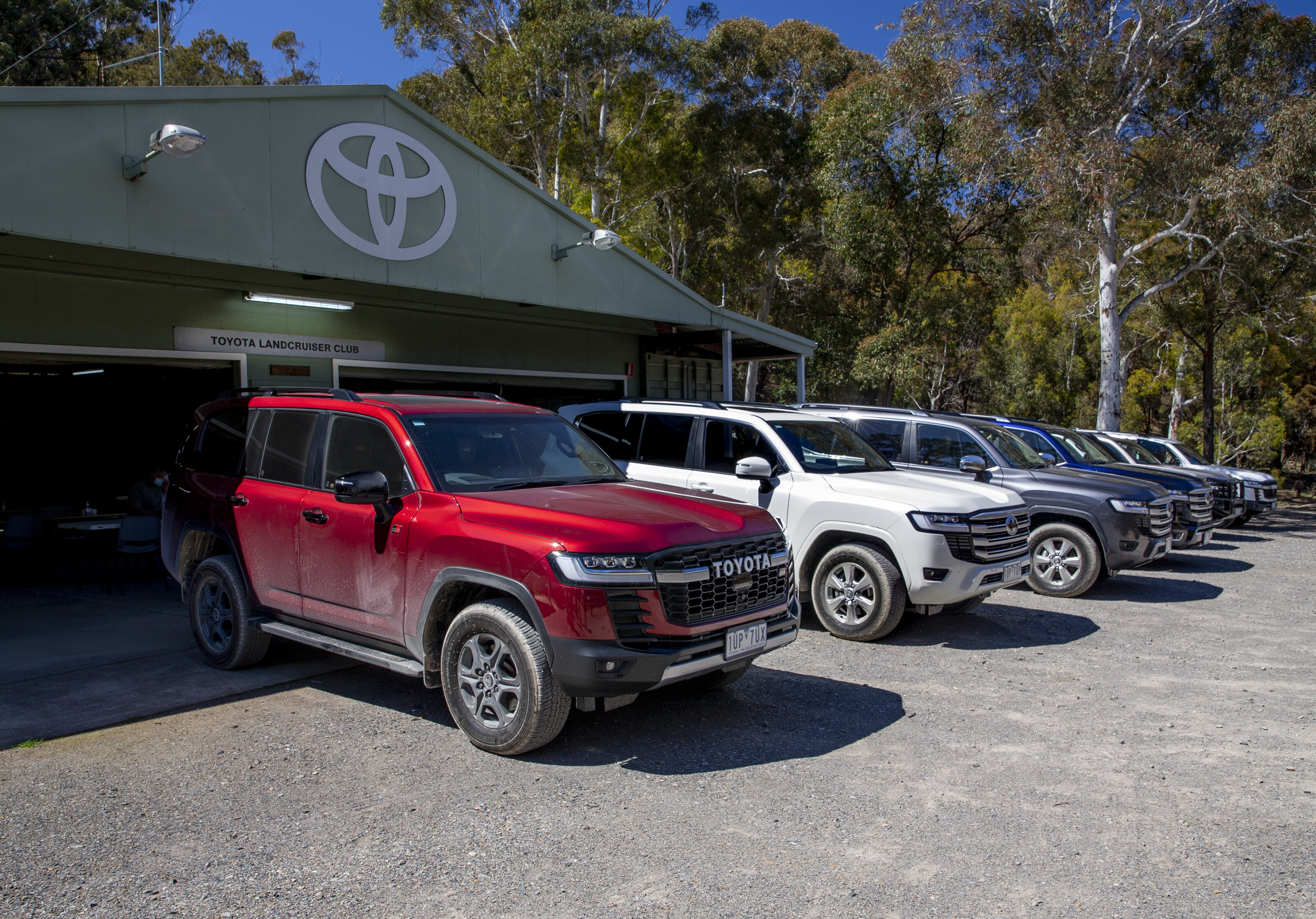
“We are optimistic the all-new LandCruiser will start arriving at local dealerships in Australia in December, with retail launch timing to be confirmed,” said Hanley.“Together with our parent company, we are doing everything we can to get customers into their new Toyota vehicles as soon as possible, whether it’s the all-new LandCruiser or any other model that is in high demand.
“As the availability of supply is an evolving situation around the world, we are continuing to work closely with our global production team to secure the maximum possible number of vehicles for our customers.“We apologise to customers experiencing delays and we sincerely thank them for their patience. We ask our customers to please contact their local dealer for updates on the status of their individual orders.”
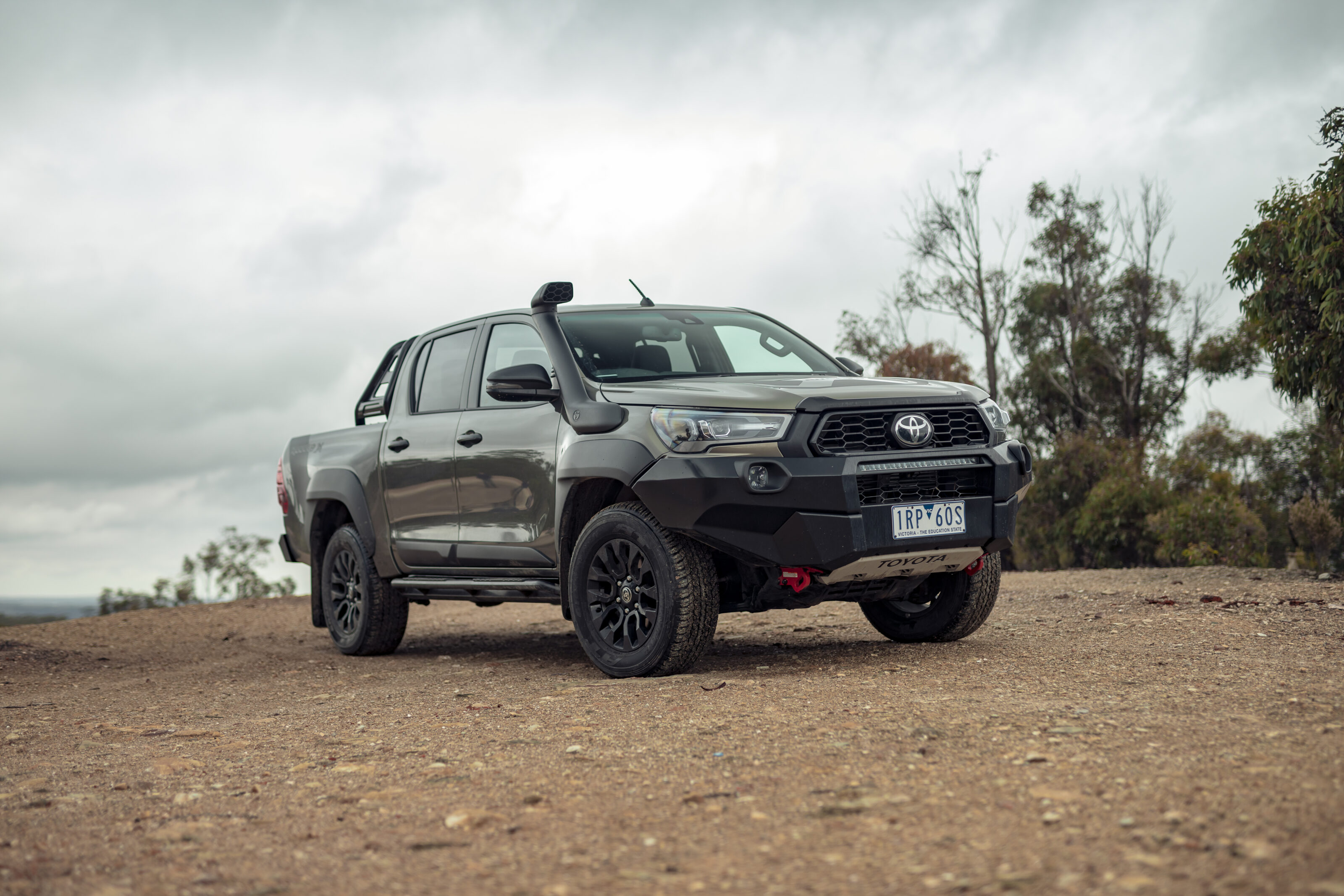
As reported by Wheels, Toyota is reportedly aiming to build 97,000 more vehicles between December and the end of March than previously planned, owing to the lost production since August.
Toyota Australia last provided an update at the start of the month, saying one-third of its models will be delayed by four months or less, up to three-quarters of its range could be postponed by as much as six months.
UPDATE, October 15: The next-generation Acura Integra will be available with a manual transmission, the manufacturer has confirmed.
In a video posted to its YouTube channel, Acura showed off the three-pedal option alongside previous generations of the Integra nameplate, with the overdubbed noise hinting at the upcoming model’s four-cylinder engine.
While some manufacturers often adopt a secretive approach to teasing upcoming models, Acura seemingly wants to show off as much as possible before the Integra’s official reveal, as you can see below.
The story to here
September 29: Acura has released a second teaser of its upcoming Integra as it looks to relaunch the nameplate in the near future.
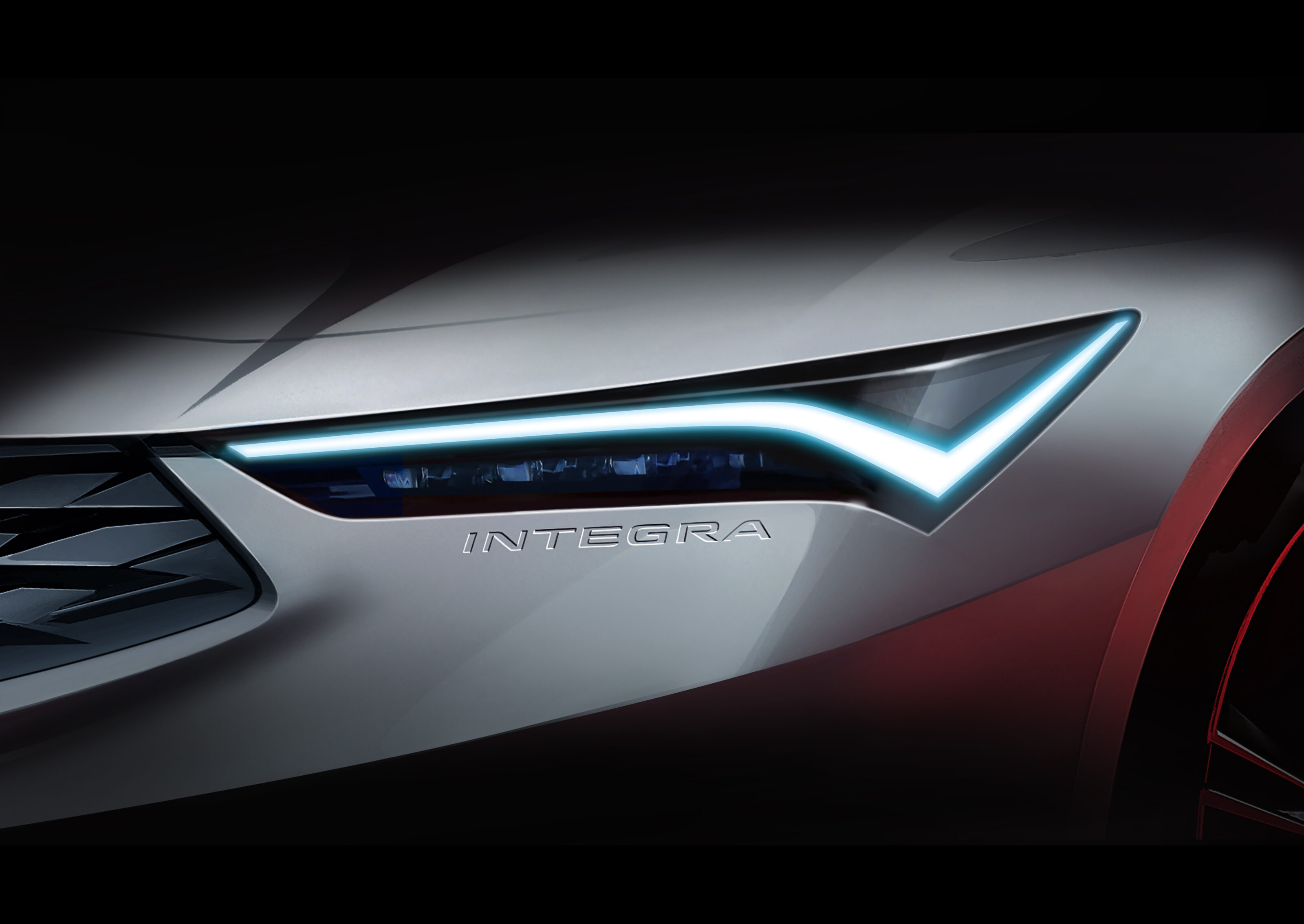
Off the back of its confirmed return at this year’s Monterey Car Week, the North American luxury division of Honda provided another look at the highly-anticipated model, showing off an Audi-esqe side profile with a lift-back rear hatch.
While many remember the Integra as a two-door coupe (especially in the third and fourth generation), it was almost always available as a four-door, with only the last-generation DC5 being produced exclusively as a coupe, ending Integra production in 2006.
As a rival to other luxury brands such as Audi, Mercedes-Benz and BMW, the new Acura Integra could find itself up against the A3, CLA and 1 Series, all of which are sold as sedans or lift-backs.
It’s likely the Integra will either share its entire platform or at least its mechanical underpinnings with the 11th-generation Honda Civic, although with no performance-focused Type R variant confirmed yet, Acura fans will have to wait a little longer to reignite their passion for the range-topping Integra.
UPDATE, July 2022: Outlander PHEV pricing announced
Australian pricing and details for the Outlander PHEV have now been revealed. Even better, we’ve also driven it! Get the full story at the links below.
Story continues
Snapshot
- New Outlander will be second generation to feature PHEV option
- Japanese sales to begin in December
- First quarter 2022 launch expected for Australia
Mitsubishi has provided a closer look at its latest Outlander plug-in hybrid before the model’s official launch next month.
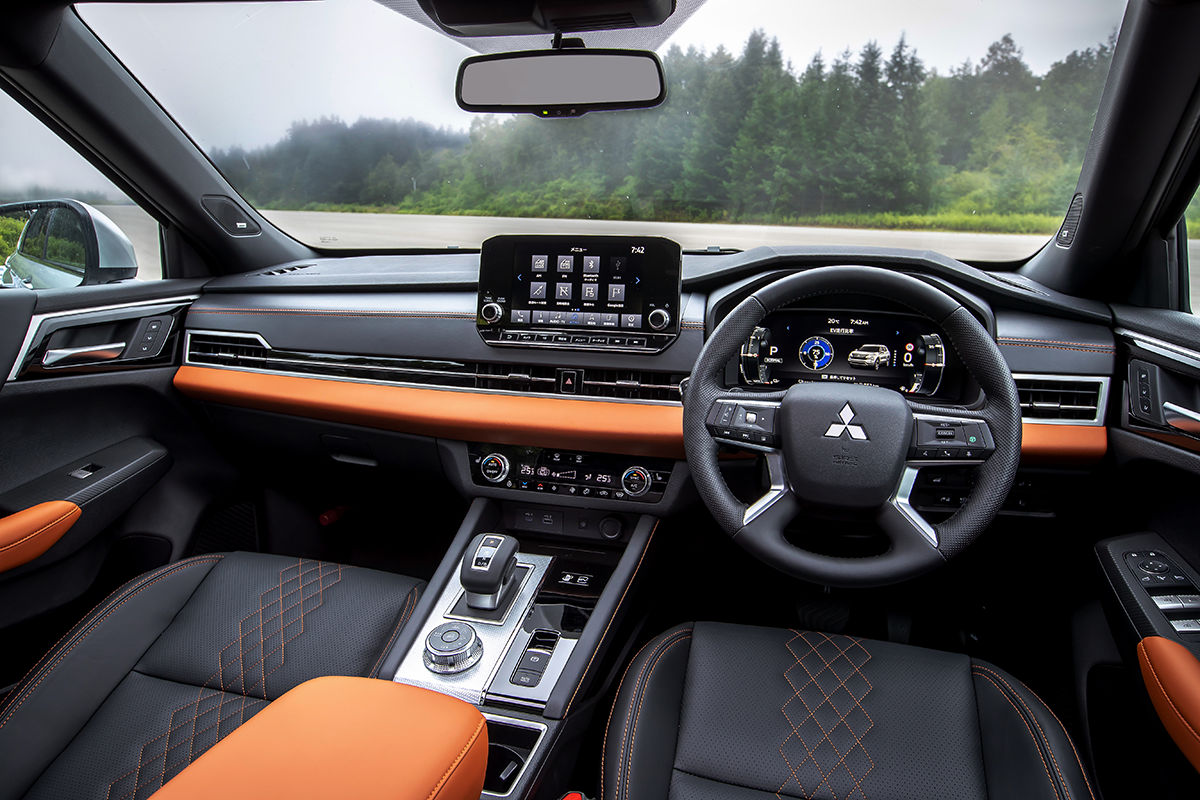
Having already been confirmed to join the line-up, the PHEV variant features mildly tweaked front styling to differentiate it from its purely combustion engine siblings – while a handful of relevant badges make sure it stands out.
Mitsubishi has previously said the second-generation PHEV will feature a more powerful motor and a larger battery – helping to deliver an increase on the existing model’s 60kW front and 70kW rear motors, combining for a total driving range of 56km in electric-only mode.
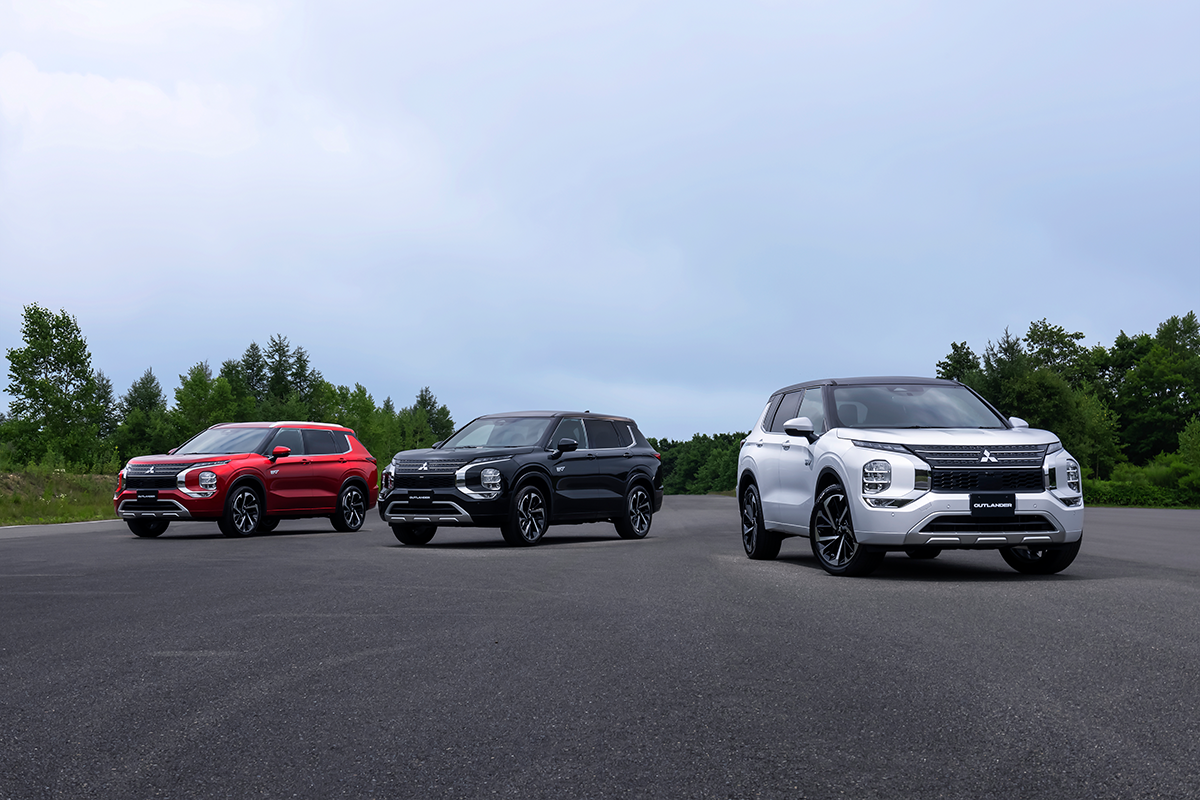
Riding on 20-inch wheels as standard, a choice of 10 colours will be offered to PHEV buyers – an expansion on the seven finishes available for the exclusively ICE-powered variants.
With the rest of the range increasing in price by anywhere between $1500-4000 over the outgoing model, expect the incoming hybrid to land at around $50,000-60,000 before on-road costs – depending on trim level.
The new Outlander PHEV is set to be launched globally by Mitsubishi at 2.30pm AEDT on October 28.
2022 Mitsubishi Outlander Australian pricing
Prices exclude on-road costs.
Legal action has been taken against Toyota following a patent dispute between steel suppliers.
Nippon Steel in Japan has filed a temporary injunction against Toyota to stop the production and sale of vehicles fitted with electric motors, which the company alleges are manufactured using proprietary electromagnetic steel.
Chinese company Baosteel has also been targeted in the legal action, and supplied the steel used in Toyota’s electric motors.
“Toyota’s view is that such matters should be discussed between material manufacturers, and we have learned of this lawsuit with great regret,” a statement from the Japanese car giant read.
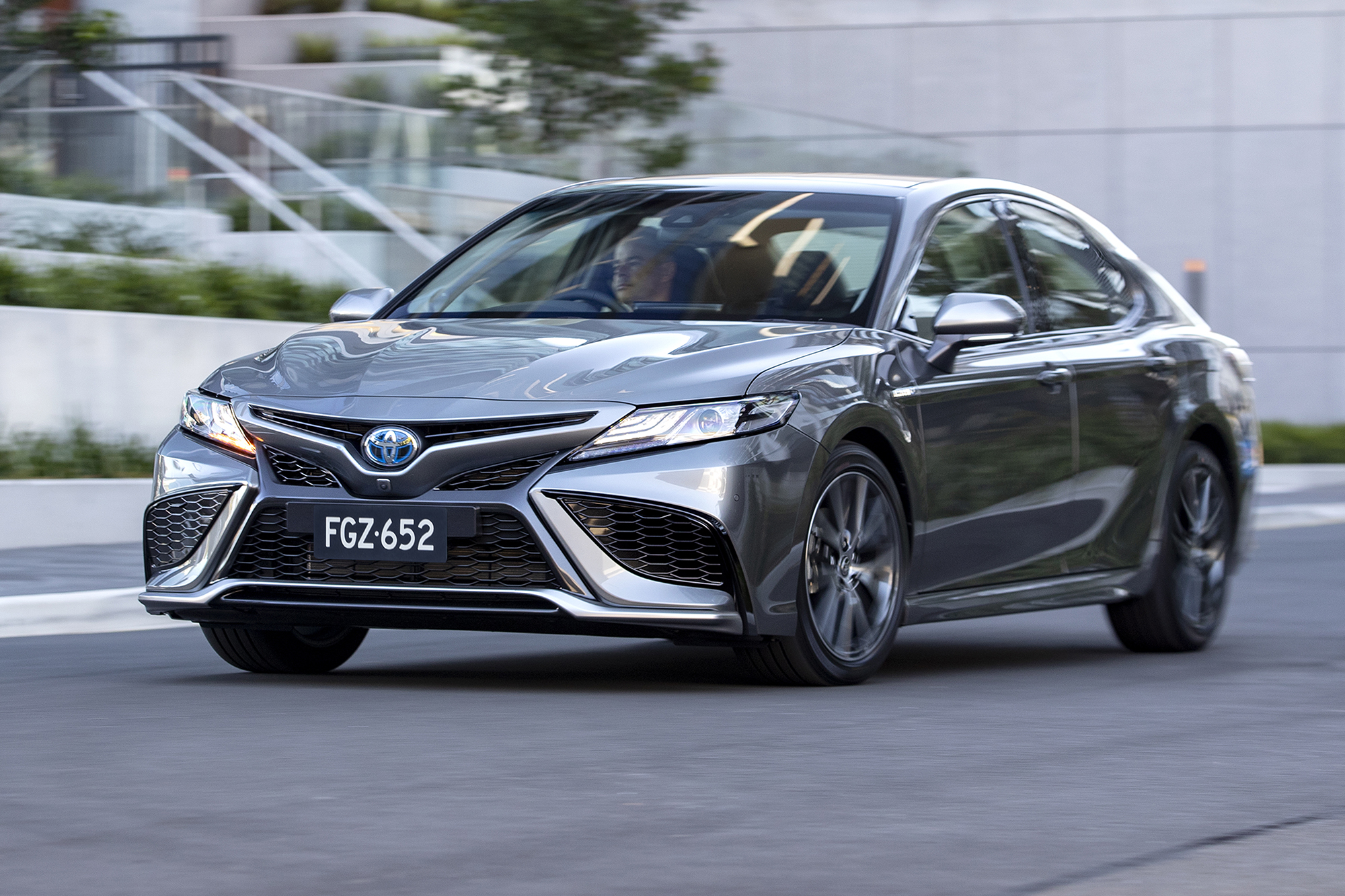
Toyota says it went through a “careful process” to ensure there were no patent conflicts prior to entering a contractual agreement with Baosteel, and has since received written confirmation to that effect following the action by Nippon Steel.
“It is again with great regret that we have learned that Nippon Steel, which has supported the Japanese automobile industry and our company’s manufacturing for many years and is an important business partner of ours, [has] decided to file such a lawsuit against us as we are a material user,” Toyota said.
A spokesperson for Toyota Australia was unable to comment on any potential impact on the sale and supply of its vehicles to local buyers.
