
Mazda Australia is recalling 2500 of its 6 model because the fuel pump on the vehicles has not been correctly installed.
The issue affects 2506 cars across two variants – the Mazda 6 MPS (GG1032) and RX-8 (FE1032) made between 2005 and 2012.
According to the Department for Infrastructure, the fuel pump on the vehicles hasn’t been installed properly and retains rings which may crack and result in a leak – as well as an additional risk of damage due to heat exposure from the engine and exhaust pipe on the RX-8 variant.
If a fuel leak were to occur, the car’s underbody could catch fire.
A list of VINs for the affected vehicles is available here.
Mazda Australia will contact all affected owners and advise them to take their vehicle to their preferred dealership for replacement of the fuel pump retaining rings free of charge.
The company can be called on 1800 034 411 or contacted via email at: [email protected]
Apples, the expression says, should only be compared with apples, but how much scope for variation is permitted within a genotype while still allowing an accurate and credible account?
Can the tart and verdant Granny Smith really go-head-to head with a succulent and sherbet-like Cox’s Orange Pippin and expect a fair fight? And if cider is your game I challenge anyone to find a finer specimen than the Kingston Black with its complex tannins, high sugar levels and puckering astringency decidedly wiping the floor with any dessert apple under the sun.
Speaking of tempting treats, here is the Volkswagen T-Roc R presented in blushing red, crisp and ripe for the tasting. Think of it as the same attractive small-to-mid-sized SUV package you get from the existing T-Roc range but with a serpent’s sales pitch and something a little more sinful.
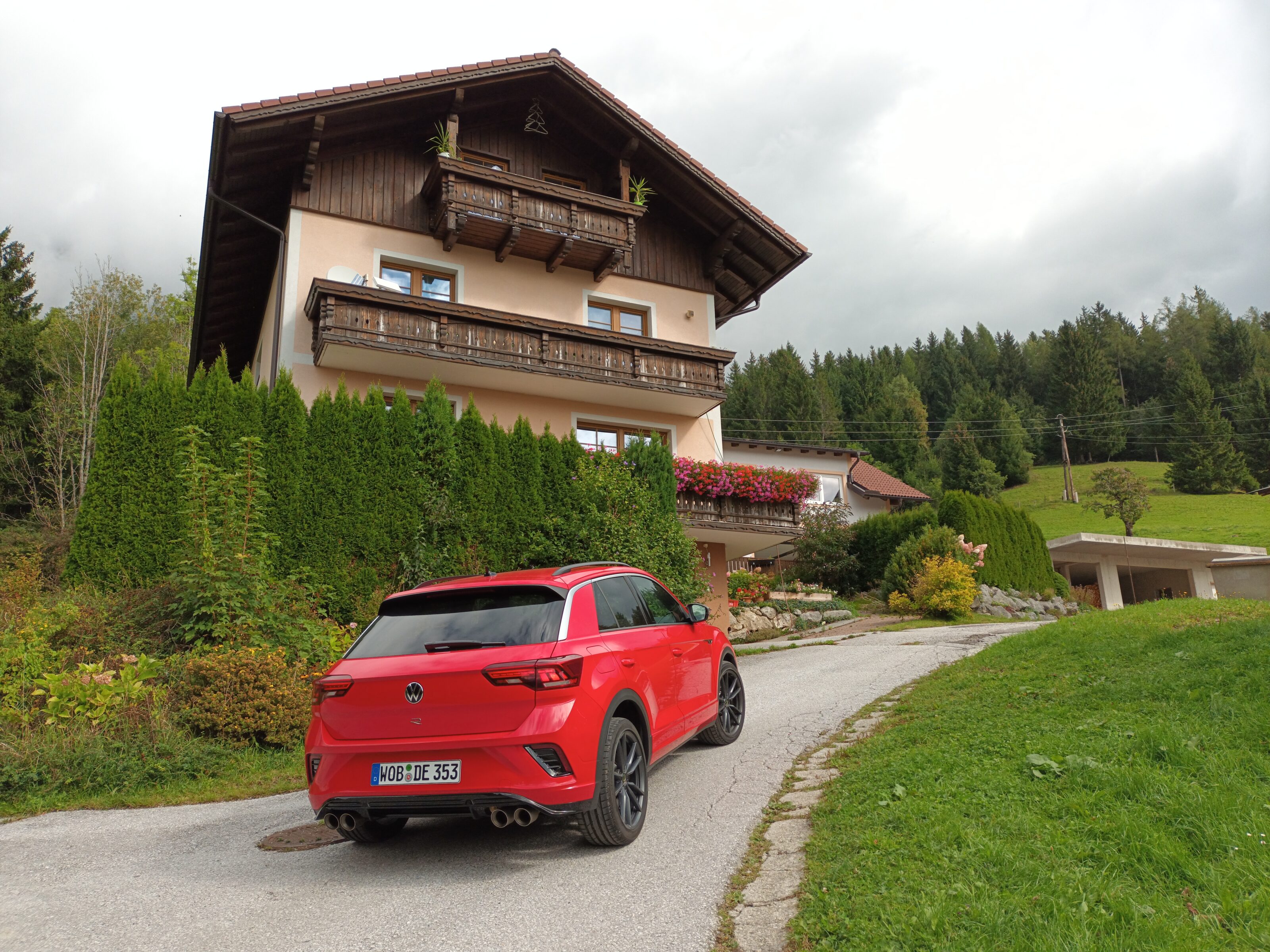
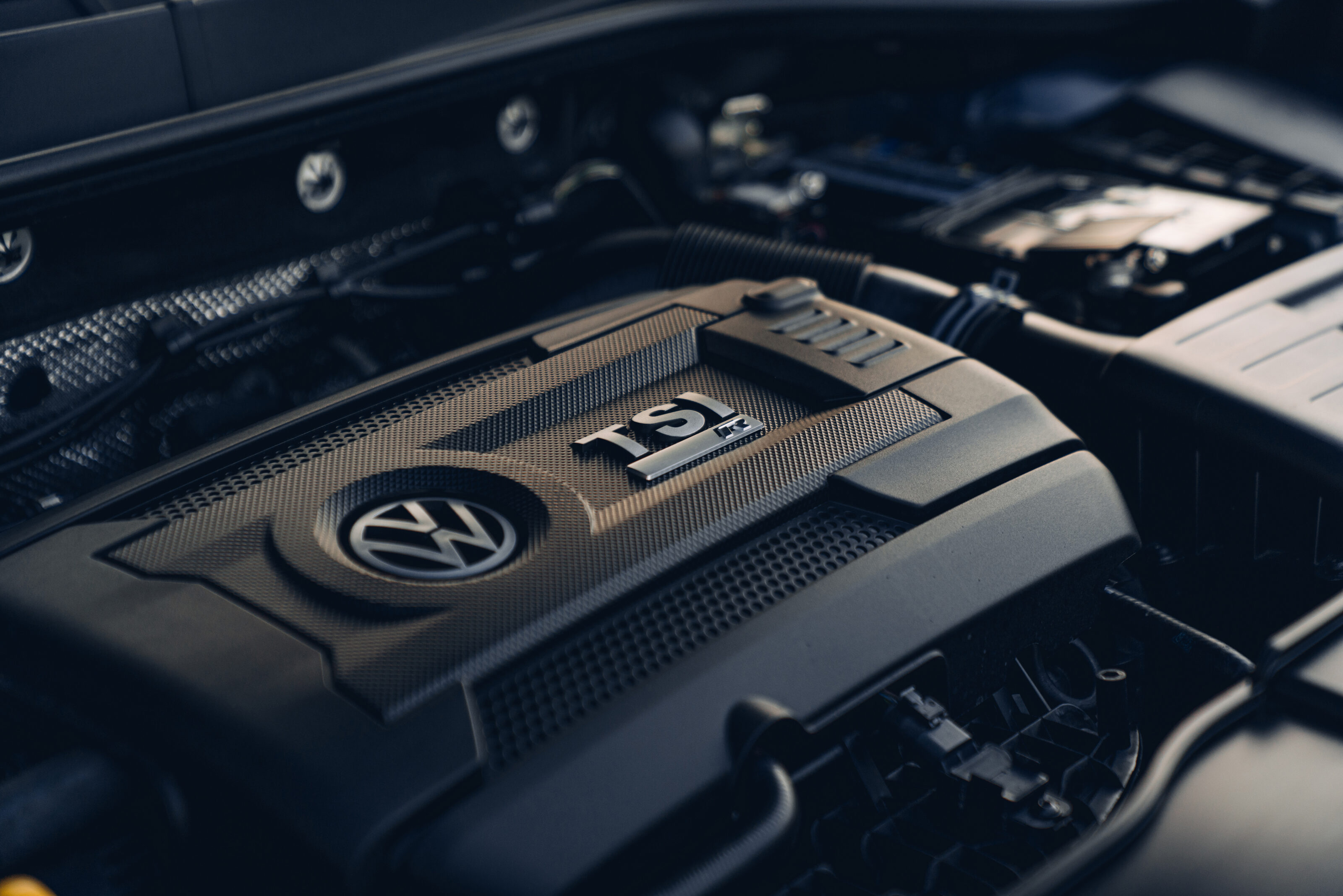
Instead of the milder 1.5-litre and 2.0-litre engines common to the rest of the family, the R denotes something more exciting under the bonnet and the same 2.0-litre turbocharged powertrain you’ll find powering the potent Golf R along with a host of accompanying refinements and additions to warrant the Volkswagen performance halo branding.
It won’t arrive on Australian shores until about July 2022 but when it does, it’ll go up against other classy high-performance go-anywhere models including the closely related Audi SQ2 as well as the Mini Countryman JCW, BMW X2 M235i, Jaguar E-Pace P300, Mercedes-AMG GLA35 and Volvo XC40 T5. Or will it?
My first drive of the T-Roc R’s twin-under-the-skin SQ2 was in the vaulting mountains of the Austrian Alps and in the name of context and consistency I’ve returned to the stunning scenery for a first blast in the Dub, because It’s okay to compare a Pink Lady with a Sundowner as long as they were picked in the same orchard.
Volkswagen is yet to confirm pricing for Australia but it will almost certainly be a giant-killing bargain by comparison.
Volkswagen is yet to confirm pricing for Australia but it will almost certainly be a giant-killing bargain by comparison. The current T-Roc flagship – the 140TSI Sport – costs $41,000 before on-roads and it too gets a 2.0-litre bolted to AWD. If the R comes in at even $15,000 more it’ll still be cheaper than anything remotely similar and substantially less expensive than every rival with comparable power – but let’s wait and see.
If we’re close, that’s sharp value before you even get to the standard equipment but when you do, the T-Roc R feels anything but cheap.
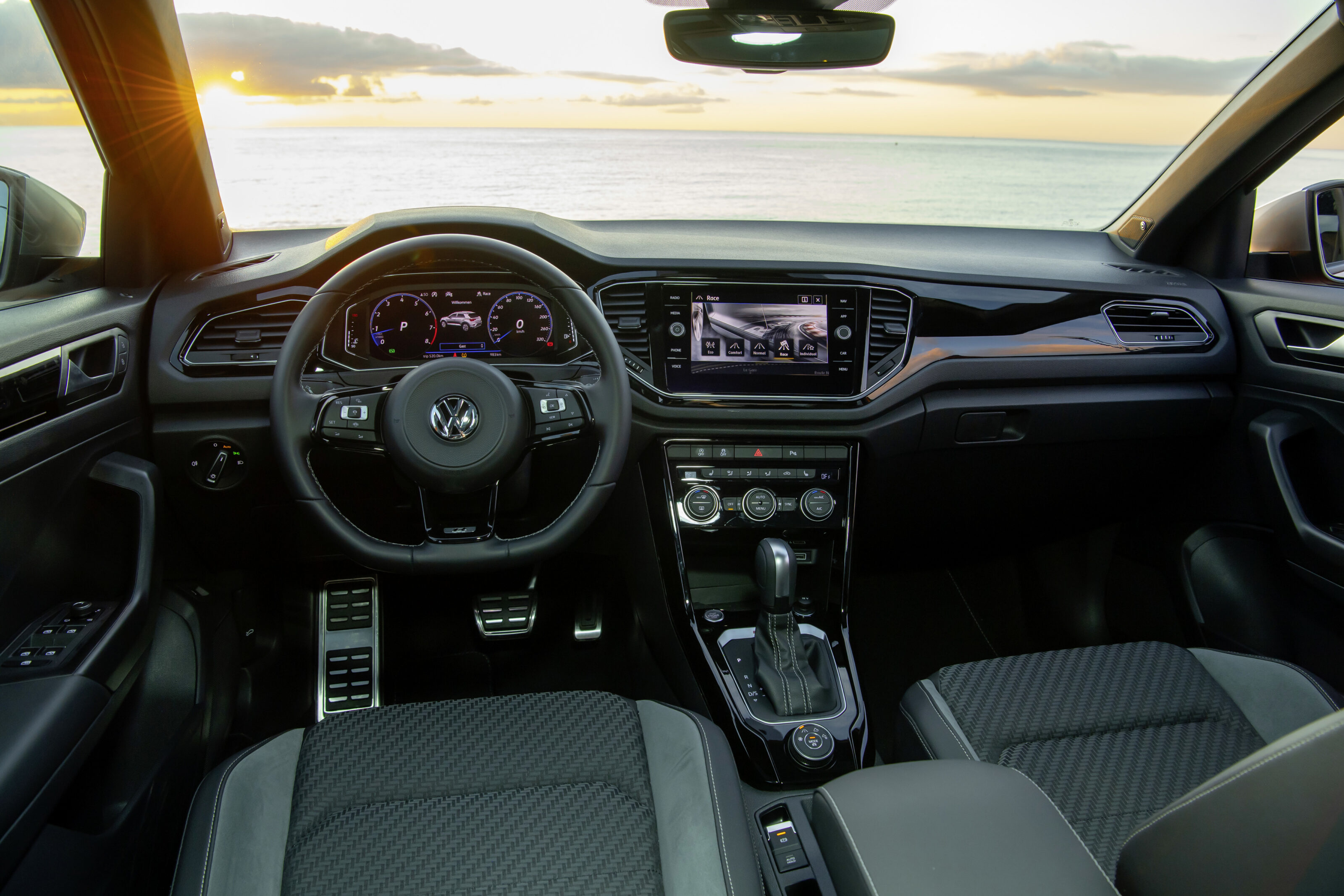
There’s smartphone mirroring via a crisp 8.0-inch central touchscreen complemented by 10.2-inch digital driver’s instruments, all-LED exterior lighting, keyless entry and start, adaptive dampers, 19-inch wheels, a sports interior with combination cloth/Alcantara upholstery and extensive driver assistance and safety systems.
A head-up display, sunroof and electrically adjustable seats are a few notable exclusions for this particular vehicle, while some cheap plastics were not, but the Australian jury is still out on all that stuff. Don’t be surprised if we get a little more premium offering as standard.
What it definitely will get, however, is the defining donk under its bonnet; a prodigiously powerful EA888 four-cylinder that puts out an effervescent 221kW and 400Nm via all four wheels through the proprietary 4Motion and seven-speed dual clutch powertrain – all of which is donated by the Golf R.
That means strong, consistent acceleration whether it’s dragging on dry roads or finding a line through unsealed mountain passes – officially the dash to 100km/h from nothing takes 4.8 seconds. Braking is similarly confident with rotors donated by the special Performance Pack option available for the Golf R with a 430mm diameter disc albeit with sliding single-piston calipers.

Several driving modes are available but they’re buried in touchscreen menus and the default normal mode is absolutely the best all-rounder that preserves a respectable level of sportiness without spoiling the pleasant ride. As this is the T-Roc though, it gets a few different terrain modes to fiddle with as well, boosting the versatility compared with its hot hatch sibling.
This particular car was fitted with the optional titanium Akrapovic exhaust that looks a million bucks, a million times classier than the standard chrome quad-tip affair. Although it adds a slightly meaner note, we would expect a bit more brat-brapp to justify the added expense.
The single choice of ubiquitous dual-clutch auto brings a familiarly likeable balance of urgent and aggressive cog-swaps but intuitively smooth shifting when required and the paddleshifters were rarely grabbed at.
As the scenery blurs along, it’s difficult to identify an arch-rival for the R. Something about its suspension feels livelier than the SQ2, with an almost complete refusal to understeer.
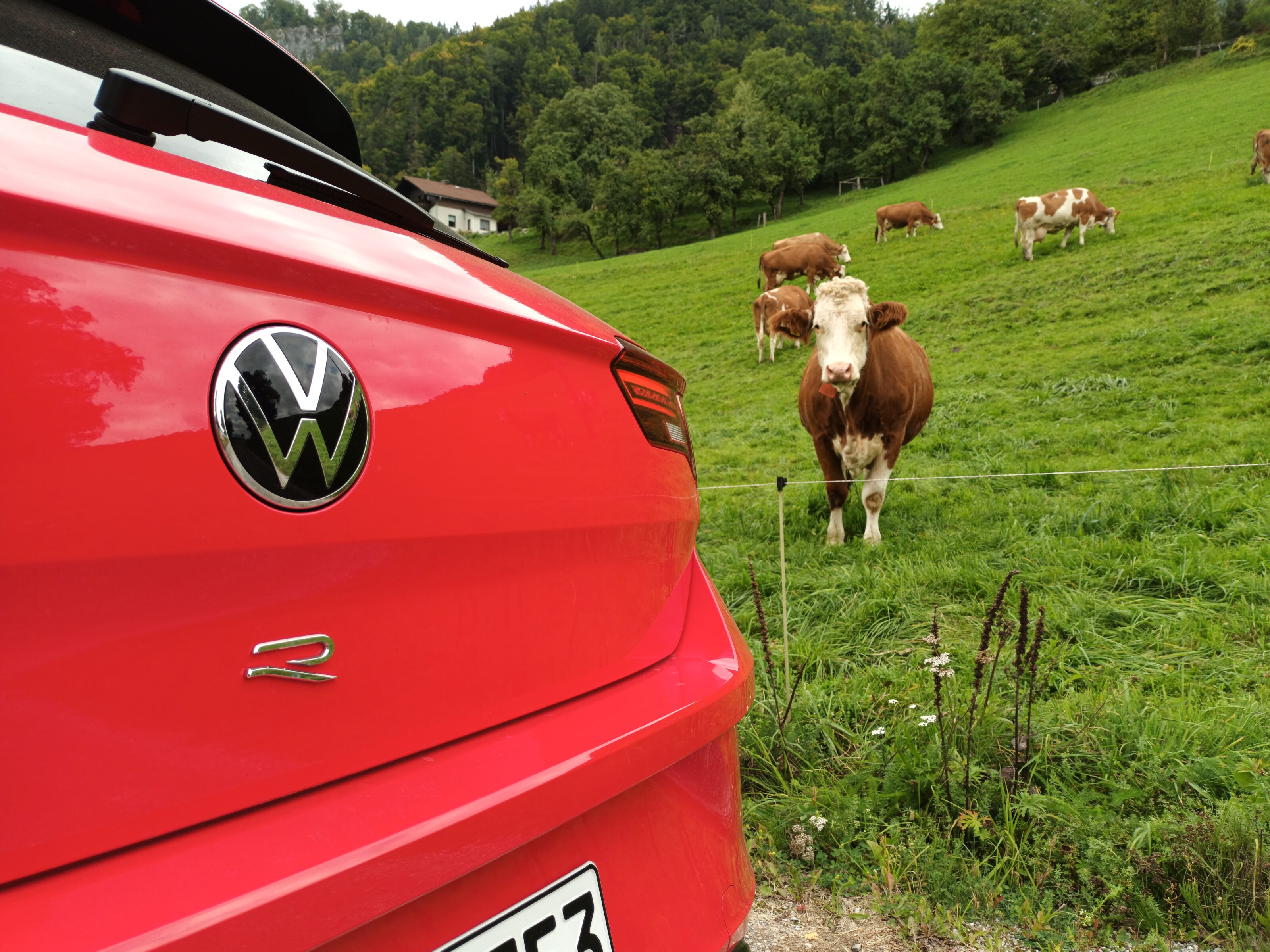
More options, terrain modes and customisation features broaden the appeal of the new T-Roc flagship, but there’s a simplicity to the new variant that could be better celebrated and its beautifully deft fire-and-forget nature is one of its greatest strengths. If it was a smartphone, I’d be sticking with the ringtone and screensaver it came with out of the box.
As the scenery blurs along, it’s difficult to identify an arch-rival for the R. Something about its suspension tune feels livelier than the SQ2, with an almost complete refusal to understeer and beautifully confident front-end grip adding to a similar stubbornness experienced in its resistance to body roll. That said, body control is excellent while the ride is not crashy or severe.
Actually, there’s an unexpected serenity to the R’s cruising nature thanks partly to the Hankook Ventus S1 Evo rubber that strikes a lovely balance of low noise, grip and comfort, as well as those adaptive dampers. In the zone from 130km/h to 180km/h the T-Roc feels fundamentally competent and defies its measurements with a stability more common to large SUVs on the freeway. And while it weighs an average 1575kg, it carries it with the stamina of a marching marine.

And while the spectacular scenery is passing by so fast, it’s easy to forget there is a boot 12 litres bigger than a Golf’s following you around (392L) along with three adult-sized seats in the second row, and a chassis that offers a modicum of off-road ability rolling underneath. Hell, it even did an average of 7.8 litres per 100km.
With its combination of high-speed comfort for when the way ahead is straight but a brutish confidence to tackle corners when it isn’t, the T-Roc R has an almost mystic ability to shorten distances and evaporate time. Ironically though, you’ll almost always want to take the longer route.
In many ways, the T-Roc R is the perfect interpretation of VW’s first principles and exactly where the brand should be positioning itself in the market. Rather than trying to compete with the high-premium offerings that come with luxury price tags to match, the hottest T-Roc has comparable performance paired with no-nonsense level of specification and a price that you can expect to be as sharp as its looks.
Until Skoda rolls out an RS version of its Karoq, Audi announces a substantially cheaper SQ2-lite, or perhaps Cupra weighs in with something similar, this is the small high-performance SUV to have – and there’s nothing sinful about that.
EDITOR’S NOTE: While the review above shows a mix of press images and our journalist’s own road–trip photos, you can click on any of the photos to enter our gallery, where you’ll find a bevy of dynamic press photos.
2022 Volkswagen T-Roc R specifications
| Engine | 1984cc 4cyl, dohc, 16v, turbo |
|---|---|
| Max power | 221kW @ 5000rpm |
| Max torque | 400Nm @ 2000-5200rpm |
| Transmission | 7-speed dual-clutch automatic |
| Weight | 1575kg |
| 0-100km/h | 4.8s (claimed) |
| Economy | 7.6L/100km (claimed) |
| Price | $57,500 (estimate) |
| On sale | July 2022 |
Snapshot
- Both Mustang GT and Mach 1 could see decrease of power and torque in the US
- Changes allegedly due to US emissions standards
- Unclear if it will affect Australian-delivered GT and Mach 1
UPDATE, October 13: A spokesperson from Ford Australia has confirmed to MOTOR that while the Mustang GT and Mach 1 V8s will see a power decrease in the US, Australian-delivered models will remain unchanged.
“Changes were made to US Market Mustang GT models to meet more stringent LEV III (Low Emission Vehicle) regulatory emissions requirements that resulted in a horsepower and torque reduction for the 5.0-litre V-8 engine,” said the Ford spokesperson.
The spokesperson also went on to say “Australian-delivered Mustangs will not be affected.”
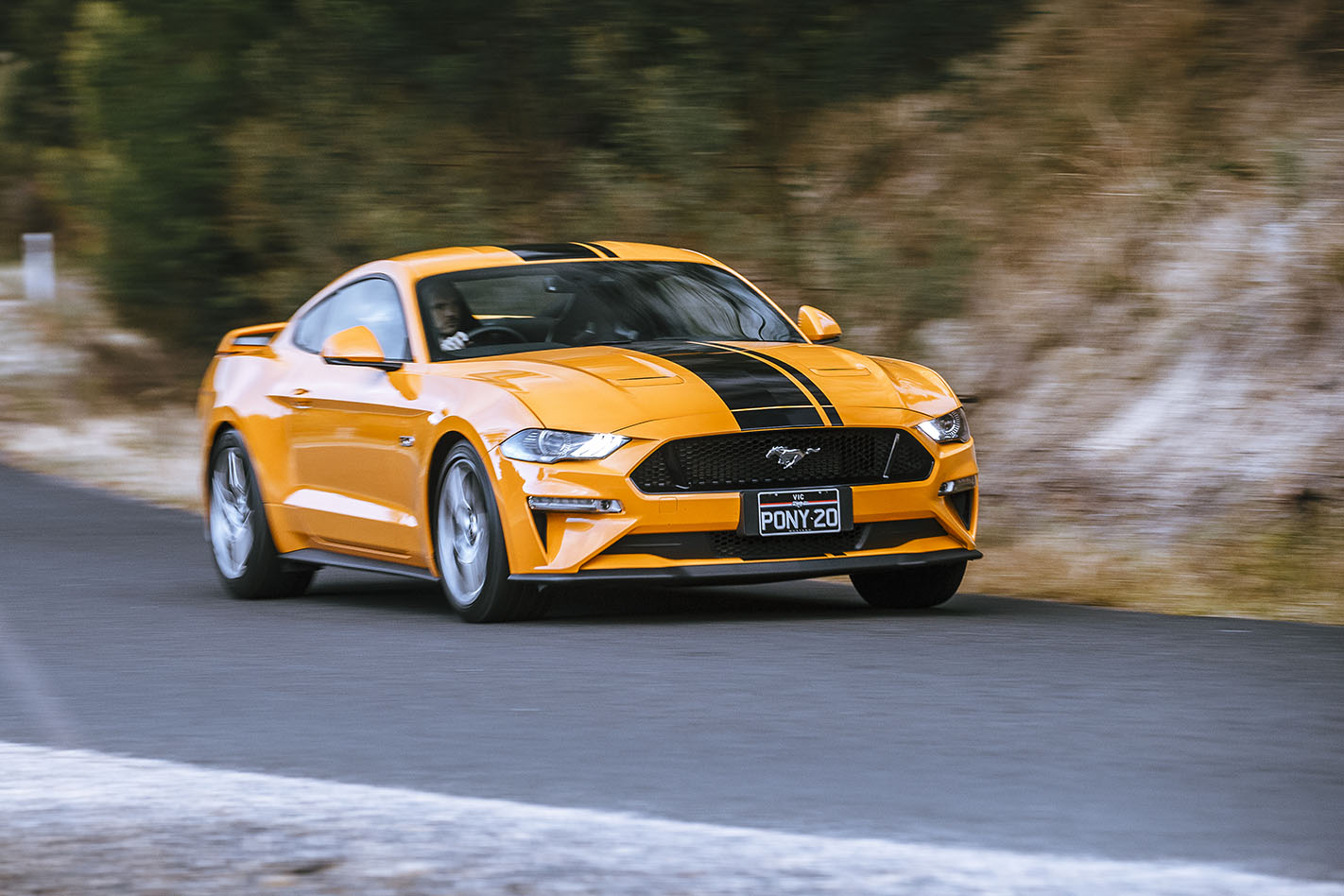
The story to here
October 12: The Ford Mustang V8 range could be subject to a power decrease from 2022, after a report in the United States stated the output from the bent-eight could change to meet tightening US emissions standards.
According to Ford Authority, both V8 Mustang GT and Mach 1 could end up with detuned versions of the aspirated quad cam 5.0-litre Coyote V8 currently powering the pony car.
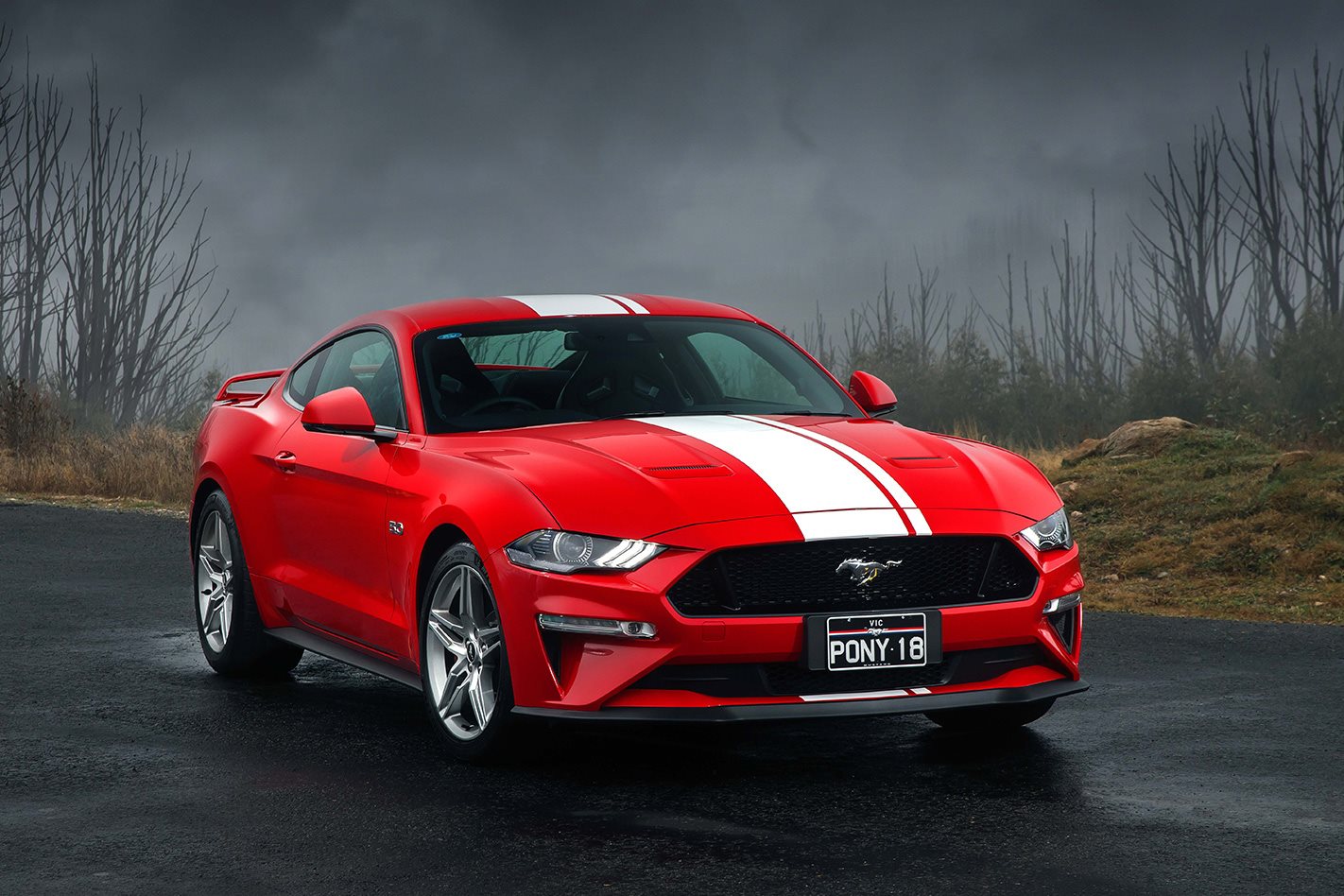
If implemented in Australian models, both versions will reportedly see a drop of 10hp (7.5kW) and 10ft/lbs (14Nm) of torque from their current peak power figures, regardless of automatic or manual drivelines.
For the GT, that means a power decrease from 460hp to 450hp (343kW to 335kW), while the Mach 1 will drop from 480hp to 470hp (357kW to 350kW) for US models.
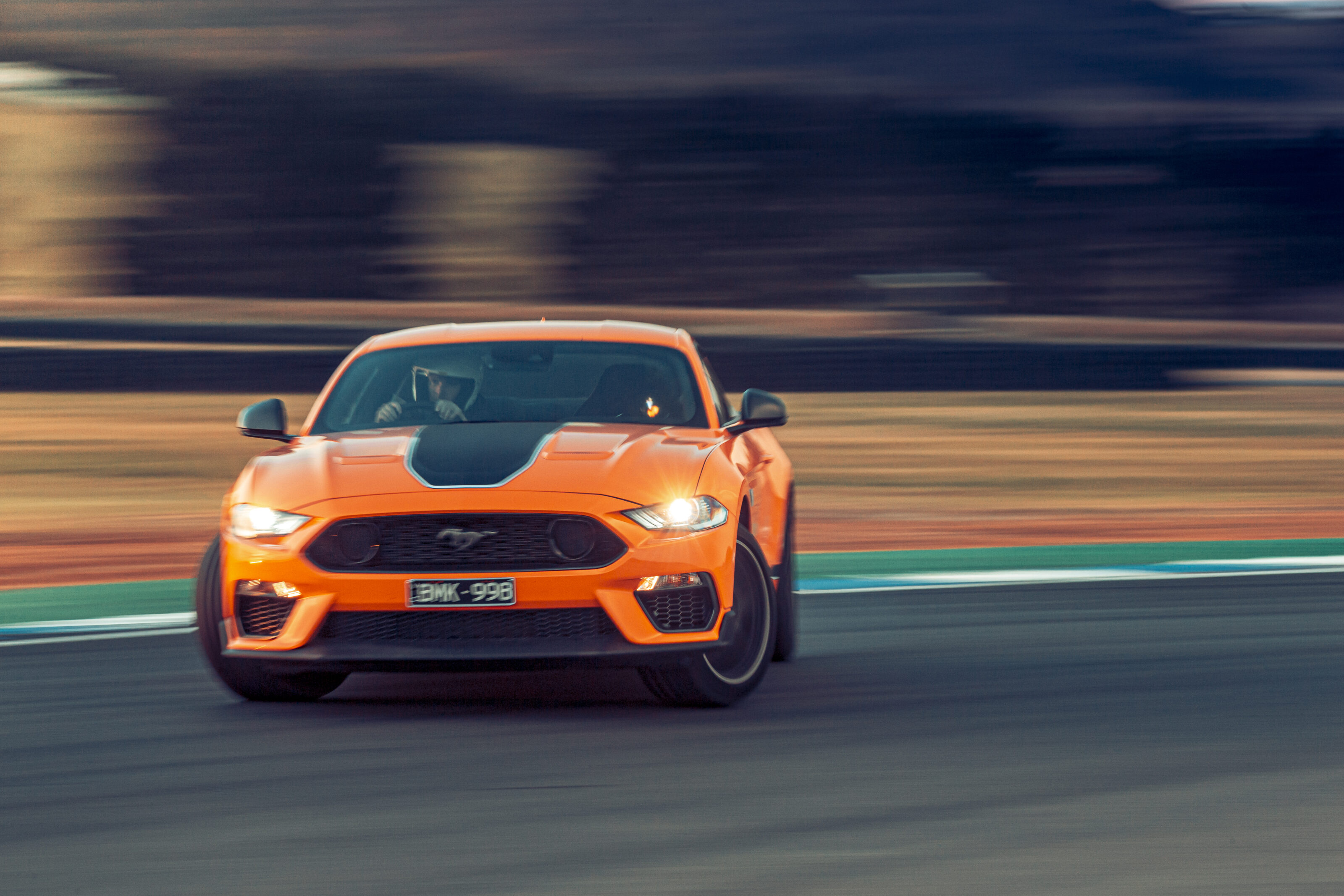
The exact details of the ‘slight alterations’ are yet to be specified, however the supercharged 5.2-litre Mustang GT500 (which is not available in Australia) will allegedly stay unchanged due to it being a low-volume speciality vehicle.
It’s also unclear if those changes will affect Australian-delivered versions of the GT and Mach 1 Mustang, which currently develop 339kW (GT) and 345kW (Mach 1) from their Coyote V8s as delivered here in Australia.
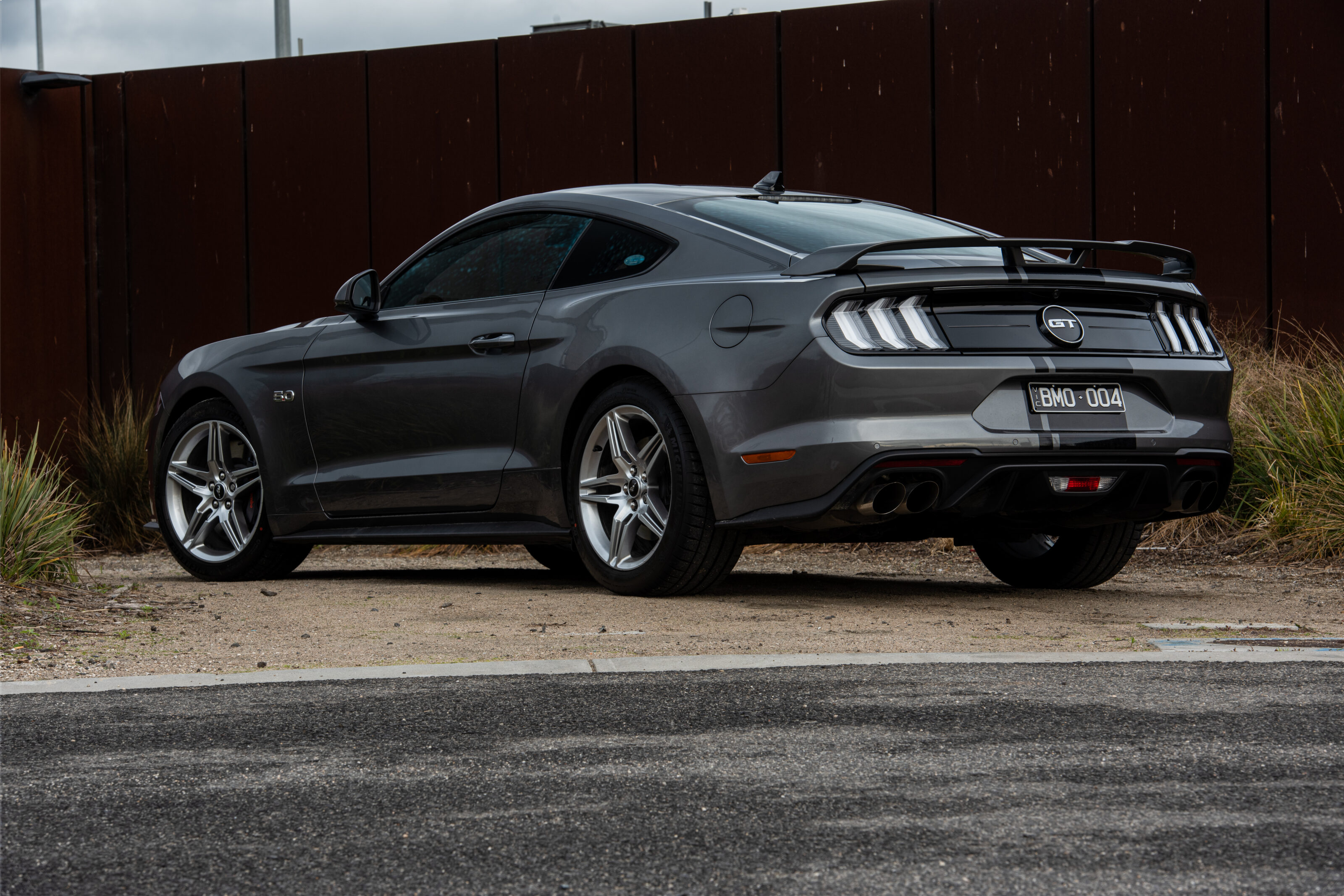
The S550 Mustang has enjoyed solid sales in Australia since it was first introduced in 2015, with over 20,000 examples sold since then with several factory-backed special editions in between, such as the Bullitt, R Spec and SM17.
MOTOR has contacted Ford Australia for a statement regarding power outputs for future V8 Mustangs and is awaiting a response.
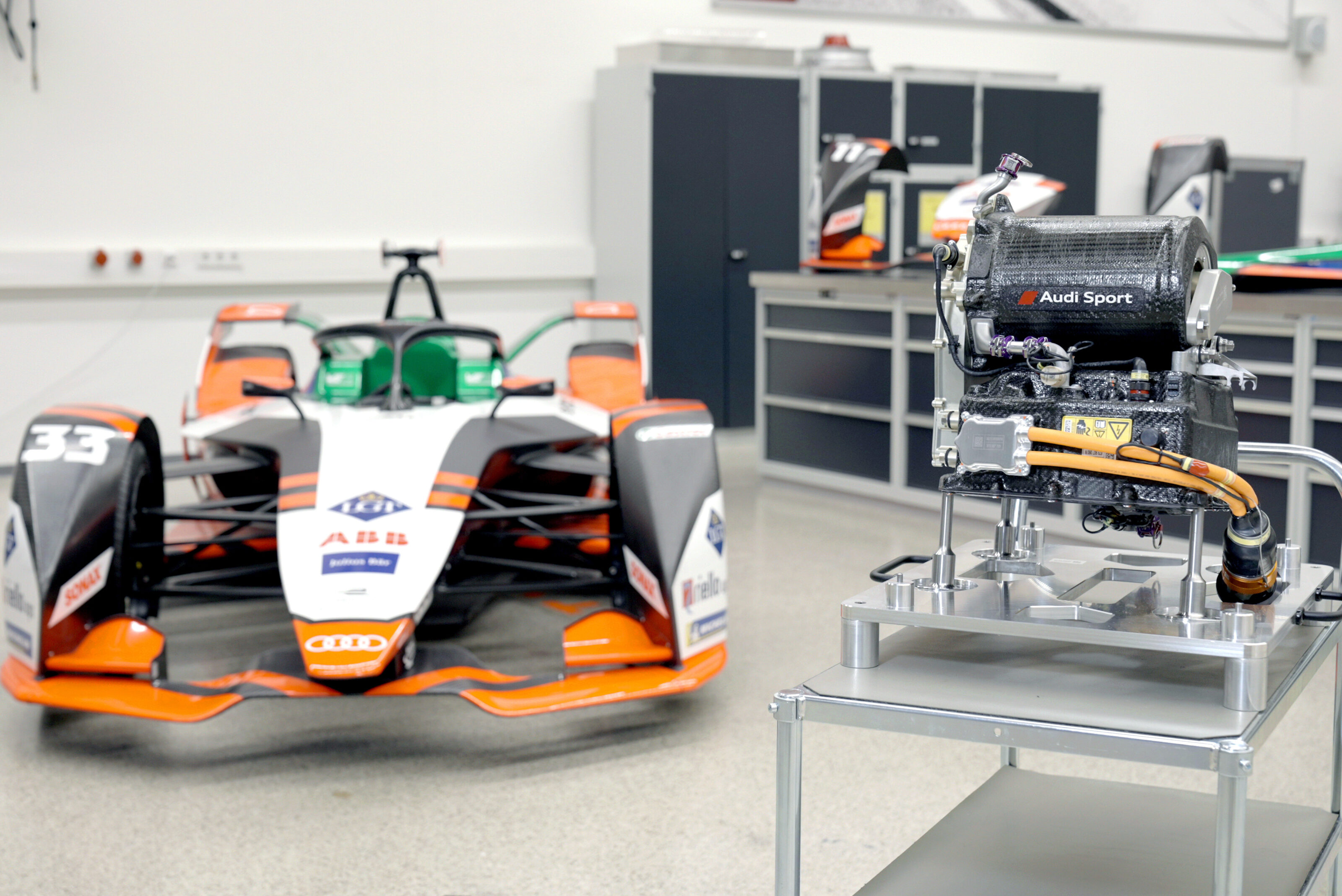
When Audi decided to cease its factory Formula E and DTM racing programs it also became the custodian of two seemingly redundant powertrains overnight.
In 2019 it had built one of the greatest four-cylinder combustion engines in motorsport history which it used to claim back-to-back DTM titles, while its Formula E powertrain which debuted earlier this year is claimed to be a staggering 97 per cent efficient.
However, with no factory racing in either category, both the combustion and electric powertrains were set to be packed away to collect dust. That is, until a team of engineers realised they could combine the pair to take on the toughest race in the world – the Dakar Rally.
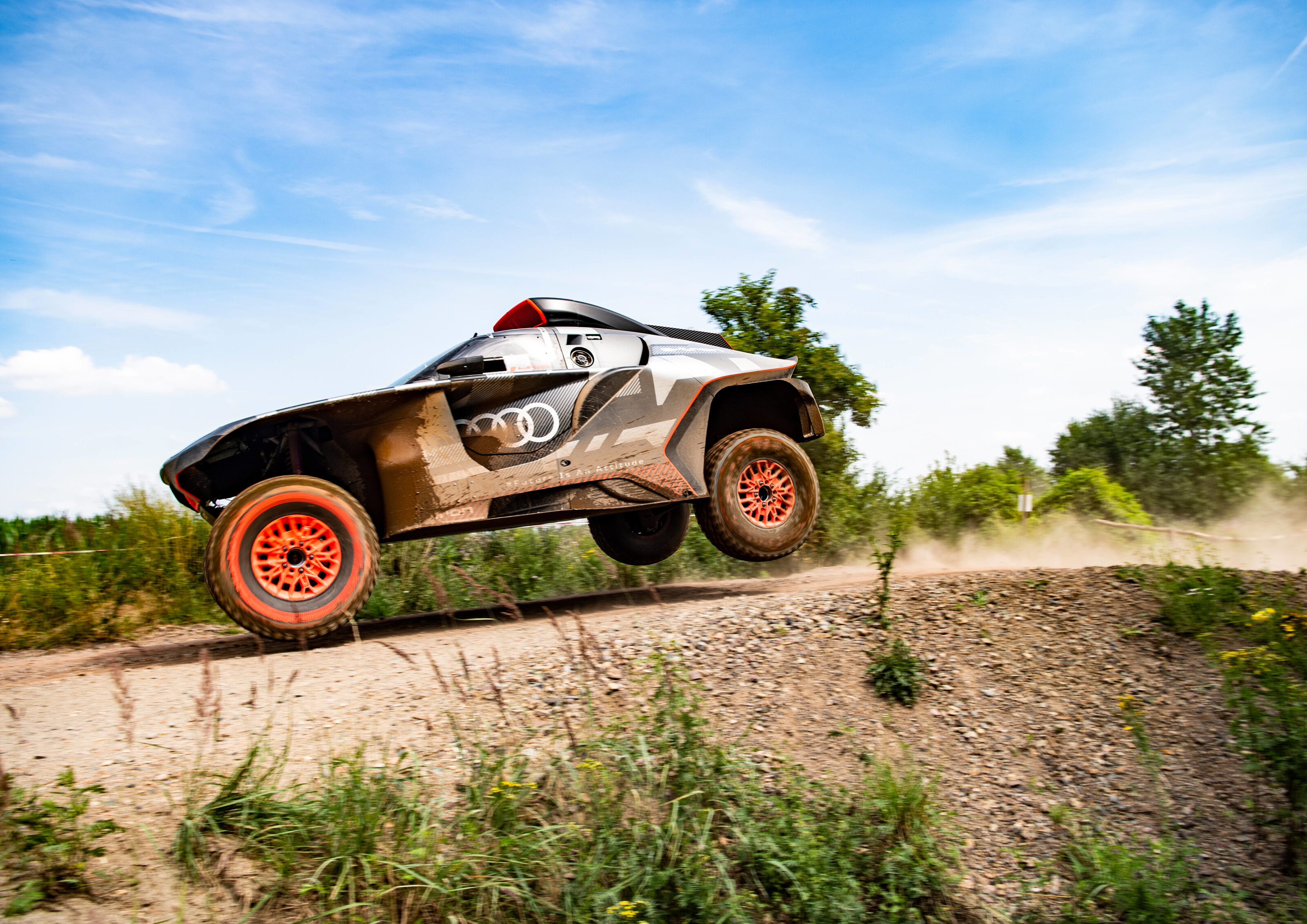
The longest and most difficult off-road motorsport event in the world is hard enough in a combustion powered vehicle, but Audi intends to complete it without using an ICE engine to power the wheels. Bold, considering the longest stage of this year’s Dakar rally ran for 813km (337km of which were competitive), while the penultimate day included 511km of timed course.
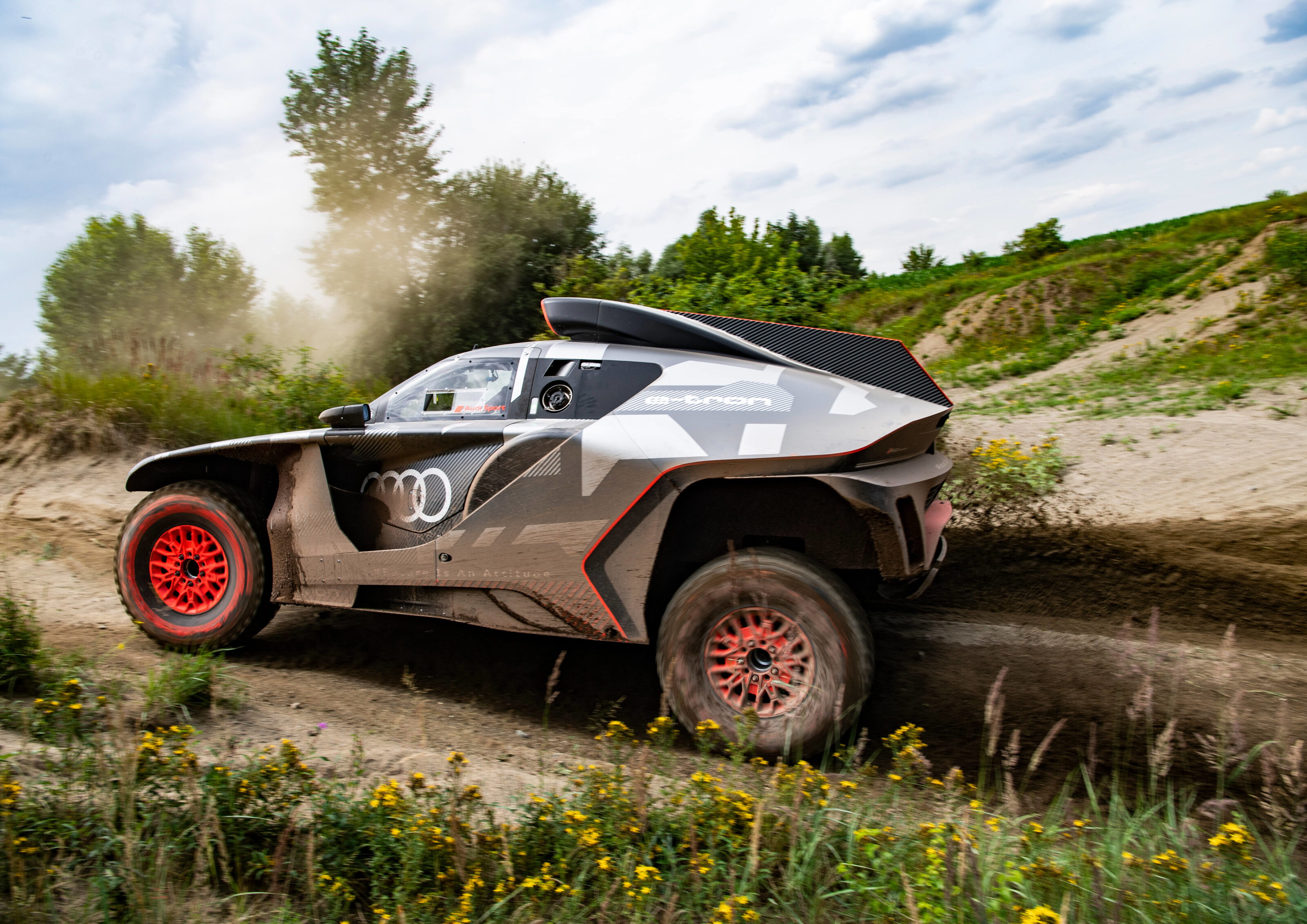
The vehicle Audi has built to take on the challenge is the RS Q e-tron, which will use a trio of electric generators, a 50kWh battery and range extender to take on global motorsport’s most gruelling event. We’ll forgive you for being underwhelmed when you first hear the phrase ‘range extender EV’.
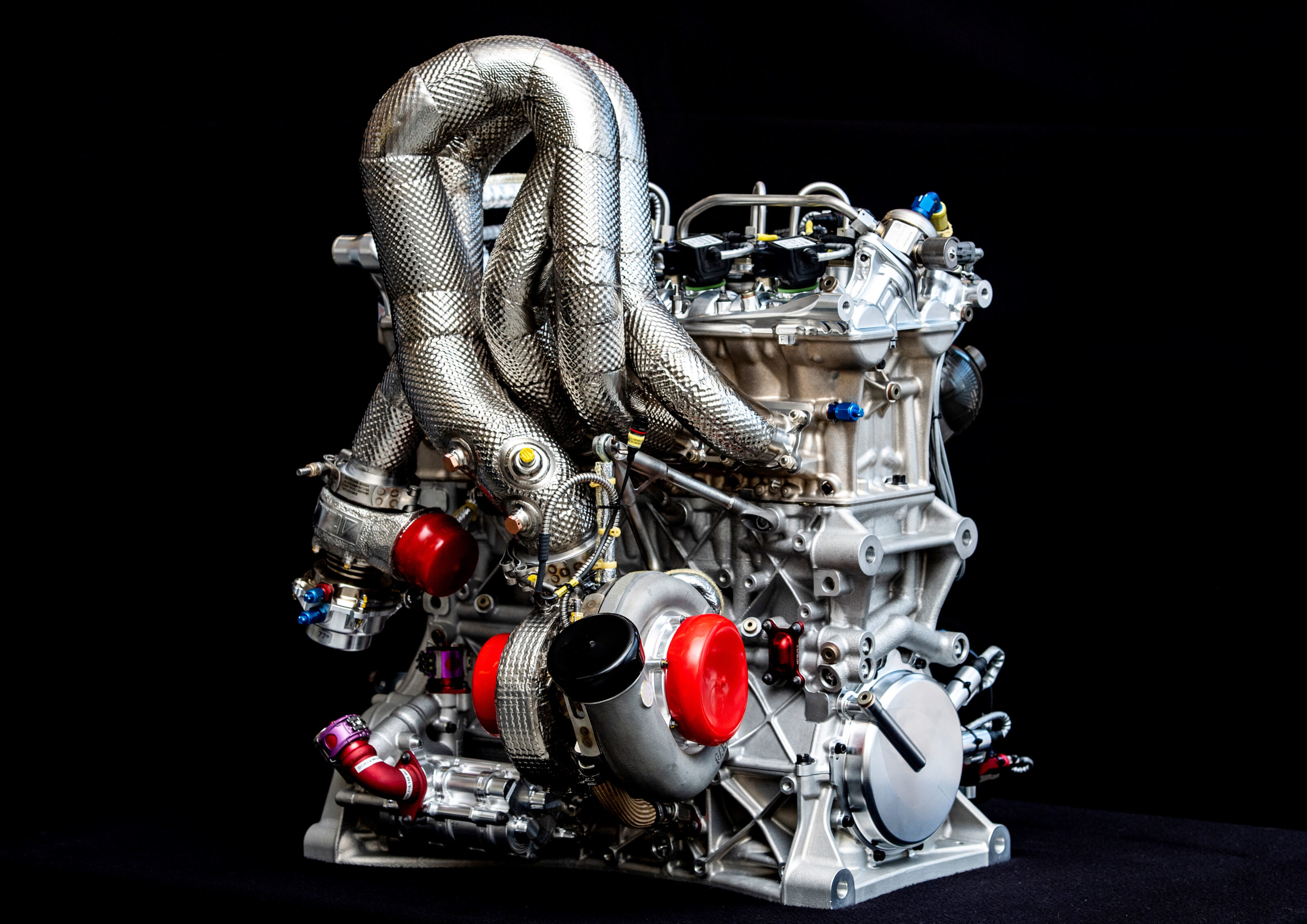
However, the term feels like a bit of a misnomer when you consider that the range extender in question is that same 477kW-capable 2.0-litre turbocharged four-pot that until this year was powering Audi’s championship-winning RS5 DTM racers.
While in DTM trim, the ICE unit screams its way to 9500rpm, but it will be working within a different performance window in the Saudi desert. Operating as a range extender, Audi says the four-pot will spin between 4500 and 6000 revolutions a minute, with power dropped to 200kW. With efficiency instead of power the name of the game, Audi changed the pistons, injectors and turbo to better suit the new purpose.
Weighing roughly 370kg, Audi says the battery is around the same size as that used in its FE car, and is charged while the RS Q e-tron is being driven.
Audi claims the final specific consumption of the engine is under 200 grams of fuel per kWh produced – roughly twice as efficient as a standard diesel generator. Given the RS Q e-tron is fitted with a 300-litre fuel tank, and with each litre weighing roughly 740g (depending on temperature), that means the Dakar challenger can generate more than a megawatt hour of power to get it through each stage.
At each axle will sit a motor generator and inverter lifted from the FE07 Formula E racer, while a third will be paired with the combustion engine. Audi claims the MGU units weigh just 35kg each (while the range extender tips the scales at 85kg).
Stepping away from Formula E provides Audi with extra engineering freedoms when it comes to the battery, of which the RS Q e-tron utilises a clean-sheet 50kWh capacity design. Weighing roughly 370kg, Audi says the battery is around the same size as that used in its FE car, and is charged while the RS Q e-tron is being driven.
Combined the total system output is 500kW, but this figure will likely change as the final regulations the RS Q e-tron will compete under are still being finalised. Being electric, the front and rear axles of the RS Q e-tron have no physical connection. Instead, software will play the part of a central differential, helping shuffle power fore and aft as needed. This helps save weight, while lowering mechanical complexity.
There are other benefits, as explained by Stefan Dreyer, Head of Development at Audi Sport racing. “The drivetrain is extremely efficient,” he says. “There is hardly any power loss. You don’t have to expect temperature problems while you’re driving slowly in the sand.
“But, above all, the electric drivetrain is much easier to control in all of the given situations. The maximum torque is available from zero revolutions. You can regulate the drivetrain very precisely, whether the car is going over jumps or driving in the desert.
“The electric drivetrain does not react to external influences such as air pressure, temperature and humidity. And you can use it at full power throughout the rally. It’s all much more consistent.”
Audi will be hoping its best of both worlds strategy will allow it to become the first non-ICE driven car to claim victory in the Dakar rally.
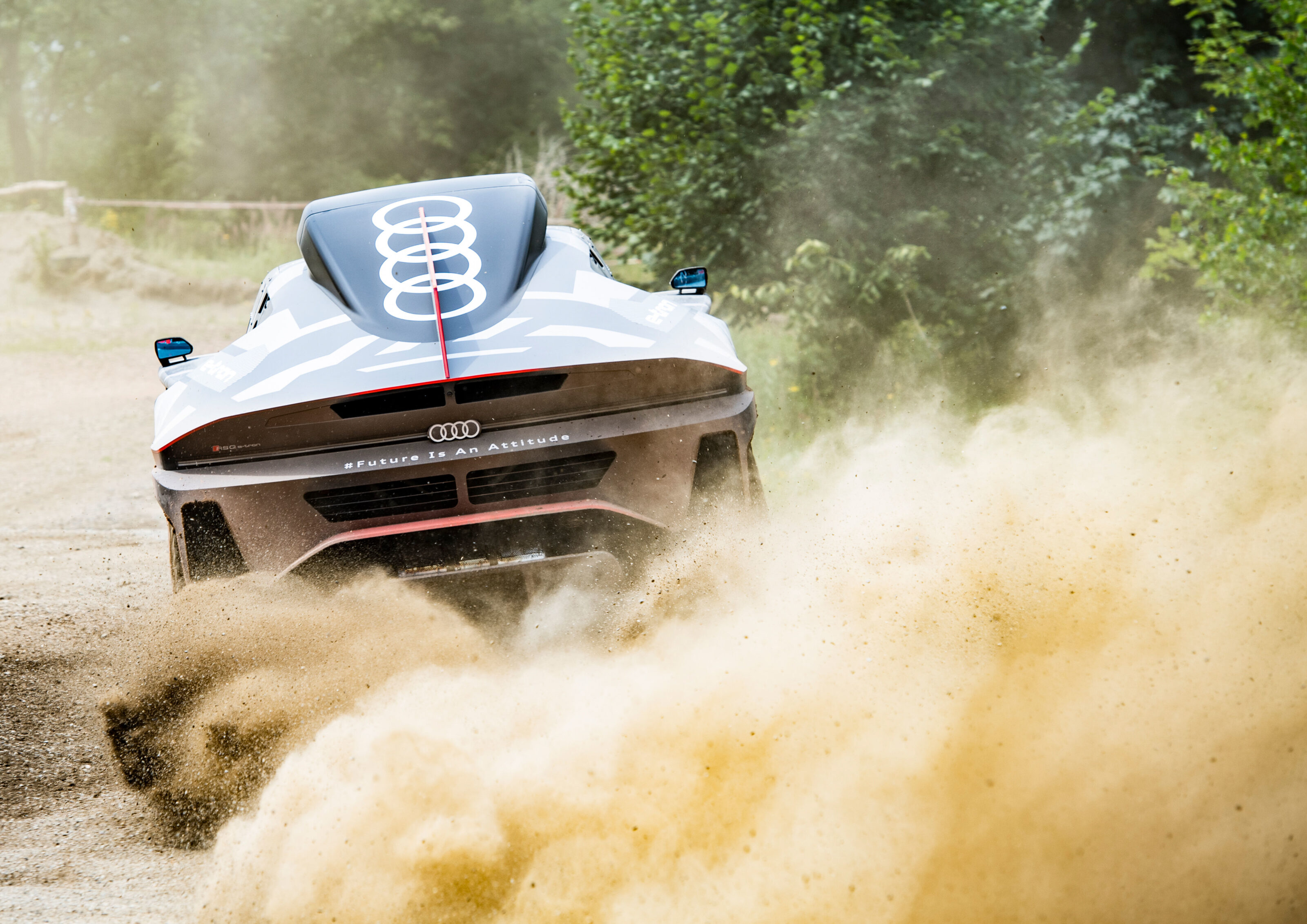
Energy management
Unlike a traditional race track, Audi’s engineers cannot plan every metre of the RS Q e-tron’s route in the Dakar rally, making engine management a challenge. As a result the team is having to develop new software that can adjust on the fly to ensure there is enough power generated to complete each stage.
Stress test
Where DTM and Formula E cars keep their wheels firmly planted on the ground, a Dakar racer needs to be able to clear dunes and other jumps. To compensate for these extra stresses engineers have strengthened several parts of the drivetrain with new casings and shock-absorbent mountings.
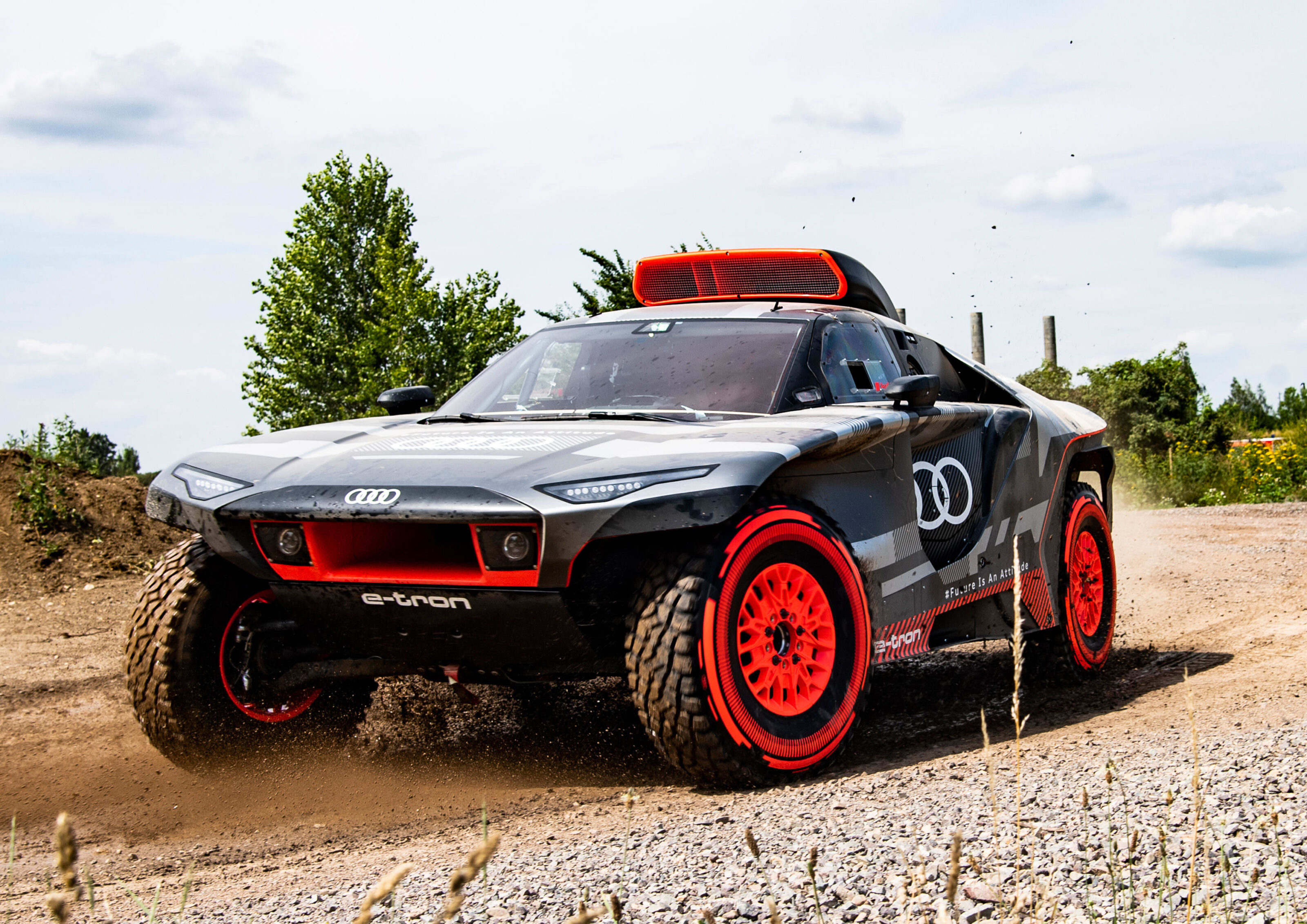
Alternate fuels
Audi has already been playing with using alternative fuel sources for its DTM-sourced range extender. In 2019 it used a “more climate friendly high performance fuel developed by Aral” in a ride car, claiming that the fresh mix reduced C02 emissions by 30 per cent without any modifications to the engine.
Heavyweight sprinter
While final race-spec homologation is yet to be finalised, the RS Q e-tron is expected to weigh in at roughly 2000kg sans drivers – making it one of Audi’s heaviest race cars. Understandable considering it is 4.5 metres long, 2.3 metres wide, and 1.9 metres tall. Mind you, it’ll still crack 100km/h in a claimed 4.5 seconds, even on loose surfaces.
Snapshot
- Ioniq 5 allocation limited to 400 units u2013 240 in 2021 with the rest in early 2022
- 240 sold in a touch over two hours
- Rear-wheel drive variant starts at $71,900 before on-road costs
Hyundai Australia’s first batch of Ioniq 5s has already been sold, with the allocation exhausted in just over two hours.
Online ordering for the highly anticipated electric vehicle went online at 9.30am AEDT, as a rush of demand saw the site crash with ordering suspended, only to be restarted later on in the day.
Despite the glitch, all 240 Ioniq 5 units were sold in just under two hours, with Hyundai telling Wheels 170 deposits were taken.
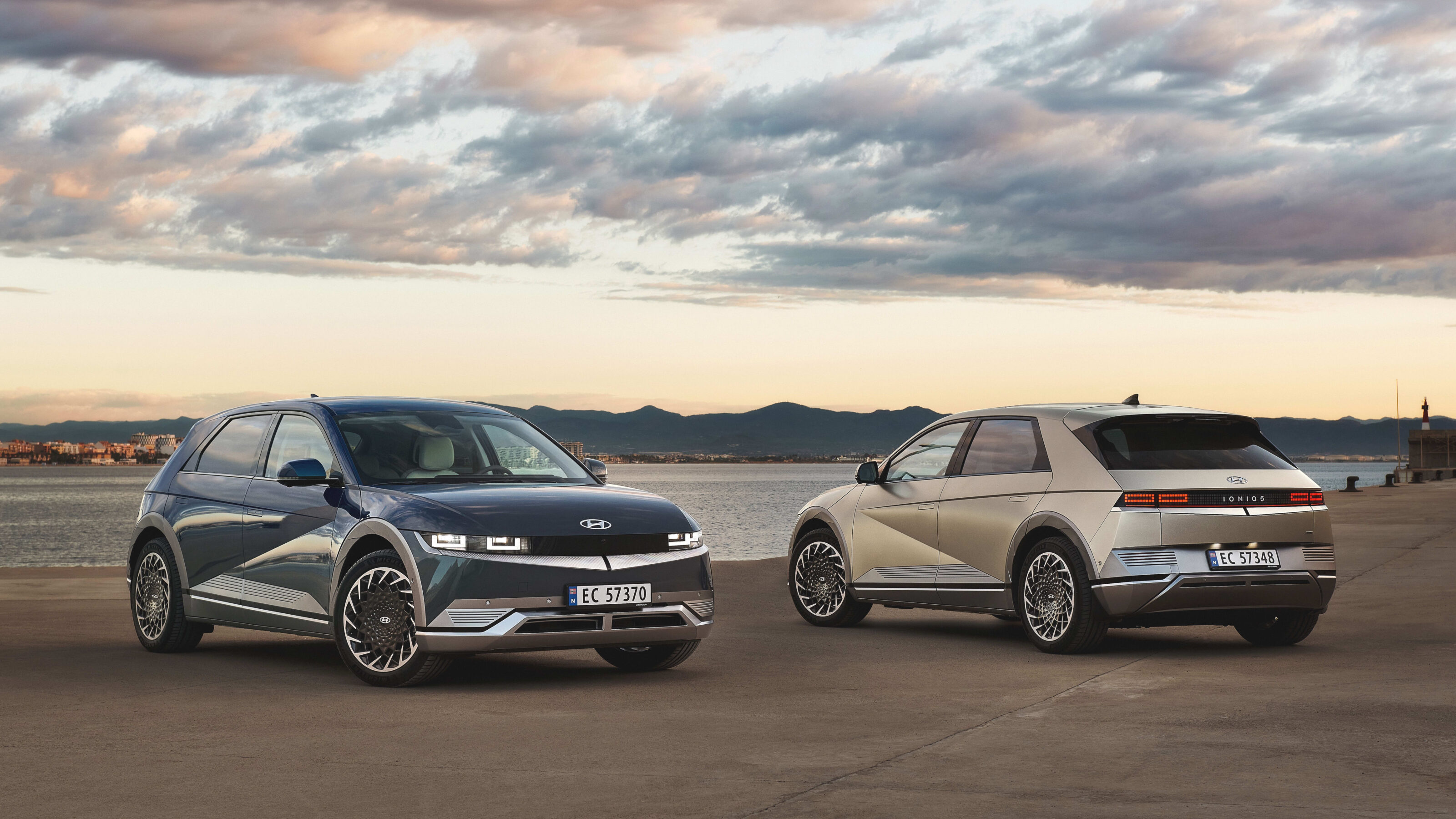
A spokesperson for Hyundai Australia said a further allocation will be opened up for ordering early next year, while 240 of today’s orders landing in December 2021 before the remaining 160 arrive in 2022.
“The initial allocation of 240 Ioniq 5s for Australia has been sold, with 170 deposits taken this morning through the Hyundai website,” said the spokesperson.“Online ordering went live at 9.30am AEDT. The load on the website led to some technical issues and the early suspension of the ordering process. The vehicle sold out in just over two hours.“Once we have clear visibility of vehicle supply, we intend to release a second allocation of IONIQ 5s, with timing likely to be early 2022. Customers who missed out will receive regular updates about the supply situation and timing for release of the next batch.“We plan to only release vehicles for order once production has been scheduled, to ensure reasonable delivery timeframes for our customers.”
Starting at $71,900, excluding on-road costs, for the 160kW RWD Launch Edition, those who ordered the 225kW AWD Launch Edition will fork out an extra $4000 – with both sitting below the luxury car tax threshold.

You’re probably seeing lots of Aston Martins in the media at the moment, primarily due to the long-awaited and delayed release of the new James Bond film No Time To Die.
Here at MOTOR we’re not interested in donning a tux, mixing a Martini and foiling the ill-conceived plots of overly ambitious villains, we just want to know whether the new Aston Martin Vantage Roadster stacks up as a proper driver’s car.
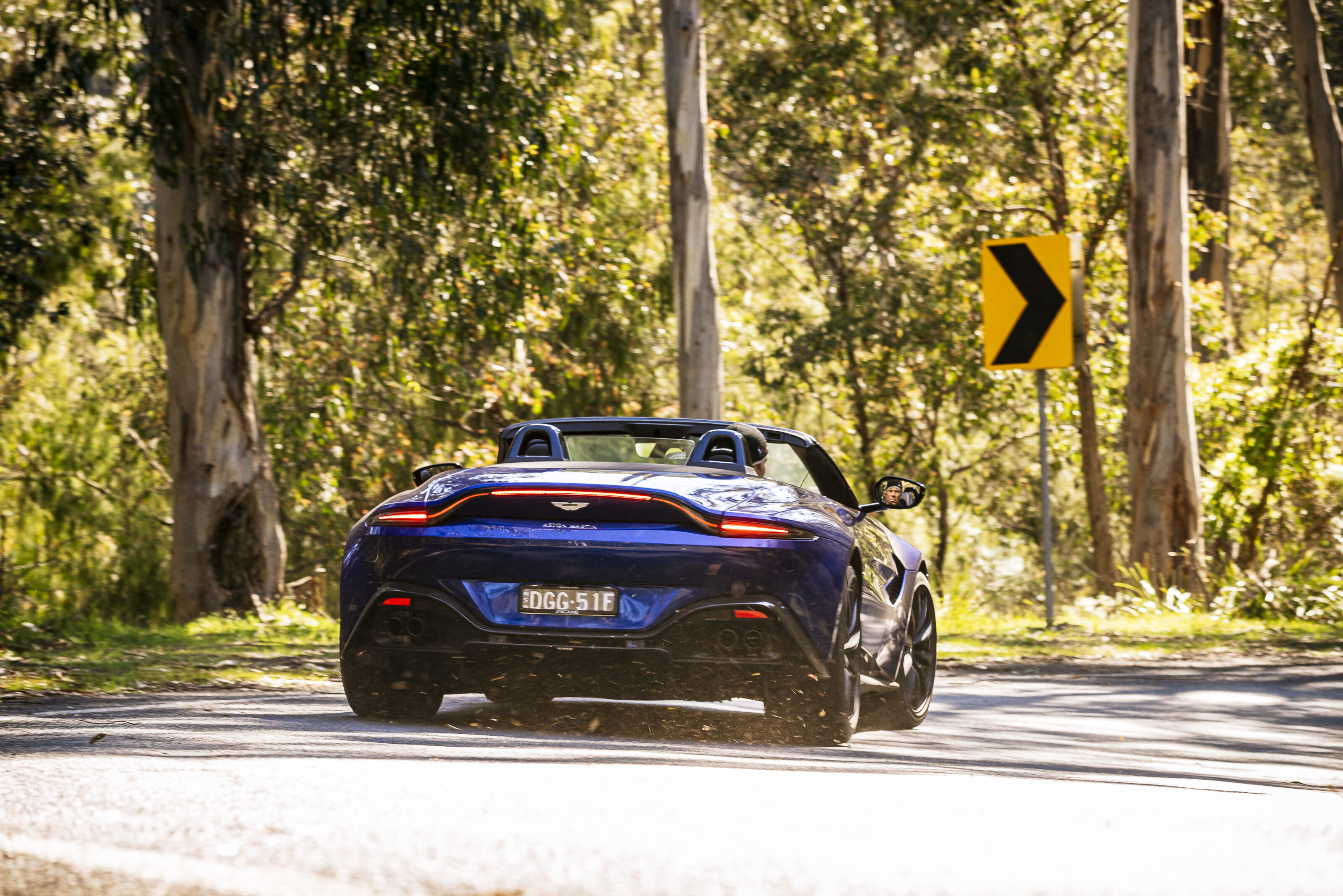
The Roadster variant was introduced as part of the Vantage’s recent facelift which also brought improvements to the interior as well as the option of a more traditional vaned grille to fill that gaping front end.
There is a topless elephant in the room, though. Mercedes-AMG’s C63 Cabriolet donates its engine to the Vantage Roadster and offers virtually identical performance – 375kW/700Nm vs 375kW/685Nm – for literally half the price of our optioned-up $384,036 (before on-roads) Aston test car.
But as is often the case, the specs don’t tell the whole story, but to find out the full tale you’ll have to watch the video or check out editor Enright’s Car vs Road feature in the next issue of MOTOR magazine.
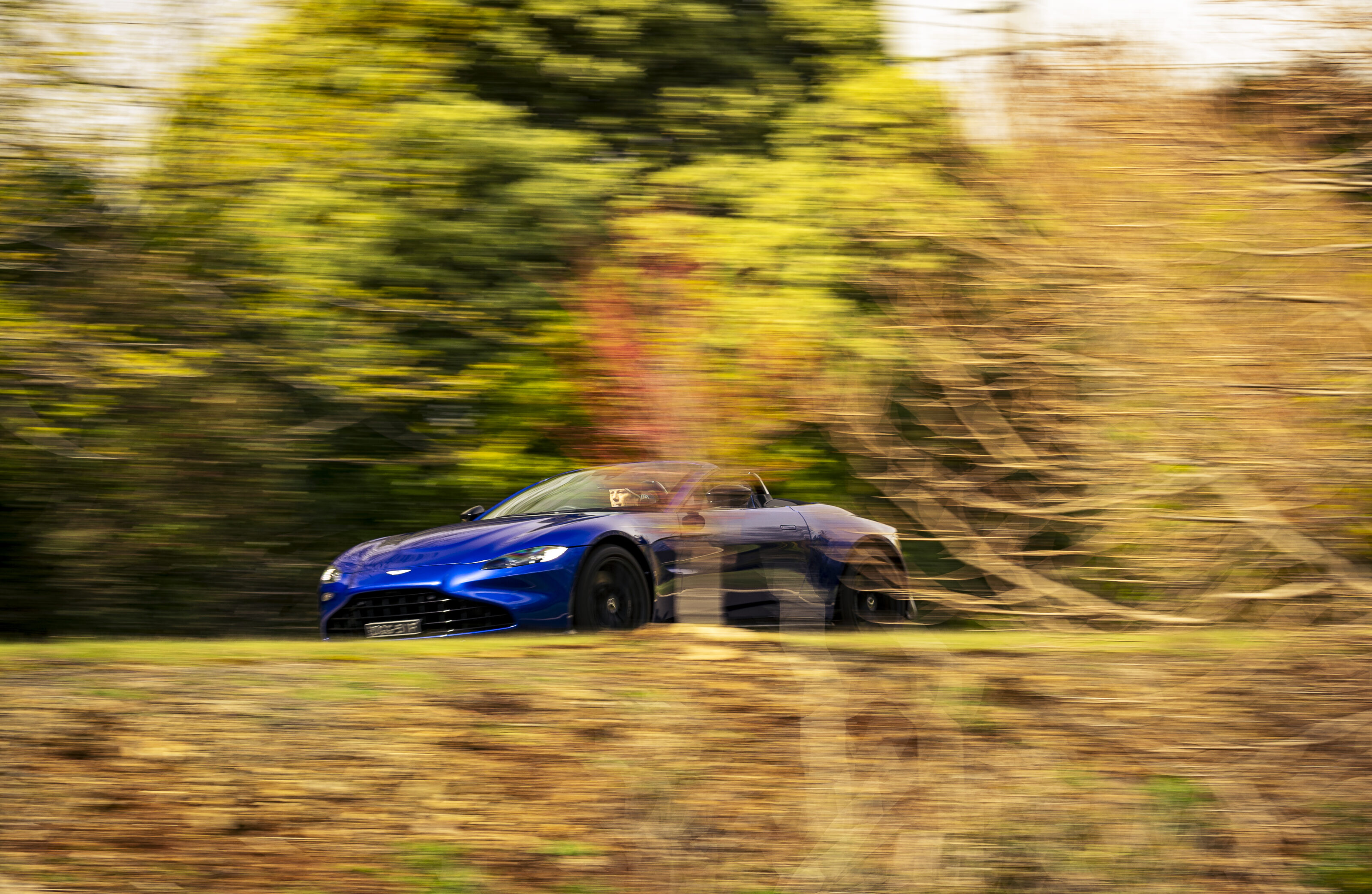
UPDATE: Renault has confirmed the successor to the Kadjar will be named Austral. Catch up on the Austral story at our link below.
The story to here
Next-gen Kadjar spied inside and out
- New Kadjar to share Nissan Qashqai CMF-C platform
- Spy pics reveal our first look inside
- Similarities and differences to Qashqai revealed
October 12, 2021: The new Kadjar is now expected to be known instead as the Renault Austral. You can read about it here.
Spy photographers have caught the next-generation Renault Kadjar out in the wild in Spain, offering us our first look inside the mid-size SUV as it readies to launch in 2022.
Interior photos taken while the prototype was parked reveal how the new Kadjar might compare to the new-gen Nissan Qashqai, a car it will be closely related to on a shared CMF-C platform.
The presence of a six-speed manual transmission lever implies this prototype could be packing the mild-hybrid 1.3-litre petrol powertrain from the next Qashqai, which will offer 103kW/240Nm or 116kW/260Nm through a six-speed manual.
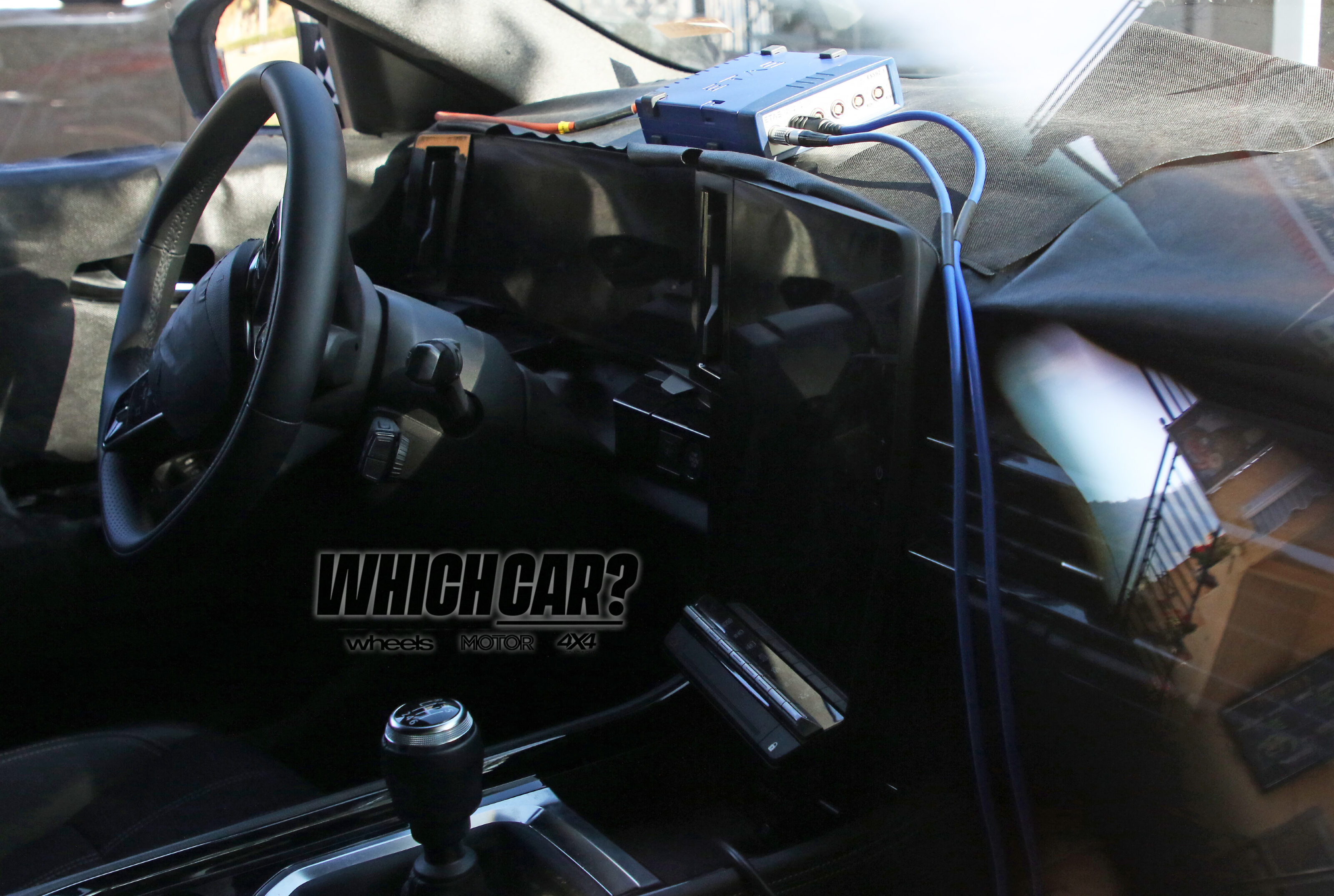
Although Renault’s test drivers have concealed most of the dash and door trim, we can tell the Kadjar successor’s interior will be different in overall layout and styling to the incoming Qashqai’s.
An extra-large tablet screen laid vertically on the centre console is joined by a digital cluster behind the steering wheel, hinting at a strong focus on driver infotainment technology.
Meanwhile, the metal-look HVAC buttons aligned in a row underneath the central tablet suggest a sleek, upgraded design. The D-shape steering wheel looks similar to the current generation Kadjar’s, but lacquered spoke inserts, matching trim elements elsewhere, implies ambience will also be improved.
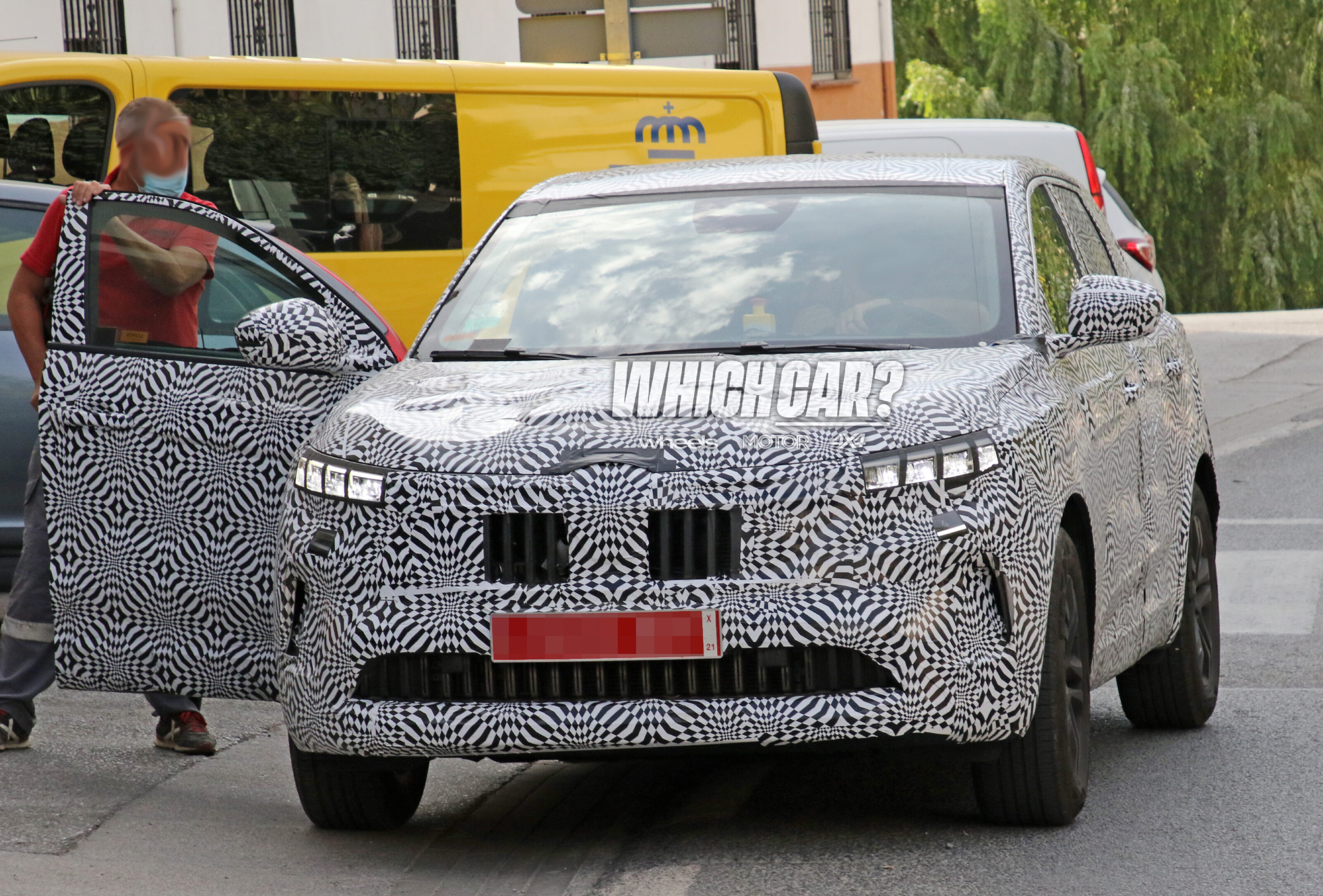
Exterior-wise, slits in the extensive camouflage up front reveal the stare of LED-style headlamps, but it’s hard to discern anything else. However, the prototype’s high-profile tyres and small wheels suggest we might be looking at something close to a base level trim.
Expect to learn more about the Kadjar’s successor as we approach its expected launch in the middle of 2022. Renault would not comment on on the photos, or whether Australia is being considered as a potential market.
The Spanish-built current model went on sale in Australia only in 2019, almost four years after its European debut, and was replaced by the South-Korean sourced Arkana mid-way through 2021.
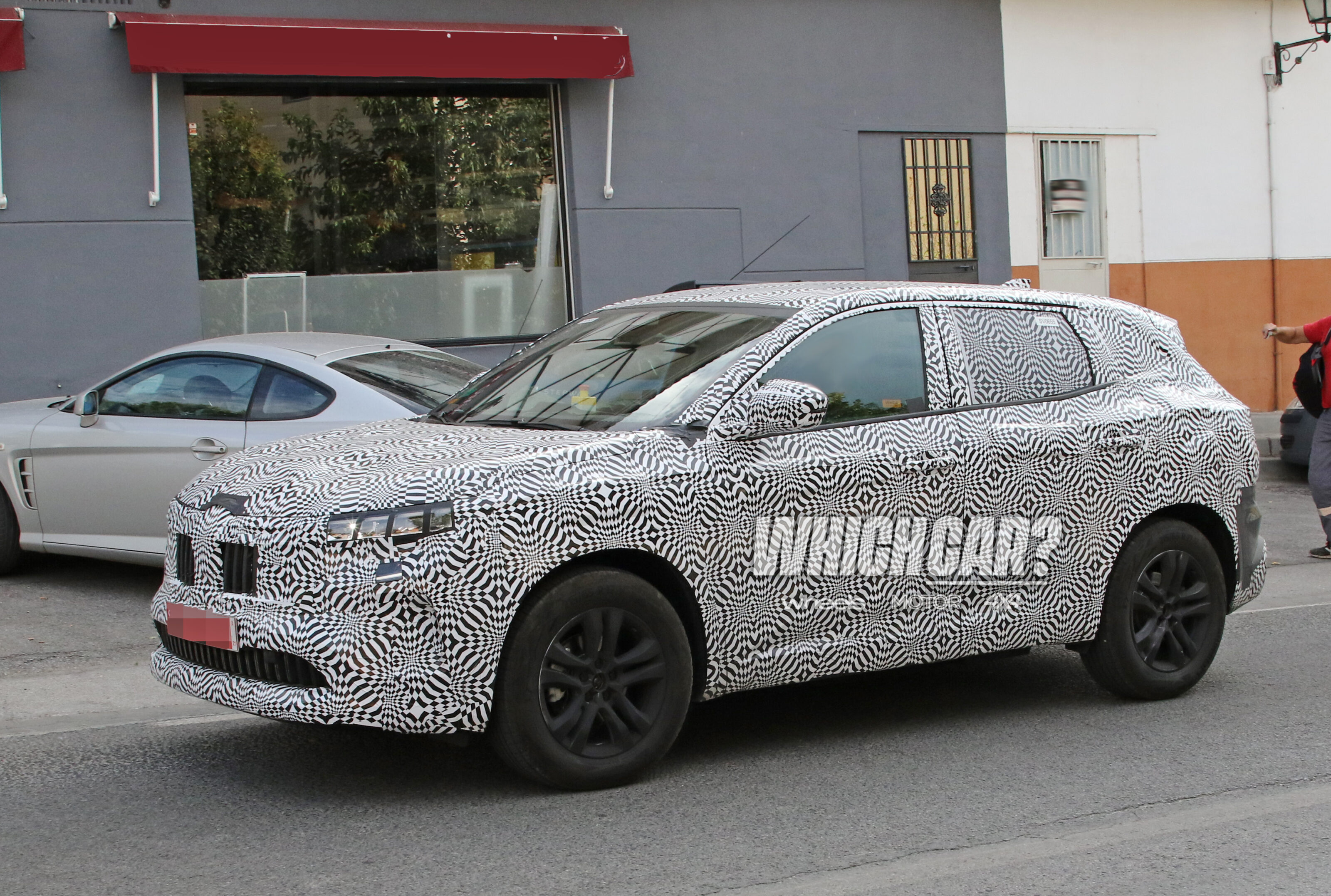
Since arriving, both nameplates have faced a competitive mid-size SUV segment, with the Arkana moving 97 units in 2021 until October and the Kadjar selling 500 in 2020 before being replaced.
*This article incorrectly stated the Arkana had sold 45 units so far in 2021 and the Kadjar sold 53 in 2020, and has been updated for accuracy
Unless you’ve been living under a rock in recent years, you’ll be aware of the Singer 911. The brainchild of Englishman Rob Dickinson – cousin of Iron Maiden frontman Bruce and a renowned musical artist himself – the Los Angeles-based company has made a name for itself making some of the world’s finest restomod Porsche 911s.
Singer certainly wasn’t the first business to have the idea of bringing a classic car forward a few decades while keeping its aesthetic charm, but it’s emblematic of a movement that’s gaining in popularity. Alfaholics GTA, Eagle E-Type, Callum 25, Twisted Defender, Cyan Racing P1800, Canepa 959C, Automobili Amos Delta are just a few of the old-school outside/new-school inside machines that have appeared in the past couple of years. We’ve covered off some of the finest earlier this month.
It’s not difficult to see why. You have the iconic looks but with modern technology, increased power and performance, up-to-date handling and greater reliability to boot. It’s piquing the interest of quite a few high-end car collectors that are either chasing something different or are becoming weary of the latest supercars that have ever-higher horsepower and price tags and ever-shrinking acceleration figures and decibel readings.
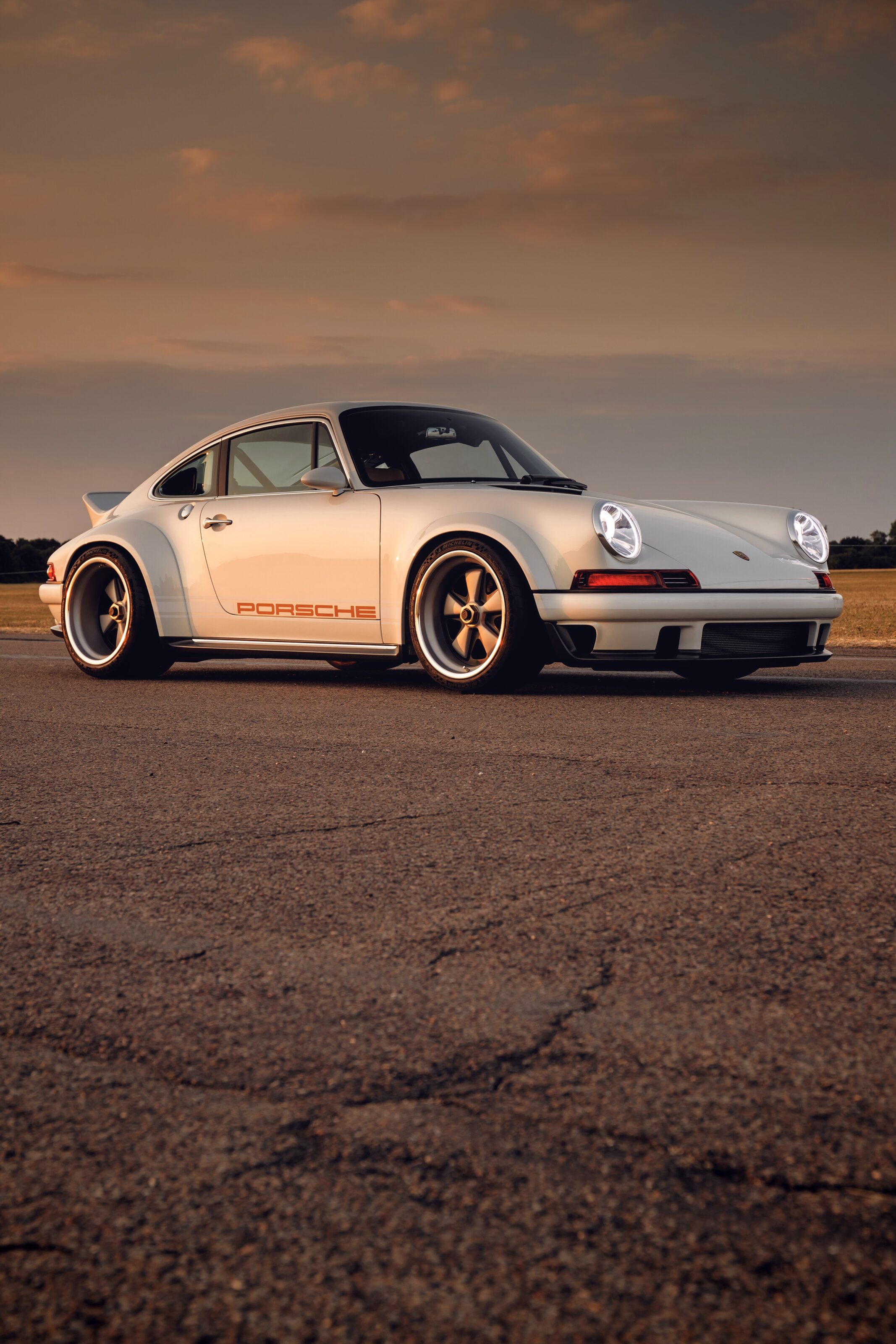
The question is what’s next? There are certain cars that lend themselves to the resto-mod treatment – 911, E-Type, Defender, Mini – but the job today is to identify the next bunch. Of course, with enough time and money and intent you could apply modern magic to any car, a Lada Riva or a Hyundai Excel, but in an effort to keep this halfway sensible we want to identify vehicles that might be commercially successful. The next Singer 911, if you will.
There are a number of criteria that must be addressed. First, the car has to be old enough to have substantial room for improvement. Second, it has to be iconic enough that fans of the model will be lining up to pay big bucks for the ‘ultimate’ version. After much thought and no little consultation with colleagues here are my top three potential resto-mods. As ever, write in with your own choices!
But before I start, a quick word on some (in my opinion) ‘bad’ examples. A couple of people suggested the Pagoda SL, but while you could certainly create one with a modern drivetrain and exquisite materials, you’d be likely left with a car that’s very similar to the one you started with. Similarly, you could take a Ferrari F40 and build it properly with the latest carbon and variable geometry turbos and the like, but in doing so you’d rob it of so much of what made it special in the first place.
First on the list is the Range Rover Classic. Not the most MOTOR choice perhaps, but modern electrics, air suspension, perhaps JLR’s 5.0-litre supercharged V8 under the bonnet and the finest leather and carpet will have punters lining up. And if you don’t think people will pay big money, keep in mind Range Rover’s official restoration program starts at £135,000 just to rebuild it to standard!
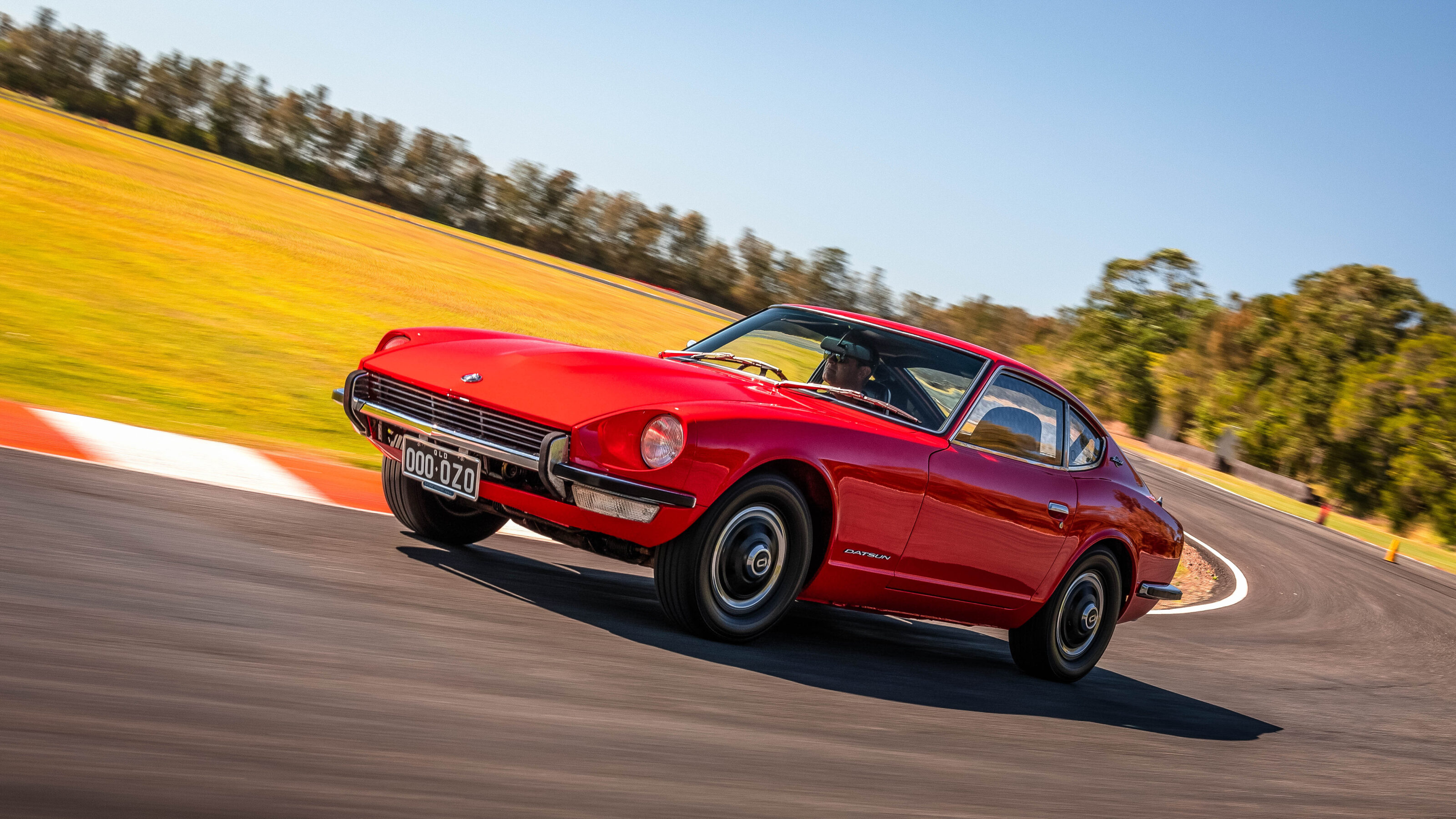
Second: Datsun 240Z. Japanese tuning company Rocky Auto has already kicked this off, creating custom Z cars with a 225kW naturally aspirated RB30 engine, to which we’d add a close-ratio six-speed manual, recreate the interior design and perhaps seam-weld the bodyshell rather than bolting in a roll cage like Rocky Auto has done.
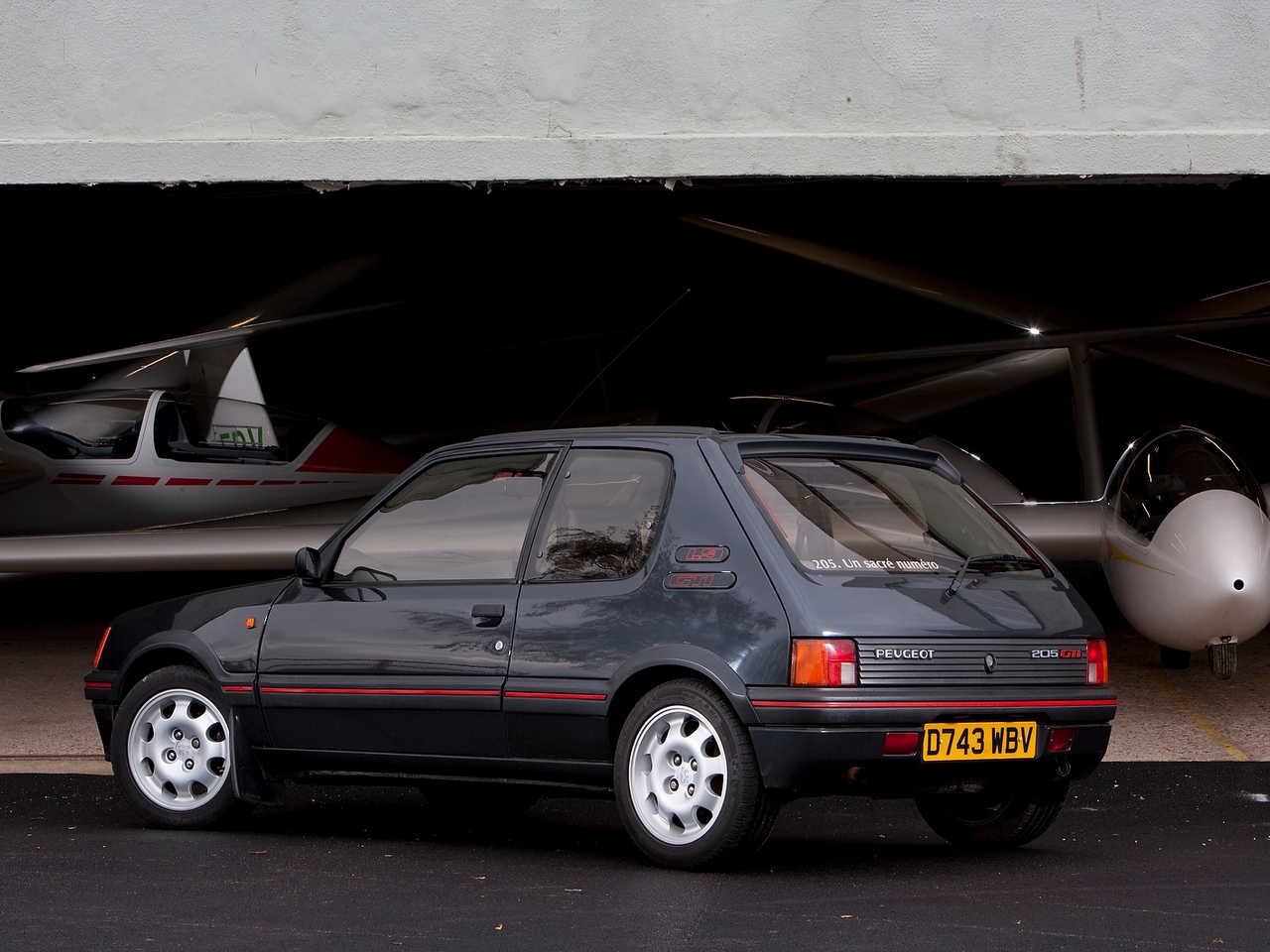
Next, the Peugeot 205 GTI. Would people pay $100,000 or more for a 205 GTI? I think they would. With modern dampers for increased precision but improved ride comfort, carefully tuned to keep the lively handling character of the original, a robust interior, screaming 8000rpm 1.6-litre atmo engine and rustproof body, it could be the ‘everyman’s’ Singer.
So there we have it, get cracking resto-mod companies, just don’t forget my commission in the process! Wait, what about the Ford Escort Mk1/2, and the Chevrolet C2 Corvette, and the Audi ur Quattro, and the Ferrari 308…
UPDATE, October 12: Tesla owners taking part in the Full Self-Driving system’s beta test are no longer required to sign a non-disclosure agreement, legally allowing them to talk to media and upload videos online.
As a part of the 10.2 update rolled out over the weekend, a number of Tesla drivers found the NDA had disappeared, with some taking to Twitter for confirmation on whether it still existed.
CEO and founder Elon Musk responded to one user, hinting the NDA was no longer in place, allowing FSD users to talk freely about their experiences in the beta stages of testing.
The story to here
October 1: Tesla boss Elon Musk has admitted his company’s non-disclosure agreement covering its ‘Full Self-Driving’ (FSD) program is being ignored by many beta testers.
The EV builder is currently testing the technology on American roads — which, despite its name, is not truly autonomous.

Most of Tesla’s ‘FSD Beta’ testers are investors, avid fans, or YouTubers rather than paid drivers. Currently, they are hand-picked by Tesla, but in future regular owners with a safe record are slated to get access to the in-development software.
Before gaining access to FSD Beta (sold as a US$199-per-month subscription), prospective testers sign an agreement advising what they should and shouldn’t publicly share about what they’re doing.
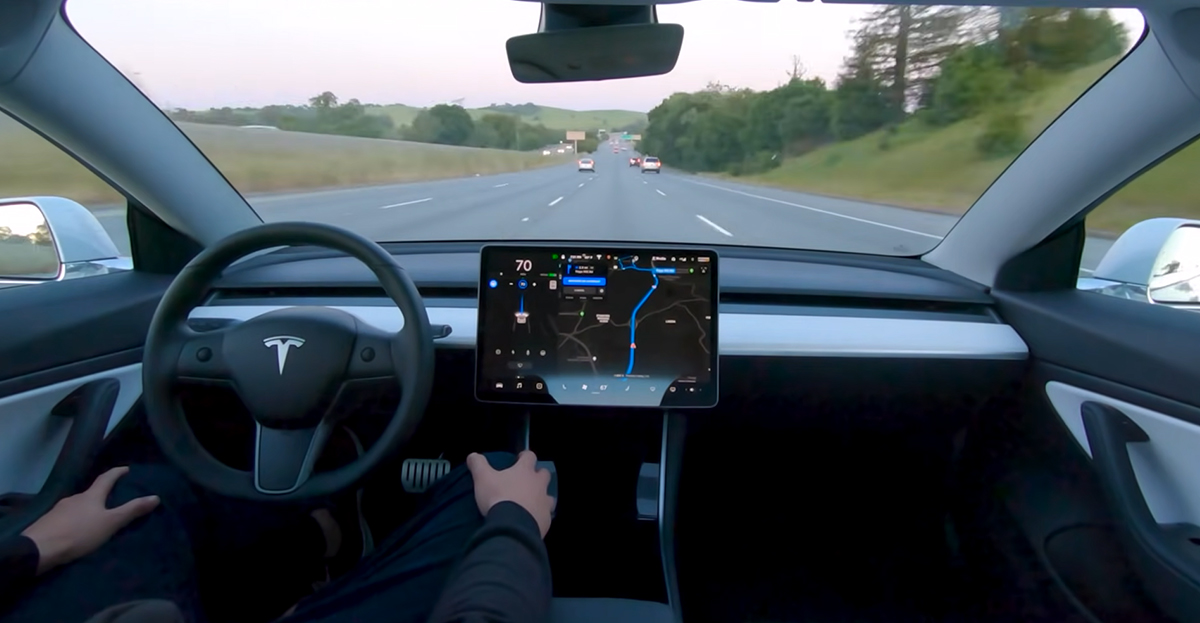
As revealed by Motherboard, the NDA says testers should “remember that there are a lot of people that want Tesla to fail,” and to not “let them mischaracterize [sic] your feedback and media posts”.
It also says any videos should be “share[d] on social media responsibly and selectively…consider sharing fewer videos, and only the ones that you think are interesting or worthy of being shared.”
Despite this agreement, many testers have been posting unflattering situations created under FSD conditions. A recent video from YouTuber and Tesla investor Galileo Russell showed one such incident, in which a self-driving Tesla turned to aim itself at pedestrians.
The clip was shared to Twitter by numerous users including hedge-fund owner Taylor Ogan, which prompted Russell to file a copyright claim. He later told Vice that “Tesla doesn’t want us sharing all the clips from the videos, just like when it looks good because they know people take it out of context”.

Musk addressed the NDA situation while speaking at the Code Conference on Tuesday, admitting “a lot of videos” are being shared online. “I don’t know why there’s an NDA,” he continued. “We probably don’t need it. People don’t seem to listen to me [and] just ignore it anyway.”
Tesla launched FSD Beta in 2020, rolling out a number of updates since. FSD version 10 was released last month, which the company says has been receiving “fine-tuning and bug fixes.”
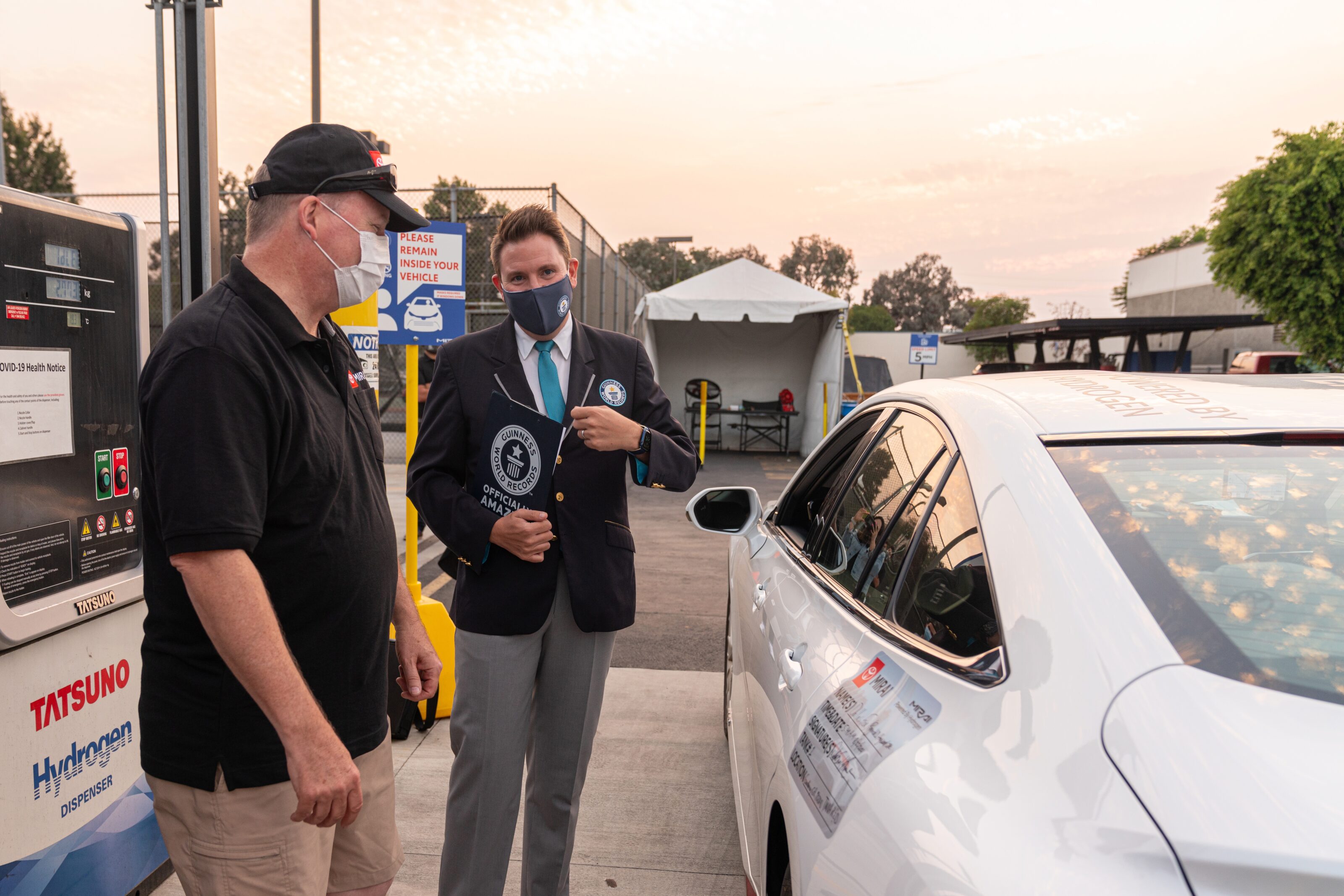
The Toyota Mirai has set an official Guinness World Record by driving the longest distance on a single tank of hydrogen.
The fuel-cell Mirai travelled a total of 1360km around Southern California to set the record – the equivalent of driving from Melbourne to the town of Goondiwindi on the Queensland state border, without the Toyota sedan stopping to refuel.
A total of 5.65 kilograms of hydrogen was used in the attempt over a two-day period back in August, but it was only this week when the record was officially verified by Guinness.
“As a Guinness World Records adjudicator for 10 years, I’ve had the opportunity to witness incredible attempts, including several distance-related feats,” said Michael Empric, who validated the attempt.
“The Toyota Mirai’s journey without the need to refuel showcases the power of fuel-cell electric technology.”
It’s the third time the record has been broken this year alone. The previous record was set in June, in which another Toyota Mirai travelled 1003km in France on a single tank – taking the title back to the country just weeks after an Australian attempt had beaten the record held by a French aeronaut since 2019.
While only holding the honour for a matter of weeks, Australian rally driver Brendan Reeves drove a Hyundai Nexo from Melbourne to Broken Hill – travelling a total of 887km.
The latest record was driven by professional hypermiler Wayne Gerdes and co-piloted by Bob Winger.
