
Automotive conglomerate Stellantis is planning to split off two Opel plants in Germany, a decision which is being met with union resistance.
The two plants in Russelsheim and Eisenach would still be under the control of parent company Stellantis, but no longer under the direct ownership of Opel – potentially opening up to other group brands such as Peugeot, Citroen and Fiat among others.
According to Reuters, the Eisenach plant is preparing to pause production due to the ongoing semiconductor shortage, with the plans to split the plants from Opel potentially allowing the factory workers to keep their jobs.
“The advantages associated with this more efficient and flexible organisation should contribute to securing jobs in the long-term,” a Stellantis spokesperson told Reuters.
However, while Opel is bound by an agreement to retain its workers and not hand out any redundancies until 2025, the unions are worried the current furlough scheme is a ploy to keep its staff employed while Stellantis moves manufacturing out of the country.
Stellantis has said it is committed to keeping Opel operating in Germany throughout the chip crisis.
“The global automotive industry is in an exceptional situation due to the ongoing pandemic and a global shortage of semiconductors,” Stellantis added.
“Production in Eisenach is scheduled to start again at the beginning of 2022, provided the supply chain situation allows.”
Stellantis CEO Carlos Tavares has previously said he believes the semiconductor shortage will extend into 2022 as chip-makers prioritise the consumer goods industry, crippling the automotive sector.
Snapshot
- 2021 Isuzu D-Max recalled
- The issue could result in damage to the canopy
- A total of 98 utes are included in the recall
Isuzu Australia has recalled a total of 98 examples of the 2021 Isuzu D-Max ute due to a potential issue with the canopy roof racks.
According to a recall notice published by the Department of Infrastructure, the Genuine Isuzu Canopy Roof Rack “may not meet the manufacturing specifications.”
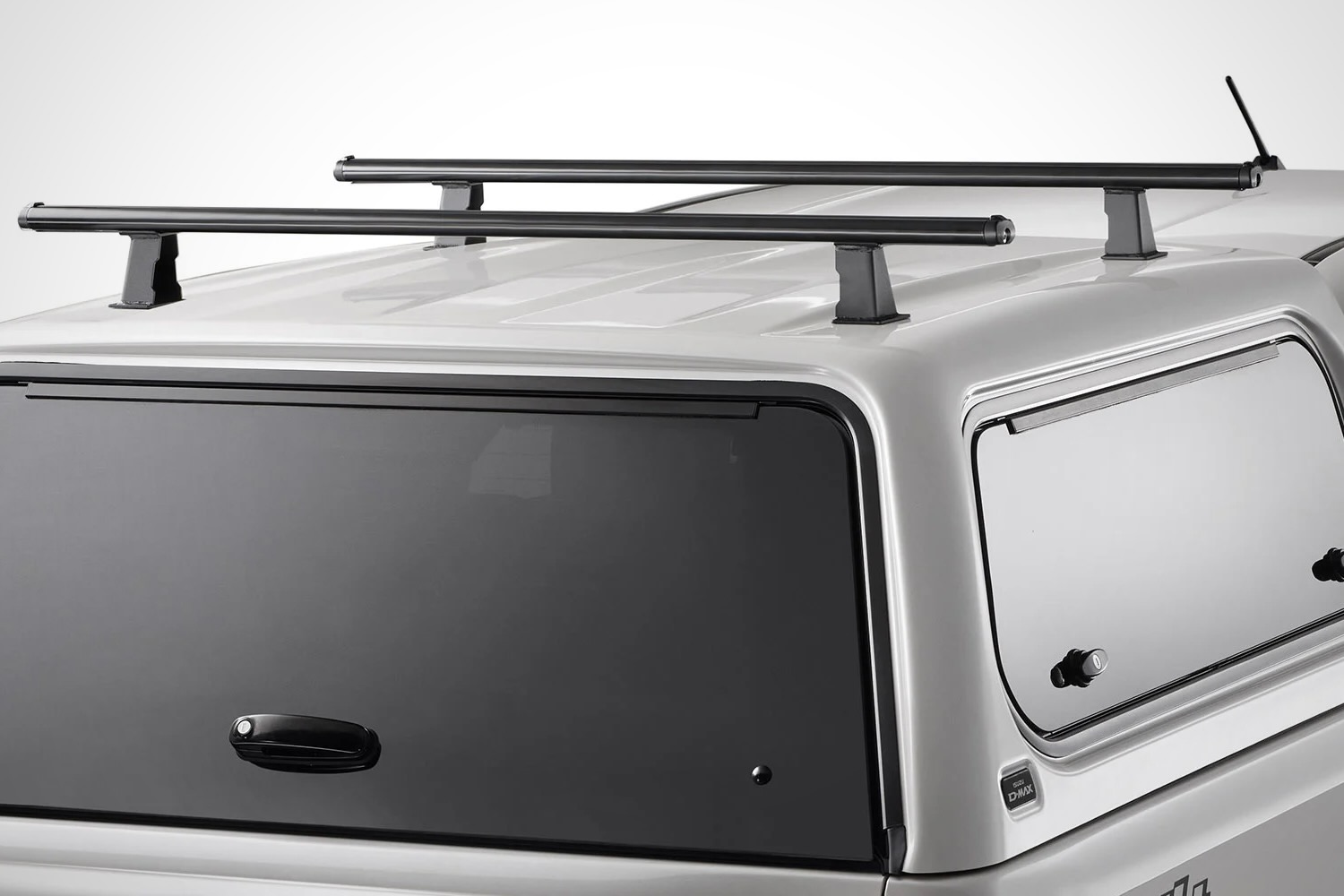
The issue could cause the mounts to detach or become loose, resulting in potential damage to the ute canopy.
Isuzu will contact affected owners, but the company can be contacted directly by calling 1300 147 898 or visiting a dealership, found here.
You can check a list of all 98 VINs related to the recall by clicking here.
If you look around at the small SUV offerings and find the view a little bland, then the Peugeot 2008 GT could be the crossover for you.
It’s a new variant at $38,990 before on-road costs, slotting into the middle of the range between the $34,990 Allure and $43,990 GT Sport. Like its siblings, the 2008 is deliberately different and isn’t intended to be a volume offering.
Peugeot boasts the 2008 is its second-most popular model but with 364 sales so far in 2021 (to the end of August) only the Suzuki S-Cross has sold fewer in the small SUV category. Combine this with its price, which sits squarely in the gap between the mainstream and premium offerings, and any discussion of potential competitors is rendered almost irrelevant.
Inside and out the 2008 is different and as a result I suspect you’ll either want to drive nothing else or anything else, so let’s take a closer look at its make up.
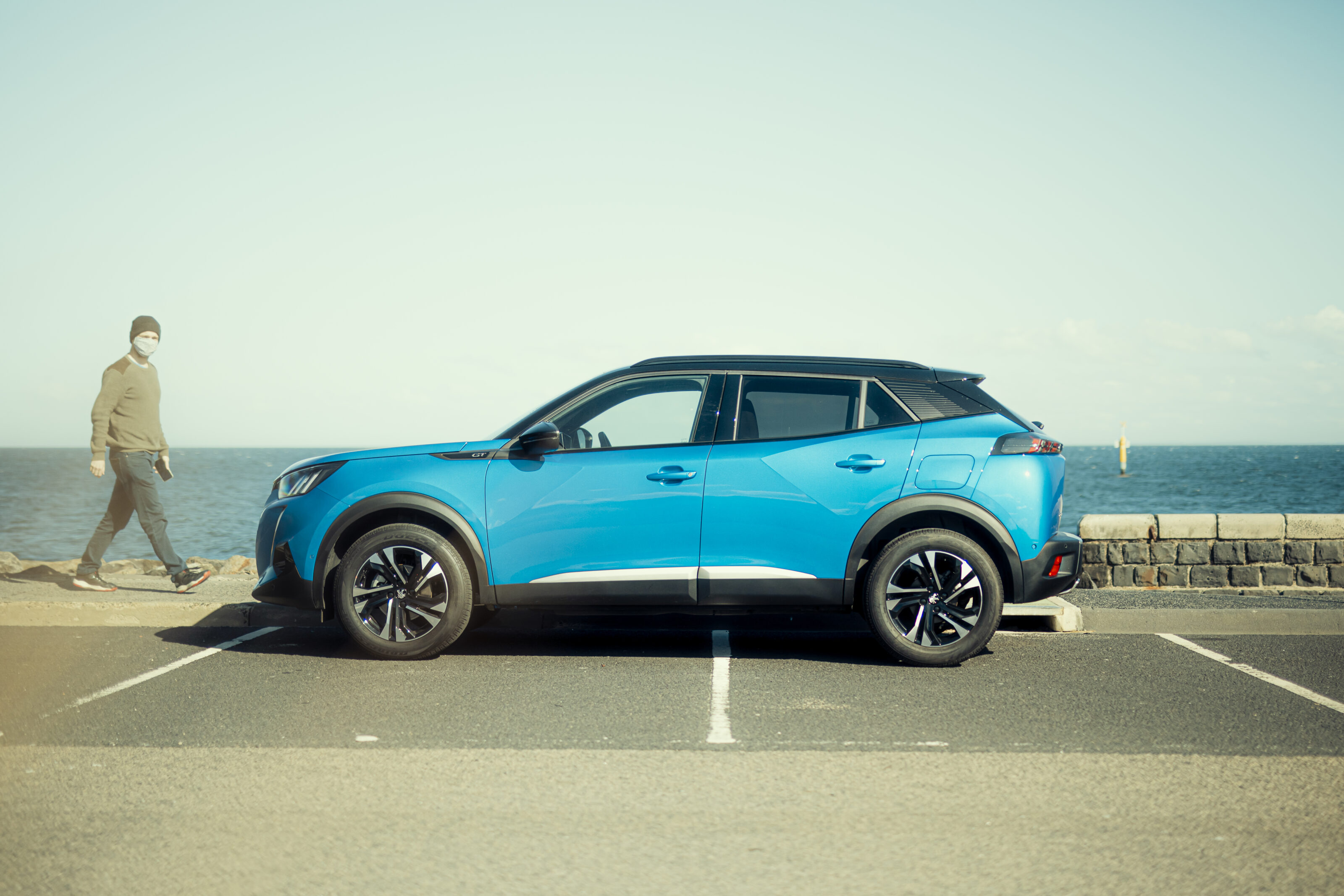
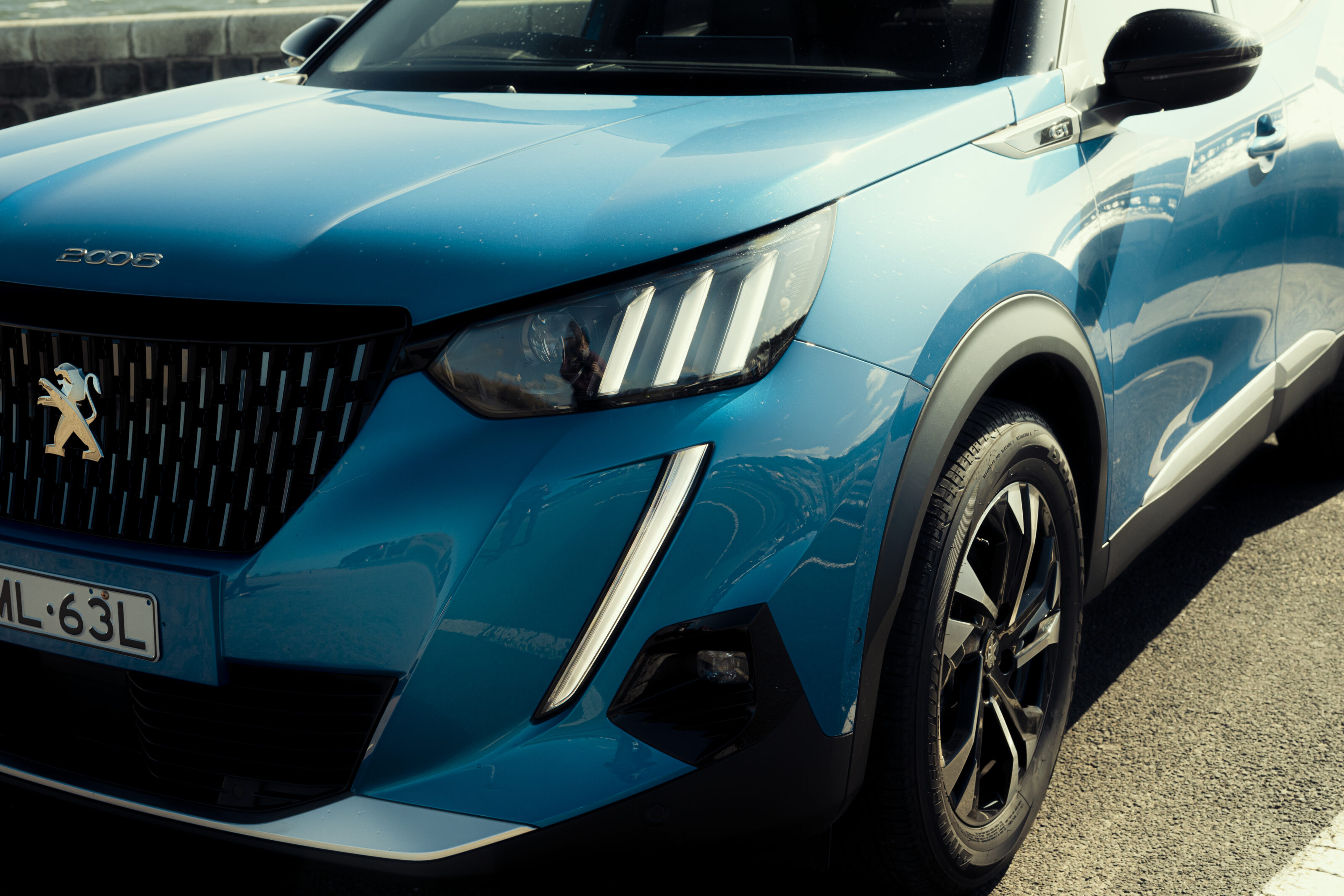
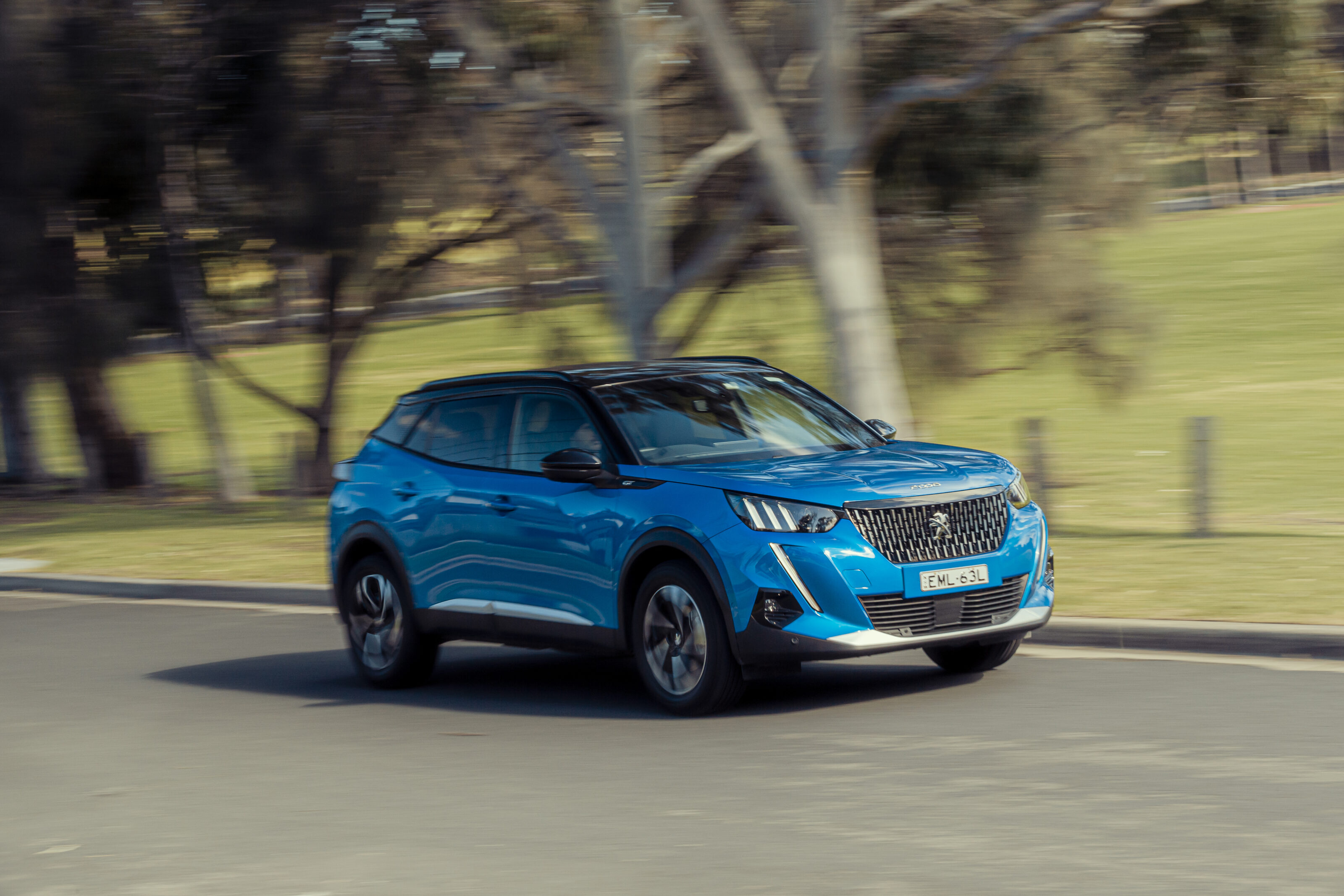
Its daring design works to my eyes, especially in a strong colour like this test car’s Vertigo Blue, one of three premium paint options that cost an extra $1050. Three metallic colours are also available for $690 but even the standard colour is Orange Fusion.
Combine this with the contrasting black roof and mirrors, slashing LED daytime running lights, ‘tri-claw’ LED headlights and taillights and the 2008 GT is about as striking as it’s possible to make a small five-door SUV without turning it into a Citroen Cactus.
Inside and out the 2008 is different and I suspect you’ll either want to drive nothing else or anything else, so let’s take a closer look at its make up.
The quirkiness continues inside. For almost a decade now Peugeot has had a unique approach to seating the driver in particular. In most cars, the wheel is mounted so the gauges are visible between the boss and the top of the rim, but Peugeot situates its instrument cluster to be visible above the steering wheel.
This forces the wheel into your lap, which isn’t my preferred location but with familiarity, it fades from thought. The wheel itself is almost octagonal and very small in diameter, which effectively speeds up the ratio of the otherwise quite slow steering, reducing the amount of low-speed twirling required.
The digital cluster itself is very interesting, with ‘floating buttress’ surrounds and a number of 3D-effect displays, though I found the ‘minimal’ setting, which eliminates the 3D graphics, easiest to read. A 10.0-inch touchscreen handles infotainment duties, including smartphone mirroring, native sat-nav, digital radio and controls for the heating and air-conditioning.
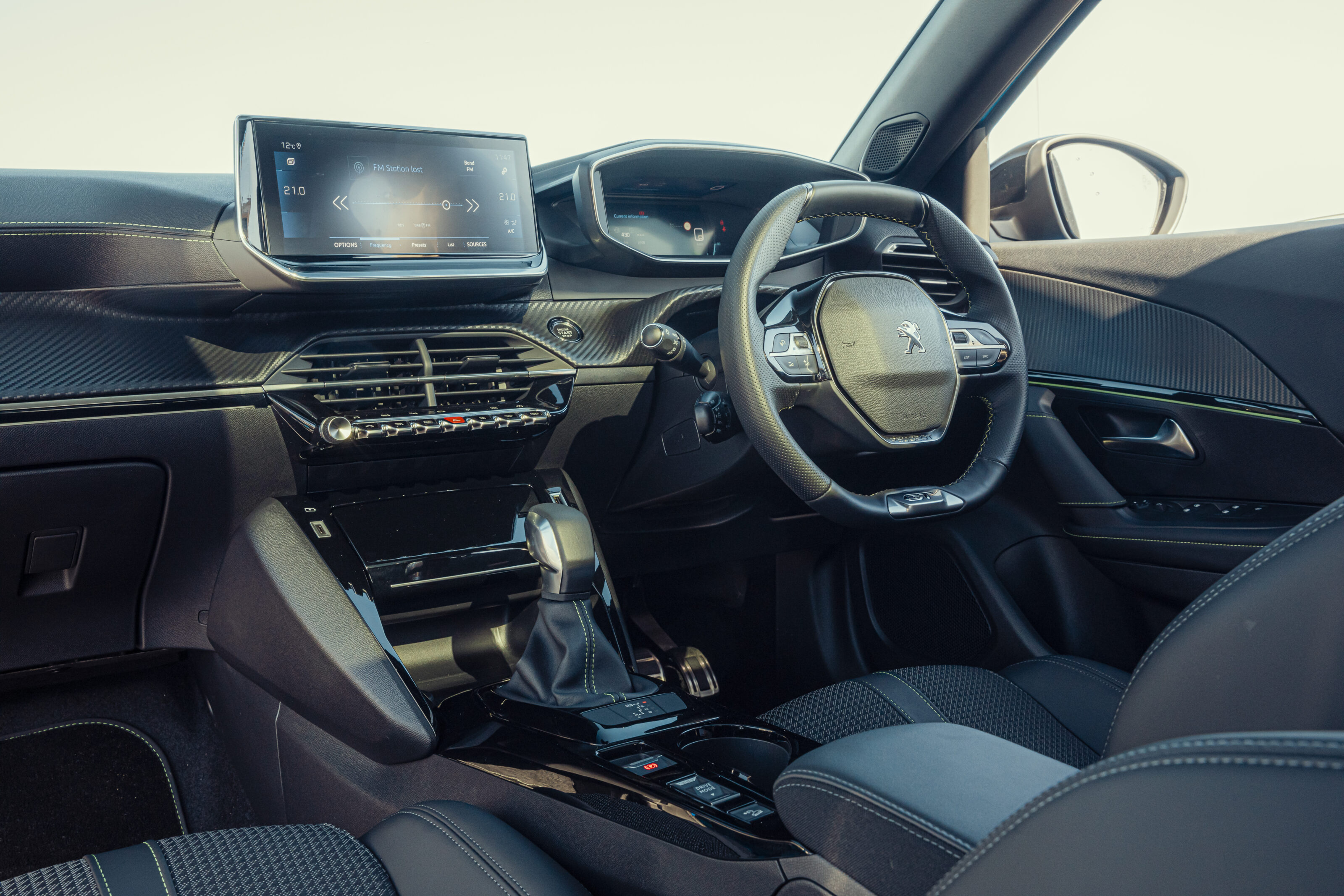
Mounted below the centre vents are two rows of shortcut keys, which are helpful in quickly accessing touchscreen functions. Those on the front row are quite satisfying to use – my wife likened them to those you’d find on an old cassette player – while the back row of keys are haptic. Below this is a cubby hole for wireless phone charging with a door to keep it flying around, but the charging itself is quite slow and a VW-style ‘don’t forget your phone’ reminder would be handy as it’s easy to leave it behind – out of sight, out of mind.
In general, the interior is a bit like sitting in a running shoe. It’s not difficult to find hard, scratchy plastics, but there’s also plenty of cool materials like strips of leather, contrasting bright green stitching, carbon effect trim that sweeps around from the door cards to the dash and heavily bolstered, very supportive seats. Nappa leather seats with electric adjustment, heating and massage function are available for an extra $2690.

Out back there’s ample space for my 180cm frame, with plenty of leg and foot room, as well as a pair of USB-A ports, but no air vents or centre armrest, which is perhaps a bit mean when you’re nudging $40K before on-roads.
While on the topic of negatives, there are a few ergonomic oddities with the 2008 that might seem minor but irked me every time I used the car. The starter button requires quite a long press to fire the engine – merely tap it and nothing happens; the Bluetooth re-connects automatically but has to be selected every time rather than automatically starting playback; and then there are the steering wheel controls.
On the left there is a scroll wheel that one would assume is volume control, but all it does is cycle through the instrument cluster modes. Below that there are a pair of buttons for volume control, but then the other audio controls – to adjust source or tracks – are on the right-hand side below the phone button, which is on the opposite side to the voice control button. The cruise controls are then hidden by the wheel spoke. It just doesn’t feel very well thought out.

There are positives. The proximity locking/unlocking feature is handy and the boot’s a good size at 405L, which increases to 1467L with the 60:40 split rear seats folded. There’s also a false floor to the boot so you can load taller items in, though the tiedown points are located underneath the false floor which is a little odd.
It also scores a decent level of kit: AEB with low light pedestrian and cyclist detection, speed limit recognition, lane keep assist, driver attention alert, blind-spot monitoring, 180-degree camera system, single-touch electric windows all round and parking sensors at both ends, though adaptive cruise control, lane position assist and park assist are limited to the top-spec GT Sport.
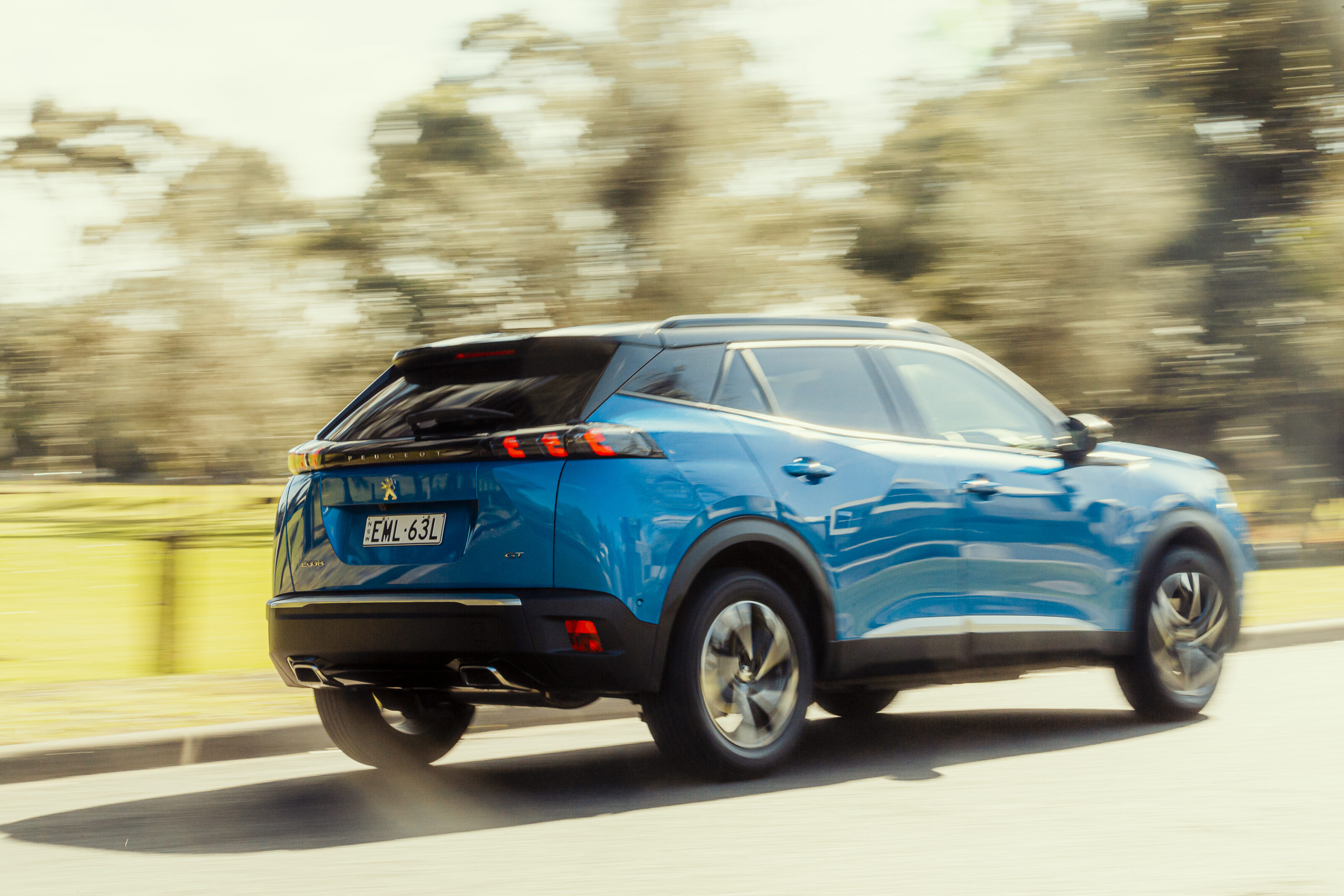
On the road the 2008 GT acquits itself well, the driving experience eliciting few real complaints without any true standout qualities. That said, the ride is a good balance between comfort and body control, with sudden bumps being felt a little sharply but in general, it’s unobtrusive.
As mentioned previously the slow steering is partly offset by the small steering wheel and it’s light enough to be of no issue. Presumably, there’s quite a lot of steering lock, too, as the turning circle is a handily tight 10.4m, and though a little more feedback would be appreciated at higher speeds, but that’s no deal-breaker.
On the road the 2008 GT acquits itself well, the driving experience eliciting few real complaints without any true standout qualities.
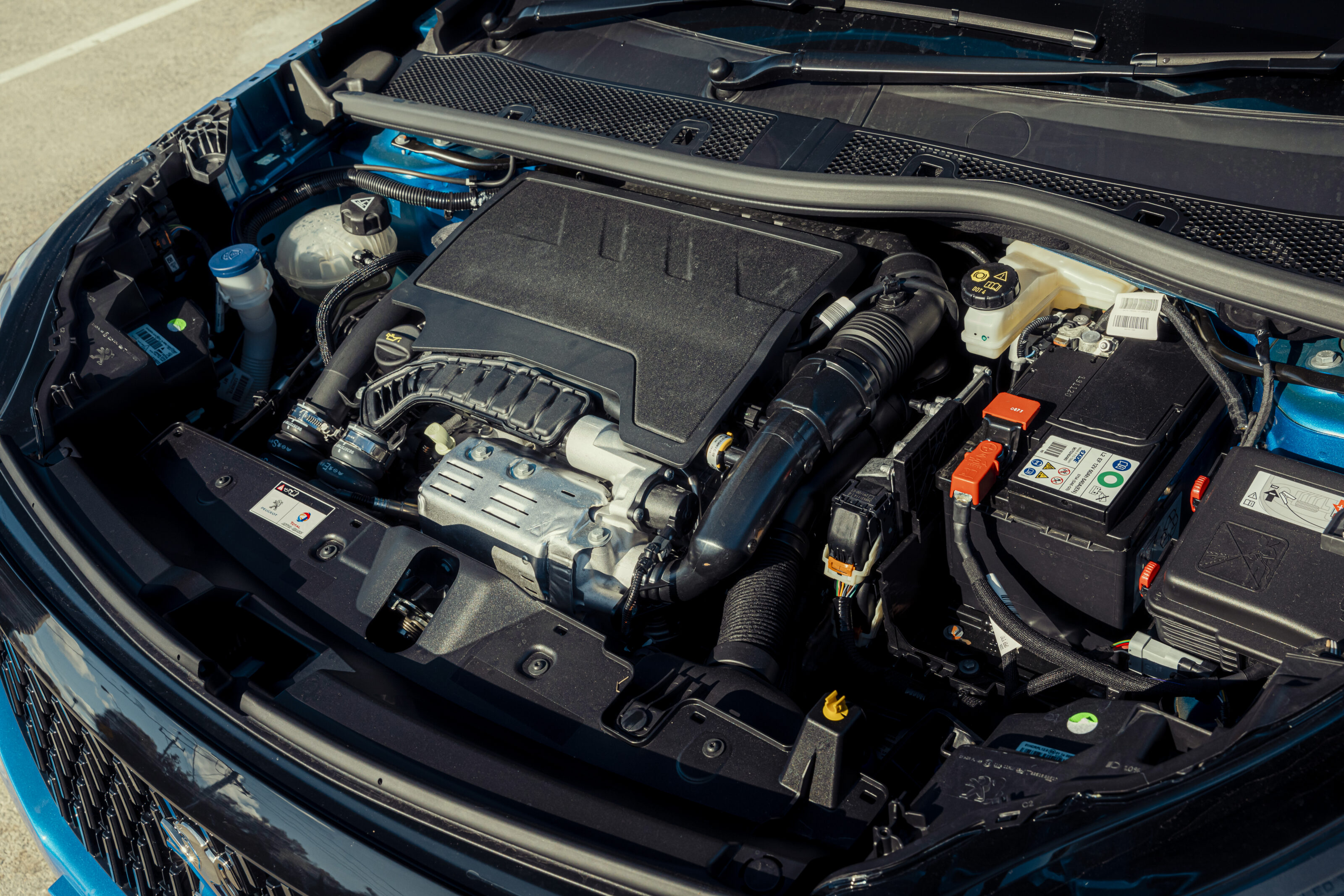
Under the bonnet is a 1.2-litre turbocharged three-cylinder that punches above its size, aided by the 2008’s relatively lithe 1247kg kerb weight. Its 96kW of power is underwhelming – the top-spec GT Sport scores the same engine in a higher state of tune with 114kW – but a strong 230Nm of torque from just 1750rpm allows it to keep up with traffic with little fuss.
The relative paucity of power becomes apparent when you ask for more by depressing the long-travel throttle pedal only to find that the rate of acceleration barely increases. Weirdly, the front-drive 2008 GT offers sand, mud and snow modes as part of its ‘Advanced Grip Control’ as well as a hill descent mode like it’s some sort of Land Rover, yet not a Sport mode that livens up that throttle response.
Being a three-pot means an interesting and characterful thrum is emitted at higher rpm but exploring the upper reaches won’t help you achieve the 6.5L/100km combined fuel consumption claim. My notes for the gearbox read ‘dual-clutch?’ due to the occasional low-speed jerk that suggests the six-speed automatic could be a bit smoother.
All Peugeots now come with a five-year/unlimited-kilometre warranty, five-year roadside assistance program and five-year service price promise, though Peugeot’s website doesn’t currently list pricing for the latest model 2008.
The 2008 GT sits in a fiercely competitive segment, encircled by the Hyundai Kona, Kia Seltos, Mazda CX-30 and Volkswagen T-Roc below and Audi Q2, BMW X1 and Volvo XC40 above. To be brutally honest, it’s difficult to make a rational case for the Peugeot in the face of such stiff opposition, but to attempt to do so is somewhat missing the point.
I suspect the Peugeot’s flashy design and quirky interior will either ensnare or alienate buyers to the point they’ll either want nothing else or anything else. Personally I think the exterior is great but while the interior is ‘different’ that doesn’t necessarily translate to ‘better’; you get used to the driving position but do I prefer it to the traditional type? No.
Nevertheless, if you want something different the 2008 GT is worth checking out, but include the Skoda Karoq and Renault Captur while you’re at it.
2021 Peugeot 2008 GT specifications
| Body | 5-door, 5-seat SUV |
|---|---|
| Drive | front-wheel |
| Engine | 1199cc inilne-3cyl, DOHC, 12v, turbo |
| Power | 96kW @ 5500rpm |
| Torque | u00a0230Nm @ 1750rpm |
| 0-100km/h | 9.3sec (claimed) |
| Fuel consumption | 6.5L/100km (combined/claimed) |
| Top speed | 199km/h |
| Weight | 1247kg |
| Power/weight | 77kW/tonne |
| Transmission | 6-speed automatic |
| Suspension | struts, coil springs, anti-roll bar (f); torsion beam, coil springs, anti-roll bar (r) |
| L/W/h | 4300/1770/1530mm |
| Wheelbase | 2605mm |
| Boot volume | 405/1467L (rear seats up/down) |
| Tracks | 1540/1550mm (f/r) |
| Steering | electrically assisted rack-and-pinion |
| Brakes | 283mm ventilated discs, single-piston calipers (f); 249mm solid discs, single-piston calipers (r) |
| Wheels | 17 x 6.5-inch (f/r) |
| Tyres | 215/60 R17 (f/r) |
| Price | $38,990 + ORC |
Sydneysiders may be enjoying their new-found freedoms, but it comes as fuel price averages hit record highs across the city.
The average cost of unleaded petrol in the NSW capital is currently sitting at $1.732 per litre, according to website PetrolSpy – topping the record of $1.695 reached in the lead up to the 2008 Global Financial Crisis.
But the worst of it may be yet to come, with Brent crude oil breaking through resistance of US$80 per barrel today to highs of US$83.80 at the time of writing.
Brent crude has experienced a 14 per cent rise over the past month, with some industry commentators predicting oil could hit US$100 a barrel within months.
In September, Bank of America Global Research said it could bring forward its price target of US$100 a barrel if demand increases, according to a report from Reuters.

While there is a delay between oil being refined into petrol and finding its way to your local bowser, the Australian Competition and Consumer Commission says there is a visible correlation between the price of crude oil and the cost of petrol.
“What we are experiencing in Australia is a flow-on effect of higher international crude oil and refined petrol prices,” ACCC Chairman Rod Sims said in July.
If Brent crude does rise to $100 per barrel, a relative percentage increase would mean $2.25 per litre for regular unleaded.
But despite the record high average price this week, the ACCC released a report recently showing fuel prices in Australia’s five largest cities fell to a 22-year low in late 2020 and early 2021 when adjusted for inflation.
Snapshot
- Musk confirmed move at shareholder meeting last week
- CEO moved to Texas last year, which also hosts SpaceX site
- California factory will remain, plans to ramp up production by 50%
Tesla CEO Elon Musk has revealed plans to move the company’s headquarters to Austin, Texas.
Musk announced the move from Palo Alto, California at Tesla’s annual shareholder meeting last Thursday, though he did not confirm a specific timeframe. Tesla’s HQ has been based in Palo Alto since 2009.
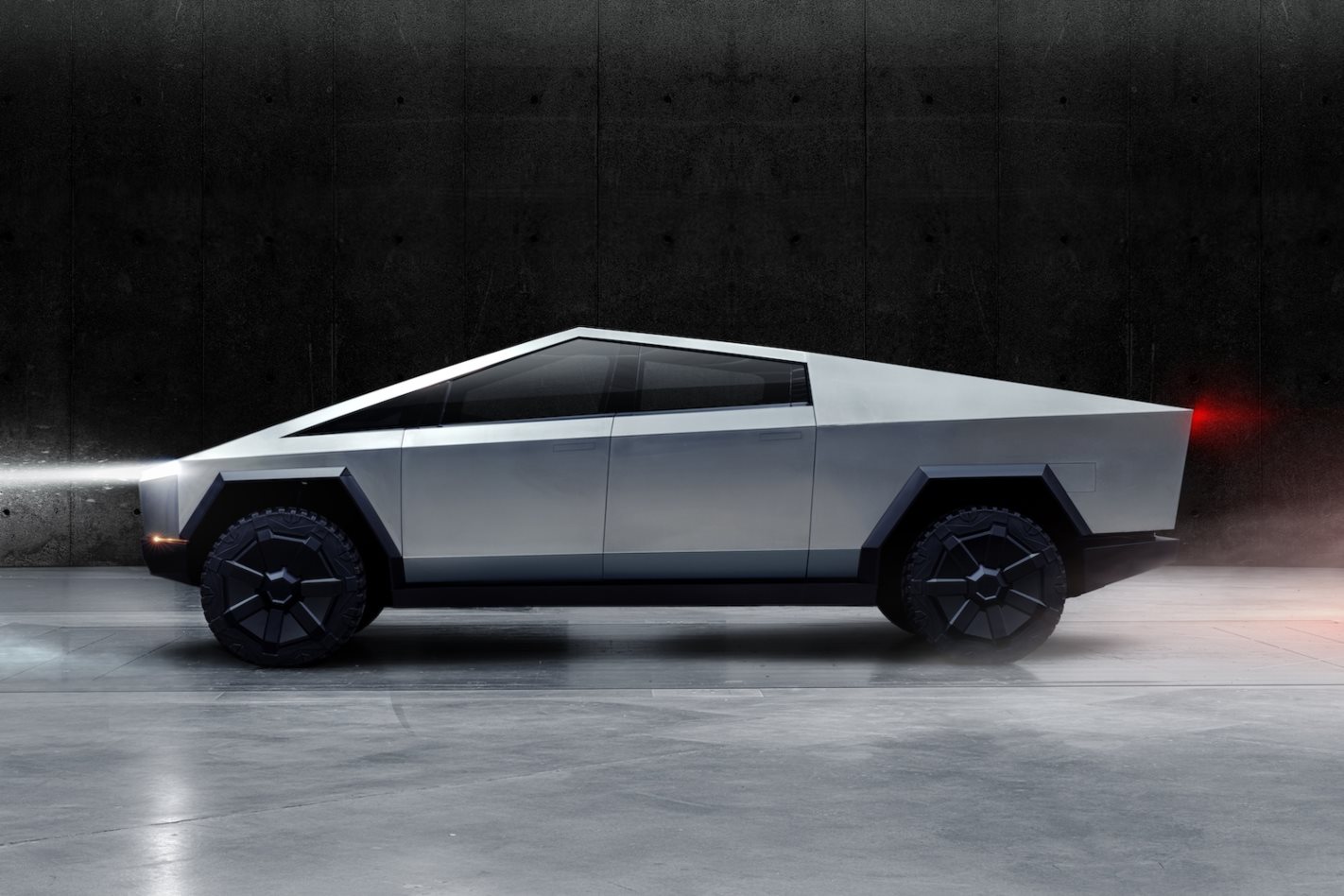
The EV giant is building its next Gigafactory in Austin, and aims to start production by the end of 2021. Alongside existing Model 3 and Model Y EVs, the plant will build Semi prime movers and the much-vaunted Cybertruck.
Musk himself moved to the state last year, apparently spending most of his time living near SpaceX’s Boca Chica testing site.
The billionaire had threatened to leave California amid the state’s tough pandemic restrictions last May, which he said made production difficult.
Musk didn’t blame California’s health orders at the shareholder meeting, instead referencing the high cost of living endured by Californian employees. “It’s tough for people to afford houses [in California],” he said. “And a lot of people have to come from far away.”
He also said Texas will offer Tesla more room to expand, arguing “There’s a limit to how big you can scale in the Bay Area.”
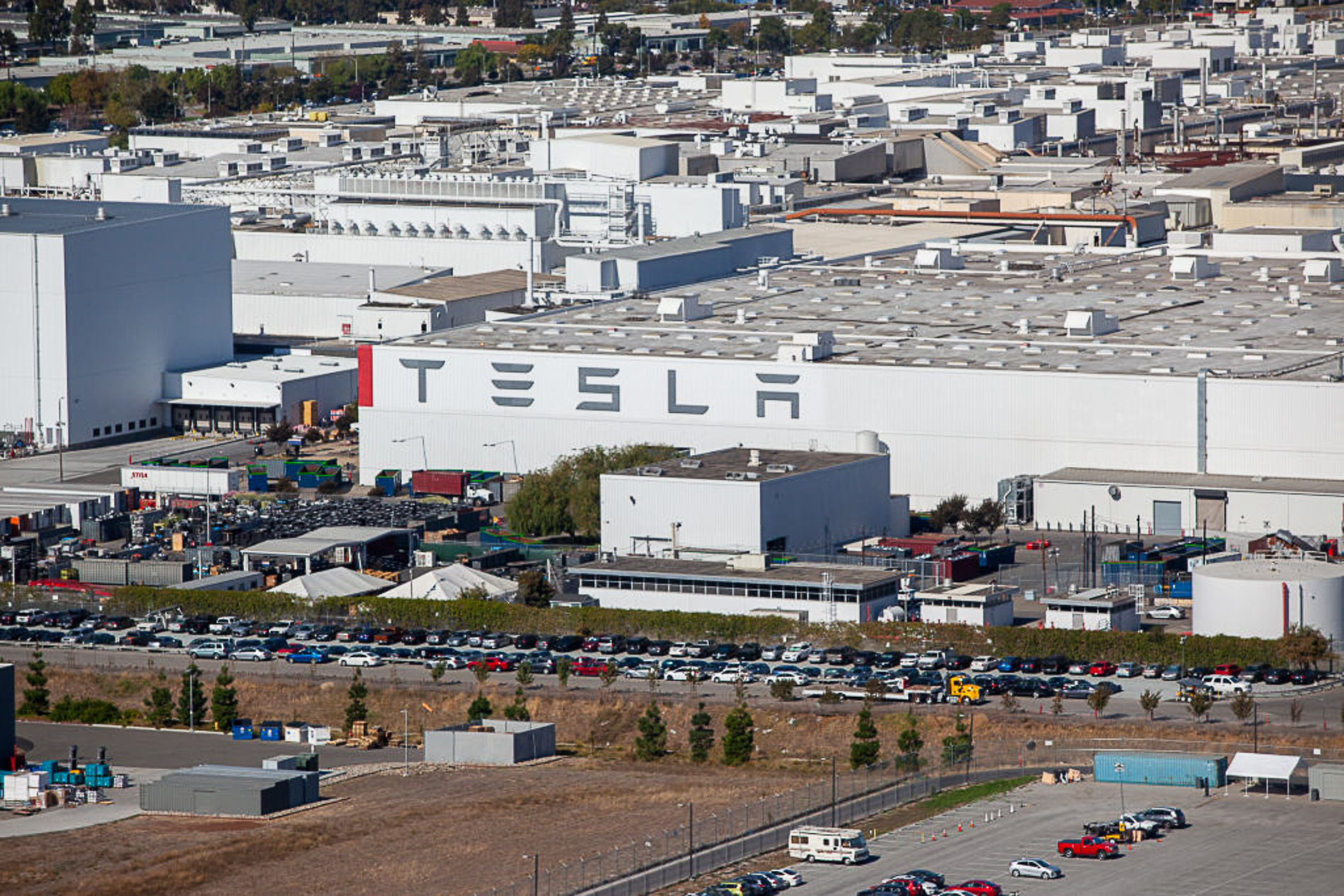
“This is not a matter of, sort of, Tesla leaving California,” Musk clarified, announcing Tesla will increase production at its Fremont factory by 50%. “To be clear we will be continuing to expand our activities in California.”
A number of powerhouse firms have recently departed Silicon Valley in favour of Texas, including Hewlett Packard Enterprise and Oracle. Toyota relocated its North American headquarters from Los Angeles to Plano, Texas, in 2017.
Any possibility of motorsport returning to Adelaide may be reduced to nought as the city’s most iconic circuit is on the brink of being demolished.
Backed by Adelaide City Councillor Greg Mackie, a group of local residents are campaigning for the permanent circuit section of the track to be removed, claiming “it has become an ‘urban heat island’ during hot weather,” as reported by The Adelaide Advertiser.
“I am asking that council administration prepares a report outlining the steps to achieve a new landscape solution that will eventually provide natural shade amenity for park users now that horse and car racing has concluded,” Cr Mackie told The Advertiser.
“A new landscape plan need not assume removal of all hard surfaces, but I would hope that a reduction could eventually be achieved.”
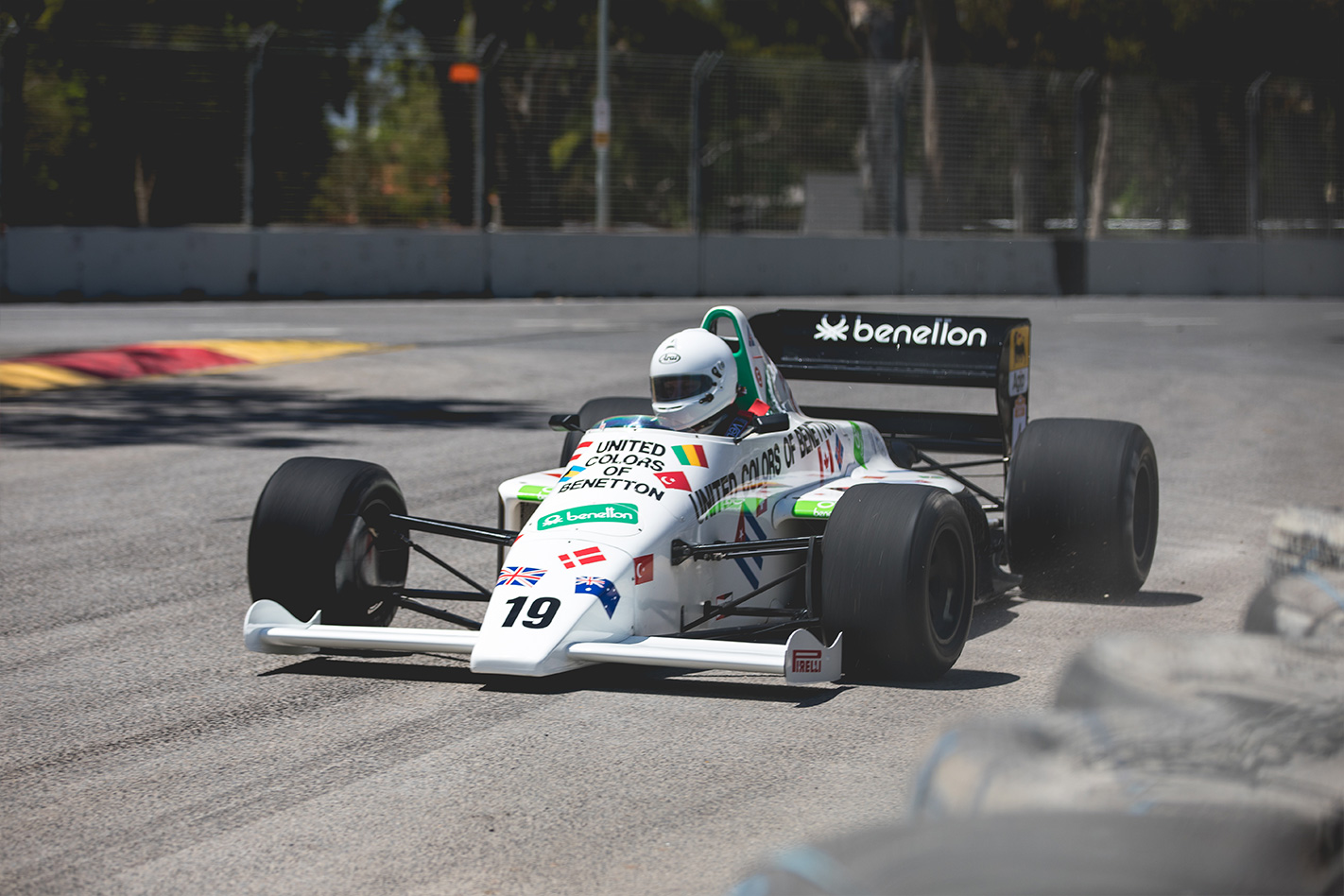
A hybrid circuit, the track was first built for the 1985 Australian Grand Prix – the first official Formula 1 race to be held in Australia – made up of Adelaide’s city streets and a dedicated race track to start and finish the lap.
It hosted the annual season-closing Grand Prix from 1985 through to 1995 – the largest ever crowd for a Formula 1 race at the time – before the AGP moved to Melbourne the year after, triggering a three-year period of no racing at the venue.
In 1999, the Supercars Championship made its first visit to the Adelaide circuit on a slightly shorter version of the track, running two races over two days which became the Adelaide 500, one of the series’ marquee events.
Other motorsport events have made use of the track facilities in the past, such as the Adelaide Motorsport Festival from 2014 to 2018 as well as the Race of a Thousand Years, an American Le Mans Series round which was held on New Years Eve, 2000.
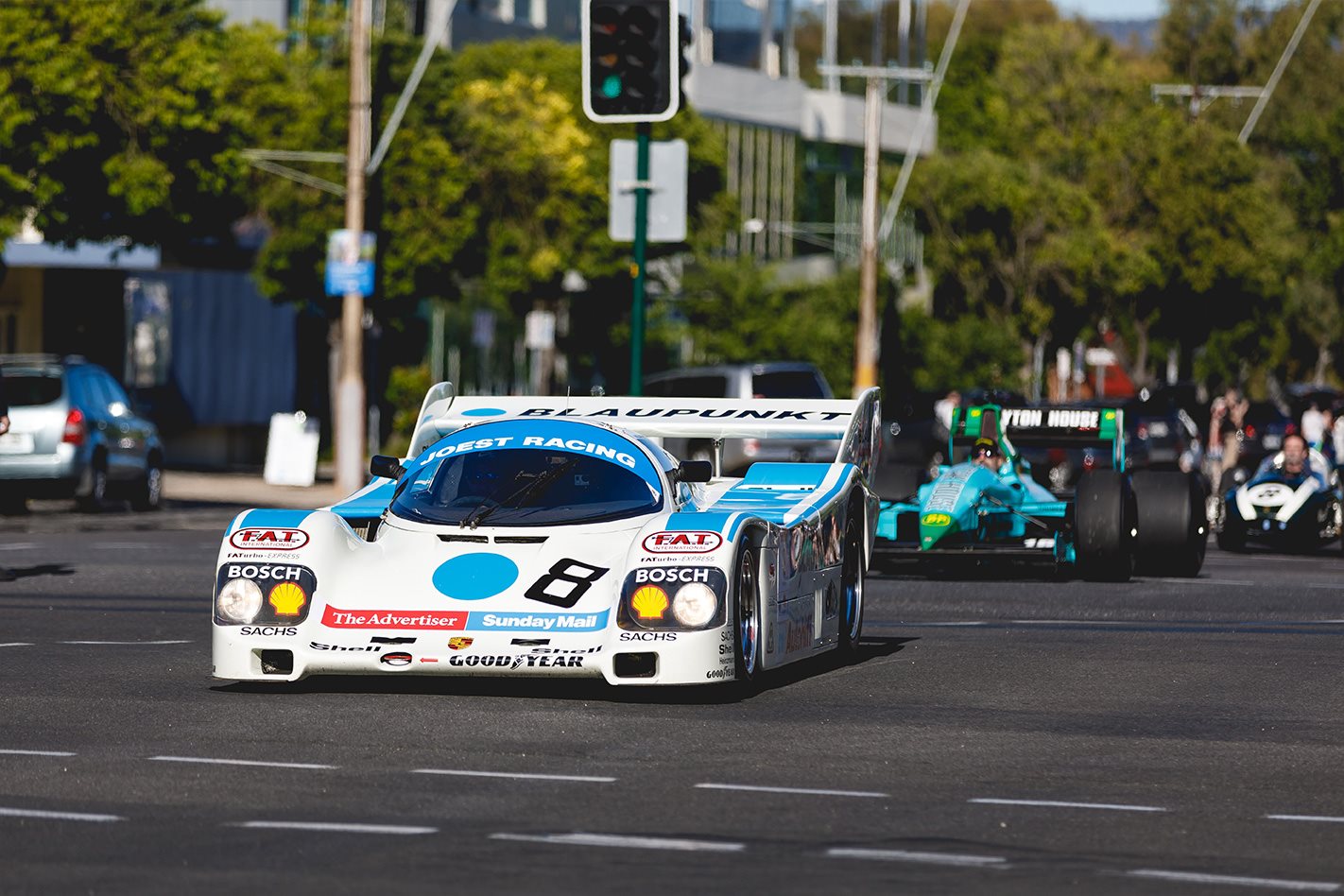
Despite being one of the biggest events on the Supercars calendar, the South Australian Government announced last year it would not be renewing the contact for the Adelaide 500 from 2021 onwards, leaving the race off the schedule for the first time since its inception.
With the current length of permanent circuit taking up roughly 1200 metres, the removal of it would add a small amount of land back to the 760 hectare parkland which surrounds it, although it would destroy a tangible piece of Adelaide’s motorsport history from the city.
Skoda is the latest manufacturer to be impacted by the global chip shortage, with the Czech brand looking to cut back or pause production.
Affecting a wide range of manufacturers from Toyota to parent company Volkswagen, the semi-conductor situation may force Skoda to reduce production numbers until the end of 2021.
As first reported by Reuters, Skoda has confirmed it will “significantly reduce or even halt” from October 18 through to the end of the year as it catches up with semi-conductor supply.
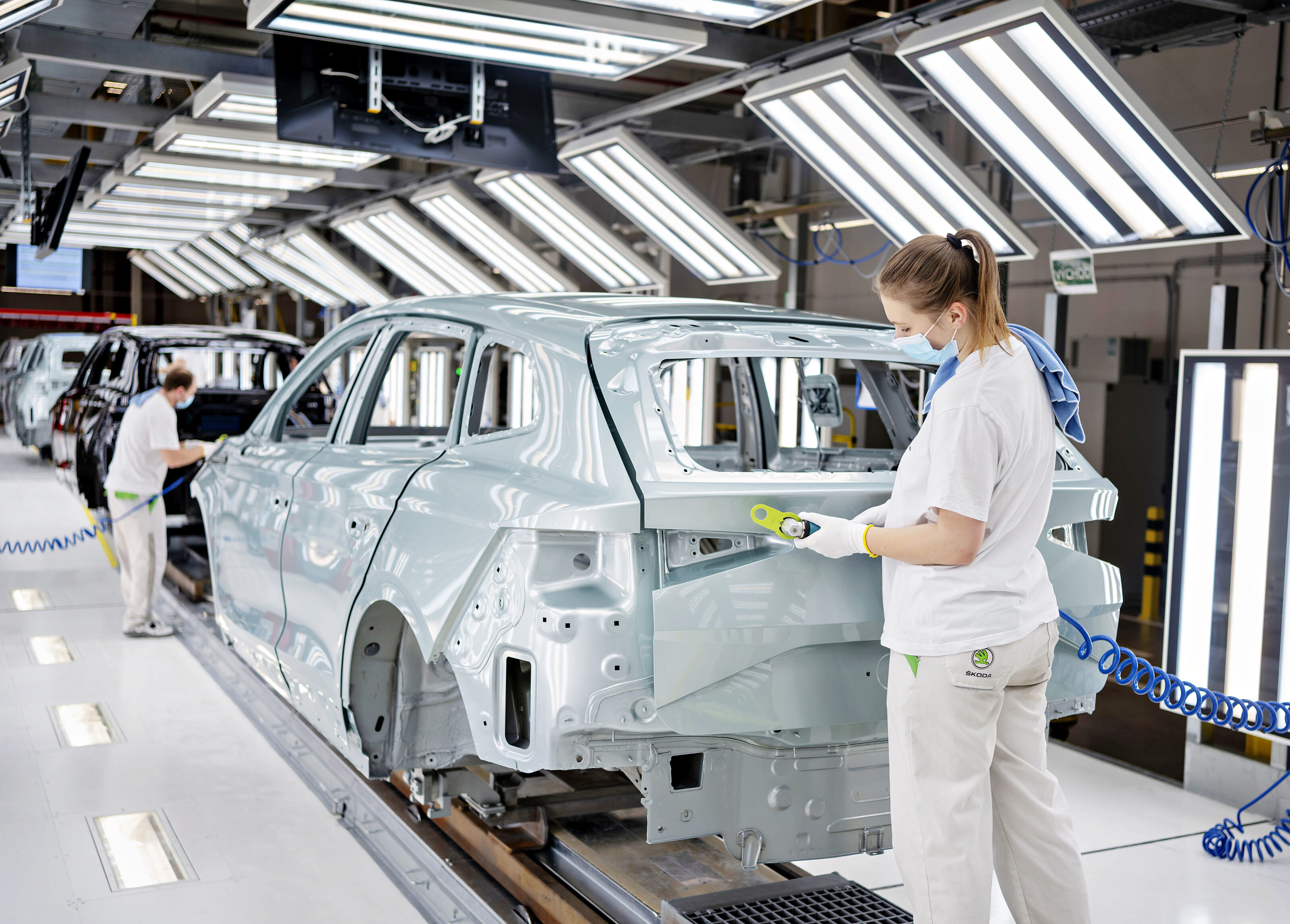
While it had previously anticipated 1.3 million vehicles to roll off its Czech production lines throughout 2021, the pause could reduce this number to around 1.15 million – roughly the same as its efforts in COVID-affected 2020.
“Not even Skoda Auto is able to avoid this global crisis,” said Tomas Koter, Skoda Europe’s spokesperson.
Despite one quarter of the year still remaining, Skoda has already surpassed its previous best sales record in Australia, notching up 7745 units sold to the end of September 2021, eclipsing the 4534 vehicles at the same point last year and its 12-month high of 7001 in 2019.
Introduction: Hello Fresh
New metal! How does 351kW of atmo V8 grab you?
I don’t like to think of myself as a superstitious person, but do you ever listen to an inner voice for no particular reason?
Here I was, at a friend’s private track day at Haunted Hills with a Lexus LC500. I’d driven one around the circuit before, sliding it about for a photographer’s camera, but today I just wasn’t feeling it. Instead of going for a drive around the circuit, I took a few pictures to pass time, chatted with some of the drivers and kicked back.
The LC500 definitely has that laid-back side to its character. You might well recognise this newest arrival in the MOTOR garage from a three-car comparison in the May issue, which the Lexus won. I was so taken with the car that I managed to twist the importer’s arm to let us sample it for a longer term.
I also knew that, unlike the IS350 F Sport that I returned last month, the lower-slung LC would, weirdly, make it up my drive and into the garage without ever scratching its chin.
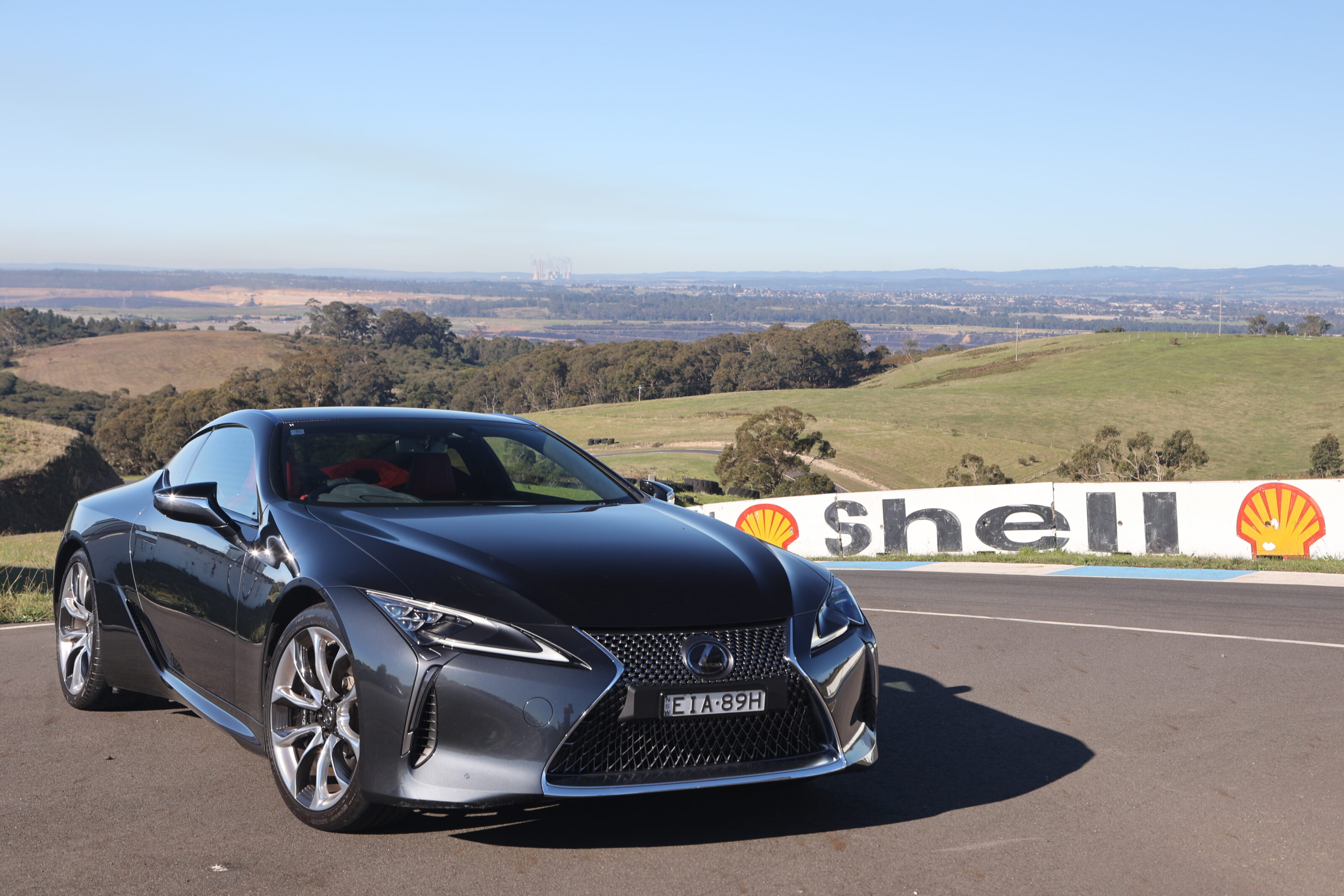
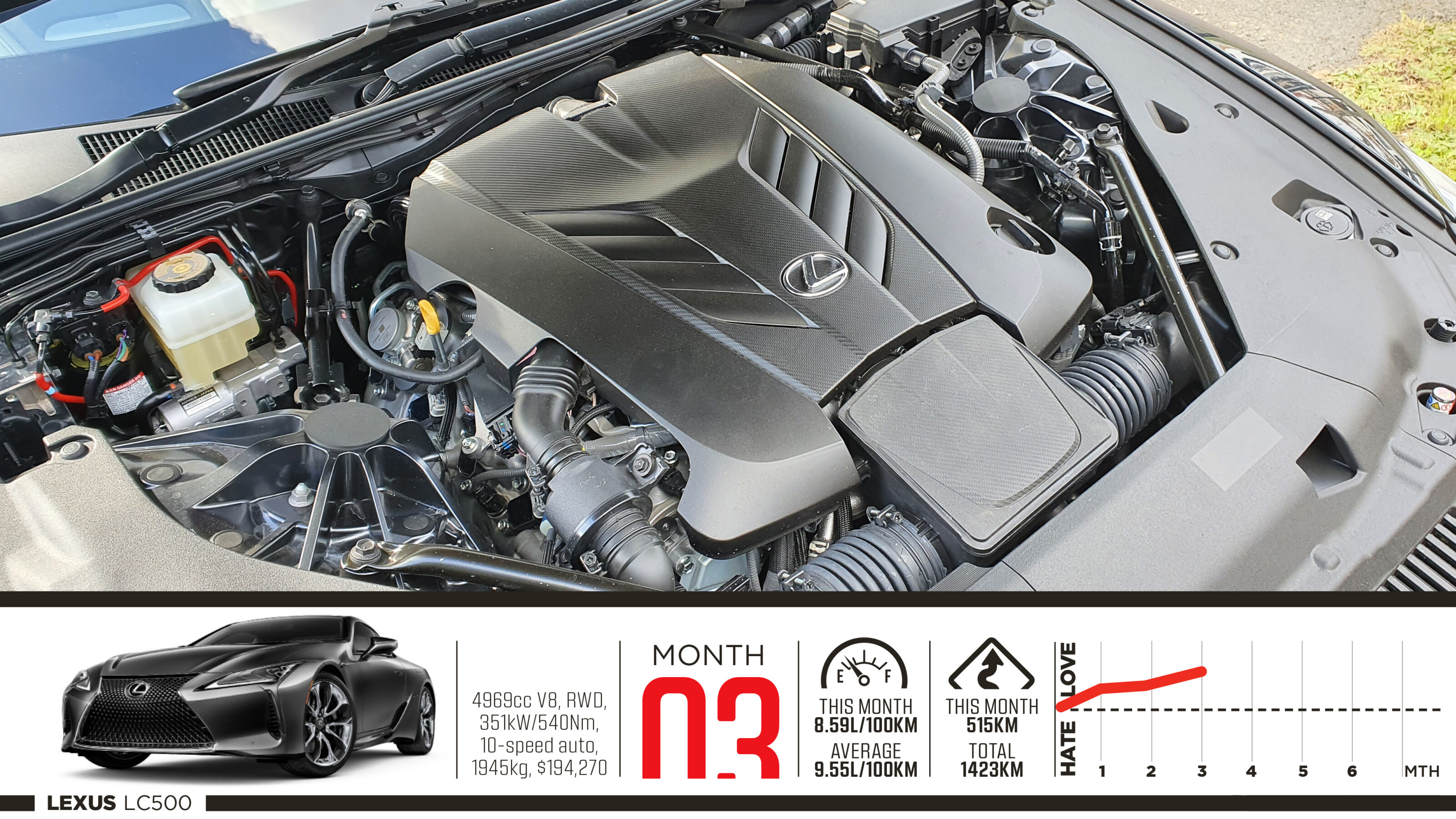
First impressions? The Yamaha-fettled 5.0-litre V8 is still one of the greatest atmo engines fitted to a new car, the infotainment system remains maddening and the shape, despite being introduced to Aussie roads back in 2016, still has the ability to stop people in their tracks.
They seem to like the car too, as it never gets the same side-eye you sometimes receive in, say, a $200k German sports car. Perhaps it’s the muted colour and a badge that’s not quite so on-the-nose that means it doesn’t immediately smack of mid-life crisis. But then it’s not so geriatric in its appeal to be full-on Joe Biden spec. Anyway, I’d say that it works for me.
It’s certainly quick enough to earn me the look of instant disapproval from my partner if I tread on it with any great conviction in Sport S+ mode. And it feels so well built that I like to think of it’ll be the automotive equivalent of a bristlecone pine, still ticking along happily long after its EV successors have replicated my work laptop, which depletes its battery in less time than it takes for Windows to boot up. Not that I’m a Luddite, it just feels as if the classy LC is built like nothing else, the snapping biro indicators aside.
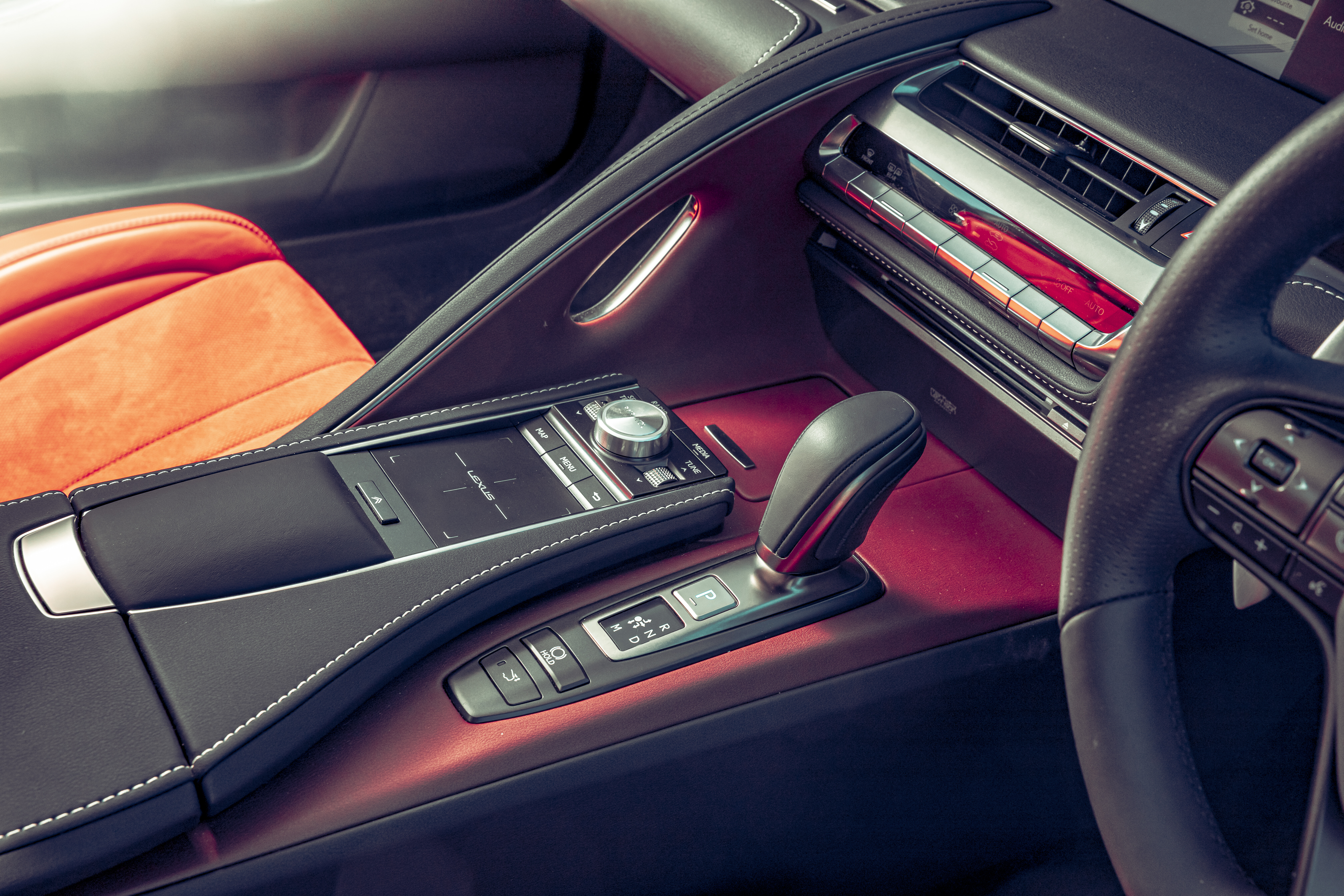
“It’s quick enough to earn me the instant look of disapproval from my partner if I tread on it”
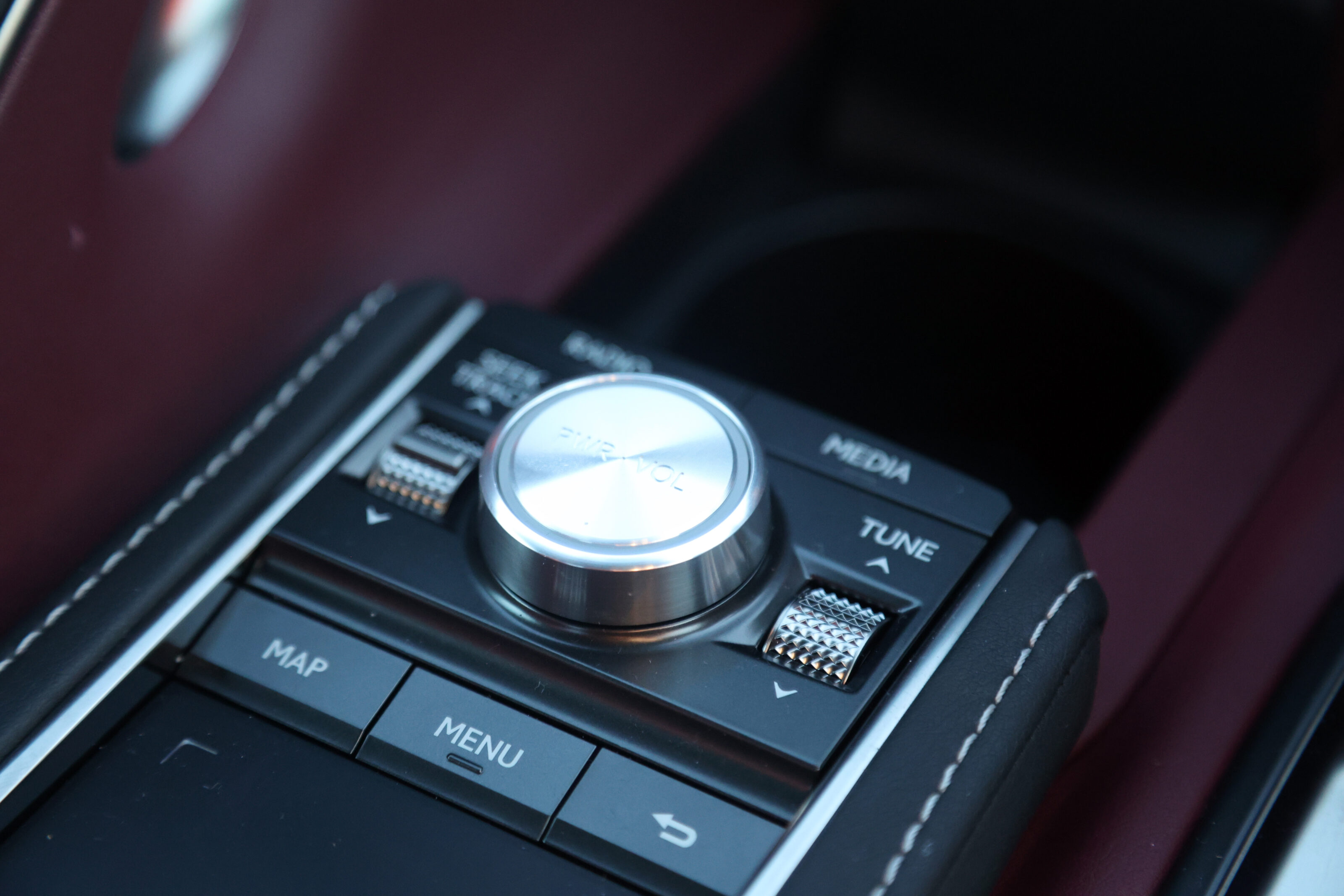
Thankfully, the wired smartphone mirroring means that you can avoid the worst excesses of the infotainment system, but you’re still forced to interact with the gormless track pad. I hate to think how long your eyes are off the road to perform a simple function like turning the seat heaters off. I’m determined to figure out how to adjust the height of the head-up display without the man-fail of resorting to the manual too, but thus far it’s eluded me.
None of that really matters when you’ve got a great road ahead of you and nobody looking. Unfortunately, Melbourne was plunged into lockdown shortly after receiving the LC500, but there are a couple of cracking hill routes that climb up in forested switchbacks behind my house, and all within five kilometres. It’s a convenient route to go in search of somewhere to exercise. The LC500 seems to enjoy stretching its legs too. It seems Haunted Hills will have to wait. – AE
Things we love:
- Sleek styling
- Stunning engine
- Quality finish
- Hokey infotainment
- Boot is small
- Chintzy indicators
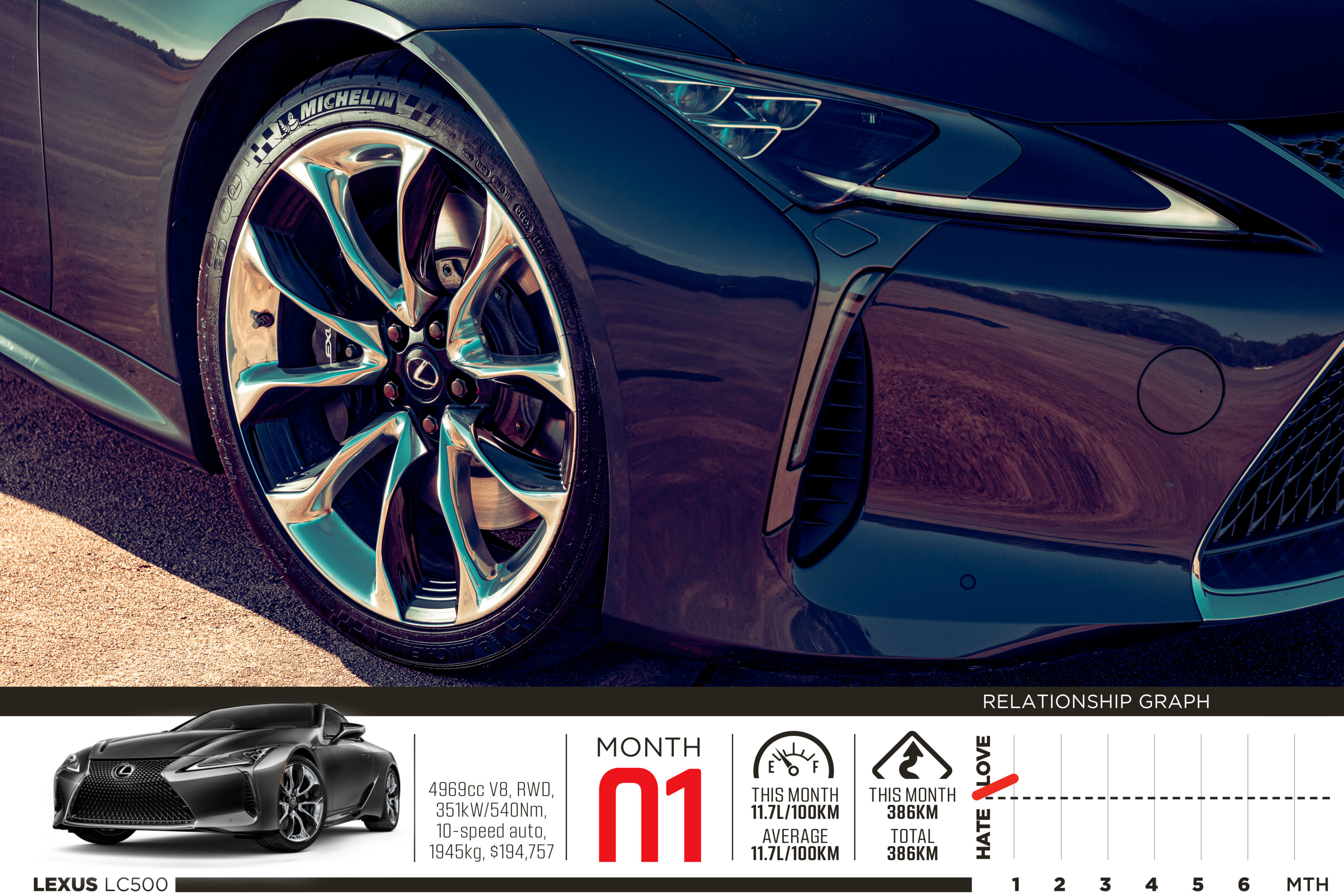
Month Two: Rare Groove
Lexus LC500 brings the noise
I’m not sure where you stand with listening to music in cars. For the most part, I’m more of a podcast guy. I enjoy the long form languor that teases out unexpected gems and it’s my staple go-to for the commute to the office. But the Lexus LC has a stereo that seems an item of extreme overengineering. Of course, much the same could be said for the rest of the LC, but the audio system merits particular mention.
The Mark Levinson Reference Surround Sound System is built around an 11-channel amplifier that drives 918 watts through 13 speakers and uses a sound processing system called Clari-Fi that attempts to upscale lossy file formats to hi-fi quality. Unsurprisingly, I expected it to be astonishing.
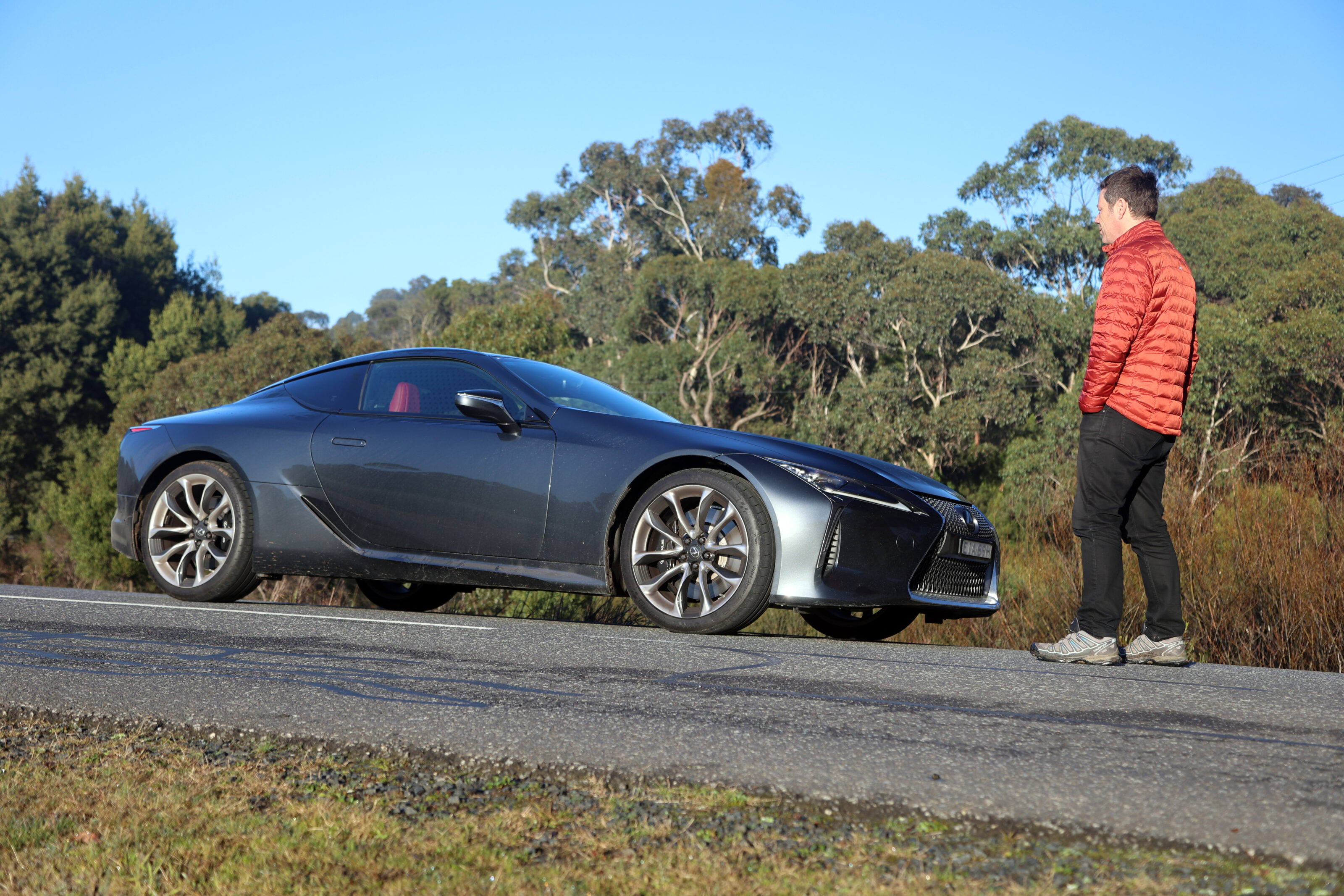
For the most part it’s very good, but it’s very front-loaded in the cabin, without a true surround sound effect from the rear speakers. Try to fade to the rear and the fronts just reduce in volume with virtually no power coming from the rear. All very strange. I’d heard a few rumbles about the latest Mark Levinson products, broadly coinciding with the time that parent company Harman was acquired by Samsung in 2017, but I’m surprised that the audio flexibility in the LC isn’t as well-rounded as I expected.
There is a solution though. Switch it off and listen to the engine; that 5.0-litre V8 fettled to perfect pitch by the world’s largest piano manufacturer: Yamaha. The three tuning forks of the Hamamatsu company is a clue to its musical origins. Some 68 years after being founded as a reed organ maker, Yamaha branched into motor cycles and the rest is history. Their involvement with the 2UR-GSE engine is well documented. What’s not so widely known is that the LC is also fitted with a Yamaha Performance Damper that’s aimed at reducing flex in the body structure.
Any metal vehicle body has elastic characteristics and lacks damping force, which means that this distortion energy is accumulated and released, repeating the cycle of distortion at a natural frequency. Yamaha’s Performance Damper introduces a damping element between the chassis and rear subframe, in the process turning bending forces into heat.
The aim is to provide superior stability, manoeuvrability and ride comfort and having driven Lexus LCs both with and without it, I’m not sure I could attribute any noticeable difference to it. Sorry. Maybe I should start road testing pianos.
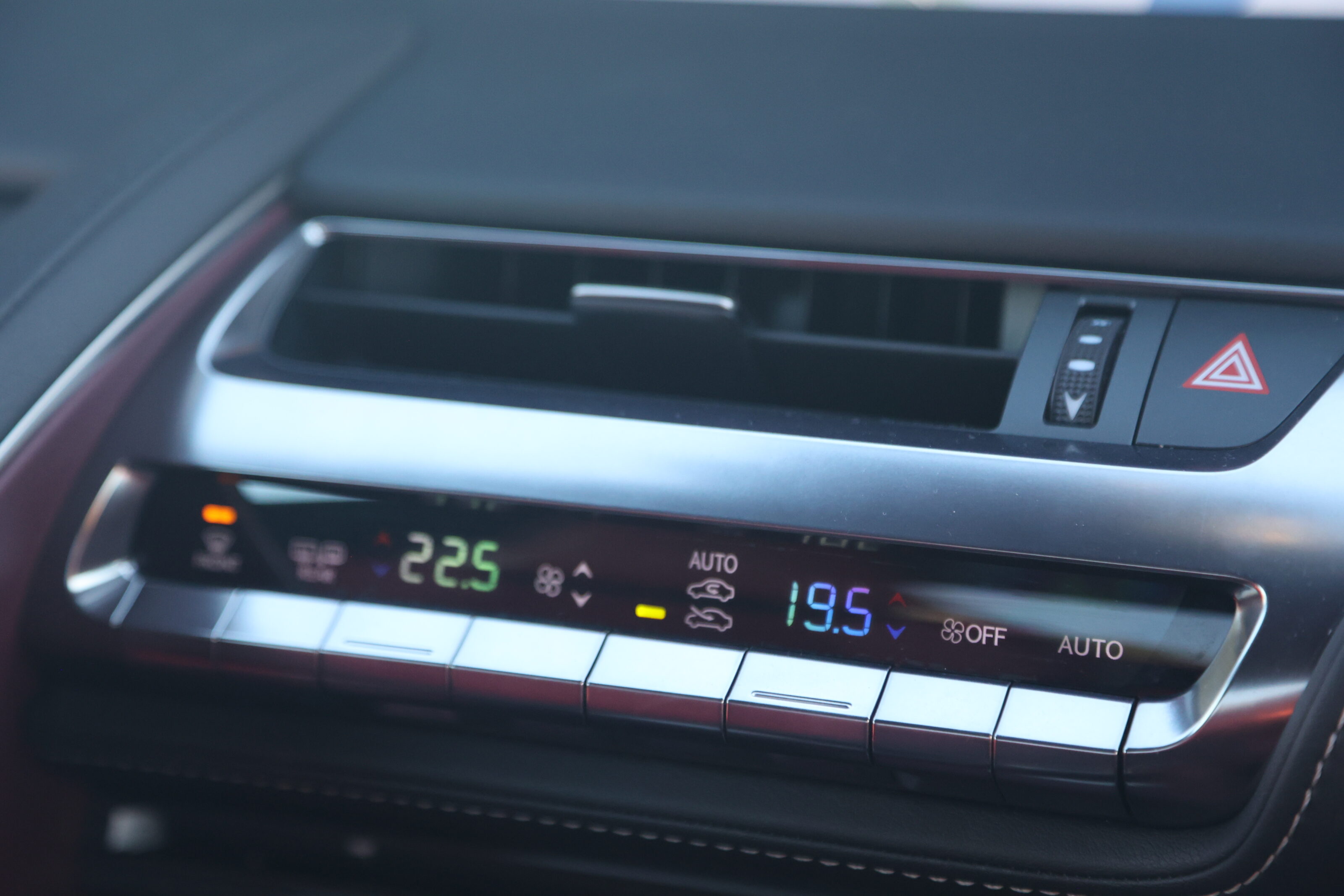
Unless otherwise instructed, the LC500 starts in a default mode that’s labelled Normal. I like to think of myself as a pretty normal kind of chap, so this seemed entirely reasonable, but you’re actually diddling yourself out of a degree of ride comfort by leaving the car in this mode. Click down into Comfort and some of the edginess that afflicts the LC over typical freeway surface imperfections is ironed out.
It’s still not in the league of the true magic carpet GT cars, but Comfort does tamp down the more staccato intrusions. It’s not so benign that it nobbles the gearbox or throttle response unacceptably either, so it’s now become part of my start-up procedure.
Combine four-wheel steer and the Sport S+ mode and you end up with a car that turns into a corner in a manner that’s a good deal sharper than you’d expect for a 1945kg vehicle. So alert is it that you need to compensate for it with your response at the wheel, slowing your hands a little to keep the masses in check while keeping faith that the nose will lock onto a line. Get a little too enthusiastic in anything other than bone dry conditions and the heavy front end can overwhelm the purchase of the front 245/40 section Michelin Pilot Super Sports.
The electronic stability control tune is entirely intolerant of yaw, and will adopt every tactic in its arsenal to prevent the rear of the car stepping out. You’ll have to wait until next month’s update for the chance (in a safe place) to explore the LC’s limit handling, but as much as I’d like a halfway house ESC mode which allowed just a little movement, in the vein of BMW’s M Dynamic Mode or Porsche’s PSM Sport, Lexus clearly thinks otherwise.
Lexus logic can be hard to decipher. I can’t even begin to understand the overarching decisions and logic behind the LC’s development. Like the LFA supercar before it, built at the same Motomachi plant, it feels like a car that’s been developed with virtually no eye on cost, as a statement of capability if you like.
Being the beneficiary of that process feels extremely special and you’d need to spend double on a Bentley Conti GT to find a cabin that exudes a greater sense of occasion and quality.
Stereo on and Clyde Stubblefield’s kick and snares fill the cabin. At its best, the LC500 borders on the magical. I’m already formulating reasons not to give it back. – AE
Things we like:
- Individuality
- Engine note
- Reliability
- No halfway ESC
- Stereo has its quirks
- Road noise

Month Three, Farewell: Slidehammer
Or how a Yamaha V8 gets to live its best life
As a motoring journalist, you’re just expected to be good at this sort of thing. Sliding a car around as if you’re born to it, I mean.
A few journos are extremely handy at this type of driving, while most are not. I enjoy it when I get the opportunity, which, these days, is not that often. So it was with a certain degree of trepidation that I took the Lexus LC500 out on the wet circle at Lang Lang in front of not only my colleagues, but also the ex-Holden chassis development team. I felt rusty and, as a result, fear of failure manifested as a rising prickly heat. Seat coolers on.
Turns out I needn’t have worried, If there’s a friendlier car than the LC500 to drift in big, lazy circles, I haven’t driven it. A combination of a long 2870mm wheelbase, stability control that goes all the way off, an utterly predictable atmo V8, accurate steering and benign geometry proved entirely flattering and saved my blushes.
You’ll need to limit your time with the tail hung out as any car that weighs nearly two tonnes will do a number on its rear boots, but for a few sideways circuits for the camera, the Lexus was an absolute honey, feeling like a supersized 350Z in its malleability.
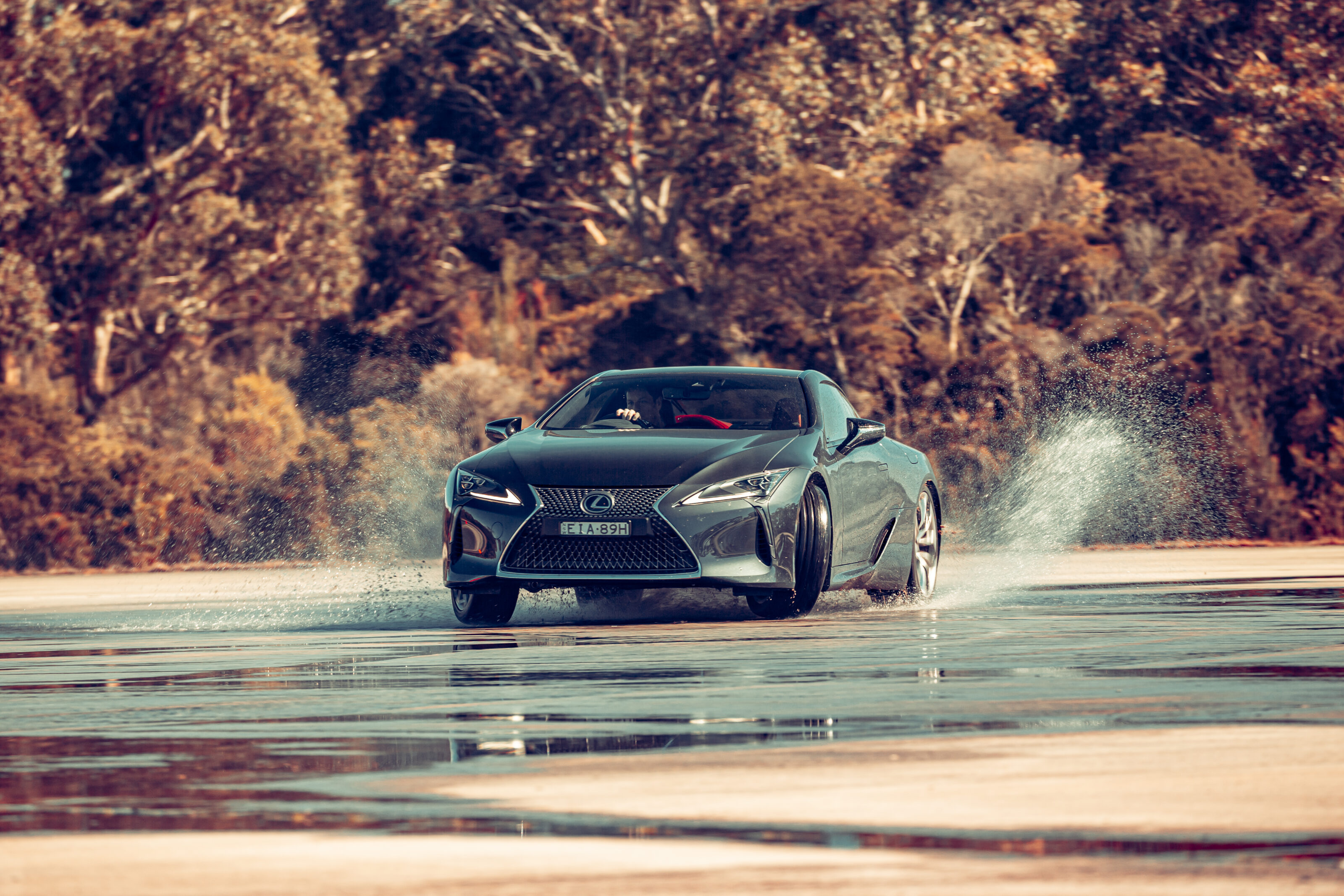
Implanting that knowledge of how the car feels when it starts sliding into your muscle memory certainly helps when driving the LC on Lang Lang’s hill route. There are a couple of corners there designed deliberately to upset a car’s balance mid-corner and having the confidence in knowing what the Lexus would do when tipped into yaw certainly helped there.
I made two additional discoveries this month, too. Firstly, the adjustment for the head-up display height is accessed via what looks like a nondescript back button on the steering wheel. Press this and the dial pack motors to the right to reveal a subsidiary menu. Of course it does. Why have an entire infotainment system for menus when you can have a dial pack that’s been designed by Ernst Stavro Blofeld? Sometimes Lexus does baffle me.
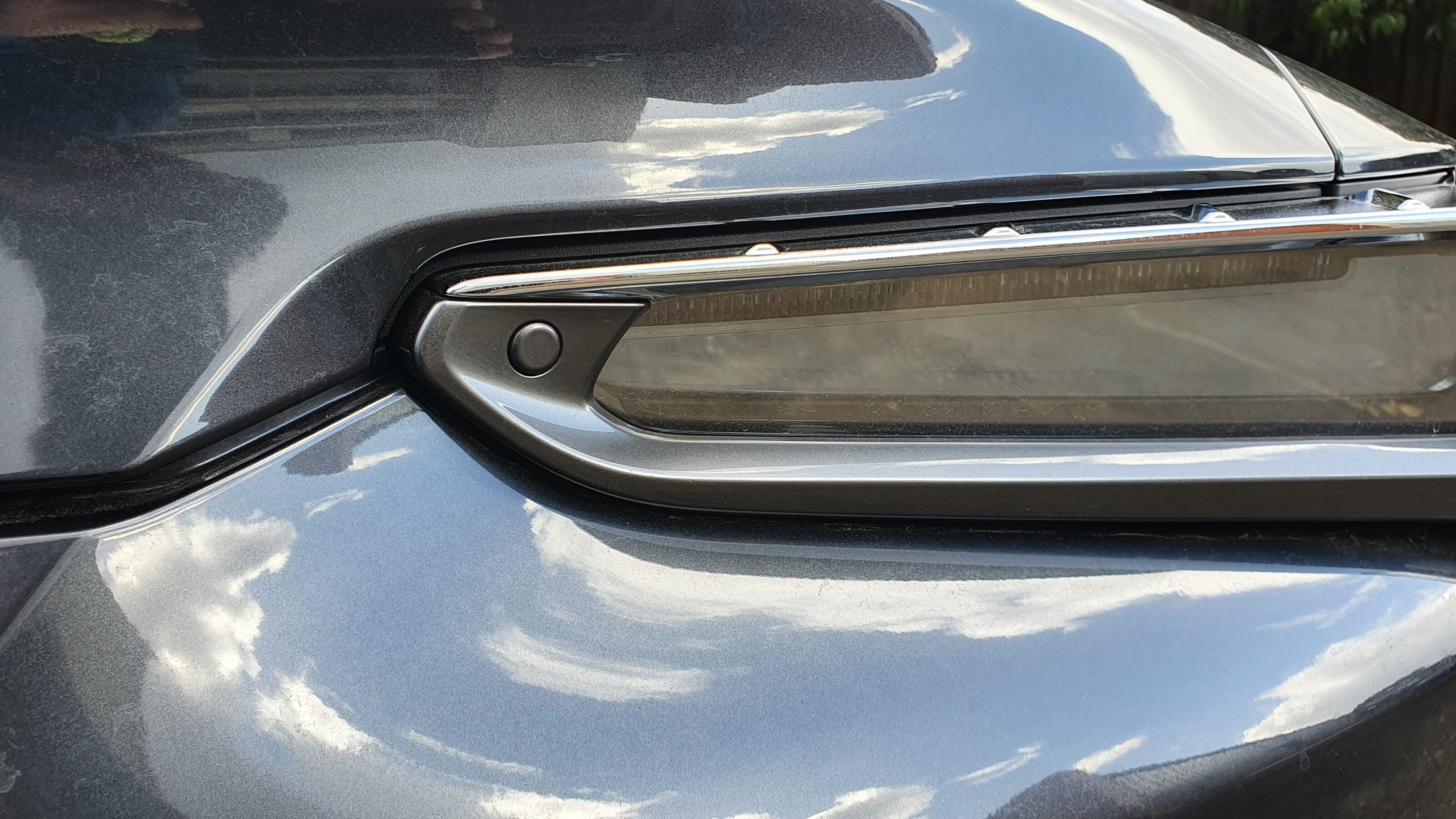
Likewise, I have videographer Josh Robinson to thank for locating the external boot release, a tiny nub on the right hand side of the rear number plate. Prior to this I’d been using the key fob and found it a bit of a pain to start fishing around in my pocket when I just wanted to throw a bag into the boot. As you might have guessed, I wanted to operate the LC without constant recourse to the owner’s manual. It’s my belief that if you need to resort to the manual to operate a simple part of the car’s anatomy, it’s a fairly fundamental ergonomic fail on the manufacturer’s part.
Sure, the LC has its quirks, but the basics are just brilliant. What’s more, it might just be the very last of its type. The fantastic 2UR-GSE 5.0-litre V8 isn’t going to be around forever although Lexus isn’t one of those companies that has put a hard and fast date on ditching internal combustion. Yet.
The LC500 emerges as one of the best looking, best sounding and best built cars listed for sale at any price. A colleague described it as the Grand Seiko of cars – an ‘if you know, you know’ sort of deal that’s imbued with incredible quality. If that’s not reason enough to pique your interest, consider this. You’ve got the rest of your life to whirr around in an EV. If the days of internal combustion are numbered, I think you owe it to yourself to see them out on a high. – AE
Snapshot
- AC Schnitzer increases power and torque outputs by 59kW/100Nm
- Splitter, roof spoiler and rear wing combine to add 120kg of downforce
- Four-year warranty offered in some countries
German tuning company AC Schnitzer has turned its attention to the latest BMW M3.
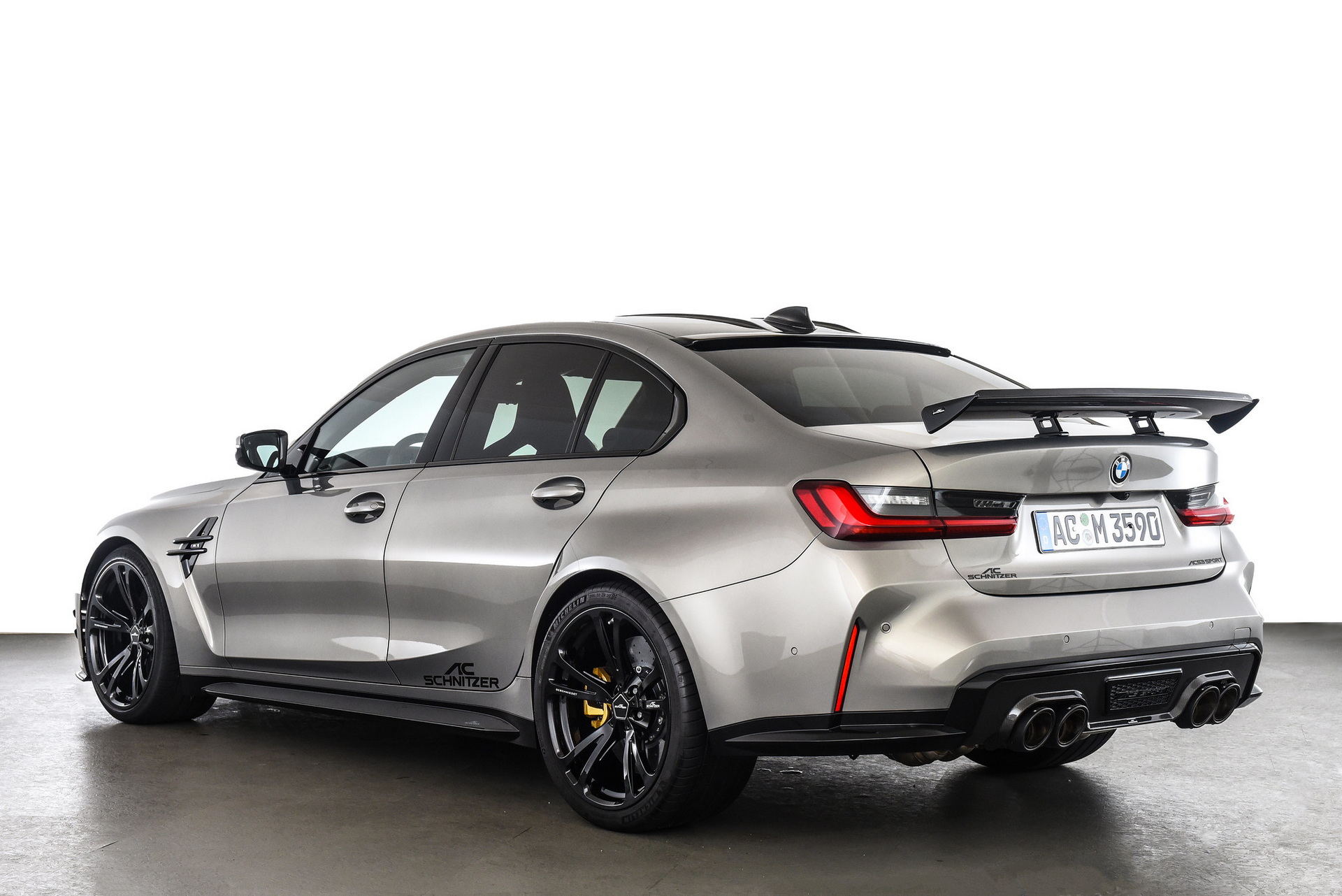
Producing the most powerful 3 Series ever, AC Schnitzer took the M3 Competition as its base and tweaked almost every part of the sedan – from extracting more from the inline six engine, to putting its own twist on the vehicle’s exterior styling.
Under the bonnet is the standard car’s S58B30T0 straight-six, twin-turbo engine, now delivering a bigger punch thanks to a more aggressive tune and revised exhaust system – bumping up outputs to 434kW and 750Nm, an increase of 59kW and 100Nm respectively.
Rather than using the sure-footed, all-wheel drive Competition xDrive, the AC Schnitzer sends all its power to the back axle through an eight-speed ZF automatic transmission, putting the 295 section rear tyres under pressure to keep the car under control.
At 20x10J inches all round, the AC3 forged wheels are available in silver and anthracite, shod in 285/30 and 295/30 rubber at the front and back respectively.
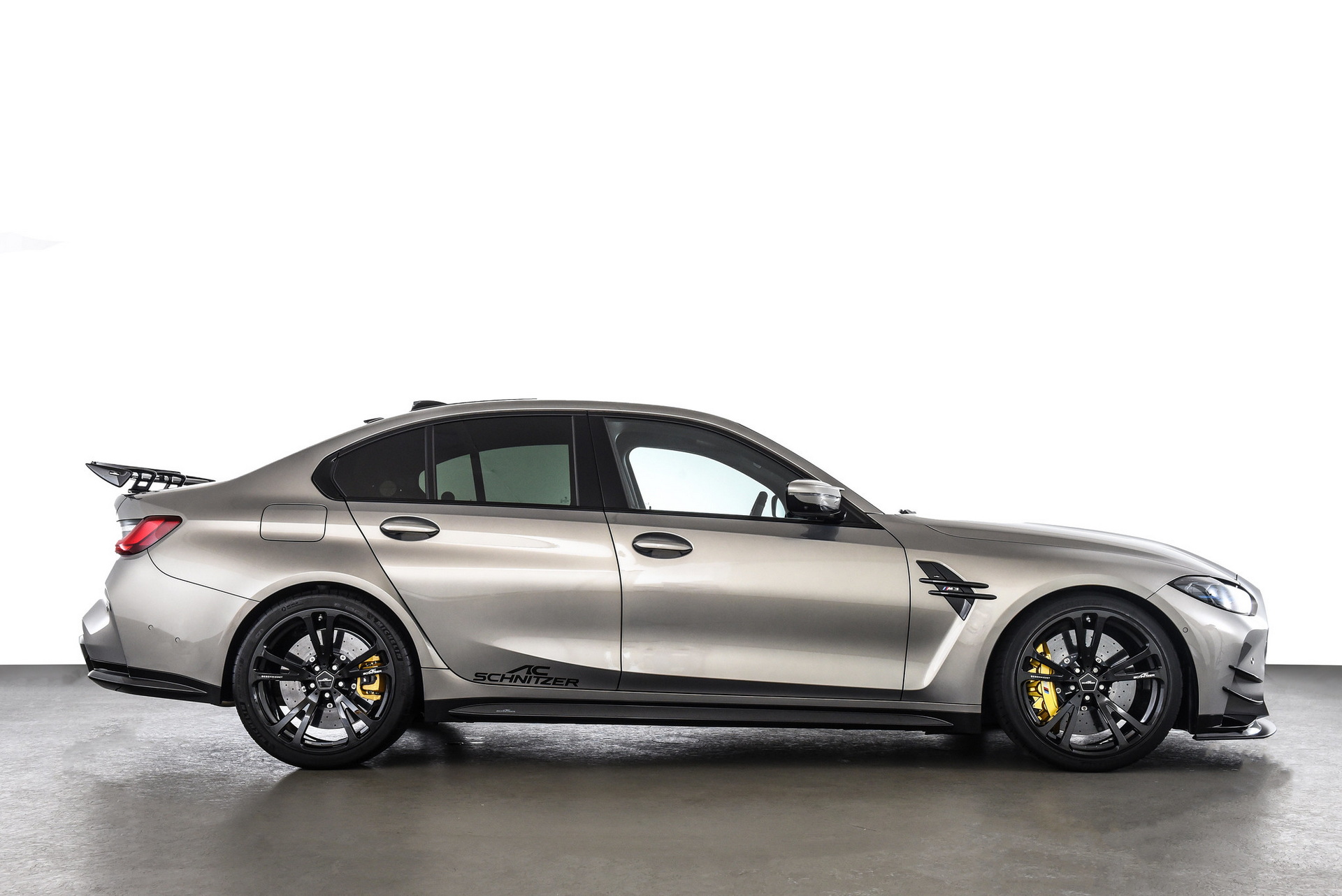
Riding on RS coilovers, the AC Schnitzer M3 can be dropped by up to 20mm lower than the standard M3 at the front, while the shocks can also be adjusted to fine-tune compression and rebound rates.
Although the cosmetic changes might seem like they’re just there for show, combined they add as much as 120 kilograms of downforce over an M3 Competition. The front splitter produces 40kg of downforce at 200km/h, the roof spoiler contributes an additional 20kg and the combination of rear wing and diffuser accounts for an extra 70kg.
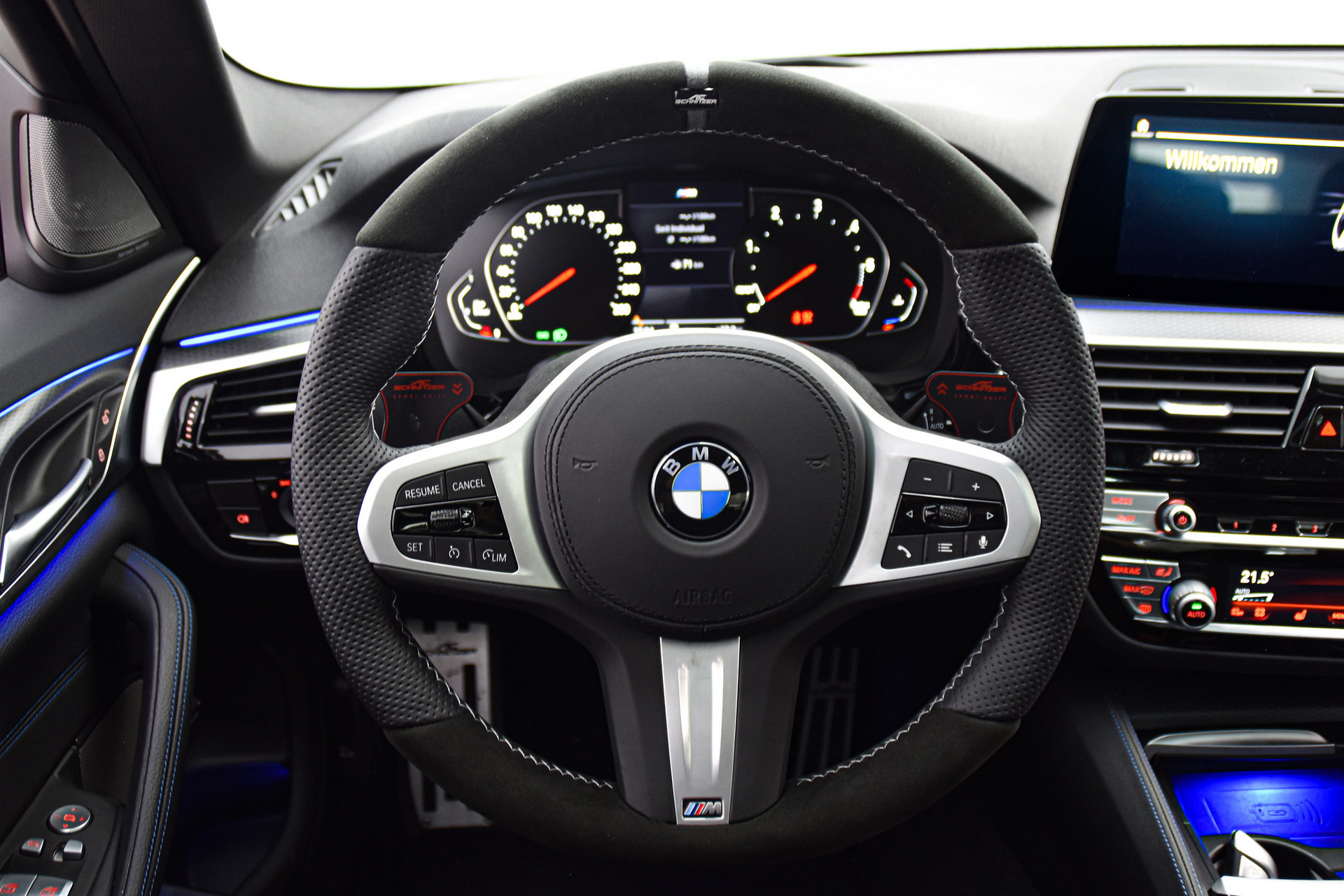
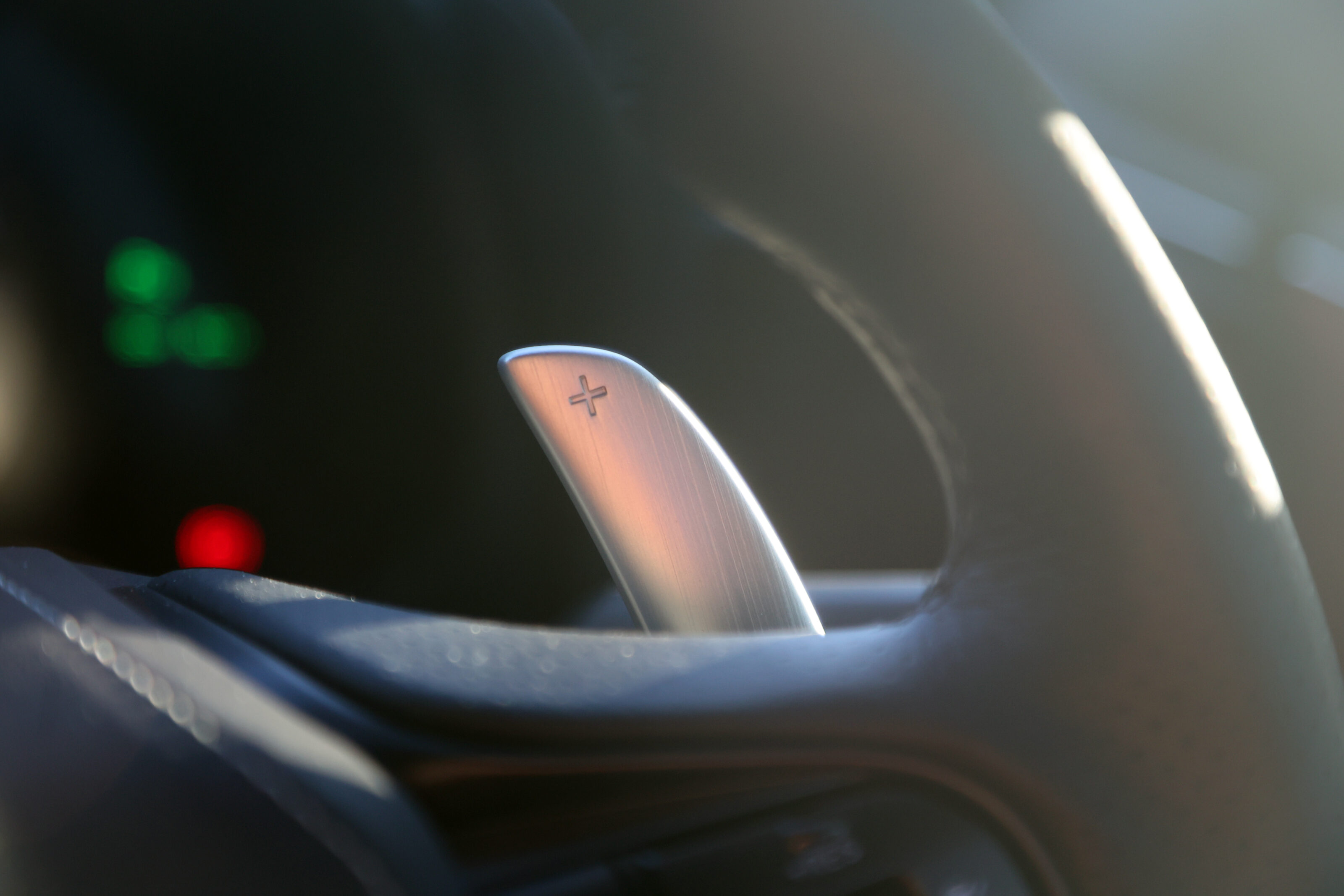
Inside the cabin, most aspects of the M3’s interior remain unchanged apart from the steering wheel, a custom job made by AC Schnitzer, wrapped in black Nappa leather and Alcantara – with larger paddles behind to allow drivers to bang up or down the ‘box.
Although AC Schnitzer has not yet released a price for its tuned M3 Comp, it will offer a four-year warranty in some markets, providing owners with peace of mind when they put the right foot down.
As an important resource for aircraft engineers, race teams and automakers, wind tunnels have never been so important – especially in the age of electrification for the vehicle industry.
However, limitations associated with size and the exorbitant costs involved with developing and maintaining wind tunnels meant UK-based company Totalsim had to put its thinking hats on.
As reported by Autocar, Totalsim – which specialises in computational fluid dynamics (CFD) modelling – has worked out a way to switch up the traditional wind tunnel process.
Rather than having a stationary vehicle surrounded by moving air, there would instead be a moving car speeding through stationary air.
To achieve this feat, the company looked into repurposing dormant railway tunnels in the United Kingdom back in 2013.
As luck would have it, founder Rob Lewis and his crew stumbled across the Catesby Tunnel, located near the English town of Daventry, within the boundaries of the famous ‘motorsport valley’ – an area home to various Formula One teams and the Silverstone Circuit.
The 2.7-kilometre long railway tunnel was soon acquired, with work commencing on transforming it into an aerodynamic testing centre. Eight years and around $37 million Australian dollars later, the tunnel is close to reopening to serve various manufacturers, race teams and other clients.
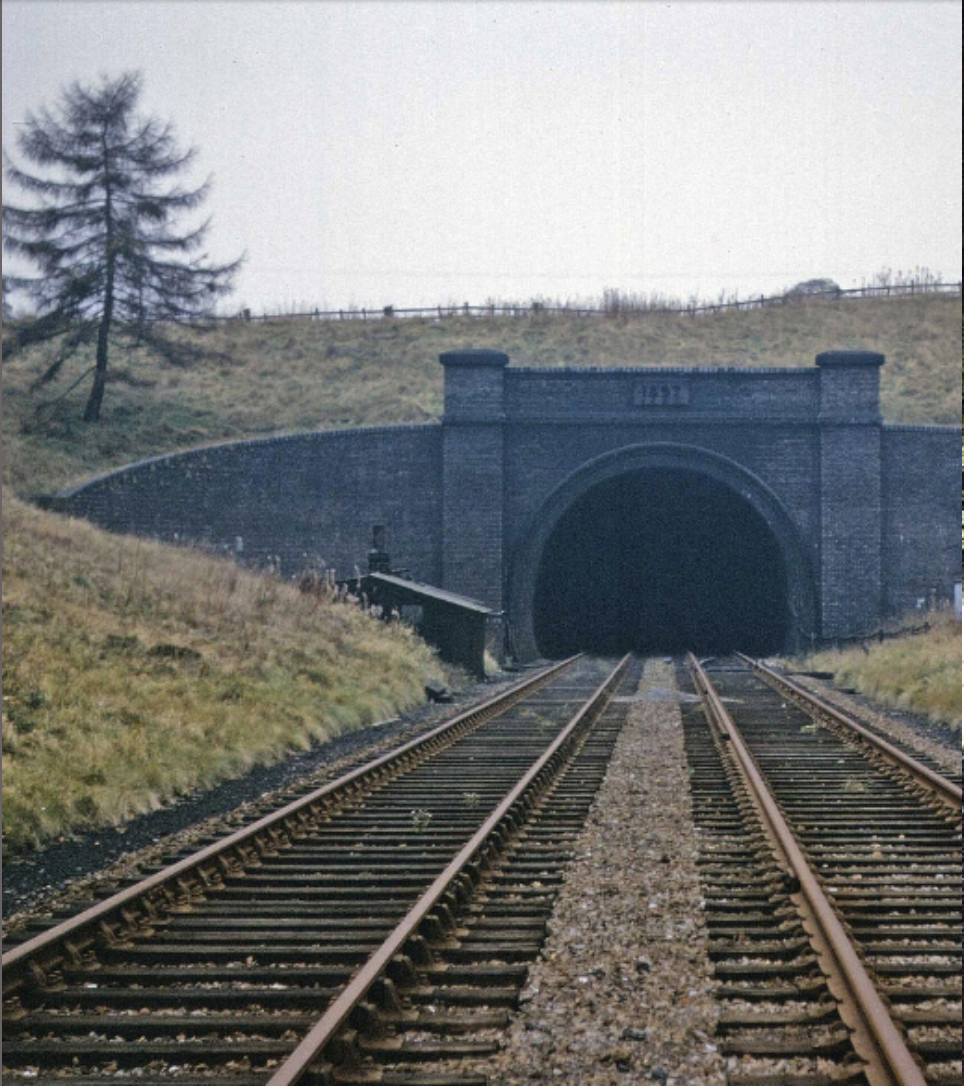
Completed in 1897 following two years of construction, the tunnel was built at the insistence of Henry Attenborough, owner of the Catesby Estate, who stated the train line should move underground to prevent ‘unsightly trains’ passing through the landscape. After 68 years in service, the tunnel was retired in 1966 as a result of the Beeching Axe, which worked to modernise the national railway system in Great Britain.
Sidelined for almost half a century, years of development work resulting from its purchase in 2013 included the draining of water, cleaning of soot-covered vents and minor restoration of the structure. To the surprise of Totalsim, the tunnel floor was found to be both almost perfectly flat and straight, with a slight 1:176 (0.006 per cent) gradient.
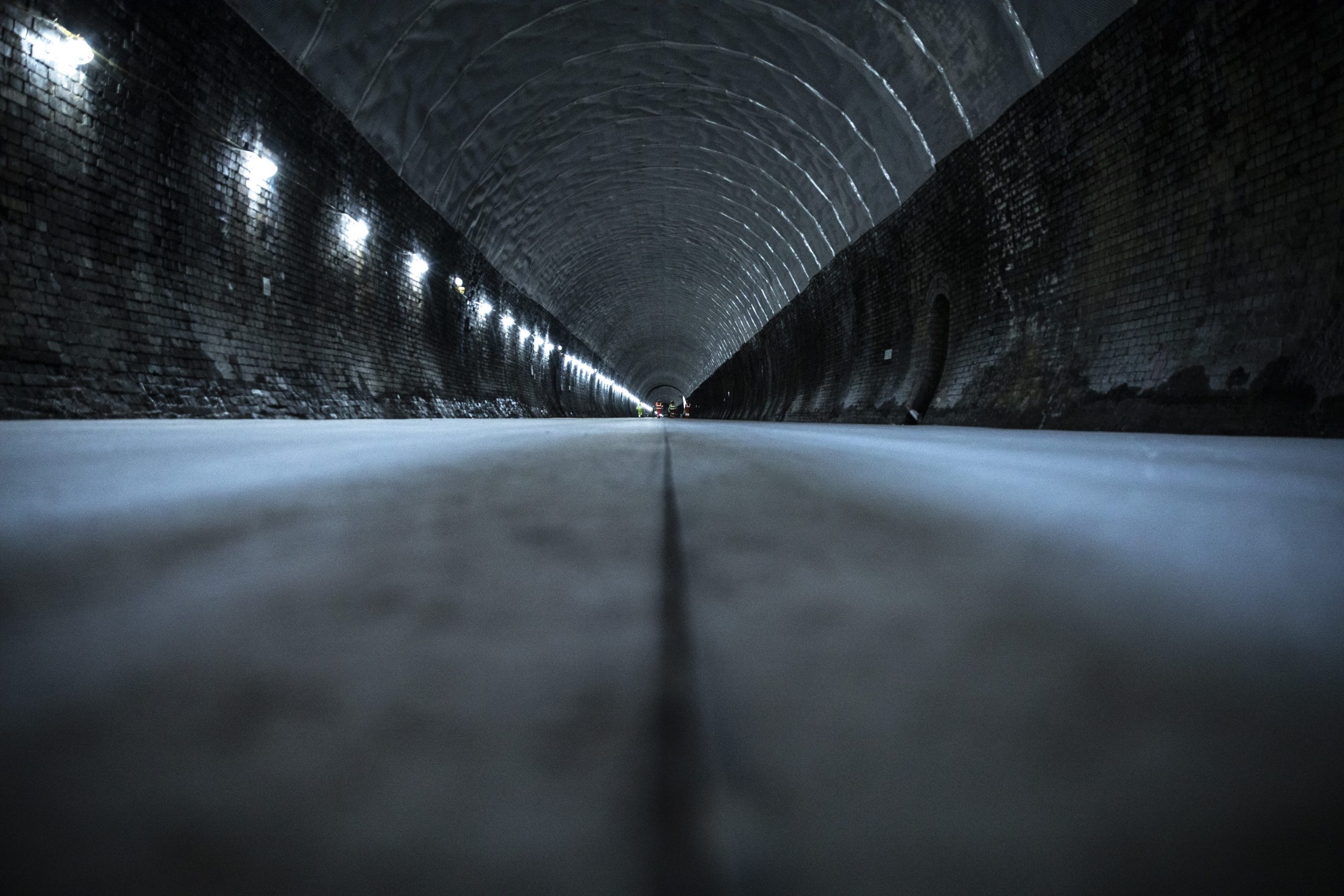
“We were amazed when we actually scanned it,” said Jon Paton, leader of aerodynamics at Totalsim. “It’s within a couple of centimetres of being perfect.”
Final works include a new concrete base, which is being laid with an ‘ultra-precise’ coating to establish a consistent surface without any gaps or expansion joints.
“The most important thing for testing is consistency and repeatability,” he added. “That’s where high-quality data comes from.”
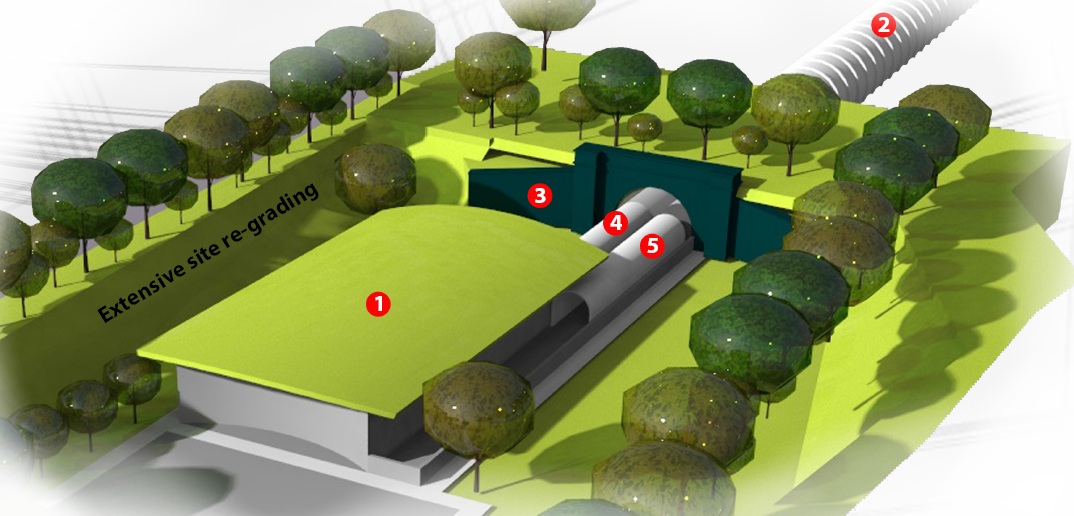
A research and development station has also been built alongside the redeveloped tunnel, based on the design of a Victorian-era engine shed and station yard. This facility will allow automotive manufacturers, suppliers and researchers to work together in one location to focus on collaborating and innovating on testing and design for vehicles.
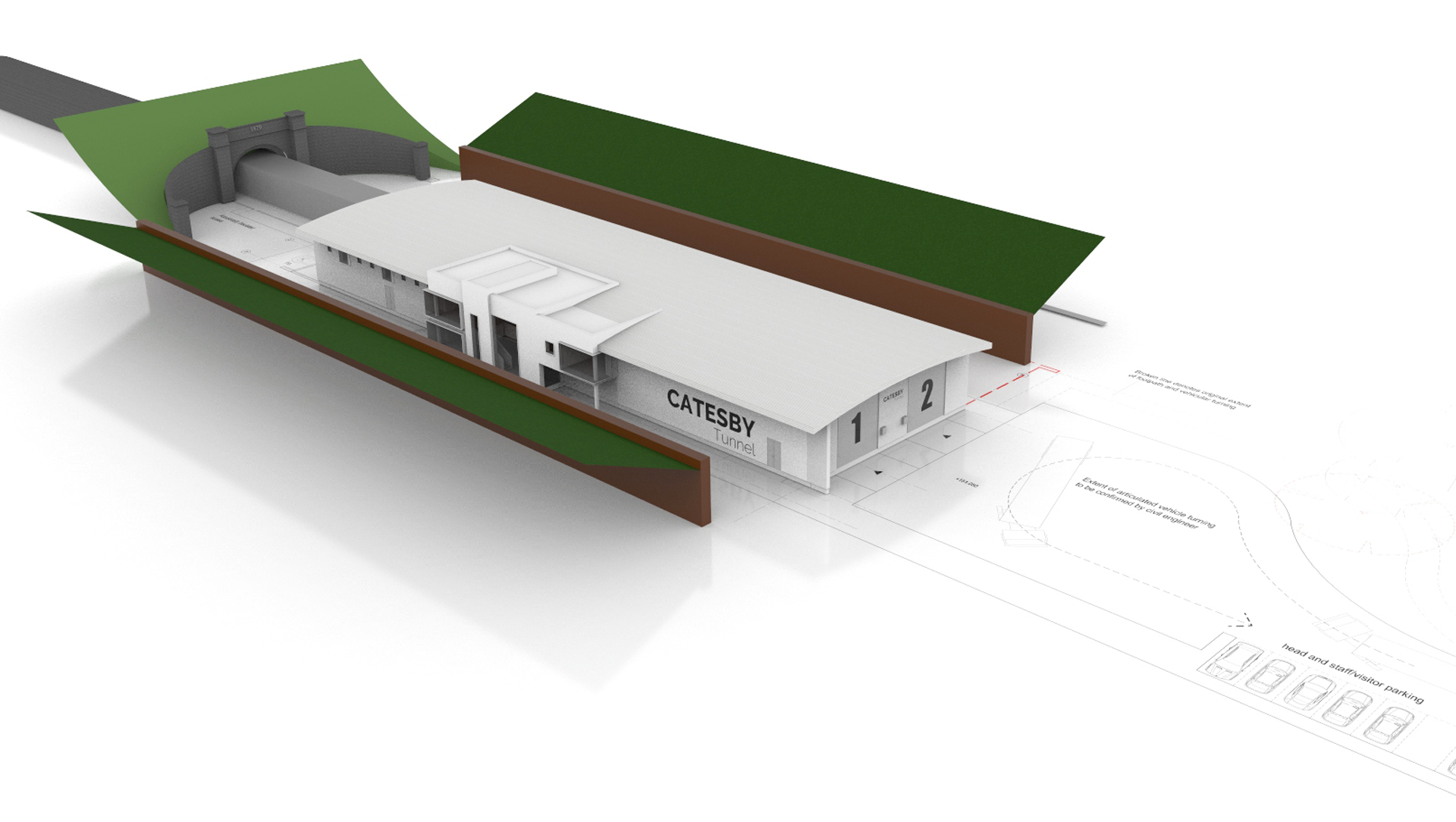
The research and development facility and wind tunnel are covered by a large passageway, helping to ensure confidentiality in top-secret aerodynamic testing.
In addition to restoring the tunnel, the company has also installed turn-tables at each end to help vehicles return to the base without the expert moves that would typically be required in such a tight space.
With initial clients expected to include Mercedes-Benz, Jaguar Land Rover and Mini, as well as five Formula One teams – Alpine, Williams, Red Bull, Mercedes-Benz and Aston Martin – the facility will be a busy place when it opens for business in November.
