A disclaimer first. I don’t profess to know all the rules here. If I did, it would have taken me a good deal less than 20 years in the business to end up as a magazine editor, but along that journey, I’ve managed to pick up a few pointers that I hope will set you in the right direction.
The industry is changing fast, and there’s never been a more exciting time to be a motoring writer.
So here are 20 tips to get you started.
1 – The journalism bit is important
Many of the best motoring journalists made their way into the industry via a traditional route, which often entailed studying for a recognised journalism qualification and then entering via grass-roots local press or specialist magazines.
Understanding the brass tacks of the business is important, but that can be taught. There are some great writers who never made it via that pathway, but taking the time to learn the essential disciplines will confer an advantage.
2 – You are your ideas
Even if you’ve never studied a journalism qualification or been in the publishing industry at all, having a sharp mind, a strong work ethic and, most importantly, an inexhaustible font of ideas will ensure that content-starved editors will make note of you. We want you to make our lives easy. If you are able to pitch ideas that fizz, you’ll get a chance. Which leads to…
3 – Write, write and then write some more
You can’t be expected to get things right first time. Understanding the tone and voice that works for a particular title can be tricky.
If you submit some work and it gets rejected or spiked, ask for feedback and don’t be overly defensive when you receive it. You’re not going to succeed if you don’t know what you’re doing wrong. Practice your writing and edit fiercely.
4 – Develop a thick skin
Rejection always hurts but keep at it. There are people working in this office who have been turned down three or four times for a role but they kept at it. And even when you think you are doing okay, a quick look at a YouTube comments section is often enough to bring you back down to earth.
You’re never going to be everyone’s cup of tea. Most people you’ll come across in this industry are constructive and professional, but there’s always the occasional jaded never-was who will try to pull you down. Leave ’em in your wake.
5 – Use the tools available to you
If you’re submitting work and a covering email to a new editor and want to be taken seriously, make sure you’ve covered off the easy stuff. Know the editor’s name. Spell and grammar-check your copy. Be confident but not pushy. Remember to attach the attachment.
6 – You don’t need to be able to drift like Chris Harris
Of course it helps, but there are plenty of racers who have god-like car control but can’t string a sentence together. As long as you’re not a total disaster behind the wheel, there’s the chance that you can deliver value for your audience.
7 – What if I’m a complete disaster behind the wheel?
If that’s the case, road testing may not be for you. Don’t despair though. You can still find a niche in writing news, creating industry stories, working on profile pieces, becoming the go-to person for marque or model histories and so on. Or you could become a sub-editor. Motoring journalism is not just road testing.
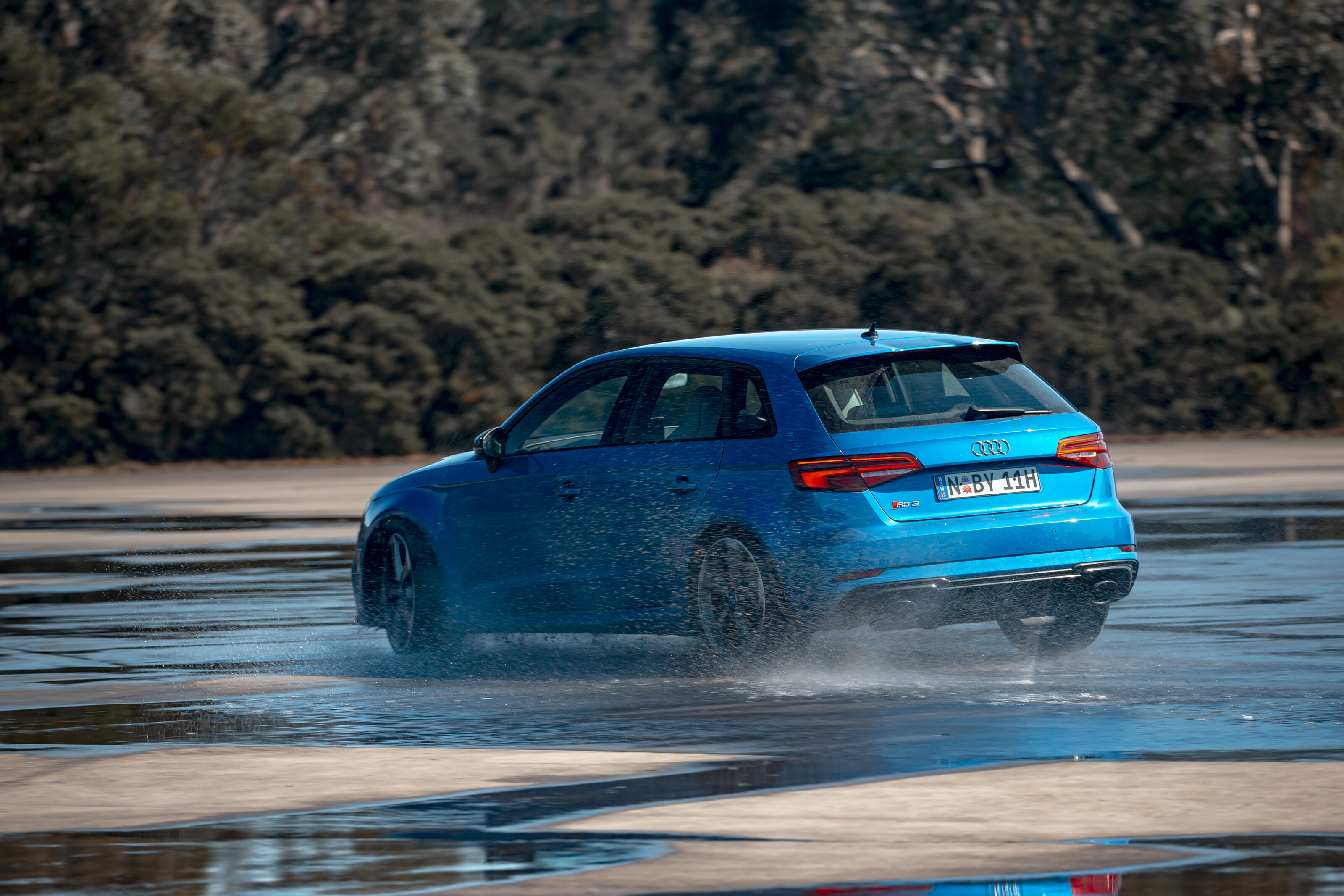
8 – I borrowed a car to write about it and binned it. Do I give up?
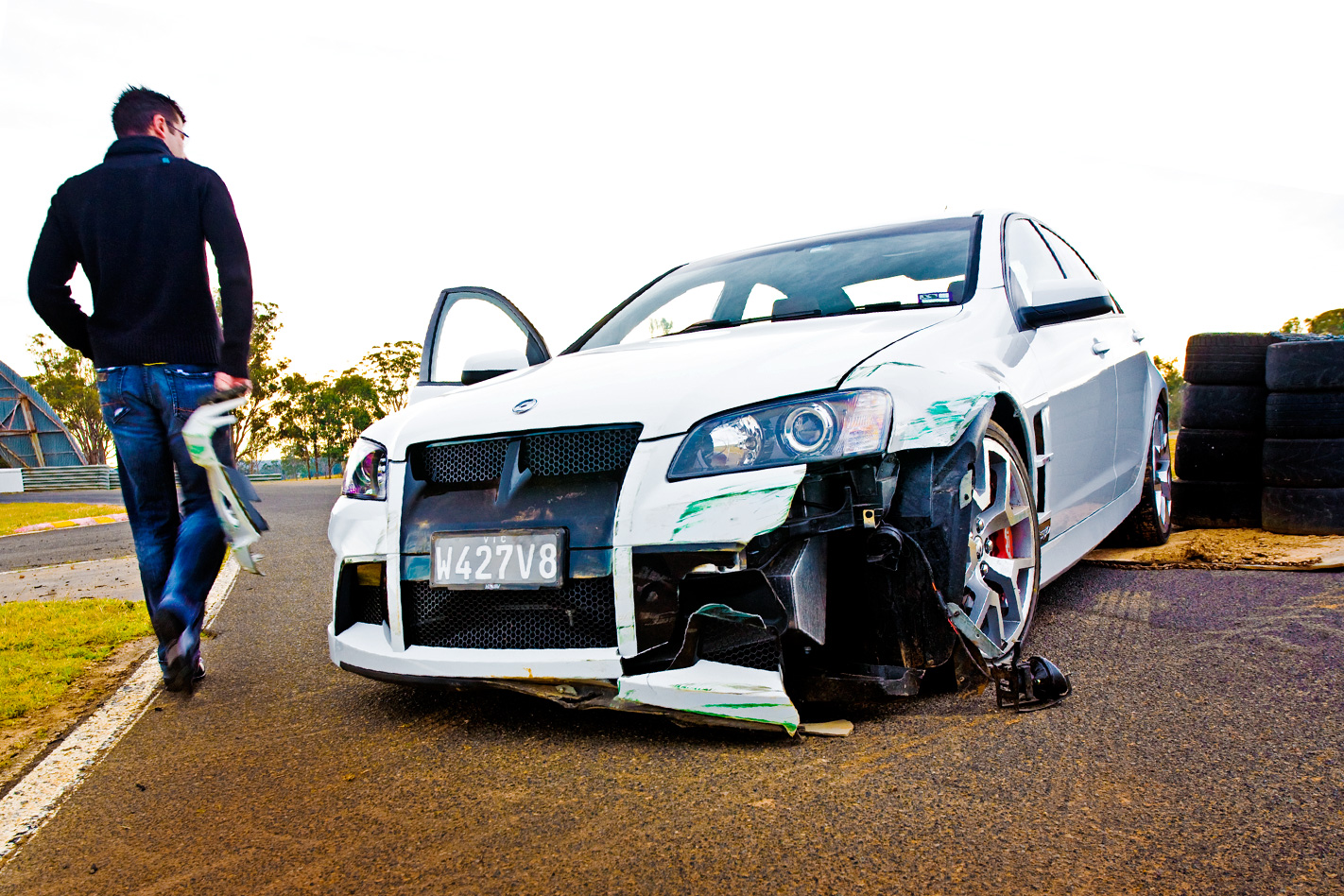
No. You’ve just made things a whole lot more difficult for yourself though. Ask me how I know. If you do ever have an incident with a manufacturer or dealer’s vehicle, here’s my advice. Put your hand up to it.
The longer and more convoluted/implausible your excuse is, the worse it’ll be for you in the long term. We can all make mistakes, but it’s key to show that you’ve learned from any you do make, especially if it’s an expensive one.
9 – Publishing has changed. Lucky you
The old boys network has, thankfully, largely been wiped out of the industry. There are so many ways of becoming published nowadays that if you’re good enough, you will be noticed.
Start a blog, get yourself noticed in the comments section of MOTOR’s web pages, email editors, contribute to enthusiast pages and so on. The barriers to entry have come down, so what are you waiting for?
10 – Don’t sell us what we already have
Okay, so you’ve managed to snag a drive in a new 911 GT3. Good for you. Don’t try to sell us a story on it because we have 50 other writers to choose from, all of whom have more experience and can probably do a better job than you.
Pitch stories that the editor won’t have – interviews with interesting people, a well-researched industry analysis or a meticulous used car model guide of something that’ll catch the eye of a decision maker.
11 – Imagery is important
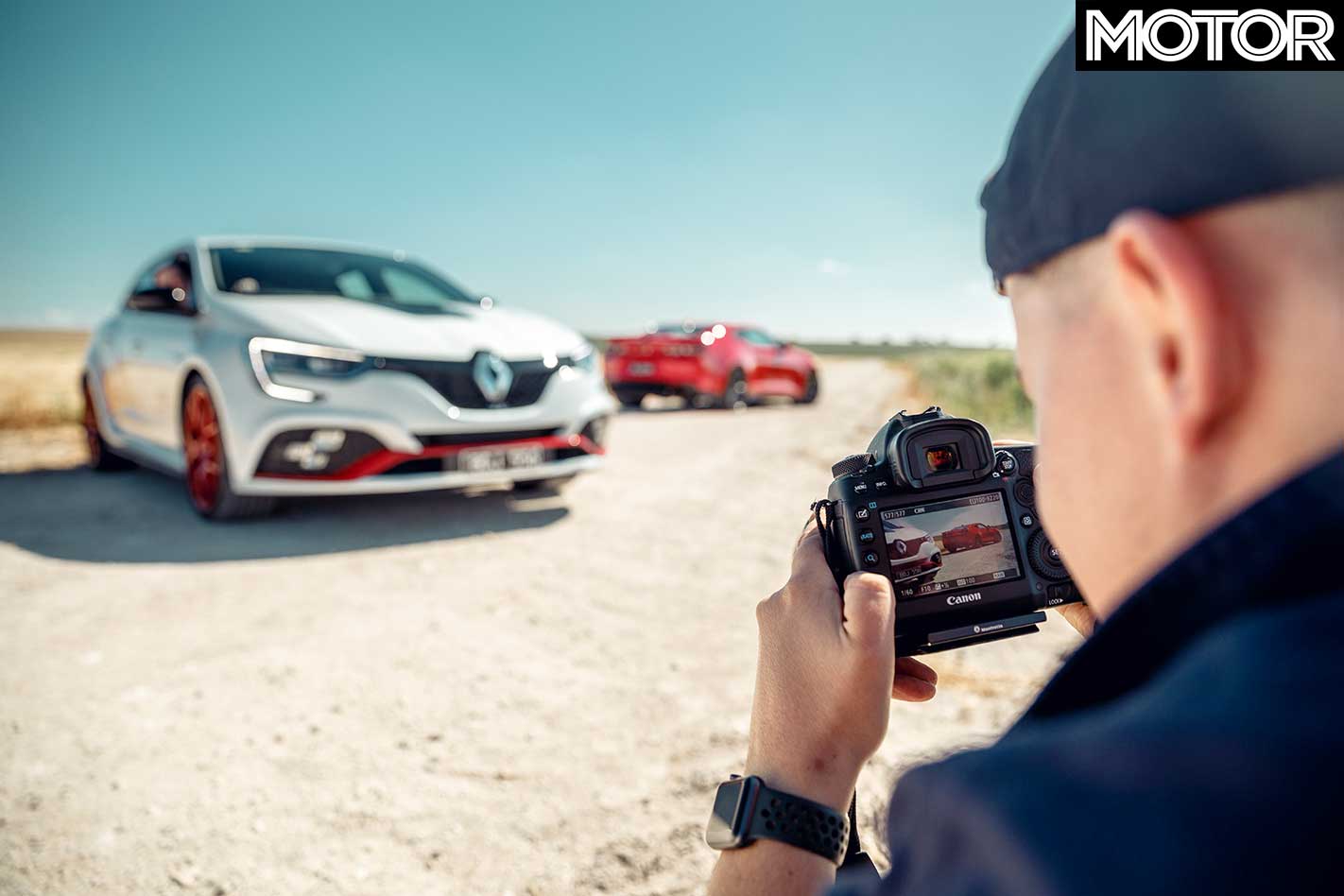
You can have the best feature idea in the world, but if we can’t illustrate it, it’s not going to get too far off the launchpad. One of the quickest routes to success is to partner with a photographer or videographer and offer the editor the one-price package deal for words, pictures and/or video.
A freelancer is there to make an editor’s life easier. Remember that at all times and don’t be higher maintenance than you need to be.
12 – Be female
No, this isn’t positive discrimination. It’d just be nice for the industry to get some women on board to help offset the complete sausage party that is motoring journalism. Seriously. Every outlet I can think of would give their right arm for a good female automotive writer. Ladies, the stage is yours.
13 – Develop your networks
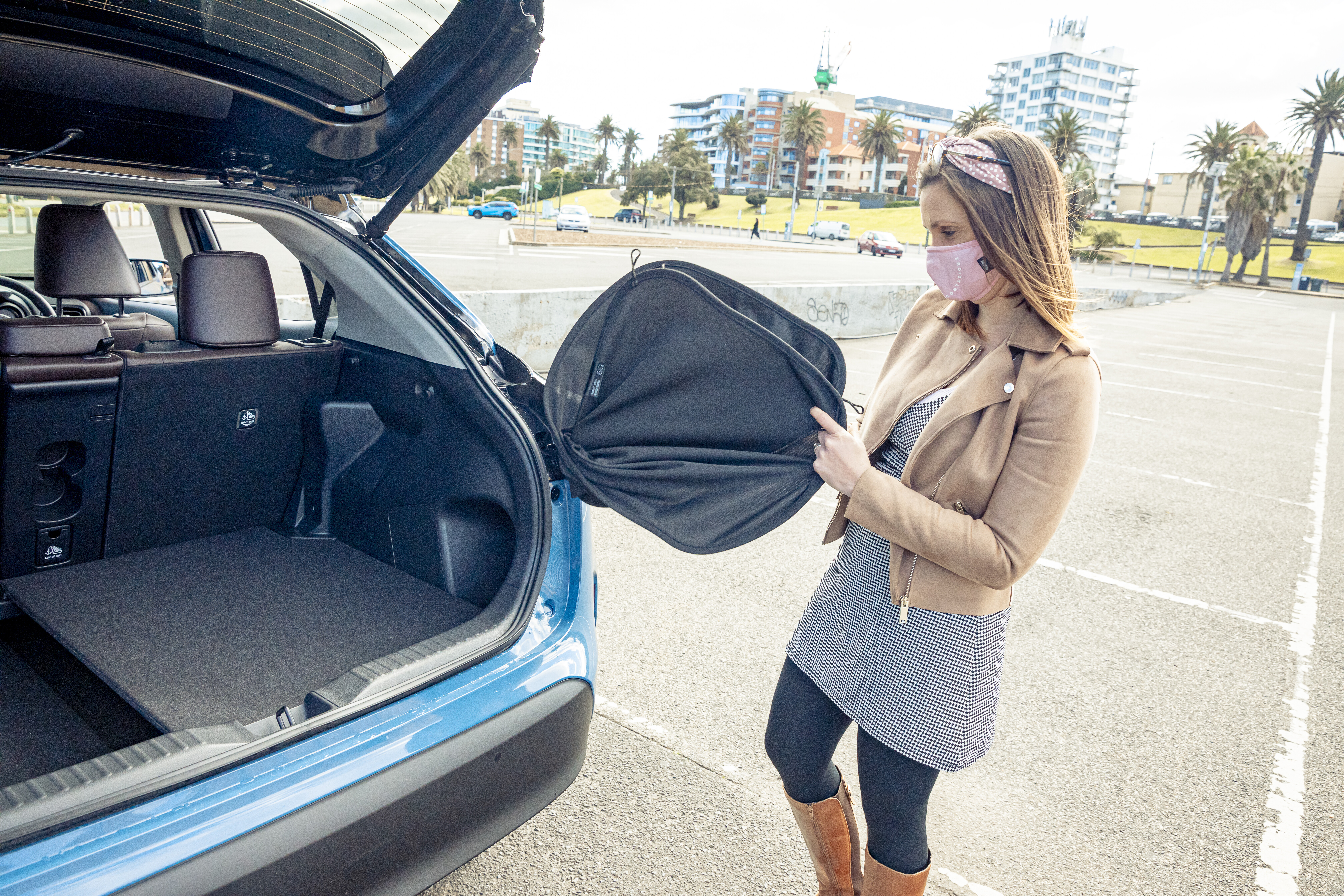
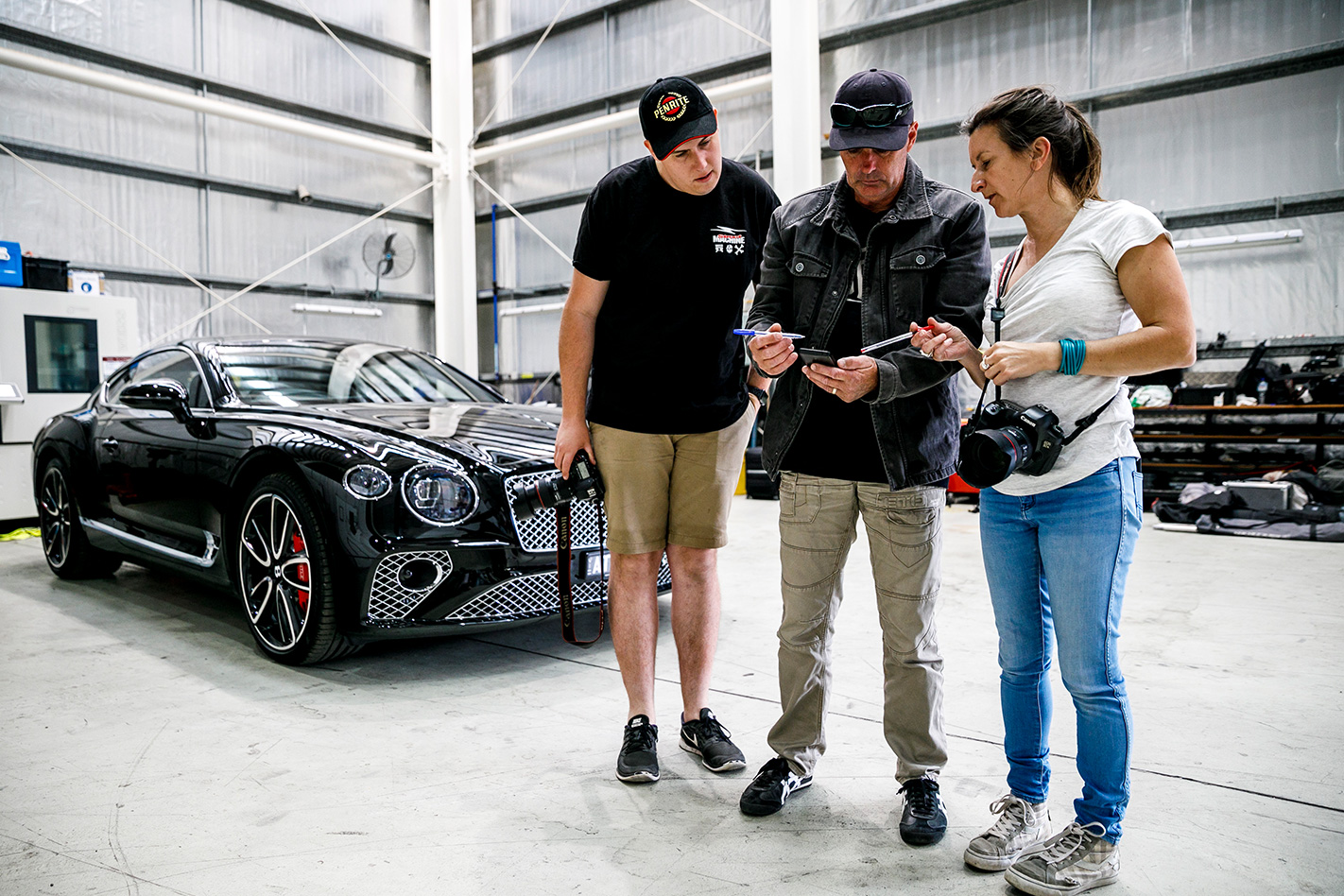
Build as many industry contacts as possible. Intern for a week or two if possible or offer yourself as a warm body on photoshoots. That way, you’ll see how experienced content creators work, as well as all of the behind the scenes work that goes into the finished product.
Maybe offer to collect and return press cars for a fee. Cultivate your contacts among photographers, videographers and others who will help you build your portfolio.
14 – Understand how cars are sold
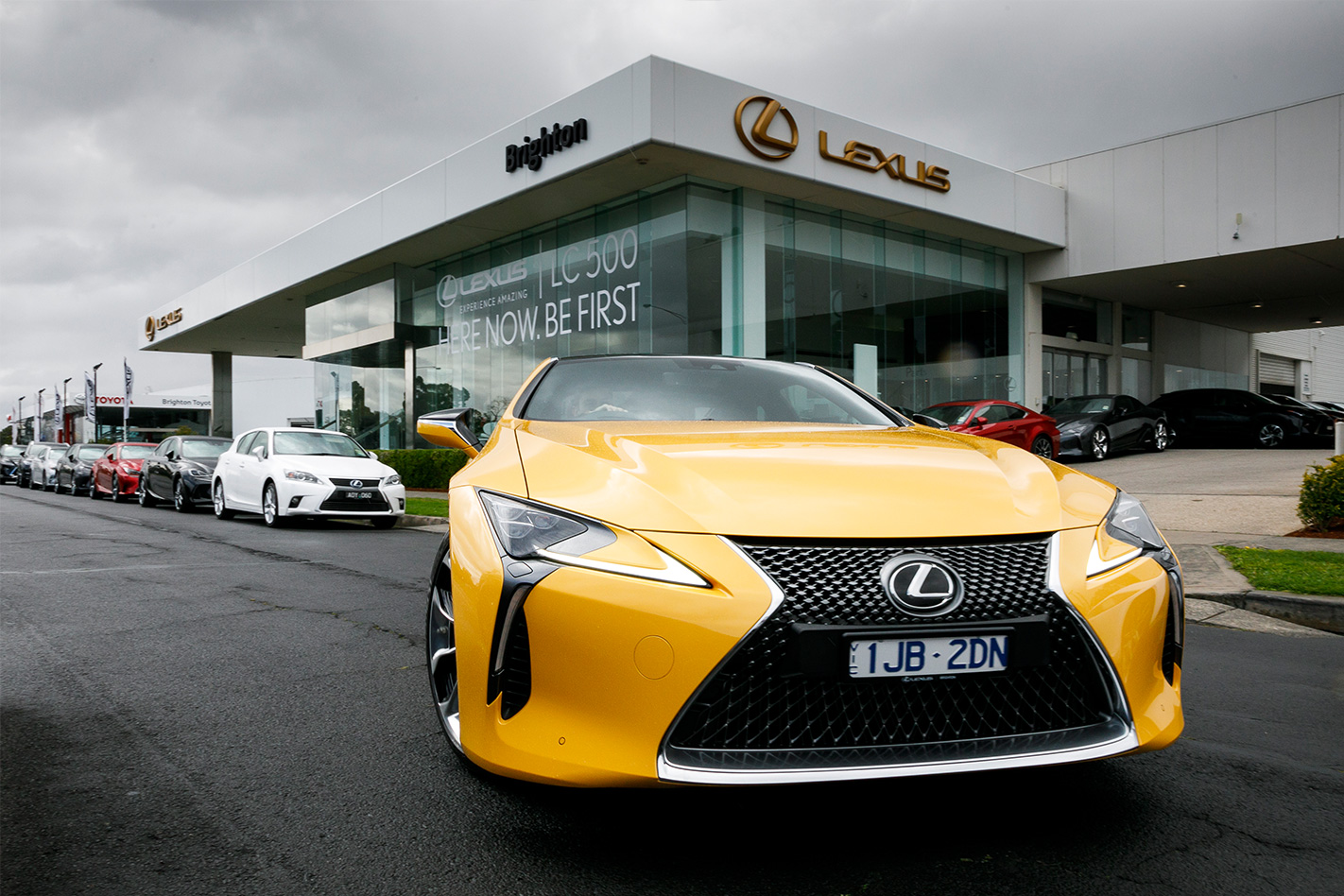
All too often, journalists like to inure themselves from the commercial realities of the market. In fact there are many who don’t have the first idea of the retail model that underpins the cars they’re driving.
If you can understand how and why the car you’re testing ends up with its customers, you’ll be far better tuned in to understanding whether it works for its target market or not.
15 – Work on your presentation skills
Can you front a video? If so, you’ll instantly be more marketable than a person who is unwilling to stand before a camera. Build yourself a showreel. The great thing about this is that you have the luxury of time on your side to get it looking right, so buddy up with a videographer and show us what you can do.
You don’t have to be driving a supercar. You’re the star in this instance, so we don’t really care if you’re reviewing your dad’s knackered Magna. If you can engage the viewer, you’re in with a better than evens shot.
16 – Don’t expect to get rich
By and large, motoring journalism isn’t a path to great wealth. Most journos will bring home something in the region of $70-$90k a year which isn’t bad, but can mean that people are reviewing cars that they’ll never be in the target market for. That’s just a fact of the business, but it does mean that you’ll probably get to meet a whole bunch of very interesting people who can afford these cars in the course of your work. If you are one of the lucky few to strike it rich in this business, congratulations. You win at life.
17 – That thing about passion/jobs? That.
“Do what you love and you’ll never work a day in your life.” We’ve all seen that drivel on sappy motivational posts on the ‘Gram. That might well be the case if all we did was drive supercars in glamorous places but that curated image is far from reality.
There will be many 4am starts, daggy motels, long nights spent proofing copy, hours chasing spec details, sitting in virtual meetings and, pre-COVID, a lot of time spent in airports and shuttle buses. It’s not all glitz. If you expect to experience just the highlights, you’re in for a rude awakening.
18 – Make an effort to understand the oily bits
Many of the very best motoring journalists come from an engineering background and the rest often wish they did. If you’re capable of understanding the ‘why’ of how a car goes down the road, you’re at a natural advantage.
19 – This is a tiny industry
The number of Aussies currently making a living as a motoring journalist probably numbers a couple of hundred. That’s it. It’s likely that more people work in your local branch of Coles.
Everyone knows each others’ business, many are incorrigible gossips and people change employers. Indiscretions rarely get forgotten and personal feuds can rumble on for a very long time. Make the effort to be cordial with your colleagues.
20 – Retain your sense of wonder
Some motoring journalists love to whinge about five-star treatment as if doing so proves that they’re used to so much better. They get jaded. They take their privileges for granted. Don’t be that person because if you’re bored and world-weary, it’ll come across in your content and your audience will switch off.
Retain the wonder, drink in those pinch-yourself moments and write as vividly as you think you can get away with.
Ready?
If, after reading all that, you think you’ve got what it takes, pitch me an idea. If it’s good enough, you’ve got your foot in the door. Good luck!
Just days after its official release, the new Mercedes-Benz Citan has scored a host of camper upgrades to turn it into a pandemic-spec traveller.
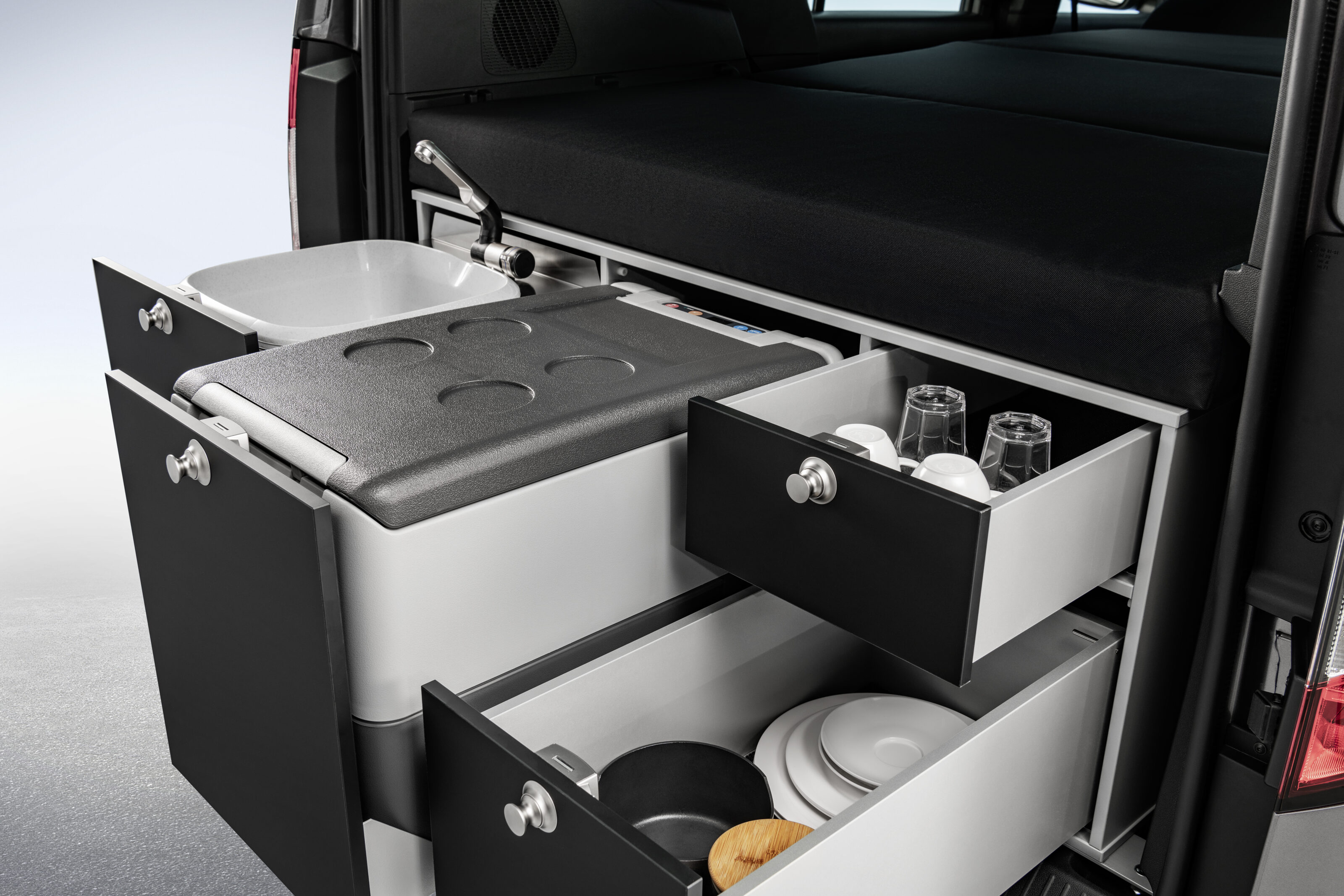
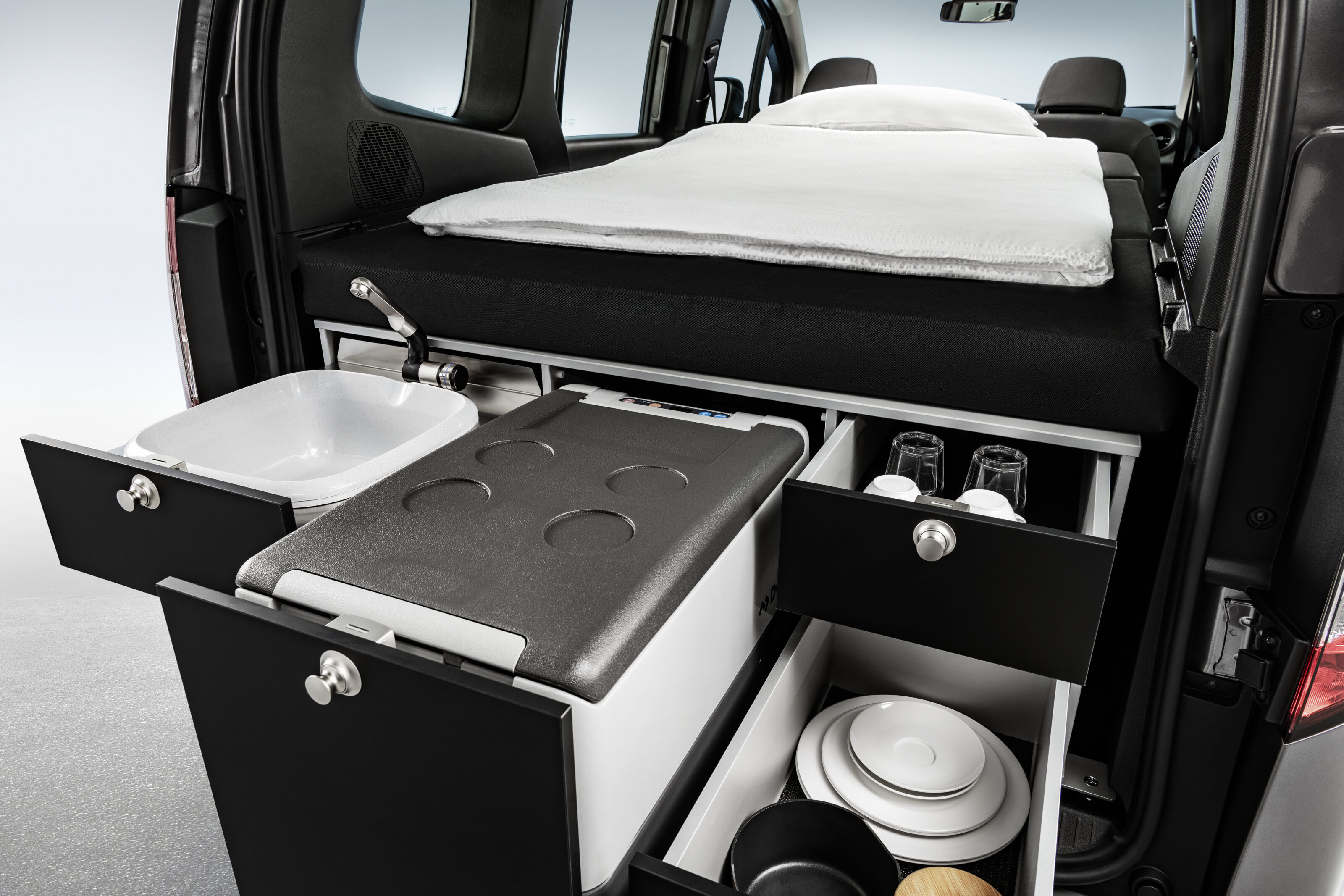
With the help of camper van outfitters VanEssa mobilcamping, the modified Citan features a double bed, an abundance of storage compartments, a refrigerator and a sink to name a few items.
Being a modular set-up, the unit can be removed to change the van back to its passenger guise, with the 60 kilogram module allegedly taking only a handful of minutes to totally remove.
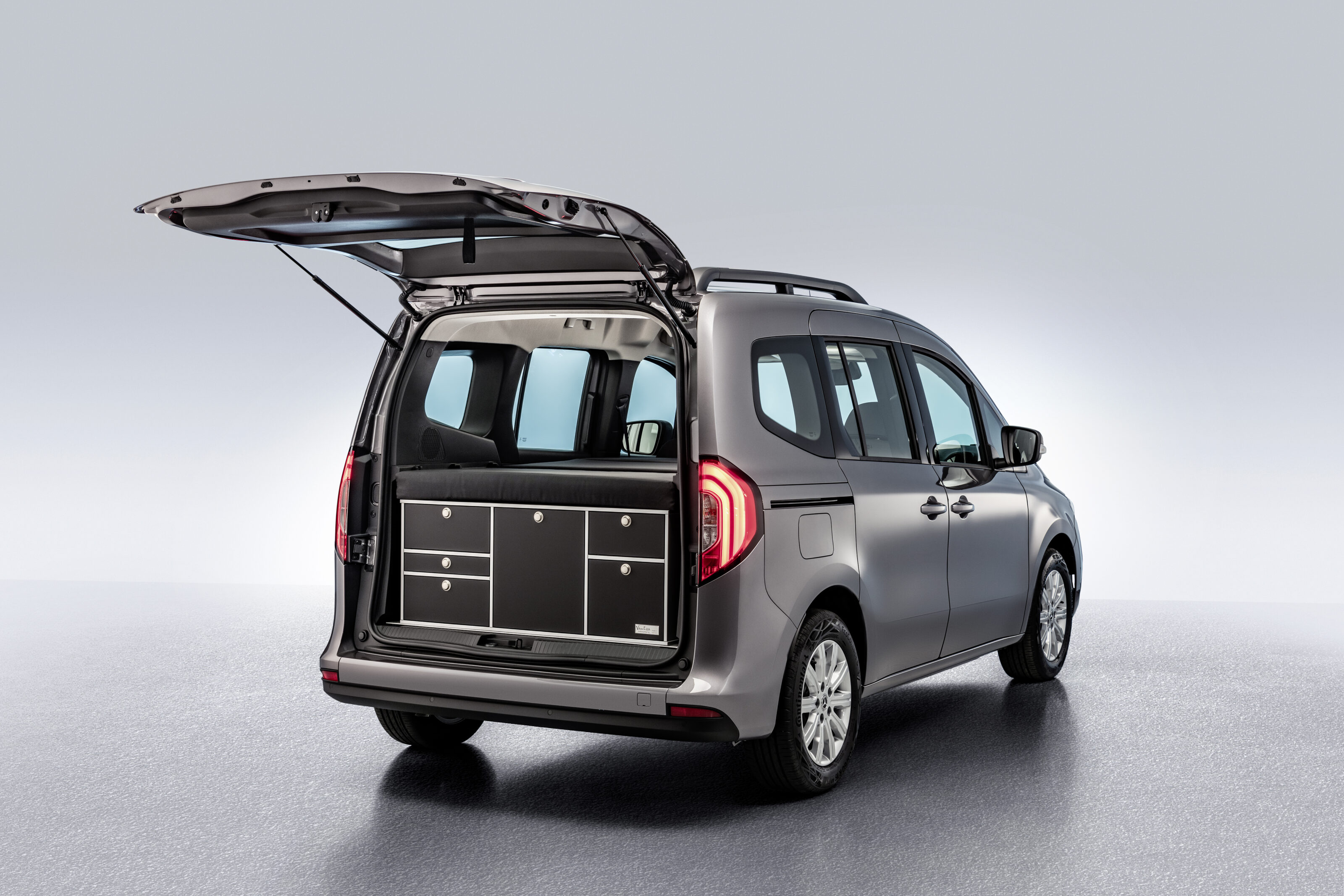
On top of the large module lies a foldable double mattress, which is divided into three sections – allowing it to be tucked back into the van’s boot, while the second row of seats are folded back up.
With international travel restricted across the world, Mercedes-Benz’s head of sales, Klaus Rehkugler, believes the Citan camper is the perfect solution to modern holidays.
“The travel and leisure vehicle market is increasingly important for us as part of our strategic orientation. This also applies to the brand new generation of our Citan, which is an ideal basic vehicle for micro camper van conversions”, said Rehkugler.
“Together with VanEssa mobilcamping we demonstrate just what camper qualities it has. We are delighted that we are in Düsseldorf again this year and look forward to direct feedback from customers.”
While the regular Citan is still unconfirmed for Australian, it’s likely similar module systems could be fitted to its badge-engineered Renault Kangoo sibling – a vehicle which is already available Down Under.
The Tourer people-mover variant of the Citan will offer a 70kW diesel engine alongside a choice of two petrol units, which produce 75kW and 96kW respectively.
Snapshot
- Leaked information reveals SsangYong’s future plans
- Six EVs by 2026, with the first five by 2025
- Promising signs for a new SsangYong
Troubled carmaker SsangYong is forging ahead with plans to offer five fully-electric models within the next four years.
The brand revealed its ambitious future during a meeting with its parts suppliers recently, with the details of the company’s plans leaking to newspaper The Korea Herald.
An electric version of the Korando has already been revealed, with a European launch slated for October. It’s understood the model is under consideration by SsangYong Australia.
Sketches of an all-new electric SUV – codenamed ‘J100’ – were first shown by the brand in June, and a prototype for the new model has already been spied testing on public roads. A smaller SUV was also shared at the time, likely to help attract a new owner.
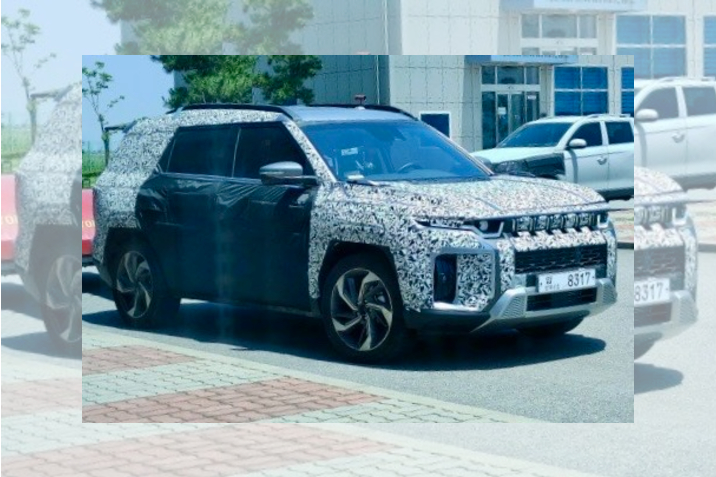
A sixth battery-powered offering is expected to arrive by 2026, with the Korean firm aiming for half of its sales to be made up of electrified cars by that time, a spokesperson told local press recently.
Despite filing documents with the Seoul Bankruptcy Court in late December 2020, SsangYong has agreed to sell the site of its 42-year-old Pyeongtaek factory back to the city – promising to build an electric vehicle manufacturing facility at a new location.
“Relocation of SsangYong Motor’s Pyeongtaek plant and building a dedicated factory for eco-friendly vehicles is part of the carmaker’s mid and long-term plan to boost competitiveness,” court-appointed SsangYong administrator Chung Yong-won said in a statement in July.
Indian company Mahindra & Mahindra is selling its 75 per cent stake in SsangYong via a tender, with Korean media reporting 11 interested parties having already submitted letters of intent to participate in the process.
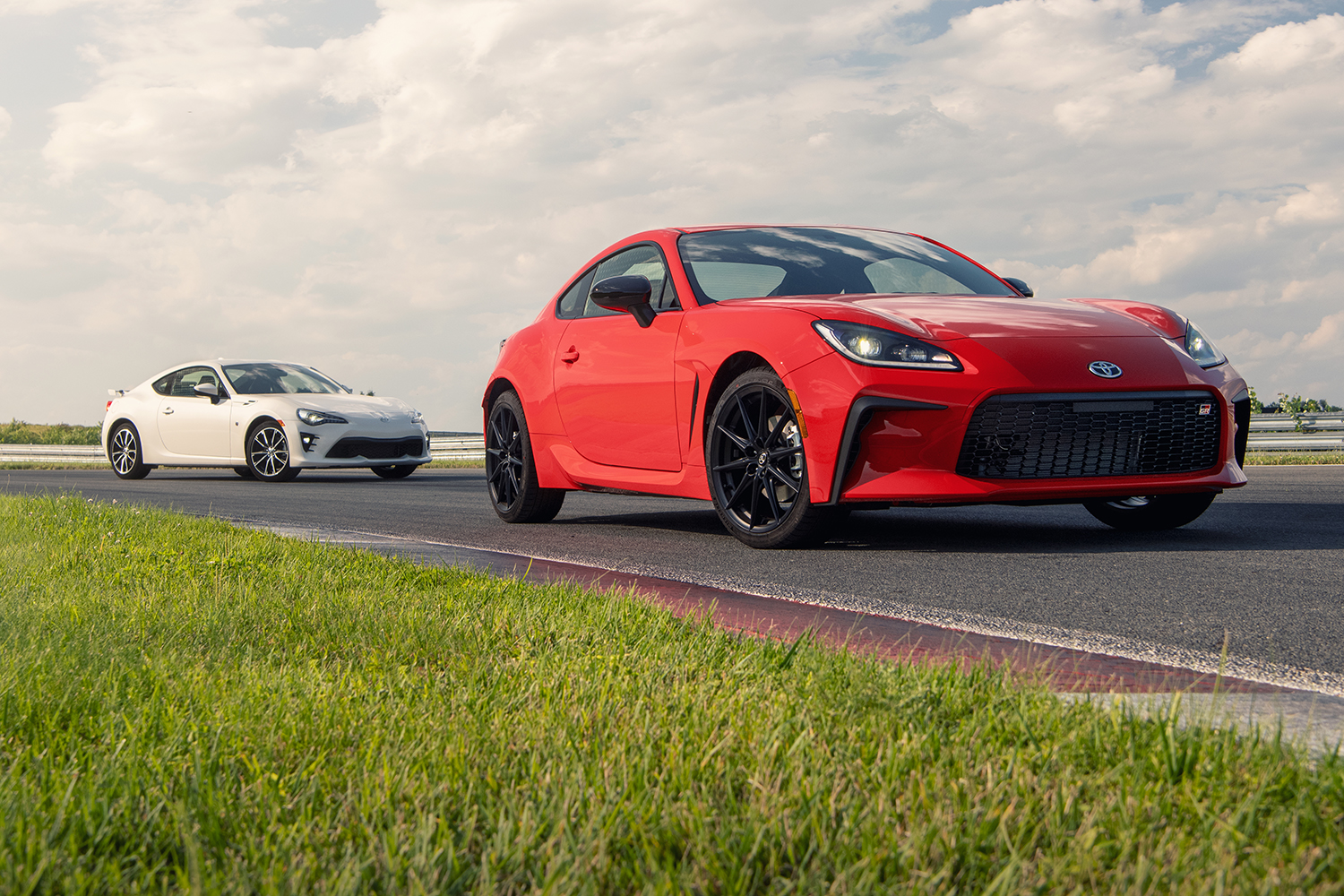
Finally, after a lengthy 10-year run, including a hearty refresh in 2015, the Toyota 86 – our joint winner of the 2012 Wheels Car of the Year with its Subaru BRZ twin – has been completely renewed for the 2022 model year.
Now dubbed the 2022 GR 86, this new generation features a host of substantial changes, most of which indicate Toyota listened to consumers’ and reviewers’ feedback.
Most notably, the GR 86 features a new engine with more power, which has effectively eliminated the torque dip that the previous generation was infamously known for. There’s also a nice bump in refinement, as well as real improvements to its ride and handling.
Crucial to this new model’s success: are there enough revisions in its formula to make it look better than the old one, stay inexpensive, and scratch enthusiasts’ lateral-and-longitudinal-G-seeking itch? We drove both base and Premium models at the cars’ North American launch a few hours outside New York to find out.
UPDATE, September 23, 2022: New GR86 on sale in Oz, and DRIVEN!
The new 2023 Toyota GR86 has finally launched in Australia, and we’ve now driven the version buyers will get. See our full review at the link below.
Story continues
First drive: 2022 Toyota GR86
We’d predict the base version (likely to still be called GT) to be priced several thousand above the outgoing range-opening manual GT ($32,180) so expect closer to $35,000, with the auto adding around $2500.
Both variants feature the same all-aluminium, 173kW/250Nm 2.4-litre naturally-aspirated flat-four cylinder engine, close-ratio six-speed manual transmission, and the exact same suspension tuning.
A six-speed automatic is optional on each trim, though exactly how much it’ll cost hasn’t been announced yet. Nor, for that matter, has Toyota Australia confirmed pricing and spec for local cars, but we expect equipment to pretty closely mirror what we sampled in the USA.
We’d predict the base version (likely to still be called GT) to be priced several thousand above the outgoing range-opening manual GT ($32,180) so expect closer to $35,000, with the auto adding around $2500. That would indicate a range-topping GTS manual at around $41,000, but let’s see if Toyota Australia surprises us.
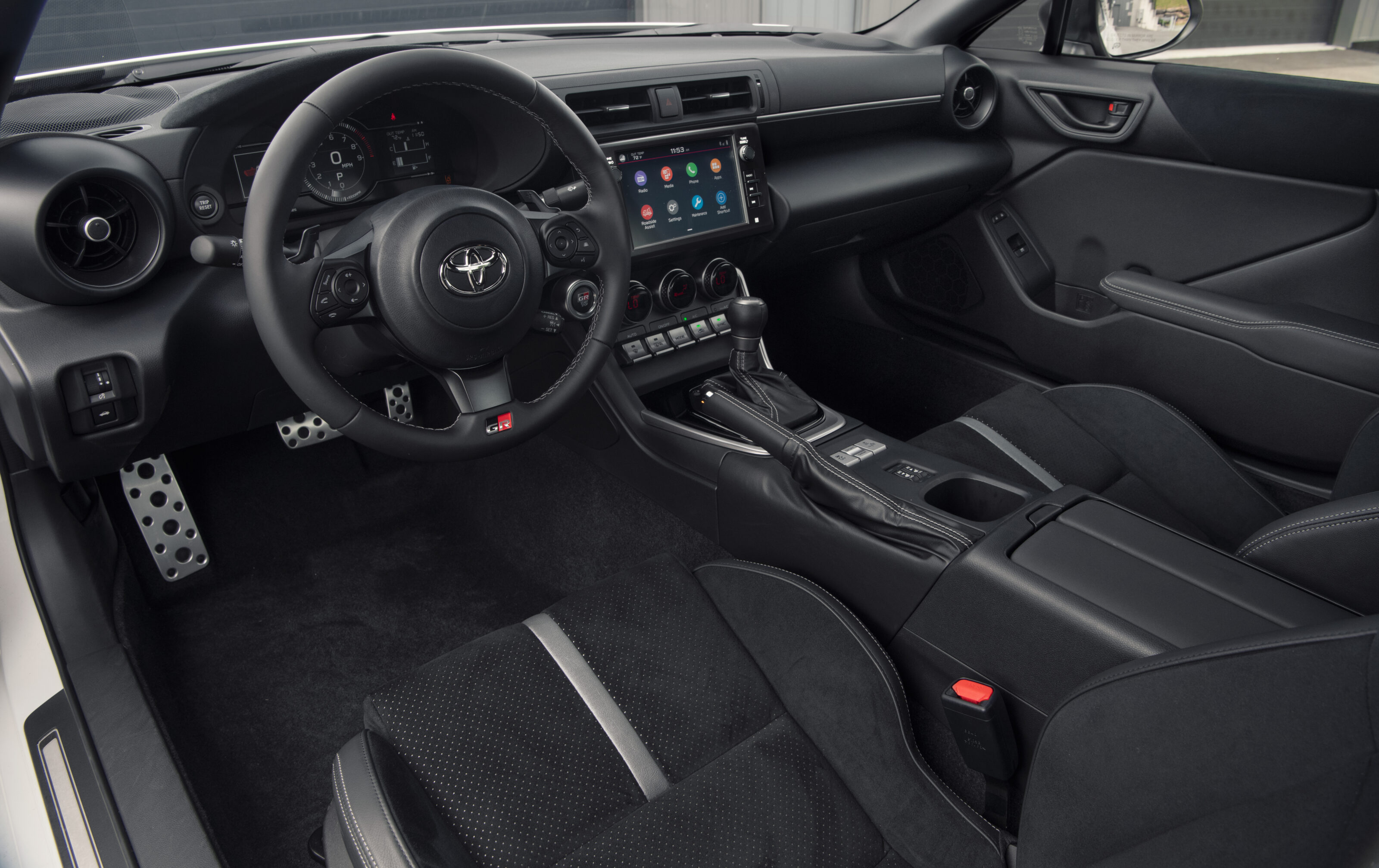
Even in base trim, sports-car enthusiasts are offered a good suite of features. Inside, a 7.0-inch fully digital instrument cluster and 8.0-inch centre infotainment screen dominate.
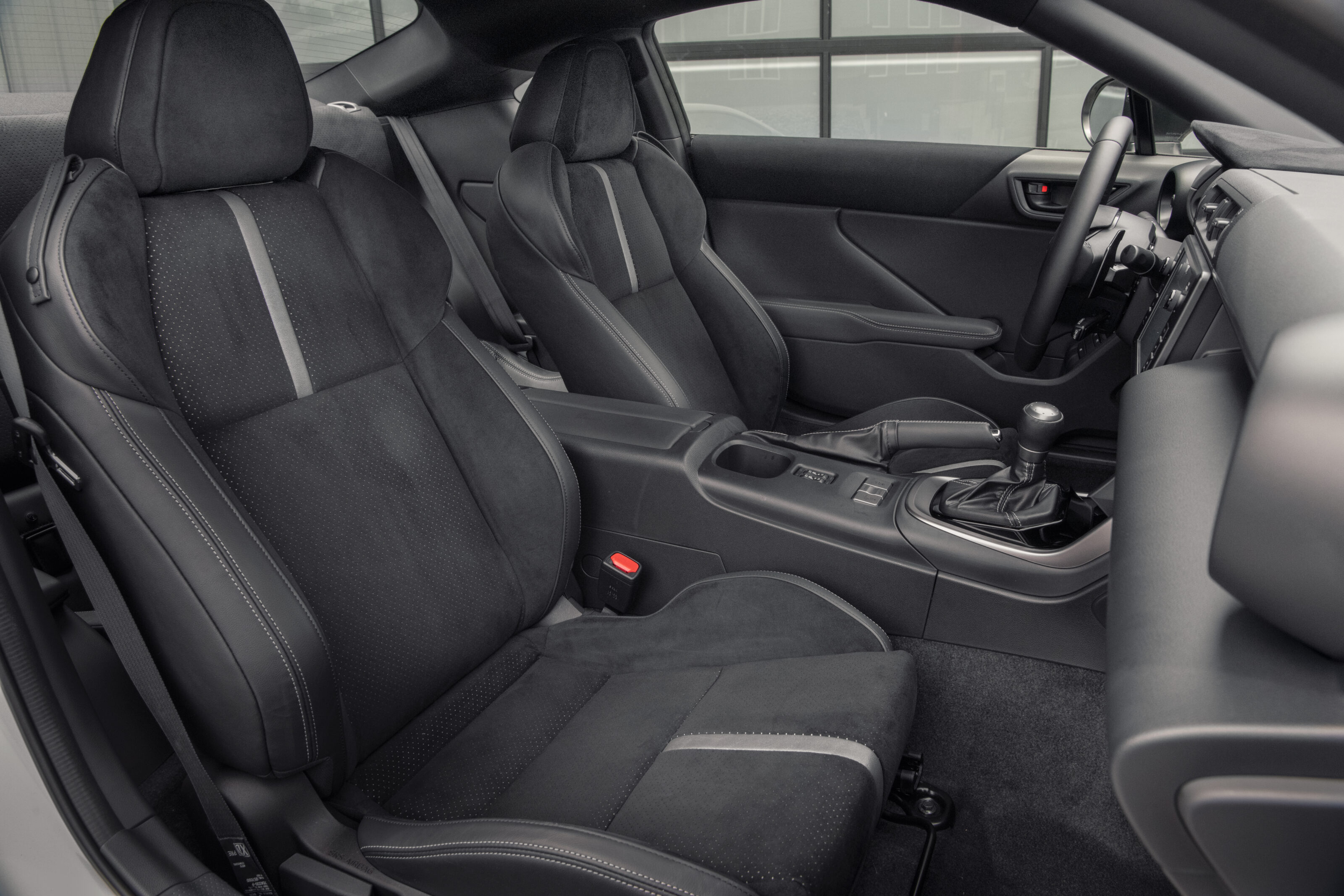
The black cloth sport seats have great bolstering and are six-way manually adjustable on the driver side, and four-way adjustable for the front passenger. They’re very comfortable, and have a good mix of cornering retention and daily in-and-out convenience.
Like the previous generation, the back seat is immensely tight and really only fit for a small child. The boot is around the same size as the previous generation, but cargo room still greatly expands via dropping the rear seats for more practicality.
Overall visibility from the driver’s seat is excellent, with less of a blind spot over the driver’s shoulder than the previous model.
As far as safety features, GR 86 has a good standard suite: seven airbags as well as traction and stability control. Cruise control is standard, though any form of advanced driver assistance tech is contained to the Premium (likely to remain GTS in Australia).
Finishing off the GT trim are 17-inch, 10-spoke alloy wheels wrapped in 215/45R17 Michelin Primacy HP tyres. Some other key aesthetic features include a black rear lower rear diffuser and dual exhaust with chrome tips.
Some of the GR 86’s most apparent exterior refinement lies in its lighting: auto-levelling dual-LED headlights, plus LED daytime running lights, tail lights, and turn signals.
The higher-level Premium (aka GTS) trim gets all of the above, plus a heap of aesthetic and convenience upgrades. On the outside, the wheels increase in size to 18 inches, wrapped in grippy 215/40R18 Michelin Pilot Sport 4 tyres.
The exterior upgrades continue on with a bootlid-mounted ducktail spoiler, which Toyota engineers claim increases downforce to improve stability on track.
A handful of upgrades are immediately noticeable when stepping into the Premium trim’s cockpit. All three pedals, plus a substantial dead pedal, are finished in aluminium.
The seats are trimmed in leather and Alcantara, and feature two-stage heating. These seats bolster the Premium’s interior luxury feel, though overall it doesn’t feel substantially different from the base model.
Technology-wise, the Premium trim’s infotainment system is the same as that of the Base, just with two more speakers thrown in. The Premium also gets blind-spot monitoring and rear cross-traffic alert when spec’d with three pedals and a stick.
When optioned with the six-speed automatic transmission, the suite of driver aid tech expands to include pre-collision braking, adaptive cruise control, lane-departure warning, sway warning, lead vehicle start alert, and high-beam assist.
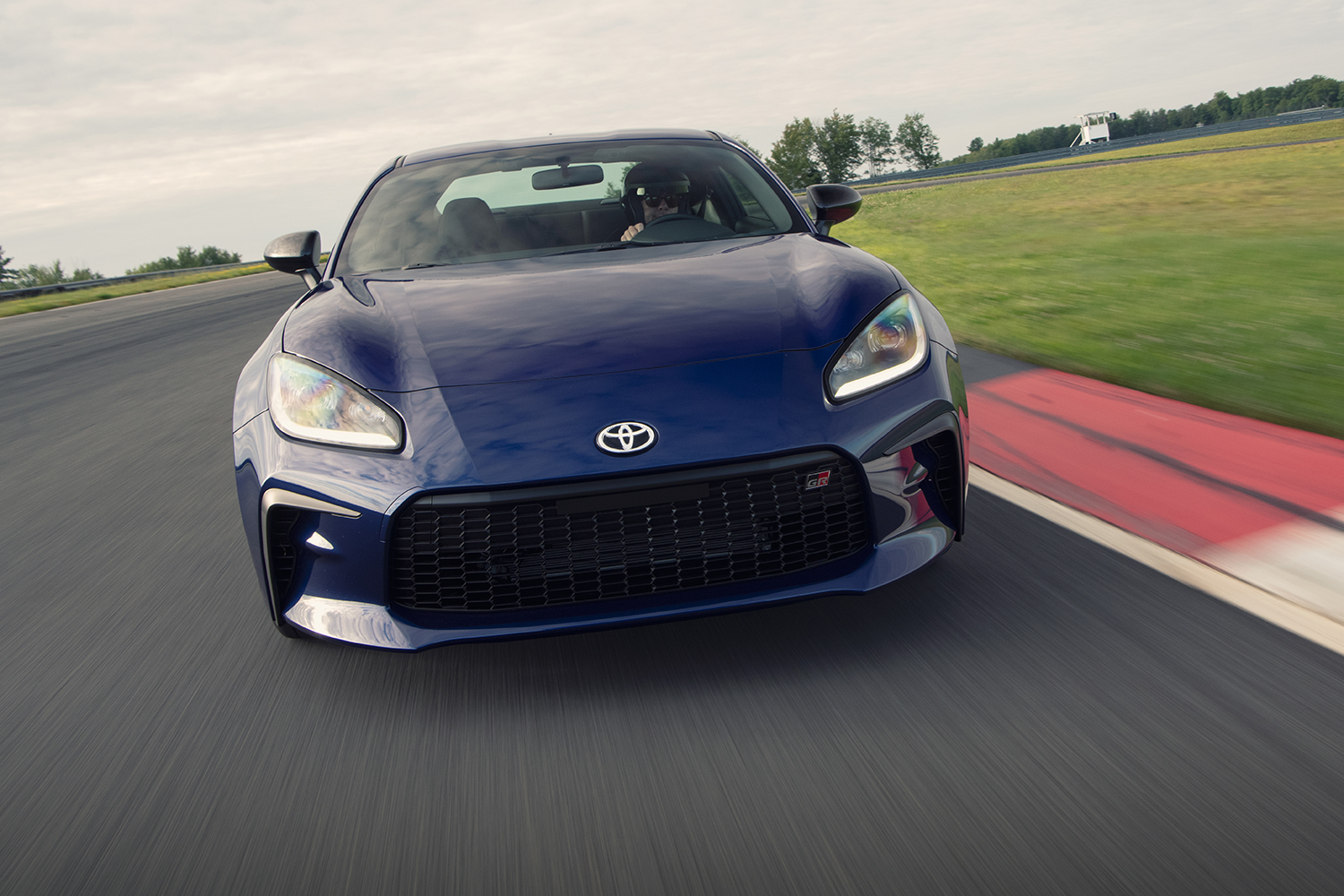
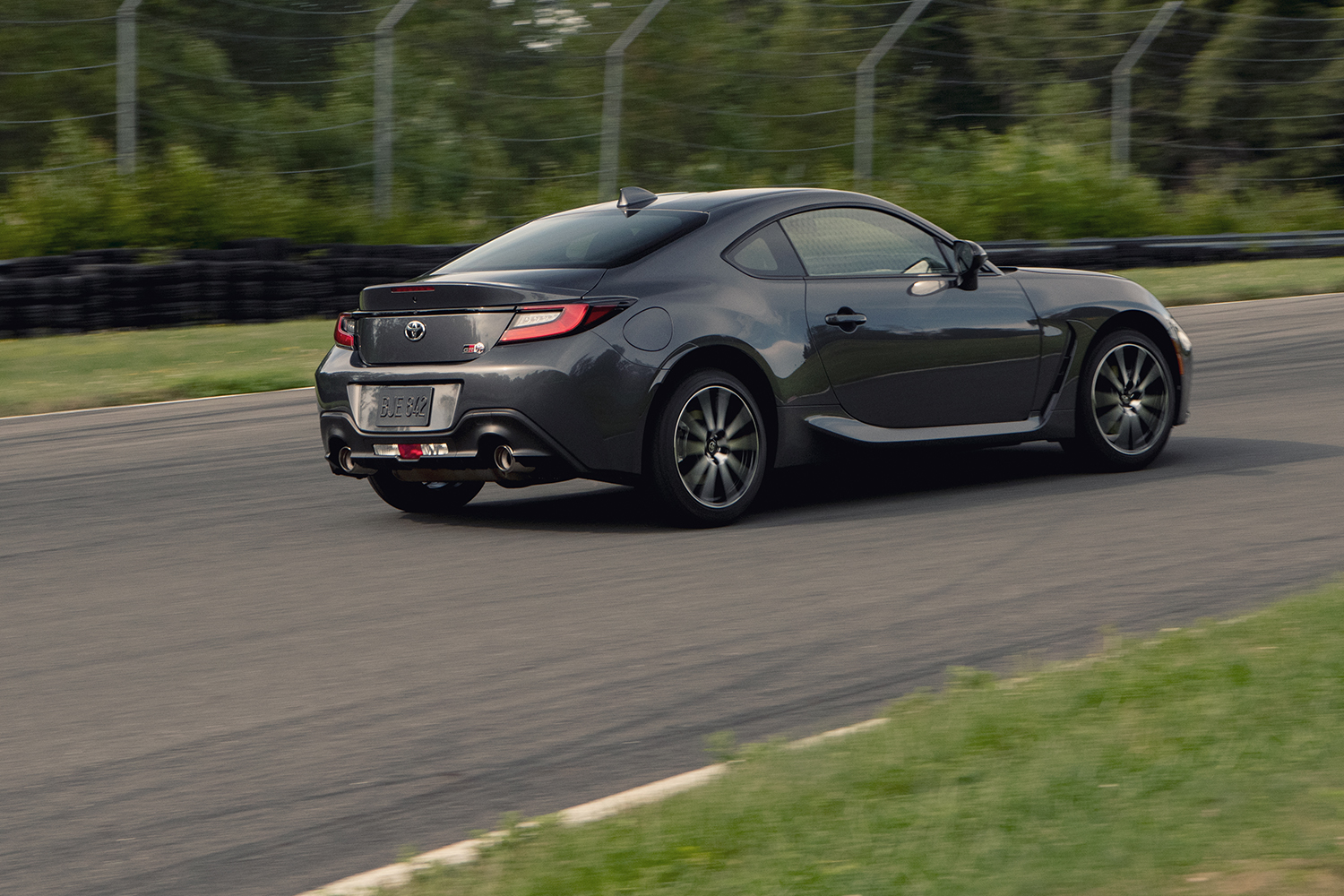
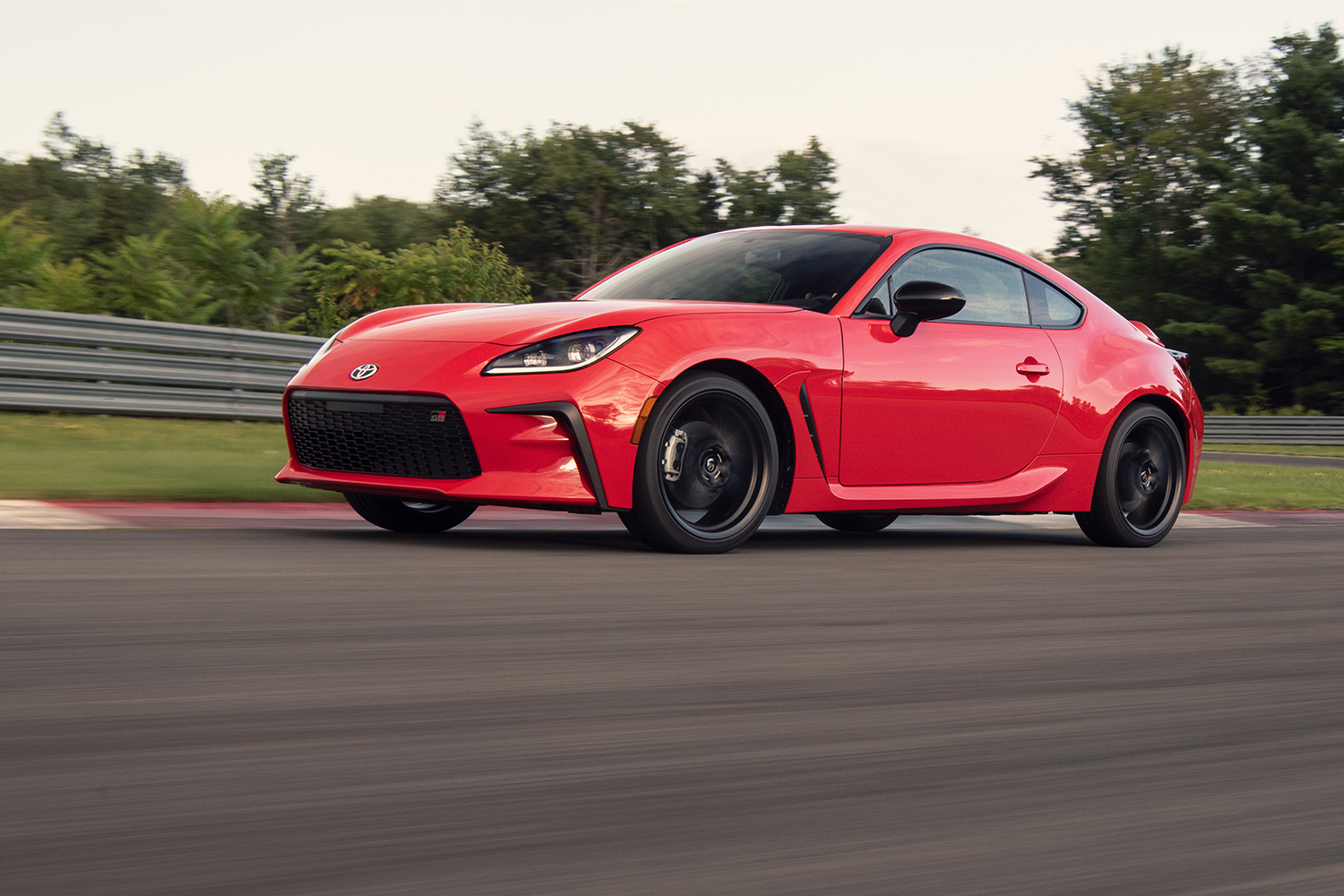
We really dig the new body style. It looks more muscular, just not in a buff, muscle-bound way. It looks sharp and trim; more quick-on-its-feet footballer than big rugby bruiser. Its entirely LED exterior lighting compliments this aesthetic quite well, too.
So, between its sportier new looks, bigger power and torque figures, standard manual transmission, and track-focused aerodynamic tuning, does the new GR 86 walk the walk, and truly supersede the old one when it comes to fun behind the wheel? Rest assured, it certainly does.
The GR 86’s power has been bumped up to 173kW and 250Nm of torque, which is a 21kW and 38Nm increase over the manual tune of the previous generation. It comes via raising displacement from 2.0 to 2.4 litres, increasing intake and exhaust flow, tuning a bit more pep into its ECU.
These changes are immediately apparent on its digital tachometer, where torque peaks at 3700rpm – a whole 2700rpm earlier than the previous generation.
Toyota states that the 1275kg (Premium, manual) GR 86 will do 0-100km/h in 6.3sec, which is over a second faster than the old car.
The old 2.0 sounded more like a sewing machine than most of its owners would admit, whereas the feel and noise that this new 2.4-litre produces is, weirdly, slightly more rotary-like.
This power is sent exclusively to the rear wheels, where it’s then split between the tyres via a Torsen limited slip differential. The manual transmission gives you control of the output in a much more refined manner over the old 86.
Clutch take-up is a smooth progression with good weight; and where the old 86’s shifter feel was more akin to that of a tractor’s than a sports car’s, this one is tighter, more direct, has a shorter throw, and transmits far less vibration.
Likewise, the 2.4-litre engine is a much nicer powerplant to rev out over the old 2.0-litre lump. In addition to the healthy bump in power, it’s a much smoother, balanced experience screaming up to its 7000rpm redline.
The old 2.0 sounded more like a sewing machine than most of its owners would admit, whereas the feel and noise that this new 2.4-litre produces is, weirdly, slightly more rotary-like. Though, part of this is due to having a speaker in the dash to help pump fake noise in via what Toyota calls Active Sound Control.
This added bump in power and refinement compliments the GR 86’s chassis so incredibly well. Just like the old 86, the GR has passively damped suspension that’s of a strut design up front, and independent multi-link design out back.
Toyota engineers added more rebound into its front dampers, and lowered the rear dampers’ connecting points. Feel and chassis rigidity have been increased as well with some clever use of bracing, solid aluminium mounts, and high-strength steel in key areas.
This all adds up to brilliant fun on track: turn-in is sharp, bodyroll is very well contained, as is brake dive; trail braking into tricky, tight sections is a snap. The chassis communicates the road’s surface extremely well. Steering weight is excellent, as is its optimum ratio.
Finally, powering out of all forms of corners is a far more enjoyable experience with the 2.4-litre than the old 2.0-litre; the extra torque that peaks earlier in the rev range really enhances response and driving enjoyment.
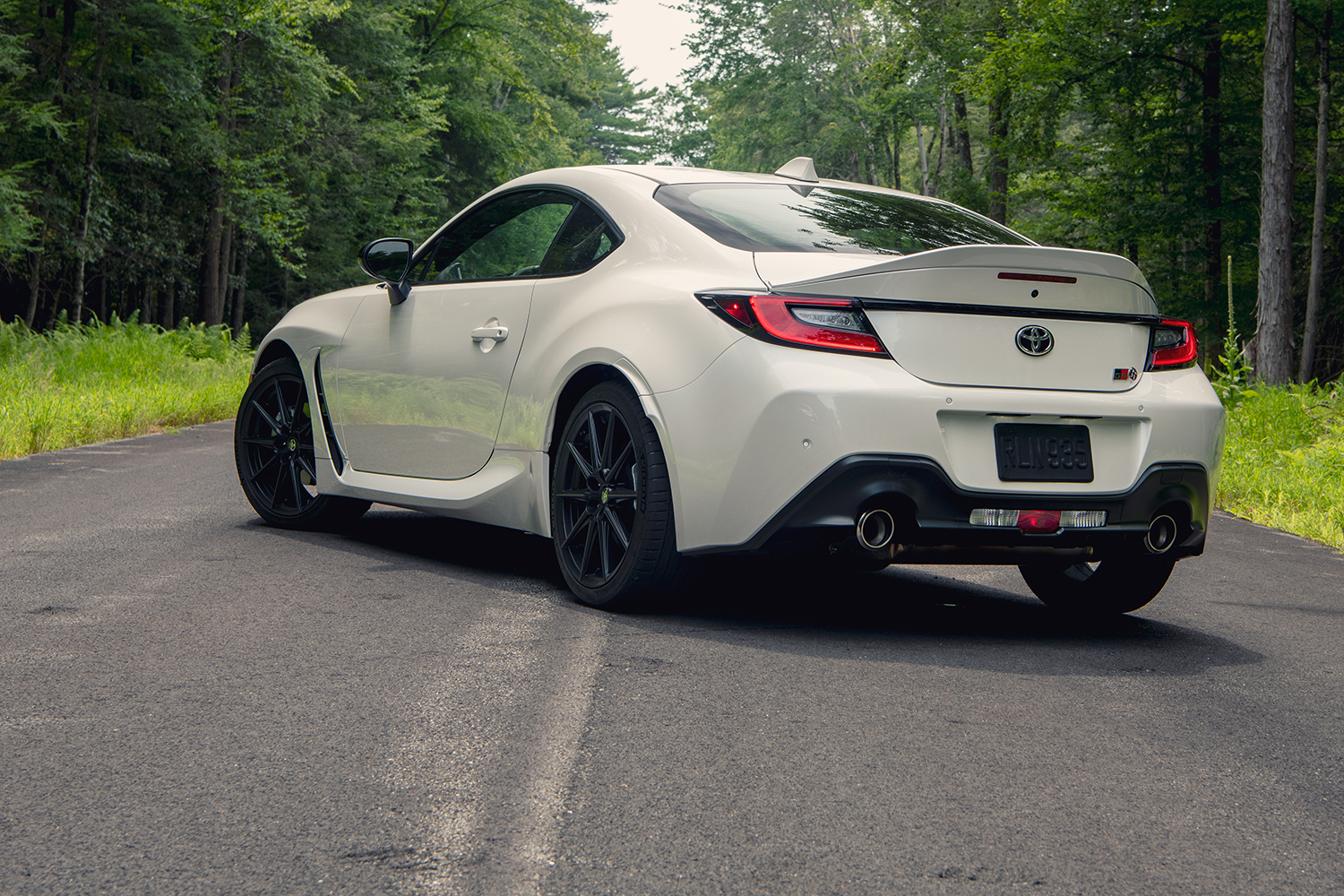
The Premium’s Michelin Pilot Sport 4 tyres are far more enjoyable on track than the Base’s Primacy rubber, too. Sure, the Primacys are easier to slide around, but they have far less feel and are too squidgy for anyone who wants to turn a fast, well-driven lap time.
Somewhat miraculously, this all translates to a brilliant ride for a sports car on the street, too. Normally, we’re used to having to compromise on-road comfort for solid on-track performance, but the GR 86 proves that extensive chassis engineering and refined damping can give you the best of both worlds. It’s never harsh, and feels very taut yet compliant over rougher tarmac.
On the whole, the Toyota GR 86 is a substantial improvement over the old 86. Its interior is a nicer place to be, it’s more daily-friendly than ever, and thanks to its substantial engine and chassis revisions, is even more fun than the old one in the twisties.
It looks sharper and more athletic, and has enough standard tech inside to stay plenty competitive from 2021 and on.
To say we’re excited about this car’s arrival is to understate it, as it represents an outstanding example of what is becoming an endangered species – a manual, atmo enthusiast’s car that really rewards the keen driver. The only question is… when? Production delays could push its Aussie arrival towards the middle of 2022. We can’t wait.
THE RIVAL – SUBARU BRZ
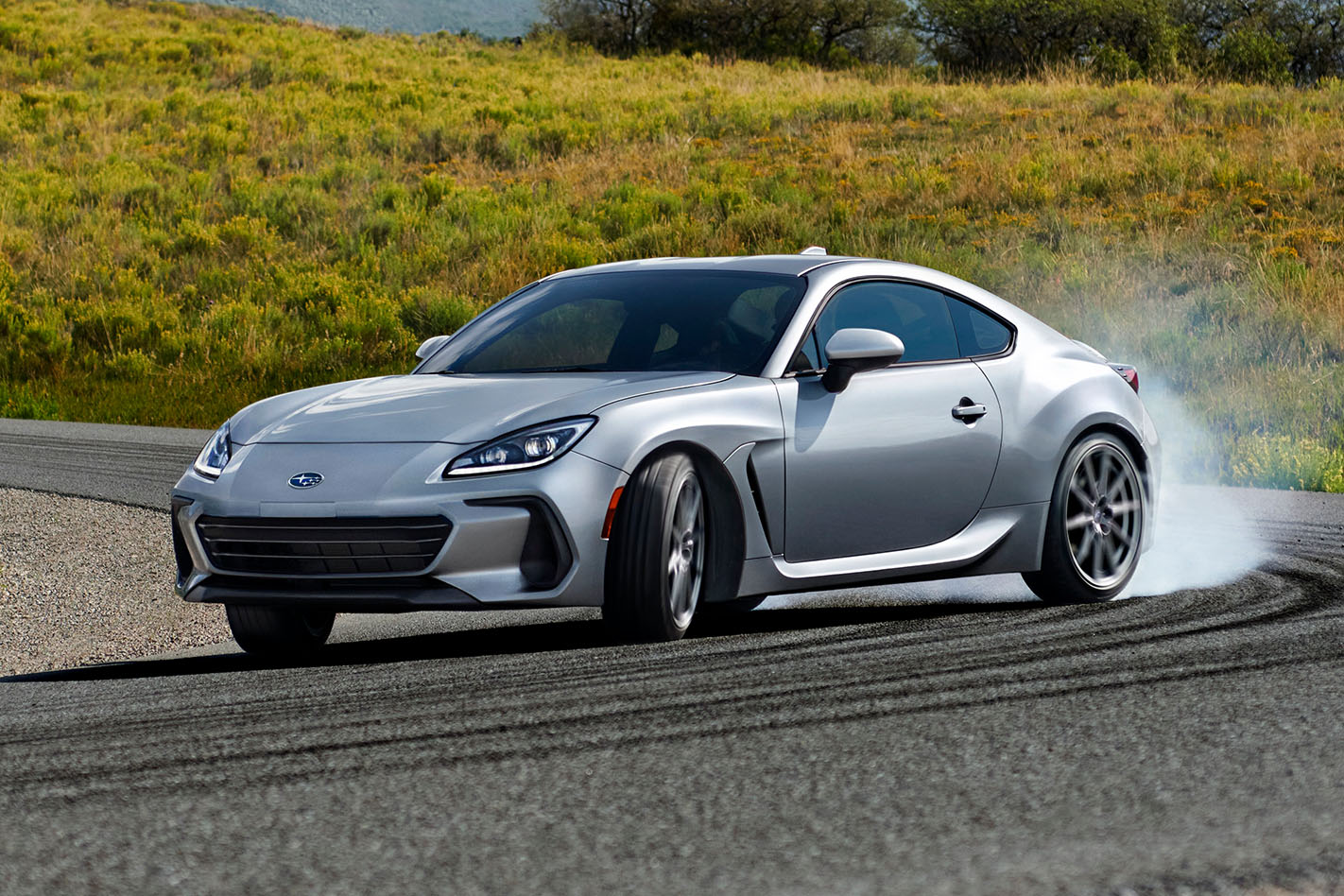
Obviously the GR 86’s direct rival is the car with which it was developed in tandem – the Subaru BRZ. While we know the basics, no specific price or spec info is available from Subaru at this stage, so we’re left to speculate if Subie will offer the new model in three spec levels, as per the outgoing car.
It’s sold as a base version, Premium, and range-topping tS, with prices spanning $35,270 (base manual) up to $43,190 (tS auto) plus ORC. We do know the two companies tuned their respective chassis slightly differently, though, so we look forward in 2022 to finding out who hits the sweeter spot.
2022 Toyota GR 86 specifications
| Model | Toyota GR 86 GTS |
|---|---|
| Engine | 2387cc flat-4, dohc, 16v |
| Max power | 173kW @ 7000rpm |
| Max torque | 250Nm @ 3700rpm |
| Transmission | 6-speed manual |
| Weight | 1270kg |
| 0-100km/h | 6.3sec (claimed) |
| Economy | 8.5L/100km |
| Price | $41,000 (estimated) |
| On sale | Q2 2022 (estimated) |
Snapshot
- Algeria was the last country to offer leaded fuel for cars
- Australia officially banned leaded fuel in 2002
- The toxic fuel is still used for some light aircraft
The United Nations Environment Programme has announced the end of leaded fuel being sold for cars worldwide after Algeria stopped selling it last month.
While Australia and other countries started to move away from leaded fuel in the 1980s and towards unleaded petrol – as well as catalytic converters – it has still been available in some third-world nations.
Officially banned in Australia from 2002, it has taken nearly 20 years for the toxic fuel to be officially phased out globally, although it is still used in some fuels for light aircraft.
Attributed to the acceleration of stroke and cancer, as well as 1.2 million premature deaths a year, UNEP’s executive director Inger Anderson says the phasing out of leaded fuel is a major step for the global population.
“The successful enforcement of the ban on leaded petrol is a huge milestone for global health and our environment,” said Andersen.
“Overcoming a century of deaths and illnesses which affected hundreds of millions and degraded the environment worldwide, we are invigorated to change humanity’s trajectory for the better through an accelerated transition to clean vehicles and electric mobility.”
Up until June 30, 2019 leaded racing fuels were still available use off public roads but these have since been banned.
Barn finds seem to be more and more common these days, or at least better publicised, but it’s hard to remember any being quite as big as this warehouse lot in London.
Out of the 175 vehicles under its roof, some standout vehicles include a BMW 2002, a classic BMW M5 and an early Porsche 911 Cabriolet to name a few.
YouTuber TheTFJJ was one of the few people allowed into the warehouse before it was opened up to the public for bidding yesterday, getting a closer look at the hoards of cars inside.
https://www.instagram.com/p/CTClx16I5JH/
Sitting in various states of disrepair, not much is known about the history of this collection and why it was seemingly left abandoned given the eclectic mix of vehicles which are all uncovered.
While the sale guide from londonbarnfinds provides details of what vehicles are sold with documentation and service history, many have criticised the seemingly high price guide as well as the limited viewing times for the collection, capped at five hours.
Regardless of the history or reason for sale behind the collection, it would be good to see the salvageable cars back on the road after a deep clean and a tank of fresh fuel.
https://www.instagram.com/p/CTLRz0UDFr0/
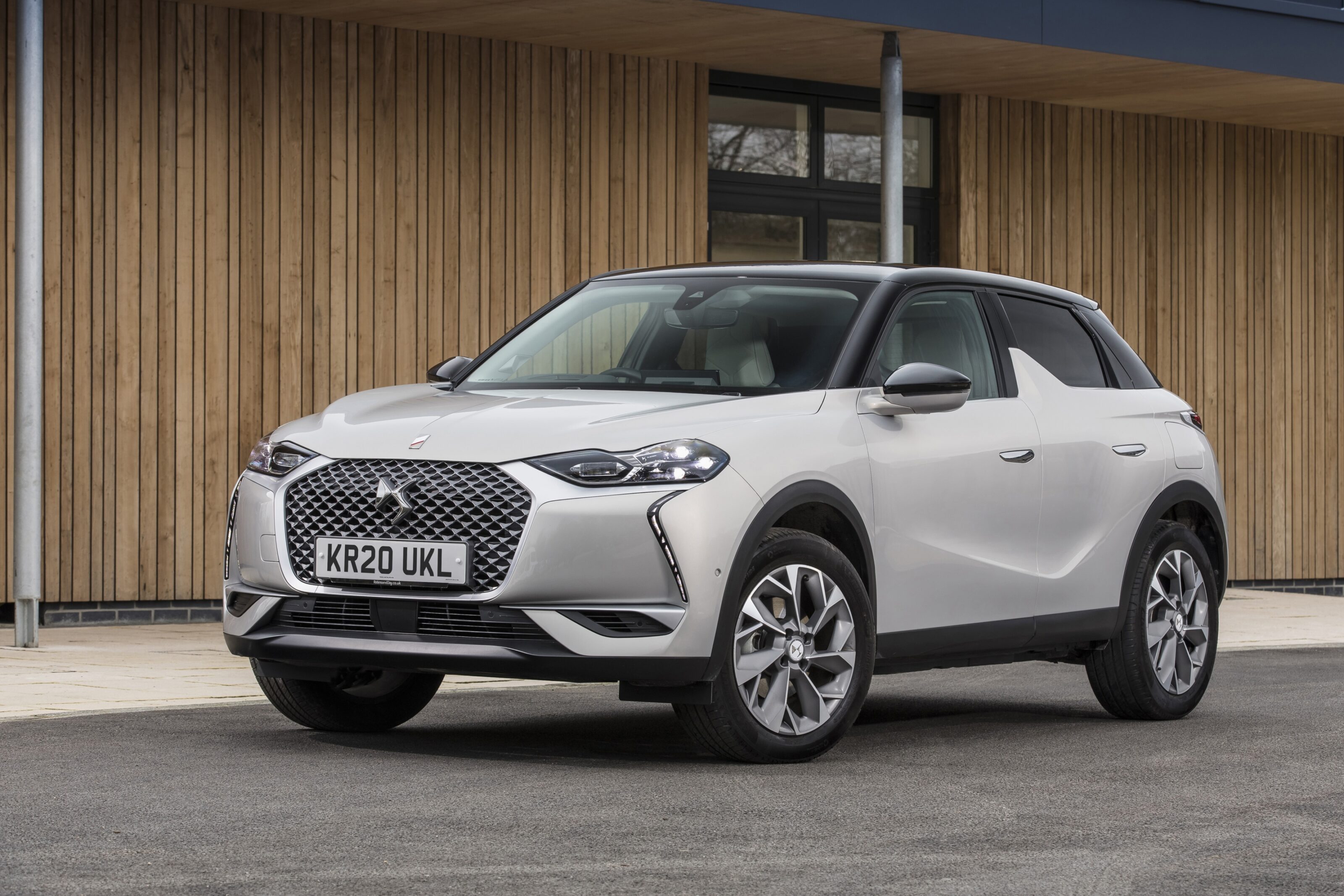
French manufacturer DS Automobiles will go all-electric from 2024 in the hopes of remaining afloat in Europe amidst a cull of Stellantis-owned brands.
Once the luxury off-shoot of Citroen before becoming its own standalone brand in 2015, DS is poised to only sell electric vehicles from 2024, becoming the first Stellantis brand to do so on its STLA Medium architecture.
All models in its four-car range are currently available with some form of electrification – either full EV or hybrid – which account for 30 per cent of DS sales in Europe, placing it on the right track to reach 100 per cent electrification from 2024.
DS CEO Béatrice Foucher said the company has an opportunity to be a pioneer by putting electrification first and pushing to achieve its goal so soon.
“The car industry is experiencing a change [of which the] breadth and speed are unprecedented,” said Foucher.
“As a pioneer, DS Automobiles has anticipated this move, with electrification at the centre of its strategy.
“The next developments in legislation, and the EV ecosystem, provide opportunities we want to offer to our customers who already like our electrified range.
“I took the decision to speed up the development to create a new 100 per cent electric art of travel, desirable in terms of enjoyment and remarkable in terms of quality and performance; steadfastly high tech and still just as refined.
“It is a daring plan which will take shape from 2024.”

The recently-launched DS 4 will be the first model from the brand to be based on the STLA Medium platform from 2024 – featuring a 104kWh battery pack, which will provide a driving range in excess of 640 kilometres.
UPDATE, August 31: Toyota has announced its e-Palette pods will resume service at the Paralympic Games after investigating a collision with a pedestrian last week.
Through working with the Games’ organisers to determine the cause of the incident, Toyota found the vision-impaired pedestrian was walking alone with only two guides manning the crossing where the collision occurred – who were unable to warn him of the oncoming vehicle.
While the e-Palette pod was under manual control, both the operator and the vehicle itself had applied its emergency brakes – which reduced its speed before the contact.
Changes to prevent further occurrences have now been implemented – including an increase in the volume of warning sounds and the number of crew in the autonomous vehicles, as well as more guides at each street crossing.
The story to here
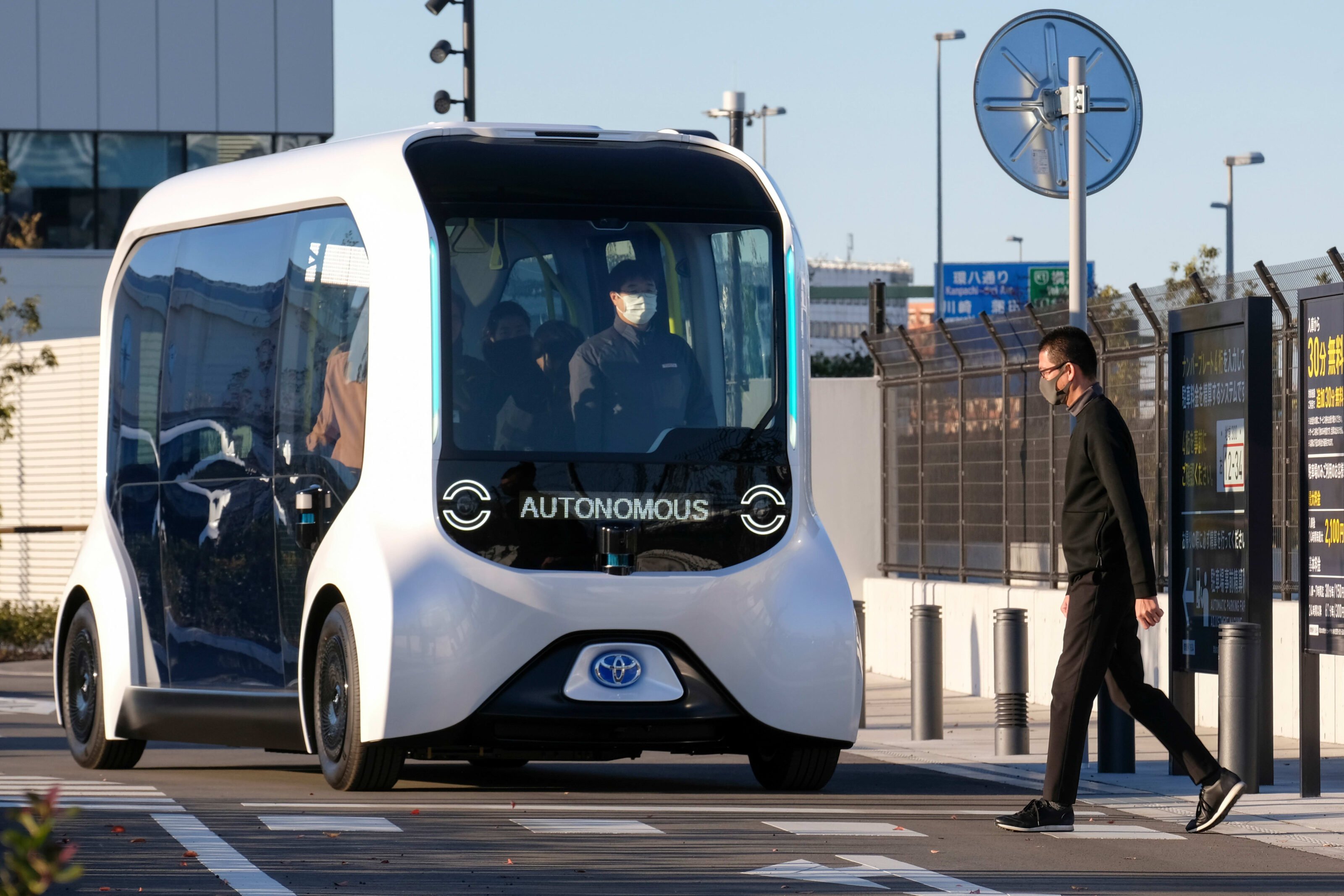
August 30: The Paralympic Games will now be without autonomous travel support from Toyota after one of the manufacturer’s e-Palette pods hit a pedestrian – resulting in the service being suspended.
Designed for transport in the Athletes’ Village, the incident occurred when a vision-impaired participant was attempting to cross the road as the e-Palette was approaching.
While the pod was under manual control at the time and the athlete was uninjured, Toyota has suspended the use of the pods at the Paralympic Games, saying: “We would also like to apologise for any inconvenience caused to those who use our mobility vehicles in the Athletes’ Village”.
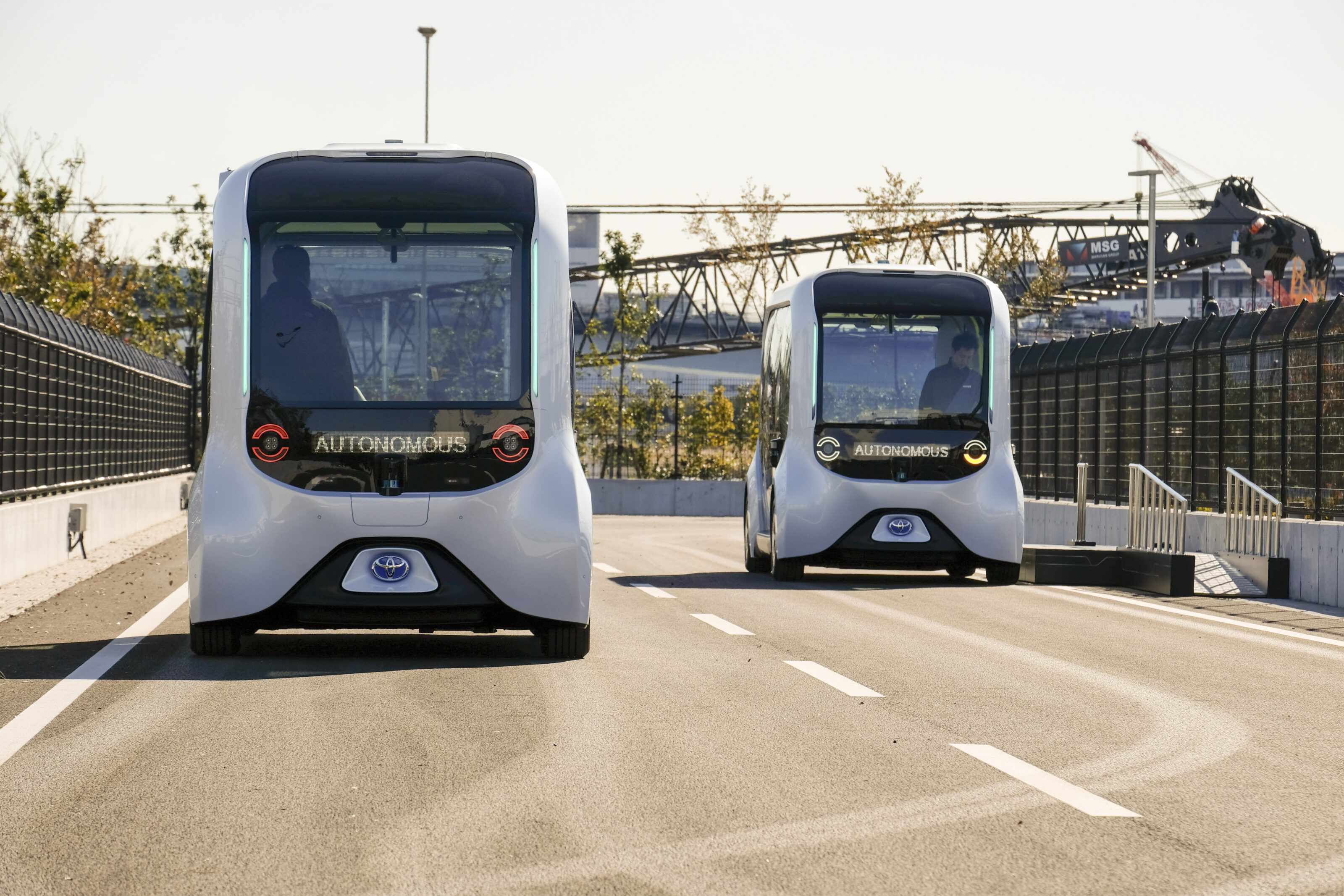
Toyota is currently working with the local authorities to determine the cause of the collision, given the autonomous was under manual control at the time.
“We are fully co-operating with the police investigation into the incident in order to determine the cause of this accident,” said Toyota.
“In addition, we will conduct our own thorough investigation into the cause and we will continue to coordinate closely with the Tokyo Organising Committee of the Olympic and Paralympic Games to ensure we prevent any incidents from occurring in the future.”
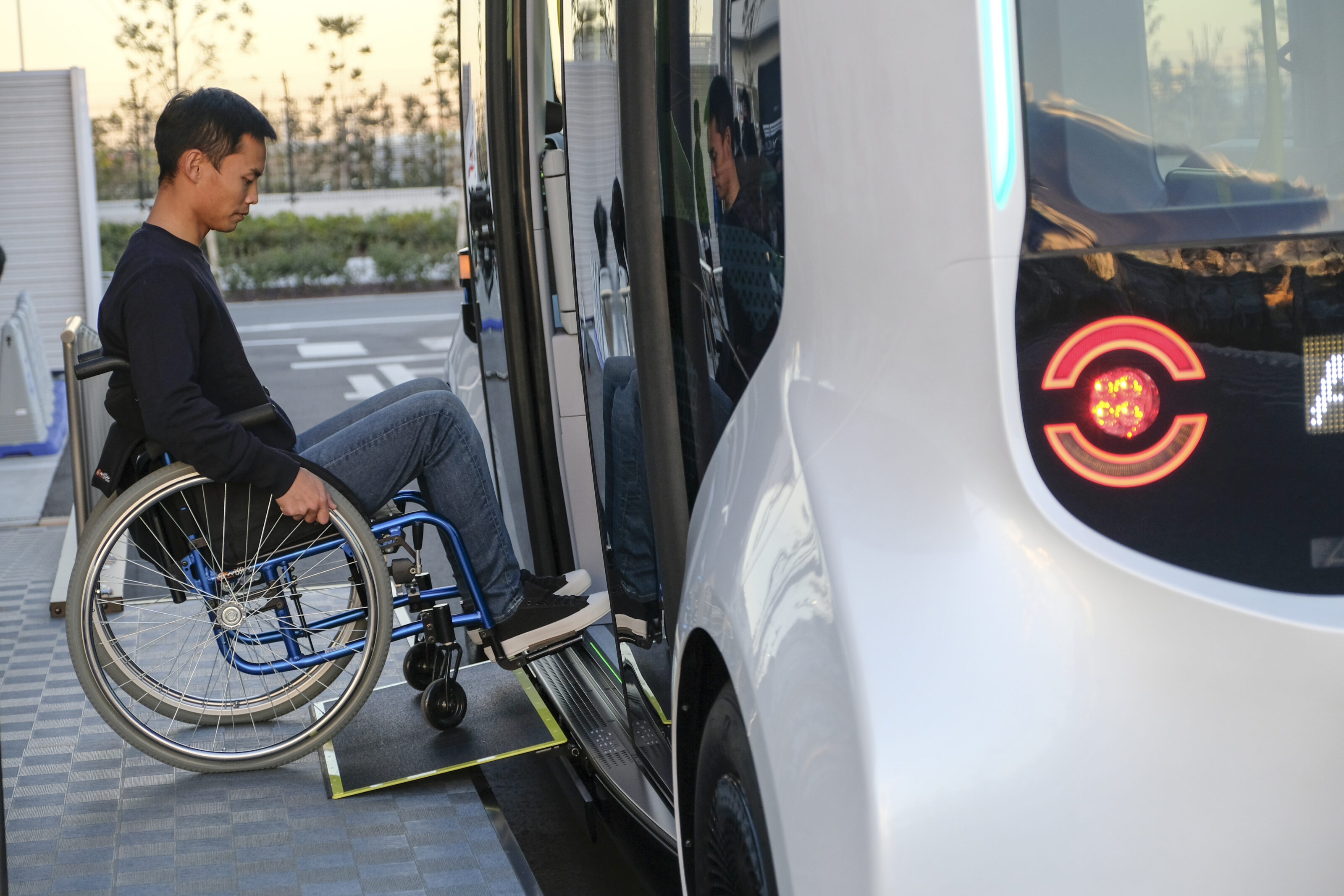
Toyota’s CEO Akio Toyoda apologised to the athlete and said it was a reminder autonomous vehicles are still a developing technology, according to the ABC.
“A vehicle is stronger than a person, so I was obviously worried about how they were,” said Toyoda.
“It shows that autonomous vehicles are not yet realistic for normal roads.”
The Japanese manufacturer has been a major supporter of this year’s Tokyo Paralympic and Olympic Games, although it announced it would be removing any TV commercials during the Games due to the worsening COVID-19 situation in Japan.
The mid-size SUV market is showing no signs of slowing down, and that’s something manufacturers are exploiting in 2021, with a whole brace of new cars ready to fight for your hard-earned dollar.
Mid-size SUVs make up one of the hottest categories, and there’s no shortage of new models, facelifts and updates to existing nameplates.
If you find yourself in the market, here’s what’s on offer for 2021.
Mitsubishi Outlander
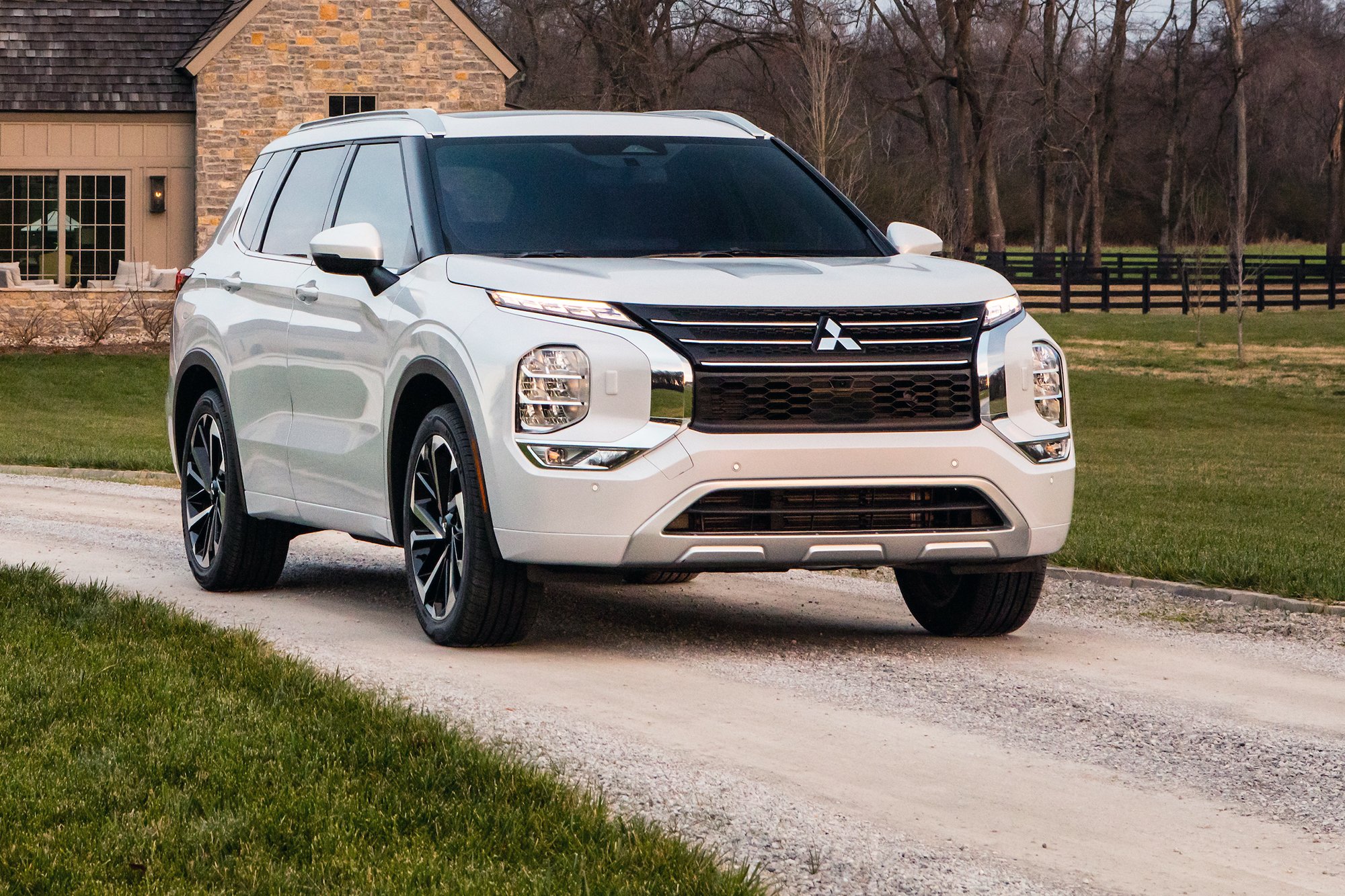
The new generation Mitsubishi Outlander arrives in November, but the company has already announced local pricing and specifications.
It looks far more substantial than before, due to Mitsubishi’s new ‘i-fu-do-do’ design language, which means authentic and majestic – as well as featuring the striking (and polarising) Dynamic Shield front end.
With more upmarket looks inside and out, as well as moderate price rises, the 2022 Outlander has big wheel-arches to fill.
At launch, the range will be powered by just one engine – a 2.5-litre four-cylinder which is a little bigger and more powerful than the previous model’s. A plug-in hybrid version isn’t expected until 2022.
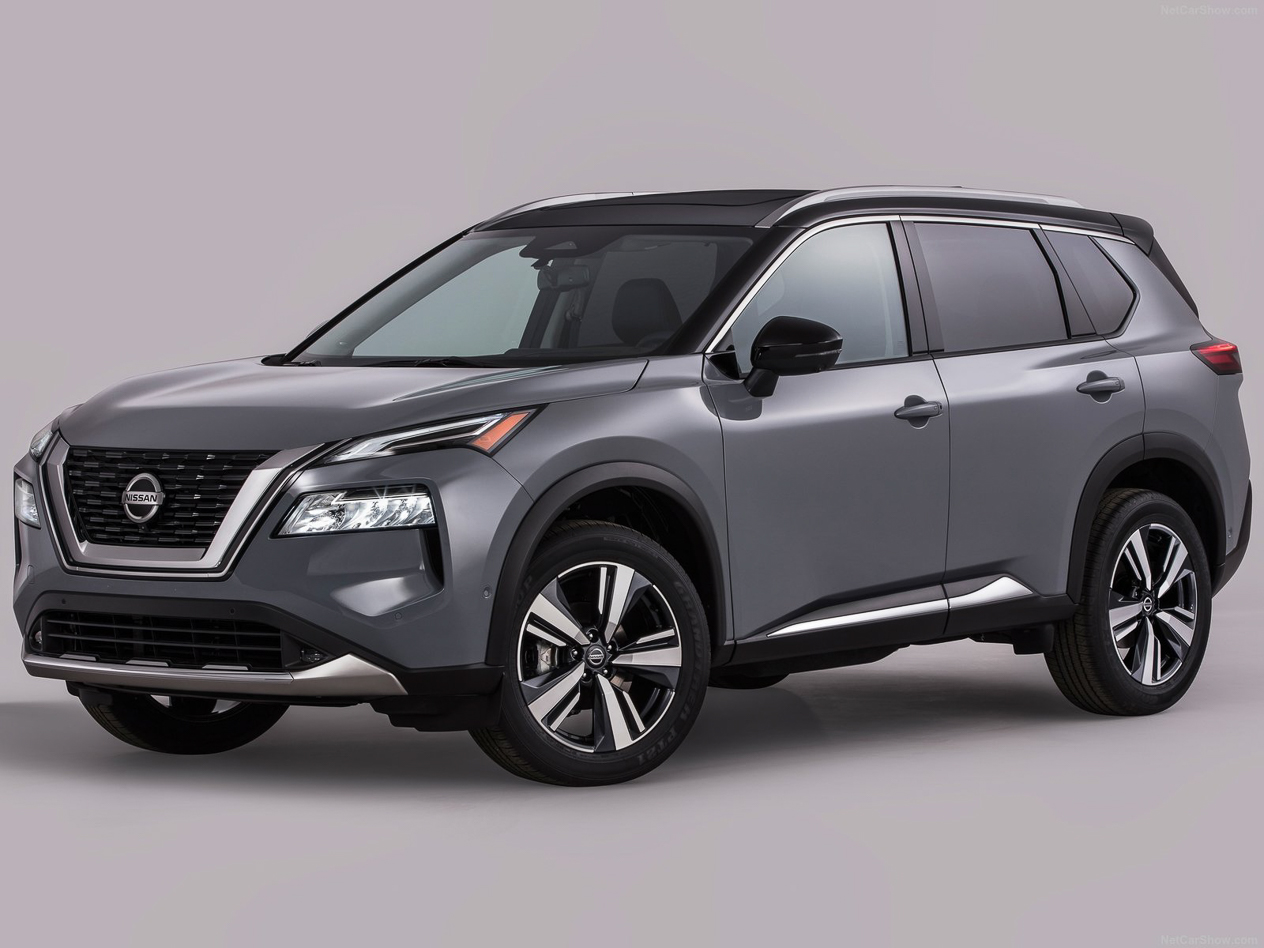
Nissan X-Trail
It’s been a while between drinks for the Nissan X-Trail, with the current generation doing service from 2013 to 2020.
The all-new third generation is just around the corner, ushering in new looks inside and out, new tech, a bunch of added safety gear and a more powerful 2.5-litre four-cylinder engine set to produce 135kW/245Nm.
The interior is one of the most impressive aspects of the new car, showing off a completely redesigned cabin which features a new dash design, centre console and – finally – a new 9.0-inch infotainment screen. Joining the updated infotainment screen is a 12.3-inch digital instrument cluster and head-up display.
Kia Sportage
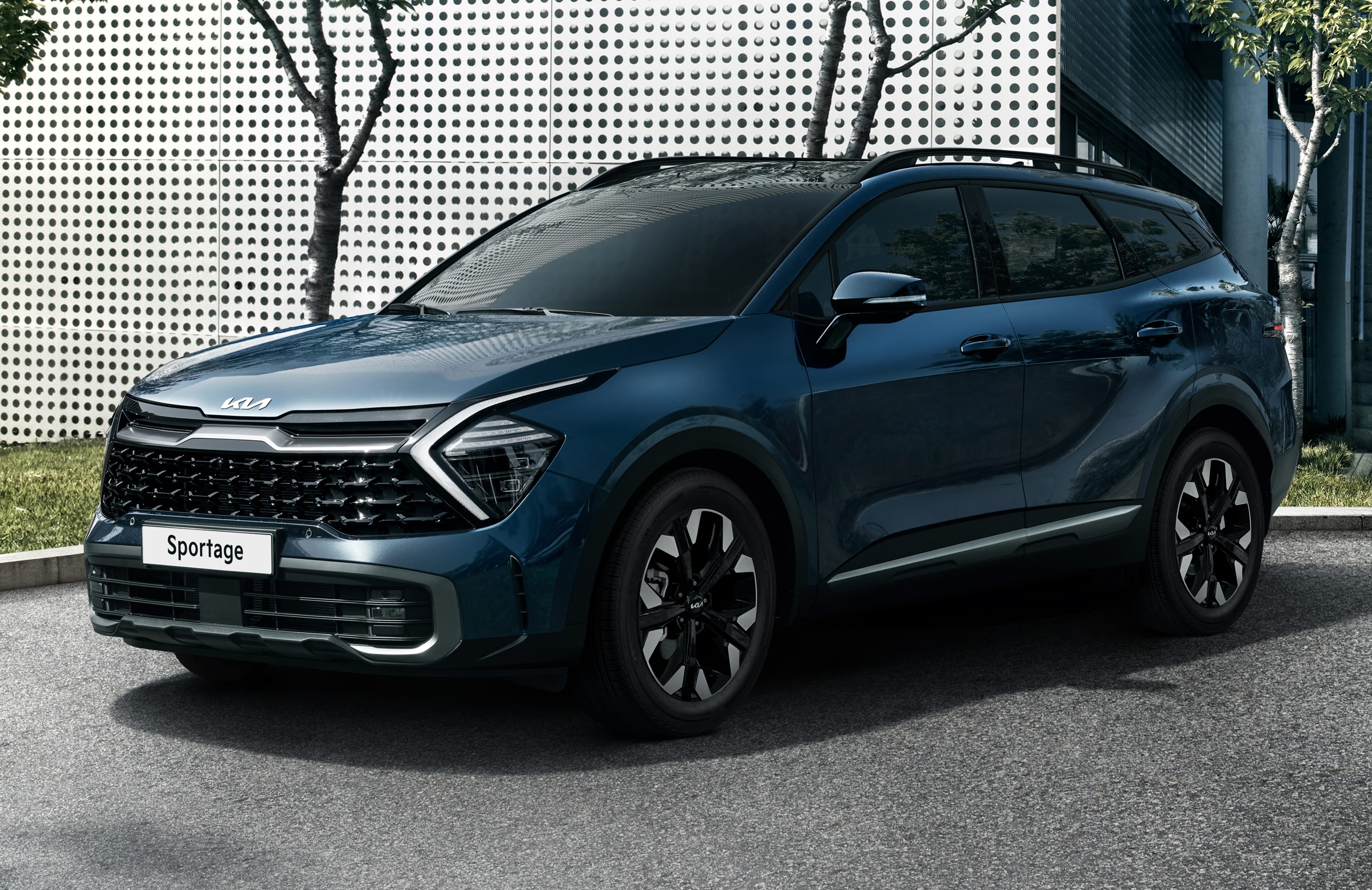
Kia is keeping quiet on details of its new mid-sizer for now, but a new Sportage is just around the corner and is expected to launch in Australia before 2022.
It will debut an adventurous design like its Hyundai Tucson relative, and while Kia has given us a sneak preview of what to expect we’ll have to wait for more details such as specs and pricing.
Stay tuned as WhichCar brings you all the latest on the next-gen Kia Sportage.
Tesla Model Y
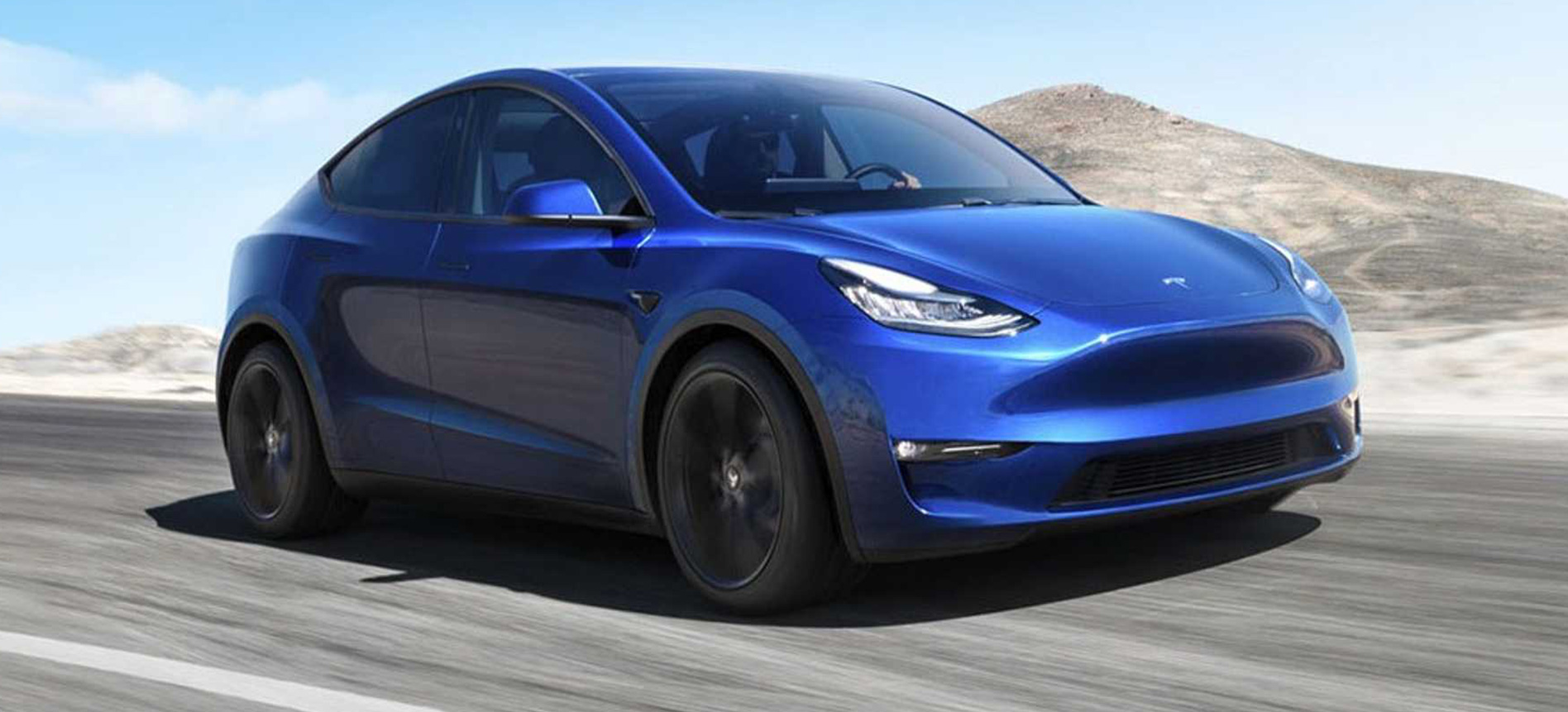
It feels as though we continually say “coming soon” regarding the Tesla Model Y, but there is still hope for a touch-down date in 2021.
The Model Y is the more practical, higher-riding stablemate to the Model 3 sedan and features a conventional set of doors, unlike the Model X.
BMW iX3
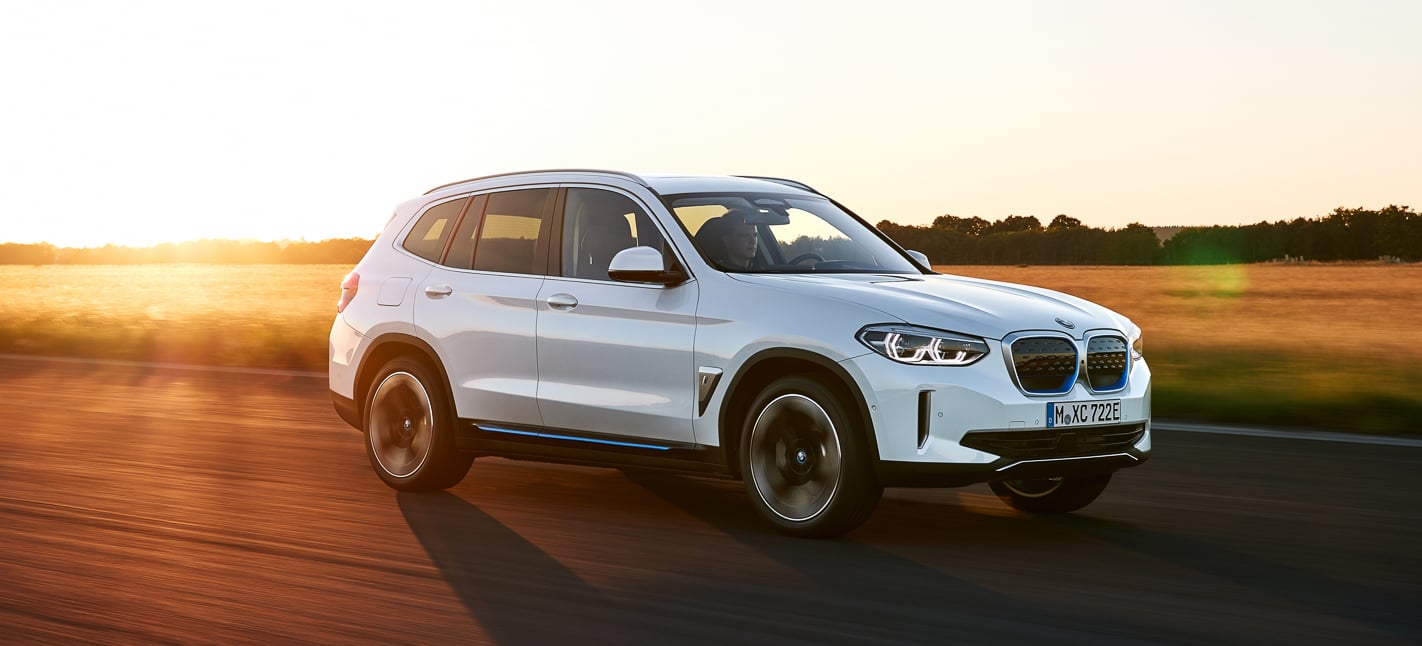
In much the same way that the SUV craze continues on, the roll-out of electric vehicles has been a big feature of 2021 so far. The BMW iX3 is a fully-electrified mid-size premium SUV rolling on the same platform as its X3 stablemate.
It’ll arrive in Australia toward the end 2021 with a starting price of $114,900, bringing an 80kWh electric powerplant to the tune of 210kW and 400Nm and a 6.8-second 0-100km/h sprint. BMW says it’ll provide an impressive 460km driving range, as determined on a WLTP test cycle. With fast-charging, the iX3 is capable of charging 80 per cent of its battery in 34 minutes.
The 80kWh battery sends power to a single motor at the rear axle for exclusively rear-wheel drive. It’s a different approach to some of its competitors, which use multiple motors for all-wheel-drive.
Cabin size and appointments will be largely unchanged over the X3, while the same 510-litre boot carries across to the iX3.
In showrooms now
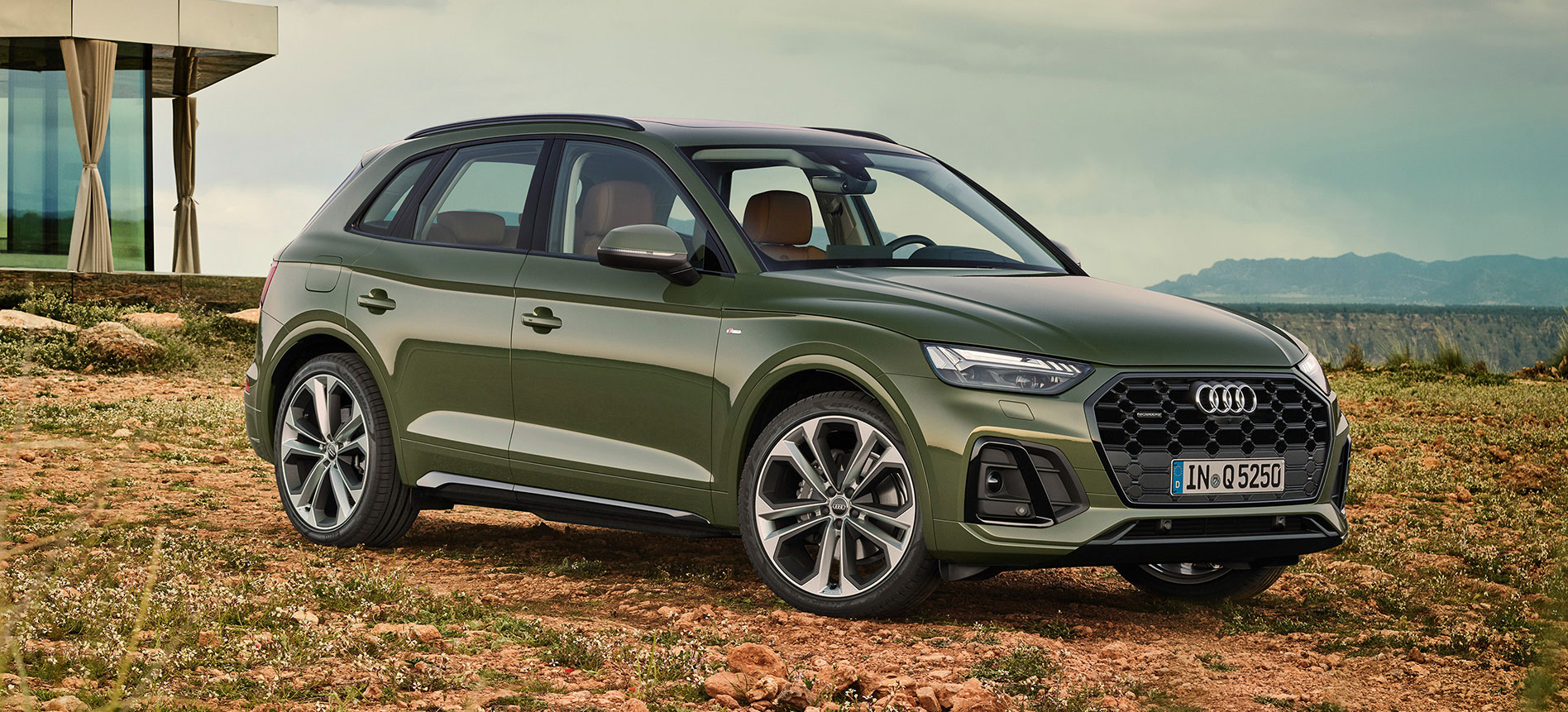
Audi Q5
Audi’s best-selling SUV has received style and tech updates for the 2021 model year.
It also has a new front fascia, a tidied-up rear end with digital OLED tail-lights, a 10.1-inch touchscreen, and 12.3-inch digital instrument cluster.
The Audi Q5 began arriving in showrooms in August 2021.
Hyundai Tucson
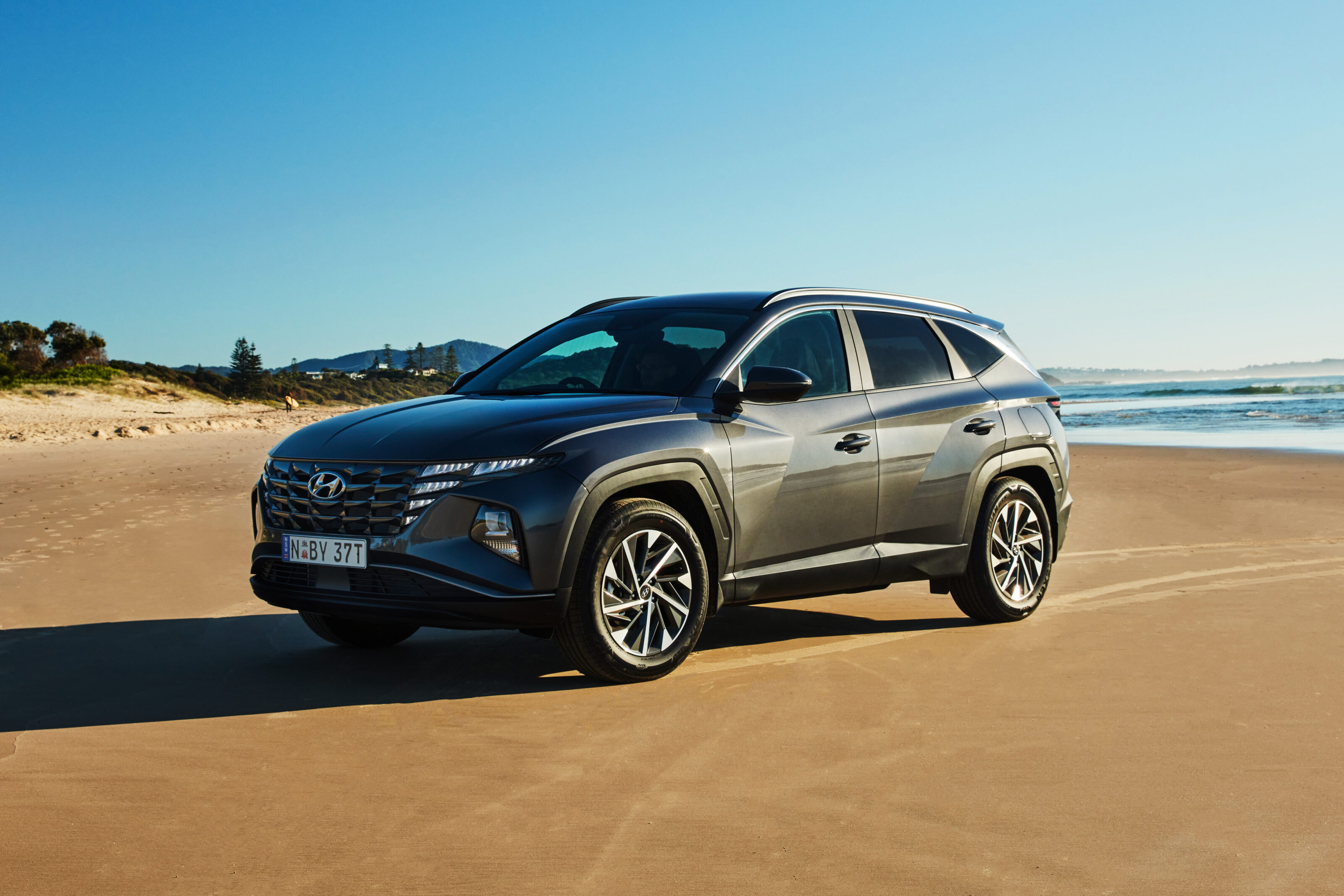
Hyundai’s new radically-designed Tucson, which hit the market in May 2021, marks the second-generation of the Korean carmaker’s popular SUV.
Headline items for the new car include a pair of 10.3-inch screens which make up the infotainment system, a fully-digital instrument cluster, connected car-to-home technology and ambient lighting for the cabin.
There are also phone-as-a-key capabilities and Hyundai’s SmartSense safety suite – which includes highway driving assist, surround-view monitor, remote smart parking assistance and blind-spot collision warning.
Powertrains include a naturally-aspirated 2.0-litre petrol, and 1.6-litre turbo with all-wheel drive.
Variants include the Tucson 2.0, Elite, Highlander, and the sporty-looking N-Line due during the last quarter of 2021.
Volkswagen Tiguan
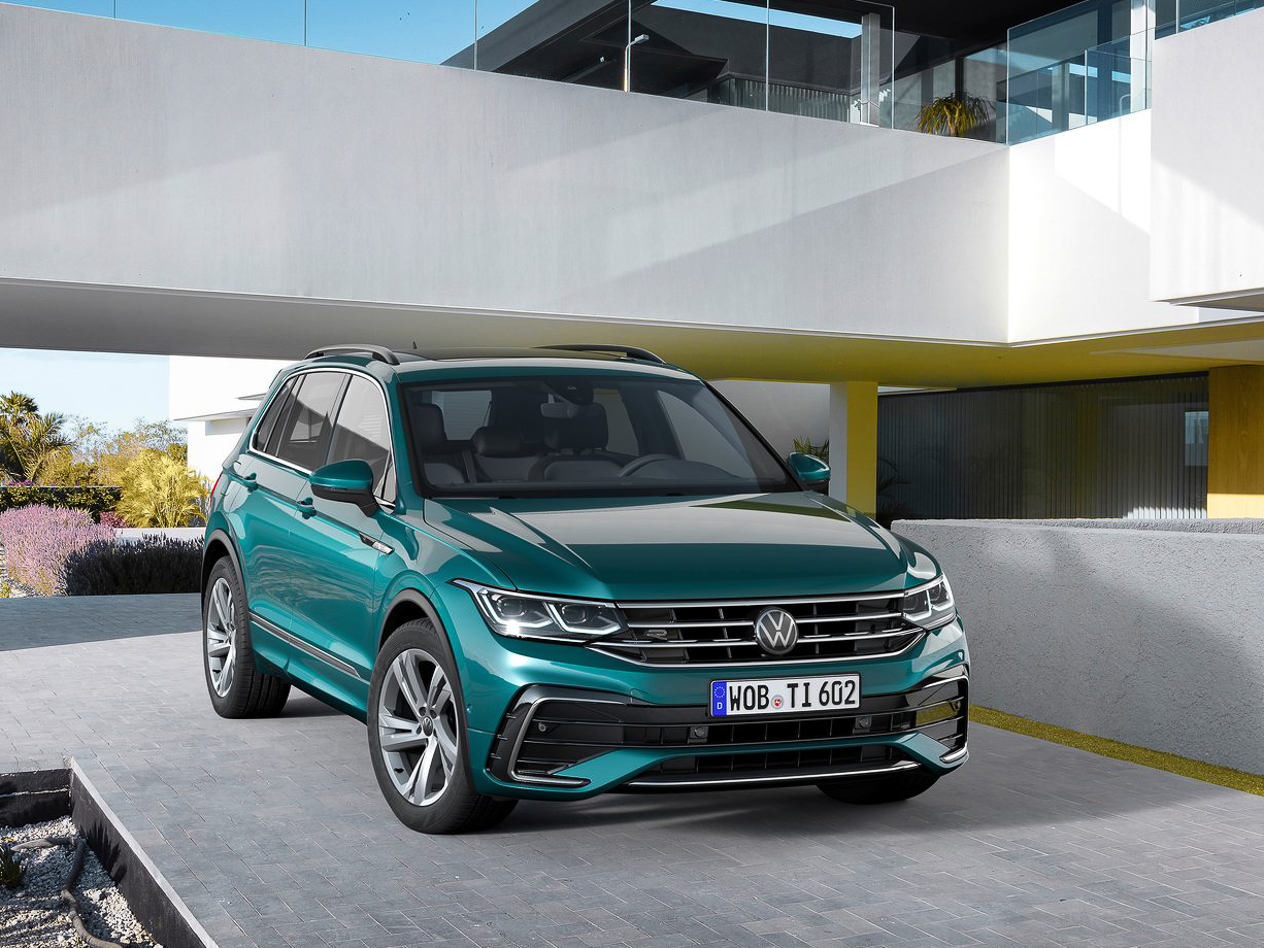
While it might appear as more of a mid-life facelift rather than an all-new release like the two above, there’s some significant changes going on under the skin to make the Tiguan more appealing to the medium SUV market.
Hallmarks of the new car include; a redesigned interior to imitate the Golf Mk 8’s cabin, a 10.3-inch digital instrument cluster and 8.0-inch infotainment screen, touch-sensitive controls, USB-C ports and different upholstery designs.
It can almost drive itself too, given travel assist tech can control steering, braking and accelerating duties at speeds up to 210km/h.
The 2021 Tiguan range began rolling into the country in May 2021 with the range-topping R variants – which include the AWD 162TSI, borrowing the 235kW/420Nm 2.0-litre turbo four-cylinder from the Golf R, and the 147TDI diesel – arriving from June.
Peugeot 3008
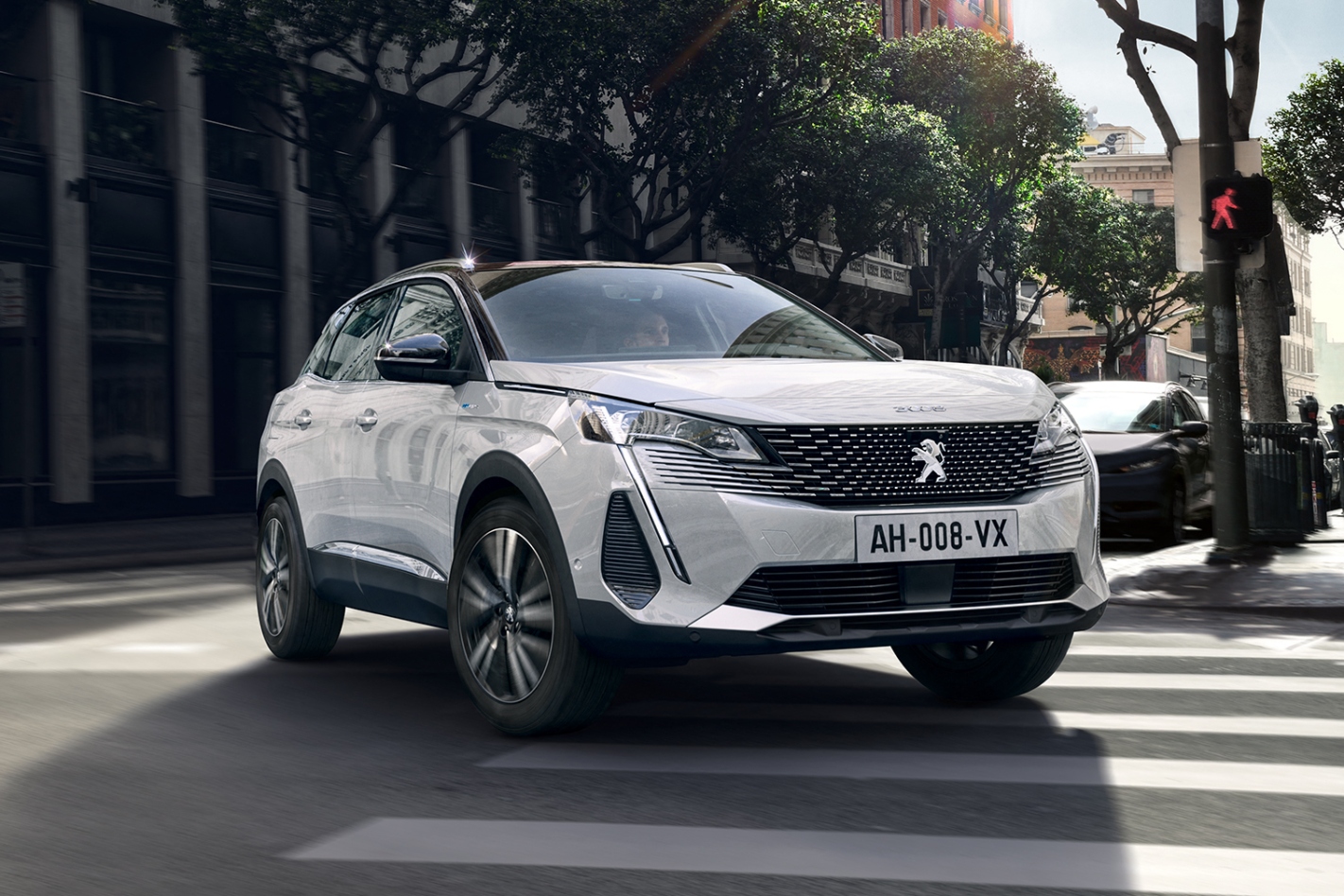
Out of left-field comes a new facelift for the Peugeot 3008. While definitely not in the mainstream category, the Peugeot offers a quirky alternative in the 3008, which happens to pack much of the same features as conventional SUVs.
Despite the addition of hybrid powertrains overseas, those powerplants are non-starters for Australia for now.
Tech enhancements include a 12.3-inch digital gauge cluster, 10.0-inch infotainment touchscreen, auto high beam assist, 360-degree camera, speed sign recognition, and active blind-spot monitoring.
Powertrains include the 121kW/240Nm 1.6-litre turbocharged four-cylinder engine and a punchier 131kW version for the GT variant.
There’s also a raft of new customisation options for getting its look just right, including new colours, new trim pieces and a choice of different sized wheels.
The 2021 Peugeot 3008 launched in Australia in March 2021.
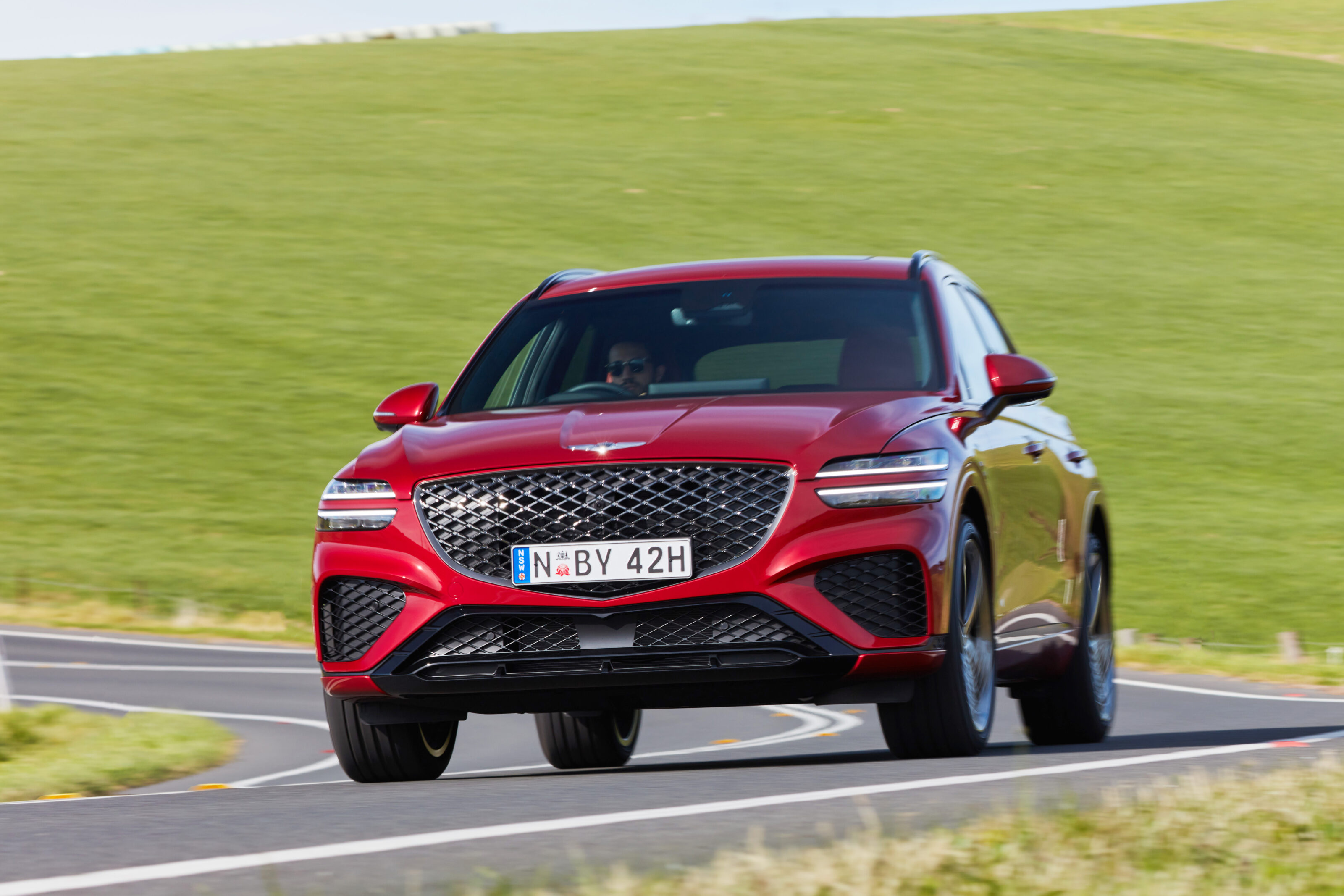
Genesis GV70
Hyundai premium brand’s long-awaited BMW X3, Mercedes-Benz GLC and Lexus NX rival arrived in Australia during the middle of 2021.
With a starting price of $66,400, the GV70 is brimming with standard features and is available with three powertrains, the 2.5-litre four-cylinder turbo petrol, V6 twin-turbo petrol and 2.2-litre turbo-diesel spread across four variants.
Like the larger GV80 it is built on Genesis’s rear-wheel-drive platform, but will be offered with all-wheel drive.
If you could paint a picture of the perfect ’80s ‘Yuppie’ – a fashionable Young Urban Professional obsessed with material possessions and financial success – then the ideal car to complete that stereotype would be a Porsche 944.
Unencumbered by the snobbery that dictated that real Porsches should be rear-engined, yet somehow discerning enough to know the 944 was more than just an image statement, this youthful exuberance for Porsche’s new mainstay model made it the definitive front-engined, rear-drive European sports car of its time.
Yet as the 944 approached the ’90s, something dramatic happened at Porsche. The Stuttgart firm revitalised its 25-year-old 911 with the 964 generation – giving it a substantial boost in modernity, ability, and popularity – and followed that up four years later with the even more revered 993 generation, the final air-cooled 911.
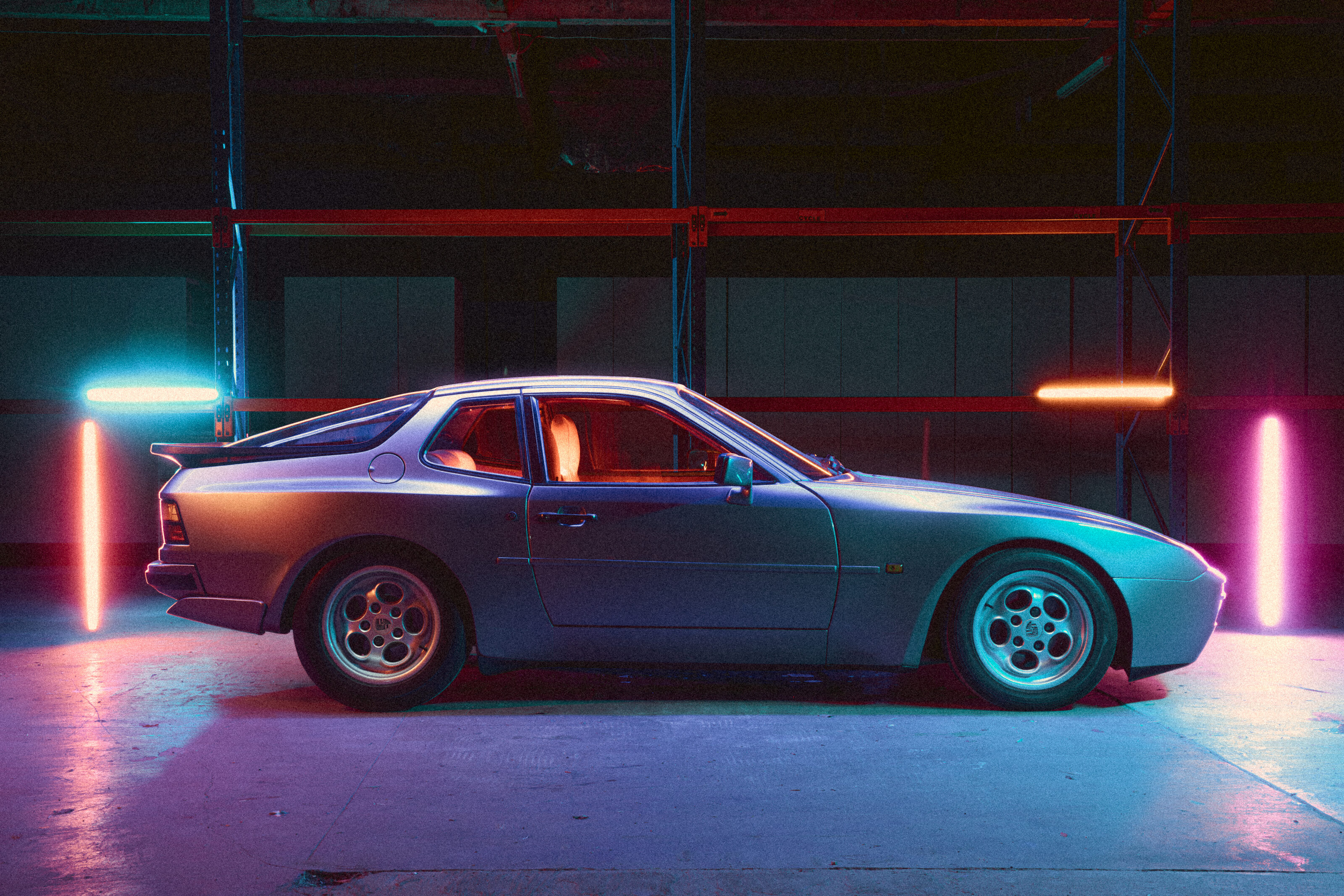
As interest in rear-engined Porsches gathered momentum – bolstered by the new mid-engined Boxster (1996) – the four-cylinder 944 slowly slipped into the background, no longer the darling of its era, nor a flat-six. But still every inch a Porsche, as it turns out.
No conversation about the 944 is complete without referencing its origins – that being Porsche’s ‘transaxle era’, starting with its first front-engined, water-cooled car, the 924.
It’s no secret that the 924 was developed in conjunction with Volkswagen, as a replacement for the VW-Porsche 914 but intended to be a sports car for Audi, in conjunction with a Porsche-made version. Developed alongside Porsche’s forthcoming gran turismo, the V8-engined 928, the 924 shared not only that car’s transaxle layout with the gearbox mounted on the rear axle to improve weight distribution as well as traction, but also its proportion.
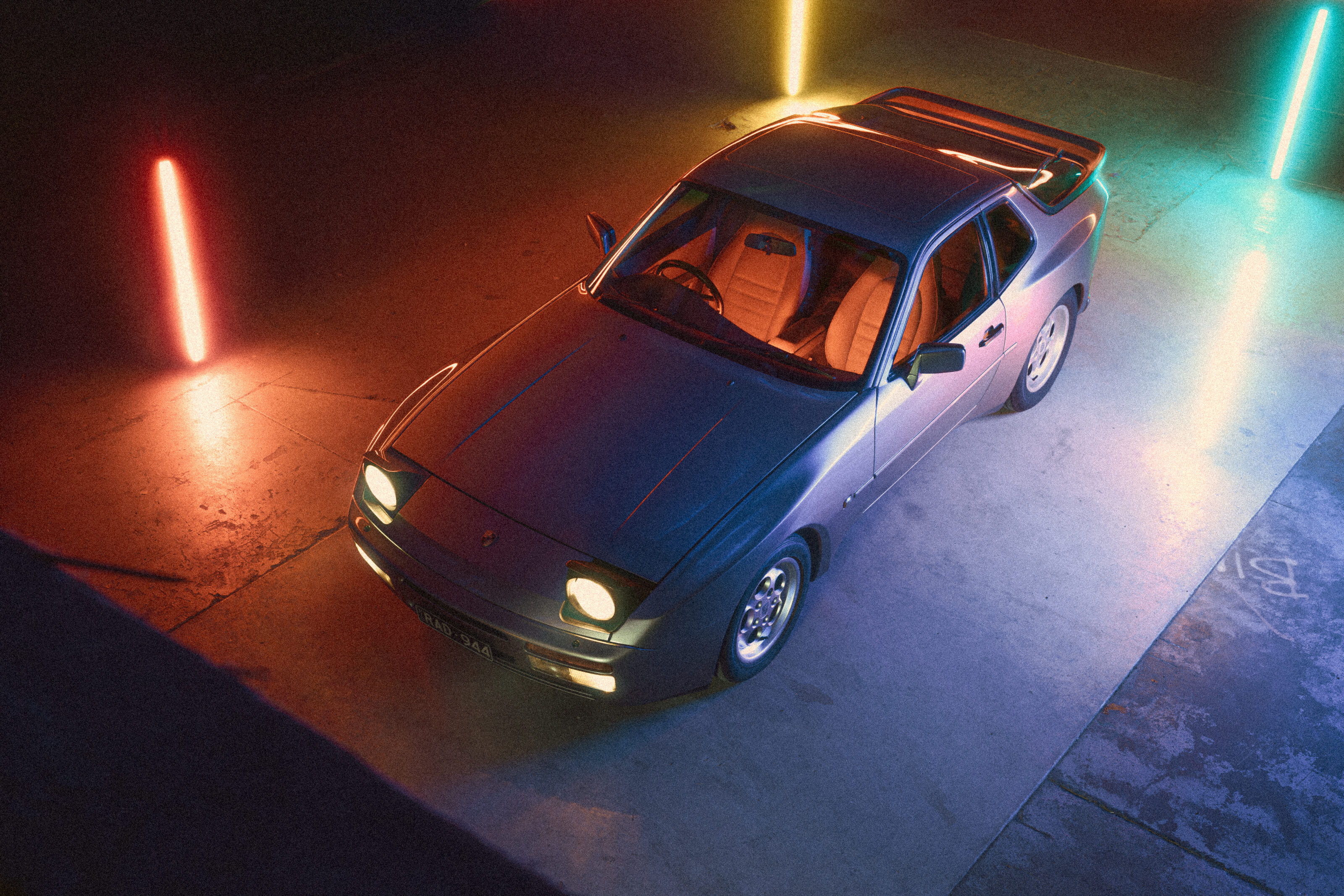
It’s no secret that the 924 was developed in conjunction with Volkswagen, as a replacement for the VW-Porsche 914 but intended to be a sports car for Audi, in conjunction with a Porsche-made version.
Styled for the most part by Harm Lagaay (the rear glass ‘hatch’ was incorporated from a competing design proposal by Richard Soderberg), the Dutch designer said he always had a Porsche aesthetic in mind when designing the 924. When VW aborted the project in late-1974 due to financial pressure, Porsche bought the rights to the car and launched it a year later.
With two of Porsche’s three models featuring front-mid-mounted engines and transaxle gearboxes, the 924 had a distinct Stuttgart flavour and a clear family resemblance. But the one chink in its armour was its VW-Audi 2.0-litre four-cylinder.
Even with a Porsche cylinder head and Bosch fuel injection, it wasn’t a match for the 924’s dynamics. And while the 924 Turbo (1978) and 924 Carrera GT (1980) literally boosted the 924’s sports-car credentials to a seriously credible level, there was still room for another sports car between the 924 and the 911.
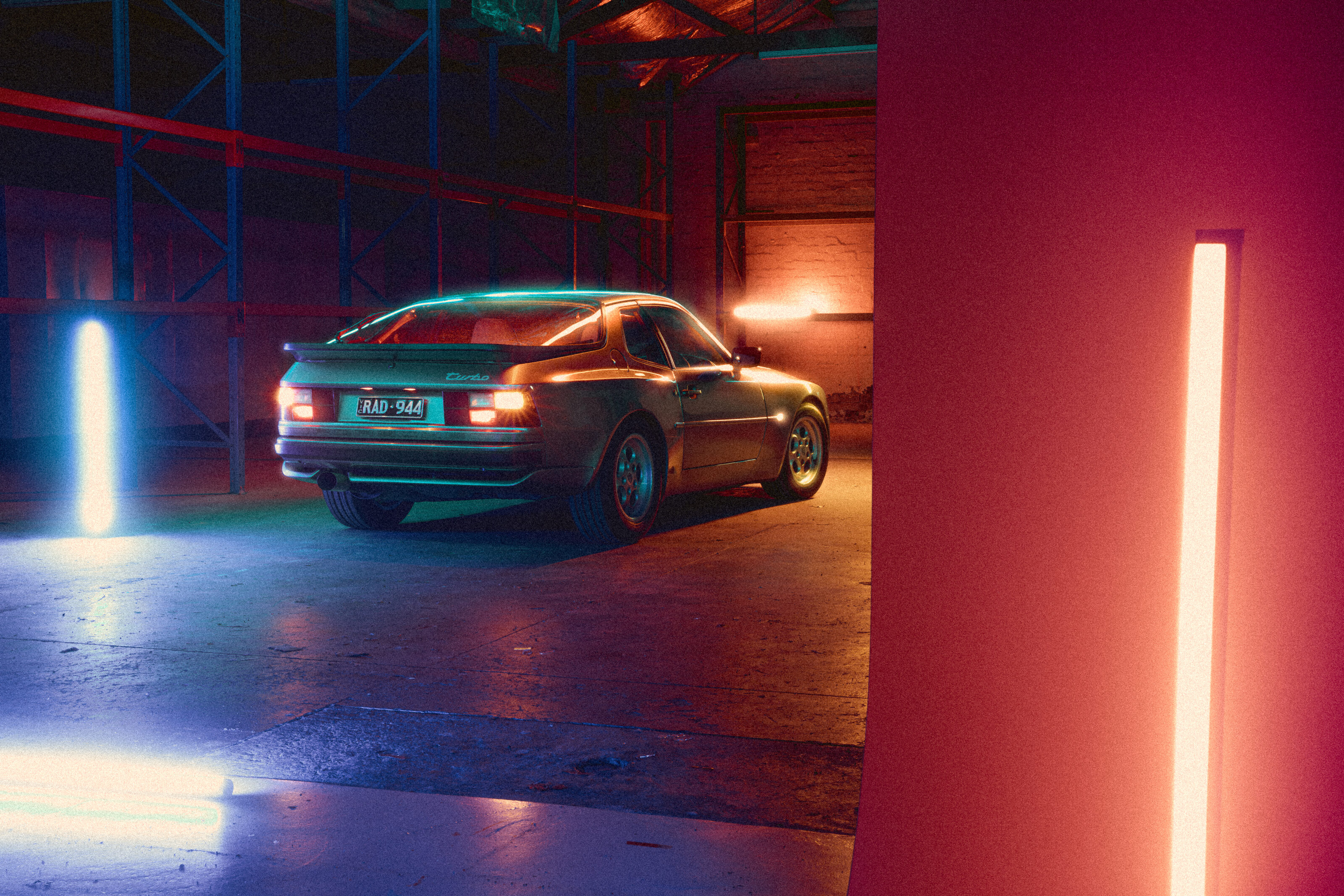
Enter the 944. While clearly a development of the 924 (they shared doors, glass, roof and a Hans Braun-designed dashboard), the 944 was very much its own thing.
Launched at the Frankfurt Motor Show in September ’81, beneath its blistered bodywork lay the bones of the 924 Carrera GT’s chassis but under the bonnet resided an all-Porsche engine – a new all-alloy 2479cc four-cylinder derived from the 928’s V8, with the same 78.9mm stroke but a larger 100mm bore diameter.
Featuring a pair of counter-rotating balance shafts driven by a cogged belt (licensed from Mitsubishi) the engine was tilted 30 degrees to maintain a low bonnet height and in its original 2.5-litre form produced 120kW at 5800rpm and 205Nm at 3000rpm. That may not sound like much, but given the original 944 only weighed 1180kg, it was enough for 0-100km/h in 8.1sec (claim was 8.4sec) and standing 400m in 15.9 when tested by Wheels in September ’82, as well as an effortless 220km/h V-max.
TIME ON ITS SIDE
- One faction inside Porsche wanted the 944 to retain the 924u2019s flat side panels for superior aerodynamics, but the marketing departmentu2019s push for aggression won out. Still, even with its beautiful bulging wheelarches, the 944u2019s drag coefficient of 0.35 was better than a standard 924u2019s, aided by an in-built rear spoiler. With further refinements to the front end and a unique rear valance panel, the Turbo version dropped the 944u2019s Cd figure to 0.33.
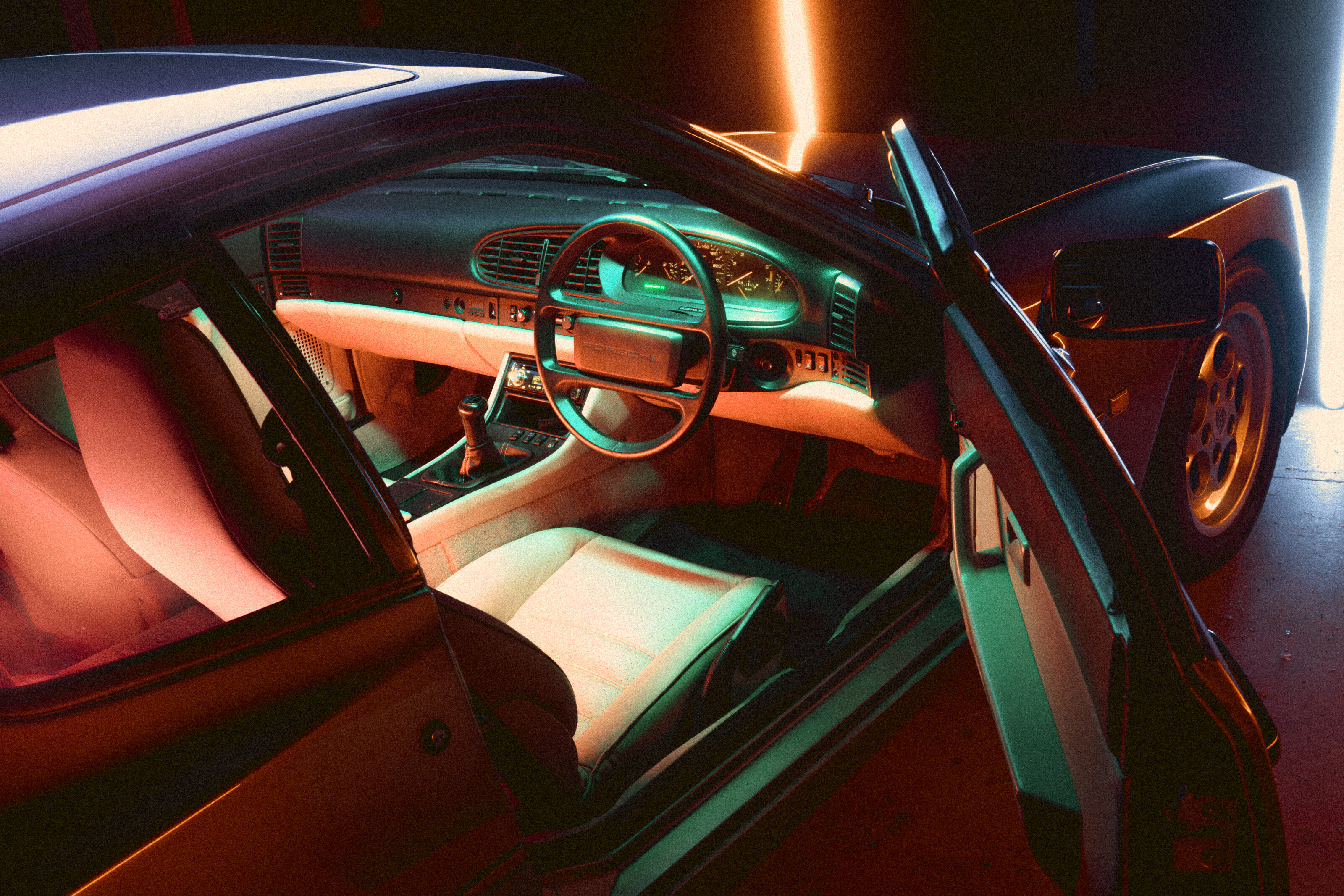
The aim with this engine was not only indestructibility – a highly modified twin-cam, 16-valve, turbocharged prototype fitted to a 924 Carrera GTP finished seventh outright at Le Mans in 1981 – but also driveability. Tractable from just 1000rpm yet punching hard to the 6600rpm rev ceiling, the secret to the 2.5-litre’s tremendous elasticity was its torque delivery, offering at least 200Nm from 2500 to 5500rpm, almost like a modern turbo…
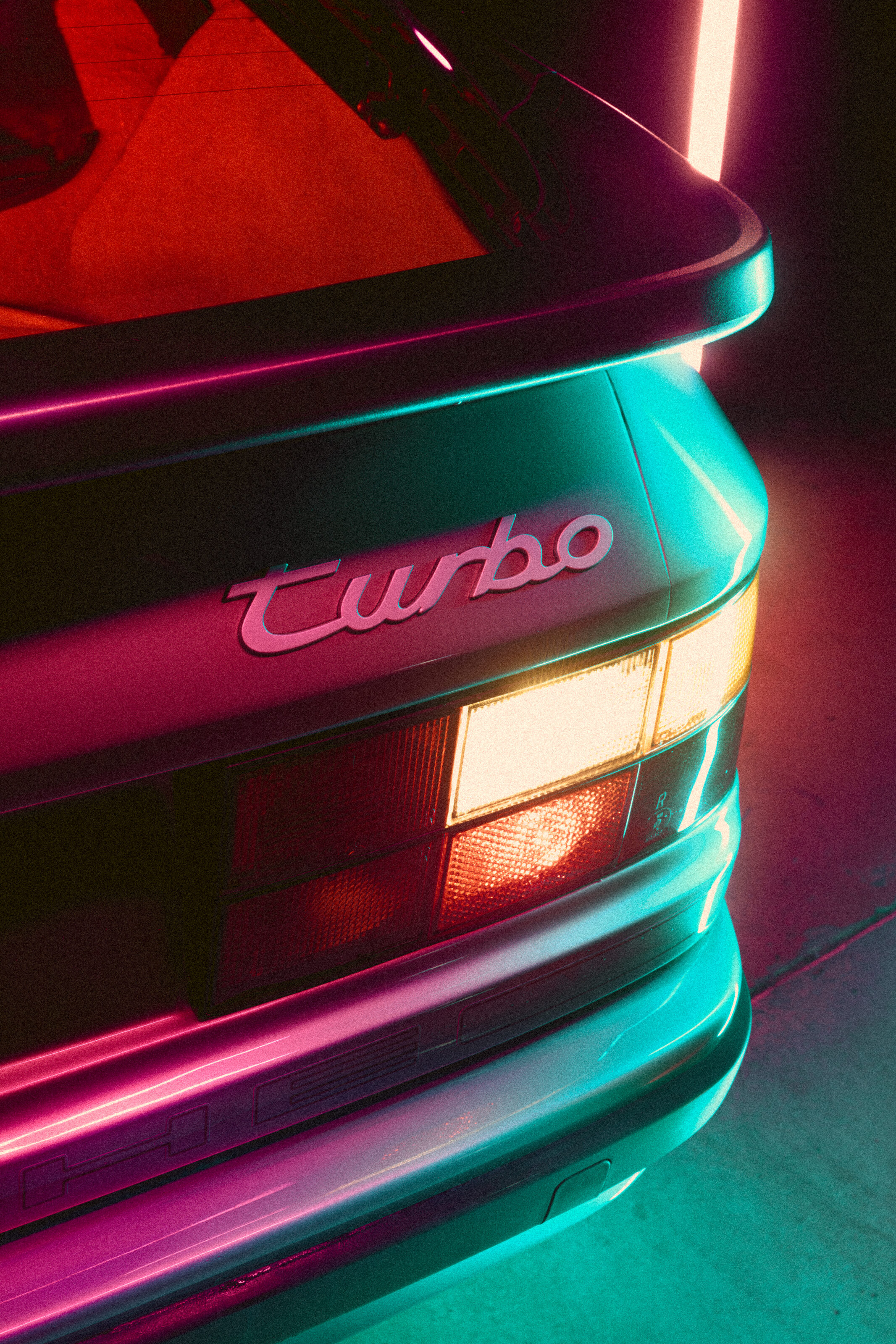
Which brings us to the next chapter in the 944’s sports car story – turbocharging. In 1985, Porsche significantly upgraded the 944 with a completely new interior, ditching the old 924 dash for a much cleaner design as pictured here (though many still prefer the ’70s version), in conjunction with new door trims and a repositioned handbrake.
What can’t be disputed, though, is the improvement in driving position. The original 944 had a very low-set steering wheel, meaning taller/larger people would either have it almost brushing their thighs or cutting off the tops of the instruments, or both. So to celebrate the arrival of the 944 Turbo, the post-’85 model repositioned the steering column 25mm higher while new Recaro seats allowed the driver to sit lower.
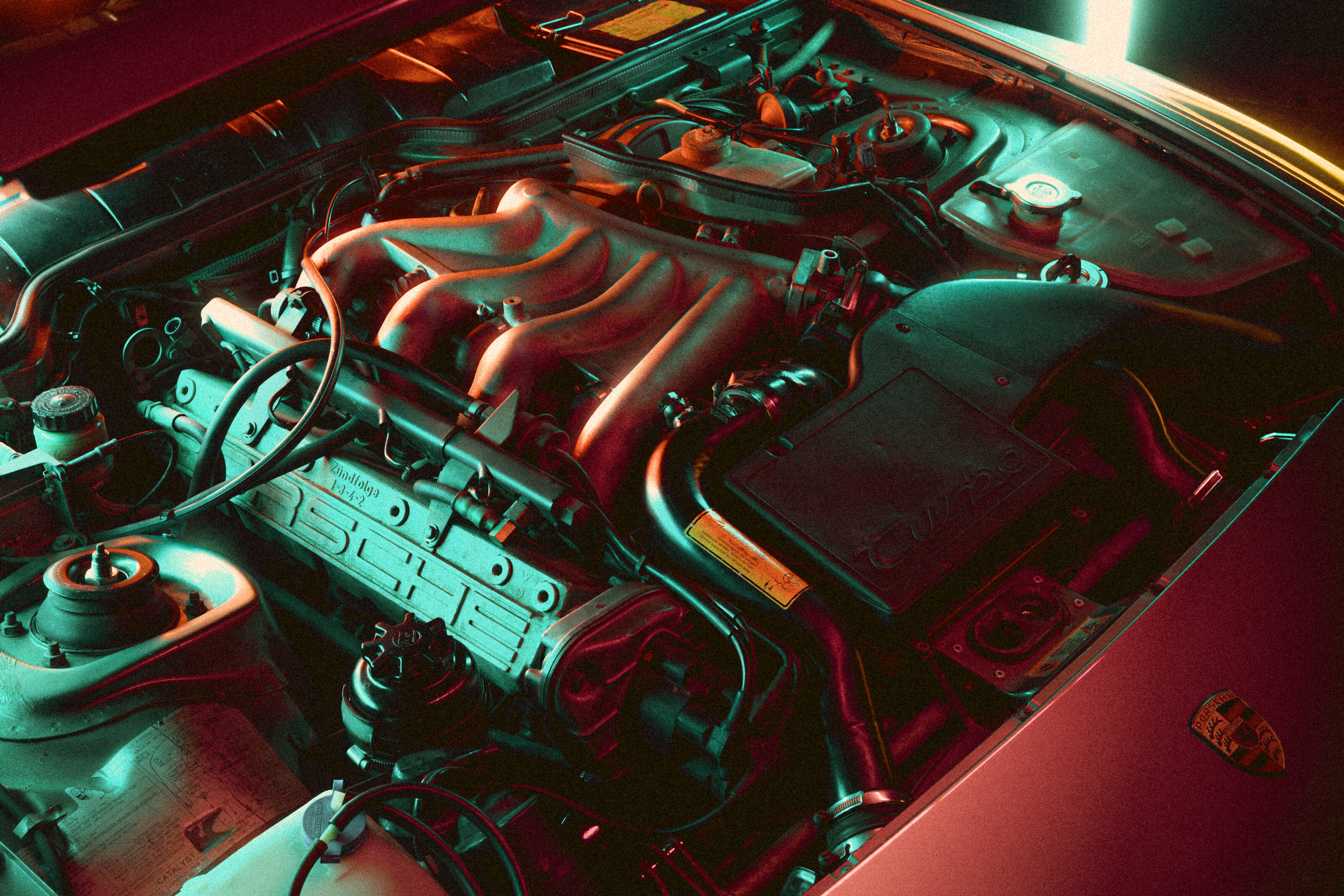
The way the 944 Turbo’s much-improved performance flattered its freshly tweaked chassis made it feel like it was always designed with turbocharging in mind.
But the big news, of course, was under the bonnet. Launched in Australia in early ’86, the 944 Turbo was designed from the outset to drink unleaded petrol (while giving its best on 95 octane or higher), unlike the standard 944 whose outputs fell to 110kW/195Nm with ULP.
Weighing just 16kg more than the regular 2.5-litre, the Turbo’s engineering brief was all about maximising performance without detracting from the 944’s legendary driveability. With a KKK turbocharger running 0.75bar of boost (10.9psi), an intercooler, an electronic wastegate and an anti-knock sensor to allow a high (for its time) 8.0:1 compression ratio, the 944 Turbo boosted power by 35 percent to 162kW at 5800rpm, enough for a claimed 0-100km/h sprint in 6.3sec – marginally ahead of an unleaded 3.2-litre 911 Carrera (6.5sec).
Forged alloy pistons, an external oil cooler, a larger radiator and fuel tank, a bigger capacity alternator, a taller 3.375:1 final-drive (versus 3.889) and a revised fifth-gear ratio proved that this wasn’t simply a case of slapping on a hairdryer. And the way the 944 Turbo’s much-improved performance flattered its freshly tweaked chassis made it feel like it was always designed with turbocharging in mind.
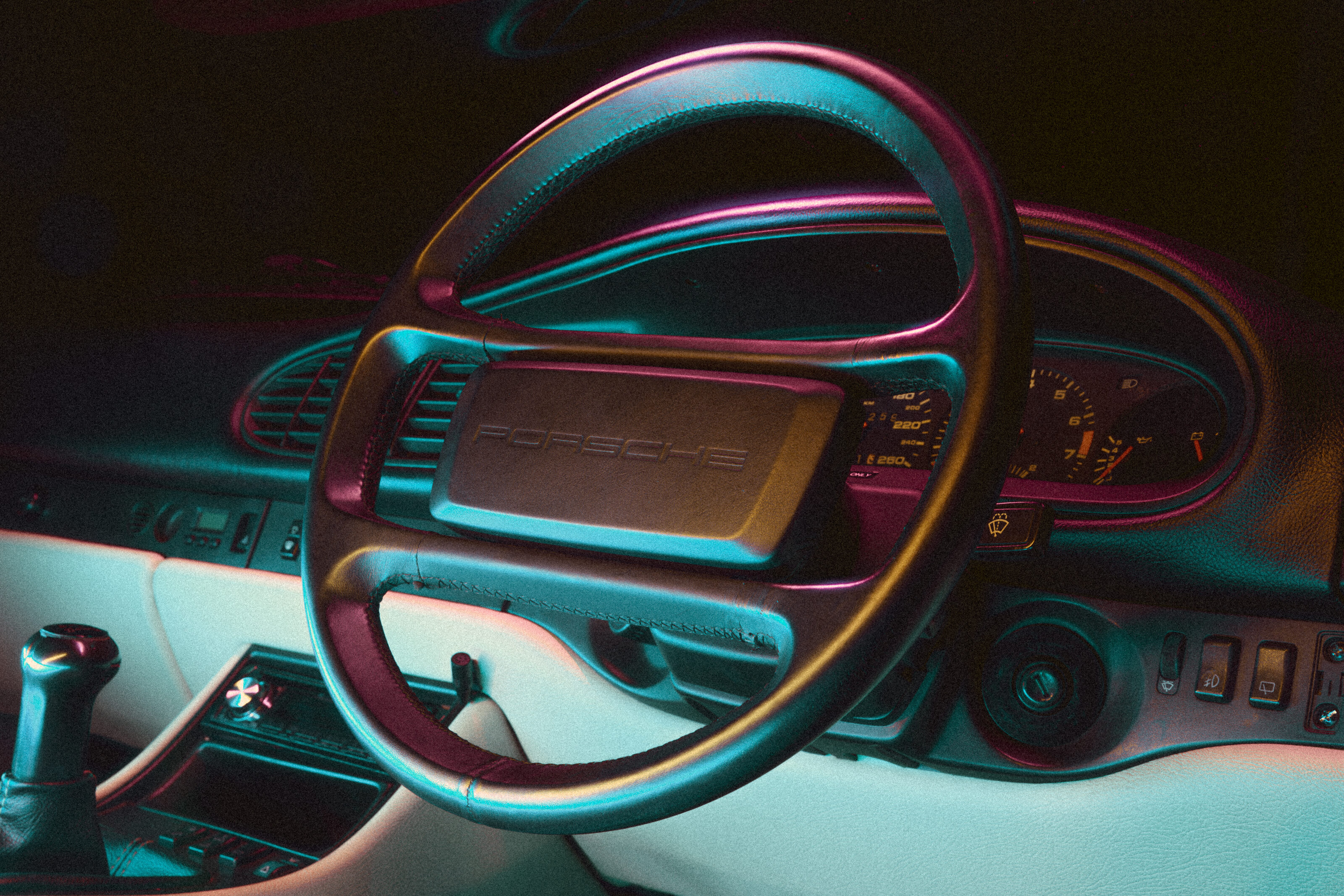
Indeed, a good-condition 944 Turbo is so perfectly balanced and delightfully precise that its sheer competence means it lacks the excitement (and dynamic challenge) of a contemporary rear-engined 911. But that’s probably what also makes it feel relatively modern.
Drive a 944 today and you’ll be impressed by just how well-sorted it is – from the solidity of its doors to the fluency of its chassis to the weighting of its power steering. You’ll also be thrilled by how it shrink-wraps around you, given that at just 4200mm long and 1735mm wide, it’s a surprisingly compact car.
Even without a turbo, a 944 is a fabulously fluent machine on a winding road, but it’s the hard-charging acceleration and harder-edged acoustics of the Turbo version that combine best with the near 50/50 weight distribution of its transaxle layout. It’s no wonder the 944 Turbo was considered one of the finest handling cars of the 1980s. After his first-ever taste of a 944 Turbo, former editor Peter Robinson wrote “just 110 Turbos will reach Australia in ’86 – I will envy their drivers as with no other car.”
A LIGHTER TOUCH
- From the outset Porsche aimed for refined suspension performance. Beyond the 924, the original 944 featured rubber bushings for its transaxle and front tie rods to isolate road shock while the post-u201985 update brought cast-alloy horizontal links for the front struts and cast-alloy rear trailing arms to reduce unsprung weight. Uniquely, the 944 Turbo introduced mixed-width tyres u2013 205/55VR16 front, 225/50VR16 rear.
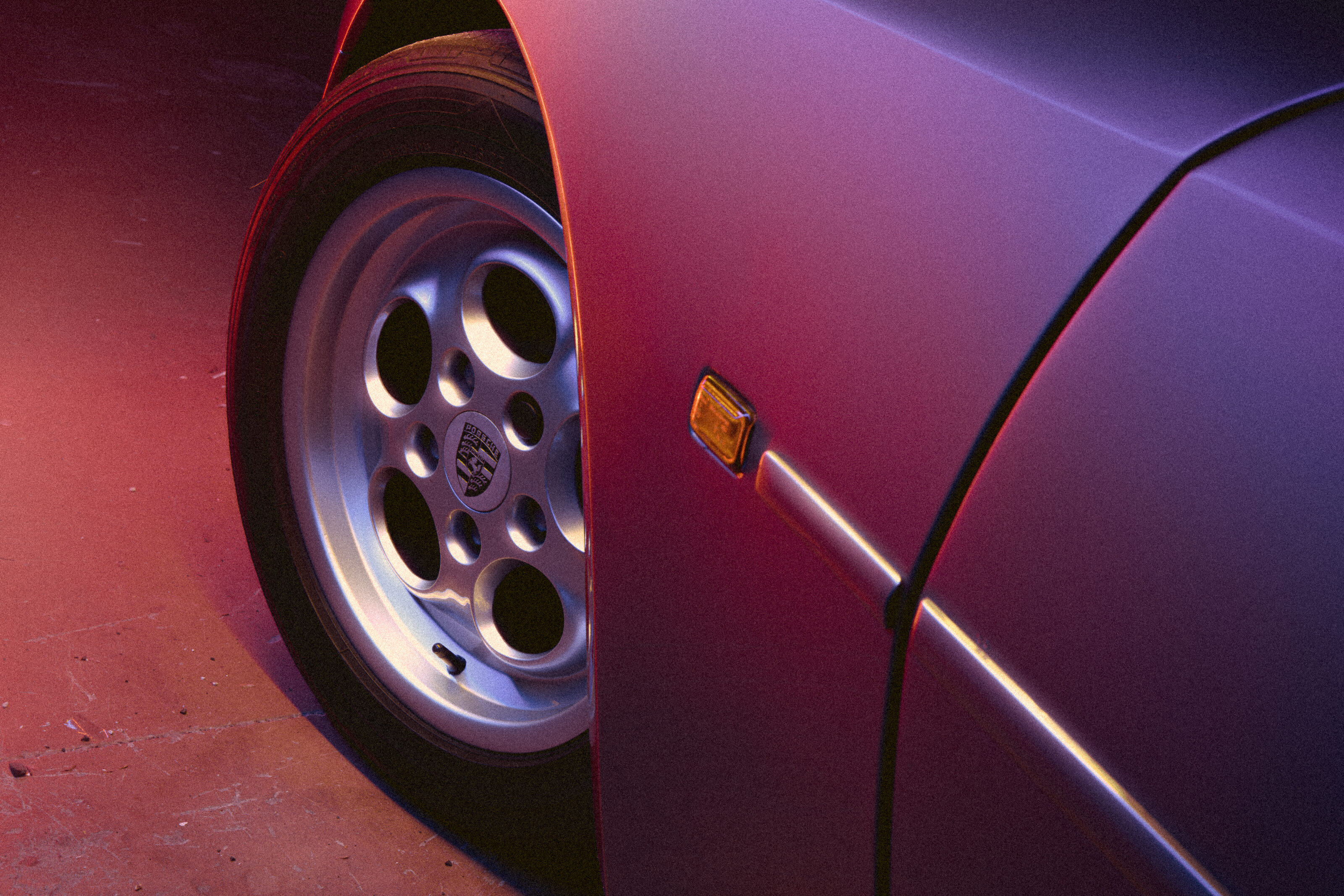
The 944 is even reasonably practical providing you treat it as essentially a two-seater. You can fold down the rear-seat backrests, expanding the decent (if shallow) room beneath its vast, wraparound glass hatchback, and there’s a plasticky luggage cover that can be stretched out over your valuables. But its deep-set rear ‘seats’ are just as useless as a 911’s unless your kid is still in a baby seat, or you need to stick a shortie in there for an extremely short distance.
As the 944 began to age, Porsche endeavoured to keep it modern. The 944S arrived here in 1988 with a twin-cam, 16-valve version of the 2.5-litre for a much-peppier 140kW/230Nm and a 0-100km/h time of 7.7sec. The Turbo was upgraded via a larger turbo and more boost to 184kW/350Nm for a 0-100km/h time of 5.9sec, and 1989 also saw a restyled 3.0-litre 944 S2 – considered the best naturally aspirated 944, complete with 155kW/280Nm – as well as the pretty 944 S2 Cabriolet.
Expensive when new in Australia, it’s been a long time since 944s were worth big money here but that’s already changing. As the children of the ’80s start to see the 944 for what it is – an excellent driver’s car that’s also a pukka Porsche, capable of handling big mileages when serviced properly (think 400,000km), and with unbeatable parts support – its current values are going to keep on climbing.
Simply because it isn’t a 911 – or a 924 or 968, for that matter – the 944 will always occupy its own niche among historic Porsches. Much like the brash young things that aspired to own one in the flashy ’80s, there’s an irreverence about the 944 that makes it perpetually, unequivocally cool.