
The global automotive industry has copped a real beating over the past 18 months.
While you-know-what had a massive direct impact on production as the pandemic unfolded, the same shutdown in the semiconductor manufacturing world continues to hobble the production of cars to this day and the numbers are staggering.
The two biggest automotive consumers of computer chips are Toyota and Volkswagen, coughing up US$4bn (A$5.2bn) each per year for chips but that sum is minute compared with other industries.
At US$36bn (A$46.5bn), Samsung’s semiconductor bill alone is about the same as the entire automotive industry put together. As microchip supply slowly recovers therefore, car-making industries are at the back of the queue and the shortage for cars is predicted to last at least another two years.

I recently got chatting with a source at a mainstream Japanese brand who gave me a fascinating glimpse into the effect the semiconductor shortage is having on production. One of the ideas that had been floated was to produce a run of models that have fewer auxiliary and luxury electronic features offered as standard, thereby allowing the limited semiconductor resources to be allocated to only the essential computerised stuff like safety and engine management.
The idea never got further than early discussions but it got me thinking – the computer chip shortage could herald a brief but glorious rift in the automotive timeline.
Imagine if the various brands did actually start offering a limited run of electronic-lite cars to continue production through the semiconductor shortage.

First to go would be anything electrically operated. While a computer isn’t directly necessary to power an electric seat, for example, the electrics of modern vehicles are routed to central ‘body system’ control modules which are electronic* and need computer chips. Bin the motors from luxe electric seats and you can save up to 30kg. Repeat the process for non-essentials and the weight of cars will plummet as will their appetite for silicon.
Where else can we save a processor here and there? Automatic transmissions of course. Today’s autos are incredibly sophisticated and require powerful ECUs to run but manuals do not and are also lighter too. The self-serve gearbox will make an encore.
Now let’s do the same for power steering. Our chip-reduced car will be getting so light you won’t miss the commonplace feature without having to bicep-curl hay bales every morning. And the byproduct? Beautifully direct and sensitive steering feel.

Fuel injection is good for power and economy and reliability, but these are desperate times so we might have to bung on a set of side-draughts and save another engine management computer. The motor might be down on a few horses but think of the noise!
Turbos can ditch their electronic boost controllers and variable vane technology, replaced by pressure actuators that are easily influenced by dash-mounted bleed valves. Top-shelf sound system? Get rid of it, with a new set of carbies and the bi-modal exhaust valve all in the skip, all the music you could ever wish for is now coming from your car.
Obviously you won’t want to do away with all electronics including the stuff that runs the airbags and ignition timing or, perhaps you will. Manufacturers would offer these items as they do any other option including the full ‘motorcycle spec’ which dumps virtually all safety features for the true diehard purist…
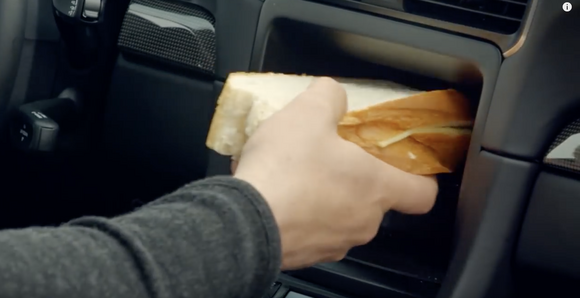
Of course, production and supply of automotive chips will recover as will our car’s addiction to computers, but like an archaeologist discovering an odd layer of rock caused by a massive volcanic eruption thousands of years ago, this short generation of ‘pure cars’ would forever stand as a reminder of the time our vehicles took a step forward by going back.
*The terms ‘electric’ and ‘electronic’ are not interchangeable and their distinction is commonly misunderstood. While both require electricity to function, electronic devices use electricity primarily for data, while electric things use it for power. That’s why it’s called the electric chair not the electronic chair, while phones and tablets are regarded as consumer electronics not consumer electrics.
It’s the age-old question: do you buy the top-spec of a cheaper model or go for the more expensive option and settle for a variant further down the food chain? If you’re looking at the Mitsubishi Triton GSR you’ve probably opted for option A.
Whereas the top-spec Toyota Hilux and Ford Ranger are north of $70,000 by the time they come off the showroom floor, this flagship Triton is $57,240 drive-away (a figure that will adjust slightly depending on your state or territory).
It comes loaded with all the bells and whistles: keyless entry and go, leather seats (the fronts heated and driver’s side electrically adjustable), six-speaker stereo, 7.0-inch infotainment touchscreen with digital radio and smartphone mirroring, dual-zone climate control, rearview camera, front and rear parking sensors, auto wipers and headlights and more.

In terms of safety, you score front, front-side and curtain airbags with another for the driver’s knee, as well as a comprehensive suite of active safety systems, including auto emergency braking, lane departure warning, lane-keep assist, blind-spot warning and trailer stability assist.
Distinguishing the GSR externally from its lesser siblings are black exterior highlights, including grille, wheels, roof, mirrors and door handles, as well as a sports bar and hard-top roller tonneau. The latter has its pros and cons: while the lockable tray cover is handy for security, its storage cartridge robs significant tray space and forces the tie-down points rearward, making securing loads more difficult.
On that side of things, the tray is 1520 x 1470 x 475mm (length/width/depth) with 1085mm between the wheelarches, though these measurements don’t account for the roller-top storage cartridge. Maximum payload is 900kg and maximum towing capacity is 3100kg, though with a 5885kg Gross Combination Mass, the payload when towing that amount is limited to 785kg.

Mitsubishi’s popular dual-cab does little wrong, but nor does it stand out in any area
Historically, the GSR badge was applied to hot Lancers but while the Triton is both turbocharged and all-wheel drive it makes do with the same 133kW/430Nm 2.4-litre four-cylinder diesel as every other variant.
It’s an effective rather than inspiring engine. We tested the GLS version recently at a leisurely 11.36sec from 0-100km/h but its performance improves on the move. Throttle response is efficient and there’s a solid hit of low- to mid-range torque but it’s a noisy operator and the powerband is a narrow one.
The six-speed automatic doesn’t require a second thought, though the related Pajero Sport’s eight-speeder makes better use of the engine’s limited reserves. You can always take charge manually via the snazzy paddles that have been lifted from the final generation Lancer Evolution; some may deem them frivolous, but they’re a welcome bit of theatre.

Up front, the seats are well-bolstered and comfortable though perhaps set a little high, and the tan leather that’s been liberally applied throughout the GSR’s interior will be an acquired taste. It’s a cabin that favours function over form, which isn’t a criticism in this segment, especially when function includes touches like a reach- and rake-adjustable steering column.
A larger infotainment screen would be nice (the Navara and Ranger are 8.0-inch, the D-Max/BT-50 9.0-inch). A pair of USB ports handle smartphone mirroring and charging duties along with an HDMI input and two central cupholders, while the door bins can accommodate 1.5L bottles.
The rear bench is quite comfy, albeit a little short on under-thigh support, but rear occupants aren’t neglected with roof-mounted air vents and separate fan control, reading lights, a pair of USB ports, a storage cubby hole in the back of the centre console, two cupholders in the fold-down centre armrest and similarly large door bins.

On the road, the Triton’s relatively compact dimensions – it’s a lengthy 5.3m but just over 1.8m wide – aid urban manoeuvring, but the slow steering requires plenty of twirling and the ride never settles, continually fidgeting over road imperfections. The firmer suspension actually improves matters off-road, however, with greater body control than some of its competitors.
Higher-spec Tritons, including the GSR, also benefit from Mitsubishi’s Super Select all-wheel-drive system, which allows it to operate in rear- or all-wheel drive, even on tarmac, thanks to its centre differential. That diff can also be locked in high- or low-range in the rough stuff and there’s a rear differential lock as well.
There are also separate modes for rock, gravel, mud/snow and sand. Super Select can take quite a long time to switch between 4-High and 4-Low, with a number of back-and-forth operations required for it to figure out what’s going on. Nevertheless, even on road-biased tyres the Triton is impressively capable, though check out 4×4 Australia’s review for a more off-road-oriented take.

All in all, Mitsubishi’s popular dual-cab doesn’t do much wrong, but nor does it really stand out from the pack in any area except one – value. This is where the Triton wins and the GSR loses. While this range-topper certain packs plenty in for its $57K-odd ask, that price tag is getting uncomfortably close to the likes of the Ford Ranger XLT Bi-Turbo ($60,490DA) and Isuzu D-Max X-Terrain ($59,990DA), a pair of utes that finished 1-2 in our recent dual-cab mega test.
We’d sneak a bit further down the range into the GLS, which virtually matches the GSR on spec but is substantially cheaper at $48,290DA, or, if you can live without a few toys, the $43,690DA GLX+. Here the Triton virtually has the market to itself, offering capability that the challenger brands (Ssangyong Musso, GWM Ute) struggle to match but at a price that doesn’t even get you in the door of a Navara, D-Max, Ranger or Hilux.
What you’re left with is a simple, rugged and capable ute with the peace of mind of a 10-year warranty.

2021 Mitsubishi Triton GSR specifications
| Body: | 5-door, 5-seat ute |
|---|---|
| Drive: | rear-/all-wheel drive |
| Engine: | 2442cc inline-4cyl diesel, DOHC, 16v, turbo |
| Bore/stroke: | 86.0 x 105.1mm |
| Compression: | 15.5:1 |
| Power: | 133kW @ 3500rpm |
| Torque: | 430Nm @ 2500rpm |
| Fuel consumption: | 8.6L/100km (combined/claimed) |
| Weight: | 1999kg |
| GVM: | 2900kg |
| Power/weight: | 66.5kW/tonne |
| Transmission: | 6-speed automatic |
| Suspension: | double wishbones, coil springs, anti-roll bar (f); leaf springs (r) |
| L/W/H: | 5305/1815/1795mm |
| Wheelbase: | 3000mm |
| Ground clearance: | 220mm (unladen) |
| Steering: | hydraulically assisted rack-and-pinion |
| Brakes: | 320mm ventilated discs, single-piston calipers (f); 295mm drums (r) |
| Wheels: | 18 x 7.5-inch (f/r) |
| Tyres: | 265/60 R18 110H (f/r); Dunlop Grandtrek AT20 |
| Price: | $57,240DA |
Snapshot
- New Flying Spur Hybrid features 400kW powertrain
- Odyssean Edition will align with Bentley’s Beyond 100 strategy
- Bentley Australia is taking enquiries now
Bentley has launched its first hybrid Flying Spur – kicking the line-up off with a limited edition dubbed the Odyssean.
The car is powered by a 2.9-litre, twin-turbo V6 paired to an electric motor, with total output hitting 400kW/750Nm. Bentley claims the hybrid Flying Spur will go from 0-100km/h in 4.3 seconds.
In comparison, the Bentayga SUV’s 3.0-litre V6 and electric motor combination provides a lesser 330kW/700Nm. Total driving range for the Odyssean is said to be 700km, while the emissions-free electric mode is expected to offer around 40km.
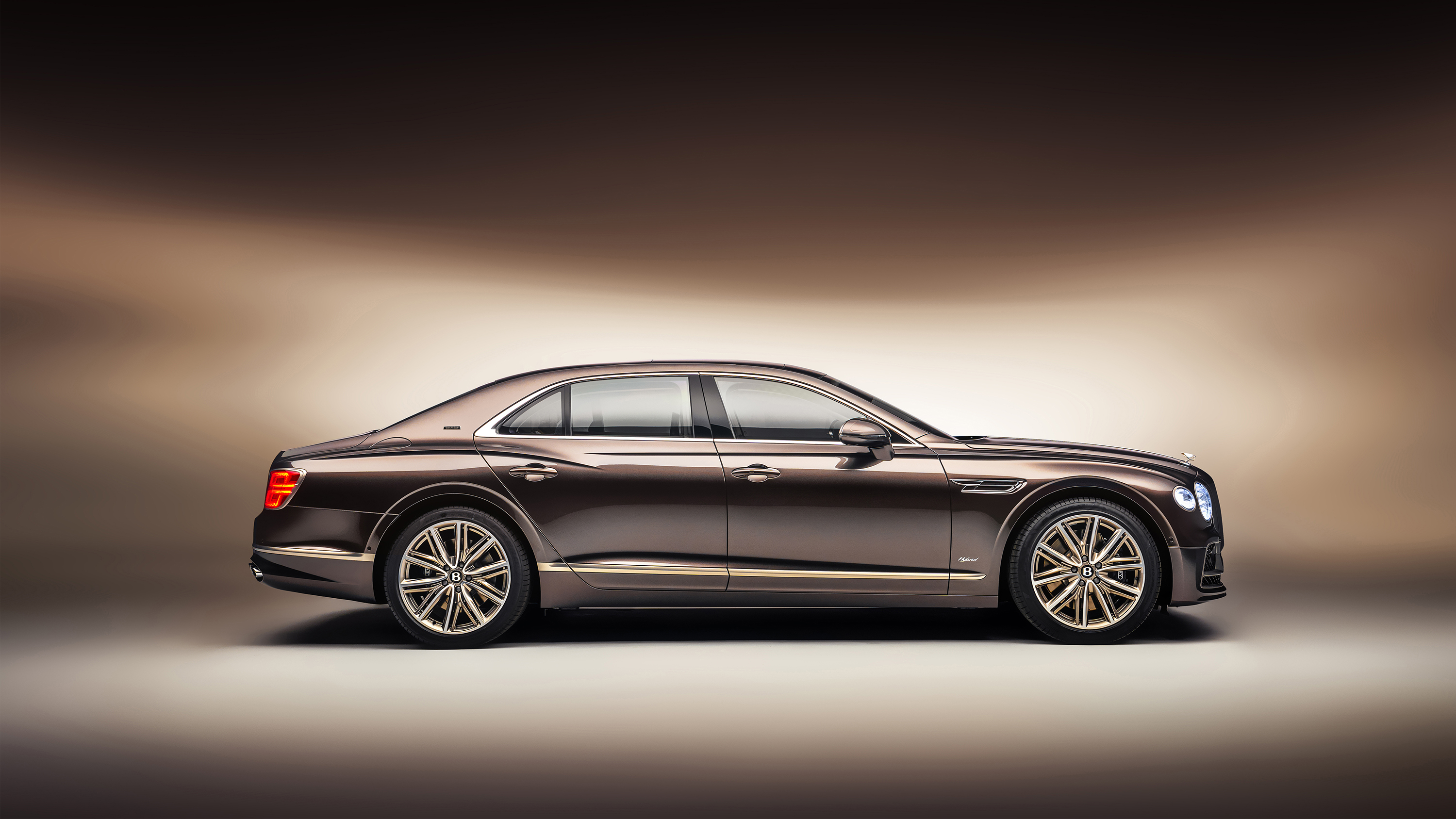
In a statement, Bentley said almost 100 per cent of Bentayga Hybrid drivers use the EV mode, with half of them regularly making journeys shorter than 50km. “This means the majority of the journeys, whether office commuting or school runs, can be achieved predominantly while producing zero emissions.”
The Flying Spur Odyssean edition draws inspiration from Bentley’s EXP 100 GT concept, which illustrated the company’s sustainable ‘Beyond 100’ strategy. Under the plan, every vehicle in the Bentley range will use plug-in hybrid or battery electric power by 2026.
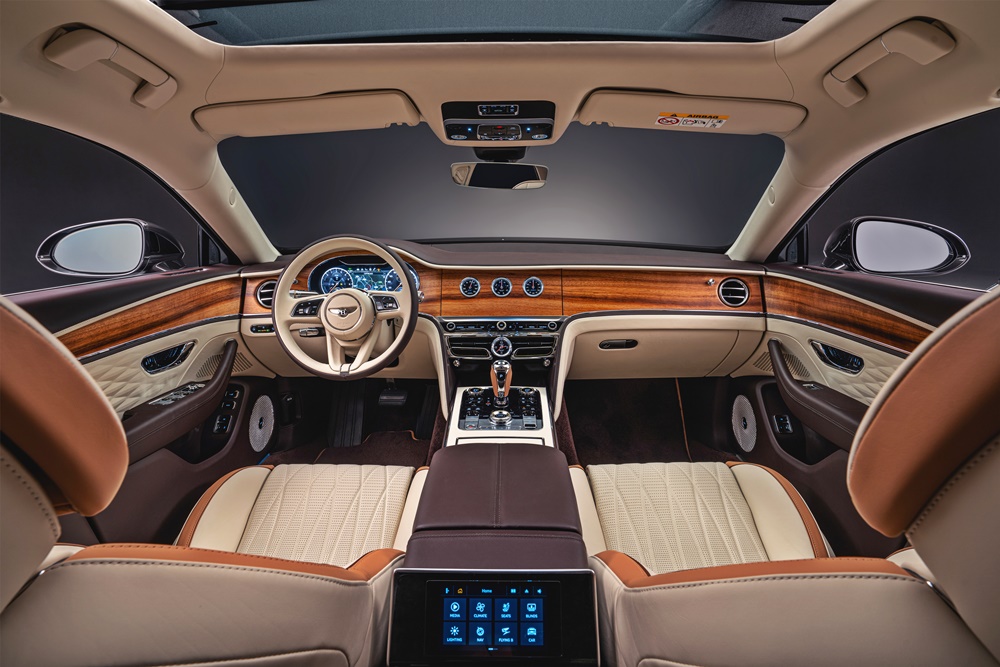
Environmentally-friendly features include an interior finished with liberal amounts of open-pore Koa wood. According to Bentley, it uses 90 per cent less lacquer than high-gloss alternatives. And also on display are tweed panels crafted from all-British wool and a centre console crafted from Piano linen. Sustainably-sourced leather has been used for interior longevity.
Five interior accents will be available with the Odyssean edition: beluga, porpoise, cricket ball, Brunel and burnt oak.
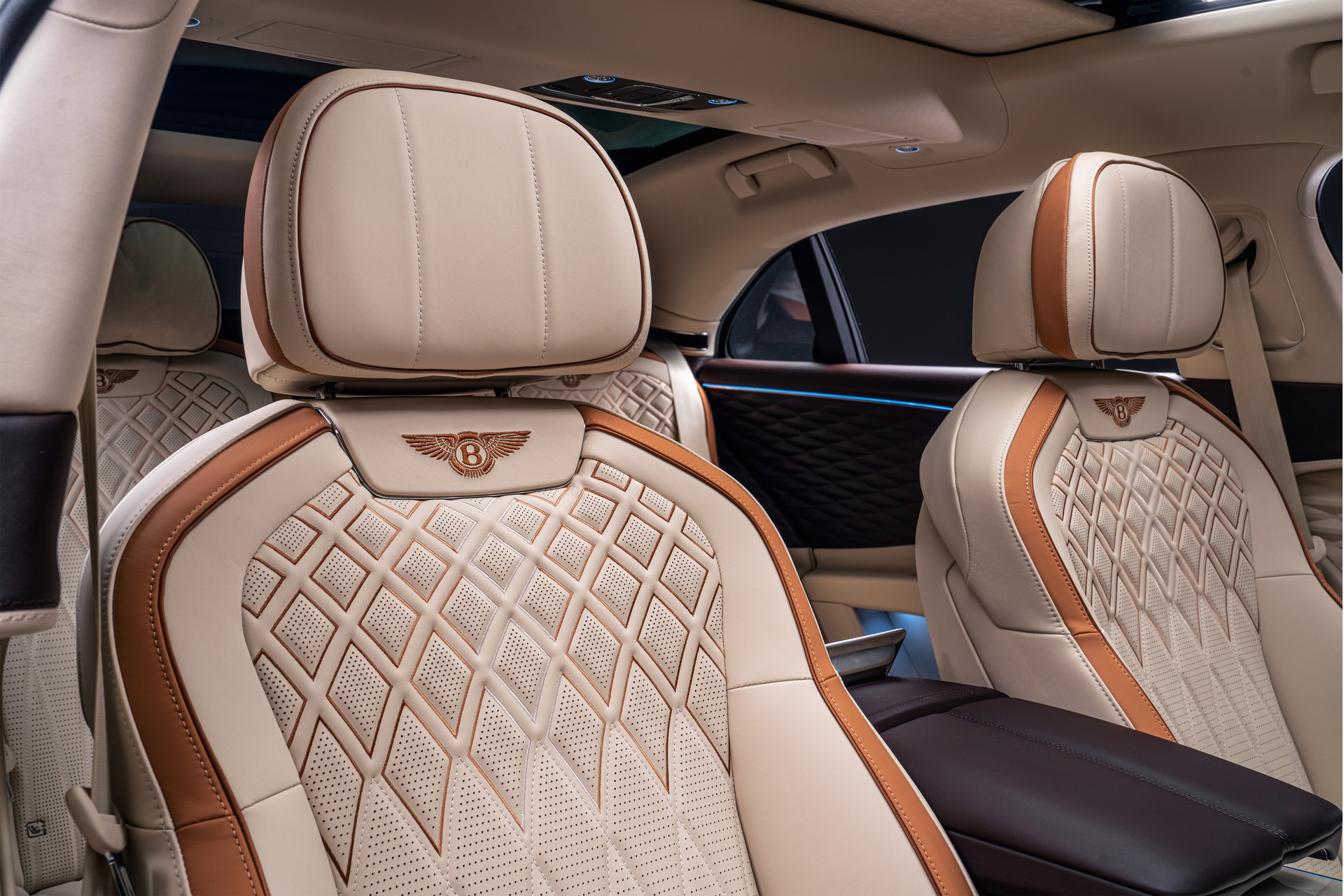
Six paint colours have been curated, though the full Bentley colour catalogue will be offered to buyers.
Other features of the Odyssean include the Touring Specification package, which adds; adaptive cruise control, lane assist, Bentley’s Safeguard+, night vision and a head-up display.
An electrically-deployed Flying B mascot sits within the bonnet, while Bentley wings are projected from all four door openings. A leather headliner is standard in the Odyssean edition, as is diamond leather upholstery, a three-sided rotating display and interior mood lighting.
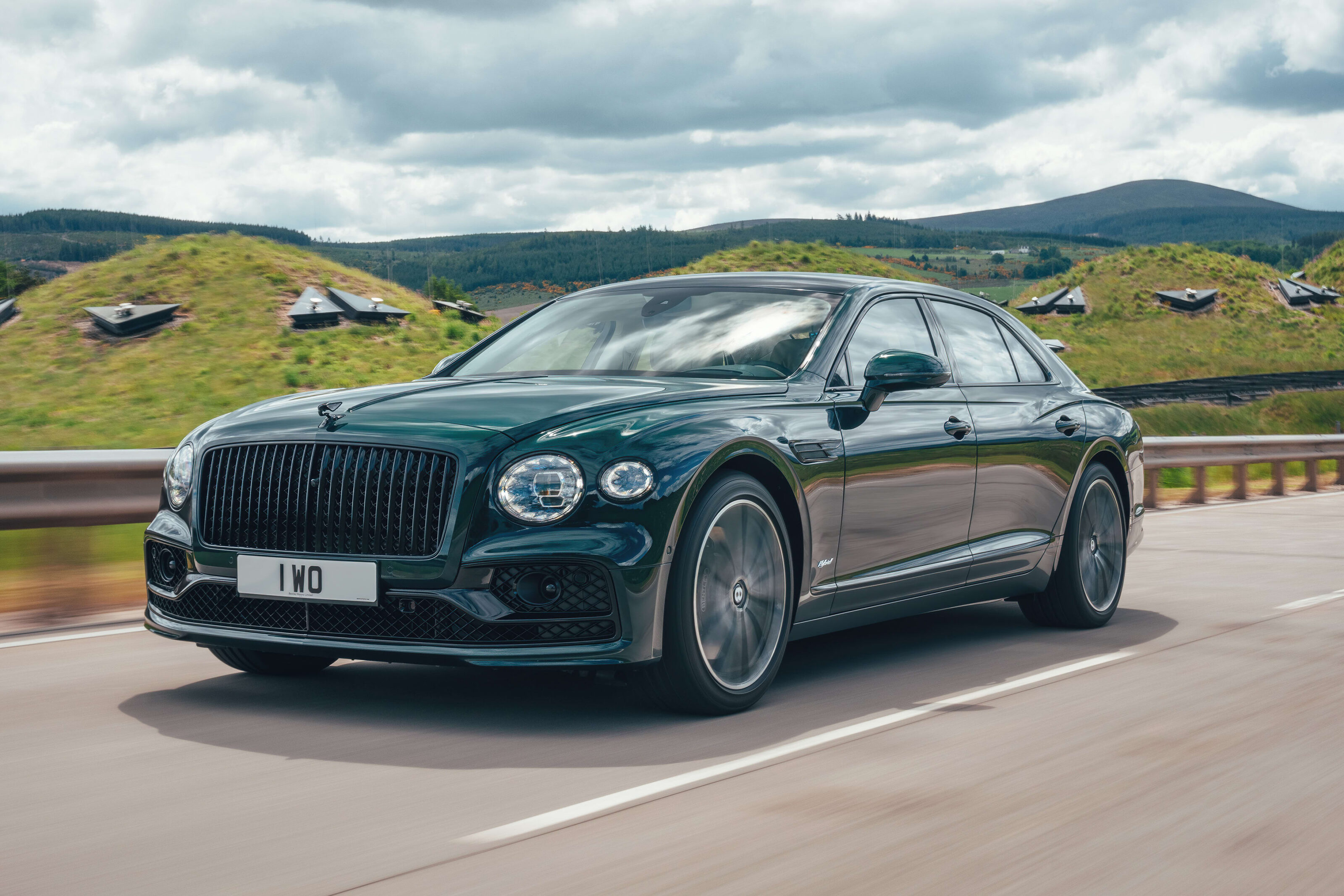
The third-generation Flying Spur hit markets in 2019, and has been offered with either a 4.0-litre twin turbo V6, or twin-turbo 6.0-litre W12. The name references Bentley’s 1955 Coachbuilt Flying Spur, which is still retained at the company’s Crewe base.
The Flying Spur Hybrid is available to order in Australia now, while Bentley is taking enquiries on the Odyssean edition.
Snapshot
- One concept focuses on reducing downforce, other is more restrained
- Early 2022 launch expected
- Mods not yet available in Australia
Gazoo Racing has showcased two concept vehicles which preview a range of aftermarket parts available for the new-generation GR 86.
However, with other modifications from Toyota‘s performance arm off the table for Australia, we’d expect this to be no different for the GR 86, with the concepts previewing changes available for Japanese buyers of the sports car.
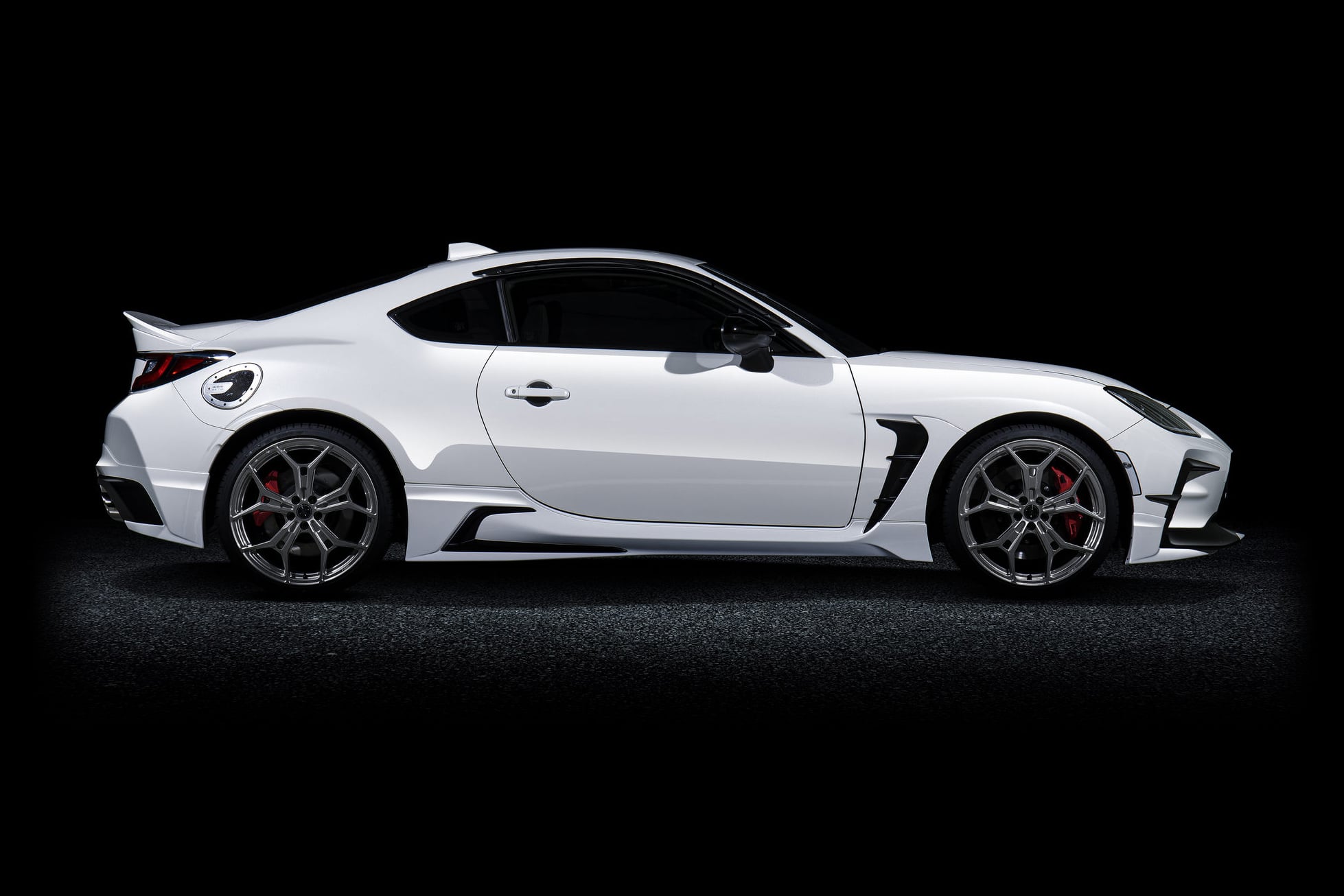
The first concept features a unique front fascia, adding extended carbon-fibre splitters and front blades – all in an effort to minimise downforce. The bonnet is made from carbon and includes subtle air ducts faced towards the windscreen which act as a ram intake for the engine.
Along the side, the front wheel-arches have been extended by 43mm. Significantly enhancing the stance of the GR 86, the wider arches have air vents which decrease lift over the front axle. A wider track is also required, with the company stating this helps to improve mid-corner grip. A set of larger 19-inch forged aluminium alloy wheels are also present.
Other changes include unique side skirts which reduce drag, a carbon-fibre rear diffuser and rear wing, plus a unique sports exhaust system to boost performance and enhance efficiency.
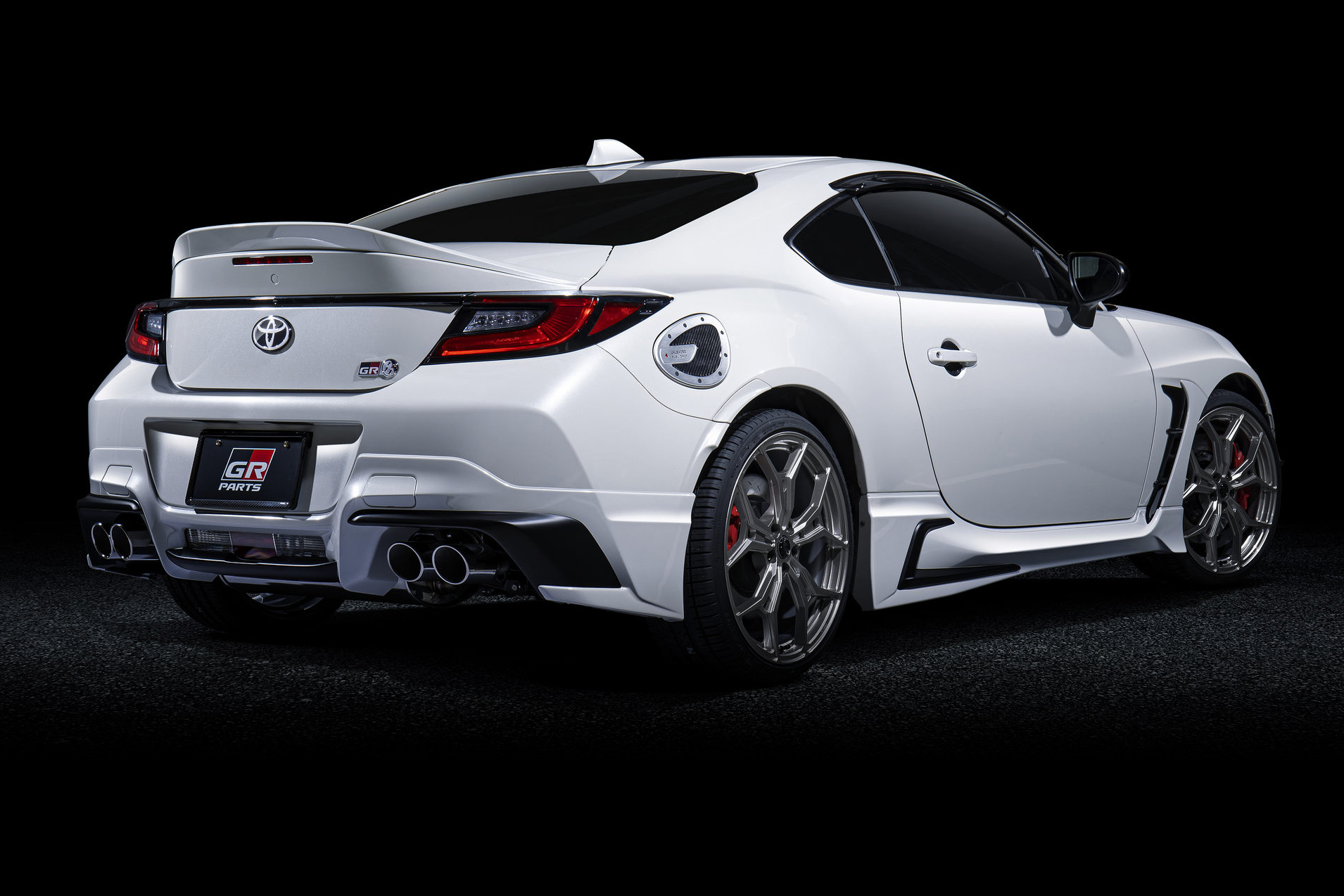
While the first concept is focused on reducing downforce, the second concept has a more restrained design – though performance is still improved through a GR-fettled sports exhaust system.
It includes another set of bespoke front and rear bumpers, unique side skirts and front fender ducts. In addition, a lip spoiler and forged 19-inch alloy wheels feature, while side window cowlings and a chrome garnish for the fuel cap also distinguish the second show car.
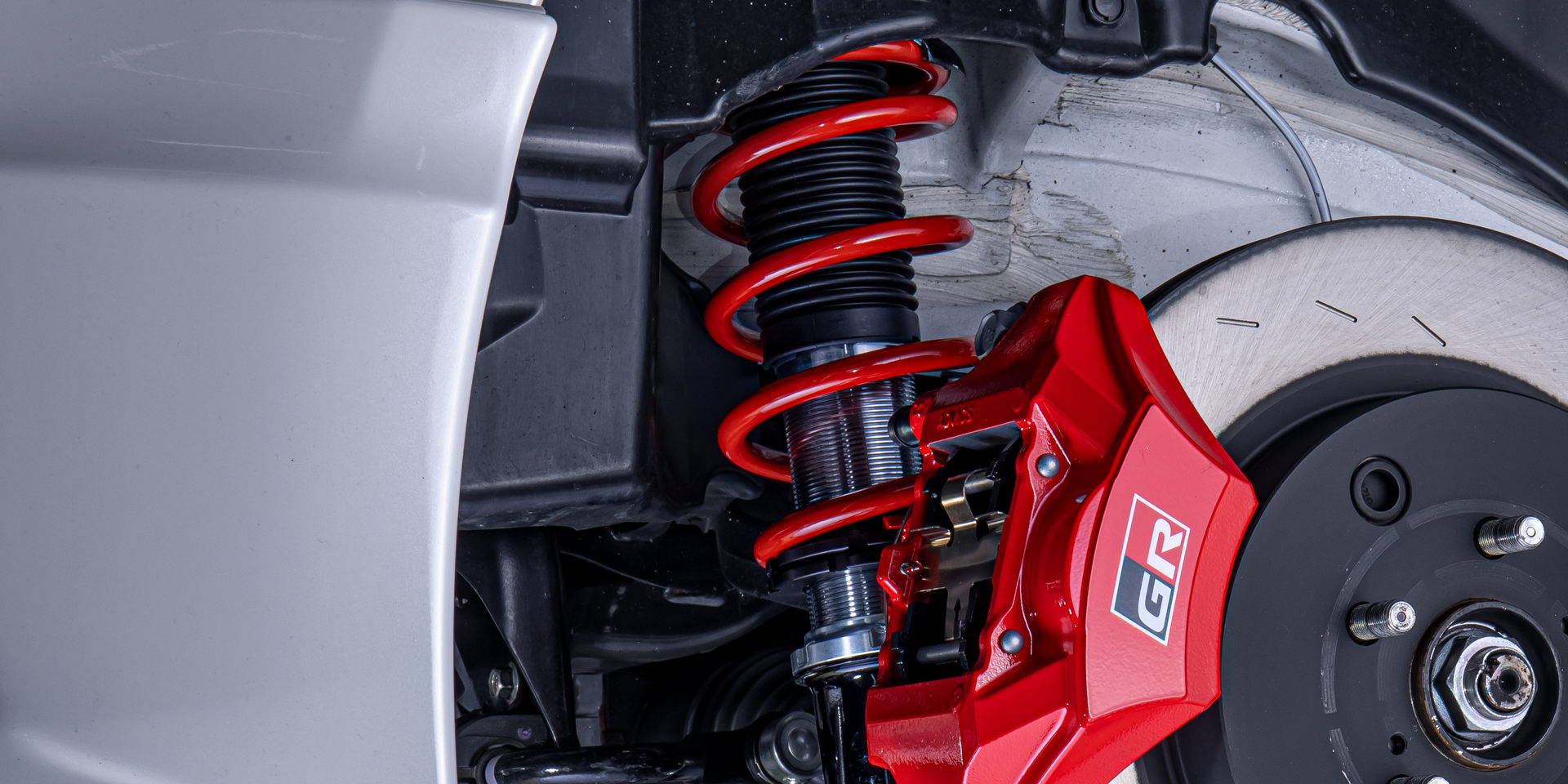
Under the skin, modifications are limited to a new suspension kit with unique shocks and springs and a set of enlarged brakes.
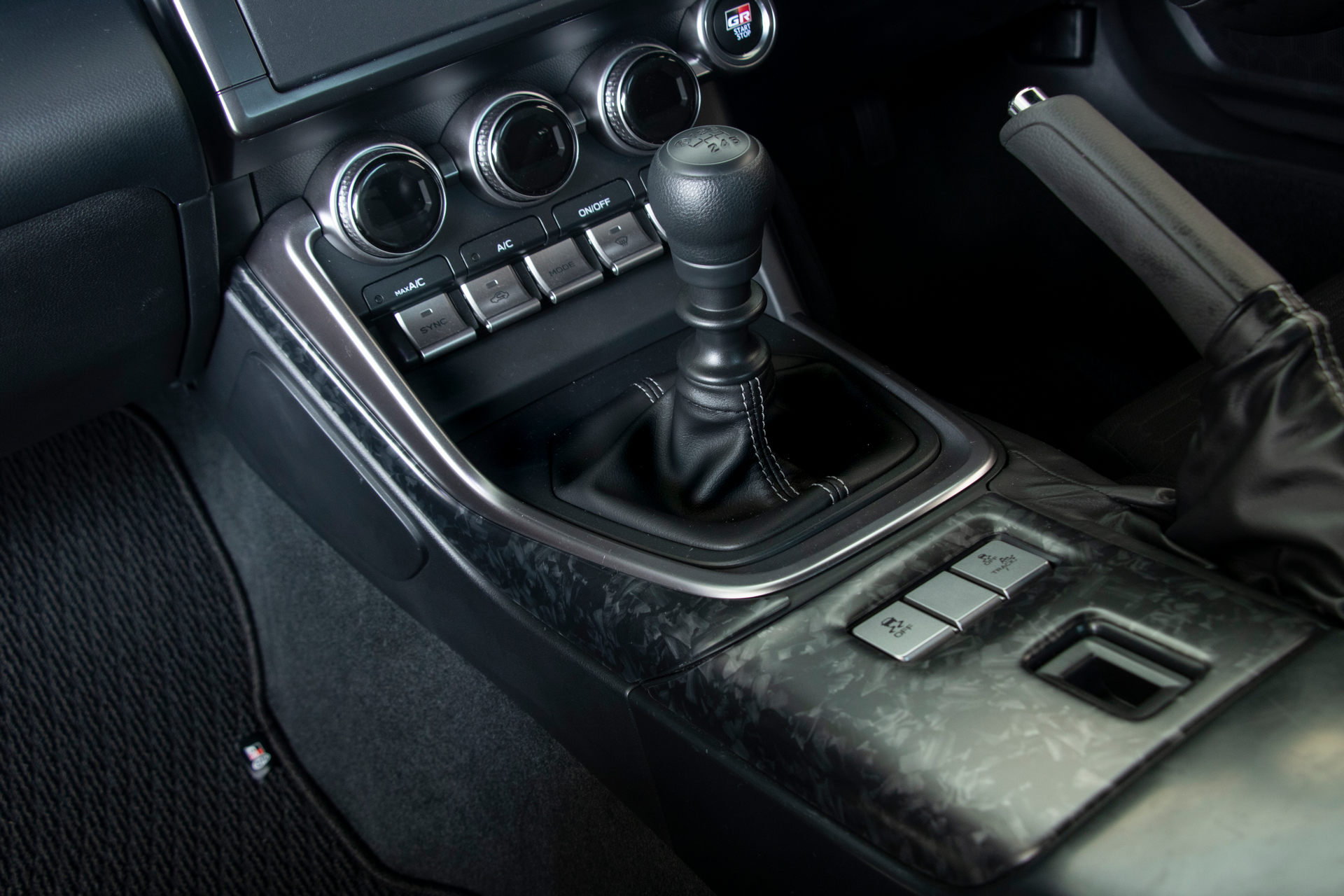
Inside, Gazoo Racing has fitted a vast majority of the interior in carbon-fibre, while a plush knee pad and carbon-fibre key fob are included too.
Toyota Australia recently announced it will reveal an official date for the local arrival of the GR 86 later this year with a launch Down Under in early 2022 expected.
Joining the current GR Yaris and GR Supra in Toyota’s local performance car range, the GR 86 scores an uprated 2.4-litre atmo flat-four engine – replacing the 2.0-litre mill from the old 86 – which produces 173kW and 250Nm, a subtle 21kW/38Nm increase over its predecessor.
Porsche was in trouble in the late Eighties. To put in perspective quite how deep it had sunk into the financial mire, consider this. Despite a six-week halt in production in 2020, the company built 272,162 new vehicles. Back in ’87, it built a mere 48,520 vehicles and, aside from the facelifted 928 S4, they were all versions of the elderly 911, 924S or 944.
The only truly new model was a financial basket case. The first customer deliveries of the 959 supercar began in 1987, with Porsche charging A$292,000 for a car that cost double that amount to bring to market.
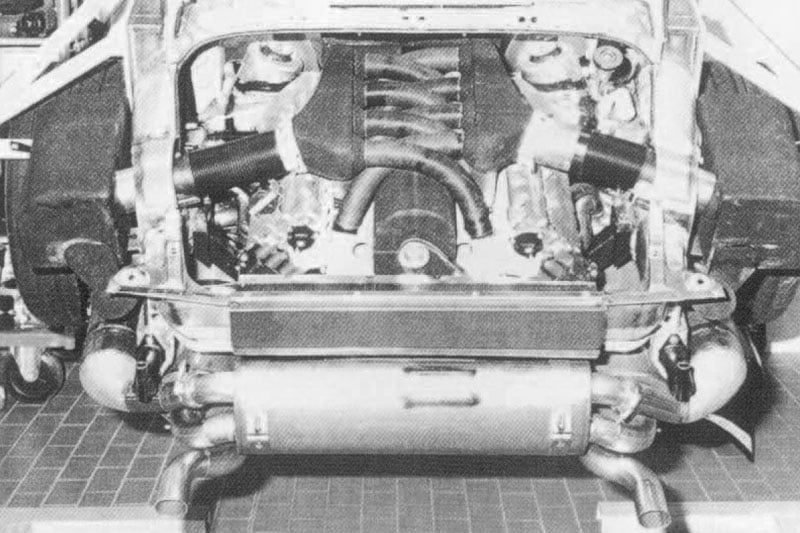
Keen to amortise that cost, Porsche had been secretly developing Project 965 in the background, a car that would replace the 911 Turbo and sit atop the forthcoming 964 Carrera range, to be badged as a 969. It adopted much of the 959’s tech, with adaptive air suspension, all-wheel drive, a dual-clutch transmission and an air-cooled twin-turbo flat-six with water-cooled heads powering it.
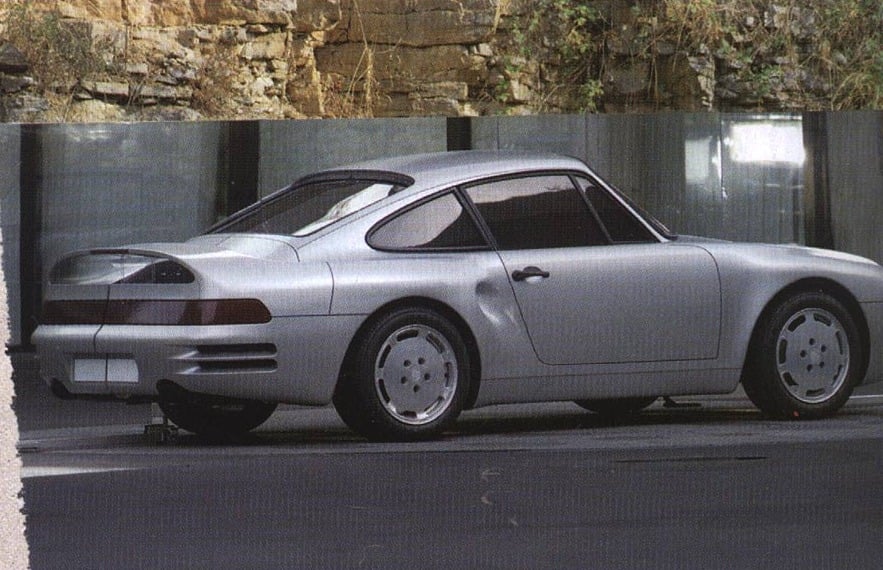
While the Black Monday financial crash of 1987 did much to affect Porsche’s plans, even prior to the biggest single-day drop in the history of the Dow Jones Industrial Average, the 965 project was in trouble. In short, it didn’t have the power it needed to make at the price it needed to be.
The project target of 272kW was only deemed possible by water cooling the entire engine, which scuppered the cost-savings realised by parts sharing with the rest of the 964 range. The alternative was to carry over the old 911 Turbo motor, which, in its latter guise, was only good for 210kW under new emissions control regulations. Neither seemed appetising.
Peter Schutz stood down as Porsche’s CEO in 1987, unable to see how unfavourable exchange rates could realise a profit for the company in the medium term. Porsche’s long-serving financial director, Heinz Branitzki, stepped in, but he was no product guy, famously presenting the 964 to the press as ‘the 911 for the next 25 years’.
In 1988, development boss Ulrich Bez took one look at the 965 project and wisely put the red pen through it.

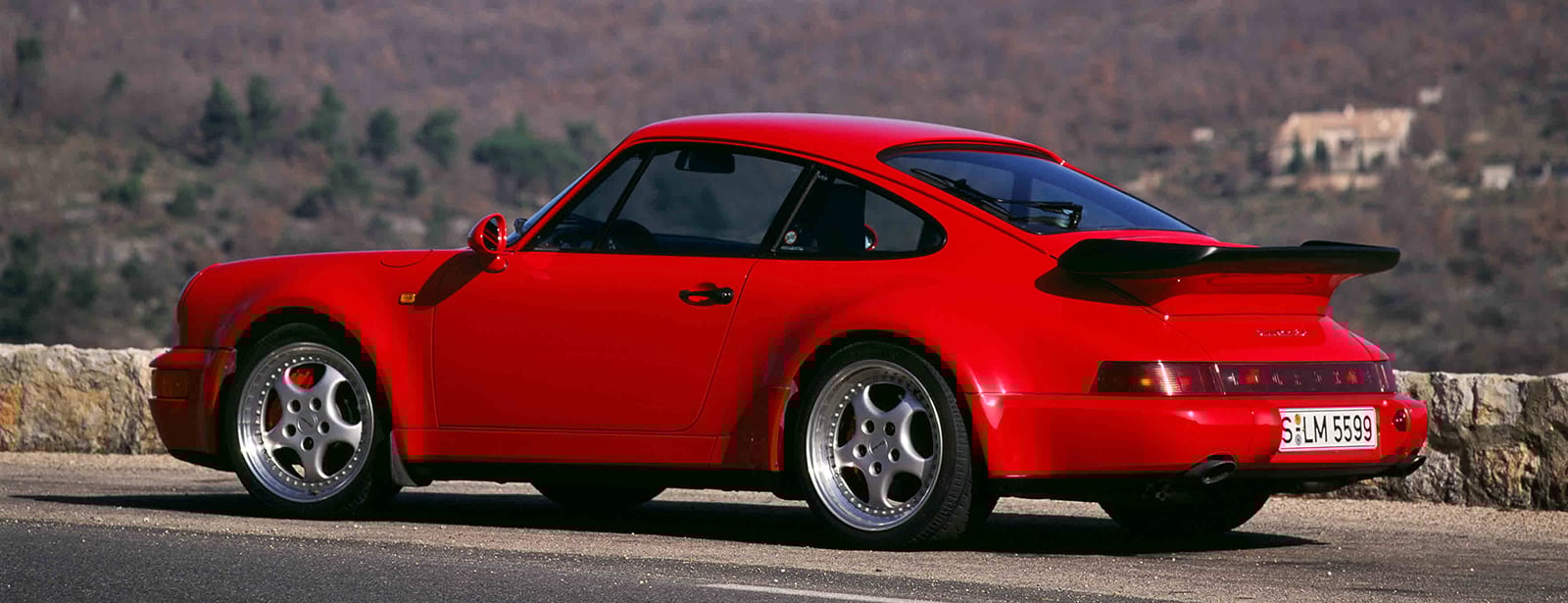
Unable to develop a turbo version of the 964’s M64 3.6-litre engine in time, Porsche replaced the 965 with the 964 Turbo, powered by a carry-over version of the 3.3-litre unit which took 18 months to make power in a catalysable state. Meanwhile, development went on in the background for a turbocharged version of the M64, which appeared in 1993.
As a case study in bringing the right product to market at the right time and at the right price, the 965 is an utterly fascinating one. It’s just a shame that its stars never aligned.
Snapshot
- Eight of Hammond’s vehicles will be sold
- Includes rare track-focused Lotus Esprit
- TV host will retain several vehicles
Former Top Gear host Richard Hammond is putting a selection of classic cars and bikes up for auction with UK’s Silverstone Auctions.
Three cars will go under the hammer between July 31 and August 1 at Silverstone’s ‘The Classic Sale’, alongside five of his bikes.
On DriveTribe, the Grand Tour presenter said the sale proceeds would go toward his new restoration business. Dubbed ‘The Smallest Cog’, it will also be the subject of a new TV series.
“The irony of me supporting my new classic car restoration business by selling some of my own classic car collection is not wasted on me,” Hammond said.
“It is with a very heavy heart that they go, as they have a great deal of personal sentimental value, but they will be funding the future development of the business and giving life back to countless other classic vehicles.”
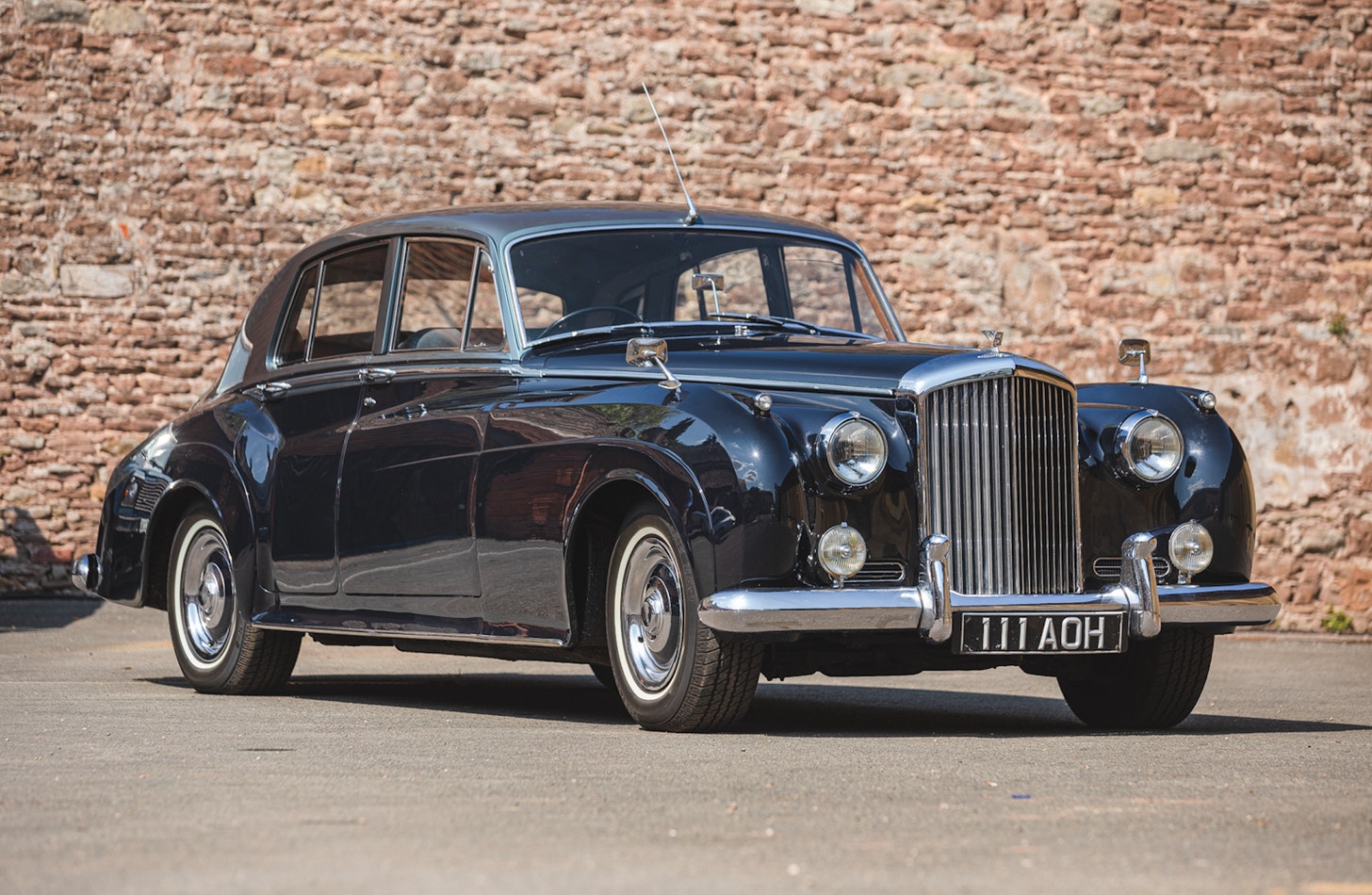
First off the line is a 1959 Bentley S2, which has a history of just five owners from new. According to Silverstone Auctions, the body work was recently refurbished, plus a new transmission and fresh set of tyres added. While few visual changes distinguish the car from its S1 predecessor, the S2 features a 6.25-litre V8. Making around 147kW, the newer engine was capable of a 10.9-second sprint to 100km/h. There were 2308 built in total before production ended in 1962.
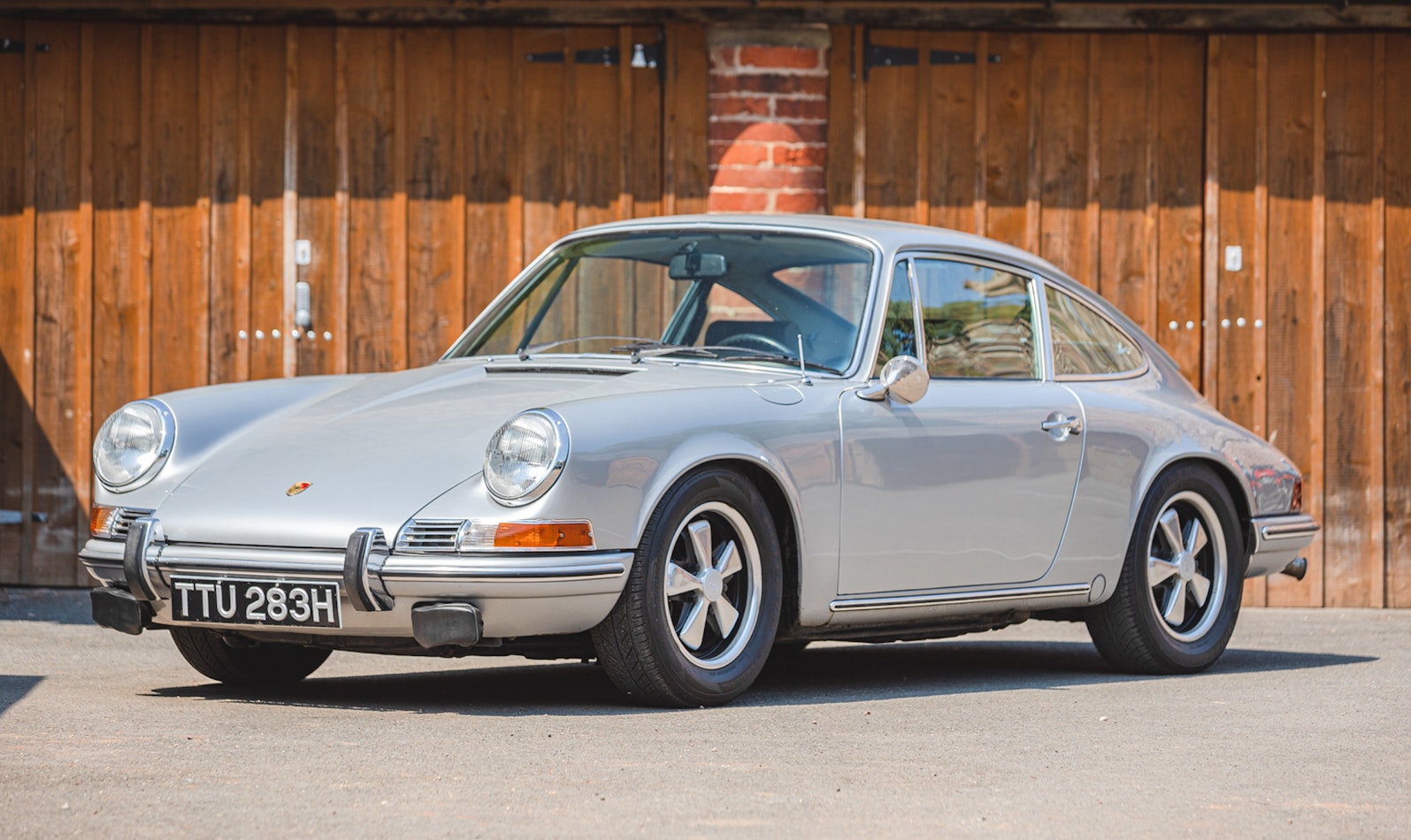
This 1969 Porsche 911T was originally delivered to California, and retains its original left-hand drive layout. An early example of the 1970 model year car, it’s powered by a 2.2-litre air-cooled flat six. It shows just 56,000 miles (90,123km) on the odometer, which Hammond believes could be genuine.
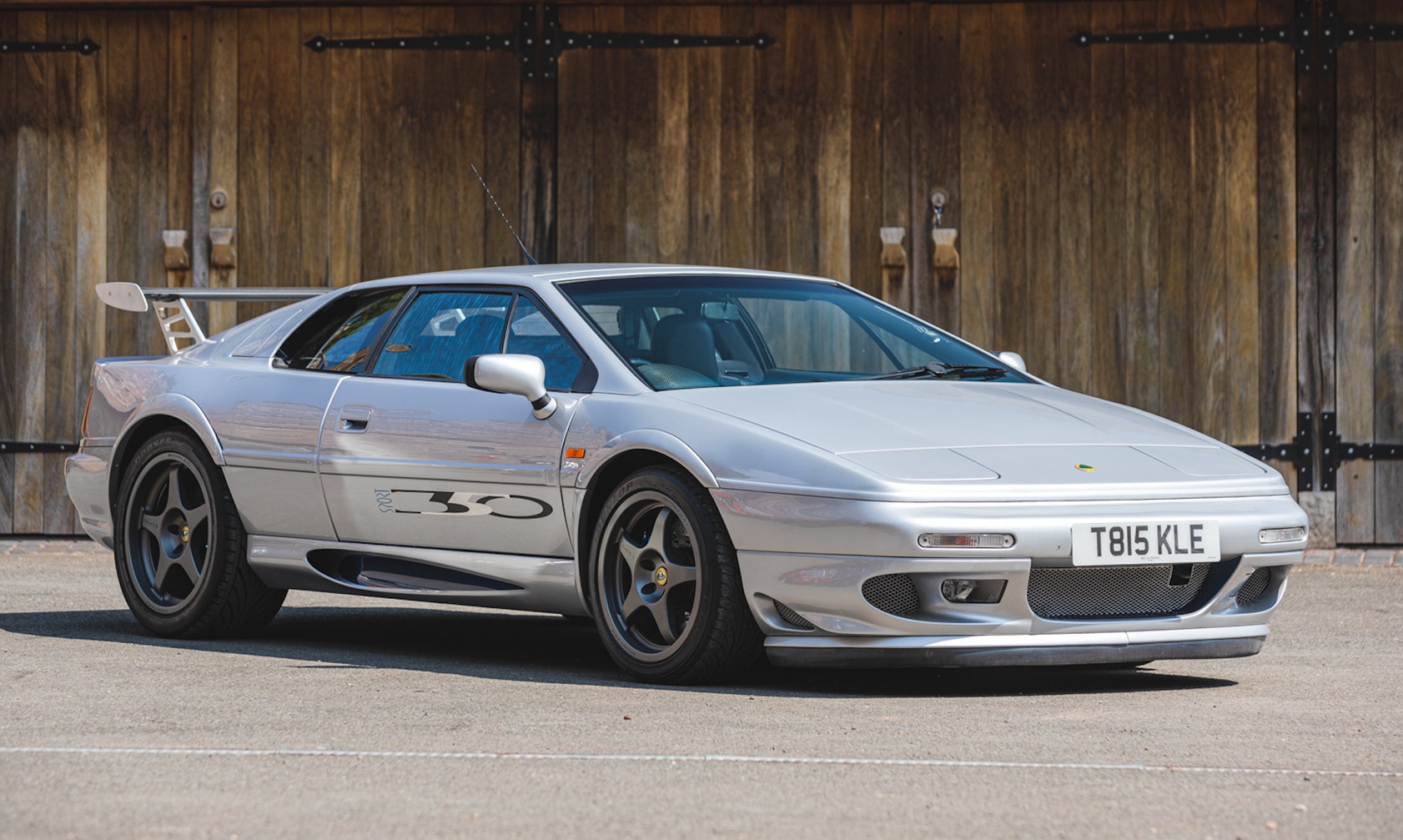
The most modern vehicle offered by Hammond is a 1999 Lotus Esprit Sport 350. Just 48 of the track-focused variant were built, with this example being the fifth. Each Sport 350 featured a lightened bodyshell, OZ Racing Crono magnesium wheels, bigger brakes and a number of other handling upgrades.
The cars were 85kg lighter than their V8 GT counterparts, and packed a 261kW, flat-plane crank, twin-turbo V8. The Esprit also has the lowest mileage of the three cars, having travelled 47,000 miles (75,639km) over 22 years.
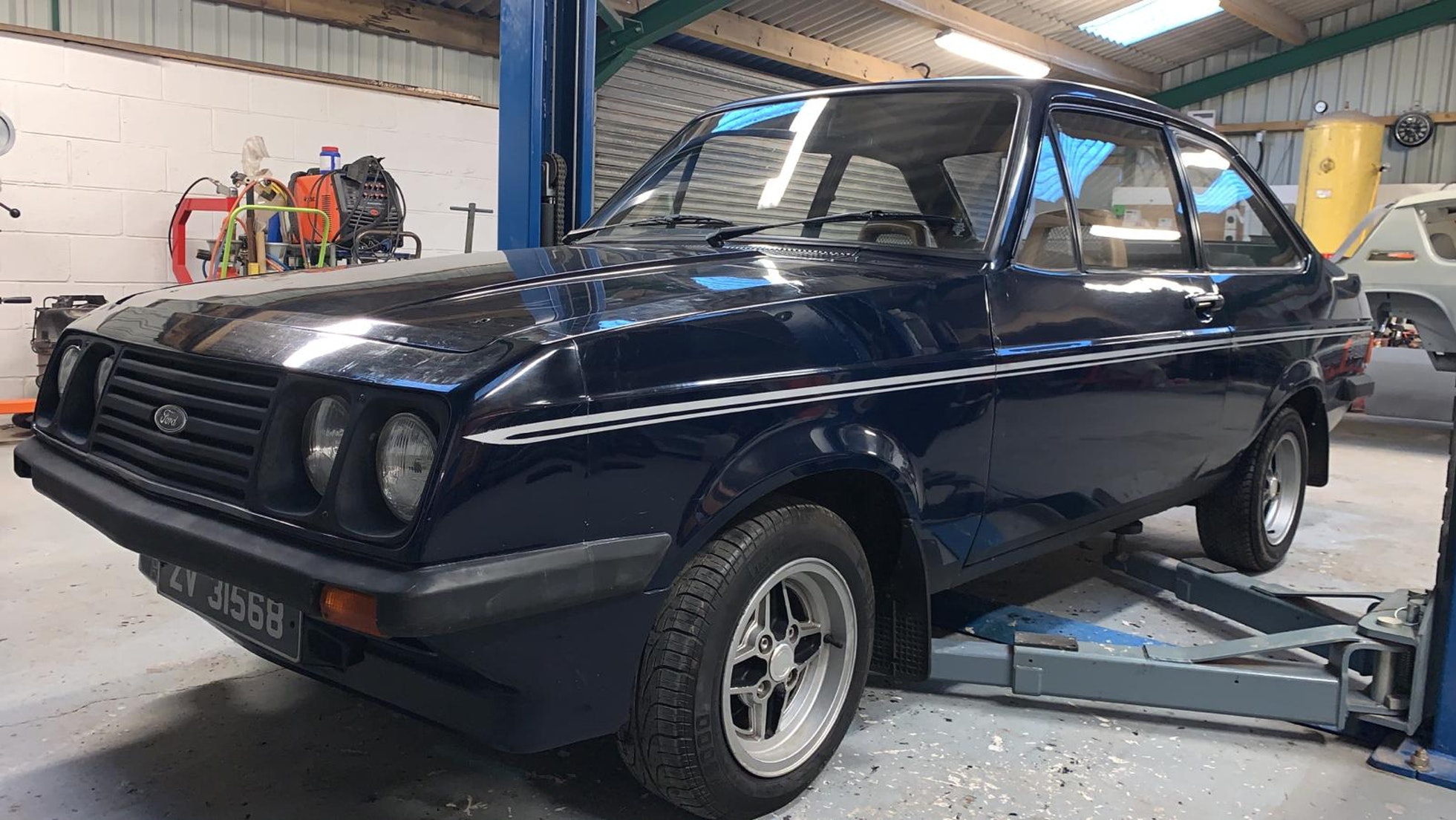
Hammond says he considered adding his RS2000 Escort to the list, but opted to wait for its restoration by The Smallest Cog to be perfected.
The sales represent just a slice of the British motoring enthusiast’s expansive car collection, which includes a 1968 Mustang GT390, a heavily-modified Land Rover Defender and even a 1931 Lagonda.
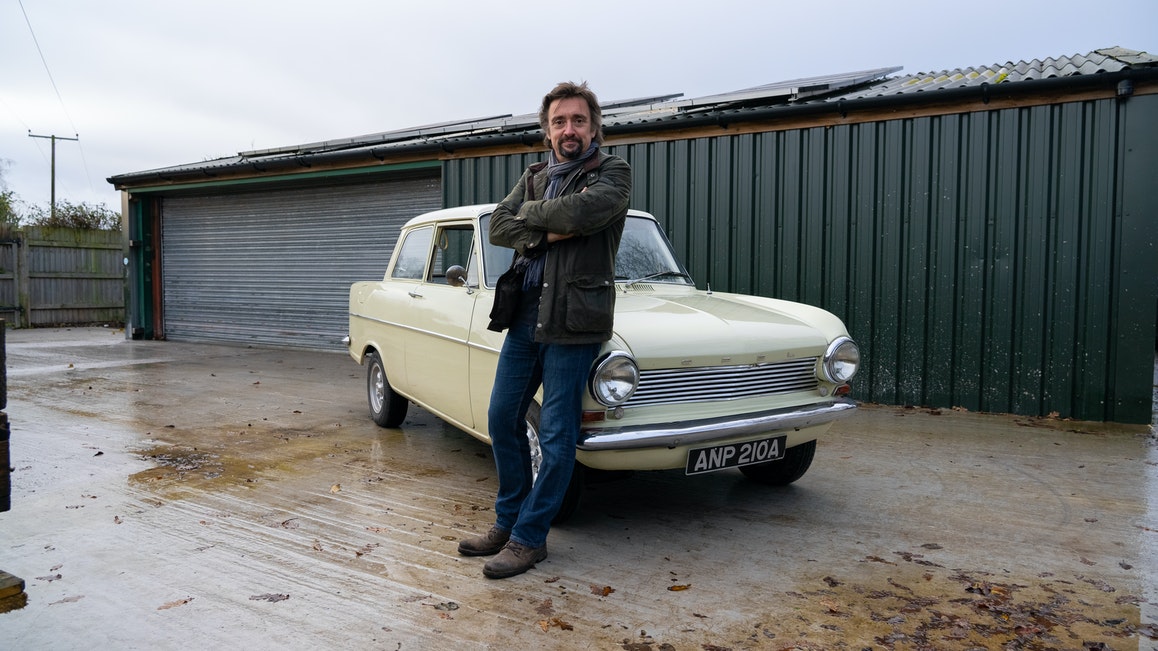
Most famous of all is his 1963 Opel Kadett called Oliver. The car was bought for Top Gear’s Botswana special, and treated to a full restoration once returned to English soil. Hammond and co-star James May famously departed the BBC show in 2015, following Jeremy Clarkson’s controversial dismissal.
You’ll find the full list of auction items at The Classic Sale on the Silverstone Auctions website.
One of the reasons I don’t want to be a product planner when I grow up is partly because it’s unlikely I’ll ever grow up, but mostly because things like the compact SUV segment would preclude me from sleep and having fingernails. It’s hard enough for buyers to make sense of the twenty-odd (and growing) choices stacked into the $25,000-$35,000 price bracket, deal with options from Europe, Japan, the US, China and Korea and unpick all the different after-sales packages and various value for money considerations.
A product planner has to figure out how to make a range that stands out from the rest while also hoping that you won’t ask too many questions about cars that look different but have suspiciously similar mechanical packages. The Kona and the Kia Seltos are very similar underneath and share a lot of features – down to the same touchscreen in the cabin. That’s a layer of complication that would finish off my sanity.
The Kona, however, is smaller and older than the Seltos, so has to make do with a facelift to keep pace with its compatriot rival. And with newcomers on the way all the time, the facelift will want to be worthwhile.
Pricing and Features
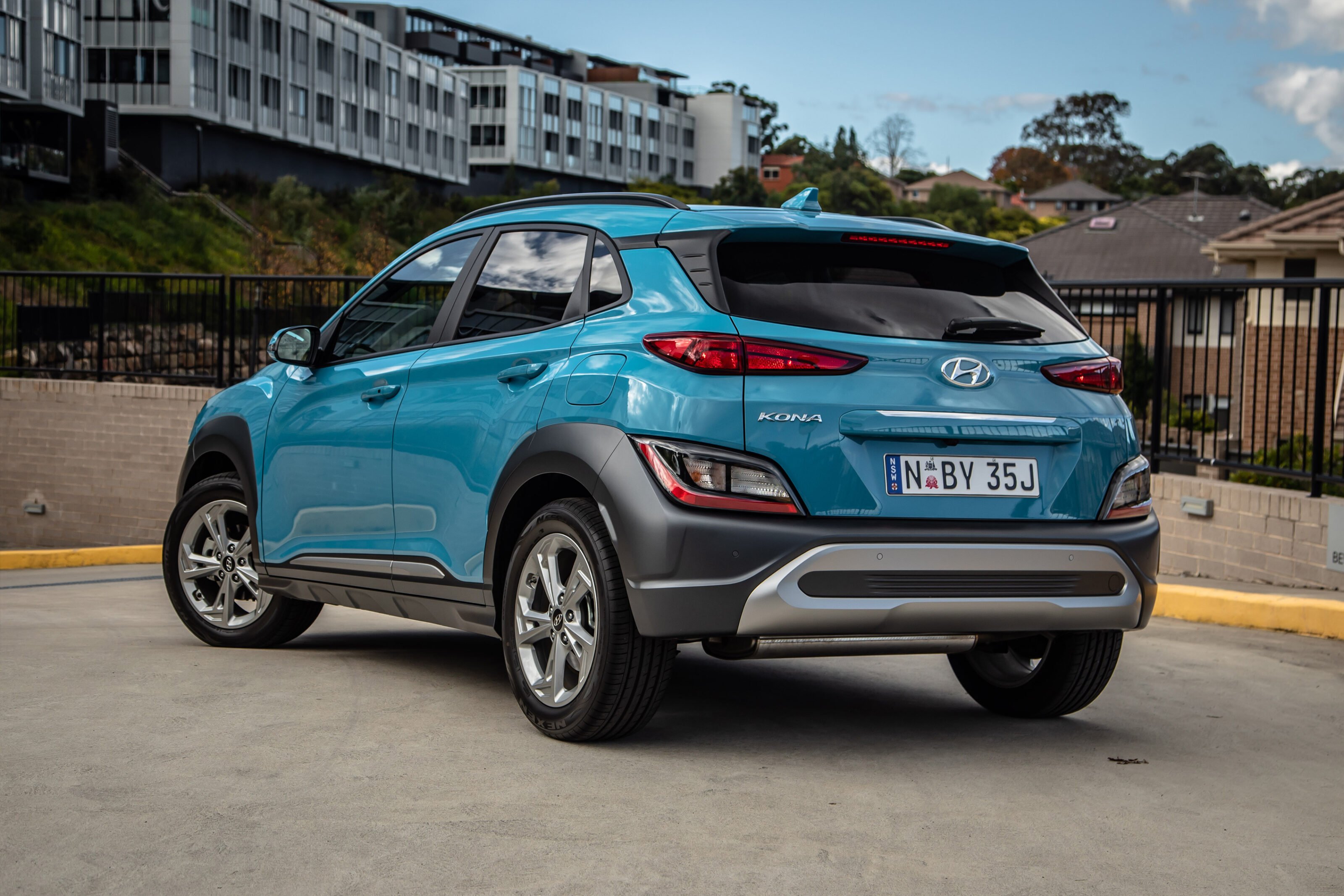
The $31,600 (before on-road costs) Elite clocks in at an attention-grabbing $3400 more than the model beneath it, the Active and nearly five grand more than the entry level machine. With 17-inch alloys, an eight-speaker stereo, climate control, reversing camera, keyless entry and start, acoustic windscreen, rear parking sensors, cruise control, sat nav, auto wipers and LED daytime running lights, you’re not going without, though.
Actually, you are – at this level, it’s not unreasonable to expect LED headlights. Product planners also have to put up with this kind of sledging, too.
The eight-speaker stereo has Harmon/Kardon badges all over it, so one hopes these are eight of the better speakers you’d find in a car. Part of the model refresh has seen the installation of the larger 10.25-inch media screen, which is a genuine cracker of a unit backed by excellent software. Despite a wireless Qi charger, the baffling exclusion of wireless connectivity for Apple CarPlay and Android Auto continues, but you can use the USB ports to charge and connect.

All Konas (Konae?) have six airbags, forward collision warning and lane-keep assist, lane-following assist, rear occupant alert and reversing camera as standard. The Elite adds blind-spot warning, rear cross-traffic alert and safe-exit warning.
The AEB recognises cars, pedestrians and cyclists and works at low and high speeds.
Baby and child seats are fixed in place either via two ISOFIX points or three top-tether anchor points.
The Kona scored five ANCAP stars in 2017.
Part of the model refresh has seen the installation of the larger 10.25-inch media screen, which is a genuine cracker of a unit backed by excellent software.
Comfort and Space

Despite the facelift adding some length to the Kona, none of it is in the cabin, so it’s still a comfortable if not luxurious four-seater, with a fifth-in-a-pinch vibe. The front seats don’t look like much but they’re very comfortable, if a bit slippy in synthetic leather. I personally prefer the cloth trim of the Active, but there you are.
You get a pair of cupholders, wireless charging, bottle holders in the doors and a slot next to the cupholders where you could probably put another phone. The central armrest covers a handy console bin.
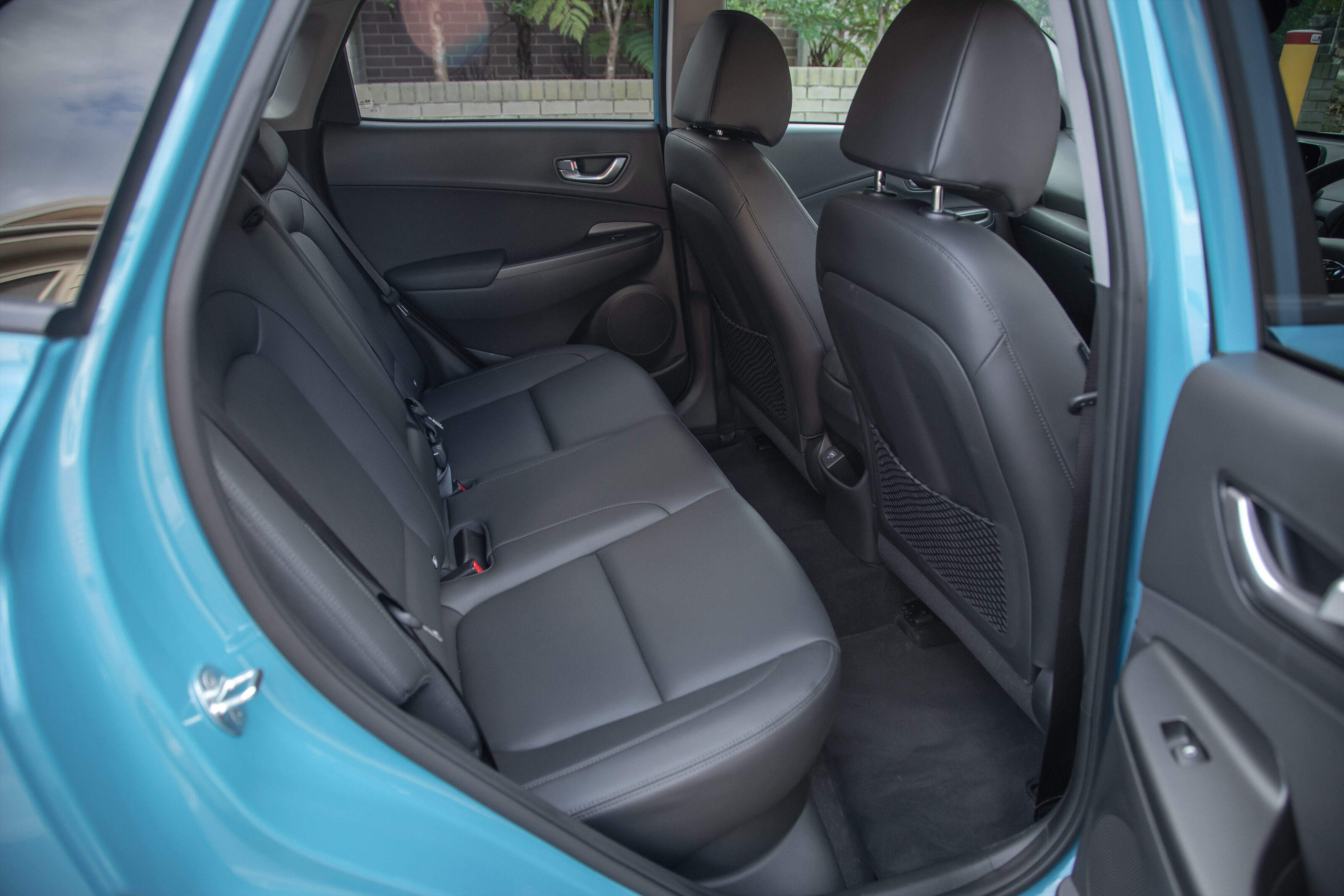
Rear-seat passengers score small bottle holders in the doors, an armrest and therefore a pair of cupholders. There’s a weird little storage cubby in the back of the centre console, a 12-volt outlet and no rear air vents. Leg and headroom are good if not spacious and three across the back is not recommended for anyone over about 12.
The boot is now among the smallest in the class (but still way bigger than the Mazda CX-3’s) at 374 litres with the seats in place and 1156 litres with both sections folded down. That’s a little more than before, presumably courtesy of some re-shaped mouldings and other changes to the space.
On the Road

The facelifted Kona came with a big change in the drivetrain. Well, half of it anyway. As ever, it’s a 2.0-litre naturally aspirated four-cylinder engine with 110kW at 6200rpm and 180Nm at 4500rpm. Both of which are around what seem to be legislated figures for cars of this type.
What has changed is the transmission. Atmo Konas used to have a six-speed torque converter automatic transmission that did a fine job, thanks very much, but now they have the CVT first seen in the Seltos. On paper, it’s a backwards step, but as in the Kia, it’s not bad at all.
I can’t stand CVTs generally, but this one is quite good, with eight virtual gears and you only get the nasty roaring when you plant your foot and the transmission heads up to the peak power figure to give you what it thinks you want. Of course, with just 110kW to play with and almost 1400kg to move, what you want and what you get are two different things.

That kind of performance is perfectly fine around town and the suburbs, which the Kona always has been. Given it’s a high-riding i30, it handles the lumps, bumps and bottomless potholes of Sydney suburbia with consummate professionalism, the extra travel soaking up more of the ugliness.
It still has a handy chassis, too, with light but mildly chatty steering and a good turn-in and keen change of direction, especially useful in car parks and narrow streets. I’ve always quite liked throwing a Kona into a corner and the only time you feel that the rear end is by torsion beams rather than the higher models’ multi-link arrangement is over sharp bumps.
Given it’s a high-riding i30, it handles the lumps, bumps and bottomless potholes of Sydney suburbia with consummate professionalism.
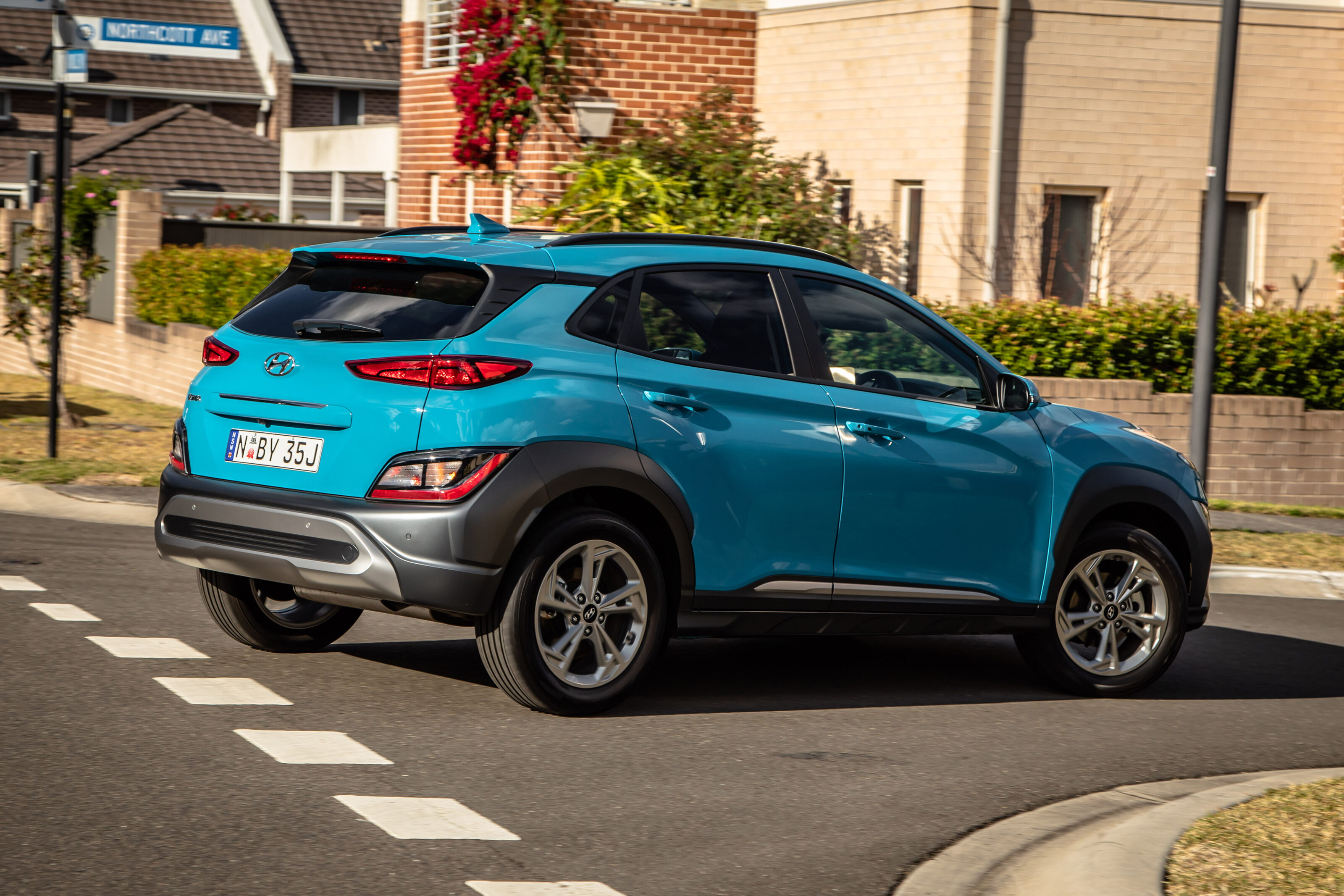
Stretching its legs on the freeway, it is very quiet and while overtaking requires some forward thinking, it’s no worse than anything else in the segment that doesn’t have a higher-powered turbo engine. It’s more responsive than a C-HR, HR-V or ASX.
Hyundai’s official combined-cycle fuel figure is a thrifty 6.2L/100km, a decent gain on the old car’s 7.2L/100km. My week with the Kona saw mostly suburban duty with a highway run thrown in and an indicated 6.9L/100km number. I think you can credit the CVT for most of the improvement, along with the usual unsung running changes to the engine.
Ownership
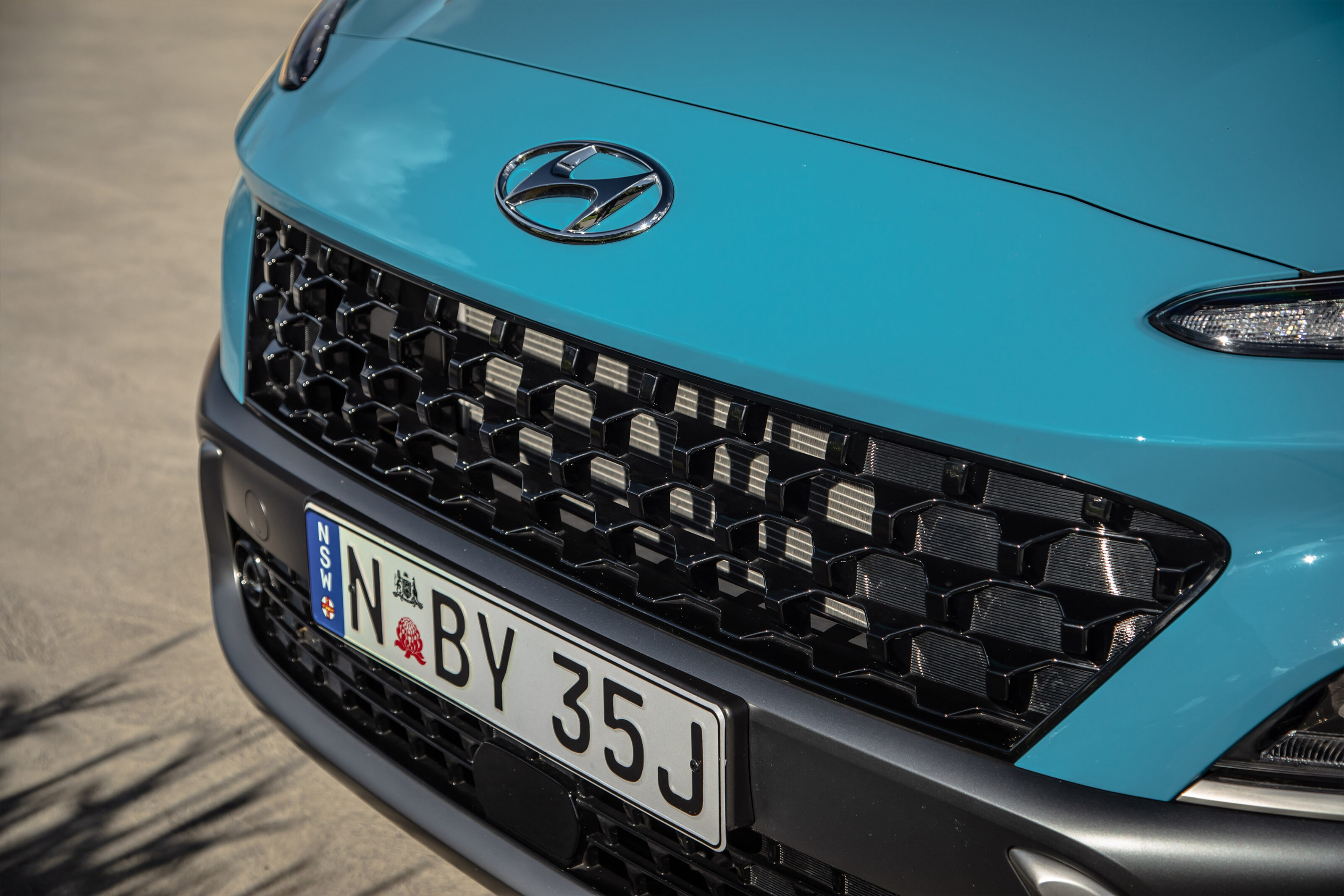
All Hyundais have a five-year/unlimited-kilometre warranty and a lifetime capped-price-servicing plan.
You can prepay your servicing at the time of purchase, meaning you can also roll it into your finance package. A three-service plan costs $957, four for $1276 and five for $1595. Servicing comes around every 12 months or 15,000km, which is 5000 more kilometres than the turbo-engined N-Line, Highlander and Premium spec Konas.
VERDICT
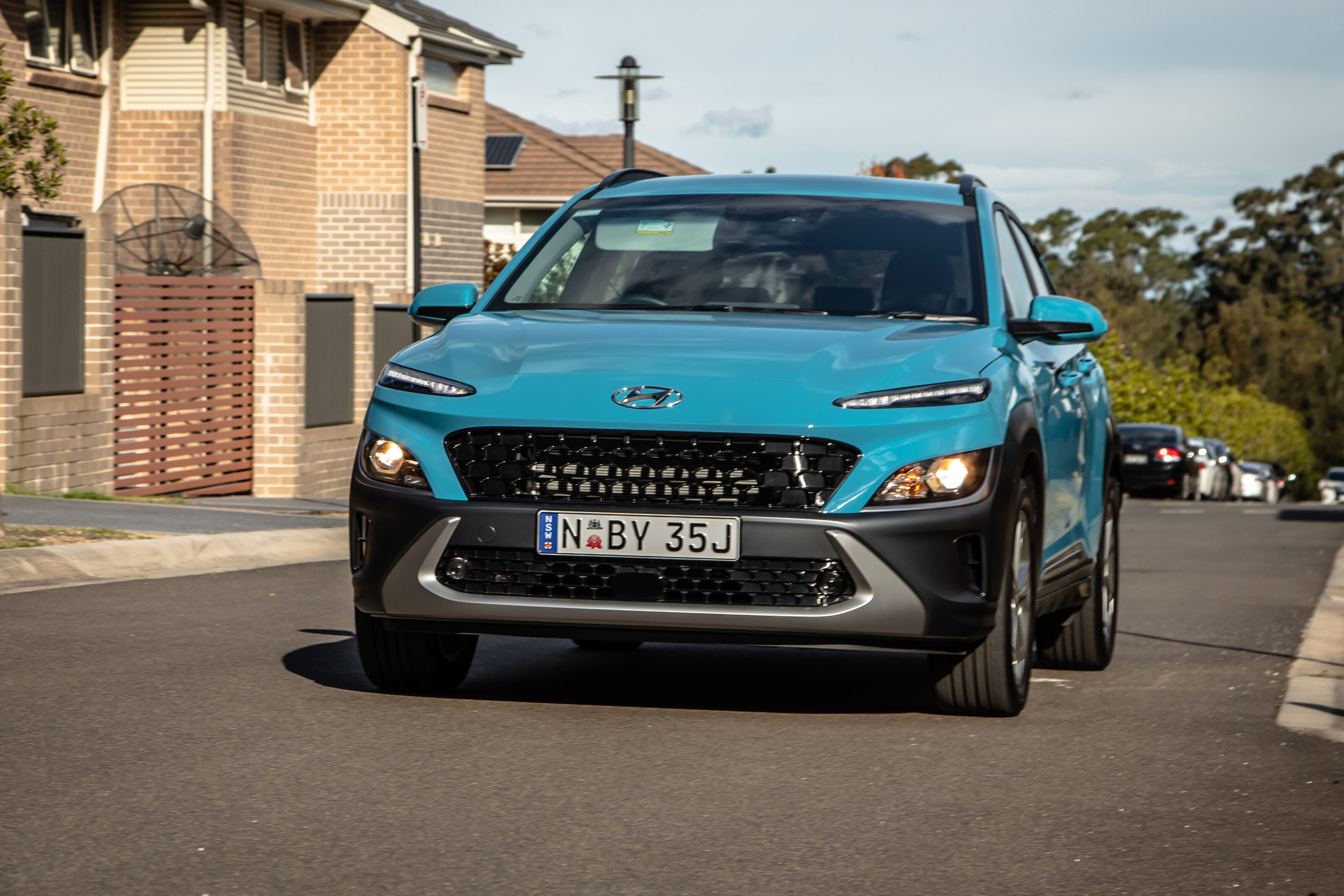
I reckon the Elite is the pick of the non-turbo cars. Go down the range and you lose some useful safety features, go up and it’s all sunroofs and convenience features. The only solid reason to spend another several thousand on a 2.0-litre Highlander is the LED headlight setup that should probably be on the Elite.
The Kona Elite is reasonable fun to drive, comes with a solid after-sales package and isn’t terribly expensive. A pat on the back for the product planners, then.
Thing is, all it has to really stand out in a class full of contenders is the fashion-forward styling, ever-improving reputation and driving dynamics. That sounds like a lot – and a few years ago it would be a lot more – but now the Kona Elite is fading into the mid-pack. The Kona N-Line, though…that’s a different story.
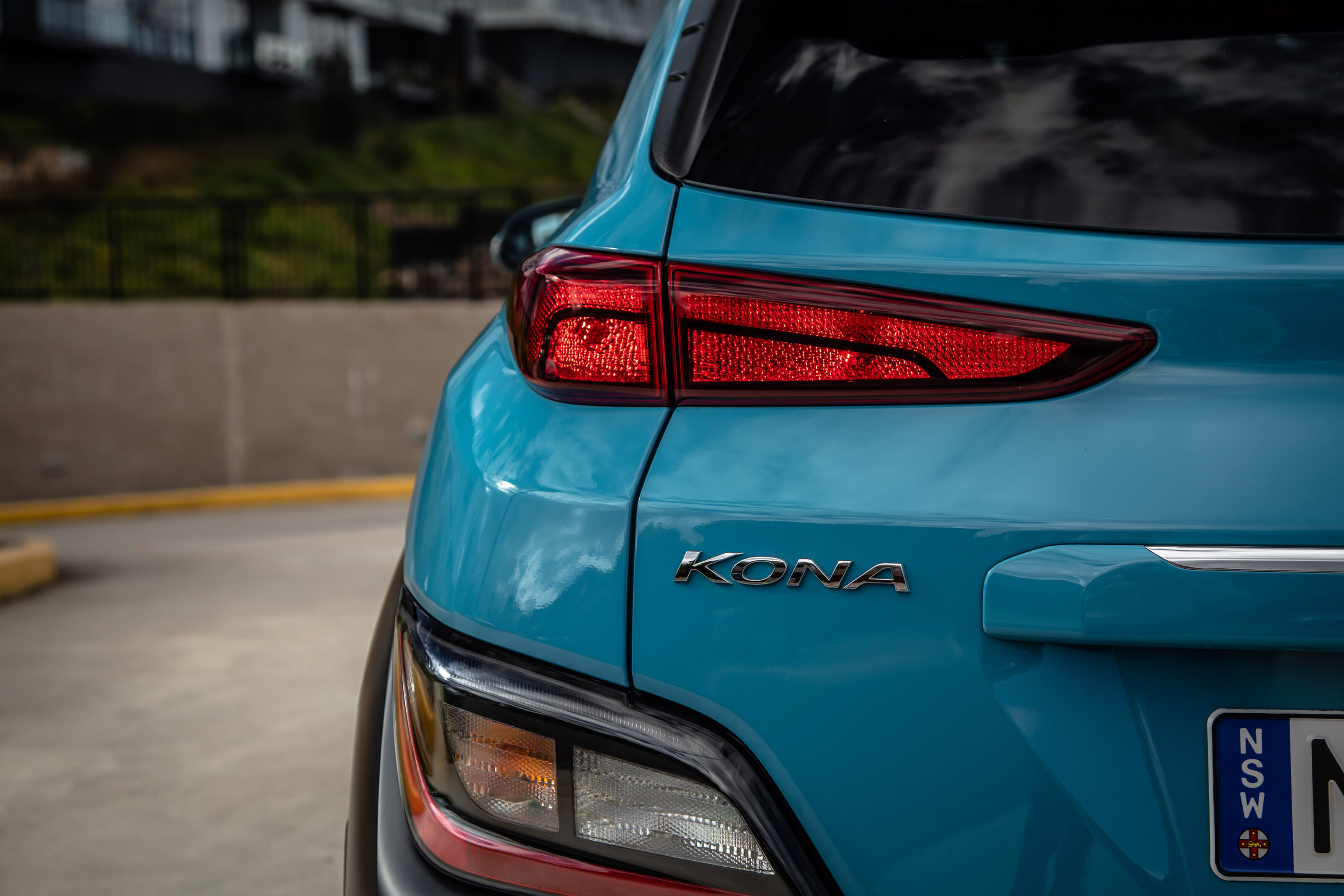
2021 Hyundai Kona Elite Specifications
| Body: | five-door compact SUV |
|---|---|
| Drive: | FWD |
| Engine: | 2.0-litre naturally aspirated four-cylinder |
| Transmission: | CVT |
| Power: | 110kW @ 6200rpm |
| Torque: | 180Nm @ 4500rpm |
| Bore stroke: | 81mm x 97mm |
| Compression ratio: | 12.5 : 1.0 |
| 0-100km/h: | 10sec (claimed) |
| Fuel consumption: | 6.2L/100km (combined) |
| Weight: | 1353kg |
| Suspension: | McPherson struts (front); torsion beam (rear) |
| L/W/H: | 4205/1800/1565mm |
| Wheelbase: | 2600mm |
| Brakes: | 280mm ventilated disc (front); 284mm solid disc (rear) |
| Tyres: | 215/55 Nexen NFera |
| Wheels: | 17-inch wheels (space-saver spare) |
| Price: | $31,600 + ORC |
Jaguar Land Rover Australia is recalling 22 examples of its Range Rover Evoque due to a fault with the locking mechanism in the driver’s seatbelt assembly.
The British manufacturer has issued a notice for the cars which were all made in 2021.
The fault, according to the Department for Infrastructure, relates to a manufacturing issue with the vehicle-sensitive locking mechanism in the driver seat belt assembly, which may not lock as designed when the retractor body or vehicle is decelerated or tilted.
That means, in the event of an accident or hard braking, the driver’s seat belt may not operate correctly, increasing the risk of injury or death to vehicle occupants.
A list of VINs for affected vehicles can be found here.
Owners are advised to contact their nearest authorised JLR dealer to have their vehicle inspected and repaired, free of charge.
For more information, contact JLR Australia on 1800 652 642 or visit: https://www.landrover.com.au/national-dealer-locator.html
The same issue has also recently been identified in 37 Jaguar’s E-Pace models which are too under recall.
The 2021 Azerbaijan Grand Prix was a ripper. It bucked Formula 1’s trend of 25-laps-too-long snore-fests and had real intrigue and action from start to finish – the climax of which was an edge-of-your-seat two-lap dash to the finish.
However, not everyone was happy. And, surprisingly, it wasn’t because motorsport’s biggest series was racing a handful of blocks from a literal shrine to a former Soviet republic’s war crimes.
No, instead a portion of the racing community was disgruntled the grand prix was restarted with a full standing start and two-lap dash to the finish following a red flag period. Labels like ‘ridiculous’ were bandied around, with claims that it wasn’t becoming of the sport. Rubbish I say.
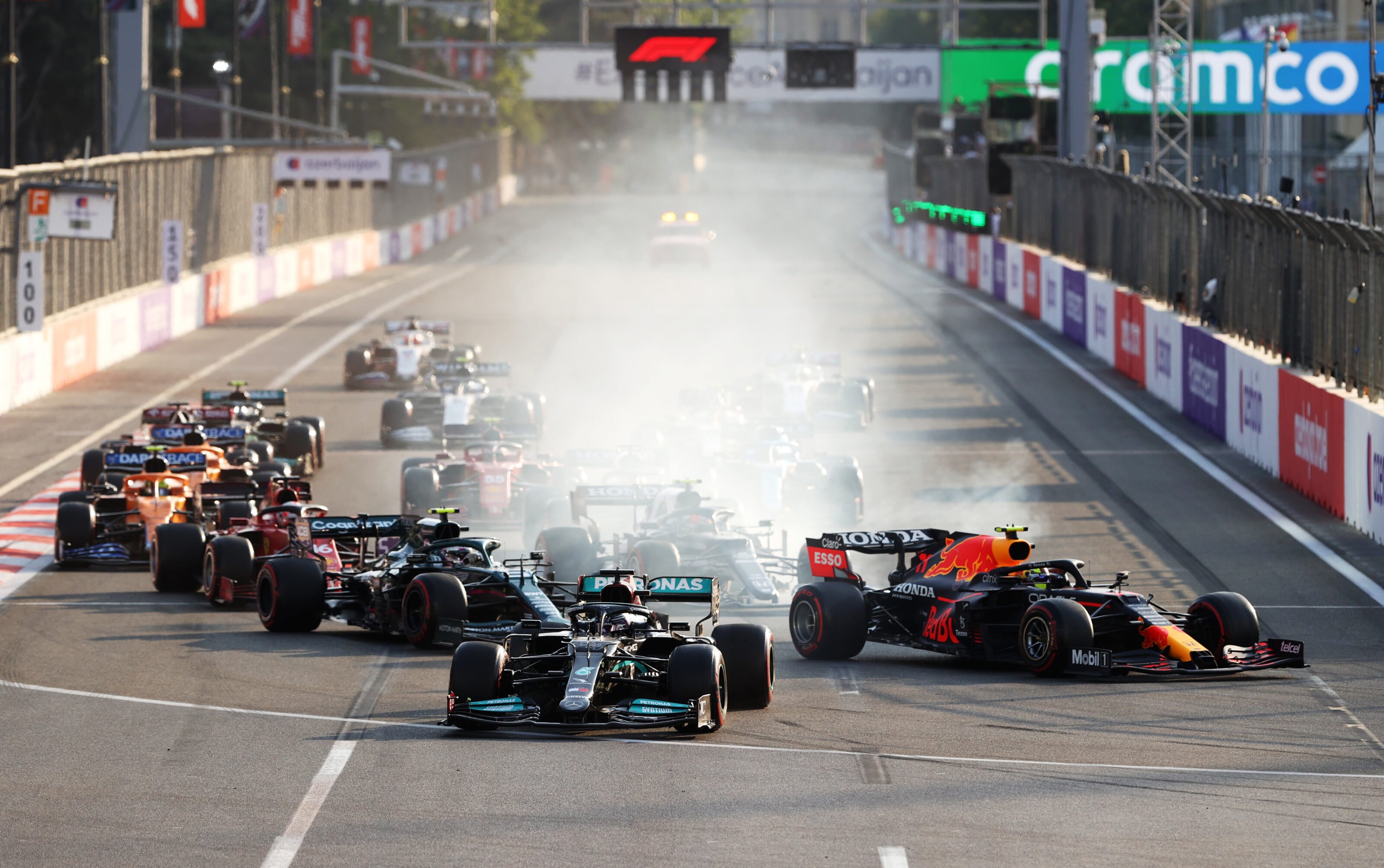
Having a standing start following a red flag is a new feature for F1, and I am a big fan. The race start remains the most interesting part of a modern GP, so adding more can only be a boon for fans.
What the detractors miss is that in order to survive, racing needs to be fun. It needs to be able to put aside old habits and beliefs in favour of injecting an extra layer of entertainment. We can navel gaze over purity of competition and the spirit of sportsmanship ad Infinitum, but if racing isn’t fun, who is going to care?
The best example of this is Stadium Super Trucks. If you’ve lived under a rock, punch the name into YouTube and lose yourself in the hilarity. Those same pundits who look down their nose at F1’s full-grid restarts are also likely to scoff at the mention of Stadium Super Trucks here thanks to a superiority complex that blinds them from the category’s endearing popularity.
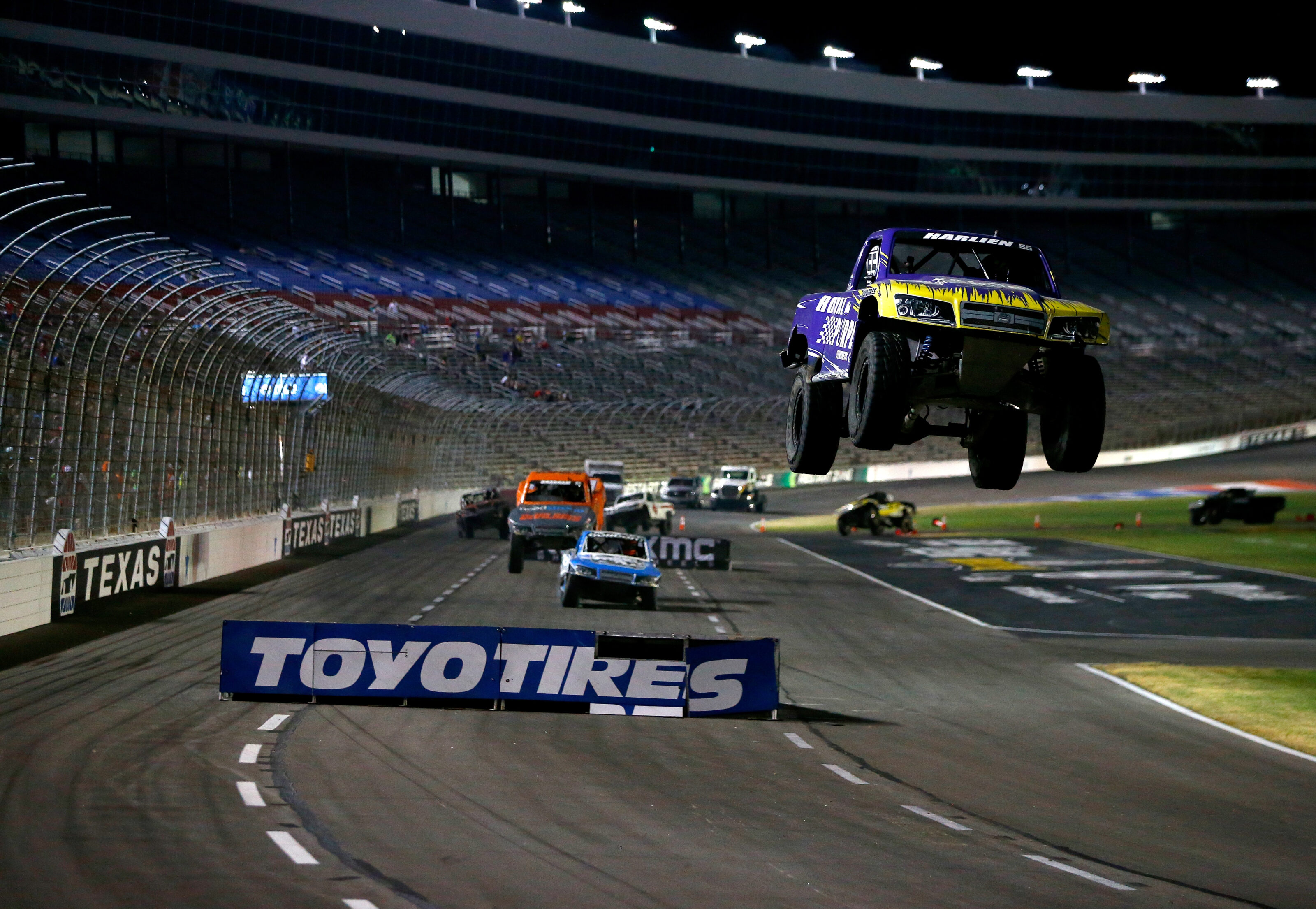
I was lucky enough to witness the high-flying series’ first race on Aussie soil in Adelaide, and the crowd reaction on day one was raucous. By the second day, the stands were absolutely rammed when Robby Gordon and his gang rolled onto the circuit. The fan attention rivalled even that of the main drawcard Supercars.
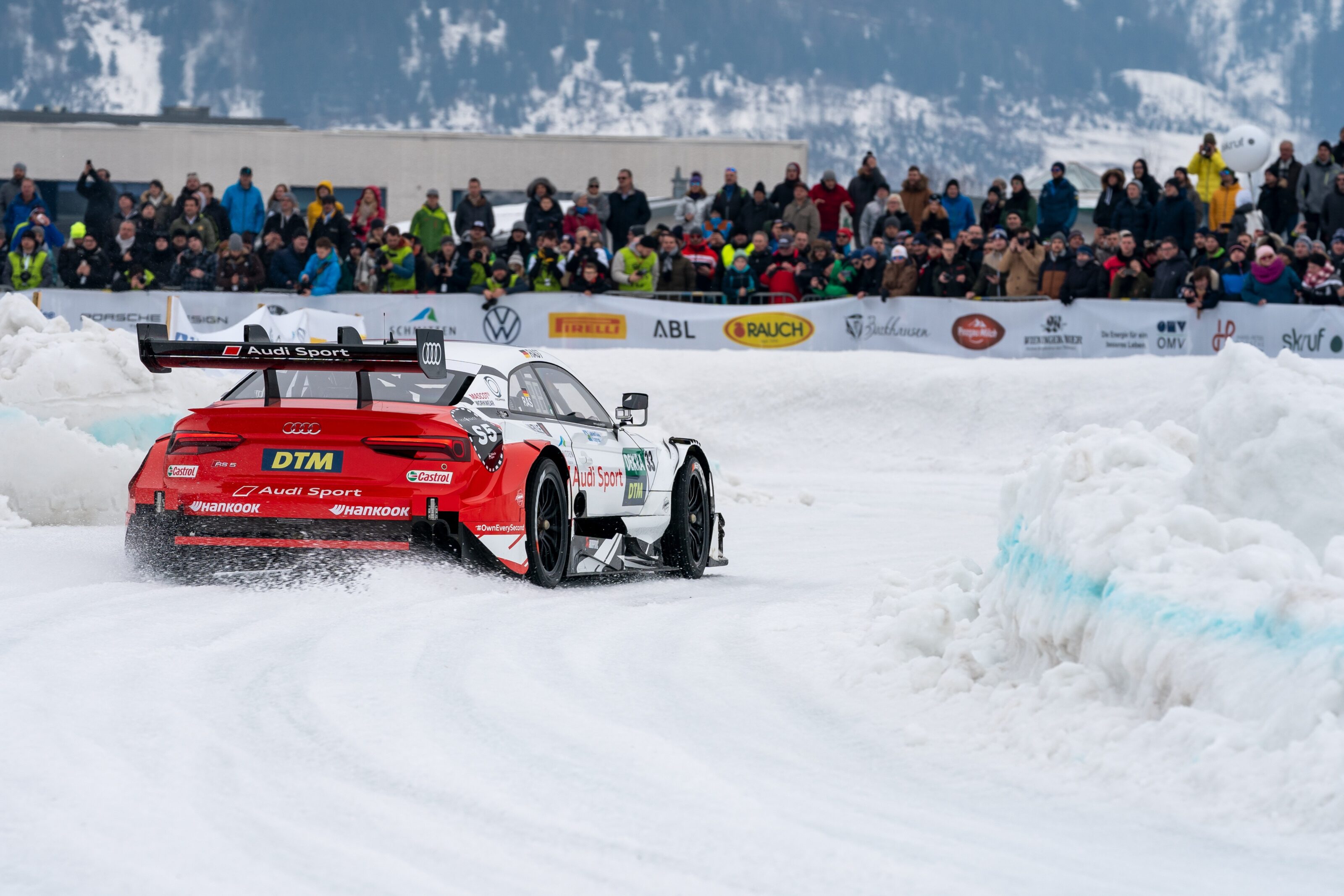
There’s an event in Europe called GP Ice Race that I desperately want to attend. Not because it has the best drivers or closest competition, but because they put full-blown DTM machinery (among others) on a snow-covered circuit. The event also includes a portion where certified lunatics on skis are towed behind cars on the track. It all sounds like a truly ridiculous laugh.
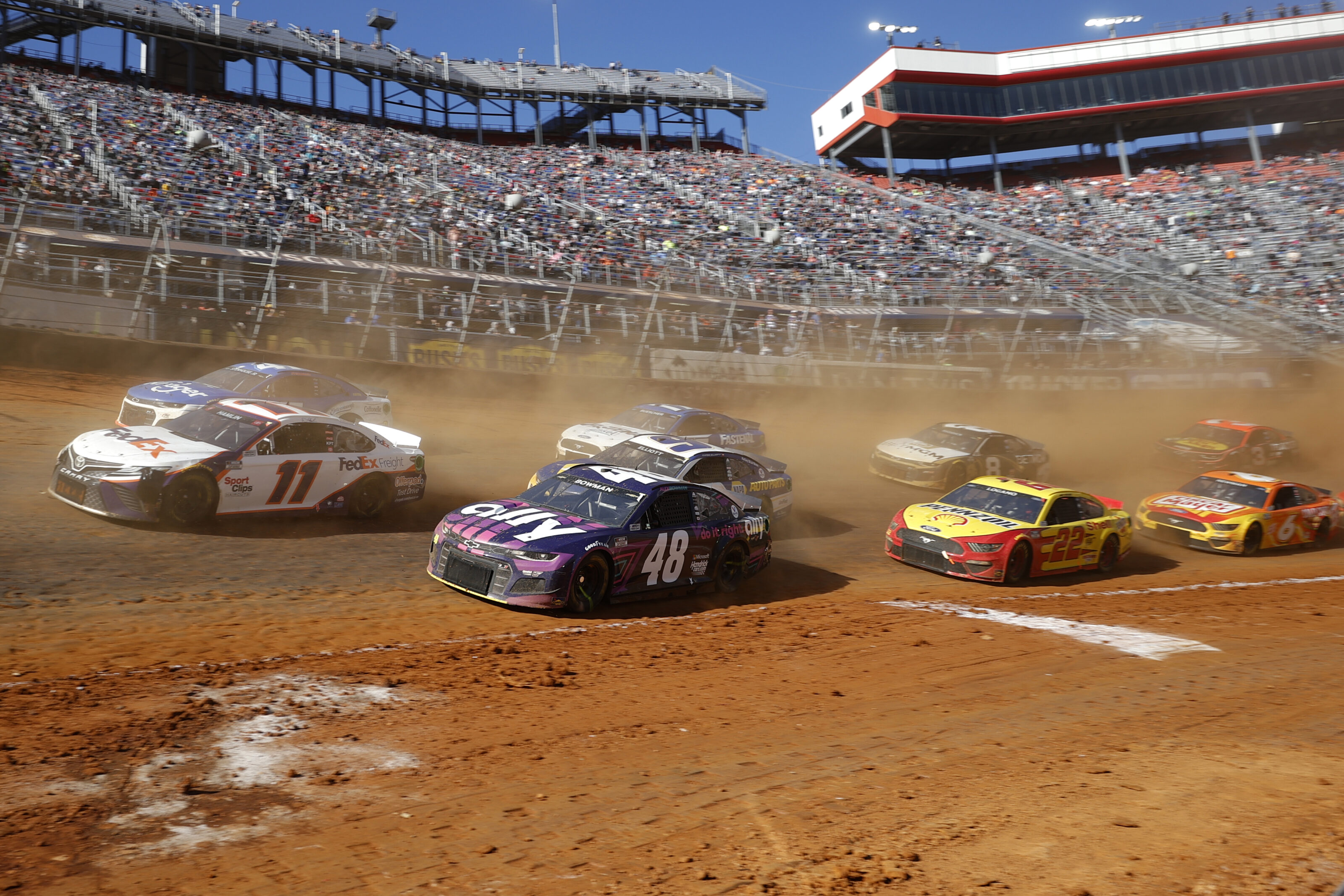
However, if over the top ridiculousness isn’t your cup of tea, even traditional categories can add some good-natured fun to spice things up. NASCAR has a list of issues that could fill multiple pages of this magazine, but it too knows when to let its hair down. The Bristol dirt race was a departure from the sport’s modern stance, and everyone was the better for it.
Sure, there was a historical link that NASCAR could play on to justify the decision to cover one of its most iconic circuits in several tonnes of clay, but if the higher-ups had a long honest think about it, they’d probably admit the decision was based largely on how much fun it sounded. In the end, the execution of the Bristol dirt race wasn’t flawless, but it’s already locked in for 2022. I know I’ll be tuning in to watch the Next Gen NASCAR Cup cars buck and slide on dirt, with the drivers fighting the wheel.
While IndyCar would like to see itself as a Very Serious racing category, it too has an element of fun-for-fun’s sake in its DNA thanks to oval racing. Here it takes pure open-wheel race cars, and throws them onto banked ovals at breakneck speeds. The races are thrilling for both their strategy and race craft, but also for the simple fact it’s fun to watch cars go mind-bendingly fast.
Now, I am not saying that every category needs to affix sprinklers to the side of the track and pick drivers through a lotto system. But at the same time the sport needs to add some good old-fashioned fun into the system. Not everything needs to be stuffy suits bickering about wing flex.
Some categories will focus their ‘fun’ on technical prowess and raw talent. But in the rich landscape of modern motorsport those ‘pure’ categories will live alongside the ridiculous, and fans will be all the better for it.
What I’m getting at is that it’s time for racing to let its hair down just a little more. Maybe Supercars needs to add a joker lap, or F1 has a crack at oval racing – we just need to make sure we keep have fun doing it!
Hyundai Australia is recalling 198 examples of its Santa Fe, fitted with the 3.5 MPi engine, due to a defective fuel supply pipe.
The Korean carmaker has issued a notice for the cars which were all made in 2021.
The fault, according to the Department for Infrastructure, relates to the fuel supply pipe attached to engines which may be defective, and could subsequently result in a fuel leak.
If this occurs, it can result in an engine fire, increasing the risk of an accident, serious injury or death to vehicle occupants and other road users.
A list of VINs for affected vehicles can be found here.
Owners are advised to contact their nearest authorised Hyundai dealer to have their vehicle inspected and repaired, free of charge.
For more information, contact Hyundai Australia on 1800 186 306 or visit: https://www.hyundai.com.au/dealer#
