
What do Lamborghini and Ernest Hemingway have in common?
Well, while the acclaimed 20th century novelist passed away just as Lamborghini began developing their first car, the 350 GT, he too found his muses in the Spanish bloodsport of the corrida.
Hemingway, an ex-soldier, journalist and adventurist, became enamoured with the sport of bullfighting on a trip to Spain in 1923, and would go on to pen numerous works dedicated to the sport throughout the 1930s. In Death in the Afternoon (essentially a non-fiction guide to the sport), Hemingway wrote at length about the storied bulls descended from the famous Miura ranch, which made their fighting debut back in 1849.
Miura, of course, was Lamborghini’s first mid-engined sports car. Gallardo? As it turns out, this was the most prolific of five different breeds of bull from which the Miura bloodline was derived.
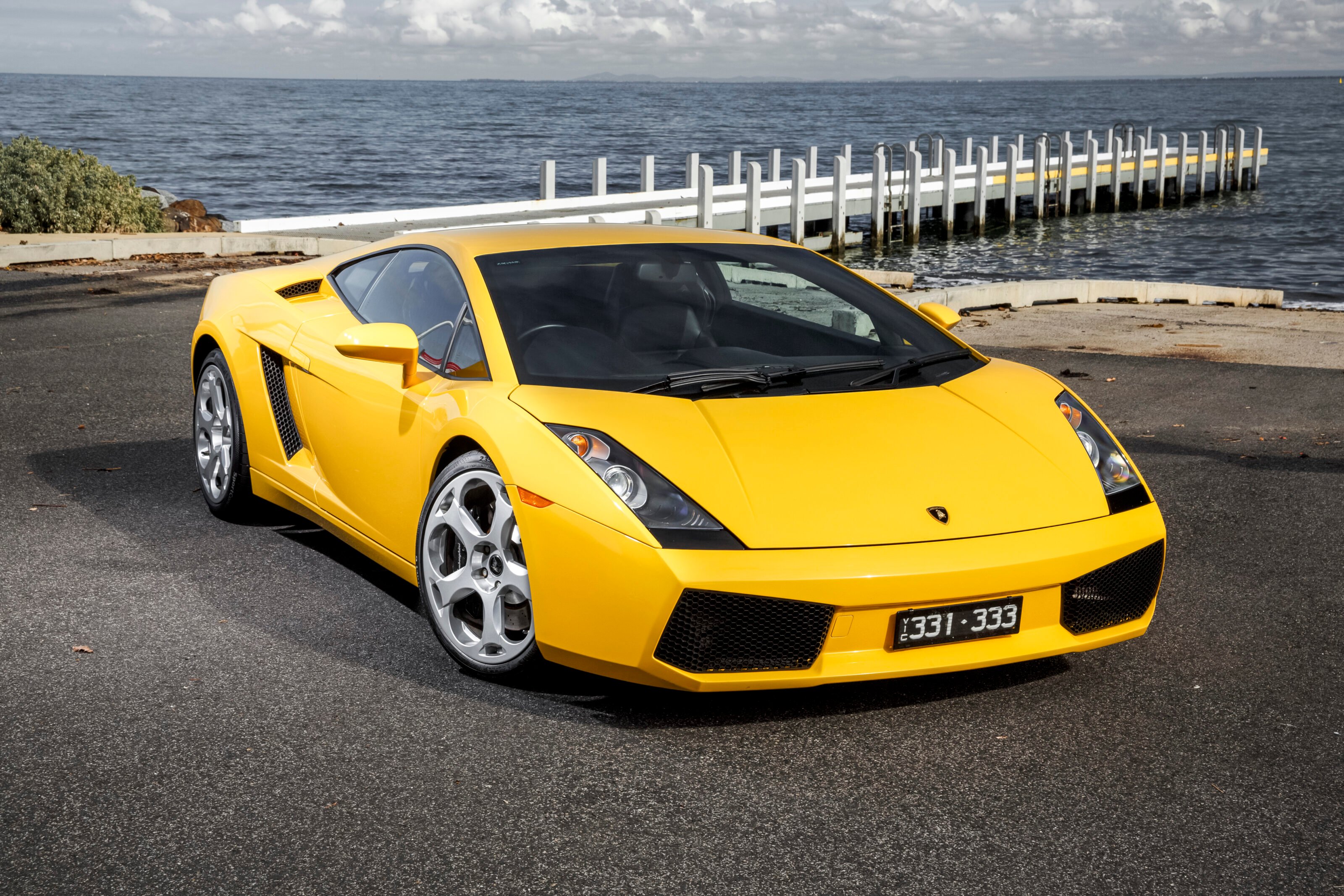
And perhaps that spoke to Lamborghini’s intentions with the breakout Gallardo of 2003. As the first model wholly designed and developed under Audi’s new ownership, it was the Gallardo that saw the traditionally low-volume Italian marque achieve unprecedented volume in manufacturing and overall sales.
The flagship V12 Murcielago, which debuted just two years earlier, yielded a total of 4099 units over nine years of production. The Gallardo’s closest spiritual predecessor, the Jalpa, saw just 410 examples escape the Sant’Agata factory between 1981 and 1988. By the time the final Gallardo rolled off the production line in 2013, 14,022 had been produced.
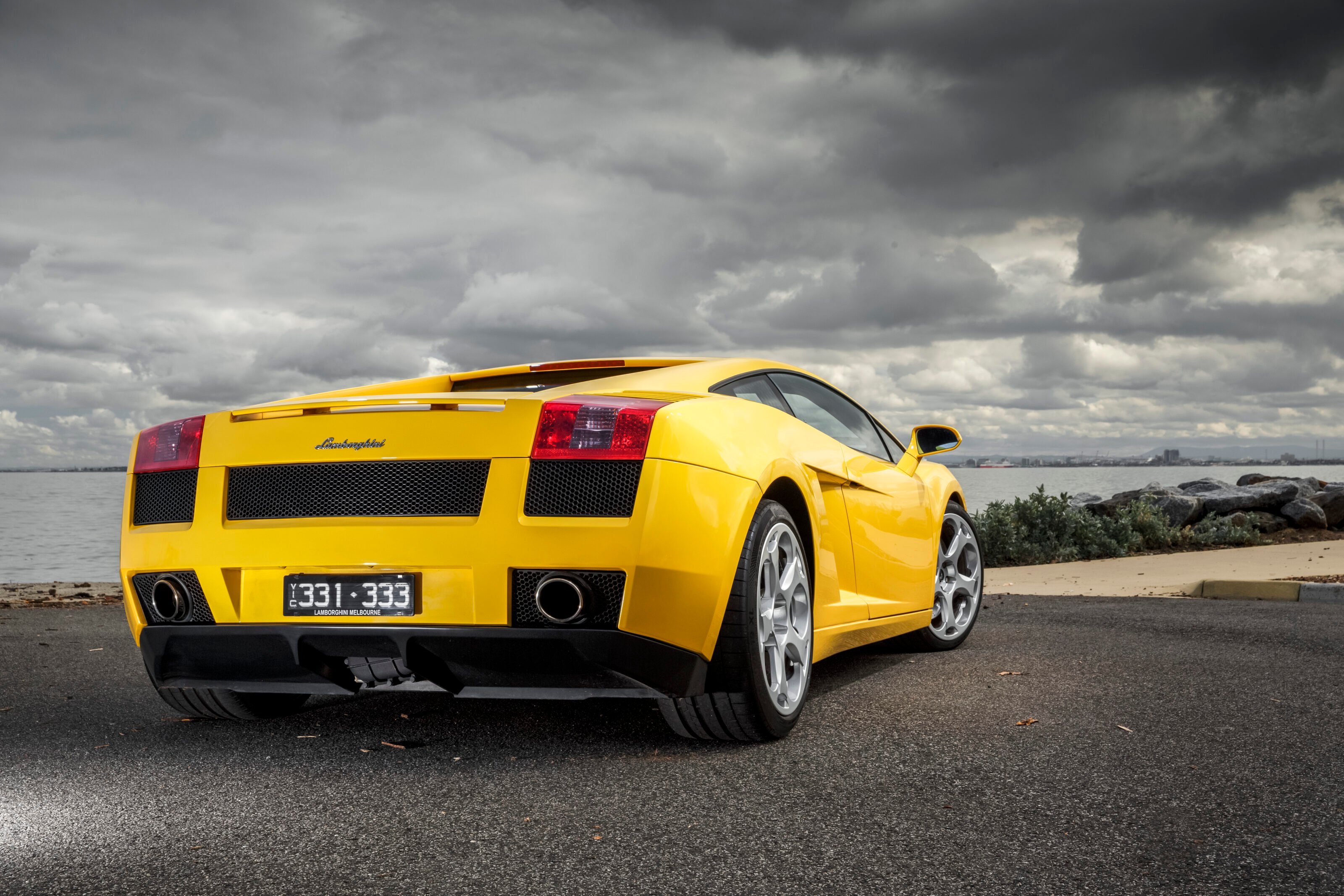
“It won’t be long before the Lamborghini Gallardo is regarded as a genuine classic”
Most of those were fitted with Lamborghini’s E-gear electrohydraulic semi-automatic gearbox, although the Gallardo can proudly claim to be the last Lamborghini offered with a gloriously gated six-speed manual. This is the one to get, if you can find one.
The Gallardo secured Lamborghini’s future as a modern mass-produced carmaker, and gave the brand a car that all manufacturers dream of: it was the right car, at the right time.
With the future of Lamborghini’s V10 in question, and an industry that is rapidly retreating from naturally aspirated, large-capacity engines, we suspect it won’t be long before the baby Lamborghini is regarded as a prime modern classic for global collectors.

Essential Checks
In the market
As the brand’s then-most successful model to date (the Huracan exceeded the Gallardo’s production tally in just five years), you won’t be short of choices on the used market.
Early Gallardos were powered by a 5.0-litre V10 capable of 368kW at 7800rpm (510Nm at 4500rpm), although the faster, lighter and more efficient LP140 update – occurring in 2008 – saw displacement and power grow to 5.2-litres and 412kW at 8000rpm.
Pre-facelift cars range from $150,000 to $200,000, with a lone and desirable manual example asking $160,000 observed. Post-facelift RWD examples begin at $230,000, with rare Superleggera and open-top Spyder Performante models appearing infrequently between $250,000 and $300,000.
Body & Chassis
While few bemoaned Audi’s takeover of Lamborghini, none could argue with the improvements to build consistency.
Subsequently, Gallardos are regarded as well-finished, and none on the current market boast the mileage that would usually indicate significant visual degradation.
The Spyder’s fabric roof has been known to fail in rare cases, however, it’s usually caused by one of the solenoids failing, which is a relatively painless fix.
Engine & Transmission
Both the 5.0-litre and 5.2-litre V10s are regarded as durable units with few known issues. Engines are known to drink a litre of oil every 6500kms or so, although the V10’s thirst increases dramatically with sustained hard use and/or track work.
Conversely, cars in disuse can suffer from ‘sticky’ throttle bodies which can be identified by ‘hunting’ revs at low speeds and idle.
Engines that have led hard lives are known to leak from the rear main seal, which should be replaced whenever a new clutch is fitted.
Early gearboxes were known to consume clutches in as little as 10,000kms. However, throughout production, Lamborghini introduced numerous uprated B, C and E-type clutch units which improved in strength with each revision. While the E-gear and manual gearboxes are identical, the E-gear utilises a hydraulic actuator which is expensive to fix if it fails. Be wary of leaking fluid that is not engine oil or coolant.

Suspension & Brakes
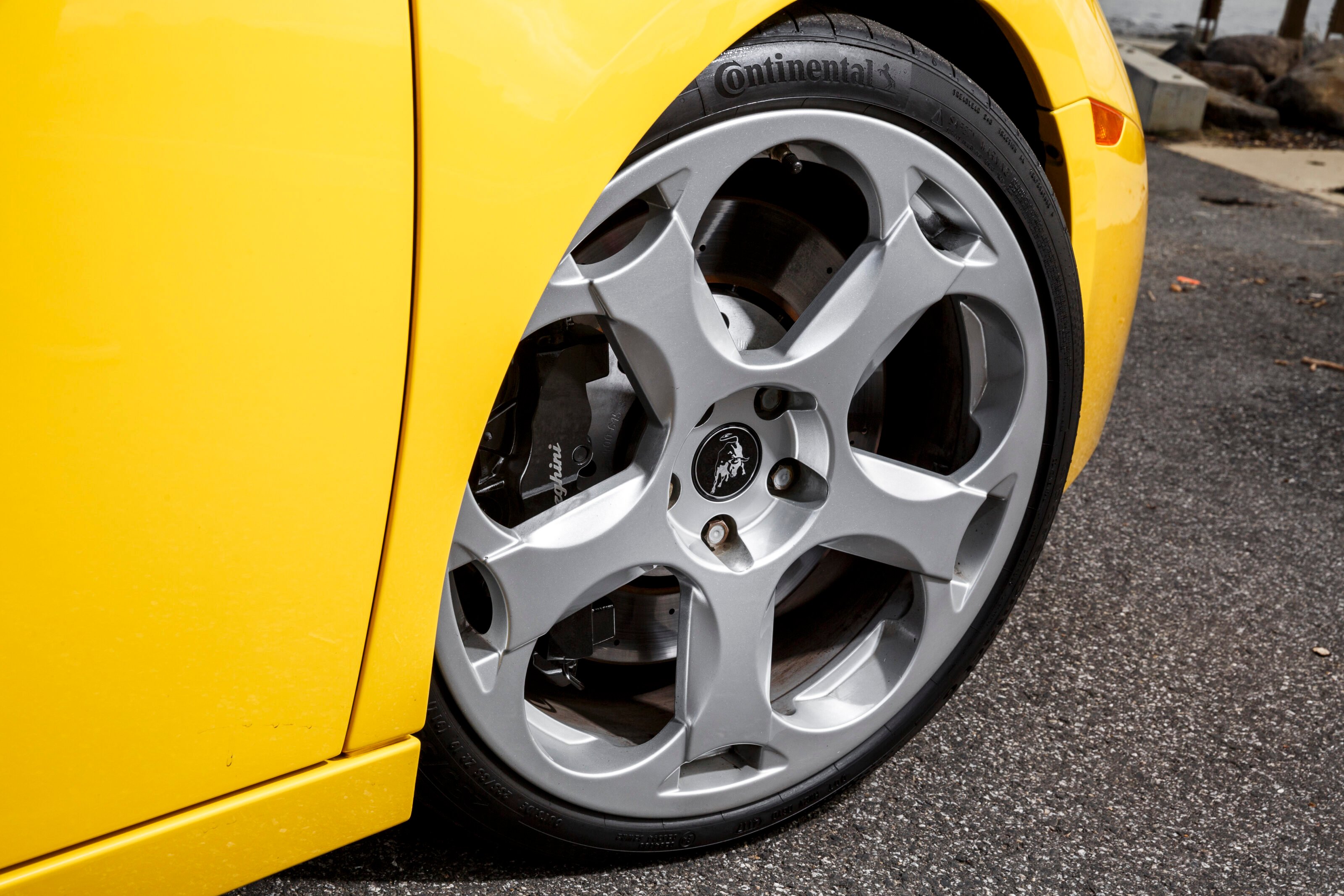
Early models were known to suffer from premature wear to the anti-roll bar bushings, however, Lamborghini later produced updated units which cured the issue.
Elsewhere, most cars on the market don’t display the mileage that would usually indicate worn or tired bushings. Still, an inspection by a marque specialist is recommended for peace of mind.
Interior & Electronics
Frequent slights at the Gallardo often pertained to its Audi ‘parts-bin’ interior. In actuality, this is where most owners would come to relish the Germanic owner’s influence.
Switchgear and touchpoints are well-built with minimal known faults to the climate control and optional integrated sat-nav/infotainment system. Seat bolsters are known to wear with heavy use.
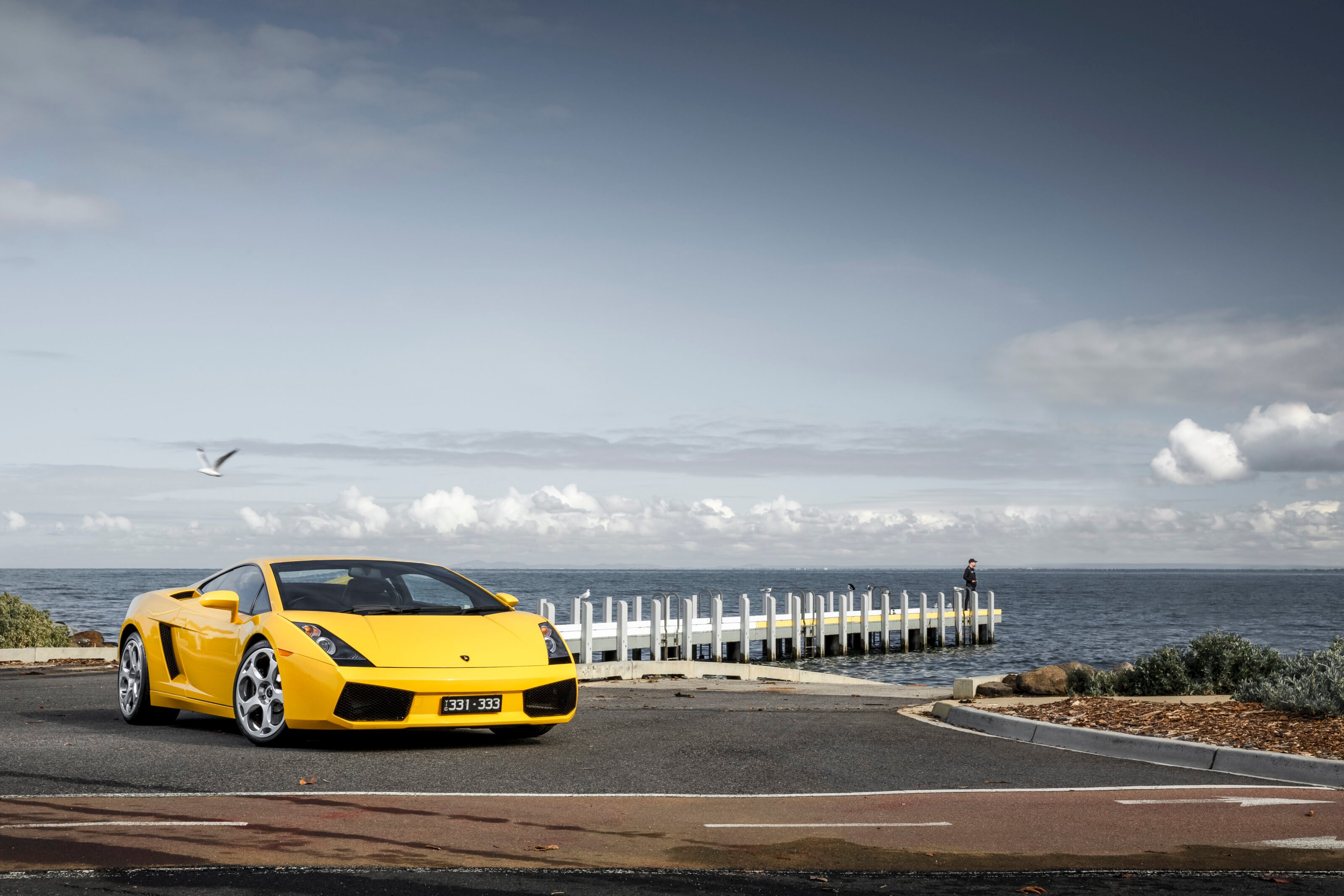
Lamborghini Gallardo specs
Body: 2-door, 2-seat coupe Engine: 4961cc V10, DOHC 40v Power: 368kW @ 7800rpm Torque: 510Nm @ 4500rpm Transmission: 6-speed manual/6-speed semi-auto Used Range: $150,000-$300,000
Three other options you may consider
1. Porsche 997 911 Turbo Porsche’s 997 Turbo packs similar all-paw performance, albeit from a 353kW turbocharged flat-six mounted out back. Prices are largely lineball with the bottom end of the Gallardo market, but the upper end would also afford you a 997 GT3 – pick your poison.
2. McLaren MP4-12C McLaren’s pivotal modern supercar is undoubtedly another future classic candidate from a pre-electrified era. It will offer the same exotic experience as the Gallardo, but they haven’t quite depreciated as low with prices beginning from $225k and up.
3. Audi R8 Perhaps the most obvious alternative to the Gallardo is its Audi-badged step-sibling. You can own much the same sonorous V10 for about $25k less than a Gallardo at the bottom end of the market, however, the V8 can be had for considerably less at about $115k to $125k.
Snapshot
- New mid-engine supercar could have as much as 600kW thanks to a turbo V6 hybrid powetrain
- Codenamed internally at Ferrari as ‘F171’
Ferrari’s next mid-engined supercar and replacement for the outgoing, V8-powered F8 Tributo, could bring back the long-dormant Dino moniker.
The secretive new Ferrari was recently spied testing on a mule set-up based on what looked like the Italian automaker’s ballistic SF90 Stradale hypercar.
According to Autocar, the next Prancing Horse, which is being developed under the codename ‘F171’, will ditch the Tributo’s prodigious F154 twin-turbocharged 3.9-litre V8, which has been in production since 2013.
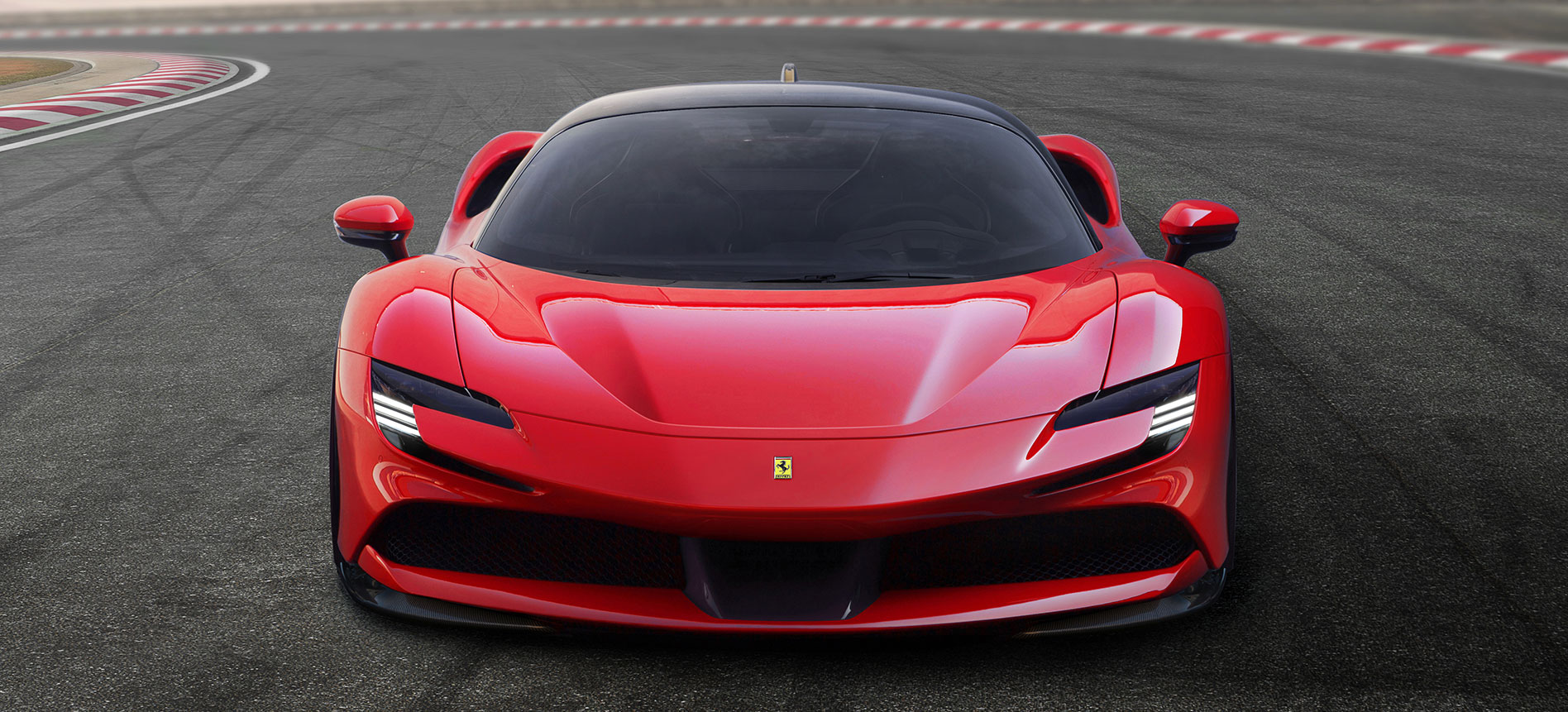
In its place, Maranello’s newest thoroughbred filly will reportedly utilise a hybrid powertrain comprising a twin-turbocharged 3.0-litre V6 and an electric motor.
Where will the V6 come from? Well, Motortrend has speculated the F8 successor will be powered by a fettled version of the blown Nettuno V6 found in Maserati’s all-new MC20 supercar.
Weirdly, and perhaps fittingly, the Nettuno V6 is reportedly related to Ferrari’s F154 bent-eight motor – it’s just missing two cylinders.
The combined power of the internal combustion engine and electric motor is rumoured to be in the region of 600kW.
If true, this would make the six-cylinder Fandango much more powerful than its McLaren Artura rival, which is also powered by a 3.0-litre turbo six and an electric motor but only produces 500kW.
Ferrari already has form in creating enormous power in the turbo-hybrid era of performance cars, with its first hybrid series production model, the aforementioned SF90, making 735kW from its turbo V8 and three electric motors.
Unlike the SF90 though, Autocar reports the F171 will only utilise one electric motor, and power will be sent exclusively to the rear wheels.
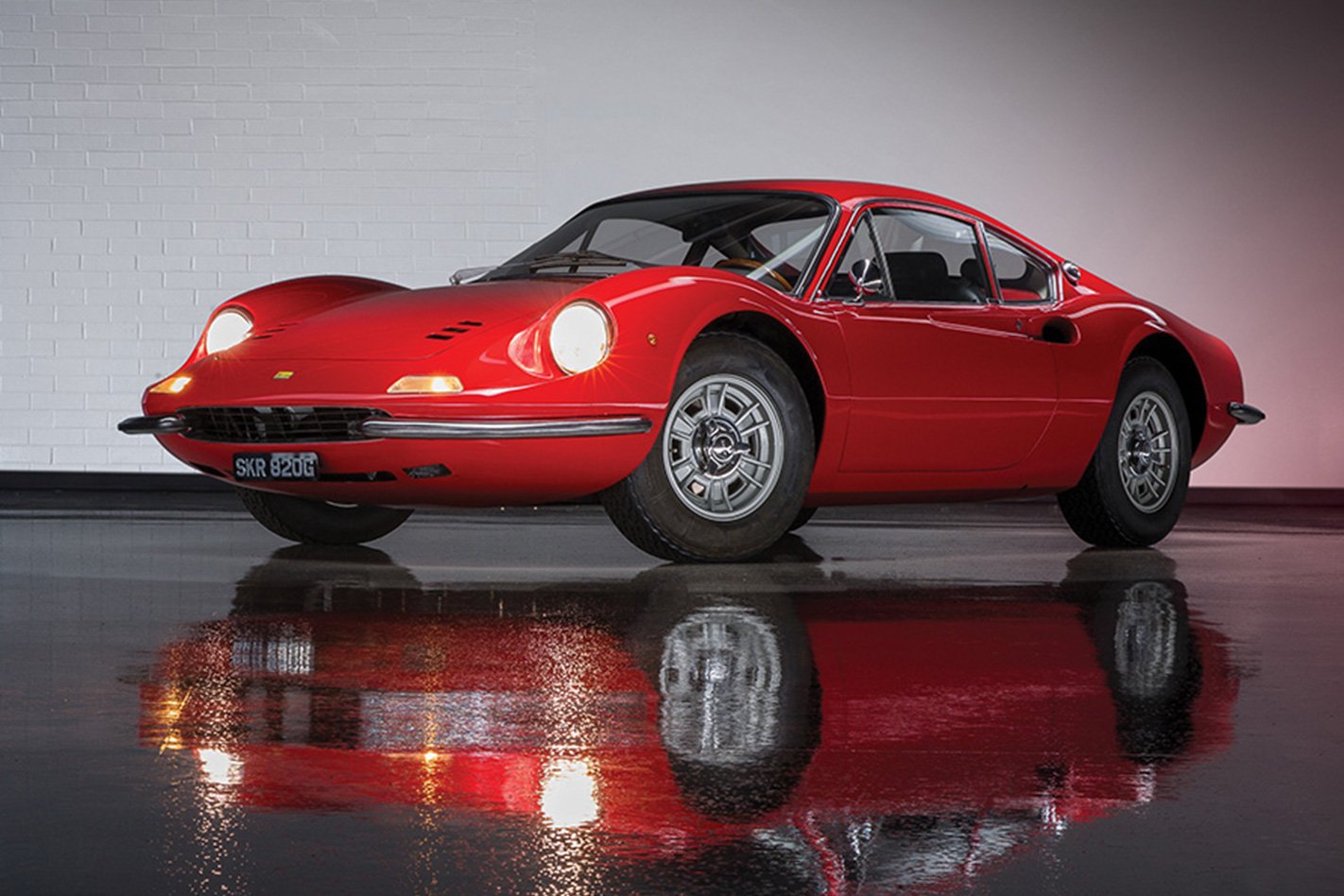
Because of its V6 powertrain, the new Ferrari’s production name has been a source of debate in the motoring fraternity, with some suggesting the ‘Dino’ moniker could make a return, given this new supercar will be the first Ferrari to feature six-cylinders since the original Dino 206 GT of the late ’60s.
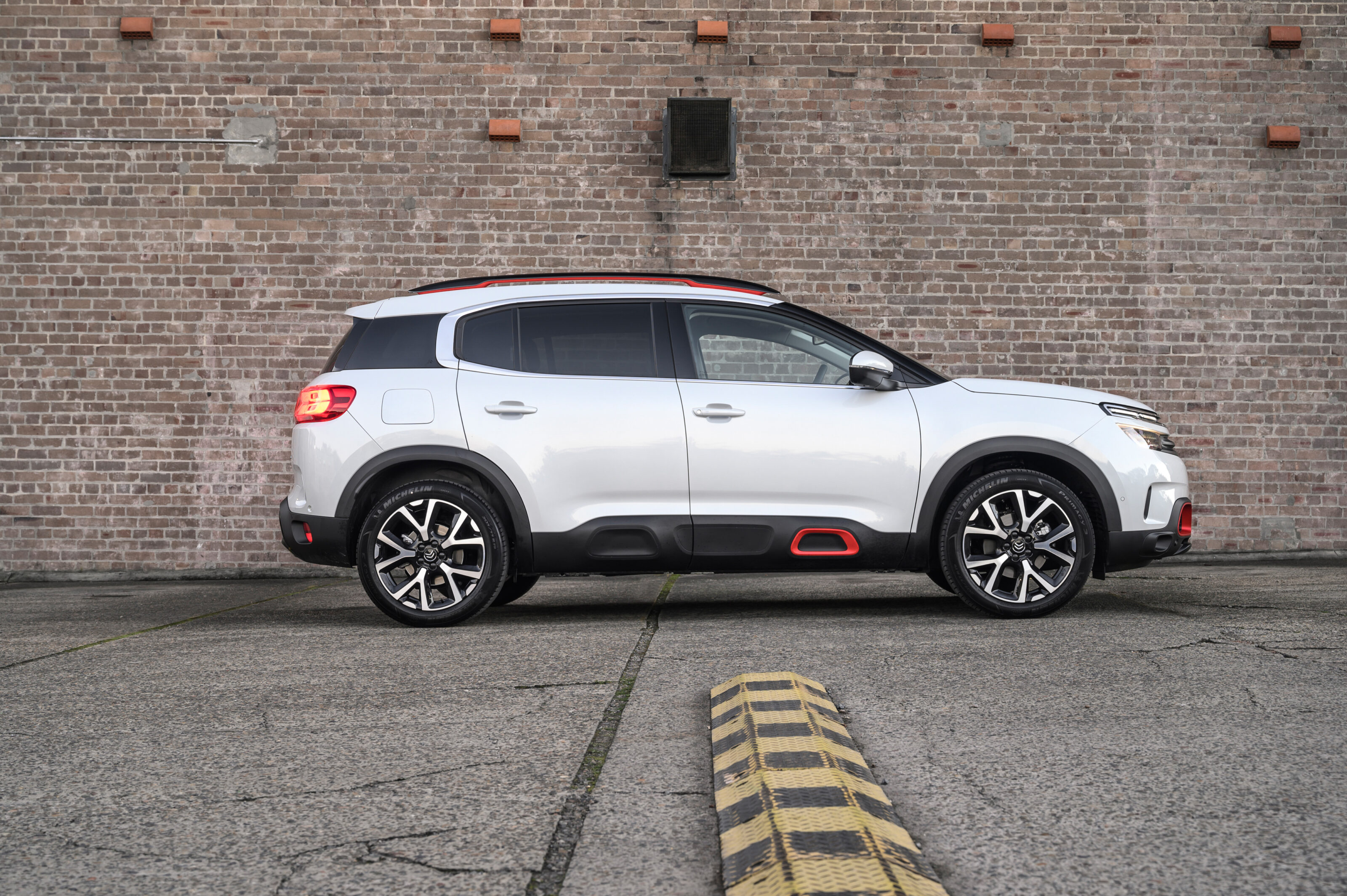
The jolly-looking Citroen C5 Aircross brings some of the French carmaker’s best traits to the packed medium SUV market, including quirky looks and a very smooth ride.
Introduced in 2019, the family-friendly mid-sizer comes in a simple two-variant line-up for Australia, comprising the entry-level C5 Aircross Feel that retails for $42,990 before on-roads and the Shine that’s priced at $46,990.
Both are powered by a 1.6-litre turbocharged petrol engine and come with plenty of standard features including:
| 12.3-inch digital gauge cluster |
| 8.0-inch touchscreen |
| Android Auto/Apple CarPlay |
| Satellite navigation |
| Digital radio (DAB+) |
| Ambient interior lighting |
| Surround-view down parking monitor |
| Front and rear parking sensors |
| u2018Magic washu2019 windscreen wipers |
| Auto-dimming rear-view mirror |
| Speed-sign recognition |
| Keyless entry and ignition |
| Power-operated door mirrors |
| Dual-zone climate control air-conditioning |
| Power-operated tailgate |
| Four terrain driving modes |
| Autonomous emergency braking |
| Lane-keeping assist |
| Blind-spot monitoring |
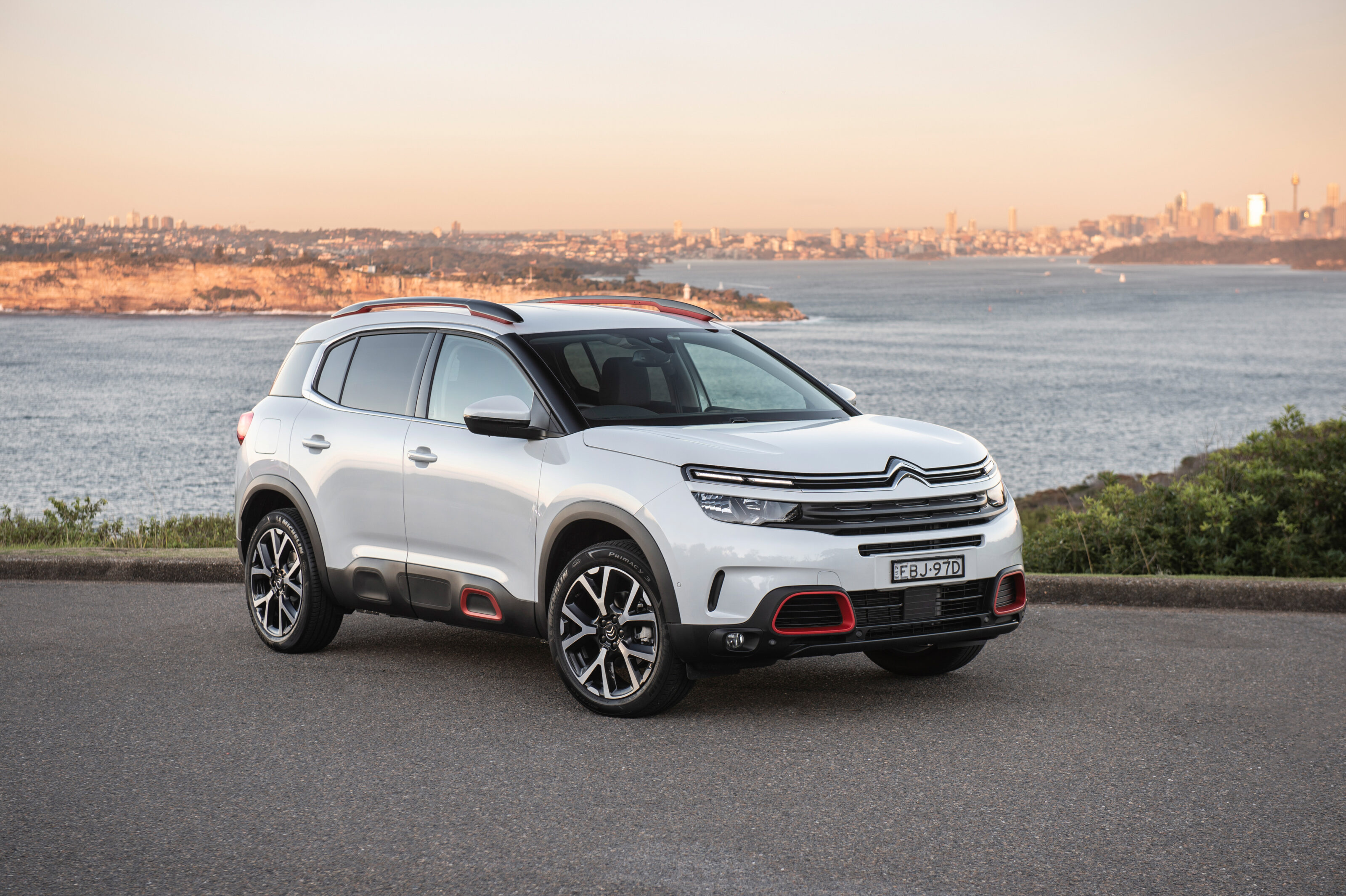
What is the Citroen C5 Aircross Shine like to live with?
It’s only when you get up close to the C5 Aircross that you realise how roomy it is. Jumping in, you’d be forgiven for thinking you’re in a large SUV despite being about the size of a Mazda CX-5.
The Shine’s smart-looking front seats are wide and comfortable and have power-adjustable settings, though lumbar support is adjusted with a manual lever in the side.
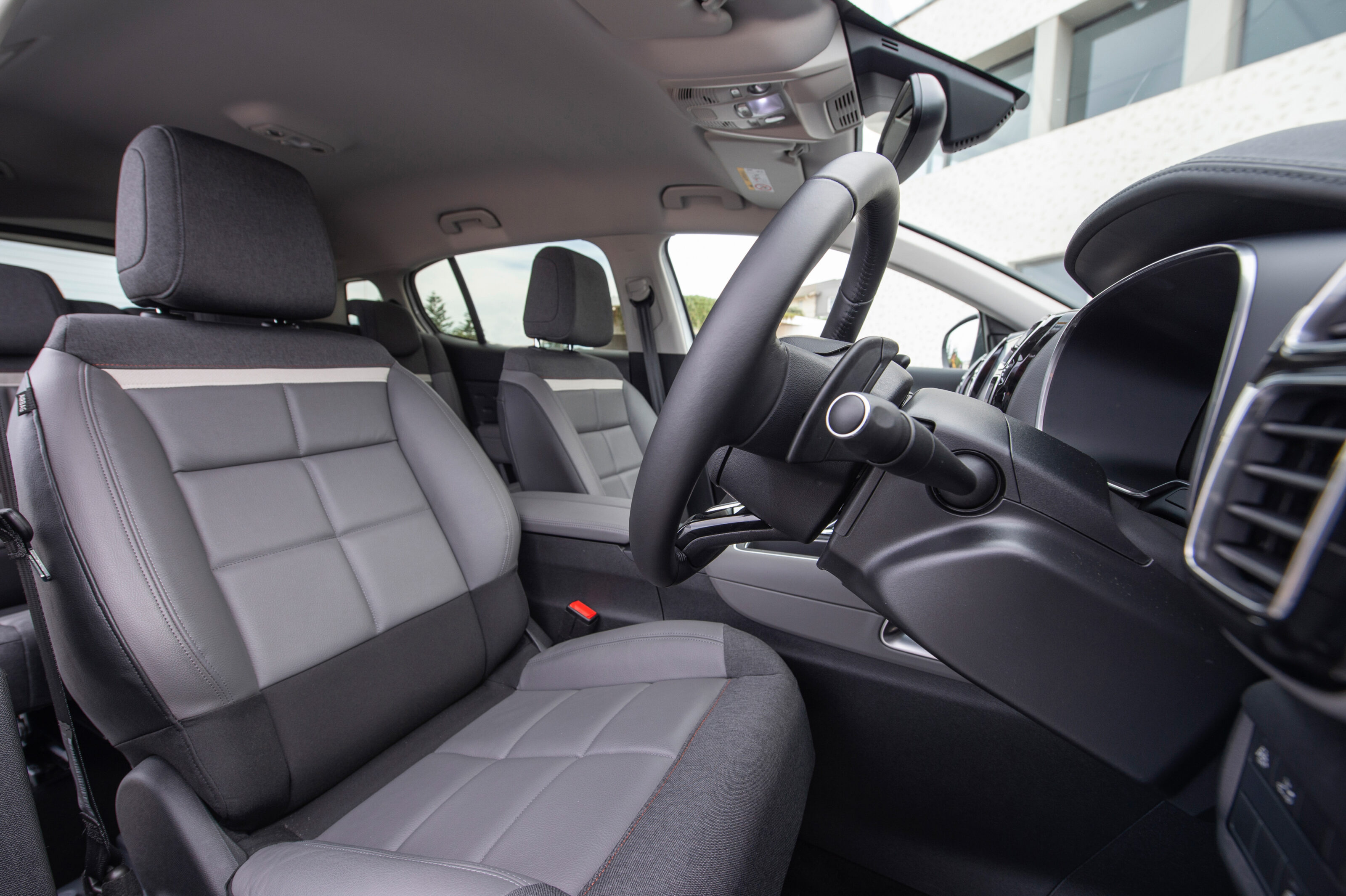
Citroen has long been known for its comfy seats and the so-called advanced comfort seats in the C5 Aircross Shine are padded with 15mm of high-density mattress-grade foam, which is 13mm more than the standard seats.
The high centre console adds to the sense of space and features a cavernous storage bin that tunnels under the cup holders, with the chilled lower section seemingly designed to perfectly fit and cool a two-litre plastic orange juice or milk bottle, as I happened to discover during a quick trip to the shops. The storage tub is topped with a butterfly-opening armrest.
Also housed in the console is a small storage area to plug in and wirelessly charge a mobile device, the four-mode terrain controller and the pistol-style gear shifter that’s also found in Peugeot models.
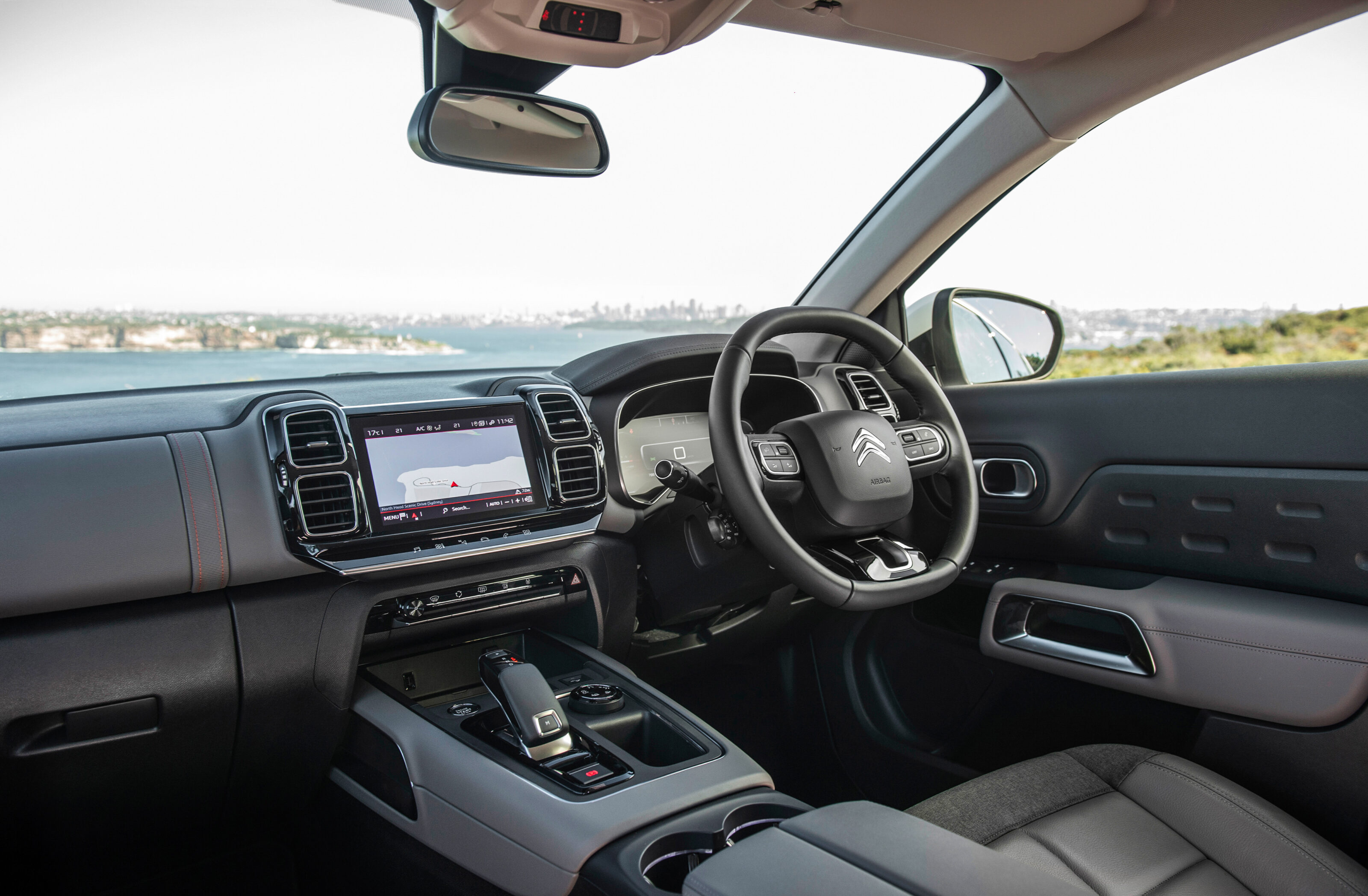
Touchpoints are all soft, though there are some hard plastics in the lower sections of the dashboard and door cards.
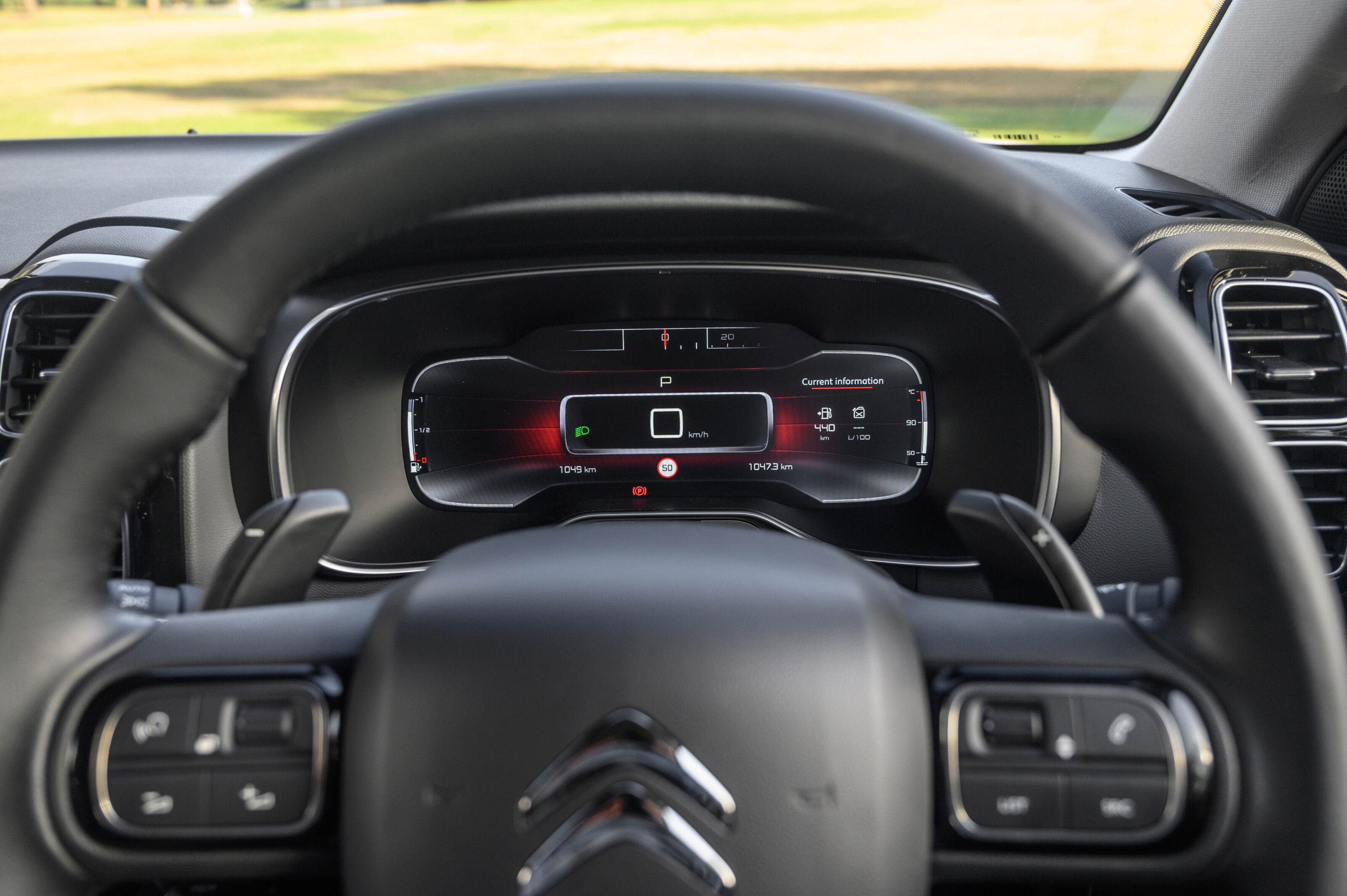
The 8.0-inch infotainment is well-located at the same height as the digital gauge cluster so you can view it with a side glance.
Neither screen is angled at all, so can be quite susceptible to sun glare in the morning and late afternoon.
Moving to the back row also finds comfortable seats, all three of which individually fold, recline and slide back and forth. The backrests recline or fold flat by simply pulling on a strap.
Legroom is a little tight even with the seats slid back but the front-seat backs are soft, meaning you won’t be too uncomfortable if your knees are touching. The good news for taller people is the presence of ample headroom.
The back row can seat three adults, albeit with tight elbow room. Children are well accommodated and all three seating positions have an ISOFIX child-seat anchor – most vehicles only have two.
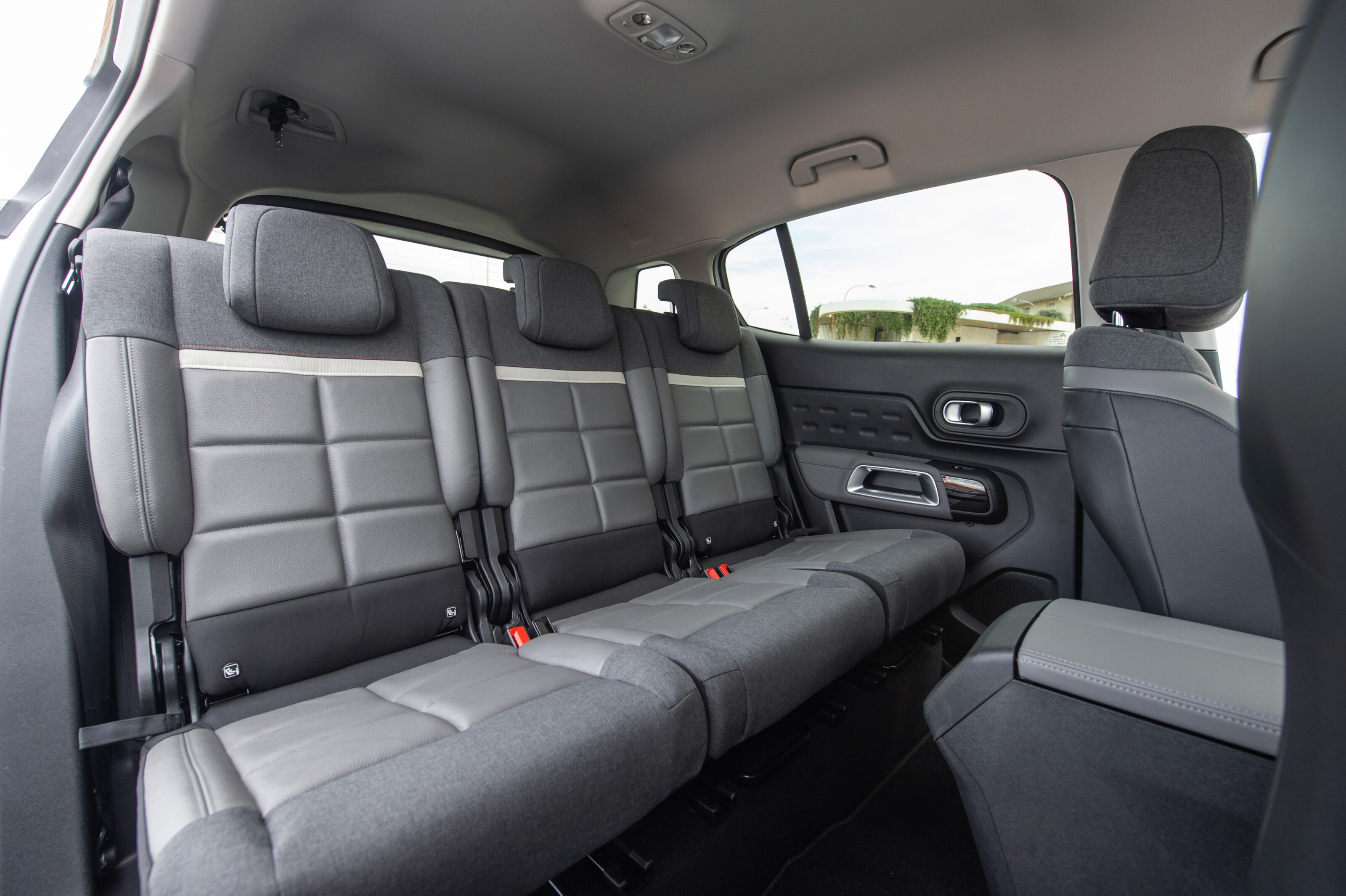
Rear-seat amenities include air vents, a USB socket and generous door bins that can hold a wine bottle – as I also discovered.
The rear door cards feel hard but at least the armrests are padded.
Those sliding rear seats and an adjustable boot floor brings a variable cargo capacity ranging from 580 to 720 litres, which is more than some large SUVs. Folding the seatbacks down allows you to cart up to 1630 litres of stuff.
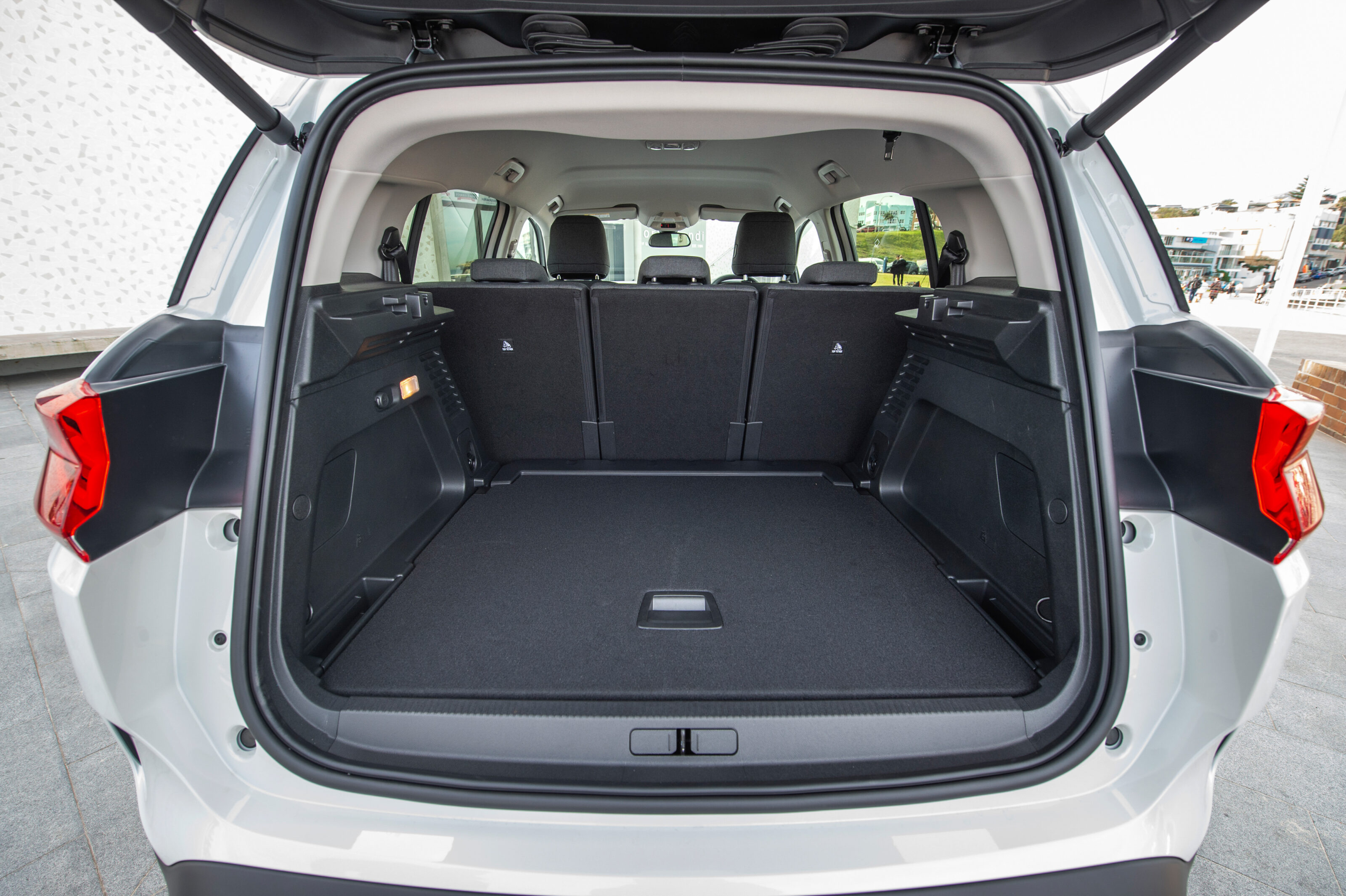
The boot contains a 12-volt socket, a couple of cargo hooks and a space-saver spare wheel under the floor.
Opening the power-operated tailgate can be done using a hands-free function that works by raising your leg near the rear bumper, though I found this to be a little hit-and-miss.
The 121kW/240Nm turbocharged engine has an official combined fuel economy of 7.9L/100km which was about on par with my own driving. That’s quite good for a medium SUV, though you do have to feed it more expensive 95 or 98 RON premium unleaded.
Citroen has a reputation for building cars with exceptional ride comfort and the C5 Aircross lives up to it
Service intervals are 20,000km or 12 months, which is good news if you travel a lot. The bad news is that scheduled service pricing will sting a bit, with the first five trips to the service centre costing $461, $823, $461, $836 and $474 respectively.
The Citroen C5 Aircross is covered by a five-year, unlimited-kilometre warranty that comes with free roadside assist for the duration.
What is the Citroen C5 Aircross Shine like to drive?
Citroen has a reputation for building cars with exceptional ride comfort and the C5 Aircross lives up to it with a ride that’s smooth and supple.
It achieves this with a simple but very clever patented hydraulic upper bump-stop system that was tested during the 1994 Paris-Dakar Rally. Unlike conventional shock absorbers that have a mechanical stop to prevent the spring from fully compressing, the Progressive Hydraulic Cushions (PHC) system adds two hydraulic stops on both the compression and rebound sides to soften out any jarring.
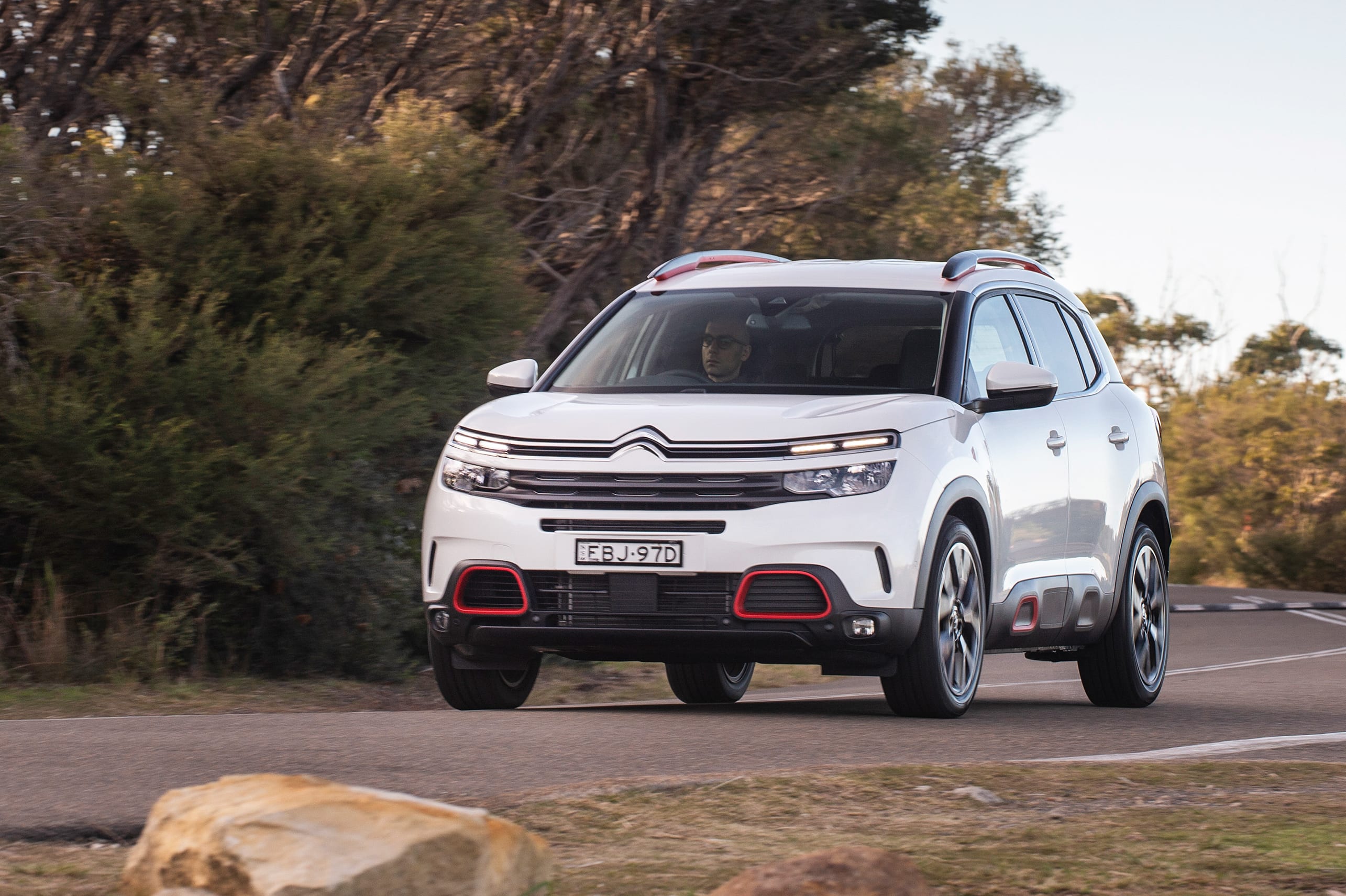
On good roads, the system creates what Citroen describes as a “magic carpet ride” effect that gives the impression the car is gliding over uneven ground and I can’t really fault that description.
Over rougher roads, the spring and shock absorber work together with the hydraulic compression and decompression stops to gradually slow the movement and avoid jerks at the end of the travel range. Unlike a traditional mechanical stop, which absorbs energy but returns a part of it, the hydraulic stop absorbs and dissipates the energy, eliminating any bouncing.
The smooth and soft ride is further enhanced by the thick-walled and relatively narrow 19-inch Michelin Primacy tyres that are also designed to reduce rolling resistance, which helps reduce road noise.
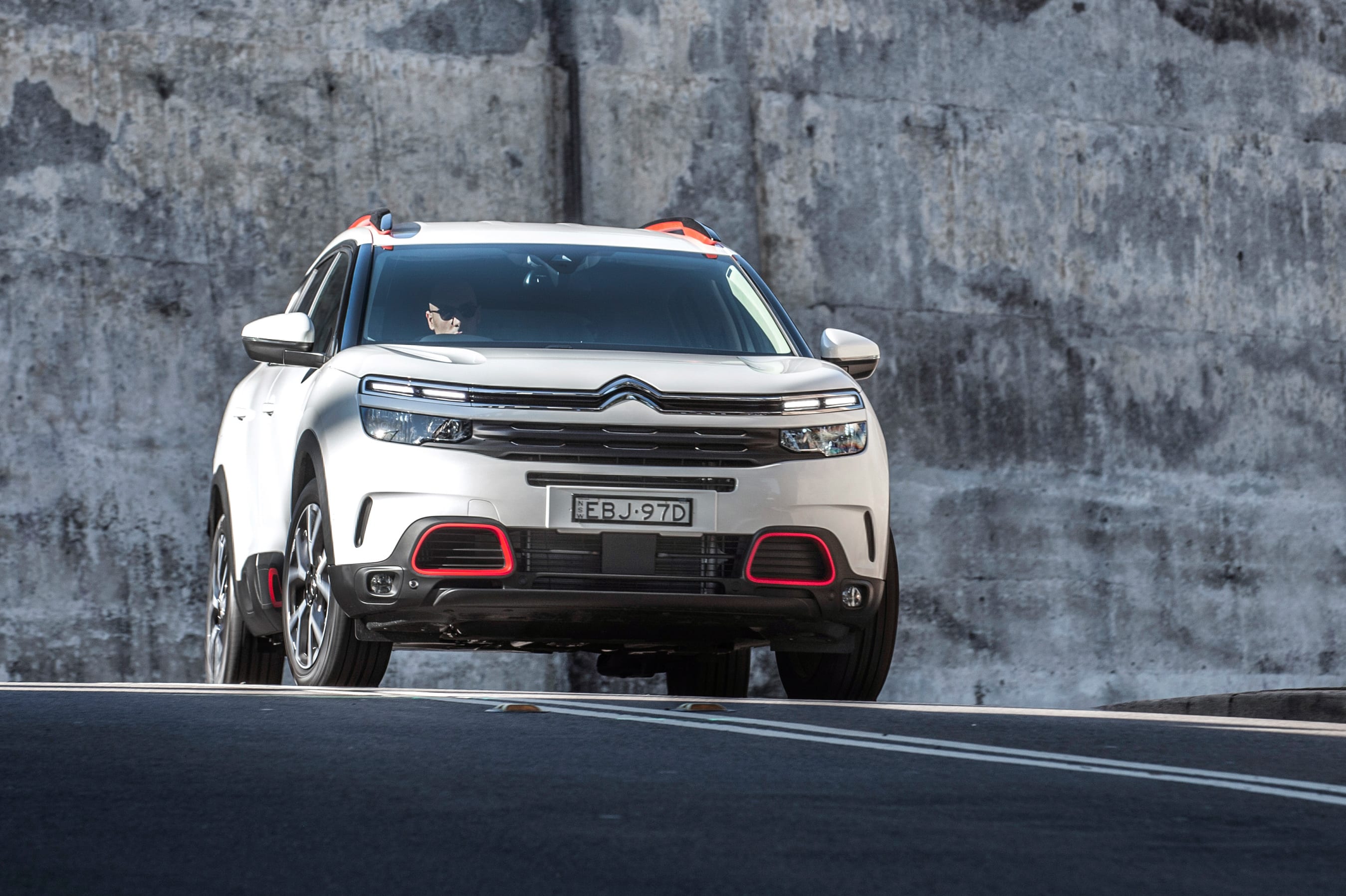
The 1.6-litre turbo-petrol engine that drives the front wheels through a six-speed automatic transmission is adequate but can feel a little underpowered at times, particularly when negotiating hills.
It also takes a while to get the car’s 1430kg heft moving, though it does have a Sport driving mode that sharpens the throttle response if you prefer a friskier take-off.
Once you get going, it travels well, combining with the plush ride comfort to make this quite a pleasant SUV for longer trips.
What about safety in the Citroen C5 Aircross Shine?
While the C5 Aircross has the most important active safety features such as autonomous emergency braking (AEB), lane-keep assist and blind-spot monitoring, it seems a little ill-equipped compared to most of its rivals.
As a result, it only holds a four-star ANCAP safety rating, the reason for which is its relatively poor vulnerable road user protection score of 58 per cent due to the AEB’s limited pedestrian detection and inability to detect cyclists.
It’s worth noting that the C5 Aircross performed well in the crash testing component, scoring 87 per cent for adult occupant protection and 88 per cent for child occupant protection.
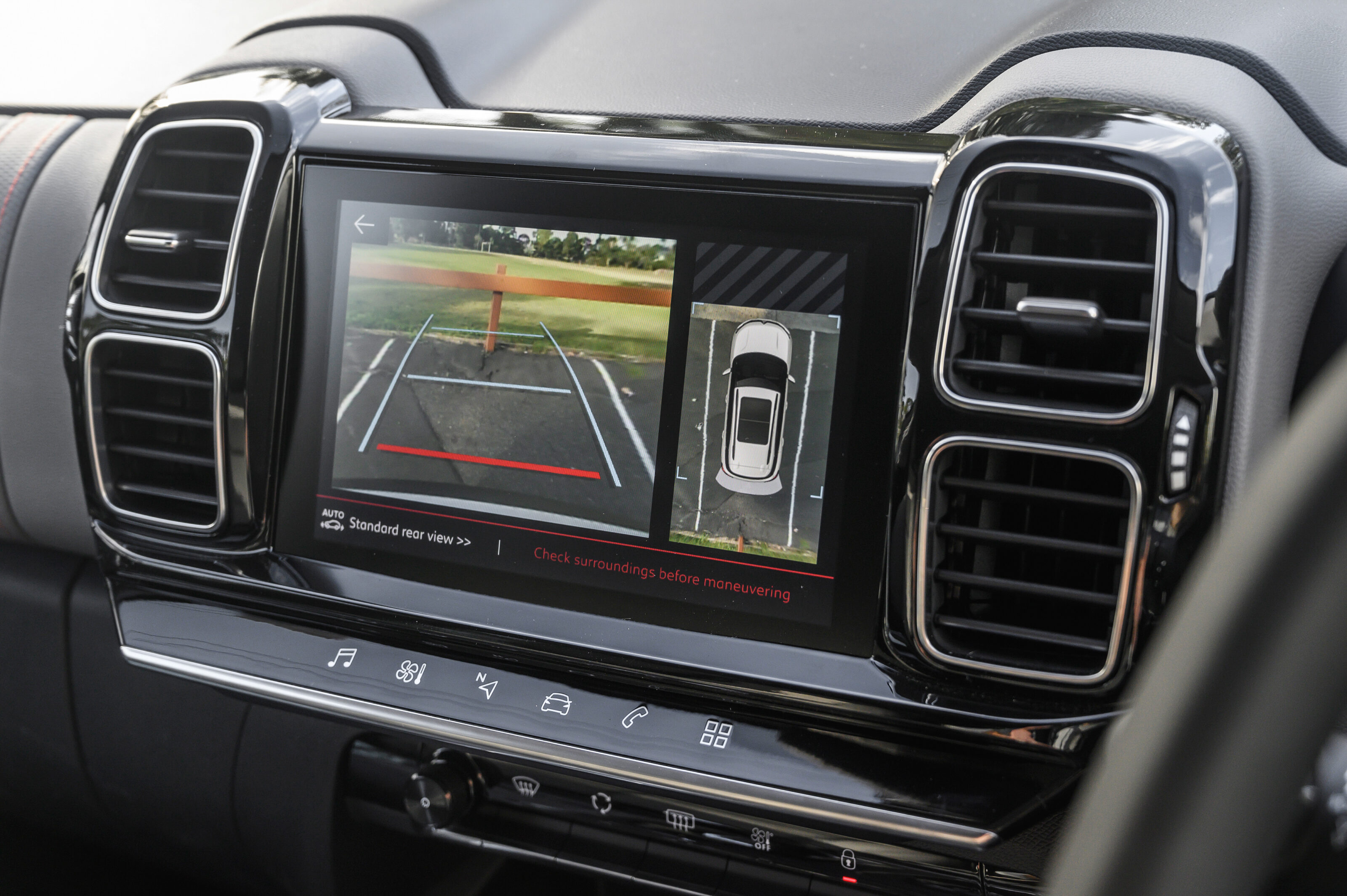
Other safety features include a 180-degree surround-view parking camera, front and rear parking sensors, vehicle distance alert, traffic sign recognition and six airbags.
Notable omissions for a car in this price range include adaptive cruise control, rear cross-traffic alert and LED headlights.
VERDICT
The cheerful looks and impressively plush ride comfort of the Citroen C5 Aircross make it stand out from the medium SUV pack. However, it does miss out on some important features found in newer rivals, not the least adaptive cruise control, which is disappointing considering its mid-$40k price tag.
But it does come with a host of other desirable features that help make it worth a look should you be after a spacious, practical and very comfortable European medium SUV.
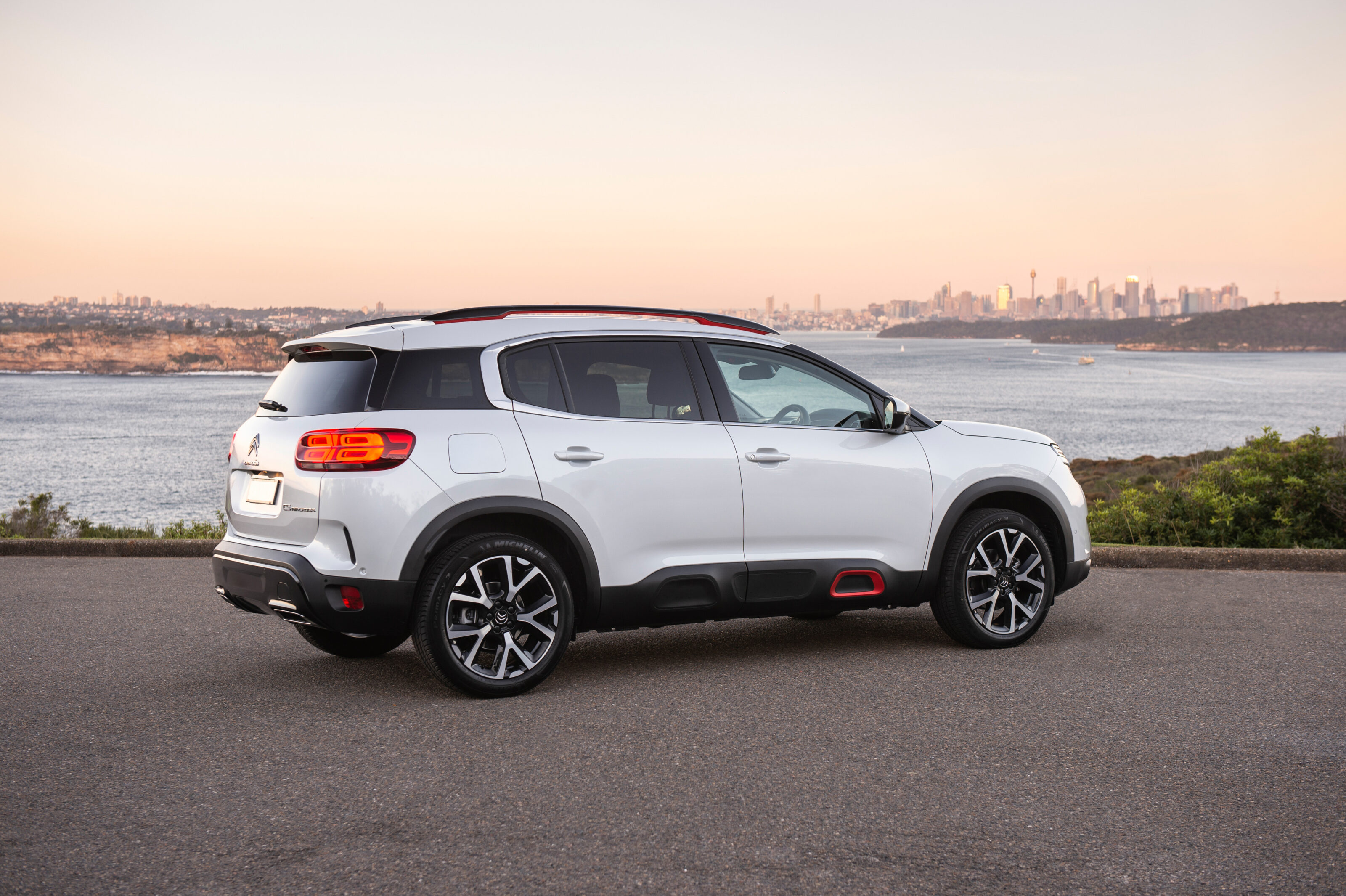
Citroen C5 Aircross Shine specifications
| Body | 5-door, 5-seat SUV |
| Drive | FWD |
| Engine | 1598cc 4-cyl, 16v turbo petrol |
| Transmission | 6-speed automatic |
| Power | 121kW @ 6000rpm |
| Torque | 240Nm @ 1400rpm |
| Bore stroke (mm) | 77.0 x 85.8 |
| Compression ratio | 10.5:1 |
| 0-100km/h | 9.9sec (claimed) |
| Fuel consumption | 7.9L/100km (combined) |
| Weight | 1430kg |
| Suspension | MacPherson strut front with PHC / cross member rear with PHC |
| L/W/H | 4500/1840/1624mm |
| Wheelbase | 2725mm |
| Brakes | 304mm front ventilated discs/290mm rear solid discs |
| Tyres | 205/55 R19 Michelin Primacy 3 |
| Wheels | Alloy 19-inch |
| Price | $46,990 |
Snapshot
- Toyota took 18 years to reach 100,000 hybrid sales but only another two to double the figure
- RAV4 accounts for 70 per cent of hybrid sales
- Prius sales down to 23 units so far in 2021
Toyota has passed 200,000 hybrid sales in Australia, doubling the buyer tally of its petrol-electric vehicles in just two years.The Japanese brand hit the 100,000 mark locally in April 2019, 18 years after its first hybrid, the Prius, went on sale. A raft of hybrid models released since mid 2019, however, has helped the company shift the same number in 26 months.Toyota Australia’s hybrid sales sit at 203,949 up to the end of May.Hybrid versions of the RAV4 have been especially popular since debuting in mid 2019, accounting for 70 per cent of the mid-sized SUV’s sales.
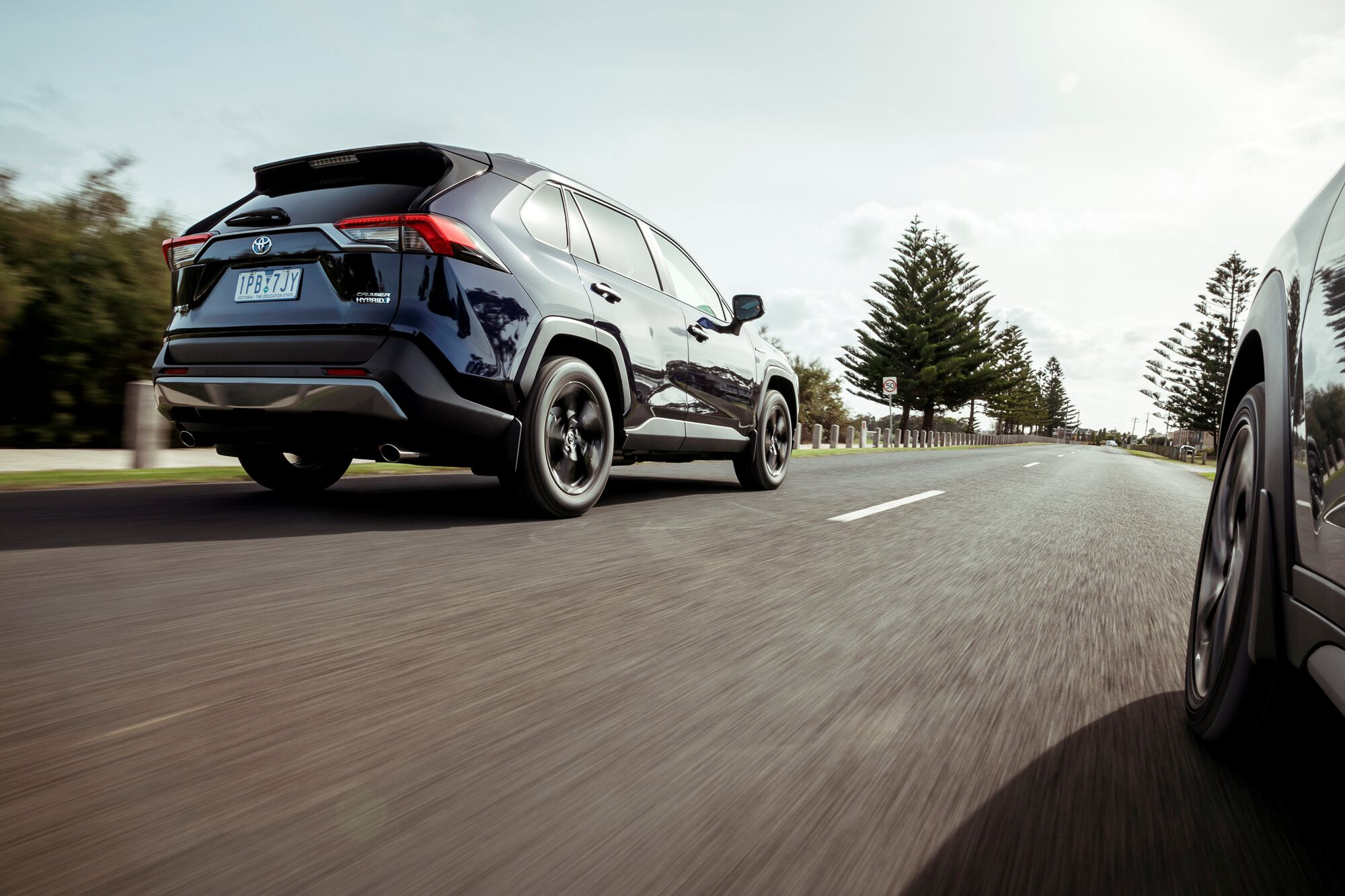
The RAV4 is the main driving force behind the surge in petrol-electric sales, though it has also prompted long waiting times for customers that are still at about six months.A hybrid version of the C-HR compact SUV was introduced in late 2019, the Yaris city car was given a petrol-electric variant for the first time with the latest-generation model launched in 2020, and the same drivetrain was offered in the new Yaris Cross placed into showrooms in late 2020.The Camry Hybrid remains successful and now dominates the medium car’s line-up after Toyota Australia dropped V6 models as part of an early 2021 update.The Corolla small car range was given a permanent range of hybrid versions in 2018 after the previous-generation model had a standalone variant only.With the arrival this month of a fourth-generation Kluger featuring a petrol-electric model for the first time in the seven-seater SUV’s local history, Toyota Australia now offers a hybrid version of every passenger car and car-based SUV.
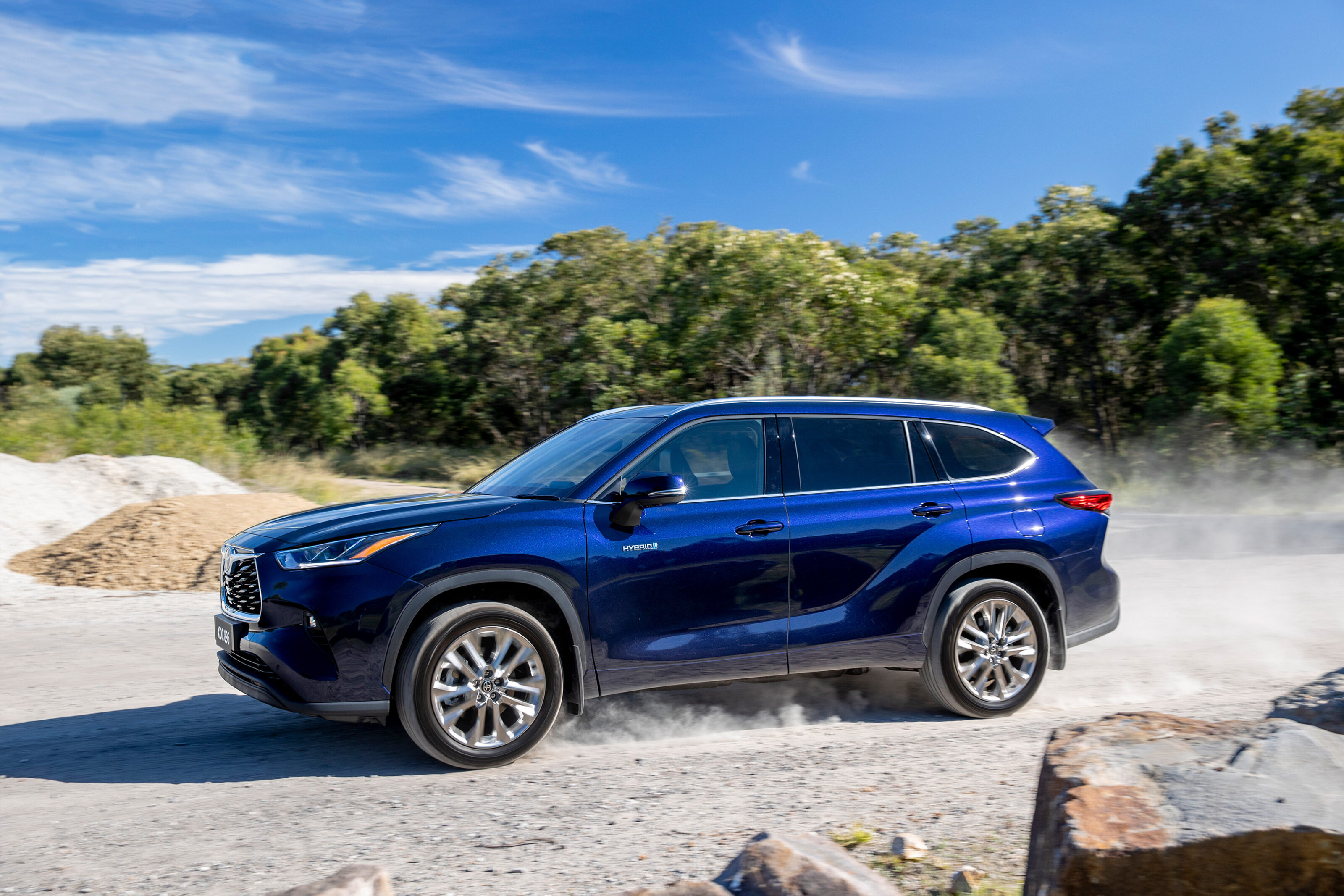
The company expects Kluger sales to be skewed more towards the hybrid variant than the V6 petrol models, if not achieving the same hybrid/petrol ratio as the RAV4.Toyota’s commercial range, which includes the HiLux, and its Fortuner, Prado and LandCruiser off-road 4WDs remain the only models without an electrified option.It’s not good news for all Toyota hybrids. Toyota Australia has announced it will this year axe the Prius V petrol-electric people-mover that has accounted for just 97 sales so far this year.The regular Prius is faring even worse, with just 23 units sold up to the end of May. The Prius was the world’s best-selling hybrid for years, but in 2019 was overtaken by the hybrid RAV4 in 2019.Toyota Australia had sold 134,200 hybrids by April 2020 and has averaged 5812 hybrid sales a month (69,749 total) since, up to May 2021.Globally, Toyota hybrid sales passed the 15 million mark in April 2020.
The ABC’s 730 Report ran a story on Tuesday night laying out state and federal government EV policies. The report, by Andy Park, found that the states are doing the work while the Federal Government’s position was to “let the market decide.”
Angus Taylor, the Federal Minister for Energy and Emissions Reduction, says the market will decide on EVs and that uptake will be spurred on by cost and functionality (that is, driving range) and says it is happening quickly.
“It’s important that the Federal Government plays its role in ensuring that we’re integrating electric vehicles in an efficient way. “People who have the money to buy a luxury car are welcome to go and do that.”
Taylor says the Federal Government is not in the business of subsidising luxury cars. This is a curious thing to say as more and more EVs come into the market below the luxury car tax threshold – which itself is higher for low-emissions vehicles. This also plays into a perception that EVs are only for the wealthy, but that is beginning to change.
When you add in the tax breaks given to utes, which are increasingly bought as lifestyle rather than work vehicles, that amounts to a subsidy in concept if not in law. To close that circle, a luxury vehicle is a lifestyle choice – so while the tax break isn’t a direct subsidy, it’s not a luxury offered to EV buyers.
And it bears repeating that if a government wants more of something, it makes policy and offers incentives to encourage it – and if it wants less of something, it taxes it or adds a drag on sales in the form of policy changes.
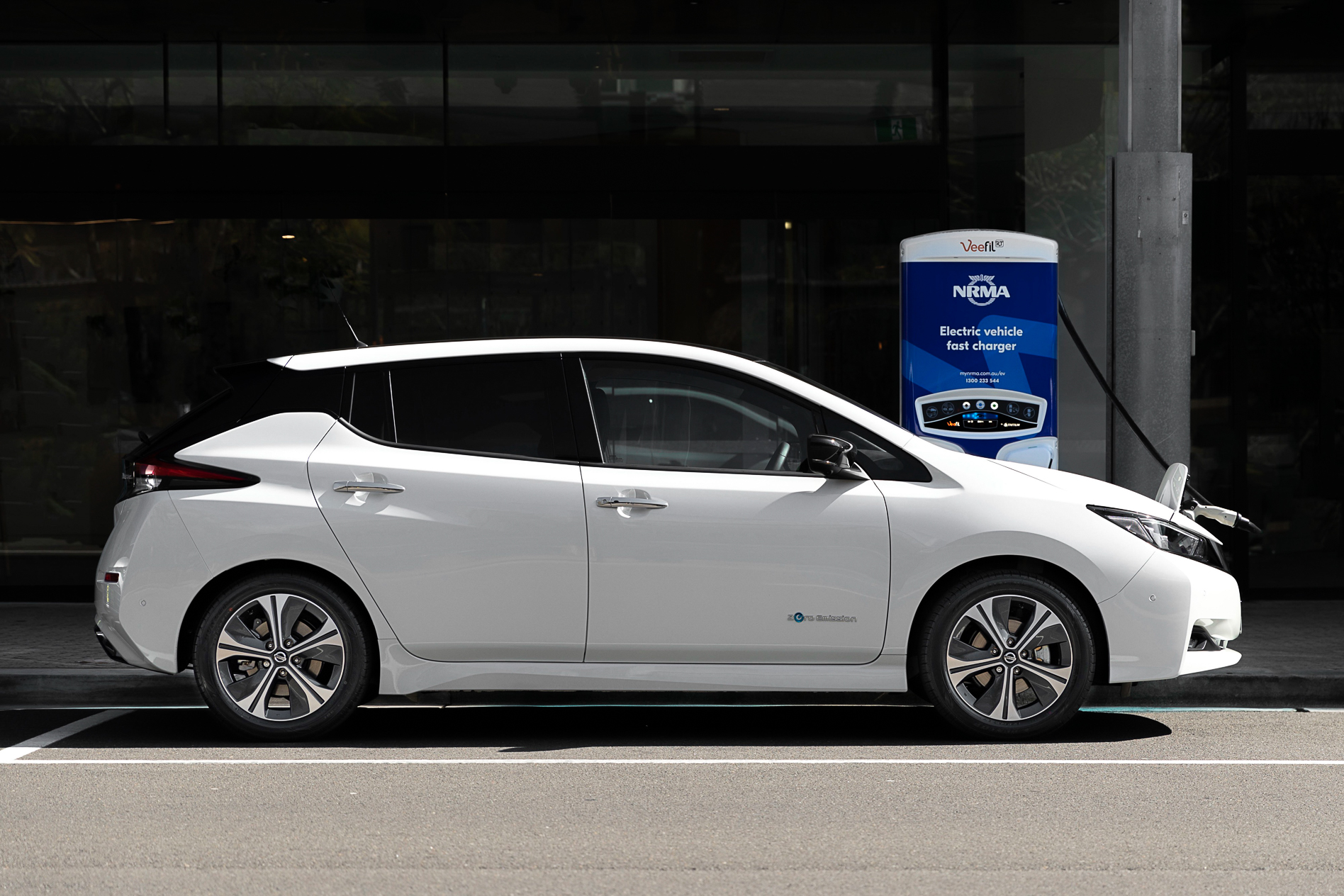
The New South Wales Liberal government has invested heavily in new public transport over the past few years and is in the process of electrifying its public bus fleet.
The NSW Transport Minister, Andrew Constance, told 730, “In Canberra they’re still arguing about climate change. Nationally, it’s crazy to have different charges across the states. As a country, we’ve got to tackle this head on.” His government is currently offering a $30 discount on registration of EVs.
While the ACT, WA, Tasmania and Victoria are offering incentives for EV buyers and making moves to electrify their government fleets with anything from hybrid Camrys to fully electric work vehicles, the approach is fractured and the states appear to be working against the Federal Government and, as Constance says, each other.
The Victorian Labor Government’s incentives package came after the introduction and passing of a bill in the Victorian Parliament to tax EVs and PHEVs per kilometre travelled, arguing that EV owners are not paying their “fair share”, as not pumping fuel means avoiding fuel excise.
The $3000 incentive undermines the tax, at least for the cars to which it applies.
All of these fall short of Nissan Australia’s recommendation of up to $5000 per EV.
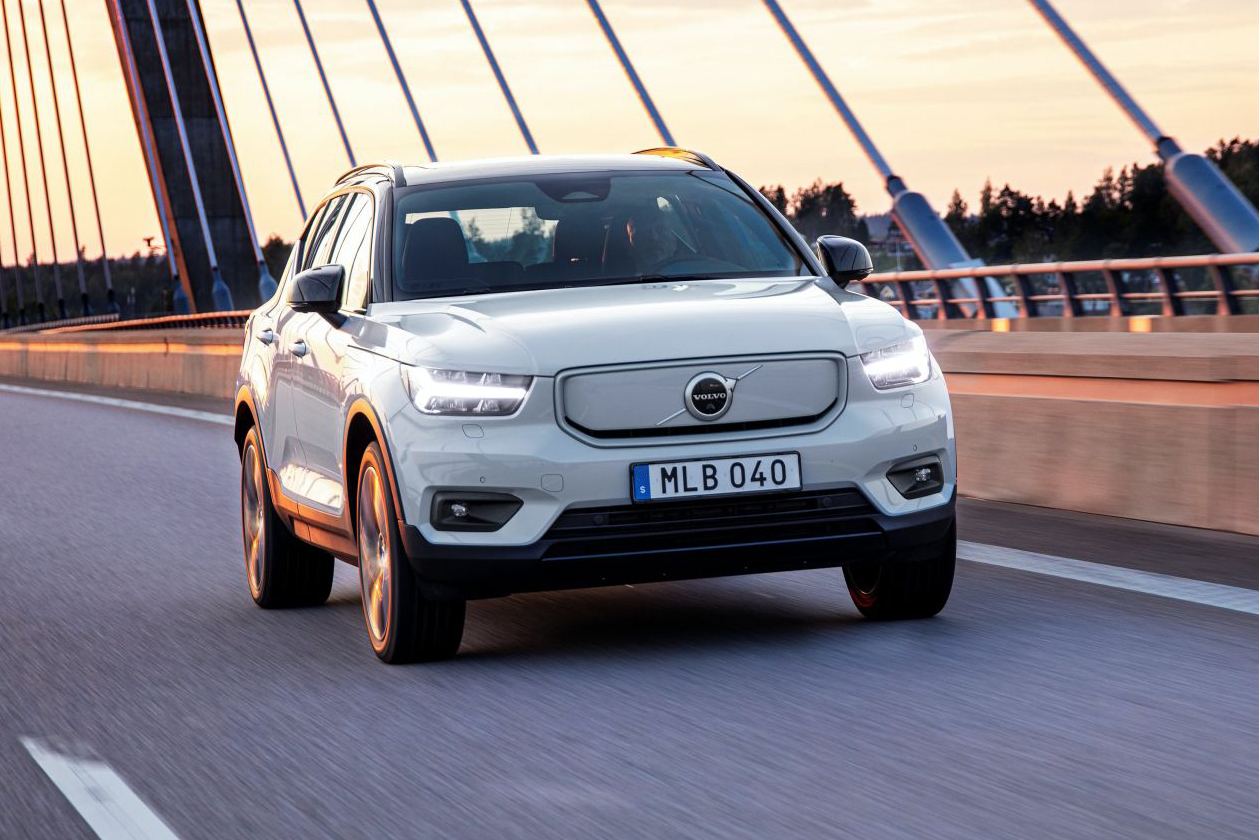
Park spoke to energy entrepreneur Saul Griffith, who says the average Australian household would save between $2000 and $4000 in petrol or diesel if they made the switch to EVs. He is also disappointed that a similar approach to rooftop solar – where governments have provided subsidies and rebates – has not been taken with EVs. He says it is hypocritical.
“We’ve let the electric vehicle get caught in the culture wars around fossil fuels, which is a tragedy,” Griffith said.
Speaking with 730, Griffith said Australia spends $32bn per year importing petrol and diesel. That’s a lot of money that doesn’t have to leave the country when we could be powering our EV fleet with our existing local coal and renewable infrastructure.
“As investment in coal recedes at a rapid rate, the share of renewables powering EVs will grow and start to deliver on the promise of emissions-free driving.”
Without Federal leadership or even a co-operative approach from the various levels of government, the issues that prevent EV uptake will continue to fester. Within a decade, many car manufacturers will be offering more EVs than ICE cars. Without a coherent national policy, an already confusing consumer landscape is made worse.
Andy Park’s story is available on ABC iView for another few days.
Snapshot
- Taycan sets the bar for EV lap times at The Bend
Porsche has laid down a marker for its rivals as it set a lap record for EVs at The Bend Motorsport Park, making use of the Taycan Turbo S to achieve the feat.
With 2017 Bathurst 1000 winner and Porsche’s chief driving instructor, Luke Youlden, behind the wheel, the 460kW Taycan was able to set a lap time of 3:30.344 around the South Australian circuit, the second-longest permanent race track in the world.
Set on March 31, Youlden also took to the circuit aboard the new 992 911 Turbo, setting a time of 3:22.066 which reset the production car lap record at The Bend.
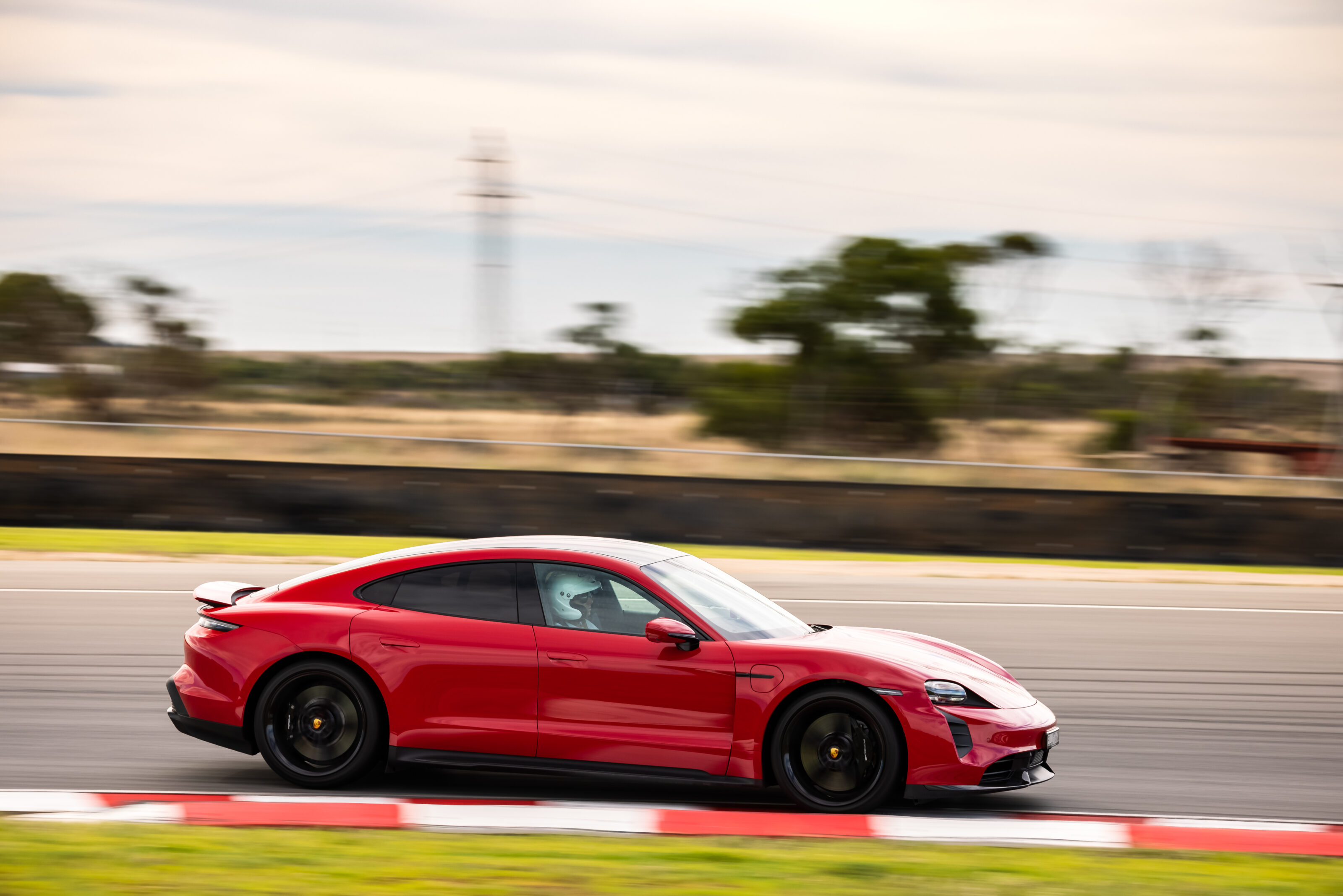
Youlden said the driving dynamics of the Taycan felt like any other Porsche despite using an EV power-plant as opposed to the internal combustion engines in the rest of the range.
“The lap time of the Taycan just absolutely blew me away,” said Youlden.
“You drive it in a similar way to any other Porsche sportscar. The turn-in, handling and acceleration were outstanding. The power out of the corners is definitely where it makes up a lot of time.”
The EV record lap sits nearly a minute away from the ultimate lap record around The Bend’s GT Circuit, a best time of 2:38.673 being set in the 2020 Asian Le Mans Series round by Aidan Read.
You can watch a feature on the lap or the full-onboard on Porsche’s YouTube channel.
Snapshot
- Carbon Edition adds bespoke exterior and interior elements
- Australian order books open for the Corvette
- General Motors has cancelled its June allocation production cycle due to supply issues
The 2022 Chevrolet Corvette Carbon Edition is now available to order in Australia.
Announced by General Motors Special Vehicles (GMSV), the top-shelf performance coupe will set local buyers back $189,900 plus on-road costs. However, that number could balloon to well over $200k drive-away, according to previous reports.
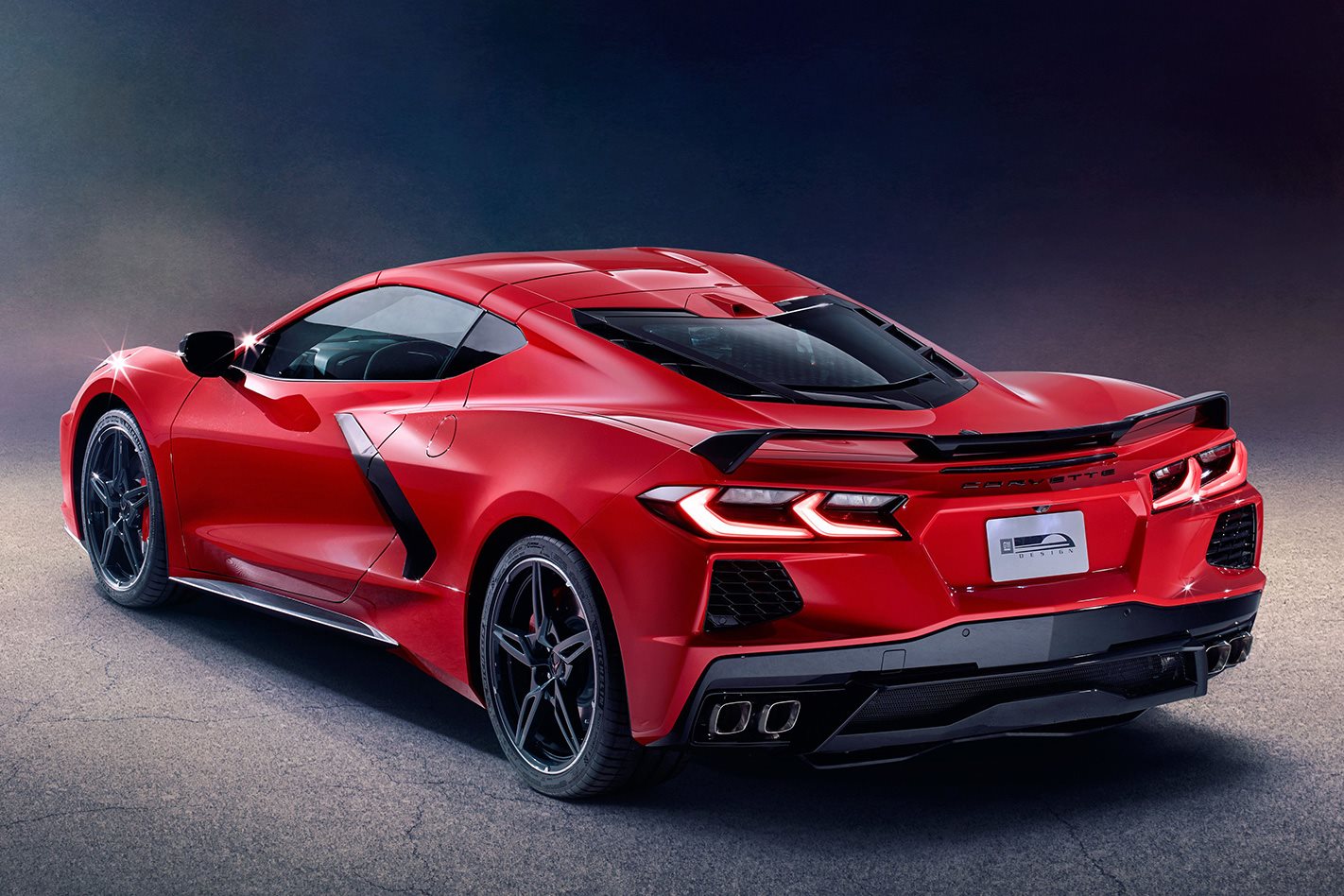
The Carbon Edition starts its life as a regular 3LT coupe, but it’s then adorned with bespoke elements such as machined grey Trident wheel, colour coded brake calipers, carbon fibre roof, bespoke carbon edition build plate, and an exclusive carbon edition customer welcome pack.
Inside, the two-seater’s interior has been lavishly appointed with a carbon fibre trim package with carbon fibre inserts on the dash and door panels.
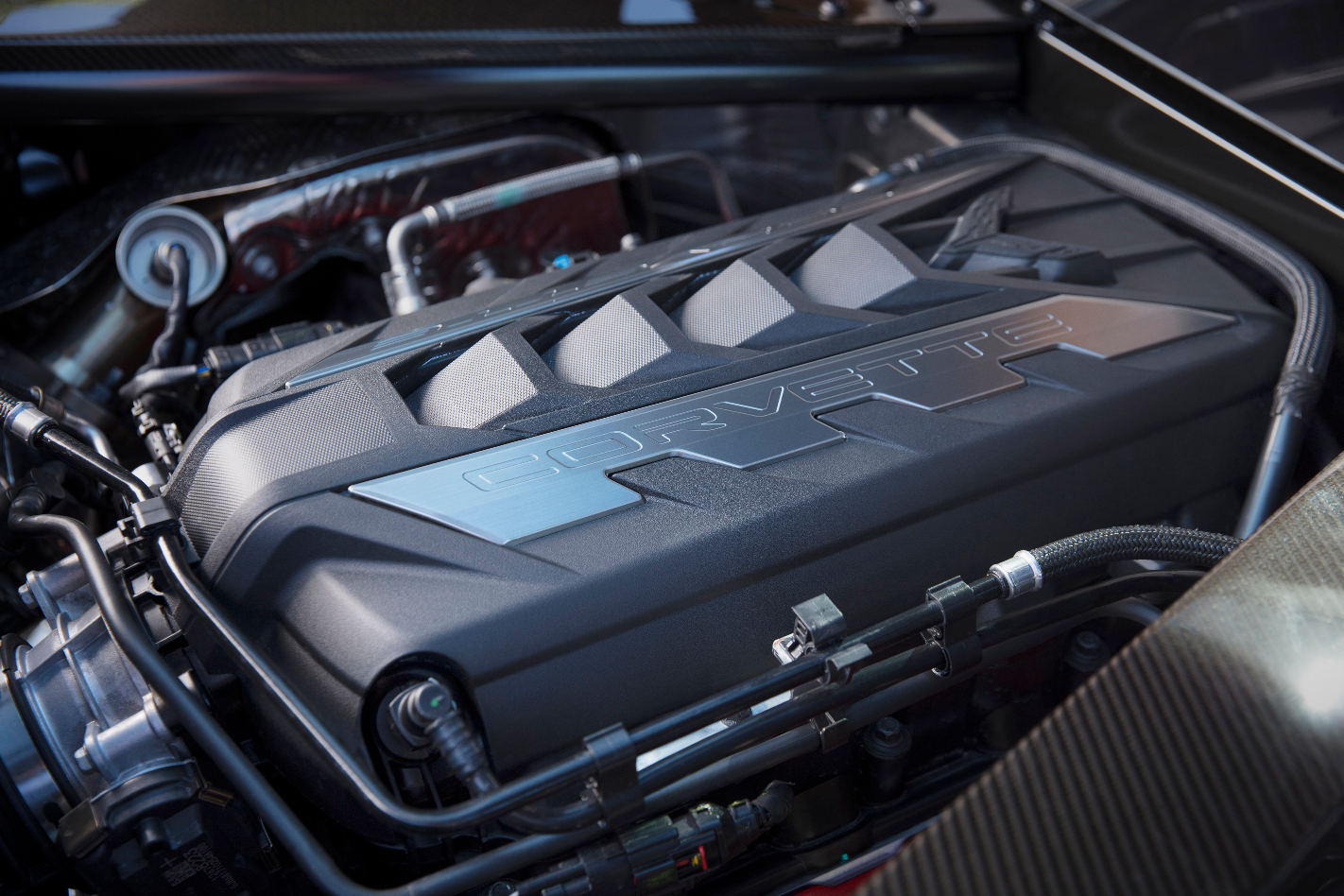
Powering the Carbon Edition will be the same LT2 naturally-aspirated 6.2-litre V8 found in the rest of the local ‘Vette line-up.
The bent-eight donk still churns out 369kW and 637Nm, which is enough grunt for the Chevy to sprint from 0-60mp/h (98km/h) in a scarcely believable 2.8 seconds.
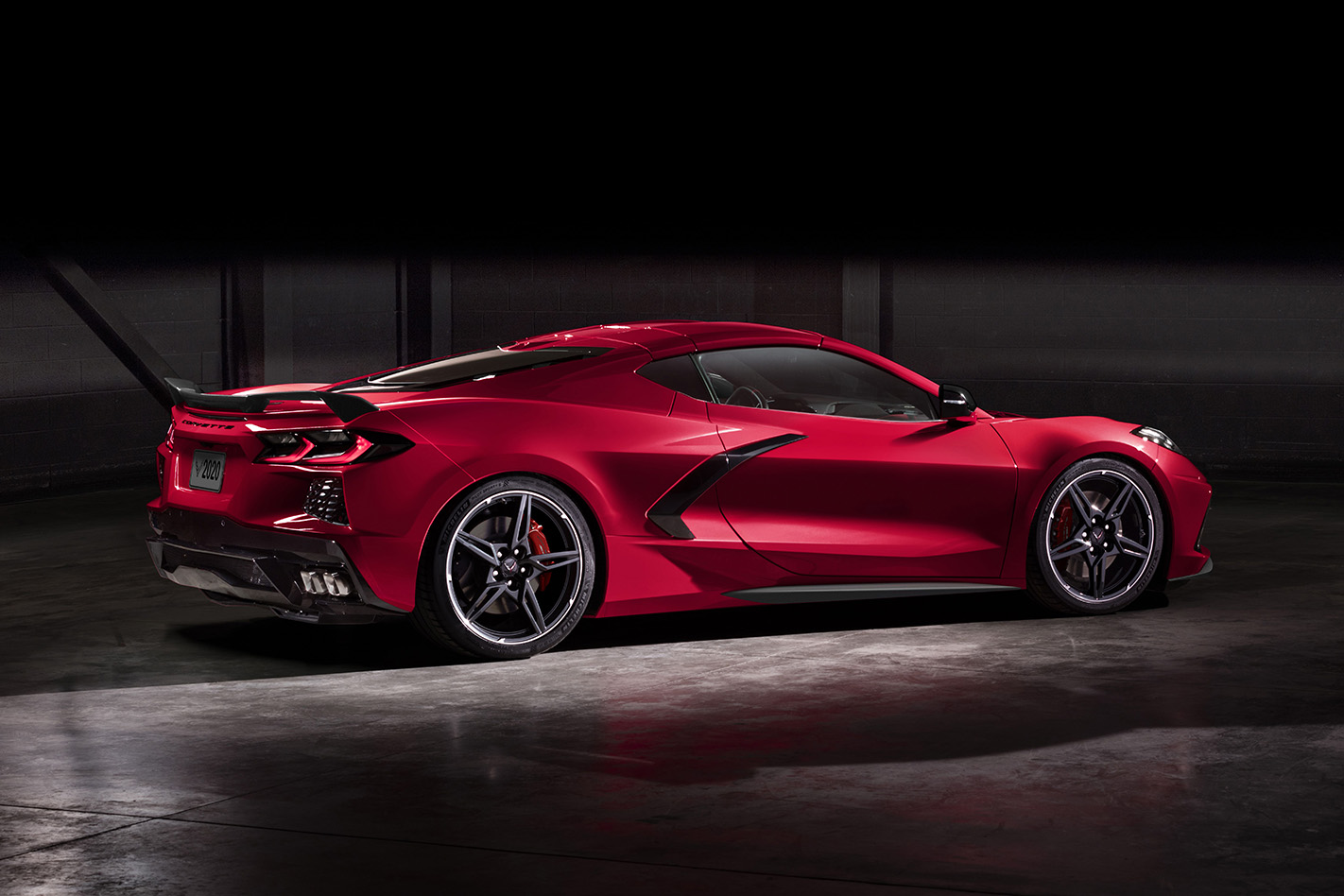
The Carbon Edition’s local price unveiling coincides with GMSV formally announcing the order books for the 2022 Chevrolet Corvette are finally open.
Meanwhile it also coincides with news coming out of the US that General Motors has pressed pause on the Corvette’s production due to supply issues.
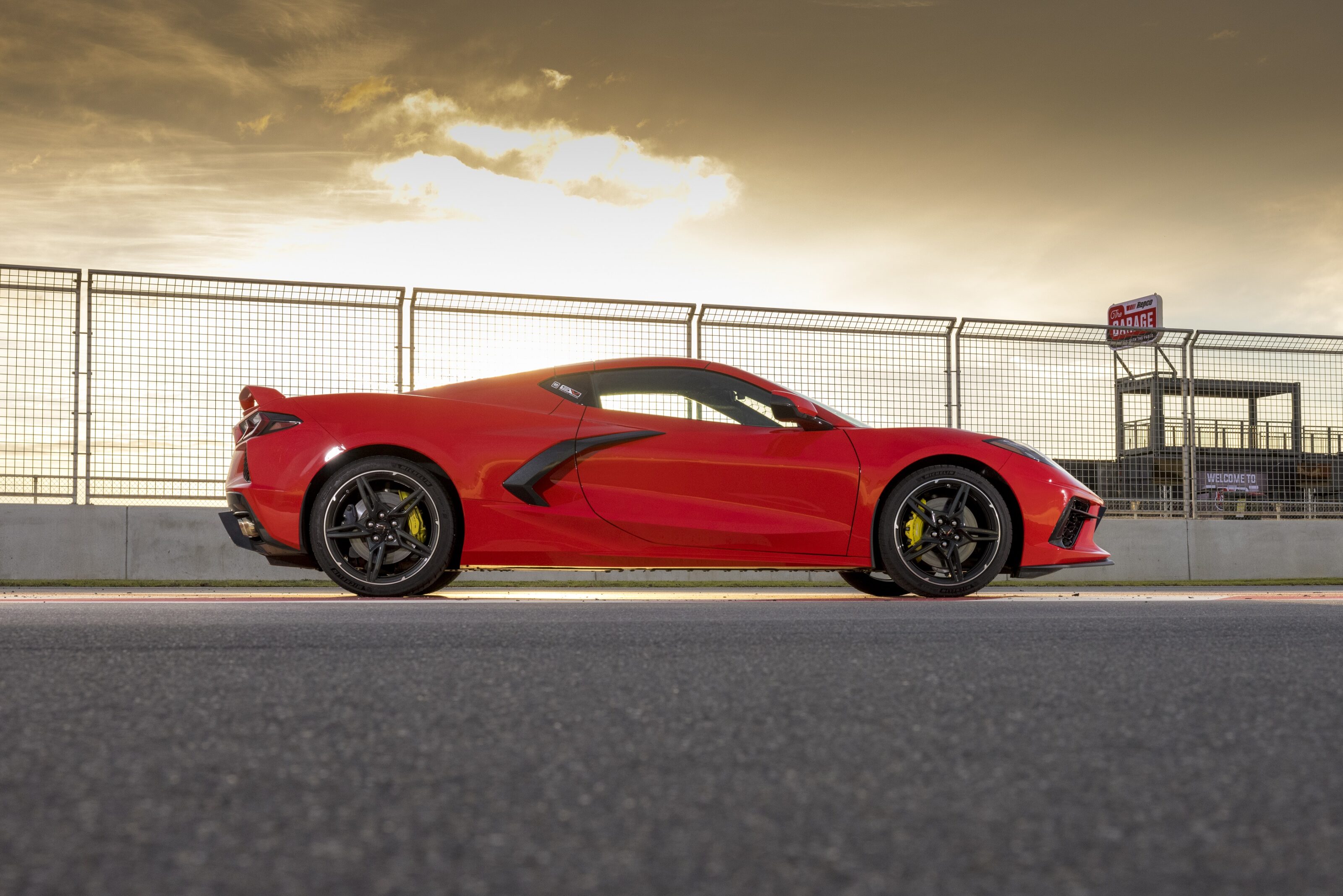
According to an internal email first published by Corvette Action Center, The General had to cancel its June allocation cycle because of “continued unplanned part shortages not related to the industry-wide semi-conductor availability issues.”
Motor has reached out to GMSV to clarify if this manufacturing delay will impact local delivery times for Australian customers.
We’ll update this story when we know more.
Snapshot
- 375kW/650Nm headline the specs of M Competition models
- Model release comes in line with broader X3 and X4 update
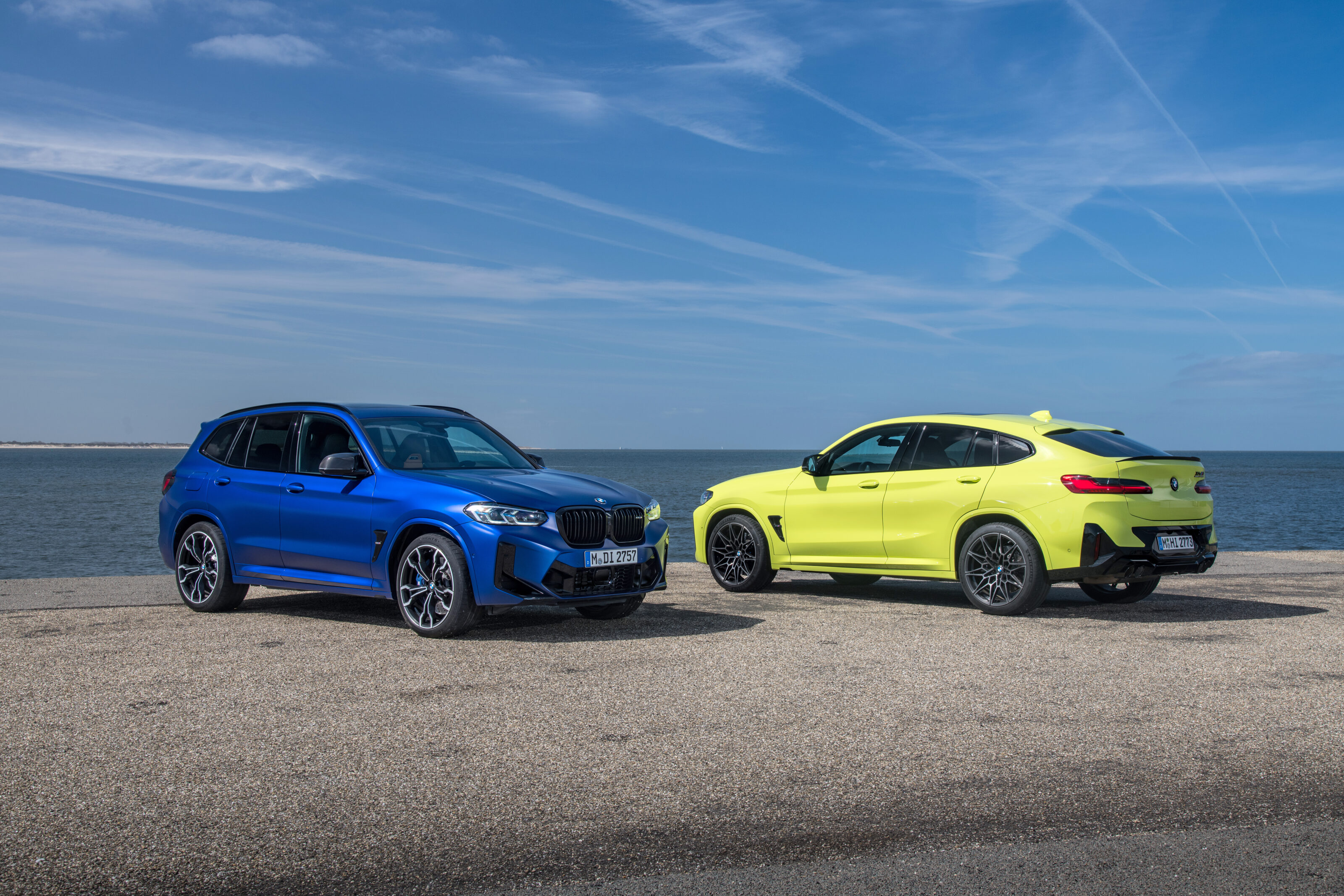
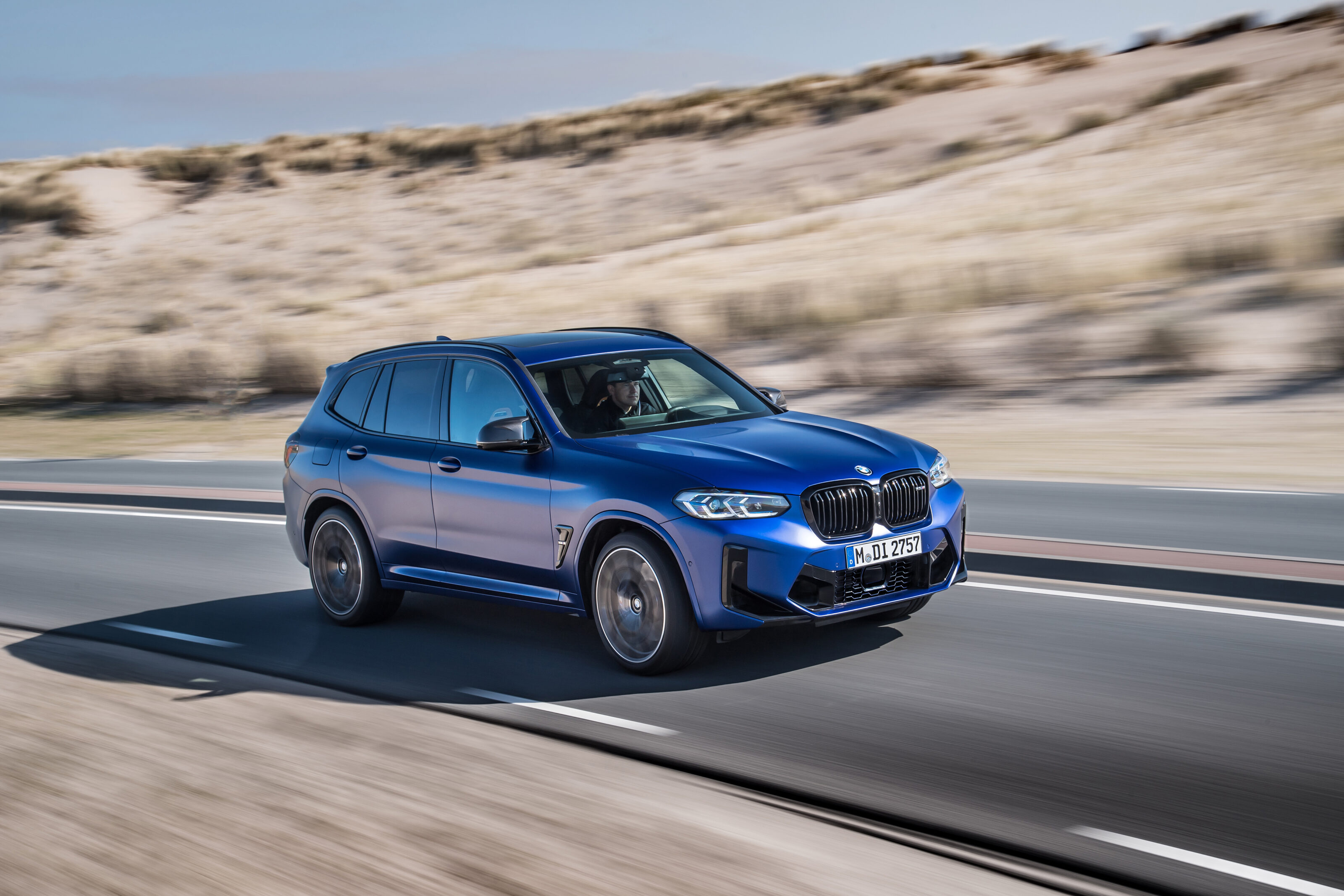
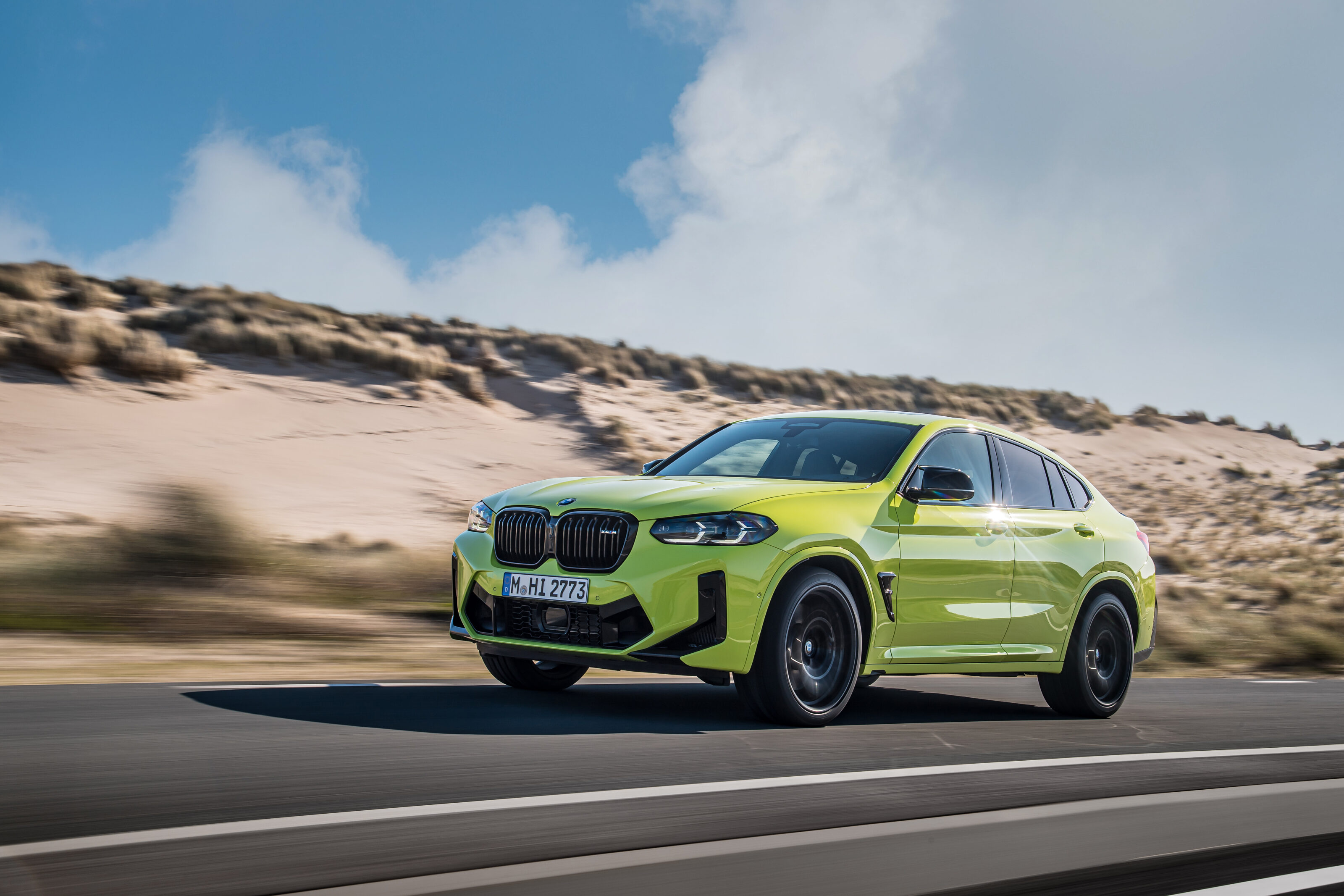
The updated BMW X3 M Competition and X4 M Competition models have been announced today, falling in line with the rest of the X3 and X4 range which have undergone a mid-life update.
Fitted with the inline-six engine from the M3 and M4 performance models, the X3 and X4 M Competition boast a 50Nm increase in torque over the models they replace which has reduced the 0-100km/h sprint time to 3.8 seconds, three-tenths quicker than the outgoing X3 and X4 M Competition.
Features
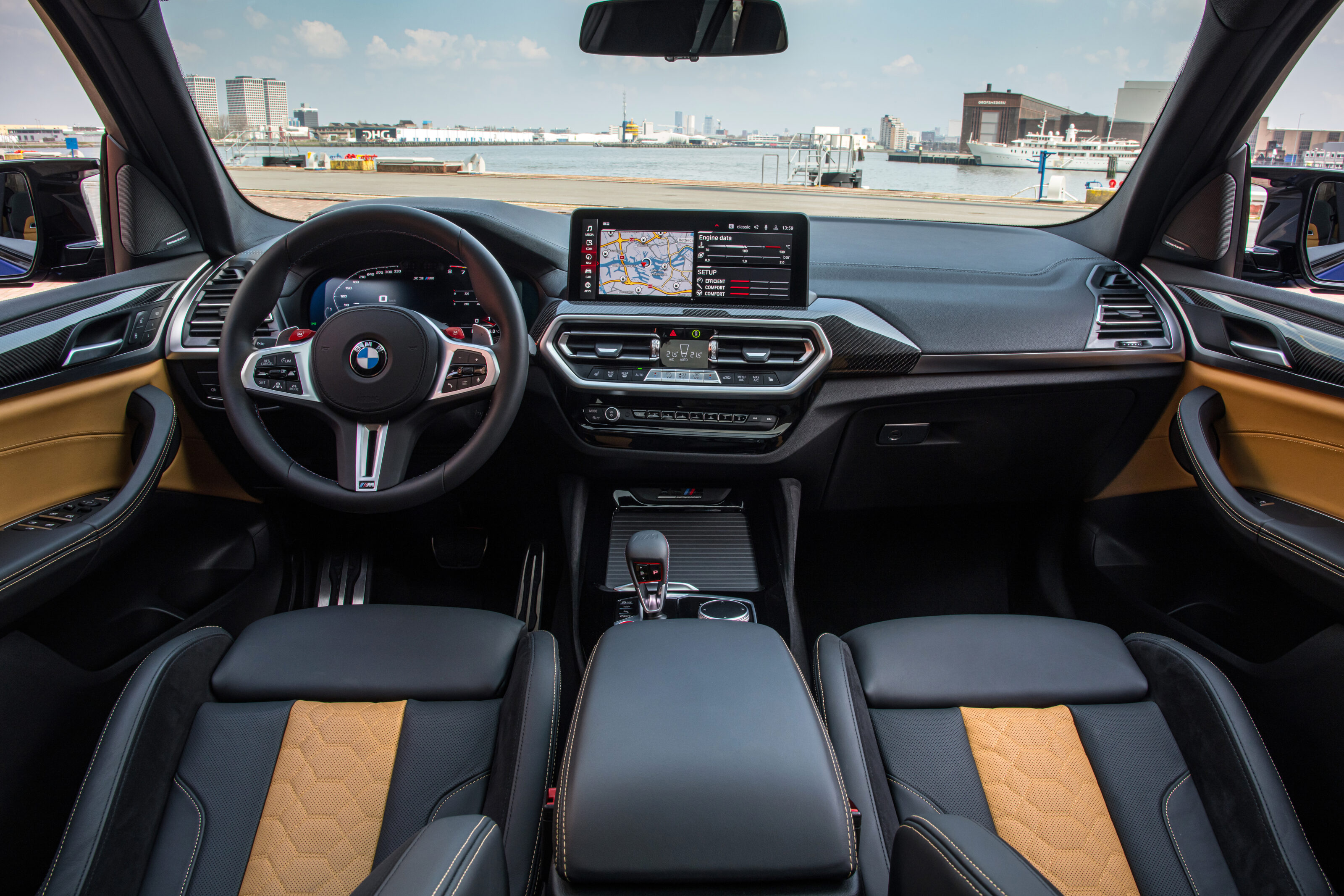
Identical equipment is shared across the X3 and X4 M Competition variants, standard features include:
- M specific body trim (front bumper, mirrors, grille)
- LED headlights
- Full 12.3-inch digital gauge cluster
- 12.3-inch infotainment screen with BMW Maps, Apple CarPlay and Android Auto
- Harman Kardon surround sound
- M sports seats with electronically adjustable headrest
- M sports exhaust with variable flaps
- M suspension with electronic dampers
- Blue M brake calipers (black and red optional)
- 21-inch forged wheels
- Carbon Black, Brooklyn Grey, Marina Bay Blue metallic and Sao Paulo Yellow paint finishes.
- Driving assistant professional and BMW drive recorder
- BMW laser light
- Merino leather in Tartufo
- Frozen Marina Bay Blue matt metallic paint
- Head-up display
- Parking assistant with reverse assistant
- Increased speed limiter from 250km/h to 285km/h
Engine, drivetrain and fuel economy
The 3.0-litre, six-cylinder twin-turbo engine in both the X3 and X4 M Competition offers identical power and torque figures for each model, punching out 375kW and 650Nm to deliver 0-100km/h times of under four seconds.
An increase of 50Nm compared to the existing X3 M Competition and X4 M Competition is achieved with revised engine mapping but a new forged lightweight crankshaft can be found inside the S58 engine, helping it deliver the power more reliably.
Power is sent to all four wheels through an eight-speed torque converter automatic transmission, allowing the X3 to record WLTP fuel consumption figures of 11.0-10.8L/100km, while the X4 records slightly more frugal results, down to 10.8-10.7L/100km.
As previously mentioned, the top speed is limited to 250km/h but can be increased to 285km/h with the purchase of the M Driver’s Package.
Dimensions
A difference in styling leads to a variation in size but only a minimal one, the X3 and X4 sharing the same 2864mm wheelbase with the bodies close enough in outside measurements to not notice a discrepancy.
The X3 sits at 4716mm in length, 1897mm wide and 1669 high. The X4 is slightly longer at 4754mm and is wider with a width of 1927mm but is marginally shorter height-wise at 1620mm.
Availability
With the standard variants of the X3 and X4 expected to land in Australia at the end of 2021, it is likely the M Competition models will arrive in the first quarter of 2022.
The outgoing X3 M Competition is available from $157,000 plus on-road costs with an extra $7000 premium for the X4 M Competition. Though pricing hasn’t yet been released for the updated X3 and X4 range, it’s likely both M Competition variants will stay below $175,000 before on-road costs.
Snapshot
- Based on Renault/Nissan’s CMF-EV platform
- Power comes from a 50kWh lithium-ion battery pack and 160kW electric motor
- Full reveal expected in late 2022
Renault has officially unveiled images of its upcoming Mégane E-Tech Electric crossover SUV in pre-production guise.
First revealed in 2020 as the Mégane eVision, which was part of Renault’s ‘eWays: The Challenge towards Zero Emissions’ initiative, the upcoming electric crossover will take the Mégane moniker in a whole new direction.
We’ve previously seen teaser images of the E-Tech’s slender rear taillight and a close-up shot of the car’s curved dual-screen infotainment screen and central infotainment screen, but this is the first time the EV has been shown in almost production-ready spec.
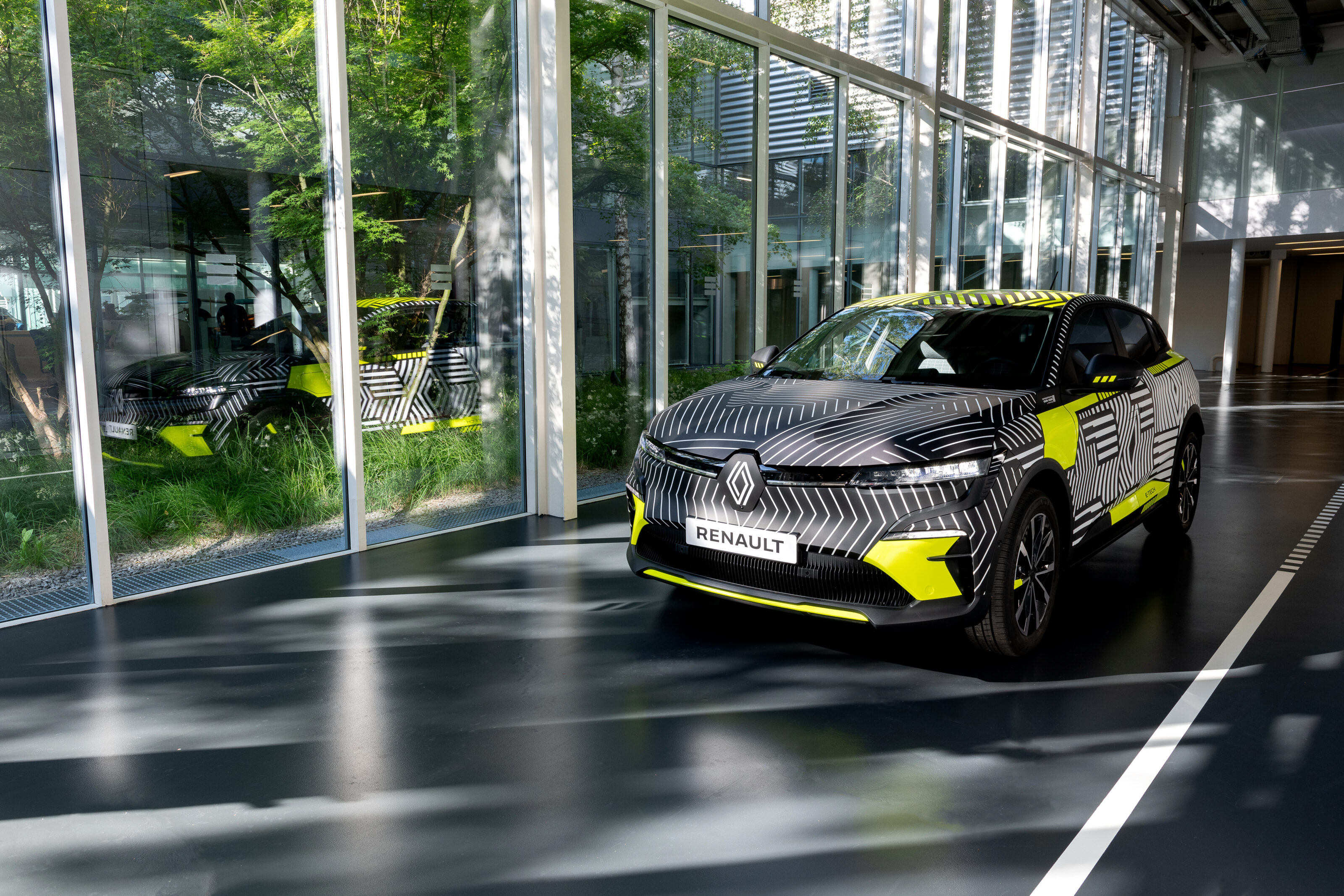
According to the French marque, 30 test examples of the E-Tech will be deployed across Europe over the next few months, which will allow Renault’s engineers to further test and develop the EV.
Based on the Renault–Nissan Common Module Family CMF-EV platform, which is shared with Nissan’s upcoming Ariya SUV, the new Mégane is powered by a 60kWh lithium-ion battery pack and a 160kW electric motor, which will send power to the front wheels.
However, there is the possibility for a more powerful, dual-motor, all-wheel-drive variant in the future, given Nissan’s top-shelf Ariya variant is offered with an 87kWh battery pack, two electric motors, and 225kW of power.
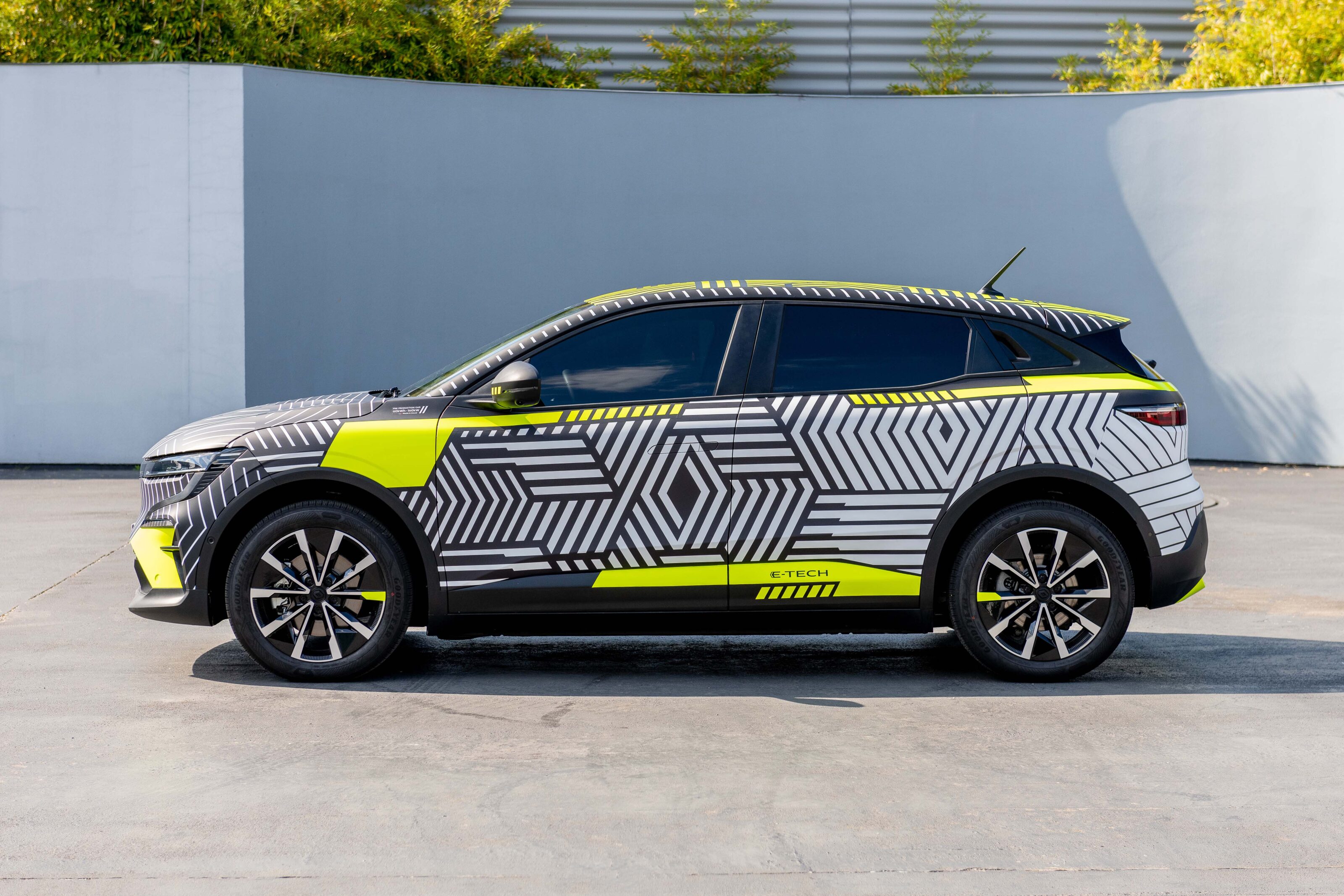
The Mégane E-Tech Electric will be built in Renault’s Douai plant in France. It will also be the French marque’s first attempt at a C-segment EV, which will sit alongside the A-segment electric Twingo and B-segment electric Zoe.
It’s not known when the final, consumer-ready version of the E-Tech will actually go on sale. However, it is expected to be unveiled properly by the end of 2022.
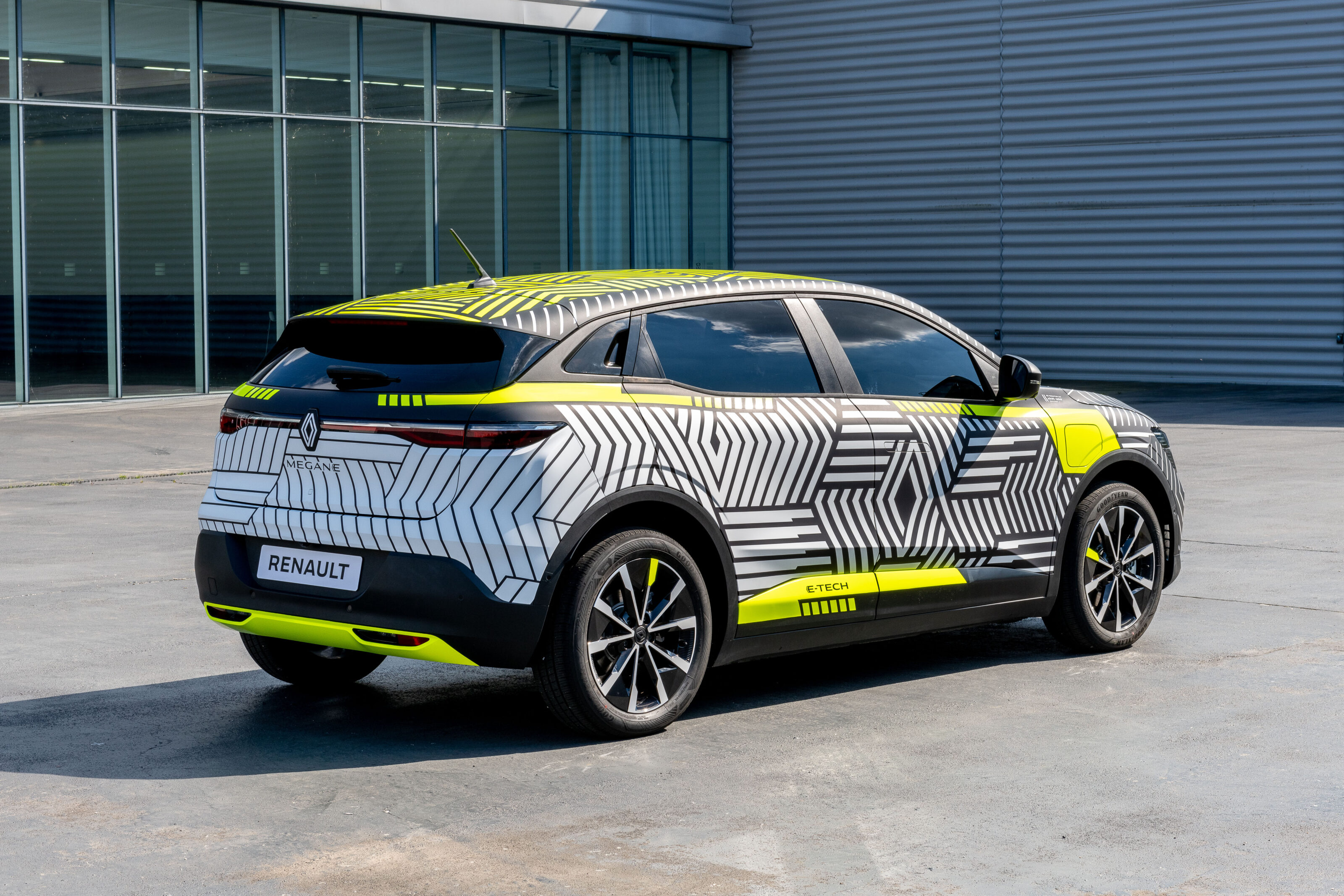
Will the Mégane E-Tech Electric be coming to Australia? This remains unclear at the moment, especially considering Australia’s lagging approach to EVs.
Renault Australia told WhichCar it is certainly interested in a model like the E-Tech, and it will be assessed for the Australian market in the future.
Snapshot
- 25 dealerships in Belgium, Spain, and the UK said to be affected
- German automaker could be looking to bolster cash reserves and reduce operating costs
- Could also be the precursor to an ‘agency model’ for the European market
Mercedes-Benz is said to be planning on selling around 25 of its dealerships and service centres in Belgium, Spain, and the UK.
According to the German publication Handelsblatt and also Automotive News Europe, the automaker is looking to free up funds and reduce operating costs on the continent.
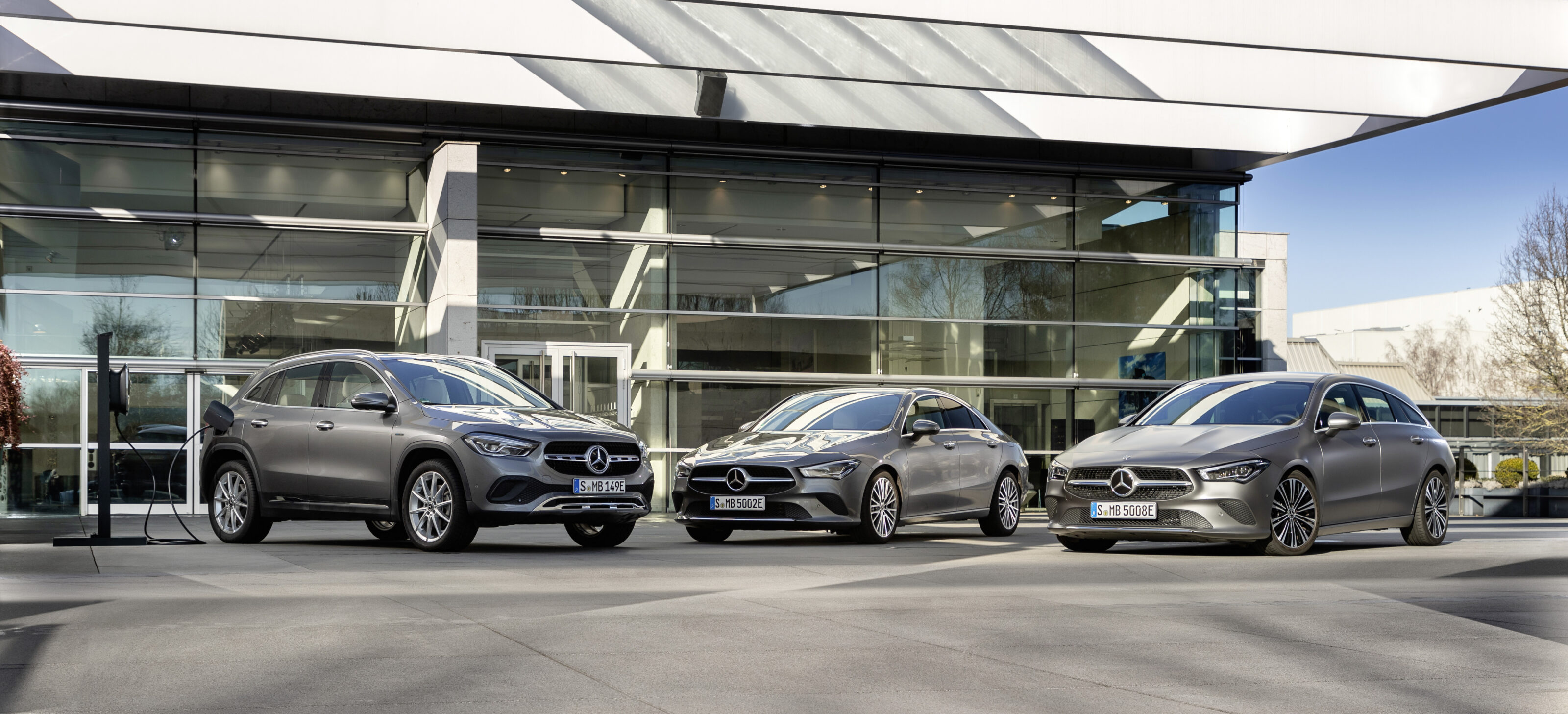
The 25 Mercedes-owned dealerships involved currently employ roughly 2800 people, with the Stuttgart firm thought to be looking to sell to third party dealer groups or investors, who may guarantee the job security of affected employees.
“In potential talks with interested buyers, high priority is placed on their [the dealerships’] long-term economic success and the continuation of Mercedes-Benz’s operations,” a Mercedes spokesperson told Automotive News Europe.
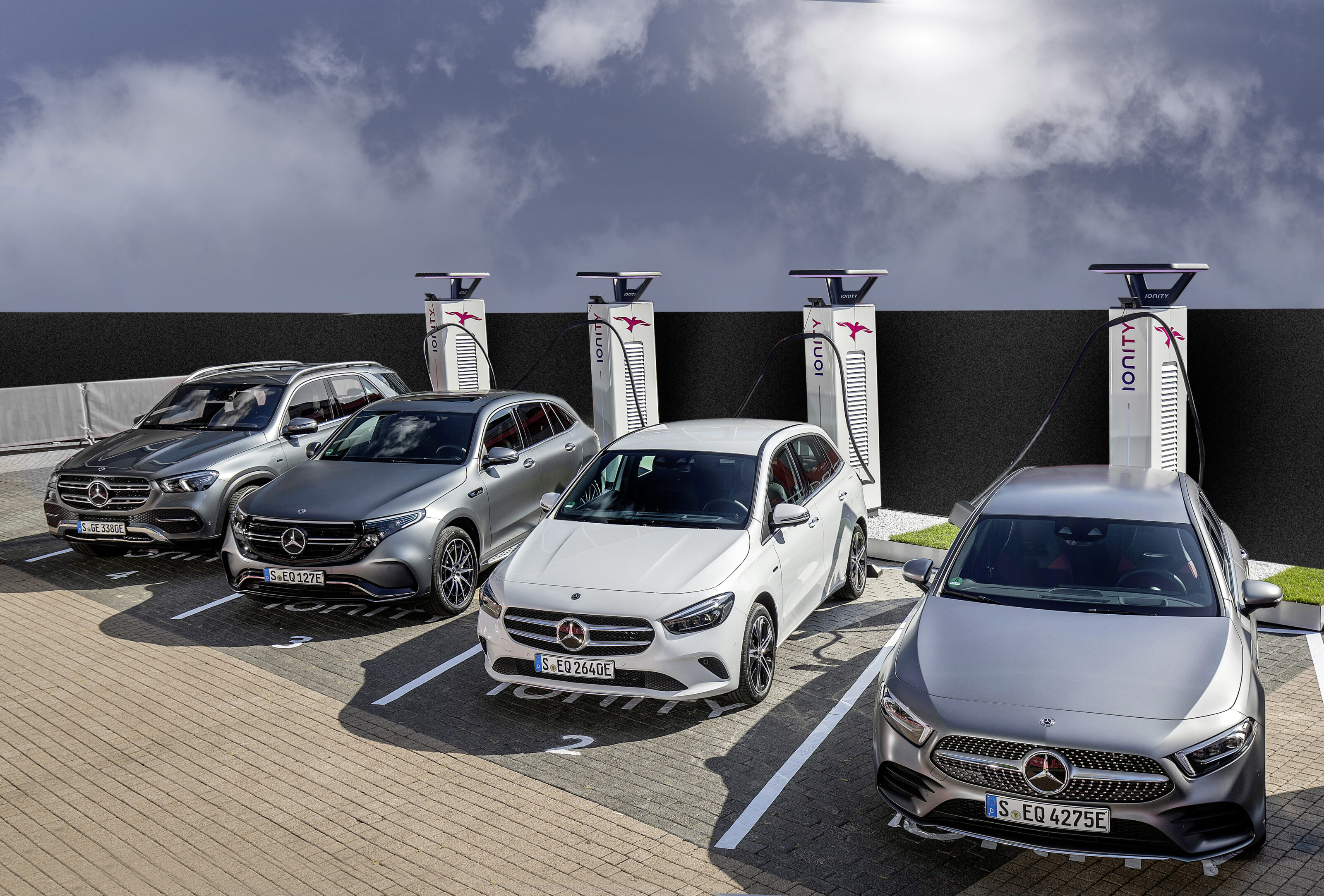
It’s thought the sale could fetch as much as €1billion (roughly AU$1.5billion), which is roughly one per cent of the automaker’s annual revenue (according to 2020 figures).
Locally, this news is unlikely to affect Mercedes-Benz dealerships, as the automaker doesn’t own any – they’re all franchised.
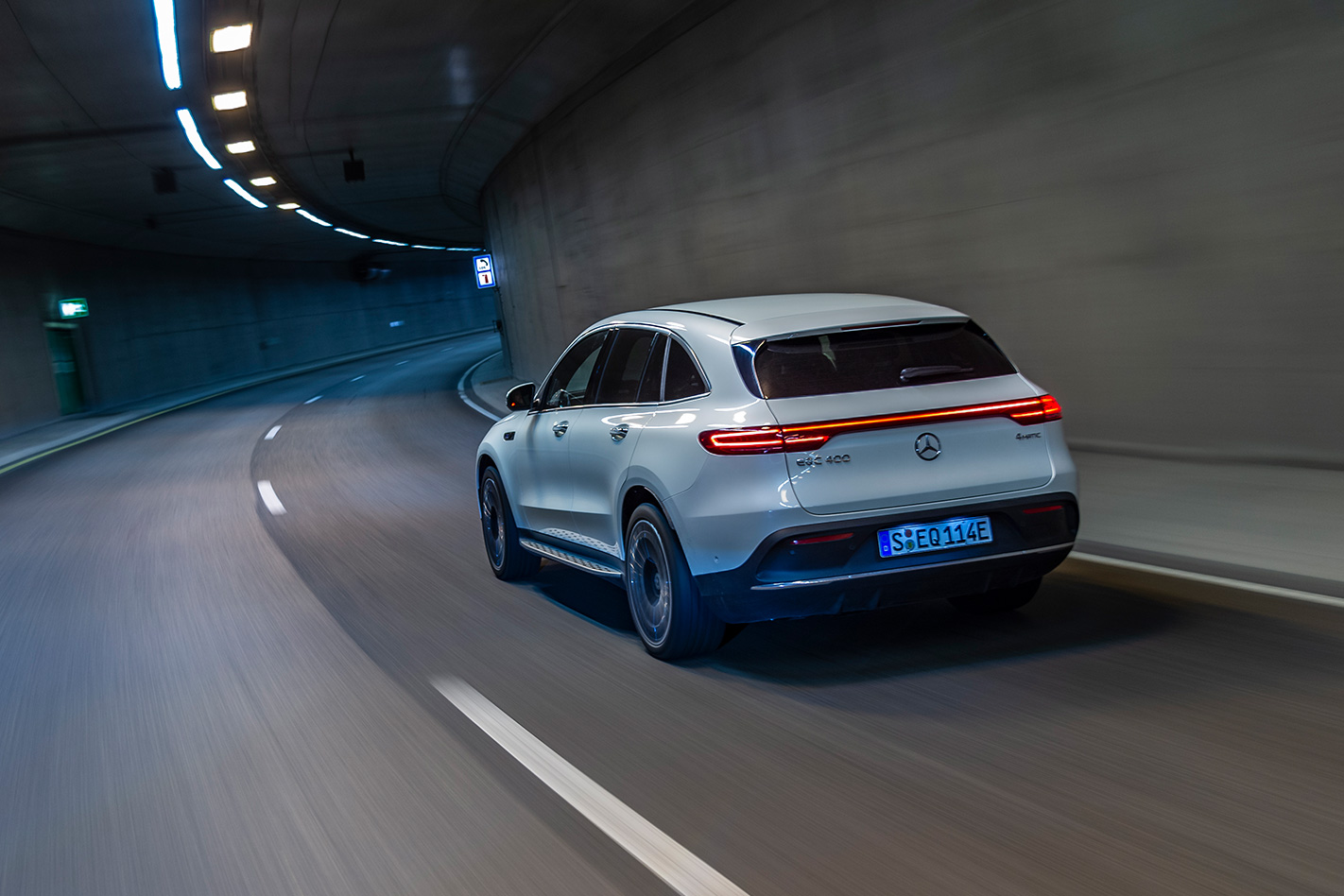
The news may also point to the automaker considering introducing its ‘agency model’, which has already been rolled out in Sweden, to other European markets.
Announced for Australia in 2020 and due to begin in 2022, the agency model will see Mercedes selling its entire product line-up at a fixed price to Aussie consumers. However, Mercedes’s all-electric EQ products, such as the new EQS, are already sold using the agency model.
The shift in sales tactics has drawn scrutiny from local industry bodies, who are concerned not enough information is being provided about how the new set-price modelling will impact dealer franchise owners.
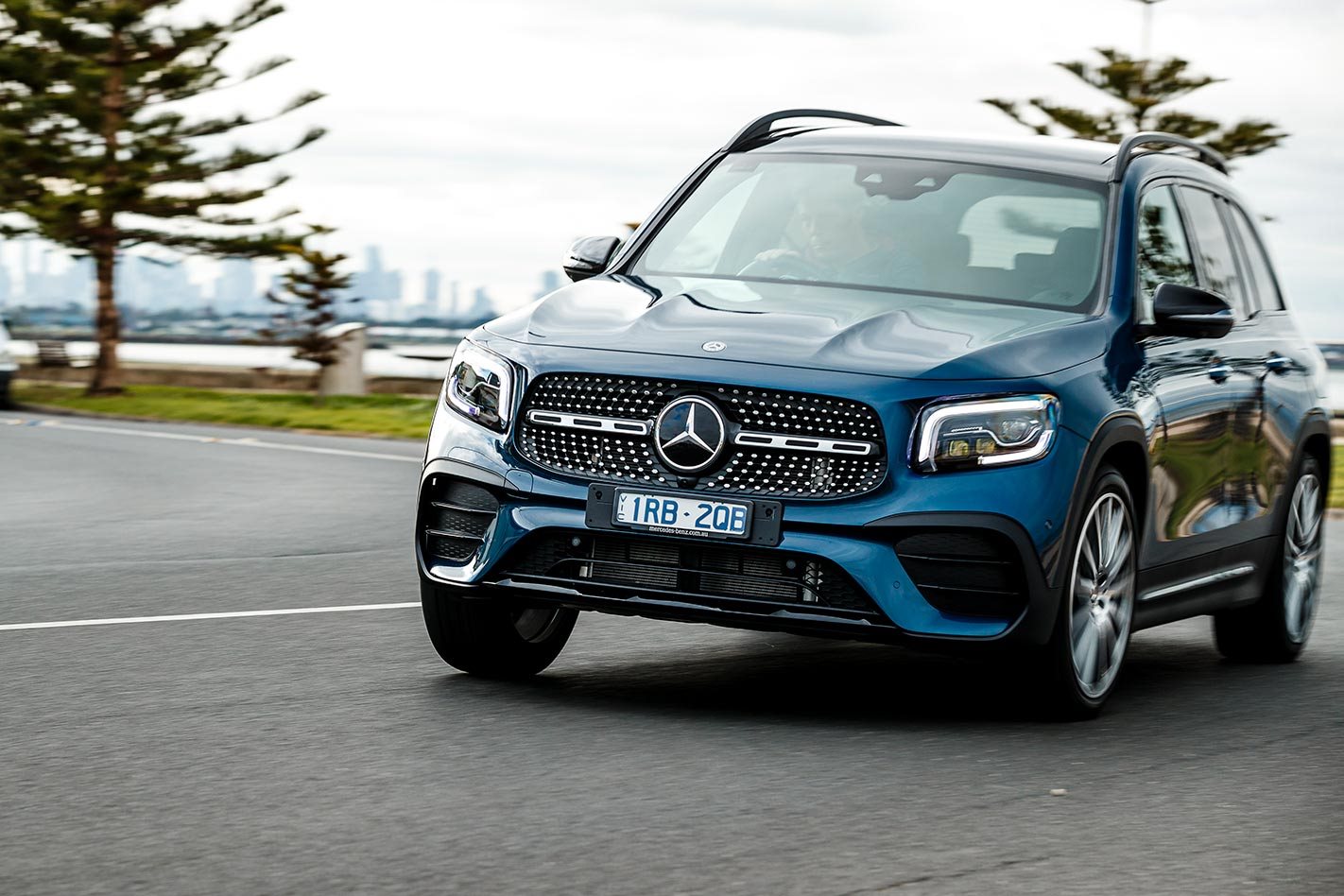
“There are concerning trends developing around some manufacturers rationalising networks and changing their distribution models, but not doing so transparently and not providing their dealers with adequate compensation,” said James Voortman, CEO of the Australian Automotive Dealer Association (AADA).
“Australia needs regulations similar to those which exist in the other industrialised countries to level the playing field between dealers and manufacturers.”
“The fact of the matter is new car dealers make significant investments and play an important role in an incredibly important industry, but they are vulnerable to the decisions being made in board rooms in Tokyo, Stuttgart and Detroit,” Mr Voortman said.
While the agency model has been controversial, Mercedes-Benz argues this new method will make for a more honest and less stressful buying experience for its customers, providing a ‘seamless end-to-end customer journey’.
“What we wanted to achieve was to reduce the complexity for our customers while we further increase flexibility and convenience,” Britta Seeger, member of the Board of Management of Daimler AG, said in a press conference last year.
“Additionally and of high importance for our customers is the pricing is transparent and we provide it uniformly across all the channels.
“Our customers really do appreciate price equality for our models and they do not have to worry about negotiating.”
Mercedes isn’t alone in this new sales shift, with Honda Australia also announcing a national one-price sales system, which will be taking effect from July 1, 2021.
