COTY

Gallery 1
Remember those crazy t-shirts from Japan in the 1980s? The ones that featured Japanese-English translations so incongruous they were worth the admission for that alone. ‘Super-Bomp Explorage Crew’ was, I think, my favourite.
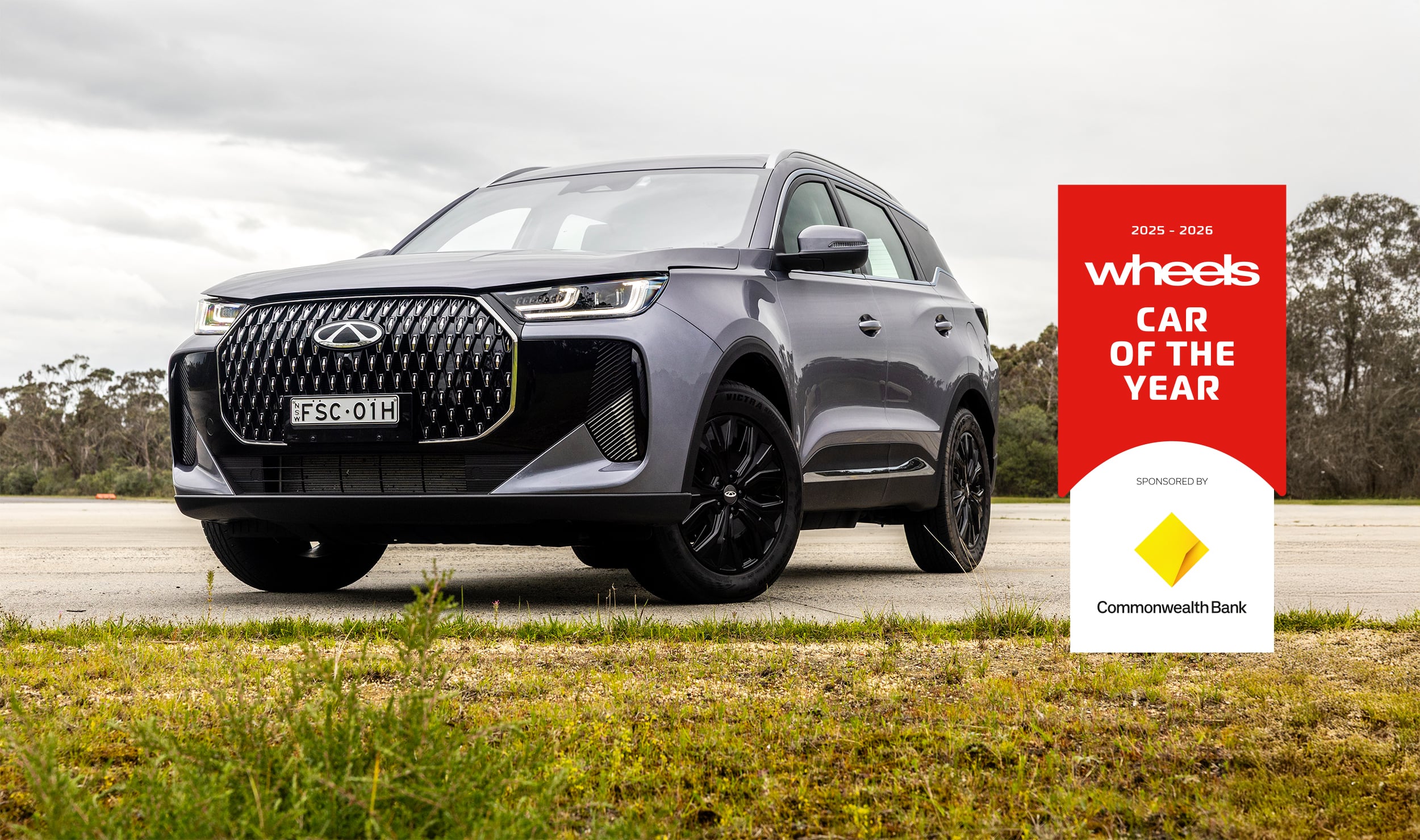
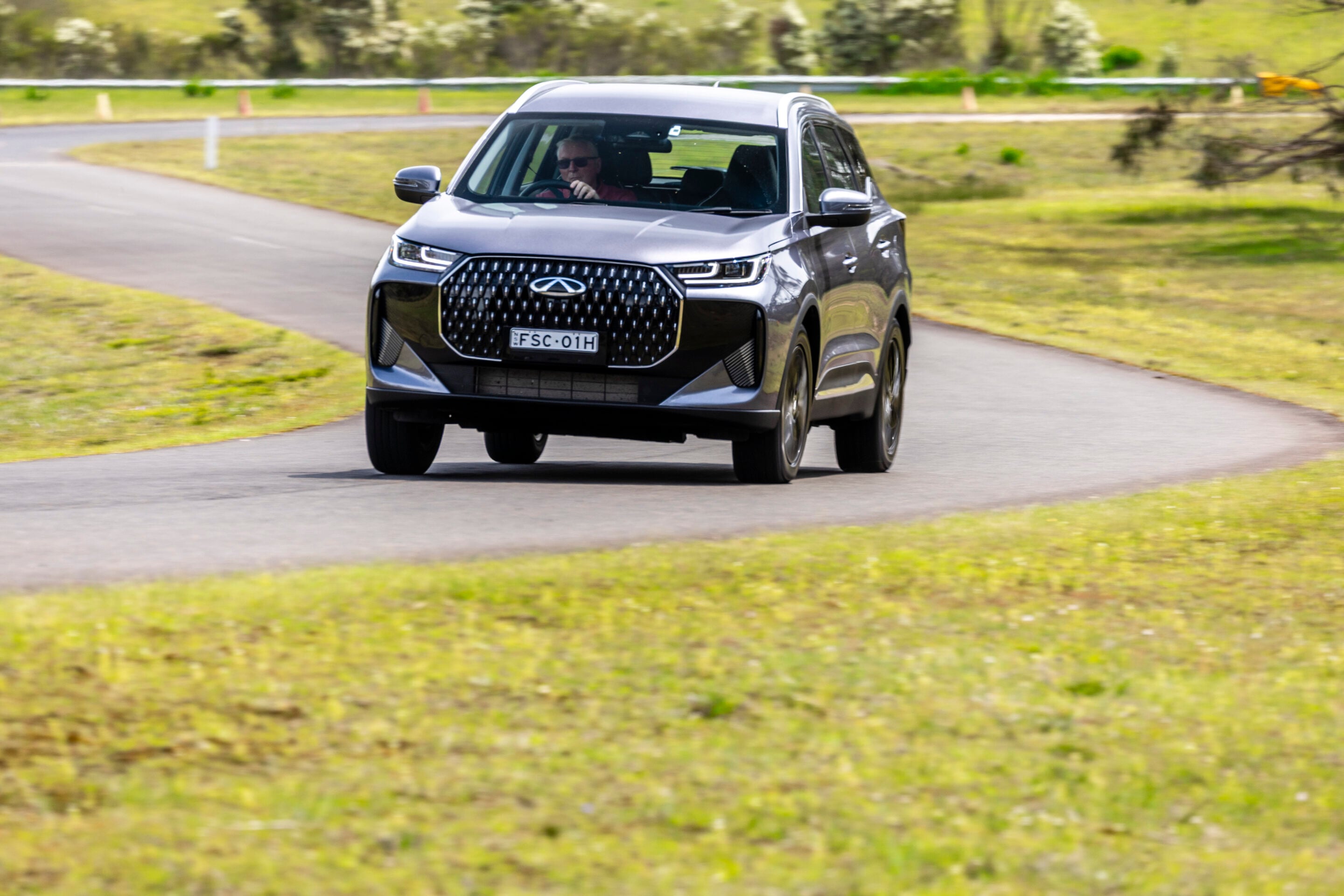
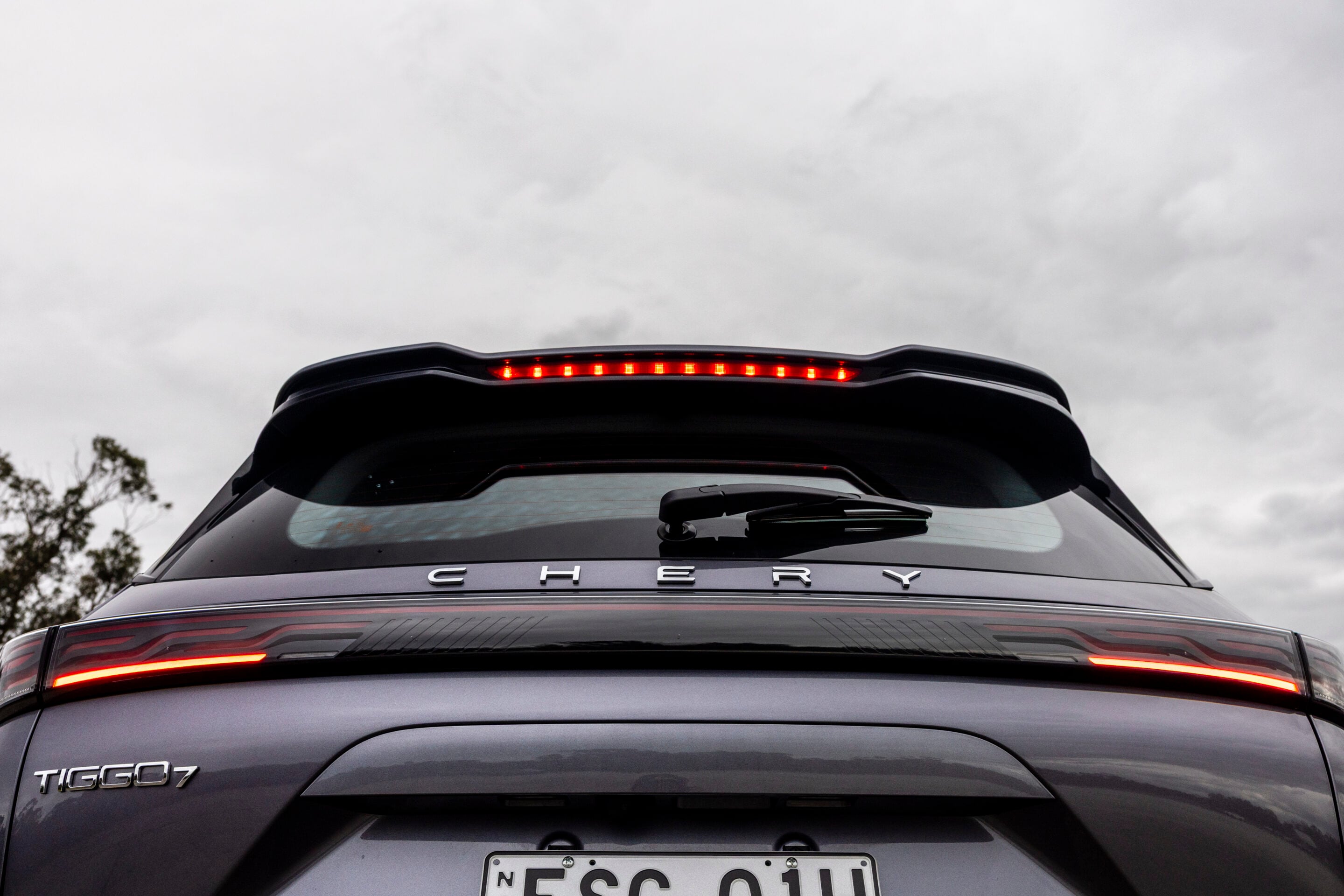
Don’t know about you, but I’m getting a similar vibe from the Chery Tiggo 7. Maybe I’m wrong; maybe the Chinese-made SUV really is a ‘Super Hybrid Urban’.
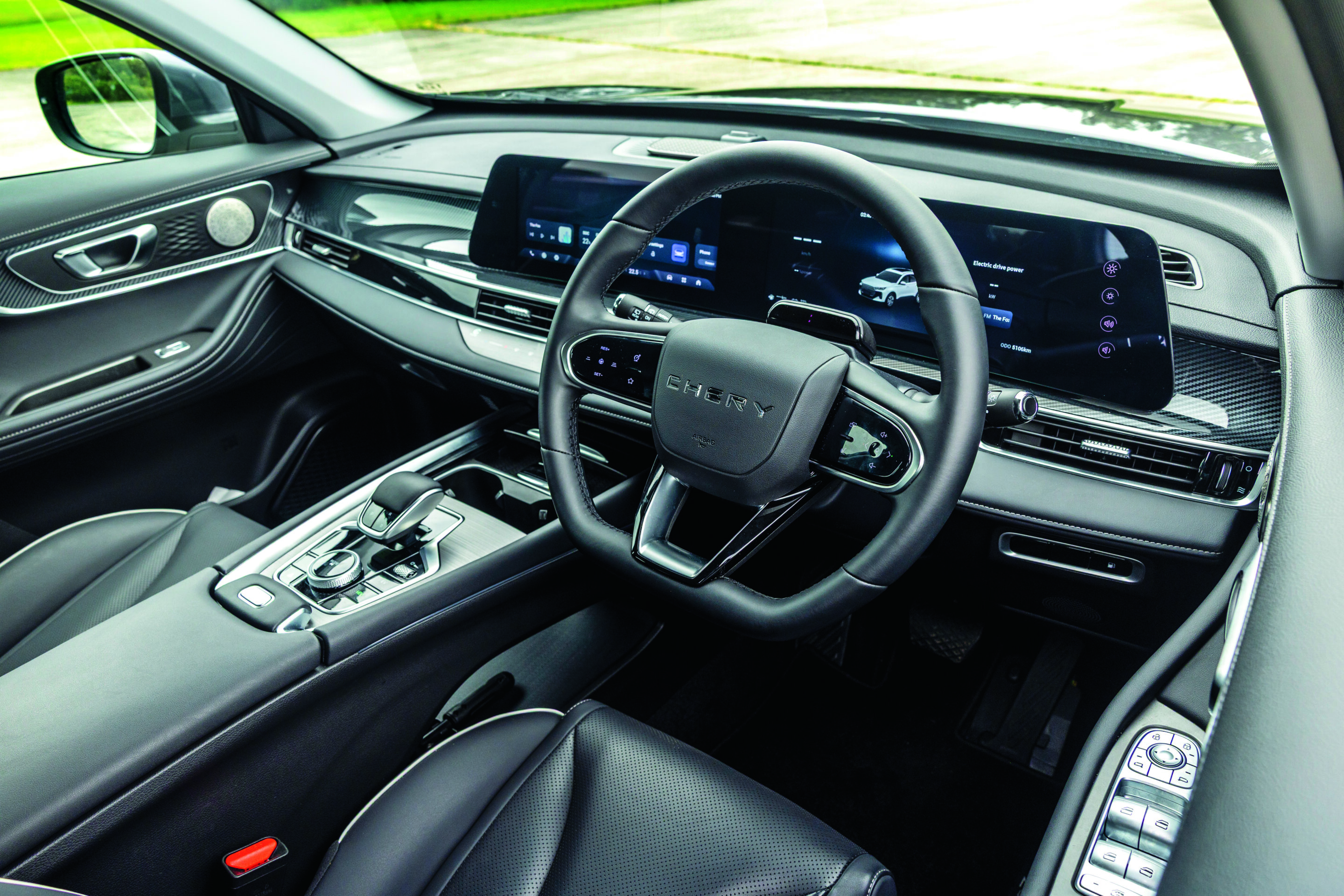
I’m only making (labouring) this point because there are several other reasons to consider the Tiggo 7 in this form. Those start with the slash-and-burn pricing of $39,990 drive-away. At that price-point, you might not be expecting a plug-in hybrid driveline, but the Tiggo 7 has one. Nor might you anticipate 18-inch alloys (which, to be honest look more like plastic hub-caps to these eyes), wireless Apple Carplay and Android Auto, keyless entry and start, dual 12.3-inch info screens, a powered driver’s seat and faux leather. Yet they’re all included within that sub-40-grand ask.
2
So is a thing called sit-to-start which does away with a starter button (and convention) and will start the car once you’re seated, with a foot on the brake, a gear selected and your seat-belt fastened. The minimum-wage stiffs who move cars around dealership lots are going to hate that one.
You can spend more on the Ultimate specification to include a panoramic sunroof, heated and ventilated front chairs, ambient lighting and a 360-degree camera, but that adds $4000, suddenly ratcheting the price into tougher, sharkier territory. And doesn’t sub-40-grand-family-plug-in-hybrid have such a nice ring to it, at a time when an avo-coffee and a smashed latte will probably empty your wallet?
Powering the Tiggo 7 is a petrol engine that is rapidly becoming the default hybrid solution; a 1.5-litre turbocharged petrol four-cylinder. It makes 105kW of power and is teamed with a 150kW electric motor. Strangely, nobody seems to know the actual combined power and torque outputs when both powerplants are humming along together, but it’s never as simple as 105 plus 150 equals 255kW (it’s almost always less).
2
Regardless, performance is more than adequate for such a family-oriented piece of work, and the single-speed hybrid transmission keeps it simple. Smooth running is the name of the game even when the Tiggo is using its petrol engine, and the small capacity turbo-motor is as sweet as any of them in 2025. The driver can force the car into electric only mode, or simply select Auto mode and allow the car to decide for itself how it gets down the road. Stick to all-electric running, and the people at Chery claim a 90km range before the petrol engine will be called into play.
Charging the 18.4kW battery can be achieved at home on a household socket or a commercial fast DC charger. Well, the first 40kW of its capacity, anyway, at which point the battery will go from 30 per cent charged to 80 per cent in around 20 minutes.
In any case, recent research suggests that a lot of people with plug-in hybrids don’t charge them anyway. They simply rely on the efficiencies of normal hybrid running and leave it at that. The official test figure of 1.4L per 100km has Brothers Grimm written all over it, but real-world experience suggests that a mix of urban and highway running will still net an overall figure of less than 5L per 100km.
1
What’s not so hot is the Tiggo’s combination of ride, handling and steering. The latter can seem a little crumbly with a manufactured feel introducing a few little squirms and wriggles you’d swear shouldn’t be there. And that SUV combination of ride height and kerb mass (almost 1800kg) means the springs are firmer than you may have been expecting. For all that, however, there’s not the degree of body-roll control expected from a ride as firm as this one.
Anyway, long after you’ve tired of calculating the crazy-good fuel economy, that busy ride will remind that you spent 40-grand and not 60.
Specs
| Price | $39,990 (driveaway) |
|---|---|
| Body | Five-door, five-seat SUV |
| Drive | Front-wheel drive |
| Drivetrain | 1.5-litre four-cylinder turbo petrol PHEV, single electric motor, 18.4kWh lithium iron phosphate battery |
| Power | 105kW petrol/150kW electric |
| Torque | 215Nm petrol/310Nm electric |
| Transmission | 215Nm petrol/310Nm electric |
| Consumption | 1.4L/100km, 93km EV range NEDC |
| Kerb weight | 1825kg |
| 0-100km/h | 7.2 secs |
| L/W/H/W-B | 4535/1864/1702/2653mm |
| Boot space | NA |
| Warranty | 7yr/unlimited km |
| Safety rating | Hybrid: Unrated; non-hybrid: 5 star ANCAP (2023) |
Follow WhichCar/Wheels on Google
Click the button below to make WhichCar by Wheels a preferred source for your news.

We recommend
-
 News
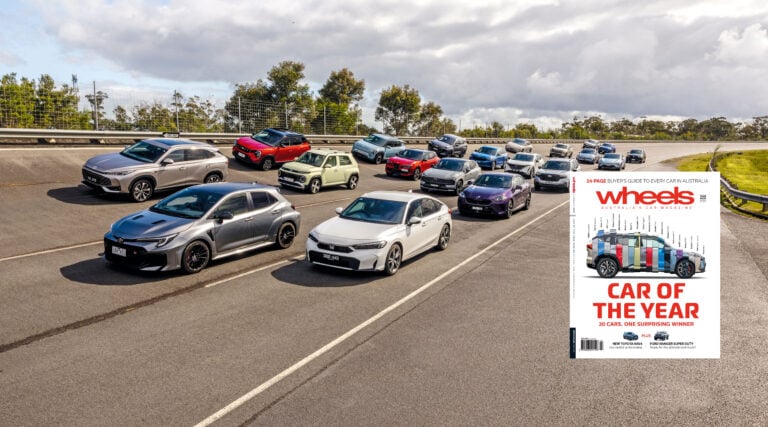
News2025-26 Wheels Car of the Year issue now on sale
From 20 contenders to a surprise top three and a deserving winner, the 62nd edition of the world's longest running annual car award, Wheels’ Car of the Year, returns in our annual yearbook along with plenty of other highlights.
-
 COTY
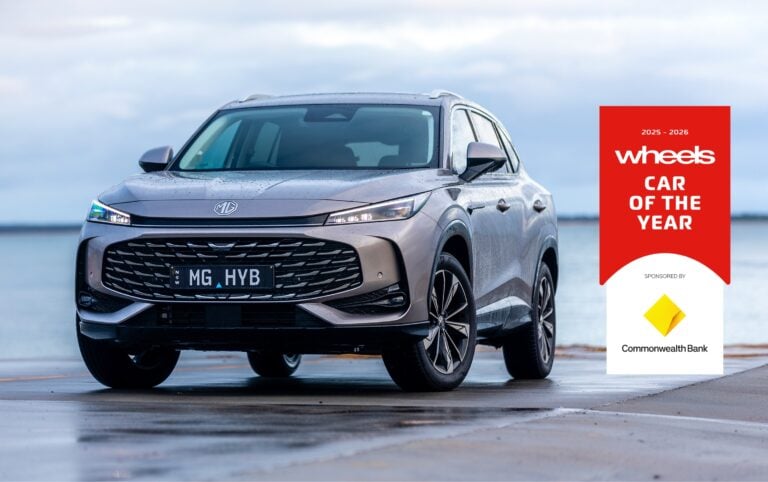
COTY2025-26 Wheels Car of the Year finalists, 2ND: MG HS Hybrid+ Essence
MG’s new HS Hybrid delivers unexpected polish, combining refined handling, smooth hybrid performance and impressive value to stand out in Australia’s crowded mid-size SUV field.
-
 COTY
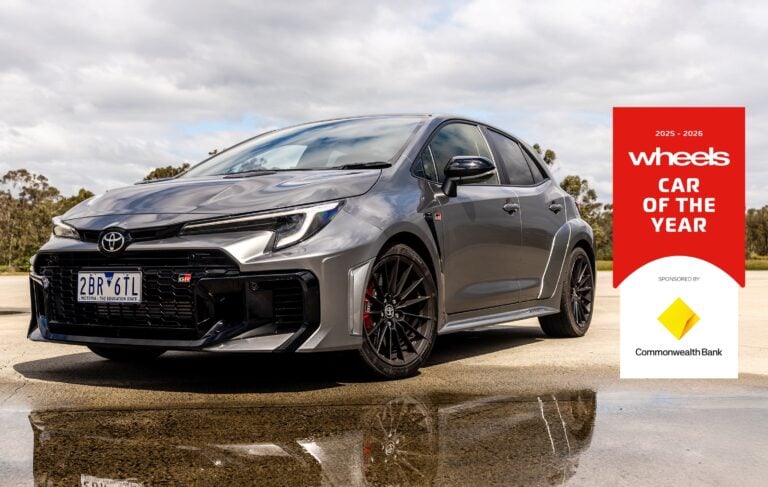
COTY2025-26 Wheels Car of the Year finalists, 3RD: Toyota GR Corolla
Toyota’s GR Corolla hogged both keys and tyres at COTY, blending rally-bred pace with daily-driver polish, proving Gazoo Racing’s magic lives on in 2025.