COTY

Gallery 1
It was early in 2024 when the bait came through the interweb. Hyundai wanted to know if I’d like to fly to Dubbo in central NSW to sample a top-secret prototype of what could become a volume selling model. In this game,that’s like asking a politician if they’d like to tour the factory where lies are planted as seedlings and grown into policies.
We all know that Hyundai uses local suspension engineers to get things right, but less well known is that the brand in general likes testing prototypes down under. Our time zone is closer to South Korea’s than Death Valley’s, for instance, and landing secret cars here in large boxes is both cheaper and easier. Plus we have plenty of temperature extremes and enough red dust to test any engineer’s skills at keeping the stuff out of interiors and mechanical bits.
2
In any case, the prototype in question was a city-bound compact with an all-electric driveline. Sound
familiar? Yep, the Inster.
At the time, the secret-squirrel chat was that the Inster might hit the Aussie market at under $40,000. Which, of course, it did in entry-level form. Fast forward about 14 months and the Inster is on sale in Australia at $39,000 for the base-model and $42,500 (plus ORC) for the extended range model here. So, mission accomplished then? Well, sort of.
The catch is that GWM had been slicing $2000 chunks out of its Ora franchise, finally making the funky little EV $36,000 driveaway. Oh, and the MG ZS EV had also lobbed into the mix at $35,000 after similarly savage discounting. Then there’s the BYD Dolphin Essential at sub-$30K. Oh dear. Which is where we find ourselves right now, with the Inster retaining all the charm and technical verve it ever had, but a price-tag that is scaring the horses.
1
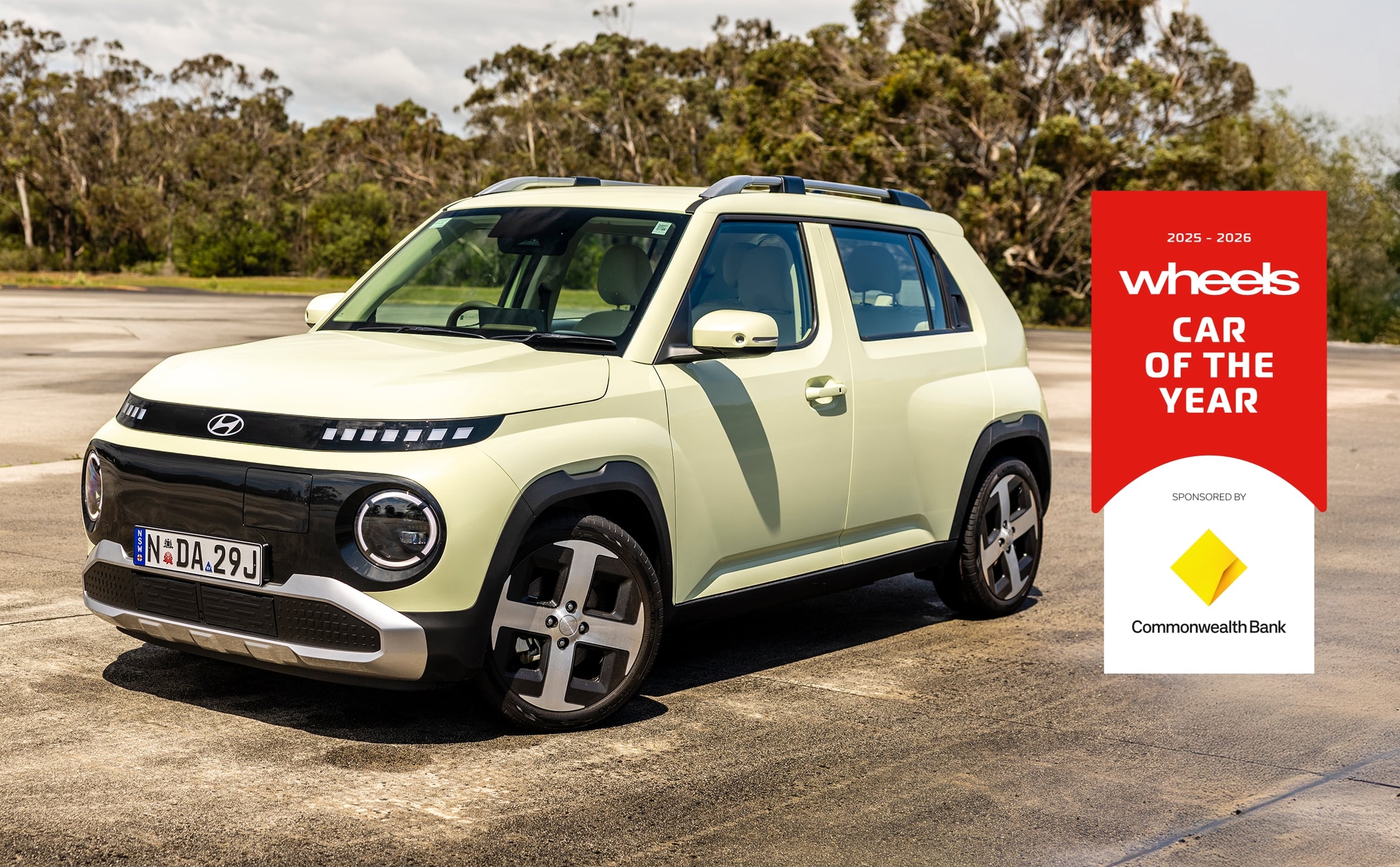
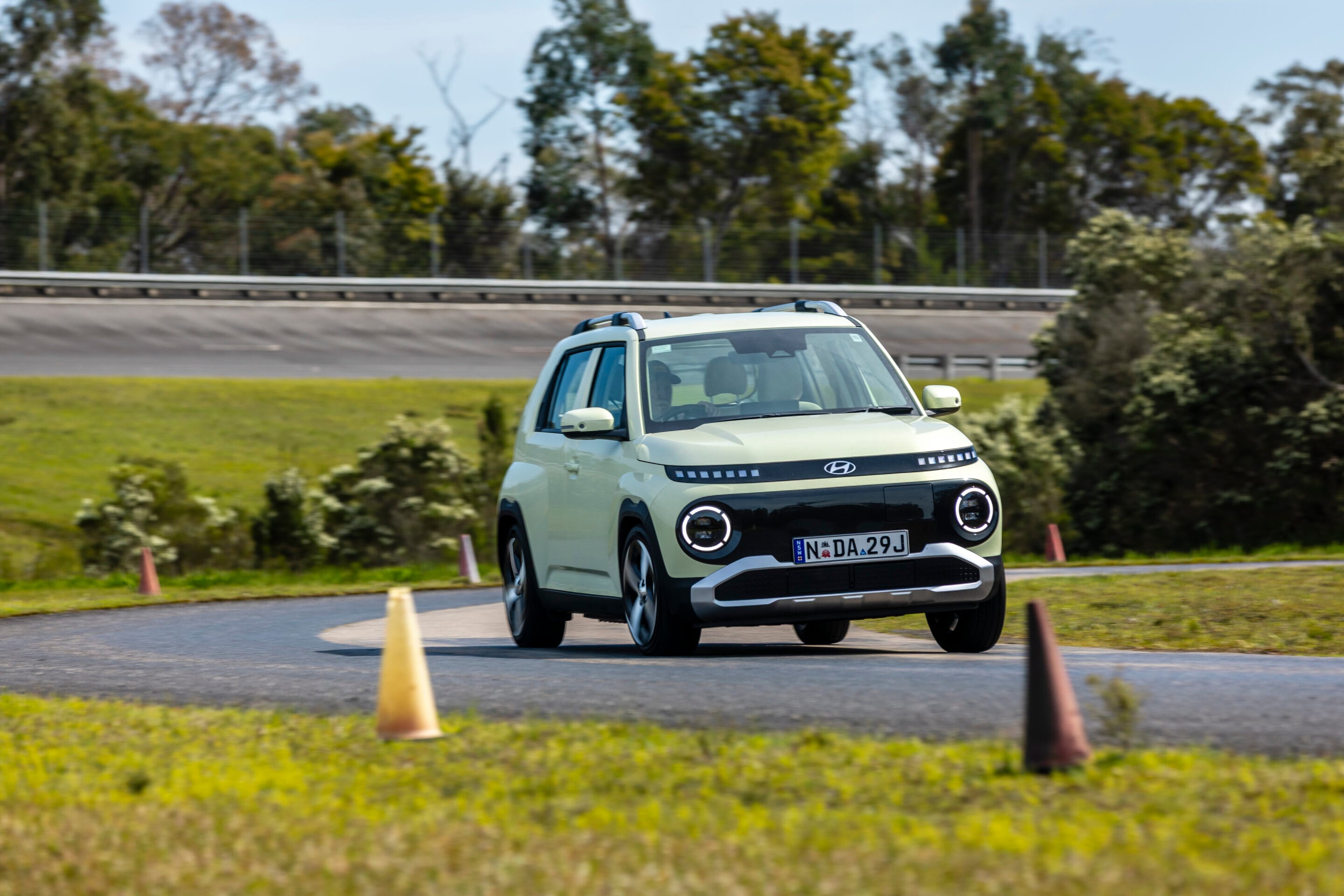
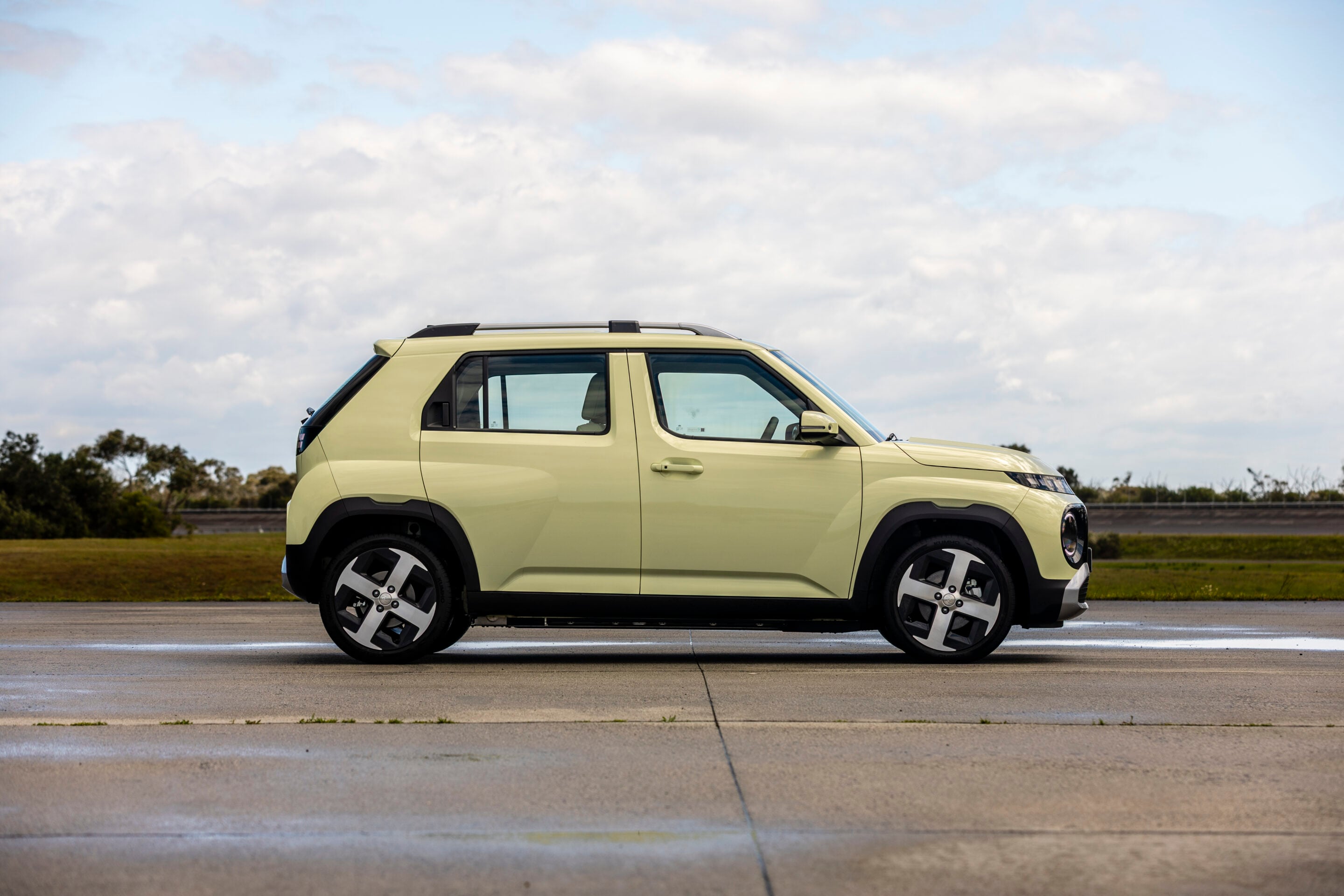
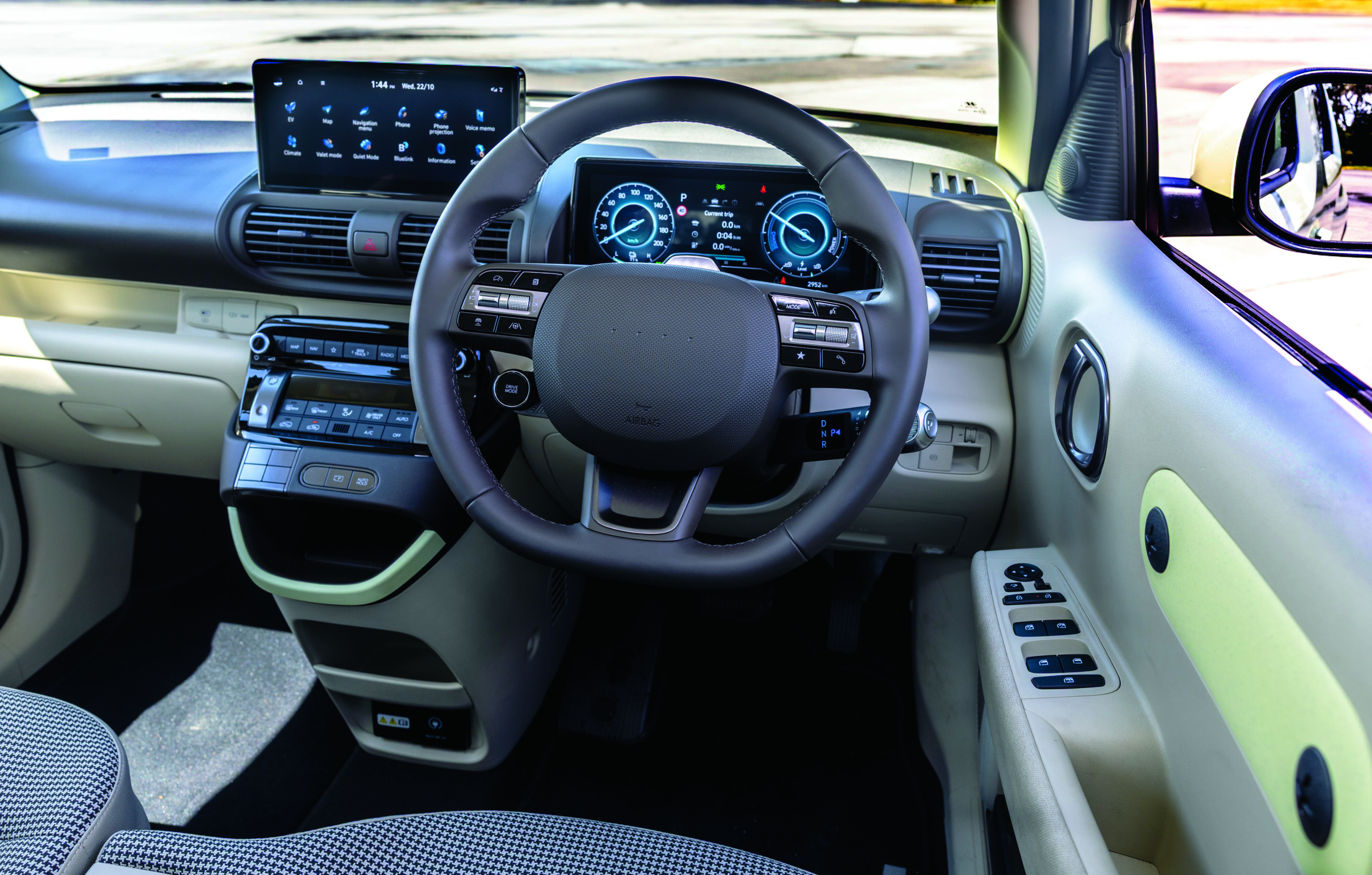
But you can’t deny the Inster is cute. It has a kind of Staffy-puppy enthusiasm even in the way it sits when parked. Okay, it might look a bit Fisher-Price to grown-ups, but the K-Pop generation couldn’t care less. Inside, the funkiness continues with the houndstooth and off-white interior looking great now, but who knows for how long.
A single electric motor drives the front wheels and power comes from a 49kWh lithium-ion battery under the floor. Driving through a single-speed transmission, the Inster makes do with 84.5kW of power and 147Nm of torque to hustle its 1400-odd kilograms. Understandably, then, performance is leisurely rather than frantic, and there’s always the feeling that a few more kiloWatts under your clog would be a nice thing to have.
But the Inster’s real charm is in the way it shreds. In fact, this is a properly competent platform which is also nicely damped and has an especially talkative front end, something that has characterised tiny Hyundais and Kias for a while now. Again, though, if it were just a tad speedier…
2
This variant of the Inster has the larger battery which extends range to a claimed 360km. Three-twenty will be closer to the truth. Charging is easily achieved overnight on a household wall-box (call it seven hours from 10 to 100 per cent charged) and the wee Hyundai can also cope with up to 120kW on a DC fast-charger. At which point you’re looking at going from 10 to 80 per cent charged in 20 minutes.
In the end, despite Peter Robinson’s description of it as “part suburban runabout and part small SUV… delivering a civilised drive at a price” the Inster did not offer enough to proceed beyond round one.
3
Specs
| Price | $42,500 (MSRP) |
|---|---|
| Body | Five-door, four-seat SUV |
| Drive | Front-wheel drive |
| Drivetrain | Single electric motor, 49kWh lithium-ion battery |
| Power | 84.5kW |
| Torque | 147Nm |
| Transmission | Single-speed reduction gear |
| Consumption | 15.1kWh/100km, 360km range WLTP |
| Kerb weight | 1335-1423kg |
| 0-100km/h | 10.6 secs |
| L/W/H/W-B | 3825/1610/1610/2580mm |
| Boot space | 280L/1059L |
| Warranty | 5yr/unlimited km |
| Safety rating | 4 star ANCAP (2025) |
Follow WhichCar/Wheels on Google
Click the button below to make WhichCar by Wheels a preferred source for your news.

We recommend
-
 COTY
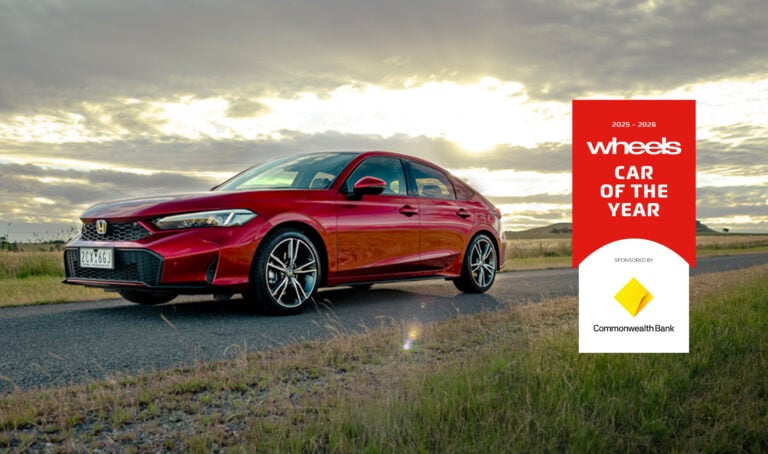
COTY2025-26 Wheels Car of the Year WINNER: Honda Civic E:HEV L
It’s back to the future for this year’s winner, not just an excellent Honda, but an exceptional car all round.
-
 COTY
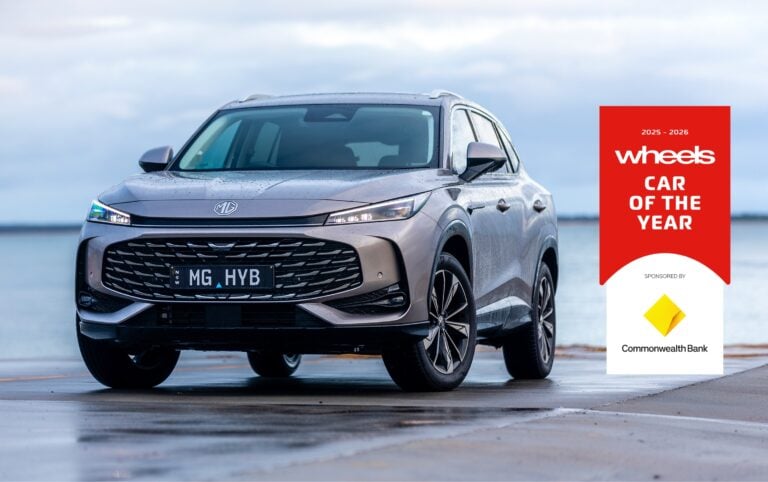
COTY2025-26 Wheels Car of the Year finalists, 2ND: MG HS Hybrid+ Essence
MG’s new HS Hybrid delivers unexpected polish, combining refined handling, smooth hybrid performance and impressive value to stand out in Australia’s crowded mid-size SUV field.
-
 News
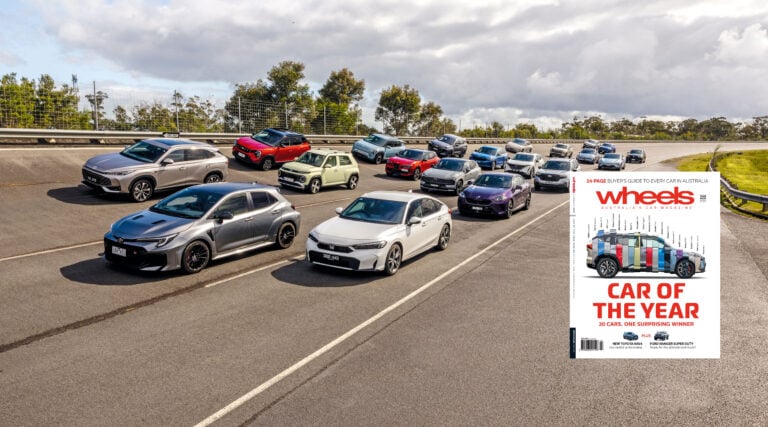
News2025-26 Wheels Car of the Year issue now on sale
From 20 contenders to a surprise top three and a deserving winner, the 62nd edition of the world's longest running annual car award, Wheels’ Car of the Year, returns in our annual yearbook along with plenty of other highlights.