
Features


Gallery 1
It’s May 2006, and Aussie touring car legend and Holden hero Mark Skaife has just completed the second of his two runs along a deserted 1km stretch of tarmac in what is known as the Woomera Restricted Area, deep in the heart of the South Australian desert.
Skaife’s terminal velocity over the rolling kilometre was 277.16km/h, around 12km/h faster than his first run over the same stretch of road, run in the opposite direction and, as per Guinness World Record rules, within an hour of the first run.
Skaife’s two-run average of 271.44km/h shattered the existing world record for a ute or pick-up truck – 248.783km/h set in 2004 by NASCAR racer Brendan Gaughan in an 8.3-litre V10-powered Dodge RAM SRT-10.
3
Skaife didn’t need the extra two cylinders, the 6.0-litre V8 in his HSV Maloo was plenty powerful enough to set a new benchmark. Yes, the HSV VZ Maloo officially became the world’s fastest ute on that sunny day in 2006. It still is.
Rewind to 1990 and Holden Special Vehicles – the still-fresh performance arm of local car giant Holden – was looking to expand its portfolio beyond its line-up of brawny Commodore-based sedans. The launch of an all-new Holden ute (VG), the first in six years and the first-ever Commodore-based utility, provided the perfect canvas.
HSV didn’t stray too far from its already well-established formula. Body enhancements added muscle car kerb appeal, while tinkering with the 5.0-litre Holden V8 under the bonnet boosted outputs to 180kW and 400Nm, up 15kW and 15Nm respectively on the donor engine.
Available with either a five-speed manual gearbox or a recalibrated four-speed auto for crisper shifts, HSV’s ute could dispatch the sprint from 0-100km/h in a tickle over seven seconds, pretty handy for the time.
HSV softened the springs at the rear while up front, the suspension from HSV’s SV5000 sedan found a new home in the VG Maloo.
The end result? A ute that drove and handled like a performance sedan, all while having the ability to haul a payload of 592kg in the tray out back.
1
As for the name of the new model? That reportedly came from HSV’s supremo John Crennan, who went with an Aboriginal word for ‘thunder’ – Maloo. A legend was born.
HSV stuck with the Holden 5.0-litre mill through successive generations of the Maloo – from VP to VS – but in 2000, the launch of the new VU-based Maloo brought American iron to the performance party. HSV ditched the old workhorse Holden lump, and instead packed the legendary 5.7-litre LS1 Chevrolet V8 under the hood of its latest powerhouse workhorse.
Now making 255kW and 475Nm, the VU Maloo posted sub 6-second 0-100km/h times while the
standing 400-metre drag was over in 14 seconds flat. Not bad for what was ostensibly a tradie’s vehicle but was rapidly becoming a practical ‘supercar’.
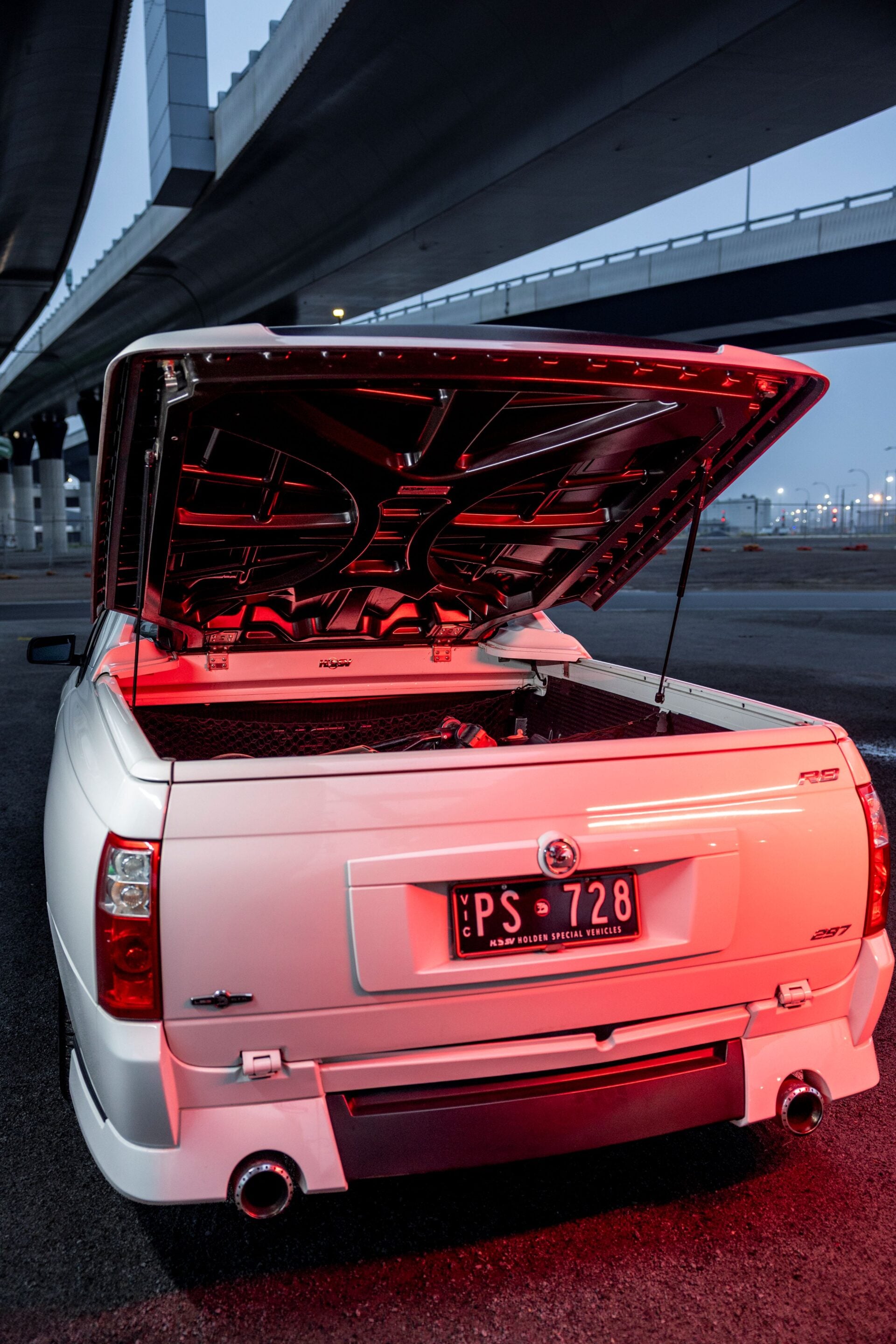
An upgraded R8 model made its debut with the VU Maloo, and while engine outputs remained the same as the ‘regular’ Maloo, larger brakes, distinctive 18-inch alloy wheels, a hard tonneau cover and interior upgrades distinguished the flagship.
But the LS1’s tenure at HSV was short-lived, and in 2004, the new VZ Maloo introduced a new hero to the line-up – the 6.0-litre LS2 V8 pumping out 297kW and 530Nm. For context, the all-new Ferrari F430 launched the same year as the VZ Maloo produced 360kW and 465Nm from its 4.3-litre V8.
But it wasn’t just about cramming a bigger, more powerful V8 into the Maloo and calling it a day.
HSV went to town on the VZ Maloo which now featured larger 19-inch alloys, shod in 245/35 ZR19 Pirelli P Zero Rosso rubber, traction control (a first for any Holden ute), and a new multi-link rear suspension setup.
1
A revised Tremec M12 six-speed gearbox was an improvement over the older-gen Tremec T56 ’box, with a shorter throw making for crisper gear changes. A heavy-duty clutch, borrowed from the C6 Corvette, helped put power to the rear wheels, although it did err on the side of being heavy under-foot.
Cross-drilled rotors with four-piston calipers provided the stopping power, with braking managed by a Bosch ABS system.
The new multi-link suspension out back improved the Maloo’s handling considerably, bringing increased stability to the hi-po ute’s dynamic package even if – as Wheels described in its June 2005 review – the presence of those thin sidewall Pirellis gave “a stiffer ride over small bumps”.
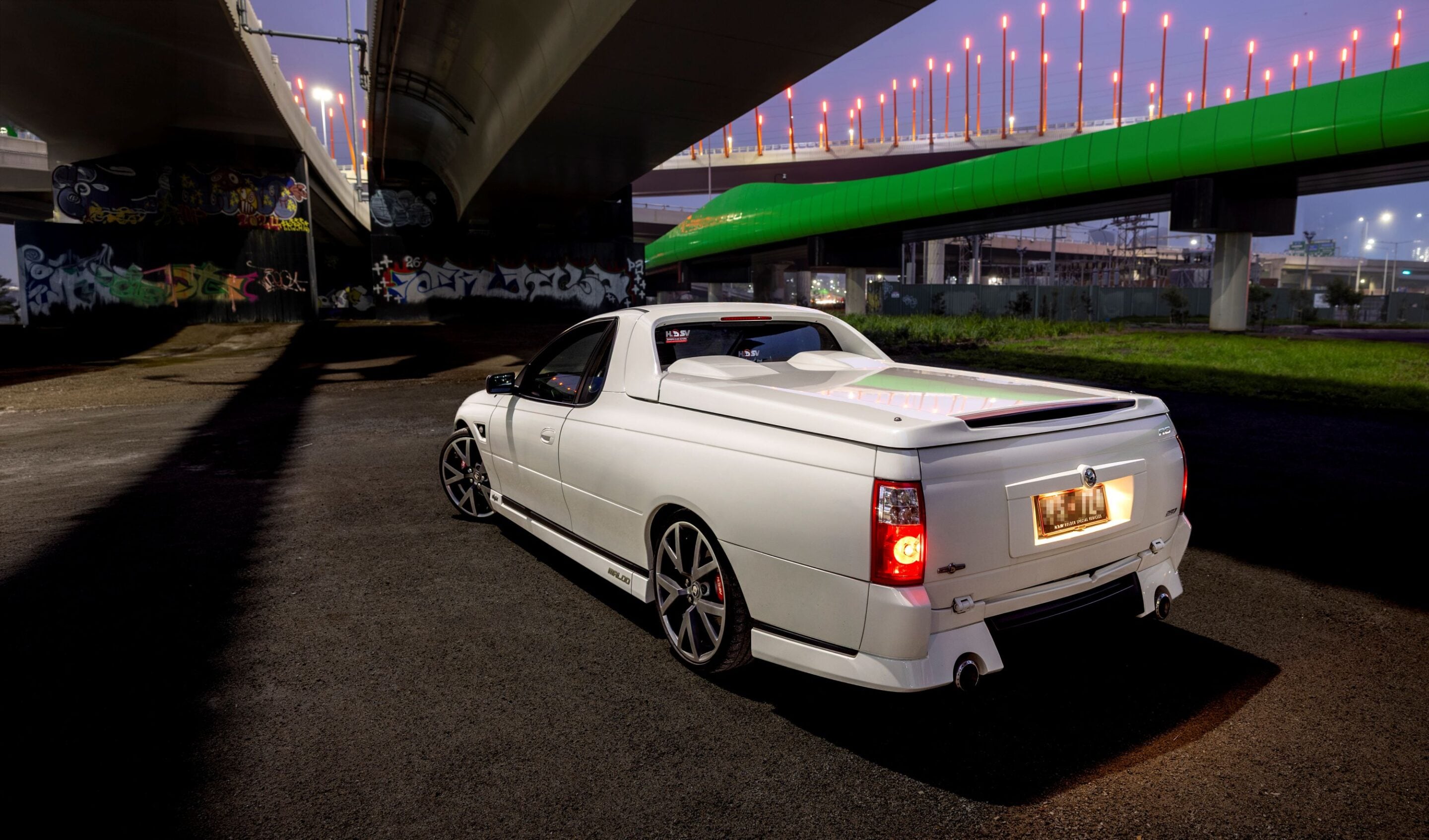
A big tray, hidden under a hard, lockable tonneau cover, garnished with a big spoiler, paid lip service to ute practicality.
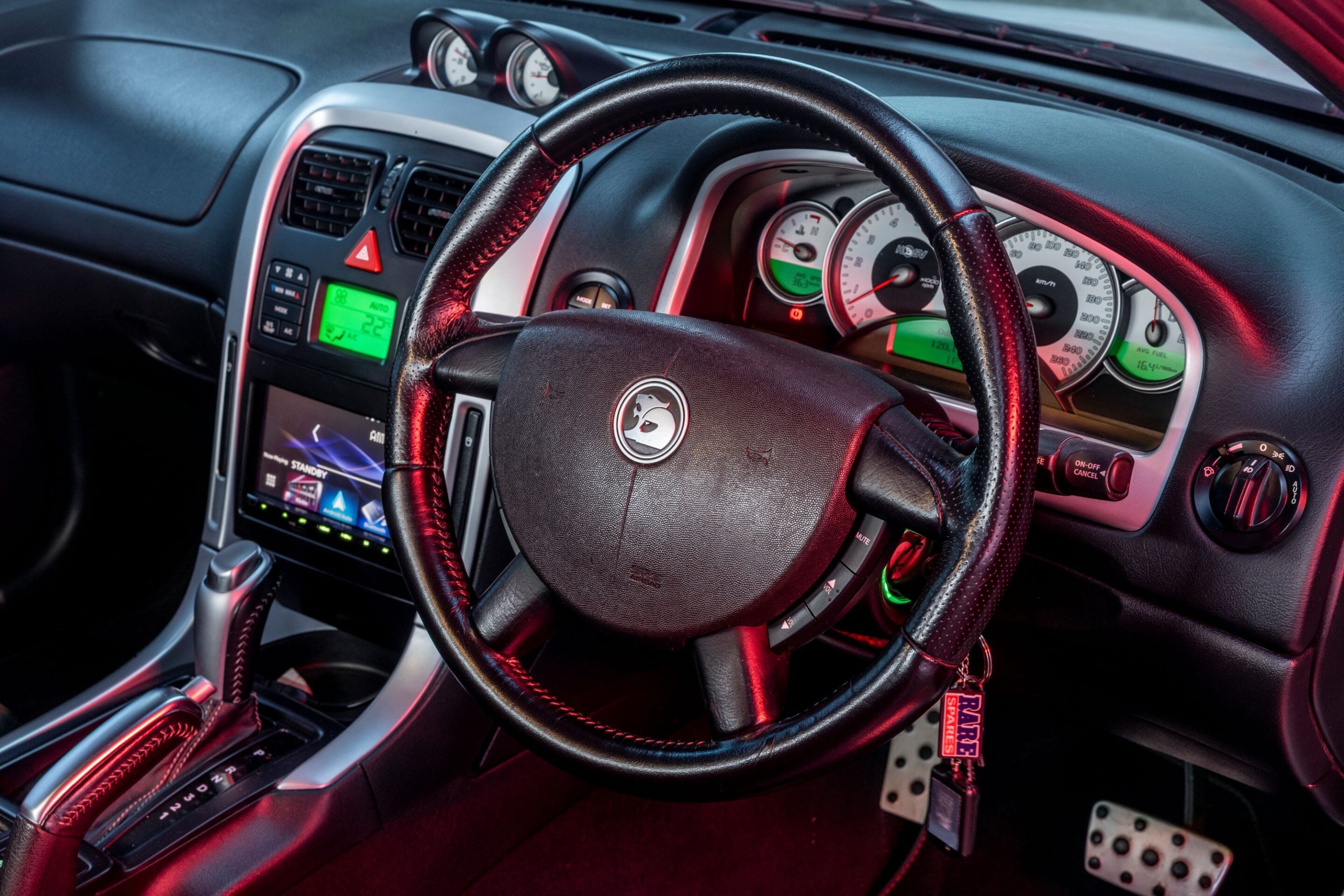
The changes inside the cabin weren’t as pronounced. Yes, full-leather seat trim played into HSV’s upmarket positioning, but the overall design of the cabin closely matched the regular Commodore.
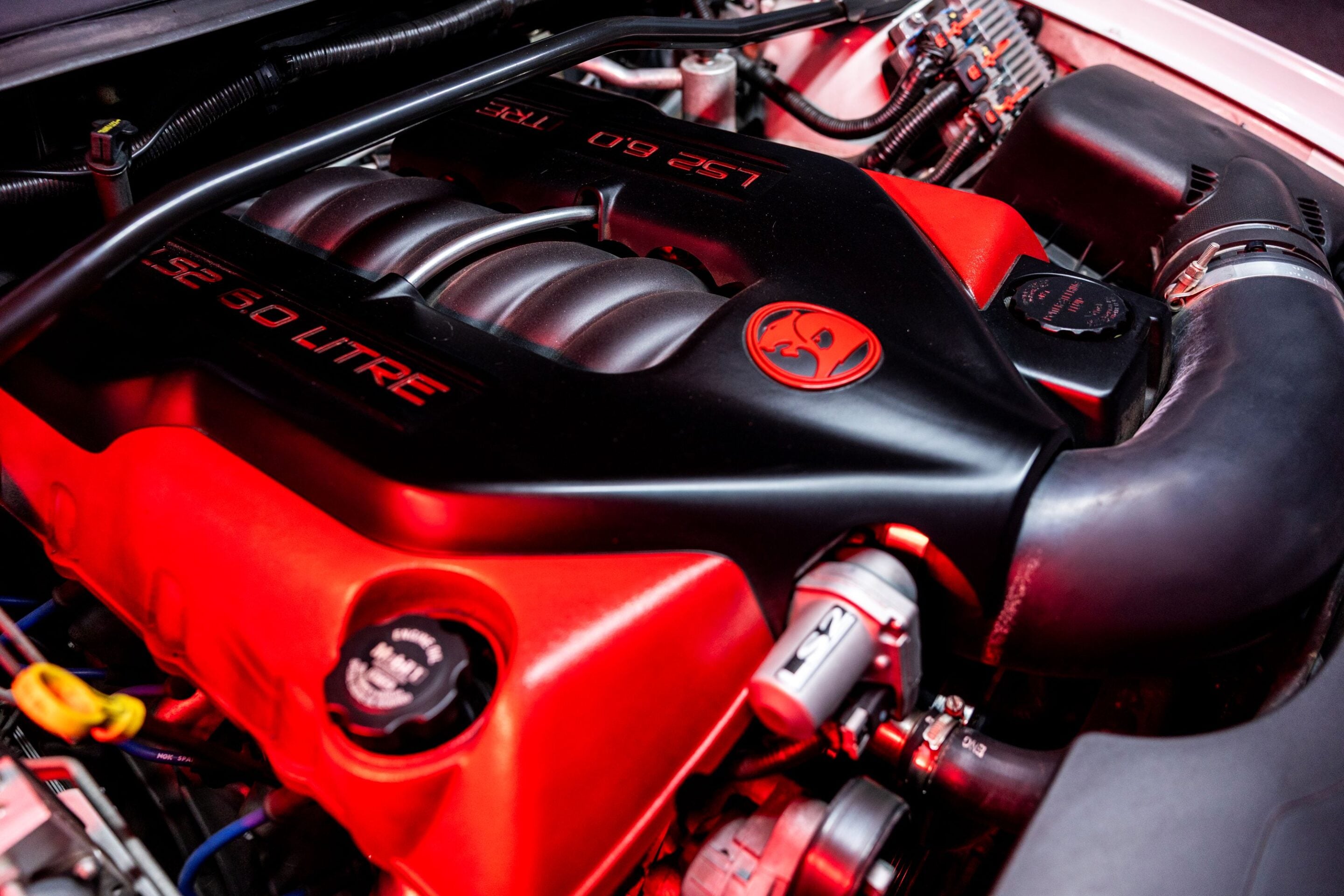
The LS2 V8 addressed one of the biggest shortcomings of the old Maloo – a great big torque hole. Where the VU’s LS1 5.7-litre V8 didn’t hit peak torque until 4000rpm, HSV claimed that around 87 per cent of the new LS2’s 530Nm came on song at just 1600rpm before doling out the balance all the way to 6000rpm.
As Wheels noted in June 2005, “Torque, the Achilles heel of the previous generation’s 5.7-litre V8, is abundant and accessible from this larger, lustier 6.0-litre unit. Whether down low or at the upper end of its bellowing, 6750rpm rev band, the Maloo shows steely resolve.
3
“Nail the launch and the Maloo cracks 60km/h in a mere 3.2 seconds after leaving the line. A single, crude gearchange later and the needle brushes 100km/h, the V-Box recording 6.1 seconds. Two more arm-wrestles with the slow, deliberate six-speed and the Maloo stamps its authority on the 400-metre run with a teeth-sucking 14.2 at 165km/h.”
Heady stuff for any car, let alone a ute, even if Wheels’ tester couldn’t get close to HSV’s claimed 0-100km/h times which sat on the spec sheet at 5.2 seconds for the manual, and a tenth faster for four-speed auto variants.
The Maloo story continued through VE and VF generations of Commodore-based utes, each with successively larger and more powerful engines.
The unquestionable apex predator of the Maloo badge was also the last version – the GTSR Maloo and its monstrous supercharged 6.2-litre Generation IV LSA V8. Tuned to make 435kW and 740Nm, the GTSR hurled itself at the 100km/h horizon from standstill in a Wheels-tested 4.14 seconds, while the standing-to-400m jolly was over in 12.19 seconds with a V-max of 189.17km/h.
That should have been the end of the road for the Maloo, but HSV had one more party trick up its sleeve,
a swansong farewell both to the nameplate and HSV.
HSV had already made a splash with the GTSR W1, a limited run of 300 VF Series II Commodore-based sedans powered by the LS9 supercharged 6.2-litre lifted from the C6-generation Corvette ZR1. With outputs of 474kW and 815Nm, the GTSR W1 earned the distinction of being the most powerful Australian production car ever.
But behind closed doors, HSV was secretly working on one final hurrah – the HSV GTRS W1 Maloo. Just four of the ultra-exclusive utes, powered by the same LS9 supercharged V8 as its W1 sedan sibling, were made. All were built by hand, and none made available to the public, reserved instead for a select group of HSV top brass and loyal customers. Instant classic. Build #E001, the only Maloo finished in ‘XU3 Yellah’ pale yellow, sold last year for $1.2 million.
5
The legacy of the Maloo cannot be understated, HSV transforming the humble Aussie utility into a genuine cultural icon, with muscle car looks backed by bellowing supercharged performance and a swagger on the road few cars, and definitely no ute, could match.
And yet, there’s a compelling argument to be made that the VZ Maloo is the high point of the nameplate. No, it’s not as powerful as the later LSA- and LS9-powered Maloos. And no, its HSV bodykit add-ons lacked the outright brawn of those that followed. But there’s a purity to the VZ’s profile that’s hard to ignore, its lines not all that far removed from the Holden VZ ute that spawned it.
Sure, HSV’s designers had embellished the utilitarian body of the VZ donor car to create a handsome muscle ute, but they’d done so with a subtlety and finesse that showcased Aussie engineering as right up there with the world’s best. And it remains, to this day, officially the fastest ute in the world.
Our Maloo
1
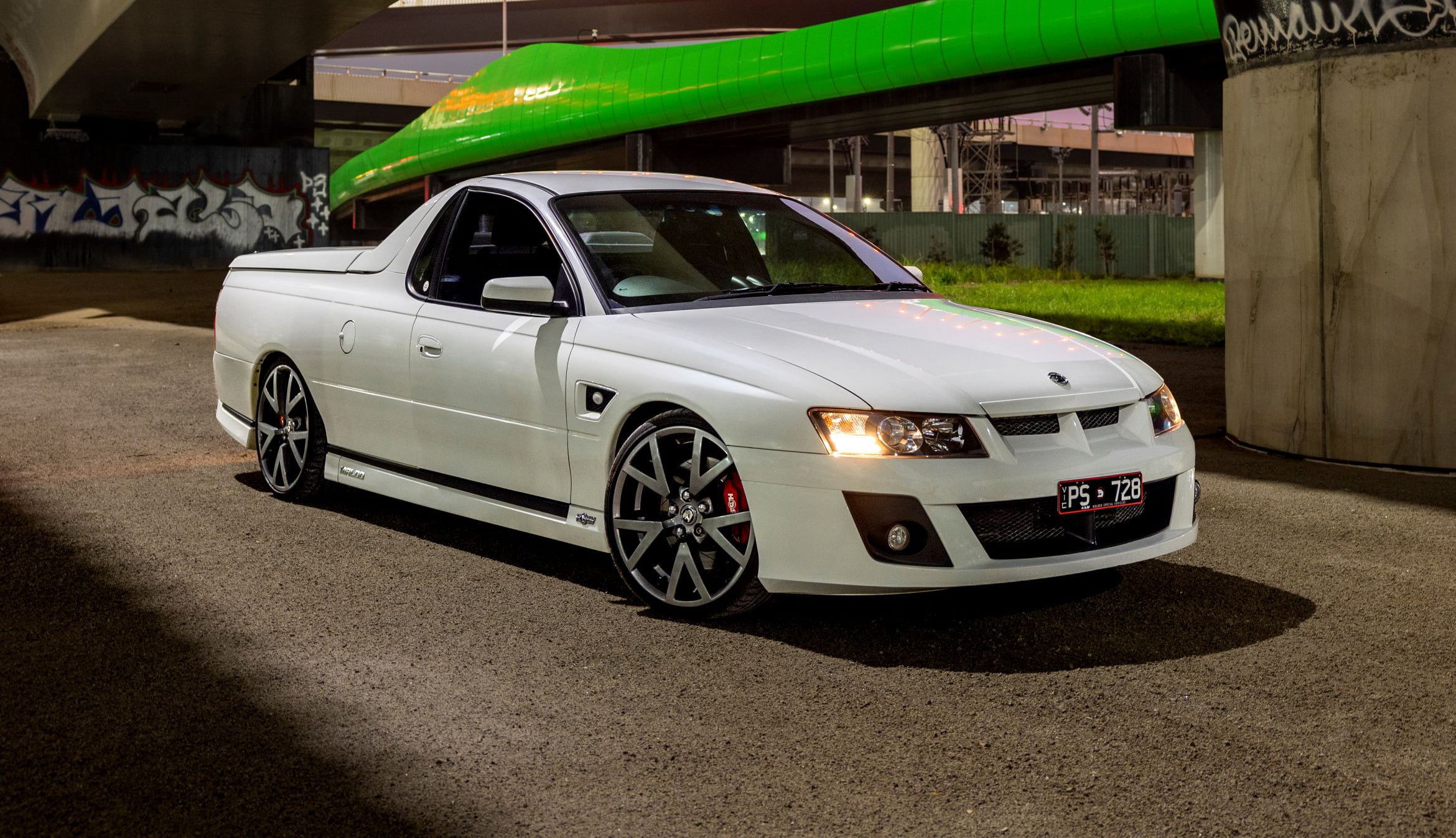
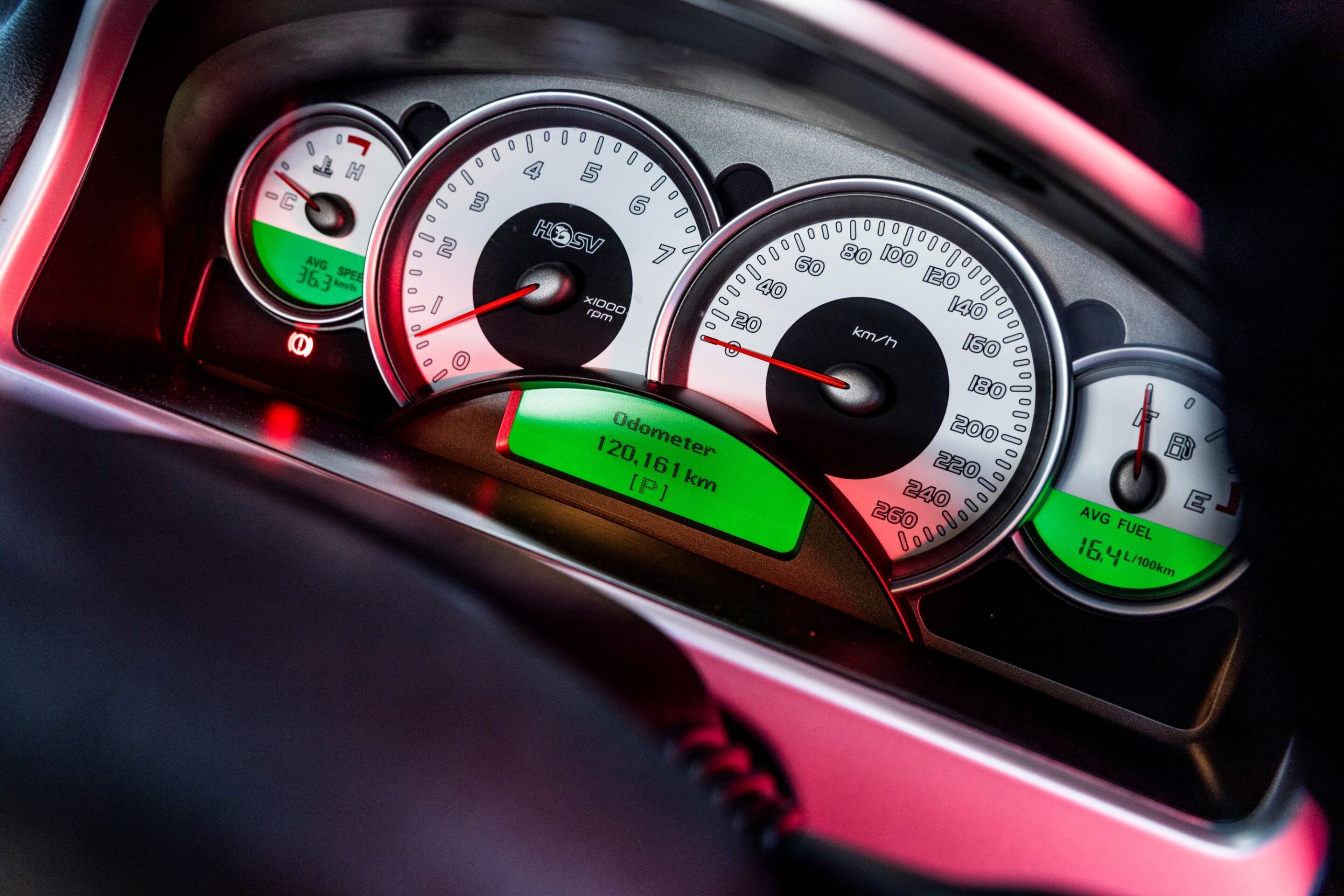
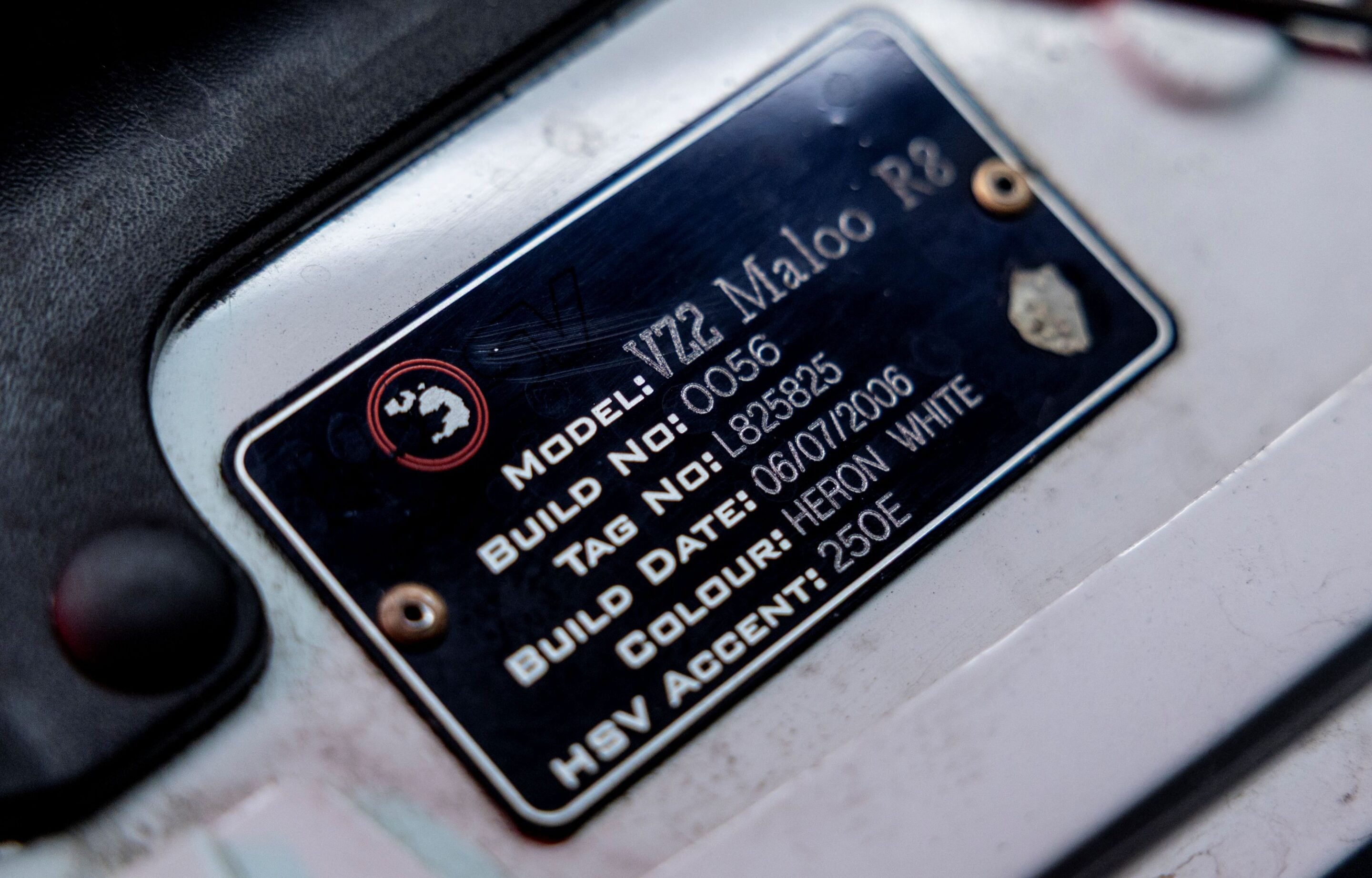
The white HSV Maloo seen here is a 2006 VZ Series 2 R8 owned by self-confessed Holden nut, Paul Vella.
Paul has owned his Maloo for around eight years, having bought it off his nephew. It arrived in Paul’s care with about 85,000km on the odo. He’s since added another 35,000km, using his Maloo only on special occasions.
Paul’s relationship with Holden extends way beyond his Maloo.
“Holden for me is all about the legacy,” he tells Wheels. “I have four brothers that all worked at GM-H, three on the tools and one as a design draftsman. My father worked at GM-H when he migrated here in 1948 and was the shop steward at Fishermans Bend.
“My first car was an EH Holden and I have owned several Holdens along the way. I think Holden is in our family’s blood and I was genuinely sad when GM-H took the decision to leave Australia in 2020.”
The connection to the now-defunct Aussie icon was behind his decision to buy the VZ Maloo.
“I wanted a Holden that I could keep, and something that would be useful as a second car. The Maloo was perfect,” he says.
Owning a 20-year old car does come with some commitment and Paul’s HSV hasn’t been immune to the march of time. A new automatic was installed at around 123,000km followed by a complete engine rebuild after the LS2 V8 dropped a valve, bent a push-rod and damaged a piston. Earlier this year, he treated his Maloo to a new radiator.
Costly repairs or not, Paul wouldn’t have it any other way.
“It is hard to explain,” he says, “but I feel happy any time I take her out for a run.”
1
Specs
| Model | 2006 HSV VZ Maloo R8 |
|---|---|
| Engine | 6.0-litre LS2 Gen-IV V8 |
| Power | 297kW @ 6000rpm |
| Torque | 530Nm @ 4400rpm |
| Transmission | 4-speed automatic, RWD |
| 0-100km/h | 5.1 seconds |
| 0-400m | 13.3 seconds |
| Wheels | 19-inch alloys |
| Dimensions (l/w/h/wb) | 5109/1846/1462/2939mm |
| Weight | 1655kg (kerb) |
| Price (new) | $61,850 (plus on-road costs) |
This story first appeared in the September 2026 issue of Wheels magazine, now on sale. Subscribe here and gain access to 12 issues for $109 plus online access to every Wheels issue since 1953.
Follow WhichCar/Wheels on Google
Click the button below to make WhichCar by Wheels a preferred source for your news.

We recommend
-
 Features
Modern Classic: BMW E36 M3, originally unloved, now legendary
For years it was the unloved M3, but hindsight has more than rehabilitated the magnificent E36’s reputation.
-
 Features
Modern Classic: Porsche 911 Carrera S, a company-saving creation
The final development of the air-cooled 911 was more than just the finest of its type – it saved Porsche from extinction.
-
 Features
Modern Classic: Range Rover Vogue, the farmer's car that became a luxury icon
The idea of a luxury SUV was completely alien when Land Rover launched the original Range Rover in 1970 but a single photo shoot in a magazine changed the course of automotive history.
