
Features


Gallery 1
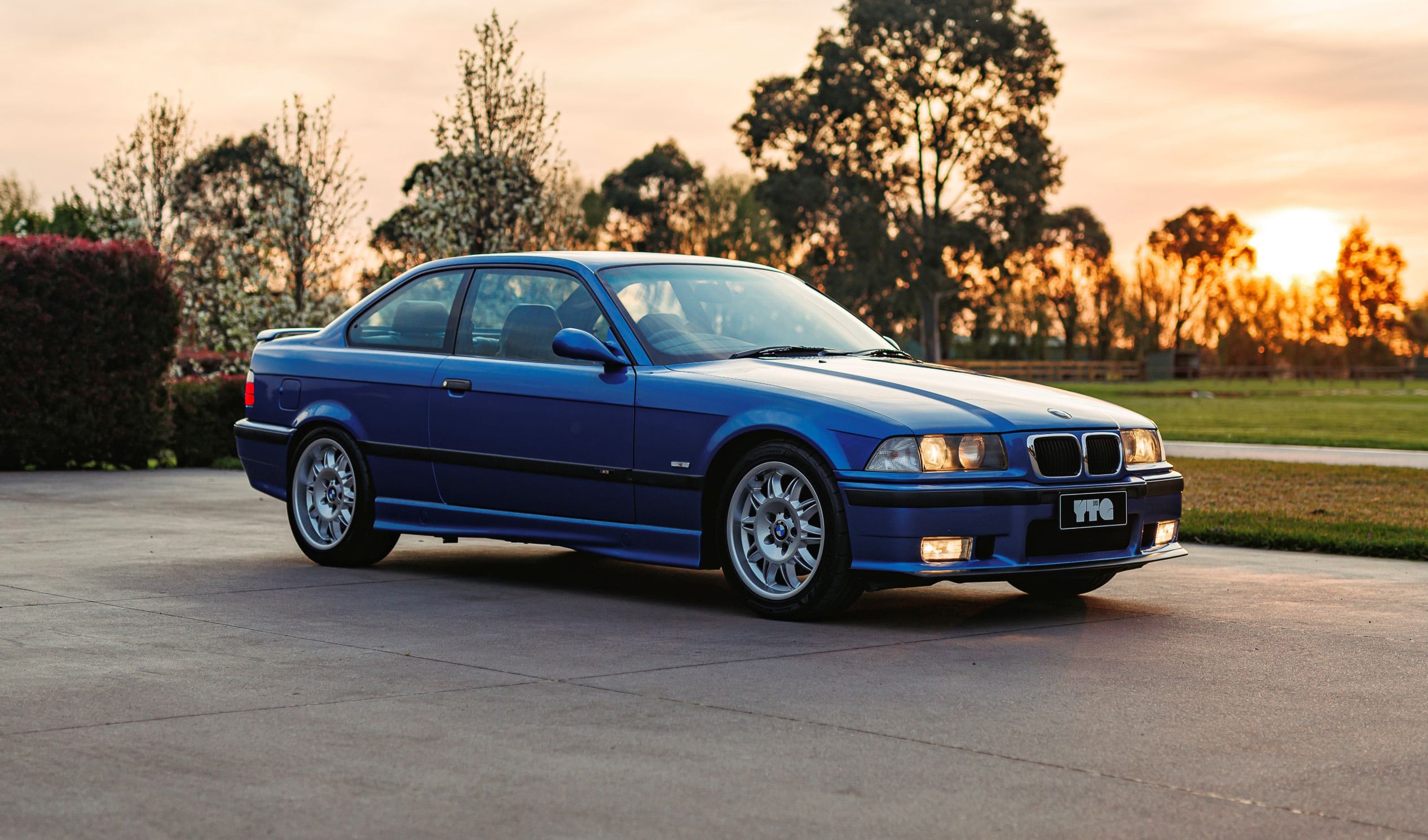
THE BMW E36 M3 was a better car than its legendary E30 predecessor. The reason for this is the very reason why it was slated at the time. Unlike the box-arched E30, which launched in 1986, the 1992 E36 wasn’t a car homologated to go racing. It was instead the M3 that BMW wanted, rather than what an arcane set of racing regulations dictated, and it was absolutely and unquestionably a better road car for it.
This proposal might sound sacrilegious to many M fans, who will launch into a spittle-flecked tirade about M standing for Motorsport, conveniently ignoring the fact that the car that arrived before the E30 M3, the E28 M5 of 1984, never turned a wheel in anger in competition.
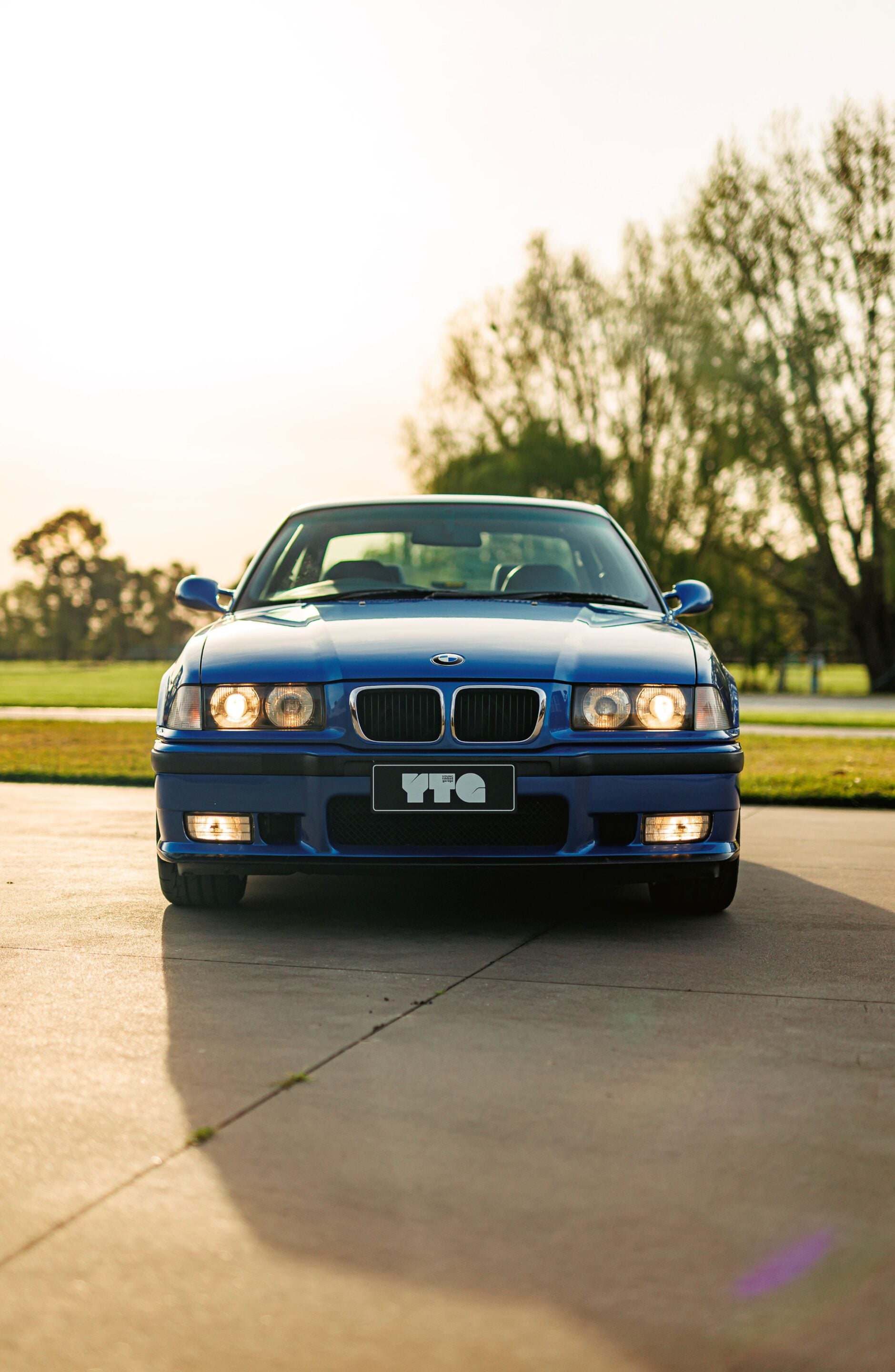
Boiled down, the E36 M3 coupe was a sublime selection of ingredients. The launch car weighed 1457kg or, if you prefer, less than a modern Hyundai i30 N hatch. It featured a naturally aspirated 3.0-litre straight-six engine that was a pure piece of exotica and, before that trope rears its head, no, it absolutely was not half of a McLaren F1’s V12. It was independently suspended all round, drive went to the rear treads only, it was offered solely with a five-speed manual transmission and, at the time, it was one of the fastest point-to-point production cars money could buy.
2
That sounds like hyperbole, given that power output was 210kW, modest by today’s standards, and required you to wind the tacho needle right round to 7000rpm to plunder said power. Still, 20 percent more displacement than the final E30 thanks to 50 percent more cylinders, saw power increase by 20 percent. Law of diminishing returns and all that.
As with most rapid product pivots, reviewers initially came away a little confused. BMW had spent years looking forward to where it wanted the M3 to be, and we all got into the car and looked back at the E30. Some commented that this new, more civilised thing didn’t merit the M badge at all, that it was more of an executive express, again choosing to overlook the fact that, even on the final E30 Sport Evo III, the take rate of options like air-conditioning, electric windows, on-board computer, cruise control and uprated stereo was significant.
Once the concept of this more sophisticated and liveable car was cemented a little more clearly, it became apparent just how much of a leap ahead of its rivals the M3 was. Wheels first took delivery of one locally back in 1994, and we put it up against the Audi S2. It was a mismatch, the BMW beating the Audi on just about every measure. It ran through the 400m sprint in 14.1 seconds versus the Audi’s 15.8 and was even quicker than the box-fresh 993 generation of the Porsche 911 that we tested in the same edition of the magazine (14.4sec).
2
This was something we certainly weren’t accustomed to seeing. A BMW 3 Series taking down the trousers of the world’s greatest sports car? And for $55,000 less? Still, $124,650 wasn’t exactly loose change but it did buy you a car that was faster over the 400m sprint than any other car that we’d independently tested in the databank section of that March 1994 issue. Well, all bar the $235,900 Porsche 928 GTS.
“The people at BMW Motorsport want The Common Horde to know that they’ve been at work,” wrote Bob Hall at the time. “From the time the car comes to idle, it lets you know that it is capable of performing as marvellous a six-cylinder concerto as you are likely to hear in these highly regulated times.”
In contrast to the somewhat prescriptive handling of the Audi S2, the E36 M3 was a revelation. “The M3 was a lot more dramatic around DECA with throttle position allowing the driver to select just about any cornering attitude imaginable, although it was not that much quicker around the road course than the Audi,” he noted. Low-end turbo torque and all-wheel drive will always offer an advantage on a tight, point-and-squirt track like DECA.
BMW was pretty happy with what it had created. Gerhard Richter, the head of chassis engineering for the E36 line said: “Obviously the complete package was perfect. It had the power, the understatement, the comfort and potential for everyday use.” Humility maybe wasn’t Gerhard’s forte.
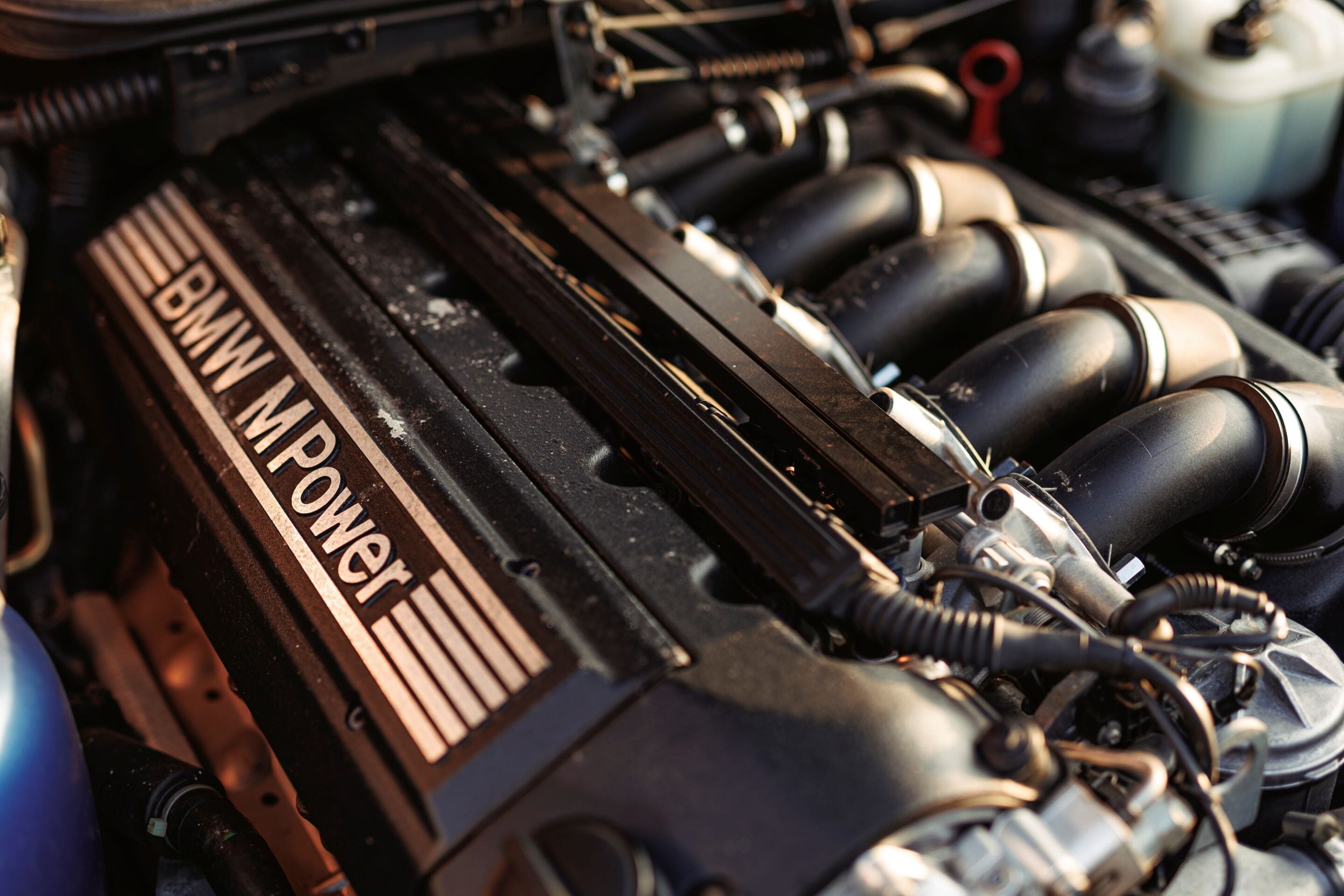
The key technical development with the E36 M3’s engine was the VANOS system (Variable Nockenwellen Steurung), a combined hydraulic and mechanical variable valve-timing system that operated on the intake camshaft. The M3 wasn’t the first BMW to use this system, as it was introduced to the public in 1992 on the 2.0-litre and 2.5-litre petrol versions of the M50 engine. This found its way into cars like the BMW 320i, 325i, 520i and 525i. Nevertheless, it was the first time variable valve timing had featured on an M car.
2
By today’s standards of continuously variable valve timing and lift, VANOS seems a bit rudimentary, but it was undeniably effective. In short, VANOS operates on the intake camshaft using cues from engine speed and accelerator-pedal position. At low revs, the intake valves are opened later, which improves idling refinement. At mid-range engine speeds, the intake valves open earlier, boosting torque and permitting exhaust gas re-circulation inside the combustion chambers, benefiting fuel consumption and exhaust emissions. At the top end, the intake valve opening is again delayed, so that full power can be realised.
When idling, the cam timing is retarded. As the throttle moves off idle, the engine computer activates a solenoid that allows oil pressure to move a little cup gear that advance the cam by 12.5 degrees at mid-range, and then at around 5000rpm, it reverts back to the original position. The slight rattle of a healthy VANOS system is the result of manufacturing tolerances that allow a sprocket to move slightly as the cup gear engages and disengages.
As owners later found out, lots of rattling is undoubtedly a bad thing. If the VANOS system sounds like marbles in a can, it’s usually the result of water in the helical gears. Solenoid seals can also leak. A new VANOS system is extremely expensive from BMW, but independent BMW specialists will be able to replace the solenoid seals for around $800.
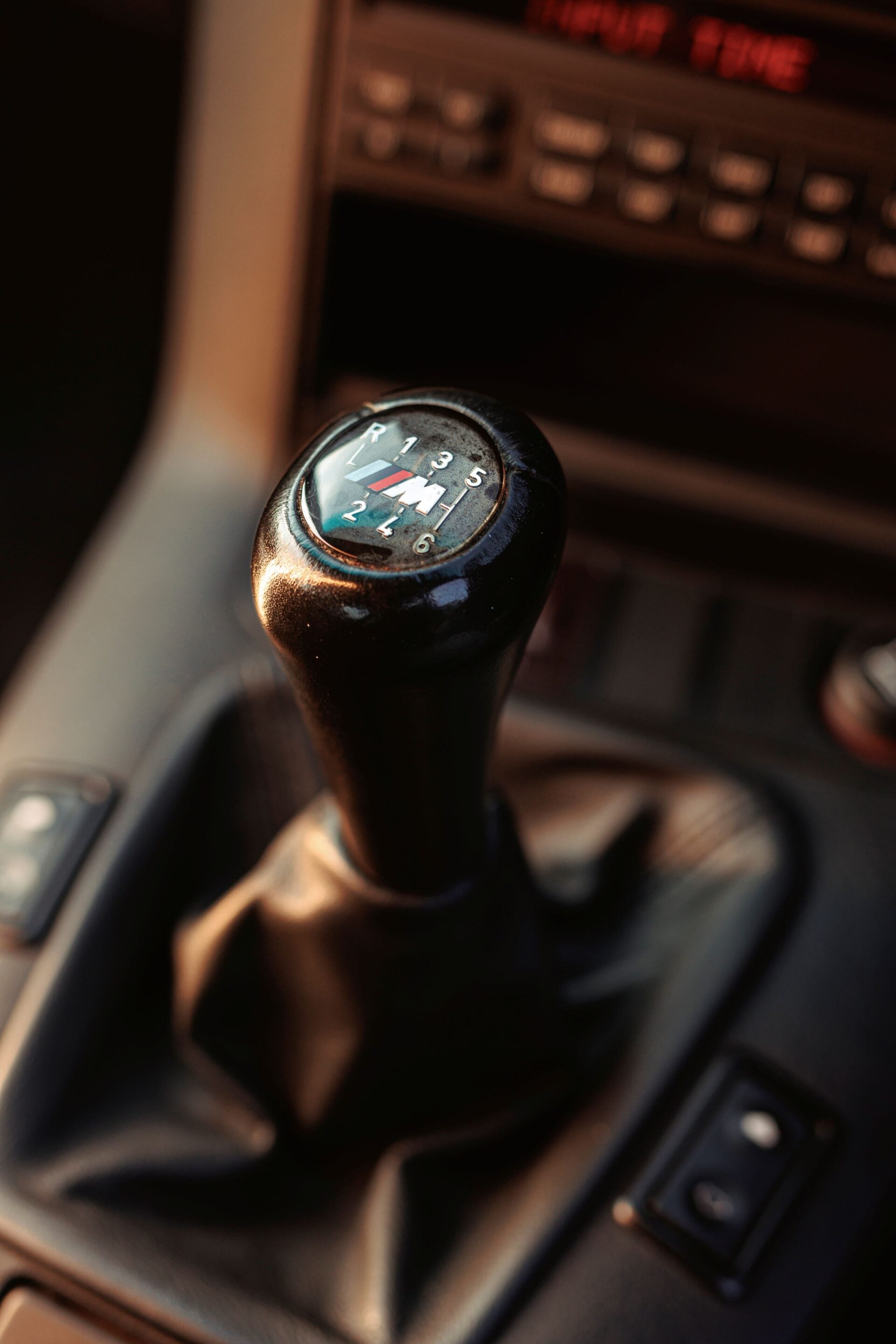
By today’s standards, those early E36 M3s are intriguing cars to drive. The VANOS system worked well in broadening the spread of torque, and there’s not that binary feel you got with early iterations of Honda VTEC or Toyota VVT. The car feels light and small, although it’s hampered by slow steering, an issue that many owners rectify by fitting the quicker steering rack from the Z3. The suspension can feel baggy if not maintained properly. Bushings and ball joints are not non-service items. Rear damper mounts can deform and reinforcing plates to beef these up are a common retrofit.
1
A well-sorted early E36 M3 is still an absolute blast to drive. Transition from grip to slip is a little more abrupt than in many modern cars, but visibility out is better and there’s a beautiful linearity to the controls. The five-speed ’box is a delight and the brakes are perfectly adequate for road duties, although can wilt under prolonged track use. BMW added a convertible M3 in mid-1994 and then a sedan version in December ’94 to fill the gap between the end of the E34 M5 in 1995 and the introduction of the E39 M5 in 1998. With leather seats and wood dash finishes, the sedan was a bit of a sleeper and enjoys a minor cult following today.
Better was to come though. In 1995, BMW updated the E36 M3 to the Evo version, upgrading the engine from the single-VANOS 3.0-litre S50 to the 3.2-litre double-VANOS S52. This now featured variable valve timing on both intake and exhaust valves, allowing for continuously variable timing. BMW claimed that an engine equipped with a double-VANOS system reaches peak torque 450rpm earlier, while the power peak is 200rpm higher than an equivalent engine with a single-VANOS implementation. What’s more, the torque curve is beefier between 1500 and 3800 rpm, holding stronger for longer beyond that point.
While it was a more complex engine, the S52 was more driveable. You may well have heard that despite boasting a claimed 236kW to the earlier car’s 210kW, many S52s dyno at not dissimilar power outputs to S50s, and that is indeed often the case. However, the combination of that broader and deeper well of torque and the fitment of a six-speed manual transmission rather than a five-speed means that going faster is just easier with one of the later cars.
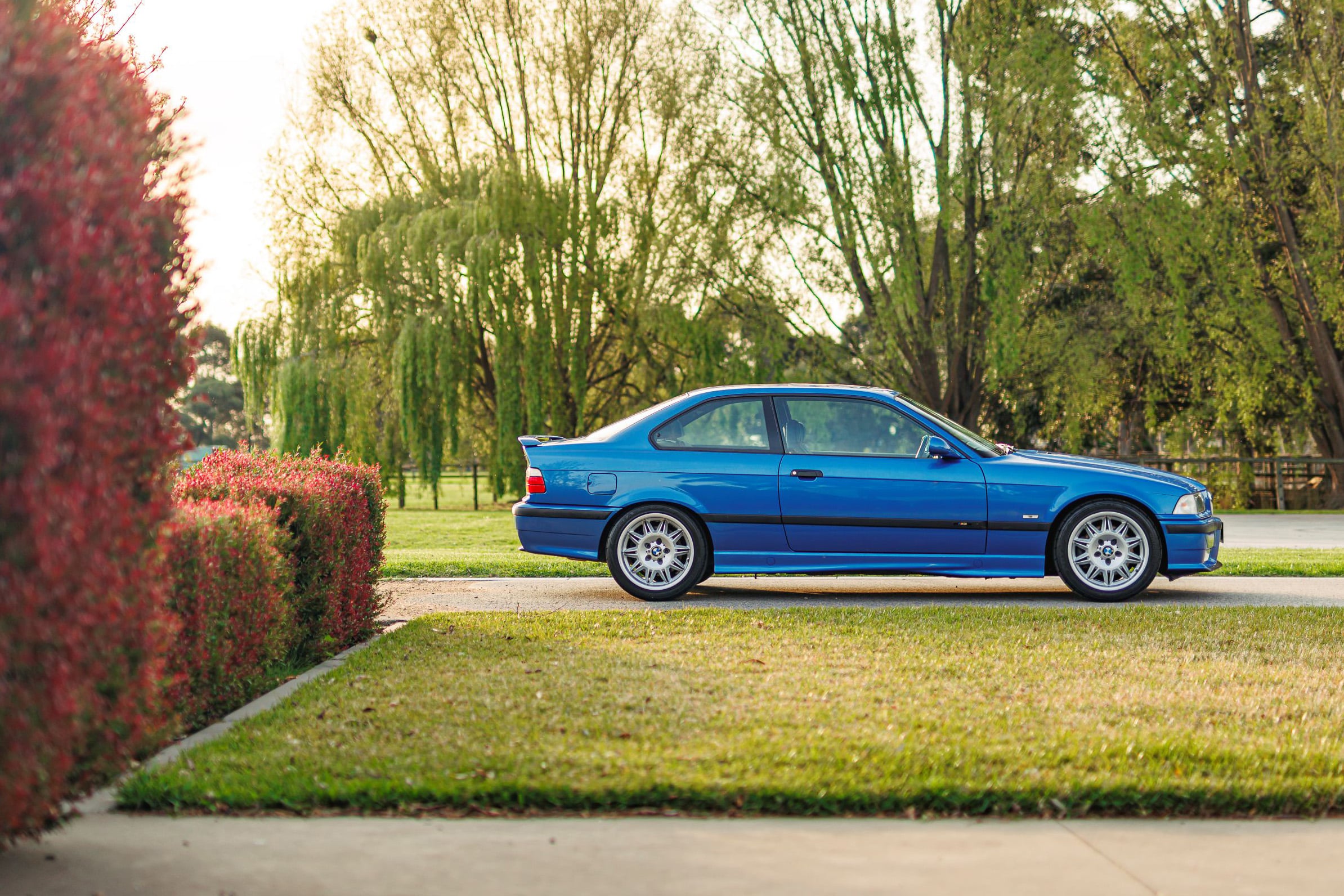
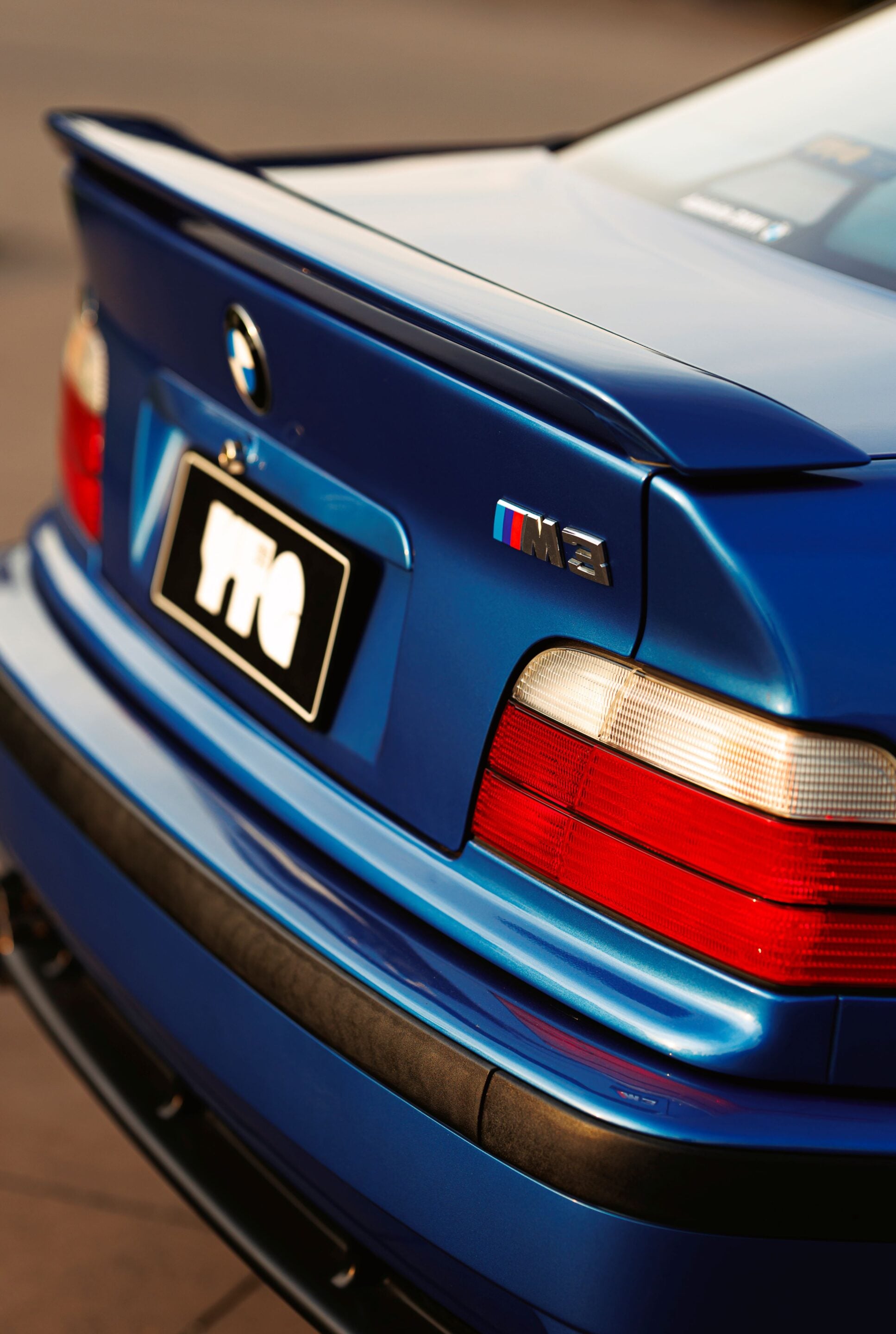
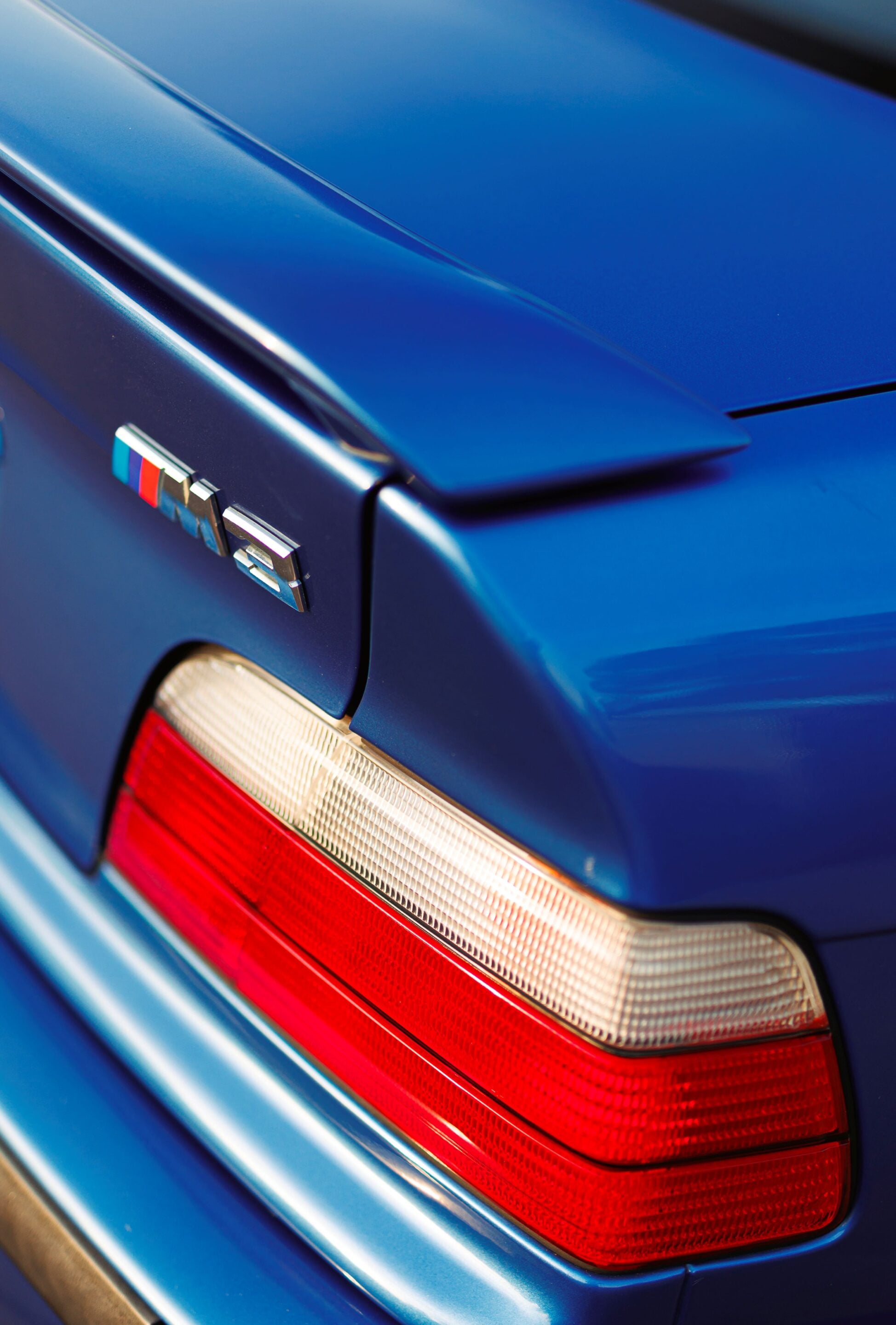
As well as the mechanical upgrades, the E36 M3 was treated to a mild facelift, with clear indicator lenses appearing as well as updated alloy wheel designs. My favourite was the Style 24 which also found its way onto the US-market E36 LWT, a 1340kg limited edition.
Ah, yes, the US. For a long time the US was denied the E36 M3, and could only read the road tests and sigh, because it wasn’t earmarked for import. Put simply, it was too expensive, and BMW projected meagre annual sales of around 50-100 units per year if it arrived wearing its expected $55K sticker price.
2
BMW had been burnt by slow sales and lingering unsold stock of the E30 M3, an expensive car that never gained significant traction with American buyers who didn’t see the value proposition in a four-cylinder car that delivered less power than a C4 Corvette at much the same price. So, in a move of admirable pragmatism, Eric Wensberg, BMW North America’s first M brand manager, came up with a proposal. How about junking the expensive engine and instead fitting a 3.0-litre evolution of the 325i’s straight six?
If the car could be sold at around $35,000, Wensberg knew he’d have a winner on his hands. And so it proved. BMW M did the work on the M50 engine, increasing capacity and fitting more aggressive cams to net 179kW. With lower costs, easier maintenance and a smaller performance gap than is generally appreciated, Wensberg’s prediction proved correct. Canada worked out a loophole to get the full-strength Norwegian-spec M3. At $45,000 USD equivalent, they sold 42 of these stripped-out specials. By contrast, in the first full year on sale in the States, BMW shifted 5800 of the lower-powered M50-engined cars at $35K.
It featured on Car and Driver’s Ten Best list every year it was produced and also won every single comparison it was ever pitched into by that title. Won ‘em all here at Wheels too. After the 3.0-litre car dusted down the Audi S2, in June 1996 we put the 3.2 Evo up against the Nissan R33 GT-R and the HSV GTS-R. Paul Cockburn declared the BMW the finest car he had ever driven and that it won his vote by a country mile, while Michael Stahl concluded the piece by praising the M3’s well-rounded skillset. “And the BMW you could live with all the time,” he said. “Competent on the racetrack, and complete on the road, in the brilliant M3 you’re never merely wingin’ it.” And before you ask, yes, this 3.2-litre car tested slower than the old 3.0-litre across 400m (14.3sec versus 14.1).
The final, and perhaps toughest, face-off for the E36 M3 in Wheels came in June 1998. Fresher opposition had appeared in the form of Audi’s all-wheel-drive S4 and Mercedes-Benz’s formidable V8-powered C43 AMG. Peter Robinson noted that: “If you demand supercar performance, a car to make your heart skip a beat, combined with a sharply focused sporting character, then the M3 is still the obvious and hugely enjoyable choice.” Some six years after its introduction, it retired unbeaten in these pages.
1
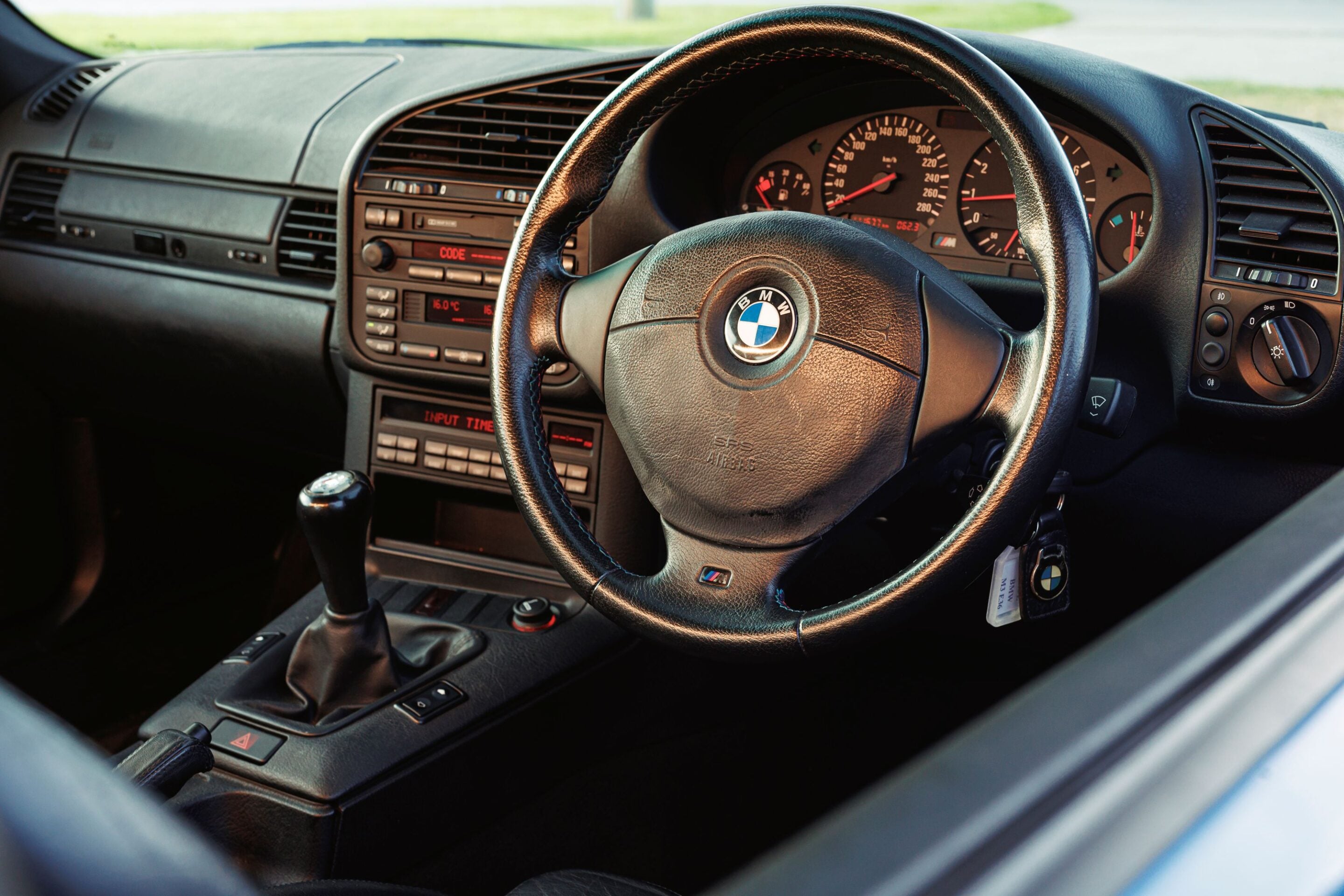
So why did the E36 come to have such an initially patchy reputation? It wasn’t so long ago that you could buy these cars for $15K but values have firmed and fast. Yes, everybody loved the E46 M3 that came next and, for a while, the E36 seemed the poor relation. It didn’t help that the interiors were fairly cheaply assembled and showed their age fairly quickly. Many cars fell into the wrong hands and were badly modified or thrashed.
Of course, all that this serves to do is eventually drive up the value of cars that are genuinely well looked after, like the beautiful Estoril Blue 3.2-litre example seen here, supplied by Young Timers Garage.
Now, more than ever, we can appreciate Pinky Lai’s lightness of touch with the exterior design, or that this embodies so many of the elements that we pine for on a wish list from modern sports car manufacturers – light weight, a slick manual gearbox, great visibility, a characterful engine, a supple ride and no constant electronic intervention.
It’s taken us a quarter of a century to first forget and then fall in love once again with the BMW E36 M3. In truth, it probably deserved better, but we suspect that, finally, its legacy is secure.
1
Specs
| Model | BMW E36 M3 Evo coupe |
|---|---|
| Engine | 3201cc 6cyl, dohc, 24v |
| Max Power | 236kW @ 7400rpm |
| Max Torque | 350Nm @ 3250rpm |
| Transmission | 6-speed manual |
| Weight | 1460kg |
| 0-100km/h | 5.1sec (tested) |
| Price | from $55,000 |
This story first appeared in the November 2024 issue of Wheels magazine, now on sale. Subscribe here and gain access to 12 issues for $109 plus online access to every Wheels issue since 1953.
Follow WhichCar/Wheels on Google
Click the button below to make WhichCar by Wheels a preferred source for your news.

We recommend
-
 Features
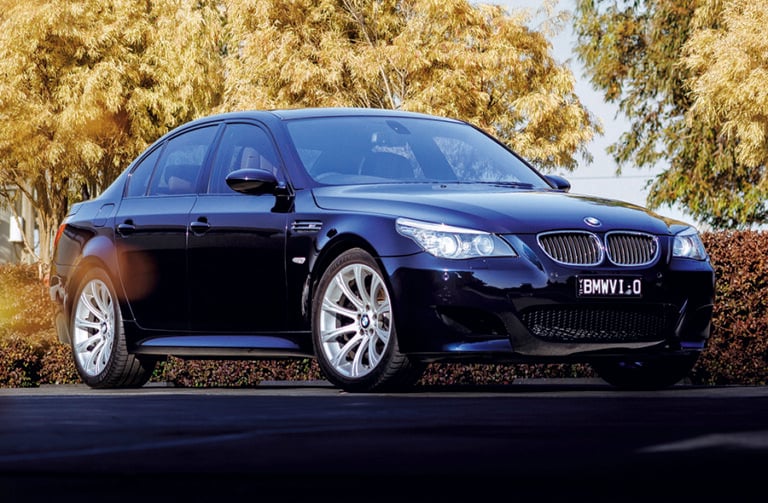
Modern Classic: BMW E60 M5, a sedan like no other
BMW threw away the rulebook when it created the fourth-generation M5, an audacious yet utterly beguiling V10-powered executive sedan that still sets pulses racing.
-
 Features
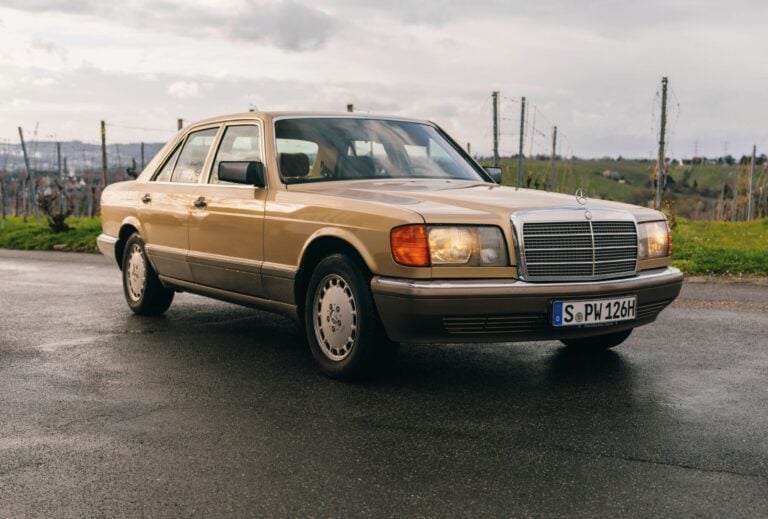
Modern Classic: Mercedes-Benz 300SE (W126), a graceful presence for 47 years
The W126 generation of Mercedes-Benz’s flagship S-Class encapsulates the very essence of the brand in a single restrained, yet powerful model.
-
 Features
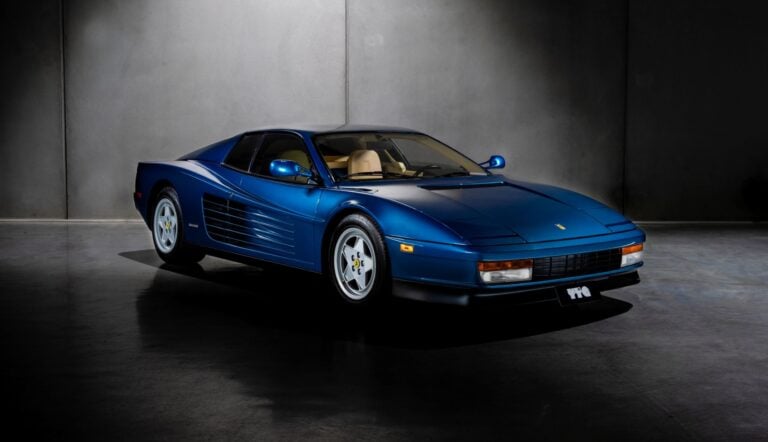
Modern Classic: Ferrari Testarossa, from Maranello to Miami Vice
Its rakish design might have been polarising, but the Ferrari Testarossa dragged the Italian supercar maker into the modern age.
