
News
Gallery 1
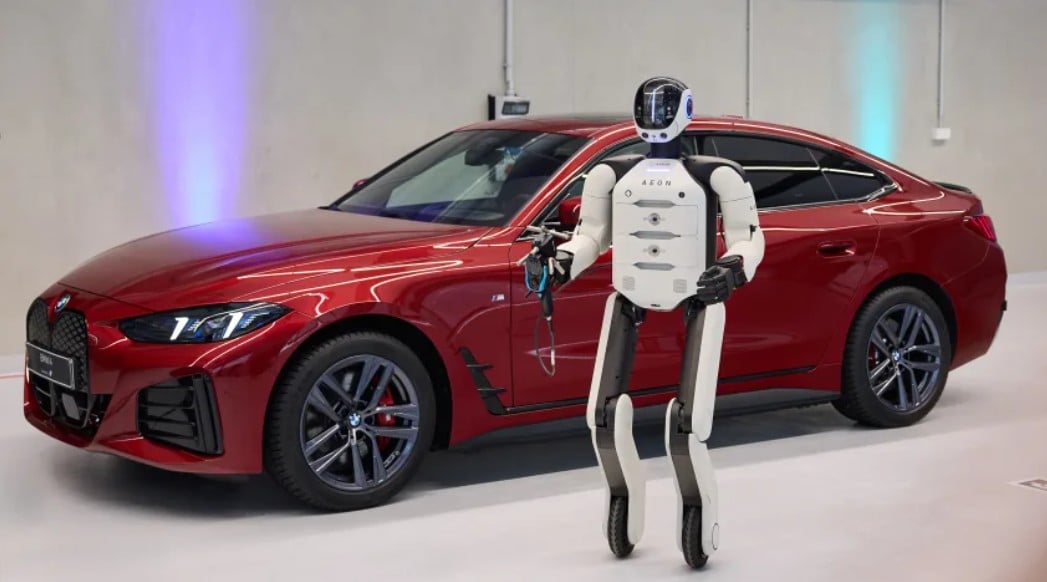
BMW Group will begin deploying humanoid robots in one of its vehicle manufacturing plants this year, marking a significant step towards what the company believes could become the future of automotive production.
The German automotive giant plans to introduce the human-shaped robots at its Leipzig facility from mid-2025, following a series of successful trials in both Germany and the United States.
Speaking to the BBC, BMW’s head of process management and digitalisation, Michael Nikolaides, said the technology has the potential to work alongside people in a wide variety of production environments.
“This will be the future of automotive production,” Nikolaides told the BBC. “If you have a humanoid form, you can pretty much set it to any workplace where a human is working today because it has the same size and the same capabilities.”
Unlike traditional industrial robots that are typically fixed to a single location, humanoid robots are designed to move through existing factory spaces and perform tasks in areas already built around human workers.
BMW says the primary goal is not to replace employees, but to assist with repetitive, physically demanding and potentially hazardous jobs.
1
“The focus is on understanding where this technology can support tasks that are repetitive, physically demanding or safety-critical,” a BMW spokesperson told the BBC. “The aim is to relieve employees in suitable areas and learn how Physical AI can support future production processes.”
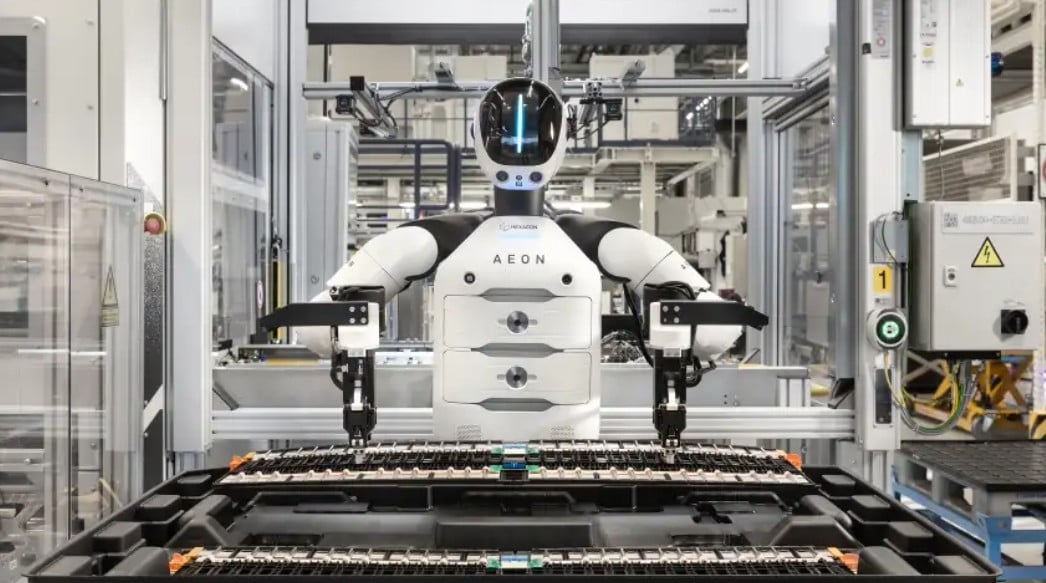
The robots, developed by Swiss technology company Hexagon Robotics, stand approximately 1.65 metres tall and weigh around 60 kilograms. Known as AEON, the machines are capable of lifting loads of up to 15 kilograms for shorter periods and around 8 kilograms continuously.
BMW says the robots will initially be used in high-voltage battery assembly and component manufacturing, areas that are becoming increasingly important as the industry transitions towards electrification.
The introduction follows earlier testing at BMW’s Spartanburg facility in the United States, where engineers assessed how the machines could integrate into existing production systems.
While humanoid robots may sound futuristic, automation has long been a cornerstone of modern vehicle manufacturing. Robotic welding systems, automated guided vehicles and advanced quality-control technologies are already widely used throughout the industry.
Other manufacturers are also exploring human-like robotics. Earlier this year, Renault showcased a robot designed to transport heavy electric vehicle tyres around its production facility in France.
BMW has not revealed where the technology could be deployed next, but the company confirmed it continues to evaluate robotics across its global manufacturing network.
For Australian consumers, the move offers a glimpse into how future BMW and MINI vehicles could increasingly be built with the assistance of advanced artificial intelligence and humanoid robotics, helping improve efficiency while supporting workers on the factory floor.
Follow WhichCar/Wheels on Google
Click the button below to make WhichCar by Wheels a preferred source for your news.

We recommend
-
 News
NewsBMW unveils heavily updated 7 Series with major tech and EV upgrades
Flagship sedan gains new interior, improved electric range and revised design in biggest mid-life overhaul yet.
-
 News
NewsElectric BMW 1 Series will target next generation of buyers
BMW wants to appeal to a younger demographic, with both internal combustion and electric power available for the fourth generation of the popular 1 Series.
-
 Best Small SUVs
Best Small SUVs 2026: Luxury
Premium compact SUVs are evolving rapidly, with electrification, advanced technology and elevated refinement on offer for those who can afford it.
