Reviews


Gallery 1
There’s power in the redemption arc. The human brain is one that is wired to recognise story patterns, and the familiar transformation of a flawed character into one of empathy or inspiration is something we intrinsically understand and respond to. But while a fictional character’s initial failings make the heroic payoff really hit you in the feels, we’re never quite as willing to give a consumer product a chance to make good.
Cars are a very specific case in point, because we get to see their evolution over time. Yet there exist a welter of vehicles that never got off to a great start in life but then came good without ever getting the recognition they deserved. Examples? The second-gen Toyota MR2 never got over the reputation of the early cars for wayward handling, despite that characteristic being fixed in the second of five iterative updates to that model. You could also file the Jaguar S-TYPE into that category alongside the big improver that is the Ford Mustang Mach-E. Poor initial impressions stick.
1
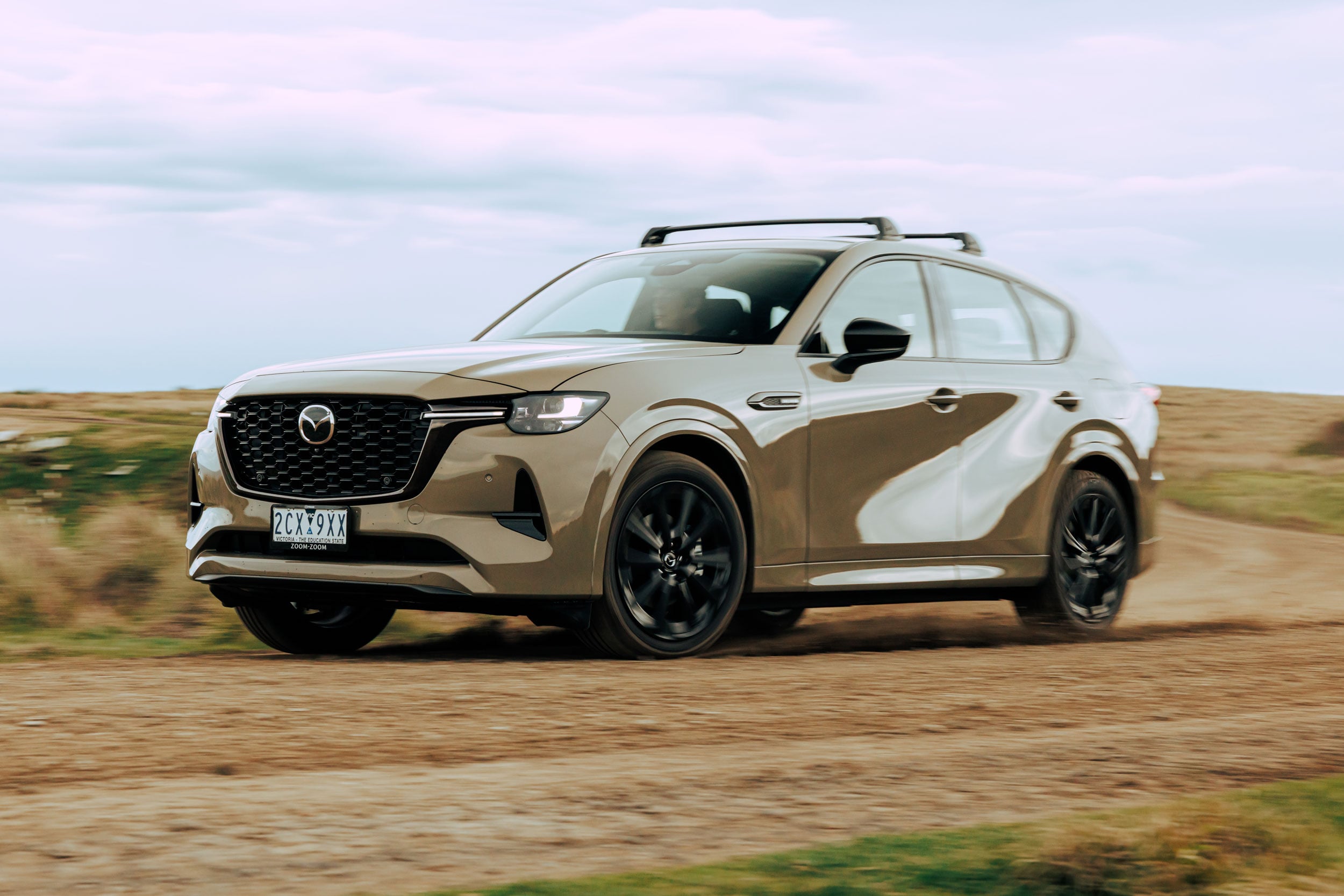
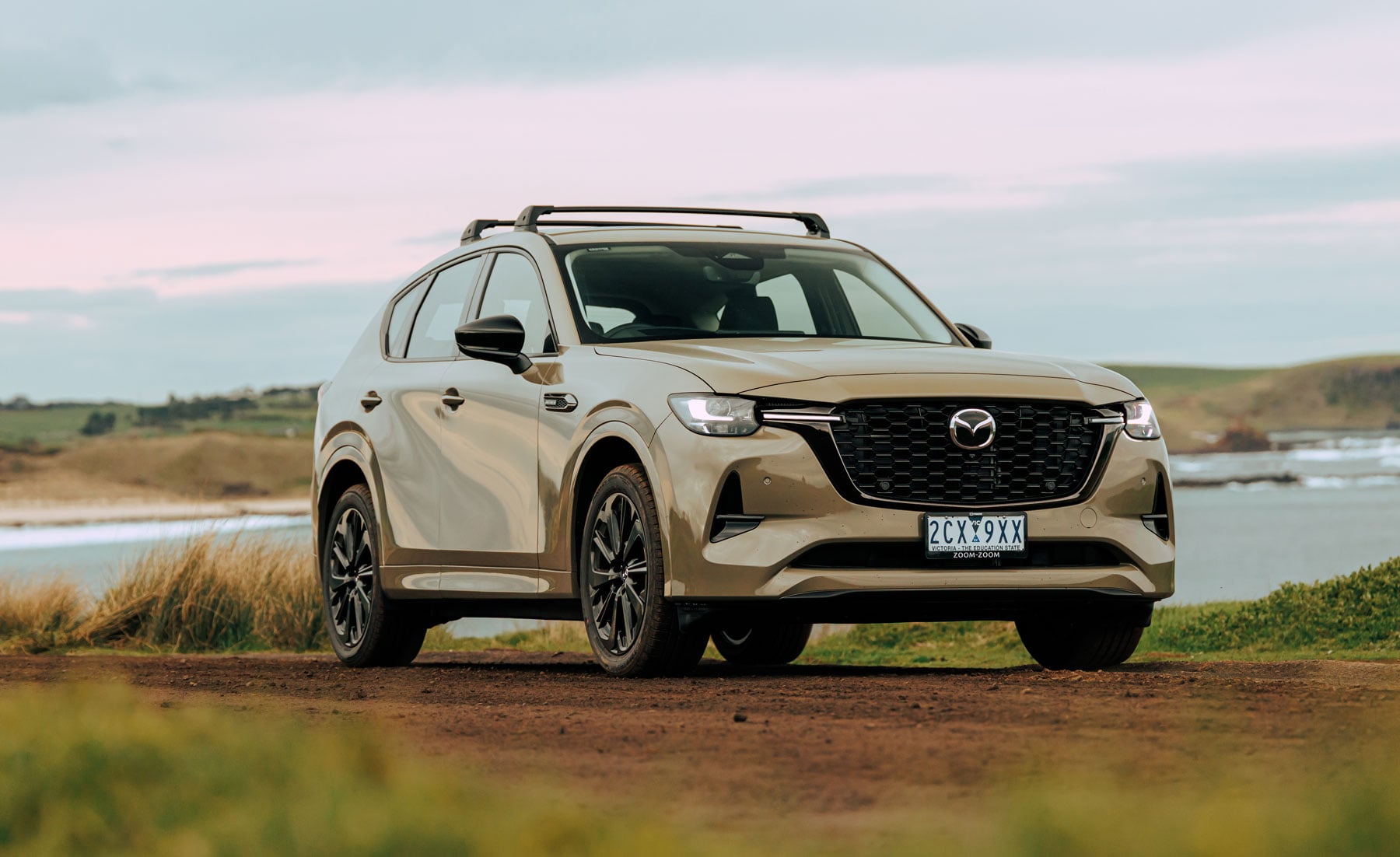
It’s not hard to guess at why the Mazda CX-60 is therefore sitting in front of us on a windswept boat ramp in South Gippsland. We first got to drive this car way back in 2022 at the international event in Portugal. It was clear even then that the drive route had been very carefully selected to provide as smooth a set of roads as you could ever reasonably expect, and that will always trip the spidey-senses of experienced road testers, who became a little suspicious of what exactly Mazda was trying to disguise. Indeed, on the few bits of gnarled bitumen in town that we drove, we noted shortcomings in the CX-60’s damping. Mazda shrugged the criticisms off, claiming that these were pre-production cars.
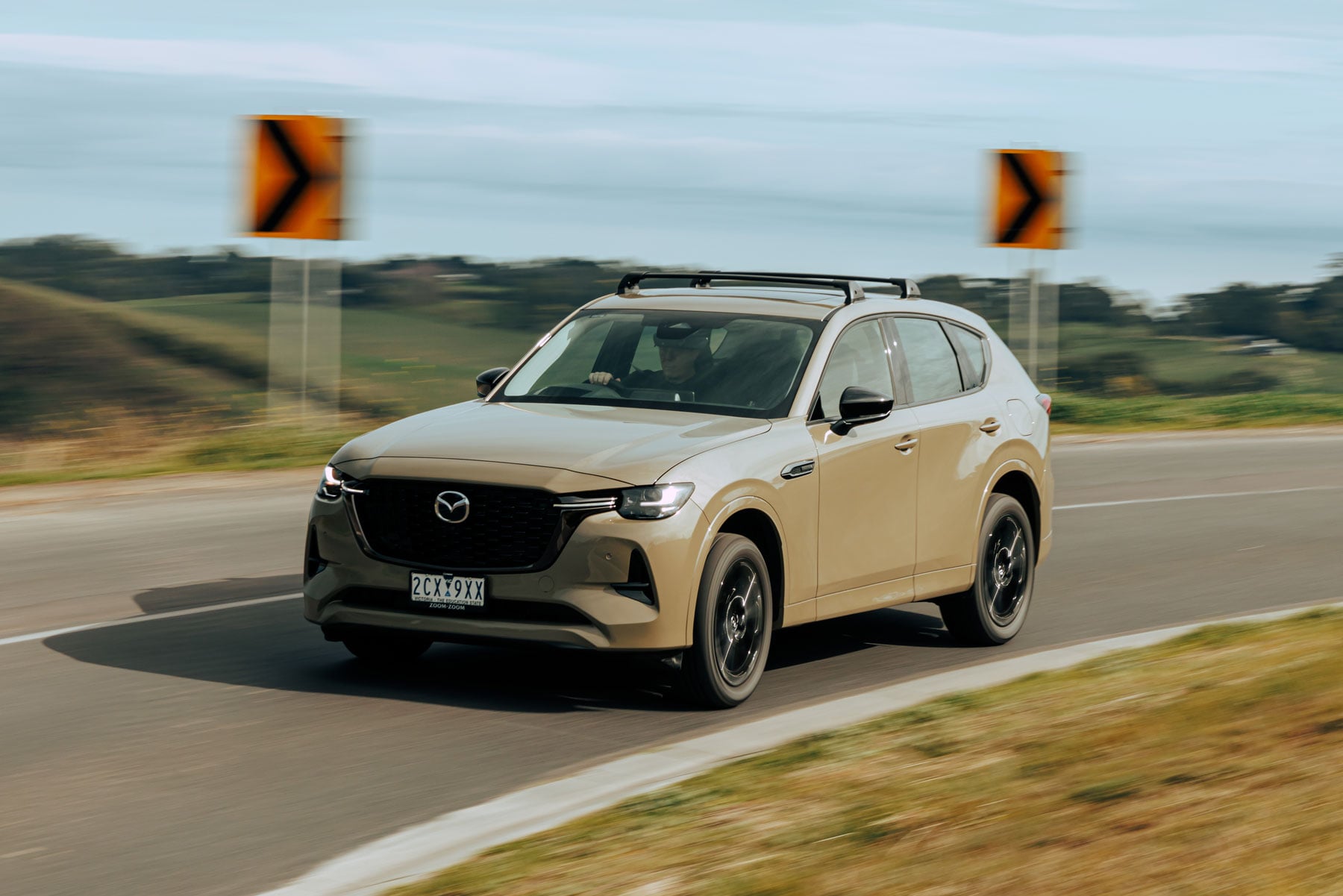
Be that as it may, the actual vehicles we received in Australia were no better. In fact, typical Australian B-roads only showed the ride quality to be a long way behind the eight-ball. Tony O’Kane attended the local launch drive and commented that “the CX-60 is possibly too sporty for its own good. It handles great but it rides poorly, with dampers that are far too sensitive to minor bumps and an overabundance of tyre and transmission noise. The suspension doesn’t exactly behave noticeably better on the 18-inch wheels of the Evolve [trim level] either, so this problem isn’t limited to the 20-inchers of the GT and Azami.”
Alex Inwood later ran one as a long-termer and concurred. “The ride quality is overly firm in everyday driving,” he noted. “It even verges on harsh over really rough roads, which is a shock given Mazda typically nails the compromise between sporty handling and everyday comfort. A bigger issue, however, is the transmission. The eight-speed unit was developed in-house by Mazda and it’s unpleasantly clunky and jerky at low speed. The shift logic feels at odds with the torquey diesel, too.” The handsome Mazda wasn’t exactly wowing us with its dynamics.
1
Car manufacturers are good at a lot of things. Listening to feedback isn’t always one of them. Put that down to a sunk costs fallacy, or an intrinsic confidence that they know best, but sometimes they really don’t want to hear bad news. Good development projects go bad for all sorts of reasons, even with talented teams and large budgets, and the CX-60 is a case in point. In short, I suspect that Mazda was trying to do too much, too quickly in launching new models with new engines and new transmissions on a new platform with an all-new suspension layout. The multiplication of development variables must have been dizzying and, one suspects, fundamentally unmanageable as a result.
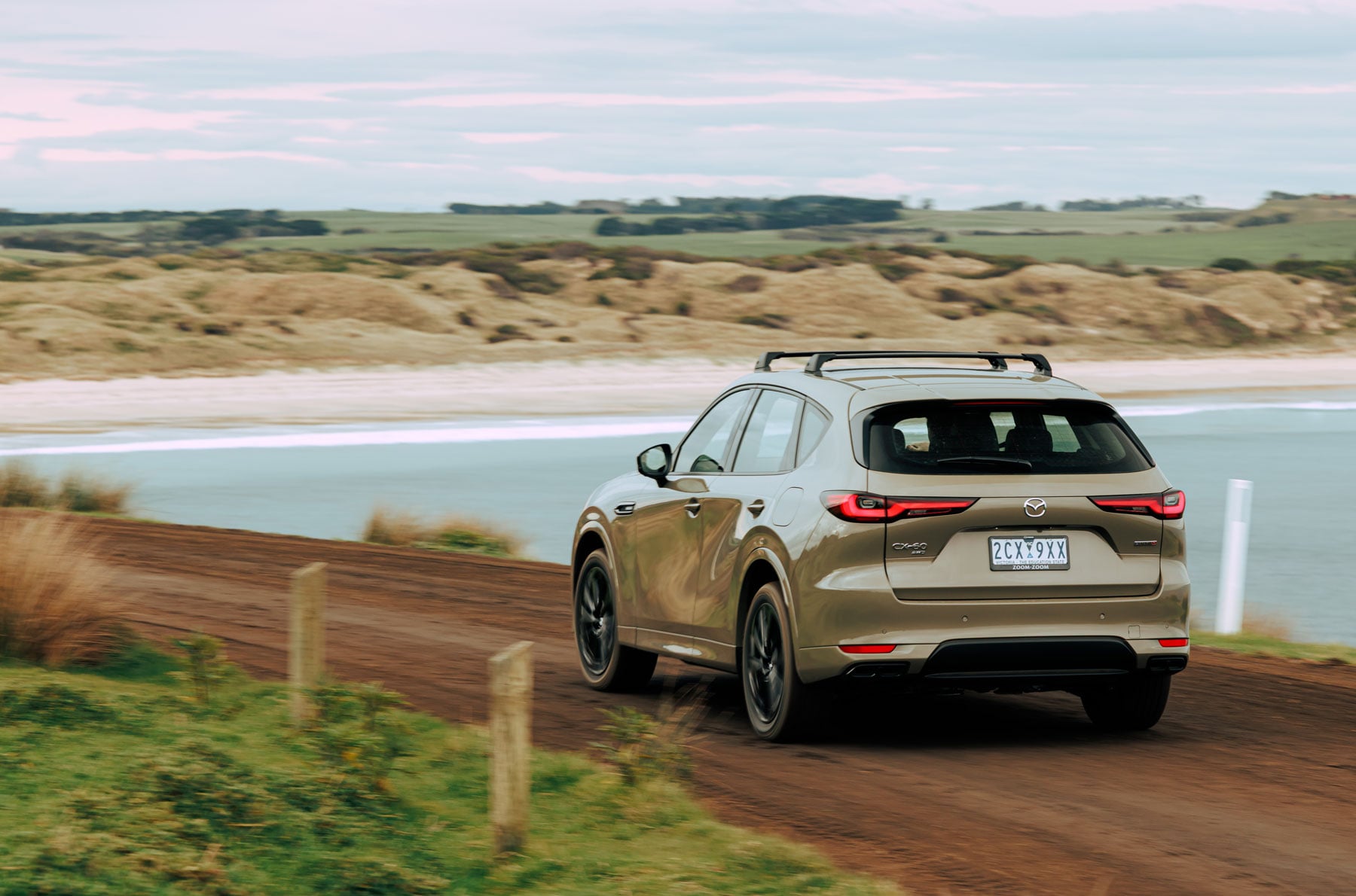
Mazda’s response to this lukewarm critical response came in October 2023 when it recalled all existing CX-60s and retrofitted them with revised rear shock absorbers. It helped reduce the vertical movement at the back, but there were more fundamental issues that needed addressing. In May, we finally got to drive the revised and updated car and were impressed at the lengths Mazda had gone to in order to remedy the CX-60’s ride issues.
1
Toshiaki Aoki, the chief engineer behind the product, put a CX-60 up on ramps in order to show us all of the changes beneath the car. The most fundamental alteration was the deletion of the old car’s rear anti roll, and this radical alteration to the rear roll stiffness then required a number of follow-on changes. Spring and compression damping rates have been firmed at the front, with softer rear springs at the back teamed with firmer rear rebound damping. The bushes and steering knuckles were revised and the allwheel drive logic, the stability control and the kinetic posture control systems were recoded accordingly.
“I don’t think it was a good situation because the [old] vehicle moved too much before it could be balanced. The vehicle body moved not only up and down but also sideways. It moved a lot,” he concedes. “I believe we should have understood the customers’ driving scenes better and more accurately… we are considering what needs to be done to better understand the market. We are trying to figure out the ways that we can adapt in terms of accurately assessing and evaluating the local conditions.”
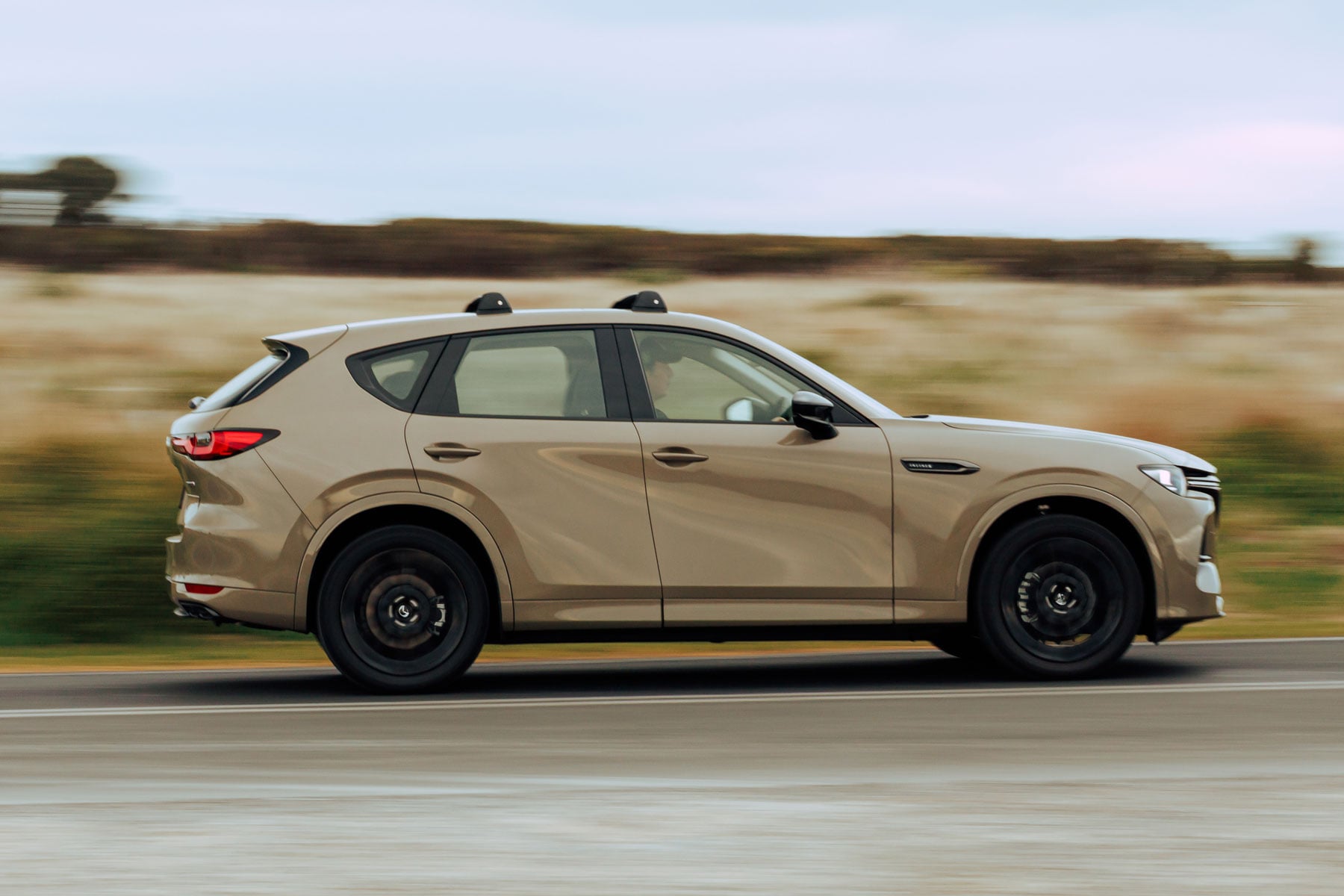
We got to try the new vehicle on a test route at Lang Lang proving ground and first impressions seemed promising. The new suspension no longer jarred and nibbled constantly, but after that first sample, we really needed a longer drive with the CX-60 on typical Aussie roads to see if it was now an SUV that was a more rounded prospect, more comfortable in its own skin. Equally importantly, would dialling back the ‘zoom-zoom’ factor merely relocate this Mazda into the morass of vanilla sub-premium SUVs?
1
PROOF, PUDDING
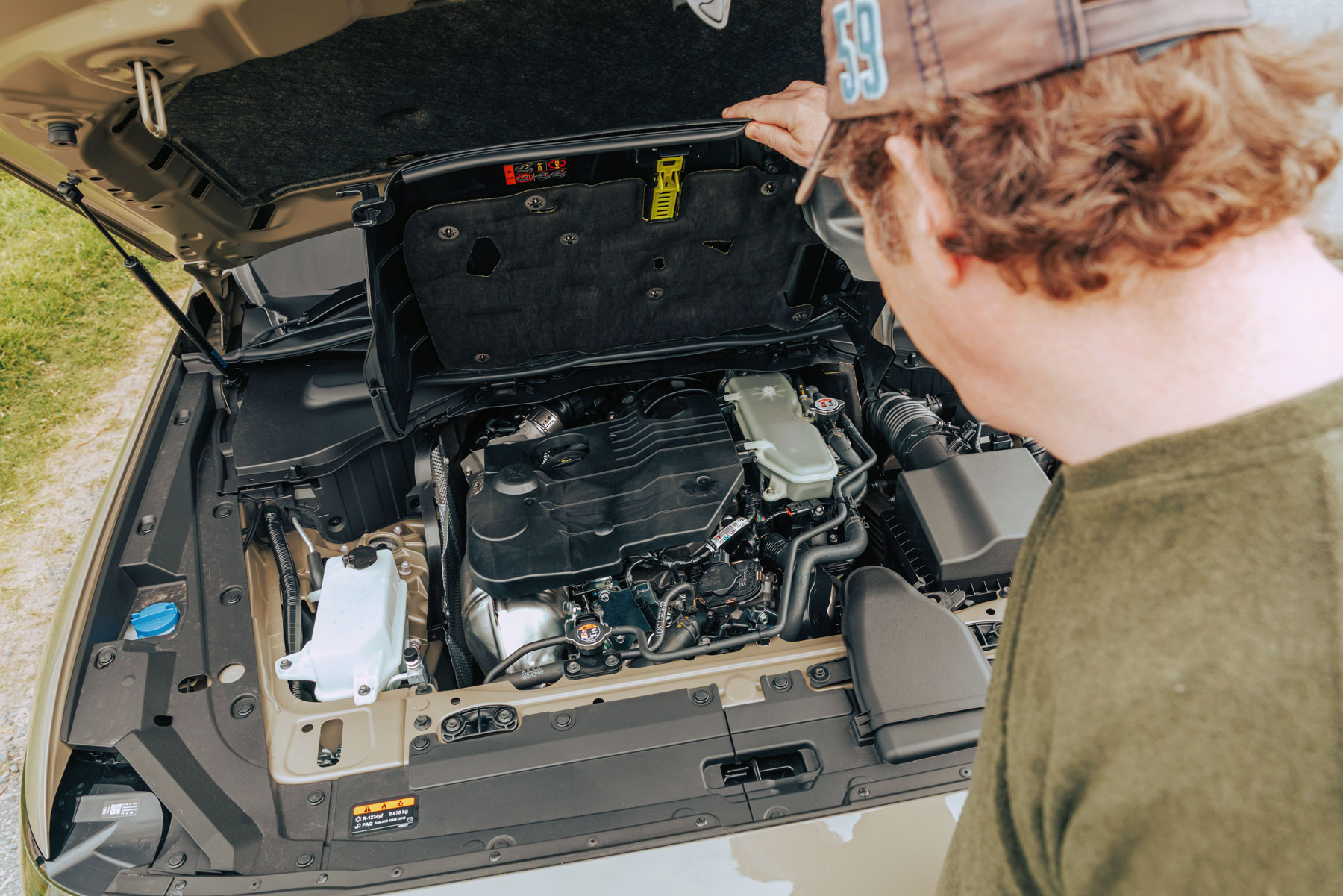
I’m still not completely convinced by Mazda’s eightspeed multi-clutch transmission. It has clearly improved in the way that it handles start/stop traffic, with part-throttle handling a good deal smoother and gear holds more decisive, but ask more of it and it can be found wanting. Take this scenario as an example. You’re on a main road, approaching a roundabout and you spot a car on the roundabout shaping to come across your intended path. You brake from, say, 100km/h to 20 or 30km/h, spot a gap behind the car and attempt to blend smoothly in. It’s in no way an outlier occurrence.
You would quite reasonably expect the gearbox to recognise that your speed has massively decreased, drop a few gears as you brake, and then deliver meaningful acceleration when you pick up the throttle, so as not to leave you stranded with no drive. But no. As your right foot requests acceleration, nothing happens. You realise that the ’box is still sitting in seventh gear. You notice the widening eyes of the oncoming driver as he sees the beautifully-surfaced flanks of the CX-60 going pretty much nowhere in his path.
1
A full 1.5 seconds later, the transmission realises the error of its ways and block shifts to third. After some experimentation, switching the Mi-Drive mode from Normal to Sport only seems to make matters worse. We replicated this issue time and again, in a safe, traffic-free environment.
Of course, you can – and should – start plucking at the wheel-mounted paddles to ensure that you’re never caught out like this, but it’s a drive logic glitch that should never have been signed off. It’s a shame, as Mazda has done a lot right with the revised transmission. It just needs better coding to match road speed with likely acceleration demand. You’d think it would be an easy fix.
It’s now a good deal more serene and relaxing to drive
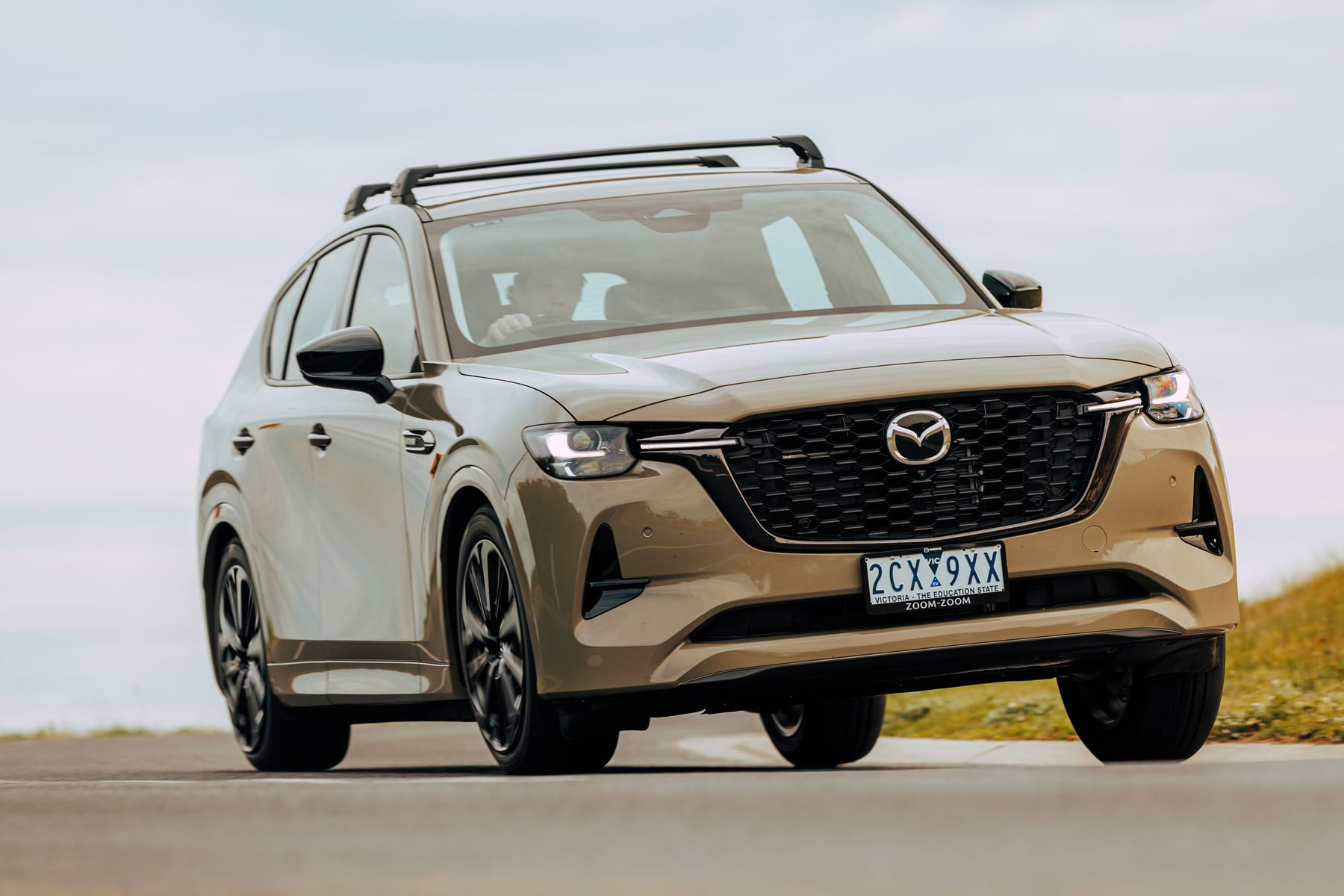
I’m more impressed by the newfound ride quality though. Yes, some secondary thuds still sneak through, but for the most part body control is very good and that feeling of brittle nervousness that would afflict the old car on an Aussie country road has been banished. It’s now a good deal more serene and relaxing to drive, even when dealing with the unsprung masses of this test car’s big wheels and Toyo Proxes Sport 225/50 R20 rubber.
1
Up the pace a bit and you start to feel the body rolling a little earlier than before. Despite the firmer front spring rates, there’s a decent amount of front end grip and the limits are very benignly expressed, with well-communicated understeer.
The softer rear end affords a decent amount of mechanical grip, but keeps things well controlled if you jump off the throttle mid-corner. It’s exactly the sort of handling bias a vehicle in this category ought to display: capable but safety focused.
The steering calibration is calm and accurate, if not exactly brimming with detailed feel. Again, right for the target market. It’s easy to get very roadtestery and sniffy at these changes but, in effect, Mazda had built a car in the old CX-60 that was probably too focused for its own good and had missed the typical use-case of the majority of its buyers. That now appears to have been rectified.
1
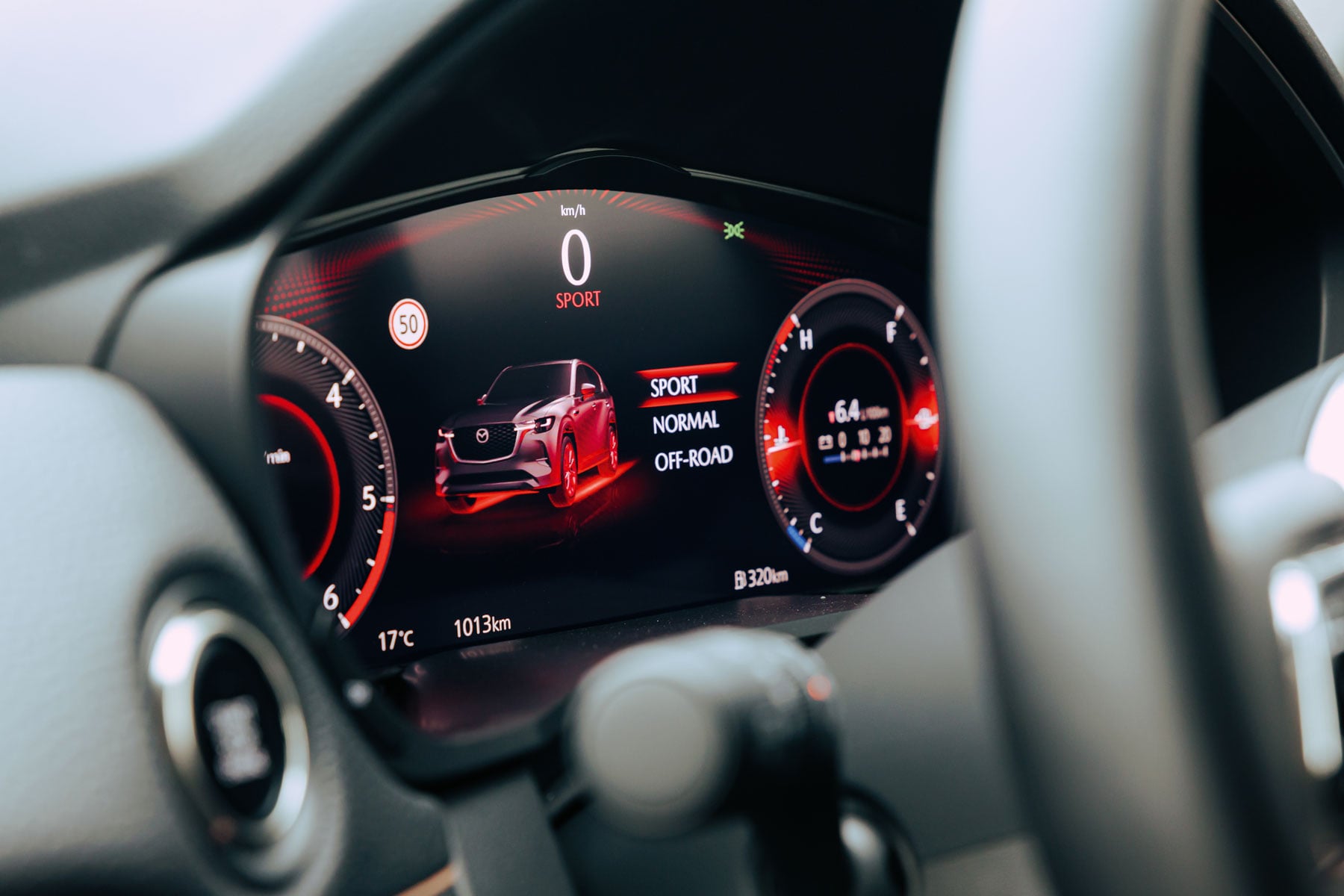
In terms of dynamics, the pendulum might just have swung back a little further beyond the sweet spot. A crisper throttle, steering and gearbox calibration in Sport mode could have given a more convincing impression of dynamic focus, leaving the default Normal mode for everyday schlepping.
In practice, apart from the screen turning red when you engage Sport, the difference in those software maps is too subtle to make it really worthwhile, in our view.
WE GOT THERE IN THE END
Nevertheless, the CX-60 is a much improved vehicle. Sometimes it only takes small changes to turn a vehicle from fundamentally frustrating to one that just clicks, and Mazda has finally got there with the CX-60. Several Chinese manufacturers in the medium SUV class are in the process of learning this lesson with their driving assist technology and it’s always encouraging to see small changes net major positive effects.
In this instance, the CX-60 goes from a car where there was no respite from its underlying flaws to one that, like most Mazdas we’ve been used to buying in recent years, is one that has a certain quiet charm to it. I know diesels are about as fashionable as a MAGA hat in Byron right now, but there’s a lot to be said for this straight-six implementation, especially so when it’s in the correct gear. It’s refined for a big compression- ignition unit and its 5.2L/100km fuel economy figure is 32 per cent better than the 7.4L/100km showing of its petrol sibling.
1
With 187kW and 550Nm at its elbow, it’s not notably overstressed. Quite the opposite in fact. The smaller 3.0-litre V6 diesel in a Ford Everest, which can trace its origins to shortly after an asteroid cleaned up the dinosaurs, manages 184kW and 600Nm. Compare the braked towing capacities of the two vehicles and the Ford fronts up with 3500kg whereas the Mazda’s pegged at just 2000kg. So the CX-60 with the highest torque can, quite counterintuitively, tow less than its petrol-powered counterparts. The reason? It’s a cooling issue that limits quite how hard you can work the 3.3-litre diesel. Were Mazda able to rectify that, such a large capacity straight-six would have the tuning potential for considerably more power and torque.
While there are patently many better options for towing caravans, boats or horse fl oats, the CX-60 diesel will happily work with the sort of trailers that might get wheeled out of the shed a handful of times a year for family long weekenders, garden centre visits or tip runs which, if we’re honest, likely covers the majority of instances.
Sometimes it only takes small changes to turn a vehicle from fundamentally frustrating to one that just clicks
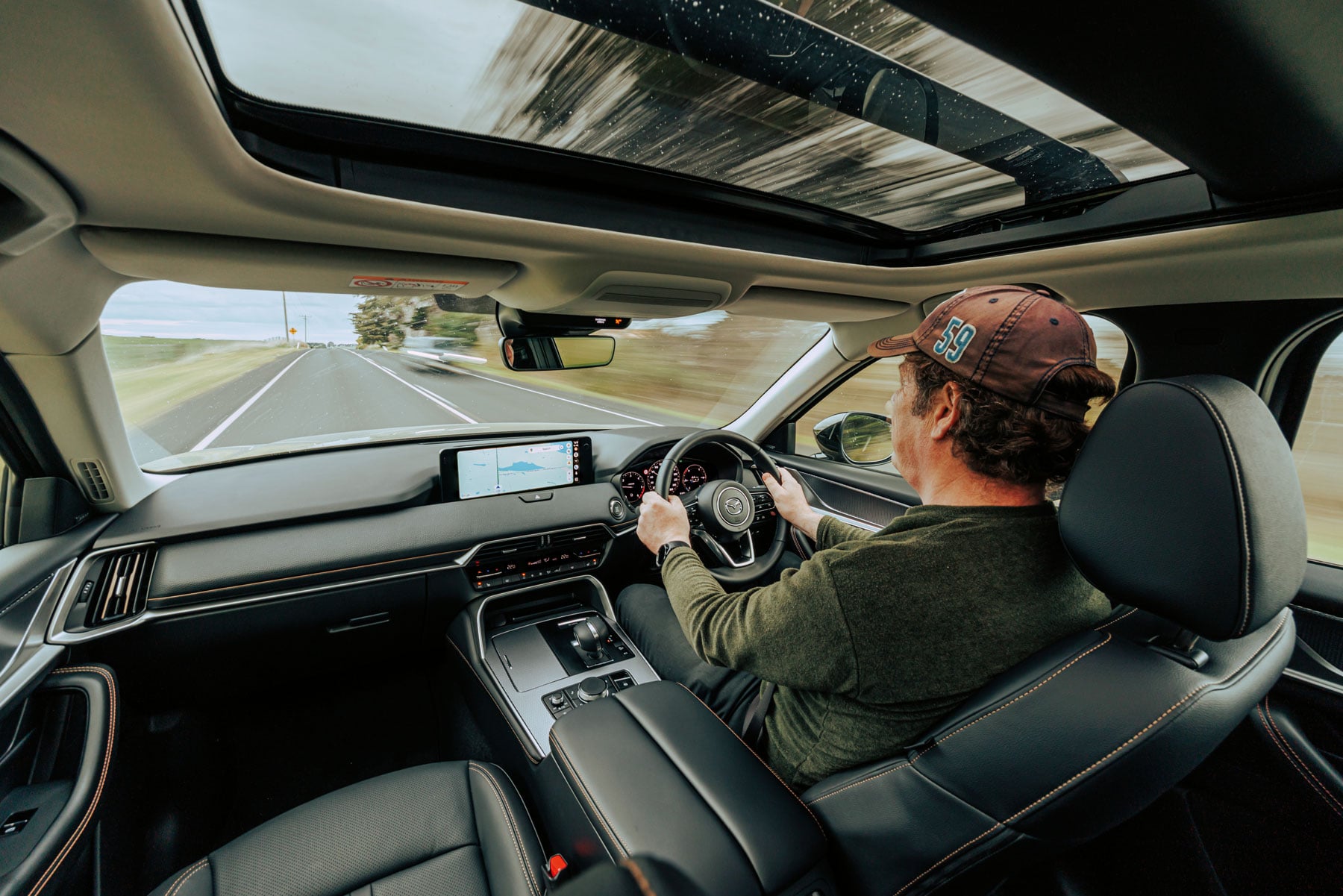
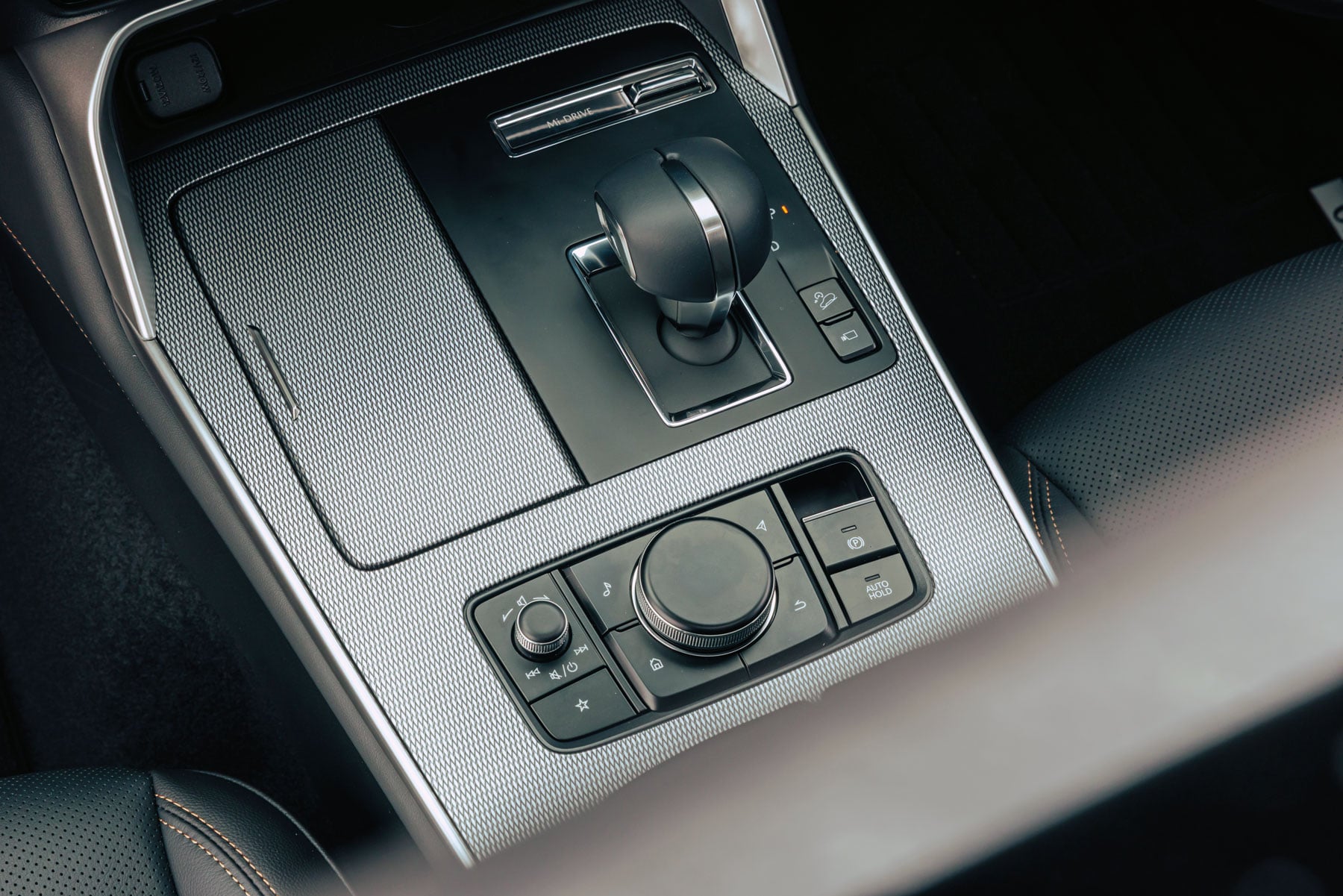
The cabin earns a solid report card too. The basic ergonomics are good, although I still prefer a proximate touch screen than one you manipulate with a controller. The front seats are wide and comfortable, with heating and an adjustable lumbar support. The steering wheel also features heating and, like the seats, is wrapped in high quality stitched leather. There’s a panoramic sunroof overhead, a wireless phone charger that can eject the device if you’re too eager with the loud pedal, and a pair of USB-Cs up front to charge other devices. The 12-speaker Bose stereo is bright and punchy.
1
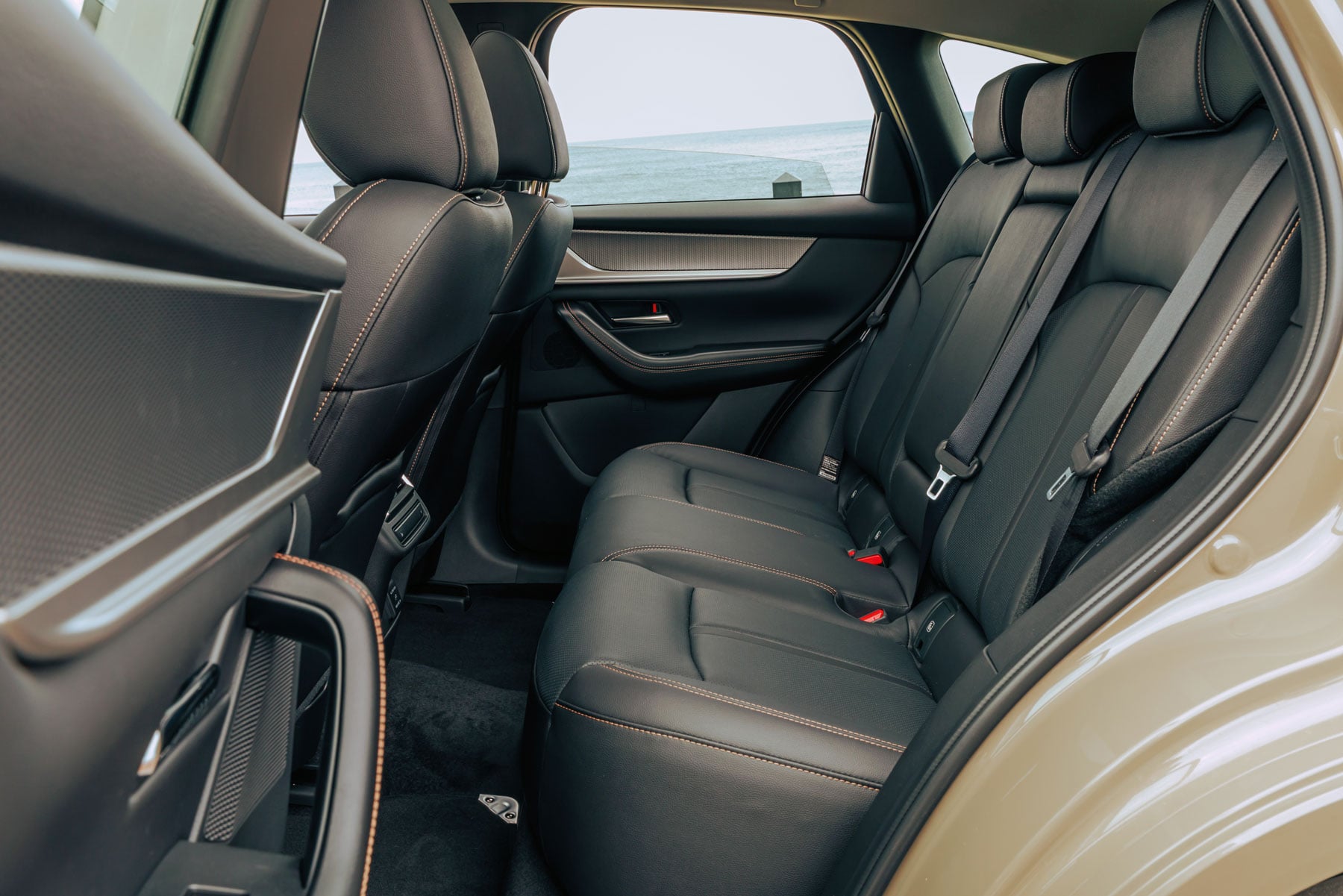
Jump into the back and there’s enough legroom to sit behind my driving position, although a few degrees of additional recline on the rear seat squab wouldn’t have gone amiss. Rear occupants also get seat heating in this GT model, along with two USB-Cs, shin-height air-con vents and the unusual fitment of a three-pin socket.
Activate the powered tailgate and you’ll find that the boot’s decently shaped with a low floor, beneath which resides a space saver spare. Bravo, Mazda. There are a pair of nested catches on the side of the boot that allows you to remotely drop the 40/20/40 split rear seats, increasing available space from a hefty 570 litres when all seats are in position to a cavernous 1726 when they’re all folded.
Mazda has improved the CX-60 with the latest suite of revisions, making it a more attractive car for the majority of its target market. We’ve been told that there are some rather disgruntled engineers who feel that the car has lost its verve and its spark as a result of these changes and we can understand that point of view too. Mazda has long distinguished itself by offering something to keen drivers, but as it pushes into new market sectors, a priority on sporty driving characteristics is rarely front of mind for buyers.
Of course, there’s an argument that Wheels should always advocate for drivers, and that to do otherwise is to reward a reversion to dynamic mediocrity. Yet the latest, more liveable CX-60 does more to reward its cadre of drivers more of the time than any trolleyjack suspension setting or neurotic steering map. It’s not expediency, its overdue pragmatism, and proof, if ever it were needed, that there’s a time and a place for Zoom-zoom.
With the light finally fading over Phillip Island, it’s time to head home. I’m warm, comfortable, the adaptive LED lights are behaving impeccably, the adaptive cruise is excellent and I’m not being constantly reminded of the orientation of every grain in the road surface. This is what the Mazda CX-60 always needed to feel like; to be, but never quite was. It took a while, but it’s finally getting to land its redemption arc.
1
Covering the bases
In order to respond to customer demand for a more attainable CX-60, Mazda Australia is importing a more wallet-friendly version to add to the existing range.
The rear-drive 2.5-litre petrol model makes 138kW and 250Nm, features an economy figure of 7.5L/km, and is priced at $44,240 for the entry-level G25 Pure, $49,240 for the mid-range G25 Evolve and $52,240 for the flagship G25 Touring.
For less than $45k, the Pure looks an incredibly tempting package. Mazda Australia certainly seems to think so too, with sales projections pointing to the fact that these G25 models will account for a third of total CX-60 sales.
Mazda CX-60 Specification
- Model: Mazda CX-60 D50e
- Price: $67,325 plus on-road costs
- Engine: 3283cc inline-6cyl, 24v, DOHC, mild-hybrid, turbodiesel
- Transmission: 8-speed clutchpack auto
- Peak power: 187kW @ 3750rpm
- Peak torque: 550Nm @ 1500-2400rpm
- Kerb weight: 1990kg
- L/W/H/WB: 4740/1949/1680/2870mm
- Boot size: 570/1726L
- 0-100km/h: 7.3 sec
- Economy: 5.0L/100km (combined)
- Fuel tank: 58L
- Available: Now
MORE
Everything Mazda
Follow WhichCar/Wheels on Google
Click the button below to make WhichCar by Wheels a preferred source for your news.

We recommend
-
 Best Medium SUVs
Best Medium SUVs 2025: Over $40K
From premium hybrids to tech-packed family haulers, these medium SUVs priced above $40K deliver the best balance of space, efficiency, features and driving refinement for 2025.
-
 Reviews
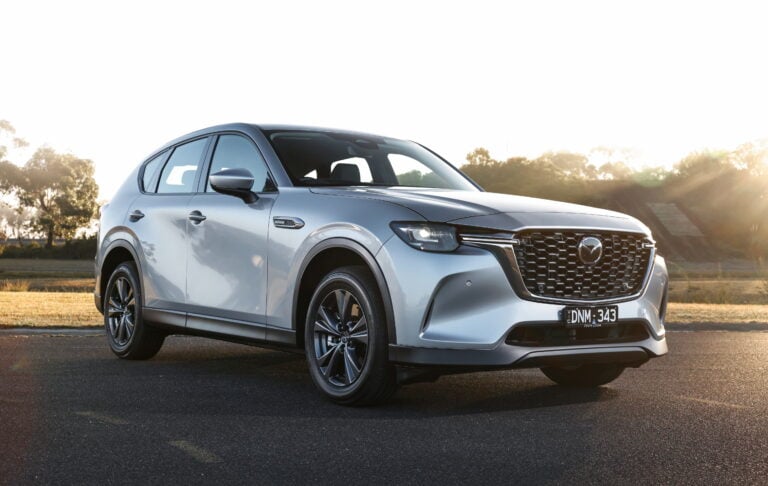
Mazda CX-60: Wheels verdict – have the new updates rescued the model’s ride quality?
Hiroshima has another crack at fixing the ill-starred CX-60. Our drive helped us determine whether they've succeeded this time around.
-
 Advice
Who makes the most fuel efficient mid-size SUV?
Mid-size SUVs are all the rage globally, continuing to sell in huge numbers. So who makes the most fuel efficient non-plug-in hybrid mid-size SUV?