Comparisons


Gallery 1
When did we grow so comfortable with the idea of excess?
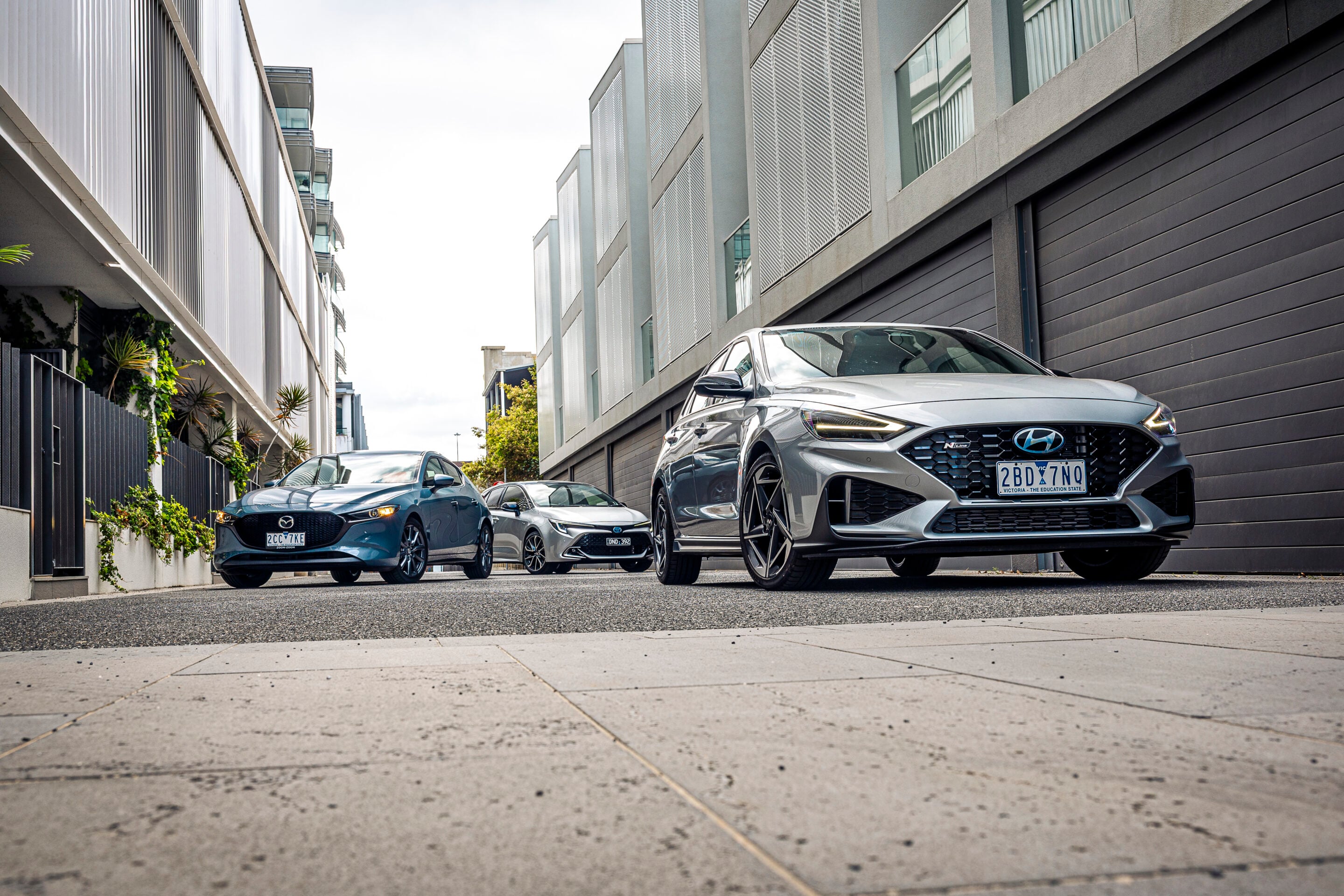
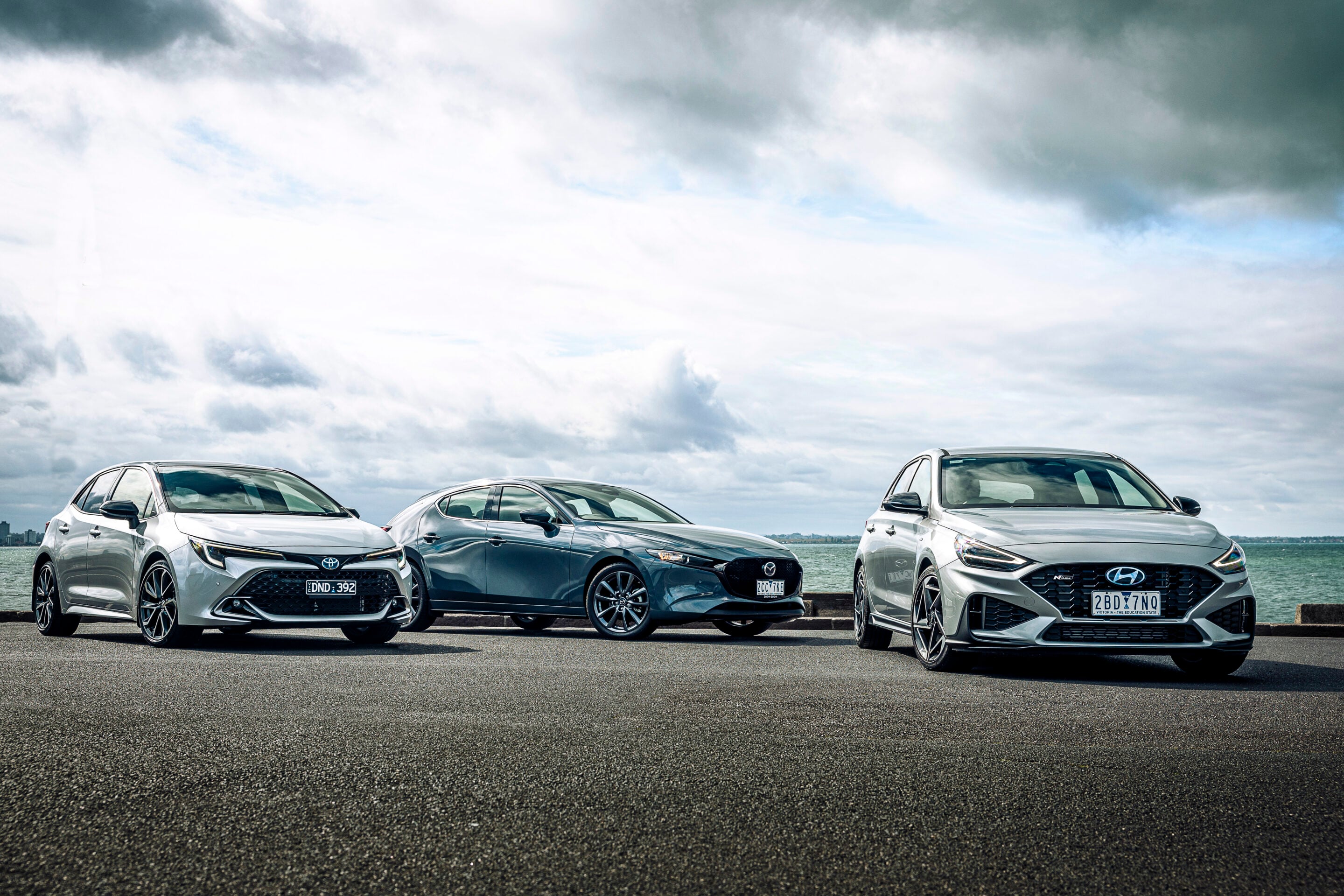
It’s a question that’s hard to dismiss as I’m looking at the new Hyundai i30, the Mazda3 and the Toyota Corolla. After all, we’re a nation that traditionally loves a big car and this trio, which would be deemed ‘family hatches’ in Europe, are relegated to the ‘small car’ category here. Maybe we’re just no good at
efficient packing.
For mine, these are some of the cleverest and most interesting cars for sale at any price, largely because they need to manage so many compromises so smartly. It’s not difficult to build a car that does one thing really well, as a whole host of Chinese ingenues are ably demonstrating. Building a car that’s safe, comfortable, reliable, fuel-efficient, stylish, affordable and spacious while occupying a modest road footprint? That requires some fiendishly smart minds to assemble.
1
It’s also one that is proving too difficult for many manufacturers to devote the requisite resources to. As more car makers take on the easier, and consequently lazier, assignment of building SUVs instead, the small car appears to be withering on the vine, in Australia at least. In 2014, Toyota sold 43,375 Corollas here. Last year, that figure was almost halved to 24,027. Back then there were 49 different small car models you could choose from. Now there are just 27, a reduction of 45 per cent. It may not surprise you to learn that in Japan and Europe, those trends are reversed.
As it stands, these are the three best-selling small cars in Australia, categorised below the $40k price point. The Kia Cerato was amongst them, but has latterly been replaced by the K4. We’re still awaiting the hatchback version of that car, promised for the end of the year. All three fully deserve to be on those podium steps, but we’re looking to discover which has the most compelling blend of attributes. If you’re looking to downsize in this crushing cost of living crunch, you might find the next few pages well worth your time.
1
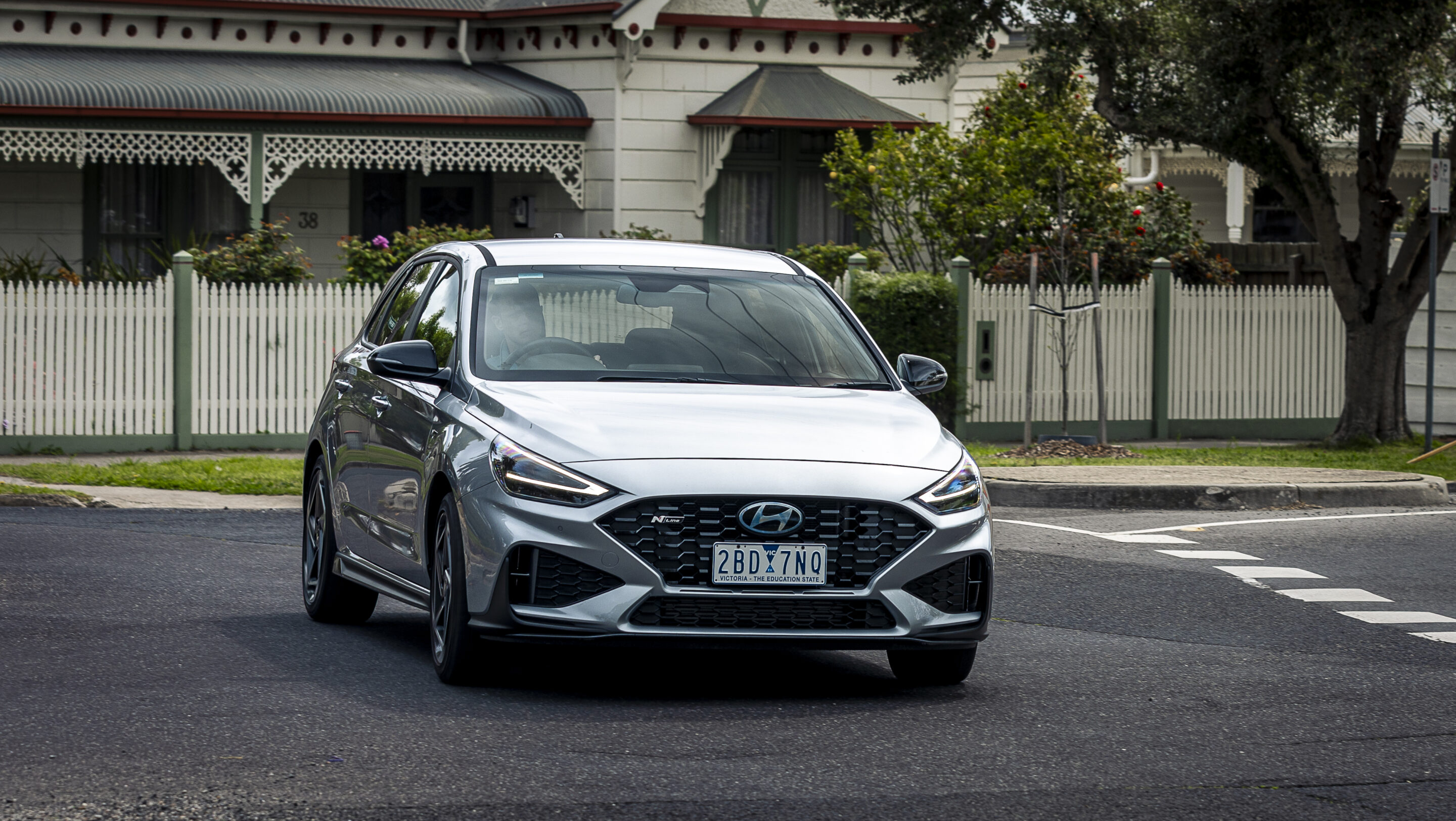
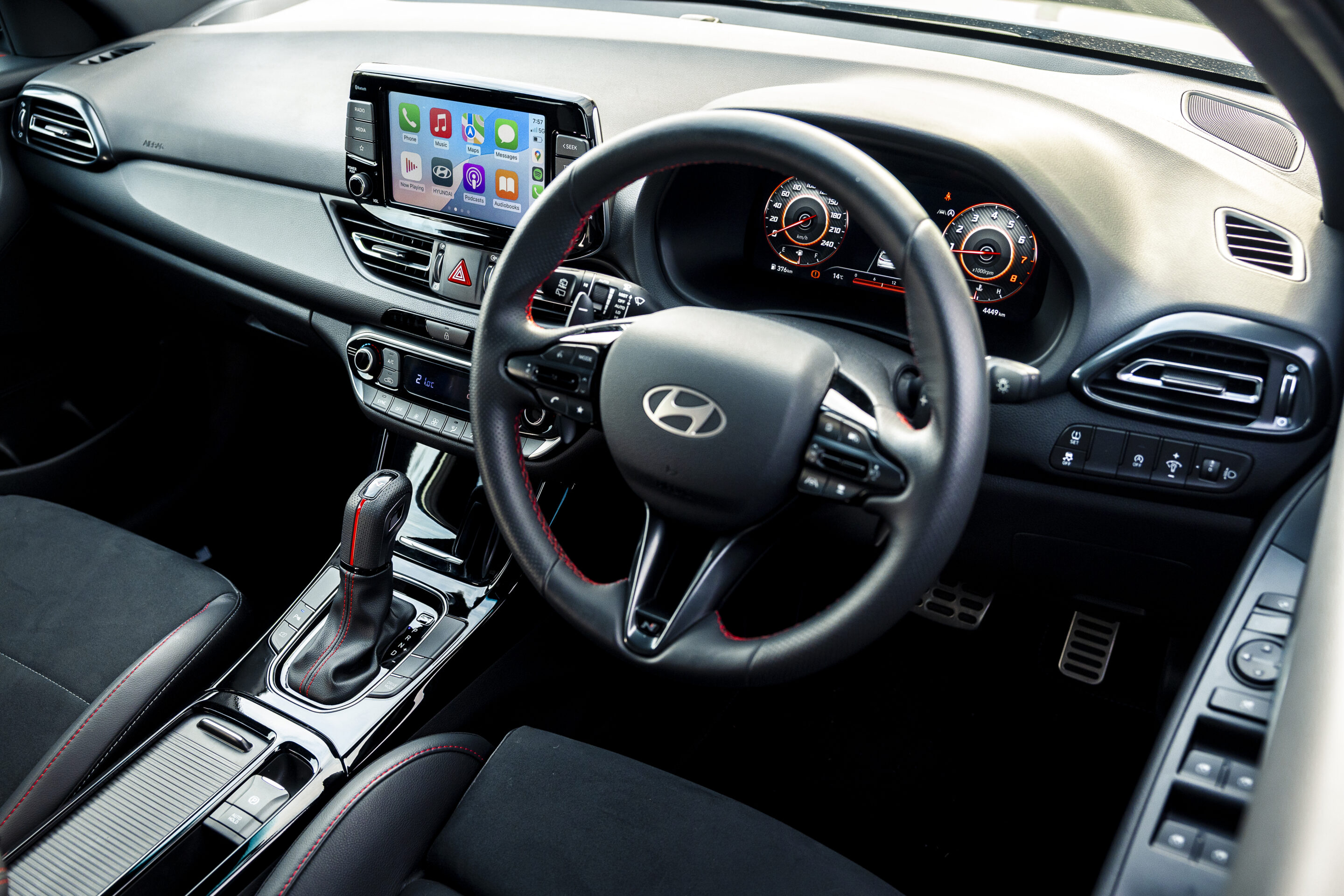
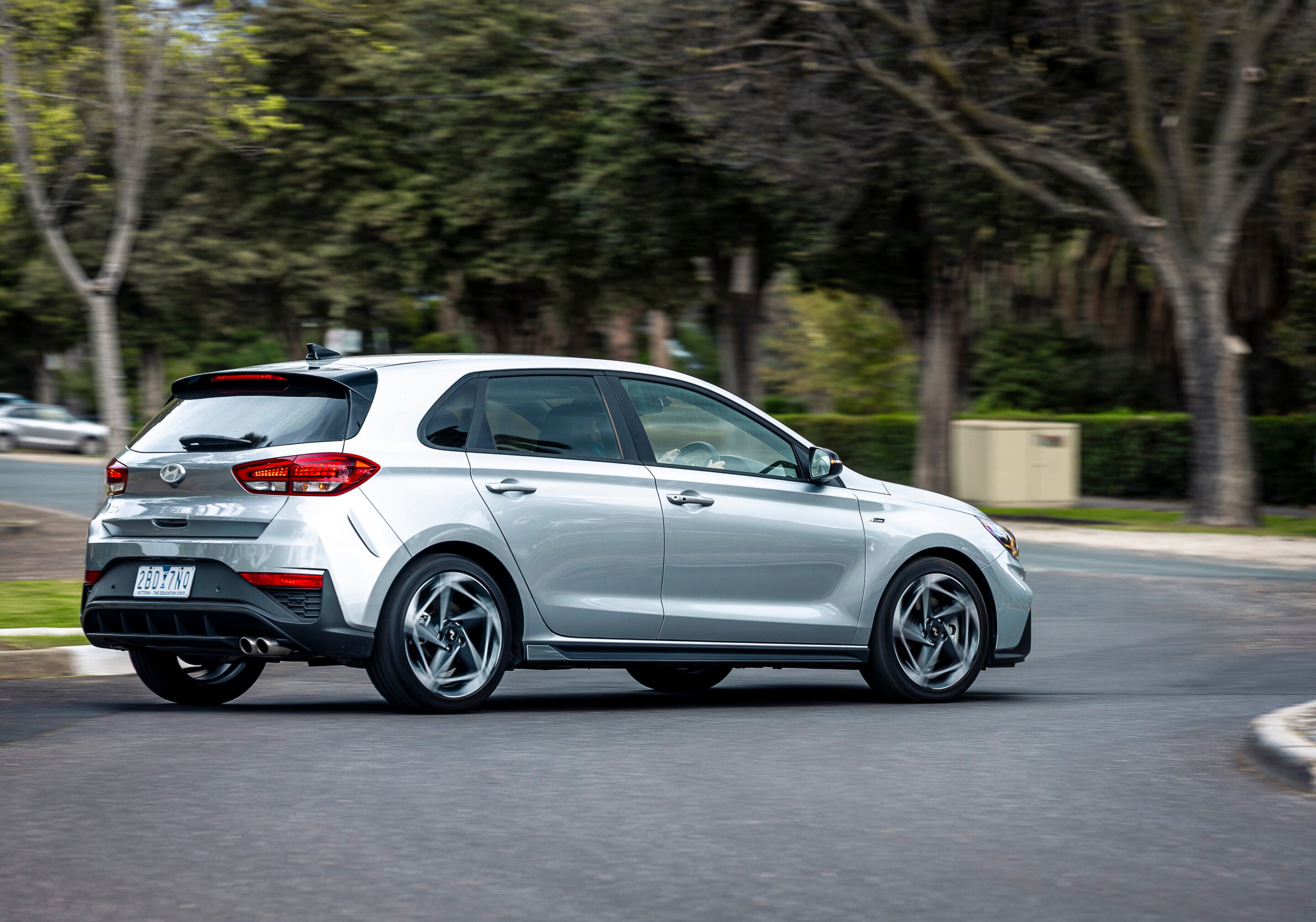
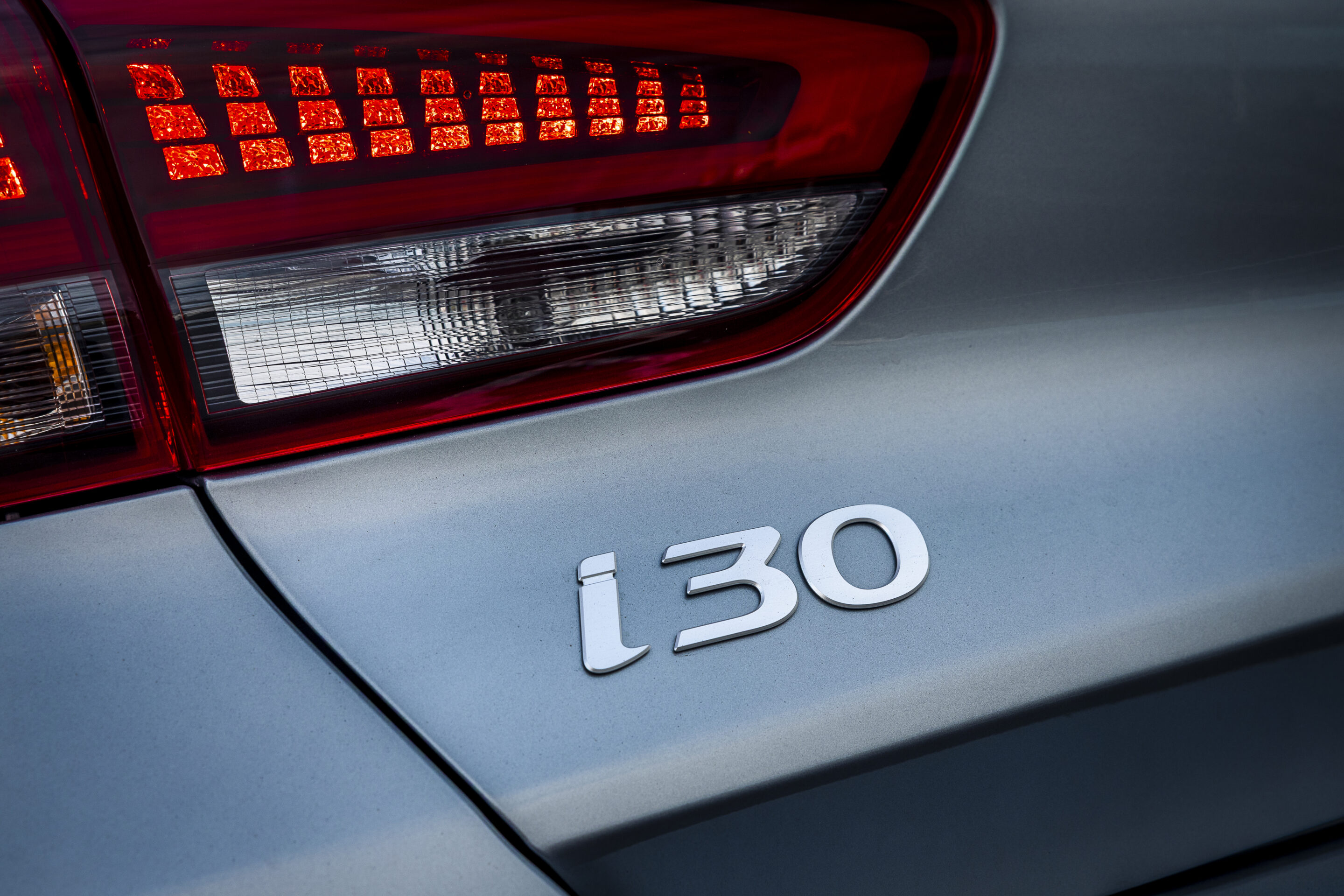
The Hyundai i30 (above) is nominally the oldest of this trio, with this third-generation PD model introduced in 2016 at the Paris Motor Show. The Peter Schreyer design has aged gracefully, and been treated to two facelifts in the interim, the first in 2020, which brought slimmer headlights and a digital instrument cluster, among other refinements, and a second more minor refresh in 2024 which focused on grille and bumpers, at the same time slimming the i30 range down to just N-Line and sporty N models here in Australia. The 117kW/250Nm mild-hybrid 1.5-litre turbocharged powerplant was new for 2024, replacing the older 150kW 1.6T unit, helping reduce Hyundai’s group emissions in the process.
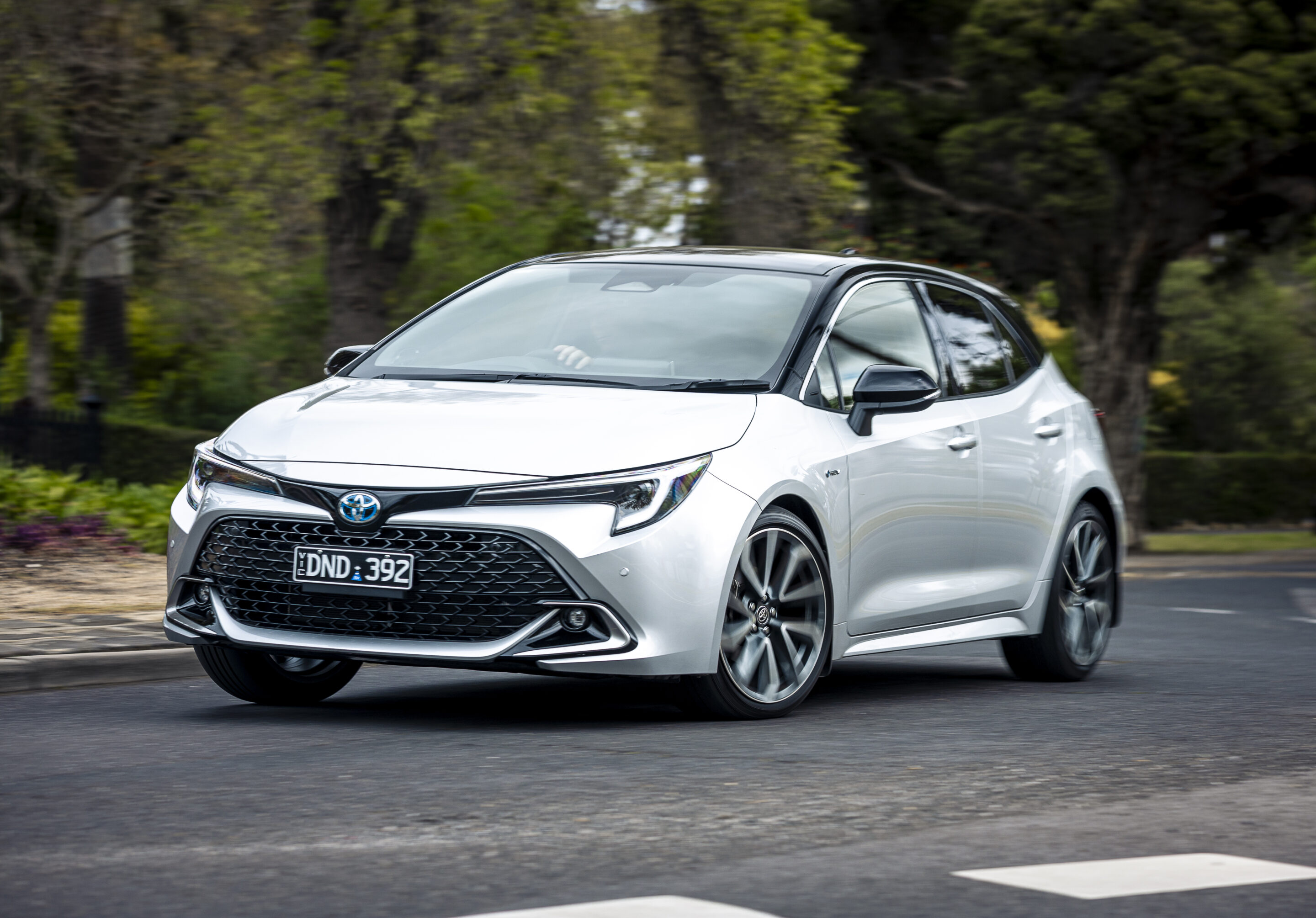
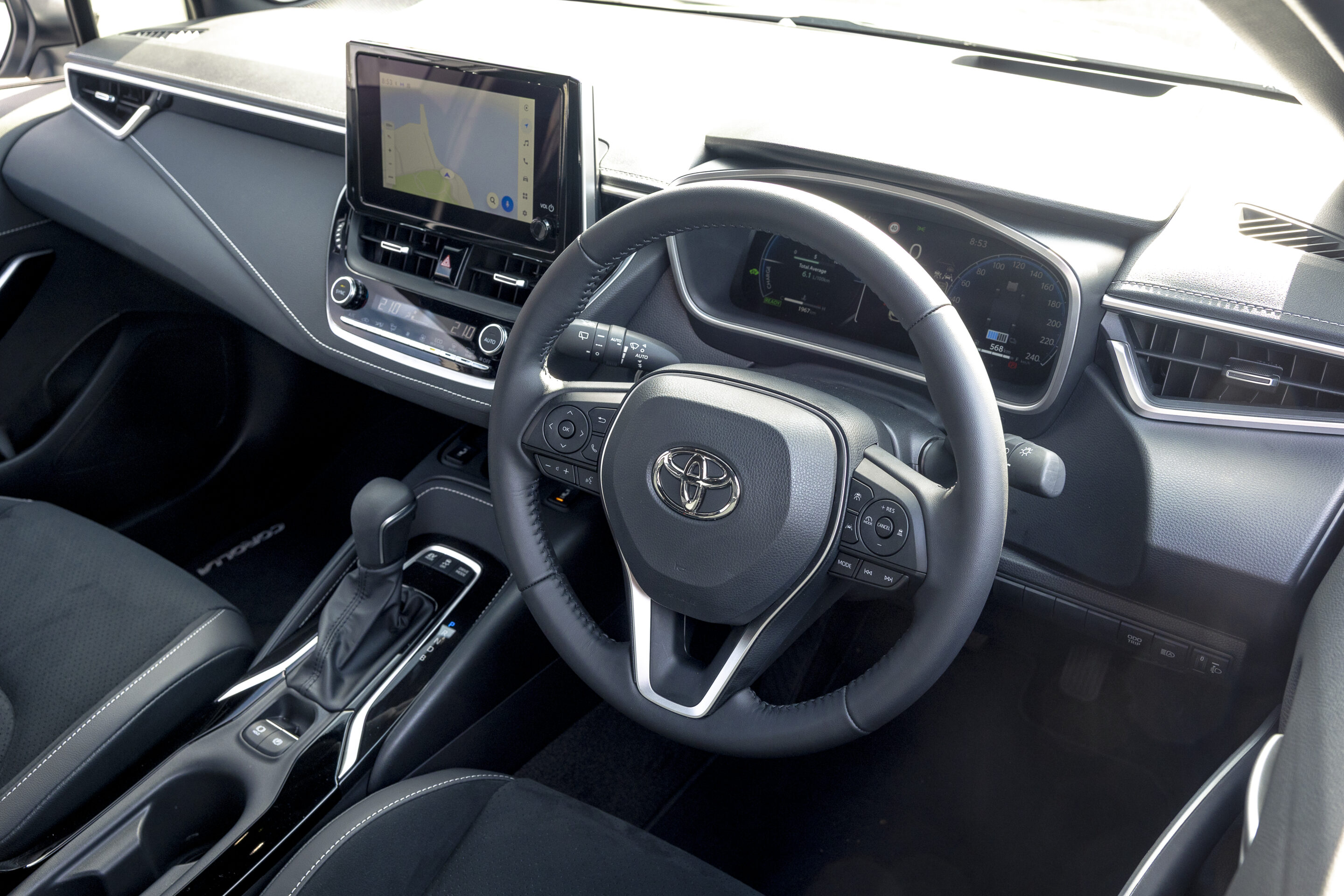
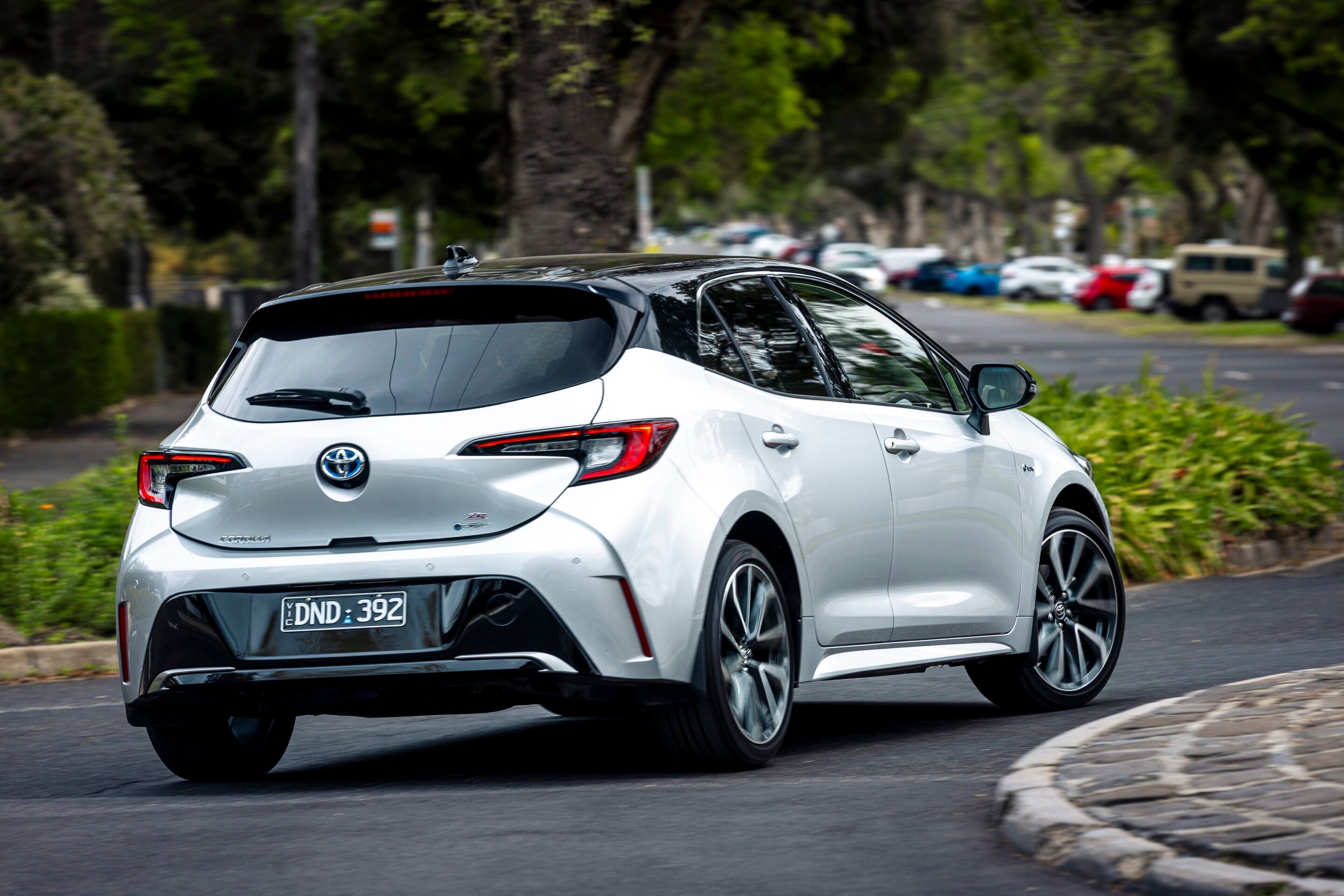
Next to debut was the E210 or 12th-generation Toyota Corolla (below), which had its hanky whipped off at the 2018 Geneva Show, badged as an Auris. The ignominy. It was launched Down Under on August 7 of that year and is the only one of the trio to be sold as a hybrid, with Toyota migrating all Corolla models (bar the flagship sports GR model) to a hybrid powertrain in June 2024.
1
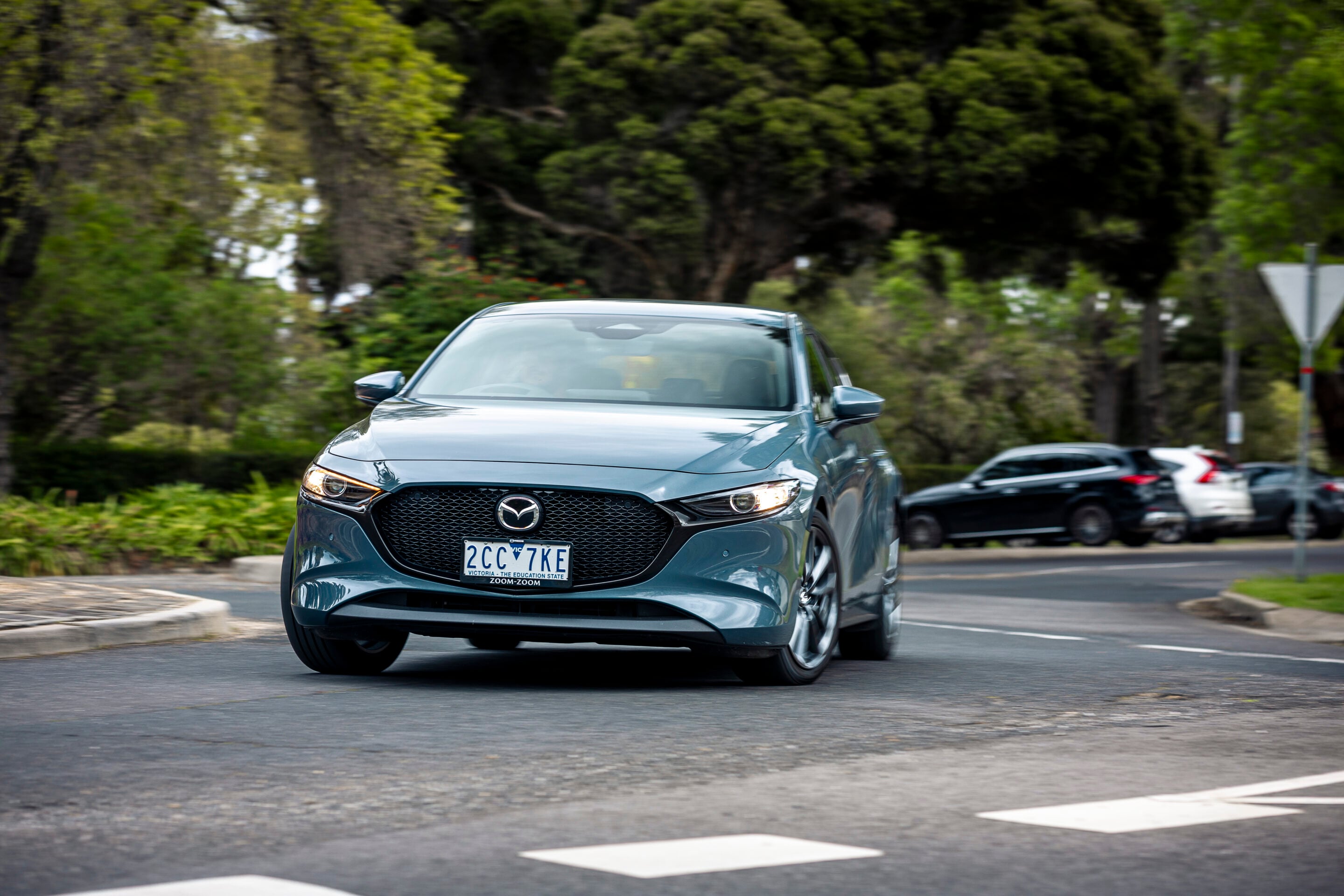
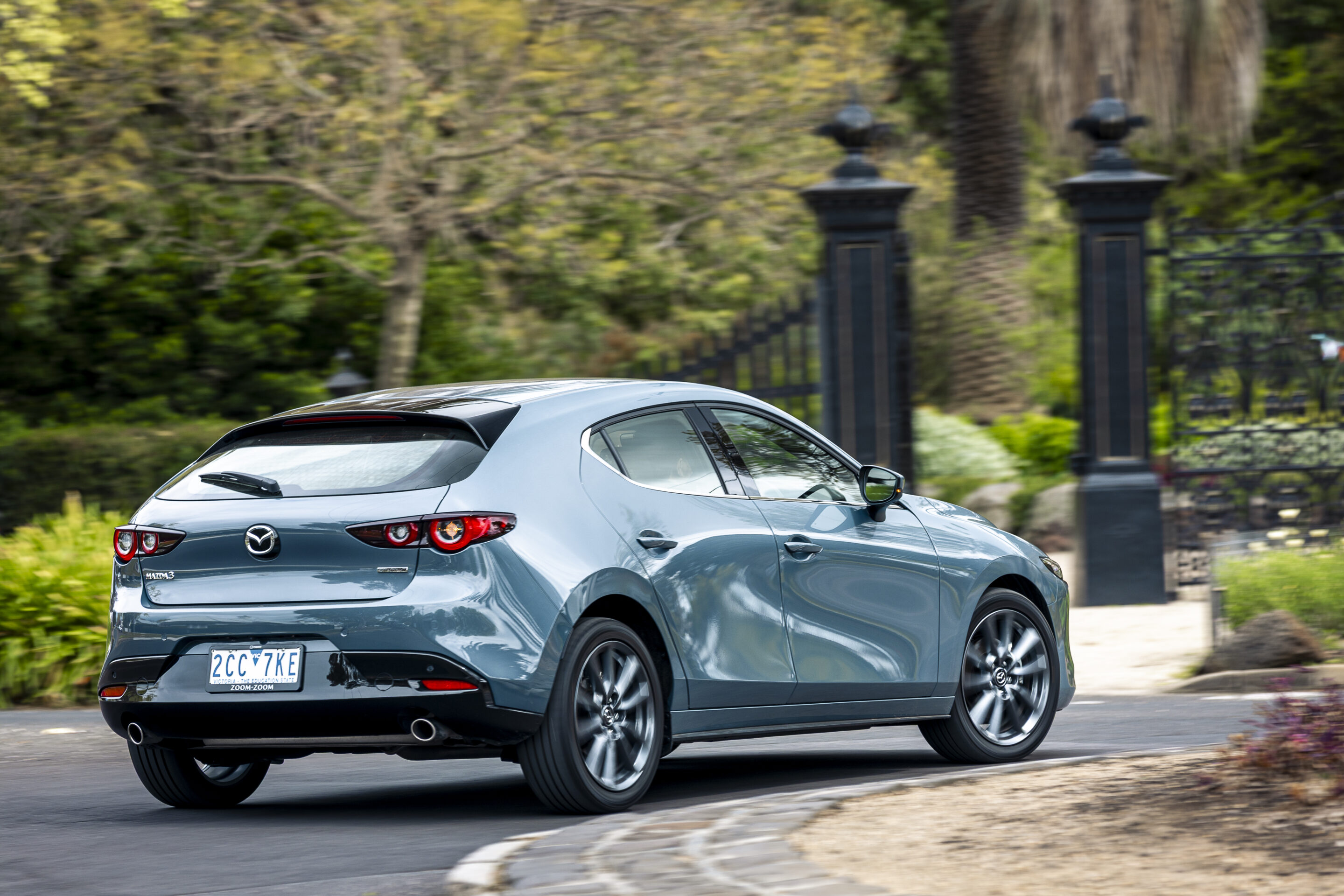
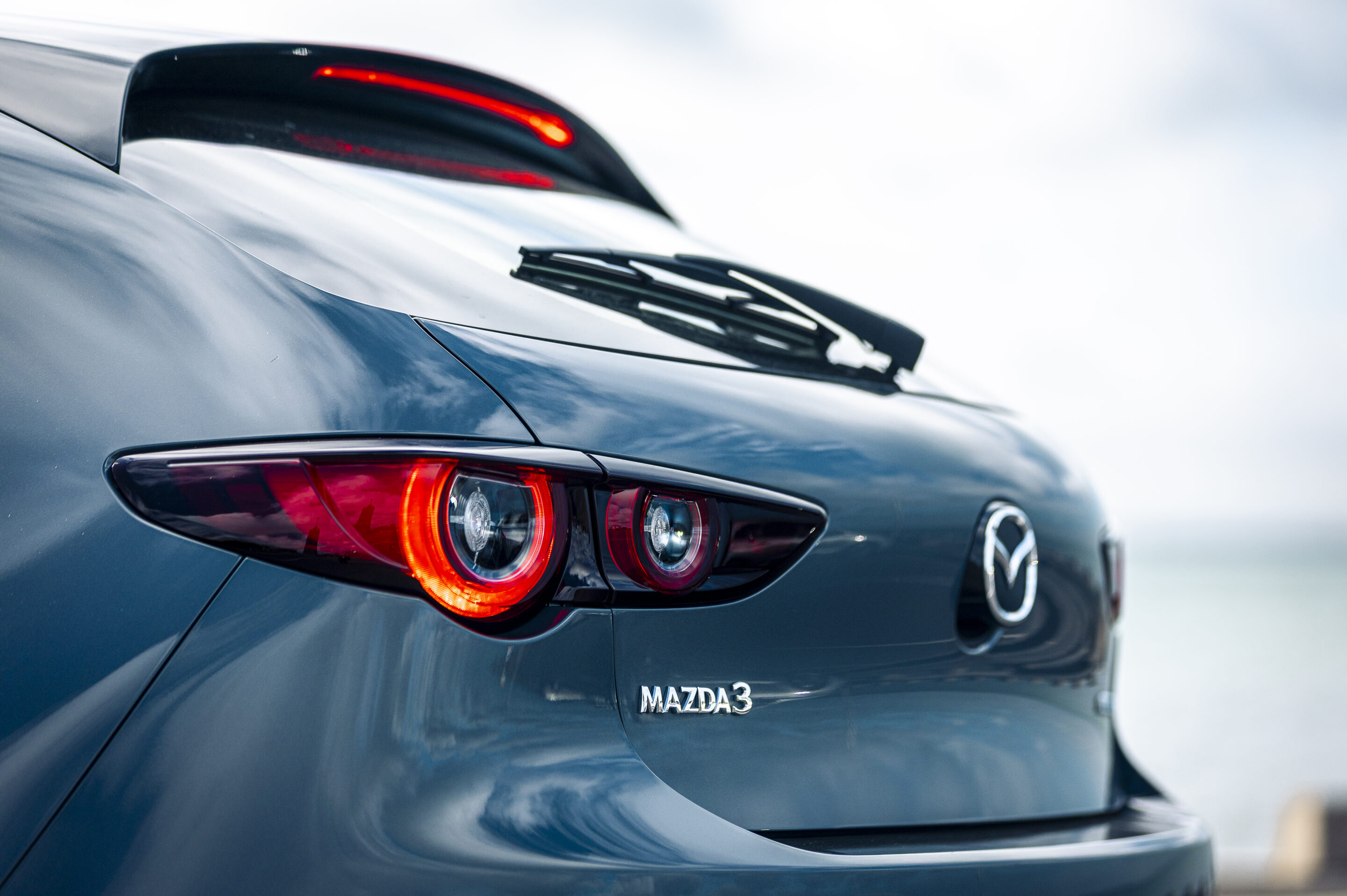
It’s hard to believe that the BP, or fourth-generation, Mazda3 (below) is seven years old. It still looks as fresh as the moment it was unveiled at the Los Angeles Show in November 2018, going on sale here in April 2019. It also marked a significant step up in pricing for the model line, which is why you can see from our sales figures that registrations took a significant tumble from 2019, the last year of mixed old and new models being sold, to 2020. These aren’t just a pandemic effect either, as can be seen by the relatively COVID-proof sales of its key rivals.
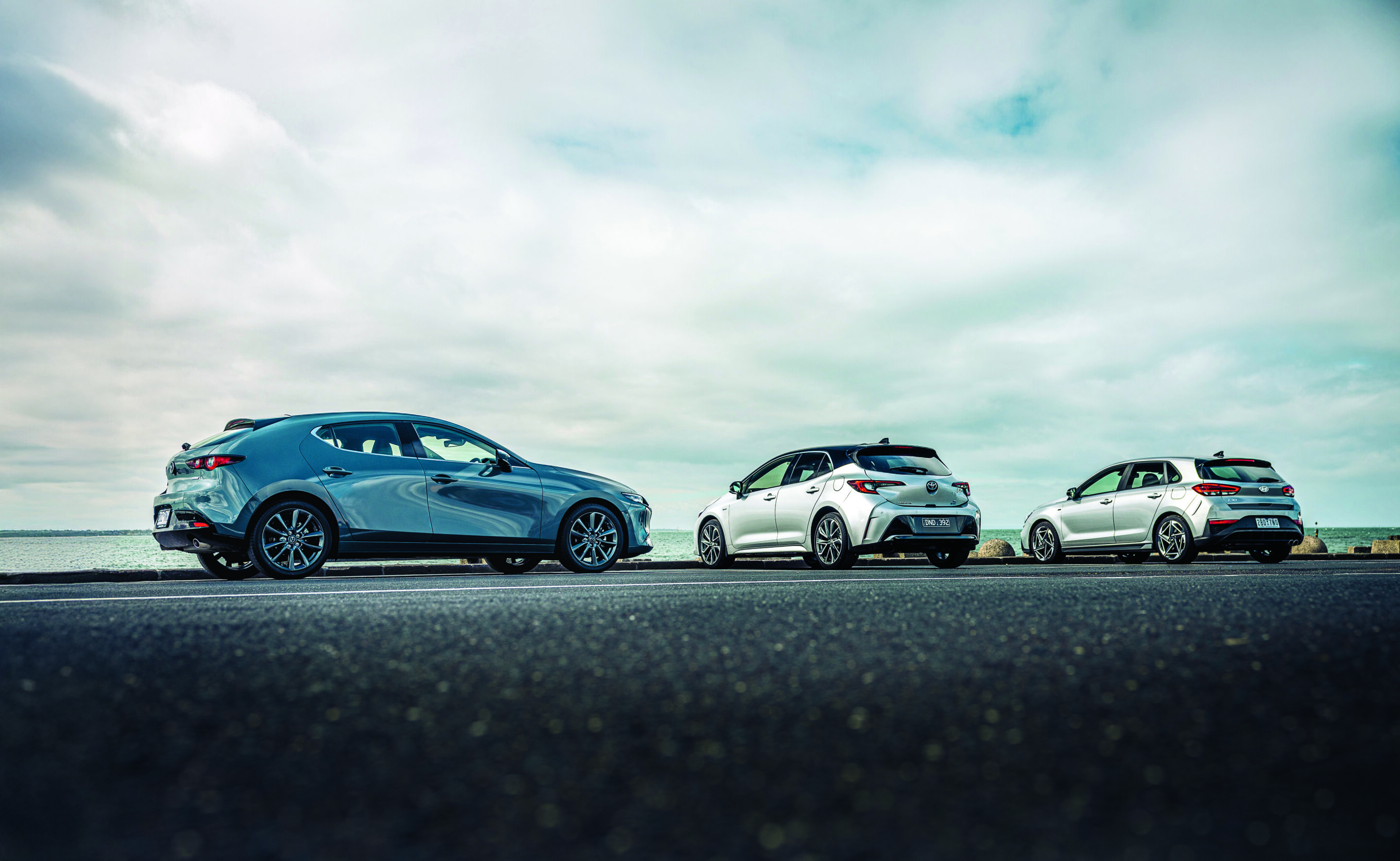
Parked on the promenade at Williamstown, it’s hard to deny that these are three extremely well executed pieces of styling. The Mazda’s expensive-looking body surfacing makes it seem gem-like in certain lights, and that teardrop shape still looks daring even today. The Hyundai looks hunkered down and purposeful, with a wholly extrovert set of diamond-cut alloys teased out to each corner. The Corolla’s face still has the most presence, and in ZR trim, the contrast roof, big alloys and flash of metal contrast from the sculpted front seats lifts it beyond the usual Corolla fare.
1
The Hyundai carries a number of advantages into this contest. Not only is it the most affordable of this trio, it’s also the most powerful and comes with the most generous warranty. In N Line trim, it’s also the most overtly sporty, this Czech-built car also riding the firmest of the three contenders. It also sounds the fruitiest when you explore the upper reaches of the rev range.
That said, it’s hard not to pine for the punch of the old 1.6T engine, which made the i30 feel like a proper warm hatch and always seemed a bit of a bargain. The mild hybrid 1.5-litre unit is a more mannered thing, with an almost imperceptible idle-stop system thanks to the 48V electricals. The seven-speed dual-clutch transmission isn’t quite such a seamless partner and, especially around town, power take up can feel a little terse, with the ‘box often slipping its clutch when pulling away or occasionally introducing an unwelcome shunt to the driveline that you wouldn’t get from a torque converter auto. The wheel-mounted paddles are elegantly sculpted though and work well with the DCT ’box when you’re pressing on. The steering feel of the Hyundai is the most detailed of the bunch, and it’s sensibly geared, although switching the drive mode to Sport adds too much artificial weight.
The N Line (below) feels as if it’s on a very good set of dampers. The ride is firmish, but very well controlled with no crashiness or harshness to it. This European built model rides on a multi-link rear end, rather than the cheaper torsion beam setup adopted by some previous lower-spec i30 models and there’s quite some finesse to its blend of steely body control and cultured bump absorption. One thing you do have to watch when negotiating junctions onto heavily cambered roads is the low chin height.
4
This i30 is equipped with the best tyre of this bunch, and by some margin. The Michelin Pilot Sport 4 rubber measures 225/40 ZR18 all round and helps deliver strong front end bite into corners and strong traction off the mark. No tyre is perfect, however, and the downside of the stiffish sidewall of this particular hoop is cabin noise, which will have you raising your voices to chat while negotiating coarse chip surfaces.
One thing that’s not particularly great about the i30 is intrusion from the driver assists, with the speed limit recognition system often registering incorrectly and chiming as a result. Fortunately, Hyundai has now made it a whole lot easier to switch these annoyances off.
If the Hyundai represents the more focused end of the driving dynamics spectrum, the Toyota Corolla ZR (below) sits at the other. Despite getting a firmer suspension tune than its cheaper siblings, the ZR still feels quite accommodating, albeit without the boofiness that affects lowlier Corollas with a lot of tyre sidewall to work with. It’s a very well-judged setup, with the 225/40 R18 Dunlop Sport Maxx rubber introducing a good deal more reassurance and heft into the steering system at the expense of tyre noise at speed. The TNGA bones beneath this 12th gen Corolla have always been good, but the modest tweaks to the ZR Corolla have resulted in a car that enjoys being hustled along.
4
It’s just a shame that the peak power output is quite so limited. It feels as if this car is begging for a few more kilowatts to exploit its chassis, but if we’re to don our sensible hats for just a moment, perhaps there’s something to be said for a car with a modest power output that handles really smartly. The Corolla is also the only one of this trio that can switch into pure electric drive mode for relatively short distances thanks to its compact lithium-ion battery pack.
The 1.8-litre 2ZR-FXE Atkinson cycle petrol engine is good for an unstressed 72kW and 142Nm via the Atkinson cycle. Fortunately, there’s that 70kW electric motor packaged with the continuously variable transmission, which also adds a helpful 185Nm of torque. As is their wont, Toyota doesn’t quote a system torque figure.
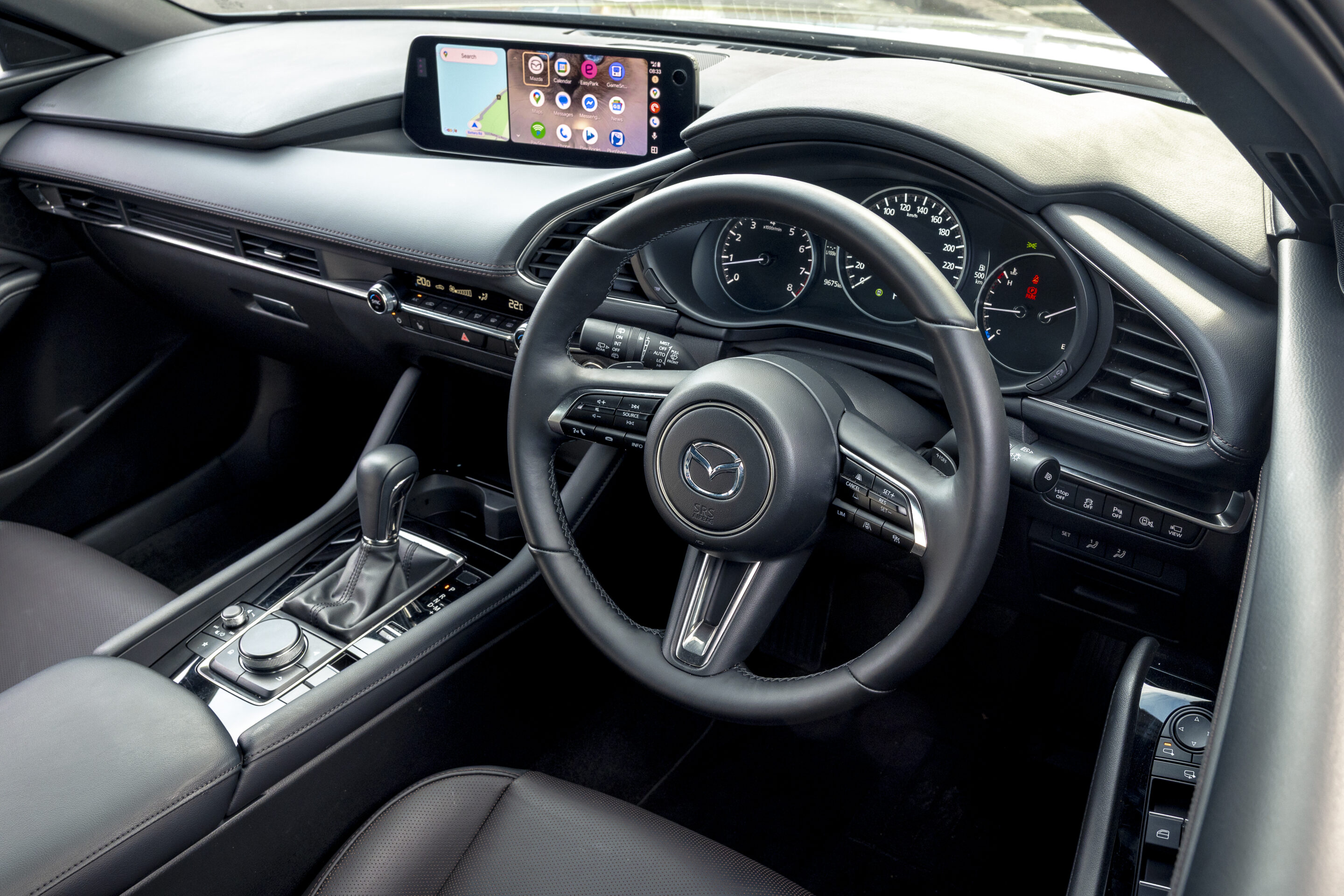
The Mazda (below) is the dark horse of this trio. The 2.0-litre normally-aspirated Skyactiv-G engine feels a bit of a relic compared to the electrified smarts of the other two powerplants, and it does require a few revs on the board to give of its best, but you won’t feel too much of a hardship because the 3 is a story of generally very good dynamic calibrations. The damping feels relatively plush, the steering is well weighted and accurate, if slightly less chatty than the Hyundai’s, the stability control is excellent, and body control is composed in roll if not quite so much in pitch.
5
The six-speed automatic gearbox is smooth around town and decently responsive out on the open road. There’s a set of paddle shifters should you want to flick up and down the ’box yourself, but it’s not quite so willing to let you downshift near the limiter as the i30’s DCT. On the plus side, you can use the stick instead to change gear, Mazda being one of the few car manufacturers that gets it right by having a forward shove on the lever engage a downshift. If you ever see this setup, it means that people who love driving engineered the car and prevailed over marketers who, in many other marques, argued successfully for the dumbed-down alternative.
A couple of functions probably merit a rethink though. The adaptive main-beam lighting works reasonably for most instances, but it struggles with edge case scenarios such as approaching cycles or motorbikes, or when following a vehicle towing a trailer. In these instances, it often holds the brights on for way too long and you’ll find yourself clicking back to manual control. The other is a perennial Mazda gripe and that’s the clumsiness of interacting with the distant screen via a dial. This is a solution that nobody else has adopted and there’s a reason for that. Enough said.
Otherwise the Mazda’s cabin quality is easily the best of this bunch. The leather on the wheel feels so buttery smooth, it’d feel good in a Bentley. At first, virtually every surface in the cabin seems lined with stitched leather, but Mazda has cleverly finished the dash roll-top in a soft-touch thermoplastic that looks like leather. The metal fillets for the dash look classy and a great deal of thought has clearly gone into the look and feel of the switchgear. It’s lovely. Not quite so delightful is the overuse of piano black on the centre console. This is a material that looks great in brochures and car dealers but, as our demonstrator showed, soon gets scratched and tatty in real world use. Bottom line? It’s not premium. It’s just cheap, hard plastic and Mazda’s not the only culprit here.
1
Wireless Android Auto and Apple CarPlay feature, and this Touring spec also gets heated front seats and steering wheel, with a two-setting memory function for the driver’s seat. There’s a wireless phone charger and I love the way that Mazda has put a 12v 120W power outlet and two USB-C connections in the centre bin and then left an aperture so that the lid doesn’t pinch the cables if your passenger wants to use their phone and charge at the same time. It sounds basic common sense, but so many car makers get this wrong.
Talking of common sense, the Mazda scores points by packaging a space saver wheel and tyre set, the only one of this trio thus equipped. Flip up the boot floor and there, in all its magnificence, is your Dunlop Space Miser III, ready to come to your aid if you ever catch a flat. The boot itself is the smallest of this trio and doesn’t offer a great deal of clever storage solutions. Fold the 60/40 split rear seat and the 295L of space grows to 1026L.
Climb into the back and maybe because of the Mazda’s curves, you expect it to be the smallest of this trio, but legroom behind the driver isn’t too bad. Headroom isn’t the best for taller passengers, and there’s only shin height vents with no rear USB provision at all. The rising window line of the car may also make it feel a bit claustrophobic for very small kids.
1
The Hyundai’s big windows give its cabin a far airier feel to the cocooned Mazda. The dashboard architecture is beginning to look its age, and the materials also feel a half-step behind. This N Line model gets a bit of sporty dress-up for the steering wheel, the gear shifter and the very good Alcantara-faced front seats, which help lift the vibe above holiday hire car spec. As with the Mazda, there’s a lot of piano black on the centre console, and there’s also no electrical adjustment for the seats. The old seven-speaker Infinity-branded stereo system you used to get seems to have fallen victim to shrinkflation, and has been replaced by an inferior six-speaker no-name setup.
By way of recompense, this i30 N Line does feature tyre pressure monitoring, a wireless charger and
USB-A and USB-C up front, and, weirdly, it’s the only i30 to offer wireless Android Auto and Apple CarPlay. Pay another $5000 for the N Line Premium and it swaps the eight-inch touchscreen for the bigger 10.25-inch display that you get in the i30 N, but that can’t talk to an Android phone without a cable. So if you’re wedded to your Samsung or Google handset, this is the i30 you should choose.
The Hyundai delivers the best rear headroom, and while legroom is about on par with the other two, it’s the only one of this trio with a hard plastic shell to the rear of the front seats, which makes it less comfortable on the old patellas. It’s the only one of the three to offer a couple of USB-C outlets for rear passengers, so it’d doubtless be the favourite with the kids, who will get a better view out as well. Pop the tailgate open (all three of these cars are manually operated) and you have the biggest boot of the trio and there’s a 12v power outlet which is a considerate touch.
1
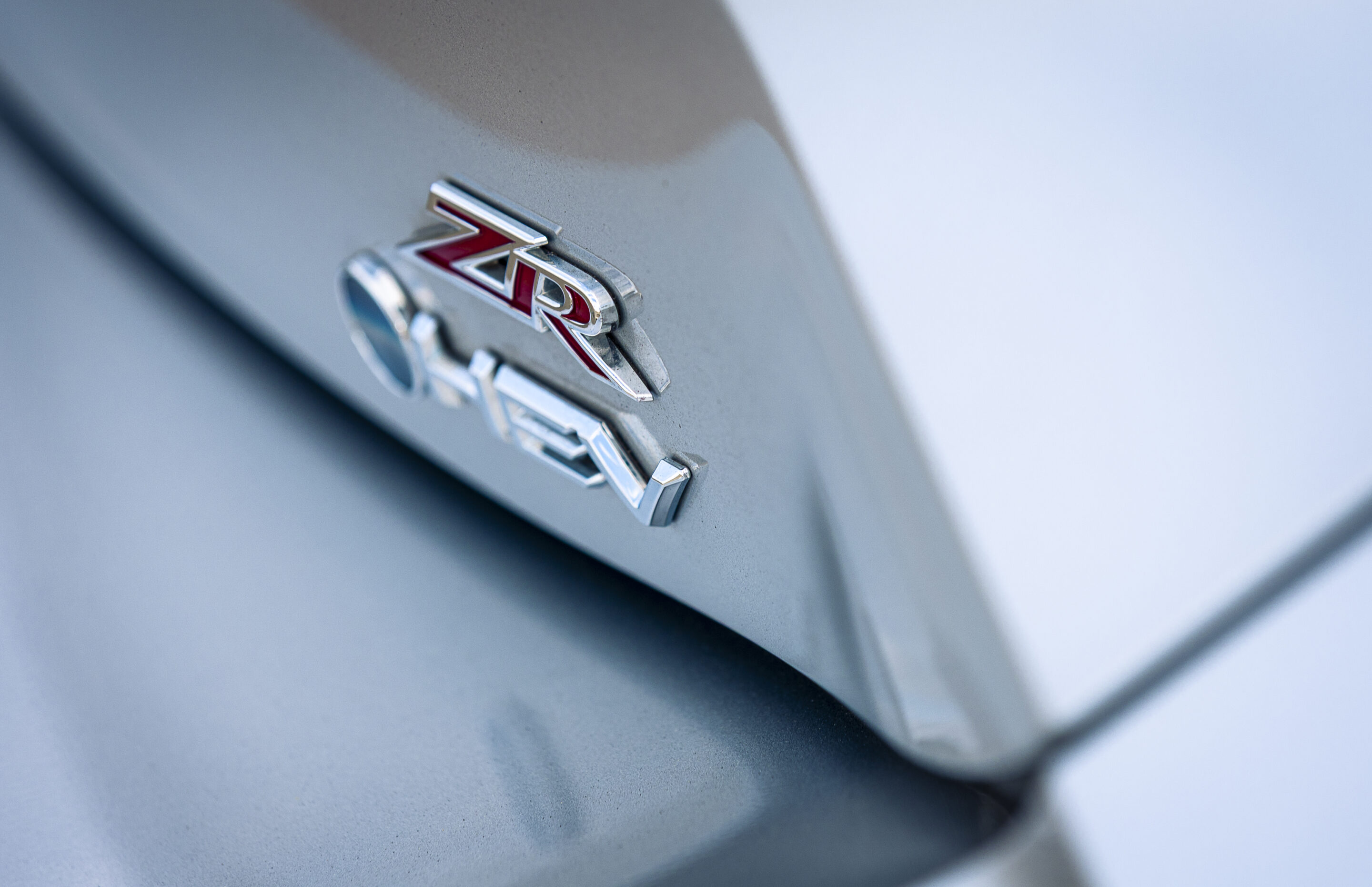
The Corolla’s cabin feels lifted with the improved materials that come with the ZR trim, and the metal highlights in the front seats are a welcome piece of theatre. It also nets heated front seats, a leather-trimmed steering wheel, and some additional brightwork to jolly things up, although the minor switchgear is all very familiar and rather utilitarian. The JBL-branded stereo punches below its weight, and this is the only one of this trio that requires a cable to mirror your Android phone.
Otherwise practicality isn’t bad with the best of oddments stowage of the trio. There’s a wireless charger, a 12V and a USB-C charger up front, but none in the rear. The back feels a bit dark, and headroom isn’t stellar, but legroom and toe space feels largely on a par with the others.
The 12th-gen Corolla initially came in for some flak for its small boot, and Toyota has instigated a sneaky ‘fix’ for this ZR model, deleting the spare wheel and tyre and freeing up a bit more space in the back. The 333-litre capacity isn’t too bad, but while the depth of the luggage bay has increased, the footprint hasn’t, so it can still be a struggle to get two cases in the back. So, what’s there in lieu of a spare wheel? Flip up the boot floor and, bizarrely, the Corolla is packaged with a jack and wheel brace to remove a wheel, but then adds a tyre inflator kit.
1
Fuel economy was markedly divergent among the three cars, but was largely as predicted. All three cars can run on 91RON fuel, so there’s no cost advantages there, but the full hybrid Corolla ZR was best on test, returning 5.6L/100km. A lighter right foot will easily see that figure swing into the fours. The Hyundai was next best, logging a reasonable 6.5L/100km while the Mazda languished a long way off that target, registering 8.9L/100km.
These three hugely popular cars all impressed. You could make a convincing case for any of them. The Hyundai is the most overtly sporting and represents the keenest value for money. The Corolla is the most economical and we’d count on it to be the most reliable. If you’re a little less price sensitive but still tend to the risk averse, it’s a bit of a no brainer. The Mazda will appeal to the aesthete who values quality and a car that’s been engineered by proper drivers.
Where would our money go? It’s a quandary, because the development of these three models is an intriguing case study in vehicle evolution, each diverging from each other to fill a specific niche. It’s hard to split the Hyundai and the Toyota. Both have an intriguing blend of qualities and not a great deal on the other side of the ledger that would count as deal breakers. They emerge as quality all-rounders albeit perhaps lacking a little daring.
It’s the Mazda3 G20 Touring, however, that emerges as the most special car of this group, the one that’s the most satisfying to drive and the one that delivers the most compelling blend of attributes. That said, it’s the only one of this trio with a significant shortcoming, namely the off-pace fuel economy of its 2.0-litre engine. If you can live with paying a bit more at the bowser, we’d wager the reward is worthwhile.
Either way, these three very different hatches all cross the line in a virtual photo finish. Excess?
Who needs it?
Where’s the hot Mazda3?
While Hyundai managed to turn the i30 into a brilliant hot hatch in the form of the i30 N, and Toyota has created the fire-breathing GR Corolla, Mazda chose never to deliver a true enthusiast version of the 3. We can but imagine what an MPS version of the current car would be like, but it’s curious that a company that prides itself on the zoom-zoom dynamics of its road cars can miss such an obvious halo opportunity. Mazda even has a turbocharged version of its 2.5-litre four good for 186kW/433Nm in left-hand drive markets. Wicking that up another 20kW would put it on par with an i30 N in terms of power and it already easily bests it for torque. Yet still no interest.
Specs
Toyota Corolla
1
| Model | Toyota Corolla ZR Hybrid |
|---|---|
| Price | $39,100 plus on-road costs |
| Engine | 1798cc inline-4cyl, 16v, DOHC, turbo, hybrid |
| System power | 103kW @ 6600rpm |
| Torque | 142Nm @ 3600rpm (engine only) |
| Transmission | CVT |
| PWR | 73.6kW/tonne |
| L/W/H/WB | 4375/1790/1435/2640mm |
| Weight | 1400kg |
| Fuel Consumption | 4.0L/100km (claimed) / 5.6L/100km (tested) |
| Boot size | 333L |
| Tyres | Dunlop SP Sport Maxx 050 225/40 R18 |
| 0-100km/h | 9.3 sec |
| Warranty | 5 years/unlimited km |
| Overall rating | 7.6/10 |
Mazda3
1
| Model | Mazda3 G20 Touring |
|---|---|
| Price | $37,705 plus on-road costs |
| Engine | 1998cc inline-4cyl, 16v, DOHC |
| Power | 114kW @ 6000rpm |
| Torque | 200Nm @ 4000rpm |
| Transmission | 6-speed automatic |
| PWR | 80.4kW/tonne |
| L/W/H/WB | 4460/1850/1435/2725mm |
| Weight | 1418kg |
| Fuel Consumption | 5.9L/100km (claimed) / 8.9L/100km (tested) |
| Boot size | 295/1026L |
| Tyres | Toyo Proxes R51A 215/45 R18 |
| 0-100km/h | 9.0 sec |
| Warranty | 5 years/unlimited km |
| Overall rating | 7.7/10 |
Hyundai i30
1
| Model | Hyundai i30 N Line |
|---|---|
| Price | $36,000 plus on-road costs |
| Engine | 1482cc inline-4cyl, 16v, DOHC, turbo, mild hybrid |
| Power | 117kW @ 5500rpm |
| Torque | 253Nm @ 1500-3500rpm |
| Transmission | 7-speed dual-clutch |
| PWR | 81.3kW/tonne |
| L/W/H/WB | 4340/1795/1453/2650mm |
| Weight | 1439kg |
| Fuel Consumption | 5.6L/100km (claimed) / 6.5L/100km (tested) |
| Boot size | 395/1301L |
| Tyres | Michelin Pilot Sport 4 225/40 ZR18 |
| 0-100km/h | 8.6 sec |
| Warranty | 7 years/unlimited km |
| Overall rating | 7.5/10 |
The article originally appeared in the November 2025 issue of Wheels. Subscribe here and gain access to 12 issues for $109 plus online access to every Wheels issue since 1953.
Follow WhichCar/Wheels on Google
Click the button below to make WhichCar by Wheels a preferred source for your news.

We recommend
-
 Comparisons
Mazda CX-3 vs Toyota Yaris Cross: Spec battle
How do two light SUVs that loom large on the sales charts go when pitted head-to-head?
-
 Comparisons
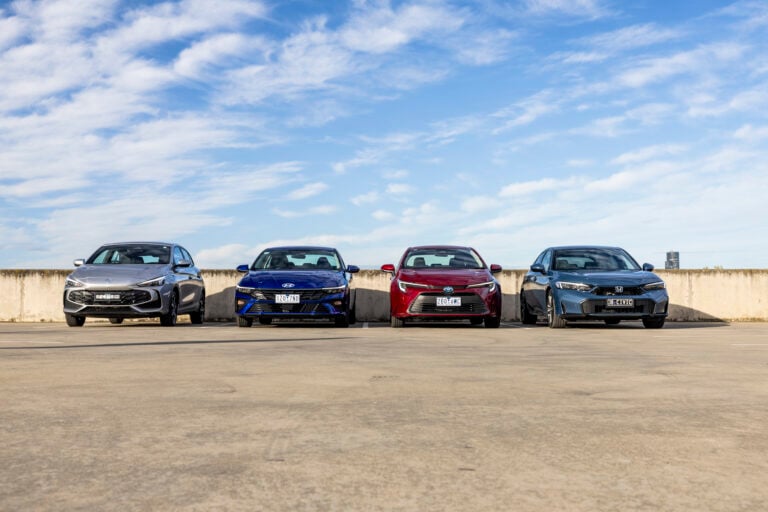
Hybrid face-off: Which of four best-selling hybrid cars triumphs when put head-to-head?
The hybrid wars are heating up as Australians gently cool on electric cars. We drive four of today’s most intriguing, fuel-sipping systems – but only one leaves us besotted.