
Features

Gallery 1
Australia might be a relative minnow in the global automotive market, but it tends to punch above its weight in terms of importance and influence.
Even today it remains an enthusiast market and all manner of manufacturers have created special editions in an attempt to lure punters into showrooms.
Here are 10 of the best, presented in chronological order.
1990 Nissan R32 GT-R
1
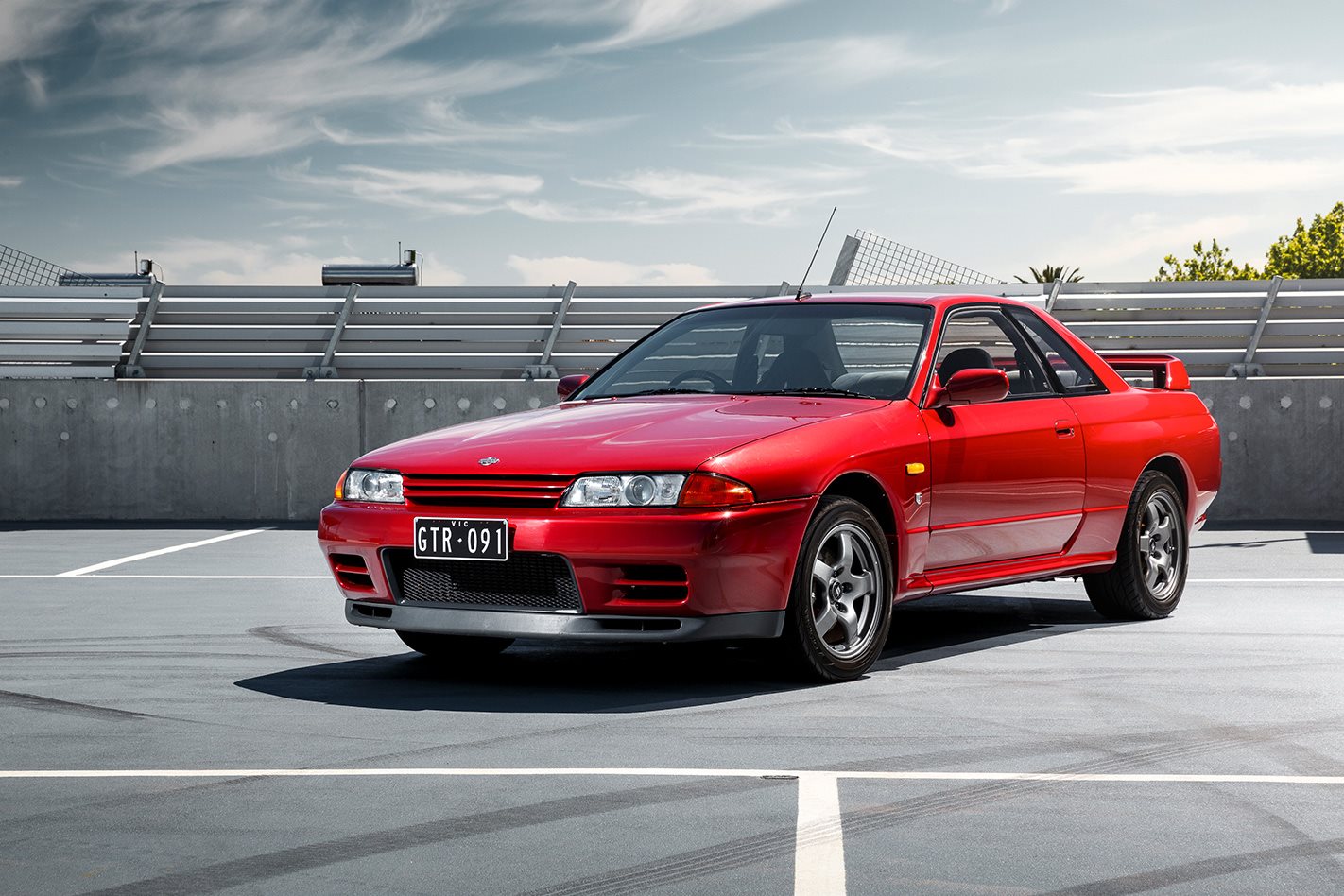
If Nissan Australia was going to spend a fortune campaigning the R32 GT-R in the Australian Touring Car Championship, it had best move some metal to justify the expense. Trouble is, the Japanese-specification R32 needed extensive modifications to meet local regulations.
As such, while the GT-R might not jump to mind as an Aussie special, local R32s had a lot of unique parts, such as new headlights and taillights, side indicators, a new radio with a better aerial, 260km/h speedo, different seat belts, side intrusion beams, child restraint installation and changing the Skyline badge to Nissan. The only mechanical modification was a transmission cooler.
A total of 100 cars were imported, but local buyers weren’t interested in paying $110,000 (more than $250K today) for a Nissan. The cars took a long time to sell, despite the fact that Kerry Packer bought three of them.
1995 BMW E36 M3R
1
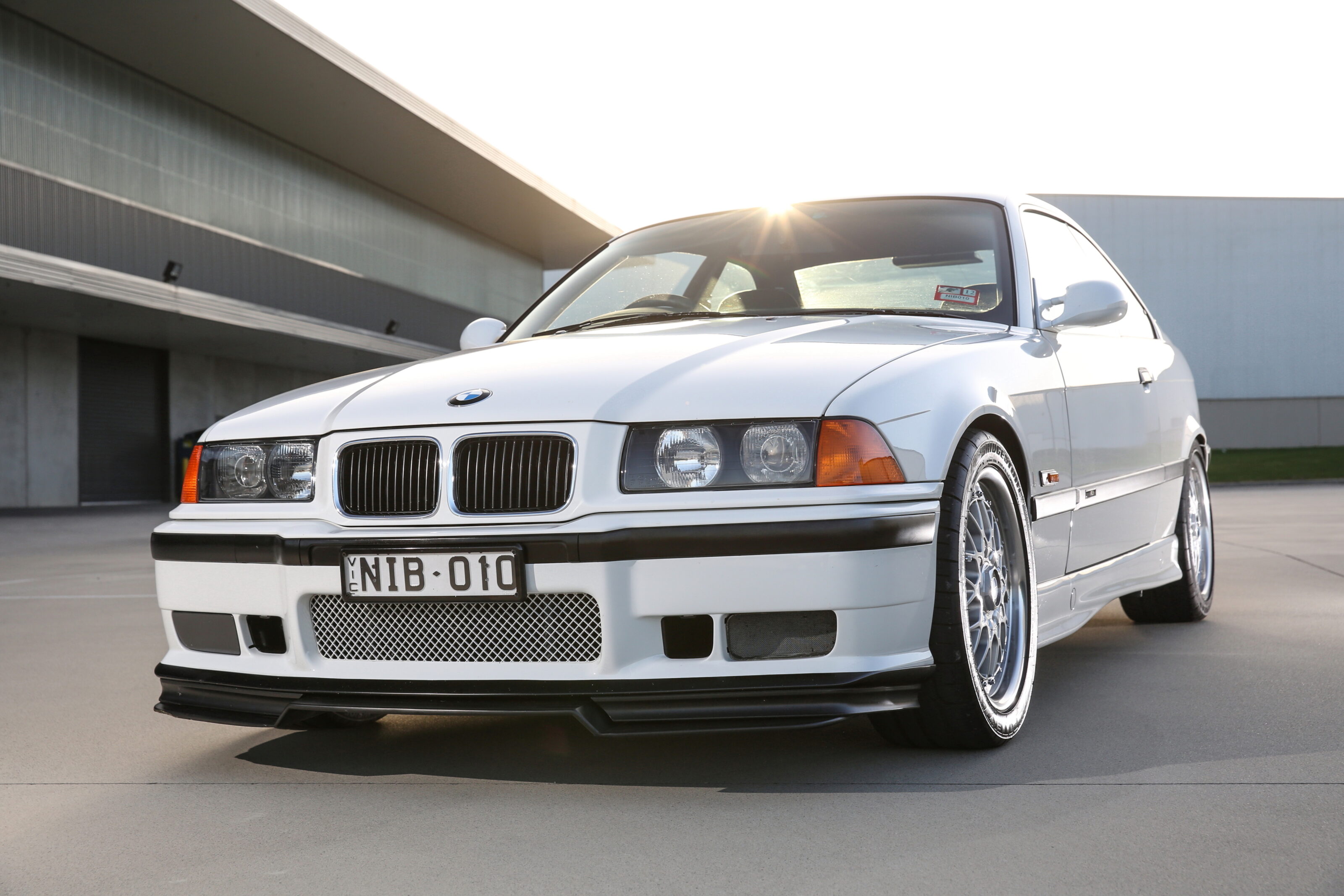
In the mid-1990s, the rarest and rawest BMW M3 you could buy was a product of Australia, not Germany. To homologate a faster M3 for local production car racing, taking on the Mazda RX-7 SP and Porsche 911 RS CS, Frank Gardner Racing convinced BMW Motorsport to green light the E36 M3R.
Fifteen cars were sent over in their lightest form, the final car supposedly 100kg lighter than a standard M3. New camshafts, a revised intake, optimised exhaust ports and a new ECU lifted outputs to 239kW/320Nm, along with a lightened flywheel and shorter 3.23:1 diff ratio.
Stiffer suspension and bigger front brakes completed the package, but you had to really want one. Not only did you need to produce a racing licence to qualify, but the price tag was $189,450, around 50 per cent more than the standard M3 Coupe.
1995 Mazda RX-7 SP
1
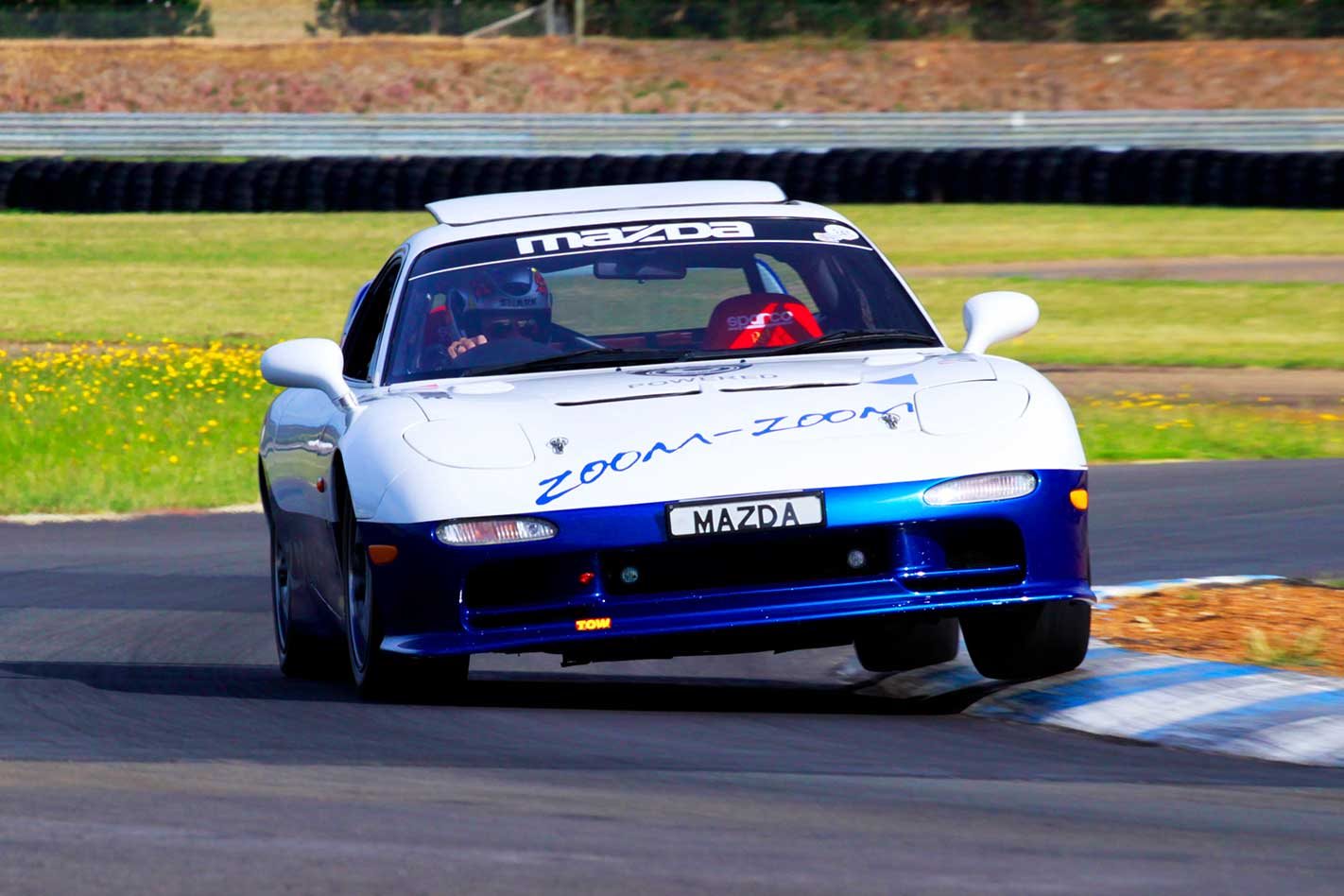
Another manufacturer to push all its chips in in search of production car glory was Mazda. It was top dog, having won three successive Bathurst 12-Hour races, which prompted Porsche to import 10 993 RS CS to homologate the car for local action.
Mazda’s response was the RX-7 SP, put together by Mazda Australia’s savvy Motorsport manager Allan Horsley, 29 cars eventually being produced with 127 changes compared to a standard RX-7, all aimed at making it a more effective endurance race car.
Outputs increased from 176kW/294Nm to 204kW/357Nm, weight dropped by almost 100kg, there was a 110-litre fuel tank, stronger and shorter-ratio Torsen limited-slip diff, bigger brakes and more.
While it couldn’t match the Porsches for outright speed, the RX-7’s superior tyre wear and fuel range led to it crossing the line first at the 1995 Eastern Creek 12-Hour with John Bowe and Dick Johnson behind the wheel.
2002 Mazda MX-5 SP
1
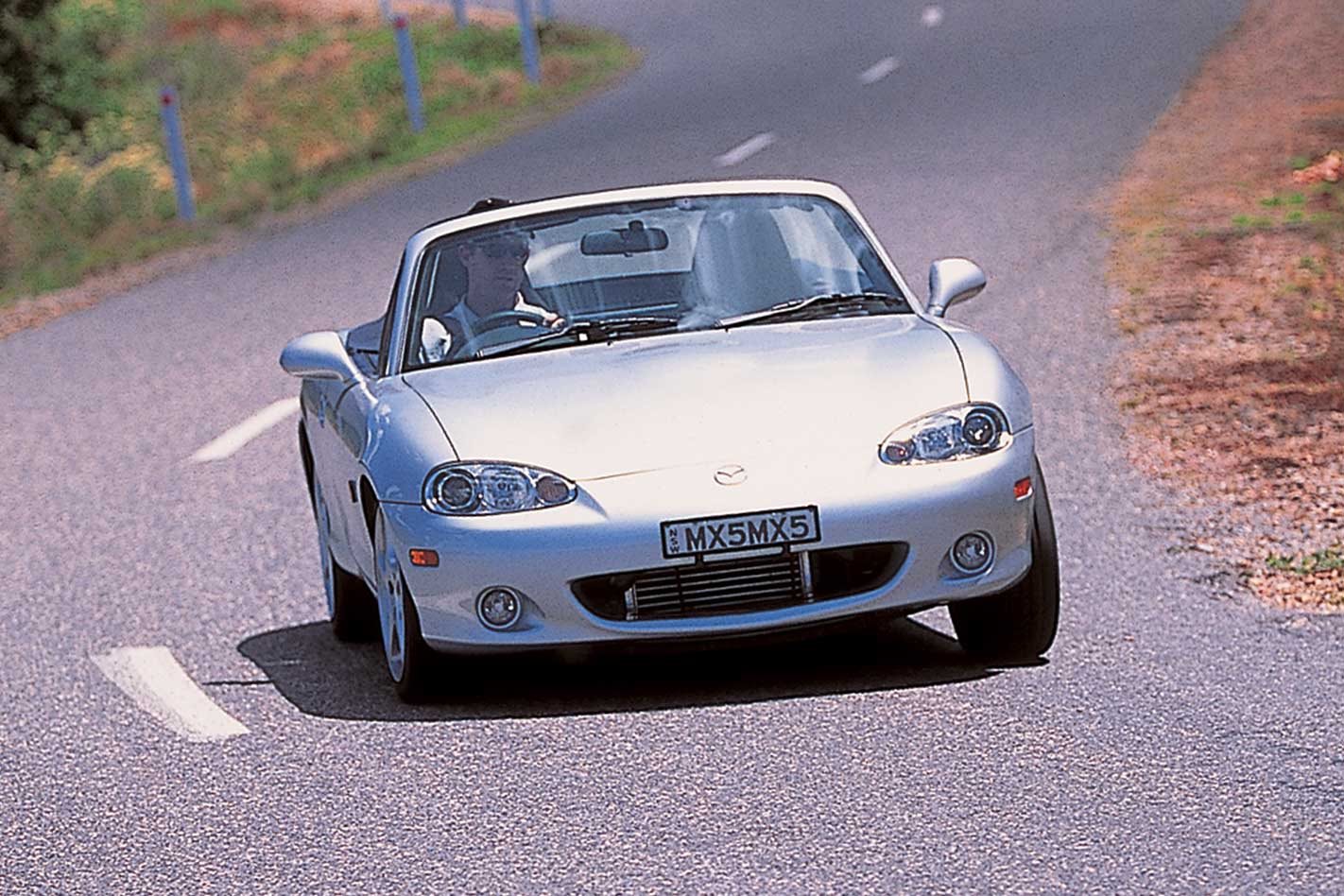
Having set a precedent for hotter Australian-developed Mazdas, the MX-5 was the next model in Horsley’s sights. It says a lot about the inherent strength of the NB MX-5 that it could cop a turbo upgrade on an otherwise fairly standard car and still be warrantable.
The compression ratio wasn’t changed so engine response didn’t suffer, yet adding boost lifted outputs from the 1.8-litre four-cylinder from 113kW/181Nm to 150kW/280Nm and in a 1119kg car that makes a BIG difference.
To prove the SP’s mettle Horsley once again turned to motorsport, telling rally driver and suspension wizard Murray Coote to drive it “as hard as possible” in Targa Tasmania, where it finished a very creditable 20th outright.
2002 Mitsubishi Magna Ralliart
2
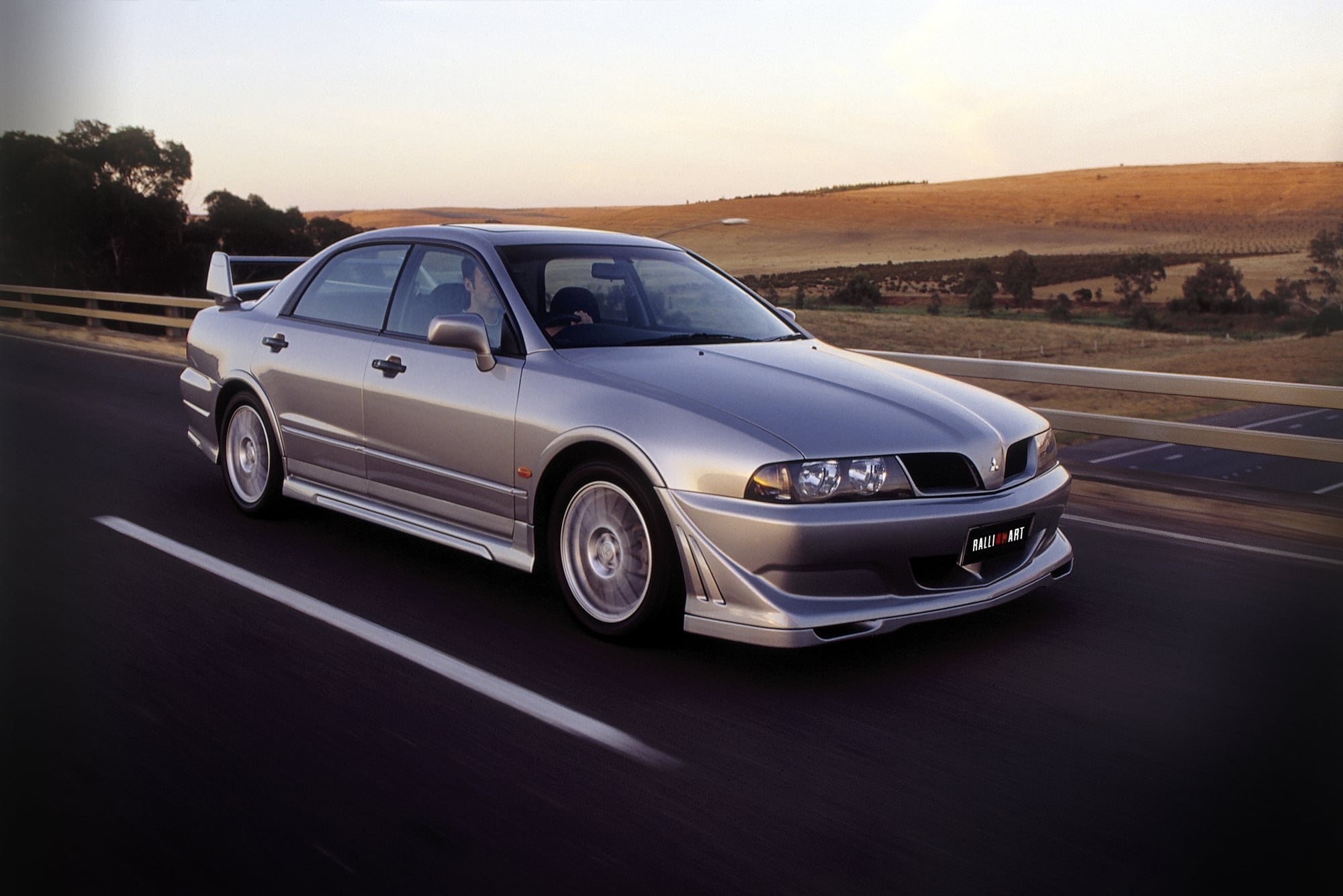
In a way, the Magna Ralliart was Mitsubishi’s ‘Jaguar XJ220 moment’. Having unveiled the Ralliart Concept with supposed all-wheel drive (if it’s unclear if anyone stuck their head under the rear bumper to check) and Recaro seats, the production car arrived with front-wheel drive and Ralliart-badged cloth seats. Hmph.
Putting 180kW/333Nm of 3.5-litre V6 grunt through just the front wheels, even with a limited-slip diff in the case of the manual variants, was a big ask with early-21st century tyre technology and the Ralliart Magna could be an understeery, wheel-wrestling handful if not driven with due care.
Nevertheless, there were Koni shocks, Enkei wheels and bigger brakes and the Ralliart’s grown-up Lancer Evo looks and rarity – just 500 were built – mean it deserves its modern classic status today.
2005 Subaru WRX WRP10
1
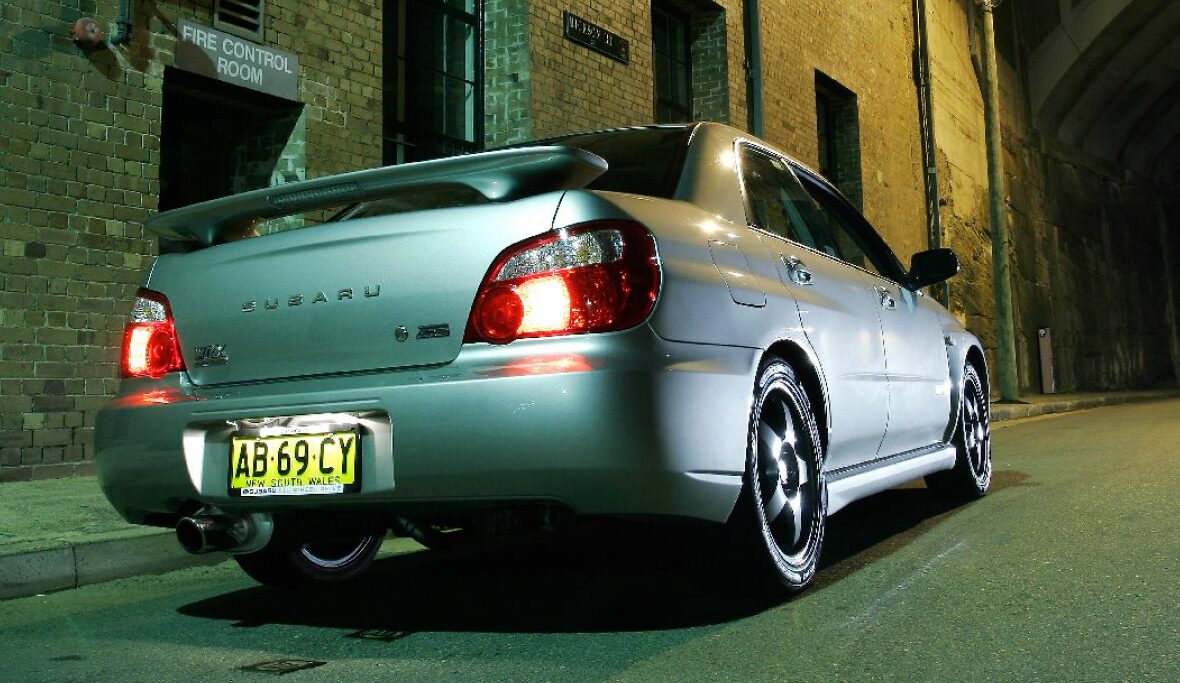
To celebrate 10 years of the Impreza WRX Down Under, Subaru Australia cooked up the WRP10, or World Rally Pirelli 10th Anniversary. Catchy. It was carefully concocted to slot neatly in the gap between the standard WRX and the hotter STI, which it did to good effect.
An STI ECU and muffler lifted the 2.0-litre turbocharged flat-four by just 7kW and 2Nm (to 175kW/302Nm), along with 15mm lower springs and a carbon fibre strut brace, also from the STI, while Rays Engineering alloys were wrapped in Pirelli rubber.
Just 200 were built, all in Crystal Grey, and while it could’ve been a cynical marketing effort, the WRP10 actually fulfilled its role as an in-betweener very nicely.
2007 Toyota TRD Aurion
1
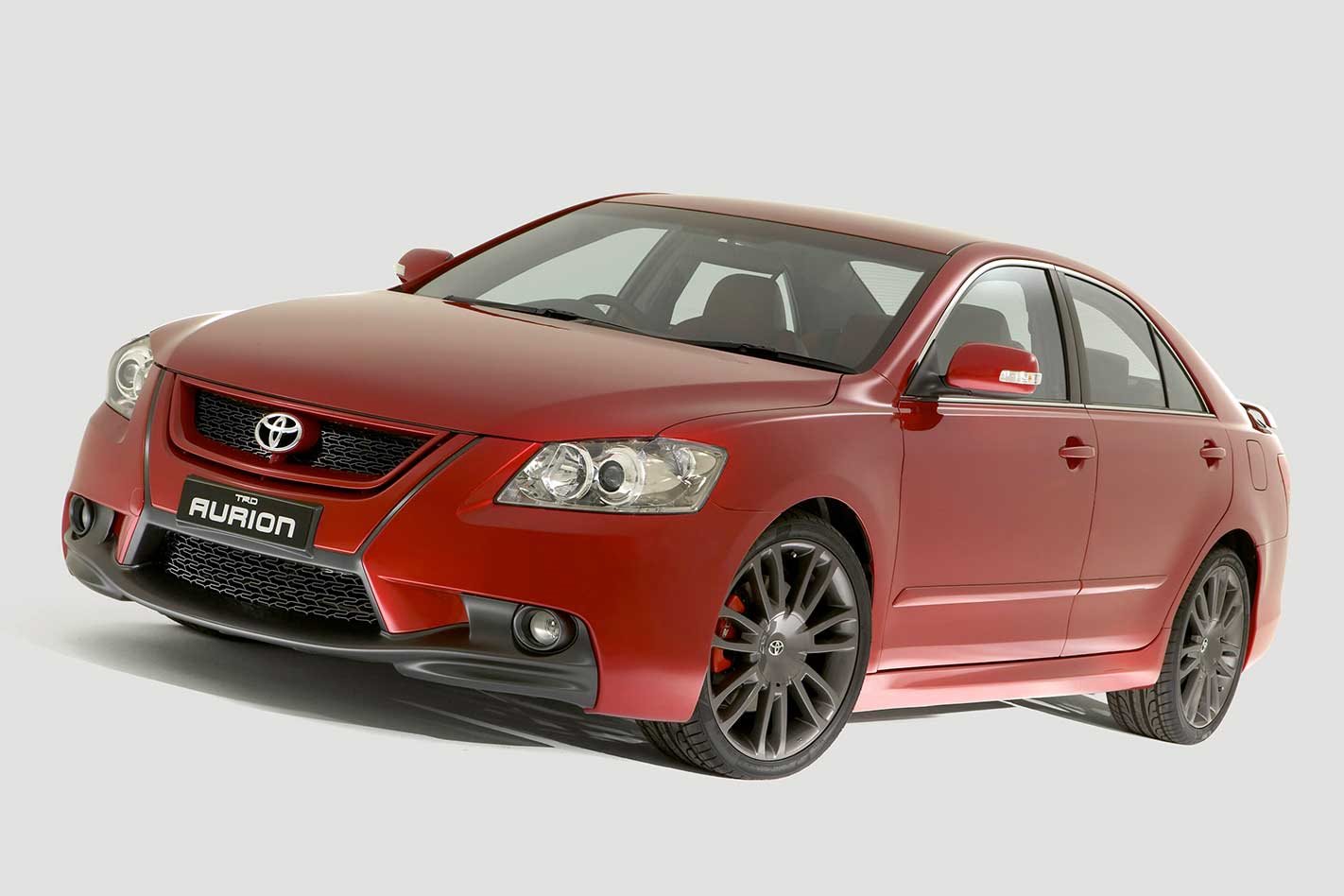
Picking up the baton dropped by the Ralliart Magna, the TRD Aurion once again attempted to prove that front-wheel drive was no impediment to producing a red-hot, dinky-di Aussie performance car.
Whacking a supercharger on the 3.5-litre V6 took care of the power equation, lifting outputs from 200kW/336Nm to 241kW/400Nm, though a six-speed automatic was the only available gearbox.
Bigger brakes and wheels and sportier suspension completed the mechanical overhaul and the Toyota Aurion was impressive as a grunty and well-equipped grand tourer, but as an out-and-out performance car it came up short and buyers stayed with their Falcodores as a result.
2017 BMW M140i Performance Edition
1
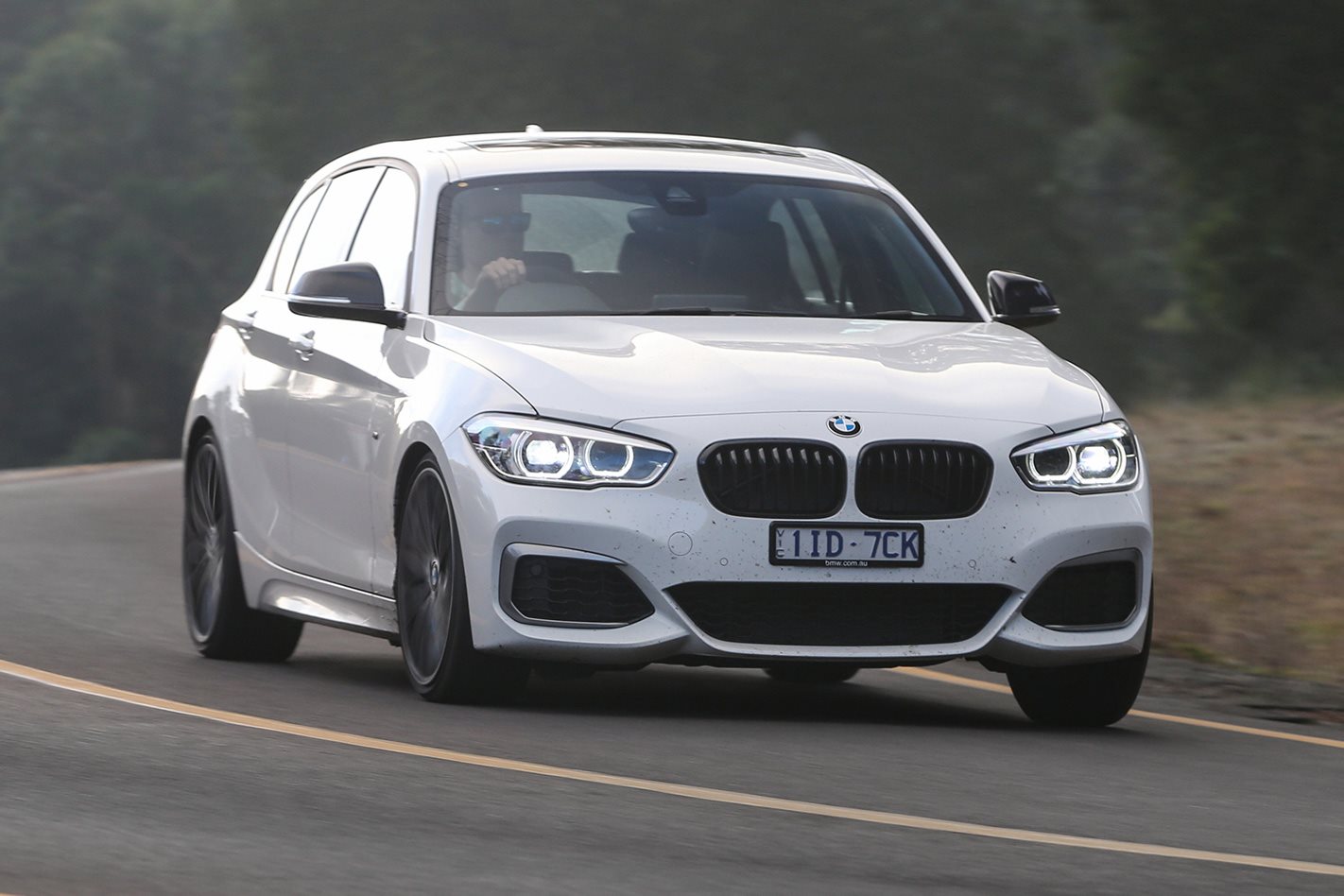
There are two sides to the BMW M140i Performance Edition, a spicier Australia-only hot hatch that plundered the M Performance Parts catalogue. Three-quarters of the 60 cars built were automatic and bar an exhaust were mechanically standard.
Nineteen-inch wheels were an inch bigger along with carbon fibre mirror caps, blacked-outed exterior trim and dashes of Alcantara and carbon fibre on the inside. Choose the manual, however, and you also scored a proper mechanical limited-slip diff.
To be honest, the auto suited the M140i better, but both were an awesome drive and the manual’s extra involvement and rarity will make it worth searching out in years to come.
2019 Ford Mustang R-Spec
1
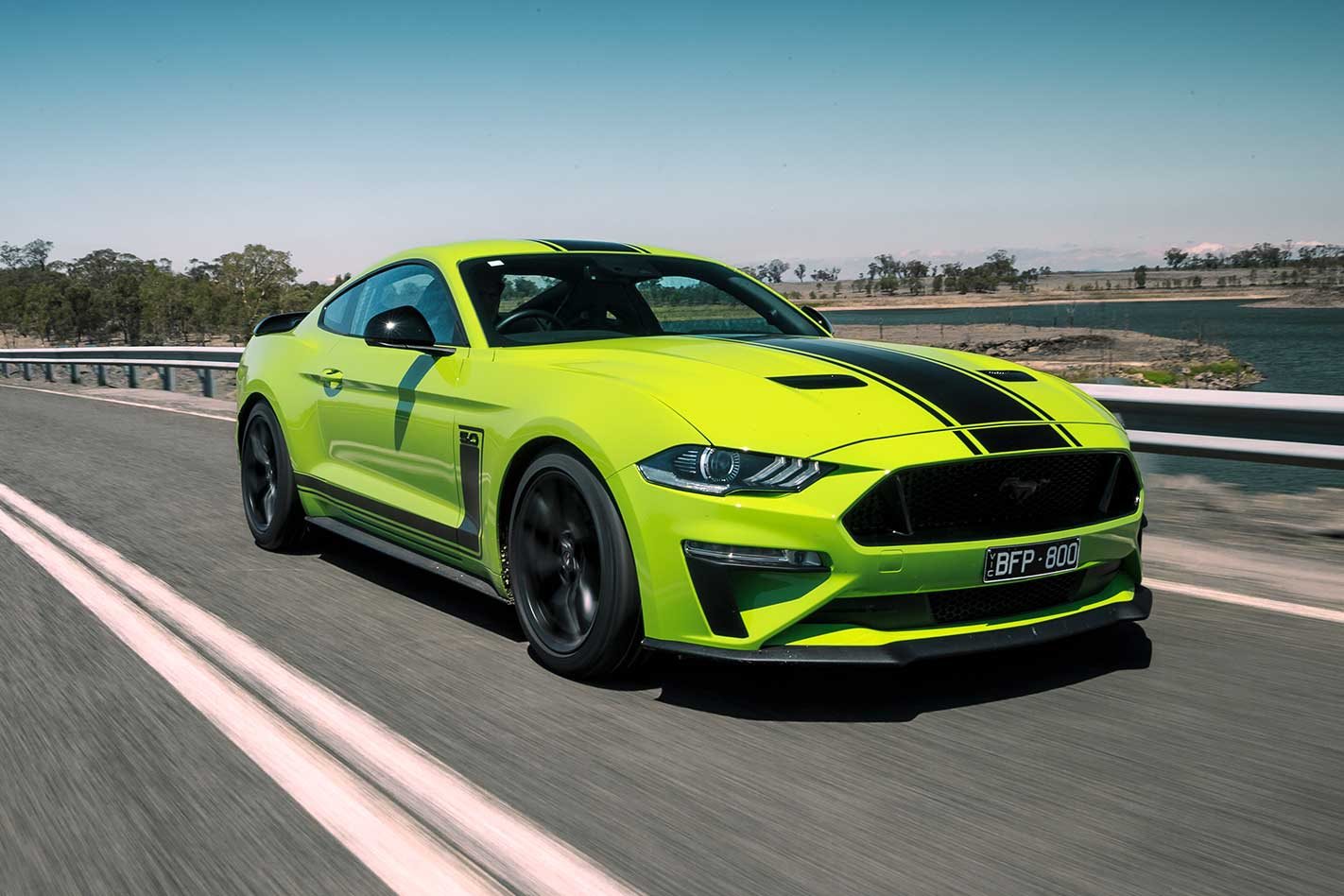
It’s hard to overstate what a big deal the Ford Mustang R-Spec program was. For an automotive colossus to entrust the building of a halo muscle car to a small group of third-party employees on the other side of the world was almost unheard of.
It wasn’t easy and if Rob Herrod – the man in charge of the program – had any hair, it certainly would’ve turned grey, but 500 examples of the 500kW/800Nm+ supercharged monster were successfully produced.
The huge power scored the headlines, but it was a complete package, with lower springs, reprogrammed MagneRide, wider wheels and adjustable anti-roll bars all backed by the full five-year factory warranty.
2021 Porsche 911 GT3 70 Years

1
Remember what we said about the outsized importance of the Australian market? The Porsche 911 GT3 70 Years was the first market-specific 911 GT product ever, created to celebrate the 70th anniversary of the brand Down Under.
The mechanicals were standard GT3 Touring – no bad thing whatsoever – but the Fish Silver colour matched one of the first two Porsche 356 imported in Australia. It also came stacked with usually optional equipment like the Sport Chrono package, the Light Design package, Touring package, BOSE surround sound stereo and much more.
Inside is where the biggest changes took place, the graphite blue bucket seats having unique inlays, dashboard and centre console trim matching the exterior colour, door sill guards in brushed aluminium with ‘70 Years Porsche Australia Edition’ to name a few.
While effectively a really well-specified 992 GT3 Touring, it’s a uniquely Australian twist on Porsche’s iconic sports car with just 25 built.
Follow WhichCar/Wheels on Google
Click the button below to make WhichCar by Wheels a preferred source for your news.

We recommend
-
 Features
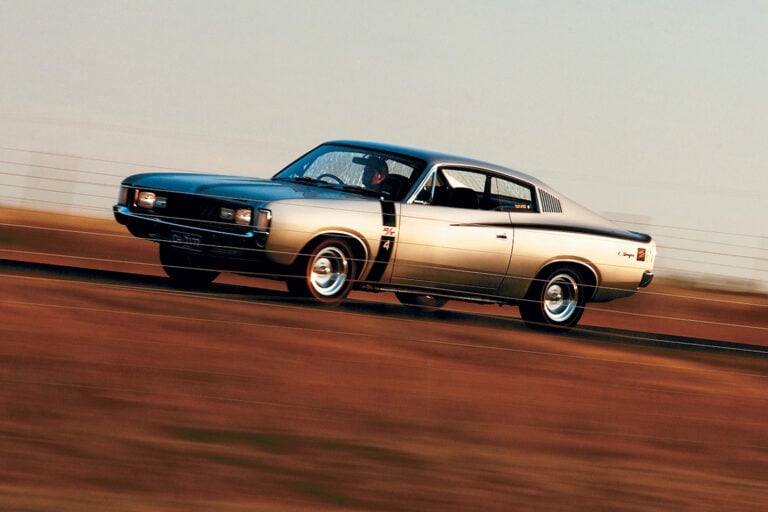
Top 10 classic Australian muscle cars
Australia’s golden era of V8 thunder and Bathurst glory lives on with our definitive Top 10 classic muscle cars from 1967 to 1986 — legends, all.
-
 Features
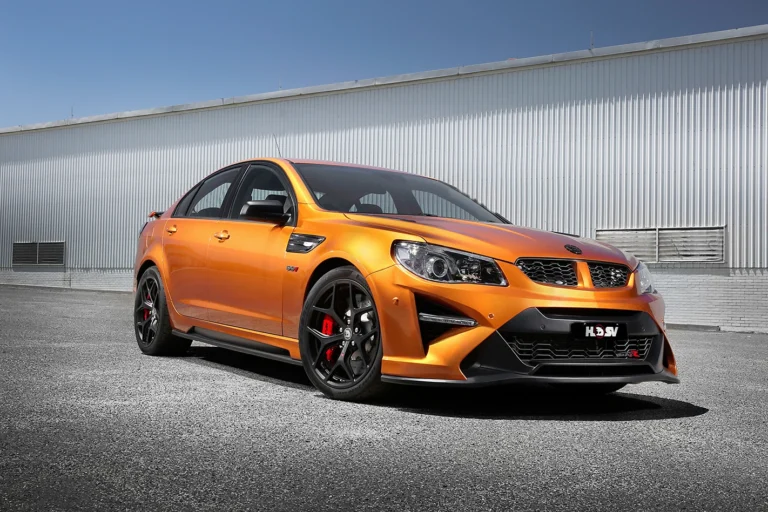
Top 10 modern Australian muscle cars
Part II of our series on homegrown muscle cars focuses on the modern marvels, from Holden's VN SS Group A to the Ford FG X Falcon Sprints.
-
 Features
Australia’s 10 Greatest Cars
While it's still sad Australia no longer creates cars from concept to roadgoing, we can at least remember how good they once were. Here's the 10 we think were Australia's greatest ever homegrown cars...
