Features


Gallery 1
IT’S LONG AFTER 10PM in downtown Chennai and the traffic is as choked and chaotic as anything you would battle on the Friday of a long-weekend getaway in Sydney or Melbourne.
No, that’s wrong. It is far, far worse and ridiculously intimidating. I’m sitting in the front passenger seat of a Mahindra XUV 700 and seriously re-considering my decision to visit India.
The traffic is one thing, but – as a non-fan of spicy food – I’m still wondering about what I’ll be eating for the next two days. There is a box of muesli bars tucked into my luggage, just in case…
When Mahindra first got in touch about a two-day deep dive into India I was intrigued. At a time when more than a dozen Chinese newbie brands are attempting to steamroller to success in Australia, what would the Indian brand have to say?
It’s been operating in Australia for just on 20 years without achieving any greatness, with sales of just 4185 vehicles in the latest Indian reporting year, which finished on March 31.
1
Globally, the numbers are far more impressive, as Mahindra has a workforce of more than 260,000 employees and its total output of SUVs, light-commercial vehicles and tractors last year was more than 1.2 million vehicles.
The tractor number, 424,000, makes it the world’s number one, topping familiar brands including John Deere. But Mahindra is nothing like the other tractor maker that transitioned into cars, Lamborghini, whose founder famously launched a supercar company after a tiff with Enzo Ferrari.
Never having been to India, my thoughts first shifted to some common preconceptions about India – cows sitting alongside freeways, aggressive monkeys in the marketplace, haphazard building standards, etc.
Then the plane landed and we were greeted by a smiling and helpful driver who loaded our luggage before we turned out of the airport into the bustling milieu.
It was as big a shock as if I’d been dropped into a giant ocean of ice-cold water. There was a tremble of excitement, then surprise, then fear. How would we survive? How could anyone survive?
1
Cars everywhere, tiny three-wheeler taxis ducking and diving, trucks and buses muscling for space, and scooters filling any gaps – even approaching head-on – without any fear of potential consequences.
Most people have some idea about India, thanks to movies including The Best Exotic Marigold Hotel, Slumdog Millionaire and Eat Pray Love. But Hollywood and Bollywood cannot convey the level of heat and humidity that grabbed me the next morning like a bearhug from a wrestler, the smells, the overcrowding, the history…
While India clearly has a British veneer, it’s a country with an ancient and very different culture. Chennai was once the trading port of Madras under the British and it retains those economic roots, although everything is slightly chaotic and nothing looks to have been planned or finished to a standard for Australian inspectors.
Mahindra? By contrast, it is welcoming, focused and organised. The view from the top comes from Velusamy Ramasamy, the president of Mahindra Group.
“We significantly moved from where we were – with rugged and reliable [product] – to sophistication,” he tells our small group of Aussie visitors. “We brought a lot of technology.”
1
“In every angle we are making a move. I think the Australian market, consumers like that. Are we quite there? Yes, there are gaps. [With] every product, we learn.
“We are significantly different from who we were eight, nine years ago. We are moving away from rugged and reliable to a sophisticated tech brand. We are making all efforts to be closer to the advanced countries in the next 3-4 years.”
Ramasamy is talking to us in the modern, high-tech boardroom at Mahindra HQ, and some of his own senior executives in attendance seem just as interested in his answers. He does not look remotely like a motor industry power player from the western world, with a designer suit and carefully chosen tie. He is calm, quiet and considered.
In fact, he looks more like one of the Mahindra workers than their leader – a bloke who rolls his sleeves up to get things done, leaving the blah-blah and marketing spin to a youthful team which has credentials including the Harvard Business School.
Ramasamy also surprises with one declaration, which sets the background for the entire visit: “I don’t see a big difference between India and Australia,” he tells us.
INTO THE MAELSTROM
Day One begins at early-o’clock with a small fleet of XUV700s parked outside the huge and hugely impressive ITC Grand Chola Hotel. But time in India moves more slowly and so it’s 30 minutes after our scheduled take-off when the traditionally-dressed doorman – he looks like an 18th century British sergeant-major – comes smartly to attention and our small fleet fl oats out into the maelstrom.
The Mahindra XUV700 is a modest, medium-sized SUV but easily handles bundles of luggage with three people in each car in addition to the driver.
Space and comfort is good, the air-conditioning is excellent, and the size is just right for the local roads. Any smaller and you would feel intimidated, any bigger and it would be tough to find gaps in the traffic.
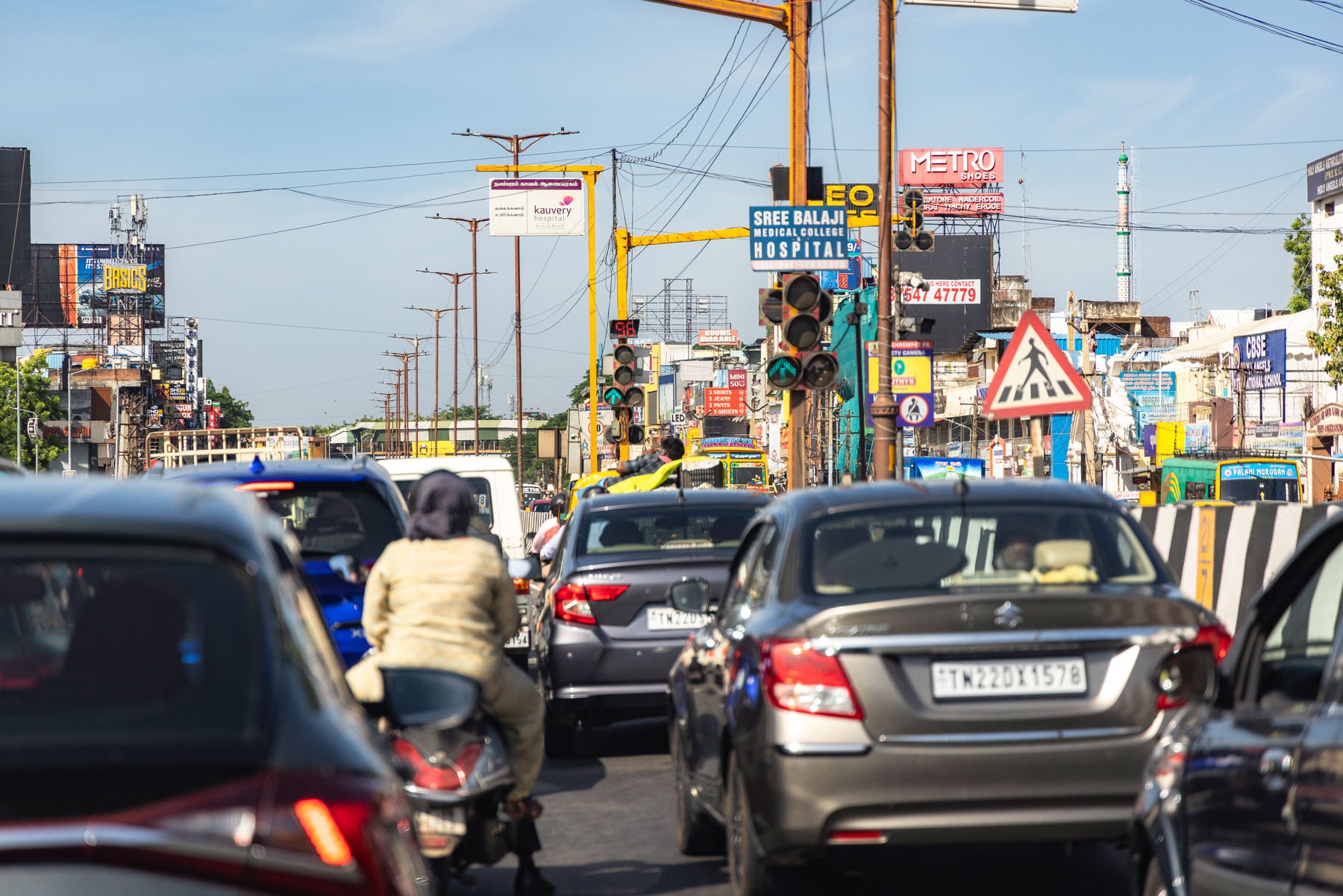
That’s important, because the roads and traffic in Chennai are vastly different to Australia. It’s more like a fast-flowing mountain stream, tumbling over rocks, ducking and diving around eddies and wakes, but always moving forwards.
The first 30 minutes are scary but the calmly composed driver never shows signs of panic or fear, so things eventually settle into a predictably unpredictable flow.
1
A smartly dressed lady sitting side-saddle on the back of a scooter? Of course. A family of five on another scooter? Naturally. Tiny taxis ducking and diving? Everywhere. Seven lines of traffic on a road marked for three? Why not.
Always there is the sound of horns. But it’s not the angry and aggressive blast you hear from impatient Aussies. This is more like a constant parking assist system, with people letting you know where they are, what’s happening and helping you through the flow.
Along the way, I notice there is nothing on the road from a European brand, although there was a lone Ferrari outside the hotel last night. The vast majority of cars are compact hatchbacks, no surprise, with Maruti Suzuki a dominant force. Some cars look familiar, with familiar badges, like the Ford Figo that was developed at Broadmeadows for India.
There is no sign of a Tata Nano, the $1000 car promised to put India properly into the automotive age.
Alongside the roads, where white lane markings are just for entertainment and not discipline, nothing looks to be properly finished. It obviously works but not in the way we’re familiar with. We pass the crumbling walls around an old Ford factory, then the much newer base for assembly of Nissan cars.
1
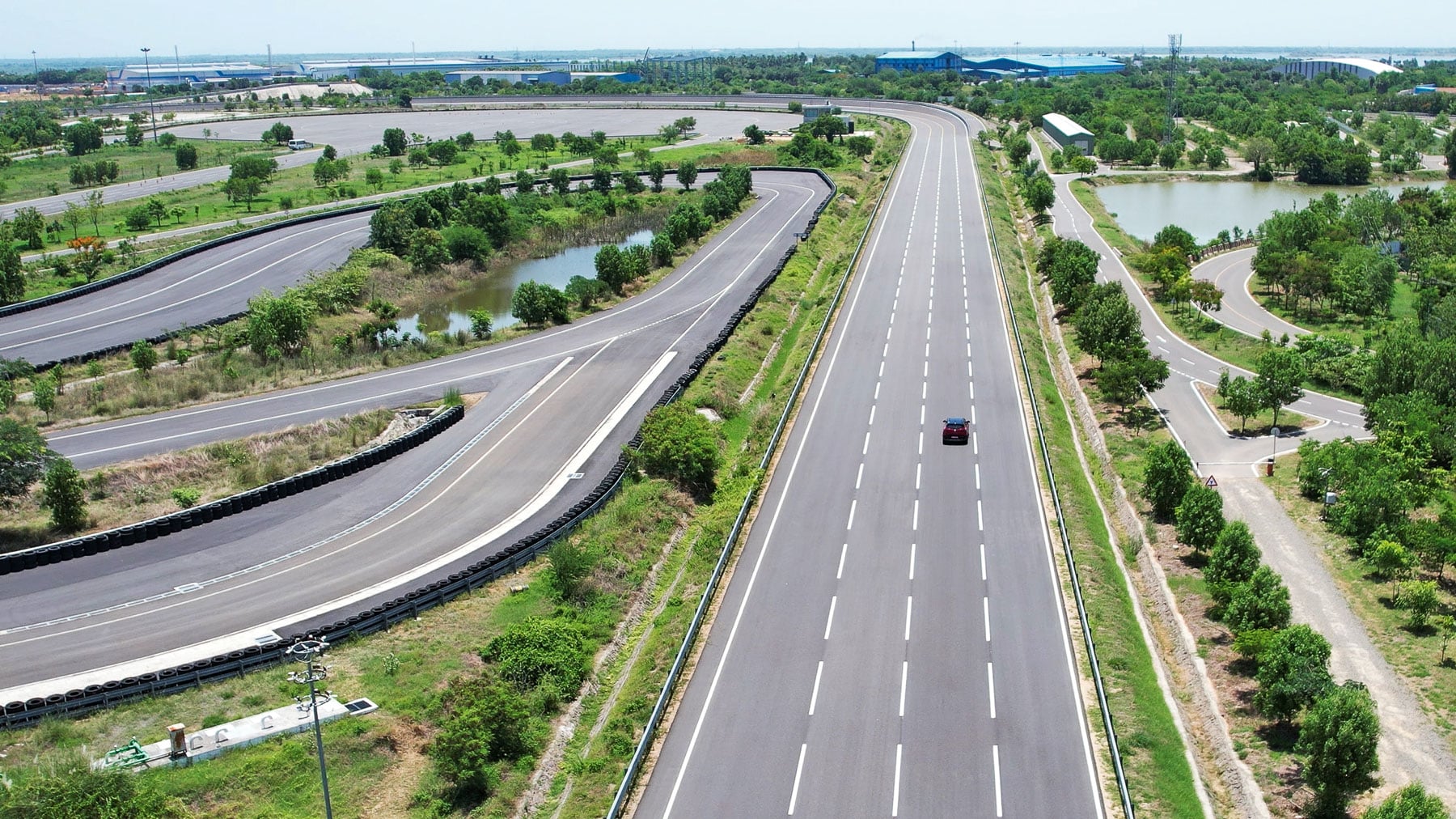
Our target is the Mahindra SUV Proving Track (MSPT) and it takes more than two hours, along roads which get increasingly narrow and rural, to get there. As we turn into the massive technology complex, it’s like passing from the 18th century into modern times. Everything is new and shiny, as you would expect at any major automotive maker.
The MSPT opened in 2021 on a site of more than 40 hectares, after an investment of around $90 million and consulting work by foreign firms to get the high-banked oval just right and the latest technology into the buildings around the facility. There has been plenty of extra spending since then to add new facilities and laboratories.
PROVING ITS WORTH
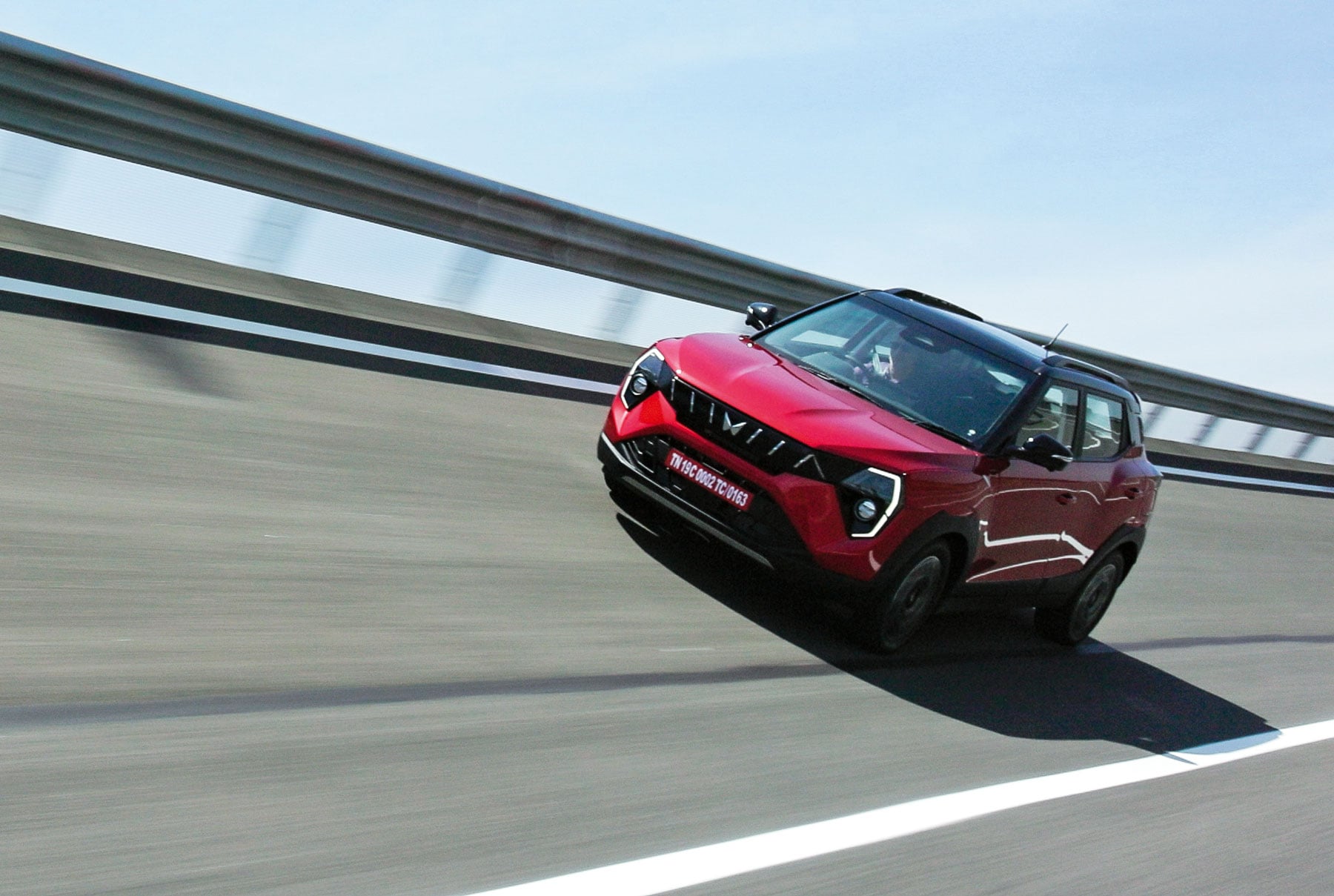
We’re here to see and drive the upcoming Mahindra XUV3XO, a compact SUV with a target on-road price of $25,000 in Australia. It’s the car Mahindra believes will give it some cut-through and a point of difference against the Chinese.
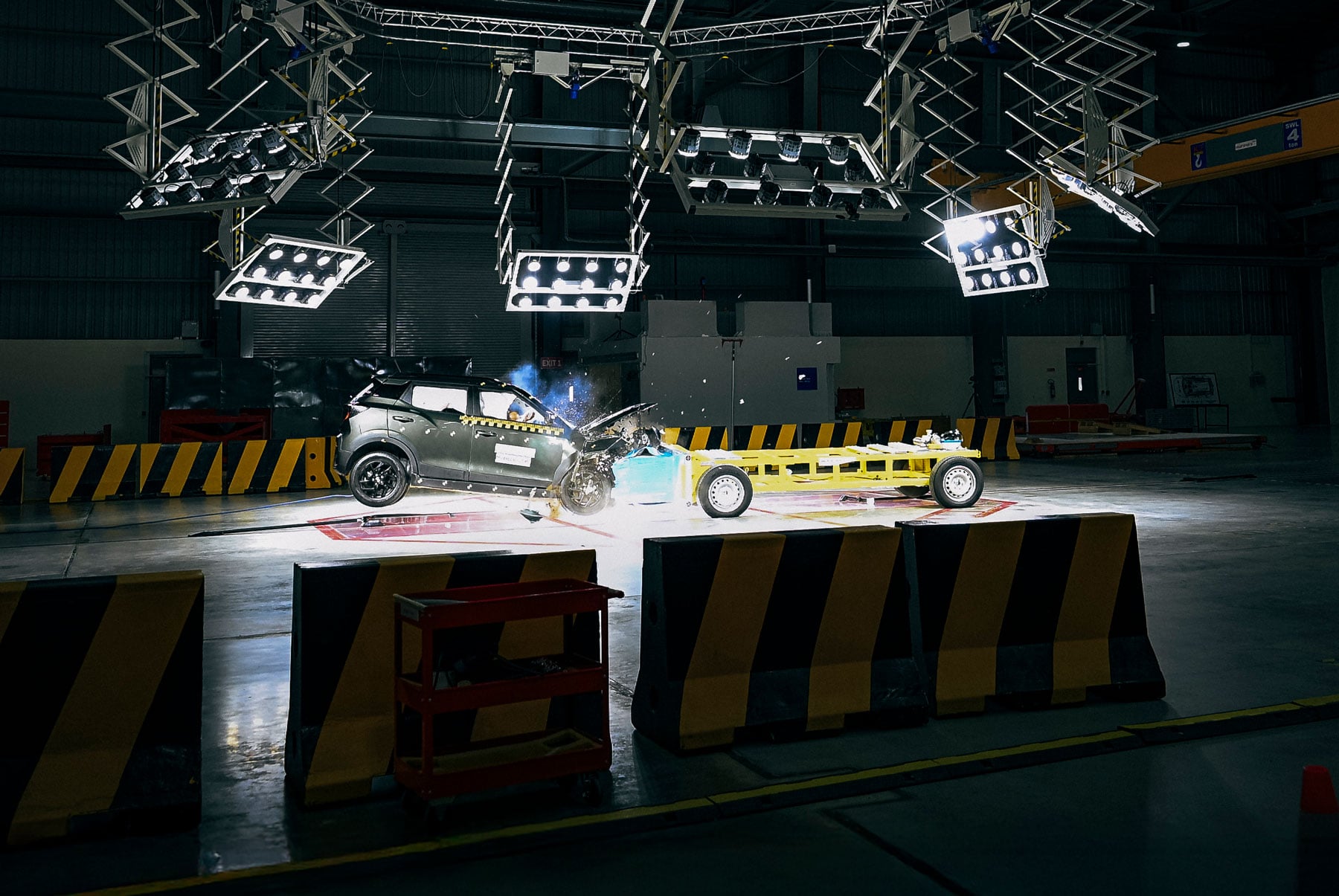
There are presentations on design and engineering, time on the high-speed oval track and a manoeuvring course. Then – to really cap the day – a live-action crash test, just for us.
The 3XO looks sharp, is well finished, accessibly priced and drives fine. It’s actually a total make-over of the older Ssangyong Tivoli, not that it’s hugely important for Australia.
1
Mahindra has gone all-in on specification, from the 1.2-litre three-cylinder engine and six-speed automatic gearbox to keyless entry, fake leather trim, wireless smart phone connectivity and even a surround-view camera on the base model. There is a spare tyre, too.
Cars should never be judged on proving ground impressions, but the 3XO immediately makes a move forward from the 700 shuttle cars. The performance is adequate, not outstanding, and the steering feels overly sensitive at first – perhaps with settings to suit lane-assistance.
It winds out to an indicated 170km/h on the speed bowl and the suspension feels both firm and controlled. But – and it could be a big but in the scheme of things – it will not be a 5-Star ANCAP car in Australia.
1
This is something Mahindra addresses several times, but never more than when it runs a thunderclap crash test – an XUV3XO against a moving barrier, both at 50km/h – to prove its commitment to safety. Every L-plater in Australia should watch something like this to see the consequences of poor driving, but for Mahindra it’s about making its cars better every time.
DOWN IN THE VALLEY
That’s the topic the following morning as – after another two-hour tumble through the traffic – we arrive at the impressive Mahindra Research Valley, the company’s main R&D facility housing 35 laboratories with 4000 engineers and 7000 staff in total.
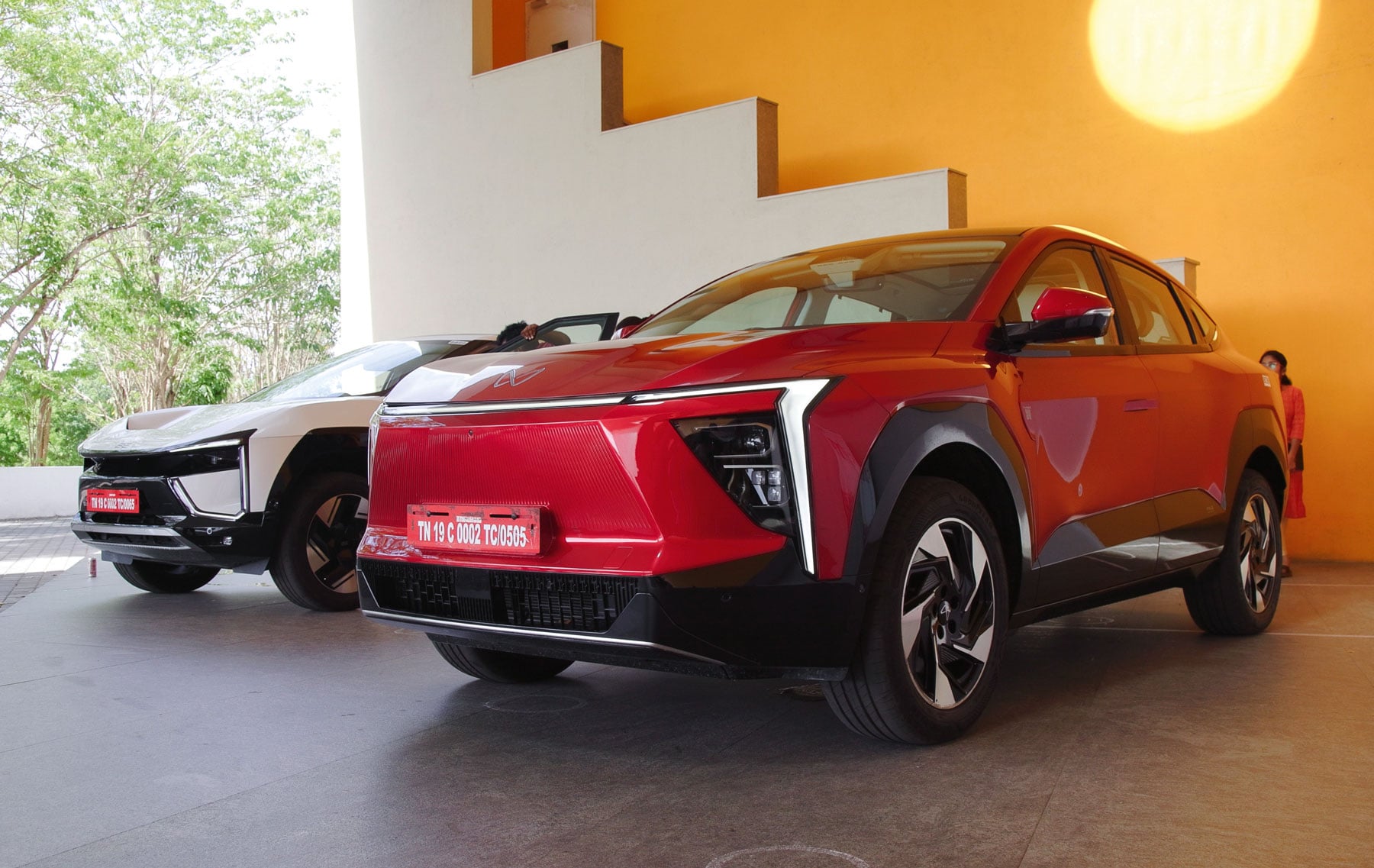
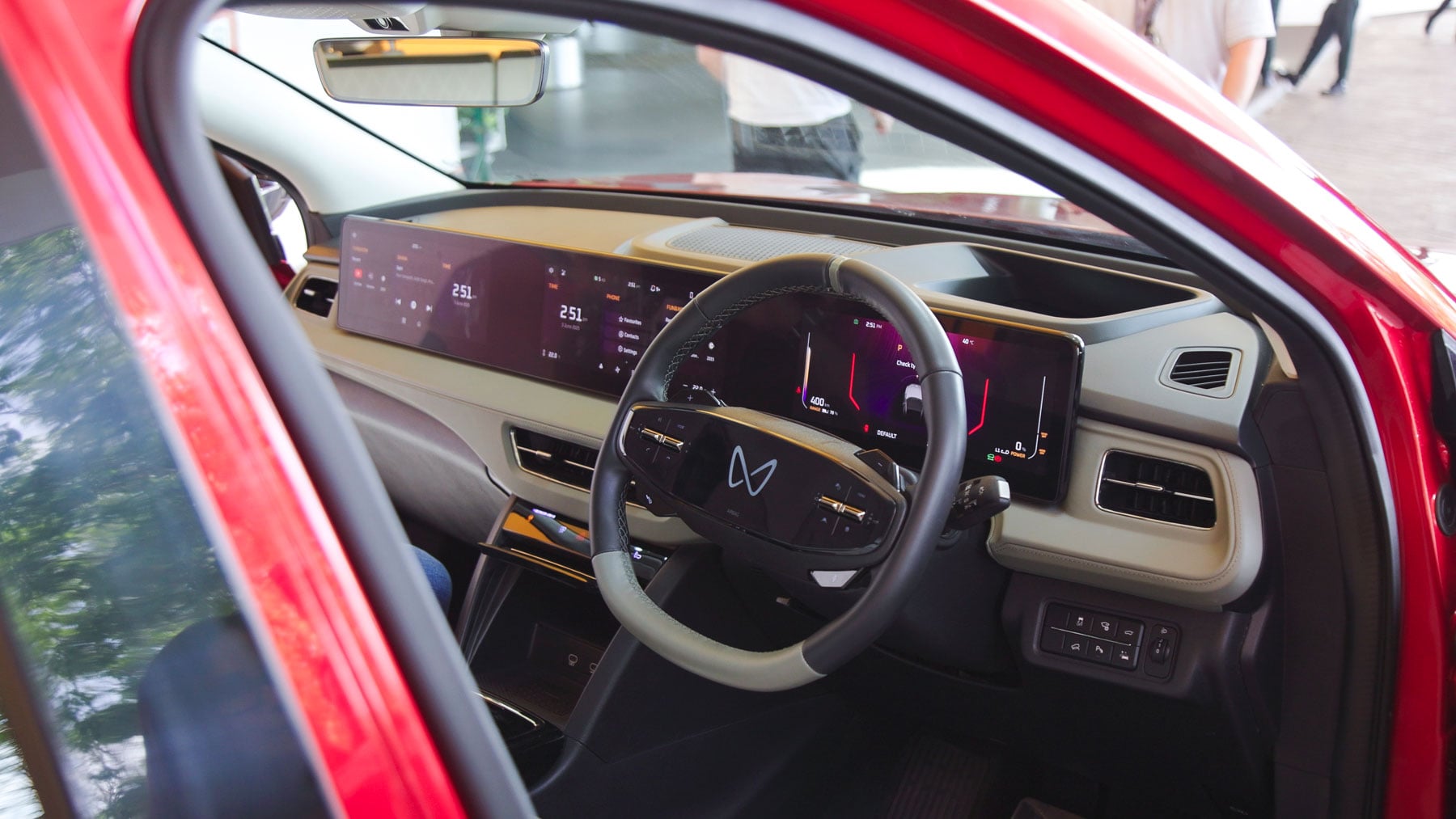
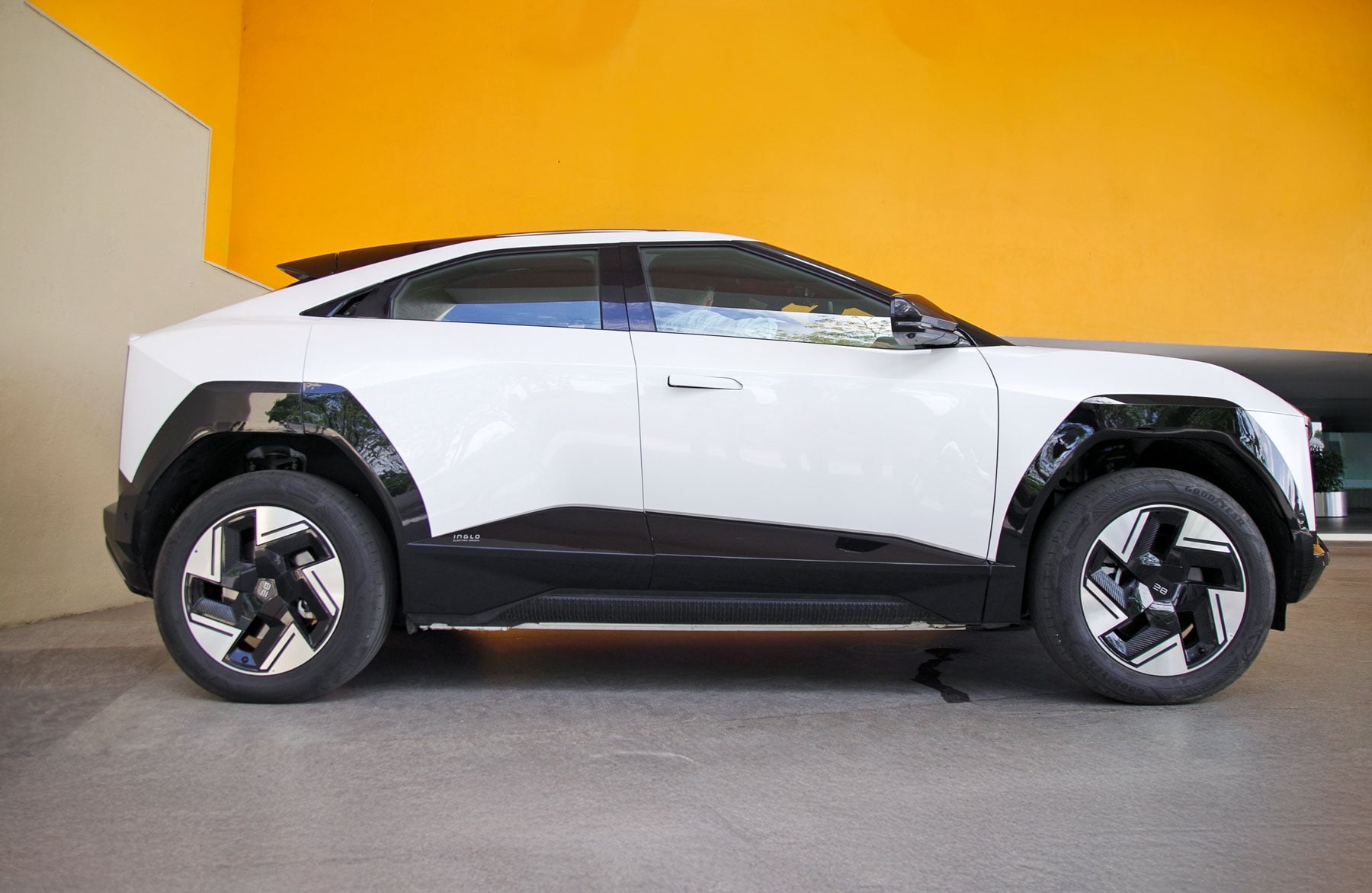
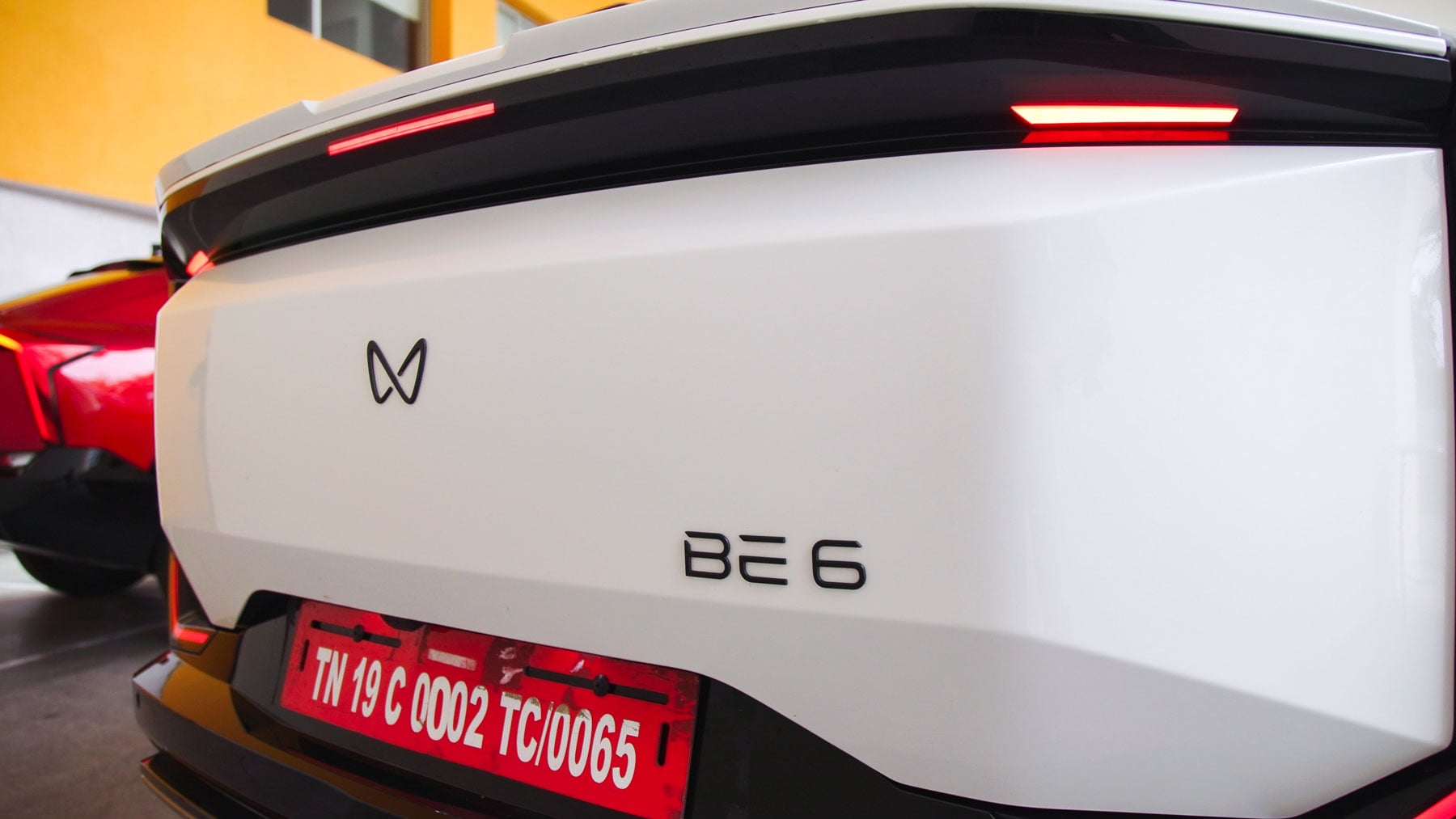
It’s a world away from the roots of Mahindra, which are found in the classic American fighting Jeep from World War II. Topics range from future models and four sub-brands to hybrids and even electrification – the BE 6 and XEV 9e are both discussed and displayed with promises that: ‘Many of the technologies are first time in India and some are first in the world’.
1
The brand is aiming for a top 15 slot in Australia and top five results in the segments where it competes.
“Mahindra is unique in the sense of not having a full portfolio of products. It has identified its niche areas – SUVs and utes. We are turning it out to be a strength for us,” says Mahindra’s head of international operations, Sachin Arolkar.
“Mahindra has been in Australia for 20 years. The customer knows this is not a fly-by night operator. That is not what Mahindra is about.
1
“Can you offer the content of a Chinese car – they offer the maximum content – with the engineering, the durability, the reliability that Mahindra has? How do we build up a brand to be ensuring that people who don’t look upon (it) only as for the professional use but also for personal use. That’s the kind of range we are talking about.
“In the segments where we are competing, we want to be really in the top brands.”
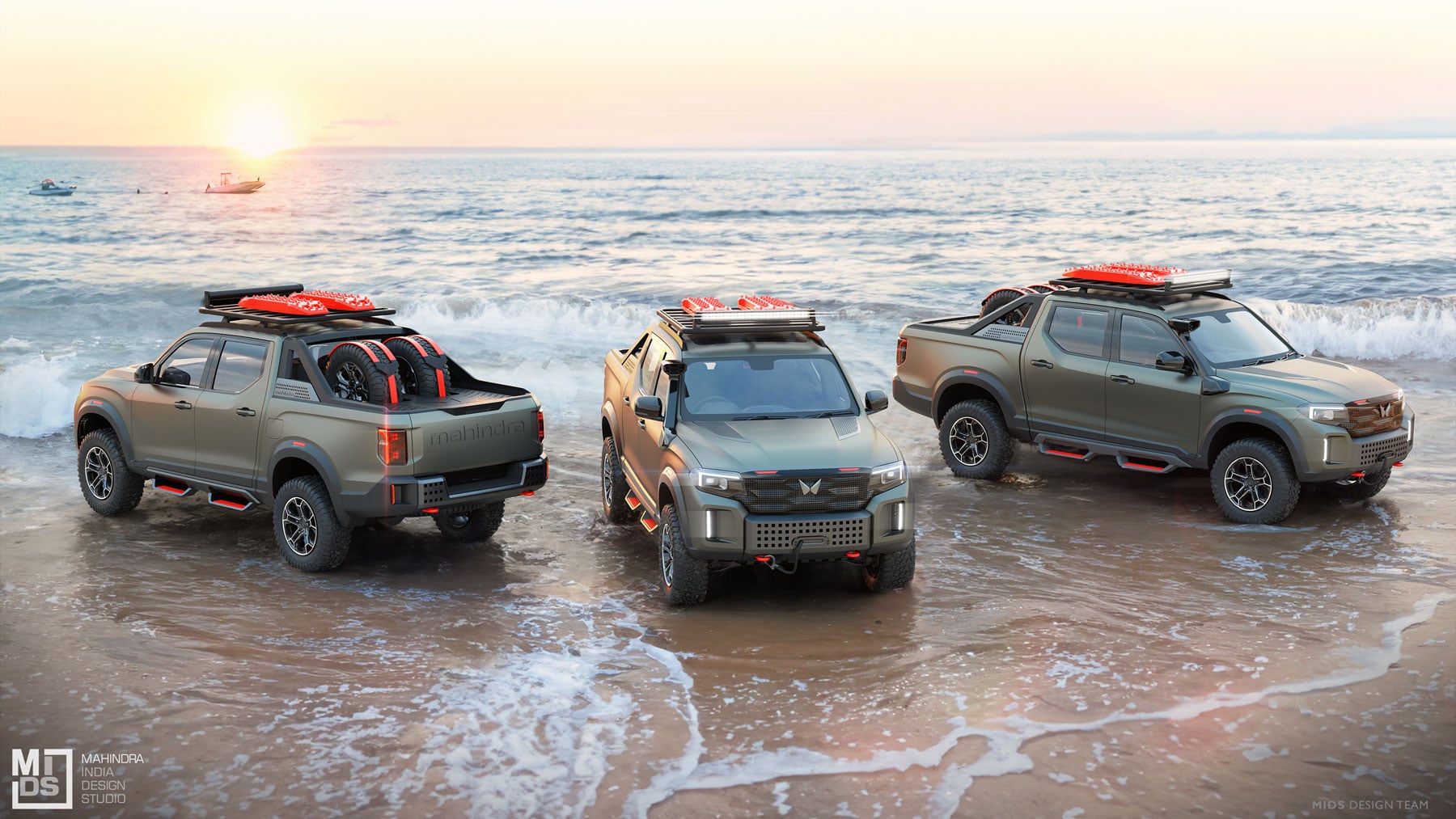
There is confirmation of a new, vastly improved Pik Up after the unveiling of a concept car in 2023, with production (and perhaps a diesel hybrid) set for 2026.
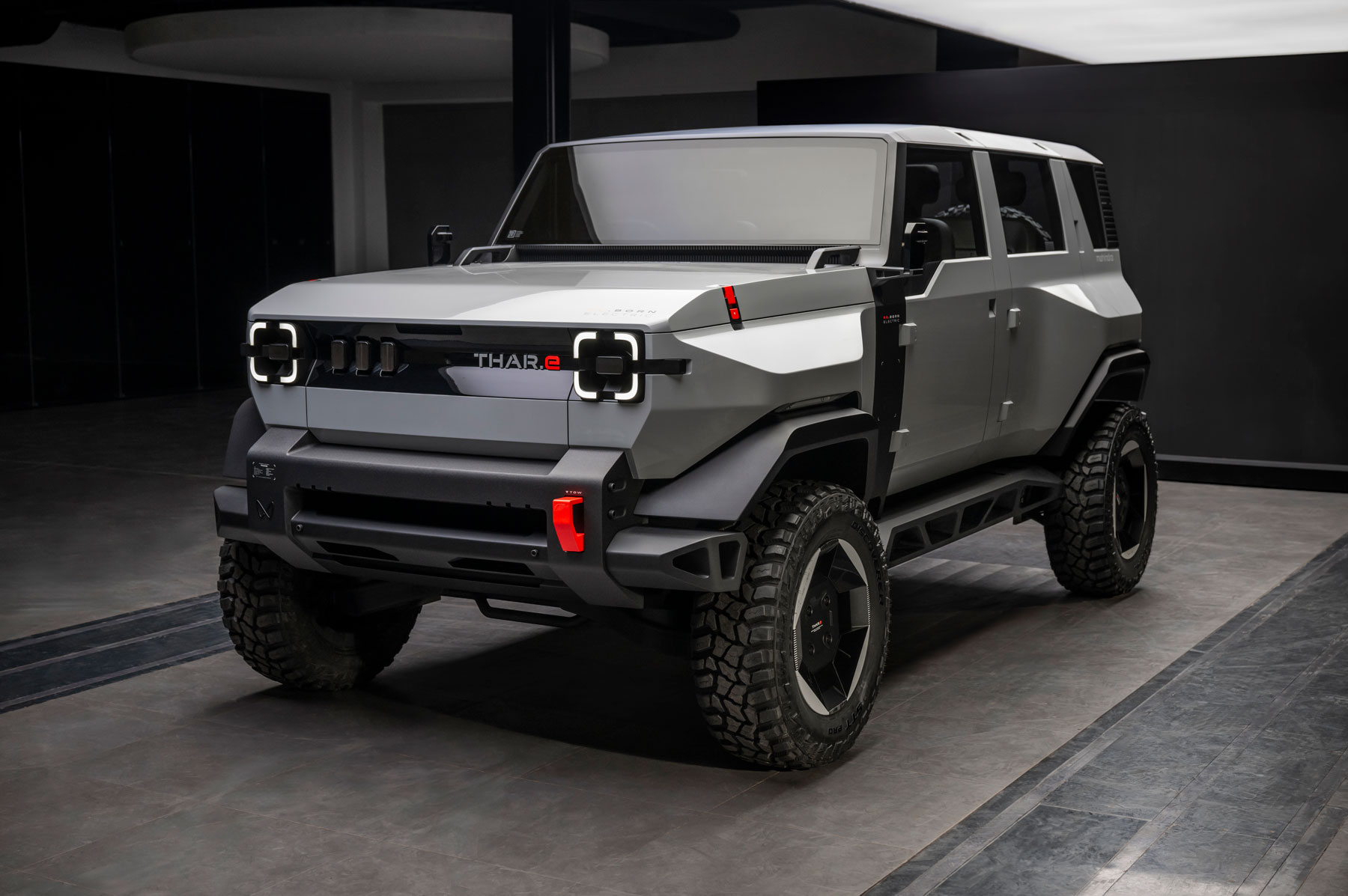
There is no chance of the rugged Thar – a Mahindra version of a Jeep – coming to Australia but there is good news for something special for Mahindra. It’s the production version of the Vision Thar.e concept, originally unveiled in South Africa in 2023 as an all electric off-roader.
1
“The name can be different, but what you saw in South Africa, you will get in Australia,” says Ramasamy.
Once the talking is done, it’s back to the craziness on the road to the airport. This time, at around 7pm, the traffic is even more manic as flashing headlights join the toot-toot-toot warnings and general hubbub.
Finally, perhaps partly from the fatigue of so much information overload, I can genuinely relax and enjoy the passing parade. It’s been more of a trip through India than a trip into India. It was seeing, but not doing, and a level of insulation provided by the Mahindra bubble. My muesli bars are still safely wrapped in my luggage.
As for Mahindra, things are better than I expected and there is a workable, ambitious plan to grow and improve in Australia.
1
MORE
Everything Mahindra
Follow WhichCar/Wheels on Google
Click the button below to make WhichCar by Wheels a preferred source for your news.

We recommend
-
 Reviews
2025 Mahindra XUV 3XO review: Small SUV surprises with strong features and willing turbo engine
Mahindra’s new XUV 3XO brings sharp pricing, generous equipment, and surprising comfort to the small SUV segment, challenging established rivals with value and everyday practicality.
-
 Reviews
Mahindra XUV700 review: Sure, it’s a bargain, but what else does the seven-seat SUV offer?
Indian giant Mahindra’s XUV700 seven-seat soft-roader SUV is its best seller locally. What does it offer apart from low pricing?
-
 Reviews
Mahindra Scorpio: Feature-rich off-roader for a remarkable price
For those after a heavy-duty off-road SUV that seats up to seven people, the Mahindra Scorpio offers an affordable path into the category...